A Comprehensive Guide to Validating CRISPR Edits in Patient-Derived Organoid Models
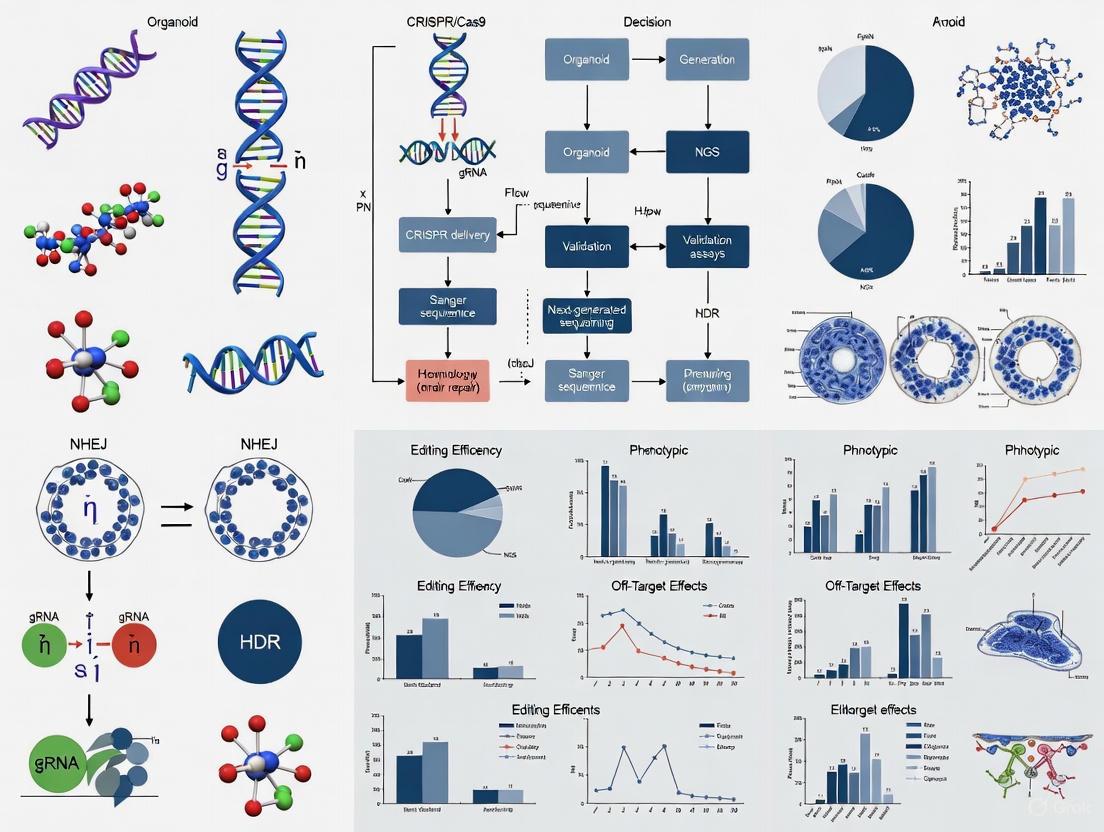
This article provides a systematic framework for researchers and drug development professionals to validate CRISPR-Cas9 edits in patient-derived organoids (PDOs).
A Comprehensive Guide to Validating CRISPR Edits in Patient-Derived Organoid Models
Abstract
This article provides a systematic framework for researchers and drug development professionals to validate CRISPR-Cas9 edits in patient-derived organoids (PDOs). It covers the foundational principles of why PDOs offer a physiologically relevant platform for functional genomics, details step-by-step methodological protocols for editing and selection, and offers troubleshooting strategies to overcome common challenges like low knockout efficiency. Furthermore, it outlines rigorous validation techniques and discusses how to comparatively analyze edited organoids to predict therapeutic response, ultimately serving as a critical resource for enhancing the precision and clinical translation of CRISPR-based disease models in personalized oncology and beyond.
The Power of Patient-Derived Organoids in CRISPR-Based Disease Modeling
Why Patient-Derived Organoids? Recapitulating Tumor Heterogeneity and the Tumor Microenvironment
Patient-derived organoids (PDOs) have emerged as a transformative preclinical model in cancer research, bridging the gap between traditional two-dimensional cell cultures and in vivo patient responses. These three-dimensional structures faithfully maintain the histological complexity, genetic diversity, and phenotypic heterogeneity of original tumors, enabling more accurate drug screening and personalized treatment prediction. Within the specific context of CRISPR-based research, PDOs provide a physiologically relevant platform for validating gene edits and functional genetic screens. This review objectively examines the capabilities of PDO technology against alternative models, with focused analysis on its unique advantages for studying tumor heterogeneity and microenvironment interactions in genetically engineered systems.
Cancer remains a leading cause of mortality worldwide, with therapeutic efficacy often limited by tumor heterogeneity and the complex interactions within the tumor microenvironment (TME). Traditional cancer models, including two-dimensional (2D) cell lines and patient-derived xenografts (PDXs), have contributed significantly to basic cancer biology but present substantial limitations in clinical translation. Two-dimensional cell cultures undergo genetic drift over time and fail to recapitulate the three-dimensional architecture and cellular diversity of human tumors [1]. Patient-derived xenografts, while maintaining some tumor characteristics, are time-consuming, expensive, and involve species-specific limitations that compromise their predictive accuracy, particularly for immunotherapies [2].
Patient-derived organoids represent a technological advancement that addresses these limitations. PDOs are three-dimensional in vitro cultures derived directly from patient tumor samples that preserve the structural and functional characteristics of the original tissue [3]. When integrated with CRISPR technology, PDOs enable functional genetic screens and validation of gene edits within a pathologically relevant human system, accelerating the identification of novel therapeutic targets and resistance mechanisms [4] [5].
Comparative Analysis of Cancer Models
Table 1: Comprehensive comparison of preclinical cancer models
| Feature | 2D Cell Cultures | Patient-Derived Xenografts (PDX) | Patient-Derived Organoids (PDO) |
|---|---|---|---|
| Architectural Fidelity | Low - monolayer growth lacks 3D structure | High - maintains in vivo architecture | High - self-organizing 3D structures that mimic microanatomy [1] |
| Tumor Heterogeneity | Limited - clonal selection during adaptation | Moderate - but mouse stromal replacement over time | High - preserves genetic and cellular diversity of original tumor [3] [6] |
| Success Rate & Establishment Time | High (weeks) | Variable, often low (months) | High efficiency across multiple cancers (weeks) [2] |
| Throughput for Drug Screening | Very high | Low | High to very high [3] |
| TME Components | Lacks stromal and immune cells | Human tumor with mouse TME | Initially epithelial; requires co-culture systems for full TME [7] |
| Genetic Stability | Low - genetic drift over time | Moderate - with clonal selection | High - maintains molecular profile of original tumor [1] |
| Cost | Low | Very high | Moderate [8] |
| CRISPR Compatibility | High but physiologically limited | Technically challenging | High and physiologically relevant [4] [5] |
| Personalized Medicine Application | Limited | Limited by throughput and time | High - suitable for clinical decision timelines [3] |
Table 2: Quantitative performance metrics of cancer models
| Parameter | 2D Cell Cultures | Patient-Derived Xenografts | Patient-Derived Organoids |
|---|---|---|---|
| Predictive Accuracy for Clinical Response | ~5% [6] | Variable, ~60-70% | 88-100% (specific to drug classes) [3] |
| Typical Establishment Time | 2-4 weeks | 4-12 months | 2-8 weeks [2] [9] |
| Immune Component Integration | Not applicable | Limited to humanized models | Requires specific co-culture protocols [7] |
| Scalability for High-Throughput Screening | Excellent | Poor | Good to excellent [3] |
| Documented Success Rates Across Cancers | High but irrelevant | Variable (30-80%) | Consistently high (70-90%) [1] |
PDOs in CRISPR-Based Research: Experimental Workflows
CRISPR Screening in Organoid Models
The integration of CRISPR technology with PDOs has created powerful platforms for functional genomics in cancer research. Recent advances enable multiple CRISPR screening modalities in organoids, including knockout (CRISPRko), interference (CRISPRi), activation (CRISPRa), and single-cell approaches [5]. The general workflow involves:
- Organoid Generation: Tumor tissue is dissociated mechanically and/or enzymatically into single cells or small aggregates, then embedded in an extracellular matrix (typically Matrigel) and cultured in specialized media containing tissue-specific growth factors [1] [9].
- CRISPR System Delivery: Lentiviral transduction delivers Cas9 or dCas9 fused to transcriptional regulators (KRAB for repression, VPR for activation) along with guide RNA (gRNA) libraries targeting genes of interest.
- Selection and Expansion: Transduced organoids are selected using antibiotics (e.g., puromycin) and expanded to maintain >1000x coverage of the gRNA library.
- Phenotypic Screening: Organoids are subjected to experimental conditions (e.g., drug treatment), with gRNA abundance monitored by next-generation sequencing to identify genes influencing drug response [5].
Figure 1: CRISPR screening workflow in patient-derived organoids
Signaling Pathways Critical for Organoid Culture
Successful establishment and maintenance of PDOs require careful optimization of culture conditions that activate specific signaling pathways essential for stem cell maintenance and proliferation. The core pathways include:
- Wnt/β-catenin Pathway: Activation through agonists like R-spondin and Wnt3a is crucial for LGR5+ stem cell expansion, particularly in gastrointestinal cancers [1] [6]. Notably, tumors with Wnt pathway mutations may not require exogenous Wnt activation.
- EGFR Pathway: Stimulated by epidermal growth factor (EGF) supplementation to promote cancer cell proliferation. Tumors with EGFR pathway mutations may have reduced EGF dependency [1].
- Other Pathway Modulations: Additional factors including Noggin (BMP inhibitor), FGF, and prostaglandin E2 are included in specific media formulations to support growth of organoids from different tissue types [6].
Figure 2: Key signaling pathways in organoid culture
The Scientist's Toolkit: Essential Research Reagents
Table 3: Essential reagents for PDO culture and CRISPR screening
| Reagent Category | Specific Examples | Function | Considerations |
|---|---|---|---|
| Extracellular Matrix | Matrigel, BME, synthetic hydrogels (PEG, PLGA) | Provides 3D structural support for organoid growth | Batch variability in natural matrices; synthetic options offer reproducibility [1] |
| Growth Factors | EGF, R-spondin, Wnt3a, Noggin, FGF | Activate signaling pathways for stem cell maintenance | Tissue-specific requirements; mutated pathways may alter factor dependency [1] [6] |
| CRISPR Components | Lentiviral vectors, Cas9/dCas9, gRNA libraries | Enable genetic perturbation screens | Delivery efficiency optimization required; inducible systems offer temporal control [4] [5] |
| Dissociation Reagents | Collagenase, Trypsin-EDTA, Accutase | Tissue dissociation for organoid establishment and passaging | Optimization needed to preserve viability while achieving single cells [9] |
| Culture Media | Advanced DMEM/F12, B27, N2 supplements | Nutritional support with defined components | Formulations must be tailored to cancer type [9] |
| AG 555 | AG 555, CAS:149092-34-2, MF:C19H18N2O3, MW:322.4 g/mol | Chemical Reagent | Bench Chemicals |
| Camaldulenic acid | Camaldulenic Acid | Camaldulenic acid is a natural oleanane-type triterpenoid for anti-inflammatory research. This product is for Research Use Only (RUO). Not for human consumption. | Bench Chemicals |
Recapitulating Tumor Heterogeneity
A defining feature of PDOs is their ability to preserve the genetic and cellular heterogeneity of the original tumor, a critical advantage for both basic research and therapeutic testing.
Molecular and Histological Fidelity
Multiple studies have demonstrated that PDOs maintain the histological architecture, gene expression profiles, and mutation spectrum of their parental tumors [3]. Comprehensive genomic analyses including whole-exome sequencing and RNA sequencing show that PDOs retain driver mutations, copy number alterations, and transcriptional landscapes even after extended culture periods [3] [7]. This genetic stability enables reliable long-term studies not feasible with traditional cell lines that accumulate genetic drift.
Functional Heterogeneity in Drug Responses
The preservation of tumor heterogeneity in PDOs translates to variable drug responses that mirror patient outcomes. In a landmark study of metastatic gastrointestinal cancers, PDOs predicted clinical response with 88% accuracy and non-response with 100% accuracy [3]. This predictive power demonstrates how PDOs capture functional heterogeneity that directly impacts therapeutic efficacy. When combined with CRISPR screening, this platform enables systematic mapping of gene-drug interactions across heterogeneous cellular populations, identifying genetic determinants of drug sensitivity and resistance [5].
Modeling the Tumor Microenvironment
While early PDO cultures primarily contained epithelial components, recent methodological advances have enabled more complete recapitulation of the tumor microenvironment.
Current Limitations and Advanced Co-culture Systems
Standard PDO protocols typically yield cultures dominated by epithelial cancer cells with limited stromal components [3]. This represents a significant limitation for studying therapies that target microenvironmental interactions, particularly immunotherapies. To address this gap, researchers have developed several advanced culture systems:
- Immune Cell Co-culture: Peripheral blood lymphocytes can be co-cultured with PDOs to generate tumor-reactive T cells and assess T-cell-mediated killing [3] [7].
- Air-Liquid Interface (ALI) System: This technique cultures finely sliced tumor tissue with stromal components on collagen-coated filters, preserving native TME elements including fibroblasts and immune cells for up to one month [1].
- Microfluidic and Organ-on-Chip Platforms: These systems enable precise control of microenvironmental conditions and facilitate real-time monitoring of tumor-stromal interactions [8] [10].
TME Modeling in Renal Cell Carcinoma
The importance of TME recapitulation is particularly evident in renal cell carcinoma (RCC), where systemic therapies predominantly target microenvironmental components rather than cancer cells directly. RCC treatments include anti-angiogenic agents targeting VEGF pathway and immune checkpoint inhibitors that reverse T-cell exhaustion [7]. PDO models that incorporate relevant TME elements provide critical platforms for evaluating these therapeutic modalities and identifying novel combination strategies.
Patient-derived organoids represent a significant advancement in cancer modeling that effectively balances physiological relevance with experimental tractability. Their demonstrated ability to recapitulate tumor heterogeneity and, with advanced culture methods, key aspects of the tumor microenvironment positions PDOs as indispensable tools for modern cancer research. When integrated with CRISPR screening technologies, PDOs enable systematic functional genomics studies in biologically relevant contexts, accelerating the identification and validation of novel therapeutic targets. While challenges remain in standardizing protocols and fully recapitulating microenvironment complexity, continued refinement of PDO technology promises to enhance both basic cancer biology and clinical translation in precision oncology.
The field of functional genomics has been revolutionized by the advent of clustered regularly interspaced short palindromic repeats (CRISPR) and CRISPR-associated (Cas) proteins, which provide unprecedented capability for targeted genome editing. Since its initial application in mammalian systems, CRISPR-Cas9 technology has transformed our approach to investigating gene function, enabling systematic perturbation of the genome with remarkable precision and efficiency. This technology has become indispensable for mapping complex genotype-phenotype relationships, particularly in cancer research, drug target identification, and understanding disease mechanisms [11].
The original CRISPR-Cas9 system from Streptococcus pyogenes (SpCas9) functions as a targeted endonuclease, creating double-strand breaks (DSBs) in DNA at locations specified by a guide RNA (gRNA). These breaks activate the cell's native DNA repair mechanisms—primarily non-homologous end joining (NHEJ), which often results in insertions or deletions (indels) that disrupt gene function, or homology-directed repair (HDR), which allows for precise gene modifications using a DNA template [11] [12]. While this system provides a powerful tool for loss-of-function studies, limitations including off-target effects, dependence on specific protospacer adjacent motifs (PAMs), and delivery challenges have prompted the development of numerous alternatives and enhancements [13].
The integration of these CRISPR tools with patient-derived organoids (PDOs) represents a particularly promising advancement for precision medicine. PDOs are three-dimensional cell culture systems derived from patient tumor tissue that retain the genetic variability and phenotypic diversity characteristic of the primary tumor, providing a physiologically relevant platform for studying tumor biology and treatment response [4] [14]. When combined with CRISPR technologies, PDOs enable functional genomic screens within a model that closely mimics the in vivo environment, accelerating the translation of basic research insights into clinical applications [4] [5].
This guide provides a comprehensive comparison of current CRISPR-based editing tools, with particular emphasis on their applications in functional genomics research using patient-derived organoid models.
Comparative Analysis of CRISPR Nucleases and Alternatives
Limitations of Standard CRISPR-Cas9
The widespread adoption of SpCas9 has revealed several significant limitations for therapeutic applications and functional genomics research. One primary concern is its tendency to create double-stranded breaks (DSBs) in DNA, which can lead to unintended deletions, chromosomal translocations, and potentially harmful mutations [13]. Additionally, SpCas9 demonstrates a measurable risk of off-target editing, where cleavage occurs at unintended genomic sites with sequence similarity to the target, raising substantial safety concerns for clinical applications [13] [15]. Practical delivery challenges also exist due to the large size of SpCas9 (approximately 4.2 kb), which exceeds the packaging capacity of many viral delivery vectors, particularly adeno-associated viruses (AAVs) that have a cargo capacity of around 4.5kb [13].
Emerging Nuclease Alternatives
To address these limitations, several engineered nucleases and natural alternatives have been developed, each with distinct advantages for specific applications.
Table 1: Comparison of CRISPR Nucleases and Their Properties
| Nuclease | Size (aa) | PAM Sequence | Cut Type | Key Advantages | Primary Applications |
|---|---|---|---|---|---|
| SpCas9 (Standard) | 1368 | NGG | Blunt-end DSBs | Well-characterized, reliable | Gene knockouts, basic screening |
| hfCas12Max | 1080 | TN or TTN | Staggered-end DSBs | Compact size, high specificity, broad PAM recognition | CAR-T, gene therapies requiring precision |
| eSpOT-ON (ePsCas9) | ~1100* | NGG | Staggered-end DSBs | High on-target, low off-target, minimizes translocation risk | Safer gene correction, therapeutic knock-ins |
| SaCas9 | ~1053* | NNGRRN | Blunt-end DSBs | Compact size, fits in AAV vectors | in vivo gene therapies |
| Cas12a (Cpf1) | ~1300* | T-rich | Staggered-end DSBs | Enhances HDR, targets AT-rich regions | Multiplexed editing, gene knock-in |
| dCas9 | 1368 (inactive) | NGG | No cleavage | Targeted modulation without DSBs | CRISPRi, CRISPRa, base editing |
| Cas3 | Varies | None | Large deletions (>10kb) | Complete functional knockouts | Gene knockout studies |
Note: Exact sizes for some nucleases not provided in search results; approximate sizes based on comparative descriptions. DSBs = Double-Stranded Breaks; PAM = Protospacer Adjacent Motif.
The hfCas12Max nuclease sets a new standard in clinical gene editing with its compact design (1080 amino acids) paired with staggered-end cut outcomes that enhance precision and versatility. Its broad PAM recognition (TN or TTN) significantly expands target accessibility, while demonstrated robust on-target editing with lower off-target effects than SpCas9 or other Cas12 variants in primary human T-cells and mice makes it ideal for applications where precision is critical [13].
The eSpOT-ON (ePsCas9) nuclease, originally identified in Parasutterella secunda, delivers high on-target precision with extremely low off-target editing while recognizing the same NGG PAM as SpCas9. Unlike engineered high-fidelity SpCas9 variants where reduced off-target editing often comes at the cost of on-target activity, eSpOT-ON provides an optimal balance of high on-target activity while maintaining reduced off-target effects. It creates staggered-end DSBs that minimize translocation risks, ensuring safer and more reliable gene editing [13].
For therapeutic applications requiring viral delivery, SaCas9 (from Staphylococcus aureus) offers a significant advantage with its smaller size (approximately 1kb smaller than SpCas9), making it perfectly suited for in vivo gene therapies delivered via adeno-associated viruses (AAVs) [13]. Similarly, Cas12a (Cpf1) creates staggered-end cuts that enhance homology-directed repair efficiency and can target AT-rich regions of the genome inaccessible to SpCas9 [13].
Beyond standard nuclease approaches, dCas9 (catalytically dead Cas9) represents a fundamentally different approach—it lacks cleavage activity but retains DNA-binding capability, enabling targeted modulation without DSBs. This makes it valuable for CRISPR interference (CRISPRi), CRISPR activation (CRISPRa), base editing, and epigenome editing applications where precision is required without DNA cutting [13] [11].
Advanced CRISPR Systems for Specialized Applications
CRISPR Transcriptional Modulation
The development of nuclease-deficient Cas9 (dCas9) has enabled sophisticated transcriptional control systems that modulate gene expression without altering DNA sequence. CRISPR interference (CRISPRi) utilizes dCas9 fused to repressive domains like the Krüppel-associated box (KRAB) to block transcription initiation or elongation, effectively knocking down gene expression [11] [16]. Conversely, CRISPR activation (CRISPRa) fuses dCas9 to transcriptional activation domains (e.g., VP64, p65, Rta) to enhance gene expression, enabling gain-of-function studies [11] [16].
These systems are particularly valuable for functional genomics in patient-derived organoids, as demonstrated by recent research showing that inducible CRISPRi and CRISPRa systems can be successfully implemented in human 3D gastric organoids to regulate endogenous gene expression with precise temporal control [5]. The ability to perform both loss-of-function and gain-of-function screens in the same model system provides complementary datasets that increase confidence in target identification and validation [16].
Large-Scale DNA Engineering
For applications requiring insertion of large DNA fragments, traditional HDR-based approaches face efficiency challenges. Recent advances have integrated CRISPR with recombinases and transposases to enable more efficient large-scale DNA engineering. CRISPR-associated transposase (CAST) systems represent a particularly promising development, allowing integration of genetic elements up to 30 kb without introducing double-strand breaks [17].
CAST systems utilize RNA-guided DNA binding to target transposition to specific genomic loci. Type I-F CAST systems have demonstrated efficient insertion of donor sequences up to approximately 15.4 kb in E. coli, while type V-K variants have accommodated inserts as large as 30 kb [17]. Although applications in mammalian cells are still in early development (with current editing efficiencies around 1-3% in HEK293 cells), these systems show tremendous potential for therapeutic applications requiring large gene insertions [17].
Table 2: Advanced CRISPR Systems for Specialized Applications
| System Type | Key Components | Mechanism of Action | Editing Outcomes | Therapeutic Potential |
|---|---|---|---|---|
| Base Editors | dCas9 fused to deaminase enzymes | Chemical conversion of base pairs without DSBs | C→T or A→G conversions | Corrects point mutations responsible for genetic diseases |
| Prime Editing | PE2 protein + pegRNA | Reverse transcriptase template integration | Targeted insertions, deletions, all base-to-base conversions | Broad therapeutic potential for diverse mutations |
| CRISPRi/a | dCas9 fused to transcriptional regulators | Modulation of transcription without DNA cleavage | Gene expression knockdown (CRISPRi) or activation (CRISPRa) | Disease modeling, target validation |
| CAST Systems | Cas protein + transposase complex | RNA-guided transposition without DSBs | Large DNA insertions (up to 30kb) | Insertion of therapeutic genes |
| Epigenetic Editors | dCas9 fused to chromatin modifiers | Targeted histone or DNA modification | Altered chromatin state and gene expression | Potential for treating epigenetic disorders |
Bioinformatics and Deep Learning Approaches
The growing complexity of CRISPR toolkits has increased the importance of sophisticated bioinformatics tools for experimental design and analysis. Current computational approaches address multiple aspects of CRISPR workflow, including gRNA design, off-target prediction, and analysis of screening data [12]. Tools such as CRISPResso, CHOPCHOP, and Cas-OFFinder are commonly used for these purposes, though most existing tools address narrow tasks, necessitating fragmented workflows [12].
Machine learning and deep learning tools are projected to become leading methods for predicting CRISPR on-target and off-target activity. However, current prediction accuracy is limited by the amount of available training data, and as more sequence features are identified and incorporated into these tools, predictions are expected to better align with experimental results [15]. The increasing focus on ML/DL approaches for predicting off-target sites necessitates large and easily searchable databases to support algorithm training and validation [15].
Experimental Protocols for CRISPR Screening in Patient-Derived Organoids
Workflow for CRISPR Screening in 3D Organoids
The integration of CRISPR screening with patient-derived organoids requires specialized protocols to address the technical challenges of 3D culture systems while maintaining high editing efficiency and library representation. Recent research has established robust methodologies for large-scale genetic screens in primary human gastric organoids [5].
Figure 1: Experimental workflow for CRISPR screening in patient-derived 3D organoids, highlighting key steps from model establishment to data analysis.
Detailed Methodological Components
Organoid Line Engineering
Establishing a suitable organoid model is the foundational step for CRISPR screening. For the human gastric tumor organoid model described by [5], TP53/APC double knockout (DKO) organoid lines were established by sequentially disrupting these common oncogenic loci from non-neoplastic human gastric organoids. This engineered model provides a relatively homogeneous genetic background, minimizing variability and enabling precise identification of gene-function relationships. Stable Cas9-expressing organoid lines are generated using lentiviral transduction, with integration confirmed through fluorescence reporters and functional assays [5].
Library Design and Transduction
For genome-wide screens, a pooled lentiviral sgRNA library is designed to target the gene set of interest. A typical approach utilizes approximately 12,461 sgRNAs targeting 1093 genes, with each gene targeted by ~10 sgRNAs alongside 750 negative control non-targeting sgRNAs [5]. Following lentiviral transduction, the number of infected cells should provide cellular coverage of >1000 cells per sgRNA from the outset to maintain library representation. After puromycin selection (typically 2 days post-transduction), a subpopulation is harvested as a reference time point (T0), while the remaining organoids continue culture under the same cellular coverage throughout the screening period [5].
Inducible System Implementation
For temporal control of gene expression, inducible CRISPRi and CRISPRa systems can be engineered using a sequential two-vector lentiviral approach. First, organoid lines expressing rtTA are generated, followed by introduction of a doxycycline-inducible cassette containing a dCas9 fusion protein (dCas9-KRAB for CRISPRi or dCas9-VPR for CRISPRa) along with a fluorescent reporter (e.g., mCherry). Stable lines are established by sorting fluorescent-positive cells after induction, with tight control of the inducible cassettes confirmed through protein degradation upon doxycycline withdrawal and rapid restoration after re-induction [5].
Screening and Data Analysis
During the screening phase, organoids are cultured under experimental conditions (e.g., drug treatment) for a predetermined period, typically 16 population doublings or approximately 28 days [5]. Relative sgRNA abundance is measured by next-generation sequencing at endpoint compared to the T0 reference, with increasing or decreasing sgRNA abundance indicating growth advantages or disadvantages, respectively. Bioinformatic tools such as MAGeCK are commonly employed for statistical analysis of screen results, identifying significantly enriched or depleted sgRNAs and their corresponding genes [12] [16].
Research Reagent Solutions for Organoid-CRISPR Workflows
Table 3: Essential Research Reagents for CRISPR-Organoid Experiments
| Reagent Category | Specific Examples | Function | Considerations for Organoid Models |
|---|---|---|---|
| Nuclease Systems | hfCas12Max, eSpOT-ON, SaCas9, dCas9-VPR, dCas9-KRAB | Targeted DNA modification or transcriptional control | Size constraints for viral delivery; PAM compatibility with target sites |
| Delivery Vehicles | Lentivirus, AAV, Lipid Nanoparticles (LNPs) | Introduction of editing components into cells | AAV capacity limitations; lentiviral tropism for organoid cells |
| Library Resources | Genome-wide sgRNA libraries, Targeted sub-libraries | High-throughput functional screening | Maintain >1000x coverage per sgRNA; include non-targeting controls |
| Selection Markers | Puromycin, Blasticidin, Fluorescent reporters | Selection of successfully transduced cells | Antibiotic sensitivity of organoid lines; FACS compatibility |
| Matrix Scaffolds | Matrigel, Synthetic hydrogels | 3D structural support for organoid growth | Batch-to-batch variability; compatibility with high-throughput screening |
| Culture Supplements | Nodal, BMP4, WNT agonists/antagonists | Maintenance of stemness and differentiation | Tissue-specific requirements; influence on editing efficiency |
The convergence of CRISPR technologies with patient-derived organoid models represents a transformative platform for functional genomics and precision oncology. The expanding toolkit of CRISPR systems—from precision nucleases like hfCas12Max and eSpOT-ON to transcriptional modulators (CRISPRi/a) and large-scale DNA engineering systems (CAST)—provides researchers with an unprecedented capability to dissect gene function in physiologically relevant models.
The successful application of these technologies requires careful consideration of experimental design, including appropriate nuclease selection based on PAM requirements, on/off-target profiles, and delivery constraints. Implementation in patient-derived organoids further necessitates optimization of 3D culture conditions, library complexity management, and specialized analytical approaches. As these methodologies continue to mature, with enhancements in bioinformatics prediction tools and experimental protocols, they promise to accelerate both basic research and translational applications in drug development and personalized cancer therapy.
Future directions will likely focus on improving the efficiency and scalability of these integrated platforms, particularly for large-scale genetic screens in diverse patient-derived models. Additionally, the incorporation of single-cell sequencing technologies with CRISPR screening in organoids offers exciting potential for resolving genetic networks at cellular resolution, further enhancing our understanding of tumor heterogeneity and treatment resistance mechanisms.
The persistently high mortality rates associated with cancer underscore the imperative need for innovative therapeutic agents and a more nuanced understanding of tumor biology [4]. Traditional two-dimensional (2D) cell cultures and patient-derived xenografts (PDXs) have limitations in accurately recapitulating the complex structural and functional heterogeneity of human tumors, creating a translational gap between preclinical findings and clinical application [4]. In this context, patient-derived organoids (PDOs) have emerged as transformative preclinical models that maintain the genetic, phenotypic, and microenvironmental characteristics of original tumors [4]. When integrated with CRISPR screening technologies, PDOs provide an unprecedented platform for high-throughput functional genomics, enabling systematic identification of cancer driver genes and novel therapeutic targets within physiologically relevant contexts [4] [5].
This combination represents a powerful synergy: PDOs offer a biologically faithful model system that mirrors patient-specific tumor characteristics, while CRISPR screening enables systematic perturbation of gene networks to identify vulnerabilities and resistance mechanisms [4] [18]. The integrated approach is redefining the landscape of drug discovery and therapeutic target identification by providing a precise and scalable platform for functional genomics in models that closely mimic human disease [18]. This guide objectively compares the performance of this combined approach against traditional models, providing experimental data and methodological details to illustrate its transformative potential in precision oncology.
Comparative Analysis of Cancer Models: Advantages and Limitations
Table 1: Comparison of key characteristics between traditional cancer models and the integrated PDO-CRISPR platform
| Feature | 2D Cell Cultures | Patient-Derived Xenografts (PDXs) | PDO-CRISPR Integrated Platform |
|---|---|---|---|
| Tumor Microenvironment Recapitulation | Limited to none; lacks stromal and immune components | Preserved in vivo but with murine stroma | Can be co-cultured with human stromal/immune cells [4] |
| Tumor Heterogeneity Maintenance | Low; often lost during adaptation | High; maintains patient tumor heterogeneity | High; retains genetic and phenotypic diversity of primary tumor [4] |
| Throughput Capacity | High | Low; time-consuming and expensive | Moderate to high; adaptable to multi-well formats [5] |
| Genetic Manipulation Efficiency | High with standard methods | Technically challenging | High with optimized protocols [5] |
| Personalized Medicine Application | Limited | Moderate but slow | High; rapid expansion enables patient-specific drug testing [4] |
| Clinical Correlation | Moderate to poor | Good for drug response | Strong correlation with patient drug responses demonstrated [4] |
| Timeline for Experiments | Days to weeks | Months to years | Weeks to months [4] |
| Cost Considerations | Low | Very high | Moderate to high [5] |
Table 2: Quantitative performance metrics of PDO-CRISPR platform in identifying therapeutic targets
| Metric | Traditional CRISPR in 2D Models | PDO-CRISPR Platform | Experimental Validation |
|---|---|---|---|
| Identification of Context-Specific Essential Genes | Limited; misses microenvironment-dependent factors | Enhanced; reveals in-vivo-specific genetic dependencies [19] | CRISPR-StAR screening in mouse melanoma identified in-vivo-specific dependencies missed in 2D culture [19] |
| Predictive Value for Clinical Response | Moderate | High; 80-90% correlation in multiple studies [4] | Gastric cancer PDOs showed high correlation between drug sensitivity in organoids and patient response [5] |
| Success in Identifying Resistance Mechanisms | Limited to cell-autonomous pathways | Comprehensive; includes microenvironment-mediated resistance [20] | 30 genome-scale CRISPR screens identified diverse chemoresistance drivers including microenvironment factors [20] |
| Target Discovery Rate | Standard | Enhanced; identifies novel context-dependent targets [21] | Genome-wide NK cell CRISPR screens identified MED12, ARIH2, CCNC as enhancing antitumor activity [21] |
| Technical Efficiency (Editing Rates) | High (>80%) | Variable (50-95%); optimized protocols achieve >90% [5] | Cas9-expressing gastric organoids showed >95% GFP knockout efficiency [5] |
Experimental Protocols and Methodologies
Establishment of Patient-Derived Organoid Biobanks
The generation of PDOs begins with obtaining patient tumor tissue through surgical resection or biopsy. The tissue is processed through mechanical and enzymatic digestion to create single-cell suspensions or small tissue fragments. These cells are then embedded in an extracellular matrix substitute, typically Matrigel, and cultured in specialized medium containing specific growth factors that support the expansion of epithelial cells while inhibiting the growth of normal stromal components [4]. The composition of the medium varies depending on the cancer type but generally includes factors such as Wnt agonists, R-spondin, Noggin, and epidermal growth factor (EGF) [4].
Critical optimization points include: (1) Matrix selection and quality control—Matrigel lots should be pre-screened for optimal organoid formation efficiency; (2) Growth factor titration—determining minimal essential factors to maintain tumor cells while minimizing normal cell overgrowth; (3) Oxygen tension—some systems benefit from physiological oxygen conditions (2-5% O2) rather than standard culture conditions; (4) Passage protocol—enzymatic versus mechanical dissociation methods impact maintenance of cellular heterogeneity [4]. Successfully established PDO biobanks can be cryopreserved while maintaining viability and genetic stability, enabling the creation of renewable resources for high-throughput screening [4].
CRISPR Screening Workflows in PDO Models
The implementation of CRISPR screens in PDOs requires careful optimization due to the technical challenges of 3D culture systems. The following protocol has been successfully demonstrated in gastric cancer organoids [5]:
Stable Cas9 Expression: Generate Cas9-expressing PDO lines using lentiviral transduction. A GFP reporter system can validate editing efficiency, with >95% GFP loss indicating robust Cas9 activity [5].
sgRNA Library Design and Delivery: Select or design pooled sgRNA libraries (e.g., genome-wide, druggable genome, or custom subsets). For a membrane protein screen targeting 1,093 genes with ~10 sgRNAs/gene, transduce at a low multiplicity of infection (MOI ~0.3) to ensure most cells receive a single sgRNA [5].
Library Representation Maintenance: Culture transduced organoids with >1000 cells per sgRNA throughout the screening process to maintain library representation. Include puromycin selection 48 hours post-transduction to remove untransduced cells [5].
Selection Pressure Application: For gene-drug interaction studies, apply chemotherapeutic agents like cisplatin at predetermined IC50 values. Harvest reference samples (T0) before application of selection pressure [5].
sgRNA Abundance Quantification: After 2-4 weeks of selection pressure, harvest organoids, extract genomic DNA, and amplify sgRNA regions for next-generation sequencing. Compare sgRNA abundance in final populations versus T0 reference using specialized algorithms (MAGeCK) to calculate gene-level phenotype scores [5].
For more complex in vivo applications, the recently developed CRISPR-StAR method introduces internal controls by activating sgRNAs in only half the progeny of each cell, overcoming limitations of heterogeneity and genetic drift in tumor models [19].
Advanced CRISPR Modalities for Enhanced Screening
Beyond standard CRISPR knockout approaches, several advanced modalities have been adapted for PDO screening:
CRISPR Interference (CRISPRi): Utilizes catalytically dead Cas9 (dCas9) fused to transcriptional repressors (KRAB domain) for precise gene knockdown without DNA cleavage. An inducible CRISPRi system in gastric organoids demonstrated efficient gene repression, with CXCR4-positive populations decreasing from 13.1% to 3.3% after induction [5].
CRISPR Activation (CRISPRa): Employs dCas9 fused to transcriptional activators (VP64-p65-Rta) for gene overexpression. The same inducible system enabled increased CXCR4-positive populations to 57.6%, demonstrating robust gene activation [5].
Single-Cell CRISPR Screening: Combines pooled CRISPR screens with single-cell RNA sequencing to simultaneously capture sgRNA identity and transcriptomic profiles. This approach reveals how genetic perturbations affect gene regulatory networks at single-cell resolution, particularly valuable in heterogeneous PDO populations [5].
Key Signaling Pathways and Mechanisms Identified via PDO-CRISPR Platforms
The integration of PDOs with CRISPR screening has enabled the systematic dissection of complex signaling pathways and resistance mechanisms in various cancers. In gastric cancer models, CRISPR screens conducted in TP53/APC double knockout organoids identified LRIG1, a negative regulator of ERBB receptor tyrosine kinases, as a top hit whose depletion conferred growth advantage [5]. Additionally, these screens revealed an unexpected link between fucosylation pathways and cisplatin sensitivity, and identified TAF6L as a key regulator of cell recovery from cisplatin-induced DNA damage [5].
In genome-wide CRISPR screens conducted in primary human natural killer (NK) cells for immunotherapy applications, key regulators of antitumor activity were identified, including MED12, ARIH2, and CCNC [21]. Ablation of these genes significantly improved NK cell antitumor activity against multiple treatment-refractory human cancers both in vitro and in vivo. The enhanced function was associated with improved metabolic fitness, increased proinflammatory cytokine secretion, and expansion of cytotoxic NK cell subsets [21].
For chemoresistance, thirty genome-scale CRISPR knockout screens across multiple cancer cell lines treated with seven chemotherapeutic agents revealed that resistance genes cluster primarily by cell-of-origin rather than drug type, highlighting the importance of genetic background [20]. Functional enrichment analysis demonstrated that "cell cycle" pathways were strongly implicated in oxaliplatin, irinotecan, and doxorubicin resistance, while mitochondria-related terms were specifically associated with irinotecan resistance [20].
The Scientist's Toolkit: Essential Research Reagents and Solutions
Table 3: Key research reagents and solutions for PDO-CRISPR integration
| Reagent Category | Specific Examples | Function | Optimization Tips |
|---|---|---|---|
| Extracellular Matrices | Matrigel, Cultrex BME, Collagen | Provides 3D scaffolding for organoid growth | Pre-screen lots for optimal organoid formation efficiency; maintain cold chain [4] |
| Culture Media Components | Wnt-3A, R-spondin, Noggin, EGF, FGF | Supports stem cell maintenance and proliferation | Titrate concentrations to minimize normal cell overgrowth; use fresh aliquots [4] |
| CRISPR Delivery Systems | Lentiviral vectors, Retroviral vectors | Enables sgRNA library delivery | Optimize MOI to ensure single sgRNA incorporation; use packaging plasmids like psPAX2, pMD2.G [21] [5] |
| Cas9 Expression Systems | Lentiviral Cas9, Stable Cas9 lines, Cas9 protein | Provides genome editing capability | For primary NK cells, electroporation of Cas9 protein achieved 90.1% knockout efficiency [21] |
| Selection Agents | Puromycin, Blasticidin, GFP-based sorting | Enriches for successfully transduced cells | Determine minimal effective concentration through kill curves; timing critical for organoid viability [5] |
| sgRNA Libraries | Genome-wide (GeCKO, Brunello), Targeted (druggable genome), Custom libraries | Enables high-throughput genetic screening | For organoid screens, maintain >1000x coverage; include non-targeting controls [5] [20] |
| Single-Cell Analysis Tools | 10x Genomics, Split-pool barcoding | Enables deconvolution of heterogeneous screening results | Optimize organoid dissociation to maintain cell viability while achieving single-cell suspension [5] |
| Pinolenic acid | Pinolenic acid, CAS:16833-54-8, MF:C18H30O2, MW:278.4 g/mol | Chemical Reagent | Bench Chemicals |
| Pulsatilloside E | Pulsatilloside E, CAS:366814-43-9, MF:C65H106O31, MW:1383.5 g/mol | Chemical Reagent | Bench Chemicals |
The integration of PDOs with CRISPR screening represents a transformative approach in cancer research that combines the physiological relevance of patient-derived models with the systematic perturbation capacity of genome editing technologies. As demonstrated across multiple studies, this platform outperforms traditional models in identifying context-specific genetic dependencies, modeling tumor microenvironment interactions, and predicting clinical treatment responses [4] [5] [20]. The experimental protocols and data presented herein provide researchers with a framework for implementing this powerful combination in their own investigations.
Future developments in this field will likely focus on enhancing the complexity of PDO models through incorporation of immune and stromal components, further improving CRISPR efficiency and specificity, and integrating multi-omics readouts [4]. Additionally, the combination of organoid technology with advanced computational approaches, including artificial intelligence and machine learning, promises to extract deeper insights from the rich datasets generated by these screens [18]. As these technologies continue to mature and become more accessible, the PDO-CRISPR platform is poised to accelerate the discovery of novel therapeutic targets and advance the implementation of precision oncology approaches in clinical care [4] [18].
In the field of precision medicine, establishing robust experimental models that can accurately delineate the causal effects of genetic variants represents a fundamental challenge. Isogenic cell lines, wherein all genetic background is held constant except for a single engineered variant, provide a powerful solution for unequivocally assessing variant impact. The convergence of adult stem cell-derived organoids with next-generation CRISPR technologies has revolutionized our ability to create such precision models directly from patient tissue [22]. These models faithfully retain the genetic and phenotypic complexity of their tissue of origin, enabling the study of genetic variants within a physiologically relevant human context.
This guide objectively compares the performance of modern genome editing tools—including base editing, prime editing, and conventional CRISPR-Cas9—for generating isogenic lines, with a specific focus on their application in patient-derived organoid (PDO) models [4]. We provide supporting experimental data on key performance metrics including editing efficiency, precision, and functional outcomes, framed within the broader research context of validating CRISPR edits for therapeutic discovery.
Performance Comparison of Genome Editing Technologies
The selection of an appropriate genome editing technology is paramount for the successful generation of isogenic models. The following section provides a comparative analysis of three primary systems based on recent experimental findings in organoid models.
Table 1: Performance Comparison of Genome Editing Technologies in Organoids
| Editing Technology | Primary Editing Action | Theoretical Versatility | Reported Efficiency in Organoids | Key Advantages | Key Limitations |
|---|---|---|---|---|---|
| CRISPR-Cas9 HDR [22] [23] | Introduces DSBs, relies on HDR for precise edits | All possible edits | Inefficient, highly variable | Well-established protocol | Low efficiency; high indel byproduct rate; requires DSB |
| Base Editing [22] [23] | Direct chemical conversion of one base pair to another without DSB | Four transition mutations (C>T, T>C, A>G, G>A) | High and reliable (e.g., ~80% for A>G) [22] | High efficiency and precision; no DSB | Restricted to specific single-nucleotide changes |
| Prime Editing [23] | Reverse transcription of edited sequence from a pegRNA template at a nicked site | All 12 possible base substitutions, small insertions, and deletions | Moderate, highly design-dependent (e.g., 20-50% for various edits) [23] | High versatility and precision; no DSB | Requires extensive pegRNA optimization; can be less efficient than base editing |
Quantitative Analysis of Editing Outcomes
Beyond the general characteristics outlined in Table 1, quantitative data on editing outcomes and byproducts are critical for selecting the right tool. The table below summarizes experimental data from direct comparisons in patient-derived organoids.
Table 2: Quantitative Comparison of Editing Outcomes in Patient-Derived Organoids
| Editing Context | Technology Used | Desired Edit Efficiency | Unwanted Indel Rate | Ratio of Correct:Incorrect Edit | Reference/Model |
|---|---|---|---|---|---|
| Repair 3-bp deletion in DGAT1 | Prime Editing (PE3) | Successful functional repair achieved [23] | 1-4% [23] | ~30x higher than HDR [23] | Patient intestinal organoids |
| Repair 3-bp deletion in DGAT1 | Cas9-initiated HDR | Successful functional repair achieved [23] | Not specified | 1x (Baseline for comparison) | Patient intestinal organoids |
| Introduce ABCB11 R1153H mutation | Adenine Base Editor (ABE) | High efficiency [23] | Not specified | Outperformed prime editing for this specific A>G edit [23] | Liver organoids |
| Introduce CTNNB1 in-frame deletions | Prime Editing (PE3) | 30-50% (by amplicon sequencing) [23] | 1-4% [23] | Not specified | Liver and intestinal organoids |
Performance Interpretation and Best Use Cases:
- Base Editors are the tool of choice for specific transition mutations (C>T, A>G, T>C, G>A) due to their superior efficiency and reliability without requiring double-strand breaks [22] [23]. Their performance is more predictable and often requires less optimization.
- Prime Editors offer a vastly larger editing scope, capable of installing all 12 possible point mutations, small insertions, and small deletions with high precision. While their efficiency can be lower and is highly dependent on pegRNA design, they provide a versatile and precise alternative to HDR, generating far fewer unwanted byproducts [23]. They are ideal for mutations that base editors cannot correct.
- Conventional CRISPR-Cas9 HDR is increasingly disadvantaged for most isogenic line generation due to its low efficiency and high propensity for introducing uncontrolled indels at the target site, making the screening process more laborious [23].
Detailed Methodologies for Key Experiments
The following section outlines the core experimental protocols for generating and validating isogenic lines in organoid models, as evidenced by recent studies.
Protocol for Isogenic Line Generation Using Next-Generation CRISPR
This protocol, adapted from Geurts et al., details the steps for creating isogenic models in adult stem cell-derived organoids using DSB-free genome engineering [22].
Strategy Determination and sgRNA Design (Timing: ~1 hour)
- Select Genome Editing Tool: Follow a decision flow diagram to choose the appropriate tool based on the desired mutation (see Section 2). Prime editing is selected for small indels or transversions, while base editing is chosen for specific transition mutations [22].
- Design sgRNAs: For base editors, design sgRNAs to position the target base within the editing window. For prime editors, design pegRNAs with optimized primer binding site (PBS) and reverse transcriptase (RT) template lengths. Testing multiple designs is critical for success [23].
- Cloning: Clone the designed sgRNA or pegRNA sequences into appropriate plasmid vectors expressing the editor protein (e.g., BE4max for C>T, ABE8e for A>G, PE2 for prime editing).
Delivery and Selection (Timing: ~1-2 weeks)
- Electroporation: Dissociate organoids into single cells or small clusters. Electroporate the editor plasmid(s), often co-delivered with a fluorescent reporter plasmid (e.g., GFP) for enrichment [23].
- Selection of Edited Cells: Several days post-electroporation, apply a selective pressure to enrich for successfully edited cells. This can be:
- Functional Selection: Used when the edit confers a growth advantage (e.g., APC KO allows growth without Wnt/Rspo1; TP53 KO allows growth in the presence of Nutlin3a) [22].
- Fluorescence-Activated Cell Sorting (FACS): If co-transfected with a reporter, FACS is used to isolate transfected cells for further clonal expansion [23].
Clonal Expansion and Validation (Timing: ~2-4 weeks)
- Clonal Line Generation: Plate the selected cell population at clonal density in Matrigel. Allow individual organoids to grow from single cells.
- Genotypic Validation: Harvest individual clonal organoid lines. Extract genomic DNA and perform Sanger sequencing or next-generation sequencing (NGS) of the targeted locus to identify clones with the desired edit and assess zygosity.
- Functional Validation: Confirm that the genetic edit leads to the expected functional consequence (e.g., protein expression restoration/loss via Western blot, assay of pathway activity, or response to a functional stimulus) [23].
Workflow for Functional Repair and Validation in Patient-Derived Organoids
A prime example of functional validation is the correction of a pathogenic 1-bp duplication in ATP7B (c.1288dup, p.S430fs) causing Wilson disease in patient-derived liver organoids [23].
- Prime Editing & Selection: Patient organoids were transfected with PE3 plasmids designed to remove the duplication. Transfected cells were selected and clonally expanded.
- Genetic Confirmation: Sanger sequencing of clones confirmed monoallelic repair of the mutation in a subset of lines.
- Functional Copper Excretion Assay: Edited clonal lines and controls were exposed to a copper challenge. The viability of organoids was measured. Clones with successful genetic repair showed rescued copper excretion capability and significantly higher survival rates compared to uncorrected mutant organoids, thereby demonstrating functional correction at the cellular level [23].
The logical workflow from genetic defect to validated isogenic line is summarized in the following diagram:
Advanced Validation: Single-Cell Sequencing for Editing Fidelity
To ensure the highest safety standards for therapeutic applications, advanced validation methods like single-cell DNA sequencing (scDNA-seq) are employed. The Tapestri platform can be used to comprehensively characterize edited cell products [24].
- Methodology: Single cells from an edited, heterogeneous cell pool are encapsulated. A custom multiplex PCR panel amplifies on-target and putative off-target sites. The amplicons are sequenced, and an automated pipeline analyzes the data.
- Outputs: This method provides a per-cell and per-allele assessment of:
- On-target and off-target editing efficiency.
- Co-occurrence of edits (e.g., ensuring multiple targets are edited in the same cell).
- Zygosity of edits (mono- or biallelic).
- Precise indel spectra and structural variations.
- Performance: This method has demonstrated high sensitivity (99.77%), specificity (99.93%), and accuracy (99.92%) in detecting editing events in isogenic clonal lines, highlighting its power for validating the purity and safety of edited isogenic lines [24].
The Scientist's Toolkit: Essential Research Reagents
Table 3: Key Research Reagent Solutions for Isogenic Line Generation in Organoids
| Reagent / Solution | Function / Application | Example / Note |
|---|---|---|
| Adult Stem Cell (ASC) Organoid Culture | 3D in vitro model derived from patient tissue that recapitulates organ structure and function. | Serves as the starting biological material for generating physiologically relevant isogenic models [22] [4]. |
| Base Editor Plasmids | For introducing specific point mutations (C>T, A>G) without double-strand breaks. | AncBE4max (C>T), ABE7.10 (A>G); evolved versions like EvoFERNY lack sequence context restrictions [22]. |
| Prime Editor Plasmids | For introducing point mutations, insertions, and deletions without double-strand breaks. | PE2 and PE3 systems require co-delivery of a pegRNA plasmid [23]. |
| pegRNA | Prime editing guide RNA; specifies the target locus and encodes the desired edit. | Design (PBS and RT template length) is critical for efficiency and requires testing multiple variants [23]. |
| Growth Factor-Refined Media | Supports the growth and maintenance of specific organoid types. | Contains a mix of factors like EGF, Noggin, R-spondin, FGF, HGF, etc., tailored to the organoid lineage [22]. |
| Extracellular Matrix (ECM) | Provides a 3D scaffold for organoid growth and polarization. | Matrigel is commonly used to support the structural integrity of organoids [4]. |
| Selection Agents | Enriches for successfully edited cells based on growth advantage or resistance. | Wnt/Rspo1 withdrawal for APC KO; Nutlin3a for TP53 mutant; fatty acids for corrected DGAT1 [22] [23]. |
| Tapestri scDNA-seq Platform | For high-resolution, single-cell validation of editing outcomes and off-target effects. | Provides co-occurrence, zygosity, and structural variation data across thousands of single cells [24]. |
| Deacylmetaplexigenin | Deacylmetaplexigenin, CAS:3513-04-0, MF:C21H32O6, MW:380.5 g/mol | Chemical Reagent |
| Perisesaccharide B | Perisesaccharide B | Perisesaccharide B is a high-purity oligosaccharide for life science research. For Research Use Only. Not for diagnostic or personal use. |
The strategic integration of patient-derived organoids with next-generation CRISPR tools provides an unparalleled platform for establishing high-fidelity isogenic lines. The choice of editing technology—be it the highly efficient but restricted base editor, the versatile and precise prime editor, or the conventional HDR—must be guided by the nature of the variant and the required level of precision. Quantitative data clearly favors base and prime editing for most applications due to their avoidance of double-strand breaks and superior editing fidelity. The subsequent rigorous validation of these models, employing both functional assays and cutting-edge single-cell sequencing, is non-negotiable to ensure their reliability for modeling disease mechanisms and advancing therapeutic discovery.
A Step-by-Step Protocol for CRISPR Editing and Selection in Organoids
Patient-derived organoids (PDOs) have emerged as transformative preclinical models that accurately recapitulate the structural, functional, and heterogeneous characteristics of primary tumors, providing a powerful platform for identifying cancer driver genes and novel therapeutic targets [4]. When integrated with CRISPR screening technologies, PDOs enable systematic exploration of gene function within physiologically relevant microenvironments [5]. However, the effectiveness of these sophisticated models depends entirely on the precision of the guide RNA (gRNA) molecules that direct CRISPR nucleases to specific genomic targets.
The design and cloning of gRNAs present a critical bottleneck in CRISPR experimental workflows, balancing the competing demands of on-target efficiency and off-target specificity [25]. While computational tools can predict gRNA activity, the complex architecture of primary human organoids and their native tumor microenvironments introduce additional variables that influence editing outcomes [4] [5]. This comparison guide examines current gRNA design strategies and cloning methodologies, providing experimental data and protocols optimized for validating CRISPR edits in patient-derived organoid models—a capability essential for advancing precision oncology and therapeutic development.
gRNA Design Strategies: Computational Tools and Specificity Enhancement
Computational Design Tools and Specificity Considerations
Effective gRNA design begins with computational prediction of on-target activity and off-target potential. Multiple tools have been developed to assist researchers in selecting optimal gRNA sequences, each employing different algorithms and scoring systems [25].
Table 1: Comparison of gRNA Design Considerations and Their Impacts
| Design Factor | Efficient Features | Inefficient Features | Biological Impact |
|---|---|---|---|
| Overall Nucleotide Usage | A count; AG, CA, AC, UA counts [25] | U, G count; GG, GGG counts [25] | Influences gRNA stability and binding affinity |
| Position-Specific Nucleotides | G in position 20; C in positions 16, 18 [25] | C in position 20; U in positions 17-20 [25] | Critical for Cas9 seed region recognition |
| GC Content | 40-60% [25] [26] | <20% or >80% [25] | Affects hybridization energy and specificity |
| PAM Sequence | NGG (esp. CGG) [25] | TGG [25] | Determines Cas9 binding and activation |
| Problematic Motifs | TT, GCC at 3′ end [25] | poly-N (esp. GGGG) [25] | Can cause premature transcription termination |
GuideScan2 represents a significant advancement in gRNA design technology, using a novel search algorithm based on the Burrows-Wheeler transform for memory-efficient, parallelizable construction of high-specificity gRNA databases [27]. This tool enables user-friendly design and analysis of individual gRNAs and gRNA libraries for targeting both coding and non-coding regions in custom genomes. Experimental validation demonstrated that GuideScan2-designed gRNAs with higher predicted specificity reduced confounding effects in CRISPR essentiality screens, where low-specificity gRNAs targeting non-essential genes produced strong negative cell fitness effects due to likely toxicity from non-specific cuts [27].
Other popular tools include the Broad Institute's sgRNA design tool, which reports on-target efficiency as a percentage, and sgRNA Scorer 2.0, which provides a quality score [28]. When designing gRNAs for CRISPR inhibition (CRISPRi) or activation (CRISPRa) in organoid models, optimal targeting regions differ: for CRISPRa, gRNAs should target 1-200 bp upstream of the transcriptional start site (TSS), while for CRISPRi, gRNAs should target from 50 bp upstream of the TSS until 300 bp downstream [28].
Innovative Approaches for Enhancing Specificity
Beyond computational design, several molecular strategies have been developed to enhance gRNA specificity:
Chemically Modified gRNAs: Incorporating specific chemical modifications in the gRNA backbone can dramatically reduce off-target cleavage while maintaining high on-target performance. The 2′-O-methyl-3′-phosphonoacetate (MP) modification at strategic positions in the ribose-phosphate backbone of gRNAs has shown particular promise, reducing off-target activities by an order of magnitude or greater in clinically relevant genes [29].
Extended gRNAs (x-gRNAs): Adding short nucleotide extensions (∼6 to ∼16 nts) to the 5′-end of the gRNA spacer can significantly increase targeting specificity. The SECRETS (Selection of Extended CRISPR RNAs with Enhanced Targeting and Specificity) protocol enables high-throughput screening of x-gRNA variants, identifying sequences that maintain robust Cas9 activity on-target while effectively eliminating activity at known off-target sites [30]. In one evaluation, x-gRNAs outperformed other specificity-enhancement methods, including high-fidelity Cas9 variants, for several clinically relevant gRNAs [30].
High-Fidelity Cas9 Variants: Engineered Cas9 enzymes with enhanced specificity provide an alternative approach to reducing off-target effects. These include eSpCas9(1.1), SpCas9-HF1, HypaCas9, evoCas9, and Sniper-Cas9, each employing different mechanisms to increase fidelity, such as weakening interactions with non-target DNA strands or increasing proofreading capabilities [31].
gRNA Format Comparison: Synthesis Methods and Experimental Performance
Comparison of gRNA Production Methods
gRNAs can be produced using several methodological approaches, each with distinct advantages and limitations for organoid research.
Table 2: Comparison of gRNA Synthesis Methods and Performance Characteristics
| Synthesis Method | Production Time | Key Advantages | Key Limitations | Editing Efficiency | Best Applications |
|---|---|---|---|---|---|
| Plasmid-Expressed | 1-2 weeks [26] | Cost-effective; stable expression [26] | Prolonged expression increases off-targets; random integration [26] | Variable | Long-term or in vivo studies |
| In Vitro Transcription (IVT) | 1-3 days [26] | No cloning required; flexible sequence design [26] | Labor-intensive; requires purification; 5' end heterogeneity [26] | Moderate | Rapid screening experiments |
| Chemical Synthesis | 1-2 days [26] | High purity; precise sequence control; chemical modifications possible [29] [26] | Higher cost for long RNAs; scale limitations | High (up to 97%) [26] | Therapeutic applications; sensitive cell types |
Experimental Performance Data
Recent studies directly comparing gRNA formats in relevant biological systems provide critical insights for experimental design:
In primary human cell editing, chemically synthesized sgRNAs incorporating terminal modifications demonstrated significantly boosted CRISPR-Cas9 indel rates and homology-directed repair (HDR) editing events, particularly in challenging primary cells [29]. The terminal modifications provide resistance to exonucleases, which is especially valuable in organoid systems where transfection efficiency and editing kinetics can be limiting factors.
When evaluating specificity, MP-modified gRNAs showed dramatic reductions in off-target cleavage activities while maintaining high on-target performance across multiple clinically relevant genes [29]. In one systematic evaluation, MP modifications at specific positions in the guide sequence improved specificity by an order of magnitude or greater in human K562 cells, induced pluripotent stem cells (iPSCs), and hematopoietic stem and progenitor cells (HSPCs) [29].
For organoid research specifically, plasmid-based expression systems have been successfully implemented in large-scale CRISPR screens. In one study utilizing primary human 3D gastric organoids, researchers achieved robust screening outcomes using lentiviral delivery of plasmid-based gRNA libraries, demonstrating the feasibility of this approach in complex 3D model systems [5].
gRNA Cloning Strategies and Protocols for Mammalian Systems
Streamlined Cloning Protocol for gRNA Expression Vectors
The following protocol outlines an efficient method for cloning gRNAs into mammalian expression vectors using the Type IIS restriction enzyme BsmBI, compatible with vectors such as pSB700 [28]:
gRNA Oligonucleotide Design and Ordering:
- Design gRNAs using computational tools (e.g., sgRNA Scorer 2.0, Broad sgRNA design tool) [28].
- Select genomic target sequences and remove the 3′ NGG PAM, leaving only the 20-nt protospacer sequence.
- Append 5′-CACCG- to the protospacer sequence to create the forward oligo.
- Generate the reverse complement of the protospacer and append 5′-AAAC- to the 5′ end and an additional C to the 3′ end to create the reverse oligo.
- Order oligonucleotides without additional modifications and dilute to 100 μM in TE buffer [28].
Annealing and Cloning:
- Mix forward and reverse oligonucleotides in equimolar ratios (typically 10 μL each).
- Incubate at room temperature for 5 minutes without additional heating/cooling steps.
- Digest 1-5 μg of pSB700 vector with BsmBI (0.5 μL per 1 μg) for 1 hour at 55°C.
- Gel-purify the digested vector backbone (~9 kb).
- Ligate annealed oligos into the digested vector using standard ligation protocols.
- Transform into competent E. coli and validate positive clones by Sanger sequencing [28].
For higher efficiency, Golden Gate assembly can be employed as a single-step digestion-ligation reaction, reducing cloning time and increasing efficiency [28].
Multiplexed gRNA Strategies
Many CRISPR experiments in organoids require editing multiple genes simultaneously. Multiplex systems enable researchers to target 2-7 genetic loci by cloning multiple gRNAs into a single plasmid, ensuring all gRNAs are expressed in the same cell [31]. This approach is particularly valuable in organoid research for modeling polygenic diseases or complex genetic interactions. Specific enzymes such as Cas12a can improve multiplexing efficiency due to their inherent ability to process multiple crRNAs from a single transcript [31].
Application in Patient-Derived Organoid Research: Experimental Design and Validation
Implementing CRISPR Screens in 3D Organoid Models
Recent advances have demonstrated the feasibility of large-scale CRISPR screening in primary human 3D organoids. One pioneering study established a full suite of CRISPR-based genetic screens—including knockout, interference (CRISPRi), activation (CRISPRa), and single-cell approaches—in human gastric organoids to systematically identify genes affecting sensitivity to cisplatin [5].
The experimental workflow for successful organoid screening includes:
- Establishing stable Cas9-expressing organoid lines using lentiviral transduction
- Transducing with pooled lentiviral gRNA libraries at sufficient cellular coverage (>1000 cells per sgRNA)
- Maintaining representation throughout the screening period
- Harvesting samples at multiple time points for next-generation sequencing
- Analyzing sgRNA abundance to identify phenotype-associated genes [5]
This approach identified previously unappreciated genes contributing to cell growth and cisplatin sensitivity in gastric cancers, highlighting the power of CRISPR-functional genomics in physiologically relevant models [5].
Diagram 1: CRISPR Screening Workflow in Patient-Derived Organoids. This workflow illustrates the integrated process from organoid establishment through target validation, highlighting critical steps where gRNA design quality impacts final outcomes.
Optimizing Prime Editing in Organoid Systems
Beyond conventional CRISPR-Cas9 editing, prime editing represents a more precise approach that enables all 12 possible base-to-base conversions without double-strand breaks [32]. Optimization of prime editing guide RNAs (pegRNAs) has been shown to dramatically improve editing efficiency in diverse cell types, including pluripotent stem cells [32].
Key optimizations for prime editing in challenging systems like organoids include:
- Stable genomic integration of prime editors via piggyBac transposon system for sustained expression
- Selection of integrated single clones to ensure homogeneous editor expression
- Using enhanced promoters (e.g., CAG) for robust expression
- Lentiviral delivery of pegRNAs ensuring sustained expression [32]
With these optimizations, researchers achieved up to 80% editing efficiency across multiple loci and cell lines, and substantial editing efficiencies of up to 50% in human pluripotent stem cells in both primed and naïve states [32].
Essential Research Reagents and Solutions for gRNA Experiments
Table 3: Essential Research Reagents for gRNA Design and Validation
| Reagent Category | Specific Examples | Function/Application | Considerations for Organoid Research |
|---|---|---|---|
| gRNA Design Tools | GuideScan2, CHOPCHOP, Broad sgRNA Designer [27] [28] [26] | Computational prediction of efficient, specific gRNAs | GuideScan2 enables design for non-coding regions [27] |
| Cloning Vectors | pSB700, Lentiviral gRNA vectors [28] | gRNA expression and delivery | BsmBI-based cloning enables high-efficiency insertion [28] |
| Cas9 Variants | eSpCas9(1.1), SpCas9-HF1, HypaCas9 [31] | High-fidelity genome editing | Reduce off-target effects in complex genomes |
| Chemical Modifications | 2′-O-methyl-3′-phosphonoacetate (MP) [29] | Enhance gRNA stability and specificity | Particularly valuable for primary cells and organoids |
| Delivery Systems | Lentiviral particles, piggyBac transposon [32] [5] | Efficient nucleic acid delivery | Lentiviral systems enable stable integration in organoids |
| Validation Tools | Next-generation sequencing, T7E1 assay, Sanger sequencing | Confirm editing efficiency and specificity | Essential for quantifying on-target and off-target effects |
The integration of advanced gRNA design strategies with patient-derived organoid models represents a powerful approach for functional genomics and therapeutic target discovery. Based on current evidence and experimental data:
- For high-throughput screening in organoids, plasmid-based gRNA libraries delivered via lentiviral transduction provide practical efficiency and scalability [5].
- For therapeutic applications or precision editing in validated targets, chemically synthesized sgRNAs with strategic modifications offer superior specificity and reduced off-target effects [29] [26].
- Computational design using tools like GuideScan2 significantly improves gRNA specificity and reduces confounding effects in genetic screens [27].
- Advanced gRNA formats including x-gRNAs and MP-modified guides can outperform even high-fidelity Cas9 variants for challenging target/off-target pairs [30].
As CRISPR-based functional genomics continues to evolve in patient-derived organoid systems, refined gRNA design and cloning strategies will be essential for unlocking the full potential of these physiologically relevant models in basic research and therapeutic development.
Selecting the optimal delivery method is a critical step in successfully implementing CRISPR-based workflows, especially in sensitive models like patient-derived organoids. The choice between electroporation, lentiviral transduction, and lipid-based transfection involves balancing efficiency, cell viability, and experimental timeline. This guide provides an objective comparison of these three core techniques to inform your experimental design.
In CRISPR gene editing, the delivery of Cas9 nuclease and guide RNA (gRNA) into cells is a foundational step. These components can be delivered as DNA, RNA, or a pre-complexed ribonucleoprotein (RNP) complex [33]. The method of delivery significantly impacts editing efficiency, cellular health, and the potential for off-target effects.
- Physical methods create temporary pores in the cell membrane.
- Chemical methods use reagents to complex with genetic material and facilitate cellular uptake.
- Viral methods employ engineered viruses for highly efficient, stable gene delivery [33].
Understanding the distinct advantages and limitations of each approach is the first step toward robust and reproducible genome editing.
Direct Comparison at a Glance
The table below summarizes the core characteristics of electroporation, lentiviral transduction, and lipid-based transfection to facilitate a direct comparison.
| Feature | Electroporation | Lentiviral Transduction | Lipid-Based Transfection |
|---|---|---|---|
| Core Principle | Electrical pulses create temporary pores in cell membrane [33] | Engineered virus delivers genetic material for stable integration [34] [35] | Cationic lipids form complexes with nucleic acids for membrane fusion [36] |
| Primary Use Case | Delivery of RNPs, DNA, or RNA to hard-to-transfect cells (e.g., primary cells) [33] | Long-term, stable gene expression; difficult-to-transfect cells [33] [34] | Rapid, transient transfection of standard cell lines [33] |
| Typical Efficiency | High (Vero cell study: ~20-40% with optimization) [37] | High (enables stable integration) [37] [35] | Variable; highly cell-type dependent (Vero: up to ~50% with TurboFect) [37] |
| Cell Viability | Lower (requires careful optimization of voltage) [37] [33] | Moderate (cytotoxicity and immune response risks) [37] | Higher (less inherently toxic) [37] |
| Format Delivered | RNP, DNA, RNA [33] | DNA (for Cas9/gRNA expression) [33] | DNA, RNA, RNP (less common) [33] |
| Onset of Expression | Rapid (especially with RNP delivery) [33] | Slow (requires integration and transcription) [34] | Intermediate (requires transcription/translation for DNA) [33] |
| Experimental Timeline | Short (single day for RNP delivery) | Long (weeks for virus production, transduction, and selection) | Short (transfection in days) |
| Throughput | Medium to High [33] | Low to Medium (involves multiple steps) [33] | High [33] |
| Cost & Expertise | Moderate (equipment investment) | High (biosafety, virus production) | Low (commercial reagents) |
| Key Challenge | Optimizing voltage for efficiency vs. viability [37] | Safety, insertional mutagenesis, limited packaging capacity [38] [35] | Serum interference, cytotoxicity, low efficiency in some cells [37] [39] |
Experimental Protocols and Data
Quantitative Efficiency and Viability Data
A study directly comparing these methods in Vero cells provides concrete performance data [37]. Optimal conditions and their outcomes are summarized below.
| Method | Optimal Conditions | Reported GFP+ Efficiency | Key Experimental Note |
|---|---|---|---|
| Chemical (TurboFect) | 1 µg DNA, 4 µL reagent, 6x10^4 cells [37] | ~50% [37] | Efficiency assessed via flow cytometry 72h post-transfection [37] |
| Electroporation | 300V, 400V, Ebuffer 2 (OptiMEM + HEPES + sucrose) [37] | ~20-40% [37] | Efficiency highly dependent on voltage and buffer; cell viability decreased at higher voltages [37] |
| Lentiviral Transduction | HIV-1-based lentivectors, polybrene [37] | Lower than chemical method [37] | Achieves stable integration; requires biosafety level 2 containment [37] |
Detailed Step-by-Step Protocols
Lipid-Based Transfection (Using TurboFect)
This protocol is adapted from a study that achieved high efficiency in Vero cells [37].
- Day 1: Seed Cells. Plate Vero cells at a density of 6 × 10^4 cells/well in a 24-well plate and allow them to adhere overnight in complete medium [37].
- Day 2: Prepare Complexes.
- Dilute 1 µg of plasmid DNA (e.g., pCDH-CMV-MCS-EF1-CopGFP) in 100 µL of Opti-MEM medium.
- Add 4 µL of TurboFect reagent directly to the diluted DNA. Mix by gentle pipetting.
- Incubate the mixture at room temperature for 30 minutes to allow complex formation [37].
- Transfect Cells. Add the DNA-TurboFect complex dropwise to the cells. Gently swirl the plate to ensure even distribution. Incubate the cells at 37°C for 4 hours [37].
- Change Media. After incubation, carefully remove the transfection medium and replace it with fresh complete medium (e.g., DMEM with 10% FBS) [37].
- Assay Results. Analyze transfection efficiency via flow cytometry or fluorescence microscopy 48-72 hours post-transfection [37].
Lentiviral Transduction for Stable Expression
This protocol outlines the production of lentiviral particles and transduction of target cells [34].
Part A: Virus Production (in HEK293T cells)
- Seed Producer Cells. Plate HEK293T cells to reach 40-50% confluency on the day of transfection. Handle cells gently as they detach easily [34].
- Prepare Transfection Mix. In two separate tubes with 500 µL Opti-MEM each:
- Combine and Incubate. Add the contents of Tube B to Tube A dropwise. Mix gently, briefly spin down, and incubate at room temperature for 45 minutes [34].
- Transfect. Replace the medium on the HEK293T cells with 5 mL fresh Opti-MEM. Add the transfection mixture dropwise, swirl to mix, and incubate for 5-8 hours [34].
- Collect Viral Supernatant. After incubation, replace the Opti-MEM with 10 mL of complete medium. Collect the virus-containing supernatant at 48 and 72 hours post-transfection. Pool the collections, filter through a 0.45 µm filter, and aliquot for storage at -80°C [34].
Part B: Transduction of Target Cells
- Incubate Cells with Virus. Resuspend 2 million target cells in 2.5 mL of complete media. Add 2.5 mL of the viral supernatant and 15 µg/mL of polybrene (to enhance infection). Plate the mixture [34].
- Refresh Media. After 24 hours, replace the medium with fresh complete medium to remove the virus [34].
- Select and Validate. If the transfer plasmid contains a fluorescent marker, check for expression after 48 hours. For stable expression, begin antibiotic selection 48 hours post-transduction and analyze knockout efficiency via Western blot or other functional assays [34].
The Scientist's Toolkit: Essential Reagent Solutions
Successful execution of these protocols relies on key reagents and materials.
| Item | Function/Description | Example Use Case |
|---|---|---|
| TurboFect | A cationic polymer reagent that complexes with DNA for efficient delivery [37]. | Chemical transfection of Vero and other cell lines [37]. |
| Lipofectamine 2000 | A cationic lipid reagent for transfection of DNA and RNA [37]. | Standard transfection of HEK293T and other easy-to-transfect lines [37] [34]. |
| Polybrene | A cationic polymer that neutralizes charge repulsion between cells and viral particles, enhancing transduction efficiency [34]. | Added during lentiviral transduction to increase infection rates [34]. |
| Opti-MEM | A low-serum medium used to dilute transfection reagents, which reduces toxicity and enhances complex formation [37] [34]. | Diluent for preparing DNA-lipid complexes in lipid-based transfection [37]. |
| VSV-G Envelope Plasmid | Plasmid encoding the Vesicular Stomatitis Virus G protein, which confers broad tropism to pseudotyped lentiviral particles [35]. | Essential component of the lentiviral packaging system to produce infectious particles [35]. |
| pCDH-CMV-MCS-EF1-CopGFP | An example of a lentiviral transfer plasmid containing a CopGFP reporter for tracking transduction efficiency [37]. | Used to produce lentivirus for delivering transgenes or CRISPR components [37]. |
| Wiskostatin | Wiskostatin, CAS:253449-04-6, MF:C17H18Br2N2O, MW:426.1 g/mol | Chemical Reagent |
| Umckalin | Umckalin, CAS:43053-62-9, MF:C11H10O5, MW:222.19 g/mol | Chemical Reagent |
Decision Workflow and Application in Organoid Models
Choosing the right method depends on your experimental goals. The following diagram illustrates the key decision-making process.
For patient-derived organoid research, which often involves precious, finite, and difficult-to-culture primary cells, specific considerations apply:
- Electroporation is often favored for its ability to deliver RNP complexes directly into the cytoplasm or nucleus of organoid cells, enabling rapid editing with reduced off-target effects and no need for nuclear import [33]. This is ideal for creating clean knockout models.
- Lentiviral Transduction is highly efficient for complex genetic manipulations in organoids, such as introducing inducible expression systems or performing genome-wide screens [40]. However, the random integration of the viral genome can lead to variable transgene expression and potential insertional mutagenesis, which must be accounted for in the experimental design [38] [35].
- Lipid-Based Transfection is less commonly used for intact 3D organoid structures due to poor penetration of the lipid-nucleic acid complexes, but it can be highly effective for transfecting dissociated organoid cells or progenitor cells prior to re-aggregation.
Critical Considerations for CRISPR Validation
When validating CRISPR edits in any model, the choice of delivery method can influence the outcome and interpretation of your results.
- Off-Target Effects: The duration of Cas9 activity influences off-target editing risk. Transient RNP delivery via electroporation limits this window, while stable viral expression can prolong it, increasing the chance of unwanted edits [38]. Always use multiple sgRNAs and employ unbiased detection methods like GUIDE-seq or Digenome-seq to profile off-target sites in your specific cell model [38].
- Genomic Integration: Lentiviral vectors integrate preferentially into transcriptionally active regions of the genome, which can disrupt gene function or regulation [35]. Using self-inactivating (SIN) vectors and including appropriate controls (e.g., cells transduced with empty vector) are essential to distinguish phenotypic effects of your CRISPR edit from those caused by the viral integration itself.
- Cell Health and Phenotype: Patient-derived organoids can be particularly sensitive to delivery-associated stress. Electroporation can reduce viability, and lentiviral transduction can trigger innate immune responses [37]. Monitor organoid morphology and growth kinetics closely after any delivery procedure to ensure that the editing process itself does not confound subsequent phenotypic assays.
In the field of patient-derived organoid research, CRISPR genome editing has emerged as a transformative technology for investigating gene function, modeling disease, and advancing precision medicine. The critical challenge lies not in delivering edits, but in efficiently and accurately isolating successfully modified clones from a complex multicellular population. The selection of edited clones is a pivotal step that directly impacts experimental validity and reproducibility. This guide provides a comparative analysis of the primary selection strategies—functional, antibiotic, and reporter-based—enabling researchers to implement robust protocols for validating CRISPR edits in these physiologically relevant models.
Quantitative Comparison of Selection Modalities
The table below summarizes the core performance characteristics of the three main selection strategies, synthesizing data from recent organoid screening studies.
Table 1: Performance Comparison of Selection Strategies in CRISPR-Edited Organoids
| Selection Strategy | Typical Efficiency | Time to Outcome | Key Advantages | Primary Limitations |
|---|---|---|---|---|
| Antibiotic Selection | High (30-70% transfection efficacy) [41] | 1-2 weeks of selection [5] | Robust positive enrichment; Scalable for pooled screens [5] [41] | Random genomic integration; Potential for epigenetic silencing [41] |
| Reporter-Based Selection | High (>95% GFP knockout efficacy) [5] | 2-5 days for FACS analysis [5] [41] | Visual tracking; Enables single-cell cloning [41] | Requires specialized equipment (FACS); Reporter can be silenced [41] |
| Functional Selection | Variable (e.g., ~25% in colon, up to 97% in liver organoids) [42] | 2+ weeks for phenotype emergence [42] | Directly validates gene function; No foreign DNA required [42] | Highly gene-specific; Not a universal approach [42] |
Detailed Experimental Protocols
Antibiotic Selection for Pooled CRISPR Screens
This protocol is adapted from large-scale CRISPR knockout and interference screens in human gastric organoids [5].
- Step 1: Library Delivery. Transduce Cas9-expressing organoids with a pooled lentiviral sgRNA library at a high cellular coverage (>1000 cells per sgRNA) to maintain library representation.
- Step 2: Selection Phase. Begin puromycin selection (typically 1-2 µg/mL) 48 hours post-transduction. Maintain selection for 5-7 days to eliminate non-transduced cells.
- Step 3: Expansion and Harvest. Culture the selected organoid population under relevant experimental conditions (e.g., drug treatment like cisplatin or standard growth media) for several weeks, ensuring maintenance of cellular coverage.
- Step 4: Genomic DNA Extraction and NGS. Harvest organoids at desired endpoints. Extract genomic DNA and amplify integrated sgRNA sequences via PCR for next-generation sequencing.
- Step 5: Hit Identification. Analyze sequencing data to determine sgRNA abundance. Compare endpoint (T1) to baseline (T0) counts; sgRNAs that are significantly enriched or depleted represent hits conferring growth advantage or defect, respectively [5].
Reporter-Based Enrichment of Edited Clones
This methodology leverages fluorescent proteins for isolation and tracking, commonly used with inducible CRISPR systems [5] [41].
- Step 1: Vector Design. Use a lentiviral vector that co-expresses the CRISPR machinery (e.g., dCas9-KRAB for CRISPRi) and a fluorescent reporter (e.g., mCherry) from a single, doxycycline-inducible cassette.
- Step 2: Transduction and Induction. Transduce target organoids and administer doxycycline to induce expression of the dCas9 fusion protein and the reporter.
- Step 3: FACS Isolation. After 3-5 days of induction, dissociate organoids into single cells. Use fluorescence-activated cell sorting (FACS) to isolate the mCherry-positive cell population, which represents successfully transduced cells.
- Step 4: Clonal Expansion. Plate the sorted mCherry-positive cells at clonal density in Matrigel. Manually pick individual organoids after 7-14 days to establish clonal lines.
- Step 5: Validation. Confirm the intended genetic perturbation (e.g., gene knockdown via qRT-PCR) and continue to monitor reporter expression, noting potential epigenetic silencing over long-term culture [5] [41].
Functional Selection for Specific Genetic Alterations
This approach exploits the survival advantage of edited cells under specific conditions, as demonstrated in prime editing studies [42].
- Step 1: Introduce Edit and Selection Cassette. Co-transfect organoids via electroporation with two plasmids: 1) the prime editing (PE2) machinery and pegRNA to install the desired mutation, and 2) a PiggyBac transposon system conveying hygromycin resistance.
- Step 2: Initial Antibiotic Selection. Culture transfected organoids with hygromycin to select for cells that have successfully incorporated the transposon. This enriches the population for cells that likely also received the editing machinery.
- Step 3: Functional Selection. Apply a selective agent that only allows organoids with the specific edit to survive. For example, to select for TP53-R175H edits, add nutlin-3 (an MDM2 inhibitor) to the culture medium. Only p53-deficient organoids will proliferate.
- Step 4: Clonal Isolation and Genotyping. Manually pick surviving organoid clones after 2-3 weeks of functional selection. Expand these clonally and perform Sanger sequencing of the target locus to confirm the presence of the intended edit [42].
Conceptual Workflow for Clone Selection
The following diagram illustrates the logical decision pathway for choosing an appropriate selection strategy in an organoid CRISPR editing experiment.
Essential Research Reagent Solutions
The table below catalogues key reagents and their applications for implementing the selection strategies discussed.
Table 2: Essential Research Reagents for Selection of CRISPR-Edited Organoids
| Reagent / Solution | Primary Function | Example Use Case |
|---|---|---|
| Lentiviral sgRNA Libraries | Delivery of pooled guide RNA constructs for high-throughput screening. | Genome-wide knockout screens to identify genes affecting drug sensitivity [5]. |
| Inducible dCas9 Vectors (iCRISPRi/a) | Allows precise, temporal control of gene repression or activation. | Dissecting essential genes or dosage-sensitive phenotypes without double-strand breaks [5]. |
| Puromycin / Hygromycin | Antibiotics for selecting successfully transduced cells. | Enriching for organoids that have stably integrated lentiviral vectors or PiggyBac transposons [5] [42]. |
| Fluorescent Reporters (GFP, mCherry) | Visual markers for tracking and isolating edited cells. | FACS-based isolation of cells expressing inducible CRISPR systems; monitoring editing efficiency [5] [41]. |
| PiggyBac Transposon System | Stable genomic integration of transgenes without viral vectors. | Co-delivery of antibiotic resistance genes to enrich for cells receiving editing constructs [42]. |
| Rho-kinase (ROCK) Inhibitor | Prevents anoikis (cell death due to detachment) in dissociated cells. | Critical for supporting single-cell survival after organoid dissociation for FACS or cloning [41]. |
| Matrigel / ECM Hydrogels | Provides a 3D scaffold that supports organoid growth and differentiation. | Standard culture condition for maintaining organoid architecture and function during and after selection [43] [41]. |
The strategic choice of selection methodology is a cornerstone of successful CRISPR-based experimentation in patient-derived organoids. Antibiotic selection offers unparalleled power for genome-wide pooled screens, reporter-based systems provide high-resolution tracking and isolation at the single-cell level, and functional selection delivers the most direct link between genotype and phenotype. As the field progresses, the integration of these strategies with advanced base-editing technologies and single-cell multi-omics will further refine our ability to pinpoint and validate genetic drivers of disease, accelerating the translation of basic research into targeted therapeutic interventions.
The establishment of isogenic organoid lines represents a pivotal advancement in disease modeling and functional genomics. Isogenic organoids are genetically engineered multicellular structures derived from adult stem cells that differ only in a specific DNA mutation of interest, providing a controlled system to accurately assess the impact of genetic variants on organ function and disease pathogenesis [22]. This precision is crucial for distinguishing phenotype from the confounding effects of a variable genetic background, a common limitation when comparing cell lines from different individuals [41].
The convergence of adult stem cell (ASC)-derived organoid technology with sophisticated genome editing tools has revolutionized our ability to create these precise human disease models. Organoids, which are three-dimensional (3D) cell cultures that self-organize and differentiate to mimic the architectural and functional characteristics of native organs, provide a physiologically relevant platform that bridges the gap between traditional two-dimensional (2D) cell cultures and in vivo animal models [22] [43]. Unlike 2D cultures, organoids recapitulate complex tissue architecture, cellular heterogeneity, and cell-matrix interactions essential for studying physiological functions and disease mechanisms [43] [41]. When combined with CRISPR-based genome editing technologies, researchers can now introduce specific genetic alterations into these organoids to create isogenic pairs that are genetically identical except for the mutation under investigation, enabling unprecedented precision in causal inference for genotype-phenotype relationships [22].
Technological Foundations: Genome Editing Platforms for Organoid Engineering
The generation of isogenic organoid lines relies on advanced genome editing technologies, each with distinct mechanisms, capabilities, and applications. The following table provides a comparative overview of the primary editing platforms used in organoid research.
Table 1: Comparison of Genome Editing Technologies for Isogenic Organoid Generation
| Editing Technology | Mechanism of Action | Type of Modifications | Key Advantages | Primary Limitations |
|---|---|---|---|---|
| CRISPR-Cas9 (HDR) | Creates double-strand breaks repaired via homology-directed repair | Knock-ins, point mutations, small insertions | High efficiency for knock-outs; widely adopted | Low HDR efficiency; prone to indel formation; requires donor template [22] |
| Base Editing | Uses Cas9 nickase fused to deaminase enzymes for direct chemical conversion of base pairs | Transition mutations (C•G to T•A or A•T to G•C) | No double-strand breaks; higher efficiency than HDR; reduced indel formation | Limited to specific transition mutations; restricted by PAM and editing window requirements [22] |
| Prime Editing | Uses Cas9 nickase fused to reverse transcriptase that writes edited sequence directly into genome | All 12 possible base-to-base conversions; small insertions and deletions (<80 bp) | No double-strand breaks; broad editing scope (89% of known pathogenic variants); precise editing | Variable efficiency across cell types and targets; can generate undesired byproducts [42] |
| CRISPRi/a | Uses catalytically dead Cas9 fused to repressors (KRAB) or activators (VPR) | Gene knockdown (CRISPRi) or activation (CRISPRa) | Reversible modulation; no permanent DNA changes; high specificity | Requires sustained expression; transient effects [5] |
Strategic Selection of Editing Tools
Choosing the appropriate genome editing technology depends primarily on the nature of the desired genetic modification and the experimental requirements. For straightforward gene knockouts, conventional CRISPR-Cas9 remains the preferred option due to its high efficiency in introducing frameshift mutations via non-homologous end joining (NHEJ) [22]. However, for disease modeling, where specific point mutations often need to be introduced or corrected, next-generation CRISPR tools that avoid double-strand breaks (DSBs) offer significant advantages.
Base editors are ideal for introducing specific transition mutations (pyrimidine-to-pyrimidine or purine-to-purine changes) with high efficiency and minimal byproducts. Different classes of base editors have been developed to address various mutational needs: ABE7.10 and ABE8e for A>G conversions; BE3 and AncBE4max for C>T edits with restricted sequence contexts; and evolved variants like EvoFERNY and CBE6 for unrestricted C>T editing across all sequence contexts [22]. Specialized base editors such as CGBE (C>G), AYBE (A>T or C), gGBE (G>T), and DAF-BE (T>G) further expand the toolbox for specific transversion mutations [22].
Prime editing represents the most versatile platform, capable of introducing virtually any small genetic alteration—including all 12 possible base substitutions, insertions, and deletions—without inducing DSBs. This makes it particularly valuable for modeling cancer-associated transversion mutations (e.g., TP53 R249S: c.747 G>T) and correcting disease-causing mutations such as those found in cystic fibrosis (CFTR-F508del) [42]. A comparative study demonstrated that prime editing could model common TP53 mutations in human colonic organoids with efficiencies up to 25%, reaching 97% in hepatocyte organoids, highlighting the influence of cell type on editing efficiency [42].
Comprehensive Workflow for Isogenic Organoid Line Generation
The generation of clonal isogenic organoid lines follows a multi-stage process from initial design to validated clonal expansion. The diagram below illustrates this comprehensive workflow.
Diagram 1: Comprehensive workflow for generating isogenic organoid lines, covering strategy determination, molecular engineering, cell culture, and clonal validation stages.
Strategy Determination and Guide RNA Design
The initial phase involves selecting the most appropriate genome editing technology based on the specific mutation to be introduced. A decision flow should consider whether the desired edit is a knockout, point mutation, insertion, or deletion, and whether precision editing without double-strand breaks is required [22]. For base editors, the sequence context must be evaluated to ensure the target base falls within the editing window (typically positions 4-8 in the protospacer) and that an appropriate PAM sequence is available [22]. For prime editing, pegRNA design requires careful optimization of both the primer binding site (PBS) and reverse transcriptase template (RTT) sequences to balance editing efficiency and accuracy [42].
Simultaneously, a selection strategy must be chosen to enrich for successfully edited cells. The most favorable approach is functional selection, which directly selects for organoids with the mutation of interest based on growth characteristics. For example, APC-knockout organoids can survive in medium depleted of WNT and Rspondin, as they no longer require these essential growth factors due to constitutive WNT pathway activation [22]. Similarly, TP53-mutant organoids are resistant to Nutlin-3a-induced cell death, providing a powerful selection mechanism [22] [42]. When functional selection is not feasible, antibiotic resistance (e.g., puromycin, hygromycin) or fluorescent reporter-based selection can be implemented [41].
Delivery Methods and Transfection Protocols
Efficient delivery of genome editing components into organoid stem cells is critical for successful isogenic line generation. The following table compares the primary delivery methods used in organoid engineering.
Table 2: Comparison of Delivery Methods for Genetic Manipulation of Organoids
| Delivery Method | Mechanism | Efficiency | Advantages | Disadvantages | Best Applications |
|---|---|---|---|---|---|
| Electroporation | Electrical pulses create temporary pores in cell membranes | 30-70% in human organoids [41] | High efficiency for plasmids; suitable for large DNA constructs; no viral components | Cellular stress; requires optimization of parameters; single-cell dissociation needed | Transient delivery of CRISPR components; base editor and prime editor plasmids [22] |
| Lentiviral Transduction | Viral vector integrates into host genome | High (can approach 100% with concentration) [41] | Stable integration; high efficiency; suitable for difficult-to-transfect cells | Random integration potentially mutagenic; size limitations for genetic cargo; potential epigenetic silencing | Stable expression of Cas9; CRISPRi/a systems; large-scale genetic screens [41] [5] |
| Lipofection | Lipid nanoparticles fuse with cell membranes | <10% in mouse intestinal organoids [41] | Simple protocol; low cytotoxicity; suitable for small constructs | Low efficiency in organoids; primarily transient expression | Delivery of small plasmids; Cre recombinase; preliminary testing |
Electroporation has emerged as the preferred method for delivering plasmid-based CRISPR tools into organoids. The protocol typically involves dissociating organoids to single cells using gentle enzymes like Accutase, resuspending cells in electroporation buffer with DNA plasmids, and applying optimized electrical pulses [22] [41]. Critical to success is the addition of Rho-kinase inhibitors (e.g., Y-27632) to prevent anoikis (detachment-induced cell death) and the use of optimized growth factor cocktails to enhance single-cell outgrowth after transfection [22] [41].
For large-scale genetic screens, lentiviral transduction offers unparalleled efficiency. The process involves incubating dissociated organoid cells with concentrated lentiviral particles carrying sgRNA libraries, followed by antibiotic selection to eliminate non-transduced cells [5]. Recent advancements have enabled genome-wide CRISPR screens in various organoid systems, including gastric, intestinal, and hepatic organoids, facilitating systematic discovery of gene functions and drug-gene interactions [5].
Selection Strategies and Clonal Isolation
Following delivery of editing components, effective selection strategies are employed to enrich for successfully modified cells. The quantitative performance of different selection approaches varies based on the editing technology and organoid type, as demonstrated in the following table.
Table 3: Quantitative Performance of Genome Editing Technologies in Organoids
| Editing Technology | Organoid Type | Target Gene | Editing Efficiency | Selection Method | Reference |
|---|---|---|---|---|---|
| Prime Editing | Human Colonic Organoids | TP53 (R175H) | 25% | Functional (Nutlin-3 resistance) | [42] |
| Prime Editing | Human Hepatocyte Organoids | TP53 (R175H) | 97% | Functional (Nutlin-3 resistance) | [42] |
| Prime Editing | Human Colonic Organoids | TP53 (R249S) | 21.8% | Functional (Nutlin-3 resistance) | [42] |
| CRISPR-Cas9 (HDR) | Human Gastric Organoids | TP53/APC (DKO) | >95% (GFP reporter loss) | Antibiotic (puromycin) | [5] |
| Base Editing | Human Intestinal Organoids | Multiple oncogenes | Varies by target and editor | Functional (growth factor independence) | [22] |
Functional selection leverages the biological consequences of specific genetic alterations to enrich for edited cells. For example, in the case of TP53 editing, the addition of Nutlin-3 to the culture medium selectively eliminates wild-type organoids while allowing TP53-mutant clones to proliferate [22] [42]. Similarly, APC-knockout organoids gain independence from exogenous WNT and Rspondin supplementation, providing a powerful selection mechanism [22]. These functional approaches often yield higher efficiencies and more specific enrichment compared to antibiotic-based selection.
After selection, clonal isolation is performed to establish genetically homogeneous lines. This can be achieved through manual picking of individual organoids under a microscope or via fluorescence-activated cell sorting (FACS) when a fluorescent reporter is included [41]. Manual picking, while more labor-intensive, ensures the structural integrity of the organoids and is particularly valuable when working with sensitive primary cultures. FACS offers higher throughput but requires complete organoid dissociation to single cells, which can compromise viability [41].
Validation and Characterization of Isogenic Lines
Rigorous validation of clonal isogenic lines is essential to confirm the intended genetic modification and assess potential off-target effects. Genomic DNA is extracted from expanded clonal lines and the target locus is amplified by PCR for Sanger sequencing to verify the precise genetic alteration [22]. For more comprehensive characterization, next-generation sequencing (NGS) can be employed to detect potential heterogeneous editing outcomes or unintended mutations at the target site.
Whole-genome sequencing (WGS) represents the gold standard for assessing off-target effects, particularly important for evaluating the safety profile of editing technologies with therapeutic potential. A prime editing study performing WGS on organoids with repaired CFTR-F508del mutation found no detectable off-target effects, highlighting the precision of this technology [42]. Functional validation through assays such as drug response tests, differentiation capacity assessment, or transcriptomic profiling provides critical confirmation that the genetic alteration produces the expected phenotypic consequences [5].
Essential Research Reagents and Solutions
The successful generation of isogenic organoid lines relies on a carefully optimized toolkit of research reagents and molecular tools. The following table details essential components and their functions in the editing workflow.
Table 4: Essential Research Reagent Solutions for Isogenic Organoid Generation
| Reagent Category | Specific Examples | Function | Application Notes |
|---|---|---|---|
| Growth Factors & Supplements | EGF, Noggin, R-spondin, Wnt-3a, FGF10, HGF, TGF-α, B27, N-Acetylcysteine, Nicotinamide | Maintain stem cell viability and self-renewal; support clonal expansion from single cells | Concentrated stock solutions prepared in PBS or 0.1% BSA; aliquoted to avoid freeze-thaw cycles [22] |
| Small Molecule Inhibitors | Y-27632 (Rho-kinase inhibitor), A83-01 (ALK4/5/7 inhibitor), SB202190 (p38 inhibitor), CHIR99021 (GSK-3 inhibitor), Nutlin-3 (MDM2 inhibitor) | Prevent anoikis; modulate signaling pathways; enable selection of edited cells | Y-27632 critical for single-cell survival; Nutlin-3 used for functional selection of TP53 mutants [22] |
| Editing Plasmids & Vectors | Cas9, Base editor, Prime editor constructs; lentiviral packaging plasmids; sgRNA/pegRNA expression vectors | Deliver editing machinery to target cells; enable stable integration | Plasmid quality critical for electroporation efficiency; viral vectors require concentration and titering [22] [5] |
| Extracellular Matrices | Matrigel, Cultrex BME, synthetic hydrogels | Provide 3D support structure for organoid growth and polarization | Matrix composition affects organoid morphology and accessibility to editing components [43] [41] |
| Dissociation Reagents | Accutase, Trypsin-EDTA, Collagenase, Dispase | Gentle dissociation of organoids to single cells for transfection | Gentle enzymes like Accutase preserve cell viability; duration optimization required for different organoid types [41] |
The integration of advanced genome editing technologies with organoid culture systems has established a powerful platform for generating isogenic organoid lines that faithfully recapitulate human disease in a controlled genetic context. The methodological framework presented herein—encompassing strategic tool selection, optimized delivery protocols, efficient selection strategies, and rigorous validation—provides researchers with a comprehensive roadmap for creating these invaluable models.
As the field continues to evolve, several emerging trends promise to further enhance the capabilities of isogenic organoid technology. The refinement of next-generation CRISPR tools, particularly prime editing systems with improved efficiency and reduced byproducts, will expand the range of disease-associated mutations that can be precisely modeled [42]. The application of large-scale CRISPR screening approaches in organoids enables systematic functional genomics studies in a physiologically relevant context, accelerating the discovery of novel therapeutic targets and gene-drug interactions [5]. Additionally, the integration of single-cell multi-omics technologies with edited organoid models offers unprecedented resolution for dissecting how specific genetic alterations reshape cellular states and transcriptional programs [5].
These advances collectively strengthen the position of isogenic organoids as indispensable tools for bridging the gap between genetic information and functional pathophysiology, ultimately accelerating the development of targeted therapies for human diseases.
The integration of CRISPR screening technologies with advanced three-dimensional (3D) cell culture systems represents a paradigm shift in functional genomics and preclinical therapeutic discovery. While pooled CRISPR knockout (CRISPRko) screens have revolutionized systematic gene function analysis in two-dimensional (2D) cell lines, the scientific community now faces the critical challenge of replicating this success in more physiologically relevant models. Patient-derived organoids (PDOs) have emerged as a transformative platform that accurately recapitulates the structural, functional, and heterogeneous characteristics of primary tumors, bridging the gap between traditional models and clinical translation [4]. The convergence of CRISPR screening capabilities with organoid technology enables researchers to dissect genetic dependencies within native tumor microenvironments, accelerating the translation of functional genomics insights into precision oncology strategies [4].
This comparison guide objectively evaluates the performance, applications, and technical considerations of four principal CRISPR screening modalities—CRISPRko, CRISPR interference (CRISPRi), CRISPR activation (CRISPRa), and their single-cell extensions—within the context of 3D organoid models. We provide comprehensive experimental data, detailed methodologies, and practical implementation frameworks to guide researchers in selecting the optimal screening approach for their specific biological questions and model systems. The validation of CRISPR edits in patient-derived organoid models represents a critical step in establishing these technologies as robust platforms for therapeutic discovery and biomarker identification.
Comparative Analysis of CRISPR Screening Technologies
Table 1: Performance Comparison of Major CRISPR Screening Modalities in 3D Culture Systems
| Screening Modality | Genetic Perturbation | Key Advantages | Technical Limitations | Optimal Applications in 3D Culture | Validation Requirements |
|---|---|---|---|---|---|
| CRISPR Knockout (CRISPRko) | Permanent gene disruption via double-strand breaks and NHEJ repair [44] | High penetration of knockout effect; well-established analysis pipelines; compatible with survival-based screens [44] [45] | Potential for DNA damage response toxicity; indel heterogeneity; limited non-coding application [46] [5] | Essential gene identification; synthetic lethality screens; tumor suppressor discovery [5] | Western blot for protein loss; Sanger sequencing of indels; functional rescue assays |
| CRISPR Interference (CRISPRi) | Reversible gene repression via dCas9-KRAB targeting promoters [47] [5] | Minimal off-target effects; tunable repression; enables essential gene study; no DNA damage [46] [5] | Requires sustained dCas9 expression; variable efficacy across genomic loci; repressive chromatin limitations [47] | Dosage-sensitive gene study; essential domain mapping; toxic gene repression [5] | qRT-PCR for transcript reduction; flow cytometry for surface markers; dose-response curves |
| CRISPR Activation (CRISPRa) | Targeted gene overexpression via dCas9-VPR at promoters/enhancers [47] [5] | Gain-of-function studies; endogenous expression control; non-coding element activation [46] [5] | Context-dependent activation strength; potential squelching effects; variable magnitude across genes [47] | Oncogene activation; drug resistance mechanisms; enhancer functionality screens [5] | qRT-PCR for transcript increase; functional validation of phenotype; single-molecule RNA FISH |
| Bidirectional Editing (CRISPRai) | Simultaneous activation and repression of distinct loci [46] | Enables genetic interaction mapping; studies enhancer-promoter relationships; reveals regulatory hierarchies [46] | Complex experimental design; lower throughput; specialized analysis required | Gene regulatory network analysis; epistasis mapping; non-coding variant functionalization [46] | Dual reporter assays; single-cell RNA sequencing; chromatin conformation validation |
Table 2: Quantitative Performance Metrics of CRISPR Libraries in Screening Applications
| Library Characteristic | Genome-wide Library (e.g., Brunello) | Targeted Library | Minimal Library (e.g., Vienna) | Dual-targeting Library |
|---|---|---|---|---|
| Typical Guides per Gene | 4-6 sgRNAs [45] | 3-10 sgRNAs (custom) | 2-3 sgRNAs [45] | 2 sgRNAs per gene (paired) [45] |
| Library Size (Human Genome) | ~90,000 sgRNAs [44] | 1,000-10,000 sgRNAs | ~40,000 sgRNAs [45] | ~40,000 sgRNAs (paired) [45] |
| Screening Cost | High | Medium | Low-medium | Medium |
| Essential Gene Detection | Robust | Context-dependent | Enhanced with optimized guides [45] | Strongest depletion signal [45] |
| Hit Concordance | High | Variable | Comparable to larger libraries [45] | High confidence with dual guides |
| Feasibility in 3D Models | Challenging (high cell requirement) | Good | Excellent (reduced cell input) [45] | Moderate (potential DNA damage) [45] |
Experimental Protocols for 3D CRISPR Screening
Establishment of CRISPR-Ready Gastric Tumor Organoids
The foundation of successful 3D CRISPR screening lies in establishing robust, genetically engineered organoid lines capable of consistent Cas9 or dCas9 expression. As demonstrated in recent groundbreaking work, the following protocol enables large-scale CRISPR screening in primary human 3D gastric organoids [5]:
Step 1: Organoid Line Engineering
- Start with TP53/APC double knockout (DKO) gastric organoids to provide a homogeneous genetic background minimizing variability [5].
- Generate stable Cas9-expressing lines using lentiviral transduction with EF1α-Cas9-T2A-PuroR construct. For CRISPRi/a, use dCas9-KRAB or dCas9-VPR constructs with compatible selection markers [5].
- Apply appropriate antibiotic selection (e.g., puromycin at 1-2 μg/mL) for 7-10 days to eliminate non-transduced cells.
- Confirm Cas9/dCas9 expression by Western blotting and functional validation with GFP reporter assays (>95% editing efficiency recommended) [5].
Step 2: Library Transduction and Optimization
- For a genome-wide Vienna library (∼40,000 sgRNAs), transduce at a low MOI (0.3-0.5) to ensure most cells receive single sgRNAs [45] [5].
- Maintain cellular coverage of >1000 cells per sgRNA throughout the screening process to preserve library representation [5].
- Include 750 non-targeting control sgRNAs distributed throughout the library to establish baseline signal and account for random effects [5].
- Harvest reference sample (T0) 2 days post-puromycin selection for baseline sgRNA distribution [5].
Step 3: Phenotypic Selection and Sequencing
- Culture organoids under appropriate experimental conditions (e.g., drug treatment, growth factor deprivation) for 21-28 days, maintaining >1000x coverage throughout [5].
- Harvest endpoint samples (T1) and extract genomic DNA using scaled-up protocols (typically 5-10μg DNA per sample).
- Amplify sgRNA regions using dual-indexed primers to enable multiplexed sequencing and quantify sgRNA abundance by next-generation sequencing [5].
- Process raw sequencing data through established pipelines (MAGeCK, Chronos) to calculate gene-level fitness scores and identify significantly enriched/depleted sgRNAs [48].
Bidirectional Epigenetic Editing with CRISPRai
The recently developed CRISPRai system enables simultaneous activation and repression of distinct genomic loci in single cells, providing unprecedented capability to study genetic interactions [46]. The following protocol outlines its implementation:
Step 1: CRISPRai Cell Line Development
- Establish stable cell lines expressing orthogonal dCas9 systems: VPR-dSaCas9 (activator) and dSpCas9-KRAB (repressor) under Tet-On inducible control [46].
- Utilize species-specific gRNA scaffolds to ensure orthogonal targeting: SaCas9 and SpCas9 guide RNAs do not cross-react [46].
- Validate inducible expression by treating with doxycycline (1-2 μg/mL) for 48-72 hours and confirming dCas9 expression by Western blot.
- Test bidirectional functionality using control sgRNAs targeting genes with measurable phenotypes (e.g., cell surface markers).
Step 2: Dual Perturbation Pooled Screening with Single-Cell Readout
- Design sgRNA library targeting gene pairs of interest, including single perturbations as controls (typically 2 sgRNAs per target) [46].
- Implement dual perturbation direct gRNA capture Perturb-seq by spiking in two oligos complementary to each gRNA scaffold during reverse transcription [46].
- Target 10,000-20,000 cells per condition to ensure adequate representation of single and double perturbations.
- Sequence using 10x Genomics platform or similar to capture both transcriptomes and gRNAs from single cells.
Step 3: Data Analysis and Hit Validation
- Process sequencing data to assign both gRNAs and transcriptomes to individual cells (>75% double gRNA assignment rate achievable) [46].
- Calculate perturbation strengths as log2 fold changes in target gene expression compared to non-targeting controls.
- Identify genetic interactions by comparing observed double perturbation effects to expected additive effects of single perturbations.
- Validate top hits using orthogonal assays such as flow cytometry, qRT-PCR, and functional phenotypic assays.
CRISPR Screening Workflow in 3D Organoids
The Scientist's Toolkit: Essential Research Reagents and Platforms
Table 3: Key Research Reagent Solutions for 3D CRISPR Screening
| Reagent/Platform | Supplier/Creator | Function | Application Notes |
|---|---|---|---|
| Brunello CRISPRko Library | Doench et al. [44] | Genome-wide knockout screening | 4 sgRNAs/gene; improved on-target efficiency; available as lentiviral ready-to-use particles |
| Vienna Minimal Library | VBC scores-based design [45] | Optimized genome-wide screening | 2-3 sgRNAs/gene; 50% smaller size; comparable performance to larger libraries; ideal for 3D models |
| dCas9-KRAB (CRISPRi) | Addgene #127969 [5] | Transcriptional repression | Krüppel-associated box domain; tight inducible control; minimal toxicity in organoids |
| dCas9-VPR (CRISPRa) | Addgene #127967 [5] | Transcriptional activation | VP64-p65-Rta activation domains; strong synergistic activation; specific promoter targeting required |
| CRISPRai System | Orthogonal dSaCas9/dSpCas9 [46] | Bidirectional epigenetic editing | Simultaneous activation/repression; compatible with Perturb-seq; reveals genetic interactions |
| MAGeCK Analysis Pipeline | Open source [48] | CRISPR screen data analysis | Robust rank aggregation; essential gene identification; false discovery rate control |
| Chronos Algorithm | Open source [45] | Gene fitness estimation | Models screen data as time series; improves essential gene calling in complex screens |
| Alt-R HDR Enhancer Protein | Integrated DNA Technologies [49] | Improves HDR efficiency | Boosts homology-directed repair up to 2-fold in hard-to-edit cells like iPSCs and HSPCs |
| CELLFIE Screening Platform | Austrian researchers [49] | CAR T cell functional genomics | Genome-wide screens measuring T cell functions; identified RHOG knockout enhances CAR T performance |
| VECOS System | Virus-encoded screening [49] | Viral-host interaction studies | Human cytomegalovirus encodes sgRNA libraries; tracks viral replication effects on host factors |
| Vinaginsenoside R4 | Vinaginsenoside R4, MF:C48H82O19, MW:963.2 g/mol | Chemical Reagent | Bench Chemicals |
Pathway and Regulatory Network Analysis
CRISPRai Bidirectional Editing Workflow
Discussion and Future Perspectives
The integration of advanced CRISPR screening technologies with 3D organoid models has fundamentally expanded our capability to dissect complex biological systems in physiologically relevant contexts. The comparative data presented in this guide demonstrates that while CRISPRko remains the gold standard for essential gene identification, CRISPRi and CRISPRa offer distinct advantages for studying dosage-sensitive genes and regulatory elements without inducing DNA damage [5]. The emergence of bidirectional editing systems like CRISPRai represents a significant methodological advancement, enabling researchers to map genetic interactions and regulatory hierarchies at unprecedented resolution [46].
A critical consideration in experimental design is the selection of appropriate library size and composition. Recent benchmarking studies reveal that minimal libraries incorporating optimally designed sgRNAs (e.g., Vienna library based on VBC scores) can perform equivalently or superior to larger conventional libraries while significantly reducing screening costs and cellular input requirements [45]. This advancement is particularly valuable for 3D organoid screens where cell numbers are often limiting. However, researchers should note that dual-targeting approaches, while producing stronger depletion signals for essential genes, may trigger heightened DNA damage responses that confound certain screening applications [45].
The future of CRISPR screening in 3D models will likely focus on several key areas: increased implementation of single-cell multi-omic readouts to resolve cellular heterogeneity, development of more sophisticated inducible systems for temporal control of perturbations, and integration of patient-derived organoids with immune cell co-cultures to better model tumor microenvironments [4] [49]. As these technologies mature, we anticipate they will become standard tools for therapeutic target identification, drug combination discovery, and personalized medicine approaches in cancer and other complex diseases.
For researchers implementing these technologies, we recommend beginning with focused pilot screens using minimal libraries to optimize organoid transduction and selection protocols before scaling to genome-wide approaches. Additionally, incorporation of multiple control sgRNAs and validation using orthogonal methods remain essential for generating robust, reproducible results. The continued refinement of CRISPR screening platforms in 3D organoid models promises to accelerate the translation of basic genetic discoveries into clinically actionable therapeutic strategies.
Solving Common Challenges: Optimizing Editing Efficiency and Ensuring Clonal Purity
In the field of functional genomics, particularly within the physiologically relevant context of patient-derived organoid models, achieving high knockout efficiency remains a significant technical challenge. While CRISPR-Cas9 technology has revolutionized biological research, its application in complex systems like 3D organoids and primary cells is often hampered by variable editing efficiency, which can compromise experimental results and lead to inconclusive findings. This challenge is especially pronounced in organoid screening platforms, where limited cell numbers and the inherent complexity of 3D culture systems demand exceptionally efficient editing protocols [43] [5].
The convergence of two critical technological domains—sgRNA optimization and advanced transfection methodologies—provides a powerful framework for addressing these limitations. This guide systematically compares current approaches in both areas, presenting experimental data to help researchers select optimal strategies for their specific experimental contexts, with particular emphasis on applications in patient-derived organoid research.
Optimizing sgRNA Design: From Algorithms to Dual-Targeting Strategies
sgRNA Design Algorithm Performance
The foundation of successful CRISPR editing lies in selecting highly efficient sgRNAs. Recent benchmarking studies have systematically evaluated design algorithms to identify optimal strategies for guide selection.
Table 1: Comparison of sgRNA Library Performance in Essentiality Screens
| Library/Strategy | Guides per Gene | Essential Gene Depletion | Advantages | Limitations |
|---|---|---|---|---|
| Vienna (top3-VBC) | 3 | Strongest depletion | Cost-effective, high sensitivity | Requires VBC scoring |
| Yusa v3 | 6 | Moderate depletion | Established performance | Larger library size |
| Croatan | 10 | Strong depletion | Dual-targeting capability | Complex library design |
| MinLib-Cas9 | 2 | Strong depletion | Minimal library size | Limited availability for all genes |
| Bottom3-VBC | 3 | Weakest depletion | Useful as negative control | Not for functional screens |
A comprehensive benchmark comparison of six genome-wide CRISPR-Cas9 sgRNA libraries revealed that libraries designed using Vienna Bioactivity (VBC) scores achieved superior performance with fewer guides per gene. When the top three VBC-scored guides were selected per gene ("top3-VBC"), this minimal library demonstrated equivalent or stronger depletion of essential genes compared to larger libraries like Yusa v3 (6 guides/gene) or Croatan (10 guides/gene) in colorectal cancer cell line screens [45].
The Rule Set 3 algorithm also demonstrates significant promise for predicting sgRNA efficacy, showing strong negative correlation with log fold changes in essentiality screens, though VBC scores currently maintain a slight performance advantage in direct comparisons [45].
Dual-Targeting sgRNA Strategies
Dual-targeting approaches, where two sgRNAs are designed to target the same gene, have emerged as a powerful strategy for enhancing knockout efficiency, particularly in challenging model systems.
Table 2: Single vs. Dual-Targeting sgRNA Performance Comparison
| Parameter | Single-Targeting | Dual-Targeting | Experimental Evidence |
|---|---|---|---|
| Essential Gene Depletion | Moderate | Stronger | HCT116, HT-29, A549 cell screens |
| Non-Essential Gene Enrichment | Minimal | Weaker enrichment | Reduced false positives |
| Theoretical Mechanism | INDEL formation via NHEJ | Deletion between cut sites | Larger genomic alterations |
| Potential Drawback | Standard DNA damage response | Heightened DNA damage response | Fitness cost in non-essentials |
| Library Size Impact | Standard | Compact | Enables smaller libraries |
Experimental data demonstrates that dual-targeting guides provide significantly stronger depletion of essential genes compared to single-targeting approaches, with an average log2-fold change delta of approximately -0.9 observed across multiple cell lines [45]. This enhanced efficiency is attributed to the increased probability of generating functional knockouts through larger deletions between the two target sites, rather than relying on error-prone non-homologous end joining (NHEJ) at a single site.
However, researchers should note that dual-targeting approaches may trigger a more pronounced DNA damage response, potentially confounding phenotypic interpretations in sensitive assays. Despite this consideration, the approach offers particular value when screening complex models like organoids, where library size constraints and editing efficiency are paramount [45].
Advanced Transfection and Protocol Optimization
Delivery Method Comparisons
Effective delivery of CRISPR components is equally critical for achieving high knockout efficiency, particularly in sensitive primary cells and organoid systems.
Table 3: Transfection Method Comparison for CRISPR Delivery
| Method | Mechanism | Efficiency | Optimal Cell Types | Therapeutic Applications |
|---|---|---|---|---|
| Electroporation | Electrical pores in membrane | High | Immortalized lines, some primary cells | Clinical trial basis |
| Nucleofection | Electroporation optimized for nuclear delivery | Highest | Primary cells, stem cells, iPSCs | iPSC engineering [50] |
| Lipofection | Lipid complex fusion with membrane | Moderate | Standard cell lines | High-throughput screening |
| Microinjection | Mechanical injection | High but low throughput | Zygotes, embryos | Animal model generation |
| Viral Transduction | Viral vector integration | High but persistent | Hard-to-transfect cells | Stable cell line generation |
For patient-derived organoids and other complex primary systems, nucleofection has demonstrated superior performance in delivering CRISPR components, particularly when using ribonucleoprotein (RNP) complexes [51]. This hardware-based approach specializes in nuclear delivery, which is critical for achieving efficient editing, especially in non-dividing cells where the nuclear envelope presents a significant barrier.
Enhanced HDR Efficiency Through Protocol Optimization
For precise genome editing applications requiring homologous directed repair (HDR), several protocol enhancements have demonstrated significant improvements in efficiency:
The optimized workflow for iPSC editing includes several key enhancements that achieved remarkable 90% homologous recombination rates in multiple genetic contexts and cell lines. This protocol combines p53 suppression (via shRNA) with pro-survival small molecules (CloneR and ROCK inhibition) to dramatically improve cell survival post-editing [50].
In erythroid cell line editing, systematic parameter optimization identified that using 0.25 μM Nedisertib (a DNA-PK inhibitor) increased precise genome editing efficiency to 73% while maintaining 74% viability—a 24% improvement over baseline protocols. This approach successfully generated homozygous sickle cell mutation (E6V A>T) models with 48% biallelic editing efficiency [51].
Integrated Workflow for Organoid Research
Experimental Protocol for High-Efficiency Organoid Editing
Building on recent advances in gastric organoid CRISPR screening, the following integrated protocol enables high-efficiency editing in patient-derived organoid models:
Establish Cas9-Expressing Organoid Lines: Generate stable Cas9-expressing organoids using lentiviral transduction. Validate Cas9 activity through GFP reporter disruption assays, achieving >95% GFP-negative populations in successful preparations [5].
sgRNA Library Design: Select optimal sgRNAs using VBC scoring or Rule Set 3 algorithms. For critical applications, employ dual-targeting strategies with 2 guides per gene to enhance knockout efficiency while maintaining manageable library sizes [45].
Library Delivery: Transduce organoids with lentiviral sgRNA libraries at high cellular coverage (>1000 cells per sgRNA). For arrayed validation screens, consider RNP nucleofection as an alternative to viral delivery [5] [51].
Selection and Expansion: Implement puromycin selection 48 hours post-transduction. Maintain minimum cellular coverage throughout screening duration (typically 28 days for essentiality screens) [5].
Hit Validation: Validate screening hits using individual sgRNAs in arrayed format, confirming phenotype recapitulation through growth assays and functional readouts [5].
Table 4: Key Research Reagents for Enhanced CRISPR Editing
| Reagent/Category | Function | Example Products | Application Context |
|---|---|---|---|
| HDR Enhancers | Promote homologous directed repair | Nedisertib, NU7441, Alt-R HDR Enhancer | Precise genome editing [51] |
| Pro-Survival Molecules | Enhance cell viability post-transfection | CloneR, ROCK inhibitors | Sensitive cells (iPSCs, organoids) [50] |
| NLS-Optimized Cas9 | Enhanced nuclear localization | hiNLS Cas9 variants | Primary human lymphocytes [52] |
| Validated sgRNA Libraries | Pre-designed optimal guides | Vienna library, MinLib-Cas9 | Genome-wide screens [45] |
| Organoid Culture Systems | 3D growth support | Matrigel, defined growth factor cocktails | Patient-derived organoid maintenance [43] [5] |
The integration of optimized sgRNA design with advanced delivery methods provides a powerful approach for overcoming low knockout efficiency in challenging model systems. For researchers working with patient-derived organoids, the following strategic recommendations emerge from current experimental data:
For genome-wide screens: Implement the Vienna library design (top 3 VBC-scored guides per gene) to maximize efficiency while maintaining manageable library sizes suitable for organoid systems [45].
For critical gene validation: Employ dual-targeting strategies with two high-efficiency sgRNAs per target to enhance knockout confidence, while remaining cognizant of potential DNA damage response effects [45].
For precise editing in iPSCs and organoids: Adapt protocols incorporating p53 suppression and pro-survival molecules to dramatically improve HDR efficiency and cell viability [50].
For difficult-to-transfect primary systems: Prioritize RNP nucleofection over other delivery methods, and consider emerging technologies like hiNLS Cas9 variants for enhanced nuclear import [52].
As CRISPR methodology continues to evolve, these optimized approaches will enable more robust and reproducible genetic manipulation in physiologically relevant patient-derived organoid models, accelerating both basic research and therapeutic development.
This visualization illustrates the integrated approach required for achieving high knockout efficiency in challenging model systems, combining sgRNA optimization, delivery method enhancement, and chemical boosting strategies.
The field of biomedical research is witnessing a paradigm shift from traditional two-dimensional (2D) cell cultures to more physiologically relevant three-dimensional (3D) models. Primary cell-derived organoids have emerged as a transformative platform, offering unprecedented ability to recapitulate human tissue complexity, genetic variability, and disease mechanisms. However, adapting established experimental protocols, particularly CRISPR-based genome editing, from immortalized cell lines to these challenging primary systems requires significant optimization. This guide objectively compares the performance of CRISPR editing across different cell models, providing researchers with validated methodologies for successful genetic manipulation in patient-derived organoid systems. The validation of CRISPR edits within these models forms a critical foundation for advanced applications in disease modeling, drug discovery, and personalized therapeutic development [53] [54].
Comparative Performance: Immortalized Cell Lines vs. Primary Cell-Derived Organoids
The choice between traditional immortalized cell lines and primary cell-derived organoids involves significant trade-offs in experimental design. The table below provides a quantitative comparison of key performance metrics for CRISPR editing across these systems.
Table 1: Performance Comparison of CRISPR Editing in Different Cell Systems
| Performance Metric | Immortalized Cell Lines | Primary Cell-Derived Organoids |
|---|---|---|
| Editing Efficiency | High (often >80%) [55] | Variable; requires optimization (e.g., 95% GFP knockout achieved in gastric organoids) [5] |
| Protocol Standardization | Well-established, standardized protocols | Emerging protocols; requires system-specific adaptation [5] [55] |
| Culture Longevity | Essentially unlimited | Finite lifespan; limited expansion capacity [55] |
| Physiological Relevance | Limited; accumulated genetic mutations | High; preserves tissue architecture and genomic features [53] [54] |
| Throughput Capability | Excellent for high-throughput screening | Possible but more complex (e.g., pooled sgRNA screens with >1000x coverage demonstrated) [5] |
| Transfection Method | Multiple standard options (lipofection, electroporation) | Often requires specialized methods (e.g., lentiviral transduction, electroporation) [5] [55] |
| Key Applications | Basic mechanism studies, initial screening | Disease modeling, personalized drug testing, translational research [54] |
Beyond the metrics in Table 1, primary cells maintain their biological identity and genomic stability but have a finite lifespan in culture, unlike immortalized lines which proliferate indefinitely but may exhibit drifted physiological properties due to accumulated mutations. Furthermore, organoids preserve patient-specific genetic and phenotypic features, making them particularly valuable for personalized medicine applications, though they often present challenges in scalability and reproducibility [54] [55].
Advanced CRISPR Toolkit: Beyond Standard Knockout
The CRISPR arsenal has expanded significantly beyond simple gene knockout. For primary organoids, multiple CRISPR modalities have been successfully deployed to enable sophisticated genetic perturbation.
Table 2: Comparison of Advanced CRISPR Modalities in Organoid Systems
| CRISPR Modality | Mechanism | Key Application in Organoids | Experimental Evidence |
|---|---|---|---|
| CRISPR Knockout | Cas9 nuclease induces double-strand breaks, repaired by error-prone NHEJ [55] | Identification of essential genes for growth and drug response [5] | 68 significant dropout genes identified in gastric organoid screen [5] |
| CRISPRi (Interference) | dCas9-KRAB fusion protein represses transcription [5] | Controlled, temporal gene silencing without genomic damage | CXCR4-positive population decreased from 13.1% to 3.3% in iCRISPRi organoids [5] |
| CRISPRa (Activation) | dCas9-VPR fusion protein activates transcription [5] | Targeted gene overexpression studies | CXCR4-positive population increased to 57.6% in iCRISPRa organoids [5] |
| Single-Cell CRISPR Screening | Combines pooled CRISPR with single-cell RNA sequencing [5] | Unraveling heterogeneous transcriptional responses | Identification of DNA repair pathway-specific transcriptomic convergence in cisplatin-treated organoids [5] |
Experimental Workflow for Organoid CRISPR Screening
The following diagram illustrates a generalized workflow for conducting a pooled CRISPR screen in primary human organoids, from library design to hit validation.
Essential Reagents and Research Solutions
Success in organoid CRISPR editing depends on a carefully selected toolkit of specialized reagents and systems. The table below details key solutions with specific functions.
Table 3: Essential Research Reagent Solutions for Organoid CRISPR Editing
| Research Reagent / System | Function & Application | Key Considerations |
|---|---|---|
| Lentiviral sgRNA Delivery | Efficient delivery of CRISPR constructs into hard-to-transfect primary cells [5] | Critical for achieving high infection efficiency; requires >1000 cells/sgRNA coverage for screening [5] |
| Inducible dCas9 Systems (iCRISPRi/a) | Enables temporal control over gene expression using doxycycline-inducible dCas9-KRAB (iCRISPRi) or dCas9-VPR (iCRISPRa) [5] | Allows precise timing of genetic perturbations; tight control essential for studying dynamic processes [5] |
| Ribonucleoprotein (RNP) Complexes | Pre-complexed Cas9 protein and sgRNA delivered via electroporation [55] | Reduces toxicity; short half-life minimizes off-target effects; enhances editing efficiency in sensitive primary cells [55] |
| Validated sgRNA Libraries | Pooled sgRNA collections for large-scale genetic screens (e.g., targeting membrane proteins, whole genomes) [5] | Must include non-targeting control sgRNAs (e.g., 750 controls); typically designed with ~10 sgRNAs/gene for redundancy [5] |
| Chemically Modified sgRNAs | sgRNAs with 2'-O-methyl, 3' phosphorothioate, or other modifications [55] | Increases stability and editing efficiency in primary immune cells and other challenging cell types [55] |
Detailed Methodologies for Key Experiments
Protocol: Pooled CRISPR Knockout Screening in Gastric Organoids
The following methodology, adapted from a recent Nature Communications study, details the steps for conducting a pooled CRISPR knockout screen in primary human gastric organoids [5]:
- Cell Line Preparation: Establish Cas9-expressing TP53/APC double knockout (DKO) gastric organoids via lentiviral transduction of Cas9 and selection with appropriate antibiotics.
- Library Transduction: Transduce organoids with a pooled lentiviral sgRNA library (e.g., 12,461 sgRNAs targeting 1,093 membrane proteins + 750 non-targeting control sgRNAs) at a low MOI to ensure most cells receive a single sgRNA.
- Selection and Expansion: Apply puromycin selection 48 hours post-transduction. Harvest a reference sample (T0) representing the initial sgRNA diversity, ensuring >1000 cells per sgRNA.
- Phenotypic Selection: Culture the remaining organoids for 28 days (T1) under normal conditions to identify genes essential for growth.
- Genomic DNA Extraction and Sequencing: Harvest organoids at T1. Extract genomic DNA and amplify integrated sgRNA sequences by PCR for next-generation sequencing.
- Bioinformatic Analysis: Sequence sgRNA representations and compare T1 to T0 abundance using specialized algorithms (e.g., MAGeCK). Significantly depleted sgRNAs indicate essential genes causing growth defects upon knockout.
Protocol: Establishing Inducible CRISPRi/a in Organoids
For controlled gene regulation, the following sequential protocol for inducible CRISPRi/a systems is recommended [5]:
- Stable rtTA Organoid Line: Generate gastric organoid lines constitutively expressing the reverse tetracycline-controlled transactivator (rtTA) using lentiviral transduction and antibiotic selection.
- Inducible dCas9 Expression: Introduce a second lentiviral vector containing the dCas9-KRAB (for CRISPRi) or dCas9-VPR (for CRISPRa) fusion protein under a doxycycline-inducible promoter, along with a fluorescent reporter (e.g., mCherry).
- Cell Sorting and Validation: After doxycycline induction, sort mCherry-positive cells to establish a pure population. Validate dCas9 fusion protein expression and degradation dynamics by Western blot after doxycycline withdrawal and re-induction.
- Functional Validation: Design sgRNAs targeting gene promoters (e.g., CXCR4, SOX2). Transduce organoids and measure gene repression (CRISPRi) or activation (CRISPRa) 5 days post-induction via flow cytometry (for surface markers) or qRT-PCR.
Workflow for Validating CRISPR Edits in Patient-Derived Organoids
Rigorous validation of CRISPR edits is paramount for generating reliable data in patient-derived organoid models. The workflow below outlines a comprehensive, multi-step approach to confirm intended genetic perturbations.
The successful adaptation of CRISPR protocols from immortalized cell lines to primary cell-derived organoids demands careful consideration of intrinsic cellular differences and the implementation of optimized workflows. While primary organoids present technical challenges including variable editing efficiency and complex culture systems, they provide unparalleled physiological relevance for disease modeling and therapeutic screening. The experimental data and methodologies presented in this guide provide a framework for researchers to rigorously validate CRISPR edits in these sophisticated models, thereby enhancing the reliability and translational impact of their findings in the field of personalized medicine.
The emergence of CRISPR-Cas systems has revolutionized functional genomics and therapeutic development by enabling precise genetic modifications. However, a significant challenge impeding clinical translation is off-target genotoxicity—unintended edits at genomic sites with sequence similarity to the target locus [56] [57]. These off-target effects can confound experimental results and pose substantial safety risks in therapeutic contexts, particularly if edits occur in oncogenes or tumor suppressor genes [58]. While traditional CRISPR-Cas9 nucleases create double-strand breaks (DSBs) that can lead to unpredictable insertions/deletions (indels), next-generation editing platforms like base editors and prime editors offer refined mechanisms that significantly reduce off-target risks [59] [60]. Within modern research, the validation of these editing tools in patient-derived organoid models has become crucial, as these 3D systems preserve tissue architecture, cellular heterogeneity, and pathophysiological characteristics of native tissues, providing a physiologically relevant context for assessing both on-target efficacy and off-target safety [5] [43].
Molecular Mechanisms: How Base and Prime Editors Minimize Off-Target Effects
Base Editing Mechanics
Base editors represent a strategic evolution beyond conventional CRISPR systems by enabling direct chemical conversion of single DNA bases without creating DSBs [59]. These molecular tools combine a catalytically impaired Cas nuclease (nCas9) that nick s only one DNA strand with a deaminase enzyme that catalyzes base conversion. Cytosine base editors (CBEs) convert C•G base pairs to T•A, while adenine base editors (ABEs) convert A•T base pairs to G•C [61] [59]. By avoiding DSBs, base editors circumvent the error-prone non-homologous end joining (NHEJ) repair pathway that often leads to indels—a common source of on-target and off-target mutations with standard CRISPR systems [59] [60]. The primary limitation of base editors is the potential for bystander editing, where additional bases within the editing window undergo unintended conversion [61]. Advanced prediction tools like CRISPRon-ABE and CRISPRon-CBE now employ deep learning models trained on multiple datasets to help researchers select guide RNAs that maximize editing efficiency while minimizing bystander effects [61].
Prime Editing Mechanics
Prime editing further expands CRISPR capabilities with a truly versatile "search-and-replace" system that mediates all possible base-to-base conversions, small insertions, and deletions without requiring DSBs or donor DNA templates [59]. A prime editor consists of a nCas9 (H840A) fused to an engineered reverse transcriptase (RT), programmed with a specialized prime editing guide RNA (pegRNA) that both specifies the target site and encodes the desired edit [59]. The system operates through a sophisticated biochemical process: nCas9 nicks the target DNA strand, the RT utilizes the 3'-OH end as a primer to copy the edit from the pegRNA template, and cellular repair mechanisms resolve the resulting DNA structures to incorporate the new genetic information. This mechanism achieves exceptional precision while dramatically reducing off-target risks at both DNA and RNA levels [59]. The sequential development of prime editors from PE1 to PE7 has progressively enhanced editing efficiency through RT optimization, strategic inhibition of mismatch repair pathways, and improved pegRNA designs [59].
The following diagram illustrates the key mechanisms of base editing and prime editing systems:
Performance Comparison: Quantitative Analysis of Editing Platforms
The advancement from traditional CRISPR nucleases to base and prime editing systems has brought substantial improvements in precision, albeit with trade-offs in editing scope and efficiency. The table below provides a comprehensive comparison of their key performance characteristics:
Table 1: Performance comparison of traditional CRISPR, base editing, and prime editing platforms
| Editing Feature | Traditional CRISPR-Cas9 | Base Editors | Prime Editors |
|---|---|---|---|
| Double-strand breaks | Yes | No | No |
| Off-target indel formation | High | Significantly reduced | Minimal |
| Editing precision | Low (indels) | High (point mutations) | Highest (targeted edits) |
| Theoretical editing scope | All mutations | C→T, A→G, G→C, T→C | All point mutations, insertions, deletions |
| Maximum efficiency in HEK293T | >80% | ~60-80% [61] | ~80-95% (PE7) [59] |
| Bystander editing risk | Not applicable | High in editing window | Very low |
| PAM flexibility | SpCas9: NGG | SpCas9: NGG | SpCas9: NGG |
| Delivery size | ~4.2 kb (SpCas9) | ~5.2 kb (BE4) | ~6.3 kb (PE2) |
Base editors demonstrate particular strength in achieving high-efficiency point mutations without DSBs. Recent studies with ABE7.10 and BE4 base editors have shown editing efficiencies of 60-80% in human cell lines, with minimal indel formation (<1.5%) compared to traditional CRISPR-Cas9 which can generate indels at rates of 10-50% at both on-target and off-target sites [61]. Prime editors show exceptional versatility, with the latest PE7 system achieving 80-95% efficiency in HEK293T cells while maintaining remarkably low off-target profiles—a significant improvement over the initial PE1 system which managed only 10-20% efficiency [59].
Experimental Workflow for Off-Target Assessment in Organoid Models
Validating the specificity of base and prime editing tools in patient-derived organoids requires a systematic approach that combines advanced molecular techniques with physiologically relevant model systems. The following workflow outlines key methodological considerations for comprehensive off-target assessment:
Table 2: Key methodologies for off-target detection and analysis
| Method Category | Specific Techniques | Key Applications | Detection Capabilities |
|---|---|---|---|
| In silico prediction | CRISPOR, DeepCRISPR, CRISPRon | gRNA selection, off-target site prediction | Computational identification of potential off-target sites based on sequence similarity |
| Biochemical assays | CIRCLE-seq, CHANGE-seq | Genome-wide off-target profiling | Unbiased in vitro identification of nuclease cleavage sites across the genome |
| Cell-based methods | GUIDE-seq, DISCOVER-seq | In vivo off-target detection in cell populations | Mapping of DSB locations in living cells |
| Comprehensive analysis | Whole genome sequencing (WGS) | Gold-standard safety profiling | Detection of all genomic variations, including structural variants |
The integration of organoid models into this workflow provides critical physiological context that conventional 2D cell cultures cannot replicate. Recent studies have successfully established large-scale CRISPR screening platforms in 3D gastric organoids, enabling systematic investigation of gene-drug interactions in a pathologically relevant environment [5]. These organoid systems preserve the tissue architecture, stem cell hierarchy, and cell-cell interactions that influence DNA repair mechanisms and editing outcomes, providing more translational predictive value for therapeutic applications.
The following diagram illustrates a comprehensive experimental workflow for assessing editor specificity in organoid models:
Research Toolkit: Essential Reagents and Methodologies
Implementing robust off-target assessment for base and prime editing systems requires specialized reagents and methodologies. The following table outlines essential components of the research toolkit:
Table 3: Essential research toolkit for off-target assessment in organoid models
| Tool Category | Specific Examples | Applications and Functions |
|---|---|---|
| Prediction Algorithms | CRISPOR, CRISPRon-ABE/CBE, DeepCRISPR | Computational gRNA design and off-target site prediction using deep learning models trained on multiple datasets [61] |
| Editing Platforms | ABE7.10, ABE8e, BE4, PE2-PE7 systems | Base and prime editor variants with optimized efficiency and specificity profiles [59] |
| Organoid Culture Systems | Gastric, intestinal, cerebral organoids | Physiologically relevant 3D models for evaluating editing outcomes in tissue-specific contexts [5] [43] |
| Detection Methods | CIRCLE-seq, GUIDE-seq, DISCOVER-seq | Experimental assays for genome-wide identification and quantification of off-target editing events [62] |
| Analysis Tools | ICE (Inference of CRISPR Edits), CRISPResso2 | Computational tools for analyzing sequencing data and quantifying editing efficiencies [58] |
The CRISPRon prediction models represent a significant advancement through their dataset-aware training approach, which incorporates multiple experimental datasets while tracking their origins. This method accounts for variability between different base editor variants, experimental conditions, and cell types, enabling more accurate gRNA selection for specific research contexts [61]. For organoid cultures, recent methodology now enables full suite CRISPR screening—including knockout, interference (CRISPRi), and activation (CRISPRa)—in 3D microenvironments, dramatically improving the physiological relevance of off-target assessments [5].
The strategic implementation of base editing and prime editing technologies represents a paradigm shift in precision genome engineering, offering researchers powerful tools to minimize the off-target effects that have long complicated therapeutic translation of CRISPR systems. The methodical validation of these editing platforms in patient-derived organoid models provides an essential bridge between conventional cell culture and in vivo studies, enabling safety assessment in pathologically relevant human tissue contexts. As the field advances, the integration of deep learning prediction tools like CRISPRon with increasingly sophisticated prime editing systems (PE5-PE7) promises to further enhance editing precision while expanding the targetable genomic landscape [61] [59]. These technological advances, combined with standardized off-target assessment frameworks and physiologically relevant model systems, are accelerating the development of safer genomic medicines with minimized off-target risks, ultimately bringing us closer to realizing the full therapeutic potential of precision genome editing.
In the pursuit of precision oncology, patient-derived organoids (PDOs) have emerged as transformative preclinical models that faithfully recapitulate the structural, functional, and heterogeneous characteristics of primary tumors [4]. When combined with CRISPR genome editing, PDOs provide a powerful platform for identifying cancer driver genes and novel therapeutic targets [4]. However, a significant bottleneck persists: accurately validating CRISPR editing outcomes in these complex, physiologically relevant models. Systematic optimization through high-throughput condition testing represents a paradigm shift, enabling researchers to rapidly navigate multivariate experimental spaces to identify optimal parameters for efficient and precise genome editing while simultaneously controlling for off-target effects.
High-throughput screening (HTS) methodologies allow researchers to quickly conduct millions of chemical, genetic, or pharmacological tests using robotics, data processing software, liquid handling devices, and sensitive detectors [63]. In the context of CRISPR validation, this approach enables comprehensive testing of numerous guide RNAs, delivery methods, editing conditions, and analytical techniques across diverse genetic backgrounds [5]. The integration of HTS with PDO-CRISPR platforms is particularly valuable for dissecting genetic dependencies within native tumor microenvironments, accelerating the translation of functional genomics insights into precision oncology strategies [4]. This review explores how high-throughput condition testing is revolutionizing CRISPR validation in patient-derived organoid models, objectively comparing alternative methodologies and providing supporting experimental data to guide researchers in selecting optimal approaches for their specific applications.
High-Throughput Methodologies for CRISPR Validation
Advanced Genotyping and Sequencing Approaches
Next-generation sequencing (NGS) has become the gold standard for comprehensive CRISPR validation, offering unparalleled sensitivity and detailed characterization of editing outcomes. High-throughput genotyping services like genoTYPER-NEXT demonstrate the power of NGS-based assays, enabling the rapid analysis of up to 10,000 samples per run with detection sensitivity of <1% allele frequency, full INDEL resolution, and frameshift analysis [64]. This approach is particularly valuable for large-scale CRISPR validation projects, as it avoids the need for gDNA extraction, pre-screening prior to sequencing, and TA cloning, significantly streamlining the workflow [64].
The critical advantage of NGS lies in its ability to provide a comprehensive view of both on-target and off-target editing events. As shown in Table 1, targeted deep sequencing enables quantitative assessment of indel frequencies with high sensitivity, though it requires a priori knowledge of potential off-target sites [65]. In contrast, genome-wide unbiased methods like GUIDE-seq and BLESS offer comprehensive off-target profiling without predetermined site selection, with GUIDE-seq capturing double-strand breaks with a double-stranded oligonucleotide and BLESS utilizing biochemical ligation of adapters to exposed DNA ends [65]. Each method presents distinct advantages depending on the experimental requirements, with GUIDE-seq offering a straightforward wet-lab protocol and BLESS enabling application to tissue samples from in vivo models without introducing exogenous bait [65].
Table 1: Comparison of High-Throughput CRISPR Analysis Methods
| Method | Throughput | Sensitivity | Key Advantages | Key Limitations |
|---|---|---|---|---|
| NGS-based Genotyping (genoTYPER-NEXT) | Up to 10,000 samples/run | <1% allele frequency | Full INDEL resolution, frameshift analysis, avoidance of gDNA extraction | Higher cost, requires bioinformatics expertise [64] |
| ICE Analysis | Medium-high | Comparable to NGS (R²=0.96) | Cost-effective, user-friendly, detects large indels | Limited to Sanger sequencing data input [66] |
| TIDE Analysis | Medium | Moderate | Cost-effective, provides statistical analysis | Limited to +1 insertions, difficult parameter optimization [66] |
| T7E1 Assay | High | Low, non-quantitative | Fast, inexpensive, simple protocol | No sequence-level data, not quantitative [66] |
| GUIDE-seq | Medium | High, genome-wide | Unbiased off-target detection, straightforward protocol | Requires dsODN delivery, potential cellular toxicity [65] |
High-Throughput Functional Screening in Organoid Models
The integration of CRISPR screening with patient-derived organoids represents a powerful approach for high-throughput functional genomics. Recent advances have enabled full suites of CRISPR-based genetic screens—including CRISPR knockout, interference (CRISPRi), activation (CRISPRa), and single-cell approaches—in primary human 3D gastric organoids [5]. These platforms allow systematic identification of genes that affect drug sensitivity and other phenotypic outcomes in physiologically relevant models.
In practice, large-scale CRISPR screens in organoids involve transducing a pooled lentiviral library containing thousands of single guide RNAs (sgRNAs) into Cas9-expressing organoids, ensuring adequate cellular coverage (>1000 cells per sgRNA) throughout the screening process [5]. The relative abundance of each sgRNA is measured by next-generation sequencing at different time points to reveal how each genetic perturbation affects cellular growth or drug response, with decreasing sgRNA abundance indicating growth defects and increasing abundance suggesting growth advantages [5]. This approach was successfully used to identify 68 significant drop-out genes whose knockout impaired growth in gastric organoids, with these genes enriched in pathways related to transcription, RNA processing, and nucleic acid metabolic processes [5].
The true power of high-throughput screening in organoids emerges from the ability to model gene-drug interactions in a physiologically relevant context. For instance, CRISPR screens conducted in oncogene-engineered human gastric tumor organoids have uncovered previously unappreciated genes that contribute to sensitivity to chemotherapy drugs like cisplatin [5]. When coupled with single-cell RNA-sequencing, these screens can resolve how genetic alterations interact with therapeutics at the level of individual cells, revealing DNA repair pathway-specific transcriptomic convergence in drug-treated organoids [5].
Compound Screening for CRISPR Modulation
High-throughput compound screening offers an alternative strategic approach for optimizing CRISPR editing outcomes by identifying small molecules that modulate editing efficiency. One comprehensive screen of 9,930 compounds identified several modulators of CRISPR/Cas9 activity, including CP-724714 (a CRISPR decelerator that reduced editing efficiency by 93.0%) and Clofarabine (a CRISPR accelerator that increased efficiency to 214.4%) [67]. These compounds function without significant cytotoxicity, providing valuable pharmacological tools for fine-tuning CRISPR activity.
The screening methodology typically employs a single-strand annealing (SSA) reporter system consisting of three components: the SSA reporter vector, a Renilla luciferase expression vector, and an all-in-one CRISPR vector containing the SpCas9 protein expression cassette and sgRNA expression cassette [67]. These components are co-transfected into cells, which are then seeded into multi-well plates containing different compounds. The CRISPR system cleaves the DNA double helix of the SSA reporter vector at the target site, activating the double-strand break repair pathway and ultimately repairing a firefly luciferase gene. Dual luciferase activity measurements provide a quantitative readout of genome editing efficiency, enabling rapid screening of thousands of compounds [67].
Beyond identifying CRISPR accelerators and decelerators, this approach can uncover compounds affecting DNA repair pathways critical to CRISPR editing outcomes. The same screen identified four compounds (Tranilast, Cerulenin, Rosolic acid, and Resveratrol) that affected single-strand annealing repair efficiency, with the first three acting as potential SSA decelerators and Resveratrol as a potential SSA accelerator [67]. These findings highlight how high-throughput compound screening can yield tools for manipulating specific DNA repair pathways to influence the outcomes of CRISPR genome editing.
Experimental Design and Workflow Optimization
Systematic Experimental Pipeline for High-Throughput CRISPR Validation
Implementing a robust high-throughput CRISPR validation pipeline requires careful integration of multiple experimental steps, from initial sample preparation to final data analysis. The workflow can be visualized as a coordinated sequence of procedures that ensure comprehensive assessment of editing outcomes:
Figure 1: High-Throughput CRISPR Validation Workflow. This systematic pipeline integrates sample processing, sequencing, and data analysis to comprehensively assess CRISPR editing outcomes in organoid models.
The process begins with sample preparation, where CRISPR-edited cell lines are submitted in multi-well plates to facilitate high-throughput processing [64]. Following cell lysis, targeted on- and off-target sites are amplified using barcoded primers, enabling multiplexed analysis [64]. Samples are then pooled and sequenced on high-throughput platforms like Illumina, generating comprehensive datasets for subsequent computational analysis [64]. Interactive data visualization platforms, such as the genoTYPER-NEXT browser, allow researchers to dynamically explore results, including indel spectra, allele frequencies, and frameshift analyses [64].
Quality control represents a critical component of the high-throughput workflow, requiring specialized metrics to distinguish between positive controls and negative references. Measures such as signal-to-background ratio, signal-to-noise ratio, signal window, assay variability ratio, Z-factor, and strictly standardized mean difference (SSMD) have been adopted to evaluate data quality in HTS assays [63]. For hit selection in screens without replicates, robust methods including the z-score method, SSMD, B-score method, and quantile-based approaches help mitigate the impact of outliers common in HTS experiments [63].
Research Reagent Solutions for CRISPR Validation
Successful implementation of high-throughput CRISPR validation requires carefully selected research reagents and tools. The following table details essential materials and their functions in establishing robust screening workflows:
Table 2: Essential Research Reagent Solutions for High-Throughput CRISPR Validation
| Reagent/Tool | Function | Application Notes |
|---|---|---|
| genoTYPER-NEXT | NGS-based genotyping service | Ultra-sensitive detection (<1% allele frequency), full INDEL resolution, high-throughput (up to 10,000 samples/run) [64] |
| ICE (Inference of CRISPR Edits) | Sanger sequencing analysis tool | Determines relative abundance and levels of indels, comparable to NGS (R²=0.96), user-friendly interface [66] |
| PiggyBac Transposon System | Stable genomic integration | Facilitates sustained expression of prime editors, substantial cargo capacity (up to 20 kb), circumvents viral immunogenicity [32] |
| dCas9-KRAB/dCas9-VPR | CRISPR interference/activation | Enables gene repression (KRAB) or activation (VPR) without DNA cleavage, inducible systems allow temporal control [5] |
| SSA Reporter System | High-throughput compound screening | Luciferase-based reporter enables rapid assessment of editing efficiency and DNA repair pathway activity [67] |
| PubChem BioAssay Database | HTS data repository | Provides access to biological screening results for millions of compounds, enables data mining for CRISPR modulators [68] |
Data Analysis and Quality Control Frameworks
The massive datasets generated by high-throughput CRISPR screening demand robust analytical frameworks to ensure reliable interpretation. Experimental design plays a crucial role in data quality, with proper plate design helping to identify systematic errors (especially those linked with well position) and determining appropriate normalization methods to remove or reduce their impact [63]. Effective quality control methods serve as gatekeepers for excellent quality assays, with a clear distinction between positive and negative controls indicating good data quality [63].
For hit selection in primary screens without replicates, easily interpretable metrics include average fold change, mean difference, percent inhibition, and percent activity, though these may not capture data variability effectively [63]. The z-score method or SSMD can capture data variability based on the assumption that every compound has the same variability as a negative reference in the screens, though these methods are sensitive to outliers [63]. In screens with replicates, researchers can directly estimate variability for each compound, making SSMD or t-statistic more appropriate as they don't rely on the strong assumptions of z-score methods [63].
The standardization of off-target analysis methods and data reporting represents an ongoing challenge in the field. As CRISPR specificity research advances, the community must strive to standardize methods for measuring and reporting off-target activity, recognizing that the goal for specificity should be continued improvement and vigilance [65]. Computational tools for guide RNA design and off-target prediction continue to evolve, accounting for a deepening understanding of specificity-governing parameters in the cell, including detailed features of the off-target sequence and Cas9 orthologs [65].
Comparative Analysis of Validation Methodologies
Performance Benchmarking Across Platforms
Direct comparison of CRISPR validation methods reveals a clear trade-off between throughput, cost, and informational depth. NGS-based approaches like genoTYPER-NEXT offer superior sensitivity (<1% allele frequency) and comprehensive variant characterization but require significant infrastructure investment and bioinformatics expertise [64]. In contrast, Sanger sequencing-based methods like ICE and TIDE provide more accessible alternatives at lower cost, with ICE demonstrating particularly strong correlation with NGS results (R²=0.96) while detecting a broader range of editing outcomes including large insertions and deletions [66].
The experimental context heavily influences method selection. For simple validation of editing presence without quantitative needs, the T7E1 assay offers a rapid, inexpensive option, though it provides no sequence-level data and lacks quantitative precision [66]. When assessing modulators of CRISPR activity, reporter systems like the SSA platform enable true high-throughput screening of thousands of compounds, generating quantitative luciferase readouts that correlate with editing efficiency [67]. In physiologically complex organoid models, pooled CRISPR screening coupled with NGS readouts enables functional assessment of gene perturbations in a context that preserves tumor microenvironment interactions [5].
Integration Strategies for Enhanced Specificity and Efficiency
The systematic optimization of CRISPR validation extends beyond analytical methods to include molecular engineering strategies that enhance editing precision. As illustrated below, multiple approaches can be integrated to maximize editing efficiency while minimizing off-target effects:
Figure 2: Integrated Strategies for CRISPR Optimization. Multiple complementary approaches can be combined to enhance both the specificity and efficiency of CRISPR genome editing in organoid models.
Protein engineering has yielded numerous enhanced Cas9 variants with improved specificity profiles. High-fidelity enzymes such as eSpCas9(1.1), SpCas9-HF1, HypaCas9, evoCas9, and Sniper-Cas9 incorporate mutations that reduce off-target editing through various mechanisms, including disrupting interactions between Cas9 and the non-target DNA strand or increasing proofreading capabilities [31]. Additionally, PAM-flexible variants like xCas9 and SpCas9-NG expand the targeting range beyond the conventional NGG sequence, increasing the likelihood of identifying optimal target sites near desired edits [31].
Delivery method optimization significantly impacts editing outcomes, particularly in challenging systems like patient-derived organoids. The piggyBac transposon system has emerged as a valuable tool for establishing stable cell lines with integrated prime editors, offering substantial cargo capacity (up to 20 kb) and sustained transgene expression while circumventing immunogenicity concerns associated with viral delivery [32]. When combined with robust promoters like CAG and fluorescent reporters for tracking, this system has enabled editing efficiencies up to 80% across multiple cell lines and genomic loci, extending to challenging cell types including human pluripotent stem cells in both primed and naïve states [32].
High-throughput condition testing has fundamentally transformed CRISPR validation in patient-derived organoid models, shifting the paradigm from single-parameter optimization to comprehensive multivariate analysis. The integrated approaches discussed—spanning advanced genotyping, functional screening in physiologically relevant models, and compound modulation—provide researchers with an powerful toolkit for accelerating precision oncology research. As these technologies continue to evolve, we anticipate further convergence of high-throughput screening methodologies with increasingly sophisticated organoid culture systems, enabling even more predictive modeling of human biology and therapeutic responses.
The future of high-throughput CRISPR validation will likely involve greater integration of multi-omic readouts, single-cell technologies, and advanced computational analytics. The successful application of single-cell CRISPR screens in gastric organoids, which resolved how genetic alterations interact with cisplatin at the level of individual cells, represents just the beginning of this trend [5]. As these approaches mature, they will provide unprecedented resolution in understanding gene function and drug responses within the complex architecture of patient-derived models, ultimately accelerating the development of more effective and personalized cancer therapies.
In the pursuit of personalized cancer therapies, patient-derived organoids (PDOs) have emerged as a transformative platform that accurately recapitulates the structural and functional heterogeneity of primary tumors [4]. When integrated with CRISPR technology, PDOs provide a powerful system for identifying novel therapeutic targets and validating gene edits. However, a central challenge persists: controlling the DNA repair outcomes following CRISPR-induced DNA damage to maximize editing efficiency while minimizing detrimental cellular consequences, including cell death [69]. This guide objectively compares key CRISPR-based editing technologies and provides a detailed experimental framework for achieving this critical balance in organoid research.
Comparative Analysis of CRISPR Editing Modalities
The choice of CRISPR modality is a primary determinant of the balance between efficiency and cell death. Each technology interacts with the cellular DNA repair machinery differently, leading to distinct outcomes [69].
Table 1: Comparison of Key CRISPR Modalities in Organoid Research
| Editing Modality | Mechanism of Action | Key Advantages | Key Limitations | Reported Efficiency in Relevant Models | Association with Cell Death/Toxicity |
|---|---|---|---|---|---|
| CRISPR-Cas9 Nuclease | Creates double-strand breaks (DSBs), repaired by NHEJ or HDR [70]. | High efficiency for gene knockouts; well-established protocols. | Prone to unpredictable indels and genotoxic stress from DSBs [69]. | Varies by sgRNA and cell type; efficient in gastric organoid screens [5]. | High; DSBs can trigger apoptosis and p53-mediated cell cycle arrest in dividing cells [69]. |
| CRISPR Base Editing | Chemically converts one DNA base into another without a DSB [71]. | Reduced indel formation; higher precision than Cas9 nuclease. | Limited to specific base transitions; requires a narrow editing window. | Higher editing efficiency and reduced genotoxicity vs. CRISPR-Cas9 in sickle cell HSPCs [71]. | Lower; avoidance of DSBs minimizes DNA damage response and cell death [71]. |
| CRISPR Prime Editing | Uses a reverse transcriptase and prime editing guide RNA (pegRNA) to directly copy edited genetic information into the target site [71]. | High precision; can make all 12 possible base changes, insertions, and deletions without DSBs. | Lower efficiency in some cell types; complex pegRNA design. | Up to 60% editing efficiency in patient keratinocytes for epidermolysis bullosa [71]. | Very low; its DSB-free mechanism is designed to avoid DNA damage toxicity [71]. |
| CRISPR Interference (CRISPRi) | Uses catalytically dead Cas9 (dCas9) fused to a repressor (e.g., KRAB) to block transcription [5]. | Reversible, tunable gene knockdown; no DNA cleavage. | Transcriptional repression, not a permanent genetic change. | Effective gene silencing demonstrated in inducible gastric organoid systems (iCRISPRi) [5]. | Minimal; no DNA damage is introduced, making it exceptionally safe for cell viability [5]. |
| CRISPR Activation (CRISPRa) | Uses dCas9 fused to an activator (e.g., VPR) to enhance gene transcription [5]. | Reversible, tunable gene activation; no DNA cleavage. | May lead to supraphysiological expression levels. | Successful gene activation demonstrated in inducible gastric organoid systems (iCRISPRa) [5]. | Minimal; no DNA damage is introduced, preserving cell health [5]. |
Experimental Protocols for Validating Edits in PDOs
Protocol for a Pooled CRISPR Knockout Screen in Gastric Organoids
This protocol, adapted from large-scale screens, is designed to identify genes essential for survival or drug response while monitoring for cell death as a key phenotype [5].
Organoid Line Engineering:
Library Transduction and Selection:
- Transduce the organoids with a pooled lentiviral sgRNA library (e.g., targeting membrane proteins) at a high cellular coverage (>1000 cells per sgRNA) to maintain library representation.
- Apply puromycin selection 48 hours post-transduction to select for successfully transduced cells. Harvest a subset of organoids at this stage as the "Time Point 0" (T0) reference.
Phenotypic Selection and Passaging:
- Culture the remaining organoids for a defined period (e.g., 28 days), passaging them while maintaining the >1000x coverage. For a "sensitivity screen," this can be done in the presence of a drug like cisplatin.
- Harvest the final organoids as "Time Point 1" (T1).
Genomic DNA Extraction and Sequencing:
- Extract genomic DNA from both T0 and T1 organoid samples.
- Amplify the integrated sgRNA sequences by PCR and subject them to next-generation sequencing (NGS).
Data Analysis and Hit Validation:
- Quantify the abundance of each sgRNA in T0 vs. T1. sgRNAs that are significantly depleted in T1 indicate that knocking out the target gene caused a growth defect or cell death.
- Validate top hits by transducing individual sgRNAs into organoids and confirming the phenotype (e.g., via cell viability assays).
Protocol for Assessing Editing Outcomes in iPSC-Derived Neurons
This protocol highlights the critical differences in DNA repair between dividing and non-dividing cells, which directly impacts editing efficiency and toxicity [69].
Cell Model Differentiation:
- Differentiate human induced pluripotent stem cells (iPSCs) into postmitotic cortical neurons. Validate the population with immunocytochemistry (e.g., >95% NeuN-positive, >99% Ki67-negative) [69].
CRISPR Delivery via Virus-Like Particles (VLPs):
- Due to the difficulty of transfecting neurons, use engineered VLPs (e.g., VSVG-pseudotyped HIV VLPs or VSVG/BRL-co-pseudotyped FMLV VLPs) to deliver Cas9 ribonucleoprotein (RNP) complexes [69].
- Confirm successful delivery and DSB induction by staining for DNA damage markers like γH2AX and 53BP1.
Long-Term Tracking of Editing Outcomes:
- Unlike in dividing cells, indels in neurons accumulate over weeks. Harvest cells at multiple time points (e.g., days 3, 7, 14) post-transduction [69].
- Extract genomic DNA from neurons and the isogenic iPSCs (edited in parallel) at each time point.
Analysis of Repair Pathways:
- Amplify the target genomic locus by PCR and use NGS to analyze the spectrum of indel mutations.
- Key Observation: Neurons predominantly use non-homologous end joining (NHEJ), resulting in small indels, while iPSCs favor microhomology-mediated end joining (MMEJ), leading to larger deletions. This fundamental difference must be accounted for in experimental design [69].
Visualizing Key Concepts and Workflows
DNA Repair Pathway Decisions After CRISPR Editing
Workflow for a CRISPR Screen in Patient-Derived Organoids
The Scientist's Toolkit: Research Reagent Solutions
Table 2: Essential Reagents for CRISPR Organoid Research
| Research Reagent / Tool | Function and Application | Key Considerations |
|---|---|---|
| Patient-Derived Organoids (PDOs) | Physiologically relevant 3D model that retains tumor heterogeneity and patient-specific drug responses for functional genomics [4]. | Requires optimization of culture conditions (e.g., Matrigel, growth factors) to maintain viability and genetic stability [4]. |
| Lentiviral sgRNA Libraries | Enables high-throughput, pooled genetic screens (e.g., knockout, CRISPRi/a) in organoids by delivering multiple sgRNAs simultaneously [5]. | Requires high cellular coverage (>1000 cells/sgRNA) to maintain library representation and ensure statistical power [5]. |
| Virus-Like Particles (VLPs) | Efficiently delivers Cas9 protein (as RNP) to hard-to-transfect cells like neurons, minimizing prolonged nuclease expression and off-target effects [69]. | Pseudotype (e.g., VSVG, BRL) and nuclear localization signals must be optimized for the target cell type [69]. |
| Inducible CRISPR Systems (iCRISPRi/a) | Allows precise, temporal control of gene expression using doxycycline to activate dCas9-KRAB (repression) or dCas9-VPR (activation) [5]. | Offers tight control over the timing of genetic perturbation, reducing pleiotropic effects and enabling study of essential genes [5]. |
| AI-Assisted Design Tools (CRISPR-GPT) | An LLM-based agent that automates experiment planning, gRNA selection, off-target prediction, and protocol drafting for various CRISPR modalities [72]. | Enhances design accuracy and accessibility, especially for non-experts, by integrating domain knowledge and external tools [72]. |
From Edit to Insight: Rigorous Validation and Phenotypic Analysis
The advent of CRISPR genome editing has revolutionized functional genomics, enabling precise genetic modifications in complex physiological models. Patient-derived organoids (PDOs) have emerged as a transformative platform in precision oncology, as they recapitulate the structural, functional, and heterogeneous characteristics of primary tumors [4] [10]. The integration of CRISPR with PDOs provides a powerful approach for identifying cancer driver genes and novel therapeutic targets, thereby accelerating the development of personalized cancer treatments [4]. However, accurately characterizing editing outcomes remains a critical bottleneck in the experimental pipeline. Genotypic validation is essential to confirm intended genetic alterations, detect unwanted off-target effects, and establish robust genotype-phenotype correlations in PDO-based research.
Within this context, Sanger sequencing and next-generation sequencing (NGS) have emerged as the principal methodologies for validating CRISPR-induced edits. Sanger sequencing, the traditional "gold standard," offers a cost-effective solution for analyzing individual clones or small target sets [73] [74]. In contrast, NGS provides a comprehensive, high-throughput approach capable of detecting low-frequency edits and precisely quantifying complex indel patterns across multiple samples simultaneously [64] [66]. This guide objectively compares the performance, applications, and experimental protocols for both sequencing platforms specifically within PDO-based CRISPR validation workflows, empowering researchers to select the optimal genotyping strategy for their experimental requirements.
Performance Comparison: Sanger Sequencing vs. NGS
The choice between Sanger sequencing and NGS for CRISPR validation depends on multiple factors, including project scale, required sensitivity, and analytical depth. The table below summarizes the core performance characteristics of each method:
Table 1: Key performance metrics of Sanger sequencing and NGS for CRISPR validation
| Parameter | Sanger Sequencing | Next-Generation Sequencing (NGS) |
|---|---|---|
| Detection Sensitivity | ~15-20% allele frequency [73] | <1% allele frequency [64] |
| Throughput | Low (1 fragment per reaction) [73] | High (Thousands to millions of fragments) [64] [73] |
| Read Length | 500-700 base pairs (bp) [73] | 150-300 bp (Illumina) [73] |
| Primary Application | Validation of single targets or clonal lines [74] | High-throughput screening; complex sample analysis [64] [66] |
| Data Analysis | Simple; less computationally intensive [73] | Complex; requires bioinformatics expertise [66] |
| Cost Efficiency | Cost-effective for low target number (1-20 targets) [73] | Cost-effective for high target number (>100 targets) [73] |
| Quantitative Capability | Limited; requires computational deconvolution [75] [74] | Excellent; provides direct quantification of editing efficiency and indel spectrum [64] [66] |
For PDO research, which often involves screening numerous organoid lines and assessing polyclonal populations, the superior sensitivity and throughput of NGS are particularly advantageous. NGS enables researchers to detect low-frequency editing events and fully characterize the heterogeneous editing profiles typical of complex PDO cultures [64]. However, for validating specific clonal organoid lines with established edits, Sanger sequencing remains a reliable and economical choice [73].
Comparison of Computational Tools for Sanger Data Deconvolution
While traditional Sanger sequencing is designed to read a single DNA sequence, CRISPR-edited samples often contain a mixture of indel variants. Specialized computational tools have been developed to deconvolute these complex chromatograms. A systematic comparison of four web tools revealed varying performance in estimating indel frequency and complexity [75].
Table 2: Performance characteristics of computational tools for analyzing Sanger sequencing data from CRISPR experiments
| Tool | Performance with Simple Indels | Performance with Complex Indels/Knock-ins | Notable Strengths |
|---|---|---|---|
| TIDE (Tracking of Indels by Decomposition) | Acceptable accuracy [75] | Variable estimates; struggles with longer insertions [75] [66] | User-friendly; provides statistical significance for indels [66] |
| ICE (Inference of CRISPR Edits) | Acceptable accuracy [75] | More variable estimates [75] | High correlation with NGS data (R² = 0.96); detects large indels [66] |
| DECODR (Deconvolution of Complex DNA Repair) | Acceptable accuracy [75] | Provided the most accurate estimations for most samples [75] | Most accurate for identifying indel sequences [75] |
| SeqScreener | Acceptable accuracy [75] | Variable estimates [75] | Online tool from Thermo Fisher Scientific [75] |
The study concluded that while all tools performed adequately with simple indels involving a few base changes, their estimates diverged significantly when analyzing more complex edits. Among them, DECODR was identified as the most accurate for determining both indel frequency and sequence in most scenarios, while TIDE-based TIDER was better suited for knock-in validation [75]. This underscores the importance of selecting a deconvolution tool that aligns with the specific type of genome editing performed in PDOs.
Experimental Protocols for CRISPR Validation
Sanger Sequencing Workflow for CRISPR Validation
The Sanger sequencing workflow provides a straightforward method for confirming edits in clonal or moderately complex samples. The following protocol is adapted for PDO research.
- Genomic DNA Extraction: Extract high-quality genomic DNA from CRISPR-treated and wild-type control PDOs using a standard kit. Ensure DNA integrity and quantify concentration precisely [74].
- PCR Amplification: Design primers that flank the CRISPR target site, typically generating a 300-700 bp amplicon. The PCR reaction must be optimized for high fidelity to prevent polymerase-introduced errors [75] [74].
- PCR Product Purification: Clean the PCR products to remove excess primers, nucleotides, and enzymes that could interfere with the sequencing reaction.
- Sanger Sequencing Reaction: The purified PCR product is used as a template in a cycle sequencing reaction containing:
- DNA template
- Sequencing primer (one of the PCR primers)
- DNA polymerase
- Standard deoxynucleotides (dNTPs)
- Fluorescently labeled dideoxynucleotides (ddNTPs) at a low concentration [73].
- Capillary Electrophoresis: The reaction products are subjected to capillary gel electrophoresis, which separates DNA fragments by size. A laser detects the fluorescently labeled ddNTPs, generating a chromatogram [73].
- Data Analysis via Deconvolution Tools:
- For clonal samples, the chromatogram can be analyzed by direct sequence alignment to confirm the intended edit.
- For polyclonal samples (e.g., a heterogeneous organoid population), the sequencing trace file (e.g., in .ab1 format) is uploaded to a deconvolution tool such as TIDE, ICE, or DECODR along with the wild-type control sequence and the gRNA target sequence [75] [66]. The software then calculates editing efficiency and identifies the spectrum of induced indels.
Targeted NGS (Amplicon Sequencing) Workflow for CRISPR Validation
Targeted NGS, particularly amplicon sequencing, is the recommended method for comprehensive analysis of on-target and off-target editing in PDO screens [64] [74].
- Genomic DNA Extraction: As with the Sanger protocol, extract high-quality DNA from CRISPR-treated and control PDOs. The quantity required can be minimal due to the high sensitivity of NGS [64].
- Library Preparation via Amplicon PCR:
- Primer Design: Design primers to generate amplicons of 150-300 bp that encompass the on-target site and any nominated potential off-target sites [74].
- Barcoding (Indexing): Amplify target regions using primers with unique barcode sequences attached. This allows multiple samples to be pooled and sequenced simultaneously in a single run [64].
- Library Purification: Clean up the barcoded amplicon pools to remove any contaminants.
- Sequencing: The pooled library is loaded onto an NGS platform, such as an Illumina system, where millions of DNA fragments are sequenced in parallel [64] [73].
- Bioinformatic Analysis:
- Demultiplexing: Computational assignment of sequences to individual samples based on their unique barcodes.
- Quality Control: Filtering of low-quality reads and adapter sequences.
- Alignment: Mapping of sequence reads to a reference genome (e.g., human, mouse).
- Variant Calling: Identification of insertions, deletions, and substitutions at the target sites compared to the reference. Specialized tools (e.g., CasAnalyzer, rhAmpSeq CRISPR Analysis Tool) are used to quantify editing efficiency, indel distribution, and allele frequencies [74] [76].
Figure 1: Comparative workflows for Sanger and NGS sequencing in CRISPR validation. The Sanger path is linear and simpler, while the NGS path involves parallel processing and complex bioinformatics, yielding more comprehensive data.
Application in Patient-Derived Organoid and Cancer Research
The integration of CRISPR screening with patient-derived organoids represents a cutting-edge approach in precision oncology [4]. This combined platform allows for the systematic investigation of gene function and drug resistance mechanisms within a model that faithfully mimics patient-specific tumor biology and the tumor microenvironment (TME) [4] [10]. In such applications, the choice of genotyping method is critical.
For high-throughput functional genomics screens conducted across large PDO biobanks, NGS is indispensable. Its ability to process thousands of samples efficiently and quantify complex editing outcomes with high sensitivity is unmatched [64] [4]. For instance, a screen aiming to identify genetic dependencies across dozens of PDO lines would leverage NGS-based genotyping to provide a deep, quantitative readout of how different genetic perturbations affect organoid growth and drug response.
Conversely, during the initial development and validation of a specific PDO model, or for quality control checks on single organoid clones expanded for further experiments, Sanger sequencing offers a sufficient and cost-effective validation method [73]. Furthermore, RNA-sequencing is increasingly recognized as a crucial complementary technique to DNA-based genotyping. It can reveal unintended transcriptional consequences of CRISPR edits—such as exon skipping, gene fusions, or the expression of aberrant transcripts—that are invisible to DNA-focused assays, thereby providing a more complete safety and efficacy profile for genetic modifications in PDOs [77].
The Scientist's Toolkit: Essential Reagents and Solutions
Successful genotypic validation relies on a suite of specialized reagents and computational tools. The following table details key solutions used in modern CRISPR validation pipelines.
Table 3: Essential research reagents and solutions for CRISPR genotypic validation
| Item | Function/Application | Example Products/Services |
|---|---|---|
| High-Fidelity PCR Polymerase | Accurate amplification of the target genomic region for both Sanger and NGS library preparation. | KOD One PCR Master Mix [75] |
| Barcoded Primers | Allows multiplexing of hundreds of samples in a single NGS run by tagging each amplicon with a unique sequence. | genoTYPER-NEXT primers [64] |
| NGS Amplicon Library Prep Kit | Streamlined system for preparing sequencing-ready libraries from PCR amplicons. | rhAmpSeq CRISPR Analysis System [74] |
| Sanger Data Deconvolution Software | Computational analysis of Sanger chromatograms from edited populations to quantify efficiency and identify indel types. | TIDE, ICE, DECODR, SeqScreener [75] [66] |
| NGS Data Analysis Pipeline | Cloud-based or local bioinformatics tools for processing NGS data, from demultiplexing to variant calling. | rhAmpSeq CRISPR Analysis Tool [74], CasAnalyzer [76] |
| High-Throughput Genotyping Service | End-to-end service for large-scale projects, from sample processing to interactive data visualization. | genoTYPER-NEXT service [64] |
Both Sanger sequencing and NGS are powerful yet distinct tools for the genotypic validation of CRISPR edits in patient-derived organoid research. Sanger sequencing, enhanced by sophisticated deconvolution algorithms, provides a cost-effective and accessible method for validating edits in single clones or small-scale projects. NGS, with its superior sensitivity, throughput, and quantitative power, is the undisputed gold standard for large-scale screens and comprehensive analysis of complex editing outcomes in heterogeneous PDO populations.
The decision between these methods is not a matter of superiority but of context. Researchers must align their choice with the scale of their project, the required depth of information, and available resources. As PDO models and CRISPR screens continue to shape the future of precision medicine, combining DNA-based genotyping with transcriptomic analysis via RNA-seq will provide the most robust framework for validating genetic modifications and advancing therapeutic discoveries.
The emergence of patient-derived organoids (PDOs) has provided a transformative in vitro model that recapitulates the structural, functional, and heterogeneous characteristics of primary tumors [4]. When combined with CRISPR-Cas9 genome editing—a technology that enables precise genetic modifications through RNA-guided DNA targeting—PDOs offer an powerful platform for functional genomics and therapeutic target discovery [5] [78]. However, the confirmation of successful protein knockdown following CRISPR editing remains a critical bottleneck, requiring rigorous validation methods to ensure accurate interpretation of functional outcomes [5].
Within this context, two analytical techniques form the cornerstone of functional validation: Western blotting for direct protein quantification and reporter assays for indirect assessment of gene expression changes. This guide provides an objective comparison of these methodologies, supported by experimental data and detailed protocols, to inform researchers' choices in validating CRISPR-Cas9 edits in patient-derived organoid models.
Western Blotting for Protein Knockdown Validation
Technology Comparison: Traditional vs. Automated Systems
Western blotting remains one of the most utilized analytical techniques for detecting specific target proteins from complex samples, including lysates from CRISPR-edited organoids [79]. Recent technological advancements have introduced automated systems that address limitations of traditional Western blotting, including time consumption, reproducibility challenges, and limited sensitivity for low-abundance proteins [79] [80].
Table 1: Comparison of Western Blotting Technologies for Protein Knockdown Validation
| Parameter | Traditional Western Blotting | Semi-Automated System (iBind Flex) | Fully Automated System (JESS Simple Western) |
|---|---|---|---|
| Hands-on Time | 1-3 days [79] | Reduced hands-on time (approximately 3 hours for immunoblotting) [79] | Minimal hands-on time downstream of sample preparation [79] |
| Reproducibility | Variable due to multiple manual steps [79] [80] | Improved consistency for immunoblotting steps [79] | High reproducibility through complete automation [79] |
| Sample Requirement | Large amounts (typically 10-60 µg per lane) [80] | Similar to traditional | Significantly reduced (0.3-0.4 µg per capillary) [79] |
| Sensitivity | Limited for low-abundance proteins [79] | Comparable to traditional | Enhanced sensitivity, beneficial for limited samples [79] |
| Throughput | Low to moderate | Similar to traditional | High throughput with multiplexing capabilities [79] |
| Cost Considerations | Lower equipment cost, higher labor cost | Moderate device and reagent cost | Higher device and reagent cost [79] |
| Detection Methods | Chemiluminescence, fluorescence [80] | Chemiluminescence, fluorescence | Chemiluminescence, fluorescence [79] |
Detection Methodologies: Chemiluminescence vs. Fluorescence
The choice between chemiluminescence and fluorescence detection significantly impacts data quality, reproducibility, and multiplexing capabilities in Western blotting [80].
Table 2: Comparison of Western Blot Detection Methods
| Characteristic | Chemiluminescence | Fluorescence |
|---|---|---|
| Linear Dynamic Range | Truncated linear range for some targets [80] | Broader linear dynamic range (3-4 orders of magnitude) [80] |
| Multiplexing Capability | Limited; requires stripping and reprobing for same-lane targets [80] | Excellent; enables simultaneous detection of multiple targets [80] |
| Reproducibility | Lower precision between replicates [80] | Higher precision and accuracy [80] |
| Membrane Reusability | Limited due to HRP-induced damage during detection [80] | High; no membrane damage during detection [80] |
| Sample Processing | Requires stripping and reprobing for detecting proteins of similar molecular weight [80] | Simultaneous incubation with multiple primary antibodies from different species [80] |
| Statistical Significance | Limited significant differences between dilutions [80] | Statistically significant differences between serial dilutions for multiple targets [80] |
Experimental Protocol: Quantitative Western Blotting for Knockdown Validation
Sample Preparation from CRISPR-Edited Organoids
- Organoid Lysis: Lyse CRISPR-edited PDOs with RIPA buffer at 4°C for 30 minutes [79].
- Protein Quantification: Determine protein concentration using BCA Protein Assay Kit [79].
- Sample Buffer Preparation: Mix protein lysate with Laemmli sample buffer [79].
Electrophoresis and Transfer
- Gel Selection: Use 4-20% gradient pre-cast gels for optimal separation [79].
- Protein Loading: Load 1-10 µg of total protein for traditional Western, or 0.3-0.4 µg for automated systems [79] [80].
- Transfer: Transfer proteins to nitrocellulose membranes using standard transfer systems [79].
Immunodetection
- Blocking: Block nonspecific binding with 5% BSA in TBST [79].
- Primary Antibody Incubation: Incubate with target-specific primary antibody (e.g., anti-SARS-CoV-2 RBD at 1:2500) overnight at 4°C [79].
- Secondary Antibody Incubation: Incubate with species-specific HRP-conjugated or fluorescent secondary antibody [79] [80].
Detection and Analysis
- Image Acquisition: For chemiluminescence, use enhanced chemiluminescence substrate and imaging system [79]. For fluorescence, use compatible imaging systems [80].
- Normalization: Implement total protein normalization (TPN) using No-Stain Protein Labeling Reagent instead of housekeeping proteins for improved accuracy [81].
- Quantification: Analyze band intensity ensuring measurements fall within linear dynamic range [80].
Diagram 1: Western Blot Workflow for CRISPR Knockdown Validation. TPN (Total Protein Normalization) is the recommended approach over traditional housekeeping proteins (HKP) for improved accuracy.
Reporter Assays for Indirect Knockdown Validation
Reporter gene assays provide an alternative, indirect method for validating CRISPR-mediated knockdown by measuring changes in transcriptional activity or promoter function [82]. These assays utilize easily measurable proteins (reporters) placed under the control of regulatory elements affected by the CRISPR edit [82] [83].
Table 3: Comparison of Reporter Assay Systems for Validation Studies
| Reporter System | Detection Method | Sensitivity | Applications | Key Advantages |
|---|---|---|---|---|
| Luciferase (Firefly, Renilla) | Luminescence [82] | 30- to 1000-fold more sensitive than CAT assays [82] | Promoter studies, signaling pathways, drug screening [82] | High sensitivity, low background, dual-reporter capability [82] |
| Green Fluorescent Protein (GFP) | Fluorescence [82] | Moderate to high | Live-cell imaging, transfection efficiency, protein localization [82] | No exogenous substrates required, suitable for living cells [82] |
| β-Galactosidase | Absorbance or fluorescence [82] | Moderate | Historical reference, educational applications [82] | Well-established protocol, cost-effective |
| Secreted Alkaline Phosphatase (SEAP) | Chemiluminescence [83] | High | High-throughput screening, temporal studies [83] | Secreted reporter, non-destructive sampling |
| Dual-Luciferase | Luminescence [82] | Very high | Normalization of transfection efficiency [82] | Internal control, reduced variability |
Experimental Protocol: Reporter Assays in CRISPR-Edited Organoids
Vector Design and Delivery
- Reporter Construct Design: Clone regulatory sequences of interest upstream of reporter gene (e.g., luciferase, GFP) [82] [83].
- CRISPR Compatibility: For CRISPRi/CRISPRa applications, design sgRNAs targeting promoter regions of endogenous genes [5].
- Delivery to Organoids: Utilize lentiviral transduction for efficient delivery into PDOs [5].
Dual-Luciferase Assay Protocol
- Transfection/Transduction: Introduce reporter constructs into CRISPR-edited organoids [82].
- Cell Lysis: Harvest and lyse organoids 24-48 hours post-treatment using passive lysis buffer [82].
- Luciferase Measurement:
- Data Analysis: Calculate firefly/Renilla ratio to normalize for transfection efficiency and cell viability [82].
Fluorescent Reporter Protocol
- Expression Monitoring: Image GFP or variant expression 24-72 hours post-transduction using fluorescence microscopy or plate readers [82].
- Quantification: Use well-scanning capabilities of microplate readers for accurate quantification in 96-well or 384-well formats [82].
- Normalization: Utilize co-transfected control reporters or total protein stains for data normalization.
Diagram 2: Reporter Assay Workflow for CRISPR Validation. Dual-reporter systems provide superior normalization compared to single-reporter approaches.
Integrated Application in Patient-Derived Organoid Research
CRISPR-Organoid Workflow for Functional Validation
The integration of CRISPR editing with patient-derived organoids requires robust validation methodologies to ensure accurate interpretation of phenotypic outcomes [5] [4]. The selection between Western blotting and reporter assays depends on experimental goals, resource availability, and required throughput.
Establishing CRISPR-Edited Gastric Organoids (Adapted from [5])
- Organoid Line Generation: Establish TP53/APC double knockout (DKO) organoid lines from non-neoplastic human gastric tissue [5].
- CRISPR Component Delivery: Generate stable Cas9-expressing organoids using lentiviral transduction [5].
- Editing Efficiency Validation: Assess knockout efficiency through Western blotting for protein knockdown and sequencing for genetic verification [5].
Validation of Genetic Perturbations
- CRISPRi/CRISPRa Systems: For transcriptional modulation, engineer organoids with inducible dCas9-KRAB (CRISPRi) or dCas9-VPR (CRISPRa) systems [5].
- Target Validation: Validate knockdown efficiency using Western blotting for direct protein quantification or reporter assays for promoter activity changes [5].
- Phenotypic Correlation: Correlate validation results with functional phenotypes such as drug sensitivity or growth characteristics [5].
Research Reagent Solutions for Validation Experiments
Table 4: Essential Research Reagents for Knockdown Validation
| Reagent Category | Specific Examples | Application Notes |
|---|---|---|
| Western Blotting Antibodies | Rabbit IgG anti-SARS-CoV-2 RBD (1:2500) [79], Rabbit mAb anti-GAPDH (1:1000) [79] | Validate specificity for target protein; use total protein normalization instead of housekeeping proteins when possible [81] |
| Reporter Assay Vectors | Dual-Luciferase Reporter Vectors [82], GFP Variants (eGFP, mCherry, tdTomato) [82] | Select based on sensitivity requirements and detection equipment availability |
| CRISPR Screening Components | Lentiviral sgRNA libraries [5], dCas9-KRAB/VPR systems [5] | Ensure appropriate coverage (>1000 cells per sgRNA) and include non-targeting controls [5] |
| Detection Reagents | Chemiluminescent substrates (ECL Plus) [79], Fluorescent secondary antibodies [80], No-Stain Protein Labeling Reagent [81] | Match detection method to instrument capabilities and linear range requirements |
| Organoid Culture Components | Matrigel scaffold [4], Tissue-specific growth factor cocktails [4] | Optimize for specific organoid types to maintain physiological relevance |
The choice between Western blotting and reporter assays for confirming protein knockdown in CRISPR-edited patient-derived organoids depends on multiple factors, including required throughput, sensitivity needs, and available resources. Western blotting provides direct evidence of protein reduction but can be time-consuming and variable, while automated systems address some limitations at higher cost. Reporter assays offer superior throughput and sensitivity for indirect validation but lack direct protein quantification.
For comprehensive validation in critical experiments, researchers should consider implementing both methods in a complementary approach: using reporter assays for high-throughput screening of multiple targets or conditions, followed by Western blotting for definitive confirmation of protein knockdown in selected hits. This integrated validation strategy ensures robust, reproducible results in functional genomics studies using CRISPR-edited patient-derived organoids.
In the field of precision oncology, validating CRISPR edits in patient-derived organoid (PDO) models requires robust phenotypic characterization to confirm that genetic perturbations produce the intended functional consequences. Patient-derived organoids are three-dimensional (3D) cell culture systems derived from patient tumor tissue that retain the genetic, phenotypic, and heterogeneous characteristics of the primary tumor, providing a physiologically relevant platform for functional genomics [4] [84]. When integrated with CRISPR screening technology, PDOs enable systematic investigation of gene function within authentic tumor microenvironments [4] [43]. Phenotypic characterization—assessing changes in drug response, proliferation, and differentiation—serves as a critical bridge between genetic manipulation and functional validation, ensuring that CRISPR editing produces biologically meaningful outcomes that can inform therapeutic development [5] [85].
This review examines established methodologies and experimental frameworks for phenotypic characterization in CRISPR-edited PDOs, focusing on their application in validating gene-drug interactions, proliferation dynamics, and cell state transitions. We synthesize standardized protocols and quantitative metrics that enable researchers to rigorously connect genetic perturbations to phenotypic outcomes, thereby strengthening the translational potential of organoid-based functional genomics.
Experimental Approaches for Phenotypic Characterization
Assessing Drug Response and Sensitivity
Drug response profiling in CRISPR-edited PDOs provides crucial insights into gene function and therapeutic vulnerabilities. Standardized assays measure organoid viability, growth inhibition, and cytotoxic responses following drug exposure, enabling quantitative assessment of how specific genetic alterations modulate treatment efficacy [4] [86].
Table 1: Quantitative Metrics for Drug Response Characterization in CRISPR-Edited PDOs
| Metric | Experimental Method | Detection Platform | Key Parameters | Applications in Validation |
|---|---|---|---|---|
| Viability/ Cytotoxicity | ATP-based viability assays | Luminescence detection | IC50 values, AUC calculations | Identify genetic modifiers of drug sensitivity [5] |
| Apoptosis Analysis | Caspase-3/7 activation assays | Fluorescence microscopy | Percentage of apoptotic cells | Assess cell death mechanisms post-CRISPR editing [86] |
| Metabolic Activity | Resazurin reduction assays | Fluorescence plate reader | Metabolic inhibition rates | Measure functional consequences of gene knockout [86] |
| Morphological Changes Bright-field imaging | High-content imaging systems | Organoid size, structural integrity | Correlate phenotype with genotype after editing [43] | |
| Drug-Tolerant Persisters (DTPs) Prolonged drug exposure & recovery assays Live-cell imaging, clonal analysis DTP frequency, regrowth kinetics Identify genes regulating cellular plasticity [85] |
Large-scale CRISPR screening in primary human 3D gastric organoids has successfully identified genes that modulate sensitivity to chemotherapeutic agents like cisplatin. In these studies, organoids transduced with pooled CRISPR libraries are challenged with therapeutic compounds, and sgRNA abundance is sequenced to identify genetic perturbations that confer resistance or sensitivity [5]. The experimental workflow typically involves:
- Library Transduction: Cas9-expressing organoids are transduced with a pooled sgRNA library at high coverage (>1000 cells per sgRNA) [5]
- Drug Challenge: Transduced organoids are exposed to the target drug at predetermined concentrations
- Selection and Sequencing: sgRNA distribution is analyzed before and after selection to identify enriched or depleted guides
- Hit Validation: Candidate genes are validated using individual sgRNAs in secondary screens [5]
This approach has uncovered previously unappreciated genes involved in cisplatin response, including those regulating fucosylation pathways and DNA damage repair, demonstrating how phenotypic drug response profiling can reveal novel genetic determinants of therapeutic sensitivity [5].
Evaluating Proliferation and Growth Dynamics
Proliferation assessment in CRISPR-edited PDOs quantifies how genetic perturbations impact growth kinetics, clonal expansion, and long-term viability. These measurements provide critical functional validation of essential genes, tumor suppressors, and oncogenes in a physiologically relevant context [5] [84].
Table 2: Methodologies for Proliferation Assessment in CRISPR-Edited PDOs
| Method | Measured Parameters | Temporal Resolution | Advantages | Limitations |
|---|---|---|---|---|
| Growth Curve Analysis | Organoid size, number over time | Endpoint (3-28 days) | Simple, compatible with high-throughput | Does not capture single-cell dynamics [5] |
| ATP-based Viability Assays | Metabolic activity proportional to cell number | Endpoint (3-7 days) | Highly sensitive, quantitative | Indirect measure of cell number [86] |
| EdU/BrdU Incorporation | DNA synthesis in S-phase cells | Pulse-chase (hours-days) | Direct measurement of proliferation | Requires fixation, endpoint measurement [43] |
| Live-Cell Imaging Real-time growth, morphology Continuous (minutes-days) Reveals dynamic processes Specialized equipment, computational analysis [84] | ||||
| Competitive Growth Assays Relative sgRNA abundance over time Multiple time points (weeks) Unbiased genome-wide assessment Requires sequencing, complex bioinformatics [5] |
In CRISPR knockout screens, proliferation defects manifest as progressive depletion of sgRNAs targeting essential genes over time. For example, a genome-scale CRISPR screen in TP53/APC double knockout gastric organoids identified 68 significant dropout genes whose disruption impaired growth, enriched in essential biological processes like transcription, RNA processing, and nucleic acid metabolism [5]. The phenotype score (calculated from sgRNA fold-change) quantifies the magnitude of growth impairment, with core essential genes showing the most severe depletion [5].
Real-time monitoring of organoid growth following CRISPR editing can further resolve dynamic responses to genetic perturbation. High-content imaging systems track organoid size and morphology over days to weeks, capturing nuanced phenotypes that might be missed in endpoint assays [84]. These approaches are particularly valuable for characterizing genes that regulate cell cycle progression, survival pathways, and metabolic processes essential for tumor growth.
Characterizing Differentiation and Cellular Plasticity
Differentiation assessment in CRISPR-edited PDOs evaluates how genetic alterations influence cell identity, lineage commitment, and phenotypic plasticity—key determinants of tumor heterogeneity and therapy resistance [85]. Patient-derived organoids maintain the cellular hierarchy and differentiation potential of the original tumor, enabling study of how specific genetic perturbations alter these processes [85] [84].
The following workflow diagram illustrates the experimental pipeline for assessing differentiation phenotypes in CRISPR-edited organoids:
Cancer cell plasticity—the ability of tumor cells to reversibly transition between distinct phenotypic states—represents a key mechanism of therapy resistance and tumor adaptation [85]. CRISPR-edited PDOs enable systematic investigation of genes regulating transitions between cancer stem cell (CSC) states, drug-tolerant persister (DTP) cells, and differentiated populations [85]. For example, in colorectal cancer organoids, CRISPR-based lineage tracing has demonstrated bidirectional conversion between LGR5+ CSCs and LGR5− non-CSCs, revealing the dynamic nature of tumor cell identity [85].
Single-cell RNA sequencing combined with CRISPR screening (Perturb-seq) represents a particularly powerful approach for characterizing differentiation phenotypes, enabling simultaneous quantification of sgRNA-induced transcriptional changes and cell state alterations at single-cell resolution [5]. This method can resolve how specific genetic perturbations influence differentiation trajectories, identify genes that regulate lineage commitment, and uncover novel regulators of cellular plasticity in tumor development and treatment resistance.
Research Reagent Solutions for Phenotypic Characterization
Successful phenotypic characterization in CRISPR-edited PDOs relies on specialized reagents and tools optimized for 3D culture systems. The following table details essential research solutions for conducting robust validation experiments:
Table 3: Essential Research Reagents for Phenotypic Characterization in CRISPR-Edited PDOs
| Reagent Category | Specific Examples | Function in Validation | Considerations for PDOs |
|---|---|---|---|
| Extracellular Matrices | Matrigel, BME, Geltrex, synthetic hydrogels | Provide 3D structural support for organoid growth | Lot-to-lot variability; optimization required for different cancer types [86] |
| Culture Media Supplements | Wnt-3A, R-spondin, Noggin, EGF, FGF10 | Maintain stemness or induce differentiation | Concentrations must be optimized for specific organoid lines [86] [85] |
| CRISPR Delivery Systems | Lentiviral vectors, electroporation, lipofection | Introduce CRISPR components into organoids | Delivery efficiency varies; lentiviral transduction commonly used [5] [43] |
| Viability/Cytotoxicity Assays | CellTiter-Glo, resazurin, LIVE/DEAD staining | Quantify drug response and proliferation | Require adaptation for 3D culture; penetration considerations [86] |
| Cell State Markers | Antibodies against LGR5, OLFM4, KRT20, MUC2 | Characterify differentiation status by IF/FC | Validation for organoid embedding essential [85] |
| sgRNA Libraries | Genome-wide, membrane protein-focused libraries | Enable pooled CRISPR screens | Library representation must be maintained throughout screen [5] |
Advanced CRISPR systems beyond standard knockout approaches provide additional tools for phenotypic characterization. CRISPR interference (CRISPRi) and CRISPR activation (CRISPRa) enable precise, tunable regulation of endogenous gene expression without introducing DNA double-strand breaks, reducing nonspecific toxicity [5]. These systems utilize catalytically inactive Cas9 (dCas9) fused to transcriptional repressors (KRAB) or activators (VPR), allowing reversible gene suppression or overexpression [5]. For example, inducible CRISPRi/a systems in gastric organoids have demonstrated precise control of CXCR4 expression, with CRISPRi reducing CXCR4-positive populations from 13.1% to 3.3% and CRISPRa increasing them to 57.6% [5]. Such tools enable more nuanced phenotypic characterization, particularly for essential genes where complete knockout would be lethal.
Comprehensive phenotypic characterization—encompassing drug response, proliferation, and differentiation endpoints—provides essential validation of CRISPR edits in patient-derived organoid models. Standardized methodologies and quantitative frameworks enable robust connection between genetic perturbations and functional outcomes, strengthening the translational relevance of organoid-based functional genomics. As the field advances, integrating multiple phenotypic readouts with single-cell transcriptomics, high-content imaging, and computational analysis will provide increasingly nuanced understanding of gene function in tumor biology. These approaches will ultimately accelerate the identification of therapeutic targets and biomarkers, advancing precision oncology through physiologically relevant model systems that bridge the gap between laboratory research and clinical application.
Patient-derived organoids (PDOs) represent a transformative advancement in cancer research, offering three-dimensional (3D) cell culture systems that accurately recapitulate the structural, functional, and heterogeneous characteristics of primary tumors [4]. Unlike traditional two-dimensional (2D) cell cultures and patient-derived xenografts (PDXs), PDOs maintain genetic variability and phenotypic diversity while mimicking the tumor microenvironment (TME), enabling more physiologically relevant studies of drug response [4]. This capability positions PDOs as powerful tools for precision medicine, particularly in predicting individual patient responses to anticancer therapies.
The integration of PDOs with CRISPR-Cas9 genome editing technology has further enhanced their utility in functional genomics and therapeutic target identification [4] [5]. CRISPR screening in PDOs enables systematic investigation of gene-drug interactions, allowing researchers to identify genetic dependencies and mechanisms of treatment resistance within genetically defined human model systems [5] [18]. This combination provides an unprecedented platform for validating clinically relevant genetic alterations and their impact on therapeutic efficacy, bridging the gap between laboratory research and clinical practice in oncology.
Clinical Validation: Correlating PDO Responses with Patient Outcomes
Evidence from Multicenter Studies
Table 1: Clinical Correlation of PDO Drug Sensitivity with Patient Outcomes Across Cancer Types
| Cancer Type | Sample Source | PDO Establishment Success Rate | Positive Predictive Value (PPV) | Negative Predictive Value (NPV) | Clinical Correlation |
|---|---|---|---|---|---|
| Multiple Cancers (17 types) [87] | Tumor Tissue | 39.5% (59/149) | 88% | 100% | PDO responses mirrored patient responses during therapy |
| Multiple Cancers (17 types) [87] | Peritoneal Fluids | 34.4% (21/61) | Not specified | Not specified | Reproduced pathological patterns of source tumors |
| Multiple Cancers (17 types) [87] | Peripheral Blood | 25.6% (10/39) | Not specified | Not specified | Confirmed pathogenic variants in 84% (21/25) of cases |
| Gastrointestinal Cancers [88] | Tumor Tissue | Not specified | 88% | 100% | Correctly predicted treatment response in clinical settings |
| Head and Neck SCC [88] | Tumor Tissue | Not specified | Not specified | Not specified | Ongoing prospective correlation with clinical outcomes |
A landmark multicenter prospective study analyzing 249 samples from 184 patients across 17 different cancer types demonstrated that PDOs preserve tumor features and reflect disease progression [87]. The research established PDOs from three biological sources: tumor tissue (59.8%), peritoneal fluids (24.5%), and peripheral blood (15.7%), with success rates of 39.5%, 34.4%, and 25.6% respectively [87]. Critically, in a series of 13 baseline and sequential PDOs from 9 patients undergoing treatment, responses to therapy in PDOs directly mirrored patient responses during therapy, confirming their predictive value [87].
The pathological and immunohistochemical patterns of original tumors were faithfully reproduced in PDOs, with pathogenic variants confirmed in 84% (21/25) of cases analyzed [87]. This preservation of tumor characteristics enables reliable drug sensitivity testing that correlates with clinical outcomes. Similar findings were reported in gastrointestinal cancers, where PDO profiling demonstrated a positive predictive value of 88% and a negative predictive value of 100% for treatment response [88]. These impressive predictive values highlight the potential of PDOs to guide therapeutic decisions in clinical oncology.
Head and Neck Squamous Cell Carcinoma (HNSCC) Protocol
Table 2: SOTO Study Protocol for HNSCC PDO Clinical Correlation
| Parameter | Specification | Application in Clinical Correlation |
|---|---|---|
| Study Design | Prospective observational, single-center | Correlate PDO treatment sensitivity with patient outcomes |
| Patient Cohorts | Cohort 1: Primary surgery; Cohort 2: Primary radiotherapy; Cohort 3: Recurrent/metastatic disease | Enables stratified analysis based on treatment modality |
| Sample Types | Tumor tissue, blood, saliva | Multiple biological sources for comprehensive profiling |
| Analysis Methods | PDO chemosensitivity/radiosensitivity assessment, ctDNA analysis, PBMC isolation, co-culture experiments | Multimodal approach to therapeutic prediction |
| Primary Outcome | Correlation between PDO treatment sensitivity and patient treatment outcomes | Direct validation of PDO predictive power |
The SOTO study (Correlation of the treatment Sensitivity of patient-derived Organoids with Treatment Outcomes in patients with head and neck cancer) exemplifies the rigorous methodology required to validate PDO predictive power [88]. This prospective study generates a living biobank of HNSCC PDOs and correlates their treatment sensitivity with clinical outcomes of patients [88]. The protocol includes collection of fresh tissue and other biological samples at different time points, access to archival samples for translational research, and collaboration across disciplines to enable multiple subprojects across research areas [88].
Despite its strengths, the study acknowledges limitations including potential difficulty in collecting blood and other biological samples at all time points due to logistical issues in scheduling with patients' routine clinical visits, heterogeneity of included patients, and the need for large cohorts to fully assess the potential of this approach [88]. This comprehensive protocol represents the cutting edge of PDO clinical validation research, particularly for cancers like HNSCC where treatment response variability remains a significant clinical challenge.
Experimental Protocols for PDO Drug Sensitivity Testing
Standardized PDO Culture and Drug Screening
The establishment of PDOs requires meticulous optimization of culture conditions to ensure viability and function [4]. The general workflow involves several critical steps:
Sample Collection and Processing: Tissue fragments of approximately 500-1000 mm³ are obtained immediately after tumor resection or from biopsy specimens. Samples are maintained at 4°C in PBS 1× until processing, ideally within 24 hours after collection [87].
Tissue Dissociation: Tissue fragments are cut into 2-3 mm pieces, washed with cold PBS, and dissociated into small clusters or single cells by digestion with Type IV Collagenase (1 mg/mL) and DNAse (0.5 mg/mL) for 30-40 minutes at 37°C, with vortexing every 10 minutes [87]. The homogenate is filtered through 70μm and 40μm filters, then washed with Basal Medium (Advanced DMEM F12 supplemented with 1% Pen-Strep, Glutamax 1%, and Hepes 1%).
Organoid Culture: The cell pellet is mixed with growth factor-reduced Matrigel (final concentration of 75%) at approximately 10,000 or more cells/cell groups per 10 μL droplet of Matrigel [87]. The suspension is plated into a 24-well plate with 20 μL of suspension per well. Once the Matrigel solidifies, 250 μL of histology-specific culture medium is added to each well.
Drug Sensitivity Testing: For drug screening, organoids are exposed to therapeutic agents at clinically relevant concentrations. Viability is typically assessed using metabolic activity assays (e.g., CellTiter-Glo), caspase activity assays for apoptosis, and morphological analysis. Dose-response curves are generated to determine IC50 values and classify organoids as sensitive or resistant based on established thresholds [88] [87].
Advanced CRISPR-Integrated Screening in PDOs
Table 3: CRISPR Screening Modalities in Gastric Organoids for Gene-Drug Interaction Studies
| Screening Type | CRISPR System | Application in Gastric Organoids | Key Findings |
|---|---|---|---|
| CRISPR Knockout | Cas9 nuclease | Identify genes essential for growth and cisplatin response | 68 significant dropout genes affecting growth; LRIG1 depletion enhanced proliferation |
| CRISPR Interference (CRISPRi) | dCas9-KRAB | Temporal knockdown of gene expression | Decreased CXCR4-positive population (3.3% vs 13.1% control) |
| CRISPR Activation (CRISPRa) | dCas9-VPR | Targeted gene activation | Increased CXCR4-positive population (57.6% vs 13.1% control) |
| Single-Cell CRISPR Screening | Combined with scRNA-seq | Resolve genetic alterations interacting with cisplatin at single-cell level | Identified link between fucosylation and cisplatin sensitivity; TAF6L role in recovery from DNA damage |
A systematic approach enabling comprehensive CRISPR-based genetic screens in primary human 3D gastric organoids has been established to study gene-drug interactions [5]. This platform incorporates multiple CRISPR modalities:
CRISPR Knockout Screening: Stable Cas9-expressing TP53/APC double knockout (DKO) gastric organoid lines are generated using lentiviral transduction [5]. A pilot screen with a pooled lentiviral library of 12,461 sgRNAs targeting 1093 membrane proteins demonstrated robust library representation (99.9% of target genes) and identified 68 significant dropout genes causing growth defects upon knockout [5].
Inducible CRISPRi/CRISPRa Systems: For controlled temporal regulation of endogenous gene expression, researchers engineered gastric organoid lines with doxycycline-inducible dCas9-KRAB (iCRISPRi) or dCas9-VPR (iCRISPRa) systems using a sequential two-vector lentiviral approach [5]. This enables tight control of gene expression without genomic indels or nonspecific toxicity associated with Cas9-induced DNA double-strand breaks.
Single-Cell CRISPR Screening: Combining CRISPR perturbations with single-cell RNA-sequencing allows simultaneous sequencing of transcriptomes and sgRNAs from individual cells, enabling comprehensive analysis of sgRNA-specific effects on genetic regulatory networks at single-cell resolution [5]. This approach revealed DNA repair pathway-specific transcriptomic convergence in cisplatin-treated organoids and identified TAF6L as a key gene involved in cell proliferation during recovery from cisplatin-induced DNA damage [5].
Visualization of Experimental Workflows and Signaling Pathways
PDO Clinical Correlation Workflow
CRISPR Screening in PDOs
Gene-Drug Interaction Signaling
Essential Research Reagents and Solutions
Table 4: Key Research Reagent Solutions for PDO and CRISPR Integration Studies
| Reagent Category | Specific Product | Function in PDO/CRISPR Research |
|---|---|---|
| Extracellular Matrix | Growth factor-reduced Matrigel (Corning #CB-40230C) | Provides 3D scaffold for organoid growth and structural integrity |
| Dissociation Enzymes | Type IV Collagenase (Life Technologies #17101015) | Digests tissue into small clusters or single cells for organoid establishment |
| Culture Media Supplements | Advanced DMEM F12, Pen-Strep, Glutamax, Hepes | Base medium formulation supporting organoid viability and growth |
| CRISPR Delivery Systems | Lentiviral vectors (sgRNA libraries) | Enables high-efficiency delivery of CRISPR components to organoid cells |
| Selection Agents | Puromycin, Geneticin (G418) | Selects for successfully transduced organoids maintaining CRISPR constructs |
| Detection Reagents | CellTiter-Glo, Caspase activity assays | Measures organoid viability and drug response in high-throughput screens |
| Induction Systems | Doxycycline-inducible CRISPR (iCRISPRi/iCRISPRa) | Enables temporal control of gene expression manipulation |
| Sequencing Kits | Next-generation sequencing libraries | Enables sgRNA quantification and transcriptomic analysis |
The integration of CRISPR screening with PDO models requires specialized reagents and systems to ensure successful gene editing and functional analysis [5]. Lentiviral vectors remain the primary delivery method for CRISPR components, with careful optimization of transduction protocols to maintain organoid viability and achieve sufficient editing efficiency [5]. Inducible systems using doxycycline-controlled dCas9 variants (KRAB for repression, VPR for activation) provide temporal regulation of gene expression, allowing investigation of gene function at specific timepoints during organoid development or drug treatment [5].
For drug sensitivity testing, metabolic activity assays like CellTiter-Glo provide quantitative measures of organoid viability, while caspase activity assays can specifically monitor apoptosis induction [87]. Advanced single-cell RNA-sequencing technologies, when combined with CRISPR screening (as in CAT-ATAC method), enable simultaneous assessment of perturbation identity, transcriptome, and chromatin accessibility in individual cells [89]. This multi-modal approach provides unprecedented resolution in understanding how genetic perturbations influence gene regulatory networks and drug response pathways in human PDO models.
The correlation between PDO drug sensitivity and patient clinical outcomes represents a significant advancement in precision oncology, offering a biologically relevant platform for therapeutic prediction. Evidence from multicenter studies confirms that PDO responses mirror patient treatment outcomes with impressive predictive values (PPV: 88%, NPV: 100%) across various cancer types [88] [87]. The integration of CRISPR screening with PDO models further enhances their utility by enabling systematic identification of gene-drug interactions and therapeutic targets in physiologically relevant systems [5] [18].
Future developments in this field will likely focus on standardizing PDO protocols to improve reproducibility, expanding the use of alternative sample sources (such as blood and fluids), and incorporating artificial intelligence approaches like PharmaFormer to predict clinical drug responses through transfer learning guided by PDO data [90] [53]. As organoid atlases and computational tools continue to evolve [91], the convergence of biology and computation will pave the way for next-generation human disease modeling and drug discovery, ultimately improving patient outcomes through more precise and personalized cancer treatment strategies.
The field of therapeutic development stands at a pivotal juncture, marked by the convergence of two transformative technologies: CRISPR gene editing and patient-derived organoids (PDOs). This integration represents a paradigm shift in preclinical research, offering unprecedented opportunities to model human diseases with enhanced physiological relevance. As researchers increasingly employ CRISPR to validate genetic targets and therapeutic approaches in PDOs, a critical question emerges: how reliably do findings from these advanced in vitro systems predict outcomes in traditional animal models and, ultimately, human clinical trials?
Persistent challenges in drug development underscore the necessity for improved model systems. Despite extensive use of animal models in preclinical research, approximately 90% of investigational drugs that show promise in animal studies fail during human clinical trials, often due to efficacy or toxicity concerns not predicted by animal testing [92]. This translational gap is particularly pronounced in oncology, where drug success rates remain disappointingly low at 3.5% to 5%, improving only to approximately 11% when biomarkers guide patient selection [93]. These limitations have prompted regulatory evolution, including the FDA's recent policy shift no longer mandating animal testing for all new drugs before human trials [92].
This comprehensive analysis benchmarks the performance of PDO models against established preclinical standards and clinical outcomes, with particular emphasis on their application in validating CRISPR-based therapeutic strategies. By examining direct correlations between PDO data and patient responses across multiple cancer types, we provide researchers with an evidence-based framework for selecting appropriate model systems at various stages of the drug development pipeline.
Comparative Performance: PDOs Versus Traditional Models
Predictive Accuracy for Clinical Outcomes
Table 1: Correlation Between PDO Drug Responses and Clinical Outcomes Across Cancer Types
| Cancer Type | Sample Size (Patients/PDOs) | Predictive Accuracy | Clinical Endpoint Correlated | Reference |
|---|---|---|---|---|
| Multiple Cancers (17 types) | 184 patients/249 samples | 84% (21/25) genetic concordance | Pathogenic variant preservation | [87] |
| Colorectal Cancer | 9 patients/13 sequential PDOs | Mirroring of patient treatment response | Therapeutic response during treatment | [87] |
| Gastric Cancer | CRISPR-engineered organoids | Identification of cisplatin sensitivity genes | Chemotherapy response mechanisms | [5] |
| Various Cancers | Multicenter studies | 39.5% establishment from tumor tissue | Success across sample types | [87] |
| Oncology (General) | Multiple studies | Superior to 2D models for drug screening | Drug efficacy and toxicity prediction | [54] [93] |
Evidence from multicenter prospective studies demonstrates that PDOs maintain strong concordance with original patient tumors. In one comprehensive analysis of 184 patients across 17 cancer types, PDOs successfully recapitulated pathological and immunohistochemical patterns of source tumors, with confirmation of pathogenic variants in 84% (21/25) of cases [87]. Perhaps more significantly, in a series of 13 baseline and sequential PDOs derived from 9 patients undergoing treatment, responses to therapy in PDOs consistently mirrored actual patient responses throughout the treatment course [87]. This correlation extends beyond observational data to functional outcomes, positioning PDOs as reliable predictors of clinical drug efficacy.
The establishment success rates for PDOs vary by sample source, with the highest success rate of 39.5% from direct tumor tissue, followed by 34.4% from peritoneal fluids, and 25.6% from peripheral blood [87]. This demonstrates the feasibility of establishing representative models even when direct tumor tissue is inaccessible, significantly expanding the potential applications of PDO technology in clinical research and personalized medicine.
Technical and Physiological Comparison of Model Systems
Table 2: Characteristics of Different Preclinical Model Systems
| Characteristic | 2D Cell Cultures | Patient-Derived Organoids (PDOs) | Patient-Derived Xenografts (PDXs) | Traditional Animal Models |
|---|---|---|---|---|
| Tumor Microenvironment | Lacks 3D architecture and stromal components | Retains some stromal elements; can be co-cultured with immune cells | Human tumor in mouse stroma; lacks human immune components | Species-specific microenvironment |
| Genetic Stability | Often genetically drifts from original tumor | Maintains genetic heterogeneity of original tumor | Generally stable but requires months to establish | Genetically engineered or transplanted |
| Throughput | High | Medium to high | Low | Low to medium |
| Establishment Time | Days to weeks | Weeks | Months | Weeks to months (for engineered models) |
| Cost | Low | Medium | High | Medium to high |
| Human Physiology Relevance | Low | Medium to high | Medium | Low to medium (species differences) |
| Success Rate | High | 25-40% depending on sample source | Variable, often low | High for established models |
| CRISPR Editing Efficiency | High | Medium to high (protocol-dependent) | Low to medium | Variable |
PDOs address critical limitations of traditional 2D cell cultures by preserving the three-dimensional architecture, cellular heterogeneity, and structural integrity inherent to primary tumors, including cancer stem cells, differentiated cells, and stromal components [4]. This enhanced physiological relevance enables more accurate study of tumor behavior and drug efficacy assessment. Unlike patient-derived xenografts (PDXs), which invariably feature human tumors in a mouse stromal environment lacking human immune components, PDOs can be co-cultured with autologous immune cells to model critical tumor-immune interactions [87].
While traditional animal models remain valuable for studying systemic drug effects and toxicity, significant species differences in drug metabolism, immune function, and disease pathogenesis frequently limit their predictive value for human responses [92]. The artificial conditions in which laboratory animals are maintained can further compromise the translational relevance of data generated from these models [92]. In contrast, PDOs offer a human-derived system that more accurately recapitulates human-specific pathophysiology while aligning with the ethical principles of the 3Rs (replacement, reduction, and refinement) by reducing reliance on animal experimentation [54].
Experimental Approaches: Integrating CRISPR with PDO Models
Methodologies for CRISPR Screening in PDOs
The integration of CRISPR technology with PDOs has established a powerful platform for identifying cancer driver genes and novel therapeutic targets through high-throughput functional genomics [4]. The following workflow outlines a representative methodology for conducting CRISPR screens in human gastric organoids:
Experimental Workflow for CRISPR Screening in 3D Organoids
A landmark study demonstrating large-scale CRISPR screening in primary human 3D gastric organoids employed the following methodology [5]:
Organoid Establishment: Researchers utilized an oncogene-engineered human gastric tumor organoid model with TP53/APC double knockout (DKO) background established from non-neoplastic human gastric organoids. This engineered model provided a relatively homogeneous genetic background, minimizing variability and enabling precise identification of gene-function relationships.
Stable Cas9 Line Generation: Cas9-expressing TP53/APC DKO organoids were generated using lentiviral transduction. The functionality was validated using a GFP reporter system, where over 95% of Cas9-expressing cells became GFP-negative when transduced with a GFP-targeting sgRNA, demonstrating robust Cas9 activity.
sgRNA Library Transduction: A pooled lentiviral library of 12,461 sgRNAs targeting 1,093 membrane proteins (approximately 10 sgRNAs per gene) alongside 750 negative control non-targeting sgRNAs was transduced into Cas9-expressing organoids. Cellular coverage was maintained at >1,000 cells per sgRNA throughout the screening process to ensure library representation.
Drug Treatment Selection: Transduced organoids were treated with cisplatin to identify genes modulating sensitivity to this chemotherapeutic agent. Screening duration extended to 28 days post-selection, with samples harvested at multiple time points for analysis.
Next-Generation Sequencing: Relative abundance of each sgRNA was determined by next-generation sequencing at different time points. sgRNA depletion or enrichment indicated genes essential for cell growth or treatment response.
Bioinformatic Analysis: Gene-level phenotype scores were calculated based on sgRNA abundance changes. Significant hits were identified by comparing to the distribution of control sgRNAs.
Hit Validation: Significant candidates from the primary screen were validated using individual sgRNAs in secondary assays to confirm phenotype reproducibility.
This methodology successfully identified genes influencing cisplatin sensitivity in gastric cancer, including an unexpected connection between fucosylation pathways and chemotherapy response, as well as TAF6L's role in cell recovery from cisplatin-induced DNA damage [5].
Advanced CRISPR Modalities for PDO Research
Beyond standard CRISPR knockout approaches, researchers have implemented more sophisticated editing modalities in PDO systems:
CRISPR Interference (CRISPRi): An inducible dCas9-KRAB system enables reversible gene repression without DNA damage, allowing study of essential genes and temporal regulation of gene expression [5].
CRISPR Activation (CRISPRa): An inducible dCas9-VPR system facilitates targeted gene activation, enabling gain-of-function studies in a physiologically relevant context [5].
Single-Cell CRISPR Screening: Combined with single-cell RNA sequencing, this approach enables comprehensive analysis of sgRNA-specific effects on genetic regulatory networks at single-cell resolution, revealing heterogeneous responses to genetic perturbations within organoid populations [5].
These advanced CRISPR tools significantly expand the investigative potential of PDO models, allowing researchers to move beyond binary knockout approaches to more nuanced studies of gene dosage effects, essential genes, and complex genetic interactions.
Pathway Visualization: CRISPR-Organoid Integration in Cancer Research
The integration of CRISPR screening with patient-derived organoids creates a powerful pipeline for target identification and validation. The following diagram illustrates key signaling pathways and cellular processes that can be investigated using this combined approach:
Pathways Identified via CRISPR-Organoid Screening
Essential Research Reagents for CRISPR-PDO Studies
Table 3: Essential Research Reagents for CRISPR-Organoid Experiments
| Reagent Category | Specific Examples | Function in Experimental Workflow | Considerations for Selection |
|---|---|---|---|
| Extracellular Matrix | Matrigel, Collagen-based hydrogels | Provides 3D scaffolding for organoid growth and polarization | Lot-to-lot variability; growth factor content |
| Culture Media Components | Advanced DMEM/F12, B27, N2, Growth factors | Supports stem cell maintenance and lineage differentiation | Tissue-specific formulations required |
| CRISPR Delivery Systems | Lentiviral vectors, Lipid nanoparticles (LNPs) | Enables efficient introduction of editing components | Variable transduction efficiency across organoid types |
| Cas9 Variants | Wild-type Cas9, dCas9-KRAB (CRISPRi), dCas9-VPR (CRISPRa) | Mediates target DNA cleavage or regulation | Catalytically dead variants enable transcriptional control |
| Selection Agents | Puromycin, Blasticidin, Fluorescent markers | Enriches for successfully transduced cells | Concentration optimization required for each organoid type |
| sgRNA Libraries | Whole-genome, Targeted pathway libraries | Enables high-throughput functional genetic screening | Library representation must be maintained |
| Dissociation Reagents | TrypLE, Collagenase, Accutase | Facilitates organoid passaging and cell processing | Over-digestion can reduce viability |
| Analysis Reagents | Antibodies for flow cytometry, RNA extraction kits, NGS library prep kits | Enables molecular and functional characterization | Validation in 3D cultures recommended |
Successful implementation of CRISPR screening in PDO models requires careful selection and optimization of research reagents. The extracellular matrix composition represents a particularly critical factor, with Matrigel serving as the predominant substrate for most organoid culture systems, providing the necessary structural support and signaling cues for proper 3D organization [4] [87]. Recent advancements have explored synthetic alternatives to address the batch variability inherent in biologically derived matrices.
CRISPR delivery systems continue to evolve, with lentiviral vectors remaining the most common method for introducing editing components into organoids due to their high transduction efficiency and stable integration [5]. However, newer approaches including lipid nanoparticles (LNPs) offer transient delivery options that may be preferable for certain applications [94] [95]. The development of inducible systems, such as doxycycline-regulated dCas9 effectors, has further expanded the experimental possibilities by enabling temporal control over gene editing or regulation [5].
The integration of patient-derived organoids with CRISPR-based functional genomics represents a transformative approach in preclinical research, effectively bridging the gap between traditional models and clinical translation. Evidence from multicenter studies demonstrates that PDOs faithfully maintain key characteristics of original tumors and show strong correlation with patient treatment responses, achieving predictive accuracy that surpasses conventional 2D models and potentially rivals or exceeds that of traditional animal models for certain applications [87].
For researchers validating CRISPR edits in disease models, PDOs offer a physiologically relevant human system that recapitulates tissue architecture and cellular heterogeneity while accommodating high-throughput genetic screening. The demonstrated success of CRISPR screening in PDOs across multiple cancer types, including identification of clinically actionable genetic dependencies, underscores the utility of this combined approach for target identification and validation [4] [5].
Looking forward, several emerging trends are poised to further enhance the utility of PDO-CRISPR platforms: the integration of artificial intelligence and machine learning for analyzing complex screening data [18]; the development of more sophisticated multi-organoid systems to model tumor-microenvironment interactions [4] [87]; and continued refinement of CRISPR technology to enable more precise editing with reduced off-target effects [18]. As these technologies mature and standardization improves, PDO-CRISPR integration is expected to play an increasingly central role in the drug development pipeline, potentially reducing both costs and timelines while improving success rates in clinical translation.
For the research community, strategic investment in optimizing PDO establishment protocols, particularly from minimally invasive sources such as liquid biopsies, and developing standardized CRISPR screening workflows will be essential to fully realize the potential of this powerful combination. The ongoing validation of PDO-CRISPR platforms against clinical outcomes will further solidify their position as indispensable tools in precision medicine and therapeutic development.
Conclusion
The integration of CRISPR technology with patient-derived organoids creates a powerful, physiologically relevant platform for validating gene function and therapeutic targets. Success hinges on a meticulous workflow encompassing strategic sgRNA design, efficient delivery, robust clonal selection, and multi-layered validation through genotyping and functional assays. As the field advances, the adoption of next-generation CRISPR tools that avoid double-strand breaks and the enrichment of organoids with immune and stromal cells will further enhance the accuracy of these models. This approach is poised to revolutionize precision oncology, minimize reliance on animal models, and accelerate the development of personalized, effective therapies by providing a more predictive bridge between laboratory research and clinical application.
References
- 1. Patient-derived tumor organoids: a new avenue for ... [https://www.nature.com/articles/s12276-024-01272-5]
- 2. Patient-Derived Xenograft vs. Organoids: A Preliminary ... [https://pmc.ncbi.nlm.nih.gov/articles/PMC7593921/]
- 3. Patient-derived organoids: a promising model for ... [https://pmc.ncbi.nlm.nih.gov/articles/PMC6225812/]
- 4. integrating patient-derived organoids and CRISPR screening ... [https://pmc.ncbi.nlm.nih.gov/articles/PMC11975957/]
- 5. Large-scale CRISPR screening in primary human 3D ... [https://www.nature.com/articles/s41467-025-62818-3]
- 6. Organoids technology in cancer research: from basic ... [https://www.frontiersin.org/journals/cell-and-developmental-biology/articles/10.3389/fcell.2025.1569337/full]
- 7. Integration of Tumor Microenvironment in Patient-Derived ... [https://www.frontiersin.org/journals/immunology/articles/10.3389/fimmu.2022.902060/full]
- 8. Organoid models in oncology: advancing precision cancer ... [https://www.cancerbiomed.org/content/early/2025/07/24/j.issn.2095-3941.2025.0127]
- 9. Patient-Derived Cancer Organoids: Standardized Protocols ... [https://pubmed.ncbi.nlm.nih.gov/41196498/]
- 10. Patient-derived organoids in precision cancer medicine [https://www.sciencedirect.com/science/article/pii/S266663402400343X]
- 11. Functional Genomics via CRISPR-Cas - PMC [https://pmc.ncbi.nlm.nih.gov/articles/PMC6309720/]
- 12. CRISPR-Cas9 and Its Bioinformatics Tools: A Systematic ... [https://pmc.ncbi.nlm.nih.gov/articles/PMC12109910/]
- 13. Alternatives to CRISPR-Cas9: Nucleases for Next-Gen ... [https://www.synthego.com/blog/alternatives-to-crispr-cas9-nucleases-for-next-gen-therapy/]
- 14. Clinical translation of patient-derived tumour organoids [https://pmc.ncbi.nlm.nih.gov/articles/PMC8908618/]
- 15. Review Advancing CRISPR with deep learning [https://www.sciencedirect.com/science/article/pii/S2162253125002458]
- 16. Dual direction CRISPR transcriptional regulation screening ... [https://www.nature.com/articles/s41598-017-18172-6]
- 17. Advances in large-scale DNA engineering with the ... [https://www.nature.com/articles/s12276-025-01530-0]
- 18. CRISPR screening redefines therapeutic target ... [https://www.sciencedirect.com/science/article/pii/S2095177925001741]
- 19. CRISPR-StAR enables high-resolution genetic screening ... [https://www.nature.com/articles/s41587-024-02512-9]
- 20. CRISPR screens reveal convergent targeting strategies ... [https://www.nature.com/articles/s41467-024-49673-4]
- 21. Genome-wide CRISPR screens identify critical targets to ... [https://pmc.ncbi.nlm.nih.gov/articles/PMC12396527/]
- 22. Protocol to create isogenic disease models from adult stem ... [https://pmc.ncbi.nlm.nih.gov/articles/PMC11298932/]
- 23. Prime editing for functional repair in patient-derived ... [https://www.nature.com/articles/s41467-020-19136-7]
- 24. Precise measurement of CRISPR genome editing ... [https://pmc.ncbi.nlm.nih.gov/articles/PMC11987616/]
- 25. CRISPR–Cas9 gRNA efficiency prediction: an overview of ... [https://pmc.ncbi.nlm.nih.gov/articles/PMC9023298/]
- 26. The Complete Guide to Understanding CRISPR sgRNA [https://www.synthego.com/guide/how-to-use-crispr/sgrna/]
- 27. Genome-wide CRISPR guide RNA design and specificity ... [https://genomebiology.biomedcentral.com/articles/10.1186/s13059-025-03488-8]
- 28. CRISPR Guide RNA Cloning for Mammalian Systems - PMC [https://pmc.ncbi.nlm.nih.gov/articles/PMC6235376/]
- 29. Improving CRISPR–Cas specificity with chemical ... [https://pmc.ncbi.nlm.nih.gov/articles/PMC5778453/]
- 30. Selection of extended CRISPR RNAs with enhanced ... [https://www.nature.com/articles/s42003-024-05776-8]
- 31. CRISPR Guide [https://www.addgene.org/guides/crispr/]
- 32. Systematic optimization of prime editing for enhanced ... [https://www.frontiersin.org/journals/cell-and-developmental-biology/articles/10.3389/fcell.2025.1589034/full]
- 33. Protocols Guide: How To Select The Best Method CRISPR Transfection [https://www.synthego.com/guide/how-to-use-crispr/transfection-protocols]
- 34. Using Lentivirus: A Beginner's Guide Transduction [https://bitesizebio.com/41748/a-beginners-guide-to-lentiviral-transduction/]
- 35. Addgene: Lentiviral Vector Guide [https://www.addgene.org/guides/lentivirus/]
- 36. Cationic lipids for gene delivery: many players, one goal [https://www.sciencedirect.com/science/article/abs/pii/S0009308420301638]
- 37. Comparing chemical transfection , electroporation , and lentiviral ... [https://pmc.ncbi.nlm.nih.gov/articles/PMC11089686/]
- 38. Off-target effects in CRISPR/Cas9 gene editing - PMC [https://pmc.ncbi.nlm.nih.gov/articles/PMC10034092/]
- 39. More than a delivery system: the evolving role of lipid-based ... [https://pubs.rsc.org/en/content/articlehtml/2025/nr/d4nr04508d]
- 40. Multicenter integrated analysis of noncoding CRISPRi ... [https://www.nature.com/articles/s41592-024-02216-7]
- 41. Strategies for genetic manipulation of adult stem cell- ... [https://www.nature.com/articles/s12276-021-00609-8]
- 42. Evaluating CRISPR-based prime editing for cancer ... [https://www.life-science-alliance.org/content/4/10/e202000940]
- 43. Integration of Organoids With CRISPR Screens: A Narrative ... [https://pmc.ncbi.nlm.nih.gov/articles/PMC11995251/]
- 44. Research Techniques Made Simple: CRISPR Genetic ... [https://pmc.ncbi.nlm.nih.gov/articles/PMC8525197/]
- 45. A benchmark comparison of CRISPRn guide-RNA design ... [https://bmcgenomics.biomedcentral.com/articles/10.1186/s12864-025-11386-3]
- 46. Bidirectional epigenetic editing reveals hierarchies in gene ... [https://www.nature.com/articles/s41587-024-02213-3]
- 47. High-throughput CRISPRi and CRISPRa technologies in ... [https://pmc.ncbi.nlm.nih.gov/articles/PMC9585669/]
- 48. Bioinformatics approaches to analyzing CRISPR screen data [https://pmc.ncbi.nlm.nih.gov/articles/PMC10019185/]
- 49. CMN Weekly (26 September 2025) [https://crisprmedicinenews.com/news/cmn-weekly-26-september-2025-your-weekly-crispr-medicine-news/]
- 50. A high efficiency precision genome editing method with ... [https://www.nature.com/articles/s41598-024-60766-4]
- 51. Optimizing CRISPR methodology for precise gene editing ... [https://pmc.ncbi.nlm.nih.gov/articles/PMC12580712/]
- 52. New Strategy Enhances CRISPR Editing Efficiency for ... [https://www.genengnews.com/topics/genome-editing/new-strategy-enhances-crispr-editing-efficiency-for-therapeutic-use/]
- 53. Advancements, Strategies, and Challenges in Organoid ... [https://www.sciencedirect.com/science/article/pii/S2095809925006083]
- 54. Stem Cells and Organoids: A Paradigm Shift in Preclinical ... [https://pmc.ncbi.nlm.nih.gov/articles/PMC12299584/]
- 55. CRISPR Editing in Primary Cells [https://www.synthego.com/crispr-primary-cells/]
- 56. Off-target effects in CRISPR-Cas genome editing for ... [https://www.sciencedirect.com/science/article/pii/S2162253125001908]
- 57. Off-target effects in CRISPR-Cas genome editing for ... [https://pubmed.ncbi.nlm.nih.gov/40777742/]
- 58. CRISPR Off-Target Editing: Prediction, Analysis, and More [https://www.synthego.com/blog/crispr-off-target-editing/]
- 59. Emerging trends in prime editing for precision genome ... [https://pmc.ncbi.nlm.nih.gov/articles/PMC12322275/]
- 60. Comparing Gene Editing Platforms: CRISPR vs. Traditional ... [https://blog.crownbio.com/comparing-gene-editing-platforms-crispr-vs-traditional-methods]
- 61. Breaking: Deep learning multi-dataset training improves ... [https://crisprmedicinenews.com/news/breaking-deep-learning-multi-dataset-training-improves-crispr-base-editing-predictions/]
- 62. Measurement and clinical interpretation of CRISPR off- ... [https://www.nature.com/articles/s41588-025-02428-3]
- 63. High-throughput screening [https://en.wikipedia.org/wiki/High-throughput_screening]
- 64. High-Throughput Genotyping | CRISPR Validation [https://www.genewiz.com/public/services/next-generation-sequencing/high-throughput-genotyping]
- 65. Methods for Optimizing CRISPR-Cas9 Genome Editing ... [https://pmc.ncbi.nlm.nih.gov/articles/PMC4976696/]
- 66. How to Pick the Best CRISPR Data Analysis Method for ... [https://www.synthego.com/guide/how-to-use-crispr/analysis-methods/]
- 67. High-Throughput Screening to Identify Novel Compounds ... [https://pmc.ncbi.nlm.nih.gov/articles/PMC12029788/]
- 68. Accessing the High Throughput Screening Data Landscape [https://pmc.ncbi.nlm.nih.gov/articles/PMC5613246/]
- 69. Characterizing and controlling CRISPR repair outcomes in ... [https://www.nature.com/articles/s41467-025-66058-3]
- 70. Computational Tools and Resources Supporting CRISPR ... [https://pmc.ncbi.nlm.nih.gov/articles/PMC7290941/]
- 71. CMN Weekly (31 October 2025) [https://crisprmedicinenews.com/news/cmn-weekly-31-october-2025-your-weekly-crispr-medicine-news/]
- 72. CRISPR-GPT for agentic automation of gene-editing ... [https://www.nature.com/articles/s41551-025-01463-z]
- 73. Sanger Sequencing vs. Next-Generation Sequencing (NGS) [https://www.genscript.com/gene-news/sanger-sequencing-vs-next-generation-sequencing.html]
- 74. How to confirm CRISPR gene editing success | IDT [https://sg.idtdna.com/pages/technology/crispr/crispr-genome-editing/crispr-detection]
- 75. Systematic Comparison of Computational Tools for Sanger ... [https://pmc.ncbi.nlm.nih.gov/articles/PMC10854981/]
- 76. Comparison of genotyping assays for detection of targeted ... [https://www.frontiersin.org/journals/genome-editing/articles/10.3389/fgeed.2024.1505844/full]
- 77. Techniques for Validating CRISPR Changes Using RNA- ... [https://pmc.ncbi.nlm.nih.gov/articles/PMC12027141/]
- 78. Advancing CRISPR genome editing into gene therapy clinical ... [https://pmc.ncbi.nlm.nih.gov/articles/PMC12094669/]
- 79. Comparison of Automated and Traditional Western Blotting ... [https://pmc.ncbi.nlm.nih.gov/articles/PMC10142486/]
- 80. A critical path to producing high quality, reproducible data ... [https://www.nature.com/articles/s41598-022-22294-x]
- 81. 2024 Guide to Quantitative Western Blot Publication [https://www.thermofisher.com/blog/life-in-the-lab/2023-guide-to-quantitative-western-blot-publication/]
- 82. Gene reporter assays [https://www.bmglabtech.com/en/blog/gene-reporter-assays/]
- 83. Reporter Gene Assays | Thermo Fisher Scientific - US [https://www.thermofisher.com/us/en/home/life-science/protein-biology/protein-assays-analysis/reporter-gene-assays.html]
- 84. Organoids as Next-Generation Models for Tumor ... [https://www.mdpi.com/2674-1172/4/4/23]
- 85. Patient-Derived Tumor Organoids to Model Cancer Cell ... [https://pmc.ncbi.nlm.nih.gov/articles/PMC12469014/]
- 86. Modeling methods of different tumor organoids and their ... [https://www.oaepublish.com/articles/cdr.2025.34]
- 87. Multicenter study correlating molecular characteristics and ... [https://jeccr.biomedcentral.com/articles/10.1186/s13046-025-03437-0]
- 88. Correlation of the treatment sensitivity of patient-derived ... [https://pmc.ncbi.nlm.nih.gov/articles/PMC11474813/]
- 89. CMN Weekly (14 November 2025) [https://crisprmedicinenews.com/news/cmn-weekly-14-november-2025-your-weekly-crispr-medicine-news/]
- 90. PharmaFormer predicts clinical drug responses through ... [https://www.nature.com/articles/s41698-025-01082-6]
- 91. Mapping the future of organoids [https://www.roche.com/stories/mapping-the-future-of-organoids]
- 92. Advances in CRISPR Disease Modeling: Cells, Organoids, ... [https://www.synthego.com/blog/crispr-disease-modeling-trends/]
- 93. Advancing oncology drug development: Innovative ... [https://www.sciencedirect.com/science/article/abs/pii/S0304419X25002094]
- 94. CRISPR Clinical Trials: A 2025 Update [https://innovativegenomics.org/news/crispr-clinical-trials-2025/]
- 95. CRISPR Therapeutics Highlights Strategic Priorities and ... [https://ir.crisprtx.com/news-releases/news-release-details/crispr-therapeutics-highlights-strategic-priorities-and]