Advanced Signal Amplification Methods for Low-Abundance Targets: From Molecular Tools to Clinical Diagnostics
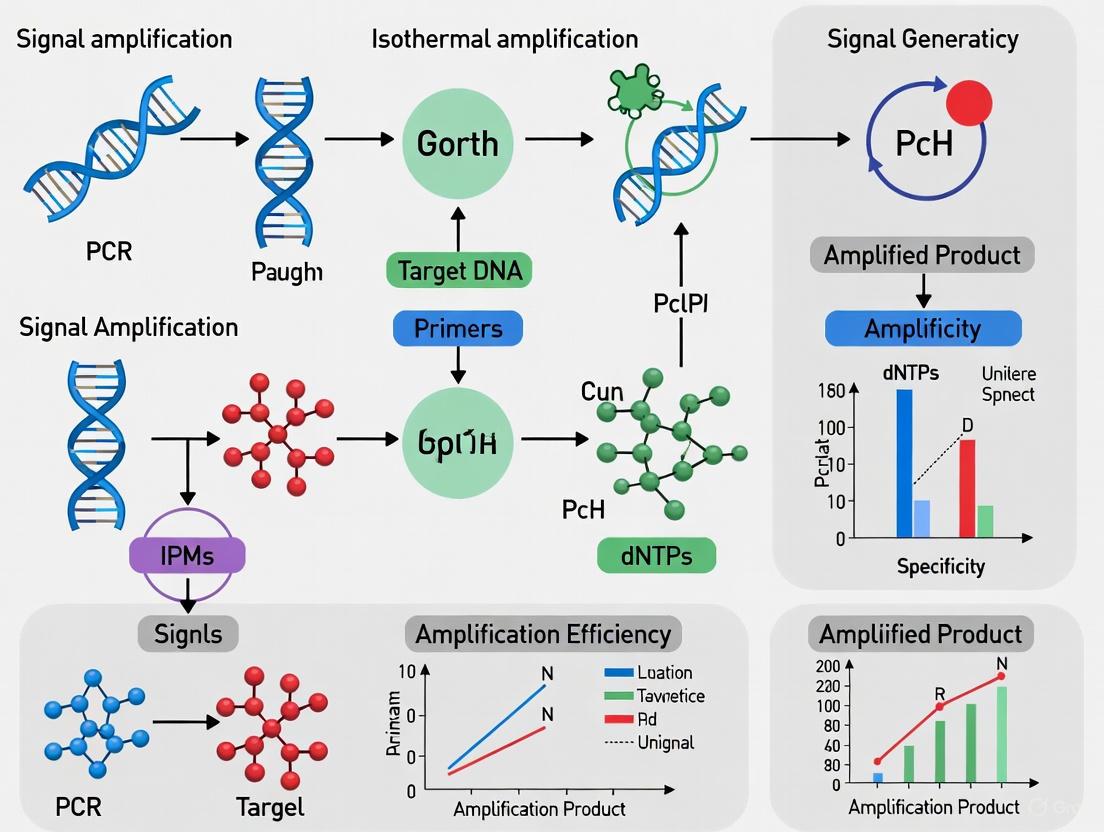
This comprehensive review explores cutting-edge signal amplification technologies that enable sensitive detection of low-abundance molecular targets, addressing a critical challenge in biomedical research and clinical diagnostics.
Advanced Signal Amplification Methods for Low-Abundance Targets: From Molecular Tools to Clinical Diagnostics
Abstract
This comprehensive review explores cutting-edge signal amplification technologies that enable sensitive detection of low-abundance molecular targets, addressing a critical challenge in biomedical research and clinical diagnostics. Covering foundational principles to advanced applications, we examine innovative methods including CRISPR-based systems, in situ hybridization techniques like RNAscope and SABER, electrochemical biosensors, and novel approaches such as Amplification by Cyclic Extension (ACE). The article provides practical guidance for researchers on method selection, optimization strategies, and validation protocols, with specific applications in single-cell analysis, spatial transcriptomics, cancer research, and point-of-care diagnostics. This resource equips scientists and drug development professionals with the knowledge to implement these powerful technologies in their work, ultimately advancing capabilities in precision medicine and biomarker discovery.
Understanding Signal Amplification: Core Principles and Technological Evolution
The Critical Need for Signal Amplification in Low-Abundance Target Detection
Frequently Asked Questions (FAQs) and Troubleshooting Guides
General Principles and Method Selection
Q1: What are the primary reasons I might fail to detect a low-abundance target? Failure typically stems from two categories: signal insufficiency or excessive background noise.
- Low Signal: The target concentration is below the detection limit of your instrument. The target may be genuinely low-abundance or lost during sample preparation (e.g., inefficient protein extraction or RNA recovery) [1] [2].
- High Background: Contaminants or non-specific binding can mask the specific signal. In mass spectrometry, for example, matrix effects can suppress analyte ionization [3]. In western blotting, non-specific antibody binding can create a high background [1].
Q2: How do I choose the right signal amplification strategy for my experiment? The choice depends on your target (DNA, RNA, protein, small molecule) and detection platform. The table below compares common strategies.
| Strategy | Principle | Best For | Key Consideration |
|---|---|---|---|
| Enzymatic Amplification [4] [5] | Uses enzymes (e.g., HRP, Exonuclease III) to generate many reporter molecules per binding event. | Western blotting, ELISA, electrochemical biosensors. | Potential for high background if not optimized. |
| Nanomaterial-Enhanced [6] [5] | Uses nanoparticles (e.g., gold, carbon) with high surface area to load many signal reporters. | Colorimetric assays (LFA), electrochemical sensors, SERS. | Requires careful synthesis and functionalization of nanomaterials. |
| Nucleic Acid-Based [7] [4] | Employs DNA/RNA circuits (e.g., HCR, G-quadruplex) to create a massive signal-generating structure upon target recognition. | Detection of nucleic acids, proteins via aptamers. | Can be complex to design; requires high-purity reagents. |
| Target Pre-Amplification [7] | A preliminary step to selectively amplify the target before detection (e.g., STALARD for RNA). | RT-qPCR for low-abundance transcripts. | Risk of amplifying non-specific targets if not highly selective. |
Troubleshooting Common Experimental Issues
Q3: My western blot shows no bands for my low-abundance protein. What should I do? Follow this systematic approach to enhance sensitivity [1]:
- Verify Sample Preparation: Ensure efficient protein extraction using optimized, sample-specific buffers and broad-spectrum protease inhibitors to prevent degradation [1].
- Optimize Electrophoresis and Transfer:
- Use a gel chemistry appropriate for your protein's size (e.g., Bis-Tris for 6-250 kDa, Tris-Acetate for high molecular weight) for optimal resolution [1].
- Ensure complete transfer to the membrane. Neutral-pH gels (Bis-Tris, Tris-Acetate) offer better transfer efficiency than traditional Tris-glycine gels [1].
- Amplify the Signal:
Q4: My Sanger sequencing results for a low-copy plasmid are noisy or unreadable. What are the likely causes? This is a common issue often related to sample quality and quantity [8].
- Primary Cause: Low template concentration or poor-quality DNA is the most frequent reason. Contaminants like salts or residual PCR primers can interfere with the sequencing reaction [8].
- Solution:
- Accurate Quantification: Use a fluorometer or NanoDrop rather than a standard spectrophotometer for accurate concentration measurement of low-yield samples [8].
- Thorough Cleanup: Always clean up your PCR product or plasmid preparation to remove enzymes, salts, and primers. Use a reliable purification kit [8].
- Check Primer: Ensure the primer is of high quality, not degraded, and binds efficiently to your template [8].
Q5: In LC-MS analysis, my target analyte has a weak signal. How can I improve sensitivity? Optimize the entire workflow, from sample preparation to the MS interface [3].
- Sample Cleanup: Use pretreatment (e.g., SPE, precipitation) to remove matrix components that cause ion suppression [3].
- LC Optimization: Consider using a column with smaller particle size or a narrower internal diameter to improve peak concentration.
- MS Source Tuning: Key parameters dramatically impact ionization efficiency [3].
- Capillary Voltage: Optimize for stable and reproducible spray.
- Desolvation Temperature/Gas Flow: Adjust for efficient solvent evaporation. Be cautious with thermally labile compounds [3].
Experimental Workflows for Signal Amplification
Protocol 1: STALARD for Low-Abundance RNA Isoform Quantification
This protocol describes Selective Target Amplification for Low-Abundance RNA Detection (STALARD), a two-step RT-PCR method to pre-amplify specific polyadenylated transcripts for more reliable quantification [7].
1. Principle: A gene-specific primer (GSP) tailed with an oligo(dT) sequence is used for reverse transcription. This incorporates the GSP sequence into the cDNA. A subsequent limited-cycle PCR using only the same GSP then selectively amplifies the target transcript from both ends [7].
2. Reagents and Equipment:
- Total RNA sample
- GSP-tailed oligo(dT) primer (
GSoligo(dT)) - Gene-specific primer (GSP)
- Reverse Transcriptase Kit (e.g., HiScript IV 1st Strand cDNA Synthesis Kit)
- PCR Kit (e.g., SeqAmp DNA Polymerase)
- Thermal Cycler
- Purification Beads (e.g., AMPure XP)
3. Step-by-Step Procedure:
- Step 1: Reverse Transcription
- Mix 1 µg of total RNA with 1 µL of 50 µM
GSoligo(dT)primer. - Synthesize first-strand cDNA using a standard reverse transcription protocol [7].
- Mix 1 µg of total RNA with 1 µL of 50 µM
- Step 2: Selective Target Pre-amplification
- Perform a PCR reaction using 1 µL of the resulting cDNA and 1 µL of 10 µM GSP.
- Use a thermocycling program: Initial denaturation at 95°C for 1 min; 9–18 cycles of 98°C for 10 s, 62°C for 30 s, and 68°C for 1 min/kb; final extension at 72°C for 10 min [7].
- Step 3: Product Purification
- Purify the PCR products using AMPure XP beads at a 1.0:0.7 product-to-bead ratio to remove excess primers and enzymes [7].
- Step 4: Quantification
- Use the purified product for downstream quantification by qPCR or sequencing.
The following diagram illustrates the STALARD workflow and its core principle of selective amplification.
Protocol 2: Constructing a G-Quadruplex Electrochemical Biosensor
This protocol outlines the construction of an ultrasensitive biosensor for protein detection (e.g., Mucin 1) using a G-quadruplex-enriched DNA nanonetwork (GDN) for signal amplification [4].
1. Principle: The target protein is captured by an aptamer, triggering an Exonuclease III-assisted cyclic amplification that produces a large amount of secondary DNA (S1). The S1 strand hybridizes with other strands to form Y-shaped DNA modules, which self-assemble into a GDN. This network loads numerous G-quadruplex structures that, upon binding hemin, produce a strong electrochemical signal [4].
2. Reagents and Equipment:
- Target protein (e.g., Mucin 1)
- Specific aptamer and complementary DNA (cDNA)
- Hairpin DNA (H1), ssDNA S2, S3, S4
- Exonuclease III (Exo III)
- Hemin
- Gold electrode or screen-printed electrode
- Electrochemical workstation
3. Step-by-Step Procedure:
- Step 1: Target Recycling Amplification
- Hybridize the aptamer and cDNA to form a double-stranded complex (D1).
- Incubate the target with D1. The target binds the aptamer, releasing cDNA.
- Add hairpin H1 and Exo III. The cDNA opens H1, and Exo III digests the cDNA, releasing the target and a new DNA strand (S1), while H1 is cleaved. This cycle repeats, producing many S1 strands [4].
- Step 2: GDN Formation
- Mix the ssDNA S1 with strands S2 and S3 (which carry split G-quadruplex fragments). They hybridize to form stable Y-modules.
- These Y-modules self-assemble into a large, ordered DNA nanonetwork (GDN) via sticky-end cohesion [4].
- Step 3: Sensor Assembly and Detection
- Immobilize ssDNA S4 on a gold electrode via Au-S bonds.
- Hybridize the pre-formed GDN with the electrode-anchored S4.
- Incubate the electrode with hemin. The numerous G-quadruplex structures in the GDN bind hemin, creating an efficient electrocatalytic unit.
- Measure the electrochemical current (e.g., by DPV). The signal is directly proportional to the target concentration, achieving ultra-sensitive detection down to the femtogram/mL level [4].
The workflow below visualizes this complex DNA-based signal amplification strategy.
The Scientist's Toolkit: Key Research Reagent Solutions
The following table details essential materials and their functions in developing assays for low-abundance targets, as featured in the cited experiments.
| Item Name | Function / Application | Key Feature / Benefit |
|---|---|---|
| GSP-tailed oligo(dT) Primer [7] | Reverse transcription primer for STALARD. | Enables selective pre-amplification by adding a gene-specific sequence to cDNA. |
| SeqAmp DNA Polymerase [7] | PCR enzyme for target pre-amplification. | High fidelity and processivity for efficient long-range amplification. |
| Exonuclease III (Exo III) [4] | Enzyme for enzymatic signal amplification. | Catalyzes target recycling, generating numerous DNA strands from a single target. |
| Hemin [4] | Electroactive molecule for signal generation. | Binds to G-quadruplex DNA to form a DNAzyme with peroxidase-like activity. |
| Gold Nanoparticles (AuNPs) [5] | Nanomaterial for signal enhancement. | High surface area, excellent conductivity, easy functionalization with biomolecules. |
| Reduced Graphene Oxide (rGO) [5] | Nanomaterial for electrode modification. | Enhances electron transfer rate and provides large surface area for probe immobilization. |
| SuperSignal West Atto Substrate [1] | Chemiluminescent substrate for western blot. | Provides ultra-high sensitivity for detecting low-abundance proteins. |
| Protein G Column [2] | For immunodepletion of abundant proteins. | Removes IgG from serum samples to unmask low-abundance proteins for proteomics. |
| AKOS-22 | AKOS-22, MF:C22H21ClF3N3O3, MW:467.9 g/mol | Chemical Reagent |
| PF-04880594 | PF-04880594, CAS:1111636-35-1, MF:C19H16F2N8, MW:394.4 g/mol | Chemical Reagent |
Technical Support Center: Troubleshooting Guides & FAQs
Frequently Asked Questions (FAQs)
Q1: What are the key advantages of modern non-radioactive probes over traditional radioactive probes?
Modern non-radioactive probes offer several critical advantages. Radioactive probes, which use isotopes like 32P and 35S, pose significant safety risks due to radiation exposure, have short half-lives, require costly disposal, and are subject to strict regulatory oversight [9]. In contrast, non-radioactive probes (e.g., fluorescent, biotinylated, or digoxigenin-labeled) eliminate radiation hazards, are more convenient to handle, have longer shelf lives, and reduce safety and compliance requirements [9]. Furthermore, techniques like Amplification by Cyclic Extension (ACE) and G-quadruplex-enriched DNA nanonetworks (GDN) provide exceptionally high sensitivity for detecting low-abundance targets without the drawbacks of radioactivity [10] [4].
Q2: My signal amplification experiment has a high background signal. What could be the cause and how can I fix it?
A high background signal is a common issue, often stemming from non-specific probe binding or suboptimal reaction conditions.
- For assays like Immuno-SABER or RCA: High background can be caused by nonspecific concatemer binding or nonspecific background antibody binding [10].
- For G-quadruplex-based electrochemical biosensors: Using split G-quadruplex fragments that only form a complete structure upon successful target recognition can effectively reduce background, as the fragments themselves are poor at capturing signal molecules [4].
- General Troubleshooting Steps:
- Optimize washing stringency: Increase the number or rigor of wash steps after probe hybridization to remove loosely bound materials [10].
- Verify component quality: Use high-quality, purified antibodies and oligonucleotides to minimize non-specific interactions.
- Titrate reagents: Systematically adjust the concentration of probes and detection elements to find the optimal signal-to-noise ratio.
Q3: How can I improve the sensitivity of my mass cytometry for low-abundance proteins?
Conventional mass cytometry requires hundreds of metal-tagged antibodies per epitope to reach detection thresholds, limiting its use for low-abundance proteins [10]. The Amplification by Cyclic Extension (ACE) method directly addresses this. ACE uses thermal-cycling-based DNA concatenation on antibodies, creating hundreds of sites for metal-conjugated detector oligonucleotides to bind, achieving over 500-fold signal amplification [10]. A critical step is incorporating a CNVK photocrosslinker into the detector oligonucleotide. A brief UV exposure after hybridization creates a covalent bond, stabilizing the amplification complex against denaturation during the high-temperature vaporization step in mass cytometry, which would otherwise cause signal loss [10].
Troubleshooting Guide: Common Experimental Issues
| Problem | Possible Cause | Solution |
|---|---|---|
| Low or No Signal | Instability of DNA complexes during high-temperature processing (e.g., in mass cytometry). | Implement a photocrosslinking step using CNVK-modified detectors and UV exposure to stabilize hybrids [10]. |
| Excessive Non-Specific Background | Non-specific binding of amplifiers or antibodies. | Increase washing stringency; use split-probe systems (e.g., split G-quadruplex) that only assemble upon target binding [10] [4]. |
| Inconsistent Results Between Replicates | Unstable reagents; improper thermal cycling. | Check reagent integrity and ensure accurate temperature control during cyclic amplification steps [10]. |
Experimental Protocols for Key Amplification Techniques
Protocol 1: Amplification by Cyclic Extension (ACE) for Mass Cytometry
This protocol enables highly sensitive, multiplexed detection of low-abundance proteins in single-cell samples [10].
- Antibody Staining: Incubate cell suspensions (surface or intracellular) with antibodies conjugated to short DNA oligonucleotide initiators (e.g., TT-a, 11-mer) [10].
- Thermal Cyclic Extension:
- Introduce an extender oligonucleotide (a-T-a, 19-mer) to the stained cells.
- Perform thermal cycling (e.g., 1-500 cycles) between 22°C and 58°C in the presence of Bst polymerase. Each cycle extends the initiator, concatenating hundreds of repeats [10].
- Detector Hybridization & Crosslinking:
- Hybridize metal-conjugated detectors (containing a-T-a sequence) to the extended initiator strands.
- Expose the sample to ultraviolet (UV) light for 1 second to activate the CNVK photocrosslinker, forming a covalent bond and stabilizing the complex [10].
- Acquisition: Analyze the samples using standard mass cytometry procedures. The amplified metal signal allows for detection of low-abundance targets [10].
Protocol 2: G-Quadruplex-Enriched DNA Nanonetwork (GDN) for Ultrasensitive Electrochemical Detection
This protocol details the construction of a biosensor for detecting protein biomarkers like mucin 1 with an ultralow detection limit [4].
- Target Recycling Amplification:
- Hybridize the target-specific aptamer with its complementary DNA (cDNA) to form a double-stranded complex (D1).
- Incubate the target protein (e.g., mucin 1) with D1. The target binds the aptamer, releasing cDNA.
- Add hairpin H1 and Exonuclease III (Exo III). The released cDNA triggers Exo III-assisted cyclic cleavage of H1, producing a large amount of secondary target single-stranded DNA (S1) [4].
- Self-assembly of GDN:
- Mix the resulting ssDNA S1 with ssDNA S2 and ssDNA S3, both carrying split G-quadruplex fragments. They self-assemble into Y-modules, which further interconnect to form the G-quadruplex-enriched DNA nanonetwork (GDN) [4].
- Electrode Immobilization & Detection:
- Immobilize a capture probe (ssDNA S4) on a gold electrode via Au-S bonds.
- Hybridize the pre-formed GDN with the surface-bound S4.
- Add hemin, which is captured by the G-quadruplexes to form an electroactive complex. Measure the electrochemical signal (e.g., via square wave voltammetry) for quantitative detection [4].
Research Reagent Solutions
| Reagent / Material | Function in Experiment |
|---|---|
| Short DNA Oligonucleotide Initiators (e.g., TT-a) [10] | Short DNA strands conjugated to antibodies; serve as primers for the cyclic extension reaction in ACE. |
| Bst DNA Polymerase | Enzyme used in ACE to perform the strand extension at constant, elevated temperatures [10]. |
| CNVK (3-cyanovinylcarbazole) Photocrosslinker [10] | A modified nucleic acid incorporated into detector oligonucleotides; upon UV exposure, forms covalent bonds to stabilize DNA hybrids against heat denaturation. |
| Exonuclease III (Exo III) [4] | Enzyme used in enzymatic target recycling; cleaves one strand of dsDNA to amplify the target signal. |
| Split G-quadruplex Forming Sequences [4] | Short, guanine-rich DNA fragments that only assemble into a complete G-quadruplex structure upon successful target detection, minimizing background signal. |
| Hemin | An electroactive molecule that binds specifically to G-quadruplex DNA structures, enabling label-free electrochemical detection [4]. |
Visualization of Signaling Pathways & Workflows
ACE Amplification Workflow
GDN Biosensor Mechanism
For researchers in drug development and biomedical science, detecting low-abundance targets represents a significant challenge. The success of these efforts hinges on three fundamental principles: sensitivity (the ability to detect low amounts of a target), specificity (the ability to distinguish the target from similar molecules), and signal-to-noise ratio (SNR) (the clarity of the target signal against background interference). A high SNR is particularly crucial, as it directly impacts data integrity, reduces errors, and enables the detection of faint biological signals that would otherwise be lost. This guide provides practical troubleshooting and methodologies to optimize these parameters in your experiments.
Understanding Signal-to-Noise Ratio (SNR)
What is SNR and Why is it Critical?
Signal-to-noise ratio (SNR) is a measure that compares the level of a desired signal to the level of background noise. [11] [12] It is defined as the ratio of signal power to noise power, often expressed in decibels (dB). [11] A ratio higher than 1:1 (greater than 0 dB) indicates more signal than noise. [11] [13]
In practical terms, SNR quantifies how easily you can detect and interpret your target. A high SNR means the signal is clear and easy to detect or interpret, while a low SNR means the signal is corrupted or obscured by noise and may be difficult to distinguish or recover. [11] In digital communications, a high SNR means bits are transmitted clearly, whereas a low SNR increases error rates. [12] This concept directly translates to biomedical detection, where a low SNR can lead to false positives or failure to detect true signals.
How to Calculate SNR
SNR can be calculated using different formulas depending on how the signal and noise are measured. [11] The most common methods are:
- Power Ratio:
SNR (dB) = 10 * logâ‚â‚€(Psignal / Pnoise)where P is average power. [11] [12] - Amplitude Ratio:
SNR (dB) = 20 * logâ‚â‚€(Asignal / Anoise)where A is root mean square (RMS) amplitude. [11] [12] This is common when measuring voltages, such as in audio applications.
For analytical techniques like spectroscopy or chromatography, a common method is to select a region of the data with no signals and calculate either the root mean square or the standard deviation of the data in this region as the noise level. The height of a signal is then divided by this noise level. [14] A peak is generally considered real if its SNR exceeds 3, as there is a greater than 99.9% chance it is not a random noise artifact. [14]
Table 1: Interpretation of SNR Values in Decibels (dB)
| SNR Range (dB) | Interpretation | Practical Implication in Experiments |
|---|---|---|
| < 0 dB | Very Poor | Noise dominates; signal is unusable. |
| 0 dB to 10 dB | Poor | Signal is barely detectable; high error rates. |
| 10 dB to 20 dB | Marginal / Low Quality | Signal is understandable but with significant noise. |
| 20 dB to 30 dB | Acceptable / Moderate Quality | Adequate for many applications; some noise noticeable. |
| 30 dB to 40 dB | Good Quality | Good for most data analysis; noise is faint. |
| 40 dB to 60 dB | Very Good / High Quality | Excellent clarity; noise is negligible for most purposes. |
| > 60 dB | Excellent / Professional Quality | Near-perfect signal fidelity. [12] |
Troubleshooting Guides: Common Experimental Issues and Solutions
No Signal or Weak Signal
Problem: You cannot see any signal from your target, or the signal is too faint to be conclusive.
Solutions:
- Increase Target Concentration: Load more protein per well (titrations might be helpful). Use a positive control lysate known to express the target protein. [1] [15]
- Optimize Sample Preparation: Ensure efficient protein extraction using buffers optimized for your sample source and target protein location. Always use broad-spectrum protease inhibitors to prevent protein degradation and loss. [1]
- Check Antibody Specificity and Concentration: Use specificity-verified antibodies designed for your application (e.g., western blotting). Increase the concentration of the primary antibody or extend the incubation time. [1] [15]
- Improve Transfer Efficiency: For western blotting, confirm proteins were successfully transferred to the membrane. Use neutral-pH gels (e.g., Bis-Tris) for cleaner protein release and better transfer efficiency, especially for low-abundance proteins. [1]
- Use Sensitive Detection Reagents: For western blotting, use high-sensitivity chemiluminescent substrates. HRP-based systems can provide detection down to the attogram level when optimized with advanced substrates. [1]
- Increase Exposure Time: For imaging, ensure the exposure time is sufficient to capture the signal. [15]
High Uniform Background
Problem: The entire membrane or image has a high, uniform background that obscures specific signals.
Solutions:
- Optimize Blocking: Increase blocking time, temperature, or the concentration of the blocking reagent (e.g., up to 10%). Consider changing the blocking agent (e.g., BSA vs. milk). Note that milk is not recommended for detecting phosphorylated proteins. [15]
- Reduce Antibody Concentration: High concentrations of primary or secondary antibody can cause non-specific binding. Titrate your antibodies to find the optimal concentration. Include a blocking agent in your antibody buffers. [15]
- Increase Washing: Increase the number, duration, and/or volume of washes to remove unbound antibodies more effectively. [15]
- Perform a Secondary Antibody Control: Omit the primary antibody and incubate the blot with only the secondary antibody to check for non-specific binding of the secondary antibody. [15]
Non-specific Bands or Multiple Bands
Problem: You see bands at unexpected molecular weights or multiple bands where you expect one.
Solutions:
- Verify Antibody Specificity: Non-specific bands often indicate antibody cross-reactivity. Use antibodies with validated specificity for your target via knockout or knockdown controls. [15]
- Prevent Sample Degradation: Use fresh lysates, keep samples on ice, and always include protease and phosphatase inhibitors. [15]
- Consider Protein Modifications: The predicted molecular weight can be influenced by post-translational modifications (e.g., glycosylation, phosphorylation) or protein processing (cleavage). Use positive controls like recombinant protein to confirm the identity of the band. [15]
- Enrich Your Target: If the target is of low abundance, load more protein or use immunoprecipitation to enrich the target before analysis. [15]
Diagram 1: Troubleshooting Logic for Common Detection Issues
Advanced Signal Amplification: The ACE Method
For targets with extremely low abundance, conventional detection methods may be insufficient. The Amplification by Cyclic Extension (ACE) method is a cutting-edge signal amplification technology that enables high-sensitivity detection in mass cytometry, allowing quantification of low-abundance proteomic substrates in single cells. [16]
ACE Workflow Protocol
- Antibody Staining: Antibodies targeting the protein of interest are conjugated to short DNA oligonucleotide initiators (11-mer). These conjugated antibodies are applied to cell suspensions for staining. [16]
- Thermal Cycling Extension: An extender oligonucleotide is introduced. Through repeated thermal cycles (1 min per cycle), a polymerase successively elongates the initiator, creating hundreds of DNA repeats on each antibody conjugation site. [16]
- Detector Hybridization: Detectors conjugated to metal isotopes (for mass cytometry) are hybridized to the extended initiator strand. Each extended initiator can bind hundreds of metal-conjugated detectors. [16]
- Photocrosslinking (Critical for Mass Cytometry): A brief UV exposure activates a photocrosslinker (CNVK), forming a covalent bond between the detector and the extended DNA strand. This stabilizes the complex against denaturation during the high-temperature vaporization step in mass cytometry. [16]
- Analysis: The sample is analyzed by mass cytometry, where the amplified metal signal enables detection of low-abundance targets. [16]
Diagram 2: ACE Signal Amplification Workflow
Key Advantages of ACE
- High Amplification Power: ACE enables over 500-fold signal amplification with uncompromised signal-to-noise ratios. [16]
- High Multiplexing: It allows simultaneous signal amplification on more than 30 protein epitopes. [16]
- Specificity: The use of short DNA initiators (9-mer) reduces nonspecific binding compared to methods using longer oligonucleotides. [16]
The Scientist's Toolkit: Essential Research Reagents and Materials
Table 2: Key Reagent Solutions for Sensitive Detection of Low-Abundance Targets
| Item | Function/Application | Specific Examples / Notes |
|---|---|---|
| High-Sensitivity Substrates | Ultrasensitive chemiluminescent detection for western blotting. Ideal for low-abundance targets or precious samples. | SuperSignal West Atto Ultimate Sensitivity Substrate enables protein detection down to the high-attogram level. [1] |
| Optimized Gel Chemistries | For effective separation of target proteins, which is critical for accessibility during antibody binding. | Bis-Tris Gels (6-250 kDa): General use, neutral pH, preserves protein integrity.Tris-Acetate (40-500 kDa): Best for high molecular weight proteins.Tricine (2.5-40 kDa): Optimal for low molecular weight proteins. [1] |
| Validated Primary Antibodies | Ensure specific binding to the target of interest. Critical for both sensitivity and specificity. | Use antibodies that are specificity-verified and application-validated (e.g., for western blotting). Always check validation data provided by the supplier. [1] |
| Low-Noise Secondary Antibodies | Detect the primary antibody with high sensitivity and minimal background. | Use antibodies conjugated to HRP for high sensitivity. Filter antibodies through a 0.2 μm filter to remove aggregates that cause speckled backgrounds. [1] [15] |
| ACE Reagents | For extreme signal amplification in mass cytometry applications for low-abundance proteins. | Includes DNA initiator-conjugated antibodies, extender oligonucleotides, Bst polymerase, and CNVK-modified metal-conjugated detectors. [16] |
| Protease & Phosphatase Inhibitors | Prevent sample degradation during and after preparation, preserving the target protein. | Use broad-spectrum inhibitors in lysis buffers. Essential for obtaining high yields from your sample. [1] [15] |
| VBIT-12 | VBIT-12, MF:C25H27N3O3, MW:417.5 g/mol | Chemical Reagent |
| HJC0149 | HJC0149, MF:C15H10ClNO4S, MW:335.8 g/mol | Chemical Reagent |
Frequently Asked Questions (FAQs)
Q1: What is a good signal-to-noise ratio for my experiment? A: The required SNR depends on the application. For qualitative detection of a peak in chromatography or spectroscopy, an SNR of 3:1 is often the minimum threshold to confirm a signal is real. [14] For reliable quantitative analysis, especially with low-abundance targets, aim for an SNR of 10:1 or higher. [14] [12]
Q2: How can I improve SNR without changing my core detection antibody? A: Several strategies can help:
- Averaging: If your instrument allows, averaging multiple scans or frames can improve SNR, as the improvement is proportional to the square root of the number of frames averaged (e.g., 4 frames improve SNR by 2x). [13]
- Filtering: Use electronic or digital filters to block noise frequencies outside the desired signal band. [12]
- Optimize Blocking and Washing: In immunoassays, these are critical steps for reducing background noise. [15]
- Increase Signal Strength: Amplify the source signal within system limits to avoid distortion. [12]
Q3: My negative control has a band in the same place as my target. Is this a signal-to-noise problem? A: This is more likely a specificity problem than a pure SNR issue. A band in the negative control suggests non-specific antibody binding or a cross-reactive antibody. To troubleshoot, verify your antibody's specificity using a knockout cell line or confirm the band identity with a recombinant protein control. [15] Optimizing blocking conditions and titrating your antibody can also help.
Q4: Can software improve a poor SNR after I've collected my data? A: Yes, denoising algorithms can enhance SNR post-capture, but they cannot recover information that is completely lost in the noise. The best results always come from optimizing SNR during the acquisition phase itself. [13]
Q5: What is the Rose Criterion? A: The Rose Criterion is a rule of thumb from imaging science which states that an SNR of at least 5 is needed to distinguish image features with certainty. An SNR less than 5 means there is less than 100% certainty in identifying details. [11] This principle can be broadly applied to other detection methods.
Troubleshooting Guides
Troubleshooting Guide: Background Noise in Electrophysiology and Biosensing
Problem: Excessive background noise is obscuring weak target signals. Question: "Why is my signal-to-noise ratio (SNR) so poor in my electrophysiology recordings or electrochemical biosensor?"
1. Investigate Electrical and Environmental Interference
- Action: Check for 50/60 Hz "mains hum" and high-frequency hash.
- Protocol: Use an oscilloscope or spectral analysis software to identify the noise frequency.
- Solution:
- For 50/60 Hz Hum: Verify a single-point grounding scheme for all equipment (amplifier, Faraday cage, table). Inspect for ground loops, which are a major source of this noise [17].
- For High-Frequency Hash: Ensure the Faraday cage is fully sealed and all connections are secure. Move cell phones, wireless routers, and unshielded power supplies away from the experimental setup [17].
- Cable Management: Use shielded, twisted-pair cables and avoid running power cords parallel to signal cables [17].
2. Optimize Your Signal Acquisition Hardware
- Action: Verify the configuration of your instrumentation amplifier.
- Protocol: Ensure the amplifier is using a differential input configuration, which subtracts noise common to both the signal and reference electrodes [17].
- Solution:
- Use an amplifier with a high Common-Mode Rejection Ratio (CMRR) (>100 dB) to effectively reject environmental interference [17].
- Place the headstage (the first amplification stage) as close as possible to the signal source (e.g., the cell or tissue) to minimize the length of the high-impedance signal path, which is highly susceptible to noise [17].
3. Apply Appropriate Digital Signal Processing (DSP)
- Action: Apply post-acquisition digital filters judiciously.
- Protocol: After maximizing hardware solutions, use software filters.
- Solution:
- Low-Pass Filter: Attenuate high-frequency noise. Set the cutoff frequency just above the fastest biologically relevant component of your signal (e.g., action potential spikes) [17].
- High-Pass Filter: Remove slow baseline drift caused by electrode instability or temperature fluctuations [17].
- Notch Filter: Use as a last resort to remove persistent 50/60 Hz line noise, as it can introduce signal artifacts [17].
- AI-Powered Denoising: For complex noises, modern AI algorithms can distinguish between speech and noise, and can be adapted to separate signal from background in various data types [18].
Table: Common Noise Signatures and Corrective Actions
| Noise Signature | Potential Source | Corrective Action |
|---|---|---|
| Sharp 60/50 Hz Peaks [17] | Ground loops, poor shielding [17] | Verify single-point grounding; check Faraday cage integrity [17] |
| High-Frequency Hash [17] | Radiofrequency interference (RFI) from cell phones, routers [17] | Seal Faraday cage; use a low-pass filter [17] |
| Slow, Baseline Drift [17] | Thermal noise, electrode drift, temperature variations [17] | Allow equipment warm-up time; use a high-pass filter [17] |
| Excessively Large Noise [17] | Broken ground connection or amplifier saturation (clipping) [17] | Check all electrode connections; reduce amplifier gain [17] |
Troubleshooting Guide: Non-Specific Binding in Biomolecular Assays
Problem: High background signal due to non-specific interactions of detection reagents. Question: "How can I reduce the high background in my ELISA or antibody-oligo conjugate imaging?"
1. Optimize Your Incubation and Buffer Conditions
- Action: Modify the chemical environment to discourage non-specific interactions.
- Protocol: Incorporate blocking agents and competitors into your incubation buffers.
- Solution:
- General Blocking: Use 1-3% BSA, normal IgG (e.g., 0.1 mg/mL), or serum proteins from an unrelated species to block unused binding sites on surfaces [19].
- Electrostatic Shielding: Add 150 mM NaCl to your buffer to shield electrostatic forces between negatively charged reagents (like DNA) and positively charged cellular components [19].
- Polyanion Competitors: Include dextran sulfate (0.02-0.1%) as a polyanion to outcompete conjugated DNA or other charged reagents for non-specific binding sites [19].
2. Employ Specific Blocking Strategies for Oligo Conjugates
- Action: Prevent single-stranded DNA (ssDNA) on antibodies from binding non-specifically.
- Protocol: Pre-hybridize the conjugated ssDNA with a short complementary DNA strand before applying the conjugate to the sample.
- Solution: This converts the ssDNA into double-stranded DNA (dsDNA), which dramatically reduces its ability to hybridize to intracellular nucleic acids or bind DNA-binding proteins, a common cause of nuclear background staining [19].
3. Select the Right Materials and Reagents
- Action: Minimize adsorption to consumables.
- Protocol: Use low-adsorption tubes and plates specifically designed for proteins or nucleic acids.
- Solution: For problematic molecules like peptides, proteins, and nucleic acids, low-adsorption consumables have surface passivation that reduces losses due to adsorption, improving recovery and signal [20].
Table: Strategies to Mitigate Non-Specific Binding Based on Analyte Type
| Analyte Type | Main Challenge | Desorption Strategy | Mechanism |
|---|---|---|---|
| Peptides, Proteins, PDCs [20] | Poor solubility; electrostatic/hydrophobic effects [20] | Adjust solvent pH; use organic reagents or BSA as a competitor [20] | Improves solubility; competes for binding sites [20] |
| Nucleic Acids [20] | Electrostatic binding to metal surfaces [20] | Add chelators (EDTA); use low-adsorption liquid phase systems [20] | Reduces metal ion chelation; passivates metal surfaces [20] |
| Cationic Lipids [20] | Strong electrostatic and hydrophobic effects [20] | Add surfactants (e.g., Tween, CHAPS) [20] | Improves dissolution state; disrupts hydrophobic interactions [20] |
Troubleshooting Guide: Overcoming Detection Limits in Low-Abundance Targets
Problem: The target signal is too weak to detect reliably, even with low background. Question: "The native abundance of my target is below my assay's detection limit. How can I amplify the signal?"
1. Implement Enzymatic Signal Amplification
- Action: Use enzymes to generate a detectable product cascade.
- Protocol: In ELISA or immunohistochemistry, use an enzyme-linked antibody (e.g., HRP or Alkaline Phosphatase) with a chromogenic, fluorogenic, or chemiluminescent substrate.
- Solution: A single enzyme molecule can turn over many thousands of substrate molecules, resulting in significant signal amplification at the target location [21]. For even greater amplification, use the Tyramide Signal Amplification (TSA) system, where HRP generates highly reactive tyramide radicals that deposit labeled tyramide nearby, greatly enhancing sensitivity [21].
2. Utilize Nucleic Acid Amplification Strategies
- Action: Increase the number of detectable targets isothermally.
- Protocol: For nucleic acid targets, use isothermal amplification methods like Loop-Mediated Isothermal Amplification (LAMP) or Rolling Circle Amplification (RCA) coupled with electrochemical or optical detection [22].
- Solution: These methods can amplify target DNA or RNA at a constant temperature, making them suitable for point-of-care settings. The amplified products can be detected with intercalating dyes (e.g., methylene blue) or sequence-specific probes [22].
3. Leverage Affinity-Based Amplification Systems
- Action: Increase the number of detection labels per binding event.
- Protocol: Use the Labeled Streptavidin-Biotin (LSAB) system.
- Solution:
- Use a biotinylated primary or secondary antibody.
- Then, add enzyme- or fluorophore-conjugated streptavidin. Since each biotinylated antibody carries multiple biotins and streptavidin has four biotin-binding sites, this creates a large complex with many reporter molecules, significantly amplifying the signal [23].
4. Convert Interference into Signal
- Action: Use novel strategies that turn background components into an advantage.
- Protocol: In a biosensing nanoassembly, target recognition can be designed to induce cross-linking between the target and non-specific proteins in the sample.
- Solution: This approach uses the abundant non-specific proteins as part of the detection scaffold, forming a large nanoassembly on the sensor surface that generates a strong signal and allows for vigorous washing to remove unbound interference [24].
Frequently Asked Questions (FAQs)
Q1: What is the most critical first step to improve my signal-to-noise ratio? The most critical step is to minimize noise at the source through hardware and physical preparation before any electronic or digital processing. This includes ensuring proper grounding, using a Faraday cage, stabilizing your electrodes, and placing the headstage close to your preparation. A low noise floor is the foundation for a high-quality signal [17].
Q2: I'm seeing nuclear staining in my antibody-oligo conjugate experiment. What is the cause and solution? This is a classic sign of non-specific binding caused by the electrostatic interaction between the negatively charged ssDNA on your antibody and positively charged cellular proteins like histones. The solution is to pre-hybridize the conjugated oligo with its complementary DNA to form dsDNA and include dextran sulfate (0.02-0.1%) and 150 mM NaCl in your antibody incubation buffer to block these interactions [19].
Q3: What are the main advantages of signal-based amplification over target-based amplification? Target-based amplification (e.g., PCR, LAMP) increases the number of target molecules and is highly sensitive. However, it often requires enzymes and controlled conditions. Signal-based amplification (e.g., enzymatic detection, LSAB) increases the signal per target and can be simpler, faster, and more suitable for point-of-care diagnostics, as it doesn't alter the native target abundance [22].
Q4: How can I prevent the adsorption of my peptide drug during sample storage and analysis? Peptides are prone to adsorption to container walls. Strategies include:
- Using low-adsorption consumables made from specially treated polymer.
- Adjusting the solution pH to improve solubility.
- Adding a carrier protein like BSA to compete for binding sites.
- Using surfactants to improve dispersion and reduce hydrophobic interactions [20].
Experimental Workflows and Signaling Pathways
Workflow: Signal Amplification for Low-Abundance Protein Detection
This diagram illustrates a combined strategy using antibody-oligo conjugates and hybridization chain reaction (HCR) for highly sensitive protein detection [19].
Pathway: Differential Amplification for Noise Reduction
This diagram shows how a differential amplifier rejects environmental noise to achieve a clean signal, which is fundamental in electrophysiology and sensor technology [17].
The Scientist's Toolkit: Research Reagent Solutions
Table: Essential Reagents for Managing Background and Amplifying Signal
| Reagent / Material | Function | Example Application |
|---|---|---|
| Dextran Sulfate [19] | Polyanionic competitor that blocks electrostatic non-specific binding. | Reducing nuclear background in antibody-oligo conjugate imaging [19]. |
| Bovine Serum Albumin (BSA) [23] [19] | Blocking agent used to saturate non-specific binding sites on surfaces. | Standard component of blocking and incubation buffers in ELISA and immunohistochemistry [23]. |
| Horseradish Peroxidase (HRP) [21] [23] | Enzyme for signal amplification; catalyzes substrate turnover. | Conjugated to secondary antibodies for colorimetric, fluorescent, or chemiluminescent detection in ELISA [23]. |
| Streptavidin-Conjugates [23] | High-affinity binding to biotin; used to build large detection complexes. | Labeled Streptavidin-Biotin (LSAB) amplification in immunoassays [23]. |
| Low-Adsorption Tubes/Plates [20] | Surface-passivated consumables that minimize analyte loss. | Storing and processing sensitive samples like peptides, proteins, and nucleic acids [20]. |
| Complementary DNA (for pre-hybridization) [19] | Converts ssDNA on conjugates to dsDNA, preventing non-specific hybridization. | Essential step for clean imaging with antibody-DNA conjugates in techniques like SABER and immuno-HCR [19]. |
| Tyramide Reagents [21] | Substrates for HRP used in Tyramide Signal Amplification (TSA); deposit numerous labels at the target site. | Extreme signal amplification for detecting low-abundance proteins in cells and tissues [21]. |
| Deoxynojirimycin | Deoxynojirimycin, CAS:19130-96-2; 73285-50-4, MF:C6H13NO4, MW:163.17 g/mol | Chemical Reagent |
| Ketoconazole-d4 | Ketoconazole-d4, MF:C26H28Cl2N4O4, MW:535.5 g/mol | Chemical Reagent |
Technical Support Center: Troubleshooting Signal Amplification for Low-Abundance Targets
Frequently Asked Questions (FAQs)
Q1: My single-cell RNA-seq experiment shows low cDNA yield. What are the primary causes and solutions?
Low cDNA yield is common when working with the ultra-low RNA masses found in single cells. The table below summarizes common causes and verified solutions based on established protocols [25].
| Cause | Symptom | Solution |
|---|---|---|
| Inhibitor Carryover | Low yield in both experimental and positive control samples. | Wash and resuspend cells in EDTA-, Mg2+- and Ca2+-free 1X PBS or a specialized FACS Pre-Sort Buffer before sorting [25]. |
| RNA Degradation | Low yield and poor RNA integrity number. | Work quickly; snap-freeze samples after collection and store at -80°C; minimize handling time [25]. |
| Sample Loss | Low yield and high background in negative controls. | Use low RNA/DNA-binding plasticware; ensure complete bead separation during cleanups with a strong magnetic device [25]. |
Q2: For my spatial transcriptomics experiment, what are the key sample preparation considerations for FFPE versus frozen tissues?
The choice between FFPE and frozen tissues significantly impacts which molecules you can detect and the required protocol optimization. The comparison below will guide your decision [26].
| Parameter | FFPE Tissues | Frozen Tissues |
|---|---|---|
| Primary Use | Histopathology; most common archival sample [26]. | Immunology, electron microscopy, mass spectrometry [26]. |
| Pros | Stable at room temperature; excellent for tissue structure and morphology [26]. | Ideal for lipidomics, protein complexes; no fixation-induced crosslinks [26]. |
| Cons | Removes lipid modalities; formaldehyde crosslinking can mask epitopes/nucleotides, requiring antigen retrieval [26]. | Less common in clinical archives; different storage requirements [26]. |
| Key Consideration | Tissue quality can vary greatly over long storage; requires careful sample-by-sample optimization and checks [26]. | Flash-freezing preserves molecules in a near-native state [26]. |
Q3: I am detecting high background or non-specific signal in my multiplexed FISH experiments. How can I improve specificity?
High background is a common challenge in fluorescence in situ hybridization. Newer signal amplification methods are specifically designed to address this.
- Employ Advanced Signal Amplification Methods: Newer techniques like RNA Scope, PLISH, and SABER have been developed with great improvements in accuracy and sensitivity compared to conventional FISH [27]. These methods use proprietary probe designs and amplification chemistries that minimize off-target binding.
- Utilize Open-Source Platforms: For flexible method development, open-source pipelines like PRISMS (Python-based robotic imaging and staining for modular spatial omics) allow for custom optimization of staining and imaging parameters, which can help identify and reduce sources of background [28].
Q4: When comparing imaging-based spatial transcriptomics platforms, why might a key gene (e.g., CD3D) show low or no expression even when expected?
Discrepancies for specific genes can occur due to platform-specific probe design and performance. A 2025 benchmark study using FFPE tumor samples found that:
- Platform Performance Varies: The study showed that some platforms exhibited target gene probes (including CD3D, FOXP3, and MS4A1) with expression levels as low as negative control probes [29]. This indicates the probe itself may not be functioning optimally in that specific assay.
- Consult Platform Performance Data: Before finalizing a panel, check if the platform provider has data on the sensitivity and specificity of the probes for your genes of interest. This objective assessment can prevent relying on a "broken" probe for a critical target [29].
The Scientist's Toolkit: Research Reagent Solutions
The following table lists essential materials and reagents used in advanced signal amplification and single-cell analysis workflows.
| Item | Function | Example Use Case |
|---|---|---|
| Gold Nanoparticles (AuNPs) | Act as carriers for aptamer probes or to enhance electrode conductivity in electrochemical biosensors, amplifying the detection signal [5]. | Aptamer-based electrochemical biosensors for detecting small molecules or pathogens [5]. |
| Carbon Nanomaterials (e.g., Graphene, CNTs) | Provide a large surface area for immobilizing biorecognition elements and improve electrical conductivity in sensor platforms [5]. | Used as a matrix in electrochemical aptasensors to increase sensitivity for targets like Salmonella or exosomes [5]. |
| ACE (Amplification by Cyclic Extension) Reagents | Enable high-sensitivity protein detection via thermal-cycling-based DNA concatenation on antibodies, boosting metal ion tags for mass cytometry [16]. | Detecting low-abundance transcription factors or phosphorylation sites in single-cell mass cytometry [16]. |
| DNA Barcodes / Concatemers | Used in methods like SABER and ACE to create repetitive sequences for hybridizing multiple detection probes, physically amplifying the signal per binding event [27] [16]. | Multiplexed protein or RNA detection in imaging and mass cytometry [27] [16]. |
| Metal-Tagged Antibodies | Antibodies conjugated to heavy metal isotopes instead of fluorophores, enabling high-plex detection without spectral overlap via mass cytometry [30] [16]. | Imaging Mass Cytometry (IMC) for highly multiplexed tissue imaging [30]. |
| Nlrp3-IN-41 | Nlrp3-IN-41, MF:C22H22N2O4S2, MW:442.6 g/mol | Chemical Reagent |
| SF2312 | SF2312, MF:C4H8NO6P, MW:197.08 g/mol | Chemical Reagent |
Experimental Protocols for Key Methodologies
Protocol 1: ACE (Amplification by Cyclic Extension) for Mass Cytometry [16]
This protocol enables high-sensitivity detection of low-abundance proteins in single cells by amplifying the metal signal on antibodies.
- Antibody Staining: Conjugate antibodies targeting your proteins of interest to short DNA oligonucleotide initiators (e.g., 11-mer). Apply the mixture of conjugated antibodies to cell suspensions for surface or intracellular staining.
- Cyclic Extension: Introduce an extender oligonucleotide complementary to the initiator. Using Bst polymerase, perform repeated thermal cycles (e.g., 1 min at 22°C for extension, 1 min at 58°C for denaturation). Each cycle elongates the initiator, creating hundreds of repeats of the detector sequence.
- Photocrosslinking: Hybridize metal-conjugated detectors (containing a CNVK photocrosslinker) to the extended initiator strands. Expose the sample to UV light (1 sec) to form a covalent bond between the detector and the extended strand, stabilizing the complex against heat denaturation.
- Acquisition and Analysis: Proceed with standard mass cytometry acquisition. The amplified metal signal allows for the quantification of low-abundance epitopes.
Protocol 2: Optimized Single-Cell Sorting for RNA-seq [25]
Proper cell handling is critical for success in low-input RNA workflows.
- Cell Preparation: Wash and resuspend your bulk cell suspension in EDTA-, Mg2+- and Ca2+-free 1X PBS, especially if enzymatic dissociation was used.
- Collection Buffer: For FACS sorting, deposit single cells into a lysis buffer containing an RNase inhibitor. The exact volume and buffer composition should be followed as per your specific RNA-seq kit's manual (see Table II in search results [25]).
- Immediate Processing: Once sorted, gently centrifuge the plate or strips (100g) and either process immediately for cDNA synthesis or snap-freeze on dry ice for storage at -80°C.
Workflow and Signaling Pathway Diagrams
Cutting-Edge Amplification Technologies and Their Research Applications
Troubleshooting Guides
CRISPR/Cas Systems Troubleshooting
Problem: Low Editing Efficiency Editing efficiency is low, with few cells showing the desired genetic modification.
| Possible Cause | Recommendations |
|---|---|
| Suboptimal guide RNA (gRNA) | Design gRNAs to target a unique genomic sequence and ensure they are of optimal length. Use online prediction tools to assess specificity [31]. |
| Inefficient delivery | Optimize delivery method (e.g., electroporation, lipofection, viral vectors) for your specific cell type [31]. |
| Low expression of Cas9/gRNA | Use a promoter that is active in your cell type. Verify the quality and concentration of plasmid DNA or mRNA. Consider codon-optimizing Cas9 for your host organism [31]. |
Problem: High Off-Target Activity The Cas enzyme cleaves DNA at unintended sites that resemble the target sequence.
| Possible Cause | Recommendations |
|---|---|
| Low gRNA specificity | Design highly specific gRNAs using algorithms that predict potential off-target sites. For Cas12a, note that it discriminates strongly against mismatches across most of the target sequence, not just a "seed" region [32]. |
| Cas9 variant | Use high-fidelity Cas9 variants engineered to reduce off-target cleavage [31]. |
| Cell toxicity | Mitigate toxicity by optimizing the concentration of delivered components, using lower doses, and utilizing Cas9 protein with a nuclear localization signal [31]. |
Rolling Circle Amplification (RCA) Troubleshooting
Problem: Nonspecific Amplification Products The reaction generates unwanted, non-specific DNA products, even in no-template controls.
| Possible Cause | Recommendations |
|---|---|
| False priming | Include a mutant single-stranded DNA binding protein (SSB) from Thermus thermophilus (TthSSB). This protein binds ssDNA, prevents secondary structures, and essentially eliminates nonspecific RCA products by reducing primer-dimer formation [33]. |
| Suboptimal reaction conditions | Use modified random oligonucleotides to improve specificity. The addition of TthSSB mutant protein also increases the overall efficiency and accuracy of phi29 DNA polymerase [33]. |
Hybridization Chain Reaction (HCR) Troubleshooting
Problem: Low or No Signal in RNA Fluorescence In Situ Hybridization (FISH) The fluorescent signal is weak or absent, making it difficult to detect the target RNA.
| Possible Cause | Recommendations |
|---|---|
| Suboptimal probe binding | For HCR v3.0, increase the probe concentration from 4 nM to 20 nM in the probe hybridization buffer [34]. |
| Short incubation times | Extend both the probe hybridization and amplifier incubation times to overnight [34]. |
| Low-abundance target | For HCR Gold, consider using a "boosted" probe design with more binding sites. If signal remains low, switch to the more sensitive HCR Pro system [34]. |
Problem: High Background Signal The sample has a high fluorescent background, which obscures the specific signal.
| Possible Cause | Recommendations |
|---|---|
| Autofluorescence | For samples with significant autofluorescence, use longer-wavelength fluorophores (e.g., 647 nm, 750 nm) for detection, as autofluorescence is typically higher in shorter-wavelength channels [35]. |
| Non-specific probe binding | Ensure the use of split-initiator probes (as in HCR v3.0), which only trigger amplification when both halves are bound correctly to the target RNA, suppressing background [36]. |
Frequently Asked Questions (FAQs)
CRISPR/Cas Systems FAQ
Q: How does Cas12a achieve higher target specificity compared to Cas9? A: The high specificity of Cas12a arises from its kinetic mechanism. While Cas9 discriminates strongly against mismatches only in a short "seed" region near the Protospacer Adjacent Motif (PAM), Cas12a discriminates against mismatches across almost the entire target sequence. This is due to a more reversible R-loop formation process, meaning the complex with a mismatched target is more likely to fall apart before cleavage occurs [32].
Q: What controls are essential for a CRISPR-Cas9 experiment? A: Always include a negative control (e.g., cells transfected with a non-targeting gRNA) to account for background noise and off-target effects. A positive control using a well-validated, effective gRNA is also crucial to confirm your system is working correctly [31].
Rolling Circle Amplification (RCA) FAQ
Q: How does TthSSB mutant protein improve RCA? A: The TthSSB mutant protein binds specifically to single-stranded DNA. This binding prevents the formation of secondary structures and reduces primer-dimer formation, which is a common source of nonspecific amplification. Its addition halves the elongation time required by phi29 DNA polymerase and essentially eliminates nonspecific DNA products [33].
Hybridization Chain Reaction (HCR) FAQ
Q: How many probes are needed for a successful HCR RNA-FISH experiment? A: The number of probes can be significantly reduced compared to other FISH methods. An optimized HCR v3.0 protocol can achieve high specificity and sensitivity with only five pairs of split-initiator probes per target RNA, which greatly lowers the cost and time of the experiment [36].
Q: Can I multiplex HCR for detecting multiple RNA targets? A: Yes, HCR is highly suitable for multiplexing. You can image multiple targets in the same sample by using a different, orthogonally designed HCR amplifier system (e.g., B1, B2, B3, etc.) with a distinct fluorophore for each target RNA [35] [36].
Experimental Protocols
Protocol: Optimized HCR v3.0 for RNA-FISH in Drosophila Larvae
This protocol is optimized for bright, specific imaging of RNA in whole-mount Drosophila melanogaster larval nervous tissue, suitable for low-magnification imaging [36].
Fixation and Permeabilization:
- Dissect larvae in Schneider's media and fix for 30 minutes at room temperature in 4% PFA in PBSTx (0.3% Triton X-100 in PBS).
- Rinse three times in PBSTx.
- Permeabilize tissue with two 20-minute incubations in PBSTx at room temperature.
Pre-hybridization and Hybridization:
- Equilibrate samples in 5X SSCT (5X SSC, 0.1% Tween) for 5 minutes.
- Replace with wash solution (5X SSC, 30% formamide, 0.1% Tween) and incubate for 30 minutes at 37°C.
- Perform two 20-minute pre-hybridization steps in hybridization solution (5X SSC, 30% formamide, 10% Dextran sulphate, 0.1% Tween) at 37°C.
- Hybridize overnight at 37°C in hybridization solution containing the pooled probes (five pairs, at 10 nM final concentration each).
Post-Hybridization Washes:
- Remove unbound probes with four 15-minute washes in wash solution at 37°C.
- Perform two 5-minute washes with 5X SSCT at room temperature.
Amplification:
- Pre-amplify samples by incubating in amplification solution (5X SSC, 10% Dextran sulphate, 0.1% Tween) for 30 minutes at room temperature.
- Prepare hairpins: heat individual hairpin stocks (60 nM final) to 95°C for 90 seconds, then cool at room temperature for 30 minutes in the dark. Pool hairpins in amplification solution.
- Replace the pre-amplification solution with the solution containing the hairpins. Incubate overnight at 37°C in the dark.
Final Washes and Mounting:
- Rinse three times in 5X SSCT, then perform two 30-minute washes in 5X SSCT.
- Counterstain with DAPI and/or other markers as needed.
- Mount samples in an appropriate antifade mounting medium for microscopy.
Protocol: Enhancing RCA Specificity with TthSSB
This protocol modification significantly reduces nonspecific amplification in RCA reactions [33].
- Standard RCA Setup: Perform RCA according to the manufacturer's instructions using phi29 DNA polymerase and random hexamers.
- Addition of TthSSB: Include the purified mutant TthSSB protein (F255P) in the RCA reaction mixture.
- Amplification: Carry out the isothermal amplification. The presence of the TthSSB mutant protein will increase the efficiency of DNA synthesis and eliminate nonspecific DNA products, potentially allowing for a shorter elongation time.
The Scientist's Toolkit: Key Research Reagents
| Reagent / Component | Function in Amplification |
|---|---|
| High-fidelity Cas9/Cas12a variants | Engineered nucleases that maintain on-target cleavage activity while significantly reducing off-target effects, crucial for specific editing [31]. |
| TthSSB Mutant Protein (F255P) | A thermostable single-stranded DNA binding protein that prevents secondary structure and primer-dimer formation, thereby eliminating nonspecific products in RCA [33]. |
| HCR Split-Initiator Probes | Pairs of DNA probes that each contain half of the target sequence and half of an initiator sequence. They provide high specificity by only triggering amplification when both bind correctly to the target RNA [36]. |
| HCR Hairpin Amplifiers | Fluorescently labeled DNA hairpins that self-assemble into a tethered polymerization chain upon initiation. This provides signal amplification, enabling detection of low-abundance targets [34] [36]. |
| Phi29 DNA Polymerase | A highly processive DNA polymerase with strong strand-displacement activity, making it the enzyme of choice for isothermal DNA amplification methods like RCA [33]. |
| MTX-211 | MTX-211, MF:C20H14Cl2FN5O2S, MW:478.3 g/mol |
| Nampt-IN-10 TFA | Nampt-IN-10 TFA, MF:C29H29F4N5O4, MW:587.6 g/mol |
In situ hybridization (ISH) is a foundational technique in molecular biology that enables the detection of specific DNA or RNA sequences within intact cells, tissue slices, and even entire organs, preserving crucial spatial and morphological context [27] [37]. While invaluable for basic research and clinical diagnostics, the low sensitivity of conventional ISH has historically limited its application for low-abundance targets [27].
Recent innovations in signal amplification have successfully addressed this limitation. Techniques such as RNAscope, PLISH, and SABER represent a significant advancement over traditional methods, offering major improvements in accuracy, sensitivity, and specificity [27]. These methods are revolutionizing spatial genomics and the study of gene expression by enabling researchers to visualize and quantify even rare transcripts with single-molecule resolution directly in their native tissue environment [27] [38] [37]. This guide provides a technical deep-dive into these methods, with a focus on troubleshooting and optimized protocols for researchers and drug development professionals.
Technology Comparison and Quantitative Data
The following table summarizes the core characteristics of the three featured signal amplification techniques, providing a clear comparison of their capabilities and typical applications.
Table 1: Comparison of Advanced In Situ Hybridization Signal Amplification Methods
| Feature | RNAscope | PLISH | SABER |
|---|---|---|---|
| Full Name | RNAscope In Situ Hybridization [38] | Probe-based Laser-induced Saturable Hybridization [27] | Signal Amplification by Exchange Reaction [37] |
| Key Principle | Proprietary double Z (ZZ) probe design and branched DNA (bDNA) signal amplification [38] [39] | Not specified in detail | DNA primer exchange reaction and concatemerization [37] |
| Primary Application | Detection of mRNA and long non-coding RNA (>300 bp) [39] | Detection of low-abundance RNA targets [27] | Enhanced multiplexed imaging of RNA and DNA in cells and tissues [37] |
| Sensitivity | Single-molecule sensitivity [38] [40] | High sensitivity for low-abundance targets [27] | High signal amplification for sensitive detection [37] |
| Multiplexing Capability | Single-plex up to 12-plex [39] | Information not specified in results | Designed for highly multiplexed imaging [37] |
| Advantages | High specificity and sensitivity, standardized protocol, adaptable to automation [38] [41] | High accuracy and sensitivity [27] | Enhanced multiplexing, ability to use unmodified DNA [37] |
Research Reagent Solutions
Successful execution of advanced ISH assays, particularly RNAscope, requires specific reagents and materials. The following table lists essential items and their critical functions in the experimental workflow.
Table 2: Essential Research Reagents and Materials for RNAscope Assays
| Item | Function / Purpose | Key Considerations |
|---|---|---|
| Superfrost Plus Microslides [41] [42] | Tissue adhesion and integrity | Required to prevent tissue detachment during the assay [41]. |
| ImmEdge Hydrophobic Barrier Pen [41] [43] | Creates a well for reagents | Maintains a hydrophobic barrier throughout the procedure; other pens are not recommended [41]. |
| RNAscope Target Retrieval Reagents [43] | Antigen retrieval | Critical for accessing target RNA; conditions may require optimization [41]. |
| RNAscope Protease Plus Reagents [43] | Tissue permeabilization | Allows probe access; temperature must be maintained at 40°C [41]. |
| Positive & Negative Control Probes (e.g., PPIB, UBC, dapB) [41] [42] | Assay qualification and troubleshooting | Essential for verifying sample RNA quality, optimal permeabilization, and assay performance [41]. |
| HybEZ Oven [41] [43] | Controlled hybridization environment | Maintains optimum humidity and temperature during key hybridization steps [41]. |
| Assay-Specific Mounting Media (e.g., EcoMount, VectaMount, CytoSeal) [41] [42] | Preserves and coverslips the sample | Using the correct mounting medium is critical; it varies by assay type (e.g., Brown, Red, Fluorescent) [41] [42]. |
The workflow for a manual RNAscope assay can be completed in 7-8 hours and is broadly divided into sample preparation and detection phases [41]. The following diagram illustrates the core steps and the logical sequence of the proprietary RNAscope signal amplification mechanism.
Troubleshooting Guides and FAQs
Common RNAscope Issues and Solutions
Table 3: Troubleshooting Common RNAscope Assay Problems
| Problem | Potential Cause | Recommended Solution |
|---|---|---|
| No Signal | Incorrect sample preparation; degraded RNA; omitted amplification steps [41] | Follow sample prep guidelines (16-32h fixation in fresh 10% NBF) [41]. Always run positive control probes (PPIB/UBC) to verify RNA integrity and assay performance [41] [42]. Perform all amplification steps in the correct order [41]. |
| High Background (Non-specific staining) | Incomplete washing; over-digestion with protease; non-optimal pretreatment [41] | Ensure hydrophobic barrier is intact to prevent tissue drying and uneven reagent coverage [41]. Always run a negative control probe (dapB); a score of <1 is acceptable [41] [42]. Use fresh reagents (ethanol, xylene) and ensure adequate washing [41]. |
| Weak or Faint Signal | Under-fixed tissue; under-digestion with protease; sub-optimal pretreatment [41] | Optimize protease incubation time. For over- or under-fixed tissues, adjust Pretreat 2 (boiling) and/or protease treatment times incrementally [41] [42]. |
| Tissue Detachment from Slide | Use of incorrect slide type; drying of tissue sections [41] | Use only Superfrost Plus slides. Ensure the hydrophobic barrier remains intact throughout the assay to prevent tissue from drying out [41]. |
| Patchy or Uneven Staining | Tissue dried out during procedure; incomplete coverage by reagents [41] | Use an ImmEdge Hydrophobic Barrier Pen and ensure the barrier remains intact. Flick slides to remove residual reagent, but do not let slides dry out at any time [41]. |
Frequently Asked Questions (FAQs)
Q: How does RNAscope achieve its high specificity and sensitivity for low-abundance targets?
- A: RNAscope uses a proprietary double Z (ZZ) probe design. Each probe is short and requires two ZZ sequences to bind adjacent to each other on the target RNA for the pre-amplifier to attach. This design prevents the binding of incomplete or misfolded probes, providing high specificity. The subsequent branched DNA (bDNA) amplification tree then allows for significant signal amplification, enabling single-molecule detection [38] [39] [40].
Q: What are the key differences between running RNAscope on an automated platform versus manually?
- A: The core chemistry is the same. For automated platforms like the Leica BOND RX or Roche DISCOVERY ULTRA, it is critical not to alter the pre-loaded staining protocol. Key steps include checking instrument maintenance (e.g., decontaminating lines every 3 months), using the correct bulk buffers as specified, and ensuring the "Slide Cleaning" option is unchecked on Ventana/Roche systems [41] [42].
Q: How should I score and interpret my RNAscope results?
- A: RNAscope uses a semi-quantitative scoring system based on the number of dots per cell, not signal intensity. Each dot represents an individual RNA molecule. The standard scoring guideline is: Score 0: <1 dot/10 cells; Score 1: 1-3 dots/cell; Score 2: 4-9 dots/cell; Score 3: 10-15 dots/cell; Score 4: >15 dots/cell with >10% in clusters. Always compare your target gene staining to the positive and negative controls [41] [42].
Q: My tissue is over-fixed. How can I adjust the RNAscope protocol?
- A: For over-fixed tissues, you can extend the pretreatment conditions. On the Leica BOND RX system, for example, this involves increasing the Epitope Retrieval 2 (ER2) time in 5-minute increments and the Protease time in 10-minute increments while keeping temperatures constant (e.g., 20 min ER2 at 95°C and 25 min Protease at 40°C) [41] [42].
Q: What is the fundamental difference between SABER and RNAscope?
- A: While both are signal amplification methods, SABER (Signal Amplification by Exchange Reaction) relies on a DNA primer exchange reaction to create long concatemers that can be labeled with multiple imaging probes. This method is particularly powerful for highly multiplexed imaging applications. RNAscope, in contrast, uses a defined hierarchy of branched DNA amplifiers that hybridize to the ZZ probes [37].
Troubleshooting Guide: Common Experimental Challenges and Solutions
This guide addresses frequent issues encountered when working with gold nanoparticles (AuNPs) and carbon nanomaterials for signal amplification in biosensing.
Gold Nanoparticle (AuNP) Conjugation and Stability
| Problem | Possible Cause | Solution |
|---|---|---|
| Nanoparticle Aggregation [44] [45] | High nanoparticle concentration; incorrect pH or ionic strength during conjugation. | Follow recommended concentration guidelines. For conjugation with antibodies, use a pH around 7-8. Sonicate to re-disperse particles before use [44]. |
| Low Binding Efficiency [44] | Suboptimal antibody-to-nanoparticle ratio; improper pH of conjugation buffer. | Optimize the antibody-to-nanoparticle ratio to maximize binding and prevent unbound particles. Use dedicated conjugation buffers with stable pH [44]. |
| Non-specific Binding [44] | Lack of proper surface blocking. | Use blocking agents like BSA or PEG after conjugation to prevent nanoparticles from attaching to unintended molecules [44]. |
| Settling of Nanoparticles [46] [45] | Normal for larger nanoparticles over time; can be reversible settling or irreversible aggregation. | Gentle shaking for 10-30 seconds can re-disperse particles. If aggregation is irreversible, the particles may need to be replaced [46] [45]. |
| Inconsistent Results [47] | Endotoxin contamination or use of commercial materials without in-house verification. | Work under sterile conditions using endotoxin-free reagents. Characterize key nanoparticle parameters (size, charge) in-house under biologically relevant conditions, rather than relying solely on manufacturer specifications [47]. |
Carbon Nanomaterial Performance
| Problem | Possible Cause | Solution |
|---|---|---|
| Variability in Sensor Performance [48] | Difficulties in controlling the chirality, diameter, and aggregation of carbon nanotubes; impurities in graphene. | Source materials from reputable suppliers and employ rigorous characterization (e.g., TEM, Raman spectroscopy) for each new batch of material [48]. |
| Poor Biocompatibility or Reproducibility [48] | Incomplete understanding of the interactions between aptamers and carbon nanomaterials. | Further investigate and optimize the immobilization methods (covalent vs. non-covalent) for the specific biorecognition element and carbon nanomaterial used [48]. |
Frequently Asked Questions (FAQs)
General Nanomaterial Questions
Q: My nanoparticles have settled at the bottom of the vial. Have they gone bad? A: Not necessarily. It is normal for larger gold and silver nanoparticles to settle over time. This is often reversible. Gently shake the container for 10-30 seconds to re-disperse the nanoparticles. If the particles do not re-disperse or the color has changed dramatically, they may have aggregated irreversibly [46] [45].
Q: Why is proper characterization of nanomaterials so critical? A: Unlike small molecules, nanomaterials require complex characterization because their properties (size, charge) can vary with the dispersing medium. Without proper and adequate physicochemical characterization, biological results can be misleading. For example, a nanoparticle's size in a simple buffer may differ significantly from its size in human plasma, which directly impacts its biological behavior [47].
Q: How can I prevent endotoxin contamination in my nano-formulations? A: Endotoxin contamination can be avoided by working under sterile conditions in a biological safety cabinet, using depyrogenated glassware, and ensuring all reagents and water are endotoxin-free. Do not assume commercial reagents are sterile; screen them if possible [47].
Gold Nanoparticle-Specific Questions
Q: What does "OD-mL" mean, and why is it a better measure than gold weight? A: OD-mL (Optical Density per milliliter) measures the concentration (number) of gold nanoparticles in a solution. It is more accurate than selling by gold weight because the production process can be inefficient, and the amount of gold used does not always correlate with the number of nanoparticles produced. OD-mL ensures you know the exact number of particles you are purchasing [46].
Q: Are "bare" or "uncapped" gold nanoparticles available? A: No. All nanoparticles require a capping agent or stabilizer on their surface to remain stable. Without a capping agent like citrate or tannic acid, nanoparticles would aggregate irreversibly within seconds due to van der Waals forces. These standard capping agents can often be displaced by other molecules for functionalization [45].
Carbon Nanomaterial-Specific Questions
Q: What are the main advantages of using carbon nanomaterials in electrochemical aptasensors? A: Carbon nanomaterials, such as carbon nanotubes (CNTs) and reduced graphene oxide (rGO), offer a large surface area, excellent mechanical and electrical properties, and low cost. They improve electrode conductivity, are easy to functionalize with nucleic acids, and increase the loading capacity for biorecognition elements, leading to significant signal amplification [48].
Quantitative Data: Performance of Nanomaterial-Enhanced Biosensors
The table below summarizes the detection performance of selected biosensors that utilize gold and carbon nanomaterials for signal amplification, demonstrating their effectiveness for low-abundance targets.
| Target Analyte | Nanomaterial Used | Sensor Type | Limit of Detection (LOD) | Reference |
|---|---|---|---|---|
| Salmonella | rGO-TiOâ‚‚ Nanocomposite | Electrochemical Aptasensor | 10 cfu·mLâ»Â¹ | [48] |
| Oxytetracycline (OTC) | MWCNTs-AuNPs/rGO-AuNPs Nanocomposite | Electrochemical Aptasensor | 30.0 pM | [48] |
| E. coli O157:H7 | AuNPs/rGO–PVA Composite | Electrochemical Aptasensor | 9.34 CFU mLâ»Â¹ | [48] |
| Protein G on paper arrays | Gold Nanoparticles (with signal enhancement) | Optical Biosensor | Visual detection of <10 nanoparticles | [49] |
Experimental Protocols
Protocol 1: Signal Enhancement for Gold Nanoprobe-Based Detection
This protocol describes a rapid, enzyme-free method to enhance the signal of gold nanoprobes, enabling visual detection of even low nanoprobe densities [49].
- Detection: First, complete your standard assay procedure (e.g., a microarray or lateral flow assay) using antibody- or aptamer-conjugated gold nanoparticles as the detection nanoprobes.
- Preparation of Enhancement Solution: Prepare a fresh enhancement solution containing:
- 5 mM HAuCl₄·3H₂O
- 50 mM MES buffer (pH 5.0)
- 1.027 M Hâ‚‚Oâ‚‚
- Alternative for faster enhancement: 10 mM MES buffer (pH 6.0) with 1.027 M Hâ‚‚Oâ‚‚ can reduce the enhancement time from 300 to 120 seconds [49].
- Enhancement Reaction: Apply the enhancement solution to the assay substrate (e.g., the paper array or strip). Incubate at room temperature.
- Signal Acquisition: The deposition of elemental gold (Au(0)) onto the existing nanoprobes amplifies their size and light scattering. The signal can be acquired visually, with a tabletop scanner, or by UV-Vis spectroscopy after the incubation period [49].
Protocol 2: Constructing an Electrode with a Carbon Nanomaterial/Gold Nanocomposite
This methodology outlines the layer-by-layer modification of an electrode for highly sensitive aptasensor applications, as demonstrated for oxytetracycline detection [48].
- Electrode Preparation: Begin with a clean Glassy Carbon Electrode (GCE).
- Nanocomposite Modification: Modify the GCE surface using a layer-by-layer approach with a synthesized nanocomposite. The described nanocomposite consists of:
- Multi-walled carbon nanotubes (MWCNTs)
- Gold nanoparticles (AuNPs)
- Reduced graphene oxide (rGO)
- Chitosan (CS) – a polymer for improved stability.
- Aptamer Immobilization: Immobilize the specific aptamer (e.g., an OTC-specific aptamer) onto the modified electrode via self-assembly. The nanocomposite provides a high-binding-capacity surface that maximizes aptamer stability.
- Binding and Detection: Expose the functionalized electrode to the sample containing the target analyte. The binding event induces a measurable change in electrochemical parameters (e.g., current, impedance), which is quantitatively detected using a technique like Differential Pulse Voltammetry (DPV) [48].
Experimental Workflow and Signaling Pathways
The Scientist's Toolkit: Essential Research Reagents
| Reagent/Material | Function in Signal Amplification |
|---|---|
| Gold Nanoparticles (AuNPs) | Act as excellent carriers for multiple aptamer or antibody probes, facilitate electron transfer in electrochemical sensors, and can be used for catalytic signal enhancement [48] [44]. |
| Carbon Nanotubes (CNTs) | Used as a matrix support for immobilizing biorecognition elements. Their high surface area and excellent conductivity significantly improve sensor signal output [48]. |
| Reduced Graphene Oxide (rGO) | A two-dimensional carbon material with a high specific surface area that improves the electron transfer rate when used in electrode modification [48]. |
| Nuclease Enzymes | Used in enzyme-based amplification strategies to enable "target recycling," where a single target molecule can trigger multiple signal-generation events, dramatically enhancing sensitivity [48] [50]. |
| MES Buffer | Serves as a reducing agent in enzyme-free gold enhancement protocols, facilitating the deposition of elemental gold onto existing nanoprobes to amplify their signal [49]. |
| Blocking Agents (BSA, PEG) | Used to passivate the surface of nanoparticles or assay substrates after conjugation to prevent non-specific binding, which can cause false-positive results [44]. |
| Arphamenine A | Arphamenine A, MF:C16H24N4O3, MW:320.39 g/mol |
| Tucatinib-d6 | Tucatinib-d6, MF:C26H24N8O2, MW:486.6 g/mol |
Amplification by Cyclic Extension (ACE) represents a significant breakthrough in signal amplification for detecting low-abundance protein targets. This novel technique, developed to overcome the sensitivity limitations of mass cytometry, uses DNA-powered signal amplification to enable highly multiplexed analysis of proteins that were previously undetectable, including transcription factors and phosphoproteins in single cells [51] [52]. By combining thermal-cycling-based DNA concatenation with specialized crosslinking chemistry, ACE provides researchers with a powerful tool for investigating complex biological processes at unprecedented resolution [53].
What is Amplification by Cyclic Extension (ACE)?
ACE is a signal amplification technology that significantly enhances the sensitivity of mass cytometry and imaging mass cytometry (IMC). Conventional mass cytometry requires hundreds of metal-tagged antibodies bound to each cell epitope to reach detection thresholds, making low-abundance protein analysis challenging [51]. ACE overcomes this limitation by using DNA oligonucleotides to create scaffolds that can bind numerous metal isotopes, amplifying signals from individual antibody binding events [54].
How does the ACE workflow function?
The ACE method implements a multi-step process that creates extensive DNA scaffolds for signal amplification:
- Initial Marking: Target-specific antibodies are conjugated with short DNA oligonucleotide primers (TT-a, 11-mer) [51].
- Primer Extension: An extension oligonucleotide (a-T-a, 19-mer) is introduced, which hybridizes with the primer. Using Bst polymerase, the primer strand is extended [51].
- Thermal Cycling: Repeated thermal cycles (each approximately 1 minute) progressively extend the primer to form DNA concatemers containing hundreds of repeated sequences [51].
- Cross-Linking: A critical stabilization step using 3-cyanovinylcarbazole (CNVK) phosphoramidite crosslinks the DNA structure, making it resilient to the high temperatures (200°C) encountered during mass cytometry vaporization [51] [52].
- Metal Probe Hybridization: Metal isotope-tagged detector strands hybridize to the extended DNA concatemers, dramatically amplifying the signal per antibody [51].
Figure 1: The core ACE workflow showing the sequential steps from antibody preparation to amplified signal detection.
What amplification levels can ACE achieve?
ACE provides two amplification pathways with distinct performance characteristics:
Table 1: ACE Signal Amplification Performance
| Amplification Type | Average Signal Amplification | Key Characteristics |
|---|---|---|
| Linear ACE | 13-fold | Standard protocol with 500 thermal cycles; provides 6-fold signal-to-noise improvement [51] |
| Branching ACE | 500-fold | Incorporates branching primers; enables detection of extremely rare targets [51] [55] |
The orthogonal design of ACE allows simultaneous amplification of over 30 protein epitopes without interference, with demonstrated cross-talk as low as 1.02% between different primer sequences [51].
Technical Support Center: ACE Troubleshooting Guide
Frequently Asked Questions
What are the most common issues when implementing ACE and how can they be resolved?
Table 2: Common ACE Implementation Issues and Solutions
| Problem | Possible Causes | Recommended Solutions |
|---|---|---|
| Low or No Signal | DNA denaturation during vaporization; Tubing material issues; Insufficient thermal cycling | Implement CNVK crosslinking step; Replace silica tubing with non-DNA binding plastic; Optimize thermal cycle number [51] [54] |
| High Background Noise | Non-specific antibody binding; Incomplete crosslinking | Include proper control reactions; Validate antibody specificity; Optimize crosslinking conditions [52] |
| Cell Surface Marker Damage | Permeabilizing detergent treatment | Develop alternative protocols without harsh detergents; Optimize permeabilization conditions [52] |
| Inconsistent Amplification | Primer design issues; Polymerase activity variation | Redesign suboptimal primers; Aliquot and quality-control polymerase [56] [57] |
How can researchers optimize ACE for different experimental applications?
For Suspension Mass Cytometry:
- Implement 30-50 antibody panels for comprehensive signaling network analysis [51]
- Utilize branching ACE for low-abundance transcription factors and phosphoproteins [55]
- Employ 500 thermal cycles for maximum signal amplification [51]
For Imaging Mass Cytometry:
- Develop 20+ antibody panels for tissue compartment identification [51]
- Optimize tissue fixation to preserve epitopes while allowing DNA probe access [55]
- Use high-resolution laser ablation for detailed spatial analysis [51]
How does ACE compare to conventional mass cytometry for low-abundance targets?
Table 3: Performance Comparison: ACE vs. Conventional Mass Cytometry
| Parameter | Conventional Mass Cytometry | ACE-Enhanced Mass Cytometry |
|---|---|---|
| Detection Sensitivity | ~100s of metal tags required for detection [51] | Can detect targets with 13-500x lower abundance [51] [55] |
| Multiplexing Capacity | ~50 proteins simultaneously [55] | >30 proteins with amplification; demonstrated 33-plex panels [51] |
| Low-Abundance Target Detection | Limited for transcription factors, phosphosites [51] | Enabled for rare targets including Zeb1, Snail/Slug [51] |
| Application to Small Cells | Challenging due to limited protein content [54] | Enabled through significant signal amplification [54] |
| Sample Throughput | High (millions of cells) [51] | Maintains high throughput while enhancing sensitivity [51] |
Key Experimental Protocols and Applications
Epithelial-Mesenchymal Transition (EMT) Characterization
Protocol Overview: This application demonstrates ACE's capability to profile molecular reprogramming during cell state transitions using a 32-antibody panel targeting epithelial/mesenchymal markers, signaling molecules, and transcription factors [51].
Detailed Methodology:
- Cell Culture & Induction: Use mouse乳腺癌 Py2T cells treated with 4ng/ml TGFβ1 for 14 days to induce EMT, followed by TGFβ1 withdrawal for 14 days to trigger MET [51]
- Sample Collection: Collect cells at 11 timepoints (days 0, 1, 2, 3, 6, 9, 14, 17, 21, 24, 28) [51]
- ACE Staining: Apply the 32-antibody ACE panel with optimized amplification conditions [51]
- Data Acquisition: Analyze using mass cytometry with standardized instrument settings [51]
- Computational Analysis: Process data using dimensionality reduction (UMAP) and pseudotemporal ordering (Scorpius) [51]
Key Findings:
- ACE revealed Zeb1 expression increases during late EMT, accompanied by CK14 downregulation [51]
- During MET, Zeb1 decrease correlated with vimentin reduction, while E-cadherin increased earlier [51]
- Identified distinct cellular subpopulations through cell cycle marker correlation (Zeb1 high/cyclin B1 low vs. Zeb1 low/cyclin B1 high) [51]
T-cell Signaling Network Analysis
Protocol Overview: This protocol utilizes a 30-antibody ACE panel to quantify dynamic phosphorylation events in primary human T-cell signaling networks with single-cell resolution [51] [55].
Figure 2: T-cell signaling network analyzed using ACE, showing key phosphorylation events and immunosuppressive effects of postoperative drainage fluid (POF).
Detailed Methodology:
- T-cell Isolation: Isolate primary human T-cells from healthy donors [55]
- Stimulation: Activate with anti-CD3/anti-CD28 antibodies to trigger TCR signaling [51]
- Immunosuppression Model: Co-culture with postoperative drainage fluid (POF) to induce injury-related T-cell paralysis [51] [55]
- ACE Staining: Apply 30-antibody phospho-specific panel with ACE amplification [51]
- Mass Cytometry: Analyze single-cell signaling responses across multiple timepoints [51]
Key Findings:
- ACE provided 17-fold average signal amplification for phosphoproteins [52]
- Revealed immunosuppressive effects of POF, showing reduced and more transient TCR signaling responses [51]
- Identified specific network perturbations leading to T-cell exhaustion [55]
Imaging Mass Cytometry for Tissue Analysis
Protocol Overview: This protocol adapts ACE for spatial proteomics in intact tissue sections, particularly beneficial for autofluorescent tissues like kidney that challenge conventional fluorescence microscopy [55].
Detailed Methodology:
- Tissue Preparation: Collect human kidney cortex sections from polycystic kidney disease patients and controls [51]
- Antibody Panel Design: Develop 20-antibody ACE panel for kidney compartment markers [51]
- ACE Staining Optimization: Optimize amplification conditions for tissue preservation [55]
- Imaging Mass Cytometry: Acquire high-resolution spatial data [51]
- Spatial Analysis: Identify tissue compartments and analyze spatial relationships [51]
Key Findings:
- ACE-enabled IMC identified six major compartments in kidney cortex [51]
- Revealed heterogeneous expression of stem cell marker nestin across glomeruli in polycystic kidney disease [51]
- Demonstrated capability to analyze disease-specific tissue reorganization [55]
The Scientist's Toolkit: Essential Research Reagents
Table 4: Essential Research Reagents for ACE Implementation
| Reagent Category | Specific Examples | Function in ACE Protocol |
|---|---|---|
| DNA Polymerase | Bst polymerase | Mediates primer extension and concatemer formation during thermal cycling [51] |
| Crosslinking Reagent | 3-cyanovinylcarbazole (CNVK) phosphoramidite | Stabilizes DNA structures against denaturation during high-temperature vaporization [51] [52] |
| Antibody Conjugates | Primary antibodies with DNA primers (TT-a, 11-mer) [51] | Target-specific recognition with integrated amplification capability [51] |
| Extension Oligonucleotides | a-T-a (19-mer) extension sequences [51] | Template for DNA concatemer formation during thermal cycling [51] |
| Metal-Tagged Detectors | Lanthanide-isotope tagged detection oligonucleotides [51] | Final readout elements that bind amplified DNA scaffolds for mass detection [51] |
| Branching Primers | a-T-a-b branching sequences [51] | Enable branching amplification for ultra-rare targets (500-fold amplification) [51] |
| NOD1 antagonist-2 | NOD1 antagonist-2, MF:C21H13Cl2F2N3O5S2, MW:560.4 g/mol | Chemical Reagent |
| AZD4144 | AZD4144, MF:C18H16F3N3O3, MW:379.3 g/mol | Chemical Reagent |
Amplification by Cyclic Extension represents a transformative approach to signal amplification in single-cell and spatial proteomics. By overcoming the fundamental sensitivity limitations of conventional mass cytometry, ACE enables researchers to investigate low-abundance proteins critical to understanding cellular signaling, state transitions, and disease mechanisms. The robust troubleshooting frameworks and standardized protocols outlined in this technical support center provide researchers with essential tools for successful ACE implementation across diverse experimental applications, potentially accelerating discovery in basic research and therapeutic development.
Troubleshooting Guide for ePADs Development
This guide addresses common challenges researchers face when developing electrochemical paper-based analytical devices (ePADs) for detecting low-abundance targets.
Table 1: Fabrication and Performance Issues
| Problem | Possible Cause | Solution |
|---|---|---|
| High background signal/noise | Non-specific binding of probes; matrix effects from complex samples | Incorporate blocking agents like BSA; implement sample purification steps; use high-purity nanomaterials to modify electrodes [58] [5]. |
| Poor reproducibility between devices | Inconsistent wax patterning; uneven deposition of reagents or inks | Standardize fabrication parameters (e.g., wax printer temperature, squeegee pressure in screen printing) using experimental design (DoE) approaches [59] [60]. |
| Low sensitivity for target analytes | Insufficient signal amplification; inefficient electron transfer on electrode | Integrate signal amplification strategies such as enzyme catalysts or nanomaterial-modified electrodes (e.g., gold nanoparticles, carbon nanotubes) [5] [60]. |
| Non-specific binding in complex samples | Sample matrix interference (e.g., proteins in blood, contaminants in food) | Include sample pre-treatment steps on the device (e.g., filters, separation membranes); optimize wash buffer stringency [58]. |
| Short shelf-life and poor stability | Degradation of biological recognition elements (aptamers, enzymes) | Pre-load and dry reagents in a stable matrix; store devices in sealed, desiccated packages [61]. |
Table 2: Fluidic and Operational Issues
| Problem | Possible Cause | Solution |
|---|---|---|
| Uneven or slow fluid flow | Inconsistent hydrophobic barriers; improper pore size in paper substrate | Optimize wax melting conditions for complete penetration; validate paper type (e.g., Whatman filter paper No. 1) for specific application [62] [61]. |
| Leaking between adjacent detection zones | Broken or incomplete hydrophobic barriers | Increase the width of hydrophobic barriers during design; inspect and quality-control fabricated devices [61]. |
| Inconsistent colorimetric/electrochemical readout | Ambient light interference (colorimetric); variation in electrode positioning | Use scanner for colorimetric readout with standardized lighting; ensure precise electrode alignment during printing [59]. |
Frequently Asked Questions (FAQs)
Q1: What are the key advantages of using paper as a substrate for biosensors in low-abundance detection? Paper offers numerous beneficial characteristics: it is low-cost, portable, disposable, and environmentally friendly. Its porosity enables capillary action, allowing for self-powered liquid transport without external pumps. Furthermore, its high surface-to-volume ratio is ideal for immobilizing biorecognition elements and for modifying with nanomaterials to enhance sensitivity [62] [61] [60].
Q2: My electrochemical signal is weak. What signal amplification strategies can I incorporate? Several strategies can significantly enhance your signal:
- Nanomaterials: Modify your electrode with materials like gold nanoparticles (AuNPs), carbon nanotubes (CNTs), or reduced graphene oxide (rGO). These materials increase the active surface area and facilitate electron transfer, leading to higher sensitivity [5] [60].
- Enzymatic Amplification: Use enzymes such as horseradish peroxidase (HRP) conjugated to your detection probe. The enzyme catalyzes a reaction that produces a large amount of electroactive product, amplifying the signal [5].
- Nucleic Acid Amplification: For aptamer-based sensors, techniques like target recycling using nucleases (e.g., DNase or RNase) can be employed. The nuclease cleaves the target-bound aptamer, releasing the target to bind another aptamer and creating a cyclic amplification effect [5].
Q3: How can I improve the reproducibility and shelf-life of my paper-based biosensors? Reproducibility is a common challenge. To address it, move away from one-factor-at-a-time (OFAT) optimization and employ multivariate statistical approaches like D-optimal design to find the optimal combination of fabrication parameters (e.g., ink viscosity, curing temperature, reagent concentration) [59]. For shelf-life, ensure reagents are properly dried and store the devices in vacuum-sealed packages with desiccants to prevent moisture-induced degradation [61].
Q4: What are the best methods for fabricating electrodes and channels on paper? Wax printing is a popular and low-cost method for creating hydrophobic barriers to define hydrophilic channels. For electrodes, screen printing is widely used to deposit conductive inks (e.g., carbon, silver/silver chloride) to create a three-electrode system (working, reference, counter) [61] [60]. Simpler methods like the pencil-drawing technique can also be effective for creating graphite-based electrodes [60].
Experimental Protocol: Aptamer-Based ePAD with Nanomaterial Signal Amplification
This protocol details the fabrication and testing of an electrochemical aptasensor for a specific target (e.g., E. coli O157:H7), utilizing a nanocomposite to amplify the signal [5].
Materials Fabrication
- Nanocomposite Preparation: Prepare a composite of reduced graphene oxide and gold nanoparticles (AuNPs/rGO). This can be achieved by chemically reducing a mixture of graphene oxide and chloroauric acid (HAuClâ‚„) in the presence of a stabilizing agent.
- Aptamer Functionalization: Thiolate the 5' end of your target-specific aptamer. Incubate the thiolated aptamer with the AuNPs/rGO nanocomposite to form a stable Au-S bond, creating the recognition interface.
Device Fabrication
- Paper Patterning: Use a wax printer to pattern a hydrophobic barrier onto a sheet of chromatography paper (e.g., Whatman No. 1). Heat the paper to allow the wax to melt and penetrate through, forming complete hydrophobic walls and defining the hydrophilic detection zone.
- Electrode Modification: Deposit the aptamer-functionalized AuNPs/rGO nanocomposite onto the working electrode area within the hydrophilic zone. The reference and counter electrodes can be screen-printed with carbon and Ag/AgCl inks, respectively.
Assay Procedure
- Sample Introduction: Apply the liquid sample (e.g., spiked buffer or processed food sample) to the sample inlet.
- Target Capture: The sample wicks via capillary action to the detection zone. The target pathogen (E. coli) is captured by the immobilized aptamer on the nanocomposite.
- Signal Measurement: Use an inexpensive potentiostat to perform electrochemical measurements, such as Differential Pulse Voltammetry (DPV), in the presence of a redox couple like ([Fe(CN)₆]^{3-/4-}). The binding of the target to the aptamer hinders electron transfer, causing a measurable change in current that is proportional to the target concentration.
Workflow Diagram
Signal Amplification Strategy Diagram
Research Reagent Solutions
Table 3: Key Materials for ePADs with Signal Amplification
| Item | Function in the Experiment | Example/Note |
|---|---|---|
| Cellulose-based Paper | Hydrophilic substrate that enables capillary-driven fluid flow. | Whatman Chromatography Paper No. 1 is commonly used for its consistent porosity and flow rate [62] [61]. |
| Conductive Inks | Form the electrochemical electrodes (working, counter, reference) on the paper substrate. | Carbon-based inks for working/counter electrodes; Ag/AgCl ink for stable reference electrode [61] [60]. |
| Signal Amplification Nanomaterials | Enhance electrical conductivity and provide a large surface area for probe immobilization. | Gold Nanoparticles (AuNPs), Carbon Nanotubes (CNTs), Reduced Graphene Oxide (rGO) [5] [60]. |
| Biorecognition Elements | Provide high specificity for binding the target analyte. | Aptamers (single-stranded DNA/RNA), antibodies, or enzymes [5]. |
| Hydrophobic Barrier Agent | Creates defined channels and containment zones on the paper. | Wax is the most common agent, applied via printing or dipping [61]. |
| Redox Probe | Carries electrons to/from the electrode surface, generating the measurable electrochemical signal. | Potassium ferricyanide/ferrocyanide ([Fe(CN)₆]³â»/â´â») is a common benchmark probe [5]. |
Troubleshooting Guides
Low Signal Detection in Single-Cell Proteomics
Problem: Weak or undetectable signal for low-abundance proteins, leading to incomplete spatial proteomic profiles.
Causes and Solutions:
| Cause | Solution | Principle |
|---|---|---|
| Low Abundance Targets | Implement enzymatic or nanomaterial-based signal amplification [63]. | Increases detectable signal from limited starting material. |
| Antibody Inefficiency | Use validated antibody panels and cyclic immunofluorescence (CycIF/EpicIF) [64]. | Multi-round staining and gentle dye removal improve detection. |
| Sample Preparation Loss | Adopt gentle permeabilization and automated, standardized protocols [65] [64]. | Minimizes loss of protein content during processing. |
Detailed Protocol: Enzyme-Assisted Target Cycling Amplification This protocol enhances detection sensitivity for low-abundance proteins in fixed cells or tissues [63].
- Sample Preparation: Fix cells or tissue sections according to standard spatial proteomics protocols (e.g., for CellScape or CODEX platforms) [64] [66].
- Primary Antibody Incubation: Apply target-specific antibodies conjugated with a DNA oligonucleotide.
- Enzymatic Cycling: Introduce a nicking enzyme and DNA polymerase. The enzyme cleaves the oligonucleotide, releasing a signal reporter, while the polymerase regenerates the cleaved site for repeated cycles.
- Signal Detection: Accumulated reporters are quantified via fluorescence microscopy, amplifying the original protein signal.
Cell Type Misannotation in Spatial Transcriptomics
Problem: Inaccurate identification of cell types within their spatial context due to sparse data or shared gene expression.
Causes and Solutions:
| Cause | Solution | Principle |
|---|---|---|
| Sparse Transcript Data | Apply foundation models (e.g., scGPT) trained on millions of cells for zero-shot annotation [67]. | Leverages prior knowledge from large-scale datasets to impute missing data. |
| Complex Microenvironments | Integrate spatial transcriptomic data with parallel proteomic profiles (multiomics) from the same tissue section [68] [69]. | Provides orthogonal evidence for cell identity and state. |
| Technical Variability | Use computational tools like StabMap for batch effect correction and data harmonization across samples [67]. | Reduces non-biological technical noise to improve cross-sample comparisons. |
Detailed Protocol: Pre-annotation with Unique Reporters for Engineered Tissues This protocol is ideal for controlled in vitro systems to pre-mark cell types [65].
- Cell Engineering: Prior to experimentation, transduce cells with unique genetic reporters (e.g., fluorescent proteins or barcoded mRNA).
- Sample Generation: Culture or pattern the transduced cells on a collagen-coated microscope slide compatible with Visium HD.
- Spatial Transcriptomics: Process the sample per the standard Visium HD protocol. The pre-expressed reporters provide unambiguous identification signals alongside the native transcriptome.
Challenges in Multiomics Data Integration
Problem: Difficulty in harmonizing and interpreting data from different molecular layers (e.g., RNA and protein) from the same single cell or spatial location.
Causes and Solutions:
| Cause | Solution | Principle |
|---|---|---|
| Data Modality Heterogeneity | Employ tensor-based fusion models or contrastive learning frameworks (e.g., PathOmCLIP) [67]. | Creates a unified mathematical representation of disparate data types. |
| Limited Feature Overlap | Utilize "mosaic integration" methods like StabMap, which aligns datasets without requiring identical measured features [67]. | Infers alignment based on shared underlying cellular neighborhoods. |
| High Computational Demand | Leverage federated platforms like CZ CELLxGENE Discover and automated analysis pipelines [67] [70]. | Provides access to scalable computational resources and standardized workflows. |
The following diagram illustrates a robust computational workflow for integrating multiomics data, addressing challenges from raw data processing to biological insight.
Frequently Asked Questions (FAQs)
Q1: What are the primary signal amplification strategies for detecting low-abundance targets in single-cell biosensors?
The main strategies fall into two categories [63]:
- Isothermal Nucleic Acid Amplification: Techniques like loop-mediated isothermal amplification (LAMP) that exponentially amplify DNA or RNA signals at a constant temperature, making them suitable for point-of-care applications.
- Enzyme-Assisted Target Cycling Amplification: Methods such as rolling circle amplification (RCA) that use enzymes to repeatedly generate copies of a probe bound to the target, significantly enhancing the detection signal.
Q2: How can I adapt spatial transcriptomic protocols for 2D cell cultures or engineered tissues that cannot be sectioned?
Standard spatial transcriptomics requires tissue sectioning, which is not feasible for monolayer cultures. A modified protocol for the 10x Visium HD platform involves [65]:
- Direct Culture: Grow cells directly on the required collagen-coated microscope slide.
- In Situ Fixation: Fix and permeabilize the cells directly on the slide to expose mRNA, eliminating the need for sectioning.
- Standard Processing: Proceed with the standard Visium HD workflow for probe hybridization, ligation, and library construction. This preserves the native spatial arrangement of the cells.
Q3: My single-cell proteomics data is plagued by high technical noise. How can I improve reproducibility?
Automation is key to reducing manual errors and variability [64].
- Automated NGS Prep: Use liquid handlers for PCR setup, pooling, and purification steps. One study demonstrated this can achieve a 3x higher study throughput and reduce resequencing errors by 11% [64].
- Validated Antibody Panels: Use pre-verified antibody panels for specific platforms (e.g., CellScape, CODEX) to ensure reliability.
- Standardized Protocols: Adhere to manufacturer-recommended protocols for fixation, staining, and imaging to minimize batch effects.
Q4: What computational tools can help annotate cell types in spatial transcriptomics data when marker genes are not definitive?
Foundation models pretrained on massive single-cell datasets are the most advanced solution [67].
- scGPT: A generative pretrained transformer model trained on over 33 million cells, capable of zero-shot cell type annotation and multi-omic integration.
- scPlantFormer: A model designed for cross-species annotation, achieving up to 92% accuracy in plant systems.
- BioLLM: A standardized framework that provides a universal interface for benchmarking and applying over 15 different foundation models for single-cell data.
The Scientist's Toolkit: Research Reagent Solutions
The following table details key reagents and materials essential for successful single-cell and spatial omics experiments.
| Item | Function & Application | Key Considerations |
|---|---|---|
| Collagen-Coated Microscope Slides | Provides a surface for adherent cell culture directly on slides for spatial transcriptomics [65]. | Must be sterile and compatible with the specific spatial platform (e.g., Visium HD). |
| Validated Antibody Panels | High-plex protein detection in spatial proteomics (e.g., for CODEX, CellScape) [68] [64]. | Cross-compatibility and validation for multiplexed assays are critical. Over 6,000 antibodies are available for some platforms [64]. |
| DNA Oligonucleotide-Conjugated Probes | Enable signal amplification via enzyme-assisted cycling or detection in sequencing-based assays [63] [65]. | Probe design and purity are crucial for hybridization efficiency and specificity. |
| Nuclease-Free Water & Buffers | Used throughout sample prep and library construction to prevent RNA/DNA degradation [65]. | Essential for maintaining nucleic acid integrity and assay reproducibility. |
| SPRIselect Reagent | Size-based selection and clean-up of DNA fragments during NGS library preparation [65]. | Critical for obtaining high-quality sequencing libraries with minimal adapter contamination. |
| 12-O-deacetyl-phomoxanthone A | 12-O-deacetyl-phomoxanthone A, MF:C36H36O15, MW:708.7 g/mol | Chemical Reagent |
| BAY-277 | BAY-277, MF:C44H52N8O5, MW:772.9 g/mol | Chemical Reagent |
The workflow for a typical single-cell spatial multiomics experiment, from sample to insight, is summarized below.
Troubleshooting Guides and FAQs
Frequently Asked Questions
Q1: My amplification curve in qPCR shows high background noise or early looping of data points. What could be the cause? This is often due to an incorrect baseline adjustment or an excessive amount of template DNA in the reaction [71]. To correct this, view the raw data prior to baseline correction and reset the baseline to one cycle after the flat baseline begins, ending two cycles before the exponential increase is observed. Additionally, ensure your input samples are diluted to within the linear range of the reaction [71].
Q2: I am getting a much later Cq value and unusually shaped amplification plots than expected. How can I improve assay efficiency? Poor reaction efficiency can result from several factors, including inhibitors in the template, suboptimal primer design, or an annealing temperature that is too low [71]. Corrective steps include:
- Redesigning primers to a different region of the target sequence.
- Optimizing primer concentrations and annealing temperature.
- Ensuring primer melting temperatures are within 2-5 °C of each other and that GC content is between 30-50% [71].
- Using fresh, carefully quantified controls to test assay performance.
Q3: The signal plateau in my reaction is much lower than anticipated. What might be limiting the reaction? A low plateau phase typically indicates that reagents are becoming limiting or have degraded [71]. Check your master mix calculations and repeat the experiment with fresh stock solutions of dNTPs and master mix. Also, verify that the probe concentration is correct, as some dyes are less bright than others [71].
Q4: How can I reduce background signal in an electrochemical biosensor based on G-quadruplex structures? A strategy to effectively reduce background is to use split G-quadruplex fragments [4]. The individual fragments have difficulty capturing electroactive molecules on their own, which minimizes non-specific adsorption. A complete, functional G-quadruplex only forms upon the presence of the target, leading to a significant increase in the signal-to-noise ratio [4].
Q5: What is a major advantage of using real-time PCR with intercalating dyes over conventional PCR? Real-time PCR is a closed-tube system that requires no post-PCR handling, which drastically reduces the potential for sample contamination and makes the process more amenable to high-throughput analysis [72]. Furthermore, it allows for confirmation of the correct amplicon via DNA melting curve analysis, with each specific amplicon having a characteristic melting temperature [72].
Case Study 1: DNA Molecular Computing for Cancer miRNA Biomarker Diagnostics
1.1 Experimental Protocol: DNA Molecular Computing with Weighted Amplification
This protocol details a method for detecting low-abundance cancer-related microRNAs (miRNAs) using a molecular computing approach that assigns diagnostic "weights" to different miRNAs, reflecting their relative importance for accurate classification [73].
- Principle: The method combines polymerase-mediated strand displacement to assign weights to target miRNAs, followed by signal amplification using a localized DNA catalytic hairpin assembly (CHA) [73]. The final output is a simplified, single-channel fluorescence intensity.
- Procedure:
- Weight Assignment: A DNA polymerase initiates a strand displacement reaction upon encountering a specific target miRNA. The extent of displacement is designed to be proportional to the pre-assigned diagnostic weight of that miRNA [73].
- Signal Amplification: The displaced strands from the previous step act as catalysts to initiate a localized DNA CHA reaction. This step generates a significantly amplified fluorescence signal [73].
- Detection & Analysis: The fluorescence intensity is measured. The weights for the miRNAs are typically determined beforehand using machine learning models trained on clinical data to optimally classify healthy and cancer states [73].
- Key Application: This protocol was successfully applied to diagnose non-small cell lung cancer (NSCLC) using a panel of specific miRNAs. The study classified cancer tissues (n = 18) and adjacent cancer tissues (n = 10) with an accuracy of 92.86% within a 2.5-hour sample-to-result timeframe [73].
1.2 Troubleshooting Table: DNA Circuitry and Fluorescence Detection
| Observation | Potential Cause | Corrective Actions |
|---|---|---|
| No fluorescence signal | Failed catalytic hairpin assembly; inactive DNA polymerase. | Check integrity of hairpin DNA structures via gel electrophoresis; use fresh polymerase aliquots; verify reaction buffer conditions [73]. |
| High background fluorescence | Non-specific amplification; probe degradation. | Increase stringency by adjusting salt concentrations or temperature; purify DNA strands to remove incomplete sequences [73] [71]. |
| Low signal intensity | Inefficient strand displacement; low catalyst yield. | Optimize the ratio of primers and templates in the weighting step; ensure CHA hairpins are correctly designed for maximal amplification [73]. |
| Irreproducible results between replicates | Pipetting errors; inconsistent mixing. | Calibrate pipettes; use positive-displacement pipettes for viscous solutions; mix all reaction components thoroughly [71]. |
Case Study 2: Electrochemical Detection of Pathogen DNA via Real-Time PCR
2.1 Experimental Protocol: Real-Time PCR with SYBR Green I
This protocol describes the use of real-time PCR with an intercalating dye for the sensitive detection and quantification of pathogen nucleic acids [72].
- Principle: SYBR Green I dye fluoresces brightly when bound to double-stranded DNA (dsDNA). The fluorescence is measured at the end of each PCR cycle, allowing for real-time monitoring of amplification. The cycle number at which the fluorescence crosses a predefined threshold (Cq) is proportional to the starting quantity of the target [72].
- Procedure:
- Reaction Setup: Prepare a master mix containing PCR buffer, dNTPs, primers, SYBR Green I dye, DNA polymerase, and the template DNA [72].
- Amplification: Run the PCR with a thermal cycling protocol that includes denaturation, annealing, and extension steps. Fluorescence is acquired at the end of each extension phase [72].
- Melting Curve Analysis: After amplification, slowly heat the amplicons from around 60°C to 95°C while continuously monitoring fluorescence. A sharp drop in fluorescence indicates the melting temperature (Tm) of the amplicon, confirming specific product formation [72].
- Key Application: This technique has been widely used for the quantitative detection and genotyping of various pathogens, including Leishmania, Cryptosporidium parvum, and Giardia, as well as for high-throughput antimalarial drug screening [72].
2.2 Troubleshooting Table: Real-Time PCR with Intercalating Dyes
| Observation | Potential Cause | Corrective Actions |
|---|---|---|
| Multiple peaks in melt curve | Non-specific amplification or primer-dimer formation. | Redesign primers for greater specificity; optimize annealing temperature; include a hot-start polymerase [71] [72]. |
| Signal plateau is much lower than expected | Limiting or degraded reagents (dNTPs, master mix). | Repeat the experiment with fresh stock solutions; check master mix calculations [71]. |
| Jagged signal throughout amplification plot | Poor amplification, weak signal, or mechanical error. | Ensure a sufficient amount of template; mix primer/probe/master solution thoroughly; contact equipment technician to check instrument [71]. |
| Amplification in No Template Control (NTC) | Contamination from lab environment or reagents. | Decontaminate work area with 10% bleach; prepare reaction mix in a clean, separate lab; order new reagent stocks [71]. |
The Scientist's Toolkit: Research Reagent Solutions
| Item | Function/Benefit |
|---|---|
| G-Quadruplex Forming Sequences | Unique nucleic acid structures that bind electroactive molecules (e.g., hemin), enabling label-free electrochemical detection with low background [4]. |
| DNA Catalytic Hairpin Assembly (CHA) | An enzyme-free, isothermal amplification technique that provides high signal gain through a toehold-mediated strand displacement cascade [73]. |
| SYBR Green I Dye | A cost-effective intercalating dye that fluoresces upon binding dsDNA, used for real-time PCR and subsequent melt curve analysis [72]. |
| Exonuclease III (Exo III) | An enzyme used in enzyme-assisted cyclic amplification strategies to digest specific DNA strands, leading to the release and recycling of the target for signal amplification [4]. |
| Hairpin (Stem-Loop) Probes | Structured nucleic acid probes that provide low background signal; they open only in the presence of a specific target, triggering an amplification circuit [73] [4]. |
| TaqMan (Hydrolysis) Probes | Probe-based chemistry that offers high specificity through the 5' nuclease activity of DNA polymerase, cleaving the probe and separating the fluorophore from the quencher [72]. |
| Sos1-IN-17 | Sos1-IN-17, MF:C29H34F3N5O2, MW:541.6 g/mol |
| SIJ1777 | SIJ1777, MF:C26H23F3N8O2, MW:536.5 g/mol |
Experimental Workflow and Signaling Pathways
DNA Computing Workflow for miRNA
G-Quadruplex Electrochemical Sensor
Real-Time PCR Amplification Curve
Optimizing Amplification Protocols: Practical Strategies and Problem-Solving
Frequently Asked Questions (FAQs)
Q1: What are the most effective signal amplification methods for detecting low-abundance proteins in single-cell mass cytometry? The Amplification by Cyclic Extension (ACE) method is highly effective. It uses short DNA initiators conjugated to antibodies. Through thermal-cycling with a polymerase, these initiators are extended to create long DNA concatemers. Metal-labeled detectors then hybridize to these concatemers, achieving over 500-fold signal amplification and enabling the detection of low-abundance epitopes like transcription factors and phosphorylation sites. A key feature is the use of a photocrosslinker (CNVK) to stabilize the hybridization complex during instrument vaporization, preventing signal loss [16].
Q2: How can I improve the sensitivity of Fluorescence In Situ Hybridization (FISH) for low-abundance RNA targets? Newer FISH techniques offer significant improvements over conventional methods. RNA Scope, PLISH, and SABER are designed to enhance accuracy and sensitivity. These methods use branched DNA structures or pre-synthesized DNA concatemers that provide multiple binding sites for fluorescent probes, dramatically amplifying the signal for specific RNA or DNA sequences within cells and tissues while maintaining a low background [27] [37].
Q3: My RT-qPCR for low-abundance transcript isoforms is unreliable. What targeted pre-amplification method can I use? STALARD (Selective Target Amplification for Low-Abundance RNA Detection) is designed for this purpose. This two-step RT-PCR method uses a gene-specific primer tailed with an oligo(dT) sequence for reverse transcription. A subsequent limited-cycle PCR with only the gene-specific primer selectively amplifies polyadenylated transcripts that share a known 5'-end sequence. This method minimizes primer-induced bias and can reliably detect transcripts with Cq values above 30, such as the low-abundance VIN3 and COOLAIR RNAs in Arabidopsis [74].
Q4: What nanomaterials are commonly used to enhance signals in electrochemical biosensors? Several nanomaterials are key to enhancing sensor signals. The following table summarizes their functions and applications [5] [50]:
| Material | Function in Signal Amplification | Example Application |
|---|---|---|
| Gold Nanoparticles (AuNPs) | High surface-area-to-volume ratio; carriers for aptamer probes; improve electron transfer and conductivity. | Detection of E. coli O157:H7 and flufenpyr; used in nanocomposites to increase electrode surface area [5]. |
| Carbon Nanomaterials (e.g., Graphene, CNTs) | Large surface area; excellent conductivity; matrix support for immobilizing biorecognition units (aptamers). | Detection of Salmonella using a reduced graphene oxide/titanium dioxide (rGO-TiO2) nanocomposite [5]. |
| Quantum Dots | Nanoscale semiconductors; function as electroactive labels for signal reporting. | Used in various electrochemical biosensors as sensitive probes [5]. |
| Enzymes (e.g., Nucleases) | Catalyze reactions for signal generation; used in target recycling for further amplification. | Signal amplification via enzyme-catalyzed reactions in electrochemical aptasensors [5]. |
Q5: In the context of Taguchi experimental design, how is the Signal-to-Noise (S/N) ratio used? In Taguchi designs, the S/N ratio is a measure of robustness used to identify control factors that minimize the effects of uncontrollable noise factors. The goal of your experiment determines which S/N ratio to use. The following table outlines the common types [75]:
| S/N Ratio Type | Goal of the Experiment | Data Characteristics |
|---|---|---|
| Nominal is Best (Default) | Target the response; base S/N on means and standard deviations. | Non-negative data with an "absolute zero". |
| Larger is Better | Maximize the response. | Positive data. |
| Smaller is Better | Minimize the response. | Non-negative data with a target value of zero. |
Troubleshooting Guides
Issue: High Background Noise in DNA-Based Signal Amplification
Problem: High non-specific background signals are obscuring your target signal in methods like rolling circle amplification (RCA) or hybridization chain reaction (HCR) [16].
Solutions:
- Use Shorter Initiators: Replace long DNA oligonucleotide barcodes conjugated to antibodies with shorter initiator sequences (e.g., 9-mer). This reduces non-specific binding that can cause high background [16].
- Optimize Washing Stringency: Implement more stringent washing conditions after the hybridization step to remove loosely bound or unbound probes and concatemers. Note that this can be more challenging for cells in suspension than for tissue sections on slides [16].
- Employ Orthogonal Amplifiers: When multiplexing, use amplifiers with highly orthogonal DNA sequences to minimize cross-hybridization and channel-to-channel crosstalk between different targets [16].
Issue: Low Signal Intensity in Fluorescence In Situ Hybridization (FISH)
Problem: Fluorescence signals for low-abundance RNA targets are below the detection threshold of your imaging system [27] [37].
Solutions:
- Switch to an Amplified FISH Method: Move beyond conventional FISH by adopting techniques like RNA Scope, PLISH, or SABER. These methods are specifically engineered to amplify the signal at the target site, making low-copy-number RNA molecules visible [27] [37].
- Optimize Probe Design and Hybridization: Carefully consider factors such as probe length, GC content, and the number of probes used. Ensure that the hybridization and washing temperatures are optimal for your specific probe set to maximize specific binding and minimize noise [37].
- Validate Tissue Preparation: Use appropriate fixation protocols (e.g., cold formalin) to guarantee DNA and RNA integrity in your samples, as poor fixation can lead to signal loss [37].
Issue: Inconsistent Quantification of Low-Abundance Transcript Isoforms via RT-qPCR
Problem: Conventional isoform-specific RT-qPCR yields unreliable, high Cq values (e.g., >30) for low-abundance transcripts, and results are confounded by differential primer efficiencies [74].
Solutions:
- Implement the STALARD Protocol: Use this targeted pre-amplification method to boost your target signal before quantification.
- cDNA Synthesis: Perform first-strand cDNA synthesis using an oligo(dT) primer that has a 5'-tail containing your gene-specific primer (GSP) sequence.
- Limited-Cycle PCR: Perform a PCR (9-18 cycles) using only the GSP. This primer anneals to both ends of the cDNA, selectively amplifying only your full-length polyadenylated target transcript.
- Purification and Quantification: Purify the PCR product and proceed with standard qPCR using isoform-specific primers. This pre-amplification step brings the target into a reliably quantifiable range [74].
- Design Optimal Primers: Use software to design GSPs with a melting temperature (Tm) of around 62°C and a GC content of 40-60%, and check for potential hairpin or self-dimer structures [74].
Research Reagent Solutions
The following table lists key reagents and materials used in advanced signal amplification protocols, along with their critical functions.
| Item | Function/Application |
|---|---|
| Bst Polymerase | Enzyme used in ACE amplification for cyclic primer extension at a constant temperature [16]. |
| CNVK (3-cyanovinylcarbazole phosphoramidite) | Photocrosslinker incorporated into detector oligonucleotides; upon UV exposure, it forms a covalent bond with complementary DNA, stabilizing amplification complexes against heat denaturation [16]. |
| SeqAmp DNA Polymerase | PCR enzyme recommended for the limited-cycle pre-amplification step in the STALARD protocol [74]. |
| Gene-Specific Tailed Oligo(dT) Primer | Specialized primer for reverse transcription in STALARD; incorporates the gene-specific sequence onto the 5' end of the cDNA, enabling subsequent selective amplification [74]. |
| Gold Nanoparticles (AuNPs) | Functional nanomaterial used to modify electrodes in electrochemical aptasensors; enhances conductivity and serves as a carrier for multiple aptamer probes [5]. |
| Reduced Graphene Oxide (rGO) | Carbon nanomaterial with high surface area and excellent electrical properties; used in nanocomposites to improve sensor platform performance and signal response [5]. |
Experimental Workflow: ACE for Mass Cytometry
The diagram below illustrates the key steps in the Amplification by Cyclic Extension (ACE) protocol for amplifying signals on antibodies in mass cytometry.
Experimental Workflow: STALARD for RNA Detection
The diagram below outlines the STALARD protocol for the selective amplification of low-abundance RNA isoforms.
Fundamental Principles of Probe Design
What are the key design parameters for a specific and sensitive probe?
The core principles of probe design revolve around three key interdependent parameters: length, GC content, and sequence specificity. Optimizing these factors is essential for developing a probe that binds to its intended target with high affinity while minimizing off-target binding.
The following table summarizes the general recommendations for these core parameters across different applications:
| Parameter | General Recommendation | qPCR/TaqMan Probes | Microarray Probes | Notes |
|---|---|---|---|---|
| Length | Highly target-specific [76]. | 15–30 nucleotides [77] [76]. | 25–150 nucleotides; 150-mer is optimal for gene expression [78]. | For highly variable targets, the optimal length can be as short as 12–19 nt [79]. |
| GC Content | 30–80% [80]; Ideal: 40–60% [76]. | 35–60% [77]. | 45–55% for uniform hybridization [78]. | Avoid runs of four or more consecutive G nucleotides [80]. |
| Specificity | Unique to the intended target sequence. | Use BLAST to ensure uniqueness; design over an exon-exon junction [80]. | Design from unique sequence regions with low similarity to other genes [78]. | For competitive assays, specificity is defined as the ratio of perfect match to mismatch signal [81]. |
How do I balance probe length with sensitivity and specificity?
Probe length directly influences both the sensitivity (signal intensity) and specificity (accuracy) of your assay.
- For Microarray Analysis: Longer probes generally provide better signal intensity. A study found that 150-mer probes are optimal for gene expression measurement, as they offer a good balance of sensitivity and specificity. If using shorter oligonucleotide probes, their performance can be improved by using multiple probes per gene, adding spacers, or using a higher probe concentration for spotting [78].
- For Highly Variable Targets: When working with targets known for high sequence variation (e.g., viral genes), the optimal probe length is target-specific and cannot be determined by simple inspection. Detailed analysis may reveal that shorter probes (12–19 nt) provide better coverage and specificity than longer ones in these scenarios [79].
- For qPCR: Keep probes within the 15–30 nt range to achieve a suitable melting temperature (Tm) without compromising the efficiency of the quencher [77].
Troubleshooting Common Probe Issues
Why is my signal intensity low or absent?
Low signal can stem from issues with probe binding efficiency or accessibility.
- Cause 1: Suboptimal Probe Sequence. A probe may not bind efficiently if it folds into a secondary structure (e.g., a hairpin) or forms dimers with itself or PCR primers. Probes binding to regions with high secondary structure in the target RNA are also less efficient [78] [77].
- Solution: Screen probe designs for secondary structures using tools like OligoAnalyzer or UNAFold [77]. Select another probe candidate from a different region of the target.
- Cause 2: Inefficient Hybridization. For microarray applications, short probes inherently yield lower signal intensity [78].
- Solution: For spotted microarrays, improve signal by adding spacers (e.g., hexa-ethyloxy-glycol) between the probe sequence and the slide surface, or by using a higher probe concentration for spotting [78].
- Cause 3: Low Abundance Target. If the target is present in very few copies, it may fall below the detection limit of conventional probes.
- Solution: Implement a signal amplification method. Enzyme-based systems like Horseradish Peroxidase (HRP) can catalyze the deposition of multiple fluorescent tyramide or Styramide molecules at the probe site, dramatically enhancing signal [21] [82]. The RNAscope assay uses a proprietary signal amplification and background suppression system to visualize low-copy RNA molecules with single-molecule sensitivity [41].
Why am I getting high background or non-specific signal?
High background is often a result of the probe binding to non-target sequences.
- Cause 1: Cross-Hybridization. The probe sequence may have high similarity to non-target genes, gene family members, or alternatively spliced variants. This is a common issue with cDNA and long oligonucleotide probes [78].
- Solution: Use BLAST to verify the uniqueness of your probe sequence against the relevant transcriptome [77] [80]. Design probes to target unique regions of low sequence similarity, which can be identified by masking any part of a gene with >75% local sequence similarity to other genes [78].
- Cause 2: Genomic DNA (gDNA) Amplification. In qPCR, signal can originate from contaminating gDNA rather than cDNA.
- Solution: Design your assay to span an exon-exon junction, ideally with the probe itself placed across the junction. This ensures detection of only spliced mRNA [83] [80]. Treat RNA samples with DNase I and always include a "No Reverse Transcriptase" control [80].
- Cause 3: Poorly Optimized Competitive Assay. In blocker/probe systems used for discriminating single-base mutations, sensitivity and specificity are often inversely correlated, making optimization difficult [81].
- Solution: Consider novel systems like the 4-way SELECT system, which uses strand exchange to break this inverse correlation, allowing for high sensitivity and specificity under uniform conditions without cumbersome optimization [81].
Experimental Protocols for Probe Validation
How can I experimentally validate my probe before full-scale use?
Relying solely on in-silico design can lead to failure. Experimental validation is crucial for ensuring probe performance.
Protocol: Microarray Probe Validation [78]
- Probe Design: Design multiple candidate probes (e.g., 100–150 nt) from the unique, unmasked regions of your target gene. Filter for GC content (45–55%) and screen for minimal secondary structure.
- Array Fabrication: Spot HPLC-purified oligonucleotide probes or column-purified long DNA probes onto surface-activated slides. Probes should be modified with a 5' amino-linker and a spacer to enhance target accessibility. Include control probes.
- Target Preparation and Hybridization: Prepare labeled targets from in vitro-transcribed polyadenylated RNA of the genes of interest. Hybridize targets to the array under standardized conditions.
- Validation and Selection: Analyze the signal intensity and specificity of each candidate probe. Probes that do not generate a good signal intensity often give erroneous expression ratios and should be discarded. Select the probe(s) with the highest signal and lowest background for your final assay.
Protocol: Using RNAscope to Qualify Sample and Probe Performance [41]
This protocol is essential for in-situ hybridization (ISH) experiments on tissue samples.
- Sample Preparation: Fix tissue samples in fresh 10% Neutral Buffered Formalin (NBF) for 16–32 hours. Use Superfrost Plus slides.
- Run Controls: Always run the sample with a positive control probe (e.g., for housekeeping genes PPIB, POLR2A, or UBC) and a negative control probe (e.g., bacterial dapB).
- Score and Interpret:
- A successful assay shows a PPIB score ≥2 or UBC score ≥3, with uniform signal.
- The dapB negative control should have a score of <1, indicating minimal background.
- Optimize: If controls do not score as expected, optimize antigen retrieval and protease digestion times. Use the control slides as a reference to determine the correct pretreatment conditions for your sample before testing your target probe.
Advanced Applications and Reagent Toolkit
How do I design probes for detecting single-base mutations?
Detecting single-nucleotide variants (SNVs) requires extremely high specificity.
- Competitive Probe/Blocker Composition: This common design uses a blocker strand that is perfectly matched to the wild-type (WT) sequence and mismatched to the mutant (MT). The blocker preferentially binds WT, leaving the MT target available for the probe. However, this system has an intrinsic trade-off where sensitivity increases as specificity decreases, requiring laborious optimization [81].
- The 4-way SELECT System: This innovative system is based on Holliday junction branch migration. It breaks the inverse correlation between sensitivity and specificity. As the concentration of the blocker increases, the sensitivity remains high while the specificity increases monotonically. This allows for the detection of multiple mutations under uniform conditions without individual optimization [81].
The Scientist's Toolkit: Key Research Reagent Solutions
| Reagent / Tool | Function / Application | Example / Note |
|---|---|---|
| Spacer-Modified Probes | Improves surface accessibility in microarray spotting, enhancing signal [78]. | Hexa-ethyloxy-glycol spacer with 5' amino-linker. |
| Signal Amplification Reagents | Detects low-abundance targets by depositing multiple fluorophores per binding event [21] [82]. | Tyramide (TSA) or Styramide (PSA) reagents; PSA offers higher sensitivity and photostability. |
| Protease & Antigen Retrieval | Permeabilizes fixed tissue samples for ISH/IHC, allowing probe access to RNA [41]. | Requires optimization for each tissue type and fixation protocol. |
| HybEZ Oven | Maintains optimum humidity and temperature for RNAscope hybridization steps [41]. | Essential for consistent and reliable RNAscope results. |
| In-Silico Design Tools | Designs and analyzes oligonucleotides for parameters like Tm, dimers, and hairpins [77] [83]. | IDT OligoAnalyzer, PrimerQuest; NCBI Primer-BLAST. |
| Positive & Negative Control Probes | Qualifies sample RNA integrity and assesses background in ISH experiments [41]. | PPIB/POLR2A (positive), dapB (negative). |
| TAS0612 | TAS0612, MF:C27H34F3N9O2, MW:573.6 g/mol | Chemical Reagent |
Workflow: From Probe Design to Validation
The following diagram illustrates the logical workflow and key decision points for designing and validating a probe.
Troubleshooting Guide: Common Problems in Tissue Processing
This guide addresses frequent issues encountered during tissue processing, a foundational step for successful signal amplification in low-abundance target research.
Table 1: Tissue Processing Troubleshooting
| Problem | Possible Causes | Recommended Solutions |
|---|---|---|
| Tissue Shrinkage | Inadequate fixation; rapid dehydration; excessive heat during infiltration [84]. | Optimize fixation in buffered formalin (6-24 hours); use a gradual ethanol series (70%, 90%, 100%); keep wax infiltration at or below 60°C [84]. |
| Retained Air in Samples | Incomplete submersion during fixation; inadequate vacuum cycles; common in porous tissues (e.g., lung) [84]. | Fully submerge tissue in fixative; use automated tissue processors with vacuum/pressure cycles; trim samples to ≤4mm thickness [84]. |
| Poor Embedding/Infiltration | Incomplete dehydration; inefficient clearing; low-quality paraffin [84]. | Ensure thorough dehydration with graded alcohols; use multiple xylene changes for clearing; invest in high-quality, additive-rich paraffin [84]. |
| Weak or No Signal | Over-fixation causing antigen masking; inappropriate fixative for the target antigen [85] [86]. | Optimize fixation time and method; employ antigen retrieval techniques (e.g., heat-induced, enzymatic) [85]. |
| High Background Staining | Non-specific antibody binding; incomplete blocking; presence of dead cells [87]. | Use recommended antibody concentrations; include blocking steps with BSA or serum; use viability dyes to gate out dead cells [87]. |
Frequently Asked Questions (FAQs)
Q1: Why is fixation so critical for detecting low-abundance targets? Fixation preserves cell morphology and tissue architecture, inactivates degrading enzymes, and immobilizes antigens. For low-abundance targets, optimal fixation is the first defense against antigen loss or masking, ensuring that the limited signal available can be reliably amplified and detected later [86]. Inadequate fixation can lead to irreversible loss of these precious targets.
Q2: What is the fundamental difference between cross-linking and precipitating fixatives? Cross-linking fixatives (e.g., paraformaldehyde) create covalent bonds between proteins, preserving tissue structure well but potentially masking antigens. Precipitating fixatives (e.g., cold acetone, ethanol) denature and precipitate proteins, often better preserving antigenicity but potentially damaging delicate cellular morphology [85]. The choice is a trade-off between preservation and accessibility.
Q3: How can I optimize my fixation protocol for a new antigen? Optimization requires empirical testing. A robust starting point is to compare at least eight conditions, combining different fixation and antigen retrieval methods [85]. The table below outlines a systematic optimization scheme.
Table 2: Fixation and Unmasking Optimization Scheme
| Sample | Fixation Method | Antigen Unmasking | Staining | Analysis Purpose |
|---|---|---|---|---|
| 1 | Organic Solvent | None | Normal | Positive control for organic solvent |
| 2 | Organic Solvent | None | No Secondary Antibody | Negative control for organic solvent |
| 3 | Cross-Linking | None | Normal | Positive control for cross-linking |
| 4 | Cross-Linking | None | No Secondary Antibody | Negative control for cross-linking |
| 5 | Cross-Linking | Tris-EDTA & Heat | Normal | Test heat-induced retrieval |
| 6 | Cross-Linking | Tris-EDTA & Heat | No Secondary Antibody | Negative control for heat retrieval |
| 7 | Cross-Linking | Enzymatic (e.g., Proteinase K) | Normal | Test enzymatic retrieval |
| 8 | Cross-Linking | Enzymatic (e.g., Proteinase K) | No Secondary Antibody | Negative control for enzymatic retrieval |
Adapted from Bitesize Bio [85]
Q4: My tissue is poorly fixed. Can I re-fix it? It is generally not recommended. Re-fixation can severely distort tissue morphology and further degrade biomolecules. The best practice is to ensure immediate and proper fixation upon sample collection. For critical experiments, it is better to start over with a new, correctly fixed sample [84] [86].
Q5: What are the key steps to avoid processing artifacts for sensitive assays?
- Tailor Processing Schedule: Match processing time to tissue type and size (e.g., longer for large, fatty tissues) [84].
- Use Quality Reagents: Regularly replace ethanol, clearing agents, and wax. Use high-quality paraffin with additives for superior sectioning [84].
- Leverage Automation: Automated tissue processors with vacuum and pressure cycles ensure uniformity and reduce human error [88] [84].
Experimental Protocols for Key Methodologies
Protocol 1: Standard Tissue Processing for Paraffin Embedding
This protocol ensures tissues are properly prepared for sectioning, which is crucial for subsequent spatial signal amplification techniques like Imaging Mass Cytometry (IMC) [88] [16].
- Fixation: Immerse tissue in 10% Neutral Buffered Formalin (effectively 4% formaldehyde) for 6-24 hours, depending on size, to preserve structure [88] [86].
- Dehydration: Pass tissue through a graded series of alcohol baths (e.g., 70%, 90%, 100%) to remove all water [88] [84].
- Clearing: Immerse tissue in a clearing agent like xylene to remove alcohol and make the tissue miscible with paraffin [88].
- Infiltration (Embedding): Immerse tissue in molten paraffin wax (≤60°C) under vacuum to fully infiltrate the tissue [88] [84].
- Embedding: Orient the infiltrated tissue in a mold filled with fresh paraffin and allow it to harden into a block [88].
- Sectioning: Cut the block into thin sections (typically 5 µm) using a microtome [88].
Protocol 2: Fixation Method Comparison for Immunohistochemistry (IHC)
This protocol helps determine the best fixation condition for a specific antigen, a prerequisite for any signal amplification strategy [85].
- Sample Preparation: Use a standardized, relevant tissue or cell sample. For tissues, cut into small (2 mm) blocks. For cells, attach them to microscope slides first [85].
- Apply Fixatives: Treat samples with at least two different types of fixatives in parallel:
- Wash: Rinse all samples several times with PBS.
- Antigen Retrieval (Optional): For cross-linked samples, perform antigen retrieval using either heat (Tris-EDTA buffer, 95-100°C, 10-40 min) or enzymatic (Proteinase K, 20 µg/mL, 37°C, 10-20 min) methods [85].
- Staining and Analysis: Proceed with your standard IHC staining protocol. Analyze results for the best combination of strong specific stain and good tissue preservation [85].
Workflow Visualization
Tissue Processing and Fixation Pathway
Fixation Optimization Strategy
The Scientist's Toolkit: Research Reagent Solutions
Table 3: Essential Reagents for Sample Preparation
| Reagent/Category | Function & Application in Sample Prep | Key Considerations |
|---|---|---|
| Paraformaldehyde (PFA) | Cross-linking fixative; gold-standard for morphology preservation in IHC and spatial biology [85] [86]. | Prepare fresh from powder or use methanol-free, stabilized solutions to avoid formic acid and antigen masking [86]. |
| Gold Nanoparticles (AuNPs) | Nanomaterial used to enhance electrode conductivity and serve as carriers for aptamer probes in electrochemical biosensors [5]. | High surface-to-volume ratio and easy modifiability make them excellent for signal amplification in biosensing platforms [5]. |
| Carbon Nanomaterials (CNTs, Graphene) | Matrix support for immobilizing biorecognition units (e.g., aptamers) in electrochemical aptasensors due to large surface area and excellent conductivity [5]. | Performance can vary due to challenges in controlling chirality and aggregation; requires investigation of aptamer-nanomaterial interaction [5]. |
| Methanol & Acetone | Precipitating (organic solvent) fixatives; often better for preserving antigenicity of large proteins like immunoglobulins [86]. | Can extract lipids and cause tissue shrinkage; typically used cold (-20°C) for cell smears or frozen sections [85] [86]. |
| Proteinase K & Tris-EDTA Buffer | Key reagents for antigen retrieval to "unmask" epitopes cross-linked and hidden by aldehyde-based fixation [85]. | Enzymatic (Proteinase K) and heat-induced (Tris-EDTA) methods are common; optimal method must be determined empirically [85]. |
| Bovine Serum Albumin (BSA) | Blocking agent used to cover non-specific binding sites on tissues and cells, reducing background staining [87]. | Essential step before antibody incubation to minimize false-positive signals, especially in flow cytometry and IHC [87]. |
Troubleshooting Guides
FAQ: Addressing Common Hybridization Challenges
1. My experiment shows high background staining. What could be the cause and how can I fix it? High background is frequently caused by insufficient washing stringency or non-specific probe binding. Ensure you perform stringent washes with an appropriate buffer like SSC at the correct temperature (typically 75-80°C) [89]. If you are using biotinylated probes, remember that endogenous biotin can cause background; consider switching to digoxigenin-labeled probes or implementing an endogenous biotin blocking step [90]. Also, verify that your wash buffers contain the correct detergents, such as Tween 20, and avoid using water or PBS without them [89].
2. I am getting a weak or no hybridization signal. How can I improve signal strength? A weak signal can stem from several issues. First, optimize proteinase K digestion; insufficient digestion diminishes signal, while over-digestion destroys tissue morphology. A starting point is 1–5 µg/mL Proteinase K for 10 minutes at room temperature, but this should be titrated for your specific tissue [90] [91]. Second, check your hybridization temperature. Even a 1°C deviation from the optimum can lead to a significant loss of signal and a 44% reduction in detectable differentially expressed genes [92]. Finally, ensure your probe concentration is sufficient and that reagents, especially fluorescently-labeled readout probes, have not degraded over time [93] [91].
3. How can I reduce off-target binding and improve specificity? Specificity is primarily controlled by stringency, which is driven by hybridization temperature, buffer ionic strength, and post-hybridization washes [90] [94]. Using formamide in your hybridization buffer allows you to use a lower temperature while maintaining high specificity, which helps preserve sample morphology [93] [90] [94]. For methods like MERFISH, prescreen readout probes against your sample to identify and mitigate tissue-specific non-specific binding [93]. Furthermore, you can digest non-specifically bound probes after hybridization using nucleases (S1 nuclease for DNA probes, RNase A for RNA probes) [90].
4. What is the best way to optimize hybridization conditions for a new assay? For a systematic optimization, do not rely on the one-factor-at-a-time approach. Instead, use statistical modeling like Response Surface Methodology (RSM) to understand the interactions between factors like pH, ionic strength, temperature, and time [95]. Start by comparing two biologically distinct samples and quantify the amount of information (e.g., the number of reliably detected differentially expressed genes) obtained under different conditions to find the optimal compromise [92]. Empirical calibration is essential because theoretical calculations may not account for complex effects like surface interactions [92].
The following tables consolidate key quantitative data from recent studies to guide your hybridization condition optimization.
Table 1: Optimization of Probe Target Region Length (smFISH/MERFISH)
| Target Region Length | Key Finding on Signal Brightness | Optimal Formamide Concentration (at 37°C) |
|---|---|---|
| 20 nt, 30 nt, 40 nt, 50 nt | Signal brightness depends relatively weakly on formamide concentration within an optimal range for each length [93]. | Determined empirically; optimal range was identified for each length [93]. |
Table 2: Impact of Hybridization Temperature on Microarray Analysis
| Parameter Change | Impact on Results | Recommendation |
|---|---|---|
| Deviation from optimal temperature by +1°C | Loss of up to 44% of differentially expressed genes; transcription factors and other low-copy-number regulators disproportionately affected [92]. | Calibrate and maintain optimal temperature precisely. Use a validated thermometer to check incubation temperatures on hot plates [89] [92]. |
Table 3: Key Parameters for DNA Hybridization Biosensor Optimization (using RSM)
| Parameter | Impact and Optimal Range | Notes |
|---|---|---|
| NaCl Concentration | Had the most significant impact on DNA hybridization efficiency [95]. | A critical factor to optimize. |
| Hybridization Time | Optimized simultaneously with other parameters [95]. | RSM reveals interaction between parameters. |
| Hybridization Temperature | Optimized simultaneously with other parameters [95]. | RSM reveals interaction between parameters. |
| pH Buffer | Optimized simultaneously with other parameters [95]. | RSM reveals interaction between parameters. |
Detailed Experimental Protocols
Protocol 1: Empirical Optimization of Hybridization Temperature for Maximum Information Recovery
This protocol is designed to find the optimal hybridization temperature that maximizes the detection of differential expression, which is critical for profiling low-copy-number transcripts [92].
- Sample Selection: Select two typical biological samples that are distinct but not extremely different (e.g., different cell lines, treated vs. untreated). The comparison should yield a large number of both differentially and non-differentially expressed genes to properly assess specificity and sensitivity [92].
- Experimental Setup: Hybridize the sample pairs identically across a range of temperatures (e.g., from 50°C to 70°C, or 37°C to 50°C with formamide).
- Data Analysis and Quantification:
- For each temperature, perform a significance test (e.g., ANOVA) for every gene to compare the two samples.
- Calculate a protocol performance measure. A robust measure is the protocol-dependent likelihood, which summarizes the information content across all genes:
L(K) = âˆg L(θg | Xg, Y, K)whereXgrepresents expression levels for geneg,Yis the biological label, andKindicates the protocol (temperature) [92]. - The temperature that yields the highest value for this measure (i.e., the greatest amount of information about sample differences) is the optimal hybridization temperature for your system [92].
Protocol 2: Systematic Optimization of DNA Hybridization using Response Surface Methodology (RSM)
This protocol uses RSM to efficiently optimize multiple interacting parameters for a DNA hybridization biosensor, minimizing the number of experiments needed [95].
- Identify Critical Parameters: Select the key parameters to optimize. In a biosensor for dengue virus detection, these were: pH buffer, NaCl concentration, hybridization temperature, and hybridization time [95].
- Design of Experiments (DoE): Use statistical software to generate an experimental design (e.g., a Central Composite Design) that defines the specific combinations of parameter levels to be tested.
- Run Experiments and Measure Response: Execute the hybridization experiments as per the DoE matrix. Monitor the hybridization process using a relevant output signal. In the referenced study, differential pulse voltammetry (DPV) based on the reduction of methylene blue was used [95].
- Model Fitting and Optimization: Fit the experimental data to a response surface model. The model will reveal how each parameter and their interactions affect the output signal. Use the model to predict the parameter combination that gives the optimal signal [95].
- Validation: Perform a validation experiment using the predicted optimal conditions to confirm the model's accuracy.
Experimental Workflow and Relationship Diagrams
Diagram 1: Troubleshooting logic for hybridization optimization.
Diagram 2: Key parameters and methods for optimization.
The Scientist's Toolkit: Research Reagent Solutions
Table 4: Essential Reagents for Hybridization Condition Optimization
| Reagent / Material | Function and Role in Optimization |
|---|---|
| Formamide | A chemical denaturant that lowers the effective melting temperature (Tm) of nucleic acid hybrids. This allows high-stringency hybridization to be performed at lower, gentler temperatures, which helps preserve tissue morphology [93] [90] [94]. |
| Sodium Chloride (NaCl) | Provides monovalent cations (Naâº) that shield the negative charges on phosphate backbones of nucleic acids. Ionic strength is a critical parameter; concentration must be optimized to facilitate hybridization without promoting non-specific binding [95] [94]. |
| SDS (Sodium Dodecyl Sulfate) | An ionic detergent included in hybridization and wash buffers to reduce non-specific binding of probes to membranes and tissue sections, thereby lowering background staining [89] [94]. |
| Proteinase K | A broad-spectrum serine protease used for digesting proteins and permeabilizing fixed tissue samples. Its concentration must be carefully titrated, as under-digestion diminishes signal and over-digestion destroys morphology [89] [90] [91]. |
| Blocking Agents (e.g., Herring Sperm DNA, COT-1 DNA) | Used to saturate non-specific binding sites on membranes or within tissues. They compete with the probe for binding to repetitive sequences and other non-target sites, significantly reducing background [90] [94]. |
| Tween 20 | A non-ionic detergent used in wash buffers (e.g., PBST) to help reduce surface tension and wash away unbound probe and reagents without damaging the sample [89]. |
| SSC (Saline-Sodium Citrate) | A buffer solution that provides the correct salt concentration and pH for hybridization and stringent washing. It is the standard buffer for controlling stringency during post-hybridization washes [89] [94]. |
This guide addresses the critical challenges of background noise and false positives, which can compromise data integrity in research on signal amplification methods for low-abundance targets.
Why are background noise and false positives a significant problem in research?
In the context of signal amplification for low-abundance targets, background noise and false positives are not merely inconveniences; they directly threaten research validity. Excessive noise can obscure weak biological signals, leading to false negatives and an underestimation of true effects. Conversely, false positives can result in the misidentification of biomarkers or drug targets, wasting valuable resources and potentially derailing research directions [96] [97]. Beyond the data, a high frequency of false findings erodes trust between research and development teams, causing valid alerts to be deprioritized or ignored [96].
Frequently Asked Questions
1. What are the common sources of false positives in Loop-Mediated Isothermal Amplification (LAMP) assays? LAMP is highly sensitive but particularly prone to false positives, primarily from two sources:
- Primer-Dimer Formation: The use of multiple primers (4-6) increases the probability that primers will bind to each other instead of the target template, leading to nonspecific amplification [97].
- Carryover Contamination: The large quantity of amplicon produced can easily contaminate subsequent reactions if proper laboratory practices are not followed [97].
2. How can I reduce background noise in my sequencing data? Background noise in high-throughput sequencing (HTS) data often stems from technical variation introduced during library preparation or the sequencing process itself, particularly affecting low-abundance genes [98]. Using computational noise filters like noisyR can help by assessing signal distribution consistency across replicates and applying sample-specific thresholds to separate meaningful biological signal from technical noise [98].
3. My electrochemical aptasensor has high background. What should I check? High background in aptamer-based electrochemical biosensors is often related to nonspecific binding or inefficient electron transfer. Consider modifying your electrode with nanomaterials like gold nanoparticles (AuNPs) or reduced graphene oxide (rGO). These materials provide a larger, more conductive surface area that can enhance signal-to-noise ratio by improving biorecognition element immobilization and facilitating electron transfer [5].
4. Are false positives only a technical issue? No. While they originate from technical problems, false positives have a significant human and operational cost. When developers or researchers spend time chasing false alerts, it erodes their trust in the security or validation processes. Rebuilding this trust requires a shift from reporting all potential findings to delivering only high-confidence, validated results [96].
Troubleshooting Guides
Guide 1: Reducing False Positives in LAMP Assays
LAMP is a powerful isothermal amplification technique, but its sensitivity makes it susceptible to false positives [97]. The following workflow provides a systematic approach to identify and resolve common causes.
Detailed Protocols:
- Primer Design Optimization: Carefully design primers using specialized software (e.g., PrimerExplorer) to minimize complementarity between primer sequences. Analyze sequence variation within the target species to ensure primer binding specificity [99] [97].
- Using Organic Additives: Incorporate additives like Dimethyl sulfoxide (DMSO) or betaine into the LAMP reaction mix. DMSO can help disrupt secondary structures in the DNA template and inhibit nonspecific primer annealing, thereby improving amplification specificity [97].
- Utilizing Uracil-DNA-Glycosylase (UDG): To prevent carryover contamination, incorporate dUTP in place of dTTP during amplification. In subsequent reactions, add UDG to the master mix. UDG will cleave uracil-containing contaminants from previous runs, preventing their amplification. The enzyme is then inactivated during the initial heating step of the LAMP reaction [97].
Guide 2: Managing Background Noise in Sequencing Experiments
High background noise in sequencing data can obscure true biological signals, especially for low-abundance targets. The table below summarizes tools and reagents to mitigate this issue.
| Method/Tool | Primary Function | Key Application |
|---|---|---|
| noisyR [98] | Computational noise filtering | Assesses technical noise variation in sequencing data (bulk & single-cell); outputs filtered expression matrices. |
| FastQC [100] | Raw data quality control | Visualizes per-base sequence quality to identify issues like signal decay, phasing, or over-clustering. |
| Gold Nanoparticles (AuNPs) [5] | Signal amplification & noise reduction | Used in electrochemical biosensors to enhance conductivity and improve signal-to-noise ratio. |
| Reduced Graphene Oxide (rGO) [5] | Signal amplification & noise reduction | Serves as a nanocomposite platform in sensors for improved electron transfer and reduced background. |
Detailed Protocols:
Initial Quality Control with FastQC:
- Run raw FASTQ files through FastQC to generate a quality report.
- Examine the "Per base sequence quality" plot. A drop in quality scores at the 3' end of reads is often expected due to signal decay or phasing [100].
- Check for worrisome signs, such as a sudden, severe drop in quality across the entire read, which may indicate instrumentation issues at the sequencing facility [100].
- Review the "Over-represented sequences" module to identify potential adapter or contaminant sequences contributing to background noise [100].
Noise Filtration with noisyR:
- Input your count matrix or alignment data (BAM format) into the noisyR pipeline.
- The algorithm will quantify noise by evaluating the correlation of expression across gene subsets and the consistency of signal distribution across replicates.
- noisyR outputs sample-specific signal/noise thresholds and a filtered expression matrix.
- Use the filtered matrix for downstream analyses (e.g., differential expression, gene regulatory network inference). This step helps ensure that identified patterns are driven by biological signal rather than technical noise [98].
The Scientist's Toolkit: Key Research Reagent Solutions
The following reagents are essential for developing robust assays and minimizing artifacts in signal amplification research.
| Reagent / Material | Function in Assay | Role in Reducing Noise/False Positives |
|---|---|---|
| DMSO (Dimethyl sulfoxide) [97] | Disrupts DNA secondary structures. | Inhibits nonspecific primer binding in LAMP, reducing false amplification. |
| Betaine [97] | Equalizes the stability of AT and GC base pairs. | Improves LAMP specificity and efficiency, especially for GC-rich targets. |
| UDG (Uracil-DNA-Glycosylase) [97] | Cleaves uracil-containing DNA strands. | Prevents amplification of carryover contamination from previous dUTP-incorporated reactions. |
| Gold Nanoparticles (AuNPs) [5] | Electrode modifier and signal carrier. | Enhances conductivity and signal-to-noise ratio in electrochemical biosensors. |
| Graphene Oxide (GO) / Reduced GO [5] | Nanocomposite platform for biosensors. | Increases surface area for probe immobilization and facilitates electron transfer, lowering background. |
| Bst DNA Polymerase [99] | Enzyme for LAMP with strand displacement activity. | Enables isothermal amplification but requires careful primer design to avoid primer-dimer artifacts. |
| CRISPR/Cas System [97] | Post-amplification nucleic acid detection. | Confirms true-positive LAMP results by specifically detecting target amplicons, adding a verification layer. |
In research focused on signal amplification for low-abundance targets, the enhanced sensitivity of modern detection methods can inadvertently increase the risk of cross-reactivity. This guide provides targeted troubleshooting advice to help researchers identify, mitigate, and prevent cross-reactivity, ensuring the accuracy and reliability of their experimental results.
FAQ: Understanding Cross-Reactivity
What is cross-reactivity and why is it a problem in research? Cross-reactivity occurs when a detection reagent (like an antibody or T-cell receptor) binds not only to its intended target but also to other, structurally similar molecules. This is a significant problem because it can cause false-positive signals, lead to misinterpretation of data, and in therapeutic contexts, even result in serious adverse events where engineered cells attack healthy tissue [101] [102]. For low-abundance target research, these false signals can obscure the true signal, compromising the entire experiment.
Does a higher binding affinity always reduce cross-reactivity? Not necessarily. While high affinity is often sought for better detection, it can sometimes increase the risk of off-target recognition [101] [102]. Affinity enhancement through methods like random mutagenesis can strengthen interactions with non-target structures, leading to unexpected cross-reactivities. The focus should be on optimizing for specificity, not just affinity [101] [103].
What are the main sources of cross-reactivity in immunoassays? The main sources are often the reagents themselves. Secondary antibodies can sometimes bind directly to proteins in the sample matrix, and enzymes like streptavidin-HRP can bind non-specifically to other assay components [104]. Furthermore, cross-reactivity between capture and detection antibodies in sandwich assays is a common pitfall that must be addressed during assay development [104] [105].
Troubleshooting Guide: Identifying and Resolving Cross-Reactivity
Problem 1: High Background Signal in ELISA
- Symptoms: Elevated signal in negative controls and blank wells, reducing the signal-to-noise ratio and assay sensitivity.
- Possible Causes & Solutions:
- Inadequate Blocking: The leftover binding sites on the microplate well cause non-specific binding of detection reagents.
- Non-Optimal Microplate: The plate surface chemistry may not be suitable for your assay.
- Solution: Compare performance between high-binding and medium-binding plates. A medium-binding plate can sometimes reduce non-specific adsorption of interfering components [104].
- Cross-Reactive Secondary Antibody: The enzyme-labeled secondary antibody binds to non-target proteins.
Problem 2: Off-Target Toxicity in TCR-Engineered T-Cell Therapy
- Symptoms: Clinical adverse events where therapeutic T cells attack healthy tissues, as seen in trials targeting MAGE-A3 that led to cardiac toxicity from cross-recognition of Titin [101] [102].
- Possible Causes & Solutions:
- Unpredictable TCR Recognition: Affinity-enhanced T-cell receptors (TCRs) can recognize unrelated self-peptides.
- Over-Emphasis on Affinity: Traditional random mutagenesis for affinity enhancement ignores other kinetic and cellular parameters.
- Solution: Adopt structure-guided design to rationally manipulate antigen specificity and reduce cross-reactivity, rather than relying solely on affinity maturation [101].
Problem 3: False Positives in Nucleic Acid Detection
- Symptoms: Detection of non-target genes or transcripts, especially when using highly sensitive pre-amplification methods.
- Possible Causes & Solutions:
- Non-Specific Probe Binding: Probes hybridize to sequences with partial complementarity.
- Primer Dimer Formation: This is a common issue in PCR-based amplification.
- Solution: Use software to design primers with minimal self-complementarity and validate them experimentally [74].
Experimental Protocols for Specificity Validation
Protocol 1: Assessing Antibody Cross-Reactivity in Sandwich ELISA
This protocol helps identify if your detection antibody pair is specific.
- Plate Coating: Coat a high-binding 96-well microplate with your capture antibody (2–10 µg/mL in carbonate-bicarbonate buffer, pH 9.4). Incubate overnight at 4°C [105].
- Blocking: Block the plate with an appropriate blocking buffer (e.g., 1% BSA in PBS) for at least 1-2 hours at room temperature [104] [105].
- Specificity Control Setup:
- Well A: Add antigen alone.
- Well B: Add detection antibody alone.
- Well C: Add a non-target protein that might be present in your sample.
- Well D: Add your antigen with the detection antibody (positive control).
- Detection: Incubate with your enzyme-labeled secondary antibody (if using indirect detection) and substrate. Measure the signal.
- Interpretation: Signal in Well B indicates direct binding of the detection antibody to the capture antibody. Signal in Well C indicates cross-reactivity of the antibody pair with the non-target protein. A robust signal should only be present in Well D [104] [105].
Protocol 2: Profiling TCR Specificity Using Peptide Libraries
This outlines a method to screen for potential off-targets of a T-cell receptor.
- TCR Transduction: Engineer a model cell line (e.g., a T-cell line) to express the TCR of interest [102].
- Library Exposure: Incubate the TCR-engineered cells with a combinatorial peptide library. These libraries contain millions of peptide variants based on the target peptide [102] [101].
- Activation Readout: Measure T-cell activation after exposure, typically by detecting cytokine release (e.g., IFN-γ) or using a reporter system like SABRs that express GFP upon TCR engagement [102] [101].
- Hit Identification: Sequence the peptides that induced a positive activation signal to identify which amino acid sequences and "hotspots" the TCR can cross-react with [102].
Research Reagent Solutions for Enhanced Specificity
The table below lists key reagents and their roles in mitigating cross-reactivity.
| Reagent / Solution | Function in Specificity Enhancement |
|---|---|
| Cross-Adsorbed Secondary Antibodies | Secondary antibodies purified to remove antibodies that could bind to immunoglobulins from non-target species, drastically reducing background [104] [105]. |
| Combinatorial Peptide Libraries | Large collections of peptide variants used to empirically map the recognition landscape of antibodies or TCRs, identifying potential cross-reactive epitopes [102] [101]. |
| Protein A, G, L | Used for antibody purification. Selecting the right one based on the antibody species and isotype ensures a pure preparation, free of contaminants that could cause non-specificity. |
| Structure-Guided Design Software | Computational tools (e.g., BioLuminate, MOE) used to model antibody/antigen or TCR/pMHC interactions, allowing for rational engineering to enhance specificity and reduce cross-reactivity [101] [103]. |
| Alternative Blocking Buffers | Reagents like casein, fish gelatin, or non-fat dry milk can be more effective than BSA in certain assays by better saturating non-specific binding sites unique to the sample matrix [104]. |
Visualizing Workflows
Specificity Validation Workflow
This diagram outlines a general decision-making process for diagnosing and addressing cross-reactivity in molecular assays.
TCR Cross-Reactivity Screening
This flowchart illustrates the key steps in screening a therapeutic T-cell receptor for potential off-target effects before clinical use.
Quantification and Normalization Strategies for Reliable Data
Frequently Asked Questions
Q1: Why is normalization critical in quantitative western blotting, and what are the main methods?
Normalization is required in quantitative western blotting to correct for unavoidable technical errors that occur during the experimental process, such as inconsistencies in sample loading, electrophoresis, transfer efficiency, or sample concentration. Without proper normalization, differences in target protein abundance cannot be accurately assessed [106].
The two primary normalization methods are:
- Housekeeping Protein (HKP) Normalization: This traditional method uses proteins believed to be constitutively expressed (e.g., β-actin, GAPDH, α-tubulin) as internal loading controls. The target protein signal is normalized to the HKP signal in the same lane [106] [107].
- Total Protein Normalization (TPN): This method normalizes the target signal to the total amount of protein loaded in each lane. It is growing in popularity as it is less prone to variation caused by changes in single HKP expression and offers a wider dynamic range. It often utilizes a fluorescent total protein stain applied to the membrane before antibody probing [106] [107].
Q2: My western blot shows saturated bands. How can I fix this for accurate quantification?
Signal saturation occurs when a chemiluminescent signal reaches the maximum detection limit of your imaging system, making it impossible to relate signal intensity to protein abundance. To avoid this [106]:
- Optimize Protein Loading: Load smaller amounts of protein (e.g., 1–10 μg per well). The optimal load depends on target abundance; high-abundance proteins require less lysate [106].
- Optimize Antibody Dilution: Concentrated antibodies can cause saturation. Titrate both primary and secondary antibodies to find a dilution that provides a strong, linear signal [106].
- Choose an Appropriate Substrate: Avoid ultrasensitive chemiluminescent substrates for high- and medium-abundance targets, as they can easily lead to oversaturation. Use a substrate like SuperSignal West Dura, which is designed for quantitative applications with a wide dynamic range [106].
- Control Exposure Time: Use your imaging system to capture multiple exposures and ensure the signal is within the linear range, not overexposed [107].
Q3: When using RT-qPCR, why can't I rely on a single housekeeping gene for normalization?
Using a single reference gene for RT-qPCR normalization is discouraged by the MIQE guidelines because its expression may vary under different experimental conditions, such as during ageing or in specific tissue types. This variation can introduce significant bias and lead to misinterpretation of your target gene's expression [108].
Robust normalization requires the use of multiple reference genes. Software algorithms like GeNorm and NormFinder can analyze a panel of candidate genes and identify the most stably expressed two or three genes for your specific experimental context (e.g., specific brain regions during ageing). Using a combination of stable genes creates a more reliable "virtual" reference for accurate normalization [108] [109].
Q4: What data-driven normalization methods are available for high-throughput qPCR experiments?
For high-throughput qPCR studies profiling dozens to thousands of genes, data-driven normalization methods adapted from microarray analysis are robust alternatives to pre-selected housekeeping genes. Two key methods are [109]:
- Quantile Normalization: This method assumes that the overall distribution of gene expression levels is consistent across samples. It forces the distribution of expression values to be identical across all samples, effectively removing technical variations.
- Rank-Invariant Set Normalization: This algorithm identifies a set of genes whose expression ranks remain stable (invariant) across a experiment compared to a reference sample. These genes are then used to calculate a scale factor for normalization, eliminating the need for a priori selection of control genes [109].
Troubleshooting Guides
Troubleshooting Western Blot Quantification
| Problem | Possible Cause | Solution |
|---|---|---|
| Inconsistent band detection | Variable sample preparation, electrophoresis, or antibody incubation [107]. | Standardize protein denaturation, ensure uniform loading, optimize membrane blocking, and maintain consistent washing conditions [107]. |
| High background noise | Non-specific antibody binding or insufficient washing [107]. | Apply uniform blocking, optimize antibody concentrations and incubation times, and increase wash stringency. Use background subtraction tools in analysis software [107]. |
| Lane-to-lane variation | Inconsistent sample loading or transfer efficiency [107]. | Precisely measure protein concentration before loading. Normalize against a validated housekeeping protein or total protein stain to account for loading differences [107]. |
| Non-linear signal response | Signal saturation from overloading protein or using too much antibody [106]. | Load less protein (1-10 μg) and titrate both primary and secondary antibodies to achieve a dilution where signal intensity is linear with protein amount [106]. |
Troubleshooting RT-qPCR Normalization
| Problem | Possible Cause | Solution |
|---|---|---|
| Unstable reference gene | The chosen housekeeping gene's expression is regulated by the experimental condition [108] [109]. | Use algorithms like GeNorm or NormFinder to validate the stability of potential reference genes in your specific experimental system. Always use multiple validated reference genes [108]. |
| High variability between replicates | Inefficient or variable PCR amplification [108]. | Calculate primer efficiency using a dilution series. The correlation coefficient (R²) should be >0.97, and efficiency should ideally be between 90-110% [108]. |
| Inaccurate normalization in large-scale studies | A single or small set of pre-chosen housekeeping genes is not representative for a large gene set [109]. | For high-throughput qPCR (50+ genes), use data-driven normalization methods like quantile normalization, which uses the entire dataset to correct for technical variation [109]. |
Experimental Protocols
Protocol: Total Protein Normalization for Quantitative Western Blot
Objective: To accurately normalize a target protein signal to the total protein loaded in each lane, minimizing errors from variable housekeeping protein expression.
Materials:
- Invitrogen No-Stain Protein Labeling Reagent (or similar fluorescent total protein stain) [106]
- Standard Western blot transfer membrane (PVDF or nitrocellulose)
- iBright Imaging System (or compatible fluorescence imaging system) [106]
Methodology:
- Perform Electrophoresis and Transfer: Separate your protein samples via SDS-PAGE and transfer to a membrane using your standard protocol.
- Total Protein Staining: After transfer, wash the membrane twice for 2 minutes with ultrapure water. Incubate the membrane with the No-Stain Protein Labeling Reagent working solution for 10 minutes with gentle agitation.
- Wash and Image: Wash the membrane three times for 2 minutes with water. Image the total protein signal using the fluorescence channel of your imager.
- Immunoblotting: Proceed with standard blocking and antibody incubation steps to detect your target protein.
- Quantification:
- Use analysis software (e.g., iBright Analysis Software, ImageJ) to quantify the signal intensity for both your target protein band and the total protein in each corresponding lane.
- For each sample, calculate the normalized target value using the formula: Normalized Target = (Target Protein Signal) / (Total Protein Signal) [106].
Protocol: Validating Reference Genes for RT-qPCR in Ageing Studies
Objective: To identify the most stable reference genes for normalizing RT-qPCR data from specific mouse brain regions across different ages.
Materials:
- Mouse brain tissues (e.g., cortex, hippocampus, striatum, cerebellum) from ages 8 weeks to 22 months [108]
- Primers for candidate reference genes (e.g., Actb, Gapdh, Hprt, Ppib, Polr2a, Sdha) [108]
- qPCR instrumentation and software
- GeNorm or NormFinder algorithm [108]
Methodology:
- RNA Extraction and cDNA Synthesis: Extract total RNA from each brain region and age group. Synthesize cDNA following standard procedures.
- qPCR Run: Perform qPCR for all candidate reference genes across all samples. Include a dilution series for each primer pair to calculate amplification efficiency [108].
- Data Preprocessing: Calculate the starting quantity or Cq values for each reaction.
- Stability Analysis:
- Using GeNorm: Input your Cq data. The algorithm will calculate an expression stability value (M) for each gene. The stepwise exclusion of the least stable gene identifies the optimal number and combination of reference genes. A V value below 0.15 indicates that two genes are sufficient for normalization [108].
- Using NormFinder: This algorithm also ranks genes by stability but additionally considers intra- and inter-group variation, helping to identify the most stable pair of genes [108].
- Selection: Select the top two or three most stable genes identified by both algorithms for use in normalizing your target gene expression data in that specific brain region.
The Scientist's Toolkit: Research Reagent Solutions
| Reagent / Material | Function in Quantification & Normalization |
|---|---|
| No-Stain Protein Labeling Reagent | A fluorescent dye used for total protein normalization in western blotting. It covalently labels all proteins on the membrane, providing a linear and wide dynamic range loading control [106]. |
| SuperSignal West Dura Substrate | A chemiluminescent HRP substrate ideal for quantitative western blotting. It provides a wide dynamic range and is less likely to oversaturate compared to ultra-sensitive substrates, preserving linearity [106]. |
| Validated Housekeeping Antibodies | Antibodies against proteins like β-actin or GAPDH, used as internal loading controls. Must be validated for stable expression under specific experimental conditions to ensure normalization accuracy [106] [107]. |
| qpcrNorm R Package | A software package through Bioconductor that implements data-driven normalization methods (quantile, rank-invariant) for high-throughput qPCR data, reducing reliance on pre-selected genes [109]. |
| ImageJ Software | Open-source image analysis software used to quantify band intensity in western blots. It allows for background subtraction and provides densitometric measurements for fold-change calculations [107]. |
Normalization Strategy Decision Diagrams
Western Blot Normalization Workflow
qPCR Normalization Strategy Selection
Method Validation and Comparative Analysis of Amplification Platforms
Frequently Asked Questions (FAQs)
FAQ 1: What are the core parameters I need to validate for a new bioanalytical method? A full method validation should investigate multiple parameters to ensure reliable results. According to established guidelines, the key parameters include precision (repeatability and intermediate precision), trueness, limits of quantification (the highest and lowest measurable concentrations with acceptable precision and accuracy), dilutional linearity, parallelism, recovery, selectivity, and sample stability [110]. For ligand-binding assays like ELISA, robustness—the ability to remain unaffected by small variations in method parameters—should also be considered, especially for in-house developed methods [110].
FAQ 2: How can I improve the sensitivity of my ELISA for a low-abundance target? Enhancing ELISA sensitivity often requires a multi-faceted approach. You can explore:
- High-Affinity Antibodies: Using antibodies that bind strongly improves sensitivity and enhances reproducibility [111].
- Signal Boosting: Employ methods like using nanomaterials or enzymes to increase signal strength, though this must be balanced against potential increases in background noise [111].
- Advanced Formats: Consider digital immunoassays, which use tiny beads to increase sensitivity and speed, or microfluidic ELISA, which improves sensitivity via analyte preconcentration [111].
- Alternative Assays: For nucleic acid targets, quantitative PCR (qPCR) is recognized for its high sensitivity and efficiency, capable of detecting down to 0.03 pg/reaction of target DNA [112].
FAQ 3: My assay has high background noise. How can I improve the signal-to-noise ratio? High background is frequently related to non-specific binding. To address this:
- Optimize Antibody Specificity: Ensure antibodies are validated to prevent cross-reactivity. Techniques like altering binding properties or removing non-specific variants can improve accuracy [111].
- Optimize Wash Steps: Rigorous and optimized washing with buffer (e.g., PBS) between each assay step is crucial to remove unbound components [113].
- Re-evaluate Signal Systems: Some signal boosting methods can increase background. Careful comparison of amplification techniques is necessary to balance sensitivity with specificity [111].
FAQ 4: What is the difference between a "full validation" and a "partial validation"? A full validation is required when a method is developed in-house and involves investigating all relevant validation parameters [110]. A partial validation may be sufficient when a commercially developed and pre-validated assay is introduced into a new laboratory. This partial validation typically includes revalidating parameters most sensitive to changes, such as precision and limits of quantification, while intrinsic properties like dilution linearity may not need reassessment [110].
FAQ 5: How do I define the sensitivity and specificity of my diagnostic assay?
- Sensitivity reflects the test's ability to correctly identify individuals with a disease or condition. It is calculated as the proportion of true positive results among all individuals with the condition [111].
- Specificity measures the test's ability to correctly identify those without the condition. It is calculated as the proportion of true negative results among all individuals without the condition [111]. These values are often expressed as percentages, and the chosen threshold or cutoff point in the assay directly affects them [111].
Troubleshooting Guides
Issue 1: Low Sensitivity in Fluorescence In Situ Hybridization (FISH)
Problem: Inability to visualize low-abundance RNA or DNA targets using conventional FISH protocols.
Solution: Implement a signal amplification method. Recent technical innovations provide great improvements in accuracy and sensitivity for low-abundance targets [27] [37].
- Recommended Protocols:
- RNA Scope: This technology uses a novel in situ RNA analysis platform, particularly suitable for formalin-fixed, paraffin-embedded tissues, and offers high sensitivity for RNA detection [37].
- SABER (Signal Amplification By Exchange Reaction): This method enhances multiplexed imaging of RNA and DNA in cells and tissues by significantly amplifying the fluorescence signal [27] [37].
- PLISH (Proximity Ligation In Situ Hybridization): Another method that provides improved signal amplification [27].
Workflow for Implementing Signal-Amplified FISH:
Issue 2: Achieving Regulatory Validation for a qPCR Assay
Problem: Need to develop and validate a sensitive qPCR assay for a specific target (e.g., residual host cell DNA in a biological product) to meet regulatory standards.
Solution: Follow a structured validation framework as demonstrated for a Vero cell DNA assay [112].
- Step-by-Step Validation Protocol:
- Assay Design: Target highly repetitive genomic sequences (e.g., a "172bp" sequence or Alu repeats) for high sensitivity [112].
- Optimization and Validation Parameters: Systematically test and document the following:
- Linearity and Range: The assay should exhibit excellent linearity across the expected concentration range [112].
- Limits of Quantification (LOQ) and Detection (LOD): Determine the lowest concentration that can be measured with acceptable precision (LOQ) and the lowest that can be detected (LOD). A well-validated assay might achieve an LOQ of 0.03 pg/reaction and an LOD of 0.003 pg/reaction [112].
- Precision: Calculate the relative standard deviation (RSD) across replicates; it should be within an acceptable range (e.g., 12.4% to 18.3%) [112].
- Accuracy/Recovery: Assess recovery rate, ideally between 87.7% and 98.5% [112].
- Specificity: Verify no cross-reactivity with non-target DNA from common bacterial or other cell strains [112].
The table below summarizes the typical performance benchmarks for a validated qPCR assay based on this framework [112]:
Table 1: Example Validation Benchmarks for a qPCR Assay for Residual DNA
| Validation Parameter | Target Benchmark | Example Performance from Literature |
|---|---|---|
| Linearity | Excellent correlation across range | R² > 0.99 (implied) |
| Limit of Quantification (LOQ) | Low pg/reaction | 0.03 pg/reaction |
| Limit of Detection (LOD) | Very low pg/reaction | 0.003 pg/reaction |
| Precision (RSD) | < 20% | 12.4% to 18.3% |
| Recovery Rate | 80-120% | 87.7% to 98.5% |
| Specificity | No cross-reactivity | No cross-reactivity observed |
Issue 3: Validating Algorithmic Definitions in Real-World Data
Problem: A claims-based algorithm for measuring medication discontinuation (e.g., using a gap between prescription fills) needs to be validated against a reliable clinical standard.
Solution: Establish a validation framework using Natural Language Processing (NLP) and Electronic Health Records (EHRs) to create a robust reference standard [114].
- Experimental Methodology:
- Cohort Identification: Identify a patient cohort from EHRs that is linked to claims data (e.g., Medicare Part D) [114].
- Define Reference Standard: Apply an NLP-aided chart review to EHRs to determine the true medication discontinuation status. This becomes the reference standard against which the algorithm is measured [114].
- Test Algorithm Performance: Calculate the sensitivity, specificity, and predictive values of the claims-based algorithm (e.g., a 90-day gap without a prescription) against the NLP-based reference standard [114].
This process reveals that the accuracy of such algorithms differs by medication and that parameters like gap length involve a trade-off between sensitivity and specificity [114]. The relationship between gap length and performance for a hypothetical algorithm is shown below:
Table 2: Example Performance of a 90-Day Gap Discontinuation Algorithm for Various Medications [114]
| Medication Class | Sensitivity | Specificity |
|---|---|---|
| Haloperidol | 0.46 | 0.79 |
| Atypical Antipsychotics | 0.41 | 0.85 |
| Benzodiazepines | 0.47 | 0.75 |
| Warfarin | 0.33 | 0.80 |
| Direct Oral Anticoagulants | 0.38 | 0.87 |
The Scientist's Toolkit: Key Research Reagent Solutions
This table details essential materials and reagents used in developing and validating assays for low-abundance targets.
Table 3: Essential Reagents for Signal Amplification and Validation Assays
| Item | Function | Example Application |
|---|---|---|
| High-Affinity Antibodies | Bind strongly to the target analyte to improve assay sensitivity and reproducibility. | Critical for ELISA sensitivity; consistent use enhances reliability [111]. |
| Enzyme-Linked Conjugates | Antibodies labelled with enzymes (e.g., HRP, AP) that react with a substrate to produce a measurable color change. | Key component in ELISA for signal generation [113]. |
| Chromogenic Substrates | Substances (e.g., TMB) that react with the enzyme in the conjugate to produce a colored product. | Used for detection in ELISA; the intensity is measured spectrophotometrically [113]. |
| Repetitive Sequence Probes | Nucleic acid probes designed to target highly repetitive genomic sequences. | Used in qPCR assays for residual DNA to achieve high sensitivity [112]. |
| Signal Amplification Probes (e.g., SABER, RNA Scope) | Specialized nucleotide probes designed for in situ hybridization that enable significant signal multiplication. | Enables visualization of low-abundance RNA/DNA targets in FISH [27] [37]. |
| Microplates | 96-well plates (typically polystyrene) that act as the solid phase to which analytes are attached. | The standard solid phase for ELISA and other plate-based assays [113]. |
The detection of low-abundance nucleic acid targets is a cornerstone of modern molecular diagnostics and biological research. For decades, scientists have relied on traditional amplification techniques like Polymerase Chain Reaction (PCR) to amplify and detect minute quantities of genetic material. While these methods provide high sensitivity, they often require sophisticated instrumentation, extended processing times, and controlled laboratory environments, limiting their utility in point-of-care or resource-limited settings. The emergence of CRISPR-based detection platforms represents a paradigm shift in molecular diagnostics, offering a unique signal amplification approach that differs fundamentally from traditional target amplification methods. This technical support article provides a comparative analysis of these technologies, focusing on their application in detecting low-abundance targets, with practical troubleshooting guidance for researchers and drug development professionals working in this field.
Technical Comparison: Performance Metrics
The selection between traditional amplification methods and emerging CRISPR-based platforms requires careful consideration of performance characteristics relative to specific experimental or diagnostic needs. The quantitative comparison in the table below summarizes key operational parameters based on published studies and meta-analyses.
Table 1: Performance Comparison of Detection Methodologies
| Method | Sensitivity | Specificity | Time to Result | Equipment Needs | Key Applications |
|---|---|---|---|---|---|
| Conventional PCR | 1.0 ng/μL [115] | High | 1-2 hours | Thermal cycler, electrophoresis | Laboratory research, pathogen detection |
| Real-time PCR (qPCR) | 0.1 ng/μL [115] | High | 1-2 hours | Real-time PCR instrument | Clinical diagnostics, gene expression |
| LAMP | 0.01 ng/μL [115] | High | ~60 minutes | Constant temperature bath | Field detection, point-of-care testing |
| RPA-CRISPR/Cas12a | 0.1 ng/μL [115] | Medium-High | ~30 minutes | Constant temperature bath [116] | Point-of-care diagnostics, rapid screening |
| Amplification-free CRISPR | 470 aM (SARS-CoV-2) [116] | Very High | ~30 minutes | May require reader for some formats [117] | SNP detection, short targets, resource-limited settings |
Mechanism of Action: Workflow Diagrams
Traditional Amplification Workflow
Traditional nucleic acid amplification methods like PCR and isothermal techniques operate through enzymatic replication of the target sequence to detectable levels.
CRISPR-Based Detection Workflow
CRISPR-based diagnostics utilize Cas proteins that combine target recognition with signal amplification through collateral cleavage activity, creating a highly specific detection system.
Experimental Protocols
One-Pot RPA-CRISPR/Cas12a Detection Protocol
This integrated protocol enables rapid, specific detection of nucleic acid targets in a single tube, reducing contamination risk and simplifying operations [115].
Reagents Required:
- Cas12a enzyme (Lba or similar)
- Custom-designed crRNA targeting sequence of interest
- RPA amplification kit (twistAmp basic)
- Fluorescent reporter (e.g., FAM-5′TTATT3′-BHQ)
- Target DNA template
- Nuclease-free water
- Reaction buffer
Step-by-Step Procedure:
Reaction Setup:
- Prepare RPA master mix according to manufacturer's instructions
- Add 1-5 μL of extracted nucleic acid template
- For one-pot format, place RPA mix in tube bottom and CRISPR components on lid
Amplification Phase:
- Incubate at 37-42°C for 15-20 minutes
- This allows isothermal amplification of target sequence
CRISPR Detection Activation:
- Centrifuge briefly to mix RPA products with CRISPR components
- Final reaction contains: 50 nM Cas12a, 133 nM crRNA, 200 nM reporter
Signal Development:
- Incubate at 37°C for 5-10 minutes
- Monitor fluorescence in real-time or visualize endpoint under blue light
Critical Optimization Parameters:
- crRNA concentration: Optimize between 100-150 nM [115]
- Cas12a:crRNA ratio: Typically 1:1 for maximum activity [115]
- Magnesium concentration: Critical for RPA, typically 6-8 mM
- Temperature: 37°C suitable for both RPA and Cas12a activity [115]
RT-LAMP-CRISPR/Cas12a for RNA Targets
This protocol adapts the CRISPR detection for RNA targets by incorporating reverse transcription loop-mediated isothermal amplification.
Key Modifications:
- Incorporate reverse transcriptase in LAMP master mix
- Target RNA sequences with appropriate crRNAs
- Optimize LAMP at 60-65°C followed by Cas12a at 37°C [118]
- Alternatively, use thermostable Cas12 variants (e.g., Yme) for single-temperature reaction
Performance Validation:
- Sensitivity: 50-100 copies of SARS-CoV-2 RNA in saliva [118]
- Specificity: Distinguishes closely related pathogens
- Time-to-result: <45 minutes total processing time
Research Reagent Solutions
Table 2: Essential Reagents for CRISPR-Based Detection
| Reagent Category | Specific Examples | Function | Considerations |
|---|---|---|---|
| Cas Enzymes | Cas12a (Lba, As, Fn), Cas13a, Cas14 | Target recognition and collateral cleavage | Varying PAM requirements, temperature optima [116] |
| Guide RNAs | crRNA (for Cas12), gRNA (for Cas9) | Sequence-specific targeting | Design tools: CRISPOR, CHOPCHOP; avoid off-target regions |
| Reporters | ssDNA-FQ (FAM-TTATT-BHQ), RNA reporters | Signal generation via cleavage | Hairpin structures enhance signal-to-noise [118] |
| Amplification Systems | RPA, LAMP, PCR | Target pre-amplification | RPA at 37-42°C; LAMP at 60-65°C [115] |
| Delivery Formats | Lyophilized reagents, lateral flow strips | Point-of-care adaptation | Lyophilization maintains activity for storage [117] |
Frequently Asked Questions (FAQs)
Method Selection & Design
Q: When should I choose CRISPR-based detection over traditional PCR? A: CRISPR-based detection is preferable when you need rapid results (<30 minutes), work in resource-limited settings, or require point-of-care testing. PCR remains superior for absolute quantification or when detecting multiple targets in a single reaction. For low-abundance targets (<100 copies), combining pre-amplification with CRISPR detection provides optimal sensitivity and specificity [116] [115].
Q: Which Cas enzyme is most suitable for detecting low-abundance DNA targets? A: Cas12a is generally preferred for DNA detection due to its strong trans-cleavage activity and compatibility with isothermal amplification methods. Cas13 is specialized for RNA targets, while Cas14 shows exceptional specificity for single-stranded DNA and single-nucleotide polymorphisms [116]. Consider Cas12a for most bacterial or DNA viral pathogens, and Cas13 for RNA viruses.
Q: How do I design effective crRNAs for detection applications? A: Effective crRNA design should target conserved regions with minimal secondary structure. Use bioinformatic tools to ensure specificity and avoid off-target effects. For CRISPR-based detection, the target region must be adjacent to a PAM sequence (e.g., TTTV for Cas12a). Always validate crRNA efficiency with positive controls [117].
Troubleshooting Common Issues
Q: My CRISPR assay shows high background noise. How can I reduce it? A: High background fluorescence can result from several factors:
- Optimize crRNA concentration (typically 100-150 nM)
- Reduce incubation time for collateral cleavage (5-10 minutes)
- Try alternative reporter designs (e.g., hairpin reporters)
- Include appropriate negative controls to identify contamination sources
- Purify nucleic acid samples to remove inhibitors [115] [118]
Q: The assay sensitivity is lower than expected. What optimization steps should I take? A: To improve sensitivity:
- Ensure efficient pre-amplification by optimizing primer concentrations
- Increase Cas protein concentration while maintaining 1:1 ratio with crRNA
- Extend amplification time (up to 30 minutes for RPA)
- Test different reporter molecules (e.g., FAM-ATCTCGTCA-ZEN-CTCTCTCTCTCTGACGTG-Iowa Black showed improved signal) [118]
- Verify crRNA target accessibility and consider designing alternate guides
Q: My one-pot assay shows inconsistent results between replicates. What could be causing this? A: Inconsistent results in one-pot formats often stem from:
- Incomplete mixing of amplification and detection components
- Enzyme inhibition between systems (consider physical separation until activation)
- Suboptimal temperature for both reactions (try thermostable Cas variants like Yme)
- Reaction inhibitors in sample matrix (implement purification steps)
- Variability in reagent quality (use fresh aliquots and master mixes) [115] [118]
Advanced Applications & Future Directions
The evolution of CRISPR-based detection continues to expand its applications in research and diagnostics. Emerging approaches include amplification-free CRISPR detection for simplified workflows, multiplexed detection using orthogonal Cas proteins, and integration with microfluidic devices for fully automated sample-to-result systems [116] [117]. The incorporation of artificial intelligence for guide RNA design and result interpretation is further enhancing the precision and accessibility of these platforms. As these technologies mature, they promise to revolutionize how researchers detect low-abundance targets across diverse fields from fundamental research to clinical diagnostics and environmental monitoring.
Frequently Asked Questions (FAQs)
Q1: What is the relationship between Limit of Detection (LOD), Limit of Quantification (LOQ), and Dynamic Range? The Limit of Detection (LOD) is the lowest concentration of an analyte that can be reliably distinguished from a blank sample. For qPCR, the LOD is often defined as the lowest concentration at which 95% of target sequences are detected in positive samples, with a theoretical lower limit of 3 molecules per PCR reaction based on Poisson distribution [119]. The Limit of Quantification (LOQ) is the lowest analyte concentration that can be quantitatively measured with acceptable precision and accuracy. The Dynamic Range establishes the upper and lower limits for quantification and represents the span of concentrations over which the sensor or assay can produce accurate measurements. For a high-performance technique like qPCR, the dynamic range should preferably be linear across five to six orders of magnitude [119].
Q2: Why is the physiological dynamic range of biomarkers challenging for current detection technologies? The human plasma proteome spans over 10 orders of magnitude in concentration, from rare cytokines to abundant proteins [120]. However, contemporary molecular detection methods like immunoassays are typically limited to a dynamic range spanning just 3–4 orders of magnitude [120]. This mismatch necessitates sample splitting and differential dilution, which introduces the problem of non-linear dilution where measured concentrations deviate from expected values, undermining meaningful comparisons across panels [120].
Q3: What are the effects of non-linear dilution and how can they be mitigated? Non-linear dilution describes the phenomenon where measured concentrations of an analyte deviate greatly from expected values when measured at different dilutions [120]. Effects can be dramatic: one study observed that upon 3-fold dilution, only 6% of biomarkers exhibited a proportional change in signal, with changes ranging from 0.61 to 5.45-fold, and signals from some proteins even increased upon dilution [120]. These effects vary both by analyte and by sample. Mitigation strategies include equalization methodologies like EVROS that enable multiplexed quantification across widely-divergent concentration ranges from a single microliter-scale sample without differential dilution [120].
Q4: What are the key performance metrics to report for qPCR experiments according to MIQE guidelines? The MIQE guidelines recommend reporting these key performance metrics [119]:
- PCR efficiency: Measured via standard curve; ideal efficiency is 100% (slope of -3.32)
- Dynamic range: Should be linear for at least three log10 concentrations, preferably five to six orders of magnitude
- Limit of detection (LOD): Lowest concentration detectable with 95% confidence
- Target specificity: Confirmed by product size, sequencing, or melt curve analysis
- Assay precision: Measured through replicate concordance
Q5: What advanced signal amplification strategies can improve LOD for electrochemical immunosensors? Innovative signal amplification strategies include [121]:
- Nanomaterial-enabled amplification: Using metallic nanoparticles, graphene derivatives, carbon nanotubes, MOFs, and COFs as carrier platforms that provide high electrical conductivity, large surface areas, and tunable porosity for enhanced biomolecular loading and electron transfer.
- Enzyme-based catalytic systems: Employing enzyme cascades like HRP-tyramide for signal enhancement.
- Framework materials: Utilizing Metal-Organic Frameworks (MOFs) and Covalent Organic Frameworks (COFs) for their exceptional properties including ultrahigh surface areas and modular functionalization.
- Composite structures: Combining materials to synergize properties for improved stability and sensitivity.
Troubleshooting Guides
Problem: Limited Dynamic Range in Multiplexed Biomarker Assays
Symptoms:
- High-abundance analytes saturate the signal while low-abundance analytes remain undetectable in the same sample
- Measurements from different sample dilutions show inconsistent results
- Poor reproducibility when measuring samples with widely varying analyte concentrations
Solutions:
- Implement Signal Equalization Strategies: Employ methodologies like EVROS that use two tuning mechanisms [120]:
- Probe Loading: Adjust detection antibody concentrations to shift binding curves upward and to the right according to Le Chatelier's Principle
- Epitope Depletion: Add unlabeled 'depletant' antibodies to control the fraction of antibody pairs that generate signal, effectively attenuating signals from high-abundance analytes
Optimize Assay Workflow:
- Use polyclonal antibody pools divided into three groups: capture antibodies coupled to magnetic beads, and two pools of DNA-labeled detection antibodies
- Ensure proper ligation conditions for DNA reporters when detection antibodies bind the same target molecule
- Implement unique molecular identifiers to accurately assign read counts from sequencing data
Experimental Verification:
- Test assay performance across expected physiological concentration ranges
- Validate with samples containing known concentrations of target analytes
- Verify linearity of response across the extended dynamic range
Problem: Poor Reproducibility in qPCR Experiments
Symptoms:
- High variation between replicate samples
- Inconsistent standard curves between runs
- Poor efficiency values outside acceptable ranges
Solutions:
- Implement Comprehensive Quality Control:
- Use the "dots in boxes" analysis method plotting PCR efficiency against ΔCq (difference between Cq values of NTC and lowest template dilution)
- Establish quality scores (1-5) based on linearity, reproducibility, fluorescence consistency, curve steepness, and shape
- Require quality scores of 4-5 for reliable data [119]
Optimize Reaction Conditions:
- Include no-template controls in every run to identify contamination or primer-dimer formation
- Ensure replicate curves do not vary by more than 1 Cq value
- Verify fluorescence signal consistency (within 20% of mean for dye-based chemistry)
Standardize Data Analysis:
- Apply consistent criteria for Cq determination across all samples
- Use standard curves with appropriate dynamic range
- Implement noise filtering algorithms where appropriate
Experimental Protocols
Protocol 1: EVROS Equalization Methodology for Extended Dynamic Range
Purpose: Simultaneously quantify multiple protein biomarkers present at concentrations spanning seven orders of magnitude in a single 5µl sample of undiluted human serum [120].
Reagents and Materials:
- Polyclonal antibodies for each target (divided into capture and detection pools)
- DNA labeling reagents for detection antibodies
- Magnetic beads for capture antibody conjugation
- Ligation reagents: hybridization splint DNA strand and ligase enzyme
- Sequencing library preparation kit
Procedure:
- Antibody Preparation:
- Conjugate capture antibodies to magnetic beads
- Label two separate pools of detection antibodies with 5' and 3' DNA strands respectively
- For low-abundance analytes: Increase detection antibody concentrations (probe loading)
- For high-abundance analytes: Add unlabeled depletant antibodies (epitope depletion)
Assay Procedure:
- Incubate 5µl serum sample with capture antibody-bound beads and DNA-labeled detection antibodies
- Wash to remove unbound components
- Perform ligation reaction with hybridization splint and ligase to generate DNA reporters only when both 5' and 3' dAbs bind the same target molecule
- Elute and purify DNA reporters
- Amplify and sequence using HTS
Data Analysis:
- Use protein-specific barcodes and UMIs to assign read counts
- Normalize signals based on tuning parameters
- Calculate concentrations from standard curves
Protocol 2: Determining LOD and Dynamic Range for qPCR Assays
Purpose: Establish performance metrics for qPCR assays according to MIQE guidelines [119].
Reagents and Materials:
- qPCR master mix (intercalating dye or hydrolysis probe-based)
- Primer sets for targets of interest
- Standard template DNA/RNA in known concentrations
- No-template control (NTC) reagents
- Appropriate qPCR plates and instrumentation
Procedure:
- Standard Curve Preparation:
- Prepare a dilution series of template nucleic acid spanning at least five orders of magnitude
- Include replicates for each concentration (minimum n=3)
- Include no-template controls for each primer set
qPCR Run Setup:
- Assemble reactions according to manufacturer recommendations
- Use consistent reaction volumes across all samples
- Set up cycling parameters appropriate for chemistry and instrument
Data Collection:
- Monitor fluorescence throughout amplification cycles
- Record Cq values for each reaction
- Perform melt curve analysis for dye-based chemistries
Data Analysis:
- Generate standard curve by plotting Cq values against log10 template concentration
- Calculate PCR efficiency using the formula: Efficiency = 10^(-1/slope) - 1
- Determine linear dynamic range from the linear portion of the standard curve
- Calculate LOD as the lowest concentration where 95% of positive samples are detected
- Assess precision through replicate variation
Workflow Diagrams
EVROS Equalization Workflow
qPCR Performance Validation Workflow
Research Reagent Solutions
Table: Essential Reagents for Advanced Detection Assays
| Reagent/Material | Function/Application | Key Characteristics |
|---|---|---|
| Polyclonal Antibody Pools | EVROS equalization methodology; capture and detection antibodies | Recognize multiple epitopes; dividable into capture beads, 5'-dAb, and 3'-dAb pools [120] |
| DNA Labeling Systems | Signal generation in proximity assays; DNA strands attached to detection antibodies | 5' and 3' modification for specific ligation; contain barcodes and UMIs for sequencing [120] |
| Magnetic Beads | Solid support for capture antibodies; enable sample washing and processing | Compatible with low-volume samples (5µl); surface functionalization for antibody coupling [120] |
| Ligation Reagents | Generate DNA reporters in proximity assays | Include hybridization splint DNA and ligase enzyme; specific for paired antibody binding [120] |
| qPCR Master Mixes | Nucleic acid amplification and detection; performance validation | Either intercalating dye or hydrolysis probe-based; high efficiency and reproducibility [119] |
| MOFs/COFs | Nanomaterial signal amplification; electrode modification in immunosensors | Ultrahigh surface area; tunable porosity; enhanced biomolecular loading capacity [121] |
| Metallic Nanoparticles | Signal enhancement in electrochemical immunosensors | High electrical conductivity; large surface area-to-volume ratio; efficient electron transfer [121] |
Performance Metrics Data Tables
Table: Comparison of Detection Technology Performance Characteristics
| Technology | Typical LOD | Dynamic Range | Key Limitations | Equalization Strategies |
|---|---|---|---|---|
| Traditional Immunoassays | Varies by target | 3-4 orders of magnitude | Limited by detector saturation and background noise; requires sample splitting [120] | Differential dilution and signal amplification (introduces non-linear dilution effects) [120] |
| EVROS Platform | Low femtomolar levels | 7 orders of magnitude (demonstrated) | Requires DNA-tagged antibodies and sequencing capability [120] | Probe loading and epitope depletion in single sample [120] |
| qPCR | 3 molecules per reaction (theoretical) | 5-6 orders of magnitude | Susceptible to inhibition; requires nucleic acid targets [119] | Optimization of primer efficiency; quality control via MIQE guidelines [119] |
| Electrochemical Immunosensors | Attomolar to femtomolar (with amplification) | Varies with nanomaterial enhancement | Matrix effects in complex samples; requires interface stability [121] | Nanomaterial-enabled signal amplification; MOF/COF integration [121] |
Table: Troubleshooting Common Performance Metric Issues
| Problem | Potential Causes | Solutions | Validation Approach |
|---|---|---|---|
| Limited Dynamic Range | Detector saturation; insufficient signal from low abundance targets; non-linear dilution effects | Implement signal equalization (EVROS); use nanomaterial amplification; optimize probe loading [120] [121] | Test across known concentration range; verify linearity of response [120] |
| Poor Reproducibility | Reagent variability; inconsistent sample processing; instrumentation drift | Standardize protocols; implement quality scores; increase replicates; use UMIs [120] [119] | Calculate coefficient of variation; assess inter-assay precision [119] |
| Insufficient LOD | High background noise; low affinity reagents; suboptimal signal amplification | Increase probe loading for low abundance targets; implement advanced signal processing; use high-surface-area materials [120] [121] [122] | Determine concentration where 95% of positives are detected; verify with low concentration standards [119] |
| Non-linear Dilution Effects | Matrix interference; protein-protein interactions; hook effect | Avoid differential dilution; use single-sample equalization methods [120] | Spike-and-recovery assays; compare different dilution factors [120] |
Frequently Asked Questions: Troubleshooting Guide
FAQ 1: Why is there low agreement between my sequencing and microarray data for differentially expressed genes?
A low concordance between platforms, especially when the biological treatment effect is small, is a common and expected phenomenon. The observed agreement is strongly correlated with the treatment effect size.
- Primary Cause: The treatment effect—meaning the strength of the perturbation and the number of genes it significantly changes—is a major determinant of cross-platform concordance. Studies have shown that agreement is higher for chemicals with a large treatment effect (e.g., ~60% concordance) and much lower for those with a weak response (e.g., ~25% concordance) [123].
- Contributing Factor for Low-Abundance Targets: Genes with low expression levels are a primary source of discrepancy. RNA-seq generally demonstrates superior accuracy for low-abundance transcripts, whereas microarrays show higher variability for these genes. This difference in sensitivity contributes significantly to observed discordance [123].
- Troubleshooting Steps:
- Assess Effect Size: Check the number and magnitude of your differentially expressed genes (DEGs). Low concordance is more likely with a small number of subtle changes.
- Filter by Abundance: Analyze mid- to high-abundance genes separately. You may find significantly improved concordance in this subset.
- Use Hybrid Ratios: For biomarkers like CSF Aβ42 in Alzheimer's disease, using ratios (e.g., Aβ42/40 or p-tau181/Aβ42) can improve accuracy and concordance with other methods like amyloid PET by normalizing for pre-analytical and individual variability [124].
FAQ 2: My novel signal amplification method works perfectly for synthetic targets, but fails in complex biological samples. What could be causing this?
Failure in transitioning from controlled to complex samples often points to issues with background signal, specificity, or sample composition.
- Primary Cause: High Background Signal. The sensitivity of amplification-based biosensors is often limited by non-specific adsorption and high background noise in real samples, which can swamp the signal from low-abundance targets [4].
- Other Potential Causes:
- Sample Interference: Components in biological fluids (e.g., serum proteins, lipids) can inhibit enzymatic reactions or cause non-specific binding.
- Nuclease Degradation: Nucleases present in biological samples can degrade DNA or RNA probes, leading to signal loss.
- Troubleshooting Steps:
- Implement Background Reduction Strategies: Utilize techniques like split-probe designs. For example, using split G-quadruplex fragments that only form a complete structure and bind hemin upon specific target recognition can drastically reduce background [4].
- Optimize Sample Preparation: Incorporate purification steps or use sample dilution in optimized buffers to reduce interfering substances.
- Include Robust Controls: Always run spike-and-recovery experiments in your sample matrix (e.g., human serum) to quantify matrix effects and validate the method's accuracy in a complex environment [4].
FAQ 3: How can I determine if a discordant result between two platforms is biologically meaningful or just technical noise?
Persistent discordance in a subset of samples can reveal critical biological insights.
- Strategy: Systematically analyze the samples that consistently show discordant results across platforms.
- Investigation Steps:
- Correlate with Covariates: Check if the discordance is associated with known genetic or clinical factors. For instance, in Alzheimer's disease, discordance between CSF Aβ42 and amyloid PET is associated with APOE ε4 carriage and the presence of mixed or non-AD pathologies [124].
- Interrogate Borderline Cases: Scrutinize samples where measurements are near the positivity cut-off for either platform. These are more prone to misclassification [124].
- Seek Consensus via Modeling: Employ statistical consensus methods like the row-linear model (ASTM Standard E691). This method characterizes per-locus and per-platform precision without relying on a single "gold standard," helping to identify which platform may be more reliable for specific measurements [125].
FAQ 4: How can I validate findings from a single-platform genomics study to ensure they are robust?
Using cross-platform concordance as a filter can significantly strengthen the biological relevance of your findings.
- Recommended Protocol: When resources allow, validate key results using a different technological platform.
- Application Example: In a study of myocardial gene expression during heart failure treatment (SAMGE-PC), researchers measured mRNA from the same samples using RT-qPCR, microarrays, and RNA-Seq. They found that gene expression changes confirmed by at least two platforms were more robust and had a lower probability of being false discoveries [126]. This multi-platform approach adds a layer of validation that is particularly valuable when sampling human tissue in situ, where platform agreement can be lower than in model systems [126].
The following table summarizes key quantitative findings on cross-platform concordance from recent studies, providing benchmarks for your own experimental interpretations.
Table 1: Summary of Cross-Platform Concordance Findings
| Study Context | Platforms Compared | Key Concordance Metric | Factor Influencing Concordance |
|---|---|---|---|
| Alzheimer's Biomarkers [124] | CSF ELISA vs. Amyloid PET | 87% (p-tau181/Aβ42 ratio) | Use of automated CSF platforms (e.g., Lumipulse) increased agreement with PET to 92-93%. |
| Alzheimer's Biomarkers [124] | CSF Lumipulse vs. Amyloid PET | 92-93% (Aβ42/40 & p-tau181/Aβ42 ratios) | Discordance linked to biological heterogeneity (APOE ε4, mixed pathologies). |
| Toxicology [123] | RNA-seq vs. Microarray (DEGs) | 25% to 60% (Agreement correlated with effect size) | Concordance linearly correlated with treatment effect size (number of DEGs). |
| Drug Response [123] | RNA-seq vs. Microarray (Pathways) | >50% for simple MOAs; lower for complex MOAs | Biological complexity of the mode of action (MOA) affects pathway-level agreement. |
Experimental Protocols for Key Cited Experiments
Protocol 1: Exonuclease III (Exo III)-Assisted Target Recycling Amplification
This protocol is used for significant signal amplification in electrochemical biosensors for low-abundance protein detection [4].
- Probe Preparation: Mix the target-specific aptamer (4 μM) with its complementary DNA (cDNA, 4 μM) in a centrifuge tube. Incubate at 37°C for 2 hours to form a double-stranded complex (D1).
- Target Recognition: Incubate the target (e.g., mucin 1) with the D1 complex at 37°C for 2 hours. The target binding to the aptamer releases the cDNA strand.
- Cyclic Amplification: Add a hairpin DNA substrate (H1, 2.5 μM) and Exo III enzyme (10 U/μL) to the mixture. Incubate for 2 hours at 37°C.
- Mechanism: Exo III digests the released cDNA from its 3' end, liberating the target and a secondary DNA strand (S1). The target is then free to initiate another cycle, producing a large amount of S1.
- Enzyme Inactivation: Heat the mixture to 75°C for 20 minutes to inactivate any remaining Exo III.
- Downstream Detection: The accumulated S1 strand is used to trigger a subsequent detection step, such as the assembly of a DNA nanonetwork [4].
Protocol 2: STALARD for Low-Abundance RNA Isoform Quantification
STALARD is a two-step RT-PCR method that selectively amplifies polyadenylated transcripts sharing a known 5'-end sequence, overcoming sensitivity limitations of conventional RT-qPCR [7].
- Primer Design: Design a gene-specific primer (GSP) that matches the 5'-end sequence of your target RNA (with T substituted for U). The GSP should have a Tm of ~62°C and minimal hairpin or self-dimer structures.
- Reverse Transcription with Tailed Primer: Synthesize first-strand cDNA from total RNA (1 μg) using a reverse transcriptase and a special primer: a GSP-tailed oligo(dT) primer. This incorporates the GSP sequence at the 5' end of the cDNA.
- Target-Specific Pre-amplification: Perform a limited-cycle PCR (9-18 cycles) using only the GSP. Because this primer matches both ends of the cDNA, it selectively and exponentially amplifies the target transcript without needing a reverse primer, minimizing amplification bias.
- Quantification: Use the pre-amplified product for downstream quantification by standard qPCR or sequencing [7].
Protocol 3: Applying the Row-Linear Model for Interplatform Consensus
This statistical method assesses measurement precision across multiple laboratories or platforms without a gold standard [125].
- Data Collection: For a set of common loci (genes, CpG sites) measured across a minimum of three different technological platforms (e.g., different microarray brands, RNA-Seq protocols), collect the normalized measurement data.
- Model Fitting: Fit an individual row-linear model (as described in ASTM Standard E691) to each locus. The model characterizes both within-platform repeatability and between-platform reproducibility.
- Consensus Calculation: For each locus, the model calculates a consensus value derived from all platform measurements.
- Characterization of Bias: Calculate each platform's deviation from the consensus for every locus. This allows for the identification of technology-specific biases (e.g., cross-hybridization tendencies on methylation arrays) and locus-specific tendencies across technologies [125].
- Implementation: A full implementation of the row-linear model is available in the R package
consensus[125].
Visualizing Experimental Workflows
G-quadruplex DNA Nanonetwork Biosensor
STALARD Amplification Method
The Scientist's Toolkit: Research Reagent Solutions
Table 2: Essential Reagents and Materials for Signal Amplification and Concordance Studies
| Reagent / Material | Primary Function | Example Application in Context |
|---|---|---|
| G-quadruplex Forming Sequences | Acts as a DNAzyme; binds hemin to produce a measurable electrochemical signal. | Core signaling element in DNA nanonetwork biosensors for ultrasensitive protein detection [4]. |
| Exonuclease III (Exo III) | Enzyme that catalyzes target recycling; digests DNA from blunt or recessed 3' ends. | Used in cyclic amplification to generate numerous signal strands from a single target, boosting sensitivity [4]. |
| Nanobodies (POD-nAbs) | Small, peroxidase-fused recombinant antibodies for deep tissue penetration and signal generation. | Key reagent in 3D immunohistochemistry (3D-IHC) for visualizing low-abundance targets in thick tissue samples [127]. |
| Fluorochromized Tyramide (FT) & Glucose Oxidase (GO) | Components of a sensitive enzymatic signal amplification system (FT-GO). | Used with POD-nAbs in FT-GO system to deposit numerous fluorophores at the target site, drastically enhancing signal [127]. |
| Gene-Specific Tailed Oligo(dT) Primer | Primer for reverse transcription that adds a specific sequence to the 5' end of cDNA. | Critical first step in the STALARD method, enabling subsequent selective PCR amplification of the target [7]. |
Row-Linear Model (R package consensus) |
Statistical tool for assessing inter-laboratory and inter-platform precision without a gold standard. | Used for cross-platform genomic data analysis to identify platform-specific biases and build a consensus measurement [125]. |
Reference Standards and Controls for Method Qualification
Core Concepts and Definitions
What are reference standards and controls, and what is their primary purpose in analytical method qualification?
Reference standards and controls are highly characterized materials used to ensure the accuracy, reliability, and reproducibility of analytical methods. Their primary purpose is to provide a benchmark for comparison, allowing scientists to qualify methods, calibrate instruments, and verify that experiments are performing within specified parameters. Proper management of these materials is essential for maintaining data integrity and regulatory compliance in research and drug development [128].
How do reference standards and controls specifically support research on signal amplification for low-abundance targets?
In the detection of low-abundance targets—such as specific RNA isoforms, small extracellular vesicles (sEVs), or low-concentration biomarkers—signal amplification techniques are often employed to enhance sensitivity. Reference standards and controls are critical in these contexts for several reasons:
- Establishing Baselines: They help define the lower limits of detection (LLOD) and quantification (LLOQ) for a given method.
- Controlling for Variability: Signal amplification protocols can introduce variability and background noise. Controls allow researchers to distinguish specific signal from amplification artifacts or non-specific binding.
- Quantification: Qualified working standards enable the accurate quantification of target molecules after amplification, transforming a relative signal into an absolute concentration.
- Troubleshooting: When a sensitive assay fails, well-characterized controls can quickly indicate whether the problem lies with the sample preparation, amplification reagents, or detection system.
For instance, methods like STALARD for low-abundance RNA detection or aptamer-directed tyramide signal amplification (TSA) for sEVs rely on precise calibration to ensure that amplified signals accurately reflect the original target concentration [27] [129] [74].
Definitions of Standard Types
The table below defines the key types of standards used in a laboratory setting.
| Term | Definition |
|---|---|
| Reference Standard (RS) | A pharmacopoeial (e.g., USP, BP) or otherwise authenticated substance used in specified chemical and physical tests to qualify working standards. Its properties are compared with those of samples under examination [130] [131]. |
| Working Standard (WS) | A material of established quality and purity, qualified against a reference standard, and used for routine laboratory analysis of samples [130] [132] [131]. |
| Impurity Standard (IMS) | A characterized material used for the identification and/or estimation of impurities in a drug substance or product [130]. |
| Control | A material used to verify the performance of an analytical procedure. Unlike a standard used for calibration, a control is typically run alongside test samples to monitor system suitability. |
Troubleshooting Guides and FAQs
Acquisition, Qualification, and Sourcing
FAQ 1: From which authorized sources should we procure reference standards?
Reference standards must be procured from official and authenticated sources to ensure global acceptance of data.
- Primary Sources: Official pharmacopoeial agencies are the primary sources. These include:
- The United States Pharmacopeial Convention (USP)
- European Pharmacopoeia (EDQM)
- British Pharmacopoeia (BP)
- Indian Pharmacopoeia (IP)
- World Health Organization (WHO) International Pharmacopoeia
- Secondary/Authentic Sources: For non-pharmacopoeial standards, procure from reputable commercial suppliers like Sigma-Aldrich, Fluka, and Merck, ensuring they provide a valid Certificate of Analysis (COA) and, where applicable, traceability to a body like the National Institute of Standards and Technology (NIST) [130] [131].
Troubleshooting Guide: A newly procured reference standard's Certificate of Analysis (COA) does not match the supplier's online data. What should I do?
| Step | Action |
|---|---|
| 1. Physical Inspection | Upon receipt, immediately check the physical condition of the container, including temperature during dispatch and storage conditions. Do not accept the material if conditions are unsatisfactory [130]. |
| 2. Verification | Verify the Lot/Batch number and validity on the official website of the standard's source (e.g., usp.org, edqm.eu) [131]. Download the official COA for comparison. |
| 3. Quarantine and Report | If a discrepancy is confirmed, quarantine the standard. Do not use it. Immediately inform your department head and the procurement team [131]. |
| 4. Return and Replacement | The standard should be returned to the supplier, and a request for a replacement with the correct documentation should be initiated [130]. |
Preparation, Handling, and Storage
FAQ 2: What is the step-by-step procedure for qualifying a working standard from an approved raw material batch?
The procedure for qualifying a working standard is rigorous to ensure its reliability for routine use.
- Material Selection: Select an approved batch of the respective raw material with high purity, low impurities, and the highest available potency (assay nearest to 100%) [130].
- Sampling: Sample the material as per the standard sampling procedure, collecting it in two separate containers—one for analysis and one for the final working standard material [130].
- Analysis: Perform a full suite of tests as per the current analytical procedure, comparing the results against the current pharmacopoeial or in-house reference standard. Key tests include Identification (e.g., IR, HPLC), Loss on Drying (LOD)/Water Content, Assay, and Related Substances. The assay should be performed in triplicate or quintuplicate [132] [131].
- Data Review: The Relative Standard Deviation (RSD) for the multiple assay determinations should not be more than 1.0-2.0% [132] [131].
- Documentation and Labeling: Prepare a Certificate of Analysis (COA) for the new working standard. Sub-divide the qualified material into multiple vials (e.g., 2-5g per vial) and label each vial clearly. The label must include the Working Standard name, code number, preparation date, validity/expiry date, and potency [130] [131].
Troubleshooting Guide: Our working standard for a low-abundance target assay is yielding inconsistent results between vial openings. What could be the cause?
| Symptom | Possible Cause | Corrective Action |
|---|---|---|
| Inconsistent results between vials of the same working standard lot. | Hygroscopicity: The material absorbs moisture from the atmosphere during weighing, altering its effective concentration. | - Store the working standard in a tightly sealed container within a desiccator containing activated silica gel [132] [131].- Allow the sealed vial to equilibrate to room temperature before opening to prevent condensation [131]. |
| Inhomogeneity: The material was not mixed thoroughly before sub-division into vials. | Ensure the original bulk material is mixed thoroughly before aliquoting to guarantee a homogeneous distribution [132]. | |
| Light/Thermal Degradation: The standard is sensitive to light or ambient temperature. | Store the standard in amber vials under recommended storage conditions (e.g., refrigerated). Always check the label for specific storage instructions [128] [131]. | |
| Contamination: The vial or weighing equipment introduced contaminants. | Use clean, dedicated equipment for handling standards. Never return excess material to the original container [131]. |
Validity, Expiry, and Documentation
FAQ 3: What are the typical validity and usage periods for reference and working standards?
- Reference Standards: The validity is determined by the issuing body. It is critical to verify the expiry date monthly on the official website (e.g., USP, BP). A new standard should be procured if the current one is due to expire within three months [131].
- Working Standards:
- The maximum shelf life is typically two years from the date of qualification or when it is consumed, whichever is earlier [132].
- Once a vial is opened, it should be used within a defined period, such as 90 days (or as specified in the SOP) [131].
- Some SOPs specify that an opened vial must be used within two months [132].
Troubleshooting Guide: An essential assay failed system suitability, and we suspect the working standard has degraded, but no replacement is available. What are our options?
| Option | Procedure | Consideration |
|---|---|---|
| 1. Emergency requalification of existing WS | If sufficient material remains, perform a partial re-analysis (e.g., LOD and Assay) against the reference standard. | This is a stop-gap measure. If the WS fails qualification, it must not be used. All data generated with it since the last known-good qualification should be reviewed [131]. |
| 2. Use of Manufacturer's WS | If an approved batch of the raw material is available from the vendor with a valid COA, and the COA references a qualified reference standard, it may be used as a temporary WS [130] [131]. | This requires approval from the Head of QC and a review of the manufacturer's COA for traceability and adequacy. |
| 3. Direct use of Reference Standard | For critical and urgent tests, the pharmacopoeial reference standard can be used directly to complete the analysis. | This should be a last resort due to the high cost and limited quantity of reference standards. Consumption must be documented [131]. |
Experimental Protocol: Qualification of a Working Standard
This protocol provides a detailed methodology for qualifying a working standard for an Active Pharmaceutical Ingredient (API), a common requirement in pharmaceutical analysis and research.
Principle: A candidate material from a high-purity, approved batch of an API is thoroughly analyzed against a certified Reference Standard. The results are documented in a COA, and the qualified material is aliquoted for routine use.
Materials and Reagents:
- Candidate material (from an approved API batch)
- Certified Reference Standard (e.g., USP, BP)
- Appropriate solvents and reagents for analysis (HPLC grade, etc.)
- Laboratory equipment: Analytical balance, HPLC system with UV detector, moisture balance, IR spectrometer, etc.
Procedure:
- Selection and Sampling: Select a batch of API with a high assay value and low impurities. Collect a representative sample using a standardized sampling procedure [130].
- Identification:
- Perform an identification test comparing the candidate material to the Reference Standard. Common techniques include HPLC retention time comparison or Infrared (IR) spectroscopy [132].
- The sample spectrum or chromatographic profile should be congruent with the reference.
- Loss on Drying (LOD) / Water Content:
- Perform this test in triplicate on the candidate material as per the pharmacopoeial method.
- Calculate the average and %RSD. The RSD should typically be ≤ 1.0% for precise results [131].
- Assay/Potency:
- Prepare and analyze at least five independent sample preparations of the candidate material.
- Use the Reference Standard for system suitability and calibration in the assay method (e.g., HPLC).
- Calculate the assay value for each preparation and then the overall average and RSD.
- The RSD for the five assay values should not be more than 2.0 [132].
- Related Substances/Impurities:
- Analyze the candidate material for organic impurities as per the validated method.
- The impurity profile should be known and should not interfere with the assay.
- Documentation and Labeling:
Workflow Diagram: Working Standard Qualification
The Scientist's Toolkit: Research Reagent Solutions
The following table lists key reagents and materials essential for establishing and troubleshooting assays involving reference standards and signal amplification.
| Item | Function/Explanation |
|---|---|
| Pharmacopoeial Reference Standards | Provide the ultimate benchmark for qualifying in-house working standards and validating analytical methods. Essential for regulatory compliance [128] [131]. |
| High-Purity Solvents (HPLC/GC Grade) | Used for sample and standard preparation. High purity is critical to minimize background noise and interference, especially in sensitive techniques like LC-MS or when preparing working standard solvents [130]. |
| Certified Impurity Standards | Well-characterized impurities are used to validate the specificity and sensitivity of an method, ensuring it can detect and quantify potential degradants or process-related impurities [130]. |
| Signal Amplification Reagents (e.g., Tyramide) | Reagents like tyramide used in Tyramide Signal Amplification (TSA) enable ultrasensitive detection of low-abundance targets (e.g., on small extracellular vesicles) by depositing numerous reporter molecules at the target site [129]. |
| Aptamers and High-Affinity Antibodies | Used as targeting ligands in sandwich assays (e.g., aptamer-antibody complexes) for specific capture and detection of low-abundance biomarkers (e.g., CA125). They form the basis for highly specific diagnostic assays [129] [133]. |
| Oligo(dT) with Gene-Specific Tails | Specialized primers used in sensitive RNA detection methods like STALARD. They enable reverse transcription and subsequent targeted pre-amplification of low-abundance polyadenylated transcripts for reliable quantification [74]. |
| Stable Isotope-Labeled Internal Standards | Used in mass spectrometry-based assays to correct for sample matrix effects and variability in sample preparation, significantly improving the accuracy and precision of quantification. |
Logical Relationship: Standards in a Signal Amplification Workflow
This diagram illustrates the critical role of reference standards and controls in a generalized signal amplification assay, such as one used for detecting low-abundance biomarkers.
Technical Support Center: Troubleshooting Guides and FAQs
Frequently Asked Questions (FAQs)
Q1: Our electrochemical biosensor shows high background noise, compromising the detection of low-abundance targets. What could be the cause? A1: High background noise can stem from non-specific adsorption of signal probes or flexibility-related entanglement of DNA nanostructures. To resolve this:
- Investigate Split-Probe Systems: Employ a system using split G-quadruplex fragments. These fragments do not capture signal molecules (e.g., hemin) efficiently until they are brought together by the target, drastically reducing non-specific background [4].
- Optimize Probe Design: Transition from flexible DNA nanowires to more rigid DNA nanonetworks (e.g., G-quadruplex-enriched DNA nanonetworks) to prevent probe stacking and entanglement, which causes fluctuating signals [4].
Q2: What amplification strategy should I use for highly multiplexed detection of low-abundance proteins in tissue samples? A2: The choice depends on your required level of multiplexing and equipment.
- For Highly Multiplexed Imaging: DNA-barcoded amplification methods like SABER (Signal Amplification By Exchange Reaction) are ideal. This method uses DNA concatemers carrying multiple barcode repeats, which are hybridized with metal-isotope-labeled imager strands, allowing simultaneous amplification of over 10 targets in tissues [134].
- For Maximum Amplification Power: Consider ACE (Amplification by Cyclic Extension). This thermal-cycling-based method can amplify signals over 500-fold for more than 30 protein epitopes simultaneously, making it suitable for detecting very low-abundance proteins in both suspension and imaging mass cytometry [10].
Q3: Our enzymatic signal amplification (e.g., Exo III-assisted) is inefficient, leading to low yield of target cycles. How can we improve it? A3: Inefficiency in enzyme-assisted cycling is often related to enzyme activity or reaction conditions.
- Verify Enzyme Inactivation: After the cyclic amplification step, ensure Exonuclease III (Exo III) is properly inactivated by heating the mixture to 75°C for 20 minutes. Inactive enzyme can otherwise degrade reaction products [4].
- Confirm Reaction Triggers: Use polyacrylamide gel electrophoresis (PAGE) to verify that the target molecule successfully triggers the release of the initiator strand (e.g., cDNA), which is essential to start the cyclic reaction [4].
Q4: The DNA concatemers or amplifiers in our SABER-IMC protocol are not binding stably during mass cytometry. What is the solution? A4: Instability during mass cytometry is often due to DNA denaturation in the high-temperature vaporization step.
- Implement Photocrosslinking: Incorporate a CNVK (3-cyanovinylcarbazole phosphoramidite) modification into your detector oligonucleotides. After hybridization, a brief UV exposure creates a covalent bond between the detector and the amplifier strand, stabilizing the complex against heat-induced denaturation [10].
Troubleshooting Common Experimental Issues
| Issue | Possible Cause | Recommended Solution |
|---|---|---|
| High Background Signal | Non-specific adsorption of probes; entanglement of DNA nanowires [4]. | Use split G-quadruplex probes; implement a structured DNA nanonetwork to minimize flexibility [4]. |
| Low Signal Amplification | Inefficient enzymatic cycling; unstable DNA complexes in mass cytometry [4] [10]. | Confirm enzyme activity and inactivation steps; use CNVK-based photocrosslinking for thermal stability [4] [10]. |
| Inconsistent Signal Between Replicates | Fluctuating and degraded signals from probe entanglement; incomplete hybridization [4]. | Shift to rigid DNA nanonetworks; optimize hybridization conditions and times; use PAGE to verify reagent quality [4]. |
| Unable to Detect Low-Abundance Targets | Insufficient signal amplification; limitations of the core detection technology [63] [10]. | Adopt a high-power amplification strategy like ACE (>500-fold amplification) or multi-round SABER (e.g., SABERx3 for ~68x amplification) [134] [10]. |
The table below summarizes key performance metrics for various signal amplification strategies, aiding in the selection of the most appropriate method based on sensitivity, multiplexing capacity, and complexity.
Table 1: Comparison of Signal Amplification Strategies for Low-Abundance Targets
| Amplification Strategy | Key Technique | Detection Limit | Amplification Factor | Multiplexing Capacity | Core Equipment Needs |
|---|---|---|---|---|---|
| G-Quadruplex DNA Nanonetwork [4] | Exo III-assisted cycling & G-quadruplex/hemin binding | 0.15 fg/mL (for Mucin 1) | Not Specified | Low to Moderate | Electrochemical workstation |
| SABER-IMC [134] | DNA concatemers with metal isotope imagers | Enables detection of low-abundance markers (e.g., CTLA-4, PD-1) | 68x (SABERx3 for CD3) | High (38-plex demonstrated) | Imaging Mass Cytometer (IMC) |
| ACE Mass Cytometry [10] | Thermal-cycling primer extension with CNVK crosslinking | Enables low-abundance proteome measurement | >500x | High (30-plex demonstrated) | Mass Cytometer (with UV crosslinker) |
| Isothermal Amplification [63] | Enzyme-assisted target cycling (e.g., HCR, RCA) | Addresses low abundance (1% of total bases) | Varies by method | Growing | Standard fluorescence/plate reader |
Detailed Experimental Protocols
Protocol A: G-Quadruplex-Enriched DNA Nanonetwork for Electrochemical Detection
This protocol is for constructing an ultrasensitive biosensor with low background, ideal for detecting proteins like Mucin 1 [4].
Exo III-Assisted Target Recycling Amplification
- Hybridize Probe: Mix the aptamer (4 μM) and complementary DNA (cDNA, 4 μM) in a centrifuge tube. Incubate at 37°C for 2 hours to form double-stranded DNA (D1) [4].
- Initiate Cycling: Incubate the target molecule with D1 at 37°C for 2 hours. The target binding releases the cDNA [4].
- Amplify Signal: Add hairpin H1 (2.5 μM) and Exo III (10 U/μL) to the mixture. Incubate for 2 hours at 37°C. Exo III digests the hairpin, releasing a secondary target (S1) and recycling the initial target, producing a large amount of S1 [4].
- Inactivate Enzyme: Heat the mixture to 75°C for 20 minutes to inactivate excess Exo III [4].
Prepare G-Quadruplex-Enriched DNA Nanonetwork (GDN)
- Form Y-Modules: Mix equal volumes of the S1 product from step 1 with strands S2 and S3 (all at 2 μM). These strands carry split G-quadruplex fragments. Incubate at 37°C for 2 hours to form Y-shaped DNA modules [4].
- Self-assemble GDN: The formed Y-modules self-assemble into a DNA nanonetwork through hybridization [4].
Electrode Immobilization and Detection
- Prepare Electrode: Anchor ssDNA S4 on a gold electrode via Au-S bonds [4].
- Capture GDN: Hybridize the assembled GDN onto the electrode via S4 [4].
- Generate Signal: Introduce hemin, which is captured by the G-quadruplexes in the GDN to form a DNAzyme. Measure the resulting electrochemical signal (e.g., via amperometry) [4].
Protocol B: SABER for Imaging Mass Cytometry (IMC)
This protocol enables highly multiplexed signal amplification for low-abundance protein detection in tissue samples [134].
- Antibody Tagging: Tag each primary antibody with a unique, orthogonal 42-mer bridge DNA sequence [134].
- Concatemer Hybridization: For each antibody, hybridize its bridge DNA to the 5' end of a pre-synthesized single-stranded DNA concatemer. The concatemer carries multiple repeats of a unique 9-mer barcode sequence at its 3' end [134].
- Pool and Stain: Pool all DNA-tagged antibodies and apply them to the fixed tissue sample for standard staining.
- Signal Amplification (Multiple Rounds): Hybridize metal-isotope-labeled "imager" strands to the barcode repeats on the concatemer. For greater amplification, perform additional rounds of concatemer hybridization to create branched DNA structures with more imager binding sites (SABERx2, SABERx3) [134].
- Image Acquisition: Ablate the tissue sample with a laser and acquire data using the Imaging Mass Cytometer [134].
The Scientist's Toolkit: Key Research Reagent Solutions
Table 2: Essential Reagents for Signal Amplification Assays
| Reagent | Function / Role in Experiment | Example Application |
|---|---|---|
| Split G-Quadruplex Fragments [4] | Assemble into a functional G-quadruplex only upon target presence, drastically reducing background signal. | Ultrasensitive electrochemical detection of proteins [4]. |
| Exonuclease III (Exo III) [4] | Enzyme that digests double-stranded DNA, enabling enzyme-assisted target recycling amplification. | Recycling the target to generate multiple copies of a secondary signal initiator [4]. |
| DNA Concatemers [134] | Long DNA strands with multiple repeats of a barcode sequence; serve as scaffolds to load many signal-generating molecules. | Signal amplification in SABER for highly multiplexed tissue imaging [134]. |
| Hemin [4] | An electroactive molecule that binds to G-quadruplexes to form a DNAzyme, catalyzing a reaction for signal readout. | Label-free electrochemical signal generation in biosensors [4]. |
| CNVK-Modified Oligonucleotides [10] | Detector strands with a photocrosslinker; form covalent bonds with amplifier DNA upon UV exposure, ensuring complex stability. | Stabilizing amplification complexes in ACE for mass cytometry [10]. |
| Metal-Isotope-Labeled Imager Strands [134] | Oligonucleotides conjugated with rare earth metal isotopes; bind to concatemers for detection in mass cytometry. | Generating the quantifiable signal in SABER-IMC and ACE [134] [10]. |
Experimental Workflow and Decision Pathway Visualizations
Amplification Method Selection Guide
G-Quadruplex Nanonetwork Workflow
Clinical Validation Requirements for Diagnostic Applications
Clinical validation is a critical prerequisite for the successful implementation of diagnostic applications, particularly for tests designed to detect low-abundance targets. This process provides the evidence that an assay reliably measures what it claims to measure and yields results that are clinically meaningful. With the global medical AI market projected to grow to $452 billion by 2026, rigorous validation frameworks ensure these technologies are safe, effective, and trustworthy for patient care [135]. For researchers and developers creating diagnostic tests for low-abundance biomarkers—such as rare cell surface markers, low-expression proteins, or trace analytes—meeting these requirements presents unique technical and regulatory challenges. This technical support center provides comprehensive guidance to navigate the clinical validation landscape, with specific emphasis on verification methodologies for sensitive detection systems.
FAQs: Clinical Validation Fundamentals
1. What defines clinical validation for diagnostic applications? Clinical validation establishes that a diagnostic test accurately identifies or predicts a clinical condition or physiological state in the intended patient population. Unlike analytical validation (which verifies test performance characteristics), clinical validation demonstrates correlation with clinical endpoints, often against an accepted reference standard [135].
2. Why is clinical validation particularly challenging for low-abundance targets? Low-abundance targets present heightened challenges due to:
- Signal-to-noise limitations: Faint signals approach assay detection limits, risking false negatives.
- Sample quality sensitivity: Pre-analytical variables (collection, storage) disproportionately impact results.
- Reproducibility issues: Technical variability between runs is magnified.
- Verification difficulties: Establishing a reliable reference standard for rare targets is complex [136].
3. What regulatory standards govern clinical validation? Regulatory frameworks vary globally but share core principles:
- International: ISO standards and FDA guidelines provide foundational requirements.
- China: GB 9706.1-2020 outlines safety and performance requirements for medical electrical equipment, with increasingly stringent clinical evidence demands.
- Europe: The EU's In Vitro Diagnostic Regulation (IVDR) establishes rigorous clinical evidence requirements, especially for high-risk classifications [135] [137].
4. How do signal amplification methods impact validation strategy? Signal amplification technologies like Tyramide Signal Amplification (TSA) and Power Styramide Signal Amplification (PSA) enhance detection sensitivity up to 100× compared to conventional methods. While beneficial, this heightened sensitivity requires additional validation controls to ensure specificity and minimize background interference, including comprehensive cross-reactivity testing and dilutional linearity experiments [82].
5. What evidence demonstrates clinical utility? Clinical utility is established by proving that test results inform medical decision-making and improve patient outcomes. Evidence includes:
- Impact on treatment selection and monitoring
- Risk stratification accuracy
- Prognostic value independent of established factors
- Cost-effectiveness and healthcare utilization benefits [135]
Troubleshooting Guides
Weak or Faint Signal Detection
Problem: Inconsistent or weak signal intensity despite target presence.
Solutions:
- Verify extraction efficiency: Use optimized buffers specific to your sample source and target protein localization. Implement broad-spectrum protease inhibitors to prevent protein degradation during preparation [136].
- Optimize separation chemistry: Match gel chemistry to protein size: Bis-Tris (6-250 kDa), Tris-Acetate (40-500 kDa), or Tricine (2.5-40 kDa). Ensure proteins migrate through approximately 70% of the gel length for optimal resolution [136].
- Enhance transfer efficiency: Use neutral-pH gels (Bis-Tris or Tris-Acetate) for cleaner protein release. Consider dry electroblotting systems to minimize handling inconsistencies and improve transfer consistency, especially for high molecular weight proteins [136].
- Amplify detection signals: Implement signal amplification technologies such as Power Styramide Signal Amplification (PSA), which provides 100× greater sensitivity than conventional techniques through poly-HRP mediated styramide amplification [82].
- Upgrade detection substrates: Utilize high-sensitivity chemiluminescent substrates like SuperSignal West Atto Ultimate Sensitivity Substrate, which delivers over 3× more sensitivity than conventional ECL substrates, enabling detection down to the high-attogram level [136].
High Background Noise
Problem: Excessive non-specific signal obscures true results.
Solutions:
- Optimize antibody concentration: Titrate both primary and secondary antibodies to find the ideal signal-to-noise ratio.
- Modify blocking conditions: Extend blocking time (≥1 hour), test alternative blocking buffers (BSA, casein, or commercial specialty blockers).
- Increase wash stringency: Add mild detergents (0.05-0.1% Tween-20), increase wash volume/frequency, and incorporate high-salt washes (if compatible with antibody binding).
- Validate antibody specificity: Use antibodies with application-specific validation and target verification. Ensure they're designated for your specific application (e.g., western blotting, IHC) [136].
Inconsistent Results Between Replicates
Problem: High variability between technical or experimental replicates.
Solutions:
- Standardize protein quantification: Use consistent quantification methods across all samples. Include quality control checks for quantification accuracy.
- Control loading precisely: Verify equal loading with housekeeping proteins and total protein stains. Use reference samples on every gel/plate.
- Monitor assay conditions: Standardize incubation times, temperatures, and reagent volumes using calibrated equipment.
- Implement process controls: Include positive and negative controls in each run to distinguish technical variation from true experimental differences.
Data Presentation
Comparison of Signal Amplification Technologies
The following table compares key signal amplification methods for enhancing detection of low-abundance targets:
| Technology | Mechanism | Sensitivity Gain | Key Advantages | Optimal Applications |
|---|---|---|---|---|
| Power Styramide (PSA) | HRP-catalyzed deposition of fluorescent styramide labels | ~100× vs. conventional methods | Superior brightness, photostability, simple protocols | Fluorescent IHC, multiplexing, low-abundance protein detection |
| Tyramide Signal Amplification (TSA) | HRP-catalyzed deposition of tyramide derivatives | ~10-50× vs. conventional methods | Well-established, commercially available | IHC, ISH, standard signal amplification |
| High-Sensitivity Chemiluminescence | Enhanced luminol-based substrates with extended light emission | ~3× vs. standard ECL | Compatible with standard western blot protocols, attogram detection | Western blotting, low-abundance proteins from limited samples |
| Poly-HRP Systems | Multiple HRP molecules conjugated to secondary antibodies | ~5-10× vs. monomeric HRP | No additional protocol steps, direct replacement | Western blot, ELISA, standard immunoassays |
Clinical Validation Performance Metrics
When validating diagnostic assays for low-abundance targets, the following performance standards should be demonstrated:
| Performance Parameter | Minimum Acceptance Criteria | Recommended Target | Evidence Requirements |
|---|---|---|---|
| Analytical Sensitivity | ≤1% false negative rate | ≤0.1% false negative rate | Limit of detection studies with clinical samples |
| Analytical Specificity | ≥95% | ≥99% | Interference testing with structurally similar analogs |
| Intra-assay Precision | CV ≤15% | CV ≤10% | 20 replicates of low-positive sample |
| Inter-assay Precision | CV ≤20% | CV ≤12% | 5 runs over 5 days with multiple operators |
| Reportable Range | 3 log linear range | 4-5 log linear range | Serial dilutions of known positive samples |
| Clinical Sensitivity | ≥90% vs. reference standard | ≥95% vs. reference standard | Testing in intended use population |
| Clinical Specificity | ≥90% vs. reference standard | ≥95% vs. reference standard | Testing in relevant control populations |
Experimental Protocols
Protocol: Validation of Signal Amplification for Low-Abundance Protein Detection
Principle: This protocol details the validation of tyramide/styramide-based signal amplification for detecting low-abundance proteins in formalin-fixed, paraffin-embedded (FFPE) tissue sections, providing a framework for establishing robust clinical validation evidence.
Reagents and Materials:
- iFluor PSA Imaging Kit or comparable TSA reagents
- Target-specific primary antibodies with documented specificity
- HRP-conjugated secondary antibodies
- Antigen retrieval buffer (citrate or Tris-EDTA, pH 6.0 or 9.0)
- Blocking buffer (2.5% BSA or serum matching secondary host)
- Wash buffer (PBS with 0.025% Tween-20)
- Counterstains (DAPI, Hematoxylin, or Nuclear Blue DCS1)
- Mounting medium compatible with fluorescence detection
Procedure:
- Sample Preparation:
- Cut FFPE sections at 4-5μm thickness onto charged slides
- Bake slides at 60°C for 30-60 minutes to enhance adhesion
- Deparaffinize through xylene substitutes and rehydrate through graded ethanol series to water
Antigen Retrieval:
- Perform heat-induced epitope retrieval using appropriate buffer and pH
- Maintain sub-boiling temperature (95-98°C) for 20 minutes
- Cool slides for 20-30 minutes at room temperature
- Rinse gently with wash buffer
Immunostaining:
- Block endogenous peroxidase activity with 3% Hâ‚‚Oâ‚‚ for 10 minutes
- Wash 3× with buffer, 2 minutes each
- Apply protein block for 30 minutes at room temperature to reduce non-specific binding
- Incubate with primary antibody diluted in antibody diluent overnight at 4°C
- Include appropriate controls: no primary antibody, isotype control, positive control tissue
Signal Amplification:
- Wash 3× with buffer, 2 minutes each
- Apply HRP-conjugated secondary antibody for 1 hour at room temperature
- Prepare tyramide/styramide working solution according to manufacturer instructions
- Apply amplification reagent for 5-10 minutes (optimize duration for each target)
- Stop reaction with gentle washing
Visualization and Analysis:
- Apply counterstain if desired (e.g., DAPI for nuclei)
- Mount with appropriate medium
- Image using standardized exposure times across compared samples
- Analyze signal intensity using quantitative image analysis software
Validation Parameters:
- Compare signal intensity with and without amplification using the same exposure settings
- Establish signal-to-noise ratio in positive vs. negative tissue regions
- Demonstrate linearity using serial dilutions of primary antibody
- Verify specificity through knockout/knockdown samples or competitive inhibition
Diagnostic Pathway Visualization
Low-Abundance Target Diagnostic Pathway
Signal Amplification Mechanism
Signal Amplification Mechanism
The Scientist's Toolkit
Essential Research Reagent Solutions
| Reagent/Category | Function | Example Products | Key Considerations |
|---|---|---|---|
| High-Sensitivity Substrates | Enhanced signal generation for low-abundance targets | SuperSignal West Atto, ECL Prime | Attogram detection capability, stable signal duration, compatibility with imaging systems |
| Signal Amplification Kits | Signal multiplication through enzymatic deposition | iFluor PSA Kits, Tyramide Kits | 50-100x sensitivity gain, multiplexing capability, protocol simplicity |
| Validated Primary Antibodies | Specific target recognition with minimal cross-reactivity | Invitrogen antibodies, Cell Signaling antibodies | Application-specific validation, target verification data, species reactivity |
| Optimized Extraction Buffers | Efficient protein recovery from diverse sample types | M-PER, T-PER, NE-PER series | Sample-specific formulation, protease inhibitor compatibility, extraction efficiency |
| Specialized Gel Chemistries | Optimal protein separation based on molecular weight | Bis-Tris, Tris-Acetate, Tricine gels | Molecular weight range, pH stability, transfer compatibility |
| Efficient Transfer Systems | Complete protein migration from gel to membrane | iBlot, Trans-Blot systems | Transfer efficiency, handling consistency, time requirements |
| Validated Secondary Reagents | Signal generation with high specificity | HRP-conjugated secondaries, Fluorescent secondaries | Minimal cross-reactivity, high conjugate ratios, low background |
Clinical validation of diagnostic applications for low-abundance targets demands rigorous methodology and comprehensive evidence generation. By implementing optimized detection strategies such as signal amplification technologies and adhering to structured validation frameworks, researchers can overcome the inherent challenges of sensitive detection while meeting regulatory requirements. The troubleshooting guidance, experimental protocols, and technical resources provided here establish a foundation for developing robust, clinically valid diagnostic assays. As medical AI and advanced detection technologies continue to evolve [135], maintaining this rigorous approach to validation will ensure that new diagnostic applications reliably translate to improved patient care and clinical outcomes.
Conclusion
Signal amplification technologies have revolutionized our ability to detect low-abundance targets, with methods like CRISPR/Cas systems, RNAscope, and ACE providing unprecedented sensitivity and multiplexing capabilities. The integration of nanomaterials, innovative enzymatic strategies, and advanced biosensing platforms continues to push detection boundaries. Future directions include developing more robust multiplexing platforms, creating standardized validation protocols, and enhancing point-of-care applications for clinical translation. As these technologies mature, they will increasingly enable precise biomarker discovery, single-cell analysis, and spatial mapping of molecular events, fundamentally advancing personalized medicine and therapeutic development. Researchers must continue to prioritize method validation and comparative analysis to ensure reliable implementation across diverse laboratory and clinical settings.
References
- 1. Detecting Low Abundance Proteins in Western Blotting [https://www.thermofisher.com/us/en/home/life-science/protein-biology/protein-biology-learning-center/protein-biology-resource-library/pierce-protein-methods/detecting-low-abundance-proteins-in-western-blotting.html]
- 2. An experimental workflow for enrichment of low abundant ... [https://pmc.ncbi.nlm.nih.gov/articles/PMC10062475/]
- 3. LC–MS Sensitivity: Practical Strategies to Boost Your ... [https://www.chromatographyonline.com/view/lc-ms-sensitivity-practical-strategies-boost-your-signal-and-lower-your-noise]
- 4. An efficient signal amplification strategy with low ... [https://www.sciencedirect.com/science/article/abs/pii/S0956566325000788]
- 5. Research Progress on Aptamer Electrochemical ... [https://www.mdpi.com/1424-8220/25/14/4367]
- 6. Advanced Signal-Amplification Strategies for Paper-Based ... [https://pmc.ncbi.nlm.nih.gov/articles/PMC8150371/]
- 7. STALARD: Selective Target Amplification for Low- ... [https://pmc.ncbi.nlm.nih.gov/articles/PMC12482509/]
- 8. Sanger sequencing troubleshooting guide - Research at Yale [https://research.yale.edu/sanger-sequencing-troubleshooting-guide]
- 9. and Non- Radioactive | PPTX radioactive probes [https://www.slideshare.net/slideshow/radioactive-and-non-radioactive-probes/264130672]
- 10. Signal amplification by cyclic extension enables high ... [https://pmc.ncbi.nlm.nih.gov/articles/PMC11910986/]
- 11. Signal-to-noise ratio [https://en.wikipedia.org/wiki/Signal-to-noise_ratio]
- 12. What is Signal-to-Noise Ratio (SNR)? The Key to Clear ... [https://resources.l-p.com/glossary/snr-signal-to-noise-ratio-and-its-impact-on-signal-quality]
- 13. What is Signal-to-Noise Ratio and How to Calculate It? [https://www.livingoptics.com/glossary/signal-to-noise-ratio/]
- 14. Signal Noise Ratio - an overview | ScienceDirect Topics [https://www.sciencedirect.com/topics/biochemistry-genetics-and-molecular-biology/signal-noise-ratio]
- 15. Western Blot Troubleshooting Guide [https://www.bio-techne.com/resources/protocols-troubleshooting/western-blotting-troubleshooting]
- 16. Signal amplification by cyclic extension enables high ... [https://www.nature.com/articles/s41587-024-02316-x]
- 17. Signal Amplification and Noise Reduction in ... [https://www.labx.com/resources/signal-amplification-and-noise-reduction-in-electrophysiology-data/5624]
- 18. How to Reduce Background Noise in Audio Using DSP [https://sponcomm.com/info-detail/how-to-reduce-background-noise-in-audio-using-dsp]
- 19. How to Eliminate Non Specific Binding of Antibody Oligo ... [https://www.aboligo.com/resources/bioconjugation-optimization/eliminate-nonspecific-binding]
- 20. Nonspecific Binding: Main Factors of Occurrence and ... [https://dmpkservice.wuxiapptec.com/articles/44-nonspecific-binding-main-factors-of-occurrence-and-strategies/]
- 21. Introduction to Signal Amplification—Section 6.1 [https://www.thermofisher.com/us/en/home/references/molecular-probes-the-handbook/ultrasensitive-detection-technology/introduction-to-detection-methods.html]
- 22. Recent Advances in Signal Amplification to Improve ... [https://pmc.ncbi.nlm.nih.gov/articles/PMC9234564/]
- 23. Introduction to ELISA, Formats and Signal Amplification [https://www.jacksonimmuno.com/secondary-antibody-resource/immuno-techniques/elisa-guide-part-1/]
- 24. Turning Nonspecific Interference into Signal Amplification [https://pubmed.ncbi.nlm.nih.gov/28548821/]
- 25. 5 tips for successful single-cell RNA-seq [https://www.takarabio.com/about/bioview-blog/tips-and-troubleshooting/5-tips-to-make-your-single-cell-rna-seq-experiments-a-success?srsltid=AfmBOoqI896aifHXbA4QA9qyixREbCstiyjxH5ghOuy4Y-DbkxwLvlm2]
- 26. Spatial Multiplexing and Omics - PMC - PubMed Central - NIH [https://pmc.ncbi.nlm.nih.gov/articles/PMC12382484/]
- 27. Technical innovations of signal amplification in ... [https://pubmed.ncbi.nlm.nih.gov/40578770/]
- 28. Modular, open-sourced multiplexing for democratizing spatial ... [https://pubs.rsc.org/en/content/articlehtml/2025/lc/d5lc00286a]
- 29. Comparison of imaging based single-cell resolution spatial ... [https://www.nature.com/articles/s41467-025-63414-1]
- 30. Multiplex Imaging: Types, Benefits and Applications [https://lifesciences.danaher.com/us/en/library/multiplex-imaging.html]
- 31. Troubleshooting Guide for Common CRISPR-Cas9 Editing ... [https://synapse.patsnap.com/article/troubleshooting-guide-for-common-crispr-cas9-editing-problems]
- 32. Kinetic Basis for DNA Target Specificity of CRISPR-Cas12a [https://pmc.ncbi.nlm.nih.gov/articles/PMC6679935/]
- 33. Improvements of rolling circle amplification (RCA) ... [https://pmc.ncbi.nlm.nih.gov/articles/PMC1463899/]
- 34. Tips to Boost Performance in Your HCRâ„¢ RNA ... [https://www.hcrimaging.com/articles/boost-performance]
- 35. FAQ [https://www.molecularinstruments.com/faq]
- 36. Optimization of hybridization chain reaction for imaging ... [https://pmc.ncbi.nlm.nih.gov/articles/PMC11446410/]
- 37. Technical innovations of signal amplification in ... [https://www.sciencedirect.com/science/article/abs/pii/S0378111925004366]
- 38. RNAscope, In Situ Hybridization Technique | ACD [https://acdbio.com/referenceguide]
- 39. RNAscope, BaseScope and miRNAscope Assays [https://acdbio.com/rnascope-basescope-and-mirnascope-assays]
- 40. 2025 Jan 14 - Unlock the role of spatial profiling in ... [https://acdbio.com/2025-jan-14-unlock-role-spatial-profiling-detecting-diverse-mrna-markers-and-short-targets]
- 41. RNAscope Troubleshooting Guide and FAQ [https://acdbio.com/technical-support/solutions]
- 42. RNAscope ISH Troubleshooting [https://www.bio-techne.com/resources/protocols-troubleshooting/rnascope-ish-troubleshooting]
- 43. Expanded RNAscopeâ„¢ In Situ Hybridization Assay [https://www.protocols.io/view/expanded-rnascope-in-situ-hybridization-assay-dp8p5rvn.html]
- 44. Top Troubleshooting Tips for Nanoparticle Conjugation ... [https://hiyka.com/tutorials/top-troubleshooting-tips-for-nanoparticle-conjugation-and-application-in-diagnostics/?srsltid=AfmBOoppaIiwEbqGgvKJA7z7rBFLV3Ou0rblKNFET2Ytw4dfeYydytX1]
- 45. Frequently Asked Questions [https://nanocomposix.com/pages/frequently-asked-questions]
- 46. Gold Nanoparticles FAQZ [https://www.nanopartz.com/faqz.asp?srsltid=AfmBOopudhXYML28hrLawYLsL94vBbUsjNmAzbAelJHMtXlmoyt_zrNv]
- 47. Common Pitfalls in Nanotechnology: Lessons Learned ... [https://pmc.ncbi.nlm.nih.gov/articles/PMC3499664/]
- 48. Research Progress on Aptamer Electrochemical ... [https://pmc.ncbi.nlm.nih.gov/articles/PMC12300297/]
- 49. Rapid signal enhancement method for nanoprobe-based ... [https://www.nature.com/articles/s41598-017-07030-0]
- 50. Recent Progress in DNA Biosensors: Target-Specific and ... [https://pmc.ncbi.nlm.nih.gov/articles/PMC12384124/]
- 51. çªç ´è´¨è°±ç»†èƒžæœ¯çš„瓶颈:ACE技术助力低丰度蛋白质检测 [https://news.bioon.com/article/2a6183e085a9.html]
- 52. A dash of DNA improves protein identification in single cells [https://www.drugdiscoverynews.com/a-dash-of-dna-improves-protein-identification-in-single-cells-16060]
- 53. Signal amplification by cyclic extension enables high ... [https://pubmed.ncbi.nlm.nih.gov/39075149/]
- 54. A New Approach Improves Signal Detection in Mass Cytometry [https://www.the-scientist.com/a-new-approach-improves-signal-detection-in-mass-cytometry-72273]
- 55. ACE-ing Protein Detection in Single Cells [https://www.oncozine.com/ace-ing-protein-detection-in-single-cells/]
- 56. Polymerase Chain Reaction: Basic Protocol Plus ... [https://pmc.ncbi.nlm.nih.gov/articles/PMC4846334/]
- 57. PCR Troubleshooting Guide | Thermo Fisher Scientific - US [https://www.thermofisher.com/us/en/home/life-science/cloning/cloning-learning-center/invitrogen-school-of-molecular-biology/pcr-education/pcr-reagents-enzymes/pcr-troubleshooting.html]
- 58. Advances and challenges in biosensor-based diagnosis of ... [https://pmc.ncbi.nlm.nih.gov/articles/PMC4104499/]
- 59. Chemometric challenges in development of paper-based ... [https://www.sciencedirect.com/science/article/abs/pii/S0003267019314278]
- 60. Emerging Trends in Paper-Based Electrochemical ... [https://www.mdpi.com/2673-4591/106/1/8]
- 61. Paper based microfluidic devices: a review of fabrication ... [https://pmc.ncbi.nlm.nih.gov/articles/PMC9743133/]
- 62. Advancement in Paper-Based Electrochemical Biosensing ... [https://pmc.ncbi.nlm.nih.gov/articles/PMC10377443/]
- 63. New advances in signal amplification strategies for DNA ... [https://pubmed.ncbi.nlm.nih.gov/38508130/]
- 64. February 2025 Newsletter [https://brukerspatialbiology.com/february-2025-newsletter/]
- 65. Protocol for single-cell spatial transcriptomic profiling of ... [https://pmc.ncbi.nlm.nih.gov/articles/PMC12491524/]
- 66. Method of the Year 2024: spatial proteomics [https://www.nature.com/articles/s41592-024-02565-3]
- 67. Transformative advances in single-cell omics - PubMed Central [https://pmc.ncbi.nlm.nih.gov/articles/PMC12560279/]
- 68. Spatial Biology and Single-Cell Multiomics - 2025 Archive [https://www.triconference.com/25/spatial-biology]
- 69. Single Cell Spatial Omics 2025 [https://go.brukerspatialbiology.com/Single-Cell-Spatial-Omics.html]
- 70. A Single-Cell Omics Technical Guide for Advancing ... [https://www.mdpi.com/2073-4425/16/12/1394]
- 71. Troubleshooting qPCR: Interpreting Amplification Curves [https://blog.biosearchtech.com/thebiosearchtechblog/bid/63622/qpcr-troubleshooting]
- 72. Nucleic acid amplification-based techniques for pathogen ... [https://pmc.ncbi.nlm.nih.gov/articles/PMC7106022/]
- 73. DNA Molecular Computing with Weighted Signal ... [https://pubmed.ncbi.nlm.nih.gov/40213938/]
- 74. STALARD: Selective Target Amplification for Low-Abundance ... [https://plantmethods.biomedcentral.com/articles/10.1186/s13007-025-01443-z]
- 75. What is the signal-to-noise ratio in a Taguchi design? - Minitab [https://support.minitab.com/en-us/minitab/help-and-how-to/statistical-modeling/doe/supporting-topics/taguchi-designs/what-is-the-signal-to-noise-ratio/]
- 76. Primer design guide - 5 tips for best PCR results [https://the-dna-universe.com/2022/09/05/primer-design-guide-the-top-5-factors-to-consider-for-optimum-performance/]
- 77. Rules and Tips for PCR & qPCR Primer Design | IDT [https://www.idtdna.com/page/support-and-education/decoded-plus/how-to-design-primers-and-probes-for-pcr-and-qpcr/]
- 78. Optimization of probe length and the number of probes per gene for optimal microarray analysis of gene expression - PMC [https://pmc.ncbi.nlm.nih.gov/articles/PMC484198/]
- 79. Optimal Probe Length Varies for Targets with High Sequence Variation: Implications for Probe Library Design for Resequencing Highly Variable Genes | PLOS One [https://journals.plos.org/plosone/article?id=10.1371/journal.pone.0002500]
- 80. Designing a TaqMan Gene Expression Assay [https://www.thermofisher.com/us/en/home/life-science/pcr/real-time-pcr/real-time-pcr-learning-center/gene-expression-analysis-real-time-pcr-information/designing-taqman-gene-expression-assay.html]
- 81. Thermodynamics and kinetics guided probe design for ... [https://www.nature.com/articles/s41467-019-12593-9]
- 82. Tyramide & Styramideâ„¢ Signal Amplification [https://nordicbiosite.com/news/detecting-low-abundance-targets-tyramide-styramide-signal-amplification]
- 83. Primer designing tool - NCBI - NIH [https://www.ncbi.nlm.nih.gov/tools/primer-blast/]
- 84. Common Problems in Tissue Processing and How to Solve Them - HealthSky Biotechnology Co., Ltd. [https://www.healthskybio.com/common-problems-in-tissue-processing-and-how-to-solve-them.html]
- 85. Cell and Tissue Fixation 101- Top Tips For Protocol ... [https://bitesizebio.com/13459/cell-fixation-101-top-tips-for-protocol-optimization/]
- 86. Fixation Strategies and Formulations Used in IHC Staining [https://www.thermofisher.com/us/en/home/life-science/protein-biology/protein-biology-learning-center/protein-biology-resource-library/pierce-protein-methods/fixation-strategies-formulations.html]
- 87. Flow Cytometry Troubleshooting Guide [https://www.cellsignal.com/learn-and-support/troubleshooting/flow-cytometry-troubleshooting-guide?srsltid=AfmBOopfsewdABVSLWQim9vawQvFQRShAnNPaC2lwoA8SNtvEiEk-_nr]
- 88. Tissue Processing: A Complete Guide to Effective Methods and Benefits (2025 Edition) [https://waxitinc.com/tissue-processing-guide/]
- 89. In Situ Hybridization Support—Troubleshooting [https://www.thermofisher.com/us/en/home/technical-resources/technical-reference-library/gene-expression-analysis-genotyping-support-center/in-situ-hybridization-support/ish-support-troubleshooting.html]
- 90. 10 Tips for Optimizing In Situ Hybridization (ISH) [https://www.enzo.com/note/10-tips-for-optimizing-in-situ-hybridization-ish/]
- 91. Ten Tips for In Situ Hybridization of Tissue Microarrays [https://www.thermofisher.com/us/en/home/references/ambion-tech-support/microrna-studies/general-articles/ten-tips-for-in-situ-hybridization-.html]
- 92. The impact of quantitative optimization of hybridization ... [https://pmc.ncbi.nlm.nih.gov/articles/PMC3065421/]
- 93. Protocol optimization improves the performance of ... [https://www.nature.com/articles/s41598-025-17477-1]
- 94. Solution Hybridization - an overview [https://www.sciencedirect.com/topics/immunology-and-microbiology/solution-hybridization]
- 95. Strategies in the optimization of DNA hybridization conditions ... [https://pmc.ncbi.nlm.nih.gov/articles/PMC10286818/]
- 96. Fixing the Vulnerability That Wasn't: Cutting False Positives ... [https://www.invicti.com/blog/web-security/fixing-vulnerability-of-false-positives-before-dev-team-cisos-corner]
- 97. Diverse methods of reducing and confirming false-positive ... [https://www.sciencedirect.com/science/article/abs/pii/S0003267023009145]
- 98. noisyR: enhancing biological signal in sequencing ... [https://pmc.ncbi.nlm.nih.gov/articles/PMC8373073/]
- 99. Loop-Mediated Isothermal Amplification (LAMP): The Better ... [https://pmc.ncbi.nlm.nih.gov/articles/PMC8393631/]
- 100. Quality control using FastQC | Training-modules - GitHub Pages [https://hbctraining.github.io/Training-modules/planning_successful_rnaseq/lessons/QC_raw_data.html]
- 101. Understanding TCR affinity, antigen specificity, and cross ... [https://pmc.ncbi.nlm.nih.gov/articles/PMC11028285/]
- 102. Predicting Cross-Reactivity and Antigen Specificity of T ... [https://www.frontiersin.org/journals/immunology/articles/10.3389/fimmu.2020.565096/full]
- 103. Optimization of therapeutic antibodies - PMC [https://pmc.ncbi.nlm.nih.gov/articles/PMC7944496/]
- 104. Non-Specific Binding and Cross-Reaction of ELISA [https://pmc.ncbi.nlm.nih.gov/articles/PMC8394222/]
- 105. ELISA Assay Technique | Thermo Fisher Scientific - US [https://www.thermofisher.com/us/en/home/life-science/protein-biology/protein-biology-learning-center/protein-biology-resource-library/pierce-protein-methods/overview-elisa.html]
- 106. Quantitative Western Blot Analysis [https://www.thermofisher.com/us/en/home/life-science/protein-biology/protein-biology-learning-center/protein-biology-resource-library/pierce-protein-methods/quantitative-western-blot-analysis.html]
- 107. Guide to western blot quantification [https://www.abcam.com/en-us/knowledge-center/western-blot/western-blot-quantification]
- 108. Normalization of Reverse Transcription Quantitative PCR Data ... [https://pmc.ncbi.nlm.nih.gov/articles/PMC5639144/]
- 109. Data-driven normalization strategies for high-throughput ... [https://pmc.ncbi.nlm.nih.gov/articles/PMC2680405/]
- 110. A Practical Guide to Immunoassay Method Validation - PMC [https://pmc.ncbi.nlm.nih.gov/articles/PMC4541289/]
- 111. ELISA Sensitivity and Specificity [https://www.mybiosource.com/learn/elisa-sensitivity-and-specificity/]
- 112. Development and validation of a qPCR assay for the ... [https://pubmed.ncbi.nlm.nih.gov/41122132/]
- 113. An overview of ELISA: a review and update on best laboratory ... [https://pmc.ncbi.nlm.nih.gov/articles/PMC11808753/]
- 114. Establishing a Validation Framework of Treatment ... - PubMed [https://pubmed.ncbi.nlm.nih.gov/40197528/]
- 115. Comparative Evaluation of PCR-Based, LAMP and RPA ... [https://pmc.ncbi.nlm.nih.gov/articles/PMC11172161/]
- 116. Advances in the application of CRISPR technology ... [https://pmc.ncbi.nlm.nih.gov/articles/PMC12620484/]
- 117. CRISPRâ€driven diagnostics: Molecular mechanisms, clinical ... [https://pmc.ncbi.nlm.nih.gov/articles/PMC12464570/]
- 118. Optimization and Benchmarking of RT-LAMP-CRISPR- ... [https://www.mdpi.com/1422-0067/26/5/1806]
- 119. High-Throughput Data Analysis for qPCR [https://www.neb.com/en-nz/tools-and-resources/feature-articles/development-of-a-high-throughput-data-analysis-method-for-quantitative-real-time-pcr?srsltid=AfmBOoqBtG8J5PVbkyaGbvjiaaH69aJjZA6qXBS_jxbqLrM-qLzfrxeH]
- 120. Extending the dynamic range of biomarker quantification ... [https://pmc.ncbi.nlm.nih.gov/articles/PMC10344875/]
- 121. Multidimensional signal amplification architectures in ... [https://pmc.ncbi.nlm.nih.gov/articles/PMC12426757/]
- 122. How to Characterize Limit of Detection (LOD) and Dynamic ... [https://eureka.patsnap.com/report-how-to-characterize-limit-of-detection-lod-and-dynamic-range-for-resonant-biosensors]
- 123. A comprehensive study design reveals treatment [https://pmc.ncbi.nlm.nih.gov/articles/PMC4243706/]
- 124. Concordance between amyloid PET and CSF biomarkers ... [https://www.nature.com/articles/s41598-025-23759-5]
- 125. Evaluation of cross-platform and interlaboratory ... [https://pmc.ncbi.nlm.nih.gov/articles/PMC6378945/]
- 126. Use of cross-platform concordance to strengthen biologic ... [https://journals.plos.org/plosone/article?id=10.1371/journal.pone.0221519]
- 127. A three dimensional immunolabeling method with ... [https://www.nature.com/articles/s42003-025-08317-z]
- 128. Standard Operating Procedure (SOP) for Management of ... [https://quality.eleapsoftware.com/whitepaper/standard-operating-procedure-sop-for-management-of-reference-standards-and-controls/]
- 129. Aptamer-directed tyramide signal amplification for ... [https://www.sciencedirect.com/science/article/abs/pii/S0925400525001868]
- 130. SOP for Working/Reference Standard Qualification [https://pharmabeginers.com/sop-for-working-standard-qualification/]
- 131. SOP for Handling of Reference Standards [https://pharmajia.com/sop-for-handling-of-reference-standards/]
- 132. SOP for Preparation of Working Standards [https://www.pharmaguideline.com/2008/03/sop-for-procedure-for-preparation-of_5.html]
- 133. Synergistic Signal Amplification via Weak Value ... [https://www.mdpi.com/2079-6374/15/5/268]
- 134. DNA-barcoded signal amplification for imaging mass ... [https://www.nature.com/articles/s41592-023-01976-y]
- 135. 2025医疗AI算法临床验è¯æŒ‡å— [https://editverse.com/it/%E5%8C%BB%E7%96%97ai-%E9%AA%8C%E8%AF%81-2025/]
- 136. Detecting Low Proteins in... | Thermo Fisher Scientific - UK Abundance [https://www.thermofisher.com/uk/en/home/life-science/protein-biology/protein-biology-learning-center/protein-biology-resource-library/pierce-protein-methods/detecting-low-abundance-proteins-in-western-blotting.html]
- 137. GB 9706.1-2020 - å›½å®¶æ ‡å‡†å…¨æ–‡å…¬å¼€ [https://openstd.samr.gov.cn/bzgk/std/newGbInfo?hcno=74E8A9884B75808BF9369E2E25196F53]