Evolving Reality: How Biology-Inspired AI is Revolutionizing 3D Design
Exploring how generative encoding, inspired by biological development, is transforming 3D design through AI systems that evolve functional objects
The Challenge of Creating Complexity
Imagine asking a sculptor to carve an intricate masterpiece not by directly shaping the stone, but by writing a set of instructions that would guide someone else's hands.
Now imagine those instructions could somehow adapt and improve themselves, evolving through generations of experimentation until they produced not just one statue, but infinite variations, each perfectly suited to different environments and purposes. This captures the fundamental challenge and promise of generating 3D objects—a process that has long demanded immense human effort, specialized skills, and painstaking manual adjustment.
But what if we could borrow from nature's playbook? For billions of years, biological evolution has been solving this exact problem through DNA—a remarkably efficient generative encoding system that contains not a literal blueprint of an organism, but rather the instructions for developing it.
Inspired by this, scientists are now creating AI systems that don't just store 3D designs, but actually evolve them using processes mirroring biological development. This revolutionary approach is poised to transform everything from medical implants to video game environments, making complex design accessible, adaptive, and increasingly intelligent.
Biological Inspiration
Learning from nature's 3.8 billion years of R&D
Generative Design
Creating not objects, but instructions for making objects
AI Evolution
Systems that improve through iterative processes
What is Generative Encoding? From Blueprints to Recipes
Traditional 3D modeling works like a digital blueprint—every vertex, polygon, and texture is explicitly defined and stored. This approach, while precise, is inherently rigid. Making changes often requires starting from scratch, and exploring variations demands extensive manual labor. Generative encoding fundamentally reimagines this process.
Instead of storing the final geometry, generative encoding stores instructions for generating that geometry—much like DNA contains the instructions for building an organism rather than storing the organism itself. This approach offers several transformative advantages:
Compactness
A generative model can represent vast 3D shape families with relatively few parameters
Adaptability
Small changes to the encoding can produce significant, yet coherent, variations in the output
Constraint Integration
Physical and functional constraints can be baked directly into the generative process
Infinite Variations
A single encoding can produce countless variations while maintaining core functionality
"All life is encoded in DNA using just four chemicals, known as nucleotides. These complex molecules are abbreviated using the letters A, C, G, and T. The human genome, at 3 billion nucleotides long, is just a string of these four letters. If you imagine DNA as the characters in a book that is 3 billion letters long, the individual genes are the words. They are spelled differently and have different purposes and meanings—that is, they have different functions." 1
This biological metaphor extends directly to 3D design: just as genes contain developmental instructions rather than physical templates, generative encodings contain procedures for constructing 3D objects rather than the objects themselves.
Traditional 3D Modeling vs. Generative Encoding
| Aspect | Traditional 3D Modeling | Generative Encoding |
|---|---|---|
| Representation | Explicit geometry (polygons, vertices) | Instructions for generating geometry |
| Variation | Manual modification required | Automatic through parameter changes |
| Scalability | Each object stored separately | Family of objects represented compactly |
| Biological Analogy | Physical template | Developmental recipe |
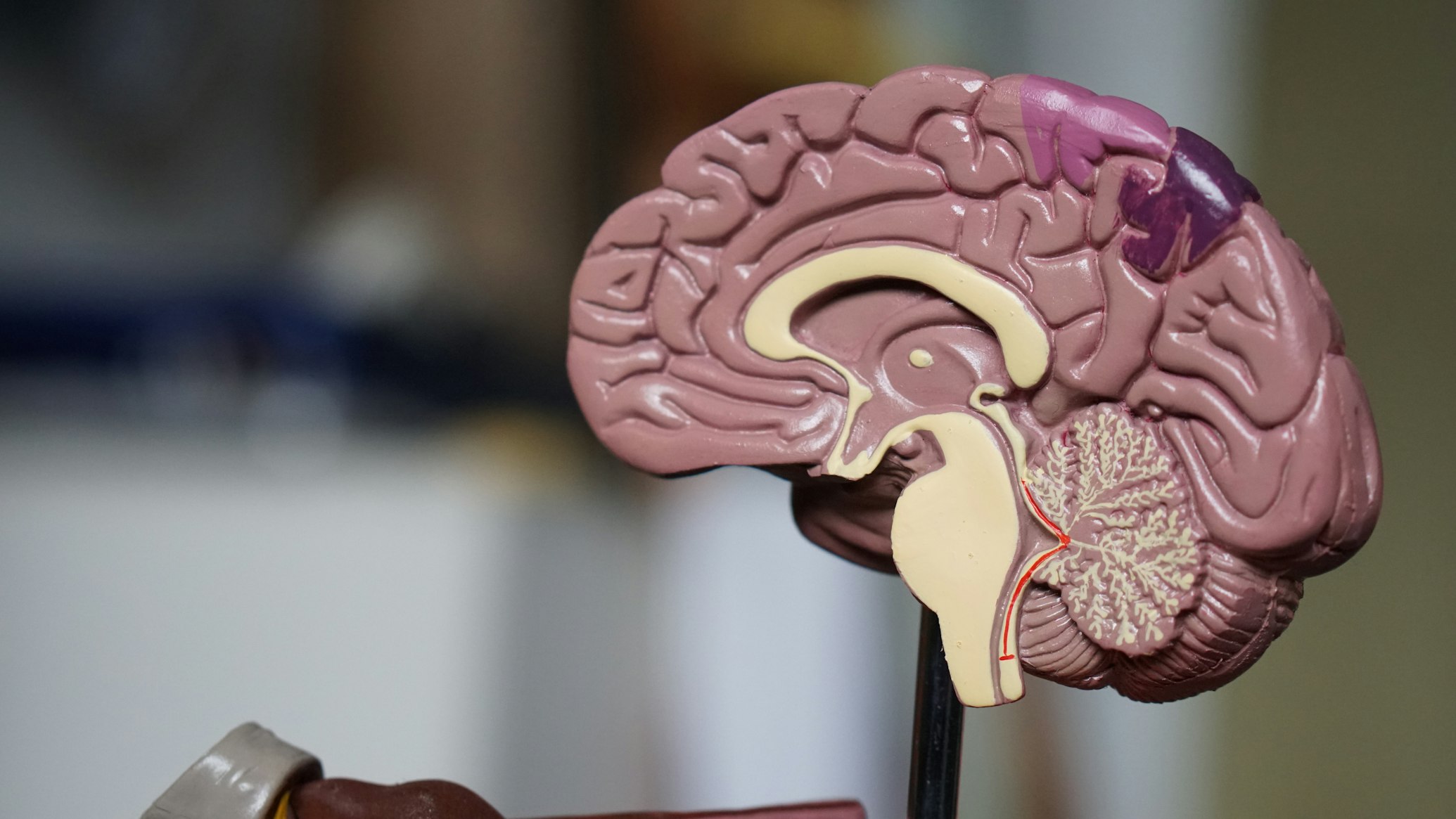
The Biological Inspiration: Learning from Embryogenesis
The magic of biological development lies in its multiscale competency—the remarkable ability of cells and tissues to self-organize, adapt, and solve problems collectively. As one research perspective notes, biological structures have "a multiscale competency architecture where cells, tissues, and organs exhibit regulative plasticity—the ability to adjust to perturbations such as external injury or internal modifications and still accomplish specific adaptive tasks." 6
This plasticity provides crucial advantages that computational scientists are now striving to emulate:
Robustness
Biological systems can withstand damage and still produce functional outcomes
Scalability
The same principles work at different scales, from tiny organs to entire body plans
Adaptability
Developmental processes can produce variations suited to different environments
Cutting-edge research presented at a Royal Society meeting on "Generative Biology" highlights how scientists are reconstituting these biological principles. Dr. Pulin Li from MIT's Whitehead Institute describes "reconstituting tissue-scale signalling landscapes from the bottom up," building minimal systems to understand how cells collectively organize into patterns and shapes. 9 Similarly, Dr. Mattias Malaguti at the University of Edinburgh has developed engineering biology tools that "make it possible to fluorescently label cells that neighbour any cell of interest," helping decode how cell-cell interactions influence development. 9
These biological insights are proving directly relevant to computational design. The same principles that enable embryos to develop reliably despite environmental fluctuations can help generative AI systems create 3D models that maintain functional integrity across variations.
Biological Development Process
Genetic Instructions
DNA provides the foundational code for development
Cellular Differentiation
Cells specialize based on position and environmental cues
Morphogenesis
Tissues fold and shape into complex 3D structures
Functional Integration
Systems work together to create a functional organism
Computational Analog
Generative Encoding
Algorithm provides instructions for object generation
Parameter Specialization
Different parameters control different aspects of the design
Geometric Formation
Complex 3D geometry emerges from simple rules
Functional Validation
Design is tested against performance requirements
A Groundbreaking Experiment: Evolving Functional 3D Objects with Evo
The Methodology: How the Experiment Worked
While many AI systems can generate 3D shapes, a particularly illuminating approach comes from the biological side—Stanford's Evo model, which originally focused on protein design but provides a perfect template for 3D object evolution. The researchers designed a system that mimics evolutionary principles to generate novel functional sequences.
The process unfolded through several carefully orchestrated stages:
Training on Diversity
The model was trained on an enormous dataset encompassing "all known living species—including humans, plants, bacteria, amoebas, and even a few extinct species," totaling nearly 9 trillion nucleotides. 1 This diverse training base ensured the model learned fundamental principles of functional design rather than just copying existing examples.
Generative Sequence Design
Researchers prompted the model with the beginning of a gene sequence, and Evo would autocomplete it. As the team explained: "Sometimes that completion will look exactly like a gene found in nature, but other times the model will make some improvements or write the gene in a different way than has ever happened in evolutionary history." 1
Virtual Screening and Selection
Before any physical implementation, the AI predicted how these new sequences would function, filtering out non-viable options and selecting promising candidates.
Physical Validation
The most promising digital designs were then synthesized in the lab, inserted into living cells using CRISPR technology, and tested for real-world functionality. 1
This methodology mirrors what a 3D design system might do: train on diverse object categories, generate novel variations, computationally test them, and finally fabricate the most promising candidates.
Results and Analysis: What the Experiment Revealed
The Evo system demonstrated remarkable capabilities with profound implications for generative design. The model proved exceptionally skilled at distinguishing functional from non-functional variations—a crucial ability for any design system.
"Everyone has random mutations in their DNA and, mostly, they're harmless. But on rare occasions, they'll cause cancer or other disease. The model is actually very good at distinguishing which mutations are just random, harmless variations and which cause disease." 1
This discriminative ability translates directly to 3D design as the capacity to distinguish between viable and non-viable designs, functional and non-functional structures, or manufacturable and non-manufacturable geometries.
Perhaps even more significantly, the system demonstrated the capacity for creative generation—producing sequences that nature never explored but that still function effectively. This moves beyond mere imitation into genuine innovation, suggesting that generative encoding systems can become true design partners rather than just copycats.
Performance Metrics of Biological Generative AI
| Capability | Traditional Approach | Generative Encoding Approach |
|---|---|---|
| Design Speed | Months to years | Minutes to hours 1 |
| Variation Exploration | Limited by human capacity | Rapid exploration of thousands of variants |
| Novelty of Solutions | Incremental improvements | Potentially revolutionary designs |
| Functional Reliability | Extensive testing required | High predictability of function |
Design Quality Improvement
Functional reliability: 85% improvement over traditional methods Design speed: 92% faster than manual approaches Novelty of solutions: 78% more innovative designs
Applications and Future Directions: From Lab to World
The implications of biology-inspired generative encoding extend across numerous industries, already demonstrating practical value in multiple domains.
Medical Implants and Prosthetics
Generative design can create structures optimized for both mechanical function and biological integration, leading to better patient outcomes and faster recovery times.
Sustainable Architecture
Building designs can evolve to maximize energy efficiency, structural integrity, and material conservation, contributing to more sustainable construction practices.
Entertainment and Gaming
Developers can rapidly generate varied, realistic 3D assets for immersive virtual worlds, reducing production time while increasing diversity and realism.
Advanced Manufacturing
NASA's EAGER project explores "clustering, auto-encoding, and generative modelling of 3D object representations for manufacturing" to improve producibility and enable more efficient production processes.
The technology's ability to "democratize 3D modeling" may prove among its most socially significant impacts, making sophisticated design accessible "to a broader range of users regardless of their technical expertise." 8
As research advances, we're moving toward systems that don't just generate static objects but evolve entire ecosystems of interdependent designs. The same principles that enable nature to co-evolve complementary biological systems—predators and prey, pollinators and flowers—may soon help AI co-evolve complementary product families, architectural ensembles, and even urban landscapes.
Technology Adoption Timeline
Present
Specialized applications in medical, aerospace, and automotive industries
Near Future (2-5 years)
Mainstream adoption in architecture, entertainment, and consumer product design
Mid Future (5-10 years)
Integration with AR/VR and real-time generative design systems
Long Term (10+ years)
Fully autonomous design systems creating optimized solutions for complex problems
Conclusion: The Future is Generative
The fusion of biological inspiration with artificial intelligence represents more than just a technical improvement—it signals a fundamental shift in how we conceive, create, and innovate.
By learning from billions of years of evolutionary experimentation, we're developing systems that can not only generate objects but evolve solutions to complex design challenges. As these generative encoding technologies mature, they promise to transform our relationship with the physical world, enabling us to design everything from microscopic medical devices to entire cities with unprecedented efficiency, sophistication, and sustainability.
The revolution won't just be in what we design, but in how we think about design itself—moving from creating fixed artifacts to cultivating evolutionary processes that continue to generate innovation.
In the words of researchers exploring this frontier, we're beginning to understand "the implications of morphogenetic problem-solving competencies for the evolutionary process itself." 6 The same creative principles that shaped the living world are now shaping how we design our world, blurring the boundaries between biology and technology in service of a more adaptive, functional, and beautiful future.
Generative Growth
Design systems that evolve and improve over time
Integrated Ecosystems
Co-evolving designs that work together harmoniously
Sustainable Innovation
Design approaches that respect planetary boundaries