Hox Gene Expression in Zebrafish Pectoral Fin Development: Mechanisms, Models, and Evolutionary Insights
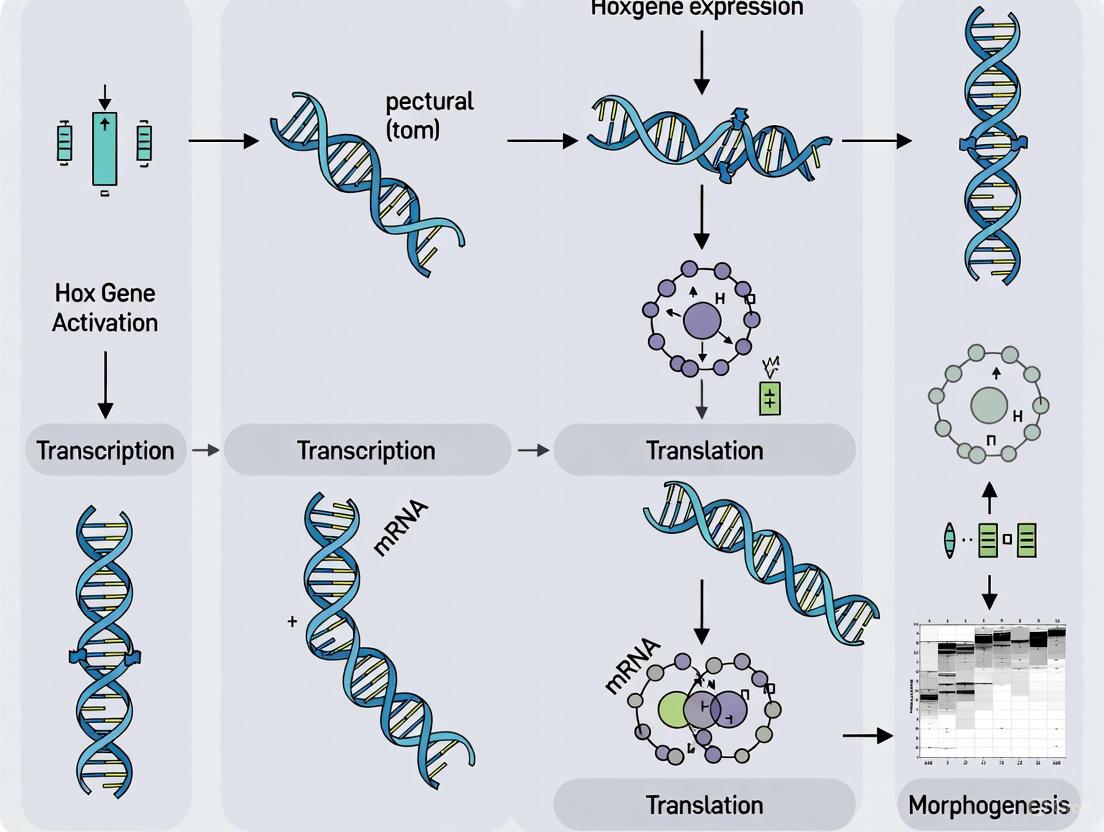
This article provides a comprehensive analysis of Hox gene expression and its critical function in zebrafish pectoral fin development, a key model for understanding vertebrate paired appendage formation.
Hox Gene Expression in Zebrafish Pectoral Fin Development: Mechanisms, Models, and Evolutionary Insights
Abstract
This article provides a comprehensive analysis of Hox gene expression and its critical function in zebrafish pectoral fin development, a key model for understanding vertebrate paired appendage formation. We synthesize recent genetic evidence establishing the essential role of HoxB-derived clusters (hoxba/hoxbb) in anterior-posterior fin positioning through induction of tbx5a expression. The content explores methodological approaches for analyzing Hox function, addresses challenges in functional redundancy and phenotypic penetrance, and validates findings through cross-species and cross-cluster comparisons. For researchers and drug development professionals, this review integrates foundational concepts with cutting-edge discoveries to illustrate how zebrafish studies illuminate conserved developmental mechanisms with potential biomedical applications.
Hox Gene Clusters and Their Foundational Role in Pectoral Fin Positioning
Hox genes, which encode a family of evolutionarily conserved transcription factors, are master regulators of embryonic development along the anterior-posterior axis in bilaterally symmetrical animals [1] [2]. These genes are distinguished by their characteristic homeodomain—a 60-amino-acid DNA-binding motif—and their unique genomic organization into tightly linked clusters [1]. A defining feature of Hox genes is collinearity, where the order of genes within the cluster corresponds to their spatial and temporal expression patterns during embryogenesis [2].
The organization and number of Hox clusters vary significantly across vertebrates, primarily due to genome duplication events (Figure 1) [3]. Mammals possess four Hox clusters (HoxA, HoxB, HoxC, and HoxD) located on different chromosomes, resulting from two rounds of whole-genome duplication (2R-WGD) early in vertebrate evolution [3]. In contrast, teleost fishes, including the zebrafish (Danio rerio), experienced an additional, third round of teleost-specific whole-genome duplication (3R-WGD) [4] [3]. Although this initially produced eight Hox clusters, subsequent gene losses resulted in the retention of seven hox clusters in zebrafish: hoxaa, hoxab, hoxba, hoxbb, hoxca, hoxcb, and hoxda [5] [4] [6]. The hoxdb cluster was lost except for a single microRNA [6].
This application note examines the organizational divergence of Hox genes between mammals and zebrafish, with a specific focus on its implications for pectoral fin development research. We provide standardized protocols and analytical frameworks to support researchers in investigating Hox gene function in this established model organism.
Comparative Hox Cluster Organization
Table 1: Comparative Hox Cluster Organization in Mammals and Zebrafish
| Feature | Mammals (e.g., Mouse, Human) | Zebrafish (Danio rerio) |
|---|---|---|
| Number of Clusters | 4 (HoxA, HoxB, HoxC, HoxD) [6] | 7 (hoxaa, hoxab, hoxba, hoxbb, hoxca, hoxcb, hoxda) [4] [6] |
| Origin of Clusters | Two rounds of whole-genome duplication (2R-WGD) [3] | 2R-WGD + additional teleost-specific duplication (3R-WGD) [4] [3] |
| Average Genes per Cluster | Relatively high and stable (e.g., ~11 in Chondrichthyes) [3] | Lower average (~5.1 in Teleostei) due to gene loss after duplication [3] |
| Cluster Fate | Generally stable organization [3] | Significant modification by gene loss and co-option [3] |
| Key Pectoral Fin/Limb Clusters | HoxA and HoxD (paralogs 9-13) [6] | hoxaa, hoxab, hoxda (paralogs 9-13); hoxba, hoxbb (positioning) [4] [6] |
The duplication and diversification of Hox clusters in zebrafish have profound functional implications. While the "posterior" genes (paralogue groups 9-13) in the hoxaa, hoxab, and hoxda clusters are homologous to those in tetrapod HoxA and HoxD clusters and are critical for the outgrowth and patterning of paired appendages [6], the hoxba and hoxbb clusters, derived from the ancestral HoxB cluster, have acquired a novel, essential role in determining the anterior-posterior position of pectoral fin initiation [4] [7].
Application in Zebrafish Pectoral Fin Development
The zebrafish pectoral fin, homologous to tetrapod forelimbs, serves as a powerful model for understanding the genetic basis of paired appendage development. Research has delineated distinct roles for the duplicated zebrafish hox clusters in this process, offering a refined model for functional analysis.
Genetic Control of Pectoral Fin Positioning and Development
Table 2: Key Hox Clusters and Their Roles in Zebrafish Pectoral Fin Development
| Hox Cluster | Homology | Function in Pectoral Fin Development | Phenotype of Cluster Deletion |
|---|---|---|---|
| hoxba & hoxbb | HoxB-derived [4] | Anterior-Posterior positioning; induction of tbx5a expression [4] [7] |
Complete absence of pectoral fins; loss of tbx5a expression [4] [7] |
| hoxaa, hoxab, hoxda | HoxA- and HoxD-derived [6] | Pectoral fin outgrowth and patterning (similar to tetrapod HoxA/D) [6] | Severe shortening of endoskeletal disc and fin-fold; defective posterior fin structures [6] |
| hoxab | HoxA-derived [6] | Major contributor to fin growth and patterning [6] | Shortening of pectoral fin [6] |
| hoxca, hoxcb | HoxC-derived | Less defined role in pectoral fins; primarily involved in axial patterning |
The critical role of hoxba and hoxbb is demonstrated by mutant studies: double homozygous mutants display a complete absence of pectoral fins, accompanied by a failure to induce tbx5a—a master regulator of forelimb initiation—in the lateral plate mesoderm [4] [7]. Within these clusters, hoxb4a, hoxb5a, and hoxb5b have been identified as pivotal genes for this positioning function [7]. Meanwhile, the simultaneous deletion of hoxaa, hoxab, and hoxda clusters results in significantly shortened pectoral fins due to defects in growth and patterning after the fin bud has already formed, confirming a conserved role for these clusters in appendage outgrowth [6].
Figure 1: Hox Gene Genetic Pathway in Zebrafish Pectoral Fin Development. The hoxba/hoxbb clusters are essential for initial positioning and induction of the fin field via tbx5a, while the hoxaa/hoxab/hoxda clusters are required for subsequent outgrowth and patterning.
Protocol: Analyzing Hox Gene Function in Zebrafish Pectoral Fins
Objective: To characterize the functional role of specific hox clusters during zebrafish pectoral fin development using CRISPR-Cas9 mutagenesis and phenotypic analysis.
Materials and Reagents:
- Zebrafish Strains: Wild-type (e.g., TU or AB), and existing hox cluster mutant lines.
- CRISPR-Cas9 Components: Cas9 protein or mRNA; single-guide RNAs (sgRNAs) designed to target critical exons of multiple genes within a cluster.
- Microinjection Equipment: Micropipette puller, microinjector.
- Fixation and Staging Reagents: 4% Paraformaldehyde (PFA) in PBS, phenylthiourea (PTU) to inhibit pigment formation.
- In Situ Hybridization (ISH) Reagents: Digoxigenin (DIG)-labeled RNA probes for
tbx5a,shha, and posterior hox genes (e.g.,hoxa13a,hoxd13a); anti-DIG-AP antibody, NBT/BCIP staining solution. - Cartilage Stain: Alcian Blue solution.
Methodology:
Generation of Cluster Mutants:
- Design 3-5 sgRNAs targeting conserved regions or functional domains of key genes within the desired hox cluster (e.g.,
hoxb4a,hoxb5ainhoxba/bb; orhoxa13a,hoxd13ainhoxaa/da) [4] [6]. - Co-inject sgRNAs and Cas9 into one-cell stage zebrafish embryos.
- Raise injected embryos (F0 founders) to adulthood and outcross to identify germline-transmitting fish.
- Intercross F1 heterozygotes to generate F2 homozygous mutants for phenotypic analysis. For functional redundancy studies, generate double or triple cluster mutants via crossing [4] [6].
- Design 3-5 sgRNAs targeting conserved regions or functional domains of key genes within the desired hox cluster (e.g.,
Phenotypic Analysis of Mutant Larvae:
- Fixation: Anesthetize and fix larvae at critical stages (e.g., 30, 48, 60, 72 hours post-fertilization (hpf)) in 4% PFA.
- Morphology: Document fin bud morphology under a dissecting microscope at 3-5 days post-fertilization (dpf).
- Whole-Mount In Situ Hybridization (WISH):
- Cartilage Staining: Stain 5 dpf larvae with Alcian Blue to visualize the cartilaginous endoskeletal disc of the pectoral fin. Measure the length of the endoskeletal disc and fin-fold under a microscope [6].
Phenotypic Analysis of Adult Fins:
- Raise viable mutant larvae to adulthood.
- Fix and skin the pectoral fins of adult fish.
- Perform micro-computed tomography (micro-CT) scanning to analyze the fin skeletal structure in three dimensions, focusing on defects in the endoskeletal elements, particularly the posterior rays [6].
The Scientist's Toolkit
Table 3: Essential Research Reagents for Zebrafish Hox Gene and Fin Development Studies
| Reagent / Tool | Function / Application | Example Use-Case |
|---|---|---|
| CRISPR-Cas9 System | Targeted mutagenesis of hox cluster genes. | Generating stable mutant lines for single or multiple hox clusters [4] [6]. |
| Digoxigenin (DIG)-labeled RNA Probes | Detection of specific mRNA transcripts via in situ hybridization. | Visualizing expression domains of tbx5a, shha, and hox genes (e.g., hoxa13b) [4] [6]. |
| Anti-DIG-AP Antibody | Colorimetric detection of hybridized DIG probes. | Used in conjunction with NBT/BCIP for staining in WISH protocols. |
| Alcian Blue | Staining of sulfated glycosaminoglycans in cartilage. | Visualifying the cartilaginous endoskeletal disc in larval pectoral fins [6]. |
| Micro-CT Imaging | High-resolution, non-destructive 3D imaging of mineralized tissues. | Quantitative analysis of skeletal defects in adult pectoral fins [6]. |
| tbx5a Mutant/Reporter Lines | Controls for finless phenotype and tools for tracking fin precursors. | Validating the specificity of tbx5a expression loss in hoxba;hoxbb mutants [4]. |
| HS94 | HS94, MF:C15H15N5O2S, MW:329.4 g/mol | Chemical Reagent |
| JBJ-02-112-05 | JBJ-02-112-05, MF:C27H20N4O2S, MW:464.5 g/mol | Chemical Reagent |
The evolutionary history of Hox gene clusters, from the four clusters in mammals to the seven in zebrafish, is not merely a genomic curiosity. It has endowed zebrafish with a sophisticated and genetically tractable system for dissecting the distinct phases of appendage development: initial positioning governed by hoxba/bb and subsequent outgrowth controlled by hoxaa/ab/da. The protocols and resources outlined here provide a foundation for researchers to leverage this model system, enabling precise investigations into the genetic circuitry of vertebrate limb development with direct relevance to evolutionary and developmental biology.
This application note details the experimental approaches for analyzing Hox gene function in zebrafish pectoral fin development, a key model for understanding anteroposterior patterning and the evolutionary origin of paired appendages. We provide structured protocols and data from recent studies that establish the essential role of HoxB-derived clusters in determining limb position through regulation of tbx5a expression.
Quantitative Analysis of Hox Cluster Mutants in Zebrafish
Recent genetic studies utilizing CRISPR-Cas9 have systematically dissected the roles of various Hox clusters in zebrafish pectoral fin development. The following tables summarize key phenotypic and molecular data.
Table 1: Pectoral Fin Phenotypes in Zebrafish Hox Cluster Mutants
| Genotype | Pectoral Fin Phenotype | Penetrance | Key Molecular Marker |
|---|---|---|---|
hoxbaâ»/â» |
Abnormal morphology, shortening | Complete | Reduced tbx5a expression [4] |
hoxbbâ»/â» |
Not specified in results | - | - |
hoxbaâ»/â»; hoxbbâ»/â» |
Complete absence | 100% (15/15 homozygous mutants) | Near-complete loss of tbx5a induction [4] [8] |
hoxaaâ»/â»; hoxabâ»/â»; hoxdaâ»/â» |
Severe shortening | Complete | Normal tbx5a bud initiation; downregulated shha [6] |
Table 2: Functional Contribution of Key Hox Genes within hoxba/hoxbb Clusters
| Gene | Functional Role in Pectoral Fin Positioning | Evidence |
|---|---|---|
| hoxb4a | Pivotal in establishing positional cues | Deletion mutants show fin absence with low penetrance [4] |
| hoxb5a | Cooperatively induces tbx5a expression |
Deletion mutants show fin absence with low penetrance [4] |
| hoxb5b | Critical for anteroposterior positioning | Deletion mutants show fin absence with low penetrance [4] |
Experimental Protocols for Functional Analysis
Protocol 1: Generating Hox Cluster-Deletion Mutants via CRISPR-Cas9
This protocol is adapted from Yamada et al. (2021) and subsequent studies [4] [6] [8].
Application: Create stable zebrafish lines with single or compound deletions of entire Hox clusters to study functional redundancy and specific roles in pectoral fin development.
Reagents and Equipment:
- CRISPR-Cas9 protein or mRNA
- Multiple single-guide RNAs (sgRNAs) targeting the flanking regions of the Hox cluster to be deleted
- Wild-type zebrafish embryos at one-cell stage
- Microinjection apparatus
- Standard equipment and reagents for zebrafish husbandry and genomic DNA extraction
- PCR primers for genotyping, designed to amplify across the deletion junctions
Procedure:
- Design sgRNAs: Select two sgRNAs that target genomic sequences immediately upstream and downstream of the Hox cluster to be deleted (e.g., the entire
hoxbacluster). - Microinjection: Co-inject CRISPR-Cas9 complex (Cas9 protein + pooled sgRNAs) into the cytoplasm of one-cell stage zebrafish embryos.
- Raise Founders (F0): Raise injected embryos to adulthood. These mosaic founders are outcrossed to wild-type fish.
- Identify Germline Transmission: Screen the resulting offspring (F1) by PCR genotyping for large deletions at the target locus. Fish carrying the deletion are raised to establish heterozygous mutant lines.
- Generate Compound Mutants: Intercross heterozygous mutants for different clusters (e.g.,
hoxbaâº/â» andhoxbbâº/â») to obtain double homozygous mutants (hoxbaâ»/â»;hoxbbâ»/â») in the F2 generation.
Key Analysis: Genotype all experimental embryos and score for pectoral fin presence/absence and morphology at 3-5 days post-fertilization (dpf).
Protocol 2: Whole-Mount In Situ Hybridization (WISH) for Gene Expression Analysis
This protocol is used to characterize molecular phenotypes in Hox cluster mutants [4] [6].
Application: Visualize the spatial expression patterns of key genes like tbx5a and shha in wild-type and mutant zebrafish embryos.
Reagents and Equipment:
- Zebrafish embryos (wild-type and mutant) at desired stages (e.g., 30 hpf for
tbx5a, 48 hpf forshha) - Digoxigenin (DIG)-labeled RNA antisense probes for
tbx5a,shha - Proteinase K
- Pre-hybridization and hybridization buffers
- Anti-DIG alkaline phosphatase-conjugated antibody
- NBT/BCIP colorimetric substrate
- PBS, PBT, and other standard buffers
Procedure:
- Fixation: Fix embryos in 4% paraformaldehyde (PFA) overnight at 4°C.
- Re-hydration and Permeabilization: Dehydrate embryos through a methanol series and re-hydrate. Treat with Proteinase K to permeabilize tissues.
- Pre-hybridization and Hybridization: Pre-incubate embryos in hybridization buffer, then incubate with the DIG-labeled RNA probe overnight at 65-70°C.
- Immunodetection: Wash embryos stringently to remove unbound probe. Incubate with anti-DIG-AP antibody.
- Color Reaction: Develop color reaction using NBT/BCIP substrate.
- Documentation: Image stained embryos using a stereomicroscope.
Key Analysis: Compare expression domains and intensity of the target gene between wild-type and mutant siblings. For example, a near-complete loss of tbx5a signal in the lateral plate mesoderm of hoxba;hoxbb double mutants indicates a failure in fin bud initiation [4].
Signaling Pathway and Experimental Workflow Diagrams
Diagram 1: HoxB-dependent pathway for pectoral fin positioning. The model shows that hoxba and hoxbb clusters, through genes hoxb4a/b5a/b5b, provide positional information that is essential for inducing tbx5a expression and subsequent fin bud formation. Mutation of these clusters prevents tbx5a induction [4] [8].
Diagram 2: Workflow for analyzing Hox gene function in fin development. The experimental pipeline outlines the key steps from mutant generation using CRISPR-Cas9 to phenotypic and molecular analysis [4] [6].
The Scientist's Toolkit: Essential Research Reagents
Table 3: Key Reagents for Investigating Hox Code in Zebrafish
| Reagent / Material | Function / Application | Example Use in Context |
|---|---|---|
| CRISPR-Cas9 System | Targeted deletion of Hox gene clusters. | Generation of hoxba;hoxbb double-deletion mutants [4] [8]. |
| DIG-labeled RNA Probes | Detection of specific mRNA transcripts via WISH. | Visualizing tbx5a and shha expression domains in mutant embryos [4] [6]. |
| Anti-DIG Antibody (AP-conj.) | Immunological detection of hybridized probes in WISH. | Colorimetric development for gene expression analysis [6]. |
| Zebrafish Hox Mutant Lines | Models for studying functional redundancy and specificity. | Comparing phenotypes of single vs. compound cluster mutants [4] [6]. |
| Alcian Blue | Staining of cartilaginous structures. | Analyzing endoskeletal disc morphology in larval pectoral fins [6]. |
| TXA6101 | TXA6101, MF:C18H10BrF5N2O3, MW:477.2 g/mol | Chemical Reagent |
| RTS-V5 | RTS-V5, MF:C27H35N5O6, MW:525.6 g/mol | Chemical Reagent |
This application note details recent breakthroughs in understanding the essential role of HoxB-derived hoxba and hoxbb gene clusters in initiating zebrafish pectoral fin development. The findings provide the first conclusive genetic evidence that these clusters determine anterior-posterior positioning of paired appendages through direct regulation of tbx5a expression, offering new experimental frameworks for evolutionary developmental biology research.
In jawed vertebrates, Hox genes—encoding conserved homeodomain transcription factors—provide positional information along the anterior-posterior axis during embryonic development. A long-standing hypothesis in evolutionary developmental biology proposes that Hox genes determine the precise locations where paired appendages (pectoral fins in fish, forelimbs in tetrapods) emerge from the lateral plate mesoderm [4] [8]. Despite supportive evidence from chick and mouse models, clear genetic demonstration of substantial limb positioning defects in Hox-deficient mutants remained elusive until recent zebrafish studies [4] [7] [8].
Zebrafish possess seven hox clusters resulting from teleost-specific whole-genome duplication, including hoxba and hoxbb clusters derived from the ancestral HoxB cluster [4] [8]. This note synthesizes cutting-edge research establishing their indispensable, cooperative role in pectoral fin bud initiation through precise regulation of the key limb identity gene tbx5a [4] [7].
Key Experimental Findings
Genetic Evidence from Cluster Deletion Mutants
Comprehensive genetic analysis using CRISPR-Cas9-generated mutants reveals that simultaneous deletion of both hoxba and hoxbb clusters produces a complete absence of pectoral fins, whereas single cluster deletions cause only mild abnormalities [4] [8]. This functional redundancy indicates that these duplicated clusters cooperatively control fin bud initiation.
Table 1: Phenotypic Consequences of Hox Cluster Deletions in Zebrafish
| Genotype | Pectoral Fin Phenotype | tbx5a Expression | Penetrance |
|---|---|---|---|
| Wild-type | Normal pectoral fins | Strong, localized expression | 100% |
| hoxba−/− or hoxbb−/− | Mild fin abnormalities | Reduced expression | 100% |
| hoxba−/−;hoxbb+/− or hoxba+/−;hoxbb−/− | Present pectoral fins | Moderate reduction | 100% |
| hoxba−/−;hoxbb−/− | Complete fin absence | Nearly undetectable | 100% (15/15 embryos) |
The complete fin absence in double homozygous mutants demonstrates that these HoxB-derived clusters are essential for the initial establishment of the pectoral fin field, not merely subsequent patterning [4].
Molecular Mechanism: hoxba/hoxbb Regulation of tbx5a
The molecular pathway connecting HoxB-derived clusters to fin initiation centers on their essential role in activating and maintaining tbx5a expression:
- tbx5a induction failure: In hoxba;hoxbb double mutants, tbx5a expression in the lateral plate mesoderm fails to initiate at early stages, indicating loss of pectoral fin precursor cells [4] [8]
- Retinoic acid response loss: Mutants lose competence to respond to retinoic acid signaling, a known regulator of tbx5a expression [4]
- Key regulatory genes: Functional analyses identify hoxb4a, hoxb5a, and hoxb5b as pivotal genes within these clusters responsible for positional specification [4] [7]
Figure 1: Genetic hierarchy of pectoral fin initiation. hoxba/hoxbb clusters enable retinoic acid (RA) competence and directly induce tbx5a expression for fin bud formation.
Experimental Protocols & Methodologies
CRISPR-Cas9-Mediated Hox Cluster Deletion
This protocol enables generation of zebrafish mutants lacking specific hox clusters.
Materials:
- Wild-type zebrafish (AB strain)
- CRISPR-Cas9 reagents: Cas9 protein and guide RNAs targeting hoxba/hoxbb cluster boundaries
- Microinjection apparatus
- Embryo rearing system
Procedure:
- Design guide RNAs targeting conserved regulatory regions flanking hoxba (chr: coordinates) and hoxbb (chr: coordinates) clusters
- Prepare injection mixture: 300 ng/μL Cas9 protein + 50 ng/μL each guide RNA
- Microinject 1 nL mixture into 1-cell stage zebrafish embryos
- Raise injected embryos (F0) to adulthood and outcross to identify germline transmission
- Intercross F1 heterozygotes to generate F2 homozygous mutants
- Verify complete cluster deletions via PCR and sequencing [4] [8]
Validation:
- Genotype cluster mutants using junction PCR with primers outside deleted regions
- Confirm absence of cluster genes via whole-mount in situ hybridization
- Assess potential off-target effects by examining similar sequences in other hox clusters
Whole-Mount In Situ Hybridization for Gene Expression
This method visualizes spatial expression patterns of key genes in wild-type and mutant embryos.
Materials:
- Wild-type and hoxba;hoxbb mutant embryos (24-48 hpf)
- Digoxigenin-labeled RNA probes for tbx5a, hoxb5a, hoxb4a
- Anti-digoxigenin antibody conjugated to alkaline phosphatase
- NBT/BCIP color substrate
- PBS, methanol, proteinase K
Procedure:
- Fix embryos in 4% PFA overnight at 4°C
- Permeabilize embryos with proteinase K (10 μg/mL) for 30 minutes
- Hybridize with digoxigenin-labeled RNA probes (65°C overnight)
- Wash stringently and incubate with anti-digoxigenin antibody (1:5000)
- Develop color reaction with NBT/BCIP substrate
- Image expression patterns using brightfield microscopy [4]
Key Application: This protocol confirmed absent tbx5a expression in hoxba;hoxbb double mutants at 30 hpf, demonstrating failure of fin field specification [4].
Retinoic Acid Competence Assay
This functional assay tests whether hoxba/hoxbb clusters enable response to retinoic acid signaling.
Materials:
- Wild-type and hoxba;hoxbb mutant embryos (24 hpf)
- All-trans retinoic acid (RA) stock solution (10 mM in DMSO)
- DMSO vehicle control
- E3 embryo medium
Procedure:
- Dechorionate 24 hpf embryos manually
- Treat experimental group with 1 μM RA in E3 medium
- Treat control group with 0.01% DMSO in E3 medium
- Incubate 6 hours at 28.5°C
- Fix embryos and process for tbx5a in situ hybridization
- Compare tbx5a expression levels between conditions [4]
Expected Results: Wild-type embryos show upregulated tbx5a after RA treatment, while hoxba;hoxbb mutants fail to respond, demonstrating lost signaling competence [4].
The Scientist's Toolkit: Essential Research Reagents
Table 2: Key Research Reagents for Hox Gene Function Studies
| Reagent/Category | Specific Examples | Research Application | Function in Study |
|---|---|---|---|
| Zebrafish Lines | hoxba cluster mutant; hoxbb cluster mutant; hoxba;hoxbb double mutant | Functional genetic analysis | Establish requirement for hoxba/hoxbb in fin initiation |
| Molecular Probes | tbx5a RNA probe; hoxb4a RNA probe; hoxb5a RNA probe | Spatial expression analysis | Visualize gene expression domains in wild-type vs mutants |
| CRISPR Reagents | Cas9 protein; hoxba-flanking gRNAs; hoxbb-flanking gRNAs | Targeted genome editing | Generate precise cluster deletions to assess function |
| Signaling Molecules | All-trans retinoic acid | Competence assays | Test regulatory relationships in fin positioning |
| Antibodies | Anti-digoxigenin-AP | In situ hybridization detection | Amplify signal for RNA probe detection |
| YXL-13 | 4-(4-Bromophenoxy)-N-(2-oxo-1,3-oxazolidin-3-yl)butanamide | Explore 4-(4-Bromophenoxy)-N-(2-oxo-1,3-oxazolidin-3-yl)butanamide for research. This compound is For Research Use Only. Not for human or veterinary use. | Bench Chemicals |
| CHF-6366 | CHF-6366, MF:C42H48N6O8, MW:764.9 g/mol | Chemical Reagent | Bench Chemicals |
Experimental Workflow Integration
Figure 2: Experimental workflow for analyzing hoxba/hoxbb function, from mutant generation to mechanistic insight.
Discussion and Research Implications
Evolutionary Developmental Biology Significance
These findings fundamentally advance understanding of vertebrate limb evolution by demonstrating that HoxB-derived clusters provide essential positional cues for appendage emergence along the anterior-posterior axis [4] [7]. The conserved function despite teleost-specific genome duplication highlights the evolutionary constraint on this mechanism.
The specific requirement for hoxba/hoxbb clusters in zebrafish contrasts with mouse models where HoxB cluster deletion causes minimal limb defects, suggesting lineage-specific compensation mechanisms [4] [8]. This comparative perspective illuminates how different vertebrate groups achieve similar developmental outcomes through modified genetic networks.
Future Research Applications
The experimental frameworks established in these studies enable several research directions:
- Gene regulatory networks: Identify direct transcriptional targets of hoxb4a/hoxb5a/hoxb5b using ChIP-seq in fin bud cells
- Human medical relevance: Explore potential HOXB gene roles in congenital limb abnormalities (e.g., Holt-Oram syndrome linked to TBX5)
- Evolutionary diversification: Investigate how Hox-directed positioning mechanisms vary across fish species with different fin morphologies
The protocols and reagents detailed herein provide a foundation for these investigations, particularly leveraging zebrafish advantages for live imaging, genetic manipulation, and high-throughput screening.
Application Notes
This application note details the critical role of the hoxb4a, hoxb5a, and hoxb5b genes in establishing the anterior-posterior position of zebrafish pectoral fins. Framed within a broader thesis on Hox gene expression, it provides consolidated experimental data and validated protocols to support research into the genetic mechanisms of vertebrate paired appendage development [4] [8].
Recent genetic evidence has established that the simultaneous deletion of the hoxba and hoxbb clusters leads to a complete absence of pectoral fins in zebrafish, a phenotype not observed with the deletion of any other single or combination of Hox clusters [4]. Within these clusters, the genes hoxb4a, hoxb5a, and hoxb5b function cooperatively to provide positional cues along the anterior-posterior axis, ultimately specifying the fin field through the induction of the key limb initiation gene tbx5a [8] [7]. The failure of tbx5a expression in the lateral plate mesoderm of hoxba;hoxbb cluster-deleted mutants confirms their upstream regulatory role [4] [9].
Table 1: Quantitative Phenotypic Data of hox Cluster Mutants in Zebrafish
| Genotype | Pectoral Fin Phenotype | Penetrance of Absent Fins | tbx5a Expression |
|---|---|---|---|
hoxba-/-; hoxbb-/- (Double homozygous) |
Complete absence | 5.9% (15/252) [4] | Nearly undetectable in fin buds [4] |
hoxba-/-; hoxbb+/- or hoxba+/-; hoxbb-/- |
Present | Not observed | Reduced [4] |
hoxba cluster mutant only |
Morphological abnormalities | Not observed | Reduced [4] |
hoxaa-/-; hoxab-/-; hoxda-/- |
Severely shortened, but present | Not observed | Indistinguishable from wild-type [6] |
Table 2: Key Characteristics of Pivotal Hox Genes
| Gene | Paralog Group | Primary Role in Pectoral Fin Development | Phenotype of Specific Deletion Mutants |
|---|---|---|---|
| hoxb4a | Anterior (PG 4) | Anterior-Posterior Positioning | Absence of pectoral fins (low penetrance) [8] |
| hoxb5a | Anterior (PG 5) | Anterior-Posterior Positioning | Absence of pectoral fins (low penetrance) [8] |
| hoxb5b | Anterior (PG 5) | Anterior-Posterior Positioning | Absence of pectoral fins (low penetrance) [8] |
| tbx5a | N/A | Initial bud induction (downstream target) | Complete absence of pectoral fins [4] [6] |
Experimental Protocols
Protocol 1: Generating hox Cluster-Deletion Mutants via CRISPR-Cas9
This protocol describes the generation of zebrafish mutants with deletions in the hoxba and hoxbb clusters, a prerequisite for studying the functional redundancy of these clusters [4] [9].
Workflow Overview:
Materials & Reagents:
- CRISPR-Cas9 System: Cas9 protein and synthetic guide RNAs (gRNAs) designed to target genomic loci flanking the
hoxbaandhoxbbclusters [4]. - Zebrafish: Wild-type AB strain or similar.
- Microinjection Apparatus: For delivering CRISPR components into one-cell stage zebrafish embryos.
- Genotyping Primers: Polymerase Chain Reaction (PCR) primers designed to span the targeted deletion sites for cluster verification [4] [9].
Procedure:
- Design and Synthesis: Design two gRNAs for each target cluster (
hoxba,hoxbb) to create a large chromosomal deletion. Synthesize gRNAs and purify. - Embryo Injection: Co-inject Cas9 protein and the pool of gRNAs into the cytoplasm of one-cell stage zebrafish embryos.
- Founder Generation: Raise the injected embryos (F0 generation) to adulthood. These are potential mosaic founders.
- Screening F1 Carriers: Outcross F0 fish to wild-type partners. Screen the resulting F1 offspring by PCR genotyping to identify individuals carrying the desired deletion. The expected Mendelian ratio for double homozygous mutants in the F2 generation is 1/16 (6.25%) [4].
- Establishing Mutant Lines: Incross identified F1 heterozygous carriers to generate F2 progeny. Genotype the F2 larvae to identify and select
hoxba;hoxbbdouble homozygous mutants for phenotypic analysis.
Protocol 2: Phenotypic Analysis of Pectoral Fin Development
This protocol outlines the methods for confirming the loss of pectoral fins and the underlying molecular deficits in the generated mutants.
Workflow Overview:
Materials & Reagents:
- Fixative: 4% Paraformaldehyde (PFA) in Phosphate-Buffered Saline (PBS).
- RNA Probe for
tbx5a: Digoxigenin (DIG)-labeled antisense RNA probe for in situ hybridization [4] [6]. - Antibodies: Anti-DIG antibody conjugated to Alkaline Phosphatase (AP).
- Staining Reagent: NBT/BCIP substrate for AP, which produces a blue-purple precipitate.
- Mounting Medium.
Procedure:
- Sample Collection: Anesthetize and fix wild-type and
hoxba;hoxbbdouble homozygous mutant larvae at key developmental stages (e.g., 30 hours post-fertilization fortbx5aexpression) with 4% PFA [4]. - Whole-mount In Situ Hybridization (WISH):
- Permeabilize the fixed larvae.
- Hybridize with the DIG-labeled
tbx5aRNA probe. - Wash to remove unbound probe.
- Incubate with Anti-DIG-AP antibody.
- Develop color using NBT/BCIP substrate.
- Imaging and Analysis: Clear and mount the stained larvae. Image using a stereomicroscope. Compare the
tbx5aexpression signal in the lateral plate mesoderm between wild-type and mutant larvae. The mutant larvae should show a significant reduction or complete absence oftbx5aexpression [4].
Protocol 3: Functional Validation via Retinoic Acid Response Assay
This protocol tests the competence of the fin field to respond to retinoic acid (RA), a key signaling molecule known to interact with Hox gene expression [4].
Materials & Reagents:
- Retinoic Acid (RA): Prepare a stock solution in DMSO.
- Dimethyl Sulfoxide (DMSO): For vehicle control treatments.
- Embryo Water.
Procedure:
- Treatment Groups: Dechorionate wild-type and
hoxba;hoxbbmutant embryos at an early stage (e.g., bud stage). Divide them into two groups: one treated with RA and another with DMSO (vehicle control) [4]. - Exposure: Incubate the embryos in the appropriate solution for a defined period.
- Analysis: After treatment, fix the embryos and perform WISH for
tbx5aas described in Protocol 2. In wild-type embryos, RA treatment is expected to induce or altertbx5aexpression. Thehoxba;hoxbbcluster mutants are expected to lose this competence, demonstrating that the Hox genes are essential for mediating the RA signal upstream oftbx5a[4].
The Scientist's Toolkit: Research Reagent Solutions
Table 3: Essential Research Reagents for Investigating Hox Gene Function in Zebrafish
| Reagent / Tool | Function / Application | Example Use Case |
|---|---|---|
| CRISPR-Cas9 System | Targeted genome editing to create knockout mutants. | Generating hoxba;hoxbb double deletion mutants [4] [9]. |
| hoxba/hoxbb Deletion Mutants | Model organism to study functional redundancy of HoxB-derived clusters. | Analyzing the essential role of these clusters in fin positioning [4]. |
| DIG-labeled RNA Probes (e.g., tbx5a) | Detection of specific mRNA transcripts via in situ hybridization. | Visualizing the failure of fin bud induction in mutants [4] [6]. |
| Retinoic Acid (RA) | Signaling molecule that regulates Hox gene expression. | Testing the competence of the fin field to respond to key morphogenetic signals [4]. |
| Anti-DIG-AP Antibody | Immunological detection of hybridized RNA probes in WISH. | Colorimetric detection of gene expression patterns. |
| TALE Proteins (Pbx/Meis) | Key co-factors that form complexes with Hox proteins, enhancing DNA-binding specificity [10] [11]. | Studying the molecular mechanisms of Hox target gene selection. |
| NH2-UAMC1110 | NH2-UAMC1110, MF:C21H23F2N5O3, MW:431.4 g/mol | Chemical Reagent |
| GSK3494245 | GSK3494245, CAS:2080410-41-7, MF:C21H23FN6O2, MW:410.4 g/mol | Chemical Reagent |
This application note delineates the critical genetic pathway through which Hox signaling governs pectoral fin development in zebrafish, identifying the transcription factor tbx5a as a principal downstream effector. We consolidate recent genetic evidence demonstrating that specific Hox clusters are indispensable for the initiation, patterning, and outgrowth of pectoral fins, homologous to tetrapod forelimbs, via the direct regulation of tbx5a expression. The document provides a synthesized analysis of quantitative phenotypic data from cluster-deletion mutants, detailed protocols for key functional experiments, and visualizations of the core genetic circuitry, serving as a resource for researchers investigating Hox gene function, limb development, and evolutionary biology.
In vertebrate development, Hox genes encode an evolutionarily conserved family of transcription factors that provide positional information along the anterior-posterior body axis. A quintessential function of this positional information is to specify the locations where paired appendages, such as pectoral fins and forelimbs, will form. While the role of Hox genes (particularly HoxA and HoxD clusters) in patterning the proximal-distal axis of formed limbs is well-established, their function in the initial positioning and induction of appendage buds is an area of intense research. Recent work in zebrafish has elucidated a definitive genetic pathway, wherein Hox genes from the B cluster act upstream to directly induce the expression of tbx5a, a T-box transcription factor without which pectoral fin development cannot initiate.
Key Findings: Genetic Evidence Linking Hox Clusters to tbx5a and Fin Phenotypes
Genetic deletion studies of various zebrafish Hox clusters have revealed distinct and cooperative functions in pectoral fin development. The table below summarizes the quantitative data and phenotypic consequences associated with the loss of specific Hox clusters.
Table 1: Phenotypic Consequences of Hox Cluster Deletions in Zebrafish
| Hox Cluster(s) Deleted | Effect on tbx5a Expression | Pectoral Fin Phenotype in Larvae (3-5 dpf) | Key Adult Fin Phenotype (Micro-CT) |
|---|---|---|---|
| hoxba & hoxbb (HoxB-derived) | Complete loss of induction in fin field [12] | Complete absence of pectoral fins [12] | Not applicable (lethal) |
| hoxaa, hoxab, & hoxda (HoxA/D-derived) | Normal initiation; reduced shha in posterior fin bud [6] |
Severely shortened endoskeletal disc and fin-fold [6] | Defects in the posterior portion of the fin [6] |
| hoxab & hoxda (Double mutant) | Reduced shha expression [6] |
Shortened endoskeletal disc and fin-fold [6] | Data not specified |
| hoxab (Single mutant) | Data not specified | Shortening of the pectoral fin [6] | Data not specified |
The HoxB-tbx5a Axis in Fin Positioning
The most profound phenotype arises from the simultaneous deletion of the hoxba and hoxbb clusters. Double-homozygous mutants exhibit a complete absence of pectoral fins, tracing back to a failure to induce tbx5a expression in the lateral plate mesoderm, the source of fin precursor cells [12]. This establishes a linear pathway where HoxB-derived genes provide the positional cue for fin formation by activating tbx5a, a master regulator of forelimb/fin initiation. Further genetic mapping identified hoxb4a, hoxb5a, and hoxb5b as the pivotal genes within these clusters responsible for this inductive event [12].
The HoxA/D-tbx5a Axis in Fin Outgrowth
In contrast, deletion of clusters homologous to the tetrapod HoxA and HoxD clusters (hoxaa, hoxab, hoxda) does not prevent fin bud formation. The initial expression of tbx5a and fin bud establishment occurs normally [6]. However, subsequent development is impaired, leading to significantly shortened fins. This anomaly is linked to defective fin growth after bud formation, accompanied by marked down-regulation of sonic hedgehog a (shha) expression in the posterior fin bud, a key signaling center for limb patterning and outgrowth [6]. This demonstrates that these Hox clusters function downstream of or in parallel to the initial tbx5a-dependent induction to promote fin outgrowth.
Experimental Protocols
The following protocols are adapted from the key studies cited herein [6] [12].
Protocol: CRISPR-Cas9 Generation of Hox Cluster Deletion Mutants
This protocol describes the creation of heritable deletions of entire Hox clusters in zebrafish.
I. Research Reagent Solutions
- Reagent Setup:
- gRNA Synthesis Kit: e.g., GeneArt Precision gRNA Synthesis Kit.
- Cas9 Nuclease: Recombinant S. pyogenes Cas9 protein.
- Injection Buffer: 0.5x Tango buffer or 150 mM KCl, 20 mM HEPES pH 7.5.
- Genomic DNA Lysis Buffer: 10 mM Tris-HCl pH 8.0, 1 mM EDTA, 0.3% Tween-20, 0.3% Triton X-100, and 100 µg/mL Proteinase K.
II. Procedure
- gRNA Design: Design two single-guide RNAs (gRNAs) flanking the genomic region of the target Hox cluster. gRNAs should be checked for off-target potential.
- gRNA Synthesis: Synthesize gRNAs using a commercial kit following the manufacturer's instructions. Purify and resuspend in nuclease-free water.
- Injection Mix Preparation: Prepare a mixture containing 300 ng/µL of Cas9 protein and 30-50 pg of each gRNA in injection buffer. Centrifuge briefly to remove bubbles.
- Zebrafish Microinjection: Inject 1-2 nL of the mixture into the cell of one-cell stage wild-type zebrafish embryos.
- Founder Screening: Raise injected embryos (F0) to adulthood. Outcross individual F0 fish to wild-types and screen their F1 progeny for the desired large deletion by PCR. Use primers that bind outside the gRNA target sites; a larger PCR product indicates a successful deletion.
- Mutant Line Establishment: Identify F0 founders carrying the deletion. Raise multiple F1 offspring from these founders and screen to identify heterozygous carriers. Intercross these heterozygotes to establish a stable mutant line.
Protocol: Functional Analysis of Pectoral Fin Development
This protocol outlines the methods for phenotyping Hox cluster mutant larvae.
I. Research Reagent Solutions
- Reagent Setup:
- Tricaine Stock: 400 mg/mL Tricaine methanesulfonate (MS-222) in RO water, adjusted to pH 7.0. Use at 160 mg/mL in egg water for anesthesia.
- Fixative: 4% Paraformaldehyde (PFA) in PBS.
- Alcian Blue Staining Solution: 0.1% Alcian Blue 8GX in 80% Ethanol / 20% Glacial Acetic Acid.
- In Situ Hybridization (ISH) Hybridization Buffer: 50% Formamide, 5x SSC, 500 µg/mL Yeast tRNA, 50 µg/mL Heparin, 0.1% Tween-20.
II. Procedure: Morphological and Molecular Analysis
- Larval Imaging (3 dpf):
- Anesthetize 3 days post-fertilization (dpf) larvae in tricaine solution.
- Mount larvae laterally in 3% methylcellulose on a microscope slide.
- Capture bright-field images of the pectoral fin under a dissecting microscope. Measure fin length using image analysis software (e.g., ImageJ).
- Cartilage Staining (5 dpf):
- Fix larvae in 4% PFA overnight at 4°C.
- Wash with PBS and transfer to Alcian Blue staining solution for 4-6 hours with gentle agitation.
- Destain in several changes of 80% Ethanol/20% Glacial Acetic Acid.
- Re-hydrate through a graded ethanol series and clear in glycerol. Image the cartilaginous endoskeletal disc.
- Whole-Mount In Situ Hybridization (WISH):
- Fix embryos/larvae at desired stages (e.g., 30 hpf for
tbx5a, 48 hpf forshha) in 4% PFA. - After rehydration, permeabilize embryos with Proteinase K.
- Pre-hybridize embryos in ISH hybridization buffer for 2-4 hours at 65-70°C.
- Replace with fresh hybridization buffer containing digoxigenin (DIG)-labeled RNA antisense probe for your gene of interest (
tbx5a,shha). Hybridize overnight at the appropriate temperature. - Wash stringently and incubate with anti-DIG-AP antibody. Develop color reaction using NBT/BCIP.
- Image stained embryos and compare expression patterns between wild-type and mutant siblings.
- Fix embryos/larvae at desired stages (e.g., 30 hpf for
Signaling Pathways and Genetic Workflows
The following diagrams, generated using DOT language, illustrate the core genetic pathway and experimental workflow.
Diagram Title: Hox Genetic Hierarchy in Zebrafish Fin Development
Diagram Title: Workflow for Generating Hox Cluster Mutants
The Scientist's Toolkit: Research Reagent Solutions
Table 2: Essential Research Reagents for Investigating Hox-tbx5a Signaling
| Reagent / Tool | Function & Application | Key Example from Literature |
|---|---|---|
| Hox Cluster Deletion Mutants | Models for studying functional redundancy and specific roles of Hox clusters in fin development. | hoxba^(-/-);hoxbb^(-/-) mutants show no tbx5a expression or fin buds [12]. |
| tbx5a:GFP Reporter Line | Visualizing tbx5a expression dynamics in real-time during development and in adults. |
Used to map tbx5a expression to the trabecular myocardium and fin buds [13]. |
| tbx5a:mCherry-p2A-CreERT2; ubb:loxP-lacZ-STOP-loxP-GFP | Inducible genetic fate mapping of tbx5a-lineage cells. |
Traced embryonic tbx5a+ cells contributing to adult cardiac cortical layer [13]. |
| Alcian Blue Cartilage Stain | Visualizing the cartilaginous endoskeletal disc in larval pectoral fins for morphological analysis. | Revealed shortened endoskeletal discs in hoxaa;hoxab;hoxda triple mutants [6]. |
| shha & tbx5a RNA probes | Key molecular tools for Whole-Mount In Situ Hybridization (WISH) to assess gene expression patterns. | Showed shha downregulation in fin buds of hoxaa;hoxab;hoxda mutants [6]. |
| SV5 | SV5, MF:C21H30N2O4S2, MW:438.6 g/mol | Chemical Reagent |
| AZD 2066 hydrate | AZD 2066 hydrate, MF:C19H18ClN5O3, MW:399.8 g/mol | Chemical Reagent |
Advanced Methodologies for Analyzing Hox Gene Function in Zebrafish Models
CRISPR-Cas9 cluster deletion represents a transformative approach in functional genomics, enabling researchers to move beyond single-gene knockout studies to investigate the coordinated function of linked genes. This methodology is particularly valuable for studying gene families organized in clusters, such as the Hox genes, which encode evolutionarily conserved transcription factors that provide positional information along the anterior-posterior axis during embryonic development. In zebrafish, Hox genes are organized into seven clusters due to teleost-specific whole-genome duplication, offering a complex but informative system for understanding the genetic regulation of vertebrate development.
The application of cluster deletion techniques to Hox gene research has resolved long-standing questions in developmental biology. While evidence from various model organisms has supported a role for Hox genes in limb positioning, clear genetic evidence for substantial defects in limb positioning remained limited until the advent of comprehensive cluster deletion approaches. Recent studies employing CRISPR-Cas9 cluster deletion in zebrafish have provided definitive genetic evidence that Hox genes specify the positions of paired appendages, demonstrating the power of this methodology to address previously intractable biological questions.
Application Note: Hox Cluster Deletion in Zebrafish Pectoral Fin Development
A recent groundbreaking study employed CRISPR-Cas9-mediated cluster deletion to investigate the role of HoxB-derived genes in zebrafish pectoral fin development, revealing essential functions that had remained elusive in previous mammalian studies. Researchers generated seven distinct hox cluster-deficient mutants in zebrafish, discovering that double-deletion mutants of the hoxba and hoxbb clusters exhibited a complete absence of pectoral fins, accompanied by the absence of tbx5a expression in pectoral fin buds. This finding provided the first definitive genetic evidence that Hox genes specify the positions of paired appendages in vertebrates.
In these mutants, tbx5a expression in the pectoral fin field of the lateral plate mesoderm failed to be induced at an early stage, suggesting a loss of pectoral fin precursor cells. Furthermore, the competence to respond to retinoic acid was lost in hoxba;hoxbb cluster mutants, indicating that tbx5a expression could not be induced in the pectoral fin buds. The researchers further identified hoxb4a, hoxb5a, and hoxb5b as pivotal genes underlying this process, demonstrating that these genes within hoxba and hoxbb clusters cooperatively determine the positioning of zebrafish pectoral fins through the induction of tbx5a expression in the restricted pectoral fin field.
Table 1: Phenotypic Analysis of Zebrafish Hox Cluster Mutants
| Genotype | Pectoral Fin Phenotype | tbx5a Expression | Penetrance | Genetic Evidence |
|---|---|---|---|---|
| Wild-type | Normal pectoral fins | Normal expression | 100% | Baseline reference |
| hoxba−/− | Morphological abnormalities | Reduced signal | 100% | Partial function loss |
| hoxbb−/− | Unreported | Unreported | Unreported | Potential redundancy |
| hoxba−/−;hoxbb+/− | Pectoral fins present | Not reported | 100% | Single allele sufficiency |
| hoxba+/−;hoxbb−/− | Pectoral fins present | Not reported | 100% | Single allele sufficiency |
| hoxba−/−;hoxbb−/− | Complete absence | Nearly undetectable | 100% (15/252 embryos) | Essential cooperative function |
Experimental Workflow and Logical Relationships
The experimental approach for Hox cluster deletion in zebrafish follows a systematic workflow that integrates target design, validation, phenotypic analysis, and mechanistic investigation. The diagram below illustrates the key steps and logical relationships in this process:
Experimental Workflow for Hox Cluster Analysis
Detailed Protocols
CRISPR-Cas9 Cluster Deletion Protocol
Principle: This protocol describes the systematic deletion of entire Hox gene clusters using the CRISPR-Cas9 system with multiple guide RNAs (sgRNAs) targeting flanking regions of the cluster. The method enables complete removal of gene clusters to study functional redundancy and cooperative gene action.
Materials and Reagents:
- Zebrafish strain of choice (e.g., AB wild-type strain)
- Cas9 protein or Cas9 mRNA
- Chemically synthesized sgRNAs targeting cluster boundaries
- Microinjection apparatus
- Embryo rearing equipment
- Genotyping reagents (PCR primers, electrophoresis equipment)
- qEva-CRISPR quantification reagents [14]
Step-by-Step Procedure:
Target Selection and sgRNA Design:
- Identify conserved sequences flanking the target Hox cluster (e.g., hoxba or hoxbb cluster)
- Design 4-6 sgRNAs targeting each flanking region (total 8-12 sgRNAs per cluster deletion)
- Select targets with high on-target efficiency and minimal off-target potential using bioinformatic tools
- Synthesize sgRNAs using standard in vitro transcription protocols
CRISPR-Cas9 Complex Preparation:
- Prepare a mixture containing 300 ng/μL Cas9 protein and 25-50 ng/μL of each sgRNA
- Incubate at 37°C for 10 minutes to form ribonucleoprotein (RNP) complexes
- Add phenol red tracer (0.1%) for visualization during injection
Zebrafish Embryo Microinjection:
- Collect one-cell stage zebrafish embryos
- Inject 1-2 nL of RNP mixture into the cell cytoplasm
- Maintain injected embryos at 28.5°C in E3 embryo medium
- Assess survival rates at 24 hours post-fertilization (hpf)
Mutant Validation and Genotyping:
- At 24-48 hpf, extract genomic DNA from individual embryos
- Perform PCR amplification of the target region using flanking primers
- Analyze deletion efficiency by gel electrophoresis (large deletions visible as band shifts)
- Confirm precise deletion boundaries by Sanger sequencing of PCR products
- Utilize qEva-CRISPR for quantitative evaluation of editing efficiency [14]
Establishment of Stable Lines:
- Raise injected embryos (F0) to adulthood
- Outcross F0 fish to wild-type partners
- Screen F1 offspring for germline transmission of cluster deletions
- Intercross heterozygous F1 fish to generate homozygous mutants
Troubleshooting Tips:
- Low deletion efficiency: Optimize sgRNA combinations and concentrations
- High embryo mortality: Reduce injection volume or Cas9 concentration
- Mosaic founders: Increase screening of F1 offspring for germline transmission
- Complex rearrangements: Use additional sgRNAs to minimize incorrect repair
Phenotypic Analysis Protocol
Principle: This protocol describes the comprehensive phenotypic characterization of Hox cluster mutants, focusing on pectoral fin development and associated molecular markers.
Materials and Reagents:
- Fixed mutant and control embryos
- tbx5a riboprobe for in situ hybridization
- Retinoic acid solutions for rescue experiments
- Histology equipment (microtome, staining solutions)
- Confocal microscope for high-resolution imaging
Step-by-Step Procedure:
Morphological Assessment:
- Document pectoral fin development daily from 24-72 hpf
- Capture brightfield images of lateral views
- Measure fin bud size and position relative to anatomical landmarks
- Compare mutant phenotypes to wild-type and heterozygous siblings
Gene Expression Analysis by In Situ Hybridization:
- Fix embryos at critical stages (24, 30, 36, 48 hpf) in 4% PFA
- Generate digoxigenin-labeled tbx5a antisense riboprobe
- Perform whole-mount in situ hybridization following standard protocols
- Image and score expression patterns across genotypes
- Quantify expression levels by image intensity analysis
Retinoic Acid Competence Assay:
- Treat mutant and control embryos with retinoic acid (10-100 nM) from 10-24 hpf
- Assess tbx5a expression response at 30 hpf
- Evaluate pectoral fin development at 48-72 hpf
- Compare response amplitudes between genotypes
Molecular Pathway Analysis:
- Analyze expression of additional fin development markers (shh, fgf10)
- Perform immunofluorescence for protein localization
- Conduct RNA sequencing for comprehensive transcriptome analysis
Quality Control Measures:
- Include wild-type and heterozygous controls in all experiments
- Blind scoring of phenotypes to prevent bias
- Biological and technical replicates for statistical power
- Multiple independent mutant lines to confirm genotype-phenotype relationships
The Scientist's Toolkit: Research Reagent Solutions
Table 2: Essential Research Reagents for CRISPR-Cas9 Cluster Deletion Studies
| Reagent/Category | Specific Examples | Function/Application | Technical Notes |
|---|---|---|---|
| CRISPR Components | Cas9 protein, sgRNAs, PX458 plasmid | Induction of double-strand breaks | Multiple sgRNAs (8-12) needed for large deletions |
| Detection & Validation | qEva-CRISPR assay, PCR primers, T7E1 | Quantitative evaluation of editing efficiency | qEva-CRISPR detects all mutation types including large deletions [14] |
| Phenotypic Analysis | tbx5a riboprobe, anti-Tbx5 antibody, retinoic acid | Molecular and functional characterization | tbx5a is key marker for pectoral fin development [4] [8] |
| Control Reagents | Standard control sgRNAs, wild-type embryos | Experimental normalization | Critical for establishing baseline phenotypes |
| Bioinformatics Tools | sgRNA design algorithms, off-target prediction | In silico experiment planning | Essential for minimizing off-target effects |
| PAWI-2 | PAWI-2, MF:C19H21N3O3S, MW:371.5 g/mol | Chemical Reagent | Bench Chemicals |
| CHK-336 | CHK-336, CAS:2743436-86-2, MF:C24H20F2N4O4S2, MW:530.6 g/mol | Chemical Reagent | Bench Chemicals |
Signaling Pathways and Genetic Interactions
The molecular pathway through which Hox genes regulate pectoral fin development involves a precise genetic hierarchy that positions fin formation along the anterior-posterior axis. The diagram below illustrates the key signaling pathway and genetic interactions identified through cluster deletion studies:
Genetic Pathway of Pectoral Fin Positioning
Discussion and Future Perspectives
The application of CRISPR-Cas9 cluster deletion to Hox gene research in zebrafish has fundamentally advanced our understanding of vertebrate limb development. The technology has enabled researchers to overcome the challenges of functional redundancy that have long complicated the study of gene families, providing clear genetic evidence for the essential role of HoxB-derived genes in pectoral fin positioning. This methodological approach demonstrates the power of moving beyond single-gene analyses to investigate gene families as functional units.
Future applications of cluster deletion technology could expand to investigate other aspects of Hox gene biology, including their roles in axial patterning, organogenesis, and evolutionary adaptations. The integration of cluster deletion with emerging technologies such as spatial transcriptomics—as demonstrated in recent studies of HOX gene expression in the developing human spine—offers promising avenues for multi-dimensional analysis of gene function [15]. Additionally, the combination of cluster deletion with single-cell sequencing technologies could provide unprecedented resolution in understanding cell-type-specific functions of gene families.
The principles and protocols established in zebrafish Hox cluster studies provide a framework that can be adapted to other model organisms and gene families, accelerating functional genomics research across biological systems. As CRISPR technology continues to evolve, refinements in precision editing, delivery methods, and phenotypic analysis will further enhance the power of cluster deletion approaches to resolve complex biological questions.
In vertebrate development, Hox genes are master regulators of positional identity along the anterior-posterior body axis. A key function of these genes is to determine the precise locations where paired appendages, such as the pectoral fins in fish or forelimbs in tetrapods, are established. While their role in patterning the proximal-distal axis of formed limbs is well-characterized, direct genetic evidence for their function in the initial anteroposterior positioning of appendages has been limited. Recent studies in zebrafish, which possess seven hox clusters due to teleost-specific whole-genome duplication, have broken new ground. This application note synthesizes the pivotal genetic evidence from phenotypic analyses of zebrafish hox cluster-deletion mutants, providing protocols and resources to advance research in this field.
Key Genetic Findings from hox Cluster Mutants
The generation of zebrafish mutants deficient for various combinations of hox clusters has revealed distinct and essential roles for the HoxB-derived and HoxA/HoxD-related clusters in pectoral fin development.
HoxB-Derived Clusters are Essential for Fin Bud Positioning
A landmark 2025 study demonstrated that the hoxba and hoxbb clusters, derived from the ancestral HoxB cluster, are indispensable for the initial specification of the pectoral fin field [7] [4] [8].
- Phenotype of Double Mutants: Zebrafish with double homozygous deletions for both the
hoxbaandhoxbbclusters exhibit a complete absence of pectoral fins [4] [8]. This phenotype is fully penetrant, with all double homozygous mutants (15/252, 5.9%, matching Mendelian expectation) lacking fins entirely [4]. - Molecular Mechanism: The finless phenotype results from a failure to induce expression of the critical limb initiation gene
tbx5ain the lateral plate mesoderm at 30 hours post-fertilization (hpf) [7] [4]. The competence to respond to retinoic acid, a key signal fortbx5ainduction, is also lost in these mutants [7]. - Key Genes: The genes
hoxb4a,hoxb5a, andhoxb5bwithin these clusters were identified as pivotal for this positioning function, though individual frameshift mutations did not fully recapitulate the cluster-deletion phenotype, suggesting cooperative action [7] [8].
HoxA- and HoxD-Related Clusters Regulate Fin Growth and Patterning
In contrast, mutants for the hoxaa, hoxab, and hoxda clusters (orthologous to tetrapod HoxA and HoxD) form fin buds but display severe defects in subsequent development [6].
- Phenotype of Triple Mutants: Larvae with the triple homozygous deletion (
hoxaa-/-;hoxab-/-;hoxda-/-) exhibit significantly shortened pectoral fins at 3 days post-fertilization (dpf) due to impaired growth after bud formation [6]. - Affected Structures: The cartilaginous endoskeletal disc and the non-cartilaginous fin-fold are both shortened. The
hoxabcluster was found to have the highest contribution to fin formation, followed byhoxdaand thenhoxaa[6]. - Molecular Mechanism: While
tbx5aexpression is normal, indicating proper bud initiation, the expression ofshha(sonic hedgehog a) in the posterior fin bud is markedly down-regulated. This explains the observed growth defects, as Shh signaling is critical for cell proliferation and patterning in the developing limb [6].
Table 1: Summary of Pectoral Fin Phenotypes in Zebrafish hox Cluster Mutants
| Genotype | Pectoral Fin Phenotype | Key Molecular Deficits | Functional Role |
|---|---|---|---|
hoxba-/-;hoxbb-/- |
Complete absence [4] [8] | Loss of tbx5a induction; no response to retinoic acid [7] |
Anteroposterior positioning; fin field specification |
hoxaa-/-;hoxab-/-;hoxda-/- |
Severe shortening of endoskeletal disc and fin-fold [6] | Down-regulation of shha expression; normal tbx5a [6] |
Post-bud growth and patterning |
hoxab-/-;hoxda-/- |
Shortening of endoskeletal disc and fin-fold [6] | Down-regulation of shha expression [6] |
Post-bud growth and patterning |
hoxaa-/-;hoxab-/- |
Shortening of fin-fold only [6] | Not specified in results | Fin-fold outgrowth |
The following diagram illustrates the distinct roles of Hox clusters in zebrafish pectoral fin development, from initial specification to later growth and patterning.
Experimental Protocols
Protocol: Generating hox Cluster-Deletion Mutants via CRISPR-Cas9
This protocol is adapted from methods used in recent studies to create single and compound hox cluster mutants [7] [6] [4].
Principle: The CRISPR-Cas9 system is used to induce double-strand breaks at two or more genomic sites flanking a target hox cluster, resulting in a large deletion upon repair.
Materials:
- Wild-type zebrafish (e.g., TU or AB strains)
- CRISPR-Cas9 components:
- Guide RNAs (gRNAs): Design two gRNAs targeting sequences at the 5' and 3' boundaries of the cluster. Example: For the
hoxbacluster, design gRNAs with minimal off-target potential. - Cas9 protein or mRNA: High-purity, recombinant Cas9.
- Guide RNAs (gRNAs): Design two gRNAs targeting sequences at the 5' and 3' boundaries of the cluster. Example: For the
- Microinjection apparatus: Micropipette puller, microinjector, and fine needles.
- Genomic DNA Extraction Kit: For PCR genotyping.
- PCR Reagents: Primers designed to flank the deletion breakpoints and to amplify the internal region of the cluster for genotyping.
Procedure:
- gRNA Design and Synthesis:
- Identify target sites at the 5' and 3' ends of the desired hox cluster using genome databases (e.g., Ensembl).
- Synthesize gRNAs in vitro using T7 RNA polymerase or purchase from a commercial supplier.
- Zebrafish Embryo Injection:
- Prepare an injection mix containing 300 ng/μL of Cas9 protein and 50 ng/μL of each gRNA.
- Inject 1-2 nL of the mix into the cell of one-cell stage zebrafish embryos.
- Raise the injected embryos (F0 generation) to adulthood.
- Founder Identification and Outcrossing:
- Outcross the adult F0 fish to wild-type fish to screen for germline transmission.
- Collect fin clips from the F0 adults or screen their F1 progeny.
- Extract genomic DNA and perform PCR with a primer pair that spans the intended deletion. A successful deletion will yield a smaller PCR product than wild-type.
- Outcross identified founders to establish stable mutant lines.
- Generating Compound Mutants:
- Cross individual single-cluster mutant lines to generate double or triple heterozygous fish.
- Intercross these fish to obtain compound homozygous mutants. Note: The expected Mendelian ratio for double homozygous mutants is 1/16 [4].
Protocol: Phenotypic Analysis via Whole-Mount In Situ Hybridization (WISH)
WISH is used to analyze the spatial expression patterns of key genes like tbx5a and shha in mutant embryos [6] [4].
Principle: Digoxigenin (DIG)-labeled antisense RNA probes hybridize to target mRNAs in fixed embryos, and are detected via an enzyme-linked immunoassay that produces a colored precipitate.
Materials:
- Embryos: Wild-type and mutant zebrafish embryos at desired stages (e.g., 30 hpf for
tbx5a, 48 hpf forshha). - Fixative: 4% Paraformaldehyde (PFA) in PBS.
- DIG-Labeled RNA Probe: Designed against the target gene (
tbx5a,shha). - Hybridization buffer, SSC buffers, Blocking reagent, Anti-DIG-AP Fab fragments, NBT/BCIP staining solution.
- Microscopy equipment for imaging stained embryos.
Procedure:
- Fixation: Fix embryos in 4% PFA overnight at 4°C. Dechorionate manually if necessary.
- Hybridization:
- Rehydrate fixed embryos through a methanol series into PBS-Tween (PBT).
- Pre-hybridize embryos in hybridization buffer for 2-4 hours at the hybridization temperature (e.g., 65-70°C).
- Replace buffer with fresh hybridization buffer containing the DIG-labeled probe and incubate overnight.
- Washing and Detection:
- Perform stringent washes with SSC buffers to remove unbound probe.
- Block non-specific binding sites with blocking reagent.
- Incubate with Anti-DIG-Alkaline Phosphatase (AP) antibody diluted in blocking solution for several hours or overnight at 4°C.
- Color Reaction:
- Wash embryos thoroughly to remove unbound antibody.
- Incubate in NBT/BCIP staining solution in the dark. Monitor the development of the purple-blue precipitate.
- Stop the reaction by washing with PBT.
- Analysis and Genotyping:
- Image the stained embryos using a stereomicroscope.
- For critical comparisons, post-fix stained embryos and perform PCR genotyping individually to correlate genotype with expression phenotype [6].
The Scientist's Toolkit: Essential Research Reagents
Table 2: Key Reagents for Zebrafish hox Cluster and Pectoral Fin Research
| Reagent / Material | Function / Application | Examples / Notes |
|---|---|---|
| CRISPR-Cas9 System | Generation of cluster-deletion mutants [7] [6] | gRNAs targeting cluster boundaries; Cas9 protein/mRNA |
| Genotyping Primers | Identification of mutant alleles | Primer pairs flanking deletion sites; internal control primers |
| RNA Probes for WISH | Spatial analysis of gene expression | tbx5a: Fin bud specification [4]. shha: Fin bud growth/patterning [6] |
| Antibodies | Immunohistochemistry / Protein detection | Anti-Tbx5, Anti-Hox (specific paralogs) |
| Retinoic Acid | Signaling pathway studies [7] | Used to test competence of fin field to induction signals |
| Alcian Blue | Cartilage staining in larvae [6] | Visualizes endoskeletal disc morphology at 5 dpf |
| Micro-CT Scanner | High-resolution skeletal analysis of adult fins [6] | Reveals defects in posterior fin elements |
| BTX-A51 | BTX-A51, MF:C18H25ClN6, MW:360.9 g/mol | Chemical Reagent |
| PK-10 | PK-10, MF:C35H36F3N5O, MW:599.7 g/mol | Chemical Reagent |
Visualization of Experimental Workflow
The following diagram outlines the integrated workflow from mutant generation to phenotypic analysis, as described in the protocols.
In vertebrate developmental biology, understanding the molecular cues that instruct the formation of paired appendages remains a fundamental pursuit. The zebrafish (Danio rerio) has emerged as a powerful model system for these investigations, owing to its external fertilization, optical clarity of embryos, and genetic tractability. Central to the process of pectoral fin development—the evolutionary precursor to tetrapod forelimbs—are the Hox genes and the key regulatory gene tbx5a. These genes provide positional information along the anterior-posterior axis and initiate the genetic programs necessary for appendage formation [4] [8]. This application note provides a detailed protocol for profiling the expression patterns of Hox genes and tbx5a using in situ hybridization, enabling researchers to visualize the critical genetic interactions that define the pectoral fin field. The methodologies outlined here have been refined through recent genetic studies that demonstrate the essential role of HoxB-derived clusters in positioning zebrafish pectoral fins through precise regulation of tbx5a expression [4] [8] [7].
Key Findings: Hox Genes and tbx5a in Zebrafish Pectoral Fin Development
Recent genetic evidence has reshaped our understanding of Hox gene function in appendage positioning. While earlier studies in tetrapod models highlighted the role of HoxA and HoxD clusters in limb patterning, new research in zebrafish reveals that HoxB-derived clusters are specifically required for the initial anteroposterior positioning of pectoral fins [4] [8]. The following table summarizes the core genetic relationships and phenotypes established by recent studies:
Table 1: Key Genetic Interactions in Zebrafish Pectoral Fin Development
| Gene/Cluster | Expression Domain | Functional Role | Phenotype in Mutants |
|---|---|---|---|
| hoxba & hoxbb clusters | Lateral plate mesoderm along anterior-posterior axis | Anteroposterior positioning of pectoral fin field | Complete absence of pectoral fins in double mutants [4] |
| hoxb4a, hoxb5a, hoxb5b | Presumptive pectoral fin field | Determination of fin position via tbx5a induction | Absence of pectoral fins with low penetrance [4] [8] |
| tbx5a | Pectoral fin bud mesenchyme | Initiation of pectoral fin bud outgrowth | Complete absence of pectoral fins [4] [16] |
| hoxaa, hoxab, hoxda clusters | Developing pectoral fin bud | Patterning and growth of fin bud elements | Shortened pectoral fins with reduced shha expression [6] |
The functional relationships between these genetic components can be visualized as a pathway governing the initiation and positioning of the pectoral fin:
Figure 1: Genetic pathway of zebrafish pectoral fin development. HoxB-derived genes initiate fin positioning via tbx5a induction, while HoxA/D-related genes maintain subsequent patterning.
Experimental Protocols
In Situ Hybridization for Hox and tbx5a Expression Profiling
This protocol enables researchers to visualize the spatial and temporal expression patterns of Hox genes and tbx5a in zebrafish embryos, with specific adaptations based on recently published methodologies [4] [6].
Probe Synthesis
- Template Preparation: Clone specific fragments of target genes (hoxb4a, hoxb5a, hoxb5b, tbx5a) into appropriate transcription vectors. For hox genes, focus on conserved homeodomain regions; for tbx5a, target the T-domain encoding regions [16].
- Digoxigenin-Labeled RNA Probe Synthesis:
- Linearize plasmid DNA (1 µg) with appropriate restriction enzymes.
- Perform in vitro transcription using T7, T3, or SP6 RNA polymerase with DIG RNA labeling mix.
- Precipitate probes with lithium chloride and ethanol, then resuspend in RNase-free water.
- Quantify probe concentration and quality by spectrophotometry and gel electrophoresis.
Embryo Collection and Fixation
- Collect zebrafish embryos at critical developmental stages (10-somite to 36 hpf) for pectoral fin field analysis.
- Fix embryos in 4% paraformaldehyde (PFA) in PBS overnight at 4°C.
- Dehydrate through methanol series (25%, 50%, 75%, 100%) and store at -20°C for long-term preservation.
Hybridization and Detection
- Rehydrate embryos through methanol series to PBS-Tween (PBT).
- Treat with proteinase K (10 µg/mL) for permeabilization (optimize concentration and duration based on embryo stage).
- Refix with 4% PFA and 0.2% glutaraldehyde for 20 minutes.
- Prehybridize in hybridization buffer for 2-4 hours at 65-70°C.
- Hybridize with DIG-labeled RNA probes (0.5-1.0 ng/µL) overnight at 65-70°C.
- Perform stringency washes with SSC solutions, gradually reducing salt concentration.
- Block with blocking solution (10% fetal bovine serum, 1% BSA in PBT) for 2-4 hours.
- Incubate with anti-DIG alkaline phosphatase-conjugated antibody (1:5000 dilution) overnight at 4°C.
- Develop color reaction using NBT/BCIP substrate in staining buffer until signal is visible (30 minutes to 48 hours).
- Stop reaction with PBT washes and post-fix with 4% PFA.
Table 2: Critical Developmental Time Points for Expression Analysis
| Developmental Stage | hoxba/hoxbb Expression | tbx5a Expression | Biological Significance |
|---|---|---|---|
| 10-somite | Establishing anterior boundary | Not yet detectable | Initial positioning of fin field [4] |
| 24 hpf | Strong in lateral plate mesoderm | Initiation in fin field | Specification of fin precursor cells [4] |
| 30 hpf | Maintained in fin field | Robust in fin buds | Critical for fin bud outgrowth [4] [6] |
| 36-48 hpf | Refining expression domains | Maintaining fin bud growth | Subsequent patterning with shha expression [6] |
Genetic Validation Using Cluster Deletion Mutants
The following workflow illustrates the comprehensive genetic approach required to dissect the functional relationships between Hox clusters and tbx5a:
Figure 2: Experimental workflow for validating Hox-tbx5a genetic interactions using cluster deletion mutants.
Generation of hox cluster mutants: Use CRISPR-Cas9 to create deletion mutants for hoxba and hoxbb clusters, as previously described [4] [8]. Design guide RNAs targeting flanking regions of each cluster to facilitate large deletions.
Genotype analysis:
- Extract genomic DNA from individual embryos.
- Perform PCR with primers spanning deletion junctions.
- Confirm deletion size by gel electrophoresis and sequencing.
Phenotypic assessment:
- Document pectoral fin morphology at 24, 48, and 72 hpf.
- Score embryos for complete fin absence, fin reduction, or positional shifts.
- Compare phenotypic penetrance across genotypic classes.
Functional response assays:
- Treat embryos with retinoic acid (RA) to assess competence to induce tbx5a expression.
- Utilize RA concentrations of 1-10 nM administered during early somite stages.
- Assess rescue of tbx5a expression in hoxba;hoxbb double mutants.
The Scientist's Toolkit: Research Reagent Solutions
Table 3: Essential Research Reagents for Hox and tbx5a Expression Studies
| Reagent/Category | Specific Examples | Function/Application | Technical Notes |
|---|---|---|---|
| CRISPR-Cas9 Tools | Guide RNAs targeting hox clusters | Generation of deletion mutants | Design pairs for 500bp-2kb deletions [4] |
| In Situ Probes | DIG-labeled hoxb4a, hoxb5a, hoxb5b, tbx5a RNA probes | Spatial localization of gene expression | Validate specificity with cluster mutants [4] |
| Antibodies | Anti-DIG-AP conjugate | Detection of hybridized probes | Optimize dilution (1:2000-1:5000) [6] |
| Visualization Substrates | NBT/BCIP | Colorimetric detection of gene expression | Develop in dark; monitor frequently [6] |
| Chemical Modulators | Retinoic acid | Test competence of fin field | Use 1-10 nM for rescue experiments [4] |
| Zebrafish Lines | hoxbaâ»/â»;hoxbbâ»/â» double mutants | Functional analysis of gene loss | Maintain as separate heterozygotes [4] [8] |
| BAY-390 | BAY-390, MF:C13H15F4NO, MW:277.26 g/mol | Chemical Reagent | Bench Chemicals |
Discussion and Technical Considerations
The expression profiling protocols outlined here enable researchers to capture the dynamic regulatory relationships between Hox genes and tbx5a during pectoral fin development. Recent studies demonstrate that hoxba and hoxbb clusters are specifically required for the initial induction of tbx5a expression in the pectoral fin field, while HoxA- and HoxD-related clusters function predominantly in subsequent patterning phases [4] [6]. This temporal distinction is critical for experimental design and interpretation.
A key technical consideration is the stage-specific nature of these genetic interactions. Researchers should note that tbx5a expression is typically initiated around 24 hpf in wild-type embryos, but is completely absent in hoxba;hoxbb double mutants as early as the 10-somite stage [4]. This suggests that Hox gene function precedes visible tbx5a expression by several hours, highlighting the importance of analyzing early developmental time points.
The redundancy between hox clusters presents both challenges and opportunities for experimental design. While single hox cluster mutations may produce mild phenotypes, the combination of hoxba and hoxbb deletions results in complete fin loss [4]. Similarly, the analysis of hoxaa, hoxab, and hoxda triple mutants reveals their cooperative function in fin patterning through regulation of shha expression [6]. These genetic interactions necessitate comprehensive mutant analysis across multiple cluster combinations.
The retinoic acid response assay provides a functional test of the Hox-tbx5a pathway, as hoxba;hoxbb double mutants lose competence to respond to RA induction of tbx5a [4]. This assay serves as a valuable validation step when characterizing new genetic perturbations of this pathway.
The integrated protocols for expression profiling and genetic validation presented in this application note provide a comprehensive framework for investigating the essential genetic hierarchy between Hox genes and tbx5a in zebrafish pectoral fin development. The robust methodologies for in situ hybridization, combined with precise genetic tools for cluster deletion, enable researchers to dissect the complex regulatory networks that govern appendage positioning and outgrowth. These techniques have revealed the specialized functions of HoxB-derived clusters in initial fin field specification versus HoxA/D-related clusters in subsequent patterning, advancing our understanding of the evolutionary mechanisms underlying paired appendage development in vertebrates.
The formation of paired appendages represents a cornerstone of vertebrate evolution. While the role of Hox genes in patterning these structures is well-established, the extent of functional redundancy between different Hox clusters has remained incompletely characterized. Recent genetic studies in zebrafish have provided compelling evidence that HoxA- and HoxD-related clusters perform cooperative yet distinct functions during pectoral fin development. This application note synthesizes current research findings and provides detailed methodological frameworks for investigating functional redundancy among these crucial developmental regulators, offering standardized approaches for the research community.
In jawed vertebrates, Hox genes—encoding evolutionarily conserved homeodomain-containing transcription factors—provide positional information along the anterior-posterior axis during embryonic development [4] [8]. A defining feature of Hox genes is their structural organization into tightly linked clusters, with the order of genes within each cluster corresponding to their expression domains along the embryonic axes through a phenomenon known as collinearity [2].
During vertebrate evolution, two rounds of whole-genome duplication transformed a single ancestral Hox cluster into four distinct clusters (HoxA, HoxB, HoxC, and HoxD) [2]. Zebrafish, as a teleost fish model, experienced an additional teleost-specific whole-genome duplication, resulting in seven hox clusters [4] [6]. This includes two clusters derived from HoxA (hoxaa and hoxab) and one primary cluster derived from HoxD (hoxda), as the hoxdb cluster has been largely lost [6]. This evolutionary history creates a natural system for investigating functional redundancy between paralogous clusters.
While HoxB-derived clusters (hoxba and hoxbb) have been shown to establish the initial anteroposterior positioning of pectoral fins through induction of tbx5a expression [4] [8], HoxA- and HoxD-related clusters play complementary roles in subsequent fin development and patterning [6]. This application note details experimental approaches for dissecting these cooperative functions within the context of zebrafish pectoral fin development.
Zebrafish Hox Cluster Mutants
Recent advances in genome engineering have enabled the systematic generation of zebrafish mutants lacking specific hox clusters. The table below summarizes key mutant lines used in redundancy studies.
Table 1: Zebrafish Hox Cluster Mutant Models for Redundancy Studies
| Mutant Type | Genetic Background | Primary Phenotype | Molecular Defects |
|---|---|---|---|
| hoxba;hoxbb double homozygous | hoxba^(-/-);hoxbb^(-/-) | Complete absence of pectoral fins [4] [8] | Loss of tbx5a expression in lateral plate mesoderm; failure of fin bud initiation [4] [8] |
| hoxaa;hoxab;hoxda triple mutant | hoxaa^(-/-);hoxab^(-/-);hoxda^(-/-) | Severe shortening of pectoral fins with retained fin buds [6] | Normal tbx5a expression; reduced shha expression in posterior fin buds [6] |
| hoxab;hoxda double mutant | hoxab^(-/-);hoxda^(-/-) | Intermediate shortening of pectoral fins [6] | Reduced length of endoskeletal disc and fin-fold [6] |
| hoxaa;hoxab double mutant | hoxaa^(-/-);hoxab^(-/-) | Mild shortening of fin-fold [6] | Minimal effect on endoskeletal disc [6] |
Research Reagent Solutions
Table 2: Essential Research Reagents for Hox Redundancy Studies
| Reagent/Category | Specific Examples | Function/Application |
|---|---|---|
| CRISPR-Cas9 Systems | Target-specific gRNAs for cluster deletion | Generation of hox cluster-deficient mutants [4] [6] |
| Molecular Markers | tbx5a, shha, Hox gene-specific probes | In situ hybridization to assess gene expression patterns [4] [6] |
| Transgenic Lines | Fluorescent reporter alleles | Lineage tracing and live imaging of fin development |
| Cartilage Stains | Alcian blue | Visualization of endoskeletal disc morphology [6] |
| Antibodies | Anti-Hox protein antibodies | Immunohistochemical detection of Hox protein expression |
Methodological Approaches: Protocols for Assessing Functional Redundancy
Protocol 1: Generating Multi-Cluster Deletion Mutants
Principle: Simultaneous deletion of multiple hox clusters using CRISPR-Cas9 allows researchers to bypass compensatory mechanisms and reveal latent redundancies [4] [6].
Step-by-Step Workflow:
- gRNA Design: Design guide RNAs targeting flanking regions of each hox cluster to facilitate large deletions. Prioritize conserved non-coding regions to avoid disrupting individual gene coding sequences.
- Microinjection: Co-inject Cas9 mRNA and pool of gRNAs into single-cell zebrafish embryos.
- Founder Identification: Raise injected embryos (F0) to adulthood and outcross to identify germline-transmitting founders.
- Genotype Validation: Use PCR with primer sets spanning deletion junctions to confirm cluster excisions in F1 generation.
- Compound Mutant Generation: Intercross single cluster mutants to generate double and triple homozygous mutants through Mendelian inheritance.
Technical Considerations:
- Expected Mendelian ratio for double homozygous mutants: 6.25% (1/16) [4]
- Embryonic lethality may occur in multi-cluster mutants; analyze phenotypes at pre-lethal stages [4]
- Include appropriate sibling controls (wild-type and single heterozygotes) in all phenotypic analyses
Protocol 2: Quantitative Phenotypic Analysis of Pectoral Fin Defects
Principle: Systematic quantification of fin morphology defects across different cluster mutant combinations reveals hierarchical redundancy [6].
Procedure:
- Sample Collection: Fix larvae at 3-5 days post-fertilization (dpf) for phenotypic analysis.
- Brightfield Imaging: Capture high-resolution images of pectoral fins using standardized magnification.
- Cartilage Staining: Stain fixed larvae with Alcian blue to visualize cartilaginous endoskeletal discs.
- Morphometric Measurements:
- Measure endoskeletal disc length along anterior-posterior and proximal-distal axes
- Quantify fin-fold length from base to distal tip
- Calculate relative proportions of fin structures
- Statistical Analysis: Compare measurements across genotypes using ANOVA with post-hoc tests (n≥10 per genotype).
Figure 1: Workflow for quantitative analysis of pectoral fin phenotypes
Protocol 3: Molecular Characterization of Gene Expression Alterations
Principle: Spatial and temporal assessment of gene expression patterns reveals how Hox cluster deletions disrupt genetic regulatory networks [4] [6].
Procedure:
- Whole-Mount In Situ Hybridization (WISH):
- Generate digoxigenin-labeled RNA probes for key marker genes (tbx5a, shha, Hox genes)
- Fix embryos at critical stages (24 hpf for bud initiation, 48 hpf for outgrowth)
- Hybridize probes following standard WISH protocols
- Image staining patterns using consistent illumination
Expression Analysis:
Genotype Correlation:
- After imaging and analysis, individually genotype embryos to correlate expression patterns with specific mutant combinations
- Use minimum of 12 embryos per genotype group
Signaling Pathways in Hox-Mediated Fin Development
The coordinated activities of HoxA- and HoxD-related clusters regulate pectoral fin development through specific signaling pathways at distinct developmental stages.
Figure 2: Hox cluster roles in fin development signaling pathways
Data Integration and Analysis Framework
Quantitative Comparison of Hox Cluster Contributions
The hierarchical contributions of different hox clusters to pectoral fin development can be quantified through systematic phenotypic analysis.
Table 3: Hierarchical Contributions of Hox Clusters to Pectoral Fin Development
| Genotype | Fin Bud Initiation | Endoskeletal Disc Length | Fin-Fold Length | shha Expression |
|---|---|---|---|---|
| Wild-type | Normal [4] | Normal [6] | Normal [6] | Normal [6] |
| hoxaaâ»/â» | Normal | Normal | Normal | Normal |
| hoxabâ»/â» | Normal | Mild reduction | Mild reduction | Mild reduction |
| hoxdaâ»/â» | Normal | Normal | Normal | Normal |
| hoxaaâ»/â»;hoxabâ»/â» | Normal | Normal | Reduced | Reduced |
| hoxabâ»/â»;hoxdaâ»/â» | Normal | Significantly reduced | Significantly reduced | Significantly reduced |
| hoxaaâ»/â»;hoxabâ»/â»;hoxdaâ»/â» | Normal [6] | Severely reduced [6] | Severely reduced [6] | Severely reduced [6] |
| hoxbaâ»/â»;hoxbbâ»/â» | Absent [4] [8] | Not applicable | Not applicable | Not applicable |
Interpretation Guidelines
Early vs. Late Functions: HoxB-derived clusters are primarily responsible for initial fin field specification and bud initiation, while HoxA- and HoxD-related clusters regulate subsequent outgrowth and patterning [4] [6] [8].
Hierarchical Redundancy: The phenotypic severity follows the pattern hoxab > hoxda > hoxaa, indicating that hoxab cluster carries the highest contribution to pectoral fin formation [6].
Compensatory Mechanisms: The retention of fin buds in HoxA/HoxD multi-cluster mutants despite severe truncation suggests that initial bud establishment is preserved, revealing the specialized function of HoxB genes in positioning [4] [6].
The experimental approaches outlined herein provide a standardized framework for investigating functional redundancy among Hox gene clusters in zebrafish pectoral fin development. The clear distinction between HoxB-mediated positioning and HoxA/HoxD-mediated outgrowth highlights the evolutionary solution to coordinating complex morphological structures through gene duplication and subfunctionalization.
These protocols enable researchers to:
- Systematically dissect genetic redundancy in developmental systems
- Uncover hidden genetic relationships through multi-gene disruption
- Bridge evolutionary developmental biology with functional genomics
- Develop models for understanding congenital limb abnormalities in humans
The mechanistic insights gained from these studies not only advance our fundamental understanding of Hox gene biology but also provide frameworks for investigating genetic redundancy in other developmental contexts and disease states.
Epigenetic regulation, particularly through the action of Polycomb group (PcG) proteins, represents a crucial mechanism for controlling gene expression patterns during development. These highly conserved epigenetic regulators function as master organizers of cellular identity by establishing and maintaining transcriptional repression of key developmental genes, most notably the Hox gene family [17]. In zebrafish, a premier model for vertebrate developmental biology, PcG-mediated silencing of Hox genes plays a fundamental role in determining the anterior-posterior positioning of paired appendages, including the pectoral fins [4] [18].
The strategic repression of Hox genes by PcG proteins ensures proper tissue specification and morphological patterning along the body axis. Disruption of this regulatory system leads to severe developmental defects, including malformation or complete absence of structures such as the pectoral fins [4]. This application note examines the molecular mechanisms underlying PcG-mediated Hox gene silencing and provides detailed experimental protocols for investigating these processes in zebrafish models, with particular emphasis on pectoral fin development.
Polycomb Group Proteins: Molecular Mechanisms and Complexes
PRC1 and PRC2: Core Silencing Machinery
PcG proteins assemble into multi-protein complexes that modify chromatin structure to achieve transcriptional repression. The two best-characterized complexes are Polycomb Repressive Complex 1 (PRC1) and Polycomb Repressive Complex 2 (PRC2), which function through complementary and interdependent mechanisms [17] [19].
PRC2 serves as the initiating complex for establishing the repressive chromatin state. Its core components include EZH1/2 (Enhancer of Zeste Homolog 1/2), which contains histone methyltransferase activity; SUZ12 (Suppressor of Zeste 12); EED (Embryonic Ectoderm Development); and RBBP4/7 (Retinoblastoma-Binding Protein 4/7) [19] [18]. The primary function of PRC2 is to catalyze the mono-, di-, and tri-methylation of lysine 27 on histone H3 (H3K27me1/2/3), with H3K27me3 representing a hallmark of Polycomb-mediated repression [19].
PRC1 complexes are more diverse and can be categorized as canonical PRC1 (cPRC1) or non-canonical PRC1 (ncPRC1). All PRC1 variants share a core composed of a RING1A/B protein heterodimerized with one of six PCGF (Polycomb Group RING Finger) proteins. The cPRC1 complexes additionally contain CBX (Chromobox) family proteins that recognize H3K27me3, and PHC (Polyhomeotic) proteins. In contrast, ncPRC1 complexes associate with RYBP (RING1 and YY1-Binding Protein) or YAF2 (YY1-Associated Factor 2) instead of CBX proteins [19]. PRC1 catalyzes the mono-ubiquitination of histone H2A at lysine 119 (H2AK119ub), which contributes to chromatin compaction and inhibition of transcriptional elongation [17] [19].
Table 1: Core Components of Polycomb Repressive Complexes
| Complex | Core Components | Catalytic Activity | Histone Modification |
|---|---|---|---|
| PRC2 | EZH1/2, SUZ12, EED, RBBP4/7 | Histone methyltransferase | H3K27me3 |
| PRC1 | RING1A/B, PCGF1-6, CBX2/4/6-8 (cPRC1) or RYBP/YAF2 (ncPRC1) | E3 ubiquitin ligase | H2AK119ub |
Recruitment to Target Genes
The recruitment of PcG complexes to specific genomic loci involves multiple mechanisms. In Drosophila, PcG proteins are recruited to Polycomb Response Elements (PREs) through DNA-binding proteins like Pho (Pleiohomeotic) [20]. In mammals, the existence of definitive PREs remains controversial, with CGIs (CpG Islands) with low DNA methylation levels serving as primary recruitment sites [19].
Recruitment can occur through a hierarchical process where PRC2-mediated H3K27me3 recruits cPRC1 via its CBX subunits. However, ncPRC1 complexes can also be recruited independently of PRC2 through recognition of unmethylated CGIs, and can even act upstream of PRC2 by depositing H2AK119ub that facilitates PRC2 recruitment [19]. This creates a reinforcing cycle of repressive marks that stabilizes the silenced state.
Dynamics in Development
Contrary to earlier views of PcG-mediated repression as static, recent evidence demonstrates that PcG complexes provide dynamic control of gene expression [20]. Their target spectra change dynamically with cell differentiation, enabling precise temporal and spatial control of developmental regulator genes [21]. This flexibility is essential for proper tissue patterning and cell fate decisions during embryogenesis.
Hox Gene Regulation and Pectoral Fin Development in Zebrafish
Hox Genes in Anterior-Posterior Patterning
Hox genes encode evolutionarily conserved transcription factors that provide positional information along the anterior-posterior axis during embryonic development [4]. These genes are organized in clusters and exhibit collinearity—their order within the cluster corresponds to their expression domains along the body axis [4]. In zebrafish, which experienced teleost-specific genome duplication, there are seven Hox clusters (hoxaa, hoxab, hoxba, hoxbb, hoxca, hoxcb, and hoxda) derived from the four ancestral vertebrate clusters [4].
The proper spatial and temporal expression of Hox genes is critical for determining where paired appendages, such as pectoral fins, form along the body axis. The Hox code established in the lateral plate mesoderm defines regions competent for fin bud initiation through regulation of key signaling molecules and transcription factors [4].
Genetic Evidence for Hox Function in Fin Positioning
Recent genetic studies in zebrafish have provided compelling evidence for the essential role of Hox genes in pectoral fin positioning. Deletion of both hoxba and hoxbb clusters results in a complete absence of pectoral fins, accompanied by loss of tbx5a expression in the fin bud field [4]. This phenotype demonstrates the functional redundancy between these duplicated clusters, as deletion of either cluster alone only causes mild fin abnormalities [4].
Further analysis identified hoxb4a, hoxb5a, and hoxb5b as pivotal genes within these clusters that cooperatively determine pectoral fin positioning through induction of tbx5a expression in the restricted pectoral fin field [4]. These Hox proteins directly bind to the tbx5 enhancer and regulate its expression, providing a mechanistic link between Hox activity and fin initiation [4].
Table 2: Hox Gene Requirements in Zebrafish Pectoral Fin Development
| Genetic Manipulation | Phenotype | tbx5a Expression | Genetic Evidence |
|---|---|---|---|
| hoxba cluster deletion | Morphological abnormalities in pectoral fins | Reduced in pectoral fin buds | Moderate penetrance |
| hoxbb cluster deletion | Mild or no defects | Minimal reduction | Functional redundancy |
| hoxba;hoxbb double deletion | Complete absence of pectoral fins | Nearly undetectable | High penetrance (5.9%, expected 6.3%) |
| hoxb4a, hoxb5a, hoxb5b frameshift mutations | Do not recapitulate fin absence | Not reported | Functional compensation |
| hoxb4a, hoxb5a, hoxb5b deletion mutants | Absence of pectoral fins (low penetrance) | Not reported | Cooperative function |
Polycomb-Mediated Silencing of Hox Genes
PcG proteins maintain the spatially restricted expression patterns of Hox genes by repressing their transcription in inappropriate body regions [17] [18]. In zebrafish, PcG deficiency leads to misexpression of Hox genes, resulting in homeotic transformations and patterning defects [18]. The dynamic regulation of PcG complexes ensures that Hox genes are silenced at specific developmental stages and in specific cell types, enabling precise control of fin positioning along the anterior-posterior axis.
The interdependence of PRC1 and PRC2 is particularly evident in Hox gene regulation. PRC2-mediated H3K27me3 establishes the repressive landscape, while PRC1 complexes maintain this state through chromatin compaction and H2AK119ub deposition [17] [19]. This multi-layered repression ensures the stability of Hox gene silencing through cell divisions, providing a form of cellular memory [17].
Experimental Protocols
Protocol 1: CRISPR-Cas9-Mediated Hox Cluster Deletion in Zebrafish
Purpose: To generate specific hox cluster deletions for functional analysis in pectoral fin development.
Materials:
- Zebrafish (TU or AB strain)
- CRISPR-Cas9 reagents (sgRNAs, Cas9 protein)
- Microinjection apparatus
- Morpholino oligonucleotides (optional)
- PCR genotyping reagents
- Whole-mount in situ hybridization reagents
- Antibodies for immunohistochemistry
Method:
- Design sgRNAs: Select two sgRNAs flanking each target hox cluster (e.g., hoxba and hoxbb).
- Prepare injection mixture: Combine sgRNAs (50 pg each) with Cas9 protein (300 pg) in nuclease-free water.
- Microinjection: Inject 1-2 nL of the mixture into the yolk of 1-cell stage zebrafish embryos.
- Raise founders: Grow injected embryos (F0) to adulthood.
- Outcross and identify mutants: Outcross F0 fish to wild-type, screen F1 embryos for deletions by PCR.
- Establish stable lines: Raise F1 fish with heterozygous deletions and intercross to generate homozygous mutants.
- Phenotypic analysis: Score pectoral fin phenotypes at 3-5 days post-fertilization (dpf).
- Molecular analysis: Analyze tbx5a expression by whole-mount in situ hybridization at 24-48 hours post-fertilization (hpf).
Technical notes: Expected mendelian ratio for double homozygous mutants is 6.25%. Actual observed ratio in hoxba;hoxbb double mutants was 5.9% (15/252), consistent with expected values [4].
Protocol 2: Whole-Mount In Situ Hybridization for tbx5a Expression Analysis
Purpose: To visualize and quantify tbx5a expression patterns in wild-type and PcG/Hox mutant zebrafish embryos.
Materials:
- Wild-type and mutant zebrafish embryos (24-48 hpf)
- tbx5a riboprobe (digoxigenin-labeled)
- Proteinase K
- Anti-digoxigenin-AP antibody
- NBT/BCIP staining solution
- PBS, methanol, and glycerol
- Confocal microscope
Method:
- Fix embryos: Collect embryos at desired stages and fix in 4% PFA overnight at 4°C.
- Permeabilize: Treat with Proteinase K (10 μg/mL) for 15-30 minutes.
- Prehybridize: Incubate in hybridization buffer for 2-4 hours at 65-70°C.
- Hybridize: Add digoxigenin-labeled tbx5a riboprobe and incubate overnight at 65-70°C.
- Wash: Perform stringent washes with SSC buffers.
- Block: Incubate in blocking solution for 2-4 hours.
- Antibody incubation: Add anti-digoxigenin-AP antibody (1:5000) overnight at 4°C.
- Wash: Remove unbound antibody with multiple PBS-Tween washes.
- Stain: Develop color reaction with NBT/BCIP solution.
- Image: Capture images using compound or confocal microscopy.
Technical notes: In hoxba;hoxbb double mutants, tbx5a expression is nearly undetectable in the pectoral fin field, indicating complete failure of fin bud initiation [4].
Protocol 3: Chromatin Immunoprecipitation (ChIP) for PcG Protein Binding
Purpose: To analyze PRC1 and PRC2 binding at Hox gene loci in zebrafish embryonic tissues.
Materials:
- Zebrafish embryonic tissues
- Crosslinking solution (1% formaldehyde)
- Sonication apparatus
- Antibodies: anti-H3K27me3, anti-EZH2, anti-CBX, anti-RING1B
- Protein A/G beads
- DNA purification kit
- qPCR reagents
Method:
- Crosslink: Treat dissected tissues with 1% formaldehyde for 15 minutes at room temperature.
- Quench: Add glycine to 125 mM final concentration.
- Lyse: Prepare nuclear extracts using lysis buffers.
- Sonication: Shear chromatin to 200-500 bp fragments.
- Preclear: Incubate with protein A/G beads for 1 hour.
- Immunoprecipitate: Add specific antibodies and incubate overnight at 4°C.
- Capture complexes: Add protein A/G beads and incubate for 2 hours.
- Wash: Perform sequential washes with low salt, high salt, and LiCl buffers.
- Reverse crosslinks: Incubate at 65°C overnight with NaCl.
- Purify DNA: Treat with proteinase K and purify DNA.
- Analyze: Quantify target sequences by qPCR.
Technical notes: Focus on Hox gene promoters and putative regulatory elements. Compare binding patterns between anterior and posterior tissues to identify spatially restricted PcG occupancy.
Signaling Pathways and Molecular Relationships
The following diagram illustrates the molecular relationship between Polycomb complexes, Hox genes, and downstream effectors in zebrafish pectoral fin development:
Diagram 1: Molecular pathway of Polycomb-mediated Hox gene regulation in pectoral fin development. PRC2 deposits H3K27me3 marks, which recruit PRC1. PRC1 catalyzes H2AK119ub and promotes chromatin compaction, leading to Hox gene silencing. This silencing spatially restricts the expression of key Hox genes (hoxb4a, hoxb5a, hoxb5b), which in turn induce tbx5a expression to initiate pectoral fin formation.
The Scientist's Toolkit: Research Reagent Solutions
Table 3: Essential Research Reagents for Studying PcG Proteins in Zebrafish
| Reagent Category | Specific Examples | Function/Application | Key Features |
|---|---|---|---|
| Gene Editing Tools | CRISPR-Cas9 sgRNAs targeting hox clusters; TALENs | Generation of specific hox cluster deletions | High efficiency; enables multiplexed mutations |
| Antibodies for Histone Modifications | Anti-H3K27me3; Anti-H2AK119ub | Detection of PcG-mediated histone marks by ChIP, IF | Validate PcG targeting and enzymatic activity |
| PcG Protein Antibodies | Anti-EZH2; Anti-RING1B; Anti-CBX | Protein localization; complex recruitment studies | Assess PcG expression and chromatin binding |
| In Situ Hybridization Probes | tbx5a riboprobe; Hox gene riboprobes | Spatial expression analysis in embryos | Reveal patterning defects in mutants |
| Morpholino Oligonucleotides | PcG gene-specific morpholinos | Transient knockdown of PcG components | Alternative to genetic mutants; acute inactivation |
| Chemical Inhibitors | EZH2 inhibitors (GSK126, UNC1999) | Pharmacological disruption of PRC2 function | Reversible manipulation of PcG activity |
The epigenetic regulation of Hox genes by Polycomb group proteins represents a fundamental mechanism controlling vertebrate development, with profound implications for understanding patterning processes such as zebrafish pectoral fin positioning. The experimental approaches outlined here provide a framework for investigating these relationships, combining genetic manipulation with molecular analysis to decipher the complex regulatory networks involved. As research in this field advances, further insights into the dynamic nature of PcG-mediated silencing will continue to enhance our understanding of both normal development and disease states, including congenital malformations and cancer, where these regulatory pathways are often disrupted.
Addressing Experimental Challenges in Hox Gene Functional Analysis
In zebrafish developmental genetics, a primary challenge for functional analysis of Hox genes is their inherent functional redundancy. This redundancy stems from the teleost-specific whole-genome duplication event, which resulted in seven Hox clusters in zebrafish—hoxaa, hoxab, hoxba, hoxbb, hoxca, hoxcb, and hoxda—compared to the four clusters typical of tetrapods [6] [4]. This complex genomic organization means that single gene or single cluster deletions often produce minimal phenotypic consequences due to compensatory mechanisms from paralogous clusters, thereby obscuring the complete functional picture of these critical developmental regulators.
This Application Note provides detailed protocols for designing and implementing multi-cluster deletion strategies, with specific application to the study of pectoral fin development in zebrafish. The pectoral fin, homologous to tetrapod forelimbs, serves as an excellent model system for understanding the conserved and divergent roles of Hox genes in paired appendage development [6] [22]. We present quantitative data comparing phenotypic outcomes, standardized experimental workflows, and essential reagent solutions to enable researchers to effectively overcome functional redundancy and uncover the comprehensive roles of Hox genes in vertebrate development.
Quantitative Phenotypic Analysis of Cluster Deletions
Systematic deletion of Hox clusters reveals distinct phenotypic contributions to pectoral fin development. The tables below summarize quantitative measurements from combinatorial deletion experiments.
Table 1: Phenotypic Severity of Hox Cluster Deletion Combinations in Zebrafish Pectoral Fin Development
| Genotype | Pectoral Fin Presence | Endoskeletal Disc Length | Fin-Fold Length | tbxa5 Expression | shha Expression |
|---|---|---|---|---|---|
| Wild-type | Present | Normal | Normal | Normal | Normal |
| hoxaa-/- | Present | ~95% of WT | ~90% of WT | Normal | Mild reduction |
| hoxab-/- | Present | ~85% of WT | ~75% of WT | Reduced | Reduced |
| hoxda-/- | Present | ~92% of WT | ~88% of WT | Normal | Mild reduction |
| hoxab-/-;hoxda-/- | Present | ~65% of WT | ~55% of WT | Severely reduced | Severely reduced |
| hoxaa-/-;hoxab-/-;hoxda-/- | Present but severely shortened | ~50% of WT | ~40% of WT | Normal initiation | Markedly downregulated |
| hoxba-/-;hoxbb-/- | Completely absent | Not developed | Not developed | Not induced | Not induced |
Table 2: Quantitative Measurements of Pectoral Fin Structures at 5 dpf in Multi-Cluster Mutants
| Genotype | Endoskeletal Disc Anterior-Posterior Length (μm) | Endoskeletal Disc Proximal-Distal Length (μm) | Fin-Fold Length (μm) | Sample Size (n) |
|---|---|---|---|---|
| Wild-type | 125.3 ± 8.7 | 98.5 ± 6.2 | 215.6 ± 12.3 | 25 |
| hoxab-/-;hoxda-/- | 81.4 ± 7.2 | 67.8 ± 5.9 | 118.6 ± 10.5 | 22 |
| hoxaa-/-;hoxab-/-;hoxda-/- | 62.7 ± 6.5 | 49.2 ± 4.8 | 86.2 ± 8.7 | 20 |
The data reveal a clear hierarchy of functional contribution, with the hoxab cluster demonstrating the highest impact on pectoral fin development, followed by hoxda and then hoxaa clusters [6]. Most significantly, only simultaneous deletion of both hoxba and hoxbb clusters results in complete absence of pectoral fins, underscoring their essential and redundant role in the initial positioning of fin buds [4] [8].
Experimental Protocols
Protocol 1: Multi-Cluster Deletion Strategy Design
Principle: Simultaneously target multiple Hox clusters using the CRISPR-Cas9 system to overcome functional redundancy, based on established successful approaches [6] [4].
Materials:
- Zebrafish (AB wild-type strain)
- CRISPR-Cas9 reagents (Cas9 protein, guide RNAs)
- Microinjection apparatus
- Genomic DNA extraction kit
- PCR reagents for genotyping
Procedure:
- Target Selection: Identify conserved exon regions across target Hox clusters (hoxaa, hoxab, hoxda for fin outgrowth; hoxba/hoxbb for fin positioning).
- gRNA Design: Design and synthesize guide RNAs targeting each cluster with minimal off-target potential.
- Microinjection: Co-inject Cas9 mRNA/protein with multiple guide RNAs into single-cell zebrafish embryos.
- Founder Identification: Raise injected embryos (F0) to adulthood and outcross to identify germline-transmitting founders.
- Mutant Line Establishment: Intercross F1 heterozygotes to generate compound mutants and establish stable lines.
- Genotype Validation: Confirm deletion mutants using PCR and sequencing across target loci.
Critical Considerations:
- Include single cluster mutants as controls for phenotypic comparison
- Monitor potential embryonic lethality in compound mutants
- Account for variable penetrance in phenotype analysis, particularly for hoxba/hoxbb deletions [4] [8]
Protocol 2: Phenotypic Analysis of Pectoral Fin Development
Principle: Comprehensive characterization of pectoral fin phenotypes in multi-cluster mutants across developmental stages.
Materials:
- Fixed zebrafish larvae (3-5 dpf)
- Alcian Blue stain for cartilage
- Standard microscopy equipment
- RNA in situ hybridization reagents
- tbx5a and shha RNA probes
- Micro-CT scanner for adult skeletal analysis
Procedure:
- Morphological Analysis:
- Image live larvae at 3 dpf to document overall pectoral fin morphology
- Measure fin bud size using calibrated imaging software
- Compare between genotypes using ANOVA with post-hoc tests
Cartilage Staining (5 dpf):
- Fix larvae in 4% PFA overnight at 4°C
- Stain with Alcian Blue solution (0.1% in 80% EtOH/20% acetic acid) for 8 hours
- Clear in trypsin solution and transfer to glycerol for imaging
- Quantify endoskeletal disc dimensions along anterior-posterior and proximal-distal axes
Gene Expression Analysis:
- Perform whole-mount in situ hybridization for tbx5a (30 hpf) and shha (48 hpf)
- Develop color reaction and image samples under consistent conditions
- Score expression patterns blind to genotype
Adult Skeletal Analysis:
- Fix adult specimens in 4% PFA
- Process for micro-CT scanning
- Reconstruct 3D images of pectoral fin skeletons
- Focus on posterior elements representing latent limb regions [6]
Signaling Pathways and Genetic Interactions
The molecular mechanisms underlying Hox gene function in pectoral fin development involve coordinated genetic hierarchies and signaling pathways.
Diagram 1: Hox Gene Genetic Hierarchy in Pectoral Fin Development. This pathway illustrates the temporal and functional sequence of Hox gene activity, beginning with hoxba/hoxbb-mediated fin positioning and culminating in hoxaa/hoxab/hoxda-dependent fin outgrowth.
The genetic hierarchy begins with hoxba and hoxbb clusters establishing the anterior-posterior position of pectoral fin development through induction of tbx5a expression in the lateral plate mesoderm [4] [8]. Once fin buds are established, hoxaa, hoxab, and hoxda clusters are expressed in a collinear pattern similar to tetrapod limb buds and maintain shha expression in the posterior fin bud, which is critical for subsequent fin outgrowth and endoskeletal disc formation [6]. Disruption at any level of this hierarchy produces distinct phenotypic outcomes, from complete absence of fins (hoxba/hoxbb deletion) to severely truncated fins (hoxaa/hoxab/hoxda deletion).
Research Reagent Solutions
Table 3: Essential Research Reagents for Multi-Cluster Deletion Studies
| Reagent/Category | Specific Examples | Function/Application | Key Characteristics |
|---|---|---|---|
| CRISPR Tools | Cas9 protein, guide RNAs targeting hox clusters | Multi-cluster deletion | High efficiency, minimal off-target effects |
| Genotyping Assays | PCR primers flanking target sites, sequencing primers | Genotype verification | Specific to each hox cluster deletion |
| Cartilage Stains | Alcian Blue | Endoskeletal disc visualization | Stains cartilage matrix in fixed larvae |
| Molecular Probes | tbx5a, shha RNA probes | Gene expression analysis | Detects spatial expression patterns |
| Imaging Systems | Standard microscopy, confocal microscopy, micro-CT | Phenotypic documentation | Various resolutions for different stages |
| Zebrafish Lines | Single and compound cluster mutants | Experimental subjects | Enable redundancy studies |
Discussion and Technical Considerations
The multi-cluster deletion strategies outlined here demonstrate that functional redundancy among Hox clusters in zebrafish is not absolute but hierarchical. While hoxba and hoxbb clusters play essential, redundant roles in the initial positioning of pectoral fins through regulation of tbx5a expression [4] [8], the HoxA-derived (hoxaa and hoxab) and HoxD-derived (hoxda) clusters function redundantly in promoting fin outgrowth through maintenance of shha signaling [6]. This functional division mirrors the situation in tetrapods, where HoxB cluster genes are implicated in limb positioning and HoxA/HoxD genes in limb patterning, suggesting deep evolutionary conservation of these genetic programs [22].
Several technical considerations are critical for successful implementation of these strategies. First, the incomplete penetrance of the pectoral fin absence phenotype in hoxba/hoxbb double mutants (approximately 6% showing complete absence) suggests the involvement of additional compensatory mechanisms or stochastic factors in fin field specification [4]. Second, the specific requirement for hoxb4a, hoxb5a, and hoxb5b genes within the hoxba and hoxbb clusters for tbx5a induction indicates that not all genes within a cluster contribute equally to the redundancy phenomenon [4] [8]. Third, temporal considerations are essential, as Hoxb genes exhibit temporal collinearity during gastrulation, with hoxb1b expression initiating first, followed by hoxb4a, and finally hoxb7a and hoxb9a [23], which may influence their functional contributions.
These protocols establish a robust framework for investigating gene redundancy in developmental systems and provide specific tools for elucidating the complete functional repertoire of Hox genes in vertebrate development. The principles demonstrated here for pectoral fin development can be adapted to other organ systems and genetic networks where functional redundancy presents a challenge to comprehensive functional analysis.
Within the field of developmental genetics, incomplete penetrance presents a significant challenge for functional interpretation of mutant phenotypes. This phenomenon, where a genetic mutation does not always produce the expected phenotypic outcome in all individuals, is particularly prevalent in studies of evolutionarily conserved Hox genes. These master regulators of embryonic patterning often exhibit complex genetic redundancy, making it difficult to elucidate their precise functions through traditional knockout approaches.
This Application Note focuses on the specific context of zebrafish pectoral fin development, a model system for understanding the fundamental principles of vertebrate paired appendage formation. We provide a structured framework for interpreting variable phenotypic outcomes in hox mutants, supported by quantitative data analysis and detailed experimental protocols. The insights gained from zebrafish models are invaluable for researchers across evolutionary and developmental biology, as the core genetic principles governing fin and limb development are deeply conserved across vertebrate species [4] [6].
Quantitative Phenotyping of hox Cluster Mutants in Zebrafish
Systematic analysis of multiple hox cluster mutants in zebrafish has revealed distinct classes of pectoral fin phenotypes, ranging from complete absence to subtle morphological shifts. The tables below summarize the quantitative data essential for assessing phenotypic penetrance and expressivity.
Table 1: Pectoral Fin Phenotypes in Zebrafish hox Cluster Mutants
| Genotype | Phenotype | Penetrance | Key Molecular Readout |
|---|---|---|---|
| hoxbaâ»/â»; hoxbbâ»/â» | Complete absence of pectoral fins | 5.9% (15/252) [4] | Near-complete loss of tbx5a expression [4] |
| hoxbaâ»/â» | Morphological abnormalities | Not specified | Reduced tbx5a expression [4] |
| hoxaaâ»/â»; hoxabâ»/â»; hoxdaâ»/â» | Severely shortened pectoral fins | High (qualitative) [6] | Normal tbx5a initiation; downregulated shha [6] |
| hoxabâ»/â»; hoxdaâ»/â» | Shortened endoskeletal disc and fin-fold | High (qualitative) [6] | Markedly downregulated shha [6] |
Table 2: Phenotypic Severity Across hox Cluster Combinations
| Genotype | Endoskeletal Disc Length | Fin-Fold Length | Functional Hierarchy |
|---|---|---|---|
| Wild-Type | Normal | Normal | N/A |
| hoxaaâ»/â»; hoxabâ»/â» | Unaffected | Shortened | hoxaa + hoxab redundant for fin-fold |
| hoxabâ»/â»; hoxdaâ»/â» | Significantly shorter | Shortest among doubles | hoxab + hoxda critical for both structures |
| hoxaaâ»/â»; hoxabâ»/â»; hoxdaâ»/â» | Shortest | Shortest | hoxab > hoxda > hoxaa in contribution [6] |
Decoding Incomplete Penetrance: A Mechanistic Workflow
The variability in mutant phenotypes, such as the incomplete penetrance of pectoral fin loss in hoxba;hoxbb mutants, necessitates a systematic investigative approach. The following workflow and genetic interaction diagram outline the logical steps and relationships for probing the mechanisms behind incomplete penetrance.
Diagram 1: Mechanistic analysis workflow for incomplete penetrance.
The genetic relationships underlying this phenotype can be visualized as a network of interactions, illustrating how Hox genes act as guarantors for a key developmental regulator.
Diagram 2: Genetic interactions in pectoral fin positioning.
This model is supported by the concept of Hox proteins acting as "transcriptional guarantors," which does not initiate gene expression but increases its probability, ensuring robust activation of key determinants like tbx5a [24].
Detailed Experimental Protocols
Protocol: Genetic Interaction Analysis via Multi-Cluster Mutagenesis
This protocol is designed to systematically uncover functional redundancy between hox clusters, a primary source of incomplete penetrance.
- Objective: To generate and phenotype compound mutants for two or more hox clusters.
- Background: Functional redundancy between duplicated clusters (e.g.,
hoxbaandhoxbb) can mask null phenotypes in single mutants [4] [25].
Step-by-Step Workflow:
Generation of Compound Mutants:
- Cross single hox cluster heterozygous mutants (e.g.,
hoxba+/−andhoxbb+/−). - Raise the F1 generation and genotype to identify double heterozygotes.
- Intercross double heterozygotes to obtain F2 embryos. The expected Mendelian ratio for double homozygous mutants is 1:16 (6.25%) [4].
- Cross single hox cluster heterozygous mutants (e.g.,
Gross Morphological Screening:
- At 3 days post-fertilization (dpf), anaesthetize larvae and mount for brightfield imaging.
- Score each larva for the presence, absence, or abnormality of pectoral fins. A complete absence in a Mendelian subset indicates a fully penetrant phenotype in the compound mutant [4].
Molecular Phenotyping via Whole-Mount In Situ Hybridization (WISH):
- Fix embryos at critical stages (e.g., 24 hpf for bud initiation, 48 hpf for outgrowth).
- Hybridize with digoxigenin-labeled antisense RNA probes for key marker genes:
- Stain and image the embryos, then genotype individually to correlate genotype with molecular phenotype.
Cartilage Staining:
- At 5 dpf, fix larvae and stain with Alcian Blue to visualize cartilage of the endoskeletal disc.
- Image and measure the lengths of the endoskeletal disc and the fin-fold to quantify subtle phenotypes [6].
Protocol: Functional Dissection of Specific Hox Genes
This protocol details the process for moving from a cluster-level phenotype to identifying the key individual genes responsible.
- Objective: To pinpoint the specific Hox genes within a cluster that are essential for a given process.
- Background: Large cluster deletions can implicate a region, but frameshift mutations and smaller deletions are required to assign function to individual genes like
hoxb4a,hoxb5a, andhoxb5b[4].
Step-by-Step Workflow:
CRISPR-Cas9 Target Design:
- Design single-guide RNAs (sgRNAs) targeting the exon encoding the homeodomain of individual candidate Hox genes (e.g.,
hoxb5a). - As a control, design sgRNAs to create a large deletion encompassing several genes of interest.
- Design single-guide RNAs (sgRNAs) targeting the exon encoding the homeodomain of individual candidate Hox genes (e.g.,
Microinjection and Founder (F0) Generation:
- Co-inject sgRNAs and Cas9 protein into single-cell zebrafish embryos.
- Raise injected embryos to adulthood and outcross to identify founders transmitting mutant alleles.
Penetrance Assessment in F1/F2:
- Raise and genotype the offspring of founders to establish stable mutant lines.
- For each stable line, analyze the pectoral fin phenotype as described in Protocol 4.1.
- Key Analysis: Compare the penetrance of the fin phenotype between frameshift alleles (which may show low penetrance due to residual function or compensation) and small-deletion alleles (which may show higher penetrance) [4].
The Scientist's Toolkit: Research Reagent Solutions
Table 3: Essential Reagents for Hox Gene Research in Zebrafish
| Reagent / Solution | Function & Application | Example / Note |
|---|---|---|
| CRISPR-Cas9 System | Generation of hox cluster and gene-specific mutants. | Enables creation of large genomic deletions spanning entire clusters [4] [25]. |
| Anti-sense RNA Probes | Detection of gene expression patterns via WISH. | tbx5a, shha probes for molecular phenotyping of fin buds [4] [6]. |
| Alcian Blue | Cartilage staining for visualization of skeletal structures. | Critical for analyzing the endoskeletal disc of the pectoral fin at larval stages [6]. |
| Spatial Transcriptomics | Genome-wide expression profiling within tissue context. | Curio Seekers slides for analyzing Hox gene expression in situ [26] [27]. |
| ChIP-Seq & ATAC-Seq | Mapping of histone modifications, transcription factor binding, and chromatin accessibility. | Used to identify direct Hox targets and regulatory landscapes (e.g., Hox binding to Tbx5 enhancers) [28] [26]. |
Incomplete penetrance in hox mutants is not merely a technical nuisance but a window into the robustness and evolvability of genetic networks. In zebrafish pectoral fin development, this phenomenon arises primarily from functional redundancy between duplicated hox clusters and the probabilistic nature of Hox-mediated transcriptional guarantee. The protocols and analytical frameworks provided herein empower researchers to systematically dissect these complex genetic interactions. Moving forward, leveraging single-cell and spatial transcriptomic technologies will be crucial for understanding how stochastic gene expression in progenitor cells contributes to the ultimate phenotypic outcome, refining our models of Hox-driven patterning in vertebrate development.
In zebrafish research, the accurate interpretation of pectoral fin phenotypes is paramount. A central challenge lies in distinguishing between two fundamentally different types of defects: positioning defects, where the fin forms but in an incorrect location, and patterning failures, where the fin's morphological structure is disrupted. This diagnostic approach is rooted in the analysis of Hox gene expression, particularly the posterior genes from paralogous groups 9-13 within the HoxA- and HoxD-related clusters, which are master regulators of axial and appendicular development [29] [30]. In zebrafish, these functions are executed by genes in the hoxaa, hoxab, and hoxda clusters, which exhibit functional redundancy and are homologous to the tetrapod HoxA and HoxD clusters [30]. Their tri-phasic expression pattern during fin development is critical for specifying the identity of fin structures along the proximal-distal axis [31]. Misregulation of this precise spatiotemporal expression leads to distinct, diagnosable phenotypes. This document provides a structured framework, including key diagnostic markers, quantitative benchmarks, and detailed protocols, to enable researchers to correctly classify fin defects in their models.
Core Concepts: Positioning vs. Patterning
Defining the Defect Types
- Positioning Defects: These defects primarily concern the initial specification and emergence of the fin bud along the anterior-posterior body axis. The fin bud may fail to form, form in a grossly aberrant location, or be duplicated. The underlying cause often lies in defects in early signaling centers that establish the fin field, upstream of the Hox-driven patterning cascade. The resulting fin, if present, may later exhibit normal internal patterning (e.g., normal endoskeletal disc and fin-fold organization), but its location is wrong.
- Patterning Failures: These defects primarily concern the morphogenesis and segmentation of structures within a fin that has initiated in the correct location. The fin bud forms, but subsequent growth and differentiation are impaired, leading to truncations, loss of specific skeletal elements, or fusions. These failures are directly linked to the disruption of the nested, collinear expression of Hox genes and their downstream targets, which assign identity to different fin regions [31] [30].
Molecular and Phenotypic Diagnostic Hallmarks
Table 1: Key Diagnostic Criteria for Distinguishing Fin Defects
| Diagnostic Feature | Positioning Defect | Patterning Failure |
|---|---|---|
| Primary Process Affected | Fin field specification & bud initiation | Proximal-Distal (PD) outgrowth & regional identity |
Key Early Marker (tbx5a) |
Abnormal or absent expression at ~30 hpf [30] | Normal expression at ~30 hpf [30] |
Key Mid-Stage Marker (shha) |
May be normal or absent, depending on the bud | Markedly downregulated at ~48 hpf [30] |
| Characteristic Phenotype | Absent, ectopic, or duplicated fin bud | Shortened fin, truncated endoskeletal disc, loss of distal structures |
| Hox Gene Involvement | Upstream regulators of axial position (e.g., central Hox genes) | Posterior Hox genes (hox9-13 paralogs) in hoxaa/ab/da clusters [31] [30] |
Quantitative Phenotypic Data
Empirical data from zebrafish Hox cluster mutants provides clear quantitative benchmarks for identifying and classifying patterning failures.
Table 2: Quantitative Phenotypic Analysis of Zebrafish Hox Cluster Mutants at 5 dpf [30]
| Genotype | Endoskeletal Disc Length | Fin-Fold Length | Primary Defect Classification |
|---|---|---|---|
| Wild-Type | Normal (Reference) | Normal (Reference) | - |
hoxaa-/- |
Normal | Normal | No major defect |
hoxab-/- |
Normal | Shortened | Mild Patterning Failure |
hoxda-/- |
Normal | Normal | No major defect |
hoxaa-/-; hoxab-/- |
Normal | Shortened | Moderate Patterning Failure |
hoxab-/-; hoxda-/- |
Significantly Shorter | Shortest among doubles | Severe Patterning Failure |
hoxaa-/-; hoxab-/-; hoxda-/- |
Significantly Shorter | Shortest Overall | Most Severe Patterning Failure |
The data demonstrates a functional hierarchy among the clusters, with the hoxab cluster contributing most significantly to pectoral fin patterning, followed by hoxda and then hoxaa [30].
Experimental Protocols
Protocol 1: Diagnostic In Situ Hybridization for Defect Classification
Purpose: To determine the molecular basis of a pectoral fin phenotype by analyzing the expression of key marker genes.
Key Reagents: Digoxigenin (DIG)-labeled RNA probes for tbx5a, shha, hoxa13a/b, hoxd13a; Anti-DIG-AP antibody; NBT/BCIP staining solution.
- Sample Fixation: Fix wild-type and mutant zebrafish embryos at critical stages (24 hpf, 30 hpf, 48 hpf, 72 hpf) in 4% paraformaldehyde (PFA) overnight at 4°C.
- Proteinase K Treatment: Permeabilize embryos with Proteinase K (10 µg/mL) for a duration calibrated to embryo age (e.g., 20-30 minutes for 48 hpf embryos).
- Hybridization: Incubate embryos with pre-heated hybridization buffer containing the DIG-labeled probe (e.g.,
tbx5afor positioning,shhafor patterning) at 65°C for a minimum of 16 hours. - Immunodetection: a. Wash stringently to remove non-specifically bound probe. b. Block embryos in blocking solution (2% sheep serum, 2 mg/mL BSA in PBS-Tween) for 4 hours. c. Incubate with anti-DIG-AP antibody (1:5000 dilution) overnight at 4°C.
- Colorimetric Detection: Wash embryos and transfer to staining buffer containing NBT/BCIP. Develop the reaction in the dark at room temperature, monitoring until signal is clear and background is low.
- Analysis: Image embryos and compare expression domains. Key Diagnostic: Normal
tbx5awith downregulatedshhaindicates a patterning failure, as seen inhoxab-/-;hoxda-/- mutants [30].
Protocol 2: Cartilage Staining for Phenotypic Validation
Purpose: To visualize and quantify the skeletal morphology of the pectoral fin. Key Reagents: Alcian Blue; Alizarin Red S; Trypsin.
- Fixation: Fix 5-6 dpf larvae in 4% PFA overnight.
- Staining: Transfer larvae to Alcian Blue staining solution (0.1% Alcian Blue in 80% EtOH/20% acetic acid) for 8-12 hours to stain cartilage.
- Destaining: Clear background stain by washing in multiple changes of 80% EtOH/1% HCl, then transition to water.
- Optional Bone Stain: For juvenile/adult fish, counterstain with Alizarin Red S (0.1% in 1% KOH) to visualize mineralized bone.
- Clearing & Imaging: Clear tissue in graded glycerol solutions (50%, 80%, 100%). Image using a stereomicroscope and measure endoskeletal disc and fin-fold lengths for quantitative comparison to wild-type.
Signaling Pathways and Workflows
Hox-shha Genetic Regulation in Fin Patterning
Diagnostic Workflow for Fin Defects
The Scientist's Toolkit: Research Reagent Solutions
Table 3: Essential Reagents for Hox Gene and Fin Development Research
| Reagent / Tool | Function / Target | Application in This Context |
|---|---|---|
| CRISPR-Cas9 | Targeted gene cluster deletion | Generation of multi-gene knockout models (e.g., hoxaa-/-;hoxab-/-;hoxda-/-) to study functional redundancy [30]. |
DIG-labeled RNA Probes (tbx5a, shha, hoxa13a, hoxd13a) |
Gene-specific RNA detection | Whole-mount in situ hybridization to visualize spatial expression patterns and diagnose molecular defects. |
| Alcian Blue / Alizarin Red | Cartilage (blue) and bone (red) staining | Histological validation of skeletal patterning phenotypes in larvae and adults. |
| Anti-DIG-AP Antibody | Immunological detection of DIG-labeled probes | Colorimetric amplification of in situ hybridization signals. |
| Zebrafish Hox Cluster Mutants | Pre-existing genetic models | Readily available lines for compound cross experiments and phenotypic analysis [30]. |
This application note provides a detailed experimental framework for investigating the molecular basis of pectoral fin absence in zebrafish hoxba;hoxbb cluster-deleted mutants. We present definitive genetic evidence that these mutants exhibit a complete failure of pectoral fin initiation due to disrupted retinoic acid (RA) signaling and subsequent loss of tbx5a induction in the lateral plate mesoderm. The protocols outlined herein enable comprehensive analysis of the RA response pathway in fin development, with specific methodologies for assessing the functional roles of hoxb4a, hoxb5a, and hoxb5b in establishing positional identity along the anterior-posterior axis. These approaches facilitate mechanistic understanding of how Hox genes confer developmental competence to respond to RA signaling during appendage formation.
In vertebrate development, Hox genes encode evolutionarily conserved transcription factors that provide positional information along the anterior-posterior axis, thereby determining the specific locations where paired appendages form [4]. Zebrafish possess seven Hox clusters resulting from teleost-specific genome duplication, with the hoxba and hoxbb clusters deriving from the ancestral HoxB cluster [4]. Recent genetic studies have demonstrated that simultaneous deletion of both hoxba and hoxbb clusters results in a complete absence of pectoral fins, whereas single cluster deletions produce only mild phenotypes, indicating functional redundancy between these clusters [4].
Retinoic acid (RA), an active metabolite of vitamin A, serves as a crucial morphogen during embryogenesis, directly regulating Hox gene expression through retinoic acid response elements (RAREs) present in Hox gene regulatory regions [32] [33] [34]. The interaction between RA signaling and Hox gene expression establishes a fundamental framework for positional specification in developing embryos. In hoxba;hoxbb double mutants, the competence to respond to RA signaling is abolished, leading to a failure to induce tbx5a expression in the pectoral fin field [4]. This application note details experimental approaches for investigating this critical signaling hierarchy and explores potential rescue strategies for restoring fin development in mutant embryos.
Background
Hox Gene Function in Zebrafish Fin Development
Zebrafish Hox clusters exhibit functional specialization during pectoral fin development. While HoxA- and HoxD-related clusters primarily regulate patterning and outgrowth after fin bud initiation [6], the HoxB-derived hoxba and hoxbb clusters are essential for the initial anterior-posterior positioning of fin buds [4]. Genetic analyses have identified hoxb4a, hoxb5a, and hoxb5b as pivotal genes within these clusters that cooperatively determine pectoral fin position through induction of tbx5a expression [4].
Table 1: Hox Cluster Mutant Phenotypes in Zebrafish
| Genotype | Pectoral Fin Phenotype | tbx5a Expression | RA Responsiveness |
|---|---|---|---|
| Wild-type | Normal fins | Normal | Present |
hoxba−/− or hoxbb−/− |
Mild shortening | Reduced | Present |
hoxba−/−;hoxbb+/− or hoxba+/−;hoxbb−/− |
Present (one allele sufficient) | Not reported | Present |
hoxba−/−;hoxbb−/− |
Complete absence | Lost | Absent |
hoxaa−/−;hoxab−/−;hoxda−/− |
Severe shortening | Normal | Present |
Retinoic Acid Signaling Pathway
RA signaling involves a tightly regulated cascade beginning with dietary vitamin A (retinol) acquisition. Retinol is converted to retinaldehyde by alcohol dehydrogenases (ADHs) and retinol dehydrogenases (RDHs, including RDH10), then oxidized to RA by retinaldehyde dehydrogenases (RALDHs, primarily ALDH1A2 in zebrafish) [35] [36] [34]. RA functions as a ligand for nuclear retinoic acid receptors (RARs) that heterodimerize with retinoid X receptors (RXRs) and bind to RAREs to regulate target gene transcription [34]. Zebrafish possess two homologs each of RARA and RARG, but lack RARB orthologs [34]. RA levels are spatially and temporally controlled by CYP26 enzymes that degrade RA into inactive metabolites [36].
Experimental Protocols
Assessing Pectoral Fin Phenotypes in Mutants
Purpose: To characterize pectoral fin development and confirm mutant genotypes.
Zebrafish Strains: hoxba cluster-deficient and hoxbb cluster-deficient mutants [4].
Procedure:
- Raise embryos at 28.5°C in E3 medium
- Fix samples at 24, 48, and 72 hours post-fertilization (hpf) in 4% PFA
- Image live or fixed specimens using brightfield microscopy
- Genotype individuals by PCR amplification of the targeted regions
- Analyze pectoral fin presence/absence and morphology
Expected Results:
hoxba;hoxbbdouble homozygous mutants will completely lack pectoral fins at 72 hpf, while single mutants and heterozygotes will develop fins [4].
Whole-Mount In Situ Hybridization for Gene Expression Analysis
Purpose: To visualize spatial expression patterns of key developmental genes.
Target Genes: tbx5a, shha, hoxb4a, hoxb5a, hoxb5b [4] [6].
Procedure:
- Generate antisense RNA probes labeled with digoxigenin
- Fix embryos at appropriate stages (18-48 hpf) in 4% PFA
- Permeabilize with proteinase K (10 μg/mL for 30 min)
- Pre-hybridize for 4 hours at 65°C in hybridization buffer
- Hybridize with RNA probes (0.5-1.0 ng/μL) overnight at 65°C
- Wash stringently and incubate with anti-digoxigenin antibody
- Develop color reaction with NBT/BCIP substrate
- Image using compound microscopy
Key Application: This protocol will reveal absent
tbx5aexpression in the lateral plate mesoderm ofhoxba;hoxbbmutants at 30 hpf [4].
Retinoic Acid Responsiveness Assays
Purpose: To test competence of mutant embryos to respond to RA signaling. Reagents: All-trans retinoic acid (Sigma R2625), dimethyl sulfoxide (DMSO), DEAB (RALDH inhibitor) [4] [36]. Procedure:
- Prepare RA stock solution (10 mM in DMSO) and working concentrations (1-100 nM in E3 medium)
- Dechorionate embryos at shield stage (6 hpf)
- Treat embryos with RA or vehicle control from 6-24 hpf
- Fix treated embryos at 30 hpf for in situ hybridization
- Analyze
tbx5aexpression patterns in treated versus control embryos Alternative Approach: Inhibit endogenous RA synthesis with DEAB (50-100 μM) to assess whether wild-type phenotypes resemble mutants [36]. Expected Outcome:hoxba;hoxbbmutants will fail to inducetbx5aexpression even with RA treatment, indicating lost competence to respond to RA [4].
Genetic Rescue Experiments
Purpose: To determine which specific Hox genes can restore fin development. Approaches:
- Generate deletion mutants for
hoxb4a,hoxb5a, andhoxb5busing CRISPR-Cas9 [4] - Create mRNA constructs for microinjection into 1-cell stage mutant embryos
- Design BAC transgenes containing specific Hox genes for germline integration
- Assess rescue of pectoral fin development and
tbx5aexpression Validation: Frameshift mutations in individualhoxbgenes do not fully recapitulate the cluster deletion phenotype, indicating cooperative function [4].
Signaling Pathways and Molecular Interactions
The regulatory hierarchy between RA signaling and Hox gene expression represents a critical pathway governing pectoral fin positioning. The following diagram illustrates the disrupted signaling cascade in hoxba;hoxbb mutants:
Diagram 1: Retinoic Acid-Hox Gene Signaling Cascade in Fin Development. This pathway illustrates how RA signaling through RAR-RXR heterodimers regulates Hox gene expression, which in turn induces tbx5a expression necessary for fin bud formation. In hoxba;hoxbb mutants, this pathway is disrupted at multiple points.
The molecular architecture of RA-Hox gene interactions includes direct regulation through conserved retinoic acid response elements. Studies in multiple vertebrate models have identified functional RAREs in Hox gene regulatory regions, particularly in the Hoxb cluster [33]. In zebrafish, hoxb1b contains RAREs in downstream regulatory regions that mediate early expression patterns during gastrulation [32]. Similarly, hoxb5b has been identified as an RA-responsive gene expressed in the forelimb field that acts downstream of RA signaling [37].
Research Reagent Solutions
Table 2: Essential Research Reagents for Investigating RA-Hox Gene Interactions
| Reagent/Category | Specific Examples | Function/Application |
|---|---|---|
| Zebrafish Mutants | hoxba cluster-deleted; hoxbb cluster-deleted; hoxba;hoxbb double mutants [4] |
Genetic models for studying fin development requirements |
| Chemical Modulators | All-trans RA (Sigma R2625); DEAB; Talarozole; BMS189453 (RAR antagonist) [4] [36] [38] | Activate or inhibit RA signaling pathways |
| Detection Reagents | digoxigenin-labeled RNA probes for tbx5a, shha, hoxb4a, hoxb5a, hoxb5b [4] |
Gene expression analysis by in situ hybridization |
| Genome Editing Tools | CRISPR-Cas9 reagents for generating specific Hox gene mutants [4] | Targeted gene disruption |
| Transgenic Lines | Tissue-specific reporters (e.g., kdrl:EGFP for endocardium) [38] |
Cell lineage tracing and morphology analysis |
Discussion
The experimental approaches outlined herein provide a systematic framework for investigating the mechanistic basis of pectoral fin absence in hoxba;hoxbb mutant zebrafish. The complete loss of fin structures in these mutants, contrasted with the relatively mild phenotypes in HoxA- and HoxD-related cluster mutants [6], highlights the specialized role of HoxB-derived genes in the initial positioning of appendages rather than their subsequent patterning or outgrowth.
The demonstrated inability of hoxba;hoxbb mutants to respond to RA treatment represents a critical finding, suggesting that these Hox genes function to establish developmental competence in the lateral plate mesoderm rather than acting as simple intermediaries in RA signaling [4]. This interpretation is supported by studies showing that hoxb5b acts downstream of RA signaling to restrict heart field potential in the forelimb field [37], illustrating how Hox genes can modulate developmental boundaries between adjacent organ fields.
Future applications of these protocols could explore whether specific combinations of hoxb4a, hoxb5a, and hoxb5b are sufficient to restore RA responsiveness in mutants, potentially identifying the minimal genetic requirements for pectoral fin positioning. Additionally, chromatin immunoprecipitation approaches could determine whether these Hox proteins directly regulate tbx5a enhancers or whether their function is indirect. The conservation of these mechanisms across vertebrate evolution makes these findings relevant for understanding the fundamental principles governing appendage positioning in all jawed vertebrates.
In zebrafish research, the functional analysis of Hox genes—which are organized into seven duplicated clusters (hoxaa, hoxab, hoxba, hoxbb, hoxca, hoxcb, and hoxda)—presents a significant genetic challenge due to extensive functional redundancy between clusters. The simultaneous deletion of multiple hox clusters is often necessary to uncover their roles in developmental processes such as pectoral fin formation, as single cluster mutants frequently display no overt phenotype due to compensatory mechanisms by paralogous genes in other clusters. Research has demonstrated that only when both hoxba and hoxbb clusters are deleted do zebrafish exhibit a complete absence of pectoral fins, highlighting the critical need for strategies to generate viable multi-cluster mutants [4] [7]. This protocol outlines optimized crossing strategies and validation methodologies to overcome these challenges, enabling researchers to systematically dissect the cooperative functions of Hox clusters in zebrafish pectoral fin development.
Quantitative Analysis of Hox Cluster Phenotypes
Phenotypic Outcomes of Cluster Deletions
The table below summarizes key phenotypic outcomes from various Hox cluster mutant combinations in zebrafish, providing a reference for expected results in pectoral fin development.
Table 1: Phenotypic consequences of Hox cluster mutations in zebrafish pectoral fin development
| Genetic Background | Pectoral Fin Phenotype | tbx5a Expression | Key Molecular Findings | Citation |
|---|---|---|---|---|
| hoxba-/-; hoxbb-/- | Complete absence | Absent in pectoral fin field | Failure of fin bud induction; lost competence to respond to retinoic acid | [4] [7] |
| hoxba-/- | Morphological abnormalities | Reduced in fin buds | Partial loss of fin specification | [4] |
| hoxaa-/-; hoxab-/-; hoxda-/- | Severe shortening | Normal initiation | Downregulation of shha expression; defective fin growth after bud formation | [6] |
| hoxab-/-; hoxda-/- | Shortened endoskeletal disc and fin-fold | Not reported | Most severe among double mutants | [6] |
| hoxaa-/-; hoxab-/- | Shortened fin-fold | Not reported | Relatively mild effect compared to other combinations | [6] |
Genetic Strategy Efficiency Metrics
Table 2: Efficiency metrics for multi-cluster mutant generation
| Genetic Strategy | Expected Mendelian Ratio | Observed Penetrance | Embryonic Lethality | Key Genes Identified |
|---|---|---|---|---|
| hoxba;hoxbb double deletion | 1/16 (6.3%) | 5.9% (15/252) | Lethal around 5 dpf | hoxb4a, hoxb5a, hoxb5b |
| hoxaa;hoxab;hoxda triple deletion | 1/64 (1.6%) | Consistent with expectations | Viable to larval stage | hoxa13a, hoxa13b, hoxd13a |
| Frameshift mutations in specific Hox genes | Variable | Low penetrance for fin loss | Varies by gene | Individual gene contributions |
Experimental Protocol: Generating Multi-Cluster Mutants
CRISPR-Cas9 Mutant Generation Workflow
Step-by-Step Methodology
3.2.1 gRNA Design and Synthesis
- Design gRNAs targeting conserved regions within Hox clusters using bioinformatics tools
- Select target sites with minimal off-target potential using zebrafish genome databases
- Synthesize gRNAs using standard in vitro transcription protocols
- Critical: For multi-cluster targeting, design gRNAs with comparable efficiency scores to ensure simultaneous disruption
3.2.2 Embryo Microinjection
- Prepare injection mixture: 300 ng/μL Cas9 protein + 30 ng/μL each gRNA in nuclease-free water
- Inject 1-2 nL into the cell of 1-cell stage zebrafish embryos
- Optimization tip: Include tracer dye (phenol red) to monitor injection success
- Maintain injected embryos at 28.5°C in E3 embryo medium
3.2.3 Founder (F0) Screening and Outcrossing
- Raise injected embryos to sexual maturity (approximately 3 months)
- Fin-clip F0 adults for genotyping to identify germline-transmitting founders
- Outcross positive F0 fish with wild-type partners to establish stable lines
- Note: F0 fish are mosaic; multiple outcrosses may be necessary
3.2.4 Sequential Crossing Strategy for Multi-Cluster Mutants
- First generation: Cross single heterozygotes within the same cluster to generate homozygous mutants
- Second generation: Cross different cluster homozygous mutants to generate double mutants
- For triple mutants: Cross double mutants with single cluster mutants
- Key consideration: Maintain balanced sex ratios in crosses to ensure sufficient numbers for Mendelian ratios
Genotyping and Validation Protocol
DNA Extraction and PCR
- Extract genomic DNA from fin clips or embryo tails using standard proteinase K digestion
- Design PCR primers flanking CRISPR target sites (amplicon size: 300-500 bp)
- Include positive and negative controls in all genotyping experiments
Mutation Detection
- Use restriction fragment length polymorphism (RFLP) analysis if mutation introduces/disrupts a site
- Alternatively, use PAGE gel electrophoresis to detect heteroduplex formation
- For precise mutation characterization, clone PCR products and sequence multiple colonies
Expression Analysis Validation
- Perform whole-mount in situ hybridization for tbx5a at 24-30 hpf to verify pectoral fin bud formation [4]
- Analyze shha expression at 48 hpf to assess posterior fin bud development [6]
- Use immunohistochemistry for Hox proteins when specific antibodies are available
The Scientist's Toolkit: Essential Research Reagents
Table 3: Key reagents for zebrafish Hox cluster research
| Reagent/Category | Specific Examples | Function/Application | Protocol Notes |
|---|---|---|---|
| CRISPR Components | Cas9 protein, gRNAs targeting hox clusters | Targeted cluster deletion | Aliquot and store at -80°C; avoid freeze-thaw cycles |
| Genotyping Tools | PCR primers flanking target sites, restriction enzymes | Mutation detection | Validate primer efficiency before large-scale use |
| Expression Markers | tbx5a, shha RNA probes, anti-Tbx5a antibody | Pectoral fin bud formation analysis | Fix embryos for ISH with 4% PFA |
| Morpholinos | hoxb4a, hoxb5a, hoxb5b splicing blockers | Transient knockdown validation | Use appropriate controls for specificity |
| Cartilage Stains | Alcian Blue | Endoskeletal disc visualization | Stain at 5 dpf for pectoral fin cartilage |
| Fixation Solutions | 4% paraformaldehyde (PFA) in PBS | Embryo preservation for ISH/IHC | Fix overnight at 4°C |
Experimental Design and Validation Workflow
Troubleshooting and Optimization Strategies
Addressing Common Challenges
Low Survival of Multi-Cluster Mutants
- Problem: High embryonic lethality in multi-cluster mutants
- Solution: Optimize husbandry conditions; use agar-coated plates for sensitive embryos; add methylene blue to prevent fungal growth
- Advanced approach: Generate maternal-zygotic mutants to distinguish early developmental requirements
Incomplete Penetrance
- Problem: Variable phenotype expression in genetically identical mutants
- Solution: Increase sample size; outcross to different genetic backgrounds; control for environmental factors
- Documentation: Carefully quantify penetrance rates in all publications
Validation of CRISPR Efficiency
- Problem: Uncertain efficiency of multi-gRNA approaches
- Solution: Use T7 endonuclease assay or tracking of indels by decomposition (TIDE) analysis on injected embryos
- Quality control: Sequence verify mutations in established lines
Advanced Genetic Strategies
Conditional Mutagenesis
- Implement Cre-loxP system for spatial and temporal control of Hox cluster deletion
- Use tissue-specific promoters to drive Cas9 expression for region-specific analysis
Live Imaging and Phenotyping
- Utilize transgenic reporter lines (e.g., tbx5a:GFP) to monitor fin bud development in real-time
- Apply advanced imaging techniques to track neural crest cell migration in ENS development [39]
The strategic generation of viable multi-cluster Hox mutants in zebrafish requires meticulous planning of genetic crosses, rigorous genotyping protocols, and comprehensive phenotypic validation. The protocols outlined herein provide a framework for overcoming the challenges posed by functional redundancy in the zebrafish Hox system. By implementing these optimized strategies, researchers can successfully elucidate the cooperative functions of Hox clusters in pectoral fin development and other developmental processes, advancing our understanding of Hox gene biology in vertebrate evolution and development.
Validating Hox Functions Through Cross-Species and Cross-Cluster Comparisons
Application Notes: Conserved Tri-phasic Hox Expression in Paired Appendage Development
The discovery that zebrafish pectoral fins and tetrapod limbs share a deeply conserved tri-phasic Hox gene expression pattern fundamentally reshapes our understanding of vertebrate paired appendage evolution. Research demonstrates that during zebrafish pectoral fin development, genes from paralogous groups 9-13 in the hoxa and hoxd clusters exhibit three distinct temporal and spatial expression phases, precisely mirroring the pattern observed in tetrapod limb development [40].
The third (distal) phase is of particular evolutionary significance, as it correlates with development of the fin blade in zebrafish and the autopod (hand/foot region) in tetrapods [40]. This suggests that despite the vastly different skeletal organization of teleost fins versus tetrapod limbs, a homologous distal patterning mechanism was present in their common ancestor.
Quantitative Analysis of Hox Gene Expression Patterns
Table 1: Tri-phasic Hox Gene Expression During Zebrafish Pectoral Fin Development
| Expression Phase | Hox Genes Involved | Expression Domain | Developmental Role | Regulatory Dependencies |
|---|---|---|---|---|
| Phase 1 | hox9-13 genes (initial) |
Proximal domains | Early patterning of fin bud | Establishing initial proximal-distal axis |
| Phase 2 | hox9-13 genes (secondary) |
Intermediate domains | Middle phase patterning | Progressive refinement of identity |
| Phase 3 (Distal) | hoxa and hoxd genes |
Most distal region | Fin blade formation | Shh signaling [40]; Long-range enhancers for hoxa genes [40] |
Beyond this conserved patterning mechanism, genetic studies reveal that different Hox clusters play specialized roles in appendage development. The HoxB-derived clusters (hoxba and hoxbb) are essential for anterior-posterior positioning of pectoral fins through induction of tbx5a expression [4] [7], while HoxA- and HoxD-related clusters (hoxaa, hoxab, hoxda) primarily function in pectoral fin growth and patterning after bud establishment [6].
Table 2: Functional Specialization of Hox Clusters in Zebrafish Pectoral Fin Development
| Hox Cluster | Evolutionary Origin | Primary Function in Fin Development | Phenotype of Cluster Deletion |
|---|---|---|---|
| hoxba/hoxbb | HoxB duplication | Anterior-posterior positioning | Complete absence of pectoral fins [4] |
| hoxaa | HoxA duplication | Fin outgrowth (minor role) | Mild shortening [6] |
| hoxab | HoxA duplication | Fin outgrowth (major role) | Significant shortening [6] |
| hoxda | HoxD origin | Fin outgrowth (moderate role) | Shortening in combination with other clusters [6] |
Experimental Protocols
Protocol: Analyzing Tri-phasic Hox Gene Expression Using Whole-Mount In Situ Hybridization
Purpose: To detect and visualize the spatial and temporal expression patterns of hox9-13 genes during zebrafish pectoral fin development.
Materials:
- Wild-type zebrafish embryos (24-72 hpf)
- Antisense RNA probes for
hoxa9-13andhoxd9-13genes - Proteinase K (10 μg/mL in PBST)
- Anti-digoxigenin-AP Fab fragments
- NBT/BCIP staining solution
- PFA (4% in PBS)
Procedure:
- Fixation: Collect embryos at critical stages (24, 36, 48, 60, 72 hpf) and fix in 4% PFA overnight at 4°C.
- Permeabilization: Treat fixed embryos with Proteinase K for 15-30 minutes based on age.
- Hybridization: Incubate with gene-specific digoxigenin-labeled RNA probes overnight at 65°C.
- Detection: Incubate with anti-digoxigenin-AP antibody (1:2000 dilution) overnight at 4°C.
- Staining: Develop color reaction with NBT/BCIP solution in the dark for 30 minutes to 4 hours.
- Documentation: Image stained embryos using compound microscopy, noting expression domains in the pectoral fin bud.
Key Observations:
- Phase 1: Proximal expression domains in early fin bud (24-36 hpf)
- Phase 2: Intermediate domains as bud elongates (48-60 hpf)
- Phase 3: Distinct distal expression restricted to fin blade region (72 hpf) [40]
Protocol: Functional Validation Using CRISPR-Cas9 Cluster Deletion
Purpose: To generate zebrafish mutants lacking specific Hox clusters and assess pectoral fin phenotypes.
Materials:
- CRISPR-Cas9 reagents (Cas9 protein, guide RNAs targeting cluster boundaries)
- Zebrafish embryos (1-cell stage)
- Microinjection apparatus
- Genotyping primers flanking cluster regions
- Alcian Blue cartilage stain
Procedure:
- Guide Design: Design 2-4 guide RNAs targeting sequences flanking each Hox cluster.
- Microinjection: Co-inject Cas9 protein and guide RNAs into 1-cell stage zebrafish embryos.
- Screening: Raise injected embryos (F0) and outcross to wild-type fish.
- Genotyping: Identify germline transmission by PCR screening of F1 embryos.
- Phenotypic Analysis:
- Functional Rescue: Attempt phenotypic rescue with retinal acid treatment to test competence [4].
Signaling Pathways and Genetic Regulatory Networks
Tri-Phasic Hox Gene Regulation in Fin Development
The Scientist's Toolkit: Essential Research Reagents
Table 3: Key Research Reagents for Zebrafish Hox Gene Studies
| Reagent/Category | Specific Examples | Research Application | Functional Role |
|---|---|---|---|
| Zebrafish Mutant Lines | hoxba/hoxbb cluster-deleted; hoxaa/hoxab/hoxda triple mutants |
Genetic analysis of Hox function | Determine requirement of specific clusters in fin positioning vs. patterning [4] [6] |
| Gene Expression Markers | tbx5a, shha RNA probes; Hox9-13 antisense probes |
Spatial localization of gene expression | Visualize expression domains during fin development [4] [6] |
| Signaling Modulators | Cyclopamine (Shh inhibitor); Retinoic acid | Pathway manipulation experiments | Test regulatory dependencies in tri-phasic expression [40] [4] |
| Cartilage Stains | Alcian Blue | Skeletal morphology analysis | Visualize endoskeletal disc development and patterning [6] |
| CRISPR-Cas9 Tools | Cluster-targeting guide RNAs; Cas9 protein | Functional genomics | Generate specific Hox cluster deletions [4] [6] |
Hox genes, encoding evolutionarily conserved transcription factors, orchestrate anterior-posterior (A-P) patterning and appendage development across vertebrates. While studies in mice have established roles for HoxA and HoxD clusters in limb formation, recent zebrafish models reveal deep functional conservation in pectoral fin development. This protocol outlines experimental approaches to analyze Hox gene functions in zebrafish, emphasizing parallels with murine limb patterning. Key findings include:
- Functional redundancy: Zebrafish hoxaa, hoxab, and hoxda clusters (orthologs of tetrapod HoxA/D) cooperatively regulate pectoral fin outgrowth, mirroring murine phenotypes [6] [41].
- Evolutionary conservation: Hox-dependent appendage patterning mechanisms predate the divergence of ray-finned and lobe-finned fishes [41].
Quantitative Comparison of Hox Cluster Mutants
Table 1: Phenotypic Severity in Zebrafish Hox Cluster Mutants
| Genotype | Pectoral Fin Length | Endoskeletal Disc Defects | Fin-Fold Shortening | tbx5a Expression |
|---|---|---|---|---|
| Wild-type | Normal | Absent | Absent | Present |
| hoxabâ»â„â» | Moderately shortened | Mild | Present | Normal |
| hoxabâ»â„â»; hoxdaâ»â„â» | Severely shortened | Severe | Severe | Normal |
| hoxaaâ»â„â»; hoxabâ»â„â»; hoxdaâ»â„â» | Absent (HoxB mutants) / Severely shortened (HoxA/D mutants) | Severe (HoxA/D) | Severe (HoxA/D) | Absent (HoxB) / Normal (HoxA/D) [7] [6] |
Key Insights:
- HoxB clusters are essential for fin bud initiation via tbx5a induction [7].
- HoxA/D clusters drive later outgrowth and patterning, with hoxab having the highest contribution [6].
Experimental Protocols
Generating Zebrafish Hox Cluster Mutants
Objective: Delete hoxaa, hoxab, and hoxda clusters to assess functional redundancy. Workflow:
Steps:
- gRNA Design: Target conserved exons or regulatory regions of hoxaa (chr8), hoxab (chr21), and hoxda (chr3) [6].
- CRISPR-Cas9 Injection: Use 100–200 pg gRNA and 300–500 pg Cas9 protein per embryo.
- Genotyping: Amplify cluster regions with primers:
- hoxaa: F: 5′-CTGAGCACCTCCAGAACCTC-3′, R: 5′-TGGTGGTAGAGGCTGAGATG-3′
- hoxab: F: 5′-GACCACCTCAACCACATCCT-3′, R: 5′-AGGTCCTTGTTGCCATTGTC-3′
- hoxda: F: 5′-CCTGGACTTCCAGACACAGA-3′, R: 5′-AGCTGCTGGTTCATCTCCTC-3′
- Phenotyping: Analyze fin length at 3–5 days post-fertilization (dpf) via microscopy.
Assessing Gene Expression Patterns
Objective: Monitor tbx5a and shha expression in mutants. Workflow:
Steps:
- Probe Synthesis: Digoxigenin-labeled antisense RNA for tbx5a (fin bud initiation) and shha (posterior patterning) [6].
- WISH: Fix embryos in 4% PFA, hybridize probes at 65°C, and detect with NBT/BCIP.
- Imaging: Use bright-field microscopy to quantify expression domains.
Skeletal Analysis via Micro-CT
Objective: Visualize ossification defects in adult fins. Steps:
- Fix pectoral fins in 4% PFA.
- Scan at 5–10 µm resolution (e.g., SkyScan 1276 scanner).
- Reconstruct 3D models to compare endoskeletal elements (e.g., radials) [6].
Signaling Pathways in Hox-Mediated Appendage Development
Hox-Tbx5-Shh Network:
- Early Phase: HoxB genes (hoxb4a, hoxb5a, hoxb5b) position fin buds by inducing tbx5a [7].
- Late Phase: HoxA/D genes maintain shha expression for proximal-distal outgrowth [6].
Research Reagent Solutions
Table 2: Essential Reagents for Hox Gene Studies in Zebrafish
| Reagent | Function | Example Application |
|---|---|---|
| CRISPR-Cas9 System | Cluster deletion | Generate hoxaa;hoxab;hoxda mutants [6] |
| RNA Probes (tbx5a, shha) | Gene expression mapping | WISH to assess fin bud initiation [6] |
| Anti-H3K27me3 Antibody | Chromatin compaction analysis | ChIP for HoxD regulation [42] |
| Micro-CT Scanner | Skeletal phenotyping | 3D analysis of adult fin structures [6] |
| Retinoic Acid (RA) | Competence assays | Test tbx5a induction in Hox mutants [7] |
Discussion
Zebrafish HoxA/D-related clusters mirror murine functions in appendage patterning, underscoring evolutionary conservation. Critical considerations:
- Redundancy: Combinatorial mutant analyses are essential due to overlapping functions.
- Timing: HoxB acts early for positioning; HoxA/D later for outgrowth.
- Tools: CRISPR-generated cluster deletions enable systematic dissection of Hox hierarchies.
Protocol Validation: Supported by peer-reviewed studies demonstrating conserved phenotypes in zebrafish and mice [7] [6] [41].
In the field of vertebrate developmental biology, Hox genes are master regulators of anterior-posterior patterning, yet their specific roles in limb positioning have remained partially enigmatic. A particularly intriguing paradox has emerged from comparative studies: while deletion of the HoxB-derived clusters in zebrafish leads to a complete absence of pectoral fins, similar deletions in mice result in no apparent limb abnormalities. This application note analyzes the contrasting evidence from these model organisms, framing the findings within the broader context of Hox gene function in zebrafish pectoral fin development. We provide a comprehensive synthesis of quantitative data, experimental protocols, and visualization tools to empower researchers investigating the evolutionary and developmental mechanisms underlying appendage specification.
Comparative Phenotypic Analysis of Hox Cluster Mutants
Zebrafish HoxB Cluster Deletion Phenotypes
Table 1: Phenotypic Consequences of Hox Cluster Mutations in Zebrafish Pectoral Fin Development
| Genotype | Pectoral Fin Phenotype | tbx5a Expression | Penetrance | Genetic Evidence |
|---|---|---|---|---|
| hoxbaâ»â„â» single mutant | Morphological abnormalities | Reduced | Not specified | [4] |
| hoxbbâ»â„â» single mutant | Not specified | Not specified | Not specified | [4] |
| hoxbaâ»â„â»; hoxbbâ»â„â» double mutant | Complete absence | Nearly undetectable | 5.9% (15/252) | [4] [9] [8] |
| hoxbaâºâ„â»; hoxbbâ»â„â» or hoxbaâ»â„â»; hoxbbâºâ„â» | Present | Not specified | 100% (rescue) | [4] |
| hoxaaâ»â„â»; hoxabâ»â„â»; hoxdaâ»â„â» triple mutant | Severely shortened | Normal | 100% | [6] |
| hoxabâ»â„â»; hoxdaâ»â„â» double mutant | Shortened endoskeletal disc and fin-fold | Not specified | 100% | [6] |
In zebrafish, simultaneous deletion of both hoxba and hoxbb clusters results in a complete absence of pectoral fins, with the penetrance following Mendelian expectations (5.9%, n=15/252) [4] [8]. This severe phenotype is accompanied by nearly undetectable levels of tbx5a expression in the pectoral fin field during early development [4] [9]. The failure to induce tbx5a expression, a master regulator of forelimb initiation, indicates that the positional information required to specify the fin field is compromised in the double mutants [4].
Murine HoxB Cluster Deletion Phenotypes
In stark contrast to the zebrafish findings, mice lacking all HoxB genes (with the exception of Hoxb13) display no apparent abnormalities in their forelimbs [4] [8]. This fundamental difference highlights a dramatic divergence in the functional requirement for HoxB-derived genes in appendage development between teleost fish and mammals. The contrasting evidence suggests that the regulatory networks governing limb positioning have undergone significant evolutionary rewiring after the divergence of ray-finned and lobe-finned fishes.
Evolutionary and Genomic Context
Hox Cluster Evolution in Vertebrates
Table 2: Evolutionary History and Genomic Organization of Hox Clusters
| Evolutionary Event | Impact on Hox Clusters | Result in Mammals | Result in Teleost Fishes | |
|---|---|---|---|---|
| Two rounds of whole-genome duplication (early vertebrate evolution) | Quadruplication of single ancestral cluster | Four Hox clusters (HoxA, HoxB, HoxC, HoxD) | Foundation for additional duplication | [4] |
| Teleost-specific whole-genome duplication | Additional duplication of Hox clusters | Not applicable | Seven hox clusters | [4] [6] |
| Subsequent gene loss | Cluster retention and modification | Retention of four clusters | Retention of hoxaa, hoxab, hoxba, hoxbb, hoxca, hoxcb, hoxda | [4] [6] |
| Functional divergence | Subfunctionalization or neofunctionalization | Specialized roles | Specialized roles with potential redundancy | [4] |
The differential requirements for HoxB gene function in limb development can be understood through the lens of genomic evolution. Early vertebrates possessed a single Hox cluster, which underwent two rounds of whole-genome duplication, resulting in four Hox clusters (HoxA, HoxB, HoxC, and HoxD) in tetrapods, including mice [4]. Teleost fishes, including zebrafish, experienced an additional third round of whole-genome duplication, leading to seven hox clusters, with subsequent loss of some clusters [4] [6]. The hoxba and hoxbb clusters in zebrafish both originate from the ancestral HoxB cluster [4] [9], creating a situation of potential functional redundancy not present in mammals.
Figure 1: Evolutionary History of Hox Clusters in Vertebrates. WGD: Whole Genome Duplication. Zebrafish possess additional Hox clusters due to teleost-specific duplication, creating potential functional redundancy.
Functional Redistribution Across Clusters
The critical difference in phenotypic outcomes between zebrafish and mouse HoxB mutants likely stems from evolutionary redistribution of essential functions among Hox clusters. In mice, the primary burden of limb patterning and development has been allocated to the HoxA and HoxD clusters, with demonstrated essential roles in both proximal-distal patterning and digit specification [43] [44]. Deletion of both HoxA and HoxD clusters in mice results in severe limb truncation [6] [43], indicating their non-redundant essential functions.
In zebrafish, while HoxA- and HoxD-related clusters (hoxaa, hoxab, hoxda) play important roles in pectoral fin development—particularly in later stages of patterning and growth [6] [41]—the HoxB-derived clusters have retained or acquired the fundamental role in initial fin field specification and tbx5a induction [4]. This represents a significant evolutionary divergence in the allocation of developmental responsibilities among Hox clusters.
Molecular Mechanisms and Signaling Pathways
Gene Regulatory Network in Zebrafish Pectoral Fin Positioning
Figure 2: Gene Regulatory Network for Zebrafish Pectoral Fin Positioning. HoxB-derived genes establish anterior-posterior position and enable retinoic acid competence to induce tbx5a expression, essential for fin bud formation. Dashed line indicates regulatory influence.
The molecular mechanism underlying the zebrafish HoxB phenotype involves a critical genetic pathway where hoxb4a, hoxb5a, and hoxb5b function as pivotal regulators [4] [9]. These genes establish expression domains along the anterior-posterior axis within the lateral plate mesoderm, thereby providing positional cues that specify the location for pectoral fin formation [4]. This positional information directly or indirectly enables the induction of tbx5a expression in the restricted pectoral fin field [4] [9]. Additionally, the competence to respond to retinoic acid signaling is impaired in hoxba;hoxbb cluster mutants, indicating that HoxB genes are necessary for establishing the cellular competency to respond to this key limb-inducing signal [4].
Experimental Protocols and Methodologies
Generation of Hox Cluster Mutants Using CRISPR-Cas9
The foundational methodology enabling these comparative studies is the precise deletion of Hox clusters using CRISPR-Cas9 genome editing. The following protocol outlines the key steps for generating zebrafish Hox cluster mutants:
Guide RNA Design: Design multiple guide RNAs (gRNAs) flanking the target Hox cluster boundaries to achieve complete cluster deletion [4] [6]. For zebrafish hoxba and hoxbb clusters, gRNAs typically target conserved regions upstream of the first gene and downstream of the last gene in each cluster.
Microinjection: Prepare a mixture of Cas9 mRNA and gRNAs, then microinject into one-cell stage zebrafish embryos [4] [6]. Optimal concentrations typically range from 100-300 ng/μL for Cas9 mRNA and 25-50 ng/μL for each gRNA.
Founder Selection: Raise injected embryos (F0 generation) to adulthood and outcross to wild-type fish to identify founders transmitting deletion alleles [4].
Genotype Validation: Screen F1 progeny for deletion events using PCR with primers flanking the target deletion sites, followed by sequencing to confirm precise deletion junctions [4] [6].
Establishment of Stable Lines: Outcross confirmed heterozygous mutants and propagate to establish stable mutant lines for phenotypic analysis [4] [6].
Generation of Compound Mutants: Cross single cluster mutants to generate double and triple cluster deletion lines through successive generations [4] [6]. Genotype at each generation to identify desired combinations.
Phenotypic Analysis of Pectoral Fin Development
Comprehensive phenotypic analysis is essential for characterizing the consequences of Hox cluster deletions:
Morphological Assessment:
Cartilage Staining:
Whole-Mount In Situ Hybridization:
- Fix embryos at critical stages (24-48 hpf) for fin bud initiation and patterning [4] [6].
- Generate antisense RNA probes for key marker genes (tbx5a, shha, hox genes) [4] [6].
- Process embryos through standard in situ hybridization protocol with proteinase K permeabilization [4] [6].
- Image expression patterns and compare between genotypes.
Micro-Computed Tomography (Micro-CT) for Adult Structures:
Essential Research Reagents and Tools
Table 3: Key Research Reagents for Hox Gene Studies in Zebrafish
| Reagent/Tool | Application | Specific Examples | Function | |
|---|---|---|---|---|
| CRISPR-Cas9 system | Hox cluster deletion | gRNAs targeting hoxba, hoxbb cluster boundaries | Precise deletion of large genomic regions | [4] [6] |
| RNA in situ hybridization probes | Gene expression analysis | tbx5a, shha, hoxb4a, hoxb5a, hoxb5b | Spatial localization of gene expression patterns | [4] [6] |
| Alcian Blue stain | Cartilage visualization | Staining of 4-5 dpf larval pectoral fins | Visualization of endoskeletal disc formation | [6] |
| Micro-CT imaging | Skeletal morphology | Adult pectoral fin skeletal analysis | 3D reconstruction of fin structures | [6] [41] |
| Retinoic acid pathway modulators | Functional competence assays | Retinoic acid exposure experiments | Test cellular competence to respond to signaling | [4] |
The contrasting evidence from zebrafish and mouse HoxB cluster deletions reveals fundamental insights into the evolution of developmental gene regulatory networks. In zebrafish, the HoxB-derived hoxba and hoxbb clusters play an essential, non-redundant role in the initial specification of pectoral fin position through regulation of tbx5a expression and establishment of retinoic acid competence [4] [9]. In mice, this function has been either lost or redistributed to other genetic pathways, with HoxA and HoxD clusters assuming dominant roles in limb patterning [43].
This evolutionary divergence highlights the plasticity of developmental networks and underscores the importance of comparative approaches in developmental biology. The experimental protocols and reagents outlined here provide researchers with essential tools for further investigating the mechanisms of Hox gene function in appendage development across model organisms. These findings also contribute to our understanding of how major evolutionary transitions, such as the fin-to-limb transition, may have involved rewiring of core developmental networks.
The formation of paired appendages is a fundamental process in vertebrate development, governed by an evolutionarily conserved gene regulatory network. This application note examines the central role of the transcription factor Tbx5a as a critical hub integrating positional information from Hox genes to initiate forelimb (or pectoral fin) development. We synthesize recent findings from zebrafish and other model organisms, demonstrating that the synergistic interaction between Hox genes and Tbx5a represents a universal mechanism for limb positioning and initiation across vertebrates. The document provides detailed experimental protocols for investigating this relationship, along with key reagents and analytical frameworks to support research in evolutionary developmental biology and regenerative medicine.
The positioning and initiation of paired appendages represents a crucial event in vertebrate embryogenesis, requiring precise integration of positional information along the anterior-posterior axis. A growing body of evidence establishes Tbx5a as a central processor of this positional information, translating Hox-derived patterning into limb bud formation. In zebrafish, which possess two Tbx5 paralogs (tbx5a and tbx5b) due to teleost-specific genome duplication, tbx5a has retained the fundamental role in pectoral fin initiation, while tbx5b appears to have undergone subfunctionalization [45]. The functional conservation of this mechanism is remarkable, with similar genetic interactions observed in mouse and chick models, underscoring the deep evolutionary conservation of this developmental module [46] [47].
The molecular hierarchy governing limb initiation begins with Hox genes establishing positional identity within the lateral plate mesoderm (LPM), followed by activation of Tbx5a in specific territories, ultimately leading to Fgf10 expression and epithelial-to-mesenchymal transition (EMT) that drives bud formation [46] [43]. This application note details the experimental approaches for investigating this conserved genetic pathway, with particular emphasis on zebrafish as a model system, and provides comparative analysis across vertebrate species.
Molecular Framework and Key Findings
Hox-Directed Positioning of Appendages
Hox genes provide the anterior-posterior positional information that determines where limbs will form along the body axis. In zebrafish, the HoxB-derived hoxba and hoxbb clusters are particularly critical for pectoral fin positioning, with double deletion mutants showing complete absence of pectoral fins and failure to induce tbx5a expression [4] [7]. Within these clusters, hoxb4a, hoxb5a, and hoxb5b have been identified as pivotal genes specifying the position of pectoral fin precursors in the LPM [7]. The permissive and instructive roles of Hox genes are conserved in chick embryos, where Hox4/5 genes create a permissive territory for forelimb formation, while Hox6/7 provide instructive signals that determine the final position [47].
Tbx5a as the Central Integrator
Tbx5a functions as a critical hub that translates Hox-derived positional information into limb initiation signals. Zebrafish deficient in tbx5a completely lack pectoral fin buds, demonstrating its necessity in the initial stages of appendage formation [45] [48]. The essential function of Tbx5 lies in its ability to directly activate Fgf10 expression in the LPM, initiating a feedback loop with Fgf8 in the overlying ectoderm that drives bud outgrowth [46]. This core mechanism is conserved across vertebrates, though specific adaptations have occurred in different lineages, such as the subfunctionalization of tbx5 paralogs in teleost fish [45].
Table 1: Quantitative Phenotypes in Zebrafish Hox and Tbx5 Mutants
| Genotype | Pectoral Fin Phenotype | tbx5a Expression | Genetic Interaction |
|---|---|---|---|
| hoxbaâ»/â»;hoxbbâ»/â» | Complete absence [4] [7] | Lost [7] | Upstream of tbx5a |
| tbx5aâ»/â» | No fin bud formation [45] [48] | N/A | Directly controls Fgf10 |
| tbx5bâ»/â» | Misshapen fins [45] | Present | Affects fin field cell migration |
| hoxaaâ»/â»;hoxabâ»/â»;hoxdaâ»/â» | Shortened fins [6] | Normal [6] | Functions after bud initiation |
Conserved and Divergent Mechanisms Across Vertebrates
While the core Hox-Tbx5-Fgf10 module is conserved across vertebrates, species-specific modifications have evolved. In amniotes, a single TBX5 gene regulates forelimb development, while zebrafish possess two paralogs (tbx5a and tbx5b) with partially divergent functions [45]. The Hox gene complement also varies, with zebrafish having seven hox clusters due to teleost-specific genome duplication compared to four in mammals [4] [6]. Despite these genetic differences, the functional outputs remain remarkably similar, with HoxA- and HoxD-related genes cooperating in patterning the distal appendage elements in both zebrafish and mice [6].
Table 2: Comparative Gene Functions in Limb Initiation Across Vertebrates
| Gene/Gene Family | Zebrafish | Chick | Mouse |
|---|---|---|---|
| Tbx5 | Two paralogs: tbx5a (essential for initiation) and tbx5b (migration) [45] | Single gene, essential for forelimb initiation [46] | Single gene, essential for forelimb initiation [46] |
| Hox genes for positioning | hoxba/hoxbb clusters essential [4] [7] | Hox4/5 (permissive), Hox6/7 (instructive) [47] | Hox5 paralogs involved [46] |
| Hox genes for patterning | hoxaa/hoxab/hoxda for distal fin patterning [6] | HoxA/HoxD for limb patterning [43] | HoxA/HoxD for limb patterning [43] |
| Fgf10 | Required for fin bud formation | Required for limb bud initiation and EMT [46] | Required for limb bud formation [46] |
Experimental Protocols
Protocol 1: Genetic Analysis of Hox-tbx5a Interactions in Zebrafish
Objective: Determine the genetic interaction between Hox genes and tbx5a during pectoral fin initiation.
Materials:
- Zebrafish hoxba/hoxbb cluster deletion mutants [4] [7]
- Zebrafish tbx5a mutants [45] [48]
- Wild-type zebrafish embryos
- Materials for whole-mount in situ hybridization (WMISH)
Procedure:
- Generate double mutant embryos through genetic crosses (hoxba;hoxbb;tbx5a mutants) [4].
- Fix embryos at key developmental stages (24, 48, 72 hpf) for phenotypic analysis.
- Perform WMISH to analyze tbx5a expression patterns in mutant backgrounds [7].
- Analyze pectoral fin bud morphology and marker gene expression (shha, fgf24) [6].
- Use time-lapse imaging to track fin field cell migrations in various genetic backgrounds [45].
Expected Results: hoxba;hoxbb double mutants will show complete absence of tbx5a expression and pectoral fins. tbx5a single mutants will lack fins but maintain normal Hox gene expression patterns, placing Tbx5a downstream of Hox positioning signals.
Protocol 2: Functional Rescue Experiments
Objective: Test the functional conservation of Tbx5a and its regulatory elements across species.
Materials:
- Zebrafish tbx5a mutants
- Expression vectors with heterologous Tbx5 coding sequences
- Microinjection equipment
- Morpholinos for gene knockdown
Procedure:
- Clone mouse or chick TBX5 coding sequences into zebrafish expression vectors.
- Inject expression constructs into zebrafish tbx5a mutant embryos.
- Assess rescue of pectoral fin phenotypes at 48-72 hpf.
- Analyze expression of downstream markers (fgf10, fgf24) [45].
- Compare functionality of zebrafish tbx5a versus tbx5b in rescue experiments.
Expected Results: Mouse TBX5 should partially rescue zebrafish tbx5a mutants, demonstrating functional conservation. Zebrafish tbx5b will show limited rescue capacity, reflecting subfunctionalization.
Signaling Pathways and Genetic Interactions
The following diagram illustrates the core genetic pathway governing Hox-regulated limb initiation across vertebrates, with Tbx5a functioning as the central hub:
Diagram 1: Core Genetic Pathway of Vertebrate Limb Initiation. This diagram illustrates the conserved genetic hierarchy where Hox genes provide positional information, Tbx5a acts as a central hub integrating these signals, and the Fgf10-Fgf8 feedback loop drives bud formation through EMT.
The Scientist's Toolkit: Essential Research Reagents
Table 3: Key Research Reagents for Investigating Hox-Tbx5a Interactions
| Reagent/Category | Specific Examples | Function/Application |
|---|---|---|
| Zebrafish Mutant Lines | hoxba/hoxbb cluster deletions [4] [7] | Study limb positioning mechanisms |
| tbx5a and tbx5b mutants [45] [48] | Analyze initiation vs. migration functions | |
| hoxaa/hoxab/hoxda cluster deletions [6] | Investigate patterning roles | |
| Gene Expression Tools | tbx5a, shha, fgf24 WMISH probes [45] [6] | Pattern and gene expression analysis |
| Gal4-VP16 gene trap vectors [48] | Conditional mutagenesis | |
| Morpholinos | tbx5a and tbx5b translation blockers [45] | Acute gene knockdown |
| Transgenic Reporters | Tg(nkx2.5:GFP), Tg(myl7:EGFP) [49] | Cell sorting and lineage tracing |
The Hox-Tbx5a regulatory axis represents a deeply conserved mechanism for vertebrate limb positioning and initiation. The experimental approaches outlined here provide a framework for investigating this fundamental process across model organisms. The central positioning of Tbx5a as an integrator of Hox-derived positional information makes it a compelling target for evolutionary developmental studies seeking to understand how morphological diversity arises through modifications of conserved genetic programs. Furthermore, the role of Tbx5a in heart regeneration [48] suggests that understanding its regulatory networks may have broader implications for regenerative medicine approaches aimed at reactivating developmental programs in post-embryonic contexts.
The evolutionary origin of paired appendages was a pivotal event in vertebrate history, ultimately facilitating the water-to-land transition and the diversification of tetrapods. Research into the genetic mechanisms governing the development of paired fins in fish provides a direct window into this evolutionary process, as these structures are homologous to tetrapod forelimbs and hindlimbs. Within this research landscape, the zebrafish (Danio rerio) has emerged as a powerful model organism due to its genetic tractability and externally developing embryos. A cornerstone of this inquiry is the analysis of Hox gene expression—an evolutionarily conserved family of transcription factors that confer positional identity along the body axis. This application note synthesizes current protocols and findings from zebrafish research, framing them within the broader thesis that understanding the genetic regulation of pectoral fin development illuminates the evolutionary origins of all paired appendages.
Key Findings: The Role of Hox Genes in Fin Positioning and Patterning
Recent genetic studies have provided unprecedented insights into the functional hierarchy of zebrafish Hox clusters. The table below summarizes quantitative phenotypic data from key cluster deletion mutants, illustrating their cooperative roles in pectoral fin development.
Table 1: Phenotypic Consequences of Hox Cluster Deletions in Zebrafish Pectoral Fins
| Genotype | Pectoral Fin Phenotype | Key Molecular Markers | Reference |
|---|---|---|---|
| hoxbaâ»/â»; hoxbbâ»/â» | Complete absence of pectoral fins | Loss of tbx5a induction; absent tbx5a expression |
[7] [4] |
| hoxaaâ»/â»; hoxabâ»/â»; hoxdaâ»/â» | Severe shortening of endoskeletal disc and fin-fold | Normal tbx5a initiation; marked downregulation of shha |
[6] |
| hoxabâ»/â»; hoxdaâ»/â» | Significant shortening of endoskeletal disc and fin-fold | Marked downregulation of shha |
[6] |
| hoxabâ»/â» | Shortening of pectoral fin | Reduced shha expression |
[6] |
The data reveal a fundamental distinction in Hox gene function: the HoxB-derived clusters (hoxba/hoxbb) are essential for the initial anteroposterior positioning of the fin field, as their loss prevents the induction of tbx5a, a master regulator of forelimb/fin initiation [7] [4]. In contrast, the HoxA- and HoxD-related clusters (hoxaa, hoxab, hoxda) are collectively required for subsequent patterning and outgrowth after the fin bud has formed, primarily through regulating shha expression [6].
Further evolutionary depth comes from analyzing the regulatory landscapes controlling Hox gene expression. Deletion of the hoxda cluster's 3DOM regulatory landscape abolishes expression of hoxd4a and hoxd10a in proximal fin buds, mirroring the function of its mammalian counterpart. Surprisingly, the 5DOM landscape, crucial for digit development in mice, is not required for hoxd13a expression in zebrafish fins but is essential for its expression in the cloaca. This suggests the regulatory machinery for tetrapod digits was co-opted from a pre-existing program for developing the cloaca, an ancestral vertebrate structure [50].
Experimental Protocols
Protocol 1: Functional Analysis of Hox Clusters via CRISPR-Cas9 Cluster Deletion
This protocol details the generation of zebrafish mutants deficient for entire Hox clusters to assess their functional role in pectoral fin development, as performed in recent studies [7] [6].
Applications:
- Determining the functional requirement of specific Hox clusters in paired appendage development.
- Investigating genetic redundancy between duplicated Hox clusters.
- Modeling the evolutionary genetic changes that shaped appendage diversity.
Procedure:
- gRNA Design: Design two guide RNAs (gRNAs) targeting genomic sequences flanking the entire Hox cluster to be deleted.
- Microinjection: Co-inject Cas9 mRNA and the two gRNAs into single-cell stage zebrafish embryos.
- Mutant Screening: Raise injected embryos (F0) to adulthood and outcross to identify founders. Screen the F1 generation by PCR for large deletions. Establish stable mutant lines through subsequent in-crossing.
- Phenotypic Analysis:
- Morphology: Observe and image live larvae at 3-5 days post-fertilization (dpf) for gross morphological defects in pectoral fins.
- Cartilage Staining: Fix 4-5 dpf larvae and perform Alcian Blue staining to visualize the cartilaginous endoskeletal disc of the pectoral fin.
- Molecular Analysis: Perform whole-mount in situ hybridization (WISH) on embryos and larvae (e.g., 30-48 hpf) to examine expression of key genes like
tbx5aandshha.
- Genotype-Phenotype Correlation: For compound mutants, perform intercrosses of single cluster mutants and genotype individual larvae post-phenotypic analysis to establish Mendelian ratios and penetrance.
Troubleshooting:
- Low Deletion Efficiency: Optimize gRNA efficiency and Cas9 activity; screen a larger number of F0 founders.
- Unexpected Phenotypes: Include off-target prediction analysis and complementation assays with additional gRNAs to confirm phenotype specificity.
Protocol 2: Gene Expression Analysis in Hox Cluster Mutants
This protocol outlines how to characterize the molecular consequences of Hox cluster deletions through gene expression analysis [7] [6].
Applications:
- Identifying disruptions in genetic pathways downstream of Hox genes.
- pinpointing the precise developmental stage at which patterning fails.
- Validating the specificity of mutant phenotypes.
Procedure:
- Sample Collection: Collect embryos from incrosses of heterozygous or homozygous cluster mutants at critical stages (e.g., 30 hpf for fin bud initiation, 48 hpf for fin bud outgrowth).
- Whole-Mount In Situ Hybridization (WISH):
- Fix embryos in 4% paraformaldehyde (PFA).
- Generate antisense RNA probes for genes of interest (e.g.,
tbx5a,shha,hoxb5a). - Hybridize probes to fixed embryos, wash stringently, and develop color reaction.
- Hybridization Chain Reaction (HCR): As an alternative to WISH for higher sensitivity and multiplexing [51].
- Perform HCR with commercially available probe sets and fluorescent amplifiers.
- Image using a confocal microscope.
- Expression Analysis and Genotyping:
- Image stained embryos and score for expression presence, level, and domain.
- Subsequently, genotype each stained embryo to directly correlate genotype with expression profile.
Troubleshooting:
- High Background in WISH: Ensure adequate pre-hybridization; optimize probe concentration and washing temperature.
- Weak Signal: Check RNA probe quality and integrity; extend development time.
Visualizing Hox Gene Function in Zebrafish Pectoral Fin Development
The following diagrams, generated using DOT language, illustrate the core genetic network and experimental workflow for analyzing Hox gene function in zebrafish.
Diagram 1: Hox Gene Genetic Regulatory Network in Zebrafish Pectoral Fin Development. This diagram illustrates the core genetic pathway. The HoxB-derived clusters, responsive to retinoic acid (RA), are essential for initiating fin bud formation via induction of Tbx5a. After bud establishment, the HoxA- and HoxD-related clusters drive subsequent outgrowth and patterning through Sonic hedgehog (Shh) signaling [7] [4] [6].
Diagram 2: Workflow for Hox Cluster Analysis via CRISPR-Cas9. This flowchart outlines the key steps for generating and analyzing zebrafish Hox cluster mutants, from initial genome targeting to final phenotypic assessment [7] [6].
The Scientist's Toolkit: Essential Research Reagents
The table below catalogues critical reagents and resources for conducting research on Hox genes and zebrafish appendage development.
Table 2: Essential Research Reagents for Zebrafish Hox Gene and Fin Development Studies
| Reagent / Resource | Type | Function / Application | Examples / Notes |
|---|---|---|---|
| CRISPR-Cas9 System | Genome Editing Tool | Targeted deletion of Hox clusters or regulatory landscapes. | gRNAs flanking clusters (e.g., hoxba) or domains (e.g., 3DOM, 5DOM) [7] [50]. |
| hsp70l:shha-EGFP | Transgenic Line | Inducible overexpression of Shh to test pathway function. | Used to alter caudal fin shape upon heat shock [52]. |
| Anti-sense RNA Probes | Molecular Reagent | Detection of specific mRNA transcripts via WISH. | Probes for tbx5a, shha, hox genes (e.g., hoxd13a) [7] [6]. |
| HCR Probe Sets | Molecular Reagent | Sensitive, multiplexed fluorescence RNA detection. | Alternative to WISH; requires confocal microscopy [51]. |
| Alcian Blue | Stain | Visualizes cartilaginous structures in larval fins. | Critical for analyzing the endoskeletal disc [6]. |
| Tol2 Transposon System | Transgenesis Tool | Efficient generation of stable transgenic lines. | For enhancer assays (e.g., pitx1 Pel enhancer) [51]. |
Conclusion
The analysis of Hox gene expression in zebrafish pectoral fin development reveals a sophisticated, multi-cluster system where HoxB-derived clusters (hoxba/hoxbb) uniquely govern anteroposterior positioning through direct regulation of tbx5a, while HoxA- and HoxD-related clusters primarily control subsequent outgrowth and patterning. This functional partitioning, alongside the tri-phasic expression patterns conserved with tetrapods, underscores deep evolutionary conservation in appendage development mechanisms. The zebrafish model, with its genetic tractability and optical clarity, provides unprecedented resolution for dissecting these complex genetic networks. Future research should focus on elucidating the complete Hox-dependent regulatory cascade, identifying additional downstream targets, and exploring the potential of Hox-mediated pathways in regenerative medicine and understanding human congenital limb disorders. These findings establish a robust framework for investigating how positional identity genes orchestrate tissue morphogenesis, with broad implications for developmental biology and evolutionary genetics.
References
- 1. Hox gene [https://en.wikipedia.org/wiki/Hox_gene]
- 2. Seeking Sense in the Hox Gene Cluster - PMC [https://pmc.ncbi.nlm.nih.gov/articles/PMC9680502/]
- 3. HOX-Gene Cluster Organization and Genome Duplications ... [https://www.mdpi.com/1422-0067/23/17/9990]
- 4. HoxB-derived hoxba and hoxbb clusters are essential for ... [https://elifesciences.org/articles/105889]
- 5. Zebrafish hox genes: genomic organization and ... - PubMed [https://pubmed.ncbi.nlm.nih.gov/9425136/]
- 6. and HoxD-related clusters in the pectoral fin development [https://www.nature.com/articles/s41598-024-74134-9]
- 7. HoxB-derived hoxba and hoxbb clusters are essential for ... [https://pubmed.ncbi.nlm.nih.gov/41268905/]
- 8. HoxB-derived hoxba and hoxbb clusters are essential for ... [https://pmc.ncbi.nlm.nih.gov/articles/PMC12638046/]
- 9. HoxB-derived hoxba and hoxbb clusters are essential for ... [https://elifesciences.org/reviewed-preprints/105889?utm]
- 10. Mechanisms Underlying Hox-Mediated Transcriptional ... [https://pmc.ncbi.nlm.nih.gov/articles/PMC8635045/]
- 11. HOX Protein Activity Regulation by Cellular Localization [https://www.mdpi.com/2221-3759/9/4/56]
- 12. Genetic evidence: zebrafish hoxba and hoxbb clusters are essential for the anterior-posterior positioning of pectoral fins [https://elifesciences.org/reviewed-preprints/105889]
- 13. Tbx5a lineage tracing shows cardiomyocyte plasticity ... [https://www.nature.com/articles/s41467-017-02650-6]
- 14. qEva-CRISPR: a method for quantitative evaluation of ... [https://pmc.ncbi.nlm.nih.gov/articles/PMC6158505/]
- 15. HOX gene expression in the developing human spine [https://www.nature.com/articles/s41467-024-54187-0]
- 16. Distinct tissue-specific requirements for the zebrafish tbx5 ... [https://pmc.ncbi.nlm.nih.gov/articles/PMC4043114/]
- 17. Gene Silencing and Polycomb Group Proteins [https://pmc.ncbi.nlm.nih.gov/articles/PMC3662373/]
- 18. the roles of polycomb group proteins in heart and pectoral fin ... [https://epicom.biomedcentral.com/articles/10.1186/s43682-024-00030-y]
- 19. Mechanisms of Polycomb group protein function in cancer [https://www.nature.com/articles/s41422-021-00606-6]
- 20. Biochemical mechanisms of gene regulation by polycomb ... [https://www.sciencedirect.com/science/article/abs/pii/S0959437X09000513]
- 21. Epigenetic regulation by polycomb group complexes [https://pubmed.ncbi.nlm.nih.gov/24793759/]
- 22. HoxA and HoxD expression in a variety of vertebrate body ... [https://evodevojournal.biomedcentral.com/articles/10.1186/2041-9139-5-44]
- 23. Hoxb genes determine the timing of cell ingression by ... [https://pmc.ncbi.nlm.nih.gov/articles/PMC12273642/]
- 24. Hox Proteins Act as Transcriptional Guarantors to Ensure ... [https://www.sciencedirect.com/science/article/pii/S2211124715012140]
- 25. An atlas of seven zebrafish hox cluster mutants provides ... [https://pubmed.ncbi.nlm.nih.gov/34096572/]
- 26. HOX Genes: Methods and Protocols [https://books.google.com/books/about/HOX_Genes.html?id=e-s7EQAAQBAJ]
- 27. Spatial Genomic Approaches to Investigate HOX Genes in ... [https://pubmed.ncbi.nlm.nih.gov/39745616/]
- 28. HOX Genes: Methods and Protocols [https://link.springer.com/book/10.1007/978-1-0716-4322-8]
- 29. Hox Genes and Regional Patterning of the Vertebrate Body Plan [https://pmc.ncbi.nlm.nih.gov/articles/PMC2909379/]
- 30. The functional roles of zebrafish HoxA- and HoxD-related clusters in... [https://www.nature.com/articles/s41598-024-74134-9?error=cookies_not_supported&code=b996e4a8-84e5-4f0c-893e-645e5e331a4e]
- 31. Tri-phasic expression of posterior Hox during genes of... development [https://pubmed.ncbi.nlm.nih.gov/18638469/]
- 32. Retinoic acid-dependent establishment of positional ... [https://www.sciencedirect.com/science/article/pii/S0012160610011310]
- 33. A conserved retinoic acid response element required for ... [https://www.nature.com/articles/370567a0]
- 34. Retinoic acid signaling pathways - PMC [https://pmc.ncbi.nlm.nih.gov/articles/PMC6633611/]
- 35. Zebrafish as a Model to Study Retinoic Acid Signaling in ... [https://pmc.ncbi.nlm.nih.gov/articles/PMC10135820/]
- 36. An overview of retinoic acid signaling during zebrafish ... [https://www.sciencedirect.com/science/article/abs/pii/S1874939914001527]
- 37. Hoxb5b acts downstream of retinoic acid signaling in the ... [https://pmc.ncbi.nlm.nih.gov/articles/PMC2752051/]
- 38. Impaired retinoic acid signaling in cerebral cavernous ... [https://www.nature.com/articles/s41598-023-31905-0]
- 39. Wholeâ€Gut Spatial Genomic Analysis Reveals Molecular ... [https://pmc.ncbi.nlm.nih.gov/articles/PMC12412201/]
- 40. Tri-phasic expression of posterior Hox genes during ... [https://www.sciencedirect.com/science/article/pii/S0012160608010166]
- 41. The Hox patterning system underlying the pectoral ... [https://www.nig.ac.jp/nig/2024/10/collaboration-pr/rh20241009.html]
- 42. Anterior-posterior differences in HoxD chromatin topology ... [https://pmc.ncbi.nlm.nih.gov/articles/PMC3413162/]
- 43. The role of Hox genes during vertebrate limb development [https://www.sciencedirect.com/science/article/abs/pii/S0959437X07001165]
- 44. The Hox Gene Network in Vertebrate Limb Development [https://link.springer.com/chapter/10.1007/978-0-387-68990-6_3]
- 45. Tbx5a and Tbx5b paralogues act in combination to control ... [https://pmc.ncbi.nlm.nih.gov/articles/PMC8665139/]
- 46. Limb positioning and initiation: an evolutionary context of ... [https://pmc.ncbi.nlm.nih.gov/articles/PMC10623539/]
- 47. Permissive and instructive Hox codes govern limb positioning [https://elifesciences.org/reviewed-preprints/100592]
- 48. Analysis of a conditional gene trap reveals that tbx5a is ... [https://journals.plos.org/plosone/article?id=10.1371/journal.pone.0197293]
- 49. Dynamics of cardiomyocyte transcriptome and chromatin ... [https://pmc.ncbi.nlm.nih.gov/articles/PMC6396412/]
- 50. Co-option of an ancestral cloacal regulatory landscape ... [https://www.nature.com/articles/s41586-025-09548-0]
- 51. Heterochronic development of pelvic fins in zebrafish [https://www.frontiersin.org/journals/cell-and-developmental-biology/articles/10.3389/fcell.2023.1170691/full]
- 52. Caudal fin shape imprinted during late zebrafish ... [https://journals.plos.org/plosbiology/article?id=10.1371/journal.pbio.3003336]