Navigating Pluripotency: How Pre-Growth Conditions Dictate Stem Cell Fate and Function
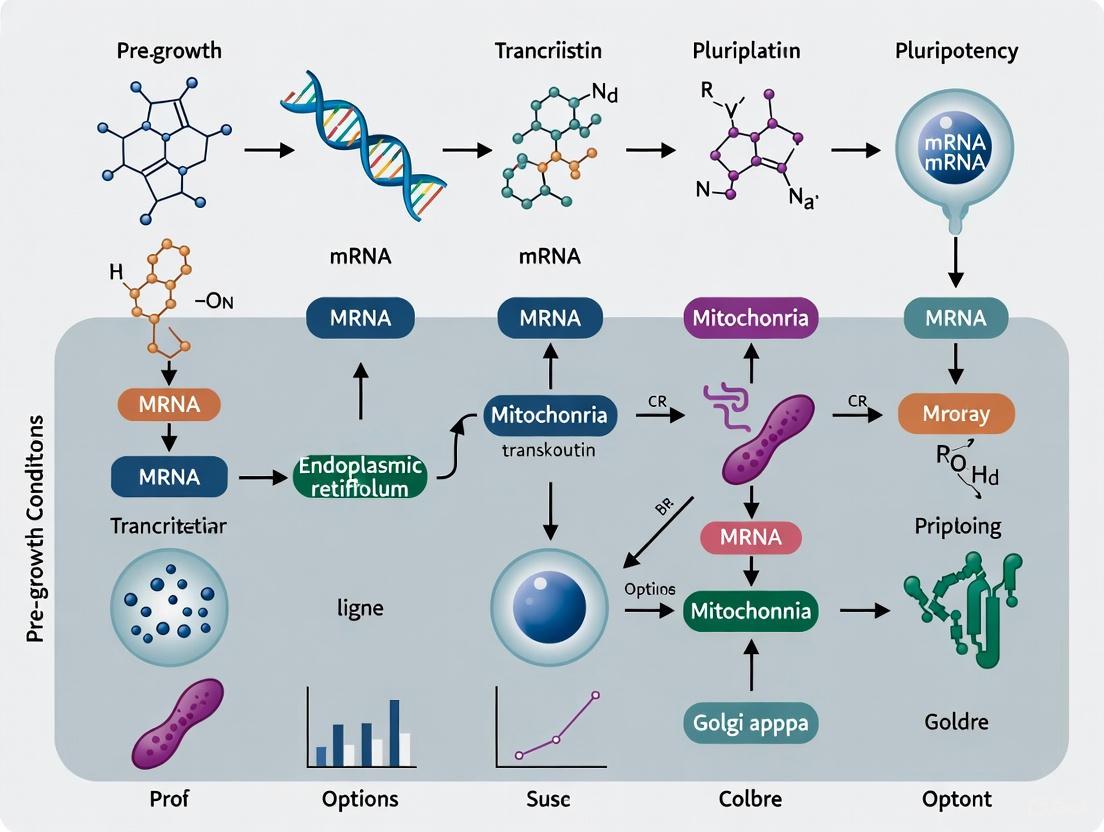
This article provides a comprehensive analysis of how pre-growth conditions fundamentally shape the pluripotency state of stem cells, with direct consequences for their stability, differentiation potential, and utility in research...
Navigating Pluripotency: How Pre-Growth Conditions Dictate Stem Cell Fate and Function
Abstract
This article provides a comprehensive analysis of how pre-growth conditions fundamentally shape the pluripotency state of stem cells, with direct consequences for their stability, differentiation potential, and utility in research and therapy. We explore the foundational biology of the pluripotency continuum, from naive to primed states, and detail the specific culture parameters—including signaling pathways, medium components, and cell handling—that establish and maintain these states. A significant focus is placed on practical methodologies for controlling pluripotency and troubleshooting common sources of variability, such as batch effects and cell line-specific responses. Finally, we present a comparative analysis of pluripotency regulation across species, validating key concepts while highlighting critical differences that impact the translation of findings from model systems to human applications. This resource is tailored for researchers, scientists, and drug development professionals seeking to optimize stem cell systems for robust and reproducible outcomes.
The Pluripotency Spectrum: From Naive to Primed States and Their Molecular Hallmarks
Frequently Asked Questions
Q1: My primed hPSCs are failing to convert to a naive state in RSeT medium. What could be the cause? A1: This is an expected finding, not a protocol failure. Research indicates that RSeT medium does not support the conversion of primed hESCs to a naive state. Instead, it maintains a distinct pluripotent state between naive and primed [1]. Your cells are likely in this previously unrecognized intermediate state, which lacks many transcriptomic hallmarks of naive pluripotency and shows differential signaling dependencies [1].
Q2: How does oxygen tension affect the growth of different pluripotent states, and what are the practical implications for my culture conditions? A2: Sensitivity to oxygen tension is state-dependent. While many naive hPSCs require hypoxic conditions (e.g., 3% Oâ‚‚), RSeT hPSCs can circumvent the need for hypoxic growth and proliferate under both normoxia (20% Oâ‚‚) and hypoxia [1]. However, cell line-specific differences exist; some lines (e.g., H1 cells) may exhibit significantly retarded growth under both conditions [1]. Optimize conditions based on your specific cell line and target state.
Q3: I am observing significantly low single-cell plating efficiency with my H1 RSeT hPSCs. How can I improve cell survival? A3: Low single-cell plating efficiency is a documented characteristic of some RSeT cell lines, including H1 [1]. To enhance survival:
- Use the ROCK inhibitor Y-27632 (10 µM) in the medium for at least the initial passages after single-cell dissociation [1].
- Consider alternative cell lines if clonal expansion is critical, as this appears to be a cell line-specific phenomenon [1].
Q4: What are the key signaling pathway dependencies I should monitor when characterizing an unknown pluripotent state? A4: Signaling dependencies are a primary diagnostic tool. The table below summarizes core pathway requirements for different states, which can be assessed using specific inhibitors [1] [2].
| Pluripotency State | Core Signaling Dependencies | Key Inhibitors for Experimental Testing |
|---|---|---|
| Naive (Mouse, in 2i/LIF) | LIF/STAT3, GSK3β inhibition, MEK/ERK inhibition [3] [2] | PD0325901 (MEKi), CHIR99021 (GSK3βi) [2] |
| Primed (Mouse EpiSC) | FGF/ERK, Activin/TGFβ [2] | SB431542 (TGFβi), FGF receptor inhibitors [2] |
| Intermediate (hPSC in RSeT) | Co-dependency on JAK/STAT and TGFβ, with sustained FGF2 activity (cell line-specific) [1] | Ruxolitinib (JAKi), SB431542 (TGFβi), FGF receptor inhibitors [1] |
Q5: My cells are in RSeT medium but do not express the naive surface markers SUSD2 or CD75. Does this mean the conversion failed? A5: No. RSeT hPSCs do not express classic naive surface markers like SUSD2 and CD75 at significant levels [1]. The absence of these markers is consistent with the established phenotype for this intermediate state and should not be used as the sole criterion for failure. Focus on a multi-parameter characterization, including transcriptomics and signaling dependencies [1].
Troubleshooting Guides
Problem 1: Failure to Achieve Naive Conversion in RSeT Medium
- Problem: Primed hPSCs cultured in RSeT medium do not acquire naive characteristics.
- Explanation: RSeT medium sustains FGF2 activity and maintains a pluripotent state downstream of naive pluripotency, restricting full conversion to the naive state [1].
- Solution:
- For RSeT Intermediate State: Continue characterization to confirm the unique RSeT state. This state is insensitive to hypoxia and has its own transcriptomic signature [1].
- For True Naive State: Switch to a dedicated naive reprogramming medium, such as the PXGL protocol (containing PD0325901, XAV939, Gö6983, and LIF), which is explicitly designed to induce and maintain naive pluripotency [1].
Problem 2: Poor Cell Survival and Altered Growth Rates in RSeT Culture
- Problem: Cells, particularly specific lines like H1, show significantly retarded growth or low viability under both normoxic and hypoxic conditions.
- Explanation: This is a documented, cell line-specific phenomenon for some RSeT hPSCs [1].
- Solution:
- Use ROCK Inhibitor: Routinely include Y-27632 (10 µM) during passaging to improve single-cell survival [1].
- Test Multiple Cell Lines: If possible, use a cell line less affected by this issue, such as H9 or an iPSC line [1].
- Confirm State Identity: Verify that the altered growth is not due to unintended differentiation by checking for the maintenance of pluripotency markers specific to the RSeT state.
Problem 3: Spontaneous Differentiation in Pluripotent Stem Cell Cultures
- Problem: Excessive differentiation (>20%) is observed in cultures.
- Explanation: This is a common issue in hPSC culture often related to suboptimal culture conditions or handling [4].
- Solution [4]:
- Ensure culture medium is fresh and has been stored correctly (at 2-8°C for less than 2 weeks).
- Manually remove differentiated areas from colonies before passaging.
- Avoid leaving culture plates outside the incubator for extended periods (>15 minutes).
- Ensure cell aggregates after passaging are evenly sized and cultures are not allowed to overgrow.
- Decrease colony density by plating fewer aggregates during passaging.
Problem 4: Adaptation to Feeder-Free Conditions Results in High Differentiation and Apoptosis
- Problem: When switching iPSCs from feeder-dependent to feeder-free culture systems, cells experience high rates of differentiation and death.
- Explanation: Pluripotent cells need to adapt to new systems to regain homeostasis, and this process can be stressful, especially for newly derived lines [5].
- Solution [5]:
- Use ROCK inhibitor (Y-27632) or RevitaCell Supplement during the initial passages in the new system to suppress apoptosis.
- Test different matrix and media combinations (e.g., Matrigel with mTeSR1 or Geltrex with StemFlex) to find the optimal condition for your specific cell line.
- Pre-rinse materials with culture medium, not PBS, to avoid subjecting fragile cells to unnecessary stress.
The Scientist's Toolkit: Key Research Reagent Solutions
| Reagent / Material | Function / Application | Example Use in Pluripotency Research |
|---|---|---|
| ROCK Inhibitor (Y-27632) | Improves single-cell survival by inhibiting apoptosis following dissociation [1] [5]. | Used in single-cell passaging and during adaptation to new culture conditions [1]. |
| Small Molecule Inhibitors (2i: PD0325901, CHIR99021) | PD0325901 inhibits MEK; CHIR99021 inhibits GSK3β. Together, they help maintain mouse ESCs in a ground-state naive pluripotency [3] [2]. | Key components of 2i/LIF medium for deriving and maintaining naive mESCs [2]. |
| RSeT Medium | A defined commercial medium used to convert and maintain primed hPSCs in a "naive-like" state, which research shows is actually a distinct intermediate state [1]. | Used to study pluripotent states between naive and primed, and for culturing cells insensitive to oxygen tension [1]. |
| LIF (Leukemia Inhibitory Factor) | Cytokine that activates JAK/STAT3 signaling to support self-renewal and inhibit differentiation in naive mouse ESCs [2]. | A core component of naive (2i/LIF) and ground-state mouse ESC culture media [2]. |
| TGFβ/Activin A Pathway Inhibitor (SB431542) | Inhibits the TGFβ and Activin Nodal signaling pathways, which are critical for maintaining the primed state [6] [2]. | Used to promote ground-state pluripotency in mESCs and to test signaling dependencies in intermediate states [1] [2]. |
| ReLeSR / Gentle Cell Dissociation Reagent | Non-enzymatic, gentle passaging reagents used to harvest hPSCs as small aggregates for routine maintenance [4]. | Maintains pluripotent cultures by generating evenly-sized cell aggregates, helping to minimize spontaneous differentiation [4]. |
| A-80987 | A-80987, CAS:144141-97-9, MF:C37H43N5O6, MW:653.8 g/mol | Chemical Reagent |
| Abametapir | Abametapir|Metalloproteinase Inhibitor|CAS 1762-34-1 | Abametapir is a metalloproteinase inhibitor for lice research. This product is For Research Use Only. Not for human or veterinary diagnostic or therapeutic use. |
Experimental Protocols & Data Analysis
- Starting Culture: Culture primed hESCs on mitomycin-C-treated mouse embryonic fibroblasts (MEFs) in mTeSR1 medium.
- Chemical Resetting: After two days, replace the medium with a chemical resetting medium for three days.
- Naive Induction: Switch the culture medium to PXGL, an N2B27-based medium containing PD0325901 (MEKi), XAV939 (WNTi), Gö6983 (PKCi), and human LIF.
- Maintenance: Culture the cells in PXGL for 10-12 days.
- Passaging: Dissociate cells with Accutase and passage onto fresh MEFs in the presence of 10 µM Y-27632.
- Monitoring: Over several passages (e.g., seven), cells gradually acquire naive characteristics. Monitor changes in colony morphology (e.g., dome-shaped) and the expression of naive pluripotency markers (e.g., SUSD2+CD24− via flow cytometry).
Quantitative Data: Transcriptional Profiles of Pluripotency States
The following table consolidates key gene ontology (GO) terms and characteristics derived from transcriptional profiling of different mouse pluripotent states originating from the same genetic background [2]. This allows for a direct comparison without genetic variability.
| Pluripotency State | Enriched GO Terms (Upregulated) | Key Functional & Culture Characteristics |
|---|---|---|
| Naive (LS: LIF + Serum) | Nucleosome & chromatin assembly [2] | Derived from pre-implantation embryos. Metastable, correlating with both pre- and post-implantation embryonic stages [3] [2]. |
| Ground State (2i: 2i + LIF) | Regulation of transcription & RNA metabolic processes [2] | Derived from pre-implantation embryos. Resembles the pre-implantation epiblast. Shows increased polysome density and translation efficiency [3] [2]. |
| Primed (EpiSCs) | Developmental processes [2] | Derived from post-implantation epiblast. Dependent on FGF and Activin signaling. Transcriptionally distinct from naive and ground states [2]. |
Signaling Pathways and Experimental Workflows
Signaling Pathway Dependencies Across Pluripotency States
The following diagram summarizes the core signaling pathway dependencies that define and can be used to diagnose the three main pluripotency states.
Experimental Workflow for Pluripotent State Characterization
This workflow outlines a systematic approach for characterizing an unknown pluripotent stem cell state, integrating key experiments from the cited research [1] [6] [2].
Technical Support Center: Troubleshooting & FAQs
FAQ: General Pathway Interactions
Q: My cells are spontaneously differentiating even with LIF supplementation. What could be wrong?
- A: Uncontrolled differentiation despite LIF often indicates a dominance of competing differentiation signals.
- Check BMP4 levels: In murine cells, high BMP4 can induce differentiation via Id genes. Titrate BMP4 or use a BMP inhibitor (e.g., Dorsomorphin) at low concentrations to rebalance the network towards self-renewal.
- Assess FGF/ERK activity: High FGF2/ERK signaling drives differentiation. Incorporate an ERK inhibitor (e.g., PD0325901) into your medium to enforce naïve pluripotency.
- Confirm LIF bioavailability: Ensure your LIF is fresh and stored correctly. Test different batches or suppliers.
- A: Uncontrolled differentiation despite LIF often indicates a dominance of competing differentiation signals.
Q: How do I determine if I am maintaining naïve or primed pluripotency?
- A: The state is defined by the signaling balance. Use this table for key differentiators:
| Feature | Naïve Pluripotency | Primed Pluripotency |
|---|---|---|
| Key Signaling | High LIF/STAT3; Low FGF/ERK; BMP4 (mouse) | High FGF/ERK; TGF-β/Activin A |
| Inhibitors Used | ERKi (PD0325901), MEKi, GSK3βi (CHIR) | Often none, or BMPi for human |
| Common Markers | Nanog, Klf4, Rex1, Stella | Otx2, Fgf5, Dnmt3a,b |
| Colony Morphology | Dome-shaped, compact | Flat, spread-out |
- Q: I am getting high cell death when switching to a defined medium. What is the cause?
- A: Acute cell death is often due to the withdrawal of survival factors.
- Increase FGF2 concentration: FGF is a critical survival factor, especially for primed-state human iPSCs. Start with a higher dose (e.g., 100 ng/mL) and titrate down.
- Optimize Rho-associated kinase (ROCK) inhibitor: Add a ROCK inhibitor (e.g., Y-27632) to the medium for the first 24-48 hours after passaging to suppress anoikis.
- Check Insulin/IGF-1 levels: Ensure your defined medium contains sufficient insulin or IGF-1 for PI3K/Akt-mediated survival.
- A: Acute cell death is often due to the withdrawal of survival factors.
Troubleshooting: Experimental Issues
Q: My phospho-STAT3 western blot shows no signal in the LIF-treated group.
- A: This indicates a failure in the LIF/STAT3 pathway activation.
- Positive Control: Include a cell line known to have strong STAT3 activation (e.g., HepG2 with IL-6 treatment).
- Starvation Step: Serum-starve cells for 4-6 hours before LIF stimulation to reduce basal phosphorylation.
- Timing: Harvest cells 15-30 minutes after LIF addition for peak phosphorylation. Perform a time-course experiment.
- Antibody Validation: Confirm antibody specificity using a STAT3 knockout cell line or siRNA knockdown.
- A: This indicates a failure in the LIF/STAT3 pathway activation.
Q: How can I precisely modulate TGF-β/Activin/Nodal vs. BMP signaling independently?
- A: Use specific small molecule inhibitors and recombinant proteins. See the table below for precise tools.
| Pathway | Activator (Function) | Inhibitor (Function) |
|---|---|---|
| TGF-β/Activin/Nodal | Activin A (Activates Smad2/3) | SB431542 (Selectively inhibits ALK4,5,7) |
| BMP | BMP4 (Activates Smad1/5/8) | Dorsomorphin (Inhibits BMPR: ALK2,3,6) |
| FGF/ERK | FGF2 (Promotes proliferation/differentiation) | PD0325901 (MEK inhibitor, blocks ERK phosphorylation) |
Experimental Protocols
Protocol 1: Assessing Pluripotency State via Immunofluorescence
- Objective: To qualitatively determine the expression of naïve (e.g., NANOG) and primed (e.g., OTX2) markers.
- Procedure:
- Culture cells on Matrigel-coated glass coverslips.
- Fix with 4% Paraformaldehyde (PFA) for 15 minutes at room temperature (RT).
- Permeabilize with 0.1% Triton X-100 for 10 minutes.
- Block with 3% BSA in PBS for 1 hour.
- Incubate with primary antibody (e.g., anti-NANOG, 1:500) diluted in blocking buffer overnight at 4°C.
- Wash 3x with PBS.
- Incubate with fluorescently-labeled secondary antibody (e.g., Alexa Fluor 488, 1:1000) for 1 hour at RT in the dark.
- Counterstain nuclei with DAPI (1 µg/mL) for 5 minutes.
- Mount on slides and image with a fluorescence microscope.
Protocol 2: Quantifying Signaling Activity via qPCR
- Objective: To quantitatively measure the transcriptional output of pathways (e.g., STAT3 target genes).
- Procedure:
- Treat cells with experimental conditions (e.g., ±LIF, ±Inhibitor) for 24 hours.
- Lyse cells and extract total RNA using a commercial kit.
- Synthesize cDNA from 1 µg of RNA using a reverse transcription kit.
- Prepare qPCR reactions with SYBR Green master mix, gene-specific primers (e.g., for Socs3, Klf4), and a housekeeping gene (e.g., Gapdh, Hprt).
- Run the qPCR program: 95°C for 3 min, followed by 40 cycles of 95°C for 10s and 60°C for 30s.
- Analyze data using the ΔΔCt method to calculate relative gene expression.
Pathway & Workflow Diagrams
LIF/STAT3 Signaling Pathway
Pluripotency Signaling Network
State Maintenance Workflow
The Scientist's Toolkit
| Research Reagent | Function & Application |
|---|---|
| Recombinant LIF | Cytokine for activating JAK/STAT3 signaling to maintain self-renewal. |
| Recombinant FGF2 (bFGF) | Growth factor for promoting cell survival and priming/ differentiation. |
| CHIR99021 | GSK3β inhibitor; activates Wnt signaling, used in 2i/LIF naïve medium. |
| PD0325901 | MEK inhibitor; suppresses FGF/ERK signaling to stabilize naïve state. |
| SB431542 | TGF-β/Activin/Nodal pathway inhibitor; blocks ALK4,5,7 receptors. |
| Dorsomorphin | BMP pathway inhibitor; blocks ALK2,3,6 receptors. |
| Y-27632 | ROCK inhibitor; reduces apoptosis during single-cell passaging. |
| Matrigel | Extracellular matrix providing adhesion signals for cell growth. |
| mTeSR1 / E8 Medium | Defined, xeno-free culture media for human PSCs. |
| ABT-963 | ABT-963, CAS:266320-83-6, MF:C22H22F2N2O5S, MW:464.5 g/mol |
| AG-012986 | AG-012986, CAS:223784-75-6, MF:C16H12F2N4O3S2, MW:410.4 g/mol |
FAQ: Core Pluripotency Factor Functions
Q1: What are the core functional roles of Oct4, Sox2, Nanog, and Klf4 in pluripotency? These factors form a core transcriptional network that establishes and maintains pluripotency. Oct4, a POU-family transcription factor, is a master regulator essential for the initiation and maintenance of pluripotent cells; its precise expression level is a critical determinant of cell fate [7]. Sox2, an HMG-box transcription factor, frequently partners with Oct4, binding to composite DNA elements to co-activate target genes [8] [7]. Nanog functions to stabilize the pluripotent state, and its forced expression can convert partially reprogrammed cells to a fully reprogrammed state [8]. Klf4 contributes to the repression of somatic gene programs and supports the mesenchymal-to-epithelial transition (MET), an important early step in reprogramming [8].
Q2: Can any of these core factors be replaced, and what does this tell us about the network? Yes, the network demonstrates a degree of flexibility. Replacement factors can substitute for a core factor's function in reprogramming, providing insight into the network's logic. For example:
- Klf4 can be replaced by the orphan nuclear receptor Esrrb or by p53 knockdown [8].
- Sox2 can be replaced using specific small molecules [8].
- Oct4 can be replaced by another nuclear receptor, Nr5a2 [8]. These replacements indicate that the core function of maintaining the pluripotent state can be achieved through multiple molecular paths that converge on key downstream genes and pathways.
Q3: What epigenetic barriers impede reprogramming, and how do the core factors overcome them? Somatic cells have a stable chromatin state that resists dedifferentiation. Major barriers include:
- Repressive chromatin marks: High levels of H3K9me3 and DNA methylation silence pluripotency genes like Oct4 [7] [9].
- Polycomb-mediated repression: The PRC2 complex deposits H3K27me3 at developmental genes, which in ESCs exist in a "bivalent" state with H3K4me3, poising them for activation [10]. The core factors work to reset this epigenetic landscape by recruiting chromatin-remodeling complexes, leading to demethylation of pluripotency gene promoters and establishing a transcriptionally permissive environment [9].
Troubleshooting Guide for Experimental Challenges
Table 1: Common Reprogramming Challenges and Solutions
| Challenge | Potential Cause | Solution / Optimization |
|---|---|---|
| Low reprogramming efficiency | Presence of epigenetic barriers | Inhibit repressive pathways with small molecules (e.g., G9a or DNA methyltransferase inhibitors) [7] [9]. |
| Inefficient cell cycle progression | Knockdown of cell cycle checkpoints (e.g., p53, p21) can enhance efficiency [8]. | |
| Accumulation of partially reprogrammed cells | Failure to activate endogenous pluripotency network | Overexpression of late-stage factors like Nanog or Glis1 can drive conversion to full pluripotency [8]. |
| Failure to downregulate somatic genes | Incomplete MET | Ensure culture conditions support MET; BMP/Smad signaling promotes this transition while TGF-β pathway activation inhibits it [8]. |
| Heterogeneous cell populations in ESC cultures | Culture conditions not stabilizing the "ground state" | Use 2i/LIF culture conditions (MEK and GSK3 inhibitors with LIF) to maintain a homogenous, naïve pluripotent state [11]. |
Experimental Protocol: Assessing Pluripotency Factor Activity
Method: Chromatin Immunoprecipitation (ChIP) for Mapping Transcription Factor Binding
- Cell Fixation: Cross-link proteins to DNA in your cell population (e.g., ESCs or reprogramming intermediates) using formaldehyde.
- Cell Lysis and Chromatin Shearing: Lyse cells and fragment the chromatin by sonication to an average size of 200-500 bp.
- Immunoprecipitation: Incubate the sheared chromatin with a specific antibody against your target transcription factor (e.g., anti-Oct4, anti-Sox2). Use a non-specific IgG antibody as a negative control.
- Washing and Elution: Wash the antibody-protein-DNA complexes to remove non-specifically bound material, then reverse the cross-links to elute the DNA.
- DNA Analysis: Purity the DNA and analyze by quantitative PCR (ChIP-qPCR) for specific genomic loci or by high-throughput sequencing (ChIP-Seq) for genome-wide binding maps [10]. ChIP-Seq in ESCs has revealed that these core factors co-bind at many genomic locations, forming a interconnected regulatory circuitry [8].
Key Signaling Pathways in Pluripotency
The following diagram illustrates the core signaling pathways that support the naïve pluripotent state, in which the core transcription factor network operates.
The Scientist's Toolkit: Research Reagent Solutions
Table 2: Essential Reagents for Investigating Pluripotency Networks
| Reagent / Tool | Function / Application | Key Details |
|---|---|---|
| 2i/LIF Medium | Maintains mouse ESCs in a homogenous "ground state" of naïve pluripotency. | Combination of MEK inhibitor (PD0325901) and GSK3 inhibitor (CHIR99021) with Leukemia Inhibitory Factor (LIF) [11]. |
| Chromatin Modifying Inhibitors | Overcome epigenetic barriers to reprogramming. | Includes DNA methyltransferase inhibitors (5-aza-cytidine) and histone deacetylase inhibitors (e.g., VPA, TSA) [7] [9]. |
| Defined Feeder-Free Culture | Provides a controlled environment for human PSC culture. | Uses defined matrices (e.g., Vitronectin, Laminin-521) and media formulations to eliminate variability from feeder cells and serum [11]. |
| scRNA-seq & GRN Analysis Tools | Decodes cellular heterogeneity and infers gene regulatory networks. | Technologies like scHGR and GRLGRN use computational methods to infer regulatory relationships from single-cell transcriptome data [12] [13]. |
| AG-494 | AG-494, CAS:139087-53-9, MF:C16H12N2O3, MW:280.28 g/mol | Chemical Reagent |
| AG-494 | AG-494, CAS:133550-35-3, MF:C16H12N2O3, MW:280.28 g/mol | Chemical Reagent |
Core Transcriptional Regulatory Circuitry
The core factors Oct4, Sox2, and Nanog form an interconnected autoregulatory loop that stabilizes the pluripotent state. The following diagram illustrates this network and its key outputs.
Troubleshooting Common Epigenetic Assays
This guide addresses frequent experimental challenges in key epigenetic techniques, providing targeted solutions for researchers studying pluripotency states.
DNA Methylation Analysis
Issue: Inconsistent or failed bisulfite conversion during DNA methylation analysis.
- Problem Explanation: Bisulfite conversion is a critical but harsh chemical process that can degrade DNA and lead to incomplete conversion, resulting in inaccurate methylation data [14].
- Solution:
- Ensure DNA Purity: Use high-quality, pure DNA. If particulate matter is present after adding conversion reagent, centrifuge at high speed and use only the clear supernatant [15].
- Verify Reaction Conditions: Ensure all liquid is at the bottom of the reaction tube and not on the cap or walls before starting the conversion reaction [15].
- Amplification Follow-up:
- Primer Design: Design primers (24-32 nt) to specifically amplify the converted template. Avoid more than 2-3 mixed bases and ensure the 3' end does not end in a residue whose conversion state is unknown [15].
- Polymerase Selection: Use a hot-start Taq polymerase (e.g., Platinum Taq). Avoid proof-reading polymerases as they cannot read through uracil in the converted DNA [15].
- Amplicon Size: Target ~200 bp amplicons. Larger fragments are possible but require protocol optimization due to potential strand breaks from bisulfite treatment [15].
Issue: Low or no enrichment of methylated DNA in enrichment-based protocols (e.g., MeDIP).
- Problem Explanation: Methyl-CpG-binding domain (MBD) proteins or antibodies can bind non-specifically to unmethylated DNA, especially with low DNA input, reducing assay specificity [15].
- Solution: Strictly follow the product manual's protocol for different DNA input amounts. Using the correct protocol for your specific DNA quantity minimizes non-specific binding and improves enrichment efficiency [15].
Chromatin Accessibility Profiling
Issue: High background noise or unclear nucleosome patterning in ATAC-seq data.
- Problem Explanation: This often stems from suboptimal cell viability or an over-digestion of chromatin by the Tn5 transposase, which obscures the clear fragment size periodicity indicative of nucleosome positioning [16].
- Solution:
- Cell Viability: Use fresh cells or nuclei with high viability (>90%) to minimize background from apoptotic DNA.
- Titrate Transposase: Optimize the amount of Tn5 enzyme and reaction time to prevent over-digestion. A pilot assay can help determine the ideal conditions.
- Paired-End Sequencing: Use paired-end sequencing, which provides higher unique alignment rates and more precise categorization of fragments as nucleosome-free, mono-nucleosomal, or di-nucleosomal [16].
Issue: Biased sampling in MNase-seq data.
- Problem Explanation: Micrococcal Nuclease (MNase) has a sequence cleavage bias (preference for AT-rich regions) and can differentially digest distinct classes of nucleosomes, leading to an inaccurate picture of nucleosome occupancy and positioning [17] [18].
- Solution: Perform extensive digestion of crosslinked chromatin to ~95-100% mononucleosomes. At this level, all linker DNA is cut, reducing bias related to internucleosomal linker length and providing a more accurate and reproducible assessment [18]. Using spike-in controls and standardized MNase titration can also help mitigate this issue [17].
Frequently Asked Questions (FAQs)
FAQ: How does chromatin accessibility relate to the naive pluripotency state? The naive pluripotent state, considered a "ground state" of pluripotency, is characterized by a distinct epigenetic landscape. Research in mouse Embryonic Stem Cells (mESCs) shows that maintaining this state in defined "2i" culture conditions (using MEK and GSK3 inhibitors) results in a more uniform chromatin architecture and reduced expression of early differentiation genes compared to serum-cultured cells [11]. A key feature of the transition from a naive pluripotent state toward a more differentiated "2-cell-like" (2CLC) state is widespread chromatin decompaction, increased nucleosome mobility, and a global reduction in DNA methylation [19]. These accessibility changes are prerequisites for the massive zygotic genome activation that defines this developmental window.
FAQ: What is the recommended sequencing depth for bulk ATAC-seq experiments? The required depth depends on your research goal. Below are general guidelines using paired-end reads for superior alignment and duplicate removal [16].
Table: ATAC-seq Sequencing Depth Recommendations
| Research Goal | Recommended Depth |
|---|---|
| Identification of open chromatin regions | ≥ 50 million paired-end reads |
| Transcription factor footprinting | > 200 million paired-end reads |
FAQ: What alternative methods exist for DNA methylation sequencing besides bisulfite sequencing? Bisulfite sequencing is the gold standard but can degrade DNA. Several alternative and complementary methods are available.
Table: DNA Methylation Sequencing Methods Comparison
| Method | Principle | Pros | Cons | Best For |
|---|---|---|---|---|
| Whole Genome Bisulfite Sequencing (WGBS) [14] | Chemical conversion of unmethylated cytosines to uracil | Base-pair resolution; high coverage; widely used | Harsh treatment degrades DNA; requires deep sequencing; computationally intensive | Whole-genome methylation analysis in high-quality DNA |
| Enzymatic Methyl-seq [14] | Enzymatic conversion of unmethylated cytosines | Gentler on DNA (less damage); works with low-input/FFPE samples; can distinguish 5mC/5hmC | Still requires deep sequencing; newer method with fewer comparative studies | High-precision profiling in low-input or degraded samples |
| Long-Read Sequencing (PacBio/Nanopore) [14] | Direct detection of methylation on native DNA | No conversion needed; long reads allow phasing of modifications | Higher error rates; more DNA input; less established analysis pipelines | Phasing methylation with genetic variants; repetitive regions |
| meCUT&RUN [14] | Enrichment of methylated DNA using an MBD protein | Low sequencing depth (20-50M reads); cost-effective; works with low cell numbers (10,000) | Non-quantitative; no base-pair resolution (without conversion) | Cost-sensitive studies to identify methylated regulatory regions |
| Reduced Representation Bisulfite Seq (RRBS) [14] | Restriction enzyme digestion followed by bisulfite sequencing | Cost-effective; focused on CpG islands and promoters | Limited genome coverage (~5-10% of CpGs); biased toward high CpG density | Cost-sensitive studies focusing on CpG islands and promoters |
Experimental Protocols for Key Techniques
Protocol: ATAC-seq for Mapping Chromatin Accessibility
This protocol outlines the method for Assay for Transposase-Accessible Chromatin using sequencing (ATAC-seq), a rapid and sensitive technique to profile genome-wide chromatin accessibility [16].
- Cell Preparation: Isolate 50,000 - 100,000 viable cells (fresh or cryopreserved). High viability is critical.
- Nuclei Isolation: Pellet cells and lyse with a cold lysis buffer (e.g., 10 mM Tris-Cl, pH 7.4, 10 mM NaCl, 3 mM MgCl2, 0.1% IGEPAL CA-630). Immediately pellet nuclei and resuspend in transposase reaction mix.
- Tagmentation: Incubate nuclei with the Tn5 transposase (e.g., Illumina Tagment DNA TDE1 Enzyme) at 37°C for 30 minutes. The Tn5 enzyme simultaneously fragments DNA and inserts sequencing adapters into accessible chromatin regions.
- DNA Purification: Purify the tagmented DNA using a DNA cleanup kit (e.g., Qiagen MinElute PCR Purification Kit).
- Library Amplification: Amplify the purified DNA by PCR (e.g., 12 cycles) using indexing primers to barcode samples for multiplexing.
- Library Purification & Sequencing: Purify the final library and quantify. Sequence using paired-end chemistry on an appropriate Illumina sequencing platform [16].
ATAC-seq Experimental Workflow
Protocol: Whole-Genome Bisulfite Sequencing (WGBS)
This protocol describes Whole-Genome Bisulfite Sequencing (WGBS), the gold-standard method for base-pair resolution mapping of DNA methylation across the entire genome [14].
- DNA Extraction & Quality Control: Extract high-molecular-weight genomic DNA. Verify integrity and purity (A260/280 ratio ~1.8).
- Bisulfite Conversion: Treat 100-500 ng of DNA with sodium bisulfite. This reaction deaminates unmethylated cytosines to uracils, while methylated cytosines remain unchanged.
- Desalting & Purification: Purify the bisulfite-converted DNA to remove salts and reagents. This is typically done using a column-based or bead-based cleanup kit.
- Library Preparation: Prepare sequencing libraries from the converted DNA. Standard Illumina library prep protocols can be used, but the polymerase must be uracil-insensitive.
- Amplification & Indexing: Amplify the library with a limited number of PCR cycles and add dual-index barcodes for multiplexing.
- Sequencing: Sequence the library on an Illumina platform. Due to the reduced sequence complexity after bisulfite conversion, higher sequencing depth is required for full genome coverage compared to standard DNA-seq.
The Scientist's Toolkit: Essential Research Reagents
Table: Key Reagents for Epigenetic Research in Pluripotency
| Reagent / Tool | Function / Application | Key Consideration |
|---|---|---|
| Tn5 Transposase [16] | Enzymatic fragmentation and tagging of accessible chromatin in ATAC-seq. | Hyperactive mutant Tn5 ensures efficient tagmentation. Commercial kits (e.g., Illumina Tagment DNA TDE1) are optimized. |
| Sodium Bisulfite [14] | Chemical conversion of unmethylated C to U for methylation detection in WGBS/RRBS. | Purity is critical. Harsh treatment degrades DNA; optimize conversion time and temperature. |
| Methylation-Specific Restriction Enzymes (e.g., Mspl) [14] | Digest genome to create reduced representation fragments for RRBS. | Enzyme selection determines genomic coverage; biased toward CpG-rich regions. |
| Methyl-Binding Domain (MBD) Proteins [14] | Enrichment of methylated DNA fragments in protocols like meCUT&RUN. | Offers a gentler alternative to bisulfite conversion for genome-wide methylation profiling. |
| Leukemia Inhibitory Factor (LIF) [11] [19] | Cytokine used in cell culture to maintain mouse embryonic stem cell (mESC) self-renewal and pluripotency. | Activates the JAK/STAT3 signaling pathway to suppress differentiation. |
| 2i/LIF Culture System [11] | Defined culture condition (MEK + GSK3 inhibitors + LIF) to maintain mESCs in a naive "ground state" of pluripotency. | Blocks prodifferentiation signaling pathways (FGF4/Erk), promoting a more homogeneous pluripotent population. |
| AK 295 | AK 295, CAS:160399-35-9, MF:C26H40N4O6, MW:504.6 g/mol | Chemical Reagent |
| (S)-Alaproclate | Alaproclate, (S)-|High-Quality SSRI for Research | Alaproclate, (S)- is a selective serotonin reuptake inhibitor (SSRI) for neuroscience research. This product is for Research Use Only and is not intended for diagnostic or therapeutic use. |
Frequently Asked Questions (FAQs)
FAQ 1: What are the key in vivo correlates for the naive and primed pluripotent states?
The naive pluripotent state corresponds to the pre-implantation epiblast of the blastocyst, captured in vitro by naive human pluripotent stem cells (hnPSCs). In contrast, the primed pluripotent state corresponds to the post-implantation epiblast, captured in vitro by epiblast stem cells (EpiSCs) or conventional human pluripotent stem cells (hPSCs). The transition between these states involves significant transcriptional, epigenetic, and functional changes [20] [6].
FAQ 2: How can I experimentally validate the pluripotency state of my stem cell culture?
Validation is multi-faceted and should assess molecular and functional characteristics:
- Molecular Markers: Analyze key transcription factors. Naive cells typically express KLF2, KLF4, TFCP2L1, and NANOG. Primed cells maintain OCT4 but show different surface markers and may express OTX2 [21] [20].
- Functional Assays: Naive pluripotent cells, like mouse ESCs, are capable of forming high-efficiency blastocyst chimeras. Primed cells, like EpiSCs, lack this capability for naive chimeras but can contribute to teratomas [20] [6].
- Signaling Dependence: Naive pluripotency can be maintained with LIF and 2i inhibitors (MEK and GSK3 inhibition). Primed pluripotency relies on FGF2 and Activin A signaling [21] [20].
FAQ 3: What critical signaling pathway governs epiblast versus hypoblast specification in the human blastocyst?
ERK signaling is a critical pathway. Suppressing ERK signaling in human blastocysts expands the NANOG-positive epiblast population and blocks GATA4-positive hypoblast formation. Conversely, FGF stimulation, which activates ERK, promotes hypoblast specification at the expense of the epiblast [22].
FAQ 4: My blastoid formation efficiency is low. What are potential molecular culprits?
Recent research implicates species-specific regulatory elements. The repression of HERVK LTR5Hs, a hominoid-specific endogenous retrovirus active in the pre-implantation epiblast, leads to a dose-dependent failure in blastoid formation. High repression causes widespread apoptosis and formation of non-cavitating "dark spheres" [23]. Ensuring the integrity of this pathway is essential for efficient model generation.
Troubleshooting Guides
Issue 1: Failure to Maintain a Naive Pluripotent State
Problem: Cells spontaneously differentiate or adopt a primed-like identity during naive culture.
| Possible Cause | Diagnostic Steps | Solution |
|---|---|---|
| Insufficient signaling inhibition | Check expression of naive markers (e.g., KLF4) and primed markers (e.g., OTX2) via qPCR/IF. | Ensure MEK (e.g., PD0325901) and GSK3 (e.g., CHIR99021) inhibitors are fresh and used at correct concentrations in 2i/LIF medium [20]. |
| Epigenetic instability | Perform RNA-seq to assess transcriptomic fidelity to the naive state. Long-term 2i/LIF culture can cause aberrations [20]. | Consider using alternative naive culture conditions or limiting long-term passaging in 2i/LIF. |
| Incorrect starting population | Validate that the initial cell population is genuinely naive, not primed. | Re-derive naive cells from primed PSCs using a established reprogramming protocol [20]. |
Issue 2: Inefficient Differentiation or Guided Differentiation Yielding Incorrect Lineages
Problem: When exiting naive pluripotency, cells do not efficiently form desired post-implantation lineages or embryo models.
| Possible Cause | Diagnostic Steps | Solution |
|---|---|---|
| Heterogeneous starting population | Use single-cell RNA sequencing or flow cytometry to check for uniformity of key pluripotency factors like NANOG and SOX2. | Pre-sort the naive population for homogeneous marker expression before initiating differentiation [21]. |
| Dysregulated core pluripotency network | After silencing a pluripotency factor, use RNA-seq to analyze the activity of other master regulators (e.g., from the known 132 MRs in EpiSCs) [6]. | The exit from pluripotency relies on a complex network. Target "Mediator" or "Speaker" master regulators identified in primed-state networks to unblock differentiation [6]. |
| Inadequate activation of new enhancers | Perform ChIP-seq for key TFs (e.g., OTX2) and histone marks (e.g., H3K27ac) during differentiation. | Ensure the correct induction of formative/primed-state TFs like OTX2, which helps rewire the enhancer landscape away from the naive state [21]. |
Key Experimental Data & Protocols
Table 1: Characteristics of Key Pluripotency States
| Feature | Naive Pluripotency | Formative Pluripotency | Primed Pluripotency |
|---|---|---|---|
| In Vivo Correlate | Pre-implantation epiblast | Pre-streak post-implantation epiblast | Post-implantation epiblast [20] [6] |
| Key Transcription Factors | OCT4, SOX2, NANOG, KLF2, KLF4, TFCP2L1 | (Emerging: responds to germ cell induction) | OCT4, OTX2; distinct network of 132 Master Regulators [21] [6] |
| Signaling Requirements | LIF/STAT3, MEKi, GSK3i (2i/LIF) | FGF2, TGF-β/Activin, WNT modulation | FGF2, Activin A/TGF-β [20] |
| Chimera Competency | High (mouse) | Not well-established | Low/None [20] |
| Representative Cell Lines | Mouse ESCs, hnPSCs | Mouse EpiLCs, formative ESCs | Mouse EpiSCs, conventional hPSCs [20] [6] |
Key Quantitative Findings from Recent Studies
Table 2: Quantitative Effects of Signaling Modulation on Lineage Specification
| Experimental Manipulation | System | Effect on Epiblast | Effect on Hypoblast | Key Citation |
|---|---|---|---|---|
| FGF4 (750 ng/ml) treatment | Human blastocyst | ↓ 2-fold (mean 3 vs 8 cells/embryo) | ↑ 1.5-fold (mean 12 vs 8 cells/embryo) | [22] |
| ERK inhibition (Ulixertinib) | Human blastocyst | Modest increase (mean 15 vs 12 cells/embryo); becomes predominant | Near-total loss (mean 2 vs 13 cells/embryo) | [22] |
| LTR5Hs high repression | Human blastoid model | Failure to form; apoptosis (29 vs 3 cleaved CASP3+ cells) | Failure to form | [23] |
Detailed Protocol: Investigating ERK Dependence in Human Blastocysts
This protocol is adapted from functional studies on human blastocysts [22].
Objective: To determine the role of ERK signaling in lineage specification within the human inner cell mass (ICM).
Materials:
- Inhibitor: Ulixertinib (ERKi), reconstituted in DMSO.
- Control: Volume-matched DMSO.
- Culture Medium: Pre-equilibrated human embryo culture medium.
- Day 5 Human Blastocysts: Obtained from donated IVF surplus embryos with informed consent and ethical approval.
Workflow:
- Preparation: On Day 5 post-fertilization, select morphologically normal blastocysts.
- Treatment: Randomize embryos into two groups:
- Control Group: Culture in medium containing DMSO.
- ERKi Group: Culture in medium containing 5 µM Ulixertinib.
- Culture: Maintain embryos in culture for 36 hours under standard conditions (37°C, 5% O₂, 6% CO₂).
- Fixation and Staining: At the end of the culture period, fix embryos and perform immunofluorescence staining for key lineage markers:
- Epiblast: NANOG
- Hypoblast: GATA4
- Trophectoderm: GATA3
- Imaging and Quantification: Acquire high-resolution confocal images. Count the number of NANOG+ and GATA4+ cells in the ICM of each embryo.
- Statistical Analysis: Compare the average number of epiblast and hypoblast cells, and the hypoblast:epiblast ratio between control and ERKi-treated groups using an appropriate statistical test (e.g., t-test).
Diagram 1: Experimental workflow for ERK inhibition in human blastocysts.
The Scientist's Toolkit: Essential Research Reagents
Table 3: Key Reagents for Studying Pluripotency States
| Reagent | Function/Application | Key Detail |
|---|---|---|
| PD0325901 | MEK inhibitor. Component of "2i" cocktail to maintain naive pluripotency by suppressing differentiation signals [20]. | Used at concentrations typically in the µM range. Critical for maintaining mouse and human naive PSCs. |
| LIF (Leukemia Inhibitory Factor) | Cytokine. Activates STAT3 signaling to support self-renewal in naive pluripotency [20]. | Used in combination with 2i (2i/LIF) for naive culture. |
| FGF2 (bFGF) | Growth Factor. Key signaling component for maintaining primed pluripotency (in EpiSCs and hPSCs) and for driving differentiation [20]. | Used in conjunction with Activin A in FA culture condition for primed state. |
| Ulixertinib | ERK1/2 inhibitor. Used to functionally test the role of ERK signaling in epiblast/hypoblast specification in embryo models [22]. | Used at 5 µM in human blastocyst cultures to block hypoblast formation. |
| Activin A | TGF-β family cytokine. Supports self-renewal in primed pluripotency and is involved in endoderm differentiation [20]. | A key component in formative (AloXR) and primed (FA) culture conditions. |
| CARGO-CRISPRi | Targeted epigenetic repression system. Enables simultaneous repression of multiple genomic loci (e.g., HERVK LTR5Hs elements) to study function in blastoids [23]. | Uses a 12-mer gRNA array and KRAB-dCas9 to deposit repressive H3K9me3 marks. |
| NSC111552 | NSC111552, CAS:40420-48-2, MF:C12H10O3, MW:202.21 g/mol | Chemical Reagent |
| Tectoquinone | Tectoquinone, CAS:84-54-8, MF:C15H10O2, MW:222.24 g/mol | Chemical Reagent |
Core Signaling Pathways and Molecular Mechanisms
The Role of ERK in Early Lineage Specification
The FGF/ERK pathway is a master regulator of the first cell fate decision within the inner cell mass. The core mechanism, conserved in humans, involves epiblast-derived FGF4 signaling to uncommitted ICM cells, activating ERK to promote hypoblast fate. Inhibiting this pathway locks the ICM into an epiblast state [22].
Diagram 2: ERK signaling pathway in ICM lineage specification.
The NANOG-SOX2 Regulatory Switch During the Naive-to-Primed Transition
A key molecular event in exiting naive pluripotency is the rewiring of the core pluripotency network. In the post-implantation mouse embryo, NANOG and SOX2 expression become segregated. Surprisingly, NANOG represses Sox2 in the posterior epiblast, facilitating the loss of pluripotency and entry into gastrulation. This represents a repurposing of NANOG from a pluripotency sustainer to a differentiation promoter [24].
Diagram 3: NANOG-SOX2 dynamics during pluripotency transition.
A Practical Guide to Controlling Pluripotency Through Culture Conditions
Media System Comparison & Selection Guide
Key Characteristics at a Glance
The choice between serum-containing and defined, feeder-free media systems is fundamental to experimental design, significantly impacting reproducibility, cell phenotype, and applicability to regulatory pathways.
The table below summarizes the core characteristics of each system:
| Feature | Serum-Containing Media | Defined, Feeder-Free Media |
|---|---|---|
| Composition | Complex, undefined mixture of growth factors, hormones, and proteins [25] [26]. | Chemically defined, known concentrations of components [25] [27]. |
| Batch-to-Batch Variability | High, due to biological source variations [26]. | Low, designed for high consistency [26] [28]. |
| Regulatory & Safety Profile | Higher risk of pathogen contamination; ethical concerns regarding animal welfare [25] [26]. | Xeno-free options available; safer for clinical applications; reduced contamination risk [25] [26]. |
| Experimental Control | Low, undefined components can interfere with cellular responses [26]. | High, allows precise evaluation of cellular functions [28]. |
| Downstream Processing | Difficult due to undefined serum components [28]. | Simplified purification and processing [28]. |
| Cost | Generally lower media cost, but variability can incur hidden costs [25]. | Significantly higher media cost, but can be offset by improved consistency [25] [26]. |
| Typical Applications | Routine cell culture; initial cell establishment [26]. | Biopharmaceutical production; clinical-grade cell manufacturing; toxicology studies; precise mechanistic research [25] [26] [28]. |
Quantitative Performance Data
Performance metrics vary significantly based on cell type and media formulation. The following table provides examples from recent research:
| Cell Type | Media Supplement | Key Performance Metric | Reported Outcome | Source |
|---|---|---|---|---|
| Mesenchymal Stem Cells (MSCs) | 7 Commercial SFM | Growth Support | Most, but not all, supported expansion well [25]. | |
| Mesenchymal Stem Cells (MSCs) | 5 hPL preparations | Growth Support | All supported MSC growth [25]. | |
| Natural Killer (NK) Cells | Cytokine Combination (IL-2, IL-18, rIL-27) | Fold Expansion | 17.19 ± 4.85-fold [29]. | |
| Natural Killer (NK) Cells | Genetically Engineered K562 Feeder Cells | Fold Expansion | Ranged from ~842-fold to over 12,000-fold, depending on membrane-bound ligands [30] [29]. | |
| Natural Killer (NK) Cells | Antibody Stimulation (OKT-3 + anti-CD52) | Fold Expansion / Purity | ~1,000-fold / ~60% purity [29]. | |
| Mouse Embryonic Stem Cells (mESCs) | DARP Medium (Novel SFM) | Functionality | Supported normal transcriptome, differentiation into teratomas, and establishment of new lines from blastocysts [27]. |
Troubleshooting Common Experimental Issues
FAQ: Problem Resolution in Media Transitions and Culture
Q1: My cells are undergoing increased cell death during the adaptation from serum-containing to serum-free media. What is the cause and how can I mitigate this?
- Cause: Serum withdrawal can induce apoptosis, as cells are suddenly deprived of survival factors and adhesion signals they were dependent upon [31].
- Solution:
- Gradual Adaptation: Do not switch directly. Gradually reduce the percentage of serum while increasing the percentage of the new serum-free medium over several passages.
- Supplement with Anti-Apoptotics: Supplement the medium with a Rho-associated protein kinase (ROCK) inhibitor during the initial adaptation phase. Research shows that the Fyn-RhoA-ROCK pathway is a major pathway for cell death in hiPSCs upon dissociation, and its inhibition can dramatically improve survival [31].
- Ensure Proper Scaffolding: In feeder-free systems, the choice of extracellular matrix (ECM) is critical. For example, signaling through laminin-511/α6β1 integrin is known to protect against apoptosis in hiPSCs [31]. Confirm your cells are plated on an optimal, defined ECM.
Q2: I am observing high differentiation rates in my pluripotent stem cell cultures after moving to a feeder-free system. How can I maintain pluripotency?
- Cause: The loss of supportive signals previously provided by feeder cells or undefined serum components. Feeder cells secrete critical products like activin A, TGF-β, and IGFs that help maintain pluripotency [31].
- Solution:
- Optimize Small Molecule Inhibitors: For naïve-state pluripotent cells like mESCs, use "2i" culture conditions containing small molecule inhibitors PD0325901 (MEK inhibitor) and CHIR99021 (GSK3 inhibitor) to support self-renewal [27].
- Supplement Key Growth Factors: Ensure your medium contains essential cytokines. For naïve cells, Leukemia Inhibitory Factor (LIF) is critical. For primed-state cells, basic Fibroblast Growth Factor (FGF2) and TGF-β signaling are often required [31] [27].
- Check Component Quality: Use high-purity, recombinant growth factors to ensure consistent and effective signaling.
Q3: My experimental results are inconsistent between replicates, and I suspect my culture media. What should I investigate?
- Cause: Batch-to-batch variability of serum is a classic source of irreproducibility [26] [27].
- Solution:
- Switch to Defined Media: The most effective long-term solution is to transition to a serum-free, chemically defined medium, which offers more consistent performance [28].
- Use a Single Serum Batch: If serum is necessary, purchase a large, single batch of serum that is pre-screened for your specific cell type. Use this same batch for an entire project or series of experiments.
- Implement Quality Control: Perform regular quality control tests on your media supplements, such as growth factor ELISAs, to monitor key component levels [25].
Q4: I am expanding NK cells for adoptive cell therapy but want to avoid the risks of feeder cells. What are my options?
- Cause: Feeder-based NK cell expansion, while efficient, poses challenges for clinical translation, including risks of contamination and difficulties in standardizing production [30] [29].
- Solution: Several feeder-free strategies are in development:
- Cytokine Combinations: Use optimized combinations of cytokines. IL-2 and IL-15 are "essential" for mild proliferation, while IL-18, IL-21, and IL-27 are "supportive" and enhance expansion when combined with the essential cytokines [29].
- Agonistic Antibody Stimulation: Stimulate NK cells with combinations of agonist antibodies, such as low-dose OKT-3 with anti-CD52 or anti-CD16 antibodies, to mimic activation signals [29].
- Emerging Technologies: Novel approaches like nanoparticle-based stimulation show strong potential for safe, scalable, and standardized NK cell expansion [30] [29].
Essential Signaling Pathways in Feeder-Free Systems
Understanding the intracellular signaling cascades is key to troubleshooting feeder-free cultures. The diagram below illustrates the core pathways maintaining pluripotency and viability in human induced pluripotent stem cells (hiPSCs) under serum-free conditions on a laminin-511 scaffold.
Pathway Logic and Experimental Implications
The diagram illustrates how extracellular cues from the culture medium and scaffold integrate to control cell fate:
- Growth Factor Signaling (FGF2 & Insulin/IGF): Binding of FGF2 to its receptor (FGFR1) and insulin/IGF to IGF-1R activates two major pathways: the Ras/MAPK pathway and the PI3K/AKT pathway [31]. The PI3K/AKT pathway is a critical nexus, also activated by integrin signaling, and is essential for cell survival.
- Extracellular Matrix (ECM) Signaling: Attachment to a defined ECM, such as laminin-511, via α6β1 integrin, converges on the same PI3K/AKT pathway and also activates the Fyn-RhoA-ROCK pathway [31]. This latter pathway is a major mediator of cell death upon dissociation; its inhibition through signaling is crucial for cell survival.
- Signal Integration & Pluripotency: The Activin A/ALK4 pathway activates SMAD2/3. The PI3K/AKT pathway enables this SMAD2/3 signaling, which in turn promotes the expression of pluripotency genes like Nanog [31]. This cooperation between growth factor, ECM, and cytokine signals is fundamental for maintaining the undifferentiated state.
The Scientist's Toolkit: Key Reagents for Defined Systems
Successful implementation of defined, feeder-free cultures relies on a specific set of reagents. This table details essential components and their functions.
| Reagent Category | Specific Examples | Function & Rationale |
|---|---|---|
| Basal Media | DMEM/F12, RPMI-1640 [28] | Provides fundamental inorganic salts, amino acids, vitamins, and a carbon source. DMEM/F12 is commonly used for its rich composition. |
| Carrier Proteins | Albumin (BSA) [31] [27] | Acts as a lipid carrier, provides physical protection, and prevents toxic effects of other components. |
| Essential Nutrients | Insulin-Transferrin-Selenium (ITS) [31] [27] | Insulin promotes growth and metabolism; Transferrin transports iron; Selenium is an antioxidant essential for cell defense. |
| Growth Factors & Cytokines | FGF2, LIF, TGF-β, IL-2, IL-15 [31] [30] [29] | Provide specific mitogenic and survival signals. FGF2 and LIF are critical for stem cells; IL-2/IL-15 are essential for lymphocyte expansion. |
| Small Molecule Inhibitors | PD0325901 (MEKi), CHIR99021 (GSK3i), ROCK inhibitor [31] [27] | "2i" (PD0325901 & CHIR99021) maintain naïve pluripotency. ROCK inhibitor dramatically improves single-cell survival after passaging. |
| Defined Extracellular Matrix | Recombinant Laminin-511/E8, Vitronectin, Fibronectin [31] [27] | Replaces feeder cells and animal-derived gels like Matrigel. Provides a defined scaffold for cell attachment and activates key integrin signaling. |
| Specialized Supplements | Cholesterol, Lipids, Non-essential Amino Acids [27] | Specific components like cholesterol were identified as essential for robust growth of naïve mESCs in fully defined media [27]. |
| Tyrphostin AG1296 | Tyrphostin AG1296, CAS:146535-11-7, MF:C16H14N2O2, MW:266.29 g/mol | Chemical Reagent |
| A25822B | UCA 1064-A|Bioactive Fungal Metabolite for Research | UCA 1064-A is a sterol compound fromWallemia sebiwith antitumor and antimicrobial activity. For Research Use Only. Not for human or veterinary use. |
Experimental Workflow: Transitioning to a Defined Feeder-Free System
The following diagram outlines a general methodology for adapting cells and establishing cultures in a defined, feeder-free environment, drawing from specific protocols for stem cells and other lineages.
Protocol Details
- Step 1: Surface Coating. Prepare culture vessels by coating with a defined extracellular matrix (ECM). For example, use recombinant Laminin-511-E8 fragments at 0.5 µg/cm² or other matrices like Vitronectin, following the manufacturer's instructions for dilution and incubation (typically 1 hour at 37°C) [27].
- Step 2: Gradual Media Adaptation. Do not switch media abruptly. Upon the first passage, culture cells in a 1:1 mixture of the old serum-containing medium and the new serum-free medium (SFM). Over subsequent passages (e.g., 3-5 passages), progressively increase the ratio of SFM to serum-medium (e.g., 3:1, then 100% SFM) [26].
- Step 3: Dissociation & Seeding. Use a mild dissociation reagent like Accutase or TrypLE instead of trypsin to better preserve cell surface proteins [32]. To combat the dramatic decrease in viability often seen after passaging in SFM, supplement the medium with a ROCK inhibitor (e.g., Y-27632) for the first 24-48 hours after seeding [31].
- Step 4: Culture & Monitor. Change the medium regularly, taking care to pre-warm it to 37°C before use to avoid thermal shock [28]. Closely monitor cell morphology, confluency, and doubling time. Be prepared for an initial adjustment period where growth may be slower.
- Step 5: Characterize Output. Once the culture is stabilized, perform quality control checks. This includes cell line authentication (e.g., STR profiling) [32] and functional assays to confirm the desired cell state is maintained (e.g., flow cytometry for pluripotency markers, differentiation potential assays) [27].
Troubleshooting Guides and FAQs
Q1: My mouse embryonic stem cells (mESCs) are spontaneously differentiating even when cultured with LIF. What could be wrong? A: LIF alone is often insufficient to fully suppress differentiation. Spontaneous differentiation, particularly into primitive endoderm, is common. This is because LIF primarily activates the JAK-STAT3 pathway but does not inhibit pro-differentiation MAPK/ERK signaling. The solution is to supplement your medium with the 2i inhibitor cocktail (MEKi + GSK3i), which actively blocks these differentiation signals and enforces ground-state pluripotency.
Q2: How do I choose between using LIF alone, LIF+2i, or adding BMP4 for my pluripotency experiments? A: The choice depends on the pluripotency state you wish to maintain or induce. See the table below for a comparison.
Table 1: Culture Conditions and Resulting Pluripotency States
| Condition | Key Signaling | Pluripotency State | Key Characteristics |
|---|---|---|---|
| LIF + Serum | STAT3 Active, ERK Variable | Naive (Unstable) | Heterogeneous, prone to spontaneous differentiation. |
| LIF + 2i | STAT3 Active, ERK & GSK3 Inhibited | Ground-State Naive | Homogeneous, minimal differentiation, hypomethylated genome. |
| LIF + BMP4 | STAT3 & SMAD1/5/9 Active | Naive (Serum-Free) | Supports self-renewal in absence of serum; can prime for specific fates. |
Q3: What is the precise mechanism by which 2i maintains pluripotency? A: The 2i cocktail targets two key pathways:
- MEK Inhibitor (e.g., PD0325901): Blocks the MAPK/ERK pathway, which is a potent driver of differentiation.
- GSK3 Inhibitor (e.g., CHIR99021): Inhibits GSK3β, leading to the stabilization of β-catenin. This activates Wnt pathway target genes that support self-renewal and represses pro-differentiation factors.
Diagram 1: 2i Inhibition Mechanism
Q4: I am working with human pluripotent stem cells (hPSCs). Can I use these same factors? A: Caution is required. While MEK inhibition is beneficial, GSK3 inhibition alone can promote hPSC differentiation. The standard for naive hPSC culture often involves different inhibitor combinations (e.g., 5i/L/A). LIF is not typically used for primed hPSCs. BMP4 generally induces differentiation in hPSCs rather than supporting self-renewal. Always consult literature specific to your cell type.
Q5: My cells are dying in 2i/LIF conditions. What should I check? A:
- Inhibitor Concentration: Confirm you are using the correct dose. Common ranges are PD0325901 (0.5-1 µM) and CHIR99021 (1-3 µM). Perform a dose-response curve.
- Cell Density: Plate cells at an optimal density. Too low density can lead to apoptosis. A recommended seeding density is 10,000-20,000 cells/cm².
- Base Medium: Ensure you are using a defined, serum-free base medium like N2B27, which is optimized for 2i culture.
- Inhibitor Stock: Check that your inhibitor stocks are fresh and have been stored correctly (-20°C, protected from light and moisture).
Experimental Protocols
Protocol 1: Assessing Pluripotency by Immunofluorescence Objective: To validate the pluripotent state of mESCs cultured in LIF+2i. Reagents:
- 4% Paraformaldehyde (PFA)
- Permeabilization Buffer (0.1% Triton X-100 in PBS)
- Blocking Buffer (5% BSA in PBS)
- Primary Antibodies: Anti-Nanog, Anti-Oct4
- Fluorescently-labeled Secondary Antibodies
- DAPI (for nuclear staining) Method:
- Culture mESCs on gelatin-coated coverslips in LIF+2i medium for 48 hours.
- Fix cells with 4% PFA for 15 minutes at room temperature (RT).
- Permeabilize with Permeabilization Buffer for 10 minutes at RT.
- Block with Blocking Buffer for 1 hour at RT.
- Incubate with primary antibodies diluted in Blocking Buffer overnight at 4°C.
- Wash 3x with PBS.
- Incubate with secondary antibodies and DAPI for 1 hour at RT in the dark.
- Wash 3x with PBS and mount on slides.
- Image using a fluorescence microscope. Co-expression of Nanog and Oct4 indicates a naive pluripotent state.
Protocol 2: Testing the Effect of BMP4 on Lineage Priming Objective: To evaluate early differentiation priming by BMP4 in naive mESCs. Reagents:
- mESCs maintained in LIF+2i
- N2B27 medium
- Recombinant BMP4
- RNA extraction kit
- qPCR reagents Method:
- Split mESCs from LIF+2i conditions and plate in N2B27 medium supplemented with LIF+2i (control) or LIF+2i + BMP4 (e.g., 10-50 ng/mL).
- Culture for 48-72 hours.
- Harvest cells and extract total RNA.
- Perform reverse transcription and quantitative PCR (qPCR).
- Analyze the expression of pluripotency markers (Nanog, Rex1) and early lineage markers (e.g., T for mesoderm, Sox17 for endoderm). BMP4 is expected to maintain self-renewal but may induce a subtle priming bias.
Diagram 2: BMP4 Priming Assay Workflow
The Scientist's Toolkit: Research Reagent Solutions
| Reagent | Function | Example | Key Application |
|---|---|---|---|
| LIF (Leukemia Inhibitory Factor) | Cytokine that activates JAK-STAT3 signaling. | Recombinant mouse or human LIF. | Supports self-renewal in mouse ESC and iPSC culture. |
| MEK Inhibitor | Small molecule that inhibits MEK1/2, blocking ERK signaling. | PD0325901, PD184352. | Component of 2i; suppresses differentiation. |
| GSK3 Inhibitor | Small molecule that inhibits GSK3α/β, stabilizing β-catenin. | CHIR99021, BIO. | Component of 2i; activates Wnt-driven self-renewal. |
| BMP4 (Bone Morphogenetic Protein 4) | Cytokine that activates SMAD1/5/9 signaling. | Recombinant BMP4. | In mESCs, supports self-renewal with LIF; induces differentiation in other contexts. |
| N2B27 Medium | Defined, serum-free medium formulation. | 1:1 mix of DMEM/F12 with Neurobasal medium + supplements. | Base medium for robust and consistent 2i/LIF culture. |
| A-286501 | A-286501, CAS:483341-15-7, MF:C11H14BrN5O2, MW:328.17 g/mol | Chemical Reagent | Bench Chemicals |
| AC1903 | AC1903, CAS:831234-13-0, MF:C19H17N3O, MW:303.4 g/mol | Chemical Reagent | Bench Chemicals |
Troubleshooting Guides
Feeder Cell Performance Issues
Problem: Poor attachment and growth of pluripotent stem cells on feeder layers.
- Potential Cause: Incomplete growth arrest of feeder cells, allowing them to proliferate and compete with your stem cells.
- Solution: Validate the inactivation process. For Mitomycin-C treatment, ensure a concentration of 2-4 µg/ml for 2 hours is used and followed by thorough washing. For γ-irradiation, confirm the dose is 30 Gy (3000 rads) [33].
- Prevention: Use freshly prepared and quality-tested Mitomycin-C. After treatment, confirm inactivation by plating a test sample of feeder cells and monitoring for proliferation over 5-7 days [34].
Problem: Rapid decline in feeder cell supportive capacity.
- Potential Cause: Feeder cells are dying too quickly or were over-treated during inactivation.
- Solution: Optimize the plating density. For mouse embryonic fibroblast (MEF) feeders, a density of 8×10â´â€“1.1×10âµ cells/cm² is recommended. Low density can cause premature senescence [34].
- Prevention: Use early passage MEFs (passage 3-5) and ensure they are not grown to 100% confluence before inactivation, as this can reduce their supportive quality [34].
Culture Media and Pluripotency State Problems
Problem: Spontaneous differentiation in defined culture systems.
- Potential Cause: The base media formulation may not support the specific pluripotency state you are targeting (naive, formative, or primed).
- Solution: Select a media system validated for your desired pluripotency state. For example, RSeT medium sustains a state downstream of naive pluripotency, while PXGL supports a naive state. mTeSR1 and STEMPRO have demonstrated success in maintaining most human embryonic stem cell lines in a primed state [35] [1].
- Prevention: Pre-adapt your cell line to the new medium over 3-5 passages. Include ROCK inhibitor Y-27632 (10 µM) during passaging to enhance single-cell survival, which is critical for media adaptation [1].
Problem: Inconsistent results across different cell lines with the same media.
- Potential Cause: Cell-line specific variations in dependency on signaling pathways.
- Solution: Characterize your cell line's signaling dependencies. RSeT hPSCs, for instance, show variable co-dependency on JAK and TGFβ signaling in a cell line-specific manner, despite the base medium lacking FGF2 and TGFβ [1].
- Prevention: When establishing a new cell line, perform pilot studies with multiple media (e.g., mTeSR1, STEMPRO, RSeT) to identify the most robust one for your specific line [35].
Frequently Asked Questions (FAQs)
Q1: What are the primary advantages and disadvantages of using feeder-free versus feeder-based systems for pluripotent stem cell culture? Feeder-free systems (e.g., using mTeSR1 or STEMPRO on defined matrices) offer a more standardized, xeno-free environment which is beneficial for clinical applications and reduces variability. However, they can be prohibitively expensive for large-scale culture and some cell lines may lose specific characteristics or growth efficiency without feeder-derived signals. Feeder-based systems using MEFs are often more robust for difficult-to-culture primary cells or establishing new lines, as they provide a complex mix of substratum, growth factors, and cytokines that are not fully replicated in defined media [35] [33]. The choice depends on the application: feeder-free for defined regulatory paths, and feeder-based for challenging primary cultures.
Q2: How does serum percentage in the medium influence the pluripotency state? The shift from serum-containing to serum-free or serum-replacer containing conditions has been pivotal in defining pluripotency states. High serum percentages can promote spontaneous differentiation and make it difficult to maintain a uniform pluripotency state. Modern defined media often use Knockout Serum Replacer (KSR) at 20% in combination with specific growth factors like bFGF to support a "primed" pluripotent state, which is the default for most human ESCs and iPSCs. Removing serum helps in achieving and maintaining more naive pluripotent states, which require different signaling environments, such as those provided by RSeT or PXGL media [35] [1].
Q3: My cells are not detaching properly during passaging. What should I do? The choice of dissociation enzyme is critical. For strongly adherent cells, trypsin or TrypLE Express is effective. For cells that are sensitive to proteases or when you need to keep cell surfaces intact, use a non-enzymatic cell dissociation buffer. For delicate cultures or when detaching cells as intact sheets (e.g., for epithelial cultures), Dispase is the recommended agent [36]. Always ensure the dissociation solution covers the cell monolayer completely and monitor the process under a microscope to avoid over-digestion, which can damage cells.
Data Presentation
Comparison of Defined Culture Systems
The following table summarizes the performance of different culture systems as identified in a multi-laboratory comparative study [35].
Table 1: Performance of Defined Culture Systems for Human Pluripotent Stem Cells
| Culture System | Ability to Maintain Most hESC Lines for 10 Passages | Key Signaling Pathway Components | Notes |
|---|---|---|---|
| Control (KSR + FGF2 + MEFs) | Yes | FGF2, factors from MEFs and serum replacer | Positive control; contains undefined components. |
| mTeSR1 | Yes | FGF2, TGFβ, GABA agonist, Lithium Chloride | Robust commercial formulation; supports primed pluripotency. |
| STEMPRO | Yes | FGF, Activin A, HRG1β, LR3-IGF1 | Robust commercial formulation; supports primed pluripotency. |
| hESF9 | No (Failed before 10 passages) | FGF2, Heparin Sulfate | Relatively simple formulation. |
| Other Academic Formulations (Li 2005, Vallier 2005, etc.) | No (Failed before 10 passages) | Varied | Failed due to lack of attachment, cell death, or overt differentiation. |
Feeder Cell Inactivation Methods
The table below compares the two primary methods for inactivating feeder cells [33] [34].
Table 2: Comparison of Feeder Cell Inactivation Methods
| Parameter | Mitomycin-C (MC) Treatment | γ-Irradiation (GI) |
|---|---|---|
| Mechanism of Action | Double-stranded DNA alkylating agent, causing mitotic inactivation. | Introduces double-stranded DNA breaks, suspending replication. |
| Typical Protocol | 2-4 µg/ml for 2 hours at 37°C. | Single dose of 30 Gy (3000 rads). |
| Key Advantages | Cost-effective; readily available reagents; no specialized equipment needed. | Considered highly efficient; can treat large volumes of cells at once. |
| Key Disadvantages | Requires thorough washing to remove residual toxin; potential for incomplete inactivation if not applied properly. | Requires access to a radiation source (e.g., Cobalt-60), which is costly and less common. |
| Efficiency | Effective when protocol is followed precisely; supportive capacity may be slightly lower than GI-treated feeders. | Considered the gold standard for complete and reliable inactivation. |
Experimental Protocols
Detailed Protocol: Preparation of Feeder Cells using Mitomycin-C
This protocol describes the Suspension-Adhesion Method (SAM) for preparing mouse embryonic fibroblast (MEF) feeders, which offers higher adherent and recovery rates compared to the conventional method [34].
Materials:
- CF-1 MEFs (or other suitable strain) at passage 3.
- MEF medium: DMEM supplemented with 10% FBS, 1% non-essential amino acids, 1 mM L-glutamine.
- Mitomycin-C (MMC) stock solution.
- Phosphate Buffered Saline (PBS), without Ca²⺠and Mg²âº.
- 0.25% Trypsin/EDTA.
Procedure:
- Culture CF-1 MEFs for four days to expand the population.
- Wash the cells with PBS and digest to a single-cell suspension using 0.25% trypsin/EDTA. Neutralize the trypsin with MEF medium and collect the cells in a centrifuge tube.
- Seed the cells densely at 8×10â´â€“1.1×10âµ cells/cm² into new culture dishes.
- Allow the cells to adhere for 2-3 hours in an incubator at 37°C.
- Add MMC to a final concentration of 10 µg/ml directly to the medium.
- Incubate for 0.5 to 3.5 hours at 37°C. Note: The study found that 0.5 hours was sufficient for full inhibition with this method [34].
- Discard the MMC-containing medium completely. Wash the cell layer 6 times with PBS to ensure all traces of MMC are removed.
- Trypsinize the inactivated cells, centrifuge at 180 × g for 5 minutes, and resuspend in MEF medium.
- Count the cells and plate immediately for co-culture or freeze for later use. The recommended plating density for supporting iPSC growth is specific to the cell type but often ranges from 1×10ⵠto 2×10ⵠcells/cm².
Detailed Protocol: Enzymatic Passaging of Pluripotent Stem Cells
This is a general procedure for subculturing adherent pluripotent stem cell colonies using TrypLE Express, an animal-origin-free enzyme [36].
Materials:
- Pluripotent stem cell culture.
- Pre-warmed DPBS (without calcium and magnesium).
- Pre-warmed TrypLE Express enzyme.
- Pre-warmed complete growth medium.
- ROCK inhibitor (Y-27632) stock solution.
Procedure:
- Pre-warm TrypLE Express and complete growth medium to 37°C.
- Aspirate and discard the spent cell culture medium from the culture vessel.
- Wash the cell monolayer with 5 mL of DPBS to remove residual calcium and magnesium, which can inhibit enzyme activity. Aspirate and discard the wash solution.
- Add an appropriate volume of TrypLE Express to the flask to ensure complete coverage of the cell monolayer (e.g., 5 mL for a T-75 flask).
- Incubate at 37°C for 5-15 minutes. Monitor the cells under an inverted microscope until the cells round up and detach. Gently tap the flask to dislodge any remaining cells.
- Add 5-10 mL of pre-warmed complete growth medium to the flask to neutralize the enzyme. Tilt the flask to rinse the surface and transfer the cell suspension to a 15 mL conical tube.
- Centrifuge the tube at 100 × g for 5-10 minutes.
- Carefully discard the supernatant and resuspend the cell pellet in a fresh, pre-warmed complete medium.
- For critical applications, especially when working with single cells, add a ROCK inhibitor (Y-27632) to a final concentration of 10 µM to the medium to enhance cell survival [1].
- Determine viable cell density and percent viability using an automated cell counter or hemocytometer.
- Seed cells into new culture vessels pre-coated with the appropriate matrix at the desired density.
Signaling Pathways and Experimental Workflows
Signaling in Defined Culture Media
The following diagram illustrates the core signaling pathways targeted by key components in defined culture media like mTeSR1 and STEMPRO, which are critical for maintaining pluripotency [35].
Feeder Cell Preparation Workflow
This workflow outlines the efficient Three-Dimensional Suspension Method (3DSM) for large-scale preparation of feeder cells, as an optimization over the conventional method [34].
The Scientist's Toolkit: Research Reagent Solutions
Table 3: Essential Reagents for Pre-Growth Condition Studies
| Reagent / Material | Function / Application | Key Considerations |
|---|---|---|
| Mouse Embryonic Fibroblasts (MEFs) | Serves as a feeder layer; provides physical support, secretes essential growth factors and extracellular matrix proteins for stem cell growth. | Use early passages (P3-P5); ensure complete mitotic inactivation via Mitomycin-C or γ-irradiation [33] [34]. |
| Mitomycin-C | Chemical agent used for the mitotic inactivation of feeder cells. | Requires careful handling and thorough washing post-treatment to remove all traces of the toxin [33]. |
| Defined Culture Media (mTeSR1, STEMPRO) | Serum-free, defined formulations for feeder-free culture of pluripotent stem cells. Supports a "primed" state of pluripotency. | Robust and standardized but can be costly. Quality can vary between batches from different vendors [35]. |
| Specialized Media (RSeT, PXGL) | Supports alternative pluripotency states. RSeT maintains a state between naive and primed, while PXGL supports a "naive" state. | Requires pre-adaptation of cell lines. Signaling dependencies (JAK, TGFβ) can be cell-line specific [1]. |
| TrypLE Express | Recombinant fungal protease, animal-origin-free, used for enzymatic dissociation of cells into single cells. | Direct substitute for trypsin; gentler on some cell types. Incubation time needs to be optimized [36] [1]. |
| ROCK Inhibitor (Y-27632) | Small molecule inhibitor that dramatically improves the survival of single pluripotent stem cells after dissociation. | Use at 10 µM in the medium for 24-48 hours after passaging. Critical for single-cell cloning and media adaptation [1]. |
| Dispase | Proteolytic enzyme used for the gentle dissociation of cell colonies as intact clumps. | Ideal for passaging cells when single-cell survival is low. Not suitable for generating single-cell suspensions [36]. |
| 17-ODYA | 17-ODYA, CAS:34450-18-5, MF:C18H32O2, MW:280.4 g/mol | Chemical Reagent |
This technical support guide provides detailed protocols and troubleshooting for cell aggregation methods, essential for generating high-quality, reproducible models like embryoid bodies (EBs) and organoids. In pre-growth pluripotency state research, the initial aggregation step is critical, as parameters such as aggregate size and homogeneity directly influence cell-cell contact, signaling gradients, and ultimately, the differentiation trajectory. The following sections offer a structured approach to selecting platforms, executing protocols, and resolving common issues to support your research.
Platform Selection Guide
Choosing the correct platform is the first step in ensuring successful cell aggregation. The table below compares the key characteristics of common methods.
| Platform Type | Key Mechanism | Typical Application | Key Advantage | Consideration for Pluripotency Research |
|---|---|---|---|---|
| U-Bottom 96-Well Plates [37] | Gravity-assisted aggregation in non-adherent, U-shaped wells. | Formation of individual organoids or EBs from a controlled cell number. | High reproducibility and scalability for medium-throughput experiments; simple protocol. | Excellent for generating uniform EBs for studying lineage specification; low well-to-well variability enhances experimental consistency. |
| Microwell Arrays [38] [39] | Cell-repellent hydrogel (e.g., PEG) microwells confine cells to form uniformly sized aggregates. | High-throughput production of homogeneous EBs or spheroids. | Produces large populations of highly uniform, size-controlled aggregates; superior for screening. | Homogeneous EB size minimizes confounding variables in studies of how pre-growth conditions influence pluripotency exit. |
| Shaking Cultures / Bioreactors [40] [39] | Constant agitation in suspension prevents adhesion and promotes aggregate formation. | Large-scale expansion of cell aggregates and organoids. | Easily scalable; suitable for generating large quantities of cells for downstream omics analysis. | Hydrodynamic forces can induce shear stress, potentially altering cell viability and pluripotency markers; requires careful optimization. |
Detailed Experimental Protocols
Protocol 1: Aggregation in U-Bottom 96-Well Plates
This protocol is adapted from methods used to generate microglia-containing neural organoids [37].
- Plate Preparation: Use a 96-well plate with a U-bottom geometry. For optimal results, select a plate with a cell-repellent surface or a unique polyethylene glycol (PEG) hydrogel to prevent cell adhesion to the well walls [38].
- Cell Seeding: Harvest the cells of interest (e.g., neural progenitors and microglia progenitors) and create a single-cell suspension. Seed the cells into the wells at a defined density. Reproducibility is paramount, so ensure cell counting is accurate and the suspension is well-mixed. A controlled and reproducible incorporation of progenitors is achieved by aggregating them in this format [37].
- Centrifugation: Centrifuge the sealed plate at low speed (e.g., 100 - 400 × g) for a few minutes. This step pellets the cells to the bottom of the U-bottom well, initiating contact and aggregation.
- Culture and Maintenance: Place the plate in a standard cell culture incubator (37°C, 5% CO2). Do not disturb the plate for 24-48 hours to allow for stable aggregate formation. For media changes, carefully remove half to two-thirds of the spent media from the side of the well opposite the aggregate and replace it with fresh, pre-warmed media, taking care not to dislodge the forming structure.
Protocol 2: Aggregation in Microwell Arrays
This protocol is based on an optimized system for culturing homogeneously sized embryoid bodies [39].
- Array Selection: Choose a microwell array with a diameter that matches your desired aggregate size. For example, arrays with microwell diameters of 100, 150, or 175 μm can be fabricated from photocrosslinked PEG [39].
- Surface Passivation: Ensure the microwell substrate is engineered from a non-adhesive material like PEG across the entire surface to prevent cellular interaction with the underlying substrate and inhibit overgrowth and fusion of neighboring aggregates [39].
- Cell Seeding: Create a single-cell suspension and seed it onto the array at an appropriate density. The meniscus-breaking design of some commercial plates ensures homogeneous seeding of cells into the microwells, leading to single organoid formation per microwell [38].
- Aggregate Formation and Retrieval: Allow cells to settle into the microwells by gravity. The extreme aspect ratio of the microwells keeps the organoids within the individual microwells. After aggregation, retrieve the EBs by gently pipetting media across the array surface. The shallow well depth (~20 μm) in some custom arrays facilitates easy aggregate retrieval [39].
Troubleshooting Common Aggregation Issues
This section addresses specific problems you might encounter during your experiments.
FAQ: How can I prevent excessive cell death within my aggregates?
Problem: A necrotic core forms in larger aggregates. Solution: This is typically due to diffusion limitations. The integration of a perfusable microfluidic system in an "organoid-on-chip" platform can mimic vasculature function and overcome these diffusion limitations, allowing for extended culture and growth of larger, healthier organoids [41].
FAQ: My aggregates are fusing together in the culture well. How do I stop this?
Problem: Individual aggregates merge into large, irregular clumps. Solution: This is often caused by cells adhering to the culture substrate or to each other due to suboptimal surface properties. Using a platform with a robust cell-repellent coating is critical. An optimized PEG microwell platform reduces non-specific cell adhesion on the substrate, thereby preventing the fusion of neighboring aggregates [39].
FAQ: What should I do if my cell suspension forms clumps immediately after seeding?
Problem: Rapid, uncontrolled aggregation upon seeding. Solution: This can be caused by cellular stress or improper dissociation.
- Dissociation Check: Inappropriate passaging of adherent cells is a common cause. Over-dissociation can damage cells and impair adhesion, while under-dissociation leads to large cell sheets. Carefully control enzyme concentration and dissociation time [42].
- Stress Check: For adherent cells, avoid introducing stress from non-preheated culture medium or PBS. If aggregates form, collect them, dissociate with appropriate enzymes, and re-seed [42].
- Use Additives: For suspension cells prone to aggregation at high density, adding anti-clumping agents to the culture medium can effectively reduce aggregation [42].
Research Reagent Solutions
The following table lists key materials and reagents essential for successful cell aggregation experiments.
| Item | Function | Example & Note |
|---|---|---|
| PEG-based Microwell Array [38] [39] | Provides a cell-repellent, defined geometry for forming uniform aggregates. | Millicell Microwell 96-well plates; or custom-fabricated arrays. The PEG hydrogel is biocompatible and allows diffraction-less imaging. |
| U-Bottom 96-Well Plates | Facilitates gravity-driven aggregation into a single spheroid per well. | Available with ultra-low attachment (ULA) coatings or from PEG hydrogel. |
| Basal Medium | Provides essential nutrients and salts for cell survival. | Chemically defined media like TCX6D are used for CHO cells; DMEM/F12 is common for stem cell cultures [40] [43]. |
| Growth Factors / Cytokines | Directs cell fate and maintains viability during aggregation and subsequent culture. | FLT3LG and SCF are used for pre-induction of hematopoietic progenitors; microglia maintenance may require CSF-1, IL-34, or TGF-β [37] [43]. |
| Enzymatic Dissociation Reagent | Gently breaks down cell-cell and cell-matrix adhesions to create single-cell suspensions. | Trypsin-EDTA or gentle alternatives like TrypLE. Control time and concentration to avoid over-dissociation [42]. |
| Anti-Clumping Agent | Reduces unwanted aggregation in suspension cultures, especially at high densities. | Added to serum-free cultures of HEK 293F or CHO-S cells to improve viability and yield [42]. |
| Extracellular Matrix (ECM) | Provides a scaffold that mimics the in vivo environment for some organoid models. | Matrigel is commonly used to coat culture vessels for plating sensitive cells like reprogrammed hHFMSCs [43]. |
Key Signaling and Workflow Visualizations
Aggregation Workflow Overview: This diagram outlines the general decision path and workflow for generating cell aggregates, from single-cell suspension to a mature 3D structure, using different platform technologies.
Adherens Junction Pathway in Self-Renewal: This diagram illustrates a molecular pathway identified in pre-haematopoietic stem cells (pre-HSCs), where the upregulation of ZO-1 remodels the cytoskeleton via the adherens junction pathway, influencing self-renewal capacity. This exemplifies how physical cell properties, influenced during aggregation, impact pluripotency states [43].
Protocol Adaptation for Specific Cell Lines and Genetic Backgrounds
Frequently Asked Questions (FAQs)
1. What are the key differences between serum/LIF and 2i/LIF culture conditions for mouse Embryonic Stem Cells (mESCs)? Serum/LIF media, containing fetal calf serum and Leukemia Inhibitory Factor (LIF), supports a metastable pluripotent state where cells are heterogeneous and prone to spontaneous differentiation. In contrast, 2i/LIF media, which contains inhibitors for MEK and GSK3 kinases in addition to LIF, promotes a homogenous "ground state" of pluripotency that more closely resembles the inner cell mass of the blastocyst and minimizes spontaneous differentiation [11].
2. How do I choose the right culture protocol for my pluripotency research? The choice depends on your experimental goal. Use 2i/LIF conditions for studies requiring a uniform, naïve pluripotent population, such as for genetic screening or precise differentiation studies. Use serum/LIF conditions if your research aims to study early lineage specification or the metastable nature of pluripotency. The genetic background of your cell line is also a critical factor [11].
3. My mESCs are spontaneously differentiating in serum/LIF culture. What should I do? Spontaneous differentiation in serum/LIF is common due to the presence of differentiation-inducing factors like FGF4 in the serum. To address this:
- Confirm LIF concentration is sufficient.
- Switch to 2i/LIF media to suppress the MEK/ERK differentiation pathway.
- Ensure accurate cell passaging to maintain cultures at an optimal density and prevent over-confluence [11].
4. Why is it important to cryopreserve cell stocks early? Continuous culture leads to the accumulation of genetic instability. Cryopreserving cell stocks, or "banking down," as soon as possible after receipt ensures that your working stocks are as genetically close to the original source material as possible, which is vital for experimental reproducibility [44].
5. What are the signs of a healthy pluripotent stem cell culture? Healthy cells should:
- Exhibit a high viability (>90%).
- Be in a logarithmic phase of growth.
- Show characteristic, undifferentiated colony morphology (e.g., tight, dome-shaped colonies for mESCs in ground state).
- Have a clear growth medium without unusual turbidity, which can indicate microbial contamination [44].
Troubleshooting Guides
Table 1: Common Cell Culture Issues and Solutions
| Problem | Possible Cause | Recommended Solution | Preventive Measures |
|---|---|---|---|
| Spontaneous Differentiation | Presence of differentiation signals (e.g., FGF4 in serum); suboptimal LIF concentration; over-confluence [11]. | Switch from serum/LIF to 2i/LIF media; optimize LIF concentration; passage cells at higher dilution to maintain lower density [11]. | Use validated, low-passage frozen stocks; maintain consistent and timely passaging routines. |
| Poor Cell Survival Post-Thaw | Inefficient cryopreservation; slow or improper thawing process; incomplete removal of cryoprotectant (e.g., DMSO) [44]. | Thaw cells quickly in a 37°C water bath; dilute and centrifuge thawed cells to remove cryoprotectant; pre-warm all media and use high-density seeding [44]. | Use controlled-rate freezing for cryopreservation; ensure cryoprotectant concentration is optimized for your cell type. |
| Microbial Contamination | Break in aseptic technique; contaminated reagent or cell stock [44]. | Discard contaminated cultures; review aseptic techniques; test reagents and cell stocks for mycoplasma and other contaminants. | Adhere strictly to aseptic techniques; regularly clean incubators and water baths; use antibiotics sparingly. |
| Low Growth Rate/ Poor Viability | Incorrect culture conditions (pH, COâ‚‚, temperature); exhausted culture medium; cell line senescence [44]. | Check and calibrate COâ‚‚ levels and incubator temperature; ensure frequent medium changes; use cells during their logarithmic growth phase. | Monitor cell confluence and morphology daily; use freshly prepared or properly stored media. |
Detailed Methodologies
Protocol 1: Culturing mESCs in 2i/LIF for Ground State Pluripotency
Principle: The 2i/LIF protocol maintains mESCs in a naïve pluripotent state by simultaneously suppressing the prodifferentiation MAPK/ERK pathway with a MEK inhibitor (e.g., PD0325901) and activating Wnt signaling by inhibiting GSK3 (e.g., CHIR99021), while LIF activates the JAK/STAT3 pathway to support self-renewal [11].
Materials:
- mESCs
- Appropriate base medium (e.g., N2B27)
- LIF (Leukemia Inhibitory Factor)
- MEK inhibitor (e.g., PD0325901)
- GSK3 inhibitor (e.g., CHIR99021)
- Tissue culture-treated plates
- Phosphate-Buffered Saline (PBS)
- Trypsin-EDTA or non-enzymatic dissociation reagent
Procedure:
- Prepare complete 2i/LIF medium: Supplement base medium with LIF (typically 10-100 ng/mL) and the two inhibitors (e.g., 1 µM PD0325901 and 3 µM CHIR99021).
- Thaw and plate cells: Quickly thaw frozen mESC vial and plate cells in pre-warmed 2i/LIF medium. Change medium after 24 hours to remove residual DMSO.
- Maintain cultures: Passage cells every 2-3 days when they reach ~80% confluence. Gently dissociate colonies into small clumps using a dissociation reagent.
- Monitor pluripotency: Regularly check for the characteristic compact, dome-shaped colony morphology and confirm pluripotency marker expression (e.g., Nanog, Oct4) via immunostaining or PCR.
Protocol 2: Cryopreservation of Pluripotent Stem Cells
Principle: Cells are frozen at a controlled rate (-1°C/minute) in the presence of a cryoprotectant to prevent lethal ice crystal formation, ensuring long-term viability and genetic stability [44].
Materials:
- Cells in logarithmic growth phase
- Cryoprotectant (e.g., DMSO or commercial preparation like Bambanker)
- Pre-labeled cryovials
- Controlled-rate freezing chamber (e.g., Mr. Frosty or CoolCell)
- Centrifuge
Procedure:
- Harvest cells: Detach and collect cells as during normal passaging.
- Count and centrifuge: Determine cell count and viability. Centrifuge the cell suspension (e.g., 200 x g for 5 minutes) and resuspend the pellet in cryoprotectant at the recommended density (e.g., 1-5x10ⶠcells/mL for adherent cells) [44].
- Aliquot and freeze: Distribute cell suspension into cryovials. Place vials in a freezing chamber and store at -80°C for 24 hours.
- Long-term storage: After 24 hours, transfer cryovials to liquid nitrogen (vapor phase) for long-term storage [44].
Signaling Pathways and Experimental Workflows
Diagram 1: Pluripotency Signaling Pathways
This diagram compares the core signaling pathways that maintain pluripotency in mESCs under serum/LIF and 2i/LIF culture conditions [11].
Diagram 2: Cell Culture & Troubleshooting Workflow
This flowchart outlines the key decision points for culturing and troubleshooting mESCs based on desired pluripotency state and common problems.
The Scientist's Toolkit: Research Reagent Solutions
Table 2: Essential Reagents for Pluripotency Research
| Reagent | Function in Research | Specific Example |
|---|---|---|
| LIF (Leukemia Inhibitory Factor) | Cytokine that activates the JAK-STAT3 pathway to promote self-renewal and suppress differentiation in mESCs [11]. | Recombinant Mouse LIF. |
| Small Molecule Inhibitors (2i) | MEK inhibitor (e.g., PD0325901): Blocks the differentiation-promoting FGF4-ERK pathway. GSK3 inhibitor (e.g., CHIR99021): Activates Wnt signaling and supports self-renewal. Together, they maintain "ground state" pluripotency [11]. | PD0325901, CHIR99021. |
| Bone Morphogenetic Protein 4 (BMP4) | Used in serum/LIF cultures to induce Id gene expression, which helps suppress differentiation and supports the self-renewal network [11]. | Recombinant Human BMP4. |
| Cryoprotectants | Protect cells from ice crystal damage during the freezing process. DMSO is most common, but glycerol and commercial preparations (e.g., Bambanker) are also used [44]. | DMSO, Glycerol, Bambanker. |
| Cell Dissociation Reagents | Enzymatic (e.g., Trypsin) or non-enzymatic solutions used to detach adherent cells for passaging or harvesting. Choice depends on cell line sensitivity [44]. | Trypsin-EDTA, Accutase. |
| Serum Alternatives | Chemically defined replacements for fetal calf serum (e.g., N2/B27 supplements) that reduce batch-to-batch variability and provide a more controlled environment for pluripotency studies [11]. | N2 Supplement, B27 Supplement. |
Mitigating Variability and Steering Differentiation Outcomes
Troubleshooting FAQs
1. How does cell passage number affect the quality of my iPSC differentiations? Passage number significantly impacts the differentiation efficiency and functional maturity of iPSCs. Lower passage numbers (e.g., 5-10) yield superior results for sensory neuron differentiation, producing more mature, electrophysiologically active neurons with higher expression of sensory neuron markers (TRPM8, POU4F3, CALCA, SCN9A) compared to intermediate (20-26) or high passage (30-38) numbers [45]. Lower passage iPSC-derived sensory neurons demonstrate significantly greater sodium current density and larger cell size, indicating better electrophysiological maturity [45].
2. What are the consequences of extended passaging on genomic stability? Long-term cultivation promotes selection of genetic variants that may favor self-renewal but limit differentiation capacity [46]. Suboptimal culture conditions, including certain single-cell passaging methods, can progressively favor genetic abnormalities [46]. However, structured chronogram passaging with careful monitoring can maintain genomic integrity beyond 50 passages while preserving pluripotency and differentiation capacity [46].
3. To what extent does genetic background contribute to variability compared to technical factors? Genetic background plays a dominant role in driving phenotypic variability, even when epigenetic fluctuations are minimized through optimized culture conditions [47]. Studies show that pluripotent stem cells from distinct genetic backgrounds have divergent differentiation capacity and inconsistent activity of key signaling pathways like Wnt, confirming genetics as a major variability source [47].
4. How can I reduce technician-induced variability in iPSC handling? Implement a passage-free, 3D culture system that eliminates enzymatic dissociation and manual colony selection. This streamlined approach reduces labor requirements and technician-dependent variability while maintaining pluripotency and differentiation capacity [48]. Automated confluence monitoring systems and standardized passage schedules further enhance reproducibility [46].
5. What markers indicate a "ground state" of pluripotency for reliable comparisons? Despite variability in transgene expression and pluripotency marker levels, iPSCs can fulfill stringent pluripotency criteria including teratoma formation. Lines with low interindividual and interclonal variability show very high correlation in gene expression profiles, enabling definition of a similar "ground state" for patient versus control comparisons [49]. Spontaneous regression from fully to partially reprogrammed states, often associated with low SSEA-4 expression, indicates instability [49].
Experimental Data & Protocols
Quantitative Impact of Passage Number on Neuronal Differentiation
Table 1: Functional Comparison of iPSC-Derived Sensory Neurons Across Passage Numbers
| Parameter | Low Passage (5-10) | Intermediate Passage (20-26) | High Passage (30-38) |
|---|---|---|---|
| Cell Size (μm) | 14.38 ± 1.60 | 11.75 ± 1.38 | 12.67 ± 1.16 |
| Membrane Capacitance | 1.6x higher than IP | Reference | 1.5x higher than IP |
| Sodium Current Density | Significantly higher at -40 to 55 mV | Intermediate | Lowest values |
| PAX6 Expression (immature marker) | Lowest | Intermediate | Highest |
| Sensory Neuron Markers | Highest expression | Reduced expression | Significantly reduced |
Data compiled from Scientific Reports volume 12, Article number: 15869 (2022) [45]
Protocol: Standardized Long-Term Single-Cell Passaging
Objective: Maintain hiPSC quality over extended passages without karyotypic abnormalities or pluripotency loss [46].
Methodology:
- Passage Schedule: Harvest and seed twice weekly after 3-4 days of culture
- Dissociation: Use Versene supplemented with 10% TrypLE Express for 5-7 minutes
- Centrifugation: 4 minutes at 300×g
- Resuspension: E8 medium with 10 nM Y-27632 ROCK inhibitor
- Confluence Monitoring: Use automated tools (e.g., CellCountAnalyser) to maintain 70%-85% confluence
- Quality Control: Regular karyotyping, pluripotency marker expression, and differentiation capacity assessment
Validation: This method maintains genomic stability, pluripotency marker expression, and differentiation capacity into keratinocytes, cardiomyocytes, and definitive endoderm beyond 50 passages [46].
Protocol: 3D Culture to Minimize Handling Variability
Objective: Generate and maintain iPSCs without 2D culture or enzymatic dissociation [48].
Workflow:
- Reprogramming in Suspension: Introduce pluripotency factors via Sendai virus vectors to somatic cells in suspension for 2 hours at 37°C
- 3D Culture Establishment: Transfer transfected cells to spinner flasks using stirred bioreactor system with StemScale media
- Small Molecule Enhancement: Supplement with Notch signaling inhibitor (DAPT) and histone methyltransferase inhibitor (iDOT1L)
- Sphere Propagation: Transfer spheroids to new bioreactors without enzymatic dissociation (approximately 30-50 days)
- Quality Assessment: Confirm pluripotency via immunostaining (TRA-1-60, SSEA4, OCT4) and teratoma formation
Advantages: Eliminates manual colony selection, reduces technician-dependent variability, and enables scalable maintenance [48].
Signaling Pathways & Experimental Workflows
The Scientist's Toolkit: Essential Research Reagents
Table 2: Key Reagents for Minimizing Variability in Pluripotency Research
| Reagent Category | Specific Examples | Function & Importance |
|---|---|---|
| Culture Media | Essential 8 (E8), Essential 8 Flex, StemScale | Defined, xeno-free formulations that reduce batch-to-batch variability and support both 2D and 3D cultures [48] [46] |
| Matrix Substrates | GELTREX, Matrigel, Laminin-511 E8 fragment | Provide consistent extracellular signaling for pluripotency maintenance and differentiation [48] [46] |
| Passaging Reagents | Versene, TrypLE Express, Gentle Cell Dissociation Reagent | Enzyme-free or mild enzymatic options that maintain cell viability and reduce genomic stress during subculturing [46] |
| Small Molecules | ROCK inhibitor (Y-27632), Sodium Butyrate, DAPT, iDOT1L | Enhance reprogramming efficiency, support single-cell survival, and modulate key signaling pathways [48] [46] |
| Reprogramming Factors | Episomal vectors, Sendai virus vectors, Yamanaka factors (OCT4, SOX2, KLF4, c-MYC) | Non-integrating systems for footprint-free iPSC generation with minimal technician variability [48] [46] |
| Quality Control Tools | Pluripotency ScoreCard assays, Flow cytometry antibodies (SSEA4, TRA-1-60, OCT4), Karyotyping services | Standardized assessment of pluripotent state and genomic integrity across laboratories [49] [48] |
- Standardize Passage Ranges: Utilize low-passage cells (5-10) for differentiation experiments, particularly for neuronal lineages [45]
- Implement Monitoring Systems: Use automated confluence tracking and structured passage schedules to maintain consistent culture conditions [46]
- Adopt 3D Systems Where Possible: Transition to bioreactor-based, enzymatic dissociation-free culture to reduce handling variability [48]
- Account for Genetic Background: Include multiple cell lines in experimental designs to control for genetic-driven variability [47]
- Establish Rigorous QC Metrics: Define pluripotency "ground state" using multiple criteria including teratoma formation, not just marker expression [49]
Strategies for Reducing Gastruloid-to-Gastruloid Variability
Gastruloids, three-dimensional aggregates of pluripotent stem cells, have emerged as a powerful model system for studying early embryonic development. However, their utility in both basic research and biomedical applications is often challenged by significant gastruloid-to-gastruloid variability. This technical support article addresses this critical issue within the broader context of how pre-growth conditions and pluripotency states influence experimental outcomes. By providing targeted troubleshooting guidance and frequently asked questions, we aim to empower researchers to achieve more reproducible and reliable gastruloid differentiation.
FAQs: Addressing Common Experimental Challenges
FAQ 1: My gastruloids show high morphological variability in their final differentiated state. What are the primary factors I should investigate first?
The most common sources of morphological variability originate from pre-differentiation conditions. You should prioritize investigating:
- Pre-growth pluripotency state: The transcriptional and epigenetic state of your stem cells prior to aggregation is a major determinant of differentiation propensity. Cells maintained in serum-containing media (ESLIF) exhibit greater heterogeneity than those in defined 2i/LIF media, which promote a more homogeneous "ground state" of pluripotency [11] [50].
- Initial cell count: Inconsistent numbers of cells seeded per aggregate lead to differences in gastruloid size, elongation efficiency, and cell type composition [51].
- Culture platform: The choice of platform (e.g., 96-U-bottom vs. 384-well plates vs. shaking platforms) affects initial aggregate uniformity and the stability of the culture environment [51].
FAQ 2: How does the pluripotency state of my stem cells during pre-culture affect subsequent gastruloid differentiation?
The pluripotency state, dictated by pre-culture conditions, establishes a unique epigenetic and transcriptional landscape that strongly influences gastruloid formation.
- 2i/LIF Culture: Promotes a homogeneous, "naïve" or "ground state" of pluripotency, characterized by a genome-wide reduction in DNA methylation (~30% coverage) and a broad distribution of the repressive histone mark H3K27me3. Gastruloids derived from 2i pre-cultures often show more consistent elongation and complex mesodermal contributions [50] [11].
- Serum/LIF (ESLIF) Culture: Results in a more heterogeneous, "primed" state, with higher global DNA methylation (~80% coverage) and focused H3K27me3 at promoter regions. This heterogeneity is often carried forward into gastruloids, leading to greater variability in morphology and lineage representation [50].
Short-term pulses of 2i medium following ESLIF culture can modulate this state, offering a strategy to reduce variability while maintaining robust differentiation potential [50].
FAQ 3: My endodermal differentiation is highly variable. Are there specific strategies to improve its consistency?
Yes, endoderm progression is particularly sensitive to coordination with other processes, especially mesoderm-driven axis elongation. To reduce variability:
- Employ predictive modeling: Use live imaging to track morphological parameters (size, length, aspect ratio) and fluorescent markers (e.g., Bra-GFP for mesoderm, Sox17-RFP for endoderm). Machine learning can identify early parameters predictive of endodermal morphotype, allowing for early intervention [51] [52].
- Apply short, timed interventions: Brief perturbations with specific signaling molecules (e.g., Activin for cell lines with low endoderm propensity) during a critical window can help steer the developmental trajectory toward more uniform endodermal morphogenesis [51].
- Ensure coordination with elongation: Instability in the fragile coordination between endoderm progression and anterior-posterior (A-P) axis elongation is a major source of endodermal morphology variability. Optimizing the timing of Wnt activation can improve this coordination [51] [52].
FAQ 4: What role does metabolism play in gastruloid variability, and how can I control it?
Recent studies identify divergent metabolic states as a key driver of phenotypic variation. An early imbalance between oxidative phosphorylation and glycolysis can lead to aberrant morphology and biased lineage specification [53].
- Intervention Strategy: Early metabolic interventions, such as modulating the balance of these pathways, have been shown to improve phenotypic outcomes and reduce variability. This can be achieved by adding specific metabolic inhibitors or manipulating the culture medium's nutrient composition [53].
- Measurement: Performing metabolomic analyses on gastruloids can help identify metabolic drifts associated with variable outcomes.
Troubleshooting Guides
Guide 1: Optimizing Pre-Growth Conditions to Minimize Variability
Problem: High inter-gastruloid heterogeneity in lineage composition and spatial organization.
Solution: Systematically modulate and characterize the pluripotency state of your starting cell population.
Experimental Protocol:
- Cell Culture & Pre-Culture Conditions:
- Maintain your mouse Embryonic Stem Cells (mESCs) in at least two distinct media to compare outcomes:
- ESLIF Medium: Uses serum and Leukemia Inhibitory Factor (LIF). This is the conventional method and results in a metastable, heterogeneous pluripotency state [50].
- 2i/LIF Medium: A defined, serum-free medium containing GSK3β and MEK inhibitors (CHIR99021 and PD0325901) alongside LIF. This maintains cells in a more homogeneous "ground state" of pluripotency [11] [50].
- Experiment with short-term pulses (e.g., 48-96 hours) of 2i/LIF medium for cells normally maintained in ESLIF to shift their epigenetic state toward homogeneity before aggregation [50].
- Maintain your mouse Embryonic Stem Cells (mESCs) in at least two distinct media to compare outcomes:
Characterization of Start Population:
- Perform RNA-seq on the mESC population just prior to aggregation. This confirms the pluripotency state and reveals differences in the expression of key epigenetic regulators and developmental genes between pre-culture conditions [50].
- Analyze genome-wide epigenetic markers, such as DNA methylation and H3K27me3 distribution, to understand the molecular basis of the observed pluripotency states [50].
Gastruloid Generation & Analysis:
- Aggregate a precise number of cells (300-600) into low-attachment U-bottom plates using a defined protocol [50].
- At day 5-6, analyze the resulting gastruloids for:
- Morphology: Quantify aspect ratio and elongation efficiency.
- Cell Type Composition: Use immunofluorescence or single-cell RNA-seq to assess the consistency and complexity of germ layer formation, particularly mesodermal and endodermal contributions [50].
Table 1: Impact of Pre-Culture Conditions on mESCs and Resulting Gastruloids
| Parameter | ESLIF (Serum/LIF) Pre-Culture | 2i/LIF Pre-Culture |
|---|---|---|
| Pluripotency State | Primed, heterogeneous | Naïve, homogeneous "ground state" |
| Global DNA Methylation | High (~80%) | Low (~30%) |
| H3K27me3 Distribution | Focused at promoters | Broadly distributed |
| Gastruloid Morphology | More variable aspect ratio | More consistent elongation |
| Lineage Contribution | Variable complexity | More complex, consistent mesoderm |
Guide 2: Controlling Symmetry Breaking and Axis Patterning
Problem: Unreliable and variable symmetry breaking, leading to inconsistent formation of the anterior-posterior (A-P) axis.
Solution: Ensure uniform initial Wnt activation and understand the subsequent self-organization mechanism.
Experimental Protocol & Background:
- Standardized Wnt Activation:
- Initiate gastruloid development with a uniform pulse of a Wnt pathway agonist (e.g., CHIR99021) between 48-72 hours after aggregation (haa) [54] [55].
- Critical Pre-Step: Maintain mESCs in 2i/LIF media prior to aggregation. This protocol modification starts gastruloids from a more uniform state, leading to a more synchronized response to CHIR, compared to cells pre-grown in serum which show substantial heterogeneity in Wnt signaling from the outset [54].
Mechanism Understanding (Cell Sorting):
- Research using synthetic gene circuits has revealed that A-P axis formation involves cell sorting rather than a pure reaction-diffusion mechanism [54].
- The process is as follows: The uniform CHIR pulse initially induces high Wnt activity in all cells. After the pulse, this uniform state fragments into patchy domains of high and low Wnt activity. These domains then rearrange via cell sorting to coalesce into a single, stable pole of Wnt activity that defines the posterior of the gastruloid [54].
Tracking Patterning:
- Utilize live imaging with Wnt and Nodal biosensors (e.g., TCF/LEF-iRFP for Wnt) to track the dynamics of symmetry breaking from a uniform state, through patchy domains, to a single polarized pole [54].
This diagram illustrates the signaling and cellular dynamics during the critical symmetry-breaking phase of gastruloid development.
Guide 3: Implementing a Predictive Framework for Phenotypic Steering
Problem: Needing to predict and control gastruloid outcomes in real-time to select for desired morphologies.
Solution: Integrate live imaging with machine learning to identify early predictive features and enable targeted interventions.
Experimental Protocol:
- Phenotypic Profiling:
Molecular Profiling:
- At the endpoint, perform single-cell RNA sequencing on the gastruloids to obtain a full transcriptomic profile of their cell type composition [53].
Data Integration and Machine Learning:
Intervention:
- Leverage the predictive power of the model. If certain early features (e.g., a specific metabolic imbalance or growth rate) are strongly associated with an aberrant outcome, apply a targeted intervention (e.g., a metabolic inhibitor or signaling molecule) during the critical window to steer the gastruloid toward the desired morphology [51] [53].
The Scientist's Toolkit: Key Research Reagent Solutions
Table 2: Essential Reagents for Gastruloid Research
| Reagent / Material | Function / Explanation | Example Use in Protocol |
|---|---|---|
| 2i Inhibitors (CHIR99021 & PD0325901) | CHIR99021 inhibits GSK3β, activating Wnt signaling. PD0325901 inhibits MEK, stabilizing pluripotency. Together, they maintain "ground state" pluripotency. | Component of 2i/LIF pre-culture medium to reduce starting cell heterogeneity [11] [50]. |
| N2B27 Medium | A defined, serum-free basal medium essential for gastruloid differentiation. | Used as the base medium during the aggregation and differentiation phases of gastruloid formation [50]. |
| LIF (Leukemia Inhibitory Factor) | A cytokine that supports self-renewal and pluripotency of mESCs by activating the JAK-STAT pathway. | Added to both ESLIF and 2i pre-culture media to prevent spontaneous differentiation [11]. |
| Wnt Biosensor (e.g., TCF/LEF-iRFP) | A synthetic gene circuit that reports on Wnt/β-catenin signaling activity in live cells. | Used to track the dynamics of Wnt signaling and symmetry breaking in real-time [54]. |
| Signal-Recording Gene Circuits | Engineered systems that permanently label cells based on their signaling activity (e.g., Wnt, Nodal) during a user-defined time window. | Used to trace the lineage of early signaling states and link them to final cell fates, elucidating mechanisms of self-organization [54]. |
| U-Bottom Low-Attachment Plates | Specialized multi-well plates that promote the formation of uniform, single aggregates from cell suspensions. | The standard platform for gastruloid formation, allowing for stable monitoring and medium exchange [51]. |
This diagram summarizes the logical relationship between pre-growth conditions, the resulting state of the stem cells, and the final reproducibility of gastruloid experiments.
Troubleshooting Guides and FAQs
Frequently Asked Questions (FAQs)
FAQ 1: What is the main advantage of using machine learning to study endoderm morphogenesis? Machine learning (ML) models can identify complex, non-linear patterns within high-dimensional data that are often imperceptible to human researchers. In the context of endoderm morphogenesis, ML can predict morphotype outcomes based on earlier measurements of gene expression and morphology, identify key drivers of variability, and propose effective experimental interventions to steer development toward a desired outcome. This moves beyond descriptive analysis to predictive modeling and control [56].
FAQ 2: How does the starting pluripotency state affect my endoderm differentiation experiments? The initial pluripotency state (e.g., naive vs. primed) is a critical variable. Cells exiting different pluripotency states follow distinct transcriptional and epigenetic trajectories. For instance, the exit from naive pluripotency involves a major rewiring of enhancer activity driven by transcription factors. Using an inconsistent or poorly defined starting state can introduce significant heterogeneity in your differentiation protocol, leading to unreliable morphogenetic outcomes and increased experimental variability [21].
FAQ 3: Why do my gastruloid models show high variability in endoderm morphotypes compared to embryonic development? Embryonic development is highly robust due to evolved coordination mechanisms. Research on mouse gastruloids indicates that in vitro models often lack specific types of coordination between tissue layers that are essential for robust gut-tube formation. This decoupling is a primary source of the morphogenetic variability observed in gastruloids. Machine learning can help identify and then experimentally restore these missing coordination signals [56].
FAQ 4: My differentiated cells are not maturing properly. Could this be a problem with the culture system? Yes, the choice between 2D and 3D culture systems significantly impacts cell maturity and functionality. While 2D-monolayer cultures offer homogeneity and are suitable for high-throughput screening, they often lack the complex 3D environment that promotes full cellular maturation, especially for tissues like cardiac muscle. Conversely, 3D culture systems, such as organoids, can yield more mature cells but may introduce greater variability [57].
Troubleshooting Common Experimental Issues
Problem: High Heterogeneity in Endoderm Morphotype Outcomes
- Potential Cause: Inconsistent initial pluripotency state of the stem cell population.
- Solution: Implement a defined, homogeneous culture system like single-cell based non-colony type monolayer (NCM) culture to maintain a consistent starting population. Use Rho-associated protein kinase inhibitor (ROCKi) to enhance single-cell survival and reduce initial heterogeneity [57].
- Advanced Solution: Employ a predictive ML model, as described in Dev Cell (2024), which uses early expression and morphology data to forecast the eventual endoderm morphotype. This allows for early identification of cultures that will deviate from the desired path [56].
Problem: Inability to Control the Specific Endoderm Morphotype
- Potential Cause: Lack of understanding of the key drivers that dictate morphotype choice.
- Solution: Use machine learning not just for prediction, but for causal analysis. Train models to identify the most critical variables (e.g., specific signaling pathway activity levels, progression speed) that influence the morphotype decision. Subsequently, design gastruloid-specific or global interventions, such as modulating the identified signaling pathways, to steer the outcome toward the desired morphotype [56].
Problem: Poor Reproducibility of Differentiation Experiments
- Potential Cause: Uncontrolled variables in the differentiation protocol and cellular heterogeneity.
- Solution:
- Standardize the Starting Material: Use NCM culture for homogeneous expansion [57].
- Monitor Early: Integrate high-content imaging and transcriptomic sampling at early time points to feed into an ML-based quality control system.
- Control Morphology: Be aware that nuclear volume, shape, and mechano-osmotic stresses can prime cells for fate transitions. Regulating cytoskeletal confinement and growth factor signaling can help control these morphological variables [58].
Experimental Protocols & Data
Detailed Methodology for Key Experiments
Protocol 1: Building an ML Model to Predict Endoderm Morphotype in Mouse Gastruloids Adapted from [56]
- Gastruloid Generation: Differentiate mouse pluripotent stem cells into gastruloids using your standard protocol.
- Time-Series Data Collection:
- Imaging: Capture high-resolution bright-field and fluorescent images at regular intervals (e.g., every 2-4 hours) throughout the differentiation process.
- Gene Expression: At defined timepoints, isolate a subset of gastruloids for qPCR or single-cell RNA-seq to profile definitive endoderm (DE) markers.
- Phenotype Cataloging: At the endpoint, manually catalog each gastruloid into distinct DE morphotypes based on predefined morphological criteria (e.g., gut-tube structure, cell arrangement).
- Model Training:
- Feature Extraction: From the early-timepoint images, extract quantitative features (e.g., area, eccentricity, texture). Combine these with the early gene expression data.
- Training: Use this dataset (early features as input, final morphotype as output) to train a supervised machine learning classifier, such as a Random Forest or Convolutional Neural Network.
- Validation: Validate the model's predictive accuracy on a new, unseen set of gastruloids.
Protocol 2: Implementing a Deep Learning Phenotyping System (EmbryoNet) Adapted from [59]
- Image Acquisition: Acquire bright-field movies of developing embryos or gastruloids in random orientations over the critical developmental window.
- Dataset Creation and Annotation: Compile a large dataset of images (e.g., >2 million). Manually annotate each image with its phenotype class (e.g., Normal, -Nodal, -BMP, Dead) based on known treatments. Assign a developmental timestamp to each image.
- Neural Network Training: Train a deep convolutional neural network (CNN), such as a modified ResNet, using the annotated dataset. The model should be designed to incorporate the temporal information (timestamp) of each image.
- Transition Logic: Implement a model that accounts for developmental trajectories, making certain phenotype transitions (e.g., from Dead to Normal) impossible, which refines the final classification.
- Deployment: Use the trained network (e.g., EmbryoNet) to automatically and unbiasedly classify phenotypes in new experiments, identifying signaling defects long before they are obvious to the human eye.
Table 1: Performance Comparison of Phenotype Classification Methods
| Classification Method | Overall Accuracy | Key Strengths | Key Limitations |
|---|---|---|---|
| Human Non-Experts [59] | 53% | Can be deployed with minimal technical setup | Low accuracy, prone to bias, slow |
| Human Expert [59] | 79% | Leverages deep biological knowledge | Scarce resource, slow, subjective |
| EmbryoNet (ML) [59] | 91% | High speed, high accuracy, unbiased, scalable | Requires large initial dataset and computational resources |
| Mouse Gastruloid ML Model [56] | High (Precise % not stated) | Identifies key drivers; enables steering of morphogenesis | Model-specific, requires bespoke training |
Table 2: Impact of hPSC Culture Platform on Drug Discovery
| Culture Platform | Key Features | Impact on hPSC-Based Drug Discovery (hPDD) | Example Application |
|---|---|---|---|
| 2D-Monolayer / NCM [57] | High homogeneity, amenable to high-throughput screening | Reduces variability; improves reproducibility for HTS in 384-well plates. | Screening for alpha-1 antitrypsin deficiency drugs in hepatocyte-like cells [57]. |
| 3D-Organoids [57] | Mimics in vivo 3D environment, improved cellular maturity | Better models tissue complexity but can have higher phenotypic variability. | Modeling tissue-level interactions and complex morphogenesis. |
Research Reagent Solutions
Table 3: Essential Materials for Controlled Endoderm Morphogenesis Studies
| Reagent / Material | Function | Example Use-Case |
|---|---|---|
| Rho-associated protein kinase inhibitor (ROCKi) [57] | Enhances single-cell survival in culture; reduces initial heterogeneity. | Used in Non-Colony type Monolayer (NCM) culture for homogeneous hPSC expansion. |
| Specific Signaling Pathway Modulators [59] | Selectively activates or inhibits key developmental pathways (BMP, Nodal, Wnt, etc.). | Used to create defined phenotype classes for training ML models and for testing model-derived interventions. |
| Extracellular Matrices (e.g., Matrigel) [57] | Provides a substrate that supports stem cell growth and differentiation. | Used for 2D culture of pluripotent stem cells and for 3D organoid cultures. |
| Reprogramming Factors (OCT4, SOX2, KLF4, c-MYC) [60] | Reprograms somatic cells into induced Pluripotent Stem Cells (iPSCs). | Generating patient-specific iPSCs for disease modeling and drug screening. |
| 2i/LIF (Small-molecule inhibitors + Leukemia Inhibitory Factor) [21] | Maintains mouse ESCs in a naive pluripotent state. | Capturing a defined and consistent starting pluripotency state before differentiation. |
Signaling Pathways and Workflow Diagrams
ML Workflow for Controlling Morphogenesis
Mechano-Osmotic Signaling in Fate Transition
Frequently Asked Questions (FAQs)
1. What are the most effective short interventions to reduce gastruloid variability? Short interventions during the gastruloid protocol can buffer variability by partially resetting organoids to a more uniform state or by delaying specific differentiation processes to improve coordination with other developmental events [51]. For instance, modulating the timing or concentration of signaling molecules like Activin can help steer outcomes, especially in cell lines with a propensity to under-represent certain germ layers like endoderm [51].
2. How can I adjust my protocol based on the pre-growth pluripotency state of my stem cells? The pluripotency state of the starting stem cells, influenced by pre-culture conditions (e.g., 2i/LIF vs. Serum/LIF), significantly impacts gastruloid formation [61]. Optimizing this state allows for the modulation of cell differentiation. Research indicates that mESCs subjected to a 2i-ESLIF pre-culture preceding aggregation generated gastruloids more consistently and with more complex mesodermal contributions compared to ESLIF-only controls [61].
3. What is a "gastruloid-specific intervention" and how is it implemented? A gastruloid-specific (or personalized) intervention involves matching the timing or magnitude of a protocol step to the internal state of an individual gastruloid [51]. This is a sophisticated approach to buffering variability. For example, machine learning can be used on live imaging data to identify early parameters predictive of later outcomes, allowing for tailored interventions to steer morphological results [51].
4. Which signaling pathways are critical for controlling gastruloid patterning? The Erk and Akt signaling pathways form posterior-to-anterior gradients and play distinct, critical roles [62]. The Erk gradient is sufficient to induce profound tissue shape changes and specify mesodermal fates, while both Erk and Akt contribute to cell proliferation [62]. The following table summarizes the functional roles of these pathways based on inhibitor studies:
Table 1: Distinct Functional Roles of Erk and Akt Signaling in Gastruloids
| Signaling Pathway | Controls Gastruloid Size/Elongation | Induces Specific Morphogenetic Changes | Role in Cell Fate Specification |
|---|---|---|---|
| Erk | Yes | Yes: sufficient to induce Snail expression and tissue shape changes | Yes: sufficient to convert posterior to PSM* fate and anterior to precardiac mesoderm |
| Akt | Yes | No | Not specifically identified in the cited study |
PSM: Presomitic Mesoderm [62]
Troubleshooting Guide
Table 2: Common Gastruloid Issues and Intervention Strategies
| Problem | Potential Cause | Recommended Intervention & Strategy |
|---|---|---|
| High variability in elongation and morphology | Inconsistent initial cell count; Heterogeneous pre-culture pluripotency state | Short Intervention: Improve control over seeding cell count using microwells or hanging drops [51]. Pre-growth Adjustment: Standardize pre-culture conditions. Consider a 2i-ESLIF pulse to achieve a more homogeneous starting state [61]. |
| Failure in endodermal progression or gut-tube formation | Unstable coordination between endoderm and mesoderm progression; Cell line propensity | Short Intervention: Harness early parameters to predict outcomes and apply a targeted intervention, such as adding Activin to cell lines with low endoderm propensity [51]. |
| Lack of reproducible cell type composition | Batch-to-batch variation in medium components; Uncontrolled signaling gradients | Pre-growth Adjustment: Remove or reduce non-defined medium components (e.g., serum) from pre-growth and differentiation protocols [51]. Gastruloid-specific Adjustment: Quantify signaling gradients (e.g., Erk, Akt) and use small-molecule inhibitors/activators to precisely control pathway activity [62]. |
| Low gastruloid formation efficiency | Suboptimal pluripotency state for aggregation; Low single-cell plating efficiency | Pre-growth Adjustment: Optimize the mESC pluripotency state before aggregation. Using ROCK inhibitor (Y-27632) during initial passaging can enhance single-cell survival [61] [1]. |
Experimental Protocols
Protocol: Modulating Pre-growth Pluripotency States
This protocol is adapted from research investigating how pre-culture conditions affect gastruloid formation [61].
Key Reagent Solutions:
- ESLIF Medium: Typically based on DMEM or GMEM, containing 10-15% Fetal Bovine Serum (FBS), LIF, and other supplements. Supports a "naive" pluripotency state heterogeneous pool of cells [61].
- 2i Medium: A serum-free medium containing GSK3β and MEK/ERK kinase inhibitors (the "2i"), which maintains cells in a more homogeneous "ground-state" pluripotency [61].
- Mouse Embryonic Stem Cells (mESCs): e.g., 129S1/SvImJ/ C57BL/6, 129/Ola E14-IB10, or E14-triple reporter lines [61].
Methodology:
- Cell Pre-culture: Culture your mESC line in different pre-culture conditions:
- Condition A (Control): Maintain in ESLIF medium.
- Condition B (2i Pulse): Subject cells to 2i medium for a defined period before aggregation.
- Condition C (2i-ESLIF): Use a combination of 2i and ESLIF media in a specific sequence.
- Gastruloid Aggregation: Follow your standard gastruloid formation protocol (e.g., aggregating 300-600 cells in U-bottom plates) using cells from each pre-culture condition [61].
- Analysis: Compare the resulting gastruloids for aspect ratio, elongation efficiency, and cell type composition (e.g., via RNA-seq or immunostaining) to determine the optimal pre-culture condition for your cell line and research goals [61].
Protocol: Inhibiting Signaling Pathways to Probe Function
This protocol outlines how to use small-molecule inhibitors to dissect the roles of Erk and Akt signaling during axial elongation [62].
Key Reagent Solutions:
- FGFR Inhibitor (FGFRi): e.g., PD173074.
- MEK/Erk Inhibitor (MEKi): e.g., PD0325901.
- PI3K/Akt Inhibitor (PI3Ki): e.g., LY294002.
- BraGFP mESC Line: Allows for live monitoring of mesodermal differentiation [62].
Methodology:
- Gastruloid Generation: Generate gastruloids from BraGFP mESCs by aggregating a precise number of cells (e.g., 200 cells/well) to reduce variability [62].
- Inhibitor Treatment: On day 4 of the standard protocol, add the chosen inhibitors to the culture medium. A DMSO vehicle control is essential.
- Fixation and Staining: On day 5, fix the gastruloids and stain for phosphorylated Erk (ppErk) and phosphorylated Akt (pAkt) to visualize and quantify changes in the signaling gradients.
- Image and Quantify: Use confocal microscopy and image analysis software to quantify changes in gastruloid length, the patterns of BraGFP, and the ppErk/pAkt gradients in response to each inhibitor [62].
Signaling Pathways and Experimental Workflows
Erk and Akt Signaling Pathways in Gastruloid Patterning
Diagram Title: Erk and Akt Pathways in Gastruloid Development
This diagram illustrates how external signals like FGF and IGF activate receptor tyrosine kinases, which in turn independently regulate the Ras/Erk and PI3K/Akt pathways. These pathways have both shared (cell proliferation) and distinct (morphogenesis and fate specification) functional outputs in gastruloids [62].
Workflow for Gastruloid Optimization via Pre-growth and Short Interventions
Diagram Title: Gastruloid Optimization Workflow
This workflow outlines the key stages for optimizing gastruloid experiments. It begins with modulating the pre-growth pluripotency state, proceeds through controlled aggregation and monitoring, and incorporates a decision point for applying short or gastruloid-specific interventions based on real-time assessment of developmental parameters [51] [61].
In research examining pre-growth condition effects on pluripotency states, achieving consistent and reliable results is paramount. A significant source of experimental variability stems from the use of poorly defined culture components, such as animal-derived sera and complex extracellular matrices. Furthermore, a lack of standardized seeding protocols can lead to inconsistent cell attachment and survival, complicuting data interpretation. This technical support center provides targeted troubleshooting guides and FAQs to help you overcome these specific challenges, thereby enhancing the reproducibility of your pluripotent stem cell research.
Troubleshooting Guides and FAQs
Frequently Asked Questions (FAQs)
Q1: Why is removing non-defined components like Matrigel critical for studying pre-growth pluripotency states?
Non-defined substrates like Matrigel have significant lot-to-lot variations and contain unknown xenogeneic components [63]. These inconsistencies can introduce uncontrolled variables into your experiments, directly impacting signaling pathways that govern the pluripotent state and making it difficult to attribute phenotypic changes specifically to your pre-growth conditions.
Q2: What are the practical advantages of synthetic polymer surfaces like PMEDSAH over traditional ECM-based coatings?
Synthetic polymers such as PMEDSAH-grafted (PMEDSAH-g) surfaces offer a chemically defined and xeno-free alternative [63]. They provide a consistent, scalable surface that minimizes experimental variability. Furthermore, when optimized, these surfaces can support superior cell expansion and reprogramming efficiency compared to traditional matrices [63].
Q3: My cell attachment is poor on a new defined surface. What is the first parameter I should investigate?
The initial cell attachment phase is often the most critical. For synthetic surfaces like PMEDSAH, a key optimization step is pre-conditioning the surface with 10% Human Serum (HS) for 30 minutes prior to seeding [63]. This simple step has been shown to significantly improve initial attachment, allowing for long-term culture and maintenance of hPSCs.
Q4: How can I systematically optimize my culture medium for better reproducibility?
Empirical optimization of medium components is inefficient. Employing a Design of Experiments (DOE) statistical approach allows for the systematic optimization of multiple growth factors simultaneously [64]. This method identifies not only the optimal concentration of individual components but also their synergistic interactions, leading to a more robust and reproducible formulation, such as the iDEAL medium [64].
Troubleshooting Common Experimental Issues
Problem: Low Cell Attachment Efficiency on Defined Surfaces
- Potential Cause: Inadequate surface activation or improper pre-treatment.
- Solution:
- Validation: Compare attachment rates against a positive control (e.g., Matrigel) over a 24-hour period.
Problem: High Spontaneous Differentiation in Defined Cultures
- Potential Cause: Suboptimal concentrations of key growth factors supporting pluripotency.
- Solution: Use a DOE approach to determine the optimal concentration of critical factors like bFGF and Neuregulin-1β1 (NRG1β1). For example, one optimized formulation (iDEAL) uses 51 ng/mL bFGF and 21 ng/mL NRG1β1 [64].
- Validation: Regularly assess pluripotency markers (OCT4, NANOG) via flow cytometry or immunocytochemistry after several passages.
Problem: Poor Single-Cell Survival After Passaging in Defined Conditions
- Potential Cause: Increased vulnerability to apoptosis upon dissociation.
- Solution:
The following tables summarize key quantitative findings from studies that successfully implemented defined culture systems.
Table 1: Performance Comparison of Defined Culture Surfaces
| Surface Type | Treatment | Key Outcomes | Reference |
|---|---|---|---|
| Matrigel (Control) | Standard coating | Baseline for attachment and expansion | [63] |
| PMEDSAH-grafted | None | Variable cell attachment | [63] |
| PMEDSAH-grafted | 10% Human Serum | 2.1-fold increase in hPSC expansion; supported long-term culture | [63] |
Table 2: Optimized Growth Factor Concentrations via Design of Experiments (DOE)
| Growth Factor | Function | Empirically Used Range | Optimized Concentration (iDEAL Medium) | |
|---|---|---|---|---|
| Basic FGF (bFGF) | Supports pluripotency and self-renewal | 0 - 60 ng/mL | 51 ng/mL | [64] |
| Neuregulin-1β1 (NRG1β1) | Enhances self-renewal and plating efficiency | 0 - 21 ng/mL | 21 ng/mL | [64] |
Table 3: Functional Outcomes of Optimized, Defined Culture Systems
| Parameter | Traditional Medium (mTeSR1) | Optimized Defined Medium (iDEAL) | Significance | |
|---|---|---|---|---|
| Pluripotency (OCT4+/NANOG+) | ~60-70% | Significantly higher | p < 0.01 | [64] |
| Viability under stress (Sub-G1 population) | Significantly larger population | Few sub-G1 cells | p < 0.05 | [64] |
| Reprogramming Efficiency | 0.22% | 0.37% | p = 0.0068 | [63] |
Detailed Experimental Protocols
Protocol 1: Seeding hPSCs on PMEDSAH-grafted Surfaces
This protocol is adapted from a study demonstrating enhanced expansion and reprogramming efficiency on a defined synthetic surface [63].
Surface Preparation (HSt-PMEDSAH-g dishes):
- Obtain freshly prepared PMEDSAH-grafted tissue culture polystyrene dishes.
- Coat the dishes with a solution of 10% (v/v) Human Serum in DMEM/F12.
- Incubate for 30 minutes at room temperature.
- Aspirate the serum solution and wash the dishes twice with cold, sterile Dulbecco’s Phosphate Buffered Saline (D-PBS).
- Use immediately (wet) or air-dry, wrap in parafilm, and store at 4°C for later use (dry) [63].
Cell Seeding:
- Harvest hPSCs using standard enzymatic dissociation methods.
- Resuspend the cell pellet in your preferred defined, xeno-free culture medium (e.g., StemFlex, mTeSR Plus).
- Seed the cells onto the prepared HSt-PMEDSAH-g dishes at the desired density.
- Maintain cultures with daily medium changes and passage upon confluence.
Protocol 2: Systematic Media Optimization using Design of Experiments (DOE)
This protocol outlines the steps for applying DOE to optimize a culture medium, as described in [64].
Define Variables and Ranges:
- Select critical growth factors or small molecules to optimize (e.g., bFGF, NRG1β1).
- Define a realistic concentration range for each factor based on literature (e.g., bFGF: 0-60 ng/mL; NRG1β1: 0-21 ng/mL).
Generate Experimental Design:
- Use a statistical DOE model, such as a 2-variable rotatable central composite design (2RCCD), to generate a set of test conditions. This design efficiently explores the experimental space with a reduced number of data points.
Execute Experiments and Collect Data:
- Culture hPSCs in each of the generated medium formulations.
- Use quantifiable read-outs such as:
- Self-renewal: Final cell concentration or population doubling time.
- Pluripotency: Percentage of cells double-positive for OCT4 and NANOG via flow cytometry.
Analyze Data and Generate Model:
- Input the data into DOE software to analyze the linear, quadratic, and synergistic effects of each factor.
- Generate response surfaces to visualize the combinations of factors that predict optimal outcomes for your read-outs.
Validate the Optimized Formulation:
- Prepare the medium with the predicted optimal concentrations (e.g., 51 ng/mL bFGF and 21 ng/mL NRG1β1).
- Culture hPSCs over multiple passages and rigorously characterize the cells for pluripotency markers, genetic stability, and differentiation potential.
Signaling Pathways and Workflows
Directed Differentiation to Liver Progenitor Cells (LPCs)
This workflow visualizes an optimized, stage-wise protocol for differentiating hiPSCs into Liver Progenitor Cells, which can be used for disease modeling and gene therapy studies [65].
Media Optimization via Design of Experiments (DOE)
This diagram outlines the logical workflow for applying a DOE approach to systematically optimize cell culture media components, leading to a more reproducible and robust formulation [64].
The Scientist's Toolkit: Research Reagent Solutions
Table 4: Essential Reagents for Defined hPSC Culture Systems
| Reagent / Material | Function / Description | Example Use-Case |
|---|---|---|
| PMEDSAH-grafted Plates | A chemically defined, synthetic polymer surface for cell attachment. | Provides a xeno-free alternative to Matrigel for long-term hPSC culture [63]. |
| Human Serum (HS) | A human-derived supplement for pre-conditioning synthetic surfaces. | Used at 10% to pre-treat PMEDSAH-g plates to enhance initial cell attachment [63]. |
| Design of Experiments (DOE) Software | A statistical tool for optimizing multiple medium components and their interactions. | Systematically identifying optimal concentrations of bFGF and NRG1β1 for pluripotency [64]. |
| Defined Culture Media | Xeno-free, chemically formulated basal media (e.g., StemFlex, mTeSR Plus). | Serves as a consistent base medium for cell growth, compatible with defined surfaces like PMEDSAH [63]. |
| ROCK Inhibitor | A small molecule that inhibits Rho-associated kinase, reducing apoptosis in dissociated cells. | Improving single-cell survival after passaging, particularly in clonal assays [64]. |
| Recombinant Adeno-associated Viruses (rAAV) | A viral vector for highly efficient gene delivery into target cells. | Transducing liver progenitor cells (LPCs) with an eGFP reporter at high efficiency (e.g., 93.6%) [65]. |
Cross-Species Analysis and Functional Validation of Pluripotent States
Frequently Asked Questions (FAQs)
Q1: Why do my mouse embryonic stem cell (mESC) culture conditions fail to maintain human or livestock pluripotent stem cells? The core pluripotency networks are conserved, but their signaling dependencies differ significantly. mESCs represent a naive pluripotency state, captured from the pre-implantation embryo and dependent on LIF/STAT3 signaling and WNT/β-catenin activation for self-renewal [21] [66]. In contrast, conventional human ESCs (hESCs) exist in a primed pluripotency state, resembling the post-implantation epiblast. Their self-renewal is dependent on FGF/ERK and TGF-β/Activin A signaling and is inhibited by LIF/STAT3 [66] [1]. Livestock PSCs often show inconsistent requirements, sometimes displaying a formative state; they may require FGF2 and Activin A but not LIF [66].
Q2: What are the critical markers for distinguishing between naive, formative, and primed pluripotency states across species? Markers vary by species and pluripotency state. The table below summarizes key diagnostic markers.
Table 1: Pluripotency State Markers Across Species
| Pluripotency State | Species | Key Positive Markers | Key Negative Markers | Typical Colony Morphology |
|---|---|---|---|---|
| Naive | Mouse | OCT4, NANOG, SOX2, KLF2/4, REX1, NROB1 [66] | FGF5 [66] | Dome-shaped, tight packing [66] |
| Naive | Human | OCT4, NANOG, SUSD2, CD75 [1] | FGF5 | Dome-shaped |
| Formative | Mouse | TUJ1, SOX17, CTNT, FOXA2 [66] | --- | --- |
| Formative | Livestock | NANOG, DNMT3B, TDGF1, ZIC2 [66] | --- | --- |
| Primed | Mouse | OCT4, NANOG, SOX2, FGF5 [66] | REX1, KLF2/4 | Flattened, loose [66] |
| Primed | Human | OCT4, NANOG, SOX2 [1] | SUSD2, CD75 [1] | Flattened, loose |
Q3: We observe high rates of spontaneous differentiation in our livestock PSC cultures. How can we improve stability? Livestock PSC culture remains challenging and is highly sensitive to signaling pathway modulation. Instability often arises from suboptimal WNT or FGF signaling. To stabilize culture, systematically test combinations of small molecule inhibitors and growth factors [66]. For example, adding the GSK3 inhibitor CHIR99021 (activates WNT signaling) together with LIF can help maintain tightly packed, stable colonies in bovine iPSCs. Conversely, inhibiting FGF/ERK signaling with PD0325901 may be necessary to prevent differentiation in some livestock naive-like states [66].
Q4: Why is there such a strong focus on reprogramming methods for generating iPSCs, and which method is best for clinical translation? The original reprogramming methods used integrating retroviruses with oncogenes like c-Myc, posing a significant tumorigenicity risk [67] [68]. The field has since moved toward non-integrating, xeno-free methods for clinical safety. No single method is "best," as each offers a trade-off between efficiency and safety.
Table 2: Comparison of iPSC Reprogramming Methods
| Reprogramming Method | Integration | Key Advantages | Key Disadvantages | Clinical Grade Suitability |
|---|---|---|---|---|
| Retroviral/Lentiviral | Yes | High efficiency; robust protocol [68] | Tumorigenicity risk; insertional mutagenesis [68] | Low |
| Sendai Virus | No | High efficiency; robust for difficult cells [68] | Viral clearance requires many passages; immunogenicity risk [68] | Medium (with rigorous QC) |
| Episomal Vectors | No | Non-viral; non-integrating; simple design [68] | Low reprogramming efficiency [68] | High |
| mRNA | No | Highly efficient; defined process [68] | Laborious (daily transfections); can trigger interferon response [68] | High |
| Small Molecules | No | Non-genetic; cost-effective [68] [60] | Optimization can be complex; off-target effects | High (potential) |
Troubleshooting Common Experimental Issues
Problem: Inefficient Differentiation of iPSCs into Target Cell Lineage Differentiation efficiency is highly dependent on the starting pluripotency state and pre-culture conditions.
- Potential Cause 1: Incongruent pre-culture medium. Using a naive-state pre-culture medium for a differentiation protocol designed for primed-state cells, or vice versa, creates adaptation stress and reduces efficiency [69].
- Solution: Align your pre-culture medium with the differentiation protocol. For example, in cardiac differentiation, pre-culturing iPSCs in a medium that resembles the initial differentiation medium (e.g., an "EB formation-like" medium) significantly increased the yield of cardiac troponin T-positive (cTnT+) cardiomyocytes to over 90%, compared to ~85% with standard primed medium [69].
- Experimental Protocol: To test the effect of pre-culture medium:
- Culture your iPSCs in 3-5 different pre-culture media (e.g., standard primed medium, EB formation-like medium, and a naive medium).
- Initiate your standard cardiac differentiation protocol from each condition.
- Quantify efficiency at day 10-15 by flow cytometry for cTnT. Also, assess tissue maturation by measuring markers like atrial natriuretic peptide (ANP) and B-type natriuretic peptide (proBNP) via immunostaining or qPCR [69].
Problem: Failure to Convert Human Primed PSCs to a Naive State Some human pluripotent stem cell (hPSC) lines exhibit resistance to naive conversion using standard protocols [1].
- Potential Cause: Inherent epigenetic or metabolic barriers. Some commercial media (e.g., RSeT) may not support a full transition to naive pluripotency and instead capture a distinct intermediate state [1].
- Solution:
- Characterize the resulting state thoroughly. Don't rely solely on colony morphology. Use a multi-parameter validation: transcriptomics for naive (e.g., SUSD2, CD75) and primed markers, cell surface marker staining, and dependency on specific signaling pathways (e.g., JAK/STAT, TGF-β) [1].
- Try multiple naive conversion protocols. If one method (e.g., RSeT medium) fails, use an alternative, well-established chemical resetting protocol like PXGL (containing PD0325901, XAV939, Gö6983, and LIF) [1].
- Experimental Protocol for PXGL Conversion:
- Culture primed hPSCs on MEF feeders in mTeSR1.
- Switch to a chemical resetting medium for 3 days.
- Replace medium with PXGL for 10-12 days, passaging cells as needed.
- Dissociate with Accutase and replate on MEFs in PXGL + 10 μM Y-27632 (ROCKi).
- Monitor for acquisition of dome-shaped colonies and validate with naive markers after several passages [1].
Problem: Genetic Instability in Long-Term PSC Culture All PSCs can acquire genetic abnormalities over time, but the specific pressures may differ.
- Potential Cause: Selective advantage of subpopulations with karyotypic anomalies or mutations in tumor suppressor genes like p53. This risk is heightened during the reprogramming process itself [68].
- Solution:
- Regularly karyotype your cell lines. Perform routine genetic integrity checks (e.g., every 10-15 passages) using G-banding karyotyping or higher-resolution SNP analysis.
- Use non-integrating reprogramming methods. Methods like episomal vectors or mRNA reduce the risk of insertional mutagenesis that can disrupt tumor suppressor genes [68].
- Employ small molecule cocktails. During reprogramming, using small molecules that transiently suppress the p53 pathway can improve efficiency without permanently compromising genetic stability, but this requires careful control [68].
Key Signaling Pathways: A Comparative Visual Guide
The following diagram summarizes the core signaling pathways that regulate pluripotency and how their roles differ between mouse and human models.
Diagram: Core Signaling in Mouse vs. Human Pluripotency. Pathways with the same color (e.g., FGF/ERK - red) have opposite or divergent functions in maintaining naive (mouse) versus primed (human) pluripotency [66] [1] [70].
The Scientist's Toolkit: Essential Research Reagents
Table 3: Key Reagents for Pluripotency and Differentiation Research
| Reagent Name | Category | Primary Function | Example Application |
|---|---|---|---|
| LIF (Leukemia Inhibitory Factor) | Cytokine | Activates JAK/STAT3 signaling [66] | Maintenance of mouse naive ESCs [21] |
| CHIR99021 | Small Molecule Inhibitor | Inhibits GSK3, activating WNT/β-catenin signaling [66] | Maintenance of naive pluripotency; enhances reprogramming [66] |
| PD0325901 | Small Molecule Inhibitor | Inhibits MEK, suppressing FGF/ERK signaling [66] | Maintenance of naive pluripotency (in 2i/LIF culture) [21] |
| Y-27632 (ROCKi) | Small Molecule Inhibitor | Inhibits ROCK kinase; reduces apoptosis in single cells [1] | Improving single-cell survival after passaging or thawing [1] |
| Activin A | Growth Factor | Activates TGF-β/Activin signaling [66] | Maintenance of human primed PSCs; directs definitive endoderm differentiation [66] |
| FGF2 (bFGF) | Growth Factor | Activates FGF/ERK signaling [66] | Essential for self-renewal of human primed PSCs [66] [1] |
| BMS-493 | Small Molecule | Pan-RAR inverse agonist [1] | Conversion of naive hPSCs to the formative state [1] |
| XAV939 | Small Molecule Inhibitor | Tankyrase inhibitor; suppresses WNT/β-catenin signaling [69] | Cardiac differentiation protocol (inhibits WNT post-activation) [69] |
The successful maintenance and differentiation of pluripotent stem cells (PSCs) are fundamentally guided by signaling pathways that are strikingly divergent between species and pluripotency states. Research has established that mammalian PSCs exist in multiple states—naïve, formative, and primed—which correspond to different developmental stages of the early embryo [71]. These states are not only characterized by distinct transcriptional and epigenetic landscapes but also by their specific reliance on external signaling cues. Mouse embryonic stem cells (mESCs), which represent the naïve pluripotent state analogous to the pre-implantation embryo, rely on signaling mechanisms that often directly oppose those required for human embryonic stem cells (hESCs), which typically reside in a primed pluripotent state resembling the post-implantation epiblast [71] [72]. This dichotomy is crucial for researchers to recognize, as applying the wrong signaling environment can lead to unsuccessful culture, spontaneous differentiation, or aberrant cell behavior. This guide addresses the core signaling divergence—specifically the role of FGF-MEK in mouse versus TGF-β in human systems—and provides actionable troubleshooting protocols for researchers navigating this complex landscape.
FGF-MEK-ERK Signaling in Mouse Embryonic Stem Cells
In mouse naïve pluripotent stem cells, Fibroblast Growth Factor (FGF) signaling is intricately linked to the MAPK/ERK pathway, which plays a context-dependent role in self-renewal and differentiation.
- Pathway Mechanism: Extracellular FGF ligands bind to FGF receptors (FGFRs), leading to receptor dimerization and trans-autophosphorylation. This activates the adaptor protein FRS2, which recruits GRB2 and SOS, subsequently activating the small GTPase RAS. RAS then initiates a phosphorylation cascade involving RAF, MEK, and finally ERK [73]. Activated ERK (MAPK) translocates to the nucleus to phosphorylate transcription factors like ELK1, regulating the expression of genes that promote differentiation [74].
- Functional Role in mESCs: Contrary to early assumptions, FGF4-mediated activation of the MEK-ERK pathway is not a self-renewal signal in naïve mESCs. Instead, inhibition of the FGF-MEK-ERK pathway helps maintain the naïve state by stabilizing the expression of core pluripotency factors like Nanog [74]. This pathway is a key driver for the exit from naïve pluripotency and the transition into formative and primed states.
Table 1: Key Components of the FGF-MEK-ERK Pathway in mESCs
| Component | Role/Function | Experimental Note |
|---|---|---|
| FGF4 | Autocrine factor activating ERK | Primary FGF ligand in naïve mESC culture [74] |
| FGFR1 | Primary FGF Receptor | KO causes defects in mesoderm formation and migration [75] |
| MEK (MAP2K) | Kinase for ERK | Target for small-molecule inhibitors (e.g., PD0325901) [74] |
| ERK (MAPK) | Terminal kinase | Phosphorylation indicates pathway activity; promotes differentiation |
TGF-β Superfamily Signaling in Human Pluripotent Stem Cells
In human pluripotent stem cells, which are typically in a primed state, members of the TGF-β superfamily—including TGF-β itself, Nodal, and Activin—are critical for self-renewal.
- Pathway Mechanism: Signaling begins when a TGF-β ligand (e.g., Nodal, Activin) binds to a complex of type II and type I serine/threonine kinase receptors. The type II receptor phosphorylates the type I receptor, which then activates downstream SMAD proteins (primarily SMAD2/3). These receptor-activated SMADs (R-SMADs) form a complex with SMAD4, which translocates to the nucleus to regulate transcription of target genes, including core pluripotency factors [76] [77].
- Functional Role in hESCs: The TGF-β/SMAD pathway is a primary supporter of self-renewal in hESCs. It works in concert with other pathways like WNT and FGF to maintain the primed pluripotent state by directly reinforcing the transcriptional network governed by OCT4, SOX2, and NANOG [76] [74].
Table 2: Key Components of the TGF-β/SMAD Pathway in hESCs
| Component | Role/Function | Experimental Note |
|---|---|---|
| Nodal/Activin | Key Ligands | Activate SMAD2/3; essential for maintaining pluripotency [74] |
| SMAD2/3 | Intracellular Effectors | Phosphorylation indicates active signaling; directly support pluripotency |
| SMAD4 | Common SMAD | Co-factor for SMAD2/3; necessary for transcriptional activity |
| BMP4 | TGF-β member | Can oppose Nodal; role is context and concentration-dependent [74] |
The following diagram illustrates the core components and divergent roles of these two critical signaling pathways in mouse and human pluripotent stem cells.
Table 3: Research Reagent Solutions for Pathway Modulation
| Reagent / Tool | Function / Target | Application | Key Consideration |
|---|---|---|---|
| PD0325901 | Small-molecule MEK inhibitor | Maintains mouse naïve pluripotency; inhibits differentiation [74] | Use in combination with LIF for optimal effect |
| SB431542 | Small-molecule inhibitor of TGF-β receptor (ALK5) | Differentiates hESCs; inhibits pro-pluripotency SMAD2/3 signaling [74] | Specific for Activin/Nodal/TGF-β receptors; not BMP |
| Recombinant FGF2 | Ligand for multiple FGFRs | Essential for maintaining conventional hESC culture | Requires heparin as a co-factor for receptor binding |
| Recombinant Activin A | Ligand activating SMAD2/3 | Supports self-renewal of hESCs and primed mouse EpiSCs [74] | Concentration-dependent effects; high levels can induce endoderm |
| LIF (Leukemia Inhibitory Factor) | JAK-STAT pathway activator | Supports mouse naïve PSC self-renewal; not sufficient for human PSCs [71] | Does not replace MEK/ERK inhibition in mouse ESCs |
| Heparin Sulphate | Co-receptor for FGF binding | Required for efficient FGF ligand-receptor interaction [75] [73] | Critical supplement in FGF2-based hESC media |
Troubleshooting Common Experimental Problems
FAQ 1: My mouse ESCs are spontaneously differentiating even with LIF. What is the cause?
Problem: Uncontrolled spontaneous differentiation in mouse ESC cultures.
- Potential Cause 1: Inadequate inhibition of the FGF-MEK-ERK pathway.
- Solution: Add a MEK inhibitor (e.g., PD0325901, 1 µM) to the culture medium. This works synergistically with LIF to stabilize the naïve state by preventing ERK-driven differentiation [74].
- Potential Cause 2: Overly high cell density or inconsistent passaging.
- Solution: Maintain cells in a log-phase growth. Passage cultures at a consistent, pre-confluent density to prevent paracrine signaling from triggering differentiation.
- Diagnostic Experiment:
- Split the differentiating culture.
- Plate cells into two identical wells with standard serum/LIF medium.
- Add 1 µM PD0325901 to the experimental well.
- After 3-5 days, analyze by imaging for dome-shaped colony morphology and by flow cytometry for Nanog-GFP expression. Improved homogeneity and Nanog expression in the treated group confirms FGF-MEK-ERK activity as the culprit.
FAQ 2: I cannot maintain hESCs in a stable, undifferentiated state without feeder cells. What key factors am I missing?
Problem: Failure of feeder-free hESC culture.
- Potential Cause: Insufficient TGF-β/Activin signaling.
- Additional Critical Factors:
- FGF2: Supplement with high-quality recombinant FGF2 (e.g., 100 ng/mL). This is a standard requirement for hESC media and works in concert with TGF-β signaling.
- Matrix: Use an appropriate extracellular matrix, such as Matrigel or recombinant laminin-511, to provide essential adhesion and co-signaling.
- Diagnostic Experiment:
- Check the phosphorylation status of SMAD2/3 in your cells by Western blot.
- If pSMAD2/3 levels are low, supplement your medium with Activin A.
- Monitor the re-establishment of compact, flat colonies with high nuclear-to-cytoplasmic ratio and confirm by immunostaining for OCT4 and NANOG.
FAQ 3: How can I experimentally confirm the specific pluripotency state of my cells?
Problem: Uncertainty regarding the naive, formative, or primed identity of a PSC culture.
- Solution: Perform a multi-parameter assessment combining morphology, molecular markers, and functional assays.
- Experimental Protocol: Pluripotency State Validation
- Morphological Analysis:
- Naive: Look for dome-shaped, compact colonies (mESCs).
- Primed: Look for flat, epithelial-like colonies (hESCs, EpiSCs) [71].
- Molecular Marker Analysis by qPCR/Immunostaining:
- Functional Assay:
- Chimera Formation: The gold-standard functional test for naive mESCs is successful integration into a host blastocyst to form a chimera. Primed cells (EpiSCs/hESCs) lack this capability [71].
- Morphological Analysis:
Table 4: Troubleshooting Guide at a Glance
| Problem | Likely Cause | Immediate Action | Long-term Solution |
|---|---|---|---|
| Mouse ESCs differentiating | High FGF-MEK-ERK activity | Add MEK inhibitor (PD0325901) | Use 2i/LIF medium (MEKi + GSK3βi) |
| hESCs differentiating | Low TGF-β/Activin signaling | Increase Activin A concentration | Validate new lots of basal medium and growth factors |
| Poor cell survival post-passage | Incorrect signaling environment | Check matrix and ensure FGF2 is fresh | Optimize passaging technique and cell density |
| Inability to differentiate | Blocked by self-renewal signals | Withdraw LIF (mouse) or FGF2/TGF-β (human) | Develop a staged, directed differentiation protocol |
Experimental Protocols for Signaling Pathway Analysis
Protocol: Inhibiting FGF-MEK Signaling to Stabilize Mouse Naive Pluripotency
Objective: To use small-molecule inhibitors to maintain ground-state naive pluripotency in mESCs.
Materials:
- mESC culture
- Standard mESC medium (with LIF)
- PD0325901 (MEK inhibitor), 1 mM stock in DMSO
- GSK3β inhibitor (e.g., CHIR99021), 3 mM stock in DMSO (optional for 2i medium)
Method:
- Prepare "2i/LIF" medium by supplementing standard mESC medium with 1 µM PD0325901 and 3 µM CHIR99021.
- Passage mESCs and seed them at a low density (e.g., 10,000 cells/cm²) onto gelatin-coated plates in the 2i/LIF medium.
- Culture the cells, refreshing the 2i/LIF medium daily.
- Passage the cells every 2-3 days to maintain sub-confluent conditions.
Expected Outcome: Cultures will exhibit homogeneous, dome-shaped colonies with high expression of Nanog and other naive markers, and minimal spontaneous differentiation [74].
Protocol: Assessing TGF-β/SMAD Signaling Activity in hPSCs
Objective: To determine the activity level of the TGF-β/SMAD pathway in human pluripotent stem cells.
Materials:
- hPSC culture
- Lysis buffer (with protease and phosphatase inhibitors)
- Antibodies: anti-phospho-SMAD2/3, anti-total-SMAD2/3, and loading control (e.g., GAPDH)
Method:
- Culture hPSCs to ~80% confluence in standard conditions.
- Lyse cells directly in the culture dish using ice-cold lysis buffer.
- Centrifuge lysates to remove debris and quantify protein concentration.
- Perform Western blotting with 20-30 µg of total protein per lane.
- Probe the membrane first with anti-phospho-SMAD2/3 antibody to detect active signaling.
- Strip and re-probe the membrane with anti-total-SMAD2/3 antibody to confirm equal loading.
Interpretation: A strong pSMAD2/3 signal relative to total SMAD2/3 indicates active TGF-β/Activin/Nodal signaling, which is required for hPSC maintenance. A weak signal suggests the pathway is not adequately supporting pluripotency [74]. The workflow for this analysis is summarized below.
Frequently Asked Questions (FAQs)
Q1: Why does knockdown of Oct4 in mouse zygotes cause developmental arrest, while genetic knockout embryos can form blastocysts? This apparent discrepancy is primarily due to the presence of maternal Oct4 transcripts and protein in the early embryo. In traditional knockout models, maternal Oct4 deposited in the oocyte can sustain early development until the zygotic genome is activated. Conversely, morpholino-mediated knockdown in zygotes targets both maternal and zygotic transcripts, leading to a more severe and immediate depletion of Oct4 protein and causing early developmental arrest [78] [79]. Rescue experiments, where Oct4 mRNA is co-injected with the morpholino, significantly reduce the arrest rate, confirming the specificity of this phenotype [79].
Q2: What are the critical species-specific differences in Oct4 isoforms between human and mouse cells? Human OCT4 gene undergoes alternative splicing to produce distinct protein isoforms, a feature not reported in mice. The two primary isoforms are Oct4-IA (360 amino acids) and Oct4-IB (265 amino acids). Only Oct4-IA is critical for sustaining stem cell self-renewal and pluripotency. The Oct4-IB isoform, which shares an identical C-terminus but has a different N-terminus, is not related to stemness properties [80]. This necessitates the use of isoform-specific primers and validated antibodies in human studies to avoid confounding results from non-functional isoforms.
Q3: How does the function of Oct4 enhancers differ between naïve and primed pluripotent states? Recent studies using targeted deletions in mouse models and stem cells have revealed distinct roles for the two Oct4 enhancers. The distal enhancer (DE) is dispensable for sustaining the primed pluripotent state but is required for the naïve state of pluripotency. Conversely, the proximal enhancer (PE) is necessary for the primed state but is not required for the naïve state. Deletion of either enhancer in vivo results in embryonic lethality, underscoring their non-redundant and critical functions during development [81].
Q4: Our team detected Oct4 expression in somatic cancer cells. Is this a true expression or an experimental artifact? This is a common challenge. While the prevailing view was that Oct4 is not expressed in somatic cells, highly sensitive and specific techniques have confirmed that Oct4A transcripts are present in adult stem cells and some cancer cells, albeit at much lower levels than in pluripotent stem cells [82]. However, detection is often confounded by:
- Pseudogenes: Numerous Oct4 pseudogenes can be amplified by non-specific primers.
- Isoforms: Oct4B expression in non-pluripotent cells can be mistaken for pluripotency-associated Oct4A. It is crucial to use Oct4A-specific RT-PCR primers and, for protein detection, to perform Western blotting to distinguish isoforms and pseudogenes by molecular weight, though unambiguous identification may require protein sequencing [82].
Troubleshooting Experimental Issues
Problem: Inconsistent Differentiation Outcomes in Mouse ESCs
| Observed Phenotype | Potential Cause | Solution |
|---|---|---|
| Differentiation into Trophectoderm | Low Oct4 expression (≈50% reduction from normal level) [80] [7] | Quantify Oct4 expression (qPCR/Western Blot) pre-differentiation. Use a cell line with tight, inducible Oct4 expression. |
| Differentiation into Primitive Endoderm/Mesoderm | High Oct4 expression (less than 2-fold overexpression) [80] [7] | Verify that transfection/induction procedures do not cause supraphysiological Oct4 levels. Clonally select cells for homogeneous expression. |
| Failure to differentiate | Persistent Oct4 expression; Inefficient silencing of the Oct4 locus during differentiation [7] | Optimize differentiation protocol; ensure use of effective inducers (e.g., retinoic acid). Check epigenetic status (methylation) of Oct4 promoter/enhancers. |
Underlying Mechanism: Oct4 operates as a "rheostat" for cell fate. Its precise level is critical, and different concentrations promote the formation of distinct protein complexes (e.g., with Sox2 versus Sox17), which in turn activate different genetic programs [80] [7].
Problem: Failure to Detect Specific Oct4 Binding in ChIP Experiments
Potential Cause: Post-translational modifications such as phosphorylation can regulate Oct4's DNA-binding affinity. Phosphorylation at a conserved serine residue (Ser229 in mouse, Ser236 in human) within the POU homeodomain can sterically hinder both DNA binding and homodimer assembly [80].
Solutions:
- Phosphatase Treatment: Include phosphatase inhibitors in your lysis and binding buffers to preserve the native state of the protein.
- Modification-Specific Antibodies: If available, use antibodies that recognize specific phosphorylation states of Oct4 to understand the functional pool of the protein.
- Mass Spectrometry Analysis: To comprehensively characterize the post-translational modification landscape of Oct4 in your specific cell model.
Detailed Experimental Protocols
Protocol 1: Dissecting Oct4 Function in Pre-implantation Mouse Embryos via Morpholino Knockdown
This protocol is adapted from studies that defined the essential role of Oct4 in early development [79].
Key Reagents:
- Morpholino: Translation-blocking MO designed against the start codon of both maternal and zygotic Oct4 transcripts.
- Rescue mRNA: In vitro-transcribed, capped Oct4 mRNA.
- Culture Media: Serum-supplemented Human Tubal Fluid (HTF).
Methodology:
- Microinjection: Inject approximately 5-10 pl of the Oct4-specific morpholino (or standard control morpholino) into the cytoplasm of one-cell fertilized mouse zygotes.
- Rescue Cohort: Co-inject a separate group of zygotes with both the Oct4 morpholino and the rescue Oct4 mRNA.
- In Vitro Culture: Culture all injected embryos together with uninjected controls in serum-supplemented HTF for 4 days.
- Phenotypic Analysis: Monitor and record developmental progression daily. A successful knockdown is confirmed if a significant proportion of embryos arrest at the 4-cell stage by day 4, compared to controls.
- Validation: Confirm protein depletion via immunocytochemistry on a subset of embryos at the 2-cell stage.
- Downstream Analysis: For transcriptome analysis, pool embryos at specific timepoints (e.g., 20 hours and 44 hours post-injection) for RNA extraction and microarray or RNA-seq.
Protocol 2: CRISPR/Cas9-Mediated Knockout of OCT4 in Human Embryos for Blastocyst Formation Studies
This landmark protocol demonstrated the critical role of OCT4 in human blastocyst formation [83].
Key Reagents:
- CRISPR/Cas9 System: Cas9 protein complexed with sgRNAs targeting exons of the OCT4 gene.
- Human Embryos: Donated IVF embryos, used under appropriate ethical and regulatory approvals (e.g., HFEA in the UK).
Methodology:
- System Preparation: Pre-complex Cas9 protein with sgRNAs to form ribonucleoproteins (RNPs).
- Microinjection: Inject RNPs into the cytoplasm of healthy human zygotes.
- In Vitro Culture: Culture injected embryos for 7 days, monitoring development.
- Termination and Analysis: After 7 days, arrest development and analyze the embryos.
- Genotyping: Sequence the OCT4 locus to confirm indels and knockout efficiency.
- Phenotyping: Assess blastocyst formation rates. The expected outcome of successful knockout is a failure to form a structured blastocyst.
- Immunofluorescence: Use antibodies against OCT4 and lineage markers (e.g., CDX2 for trophectoderm, NANOG for ICM) to confirm protein loss and analyze cell fate.
The Scientist's Toolkit: Research Reagent Solutions
| Reagent / Tool | Function in Oct4 Research | Key Consideration |
|---|---|---|
| Isoform-Specific PCR Primers [82] | Amplifies specifically the OCT4A transcript, avoiding pseudogenes and other isoforms. | Essential for reliable mRNA detection in human cells and cancer samples. |
| Phospho-Specific Oct4 Antibodies [80] | Detects post-translationally modified Oct4 (e.g., p-Ser236), which has altered DNA-binding capacity. | Critical for studying the regulation of Oct4 activity, not just its presence. |
| CRISPR/Cas9 with RNP Delivery [83] | Enables efficient and rapid gene knockout in human embryos and stem cells. | Minimizes off-target effects compared to plasmid-based expression. |
| Translation-Blocking Morpholinos [79] | Knocks down both maternal and zygotic pools of Oct4 in early embryos. | Allows functional studies before zygotic genome activation; rescue with mRNA confirms specificity. |
| Oct4 Reporter Cell Lines (e.g., Oct4-GFP) | Visualizes and tracks cells with active Oct4 expression in live cultures. | Ideal for sorting pluripotent populations and monitoring differentiation status in real-time. |
Table 1: Comparative Expression and Functional Profiles of Oct4
| Feature | Mouse Model | Human Model |
|---|---|---|
| Gene Location | Chromosome 17 [80] | Chromosome 6 [80] |
| Protein Isoforms | One major protein (352 AA) [80] | Two major isoforms: Oct4A (360 AA), Oct4B (265 AA) [80] |
| Expression in Oocyte/zygote | Maternal mRNA and protein present [80] [78] | Maternal mRNA present; protein is cytoplasmic, not nuclear, in early stages [80] |
| Developmental Lethality upon Knockout | At implantation; blastocyst forms but lacks ICM [80] [7] | Failure to form a structured blastocyst [83] |
| Key Enhancer in Naïve PSCs | Distal Enhancer (DE) [81] | Information not specified in search results |
| Key Enhancer in Primed PSCs | Proximal Enhancer (PE) [81] | Information not specified in search results |
Pathway and Process Diagrams
Diagram: Core Pluripotency Network and Lineage Priming by Oct4
Diagram: Experimental Workflow for Functional OCT4 Analysis in Human Embryos
Frequently Asked Questions (FAQs)
Q1: What are the definitive functional assays for validating pluripotency, and how do they differ for naive versus primed states?
The gold standard assay for confirming naive pluripotency is the chimera formation assay, where stem cells are introduced into a host embryo and their ability to contribute to all three germ layers of the embryo proper is assessed [84] [11]. For mouse Embryonic Stem Cells (mESCs), this includes germline transmission [84]. In contrast, primed pluripotent cells, such as mouse Epiblast Stem Cells (EpiSCs), are generally not chimera-competent [84] [6]. Their pluripotency is instead validated through in vitro differentiation into cell types representing ectoderm, mesoderm, and endoderm [11] [6].
Q2: How do pre-growth conditions fundamentally alter a cell's potential in subsequent differentiation or chimera assays?
Pre-growth conditions directly establish the pluripotency state—naive, formative, or primed—which possesses distinct molecular and functional properties [11] [6]. For example, mESCs maintained in "2i" culture conditions (MEK and GSK3 inhibitors) reside in a homogeneous, naive "ground state" and are highly proficient in chimera formation [11]. Conversely, cells cultured in serum exhibit heterogeneity and a more metastable state, which can alter their differentiation potential and reduce chimera competency [11]. The initial pluripotency state also dictates the efficiency of directed differentiation into extraembryonic lineages [85].
Q3: What molecular markers reliably distinguish naive from primed pluripotent states?
Distinct molecular signatures define each state. Naive pluripotency is characterized by a specific network of transcription factors. Systems biology approaches have further identified 132 master regulators in the primed state (EpiSCs), which are organized into distinct functional modules [6]. The core regulatory logic differs; naive state networks are often hierarchical, while primed state networks operate on a more decentralized, "communal interaction" model [6].
Q4: Why might a cell line with a normal karyotype still fail in chimera formation assays?
A normal karyotype does not guarantee functional pluripotency. Failure in chimera assays can stem from an incorrect pluripotency state, such as cells existing in a primed state [84] [6]. It can also result from epigenetic barriers, where the cells' epigenetic memory impedes proper integration and development within the host embryo [84]. Furthermore, incomplete reprogramming or subtle genetic abnormalities not detected by standard karyotyping can also be the cause.
Troubleshooting Guides
Poor Germ Layer Contribution in In Vitro Differentiation
| Symptom | Possible Cause | Solution |
|---|---|---|
| Dominant differentiation into one germ layer | Inefficient induction or patterning. | - Titrate concentrations of key morphogens (e.g., BMP4, Activin A, WNT agonists).- Validate small molecule activity and prepare fresh stocks. |
| High percentage of undifferentiated cells post-differentiation | Inadequate dissolution of pluripotency network. | - Ensure growth factors supporting self-renewal (e.g., LIF, FGF2) are removed from the medium.- Confirm the activity of pathway inhibitors. |
| Excessive cell death during differentiation | Overly aggressive protocol or inappropriate cell handling. | - Optimize initial seeding density.- Incorporate pro-survival factors (e.g., ROCK inhibitor, Y-27632) at the protocol's start. |
Low Contribution in Chimera Assays
| Symptom | Possible Cause | Solution |
|---|---|---|
| No contribution to the embryo | Pluripotent cells are in a non-chimera competent, primed state. | - Switch to naive culture conditions (e.g., 2i/LIF for mESCs) [11].- Use a validated naive cell line as a positive control. |
| Somatic contribution but no germline transmission | Epigenetic or genetic barriers in the Primordial Germ Cell (PGC) lineage. | - Use early passage cells to minimize epigenetic drift.- Employ host embryos with a robust genetic background for germline development. |
| High contribution but developmental defects or embryo lethality | Incompatibility with the host embryo's developmental program. | - Use a host embryo with a permissive genetic background (e.g., CD-1 for mice).- Reduce the number of cells injected to prevent chimerism overloading. |
Quantitative Data on Pluripotency Research Trends
Table 1: Top Countries by Research Output in iPSCs and Diabetes (2008-2025) [86]
| Country | Number of Publications | Single-Country Publications (%) | Multi-Country Publications (%) |
|---|---|---|---|
| USA | 171 | 78.9 | 21.1 |
| China | 84 | 81.0 | 19.0 |
| Japan | 75 | 92.0 | 8.0 |
| United Kingdom | 25 | 44.0 | 56.0 |
| Italy | 24 | 70.8 | 29.2 |
Table 2: Key Features of Pluripotency States In Vitro [11] [6]
| Feature | Naive Pluripotency (mESCs) | Primed Pluripotency (mEpiSCs) |
|---|---|---|
| In Vivo Equivalence | Pre-implantation epiblast | Post-implantation epiblast |
| Growth Factor Dependence | LIF/Stat3, BMP | FGF2/Activin A |
| Chimera Competent | Yes [84] | No [84] [6] |
| Clonality | High (single-cell passaging) | Low (clump passaging) |
| Typical Culture Conditions | 2i/LIF or Serum/LIF [11] | FGF2/Activin A |
Table 3: Chimera Competency of Different Mouse Pluripotent Cell Types [84]
| Cell Type | Origin | Contribution to Embryo Proper | Germline Competent |
|---|---|---|---|
| Embryonic Stem Cells (ESCs) | Inner Cell Mass (ICM) | Yes | Yes |
| Induced Pluripotent Stem Cells (iPSCs) | Reprogrammed Somatic Cells | Yes | Yes |
| Embryonic Germ Cells (EGCs) | Primordial Germ Cells (PGCs) | Yes | Yes |
| Epiblast Stem Cells (EpiSCs) | Post-implantation Epiblast | No (or very limited) | No |
Core Experimental Protocols
Protocol: In Vitro Trilineage Differentiation and Analysis
This protocol assesses a cell line's fundamental capacity to generate the three embryonic germ layers.
Workflow Overview
Materials
- Pluripotent Stem Cells: Cultured under appropriate conditions.
- EB Formation Medium: Basic stem cell medium without pluripotency-enforcing factors (e.g., no LIF, 2i, or FGF2).
- Gelatin-Coated or Matrigel-Coated Plates: For adherent culture of EBs.
Procedure
- Harvesting: Dissociate pluripotent cells into a single-cell suspension using a gentle cell dissociation reagent.
- EB Formation: Seed cells into low-attachment Petri dishes or U-bottom plates to promote aggregation. Culture in EB Formation Medium for 4-5 days, allowing spheres to form.
- Adherent Differentiation: Transfer individual EBs onto gelatin-coated tissue culture plates. Continue culture in EB Formation Medium for 7-14 days, allowing cells to migrate out and differentiate spontaneously.
- Analysis: Fix and stain the differentiated cultures for key germ layer markers via immunocytochemistry, or harvest for RNA and analyze marker expression via RT-qPCR.
Key Markers for Analysis
- Ectoderm: PAX6, SOX1, Nestin (NES), βIII-tubulin (TUBB3)
- Mesoderm: Brachyury (T), TBX6, Smooth Muscle Actin (ACTA2)
- Endoderm: SOX17, FOXA2, GATA4, Alpha-fetoprotein (AFP)
Protocol: Chimera Assay via Blastocyst Injection
This is the definitive functional test for naive pluripotency, assessing a cell's ability to integrate into a developing embryo.
Workflow Overview
Materials
- Donor Cells: Naive pluripotent stem cells, ideally expressing a constitutive fluorescent reporter (e.g., GFP).
- Host Embryos: Blastocysts (e.g., E3.5) from a strain with a distinguishable coat color or genetic marker.
- Equipment: Inverted microscope with micromanipulators and an injector.
- Animals: Pseudopregnant female mice (E2.5) to serve as foster mothers.
Procedure [84]
- Cell Preparation: Harvest donor cells to create a single-cell suspension in injection medium. Keep on ice.
- Blastocyst Collection: Flush blastocysts from the uterus of a pregnant female mouse.
- Microinjection: Place a blastocyst and a drop of cell suspension on a micromanipulation microscope. Use a holding pipette to stabilize the blastocyst and an injection pipette to pick up 8-15 donor cells. Pierce the zona pellucida and trophectoderm, and expel the cells into the blastocoel cavity.
- Embryo Transfer: Surgically transfer 8-12 injected blastocysts into the uterus of a pseudopregnant foster mother.
- Analysis: Assess the resulting offspring for chimerism. Initial screening can be done by coat color contribution. For detailed analysis, tissues can be examined for the presence of the donor-cell marker (e.g., fluorescence, LacZ staining, or genetic analysis) to evaluate the extent and distribution of contribution [84].
Research Reagent Solutions
Table 4: Essential Reagents for Pluripotency and Differentiation Research
| Reagent | Function | Example Use Case |
|---|---|---|
| LIF (Leukemia Inhibitory Factor) | Cytokine that supports self-renewal via JAK/STAT3 pathway activation. | Maintaining naive pluripotency in mouse ESCs in serum-containing media [11]. |
| 2i Inhibitors (PD0325901 & CHIR99021) | Small molecule inhibitors of MEK and GSK3, respectively. | Culturing mESCs in a defined, naive "ground state" [11]. |
| BMP4 (Bone Morphogenetic Protein 4) | Morphogen; acts with LIF to support self-renewal in serum cultures. | In vitro differentiation signaling; supporting self-renewal in serum-based mESC cultures [11]. |
| FGF2 (Basic Fibroblast Growth Factor) | Growth factor; key signaling molecule for maintaining primed pluripotency. | Essential component of culture medium for human ESCs and mouse EpiSCs [11] [6]. |
| Doxycycline-Inducible Systems | Allows controlled, temporal expression of transgenes. | Inducing expression of transcription factors (e.g., GATA3, SOX17) to drive differentiation in stem cell models [85]. |
| ROCK Inhibitor (Y-27632) | Prevents apoptosis in dissociated pluripotent cells. | Improving survival after single-cell passaging or thawing [11]. |
Transcriptomic and Epigenetic Benchmarking Against In Vivo Embryonic Stages
Frequently Asked Questions (FAQs)
Q1: My stem cell-derived embryo model has good morphology, but how can I be sure its transcriptome accurately matches a specific in vivo embryonic stage? A major challenge in the field is that cell lineages in early development often share common molecular markers. Relying on a handful of markers can lead to misannotation. The recommended solution is to use an unbiased, comprehensive transcriptional reference for benchmarking. An integrated human embryo scRNA-seq reference tool, spanning the zygote to gastrula stages, has been developed for this purpose. By projecting your model's scRNA-seq data onto this reference, you can authenticate cell identities with high confidence and avoid misinterpretation [87].
Q2: What are the key functional and spatial benchmarks for a human intestinal organoid? An ideal organoid should recapitulate the native organ's key attributes, which can be broken down into three core areas [88]:
- Cell-type Composition: The organoid should contain all the specific cell types found in the in vivo organ (e.g., enterocytes), as well as supporting components like nerves, blood vessels, and immune cells. Assessment is typically done via scRNA-seq for the transcriptome and scATAC-seq for the epigenome.
- Spatial Organization: Cells should be organized into the correct higher-order structures. For intestine, this means epithelial villi and crypts, with stroma and other cells in their proper locations. Methods like iterative immunofluorescence (4i) or spatial transcriptomics are used for evaluation.
- Function: The organoid should perform the specialized functions of the organ. For a gut organoid, this includes nutrient absorption, mucus secretion, and hosting a microbiome. Functional analysis is often conducted at the cellular level.
Q3: Which spatial transcriptomics platform is most sensitive for detecting transcripts in my precious FFPE samples? Systematic benchmarking on FFPE tissue microarrays has revealed performance differences. The table below summarizes key findings on sensitivity and cell typing from a multi-platform study [89].
Table 1: Benchmarking Performance of Imaging Spatial Transcriptomics Platforms in FFPE Tissues
| Platform | Relative Transcript Counts (Matched Genes) | Concordance with scRNA-seq | Spatially Resolved Cell Typing (Number of Clusters) | Key Considerations |
|---|---|---|---|---|
| 10X Xenium | Consistently higher | High | Slightly more clusters | Different false discovery rates and cell segmentation error frequencies exist between platforms. |
| Nanostring CosMx | --- | High | Slightly more clusters | --- |
| Vizgen MERSCOPE | --- | --- | Slightly fewer clusters | --- |
A more recent benchmark of subcellular resolution platforms, which included Xenium 5K and CosMx 6K, found that Xenium 5K demonstrated superior sensitivity for multiple cell marker genes and showed high gene-wise correlation with matched scRNA-seq profiles [90].
Q4: What are the critical molecular indicators that my hESCs are in a naïve versus primed pluripotency state? The pluripotency state of hESCs exists on a continuum. While blastocyst-derived hESCs (bc-hESCs) typically exhibit a primed state, hESCs derived from single blastomeres (bm-hESCs) can show features slightly closer to the naïve state. The following table compares key indicators [91].
Table 2: Key Indicators for Assessing Naïve versus Primed Pluripotency in hESCs
| Indicator | Naïve-State Leaning (e.g., bm-hESCs) | Primed-State (e.g., bc-hESCs) |
|---|---|---|
| In Vitro Signal | GSK3β and ROCK inhibitors beneficial for derivation [91] | --- |
| Single-Cell Clonogenicity | Increased [91] | Standard |
| Key Transcriptomic Markers | Higher expression of naïve markers at early passages [91] | Overexpression of post-implantational epiblast genes [91] |
| Global DNA Methylation | No significant difference from primed state in studied cases [91] | No significant difference from naïve-leaning state in studied cases [91] |
| Mitochondrial Activity | No significant difference from primed state in studied cases [91] | No significant difference from naïve-leaning state in studied cases [91] |
| Trilineage Differentiation | Present (no significant difference from primed) [91] | Present (no significant difference from naïve-leaning) [91] |
Q5: Which epigenetic mechanisms are critical for regulating the transition from a pluripotent to a 2-cell-like cell (2CLC) state? The reprogramming of pluripotent ESCs to a 2CLC state is driven by extensive epigenetic remodeling. The key regulator is the transcription factor Dux, which is specifically expressed during the zygotic genome activation (ZGA) stage. Its expression is tightly controlled by epigenetic modifiers [19]:
- Repressive Mechanisms: The activation of Dux in mESCs is inhibited by repressive complexes. The histone methyltransferases SETDB1 and G9a deposit the repressive H3K9me3 mark. The chromatin reader TRIM66 then recognizes the H3K4-K9me3 modification and recruits the co-repressor DAX1 to the Dux promoter, suppressing its expression and maintaining pluripotency [19].
- Activating Modifications: The transition to 2CLCs is correlated with increased levels of open chromatin histone modifications, such as H3K27ac, H3K4me1, and H3K4me3, at Dux binding sites [19].
The following diagram illustrates the core regulatory mechanism.
Troubleshooting Guides
Issue 1: Inconsistent Cell Type Identification in Embryo Models
Problem: Your stem cell-based embryo model shows ambiguous cell lineage identities when using traditional marker-based analysis. Solution: Employ an integrated scRNA-seq reference atlas for definitive authentication [87].
- Step 1: Utilize a Public Reference Tool. Use the standardized human embryogenesis transcriptome reference that integrates data from the zygote to gastrula stages. This provides a continuous developmental roadmap for comparison.
- Step 2: Project Your Data. Process your embryo model's scRNA-seq data and project it onto the reference using the provided early embryogenesis prediction tool.
- Step 3: Annotate with Predicted Identities. Assign cell identities based on their position within the reference map, which leverages global transcriptomic patterns rather than just a few genes, significantly reducing the risk of misannotation.
Issue 2: Low Transcript Detection Sensitivity in Spatial Transcriptomics
Problem: Your spatial transcriptomics experiment on FFPE tissues yields low transcript counts, hindering robust cell typing. Solution: Optimize your platform choice and panel design based on recent benchmarking data [89] [90].
- Step 1: Platform Selection. If sensitivity for a targeted gene panel is the primary concern, consider platforms like 10X Xenium, which has shown consistently higher transcript counts per gene in benchmark studies [89].
- Step 2: Reference scRNA-seq Data. For a comprehensive benchmark, perform scRNA-seq on a matched sample. This provides a ground truth for evaluating the sensitivity and specificity of your spatial platform [90].
- Step 3: Assess Concordance. Calculate the gene-wise correlation of transcript counts between your spatial data and the reference scRNA-seq data. A high correlation indicates that the spatial platform is capturing biological expression accurately rather than introducing technical bias [90].
Issue 3: Inefficient Reprogramming of ESCs to a 2-Cell-Like State
Problem: Attempts to induce a 2-cell-like cell (2CLC) state in mouse ESCs are inefficient, with low rates of transition. Solution: Focus on modulating the epigenetic repression of key totipotency factors like Dux [19].
- Step 1: Assess Baseline Dux Expression. Use qPCR or RNA FISH to measure the expression level of Dux in your ESC culture. This establishes a baseline.
- Step 2: Target Repressive Complexes. Consider using small molecule inhibitors or siRNA/shRNA to transiently knock down key repressors like SETDB1 or G9a. Reducing H3K9me3 levels can de-repress Dux.
- Step 3: Validate with 2CLC Markers. After intervention, measure the expression of definitive 2CLC markers (e.g., Zscan4 cluster, MERVL) to quantify the increase in reprogramming efficiency. Monitor for characteristic epigenetic changes like chromocenter de-condensation.
The Scientist's Toolkit: Essential Research Reagents & Materials
Table 3: Key Reagents for Transcriptomic and Epigenetic Benchmarking
| Reagent / Material | Function / Application | Example Use-Case |
|---|---|---|
| Human Embryonic Stem Cells (hESCs) | In vitro model for studying human pluripotency and early lineage specification. | Deriving blastomere-hESCs to investigate naïve-leaning pluripotency states [91]. |
| Spatial Transcriptomics Platforms (e.g., Xenium, CosMx, MERSCOPE) | High-plex, single-molecule resolution mapping of gene expression within intact tissue sections. | Profiling FFPE tissue microarrays to benchmark platform sensitivity and cell typing accuracy [89]. |
| Single-Cell RNA-Sequencing (scRNA-seq) | Unbiased profiling of the transcriptome in individual cells. | Creating integrated reference atlases of human development from zygote to gastrula [87]. |
| CODEX (Co-Detection by Indexing) | Highly multiplexed protein imaging for spatial phenotyping of cells. | Generating protein-level ground truth data to validate cell annotations from spatial transcriptomics [90]. |
| GSK3β and ROCK Inhibitors | Small molecules used in cell culture to enhance survival and promote specific pluripotent states. | Improving the derivation efficiency of hESCs from single blastomeres [91]. |
| SETDB1/G9a Inhibitors | Small molecule compounds that inhibit histone methyltransferases. | Reducing H3K9me3 repressive marks to de-repress Dux and promote 2CLC reprogramming [19]. |
| Antibodies for Histone Modifications (e.g., H3K9me3, H3K27ac) | Used in ChIP-seq or CUT&RUN to map the genomic location of specific epigenetic marks. | Characterizing the chromatin landscape of 2CLCs versus pluripotent ESCs [19] [92]. |
Detailed Experimental Protocol: Benchmarking an Embryo Model with an Integrated scRNA-seq Reference
This protocol outlines the steps to authenticate a stem cell-based embryo model using the integrated human embryo scRNA-seq reference [87].
1. Sample Preparation and Single-Cell Sequencing:
- Generate your human embryo model according to your established protocol.
- At the desired developmental time point(s), dissociate the structures into a single-cell suspension.
- Prepare a library for single-cell RNA-sequencing using a platform such as the 10x Genomics Chromium system, following the manufacturer's instructions.
2. Data Preprocessing and Integration:
- Process the raw sequencing data (FASTQ files) through a standardized pipeline (e.g., Cell Ranger) for alignment, barcode assignment, and unique molecular identifier (UMI) counting. Use the same genome reference (e.g., GRCh38) as the integrated atlas to ensure compatibility.
- Perform quality control on the resulting gene expression matrix to filter out low-quality cells, doublets, and high mitochondrial content cells.
3. Projection onto the Reference Atlas:
- Access the public early embryogenesis prediction tool or the integrated reference dataset.
- Input your processed scRNA-seq data (e.g., as a Seurat object).
- Run the projection and annotation algorithm (e.g., based on stabilized UMAP and label transfer). This will map each of your cells onto the reference's developmental trajectory.
4. Analysis and Interpretation:
- Visualize Projection: Examine where your cells fall on the reference UMAP. A high-fidelity model will show tight clustering within the expected in vivo cell type and stage regions.
- Assess Annotation Confidence: Review the predicted cell identities and the confidence scores associated with each cell's annotation.
- Identify Discrepancies: Cells that fall outside expected regions or have low-confidence annotations indicate a divergence from in vivo development. This requires further investigation into your model's protocol.
- Validate with Markers: Cross-reference the automated annotation with the expression of known key marker genes for the assigned lineages (e.g., POU5F1 for epiblast, TBXT for primitive streak) to confirm the results.
The following diagram summarizes the core workflow.
Conclusion
The precise control of pluripotency through pre-growth conditions is not merely a technical concern but a fundamental determinant of experimental success and therapeutic potential. This synthesis underscores that a deep understanding of the signaling pathways and transcriptional networks that define the pluripotency continuum is essential for directing stem cell fate. The methodological and troubleshooting insights provided empower researchers to actively reduce variability and steer differentiation toward desired lineages. Furthermore, the critical species-specific differences highlighted necessitate a tailored, rather than a one-size-fits-all, approach when translating findings from model systems to human applications. Future directions will involve the development of even more refined and robust defined cultures, the application of machine learning for real-time prediction and control of organoid development, and the harnessing of these optimized systems for high-fidelity disease modeling, drug screening, and the generation of functional cell types for regenerative medicine.
References
- 1. Resistance to naive and formative pluripotency conversion ... [https://pmc.ncbi.nlm.nih.gov/articles/PMC12471354/]
- 2. Comparative analysis of naive, primed and ground state ... [https://www.nature.com/articles/s41598-018-24051-5]
- 3. The translational landscape of ground state pluripotency - PMC [https://pmc.ncbi.nlm.nih.gov/articles/PMC7113317/]
- 4. Troubleshooting Guide for hPSC Culture [https://www.stemcell.com/troubleshooting-tips-for-hpsc-culture.html]
- 5. Tips and tricks for successfully culturing and adapting human ... [https://pmc.ncbi.nlm.nih.gov/articles/PMC8640166/]
- 6. The regulatory architecture of the primed pluripotent cell state [https://www.nature.com/articles/s41467-025-57894-4]
- 7. Role of Oct4 in maintaining and regaining stem cell pluripotency [https://stemcellres.biomedcentral.com/articles/10.1186/scrt39]
- 8. The roles of the reprogramming factors Oct4, Sox2 and Klf4 in ... [https://pmc.ncbi.nlm.nih.gov/articles/PMC3491406/]
- 9. Epigenetic mechanisms of induced pluripotency - PMC [https://pmc.ncbi.nlm.nih.gov/articles/PMC4322530/]
- 10. Chromatin state maps: new technologies, new insights - PMC [https://pmc.ncbi.nlm.nih.gov/articles/PMC2486450/]
- 11. Pluripotent Stem Cells: Current Understanding and Future ... [https://pmc.ncbi.nlm.nih.gov/articles/PMC4699068/]
- 12. A gene regulatory network–aware graph learning method for ... [https://pmc.ncbi.nlm.nih.gov/articles/PMC11368180/]
- 13. GRLGRN: graph representation-based learning to infer gene ... [https://bmcbioinformatics.biomedcentral.com/articles/10.1186/s12859-025-06116-1]
- 14. A Comprehensive Guide to DNA Methylation Sequencing ... [https://www.epicypher.com/resources/blog/a-comprehensive-guide-to-dna-methylation-sequencing-methods/]
- 15. DNA Methylation Analysis Support—Troubleshooting [https://www.thermofisher.com/us/en/home/technical-resources/technical-reference-library/epigenetics-support-center/dna-methylation-analysis-support/dna-methylation-analysis-support-troubleshooting.html]
- 16. ATAC-Seq for Chromatin Accessibility Analysis [https://www.illumina.com/techniques/multiomics/epigenetics/atac-seq-chromatin-accessibility.html]
- 17. Chromatin accessibility: methods, mechanisms, and biological ... [https://pmc.ncbi.nlm.nih.gov/articles/PMC9683059/]
- 18. Chromatin accessibility: a window into the genome [https://epigeneticsandchromatin.biomedcentral.com/articles/10.1186/1756-8935-7-33]
- 19. Advances in understanding the regulation of pluripotency ... [https://pmc.ncbi.nlm.nih.gov/articles/PMC11521825/]
- 20. The building blocks of embryo models: embryonic and ... [https://www.nature.com/articles/s41421-025-00780-6]
- 21. The exit from naive pluripotency: a platform for the study of ... [https://pmc.ncbi.nlm.nih.gov/articles/PMC12493175/]
- 22. Suppression of ERK signalling promotes pluripotent ... [https://www.nature.com/articles/s41467-025-61830-x]
- 23. A human-specific regulatory mechanism revealed in a pre- ... [https://www.nature.com/articles/s41586-025-09571-1]
- 24. NANOG is repurposed after implantation to repress Sox2 and ... [https://pmc.ncbi.nlm.nih.gov/articles/PMC12488938/]
- 25. Comparison of culture media supplements identifies serum ... [https://pmc.ncbi.nlm.nih.gov/articles/PMC12382287/]
- 26. Serum-Free vs. Serum-Containing Media: Which Works ... [https://synapse.patsnap.com/article/serum-free-vs-serum-containing-media-which-works-better]
- 27. Development of a chemically disclosed serum-free medium ... [https://www.frontiersin.org/journals/bioengineering-and-biotechnology/articles/10.3389/fbioe.2024.1390386/full]
- 28. Basics of Culture Media | Thermo Fisher Scientific - US [https://www.thermofisher.com/us/en/home/references/gibco-cell-culture-basics/cell-culture-environment/culture-media.html]
- 29. Recent advances in feeder-free NK cell expansion as a ... [https://pmc.ncbi.nlm.nih.gov/articles/PMC12515938/]
- 30. Recent advances in feeder-free NK cell expansion as a ... [https://www.frontiersin.org/journals/immunology/articles/10.3389/fimmu.2025.1675353/full]
- 31. What Kind of Signaling Maintains Pluripotency and Viability ... [https://pmc.ncbi.nlm.nih.gov/articles/PMC4834485/]
- 32. A Beginner's Guide to Cell Culture: Practical Advice for ... [https://pmc.ncbi.nlm.nih.gov/articles/PMC10000895/]
- 33. How and Why to Use Feeder Cells When Culturing Primary ... [https://bitesizebio.com/48185/feeder-cells/]
- 34. Efficient feeder cells preparation system for large-scale ... [https://www.nature.com/articles/s41598-017-10428-5]
- 35. Comparison of defined culture systems for feeder cell free ... [https://pmc.ncbi.nlm.nih.gov/articles/PMC2855804/]
- 36. Cell Culture Troubleshooting Guide [https://www.thermofisher.com/us/en/home/references/gibco-cell-culture-basics/cell-culture-troubleshooting/cell-culture-troubleshooting-guide]
- 37. Microglia-containing neural organoids as brain ... [https://pmc.ncbi.nlm.nih.gov/articles/PMC12528120/]
- 38. Millicell® Microwell Plates Knowledge Center [https://www.sigmaaldrich.com/US/en/campaigns/millicell-microwell-plates?srsltid=AfmBOorvYmFG5eCmuc7j-eLUfQHA0Ebs6-y3RZmjjUYA5ujMq1oYLO-t]
- 39. A microwell array system for stem cell culture [https://www.sciencedirect.com/science/article/abs/pii/S0142961207008320]
- 40. Scale-up of CHO cell cultures: from 96-well-microtiter ... [https://pmc.ncbi.nlm.nih.gov/articles/PMC11734472/]
- 41. Organoids-on-a-chip: microfluidic technology enables ... [https://www.frontiersin.org/journals/bioengineering-and-biotechnology/articles/10.3389/fbioe.2025.1515340/full]
- 42. Troubleshooting Cell Aggregation in Culture [https://www.procellsystem.com/resources/cell-culture-academy/troubleshooting-cell-aggregation-in-culture-1984]
- 43. ZO-1 boosts the in vitro self-renewal of pre-haematopoietic ... [https://stemcellres.biomedcentral.com/articles/10.1186/s13287-024-04080-w]
- 44. Cell culture and maintenance protocol [https://www.abcam.com/en-us/technical-resources/protocols/cell-culture-and-maintenance-protocol]
- 45. Passage number affects differentiation of sensory neurons ... [https://www.nature.com/articles/s41598-022-19018-6]
- 46. Long-term single-cell passaging of human iPSC fully ... [https://pmc.ncbi.nlm.nih.gov/articles/PMC7586033/]
- 47. Naive Pluripotent Stem Cells Exhibit Phenotypic Variability ... [https://www.sciencedirect.com/science/article/pii/S193459092030357X]
- 48. A passage-free, simplified, and scalable novel method for ... [https://pmc.ncbi.nlm.nih.gov/articles/PMC10940796/]
- 49. Variability in the Generation of Induced Pluripotent Stem ... [https://pmc.ncbi.nlm.nih.gov/articles/PMC3659735/]
- 50. Stem cell culture conditions affect in vitro differentiation ... [https://pmc.ncbi.nlm.nih.gov/articles/PMC11940422/]
- 51. Gastruloid optimization - PMC [https://pmc.ncbi.nlm.nih.gov/articles/PMC10754328/]
- 52. Coordination between endoderm progression and mouse gastruloid elongation controls endodermal morphotype choice - ScienceDirect [https://www.sciencedirect.com/science/article/abs/pii/S1534580724003356]
- 53. Integrated molecular-phenotypic profiling reveals ... [https://www.sciencedirect.com/science/article/pii/S193459092500102X]
- 54. Recording morphogen signals reveals mechanisms ... [https://pmc.ncbi.nlm.nih.gov/articles/PMC11806519/]
- 55. Gastruloids — a minimalistic model to study complex developmental metabolism - PMC [https://pmc.ncbi.nlm.nih.gov/articles/PMC10754324/]
- 56. Coordination between endoderm progression and mouse ... [https://pubmed.ncbi.nlm.nih.gov/38838673/]
- 57. Pluripotent Stem-Cell Platforms for Drug Discovery - PMC [https://pmc.ncbi.nlm.nih.gov/articles/PMC6117164/]
- 58. Mechano-osmotic signals control chromatin state and fate ... [https://www.nature.com/articles/s41556-025-01767-x]
- 59. EmbryoNet: using deep learning to link embryonic ... [https://www.nature.com/articles/s41592-023-01873-4]
- 60. Induced pluripotent stem cells (iPSCs) [https://www.nature.com/articles/s41392-024-01809-0]
- 61. Stem cell culture conditions affect in vitro differentiation ... [https://journals.plos.org/plosone/article?id=10.1371/journal.pone.0317309]
- 62. Control of gastruloid patterning and morphogenesis by the Erk ... [https://pmc.ncbi.nlm.nih.gov/articles/PMC11106667/]
- 63. Enhanced Expansion of Human Pluripotent Stem Cells and ... [https://pmc.ncbi.nlm.nih.gov/articles/PMC10525589/]
- 64. Systematic optimization of human pluripotent stem cells ... [https://www.nature.com/articles/srep09834]
- 65. The Optimization of a Protocol for the Directed ... [https://pmc.ncbi.nlm.nih.gov/articles/PMC12189164/]
- 66. Advances in the Study of Pluripotent Stem Cells in Livestock [https://pmc.ncbi.nlm.nih.gov/articles/PMC12336462/]
- 67. The emerging promise of induced pluripotent stem cells in ... [https://www.sciencedirect.com/science/article/abs/pii/S1465324925008461]
- 68. The Challenges to Advancing Induced Pluripotent Stem ... [https://pmc.ncbi.nlm.nih.gov/articles/PMC10768945/]
- 69. Effect of iPS cell culture medium on the differentiation ... [https://www.nature.com/articles/s41598-025-13259-x]
- 70. Molecular mechanisms of pluripotency and reprogramming [https://pmc.ncbi.nlm.nih.gov/articles/PMC2983446/]
- 71. The Divergent Pluripotent States in Mouse and Human Cells [https://pmc.ncbi.nlm.nih.gov/articles/PMC9408542/]
- 72. Conserved and divergent paths that regulate self-renewal ... [https://www.sciencedirect.com/science/article/pii/S0012160604005512]
- 73. Functional Roles of FGF Signaling in Early Development ... [https://www.mdpi.com/2073-4409/10/8/2148]
- 74. TGF-beta-superfamily signaling regulates embryonic stem cell ... [https://pmc.ncbi.nlm.nih.gov/articles/PMC3528825/]
- 75. FGF signalling: diverse roles during early vertebrate ... [https://pmc.ncbi.nlm.nih.gov/articles/PMC3747497/]
- 76. TGF-β Family Signaling in Embryonic and Somatic Stem-Cell ... [https://pmc.ncbi.nlm.nih.gov/articles/PMC5495062/]
- 77. TGF-β Superfamily Signaling in Embryonic Development ... [https://www.sciencedirect.com/science/article/pii/S1534580709000860]
- 78. Role of Oct4 in the early embryo development - PMC [https://pmc.ncbi.nlm.nih.gov/articles/PMC4230828/]
- 79. An Oct4-Sall4-Nanog network controls developmental ... [https://pmc.ncbi.nlm.nih.gov/articles/PMC3564263/]
- 80. The Oct4 protein: more than a magic stemness marker - PMC [https://pmc.ncbi.nlm.nih.gov/articles/PMC4163606/]
- 81. Dissecting Oct4 enhancer function in pluripotent stem cells ... [https://www.sciencedirect.com/science/article/pii/S2213671125003108]
- 82. The emerging roles of Oct4 in tumor-initiating cells - PMC [https://pmc.ncbi.nlm.nih.gov/articles/PMC4725440/]
- 83. Genome editing reveals a role for OCT4 in human ... [https://www.drugtargetreview.com/news/26149/genome-editing-embryo-development-oct4/]
- 84. Stem cell potency and the ability to contribute to chimeric ... [https://pmc.ncbi.nlm.nih.gov/articles/PMC3678546/]
- 85. Pluripotent stem cell-derived model of the post- ... [https://www.nature.com/articles/s41586-023-06368-y]
- 86. Global research dynamics in the induced pluripotent stem ... [https://pmc.ncbi.nlm.nih.gov/articles/PMC12272591/]
- 87. A comprehensive human embryo reference tool using ... [https://www.nature.com/articles/s41592-024-02493-2]
- 88. Approaches to benchmark and characterize in vitro human ... [https://pmc.ncbi.nlm.nih.gov/articles/PMC10906492/]
- 89. Systematic benchmarking of imaging spatial ... [https://www.nature.com/articles/s41467-025-64990-y]
- 90. Systematic benchmarking of high-throughput subcellular ... [https://pmc.ncbi.nlm.nih.gov/articles/PMC12534522/]
- 91. The pluripotency state of human embryonic stem cells ... [https://www.sciencedirect.com/science/article/pii/S2667290124000366]
- 92. Epigenetic regulation of pluripotency and differentiation - PMC [https://pmc.ncbi.nlm.nih.gov/articles/PMC4229506/]