Optimizing HDR Knock-In in Zebrafish: A Comprehensive Guide from Foundations to Prime Editing
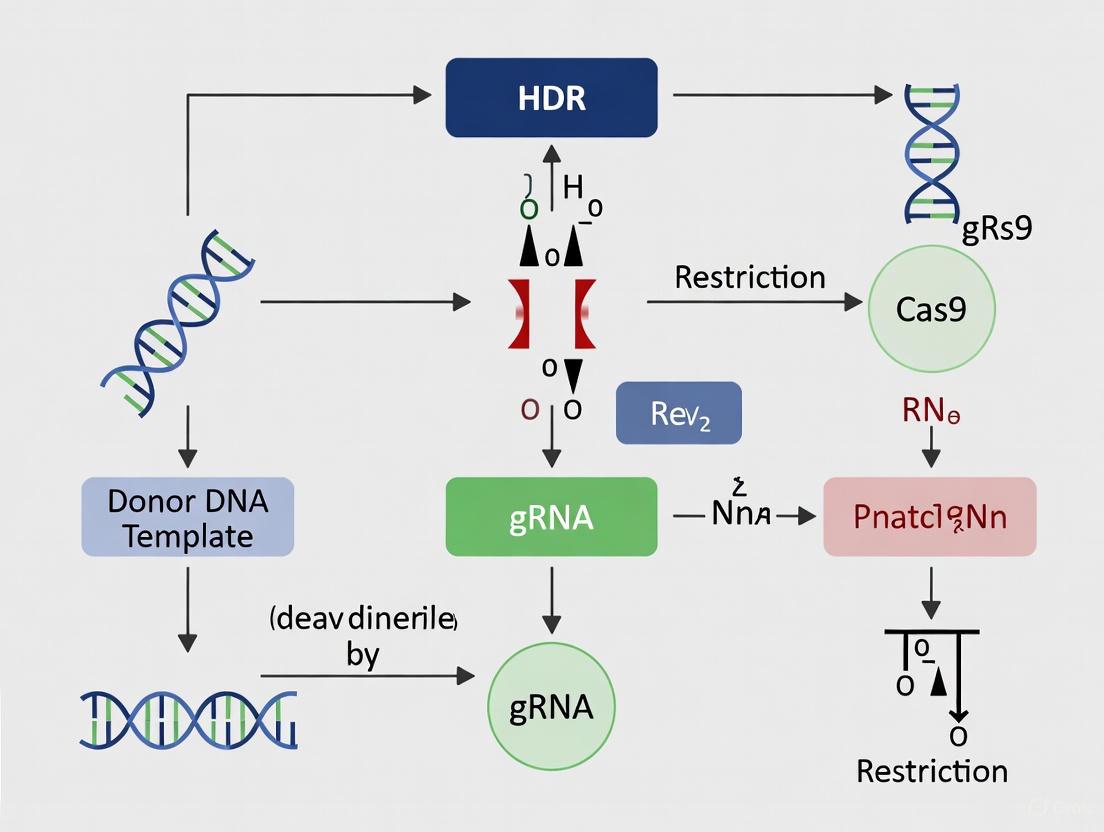
Precise genome editing via Homology-Directed Repair (HDR) in zebrafish is crucial for modeling human genetic diseases and advancing drug discovery, yet it remains challenging due to low efficiency.
Optimizing HDR Knock-In in Zebrafish: A Comprehensive Guide from Foundations to Prime Editing
Abstract
Precise genome editing via Homology-Directed Repair (HDR) in zebrafish is crucial for modeling human genetic diseases and advancing drug discovery, yet it remains challenging due to low efficiency. This article provides a comprehensive guide for researchers and drug development professionals, covering the foundational principles of HDR and Non-Homologous End Joining (NHEJ) pathways. It details optimized methodologies using chemically modified templates and small-molecule inhibitors, explores advanced troubleshooting and optimization strategies to enhance efficiency, and validates these approaches through comparative analysis with emerging technologies like prime editing. By synthesizing the most current research, this resource aims to equip scientists with the knowledge to robustly implement HDR for creating high-fidelity zebrafish models.
Understanding HDR in Zebrafish: Core Principles and Challenges for Disease Modeling
The Critical Role of Zebrafish in Functional Genomics and Human Disease Studies
The zebrafish (Danio rerio) has emerged as a powerful model system for studying vertebrate development, functional genomics, and human disease mechanisms. Its value stems from several distinctive advantages: high genetic similarity to humans, with approximately 70% of all human disease genes having functional homologs in zebrafish [1], and 84% of human disease-associated genes possessing zebrafish orthologs [2]. This conservation extends to physiological and anatomical systems, making zebrafish highly relevant for biomedical research.
Zebrafish offer numerous practical benefits for laboratory research. They are small, inexpensive to maintain, and have a short generation time of about 2-4 months to sexual maturity [3]. Their high fecundity enables large-scale studies, with a single mating pair producing 70-300 embryos per clutch [3]. A particularly valuable feature is their external development and optical transparency during early embryogenesis, which permits direct visualization of developmental processes and in vivo imaging of biological phenomena in real time [1] [3]. These characteristics combine to make zebrafish an ideal system for high-throughput genetic screens, disease modeling, and drug discovery pipelines.
Genetic Tools for Functional Genomics in Zebrafish
The zebrafish research community has developed a sophisticated toolkit for genetic manipulation, enabling both forward and reverse genetic approaches to study gene function.
Reverse Genetic Approaches
Transient Knockdown with Morpholinos
Morpholinos (MOs) are antisense oligonucleotides that provide transient gene knockdown by blocking translation or splicing of target mRNAs. They are typically injected into 1-4 cell stage embryos and remain active for several days [1] [4]. While useful for rapid assessment of gene function, especially during early development, MOs require careful validation due to potential off-target effects, including activation of p53 pathways [4] [3]. Essential controls include dose-response curves, rescue experiments with target mRNA, and comparison with mutant phenotypes when available [4].
Stable Genetic Manipulation
For stable genetic modification, several advanced technologies are available:
- Zinc Finger Nucleases (ZFNs) and TALENs: These engineered nucleases create targeted double-strand breaks, leading to gene-specific mutations through non-homologous end joining (NHEJ) repair. ZFNs have shown germ cell mosaicism rates of up to 50% in founder fish [1].
- CRISPR/Cas9 System: The most widely used method for gene editing, allowing for efficient gene knockout via NHEJ or precise editing via homology-directed repair (HDR) [5].
- Target-Selected Mutagenesis (TILLING): This approach combines chemical mutagenesis with PCR-based screening to identify mutations in specific genes, with resources available through the Zebrafish TILLING Consortium and Zebrafish Mutation Project [1].
Transgenesis and Advanced Genetic Tools
Zebrafish are highly amenable to germline transgenesis using transposon-mediated systems, achieving 50-80% efficiency [1]. The community has generated an extensive collection of transgenic lines expressing fluorescent proteins in specific cell types, organs, and anatomical patterns [1]. Inducible systems, such as Cre-lox with modified estrogen receptor ligand-binding domains activated by tamoxifen, enable precise temporal control of gene expression [1]. These resources provide powerful tools for lineage tracing, live imaging, and conditional genetic manipulation.
Homology-Directed Repair (HDR) for Precision Genome Editing
Homology-directed repair (HDR) enables precise genome editing, including introduction of specific point mutations, insertion of reporter genes, and creation of conditional alleles. In zebrafish, HDR efficiency is influenced by multiple factors that must be optimized for successful genome engineering.
Key Factors Influencing HDR Success
Analysis of 50 successfully modified zebrafish genes revealed critical parameters for efficient HDR [5]:
- sgRNA Efficiency: Use sgRNAs with high cutting efficiencies (>60%)
- Repair Template Design: The repair template must overlap the double-strand break site and alter the PAM site to prevent re-cutting
- Cut Site Proximity: The DSB cut site should be within 20 nucleotides of the target nucleotide
- DNA Topology: Both single-stranded and double-stranded DNA templates can be effective, with optimal homology arm length dependent on template type
Chemical Enhancement of HDR Efficiency
HDR competes with the more efficient NHEJ pathway in zebrafish embryos. Small molecule inhibition of NHEJ components can shift this balance toward HDR. Quantitative studies using a muscle fiber fluorescence conversion assay demonstrated that the DNA-PK inhibitor NU7441 enhanced HDR efficiency up to 13.4-fold at 50 µM concentration compared to DMSO controls [6]. In contrast, SCR7 (Lig4 inhibitor) showed no significant effect, and RS-1 (RAD51 activator) produced only modest improvement [6].
Table 1: Chemical Modulators of HDR Efficiency in Zebrafish
| Compound | Target | Effect on HDR | Optimal Concentration |
|---|---|---|---|
| NU7441 | DNA-PK | Up to 13.4-fold enhancement | 50 µM |
| RS-1 | RAD51 | Modest enhancement | 15-30 µM |
| SCR7 | Lig4 | No significant effect | Up to 100 µM |
Optimized HDR Workflow
The following workflow diagram illustrates an optimized protocol for HDR-mediated genome editing in zebrafish:
Experimental Protocols for HDR-Mediated Knock-In
Protocol: HDR-Mediated Gene Knock-In with Chemical Enhancement
This protocol enables precise insertion of DNA sequences into the zebrafish genome using CRISPR/Cas9 and HDR with chemical inhibition of NHEJ.
Materials and Reagents
Table 2: Essential Reagents for HDR Experiments
| Reagent | Function | Specifications |
|---|---|---|
| Cas9 Protein | Creates targeted double-strand breaks | High-quality, recombinant |
| sgRNA | Guides Cas9 to target locus | Designed for >60% efficiency |
| Repair Template | Provides homology-directed repair | ssDNA/dsDNA with altered PAM |
| NU7441 | Inhibits DNA-PK, enhances HDR | 50 µM final concentration |
| Microinjection Needles | Delivery of reagents | Borosilicate glass, ~1 µm tip |
Step-by-Step Procedure
sgRNA Design and Preparation:
- Design sgRNA targeting genomic region of interest using established tools
- Verify high cutting efficiency (>60%) through in vitro or in vivo validation
- Synthesize sgRNA using T7 polymerase or commercial systems
Repair Template Design:
- For point mutations: Use single-stranded oligodeoxynucleotides (ssODNs) with 30-50 nt homology arms
- For larger insertions: Use double-stranded DNA with 300-1000 bp homology arms
- Incorporate silent mutations to alter PAM site and prevent re-cutting
- For fluorescent protein knock-ins: Ensure proper coding sequence frame
Injection Mixture Preparation:
- Combine in nuclease-free water:
- Cas9 protein: 300 ng/µL
- sgRNA: 30 ng/µL
- Repair template: 50-100 ng/µL (dsDNA) or 10-50 ng/µL (ssODN)
- NU7441: 50 µM final concentration
- Centrifuge briefly and keep on ice
- Combine in nuclease-free water:
Microinjection:
- Pull borosilicate glass capillaries to create injection needles
- Load injection mixture into needles
- Inject 1-2 nL into the cytoplasm of 1-2 cell stage zebrafish embryos
- Culture injected embryos at 28.5°C in E3 embryo medium
Screening and Validation:
- At 24-48 hours post-fertilization, screen for precise editing using PCR/restriction digest or fluorescence
- For fluorescent reporters, visualize under appropriate microscopy
- Sequence candidate founders to verify precise editing
Germline Transmission:
- Raise injected embryos (F0) to adulthood
- Outcross F0 adults to wild-type fish
- Screen F1 progeny for precise edits
- Establish stable lines from positive F1 founders
Technical Notes
- Include appropriate controls: uninjected embryos, embryos injected without repair template
- Optimize injection volumes and concentrations for specific target loci
- For difficult targets, test multiple sgRNAs and repair template designs
- Use high-fidelity Cas9 variants to reduce off-target effects
Applications in Disease Modeling and Drug Discovery
Hematological Disorders
Zebrafish have proven particularly valuable for modeling hematological diseases. The first zebrafish model of a human disease, identified through positional cloning, was the sauternes mutant, which has a mutation in the alas2 gene leading to congenital sideroblastic anemia [1]. Subsequent models have included:
- Diamond Blackfan Anemia: Modeled by knockdown of ribosomal protein RSP19, revealing activation of the p53 pathway [1]
- Hemochromatosis: The weissherbst mutant identified ferroportin 1 as a novel iron transporter, with the human ortholog later found mutated in hemochromatosis patients [1]
- Acute Lymphoblastic Leukemia (ALL): Transgenic models expressing mouse c-Myc under the rag2 promoter develop T-cell leukemia that spreads to multiple organs, showing sensitivity to the same chemotherapeutic drugs used in patients [1]
Autoimmune and Inflammatory Diseases
A20 (TNFAIP3), a key regulator of NF-κB signaling, has been studied using zebrafish models. A20-deficient zebrafish created using TALEN technology exhibited hyper-responsiveness to immune activation and spontaneous early lethality, similar to mouse models [7]. This model provided a platform for functional analysis of human A20 variants, demonstrating that ectopic expression of human A20 could rescue lethality, while disease-associated mutations (S381A and C243Y) reversed this protective effect [7].
Solid Tumor Models
Zebrafish melanoma models have been particularly informative. Expression of human BRAFV600E in melanocytes under the mitfa promoter led to nevus formation, while combination with p53 mutation resulted in invasive melanoma [1]. These models have been used to study genetic cooperativity and to screen for therapeutic compounds.
High-Throughput Behavioral Analysis
Recent advances in behavioral analysis enable higher-throughput screening in adult zebrafish. A novel imaging system allows concurrent behavioral monitoring of eight adult zebrafish in individual tanks using web cameras and a LED projector for visual stimulus presentation [8]. This system quantifies multiple behavioral parameters in response to visual stimuli such as moving lines, demonstrating negative optomotor responses that habituate with repeated exposure [8]. Such platforms facilitate drug screening for neurological disorders and complex behavioral phenotypes.
Table 3: Key Research Reagent Solutions for Zebrafish Functional Genomics
| Resource | Function | Application | Source/Availability |
|---|---|---|---|
| Morpholinos | Transient gene knockdown | Rapid assessment of gene function | Gene Tools LLC |
| CRISPR/Cas9 | Targeted gene editing | Gene knockout, precise editing | ZIRC, Addgene |
| TALENs | Targeted gene editing | Gene disruption, especially in difficult targets | ZIRC |
| Transposon Systems | Germline transgenesis | Efficient creation of transgenic lines | Plasmid repositories |
| Chemical Inhibitors (NU7441) | Enhance HDR efficiency | Improve precise genome editing | Commercial suppliers |
| Zebrafish Mutant Lines | Stable genetic models | Disease modeling, gene function studies | ZIRC, ZFIN |
| Fluorescent Reporter Lines | Live imaging, lineage tracing | Cell labeling, in vivo visualization | ZIRC |
| Antibodies | Protein detection | Immunohistochemistry, Western blot | ZFIN database |
Research Infrastructure and Guidelines
Zebrafish Facility Infrastructure
Modern zebrafish facilities require specialized infrastructure to maintain colony health and support research needs. Key components include [2]:
- Recirculating Aquarium Systems: Pentair Aquatic Habitats or similar with mechanical, biological, and chemical filtration
- Water Quality Management: UV sterilization, reverse osmosis/deionization water purification, monitoring of temperature (26-28°C), pH (7.0-8.0), and nitrogenous wastes
- Microinjection Stations: Eppendorf FemtoJet microinjectors, manual micromanipulators, and stereo microscopes for embryo manipulation
- Imaging Systems: Fluorescence stereomicroscopes (e.g., Leica MZ FLIII, ZEISS Axio Zoom.V16) for documentation and analysis
Experimental Design Considerations
Robust experimental design in zebrafish research must account for several organism-specific factors [3]:
- Genetic Diversity: Unlike inbred mammalian models, common "wild-type" lines (TU, AB, TL) show significant genetic heterogeneity (up to 37% variation in WT lines)
- Sample Sizes: Large clutch sizes (70-300 embryos) enable high statistical power but require careful experimental design
- Maternal Contributions: Maternal RNA and proteins can mask zygotic mutant phenotypes until 3 days post-fertilization
- Gene Duplication: 47% of human disease genes have a single zebrafish ortholog, while others have multiple paralogs due to genome duplication
The following diagram illustrates a complete functional genomics pipeline for validating human disease variants in zebrafish:
Zebrafish have established themselves as an indispensable model system for functional genomics and human disease studies, combining genetic tractability with physiological relevance to humans. The development of efficient HDR techniques, enhanced by chemical modulation of DNA repair pathways, has dramatically improved our ability to create precise models of human disease variants. When combined with the inherent advantages of zebrafish—including high fecundity, external development, and optical transparency—these genomic tools enable research pipelines that bridge the gap between gene discovery and functional validation. As the field continues to advance, zebrafish models will play an increasingly critical role in elucidating disease mechanisms and accelerating therapeutic development.
The competition between DNA repair pathways is a central challenge in precision genome engineering. When a CRISPR/Cas9 system induces a double-strand break (DSB), the cell initiates a repair process primarily through two competing mechanisms: the relatively accurate homology-directed repair (HDR) and the dominant, error-prone non-homologous end joining (NHEJ) [9]. In zebrafish research, this competition directly impacts the efficiency of generating precise knock-in models for studying human diseases. The HDR pathway enables precise genetic modifications using a DNA template with homologous arms, making it ideal for introducing specific mutations, inserting fluorescent tags, or creating humanized disease models [10]. In contrast, NHEJ directly ligates broken DNA ends without a template, often resulting in small insertions or deletions (indels) that disrupt gene function, which is useful for knockout studies but problematic for precise editing [9] [11].
Understanding this balance is particularly crucial in zebrafish research, where the goal is often to create accurate models of human diseases. The inherent cellular preference for NHEJ over HDR creates a significant technical bottleneck, with HDR typically occurring at lower frequencies [12] [10]. This application note examines the mechanistic competition between these pathways and provides detailed protocols to enhance HDR efficiency for knock-in generation in zebrafish, supported by quantitative data and practical methodologies.
Quantitative Comparison of DNA Repair Pathways
The table below summarizes the key characteristics, components, and outcomes of the major DNA double-strand break repair pathways relevant to CRISPR genome editing.
Table 1: Characteristics of Major DNA Double-Strand Break Repair Pathways
| Feature | Non-Homologous End Joining (NHEJ) | Microhomology-Mediated End Joining (MMEJ) | Homology-Directed Repair (HDR) |
|---|---|---|---|
| Template Required | No | No (uses 5-25 bp microhomologies) | Yes (sister chromatid or exogenous donor) |
| Key Enzymes | DNA-PKcs, Ku70/80, DNA Ligase IV | POLθ (POLQ), PARP1, DNA Ligase III | BRCA1, BRCA2, Rad51, Rad52 |
| Repair Fidelity | Error-prone | Error-prone | High-fidelity |
| Primary Outcome | Small insertions/deletions (indels) | Deletions flanking microhomology region | Precise sequence insertion or correction |
| Cell Cycle Activity | Active throughout all phases | Active throughout all phases | Primarily in S/G2 phases |
| Typical Application in Zebrafish | Gene knockouts | Not typically targeted | Precise knock-in of sequences |
Data derived from [13] [14] [12].
Quantitative studies in human cells reveal that even with NHEJ inhibition, the proportion of perfect HDR events remains significantly below 100%, with imprecise integrations still accounting for nearly half of all editing outcomes [12]. This underscores the complexity of pathway competition and the influence of alternative repair mechanisms like MMEJ and Single-Strand Annealing (SSA).
Methodologies for Enhancing HDR in Zebrafish Knock-In Models
Optimized 3' Knock-In Protocol for Zebrafish
The following protocol, adapted from a highly efficient cloning-free method, enables precise C-terminal tagging of endogenous genes while preserving their function [15].
Reagents and Equipment:
- Wild-type (TL strain) zebrafish embryos at the one-cell stage
- Target-specific gRNA (e.g., 20 bp upstream of the stop codon)
- High-fidelity Cas9 protein
- Donor Template: PCR-amplified double-stranded DNA (dsDNA) with 5' AmC6-modified primers and ~900 bp homology arms
- Knock-in Cassette: Genetic elements (e.g., fluorescent protein, Cre recombinase) separated from the endogenous gene by self-cleavable p2A/t2A peptides
- Microinjection system
Workflow:
- Design and Preparation: Design a gRNA targeting the 3' end of the gene of interest, just upstream of the stop codon. Incorporate synonymous mutations in the donor's left homology arm to prevent gRNA re-cutting.
- Donor Template Synthesis: Amplify the knock-in cassette (e.g., p2A-EGFP-t2A-CreERT2) via PCR using 5' AmC6-modified primers to generate the dsDNA donor. This modification enhances integration efficiency by preventing donor degradation and multimerization.
- Ribonucleoprotein (RNP) Complex Assembly: Pre-assemble the Cas9 protein with the target-specific gRNA to form RNP complexes in vitro.
- Microinjection: Co-inject the Cas9/gRNA RNP complexes together with the AmC6-modified dsDNA donor into the cytoplasm of one-cell stage zebrafish embryos.
- Screening and Validation: Raise injected (F0) embryos and screen for high mosaicism (>30% fluorescence in expected cell types). Outcross adult F0 fish with wild-types and screen F1 progeny for germline transmission using fluorescence and PCR genotyping.
Typical Outcomes: This protocol has generated knock-in lines for multiple genes (krt92, nkx6.1, krt4, id2a) with germline transmission rates of 11.5% to 20% from founder (F0) fish [15].
Strategic Inhibition of Competing Repair Pathways
A key strategy to improve HDR efficiency is the temporal inhibition of the dominant NHEJ pathway. However, recent evidence reveals critical caveats regarding the genomic integrity of the resulting edited cells [13].
Table 2: Impact of DNA Repair Pathway Modulation on Editing Outcomes
| Intervention Strategy | Target | Intended Effect | Documented Risk/Unintended Consequence |
|---|---|---|---|
| AZD7648 | DNA-PKcs inhibitor (NHEJ) | Enhance HDR efficiency | Increased kilobase/megabase-scale deletions and chromosomal translocations [13] |
| ART558 | POLQ inhibitor (MMEJ) | Reduce large deletions, increase perfect HDR | Increased loss of heterozygosity under certain conditions [13] [12] |
| D-I03 | Rad52 inhibitor (SSA) | Reduce asymmetric HDR and donor mis-integration | Limited effect on overall knock-in efficiency [12] |
| pifithrin-α | p53 inhibitor | Reduce large chromosomal aberrations, improve cell survival | Potential selective expansion of p53-deficient clones with oncogenic concern [13] |
Protocol for Pathway Modulation:
- Inhibitor Preparation: Prepare fresh stock solutions of the chosen inhibitor (e.g., DNA-PKcs inhibitor) in the recommended solvent.
- Treatment Window: Add the inhibitor to the cell culture medium or embryo rearing solution immediately after electroporation or microinjection. A typical treatment duration is 24 hours, as HDR typically occurs within this timeframe after Cas9 delivery [12].
- Dose Optimization: Titrate the inhibitor concentration for your specific zebrafish line and editing locus, as toxicity and efficacy can vary. Refer to Table 2 for risk considerations.
- Validation and Genotyping: Use long-range PCR and long-read amplicon sequencing (e.g., PacBio) to detect potential large structural variations that are invisible to short-read sequencing [13] [12].
The Scientist's Toolkit: Essential Reagents for Zebrafish Knock-In
Table 3: Key Research Reagent Solutions for HDR Knock-In
| Reagent / Solution | Function / Explanation | Example Application |
|---|---|---|
| 5' AmC6-Modified Primers | Chemical modification of PCR primers; protects donor DNA from degradation and increases knock-in integration efficiency [15]. | Generating high-efficiency dsDNA donors for 3' knock-in. |
| Cas9-gRNA RNP Complexes | Pre-assembled Ribonucleoprotein complexes; enable rapid, precise DNA cleavage and can reduce off-target effects compared to mRNA injection. | Co-injection with donor DNA for efficient double-strand break generation. |
| p2A/t2A Self-Cleavable Peptides | Short peptide sequences that induce ribosomal "skipping"; allow co-translation of endogenous gene and knock-in cassette without fusion protein. | Creating separable fluorescent reporter and Cre recombinase cassettes [15]. |
| Homology-Directed Repair (HDR) Donor | DNA template containing the desired modification flanked by homology arms; serves as the blueprint for precise cellular repair. | Inserting point mutations, fluorescent protein sequences, or selection cassettes. |
| NHEJ Inhibitors (e.g., Alt-R HDR Enhancer V2) | Small molecule compounds that temporarily suppress the error-prone NHEJ pathway; can shift repair balance toward HDR. | In vitro cell culture editing to increase the proportion of precise edits. |
| Prime Editor (PE2/PEn) Systems | Fusion proteins of Cas9-nickase/nuclease and reverse transcriptase; enable precise edits without requiring a donor DNA template or DSBs [16]. | Introducing single-nucleotide variants or short insertions in zebrafish embryos. |
| AGI-43192 | AGI-43192, MF:C23H16ClF3N6O, MW:484.9 g/mol | Chemical Reagent |
| MRS4620 | MRS4620, MF:C18H24IN3O11P2, MW:647.2 g/mol | Chemical Reagent |
Pathway Dynamics and Experimental Workflow
The following diagram illustrates the critical decision points and competing pathways a cell undertakes after a CRISPR-induced double-strand break, and the strategic interventions to steer outcomes toward precise HDR.
The competition between HDR and NHEJ presents a formidable barrier in zebrafish knock-in research. While NHEJ remains the dominant cellular response to DSBs, the protocols and strategies detailed herein—including optimized donor design with 5' modifications, strategic pathway inhibition, and the use of advanced editors—provide a robust framework for significantly improving the efficiency of precise genetic modifications. A critical consideration for therapeutic applications is the growing evidence of on-target structural variations associated with some editing strategies, necessitating comprehensive genotyping that goes beyond short-read sequencing [13]. By understanding and manipulating the underlying DNA repair mechanics, researchers can more reliably generate accurate zebrafish models to advance the study of human disease and drug development.
In the realm of homology-directed repair (HDR) knock-in research, the zebrafish model stands out for its high fecundity, optical transparency, and genetic homology to humans. [17] Despite the efficiency of CRISPR/Cas9 in generating loss-of-function mutations via non-homologous end joining (NHEJ), precise genome editing through HDR faces two significant bottlenecks: low germline transmission rates and somatic mosaicism. [18] [19] [20] These challenges restrict the reliable establishment of stable, precisely modified zebrafish lines, hampering functional genomics and disease modeling efforts. This application note details the underlying causes of these challenges and provides optimized, validated protocols to overcome them, enabling higher efficiency in precise genome editing.
Understanding the Challenges
Somatic Mosaicism
Somatic mosaicism occurs when the editing event happens after the first cell division, resulting in an organism with a mixture of genetically distinct cells. [18] This is particularly problematic in zebrafish because the rapid cell cycles in early development can mean that the CRISPR/Cas9 machinery and repair templates are not active in all cells uniformly. Consequently, screening for precise edits in somatic tissues of the injected generation (F0) does not guarantee that those edits are present in the germline, complicating the identification of founders that can pass the allele to the next generation. [18] [20]
Low Germline Transmission Rates
Germline transmission is the ultimate metric for a successful knock-in experiment, as it allows for the establishment of a stable line. The rate of germline transmission is often low because HDR is a less frequent repair pathway compared to error-prone NHEJ, especially in zebrafish. [18] [19] [20] Furthermore, the editing must occur within the primordial germ cells (PGCs) before they are specified, which happens as early as 4 hours post-fertilization (hpf). [20] The window for achieving HDR in these specific cells is narrow, and the cellular decision to use HDR over NHEJ can be influenced by multiple factors, including the timing of nuclease activity, the topology of the target DNA, and the local cellular environment. [20]
Quantitative Data on Editing Outcomes
The following tables summarize key quantitative findings from recent studies on improving HDR efficiency in zebrafish.
Table 1: Impact of Small-Molecule Inhibitors on HDR Efficiency
| Small Molecule | Target Pathway | Reported Effect on HDR | Optimal Concentration | Key Findings |
|---|---|---|---|---|
| NU7441 [18] | DNA-PK inhibitor (NHEJ) | Up to 13.4-fold enhancement | 50 µM | Dramatic increase in somatic HDR events; correlation with germline transmission. |
| RS-1 [18] | RAD51 stimulator (HDR) | Modest but significant increase | 15-30 µM | Statistically significant but modest improvement in HDR efficiency. |
| SCR7 [18] | Lig4 inhibitor (NHEJ) | No significant effect | N/A | Showed no effect on HDR in the zebrafish visual reporter assay. |
Table 2: Optimized Template and Nuclease Parameters for Germline Transmission [19]
| Parameter | Option 1 | Option 2 | Key Comparison Findings |
|---|---|---|---|
| Template Type | Chemically modified dsDNA | Plasmid-released template (I-SceI/Cas9) | Chemically modified templates consistently outperformed plasmid-based templates. |
| CRISPR Nuclease | Cas9 (SpCas9) | Cas12a (LbCas12a) | Both nucleases performed similarly for targeted insertion; choice depends on PAM availability. |
| Critical Factor | Distance between DSB and insertion | Presence of non-homologous bases | HDR efficiency is highly dependent on a short distance and perfect homology at the ends. |
| Germline Outcome | >20% founder rates at multiple loci | Variable and typically lower | Using optimized parameters enabled founder rates of over 20% across four different loci. |
Recommended Protocols
Protocol 1: Enhancing HDR with Chemical Reprogramming
This protocol uses small-molecule inhibitors to shift the DNA repair balance toward HDR. [18]
Principle: Co-injecting a chemical inhibitor of the NHEJ pathway, such as NU7441, with the CRISPR/Cas9 components and HDR template to reduce competing error-prone repair and enhance precise editing.
Materials:
- NU7441 stock solution: 50 mM in DMSO.
- Cas9 protein: Recombinant, with nuclear localization signal (NLS).
- synthetic sgRNA: Targeting the gene of interest.
- HDR template: Double-stranded DNA (dsDNA) with ~1 kb homology arms and a mutated PAM site to prevent re-cutting.
Procedure:
- Preparation of Injection Mix:
- Prepare the microinjection mix on ice with the following final concentrations:
- 250 pg/µL synthetic sgRNA
- 500 pg/µL recombinant Cas9 protein
- 37.5 pg/µL HDR template
- 50 µM NU7441 (from stock solution)
- 1× Injection buffer
- Centrifuge the mix briefly and keep it on ice until injection.
- Prepare the microinjection mix on ice with the following final concentrations:
Microinjection:
- Inject 1-2 nL of the mix directly into the cytoplasm of one-cell stage zebrafish embryos.
- Maintain injected embryos in egg water at 28.5°C.
Post-injection Treatment and Screening:
- Incubate embryos at 28.5°C until screening.
- For visual screening (e.g., fluorescence), analyze embryos at 24-72 hpf for mosaic expression of the knock-in reporter.
- Screen for germline transmission by outcrossing surviving F0 adults and screening the F1 progeny.
Protocol 2: Using Synthetic Reagents for Efficient Knock-in
This protocol leverages chemically modified synthetic gRNAs and dsDNA templates to improve stability and editing efficiency. [21]
Principle: Synthetic, chemically modified gRNAs are more stable in vivo, leading to higher cutting efficiency. Combined with linear dsDNA templates (e.g., gBlocks), this system enhances HDR-mediated knock-in.
Materials:
- Alt-R CRISPR-Cas9 crRNA and tracrRNA: (Integrated DNA Technologies) or similar synthetic gRNAs.
- Cas9 protein: Recombinant.
- HDR template: dsDNA gBlock Gene Fragment with homology arms (optimal length 300-1000 bp), containing silent mutations in the PAM/protospacer to prevent re-cleavage.
Procedure:
- gRNA Complex Formation:
- Resuspend crRNA and tracrRNA in nuclease-free water.
- Hybridize equimolar amounts of gene-specific crRNA and tracrRNA to form the gRNA duplex by heating to 95°C for 5 minutes and then cooling slowly to room temperature.
Preparation of Injection Mix:
- Combine on ice:
- 250 pg/µL hybridized synthetic gRNA
- 500 pg/µL recombinant Cas9 protein
- 37.5 pg/µL dsDNA HDR template (gBlock)
- Mix gently and centrifuge briefly.
- Combine on ice:
Microinjection:
- Inject 1-2 nL into the cell yolk interface of one-cell stage embryos.
Founder Identification:
- Raise injected F0 embryos to adulthood.
- Outcross F0 adults to wild-type partners.
- Screen F1 progeny via PCR and sequencing to identify germline transmission. Efficiencies of 14-25% have been reported using this method. [21]
Research Reagent Solutions
Table 3: Essential Reagents for HDR Knock-in in Zebrafish
| Reagent Category | Specific Example | Function & Rationale |
|---|---|---|
| CRISPR Nuclease | Recombinant Cas9 Protein [21] | Immediate activity post-injection; reduces mosaicism compared to mRNA. |
| Guide RNA | Synthetic, chemically modified gRNA (e.g., Alt-R CRISPR CrRNAs) [21] | Enhanced nuclease stability and cutting efficiency in vivo. |
| HDR Template | Chemically modified double-stranded DNA (e.g., gBlocks) [19] [21] | Resists degradation; reduces concatemerization; improves precise integration. |
| Small Molecule Inhibitors | NU7441 (DNA-PKcs Inhibitor) [18] | Shifts DNA repair balance from NHEJ to HDR, significantly boosting precise editing. |
| Specialized Templates for Prime Editing | pegRNA and springRNA [16] | Enables precise short insertions/substitutions without requiring donor DNA templates or DSBs. |
Workflow and Strategy Diagrams
Diagram 1: Strategic Overview for Enhancing HDR
Diagram 2: Optimized Experimental Workflow
Homology-directed repair (HDR) enables precise genome modifications, making it indispensable for creating accurate disease models and studying gene function in zebrafish. Unlike error-prone non-homologous end joining (NHEJ), which frequently causes insertions or deletions (indels), HDR uses a donor template to achieve precise insertions, substitutions, or corrections of genetic sequences [22] [23]. This precision is particularly valuable for modeling human diseases, where single-nucleotide changes can recapitulate pathological conditions [24].
However, a significant challenge in zebrafish research is the inherently low efficiency of HDR, which is often outpaced by the dominant NHEJ pathway [5] [23]. The success of HDR-based knock-in is governed by three critical factors: the design of the single guide RNA (sgRNA), the structure and delivery of the donor repair template, and the cell cycle stage at the time of editing. This application note details evidence-based protocols to optimize these components, providing a framework for improving HDR efficiency in zebrafish models.
sgRNA Design for High-Efficiency Cleavage
The first prerequisite for successful HDR is the efficient induction of a double-strand break (DSB) at the target locus. This requires an sgRNA with high on-target activity.
Key Design Principles
- High Cutting Efficiency: Use only sgRNAs with demonstrated high cutting efficiencies (>60%) in validated assays [5].
- Proximity to Target Edit: The DSB cut site should be positioned as close as possible to the intended modification, ideally within 20 nucleotides [5]. In some cases, successful HDR has been achieved with more distant cut sites, but efficiency is generally higher with closer proximity [5].
- PAM Disruption: The donor template should be designed to alter the Protospacer Adjacent Motif (PAM) sequence in the successfully repaired allele. This prevents continuous re-cleavage by Cas9, thereby enriching for correctly modified cells [5].
Experimental Protocol: Validating sgRNA Cutting Efficiency
Materials:
- sgRNA (synthesized commercially or in vitro transcribed)
- Cas9 protein or mRNA
- Microinjection equipment
- PCR reagents
- T7 Endonuclease I or surveyor nuclease
- Gel electrophoresis equipment
Procedure:
- Microinjection: Co-inject sgRNA and Cas9 protein (as Ribonucleoprotein, RNP) or mRNA into the yolk of one-cell stage zebrafish embryos [5].
- DNA Extraction: At 24-48 hours post-fertilization (hpf), extract genomic DNA from a pool of approximately 10-20 embryos.
- PCR Amplification: Amplify the genomic region surrounding the target site.
- Heteroduplex Formation: Denature and reanneal the PCR products to form heteroduplexes in mismatched DNA from indels.
- Nuclease Digestion: Treat the reannealed DNA with T7 Endonuclease I, which cleaves at mismatched sites.
- Efficiency Calculation: Analyze cleavage fragments by gel electrophoresis. Calculate the mutagenesis efficiency using band intensity [24]. Only sgRNAs showing >60% cleavage efficiency should be used for HDR experiments.
Donor Template Design and Delivery
The structure and delivery method of the donor template are among the most influential factors for HDR success.
Donor Template Topology and Strandedness
Recent comparative studies indicate that long single-stranded DNA (lssDNA) templates significantly outperform double-stranded DNA (dsDNA) and short single-stranded oligodeoxynucleotides (ssODNs) in zebrafish [24]. The zLOST (zebrafish Long Single-stranded DNA Template) method, for example, demonstrated a dramatic increase in HDR-mediated phenotypic rescue at the tyr locus, from 5% with previous methods to 98.5% [24].
For ssDNA donors, the orientation relative to the sgRNA-cut strand is critical. Research in other models suggests that ssDNA in the "target" orientation (complementary to the sgRNA-recognized strand) can achieve higher HDR efficiency than the "non-target" orientation [25].
Homology Arm Length
The length of the homologous sequences flanking the desired edit is a key design parameter. Evidence from zebrafish shows that HDR can occur with relatively short homology arms.
Table 1: HDR Efficiency with Different Donor Templates and Homology Arm Lengths in Zebrafish
| Donor Template Type | Homology Arm Length | Reported HDR Efficiency | Key Findings |
|---|---|---|---|
| Long ssDNA (zLOST) [24] | 105–129 nt (symmetrical/asymmetrical) | Up to 98.5% (phenotypic rescue) | One-order-of-magnitude improvement over ssODN/dsDNA donors; Germline transmission up to 31.8% |
| ssODN [5] | ~30–40 nt | Effective | Short arms can yield high rates of targeted insertion, though often via MMEJ; Sufficient for precise integration |
| ssODN [25] | 30–97 nt | HDR efficiency independent of length | ssDNA donors with 30 nt HA led to targeted insertions in up to 24.89% of reads (predominantly via MMEJ) |
Experimental Protocol: The zLOST Method for Precise Knock-In
Materials:
- lssDNA donor template (e.g., 299–512 nt, designed with homologous arms and desired edit)
- High-efficiency sgRNA and Cas9 protein (for RNP complex formation)
- Microinjection equipment
Procedure:
- Template Design: Generate a lssDNA donor containing the desired modification (e.g., SNP, small tag) flanked by homologous arms (≥100 nt recommended). Ensure the donor sequence alters the PAM site to prevent re-cutting.
- RNP Complex Formation: Pre-assemble the sgRNA and Cas9 protein to form RNP complexes in vitro.
- Microinjection: Co-inject the RNP complexes and the lssDNA donor template into the cytoplasm of one-cell stage zebrafish embryos.
- Screening: Screen injected embryos (F0) for precise editing using PCR-based methods (e.g., restriction fragment length polymorphism if a site is introduced/disrupted) or sequencing. A visible phenotypic rescue, such as the restoration of pigmentation in an albino mutant background, can serve as an initial rapid readout [24].
- Germline Transmission: Raise injected embryos to adulthood and outcross to wild-type fish. Screen the F1 progeny for the presence of the precise edit to identify founder fish (F0) that transmit the modification through the germline.
The Cell Cycle and Strategic Pathway Modulation
The cell cycle imposes a fundamental constraint on HDR efficiency, as the necessary machinery and homologous templates are primarily available during the S and G2 phases [26] [23].
Cell Cycle Dependence of DNA Repair Pathways
The following diagram illustrates how the cell cycle stage determines the dominance of different DNA repair pathways, making HDR most accessible in the S/G2 phases.
Strategies to Favor HDR over NHEJ
While direct cell cycle synchronization in zebrafish embryos is challenging, researchers can manipulate the DNA repair pathway balance.
- Inhibiting NHEJ Key Factors: Transiently suppress key NHEJ factors (e.g., Ku70/Ku80, DNA-PKcs) using small-molecule inhibitors to reduce competition with HDR [26] [23]. The application of such inhibitors should be optimized for concentration and timing in zebrafish embryos.
- Utilizing Alternative Pathways: Recognize that microhomology-mediated end joining (MMEJ) can be a highly efficient pathway for integrating donor templates with short homologies, even if it is historically considered "imprecise" [25]. Designing donors with microhomology arms can exploit this for efficient targeted insertion.
The Scientist's Toolkit: Research Reagent Solutions
Table 2: Essential Reagents for HDR Knock-In in Zebrafish
| Reagent / Tool | Function | Application Note |
|---|---|---|
| Alt-R CRISPR-Cas9 System [27] | Pre-designed, high-quality sgRNAs and Cas9 proteins | Offers chemically modified sgRNAs for enhanced stability; includes online HDR design tools for donor oligos. |
| Long ssDNA Donor Template | Homology-directed repair template | lssDNA (e.g., zLOST method) shows superior HDR efficiency compared to dsDNA and short ssODN [24]. |
| Cas9 Nickase (nCas9) | Engineered Cas9 that makes single-strand breaks (nicks) | Can be used in Base Editing systems to reduce indel formation from DSBs, though not for classic HDR knock-in [28]. |
| NHEJ Inhibitors | Small molecules that suppress the NHEJ pathway | Compounds like Scr7 can be used to tilt the repair balance toward HDR, though efficacy in zebrafish requires empirical testing [26] [23]. |
| Prime Editors | Fusion of nCas9 and reverse transcriptase for precise editing | An alternative to HDR for introducing small edits without a donor DNA template; PEn editor efficient for short insertions (<30 bp) [16]. |
| GP3269 | GP3269, MF:C23H21FN4O3, MW:420.4 g/mol | Chemical Reagent |
| PLX-4720-d7 | PLX-4720-d7, MF:C17H14ClF2N3O3S, MW:420.9 g/mol | Chemical Reagent |
Optimizing HDR for knock-in in zebrafish requires a multi-faceted approach. Researchers must select sgRNAs with validated high cutting efficiency and design donor templates with appropriate strandedness and homology arm length, with lssDNA emerging as a superior option. Acknowledging the cell cycle restriction of HDR is crucial, and strategies to modulate competing repair pathways like NHEJ can further improve outcomes.
While HDR remains the gold standard for precise knock-in, new technologies like Prime Editing [16] and Base Editing [28] offer powerful alternatives for introducing specific point mutations or small insertions without requiring a DSB or a donor template, thereby bypassing some of the inherent limitations of HDR. The continued refinement of all these methods will undoubtedly expand the zebrafish toolkit, enabling more sophisticated functional genomics and disease modeling.
Proven HDR Workflows: From Template Design to Germline Transmission
In zebrafish research, achieving precise homology-directed repair (HDR) knock-in remains a significant challenge, with efficiency being a primary bottleneck. The selection of an appropriate donor template—single-stranded oligodeoxynucleotides (ssODNs) or double-stranded DNA (dsDNA)—is a critical decision that directly impacts experimental outcomes. This application note provides a structured comparison of these donor types, incorporating quantitative data, detailed protocols, and recent advancements to guide researchers in optimizing their genome editing strategies. Framed within the context of zebrafish HDR research, we evaluate how template choice influences efficiency, precision, and practical implementation for creating accurate disease models.
Donor Template Comparison: ssODNs vs. dsDNA
The table below summarizes the key characteristics of ssODN and dsDNA donors based on current research findings.
Table 1: Comparative Analysis of HDR Donor Templates
| Feature | ssODN Donors | dsDNA Donors |
|---|---|---|
| Optimal Use Case | Point mutations, small insertions (e.g., epitope tags) [29] [30] | Insertion of long transgenes (e.g., fluorescent reporters) [31] |
| Typical Homology Arm Length | 60-120 nucleotides (nt) [30] | 90 base pairs (bp) to over 600 bp [31] [32] |
| Relative HDR Efficiency | Lower for long insertions [31] | Higher for long insertions [31] |
| Precision/Error Rate | Error-prone; can lead to complex, erroneous integration of template fragments [30] | Higher ratio of precise insertion for long transgenes [31] |
| Key Advantages | Easier design and synthesis; lower cost; less frequent random integration [30] | Suitability for long sequences; higher precision for gene tagging [31] |
Experimental Protocols for Zebrafish Knock-In
Protocol 1: ssODN-Mediated Point Mutation and Epitope Tag Knock-In
This protocol is adapted from robust pipelines for introducing small changes in the zebrafish genome [29].
Design and Synthesis:
- ssODN Design: Design a symmetric ssODN template with 60-120 nt homology arms. For epitope tags, insert the tag sequence just before the stop codon, ensuring the open reading frame is maintained. Include a silent CRISPR/Cas-blocking mutation in the Protospacer Adjacent Motif (PAM) sequence to prevent re-cutting [29].
- sgRNA Selection: Validate sgRNA activity near the target site (e.g., stop codon for C-terminal tagging) using a somatic activity test (e.g., CRISPR-STAT) [29].
Microinjection:
Screening and Validation:
- Somatic Screening (1 dpf): At 1-day post-fertilization (dpf), pool genomic DNA from injected embryos. Perform fluorescent PCR and capillary electrophoresis (CRISPR-STAT). For epitope tags, screen for the expected size increase in the PCR product. For point mutations, combine fluorescent PCR with restriction fragment length polymorphism (RFLP) analysis if the mutation alters a restriction site [29].
- Founder Identification: Screen potential founders (F0) using fin biopsies at 2-3 months post-fertilization using the same fluorescent PCR method [29].
- Germline Transmission: Outcross positive F0 founders and screen the F1 progeny to establish stable lines.
Protocol 2: Long dsDNA Donor-Mediated Fluorescent Protein Knock-In
This protocol is based on methods optimized for efficient tagging with long sequences [31] [32].
Donor Construction:
- Double-Cut HDR Donor: For high efficiency, clone your transgene (e.g., mNeonGreen) into a donor vector where it is flanked by two sgRNA target sequences and homology arms of 300-600 bp. This design allows for in vivo linearization by Cas9 [32].
- PCR-Generated dsDNA: As a cloning-free alternative, amplify the donor cassette (transgene flanked by homology arms of ~90 bp) via PCR [31].
Microinjection:
- Prepare an injection mix containing:
- Cas9 or Cas12a protein complexed with sgRNA as a Ribonucleoprotein (RNP)
- Purified double-cut donor plasmid or PCR-amplified linear dsDNA donor.
- Inject the mix into zebrafish embryos.
- Prepare an injection mix containing:
Screening and Validation:
- Flow Cytometry: For fluorescent protein knock-ins, somatic efficiency can be quantitatively assessed in injected embryos or cultured cells by measuring the percentage of fluorescent-positive cells using flow cytometry [31].
- Genomic PCR and Sequencing: Confirm correct insertion at the target locus by genomic PCR across the 5' and 3' junctions, followed by Sanger sequencing [31].
- Functional Validation: Confirm proper protein localization and function using fluorescence imaging and western blotting [31].
Enhancing HDR Efficiency: Chemical and Module-Based Modifications
Chemical Modifications
Chemical modifications to the donor DNA can significantly improve HDR potency by protecting the ends from degradation and reducing non-productive ligation events.
- 5'-End Modifications: Adding triethylene glycol (TEG) or a 2'-O-Methyl RNA::TEG (RNA::TEG) moiety to the 5' ends of dsDNA donors has been shown to increase HDR efficiency by 2- to 5-fold in various models, including zebrafish. These modifications reduce concatemerization and random integration, making more donor molecules available for HDR [34].
- Commercial Reagents: The use of chemically modified "Alt-R HDR templates" has been demonstrated to increase knock-in efficiency in zebrafish [33].
HDR-Boosting Modules (Chemical Modification-Free)
A recent innovative approach involves engineering functional sequences into the donor itself.
- Concept: Incorporate specific, short sequences (modules) that are preferentially bound by endogenous DNA repair proteins (e.g., RAD51) into the ssODN donor [35].
- Implementation: These "HDR-boosting modules" are added to the 5' end of the ssDNA donor, which is more tolerant of extra sequences than the 3' end. This enhances the local concentration of the donor at the double-strand break site by leveraging the cell's own repair machinery, thereby improving HDR efficiency without the need for chemical synthesis [35].
- Performance: When combined with NHEJ inhibitors like M3814, this strategy has achieved HDR efficiencies exceeding 90% in human cell lines, presenting a promising and potentially safer avenue for future zebrafish work [35].
The Scientist's Toolkit: Essential Reagents for HDR Knock-In
Table 2: Key Research Reagent Solutions
| Reagent / Tool | Function / Description | Application Notes |
|---|---|---|
| CRISPR-Cas System | Creates a targeted double-strand break (DSB) in the genome. | Both Cas9 and Cas12a systems are effective. Delivery as RNP complexes is common. |
| Alt-R HDR Enhancer | Chemically modified donor templates (ssODN or dsDNA). | Commercially available; modifications (e.g., TEG) improve donor potency and HDR efficiency [34] [33]. |
| HDR-Boosting Modules | RAD51-preferred sequences engineered into ssODN donors. | A chemical-free method to recruit donors to DSB sites [35]. |
| Fluorescent PCR & Capillary Electrophoresis | High-resolution, PCR-based screening method. | Enables efficient identification of precise knock-in events by detecting size changes or performing fluorescent RFLP [29]. |
| Cell Cycle Modulators | Small molecules (e.g., Nocodazole, CCND1) that synchronize cells in HDR-favorable phases. | Can double HDR efficiency in iPSCs; utility in zebrafish is an area of active research [32]. |
| TAB29 | 3-Phenyl-4,6-bis(phenylmethoxy)-1-benzofuran|High Purity | 3-Phenyl-4,6-bis(phenylmethoxy)-1-benzofuran for Research Use Only (RUO). Explore its applications in medicinal chemistry and organic synthesis. Not for human or veterinary use. |
| Skatole-d3 | Skatole-d3, MF:C9H9N, MW:134.19 g/mol | Chemical Reagent |
Workflow and Decision Pathway
The following diagram outlines a logical workflow for selecting and implementing a donor template strategy for HDR knock-in in zebrafish.
The choice between ssODN and dsDNA donors for HDR-mediated knock-in in zebrafish is not one-size-fits-all but is dictated by the experimental goal. ssODNs are the preferred choice for introducing point mutations and small epitope tags, offering a balance of efficiency and practicality. In contrast, dsDNA donors, particularly those designed as double-cut vectors, are superior for inserting longer sequences like fluorescent reporters. Emerging strategies, including chemical end-modifications and the innovative use of HDR-boosting sequence modules, provide powerful means to overcome the inherent low efficiency of HDR. By combining the appropriate donor template with these enhancement methods and robust screening protocols, researchers can significantly improve their success in generating precise zebrafish knock-in models for functional genomics and human disease modeling.
Achieving efficient homology-directed repair (HDR) in zebrafish embryos requires precise optimization of injection parameters, as these factors directly influence the balance between precise editing and the error-prone non-homologous end joining (NHEJ) pathway. The period before primordial germ cell (PGC) specification represents a critical window for genomic modifications, as the accessibility of target genes becomes more challenging after 4 hours post-fertilization (hpf) [20]. Injection parameters—including Cas9 dosage, delivery method, and developmental timing—serve as critical determinants in shifting the cellular repair equilibrium toward HDR. While the molecular design of repair templates and guide RNAs receives significant attention, these components cannot function optimally without the appropriate physical delivery conditions. This protocol examines the quantitative evidence supporting specific injection parameters to establish a standardized approach for maximizing HDR efficiency in zebrafish knock-in experiments.
Quantitative Analysis of Key Injection Parameters
The optimization of injection parameters represents a foundational step in designing successful HDR experiments. Evidence from multiple systematic studies provides quantitative guidance for key variables including Cas9 amount, delivery method, and developmental timing.
Table 1: Optimal Injection Parameters for HDR in Zebrafish
| Parameter | Optimal Condition | Experimental Support | Impact on HDR Efficiency |
|---|---|---|---|
| Cas9 Dosage | 200-800 pg | Increased HDR efficiency within this range, with optimal somatic editing [33] | Up to 25% germline transmission achieved with optimized amounts [36] |
| Delivery Method | Cell cytoplasm | No superior efficiency found for yolk injection over cell injection [33] | Direct cytoplasmic delivery ensures early access to nucleus |
| Embryo Staging | 1-2 cell stage | Standard practice across most studies for permanent germline modification [20] | Enables editing before PGC specification at ~4 hpf |
| Cas9 Format | mRNA or protein | Both formats successfully employed; protein may reduce timing variability [36] [37] | Pre-complexed RNP promotes immediate activity |
Table 2: Additional Enhancing Factors for HDR Efficiency
| Factor | Recommendation | Experimental Evidence |
|---|---|---|
| NHEJ Inhibition | NU7441 (50 µM) | Dramatic increase in HDR events (4.0 ± 3.0 to 53.7 ± 22.1 red fibers/embryo) [6] |
| Template Design | PAM site alteration | Prevents re-cutting of successfully edited alleles [20] |
| sgRNA Efficiency | >60% cutting efficiency | High-quality sgRNAs essential for successful HDR [20] |
Experimental Protocol: Optimized Injection Procedure
Preparation of Injection Components
CRISPR-Cas9 Complex Formation
- Prepare pre-assembled Cas9 ribonucleoprotein (RNP) complexes by incubating purified Cas9 protein with synthesized sgRNA at a molar ratio of 1:3 for 10-15 minutes at 37°C [37]. RNP complexes offer immediate activity upon delivery, potentially increasing editing efficiency before first cell division.
- Alternatively, for Cas9 mRNA approach, synthesize mRNA using commercially available kits and resuspend in nuclease-free Hâ‚‚O at appropriate concentrations [38]. While mRNA delivery requires translation before activity, it remains an effective approach when combined with optimized parameters.
HDR Template Preparation
- For dsDNA templates, use PCR amplification with 5'-end modified primers (AmC6) to generate donors with 25-50 bp homology arms for MMEJ-mediated approaches [39] or 800-1000 bp arms for HDR-mediated strategies [37].
- For ssODN templates, incorporate phosphorothioate modifications to enhance stability and include silent mutations in the PAM sequence to prevent re-cleavage of edited alleles [29].
Microinjection Procedure
Embryo Selection and Preparation
- Collect embryos from natural spawning and select those at the one-cell stage exhibiting clear cytoplasmic segregation.
- Arrange embryos in injection mold with cells oriented upward for precise cytoplasmic targeting. The 1-2 cell stage injection represents the standard practice for permanent germline modifications [20].
Injection Mix Preparation and Parameters
- Prepare injection mix containing Cas9 RNP complexes (or mRNA), HDR template, and optional NHEJ inhibitors such as NU7441 [6].
- For cytoplasmic delivery, set up injection needles with approximately 2-3 nL delivery volume containing 200-800 pg Cas9 mRNA or equivalent RNP amount [33] [36].
- Target the cell cytoplasm directly rather than the yolk, as evidence indicates no superior efficiency with yolk injection [33].
Workflow Visualization: From Component Preparation to Founder Screening
The following diagram illustrates the complete experimental workflow for optimized HDR knock-in in zebrafish, integrating the critical parameters and procedural steps:
The Scientist's Toolkit: Essential Reagents and Materials
Table 3: Essential Research Reagents for HDR in Zebrafish
| Reagent/Material | Function | Specifications |
|---|---|---|
| Cas9 Nuclease | Creates targeted double-strand breaks | mRNA (200-800 pg) or protein format; pre-complexed as RNP [33] [36] |
| Chemically Modified Templates | HDR repair template | 5'-AmC6 modified dsDNA or phosphorothioate ssODN; 25-1000 bp homology arms [39] [37] |
| NHEJ Inhibitors | Shifts repair balance toward HDR | NU7441 (50 µM) demonstrated 13.4-fold HDR enhancement [6] |
| High-Efficiency sgRNA | Targets specific genomic loci | >60% cutting efficiency; designed with altered PAM to prevent re-cutting [20] |
| Microinjection System | Precise component delivery | Pneumatic or hydraulic system for 2-3 nL cytoplasmic injection [38] |
| AmPEG6C2-Aur0131 | AmPEG6C2-Aur0131, MF:C54H92N6O15, MW:1065.3 g/mol | Chemical Reagent |
| Septeremophilane E | Septeremophilane E, MF:C21H26O5, MW:358.4 g/mol | Chemical Reagent |
The systematic optimization of injection parameters—specifically Cas9 dosage within 200-800 pg, direct cytoplasmic delivery at the 1-2 cell stage, and strategic use of enhancing additives—establishes a foundational framework for improving HDR efficiency in zebrafish. These parameters function synergistically, with proper dosing ensuring sufficient nuclease activity while early cytoplasmic delivery maximizes the window for editing before PGC specification. When integrated with well-designed repair templates and high-efficiency sgRNAs, these optimized injection protocols significantly increase the probability of obtaining precise germline transmissions. As HDR methodologies continue to evolve, these foundational parameters will remain critical for researchers aiming to establish robust zebrafish knock-in models for functional genomics and human disease modeling.
Within the broader thesis on advancing homology-directed repair (HDR) for knock-in generation in zebrafish, the design of the donor repair template emerges as a critical determinant of success. While the CRISPR-Cas9 system efficiently creates double-strand breaks (DSBs), the cell's endogenous repair machinery more frequently utilizes the error-prone non-homologous end joining (NHEJ) pathway over the precise HDR pathway [40]. The efficiency and precision of HDR-mediated knock-in are therefore highly dependent on the structure and composition of the exogenous donor template [30]. This document synthesizes current research to provide a detailed protocol on strategic donor design, focusing on three pivotal elements: homology arm length, Protospacer Adjacent Motif (PAM) disruption, and the use of blocking mutations. Optimizing these parameters is essential for overcoming the inherent inefficiency of HDR and achieving high rates of precise germline transmission, thereby facilitating robust modeling of human genetic diseases in zebrafish.
The following tables consolidate quantitative findings from recent studies on key donor template parameters, providing a reference for informed experimental design.
Table 1: Impact of Homology Arm Length and Donor Type on Knock-in Efficiency
| Donor Template Type | Homology Arm Length | Key Findings on Efficiency | Reported Germline Transmission Rates | Citations |
|---|---|---|---|---|
| ssODN | 60 nt | Lower HDR rates compared to longer arms. | Not specified | [30] |
| ssODN | 120 nt (symmetrical) | Maximized total HDR rates (4-8%) in somatic cells. | 1-4% (error-free) | [30] |
| lssDNA | 50 nt (3' arm) | Higher KI efficiency for sox3 and pax6a vs. 300 nt arm. | Up to 21% | [40] |
| lssDNA | 300 nt (3' arm) | Lower KI efficiency for sox3 and pax6a vs. 50 nt arm. | Moderate to high | [40] |
| HMEJ (dsDNA) | 24 - 48 bp | High frequency of precise integration; effective for reporter knock-in. | Averaged ~50% (across 8 loci) | [41] |
| PCR-amplified dsDNA | ~900 bp (long HAs) & short HAs | Effective 3' knock-in; high germline transmission with 5' AmC6 modified primers. | Successful line generation (10 lines) | [37] |
Table 2: The Influence of DSB-to-Insert Distance and Template Modifications
| Parameter | Condition/Value | Impact on Knock-in Efficiency | Citations |
|---|---|---|---|
| Distance between DSB and insertion site | Close proximity (within 20 nt) | Strongly recommended for optimal HDR efficiency. | [5] |
| Distance between DSB and insertion site | Increased distance | Significant reduction in precise editing rates. | [19] |
| Chemical Modifications (Alt-R HDR templates) | Applied to ssODN/lssDNA | Increased integration efficiency and reduced degradation/concatemerization. | [33] [19] |
| 5' End Modification (AmC6) | On PCR primers for dsDNA | Increased integration efficiency, prevents donor degradation. | [37] |
| PAM Disruption | Incorporated in donor template | Prevents re-cleavage of successfully edited allele, enriching for precise edits. | [29] [5] |
| Guide-blocking synonymous mutations | Introduced in HDR template | Did not show a consistent improvement in KI efficiency. | [33] |
Strategic Donor Design and Experimental Protocol
Homology Arm Optimization
The length of homology arms (HAs) is a crucial factor, with optimal design depending on the donor type. For single-stranded oligodeoxynucleotides (ssODNs), a symmetrical design with 120-nucleotide (nt) arms was found to maximize HDR rates in somatic tissue [30]. In contrast, for long single-stranded DNA (lssDNA) donors, a shorter 50-nt 3' homology arm yielded higher knock-in efficiency for genes like sox3 and pax6a than a 300-nt arm, indicating site-specific preferences [40]. The Homology-Mediated End Joining (HMEJ) strategy, which uses double-stranded DNA (dsDNA) donors with very short homology arms (24-48 bp) flanked by CRISPR target sites for in vivo linearization, has proven highly effective for integrating larger cassettes, achieving high germline transmission rates [41].
Preventing Re-cleavage and Ensuring Precision
To prevent the Cas9 nuclease from re-cleaving the successfully edited allele, it is essential to disrupt the Protospacer Adjacent Motif (PAM) sequence within the donor template [5]. This is typically achieved by introducing silent point mutations and is a standard practice for enriching precisely edited alleles [29]. Furthermore, while HDR is intended to be precise, the process can be error-prone. Studies using next-generation sequencing (NGS) have revealed that a significant portion of HDR events involve erroneous integration of donor fragments, which reduces the rate of perfect knock-ins [30]. Therefore, rigorous screening methods, such as long-read sequencing or fluorescent PCR-based assays, are necessary to distinguish perfectly edited alleles from imprecise repair events [19] [29].
Workflow for Donor Design and Validation
The following diagram outlines the key decision points and steps in the strategic design and validation of a donor template for HDR in zebrafish.
Detailed Experimental Protocol for HDR Knock-in
This protocol provides a step-by-step method for performing HDR-mediated knock-in in zebrafish, incorporating best practices for donor design and screening.
Part I: Donor Template Preparation (Example: ssODN with 120-nt Homology Arms)
Design the ssODN:
- Homology Arms: Design a symmetrical ssODN with 120-nt homology arms on each side of the desired insertion or point mutation [30].
- PAM Disruption: Introduce a silent point mutation (e.g., G to C) in the PAM sequence within the homology arm to prevent re-cleavage [29].
- Blocking Mutations (Optional): While not always beneficial, some designs incorporate additional synonymous "blocking" mutations in the gRNA-binding sequence to prevent gRNA binding to the donor template itself. The efficacy of this is variable [33].
- Ordering: Purchase chemically modified ssODNs (e.g., Alt-R HDR templates) to enhance stability and integration efficiency [33] [19]. Resuspend in nuclease-free water or TE buffer to a high-concentration stock (e.g., 100 µM).
Prepare CRISPR-Cas9 Components:
- sgRNA: Use a sgRNA with high cutting efficiency (>60%). Synthesize by in vitro transcription or purchase as a synthetic, chemically modified RNA [5].
- Cas9: Use Cas9 protein (as a ribonucleoprotein complex, RNP) rather than mRNA for higher activity and reduced mosaicism [37] [36]. A working concentration of 200-800 pg per injected embryo is effective [33].
Part II: Microinjection into Zebrafish Embryos
- Preparation: Set up zebrafish mating tanks the night before injection. Prepare the injection mixture on ice:
- Cas9 protein (final concentration ~300-500 ng/µL)
- sgRNA (final concentration ~50-100 ng/µL)
- ssODN donor template (final concentration ~100-200 ng/µL)
- Nuclease-free water
- Injection: Incubate the RNP complex for 10-15 minutes at room temperature before adding the donor template. Load the mixture into a microinjection needle. Inject 1-2 nL of the mixture directly into the cell cytoplasm or yolk of 1-cell stage zebrafish embryos [33].
Part III: Screening and Validation
- Somatic Screening (F0 Generation): At 1-2 days post-fertilization (dpf), collect a subset of injected embryos (n=20-30) and extract genomic DNA. Screen for successful editing using a method appropriate for your knock-in:
- For small insertions (e.g., epitope tags): Use fluorescent PCR and capillary electrophoresis (e.g., CRISPR-STAT) to detect the expected size change in the PCR product [29].
- For point mutations: Use fluorescent PCR combined with restriction fragment length polymorphism (RFLP) analysis if the mutation alters a restriction site [29].
- For comprehensive analysis: Use long-read sequencing (e.g., PacBio) to accurately quantify all precise and imprecise repair events without size bias [19].
- Founder Identification (F0 Adults): Raise embryos showing high somatic editing rates to adulthood. At 2-3 months, take fin clips from potential founders (F0) for genomic DNA extraction.
- Germline Transmission Screening (F1 Generation): Outcross F0 founder fish with wild-type partners. Collect and pool F1 embryos (20-50 per clutch). Screen the F1 progeny using the somatic screening methods described above. Sequence PCR products from positive F1 embryos to confirm perfect integration at both junctions.
The Scientist's Toolkit: Essential Reagents for HDR Knock-in
Table 3: Key Research Reagents and Materials
| Reagent/Material | Function and Description | Examples / Notes |
|---|---|---|
| Chemically Modified Donor Templates | Single-stranded DNA donors with chemical modifications to increase nuclease resistance and HDR efficiency. | Alt-R HDR Templates (IDT) [33]; PCR donors with 5'AmC6-modified primers [37]. |
| Cas9 Ribonucleoprotein (RNP) Complex | Pre-complexed Cas9 protein and sgRNA. Reduces mosaicism, improves editing efficiency, and shortens the time the DSB is exposed. | Recombinant S. pyogenes Cas9 protein [37] [36]. |
| Long-read Sequencing Platform | High-fidelity sequencing of long DNA fragments to comprehensively characterize precise and imprecise knock-in events in somatic tissue. | Pacific Biosciences (PacBio) [19]. |
| Capillary Electrophoresis Sequencer | Fragment analysis system for sensitive and quantitative genotyping based on PCR product size (for insertions) or fluorescent RFLP (for point mutations). | ABI 3730 DNA Analyzer; used for CRISPR-STAT [29]. |
| HMEJ Donor Vectors | Plasmid systems (e.g., pGTag) designed for easy cloning of cargo flanked by short homology arms and universal gRNA sites for in vivo linearization. | pGTag vectors [41]. |
| HSDVHK-NH2 TFA | HSDVHK-NH2 TFA, MF:C32H49F3N12O11, MW:834.8 g/mol | Chemical Reagent |
| MBM-55S | MBM-55S, MF:C36H39FN6O10, MW:734.7 g/mol | Chemical Reagent |
Strategic donor design is paramount for successful HDR-mediated knock-in in zebrafish. The integration of optimized homology arm lengths, mandatory PAM disruption, and the use of chemically modified templates collectively address the major bottlenecks of low efficiency and imprecise repair. By adhering to the quantitative data and detailed protocols outlined in this document, researchers can systematically enhance the generation of precise zebrafish models, thereby accelerating functional genomics and the study of human genetic diseases.
In the field of zebrafish functional genomics and disease modeling, the generation of precise knock-in models using CRISPR/Cas9-mediated homology-directed repair (HDR) represents a powerful approach for studying gene function and human disease pathogenesis. The ability to insert epitope tags for protein tracking, introduce patient-specific point mutations, or incorporate other small DNA sequences such as LoxP sites has transformed the utility of zebrafish as a model organism [42] [29]. Despite the availability of these advanced genome editing tools, a significant technical bottleneck remains: the inefficient nature of the HDR pathway in zebrafish compared to the error-prone non-homologous end joining (NHEJ) pathway, resulting in very low rates of precise knock-in events [29] [43].
This application note addresses these challenges by presenting a robust, fluorescent PCR-based screening pipeline that enables researchers to efficiently identify rare precise knock-in events within a background of predominantly NHEJ-mediated indels and recombination errors. By integrating capillary electrophoresis for high-resolution fragment analysis, this methodology provides a sensitive, cost-effective, and scalable solution for somatic and germline screening in zebrafish knock-in projects [42] [29]. Although this protocol was developed and optimized for zebrafish, its PCR-based foundation makes it readily adaptable to other model systems, expanding its utility across biological and biomedical research domains [44].
Current Screening Challenges in Zebrafish Knock-in Research
The low efficiency of HDR in zebrafish presents substantial challenges for researcher workflows. Traditional screening methods, such as conventional gel electrophoresis, allele-specific PCR, and cloning with sequencing, are often labor-intensive, difficult to scale, and lack the sensitivity to detect low-frequency knock-in events in mosaic founder animals [42] [29]. While next-generation sequencing (NGS) offers comprehensive detection capabilities, it requires specialized equipment, bioinformatics expertise, and significant financial investment, making it impractical for many laboratories [29]. Computational tools for analyzing Sanger sequencing data, such as TIDER and ICE, can infer editing efficiency but struggle with accurate sequence interpretation when nucleotide representation in chromatograms is suboptimal, particularly for point mutation knock-ins [29].
The fluorescent PCR and capillary electrophoresis approach detailed herein overcomes these limitations by providing:
- High sensitivity: Capable of detecting precise knock-in events in mosaic embryos and founder fish [29].
- Quantitative accuracy: Allows for precise sizing of PCR fragments to single-base-pair resolution, differentiating between wild-type, knock-in, and indel alleles [45].
- Workflow efficiency: Enables rapid validation of sgRNA and repair template designs within approximately two weeks [42].
- Cost-effectiveness: Reduces the need for extensive cloning and sequencing while providing reliable results [44].
Fluorescent PCR-Based Screening Methodology
Fundamental Principles
The screening methodology leverages the precise fragment separation capabilities of fluorescent PCR combined with capillary electrophoresis. For knock-in events that introduce size changes, such as epitope tag insertions, the approach detects the presence of PCR products with expected sizes corresponding to successful integration [29] [44]. For point mutations that do not alter fragment size substantially, the method incorporates restriction fragment length polymorphism (RFLP) analysis, where the knock-in either creates or disrupts a restriction enzyme site, enabling differentiation through digested fragment patterns [42] [29].
This protocol employs a three-phase experimental pipeline: (1) selection of active sgRNA and design of single-stranded oligodeoxynucleotide (ssODN) repair templates, (2) validation of somatic knock-in in injected embryos, and (3) screening for germline transmission to establish stable lines [42] [44]. A key advantage of this approach is its foundation in CRISPR-STAT (CRISPR Somatic Tissue Activity Test), which allows researchers to quickly assess sgRNA activity and template design before committing to extensive germline screening [42] [29].
Experimental Workflow
The following diagram illustrates the comprehensive three-phase workflow for generating and validating knock-in zebrafish lines using fluorescent PCR-based screening:
Detailed Experimental Protocols
Phase 1: sgRNA and Repair Template Design
A. sgRNA Selection and Validation
- Identify target sites near the intended knock-in location using standard CRISPR design tools [42].
- Select sgRNAs with high predicted activity scores and minimal off-target potential.
- Validate sgRNA activity using CRISPR-STAT on embryos injected with sgRNA/Cas9 only [42] [29].
- Synthesize sgRNA using the HiScribe T7 Quick High Yield RNA Synthesis kit, followed by purification with the RNA Clean and Concentrator-5 kit [42].
B. ssODN Repair Template Design
- For epitope tag insertion: Design asymmetric homology arms based on Richardson et al. (2016), typically with 36-49 nt homology on one side and 91-99 nt on the other [42].
- Incorporate desired sequence changes (epitope tag, point mutation) in the center of the repair template.
- Include silent mutations in the PAM site or protospacer sequence to prevent Cas9 re-cleavage after successful knock-in [29].
- Order ssODNs as ultramers from commercial suppliers (IDT or Azenta) and resuspend to 100 μM concentration in TE buffer [42].
Phase 2: Somatic Knock-in Validation
A. Microinjection and Embryo Processing
- Prepare injection mixture containing: 300 ng/μL Cas9 protein, 50-100 ng/μL sgRNA, and 100-200 ng/μL ssODN repair template [42] [29].
- Inject 1-2 nL of the mixture into the cell cytoplasm of 1-cell stage zebrafish embryos.
- At 1 day post-fertilization (dpf), collect 20-30 injected embryos for genomic DNA extraction alongside appropriate controls (uninjected and sgRNA/Cas9-only injected) [29].
- Extract genomic DNA using crude lysis methods or commercial extraction kits [42].
B. Fluorescent PCR and Capillary Electrophoresis
- Design PCR primers with M13F tail on the forward primer and pig-tailed reverse primer to ensure uniform fluorescence labeling and complete adenylation [42] [44].
- Perform fluorescent PCR using AmpliTaq Gold DNA Polymerase with the following cycling conditions: 95°C for 10 min; 35 cycles of 95°C for 30 s, 60°C for 30 s, 72°C for 30 s; final extension at 72°C for 7 min [42].
- For epitope tag insertion: Mix PCR products with Hi-Di formamide and GeneScan 400HD ROX size standard, then analyze by capillary electrophoresis [42].
- For point mutations: Digest PCR products with appropriate restriction enzymes before capillary electrophoresis [29].
C. Data Analysis
- Analyze electropherograms for peaks corresponding to the expected size of knock-in alleles.
- Compare sgRNA/Cas9 + ssODN samples with sgRNA/Cas9-only controls to confirm enrichment of the expected peak specifically in the presence of the repair template [29].
- For point mutations, calculate the percentage of digested fragments indicating successful knock-in [29].
Phase 3: Germline Transmission Screening
A. Founder Identification
- Raise injected embryos (F0) to adulthood as potential founders.
- At 2-3 months post-fertilization, perform fin biopsies under anesthesia to collect tissue for screening [29].
- Extract genomic DNA and screen using the fluorescent PCR protocol established in Phase 2.
- Identify founders carrying the precise knock-in allele for further breeding.
B. Stable Line Establishment
- Cross positive F0 founders with wild-type fish to test for germline transmission.
- Screen F1 progeny at 3-5 dpf using the same fluorescent PCR screening method.
- Raise PCR-positive F1 offspring to establish stable heterozygous lines.
- Intercross heterozygous F1 fish to generate homozygous mutants for phenotypic analysis [29].
Key Research Reagent Solutions
The successful implementation of this screening methodology depends on specific research reagents and materials. The following table details essential components, their functions, and examples from the protocol:
| Reagent Category | Specific Examples | Function in Workflow |
|---|---|---|
| CRISPR/Cas9 Components | sgRNA, Cas9 protein (pT3TS-nls-zCas9-nls plasmid), HiScribe T7 Quick High Yield RNA Synthesis kit | Generation of double-strand breaks at target genomic loci to initiate repair processes [42] |
| HDR Repair Templates | Single-stranded oligodeoxynucleotides (ssODNs), ultramers from IDT or Azenta | Serve as templates for precise homology-directed repair, containing desired modifications flanked by homology arms [42] [29] |
| PCR Reagents | AmpliTaq Gold DNA Polymerase, M13F-FAM Primer, project-specific primers with M13F and PIG tails | Amplification of target genomic regions with fluorescent labeling for detection [42] [44] |
| Capillary Electrophoresis | GeneScan 400HD ROX size standard, Hi-Di formamide, POP-7 polymer | High-resolution size separation of fluorescently labeled PCR fragments with single-base-pair accuracy [42] [45] |
| DNA Processing | Restriction enzymes (NEB), QIAquick PCR Purification Kit, DNA extraction solutions | Modification and purification of DNA samples for analysis; genomic DNA isolation from zebrafish tissues [42] |
Performance Data and Validation
Quantitative Assessment of Screening Efficiency
The fluorescent PCR-based screening method has been quantitatively validated through multiple zebrafish knock-in projects. The following table summarizes efficiency metrics from published proof-of-concept studies:
| Knock-in Target | Modification Type | Somatic Efficiency (Embryos with KI) | Germline Transmission Rate | Founders Screened for Stable Line |
|---|---|---|---|---|
| tcnba locus | FLAG tag insertion | 15% (6/40 embryos) | 1-5% | ≤12 fish per gene [29] |
| gata2b locus | HA tag insertion | Data not specified | 1-5% | ≤12 fish per gene [29] |
| gba gene | Point mutation (Gaucher disease) | Data not specified | 1-5% | ≤12 fish per gene [29] |
| General Performance | Various small insertions | Validation within 2 weeks | Low but detectable with screening | Efficient with fin biopsy prioritization [42] |
Technical Validation and Comparison
The sensitivity and accuracy of this fluorescent PCR approach were rigorously validated through sequencing comparison. In one case study, researchers cloned and sequenced PCR products from embryos that showed expected size peaks for FLAG tag insertion at the tcnba locus. Sequence analysis confirmed that 25% (5/20) of the clones contained the precise knock-in sequence with clean integration at both ends of the ssODN, while the remaining clones were either wild-type (40%) or contained random indels (35%), reflecting the expected mosaicism in CRISPR-injected embryos [29]. This validation confirms that the size-based detection method accurately identifies true knock-in events despite the presence of other editing outcomes.
Compared to traditional methods, the fluorescent PCR approach demonstrated significant advantages:
- Superior to gel electrophoresis: Capillary electrophoresis provides single-base-pair resolution compared to the 10-50 bp resolution of standard agarose gels [45].
- More scalable than cloning and sequencing: Eliminates the need for labor-intensive molecular cloning while providing quantitative data on editing efficiency [29].
- Cost-effective versus NGS: Requires less specialized equipment and bioinformatics expertise while delivering sufficient sensitivity for knock-in screening [42].
Applications in Zebrafish Research
This screening methodology enables diverse research applications in zebrafish functional genomics and disease modeling:
Epitope Tag Insertion
The insertion of epitope tags (e.g., FLAG, HA) at endogenous gene loci facilitates protein-level analyses using commercially available antibodies, overcoming the limited availability of zebrafish-specific antibodies [29]. This application enables researchers to study protein localization, interaction partners, and expression dynamics under endogenous regulatory control.
Disease Modeling
Introduction of patient-specific point mutations recapitulates human disease alleles in zebrafish, creating accurate models for studying genetic disorders. The proof-of-concept example introducing a Gaucher disease-associated mutation in the gba gene demonstrates the utility for functional validation of human disease variants [29] [43].
Functional Genomics
The method supports the insertion of various small DNA sequences, including LoxP sites for conditional knockout strategies, in-frame codons for protein structure-function studies, and splice acceptors for gene trapping approaches [42] [44]. This flexibility makes the platform valuable for diverse functional genomics applications.
Troubleshooting and Technical Considerations
Common Challenges and Solutions
- Low somatic knock-in efficiency: Optimize sgRNA activity using CRISPR-STAT before proceeding with knock-in experiments. Ensure high-quality ssODN repair templates and fresh Cas9 protein for injections [42].
- No detectable knock-in peaks: Redesign ssODN with longer homology arms or adjust the position relative to the Cas9 cut site. Verify that PAM-disrupting mutations are included to prevent re-cleavage [29].
- High background from indels: Increase the number of embryos screened and include proper controls to distinguish true knock-in events from random indels of similar size [29].
- Poor capillary electrophoresis results: Ensure complete removal of unincorporated primers and nucleotides before capillary electrophoresis. Use fresh Hi-Di formamide and size standards for optimal resolution [42].
Methodological Limitations
While highly effective for small DNA fragments (<100 bp), this method has limitations for larger knock-in cargo. Additionally, the point mutation screening approach requires introduction of a restriction site polymorphism, which may not always be feasible without altering gene function [42] [29]. In such cases, alternative strategies such as nested PCR or sequencing-based approaches may be necessary.
The integration of fluorescent PCR with capillary electrophoresis provides a robust, sensitive, and cost-effective screening solution for identifying precise CRISPR/Cas9-mediated knock-in events in zebrafish. This methodology directly addresses the key challenge of low HDR efficiency in zebrafish by enabling researchers to efficiently identify rare precise editing events against a background of predominantly NHEJ-mediated indels. The step-by-step protocol, combined with the reagent solutions and troubleshooting guidance presented in this application note, empowers researchers to implement this approach successfully in their zebrafish genome editing workflows. As the demand for precise genetic models continues to grow in functional genomics and disease modeling, this screening methodology offers a practical and accessible solution for advancing HDR-based research in zebrafish and potentially other model organisms.
Boosting HDR Efficiency: Chemical, Genetic, and Template Engineering Strategies
Precise genome editing via homology-directed repair is a cornerstone of functional genomic research and holds tremendous promise for gene therapy. However, in zebrafish and other model systems, HDR faces a significant challenge: it must compete with the faster and more efficient non-homologous end joining pathway, which often results in imprecise insertions or deletions (indels) [46]. This competition dramatically reduces the efficiency of precise knock-in events, making the generation of stable mutant lines labor-intensive and unpredictable [19] [5]. To address this fundamental limitation, researchers have developed strategic interventions that modulate DNA repair pathway balance, with pharmacological inhibition of NHEJ emerging as a particularly promising approach.
Within this context, the small molecule NU7441 has been identified as a potent and effective enhancer of HDR-mediated genome editing. NU7441 functions as a specific inhibitor of DNA-dependent protein kinase catalytic subunit (DNA-PKcs), a key component of the canonical NHEJ pathway [47]. By selectively inhibiting this critical NHEJ factor, NU7441 creates a cellular environment that favors the use of homologous donor templates for DSB repair, thereby increasing the frequency of precise genetic modifications.
Mechanism of Action: How NU7441 Modulates DNA Repair Pathways
Molecular Targeting of the NHEJ Pathway
NU7441 exerts its HDR-enhancing effects through precise inhibition of the DNA-PKcs enzyme, which plays a critical role in the early stages of canonical NHEJ. Following a CRISPR-Cas9-induced double-strand break, the Ku70-Ku80 heterodimer rapidly recognizes and binds to the broken DNA ends. This recruitment facilitates the assembly and activation of the DNA-PK holoenzyme, which consists of the Ku complex and the catalytic subunit DNA-PKcs [46]. DNA-PKcs acts as a central coordinator of NHEJ, phosphorylating downstream substrates and recruiting additional processing and ligation factors, including XRCC4 and DNA Ligase IV [46].
NU7441 directly binds to the ATP-binding pocket of DNA-PKcs, effectively inhibiting its kinase activity and preventing proper progression of the NHEJ cascade [47]. This targeted inhibition creates a temporal window during which resection of DNA ends can proceed more efficiently, favoring the engagement of alternative repair pathways that require single-stranded DNA overhangs, particularly HDR.
Cell Cycle Modulation and HDR Enhancement
Beyond its direct inhibition of DNA-PKcs, NU7441 additionally enhances HDR efficiency through modulation of the cell cycle. Comprehensive analysis has revealed that NU7441 treatment reduces the proportion of cells in G1 phase while extending the S and G2/M phases [47]. This shift is functionally significant because HDR is primarily active during the S and G2 phases, when sister chromatids are available as repair templates [46]. The NU7441-induced cell cycle modulation therefore creates a more favorable environment for HDR by increasing the proportion of cells in HDR-permissive phases.
Table 1: Key Characteristics of NU7441 as an HDR Enhancer
| Property | Description | Experimental Support |
|---|---|---|
| Molecular Target | DNA-dependent protein kinase catalytic subunit (DNA-PKcs) | [47] |
| Primary Mechanism | Competitive inhibition of ATP-binding site; suppression of NHEJ pathway | [47] |
| Secondary Effect | Cell cycle modulation (reduced G1, extended S/G2 phases) | [47] |
| HDR Enhancement | >10-fold increase in HDR efficiency in mammalian cell lines | [47] |
| Specificity | Specifically inhibits classical NHEJ without affecting HDR machinery | [47] [46] |
Diagram 1: Mechanism of NU7441 in Pathway Regulation. NU7441 inhibits DNA-PKcs activation, suppressing the NHEJ pathway while concurrently promoting HDR through cell cycle modulation.
Quantitative Assessment of NU7441 Efficacy
Enhancement of HDR Efficiency in Mammalian Systems
In controlled studies utilizing GFP-to-BFP conversion reporter systems in HeLa cells, NU7441 demonstrated remarkable efficacy in enhancing precise gene correction. When combined with Cas9 ribonucleoprotein (RNP) complexes delivered via lipo-xenopeptide carriers, treatment with NU7441 resulted in over a 10-fold increase in HDR efficiency compared to untreated controls [47]. The HDR efficiency reached 53% as measured by flow cytometry analysis, with sequencing confirmation revealing a peak efficiency of 61% [47]. This level of enhancement represents one of the most substantial improvements in HDR efficiency reported for a single small molecule inhibitor.
The enhancing effect of NU7441 appears to be broadly applicable across different experimental systems. The molecule has demonstrated compatibility with various cell lines and multiple distinct Cas9 RNP/ssDNA carriers, suggesting its mechanism of action is not limited to specific delivery methods or cellular contexts [47]. This broad applicability enhances its potential for translation to zebrafish embryo microinjection protocols.
Comparison with Other HDR Enhancers
When evaluated alongside other small molecule modulators of DNA repair, NU7441 consistently outperformed several comparable compounds. In direct comparisons within the same experimental system, NU7441 produced superior HDR enhancement compared to other NHEJ pathway inhibitors such as M3814 and KU-0060648, as well as HDR pathway stimulators like RS-1 (a RAD51 stimulator) [47].
Table 2: Quantitative Performance of NU7441 in Genome Editing Studies
| Experimental Context | HDR Efficiency (Control) | HDR Efficiency (+NU7441) | Fold Enhancement | Reference |
|---|---|---|---|---|
| HeLa-eGFPd2 cells (GFP-to-BFP conversion) | ~5% (estimated from baseline) | 53-61% | >10-fold | [47] |
| DMD reporter cell model (exon skipping) | Not specified | 30-fold increase in exon skipping | 30-fold | [47] |
| Various cell lines with Cas9 RNP/ssDNA carriers | Variable baseline | Consistent enhancement across systems | Broad applicability | [47] |
Experimental Protocol for Zebrafish HDR Enhancement
Reagent Preparation and Formulation
The successful application of NU7441 in genome editing protocols requires careful preparation of all components. For zebrafish microinjection, begin by preparing a 10 mM stock solution of NU7441 in DMSO, which can be aliquoted and stored at -20°C for extended periods. Simultaneously, assemble the CRISPR-Cas9 editing components: synthesize targeting sgRNAs specific to your zebrafish locus of interest and complex with purified Cas9 protein to form ribonucleoprotein (RNP) complexes [37]. For the HDR donor template, utilize PCR-amplified double-stranded DNA with 5' AmC6-modified primers and homology arms of approximately 50-900 base pairs, as this configuration has demonstrated improved integration efficiency in zebrafish [19] [37].
Immediately prior to microinjection, prepare the working injection mixture containing 1-5 µM NU7441 (from diluted stock), 50-100 ng/µl of Cas9 RNP complex, and 50-100 ng/µl of the modified dsDNA donor template in nuclease-free injection buffer [47] [37]. The final DMSO concentration should not exceed 0.1% to prevent embryonic toxicity.
Zebrafish Microinjection and Treatment
For optimal results, inject 1-2 nl of the prepared mixture into the cell yolk or cytoplasm of one-cell stage zebrafish embryos using standard microinjection techniques [5] [37]. Following injection, maintain the embryos in system water containing 1-5 µM NU7441 for 24 hours post-fertilization to sustain pathway inhibition during the critical window for DSB repair [47]. Subsequently, transfer embryos to fresh system water without NU7441 and continue standard incubation procedures at 28.5°C.
Screening and Validation
Screen injected F0 generation embryos for desired edits using fluorescence selection if your donor includes a reporter, or through PCR-based genotyping methods [37]. Raise mosaic founders to adulthood and outcross with wild-type fish to identify germline-transmitting founders. For precise confirmation of editing events, utilize long-read sequencing technologies (such as Pacific Biosciences platform), which provide comprehensive analysis of editing outcomes and can accurately distinguish precise HDR events from NHEJ-derived indels [19].
Diagram 2: Zebrafish HDR Enhancement Workflow. Complete experimental pipeline from reagent preparation through validation for NU7441-enhanced precise genome editing in zebrafish.
The Scientist's Toolkit: Essential Research Reagents
Table 3: Key Research Reagents for NU7441-Enhanced HDR in Zebrafish
| Reagent/Category | Specific Examples | Function & Application Notes |
|---|---|---|
| CRISPR Components | Cas9 protein, target-specific sgRNAs | Forms RNP complexes for precise DNA cleavage; more immediate activity than mRNA [37] |
| HDR Donor Templates | 5'AmC6-modified dsDNA PCR products, ssODNs | Chemically modified templates resist degradation; 50-900 bp homology arms optimal [19] [37] |
| NHEJ Inhibitors | NU7441 (DNA-PKcs inhibitor) | Shifts repair balance toward HDR; use at 1-5 µM concentration [47] |
| Delivery Materials | Microinjection equipment, Lipo-XP carriers | Physical delivery to zebrafish embryos; nanoparticle carriers enhance intracellular delivery [47] |
| Validation Tools | Long-read sequencer, Fluorescence microscopy | Confirms precise editing; long-read sequencing overcomes short-read limitations for inserts [19] |
| CD73-IN-2 | CD73-IN-2, MF:C17H25ClN5O7P, MW:477.8 g/mol | Chemical Reagent |
Troubleshooting and Optimization Guidelines
Addressing Common Implementation Challenges
When applying NU7441 for zebrafish HDR enhancement, several common challenges may arise. If poor embryo viability is observed, reduce the NU7441 concentration incrementally from 5 µM to 1 µM and ensure the DMSO concentration does not exceed 0.1% in the final injection mixture. For low HDR efficiency despite high cutting efficiency, verify the quality and configuration of your donor template, ensuring it contains appropriately positioned synonymous mutations to prevent re-cleavage and utilizes 5' chemical modifications [19] [37]. Additionally, confirm that the distance between the Cas9 cut site and the intended insertion is minimized, as efficiency decreases with increasing distance [19].
If variable results occur between experiments, standardize the timing of injection precisely to the one-cell stage and consider using Cas9 protein rather than mRNA for more consistent and immediate activity [37]. Implement rigorous controls in each experiment, including untreated injected embryos and non-injected siblings, to properly quantify enhancement effects.
Advanced Optimization Strategies
For researchers seeking further enhancement, consider combining NU7441 with additional strategic approaches. Cell cycle synchronization methods can be employed to increase the proportion of cells in HDR-permissive S/G2 phases, potentially creating additive effects with NU7441's cell cycle modulation [47] [32]. Alternatively, combining NU7441 with HDR pathway stimulators such as RS-1 (a RAD51 stimulator) may provide additional benefits, though careful titration is necessary to avoid cellular toxicity [47].
Optimize donor design by employing asymmetrical homology arms or incorporating nucleotide modifications that enhance stability and nuclear import [19] [37]. For large insertions, consider using double-cut donor vectors with flanking sgRNA target sites, which have demonstrated 2-5 fold improvements in HDR efficiency in other systems [32].
The strategic application of NU7441 to inhibit NHEJ and favor HDR represents a significant advancement in the precision genome editing toolkit for zebrafish researchers. By selectively targeting DNA-PKcs, NU7441 effectively shifts the competitive balance between DNA repair pathways, resulting in substantial improvements in precise knock-in efficiency. When combined with optimized experimental parameters—including RNP delivery, chemically modified donor templates, and appropriate microinjection techniques—this small molecule approach enables researchers to achieve germline founder rates exceeding 20% for precise insertions [19] [47].
As genome editing technologies continue to evolve, the integration of small molecule enhancers like NU7441 with emerging techniques such as base editing and prime editing may further expand the capabilities for precise genetic manipulation in zebrafish. Additionally, ongoing research into the timing and duration of NU7441 exposure may yield refined protocols that maximize HDR efficiency while minimizing potential off-target effects. Through the continued optimization and application of these approaches, zebrafish researchers are well-positioned to generate more sophisticated genetic models that advance our understanding of vertebrate biology and disease mechanisms.
The zebrafish (Danio rerio) has emerged as a pivotal model organism for studying vertebrate gene function and modeling human genetic diseases, owing to its high genetic similarity to humans and experimental advantages such as transparent embryos and rapid development [48]. The application of CRISPR-Cas9 technology has revolutionized genetic engineering in zebrafish, yet achieving efficient precision editing via homology-directed repair (HDR) remains a significant challenge. While non-homologous end joining (NHEJ) efficiently generates gene knockouts, HDR-mediated precise integration of exogenous DNA—such as fluorescent protein tags, disease-associated variants, or conditional alleles—suffers from notoriously low efficiency in zebrafish embryos [19] [5]. This technical limitation has restricted the broader adoption of precise genome editing for functional genomics and disease modeling.
A critical factor influencing HDR efficiency is the choice and design of the donor template. Conventional templates, including single-stranded oligodeoxynucleotides (ssODNs) and double-stranded DNA (dsDNA) released from plasmids, often yield low rates of precise integration due to rapid degradation and concatemerization within the cellular environment [19]. Recent advances in template engineering have demonstrated that chemical modifications can substantially enhance donor stability and integration efficiency. Among these, the Alt-R HDR Donor Templates from Integrated DNA Technologies (IDT) incorporate proprietary chemical modifications that significantly improve HDR rates, offering a promising solution to the persistent challenge of precise genome editing in zebrafish [49] [50].
This Application Note examines the mechanistic basis and practical advantages of chemically modified Alt-R templates within the context of zebrafish HDR research. We present quantitative performance data, detailed experimental protocols, and strategic recommendations to empower researchers in achieving higher efficiency and reliability in their knock-in experiments.
Understanding HDR and the Role of Template Engineering
The Cellular Battle: HDR vs. NHEJ
Upon induction of a CRISPR-mediated double-strand break (DSB), cellular repair mechanisms are activated. The dominant pathway in zebrafish embryos is the error-prone non-homologous end joining (NHEJ), which often results in insertions or deletions (indels) that disrupt gene function [6]. The alternative pathway, homology-directed repair (HDR), utilizes a donor template with homologous sequences (homology arms) to precisely repair the break and can incorporate desired genetic modifications. However, HDR occurs at significantly lower frequencies, creating a bottleneck for precise genome editing [5].
The competition between these pathways can be influenced experimentally. Research has shown that inhibiting key NHEJ proteins, such as DNA-PK, with small molecules like NU7441 can shift the repair equilibrium toward HDR, enhancing precise editing rates by up to 13.4-fold in zebrafish embryos [6]. This approach, combined with optimized templates, provides a powerful strategy to improve knock-in outcomes.
Limitations of Conventional Donor Templates
Traditional donor templates face several challenges in the intracellular environment:
- Rapid Nuclease Degradation: Unprotected linear DNA templates are vulnerable to exonucleases, reducing their availability for HDR.
- Concatenation and Random Integration: Linear dsDNA templates can ligate end-to-end, forming concatemers that integrate randomly into the genome rather than via precise HDR.
- Low Effective Concentration: Degradation and sequestration reduce the local concentration of intact template at the DSB site.
These limitations underscore the need for engineered templates with enhanced stability and functionality.
Chemically Modified Alt-R HDR Donor Templates: Mechanism and Advantages
Alt-R HDR Donor Templates are single-stranded DNA oligos synthesized with proprietary chemical modifications that address the key limitations of conventional templates [49]. The specific modification pattern is optimized to enhance template performance without interfering with the HDR machinery.
Table 1: Comparison of HDR Donor Template Types
| Template Type | Key Features | Advantages | Limitations | Ideal Use Cases |
|---|---|---|---|---|
| Unmodified ssODN | Standard DNA synthesis | Low cost, readily available | Susceptible to degradation, lower HDR efficiency | Short insertions (< 30 bp) where efficiency is less critical |
| PS-Modified ssODN | 4 phosphorothioate (PS) bonds (2 at each end) | Moderate improvement in stability and HDR over unmodified | Not as effective as proprietary modifications | Intermediate needs when Alt-R modifications are unavailable |
| Alt-R Modified ssODN | Proprietary modification pattern | Highest stability and HDR efficiency, reduced concatemerization | Higher cost than unmodified oligos | Critical knock-in experiments requiring maximum efficiency |
| dsDNA Donor (PCR) | Double-stranded, can use 5' modified primers | Suitable for larger inserts, AmC6 modification improves efficiency [37] | Requires PCR amplification, size-dependent efficiency | Insertion of fluorescent reporters, Cre recombinase cassettes |
How Chemical Modifications Enhance HDR
The Alt-R modifications function through multiple mechanisms to boost precise integration:
- Enhanced Nuclease Resistance: The modifications, particularly at the oligo termini, protect against exonuclease degradation. This increases the half-life and effective concentration of the intact template within the nucleus, extending the window for HDR to occur.
- Reduced Random Integration: By protecting the ends, the templates are less likely to participate in NHEJ-mediated concatemerization and random integration events. This channels more DSB repair events toward the desired precise HDR pathway, increasing the ratio of precise to imprecise edits [19].
- Improved Compatibility with HDR Enhancers: Alt-R templates work synergistically with IDT's Alt-R HDR Enhancer product. The enhancer is a small molecule that inhibits a key NHEJ protein, further shifting the repair balance toward HDR. Studies show this combination has an additive effect, leading to the highest possible HDR rates [49].
Table 2: Quantitative HDR Efficiency Improvement with Alt-R Modifications
| Cell Line / Organism | Unmodified ssODN | PS-Modified ssODN | Alt-R Modified ssODN | Alt-R Modified + HDR Enhancer V2 | Source |
|---|---|---|---|---|---|
| HeLa Cells (MYC Locus) | Baseline | ~1.2x | ~1.8x | ~2.3x | [49] |
| Jurkat Cells (HPRT Locus) | Baseline | ~1.1x | ~1.5x | Not specified | [49] |
| Zebrafish (General Germline Transmission) | Low (often <5%) | Not specified | Not explicitly quantified, but cited as superior | Consistently >20% germline founder rates achieved with optimized protocols [19] | [19] |
Diagram 1: Mechanism of Action - Alt-R vs. Conventional Templates
Experimental Protocol for HDR in Zebrafish Using Alt-R Templates
This protocol integrates the use of chemically modified Alt-R HDR Donor Templates with best practices for zebrafish microinjection, based on recent optimizations from the literature [19] [6] [37].
Reagent Preparation
Table 3: The Scientist's Toolkit - Essential Reagents for Zebrafish HDR
| Reagent / Material | Function / Role | Recommended Specifications / Notes |
|---|---|---|
| Alt-R HDR Donor Oligo | Repair template with desired edit. | Proprietary modifications, resuspend in IDTE buffer. For codon changes or tag insertion, order as "Ultramer" (up to 200 nt). |
| Alt-R S.p. Cas9 Nuclease | Generates the DSB at the target locus. | Use Cas9 protein (not mRNA) for rapid activity and reduced mosaicism. HiFi version can reduce off-targets. |
| Alt-R CRISPR-Cas9 sgRNA | Guides Cas9 to the target genomic sequence. | Chemically synthesized crRNA & tracrRNA, complexed before injection. |
| Alt-R HDR Enhancer V2 (Optional) | Small molecule inhibitor of NHEJ. | Shifts repair balance toward HDR. Use at 1 μM final concentration post-injection [49]. |
| NU7441 (Optional Alternative) | DNA-PK inhibitor, blocks NHEJ. | Can enhance HDR up to 13.4-fold in zebrafish [6]. Use at 50 μM. |
| Microinjection Equipment | Delivery of reagents into zebrafish embryos. | Standard setup for one-cell stage embryo injection. |
Step-by-Step Workflow
Diagram 2: Zebrafish HDR Experimental Workflow
Step 1: Donor Template and gRNA Design
- Design Tool: Use the online Alt-R HDR Design Tool [50] to simplify the selection of gRNAs and the design of the donor template.
- Homology Arm Length: For Alt-R ssODN donors, typical homology arm lengths range from 30 to 90 bases on each side, flanking the insert. Asymmetric arms (e.g., 90-nt left arm, 30-nt right arm) can also be effective.
- Critical Modifications:
- Disrupt the PAM site or the seed region in the donor sequence using synonymous codons to prevent re-cutting of the successfully edited allele [5].
- Ensure the DSB site is positioned as close as possible to the insertion site. Studies show that an increased distance between the cut and the insertion significantly reduces HDR efficiency [19].
- Ordering: Select the "Alt-R HDR modification" option when ordering.
Step 2: Ribonucleoprotein (RNP) Complex Assembly
- Assemble the Cas9 RNP complex in vitro to ensure immediate activity upon injection.
- Recipe:
- 1.5 µL of 40 µM Alt-R Cas9 Nuclease
- 1.0 µL of 100 µM Alt-R crRNA
- 1.0 µL of 100 µM Alt-R tracrRNA
- 6.5 µL nuclease-free water
- Incubate at 37°C for 10-15 minutes to form the RNP complex.
- Recipe:
Step 3: Injection Mix Preparation
- Combine the RNP complex with the Alt-R HDR donor template.
- Final Injection Mix:
- 10 µL of assembled RNP complex (from Step 2)
- 1.5 µL of 100 µM Alt-R HDR Donor Oligo (Final concentration: ~10-15 µM)
- 0.5 µL of 1-2% Phenol Red (for visualization)
- Mix gently and centrifuge briefly. Keep on ice until injection.
- Final Injection Mix:
Step 4: Microinjection
- Inject 1-2 nL of the injection mix directly into the cytoplasm of one-cell stage zebrafish embryos.
- The optimal concentration of Cas9 RNP should be pre-titrated for high cutting efficiency (>60%) at the target locus, a critical factor for successful HDR [5].
Step 5: (Optional) HDR Enhancer Treatment
- Immediately after injection, transfer the embryos to egg water containing either:
- Incubate the embryos in the drug solution for the first 6-24 hours post-fertilization to maximize HDR during the initial repair window.
Step 6: Screening and Founder Identification
- Somatic Screening: At 2-3 days post-fertilization (dpf), screen a subset of injected (F0) embryos for the edit. For fluorescent protein knock-ins, this can be done via fluorescence microscopy. For other edits, use PCR-based genotyping (e.g., restriction fragment length polymorphism (RFLP) if a site was introduced, or amplicon sequencing).
- Germline Transmission: Raise the injected F0 embryos to adulthood. Outcross individual F0 fish to wild-type partners and screen the resulting F1 progeny (e.g., 50-100 embryos per clutch) for the presence of the knock-in allele using genotyping methods. F0 fish with high mosaicism are more likely to produce F1 founders.
Discussion and Best Practices
The integration of chemically modified Alt-R templates into zebrafish HDR workflows represents a significant advance in the pursuit of reliable and efficient precise genome editing. The proprietary modifications directly address the core instability issues of conventional ssODNs, leading to higher rates of precise integration. When combined with RNP delivery and NHEJ inhibition, this approach has enabled researchers to consistently achieve germline founder rates greater than 20% across multiple loci, a substantial improvement over traditional methods [19].
For insertions larger than the capacity of ssODNs (e.g., fluorescent reporters like GFP or Cre recombinase), a highly effective alternative is the use of PCR-amplified dsDNA donors with 5'-end modified primers. A 2023 study demonstrated that using primers with a 5' AmC6 modification during donor amplification yielded high integration efficiency and germline transmission rates for inserting genetic cassettes at the 3' end of genes [37]. This cloning-free method provides a scalable and efficient strategy for larger knock-ins.
Beyond HDR, the field of precision editing is rapidly evolving. Base Editors (BEs) enable direct, DSB-free conversion of one nucleotide to another (C•G to T•A or A•T to G•C) and have been successfully applied in zebrafish for disease modeling [28]. Prime Editors (PEs) offer even greater versatility, allowing for all 12 possible base-to-base conversions, as well as small insertions and deletions, without requiring a donor template [16]. While HDR remains the method for inserting longer DNA sequences, base and prime editing are powerful alternatives for introducing point mutations, often with higher efficiency and fewer byproducts.
Chemically modified Alt-R HDR Donor Templates provide a robust and effective solution for enhancing knock-in efficiency in zebrafish. Their optimized design protects against degradation and reduces random integration, thereby increasing the frequency of precise HDR events. The detailed protocol outlined herein—encompassing RNP delivery, optional NHEJ inhibition, and the use of stable templates—provides a reliable framework for researchers to generate precise genetic models. By adopting these engineered templates and optimized methodologies, scientists can overcome a major bottleneck in zebrafish genomics, accelerating functional studies and the modeling of human disease.
In zebrafish research, achieving efficient Homology-Directed Repair (HDR) is paramount for precise genome editing, enabling the modeling of human diseases and the study of gene function. However, the success of HDR-mediated knock-in is often hampered by its relatively low efficiency compared to the error-prone non-homologous end joining (NHEJ) pathway, which remains the dominant DNA repair mechanism in zebrafish and other higher eukaryotes [51] [40]. The CRISPR/Cas9 system generates precise, locus-specific double-strand breaks (DSBs) that can serve as substrates for HDR, but the outcome is heavily influenced by specific experimental parameters [51]. Among these, the distance between the double-strand break and the intended insertion site (DSB-to-insert distance) and the purity of the homology arms in the repair template are two critical factors that practitioners must optimize to enhance the efficiency and precision of genome editing. This application note details the quantitative impact of these parameters and provides optimized protocols to facilitate robust HDR in zebrafish.
Quantitative Impact of Key Parameters on HDR Efficiency
The optimization of HDR efficiency requires careful consideration of several interdependent variables. The data summarized in the table below consolidate findings from multiple studies to guide experimental design.
Table 1: Key Parameters for Optimizing HDR-Mediated Knock-In in Zebrafish
| Parameter | Optimal Value or Condition | Observed Impact on HDR Efficiency | Key Supporting Evidence |
|---|---|---|---|
| DSB-to-Insert Distance | Within 20 nucleotides [5] | A shorter distance dramatically increases the rate of precise integration. | Analysis of 50 successfully modified genes established this as a standard practice [5]. |
| Homology Arm Length | Short Arm (3' side): 50 nt [40]Longer Arm: 300-1000+ nt [51] [24] | Site-specific effects; a shorter 3' arm (50 nt) outperformed a 300 nt arm for sox3 and pax6a knock-ins [40]. | Asymmetrical arms are commonly used. The zLOST method used a 299 nt or 512 nt lssDNA template successfully [24]. |
| Homology Arm Purity | Avoidance of non-homologous base pairs [52] | Non-homologous bases in the homology template significantly reduce precise editing rates [52]. | Optimizing this parameter, alongside DSB distance, helped achieve >20% germline transmission rates [52]. |
| Repair Template Topology | Long single-stranded DNA (lssDNA) [40] [24] | lssDNA donors show superior specificity for on-target integration and lower cytotoxicity compared to double-stranded DNA (dsDNA) templates [40]. | The zLOST method using lssDNA achieved a germline transmission rate of up to 31.8% [24]. |
| NHEJ Inhibition | Chemical inhibition (e.g., NU7441) [51] | Shifts the repair equilibrium in favor of HDR. NU7441 enhanced HDR-mediated repair up to 13.4-fold [51]. | The visual reporter assay in zebrafish quantified this dramatic enhancement at the single-cell level [51]. |
Detailed Experimental Protocols
Protocol 1: Visual HDR Assessment in Somatic Tissue Using a Fluorescent Reporter
This protocol, adapted from Aksoy et al. (2019), provides a quantitative system for assessing HDR efficiency in live zebrafish embryos at single-cell resolution [51].
Workflow Overview:
Step-by-Step Procedure:
- Animal Preparation: Use a stable transgenic zebrafish line expressing eBFP2 under the control of the fast-muscle-specific acta1 promoter.
- Reagent Preparation:
- Cas9 RNP Complex: Complex purified Cas9 protein with a sgRNA targeting the eBFP2 transgene.
- HDR Donor Template: Prepare a linear dsDNA or lssDNA donor containing the tdTomato gene flanked by homology arms (e.g., 303 bp LHA, 1022 bp RHA) targeting the eBFP2 locus. Ensure the DSB site is within the shared homology arm and the cut site is <20 bp from the insertion point.
- Small Molecule Inhibitor: Prepare a 50 µM working solution of the NHEJ inhibitor NU7441 in DMSO.
- Microinjection: Co-inject the Cas9 RNP complex, HDR donor template, and NU7441 into the cytoplasm of one-cell stage zebrafish embryos.
- Incubation and Screening: Incubate injected embryos at 28.5°C until 72 hours post-fertilization (hpf).
- Image Acquisition: Anesthetize larvae and mount for fluorescence microscopy. Capture images of the trunk musculature.
- Data Analysis: Manually count the number of fast-muscle fibers exhibiting red tdTomato fluorescence, which indicates successful HDR. Compare the average number of red fibers per embryo between treatment and control (DMSO-only) groups. The 13.4-fold enhancement with NU7441 was detected using this quantitative method, which qualitative (presence/absence) scoring failed to reveal [51].
Protocol 2: Precise Tag Knock-In Using Long ssDNA Donors
This protocol is optimized for inserting composite tags (e.g., FLAG, Bio, HiBiT) into specific genomic loci, based on the work of several groups [40] [52] [24].
Workflow Overview:
Step-by-Step Procedure:
- lssDNA Donor Design:
- Sequence: Design the donor sequence with the tag encoding sequence flanked by homology arms. Meticulously check for and eliminate any non-homologous base pairs within the arms to ensure "purity" [52].
- DSB-to-Insert Distance: Position the Cas9 cut site as close as possible to the insertion site, ideally within 20 nucleotides [5].
- Homology Arm Length: Employ an asymmetrical design. Systematically test the length of the 3' homology arm (e.g., 50 nt versus 300 nt), as a shorter arm can yield higher efficiency in a locus-specific manner [40]. The 5' arm can be longer (e.g., 300-1000 nt).
- Strand Selection: Be aware that the choice of the "target" or "non-target" strand for the lssDNA can significantly impact efficiency, and the optimal choice may be locus-dependent [40].
- Microinjection: Co-inject pre-assembled CRISPR-Cas9 ribonucleoprotein (RNP) complexes with the purified lssDNA donor into one-cell stage zebrafish embryos.
- Screening and Validation:
- Somatic Screening: From a pool of injected embryos (F0), extract genomic DNA and perform PCR amplification of the target locus. Assess editing efficiency using T7 Endonuclease I (T7E1) assay or by sequencing.
- Germline Transmission: Raise injected F0 embryos to adulthood. Outcross individual F0 fish and screen their F1 progeny for the presence of the precise knock-in allele using junction PCR and sequencing. Using these optimized parameters, germline founder rates of greater than 20% have been consistently achieved across multiple loci [52].
The Scientist's Toolkit: Essential Reagents for HDR in Zebrafish
Table 2: Key Research Reagent Solutions for HDR Knock-In
| Reagent / Solution | Function / Description | Application Note |
|---|---|---|
| Long ssDNA (lssDNA) Donor | Single-stranded DNA template (200-500+ nt) containing homology arms and the desired insert. | Superior for on-target integration with lower cytotoxicity compared to dsDNA donors [40] [24]. |
| CRISPR-Cas9 RNP Complex | Pre-complexed Cas9 protein and sgRNA. | Enables rapid DSB generation; using Cas9 protein avoids the delay associated with mRNA translation [40]. |
| NHEJ Inhibitors (e.g., NU7441) | Small molecule inhibitor of DNA-PK, a key kinase in the NHEJ pathway. | Shifts DNA repair equilibrium toward HDR. A 50 µM concentration enhanced HDR up to 13.4-fold in zebrafish [51]. |
| Visual Reporter Assay | Transgenic line (e.g., acta1:eBFP2) where HDR results in a switch to tdTomato fluorescence. | Provides rapid, quantitative assessment of HDR efficiency at single-cell resolution in live animals [51]. |
The meticulous optimization of the DSB-to-insert distance and homology arm purity is fundamental to successful HDR-mediated knock-in in zebrafish. Adhering to a short DSB-to-insert distance (within 20 nt) and ensuring homology arms are free of non-homologous bases significantly increases the likelihood of precise editing and high germline transmission rates. Furthermore, the adoption of advanced tools such as lssDNA donors and NHEJ inhibitors like NU7441 provides a powerful combination to overcome the inherent inefficiency of HDR. By integrating these critical parameters and optimized protocols into their workflow, researchers can robustly and reliably generate precise genetic models in zebrafish, thereby accelerating functional genomics and preclinical drug discovery.
In zebrafish homology-directed repair (HDR) knock-in research, achieving high efficiency of precise genetic modifications remains a significant challenge due to the dominance of error-prone repair pathways. The non-homologous end joining (NHEJ) pathway serves as the primary competitor to HDR, often resulting in unintended indels and reducing the yield of precise knock-in events [53] [54]. While inhibiting NHEJ presents a logical strategy to enhance HDR efficiency, this approach must be carefully balanced against potential impacts on cell viability and the emerging roles of alternative repair pathways. Recent studies reveal that even with effective NHEJ inhibition, imprecise repair persists through microhomology-mediated end joining (MMEJ) and single-strand annealing (SSA) pathways, necessitating a multi-targeted approach to pathway modulation [12]. This application note examines current strategies for optimizing this balance specifically for zebrafish HDR knock-in experiments, providing structured protocols and quantitative data to guide researcher decisions.
DNA Repair Pathway Dynamics in Zebrafish Editing
The Complex Interplay of DSB Repair Pathways
When CRISPR-Cas9 induces a double-strand break (DSB) in zebrafish embryos, multiple cellular repair pathways compete to resolve the DNA lesion. The classical NHEJ pathway operates throughout the cell cycle and often results in small insertions or deletions (indels) [53]. The homology-directed repair pathway, while capable of precise repair, is restricted primarily to the S and G2 phases and requires a homologous template [5]. Alongside these well-characterized pathways, MMEJ utilizes microhomology regions (2-20 bp) flanking the break site and frequently causes deletions, while SSA employs longer homologous sequences and can lead to significant genomic rearrangements [12]. Understanding this complex interplay is crucial for developing effective editing strategies.
Table 1: Characteristics of Major DNA Double-Strand Break Repair Pathways
| Pathway | Template Requirement | Fidelity | Key Effector Proteins | Primary Editing Outcome |
|---|---|---|---|---|
| NHEJ | None | Error-prone | DNA-PKcs, Ku70/80, XLF, XRCC4 | Indels (knockout) |
| HDR | Homologous DNA template | High-fidelity | BRCA1, BRCA2, Rad51 | Precise modification (knock-in) |
| MMEJ | Microhomology regions (2-20 bp) | Error-prone | POLθ (POLQ), PARP1 | Deletions |
| SSA | Longer homologous repeats | Error-prone | Rad52, ERCC1 | Significant deletions |
Visualizing the Pathway Competition and Intervention Strategy
The following diagram illustrates the competitive landscape of DNA repair pathways following CRISPR-induced double-strand breaks and potential intervention points to favor precise HDR outcomes:
Diagram 1: DNA Repair Pathway Competition and Pharmacological Intervention Points. Following CRISPR-induced double-strand breaks, multiple repair pathways compete to resolve the DNA damage. Strategic inhibition of error-prone pathways (red/orange) can help redirect repair toward precise HDR (green).
Quantitative Analysis of Pathway Inhibition Effects
Efficiency of Single and Combined Pathway Inhibition
Recent research provides quantitative evidence supporting the combined inhibition of multiple repair pathways to enhance precise editing outcomes. A 2025 study demonstrated that while NHEJ inhibition alone significantly improves HDR efficiency, substantial imprecise repair persists through alternative pathways [12]. The sequential inhibition of NHEJ, MMEJ, and SSA pathways reveals complementary benefits for achieving maximal precision in gene editing.
Table 2: Efficacy of Pathway Inhibition Strategies on Precise Knock-In Efficiency
| Inhibition Strategy | Perfect HDR Frequency | Large Deletion Reduction | Asymmetric HDR Reduction | Cell Viability Impact |
|---|---|---|---|---|
| NHEJ Inhibition Only | 16.8% (Cpf1) / 22.1% (Cas9) | Moderate | Minimal | Minimal effect reported |
| MMEJ Inhibition Only | Significant increase | 45-60% | Not significant | Moderate impact (pathway-specific) |
| SSA Inhibition Only | No significant change | Context-dependent | 55-70% | Low to moderate impact |
| NHEJ + MMEJ Inhibition | Additive improvement | 60-75% | Partial reduction | Cumulative impact possible |
| NHEJ + SSA Inhibition | Enhanced over single inhibition | Significant | 65-80% | Requires careful dosing |
| Combined Triple Inhibition | Maximum theoretical HDR | Maximum reduction | Maximum reduction | Substantial viability concerns |
Chemical Inhibitors for Pathway Modulation
The targeted modulation of specific DNA repair pathways requires specialized chemical inhibitors with defined mechanisms of action. These pharmacological tools enable researchers to temporarily shift the balance of repair pathway usage toward HDR during critical editing windows.
Table 3: Research Reagent Solutions for DNA Repair Pathway Modulation
| Reagent | Target Pathway | Mechanism of Action | Working Concentration | Application Notes |
|---|---|---|---|---|
| Alt-R HDR Enhancer V2 | NHEJ | Inhibits DNA-PKcs activity | Manufacturer's recommendation | Most effective in NHEJ-dominated systems; low toxicity |
| ART558 | MMEJ | POLQ polymerase inhibitor | 1-10 µM | Specifically targets POLQ-dependent MMEJ; moderate cellular impact |
| D-I03 | SSA | Rad52 inhibitor | 5-20 µM | Reduces asymmetric HDR events; cell-type dependent efficacy |
| SCR7 | NHEJ | DNA Ligase IV inhibitor | Variable in literature | Early-generation inhibitor; specificity concerns |
| NU7441 | NHEJ | DNA-PKcs inhibitor | 0.5-10 µM | Potent NHEJ inhibition; potential cytotoxicity at higher doses |
Experimental Protocols for Zebrafish HDR Optimization
Combined Pathway Inhibition Protocol for Enhanced HDR
This optimized protocol integrates findings from recent studies demonstrating that combined pathway inhibition significantly improves precise knock-in efficiency in zebrafish models [12] [55].
Materials Required:
- One-cell stage zebrafish embryos
- CRISPR components: Cas9 protein/mRNA, target-specific sgRNA
- HDR donor template (chemically modified single-stranded DNA recommended)
- Pathway inhibitors: Alt-R HDR Enhancer V2 (NHEJi), ART558 (MMEJi), D-I03 (SSAi)
- Microinjection system
- Embryo culture media
Procedure:
- Preparation of Injection Mixture:
- Prepare CRISPR complex: 100-200 ng/µL Cas9 protein + 50 ng/µL sgRNA (incubate 10 min at 37°C)
- Add HDR donor template: 100-200 ng/µL for plasmid donors or 50-100 ng/µL for chemically modified ssDNA
- Add pathway inhibitors at optimized concentrations:
- Alt-R HDR Enhancer V2: 1X concentration
- ART558: 5 µM final concentration
- D-I03: 10 µM final concentration
Microinjection Protocol:
- Inject 1-2 nL of the mixture directly into the cell cytoplasm of one-cell stage embryos
- For optimal HDR rates, ensure the DSB cut site is within 20 nucleotides of the target modification [5]
Post-Injection Incubation:
- Maintain injected embryos at 28.5°C in embryo medium
- Refresh medium after 8 hours to remove residual inhibitors
- Monitor embryo development daily for viability assessment
Viability Assessment and Screening:
- At 24 hours post-fertilization (hpf), record survival rates and morphological abnormalities
- Screen F0 founders for precise integration using junction PCR and sequencing
- For germline transmission assessment, raise viable F0 adults and outcross to wild-type
Viability-Maximized Protocol for Sensitive Lines
For zebrafish lines or genetic backgrounds with higher sensitivity to chemical inhibitors, this modified protocol prioritizes viability while maintaining improved HDR efficiency.
Modified Parameters:
- Reduced Inhibitor Cocktail:
- Use only Alt-R HDR Enhancer V2 (NHEJi) + D-I03 (SSAi)
- Omit ART558 (MMEJi) to reduce cellular stress
- Consider sequential rather than concurrent inhibitor application
Temporal Optimization:
- Pre-incubate embryos with inhibitors for 1 hour before microinjection
- Limit post-injection exposure to 4-6 hours before medium change
- Utilize pulse-chase timing aligned with cell cycle phases
Alternative HDR Enhancement:
- Employ chemically modified templates (Alt-R HDR templates), which have been shown to outperform plasmid-based templates [52] [33]
- Optimize Cas9 concentration between 200-800 pg for balance of efficiency and viability [33]
- Implement the S-25 donor design strategy with 25-bp homology arms for MMEJ-mediated knock-in [39]
The strategic inhibition of competing DNA repair pathways represents a powerful approach to enhance precise HDR-mediated knock-in efficiency in zebrafish research. Current evidence indicates that combined targeting of NHEJ and SSA pathways provides the most favorable balance between editing efficiency and viability maintenance. As the field advances, the development of zebrafish-specific inhibitor formulations with reduced toxicity profiles will further improve this balance. Additionally, the emergence of prime editing technologies offers a promising alternative, with recent studies demonstrating up to fourfold higher editing efficiency compared to conventional HDR, while potentially reducing dependence on repair pathway modulation [33]. By implementing these optimized protocols and maintaining awareness of the delicate balance between efficiency and viability, researchers can significantly advance their zebrafish knock-in projects for improved functional genomics and disease modeling outcomes.
Beyond Conventional HDR: Validating Edits and Comparing Prime Editing Efficiency
Within zebrafish research, achieving precise homology-directed repair (HDR) knock-in remains a significant challenge despite its critical importance for modeling human genetic diseases and investigating gene function. The establishment of a robust validation pipeline, bridging initial somatic screening in embryos to the generation of stable, germline-transmitted lines, is essential for improving reproducibility and efficiency. This protocol details a comprehensive framework that leverages recent advancements in editing technologies, template design, and sequencing-based validation to systematically overcome traditional bottlenecks of low HDR efficiency. By integrating optimized methods for somatic variant detection with refined cell culture techniques for deriving stable lines, this pipeline provides researchers with a standardized approach to generate high-fidelity zebrafish models, thereby accelerating functional genomics and preclinical drug discovery.
Quantitative Comparison of HDR and Prime Editing Efficiency
Selecting the appropriate gene-editing technique is a critical first step in experimental design. The table below summarizes key performance metrics for conventional HDR and prime editing based on recent comparative studies in zebrafish.
Table 1: Performance Comparison of HDR and Prime Editing in Zebrafish
| Editing Technique | Typical Editing Efficiency (Range) | Key Advantages | Key Limitations | Ideal Use Cases |
|---|---|---|---|---|
| HDR with CRISPR-Cas9/12a | Variable; Germline transmission >20% achievable with optimized templates [19] | Capable of inserting large DNA segments (e.g., reporter genes); versatile for various edits [19] [56] | Efficiency highly dependent on template design and delivery; requires double-strand break; can yield complex indel byproducts [33] [19] | Insertion of fluorescent protein tags, loxP sites, and large gene segments [19] |
| Prime Editing | Up to 4x higher than HDR for some single-base substitutions [33] | Higher precision; reduced off-target effects; does not require double-strand breaks or donor templates [33] | Limited payload capacity for large insertions; technology not yet as universally adopted as HDR [33] | Introducing precise point mutations and small indels with high fidelity [33] |
Experimental Protocols for Somatic Screening and Stable Line Generation
Protocol 1: Somatic Variant Screening in F0 Embryos Using Long-Read Sequencing
This protocol uses long-read sequencing to accurately quantify editing outcomes in pooled injected embryos, serving as a reliable proxy for germline transmission frequency and enabling rapid parameter optimization before raising adult fish [19].
Materials & Reagents
- CRISPR-Cas9 protein (e.g., S. pyogenes Cas9) or mRNA
- Target-specific sgRNA
- HDR Template (e.g., chemically modified double-stranded DNA template)
- Microinjection equipment for zebrafish embryos
- DNA extraction kit
- PCR reagents and target-specific primers flanking the integration site
- Pacific Biosciences (PacBio) or Oxford Nanopore Technologies (ONT) library preparation kit and sequencer
Procedure
- Microinjection Mixture Preparation: Prepare a mixture containing Cas9 protein (200-800 pg), sgRNA, and the HDR template. Chemically modified templates (e.g., Alt-R HDR templates) are recommended over plasmid-derived templates for higher efficiency [33] [19].
- Zebrafish Embryo Microinjection: Inject the mixture directly into the cell cytoplasm or yolk of 1-cell stage zebrafish embryos.
- Sample Collection and DNA Extraction: At 24-48 hours post-fertilization, pool 20-30 injected embryos. Extract genomic DNA using a standard kit.
- Long-Range PCR Amplification: Design primers to amplify a region that fully encompasses the intended knock-in sequence and the homology arms. Perform PCR to generate amplicons from the pooled DNA.
- Long-Read Sequencing Library Preparation and Analysis: Prepare a sequencing library from the purified PCR amplicons following the manufacturer's instructions for your chosen platform (PacBio or ONT). Sequence the library and align the long reads to the reference genome to precisely quantify the percentage of reads containing the exact knock-in sequence, complex indels, or other unintended events [19].
Protocol 2: Establishing Embryo-Derived Cell Lines from Single Zebrafish
This protocol enables the generation of stable, genotype-defined cell lines from single embryos, providing a valuable in vitro platform for validation and functional studies [57] [58].
Materials & Reagents
- L-15 Growth Medium supplemented with 15% Fetal Bovine Serum (FBS), 0.8 mM calcium chloride, 50 U/mL penicillin, and 0.05 mg/mL streptomycin [57]
- Phosphate-Buffered Saline (PBS) with penicillin/streptomycin (PBS/PS)
- Bleaching solution (10-13% sodium hypochlorite in calcium-free Ringer's solution)
- Sterile forceps and dissection tools
Procedure
- Embryo Preparation and Sterilization: Collect embryos at 24 hours post-fertilization (hpf). Dechorionate embryos manually using sterile forceps. Transfer individual embryos to sterile tubes containing PBS/PS for at least 30 minutes.
- Surface Decontamination: Replace the PBS/PS with a 200 μL bleaching solution for 5 minutes for surface decontamination. Immediately remove the bleach and wash the embryo with PBS/PS, incubating for another 20 minutes [57].
- Embryo Dissociation: In a minimal volume of PBS/PS, carefully remove the yolk sac from the embryo using a pipette tip. Gently pipette the embryo up and down to dissociate the cells.
- Initial Plating and Culture: Centrifuge the cell suspension at 1200 g for 2 minutes at room temperature. Resuspend the cell pellet in L-15 complete growth medium and transfer to a tissue culture-treated flask or plate. Maintain the culture at 28°C without CO₂ [57] [58].
- Cell Line Expansion and Genotyping: Monitor the culture for fibroblast-like cell outgrowths. Once confluent, passage the cells. A portion of the initial cell suspension or early-passage cells can be used for genotyping via PCR to confirm the presence of the desired knock-in allele [58].
The Scientist's Toolkit: Essential Research Reagents
The table below lists key reagents and their optimized specifications for successful HDR knock-in and validation in zebrafish.
Table 2: Research Reagent Solutions for HDR Knock-in in Zebrafish
| Research Reagent | Optimal Type / Specification | Function in the Workflow |
|---|---|---|
| CRISPR Nuclease | Cas9 protein (200-800 pg injection amount) [33] | Creates a targeted double-strand break in the genome to stimulate HDR. |
| HDR Template | Chemically modified, double-stranded DNA template with ~1 kb total homology arms [19] | Serves as the repair template for precise integration of the desired sequence. |
| Cell Culture Medium | Leibovitz's L-15 with 10-20% FBS, suitable for 26-28°C incubation [57] [58] | Supports the growth and maintenance of zebrafish embryo-derived cell lines. |
| Validation Method | Long-read sequencing (e.g., PacBio) [19] | Accurately quantifies precise knock-in efficiency and detects complex edits in somatic pools. |
| Alternative Nuclease | Cas12a (LbCas12a) [19] | Creates staggered DNA ends with 5' overhangs, which can potentially enhance HDR rates for some loci. |
Workflow and Pathway Diagrams
The following diagram illustrates the complete validation pipeline, from initial embryo injection to the establishment of validated stable lines.
This workflow integrates somatic screening using long-read sequencing as a critical checkpoint. This allows researchers to quantitatively assess editing efficiency early on, ensuring that only the most promising F0 founders are raised and outcrossed, thereby saving significant time and resources [19]. The pipeline culminates in the establishment of stable heterozygous lines and, optionally, genetically defined cell lines for downstream applications [57] [58].
The integration of advanced gene-editing techniques, rigorous sequencing-based somatic screening, and robust methods for generating stable models is paramount for success in zebrafish HDR knock-in research. This detailed application note provides a proven framework that leverages quantitative F0 screening to de-risk experiments and efficiently allocate resources toward raising founder fish with the highest likelihood of germline transmission. By adopting the optimized parameters, reagent solutions, and validation protocols outlined herein—from the use of chemically modified templates to the application of long-read sequencing—researchers can establish a standardized, efficient, and reproducible pipeline. This systematic approach significantly enhances the reliability of generating precise zebrafish models, thereby accelerating discoveries in functional genomics and the development of novel therapeutic strategies.
Homology-directed repair (HDR) in zebrafish has historically been characterized by highly variable and inefficient germline transmission rates, creating a significant bottleneck in the generation of stable knock-in lines. This application note synthesizes recent methodological advances that systematically quantify and enhance the efficiency of precise genome editing. We present consolidated quantitative data on germline founder rates achieved across multiple genomic loci using optimized HDR templates, CRISPR nucleases, and small-molecule enhancers. The protocols detailed herein provide a standardized framework for achieving consistent germline transmission rates exceeding 20% for precise insertions, enabling robust modeling of human genetic variants in zebrafish.
The zebrafish (Danio rerio) is a premier model organism for functional genomics and human disease modeling. While CRISPR/Cas9-mediated knockout via non-homologous end joining (NHEJ) is highly efficient, precise genome editing through HDR remains challenging due to the pathway's inherent inefficiency in zebrafish embryos [5] [51]. The recovery of knock-in alleles in the germline is a critical step for establishing stable lines, but reported success rates vary widely across loci and methodologies. This variability underscores the necessity for systematic, quantitative comparisons of HDR parameters to identify conditions that support consistent, high-efficiency germline transmission [19]. This application note provides a consolidated overview of optimized parameters, quantitative outcomes, and detailed protocols for achieving reliable HDR-mediated knock-in across multiple zebrafish loci.
Quantitative Analysis of Germline Transmission Efficiencies
Data aggregated from recent studies reveal how specific experimental parameters influence the success of HDR knock-in. The tables below summarize germline transmission rates and somatic editing efficiencies for various strategies.
Table 1: Germline Transmission Rates for Different Knock-In Strategies
| Editing Strategy | Template Type | Insert Size | Average Germline Transmission Rate | Key Supporting Findings |
|---|---|---|---|---|
| Optimized HDR with dsDNA [19] | Chemically modified double-stranded DNA | Not Specified | >20% (across 4 loci) | Long-read sequencing confirmed optimal performance of chemically modified templates over plasmid-derived templates. |
| zLOST Method [24] | Long single-stranded DNA (lssDNA) | ~300-500 bp | Up to 31.8% | Phenotypic rescue of tyr locus showed high efficiency; NGS confirmed precise modification. |
| ssODN for Point Mutations/Epitope Tags [29] | Single-stranded oligodeoxynucleotide | Point mutations, small epitope tags | 1 - 5% | A robust PCR-based screening pipeline enabled efficient isolation of precise knock-in founders despite low rates. |
| Prime Editing (PEn) [16] | pegRNA/No exogenous template | 3 bp (Stop codon) | 50% (5/10 founders) | Nuclease-based prime editor achieved high germline transmission for a precise 3bp insertion. |
Table 2: Somatic HDR Efficiency and Enhancement Strategies
| Parameter | Condition | Effect on HDR Efficiency | Reference |
|---|---|---|---|
| Small Molecule Inhibition | NU7441 (NHEJ inhibitor) | Up to 13.4-fold increase in somatic HDR events. | [51] [6] |
| CRISPR Nuclease | Cas9 vs. Cas12a (Cpf1) | Both nucleases performed similarly for targeted insertion. | [19] |
| Template Design | Distance of DSB to insertion site | Precise editing rates were dependent on the distance; closer proximity favored higher efficiency. | [19] |
| Template Design | Presence of non-homologous base pairs in homology template | Significantly reduced precise editing rates. | [19] |
Experimental Protocols
Protocol: High-Efficiency Knock-In Using Optimized dsDNA Templates
This protocol, adapted from [19], is designed for inserting larger DNA fragments (e.g., reporter cassettes) and achieving high germline transmission rates.
Research Reagent Solutions
- CRISPR Nuclease: S. pyogenes Cas9 protein or Cas12a (Cpf1) protein.
- Template Design: Chemically modified double-stranded DNA template with ~100-150 bp homology arms. The use of plasmid-derived templates released by a co-injected nuclease (I-SceI or Cas9) is less effective.
- Small Molecules: NU7441 (DNA-PK inhibitor, 50 µM) to suppress NHEJ [51].
- Validation: Long-read sequencing (e.g., PacBio) for accurate quantification of editing outcomes.
Workflow Diagram
Step-by-Step Procedure
- Component Preparation: Synthesize or in vitro transcribe high-activity sgRNA. Produce a chemically modified, linear double-stranded DNA HDR template with homology arms of 100-150 bp. The PAM site should be altered in the template to prevent re-cutting.
- Microinjection Mixture: Prepare the injection mixture on ice. A typical mixture includes:
- 150-300 ng/µL Cas9 protein or 100-200 ng/µL Cas12a protein
- 30-100 ng/µL sgRNA
- 50-100 ng/µL chemically modified dsDNA HDR template
- 1X Cas9 buffer
- 50 µM NU7441 (from a stock in DMSO) [51]
- Embryo Injection: Inject 1-2 nL of the mixture directly into the cell cytoplasm of one-cell stage zebrafish embryos.
- Somatic Analysis (Optional but Recommended): At 24-48 hours post-fertilization (hpf), pool 10-20 embryos and extract genomic DNA. Amplify the target locus and analyze editing efficiency using long-read sequencing to confirm precise integration before raising animals [19].
- Rearing and Outcrossing: Raise the injected (F0) embryos to sexual maturity. Outcross individual F0 adults to wild-type fish.
- Germline Screening: At 1-2 dpf, collect ~20-30 F1 embryos from each clutch. Extract genomic DNA and screen for the presence of the precise knock-in allele using a combination of PCR and restriction fragment length polymorphism (RFLP), or amplicon sequencing. Positive F0 founders are those that produce F1 progeny with the correct allele.
Protocol: Robust Pipeline for ssODN Knock-In
This protocol, based on [29], is optimized for introducing point mutations or small epitope tags (e.g., FLAG, HA) using ssODNs, with an efficient screening pipeline.
Research Reagent Solutions
- CRISPR System: Cas9 protein and synthetic sgRNA.
- Template Design: Single-stranded oligodeoxynucleotide (ssODN) with 30-50 bp homology arms. Incorporate a silent "blocking" mutation in the PAM sequence.
- Screening Tool: Fluorescently-labeled PCR primers and capillary electrophoresis (e.g., Fragment Analyzer).
Workflow Diagram
Step-by-Step Procedure
- Injection: Co-inject a mixture of Cas9 protein (150-300 ng/µL), sgRNA (30-100 ng/µL), and ssODN repair template (50-100 ng/µL) into one-cell stage embryos.
- F0 Rearing: Raise all injected embryos to adulthood. These mosaic F0 fish are potential founders.
- Founder Pre-Screening via Fin Biopsy: Once sexually mature, anesthetize F0 fish and obtain a small fin clip. Extract genomic DNA.
- Perform PCR with fluorescently-labeled primers flanking the target site.
- Analyze the PCR products using capillary electrophoresis. The precise knock-in allele will produce a peak at a predictable size (wild-type size + size of the insertion). Compare electropherograms from injected fish to negative controls to identify mosaic F0s carrying the desired allele [29].
- Outcrossing and Germline Confirmation: Outcross the F0 fish identified as potential founders in the pre-screen.
- F1 Screening: Screen the resulting F1 progeny using the same fluorescent PCR method. Confirm the precise sequence of the knock-in allele in positive F1s by Sanger sequencing.
The Scientist's Toolkit: Essential Research Reagents
Table 3: Key Reagents for Optimizing HDR in Zebrafish
| Reagent Category | Specific Example | Function & Rationale |
|---|---|---|
| HDR Templates | Chemically modified dsDNA [19] | Resists degradation; improves HDR efficiency for larger insertions. |
| Long ssDNA (zLOST) [24] | Efficient template for point mutations and small insertions; high germline transmission. | |
| Protected ssODNs [59] | Chemically modified ssODNs (e.g., 5' phosphorylation, 3' phosphorothioate bonds) enhance stability and HDR rates. | |
| CRISPR Nucleases | Cas9 protein [19] | Standard nuclease creating blunt-end DSBs. |
| Cas12a (Cpf1) protein [19] | Alternative nuclease creating sticky-end DSBs; can perform similarly to Cas9 for insertions. | |
| Small Molecule Enhancers | NU7441 [51] [6] | DNA-PK inhibitor; suppresses NHEJ, shifting repair balance toward HDR (up to 13.4-fold increase). |
| Screening & Validation | Long-read Sequencing [19] | Accurately quantifies complex editing outcomes and precise insertions without size bias. |
| Fluorescent PCR & Capillary Electrophoresis [29] | Enables efficient, high-throughput screening for precise knock-in events in somatic and germline tissue. |
The quantitative data and protocols presented herein demonstrate that achieving high germline founder rates for precise knock-in in zebrafish is an attainable goal with systematic optimization. Key factors for success include:
- Template Choice: Chemically modified dsDNA and long ssDNA templates consistently outperform conventional plasmid-based or unmodified ssODN templates for larger and smaller insertions, respectively [19] [24].
- Balancing DNA Repair Pathways: The use of small-molecule inhibitors like NU7441 to transiently suppress NHEJ provides a powerful means to enhance HDR efficiency in somatic cells, which directly correlates with improved germline transmission [51].
- Advanced Screening: Implementing efficient pre-screening methods, such as fluorescent PCR for somatic mosaicism or long-read sequencing for quality control, drastically reduces the workload in identifying true germline founders [19] [29].
In conclusion, while HDR-mediated knock-in in zebrafish remains more challenging than NHEJ-based knockout, the convergence of optimized reagents, chemical enhancement, and robust screening pipelines has established a new benchmark for efficiency and reliability. By adopting these standardized protocols, researchers can confidently incorporate precise genome editing into their zebrafish research programs for effective functional genomics and human disease modeling.
Within the context of homology-directed repair (HDR) knock-in research in zebrafish, the emergence of prime editing represents a significant technological advancement. The generation of zebrafish models carrying precise disease-associated variants is crucial for biomedical research, yet achieving high efficiency and purity in these edits has remained challenging. This application note provides a detailed, evidence-based comparison between optimized HDR strategies and prime editing systems, offering structured experimental data, protocols, and analytical frameworks to guide researchers and drug development professionals in selecting and implementing the most appropriate precision genome editing technology for their specific applications.
Homology-Directed Repair (HDR)
CRISPR-Cas9-mediated HDR utilizes a double-strand break (DSB) and an exogenous donor template to achieve precise edits. The process is intrinsically tied to the cell cycle, being most active in S/G2 phases, and must compete with dominant, error-prone repair pathways like non-homologous end joining (NHEJ) [26]. The core mechanism involves DSB recognition by the MRN complex, 5' end resection to create 3' single-stranded overhangs, and stabilization by replication protein A (RPA). RAD51 then facilitates strand invasion into a homologous donor template, leading to DNA synthesis and integration of the desired edit [26]. Key advancements in HDR template design include the use of single-stranded oligodeoxynucleotides (ssODNs) with chemical modifications (Alt-R HDR templates) to enhance stability and integration efficiency, with optimal homology arms typically around 40 bases and total template lengths of approximately 120 nucleotides [33] [60].
Prime Editing Systems
Prime editing represents a "search-and-replace" technology that directly writes new genetic information into a target DNA site without requiring DSBs. The system employs a prime editor protein—a fusion of a Cas9 nickase (H840A) and an engineered reverse transcriptase (RT)—programmed with a specialized prime editing guide RNA (pegRNA) [61]. The pegRNA both specifies the target site and contains the desired edit within its reverse transcriptase template (RTT) sequence. The editing process involves: 1) nicking of the non-target DNA strand, 2) hybridization of the primer binding site (PBS) to the nicked strand, 3) reverse transcription of the edit-containing RTT, and 4) resolution and integration of the edit into the genome [61]. The technology has evolved through several generations: PE1 (initial proof-of-concept), PE2 (optimized RT for enhanced efficiency), and PE3 (additional nicking guide to enhance edit incorporation) [61]. Engineered pegRNAs (epegRNAs) with structured RNA motifs at their 3' end have further improved editing efficiency by protecting against degradation [61].
Table 1: Key Characteristics of Genome Editing Technologies
| Feature | HDR with CRISPR-Cas9 | Prime Editing (PE2/PE3) |
|---|---|---|
| Core Mechanism | DSB repair using exogenous donor template | Reverse transcription from pegRNA without DSBs |
| DNA Break Type | Double-strand break | Single-strand nick (PE2) or nick + complementary nick (PE3) |
| Template Required | Exogenous DNA donor (ssODN, dsDNA) | pegRNA (no exogenous DNA donor needed) |
| Theoretical Edit Types | Point mutations, insertions, deletions (limited by donor design) | All 12 possible base-to-base conversions, small insertions, deletions |
| Primary Advantage | Established protocols, potential for larger insertions | High precision, reduced off-target effects, no DSB intermediates |
| Primary Limitation | Low efficiency, competition with NHEJ, off-target indels | Limited payload size, complex pegRNA design |
Diagram 1: Core Mechanisms of HDR and Prime Editing. HDR faces pathway competition, while prime editing follows a directed, precise process.
Quantitative Data Comparison
Editing Efficiency and Precision
Direct comparative studies in zebrafish provide critical performance metrics for technology selection. A 2025 study systematically compared optimized HDR with prime editing for introducing six unique base-pair substitutions across three zebrafish genes, using next-generation sequencing for quantification [33].
Table 2: Quantitative Comparison of HDR vs. Prime Editing in Zebrafish
| Performance Metric | Optimized HDR | Prime Editing | Experimental Context |
|---|---|---|---|
| Precise Knock-in Efficiency | Baseline | Up to 4-fold increase | 6 variants across 3 genes [33] |
| Optimal Protein Amount | 200-800 pg Cas9 | Not specified | Microinjection in zebrafish embryos [33] |
| Indel Formation | Higher | Significantly fewer | Byproduct of editing reaction [33] |
| Germline Transmission (HDR) | Variable, often <5% | Founder pool expanded for 4/6 targets | Founders in F0 generation [33] |
| 3-bp Stop Codon Insertion | Lower efficiency | Higher efficiency with PEn system | ror2 gene modification [16] |
| Single-Nucleotide Substitution | Not directly compared | Higher efficiency with PE2 system (8.4% vs 4.4%) | crbn gene modification [16] |
Beyond this direct comparison, independent HDR optimization studies using long-read sequencing achieved germline transmission rates exceeding 20% for precise insertions by employing chemically modified templates and optimizing nuclease parameters [19]. Furthermore, a specialized HDR enhancement method called "HDRobust," which involves transient inhibition of NHEJ and MMEJ pathways, demonstrated dramatically increased precision, with HDR accounting for up to 93% of editing outcomes in cell cultures [62].
Off-Target Profiles
The potential for unintended genomic alterations is a critical factor in therapeutic development and functional genomics. HDR relies on DSB formation by Cas9, which can lead to significant off-target effects including indels at the target site, large deletions, and chromosomal rearrangements [61] [26]. These DSBs can also activate cellular stress responses and p53-mediated apoptosis [61].
Prime editing demonstrates a superior off-target profile by avoiding DSBs. The use of a nickase rather than a nuclease substantially reduces unwanted mutations at both on-target and off-target sites [33] [61]. Engineering efforts to further enhance specificity have yielded versions like the nCas9 (H840A + N863A), which shows reduced ability to create DSBs and further minimizes indel formation [61].
Experimental Protocols
Optimized HDR Workflow for Zebrafish
Key Reagents:
- Cas9 protein or mRNA
- Target-specific sgRNA
- Chemically modified ssODN donor templates (e.g., Alt-R HDR templates)
- NHEJ inhibitors (e.g., NU7441) [6]
Procedure:
- Design and Preparation: Design ssODN donors with ~40 nt homology arms. Incorporate blocking mutations to prevent re-cutting. Use chemical modifications (e.g., phosphorothioate) to enhance template stability [33] [60] [19].
- Microinjection Cocktail: Co-inject 200-800 pg of Cas9 protein, sgRNA, and 50-100 pg of modified ssODN donor into one-cell stage zebrafish embryos [33] [19].
- Pathway Modulation (Optional): Include 50 µM NU7441 (DNA-PK inhibitor) in the injection mix or treat embryos post-injection to suppress NHEJ and enhance HDR efficiency [6].
- Screening and Validation: Extract genomic DNA from pooled embryos (96 hpf) and assess editing efficiency via T7E1 assay or long-read sequencing (Pacific Biosciences) for insertions. Screen for germline transmission in F1 generation [16] [19].
Prime Editing Workflow for Zebrafish
Key Reagents:
- PE2 or PEn mRNA
- Chemically synthesized pegRNA
- Refolding buffer for complex pegRNAs [16]
Procedure:
- pegRNA Design: Design pegRNA with spacer sequence, ~13 nt primer binding site (PBS), and reverse transcriptase template (RTT) encoding the desired edit. For structural stability, consider evopreQ or mpknot motifs to create epegRNAs [61] [16].
- Refolding (Critical): Heat pegRNA to 65°C for 5 minutes and slowly cool to room temperature to prevent misfolding between spacer and PBS/RTT sequences [16].
- Microinjection Cocktail: Co-inject PE2 or PEn mRNA (or protein) with refolded pegRNA directly into the cell of one-cell stage zebrafish embryos [33] [16].
- Temperature Optimization: Incubate injected embryos at 32°C to enhance reverse transcriptase activity and editing efficiency [16].
- Validation: Use amplicon sequencing (Illumina) to quantify precise editing rates and indel profiles. The precision score is calculated as (precise edits) / (total edits) × 100% [16].
Diagram 2: Experimental Workflow for HDR and Prime Editing in Zebrafish. Critical divergence points include guide design and injection components.
The Scientist's Toolkit: Research Reagent Solutions
Table 3: Essential Reagents for Precision Genome Editing in Zebrafish
| Reagent / Tool | Function | Application Notes |
|---|---|---|
| Alt-R HDR Templates | Chemically modified ssODN donors | Enhances HDR efficiency; reduces degradation [33] |
| pegRNA with evopreQ/mpknot | Engineered pegRNA with 3' RNA motifs | Protects against exonuclease degradation; improves PE efficiency 3-4 fold [61] |
| NU7441 | DNA-PKcs inhibitor (NHEJ blockade) | Shifts repair balance toward HDR; use at 50 µM in zebrafish [6] |
| I-SceI Meganuclease | Linearizes plasmid HDR templates in vivo | Releases template from plasmid backbone for larger insertions [19] |
| Cas12a (Cpf1) Nuclease | Alternative CRISPR nuclease for HDR | Creates 5-nt 5' overhangs; may improve HDR at some loci [19] |
| Long-read Sequencing (PacBio) | Quantifies precise editing outcomes | Essential for accurately assessing insertion events [19] |
The choice between HDR and prime editing for zebrafish knock-in models depends on the specific research requirements. The following strategic guidance supports technology selection:
- For novel variant creation with maximal precision and minimal mosaicism: Prime editing, particularly the PE2 system, is recommended for introducing single-nucleotide variants and small indels due to its higher efficiency and cleaner profiles [33] [16].
- For inserting larger sequences (>30 bp): Optimized HDR using chemically modified dsDNA templates remains preferable, as prime editing efficiency currently decreases with larger payloads [16] [19].
- For projects requiring the highest purity edits: The HDRobust approach (combined NHEJ and MMEJ inhibition) or prime editing should be considered to minimize unwanted indels and off-target effects [62].
- For routine laboratory implementation: Start with optimized HDR for its straightforward design and lower cost, then transition to prime editing for more challenging precise edits where HDR efficiency is low.
The field of precision genome editing continues to advance rapidly, with ongoing developments in prime editor architecture, delivery systems, and pegRNA design promising to further enhance efficiency and expand the scope of editable targets. Researchers should consider establishing both technologies within their toolkit to address the full spectrum of genetic modeling needs in zebrafish.
The zebrafish (Danio rerio) has emerged as a powerful model organism for functional genomics and human disease modeling, largely due to its high fecundity, optical transparency during development, and evolutionary conservation of biological pathways [63] [64]. The advent of CRISPR-Cas9 genome editing has significantly advanced our ability to create targeted genetic models in this species. While generating knock-out mutants via non-homologous end joining (NHEJ) has become relatively straightforward, precise genome editing through homology-directed repair (HDR) remains challenging due to the inherently low efficiency of this pathway in zebrafish [65] [63]. This application note presents successful case studies and detailed protocols for HDR-mediated knock-in of pathogenic point mutations and epitope tags, providing researchers with actionable methodologies to advance their research in disease modeling and drug discovery.
Case Study 1: Knock-In of an Epitope Tag at the sox11a Locus
Background and Experimental Design
The transcription factor Sox11a plays critical roles in organogenesis, neurogenesis, and skeletal development in zebrafish. However, investigation of its function has been hampered by the lack of reliable antibodies. To overcome this limitation, researchers generated a knock-in line expressing a MYC-tagged Sox11a protein using CRISPR-Cas9 technology [65].
The experimental design utilized the IDT Alt-R CRISPR-Cas9 system with a target site selected 16 base pairs upstream of the sox11a start codon. The HDR donor template was designed with an in-frame MYC epitope tag sequence placed immediately after the start codon, flanked by asymmetric homology arms (40 bp left arm, 80 bp right arm) to enhance HDR efficiency [65].
Key Reagents and Experimental Parameters
Table 1: Key Reagents and Parameters for sox11a-MYC Knock-In
| Component | Specifications | Amount/Concentration |
|---|---|---|
| CRISPR Components | Alt-R CRISPR-Cas9 crRNA+tracrRNA complex | 250 pg gRNA |
| Cas9 Protein | Alt-R S.p. Cas9 Nuclease V3 | 500 pg |
| HDR Donor Template | Alt-R HDR Donor Blocks | 37.5 pg |
| Homology Arms | 40 bp left arm, 80 bp right arm | Asymmetric design |
| Target Site | 5'UTR, 16 bp upstream of start codon | N/A |
| Microinjection | One-cell stage embryos | 1 nL volume |
Results and Validation
The success of the knock-in was validated through multiple approaches. Genomic DNA PCR with junction-specific primers confirmed precise integration at the targeted locus. Immunohistochemistry using an anti-MYC antibody demonstrated proper expression and localization of the tagged protein, with expression patterns consistent with sox11a RNA in situ hybridization. RT-PCR further confirmed expression of the fusion transcript, and off-target analysis using targeted amplicon sequencing of the top 50 predicted off-target sites revealed no detectable off-target mutations [65].
Case Study 2: A Robust Pipeline for Epitope Tag and Point Mutation Knock-In
Experimental Approach and Screening Strategy
This study established a streamlined pipeline for knocking in epitope tags and pathogenic point mutations using single-stranded oligodeoxynucleotides (ssODNs) as repair templates. The approach utilized fluorescent PCR and capillary electrophoresis (CRISPR-STAT) for efficient identification of precise knock-in events, addressing the challenge of low HDR efficiency in zebrafish [63].
Researchers successfully generated two epitope tag knock-in lines (FLAG-tagged tcnba and HA-tagged gata2b) and a point mutation model recapitulating a pathogenic variant associated with Gaucher disease in the gba gene. The screening method enabled rapid identification of founders with precise integration among the background of NHEJ-induced indels [63].
Quantitative Outcomes and Efficiency
Table 2: Knock-in Efficiency Across Different Targets
| Target Gene | Edit Type | Donor Template | Germline Transmission Rate | Screening Efficiency |
|---|---|---|---|---|
| sox11a | MYC epitope tag | Double-stranded HDR Donor Block | Not specified | Confirmed functional expression |
| tcnba | FLAG tag | ssODN | 1-5% | 6/40 embryos by CRISPR-STAT |
| gata2b | HA tag | ssODN | 1-5% | Successful line establishment |
| gba | Point mutation (Gaucher disease) | ssODN | 1-5% | Successful line establishment |
Protocol Details
For epitope tag insertion, researchers designed ssODNs containing the tag sequence followed by a modified PAM site (G>C) to prevent re-cutting by Cas9. The tcnba FLAG tag insertion required a 43 bp increase in PCR product size, which was detectable via capillary electrophoresis. For point mutations, where no size change occurs, the team combined fluorescent PCR with restriction fragment length polymorphism (RFLP) analysis to distinguish wild-type from knock-in alleles [63].
The injection mixture consisted of Cas9 protein, sgRNA, and ssODN repair template delivered into one-cell stage embryos. Somatic editing was assessed at 1 day post-fertilization (dpf) using CRISPR-STAT, and founders were screened for germline transmission through fin clip biopsies at 3 months post-fertilization [63].
Common Challenges and Technical Considerations
HDR Efficiency Barriers
A significant challenge in zebrafish knock-in generation is the low efficiency of HDR compared to NHEJ. Even with optimized conditions, germline transmission rates typically range from 1-5%, necessitating screening of multiple founders [63]. The predominance of NHEJ often results in mosaic founders carrying a mixture of precisely edited alleles, indels, and wild-type alleles.
Strategies for Improving Success Rates
Several strategies can enhance knock-in efficiency:
- Asymmetric homology arms: Using longer right homology arms (80 bp) compared to left arms (40 bp) may improve HDR rates [65]
- Chemical enhancement: Small molecules that modulate DNA repair pathways can potentially favor HDR over NHEJ, though specific protocols for zebrafish require further optimization [66]
- Donor design: Incorporating "CRISPR-blocking" mutations in the donor template to disrupt the gRNA binding site or PAM sequence prevents re-cleavage of successfully edited alleles [63]
- Screening methodology: Fluorescent PCR with capillary electrophoresis provides higher sensitivity and throughput compared to traditional gel electrophoresis [63]
Essential Protocols
Protocol 1: Knock-In of Epitope Tags
Design and Preparation
- gRNA Design: Select target site within 50 bp of the insertion point using online tools (IDT Alt-R CRISPR HDR Design Tool or CRISPOR)
- Donor Design: Design ssODN with epitope tag flanked by 30-50 bp homology arms; incorporate silent mutations in the PAM sequence to prevent re-cutting
- CRISPR Complex Formation: Complex Alt-R crRNA and tracrRNA (95°C for 5 min, cool to 25°C at 0.1°C/s) then add Cas9 protein
Microinjection and Screening
- Microinjection: Inject 1 nL of mixture (250 pg gRNA, 500 pg Cas9, 37.5 pg donor) into one-cell stage embryos [65]
- Somatic Screening: At 1 dpf, extract genomic DNA from pooled embryos and perform fluorescent PCR with primers flanking the target site
- Capillary Electrophoresis: Analyze PCR products by capillary electrophoresis to detect size shifts indicative of successful integration
- Founder Identification: Raise injected embryos to adulthood and screen fin clip biopsies for germline transmission
- Validation: Confirm precise integration by sequencing and validate protein expression by immunohistochemistry
Protocol 2: Knock-In of Pathogenic Point Mutations
Donor Design and Validation
- ssODN Design: Design donor with point mutation centered in homology arms (30-50 bp each side)
- Restriction Site Incorporation: Introduce or eliminate a restriction enzyme site near the mutation to enable RFLP screening
- Control Design: Include appropriate controls (uninjected, CRISPR-only) to establish baseline
Screening by RFLP Analysis
- Fluorescent PCR: Amplify target region with fluorescently labeled primers from F0 adult fin clips or F1 embryos
- Restriction Digest: Digest PCR products with appropriate restriction enzyme
- Fragment Analysis: Analyze digests by capillary electrophoresis to distinguish mutant from wild-type alleles based on fragment size patterns
- Sequence Validation: Confirm precise editing by Sanger sequencing of potential knock-in alleles
The Scientist's Toolkit: Essential Research Reagents
Table 3: Key Reagents for Successful Knock-In Experiments
| Reagent/Category | Specific Examples | Function and Application |
|---|---|---|
| CRISPR Reagents | IDT Alt-R CRISPR-Cas9 System (crRNA, tracrRNA, Cas9 protein) | High-efficiency ribonucleoprotein complex for precise cleavage |
| Donor Templates | Single-stranded ODNs (ssODNs), Double-stranded DNA donors (dsDNA) | HDR repair templates for epitope tags or point mutations |
| Screening Tools | Fluorescent PCR primers, Capillary electrophoresis system | High-sensitivity detection of precise knock-in events |
| Validation Reagents | Anti-MYC antibody (Cell Signaling #2276), RNAscope probes (ACD) | Confirmation of proper protein expression and localization |
| Bioinformatic Tools | IDT HDR Design Tool, CRISPOR, ICE Analysis Tool | Guide RNA design, efficiency prediction, and sequence analysis |
Visualizing Workflows and Molecular Mechanisms
Experimental Workflow for Zebrafish Knock-In Generation
Molecular Mechanism of Homology-Directed Repair
The case studies and protocols presented herein demonstrate that successful generation of knock-in zebrafish lines carrying pathogenic point mutations and epitope tags is achievable through careful experimental design, optimized HDR conditions, and efficient screening methodologies. While HDR efficiency remains a challenge, the approaches detailed—including asymmetric homology arms, CRISPR-blocking mutations, and sensitive detection methods—provide researchers with practical strategies to overcome these limitations. These techniques continue to expand the utility of zebrafish as a model system for studying human disease mechanisms and advancing drug discovery pipelines.
Conclusion
The field of precise genome editing in zebrafish is rapidly advancing. While conventional HDR, when optimized with chemically modified templates, small-molecule inhibitors like NU7441, and robust screening methods, can yield germline transmission rates exceeding 20%, the emergence of novel techniques like prime editing is transformative. Prime editing has demonstrated a fourfold increase in efficiency and reduced off-target effects compared to HDR for certain targets, marking a significant leap forward. The future of disease modeling and functional genomics in zebrafish lies in the strategic application of these optimized HDR protocols and the continued adoption of next-generation editing tools. This will undoubtedly accelerate the validation of drug targets and the creation of more accurate models of human genetic disease, streamlining the entire drug discovery pipeline.
References
- 1. Hooked! Modeling human disease in zebrafish - PMC [https://pmc.ncbi.nlm.nih.gov/articles/PMC3386812/]
- 2. Zebrafish Functional Genomics Facility [https://med.psu.edu/research/core-facilities/zebrafish]
- 3. Zebrafishology, study design guidelines for rigorous and ... [https://www.nature.com/articles/s42003-025-07496-z]
- 4. Guidelines for morpholino use in zebrafish - PMC [https://pmc.ncbi.nlm.nih.gov/articles/PMC5648102/]
- 5. Homology-Directed Repair in Zebrafish: Witchcraft and ... [https://pmc.ncbi.nlm.nih.gov/articles/PMC7793982/]
- 6. Chemical reprogramming enhances homology-directed ... [https://www.nature.com/articles/s42003-019-0444-0]
- 7. A zebrafish functional genomics model to investigate the ... [https://www.nature.com/articles/s41598-020-75917-6]
- 8. Behavioral effects of visual stimuli in adult zebrafish using a ... [https://pmc.ncbi.nlm.nih.gov/articles/PMC10962262/]
- 9. HDR vs. NHEJ: CRISPR Gene Editing Techniques [https://www.zeclinics.com/blog/hdr-vs-nhej-in-crispr-gene]
- 10. CRISPR 101: Homology Directed Repair [https://blog.addgene.org/crispr-101-homology-directed-repair]
- 11. DNA Repair - Molecular Biology of the Cell - NCBI Bookshelf [https://www.ncbi.nlm.nih.gov/books/NBK26879/]
- 12. Comparative analysis of multiple DNA double-strand break ... [https://pmc.ncbi.nlm.nih.gov/articles/PMC12075812/]
- 13. The hidden risks of CRISPR/Cas: structural variations and ... [https://www.nature.com/articles/s41467-025-62606-z]
- 14. DNA damage repair: historical perspectives, mechanistic ... [https://www.nature.com/articles/s41392-021-00648-7]
- 15. Efficient knock-in method enabling lineage tracing ... [https://pmc.ncbi.nlm.nih.gov/articles/PMC9990459/]
- 16. Optimised genome editing for precise DNA insertion and ... [https://elifesciences.org/reviewed-preprints/107475]
- 17. Zebrafish: A Versatile and Powerful Model for Biomedical ... [https://pmc.ncbi.nlm.nih.gov/articles/PMC12632426/]
- 18. Chemical reprogramming enhances homology - directed genome... [https://www.nature.com/articles/s42003-019-0444-0?error=cookies_not_supported&code=9fa106ec-5026-404e-b4e7-668fe2f802cc]
- 19. Identifying optimal conditions for precise knock-in of ... [https://pmc.ncbi.nlm.nih.gov/articles/PMC12211562/]
- 20. Frontiers | Homology - Directed : Witchcraft and... Repair in Zebrafish [https://www.frontiersin.org/journals/molecular-biosciences/articles/10.3389/fmolb.2020.595474/full]
- 21. Synthetic CRISPR/Cas9 reagents facilitate genome editing and... [https://pmc.ncbi.nlm.nih.gov/articles/PMC7144937/]
- 22. Gene editing and CRISPR-dependent homology-mediated ... [https://www.nature.com/articles/s12276-025-01442-z]
- 23. Current Strategies for Increasing Knock-In Efficiency in ... [https://www.mdpi.com/1422-0067/25/5/2456]
- 24. CRISPR/Cas9-mediated precise genome modification by a ... [https://bmcgenomics.biomedcentral.com/articles/10.1186/s12864-020-6493-4]
- 25. Single-stranded DNA (ssDNA) donor repair templates and ... [https://pmc.ncbi.nlm.nih.gov/articles/PMC12491282/]
- 26. Fine-Tuning Homology-Directed Repair (HDR) for ... [https://pmc.ncbi.nlm.nih.gov/articles/PMC12071731/]
- 27. Alt-R CRISPR HDR Design Tool | IDT [https://www.idtdna.com/pages/tools/alt-r-crispr-hdr-design-tool]
- 28. Base editors in zebrafish: a new era for functional ... [https://www.frontiersin.org/journals/genome-editing/articles/10.3389/fgeed.2025.1598887/full]
- 29. A robust pipeline for efficient knock-in of point mutations and ... [https://bmcgenomics.biomedcentral.com/articles/10.1186/s12864-022-08971-1]
- 30. CRISPR/Cas9-mediated homology-directed repair by ... [https://pmc.ncbi.nlm.nih.gov/articles/PMC6215429/]
- 31. ssDNA is not superior to dsDNA as long HDR donors for ... [https://pmc.ncbi.nlm.nih.gov/articles/PMC10226222/]
- 32. Efficient precise knockin with a double cut HDR donor after ... [https://genomebiology.biomedcentral.com/articles/10.1186/s13059-017-1164-8]
- 33. Prime editing outperforms homology-directed repair as a ... [https://pubmed.ncbi.nlm.nih.gov/40437234/]
- 34. Modifications improve potency and efficacy of DNA donors for ... [https://pmc.ncbi.nlm.nih.gov/articles/PMC8568340/]
- 35. Enhancing homology-directed repair efficiency with HDR ... [https://www.nature.com/articles/s41467-024-50788-x]
- 36. An efficient platform for generating somatic point mutations ... [https://www.sciencedirect.com/science/article/pii/S002192582039757X]
- 37. Efficient knock-in method enabling lineage tracing ... [https://www.life-science-alliance.org/content/6/5/e202301944]
- 38. CRISPR-Cas9-Mediated Precise Knock-In Edits ... [https://www.jove.com/t/64209/crispr-cas9-mediated-precise-knock-in-edits-in-zebrafish-hearts]
- 39. Optimal tagging strategies for illuminating expression ... [https://www.nature.com/articles/s42003-023-05686-1]
- 40. Efficient CRISPR-Cas9-Mediated Knock-In of Composite Tags ... [https://pmc.ncbi.nlm.nih.gov/articles/PMC7928300/]
- 41. Efficient targeted integration directed by short homology in ... [https://elifesciences.org/articles/53968]
- 42. Fluorescent PCR–based Screening Methods for Precise Knock-in of Small DNA Fragments and Point Mutations in Zebrafish - PMC [https://pmc.ncbi.nlm.nih.gov/articles/PMC10415208/]
- 43. A robust pipeline for efficient knock-in of point mutations and epitope tags in zebrafish using fluorescent PCR based screening - PubMed [https://pubmed.ncbi.nlm.nih.gov/36476416/]
- 44. Fluorescent PCR–based Screening Methods for Precise ... [https://bio-protocol.org/en/bpdetail?id=4732&type=0]
- 45. Using a Fluorescent PCR-capillary Gel Electrophoresis Technique to Genotype CRISPR/Cas9-mediated Knockout Mutants in a High-throughput Format - PubMed [https://pubmed.ncbi.nlm.nih.gov/28448034/]
- 46. Fine-Tuning Homology-Directed Repair (HDR) for ... [https://www.mdpi.com/1422-0067/26/9/4067]
- 47. CRISPR/Cas9 Ribonucleoprotein Delivery Enhanced by Lipo ... [https://pmc.ncbi.nlm.nih.gov/articles/PMC12073011/]
- 48. Gene Editing Using CRISPR: Zebrafish as a Model System ... [https://www.synthego.com/blog/crispr-zebrafish/]
- 49. Alt-R HDR Donor Templates for Genome Editing | IDT [https://www.idtdna.com/pages/products/crispr-genome-editing/alt-r-hdr-donor-oligos]
- 50. IDT launches Alt-Râ„¢ HDR Design Tool and Templates [https://www.synbiobeta.com/read/idt-launches-alt-r-tm-hdr-design-tool-and-templates]
- 51. Chemical reprogramming enhances homology-directed ... [https://pmc.ncbi.nlm.nih.gov/articles/PMC6533270/]
- 52. Identifying optimal conditions for precise knock-in of ... - PubMed [https://pubmed.ncbi.nlm.nih.gov/40446205/]
- 53. CRISPR-based functional genomics tools in vertebrate ... [https://www.nature.com/articles/s12276-025-01514-0]
- 54. Gene editing and CRISPR-dependent homology-mediated ... [https://pmc.ncbi.nlm.nih.gov/articles/PMC12322213/]
- 55. Modulating mutational outcomes and improving precise ... [https://www.sciencedirect.com/science/article/pii/S221112472300030X]
- 56. Press Releases [https://investor.precisionbiosciences.com/news-releases/news-release-details/precision-biosciences-presents-preclinical-data-highlighting-1]
- 57. Deriving Cell Lines from Zebrafish Embryos and Tumors [https://pmc.ncbi.nlm.nih.gov/articles/PMC3760073/]
- 58. Emerging Frontiers in Zebrafish Embryonic and Adult- ... [https://www.mdpi.com/1422-0067/26/9/4351]
- 59. Generation of a zebrafish knock-in line expressing MYC ... [https://www.sciencedirect.com/science/article/abs/pii/S0006291X22004429]
- 60. Review Optimizing homology-directed repair for gene editing [https://www.sciencedirect.com/science/article/abs/pii/S0168952525001064]
- 61. Emerging trends in prime editing for precision genome ... [https://www.nature.com/articles/s12276-025-01463-8]
- 62. Efficient high-precision homology-directed repair ... [https://www.nature.com/articles/s41592-023-01949-1]
- 63. A robust pipeline for efficient knock-in of point mutations ... [https://pmc.ncbi.nlm.nih.gov/articles/PMC9730659/]
- 64. Zebrafish disease models in drug discovery [https://www.nature.com/articles/s41573-021-00210-8]
- 65. Generation of a zebrafish knock-in line expressing MYC- ... [https://pmc.ncbi.nlm.nih.gov/articles/PMC9050874/]
- 66. Protocol to screen chemicals to enhance homology ... [https://pmc.ncbi.nlm.nih.gov/articles/PMC12491152/]