The Cellular Time Machine
Unraveling the Complexities of Interspecies Cloning
Introduction: A Revolutionary Yet Flawed Technique
Imagine a world where scientists could rescue an endangered species from the brink of extinction using little more than a skin cell and a donor egg from a common animal. This is the extraordinary promise of interspecies somatic cell nuclear transfer (iSCNT), a cutting-edge biotechnology that represents both a modern marvel of genetic engineering and one of the most challenging puzzles in reproductive science.
The technique involves transferring the nucleus from a specialized body cell of one species into an enucleated egg of another, creating a cloned embryo that carries the genetic blueprint of the donor animal.
Since the landmark creation of Dolly the sheep in 1996, the first mammal cloned from an adult somatic cell, scientists have dreamed of harnessing this power across species boundaries 1 . The potential applications are staggering: preserving critically endangered wildlife, generating patient-specific stem cells for regenerative medicine, and even potentially reviving extinct species.
Potential Benefits
- Species conservation
- Regenerative medicine
- Genetic diversity preservation
- Research on developmental biology
Major Challenges
- Nucleocytoplasmic incompatibility
- Mitonuclear mismatch
- Epigenetic reprogramming failure
- Low success rates
Understanding Interspecies Somatic Cell Nuclear Transfer
What is iSCNT and Why Does It Matter?
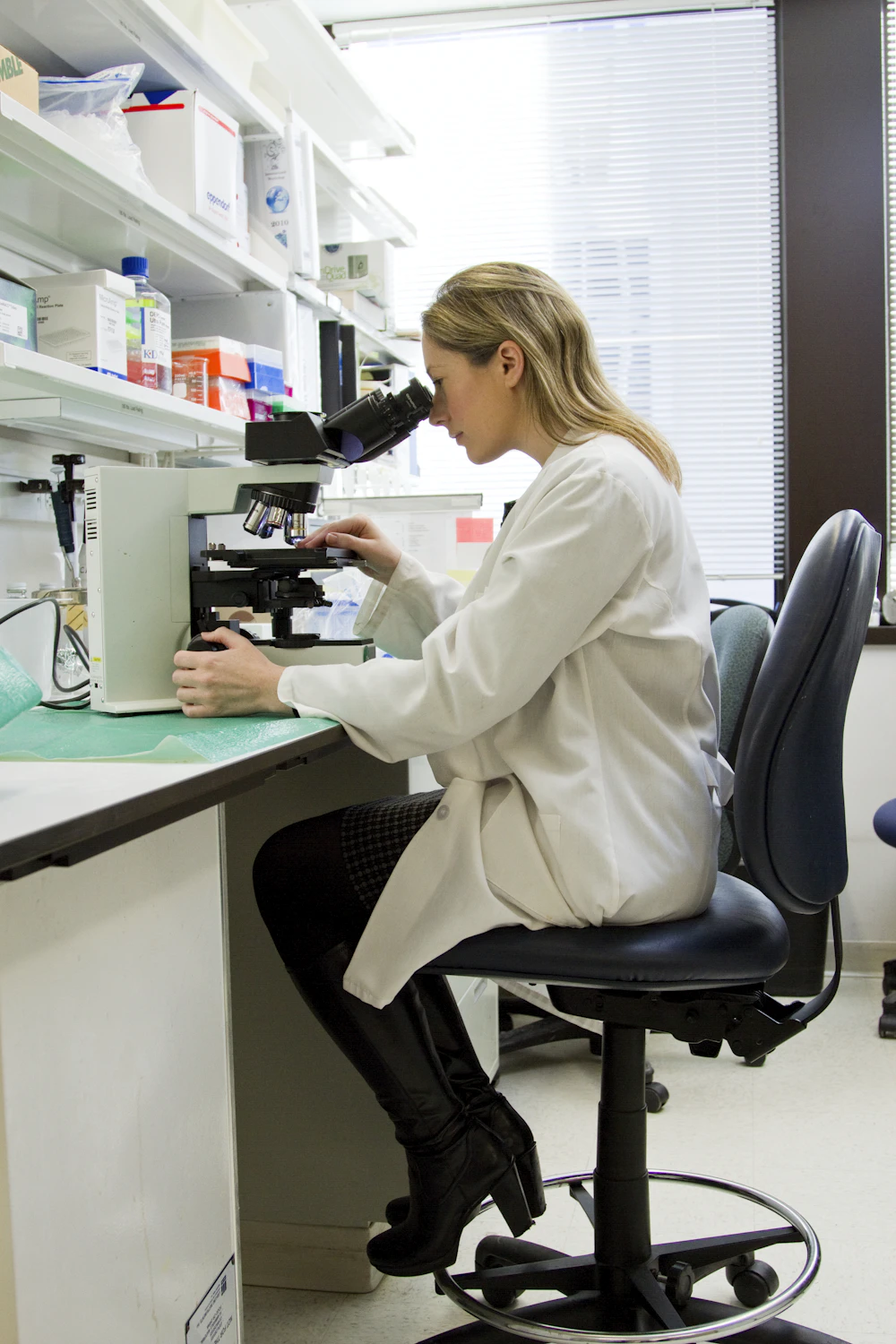
At its core, iSCNT adapts the laboratory technique of somatic cell nuclear transfer (SCNT)—the same process used to create Dolly the sheep—for use between different species. The procedure involves several critical steps:
Step 1: Oocyte Collection
Scientists obtain a mature egg cell from a readily available donor species.
Step 2: Enucleation
The nucleus is carefully removed, eliminating most of its genetic material.
Step 3: Nuclear Transfer
The nucleus from a somatic cell of the target species is introduced.
Step 4: Activation and Culture
The reconstructed egg is stimulated to divide and develop like a normally fertilized embryo 5 .
The Spectrum of Success: When iSCNT Works
iSCNT has achieved its most notable successes when the donor and recipient species are closely related. The evolutionary distance between species appears to be the single greatest factor determining success, with closely related species showing significantly better development than distantly related pairs 1 3 .
| Donor Species | Recipient Oocyte | Result | Taxonomic Relationship |
|---|---|---|---|
| African Wildcat | Domestic Cat | Live offspring | Same genus (Felis) |
| Gray Wolf | Domestic Dog | Live offspring | Same genus (Canis) |
| Gaur | Bovine | Live offspring | Same genus (Bos) |
| Mouflon | Sheep | Live offspring | Same species complex |
| Bactrian Camel | Dromedary Camel | Live offspring | Same genus (Camelus) |
These successes share a common thread: the species involved can often hybridize naturally, indicating pre-existing nuclear-cytoplasmic compatibility between their cellular components 1 4 .
The Molecular Challenges of Cellular Coexistence
One of the most fundamental barriers in iSCNT emerges from the disrupted communication between the transplanted nucleus and its new cytoplasmic environment. In normal cells, the nuclear pore complex (NPC)—an elaborate gateway controlling molecular traffic between nucleus and cytoplasm—ensures proper coordination of cellular functions. However, in iSCNT embryos, species-specific differences disrupt the formation and function of these critical structures 3 .
The consequences of this incompatibility are profound. When NPCs fail to form correctly, essential transcription factors and other signaling molecules cannot properly enter the nucleus to initiate the reprogramming necessary to convert a specialized somatic cell into a totipotent embryonic state. This disruption helps explain why iSCNT embryos often fail at embryonic genome activation (EGA), the critical developmental milestone when the embryo transitions from using maternal genetic instructions to activating its own genome 3 4 .
If nucleocytoplasmic incompatibility represents a communication breakdown, then mitonuclear incompatibility constitutes a power grid failure. Mitochondria, often called the powerhouses of the cell, contain their own small piece of genetic material (mtDNA) that works in close coordination with the nuclear genome. Over evolutionary time, the nuclear and mitochondrial genomes co-evolve to ensure efficient energy production through oxidative phosphorylation 3 7 .
Normal Cells
Nuclear and mitochondrial DNA are co-evolved for optimal energy production
iSCNT Embryos
Nuclear-mitochondrial mismatch leads to inefficient energy production
In iSCNT embryos, this coordinated system breaks down. The donor nucleus and recipient mitochondria essentially speak different biochemical languages, leading to inefficient energy production that starves the developing embryo of necessary power 7 . Research has shown that in distantly related pairs, the recipient oocyte's mitochondria tend to dominate while the donor mitochondria are progressively eliminated, creating a mismatch between nuclear DNA and mitochondrial DNA that impairs cellular metabolism 7 .
Perhaps the most subtle yet critical challenge in iSCNT lies in epigenetic reprogramming—the process of wiping the somatic cell's developmental memory and returning it to a pristine, totipotent state. In normal development, the oocyte's cytoplasm contains specialized factors that efficiently reprogram the sperm DNA after fertilization. iSCNT relies on this same reprogramming capacity to erase the developmental history of the transferred somatic nucleus 1 3 .
In interspecies combinations, this reprogramming process is frequently incomplete. The recipient ooplasm may lack the specific factors needed to properly interact with the donor nucleus, leaving somatic memory genes active while failing to activate critical embryonic genes . Studies comparing gene expression between intra- and interspecies SCNT embryos have revealed that iSCNT embryos show significantly fewer reprogramming-associated genes being appropriately activated—in one study, 643 in iSCNT versus 1,527 in standard SCNT embryos .
A Closer Look: The Asian Elephant-Pig iSCNT Experiment
Methodology: Bridging Evolutionary Distance
A compelling example of both the challenges and potential of iSCNT comes from recent research involving Asian elephants and pigs. With Asian elephants classified as Endangered and facing declining populations, researchers turned to iSCNT as a potential conservation tool. The experimental approach was methodical and innovative 6 :
Donor Cell Preparation
Skin fibroblasts from Asian elephant, modified with EGFP marker
Oocyte Collection
Porcine ovaries from slaughterhouse, matured in vitro
Nuclear Transfer
Elephant nuclei transferred to enucleated pig oocytes
Analysis
Transcriptomic analysis using RNA sequencing
Results and Analysis: Molecular Roadblocks Revealed
The results from the Asian elephant-pig iSCNT experiment were telling. The researchers observed significant developmental arrest, with 61.92% of embryos arresting at the 2-cell stage and 82.53% at the 4-cell stage—a stark contrast to the development seen in intraspecies SCNT 6 .
| SCNT Type | Species Pairing | Cleavage Rate | Blastocyst Rate | Key Findings |
|---|---|---|---|---|
| Intra-species | Porcine-Porcine | High | ~9.4% | Normal development |
| Intra-species | Bovine-Bovine | High | 15-28% | Normal development |
| Inter-species (close) | Gaur-Bovine | Moderate | Low but successful | Live offspring |
| Inter-species (distant) | Asian Elephant-Pig | Very low | Extremely low | High arrest at 2-4 cell |
| Inter-species (distant) | Murine-Porcine | Very low | 0.48-3.38% | Improved with mitochondrial supplement |
Key Molecular Findings
Transcriptomic analysis revealed several critical molecular roadblocks. The normally developing iSCNT embryos showed signs of residual transcriptomic memory and incomplete epigenetic reprogramming, meaning the donor nuclei failed to fully shed their somatic identity. Meanwhile, the arrested embryos exhibited clear signatures of both nucleocytoplasmic incompatibility and nDNA-mtDNA mismatch 6 .
The Scientist's Toolkit: Essential Research Reagent Solutions
Advancing iSCNT research requires specialized reagents and tools designed to overcome the unique challenges of cross-species nuclear transfer.
| Reagent/Tool | Function | Application in iSCNT |
|---|---|---|
| Metaphase II Oocytes | Provides reprogramming cytoplasmic factors | Source of maternal factors for nuclear reprogramming; typically from readily available species |
| Dideoxycytidine | Mitochondrial DNA depletion agent | Allows study of mitochondrial function and compatibility 7 |
| Valproic Acid (VPA)/Trichostatin A (TSA) | Histone deacetylase inhibitors | Epigenetic modulators to enhance reprogramming |
| Species-Specific Media | Optimized culture conditions | Supports embryonic development post-reconstruction (e.g., PZM, KSOM) 7 |
| Enhanced Green Fluorescent Protein (EGFP) | Visual tracking marker | Labels donor genomes to confirm successful nuclear transfer 6 |
| RNA Sequencing Tools | Transcriptomic analysis | Identifies gene expression abnormalities in iSCNT embryos 6 |
| Micromanipulation Systems | Precise cellular manipulation | Enucleation of oocytes and nuclear transfer procedures 5 |
Future Perspectives: Navigating the Biological Complexities
As research progresses, scientists are developing increasingly sophisticated strategies to address the interconnected challenges of iSCNT. Rather than focusing on single factors, the field is moving toward integrated approaches that simultaneously address multiple incompatibilities 3 4 .
Supplementing iSCNT embryos with mitochondria or mitochondrial genes compatible with the donor nucleus has shown promise. In murine-porcine iSCNT experiments, depleting porcine oocyte mtDNA and supplementing with murine ESC extract containing compatible mitochondria significantly improved blastocyst rates from 0.48% to 3.38% 7 .
While early attempts with broad-spectrum epigenetic modifiers like valproic acid showed limited success in distant pairings, researchers are now developing more targeted approaches using specific small molecules tailored to particular species combinations .
Investigating methods to improve nuclear pore complex assembly and function in interspecies contexts may enhance critical nucleocytoplasmic communication during early embryonic development 3 .
Recognizing that no single formula will work for all species pairs, researchers are developing tailored approaches for specific combinations of donor and recipient species 4 .
The future of iSCNT will likely rely on balancing these multiple incompatibilities rather than solving them in isolation. As one recent review noted, "Addressing these challenges requires a multifaceted, species-specific approach that balances multiple incompatibilities rather than isolating a single factor" 3 .
Conclusion: The Delicate Dance of Cellular Cooperation
Interspecies somatic cell nuclear transfer represents both the remarkable ingenuity of scientific innovation and the profound complexity of biological systems. While the technique has demonstrated that cellular components from different species can momentarily cooperate to initiate embryonic development, maintaining this cooperation through complete development remains a formidable challenge.
The molecular obstacles—nucleocytoplasmic incompatibility, mitonuclear mismatch, and epigenetic reprogramming failures—collectively highlight how deeply evolution has woven cooperation between cellular components. Yet continued research, powered by advanced genomic tools and creative approaches, gradually unravels these complexities.
As the field progresses, iSCNT may eventually fulfill its promise as a tool for species conservation and regenerative medicine. Each failed experiment provides valuable insights into the fundamental biology of nuclear programming and species specificity. In learning why iSCNT so often fails, we simultaneously learn more about why normal development succeeds—deepening our appreciation for the exquisitely tuned cellular dance that allows life to perpetuate itself, and potentially learning enough to guide that dance across species boundaries.