Zebrafish Orthologous Genes: A Powerful Platform for Human Disease Modeling and Drug Discovery
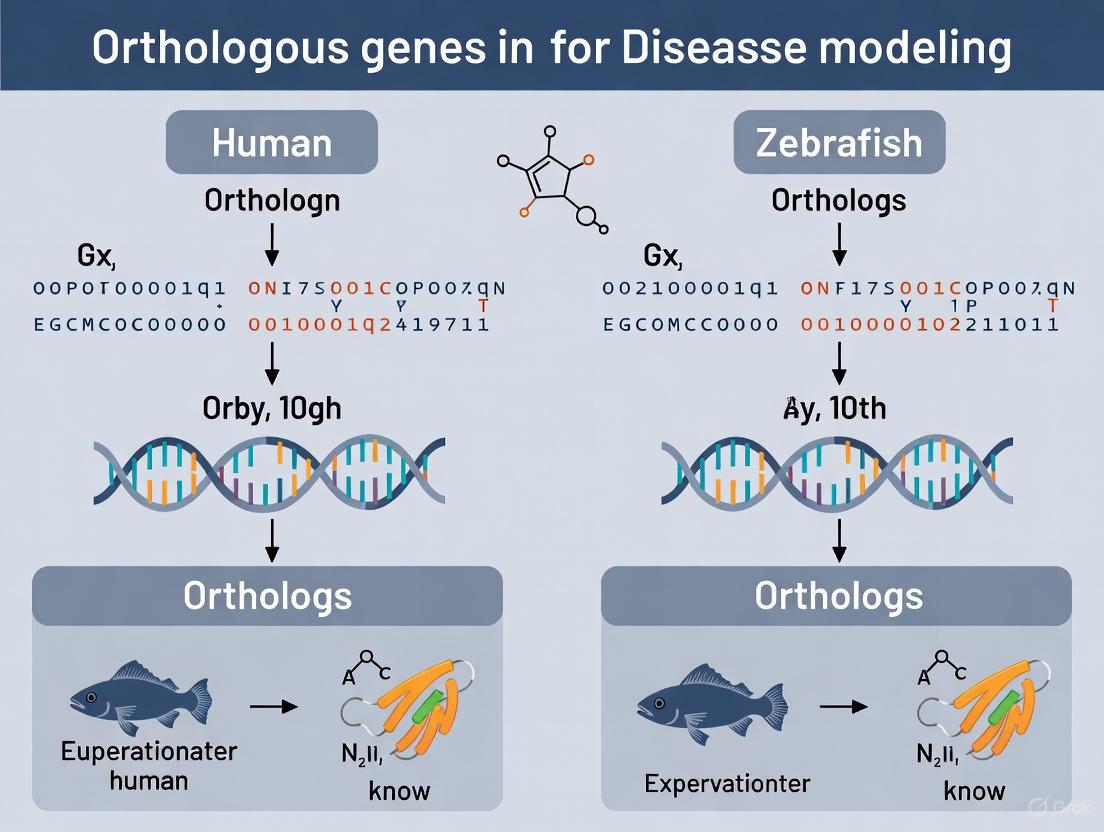
This article explores the pivotal role of zebrafish orthologous genes in modeling human diseases, a cornerstone of modern biomedical research.
Zebrafish Orthologous Genes: A Powerful Platform for Human Disease Modeling and Drug Discovery
Abstract
This article explores the pivotal role of zebrafish orthologous genes in modeling human diseases, a cornerstone of modern biomedical research. With approximately 70% of human genes having at least one zebrafish ortholog and 82-84% of human disease genes having a functional counterpart, the zebrafish presents a unique and powerful vertebrate model. We detail the foundational genetic similarities, advanced methodological applications like CRISPR-Cas9 for creating precise disease models, and crucial troubleshooting strategies to overcome species-specific limitations. Furthermore, we provide a comparative analysis validating the zebrafish model against other systems, underscoring its cost-effectiveness, high-throughput capability, and growing translational relevance for accelerating drug discovery and the development of personalized therapeutic strategies.
The Genetic Blueprint: Unveiling the High Degree of Orthology Between Human and Zebrafish Genomes
The zebrafish (Danio rerio) has emerged as a preeminent model organism for biomedical research, a status solidified by the sequencing and detailed annotation of its genome. A foundational pillar supporting its utility is the quantifiable genetic similarity to humans. This whitepaper delineates the core genomic statistics—specifically, that approximately 70% of human genes have at least one obvious zebrafish orthologue, and this figure rises to 84% for genes associated with human diseases [1] [2] [3]. Framed within the broader thesis of using orthologous genes for disease modeling, this document provides a detailed guide to the data, the experimental methodologies used to generate it, and the essential tools for leveraging zebrafish in translational research.
Zebrafish have become a cornerstone for the study of vertebrate gene function and the modeling of human genetic diseases [1] [4]. Their utility stems from a combination of practical advantages—including external fertilization, optically transparent embryos, high fecundity, and rapid development—and profound genetic conservation with humans [2] [4] [5]. The sequencing of the zebrafish genome was a pivotal achievement, enabling a direct, systematic comparison with the human genome and providing a quantitative basis for its use in disease research [1] [3]. This high degree of conservation means that discoveries made in zebrafish concerning gene function, disease mechanisms, and therapeutic responses have a high probability of being translatable to humans, establishing the zebrafish as a powerful "bridge" organism between basic research and clinical application [4].
Quantitative Genetic Similarity: Core Data
The genetic relationship between humans and zebrafish is characterized by several key metrics derived from the reference genome sequence (Zv9 assembly) and subsequent analyses. The following tables summarize the essential quantitative data.
Table 1: Zebrafish Genome Assembly and Annotation Overview (Zv9)
| Feature | Metric |
|---|---|
| Total Assembly Length | 1.412 gigabases (Gb) |
| Protein-Coding Genes | 26,206 |
| Pseudogenes | ~218 |
| Overall Repeat Content | 52.2% |
| Predominant Repeat Type | Type II DNA Transposable Elements (39% of genome) [1] [3] |
Table 2: Orthology Relationships Between Human and Zebrafish Genes
| Relationship Type | Human Genes | Zebrafish Genes | Ratio (Human:Zebrafish) |
|---|---|---|---|
| One-to-One | 9,528 | 9,528 | 1:1 |
| One-to-Many | 3,105 | 7,078 | 1:2.28 |
| Many-to-One | 1,247 | 489 | 2.55:1 |
| Many-to-Many | 743 | 934 | 1:1.26 |
| Total with Orthologue | 14,623 | 18,029 | ~1:1.28 |
| Species-Unique | 5,856 | 8,177 | - |
| Overall Percentage | ~70% of human genes have a zebrafish orthologue [1] [3] | ~69% of zebrafish genes have a human orthologue [1] |
Table 3: Conservation of Human Disease Genes in Zebrafish
| Category | Number of Human Genes | Genes with Zebrafish Orthologue | Percentage |
|---|---|---|---|
| OMIM "Morbid" Genes | 3,176 | 2,601 | 82% [1] [3] |
| GWAS-Associated Genes | 4,023 | 3,075 | 76% [1] [3] |
| Overall Human Disease Genes | - | - | ~84% [2] [6] |
Key Biological Implications
- Teleost-Specific Genome Duplication (TSD): The increased gene number in zebrafish and the prevalence of "one-to-many" orthology relationships are largely attributed to an ancestral whole-genome duplication event specific to the teleost fish lineage. The resulting duplicated genes, called ohnologues, can have partitioned functions, providing a unique system to study sub-functionalization of genes [1] [3].
- Notable Absences: Despite the high level of conservation, some human genes lack clear zebrafish orthologues, such as the leukemia inhibitory factor (LIF), oncostatin M (OSM), interleukin-6 (IL6), and BRCA1. However, their receptor complexes or binding partners (e.g., lifr, osmr, il6r, BARD1) are often present, suggesting that functionally analogous pathways may exist [1] [3].
Experimental Protocols for Establishing and Utilizing Orthology
The quantitative measures of genetic similarity are derived from and validated through a series of rigorous experimental and bioinformatic protocols.
Protocol 1: Genome Sequencing, Assembly, and Orthology Determination
Objective: To generate a high-quality reference genome sequence for the zebrafish and systematically identify orthologous relationships with the human genome.
Methodology:
- Sequencing Strategy: A hybrid approach was employed, combining clone-by-clone sequencing (83% of the assembly) for high accuracy with whole-genome shotgun (WGS) sequencing (17%) for coverage. The Tübingen strain was used as the reference [1] [3].
- Assembly and Anchoring: Sequence contigs were ordered and oriented using a high-resolution, high-density meiotic map (Sanger AB Tübingen map, or SATmap), creating a chromosome-level assembly (Zv9) [1] [3].
- Gene Annotation: Both automated and manual curation were used to identify and annotate protein-coding genes, transfer RNAs, ribosomal RNAs, and small nuclear RNAs [1].
- Orthology Prediction: Orthologous genes were defined using the Ensembl Compara pipeline, which performs pairwise genome comparisons and uses protein tree analyses to distinguish orthologues (genes separated by a speciation event) from paralogues (genes separated by a duplication event) [1].
Protocol 2: Functional Validation through Disease Modeling
Objective: To experimentally confirm that a human disease-associated gene with a zebrafish orthologue can recapitulate aspects of the human disease phenotype when mutated in zebrafish.
Methodology:
- Gene Selection: Identify a candidate human gene from patient genetic data (e.g., via whole-exome sequencing) that is implicated in a disease and has a documented zebrafish orthologue.
- Model Generation (Reverse Genetics):
- Knockdown: Transient gene silencing is achieved by injecting single-cell embryos with antisense morpholino oligonucleotides (MOs) that block translation or correct splicing of the target mRNA [2].
- Knockout/Knock-in: Permanent, heritable mutations are created using genome-editing technologies like CRISPR/Cas9. This allows for the introduction of frameshift mutations (knockout) or the precise recapitulation of a patient's point mutation (knock-in) [2] [4].
- Phenotypic Screening: Zebrafish (larvae or adults) with the modified gene are systematically analyzed for phenotypes that mirror the human disease. Assays may include:
- Locomotor and Behavioral Analysis: Tracking movement to model neuromuscular or neurological disorders [2].
- Microscopic Imaging: Using the transparency of embryos/larvae to visualize organ development, heart function, or neuronal architecture in real time [4] [5].
- Histological Analysis: Examining tissue sections from adult fish for degenerative changes, fibrosis, or inflammation [5].
- Therapeutic Screening: Mutant fish displaying a relevant phenotype can be used in high-throughput drug screens. Larvae are arrayed in multi-well plates and exposed to small molecule libraries, with phenotypic rescue serving the primary readout [2] [4].
The following diagram illustrates the core workflow for creating and validating a zebrafish disease model based on human genetic information.
Table 4: Key Research Reagent Solutions for Zebrafish Disease Modeling
| Reagent / Resource | Function and Application in Research |
|---|---|
| CRISPR/Cas9 System | Enables precise, heritable genome editing (knockouts and knock-ins) to create stable disease models. The most advanced method for reverse genetics [2] [4]. |
| Morpholino Oligonucleotides | Synthetic antisense molecules used for transient gene knockdown by blocking mRNA translation or splicing. Useful for rapid assessment of gene function in early development [2]. |
| Zebrafish TU Strain | The Tübingen reference strain, whose genome was sequenced to create the Zv9 reference assembly. Serves as a standardized genetic background [1] [3]. |
| SATmap (Meiotic Map) | A high-resolution genetic map used to anchor and validate the physical assembly of the zebrafish genome, ensuring accurate chromosome assignment [1]. |
| Ensembl Compara Database | The bioinformatics pipeline and database used to define orthology relationships between zebrafish and human genes [1]. |
Visualization of Genetic Relationships and Experimental Logic
The following diagram maps the logical relationship between a human gene, its zebrafish orthologues, and the potential outcomes for experimental modeling, which is central to the thesis of this whitepaper.
The quantitative metrics of 70% gene orthology and 84% disease gene conservation provide a powerful, data-driven foundation for the use of zebrafish in modeling human diseases. These figures are not abstract values but are derived from a high-quality genome sequence and refined through comparative genomics. When integrated with the experimental protocols and tools outlined in this whitepaper, these genetic similarities empower researchers to deconstruct disease mechanisms and accelerate drug discovery with high confidence in the translational relevance of their findings. The zebrafish model, therefore, stands as an indispensable instrument in the modern biomedical research toolkit, bridging the gap between genetic information and therapeutic application.
While the frequently cited 70% genetic similarity between zebrafish and humans provides a foundational rationale for their use in research, this figure alone is insufficient for validating functional disease pathways [6]. A more profound and informative metric reveals that 84% of human disease genes have functional orthologs in zebrafish, underscoring their exceptional utility in modeling human disease mechanisms [6] [4]. This whitepaper delves beyond simple percentage comparisons to explore the experimental frameworks and analytical tools that demonstrate the functional conservation of disease pathways between humans and zebrafish. We provide a technical guide for researchers to validate these conserved pathways, thereby enhancing the reliability of zebrafish models in drug discovery and disease mechanism research.
Zebrafish (Danio rerio) have emerged as a preeminent model organism in biomedical research, not merely due to genetic homology but because of their demonstrated capacity to recapitulate complex human disease phenotypes. The zebrafish genome contains approximately 26,000 protein-coding genes, and a significant majority of human genes have at least one zebrafish ortholog—a gene in one species that is similar due to shared ancestry [6]. This genetic conservation is particularly pronounced in genes associated with human diseases, enabling the creation of accurate disease models.
The practical advantages of zebrafish further solidify their position in translational research. Zebrafish are highly fertile, producing 200-300 embryos per clutch every 2-3 days, facilitating high-throughput studies [4]. Their embryos develop rapidly and externally, are optically transparent, and major organs form within 24 hours post-fertilization, allowing for real-time observation of developmental processes and disease progression [7] [4]. These characteristics, combined with cost-effective maintenance and fewer ethical constraints compared to mammalian models, position zebrafish as a powerful "tank-to-bedside" tool for accelerating drug discovery and personalized medicine [4].
Quantitative Landscape of Genetic Conservation
Understanding the depth of genetic similarity requires moving beyond a single percentage to examine specific conservation metrics relevant to disease research. The following tables summarize key quantitative data that underscore the functional relevance of zebrafish models.
Table 1: Key Metrics of Genetic Similarity Between Humans and Zebrafish
| Metric | Value | Research Implication |
|---|---|---|
| Overall Genetic Similarity | ~70% [6] | Foundational homology for comparative genomics. |
| Human Disease Genes with Zebrafish Orthologs | 84% [6] | High potential for modeling specific genetic disorders. |
| Protein-Coding Genes in Zebrafish | ~26,000 [6] | Complex genome comparable to humans. |
| Orthologs per Human Gene | ~1 or >1 [4] | Potential for gene subfunctionalization. |
Table 2: Comparative Advantages of Zebrafish Versus Rodent Models
| Basis | Zebrafish Models | Rodent Models |
|---|---|---|
| Development | External, rapid, and observable in real-time | Internal, longer gestation [4] |
| Number of Offspring | ~100-300 per week [4] | ~5-12 per month [4] |
| In-vivo Fluorescence Imaging | Highly possible due to embryo transparency [4] | Low possibility [4] |
| Genetic Manipulation | Easier, with efficient F0 screens [4] | Harder process, F0 screens not readily available [4] |
| Drug Administration | Non-invasive (water-soluble drugs), injections also possible [4] | Primarily injections [4] |
| Experimental Cycle & Cost | Short cycle, low animal care costs [4] | Long cycle, high costs [4] |
Methodologies for Establishing Functional Conservation
Establishing functional conservation requires a suite of molecular techniques to disrupt, introduce, or modify genes in zebrafish and observe resulting phenotypes. The following experimental protocols are central to this process.
Forward Genetic Screens: Unbiased Discovery
Forward genetics begins with a phenotype to identify the underlying gene.
- Protocol: Large-scale chemical mutagenesis using agents like N-ethyl-N-nitrosourea (ENU) is performed on male zebrafish [7]. The F1 progeny from mutagenized males are screened for dominant phenotypes, or the F2 generation is intercrossed to reveal recessive phenotypes. Subsequent positional cloning or next-generation sequencing is used to identify the mutated gene responsible for the phenotype. This approach has been successfully used to identify mutants modeling human hematological diseases like congenital sideroblastic anemia and hemochromatosis [7].
Reverse Genetic Approaches: Targeted Validation
Reverse genetics starts with a known gene to investigate its function.
- Morpholino Knockdown: Morpholinos are antisense oligonucleotides that transiently inhibit gene translation or affect splicing [7]. They are injected into embryos at the 1- to 4-cell stage and remain active for several days, allowing for rapid assessment of gene function during early development. For instance, this method has been used to model Diamond Blackfan anemia by knocking down the ribosomal protein RSP19 [7].
- Target-Selected Mutagenesis (TILLING): This method combines standard ENU mutagenesis with high-throughput sequencing to identify point mutations in a specific target gene from a library of mutagenized fish [7]. This allows for the recovery of a series of allelic variants, including hypomorphs, which can be valuable for disease modeling.
- CRISPR-Cas9 Gene Editing: The CRISPR-Cas9 system enables precise, heritable gene knockouts or knock-ins [4]. Guide RNAs (gRNAs) and Cas9 mRNA are co-injected into single-cell embryos. This results in double-strand breaks in the DNA, which are repaired by error-prone non-homologous end joining (NHEJ), often leading to frameshift mutations and gene knockout. The efficiency of this system allows for the direct screening of mutants in the F0 generation. Recent advances, such as base editors (e.g., CBE4max-SpRY), allow for the introduction of precise point mutations to model specific human genetic variants with high efficiency [4].
The following workflow visualizes the typical process for creating and validating a zebrafish disease model using reverse genetics:
Transgenesis and Disease Modeling
For complex diseases like cancer, transgenic zebrafish lines can be engineered.
- Protocol: The Tol2 transposon system is widely used for germline transgenesis [8]. A DNA construct containing a tissue-specific promoter (e.g., mitfa for melanocytes) driving the expression of a human oncogene (e.g., BRAFV600E) is co-injected with Tol2 transposase mRNA into single-cell embryos [7]. To model the full spectrum of tumorigenesis, these transgenes are often combined with mutations in tumor suppressor genes (e.g., p53). This approach has successfully generated models of T-cell acute lymphoblastic leukemia (T-ALL) and melanoma that histologically resemble human tumors and are sensitive to the same chemotherapeutic agents [7].
Analyzing Conserved Pathways and Networks
Once a model is established, pathway and network analysis is crucial for interpreting results in the context of human biology.
Pathway Enrichment Analysis
This identifies biological pathways that are over-represented in a list of genes of interest (e.g., differentially expressed genes from a zebrafish mutant).
- Workflow:
- Obtain Gene List: A ranked list of genes is generated from experimental data (e.g., RNA-seq). A common practice is to rank genes by
-log10(p-value) * sign(log2FoldChange)[9]. - Perform Enrichment Analysis:
- Over-representation Analysis (ORA): Tools like g:Profiler test whether genes from a pre-defined pathway (e.g., from GO Biological Process or Reactome) appear more frequently in your submitted list than expected by chance, using a Fisher's exact test. The foreground is typically the differentially expressed genes, and the background is all expressed genes [9].
- Gene Set Enrichment Analysis (GSEA): This method uses all genes ranked by their expression change. It determines if members of a pre-defined gene set tend to appear toward the top (or bottom) of the ranked list, indicating coordinated expression changes in that pathway [9].
- Visualize Results: Tools like Cytoscape with the EnrichmentMap app can create a network visualization of the enriched pathways, showing interconnections and helping to interpret the broader biological landscape [9].
- Obtain Gene List: A ranked list of genes is generated from experimental data (e.g., RNA-seq). A common practice is to rank genes by
Building Pathway Networks
To move beyond discrete lists of pathways, tools like PathIN can be used to visualize the functional connections between pathways related to a specific disease [10].
- Protocol: PathIN is a web-service that constructs pathway-based networks from databases like KEGG, Reactome, and WikiPathways [10]. Researchers can input a list of pathways, genes, or compounds. The tool provides several network creation methodologies:
- Direct connections between pathways of interest.
- Including first neighbours of the given pathways.
- Finding connecting pathways between the pathways of interest, which can reveal missing links in the molecular mechanism of a disease [10].
- The edge weights in these networks can represent the number of common biological entities (genes, compounds) shared between two pathways, providing a quantitative measure of their functional relatedness [10].
The following diagram illustrates the conceptual workflow for analyzing gene lists to uncover conserved pathway networks:
Table 3: Key Reagents and Resources for Zebrafish Disease Modeling
| Tool / Resource | Function | Example Use Case |
|---|---|---|
| CRISPR-Cas9 System [4] | Precise genome editing for generating knock-out and knock-in mutations. | Introducing a patient-specific point mutation into the zebrafish ortholog. |
| Tol2 Transposon System [8] | Highly efficient germline transgenesis for creating stable transgenic lines. | Expressing a fluorescent reporter or human oncogene in a tissue-specific manner. |
| Morpholino Oligonucleotides [7] | Transient knockdown of gene expression by blocking translation or splicing. | Rapid assessment of gene function during early embryonic development. |
| Zebrafish Mutation Project (ZMP) [7] | Archive of mutant alleles for zebrafish genes, available from ZIRC. | Sourcing existing mutant lines instead of generating new ones. |
| ZFIN Database [11] | Central repository for zebrafish genetic, genomic, and phenotypic data. | Identifying zebrafish orthologs of human genes and finding established models. |
| PathIN [10] | Web-tool for creating and analyzing pathway-based networks. | Visualizing the functional environment and connections between pathways hit in an RNA-seq experiment. |
| g:Profiler [9] | Tool for over-representation analysis of gene lists against pathway databases. | Identifying which biological pathways are enriched in a list of differentially expressed genes. |
The power of the zebrafish model extends far beyond a simple percentage of shared DNA. Its true value lies in the demonstrable functional conservation of disease pathways, which can be systematically revealed through a combination of advanced genetic tools and sophisticated bioinformatic analyses. By employing the methodologies outlined in this guide—from targeted genome engineering and transgenesis to pathway network visualization—researchers can robustly validate zebrafish as a relevant and powerful system for deconstructing human disease mechanisms. This approach not only strengthens the foundation of basic biomedical research but also accelerates the pipeline for discovering and testing novel therapeutic strategies.
Gene duplication serves as a primary source of evolutionary innovation, providing genetic material for the emergence of novel functions. Subfunctionalization, where duplicated gene pairs (paralogs) undergo complementary degeneration of regulatory or protein modules, represents a crucial mechanism for duplicate gene retention. This technical review examines how subfunctionalized paralogs, particularly those resulting from the teleost-specific genome duplication, provide unique experimental models for elucidating gene function and regulation. Focusing on the zebrafish-human orthologous relationship, we demonstrate how subfunctionalization studies yield insights into protein structure-function relationships, genetic regulatory networks, and disease mechanisms. The conserved subfunctionalization patterns between zebrafish and mammalian systems offer powerful opportunities for modeling human genetic diseases and advancing therapeutic development.
Gene duplication represents a fundamental evolutionary mechanism for generating genetic novelty. The subsequent fate of duplicated genes typically follows several trajectories: non-functionalization (loss of one copy), neofunctionalization (acquisition of novel functions), or subfunctionalization (partitioning of ancestral functions between duplicates) [12] [13]. Subfunctionalization occurs through neutral mutations that lead to complementary degeneration of regulatory elements or protein domains, rendering both paralogs necessary to perform the complete ancestral function [14] [13].
The Duplication-Degeneration-Complementation (DDC) model provides a theoretical framework for subfunctionalization, wherein both paralogs accumulate deleterious mutations that compromise different aspects of the ancestral function, necessitating retention of both copies for complete functionality [13]. This process often manifests as tissue-specific expression patterns, developmental stage partitioning, or subcellular specialization between paralogs.
Zebrafish (Danio rerio), with their additional teleost-specific whole-genome duplication (TS-3R WGD) approximately 350 million years ago, possess abundant duplicated genes that have frequently undergone subfunctionalization [12] [15]. Approximately 70% of human protein-coding genes have at least one obvious zebrafish orthologue, making this system particularly valuable for biomedical research [3]. The zebrafish genome contains approximately 26,206 protein-coding genes, with duplicates for about 5,300 of these genes, providing rich material for studying subfunctionalization processes [12] [3].
Genomic Context: Zebrafish as a Model Organism
Evolutionary History of Genome Duplications
Vertebrates have experienced multiple rounds of whole-genome duplication throughout their evolutionary history. Two ancestral rounds (1R and 2R) occurred early in vertebrate evolution, approximately 500-600 million years ago [12]. The teleost lineage, including zebrafish, underwent an additional teleost-specific whole-genome duplication (TS-3R WGD) approximately 350 million years ago, contributing to their genetic diversification and evolutionary success [12] [15]. This event is supported by multiple lines of evidence, including the presence of seven Hox clusters in teleosts compared to four in most other vertebrates [12] [15].
Beyond the TS-3R WGD, zebrafish exhibit a remarkable propensity for small-scale duplication events. Studies demonstrate that zebrafish have the highest rate of tandem and intrachromosomal duplicates among sequenced teleost species, with duplicated genes comprising approximately 20% of their protein-coding genes [16]. These continuous duplication events have significantly expanded specific gene families, particularly those involved in immune and sensory processes [16].
Zebrafish-Human Genomic Conservation
Comparative genomic analyses reveal substantial conservation between zebrafish and human genomes. Approximately 70% of human genes have at least one obvious zebrafish orthologue, including the majority of genes implicated in human disease [3]. Furthermore, 82% of human genes with morbidity descriptions in OMIM have at least one zebrafish orthologue [3]. This high degree of conservation enables effective modeling of human genetic diseases in zebrafish.
Table 1: Zebrafish-Human Genomic Comparison
| Feature | Zebrafish | Human | Implications |
|---|---|---|---|
| Protein-coding genes | 26,206 | ~20,000 | Expanded gene families in zebrafish |
| Genes with orthologues | 69% have human orthologues | 71.4% have zebrafish orthologues | High functional conservation |
| Disease gene conservation | 82% of OMIM morbid genes have orthologues | - | Strong disease modeling potential |
| Genome duplication events | TS-3R WGD + frequent small-scale duplications | Only 1R and 2R WGD | More paralogs available for study |
The distribution of orthology relationships reveals that 47% of human genes maintain a one-to-one relationship with zebrafish orthologues, while a significant proportion exhibit "one-human-to-many-zebrafish" relationships, reflecting the teleost-specific genome duplication [3]. This duplication and subsequent divergence have created natural experiments for studying gene function and regulation.
Mechanisms and Models of Subfunctionalization
Theoretical Frameworks
Subfunctionalization encompasses several distinct but related models of functional partitioning between paralogs:
Expression Subfunctionalization: Paralogs evolve complementary expression patterns across tissues, developmental stages, or environmental conditions, with both copies required to cover the ancestral expression domain [14] [13]. This represents a neutral process that can lead to duplicate retention.
Protein Subfunctionalization: Complementary degeneration of protein functional domains occurs between paralogs, requiring the presence of both gene products to perform the complete ancestral function [13].
Specialization: A distinct form of subfunctionalization where both paralogs perform the same biochemical function but evolve enhanced efficiency in different contexts (tissues, developmental stages, or environmental conditions) [13]. Unlike other forms, specialization may involve positive selection.
The DDC model emphasizes that subfunctionalization typically occurs through neutral mutations that would be deleterious in a single-copy gene but become advantageous when complemented by mutations in the paralog [13]. This process effectively preserves both duplicates in the genome.
Escape from Adaptive Conflict
Adaptive conflict arises when a single-copy gene performs multiple functions, creating evolutionary constraints where improvements to one function impair another [13]. Gene duplication followed by subfunctionalization provides an evolutionary solution to adaptive conflict, allowing each paralog to specialize in different ancestral functions without compromise. This "function splitting" enables optimization of previously conflicting activities [13].
Diagram 1: Escape from adaptive conflict via subfunctionalization
Experimental Analysis of Subfunctionalized Paralogs
Identification and Validation Methods
Phylogenetic and Synteny Analysis
Orthology and paralogy relationships are established through phylogenetic reconstruction combined with synteny analysis. The presence of paralogs in double-conserved synteny (DCS) blocks provides evidence of whole-genome duplication origins [12]. In zebrafish, 3,440 gene pairs (26% of analyzed genes) exist within DCS blocks, supporting their origin from the TS-3R WGD [12].
Expression Profiling
Comprehensive expression analysis across tissues, developmental stages, and cell types identifies complementary expression patterns suggestive of subfunctionalization. Techniques include RNA sequencing, quantitative PCR, and in situ hybridization. For example, ribosomal protein paralogs Rps27 and Rps27l exhibit inversely correlated mRNA abundance across mouse cell types, with Rps27 highest in lymphocytes and Rps27l highest in mammary alveolar cells and hepatocytes [14].
Functional Complementarity Assays
Critical validation of subfunctionalization involves testing whether paralogs can functionally substitute for each other. The most definitive approach involves replacing one paralog's coding sequence with that of its counterpart at the endogenous locus. In the case of Rps27 and Rps27l, expressing Rps27 protein from the endogenous Rps27l locus (and vice versa) completely rescued loss-of-function lethality in mice, demonstrating functional equivalence despite divergent expression patterns [14].
Representative Experimental Workflow
Diagram 2: Experimental workflow for studying subfunctionalization
Case Studies in Subfunctionalization
Ribosomal Protein Paralogs Rps27 and Rps27l
The ribosomal protein paralogs Rps27 (eS27) and Rps27l (eS27L) provide a compelling example of expression subfunctionalization. Evolutionary analysis indicates these paralogs likely arose during whole-genome duplication(s) in a common vertebrate ancestor [14]. Detailed investigation reveals:
- Inversely correlated expression: Rps27 and Rps27l show complementary mRNA abundance across mouse cell types, with each paralog dominating in distinct cellular contexts [14].
- Functional equivalence with expression partitioning: Endogenous tagging demonstrated that Rps27- and Rps27l-ribosomes associate preferentially with different transcripts. However, expressing Rps27 from the Rps27l locus (and vice versa) completely rescues loss-of-function lethality, indicating protein functional equivalence [14].
- Developmental stage partitioning: Murine Rps27 and Rps27l loss-of-function alleles cause lethality at different developmental stages, reflecting their distinct expression patterns rather than protein functional differences [14].
This case exemplifies how subfunctionalized expression patterns, rather than protein functional divergence, can drive duplicate gene retention.
Heat Shock Protein Hsp70 Paralogs
Gene network analyses in the Antarctic clam Laternula elliptica support subfunctionalization of duplicated inducible hsp70 paralogues [17]. Computational prediction of gene regulatory networks (GRN) from mantle-specific gene expression profiles placed hsp70A and hsp70B in unique network submodules linked by a single shared second neighbor [17].
- hsp70A primarily shares regulatory relationships with genes encoding ribosomal proteins, suggesting a role in protecting the ribosome under stress conditions.
- hsp70B interacts with genes involved in signaling pathways, cellular response to stress, and the cytoskeleton.
The contrasting submodules and associated annotations indicate that each hsp70 paralog has acquired additional separate functions beyond the traditional chaperone heat stress response, supporting subfunctionalization after gene duplication [17].
Zebrafish Visual System Genes
Zebrafish possess duplicated opsin genes with subfunctionalized expression and function:
- Red-sensitive opsin genes lws-1 and lws-2: Studies have predominantly focused on lws-1, while lws-2 has received less attention, potentially missing important aspects of their subfunctionalization [12].
- Transducin gene duplicates: Certain paralogs have distinct roles in vision versus circadian rhythms, with those involved in circadian regulation receiving less research attention than their visual counterparts [12].
- Retinoic acid metabolism genes cyp26: Among the cyp26 paralogs, cyp26a1 is more thoroughly investigated than cyp26b1 and cyp26c1, despite likely subfunctionalization [12].
These examples highlight how incomplete investigation of both paralogs in duplicated gene pairs can limit understanding of their subfunctionalized roles.
Table 2: Characteristics of Subfunctionalized Paralogs
| Paralog Pair | Organism | Subfunctionalization Type | Functional Consequences |
|---|---|---|---|
| Rps27/Rps27l | Mouse | Expression partitioning | Inverse correlation across cell types; different lethal phases |
| Hsp70A/Hsp70B | Antarctic clam | Regulatory network divergence | Distinct interaction partners; different stress response roles |
| Lws-1/Lws-2 | Zebrafish | Expression/functional | Differential retinal expression; potential spectral sensitivity differences |
| Cyp26 paralogs | Zebrafish | Spatial/temporal expression | Differential retinoic acid metabolism in development |
Technical Approaches and Research Tools
Research Reagent Solutions
Table 3: Essential Research Reagents for Subfunctionalization Studies
| Reagent/Tool | Function | Application Examples |
|---|---|---|
| CRISPR/Cas9 systems | Targeted gene mutagenesis | Generating loss-of-function alleles for both paralogs [12] |
| Tol2 transposon system | Transgenic line generation | Introducing reporter constructs or modified genes [12] |
| Endogenous tagging approaches | Protein localization and interaction studies | Determining subcellular localization of paralog products [14] |
| RNA sequencing | Comprehensive expression profiling | Identifying complementary expression patterns of paralogs [14] |
| Gene regulatory network analysis | Systems-level functional assignment | Placing paralogs in regulatory context [17] |
| Paralog swapping constructs | Functional complementation testing | Replacing one paralog's coding sequence with another's [14] |
Quantitative Analysis of Duplication Patterns
Comparative analysis of teleost genomes reveals distinctive duplication patterns in zebrafish compared to other model species:
Table 4: Duplication Patterns in Teleost Genomes
| Genomic Feature | Zebrafish | Medaka | Stickleback | Tetraodon |
|---|---|---|---|---|
| Total duplicated gene sets | 3,991 | 2,584 | 2,669 | 2,020 |
| Average set size | 4.3 genes/set | 5.4 genes/set | 5.4 genes/set | 5.4 genes/set |
| Tandem & intrachromosomal duplicates | 47% of sets | 33.9% of sets | 35.5% of sets | 38.6% of sets |
| Recent duplicates (Ks ≤1.0) | 24.4% | 1.3% | 0.97% | 0.05% |
Zebrafish exhibits exceptional characteristics including a larger number of duplicated genes, smaller duplicate set sizes, and a significant bias toward recent duplicates as measured by synonymous substitution rates (Ks) [16]. These patterns highlight the continuous and lineage-specific duplication activity in zebrafish, providing abundant material for subfunctionalization studies.
Implications for Disease Modeling and Therapeutic Development
Leveraging Natural Models of Human Variants
Naturally occurring livestock models of human functional variants provide valuable resources for studying gene function and disease mechanisms. Research demonstrates that orthologues of over 1.6 million human variants are already segregating in domesticated mammalian species, including several hundred previously linked to human traits and diseases [18]. Machine learning approaches can identify human variants more likely to have existing livestock orthologues, facilitating the discovery of natural models for functional studies [18].
The effects of functional variants are often conserved across species, acting on orthologous genes with the same direction of effect [18]. This conservation enables the use of zebrafish and other animal models to dissect the functional consequences of human disease-associated variants.
Zebrafish Models of Human Disease Genes
The high conservation between zebrafish and human genomes extends to disease-associated genes. Of 3,176 human genes bearing morbidity descriptions in OMIM, 2,601 (82%) have at least one zebrafish orthologue [3]. Similarly, 76% of human genes implicated in genome-wide association studies have detectable zebrafish orthologues [3].
Zebrafish subfunctionalized paralogs offer unique opportunities for modeling human diseases because:
- Gene dosage studies: Subfunctionalized paralogs provide insights into dosage-sensitive biological processes relevant to human diseases caused by copy number variations.
- Genetic compensation: Understanding how subfunctionalized paralogs compensate for each other informs therapeutic strategies aimed at modulating genetic compensation mechanisms.
- Tissue-specific targeting: The partitioned expression patterns of subfunctionalized paralogs can reveal tissue-specific regulatory mechanisms applicable to targeted therapies.
Subfunctionalization of duplicated genes represents a crucial evolutionary mechanism that shapes genome architecture and functional diversification. Zebrafish, with their additional teleost-specific genome duplication and high conservation with human genes, provide an ideal model system for studying subfunctionalization processes and their implications for human disease.
Future research directions should include:
- Systematic characterization of both paralogs in duplicated gene pairs, moving beyond the current focus on single paralogs.
- Integration of multi-omics data to comprehensively map expression patterns, protein interactions, and regulatory networks of subfunctionalized paralogs.
- Development of advanced genetic tools for precise manipulation and tracking of paralog function in zebrafish and other model organisms.
- Cross-species comparative analyses to identify conserved subfunctionalization patterns relevant to human biology and disease.
Leveraging the natural experiment of gene duplication and subfunctionalization provides powerful insights into gene function, regulation, and evolution, with significant implications for understanding human disease mechanisms and developing novel therapeutic approaches.
Evolutionary conservation, the phenomenon where genetic elements and developmental pathways remain unchanged across diverse species over millions of years, provides a critical foundation for biomedical research. The principle that crucial biological functions are maintained through evolution enables researchers to utilize model organisms to understand human biology and disease mechanisms. Among these models, the zebrafish (Danio rerio) has emerged as a particularly valuable system, with approximately 70% of human genes having at least one obvious zebrafish ortholog [7] [6]. This genetic similarity extends even further for disease-associated genes, with 84% of human disease genes having zebrafish counterparts [6]. Such remarkable conservation enables the creation of accurate zebrafish models for studying human genetic diseases, drug discovery, and therapeutic development, positioning this organism as a cornerstone of modern biomedical research bridging basic science and clinical applications.
Quantitative Analysis of Genetic Conservation Between Zebrafish and Humans
The utility of zebrafish for modeling human disease rests upon measurable genetic conservation across genomes, organs, and systems. The tables below provide a comprehensive quantitative overview of these conserved elements.
Table 1: Genome-Wide Conservation Metrics Between Zebrafish and Humans
| Conservation Parameter | Value | Research Significance |
|---|---|---|
| Protein-Coding Gene Conservation | ~70% of human genes have a zebrafish ortholog [6] | Enables functional studies of majority of human genes |
| Disease Gene Conservation | 84% of human disease genes have zebrafish counterparts [6] | Facilitates modeling of genetic disorders |
| Total Protein-Coding Genes | ~26,000 in zebrafish [6] | Comparable genetic complexity to humans |
| Genome Sequencing Quality | Exceptionally high standard (comparable to human/mouse) [6] | Supports detailed genetic analysis and manipulation |
Table 2: Conservation of Key Organ Systems and Experimental Advantages
| Organ System | Level of Conservation | Key Experimental Advantages in Zebrafish |
|---|---|---|
| Cardiovascular | High structural and functional similarity [7] | External development; optical transparency for live imaging |
| Nervous System | Conserved neural patterning and brain regions [8] | Amenable to whole-brain imaging and neural circuit mapping |
| Hematopoietic System | Conserved blood lineages and disorders [7] | High fecundity enables large-scale genetic screens |
| Musculoskeletal | Conserved developmental pathways [8] | Fin regeneration models for studying tissue repair |
Molecular Mechanisms of Developmental Conservation
Conserved Gene Regulatory Networks
Deep conservation of developmental processes stems from preserved gene regulatory networks (GRNs) that control tissue patterning and organ formation. Research has revealed that although sequence conservation of cis-regulatory elements (CREs) decreases with evolutionary distance, functional conservation remains remarkably high [19]. A 2025 study demonstrated that when using synteny-based algorithms rather than sequence alignment alone, the identification of conserved regulatory elements between mouse and chicken increased dramatically—more than fivefold for enhancers (from 7.4% to 42%) [19]. This suggests that positional conservation of regulatory elements, rather than sequence similarity, may be the primary mechanism preserving developmental programs across vast evolutionary distances.
Conserved Signaling Pathways in Development
Several key signaling pathways demonstrate striking conservation between zebrafish and humans, enabling zebrafish to model complex human developmental processes and diseases:
Wnt Signaling Pathway: Essential for anterior-posterior patterning and brain development. Zebrafish headless mutants (lacking T-cell factor 3) demonstrate conserved roles in forebrain formation, mirroring Wnt functions in human neural development [8].
Notch Signaling Pathway: Critical for cell fate decisions. Activated NOTCH1 mutations in zebrafish model T-cell acute lymphoblastic leukemia (T-ALL), replicating the human disease with high fidelity [7].
MAP Kinase Pathway: Central to melanoma development. Zebrafish expressing human BRAFV600E mutations under the mitfa promoter develop nevi and, in combination with p53 loss, invasive melanoma [7].
The following diagram illustrates the remarkable conservation of gene regulatory networks across evolutionary distance, showing how synteny-based mapping reveals functional conservation even with sequence divergence:
Diagram Title: Synteny-Based Mapping Reveals Conserved Regulatory Elements
Experimentation and Methodology: Utilizing Zebrafish for Disease Modeling
Experimental Protocols for Modeling Human Disease in Zebrafish
Protocol 1: Forward Genetic Screening for Disease Gene Discovery
Forward genetic approaches in zebrafish have successfully identified numerous genes essential for human development and disease:
Mutagenesis: Employ N-ethyl-N-nitrosourea (ENU) to introduce random point mutations throughout the zebrafish genome [7] [8].
Phenotypic Screening: Systematically screen F2 or F3 progeny for developmental abnormalities mimicking human diseases. Historical screens identified mutants such as sauternes (congenital sideroblastic anemia) and weissherbst (hemochromatosis) [7].
Positional Cloning: Use genetic mapping techniques to identify chromosomal locations of mutated genes. This approach first demonstrated in 1998 that zebrafish alas2 mutations cause hematological disorders analogous to human congenital sideroblastic anemia [7].
Candidate Gene Analysis: Compare mapped regions with human disease loci to identify conserved disease genes.
Protocol 2: Reverse Genetic Approaches for Targeted Gene Manipulation
Reverse genetic methods allow direct investigation of genes with suspected roles in human disease:
Morpholino-Mediated Knockdown: Inject antisense morpholino oligonucleotides into 1-4 cell stage embryos to transiently inhibit translation or affect splicing of target genes. This approach successfully modeled Diamond Blackfan Anemia by targeting ribosomal protein RSP19 [7].
CRISPR/Cas9 Gene Editing: Utilize CRISPR/Cas9 to create stable mutant lines. The efficiency of this system has transformed zebrafish into a powerful reverse genetic system [8].
Target-Selected Mutagenesis (TILLING): Combine ENU mutagenesis with PCR-based screening to identify mutations in specific genes of interest [7].
Transgenesis: Generate stable transgenic lines using transposon-mediated systems (Sleeping Beauty, Tol2) with 50-80% germline transmission efficiency. Inducible systems (Cre-lox, GAL4/UAS) enable temporal and spatial control of gene expression [7] [8].
The Scientist's Toolkit: Essential Research Reagents
Table 3: Key Research Reagents for Zebrafish Disease Modeling
| Research Reagent | Function/Application | Example Use Case |
|---|---|---|
| Morpholino Oligonucleotides | Transient gene knockdown by inhibiting translation or splicing | Modeling Diamond Blackfan Anemia via RPS19 knockdown [7] |
| CRISPR/Cas9 System | Precise genome editing for creating stable mutant lines | Generating patient-specific mutation models for precision medicine [8] |
| Tol2 Transposon System | High-efficiency germline transgenesis | Creating tissue-specific fluorescent reporter lines [8] |
| Sleeping Beauty Transposon | Insertional mutagenesis for cancer gene discovery | Identifying novel conserved cancer genes [7] |
| PD1-PDL1-IN 1 | (2S,3R)-2-[[(1S)-3-amino-3-oxo-1-(3-piperazin-1-yl-1,2,4-oxadiazol-5-yl)propyl]carbamoylamino]-3-hydroxybutanoic acid | High-purity (2S,3R)-2-[[(1S)-3-amino-3-oxo-1-(3-piperazin-1-yl-1,2,4-oxadiazol-5-yl)propyl]carbamoylamino]-3-hydroxybutanoic acid for research use only (RUO). Not for human or veterinary diagnosis or therapeutic use. |
| Plantanone B | Plantanone B, MF:C33H40O20, MW:756.7 g/mol | Chemical Reagent |
Analysis of Conserved Organ Systems and Their Disease Relevance
Nervous System Development and Disorders
The zebrafish nervous system shares remarkable conservation with humans, making it particularly valuable for modeling neurological and psychiatric disorders:
Neurodevelopmental Disorders: Zebrafish models of Potocki-Shaffer syndrome (via phf21a knockdown) exhibit cranial facial abnormalities and increased neuronal apoptosis, mirroring human patient phenotypes [8]. Similarly, models of Miles-Carpenter syndrome (via zc4h2 knockout) show motor hyperactivity and specific reductions in V2 GABAergic interneurons, elucidating disease mechanisms [8].
Mental Health Disorders: The identification of the samdori gene family in zebrafish, particularly sam2 expressed in habenular nuclei, has provided insights into autism spectrum disorder and anxiety-related conditions [8]. Zebrafish models of Armfield X-linked intellectual disability syndrome (via fam50a knockout) revealed connections between mRNA splicing defects and neurodevelopmental disorders [8].
Brain Regeneration: Unique to zebrafish, the discovery that the cysteinyl leukotriene receptor 1 (cysltr1)-leukotriene C4 pathway mediates neurogenesis after traumatic brain injury reveals mechanisms that could potentially be harnessed for human therapies [8].
Cardiovascular System Development and Disease
Zebrafish cardiovascular development and function are highly conserved with humans:
Heart Development: Conservation of cardiac patterning genes allows modeling of congenital heart diseases. The transparency of embryos enables real-time observation of heart formation and function [6].
Cardiotoxicity Screening: Zebrafish embryos serve as a high-throughput platform for assessing drug effects on heart function, with findings often predictive of human responses [6].
Hematological Disorders and Malignancies
Zebrafish have been particularly instrumental in modeling blood disorders and cancers:
Anemia Models: The sauternes mutant (ALAS2 deficiency) models congenital sideroblastic anemia, while the weissherbst mutant identified ferroportin 1 as a novel iron transporter later confirmed in human hemochromatosis [7].
Leukemia Models: Transgenic zebrafish expressing mouse c-Myc under the rag2 promoter develop T-cell leukemia that spreads to multiple organs, closely mimicking human disease progression and drug responses [7].
The following workflow illustrates how zebrafish experiments bridge basic research and clinical applications:
Diagram Title: Zebrafish Disease Modeling and Drug Discovery Workflow
Future Directions and Research Applications
The conserved biology between zebrafish and humans continues to enable innovative research approaches with significant translational potential:
Personalized Medicine: Creating zebrafish models with patient-specific mutations allows testing of individualized treatment strategies. This approach is particularly valuable for rare genetic disorders where traditional clinical trials are not feasible [6].
Regenerative Medicine: Zebrafish possess remarkable abilities to regenerate heart muscle, spinal cord, and other tissues. Studying these conserved but enhanced regenerative pathways may reveal therapeutic targets for human regenerative therapies [6].
High-Throughput Drug Discovery: The small size, external development, and transparency of zebrafish embryos facilitate large-scale drug screening. The conservation of drug metabolism pathways increases the predictive value of these screens for human applications [8] [6].
Toxicology and Environmental Health: Conservation of metabolic pathways makes zebrafish ideal for assessing toxicological responses relevant to human health, with applications in pharmaceutical safety testing and environmental risk assessment [8].
The continued integration of zebrafish research with emerging technologies like single-cell genomics, artificial intelligence, and advanced imaging promises to further leverage evolutionary conservation to understand and treat human diseases. As our knowledge of gene regulatory networks deepens, and as technologies for genetic manipulation become increasingly sophisticated, zebrafish will remain at the forefront of efforts to translate basic biological discoveries into clinical applications.
From Gene to Phenotype: Engineered Zebrafish Models for Deciphering Disease Mechanisms
Zebrafish (Danio rerio) have emerged as a pivotal model organism for precision genome editing and functional genomics, providing an essential bridge between in vitro studies and mammalian models. The genetic homology between zebrafish and humans is remarkably high; approximately 70% of human genes have at least one zebrafish ortholog, a figure that rises to 84% for genes known to be associated with human diseases [20] [4] [6]. This conservation, combined with their external fertilization, rapid embryonic development, and optical transparency, makes zebrafish an exceptionally powerful system for modeling human genetic disorders and validating pathogenic variants [20] [4].
The advent of precision genome-editing technologies—including CRISPR-Cas9, TALENs, and prime editing—has revolutionized functional genomics, enabling researchers to create specific knockout and knock-in models with high efficiency. These tools allow for the direct functional testing of human disease-associated genes and variants in a vertebrate system, accelerating the path from genetic discovery to therapeutic intervention [21] [22]. This whitepaper provides a comprehensive technical guide to the application of these technologies within the context of zebrafish-based disease modeling.
Genome Editing Technologies: Mechanisms and Applications
Precision genome editing employs engineered nucleases and enzymes to make targeted modifications to the genome. The key platforms used in zebrafish research are summarized in the table below.
Table 1: Key Genome Editing Technologies in Zebrafish Research
| Technology | Mechanism of Action | Primary Application in Zebrafish | Key Advantages | Key Limitations |
|---|---|---|---|---|
| CRISPR-Cas9 | RNA-guided nuclease creates Double-Strand Breaks (DSBs); repaired via NHEJ (knockout) or HDR (knock-in) [23]. | High-throughput knockout screens [22], disease model generation [21] [24]. | High efficiency, easy gRNA design, scalable for high-throughput studies [23] [22]. | Off-target effects, reliance on cellular repair pathways, low efficiency of HDR [25]. |
| TALENs | Engineered protein pairs create a DSB at a specific DNA sequence [23]. | Gene knockout, particularly for loci with challenging CRISPR target sites. | High specificity, flexible targeting. | Complex protein design and cloning, lower throughput [23] [24]. |
| Base Editing | Fusion of catalytically impaired Cas nuclease (nCas9) with a deaminase enzyme directly converts one base pair to another without inducing a DSB [25]. | Introducing precise point mutations for disease modeling (e.g., oncogenic mutations) [25]. | High precision, avoids DSB-related indels, efficient single-nucleotide changes. | Limited by PAM availability, potential for bystander edits within the activity window [25]. |
| Prime Editing | Uses a prime editing guide RNA (pegRNA) and a fusion protein (nCas9-reverse transcriptase) to directly write new genetic information into a target site without DSBs [26] [27]. | Precision knock-in of point mutations, small insertions, and deletions; installation of suppressor tRNAs for disease-agnostic therapy [26] [27]. | Unprecedented versatility, can make all 12 possible base-to-base conversions, minimal off-target effects. | Complex pegRNA design, variable efficiency depending on the target locus [26]. |
The following diagram illustrates the core mechanisms of the primary genome editing tools.
Experimental Workflows for Model Generation
High-Throughput Mutagenesis Pipeline
A robust, cloning-free pipeline for generating zebrafish mutants at scale is highly effective for functional genomics. The following workflow outlines the key steps from target selection to stable line establishment, which can be completed within approximately 6 months [23].
Table 2: Timeline and Key Steps for High-Throughput Mutagenesis
| Stage | Duration | Key Activities | Output/Validation |
|---|---|---|---|
| 1. Target Selection & sgRNA Synthesis | 3-4 days | Select 2 target sites per gene to ensure success (~85% of active targets generate germline mutations). Use a cloning-free, oligo-based method for sgRNA synthesis [23]. | In vitro transcribed sgRNA. |
| 2. Microinjection & Somatic Validation | 2-3 days | Co-inject 25-50 pg sgRNA and 150-300 pg Cas9 mRNA into 1-cell stage embryos. Use CRISPR Somatic Tissue Activity Test (CRISPR-STAT) with fluorescent PCR to assess editing efficiency in injected embryos [23]. | Confirmation of somatic mutagenesis efficiency. |
| 3. Founder (F0) Screening | ~3 months | Raise injected embryos to adulthood. Outcross F0 fish and screen 7-8 F1 embryos per cross using the same fluorescent PCR method to identify germline-transmitting founders [23]. | Identification of F0 fish carrying heritable mutations. |
| 4. Establishing Stable Lines | ~3 months | Raise F1 progeny from positive founders. Confirm the exact lesion in F1 fish by Sanger or next-generation sequencing. Inbreed heterozygous F1 adults to generate F2 populations for phenotyping [23]. | Stable, genotyped mutant lines for phenotypic analysis. |
Workflow Visualization
The key experimental steps for creating and validating zebrafish models are depicted in the following workflow.
Advanced Applications in Disease Modeling
From Gene Editing to Disease Models
Precision editing tools have been successfully deployed to model a wide spectrum of human diseases in zebrafish.
- Neurological Disorders: CRISPR-mediated knockout of the SHANK3 ortholog produced zebrafish displaying autism-like behaviors, elucidating the role of this gene in neural circuit formation [21].
- Cancer: Base editors like AncBE4max have been used to introduce precise oncogenic mutations in tumor suppressor genes such as tp53, creating versatile models for studying tumorigenesis [25].
- Cardiovascular Diseases: Knock-in models harboring human mutations associated with Cantú syndrome exhibited enlarged ventricles and enhanced cardiac output, demonstrating the utility of zebrafish for validating human gene variants in a whole-organism context [21].
- Rare Genetic Diseases: Prime editing has been used to install suppressor tRNAs that enable readthrough of premature termination codons (PTCs), a strategy with the potential to treat multiple rare diseases caused by nonsense mutations, such as Batten disease and Tay-Sachs disease, in a disease-agnostic manner [26] [27].
Table 3: Key Research Reagent Solutions for Zebrafish Genome Editing
| Reagent / Resource | Function | Example & Notes |
|---|---|---|
| Cas9 Protein/Nuclease | Creates the double-strand break at the target DNA site. | Can be used as mRNA or pre-complexed as a Ribonucleoprotein (RNP) complex for microinjection [25] [23]. |
| Guide RNA (gRNA) | Directs the Cas nuclease to the specific genomic locus. | Single-guide RNA (sgRNA) can be synthesized in vitro in a cloning-free manner for high-throughput work [23]. |
| Base Editor Plasmids | Template for in vitro transcription of mRNA encoding the base editor fusion protein. | e.g., AncBE4max, a cytosine base editor optimized for zebrafish, offers higher efficiency and a broader editing window [25]. |
| Prime Editing System | For precise edits without double-strand breaks. | Includes the prime editor (PE) protein and a prime editing guide RNA (pegRNA) that specifies the target and encodes the desired edit [26] [27]. |
| Bioinformatics Tools | For target selection, gRNA design, and off-target prediction. | e.g., ACEofBASEs, an online platform for sgRNA design and off-target prediction for base editing in zebrafish [25]. UCSC genome browser tracks can identify all possible SpCas9 target sites [23]. |
Precision genome editing technologies have fundamentally transformed the utility of zebrafish in biomedical research. The high degree of genetic conservation with humans, combined with the scalability, efficiency, and precision of CRISPR-Cas9, base editing, and prime editing, positions this model organism as an indispensable platform for functional genomics and disease modeling. These tools enable the direct interrogation of human disease variants in an in vivo, vertebrate context, accelerating the validation of candidate genes and the discovery of underlying disease mechanisms. As editing technologies continue to evolve towards greater precision and versatility, zebrafish will undoubtedly play an increasingly critical role in bridging the gap between genetic discovery and the development of novel therapeutic strategies.
The zebrafish (Danio rerio) has emerged as a powerful vertebrate model organism for biomedical research, bridging the gap between invertebrate models and mammalian systems. With approximately 70-82% of human disease genes having functional orthologs in zebrafish, this model offers unparalleled advantages for studying the genetic basis of human disorders [7] [4] [8]. The Zebrafish Information Network (ZFIN) and other community resources provide curated data on genetic sequences, mutations, and experimental protocols, supporting rigorous disease modeling research [28]. This technical guide examines the application of zebrafish models across central nervous system (CNS), cardiovascular, cancer, and metabolic diseases, with emphasis on experimental methodologies and their relevance to human conditions rooted in orthologous gene relationships.
Genetic and Physiological Foundations of Zebrafish Disease Modeling
Genetic Conservation and Orthology
Zebrafish share significant genetic similarity with humans, with ~70% of human genes having at least one obvious zebrafish ortholog [8]. This conservation extends to disease-associated genes, with 82% of known human disease genes having zebrafish counterparts [28]. A genome duplication event approximately 340 million years ago resulted in many zebrafish genes having paralogs, where 47% of human orthologs have a single counterpart while the remainder have multiple orthologs that may have undergone subfunctionalization [28]. This genetic architecture presents both challenges and opportunities for modeling human diseases, particularly for studying gene dosage effects and tissue-specific functions.
Experimental Advantages for Disease Modeling
Zebrafish offer multiple advantages for disease modeling and drug discovery:
- High fecundity: Each mating pair produces 70-300 embryos per clutch, enabling high-throughput studies [7] [28]
- Rapid development: Major organs form within 24 hours post-fertilization (hpf), with embryogenesis completed by 2-3 days post-fertilization (dpf) [7] [28]
- Optical clarity: Transparent embryos and availability of pigment-deficient mutants (e.g., casper) enable non-invasive live imaging of internal processes [28]
- Genetic diversity: Outbred strains better model human genetic heterogeneity compared to isogenic mouse models [28]
- Drug administration: Water-soluble compounds can be administered directly to tank water for non-invasive screening [4]
Modeling Central Nervous System Disorders
Experimental Approaches for CNS Research
Zebrafish CNS modeling leverages several specialized methodologies. Tissue-clearing techniques enable visualization of neural networks throughout the entire adult brain, while transgenic lines with neuronal markers (e.g., HuC, an early neuronal marker 89% identical to human HuC protein) allow tracking of neurogenesis from the neural plate stage [8]. Behavioral analyses assess shoaling, schooling, and emotional responses relevant to mental disorders [8].
CNS Disease Models and Applications
Table 1: Zebrafish Models of CNS Disorders
| Disorder | Genetic Target | Zebrafish Phenotype | Orthologous Relationship |
|---|---|---|---|
| Armfield XLID Syndrome | FAM50A knockout | Defective mRNA processing, intellectual disability models | Human FAM50A missense variants functionally validated in zebrafish [8] |
| Miles-Carpenter Syndrome | ZC4H2 knockout | Motor hyperactivity, abnormal swimming, reduced V2 GABAergic interneurons | Human ZC4H2 point mutations cause syndromic X-linked intellectual disability [8] |
| Autism Spectrum Disorder | sam2 knockout | Defects in emotional responses, fear, and anxiety | Novel chemokine-like gene family involved in mental disorders [8] |
| Potocki-Shaffer Syndrome | phf21a knockdown | Head/facial/jaw abnormalities, increased neuronal apoptosis | Models human interstitial deletion of chromosome 11p11.2 [8] |
| Traumatic Brain Injury | cysltr1 expression | Enhanced proliferation and neurogenesis post-injury | Cysltr1-LTC4 pathway conserved in human inflammatory response [8] |
Cardiovascular and Metabolic Disease Modeling
Cardiovascular Disease Mechanisms
Zebrafish cardiovascular models have revealed conserved disease pathways. The sauternes (sau) mutant, the first zebrafish disease model derived from positional cloning, identified mutations in the erythroid synthase δ-aminolevulinate synthase (ALAS-2) gene causing congenital sideroblastic anemia [7]. The weissherbst (weh) mutant led to the discovery of ferroportin 1 as a novel iron transporter, with the human ortholog subsequently found mutated in hemochromatosis patients [7].
Cardiometabolic syndrome modeling demonstrates shared pathways between cardiovascular disease and cancer, including inflammatory pathways, oxidative stress, and metabolic reprogramming [29]. Mutations in epigenetic regulators DNMT3A and TET2 link clonal hematopoiesis to both cardiovascular pathology and cancer risk through pro-inflammatory phenotypes [29].
Metabolic Disease Applications
Zebrafish metabolic studies capitalize on the model's similar metabolic characteristics to humans and responsiveness to drugs approved for human metabolic syndromes [8]. Quantitative imaging technologies like Mueller matrix optical coherence tomography (OCT) enable non-invasive monitoring of organ development and metabolic effects [30].
Diagram 1: Cardio-Metabolic Disease Pathways. Shared mechanisms connecting metabolic syndrome components to cardiovascular disease and cancer through inflammatory and oxidative stress pathways, influenced by key orthologous genes.
Cancer Modeling in Zebrafish
Hematological Malignancies
Zebrafish cancer models recapitulate key features of human malignancies. Transgenic T-cell acute lymphoblastic leukemia (T-ALL) models using rag2-driven mouse c-Myc fusions develop thymic tumors that metastasize to other organs within two months [7]. NOTCH1-activated models (mutated in >50% of human T-ALL cases) demonstrate cooperation with bcl2-mediated anti-apoptotic pathways when crossed with bcl2-overexpressing lines, producing more aggressive tumors resistant to radiation [7]. Comparative analyses of copy number aberrations (CNAs) show significant overlap between zebrafish and human T-ALL, supporting the relevance of these models [7].
Solid Tumor Models
Table 2: Zebrafish Solid Tumor Models
| Cancer Type | Genetic Manipulation | Onset & Features | Human Relevance |
|---|---|---|---|
| Melanoma | mitfa-promoter driven BRAFV600E with p53M214K | 4 months onset, invasive melanoma | 50-60% human melanomas have BRAFV600E mutations [7] |
| Melanoma | BRAFV600E alone | Nevus formation similar to human nevi | Models precursor lesions to malignant melanoma [7] |
| Various Solid Tumors | Sleeping Beauty transposon mutagenesis | Identification of conserved and novel cancer genes | Forward genetic approach for cancer gene discovery [7] |
Technical Approaches and Experimental Protocols
Genetic Manipulation Techniques
Gene Knockdown and Editing Methods
- Morpholinos (MOs): Antisense oligonucleotides injected at 1-4 cell stage that inhibit translation or affect splicing; effective for first 2-3 dpf but may increase p53 signaling, particularly in neural tissue [7] [28]
- CRISPR-Cas9: Enables efficient reverse genetic approach for generating knockout animals; CBE4max-SpRY variant allows precise point mutations with high efficiency across multiple genes simultaneously [4] [8]
- TALENs: Transcription activator-like effector nucleases that induce double-strand breaks; easier to design and assemble than ZFNs with potentially fewer off-target effects [7]
- Target-selected mutagenesis (TILLING): Combines ethylnitrosourea (ENU) mutagenesis with PCR-based screening to identify mutations in specific genes [7]
Transgenesis and Line Establishment
Germ line transgenesis using Tol2-based transposon systems achieves 50-80% efficiency [7]. Inducible systems like Cre-lox with modified estrogen receptor domains allow temporal control of gene activation via tamoxifen induction [7]. The Zebrafish Mutation Project aims to create mutant alleles for all genes in the zebrafish genome, with 4,469 mutant alleles currently available through the Zebrafish International Resource Center (ZIRC) [7].
Imaging and Phenotypic Analysis
Advanced imaging technologies enable detailed characterization of disease phenotypes:
- Mueller matrix optical coherence tomography (OCT): Provides 3D images with 8.9 µm axial and 18.2 µm lateral resolution for non-invasive monitoring of organ development from 1-19 dpf [30]
- Deep learning segmentation: U-Net networks automatically segment and quantify body, eyes, spine, yolk sac, and swim bladder volumes during development [30]
- Fluorescent transgenic lines: Cell-type specific promoters drive fluorescent protein expression for live imaging of cellular dynamics in vivo [8]
Diagram 2: Genetic Manipulation Workflow. Comprehensive approaches for zebrafish genetic manipulation, from forward/reverse genetics to transgenic methodologies and their applications in disease research.
Table 3: Key Research Reagent Solutions for Zebrafish Disease Modeling
| Reagent/Resource | Category | Function & Applications | Key Considerations |
|---|---|---|---|
| Morpholinos (MOs) | Gene Knockdown | Transient inhibition of translation or splicing; rapid phenotype screening 1-5 dpf | Potential p53 activation; efficacy decreases after 3 dpf [7] [28] |
| CRISPR-Cas9 System | Gene Editing | Stable knockout mutations; multiplexed gene targeting | CBE4max-SpRY variant enables precise point mutations across multiple genes [4] [8] |
| Tol2 Transposon System | Transgenesis | Germline transgenesis with 50-80% efficiency; transgene integration | Enables tissue-specific and inducible expression systems [7] [8] |
| Cre-lox with ER(T2) | Inducible Systems | Temporal control of gene recombination; tamoxifen-inducible | Enables stage-specific genetic manipulation [7] |
| Casper Mutant Line | Imaging | Pigment-deficient adults for improved optical clarity | Enables adult internal organ imaging [28] |
| PTU (Phenyl-thio-urea) | Chemical Treatment | Prevents pigment formation until ~7 dpf | Maintains embryonic transparency for imaging [28] |
| ZINC Database | Biological Resource | Zebrafish International Resource Center; mutant and transgenic lines | Repository for ~4,469 mutant alleles [7] |
| ZFIN Database | Informational Resource | Curated genetic sequences, mutations, protocols | Primary community database for zebrafish research [28] |
Zebrafish models continue to expand our understanding of human disease mechanisms through the study of orthologous genes. The genetic heterogeneity of zebrafish lines more accurately reflects human population diversity compared to isogenic mouse models, potentially enhancing translational relevance [28]. Emerging technologies in precision genome editing, quantitative imaging, and single-cell analyses will further strengthen the zebrafish system for modeling complex disorders. As personalized medicine advances, zebrafish disease models provide a versatile platform for functional validation of human genetic variants and high-throughput therapeutic compound screening, solidifying their role in the continuum from basic research to clinical applications.
The pursuit of novel therapeutic agents increasingly relies on phenotypic screening, a biology-first approach that identifies compounds based on their observable effects on whole biological systems rather than on predefined molecular targets. Within this paradigm, the zebrafish (Danio rerio) has emerged as a powerful vertebrate model that uniquely combines the genetic tractability of in vitro systems with the physiological complexity of in vivo models. Its value is rooted in a fundamental genetic similarity to humans; approximately 70% of human genes have at least one zebrafish ortholog, and this figure rises to 84% for genes known to be associated with human disease [20] [21] [31]. This high degree of conservation means that disease pathways and drug responses are often clinically relevant when modeled in zebrafish [31].
The core advantages of the zebrafish—including its optical transparency during early development, rapid ex utero maturation, and small size—make it exceptionally suited for high-throughput and high-content phenotypic drug screening [20] [32]. These features enable researchers to conduct large-scale, in vivo drug screens that would be prohibitively expensive or ethically challenging in mammalian models, bridging a critical gap between cell-based assays and clinical trials [20] [31]. This technical guide explores how these inherent biological traits are leveraged to accelerate the drug discovery pipeline.
Orthology and Genetic Tractability: The Foundation for Disease Modeling
The utility of the zebrafish as a model for human disease is fundamentally grounded in its genetic homology with humans. The sequencing of the zebrafish genome revealed a level of conservation that allows for the direct modeling of human disease mechanisms [21]. This orthology enables researchers to create precise genetic models of human diseases.
Key Genetic and Practical Attributes
The following table summarizes the critical characteristics that make the zebrafish a genetically and practically viable model for human disease research.
Table 1: Zebrafish as a Model Organism for Human Disease Research
| Feature | Description | Implication for Disease Research |
|---|---|---|
| Genetic Similarity | 70% of human genes have a zebrafish ortholog; rises to 84% for disease-linked genes [20] [21] [31]. | Enables modeling of a wide spectrum of human genetic diseases. |
| Disease Protein Conservation | Over 80% of human disease proteins are conserved in zebrafish [31]. | Drug targets are often conserved, ensuring pharmacologically relevant responses. |
| Vertebrate Physiology | Possesses complex organs like heart, liver, kidney, and brain [20] [31]. | Allows study of systemic drug effects and complex diseases in a whole-animal context. |
| Fecundity | A single breeding pair can produce hundreds of embryos per week [31]. | Provides the large numbers of organisms required for high-throughput statistical power. |
Advanced Genome Engineering for Disease Modeling
The functional validation of disease-associated genes is achieved through advanced gene-editing technologies. CRISPR-Cas9 has become the method of choice for generating knockout and knock-in zebrafish models with high efficiency [21].
- CRISPR-Cas9 Mediated Knockout: This approach disrupts gene function to model loss-of-function disorders. A common and highly efficient protocol involves the microinjection of an in vitro complex of guide RNA and Cas9 protein into one-cell stage embryos [21]. This method has been successfully used to model a range of diseases, including Fanconi Anemia and autism spectrum disorder, by creating loss-of-function mutants for specific genes [21].
- CRISPR-Cas9 Mediated Knock-In: To model human diseases caused by specific point mutations, researchers use Homology-Directed Repair (HDR) to insert human disease-associated SNPs or other genetic variants into the zebrafish genome [21]. This technique has been used to create accurate models of conditions such as Cantú syndrome and amyotrophic lateral sclerosis (ALS) [21].
- Crispants for Rapid Screening: The use of "crispants"—F0 generation embryos injected with CRISPR-Cas9 components—allows for the immediate assessment of gene function without the need to raise the fish to adulthood and establish stable lines [33]. This method drastically shortens the timeline for target validation and initial drug screening, enabling functional assessment in a matter of days post-fertilization [33].
Diagram 1: CRISPR-Cas9 Workflows for Zebrafish Disease Modeling. This diagram outlines the primary genetic engineering pathways for creating zebrafish models of human disease, highlighting the speed and versatility of the crispant approach for rapid screening.
Technical Advantages for High-Throughput Phenotypic Screening
The biological and physical characteristics of the zebrafish directly enable its use in scalable, high-content drug discovery platforms.
Optical Transparency and Real-Time Imaging
A defining advantage of the zebrafish model is the natural optical transparency of its embryos and larvae, which allows for non-invasive, real-time imaging of internal biological processes [20]. This transparency can be extended into adulthood using genetically engineered transparent strains, such as the Casper mutant [20]. This property is crucial for high-content imaging, as it enables:
- Observation of dynamic processes such as tumor cell metastasis, inflammatory responses, and organ development in a live vertebrate [20] [31].
- Use of transgenic reporter lines expressing fluorescent proteins in specific cell types (e.g., neurons, immune cells, or cardiomyocytes), allowing researchers to track cellular behavior and molecular changes in real-time [33] [31].
- Single-cell resolution within a whole organism, providing data richness that is unattainable in vitro and often difficult to achieve in mammalian models [31].
Rapid Development and Scalability
Zebrafish undergo rapid development, with major organ systems forming within 24 to 48 hours post-fertilization [20]. This speed, combined with their small size (larvae are small enough to fit into the wells of 96- or 384-well plates), makes them ideal for high-throughput screening (HTS) [20] [32]. Automated platforms, such as the Noldus Daniovision, can simultaneously track behavior and locomotion in dozens of larvae in multi-well plates, enabling high-throughput neurobehavioral phenotyping [33]. The scalability of zebrafish screening is a key economic factor, as their husbandry is more cost-effective and requires less space than mammalian models, allowing for larger sample sizes and more robust statistical analysis [20].
Applications in the Drug Discovery Pipeline
Zebrafish phenotypic screens are integrated across multiple stages of early drug discovery, from initial screening to lead optimization.
High-Content Screening (HCS) and Hit Identification
Zebrafish are particularly valuable for High-Content Screening (HCS), which involves large-scale automated testing to identify "hits" with potential therapeutic activity. The whole-organism context provides phenotypic readouts that are physiologically relevant and can capture complex, inter-organ mechanisms of action [32] [31]. Key applications include:
- Anti-cancer compound screening using zebrafish tumor models, where processes like angiogenesis and metastasis can be visualized and quantified [32] [31].
- Cardiovascular drug discovery, evaluating cardiotoxicity and cardioprotective effects in vivo [32]. For example, the cardiotoxic side effects of doxorubicin are conserved in zebrafish, and the model was used to identify visnagin as a protective agent [31].
- Infectious disease research, such as screening for treatments against tuberculosis or fungal infections [32].
Neurobehavioral Screening
The conservation of core brain structures and neurotransmitter systems (e.g., GABA, dopamine, serotonin) makes zebrafish a powerful model for neurological diseases [33]. Automated video tracking of larval behavior in multi-well plates enables high-throughput phenotyping for disorders like epilepsy.
- Epilepsy Modeling: The convulsant agent pentylenetetrazole (PTZ) induces stereotyped, concentration-dependent seizures in zebrafish. This model can be used to screen for anti-epileptic compounds by measuring parameters such as total spontaneous locomotion, maximum velocity in response to stimuli, and anomalies in the dark/light locomotion pattern [33].
- Successful Drug Repurposing: A zebrafish model of Dravet Syndrome (scn1lab mutant) was used to identify the antihistamine Clemizole as an effective anti-seizure medication, a discovery that has advanced to Phase 3 clinical trials [33].
Hit-to-Lead and Lead Optimization
Once initial hits are identified, zebrafish provide critical whole-organism data for refining candidates.
- Whole-Organism Pharmacokinetics (ADME): Unlike cell-based assays, zebrafish enable the evaluation of a compound's absorption, distribution, metabolism, and excretion in a living system [32].
- Toxicity Profiling: Zebrafish allow for early identification of off-target toxic effects across multiple organ systems, including developmental toxicity, cardiotoxicity, neurotoxicity, and hepatotoxicity [32] [31]. This helps de-risk compounds before they advance to more costly mammalian studies.
- Polypharmacology: Zebrafish phenotypic screens can identify drugs that act on multiple targets, which can be advantageous for complex diseases. The multi-target effects of a compound can be understood through its multi-dimensional phenotypic profile [31].
Table 2: Key Toxicity Assays in Zebrafish for Lead Optimization
| Toxicity Type | Measurable Endpoints in Zebrafish | Utility in De-risking |
|---|---|---|
| Developmental Toxicity | Monitoring embryo growth, organogenesis, and teratogenic effects [32]. | Identifies compounds that may cause birth defects. |
| Cardiotoxicity | Assessing heart rate, arrhythmias, and structural heart defects [32]. | Flags a major class of drug side effects early. |
| Neurotoxicity | Evaluating behavioral responses, locomotor activity, and nervous system function [32]. | Detects potential neurotoxic liabilities. |
| Hepatotoxicity | Detecting signs of liver damage or metabolic dysfunction [32]. | Identifies compounds that may cause liver injury. |
Experimental Protocols for High-Throughput Screening
This section outlines detailed methodologies for key experiments cited in this guide.
High-Throughput Neurobehavioral Screen for Anti-Epileptics
Objective: To identify compounds that rescue seizure-like behavior in a zebrafish epilepsy model.
- Model Generation: Use either a stable mutant line (e.g., scn1lab for Dravet Syndrome) or crispants generated by injecting CRISPR-Cas9 targeting an epilepsy-associated gene [33].
- Compound Administration: At 2 days post-fertilization (dpf), array larvae into a 96-well plate (one larva per well). Add chemical compounds to the water in each well. Include controls: a negative control (vehicle, e.g., DMSO) and a positive control (known anti-convulsant) [33].
- Induction of Seizures: At 3-5 dpf, add the convulsant agent Pentylenetetrazole (PTZ) to the wells to induce seizures [33].
- Automated Behavioral Recording: Immediately place the plate into an automated video tracking system (e.g., Noldus Daniovision). Record larval behavior, typically using a protocol of alternating light and dark periods, with flashes of light to provoke a hyperactive response in epileptic larvae [33].
- Data Analysis: Software quantifies key parameters for each well:
- Total distance moved during a light phase.
- Maximum velocity and angle turn (change in direction) in response to a flash of light.
- Locomotion pattern across dark/light cycles.
- Hit Identification: Compounds that significantly reduce hyperactive locomotion and normalize other parameters compared to the PTZ-treated control are considered hits for further validation [33].
CRISPR-Cas9 Generation of F0 Crispants for Rapid Target Validation
Objective: To rapidly assess the phenotypic consequence of gene loss-of-function and screen for bioactive compounds.
- gRNA Design and Synthesis: Design guide RNAs (gRNAs) against early exons of the target gene to maximize the chance of frameshift mutations [33] [21].
- Microinjection Mix Preparation: Complex the gRNA with purified Cas9 protein to form ribonucleoproteins (RNPs). This approach is highly efficient and reduces off-target effects [21].
- Microinjection: Inject the RNP complex into the yolk or cell cytoplasm of one-cell stage zebrafish embryos [33] [21].
- Phenotypic Screening (Without Genotyping): Raise the injected (F0 crispant) embryos. At the appropriate developmental stage, screen for the expected phenotypic readout (e.g., convulsive behavior, morphological defect) [33]. The mosaic nature of F0 crispants often results in a spectrum of phenotypes; individuals with a high mutational load will display the strongest phenotype.
- Compound Screening: Use the strongly phenotypic crispants for drug screening as described in Section 5.1. This entire process from injection to initial phenotypic data can be completed in as little as 7 weeks [33].
Diagram 2: Generalized Workflow for High-Throughput Phenotypic Screening in Zebrafish. This workflow illustrates the streamlined process from embryo preparation to hit identification, showcasing the scalability of zebrafish-based screens.
Successful implementation of a zebrafish phenotypic screening platform relies on a suite of specialized reagents and tools.
Table 3: Research Reagent Solutions for Zebrafish Phenotypic Screening
| Reagent / Resource | Function | Example Application |
|---|---|---|
| CRISPR-Cas9 System (gRNA + Cas9 protein) [21] | Precision genome editing to create knock-out or knock-in disease models. | Generating genetic models of Dravet Syndrome (scn1lab), Cantú Syndrome, and ASD (shank3b). |
| Transgenic Reporter Lines (Fluorescently tagged) [31] [34] | Visualizing specific cell types, organelles, or processes in real time in a live animal. | Tracking tumor cell metastasis, neuronal activity, or cardiomyocyte function. |
| Morpholino Oligonucleotides [20] | Transiently knocking down gene expression by blocking mRNA translation or splicing. | Rapid, transient validation of gene function prior to creating stable genetic lines. |
| Automated Video Tracking Systems (e.g., Noldus Daniovision) [33] | High-throughput, quantitative analysis of zebrafish larval behavior in multi-well plates. | Neurobehavioral screening for epilepsy, anxiety, and other CNS disorders. |
| 3D Digital Brain Atlas (e.g., Max Planck Zebrafish Brain Atlas) [33] [35] | A comprehensive neuroanatomical reference for precise mapping of gene expression and neuronal connectivity. | Contextualizing experimental results within a standardized brain architecture. |
| Chemical Dyes & Fluorophores | Staining specific structures (e.g., bones, neurons) or indicating cellular states (e.g., apoptosis, calcium signaling). | Enhancing contrast and providing functional readouts during imaging. |
Future Directions and Integrative Technologies
The future of zebrafish-based drug discovery lies in the integration of high-content phenotypic data with other advanced technologies. The ongoing development of a fully integrated 3D digital microanatomical atlas of the zebrafish, funded by a recent $3.3 million NIH grant, will provide an open-access resource that combines high-resolution 3D anatomical data with spatial transcriptomic information [35]. This will allow researchers to precisely map gene activity within the complete 3D context of the entire animal, bridging the gap between genomic data and organismal phenotype [35].
Furthermore, the field is moving towards the integration of phenotypic data from zebrafish with multi-omics (transcriptomics, proteomics) and artificial intelligence (AI) [36]. AI/ML models are now capable of fusing these complex, multimodal datasets to identify subtle, disease-relevant phenotypic patterns that might be missed by human analysis, thereby enhancing the predictive power of zebrafish screens for human clinical outcomes [36]. This combination of a powerful, transparent vertebrate model with cutting-edge computational analysis solidifies the role of zebrafish as a cornerstone of modern, efficient drug discovery.
This technical guide delineates the pivotal role of zebrafish (Danio rerio) in modeling human genetic diseases, with a focused analysis on Amyotrophic Lateral Sclerosis (ALS), Autism Spectrum Disorder (ASD), and Cantú syndrome. The high degree of genetic homology between zebrafish and humans, where approximately 84% of human disease-associated genes have a zebrafish ortholog, positions this model organism as an indispensable tool for functional genomics and preclinical therapeutic discovery [20] [21]. This whitepaper synthesizes successful case studies, detailing experimental methodologies centered on CRISPR-Cas9 genome editing, quantitative phenotypic analyses, and high-throughput behavioral screening. By framing these advancements within the context of orthologous gene function, we provide researchers and drug development professionals with a rigorous framework for leveraging zebrafish platforms to accelerate the trajectory from genetic discovery to therapeutic intervention.
Zebrafish have emerged as a powerful vertebrate model system that bridges the gap between in vitro assays and complex mammalian studies, offering a unique combination of genetic tractability, physiological conservation, and experimental scalability [20]. Several biological and practical features underpin their utility in disease modeling.
- Genetic Homology: The zebrafish genome encodes at least 25,000 genes, with over 70% of human genes having at least one zebrafish ortholog. Critically, approximately 84% of genes known to be linked with human diseases have a zebrafish counterpart, enabling the faithful modeling of a wide array of genetic disorders [20] [21].
- Technical Advantages: External fertilization and embryonic optical transparency permit non-invasive, real-time imaging of developmental and cellular processes [20] [21]. Rapid external development—with major organ systems formed within 24–48 hours—facilitates high-throughput genetic and chemical screens [20] [33].
- Genetic Manipulation: The advent of CRISPR-Cas9 technology has streamlined the generation of precise knock-in and knock-out models, allowing researchers to introduce specific human disease-causing mutations into zebrafish orthologs with high efficiency [21].
The following sections present case studies that exemplify the successful application of zebrafish models in elucidating disease mechanisms and identifying candidate therapeutics for ALS, autism, and Cantú syndrome.
Case Study 1: Amyotrophic Lateral Sclerosis (ALS)
Orthologous Gene and Disease Modeling Strategy
ALS is a progressive neurodegenerative disorder affecting motor neurons. Zebrafish models have been instrumental in validating the pathogenicity of human gene variants and understanding disease pathways. A key approach involves using CRISPR-Cas9-mediated homology-directed repair (HDR) to knock in single nucleotide polymorphisms (SNPs) associated with ALS into the zebrafish genome [21]. This method allows for the precise modeling of human genetic variations in the zebrafish orthologs.
Experimental Protocol: CRISPR-Cas9 Knock-in
The following workflow details the protocol for generating a zebrafish knock-in model of ALS.
- Guide RNA (gRNA) and Donor Template Design: Design gRNAs to create a double-strand break at the precise genomic locus of the zebrafish ortholog. Synthesize a single-stranded oligodeoxynucleotide (ssODN) donor template containing the desired human SNP sequence, flanked by homology arms complementary to the target region.
- Microinjection Setup: Prepare a microinjection mixture containing Cas9 protein, the designed gRNA, and the ssODN donor template.
- Embryo Injection: Microinject the mixture into the cytoplasm of one-cell stage zebrafish embryos to ensure delivery to the maximum number of founder cells.
- Founder (F0) Screening: Raise the injected embryos (crispants) to adulthood. These founders are potential mosaics, meaning the genetic change may not be present in all cells.
- Germline Transmission and F1 Generation: Outcross founder fish to wild-type partners. Screen the resulting F1 offspring via PCR genotyping and Sanger sequencing to identify individuals that have inherited the knock-in allele.
- Establishment of Stable Lines: Outcross positive F1 fish to establish stable heterozygous and homozygous knock-in lines for phenotypic analysis.
Quantitative Phenotypic Analysis
Phenotypic analysis in zebrafish ALS models focuses on quantifying motor neuron function and survival. Key quantitative readouts are summarized in the table below.
Table 1: Quantitative Phenotypic Measures in Zebrafish ALS Models
| Phenotypic Category | Specific Readout | Measurement Technique | Significance in ALS Modeling |
|---|---|---|---|
| Locomotor Function | Total distance moved | Automated video tracking in 96-well plates [33] | Quantifies overall motor activity and hypokinesia. |
| Swim velocity | Automated video tracking | Assesses motor strength and coordination. | |
| Startle response habituation | High-speed video recording | Evaluates neural circuit integrity and function. | |
| Neuronal Integrity | Motor neuron axon length | Fluorescent microscopy of transgenic lines | Measures axonal degeneration. |
| Motor neuron count | Immunohistochemistry or transgenic labeling | Quantifies motor neuron survival. | |
| Neuromuscular Junction | Presynaptic vesicle clustering | Antibody staining (e.g., SV2, synaptotagmin) | Assesses synaptic integrity and connectivity. |
| Acetylcholine receptor patterning | α-Bungarotoxin staining | Evaluates postsynaptic structure. |
Signaling Pathway Logic
The pathophysiology of ALS involves complex, interlinked pathways affecting motor neuron survival. The following diagram synthesizes the core signaling logic implicated in the disease, which can be investigated in zebrafish models.
Diagram 1: Core signaling pathways in ALS pathophysiology.
Case Study 2: Autism Spectrum Disorder (ASD)
Orthologous Gene and Disease Modeling Strategy
ASD is a neurodevelopmental condition characterized by challenges in social interaction and repetitive behaviors. Research has focused on genes with high homology between humans and zebrafish, such as the SHANK3 gene. Mutations in SHANK3 are a significant monogenic cause of autism. Researchers have utilized CRISPR-Cas9 to generate loss-of-function mutations (e.g., shank3b −/−) in the zebrafish ortholog to model ASD and study the underlying molecular mechanisms [21].
Experimental Protocol: Neurobehavioral Phenotyping
Behavioral phenotyping is a cornerstone of ASD modeling in zebrafish. The following protocol employs automated systems for high-throughput analysis.
- Subject Preparation: Place larval or adult zebrafish individually into the wells of a 96-well plate. For pharmacological studies, add the compound of interest to the well medium.
- Habituation: Place the multi-well plate into the tracking system (e.g., Noldus Daniovision) and allow the subjects to acclimate to the testing environment for a prescribed period.
- Behavioral Assay Execution:
- Social Interaction Assay: Present social stimuli (e.g., video of a conspecific shoal) and measure approach distance and time.
- Startle Response Habituation: Adminitate a series of benign stimuli (e.g., gentle tap) and measure the decrease in response, indicating habituation.
- Novel Tank Test: For adults, place the fish in a new tank and track vertical exploration and freezing bouts as measures of anxiety.
- Data Acquisition: Use automated video tracking software to record locomotor activity, including total distance moved, velocity, turn angle, and time spent in specific zones.
- Data Analysis: Compare behavioral metrics between mutant and wild-type groups using statistical tests (e.g., t-tests, ANOVA) to identify significant deviations indicative of ASD-like phenotypes.
Quantitative Behavioral Data
High-throughput behavioral screening generates robust, quantitative data on ASD-relevant phenotypes. The table below summarizes key metrics and their implications.
Table 2: Key Neurobehavioral Metrics in Zebrafish ASD Models
| Behavioral Paradigm | Measured Metric | Interpretation in ASD Context |
|---|---|---|
| Social Interaction | Distance to social stimulus | Impaired social approach. |
| Time near stimulus | Reduced social preference. | |
| Habituation Learning | Number of stimuli to habituation | Deficits in neural adaptation; repetitive behavior correlate. |
| Response magnitude decay rate | Slower learning and adaptation. | |
| Spontaneous Locomotion | Total distance moved [33] | Hyperactivity or hypoactivity. |
| Turn angle (change in direction) [33] | Stereotyped, repetitive movement patterns. | |
| Anxiety-like Behavior | Time in bottom zone (novel tank) | Increased anxiety, a common comorbidity. |
| Freezing bouts frequency | Heightened fear response. |
Experimental Workflow for Behavioral Screening
The process from model generation to phenotypic validation involves a streamlined workflow, depicted below.
Diagram 2: Workflow for high-throughput neurobehavioral screening.
Case Study 3: Cantú Syndrome
Orthologous Gene and Disease Modeling Strategy
Cantú syndrome (CS) is a rare genetic disorder caused by gain-of-function (GoF) pathogenic variants in the ABCC9 or KCNJ8 genes, which encode the regulatory (SUR2) and pore-forming (Kir6.1) subunits of ATP-sensitive potassium (KATP) channels, respectively [37]. Researchers used a CRISPR-Cas9-mediated knock-in approach to introduce precise human CS-causing mutations into the zebrafish abcc9 ortholog. This model successfully recapitulated hallmark disease features, including significantly enlarged ventricles and enhanced cardiac output, establishing a direct link between the mutation and the CS phenotype [21].
Experimental Protocol: Cardiovascular Phenotyping
Cardiac function is a primary readout in Cantú syndrome models. The protocol for quantitative cardiovascular analysis is detailed below.
- Sample Preparation: Anesthetize transgenic zebrafish larvae (e.g., Tg(myl7:GFP)) that express fluorescent proteins in the heart to allow for clear visualization.
- Image Acquisition: Mount the larvae in a low-melting-point agarose. Acquire high-speed, high-resolution video recordings of the heart using a spinning-disk confocal or similar microscope.
- Video Analysis:
- Cardiac Dimensions: Use software to trace the inner boundaries of the ventricle and atrium at end-systole and end-diastole to calculate chamber dimensions and fractional area change.
- Heart Rate: Manually count or use software to automate the counting of heartbeats per minute from the video.
- Stroke Volume and Cardiac Output: Calculate these parameters based on chamber dimensions and heart rate.
- Vascular Analysis: Image the cerebral or other vasculature in live larvae to measure vessel diameter, assessing the peripheral vasodilation characteristic of CS.
Quantitative Clinical and Model Data
Cantú syndrome manifests in distinct quantitative clinical features in humans, which are mirrored in zebrafish models. The following table compares human patient data with findings from the zebrafish knock-in model.
Table 3: Comparative Quantitative Features of Cantú Syndrome
| Feature | Human Clinical Presentation | Zebrafish Model Findings |
|---|---|---|
| Genetic Cause | GoF variants in ABCC9/KCNJ8 [37] | Knock-in of human ABCC9 variant [21] |
| Cardiac Function | Enlarged heart, pericardial effusion [37] | Significantly enlarged ventricles [21] |
| Hemodynamics | Enhanced cardiac output [21] | Enhanced cardiac output [21] |
| Vasculature | Tortuous brain vessels, peripheral edema [37] | Distinct cerebral vasodilation [21] |
| Neurodevelopment | ~15% with strong ASD traits; anxiety, ADHD in ≥25% of younger cohort [37] | Not explicitly measured in model [21] |
The Scientist's Toolkit: Essential Research Reagents and Materials
Successful execution of the described experiments relies on a suite of specialized reagents and tools. The following table catalogues key solutions for zebrafish disease modeling.
Table 4: Essential Research Reagents and Materials for Zebrafish Disease Modeling
| Item Name | Function/Application | Specific Example/Note |
|---|---|---|
| CRISPR-Cas9 System | Targeted genome editing (knock-out/knock-in). | Cas9 protein + sgRNA complex for microinjection [21]. |
| Morpholino Oligonucleotides | Transient knockdown of gene expression. | Alternative to CRISPR for rapid F0 screening [20]. |
| Automated Video Tracking | High-throughput behavioral phenotyping. | Systems like Noldus Daniovision for 96-well plates [33]. |
| Pentylenetetrazole (PTZ) | Convulsant agent for inducing seizures in epilepsy models. | Used to validate anti-convulsive compounds [33]. |
| Transgenic Reporter Lines | Visualizing specific cells or structures in vivo. | Tg(myl7:GFP) for heart imaging [33]. |
| Microinjection Apparatus | Delivering materials into one-cell stage embryos. | Essential for creating genetic models [21]. |
| High-Resolution Microscope | Real-time imaging of developmental and cellular processes. | Confocal microscopy for detailed cardiac phenotyping [20]. |
| Heclin | Heclin, MF:C17H17NO3, MW:283.32 g/mol | Chemical Reagent |
| Rapamycin-d3 | mTOR Inhibitor I|ATP-competitive mTOR Inhibitor |
The case studies presented herein—spanning neurodegenerative, neurodevelopmental, and cardiovascular disorders—underscore the profound utility of the zebrafish model for elucidating the function of orthologous human disease genes. The integration of sophisticated genome engineering tools like CRISPR-Cas9 with scalable in vivo phenotyping assays provides a powerful, cost-effective platform for validating disease mechanisms and accelerating drug discovery. As the field advances, the continued refinement of zebrafish models, particularly through the incorporation of humanized genetic sequences and multi-omics readouts, promises to further enhance their translational relevance, solidifying their role as a cornerstone of precision medicine in biomedical research.
Navigating Challenges: Strategies for Robust and Reproducible Zebrafish Research
The zebrafish (Danio rerio) has emerged as a preeminent vertebrate model for studying human disease, boasting over 70% genetic homology with humans and orthologs for approximately 82% of human disease-related genes [20] [28]. This genetic conservation, combined with experimental advantages such as optical transparency of embryos and high fecundity, positions zebrafish as a powerful platform for functional genomics and disease modeling. However, a critical and often underappreciated characteristic distinguishing zebrafish from traditional mammalian models is their extensive inherent genetic variability. Unlike highly inbred mammalian models, common laboratory "wild-type" zebrafish strains exhibit significant genetic heterogeneity, with one study reporting up to 37% genetic variation within wild-type lines [28]. This variability presents both challenges and opportunities for research design. When properly understood and accounted for, this diversity can enhance the translational relevance of findings, as it more accurately mirrors the genetic heterogeneity found in human populations [28]. This guide provides a comprehensive framework for addressing genetic variability in zebrafish research, offering detailed methodologies to ensure statistical rigor and experimental reproducibility in disease modeling centered on orthologous human-zebrafish genes.
Genetic Landscape of Zebrafish Models
Understanding the genetic architecture of zebrafish populations is fundamental to designing robust experiments. Genetic variability in zebrafish arises from multiple sources and operates across different scales, from broad strain-level differences to fine-scale individual variations.
- Strain-Specific Variation: Different laboratory wild-type strains, such as Tubingen (TU), AB, Tupfel long fin (TL), and Sanger AB Tubingen (SAT), possess distinct genetic and physical traits [28]. These strains have independent breeding histories, leading to unique allele frequencies and genetic signatures that can significantly influence experimental outcomes.
- Wild Population Diversity: Wild zebrafish populations from different geographical locations, such as Rangpur, Netrokona, and Cumilla in Bangladesh, show measurable genetic structure despite minimal morphometric variation [38]. Studies using Random Amplified Polymorphic DNA (RAPD) profiling have demonstrated 14.09% polymorphism among wild populations, with genetic distances ranging from 0.0048 to 0.1031 [38].
- Genome Duplication Legacy: Zebrafish underwent an ancestral genome duplication event approximately 340 million years ago [28]. This evolutionary history means that of the 70% of human genes with zebrafish orthologs, 47% have a single ortholog, while the remainder have multiple paralogs. Many duplicate genes have subfunctionalized, with paralogs performing distinct subsets of the original gene's functions [28].
Table 1: Characteristics of Common Laboratory Zebrafish Strains
| Strain Name | Key Genetic Features | Common Research Applications | Notable Physical Traits |
|---|---|---|---|
| Tubingen (TU) | Strain used for genome sequencing | Developmental studies, mutagenesis screens | Standard pigmentation, wild-type morphology |
| AB | High genetic heterogeneity | General laboratory studies, disease modeling | Standard pigmentation, robust viability |
| Tupfel long fin (TL) | Distinct genetic background | Fin regeneration studies, visual screens | Elongated fin structures |
| Sanger AB Tubingen (SAT) | Combined AB/TU background | Standardized disease modeling | Standard morphology |
Impact of Genetic Variation on Experimental Outcomes
The substantial genetic diversity in zebrafish models directly influences phenotypic expression and experimental reproducibility in studies of orthologous human disease genes.
- Variable Penetrance in Mutant Phenotypes: Due to the presence of genetic paralogs, creating a null mutant comparable to a human genotype may require targeting multiple genes [28]. Furthermore, the background genetic landscape can mask or modify the effects of single-gene manipulations, leading to variable expressivity of phenotypes across different strains.
- Drug Response Heterogeneity: The genetic diversity within and between zebrafish populations makes them excellent models for pharmacogenomics, as they more accurately emulate the spectrum of drug responses observed in genetically diverse human populations compared to isogenic mouse models [28].
- Statistical Power Considerations: Genetic heterogeneity increases background "noise" in experiments, potentially obscuring genuine treatment effects or genotype-phenotype relationships [28]. This necessitates careful consideration of sample sizes and statistical approaches to ensure adequate power for detecting effects of interest.
Table 2: Genetic Variation Metrics in Zebrafish Populations
| Population Type | Genetic Marker | Variation Level | Implications for Experimental Design |
|---|---|---|---|
| Laboratory Strains | Single Nucleotide Polymorphisms (SNPs) | Up to 37% interstrain variation [28] | Strain selection critically impacts results; requires explicit reporting |
| Wild Populations | RAPD Profiling | 14.09% polymorphism [38] | Highlights potential for outcrossing to increase genetic diversity |
| Gene Orthologs | Genome Sequencing | 53% of human orthologs have multiple paralogs [28] | Multiple gene targeting may be needed to recapitulate human genetic conditions |
Experimental Design for Statistical Rigor
Power Analysis and Sample Size Determination
The inherent genetic variability in zebrafish populations necessitates careful statistical planning to ensure experiments are adequately powered to detect meaningful biological effects.
- Embracing Large Sample Sizes: The high fecundity of zebrafish (70-300 eggs per mating pair) provides a distinct advantage for overcoming genetic variability through large sample sizes [28]. Whereas mammalian models may be limited to small group sizes, zebrafish experiments can readily incorporate larger numbers to account for background genetic heterogeneity.
- Precision in Effect Size Estimation: When designing experiments, researchers should conduct prospective power analyses based on effect sizes of biological interest rather than merely aiming for statistical significance. The increased variability in zebrafish systems often requires larger sample sizes to detect the same effect sizes compared to isogenic models, but this tradeoff enhances the translational relevance of findings.
- Stratification and Blocking Designs: For studies comparing multiple genetic interventions, implementing blocking designs that distribute individuals from different familial clutches across experimental groups can control for clutch-specific effects and reduce confounding.
Controlling for Genetic Confounders
Strategic experimental designs can mitigate the impact of genetic variability while preserving its biological relevance.
- Strain Selection and Reporting: Researchers should explicitly select and report the specific zebrafish strains used in their studies, as different strains (TU, AB, TL, etc.) have distinct genetic backgrounds that can influence results [28]. Consistency in strain usage within a research program enhances reproducibility.
- Genetic Diversity Management: When maintaining wild-type lines, prevent genetic bottlenecks by ensuring each generation originates from a sufficient number of breeding pairs (recommended: 15-25 crosses) [28]. This practice maintains representative genetic diversity while minimizing excessive drift.
- Balanced Experimental Allocation: When using outbred populations, ensure balanced allocation of genetic backgrounds across experimental groups through randomization or stratified assignment methods. This approach distributes genetic variability evenly across comparison groups.
Methodological Approaches for Genetic Studies
Crispant Screening for Functional Validation
The crispant approach (F0 mosaic CRISPR/Cas9 founders) provides a rapid method for functional screening of candidate disease genes while accounting for genetic variability.
- High-Efficiency Mutagenesis: Next-Generation Sequencing analysis of crispants reveals average indel efficiencies of 88% across targeted genes, indicating a high proportion of knockout alleles that resemble stable knockout models [39]. This efficiency ensures robust phenotypic assessment despite genetic mosaicism.
- Multi-stage Phenotypic Assessment: Implement comprehensive phenotyping at multiple developmental stages (e.g., 7, 14, and 90 days post-fertilization) to capture both early and late-onset phenotypes [39]. This temporal approach accounts for potential compensatory mechanisms that might mask early effects.
- Molecular Validation: Include RT-qPCR analysis of relevant markers (e.g., bglap and col1a1a for bone studies) to correlate morphological phenotypes with molecular changes [39]. This multi-modal validation strengthens conclusions about gene-disease relationships.
Orthogonal Modeling of Gene-Gene Interactions
The Natural and Orthogonal Interaction (NOIA) framework provides powerful statistical approaches for detecting gene-gene and gene-environment interactions in genetically diverse populations.
- Orthogonal Variance Decomposition: The NOIA statistical model allows for orthogonal decomposition of genetic effects, providing uncorrelated estimates of additive, dominant, and interaction effects even when Hardy-Weinberg equilibrium is violated [40] [41]. This property is particularly valuable in genetically heterogeneous zebrafish populations.
- Application to Case-Control Designs: The NOIA framework has been extended to dichotomous traits (e.g., disease states) by treating genotypic values as log-odds of disease, enabling powerful association testing while accounting for interactions [41].
- Enhanced Power for Detection: Simulation studies demonstrate that NOIA statistical models typically have higher power for detecting main genetic effects and often for interaction effects compared to traditional functional models [40] [41]. This increased sensitivity is valuable for detecting modest genetic effects in heterogeneous populations.
Genetic Monitoring and Quality Control
Regular assessment of genetic variation within experimental populations is essential for maintaining reproducibility and interpreting results accurately.
- DNA Barcoding and RAPD Profiling: For studies incorporating wild-derived populations or multiple strains, DNA barcoding and RAPD profiling provide efficient methods for quantifying genetic variation and population structure [38]. These techniques can confirm genetic identity and diversity levels.
- Strain Authentication Protocols: Implement routine genetic authentication of zebrafish strains using standardized SNP panels or microsatellite markers to detect potential genetic drift or contamination in laboratory colonies.
- Genetic Background Standardization: For comparative studies of specific genetic mutations, backcross critical lines to a common genetic background for multiple generations (typically 5-10) to reduce confounding from modifier genes while maintaining reasonable genetic diversity.
The Scientist's Toolkit: Research Reagent Solutions
Table 3: Essential Research Reagents for Zebrafish Genetic Studies
| Reagent/Category | Specific Examples | Function/Application | Genetic Variability Considerations |
|---|---|---|---|
| Gene Editing Tools | CRISPR/Cas9, Prime Editing, Morpholinos | Targeted gene knockout, knockdown, and modification | Morpholinos enable rapid screening; CRISPR provides permanent mutations; potential for variable efficiency across genetic backgrounds |
| Transgenic Lines | Tissue-specific GFP reporters, Casper (transparent adult) | Cell lineage tracing, in vivo imaging, behavioral analysis | Transgene expression may vary based on genetic background; requires careful characterization in each strain |
| Genotyping Assays | CAPS markers, Sequencing primers, SNP assays | Genotype confirmation, strain authentication, population monitoring | Should be validated for each specific strain; SNP panels enable genetic monitoring |
| Statistical Packages | NOIA framework, R/biotools, PLINK | Genetic association analysis, variance decomposition, power calculation | NOIA models account for population-specific allele frequencies [40] [41] |
| Database Resources | ZFIN, Zebrafish International Resource Center | Strain information, gene annotations, protocol sharing | Centralized repositories for strain-specific data and genetic information |
| Niclosamide sodium | Niclosamide sodium, CAS:40321-86-6, MF:C13H7Cl2N2NaO4, MW:349.10 g/mol | Chemical Reagent | Bench Chemicals |
| NRC-2694-A | NRC-2694-A, CAS:1172626-99-1, MF:C24H27ClN4O3, MW:454.9 g/mol | Chemical Reagent | Bench Chemicals |
The genetic variability inherent in zebrafish models represents both a challenge and an opportunity for disease modeling research. Rather than seeking to eliminate this diversity through excessive inbreeding, researchers should embrace and account for it through rigorous experimental design. The approaches outlined in this guide—including careful strain selection, appropriate statistical modeling, crispant screening platforms, and genetic monitoring—provide a framework for harnessing zebrafish genetic diversity to produce more reproducible and translationally relevant findings. By implementing these strategies, researchers can leverage the unique advantages of the zebrafish model while maintaining statistical power and rigor in studies of orthologous human disease genes. The resulting research will not only advance our understanding of specific disease mechanisms but also contribute to a more comprehensive framework for precision medicine approaches that account for natural genetic variation.
The zebrafish (Danio rerio) has emerged as a cornerstone model in biomedical research, providing an unparalleled platform for studying human disease through the lens of orthologous genes. With approximately 70% of human genes having at least one zebrafish ortholog and a remarkable 84% of genes linked to human diseases having zebrafish counterparts, this model offers a unique window into human pathophysiology [20] [6]. The high degree of genetic conservation enables researchers to model a wide spectrum of genetic and complex diseases, from developmental disorders to cancer and cardiovascular conditions [20]. This genetic similarity, combined with practical advantages such as optical transparency of embryos, rapid external development, and high fecundity, positions zebrafish as an indispensable tool for bridging in vitro assays and mammalian models [42].
However, leveraging the full potential of zebrafish disease modeling requires overcoming significant technical challenges. Limitations in species-specific lipid metabolism, restricted antibody availability for zebrafish proteins, and inefficient compound delivery to target tissues represent substantial hurdles in translating zebrafish research to human therapeutic applications [20]. This technical guide examines these core challenges within the context of orthologous gene research, providing detailed methodologies and innovative solutions to enhance the translational relevance of zebrafish models in precision medicine. By addressing these technical bottlenecks, researchers can more effectively harness the power of zebrafish for disease modeling and drug discovery pipelines.
Challenge 1: Species-Specific Lipid Metabolism
Understanding the Metabolic Divergence
Despite the high genetic similarity between zebrafish and humans, significant differences in lipid metabolism present a substantial challenge for modeling human metabolic disorders. Zebrafish possess distinct lipid processing pathways, absorption mechanisms, and storage dynamics that can limit direct translational applications for human metabolic diseases such as obesity, diabetes, and atherosclerosis [20]. These differences stem from evolutionary adaptations to their aquatic environment and dietary patterns, resulting in variations in lipoprotein structures, cholesterol transport, and fatty acid oxidation processes compared to mammalian systems.
The divergence in lipid metabolism affects how zebrafish respond to dietary lipids, process cholesterol, and regulate energy homeostasis. These species-specific metabolic pathways can complicate the interpretation of preclinical data when modeling human metabolic disorders. For instance, drug candidates that modulate lipid metabolism may show different efficacy and safety profiles in zebrafish compared to mammals due to these fundamental physiological differences. Understanding and accounting for these variations is crucial for improving the predictive value of zebrafish models in metabolic disease research.
Experimental Approaches to Bridge the Metabolic Gap
Targeted Transgenic Models
Advanced genetic engineering techniques enable the creation of zebrafish models with humanized lipid metabolism pathways. CRISPR/Cas9-mediated knock-in of human orthologs involved in lipid regulation can create more physiologically relevant models for human metabolic diseases.
Protocol: CRISPR/Cas9-Mediated Knock-in for Human Orthologs
- Design guide RNAs (gRNAs) targeting the specific zebrafish locus for replacement. Select gRNAs with high on-target efficiency and minimal off-target effects using predictive algorithms.
- Synthesize donor template containing the human orthologous sequence with 5' and 3' homologous arms (30-50 bp each) matching the zebrafish genomic flanking regions.
- Prepare CRISPR injection mixture containing:
- Cas9 protein (100-300 ng/μL)
- Target-specific gRNA (25-100 ng/μL)
- Donor DNA template (50-100 ng/μL)
- Phenol red dye (0.1%) for visualization
- Microinject one-cell stage zebrafish embryos with 1-2 nL of the CRISPR mixture using a pneumatic picopump and micromanipulator system.
- Screen F0 generation for successful integration using PCR with junction-specific primers and sequence verification.
- Outcross positive F0 founders with wild-type fish to establish stable F1 lines and validate germline transmission.
This approach allows for the precise replacement of zebrafish lipid metabolism genes with their human orthologs, creating models that more accurately recapitulate human disease pathophysiology for conditions like familial hypercholesterolemia or metabolic syndrome.
Lipidomic Profiling and Cross-Species Comparison
Comprehensive lipidomic characterization enables researchers to identify specific differences between zebrafish and human lipid metabolism, allowing for the development of customized experimental designs that account for these variations.
Protocol: Cross-Species Lipidomic Profiling
- Sample collection: Harvest zebrafish larvae (5-7 dpf) and human cell lines (HepG2) under identical nutritional conditions.
- Lipid extraction: Use methyl-tert-butyl ether (MTBE)/methanol extraction method:
- Homogenize samples in 150 μL methanol
- Add 500 μL MTBE and vortex vigorously
- Incubate for 1 hour at room temperature with shaking
- Add 125 μL MS-grade water for phase separation
- Centrifuge at 14,000 × g for 15 minutes
- Collect upper organic phase for analysis
- LC-MS/MS analysis:
- Chromatography: Reverse-phase C18 column (1.7 μm, 2.1 × 100 mm)
- Mobile phase A: acetonitrile/water (60:40) with 10 mM ammonium formate
- Mobile phase B: isopropanol/acetonitrile (90:10) with 10 mM ammonium formate
- Gradient: 0-2 min 30% B, 2-25 min 30-100% B, 25-30 min 100% B
- Flow rate: 0.26 mL/min, column temperature: 50°C
- Data processing: Use lipidomics software (LipidSearch, Skyline) for peak alignment, identification, and quantification.
- Statistical analysis: Perform multivariate analysis (PCA, OPLS-DA) to identify significantly different lipid species between zebrafish and human samples.
Table 1: Key Lipid Metabolism Differences Between Zebrafish and Humans
| Metabolic Parameter | Zebrafish Characteristics | Human Characteristics | Experimental Implications |
|---|---|---|---|
| Cholesterol Transport | HDL-dominated system, limited LDL-like particles | Balanced HDL/LDL system, atherogenic LDL | Limited utility for atherosclerosis models requiring LDL accumulation |
| Fatty Acid Oxidation | Enhanced mitochondrial β-oxidation capacity | Balanced β-oxidation and lipid storage | Altered response to lipid-lowering therapeutics |
| Lipoprotein Structure | Simplified lipoprotein profile | Complex lipoprotein subclasses | Differing drug distribution patterns |
| Dietary Lipid Processing | Efficient phospholipid utilization | Preferential triglyceride metabolism | Varied responses to dietary interventions |
Challenge 2: Antibody Availability and Specificity
The Zebrafish Antibody Gap
A significant technical limitation in zebrafish research is the scarcity of antibodies specifically validated for zebrafish proteins. While approximately 84% of human disease-associated genes have zebrafish orthologs, the corresponding proteins often share only 50-80% amino acid sequence identity [20]. This moderate conservation means many antibodies raised against human or mouse epitopes fail to recognize their zebrafish counterparts, creating a substantial bottleneck in protein-level analysis, immunohistochemistry, and intracellular signaling studies.
The antibody availability challenge impacts multiple research applications, including:
- Protein localization and expression analysis
- Western blot quantification
- Immunoprecipitation assays
- Flow cytometry of zebrafish cells
- Phospho-specific antibody detection for signaling studies
This limitation necessitates alternative approaches for protein detection and validation in zebrafish models, particularly for translational research aiming to correlate genetic findings with protein-level effects.
Innovative Solutions for Protein Detection
CRISPR-Based Endogenous Tagging
Endogenous tagging of zebrafish genes with standardized epitopes provides a reliable alternative to traditional antibodies, enabling consistent protein detection regardless of sequence conservation.
Protocol: CRISPaint Tagging System
- Select target gene and identify appropriate tagging site within the N- or C-terminus using protein domain mapping.
- Design CRISPaint donor plasmid containing:
- 5' homology arm (500-800 bp)
- Tag sequence (e.g., GFP, HA, FLAG)
- Synthetic polyA signal
- 3' homology arm (500-800 bp)
- Co-inject one-cell embryos with:
- Cas9 protein (300 ng/μL)
- Target-specific gRNA (50 ng/μL)
- CRISPaint donor plasmid (25 ng/μL)
- Screen for successful integration at 2 dpf using fluorescence microscopy (for fluorescent tags) or PCR screening.
- Establish stable transgenic lines through outcrossing and germline transmission verification.
- Validate tagged protein function through rescue experiments in mutant backgrounds.
Nanobody-Based Capture Systems
Recent advances in nanobody technology offer a promising solution for targeted detection and delivery applications in zebrafish models. The ASSET (antibody-targeted delivery of LNPs) system enables precise antibody orientation on lipid nanoparticles for improved targeting efficiency [43].
Protocol: TP1107 Nanobody Capture System
- Express and purify TP1107optimal nanobody using site-specific incorporation of azido-phenylalanine at Gln15 position:
- Use genomically recoded E. coli host B-95.ΔA with orthogonal tRNA/synthetase pair
- Induce expression with 0.5 mM IPTG at 20°C for 16 hours
- Purify using Ni-NTA chromatography under native conditions
- Conjugate nanobody to DSPE-PEG2000-DBCO lipid:
- Incubate TP1107optimal with DSPE-PEG2000-DBCO at 2:1 molar ratio (DBCO:azide)
- React for 4 hours at room temperature with gentle agitation
- Purify conjugate using size exclusion chromatography
- Incorporate nanobody-lipid conjugate into LNPs:
- Add DBCO-PEG2000-DSPE-TP1107 mixture to pre-formed LNPs at 0.5% w/w ratio
- Incubate for 1 hour at room temperature with gentle mixing
- Capture target antibodies onto functionalized LNPs:
- Add monoclonal antibodies (10-50 μg/mL) to TP1107-conjugated LNPs
- Incubate for 30 minutes at room temperature
- Use without further purification for in vivo applications
Figure 1: Nanobody-Mediated Antibody Capture System
Challenge 3: Targeted Compound Delivery
Limitations in Conventional Delivery Methods
Efficient delivery of therapeutic compounds in zebrafish models faces multiple obstacles, including rapid diffusion in aqueous environments, nonspecific cellular uptake, and biological barriers that limit access to target tissues. Conventional immersion and microinjection techniques often result in variable biodistribution, inconsistent dosing, and significant off-target effects, complicating the interpretation of pharmacological studies [20]. These limitations are particularly problematic for compounds with poor aqueous solubility, rapid metabolism, or specific intracellular targets.
The development of advanced delivery systems that can overcome these barriers is essential for improving the predictive value of zebrafish models in drug discovery. Optimal delivery platforms should provide:
- Enhanced compound stability and solubility
- Controlled release kinetics
- Tissue-specific targeting
- Minimal off-target effects
- Reproducible dosing across specimens
Advanced Lipid-Based Nano-Carriers
Design and Optimization of Lipid Nanoparticles
Lipid-based nano-carriers (LBNPs) represent a promising solution for targeted compound delivery in zebrafish models. These systems can be engineered to improve bioavailability, enhance tissue specificity, and provide sustained release of therapeutic payloads [44].
Protocol: Microfluidic Fabrication of Targeted LNPs
- Prepare lipid mixture in ethanol phase:
- Ionizable lipid (SM-102, ALC-0315, or MC3): 50 mol%
- Phospholipid (DSPC): 10 mol%
- Cholesterol: 38.5 mol%
- PEGylated lipid (DMG-PEG2000): 1.5 mol%
- Targeting ligand (peptide, antibody, or aptamer): 0.1-0.5 mol%
- Prepare aqueous phase containing:
- mRNA or small molecule payload (50-100 μg/mL)
- 10 mM citrate buffer (pH 4.0)
- Stabilizing additives (trehalose 5% w/v)
- Utilize microfluidic mixer (NanoAssemblr Ignite) for LNP formation:
- Set total flow rate (TFR) to 12 mL/min
- Maintain aqueous:organic flow rate ratio of 3:1
- Collect effluent in dilution buffer
- Purify and concentrate LNPs using tangential flow filtration:
- 100 kDa molecular weight cutoff membranes
- Exchange buffer to PBS (pH 7.4)
- Concentrate to final lipid concentration of 5-10 mM
- Characterize LNP properties:
- Size and PDI: Dynamic light scattering (target: 70-100 nm, PDI <0.2)
- Zeta potential: Laser Doppler electrophoresis (target: -5 to +5 mV)
- Encapsulation efficiency: Ribogreen assay for nucleic acids (>90%)
- Morphology: Transmission electron microscopy
Table 2: Lipid Nanoparticle Formulations for Zebrafish Delivery
| LNP Component | Function | Options | Optimization Parameters |
|---|---|---|---|
| Ionizable Lipid | mRNA complexation, endosomal escape | SM-102, ALC-0315, MC3, C12-200 | pKa 6.2-6.8, biodegradability |
| Phospholipid | Structural integrity, bilayer formation | DSPC, DOPE, DOPC | Phase transition temperature, packing parameters |
| Cholesterol | Membrane stability, fluidity regulation | Cholesterol, cholesterol derivatives | 30-50 mol%, membrane fusion enhancement |
| PEG-Lipid | Stability, circulation time, targeting | DMG-PEG2000, DSPE-PEG2000 | 1.5-3 mol%, PEG chain length |
| Targeting Ligand | Cell-specific delivery | Antibodies, peptides, aptamers | Surface density, orientation, affinity |
Surface Engineering for Targeted Delivery
Surface modification of LBNPs with targeting ligands enables cell-specific delivery, enhancing therapeutic efficacy while minimizing off-target effects. The ASSET system provides a versatile platform for antibody-directed targeting without compromising antibody affinity [43].
Protocol: Antibody-Conjugated LNP Formulation
- Select target antigen with high specificity for desired cell type (e.g., CD5 for T-cells, CD117 for stem cells).
- Prepare maleimide-functionalized LNPs:
- Incorporate 0.5 mol% maleimide-PEG2000-DSPE in lipid formulation
- Form LNPs using standard microfluidic procedures
- Purify using size exclusion chromatography
- Activate targeting antibodies:
- Reduce disulfide bonds in antibody hinge region using 10 mM TCEP (tris(2-carboxyethyl)phosphine)
- Incubate for 30 minutes at room temperature
- Remove excess TCEP using desalting columns
- Conjugate antibodies to LNPs:
- Mix reduced antibodies with maleimide-LNPs at 50:1 molar ratio
- React for 2 hours at 4°C with gentle agitation
- Block unreacted maleimide groups with 10 mM cysteine
- Purify conjugated LNPs using density gradient centrifugation:
- Layer over 10-30% iodixanol gradient
- Centrifuge at 100,000 × g for 2 hours
- Collect LNP-containing fraction
- Validate targeting efficiency using:
- Flow cytometry with fluorescently labeled LNPs
- Confocal microscopy of target cell binding
- In vivo biodistribution studies in zebrafish models
Figure 2: LNP Development and Surface Engineering Workflow
Integrated Experimental Framework
Orthologous Gene Validation Pipeline
Establishing robust zebrafish models of human diseases requires systematic validation of orthologous gene function and pathological relevance. The following integrated approach combines genetic, pharmacological, and phenotypic analyses to ensure translational relevance.
Protocol: Comprehensive Ortholog Validation
- Ortholog identification and conservation analysis:
- Perform protein sequence alignment (ClustalOmega)
- Assess functional domain conservation (InterProScan)
- Evaluate synteny relationships (GenomeEvolution.org)
- CRISPR/Cas9-mediated mutagenesis:
- Design gRNAs targeting conserved functional domains
- Generate F0 mutants by microinjection
- Characterize morphological and molecular phenotypes
- Genetic rescue with human orthologs:
- Clone human cDNA with zebrafish regulatory elements
- Generate transgenic rescue lines
- Quantify phenotypic reversion
- Pharmacological profiling:
- Test human therapeutics in zebrafish models
- Compare dose-response relationships
- Assess target engagement and downstream effects
- Cross-species transcriptomic analysis:
- Perform RNA-seq on mutant zebrafish and human patient samples
- Identify conserved differentially expressed pathways
- Validate pathway alterations using functional assays
The Researcher's Toolkit
Table 3: Essential Reagents and Resources for Overcoming Technical Hurdles
| Resource Category | Specific Examples | Application | Key Considerations |
|---|---|---|---|
| Genetic Tools | CRISPR/Cas9 systems, Cre/lox lines, Gal4/UAS systems | Gene function analysis, tissue-specific manipulation | Off-target effects, recombination efficiency |
| Lipid Nanoparticles | SM-102, ALC-0315, MC3-based formulations | Nucleic acid delivery, compound targeting | Endosomal escape efficiency, immunogenicity |
| Targeting Ligands | TP1107 nanobody, CD5 antibodies, RGD peptides | Cell-specific delivery, improved biodistribution | Binding affinity, specificity, orientation |
| Imaging Reagents | Transgenic fluorescent reporters, quantum dots, lipophilic dyes | Lineage tracing, cell tracking, morphological analysis | Photostability, toxicity, resolution |
| Metabolic Assays | Seahorse XF Analyzer, lipidomic profiling kits | Metabolic pathway analysis, mitochondrial function | Sample compatibility, detection sensitivity |
| Bioinformatic Resources | ZFIN, Ensembl, UCSC Genome Browser | Ortholog identification, sequence analysis, variant annotation | Database currency, annotation accuracy |
| TETi76 | TETi76, MF:C10H16O5, MW:216.23 g/mol | Chemical Reagent | Bench Chemicals |
| MK2-IN-7 | 2-Amino-6-(4-chlorophenyl)-4-(furan-2-yl)pyridine-3-carbonitrile | High-purity 2-Amino-6-(4-chlorophenyl)-4-(furan-2-yl)pyridine-3-carbonitrile for research use only (RUO). Explore its potential in developing novel therapeutic agents. Not for human or veterinary diagnosis or treatment. | Bench Chemicals |
The technical challenges in zebrafish research—particularly in lipid metabolism, antibody availability, and compound delivery—represent significant but surmountable obstacles to leveraging this powerful model for human disease research. Through innovative genetic engineering approaches, advanced nanocarrier systems, and creative adaptation of molecular tools, researchers can overcome these limitations to fully exploit the genetic similarity between zebrafish and humans.
The solutions presented in this technical guide, including CRISPR-based humanization of metabolic pathways, nanobody-mediated targeting systems, and surface-engineered lipid nanoparticles, provide actionable strategies for enhancing the translational relevance of zebrafish models. By implementing these approaches, researchers can bridge the gap between zebrafish and human physiology, accelerating the discovery of novel therapeutic strategies and advancing our understanding of disease mechanisms through the lens of orthologous genes.
As these technologies continue to evolve, zebrafish will undoubtedly maintain its position as an indispensable model system that combines the genetic tractability of invertebrates with the physiological relevance of mammalian systems, offering unique insights into human health and disease.
Accounting for Maternal Gene Contribution and Genetic Redundancy
The zebrafish (Danio rerio) has emerged as a premiere model organism for studying vertebrate development and human disease, sharing approximately 70% genetic similarity with humans [7] [8] [45]. This conservation, combined with experimental advantages such as external development and high fecundity, makes zebrafish particularly valuable for disease modeling research. However, two significant genetic challenges—maternal gene contribution and genetic redundancy—complicate the functional analysis of orthologous genes. Maternal factors (mRNAs and proteins deposited during oogenesis) control early embryonic development until zygotic genome activation [46] [47], while widespread genetic redundancy, resulting from an additional teleost-specific whole-genome duplication event, allows paralogous genes to compensate for each other's loss [48]. This technical guide provides researchers with current methodologies to address these challenges, enabling more accurate interpretation of gene function in zebrafish disease models.
Biological Foundations and Challenges
The Role of Maternal-Effect Genes in Early Development
The earliest stages of embryonic development in all animals, including zebrafish, rely exclusively on maternal gene products generated during oogenesis and supplied to the egg [46]. These factors control fundamental processes including animal-vegetal polarity establishment, egg activation, cleavage formation, and initial body plan patterning [46]. The period of maternal control varies among animals according to the onset of zygotic transcription and persists through the initial cleavage stages in zebrafish.
Forward genetic screens have identified numerous maternal-effect mutants affecting diverse developmental processes. For example:
- bucky ball (buc) mutants display defects in Balbiani body formation and animal-vegetal polarity [46]
- brom bones (brb) mutants, which encode hnRNP I, are defective in egg activation due to failed IP3 signaling [46]
- cellular atoll (cea) mutants fail to undergo cleavages beyond the second cell division and encode the centriolar component sas-6 [46]
Table 1: Characterized Maternal-Effect Genes in Zebrafish
| Gene Name | Molecular Identity | Mutant Phenotype | Biological Process |
|---|---|---|---|
| bucky ball (buc) | Novel 639aa protein (XVelo1) | Defective Balbiani body formation; loss of animal-vegetal polarity | Oocyte polarity establishment |
| brom bones (brb) | Heterogeneous nuclear ribonucleoprotein I (hnRNP I) | Failure in egg activation; defective cortical granule exocytosis | Egg activation via IP3/Ca2+ signaling |
| cellular atoll (cea) | Centriolar component sas-6 | Cleavage failure after 2nd division; tetraploid embryos when mutant sperm used | Cleavage development |
| cellular island (cei) | Aurora B Kinase | Defect in distal furrow formation during early cleavage | Cleavage furrow formation |
| ichabod | β-catenin 2 | Radially ventralized embryos; loss of dorsal organizer | Dorsoventral axis formation |
Genetic Redundancy from Genome Duplication Events
Zebrafish, along with other teleost fish, underwent a teleost-specific whole-genome duplication (TS-3R WGD) event approximately 350 million years ago [48]. This event resulted in an abundance of duplicated genes compared to other vertebrates, with approximately 5,300 of the 26,206 protein-coding genes existing as duplicates in the zebrafish genome [48]. These duplicated genes have evolved through several potential fates:
- Neofunctionalization: One copy acquires a novel function
- Subfunctionalization: The original functions partition between copies
- Conservation of function: Both copies retain similar functions, creating genetic redundancy
This redundancy creates significant challenges for loss-of-function studies, as mutation of one gene may produce minimal phenotypes due to compensation by its paralog [49]. For example, dvl2 and dvl3a genes are functionally redundant in controlling Wnt/PCP and zygotic Wnt/β-catenin activation [50]. Only simultaneous elimination of both maternal and zygotic gene products causes severe developmental defects including extreme anteriorization and defective convergence extension movements [50].
Quantitative Assessment of Genetic Complexity
Table 2: Quantitative Dimensions of Maternal Contribution and Genetic Redundancy
| Genetic Feature | Quantitative Measure | Experimental Implication |
|---|---|---|
| Maternal factors | >14,000 coding genes produce maternal factors [50] | Comprehensive functional analysis requires targeting numerous genes |
| Maternal-specific genes | ~900 genes show high transcript levels pre-ZGA with severe reduction post-ZGA [47] | Identification requires stage-specific expression analysis |
| Duplicated genes | 5,300 of 26,206 protein-coding genes exist as duplicates [48] | High probability of functional compensation in single-gene mutants |
| Gene pairs from TS-3R | 3,440 gene pairs exist within double-conserved synteny blocks [48] | Many genes have identifiable paralogs requiring co-targeting |
| Maternal crispant efficiency | 9 of 10 F0 females produced F1 clutches with target phenotypes [47] | High efficiency enables rapid screening |
Advanced Methodological Approaches
Maternal Crispant Technique for Single-Generation Screening
The maternal crispant approach exploits the biallelic editing ability of CRISPR-Cas9 to identify maternal-effect genes in a single generation, dramatically reducing the time from 9-12 months to just a few weeks [47].
Figure 1: Maternal Crispant Experimental Workflow
Detailed Protocol: Maternal Crispant Generation
sgRNA Design and Preparation:
- Design four sgRNAs targeting the first conserved protein domain or essential exons of the target gene using algorithms like CRISPRScan [47]
- Amplify sgRNA DNA templates using Fill-in PCR with universal primer: 5'-AAAAGCACCGACTCGGTGCCACTTTTTCAAGTTGATAACGGACTAGCCTTATTTTAACTTGCTATTTCTAGCTCTAAAAC-3'
- Transcribe sgRNAs in vitro and purify by phenol-chloroform extraction followed by isopropanol precipitation
Microinjection:
- Prepare injection cocktail containing multiplexed sgRNAs (150 pg each) and Cas9 protein
- Inject into the cytoplasm of one-cell stage wild-type or transgenic embryos
- Raise >80% of injected embryos to 5 days post-fertilization (dpf) and then to adulthood
Phenotypic Screening:
- Cross adult F0 females to wild-type males
- Examine resulting F1 clutches for developmental abnormalities
- Expected phenotypic range: 0-100% affected embryos depending on germline editing efficiency
Genetic Validation:
- Sequence haploid progeny from F0 females to confirm specific lesions in the maternal germline
- Use β-catenin immunostaining or other molecular markers to characterize cellular defects
This approach has been successfully validated using known maternal-effect genes including birc5b, tmi, and mid1ip1l, with efficiencies of 78-100%, 27-47%, and 0-60% respectively across multiple F0 females [47].
Oocyte-Specific Conditional Knockout for Double Maternal Mutants
For genes with functional redundancy, a conditional knockout strategy enables simultaneous targeting of multiple paralogs. This approach is particularly valuable for studying genes like dvl2 and dvl3a, where only double mutants show severe phenotypes [50].
Figure 2: Oocyte-Specific Conditional Knockout Strategy
Detailed Protocol: Double Maternal Mutant Generation
Transgenic System Setup:
- Utilize Tg(zpc:zcas9) transgenic line expressing zebrafish codon-optimized Cas9 under control of the zona pellucida gene promoter for oocyte-specific expression [50]
Multiplex sgRNA Vector Construction:
- Clone complementary primer pairs containing protospacer sequences into BsmBI sites of pU6:sgRNA1-4 vectors
- Tandemly ligate four dvl2 sgRNA expression modules using Golden Gate ligation to create pGGDestISceIEG-4sgRNA(dvl2)
- Similarly generate pGGDestISceIEG-4sgRNA(dvl3a) vector
- Amplify dvl3a sgRNA cassettes and ligate into Asp718I site of pGGDestISceIEG-4sgRNA(dvl2) using Gibson assembly
- Final construct: pGGDestISceIEG-8sgRNA(dvl2;dvl3a) driving expression of eight sgRNAs
Germline Transformation:
- Introduce transgenic vector into Tg(zpc:zcas9) zebrafish genome using meganuclease I-SceI
- Identify founders with successful germline transmission
Mutant Generation:
- Outcross GFP-positive F1 females to wild-type males to generate maternal mutants (Mdvl2;Mdvl3a)
- For maternal-zygotic mutants, cross mosaic F0 females with dvl2+/−;dvl3a−/− male fish
This strategy reduces the time required to generate double maternal mutants from >15 months using traditional methods to approximately 3 months [50].
The Scientist's Toolkit: Essential Research Reagents
Table 3: Key Research Reagents for Maternal and Redundancy Studies
| Reagent/Tool | Specifications | Application and Function |
|---|---|---|
| Tg(zpc:zcas9) transgenic line | Zebrafish codon-optimized Cas9 under zp3b promoter | Provides oocyte-specific Cas9 expression for conditional knockout [50] |
| pU6:sgRNA1-4 vectors | Contains U6a, U6b, U6c promoters for sgRNA expression | Enables multiplexed sgRNA expression for enhanced biallelic editing [50] |
| pGGDestISceIEG vector | Gateway-compatible with I-SceI meganuclease sites | Facilitates tandem assembly of multiple sgRNA expression cassettes [50] |
| CRISPRScan algorithm | Online sgRNA design tool (https://www.crisprscan.org/) | Predicts optimal sgRNA targets with minimal off-target effects [47] |
| Meganuclease I-SceI | Rare-cutting homing endonuclease | Enables efficient integration of transgenic constructs [50] |
| Haploid progeny sequencing | Genomic DNA analysis from haploid embryos | Confirms specific genetic lesions in maternal germline [47] |
| SID 24785302 | SID 24785302, CAS:378197-09-2, MF:C14H12N2O3S2, MW:320.4 g/mol | Chemical Reagent |
Addressing Genetic Compensation Mechanisms
A significant challenge in zebrafish genetic studies is genetic compensation, where deleterious mutations trigger upregulation of homologous genes, potentially masking mutant phenotypes [51] [49]. This phenomenon explains frequent discrepancies between morpholino knockdown (strong phenotype) and null mutant (weak or no phenotype) analyses.
Key mechanisms of genetic compensation include:
- Requirement for premature termination codons (PTCs) in the mutant allele
- Involvement of the nonsense-mediated RNA decay (NMD) pathway, particularly Upf3a
- Dependence on sequence homology between the mutated gene and compensatory genes
- Involvement of the COMPASS complex in activating expression of compensatory genes
The maternal crispant and oocyte-specific CKO approaches help circumvent genetic compensation by generating large deletions that prevent upregulation of homologous genes [50] [47].
Accurately accounting for maternal gene contribution and genetic redundancy is essential for valid interpretation of zebrafish disease models. The advanced methodologies presented here—particularly the maternal crispant technique and oocyte-specific conditional knockout system—provide powerful solutions to these challenges, dramatically reducing research timelines while improving genetic precision.
As zebrafish continue to grow in importance for modeling human diseases and drug screening, these approaches will enable researchers to:
- Rapidly characterize the functions of maternal-effect genes in early development
- Dissect the roles of redundant gene paralogs in complex biological processes
- Generate more accurate disease models that account for compensatory mechanisms
- Accelerate the identification of novel therapeutic targets through improved genetic manipulation
By implementing these strategies, researchers can leverage the unique genetic architecture of zebrafish while overcoming its complexities, maximizing the utility of this valuable model system for biomedical research.
The zebrafish (Danio rerio) has emerged as a preeminent vertebrate model for biomedical research, occupying a critical translational niche between in vitro systems and mammalian models. Its value in disease modeling rests upon a compelling genetic foundation: approximately 70% of human genes have at least one zebrafish ortholog, and a remarkable 84% of genes known to be associated with human disease have a zebrafish counterpart [20] [21]. This high degree of genetic conservation, combined with experimental tractability, makes the zebrafish an powerful platform for functional validation of human gene variants and disease mechanisms.
However, the model's full potential can only be realized through stringent standardization. The extensive genetic heterogeneity of common laboratory zebrafish strains—a feature that can better model human population diversity—also introduces significant experimental variability if not properly managed [28]. This technical guide outlines evidence-based strategies to enhance rigor and reproducibility in zebrafish behavioral and phenotypic assays, ensuring that data derived from this model is robust, reliable, and translationally relevant for researchers and drug development professionals.
Genetic Foundation: Orthology and Experimental Design
Zebrafish-Human Genetic Homology
The zebrafish genome encodes at least 25,000 genes, with orthology to humans confirmed through comparative genomic studies. Table 1 summarizes key metrics of this genetic relationship and its implications for disease modeling.
Table 1: Zebrafish-Human Genetic Homology and Research Implications
| Genetic Feature | Statistical Relationship | Research Implications |
|---|---|---|
| Overall Genetic Similarity | ~70% of human genes have zebrafish orthologs [20] | Enables modeling of a wide range of genetic and complex diseases |
| Disease Gene Conservation | 84% of human disease-linked genes have zebrafish counterparts [20] [33] | Direct pathway for functional validation of human disease variants |
| Genome Duplication | 47% of orthologs have a single copy; others have multiple paralogs [28] | May require targeting multiple genes to recapitulate human null phenotypes |
Accounting for Genetic Architecture in Experimental Design
The zebrafish genome underwent a teleost-specific whole-genome duplication approximately 340 million years ago, resulting in both challenges and opportunities for disease modeling [28]. Approximately 47% of human genes have a single zebrafish ortholog, while the remainder have multiple paralogs. This genetic architecture necessitates specific experimental design considerations:
- Paralog Functional Analysis: Investigate whether gene paralogs have retained original function (functional redundancy) or have subfunctionalized, as this determines whether single or multiple gene targeting is required [28].
- Maternal Contribution: Homozygous mutations in essential developmental genes may not display embryonic phenotypes due to maternal RNA/protein contribution from heterozygous females. Complete loss-of-function analysis requires perturbation of both maternal and zygotic gene functions [28].
- Strain Selection: Common "wild-type" lines (AB, TU, TL) exhibit significant genetic heterogeneity. Embrace this diversity as it more accurately models human genetic variation, but account for it through adequate sample sizes and controlled breeding schemes [28].
Standardization Framework for Behavioral Assays
Novel Tank Diving Test (NTT) Optimization
The Novel Tank Diving Test is a widely used behavioral assay for assessing anxiety-like behavior in zebrafish, yet it has historically suffered from inter-laboratory variability. Recent systematic refinements have identified critical factors affecting reproducibility, summarized in Table 2 below.
Table 2: Standardized Protocol for Novel Tank Diving Test
| Experimental Factor | Optimal Condition | Impact on Behavior & Variability |
|---|---|---|
| Pre-test Stress | Restraint in light conditions | Effectively decreases variability in latency to enter top half (LTTH) and frequency of entries (FE) [52] |
| Temperature Control | 26.5°C (±0.3°C) | Subtle deviations of even 1-3°C significantly increase behavioral variability [52] |
| Handling Method | Funnel-based transfer | Net-chasing during handling significantly increases freezing time, confounding results [52] |
| Housing Density | 5 fish per liter [52] | Recommended for optimal NTT performance and reduced pre-test stress |
| Detection Parameters | Logistic regression-optimized tracking | Significantly reduces false-positive freezing classification caused by tracking artifacts [52] |
Environmental and Husbandry Standards
Environmental conditions profoundly influence zebrafish physiology and behavior, necessitating strict control of these variables across experiments:
- Temperature Stability: Maintain at 26.5°C with minimal fluctuation (±0.3°C). Even minor deviations significantly affect behavioral endpoints and increase variability [52].
- Light Cycle Consistency: Maintain a strict 14/10 hour light/dark cycle in housing facilities, with behavioral testing conducted during consistent times to control for circadian influences [52].
- Water Quality Parameters: Standardize pH, conductivity, and chemical composition across experiments, as these factors can affect drug pharmacokinetics and organismal physiology.
- Acclimation Procedures: Implement standardized acclimation protocols before testing, including transfer to a 600-mL tank for 5 minutes followed by holding in a pre-test tank for an additional 5 minutes [52].
Advanced Genetic Manipulation Techniques
CRISPR-Cas9 Genome Editing
CRISPR-Cas9 has revolutionized genetic manipulation in zebrafish, enabling precise modeling of human disease-associated variants [20] [21]. Key applications and methodological considerations include:
- Knock-in Models: HDR-mediated integration of human disease-associated SNPs to create precise models of human disorders such as Cantú syndrome (cardiovascular disorder) and amyotrophic lateral sclerosis (ALS) [21].
- Knockout Models: Microinjection of guide RNA and Cas9 protein into one-cell stage embryos for highly efficient generation of loss-of-function mutants, widely used to study conditions like Fanconi Anemia and autism spectrum disorder [21].
- Crispants: F0 knockout models using CRISPR/Cas9 enable rapid assessment of gene function without the need for establishing stable lines, dramatically accelerating target validation and drug screening timelines [33].
Transgenic and Morpholino Approaches
Complementary genetic manipulation techniques expand the zebrafish genetic toolkit:
- Morpholino Oligonucleotides (MOs): Antisense reagents provide transient gene knockdown, useful for rapid screening of gene function during early development (2-3 days post-fertilization). Note that MOs can increase p53 signaling, particularly in neural tissue, requiring appropriate controls and careful interpretation [28].
- Transgenic Lines: Fluorescent reporter lines enable real-time visualization of cellular processes and molecular dynamics. Transparent lines like casper facilitate imaging in larval and adult stages [20] [28].
The Scientist's Toolkit: Essential Research Reagents
Table 3: Key Research Reagent Solutions for Zebrafish Experimentation
| Reagent / Resource | Category | Function & Application |
|---|---|---|
| Casper mutant line | Genetic Model | Transparent adult zebrafish enabling advanced imaging applications [28] |
| Morpholino Oligonucleotides | Gene Knockdown | Transient suppression of gene function for rapid phenotypic screening [20] [28] |
| PTU (Phenyl-thio-urea) | Chemical Treatment | Prevents pigment formation in larvae, extending imaging window until ~7 dpf [28] |
| Visible Implant Elastomer Tags | Animal Identification | Fluorescent silicone tags for individual identification in group housing and longitudinal studies [52] |
| Zebrafish Information Network (ZFIN) | Database | Curated repository of genetic sequences, mutations, antibodies, and experimental protocols [28] |
Workflow Standardization for Reproducible Phenotyping
The following diagram illustrates a standardized workflow for rigorous zebrafish experimental design, incorporating key considerations for genetic architecture, environmental control, and behavioral assessment:
Standardized Zebrafish Experimental Workflow
This workflow emphasizes the sequential integration of genetic considerations with environmental and procedural standardization to yield data suitable for cross-platform validation.
High-Throughput Applications in Drug Discovery
The experimental advantages of zebrafish are particularly valuable in preclinical drug discovery, where they serve as a strategic bridge between cell-based assays and mammalian testing:
- Neuroactive Compound Screening: Automated platforms (e.g., Noldus Daniovision) enable high-throughput neurobehavioral screening in 96-well formats, quantifying spontaneous movement, light-induced sensitivity, and motor abnormalities for conditions including epileptic syndromes and neurodevelopmental disorders [33].
- Cardiovascular Drug Discovery: Phenotypic screens in zebrafish models of heart failure allow identification of suppressors of complex multisystem disorders, with design success dependent on rigorous modeling and quantitative endpoint selection [53].
- 3Rs Compliance: Zebrafish models support the Replacement, Reduction, and Refinement principles by enabling higher-throughput in vivo screening that reduces reliance on mammalian models, particularly in early discovery phases [20] [33].
A prominent success story is the repurposing of the antihistamine Clemizole for Dravet Syndrome. The compound was first identified in a zebrafish scn1lab mutant model to reduce seizure activity and has progressed to phase 3 clinical trials [33].
The zebrafish model offers unparalleled opportunities for disease modeling and drug discovery when implemented with rigorous standardization. By adopting the guidelines presented herein—including genetic best practices, environmental controls, behavioral assay refinements, and standardized workflows—researchers can maximize the translational relevance of zebrafish studies. The future of zebrafish research lies in embracing its genetic diversity while implementing stringent methodological controls, ultimately accelerating the path from genetic discovery to therapeutic intervention.
Benchmarking the Model: Translational Relevance and Cross-Species Validation
The selection of an appropriate animal model is a critical determinant of success in biomedical research and drug development. For decades, the murine model has been the gold standard for preclinical studies. However, the zebrafish (Danio rerio) has emerged as a powerful alternative and complementary model organism, particularly in the context of disease modeling based on orthologous human genes. This whitepaper provides a direct, evidence-based comparison of zebrafish and murine models, focusing on cost efficiency, experimental throughput, and ethical considerations. We present quantitative data, detailed experimental protocols, and analytical frameworks to guide researchers and drug development professionals in making informed decisions about model organism selection for specific research applications, emphasizing the strategic advantage of zebrafish in high-throughput genetic and therapeutic screening.
The utility of an animal model in human disease research hinges fundamentally on genetic conservation. Zebrafish share a significant degree of genetic similarity with humans; approximately 70% of protein-coding human genes have a zebrafish ortholog, and this figure rises to 84% for genes known to be associated with human diseases [54] [55]. Following a genome duplication event, many zebrafish genes have subfunctionalized, allowing for the detailed study of specific gene functions that are consolidated into a single ortholog in mammals [28]. This high degree of homology makes the zebrafish a potent tool for modeling human genetic diseases and for functional genomic studies.
While murine models share approximately 85% of protein-coding genes with humans, the zebrafish offers a unique combination of genetic tractability and whole-organism biology that is difficult to achieve with inbred mouse strains [28] [56]. The inherent genetic heterogeneity of common laboratory zebrafish lines more accurately mirrors the genetic diversity of human populations, potentially leading to more translatable research outcomes, especially in drug response studies [28]. This whitepaper delves into the practical implications of these genetic foundations, providing a direct comparison to inform strategic research planning.
Direct Model Comparison: Quantitative Metrics
The choice between zebrafish and murine models has profound implications for research design, budgeting, and timelines. The table below summarizes key quantitative metrics for a direct comparison.
Table 1: A Direct Comparison of Zebrafish and Murine Models for Preclinical Research
| Feature | Zebrafish Model | Murine Model | Implications for Research |
|---|---|---|---|
| Genetic Homology to Humans | ~70-84% of protein-coding genes (84% of disease genes) [54] [57] [55] | ~85% of protein-coding genes [56] | Both highly relevant; zebrafish is superior for certain disease modeling due to subfunctionalization. |
| Time to Maturity | ~3 months [54] [28] | ~2-3 months | Faster generational turnover in zebrafish accelerates genetic studies and model generation. |
| Offspring per Breeding Pair | 70 - 300 embryos per week [54] [28] | 2 - 12 pups per litter (multiple weeks) [28] | Zebrafish enables large-scale, high-throughput studies with high statistical power. |
| Embryonic Development | Externally fertilized, transparent embryos; major organs in 72 hours [55] | In utero development, opaque embryos | Zebrafish allows for real-time, non-invasive visualization of development and disease processes. |
| Housing & Maintenance Costs | Significantly lower [55] | High (specialized caging, climate control) | Zebrafish can reduce overall preclinical study costs. Up to 60% cost savings reported [55]. |
| Drug Screening Throughput | High-throughput (96-/384-well formats) [58] | Low- to medium-throughput | Zebrafish is ideal for large-scale compound library screening. |
| Sample Size for Statistical Power | Large n-sizes readily achievable [28] | Limited by litter size and cost | Reduced variability and increased confidence in zebrafish study outcomes. |
| Genetic Variability | High in outbred lines, mimicking human diversity [28] | Typically isogenic, low diversity | Zebrafish better models human population heterogeneity, especially for drug response. |
| Regulatory Status (Embryos <5 dpf) | Considered non-animal, in vitro models in EU (Directive 2010/63/EU) [59] | Classified as protected animals from conception | Zebrafish embryos reduce ethical concerns and regulatory burden for early-stage studies. |
Experimental Protocols: Leveraging Zebrafish for High-Throughput Screening
A High-Throughput Behavioral Assay for Anxiolytic Drug Screening
The following protocol, adapted from a 2025 study, details a scalable method for screening novel anxiolytic compounds using zebrafish larvae, showcasing the model's throughput advantages [58].
1. Principle: The assay leverages the innate dark avoidance behavior of larval zebrafish (Strong Dark Avoidance, SDA), which is modulated by known anxiolytic drugs. The behavior involves neural pathways conserved with humans, providing translational relevance.
2. Materials and Reagents:
- Animals: Strong Dark Avoidance (SDA) zebrafish larvae, 5-7 days post-fertilization (dpf).
- Equipment: 96-well plate (square wells, 500 µL capacity), white LED light box, four-camera setup with infrared filters, automated tracking software (e.g., Streampix).
- Reagents: Test compounds (e.g., Chlordiazepoxide, Buspirone), system water, opaque black acrylic strips, black Sharpie marker.
3. Procedure:
- Step 1: Assay Setup. Place custom-cut black and clear acrylic strips on the white LED light box to create alternating light and dark zones. Position the 96-well plate directly on top. Use a black Sharpie to outline the inside walls of each well corresponding to the dark zone to eliminate light leakage and ensure robust behavioral responses [58].
- Step 2: Animal Preparation. Treat larvae with compounds via bath immersion. For example, a final concentration of 150 µM Buspirone for 30 minutes prior to testing was effective in validation studies [58].
- Step 3: Behavioral Recording. Individually place one larva into each well of the 96-well plate, filled with system water. Record behavior for 20 minutes using the infrared camera setup. The setup allows for simultaneous tracking of all 96 larvae.
- Step 4: Data Analysis. Use automated software to quantify the time spent by each larva in the light versus dark zones. A significant reduction in dark avoidance (increased time in dark zone) in treated larvae compared to controls indicates an anxiolytic effect.
4. Advantages of the Protocol: This 96-well format minimizes compound usage to microvolumes, allows for the simultaneous screening of 96 conditions, and provides automated, high-quality behavioral data, enabling the rapid discovery of novel anxiolytics.
Table 2: Research Reagent Solutions for Zebrafish Behavioral Screening
| Research Reagent / Tool | Function / Explanation |
|---|---|
| 96-Well Plate (Square Well) | Standardized platform for high-throughput behavioral screening; square wells improve tracking accuracy by reducing corner artifacts [58]. |
| Strong Dark Avoidance (SDA) Larvae | A zebrafish line exhibiting pathological anxiety-like behavior, increasing the assay's sensitivity for detecting anxiolytic compounds [58]. |
| Infrared Camera Setup & Tracking Software | Enables automated, high-resolution recording and quantification of movement and position without disturbing the animals, ensuring objective data collection [58]. |
| Opaque Acrylic Strips & Marker | Creates a physically defined and reliable light-dark environmental gradient within the well, which is crucial for eliciting and measuring the consistent avoidance behavior [58]. |
Workflow for Personalized Cancer Therapy Modeling
The diagram below illustrates the streamlined workflow for using zebrafish Patient-Derived Xenograft (PDX) models to guide personalized cancer therapy, a protocol demonstrating significant time and cost savings over murine models [60].
Diagram 1: Zebrafish PDX Model Workflow for Personalized Cancer Therapy
This workflow, validated in a 2025 study, successfully predicted clinical responses in 11 out of 12 treatment regimens for pediatric cancer patients. It can be executed more rapidly and cost-effectively than murine PDX models, and in some cases, succeeded where mouse models failed, providing critical therapeutic guidance [60].
The Ethical Framework: Zebrafish and the 3Rs
The principles of the 3Rs (Replacement, Reduction, and Refinement) are a cornerstone of ethical preclinical research. Zebrafish models align strongly with these principles, offering a pathway to more humane science.
- Replacement: According to EU Directive 2010/63/EU, zebrafish embryos within the first 5 days post-fertilization (dpf) are not considered protected animals, as they are not capable of independent feeding. This classifies them as in vitro models for regulatory purposes, providing a viable alternative to the use of protected vertebrate animals at these early stages [59].
- Reduction: The high fecundity and small size of zebrafish enable researchers to obtain large sample sizes from a single breeding pair, reducing the total number of adult animals required to achieve statistical significance. Furthermore, using zebrafish in early-stage drug discovery helps narrow down the number of compounds that must progress to mammalian testing, thereby reducing the overall use of mice and rats in later stages [59] [55].
- Refinement: The optical transparency of zebrafish embryos and larvae allows for non-invasive, real-time observation of internal biological processes without the need for stressful surgical procedures. This reduces pain, suffering, and distress, leading to more refined experimental techniques and higher-quality data [59].
Discussion and Strategic Implementation
The comparative data presented confirms that zebrafish models offer distinct advantages in cost, throughput, and ethical compliance. The potential for 60% cost savings and a 40% reduction in research timelines is a compelling strategic advantage for pharmaceutical and biotechnology companies [55]. Furthermore, the ability to conduct high-throughput screening in a whole, living vertebrate system provides a level of biological relevance that is impossible to achieve with in vitro assays alone.
However, zebrafish are not a complete replacement for murine models. Differences in physiology, such as the fact that zebrafish are poikilotherms (cold-blooded) while humans are homeotherms (warm-blooded), can affect drug metabolism [56]. For studies requiring complex mammalian physiology or behavior, murine models remain essential. The most effective research strategy is to integrate both models sequentially: using zebrafish for large-scale genetic screening and initial high-throughput drug discovery to identify lead candidates, which are then validated in murine models for final preclinical assessment. This approach leverages the strengths of each system, optimizing both efficiency and predictive power.
In the evolving landscape of biomedical research, the choice of animal model is no longer a binary one. The direct comparison reveals the zebrafish as a superior model for specific applications, particularly in high-throughput genetic analysis, early-stage drug discovery, and disease modeling based on orthologous human genes. Its advantages in cost-effectiveness, experimental scalability, and alignment with the ethical 3Rs principle make it an indispensable tool for modern researchers. By strategically deploying zebrafish models to filter and prioritize research questions, scientists can accelerate the pace of discovery, reduce development costs, and advance more effective and safer therapeutics into the clinic.
The pursuit of efficient and translatable preclinical models is a central challenge in modern drug discovery. Zebrafish (Danio rerio) have emerged as a powerful vertebrate model that bridges the gap between high-throughput in vitro assays and complex, low-throughput mammalian studies. With approximately 70% of human genes having at least one zebrafish ortholog and 84% of genes known to be associated with human disease having a zebrafish counterpart, this model offers substantial genetic homology for biomedical research [20] [4]. The optical transparency of embryos and larvae, combined with their small size, high fecundity, and rapid development, enables real-time observation of physiological processes and large-scale screening that would be prohibitively expensive or ethically challenging in mammalian models [20] [61]. This technical guide examines the correlation between pharmacokinetic (PK) profiles and drug efficacy in zebrafish and humans, providing a framework for researchers to effectively utilize this model within the context of disease modeling centered on orthologous genes.
The foundational principle underlying zebrafish pharmacological models is the significant conservation of drug target proteins, metabolic pathways, and biological barrier functions with humans. Key pharmacokinetic parameters—absorption, distribution, metabolism, and excretion (ADME)—can be quantitatively evaluated in zebrafish and demonstrate meaningful correlation with human data [62] [63]. For instance, studies have shown that key pharmacokinetic parameters and brain penetration profiles of drugs like irinotecan and lorcaserin in zebrafish strongly correlate with human data, enhancing confidence in the translational relevance of findings from this model system [63].
Genetic and Physiological Foundation for Translation
Orthologous Genes in Disease Modeling
The functional conservation between zebrafish and human genes provides the molecular basis for the model's utility in disease modeling and drug discovery. The sequencing of the zebrafish genome revealed that not only do 70% of human genes have at least one obvious zebrafish ortholog, but more importantly, 82% of genes associated with human diseases have functional counterparts in zebrafish [4] [61]. This high degree of conservation enables researchers to model human genetic diseases by manipulating these orthologous genes in zebrafish and studying resulting pathological mechanisms.
The genetic tractability of zebrafish facilitates both forward and reverse genetic approaches. With advanced gene-editing technologies such as CRISPR/Cas9, TALENs, and ZFNs, researchers can create precise disease-specific mutations in orthologous genes, enabling the development of customized models for pharmacological testing [7] [8]. These models recapitulate key aspects of human diseases, providing a platform for both target validation and compound screening. The ability to rapidly generate and phenotype genetic mutants makes zebrafish particularly valuable for functional validation of rare human variants identified through genomic sequencing efforts [20].
Physiological Similarities and Limitations
Beyond genetic conservation, zebrafish share fundamental physiological characteristics with humans that are critical for pharmacological research. Their central nervous system, cardiovascular system, liver metabolism, and gastrointestinal functions operate on principles conserved across vertebrates [63] [61]. The zebrafish blood-brain barrier (BBB), for instance, expresses orthologs of human tight junction proteins and efflux transporters, creating a selective interface that drugs must cross to exert central nervous system effects—a key consideration in neuropharmacology [63].
However, researchers must acknowledge and account for physiological differences. Zebrafish are poikilothermic (cold-blooded) and aquatic, factors that can influence drug metabolism and administration routes [8]. Some mammalian organs, such as lungs and mammary glands, are not present in zebrafish, potentially limiting direct modeling of certain tissue-specific diseases [7]. Additionally, the zebrafish genome has undergone an additional whole-genome duplication event, leading to potential subfunctionalization or neofunctionalization of some genes, which may complicate straightforward genotype-phenotype correlations [7]. Despite these limitations, the core physiological similarities provide a robust foundation for predictive pharmacological testing.
Table 1: Comparative Analysis of Zebrafish and Mammalian Models for Pharmacokinetic Studies
| Feature | Zebrafish | Mammalian Models (e.g., Mice) | Human |
|---|---|---|---|
| Genetic Similarity | ~70% of human genes have orthologs [20] | ~85% genetic similarity [20] | 100% |
| Drug Administration | Direct water exposure, microinjection [61] | Oral gavage, intravenous injection | Various clinical routes |
| Blood Sampling Volume | ~1.12 nL from posterior cardinal vein [62] | ~50-100 μL from tail vein | mL volumes per draw |
| High-Throughput Capacity | Very high (96/384-well formats) [64] | Moderate | Not applicable |
| Ethical Considerations | Fewer restrictions (embryos <5 dpf) [61] | Stringent regulations | Direct ethical concerns |
| Metabolic Rate | Higher than mammals | Intermediate | Baseline |
Methodological Approaches in Zebrafish Pharmacokinetics
Nanoscale Blood Sampling and Analytical Techniques
A critical advancement in zebrafish pharmacokinetics has been the development of nanoscale blood sampling techniques that enable direct measurement of drug concentrations in the microvolumes of blood available from larvae. A landmark study demonstrated successful sampling from the posterior cardinal vein of 5 days post-fertilization (dpf) larvae, achieving a median blood volume of 1.12 nL per sample [62]. These minimal volumes necessitate sample pooling (typically 15-35 samples) to reach detectable concentrations for analytical measurement, yet still represent a remarkable technical achievement in micropharmacology.
The experimental workflow for nanoscale PK analysis involves several key steps. First, zebrafish larvae are exposed to the compound of interest, typically via immersion in drug-containing medium. At predetermined time points, blood is collected using finely pulled glass capillaries mounted on a micromanipulator. Samples are then analyzed using highly sensitive analytical methods such as liquid chromatography-mass spectrometry (LC-MS/MS) to quantify parent drug and metabolite concentrations [62]. This approach was successfully applied to paracetamol (acetaminophen), where blood concentrations at steady state were found to be approximately 10% of the external paracetamol concentration, with paracetamol-sulfate identified as the major metabolite [62]. The resulting concentration-time data are analyzed through nonlinear mixed-effects modeling to quantify absolute clearance and distribution volume, parameters that can be directly compared with mammalian data.
Advanced Culture Systems for Enhanced Screening
Recent technological innovations have addressed limitations of traditional screening methods, particularly concerning oxygen availability in high-density formats. Conventional polystyrene culture plates restrict oxygen supply, potentially compromising embryo development and assay reliability. The development of highly oxygen-permeable plates (e.g., InnoCell) featuring polydimethylsiloxane (PDMS) or 4-polymethyl-1-pentene polymer (PMP) bases has significantly improved screening outcomes [64].
These advanced culture systems demonstrate a 190-fold increase in theoretical oxygen supply compared to standard polystyrene plates, leading to improved developmental parameters including heart rate and body length under both normal and oxygen-restricted conditions [64]. This enhanced oxygenation enables reduction of medium volume without compromising viability, particularly advantageous in high-throughput 384-well formats where assay miniaturization is critical. Drug screening tests using antiangiogenic receptor tyrosine kinase inhibitors revealed enhanced sensitivity and more pronounced biological effects in oxygen-permeable plates, as quantified through intersegmental blood vessel development and expression analysis of vascular endothelial growth factor receptor (kdrl) [64]. This improvement in culture technology addresses a key methodological limitation and increases the predictive value of zebrafish screening platforms.
Diagram 1: Experimental workflow for zebrafish pharmacokinetic studies, from compound exposure to human correlation.
Quantitative Correlation of Pharmacokinetic Parameters
Case Study: Paracetamol Pharmacokinetics
The quantitative understanding of pharmacokinetics in zebrafish has been systematically established through studies of paradigm compounds such as paracetamol (acetaminophen). Research demonstrates that absolute clearance and distribution volume values derived from zebrafish larvae correlate well with reported values in higher vertebrates, including humans [62]. This correlation provides critical validation for the use of zebrafish in early drug discovery, where understanding internal drug exposure is essential for translating pharmacological findings.
In these studies, zebrafish larvae at 5 days post-fertilization were exposed to paracetamol, with blood samples collected via the nanoscale sampling technique. The resulting data revealed that paracetamol-sulfate was the major metabolite, with its formation quantified using a time-dependent metabolic formation rate [62]. The metabolic profile observed in zebrafish aligns with known human metabolic pathways for paracetamol, demonstrating conserved biotransformation processes. Such mechanistic and quantitative understanding of pharmacokinetics establishes zebrafish as a translationally relevant model organism that accounts for the critical relationship between external exposure, internal concentration, and pharmacological effect.
CNS Drug Penetration and Correlations
For neurological targets, blood-brain barrier penetration represents a crucial determinant of drug efficacy. Zebrafish models have demonstrated particular utility in predicting CNS drug exposure, with studies showing strong correlations between zebrafish and human data for multiple compounds. The brain penetration profiles of drugs like irinotecan and lorcaserin in zebrafish strongly correlate with human data, providing confidence in the model's ability to predict central nervous system exposure [63].
This correlation extends beyond individual compounds to fundamental physiological processes. The zebrafish stress response system, for instance, utilizes cortisol as the primary stress hormone similarly to humans, displaying comparable potency at glucocorticoid receptors [63]. This functional conservation at the neuroendocrine level supports the biological relevance of zebrafish for neuropharmacological studies. Furthermore, major neurotransmitter systems including dopamine, serotonin, glutamate, and GABA are conserved between zebrafish and humans, enabling meaningful evaluation of psychoactive compounds and their behavioral effects [63].
Table 2: Correlation of Key Pharmacokinetic and Pharmacodynamic Parameters Between Zebrafish and Humans
| Parameter | Zebrafish Findings | Human Correlation | Experimental Method |
|---|---|---|---|
| Paracetamol Clearance | Absolute clearance correlates with higher vertebrates [62] | Strong correlation with human values [62] | Nanoscale blood sampling + LC-MS/MS |
| Brain Penetration | Profiles for irinotecan, lorcaserin show correlation [63] | Strong correlation with human data [63] | Compound exposure + behavioral/brain analysis |
| Metabolic Pathways | Paracetamol-sulfate as major metabolite [62] | Conserved metabolic profile [62] | Metabolite identification and quantification |
| Cardiac Effects | Heart rate response to cardioactive compounds [61] | Predictive for human cardiac effects [61] | Automated imaging and kymograph analysis |
| Therapeutic Index | Efficacy vs. toxicity in whole organism [61] | Improved prediction over cell culture [61] | Multi-parameter phenotypic screening |
Efficacy Assessment Across Therapeutic Areas
Cardiovascular and Metabolic Diseases
Zebrafish have proven particularly valuable in cardiovascular and metabolic disease research, where their transparent embryos enable direct visualization of drug effects on heart function and vascular development. Their rapid heart development and optical clarity facilitate direct observation of cardiac morphology, rhythm, and vascular dynamics, allowing quantitative assessment of drug effects on heart rate, contractility, and vascular remodeling with high precision [61]. These advantages are enhanced by specialized transgenic lines expressing fluorescent proteins in cardiovascular tissues, enabling real-time tracking of drug-induced changes.
In metabolic disease research, zebrafish models have gained prominence for studying conditions such as obesity, diabetes, and dyslipidemia. Zebrafish share conserved endocrine pathways and metabolic regulators with humans, including insulin signaling, adipokine regulation, and lipid metabolism pathways [8]. Importantly, drugs approved for treating human metabolic syndromes have demonstrated effectiveness in zebrafish models, validating their predictive value [8]. The ability to conduct high-throughput screening of compound libraries in zebrafish has accelerated the identification of novel therapeutic candidates for metabolic disorders, several of which have advanced to mammalian testing and clinical trials.
Central Nervous System Disorders
The conservation of central nervous system architecture and function between zebrafish and humans has enabled robust modeling of neurological and psychiatric disorders. Zebrafish possess the major brain subdivisions, neurotransmitter systems, and blood-brain barrier functions found in mammals, providing a relevant context for evaluating neuroactive compounds [63]. Behavioral paradigms measuring locomotor activity, anxiety-like responses, learning and memory, and social interaction provide functional readouts of drug efficacy that complement molecular and cellular analyses.
Zebrafish models of CNS disorders have been developed for conditions including epilepsy, Parkinson's disease, Alzheimer's disease, and autism spectrum disorders [63] [8]. These models leverage both genetic manipulation—such as knockout of neurodevelopmental genes—and pharmacological intervention with established neurotoxins. The behavioral effects of psychotropic compounds in zebrafish often show dose-response relationships comparable to those observed in mammals, supporting their use in preclinical efficacy assessment [63]. However, researchers should note that certain brain regions, such as the cerebral cortex, are less developed in zebrafish than in mammals, potentially limiting modeling of some higher cognitive functions.
Cancer and Oncological Therapeutics
Zebrafish have emerged as powerful models in oncology research, particularly for studying tumor biology and evaluating anti-cancer therapies. Their genetic tractability enables creation of transgenic models expressing human oncogenes, recapitulating key aspects of human cancers. For example, zebrafish models of melanoma incorporating the BRAFV600E mutation—found in 50-60% of human melanoma samples—have provided insights into disease mechanisms and therapeutic responses [7]. These models develop tumors that share histological and transcriptomic features with human cancers, enabling meaningful therapeutic testing.
A particularly valuable application involves zebrafish xenograft models, where human tumor cells are transplanted into zebrafish larvae [61]. The optical transparency of larvae allows direct visualization of tumor growth, angiogenesis, and metastasis in real time. Because zebrafish larvae lack a fully developed adaptive immune system during early stages, human cancer cells can be xenografted without rejection, enabling large-scale studies of human tumor biology [61]. These models have demonstrated sensitivity to standard chemotherapeutic agents used in patients, validating their relevance for drug discovery [7]. Comparative studies of copy number aberrations in zebrafish and human tumors have revealed overlapping genetic alterations, further supporting zebrafish as a relevant model for human cancer biology [7].
The Scientist's Toolkit: Essential Research Reagents and Materials
Table 3: Key Research Reagents and Experimental Solutions for Zebrafish Pharmacokinetic Studies
| Reagent/Resource | Function/Application | Key Features |
|---|---|---|
| Oxygen-Permeable Culture Plates (InnoCell) | Enhanced embryo development and drug screening under normoxic and hypoxic conditions [64] | PMP base with 190x theoretical oxygen supply vs. polystyrene [64] |
| Transgenic Reporter Lines (e.g., Tg(kdrl:EGFP)) | Visualization of specific cell types (e.g., vascular endothelium) and processes in live animals [64] | Enables real-time, non-invasive monitoring of drug effects on target tissues |
| CRISPR/Cas9 Systems | Targeted genome editing for creating disease-specific mutations in orthologous genes [20] [8] | Enables precise modification of disease-relevant genes for mechanistic studies |
| Morpholino Oligonucleotides | Transient gene knockdown for rapid assessment of gene function in early development [7] | Provides quick, reversible gene silencing without permanent genetic modification |
| 3D Zebrafish Microanatomical Atlas | Integrated anatomical and genomic reference for phenotypic characterization [35] | Combines histotomography with transcriptomic data for comprehensive mapping |
| High-Throughput Behavioral Tracking Systems | Quantitative assessment of drug effects on neurological function [63] | Automated analysis of locomotion, seizure activity, and complex behaviors |
Integrated Pharmacokinetic-Pharmacodynamic Workflow
A robust approach to zebrafish pharmacology integrates both pharmacokinetic and pharmacodynamic assessments within a unified workflow. This begins with defining exposure conditions that yield therapeutically relevant internal concentrations, accounting for species-specific differences in absorption and metabolism. The development of physiologically based pharmacokinetic (PBPK) models for zebrafish represents an advanced approach to extrapolating exposure conditions across life stages and scaling parameters to mammals [62].
The relationship between drug exposure and effect is quantified through PK-PD modeling approaches that integrate concentration-time data with response-time data. These models account for the temporal disconnect between plasma concentrations and pharmacological effects, providing a more robust basis for predicting human response than efficacy assessment alone [62]. Implementation of these principles in zebrafish was demonstrated in the paracetamol study, where blood concentration data were combined with measured amounts in larval homogenates and excreted amounts to simultaneously quantify absolute clearance and distribution volume [62]. This integrated approach strengthens the translational value of zebrafish pharmacology by establishing explicit relationships between exposure, target engagement, and therapeutic effect.
Diagram 2: Integrated research framework for correlating zebrafish and human pharmacological data.
Zebrafish have established their position as a translationally relevant model for pharmacological research, combining the genetic tractability and throughput necessary for early drug discovery with the physiological complexity of a whole vertebrate organism. The correlation of key pharmacokinetic parameters between zebrafish and humans, including drug clearance, distribution, and metabolism, provides a solid foundation for predicting human exposure [62]. When combined with efficacy assessment across multiple therapeutic areas, this platform offers a powerful approach to prioritizing candidates for further development in mammalian systems and clinical trials.
Future advancements in zebrafish pharmacology will likely focus on refining culture systems to better mimic human physiology, developing more sophisticated transgenic models of human disease, and implementing advanced imaging and omics technologies for deeper mechanistic insight [35] [64]. The ongoing development of comprehensive resources such as the 3D Zebrafish Microanatomical Atlas, which integrates high-resolution anatomical data with genomic information, will further enhance the model's utility for disease modeling and drug discovery [35]. As these technologies mature, zebrafish are poised to play an increasingly central role in the drug discovery pipeline, particularly in the era of precision medicine where rapid, cost-effective models are needed to validate patient-specific therapeutic approaches.
The drug development pipeline faces a critical bottleneck in the transition from in vitro assays to mammalian in vivo testing, a phase characterized by high attrition rates, significant costs, and ethical concerns. The zebrafish (Danio rerio) has emerged as a powerful preclinical model that effectively bridges this gap. With approximately 70% of human genes having at least one zebrafish ortholog, including 84% of genes known to be associated with human disease, zebrafish provide a unique combination of genetic homology, whole-organism complexity, and high-throughput scalability. This technical review examines the foundational genetics, practical methodologies, and translational applications of zebrafish models, emphasizing their role in validating targets identified in vitro before proceeding to costly mammalian studies, thereby serving as an effective filter that enhances predictive accuracy while supporting the 3Rs principles in research.
Traditional drug discovery has long relied on a linear pathway from in vitro cell-based assays to mammalian in vivo validation. While in vitro systems offer control and throughput, they lack the systemic physiological context of a whole organism—a critical limitation given that over 90% of drug candidates fail in clinical trials, often due to unforeseen toxicity or lack of efficacy in living systems [65] [66]. Mammalian models, though physiologically relevant, present substantial challenges including high costs, lengthy gestation periods, ethical considerations, and limited scalability for initial compound screening [20].
The zebrafish model effectively addresses these challenges by occupying a strategic middle ground. As a vertebrate, zebrafish share conserved organ systems and disease pathways with mammals, yet their small size, optical transparency, and rapid external development enable medium- to high-throughput in vivo analyses impossible in rodent models [20] [31]. The establishment of detailed neuroanatomical atlases and the high genetic homology between zebrafish and humans further solidify their position as a robust platform for functional genomics and disease modeling [33] [8]. By integrating zebrafish as a preclinical filter, researchers can triage candidate compounds and validate therapeutic targets with greater biological relevance than in vitro systems alone, while using fewer mammalian subjects in alignment with the 3Rs framework [66].
Genetic Foundation: Orthologous Genes in Human Disease Modeling
The utility of zebrafish in biomedical research is fundamentally rooted in the remarkable conservation of genes and biological pathways between zebrafish and humans.
Quantitative Measures of Genetic Conservation
Table 1: Genetic Similarity Between Zebrafish, Mice, and Humans
| Feature | Zebrafish | Mice | Humans |
|---|---|---|---|
| Genetic similarity to humans | ~70% of human genes have at least one zebrafish ortholog [20] | ~85% genetic similarity to humans [20] | 100% |
| Disease gene conservation | 84% of genes known to be associated with human disease have a zebrafish counterpart [21] | Similar high percentage, though some species-specific differences exist | Reference |
| Protein conservation | 82% of human disease-associated proteins have a zebrafish ortholog [67] | Data not available in search results | Reference |
The zebrafish genome encodes at least 25,000 genes, with systematic comparisons revealing that 70% of human genes have at least one obvious zebrafish ortholog [20] [8]. More significantly from a disease modeling perspective, approximately 84% of genes known to be associated with human disease have a clear zebrafish counterpart [21]. This high degree of conservation extends to protein function, with 82% of human disease-associated proteins having a zebrafish ortholog [67].
Functional Conservation of Disease Mechanisms
Beyond simple sequence homology, zebrafish demonstrate remarkable functional conservation of disease mechanisms. For example:
- Neurological Disorders: Zebrafish possess conserved brain structures (telencephalon, diencephalon, midbrain, cerebellum, and spinal cord) and neurotransmitter systems (GABA, glutamate, dopamine, serotonin, and acetylcholine) that show high functional similarity to human brains [33].
- Cardiovascular Systems: Zebrafish share key characteristics with the human cardiovascular system, including heart rate, excitation patterns, myocyte action potential, morphology, and ion channel function [67].
- Musculoskeletal Systems: Zebrafish and mammalian skeletal muscle fibers share numerous molecular and anatomical features, including myofibrillar organization, contractile properties, and distinct muscle fiber types (fast- and slow-twitch) [67].
This functional conservation enables researchers to model complex human diseases by introducing precise human disease-associated mutations into zebrafish orthologs, creating clinically relevant phenotypes that can be studied at the whole-organism level [33] [21].
Technical Advantages of the Zebrafish Model System
Zebrafish offer a unique combination of biological and practical advantages that make them particularly suitable for bridging in vitro and mammalian studies.
Physical and Developmental Characteristics
Table 2: Technical Advantages of Zebrafish for Preclinical Research
| Advantage | Technical Specification | Impact on Research |
|---|---|---|
| External fertilization & development | Ex vivo embryo development; accessible from single-cell stage [20] | Enables precise genetic manipulation from earliest developmental stages |
| Optical clarity | Transparent embryos and larvae; creation of Casper transparent adult strains [20] | Allows real-time, non-invasive imaging of internal processes at cellular resolution |
| Rapid development | Major organ systems formed within 24-48 hours post-fertilization [20] [65] | Accelerates developmental studies and high-throughput screening timelines |
| High fecundity | Hundreds of embryos per breeding pair weekly [67] | Enables large-scale genetic and chemical screens with statistical power |
| Small size | Larvae fit in 96-well plates for screening [65] [33] | Permits high-throughput automated imaging and behavioral screening |
The external fertilization and transparency of zebrafish embryos facilitate direct observation of developmental processes and experimental interventions without invasive procedures [20]. This transparency, combined with the availability of countless tissue-specific fluorescent reporter lines, enables real-time visualization of cellular dynamics in living animals—a capability rarely achievable in mammalian models [33] [31].
The rapid development of zebrafish means that most organ systems are fully formed within 48-72 hours post-fertilization, allowing for the quick assessment of developmental defects or drug-induced teratogenic effects [20] [65]. This speed, combined with their small size and high fecundity, makes zebrafish exceptionally suited for high-throughput screening approaches that would be prohibitively expensive or ethically challenging in mammalian systems [66].
Economic and Ethical Considerations
From a practical standpoint, zebrafish husbandry is considerably more cost-effective than maintaining mammalian colonies. Their small size allows housing of thousands of individuals in limited space, and their aquatic nature enables direct administration of small molecules through tank water, eliminating the need for individual dosing [20] [66]. These features collectively reduce the cost and time required for in vivo studies by up to 50% compared to traditional mammalian models [66].
Ethically, the use of zebrafish aligns with the 3Rs principles (Replacement, Reduction, Refinement) in animal research. As vertebrates less sentient than mammals, they present a favorable ethical profile, particularly during early larval stages when many experiments are conducted [20] [66]. By serving as an effective filter, zebrafish models help reduce the number of mammals needed for secondary validation, focusing mammalian testing only on the most promising candidates [66].
Methodological Approaches: From Gene Editing to Phenotypic Screening
The versatility of the zebrafish model is amplified by a robust methodological toolkit that enables precise genetic manipulation and comprehensive phenotypic analysis.
Genetic Engineering Technologies
The advent of sophisticated gene-editing technologies, particularly CRISPR/Cas9, has revolutionized zebrafish genetic engineering:
CRISPR/Cas9 Knockout: The most widely applied approach, involving microinjection of guide RNA and Cas9 protein into one-cell stage embryos to generate loss-of-function mutants with high efficiency [21] [67]. This technique has been used to model conditions ranging from Fanconi Anemia to autism spectrum disorders [21].
CRISPR Knock-in: Utilizing homologous directed repair (HDR) for precise insertion of human disease-associated point mutations, enabling modeling of specific human variants such as those causing Cantú syndrome or amyotrophic lateral sclerosis (ALS) [21].
Morpholino Oligonucleotides: Transient gene knockdown technology that remains valuable for rapid assessment of gene function, particularly when generating stable mutants is impractical [20].
Transgenic Systems: The Tol2 transposon system enables efficient generation of stable transgenic lines with tissue-specific expression of fluorescent reporters or optogenetic tools [8] [67].
A particularly powerful application is the generation of "crispants" (F0 knockouts)—zebrafish with high levels of somatic mutations that can be screened without waiting for germline transmission. This approach allows for functional assessment of gene knockouts in just 7 weeks, dramatically accelerating target validation timelines [33].
Phenotypic Screening Platforms
Zebrafish are exceptionally amenable to medium- and high-throughput phenotypic screening, providing rich datasets that bridge simple in vitro readouts and complex mammalian physiology:
Figure 1: Workflow for High-Throughput Phenotypic Screening in Zebrafish
- Morphological Assays: Identify physical changes in organ structures or developmental abnormalities through automated imaging and analysis [65].
- Therapeutic Assays: Evaluate drug efficacy against specific disease phenotypes, such as tumor reduction or seizure suppression [65] [33].
- Pathway Assays: Utilize transgenic reporters to monitor activity in specific molecular pathways in real time [65] [31].
- Behavioral Assays: Leverage automated video tracking systems (e.g., Noldus Daniovision) to quantify locomotor activity, social behavior, sensory responses, and seizure-related phenotypes in multi-well plates [33].
These multidimensional phenotypic outputs provide a comprehensive view of compound effects across multiple tissues and systems simultaneously, capturing complex polypharmacology and off-target effects that would be missed in reductionist in vitro systems [31].
The Scientist's Toolkit: Essential Research Reagents and Solutions
Table 3: Key Research Reagent Solutions for Zebrafish Experimentation
| Reagent/Technology | Function | Application Examples |
|---|---|---|
| CRISPR/Cas9 system | Precise genome editing via RNA-guided DNA cleavage | Generation of knockout mutants (e.g., shank3b for ASD [21]); knock-in of human disease variants (e.g., cardiovascular disorders [21]) |
| Morpholino oligonucleotides | Transient gene knockdown by blocking mRNA translation or splicing | Rapid assessment of gene function without generating stable lines; particularly useful for early developmental studies [20] |
| Tol2 transposon system | Efficient integration of transgenes into the genome | Creation of tissue-specific fluorescent reporter lines (e.g., neuronal subtypes [8] [67]) |
| Automated video tracking (e.g., Noldus Daniovision) | High-throughput quantification of behavioral phenotypes | Seizure monitoring, locomotor analysis, social behavior assessment in 96-well plates [33] |
| Transparent Casper strain | Genetically transparent adult zebrafish for imaging | Longitudinal studies requiring adult imaging without dissection [20] |
Case Studies: Successful Applications in Disease Modeling and Drug Discovery
Neurological Disorders
Zebrafish have proven particularly valuable in modeling neurological diseases, with several notable successes:
Epilepsy: Zebrafish models with mutations in genes such as depdc5 and scn1lab recapitulate key features of human epilepsy, including spontaneous seizures and pharmacologically induced epileptiform activity [33] [68]. The scn1lab mutant models Dravet syndrome, exhibiting spontaneous seizures and pharmacological responses comparable to human patients. In a landmark study, this model identified the antihistamine clemizole as a potential therapy, which has now progressed to phase 3 clinical trials for Dravet syndrome [33].
Autism Spectrum Disorders (ASD): CRISPR-generated shank3b knockout zebrafish display autism-like behaviors, including social interaction deficits and repetitive behaviors, providing a platform for investigating underlying mechanisms and screening therapeutic compounds [21].
Functional Genomics: Modeling gabrg2 and gabra1 mutations in zebrafish has revealed novel aspects of epilepsy pathogenesis at the neural network level, including defects in inhibitory synapse formation that were not apparent from in vitro studies alone [68].
Rare Neuromuscular Diseases
Zebrafish have become indispensable for studying rare neuromuscular disorders with complex pathophysiology:
Duchenne Muscular Dystrophy (DMD): Zebrafish dmd mutants recapitulate the progressive muscle degeneration characteristic of DMD, enabling studies of disease mechanisms and high-throughput screening of potential therapies [67].
Limb Girdle Muscular Dystrophies (LGMDs) and Brody Myopathy: Zebrafish models of these ultra-rare conditions have enabled real-time monitoring of disease progression and identification of candidate therapeutic compounds that would be challenging to study in mammalian models due to limited patient populations and high costs [67].
Drug Toxicity and Efficacy Screening
Zebrafish provide a unique platform for integrated assessment of drug efficacy and toxicity:
Cardiotoxicity Screening: The translucency of zebrafish embryos allows direct visualization of heart development and function, enabling identification of compounds causing arrhythmias or structural defects. The model successfully recapitulates the cardiotoxic effects of drugs like doxorubicin [31].
Otoprotection and Nephroprotection: A zebrafish screening platform identified dopamine and its regulators as protective agents against cisplatin-induced hearing loss and kidney damage without compromising cisplatin's antitumor efficacy—a finding with immediate clinical relevance [31].
Polypharmacology Assessment: Zebrafish phenotypic screens can identify multi-target drug effects, as demonstrated with the MEK inhibitor U0126, which was found to have additional copper-chelating properties through its distinctive phenotypic signature [31].
The zebrafish has firmly established itself as a powerful filter in the preclinical pipeline, effectively bridging the gap between in vitro systems and mammalian models. By providing whole-organism complexity with in vitro-like scalability, zebrafish models address a critical need in translational research, enabling more informed decisions about which therapeutic candidates warrant progression to costly mammalian studies.
Future developments in zebrafish research will likely focus on enhancing the model's physiological relevance through adult disease modeling, complex genetic engineering to mimic multigenic disorders, and integration with omics technologies and machine learning for enhanced phenotypic analysis. Furthermore, the growing application of zebrafish in personalized medicine—creating "patient avatars" with specific disease mutations for tailored therapeutic screening—promises to accelerate the development of precision treatments, particularly for rare genetic disorders [33] [68].
As drug discovery evolves toward more efficient and human-relevant approaches, the zebrafish model stands as a versatile and indispensable component of the modern preclinical toolkit, offering an optimal balance of physiological relevance, experimental tractability, and practical feasibility that directly addresses the limitations of both traditional in vitro systems and mammalian models.
Zebrafish (Danio rerio) have become a cornerstone of biomedical research, largely due to the significant conservation of orthologous genes between zebrafish and humans. Research indicates that approximately 70% of human genes have at least one obvious zebrafish ortholog, and this figure rises to ~84% for genes associated with human diseases [6] [69]. This high degree of genetic similarity has established the zebrafish as a powerful model for understanding the function of human disease genes and for conducting high-throughput drug screens [7] [4]. The principle of utilizing orthologous genes for disease modeling is sound; by studying the function of a gene in zebrafish, researchers can often infer its role in human biology and pathology.
However, despite this strong genetic foundation, the zebrafish model is not a universal surrogate for human physiology. Its effectiveness is constrained by several inherent biological and genetic factors. This review critically examines the limitations of the zebrafish model within the context of orthologous gene research, providing a structured guide for researchers and drug development professionals on when alternative models may be necessary. We detail the physiological, genetic, and metabolic disparities that can limit the translatability of findings, supported by specific disease examples and quantitative data comparisons.
Physiological and Anatomical Constraints
A primary category of limitations arises from fundamental physiological and anatomical differences between zebrafish and humans. These structural disparities can render zebrafish unsuitable for modeling diseases affecting organs or systems that are not conserved or are significantly different.
Table 1: Physiological and Anatomical Differences Impacting Disease Modeling
| Biological System | Key Difference | Implication for Human Disease Modeling |
|---|---|---|
| Respiratory System | Zebrafish lack lungs, utilizing gills for gas exchange [7]. | Not suitable for studying pulmonary diseases (e.g., asthma, COPD, cystic fibrosis). |
| Mammalian-Specific Organs | Absence of mammary glands, prostate, and other specialized organs [7] [70]. | Cannot model cancers or diseases specific to these tissues (e.g., breast cancer, prostate cancer). |
| Cardiovascular System | Two-chambered heart vs. the four-chambered human heart; no pulmonary circulation [57]. | Limited for investigating complex congenital heart defects or chamber-specific heart failures. |
| Skeletal System | Bone structure and mineralization processes differ from humans [4]. | May not fully recapitulate human bone diseases like osteoporosis. |
| Immune System | A less complex adaptive immune system; differences in inflammatory responses [70]. | Limitations for modeling complex autoimmune diseases or specific aspects of human immunology. |
The following diagram illustrates the primary physiological constraints and their direct impact on disease modeling feasibility.
Figure 1: Physiological constraints of zebrafish that limit their use for modeling specific human diseases.
Genetic and Molecular Complexities
Beyond gross anatomy, genetic-level complexities can challenge the direct modeling of human diseases, even when orthologs are present.
Gene Duplications and Functional Divergence
The zebrafish genome has undergone an additional whole-genome duplication event, resulting in many genes having two copies (ohnologs) where humans have a single copy [7]. This duplication can lead to subfunctionalization (where the two copies partition the original gene's functions) or neofunctionalization (where one copy acquires a new function) [7]. For researchers, this means that knocking out a single zebrafish ortholog may not produce a phenotype, as its duplicate may compensate, thereby masking the effect of a mutation that would be pathogenic in humans [7].
Species-Specific Phenotypic Expression
Even when a disease-associated ortholog is successfully disrupted, the resulting phenotype in zebrafish can differ significantly from the human disease. For instance, mutations in the tumor suppressor gene p53 are used in zebrafish to model cancer, such as in melanoma studies [7]. However, p53 mutations are rare in human melanoma, where the gene is often inactivated by other pathways [7]. This highlights a disparity where the molecular pathway to disease is not fully conserved.
Limitations in Modeling Specific Disease Categories
The constraints described above manifest concretely when modeling specific human disease categories.
Neurodevelopmental and Mental Disorders
While zebrafish possess a complex brain and are used to model disorders like Autism Spectrum Disorder (ASD) and intellectual disability, their brain structure is less complex and organized differently than the mammalian brain [71] [8]. Key areas like the prefrontal cortex, heavily implicated in human psychiatric disorders, are not present in zebrafish. Furthermore, behavioral assays for complex cognitive behaviors, higher-order social interactions, and language deficits are not feasible. Most models, such as those involving the fam50a or sam2 genes, focus on endpoints like hyperactivity, anxiety-like behaviors, or altered social interaction, which are only partial analogues of the complex human conditions [8].
Metabolic and Systemic Diseases
Zebrafish are poikilothermic (cold-blooded), which fundamentally differs from human endothermy and can influence metabolic rate, drug metabolism, and disease progression [8]. Although zebrafish are used to model metabolic diseases, these inherent physiological differences mean that the manifestation of conditions like type 2 diabetes or non-alcoholic fatty liver disease may not perfectly mirror the human pathophysiology [8] [72]. Care must be taken to account for species-specific metabolic pathways when interpreting data from such models.
Methodological Considerations and the Researcher's Toolkit
Selecting the right model requires a careful evaluation of the research question against the zebrafish's strengths and weaknesses. The following workflow diagram outlines a decision-making process for determining the suitability of zebrafish for a given study.
Figure 2: A decision workflow for evaluating the suitability of zebrafish as a disease model.
Research Reagent Solutions for Genetic Manipulation
The power of zebrafish models hinges on the ability to precisely manipulate their genome. The table below details key reagents and methodologies central to creating and validating zebrafish disease models.
Table 2: Essential Research Reagents and Tools for Zebrafish Genetic Modeling
| Reagent / Tool | Function | Application in Disease Modeling |
|---|---|---|
| CRISPR-Cas9 | A genome editing system that creates targeted double-strand breaks in DNA, repaired to generate knock-out or knock-in mutations [57] [8]. | Introduces patient-specific point mutations or gene knockouts to mimic human genetic diseases (e.g., creating alpl mutants for hypophosphatasia) [57]. |
| TALENs | Transcription activator-like effector nucleases; an earlier genome editing technology similar in function to CRISPR-Cas9 [7]. | Used for targeted gene disruption before the widespread adoption of CRISPR. |
| Morpholinos | Antisense oligonucleotides that transiently block mRNA translation or splicing [7]. | Rapid, transient gene knockdown for initial phenotypic screening (e.g., modeling Diamond Blackfan anemia via RPS19 knockdown) [7]. |
| Tol2 Transposon System | A transposon-based method for efficient integration of foreign DNA into the zebrafish genome [8]. | Generation of stable transgenic lines for tissue-specific expression of genes or fluorescent reporters (e.g., rag2-driven c-Myc for T-ALL leukemia) [7]. |
| Cre/loxP System | Allows for conditional, tissue-specific, or temporally controlled gene recombination [7]. | Modeling somatic mutations and spatial control of oncogene expression, as in inducible melanoma models [7]. |
Zebrafish provide an indispensable model system for biomedical research within the framework of orthologous gene studies, offering unparalleled advantages in scalability, live imaging, and high-throughput drug discovery. However, a critical and informed understanding of their limitations is paramount for researchers. The model's suitability diminishes when investigating pathologies of anatomical structures not present in zebrafish, diseases where genetic compensation from ohnologs occurs, or conditions reliant on physiologies like endothermy.
The future of zebrafish in disease modeling lies not in replacing mammalian models, but in strategic integration. Zebrafish excel as a first-line in vivo system for large-scale genetic screening, initial drug candidate triaging, and elucidating conserved developmental and molecular pathways. Findings generated in zebrafish should be seen as a powerful component of a translational pipeline, where key results are subsequently validated in more complex mammalian systems. This synergistic approach, leveraging the unique strengths of each model organism, will most effectively accelerate our understanding of human disease and the development of novel therapeutics.
Conclusion
The extensive orthology between human and zebrafish genomes solidifies the zebrafish's position as a versatile, scalable, and translationally relevant model for human disease. By leveraging its genetic tractability, optical clarity, and cost-effectiveness, researchers can rapidly deconvolute disease mechanisms and screen therapeutic candidates. While considerations regarding genetic variability and species-specific differences require careful experimental design, ongoing technological integrations—such as single-cell transcriptomics and machine learning—are continuously enhancing its predictive power. The future of zebrafish disease modeling is firmly pointed towards personalized medicine, enabling the functional validation of rare human variants and the development of tailored therapeutic strategies, thereby accelerating the journey from tank to bedside.
References
- 1. The zebrafish reference genome sequence and its ... [https://pmc.ncbi.nlm.nih.gov/articles/PMC3703927/]
- 2. Use of Zebrafish Models to Boost Research in Rare Genetic ... [https://pmc.ncbi.nlm.nih.gov/articles/PMC8706563/]
- 3. The zebrafish reference genome sequence and its ... [https://www.nature.com/articles/nature12111]
- 4. Effectiveness of zebrafish models in understanding human ... [https://pmc.ncbi.nlm.nih.gov/articles/PMC10025926/]
- 5. Why Use Zebrafish to Study Human Diseases? [https://irp.nih.gov/blog/post/2016/08/why-use-zebrafish-to-study-human-diseases]
- 6. Genetic Similarity Between Zebrafish and Humans [https://www.zeclinics.com/blog/genetic-similarity-between-zebrafish-and-humans]
- 7. Hooked! Modeling human disease in zebrafish - PMC [https://pmc.ncbi.nlm.nih.gov/articles/PMC3386812/]
- 8. Zebrafish as an animal model for biomedical research [https://www.nature.com/articles/s12276-021-00571-5]
- 9. Pathway and Network Analysis Workflow - GitHub Pages [https://hanruizhang.github.io/Pathway-Network-Analysis/]
- 10. PathIN: an integrated tool for the visualization of pathway ... [https://pmc.ncbi.nlm.nih.gov/articles/PMC9798270/]
- 11. Zebrafish homologues identified in the genomic landscape ... [https://www.sciencedirect.com/science/article/abs/pii/S3050475925007845]
- 12. Zebrafish: unraveling genetic complexity through duplicated ... [https://pmc.ncbi.nlm.nih.gov/articles/PMC11612004/]
- 13. Subfunctionalization [https://en.wikipedia.org/wiki/Subfunctionalization]
- 14. Subfunctionalized expression drives evolutionary retention of ... [https://pmc.ncbi.nlm.nih.gov/articles/PMC10313321/]
- 15. Genome Duplication, a Trait Shared by 22000 Species of ... [https://pmc.ncbi.nlm.nih.gov/articles/PMC430266/]
- 16. Profiling of gene duplication patterns of sequenced teleost ... [https://bmcgenomics.biomedcentral.com/articles/10.1186/1471-2164-13-246]
- 17. Gene network analyses support subfunctionalization ... [https://www.sciencedirect.com/science/article/pii/S1355814523015572]
- 18. The conservation of human functional variants and their ... [https://www.nature.com/articles/s42003-022-03961-1]
- 19. Conservation of regulatory elements with highly diverged ... [https://www.nature.com/articles/s41588-025-02202-5]
- 20. Zebrafish: A Versatile and Powerful Model for Biomedical ... [https://pmc.ncbi.nlm.nih.gov/articles/PMC12632426/]
- 21. Gene Editing Using CRISPR: Zebrafish as a Model System ... [https://www.synthego.com/blog/crispr-zebrafish/]
- 22. CRISPR-based functional genomics tools in vertebrate ... [https://www.nature.com/articles/s12276-025-01514-0]
- 23. A High-Throughput functional genomics workflow based on ... [https://pmc.ncbi.nlm.nih.gov/articles/PMC5630457/]
- 24. How to Create Zebrafish Disease Models for Biomedical ... [https://www.zeclinics.com/blog/zebrafish-disease-models-biomedical-research]
- 25. Base editors in zebrafish: a new era for functional ... [https://www.frontiersin.org/journals/genome-editing/articles/10.3389/fgeed.2025.1598887/full]
- 26. Single prime editing system could potentially treat multiple ... [https://www.broadinstitute.org/news/single-prime-editing-system-could-potentially-treat-multiple-genetic-diseases]
- 27. Prime editing-installed suppressor tRNAs for disease ... [https://www.nature.com/articles/s41586-025-09732-2]
- 28. Zebrafishology, study design guidelines for rigorous and ... [https://www.nature.com/articles/s42003-025-07496-z]
- 29. Cardiometabolic disease and cardio-oncology: Insights from ... [https://pmc.ncbi.nlm.nih.gov/articles/PMC12490225/]
- 30. Quantitative characterization of zebrafish development based ... [https://pmc.ncbi.nlm.nih.gov/articles/PMC10278635/]
- 31. Zebrafish disease models in drug discovery - PubMed Central [https://pmc.ncbi.nlm.nih.gov/articles/PMC9210578/]
- 32. Zebrafish in Early Drug Discovery: Advancing Pharma ... [https://www.zeclinics.com/blog/zebrafish-in-early-drug-discovery-advancing-pharma-research]
- 33. Zebrafish Neurological Disease Models [https://www.zeclinics.com/blog/zebrafish-neurological-disease-models/]
- 34. Improving drug discovery with high-content phenotypic ... [https://pmc.ncbi.nlm.nih.gov/articles/PMC4844861/]
- 35. Researchers secure $3.3M NIH grant to create 3D ... [https://pennstatehealthnews.org/2025/09/researchers-secure-nih-grant-to-create-3d-zebrafish-atlas/]
- 36. The Future of Drug Discovery: Integrating Phenotypic Data ... [https://ardigen.com/the-future-of-drug-discovery-integrating-phenotypic-data-with-omics-and-ai/]
- 37. Behavioral and cognitive functioning in individuals with Cantú ... [https://pmc.ncbi.nlm.nih.gov/articles/PMC8631004/]
- 38. Genetic variation of three wild zebrafish population (Danio ... [https://www.frontiersin.org/journals/ecology-and-evolution/articles/10.3389/fevo.2025.1582204/full]
- 39. Crispant analysis in zebrafish as a tool for rapid functional ... [https://elifesciences.org/reviewed-preprints/100060v1]
- 40. Natural and orthogonal model for estimating gene ... - PMC [https://pmc.ncbi.nlm.nih.gov/articles/PMC4423532/]
- 41. Natural and Orthogonal Interaction framework for modeling ... [https://pmc.ncbi.nlm.nih.gov/articles/PMC3534768/]
- 42. Current Role of the Zebrafish Experimental Model in ... [https://pubmed.ncbi.nlm.nih.gov/40993926/]
- 43. A versatile antibody capture system drives specific in vivo ... [https://www.nature.com/articles/s41565-025-01954-9]
- 44. Lipid-based nano-carriers for the delivery of anti-obesity ... [https://pmc.ncbi.nlm.nih.gov/articles/PMC12057057/]
- 45. Effectiveness of zebrafish models in understanding human ... [https://www.sciencedirect.com/science/article/pii/S2405844023017644]
- 46. Early zebrafish development: It's in the maternal genes - PMC [https://pmc.ncbi.nlm.nih.gov/articles/PMC2752143/]
- 47. Identification of maternal-effect genes in zebrafish using ... [https://pmc.ncbi.nlm.nih.gov/articles/PMC8543149/]
- 48. Zebrafish: unraveling genetic complexity through ... [https://link.springer.com/article/10.1007/s00427-024-00720-6]
- 49. Gene redundancy and gene compensation: An updated view [https://www.sciencedirect.com/science/article/abs/pii/S1673852719301158]
- 50. A Time-Saving Strategy to Generate Double Maternal ... [https://www.mdpi.com/2079-7737/10/8/777]
- 51. Gene redundancy and gene compensation: An updated view [https://pubmed.ncbi.nlm.nih.gov/31377237/]
- 52. Frontiers | Refinement of the novel tank diving test: toward... [https://www.frontiersin.org/journals/behavioral-neuroscience/articles/10.3389/fnbeh.2025.1624277/full]
- 53. screening for new heart failure therapeutics: scalable... Phenotypic [https://pubmed.ncbi.nlm.nih.gov/40886377/]
- 54. Top 8 Zebrafish CROs in the World in 2026 | Trends [https://www.scispot.com/blog/top-zebrafish-cros-in-the-world]
- 55. Zebrafish Model [https://www.zeclinics.com/about-us/our-model/]
- 56. Zebrafish: The Emergence of a New Animal Model in Scientific ... [https://voices.uchicago.edu/triplehelix/2025/01/02/zebrafish-the-emergence-of-a-new-animal-model-in-scientific-research/]
- 57. Special Issue “Zebrafish: A Model Organism for Human Health ... [https://pmc.ncbi.nlm.nih.gov/articles/PMC12111426/]
- 58. A High-Throughput Behavioral Assay for Screening Novel ... [https://pmc.ncbi.nlm.nih.gov/articles/PMC12299768/]
- 59. Zebrafish and the 3Rs: Ethical and Efficient Research ... [https://www.zeclinics.com/blog/zebrafish-and-the-3rs]
- 60. Zebrafish models offer fast and effective guidance for ... [https://www.eurekalert.org/news-releases/1099621]
- 61. Zebrafish Efficacy Assays: Advancing Drug Discovery [https://www.zeclinics.com/blog/efficacy-assays-drug-discovery-zebrafish]
- 62. Mechanistic and Quantitative Understanding of ... [https://pubmed.ncbi.nlm.nih.gov/31371482/]
- 63. Towards zebrafish model applications in drug discovery ... [https://www.sciencedirect.com/science/article/abs/pii/S0014299925005308]
- 64. Enhanced Drug Screening Efficacy in Zebrafish Using a ... [https://www.mdpi.com/2076-3417/15/15/8156]
- 65. Zebrafish Preclinical Research Explained: Top 3 Use Cases [https://www.zeclinics.com/blog/zebrafish-preclinical-research-explained]
- 66. Zebrafish Models: A Game Changer in Drug Discovery [https://www.zeclinics.com/blog/zebrafish-models-a-game-changer-in-drug-discovery]
- 67. Zebrafish as a Model Organism for Research in Rare ... [https://www.mdpi.com/1422-0067/26/18/8832]
- 68. Zebrafish Is a Powerful Tool for Precision Medicine ... [https://www.frontiersin.org/journals/molecular-neuroscience/articles/10.3389/fnmol.2022.944693/full]
- 69. Building Better Human Disease Models with Zebrafish [https://www.zeclinics.com/blog/building-human-disease-models-with-zebrafish]
- 70. Zebrafish as a Model Organism in Research | Boster Bio [https://www.bosterbio.com/blog/post/zebrafish-as-a-model-organism?srsltid=AfmBOoq7FxeLF_sRwiZ6n20kLl2MJne52w0DtqjlInu4ZwnBQiKpH07s]
- 71. Zebrafish Models of Neurodevelopmental Disorders [https://pmc.ncbi.nlm.nih.gov/articles/PMC6471844/]
- 72. The use of zebrafish (Danio rerio) as biomedical models [https://pmc.ncbi.nlm.nih.gov/articles/PMC6951987/]