Decoding Cell Fate: A Comprehensive Guide to Single-Cell RNA Sequencing Developmental Trajectory Analysis
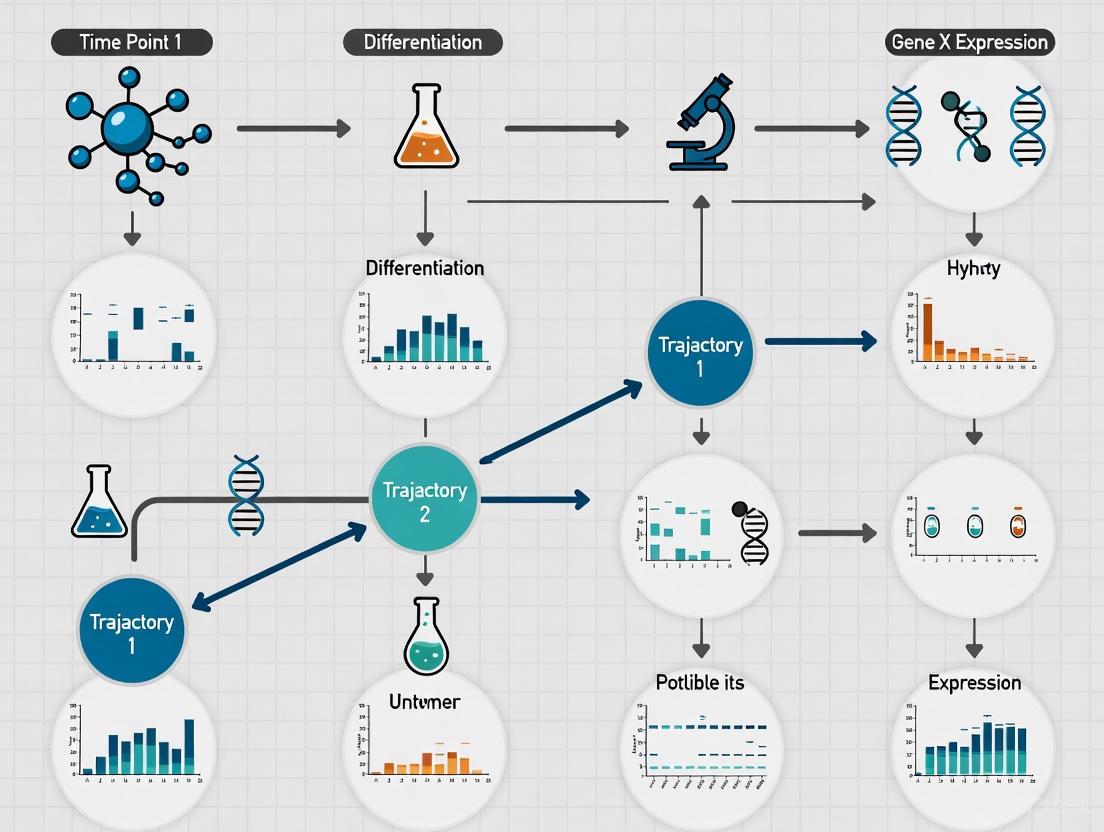
This article provides a comprehensive overview of how single-cell RNA sequencing (scRNA-seq) is revolutionizing our understanding of developmental trajectories and cellular potency.
Decoding Cell Fate: A Comprehensive Guide to Single-Cell RNA Sequencing Developmental Trajectory Analysis
Abstract
This article provides a comprehensive overview of how single-cell RNA sequencing (scRNA-seq) is revolutionizing our understanding of developmental trajectories and cellular potency. Aimed at researchers, scientists, and drug development professionals, it covers foundational concepts, from defining cell potency states (totipotent to differentiated) to the principles of trajectory inference. It delves into cutting-edge computational methods, including deep learning frameworks like CytoTRACE 2, and details diverse applications in fields like regenerative medicine, oncology, and toxicology. The content also addresses critical technical and analytical challenges—such as batch effects, dropout events, and data interpretation—offering best practices for robust analysis. Finally, it benchmarks current tools and validation strategies, synthesizing how these advancements are accelerating drug discovery and enabling a more precise mapping of cellular life cycles.
Mapping Cellular Lifecycles: Core Concepts in Developmental Potency and Trajectory Analysis
Within the framework of single-cell RNA sequencing (scRNA-seq) developmental trajectory research, delineating the precise hierarchy of cell potency is paramount. Cell potency describes the capacity of a single cell to differentiate into other cell types, forming a continuum from the totipotent zygote, capable of generating an entire organism, to terminally differentiated cells with specialized functions [1]. Understanding this hierarchy is fundamental to developmental biology, regenerative medicine, and oncology.
Modern scRNA-seq technologies have revolutionized this field by allowing researchers to move beyond population-level averages and capture gene expression profiles at the single-cell level. This enables the dissection of cellular heterogeneity within seemingly uniform populations and the reconstruction of developmental trajectories as cells transition from potent to restricted states [2] [3]. Computational methods like CytoTRACE 2 have been developed specifically to predict absolute developmental potential from scRNA-seq data, providing a quantitative framework for ordering cells along the potency continuum [1]. This Application Note details the core concepts of cell potency and provides standardized protocols for its investigation using scRNA-seq, framed within the context of developmental trajectory research.
The Potency Spectrum: Definitions and Key Transitions
The hierarchy of cell potency is traditionally categorized into distinct stages based on the range of cell types a cell can produce. The table below summarizes the defining characteristics of each stage.
Table 1: The Hierarchy of Cell Potency
| Potency Stage | Developmental Potential | Key Molecular Hallmarks (Examples) | Representative In Vivo Cell Type |
|---|---|---|---|
| Totipotent | Can generate all embryonic and extra-embryonic (placental) tissues, forming a complete organism. | POU5F1 (OCT4), NANOG (low/transient), specific isoforms. | Zygote, early blastomere. |
| Pluripotent | Can generate all cell types of the three embryonic germ layers (ectoderm, mesoderm, endoderm). | POU5F1 (OCT4), NANOG, SOX2 [1]. | Inner Cell Mass (ICM) of the blastocyst, Embryonic Stem Cells (ESCs). |
| Multipotent | Can generate multiple cell types within a specific lineage or organ system. | Lineage-specific transcription factors (e.g., SOX10 for neural crest); Cholesterol metabolism genes (e.g., Fads1, Fads2) [1]. | Hematopoietic Stem Cells (HSCs), Neural Crest Cells (NCCs) [4]. |
| Oligopotent | Can differentiate into a few, closely related cell types. | Further restricted expression of lineage-specific factors. | Myeloid or Lymphoid Progenitors. |
| Unipotent | Can produce only one cell type, but possess self-renewal capability. | Terminal lineage markers begin to emerge. | Satellite cells in muscle. |
| Differentiated | Fully specialized, functional cell with no further developmental potential. | High expression of tissue-specific functional genes (e.g., hemoglobin in erythrocytes). | Neuron, adipocyte, osteocyte. |
A critical application of scRNA-seq in potency research is trajectory inference. These computational algorithms use the high-dimensional gene expression data from single cells to reconstruct their progression through biological processes, such as differentiation, ordering cells from least to most differentiated and modeling the branching points where cell fates diverge [3].
Computational Analysis of Potency from scRNA-Seq Data
A primary method for assessing cell potency from scRNA-seq data is the computational tool CytoTRACE 2. This is an interpretable deep learning framework designed to predict the absolute developmental potential of individual cells.
Protocol: Predicting Developmental Potential with CytoTRACE 2
Principle: CytoTRACE 2 uses a deep learning model trained on an extensive atlas of human and mouse scRNA-seq datasets with experimentally validated potency levels. It employs a Gene Set Binary Network (GSBN) architecture to identify highly discriminative gene sets that define each potency category, providing both a discrete potency category prediction and a continuous potency score ranging from 1 (totipotent) to 0 (differentiated) [1].
Experimental Workflow:
The following diagram illustrates the key stages of a developmental potency analysis using a computational pipeline like CytoTRACE 2.
Diagram 1: Computational Analysis Workflow for Cell Potency
Step-by-Step Procedure:
- Input Data Preparation: Begin with a cell-by-gene count matrix, which is the standard output from processing raw scRNA-seq data (e.g., from Cell Ranger for 10x Genomics data). The data can be in the form of a Seurat (R) or AnnData (Python) object [5].
- Quality Control (QC) and Normalization:
- Perform rigorous QC to remove low-quality cells. Common metrics include:
- Excluding cells with an abnormally high number of detected genes (potential doublets).
- Excluding cells with a high percentage of mitochondrial reads (indicative of cell stress or damage).
- Normalize the data to account for differences in sequencing depth between cells using methods like SCTransform (Seurat) or log-normalization [5] [2].
- Perform rigorous QC to remove low-quality cells. Common metrics include:
- Dimensionality Reduction and Clustering:
- Perform linear dimensionality reduction using Principal Component Analysis (PCA).
- Cluster cells based on their gene expression profiles using graph-based methods (e.g., Louvain, Leiden algorithm) to identify putative cell populations [5].
- Visualize the clusters in two dimensions using non-linear methods like UMAP or t-SNE (see Diagram 1).
- Running CytoTRACE 2:
- Install CytoTRACE 2 according to the official documentation (https://cytotrace2.stanford.edu).
- Input the normalized count matrix into the CytoTRACE 2 algorithm. The model will output a potency score for every cell and can assign a broad potency category (e.g., pluripotent, multipotent) [1].
- Downstream Analysis and Interpretation:
- Visualization: Overlay the continuous CytoTRACE 2 scores onto the UMAP/t-SNE plot to visualize how developmental potential is distributed across clusters.
- Trajectory Inference: Use the potency scores to guide or validate trajectory inference with pseudotime analysis tools (e.g., Monocle 3, PAGA). Cells with higher potency scores should be positioned at the start of inferred differentiation trajectories [1] [3].
- Marker Gene Discovery: Leverage the interpretability of the GSBN to extract the top genes associated with each potency state (e.g., multipotency) for further biological validation [1].
The Scientist's Toolkit: Key Reagents and Tools for scRNA-seq Potency Analysis
Table 2: Essential Research Reagent Solutions for scRNA-seq Developmental Trajectory Research
| Item/Category | Function/Purpose | Specific Examples |
|---|---|---|
| Single-Cell Isolation | To physically separate individual cells for sequencing. | FACS (Fluorescent Activated Cell Sorting) [2], Microfluidics (e.g., 10x Genomics Controller) [5] [2]. |
| scRNA-seq Library Kit | To generate sequencing libraries from single cells. | 10x Genomics Chromium Single Cell 3' Kit (3'-end counting, high-throughput) [2], Smart-seq2 (Full-length transcript, in-depth coverage) [2]. |
| Unique Molecular Identifiers (UMIs) | Molecular barcodes that label individual mRNA transcripts to enable accurate quantification and reduce amplification bias [5]. | Incorporated in droplet-based protocols like 10x Genomics and inDrops. |
| Bioinformatics Software | For computational analysis of scRNA-seq data. | Seurat (R package) [5], Scanpy (Python package) [5], Cell Ranger (10x Genomics pipeline) [5]. |
| Trajectory Inference Tools | To computationally order cells along a differentiation trajectory. | CytoTRACE 2 (Potency prediction) [1], Monocle 3 (Pseudotime analysis) [3], PAGA (Mapping fate decisions). |
Experimental Validation of Developmental Potential
Computational predictions of potency require functional validation. A key model system for studying multipotency in vertebrates is the neural crest cell (NCC).
Protocol: Functional Validation of Neural Crest Cell Multipotency
Principle: NCCs are a highly multipotent embryonic cell population that gives rise to diverse derivatives, including neurons, glia, melanocytes, and craniofacial cartilage and bone [6] [7] [4]. This protocol outlines how to isolate and differentiate NCCs to validate their multipotent potential, a process that can be monitored using scRNA-seq.
Experimental Workflow:
The pathway from pluripotent stem cells to differentiated neural crest derivatives involves precise signaling and transcriptional changes, as shown in the following diagram.
Diagram 2: Key Pathway in Trunk Neural Crest Formation
Step-by-Step Procedure:
In Vitro Differentiation of Human Pluripotent Stem Cells (hPSCs) to NCCs:
- Principle: Guide hPSCs towards a neural crest fate by recapitulating developmental signals.
- Method:
- Culture hPSCs in defined media.
- To generate trunk NCCs, first induce neuromesodermal progenitors (NMPs) by activating WNT and FGF signaling pathways. These TBXT (Brachyury)-positive NMPs are the precursors to trunk NCCs [7].
- Subsequent inhibition of BMP signaling and continued WNT activation can promote the specification of NCCs from the neural plate border [7].
- Monitor the emergence of NCCs by assessing the expression of key markers like SOX10, TFAP2B, and P75NTR via flow cytometry or immunocytochemistry.
Multilineage Differentiation Assay:
- Principle: Functionally test the multipotency of the derived NCCs by exposing them to conditions that promote differentiation into specific lineages.
- Method:
- Adipogenic Differentiation: Culture NCCs in media containing insulin, dexamethasone, and indomethacin. Confirm differentiation with Oil Red O staining of lipid droplets.
- Chondrogenic Differentiation: Pellet culture in media containing TGF-β3. Confirm differentiation with Alcian Blue staining of sulfated glycosaminoglycans.
- Osteogenic Differentiation: Culture in media containing ascorbic acid, β-glycerophosphate, and dexamethasone. Confirm differentiation with Alizarin Red S staining of calcium deposits [4].
- Neuronal Differentiation: Culture in media containing BDNF, GDNF, and NGF. Confirm by immunostaining for neuronal markers like β-III-Tubulin (TUJ1).
scRNA-seq for Validation and Characterization:
- Principle: Use scRNA-seq to molecularly characterize the hPSC-derived NCC population and their differentiation products.
- Method:
- Perform scRNA-seq on the derived NCCs and cells from each differentiation assay.
- Analysis:
- Confirm that the putative NCC cluster expresses high levels of core NCC signature genes (e.g., SOX9, SNAI2, TWIST1) and shows high CytoTRACE 2 scores, indicative of multipotency [1] [4].
- After applying trajectory inference to the combined dataset, verify that the undifferentiated NCCs are positioned at the start of branching trajectories that lead to the adipogenic, chondrogenic, and osteogenic clusters.
- Identify the specific gene expression programs activated in each successful differentiation lineage.
The integration of sophisticated scRNA-seq technologies with robust computational frameworks like CytoTRACE 2 provides an powerful strategy for systematically defining the hierarchy of cell potency. The protocols outlined herein—for computational prediction of developmental potential and experimental validation using model systems like neural crest cells—offer a structured approach for researchers aiming to map differentiation landscapes. This is critical for advancing foundational knowledge in developmental biology and for translating insights into regenerative medicine strategies and therapeutic development for cancer and congenital diseases.
Single-cell RNA sequencing (scRNA-seq) has revolutionized biological research by enabling the transcriptomic profiling of individual cells, revealing unprecedented levels of cellular heterogeneity within seemingly homogeneous populations [8] [9]. While conventional bulk RNA sequencing averages gene expression across thousands to millions of cells, thereby masking cell-to-cell variations, scRNA-seq exposes the remarkable diversity inherent in biological systems [10] [9]. This capability is particularly transformative for developmental biology, where understanding the continuum of cellular transitions is fundamental to deciphering mechanisms of differentiation, lineage commitment, and tissue morphogenesis.
A powerful application of scRNA-seq lies in its ability to reconstruct developmental trajectories from static snapshot data—that is, from samples collected at a single time point [9]. This approach computationally infers dynamic processes from the transcriptomic relationships between individual cells captured in a single experiment. Each cell represents a point along a continuum of biological processes, and by analyzing the transcriptomic similarities and differences among these cells, researchers can reconstruct the sequence of transcriptional changes that define developmental pathways [11] [12]. This methodology has been successfully applied to diverse biological contexts, including embryonal development, cancer progression, immune cell differentiation, and cellular reprogramming, providing insights into the regulatory networks that govern cell fate decisions [10] [9].
Fundamental Principles of Trajectory Inference
The core premise underlying developmental trajectory reconstruction is that the transcriptomic state of a cell reflects its position along a biological continuum. When scRNA-seq is performed on a population of cells undergoing a dynamic process, the resulting data contains cells at various stages of transition. Computational methods can then order these cells along pseudotemporal trajectories based on transcriptomic similarity, effectively reconstructing the progression of gene expression changes without the need for physical time-series experiments [11].
Several key principles enable this reconstruction:
- Transcriptomic continuity: Cells undergoing continuous biological processes form connected manifolds in high-dimensional gene expression space.
- Branching decisions: Developmental bifurcations appear as diverging paths in the reduced-dimensional representation of scRNA-seq data.
- Underlying regulatory networks: The progression along trajectories is driven by coordinated changes in transcription factor networks, which can be inferred from the data [11].
These principles allow researchers to move beyond simple cell type classification to understand the processes by which cells transition between states, identify key decision points in differentiation pathways, and discover genes that drive these transitions.
Experimental Workflow for Developmental Trajectory Analysis
The following diagram illustrates the comprehensive workflow for scRNA-seq-based developmental trajectory reconstruction, from sample preparation through biological interpretation:
Sample Preparation and Single-Cell Isolation
The initial critical step involves creating high-quality single-cell suspensions from developing tissues or experimental models. The choice of dissociation method significantly impacts data quality, as enzymatic or mechanical stress can induce artificial transcriptional responses that confound biological interpretation [8]. For tissues particularly sensitive to dissociation artifacts (e.g., neuronal tissues), single-nucleus RNA sequencing (snRNA-seq) provides a valuable alternative, as nuclei are more resilient to isolation procedures [8] [12]. Experimental evidence indicates that maintaining tissues at 4°C during dissociation, rather than 37°C, minimizes stress-induced transcriptional changes [8].
Multiple approaches exist for single-cell isolation, each with distinct advantages:
- Droplet-based systems (10x Genomics, ddSEQ, InDrop) use microfluidics to encapsulate individual cells in oil droplets with barcoded beads, enabling high-throughput processing of thousands to millions of cells [10] [8].
- Microwell platforms (Seq-Well) employ nanoliter-scale wells to isolate cells, offering a portable and cost-effective alternative [12].
- Laser capture microdissection allows precise isolation of specific cells based on spatial location, though with lower throughput [8].
- Fluorescence-activated cell sorting (FACS) enables isolation based on specific surface markers or fluorescent reporters, facilitating targeted analysis of predefined populations [8].
Library Preparation and Sequencing
Following cell isolation, the scRNA-seq library preparation process captures and amplifies the transcriptome from each individual cell. Most high-throughput methods employ poly[T]-primed reverse transcription to selectively convert polyadenylated mRNA molecules into cDNA [10] [12]. A critical innovation for accurate quantification is the incorporation of Unique Molecular Identifiers (UMIs)—short random nucleotide sequences that tag individual mRNA molecules during reverse transcription [8] [12]. UMIs enable distinction between biological transcript abundance and technical amplification bias, as all cDNA molecules derived from the same original mRNA molecule share the same UMI [12].
Two primary amplification strategies are employed:
- PCR-based amplification (used in Smart-seq2, Fluidigm C1, 10x Genomics) provides high sensitivity for gene detection [8] [12].
- In vitro transcription (IVT)-based amplification (used in CEL-Seq, MARS-Seq) offers linear amplification but may introduce 3' coverage biases [12].
For developmental trajectory studies, full-length transcript methods (e.g., Smart-seq2) can be advantageous for detecting isoform switches during differentiation, while 3' end counting methods (e.g., 10x Genomics) typically offer higher cell throughput for comprehensive population sampling [12].
Computational Analysis and Trajectory Inference
The computational workflow for trajectory inference begins with quality control to remove low-quality cells, doublets, and background noise [13] [12]. Data normalization (e.g., using Seurat's LogNormalize function with a scale factor of 10,000) accounts for varying sequencing depths between cells [13]. Dimensionality reduction techniques like PCA are then applied, followed by non-linear methods such as UMAP (Uniform Manifold Approximation and Projection) for visualization [11] [13].
The trajectory inference process itself employs specialized algorithms that reconstruct the underlying developmental continuum:
- Pseudotime analysis orders cells along a trajectory based on transcriptomic similarity, assigning each cell a "pseudotime" value representing its inferred position in the developmental process [11].
- Branching analysis identifies points where developmental pathways diverge, revealing fate decisions and alternative differentiation routes [11].
- Gene dynamics analysis examines how expression of key regulators changes along pseudotime, identifying potential drivers of developmental transitions [11].
Table 1: Key Experimental Parameters for scRNA-seq in Developmental Studies
| Parameter | Considerations for Developmental Studies | Impact on Data Quality |
|---|---|---|
| Cell Viability | >80% recommended to minimize stress responses | Low viability increases apoptotic signatures |
| Cells Captured | Hundreds to thousands depending on heterogeneity | Insufficient cells may miss rare intermediates |
| Sequencing Depth | 20,000-100,000 reads/cell for complex differentiations | Low depth reduces gene detection sensitivity |
| Gene Detection | 1,000-5,000 genes/cell for trajectory analysis | Low gene count limits resolution of transitions |
| Mitochondrial RNA | <10-25% recommended [13] | High percentage indicates stressed/dying cells |
Research Reagent Solutions and Computational Tools
Successful developmental trajectory reconstruction requires both wet-lab reagents and computational resources. The table below outlines essential components of the single-cell analysis toolkit:
Table 2: Essential Research Reagents and Computational Tools for scRNA-seq Trajectory Analysis
| Category | Specific Examples | Function and Application |
|---|---|---|
| Cell Isolation | 10x Genomics Chromium, Fluidigm C1, Dolomite Bio μEncapsulator | High-throughput single-cell capture with cell barcoding [10] [8] |
| Library Prep Kits | SMARTer Ultra Low Input RNA, Clontech SMARTer, Illumina Nextera | cDNA synthesis, amplification, and library construction from single cells [10] |
| UMI Reagents | Custom UMI-barcoded primers, Commercial UMI kits (10x, Bio-Rad) | Accurate mRNA molecule counting and elimination of PCR amplification bias [8] [12] |
| Sequencing Platforms | Illumina NovaSeq, NextSeq, HiSeq | High-throughput sequencing of barcoded cDNA libraries [12] |
| Analysis Pipelines | Seurat [13], Monocle, SCANPY, Asc-Seurat [12] | Data preprocessing, normalization, clustering, and trajectory inference |
| Visualization Tools | dittoSeq [14], ArchR, ggplot2, Plotly | Creation of publication-quality visualizations of developmental trajectories |
Case Study: Arabidopsis Callus Formation
A recent study exemplifies the power of scRNA-seq for reconstructing developmental trajectories in plant systems. Researchers investigated callus formation in Arabidopsis, a process where plant cells dedifferentiate and acquire totipotency [11]. Using scRNA-seq at key developmental stages (initiation, proliferation, and greening), they generated transcriptomic profiles of individual callus cells and performed UMAP-based clustering to identify distinct cell populations [11].
Pseudotime analysis revealed the developmental trajectory from differentiated cells to fully formed callus, identifying distinct transcription factor networks operative at different stages [11]. The study further demonstrated environmental regulation of this process, showing that low oxygen and salinity promoted callus formation while light inhibited it (though light remained essential for the greening phase) [11]. This comprehensive analysis illustrates how static snapshot data can be transformed into dynamic developmental maps through appropriate computational methods.
The following diagram illustrates the key computational steps in trajectory inference following scRNA-seq data generation:
Quality Assessment and Technical Validation
Rigorous quality control is essential throughout the experimental and computational pipeline. At the wet-lab stage, cell viability should be assessed before library preparation, with mitochondrial RNA percentage serving as a key metric during computational preprocessing [13]. For developmental studies, it is particularly important to ensure adequate representation of transitional states, as rare intermediate cell types may be lost during aggressive quality filtering.
Technical validation of inferred trajectories should include:
- Comparison with known markers: Expression patterns of established lineage markers should align with pseudotime ordering.
- Robustness testing: Trajectory stability should be assessed through bootstrap resampling or downsampling.
- Functional validation: Key predictions from trajectory analysis (e.g., regulator genes) should be tested experimentally using genetic perturbations [11].
When properly executed, scRNA-seq-based trajectory reconstruction provides unparalleled insights into developmental processes, enabling researchers to move beyond static classifications to dynamic models of cell fate decisions with significant implications for developmental biology, regenerative medicine, and disease modeling.
Single-cell RNA sequencing (scRNA-seq) has revolutionized our ability to study biological processes at unprecedented resolution, capturing the transcriptomic states of individual cells within complex tissues. A particularly powerful application lies in developmental trajectory analysis, which computationally reconstructs the continuum of cellular states during processes like differentiation, immune activation, or disease progression. By ordering cells along a pseudotime axis based on transcriptional similarity, this approach maps dynamic transitions that would be impossible to observe in bulk analyses where cellular heterogeneity is averaged [15]. This pseudotime metric quantifies the relative progression of individual cells through a biological process, serving as a proxy for their developmental "age" even when actual temporal data is unavailable [15] [16].
The reconstruction of gene regulatory networks (GRNs)—the directed graphs representing regulatory relationships between transcription factors (TFs) and their target genes—is fundamental to understanding the molecular control of these dynamic processes. Transcription factors are prime regulators of cell fate specification, but their typically low expression levels make them particularly vulnerable to the dropout problem in scRNA-seq, where technical limitations result in false zero measurements [17]. Fortunately, trajectory analysis provides a powerful framework to overcome this challenge. By modeling expression changes along developmental continua, it enables more accurate inference of causal regulatory relationships than static snapshots of cellular populations [18] [19]. The integration of these two approaches—trajectory analysis and GRN reconstruction—creates a synergistic pipeline for identifying key TFs that drive cell fate decisions, offering profound insights for developmental biology, disease modeling, and therapeutic development.
Methodological Approaches for Integrated Trajectory and Regulatory Analysis
Trajectory Inference Algorithms
Multiple computational approaches exist for inferring trajectories from scRNA-seq data, each with distinct strengths and methodological considerations. The TSCAN algorithm employs a cluster-based minimum spanning tree (MST) approach, first grouping cells into clusters, computing cluster centroids, and then forming the most parsimonious tree structure that connects these centroids. Cells are then projected onto the nearest edge of the MST, and pseudotime is calculated as the distance along this tree from a user-defined root node [15]. This approach offers computational efficiency and robustness to noise by operating on clusters rather than individual cells, though its trajectory complexity is limited by the granularity of the clustering [15].
An alternative approach implemented in Monocle3 uses machine learning to reverse-engineer the sequence of transcriptional changes that generated the observed distribution of cells. After selecting root cells as starting points, the algorithm performs dimension reduction (typically PCA followed by UMAP) and graphs the trajectory that best explains the data, allowing for complex branching events and loops [20]. The slingshot package takes yet another approach, fitting principal curves—non-linear generalizations of PCA that bend through the high-dimensional cloud of cells—to define the trajectory backbone [15]. Each method makes different assumptions about the underlying biology, with choice depending on whether expected trajectories are simple linear progressions, branching events, or more complex cyclic processes.
Gene Regulatory Network Inference from Trajectory Data
Once pseudotime is established, several computational approaches can reconstruct GRNs that explain the observed transcriptional dynamics. The Inferelator framework uses regression with regularization to infer regulatory relationships between TFs and target genes based on expression patterns along trajectories [21]. This approach benefits from incorporating prior information and can explicitly estimate transcription factor activities, which may not directly correlate with mRNA levels due to post-translational regulation [21].
SCENIC (Single-Cell Regulatory Network Inference and Clustering) is another widely used method that combines GRN inference with cis-regulatory analysis. It first identifies potential TF-target relationships based on co-expression along the trajectory, then uses motif enrichment analysis to prune false positives, retaining only targets with supported regulatory mechanisms [18] [22]. This two-step process produces more biologically validated networks with higher confidence in predicted regulatory interactions.
For capturing the dynamic nature of regulation along trajectories, scPADGRN implements a novel approach specifically designed for time-series scRNA-seq data. It combines a preconditioned alternating direction method of multipliers (PADMM) with cell clustering to reconstruct dynamic GRNs, optimizing for network precision, sparsity, and continuity across pseudotemporal stages [19]. This method can identify how regulatory relationships change throughout differentiation, revealing stage-specific regulators that might be missed in static network analyses.
Table 1: Comparison of GRN Reconstruction Methods Compatible with Trajectory Analysis
| Method | Underlying Algorithm | Key Features | Trajectory Requirement |
|---|---|---|---|
| Inferelator [21] | Regression with regularization | Incorporates prior information; estimates TF activity | Not required but beneficial |
| SCENIC [18] [22] | Co-expression + motif enrichment | Validates networks with cis-regulatory evidence | Not required but beneficial |
| scPADGRN [19] | PADMM + clustering | Optimized for time-series data; models network dynamics | Specifically designed for trajectories |
| GRN from barcoded genotypes [21] | Multitask learning | Combines genetic perturbations with environmental diversity | Not required |
Experimental Enhancements for Transcription Factor Detection
Standard scRNA-seq protocols often miss critical biological information due to limited sensitivity for lowly expressed transcripts like transcription factors. scCapture-seq addresses this limitation through targeted sequencing of approximately 1,000 TFs using oligonucleotide probes to enrich for these transcripts before sequencing [17]. This approach results in a remarkable 36-fold enrichment for targeted TFs, with the percentage of reads mapping to TFs increasing from 2.2% pre-capture to 78.3% post-capture [17]. The method increases the number of detected TFs per cell by more than fourfold, dramatically improving the resolution of subsequent regulatory network analyses and enabling identification of key developmental regulators that would otherwise remain hidden [17].
Another experimental strategy combines genetic perturbations with scRNA-seq profiling. Perturb-seq introduces diverse genetic perturbations (typically using CRISPR/Cas9) in a pooled format, then assesses the transcriptomic consequences in thousands of individual cells [21]. When applied along differentiation trajectories, this approach can directly test regulatory hypotheses by examining how TF perturbation alters progression through pseudotime and branch point decisions, providing causal validation for inferred regulatory relationships.
Application Examples in Developmental Systems
Neurodevelopment: Revealing Divergent Differentiation Pathways
When applied to iPSC-derived neuronal cultures, integrated trajectory and regulatory analysis revealed unexpected developmental divergences that traditional scRNA-seq had missed. In a study comparing neuronal differentiation across two laboratories using the same protocol, standard clustering identified four populations interpreted as neurons and glial cells [17]. However, after implementing scCapture-seq to enhance TF detection, trajectory analysis based on 731 TFs (a 25% increase over pre-capture) revealed three distinct groups: two neuronal trajectories (N1 and N2) and a glial-like population [17].
Pseudotime analysis demonstrated that the N1 population, derived primarily from one laboratory, expressed TFs including NEUROD2, TBR1, NEUROG2, and EOMES, consistent with excitatory cortical neuron identity. In contrast, the N2 population from the other laboratory expressed MEIS1, SP9, DLX2, and DLX6, signifying an inhibitory interneuron fate [17]. Furthermore, the presumed "glial" cluster was re-identified as radial glial or neural progenitor cells based on expression of HES1, HES5, PAX6, and NR2E1 [17]. This refined analysis revealed that laboratory-specific variations resulted in fundamentally different neuronal differentiation trajectories rather than merely different ratios of neurons to glia as originally interpreted.
The enhanced TF data further enabled reconstruction of more accurate gene regulatory networks, revealing a role for retinoic acid signaling in the developmental divergence between these neuronal lineages [17]. This case study demonstrates how targeted TF detection combined with trajectory analysis can uncover critical biological variation that would otherwise be lost in technical noise and interpretation limitations.
Cardiogenesis: Identifying Key Regulators of Heart Development
In a comprehensive study of iPSC-derived cardiomyocyte differentiation, researchers collected 32,365 cells across four timepoints (days 0, 2, 4, and 10) to reconstruct the cardiac developmental trajectory [23]. Pseudotime analysis revealed a clear branching point at day 2, where cells committed to either cardiac progenitors or alternative fates [23]. By combining this trajectory with differential expression and SCENIC analysis, they identified several candidate TFs driving cardiomyocyte specification, including CREG and NR2F2 [23].
The study successfully identified distinct clusters corresponding to developmental stages: pluripotent stem cells (clusters 1-4), primitive streak mesoderm (cluster 5), cardiac progenitors (cluster 0), cardiomyocytes (cluster 6), and smooth muscle cells (cluster 8) [23]. Through trajectory-based GRN analysis, they further identified key TFs including GATA4, ISL1, NKX2-5, TBX5, and MEF2C as central regulators of the cardiomyocyte lineage commitment [23]. Gene Set Enrichment Analysis of the cardiomyocyte cluster revealed enrichment for cardiac-specific pathways including "dilated cardiomyopathy," "hypertrophic cardiomyopathy," "cardiac muscle contraction," and "adrenergic signaling in cardiomyocytes," validating the functional identity of the cells along the reconstructed trajectory [23].
Table 2: Key Transcription Factors Identified Through Trajectory Analysis in Model Systems
| Biological System | Key Identified Transcription Factors | Functional Role | Reference |
|---|---|---|---|
| iPSC to Neuronal Cultures | BHLHE22, NFIX, ZBTB20, NHLH1 (differential between labs) | Distinguish excitatory vs. inhibitory neuronal fates | [17] |
| iPSC to Cardiomyocytes | CREG, NR2F2, GATA4, ISL1, NKX2-5, TBX5 | Cardiomyocyte lineage commitment and differentiation | [23] |
| Mouse ES to Primitive Endoderm | Bhlhe40, Msx2, Foxa2, Dnmt3l | Primitive endoderm specification | [19] |
| Embryonic Fibroblast to Myocytes | Scx, Fos, Tcf12 | Myocyte differentiation | [19] |
| Human ES to Definitive Endoderm | Sox5, Meis2, Hoxb3, Tcf7l1, Plagl1 | Definitive endoderm formation | [19] |
| Sepsis Immune Response | CREB5 | Monocyte differentiation and immune response | [22] |
Detailed Protocols for Integrated Trajectory and Regulatory Analysis
Protocol 1: scCapture-seq for Enhanced TF Detection Followed by Trajectory Analysis
This protocol describes how to implement targeted transcription factor sequencing to enhance trajectory and regulatory network analysis, based on the method described by [17].
Research Reagent Solutions and Essential Materials
- Oligonucleotide probes: Designed against ~1000 transcription factors
- Single-cell libraries: Prepared using standard scRNA-seq protocols (10x Genomics, inDrop, or DROP-seq)
- Hybridization and capture reagents: Including hybridization buffer, streptavidin beads, and wash buffers
- Sequencing reagents: Appropriate for the sequencing platform being used
- Computational tools: scCapture-seq processing pipeline, Seurat, Monocle3 or TSCAN
Experimental Workflow
- Library Preparation: Prepare single-cell RNA-seq libraries according to standard protocols for your platform of choice.
- Target Enrichment: Hybridize libraries with biotinylated oligonucleotide probes targeting approximately 1,000 transcription factors.
- Capture and Amplification: Capture probe-bound fragments using streptavidin beads, wash stringently, and amplify captured DNA.
- Sequencing: Sequence enriched libraries on an appropriate high-throughput sequencing platform.
- Quality Control: Assess capture efficiency by comparing the percentage of reads mapping to TFs pre- and post-capture (expect ~78% post-capture vs. ~2% pre-capture).
- Trajectory Inference: Perform trajectory analysis using Monocle3 or TSCAN, leveraging the enhanced TF detection.
- GRN Reconstruction: Apply SCENIC or Inferelator to identify regulators driving trajectory paths.
Figure 1: scCapture-seq Workflow for Enhanced TF Detection and Analysis
Protocol 2: Trajectory-Informed GRN Reconstruction with Monocle3 and SCENIC
This protocol outlines an integrated computational pipeline for reconstructing developmental trajectories and inferring the underlying gene regulatory networks.
Research Reagent Solutions and Essential Materials
- Single-cell expression matrix: Raw count data from any scRNA-seq platform
- Cell metadata: Including experimental conditions, batch information, and initial clustering labels
- Computational tools: Monocle3 or TSCAN for trajectory inference, SCENIC for GRN reconstruction
- Reference databases: TF-motif annotations (e.g., CIS-BP, JASPAR)
- High-performance computing resources: Sufficient memory and processing power for large datasets
Experimental Workflow
- Data Preprocessing: Filter cells based on quality metrics (mitochondrial percentage, feature counts) and normalize using log-normalization or size-factor normalization.
- Dimension Reduction: Perform principal component analysis (PCA) on highly variable genes, typically selecting the top 50 principal components for datasets with >5,000 cells.
- Trajectory Inference:
- Use Monocle3 to learn the trajectory graph, specifying root cells based on biological knowledge (e.g., earliest time point, most pluripotent state).
- Adjust parameters including UMAP minimum distance (controls cluster tightness) and number of neighbors (balances local vs. global structure).
- Allow for branching events and loops if biologically justified.
- Pseudotime Calculation: Assign each cell a pseudotime value representing its progression along the trajectory from the root.
- GRN Inference with SCENIC:
- Identify potential TF-target relationships based on co-expression patterns along the pseudotime gradient.
- Prune targets without enrichment of the TF's binding motif in their regulatory regions.
- Calculate regulon activity for each cell using AUCell.
- Regulon Dynamics Analysis: Model how regulon activity changes along pseudotime to identify TFs with stage-specific activity.
- Validation: Compare identified TFs with known biology and use functional assays to validate key predictions.
Figure 2: Computational Pipeline for Trajectory-Informed GRN Analysis
Advanced Applications and Future Perspectives
The integration of trajectory analysis with regulatory network inference continues to evolve with emerging technologies and computational approaches. Spatial transcriptomics adds another dimension to these analyses, allowing researchers to contextualize developmental trajectories within tissue architecture. Methods like Palo (spatially aware color palette optimization) enhance visualization of complex trajectory data, ensuring neighboring cell states in both physical and transcriptional space are visually distinct for better interpretation [24].
For disease modeling, these approaches are increasingly applied to identify pathogenic regulatory programs. In sepsis research, trajectory analysis of immune cells identified CREB5 as a key regulator of monocyte differentiation during the immune response [22]. Such findings highlight the potential for identifying therapeutic targets by comparing regulatory networks along disease trajectories versus normal development.
Looking forward, several technological advances promise to enhance trajectory-based regulatory network analysis. Multi-omic single-cell technologies that simultaneously measure gene expression, chromatin accessibility, and protein abundance provide more direct evidence of regulatory relationships [18]. Machine learning approaches are being increasingly incorporated to handle the complexity of these datasets and improve prediction accuracy [22]. The development of dynamic network metrics like DGIE (Differentiation Genes' Interaction Enrichment) allows quantitative assessment of how regulatory interactions change along trajectories, providing insights into the temporal dynamics of gene regulation during fate decisions [19].
As these methods mature and become more accessible, integrated trajectory and regulatory analysis will continue to reveal the fundamental principles governing cell fate decisions in development, disease, and regeneration, ultimately accelerating the discovery of novel therapeutic strategies that target key regulatory nodes in pathological processes.
Plant cellular totipotency, the ability of a single cell to regenerate an entire plant, is fundamentally demonstrated through callus formation and subsequent organogenesis. This process involves the dedifferentiation of somatic cells into a pluripotent callus state, followed by redifferentiation into organized tissues and organs. Within the context of modern developmental biology, single-cell RNA sequencing (scRNA-seq) provides an unprecedented resolution to dissect the transcriptional dynamics and cellular heterogeneity underlying these phenomena. This case study integrates detailed experimental protocols for callus induction and regeneration with a scRNA-seq framework to trace the developmental trajectories of individual cells, offering researchers a comprehensive toolkit for investigating plant cell fate transitions.
Application Notes: Key Insights from Callus Regeneration Studies
Recent studies across diverse plant species have refined our understanding of the factors governing efficient callus formation and regeneration, while also highlighting the critical importance of genetic stability.
Table 1: Summary of Optimized Callus Induction and Regeneration Protocols Across Species
| Plant Species | Explant Source | Optimal Callus Induction Medium | Optimal Regeneration Medium | Key Outcomes | Genetic Stability Assessment |
|---|---|---|---|---|---|
| Gladiolus (Gladiolus grandiflorus) [25] | Basal part of elongated mother corm sprout | MS + 2 mg/L 2,4-D + 2 mg/L NAA + 1 mg/L BAP | MS + 2 mg/L BAP + 2 mg/L Kin + 0.25 mg/L NAA | 95.55% shoot regeneration; 39.44 shoots/explant | Flow cytometry, ISSR markers confirmed stability |
| Stevia (Stevia rebaudiana) [26] | Leaf | MS + NAA + 2,4-D (optimal concentrations vary) | MS + NAA + BAP | 89.20% callus induction; 87.77% shoot induction | RAPD and ISSR markers showed no polymorphism |
| Japonica Rice (Oryza sativa L.) [27] | Isolated microspores | IM2/IM3 + 1 mg/L 2,4-D + ≤1.5 mg/L KT | 1/2 MS + 2 mg/L 6-BA + 0.5 mg/L NAA + 30 g/L sucrose | 61–211 green plantlets/100 mg calli | (Protocol focused on doubled haploid production) |
| Chili Pepper (Capsicum annuum L.) [28] | Cotyledon, Hypocotyl | Medium with 1 mg/L IAA or 1 nM CaREF1 peptide | Medium with 5 mg/L AgNO₃ & 1 nM CaREF1 | Regeneration ratio increased from 27.2% to 55.0% with CaREF1 | Histological analysis showed improved cellular organization |
| Paramignya trimera [29] | Leaf | WPM + 2.0 mg/L NAA + 0.2 mg/L BAP (in dark) | WPM + 4.0 mg/L BAP + 500 mg/L malt extract + 30 g/L sucrose | 100% callus formation; somatic embryogenesis | SCoT markers confirmed genetic fidelity |
Critical Insights for Experimental Design
- Genotype Dependency: The regeneration capacity is highly genotype-specific. Studies in sorghum [30] and chili pepper [28] emphasize the need to screen multiple genotypes to identify responsive lines, as genetic background significantly influences callus induction and regeneration efficiency.
- Explant Selection: The developmental state and type of explant are critical. For instance, in japonica rice, microspores from yellow-green florets at the mid- to late-uninucleate stage were optimal [27], while in Paramignya trimera, one-year-old leaf explants showed superior performance [29].
- Controlling Oxidative Browning: The accumulation of phenolic compounds is a major constraint. In gladiolus, adding 150 mg/L ascorbic acid, 100 mg/L citric acid, and 500 mg/L activated charcoal to the maintenance medium reduced phenolic accumulation by 80% [25]. Similarly, sorghum studies note callus browning as a key challenge [30].
- Developmental Cues from scRNA-seq: scRNA-seq in Arabidopsis callus has revealed that the process is regulated by distinct transcription factor networks and is influenced by environmental factors; low oxygen and salinity promoted callus formation, while light inhibited it (though it remained essential for subsequent greening) [11].
Experimental Protocols
This protocol is designed for high-efficiency regeneration with stable genetic fidelity.
1. Plant Material and Sterilization
- Material: Use mother corm sprouts (3–3.5 cm diameter) from cultivars like 'Rose Supreme', 'Amsterdam', or 'Advance Red'.
- Sterilization:
- Remove surface scales and cut sprouts into 1 cm² explants.
- Wash under running tap water with mild detergent for 30 min.
- Apply heat treatment at 45°C in a water bath for 45 min.
- Surface disinfect with 70% (v/v) ethanol for 1 min, followed by 1.5% (w/v) sodium hypochlorite for 10 min.
- Rinse thoroughly (4x) with sterile distilled water in a laminar flow cabinet.
2. Callus Induction
- Culture Conditions: Maintain at 25 ± 1°C in the dark.
- Basal Medium: Murashige and Skoog (MS) salts and vitamins.
- Plant Growth Regulators (PGRs): Supplement with 2 mg/L 2,4-D, 2 mg/L NAA, and 1 mg/L BAP.
- Observations: Callus should initiate from the base of explants within 3 weeks.
3. Long-term Callus Maintenance
- Medium: MS medium with 0.5 mg/L 2,4-D.
- Additives for Phenolic Control: Include 150 mg/L ascorbic acid, 100 mg/L citric acid, and 500 mg/L activated charcoal.
- Subculturing: Transfer callus to fresh medium every 4-6 weeks.
4. Shoot Regeneration
- Culture Conditions: 16-h light/8-h dark photoperiod, 25 ± 1°C.
- Medium: Transfer maintained callus to MS medium containing 2 mg/L BAP, 2 mg/L Kin, and 0.25 mg/L NAA.
- Observations: Shoot primordia should appear within 2-4 weeks.
5. Rooting and Cormel Formation
- Rooting: Elongated shoots (>3 cm) on MS medium without PGRs or with low auxin.
- Cormel Induction: For gladiolus, use MS medium with 9% sucrose and 2 mg/L IAA to induce cormels at the base of plantlets.
6. Acclimatization
- Transfer well-rooted plantlets to greenhouse conditions. A survival rate of 100% was achieved in gladiolus [25].
Protocol: Integration with Single-Cell RNA Sequencing
This ancillary protocol outlines steps for profiling callus development using scRNA-seq.
1. Experimental Design and Sampling
- Time Points: Collect samples at key developmental stages: explant (T0), callus initiation (T1, 3-7 days), proliferating callus (T2, 2-3 weeks), and early organogenesis (T3, 1-2 weeks on regeneration medium) [11].
- Replicates: Include at least three biological replicates per time point.
2. Single-Cell Suspension Preparation
- Enzyme Solution: Prepare a solution containing 1.5% Cellulase R-10, 0.4% Macerozyme R-10, 0.1% Pectolyase Y-23, 20 mM KCl, 20 mM MES (pH 5.7), and 10 mM CaCl₂.
- Digestion: Finely chop 0.5 g of callus tissue, incubate in 10 mL enzyme solution for 3-6 hours at 25°C with gentle shaking (40 rpm).
- Filtration and Washing: Pass the digest through a 40 μm cell strainer. Centrifuge the filtrate at 500 x g for 5 min and resuspend the pellet in a wash solution (10 mM MES, 5 mM CaCl₂, 0.5 M Mannitol, pH 5.7).
- Viability and Counting: Assess viability using Fluorescein Diacetate (FDA) staining [27] and count cells with a hemocytometer. Aim for >85% viability and a concentration of 800-1,200 cells/μL.
3. Library Preparation and Sequencing
- Platform: Use a commercial high-throughput platform (e.g., 10x Genomics Chromium).
- Target: Aim for 5,000-10,000 cells per sample.
- Sequencing Depth: Target a minimum of 50,000 reads per cell.
4. Computational Analysis
- Data Processing: Use Cell Ranger or similar tools for alignment, barcode assignment, and UMI counting.
- Dimensionality Reduction and Clustering: Perform PCA, followed by graph-based clustering embedded in UMAP for visualization [11].
- Trajectory Inference: Reconstruct developmental pathways using pseudotime analysis tools (e.g., Monocle3, PAGA) to model the continuum from somatic cell to callus to regenerated organ [11] [31].
- Differential Expression and Network Analysis: Identify stage-specific marker genes and reconstruct gene regulatory networks using WGCNA or similar approaches [31].
Visualization of Developmental Pathways and Workflows
The following diagrams, generated using Graphviz DOT language, illustrate the core concepts and experimental workflows.
Diagram Title: Cellular Reprogramming Pathway in Plant Regeneration
Diagram Title: Integrated Experimental Workflow for Regeneration and scRNA-seq Analysis
The Scientist's Toolkit: Essential Research Reagents and Materials
Table 2: Key Research Reagent Solutions for Callus Regeneration and scRNA-seq
| Category | Item | Function / Application | Example Usage / Note |
|---|---|---|---|
| Basal Media | Murashige and Skoog (MS) Medium | Provides essential macro/micronutrients, vitamins | Standard for many species; full- or half-strength [25] [26] [27] |
| Woody Plant Medium (WPM) | Lower salt concentration, suitable for woody plants | Used for Paramignya trimera [29] | |
| Auxins | 2,4-Dichlorophenoxyacetic acid (2,4-D) | Potent synthetic auxin; induces cell division & callus formation | Critical for callus induction in gladiolus (2 mg/L) [25], rice (1 mg/L) [27] |
| Naphthalene Acetic Acid (NAA) | Stable synthetic auxin; promotes callus formation & rooting | Used in combination with 2,4-D in gladiolus [25] | |
| Indole-3-acetic Acid (IAA) | Natural auxin; used for root induction | Effective for stevia rooting [26] | |
| Cytokinins | 6-Benzylaminopurine (BAP) | Promotes cell division and shoot organogenesis | Key for shoot regeneration in gladiolus (2 mg/L) and stevia [25] [26] |
| Kinetin (Kin) | Stimulates shoot formation and growth | Used in combination with BAP in gladiolus [25] | |
| Thidiazuron (TDZ) | Potent cytokinin-like regulator; induces organogenesis | Used for shoot organogenesis in P. trimera [29] | |
| Additives | Activated Charcoal (AC) | Absorbs pigments, toxins, and excess PGRs | Reduced phenolic browning in gladiolus (500 mg/L) [25] |
| Ascorbic & Citric Acid | Antioxidants that reduce phenolic oxidation | 150 mg/L & 100 mg/L in gladiolus callus maintenance [25] | |
| Malt Extract | Contains undefined growth factors; promotes embryogenesis | Enhanced somatic embryogenesis in P. trimera (500 mg/L) [29] | |
| scRNA-seq | Enzyme Cocktail (Cellulase, Macerozyme) | Digests cell wall to release protoplasts | Essential for generating single-cell suspensions from callus |
| Fluorescein Diacetate (FDA) | Stains live cells; assesses viability pre-sequencing | Used in rice microspore culture [27] | |
| 10x Genomics Chromium | Platform for high-throughput single-cell partitioning | Industry standard for droplet-based scRNA-seq | |
| Genetic Stability | ISSR Markers | Multi-locus dominant markers; assesses somaclonal variation | Confirmed genetic fidelity in gladiolus and stevia [25] [26] |
| RAPD Markers | Random amplification; screens for DNA-level polymorphisms | Used alongside ISSR in stevia [26] | |
| Flow Cytometry | Rapid ploidy analysis | Verified gladiolus regenerants were diploid [25] |
Single-cell RNA sequencing (scRNA-seq) has revolutionized the biological sciences by enabling the investigation of transcriptional profiles at the resolution of the fundamental unit of life—the cell. Unlike traditional bulk RNA sequencing, which averages gene expression across thousands to millions of cells, scRNA-seq captures the heterogeneity and stochasticity inherent in biological systems, revealing cellular diversity that would otherwise be obscured [9] [10]. This technological advancement is pivotal for dissecting the complex molecular networks that govern normal development and the mechanisms that underlie disease pathogenesis. By tracing developmental trajectories and identifying rare cell populations, scRNA-seq provides an unprecedented window into the dynamic processes that shape tissue formation, homeostasis, and dysfunction [10] [32]. The ability to study the transcriptome of individual cells has transformed our understanding of cellular fate decisions, lineage commitment, and the regulatory circuits that drive these processes, offering profound insights for both basic research and clinical applications [23].
ScRNA-seq Methodologies and Experimental Design
The foundation of any scRNA-seq study lies in selecting an appropriate protocol, as each method offers distinct advantages and limitations depending on the biological question. The core steps involve single-cell isolation, cell lysis, reverse transcription, cDNA amplification, and library preparation [10] [32]. Protocols can be broadly categorized by their transcript coverage: full-length methods (e.g., Smart-Seq2, MATQ-Seq) capture nearly complete transcripts, enabling isoform usage analysis and detection of RNA editing, while 3'- or 5'-end counting methods (e.g., Drop-Seq, inDrop, 10x Chromium) focus on digital gene expression counting, often with higher throughput and lower cost per cell [33] [32]. A critical innovation in protocol design is the incorporation of Unique Molecular Identifiers (UMIs), which tag individual mRNA molecules to correct for amplification bias and allow for absolute transcript quantification [10]. More recently, total RNA sequencing protocols like VASA-seq have been developed to detect both polyadenylated and non-polyadenylated transcripts, including long non-coding RNAs (lncRNAs) and short non-coding RNAs (sncRNAs), thereby providing a more comprehensive view of the cellular transcriptome [33].
Experimental Workflow and Platform Selection
The following diagram outlines a generalized scRNA-seq workflow, from sample preparation to data analysis:
Table 1: Common scRNA-seq Platforms and Their Characteristics
| Platform/Protocol | Cell Isolation Strategy | Transcript Coverage | UMIs | Throughput | Primary Application |
|---|---|---|---|---|---|
| 10x Genomics Chromium | Droplet-based | 3'-end | Yes | High (10,000s of cells) | Cell atlas, heterogeneity |
| Smart-Seq2 | FACS/Microfluidics | Full-length | No | Low (96-384 cells) | Isoform analysis, SNP detection |
| VASA-seq | Droplet-based/Plate | Total RNA | Yes | High (10,000s of cells) | Non-coding RNA, splicing analysis |
| Fluidigm C1 | Microfluidics IFC | Full-length | No | Medium (800 cells) | High sensitivity, predefined cell types |
| SPLiT-Seq | Combinatorial Indexing | 3'-end | Yes | Very High (1,000,000s of cells) | Fixed tissue, large sample numbers |
The choice of platform has direct implications on data output. For instance, droplet-based methods like 10x Chromium and VASA-seq excel in profiling tens of thousands of cells, making them ideal for discovering novel cell types within complex tissues [33] [10]. In contrast, full-length, plate-based methods like Smart-Seq2 offer superior sensitivity for detecting low-abundance transcripts and are better suited for detailed analysis of alternative splicing [32]. A key consideration during sample preparation is the isolation of viable single cells. While fluorescence-activated cell sorting (FACS) provides high specificity, microfluidic devices (e.g., Fluidigm C1) offer integrated capture and processing. For difficult-to-dissociate tissues or frozen samples, single-nucleus RNA-seq (snRNA-seq) provides a viable alternative, minimizing dissociation-induced stress responses [10] [32].
Application Notes: Unraveling Development and Disease
Mapping Developmental Trajectories
scRNA-seq is uniquely powerful for reconstructing developmental lineages and understanding the process of cellular differentiation. By applying pseudotime analysis, computational tools can order individual cells along a continuum of differentiation, inferring a developmental trajectory based on transcriptional similarity [11] [23]. This approach reveals the sequence of gene expression changes that occur as a progenitor cell transitions into a fully differentiated state.
A prominent example is the differentiation of human induced pluripotent stem cells (iPSCs) into cardiomyocytes. A study profiling 32,365 cells across four time points (days 0, 2, 4, and 10) successfully reconstructed this cardiac differentiation trajectory [23]. The analysis began with iPSCs expressing pluripotency markers (NANOG, POU5F1), progressed through a primitive streak/mesoderm state (marked by T, MIXL1), and gave rise to cardiac progenitors (expressing NKX2-5, ISL1, TBX5), before finally maturing into definitive cardiomyocytes. The cardiomyocyte cluster was identified by the high expression of sarcomeric genes (MYL7, TNNT2, TTN) and enrichment of pathways like "Cardiac muscle contraction" and "Adrenergic signaling in cardiomyocytes" [23]. This detailed mapping provides a reference for understanding normal heart development and offers a model to study congenital heart diseases.
Similarly, in plant biology, scRNA-seq has been used to investigate the regenerative potential of Arabidopsis callus cells. The study tracked cells through key developmental stages—initiation, proliferation, and greening—revealing distinct transcription factor networks and highlighting the role of environmental factors like oxygen and light in regulating this process [11].
Deciphering Disease Mechanisms
In disease contexts, particularly cancer, scRNA-seq has been instrumental in characterizing intra-tumoral heterogeneity and understanding the cellular hierarchy and plasticity that drive disease progression and therapy resistance. In glioblastoma, a highly aggressive brain tumor, scRNA-seq of patient-derived cells has helped move beyond a bulk-tumor view to identify distinct transcriptional signatures of rare cell subpopulations, including cancer stem cells that may be responsible for tumor recurrence [34].
The technology also enables the study of the tumor microenvironment (TME) at a single-cell level, dissecting the complex interactions between malignant cells and non-malignant cells such as immune infiltrates and stromal cells. This can reveal mechanisms of immune evasion and identify potential targets for immunotherapy [32]. The ability to uncover novel and rare cell types, along with their specific gene regulatory networks, positions scRNA-seq as a cornerstone technology for biomarker discovery and the advancement of personalized medicine [9] [32].
Detailed Experimental Protocol
This section provides a generalized but detailed protocol for a droplet-based scRNA-seq experiment, suitable for profiling complex tissues.
Sample Preparation and Single-Cell Suspension
- Tissue Dissociation: Mechanically dissect the tissue of interest and mince it into small fragments (~1-2 mm³). Use a combination of enzymatic digestion (e.g., collagenase, trypsin) tailored to the tissue type and gentle trituration to dissociate the fragments into a single-cell suspension. Perform all steps on ice or at 4°C whenever possible to preserve RNA integrity.
- Quality Control and Viability Assessment: Pass the cell suspension through a flow cytometry-compatible filter (e.g., 40 μm nylon mesh) to remove clumps and debris. Determine cell viability and concentration using a hemocytometer with Trypan Blue staining or an automated cell counter. Critical: A viability of >90% is strongly recommended to minimize background noise from apoptotic cells.
- Cell Sorting (Optional): If targeting a rare population, use FACS to sort cells based on specific surface markers or fluorescent reporters. Resuspend the final cell preparation at a optimized concentration (e.g., 1,000 cells/μL) in a cold, protein-rich buffer like PBS with 1% BSA to maintain cell viability.
Single-Cell Partitioning and Library Preparation
- Single-Cell Barcoding: Load the single-cell suspension, along with barcoded beads and partitioning oil, into a commercial droplet-based system (e.g., 10x Genomics Chromium). The system will co-encapsulate individual cells with single barcoded beads in nanoliter-scale droplets. Each bead is coated with oligonucleotides containing a cell barcode (unique to each droplet), a UMI, and a poly(dT) sequence.
- In-Droplet Reverse Transcription: Within each droplet, cells are lysed, and the poly(T)-primers on the beads capture polyadenylated mRNA. The reverse transcription reaction occurs, generating cDNA molecules tagged with the cell barcode and UMI.
- Library Construction: Break the droplets and pool the barcoded cDNA. Synthesize the second strand and amplify the cDNA via PCR. During this step, sample indexes and sequencing adapters (e.g., P5 and P7 for Illumina platforms) are added to create the final sequencing library.
- Library QC and Sequencing: Quality-check the library using a Bioanalyzer or TapeStation to confirm the expected size distribution and quantify the library using qPCR. Pool libraries if multiplexing and sequence on an appropriate Illumina platform (e.g., NovaSeq) with a read depth of 20,000-50,000 reads per cell as a starting guideline.
Key Reagent Solutions
Table 2: Essential Research Reagents for scRNA-seq
| Reagent / Material | Function | Example |
|---|---|---|
| Cell Suspension Buffer | Maintains cell viability and prevents clumping during loading. | PBS + 0.04% BSA or 1% FBS |
| Barcoded Beads | Uniquely labels all mRNA from a single cell with a shared barcode and UMIs. | 10x Genomics Gel Beads |
| Partitioning Oil | Creates stable, single-cell-containing droplets for parallel processing. | 10x Genomics Partitioning Oil |
| Reverse Transcriptase Enzyme | Synthesizes stable cDNA from captured mRNA templates. | Maxima H- Reverse Transcriptase |
| Library Amplification Kit | Amplifies barcoded cDNA and adds sequencing adapters. | KAPA HiFi HotStart ReadyMix |
| Dual Index Kit | Adds unique sample indexes to allow for multiplexing of libraries. | 10x Genomics Dual Index Kit |
Data Analysis and Computational Tools
Core Analytical Workflow
The analytical workflow for scRNA-seq data involves several standardized steps, typically executed using R or Python-based environments. The following diagram illustrates the key stages of data processing and interpretation:
- Quality Control and Filtering: Sequence demultiplexing and alignment to a reference genome are performed using tools like
Cell Ranger(10x Genomics) orSTARsolo. The initial quality control step involves filtering out low-quality cells, which are typically characterized by a low number of detected genes, a high proportion of mitochondrial reads (indicating apoptosis or cellular stress), and a high count of UMIs (potentially indicating doublets) [10] [23]. A common threshold is to remove cells where mitochondrial gene counts exceed 10% [23]. - Normalization, Integration, and Clustering: Data normalization (e.g., with
SCTransform) corrects for technical variations like sequencing depth. If multiple samples are involved, integration tools (e.g.,Harmony,Seurat's CCA) are used to remove batch effects. Principal component analysis (PCA) is performed on the highly variable genes, followed by graph-based clustering in a low-dimensional space (e.g., UMAP or t-SNE) to group transcriptionally similar cells [23]. - Cluster Annotation and Trajectory Inference: Cell clusters are annotated into biological cell types by finding differentially expressed genes (DEGs) for each cluster and comparing them to known marker genes from databases. To understand dynamic processes, pseudotime analysis is conducted using tools like
MonocleorPAGA. This places cells along a reconstructed trajectory, modeling the continuous process of development or transition between states [11] [23]. - Advanced Analysis: Further analysis can include
SCENICfor inferring gene regulatory networks,CellChatfor analyzing cell-cell communication, andAUCellfor scoring gene set activity [23].
Visualization and Accessibility
Effective visualization is critical for interpreting scRNA-seq data. Tools like dittoSeq provide color-blind-friendly and publication-ready visualizations for dimensionality reduction plots, heatmaps, and expression plots, seamlessly integrating with popular analysis frameworks like Seurat and SingleCellExperiment [14]. For spatial transcriptomics data, which adds locational context to gene expression, tools like Spaco offer space-aware colorization methods to better visualize categorical data within tissue topologies [35].
Single-cell RNA sequencing has fundamentally altered our approach to investigating biological systems, providing a high-resolution lens to examine the cellular heterogeneity that underpins both normal development and disease. By enabling the deconstruction of tissues into their constituent cell types, tracing lineage trajectories, and revealing the molecular signatures of rare but critical populations, scRNA-seq delivers on the promise of the cell theory. The ongoing refinement of protocols, such as the development of total RNA-seq and multi-omic assays, coupled with increasingly sophisticated and user-friendly computational tools, ensures that this technology will remain at the forefront of biomedical research. As we continue to build comprehensive atlases of human tissues in health and disease, the biological significance uncovered by scRNA-seq will be instrumental in driving forward the fields of regenerative medicine, drug discovery, and personalized therapeutics.
From Data to Discovery: Computational Methods and Real-World Applications
Single-cell RNA sequencing (scRNA-seq) has revolutionized our ability to study developmental processes, cellular heterogeneity, and disease progression at unprecedented resolution. A fundamental challenge in analyzing these datasets is reconstructing dynamic biological processes from static snapshots of gene expression. This has given rise to several core computational techniques for trajectory inference, including pseudotime analysis, RNA velocity, and related methods that collectively enable researchers to infer temporal dynamics from cross-sectional data [36]. These methods allow scientists to order cells along developmental trajectories, predict future cell states, and uncover the molecular drivers of cellular fate decisions.
In developmental biology and drug discovery, understanding the trajectory of cell differentiation is crucial for identifying key transition points and potential therapeutic targets. Pseudotime analysis provides a quantitative measure of progress through a biological process, while RNA velocity infers the immediate future state of cells based on splicing kinetics [37]. When integrated, these approaches form a powerful framework for reconstructing developmental lineages and understanding the dynamics of gene regulation.
Theoretical Foundations
Pseudotime Analysis
Pseudotime analysis is a computational approach that orders individual cells along a trajectory representing a biological process such as differentiation, development, or disease progression. The core assumption is that transcriptional similarity between cells reflects their temporal progression through a dynamic process. Pseudotime is defined as a "quantitative measure of progress through a biological process" and is inferred from the transcriptomic profiles of cells captured at a single time point [38].
The mathematical foundation of pseudotime construction typically begins with dimensionality reduction, projecting high-dimensional scRNA-seq data onto a lower-dimensional space that preserves the intrinsic structure of the data. This is justified by the observation that dynamical processes progress on a low-dimensional manifold [39]. Following this projection, cells are ordered based on one of several principles:
- Cluster-based approaches: Cells are first clustered using algorithms such as k-means, Leiden, or hierarchical clustering, then connections between clusters are identified and ordered [39].
- Graph-based approaches: Connections between cells are established in the reduced dimensional space, defining a graph from which trajectories are extracted [39].
- Manifold-learning approaches: Methods like Slingshot use principal curves or graphs to estimate underlying trajectories [39].
- Probabilistic frameworks: Methods like Palantir model trajectories as Markov chains and assign pseudotime based on transition probabilities between cell states [39].
A significant challenge in pseudotime analysis is that transcriptional similarity does not always imply developmental relationships. For example, primitive endoderm and definitive endoderm in early mammalian development have similar expression profiles but emerge from different precursors at different developmental stages [36]. This highlights the importance of incorporating additional information, such as RNA velocity or time-series data, to improve trajectory inference.
RNA Velocity
RNA velocity exploits the dynamics of RNA splicing to predict the immediate future state of individual cells. The method distinguishes between unspliced (nascent) and spliced (mature) mRNAs, which are captured simultaneously in standard scRNA-seq protocols [37]. The core concept is that the ratio of unspliced to spliced mRNAs for each gene provides information about the rate and direction of gene expression changes.
The kinetics of RNA velocity are described by a system of linear differential equations:
Where u(t) and s(t) represent the abundance of unspliced and spliced mRNAs at time t, respectively, α(t) is the transcription rate, β is the splicing rate, and γ is the degradation rate [40].
RNA velocity vectors are high-dimensional predictors that estimate the future state of individual cells on a timescale of hours. When projected onto low-dimensional embeddings, these vectors reveal the directional flow of cells, enabling the inference of developmental trajectories and fate decisions [37]. However, the method relies on the assumption that splicing rates are constant and gene-specific, which may not hold true in all biological contexts [36].
Integrated Trajectory Inference Methods
More recent methods integrate gene expression data with RNA velocity to overcome limitations of individual approaches. CellPath, for example, is a trajectory inference method that leverages both single-cell gene expression and RNA velocity information to infer high-resolution trajectories without constraints on topology [41]. This integration allows CellPath to automatically detect trajectory direction and identify multiple parallel trajectories that might represent distinct biological processes within the same dataset.
Another innovative approach is UniTVelo, which introduces a unified latent time across the transcriptome when inferring gene expression dynamics and RNA velocity [40]. This temporal unification aggregates dynamic information across all genes to reinforce the temporal ordering of cells, addressing challenges posed by genes with weak kinetics or complex branching patterns.
Computational Protocols
Protocol 1: Standard Pseudotime Analysis with Monocle3
This protocol outlines the steps for performing pseudotime analysis using the Monocle3 package on a multi-sample scRNA-seq dataset of mouse mammary gland development [42].
Step 1: Data Preprocessing and Integration
- Download count matrices, barcode information, and feature annotations from GEO repositories (e.g., GSE164017 and GSE103275).
- Perform quality control to remove low-quality cells and doublets using tools like Scrublet.
- Normalize data using standard scRNA-seq normalization approaches.
- Integrate multiple samples using Seurat's anchor-based integration, Harmony, or MNN methods to correct for batch effects.
Step 2: Dimension Reduction and Clustering
- Reduce dimensionality using principal component analysis (PCA).
- Perform clustering using graph-based clustering algorithms (e.g., Leiden clustering).
- Visualize cells in two dimensions using UMAP or t-SNE.
Step 3: Trajectory Inference with Monocle3
- Create a CellDataSet object from the integrated and normalized data.
- Preprocess data using
preprocess_cds()function with normalization and PCA. - Reduce dimensions further using UMAP or t-SNE via
reduce_dimension(). - Cluster cells using
cluster_cells(). - Learn the trajectory graph with
learn_graph(). - Order cells along the trajectory using
order_cells(), specifying a root node based on biological knowledge (e.g., progenitor cell population).
Step 4: Downstream Analysis
- Identify genes that vary along pseudotime using differential expression tests.
- Perform gene set enrichment analysis to identify biological processes associated with pseudotime.
- Visualize results by plotting cells in reduced dimension space colored by pseudotime values.
Table 1: Key Software Packages for Pseudotime Analysis
| Package | Methodology | Trajectory Types | Reference |
|---|---|---|---|
| Monocle3 | Single-rooted directed acyclic graph | Complex graphs | [38] |
| Slingshot | Principal curves | Linear, branching | [38] |
| Palantir | Markov chains | Branching | [39] |
| DPT | Diffusion maps | Linear, branching | [39] |
Protocol 2: RNA Velocity Analysis with velocyto.py and scVelo
This protocol describes how to estimate and analyze RNA velocity using the velocyto.py and scVelo packages [43].
Step 1: Data Generation and Annotation
- Align sequencing reads to a reference genome using STAR or HISAT2.
- Annotate spliced and unspliced reads using
velocyto runcommand with appropriate annotation files. - Generate count matrices for spliced and unspliced mRNAs.
Step 2: Data Preprocessing
- Filter genes based on minimum expression thresholds.
- Normalize counts using size factors or depth scaling.
- Select highly variable genes for downstream analysis.
- Perform dimensionality reduction using PCA.
Step 3: Velocity Estimation
- For velocyto.py: Use the steady-state model to estimate RNA velocity.
- For scVelo: Choose between stochastic, dynamical, or latent time models for velocity estimation.
- Compute velocity vectors for each cell based on the phase portraits of spliced vs. unspliced counts.
Step 4: Visualization and Interpretation
- Project velocity vectors onto existing embeddings (e.g., UMAP, t-SNE).
- Visualize as streamlines or arrows indicating the direction and magnitude of cellular dynamics.
- Identify terminal states and branching points in the trajectory.
Protocol 3: Integrated Analysis with CellPath
CellPath is a method that integrates single-cell gene expression and RNA velocity information to infer high-resolution trajectories [41]. This protocol outlines its application.
Step 1: Input Data Preparation
- Obtain scRNA-seq count matrix.
- Calculate RNA velocity matrix using upstream methods (scVelo or velocyto).
- Construct meta-cells by grouping small clusters of cells to reduce noise.
Step 2: Graph Construction and Path Finding
- Construct k-nearest neighbor (kNN) graphs on meta-cells.
- Apply path finding algorithms to identify possible trajectories.
- Use a greedy algorithm to select major trajectories representing key biological processes.
Step 3: Cell-level Trajectory Assignment
- Map trajectories back to individual cells from meta-cells.
- Assign pseudotime to each cell using first-order pseudotime reconstruction.
Step 4: Validation and Interpretation
- Validate trajectories using known marker genes.
- Compare with alternative methods (Slingshot, PAGA, CellRank).
- Interpret multiple trajectories in biological context.
Table 2: Comparison of Trajectory Inference Methods
| Method | Data Used | Topology Constraints | Direction Inference | Resolution |
|---|---|---|---|---|
| CellPath | Gene expression + RNA velocity | None | Automatic | High (cell-level) |
| Slingshot | Gene expression only | Pre-specified | Requires root | Cluster-level |
| PAGA | Gene expression only | Graph-based | Manual input | Cluster-level |
| scVelo | RNA velocity only | None | Automatic | Cell-level |
| Monocle3 | Gene expression only | Tree-like | Requires root | Cell-level |
The Scientist's Toolkit
Essential Computational Tools and Reagents
Successful implementation of pseudotime analysis and RNA velocity requires specific computational tools and resources. Below is a comprehensive list of essential components for these analyses.
Table 3: Research Reagent Solutions for Trajectory Inference
| Tool/Reagent | Function | Example/Implementation |
|---|---|---|
| scRNA-seq platform | Generate single-cell expression data | 10x Genomics Chromium, SMART-seq2 |
| Splicing-aware aligner | Distinguish spliced/unspliced reads | STAR, HISAT2 with specific parameters |
| Velocity estimation | Calculate RNA velocity vectors | velocyto.py, scVelo, UniTVelo |
| Trajectory inference | Reconstruct developmental paths | Monocle3, Slingshot, CellPath, PAGA |
| Dimension reduction | Visualize high-dimensional data | UMAP, t-SNE, PCA |
| Clustering algorithm | Identify cell states | Leiden, Louvain, hierarchical clustering |
| Programming environment | Implement analysis pipelines | R (Seurat, Bioconductor), Python (Scanpy) |
Experimental Design Considerations
When planning single-cell experiments for trajectory inference, several factors are critical for success:
- Cell Coverage: Ensure sufficient representation of transitional states, as rare cell types or fast state transitions might be missed with sparse sampling [36].
- Sequencing Depth: Deeper sequencing is required for reliable RNA velocity estimates due to the need to quantify both spliced and unspliced transcripts [36].
- Time Points: For time-series experiments, collect samples at appropriate intervals to capture the dynamics of the biological process.
- Replicates: Include biological replicates to account for variability and strengthen conclusions.
Advanced Applications and Integration
Supervised Pseudotime Analysis with Sceptic
Sceptic represents an advanced approach to pseudotime analysis that uses a supervised framework based on support vector machines (SVM). Unlike traditional unsupervised methods, Sceptic leverages time-series labels to infer pseudotime trajectories [38].
The Sceptic workflow involves:
- Training a series of one-versus-the-rest classifiers for each timestamp in the dataset.
- Generating for each cell a probability vector over all time points.
- Predicting pseudotime via conditional expectation based on these probabilities.
This approach has demonstrated superior performance compared to unsupervised methods and other supervised approaches like psupertime, particularly in preserving the correct ordering of cells and predicting the actual scale of pseudotimes [38].
Unified RNA Velocity with UniTVelo
UniTVelo addresses limitations in conventional RNA velocity methods by introducing a unified latent time and a top-down modeling approach [40]. Key innovations include:
- Spliced RNA-oriented Design: Unlike previous methods that define transcription rates first, UniTVelo directly models spliced RNA profiles using radial basis functions, then derives unspliced RNA dynamics and transcription rates.
- Unified Latent Time: Incorporates a consistent temporal framework across all genes to aggregate dynamic information and reinforce temporal ordering.
- Flexible Mode Selection: Offers both unified-time mode for datasets with weak kinetics and independent mode for complex datasets with cell cycle or sparse cell types.
This approach has proven particularly effective for handling challenging biological scenarios, such as genes with multiple rate kinetics (MURK) that violate assumptions of conventional models [40].
Multi-modality Integration
Future trajectory inference methods will increasingly leverage multi-modal single-cell data, including:
- ATAC-seq: Reveals chromatin accessibility changes along trajectories.
- CITE-seq: Incorporates protein expression data.
- Lineage tracing: Provides direct evidence of clonal relationships.
- Metabolic labeling: Offers more accurate estimates of RNA kinetics.
Integration of these modalities with transcriptomic data will enable more accurate and comprehensive reconstruction of developmental trajectories and regulatory mechanisms [39].
Biological Applications and Case Studies
Hematopoietic Differentiation
The mouse hematopoiesis dataset demonstrates the power of integrated trajectory inference. Application of CellPath to 6,555 in vivo cells from day 4 revealed multiple parallel trajectories representing distinct differentiation routes [41]. This analysis successfully captured the complex branching structure of hematopoietic development and identified subtle lineage relationships that were missed by methods using only gene expression or RNA velocity alone.
Mammary Gland Development
A comprehensive workflow applied to mouse mammary gland development at five stages (embryonic, early postnatal, pre-puberty, puberty, and adult) demonstrated the integration of trajectory inference with pseudo-bulk time course analysis [42]. This approach successfully identified genes significantly associated with pseudotime, providing insights into the molecular drivers of mammary gland development.
Neural Development
RNA velocity analysis of the developing mouse hippocampus revealed the branching lineage tree and transcriptional kinetics in human embryonic brain [37]. These applications highlight how velocity methods can uncover developmental trajectories in complex tissues with multiple cell fates.
Pseudotime analysis, RNA velocity, and trajectory inference methods represent a powerful toolkit for reconstructing dynamic biological processes from static single-cell RNA sequencing data. While each approach has distinct strengths and limitations, their integration provides complementary information that enables more accurate and comprehensive reconstruction of developmental trajectories.
As single-cell technologies continue to evolve, incorporating multi-modal data and improving computational methods will further enhance our ability to infer cellular dynamics. These advances will be crucial for understanding development, disease progression, and response to therapeutics, ultimately supporting drug discovery and personalized medicine approaches.
The protocols and applications presented here provide a foundation for researchers to implement these methods in their own work, with appropriate consideration of the biological context and methodological limitations. As the field progresses, we anticipate further refinement of these techniques and their application to an expanding range of biological questions.
Single-cell RNA sequencing (scRNA-seq) has revolutionized our ability to study cellular development and differentiation at unprecedented resolution. However, a fundamental challenge remains: accurately predicting a cell's developmental potential or potency—its capacity to differentiate into other cell types—from transcriptomic data alone. CytoTRACE 2 represents a significant advancement in addressing this challenge. Developed as an interpretable deep learning framework, it predicts both potency categories and continuous potency scores from scRNA-seq data, enabling cross-dataset comparisons on an absolute developmental scale [44] [45].
Unlike its predecessor, CytoTRACE 1, which provided dataset-specific predictions based on gene counts, CytoTRACE 2 employs a novel Gene Set Binary Network (GSBN) architecture that learns multivariate gene expression programs for distinct potency states [45]. This allows it to calibrate outputs across the full spectrum of cellular ontogeny, from totipotent cells (capable of generating an entire organism) to terminally differentiated cells [44]. The framework was trained and validated across 34 human and mouse scRNA-seq datasets encompassing 24 tissue types, collectively spanning the entire developmental spectrum [44] [45].
Technical Framework and Algorithmic Architecture
Core Computational Model
CytoTRACE 2 utilizes an interpretable deep learning architecture that combines multiple innovative components to achieve robust potency predictions:
Gene Set Binary Networks (GSBNs): The core innovation of CytoTRACE 2, GSBNs assign binary weights (0 or 1) to genes, identifying highly discriminative gene sets that define each potency category [45]. This design allows for easy extraction of the informative genes driving model predictions—a significant advantage over conventional deep learning architectures that typically function as "black boxes."
Ensemble Modeling: The framework comprises an ensemble of 19 models (increased from 17 in previous versions) that work together to improve predictive power and stability [44].
Multi-representation Input: CytoTRACE 2 incorporates both Log2-adjusted representations of input expression data and ranked expression profiles to capture detailed transcriptomic signals [44].
Background Expression Matrix: A background expression matrix generated during training serves as a regularization mechanism to enhance model robustness [44].
Post-processing and Smoothing
The initial predictions from the GSBN ensemble undergo a sophisticated post-processing pipeline to refine the final potency scores:
Adaptive Nearest Neighbor Smoothing: Modified from the original version, CytoTRACE 2 now employs an adaptive nearest neighbor smoothing strategy that leverages Markov diffusion combined with a nearest neighbor approach to smooth individual potency scores based on transcriptional similarity [44] [45].
Score Calibration: The final potency scores are calibrated to range continuously from 0 (differentiated) to 1 (totipotent), providing an absolute measure of developmental potential [44] [45].
Table 1: Key Components of the CytoTRACE 2 Computational Framework
| Component | Description | Function |
|---|---|---|
| GSBN Modules | Multiple gene set binary networks | Learn discriminative gene sets for each potency category |
| Ensemble Model | 19-model ensemble | Improves predictive stability and power |
| Input Representations | Log2-adjusted + ranked expression | Captures comprehensive transcriptomic signals |
| Background Matrix | Background expression matrix | Provides regularization during training |
| Adaptive Smoothing | Markov diffusion + KNN | Refines scores based on local transcriptional similarity |
Installation and Implementation Protocols
Software Installation
CytoTRACE 2 is available as both R and Python packages, making it accessible to researchers across computational environments. The installation process varies by programming language:
R Package Installation:
Python Package Installation:
The installation typically takes approximately one minute on standard computing hardware, though optional conda environment installation may require 5-60 minutes depending on system configuration [44].
Dependency Management
CytoTRACE 2 requires specific dependency versions to function optimally. The primary dependencies include:
Table 2: Key Software Dependencies for CytoTRACE 2
| Package | Version Used in Development | Function |
|---|---|---|
| R | 4.2.3 | Base programming environment |
| Seurat | 4.3.0.1 | Single-cell data handling and analysis |
| Matrix | 1.5-4.1 | Sparse matrix operations |
| data.table | 1.14.8 | Efficient data manipulation |
| ggplot2 | 3.4.4 | Visualization and plotting |
| doParallel | 1.0.17 | Parallel processing capabilities |
Note: CytoTRACE 2 recommends using Seurat v4 or later for full compatibility. The only known dependency conflict occurs when using Seurat v4 with Matrix v1.6, which can be resolved by either upgrading Seurat or downgrading Matrix [44].
Experimental Protocols and Application Workflows
Basic Analytical Workflow
The standard workflow for applying CytoTRACE 2 to scRNA-seq data involves sequential steps from data input to visualization:
Protocol 1: Standard Analysis of Mouse Pancreatic Epithelial Cells
This protocol outlines the application of CytoTRACE 2 to a downsampled dataset from Bastidas-Ponce et al., 2019, containing 2,850 cells from murine pancreatic epithelium [44].
Data Acquisition and Preparation:
Running CytoTRACE 2:
Result Visualization:
Advanced Implementation Protocols
Protocol 2: Analysis of Human Data and Seurat Object Integration
For human data or when using Seurat objects, modified parameters are required:
Species Specification:
Seurat Object Integration:
Resource Management for Large Datasets:
Reproducing Manuscript Results:
Performance Benchmarks and Validation
Quantitative Performance Metrics
CytoTRACE 2 has been rigorously validated against extensive ground truth datasets. The performance evaluation encompassed two primary metrics: "absolute order" (comparing predictions to known potency levels across datasets) and "relative order" (ranking cells within each dataset from least to most differentiated) [45].
Table 3: Performance Benchmarks of CytoTRACE 2 Against Alternative Methods
| Method Category | Evaluation Metric | CytoTRACE 2 Performance | Comparative Advantage |
|---|---|---|---|
| Cell Potency Classification | Multiclass F1 Score | Highest median score | Outperformed 8 state-of-the-art machine learning methods |
| Developmental Hierarchy Inference | Weighted Kendall Correlation | >60% higher average correlation | Surpassed 8 developmental hierarchy inference methods |
| Cross-dataset Generalization | Absolute Order Accuracy | High accuracy across 33 datasets | Robust to differences in species, tissues, and platforms |
| Temporal Reconstruction | Correlation with Developmental Time | Accurate across 62 timepoints | Successfully ordered mouse embryogenesis |
Biological Validation
The biological validity of CytoTRACE 2 has been demonstrated through multiple experimental approaches:
CRISPR Screen Correlation: Analysis of a large-scale CRISPR screen in multipotent mouse hematopoietic stem cells showed that the top 100 positive multipotency markers identified by CytoTRACE 2 were enriched for genes whose knockout promotes differentiation, while the top 100 negative markers were enriched for genes whose knockout inhibits differentiation (Q = 0.04) [45].
Pathway Discovery: CytoTRACE 2 identified cholesterol metabolism and unsaturated fatty acid synthesis genes (Fads1, Fads2, Scd2) as key multipotency-associated pathways, which were subsequently validated experimentally in mouse hematopoietic cells [45].
Developmental Trajectory Reconstruction: The tool accurately reconstructed the temporal hierarchy of mouse embryogenesis across 62 timepoints and captured the progressive decline in potency across 258 evaluable phenotypes during mouse development without requiring data integration or batch correction [45].
Research Reagent Solutions
The computational nature of CytoTRACE 2 necessitates specific software tools and resources rather than traditional wet lab reagents. The following table outlines the essential components for implementing CytoTRACE 2 in research settings:
Table 4: Essential Research Resources for CytoTRACE 2 Implementation
| Resource Category | Specific Tool/Platform | Function/Purpose | Availability |
|---|---|---|---|
| Primary Software | CytoTRACE 2 R/Python Package | Core potency prediction algorithm | GitHub: digitalcytometry/cytotrace2 |
| Single-cell Analysis | Seurat (v4+) | scRNA-seq data handling and preprocessing | CRAN, GitHub |
| Visualization | ggplot2, plotData | Result visualization and plotting | CRAN, CytoTRACE 2 |
| Data Management | data.table, Matrix | Efficient data manipulation and storage | CRAN |
| Parallel Processing | doParallel, parallel | Computational acceleration for large datasets | CRAN |
| Example Datasets | Pancreas10xdownsampled.rds | Training and validation datasets | Provided download link |
Advanced Applications and Case Studies
Cancer Biology Applications
CytoTRACE 2 has demonstrated significant utility in cancer research, particularly in identifying cellular phenotypes linked to clinical outcomes:
Therapy Resistance: The framework has facilitated the discovery of cellular phenotypes in cancer linked to survival and immunotherapy resistance [46] [47].
Leukemic Stem Cells: CytoTRACE 2 predictions aligned with known leukemic stem cell signatures in acute myeloid leukemia, demonstrating its ability to identify rare, therapy-resistant cell populations [45].
Glioma Biology: The tool identified known multilineage potential in oligodendroglioma, highlighting its applicability to understanding cancer stem cell dynamics [45].
Developmental Biology Insights
The interpretable nature of CytoTRACE 2's GSBN architecture enables biological discovery beyond mere prediction:
Conserved Potency Programs: Analysis of top-ranking genes revealed conserved signatures across species, platforms, and developmental clades, identifying both positive and negative correlates of cell potency [45].
Pluripotency Factors: Core transcription factors Pou5f1 and Nanog ranked within the top 0.2% of pluripotency genes identified by CytoTRACE 2, validating its biological relevance [45].
Novel Pathway Identification: The framework identified cholesterol metabolism as a leading multipotency-associated pathway, expanding our understanding of the metabolic requirements of stem cell states [45].
Technical Considerations and Limitations
While CytoTRACE 2 represents a significant advancement in potency prediction, researchers should consider several technical aspects:
Data Requirements: Input expression data should contain only raw or CPM/TPM normalized counts, with Log2-adjusted representation now incorporated directly into the pipeline [44].
Computational Resources: For datasets exceeding 15,000 cells or 2.5 GB in size, the local R or Python implementation is recommended over the web portal [48].
Heterogeneous Tissue Considerations: As with its predecessor, CytoTRACE 2 should be applied to homogeneous cell populations rather than mixed tissue types, as it will order all cells by predicted potential regardless of tissue origin [48].
Cell Cycle Effects: Researchers should assess potential confounding effects of cell cycle genes on potency predictions, particularly when analyzing proliferating stem cell populations [49].
CytoTRACE 2 establishes a new standard for interpretable deep learning in single-cell genomics, providing researchers with a powerful tool for delineating cellular hierarchies in development, regeneration, and disease.
Single-cell RNA sequencing (scRNA-seq) has revolutionized our approach to drug discovery by providing unprecedented resolution to dissect cellular heterogeneity in complex biological systems. Since its inception in 2009, scRNA-seq has evolved from a niche technology to an essential tool for identifying novel therapeutic targets, elucidating mechanisms of action, and discovering clinically relevant biomarkers [50]. Unlike traditional bulk RNA sequencing, which averages gene expression across thousands of cells, scRNA-seq profiles transcriptomes at individual cell resolution, enabling researchers to identify rare cell populations, map developmental trajectories, and uncover cell-type-specific disease drivers that were previously obscured [51] [12]. This technological advancement is particularly valuable for pharmaceutical research and development, where understanding the precise cellular context of target expression and drug response is critical for developing safer, more effective therapies.
The integration of scRNA-seq into drug discovery pipelines addresses fundamental challenges in the pharmaceutical industry, including high failure rates and the substantial costs associated with bringing new medicines to market [51]. By characterizing cellular heterogeneity in disease tissues and model systems, scRNA-seq provides insights into diverse pathogenic mechanisms across multiple cell types, enabling more precise target identification and validation [52]. Furthermore, the ability to profile drug responses at single-cell resolution offers new opportunities to understand therapeutic mechanisms, identify predictive biomarkers for patient stratification, and monitor treatment efficacy [50] [51]. As drug discovery increasingly focuses on complex, multifactorial diseases, scRNA-seq provides the necessary tools to navigate this complexity and develop targeted interventions with improved clinical success rates.
Target Identification Applications
Uncovering Novel Therapeutic Targets through Cellular Heterogeneity
scRNA-seq enables the systematic identification of novel therapeutic targets by characterizing cell-type-specific gene expression patterns in diseased tissues and model systems. This approach has proven particularly valuable for understanding tumor heterogeneity and identifying targetable cell populations in cancer [51]. For example, in hepatocellular carcinoma (HCC), scRNA-seq analysis of tumor and adjacent normal tissue revealed 1,178 differentially expressed genes, with distinct expression patterns across cell types including hepatocytes, fibroblasts, endothelial cells, monocytes, and macrophages [53]. This cell-type-resolution mapping of the tumor microenvironment enables prioritization of targets based on their specific expression in pathogenic cell populations, potentially reducing off-target effects while maintaining therapeutic efficacy.
The technology also excels at identifying rare but functionally important cell populations that drive disease progression and therapy resistance. In acute myeloid leukemia (AML), scRNA-seq has identified quiescent stem-like cells and leukemia stem cells responsible for resistance to therapeutic approaches and relapse after treatment [54]. These rare populations are often missed in bulk analyses but represent critical therapeutic targets for achieving durable remissions. Similarly, in solid tumors, scRNA-seq can reveal distinct cancer cell states with different vulnerabilities, enabling the development of combination therapies that address multiple subpopulations simultaneously [51].
Network-Based Target Prioritization
A particularly powerful approach for target identification involves constructing multicellular disease models (MCDMs) from scRNA-seq data and applying network theory to prioritize therapeutic targets [52]. This strategy involves sequencing all disease-associated cell types from affected tissues, constructing interaction networks based on ligand-receptor pairing and pathway activity, and using network centrality measures to identify key regulatory nodes. Validation studies demonstrate that network centrality in these MCDMs correlates with the enrichment of genes harboring genetic variants associated with disease, providing a systematic framework for prioritizing targets based on their potential impact on the entire disease system [52].
This network-based approach has been successfully applied to rheumatoid arthritis (RA), where scRNA-seq of inflamed joints and lymph nodes from a mouse model revealed hundreds of dysregulated pathways that differed dramatically between cell types [52]. Traditional bulk analyses would have averaged these distinct cellular responses, potentially missing critical pathogenic mechanisms. Through MCDM construction and network analysis, researchers could prioritize cell types and genes for therapeutic intervention, leading to the identification of promising targets that were validated in subsequent animal studies.
Table 1: Key Applications of scRNA-seq in Target Identification
| Application | Methodology | Key Findings | Therapeutic Implications |
|---|---|---|---|
| Tumor Microenvironment Mapping | scRNA-seq of tumor vs. normal tissue | Identification of 1,178 DEGs in HCC; distinct expression patterns across cell types [53] | Cell-type-specific targeting to reduce off-target effects |
| Rare Population Identification | High-resolution clustering of stem cell compartments | Identification of quiescent leukemia stem cells in AML [54] | Targeting resistance mechanisms and preventing relapse |
| Multicellular Disease Modeling | Network construction from scRNA-seq data across cell types | Hundreds of dysregulated pathways in RA distributed across multiple cell types [52] | Systems-level targeting of key network nodes |
| Cellular Trajectory Analysis | Pseudotime ordering of cells along differentiation paths | Revealed divergent neurogenesis into excitatory vs. inhibitory neurons [17] | Targeting specific differentiation pathways |
Target Validation through Functional Genomics
Once candidate targets are identified, scRNA-seq can be integrated with functional genomics approaches for target validation and credentialing. Highly multiplexed perturbation screens combining CRISPR-based gene knockout or knockdown with scRNA-seq readouts enable researchers to assess the functional consequences of target modulation across diverse cell types and states [51]. These approaches can identify synthetic lethal interactions, characterize compensatory mechanisms, and elucidate the downstream effects of target inhibition on pathway activity and cell fate decisions.
For example, Perturb-seq enables large-scale profiling of genetic perturbations at single-cell resolution, allowing researchers to assess how hundreds of genetic manipulations affect gene expression patterns across different cell types [51]. This comprehensive functional characterization provides strong evidence for target validation and helps prioritize candidates with the greatest potential for therapeutic efficacy and safety. Furthermore, by examining how perturbations affect cellular trajectories and transitions, researchers can predict potential on-target toxicities and identify biomarkers for monitoring target engagement in preclinical and clinical studies.
Mechanism of Action Studies
Elucidating Cellular Response Patterns
scRNA-seq provides powerful insights into drug mechanisms of action (MOA) by characterizing transcriptional responses at single-cell resolution, revealing how different cell types and states within a heterogeneous population respond to therapeutic interventions. This approach can distinguish primary drug effects from secondary consequences, identify compensatory mechanisms, and uncover cell-type-specific responses that would be obscured in bulk measurements [51]. For instance, in cancer therapy, scRNA-seq can reveal how different tumor subpopulations respond to treatment, which cells develop resistance, and how the tumor microenvironment adapts to therapeutic pressure.
The technology is particularly valuable for understanding why some patients respond to treatments while others do not. In melanoma patients receiving checkpoint inhibitor immunotherapy, scRNA-seq analysis of tumor-infiltrating T cells revealed distinct T cell states associated with response to therapy, including exhausted T cells and memory-like T cell populations [51]. These findings provide insights into the cellular mechanisms underlying treatment response and resistance, guiding the development of next-generation immunotherapies that can overcome these limitations. Similarly, in multiple myeloma, scRNA-seq has identified resistance pathways and therapeutic targets in relapsed patients, revealing new opportunities for combination therapies [51].
Analyzing Developmental Trajectories and Drug Effects
Trajectory inference methods applied to scRNA-seq data enable researchers to reconstruct cellular differentiation pathways and developmental processes, providing a dynamic framework for understanding how drugs modulate cell fate decisions [55] [56]. These approaches order cells along pseudotemporal trajectories based on transcriptional similarity, reconstructing the continuum of cellular states from progenitor to differentiated cells. By applying these methods to drug-treated samples, researchers can determine how therapeutic interventions alter differentiation trajectories, promote or inhibit specific lineage commitments, and potentially induce unwanted cell fates.
For example, in a study of iPSC-derived neuronal cultures, trajectory analysis revealed that the same differentiation protocol executed in different laboratories produced divergent neuronal lineages—excitatory cortical neurons in one case and inhibitory interneurons in the other [17]. This analysis identified retinoic acid signaling as a key regulator of this developmental divergence, highlighting how scRNA-seq can uncover critical pathways that control cell fate decisions. Similarly, in cancer, pseudotime analysis of HCC cells revealed a progressive transcriptional shift from early to late-stage malignancy, with distinct genes including AFP, GPC3, and MKI67 marking early stages and EPCAM, SPP1, and CD44 abundant in later stages [53]. Understanding how drugs alter these trajectories provides profound insights into their therapeutic mechanisms and potential side effects.
Table 2: Trajectory Inference Methods for MOA Studies
| Method Category | Representative Tools | Key Algorithm | Applications in MOA Studies |
|---|---|---|---|
| MST-Based | Monocle, Monocle2, TSCAN, Waterfall, Slingshot | Minimum spanning tree on cells or clusters [56] | Identifying branching points in differentiation pathways affected by drugs |
| Graph-Based | DPT, PAGA, Monocle3, URD | K-nearest neighbor graphs, community detection [56] | Mapping complex cellular state transitions in response to treatment |
| RNA Velocity-Assisted | VeTra, Cytopath | RNA velocity vectors to determine transition states [56] | Predicting future cell states and directional changes under drug treatment |
| Ensemble Methods | scTEP | Multiple clustering results for robust pseudotime [56] | Improving reliability of trajectory inference in heterogeneous drug responses |
| Time-Series Informed | Tempora | Incorporates experimental time information [55] | Aligning cellular trajectories with actual treatment duration |
Integrating Artificial Intelligence for Enhanced MOA Analysis
The combination of scRNA-seq with artificial intelligence (AI) and machine learning approaches is revolutionizing MOA studies by enabling the identification of complex, nonlinear patterns in drug response data. Graph neural networks (GNNs) can predict drug-gene interactions and rank potential therapeutic candidates based on scRNA-seq profiles, with demonstrated predictive performance (R²: 0.9867, MSE: 0.0581) in HCC models [53]. These AI approaches can integrate scRNA-seq data with other molecular profiles, chemical structures, and clinical annotations to generate comprehensive models of drug activity.
AI methods also facilitate the analysis of perturbation screens, where thousands of genetic or chemical perturbations are profiled using scRNA-seq. By learning patterns from these large-scale datasets, AI models can predict the effects of novel compounds, identify compounds with similar MOAs, and suggest combination therapies that target complementary pathways [51] [53]. Furthermore, as single-cell multioxics technologies mature, AI will play an increasingly important role in integrating transcriptomic, epigenomic, proteomic, and spatial information to build comprehensive models of drug action across molecular layers.
Biomarker Discovery
Identifying Predictive and Prognostic Biomarkers
scRNA-seq enables the discovery of cell-type-specific biomarkers that can predict treatment response, monitor disease progression, and guide patient stratification. By profiling individual cells, researchers can identify rare cell populations that serve as early indicators of treatment efficacy or resistance, and detect subtle transcriptional changes that precede phenotypic responses [50] [51]. In HCC, scRNA-seq analysis identified APOE and ALB as biomarkers associated with better prognosis, while XIST and FTL were linked to poor survival [53]. These biomarkers provide valuable tools for risk stratification and treatment selection in clinical practice.
The technology is particularly powerful for identifying biomarkers of therapy resistance, which often emerges from rare subpopulations that are difficult to detect with bulk approaches. In multiple myeloma, scRNA-seq of relapsed patients revealed resistance pathways and potential biomarkers of treatment failure, enabling the development of strategies to overcome resistance [51]. Similarly, in melanoma, scRNA-seq identified T cell states associated with response to checkpoint blockade immunotherapy, providing biomarkers for selecting patients most likely to benefit from these treatments [51]. These biomarkers not only guide clinical decision-making but also provide insights into resistance mechanisms that can be targeted with next-generation therapies.
Biomarker Validation and Clinical Translation
The transition from biomarker discovery to clinical application requires rigorous validation in well-designed studies. scRNA-seq facilitates this process by enabling biomarker assessment at the cellular level, even in complex tissues. Network-based prioritization strategies, such as those used in multicellular disease models, can help identify the most promising biomarkers for further development [52]. Validation studies across multiple autoimmune, allergic, infectious, malignant, endocrine, metabolic, and cardiovascular diseases have demonstrated that network centrality in MCDMs correlates with biomarker potential, providing a systematic framework for biomarker prioritization [52].
For clinical translation, biomarkers must be measurable in accessible patient samples and demonstrate robust correlation with clinical outcomes. scRNA-seq studies can guide the development of simplified biomarker assays by identifying key cell populations and marker genes that capture essential biological information. For example, in infectious diseases, scRNA-seq has identified specific immune cell states associated with disease severity, enabling the development of flow cytometry panels or gene expression signatures for patient monitoring [50]. Similarly, in cancer, scRNA-seq of liquid biopsies can detect rare circulating tumor cells with specific transcriptional programs associated with metastasis or treatment resistance, providing minimally invasive biomarkers for disease monitoring.
Experimental Protocols
Sample Preparation and Single-Cell Isolation
Proper sample preparation is critical for generating high-quality scRNA-seq data. The protocol begins with the extraction of viable single cells from the tissue of interest, requiring careful optimization based on cellular dimensions, viability, and cultivation conditions [32]. For tissues that are difficult to dissociate or when working with frozen samples, single-nuclei RNA sequencing (snRNA-seq) provides a valuable alternative that does not require immediate processing and allows preservation of samples at -80°C [50].
Table 3: Single-Cell Isolation Methods for scRNA-seq
| Method | Principle | Advantages | Limitations | Applications |
|---|---|---|---|---|
| Droplet-Based (10x Genomics) | Microfluidic encapsulation of cells in droplets | High throughput, cost-effective per cell | Constrains cell diameter (<30 μm) | Large-scale studies requiring thousands of cells [50] |
| FACS | Fluorescence-activated cell sorting into plates | High precision, can select specific populations | Lower throughput, higher cost per cell | Studies requiring specific cell types or states |
| Microwell-Based (Seq-Well) | Cells captured in nanowells with barcoded beads | Portable, low-cost, minimal equipment | Lower capture efficiency | Field studies or resource-limited settings [52] |
| Split-Pool Based (SPLiT-seq) | Combinatorial indexing without physical separation | Extremely high throughput (millions of cells) | Complex barcode design | Massive-scale studies with limited budget [32] |
The wet lab protocol for scRNA-seq typically involves co-loading single-cell suspensions with barcoded oligo-dT beads on microwell arrays, followed by cell lysis, hybridization, reverse transcription, and whole transcriptome amplification [52]. Quality control measures should include assessment of the number of detected genes per cell, total RNA counts per cell, and the percentage of mitochondrial reads, with cells having high mitochondrial content (typically >5%) indicating compromised cell integrity and removed from analysis [53]. For the Seq-Well technique, approximately 20,000 live cells are loaded per array, and libraries are typically pooled for sequencing with a coverage of 6.6 reads per base [52].
Library Preparation and Sequencing
Library preparation approaches for scRNA-seq fall into two main categories: full-length transcript methods and 3'/5' end counting methods. Full-length protocols like Smart-Seq2 provide comprehensive transcript coverage, enabling analysis of isoform usage, allelic expression, and RNA editing, while 3' end counting methods like those used in droplet-based systems offer higher throughput and lower cost per cell [32]. The choice between these approaches depends on the research questions, with full-length methods preferred for detecting lowly expressed genes or transcript variants, and 3' end methods better suited for large-scale cellular heterogeneity studies [32].
A critical consideration in library preparation is the use of Unique Molecular Identifiers (UMIs), which label individual mRNA molecules during reverse transcription to correct for amplification biases [32]. Protocols including CEL-Seq2, Drop-Seq, inDrop, 10x Genomics, and others have incorporated UMIs to enhance the quantitative accuracy of scRNA-seq data [32]. Following library preparation, sequencing is typically performed using high-throughput platforms such as Illumina's NextSeq 500/550 system, with depth adjusted based on the number of cells and the biological complexity of the sample [52].
Computational Analysis Pipeline
The computational analysis of scRNA-seq data involves multiple steps, beginning with quality control to remove low-quality cells and background noise [12]. Following alignment to the reference genome, feature selection identifies highly variable genes that contribute most significantly to cellular heterogeneity, typically capturing around 85% of the total variance with 2,000 selected genes [53]. Dimensionality reduction techniques such as principal component analysis (PCA) are then applied, with the top principal components (typically 10, explaining ~78% of variance) used for downstream clustering [53].
Cell clustering is commonly performed using graph-based algorithms such as Louvain clustering, with resolution parameters optimized through sensitivity analysis [53]. Cell type annotation utilizes reference datasets like the Human Primary Cell Atlas (HPCA) and Blueprint/ENCODE, with confidence measured by correlation scores and assignment stability [53]. For trajectory inference, methods like Monocle, TSCAN, and Slingshot construct developmental trajectories using minimum spanning trees or graph-based approaches, ordering cells along pseudotemporal axes to reconstruct differentiation pathways [55] [56]. The scTEP method enhances robustness by utilizing multiple clustering results for pseudotime inference and fine-tuning the learned trajectory based on pseudotime information [56].
The Scientist's Toolkit
Essential Research Reagent Solutions
Table 4: Key Reagents and Tools for scRNA-seq Studies
| Reagent/Tool | Function | Examples/Options | Application Notes |
|---|---|---|---|
| Cell Capture Beads | Barcoded oligo-dT beads for cell labeling | 10x Genomics Barcoded Beads, Chemgenes MACOSKO-2011-10 | Critical for assigning reads to individual cells [52] |
| Cell Strainers | Removal of cell clumps and debris | 70-μm cell strainers | Essential for achieving true single-cell suspensions [52] |
| RBC Lysis Buffer | Removal of red blood cells | Sigma-Aldrich RBC Lysis Solution | Improves sequencing efficiency in blood-rich tissues [52] |
| Library Prep Kits | Construction of sequencing libraries | Illumina Nextera XT DNA Library Preparation Kit | Standardized protocols ensure reproducibility [52] |
| UMI Reagents | Unique Molecular Identifiers for quantification | Incorporated in CEL-Seq2, Drop-Seq, inDrop protocols | Essential for accurate transcript counting [32] |
| Viability Stains | Assessment of cell integrity | Propidium iodide, Trypan blue | Critical for ensuring high-quality input material |
Computational Tools and Databases
The analysis of scRNA-seq data relies on a sophisticated computational toolkit, with specialized software for each step of the analytical pipeline. For quality control and preliminary analysis, tools like SEURAT and Asc-Seurat provide user-friendly interfaces, while the Galaxy Europe Single Cell Lab offers web-based analysis capabilities for researchers without extensive programming expertise [50] [12]. For trajectory inference, the dynverse collection provides a suite of R packages including dynwrap, dynplot, dyneval, and dynmethods that facilitate method comparison and evaluation [56].
Reference databases play a crucial role in cell type annotation and interpretation. The scRNASeqDB database, created in 2017, provides gene expression profiles for human single cells, enabling comparison with existing data [12]. The Human Cell Atlas project aims to create comprehensive reference maps of all human cells, providing essential context for interpreting disease-associated changes [51]. For network-based analyses, tools like ARACNE enable the reconstruction of gene regulatory networks from expression data, facilitating the identification of key regulatory nodes in multicellular disease models [52].
scRNA-seq has emerged as a transformative technology for drug discovery, providing unprecedented resolution to study cellular heterogeneity, identify therapeutic targets, elucidate mechanisms of action, and discover clinically relevant biomarkers. By enabling the characterization of complex biological systems at single-cell resolution, this approach addresses fundamental challenges in pharmaceutical development, including target identification in specific cell populations, understanding heterogeneous drug responses, and developing biomarkers for patient stratification.
The integration of scRNA-seq with trajectory inference methods, artificial intelligence, and network analysis provides powerful frameworks for understanding dynamic biological processes and predicting therapeutic outcomes. As the technology continues to evolve, with improvements in throughput, sensitivity, and multimodal integration, its impact on drug discovery will only increase. However, realizing the full potential of scRNA-seq in pharmaceutical development requires addressing ongoing challenges related to data analysis, standardization, and clinical translation. With continued methodological advancements and collaborative efforts between academia and industry, scRNA-seq is poised to become an indispensable tool for developing the next generation of targeted therapies.
Single-cell RNA sequencing (scRNA-seq) represents a transformative methodological advancement in toxicology, enabling unprecedented resolution in understanding how chemical exposures affect cellular heterogeneity and transcriptional dynamics within complex tissues. Conventional bulk RNA sequencing approaches generate composite gene expression profiles that average signals across all cells in a sample, thereby masking the distinct responses of individual cell types and rare cell populations to toxic insults [57] [58]. In contrast, scRNA-seq provides high-resolution transcriptomic data at the individual cell level, allowing researchers to identify previously obscured cellular mechanisms of toxicity, characterize rare cell subtypes, and uncover subtle shifts in cell population dynamics following exposure [57] [8].
The application of scRNA-seq in toxicogenomics has gained significant momentum due to its ability to resolve cellular heterogeneity and identify cell type-specific responses to environmental chemicals, pharmaceutical compounds, and other toxicants [58]. This technology is particularly valuable for identifying differential cell abundance and response patterns that would remain hidden in bulk transcriptomic analyses, thereby providing novel insights into the mechanisms underlying chemical-induced pathologies [59]. As the field continues to evolve, scRNA-seq is poised to revolutionize toxicological risk assessment by enabling more precise characterization of mode of action, identifying sensitive cell populations, and uncovering novel biomarkers of effect and susceptibility.
Theoretical Foundation: scRNA-Seq Principles and Toxicological Applications
Fundamental Technological Principles
Single-cell RNA sequencing technology builds upon the foundation of next-generation sequencing but introduces critical innovations that enable transcriptomic profiling at individual cell resolution. The core principle involves physically separating individual cells from a tissue sample, capturing and barcoding their mRNA transcripts, and performing high-throughput sequencing to generate digital gene expression matrices for thousands of cells simultaneously [60] [8]. The scRNA-seq workflow typically involves five key steps: (1) single-cell isolation and capture, (2) cell lysis and reverse transcription, (3) cDNA amplification, (4) library preparation, and (5) high-throughput sequencing and computational analysis [8].
A critical innovation in scRNA-seq is the incorporation of unique molecular identifiers (UMIs), which are short random nucleotide sequences attached to each transcript during reverse transcription [8]. UMIs enable accurate quantification of transcript abundance by effectively eliminating PCR amplification biases, thereby enhancing the quantitative nature of scRNA-seq data [8]. The subsequent computational analysis involves complex quality control measures, normalization, dimensionality reduction, clustering, and cell type annotation to extract biologically meaningful information from the resulting gene expression matrices [60].
Key Methodological Platforms
Several technological platforms have been developed for scRNA-seq, each with distinct advantages and limitations for toxicological applications:
Droplet-based methods (e.g., 10x Genomics Chromium, Drop-seq) utilize microfluidic chips to encapsulate individual cells with barcoded beads in nanoliter-scale droplets, enabling high-throughput processing of thousands to millions of cells in a single experiment [60] [8]. These methods typically achieve cell capture rates of 5-65% and transcript capture efficiencies of approximately 10-15% [60]. The high cellular throughput makes droplet-based platforms ideal for comprehensive characterization of cellular heterogeneity in complex tissues and identification of rare cell populations affected by toxicant exposure.
Plate-based methods (e.g., SMART-seq2, Fluidigm C1) employ fluorescence-activated cell sorting (FACS) to isolate individual cells into multiwell plates, providing higher sensitivity for gene detection and full-length transcript coverage [57] [58]. While lower in throughput compared to droplet-based methods, plate-based approaches enable more comprehensive transcript characterization and are particularly suitable for investigating subtle transcriptional changes in predefined cell populations of toxicological relevance.
Pooled methods (e.g., CEL-seq, MARS-seq) utilize combinatorial indexing strategies where cells are labeled with unique barcodes in multiwell plates before pooling and processing together [58]. This approach increases throughput while maintaining relatively high sensitivity and reduced technical noise, offering a balanced solution for medium-scale toxicological studies.
Table 1: Comparison of Major scRNA-Seq Platforms for Toxicological Applications
| Platform | Throughput | Transcript Coverage | Key Advantages | Ideal Toxicological Applications |
|---|---|---|---|---|
| 10x Genomics Chromium | High (1,000-10,000+ cells) | 3' end counting | High cellular throughput, commercial accessibility | Comprehensive tissue characterization, rare cell population identification |
| Drop-seq | High (5,000-10,000 cells) | 3' end counting | Cost-effectiveness, customizability | Large-scale screening studies |
| SMART-seq2 | Low (96-800 cells) | Full-length | High gene detection sensitivity, isoform identification | Detailed mechanistic studies on specific cell types |
| Fluidigm C1 | Medium (800 cells) | Full-length | Integrated workflow, imaging capability | Targeted analysis of specific cell populations |
Experimental Design and Protocol Implementation
Comprehensive Experimental Workflow
Implementing scRNA-seq for toxicological investigation requires careful consideration of multiple experimental factors, from study design to data interpretation. The complete workflow encompasses both wet-lab and computational components that must be strategically integrated to address specific toxicological questions.
The following diagram illustrates the comprehensive experimental workflow for scRNA-seq in toxicology studies:
Detailed Step-by-Step Protocol
Study Design Considerations for Toxicology
Effective scRNA-seq studies in toxicology require careful consideration of several experimental design elements:
Model System Selection: Choose appropriate in vivo, in vitro, or ex vivo models based on the toxicological question. Zebrafish represent a valuable model for reproductive toxicology due to their high fecundity, rapid development, and approximately 70% gene homology with humans [57]. Mammalian models, including rats and mice, provide closer physiological relevance to humans for specific organ systems. Advanced in vitro systems, such as 3D organoids or microphysiological systems, offer human-relevant models while reducing animal use [58].
Exposure Regimen: Design exposure protocols that reflect relevant human exposure scenarios, including acute, subacute, and chronic exposure durations. Include multiple dose levels to establish concentration-response relationships and identify no-observed-effect-levels (NOELs) and lowest-observed-effect-levels (LOELs). Appropriate vehicle controls must be included to distinguish chemical-specific effects from background variability.
Replication Strategy: Incorporate appropriate biological replicates (multiple animals or independent culture preparations) to account for biological variability and ensure statistical robustness. Technical replicates (multiple libraries from the same biological sample) may be included to assess technical variability but cannot substitute for biological replication.
Timepoint Selection: Select sampling timepoints based on the toxicokinetics of the compound and the dynamics of the pathological response. Include early timepoints to capture initial adaptive responses and later timepoints to identify chronic adaptive changes or recovery patterns.
Single-Cell Suspension Preparation
The quality of single-cell suspension critically influences scRNA-seq data quality and biological interpretation:
Tissue Dissociation: Optimize enzymatic and mechanical dissociation protocols to maximize cell viability and yield while minimizing stress-induced transcriptional artifacts. Cold-active proteases or dissociation at 4°C can reduce artificial stress responses compared to standard 37°C protocols [8]. For tissues resistant to dissociation, such as neural tissue, single-nucleus RNA sequencing (snRNA-seq) provides a valuable alternative [8].
Cell Viability Assessment: Assess cell viability using trypan blue exclusion, fluorescent viability dyes, or automated cell counters. Target viability >85% for optimal library preparation. For tissues with inherently low viability following dissociation, consider using viability-based cell sorting (e.g., FACS with viability dyes) to enrich for live cells.
Cell Quality Control: Determine cell concentration and integrity before loading onto scRNA-seq platforms. Assess potential cell clumping or doublet formation using microscopy or automated cell counters. Adjust cell concentration to optimize capture efficiency while minimizing multiplets.
Library Preparation and Sequencing
Select appropriate scRNA-seq methods based on experimental needs and resource availability:
Platform Selection: Choose between droplet-based (e.g., 10x Genomics), plate-based (e.g., SMART-seq2), or other platforms based on required throughput, sensitivity, and budget constraints. For most toxicological applications investigating heterogeneous tissues, droplet-based methods provide optimal balance between throughput and cost.
Library Preparation: Follow manufacturer protocols for the selected platform with particular attention to reverse transcription and cDNA amplification steps. Incorporate UMIs to control for amplification biases and enable accurate transcript quantification [8].
Sequencing Depth: Determine appropriate sequencing depth based on experimental goals. For cell type identification and differential abundance analysis, modest sequencing depth (20,000-50,000 reads per cell) is typically sufficient. For detecting subtle transcriptional changes or rare transcripts, higher sequencing depth (50,000-100,000+ reads per cell) may be required.
Computational Analysis Pipeline for Toxicological Applications
Quality Control and Data Preprocessing
Robust quality control is essential for generating reliable scRNA-seq data from toxicology studies:
Cell-level QC: Filter cells based on minimum thresholds for detected genes (typically >500-1,000 genes/cell depending on platform) and total transcript counts. Exclude cells with exceptionally high transcript counts (potential multiplets) or high mitochondrial gene percentage (indicating poor cell quality or stress) [60]. For toxicology studies, carefully consider whether filtering might selectively remove chemically-affected cell populations.
Gene-level QC: Remove genes detected in very few cells (<10 cells) as these typically represent technical noise rather than biologically meaningful expression.
Batch Effect Correction: When processing multiple samples across different sequencing batches, apply batch correction methods (e.g., Harmony, Seurat's CCA integration) to minimize technical variability while preserving biological signals related to chemical exposure.
Cell Clustering and Annotation
Identify distinct cell populations using unsupervised clustering approaches:
Dimensionality Reduction: Perform principal component analysis (PCA) on highly variable genes to reduce data dimensionality. Select an appropriate number of principal components that capture biological variation without being dominated by technical noise.
Clustering: Apply graph-based clustering algorithms (e.g., Louvain, Leiden) or k-means clustering to identify distinct cell populations. Resolution parameters should be optimized to appropriately capture expected cellular heterogeneity without over-clustering.
Cell Type Annotation: Annotate cell clusters using known cell type-specific marker genes from reference databases (e.g., CellMarker, PanglaoDB) or literature [58]. For tissues with well-established atlases, automated annotation tools (e.g., SingleR, scCATCH) can facilitate rapid cell type identification. Always validate automated annotations with manual inspection of marker gene expression.
Differential Abundance and Expression Analysis
The analytical approaches for identifying chemical-induced changes in cellular composition and gene expression include:
Differential Abundance Analysis: Determine whether chemical exposure alters the proportional abundance of specific cell types using statistical methods such as Fisher's exact test, generalized linear models, or dedicated tools like Milo or Cydar. These approaches identify cell populations that are selectively sensitive or resistant to chemical exposure.
Differential Expression Analysis: Identify genes that are differentially expressed between exposure conditions within specific cell types using methods designed for scRNA-seq data (e.g., MAST, DESeq2, Wilcoxon rank-sum test). Perform this analysis separately for each cell type to identify cell type-specific responses.
Pathway Analysis: Conduct gene set enrichment analysis (GSEA) or overrepresentation analysis (ORA) on differentially expressed genes to identify affected biological pathways, molecular functions, and toxicological response networks within specific cell populations.
Developmental Trajectory Analysis
Infer cellular differentiation trajectories and how they are perturbed by chemical exposure:
Pseudotime Analysis: Reconstruct developmental trajectories using algorithms (e.g., Monocle3, Slingshot, PAGA) that order cells along pseudotemporal axes based on transcriptional similarity [61] [62]. This approach can reveal how chemical exposure alters normal differentiation processes or induces aberrant cellular states.
RNA Velocity: Analyze RNA splicing dynamics to predict future cellular states and directionality of differentiation trajectories. Velocity analysis can identify blocks or accelerations in differentiation caused by chemical exposure.
Differential Fate Analysis: Compare trajectory topologies and branch point selections between control and exposed conditions to identify specific differentiation pathways that are preferentially affected by chemical exposure.
The following diagram illustrates the core computational analysis workflow:
Applications in Toxicology: Case Studies and Data Interpretation
Case Study 1: TCDD-Induced Testicular Toxicity
A comparative study using both scRNA-seq and bulk RNA-seq on zebrafish testicular tissue exposed to 2,3,7,8-tetrachlorodibenzo-p-dioxin (TCDD) demonstrates the unique insights enabled by single-cell approaches [59]. While bulk RNA-seq identified general testicular toxicity, scRNA-seq revealed that TCDD specifically depleted spermatids and spermatozoa while sparing other testicular cell types, providing a more precise mechanistic understanding of TCDD-induced infertility [59]. This case study highlights how scRNA-seq can identify specific cellular targets within heterogeneous tissues that may be missed by bulk approaches.
The analysis also revealed technical considerations specific to toxicology applications, including dissociation-induced stress responses that altered gene expression profiles [59]. However, these technical artifacts did not prevent identification of chemically-relevant pathways, and scRNA-seq generally extracted toxicologically relevant information more effectively than bulk-seq in this model [59].
Case Study 2: Titanium Dioxide Nanoparticle Immunotoxicity
scRNA-seq analysis of rat peripheral blood mononuclear cells exposed to food-grade titanium dioxide (E171 TiO2) revealed remarkable heterogeneity in immune cell responses [63]. Different natural killer (NK) cell subsets exhibited opposing responses—NK1 cells significantly inhibited cytotoxicity, while NK2 and NK3 subsets activated pro-B cell populations and inhibited T cell-mediated cytotoxicity, respectively [63]. Similarly, NKT cell subsets showed divergent responses, with some promoting inflammation through lytic granule release while others suppressed inflammatory responses through anti-inflammatory cytokine production [63].
This case study demonstrates how scRNA-seq can resolve subset-specific responses within seemingly homogeneous cell populations, providing mechanistic explanations for complex immunomodulatory effects of environmental chemicals that would be inaccessible with bulk sequencing approaches.
Quantitative Comparison of Methodological Performance
The table below summarizes key performance characteristics of scRNA-seq compared to conventional bulk RNA-seq for toxicological applications:
Table 2: Performance Comparison of scRNA-seq vs. Bulk RNA-seq in Toxicology Studies
| Parameter | scRNA-seq | Bulk RNA-seq | Toxicological Implications |
|---|---|---|---|
| Cell Resolution | Single-cell level | Tissue-level average | Enables identification of specific target cell populations |
| Detection of Rare Cell Types | Excellent (when sufficiently sampled) | Poor (signals diluted) | Identifies effects on rare but toxicologically important cells (stem cells, progenitors) |
| Cell Type-Specific Responses | Direct assessment | Inferred through deconvolution | Precisely identifies which cell types show exposure responses |
| Transcriptomic Coverage | ~10-15% of cellular transcripts (droplet-based) [60] | Comprehensive | May miss low-abundance transcripts; requires validation |
| Technical Artifacts | Dissociation stress, dropout events [59] | Minimal | May confound interpretation; requires careful controls |
| Differential Abundance Detection | Direct quantification | Indirect inference | Directly measures chemical-induced shifts in cell populations |
| Sample Throughput | Moderate (cost-limited) | High | Limits cohort sizes in screening studies |
| Data Complexity | High (requires specialized bioinformatics) | Moderate | Requires computational expertise for proper interpretation |
| Cost per Sample | High | Moderate to low | Impacts experimental design and replication |
Successful implementation of scRNA-seq in toxicology requires specific reagents, equipment, and computational resources:
Table 3: Essential Research Reagents and Resources for scRNA-seq Toxicology Studies
| Category | Specific Items | Function/Purpose | Examples/Alternatives |
|---|---|---|---|
| Cell Isolation | Tissue dissociation enzymes | Liberate individual cells from tissue matrix | Collagenase, trypsin, accutase, cold-active proteases |
| Cell strainers | Remove cell clumps and debris | 40-70μm mesh filters | |
| Density gradient media | Enrich viable cells | Ficoll-Paque, Percoll | |
| Fluorescent viability dyes | Distinguish live/dead cells | Propidium iodide, DAPI, 7-AAD | |
| scRNA-seq Platform | Single-cell isolation system | Partition individual cells | 10x Genomics Chromium, Drop-seq, Fluidigm C1 |
| Barcoded beads | Cell and transcript labeling | 10x Gel Beads, Drop-seq beads | |
| Library preparation kits | Convert cellular RNA to sequencing libraries | Chromium Single Cell 3' Reagent Kits | |
| Sequencing | High-throughput sequencer | Generate sequence data | Illumina NovaSeq, HiSeq, NextSeq |
| Sequencing reagents | Support sequencing reactions | Illumina SBS chemistry | |
| Computational | High-performance computing | Data processing and analysis | Computer clusters with sufficient RAM (>64GB recommended) |
| Analysis pipelines | scRNA-seq data processing | Cell Ranger, Seurat, Scanpy, Bioconductor packages | |
| Reference databases | Cell type annotation | CellMarker, PanglaoDB, Human Cell Atlas | |
| Specialized Reagents | Cell hashing antibodies | Sample multiplexing [57] | TotalSeq antibodies (BioLegend) |
| Feature barcoding kits | Surface protein measurement | CITE-seq, REAP-seq reagents | |
| Nuclei isolation kits | snRNA-seq preparation | Nuclei EZ Lysis buffer (Sigma) |
Technical Challenges and Mitigation Strategies
Implementing scRNA-seq in toxicology presents several technical challenges that require specific mitigation approaches:
Tissue Dissociation Artifacts: The process of tissue dissociation can induce stress-related changes in the transcriptome, potentially confounding chemical-specific responses [59]. Mitigation strategies include: (1) optimizing dissociation protocols to minimize stress (e.g., cold-active enzymes, reduced processing time), (2) including proper controls to distinguish dissociation effects from chemical effects, (3) using snRNA-seq as an alternative for sensitive tissues, and (4) incorporating dissociation markers in downstream analysis to identify and account for stress-related signatures [8] [59].
Dropout Events: scRNA-seq suffers from technical "dropouts" where transcripts are not successfully captured, particularly affecting low-abundance genes [57]. This limitation can be mitigated by: (1) ensuring adequate sequencing depth, (2) using UMIs for accurate quantification, (3) employing imputation methods cautiously, and (4) validating key findings with orthogonal methods such as RNAscope or quantitative PCR.
Batch Effects: Technical variability between processing batches can confound biological signals, particularly in studies with multiple sampling timepoints or exposure conditions. Batch effects can be minimized through: (1) proper experimental design with randomization, (2) sample multiplexing using cell hashing techniques [57], (3) inclusion of reference standards, and (4) application of computational batch correction methods.
Cell Type Identification: Annotating cell clusters can be challenging, particularly for novel cell types or poorly characterized tissues. This challenge can be addressed by: (1) using multiple reference databases for annotation, (2) incorporating protein markers through CITE-seq when possible, (3) validating annotations with known marker genes, and (4) consulting with domain experts for tissue-specific cell type identification.
Future Directions and Concluding Remarks
The application of scRNA-seq in toxicology continues to evolve rapidly, with several emerging technologies poised to enhance its utility further. Spatial transcriptomics approaches are being integrated with scRNA-seq to preserve architectural context while maintaining single-cell resolution, enabling researchers to understand how cellular neighborhoods influence chemical susceptibility [8]. Multi-omic technologies that simultaneously profile gene expression, chromatin accessibility, and surface proteins in the same cells provide more comprehensive characterization of cellular states and regulatory mechanisms affected by chemical exposure.
The growing emphasis on human-relevant toxicology is driving the application of scRNA-seq to advanced in vitro models, including organoids, microphysiological systems, and human primary cell cultures [58]. These applications bridge the gap between traditional animal models and human responses, enhancing the translational relevance of toxicological findings.
As the technology becomes more accessible and analytical methods more refined, scRNA-seq is transitioning from a specialized tool to a central approach in mechanistic toxicology. The continued development of computational methods for trajectory inference, cellular communication analysis, and integrative multi-omic analysis will further enhance our ability to decipher the complex cellular responses to chemical exposures and ultimately improve chemical safety assessment and regulatory decision-making.
Single-cell RNA sequencing (scRNA-seq) has revolutionized our ability to dissect cellular heterogeneity and model dynamic biological processes, such as development and disease progression. A particularly powerful application is trajectory inference, which computationally reconstructs the sequence of gene expression changes as cells transition from one state to another, ordering cells along a path based on their transcriptomic similarity. This ordering, often expressed as pseudotime, allows researchers to uncover the molecular drivers of cellular differentiation and fate decisions without the need for time-series experiments [64]. The accuracy of such analyses, however, is profoundly influenced by the initial choices of technology and computational methods.
Given the proliferation of both wet-lab and computational approaches, selecting the optimal pipeline is a major challenge. Performance varies significantly based on the specific biological question, sample type, and the characteristics of the trajectory itself. This application note provides a structured, evidence-based guide to benchmarking scRNA-seq methods, with a focus on enabling robust developmental trajectory research. We synthesize findings from key comparative studies to help you select the right protocol and analytical tools for your trajectory question.
Benchmarking scRNA-seq Technologies for Trajectory Studies
The first critical decision in any scRNA-seq experiment is the choice of technology. Different platforms offer distinct trade-offs in terms of throughput, sensitivity, and protocol, which directly impact the resolution of subsequent trajectory analysis. Multi-center benchmarking studies using well-characterized reference samples have revealed marked differences in protocol performance [65] [66].
Table 1: Benchmarking of scRNA-seq Technologies with Relevance to Trajectory Analysis
| Technology Type | Example Platforms | Key Strengths | Key Limitations for Trajectory | Best Suited For |
|---|---|---|---|---|
| Droplet-based (3') | 10X Genomics Chromium | High cell throughput, cost-effective for large cell numbers [66] | Lower gene detection sensitivity per cell, 3' bias [66] | Identifying rare progenitor states in complex tissues |
| Full-length (Plate-based) | Fluidigm C1, ICELL8 | Higher sensitivity & library complexity, full-length transcript data [66] | Lower throughput, higher cost per cell [66] | Resolving trajectories with subtle splicing or isoform shifts |
| High-Throughput Full-Length | SMART-Seq2 | High gene detection sensitivity, works well with low-input RNA [67] | Lower throughput, more expensive [67] | Fining rare or weakly expressed regulator genes |
A key finding from these benchmarks is that full-length transcript technologies (e.g., Fluidigm C1, ICELL8) generally provide higher library complexity and can achieve better gene detection sensitivity at lower sequencing depths compared to 3'-end focused, droplet-based methods (e.g., 10X Genomics) [66]. This sensitivity can be critical for trajectory analysis, as it allows for the detection of low-abundance transcription factors that often drive state transitions. However, droplet-based methods excel when the biological question requires profiling tens of thousands of cells to uncover rare intermediate states or multiple branching points within a complex tissue.
From Raw Data to Insight: The Computational Pipeline
Once sequencing data is generated, the computational workflow involves multiple steps, each with its own set of methodological choices. Best practices have been established for pre-processing, including quality control (QC), normalization, and dimensionality reduction [68] [69].
- Quality Control (QC): Cells must be filtered based on three key covariates: the total number of counts per barcode (library size), the number of genes detected per cell, and the fraction of counts derived from mitochondrial genes. Outliers on these metrics often correspond to dying cells, broken cells, or doublets (multiple cells captured as one) [69]. Filtering thresholds should be set permissively and considered jointly to avoid inadvertently removing biologically relevant cell states, such as quiescent populations [69].
- Normalization and Batch Effect Correction: This is a critical step for correcting technical variation in RNA recovery and sequencing depth. A multi-center study found that batch-effect correction was the most important bioinformatic factor for the correct classification of cells, especially when integrating datasets from different platforms or laboratories [66]. Methods such as Seurat v3, fastMNN, Scanorama, and Harmony have been benchmarked effectively for this task [66].
- Dimensionality Reduction: This step reduces noise and computational load for downstream trajectory analysis. Principal Component Analysis (PCA) is a standard linear method, while non-linear methods like t-SNE and UMAP are used for visualization. UMAP is often recommended for trajectory work as it better preserves the global structure of the data, which is essential for understanding continuous transitions [64].
Benchmarking Dimensionality Reduction and Trajectory Inference
Evaluating Manifold Learning Methods with Trajectory-Aware Metrics
The choice of dimensionality reduction method directly impacts the clarity of the trajectory. A recent comparative study introduced a novel metric, the Trajectory-Aware Embedding Score (TAES), to jointly evaluate how well an embedding preserves both discrete cell clusters and continuous developmental trajectories [70].
The study benchmarked four common methods—PCA, t-SNE, UMAP, and Diffusion Maps—and found that each offers distinct advantages:
- UMAP and t-SNE excel in clustering separation, which helps in defining discrete cell states.
- Diffusion Maps are particularly powerful for highlighting continuous developmental transitions and are often used as a foundation for pseudotime algorithms [70].
- PCA, while fast and linear, may fail to capture complex non-linear relationships inherent in developmental processes [70].
The TAES metric provides a unified way to assess these trade-offs, emphasizing that the best method depends on whether the biological process under investigation is more discrete or continuous.
Practical Workflow for Trajectory Inference with Monocle 3
For the practicing scientist, tools like Monocle 3 provide an integrated environment for trajectory inference. The following workflow outlines the key steps, which align with best practices [64]:
- Normalization and Pre-processing: Normalize expression values to account for technical variation.
- Dimensionality Reduction: Project cells into a lower-dimensional space using PCA followed by UMAP (strongly recommended over t-SNE for trajectory inference due to better global structure preservation) [64].
- Clustering and Partitioning: Cells are clustered and assigned to partitions. Each partition will become a separate, disconnected trajectory, allowing the tool to model multiple, parallel processes from a single dataset [64].
- Learning the Principal Graph: A principal graph is fit within each partition using reversed graph embedding. Users can choose between algorithms like DDRTree (for tree-like trajectories) or L1Graph (for trajectories with loops) [64].
- Ordering in Pseudotime: The user defines the trajectory's starting point(s), and Monocle 3 calculates pseudotime for each cell as the distance along the shortest path from the root [64].
This workflow is supported by a detailed DOT script visualization, provided below.
Advanced Applications: Copy Number Variation in Cancer Trajectories
In cancer research, trajectory analysis is used to model tumor evolution. A major technical challenge is inferring clonal substructure from scRNA-seq data. Copy number variation (CNV) callers have been developed for this purpose, and a comprehensive benchmark of six popular tools (InferCNV, copyKat, SCEVAN, CONICSmat, CaSpER, Numbat) was published in 2025 [71].
The benchmarking on 21 scRNA-seq datasets revealed that:
- Methods that incorporate allelic information (e.g., CaSpER, Numbat) from single nucleotide polymorphisms (SNPs) in the RNA-seq data generally perform more robustly on large, droplet-based datasets, though they require higher computational runtime [71].
- The performance of all methods is influenced by dataset-specific factors, including the number of cells, the type and number of CNVs, and critically, the choice of a reference dataset of euploid (normal) cells for normalization [71].
- This benchmark provides a publicly available Snakemake pipeline (https://github.com/colomemaria/benchmarkscrnaseqcnv_callers) that researchers can use to identify the optimal CNV caller for their own data [71].
Table 2: Selected scRNA-seq CNV Callers Benchmarked for Trajectory Inference in Cancer
| Method | Underlying Approach | Key Feature | Output Resolution | Considerations |
|---|---|---|---|---|
| InferCNV | Hidden Markov Model (HMM) | Uses expression only; well-established | Per gene or segment | Requires user-defined reference |
| Numbat | HMM with Allelic Information | Integrates SNP data from scRNA-seq reads | Groups cells into subclones | More robust on droplet data; higher runtime |
| CaSpER | HMM with Allelic Information | Combines expression and allele frequency | Per cell | Better for large datasets |
| SCEVAN | Segmentation Approach | Automatic tumor cell identification | Groups cells into subclones | Good for identifying clonal structure |
Successful trajectory analysis relies on a combination of wet-lab reagents and computational tools. The following table details key solutions and resources used in benchmarked studies.
Table 3: Key Research Reagent Solutions and Computational Resources
| Category / Name | Function / Description | Relevance to Trajectory Analysis |
|---|---|---|
| 10X Genomics Chromium | Droplet-based single-cell partitioning system | High-throughput profiling to capture rare transitional states in large, heterogeneous samples [66] [72]. |
| Fluidigm C1 | Integrated fluidic circuit for plate-based scRNA-seq | Captures full-length transcripts for high-sensitivity analysis of key regulators [66] [72]. |
| SMART-Seq2 | Low-input RNA-seq protocol | Provides high sensitivity for analyzing small populations or low-abundance mRNAs [67]. |
| Unique Molecular Identifiers (UMIs) | Molecular barcodes to label individual mRNA molecules | Allows accurate quantification of transcript counts by mitigating PCR amplification bias [69]. |
| Cell Ranger (10X Genomics) | Pre-processing pipeline for demultiplexing, alignment, and counting | Standardized data processing from raw sequencing data to a gene-cell count matrix [66]. |
| Monocle 3 | Software package for single-cell trajectory analysis | Performs dimensionality reduction, clustering, graph learning, and pseudotime assignment [64]. |
| TAES Metric | Trajectory-Aware Embedding Score | A novel metric to evaluate dimensionality reduction methods on their ability to preserve trajectories [70]. |
Benchmarking studies consistently show that there is no one-size-fits-all solution for scRNA-seq trajectory analysis. The optimal pipeline is dictated by the specific biological context. Based on the current evidence, we offer these final recommendations:
- For mapping trajectories in highly heterogeneous tissues (e.g., whole embryos or complex tumors), prioritize high-throughput droplet-based protocols (like 10X Genomics) coupled with a computational pipeline that uses UMAP for visualization and a trajectory-aware tool like Monocle 3.
- For resolving trajectories where high gene detection sensitivity is critical (e.g., to find key low-abundance regulators), full-length plate-based methods (like Fluidigm C1 or SMART-Seq2) are superior, despite their lower throughput.
- For trajectory inference in cancer, specifically to understand tumor evolution and clonal dynamics, use a CNV caller that incorporates allelic information (like Numbat or CaSpER) and always benchmark its performance on your data type using available pipelines.
- Always assess your dimensionality reduction not just by cluster separation but also by its ability to reveal continuous processes, using metrics like TAES where possible. Ultimately, the integration of carefully benchmarked wet-lab and computational methods is the key to unlocking the full potential of scRNA-seq for revealing the dynamics of cellular fate.
Navigating the Challenges: A Practical Guide to Robust Trajectory Analysis
Single-cell RNA sequencing (scRNA-seq) has fundamentally transformed transcriptomics by enabling the resolution of cellular heterogeneity and the mapping of developmental trajectories at an unprecedented resolution [8]. Unlike bulk RNA-seq, which provides a population-average gene expression profile, scRNA-seq can reveal the unique genomic signatures of individual cells, making it indispensable for studying complex processes like embryonic development, tissue homeostasis, and disease progression [73] [8]. However, the journey from a single cell to a sequencing library is fraught with significant technical challenges. The inherently low amounts of starting RNA, the stochastic nature of gene expression, and technical artifacts introduced during library preparation can lead to data plagued by low RNA input, amplification bias, and a high frequency of dropout events [73] [74]. These hurdles are particularly critical in developmental trajectory research, where accurately capturing the full transcriptome of each cell is essential for reconstructing continuous transitional states and identifying rare, key progenitor populations [32]. This application note details these central technical hurdles and provides validated, practical protocols and solutions to overcome them, ensuring the generation of robust and reliable data for elucidating developmental pathways.
Technical Hurdles and Their Impact on Research
The Problem of Low RNA Input
The foundation of scRNA-seq is the isolation of individual cells, each containing minute quantities of RNA—often on the order of 1-10 pg of mRNA [73]. This low starting material creates a fundamental bottleneck. Incomplete reverse transcription and suboptimal amplification during the initial library preparation steps can lead to inadequate coverage of the transcriptome and elevated technical noise, which obscures true biological signals [73] [75]. In the context of developmental trajectory research, this can result in the failure to detect critical, low-abundance transcripts such as transcription factors that drive cell fate decisions, ultimately skewing the inferred developmental paths.
Amplification Bias and Its Consequences
To generate sufficient material for sequencing, the cDNA derived from a single cell must undergo amplification. This process, whether by PCR or in vitro transcription (IVT), is not perfectly uniform [8]. Amplification bias refers to the stochastic variation in amplification efficiency across different transcripts, leading to a skewed representation where highly expressed genes or sequences with favorable GC content are over-represented, while others are under-represented [73] [75]. This bias compromises the quantitative accuracy of scRNA-seq data, making it difficult to perform valid comparisons of gene expression levels between cells—a cornerstone of trajectory analysis.
The Challenge of Dropout Events
Dropout events are a defining characteristic of scRNA-seq data, manifesting as an excessive number of zero counts in the gene expression matrix [74] [76]. A dropout occurs when a transcript is genuinely present in a cell but fails to be captured or amplified to a detectable level [73]. This phenomenon is driven by the low RNA input, amplification bias, and the stochastic nature of gene expression at the single-cell level [76]. The result is a highly sparse dataset where dropout events are particularly prevalent for lowly and moderately expressed genes. For developmental studies, this sparsity can sever the connective threads between sequential cell states, misrepresent continuous transitions as discrete, unrelated clusters, and lead to the misidentification of novel cell types that are, in fact, artifacts of technical noise.
Table 1: Core Technical Challenges in scRNA-seq and Their Impacts on Developmental Trajectory Research.
| Technical Hurdle | Primary Cause | Impact on Data | Specific Risk to Developmental Studies |
|---|---|---|---|
| Low RNA Input | Minute mRNA quantities from a single cell (1-10 pg) [73] | Incomplete transcriptome coverage, high technical noise [73] | Failure to detect key low-abundance regulator genes, obscuring fate decisions |
| Amplification Bias | Non-linear and sequence-dependent amplification during library prep [73] [8] | Skewed representation of transcript abundance [75] | Invalid differential expression analysis between transitional states |
| Dropout Events | Stochastic failure to capture/amplify mRNA molecules [74] [76] | High sparsity (zero-inflation); false negatives for expressed genes [73] | Broken trajectories, misclassification of intermediate states, artificial cell types |
Experimental Protocols and Solutions
Optimizing for Low RNA Input and Amplification Bias
A combination of wet-lab and computational strategies is required to mitigate the challenges of low input and amplification bias. The following workflow and protocol detail a robust approach.
Protocol: Low-Bias scRNA-seq Library Preparation Using UMIs
This protocol is adapted from high-sensitivity methods like Smart-seq2 and is designed for full-length transcript coverage, which is beneficial for detecting diverse isoforms during development [8] [32].
Materials:
- Single-cell suspension (prepared with gentle dissociation to minimize stress responses)
- Lysis buffer (containing RNase inhibitors)
- Template-switching oligo (TSO) and UMI-barcoded reverse transcription primers
- High-fidelity PCR enzymes
- Library preparation kit (e.g., Nextera XT)
Procedure:
- Single-Cell Lysis and Reverse Transcription:
- Transfer individual cells into lysis buffer.
- Perform reverse transcription using a reverse transcriptase with high template-switching activity (e.g., SMARTScribe). The reaction includes primers with Unique Molecular Identifiers (UMIs) and a template-switching oligo (TSO) to ensure full-length cDNA capture and to label each original mRNA molecule with a unique barcode [8] [32].
cDNA Pre-Amplification:
- Amplify the cDNA using a limited number of PCR cycles (e.g., 18-22 cycles) to generate sufficient mass for library construction while minimizing the amplification of bias [77]. The use of high-fidelity polymerase is recommended.
Library Construction and Sequencing:
- Fragment the amplified cDNA and construct sequencing libraries using a standard kit.
- The libraries are then sequenced on an appropriate platform (e.g., Illumina). Post-sequencing, UMIs are used to digitally count individual mRNA molecules, effectively correcting for PCR amplification bias and providing a more accurate quantitative measure of gene expression [8] [32].
Addressing Dropout Events
Two primary, complementary strategies exist for handling dropouts: computational imputation and a novel approach that leverages the dropout pattern itself.
Approach 1: Computational Imputation using RESCUE Imputation methods use statistical models to predict the values of missing gene expressions based on patterns in the observed data.
Table 2: Comparison of Strategies to Overcome Dropout Events.
| Strategy | Principle | Tools / Methods | Advantages | Limitations |
|---|---|---|---|---|
| Computational Imputation | Predicts missing values using statistical models and gene/cell correlations [73] | RESCUE [78], scImpute, MAGIC | Recovers missing biological signals; improves downstream clustering [78] | Risk of over-correction or introducing false signals; model-dependent |
| Leveraging Dropout Patterns | Uses the binary (on/off) pattern of gene detection as a biological signal for clustering [76] | Co-occurrence clustering | Avoids imputation assumptions; can reveal populations defined by coordinated gene detection [76] | Discards quantitative expression information; newer, less established |
Protocol: Imputation with the RESCUE Algorithm RESCUE is an ensemble-based imputation method designed to minimize feature selection bias.
Software and Environment:
- R programming environment
- RESCUE package (available from GitHub:
seasamgo/rescue)
Procedure:
- Data Input: Load your pre-processed (quality-controlled and normalized) scRNA-seq count matrix into R.
- Run RESCUE: Execute the core RESCUE function on the count matrix. The algorithm uses an ensemble approach to impute dropout events by borrowing information from other cells with highly similar expression patterns, thereby mitigating the bias introduced by selecting a specific set of genes [78].
- Output and Validation: The output is an imputed gene expression matrix with fewer zero values. It is crucial to validate the results by checking if known cell-type markers are more coherently expressed and if the imputed data leads to more biologically plausible cell clusters and trajectories [78].
Approach 2: Co-occurrence Clustering by Embracing Dropouts A paradigm-shifting alternative is to treat the binary pattern of gene detection (0 for dropout, 1 for detected) not as noise, but as a useful biological signal.
Procedure:
- Data Binarization: Convert the scRNA-seq count matrix into a binary matrix, where all non-zero values are set to 1.
- Co-occurrence Clustering: Apply a clustering algorithm (e.g., the iterative co-occurrence algorithm proposed by [76]) that identifies groups of genes that tend to be "on" or "off" together across cells. These gene groups can function as pathway-level signatures.
- Cell Clustering: Cells are then clustered based on the activity patterns of these computationally derived gene pathways. This method has been shown to identify major cell types as effectively as methods using the quantitative expression of highly variable genes, potentially revealing new biological insights [76].
The Scientist's Toolkit
Table 3: Essential Research Reagent Solutions for scRNA-seq Quality Control.
| Tool / Reagent | Function | Role in Mitigating Technical Hurdles |
|---|---|---|
| Unique Molecular Identifiers (UMIs) | Short random nucleotide sequences that label each individual mRNA molecule before amplification [8] [32] | Amplification Bias Correction: Enables digital counting of transcripts, negating PCR duplication bias [73]. |
| Template-Switching Oligos (TSOs) | Enable reverse transcriptase to add a universal adapter sequence to the 5' end of cDNA [8] [32] | Low RNA Input: Increases efficiency of full-length cDNA synthesis, improving transcript coverage. |
| Spike-in RNAs | Known quantities of exogenous RNA transcripts added to the cell lysate [73] | Quality Control & Normalization: Allows for technical noise estimation and more accurate data normalization. |
| High-Fidelity PCR Enzymes | DNA polymerases with proofreading activity that reduce replication errors [77] | Amplification Bias: Minimizes sequence-dependent amplification biases during cDNA pre-amplification. |
| Cell Hashing Oligos | Antibody-conjugated oligonucleotides used to label cells from different samples prior to pooling [73] | Quality Control: Identifies and removes cell doublets (multiple cells in one droplet), a source of artifactual data. |
The technical hurdles of low RNA input, amplification bias, and dropout events are inherent to single-cell RNA sequencing, but they are not insurmountable. As detailed in this application note, a strategic combination of optimized wet-lab protocols—employing UMIs and careful amplification—along with sophisticated computational approaches like imputation or co-occurrence clustering, provides a powerful framework to generate high-quality, biologically meaningful data. For researchers charting the intricate landscape of developmental trajectories, rigorously applying these solutions is paramount. It ensures that the reconstructed paths reflect true biology, enabling the discovery of novel regulators, the identification of genuine transitional states, and a deeper, more accurate understanding of the cellular journey from genesis to maturity.
Batch effects represent one of the most significant challenges in single-cell RNA sequencing (scRNA-seq) data analysis, particularly in developmental trajectory research. These technical variations arise when cells from distinct biological conditions are processed separately, leading to consistent fluctuations in gene expression patterns that are not rooted in biology [79]. In scRNA-seq experiments, batch effects originate from multiple sources, including differences in sequencing platforms, timing, reagents, experimental conditions across laboratories, cell isolation protocols, and library preparation methods [79] [80]. The presence of batch effects can confound biological interpretations, mask true cell-state transitions, and lead to false discoveries in developmental studies [79].
The integration of multiple scRNA-seq datasets has become increasingly important as researchers seek to combine data from different experiments, laboratories, or conditions to increase statistical power and validate findings. For developmental trajectory research, this is particularly crucial when building comprehensive atlases of development that span multiple time points, experimental conditions, or even species [81] [82]. However, batch effects can introduce unwanted technical and biological variations that decrease the ability to identify underlying cellular features and obscure the true developmental trajectories [80]. Effective batch effect correction is therefore essential for accurately reconstructing developmental pathways and identifying genuine transitional cell states.
Understanding the Nature and Impact of Batch Effects
Batch effects in scRNA-seq data originate from three primary factors: (1) sample characteristics (donors, tissues, species, or disease conditions), (2) experimental protocols, and (3) sequencing platforms [80]. These technical variations manifest as consistent differences in gene expression patterns that are unrelated to the biological signals of interest. In the context of developmental research, this is particularly problematic when comparing samples processed at different times, with different reagents, or across different platforms [79].
Substantial batch effects occur in particularly challenging integration scenarios such as cross-species comparisons (e.g., mouse and human), between organoids and primary tissue, or when integrating data from different scRNA-seq protocols (e.g., single-cell versus single-nuclei RNA-seq) [81] [82]. These substantial batch effects present greater challenges for computational correction methods than the batch effects typically observed within standard use cases that integrate samples with relatively similar biology and profiling strategies [82].
Detection and Visualization of Batch Effects
Identifying batch effects is a crucial first step before attempting correction. Several established methods can detect batch effects in scRNA-seq datasets:
- Principal Component Analysis (PCA): Performing PCA on raw single-cell data aids in identifying batch effects through analysis of the top principal components. The scatter plot of these components reveals variations induced by batch effects, showing sample separation attributed to distinct batches rather than biological sources [79].
- t-SNE/UMAP Plot Examination: Visualizing cell groups on t-SNE or UMAP plots with cells labeled by batch number can reveal batch effects. Before correction, cells from different batches often cluster separately rather than grouping by biological similarities [79].
- Quantitative Metrics: Several metrics evaluate batch effect strength and correction efficacy, including normalized mutual information (NMI), adjusted rand index (ARI), graph-based integrated local similarity inference (Graph_iLSI), and k-nearest neighbor batch effect test (kBET) [79].
Table 1: Quantitative Metrics for Evaluating Batch Effect Correction
| Metric | Purpose | Interpretation |
|---|---|---|
| Normalized Mutual Information (NMI) | Measures cell type preservation after integration | Values closer to 1 indicate better preservation of biological signals |
| Adjusted Rand Index (ARI) | Evaluates clustering similarity with ground truth | Higher values indicate better alignment with known cell types |
| Graph_iLSI | Assesses batch mixing in local neighborhoods | Higher scores indicate better integration of batches |
| kBET | Tests whether batches are well-mixed in local neighborhoods | Lower rejection rates indicate successful batch mixing |
Computational Strategies for Batch Effect Correction
Batch correction methods for scRNA-seq data can be conceptually classified into three main categories based on their underlying approaches [80]:
- Linear Decomposition Methods: These approaches, including ComBat and limma, model batch effects using generalized linear models. Originally developed for bulk RNA-seq, they have been adapted for scRNA-seq data but may struggle with its unique characteristics like zero-inflation and high dimensionality [80].
- Similarity-Based Methods in Reduced Dimension Space: Methods such as Harmony, Seurat, MNN Correct, and Scanorama project cells into a lower-dimensional space and then correct batch effects by identifying similar cells across batches [79] [83].
- Generative Models Using Variational Autoencoders: These deep learning approaches, including scGen and sysVI, use neural networks to learn a batch-invariant representation of the data while preserving biological variation [81] [82].
Detailed Method Comparison
Table 2: Comparison of scRNA-seq Batch Correction Methods
| Method | Underlying Approach | Strengths | Limitations | Applicability to Developmental Studies |
|---|---|---|---|---|
| Harmony | PCA with iterative clustering | Fast, good for large datasets | May oversimplify complex developmental trajectories | Suitable for integrating multiple developmental timepoints |
| Seurat | CCA and MNN | Established, widely used | Computational intensive for very large datasets | Effective for identifying conserved cell states across conditions |
| MNN Correct | Mutual Nearest Neighbors | Directly matches similar cells across batches | Computationally demanding in high dimensions | Preserves subtle transitional states in development |
| scGen | Variational Autoencoder | Handles complex batch effects | Requires reference dataset | Useful for perturbation studies in development |
| sysVI | cVAE with VampPrior + cycle-consistency | Handles substantial batch effects, preserves biology | More complex implementation | Ideal for cross-species developmental comparisons |
Advanced Methods for Substantial Batch Effects
Recent research has addressed the challenge of substantial batch effects that occur when integrating datasets across different systems. The sysVI method represents a significant advancement for these challenging scenarios [81] [82]. This approach employs a conditional variational autoencoder (cVAE) framework with two key innovations:
- VampPrior: Replaces the standard Gaussian prior with a more flexible multimodal prior that better preserves biological variation while unexpectedly improving batch correction.
- Cycle-Consistency Constraints: Ensures that translating a cell from one batch to another and back again preserves its essential biological identity.
This combination effectively addresses the limitations of previous cVAE-based approaches, where increasing Kullback-Leibler divergence regularization removed both biological and batch information without discrimination, and adversarial learning often removed biological signals by mixing unrelated cell types [82].
Practical Protocols for Batch Effect Correction
Systematic Workflow for Developmental Data Integration
Step-by-Step Protocol for Batch Effect Correction
Protocol 1: Standardized Batch Correction Workflow
Objective: To effectively identify and correct for batch effects in scRNA-seq data from developmental studies while preserving biologically relevant variation.
Materials and Software Requirements:
- scRNA-seq count matrices from multiple batches/experiments
- Computational environment with R (v4.0+) or Python (v3.8+)
- Single-cell analysis tools (Seurat, Scanpy, scvi-tools)
- Quality control metrics (mitochondrial percentage, number of features, counts per cell)
Procedure:
Data Preprocessing and Quality Control
- Begin with raw count matrices from each batch separately.
- Perform standard quality control: filter cells with high mitochondrial gene percentage (>20% typically indicates stressed/dying cells), low number of detected genes, and outliers in total UMI counts.
- Remove doublets using appropriate tools (DoubletFinder, scDblFinder).
- Normalize data within each batch using standard methods (SCTransform in Seurat or pp.normalize_total in Scanpy).
Feature Selection
- Identify highly variable genes (HVGs) within each batch separately.
- Select a consensus set of HVGs across all batches (typically 2,000-3,000 genes).
- Note: Using HVGs rather than all genes generally improves identification of biological differences among cell types and removes unwanted variations [80].
Initial Assessment of Batch Effects
- Perform PCA on the normalized, scaled data using the HVGs.
- Visualize using UMAP/t-SNE, coloring by batch and known cell type markers.
- Calculate quantitative batch effect metrics (kBET, iLISI) to objectively assess batch effect strength.
- Critical Step: Compare within-batch and between-batch cell-to-cell distances. Significant differences indicate substantial batch effects requiring correction [82].
Selection of Appropriate Correction Method
- For moderate batch effects with similar cell types across batches: Use Harmony or Seurat integration.
- For substantial batch effects (cross-species, different protocols): Use sysVI or scGen.
- For complex developmental trajectories with continuous states: Prefer methods that preserve within-cell-type variation.
Application of Batch Correction
- Apply the selected method following package-specific guidelines.
- For sysVI: Use the scvi-tools implementation with default parameters initially, then adjust cycle-consistency weight if needed.
- Generate corrected embeddings or expression matrices for downstream analysis.
Evaluation of Correction Efficacy
- Visualize corrected data using UMAP/t-SNE, coloring by batch and cell type.
- Assess batch mixing using quantitative metrics (iLISI should increase after correction).
- Evaluate biological preservation using cell type metrics (NMI, ARI should remain high).
- Check for overcorrection by ensuring known cell type-specific markers remain differentially expressed.
- Validation: Verify that biological conditions of interest (e.g., developmental timepoints) remain separable after correction.
Troubleshooting:
- Overcorrection: If biological signals are lost, reduce the correction strength or try a different method.
- Undercorrection: If batches remain separate, increase correction parameters or try a more powerful method.
- Complex batch structures: For multiple batch factors, correct sequentially or use methods that can handle multiple covariates.
Specialized Protocol for Developmental Trajectories
Protocol 2: Preserving Developmental Continuums During Integration
Objective: To integrate scRNA-seq datasets from developmental time series while preserving continuous transitional states and trajectory information.
Special Considerations: Developmental data often contains continuous cell states rather than discrete clusters, requiring special attention to preserve pseudotemporal relationships.
Modified Procedure:
Trajectory-Aware Preprocessing
- Identify and include genes known to be important in developmental processes in the HVG selection.
- Avoid overly aggressive filtering that might remove rare transitional states.
Method Selection for Developmental Data
- Prefer methods that explicitly model continuous manifolds (e.g., sysVI, Harmony) over those designed primarily for discrete clustering.
- Use methods that preserve within-cell-type variation, crucial for identifying developmental transitions.
Trajectory Validation Post-Integration
- Apply trajectory inference tools (PAGA, Slingshot, Monocle3) to corrected data.
- Verify that known developmental progressions are recovered.
- Check that pseudotemporal ordering aligns with known developmental timing.
- Confirm that key developmental genes show appropriate expression patterns along trajectories.
Assessment of Developmental State Preservation
- Compare developmental gene expression patterns before and after correction.
- Verify that transitional cell states remain identifiable and properly positioned between terminal states.
- Ensure that branch points in developmental pathways are preserved.
The Scientist's Toolkit: Essential Research Reagents and Computational Solutions
Table 3: Essential Resources for scRNA-seq Batch Effect Correction
| Resource Type | Specific Tools/Reagents | Function/Purpose | Application Context |
|---|---|---|---|
| Experimental Reagents | Single-cell isolation kits (10x Genomics) | Consistent cell isolation across batches | Minimize technical variation at source |
| Library Prep Kits | Chromium Single Cell 3' Reagent Kits | Standardized library preparation | Reduce batch effects from protocol differences |
| Quality Control Tools | FastQC, Picard, Qualimap | Assess sequence quality and biases | Identify potential sources of batch effects |
| Normalization Methods | SCTransform, scran | Remove technical variations in sequencing depth | Essential preprocessing before batch correction |
| Batch Correction Software | Seurat, Harmony, scvi-tools (sysVI) | Computational removal of batch effects | Core integration algorithms |
| Evaluation Metrics | kBET, iLISI, ARI, NMI | Quantify correction efficacy and biological preservation | Objective assessment of integration quality |
| Visualization Packages | ggplot2, scanpy.plotting | Visualize batch effects and correction results | Critical for intuitive assessment |
Implementation in Developmental Trajectory Research
Special Considerations for Developmental Studies
Developmental trajectory research presents unique challenges for batch effect correction. Unlike discrete cell type classifications, developmental processes often involve continuous transitions where cells exist along a spectrum of differentiation states. This continuum can be particularly vulnerable to distortion by batch correction methods that over-emphasize discrete clustering [82].
When integrating developmental data across batches, time series, or species, researchers should:
- Prioritize methods that preserve within-cell-type variation, as this may contain important information about developmental progression.
- Validate that pseudotemporal ordering is maintained after integration, especially for key developmental lineages.
- Ensure that rare transitional states are not obscured or eliminated during the correction process.
- Pay special attention to the expression patterns of known developmental marker genes after correction.
Detecting and Avoiding Overcorrection
Overcorrection represents a significant risk in batch effect correction, particularly for developmental studies where subtle biological differences define transitional states. Signs of overcorrection include [79]:
- Cluster-specific markers comprising mainly genes with widespread high expression (e.g., ribosomal genes)
- Substantial overlap among markers for different clusters
- Absence of expected cell type-specific markers
- Scarcity of differential expression hits in pathways known to be active
To avoid overcorrection:
- Always compare results before and after correction
- Use multiple evaluation metrics rather than relying solely on visual assessment
- Validate with known biological ground truth where available
- Consider using a consensus approach with multiple correction methods
Effective batch effect correction is essential for robust developmental trajectory research using scRNA-seq data. The integration of multiple datasets enables more comprehensive atlases of development and enhances statistical power for identifying rare transitional states. However, this requires careful method selection and rigorous validation to ensure that technical artifacts are removed without distorting biological truths.
The field continues to evolve, with newer methods like sysVI showing promise for handling the most challenging integration scenarios involving substantial batch effects across different systems [81] [82]. Regardless of the method chosen, researchers should maintain a balanced approach that prioritizes both batch mixing and biological preservation, with particular attention to the unique requirements of developmental continuum data.
By implementing the protocols and considerations outlined in this document, researchers can more confidently integrate diverse scRNA-seq datasets to uncover genuine biological insights into developmental processes while minimizing the confounding effects of technical variation.
In single-cell RNA sequencing (scRNA-seq) developmental trajectory research, the accuracy of reconstructing cellular differentiation paths is profoundly dependent on initial data quality. High-quality single-cell data is paramount for elucidating the dynamic gene regulatory networks and pivotal regulators that guide cellular fate decisions. scRNA-seq data possesses unique characteristics, including an excessive number of zeros due to technical dropouts and the potential for biological signals to be confounded with technical artifacts [84]. These factors necessitate preprocessing methods that are carefully tuned to the underlying data without overcorrecting or removing genuine biological effects, which is particularly crucial when studying continuous processes like differentiation. Proper quality control (QC) ensures that the observed trajectories reflect true biology rather than technical inconsistencies, enabling researchers to accurately identify key transitional states and regulatory drivers of cellular differentiation.
Filtering Low-Quality Cells
Key Metrics and Rationale
The first critical step in scRNA-seq QC is removing low-quality cells from the dataset. Cells with broken membranes or those in the process of dying can distort downstream analyses, including trajectory inference. Identification relies on three primary QC covariates assessed per cell barcode:
- Number of counts per barcode (count depth): Represents the total UMI counts or library size. Barcodes with unusually low counts might contain only ambient RNA, while those with very high counts could be multiplets [85].
- Number of genes per barcode: The count of genes with detectable expression. Low numbers may indicate damaged cells, while high numbers can suggest doublets [86].
- Fraction of mitochondrial counts: A high percentage of reads mapping to mitochondrial genes often indicates cellular stress or broken membranes, as cytoplasmic mRNA leaks out while mitochondrial RNAs remain retained [84] [85].
These metrics must be considered jointly, as certain cell types (e.g., cardiomyocytes) may naturally exhibit higher mitochondrial content, and cells with extreme counts might represent biologically relevant rare populations rather than technical artifacts [85].
Establishing Thresholds
Thresholds for filtering can be established through manual inspection of distributions or automated methods. Manual thresholding involves visualizing the distribution of QC metrics to identify outliers. Automated approaches often use robust statistics like Median Absolute Deviations (MAD). A common practice involves marking cells as outliers if they deviate by 3-5 MADs from the median [84].
Table 1: Common Thresholds and Considerations for Cell Filtering
| QC Metric | Typical Thresholds | Indication of Low Quality | Caveats and Considerations |
|---|---|---|---|
| Total UMI Counts | 3-5 MADs below median [85];Minimum 500 (Cell Ranger default) [85] | Empty droplets, damaged cells | Varies by cell type; neutrophils have low RNA content [85] |
| Number of Genes | 3-5 MADs below median [85];e.g., <200 or >2500 (Seurat example) [85] | Damaged cells | High numbers may indicate multiplets [86] |
| % Mitochondrial Counts | 3-5 MADs above median [85];>5-10% [23] [85] | Dying cells, broken membranes | Cardiomyocytes may naturally have high mt content [85] |
Experimental Protocol: Calculating QC Metrics with Scanpy
The following protocol outlines the steps for calculating QC metrics using the Python package Scanpy, which is common in developmental studies:
Load Data and Make Gene Names Unique: Begin by reading the dataset (e.g., a 10x Genomics H5 file) and ensuring all gene identifiers are unique.
Annotate Gene Groups: Create boolean annotations in the
varslot to identify mitochondrial, ribosomal, and hemoglobin genes. The prefix for mitochondrial genes is species-dependent ("MT-"for human,"mt-"for mouse).Calculate QC Metrics: Use
sc.pp.calculate_qc_metricsto compute the key metrics, which are added to theobsDataFrame of the AnnData object.This function generates essential metrics including
n_genes_by_counts(number of genes with positive counts per cell),total_counts(total UMI counts per cell), andpct_counts_mt(percentage of mitochondrial counts per cell) [84].Visualize and Filter: Plot distributions of the calculated metrics (e.g., violin plots for
total_countsandpct_counts_mt, scatter plots oftotal_countsvs.n_genes_by_countscolored bypct_counts_mt) to inform threshold selection. Subsequently, apply chosen thresholds to filter the dataset.
Figure 1: Workflow for filtering low-quality cells from a raw count matrix.
Handling Doublets
Impact and Detection Strategies
Doublets occur when two or more cells are captured within a single droplet or well, forming an artificial transcriptome profile that can be misinterpreted as a novel or intermediate cell state. In developmental trajectory analysis, this can lead to the inference of false transitional populations and compromise the accuracy of the reconstructed differentiation path. Doublets are typically identified by their unusually high total UMI counts and numbers of detected genes compared to singlet cells [85] [86].
Specialized computational tools have been developed to detect doublets by comparing the gene expression profiles of cell barcodes against profiles of artificially generated doublets. These tools assign a doublet score to each cell, which can be thresholded for filtering.
Table 2: Common Computational Tools for Doublet Detection
| Tool Name | Underlying Principle | Key Output | Considerations |
|---|---|---|---|
| DoubletFinder [85] | Generates artificial doublets and compares cell profiles via k-nearest neighbors (KNN) classification. | Doublet score and classification. | Performance can be parameter-sensitive. |
| Scrublet [85] | Similarly uses a KNN classifier based on a simulated doublet profile. | Doublet score for each cell. | Recommended to check the distribution of scores [85]. |
| Solo [85] | A method embedded within the CellBender framework for ambient RNA correction. | Doublet calls. | Can be run in tandem with background correction. |
Experimental Protocol: Doublet Detection with Scrublet
The following protocol describes a typical workflow for doublet detection using Scrublet:
- Installation: Install Scrublet in your computational environment, typically via pip (
pip install scrublet). - Initialization: Create a Scrublet object using the count matrix from the dataset. The expecteddoubletrate parameter can often be left at the default.
- Calculation: Compute doublet scores and predicted calls. The function simulates doublets, builds a classifier, and scores each cell.
- Visualization: Plot a histogram of the doublet scores to visualize the distribution and the threshold selected by the tool. This helps in assessing the automatic call.
- Manual Thresholding (Optional): If the automatic threshold appears suboptimal upon visual inspection, manually set a threshold and re-call the doublets.
- Filtering: Add the doublet annotations to the dataset and remove the predicted doublets before proceeding with downstream analysis.
Ambient RNA Correction
The Challenge in Differential and Trajectory Analysis
Ambient RNA consists of cell-free mRNA released during tissue dissociation that contaminates the cell suspension. In droplet-based methods, this RNA is captured in droplets containing cells, leading to a background level of "ectopic" expression across all cell barcodes [87]. The composition of ambient RNA is highly sample-specific, depending on the original tissue's cell type composition and processing conditions [87].
For developmental trajectory research, this contamination can blur the distinctions between distinct cell states and obscure genuine transcriptional changes along a differentiation path. It becomes particularly problematic in differential expression analysis across conditions or time points, as differences in ambient RNA composition between samples can lead to false-positive differentially expressed genes [87]. Genes highly specific to one cell type (e.g., hemoglobin genes from erythrocytes) may appear at low levels in non-expressing cells, misleading analysis.
Correction Methods
Several computational methods have been developed to estimate and subtract the ambient RNA profile. They generally rely on the profile of transcripts found in empty droplets or barcodes with very low UMI counts to define the background contamination.
Table 3: Comparison of Ambient RNA Correction Tools
| Tool Name | Methodology | Key Advantage | Consideration |
|---|---|---|---|
| SoupX [87] [85] | Estimates a global "soup" profile from empty droplets and subtracts it from cell counts. | Intuitive and widely used. | May not be thorough enough for sc-DGE [87]; applies a global correction. |
| CellBender [87] [85] | Uses a deep generative model to remove background RNA and identify doublets. | Comprehensive; can also handle doublets. | Computationally intensive [87]. |
| FastCAR [87] | Determines sample-specific ambient profile and corrects on a gene-specific basis. | Optimized for sc-DGE; prevents false positives [87]. | Requires user-defined thresholds for empty droplets and allowable contamination. |
Experimental Protocol: Ambient RNA Correction with FastCAR
FastCAR (Fast Correction for Ambient RNA) is designed specifically for rigorous differential gene expression analysis. The following protocol outlines its application:
- Installation: Ensure FastCAR is installed, typically available as an R package from CRAN or Bioconductor.
- Set Thresholds: Determine two key variables:
- thE (Empty Droplet UMI Threshold): The maximum UMI count for a barcode to be considered empty and used for defining the ambient RNA profile. The default is 100, but this can be optimized by examining the UMI count distribution for a sharp drop indicating empty droplets [87].
- frAA (Allowable Fraction of Ambient-Affected Cells): The minimum fraction of empty droplets that must contain a gene's transcript for that gene to be considered a significant contaminant. This can be set based on the minimum cell fraction required for differential expression testing [87].
- Run FastCAR: Execute the correction function on the count matrix.
- Algorithm Operation: For each gene (
g), FastCAR:- Calculates
gMax: the maximum UMI count forgfound in any empty droplet (barcodes ≤ thE UMIs). - Calculates
frC: the fraction of empty droplets containingg. - If
frCexceedsfrAA, it subtractsgMaxcounts fromgin every cell. If the result is negative, the count is set to zero [87].
- Calculates
- Proceed with Analysis: Use the corrected matrix for all subsequent normalization, clustering, and trajectory analysis steps.
Figure 2: Logic of the FastCAR algorithm for ambient RNA correction.
The Scientist's Toolkit: Essential Reagents and Computational Tools
Table 4: Key Research Reagent Solutions and Computational Tools for scRNA-seq QC
| Category | Item / Tool Name | Function / Purpose | Example / Note |
|---|---|---|---|
| Wet-Lab Reagents | Chromium Next GEM Single Cell Kits (10x Genomics) [85] | Partitioning individual cells into nanoliter-scale droplets for barcoding. | Foundation for generating libraries compatible with downstream tools. |
| Chemically Defined Cardiac Differentiation Kit [23] | Directing differentiation of iPSCs into specific lineages for developmental studies. | Used in studies of cardiomyocyte differentiation trajectories [23]. | |
| Cell Suspension | Providing input material for the single-cell assay. | Proper dissociation is critical to minimize ambient RNA and cell damage. | |
| Computational Tools | Cell Ranger [85] [86] | Primary processing of 10x Genomics data: alignment, barcode counting, and initial QC. | Generates the feature-barcode matrix for subsequent analysis. |
| Scanpy [84] | A Python-based toolkit for comprehensive analysis, including QC metric calculation and filtering. | Used in the filtering protocol above. | |
| Seurat [86] | An R package for single-cell genomics, encompassing similar QC and analysis functions. | Alternative to Scanpy in the R ecosystem. | |
| DoubletFinder / Scrublet [85] | Detection and removal of multiplets from the dataset. | Critical for preventing false trajectory inference. | |
| FastCAR / SoupX [87] [85] | Correction of gene expression data for contamination by ambient RNA. | Essential for accurate differential expression in trajectory analysis. |
In single-cell RNA sequencing (scRNA-seq) developmental trajectory research, the analysis of high-dimensional transcriptomic data is fundamental for uncovering the dynamics of cellular processes. scRNA-seq technologies enable the detailed measurement of gene expression at the level of individual cells, facilitating the study of cellular heterogeneity and the inference of developmental trajectories [88] [89]. However, the data generated is characteristically high-dimensional, sparse, and noisy, presenting substantial challenges for visualization and interpretation [88] [89]. Data normalization and dimensionality reduction are therefore critical computational steps in any scRNA-seq workflow. Normalization corrects for technical variations, such as differences in cellular sequencing depth, to reveal true biological variation [90] [91] [92]. Subsequent dimensionality reduction transforms the complex, normalized gene expression profiles into lower-dimensional embeddings, enabling the visualization of cellular relationships and the identification of continuous developmental paths [88] [93]. Within the specific context of developmental trajectory research, the choice of methods must carefully balance the preservation of both discrete cell states and continuous transitions. This application note provides a structured comparison of prevalent techniques and offers detailed protocols to guide researchers in making informed decisions for their scRNA-seq analysis.
Data Normalization Methods
Normalization is a vital first step to address technical variability in scRNA-seq data, such as cell-to-cell differences in capture efficiency and sequencing depth, which can confound biological heterogeneity [90] [91] [92]. The primary goal is to make gene counts comparable within and between cells, thereby removing the influence of technical effects while preserving biological variation [89] [92]. Numerous methods have been developed, each making different statistical assumptions about the data.
Table 1: Comparison of Common scRNA-seq Normalization Methods
| Method | Underlying Model / Principle | Key Features | Spike-in Required? | Primary Use Case |
|---|---|---|---|---|
| Log-Normalize [90] | Global scaling with log-transformation | Divides counts by total cellular UMI, multiplies by a scale factor (e.g., 10,000), and log-transforms (log1p). Simple and fast. | No | Standard preprocessing; provides satisfactory performance for common cell type separation [90]. |
| SCTransform [90] [92] | Regularized Negative Binomial Regression | Models gene counts with sequencing depth as a covariate. Uses Pearson residuals, which are independent of technical variation. | No | Advanced analysis; effective for variable gene selection, dimensional reduction, and clustering [90] [92]. |
| scran [90] [91] | Deconvolution of Pooled Size Factors | Forms pools of cells to compute summed expression values, then deconvolves these to obtain cell-specific size factors. Robust to the high number of zeros. | No | General-purpose normalization, especially for heterogeneous cell populations. |
| BASiCS [90] [91] | Bayesian Hierarchical Model | Uses spike-in genes to jointly model technical and biological variation. Can also use technical replicates if spike-ins are unavailable. | Yes (or replicates) | Precise quantification of technical noise and biological heterogeneity. |
| SCnorm [90] [91] | Quantile Regression | Groups genes with similar dependence on sequencing depth and normalizes each group separately. Accounts for gene-specific biases. | Optional | Normalization of data where the relationship between expression and sequencing depth varies across genes. |
| Linnorm [90] [91] | Linear Model and Transformation | Transforms data to minimize deviation from homoscedasticity and normality. Uses a normalization strength coefficient. | Optional | Preparing data for downstream methods that assume homoscedasticity or normality. |
There is no single best-performing normalization method, and the choice often depends on the dataset and biological question [90] [89]. It is considered good practice to test different methods and compare their performance in downstream tasks like clustering and differential expression [90].
Protocol: Data Normalization using SCTransform
Principle: This protocol utilizes regularized negative binomial regression to model the technical variance associated with sequencing depth for each gene. The resulting Pearson residuals serve as normalized expression values that are effectively independent of technical confounders while preserving biological heterogeneity [92].
Reagents and Materials:
- Input Data: A UMI-based scRNA-seq count matrix (cells x genes).
- Software Environment: R (≥ version 4.0.0).
- Key R Package:
sctransform(v0.3.5 or higher).
Procedure:
- Data Input: Load the raw UMI count matrix into R. Ensure that genes are represented as rows and cells as columns.
- Parameter Initialization: Set the
vst.flavorparameter to'v2'for optimal performance with most datasets. Other parameters, such asncells, can be left at their defaults for an initial run. - Model Fitting and Residual Calculation: Execute the core
sctransformfunction. The procedure is as follows:- A negative binomial generalized linear model is fitted for each gene, with the observed total UMI count per cell used as a covariate.
- Model parameters (intercept, slope, dispersion) are regularized by pooling information across genes with similar abundances to prevent overfitting.
- The regularized parameters define an affine function that transforms the observed UMI counts into Pearson residuals.
- Output Extraction: The primary output of the function is a matrix of Pearson residuals. These residuals represent the normalized and variance-stabilized data, which can be directly used for downstream analyses like PCA, variable gene selection, and clustering.
Troubleshooting and Notes:
- Overfitting: An unconstrained negative binomial model can overfit scRNA-seq data; the regularization step in SCTransform is crucial to avoid this and obtain stable parameter estimates [92].
- Integration with Seurat: The
sctransformpackage offers a direct interface with the Seurat toolkit. The normalized residuals can be seamlessly set as the "SCT" assay within a Seurat object for a streamlined analysis workflow. - Performance: This method has been shown to successfully remove the correlation between gene expression and sequencing depth, a common limitation of global scaling methods like Log-Normalize, especially for high-abundance genes [92].
Dimensionality Reduction Methods
Following normalization, dimensionality reduction is employed to project the high-dimensional gene expression data into a low-dimensional space (typically 2D or 3D) for visualization and to capture the intrinsic structure of the data. Different algorithms have distinct strengths regarding the preservation of local (neighborhood) versus global (overall) data structure [94] [93].
Table 2: Comparison of Dimensionality Reduction Methods for scRNA-seq
| Method | Type | Key Mechanism | Preservation Focus | Computational Speed | Deterministic? |
|---|---|---|---|---|---|
| PCA [88] [94] | Linear | Eigen decomposition of the covariance matrix to find principal components of maximum variance. | Global structure and variance [94]. | Fast [93] [95] | Yes [94] |
| t-SNE [88] [94] | Non-linear | Minimizes Kullback-Leibler divergence between probability distributions in high and low dimensions. | Local structure and clusters [94] [93]. | Moderate to Slow [93] | No [94] |
| UMAP [88] [94] | Non-linear | Constructs a topological representation of the data and optimizes a low-dimensional graph to be structurally similar. | Balances local and global structure [94] [93]. | Fast (faster than t-SNE) [93] | Yes (with fixed seed) [94] |
| Diffusion Maps [88] | Non-linear | Spectral decomposition of a diffusion operator on a graph of cell similarities. | Continuous transitions and temporal dynamics [88]. | Moderate | Yes |
The choice of method can be guided by the biological question. For instance, UMAP and t-SNE are excellent for identifying discrete cell types and clusters, while Diffusion Maps are particularly suited for uncovering smooth developmental trajectories [88]. PCA, while limited by its linearity, is computationally efficient and often used as an initial step before applying non-linear methods [88] [96].
Protocol: Dimensionality Reduction using UMAP
Principle: This protocol describes the application of UMAP to create a low-dimensional embedding of single-cell data. UMAP works by first constructing a high-dimensional graph where cells are connected to their nearest neighbors, and then optimizing an analogous low-dimensional graph to be as structurally similar as possible, preserving both local and some global structural information [94] [95].
Reagents and Materials:
- Input Data: A normalized scRNA-seq matrix (e.g., Pearson residuals from SCTransform or log-normalized counts). It is common practice to first perform PCA on the normalized data and use the top principal components as input to UMAP.
- Software Environment: Python or R.
- Key Packages:
umap-learn(Python) orumap(R).
Procedure:
- Input Preparation: Start with the normalized, high-dimensional data (e.g., the top 50 principal components from PCA). This step reduces noise and computational load.
- Hyperparameter Setting: Initialize the UMAP model with key hyperparameters:
n_components: Set to2for standard 2D visualization.n_neighbors: This parameter balances local versus global structure. A low value (e.g., 5-15) emphasizes local structure, while a higher value (e.g., 50-100) captures more global structure. The default is often 15.min_dist: Controls the minimum distance between points in the embedding (default=0.1). Lower values result in tighter, more clustered embeddings.random_state: Set an integer value (e.g.,42) to ensure reproducible results.
- Model Fitting and Transformation: Call the
fit_transform()method on the input data matrix. This executes the UMAP algorithm, which involves:- Constructing a weighted k-neighbor graph in high dimensions.
- Optimizing the low-dimensional graph to be as similar as possible to the high-dimensional one.
- Visualization: The output is a 2D array of coordinates. Plot these coordinates using a standard plotting library (e.g.,
matplotlibin Python orggplot2in R) to visualize the cellular landscape.
Troubleshooting and Notes:
- Parameter Sensitivity: The resulting embedding can be sensitive to the
n_neighborsandmin_distparameters. It is recommended to experiment with different values to see how they affect the visualization [93] [96]. - Interpretation: Distances between clusters in a UMAP plot are not directly interpretable as in PCA. While UMAP preserves more global structure than t-SNE, the relative sizes of and distances between clusters should be interpreted with caution [96].
- Benchmarking: For trajectory research, it can be informative to compare UMAP results with those from Diffusion Maps, which are specifically designed to highlight continuous transitions [88].
Integrated Workflow for Trajectory Analysis
A robust scRNA-seq analysis for developmental trajectory research integrates normalization and dimensionality reduction into a cohesive workflow. This process transforms raw UMI counts into an interpretable visualization where biological structures, including discrete clusters and continuous progressions, can be observed and analyzed. The figure below outlines the key stages and logical flow of this standard analysis.
Diagram 1: scRNA-seq Analysis Workflow. The workflow begins with raw data normalization, proceeds through feature selection and dimensionality reduction, and culminates in biological interpretation.
Evaluation with a Trajectory-Aware Metric
Selecting an appropriate dimensionality reduction method is critical for accurately revealing developmental trajectories. A recent comparative study introduced the Trajectory-Aware Embedding Score (TAES), a unified metric designed specifically for this purpose [88]. The TAES is defined as the average of the Silhouette Score (which measures cluster separation accuracy based on known cell-type annotations) and the Trajectory Correlation (which quantifies the agreement between the embedding and inferred pseudotime values) [88].
The formula is: TAES = ½ (Silhouette Score + Trajectory Correlation)
This metric jointly evaluates an embedding's ability to represent both discrete cell states and continuous transitions. Empirical studies using TAES have shown that:
- UMAP and t-SNE generally achieve high TAES scores, confirming their utility in producing well-separated clusters that also reflect pseudotemporal order [88].
- Diffusion Maps perform exceptionally well on datasets with clear developmental trajectories (e.g., pancreas and brown adipose tissue), as they are inherently designed to capture temporal dynamics [88].
- PCA, while fast, often shows limited performance in preserving nonlinear trajectories [88].
This metric provides a biologically grounded framework for researchers to evaluate and select the most informative embedding for their trajectory analysis.
The Scientist's Toolkit
Table 3: Essential Research Reagent Solutions and Computational Tools
| Item Name | Function / Purpose | Example Platform / Package |
|---|---|---|
| Unique Molecular Identifiers (UMIs) | Tags individual mRNA molecules during reverse transcription to correct for PCR amplification biases and enable accurate molecule counting [90]. | 10x Genomics, Drop-Seq |
| Spike-in RNA Controls | Exogenous RNA transcripts added in known quantities to each cell's lysate. Used by some normalization methods to model technical variation [91]. | ERCC Spike-in Mix [91] |
| Scanpy | A comprehensive Python-based toolkit for the analysis of single-cell gene expression data. Includes functions for normalization, PCA, UMAP, and trajectory inference [88]. | Scanpy |
| Seurat | An R package designed for the quality control, analysis, and exploration of single-cell data. Integrates with sctransform and provides extensive visualization capabilities [90] [92]. |
Seurat |
| scran | An R package (Bioconductor) providing methods for single-cell RNA-seq data analysis, including its robust pooling-based normalization method [90] [91]. | scran (Bioconductor) |
| sctransform | An R package that implements the regularized negative binomial regression method for normalization and variance stabilization of UMI count data [92]. | sctransform |
Single-cell RNA sequencing (scRNA-seq) has revolutionized our understanding of cellular heterogeneity by enabling the characterization of gene expression profiles at the resolution of individual cells [9]. Unlike bulk RNA sequencing, which provides population-averaged data, scRNA-seq can detect rare cell subtypes and gene expression variations that would otherwise be overlooked [9]. This capability is particularly valuable for developmental trajectory research, where cells undergo dynamic transitions through transient states.
A key frontier in this field is the integration of alternative splicing analysis with single-cell resolution. Alternative splicing is a pervasive gene regulatory mechanism affecting more than 90% of multi-exon human genes, playing crucial roles in cell differentiation, lineage determination, and tumorigenesis [97]. However, technical challenges have historically limited our ability to characterize splicing dynamics at single-cell resolution. This application note outlines integrated computational and experimental strategies for analyzing rare cell populations and alternative splicing heterogeneity, providing a structured framework for researchers investigating developmental trajectories.
Computational Frameworks for Single-Cell Splicing Analysis
Splicing Analysis Tools and Their Applications
Table 1: Computational Tools for Single-Cell Alternative Splicing Analysis
| Tool Name | Primary Function | Splicing Events Detected | Key Methodology | Best Suited For |
|---|---|---|---|---|
| SCSES [98] | Accurate PSI value recovery | SE, A3SS, A5SS, RI, MXE | Data diffusion using cell/event similarity networks | Comprehensive splicing landscape characterization |
| Longcell [97] | Isoform quantification from long reads | Full-length isoform detection | UMI-based error correction and statistical modeling | Nanopore-based single-cell/s spatial transcriptomics |
| MARVEL [99] | Integrated splicing and gene expression analysis | Multiple event types from scRNA-seq | Splicing and gene expression integration | Differential splicing analysis across cell populations |
| BRIE2 [98] | Differential splicing detection | Exon-skipping events | Bayesian regression with sequence features | Splicing quantitative trait loci (sQTL) mapping |
Addressing Technical Challenges in Splicing Analysis
Single-cell splicing analysis faces significant technical hurdles including high dropout rates, limited coverage, and sequencing errors that complicate accurate Percent Spliced-In (PSI) estimation [98]. The SCSES framework addresses these challenges through a data diffusion approach that propagates information across similar cells and splicing events. This method constructs similarity networks using K-nearest neighbor algorithms based on RNA-binding protein expressions, raw read counts, or PSI values [98]. The framework employs distinct imputation strategies tailored to different biological scenarios:
- Non-Dropout (ND) cases: Direct PSI imputation using cell similarity networks
- Biological Dropout (BD) cases: Imputation on raw junction matrices where only one isoform is biologically expressed
- Technical Dropout with Information (TD+Info): Matrix imputation leveraging neighboring cells with abundant junction reads
- Technical Dropout without Information (TD-Info): Combined cell and event similarity network diffusion [98]
Table 2: Reagent Solutions for Advanced Single-Cell Analysis
| Reagent/Technology | Primary Application | Key Features | Compatible Platforms |
|---|---|---|---|
| PERFF-seq [100] | Rare cell population profiling | RNA-based cytometry without surface markers | 10x Genomics, single-cell/nuclei RNA-seq |
| Nanopore Long Reads [97] | Full-length isoform sequencing | Real-time sequencing, portable devices | GridION, MinION, Flongle |
| Smart-seq2 [98] | Full-length transcript coverage | Higher sequencing depth per cell | Plate-based scRNA-seq |
| 10x Genomics Visium [97] | Spatial transcriptomics | Tissue context preservation with isoform data | Spatial barcoding platforms |
Experimental Design and Protocol Implementation
Workflow for Integrated Single-Cell Splicing Analysis
The following diagram illustrates the comprehensive workflow for analyzing alternative splicing and rare populations in developmental trajectory studies:
Protocol for Rare Cell State Profiling Using PERFF-seq
Purpose: To isolate and transcriptomically profile rare cell states (e.g., transitional states in developmental trajectories) that lack specific surface markers for fluorescence-activated cell sorting (FACS).
Materials:
- Single-cell suspension from tissue of interest
- PERFF-seq reagents [100]
- Fixation buffers (for FFPE or fresh-frozen tissue)
- High-throughput scRNA-seq library preparation kit
- Sequencing platform (Illumina recommended for validation)
Procedure:
- Sample Preparation: Generate single-cell or single-nuclei suspensions from target tissue using standard dissociation protocols. For formalin-fixed paraffin-embedded (FFPE) tissue, follow established deparaffinization and nuclei isolation methods [100].
- Probe Design: Design fluorescence in situ hybridization (FISH) probes targeting specific RNA transcripts that define the rare cell state of interest.
- Programmable Sorting: Implement RNA-based cytometry using FISH signal intensity to sort target subpopulations. Sorting logic can be programmed to isolate cells based on single or multiple transcript combinations.
- Library Preparation and Sequencing: Process sorted cells using standard high-throughput scRNA-seq protocols (10x Genomics recommended). Sequence libraries to sufficient depth (typically 50,000 reads/cell).
- Data Integration: Integrate with complementary datasets (e.g., spatial transcriptomics) to validate rare cell states in tissue context.
Applications in Developmental Trajectories: This protocol successfully identified rare transitional cardiomyocyte precursors during iPSC-derived cardiomyocyte differentiation, revealing key regulators like CREG and NR2F2 that drive cardiac lineage commitment [23].
Protocol for Single-Cell Alternative Splicing Analysis with Long Reads
Purpose: To characterize full-length transcript isoforms and alternative splicing patterns at single-cell resolution using long-read sequencing technologies.
Materials:
- Oxford Nanopore Technologies (ONT) GridION or PromethION platforms
- 10x Genomics single-cell library preparation kit
- Longcell computational pipeline [97]
- High molecular weight RNA samples
Procedure:
- Library Preparation: Prepare single-cell libraries using 10x Genomics protocol with modifications for Nanopore compatibility. Ensure sufficient cDNA amplification for long-read sequencing.
- Sequencing: Load libraries onto Nanopore flow cells and sequence for recommended duration (typically 48-72 hours) to achieve sufficient coverage.
- Cell Barcode and UMI Recovery: Use Longcell's efficient barcode extraction algorithm to accurately recover cell barcodes and UMIs despite high Nanopore error rates.
- UMI-Based Error Correction: Apply Longcell's iterative clustering to address UMI scattering (inflation due to sequencing errors) and UMI crowding (deflation due to highly similar UMIs) [97].
- Isoform Quantification and Splicing Analysis: Generate consensus isoforms from UMI clusters and quantify isoform expression. Perform differential splicing analysis between cell populations.
- Heterogeneity Decomposition: Decompose splicing heterogeneity into intra-cell (diversity within individual cells) and inter-cell (variation between cells) components.
Validation: Benchmark against short-read splicing analysis methods and orthogonal validation using targeted sequencing approaches.
Case Studies in Developmental Systems
Cardiomyocyte Differentiation from iPSCs
A study analyzing 32,365 cells across four time points during iPSC-to-cardiomyocyte differentiation demonstrated the power of integrated scRNA-seq analysis for reconstructing developmental trajectories [23]. Researchers identified nine distinct cell populations including pluripotent stem cells, primitive streak mesoderm, cardiac progenitors, cardiomyocytes, and smooth muscle cells. Pseudotime analysis revealed branching points at day 2 of differentiation, where cells commit to cardiac lineage. Splicing analysis of these transitions could identify isoform switches that drive lineage commitment.
Plant Callus Formation and Regeneration
Single-cell RNA sequencing of Arabidopsis callus formation provided insights into dedifferentiation and cellular totipotency - fundamental processes in plant development and regeneration [11]. The study mapped developmental trajectories through initiation, proliferation, and greening stages, revealing distinct transcription factor networks and environmental regulation (low oxygen and salinity promoted callus formation, while light inhibited it). This model system demonstrates how splicing heterogeneity might contribute to cell fate reprogramming.
Implementation Considerations
Platform Selection Guide
- For rare population discovery: Combine PERFF-seq enrichment with 10x Genomics scRNA-seq
- For comprehensive splicing analysis: Use Nanopore long-read sequencing with Longcell pipeline
- For large-scale studies: Employ droplet-based methods balanced with targeted validation using full-length protocols
Experimental Design Recommendations
- Cell numbers: Sequence 10,000-50,000 cells for adequate rare population capture
- Sequencing depth: Target 50,000-100,000 reads/cell for confident splicing analysis
- Replication: Include biological replicates across different developmental time points
- Validation: Plan orthogonal validation (e.g., RT-PCR, targeted sequencing) for key splicing events
The integration of advanced computational methods like SCSES and Longcell with innovative experimental techniques such as PERFF-seq enables unprecedented resolution in analyzing rare cell states and alternative splicing dynamics. These approaches provide powerful tools for delineating developmental trajectories and understanding the regulatory mechanisms that drive cell fate decisions. As these technologies continue to mature, they will undoubtedly uncover new dimensions of biological complexity in developmental systems, with significant implications for regenerative medicine and therapeutic development.
Ensuring Accuracy: Benchmarking Tools and Validating Biological Insights
In single-cell RNA sequencing (scRNA-seq) research, accurately reconstructing the developmental potential of cells—their ability to differentiate into other cell types—is fundamental to understanding normal development and disease. CytoTRACE 2 is an interpretable deep learning framework that represents a significant leap forward in predicting absolute developmental potential from scRNA-seq data [45]. This article details how CytoTRACE 2 outperforms its predecessor and other established methods, providing application notes and protocols for researchers in developmental biology and drug discovery.
A cell's potency, or its potential to differentiate, exists on a spectrum from totipotent cells, capable of generating an entire organism, to fully differentiated cells with restricted fate [45]. The original CytoTRACE method, a widely used tool, predicted developmental states based on a simple yet robust biological feature: the number of detectably expressed genes per cell [48]. However, as a dataset-specific method, its predictions were relative and could not be unified or directly compared across different experiments [45].
CytoTRACE 2 overcomes this fundamental limitation. It is an interpretable deep learning framework that provides two key outputs for each single-cell transcriptome:
- A predicted potency category (e.g., totipotent, pluripotent, multipotent, differentiated).
- A continuous potency score from 1 (totipotent) to 0 (differentiated), which is absolute and enables direct cross-dataset comparisons [45] [44].
This capability to place cells from any dataset onto a universal potency scale allows scientists to contextualize their findings within the broader framework of cellular ontogeny.
Core Technological Advancements
The performance of CytoTRACE 2 stems from its novel architecture and training strategy, which are detailed below.
Interpretable Deep Learning with Gene Set Binary Networks
At the core of CytoTRACE 2 is a novel, explainable deep learning architecture called a Gene Set Binary Network (GSBN) [45]. Unlike conventional "black box" deep learning models, the GSBN design uses binary weights (0 or 1) to select highly discriminative gene sets that define each potency category [45]. This architecture provides two major advantages:
- Interpretability: The specific genes driving each potency prediction can be easily extracted and biologically validated [45].
- Efficiency: The model learns multivariate gene expression programs that are readily interpretable and robust [45].
Comprehensive Training and Validation Atlas
To ensure generalizability, CytoTRACE 2 was trained and validated on an extensive, curated atlas of scRNA-seq data. This atlas comprised:
- 406,058 cells from human and mouse [45].
- 33 datasets across 9 sequencing platforms and numerous tissues [45].
- 125 standardized cell phenotypes, which were grouped into six broad potency categories and 24 granular levels based on experimentally validated developmental hierarchies from lineage tracing and functional assays [45].
This diverse training foundation suppresses batch and platform-specific variations, allowing CytoTRACE 2 to make accurate predictions on new, unseen data from diverse sources [45].
Refined Post-Processing Pipeline
The raw predictions from the GSBN are further refined through a multi-step post-processing procedure that includes Markov diffusion and an adaptive nearest neighbor smoothing approach [45] [44]. This step leverages the local similarity between transcriptionally related cells to smooth individual potency scores, resulting in a more robust and accurate final output [45].
Diagram: CytoTRACE 2 Core Workflow
Benchmarking Performance and Experimental Evidence
CytoTRACE 2 was rigorously benchmarked against its predecessor and multiple state-of-the-art methods for both potency classification and developmental hierarchy inference. The following tables summarize the key quantitative results.
Table 1: Benchmarking CytoTRACE 2 Against Classification Methods
| Performance Metric | CytoTRACE 2 | 8 Other Machine Learning Methods | Evaluation Context |
|---|---|---|---|
| Multiclass F1 Score | Higher Median | Lower | 33 datasets for cell potency classification [45] |
| Mean Absolute Error | Lower | Higher | 33 datasets for cell potency classification [45] |
Table 2: Benchmarking Against Trajectory Inference Methods
| Performance Metric | CytoTRACE 2 | 8 Previous Methods | Evaluation Context |
|---|---|---|---|
| Relative Ordering Correlation | >60% Higher | Lower | 57 developmental systems, including Tabula Sapiens data [45] |
| Absolute Ordering Accuracy | High Accuracy | Not applicable to most | Prediction of known potency levels across different datasets [45] |
Key Experimental Validations
Accurate Reconstruction of Murine Development
Protocol & Results: CytoTRACE 2 was applied to mouse single-cell transcriptomes from six independent datasets, spanning 62 developmental time points [45]. Without requiring any prior data integration or batch correction, CytoTRACE 2 successfully captured the progressive, natural decline in developmental potential from the embryo stage to birth. It outperformed other methods, including CytoTRACE 1, in ordering these cells according to their known developmental timeline [45].
Validation in Cancer Biology
Protocol & Results: The method was tested in oncology, an area where understanding cellular plasticity is crucial. In acute myeloid leukemia (AML), CytoTRACE 2 predictions aligned with known leukemic stem cell signatures [45]. Furthermore, in oligodendroglioma, it successfully identified cells with known multilineage potential, highlighting its applicability to complex disease states [45].
Experimental Confirmation of Bioinformatic Predictions
Protocol & Results: A key advantage of CytoTRACE 2's interpretability is the ability to extract and test its driving features. The model identified genes in the cholesterol metabolism pathway, particularly those involved in unsaturated fatty acid synthesis (e.g., Fads1, Fads2, Scd2), as top markers for multipotency [45].
- Validation Experiment: Researchers performed quantitative PCR on sorted mouse hematopoietic cells (multipotent, oligopotent, and differentiated subsets). The results confirmed that these genes were indeed highly enriched in the multipotent populations, providing experimental validation for the model's predictions [45].
Diagram: CytoTRACE 2 Benchmarking Workflow
The Scientist's Toolkit: Research Reagent Solutions
The following table lists the essential tools and resources for implementing CytoTRACE 2 in a research pipeline.
Table 3: Essential Research Reagents and Tools for CytoTRACE 2
| Item Name | Function / Description | Source / Availability |
|---|---|---|
| Pre-trained CytoTRACE 2 Model | Core model for predicting potency scores and categories from scRNA-seq data. | GitHub: digitalcytometry/cytotrace2 [44] |
| R Package | User-friendly implementation for R environments, compatible with Seurat objects. | Installed via: devtools::install_github("digitalcytometry/cytotrace2", subdir = "cytotrace2_r") [44] |
Python Package (cytotrace2-py) |
User-friendly implementation for Python environments, available on PyPI. | Installed via: pip install cytotrace2-py [101] |
| Web Application | Interactive RShiny portal for analyzing data without command-line tools. | Access at: cytotrace2.stanford.edu [101] |
| Single-Cell Potency Atlas | Curated collection of 33 annotated datasets used to train and validate the model. | Available for download via the web application [45] [101] |
Application Notes and Protocols
Basic Protocol: Running CytoTRACE 2 on a Custom Dataset
This protocol outlines the steps to obtain potency predictions for a standard scRNA-seq dataset using the R package.
Installation: Install and load the CytoTRACE 2 R package.
Note: The package has dependencies including Seurat (v4 or later). A Conda environment is available to preemptively resolve dependency conflicts [44].
Data Input Preparation: Prepare your gene expression data. The input must be a matrix with genes as rows and cells as columns. The data can be raw counts, CPM, or TPM, but should not be log-transformed prior to input [44] [101].
Execute CytoTRACE 2: Run the main function with default parameters.
For human data, explicitly set the species parameter:
species = "human"[44]. For computers with less than 16GB RAM, reduce thencoresparameter to 1 or 2 to avoid memory issues [44].Output and Visualization: The result is a dataframe containing potency scores and categories for each cell. Use the
plotDatafunction to generate visualizations.
Advanced Protocol: Cross-Dataset Comparison of Potency
This protocol leverages the absolute nature of CytoTRACE 2 scores to compare developmental potential across different experiments.
Data Processing: Process each scRNA-seq dataset independently through the Basic Protocol (Step 3). No batch integration or correction is required.
Data Merging: Combine the potency scores and categories from all resulting dataframes into a single analysis table.
Comparative Analysis: Analyze the combined table. Cells from different datasets can now be directly compared based on their absolute potency score (0-1). For instance, a progenitor cell from a pancreatic study can be quantitatively assessed against a putative stem cell from a cancer study to determine their relative positions on the universal potency scale.
Critical Limitations and Considerations
While powerful, CytoTRACE 2 has specific limitations that users must consider:
- Heterogeneous Tissues: It should not be applied to datasets containing multiple, unrelated differentiation systems (e.g., a mix of hematopoietic, skeletal, and endothelial cells) without first subsetting the data by system. Otherwise, it will produce a single, potentially misleading potency ordering for biologically distinct lineages [48].
- Quiescent Stem Cells: The model may find it challenging to distinguish between quiescent and proliferative stem cell populations based on transcriptome alone. It is recommended to combine CytoTRACE 2 predictions with a measure of single-cell RNA content (e.g., total transcripts) for clearer discrimination [48].
- Primordial Germ Cells (PGCs): The method has shown a unique reversal in predictions for PGC differentiation, likely due to their unique epigenetic reprogramming events [48].
CytoTRACE 2 represents a paradigm shift in computational developmental biology. By providing an absolute, cross-comparable measure of cellular potency through an interpretable deep learning model, it consistently outperforms previous methods in accuracy and biological insight. Its robust performance across diverse tissues, species, and sequencing platforms, including in complex cancer ecosystems, makes it an indispensable tool for researchers aiming to decipher cell fate decisions in development, regeneration, and disease.
Single-cell RNA sequencing (scRNA-seq) has revolutionized developmental biology by enabling the reconstruction of cellular trajectories at unprecedented resolution. This powerful technique profiles the transcriptomes of individual cells, allowing researchers to infer dynamic processes such as cell differentiation, development, and fate decisions [56] [9]. A fundamental output of these analyses is pseudotime, a computational measure of a cell's progression along a biological process [56]. However, as with any computational prediction, a critical challenge remains: how does one validate that these in silico trajectories accurately reflect biological reality? True scientific rigor requires correlating computational predictions with functional ground-truth assays. This Application Note provides a structured framework for this essential validation process, detailing methodologies to bridge computational predictions with experimental confirmation in the context of single-cell RNA sequencing developmental trajectory research.
Core Concepts: Defining Ground Truth in Trajectory Inference
The Trajectory Inference and Pseudotime Landscape
Trajectory inference (TI) methods computationally reconstruct cellular developmental pathways from static scRNA-seq snapshots. These methods can be broadly categorized by their underlying algorithms:
- Graph-based methods (e.g., Monocle3, PAGA) construct graphs where cells represent nodes and edges represent transcriptional similarities [56].
- Minimum spanning tree (MST) methods (e.g., TSCAN, Slingshot) connect cells or clusters via the shortest possible path that minimizes overall transcriptional change [56].
- RNA velocity-assisted methods (e.g., VeTra) leverage unspliced and spliced mRNA ratios to infer future cell states and directionality [56].
A key output of these methods is pseudotime, an ordered metric of cellular progression. It is crucial to remember that pseudotime is an inferred quantity, often calculated as the geodesic distance of a cell from a user-defined root node along the learned trajectory [56]. Its accuracy is inherently tied to the correctness of the inferred trajectory structure.
The Imperative for Multi-Modal Validation
The need for robust validation stems from several inherent challenges in TI. As noted by [102], computational methods are vulnerable to errors introduced during clustering and dimensionality reduction. Furthermore, without biological validation, it is impossible to distinguish a biologically real trajectory from a computationally plausible artifact. The "ground truth" in this context refers to independently obtained, functional biological data that confirms the existence and directionality of a proposed developmental path. Relying solely on computational metrics or the internal consistency of scRNA-seq data is insufficient; functional assays are required to confirm that predicted trajectories have a basis in cellular physiology and function.
Validation Frameworks and Methodologies
A Structured Approach to Correlating Predictions with Assays
A robust validation pipeline involves designing experiments where computational predictions from scRNA-seq can be directly tested against observable biological outcomes. The table below summarizes key validation strategies discussed in this note.
Table 1: Summary of Key Ground-Truth Validation Strategies
| Validation Strategy | Core Principle | Key Readout | Technical Considerations |
|---|---|---|---|
| Genetic Perturbation (e.g., Mutant Analysis) | Disrupting key regulatory genes predicted by TI to alter trajectory. | Changes in trajectory progression, cell fate proportions, or endpoint markers. | Requires prior identification of key regulators from differential expression along pseudotime. |
| Functional Assays for Environmental Response | Applying controlled environmental stimuli predicted to influence the trajectory. | Quantifiable shifts in pseudotime distribution or branching probabilities. | Stimuli (e.g., light, oxygen) must be precisely controlled and biologically relevant. |
| Spatial Transcriptomic Correlation | Mapping pseudotime predictions onto physical tissue locations. | Spatial continuity of pseudotime values that reflects known anatomy or development. | Resolution and sensitivity of the spatial transcriptomics method must be sufficient. |
| Ensemble Pseudotime Methods (e.g., scTEP) | Using robust, cluster-aggregated pseudotime to fine-tune trajectory inference. | Improved accuracy of trajectory topology and cellular ordering. | Enhances robustness to initial clustering errors. |
Genetic Perturbation as a Causal Validation Tool
Genetic perturbation provides one of the most powerful means of causal validation. The core logic is straightforward: if a trajectory inference analysis correctly identifies a gene as a critical regulator of a developmental transition, then experimentally disrupting that gene should alter the trajectory in a predictable way.
A prime example comes from a study on callus formation in Arabidopsis, which utilized scRNA-seq to map developmental trajectories. The study identified distinct transcription factor networks operative during initiation, proliferation, and greening phases. The computational predictions were then validated by analyzing mutant and overexpression lines for these key regulatory genes, which confirmed their hypothesized roles in callus development [11]. This functional genetics approach moves beyond correlation to establish a causal link between gene activity and trajectory progression.
Functional Assays for Environmental Regulation
Biological trajectories often occur in response to specific environmental cues. Testing a computational model's prediction about how the environment shapes development provides strong, functionally relevant validation. The same Arabidopsis study [11] provides a clear workflow for this:
- Computational Prediction: Gene Ontology (GO) analysis of genes associated with trajectory progression highlighted the significant involvement of environmental response pathways.
- Experimental Design: The researchers subjected callus cells to controlled environmental conditions predicted to either promote or inhibit development.
- Functional Validation: The assays confirmed that low oxygen and salinity promoted callus formation, whereas light inhibited it (while remaining essential for the greening phase). This direct correlation between the predicted environmental sensitivity and the observed phenotypic outcome provided a robust, functional ground truth for the computationally inferred trajectory.
Spatial Correlation as Anatomical Ground Truth
A key limitation of standard scRNA-seq is the loss of spatial information during tissue dissociation. Spatial transcriptomics techniques overcome this by providing mRNA expression data within the original tissue architecture [9]. This allows for a powerful validation method: spatial correlation.
The validation logic is that a correctly inferred developmental trajectory should manifest as a spatially coherent pattern within a tissue. For instance, pseudotime values should increase along a known anatomical axis of development (e.g., from the stem cell niche to the differentiation zone in a crypt or meristem). The workflow below illustrates how computational predictions can be integrated with spatial and functional validation.
Detailed Experimental Protocols
Protocol: Genetic Validation of a Predicted Regulatory Gene
This protocol details the steps for validating the role of a transcription factor (TF) identified as a key node in a scRNA-seq-derived trajectory, based on methodologies from [11] and [34].
I. Materials and Reagents
- Biological Material: Model organism or cell line of interest.
- Key Reagents:
- Mutant Lines: Knockout or loss-of-function mutants for the target TF.
- Overexpression Lines: Inducible or constitutive overexpression constructs for the target TF.
- Genotyping Primers: For verifying mutant genotypes or transgenic insertion.
- Cell Dissociation Kit: To create a single-cell suspension (e.g., trypsin for animal cells, cellulase for plant cells).
- Viability Stain: e.g., Propidium Iodide or Trypan Blue.
- scRNA-seq Library Prep Kit: Such as the Illumina Single Cell 3' RNA Prep kit [103] or the C1 Fluidigm system [34].
- Cell Culture Media appropriate for the sample.
II. Step-by-Step Procedure
- Generate/Procure Genetic Lines: Obtain or generate stable mutant and overexpression lines for the TF of interest. Confirm genotypes via PCR or sequencing.
- Sample Preparation: From wild-type (WT), mutant, and overexpression specimens, harvest tissue at the developmental stage of interest. Dissociate tissue into a single-cell suspension, filter through a cell strainer (e.g., 40 µm), and quantify viable cell concentration and viability using a viability stain.
- scRNA-seq Library Preparation: a. For high-throughput workflows (e.g., Illumina): Load the single-cell suspension onto the chosen platform (e.g., PIPseq template particles) to capture cells, barcode mRNA, and generate cDNA libraries [103]. b. For low-throughput workflows (e.g., Fluidigm C1): Load the cell suspension onto the integrated fluidic circuit (IFC) for cell capture, lysis, reverse transcription, and cDNA amplification [34]. c. Construct sequencing libraries from the amplified cDNA following the manufacturer's protocol.
- Sequencing and Computational Analysis: a. Sequence the libraries on an appropriate NGS platform (e.g., Illumina). b. Process the raw data (FASTQ files) through a standardized pipeline: alignment, UMI counting, and quality control. c. Perform trajectory inference analysis (using tools like Monocle, scTEP, or Slingshot [56]) on the WT dataset to establish the reference trajectory and identify the TF's role. d. Map the mutant and overexpression cells onto the WT trajectory or infer trajectories de novo for each genotype.
- Validation Assessment: a. Compare the pseudotime distribution of mutant cells to WT. A successful validation may show mutant cells arrested at an early pseudotime or failing to enter a specific trajectory branch. b. In overexpression lines, assess for accelerated progression or skewed branching outcomes towards specific fates. c. Use statistical tests (e.g., Kolmogorov-Smirnov test) to confirm significant differences in pseudotime distributions between genotypes.
Protocol: Functional Validation via Environmental Manipulation
This protocol validates a trajectory's predicted sensitivity to an environmental factor, as demonstrated in [11].
I. Materials and Reagents
- Environmental Chambers: To precisely control light, gas (e.g., O₂, CO₂), and temperature.
- Chemical Stocks: For preparing media with specific additives (e.g., NaCl for salinity stress).
- Phenotypic Documentation Equipment: High-resolution microscope or flow cytometer.
- Cell Staining/Marker Assays: e.g., Antibodies for key surface markers (for flow cytometry) or histological stains.
II. Step-by-Step Procedure
- Hypothesis from scRNA-seq: From the initial trajectory analysis, GO term enrichment or gene module analysis suggests a link between a pathway (e.g., hypoxia response) and trajectory progression.
- Experimental Design: Define control and test conditions. For example:
- Condition A (Control): Standard growth conditions.
- Condition B (Promoting): Low oxygen (1% O₂) to test for promoted callus formation.
- Condition C (Inhibiting): High light intensity to test for inhibited formation.
- Sample Exposure: Expose multiple biological replicates of the starting biological material (e.g., explants, progenitor cells) to the defined conditions for a set duration.
- Endpoint Analysis: a. Phenotypic Scoring: Quantify the outcome of the trajectory. This could be the percentage of explants forming callus, the size of regenerated organs, or the number of differentiated structures. b. Molecular Confirmation: Harvest cells from all conditions and perform scRNA-seq (as in Protocol 4.1) or a targeted analysis (e.g., qRT-PCR for key marker genes). The goal is to see if the environmental cue shifts the pseudotime distribution or branching probability as predicted.
- Correlation: Statistically correlate the phenotypic readouts with the computational predictions. A successful validation is achieved when the environmental manipulation produces the predicted directional change in the trajectory outcome.
Table 2: Research Reagent Solutions for scRNA-seq Validation
| Item | Function/Application | Example Products/Assays |
|---|---|---|
| scRNA-seq Library Prep Kits | Generation of barcoded cDNA libraries from single-cell suspensions. | Illumina Single Cell 3' RNA Prep kit [103], Fluidigm C1 System [34] |
| Genetic Modification Tools | Creating mutant and overexpression lines for causal validation of key genes. | CRISPR-Cas9 kits, Transposon-based transgenic systems, Agrobacterium-mediated transformation |
| Spatial Transcriptomics Kits | Preserving and profiling transcriptomic data within a tissue context for spatial correlation. | 10x Genomics Visium, Nanostring GeoMx DSP |
| Cell Isolation & Viability Kits | Preparation of high-quality single-cell suspensions for sequencing. | Fluorescence-activated cell sorting (FACS), MACS Separation, Trypan Blue/Propidium Iodide staining |
| Trajectory Inference Software | Computational tools to infer pseudotime and developmental paths from count matrices. | Monocle2/3, scTEP [56], Slingshot, TSCAN, PAGA |
| Data Visualization Platforms | Visualizing and interpreting complex single-cell and spatial data. | dittoSeq [14], Partek Flow, Seurat, SCENIC |
Analysis and Data Interpretation
Quantitative Frameworks for Validation Success
Validating a trajectory is not merely binary; it requires quantitative assessment of the correlation between prediction and assay. Key metrics include:
- Pseudotime Concordance: When validating with spatial data, calculate the correlation coefficient between pseudotime and physical distance from a known origin point. A strong positive correlation validates the trajectory's spatial relevance.
- Branching Probability Shifts: In genetic or environmental perturbations, quantify the change in the proportion of cells assigned to different trajectory endpoints (branches). A significant shift (e.g., measured by a chi-squared test) confirms the perturbation's predicted effect.
- Ensemble Method Robustness: Tools like scTEP, which use multiple clustering results to infer a more robust pseudotime, can be evaluated using metrics like the HIM (Hamming-Ipsen-Mikhailov) distance or F1-branches score against a known gold-standard trajectory [56].
Addressing Common Pitfalls and Noise
A major consideration in validation is the inherent noise in scRNA-seq data and the potential for simulation artifacts. As highlighted by [102], many simulators used to generate "ground-truthed" in silico data are unable to accommodate complex designs without introducing artificial effects. This underscores the irreplaceable value of wet-lab functional assays. Furthermore, the choice of sequencing depth is critical. A mathematical framework suggests that for optimal estimation of gene properties, the sequencing budget is often best allocated to more cells at a shallower depth of around one read per cell per gene [104]. A validation study must ensure its initial scRNA-seq data is optimally designed to avoid technical confounders masquerading as biological signals.
The integration of sophisticated computational trajectory inference with rigorous functional validation is paramount for building accurate and biologically meaningful models of development. The protocols and frameworks outlined herein—ranging from genetic perturbation and environmental manipulation to spatial correlation—provide a concrete roadmap for researchers to move beyond prediction and establish causal, functional ground truth. By consistently applying this multi-modal validation standard, the scientific community can enhance the reliability of single-cell RNA sequencing as a tool for unraveling the complexities of cellular fate and driving discoveries in drug development and regenerative medicine.
Single-cell RNA sequencing (scRNA-seq) has redefined the landscape of transcriptional research by enabling the resolution of cellular heterogeneity, a feature once masked in bulk RNA-seq data [103]. This technology is pivotal for constructing detailed developmental trajectories, as it allows researchers to chart the course of individual cells through complex biological processes such as differentiation, proliferation, and tumorigenesis [103] [12]. The selection of an appropriate scRNA-seq platform is a critical strategic decision, as no single technology is optimal for all experimental scenarios. The choice involves a fundamental trade-off between the depth of transcriptional detail captured from each cell and the sheer number of cells that can be profiled in a single experiment [105] [106]. This application note provides a comparative analysis of current scRNA-seq platforms, focusing on their cost-effectiveness and detection sensitivity, to guide researchers in developmental trajectory research and drug development.
Current scRNA-seq methodologies can be broadly categorized by their throughput and the nature of the transcriptomic data they generate. High-throughput, 3'/5' end-counting methods (e.g., 10x Genomics Chromium, BD Rhapsody) are designed for profiling tens of thousands of cells, facilitating the discovery of rare cell types within complex tissues [12] [107]. In contrast, lower-throughput, full-length transcript methods (e.g., MERCURIUS FLASH-seq, Smart-Seq2) provide deeper insights per cell, enabling the analysis of splice isoforms, allelic expression, and single-nucleotide polymorphisms (SNPs) [105] [12].
A rigorous comparison reveals inherent performance disparities across platforms. Independent studies consistently show that full-length methods like Smart-Seq2 detect the most genes per cell, while UMI-based methods like CEL-seq2 and Drop-seq demonstrate less amplification noise, leading to more precise mRNA quantification [106]. Furthermore, the underlying capture technology—whether droplet-based (e.g., 10x Chromium) or microwell-based (e.g., BD Rhapsody)—can bias the resulting cellular composition. For instance, cells with low mRNA content, such as T cells and neutrophils, are often under-represented in droplet-based systems but are more robustly captured by microwell-based technologies [107].
Table 1: Comparative Analysis of Key scRNA-seq Platforms
| Platform / Method | Technology Type | Throughput (Cells) | Transcript Coverage | Key Strengths | Reported Genes/Cell (Approx.) | Relative Cost per Cell |
|---|---|---|---|---|---|---|
| 10x Genomics Chromium (GEM-X) [108] [105] | Droplet-based | 1 - 80,000 per run | 3' or 5' (Tag-based) | High cell throughput, high reproducibility, multiomic capabilities | ~2,500 - 3,500 [105] | Medium |
| BD Rhapsody [107] | Microwell-based | Hundreds to thousands | 3' (Tag-based, UMI) | Superior capture of low-mRNA cells (e.g., neutrophils), sample multiplexing | Varies by cell type | Medium |
| MERCURIUS FLASH-seq [105] | Plate-based (Full-length) | 384 - 1,000 | Full-length | High sensitivity, isoform & SNP detection, ideal for rare cells | ~6,000 - 12,000 [105] | Low to Medium (for targeted studies) |
| inDrops-2 [109] | Droplet-based (Open-source) | High-throughput | 3' (Tag-based, UMI) | High flexibility and cost-efficiency (6-fold lower cost than commercial) | Matches state-of-the-art sensitivity [109] | Very Low |
| Seq-Well S3 [110] | Picowell-based | Thousands | 3' (Tag-based) | Portable, low-cost, high-fidelity | High-fidelity transcriptome | Low |
| Fluidigm C1 [111] | Microfluidic (Plate-based) | 96 - 800 | Full-length | High sensitivity, integrated workflow | High for low-throughput [111] | High |
Detailed Experimental Protocols
Protocol A: High-Throughput scRNA-seq Using 10x Genomics Chromium
The 10x Genomics Chromium system employs droplet-based microfluidics to partition single cells into nanoliter-scale Gel Beads-in-emulsion (GEMs). This protocol is optimized for scaling without compromise, processing from 1 to 128 samples or up to 2.56 million cells per run [108].
Key Steps:
- Single-Cell Suspension Preparation: Generate a high-quality, viable single-cell suspension from fresh or frozen tissue. Cell viability should exceed 80% to minimize background RNA.
- GEM Generation: Combine the cell suspension with Master Mix and Gel Beads containing barcoded oligonucleotides (with cell barcode, UMI, and poly(dT) sequence) onto a Chromium chip. The instrument co-encapsulates single cells and beads into GEMs.
- Reverse Transcription: Within each GEM, cells are lysed, and poly-adenylated RNA is hybridized to the Gel Bead. Reverse transcription occurs, creating barcoded cDNA.
- Cleanup and Amplification: GEMs are broken, and the pooled cDNA is purified. The cDNA is then amplified via PCR.
- Library Construction: The amplified cDNA is enzymatically fragmented, and adapters are added for sequencing. The final library contains the cell barcode and UMI for each transcript.
- Sequencing: Libraries are sequenced on an Illumina platform. The recommended sequencing depth is a critical consideration for cost-effectiveness [108] [103].
Protocol B: Sensitive Full-Length scRNA-seq Using MERCURIUS FLASH-seq
MERCURIUS FLASH-seq is a plate-based method derived from Smart-seq2/3, optimized for speed, sensitivity, and deep transcriptomic insights from low cell numbers [105].
Key Steps:
- Single-Cell Isolation: Isolate single cells using FACS or manual dispensing into individual wells of a 384-well plate containing lysis buffer. This allows for precise control and maximal recovery of rare cell types.
- Reverse Transcription and Pre-amplification: The protocol uses a single-tube reaction combining reverse transcription and template-switch oligonucleotide (TSO)-based pre-amplification. This step employs the strand-switching activity of reverse transcriptase to add universal adapter sequences to the cDNA, enabling full-length coverage.
- Tagmentation: The amplified cDNA is tagmented (fragmented and tagged) using the Tn5 transposase, which simultaneously fragments the DNA and adds sequencing adapters in a single, rapid step.
- Library Amplification: Indexed primers are used to amplify the tagmented DNA, incorporating unique sample indexes for multiplexing.
- Sequencing: Libraries are pooled and sequenced on an Illumina platform. Due to the full-length nature of the data, deeper sequencing is often required to fully leverage isoform-level resolution [105].
Protocol C: Cost-Effective Profiling Using inDrops-2
inDrops-2 is an open-source, droplet-based scRNA-seq technology designed for high flexibility and a 6-fold lower cost than commercial systems while matching their sensitivity [109].
Key Steps:
- Library Preparation: inDrops-2 allows the implementation of both exponential (PCR-based) and linear (IVT-based) amplification protocols, providing flexibility based on the research question.
- Droplet Generation: A custom microfluidic device is used to co-encapsulate single cells with barcoded hydrogel beads in nanoliter droplets.
- On-bead Barcoding: Within the droplet, cells are lysed, and mRNA is captured by the barcoded primers on the beads, which include a cell barcode and UMI.
- Reverse Transcription and Library Prep: Reverse transcription is performed to create barcoded cDNA. After breaking the droplets, the cDNA is pooled and processed into a sequencing library, either via PCR or IVT followed by a second round of reverse transcription.
- Sequencing and Analysis: The library is sequenced, and data is processed using the inDrops-2 bioinformatics pipeline to account for the specific barcoding strategy used [109].
The Scientist's Toolkit: Essential Research Reagent Solutions
Table 2: Key Reagents and Their Functions in scRNA-seq Workflows
| Reagent / Kit | Function | Example Platforms |
|---|---|---|
| Chromium Next GEM Kits | Enable droplet-based partitioning and barcoding of single-cell transcripts. | 10x Genomics Chromium [108] |
| BD Rhapsody WTA Kit | Enables whole-transcriptome analysis (WTA) and sample multiplexing in microwell systems. | BD Rhapsody [107] |
| MERCURIUS FLASH-seq Kit | Provides reagents for full-length scRNA-seq, including non-toxic tagmentation buffers and optimized enzymes. | MERCURIUS FLASH-seq [105] |
| SMARTer Ultra Low RNA Kit | Used for cDNA synthesis and amplification in full-length, plate-based protocols. | Fluidigm C1, manual plate-based [111] |
| Unique Molecular Identifiers (UMIs) | Short random nucleotide sequences that tag individual mRNA molecules to correct for PCR amplification bias and enable digital counting. | 10x Chromium, BD Rhapsody, inDrops-2, Drop-seq [12] [107] |
| Template Switching Oligo (TSO) | Facilitates the addition of a universal primer sequence to the 5' end of cDNA during reverse transcription, enabling full-length amplification. | MERCURIUS FLASH-seq, Smart-seq2 [105] |
| Tn5 Transposase | An enzyme that simultaneously fragments DNA and adds sequencing adapters ("tagmentation"), streamlining library prep. | MERCURIUS FLASH-seq [105] |
Workflow and Decision-Making Visualizations
scRNA-seq Platform Decision Workflow
The diagram below outlines a logical framework for selecting the most appropriate scRNA-seq platform based on key experimental parameters.
Core scRNA-seq Wet-Lab Workflow
This diagram illustrates the generalized core workflow for most scRNA-seq protocols, highlighting the key divergence points between high-throughput and full-length methods.
Single-cell RNA sequencing (scRNA-seq) has revolutionized developmental biology by enabling researchers to probe dynamic processes, such as cell differentiation and development, at the resolution of individual cells [112]. A central computational technique in this domain is trajectory inference or pseudotemporal ordering, which computationally infers the order of cells based on their progression through a dynamic process [112]. This order, termed pseudotime, represents the transcriptional progression of cells and allows scientists to reconstruct underlying developmental trajectories from snapshot data [112] [3].
The evaluation of these trajectories hinges on two distinct but complementary concepts: relative ordering and absolute ordering. Relative ordering concerns the correct sequence of cells along a trajectory—determining whether cell A comes before cell B. In contrast, absolute ordering aims to place cells on a unified, linear timescale that accurately reflects real biological time or a precise developmental sequence. This Application Note details the experimental and computational protocols for rigorously evaluating trajectory inference algorithms, with a focused examination of their performance in inferring both relative and absolute cell orders. We frame this discussion within the context of a broader thesis on single-cell RNA sequencing developmental trajectory research, providing actionable guidelines for researchers, scientists, and drug development professionals.
Key Concepts and Challenges in Trajectory Evaluation
Foundational Principles of Trajectory Inference
Trajectory inference methods typically share common analytical steps, despite algorithmic differences. The process generally involves dimensionality reduction to condense the high-dimensional gene expression data, trajectory building to determine the structure of the dynamic process (often represented as a graph), and projection of cells onto this trajectory to assign pseudotime values [112]. These methods can be broadly categorized into:
- Graph-based approaches (e.g., PAGA, Diffusion Pseudotime) that construct cell-to-cell graphs [56].
- Minimum spanning tree (MST) algorithms (e.g., Monocle, TSCAN, Slingshot) that build trees connecting cell clusters [112] [56].
- RNA velocity-assisted methods (e.g., VeTra, Cytopath) that leverage splicing kinetics to inform directionality [56].
A significant challenge in the field is that these methods "are vulnerable to errors caused by the inferred trajectory," and consequently, "the calculated pseudotime suffers from such errors" [56]. This vulnerability directly impacts the reliability of both relative and absolute ordering.
The Relative vs. Absolute Ordering Paradigm
The distinction between relative and absolute ordering represents a fundamental aspect of trajectory inference validation:
- Relative Ordering focuses on the correct topological sequence of cells. Evaluation typically uses metrics like correlation between inferred and known orders, assessing whether the method correctly places cells in sequence (A before B before C) without requiring a linear timescale.
- Absolute Ordering aims to position cells on a biologically meaningful linear scale. This is more challenging, as it requires the pseudotime values themselves to correspond to actual developmental time or a validated progression metric.
The presence of "concurrent gene processes in the same group of cells and technical noise can obscure the true progression," affecting both ordering types but presenting particular challenges for absolute ordering validation [113].
Quantitative Evaluation Framework and Metrics
Standardized Evaluation Metrics for Trajectory Inference
A comprehensive benchmark by Saelens et al. compared 45 trajectory inference methods using multiple quantitative metrics, establishing a standard evaluation framework [114]. These metrics assess different aspects of trajectory accuracy:
Table 1: Standard Metrics for Evaluating Trajectory Inference Methods
| Metric Category | Specific Metrics | Assessment Focus | Relevance to Ordering Type |
|---|---|---|---|
| Topological Accuracy | HIM (Hamming-Ipsen-Mikhailov) distance, F1 Branches, F1 Milestones | Similarity between inferred and reference trajectory topology | Primarily relative ordering |
| Ordering Accuracy | Correlation (Spearman, Kendall), Positional metrics | Agreement in cell sequence between inferred and reference ordering | Both relative and absolute ordering |
| Scalability | Execution time, Memory usage | Computational efficiency with increasing cell numbers | Practical implementation |
| Usability | Software quality, Documentation clarity | Ease of use and reproducibility | Practical implementation |
The benchmarking pipeline from this study is freely available at https://benchmark.dynverse.org, providing researchers with a standardized method for comparative evaluations [114].
Comparative Performance of Major Algorithms
Evaluation studies reveal that algorithm performance varies significantly based on trajectory topology and dataset characteristics. The scTEP method, which utilizes ensemble pseudotime, has demonstrated "superior performance on more data sets than any other method" in evaluations using real scRNA-seq datasets with known ground truth developmental trajectories [56]. The table below summarizes the characteristics and strengths of major algorithm categories:
Table 2: Trajectory Inference Algorithm Categories and Their Applications
| Algorithm Category | Representative Methods | Typical Trajectory Topologies | Strengths in Ordering Assessment |
|---|---|---|---|
| MST-based | Monocle, TSCAN, Waterfall, Slingshot | Linear, Bifurcating | Computationally efficient, intuitive cluster-based ordering |
| Graph-based | DPT, PAGA, Monocle3 | Complex, Cyclic | Captures complex topologies, continuous ordering |
| Ensemble Methods | scTEP | Linear, Non-linear | Robust to clustering errors, improved absolute ordering |
| RNA Velocity-assisted | VeTra, Cytopath | Directed, Branched | Incorporates kinetic information, theoretically better absolute ordering |
| Gene-Centric | GeneTrajectory | Process-specific | Identifies gene programs independent of cell ordering |
Experimental Protocols for Evaluation
Benchmarking Pipeline for Ordering Accuracy
This protocol provides a step-by-step methodology for evaluating trajectory inference algorithms, adapted from the dynverse benchmarking framework [114] [56].
Data Preparation and Curation
- Select benchmark datasets: Utilize real and synthetic datasets with known ground truth ordering. The gold standard collection includes datasets with linear, bifurcation, multi-bifurcation, tree, and disconnected topologies [56].
- Dataset characteristics: Ensure datasets span various dimensions (cells ranging from hundreds to >100,000) to evaluate scalability [56].
- Preprocessing: Apply consistent normalization, filtering, and quality control across all datasets to ensure fair comparisons.
Algorithm Execution and Trajectory Inference
- Method selection: Include diverse algorithmic approaches representing different categories (see Table 2).
- Parameter tuning: Employ standardized parameter settings where possible, documenting any method-specific optimizations.
- Trajectory inference: Execute each method on the prepared datasets to obtain pseudotime values and trajectory graphs.
Performance Evaluation
- Metric calculation: Compute evaluation metrics using the dyneval R package [56]:
- Topological accuracy: Calculate HIM distance, F1 branches, and F1 milestones
- Ordering accuracy: Compute correlation coefficients between inferred and reference orders
- Scalability: Measure execution time and memory usage
- Relative vs. absolute assessment:
- For relative ordering: Focus on correlation metrics and topological accuracy
- For absolute ordering: Evaluate linearity and consistency of pseudotime values across trajectory branches
- Statistical analysis: Perform multiple testing with appropriate corrections to identify statistically significant performance differences.
The following workflow diagram illustrates the key steps in this benchmarking protocol:
Benchmarking Workflow for TI Methods
Protocol for Assessing Robustness to Technical Variation
Technical noise in scRNA-seq data significantly impacts trajectory inference accuracy. This protocol evaluates algorithm robustness:
- Data perturbation: Introduce controlled technical variation to datasets through:
- Downsampling of read counts
- Artificial dropout simulation
- Addition of random noise
- Subsampling analysis: Randomly subset cells (70%, 50%, 30%) and evaluate consistency of inferred trajectories
- Stability assessment: Calculate the variance in pseudotime values and trajectory topology across perturbations
- Robustness metrics: Quantify robustness using:
- Jaccard similarity of trajectory topologies
- Correlation of pseudotime orders
- Consistency in branch assignment
Methods like scRDEN, which leverage "stable relative expression ordering" rather than "unstable gene expression values," typically demonstrate higher robustness in these assessments [115].
Experimental Validation of Inferred Trajectories
While computational metrics are essential, biological validation strengthens trajectory inference:
- Marker gene expression: Validate pseudotemporal ordering using known marker genes with established expression patterns during development
- RNA velocity confirmation: Compare inferred trajectories with RNA velocity vectors when data is available
- Pseudotime-resolved functional analysis: Perform Gene Ontology enrichment across pseudotime to verify biological coherence
- Spatial transcriptomics correlation: When available, compare pseudotemporal patterns with spatial organization data
The Scientist's Toolkit: Research Reagent Solutions
Table 3: Essential Computational Tools for Trajectory Inference Evaluation
| Tool/Resource | Type | Primary Function | Application in Evaluation |
|---|---|---|---|
| dynverse | R package suite | Standardized benchmarking pipeline | Unified evaluation of multiple methods [114] |
| scTEP | R package | Ensemble pseudotime inference | Robust trajectory and pseudotime estimation [56] |
| GeneTrajectory | Algorithm | Gene-centric trajectory inference | Identifies gene program dynamics [113] |
| scRDEN | Computational framework | Rank differential expression networks | Stable trajectory inference using gene-gene interactions [115] |
| Gold Standard Datasets | Reference data | Curated datasets with known trajectories | Ground truth for validation [114] [56] |
| VeloSim | Simulation software | Simulates gene-expression kinetics | Generates synthetic benchmark data [116] |
Algorithm Selection Guidelines and Decision Framework
Based on comprehensive evaluations, algorithm selection should be guided by dataset characteristics and research objectives. The following decision pathway illustrates the selection process:
Algorithm Selection Decision Pathway
Key considerations for selection include:
- Dataset size: For large datasets (>10,000 cells), methods like scTEP and Monocle3 offer better scalability [56]
- Trajectory complexity: Linear trajectories work well with MST methods, while complex topologies require graph-based approaches [114]
- Data quality: For noisy data, methods leveraging gene-gene interactions (e.g., scRDEN) or ensemble approaches (e.g., scTEP) provide more robust ordering [115] [56]
- Prior knowledge: When starting cells or cluster labels are known, methods like Slingshot can leverage this information [112]
Evaluating trajectory inference algorithms requires careful consideration of both relative and absolute ordering accuracy. Current benchmarking indicates that ensemble methods like scTEP, which utilize "multiple clustering results for the pseudotime inference procedure," demonstrate enhanced robustness and accuracy [56]. Meanwhile, gene-centric approaches like GeneTrajectory, which "identify trajectories of genes rather than trajectories of cells," offer complementary insights by focusing on specific gene programs [113].
Future evaluation frameworks will need to adapt to emerging challenges, including:
- Integration of multi-omic single-cell data
- Scalability to million-cell datasets
- Standardization of absolute ordering metrics
- Incorporation of spatial and temporal validation data
By implementing the protocols and guidelines outlined in this Application Note, researchers can systematically evaluate trajectory inference methods, select appropriate algorithms for their specific biological questions, and advance our understanding of developmental trajectories through more accurate pseudotemporal ordering.
Single-cell RNA sequencing (scRNA-seq) has emerged as a transformative technology for deconvoluting cellular heterogeneity and inferring developmental trajectories within complex tissues. By capturing transcriptomic profiles of individual cells, scRNA-seq enables researchers to reconstruct dynamic biological processes, including differentiation, lineage commitment, and malignant transformation [117]. Developmental trajectory analysis, or pseudotime analysis, orders individual cells along a hypothetical continuum based on transcriptional similarity, thereby reconstructing a developmental pathway from a static snapshot of cells [3]. This approach is particularly powerful for studying hematopoietic differentiation and cancer stem cell (CSC) dynamics, as it can predict lineage commitment, identify key transcriptional regulators, and map the origin of rare cell populations like CSCs [118] [117].
Within the broader thesis of single-cell developmental trajectory research, this Application Note provides a detailed framework for applying these computational methods to two critical biological systems: normal hematopoiesis and cancer stem cell hierarchies. We present standardized protocols for experimental design, data generation, and computational analysis, supplemented with case studies, essential reagent solutions, and visualization tools to guide researchers in linking computational predictions to biological function.
Case Study I: Mapping Human Hematopoietic Differentiation
Background and Experimental Design
Hematopoiesis serves as a paradigm for studying stem cell differentiation and lineage commitment. Traditional models posited a stepwise hierarchy of oligopotent progenitors; however, scRNA-seq has revealed a more continuous landscape of transcriptional states [119]. This case study details a protocol for profiling human bone marrow hematopoietic stem and progenitor cells (HSPCs) to reconstruct differentiation trajectories and identify dynamically expressed genes.
The primary objective is to characterize the transcriptional continuum among HSPCs and infer the sequence of molecular events leading to lineage commitment. The experimental workflow involves the enrichment of specific cell populations from healthy human bone marrow, followed by scRNA-seq library preparation and a comprehensive computational analysis pipeline [120].
Experimental Protocol
Sample Preparation and Cell Sorting
- Source Material: Obtain bone marrow aspirates from healthy consenting donors.
- Cell Enrichment: Isolate mononuclear cells using density gradient centrifugation (e.g., Ficoll-Paque PLUS).
- Staining and Sorting: Resuspend cells in a suitable staining buffer and incubate with a fluorescently labeled antibody cocktail against lineage (Lin) markers (e.g., CD3, CD14, CD19 for T-cells, monocytes, and B-cells, respectively), CD34, and CD38.
- Population Isolation: Use a fluorescence-activated cell sorter (FACS) to isolate two key populations:
- Primitive Compartment: Lin⁻CD34⁺CD38⁻
- Differentiated Compartment: Lin⁻CD34⁺CD38⁺
- Quality Control: Assess cell viability (should be >90%) and count. Keep sorted cells on ice until library preparation [120].
Single-Cell RNA Sequencing Library Preparation
This protocol is based on the SMARTer/C1 Fluidigm platform.
- Cell Capture and Lysis: Load the sorted cell suspension onto a medium- or small-cell C1 Integrated Fluidic Circuit (IFC). Use the C1 system to capture individual cells, image the chip to confirm single-cell occupancy, and automatically lyse the cells.
- cDNA Synthesis and Amplification: Inside the IFC, perform reverse transcription to generate first-strand cDNA, followed by cDNA amplification using the SMARTer Ultra Low RNA Kit. The number of PCR amplification cycles should be optimized (e.g., 14-18 cycles) to minimize heteroduplex formation [120].
- Library Construction: Fragment the amplified cDNA and construct Illumina sequencing libraries using a platform-specific kit (e.g., Illumina Nextera XT). Incorporate dual-index barcodes for sample multiplexing.
- Sequencing: Pool libraries and sequence on an Illumina HiSeq-2500 or comparable platform. Target a sequencing depth of 5-20 million read pairs per cell [120].
Computational Analysis Pipeline
The following analysis steps should be performed using a high-performance computing environment.
- Read Alignment and Quantification: Align sequencing reads to the human reference genome (e.g., hg19) using
Subread. Assign reads to genes based on ENSEMBL annotation usingfeatureCounts[120]. - Quality Control and Filtering: Filter the cell-by-gene matrix to remove low-quality cells. Common thresholds include cells with fewer than 200 detected genes or a high percentage of mitochondrial reads.
- Dimensionality Reduction and Clustering: Identify highly variable genes using
Seurat. Perform principal component analysis (PCA) and use the top principal components for graph-based clustering (e.g.,DBSCAN) and visualization with t-distributed stochastic neighbor embedding (t-SNE) [120]. - Trajectory Inference: Reconstruct differentiation trajectories using diffusion maps implemented in the
destinyR package. This orders cells along a pseudotime axis based on transcriptional similarity, revealing branches corresponding to different lineage commitments [120]. - Differential Expression and Co-expression Analysis: Identify genes that are dynamically expressed along pseudotime branches. Perform Gene Set Co-expression Analysis (GSCA) to find pathways with differential co-regulation between stem cells and differentiated lineages [120].
Key Findings and Data Interpretation
Analysis of 391 human HSPCs successfully reconstructs the early branching of hematopoiesis [120]. The data reveal a continuum of transcriptional states and key dynamic processes.
Table 1: Key Quantitative Findings from Hematopoiesis scRNA-seq Analysis
| Analysis Type | Key Finding | Quantitative Result / Significance |
|---|---|---|
| Cell Clustering | Identification of 6 transcriptionally distinct subpopulations | Subpopulations correspond to known HSPC types (HSCs, MPPs, lineage-specific progenitors) |
| Lineage Trajectory | Early split of fate decisions from HSCs | Bifurcation into erythroid/megakaryocytic and myelo/lymphoid lineages |
| Cell Cycle Analysis | Quiescence of HSCs | Lin⁻CD34⁺CD38⁻ cells show enrichment for quiescence-related genes (FDR=0) |
| Pathway Co-expression | Hematopoietic cell lineage pathway | Most differentially co-regulated pathway (p < 0.001, DI = 0.146) |
The pseudotime trajectory confirms the separation of major lineage branches and reveals dynamically expressed transcription factors crucial for commitment, such as GATA1 (erythroid/megakaryocytic) and PU.1 (myeloid) [120]. Furthermore, integrative analysis with long non-coding RNA (lncRNA) expression and single-cell ATAC-seq data from public repositories (e.g., GSE75478) demonstrates coordinated regulation of the transcriptome and epigenome during differentiation [120].
Figure 1: Inferred Hematopoietic Differentiation Hierarchy from scRNA-seq. HSCs give rise to multipotent progenitors (MPP/LMPP) that subsequently commit to lymphoid, erythroid, megakaryocyte, granulocyte, and monocyte lineages [120].
Case Study II: Dissecting Cancer Stem Cell Heterogeneity in Glioblastoma
Background and Experimental Design
Cancer stem cells (CSCs) are a subpopulation of tumor cells with self-renewal capacity and are implicated in therapy resistance and recurrence [118]. This case study focuses on applying scRNA-seq to dissect the CSC hierarchy in IDH wild-type glioblastoma (GBM), the most common adult primary brain cancer. The goal is to test the hypothesis that GBM recapitulates a neurodevelopmental hierarchy and to identify progenitor-like CSCs at its apex.
The experimental design involves the analysis of both whole-tumor samples and enriched CSC populations from patient-derived specimens to comprehensively capture intra-tumoral heterogeneity and define the transcriptional relationships between stem-like and differentiated cell states [118].
Experimental Protocol
Tumor Dissociation and Cell Sorting
- Source Material: Use freshly excised IDHwt glioblastoma tissue or freshly derived patient-derived GSC cultures.
- Tissue Dissociation: Mechanically mince the tumor tissue and digest using a validated tumor dissociation kit (e.g., Miltenyi Biotec Tumor Dissociation Kit) according to the manufacturer's instructions. Gently shake or rotate the mixture at 37°C for a defined period (e.g., 30-60 minutes).
- Cell Suspension Processing: Pass the digest through a cell strainer (e.g., 70 µm) to remove debris. Treat with a Red Blood Cell Lysis Solution if necessary. Optionally, use a Debris Removal Solution to improve single-cell suspension quality.
- CSC Enrichment (Optional): For studies focusing specifically on CSCs, enrich for stem-like cells using fluorescence-activated cell sorting (FACS) or magnetic-activated cell sorting (MACS) with established or putative CSC surface markers (e.g., CD133/PROM1, CD44, CD24) [118].
- Quality Control: Determine cell concentration and viability (recommended >80%) using an automated cell counter with fluorescence dyes (e.g., acridine orange/propidium iodide).
Single-Cell RNA Sequencing using 10x Genomics
This protocol follows the 10x Genomics 3' Reagent Kit v3.1.
- Cell Partitioning and Barcoding: Load the cell suspension onto a 10x Genomics Chromium Chip to partition single cells into nanoliter-scale droplets with barcoded gel beads. Target a cell recovery of 6,000-10,000 cells per sample.
- Reverse Transcription: Within the droplets, cells are lysed, and poly-adenylated RNA is reverse-transcribed. The resulting cDNA molecules contain cell-specific barcodes and Unique Molecular Identifiers (UMIs).
- cDNA Amplification and Library Prep: Break the droplets and purify the barcoded cDNA. Amplify the cDNA with 14 cycles of PCR. Then, fragment the amplified cDNA and add Illumina sequencing adapters and sample index barcodes.
- Sequencing: Pool the final libraries and quantify using a bioanalyzer. Sequence on an Illumina NextSeq 2000 or similar platform. The recommended sequencing configuration is 28 (Read 1), 10 (i7 Index), 10 (i5 Index), and 90 (Read 2) cycles [118].
Computational Analysis Pipeline
- Data Preprocessing: Demultiplex sequencing data and align reads to the reference genome (e.g., GRCh38) using
cellranger mkfastqandcellranger count(10x Genomics). - Quality Control and Integration: Using the
SeuratR package, create a combined object from multiple samples. Filter out low-quality cells (e.g., those with <500 UMI counts or high mitochondrial content). Normalize and integrate data across samples usingSCTransformand integration functions. - Copy Number Variation (CNV) Analysis: Use
inferCNVto distinguish cancer cells from normal stromal and immune cells based on large-scale chromosomal alterations [118]. - Clustering and Cell Type Annotation: Perform PCA and graph-based clustering on highly variable genes. Annotate cell clusters using known marker genes:
- Myeloid cells: CD14, AIF1
- Oligodendrocytes: MOG, PLP1
- Malignant Cells: Based on CNV profile
- CSC Subpopulations: OLIG2, SOX4, ASCL1 (progenitor), CD24, SOX11 (neuronal), GFAP, CD44 (astrocytic) [118].
- Trajectory and RNA Velocity Analysis: Reconstruct the cellular hierarchy using pseudotime analysis (e.g., with
Monocle3orSlingshot). Perform RNA velocity analysis (e.g., withscVelo) to predict the future state of individual cells and confirm the directionality of the hierarchy, with glial progenitor-like cells often acting as the originator [118].
Key Findings and Data Interpretation
Analysis of 53,586 cells from IDHwt GBM patients revealed a conserved neural tri-lineage cancer hierarchy [118]. The data demonstrate that glioblastoma heterogeneity is organized around a developmental axis.
Table 2: Key Quantitative Findings from Glioblastoma scRNA-seq Analysis
| Analysis Type | Key Finding | Quantitative Result / Significance |
|---|---|---|
| Cell Type Composition | Identification of malignant clones and normal stromal/immune cells | 1-3 distinct malignant clones per tumor identified by CNV analysis |
| CSC Hierarchy | Tri-lineage differentiation from progenitor-like CSCs | Progenitor (OLIG2+, SOX4+), Neuronal (CD24+, SOX11+), Astrocytic (GFAP+, CD44+) |
| Proliferative Capacity | Cycling cells concentrated in progenitor compartment | Majority of cycling cells (G2/S phase) found in the oligo-progenitor cluster |
| Therapeutic Implication | Hierarchy enables CSC-specific target identification | Progenitor population serves as a reservoir for therapy resistance |
The study found that the progenitor-like cell population contains the majority of the tumor's cycling cells and, via RNA velocity, was often the origin of the other cell types [118]. This map has direct clinical relevance, as it can be used to identify therapeutic targets specific to these progenitor CSCs, which are responsible for tumor recurrence and treatment resistance.
Figure 2: Conserved Tri-lineage Hierarchy in Glioblastoma. scRNA-seq analysis reveals that progenitor-like cancer stem cells give rise to three major transcriptional lineages, recapitulating aspects of normal neurodevelopment [118].
The Scientist's Toolkit: Essential Research Reagent Solutions
The following table catalogs key reagents, technologies, and computational tools essential for successfully executing single-cell RNA sequencing studies focused on developmental trajectories.
Table 3: Essential Research Reagent Solutions for scRNA-seq Trajectory Analysis
| Item Name | Function / Application | Specification Notes |
|---|---|---|
| Fluorescently Labeled Antibodies (Human) | FACS isolation of HSPC subpopulations | Anti-human CD34, CD38, CD3, CD14, CD19; crucial for pre-selection of cell states [120] |
| 10x Genomics Single Cell 3' Reagent Kits | High-throughput scRNA-seq library generation | Kit v3.1 (PN-1000268); enables profiling of thousands of cells with cell barcoding and UMI counting [118] |
| SMARTer Ultra Low RNA Kit (C1 Fluidigm) | scRNA-seq on the Fluidigm C1 platform | For full-length transcriptome analysis from single cells; used in lower-throughput, high-sensitivity studies [120] |
| Tumor Dissociation Kit (Miltenyi Biotec) | Preparation of single-cell suspensions from solid tumors | Enzymatic blend for gentle tissue dissociation preserving cell viability [118] |
Seurat R Package |
Comprehensive scRNA-seq data analysis | Standard for QC, normalization, clustering, integration, and differential expression [118] [120] |
Cell Ranger (10x Genomics) |
Primary data processing | Demultiplexing, barcode processing, alignment, and UMI counting for 10x Genomics data [118] |
inferCNV |
Copy number variation inference | Distinguishes malignant from normal cells in tumor samples [118] |
destiny / Monocle3 |
Developmental trajectory inference | Algorithms for constructing pseudotime trajectories and ordering cells [120] |
This Application Note provides a detailed methodological framework for applying scRNA-seq to map developmental trajectories in two complex biological systems: normal hematopoiesis and cancer stem cells in glioblastoma. The standardized protocols, analytical pipelines, and reagent solutions outlined herein empower researchers to move beyond cataloging cellular heterogeneity and toward a functional understanding of cell fate decisions. By linking computational predictions of lineage relationships to biological and clinical phenotypes, single-cell developmental trajectory research holds immense promise for advancing our knowledge of normal tissue development and for identifying novel therapeutic vulnerabilities in human cancers.
Conclusion
Single-cell RNA sequencing developmental trajectory analysis has fundamentally transformed our ability to decode the continuum of cellular life, moving beyond static classifications to dynamic models of cell fate. The synthesis of foundational biology, advanced computational methods like CytoTRACE 2, rigorous troubleshooting protocols, and robust validation frameworks provides an unprecedented toolkit for researchers. These advancements are already yielding profound implications, from identifying novel therapeutic targets in drug discovery to understanding the cellular basis of toxicological responses. Future directions will involve tighter integration with spatial transcriptomics, multi-omics data, and artificial intelligence to create more predictive and comprehensive models of development and disease. As these tools become more accessible and standardized, they promise to unlock new frontiers in regenerative medicine, personalized oncology, and our fundamental understanding of life's building blocks.
References
- 1. Improved reconstruction of single-cell developmental potential with CytoTRACE 2 | Nature Methods [https://www.nature.com/articles/s41592-025-02857-2]
- 2. Frontiers | Single-Cell RNA-Seq Technologies and Related Computational Data Analysis [https://www.frontiersin.org/journals/genetics/articles/10.3389/fgene.2019.00317/full]
- 3. Developmental Biology in Single-Cell Sequencing - SCDiscoveries [https://www.scdiscoveries.com/research-areas/developmental-biology/]
- 4. Insights into the molecular characteristics of embryonic cranial neural ... [https://www.nature.com/articles/s42003-024-07056-x?error=cookies_not_supported&code=fc4965d5-0911-4eb6-88e0-f010f785a589]
- 5. Single-Cell RNA Sequencing Procedures and Data Analysis - Bioinformatics - NCBI Bookshelf [https://www.ncbi.nlm.nih.gov/books/NBK569559/]
- 6. Development - Embryology Neural Crest [https://embryology.med.unsw.edu.au/embryology/index.php/Neural_Crest_Development]
- 7. Early anteroposterior regionalisation of human neural is shaped... crest [https://elifesciences.org/articles/74263]
- 8. Single‐cell RNA sequencing technologies and applications: A brief overview - PMC [https://pmc.ncbi.nlm.nih.gov/articles/PMC8964935/]
- 9. Frontiers Publishing Partnerships | Advancements in single - cell ... RNA [https://www.frontierspartnerships.org/journals/acta-biochimica-polonica/articles/10.3389/abp.2025.13922/full]
- 10. A practical guide to single-cell RNA-sequencing for biomedical research and clinical applications | Genome Medicine | Full Text [https://genomemedicine.biomedcentral.com/articles/10.1186/s13073-017-0467-4]
- 11. - Single reveals cell and... RNA sequencing developmental trajectories [https://pubmed.ncbi.nlm.nih.gov/40938467/]
- 12. Navigating single - cell - RNA : protocols, tools, databases... sequencing [https://genomicsinform.biomedcentral.com/articles/10.1186/s44342-025-00044-5]
- 13. GitHub - erilu/ single - cell -rnaseq- analysis : A guide for analyzing ... [https://github.com/erilu/single-cell-rnaseq-analysis]
- 14. GitHub - dtm2451/dittoSeq: Color blindness friendly visualization of single-cell and bulk RNA-sequencing data [https://github.com/dtm2451/dittoSeq]
- 15. Chapter 10 Trajectory Analysis | Advanced Single-Cell Analysis with Bioconductor [https://bioconductor.org/books/3.14/OSCA.advanced/trajectory-analysis.html]
- 16. 14 Trajectory Analysis | ANALYSIS OF SINGLE CELL RNA-SEQ DATA [https://broadinstitute.github.io/2020_scWorkshop/trajectory-analysis.html]
- 17. Targeted single - cell of RNA ... sequencing transcription factors [https://pmc.ncbi.nlm.nih.gov/articles/PMC8168586/]
- 18. A review on gene regulatory algorithms... network reconstruction [https://link.springer.com/article/10.1007/s13258-023-01473-8]
- 19. scPADGRN: A preconditioned ADMM approach for reconstructing ... [https://journals.plos.org/ploscompbiol/article?id=10.1371/journal.pcbi.1007471]
- 20. scRNA-Seq Trajectory Inference Analysis [https://manual.omicsbox.biobam.com/user-manual/omicsbox-modules/module-transcriptomics/single-cell-data-analysis-tools/scrna-seq-trajectory-inference-analysis/]
- 21. Gene regulatory using network - reconstruction ... single cell RNA [https://elifesciences.org/articles/51254]
- 22. Frontiers | Portfolio analysis of single - cell - RNA and... sequencing [https://www.frontiersin.org/journals/immunology/articles/10.3389/fimmu.2025.1638156/full]
- 23. - Single reveals cell regulators and differentiation... RNA sequencing key [https://www.nature.com/articles/s41598-024-79488-8?error=cookies_not_supported&code=2c573734-4fd0-4bc6-8ec5-4e8de865b2fc]
- 24. Palo: spatially aware color palette optimization for single-cell and spatial data - PMC [https://pmc.ncbi.nlm.nih.gov/articles/PMC9272793/]
- 25. Frontiers | Indirect regeneration of long-term callus cultures in... [https://www.frontiersin.org/journals/horticulture/articles/10.3389/fhort.2025.1571042/full]
- 26. Frontiers | Callus culture-derived regeneration and molecular characterization of regenerated Stevia rebaudiana: implications for steviol glycoside production and genetic stability [https://www.frontiersin.org/journals/plant-science/articles/10.3389/fpls.2025.1566037/full]
- 27. Efficient isolated microspore culture protocol for callus induction and... [https://plantmethods.biomedcentral.com/articles/10.1186/s13007-024-01189-0]
- 28. An optimized regeneration for chili peppers (Capsicum...) protocol [https://maxapress.com/article/doi/10.48130/seedbio-0025-0012]
- 29. Somatic embryogenesis and plant from leaf regeneration with... callus [https://notulaebotanicae.ro/index.php/nbha/article/view/13886]
- 30. Frontiers | Association mapping and identification of candidate genes for callus induction and regeneration using sorghum mature seeds [https://www.frontiersin.org/journals/plant-science/articles/10.3389/fpls.2025.1430141/full]
- 31. Frontiers | Single - cell reveals RNA diversity and... sequencing cellular [https://www.frontiersin.org/journals/plant-science/articles/10.3389/fpls.2025.1666531/abstract]
- 32. Navigating single-cell RNA-sequencing: protocols, tools, databases, and applications - PMC [https://pmc.ncbi.nlm.nih.gov/articles/PMC12085826/]
- 33. High-throughput total RNA sequencing in single cells using VASA-seq | Nature Biotechnology [https://www.nature.com/articles/s41587-022-01361-8]
- 34. - Single of Glioblastoma Cell | Springer Nature... RNA Sequencing Cells [https://experiments.springernature.com/articles/10.1007/978-1-4939-7659-1_12?error=cookies_not_supported&code=df5adee2-630d-4e43-84cc-2c2db8a0c285]
- 35. Spaco: A comprehensive tool for coloring spatial data at single-cell resolution - ScienceDirect [https://www.sciencedirect.com/science/article/pii/S2666389923003240]
- 36. , Inference & Methods in SC... Pseudotime Analysis RNA Velocity [https://www.cytosurge.com/applications/rna-velocity-pseudotime-analysis-inference-methods]
- 37. RNA velocity of single cells - PubMed [https://pubmed.ncbi.nlm.nih.gov/30089906/]
- 38. Sceptic: pseudotime for time-series single-cell sequencing... analysis [https://genomebiology.biomedcentral.com/articles/10.1186/s13059-025-03679-3]
- 39. 13. Pseudotemporal ordering — Single-cell best practices [https://www.sc-best-practices.org/trajectories/pseudotemporal.html]
- 40. UniTVelo: temporally unified RNA reinforces velocity - single ... cell [https://www.nature.com/articles/s41467-022-34188-7?error=cookies_not_supported&code=b3e152db-b2c0-49a3-98ef-a38bf357d907]
- 41. of high-resolution Inference in trajectories - single -seq data... cell RNA [https://pmc.ncbi.nlm.nih.gov/articles/PMC9017235/]
- 42. Unraveling the timeline of gene expression: A pseudotemporal... [https://pmc.ncbi.nlm.nih.gov/articles/PMC10663991/]
- 43. velocyto | Estimating RNA velocity in single cell RNA sequencing datasets [http://velocyto.org/]
- 44. GitHub - digitalcytometry/ cytotrace : 2 is an interpretable... CytoTRACE 2 [https://github.com/digitalcytometry/cytotrace2]
- 45. Improved reconstruction of single-cell developmental... | Nature Methods [https://www.nature.com/articles/s41592-025-02857-2?error=cookies_not_supported&code=4e00e8f7-c0cd-4216-94fb-2c5bef9e8b44]
- 46. Mapping single - cell developmental potential in health and disease with... [https://pubmed.ncbi.nlm.nih.gov/38562882/]
- 47. : Methods and Systems for Determining Phenotypic States... CytoTrace 2 [https://techfinder.stanford.edu/technology/cytotrace2-methods-and-systems-determining-phenotypic-states-genomic-data-interpretable]
- 48. CytoTRACE [https://cytotrace.stanford.edu/]
- 49. Differentiation/Trajectory analysis | Griffith Lab [https://rnabio.org/module-08-scrna/0008/07/01/Differentiation_trajectory/]
- 50. Clinical application of single‐cell RNA sequencing in disease and therapy - PMC [https://pmc.ncbi.nlm.nih.gov/articles/PMC12576031/]
- 51. Applications of single-cell RNA sequencing in drug discovery and development | Nature Reviews Drug Discovery [https://www.nature.com/articles/s41573-023-00688-4]
- 52. A validated single-cell-based strategy to identify diagnostic and therapeutic targets in complex diseases - PMC [https://pmc.ncbi.nlm.nih.gov/articles/PMC6664760/]
- 53. Integrating single-cell RNA sequencing and artificial intelligence for multitargeted drug design for combating resistance in liver cancer | npj Precision Oncology [https://www.nature.com/articles/s41698-025-00952-3]
- 54. Single cell RNA sequencing improves the next generation of approaches to AML treatment: challenges and perspectives | Molecular Medicine | Full Text [https://molmed.biomedcentral.com/articles/10.1186/s10020-025-01085-w]
- 55. Tempora: Cell inference using time-series trajectory - single ... cell RNA [https://journals.plos.org/ploscompbiol/article?id=10.1371/journal.pcbi.1008205]
- 56. A robust and accurate single - cell data trajectory inference method ... [https://bmcbioinformatics.biomedcentral.com/articles/10.1186/s12859-023-05179-2]
- 57. Status of single - cell for reproductive RNA in... sequencing toxicology [https://pmc.ncbi.nlm.nih.gov/articles/PMC11155726/]
- 58. - Single transcriptomics to understand the cell heterogeneity in... cellular [https://link.springer.com/article/10.1007/s13273-022-00304-3]
- 59. Frontiers | Comparative Toxicotranscriptomics of Single -Seq... Cell RNA [https://www.frontiersin.org/journals/toxicology/articles/10.3389/ftox.2022.821116/full]
- 60. An Introduction to the Analysis of Single-Cell RNA-Sequencing Data - PMC [https://pmc.ncbi.nlm.nih.gov/articles/PMC6072887/]
- 61. - Single - cell identifies the RNA ... sequencing developmental trajectory [https://pubmed.ncbi.nlm.nih.gov/31712600/]
- 62. - Single - cell identifies the RNA ... sequencing developmental trajectory [https://www.nature.com/articles/s41385-019-0220-y?error=cookies_not_supported&code=16755a95-7a48-4e47-a908-082161f114f4]
- 63. - Single uncovers heterogenous immune cell ... RNA sequencing cell [https://pubmed.ncbi.nlm.nih.gov/39696498/]
- 64. scRNASeq - scRNA - seq : Data Analysis [https://perso.ens-lyon.fr/laurent.modolo/2023_scrna/8_trajectory_analysis/trajectory_analysis.html]
- 65. Benchmarking single-cell RNA-sequencing protocols for cell atlas projects - PubMed [https://pubmed.ncbi.nlm.nih.gov/32518403/]
- 66. A multi-center study benchmarking single-cell RNA sequencing technologies using reference samples - PMC [https://pmc.ncbi.nlm.nih.gov/articles/PMC11245320/]
- 67. Single-Cell RNA- Seq Technologies and Related Computational Data... [https://pubmed.ncbi.nlm.nih.gov/31024627/]
- 68. Current best practices in single-cell RNA-seq analysis: a tutorial - PubMed [https://pubmed.ncbi.nlm.nih.gov/31217225/]
- 69. Current best practices in single‐cell RNA‐seq analysis: a tutorial - PMC [https://pmc.ncbi.nlm.nih.gov/articles/PMC6582955/]
- 70. A comparative study of manifold learning methods for scRNA - seq ... [https://pubmed.ncbi.nlm.nih.gov/40775450/]
- 71. - Benchmarking copy number... | Nature Communications scRNA seq [https://www.nature.com/articles/s41467-025-62359-9?error=cookies_not_supported&code=e6c6120f-b164-4744-bbd5-e67003ff404f]
- 72. , calibration, and Comparison of... - HCA Data Explorer benchmarking [https://explore.data.humancellatlas.org/projects/a9c022b4-c771-4468-b769-cabcf9738de3]
- 73. Challenges in - Single Seq Data Analysis & Cell RNA Solutions [https://www.elucidata.io/blog/challenges-and-solutions-in-single-cell-rna-seq-data-analysis]
- 74. ‑ Single sequencing data dimensionality reduction (Review) cell RNA [https://www.spandidos-publications.com/10.3892/wasj.2025.315]
- 75. What are some challenges and solutions -Seq data... in single cell RNA [https://www.aatbio.com/resources/faq-frequently-asked-questions/what-are-some-challenges-and-solutions-in-single-cell-rna-seq-data-analysis]
- 76. Embracing the dropouts - in -seq analysis single cell RNA [https://www.nature.com/articles/s41467-020-14976-9?error=cookies_not_supported&code=15e6b481-81f2-4f23-ae05-8d8ecd20988d]
- 77. Low-cost, Low-bias and Low-input RNA-seq with High Experimental Verifiability based on Semiconductor Sequencing | Scientific Reports [https://www.nature.com/articles/s41598-017-01165-w]
- 78. RESCUE: imputing dropout in events - single -sequencing data cell RNA [https://pubmed.ncbi.nlm.nih.gov/31299886/]
- 79. in Batch - Effect -seq: Frequently Asked Questions Single cell RNA [https://www.elucidata.io/blog/batch-effect-in-single-cell-rna-seq-frequently-asked-questions-and-answers]
- 80. Integration of Single-Cell RNA-Seq Datasets: A Review of Computational Methods - PMC [https://pmc.ncbi.nlm.nih.gov/articles/PMC9982060/]
- 81. Integrating single - cell -seq datasets with substantial RNA batch effects [https://pubmed.ncbi.nlm.nih.gov/41168710/]
- 82. - Integrating -seq datasets with substantial batch effects single cell RNA [https://bmcgenomics.biomedcentral.com/articles/10.1186/s12864-025-12126-3]
- 83. Batch Effect Correction | 10x Genomics [https://www.10xgenomics.com/analysis-guides/introduction-batch-effect-correction]
- 84. 6. Quality Control — Single - cell best practices [https://www.sc-best-practices.org/preprocessing_visualization/quality_control.html]
- 85. Common Considerations for Quality Control Filters for Single ... Cell [https://www.10xgenomics.com/analysis-guides/common-considerations-for-quality-control-filters-for-single-cell-rna-seq-data]
- 86. Data analysis guidelines for single - cell -seq in biomedical studies... RNA [https://mmrjournal.biomedcentral.com/articles/10.1186/s40779-022-00434-8]
- 87. FastCAR: fast correction for ambient to facilitate differential... RNA [https://bmcgenomics.biomedcentral.com/articles/10.1186/s12864-023-09822-3]
- 88. A comparative study of manifold learning methods for scRNA-seq with... [https://www.nature.com/articles/s41598-025-14301-8?error=cookies_not_supported&code=b436be2a-6e6b-48be-a0d6-54cf1ed7ce86]
- 89. Data normalization for addressing the challenges in the analysis of single-cell transcriptomic datasets | BMC Genomics | Full Text [https://bmcgenomics.biomedcentral.com/articles/10.1186/s12864-024-10364-5]
- 90. Single-cell RNA-seq Data Normalization | 10x Genomics [https://www.10xgenomics.com/analysis-guides/single-cell-rna-seq-data-normalization]
- 91. Normalization Methods on Single-Cell RNA-seq Data: An Empirical Survey - PMC [https://pmc.ncbi.nlm.nih.gov/articles/PMC7019105/]
- 92. Normalization and variance stabilization of single-cell RNA-seq data using regularized negative binomial regression | Genome Biology | Full Text [https://genomebiology.biomedcentral.com/articles/10.1186/s13059-019-1874-1]
- 93. PCA Vs. T-SNE Vs. UMAP: Find The Right Fit For Your Data [https://aicompetence.org/pca-vs-t-sne-vs-umap/]
- 94. Understanding Dimensionality Reduction: PCA vs t-SNE vs UMAP vs FIt-SNE vs LargeVis vs Laplacian Eigenmaps | by Carnot Research Pvt. Ltd. | Medium [https://carnotresearch.medium.com/understanding-dimensionality-reduction-pca-vs-t-sne-vs-umap-vs-fit-sne-vs-largevis-vs-laplacian-13d0be9ef7f4]
- 95. Mastering Dimensionality Reduction: A Comprehensive Guide to PCA, t-SNE, and UMAP | by Naveen Malla | Medium [https://naveen-malla.medium.com/mastering-dimensionality-reduction-a-comprehensive-guide-to-pca-t-sne-and-umap-211ace83c28e]
- 96. PCA vs UMAP vs t-SNE - biostatsquid.com [https://biostatsquid.com/pca-umap-tsne-comparison/]
- 97. Single cell and spatial alternative splicing analysis with Nanopore long read sequencing | Nature Communications [https://www.nature.com/articles/s41467-025-60902-2]
- 98. Deciphering splicing heterogeneity at single-cell resolution by SCSES | Nature Communications [https://www.nature.com/articles/s41467-025-64517-5]
- 99. MARVEL: an integrated alternative splicing analysis platform for single-cell RNA sequencing data - PubMed [https://pubmed.ncbi.nlm.nih.gov/36631981/]
- 100. Transcript-specific enrichment enables profiling of rare cell states via single-cell RNA sequencing | Nature Genetics [https://www.nature.com/articles/s41588-024-02036-7]
- 101. cytotrace2-py · PyPI [https://pypi.org/project/cytotrace2-py/]
- 102. The shaky foundations of simulating single-cell RNA sequencing data | Genome Biology | Full Text [https://genomebiology.biomedcentral.com/articles/10.1186/s13059-023-02904-1]
- 103. - Single & Low-Input Cell -Seq | RNA - Single methods cell sequencing [https://www.illumina.com/techniques/sequencing/rna-sequencing/ultra-low-input-single-cell-rna-seq.html]
- 104. Determining sequencing depth in a single - cell -seq experiment RNA [https://www.nature.com/articles/s41467-020-14482-y?error=cookies_not_supported]
- 105. MERCURIUS™ FLASH- seq vs 10 : Which... x Genomics Chromium [https://alitheagenomics.com/blog/mercurius-flash-seq-vs-10x-genomics-chromium-which-single-cell-rna-seq-approach-is-right-for-you]
- 106. of Comparative - Analysis Methods Single Cell RNA Sequencing [https://pubmed.ncbi.nlm.nih.gov/28212749/]
- 107. analysis of Comparative vs. BD Rhapsody whole... 10 X Chromium [https://pmc.ncbi.nlm.nih.gov/articles/PMC11059509/]
- 108. The Chromium Advantage: Single cell with confidence | 10 x Genomics [https://www.10xgenomics.com/products/chromium-compare]
- 109. inDrops-2: a flexible, versatile and cost-efficient droplet microfluidic approach for high-throughput scRNA-seq of fresh and preserved clinical samples - PubMed [https://pubmed.ncbi.nlm.nih.gov/39797728/]
- 110. Profiling Transcriptional Heterogeneity with Seq-Well S3: A Low-Cost, Portable, High-Fidelity Platform for Massively Parallel Single-Cell RNA-Seq - PubMed [https://pubmed.ncbi.nlm.nih.gov/36495445/]
- 111. Analysis of Single-Cell RNA Sequencing Comparative and... Platforms [https://pmc.ncbi.nlm.nih.gov/articles/PMC9258609/]
- 112. - Wikipedia Trajectory inference [https://en.wikipedia.org/wiki/Trajectory_inference]
- 113. Gene trajectory inference for single-cell data by optimal transport metrics - PubMed [https://pubmed.ncbi.nlm.nih.gov/38580861/]
- 114. A comparison of single-cell trajectory inference methods | Nature Biotechnology [https://www.nature.com/articles/s41587-019-0071-9]
- 115. scRDEN: single - cell dynamic gene rank differential expression... [https://pmc.ncbi.nlm.nih.gov/articles/PMC12081924/]
- 116. GitHub - agitter/ single - cell -pseudotime: An overview of algorithms for... [https://github.com/agitter/single-cell-pseudotime]
- 117. Single-cell RNA sequencing to track novel perspectives in HSC heterogeneity | Stem Cell Research & Therapy | Full Text [https://stemcellres.biomedcentral.com/articles/10.1186/s13287-022-02718-1]
- 118. Single-cell RNA-seq reveals that glioblastoma recapitulates a normal neurodevelopmental hierarchy | Nature Communications [https://www.nature.com/articles/s41467-020-17186-5]
- 119. New insights into hematopoietic differentiation landscapes from single-cell RNA sequencing - PubMed [https://pubmed.ncbi.nlm.nih.gov/30728144/]
- 120. Comprehensive analysis of single - cell from... RNA sequencing data [https://bmcresnotes.biomedcentral.com/articles/10.1186/s13104-020-05357-y]