Decoding Low Embryo Viability in Mouse Models: A Multifactorial Analysis from Biological Causes to Technological Solutions
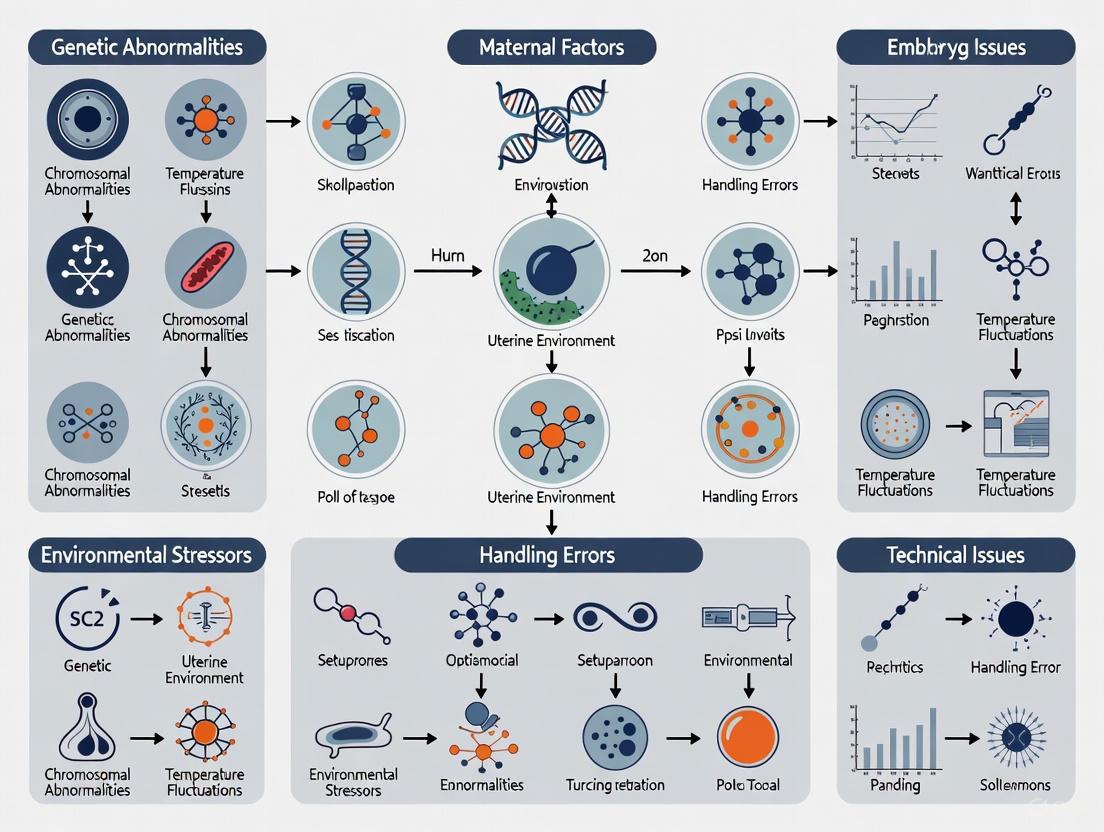
This article provides a comprehensive analysis of the multifactorial causes of low embryo viability in mouse embryo transfer, a critical concern for researchers in drug development and reproductive biology.
Decoding Low Embryo Viability in Mouse Models: A Multifactorial Analysis from Biological Causes to Technological Solutions
Abstract
This article provides a comprehensive analysis of the multifactorial causes of low embryo viability in mouse embryo transfer, a critical concern for researchers in drug development and reproductive biology. We explore foundational biological regulators, including novel factors like cathepsin D and CXCR2 identified through recent inhibitor library screens, and the impact of environmental stressors such as water quality. The content details advanced methodological approaches for embryo evaluation and culture, including time-lapse optical coherence microscopy and optimized vitrification protocols. Furthermore, we examine troubleshooting strategies for suboptimal culture conditions and validate findings through epigenetic and transcriptomic profiling, offering a comparative perspective on assay reliability and species-specific translation. This synthesis aims to equip scientists with a holistic framework to enhance experimental outcomes and model fidelity in pre-clinical research.
Uncovering Core Biological and Environmental Determinants of Embryo Viability
The pursuit of understanding low embryo viability in mouse models has been significantly advanced by the integration of high-throughput screening technologies and sophisticated genetic tools. This whitepaper synthesizes current research on the genetic and molecular regulators of preimplantation embryonic development, highlighting how targeted inhibitor libraries and advanced bioinformatics are revealing novel pathways controlling embryo survival, quality, and developmental competence. By examining key signaling pathways, transcriptional networks, and metabolic processes, we provide researchers with a comprehensive technical framework for investigating embryo viability, complete with detailed protocols and reagent solutions to accelerate discovery in reproductive biology and drug development.
Embryo viability remains a central challenge in reproductive biology, with significant implications for basic research, assisted reproductive technologies, and developmental toxicology. In mammalian reproduction, a substantial proportion of embryonic loss occurs during the preimplantation period, though estimates vary widely from 30% to 70% depending on methodology and biological context [1]. Understanding the genetic and molecular basis of this vulnerability requires sophisticated approaches that can simultaneously probe multiple regulatory pathways while accounting for species-specific differences that may limit translational applicability.
The mouse model has been indispensable for uncovering fundamental mechanisms of early embryonic development, yet approximately 25% of mouse genes are embryonically lethal when knocked out, presenting significant methodological challenges for functional studies [2]. Recent advances in CRISPR-Cas9 technology, high-throughput inhibitor screening, and cross-species computational modeling have created unprecedented opportunities to identify and characterize novel regulators of embryo development. This technical guide synthesizes current methodologies and findings from this rapidly evolving field, providing a resource for researchers investigating the molecular determinants of embryo viability.
Genetic Regulation of Preimplantation Development
Key Genetic Determinants of Embryo Quality
Embryo quality during preimplantation development is primarily determined by two measurable parameters: the rate of embryonic cleavage and the degree of fragmentation [3]. Research has established that both parameters are under significant genetic control, with specific genes regulating the complex processes of cell division, differentiation, and programmed cell death in the early embryo.
The Ped (preimplantation embryo development) gene represents a critical genetic regulator discovered in the mouse model. This gene, located in the Q region of the major histocompatibility complex (MHC), controls the rate of preimplantation embryonic cleavage through its protein product, the Qa-2 antigen [3]. The Ped gene is encoded by two similar genes, Q7 and Q9, and embryos expressing the fast phenotype (Qa-2 positive) develop more rapidly and demonstrate higher viability compared to slow-developing (Qa-2 negative) embryos. This genetic system provides a powerful model for understanding how specific genetic factors influence developmental kinetics and embryo survival.
Beyond developmental rate, the degree of fragmentation represents another key quality indicator with genetic underpinnings. Studies of apoptosis-related gene families in mouse blastocysts have revealed that Bcl-2 and caspase gene families are expressed throughout preimplantation development, suggesting a homeostatic mechanism whereby genes regulating cell survival and cell death collectively determine overall embryo viability [3]. Experimental induction of apoptosis with staurosporine in blastocysts confirms the functional presence of this regulatory system, providing a model for investigating genetic factors influencing embryonic fragmentation.
Master Regulators of Early Development
Recent research has identified NKX1-2 as a Wnt-dependent master transcription factor controlling mouse pre-implantation development [4]. This regulator operates through the control of ribosome biogenesis and RNA polymerase I activity, connecting external signaling pathways to fundamental cellular processes essential for embryonic survival. The identification of such master regulators provides crucial insights into the hierarchical organization of genetic control during early development and suggests potential nodal points for therapeutic intervention.
Table 1: Key Genetic Regulators of Mouse Preimplantation Development
| Regulator | Genetic Locus | Molecular Function | Impact on Viability |
|---|---|---|---|
| Ped gene | MHC Q region (Q7/Q9) | MHC class Ib protein (Qa-2 antigen) | Controls cleavage rate; fast alleles associated with higher viability |
| NKX1-2 | NKX homeobox family | Transcription factor; regulates ribosome biogenesis | Essential for preimplantation development; Wnt pathway integration |
| Bcl-2 family | Multiple loci | Apoptosis regulation; mitochondrial pathway | Modulates degree of fragmentation; cell survival/death balance |
| Caspase family | Multiple loci | Cysteine proteases; apoptosis execution | Mediates programmed cell death; fragmentation regulation |
| Virma | Chr 2; E1-E3 | N6-methyladenosine (m6A) methylosome component | Embryonically lethal when knocked out; RNA processing |
Molecular Pathways and Signaling Networks
Wnt Signaling in Preimplantation Development
The Wnt signaling pathway emerges as a critical regulatory network in early embryonic development, with NKX1-2 identified as a key transcription factor acting downstream of Wnt signaling in mouse embryos [4]. This connection positions Wnt signaling as a master regulator that integrates external cues with fundamental processes of ribosome biogenesis and transcriptional regulation through NKX1-2 activity. The Wnt-NKX1-2 axis represents a promising target for further investigation into the molecular basis of embryo viability, particularly given its systems-level control over embryonic gene expression programs.
Apoptosis Regulation and Embryonic Fragmentation
The molecular regulation of apoptosis represents a crucial determinant of embryo quality, with the balance between pro-survival and pro-apoptotic factors influencing the degree of fragmentation—a key morphological indicator of embryo viability [3]. Research in mouse blastocysts has demonstrated that the Bcl-2 and caspase gene families are functionally present throughout preimplantation development, creating a regulatory network that maintains cellular homeostasis.
The experimental induction of apoptosis in blastocysts using staurosporine confirms the operational capacity of this regulatory system [3]. This model provides a valuable tool for investigating how genetic and environmental factors influence the apoptotic threshold in early embryos, with direct implications for understanding the molecular basis of fragmentation. The identification of small-molecule inhibitors that modulate this balance offers promising avenues for improving embryo viability in assisted reproductive technologies.
Cross-Species Conservation and Divergence in Regulatory Networks
Understanding the translational relevance of mouse findings requires careful consideration of the evolutionary rewiring of gene regulatory networks between species. Research indicates that regulatory network rewiring contributes significantly to phenotypic discrepancies between humans and mice, with orthologous genes often embedded in distinct regulatory contexts [5]. This divergence stems from species-specific regulatory elements that alter target gene expression levels, potentially leading to different phenotypic outcomes when homologous genes are manipulated.
Computational analyses reveal that while protein-coding sequences may be highly conserved, their regulatory relationships have frequently diverged over approximately 100 million years of separate evolution [5]. This finding has profound implications for extrapolating mouse embryo research to human applications, suggesting that regulatory context must be carefully considered when evaluating the potential translational significance of findings in mouse models. Cross-species foundation models like GeneCompass, which integrate over 120 million human and mouse single-cell transcriptomes, provide powerful resources for identifying conserved versus species-specific regulatory elements [6].
High-Throughput Screening Approaches
Protocol for Inhibitor Library Screening
High-throughput screening of targeted small-molecule inhibitors represents a powerful approach for identifying novel regulators of embryo viability. The following protocol, adapted from methodologies used in cancer cell line screening [7] [8], can be modified for embryonic systems:
Phase 1: Cell Culture and Model Preparation
- Culture cells or embryos under optimized conditions, ensuring logarithmic growth phase at treatment initiation
- For drug-resistant models: develop resistant strains through gradual exposure to increasing drug concentrations
- Seed cells/embryos in 384-well plates at predetermined densities to ensure sub-confluent stage during treatment
- Allow attachment overnight before inhibitor application
Phase 2: Inhibitor Preparation and Storage
- Centrifuge inhibitor vials at 1000 × g for 3 minutes to pellet contents
- Resuspend small-molecule inhibitors in DMSO to standard storage concentration (typically 50 mM)
- Aliquot solutions and store at -20°C to avoid freeze-thaw cycles
- Ensure homogeneity of stocks before preparing working solutions
Phase 3: Screening Execution
- Apply inhibitors in predetermined concentration ranges (typically 10 μM to 0.16 μM)
- For combination screens: use either ray design (equimolar ratios) or matrix design (varying ratios)
- Maintain consistent DMSO concentration across all wells (typically ≤0.5%)
- Incubate for designated period (48 hours for most cell-based assays)
- Assess viability using CellTiter-Glo ATP quantification or equivalent metabolic assays
Phase 4: Data Analysis and Validation
- Normalize data to untreated controls
- Calculate synergy using Bliss independence model or other appropriate metrics
- Validate hits in secondary screens with expanded concentration ranges
- Confirm mechanisms through orthogonal assays
Quantitative Analysis of Screening Data
Table 2: Key Signaling Pathways and Targeted Inhibitors in Viability Screening
| Pathway | Key Molecular Targets | Exemplary Inhibitors | Reported Synergistic Combinations |
|---|---|---|---|
| PI3K/AKT/mTOR | PI3K, AKT, mTOR, PDPK1 | PI-103, GSK2334470 | PI3K/mTOR + PDPK1 (vertical synergy) |
| MAPK | BRAF, MEK, ERK | PD0325901, doramapimod | MEK + BRAF (clinical validation) |
| Epigenetic Regulation | Bromodomains, HDACs, HMTs | JQ1, PFI-1, GSK343 | Various with PI3K pathway inhibitors |
| Wnt/β-catenin | GSK3β, TCF | CHIR 99021 | Context-dependent combinations |
| JAK/STAT | JAK1/2, STAT3 | ruxolitinib, stattic | Pathway-specific combinations |
| Apoptosis Regulation | Bcl-2, caspases | Staurosporine (experimental) | With metabolic pathway inhibitors |
The quantitative analysis of screening data requires robust statistical approaches to distinguish true synergistic interactions from additive or antagonistic effects. The Bliss independence model is frequently employed for this purpose, calculating expected combination effects based on individual drug activities and identifying significant deviations that indicate synergy [8]. This approach has revealed clinically relevant synergistic pairs, such as MEK and BRAF inhibitors, as well as novel combinations like concurrent PI3K/mTOR and PDPK1 inhibition that exhibit "vertical synergy" through targeting multiple nodes in the same signaling cascade [8].
Advanced Research Methodologies
CRISPR-Cas9 Applications in Embryonic Lethality Research
The high prevalence of embryonic lethality in knockout mice (approximately 25% of genes) presents significant methodological challenges [2]. Conventional zygote microinjection often fails to produce viable founder mice for embryonically lethal mutations, necessitating alternative approaches. The One-Step Two-Cell embryo Microinjection (OSTCM) method provides a solution by enabling the generation of viable chimeric mice with heritable embryonically lethal mutations:
OSTCM Protocol:
- Microinject Cas9 mRNA/protein and sgRNA into one blastomere of two-cell embryos
- Use optimized concentration ratios (e.g., 50:25 ng/μl Cas9 mRNA:sgRNA)
- Transfer developed embryos to pseudopregnant females
- Screen founder (F0) mice for desired mutations
- Cross mutant F0 mice with wild-types to establish germline transmission
This approach has successfully generated viable mice with embryonically lethal mutations in genes including Virma (involved in mRNA m6A methylation) and Dpm1 (essential for N-glycosylation) [2]. The method enables functional studies of lethal genes in chimeric adults and facilitates the establishment of conditional models for investigating gene function in specific tissues or developmental stages.
Cross-Species Foundation Models for Gene Regulation Analysis
The integration of large-scale genomic data across species provides powerful opportunities to identify conserved regulatory principles. GeneCompass represents a knowledge-informed cross-species foundation model pre-trained on over 120 million human and mouse single-cell transcriptomes [6]. This approach incorporates multiple biological prior knowledge types:
Integrated Biological Knowledge:
- Gene regulatory networks (TF-target relationships)
- Promoter sequence information
- Gene family annotations
- Gene co-expression relationships
The model employs a transformer architecture with self-supervised learning using masked language modeling, simultaneously recovering gene IDs and expression values for masked inputs [6]. This approach successfully captures homologous gene relationships across species and enables in silico perturbation studies to identify key regulatory factors, as demonstrated by validations showing that simulated deletion of cardiac development factors GATA4 and TBX5 specifically affects their known target genes.
Research Reagent Solutions
Table 3: Essential Research Reagents for Embryonic Regulation Studies
| Reagent Category | Specific Examples | Research Application | Key Features |
|---|---|---|---|
| PI3K/AKT Pathway Inhibitors | PI-103, GSK2334470 | Vertical synergy studies | Dual PI3K/mTOR inhibition; PDPK1 targeting |
| Epigenetic Inhibitors | JQ1 (BRD4), GSK343 (EZH2), PFI-1 (BET) | Chromatin regulation studies | Bromodomain binding; H3K27me3 modulation |
| MAPK Pathway Inhibitors | PD0325901 (MEK), doramapimod (p38) | Signaling pathway analysis | Allosteric MEK inhibition; p38 MAPK targeting |
| Wnt Pathway Modulators | CHIR 99021 (GSK3β) | Stem cell pluripotency studies | GSK3 inhibition; β-catenin stabilization |
| Apoptosis Inducers | Staurosporine | Fragmentation mechanism studies | Broad-spectrum kinase inhibition |
| CRISPR-Cas9 Components | Cas9 mRNA, sgRNAs | Genetic knockout studies | Frameshift mutation induction; model generation |
| Viability Assays | CellTiter-Glo, CCK-8 | Metabolic activity assessment | ATP quantitation; luciferase-based detection |
The integration of high-throughput inhibitor screening with advanced genetic tools and computational models has dramatically accelerated the identification of novel regulators of embryo viability. The research methodologies outlined in this technical guide provide a framework for systematically investigating the complex genetic and molecular networks that control preimplantation development. As single-cell technologies continue to advance and cross-species integration becomes more sophisticated, our ability to identify conserved regulatory principles while acknowledging species-specific differences will significantly improve. The reagents, protocols, and analytical approaches summarized here offer researchers comprehensive tools to explore the fundamental biological processes governing embryo viability, with significant implications for reproductive medicine, toxicology, and regenerative biology applications.
Environmental contaminants, particularly per- and polyfluoroalkyl substances (PFAS), present a significant challenge to biomedical research, especially in sensitive areas such as reproductive biology and embryology. This technical guide examines the impact of water quality and PFAS contamination on embryo viability, with specific application to mouse embryo transfer research. PFAS are a group of manufactured chemicals that have been used extensively in industrial applications and consumer products since the 1940s due to their useful surfactant and coating properties [9]. Their extreme persistence in the environment has led to widespread contamination of water supplies, creating potential confounding variables in laboratory research that are often overlooked. Recent studies have demonstrated that even at concentrations currently deemed "safe" by regulatory guidelines, PFAS in drinking water can significantly impair oocyte quality and embryo development in mouse models [10]. This whitepaper provides an in-depth analysis of the mechanisms through which PFAS exposure affects embryonic viability, detailed experimental methodologies for detecting and mitigating these effects, and practical guidance for researchers seeking to control for these variables in reproductive studies.
PFAS: Properties and Environmental Persistence
Chemical Characteristics and Terminology
PFAS are characterized by the presence of a carbon-fluorine bond, one of the strongest in organic chemistry (485 kJ/mol), which confers exceptional stability and resistance to degradation [11]. This group includes thousands of individual compounds, with the most extensively studied being perfluorooctanoic acid (PFOA) and perfluorooctane sulfonate (PFOS). The environmental persistence of PFAS is remarkable, with half-lives ranging from 2.3 to 8.5 years in humans, earning them the colloquial name "forever chemicals" [12] [11]. Their molecular structure consists of a fluorinated carbon chain with a functional group (typically carboxylic or sulfonic acid) that confers both hydrophobic and lipophobic properties, enabling unique surfactant characteristics [12].
PFAS contamination in research settings can originate from multiple sources. Drinking water represents a primary exposure route, with PFAS detected in public water systems and private wells globally [9]. Additional sources include food packaging, stain-resistant textiles, certain laboratory materials, and even specialized equipment such as polytetrafluoroethylene (PTFE) containers [11]. The amphiphilic nature of PFAS allows them to accumulate in biological tissues, with particular affinity for proteins such as albumin, leading to detection in serum, seminal fluid, follicular fluid, and various reproductive organs [12]. This bioaccumulation potential makes PFAS a significant concern for reproductive research where physiological endpoints are measured.
Table 1: Key Characteristics of Select PFAS Compounds
| Compound | Chemical Structure | Half-Life in Humans | Primary Sources | Environmental Mobility |
|---|---|---|---|---|
| PFOA | 8-carbon chain, carboxylic acid | 3.5-3.8 years | Industrial manufacturing, non-stick coatings | High |
| PFOS | 8-carbon chain, sulfonic acid | 4.8-5.4 years | Fire-fighting foams, stain repellents | Moderate |
| PFNA | 9-carbon chain, carboxylic acid | 2.3-4.3 years | Replacement for PFOA, food packaging | High |
| PFHxS | 6-carbon chain, sulfonic acid | 5.5-8.5 years | Replacement for PFOS, water-resistant products | Very High |
Regulatory Framework and Current Guidelines
Drinking Water Standards
Recognizing the potential health impacts of PFAS, regulatory agencies have established increasingly stringent guidelines for drinking water. The U.S. Environmental Protection Agency (EPA) has set Maximum Contaminant Levels (MCLs) for six PFAS compounds, with PFOA and PFOS at 4.0 parts per trillion (ppt) individually, and PFHxS, PFNA, and HFPO-DA (GenX) at 10.0 ppt each [13]. Additionally, the EPA has established a hazard index of 1 for mixtures containing two or more of PFHxS, PFNA, HFPO-DA, and PFBS to account for combined toxicity [13]. These regulations require public water systems to complete initial monitoring by 2027 and implement solutions by 2029 if PFAS levels exceed MCLs.
Health-Based Guidelines
Health advisory levels continue to evolve as research reveals effects at increasingly lower concentrations. The European Food Safety Authority (EFSA) has set a tolerable weekly dose of only 4.4 ng/kg body weight for the sum of four PFAS representatives (PFOA, PFOS, PFNA, and PFHxS) [11]. These stringent guidelines reflect growing concern about the cumulative and chronic effects of PFAS exposure, even at very low concentrations. For research facilities, these guidelines provide a framework for establishing water quality standards that protect against confounding experimental variables.
Impact on Embryonic Development: Mechanisms and Evidence
Key Signaling Pathways Affected by PFAS
PFAS compounds exert their biological effects through multiple interconnected pathways, with significant implications for reproductive function and embryonic development. The diagram below illustrates the primary molecular mechanisms through which PFAS exposure impacts embryo viability.
Figure 1: Molecular Pathways of PFAS Reproductive Toxicity. PFAS exposure disrupts multiple signaling pathways including PPAR activation, hypothalamic-pituitary-gonadal (HPG) axis disruption, and aryl hydrocarbon receptor (AhR) activation, collectively impairing oocyte quality and embryo development.
Direct Evidence from Mouse Studies
A pivotal study demonstrated that female mice provided with different building tap water sources exhibited profound loss of embryos during pre-implantation development, with ovulated oocytes showing degeneration or impaired meiotic maturation, ultimately failing to form viable embryos [10]. Researchers observed that switching from a previous water source (Water 1) to tap water from the animal facility building (Water 2) resulted in decreased oocyte quality, impaired embryogenesis, and reduced cell numbers in blastocysts. Importantly, these effects were not reversible following a recovery period, though carbon filtration successfully removed the toxic contaminants [10].
Further investigation revealed that PFAS concentrations as low as 0.6-4.4 ng/L in drinking water – levels within current regulatory "safe" limits – negatively correlated with oocyte viability [10]. Additional phenotypic abnormalities observed in the mouse colony included hair loss in young mice (4-6 weeks), skin lesions in older females (9-12 months), increased aggression in males, reduced weight gain, and elevated fetal resorption rates in pregnant females [10]. These findings demonstrate the sensitivity of reproductive endpoints to water quality variations and highlight the potential for confounding variables in research settings.
Table 2: Summary of Reproductive Effects Observed in Mouse Studies Following PFAS Exposure
| Exposure Level | Oocyte Quality | Embryo Development | Additional Phenotypes |
|---|---|---|---|
| 0.6 ng/L | Decreased viability | Reduced blastocyst cell numbers | None reported |
| 2.8 ng/L | Significant degeneration | Impaired pre-implantation development | Mild weight reduction |
| 4.4 ng/L | Severe degeneration, impaired meiotic maturation | Failure to form embryos, fetal malformations | Hair loss, skin lesions, increased aggression |
Endocrine Disruption Mechanisms
PFAS are classified as endocrine-disrupting compounds (EDCs) that can mimic or interfere with natural hormone signaling [12]. They act as agonists for peroxisome proliferator-activated receptors (PPARs), particularly PPARα and PPARγ, which play crucial roles in lipid metabolism and steroidogenesis [12]. Activation of PPARγ by PFAS inhibits the aromatase enzyme, disrupting the balance between androgen and estrogen production – a critical factor in folliculogenesis and endometrial receptivity [12]. PFAS also disrupt the hypothalamic-pituitary-gonadal (HPG) axis, reducing follicle-stimulating hormone (FSH) and luteinizing hormone (LH) levels, which directly impacts oocyte maturation and ovulation [12].
Experimental Protocols for Assessing PFAS Impact
Water Analysis Methodologies
Accurate assessment of PFAS contamination requires sophisticated analytical approaches. The EPA has developed validated methods for PFAS analysis in drinking water, including Methods 533, 537, and 537.1, which collectively can detect 29 different PFAS compounds [14]. These methods employ solid phase extraction followed by liquid chromatography-tandem mass spectrometry (LC-MS/MS), achieving detection limits in the parts-per-trillion range. For research facilities, regular monitoring of animal drinking water using these validated methods is essential for quality control and interpretation of experimental results.
In Vitro Fertilization and Embryo Assessment Protocol
The following detailed methodology from the mouse study [10] provides a framework for assessing PFAS impacts on embryonic viability:
Superovulation and Oocyte Collection:
- Female mice (C57BL/6 and CBA.F1 strains) at indicated ages are administered 7.5 IU pregnant mare's serum gonadotropin (PMSG) via intraperitoneal injection.
- After 47.5 hours, administer 7.5 IU human chorionic gonadotropin (hCG) via intraperitoneal injection.
- Humanely euthanize females 15 hours post-hCG administration and collect ovaries and oviducts.
- Place reproductive tissues in pre-warmed (37°C) αMEM-HEPES handling media.
- Isolate cumulus-oocyte complex (COC) clusters by puncturing oviducts and gently wash twice in pre-warmed fertilization media.
In Vitro Fertilization:
- Collect epididymal spermatozoa from male mice (maintained on control water source) by humane cervical dislocation.
- Allow sperm capacitation in pre-warmed fertilization media under paraffin oil at 5% O2, 6% CO2, 37°C for 1 hour.
- Place COC clusters in 100 µl fertilization drops containing capacitated sperm equivalent to 10 µl.
- Incubate for 4 hours at 37°C, 5% O2, 6% CO2.
- Clean presumptive zygotes of excess sperm and cumulus cells via gentle aspiration.
Embryo Assessment and Culture:
- Classify zygote morphology: "live" (typical morphology, no fragmentation, uniform cytoplasm), "degenerated" (dark and shrunken appearance), or "fragmented" (extensive fragmentation observed).
- Assess meiotic maturation: normal (one or two polar bodies present) versus abnormal (small or no polar body despite absence of germinal vesicle).
- Transfer live presumptive zygotes to culture dishes containing cleave media (10 embryos per 20 µl drop).
- Score embryos 24 hours post-fertilization: "degenerated" (failed cleavage, lysis, shrinkage, fragmentation) or "viable" (successful 2-cell stage).
- Continue culture until 96 hours post-fertilization, scoring development to blastocyst stage.
- For blastocyst quality assessment, fix embryos 103 hours post-fertilization in 4% PFA-PBS overnight at 4°C for differential staining.
The workflow below summarizes the experimental approach for evaluating PFAS effects on embryonic development.
Figure 2: Experimental Workflow for Assessing PFAS Effects. The diagram outlines the key steps in evaluating water exposure impacts on embryonic development, from controlled exposure through in vitro fertilization and embryo assessment.
The Scientist's Toolkit: Essential Research Reagents and Materials
Table 3: Key Research Reagents for PFAS and Reproductive Toxicology Studies
| Reagent/Material | Function/Application | Considerations |
|---|---|---|
| Carbon-filtration systems | Removal of PFAS from laboratory water supplies | Effectively eliminates PFAS contaminants; essential for control groups |
| PMSG (Pregnant Mare Serum Gonadotropin) | Induction of superovulation in mouse models | Quality and source consistency critical for reproducible results |
| hCG (Human Chorionic Gonadotropin) | Final oocyte maturation induction | Must be precisely timed relative to PMSG administration |
| Vitro Fertilization Media (Cook Australia) | In vitro fertilization support | Composition affects sperm capacitation and fertilization rates |
| Vitro Cleave Media (Cook Australia) | Pre-implantation embryo culture | Supports development from zygote to blastocyst stage |
| αMEM-HEPES handling media | Maintenance of oocyte viability during collection | Temperature and pH stability crucial |
| PFA-PBS (4%) | Embryo fixation for morphological analysis | Standardized fixation preserves cellular architecture |
| PFAS-free water (MilliQ) | Negative control for exposure studies | Must be verified through analytical testing |
| PFAS analytical standards | Quantification of contamination levels | Required for method validation and quality control |
Mitigation Strategies and Research Recommendations
Water Purification Approaches
Carbon filtration has proven effective at removing PFAS contaminants from drinking water in research settings [10]. Additional approaches include reverse osmosis, ion exchange resins, and advanced oxidation processes. Regular monitoring of purified water using EPA Methods 533 or 537.1 is recommended to verify system efficacy [14]. Researchers should maintain detailed records of water quality testing and purification system maintenance as potential variables in experimental outcomes.
Experimental Design Considerations
To control for potential PFAS contamination confounding research results, implement the following strategies:
- Include water source as an experimental variable in reproductive studies
- Use consistent, verified water sources throughout experiments
- Bank frozen embryos from different source colonies to control for genetic drift
- Implement routine water quality monitoring using validated analytical methods
- Consider environmental background exposures in animal housing facilities
- Utilize appropriate positive and negative controls in exposure studies
Future Research Directions
Significant knowledge gaps remain in understanding the full impact of PFAS on reproductive research. Priority areas include:
- Mechanistic studies on PFAS effects on meiotic spindle formation and chromosome segregation
- Investigation of transgenerational effects through epigenetic modifications
- Development of improved detection methods for a broader range of PFAS compounds
- Studies on the combined effects of PFAS mixtures at environmentally relevant concentrations
- Exploration of mitigation strategies to reverse PFAS-induced reproductive toxicity
The impact of environmental contaminants, particularly PFAS in water supplies, represents a critical consideration in mouse embryo transfer research. Evidence demonstrates that even at concentrations compliant with current regulatory guidelines, PFAS exposure can significantly impair oocyte viability and embryonic development through multiple molecular pathways. These effects introduce potential confounding variables that can compromise research validity and reproducibility. Implementation of rigorous water quality monitoring, appropriate purification technologies, and careful experimental design are essential to mitigate these risks. As regulatory standards evolve and detection methods improve, researchers must remain vigilant to environmental variables that could impact embryonic endpoints, ensuring the integrity and translational value of reproductive research.
In mammalian reproductive biology, advanced maternal age is a primary factor contributing to declines in oocyte quality and embryo viability. This relationship is of paramount importance in mouse embryo transfer research, where understanding the maternal age effect is crucial for modeling human infertility and developing assisted reproductive technologies (ART). A key biological mechanism underpinning this phenomenon is the profound alteration of global gene expression profiles in oocytes and embryos, driven by age-related cellular dysfunction. This technical review synthesizes current evidence to delineate how maternal age disrupts transcriptomic networks, with particular focus on DNA repair pathways, epigenetic reprogramming, and mitochondrial function, ultimately compromising embryonic development. The findings provide a mechanistic framework for investigating and potentially mitigating age-related fertility decline.
Molecular Mechanisms: How Maternal Age Alters Gene Expression
Advanced maternal age induces multifactorial dysregulation of the oocyte transcriptome, impacting critical pathways essential for embryonic competence. The following table summarizes the core biological processes affected and their consequences for embryo viability.
Table 1: Key Molecular Mechanisms Linking Maternal Age to Altered Gene Expression and Reduced Embryo Viability
| Biological Mechanism | Specific Genes/Pathways Affected | Functional Impact on Oocyte/Embryo |
|---|---|---|
| Transcriptome Dysregulation | Downregulation: PSMA1, PSMA2 (proteasomal subunits), LINC02087, MYL4 [15] [16]. Upregulation: CITED2 [16]. | Disrupted proteostasis, impaired chromosomal stability, and altered cellular signaling pathways [15] [16]. |
| DNA Repair Capacity | Age-related decline in BRCA-related and base-excision repair (BER) pathways [17]. | Reduced ability to correct sperm DNA fragmentation, leading to increased embryonic abnormalities and developmental failure [17]. |
| Epigenetic Remodeling | Altered transcript abundance of epigenetic regulators (e.g., in Nlrp2-null oocytes); changes in H3K4me2/3, H4K12ac, H4K16ac levels [18] [19]. | Disrupted zygotic genome activation (ZGA) and aberrant gene expression in preimplantation embryos [18] [19]. |
| X-Chromosome Effects | Imprinted gene silencing on the maternal X chromosome (Xm) [20]. | Impaired spatial memory and accelerated epigenetic aging in the hippocampus of female offspring [20]. |
These mechanisms do not operate in isolation but form an interconnected network of dysfunction. The oocyte's ability to maintain proteostasis, the precise control of cellular protein levels, is compromised with age, as evidenced by the downregulation of crucial proteasomal subunits [15]. Concurrently, its role as a guardian of the embryonic genome is weakened, as the capacity to repair incoming sperm DNA damage diminishes significantly in older oocytes [17]. Furthermore, the epigenetic landscape, which is essential for orchestrating early development, is notably altered, leading to failures in the maternal-to-zygotic transition [18].
Key Experimental Models and Methodologies
Investigating the interplay between maternal age and gene expression requires sophisticated models and precise protocols. The following section details foundational experimental approaches used in this field.
Murine Models for Maternal Age Studies
Mouse models are the cornerstone of this research, primarily utilizing inbred strains like C57BL/6J and BALB/c. Studies often compare reproductive outcomes and molecular profiles between young (e.g., 2-4 months) and aged (e.g., 9-12 months) females [21]. The C57BL/6J background is particularly common for its well-defined genetics. Research has also employed specific transgenic models, such as those engineered to have skewing towards an active maternal X chromosome (Xm), to isolate parent-of-origin effects on cognition and brain aging [20]. Another model involves Nlrp2-null females, which are used to study the role of subcortical maternal complex proteins in epigenetic regulation and zygotic genome activation [18].
Single-Oocyte RNA-Sequencing Protocol
A critical methodology for profiling age-related transcriptomic changes is single-oocyte RNA-seq, which accounts for the pronounced inter-oocyte heterogeneity [15].
Table 2: Key Protocol for Single-Oocyte Transcriptome Analysis
| Step | Description | Critical Reagents/Equipment |
|---|---|---|
| 1. Oocyte Collection | Collect germinal vesicle (GV) or Metaphase II (MII) oocytes from young and aged mice. Remove cumulus cells enzymatically (e.g., hyaluronidase) and by pipetting [16]. | Hyaluronidase solution; stereomicroscope. |
| 2. Cell Lysis & cDNA Synthesis | Lyse individual oocytes (e.g., 5 µl NEBNext Cell Lysis buffer). Use single-cell/low input kit for reverse transcription and cDNA amplification [16]. | NEBNext Single Cell/Low Input RNA Library Prep Kit (e.g., Cat. no. E6420S). |
| 3. Library Preparation & Sequencing | Construct sequencing libraries per manufacturer's instructions. Sequence on a platform such as Illumina NovaSeq 6000 (e.g., single-read, 120 bp) [16]. | Illumina-compatible library prep reagents; NovaSeq 6000 system. |
| 4. Bioinformatic Analysis | Quality control (FastQC, Trim Galore), alignment to reference genome (STAR), gene quantification (featureCounts), and differential expression analysis (DESeq2) [16]. | FastQC, Trim Galore, STAR aligner, DESeq2. |
Figure 1: Experimental workflow for single-oocyte transcriptome analysis, detailing the key steps from cell collection to data validation.
Assessing Oocyte Repair Capacity
To evaluate the functional consequence of age-related gene expression changes, a common assay measures the oocyte's capacity to repair sperm DNA damage. This involves using sperm samples with characterized high DNA fragmentation (SDF) and performing intracytoplasmic sperm injection (ICSI) into oocytes from young and aged females [17]. Subsequent embryonic development is meticulously tracked, with outcomes such as blastocyst formation rate, blastocyst quality, and pregnancy rate serving as key metrics of successful repair [17]. This functional assay directly links the molecular deficiencies of aged oocytes to a critical physiological outcome.
Quantitative Data Synthesis
The impact of maternal age on gene expression and reproductive outcomes is quantifiable across multiple studies. The table below consolidates key numerical findings.
Table 3: Synthesis of Quantitative Findings on Maternal Age Effects
| Parameter | Young Maternal Age | Advanced Maternal Age | Citation |
|---|---|---|---|
| Repair of High SDF (≥30%) - Pregnancy Rate | No significant difference vs. low SDF | Significantly lower (e.g., >40 years) | [17] |
| Blastocyst Development (with High SDF) | Not significantly affected (≤36 years) | Significantly reduced (>40 years) | [17] |
| Differentially Expressed Genes in Oocytes | Baseline (Reference) | 40 genes identified in multi-study consensus; 25 genes correlated with age in meta-analysis [15]. | [15] |
| Differentially Expressed Genes in Placenta | Baseline (Reference) | 423-967 genes differentially expressed [21]. | [21] |
| Epigenetic Aging in Hippocampus | Matches chronological age (Xm+Xp mosaicism) | Biologically older (Xm skew) [20]. | [20] |
The data underscore a clear threshold effect, with the most pronounced deficits in DNA repair and embryo viability manifesting after maternal age 40 in clinical studies, a trend mirrored in aged mouse models [17]. The transcriptomic changes are substantial but show considerable heterogeneity, with a small core of consistently altered genes against a background of more variable expression patterns [15]. Furthermore, the effect of age is not limited to the oocyte itself but extends to the placental transcriptome, potentially affecting fetal growth and pregnancy maintenance [21].
The Scientist's Toolkit: Essential Research Reagents
The following table catalogs critical reagents and their applications for studying maternal age and gene expression.
Table 4: Key Research Reagent Solutions for Gene Expression Studies
| Reagent / Kit | Specific Function | Application Context |
|---|---|---|
| NEBNext Single Cell/Low Input RNA Library Prep Kit | Converts mRNA from limited samples into barcoded, sequencing-ready cDNA libraries. | Single-oocyte or single-embryo RNA-seq transcriptome profiling [16]. |
| Sperm Chromatin Dispersion (SCD) Test Kit (e.g., Halosperm) | Assesses sperm DNA fragmentation rates (%SDF) via halo pattern visualization. | Quantifying sperm DNA damage for oocyte repair capacity assays [17]. |
| N-Acetylcysteine (NAC) | Antioxidant that scavenges reactive oxygen species (ROS). | Mitigating vitrification-induced ROS accumulation and DNA damage in embryos [19]. |
| RAD51 Inhibitor (B02) & DNA-PK Inhibitor (KU57788) | Chemically inhibits Homologous Recombination (HR) and Non-Homologous End Joining (NHEJ) DNA repair pathways, respectively. | Investigating the role of specific DNA repair pathways in embryo development post-vitrification [19]. |
| Cytokine-Specific Antibodies & Staining Kits (e.g., DCFH-DA, MitoTracker Red) | Detecting intracellular ROS (DCFH-DA) and mitochondrial activity/membrane potential (MitoTracker, JC-1). | Evaluating oxidative stress and mitochondrial dysfunction in aged or vitrified oocytes/embryos [19]. |
Signaling Pathways and Conceptual Workflows
The molecular consequences of maternal age converge on critical signaling nodes that dictate embryo health. The pathway below synthesizes these interactions into a unified model.
Figure 2: Consolidated signaling pathway of maternal age impact, showing how diverse molecular deficits converge to reduce embryo viability. ZGA: Zygotic Genome Activation; ROS: Reactive Oxygen Species.
This model illustrates that advanced maternal age initiates parallel disruptions in several core cellular processes. These disruptions—transcriptome dysregulation, impaired DNA repair, epigenetic alterations, and oxidative stress—act synergistically to create a cumulative insult on the embryo. This integrated stress load ultimately manifests as failed zygotic genome activation, poor blastocyst development, and significantly reduced pregnancy success, providing a mechanistic explanation for low embryo viability in both model systems and clinical settings.
In mouse embryo transfer research, a significant challenge is the reduced developmental potential of embryos cultured in vitro compared to their in vivo counterparts. A primary causative factor is the inability of culture conditions to perfectly replicate the precise metabolic and physico-chemical environment of the reproductive tract. The viability of preimplantation embryos is intrinsically linked to the availability and metabolism of key energy substrates—pyruvate and glucose—and the tension of oxygen to which they are exposed. This guide details the specific roles, optimal concentrations, and experimental evidence surrounding these critical factors, providing a scientific framework for optimizing embryo culture systems and improving pregnancy outcomes.
The Metabolic Foundation of Embryo Viability
The preimplantation period is marked by dynamic shifts in metabolic preference. Pre-compaction embryos primarily rely on pyruvate and oxidative phosphorylation for energy production. A significant metabolic shift occurs around the compaction and blastocyst stages, where a marked increase in glucose consumption is observed, fueling both glycolysis and the pentose phosphate pathway for biosynthesis and redox balance [22] [23]. This elevated glucose utilization, even in the presence of oxygen, often results in high lactate production, a phenomenon akin to the Warburg effect observed in some cancer cells [23]. Environmental oxygen tension is a master regulator of this metabolic landscape, influencing substrate utilization, mitochondrial function, and the generation of reactive oxygen species (ROS). Disruptions to the delicate balance of these components—whether through suboptimal culture conditions or in vitro fertilization protocols—can induce metabolic reprogramming, oxidative stress, and reduced cell numbers, ultimately compromising embryo viability and success rates in transfer experiments [23] [24].
Pyruvate: The Early Energy Substrate
Role and Significance
Pyruvate serves as a crucial energy source during the earliest stages of embryonic development. Prior to compaction, the embryo demonstrates a high reliance on pyruvate (and lactate) to support oxidative metabolism within the mitochondria [22]. It is the preferred substrate for fulfilling the bioenergetic demands of meiotic maturation and initial cleavages. Furthermore, pyruvate metabolism is integral to cytoplasmic maturation, whereby the oocyte acquires the competence to support subsequent embryonic development [25].
Experimental Evidence and Protocols
In Vitro Maturation (IVM) Protocol: The critical role of pyruvate in cytoplasmic maturation can be demonstrated by maturing cumulus-oocyte complexes (COCs) or denuded oocytes (DOs) in a simplified α-MEM medium.
- Procedure:
- Collect COCs or DOs from superovulated mice.
- Culture groups in medium supplemented with different energy substrates: 5.6 mM glucose, 0.5 mM lactate, 2 mM pyruvate, or combinations thereof.
- After maturation, fertilize the oocytes and culture them to the blastocyst stage.
- Key Findings: Denuded oocytes, which have a limited capacity to metabolize glucose, achieved a 100% maturation rate and a ~9% blastocyst rate only when cultured with pyruvate. In contrast, they failed to mature with glucose or lactate alone [25]. This underscores that the oocyte itself depends on pyruvate supplied directly or by cumulus cells to attain full developmental competence.
Glucose: A Regulated Substrate with Dual Roles
Role and Significance
Glucose is a multifaceted substrate whose role evolves with developmental stage. While utilized minimally in early cleavage stages, it becomes essential for blastocyst formation, hatching, and implantation. It serves two primary functions:
- Energy Production: Glycolysis provides ATP.
- Biosynthesis and Redox Homeostasis: The pentose phosphate pathway (PPP) generates ribose-5-phosphate for nucleic acid synthesis and NADPH for maintaining redox balance by supporting glutathione regeneration [25].
However, its concentration must be carefully regulated, as both deficiency and excess are detrimental.
Impact of High Glucose Concentrations
Elevated glucose levels, mimicking a diabetic environment, have been consistently shown to impair embryo development. The following table summarizes key quantitative findings from relevant studies:
Table 1: Detrimental Effects of High Glucose Concentration on Mouse Embryo Development
| Glucose Concentration | Blastocyst Rate | Total Cell Number | Trophectoderm (TE) Cells | Inner Cell Mass (ICM) Cells | Viable Pups after Transfer | Source |
|---|---|---|---|---|---|---|
| 0.2 mM (Control) | 84.4 ± 2.9% | 76.3 ± 4.6 | 60.8 ± 4.0 | 15.4 ± 1.2 | 74.0 ± 4.0% | [24] |
| 28 mM (High) | 77.9 ± 4.2% | 61.1 ± 3.8 | 45.8 ± 3.1 | 15.3 ± 1.5 | 55.8 ± 7.1% | [24] |
| 40 mM (High) | Significantly decreased | Significantly decreased | N/R | N/R | N/R | [26] |
N/R: Not explicitly Reported in the context of this table
The data from [24] indicates that high glucose (28 mM) does not affect cleavage or blastocyst formation rates but significantly reduces total and trophectoderm cell numbers. This reduction in TE cells, critical for implantation, correlates with the observed sharp decline in viable offspring after transfer. A separate study [26] found that 40 mM glucose arrested development, linked to reduced expression of glucose transporters (GLUTs) and disrupted balance between glycolysis and oxidative phosphorylation.
Experimental Protocol: Inhibiting Glucose Metabolism Pathways
To dissect the contribution of different glucose metabolic pathways to oocyte cytoplasmic maturation, the following protocol using metabolic inhibitors can be employed:
- Procedure:
- Mature COCs in a medium containing 5.6 mM glucose and 0.5 mM lactate.
- Experimental groups: Supplement medium with either:
- 150 μM DHEA: An inhibitor of the pentose phosphate pathway (PPP).
- 1.5 μM Iodoacetate: An inhibitor of glycolysis.
- Control: No inhibitor.
- Assess outcomes via blastocyst formation rates after fertilization, and measure intraoocyte levels of glutathione (GSH) and ATP.
- Key Findings: Both inhibitors significantly reduced blastocyst rates and levels of GSH and ATP, confirming both pathways are essential for ooplasmic maturation. The PPP was found to be particularly critical for reducing oxidative stress and supplying intermediates for glycolysis [25].
Oxygen Tension: A Critical Regulator of Metabolism and Viability
Role and Significance
Oxygen concentration is a pivotal physico-chemical parameter in embryo culture. Physiologic oxygen tension in the reproductive tract is estimated to be between 2% and 8%, significantly lower than atmospheric oxygen (20%) [22] [23]. Culture under physiologic (5%) O₂ is consistently associated with improved embryo development compared to atmospheric (20%) O₂. The detrimental effects of high oxygen primarily stem from increased generation of reactive oxygen species (ROS), leading to oxidative damage to DNA, lipids, and proteins, and subsequent metabolic alterations [23].
Metabolic Consequences of IVF and Oxygen Tension
In vitro fertilization and culture, especially at atmospheric oxygen, can induce significant metabolic reprogramming in embryos.
Table 2: Metabolic Alterations in IVF-Generated Mouse Blastocysts
| Metabolic Parameter | In Vivo (FB) | IVF in 5% O₂ | IVF in 20% O₂ | Assay/Method |
|---|---|---|---|---|
| Oxidative Stress (ROS) | Baseline | Increased | Highest Increase | Fluorescence probes |
| Oxygen Consumption Rate (OCR) | Baseline | Decreased | Lowest | Seahorse XF Analyzer |
| Glycolytic Rate (ECAR/PER) | Baseline | Increased | Highest | Seahorse XF Analyzer |
| Intracellular Lactate | Baseline | Increased | Increased | Metabolic Assay |
| Warburg Metabolism | Baseline | Accentuated | Most Accentuated | Combined OCR/ECAR |
Data from [23] shows that IVF-generated blastocysts exhibit reduced mitochondrial respiration and increased glycolytic activity, a profile that is worsened by 20% O₂ culture. This "enhanced Warburg metabolism" is accompanied by dysregulated lactate metabolism, including downregulation of lactate dehydrogenase-B (LDH-B) and monocarboxylate transporter 1 (MCT1), which persists into adult tissues of IVF-conceived offspring.
Experimental Protocol: FLIM-based Metabolic Imaging
Fluorescence Lifetime Imaging Microscopy (FLIM) provides a non-invasive method to characterize the real-time metabolic response of embryos to environmental perturbations like oxygen deprivation.
- Procedure:
- Sample Preparation: Collect mouse oocytes/embryos at different preimplantation stages.
- Imaging Setup: Place embryos in an on-stage incubator on a microscope equipped with a FLIM system. Use two-photon excitation (750 nm for NADH, 845 nm for FAD).
- Hypoxia Challenge: After acquiring baseline images at 5% O₂, rapidly displace the gas with 0% O₂. Image every 3 minutes for 90 minutes, then restore 5% O₂ and image for 30 more minutes.
- Data Analysis: Fit fluorescence decay curves to a bi-exponential model to extract parameters like the fraction of engaged NADH/FAD (indicating enzyme binding) and fluorescence intensities.
- Key Findings: Embryos at all stages showed significant metabolic changes in response to hypoxia, but the specific FLIM parameters that changed most dramatically were highly stage-dependent, reflecting differences in metabolic plasticity throughout preimplantation development [22].
Signaling Pathways and Metabolic Interrelationships
The following diagram illustrates the core metabolic pathways and their interrelationships in preimplantation embryo development, highlighting key regulatory points and the impact of oxygen.
Diagram 1: Core Metabolic Pathways in Preimplantation Embryos. (PPP: Pentose Phosphate Pathway; NADPH: Nicotinamide Adenine Dinucleotide Phosphate; GSH: Reduced Glutathione; ROS: Reactive Oxygen Species; TCA: Tricarboxylic Acid Cycle; OxPhos: Oxidative Phosphorylation; ETC: Electron Transport Chain; LDH-A: Lactate Dehydrogenase A; MCT: Monocarboxylate Transporter; HIF: Hypoxia-Inducible Factor; GLUT1: Glucose Transporter 1). Pathways in red indicate stress or damaging processes.
The Scientist's Toolkit: Essential Research Reagents
Table 3: Key Reagents for Investigating Embryo Metabolism
| Reagent / Material | Function / Application | Example Use in Context |
|---|---|---|
| KSOM Medium | A widely used, optimized culture medium for preimplantation mouse embryos. | Serves as a base medium for studying the effects of specific substrate additions (e.g., high glucose) on development [24]. |
| DHEA (Dehydroepiandrosterone) | A specific inhibitor of Glucose-6-Phosphate Dehydrogenase (G6PD), used to block the Pentose Phosphate Pathway (PPP). | Used at 150 μM during IVM to demonstrate the essential role of PPP in ooplasmic maturation and blastocyst formation [25]. |
| Iodoacetate | An inhibitor of glyceraldehyde-3-phosphate dehydrogenase (GAPDH), used to block glycolysis. | Used at 1.5 μM during IVM to dissect the role of glycolysis in supporting oocyte developmental competence [25]. |
| Seahorse XF Analyzer | An instrument for real-time, simultaneous measurement of Oxygen Consumption Rate (OCR) and Extracellular Acidification Rate (ECAR). | Used to demonstrate reduced mitochondrial respiration and increased glycolysis in IVF-generated blastocysts [23]. |
| FLIM (Fluorescence Lifetime Imaging Microscopy) | A non-invasive imaging technique to quantify the metabolic state of cells based on NADH and FAD fluorescence. | Used to characterize the stage-specific metabolic response of live embryos to transient hypoxia [22]. |
| M2 Medium with BSA | A handling medium for collecting and manipulating zygotes outside the incubator. | Used for flushing zygotes from the oviducts and for short-term steps like cumulus cell removal [26]. |
The viability of mouse embryos, and the ultimate success of embryo transfer research, is profoundly dependent on the meticulous control of metabolic and physico-chemical conditions in vitro. Key to this is respecting the stage-specific requirements for pyruvate and glucose, and maintaining culture at physiologic oxygen tensions (~5%) to minimize oxidative stress and aberrant metabolic reprogramming. The evidence indicates that high glucose concentrations and atmospheric oxygen promote a metabolic shift toward excessive glycolysis and impaired mitochondrial function, reducing blastocyst quality and developmental potential. Future research should leverage advanced tools like FLIM and Seahorse technology to further refine culture conditions, with the goal of supporting a metabolic state that most closely mirrors the in vivo embryo, thereby maximizing viability and the reliability of research outcomes.
The pre-implantation period represents a critical window of development characterized by extensive epigenetic reprogramming, a process essential for the establishment of totipotency and the regulation of zygotic genome activation. Within the context of mouse embryo transfer research, compromised embryo viability frequently stems from the disruption of these delicate reprogramming events by oxidative stress. Oxidative stress occurs when reactive oxygen species (ROS) production surpasses the embryonic antioxidant defense capacity, leading to molecular damage and aberrant signaling. A growing body of evidence from recent studies indicates that the in vitro culture conditions inherent to assisted reproductive technologies, as well as exposure to environmental toxins, can induce significant oxidative stress. This stress, in turn, disrupts key epigenetic remodeling processes, including DNA demethylation and histone modification, ultimately impairing developmental competence and reducing viability post-transfer [27] [19]. This review synthesizes current mechanistic insights, with a particular focus on mouse models, to delineate the pathways linking oxidative stress to epigenetic dysregulation and to propose potential strategies for mitigating these vulnerabilities.
Quantitative Evidence: Linking Oxidative Stress to Embryonic Defects
Direct quantitative evidence from recent investigations underscores the detrimental impact of oxidative stress on pre-implantation development. The following table summarizes key phenotypic and molecular alterations observed in mouse embryos under various stress-inducing conditions.
Table 1: Quantitative Data on Oxidative Stress Effects in Mouse Pre-implantation Embryos
| Inducing Factor | Key Observed Effects | Reported Metrics | Citation |
|---|---|---|---|
| Embryo Vitrification | Increased ROS, DNA damage, reduced cell count | - ↑ ROS in blastocysts- ↑ DNA damage markers- ~20% reduction in blastocyst cell number- Significant reduction in live pup frequency | [19] |
| NAMPT Inhibition (FK866) | Impaired cleavage, mitochondrial dysfunction, apoptosis | - 30µM/50µM FK866 blocked cleavage (zygote to 2-cell)- Decreased mtDNA copy number- Elevated ROS and Annexin-V signals (apoptosis) | [28] |
| Aluminum Exposure (AlCl₃) | Developmental arrest, organelle disruption | - 100µM/150µM AlCl₃ completely blocked 2-cell development- 50µM AlCl₃ allowed 2-cell but blocked 4-cell formation- Disrupted mitochondrial distribution and function | [29] |
| In Vitro Fertilization (IVF) vs. In Vivo | Proteomic dysregulation | - 745 differentially expressed proteins in blastocysts (257 up, 488 down)- Enrichment in metabolic processes, epigenetic modification, and oxidative stress pathways | [27] |
Mechanistic Insights: From Oxidative Stress to Epigenetic Dysregulation
The quantitative defects outlined above are mechanistically driven by the disruption of core cellular functions and epigenetic programming. The following experimental approaches and findings illustrate the involved pathways.
Experimental Models for Inducing and Assessing Oxidative Stress
Researchers employ well-established models to dissect the mechanisms of oxidative stress. Key methodologies include:
- Chemical Inhibition of Metabolic Enzymes: Inhibition of Nicotinamide phosphoribosyltransferase (NAMPT) with FK866 disrupts the NAD+ salvage pathway. This depletes cellular NAD+ pools, leading to mitochondrial dysfunction, as evidenced by decreased mitochondrial membrane potential and reduced mtDNA copy number. This dysfunction directly causes ROS accumulation and arrests development at the zygote-to-2-cell stage [28].
- Cryopreservation Stress (Vitrification): The embryo vitrification-thawing process is a potent inducer of oxidative stress. Studies show it causes significant ROS accumulation in blastocysts, which is associated with DNA damage, increased apoptosis, and altered mitochondrial ultrastructure [19].
- Environmental Toxicant Exposure: Exposure to aluminum chloride (AlCl₃) provides a model for environmental toxicity. In mouse zygotes, AlCl₃ induces mitochondrial dysfunction, leading to oxidative stress, DNA damage, and aberrant histone modifications, ultimately causing developmental arrest [29].
- Standard In Vitro Culture (IVC): Even without external stressors, the in vitro culture environment itself can be a source of stress. Proteomic analyses reveal that blastocysts derived from in vitro fertilization (IVF) show significant dysregulation of proteins involved in metabolic processes and epigenetic modifications compared to their in vivo counterparts, highlighting the suboptimal nature of the culture conditions [27].
Consequences of Oxidative Stress on the Epigenetic Landscape
The elevated ROS levels generated in the above models directly interfere with the precise sequence of epigenetic reprogramming.
- DNA Methylation Dysregulation: Vitrification of 8-cell mouse embryos leads to the repression of Tet methylcytosine dioxygenase 2 (Tet2), a key enzyme involved in active DNA demethylation. This repression results in global DNA hypermethylation at the blastocyst stage. The hypermethylated genes are notably enriched for those involved in metabolic processes, creating a link between the procedure, epigenetics, and long-term offspring metabolic health [30].
- Histone Modification Alterations: Vitrification stress has been shown to alter the landscape of histone modifications. Specifically, it elevates the levels of the transcriptionally activating marks H3K4me2/3 and H4K12/K16ac in mouse blastocysts. Such aberrant changes can disrupt the normal patterns of gene expression during crucial developmental transitions [19].
- Link to Functional Deficits: These epigenetic abnormalities are not merely molecular observations. The hypermethylation of genes critical for metabolic pathways in vitrified embryos is associated with offspring that exhibit metabolic disturbances, including insulin resistance and lipid deposition. This demonstrates the functional and long-term consequences of the oxidative-stress-induced epigenetic disruption [30].
The interrelationship between these mechanisms can be visualized in the following pathway diagram.
The Scientist's Toolkit: Key Reagents and Experimental Assays
To investigate the nexus of oxidative stress and epigenetics in mouse pre-implantation embryos, researchers rely on a specific toolkit of reagents and assays.
Table 2: Essential Research Reagents and Assays for Investigating Oxidative Stress and Epigenetics
| Category / Reagent | Function / Target | Example Application in Research |
|---|---|---|
| Inducers & Inhibitors | ||
| FK866 | NAMPT inhibitor; induces oxidative stress by depleting NAD+ | Used to model mitochondrial dysfunction and study consequent epigenetic defects [28]. |
| N-acetylcysteine (NAC) | Antioxidant; scavenges ROS | Added to culture medium post-vitrification to mitigate ROS and improve outcomes [19]. |
| Vitamin C (Ascorbic acid) | Antioxidant; co-factor for epigenetic enzymes | Shown to improve blastocyst formation in cloned embryos, aiding epigenetic reprogramming [31]. |
| Lycopene | Potent antioxidant carotenoid | In porcine models, reduces ROS, improves mitochondrial function and corrects H3K4me3/H3K9me3 levels [32]. |
| Detection Assays | ||
| DCFH-DA staining | Fluorescent probe for detecting intracellular ROS | Quantifying ROS levels in blastocysts following vitrification or chemical exposure [19] [29]. |
| MitoTracker / JC-1 | Probes for mitochondrial mass and membrane potential (ΔΨm) | Assessing mitochondrial distribution and functional state under stress conditions [19] [28]. |
| Immunofluorescence | Antibody-based detection of epigenetic marks | Measuring levels of 5mC, H3K9me3, H3K4me3, H3K14ac, etc., in embryonic nuclei [19] [32]. |
| Low-Input Bisulfite Seq (LI-BS) | Genome-wide profiling of DNA methylation | Identifying hyper/hypomethylated regions in blastocysts (e.g., after vitrification) [30]. |
The evidence from recent mouse studies unequivocally establishes that oxidative stress is a primary instigator of epigenetic instability during pre-implantation development, leading to significantly reduced embryo viability. The mechanistic pathway is clear: stressors from in vitro culture, cryopreservation, or environmental exposures trigger mitochondrial dysfunction and ROS accumulation, which in turn disrupt the finely tuned processes of DNA demethylation and histone modification. The vulnerability of enzymes like TET2 to the redox environment provides a direct molecular link. These findings underscore the critical need to optimize culture conditions and develop targeted antioxidant strategies. Future research should focus on identifying specific ROS-sensitive epigenetic regulators and validating the efficacy of potential protective agents like N-acetylcysteine, vitamin C, or lycopene in a clinical context. A deeper understanding of these mechanisms is paramount for improving outcomes in assisted reproduction and agricultural biotechnology by ensuring the epigenetic health and viability of pre-implantation embryos.
Advanced Techniques for Embryo Assessment and Culture Optimization
In mouse embryo transfer research, a pervasive challenge is the significant reduction in embryo viability and developmental potential resulting from in vitro culture conditions. This viability crisis manifests as slower cell division rates, reduced total cell counts, and compromised blastocyst formation compared to in vivo development [33]. The genetic background of embryos further compounds this issue, with inbred strains like C57BL/6J showing particular sensitivity to culture-induced stress compared to more robust hybrid strains [33]. These limitations necessitate advanced, non-invasive evaluation methods that can accurately predict developmental potential without exacerbating culture stress.
Traditional embryo assessment methods, including standard morphological evaluation and preimplantation genetic testing, present significant limitations for viability research. Morphological assessment provides only static snapshots of development and involves subjective interpretation, while biopsy-based genetic testing introduces invasiveness that can adversely affect development and implantation potential [34] [35]. Research demonstrates that biopsy procedures have stage-dependent detrimental effects, with morula-stage biopsy reducing implantation rates from 65% to 21% compared to controls [35].
Within this context, label-free imaging technologies have emerged as powerful solutions for investigating the causes of low embryo viability. This technical guide examines the integrated approach of time-lapse bright field (BF) and optical coherence microscopy (OCM) as a comprehensive platform for non-invasive embryo evaluation, highlighting methodologies, quantitative parameters, and research applications for identifying viability biomarkers in mouse embryo transfer research.
Technology Fundamentals: OCM and Bright Field Imaging
Optical Coherence Microscopy Principles
Optical coherence microscopy (OCM) represents a high-resolution variant of optical coherence tomography (OCT), combining the principles of OCT with confocal microscopy to achieve micrometer-scale resolution for detailed embryonic imaging [34] [36]. As a label-free, non-invasive imaging modality, OCM relies on the natural backscattering contrast of intracellular structures without requiring exogenous dyes or fluorescent markers [37]. This technology provides depth-resolved, three-dimensional imaging with an penetration depth of several hundred micrometers in tissue, ideally suited for preimplantation embryo assessment [36] [37].
The fundamental operating principle of OCM involves low-coherence interferometry to measure the echo time delay of backscattered light from different sample layers [36]. In Fourier-domain OCM systems, an entire depth-resolved scan (A-scan) is acquired simultaneously without moving the reference arm, significantly improving acquisition speed and signal-to-noise ratio compared to time-domain systems [36]. Full-field OCM (FF-OCM) represents a specialized implementation using wide-field illumination and high numerical aperture objectives to achieve exceptional lateral resolution of 0.5 μm, enabling visualization of subcellular structures including nuclear organization, cytoskeletal elements, and cytoplasmic protrusions [37].
Complementary Role of Time-Lapse Bright Field Imaging
Time-lapse bright field imaging serves as a complementary modality to OCM, providing essential contextual information about overall embryo morphology and development while maintaining non-invasive culture conditions [34] [38]. Modern time-lapse systems incorporate cameras directly within incubators, enabling continuous monitoring without removing embryos from stable culture environments [34] [38]. This approach eliminates the environmental stress associated with repeated removal for microscopic evaluation and provides comprehensive kinetic data throughout preimplantation development.
Advanced systems like the Early Embryo Viability Assessment (Eeva) utilize algorithm-based analysis of bright field time-lapse data to automatically identify key division timings and predict developmental potential [38]. When integrated with OCM, bright field imaging provides correlative data for validating structural findings and ensures researchers can maintain orientation and basic developmental staging throughout extended imaging protocols.
Experimental Methodology and System Configuration
Integrated OCM-Bright Field Imaging System
Implementing a dual-modality OCM-bright field imaging system requires careful integration of optical components, environmental control, and automated acquisition protocols. The following configuration, based on published research setups, provides optimal performance for mouse embryo evaluation:
OCM Subsystem: Utilize a broadband superluminescent diode source with approximate 1.0 μm lateral resolution and 2.1 μm axial resolution in tissue. Incorporate a 20X objective lens sufficient to resolve cellular and subcellular structures. Implement spectral-domain detection for improved acquisition speed and signal-to-noise ratio [34].
Bright Field Subsystem: Co-register with a high-contrast bright field imaging path using the same objective lens or a parallel optical path. Ensure adequate illumination stability for quantitative time-lapse analysis [34].
Environmental Chamber: Design a compact prototype that fits within a commercial incubator (e.g., Heracell VIOS 160i) to maintain critical culture parameters at 5% O₂, 6% CO₂, and stable temperature/humidity throughout extended imaging sessions [34].
Automated Stage: Incorporate a 3-axis motorized sample stage for precise positioning and multi-well imaging. Commercial embryo imaging dishes (e.g., IVF store V005001) enable simultaneous culture and imaging of up to 25 embryos [34].
Acquisition Control: Implement automated software for coordinated image acquisition, including well positioning, auto-tracking, auto-focusing, and sequential OCM and bright field image capture [34].
Image Acquisition Protocol for Mouse Embryos
For comprehensive developmental assessment, the following acquisition protocol provides optimal balance between temporal resolution and data management:
Culture Preparation: Collect zygotes from superovulated mice 18 hours post-hCG administration. Remove cumulus cells with hyaluronidase (300 IU) and culture in appropriate medium (e.g., KSOM with amino acid supplementation) under oil in specialized imaging dishes [34] [33].
Acquisition Parameters: Set temporal resolution to 10-minute intervals throughout the entire preimplantation period (approximately 150 hours from zygote to hatched blastocyst) [34].
OCM Acquisition: For each timepoint, acquire 3D OCM datasets encompassing the entire embryo volume with sufficient resolution to identify cellular structures. For full-field OCM systems, acquire z-stacks with 0.5 μm lateral resolution [37].
Bright Field Correlation: Capture co-registered bright field images at each timepoint to provide developmental context and correlate with OCM findings [34].
Data Management: Transfer large-volume datasets to dedicated storage servers with automated backup. A typical experiment imaging 10 embryos at 10-minute intervals for 150 hours generates approximately 1-2 terabytes of data depending on resolution parameters [34].
The diagram below illustrates the integrated experimental workflow:
Quantitative Parameters for Viability Assessment
Structural Parameters from OCM Imaging
OCM imaging provides quantitative, three-dimensional structural data that correlates strongly with embryo viability and developmental potential. The table below summarizes key parameters measurable from OCM datasets:
Table 1: OCM-Derived Structural Parameters for Viability Assessment
| Parameter Category | Specific Measurements | Developmental Correlation |
|---|---|---|
| Nuclear Organization | Nuclear number, size, and positioning; nucleolar configuration [37] | Cleavage symmetry; identification of NSN to SN transition in GV oocytes [37] |
| Cellular Architecture | Cytoplasmic texture; organelle distribution; cytoskeletal organization [37] | Developmental competence; reduced fragmentation [37] |
| Blastocyst Morphology | Blastocoel cavity formation; inner cell mass (ICM) organization; trophectoderm (TE) structure [34] | Blastocyst quality according to Gardner grading system; implantation potential [34] |
| Compaction Dynamics | Timing and completeness of compaction; cell boundary disappearance [34] | Developmental progression; cell communication establishment |
| Zona Pellucida | Thickness uniformity; integrity; hatching initiation sites [34] [37] | Hatching potential; embryo health |
Kinetic Parameters from Time-Lapse Imaging
Time-lapse bright field imaging provides essential kinetic parameters that complement OCM structural data. These timing parameters serve as critical biomarkers for developmental potential:
Table 2: Kinetic Parameters from Time-Lapse Imaging
| Developmental Event | Measurement Definition | Viability Correlation |
|---|---|---|
| First Cleavage | Time from fertilization to 2-cell stage [34] [38] | Embryo competence; chromosomal normality |
| Second Cell Cycle | Duration of 2-cell stage [34] | Blastocyst formation potential [34] |
| Third Cell Cycle | Duration of 4-cell stage [34] | Hatching capability [34] |
| Compaction Timing | Time to initiation of compaction [34] | Morula to blastocyst transition efficiency |
| Blastocyst Formation | Time from fertilization to blastocoel cavity expansion [34] | Overall developmental competence |
| Blastocyst Expansion | Rate of blastocoel expansion and zona thinning [34] | Implantation potential |
| Hatching Initiation | Time to initiation of zona escape [34] | Functional trophectoderm development |
Research demonstrates that specific cell cycle timings have particularly strong predictive value. Studies indicate the second and third embryonic cell cycles show significant correlation with blastocyst formation and hatching capability, providing early viability assessment before morphological differentiation [34].
Research Reagent Solutions and Materials
Successful implementation of label-free embryo evaluation requires specific research reagents and materials optimized for mouse embryo culture and imaging:
Table 3: Essential Research Materials for OCM Embryo Evaluation
| Material / Reagent | Specification / Function | Application Notes |
|---|---|---|
| Culture Media | KSOM with amino acid supplementation [33] | Supports optimized development of hybrid and inbred strains; superior to simple media formulations |
| Oxygen Control | 5% O₂ environment [33] | Reduces oxidative stress; improves blastocyst formation and cell numbers compared to 20% O₂ |
| Protein Supplement | Bovine serum albumin (3 mg/mL) [33] | Provides essential nutrients and reduces embryo stickiness |
| Trophic Factors | Paf (1-o-alkyl-2-acetyl-sn-glycero-3-phosphocholine) and IGF1 [33] | Enhances cell accumulation rates; partially compensates for culture-induced retardation |
| Imaging Dish | Commercial embryo imaging dish (e.g., IVF store V005001) [34] | Enables simultaneous culture and imaging of up to 25 embryos; compatible with auto-tracking systems |
| Oil Overlay | Heavy paraffin oil [33] | Prevents medium evaporation and pH fluctuation during extended time-lapse imaging |
Comparative Analysis of Imaging Modalities
The integration of OCM with bright field imaging must be understood within the context of alternative imaging approaches available for embryo evaluation. The table below compares key technical specifications across relevant modalities:
Table 4: Comparison of Embryo Imaging Modalities
| Imaging Modality | Resolution | Imaging Depth | Key Advantages | Primary Limitations |
|---|---|---|---|---|
| Bright Field Microscopy | ~1 μm (lateral) [37] | Limited by contrast | Simple implementation; low cost; non-invasive | Poor optical sectioning; limited intracellular detail [37] |
| Differential Interference Contrast (DIC) | ~1 μm (lateral) [37] | Limited by contrast | Enhanced edge detection; optical sectioning | No out-of-focus light rejection; limited to surface features [37] |
| Confocal Microscopy | <1 μm (lateral) [39] | <100 μm | Excellent optical sectioning; molecular specificity | Fluorescence labeling required; phototoxicity concerns [37] |
| Optical Coherence Tomography (OCT) | 2-10 μm [36] [39] | 1-3 mm [36] [39] | Label-free; deep tissue penetration | Limited cellular resolution [36] |
| Full-Field OCM | 0.5 μm (lateral) [37] | Several hundred μm [37] | Subcellular resolution; label-free; wide-field | Specialized implementation; limited commercial availability [37] |
| Ultrasound Biomicroscopy | 30-100 μm [36] [39] | Centimeters [36] | Deep penetration; in utero application | Limited resolution for early embryos [36] [39] |
Investigation of Low Viability Causes
The integrated OCM and bright field approach provides unique insights into the fundamental causes of low embryo viability in research settings, particularly through investigation of these key areas:
Culture-Induced Stress Responses
Time-lapse OCM enables direct visualization of how in vitro culture conditions impact embryonic development at cellular and subcellular levels. Research demonstrates that culture-induced stress manifests as:
Retarded Cell Accumulation: Embryos cultured in vitro show significantly slower rates of cell accumulation compared to in vivo development, with the deficit appearing as early as 60 hours post-hCG (42 hours of culture) [33]. This retardation is not due to a specific developmental block but rather a persistent pattern of slower cell-doubling times throughout preimplantation development [33].
Oxygen Sensitivity: Culture under 20% O₂ exacerbates growth retardation compared to physiological 5% O₂ conditions, particularly affecting blastocyst formation rates and total cell numbers [33]. OCM imaging can identify specific structural consequences of oxidative stress, including abnormal cytoplasmic organization and fragmentation.
Genetic Background Dependencies: The detrimental effects of culture stress show significant variation between mouse strains. While optimized conditions (communal culture in KSOM with amino acids, albumin, and Paf under 5% O₂) can completely rescue development in hybrid strains (B6CBF1), inbred strains (C57BL/6J) still show approximately 23% cell number deficits even with additional trophic supplementation [33].
Cell Lineage Allocation Abnormalities
A critical aspect of embryo viability concerns proper allocation to inner cell mass (ICM) and trophectoderm (TE) lineages. OCM enables non-invasive tracking of this allocation process through:
ICM/TE Proportions: High-resolution OCM imaging allows identification of early lineage specification, enabling correlation between initial allocation patterns and subsequent developmental potential. Research on half-embryos (one blastomere destroyed at 2-cell stage) demonstrates that compromised embryos show disproportionate reductions in ICM cell numbers, highlighting the sensitivity of this lineage to developmental stress [40].
Compaction Dynamics: The timing and completeness of compaction, visible through both bright field and OCM, provides early indication of cell polarity establishment and lineage specification. Abnormal compaction patterns correlate with subsequent allocation defects and reduced viability [34].
Structural Integrity Assessment
OCM provides unique capability to evaluate intracellular and extracellular structures that serve as viability biomarkers:
Organelle Organization: Full-field OCM visualizes intracellular architecture including nuclear organization, cytoskeletal elements, and cytoplasmic texture that are inaccessible to conventional bright field imaging [37]. Disorganization in these structures provides early indication of developmental compromise.
Zona Pellucida Integrity: OCM enables detailed assessment of zona pellucida thickness, uniformity, and structure, with abnormalities correlating with reduced hatching potential [34] [37].
Blastocoel Formation: The dynamics of blastocoel cavity formation and expansion, clearly visualized through OCM, serve as critical indicators of functional trophectoderm development and embryo viability [34].
The relationship between investigational approaches and viability outcomes can be visualized as follows:
The integration of time-lapse bright field imaging with optical coherence microscopy represents a transformative approach for investigating the causes of low embryo viability in mouse transfer research. This label-free, non-invasive methodology provides unprecedented access to both structural and kinetic aspects of preimplantation development, enabling researchers to identify critical viability biomarkers without exacerbating culture stress through invasive procedures.
The technical capacity of OCM to resolve subcellular structures, combined with the developmental context provided by bright field time-lapse imaging, creates a comprehensive platform for analyzing how culture conditions, genetic background, and experimental manipulations impact embryonic development at fundamental levels. As research continues to refine both imaging technology and culture systems, this integrated approach promises to deliver increasingly sensitive biomarkers for embryo viability, ultimately enhancing the efficiency and reliability of mouse embryo transfer research.
For researchers implementing these methodologies, particular attention should be paid to environmental control, temporal resolution optimization, and validation of structural observations against functional outcomes. The quantitative parameters outlined in this guide provide a foundation for standardized assessment across research settings, facilitating comparison of findings and accelerating progress in understanding the fundamental determinants of embryo viability.
}}
Optimized Sequential vs. Single-Step Culture Media: Aligning with Embryonic Metabolic Shifts
A fundamental challenge in mouse embryo transfer research is the prevalent issue of low embryo viability, often stemming from suboptimal in vitro culture conditions that fail to recapitulate the dynamic in vivo environment. The preimplantation period is marked by significant epigenetic reprogramming, which can be influenced by ART procedures such as in vitro fertilization and embryo culture [41]. A pivotal biological event during this period is Embryonic Genome Activation (EGA), which typically occurs at around the 4- to 8-cell stage in mouse embryos and triggers a fundamental metabolic switch [41]. Before EGA, the mammalian embryo is transcriptionally silent and relies on maternal mRNA, utilizing pyruvate and lactate as primary energy sources. Following EGA, the embryo undergoes a metabolic shift to predominantly glucose-based metabolism to support increased biosynthetic demands [41]. This metabolic transition presents a core dilemma for embryo culture system design: should the media formulation be changed to mirror this shift (sequential media), or should a constant environment be provided that allows the embryo to self-regulate its nutrient uptake (single-step media)? This whitepaper provides an in-depth technical analysis of both strategies, equipping researchers with the methodologies and data necessary to align their culture systems with embryonic metabolic requirements and mitigate causes of low viability.
Embryo Metabolism and Media Design Philosophies
The "Back to Nature" vs. "Let the Embryo Choose" Approaches
The two primary culture strategies are founded on divergent philosophical approaches to addressing embryonic metabolic shifts:
- Sequential Media ("Back to Nature"): This approach aims to closely mimic the changing physiological conditions of the female reproductive tract. The culture medium is changed on day 3 to align with the embryo’s metabolic shift from a quiet pre-EGA state to an active post-EGA state [41]. This strategy seeks to reduce the accumulation of metabolic waste products from the early phase by providing fresh medium precisely when the embryo's nutrient requirements transform [42].
- Single-Step Media ("Let the Embryo Choose"): Introduced through the "simplex optimization medium" approach, this system cultures embryos continuously in one medium from fertilization to blastocyst without a medium change [41]. The formulation incorporates all necessary ingredients at constant concentrations, intended to allow the embryo to select what it needs while minimizing handling-induced stress from media changes [43]. This reduces osmotic, temperature, and pH fluctuations, creating a more stable microenvironment [42].
The metabolic transition itself is a central factor in this debate. The diagram below illustrates this key developmental and metabolic shift.
Comparative Analysis of Media Systems: Quantitative Outcomes
A critical assessment of both culture strategies reveals distinct impacts on laboratory and clinical outcomes. The following tables summarize quantitative findings from key studies, providing a basis for evidence-based protocol selection.
Table 1: Comparative Embryo Development Outcomes in Single-Step vs. Sequential Media
| Development Parameter | Single-Step Media Results | Sequential Media Results | P-value | Study Reference |
|---|---|---|---|---|
| Fertilization Rate | 70.07% | 69.11% | p=0.736 | [43] |
| Day 2: Class A Embryos | 190 | 107 | p<0.001 | [43] |
| Day 2: Class B Embryos | 133 | 118 | p=0.018 | [43] |
| Day 3: Class A Embryos | 40 | 19 | p=0.048 | [43] |
| Cryopreserved Embryos | 21.0% (197) | 11.0% (102) | p<0.001 | [43] |
| Blastocyst Development (Mouse, 5% O₂) | Varies by media brand | Varies by media brand | Not Significant | [44] |
Table 2: Comparative Clinical and Meta-Analysis Outcomes
| Clinical Outcome | Single-Step Media Results | Sequential Media Results | P-value / Relative Risk (RR) | Study Reference |
|---|---|---|---|---|
| Implantation Rate | 30.16% | 25.57% | p=0.520 | [43] |
| Clinical Pregnancy Rate | 55.88% | 41.05% | p=0.213 | [43] |
| Miscarriage Rate | 14.29% | 9.52% | p=0.472 | [43] |
| Ongoing Pregnancy (Meta-Analysis) | 32.2% | 32.4% | RR=1.11; p=0.39 | [45] |
| Clinical Pregnancy (Meta-Analysis) | 42.9% | 40.1% | RR=1.09; p=0.53 | [45] |
| Miscarriage (Meta-Analysis) | 14.7% | 18.3% | RR=0.89; p=0.74 | [45] |
Interpretation of Comparative Data
- Embryo Quality and Yield: The retrospective analysis by [43] demonstrated that a single medium (SAGE 1-STEP) yielded a significantly higher number of top-quality (Class A/B) embryos on both day 2 and day 3 compared to sequential media (G1-PLUS/G2-PLUS). This culminated in a near-doubling of embryos suitable for cryopreservation, a critical metric for cumulative live birth rates and the efficiency of rodent model banking.
- Clinical and Implantation Potential: Despite clear improvements in morphological quality and freeze rates, the same study and a broader meta-analysis of four RCTs found no statistically significant difference in implantation, clinical pregnancy, ongoing pregnancy, or miscarriage rates between the two culture strategies [43] [45]. This underscores that high morphological quality, while important, is not the sole determinant of embryo viability, and factors such as metabolic health and epigenetic integrity play crucial roles.
- Media-Oxygen Interaction: Research by [44] highlights that the performance of single-step media is not uniform; the blastocyst development of mouse embryos was differentially affected by oxygen concentration (5% vs. 20%) depending on the specific commercial brand used. This indicates a significant interaction between media composition and gas environment, a vital consideration for protocol standardization.
Detailed Experimental Protocols for Media Comparison
To ensure reproducible and biologically relevant results when evaluating culture media, researchers must adhere to rigorous experimental designs. The following protocol provides a framework for a head-to-head comparison.
Randomized Controlled Trial (RCT) Design for Media Comparison
- Objective: To compare the efficacy of sequential and single-step media in supporting the in vitro development of mouse embryos to the blastocyst stage, with assessment of viability.
- Mouse Model: Use an inbred or F1 hybrid strain (e.g., C57BL/6 x SJL F1) for genetic uniformity. Alternatively, employ outbred strains for increased sensitivity in detecting suboptimal conditions or toxicity [46]. Superovulate female mice and collect one-cell embryos.
- Randomization: Randomly allocate one-cell embryos from each donor female to both experimental groups (sequential and single-step) to control for maternal genetic effects.
- Blinding: The embryologist performing embryo culture, assessment, and endpoint analysis should be blinded to the media group assignment to eliminate observation bias.
- Culture Conditions: Culture embryos in groups (e.g., 10 embryos per 50µL microdrop under oil) in a time-lapse incubator maintained at 37°C, 6% CO₂, and 5% O₂ to minimize oxidative stress. The use of a time-lapse system is critical for non-invasively tracking developmental kinetics.
- Media Protocols:
- Sequential Group: Culture in a dedicated cleavage-stage medium (e.g., G1-PLUS) from day 1 to day 3, followed by a transfer to a dedicated blastocyst-stage medium (e.g., G2-PLUS) for the remainder of the culture.
- Single-Step Group: Culture in a continuous medium (e.g., SAGE 1-STEP or Global) from day 1 to day 5/6 without a medium change.
The workflow for this experimental design is visualized below.
Key Endpoint Assessments and Methodologies
- Blastocyst Formation Rate: The primary endpoint is the proportion of embryos reaching the blastocyst stage at 96 hours post-hCG. Morphological assessment should use standardized grading systems (e.g., Gardner blastocyst grading) [47].
- Cell Count and Viability Analysis (Critical for Viability): Fix and stain blastocysts with a nuclear dye (e.g., Hoechst 33342 or DAPI) to determine the total cell number. As highlighted by [46], morphology alone is insufficient; two morphologically identical blastocysts can have vastly different cell counts (e.g., 149 vs. 74 cells), indicating differential developmental potential and possible exposure to sublethal stressors. Cell counting is a more quantitative and sensitive endpoint than morphology alone for detecting toxicity and assessing true embryo health [46].
- Developmental Kinetics: Use time-lapse data to analyze the exact timing of key cleavage divisions, compaction, and blastocyst formation. Delays in these events are sensitive indicators of suboptimal culture conditions.
- Metabolic Analysis: Employ non-invasive assays like Raman spectroscopy to analyze the culture medium for metabolic footprints (e.g., pyruvate/glucose consumption, pH shifts) that correlate with developmental potential and embryo viability [47].
- Molecular Analysis: For advanced studies, perform gene expression analysis (e.g., RNA-Seq) on resultant blastocysts to investigate media-induced effects on the transcriptome, particularly on genes related to metabolism, stress response, and imprinting.
The Scientist's Toolkit: Essential Research Reagents
Table 3: Key Research Reagents for Embryo Culture Media Studies
| Reagent / Material | Function & Technical Specification | Research Application |
|---|---|---|
| Single-Step Media (e.g., Global, G-TL, SAGE 1-STEP) | A constant-concentration medium containing all nutrients (e.g., glucose, lactate, pyruvate, amino acids) for uninterrupted culture from zygote to blastocyst. Compositions vary by brand [44]. | Serves as the test article for the "let the embryo choose" philosophy. Used to study embryo self-regulation and minimize handling stress. |
| Sequential Media Suite (e.g., G1-PLUS/G2-PLUS, Cleavage/Blastocyst Media) | A two-media system: the first (e.g., G1) is optimized for pre-EGA metabolism (high pyruvate/lactate), and the second (e.g., G2) for post-EGA metabolism (increased glucose) [43] [41]. | Serves as the test article for the "back to nature" philosophy. Used to study stage-specific nutritional support. |
| Mouse Embryo Assay (MEA) Qualified Oil | Light mineral oil used to overlay culture microdrops. Must be MEA-tested to ensure it is non-toxic and does not leach harmful compounds or absorb essential nutrients from the medium [46]. | Essential for all culture protocols to prevent evaporation and maintain medium pH and osmolality. Quality is critical. |
| Hyaluronan / Hyaluronic Acid | A macromolecule added to some culture and transfer media. It may improve embryo development and implantation by acting as a macromolecular cryoprotectant and facilitating embryo-endometrial dialogue. | Component of some sequential and single-step media; often used in media for embryo transfer. |
| Human Serum Albumin (HSA) | A common protein source in culture media. It acts as a surfactant, chelator of toxins, and carrier for lipids and hormones. | Standard supplement in most commercial culture media. Alternative complex proteins are also used. |
| DAPI (4',6-diamidino-2-phenylindole) | A fluorescent nuclear stain that binds strongly to A-T rich regions in DNA. | Used for quantifying total cell number in blastocysts, a key viability endpoint superior to morphology alone [46]. |
Discussion: Integrating Metabolic Alignment into Research Practice
The choice between sequential and single-step media is not a matter of one being universally superior, but rather of aligning the system with specific research goals and constraints. Single-step media offer practical advantages and can produce a higher yield of morphologically excellent and freezable embryos, which is crucial for generating large cohorts in transgenic animal production [43]. Sequential media provide a physiological approach that aligns with the embryo's metabolic shift, which may be preferable for studies specifically investigating metabolism or requiring blastocysts of the highest developmental competence.
A critical, often-overlooked factor is cumulative stress. Toxicity from suboptimal reagents, air quality (VOCs), or improper handling may not kill embryos but can cause developmental delay and reduce cell numbers, thereby lowering viability in a subtle manner [46]. This stress is cumulative, meaning that a minor toxicity in the media can be amplified by other suboptimal conditions. Therefore, beyond the media type, rigorous quality control of all contact materials using a sensitive Mouse Embryo Assay (MEA) that includes cell counting as an endpoint is non-negotiable for reliable research outcomes [46].
Both sequential and single-step culture media systems, when implemented with rigor, can effectively support mouse embryogenesis to the blastocyst stage. The decision should be guided by the research objective: single-step media may be optimal for maximizing embryo yield and streamlining workflow, while sequential media may be chosen for physiological alignment with metabolic transitions. Future research will be shaped by advanced, non-invasive viability assessments like Raman spectroscopy of spent culture medium [47] and the molecular profiling of resultant blastocysts. These technologies will move the field beyond morphology, enabling a deeper understanding of how media composition influences not just development, but long-term viability and health, ultimately addressing the core challenge of low embryo viability in research.
Cryopreservation is a cornerstone of modern biomedical research and assisted reproductive technologies, yet preserving embryo viability post-thaw remains a significant challenge. Within the context of mouse embryo transfer research, a primary focus involves overcoming two fundamental sources of cryoinjury: ice crystal formation and osmotic shock. This technical guide explores the principles of vitrification as a solution, detailing optimized protocols that leverage rapid cooling rates, precise cryoprotectant agents (CPAs), and innovative inhibitors to mitigate these damaging factors. The subsequent discussion on factors affecting embryo viability both during and after the cryopreservation cycle provides a framework for improving post-thaw outcomes in research settings.
The fundamental goal of cryopreservation is to suspend biological activity without incurring lethal damage, thereby enabling long-term storage and subsequent revival of cells, tissues, and embryos. For mouse embryos in research, successful cryopreservation is critical for the maintenance of genetic lines, distribution of models between institutions, and the execution of complex experimental designs. However, the freezing process itself introduces two major, interrelated mechanisms of injury that can severely compromise embryo viability.
Ice Crystal Formation: As an aqueous solution cools, water molecules can organize into ice crystals. Intracellular ice formation (IIF) is almost universally lethal, as sharp crystals can physically rupture membranes and disrupt subcellular structures like the spindle apparatus and cytoskeleton [48] [49]. Even when ice forms only extracellularly, the resulting solute concentration effect can draw water out of cells, causing deleterious dehydration.
Osmotic Shock: The addition and removal of CPAs necessary to prevent ice formation create significant osmotic gradients across the cell membrane. If not carefully controlled, these gradients can cause excessive cell swelling or shrinkage, leading to membrane damage and cell death [50]. The toxicity of CPAs at high concentrations and elevated temperatures presents an additional challenge [48].
Vitrification has emerged as a powerful technique to address these issues. It is defined as the "formation of an amorphous solid or glass-like state" through the use of high cooling rates and high CPA concentrations, effectively avoiding the formation of damaging ice crystals [51]. This guide details the protocols and principles for implementing vitrification effectively in mouse embryo research to maximize post-thaw viability.
Core Principles of Vitrification
Vitrification achieves an ice-free state by combining high cooling rates with high solute concentrations. The interplay of cooling rate, warming rate, viscosity, and sample volume determines the success of the process [51]. The key is to traverse the temperature zone where ice crystals can form and grow (approximately -137°C to 0°C) so rapidly that water molecules have insufficient time to organize into a crystalline lattice [50].
The warming rate is arguably more critical than the cooling rate. During warming, pre-existing microscopic ice crystals can undergo recrystallization—a process where larger crystals grow at the expense of smaller ones, causing significant mechanical damage. A slow warming rate provides the time necessary for this damaging process to occur [51] [49]. As one study using synchrotron-based X-ray diffraction on bovine oocytes confirmed, ice formation detected during warming is a major source of cryoinjury, even when no ice is detected after the initial cooling [49].
The following diagram illustrates the critical zones of ice formation and how vitrification protocols are designed to avoid them.
Vitrification versus Slow Cooling Cryoinjury Pathways
Optimized Vitrification Protocols and Experimental Data
The Cryotop Method and Best Practices
One of the most widely adopted and successful vitrification methods is the Cryotop Method. Its efficacy stems from the use of an open device that holds an extremely small volume (typically 1-2 µL) of the vitrification medium containing the embryo. This minimal volume is crucial for achieving the ultra-high cooling and warming rates (greater than -10,000°C/min and +20,000°C/min, respectively) necessary to prevent ice formation during both cooling and warming [52]. The protocol involves a brief exposure of the embryo to equilibration and vitrification solutions containing a mixture of permeable and non-permeable CPAs before cooling the device directly in liquid nitrogen.
Best practices for vitrification, as outlined by professional societies, emphasize:
- Operator Skill: Outcomes are closely tied to the technical skill of the practitioner, necessitating a well-trained team and a strict quality-control program [51].
- Standardization: Following a manufacturer-provided method for both media and devices is key to achieving consistent, high survival rates [52].
- Device Selection: Open devices (e.g., Cryotop, Open Pulled Straw) generally provide the fastest cooling rates but require careful handling to avoid contamination. Closed systems offer a lower risk of contamination but may have slower cooling rates [51].
Quantitative Data on Cryoprotectants and Viability
The choice of cryoprotectant significantly impacts post-thaw embryo viability and genetic integrity. A 2013 study on vitrified eight-cell mouse embryos provides a direct comparison of two common CPAs, Dimethyl Sulfoxide (DMSO) and 1,2-Propanediol (PROH), across different storage durations [53].
Table 1: Post-Warming Viability of Vitrified Eight-Cell Mouse Embryos with Different Cryoprotectants
| Storage Duration | Cryoprotectant | Number of Embryos | Survived (%) | Degenerated (%) |
|---|---|---|---|---|
| Control (Unfrozen) | - | 100 | 97 | 3 |
| 24 Hours | DMSO | 30 | 66.7 | 33.3 |
| PROH | 30 | 60.0 | 40.0 | |
| 1 Week | DMSO | 30 | 56.6 | 43.4 |
| PROH | 30 | 56.6 | 43.4 | |
| 2 Weeks | DMSO | 30 | 43.3 | 56.7 |
| PROH | 30 | 40.0 | 60.0 | |
| 6 Months | DMSO | 30 | 16.7 | 83.3 |
| PROH | 30 | 6.6 | 93.4 |
Data adapted from [53]. Survival was assessed by the ability to develop to the blastocyst stage in vitro.
The data reveals two critical trends. First, DMSO consistently supported higher survival rates than PROH, particularly over longer storage durations. Second, viability declined progressively with increased storage time, irrespective of the CPA used. This study also found that the proportion of chromosomal abnormalities was significantly higher in vitrified groups compared to the unfrozen control, underscoring the potential for cryopreservation to induce genetic damage that may not be immediately apparent from survival rates alone [53].
The Role of Ice Recrystallization Inhibitors (IRIs)
A cutting-edge advancement in cryopreservation is the development of synthetic Ice Recrystallization Inhibitors (IRIs). These small molecules are designed to mimic the function of natural antifreeze proteins by potently inhibiting the growth of ice crystals, particularly during the dangerous warming phase and during transient warming events in storage [48].
IRIs offer a complementary mechanism of action to traditional CPAs. When added to conventional cryopreservation media, they directly target recrystallization, an under-addressed source of injury. This allows for the potential reduction of cytotoxic CPA concentrations (like DMSO) without compromising cellular protection [48]. Studies across various cell types, including induced pluripotent stem cells (iPSCs) and hematopoietic stem cells, have demonstrated that IRI supplementation can increase post-thaw viability, improve functional recovery, and confer resilience to temperature fluctuations during handling [48].
Factors Affecting Embryo Viability Beyond Cryopreservation
While optimizing the freeze-thaw cycle is paramount, a researcher must also consider factors before and after cryopreservation that significantly impact the success of mouse embryo transfer research.
Table 2: Key Factors Influencing Embryo Viability in Mouse Research
| Factor | Impact on Viability | Experimental Evidence |
|---|---|---|
| In Vitro Culture (IVC) Conditions | Retarded embryo growth is pervasive in vitro. | A systematic analysis showed that the genetic background of the mouse (inbred vs. hybrid), oxygen tension (5% superior to 20%), culture media design, and communal culture of embryos all significantly impact the rate of cell accumulation in blastocysts [33]. |
| Genetic Background of Embryos | Inbred strains are more sensitive to stress. | Embryos from inbred C57BL/6J mice showed a significant growth deficit (~23% fewer cells) even in optimized culture conditions, whereas the growth of hybrid strain embryos could be completely rescued [33]. |
| Embryo Transfer Technique | Physical forces during transfer can cause injury. | Fast ejection speeds (>1 m/s) during embryo transfer caused morphological changes and significantly increased apoptosis in mouse blastocysts. Reducing speed to <0.1 m/s avoided this damage [54]. |
The workflow below integrates these critical pre- and post-cryopreservation factors into a comprehensive experimental timeline.
Comprehensive Experimental Workflow for Viability
The Scientist's Toolkit: Essential Reagents and Materials
Successful implementation of vitrification protocols requires a set of specific, high-quality reagents and materials. The following table details key components used in the experiments and best practices cited in this guide.
Table 3: Research Reagent Solutions for Embryo Vitrification
| Reagent / Material | Function / Purpose | Example Use Case |
|---|---|---|
| Permeable CPAs (e.g., DMSO, Ethylene Glycol, PROH) | Penetrate the cell, depress the freezing point, and suppress intracellular ice formation by increasing intracellular viscosity. | Used as the primary cryoprotectant in vitrification solutions, often in combination (e.g., DMSO + Ethylene Glycol) [51]. |
| Non-Permeable CPAs (e.g., Sucrose, Trehalose, Ficoll) | Create an osmotic gradient to dehydrate the cell before cooling, reducing the chance of intracellular ice. Also mitigate osmotic shock during CPA removal. | Included in vitrification and warming solutions as a stabilizing solute [53] [52]. |
| Ice Recrystallization Inhibitors (IRIs) | Synthetic small molecules that inhibit the growth and recrystallization of ice during warming, reducing mechanical damage. | Added to conventional cryopreservation media to improve post-thaw recovery and allow for reduced concentrations of toxic CPAs [48]. |
| Vitrification Device (e.g., Cryotop) | A micro-volume carrier that holds the embryo in a minimal medium volume, enabling ultra-fast cooling and warming rates. | The Cryotop device is used in the widely adopted Cryotop Method to achieve cooling rates >10,000°C/min [52]. |
| Serum Protein Supplement (e.g., HSA, BSA) | Stabilizes cell membranes and acts as an osmotic buffer in cryopreservation and culture media. | A common component of base media like PB1 and vitrification solutions [53]. |
Minimizing ice crystal formation and osmotic shock is fundamental to improving embryo viability in mouse embryo transfer research. Vitrification, with its reliance on ultra-rapid cooling and warming, presents a highly effective strategy to achieve this goal. The consistent application of optimized protocols, such as the Cryotop Method, the judicious selection of cryoprotectants, and the emerging use of novel adjuncts like IRIs, collectively push the boundaries of post-thaw survival and functionality. Furthermore, researchers must adopt a holistic view that accounts for the genetic sensitivity of mouse strains, the optimization of in vitro culture conditions, and the refinement of embryo transfer techniques. By integrating these advanced cryopreservation protocols with rigorous standard operating procedures throughout the experimental pipeline, scientists can significantly enhance the reliability and translational value of their research outcomes.
In mouse embryo transfer research, the overarching goal of achieving high rates of full-term development is directly dependent on the precision of in vitro handling and culture conditions. The preimplantation period is one of the most critical windows for embryonic programming, during which suboptimal in vitro environments can induce significant stress, compromise developmental competence, and ultimately lead to low embryo viability [41] [19]. While numerous factors contribute to experimental outcomes, pH, temperature, and osmolarity represent a triad of fundamental physical and chemical parameters that require rigorous control. These conditions directly influence crucial processes such as gene expression, metabolic activity, and epigenetic reprogramming [41] [55]. Even minor deviations from the physiological optimum can disrupt cellular homeostasis, increase apoptotic events, and alter the transcriptome of resulting fetuses and placentas [19] [56]. This guide details the evidence-based protocols and methodologies essential for maintaining these parameters, thereby supporting the integrity of research on the causes of low embryo viability in mouse models.
Core Parameters and Their Physiological Impact
Temperature
The female reproductive tract is not a static, constant-temperature environment. A gradient of temperatures exists within the tract, and this fluctuates with circadian rhythms and the stages of the menstrual (or estrous) cycle [56]. Consequently, culturing embryos at a constant 37°C may not replicate the dynamic in vivo conditions. Research indicates that the timing and magnitude of temperature variation are critical.
- Negative Impacts of Lower Temperatures: A mouse study culturing embryos at 37°C during the day and 35.5°C during the night (T1 group) demonstrated consistent detrimental effects. These "slow" cleaving embryos developed into poor-quality blastocysts with a higher expression of the apoptotic gene Apaf1. Their metabolism, as analyzed through spent culture media, also showed a signature indicative of increased stress [56].
- Tolerance of Higher Temperatures: In contrast, a group exposed to 38.5°C during the day and 37°C at night (T2 group) showed results similar to the constant 37°C control group, with no adverse effects on blastocyst viability [56]. This suggests that mouse embryos may be more sensitive to cooling than to a controlled, mild increase in temperature.
Table 1: Effects of Temperature Variation on Mouse Embryo Development
| Temperature Group | Blastocyst Quality | Apoptotic Gene Expression | Metabolic Profile |
|---|---|---|---|
| Control (Constant 37°C) | Normal | Baseline | Normal |
| T1 (37°C day/35.5°C night) | Poor | Increased (Apaf1) | Stressed |
| T2 (38.5°C day/37°C night) | Normal | Not significantly increased | Normal |
Beyond culture, temperature stability during handling is paramount. Transient exposure to room temperature during embryo manipulation can cause thermal shock, disrupting cytoskeletal structures such as meiotic spindles in oocytes and cleaving embryos [55]. Therefore, the use of heated stages and pre-warmed media is a non-negotiable practice during all procedures outside the incubator.
pH
The pH of the culture medium is primarily regulated by a bicarbonate (HCO₃⁻)/CO₂ buffer system, which must be in equilibrium with the incubator's gaseous environment. The target pH for most mammalian embryo culture media is between 7.2 and 7.4 [41] [55]. Drifts in pH can profoundly affect a wide range of cellular functions.
- Enzyme Activity and Metabolism: Intracellular pH influences the activity of rate-limiting enzymes. Shifts in pH can force the embryo to alter its metabolic strategy, for instance, by changing its consumption of energy substrates like pyruvate, lactate, and glucose [41].
- Gene Expression and Epigenetics: The preimplantation period involves extensive epigenetic reprogramming. Suboptimal pH has been identified as a stressor that can disrupt this delicate process, potentially leading to long-term alterations in gene expression and affecting offspring health [41].
- Handling and pH Stability: During handling outside the incubator, the CO₂ in media rapidly diffuses into the air, causing the pH to rise and become alkaline. This can be mitigated by using media pre-equilibrated with a stable organic buffer, such as HEPES or MOPS, in the handling dish. However, embryos should not be held in these buffered media for extended periods, as they are not optimal for supporting long-term development [55].
Osmolarity
Osmolarity refers to the total solute concentration in the culture medium. Embryos are very sensitive to osmotic fluctuations, and maintaining a stable osmolarity (typically ~280 mOsm for mouse embryos) is critical for cell volume regulation and preventing osmotic shock [41] [55].
- Cryopreservation and Vitrification: Osmotic stress is a major source of damage during cryopreservation. The process involves exposure to highly concentrated cryoprotectant solutions (to dehydrate cells and prevent ice crystal formation) and subsequent dilution during warming (to rehydrate). These drastic osmotic changes can cause cryoprotectant toxicity, osmotic shock, and oxidative stress, which collectively reduce embryo viability post-warming [41] [19].
- Media Preparation and Evaporation: In the laboratory, the most common cause of osmolarity shift is evaporation from culture dishes, especially in dry incubators or with insufficient oil overlay. Using a high-quality, tested mineral oil overlay is essential to create a barrier against water evaporation and prevent media concentration [55]. Rigorous quality control of all prepared media and solutions using a vapor pressure osmometer is a fundamental laboratory practice.
Experimental Protocols and Methodologies
Protocol: Evaluating Temperature Variation Effects
The following protocol, adapted from a 2022 mouse study, provides a methodology for systematically investigating the impact of temperature on embryo development [56].
- Experimental Groups: Establish three culture groups:
- Control (C): Constant 37°C.
- Treatment 1 (T1): 37°C during a 12-hour "day" and 35.5°C during a 12-hour "night."
- Treatment 2 (T2): 38.5°C during the "day" and 37°C during the "night."
- Embryo Culture and Imaging: Culture frozen-thawed or freshly collected 1-cell mouse embryos individually in a time-lapse incubator (e.g., EmbryoScope) pre-configured for the temperature profiles. Use 6% CO₂ and atmospheric O₂. Capture images every 15 minutes at multiple focal planes for 96 hours.
- Data Annotation: Use software (e.g., EmbryoViewer) to annotate key morphokinetic events normalized to pronuclear fading (tPNf):
- First cleavage (t2)
- Division to 4-cell (t4) and 8-cell (t8) stages
- Start of blastulation (tSB)
- Full (tB) and expanded (tEB) blastocyst
- Hatching (tHB)
- Endpoint Analysis:
- Morphokinetics: Compare the timing of developmental events between groups.
- Gene Expression: On blastocysts, perform RT-qPCR for stress and apoptotic genes (e.g., Igf2, Bax, Bcl2, Apaf1).
- Metabolomics: Collect spent culture media individually and analyze amino acid turnover using targeted metabolomics.
Diagram 1: Workflow for temperature variation experiments.
Protocol: Assessing and Alleviating Vitrification Stress
Vitrification, while efficient, imposes significant stress. This protocol assesses damage and tests protective interventions [19].
- Vitrification and Warming: Vitrify 8-cell stage mouse embryos using the cryotop method and a commercial kit. Warm after a minimum of one month of storage.
- Intervention Treatment: Culture surviving embryos with or without a protective agent. For example, add 1 μM N-acetylcysteine (NAC), an antioxidant, to the culture medium post-warming.
- Assessment of Oxidative Stress and Damage:
- Reactive Oxygen Species (ROS): Incubate blastocysts with 10μM DCFH-DA dye for 30 min. Measure fluorescence intensity via confocal microscopy.
- DNA Damage and Apoptosis: Perform immunofluorescence staining for DNA damage markers (e.g., γH2AX) and apoptotic markers (e.g., TUNEL assay, caspase staining).
- Mitochondrial Function: Stain blastocysts with 500 nM MitoTracker Red CMXRos or JC-1 dye to assess mitochondrial activity and membrane potential.
- Long-Term Development: Transfer treated and control blastocysts to recipient females and track implantation sites, fetal weights at E18.5, and live pup rates.
Table 2: Key Reagents for Analyzing Vitrification Stress
| Research Reagent | Function | Application Example |
|---|---|---|
| N-Acetylcysteine (NAC) | Antioxidant; replenishes glutathione | Added to culture medium at 1 μM to mitigate ROS [19] |
| DCFH-DA | Fluorescent probe for reactive oxygen species | Incubate blastocysts to measure intracellular ROS levels [19] |
| MitoTracker Red CMXRos | Fluorophore that labels active mitochondria | Staining to assess mitochondrial distribution and function [19] |
| JC-1 Dye | Cationic dye indicating mitochondrial membrane potential | Fluorescence shift (green to red) indicates healthy high potential [19] |
| JNJ-7706621 | Inhibitor of CDK1 and Aurora kinases | Used at 10 μM post-activation to improve cytoskeletal integrity in SCNT embryos [57] |
Protocol: Quality Control for Culture Media and Environment
A robust QC system is vital for identifying drift in core parameters.
- Osmolarity Checks: Measure the osmolarity of every new batch of culture medium and supplements using a vapor pressure osmometer. Document results against the specified range.
- Incubator Calibration: Regularly validate incubator temperature, CO₂, and O₂ levels using independent, certified calibration equipment. Do not rely solely on the incubator's internal sensors.
- Mouse Embryo Assay (MEA): While a standard for toxicity screening, the MEA has limitations. It typically requires ≥80% of mouse embryos to develop to the blastocyst stage to pass a batch of media [55]. It is crucial to note that this assay primarily checks for toxicity and may not reflect the optimal compatibility for supporting high viability and full-term development.
The Scientist's Toolkit: Essential Reagents and Materials
Table 3: Key Research Reagent Solutions for Embryo Culture Studies
| Reagent / Material | Function / Purpose | Technical Notes |
|---|---|---|
| KSOMaa or CSCM-C Media | Chemically defined, sequential or single-step culture media | Supports development from zygote to blastocyst; formulation should be consistent [19] [56] |
| HEPES-buffered Medium | Maintains pH during embryo handling outside incubator | Used for thawing, washing, and manipulation; not for long-term culture [56] |
| Embryo-Tested Mineral Oil | Overlay for culture drops; prevents evaporation and pH/osmolarity shifts | Must be quality tested for embryo toxicity [56] |
| N-Acetylcysteine (NAC) | Antioxidant to reduce oxidative stress from vitrification/culture | Used at 1 μM in post-warming/thawing culture medium [19] |
| JNJ-7706621 | Small molecule kinase inhibitor (Aurora Kinase/CDK1) | At 10 μM, improves ploidy and cytoskeletal integrity in embryos [57] |
| Cryotop / Vitrification Kit | Tool and solutions for ultra-rapid freezing | Minimizes ice crystal formation; higher survival vs. slow freezing [19] |
| DCFH-DA / MitoTracker Dyes | Fluorescent probes for cellular stress and function | Enable live imaging of ROS and mitochondria; confocal analysis [19] |
The meticulous control of pH, temperature, and osmolarity is not merely a technical exercise but a foundational aspect of experimental validity in mouse embryo research. As evidenced, suboptimal conditions directly induce cellular stress, manifesting as oxidative damage, mitochondrial dysfunction, and aberrant gene expression, which are key contributors to low embryo viability [19] [56]. The use of defined protocols and quality-controlled reagents is essential to minimize this technical noise and better isolate the biological causes of developmental failure.
Furthermore, researchers must be cognizant of the long-term implications. The preimplantation embryo is highly susceptible to environmental perturbations, which can alter the epigenetic landscape and transcriptome of not only the fetus but also the placenta [41] [19]. These changes can affect prenatal development and potentially the health of the offspring. Therefore, the culture system itself must be considered a critical variable in any study aiming to understand the causes of low viability.
Future work should continue to refine these conditions, moving beyond static environments to more dynamic systems that better mimic the physiological state. Integrating non-invasive biomarkers of embryo health, such as morphokinetic patterns and spent media analysis, will provide real-time feedback on culture quality [58]. By prioritizing and continuously optimizing these fundamental handling and culture conditions, researchers can significantly enhance the reliability and translational value of mouse embryo transfer research.
Within the context of investigating the causes of low embryo viability in mouse embryo transfer research, the combination of ultra-superovulation and embryo cryopreservation presents a powerful, high-throughput screening platform. The production of a large number of embryos via superovulation creates the requisite raw material for screening. However, the processes of superovulation, in vitro culture, and particularly cryopreservation can introduce significant stresses that compromise embryo developmental competence. A comprehensive understanding of these stressors is fundamental to designing robust screening systems. This technical guide details the established and emerging protocols that underpin this approach, providing a foundation for researchers and drug development professionals to identify novel factors influencing embryo viability.
The preimplantation period is marked by significant epigenetic reprogramming, which can be profoundly influenced by assisted reproductive technology (ART) procedures such as in vitro fertilization, embryo culture, and cryopreservation [59]. While ART has enabled the birth of over 10 million children, concerns exist about potential changes linked to the handling of gametes and embryos, raising questions about a possible connection between ART and a higher risk of birth defects or other alterations [59]. Therefore, optimizing every step of the screening pipeline—from embryo generation to storage and thawing—is critical to ensuring that the observed outcomes truly reflect the factors being tested rather than procedural artifacts.
Core Methodologies and Workflows
The integration of superovulation with cryopreservation requires a meticulous, step-by-step approach to ensure embryo viability is preserved for subsequent analysis. The following section outlines the critical experimental protocols and the overarching workflow.
Experimental Protocols
1. Superovulation and Zygote Collection: This protocol is designed to maximize the yield of single-cell embryos from donor mice [19].
- Animals: Female ICR mice (6–8 weeks old) and male ICR mice (8–10 weeks old) are housed in specific pathogen-free (SPF) conditions.
- Hormonal Stimulation: Female mice are intraperitoneally injected with 10 IU of pregnant mare serum gonadotropin (PMSG), followed by 10 IU of human chorionic gonadotropin (hCG) 48 hours later.
- Mating: Immediately after hCG injection, females are set up for mating with male mice.
- Zygote Collection: Approximately 18 hours post-hCG injection, successfully mated females (confirmed by the presence of a copulatory plug) are euthanized. Zygotes are collected from the oviducts and cumulus cells are removed by brief incubation in M2 medium containing 1 mg/ml hyaluronidase [19].
- Washing: Zygotes are washed three times in M2 medium and those with two pronuclei (2PN) are selected for culture.
2. Embryo Vitrification and Warming (Cryotop Method): This protocol describes the vitrification of 8-cell stage embryos, a common point for cryopreservation in screening pipelines [19].
- Vitrification:
- Equilibration: Embryos are placed in an equilibration solution (e.g., 7.5% ethylene glycol (EG) + 7.5% 1,2-propanediol (PROH)) for 8 minutes at room temperature.
- Vitrification Solution: Embryos are transferred to a vitrification solution (e.g., 15% EG + 15% PROH + 0.5M sucrose) for 30–60 seconds.
- Loading and Cooling: Using a Cryotop device, 4-5 embryos are loaded in a minimal volume (<1 µL) and plunged directly into liquid nitrogen for storage [19] [51].
- Warming:
- Warming Solution: The Cryotop is removed from liquid nitrogen and immersed directly in a warming solution (e.g., 1.0M sucrose) at 37°C for 1 minute.
- Dilution: Embryos are sequentially transferred to 0.5M and 0.25M sucrose solutions for 3 minutes each.
- Washing: Embryos are washed twice in a washing medium before transfer to culture medium [19].
- Survival Assessment: An embryo is considered a survivor if it possesses at least 50% of its blastomeres with intact membranes after 2-4 hours of culture [19].
3. Alleviating Vitrification-Associated Stress: To mitigate the negative effects of vitrification, embryos can be treated with protective agents.
- N-acetylcysteine (NAC) Treatment: Vitrified-warmed 8-cell stage embryos are cultured in KSOMaa medium supplemented with 1 µM N-acetylcysteine (NAC) until the blastocyst stage. This antioxidant treatment helps reduce reactive oxygen species (ROS) accumulation [19].
- Inhibition of DNA Repair Pathways: To investigate the role of specific DNA repair mechanisms in embryo survival, vitrified and control embryos can be cultured with inhibitors such as the RAD51 inhibitor B02 (10-50 µM) or the DNA-PK inhibitor KU57788 (1-10 µM) [19].
Integrated Screening Workflow
The following diagram illustrates the logical sequence of steps in a screening system that combines ultra-superovulation with cryopreservation, highlighting key decision points and potential stressors.
Integrated Workflow for Embryo Viability Screening
Quantitative Data on Cryopreservation Outcomes
A screening system must be built upon a clear understanding of the quantitative impacts of its components. The following tables summarize key experimental data on how cryopreservation affects mouse embryo development.
Table 1: Impact of Vitrification on Mouse Embryo Development and Cellular Health [19]
| Assessment Parameter | Control (Fresh) Embryos | Vitrified-Warmed Embryos | Notes / Experimental Conditions |
|---|---|---|---|
| Blastocyst Rate | Not Significantly Affected | Not Significantly Affected | Culture of 8-cell embryos to blastocyst |
| Blastocyst Cell Number | Normal | Significantly Reduced | Immunofluorescence staining |
| Live Pup Frequency | Normal | Significantly Reduced | Post-implantation development |
| ROS Level | Baseline | Significantly Elevated | Measured by DCFH-DA fluorescence |
| DNA Damage | Baseline | Significantly Increased | Immunofluorescence staining |
| Apoptosis | Baseline | Significantly Increased | Cell apoptosis assay |
| Histone Modifications | Baseline | Elevated H3K4me2/3, H4K12ac, H4K16ac | Altered epigenetic landscape |
| m6A RNA Modification | Baseline | Reduced | Altered epigenetic landscape |
| Transcriptome Profiles | Normal | Significantly Altered | RNA-seq of E18.5 placentas and brains |
Table 2: Influence of Cryo-Storage Duration and Warming Rate on Oocyte/Embryo Survival [60] [61]
| Factor | Experimental Groups | Survival / Development Outcomes | Significance |
|---|---|---|---|
| Cryo-Storage Duration (Oocytes) | 8-10 days | Cryo-survival: 97.4% ± 3.0%; Fertilization: 92.2% ± 10.8% | Baseline [60] |
| 90-92 days | Cryo-survival: 98.0% ± 3.3%; Fertilization: 94.7% ± 9.1% | Not Significant vs. Short Storage [60] | |
| 180-182 days | Cryo-survival: 90.4% ± 7.9%; Fertilization: 66.6% ± 22.0% | Significantly Reduced vs. shorter storage [60] | |
| Warming Rate (Oocytes/Embryos in Sucrose) | ~120,000 °C/min | Morphological Survival: 0% [61] | All stages failed |
| ~10,000,000 °C/min (IR Laser) | Morphological Survival: 77-89% (Oocytes), >90% (2-cell/8-cell) [61] | Ultra-rapid warming prevents ice crystal damage |
Mechanistic Insights: Signaling Pathways and Stress Responses
Vitrification induces a cascade of cellular stresses that are central to understanding reduced embryo viability. The primary mechanisms identified include oxidative stress, DNA damage, and epigenetic alterations.
Oxidative Stress and DNA Damage: Vitrification leads to a significant accumulation of reactive oxygen species (ROS) within the embryo [19]. This ROS overload causes oxidative injury, including damage to DNA lipids, and proteins. The accumulation of DNA damage triggers repair pathways; in vitrified mouse embryos, the non-homologous end joining (NHEJ) pathway is a major repair mechanism [19]. If damage is too severe or repair fails, it can initiate mitochondrial-mediated apoptosis, a pathway observed in vitrified pig blastocysts [19]. This cascade of ROS → DNA Damage → Failed Repair/Apoptosis is a significant contributor to the observed reduction in blastocyst cell number and subsequent developmental failure.
Epigenetic Dysregulation: The preimplantation period is a window of extensive epigenetic reprogramming, making embryos highly vulnerable to external stressors [59]. Vitrification has been shown to alter this delicate process, leading to elevated levels of histone modifications (H3K4me2/3, H4K12ac, H4K16ac) and a reduction in m6A RNA modification in mouse blastocysts [19]. These epigenetic marks are crucial for regulating gene expression. Furthermore, vitrification can alter the transcriptome profiles of key fetal tissues like the placenta and brain at a late developmental stage (E18.5), indicating that the effects are not only immediate but can have long-term consequences on fetal development and gene regulation [19].
The diagram below synthesizes these interconnected pathways.
Cellular Stress Pathways Activated by Vitrification
The Scientist's Toolkit: Essential Research Reagents
A successful screening campaign relies on a well-characterized set of reagents and tools. The following table outlines key materials used in the featured experiments.
Table 3: Key Research Reagent Solutions for Embryo Screening
| Reagent / Material | Function / Purpose | Example Usage in Protocols |
|---|---|---|
| PMSG & hCG | Hormonal agents for inducing superovulation. | Injected intraperitoneally in female mice to stimulate follicle growth and ovulation [19]. |
| M2 Medium | Handling and manipulation medium with buffering capacity. | Collection of zygotes and removal of cumulus cells [19]. |
| KSOMaa Medium | A sophisticated, sequential culture medium optimized for in vitro embryo development. | Culture of mouse zygotes to the blastocyst stage [19]. |
| Cryotop Device | An "open" carrier system for vitrification, allowing ultra-rapid cooling rates. | Loading and plunging embryos into liquid nitrogen [19] [51]. |
| Ethylene Glycol (EG) & 1,2-Propanediol (PROH) | Permeating cryoprotectants that dehydrate cells and suppress ice crystal formation. | Key components of equilibration and vitrification solutions [19] [60]. |
| Sucrose | A non-permeating cryoprotectant that induces osmotic dehydration. | Used in vitrification and warming solutions; critical for ultra-rapid warming without permeating agents [19] [61]. |
| N-acetylcysteine (NAC) | An antioxidant that scavenges reactive oxygen species (ROS). | Supplementation of culture medium post-warming to reduce ROS and improve embryo survival [19]. |
| RAD51 Inhibitor (B02) | A chemical inhibitor of the homologous recombination DNA repair pathway. | Used to investigate the role of specific DNA repair mechanisms in vitrified embryo development [19]. |
The integration of ultra-superovulation with advanced cryopreservation techniques provides a powerful and scalable platform for screening novel factors that influence embryo viability. However, this guide has underscored that the procedures themselves—particularly vitrification—induce significant cellular stressors, including oxidative damage, DNA breakage, and epigenetic dysregulation, which can confound results. Therefore, the reliability of any screening system is contingent upon rigorous optimization and standardization of protocols, from the hormonal regimen and culture conditions to the specifics of the vitrification and warming process. By systematically applying the detailed methodologies, understanding the quantitative impacts, and mitigating the key stress pathways outlined herein, researchers can enhance the precision of their screens. This approach will ultimately lead to the more accurate identification of novel genetic, epigenetic, and environmental factors that are true drivers of low embryo viability in mouse models, with critical implications for reproductive medicine and drug development.
Identifying and Mitigating Common Pitfalls in Embryo Culture and Transfer
Vitrification, while the most effective method for oocyte and embryo cryopreservation, inflicts significant stress on cells, compromising their developmental competence. A central mechanism of this damage is oxidative stress induced by the excessive production of reactive oxygen species (ROS). During vitrification, cells experience extreme physicochemical stresses that disrupt mitochondrial function, leading to a dangerous accumulation of ROS, including superoxide radicals (O₂•⁻), hydrogen peroxide (H₂O₂), and highly toxic hydroxyl radicals (•OH) [62]. These ROS molecules subsequently attack and damage vital cellular structures—including lipids in cell membranes, proteins, and DNA—leading to reduced viability, impaired embryonic development, and lower live birth rates [62] [63]. This technical guide examines the protective role of antioxidants, with a specific focus on N-acetylcysteine (NAC), within the broader research context of understanding and mitigating the causes of low embryo viability in mouse embryo transfer studies.
The Role of Antioxidants in Mitigating Oxidative Stress
Rationale for Antioxidant Supplementation
The intrinsic antioxidant defense systems of oocytes and embryos are often overwhelmed by the intense oxidative burst generated during the vitrification and warming process [62]. This imbalance makes oxidative stress a key contributor to the suboptimal developmental outcomes observed post-vitrification. The strategic application of exogenous antioxidants aims to reinforce the cellular defense system, scavenge excess ROS, and help maintain redox homeostasis, thereby preserving cellular integrity and function [63].
Mechanism of N-acetylcysteine (NAC)
NAC is a potent antioxidant that functions primarily as a precursor to L-cysteine, a critical amino acid required for the synthesis of glutathione (GSH), one of the most important intracellular antioxidants [64]. By boosting intracellular GSH levels, NAC enhances the cell's capacity to neutralize hydrogen peroxide and organic peroxides. Furthermore, NAC itself can directly interact with and scavenge certain reactive oxygen species [65] [64].
Other Key Antioxidants
- Glutathione (GSH): A tripeptide that is a central component of the cellular antioxidant system, directly neutralizing free radicals and regenerating other antioxidants [66].
- Melatonin and Resveratrol: Recognized for their efficacy in mitigating cryopreservation-inflicted oxidative damage through direct and indirect ROS scavenging pathways [62].
Table 1: Key Antioxidants and Their Functions in Cryopreservation
| Antioxidant | Primary Mechanism of Action | Reported Benefits in Vitrification |
|---|---|---|
| N-acetylcysteine (NAC) | Precursor for glutathione synthesis; direct ROS scavenging | Improves mitochondrial polarization, blastocyst rate, and blastomere count in murine oocytes [65] [64] |
| Glutathione (GSH) | Direct neutralization of free radicals; maintenance of redox state | Improves viability, reduces ROS, and preserves mitochondrial function in vitrified ovine oocytes [66] |
| Melatonin | Direct free radical scavenging; regulates antioxidant enzymes | Reduces oxidative damage and improves oocyte quality post-warming [62] |
| Resveratrol | Activates defense enzymes via Sirtuin pathways | Counters oxidative stress and improves developmental potential of vitrified oocytes [62] |
Quantitative Analysis of NAC Efficacy in Mouse Models
The timing of NAC supplementation is a critical factor determining its efficacy. Research in murine models provides compelling quantitative evidence for a post-vitrification application strategy.
Table 2: Quantitative Comparison of NAC Timing on Vitrified Murine Oocyte Quality
| Parameter | Fresh Oocytes (F-C) | Vitrified Control (V-C) | NAC Before Vitrification (V-NAC-Pre) | NAC After Vitrification (V-NAC-Post) |
|---|---|---|---|---|
| Mitochondrial Polarization (Spatial CV/oocyte) | 42.6 ± 1.7 | 27.2 ± 2.4 | 36.5 ± 3.1 | 37.7 ± 1.3 |
| ROS Production (Fluorescence units/oocyte) | 695.3 ± 32.1 | 794.6 ± 164.9 | 1124.7 ± 102.1 | 1063.2 ± 82.1 |
| ATP Content (fmol/oocyte) | 42.5 ± 3.0 | 38.0 ± 8.7 | 18.5 ± 6.9 | 54.2 ± 4.6 |
| Blastocyst Rate (%) | 90.7 ± 1.8 | Not Specified | 79.1 ± 1.8 | 90.1 ± 1.8 |
| Blastocyst Total Cell Count | Not Specified | 58.9 ± 2.5 | Not Specified | 76.8 ± 4.1 |
Data adapted from BMC Vet Res 2019 [65] [64].
The data reveals a clear distinction:
- NAC Post-Vitrification: This protocol yields superior outcomes, restoring ATP content and blastocyst development rates to levels comparable with fresh oocytes and significantly improving blastocyst quality, as indicated by a higher total blastomere count [65] [64].
- NAC Pre-Vitrification: Conversely, adding NAC prior to vitrification appears detrimental, resulting in significantly lower ATP levels and reduced blastocyst rates compared to the post-vitrification group [65] [64]. The increase in ROS levels in NAC-treated oocytes may reflect a provoxidant effect at certain concentrations or, more likely, a consequence of improved mitochondrial activity leading to a higher baseline ROS production that remains within manageable, non-toxic limits [64].
Detailed Experimental Protocol: Post-Vitrification NAC Treatment in Mouse Oocytes
This section outlines a proven methodology for evaluating the effects of NAC on vitrified-warmed murine oocytes.
Materials and Reagents
- Animals: Sexually mature B6D2 female mice (e.g., 6-8 weeks old).
- Oocyte Collection: MII oocytes obtained from superovulated mice.
- Vitrification/Warming System: Cryotop or Open Pulled Straw method; base medium (e.g., PBS with 20% FBS); cryoprotectants (e.g., ethylene glycol, DMSO, sucrose).
- Antioxidant Solution: 1 mM N-acetylcysteine (NAC) prepared in the post-warming culture medium (e.g., KSOM).
- Culture Medium: KSOM or other validated embryo culture medium.
- Assessment Reagents: Rhodamine 123 (mitochondrial membrane potential), H2DCFDA (ROS detection), ATP assay kit (e.g., bioluminescent somatic cell assay), and Hoechst 33342 (cell counting).
Procedure
- Control Group (F-C): Collect fresh MII oocytes and culture directly in KSOM.
- Vitrification Control (V-C):
- Equilibration: Expose oocytes to equilibration solution (e.g., 7.5% ethylene glycol + 7.5% DMSO) for 12-15 minutes.
- Vitrification: Transfer oocytes to vitrification solution (e.g., 15% ethylene glycol + 15% DMSO + 0.5 M sucrose) for 60 seconds before plunging into liquid nitrogen.
- NAC Treatment Group (V-NAC-Post):
- Vitrification: Vitrify oocytes as per the V-C group protocol.
- Warming: Rapidly warm oocytes in a 37°C water bath and sequentially transfer through decreasing concentrations of sucrose solutions (e.g., 1.0 M, 0.5 M, 0.25 M) for rehydration.
- NAC Culture: After the final warming step, transfer the warmed oocytes into KSOM medium supplemented with 1 mM NAC and culture for the designated period (e.g., 2-3 hours or overnight) before further analysis or fertilization.
- In Vitro Fertilization (IVF) and Embryo Culture:
- Perform IVF using sperm from proven male mice.
- Culture presumptive zygotes in KSOM medium under oil at 37°C with 5% CO₂.
- Record cleavage rates (at 24-48h) and blastocyst formation rates (at 96-120h).
- Stain blastocysts with Hoechst 33342 to determine total cell number as an indicator of embryo quality.
Endpoint Analysis
- Oocyte Survival: Assess morphology post-warming (intact zona pellucida, homogeneous cytoplasm).
- Mitochondrial Function: Measure membrane potential with Rhodamine 123 fluorescence.
- Oxidative Stress: Quantify intracellular ROS levels using H2DCFDA fluorescence.
- Energy Status: Determine ATP content per oocyte using a bioluminescent assay.
- Developmental Competence: Track rates of cleavage, blastocyst formation, and blastocyst cell number.
The Scientist's Toolkit: Essential Research Reagents
Table 3: Key Reagents for Investigating Antioxidants in Vitrification
| Reagent / Material | Critical Function | Example Application |
|---|---|---|
| N-acetylcysteine (NAC) | Glutathione precursor; antioxidant | Post-warming culture supplement at 1 mM to improve embryo quality [65] [64] |
| Glutathione (GSH) | Key intracellular antioxidant | Added to vitrification/warming media (e.g., 4 mM) to boost oocyte defense [66] |
| Dimethyl Sulfoxide (DMSO) | Permeating cryoprotectant | Component of vitrification solutions; requires optimization to minimize toxicity [62] |
| Ethylene Glycol | Permeating cryoprotectant | Common component of vitrification solutions [67] |
| Sucrose | Non-permeating osmolyte | Controls osmotic stress during CPA addition/removal in vitrification/warming solutions [66] |
| Rhodamine 123 | Fluorescent dye for mitochondrial membrane potential | Assessing mitochondrial polarization status and health in vitrified oocytes [65] [64] |
| H2DCFDA | Fluorescent probe for reactive oxygen species (ROS) | Quantifying general oxidative stress levels in cells post-warming [64] |
Signaling Pathways and Experimental Workflow
The following diagrams, generated using Graphviz DOT language, illustrate the core mechanisms and experimental design.
Oxidative Stress Pathway in Vitrification
Diagram 1: Vitrification-induced oxidative stress and NAC protection. The diagram illustrates how vitrification triggers mitochondrial dysfunction and ROS overproduction, leading to cellular damage and reduced embryo viability. NAC counteracts this by directly scavenging ROS and promoting the synthesis of glutathione (GSH).
Experimental Workflow for NAC Evaluation
Diagram 2: Workflow for evaluating NAC. The experimental design compares fresh oocytes (F-C) against vitrified controls (V-C) and the key intervention group: oocytes treated with NAC after warming (V-NAC-Post). All groups undergo functional and developmental analysis.
The strategic use of antioxidants represents a critical avenue for improving the efficacy of oocyte and embryo vitrification. Evidence from mouse models strongly indicates that N-acetylcysteine, particularly when applied after the vitrification and warming process, can significantly counteract oxidative damage, restore metabolic function, and enhance subsequent embryo development and quality. Future research should focus on optimizing antioxidant cocktails, determining stage-specific and species-specific requirements, and translating these findings from murine models to other species, including clinical applications in human assisted reproductive technologies. A deeper understanding of the delicate balance between oxidative and reductive stress will be paramount to refining these protective strategies.
Suboptimal culture conditions represent a significant contributing factor to low embryo viability in mouse embryo transfer research. The culture medium serves as the surrogate microenvironment for preimplantation development, and its composition directly impacts key developmental events including cleavage, genomic activation, compaction, blastulation, and implantation potential. While traditional media formulations provide essential nutrients, emerging evidence indicates that specific amino acids and macromolecules function as bioactive signaling molecules, not merely metabolic substrates, capable of rescuing developmental competence under stressful culture conditions [68] [55]. The precise supplementation of these components can correct common deficiencies in vitro, particularly mimicking the beneficial effects of autocrine/paracrine signaling lost in low-density culture systems [68]. This technical guide synthesizes current evidence on amino acid mechanisms, provides validated experimental protocols, and outlines practical strategies for optimizing media formulations to enhance embryo viability in research settings.
Amino Acid Mechanisms in Embryo Development
Amino acids in culture media perform dual roles: they act as osmolytes, protecting embryos against osmotic stress, and as signaling molecules that activate specific developmental pathways. Their beneficial effects are highly concentration-dependent and stage-specific, with some amino acids demonstrating toxicity at elevated levels while being essential at physiological concentrations.
Specific Amino Acid Effects and Mechanisms
Table 1: Bioactive Amino Acids in Embryo Culture and Their Mechanisms
| Amino Acid | Effective Concentration | Developmental Stage | Primary Functions | Signaling Pathways |
|---|---|---|---|---|
| L-Proline | 400 μM | 1-cell to blastocyst | Replaces autocrine/paracrine support in low-density culture, improves hatching | mTORC1, Akt, ERK1/2 [68] |
| L-Glutamine | 1 mM | 1-cell to blastocyst | Promotes development from 2- to 8-cell stages, improves blastocyst formation | mTORC1-independent [68] |
| Methionine | 0.82 mmol/L (in combination) | Early development | DNA synthesis, cell proliferation, epigenetic regulation | - [69] |
| Arginine | 3 mmol/L (in combination) | Early development | Nitric oxide synthesis, polyamine metabolism, nutrient metabolism | - [69] |
| Tryptophan | 0.23 mmol/L (in combination) | Early development | Serotonin production, epigenetic regulation of development | - [69] |
The transport and activity of these amino acids are stereospecific and mediated by specific transporters. For instance, L-Pro uptake occurs through the SIT1 transporter (Slc6a20), and its effect can be competitively inhibited by excess Gly, Betaine, or L-Leu, confirming transporter-mediated uptake rather than simple osmotic effects [68]. The timing of amino acid exposure is critical, with non-essential amino acids particularly beneficial up to the ~8-16 cell stage, while essential amino acids subsequently stimulate inner cell mass development [68].
Concentration Optimization and Ammonium Production
Table 2: Amino Acid Concentration Effects on Embryo Development
| Culture Condition | Blastocyst Development | Blastocyst Cell Number | Ammonium Production | Viability |
|---|---|---|---|---|
| Standard EAA concentration | Baseline | Baseline | High | Reduced |
| Reduced EAA concentration (50%) | Significantly increased | Significantly increased | Decreased | Enhanced [70] |
| Very low nutrients (25% standard) | Impaired | Reduced | Not reported | Impaired [71] |
| Reduced nutrients + pyruvate/lactate | Restored to control levels | Increased ICM cells | Not reported | Enhanced [71] |
Ammonium accumulation represents a significant concern in amino acid supplementation, particularly from glutamine metabolism, which can induce fetal retardation and exencephaly [70]. Reducing essential amino acid concentrations significantly decreases ammonium production in the medium while simultaneously increasing blastocyst development and cell numbers [70]. This suggests that traditional media formulations may contain supraphysiological amino acid concentrations that generate toxic ammonium levels while failing to optimize embryo development.
Experimental Protocols for Amino Acid Supplementation
Protocol: Assessing L-Proline and L-Glutamine in Density-Dependent Culture
This protocol is adapted from the study demonstrating that L-Pro and L-Gln can replace autocrine/paracrine support in low-density mouse embryo culture [68].
Materials:
- Hepes-buffered modified synthetic human tubal fluid (Hepes-mHTF)
- mHTF containing 0.3 mg/mL BSA (reduced from standard to minimize amino acid contribution from protein source)
- L-Proline stock solution (100 mM in water, sterile-filtered)
- L-Glutamine stock solution (100 mM in water, sterile-filtered)
- Mineral oil
- Outbred Quackenbush Swiss (QS) mice (4-10 weeks old)
Method:
- Zygote Collection: Superovulate female mice using PMSG (10 IU) followed by hCG (10 IU) 48 hours later. Collect zygotes 20-22 hours post-hCG injection in Hepes-mHTF with adjusted NaCl (85 mM) to achieve 270 mOsm/kg isosmotic conditions.
- Experimental Groups: Distribute zygotes into four culture conditions:
- High density (HD): 10 embryos/10 μL mHTF
- Low density (LD): 1 embryo/100 μL mHTF
- LD + 400 μM L-Pro
- LD + 1 mM L-Gln
- Culture Conditions: Culture embryos for 120 hours in a humidified incubator at 37°C with 5% CO₂ without medium change.
- Assessment: Score development every 24 hours. On day 6 (144 h post-hCG), assess blastocyst formation and hatching rates. Fix blastocysts for cell number quantification using DAPI staining.
Key Considerations: The stereospecificity of the effect can be confirmed by including D-Pro control (which should not improve development). Competitive inhibition can be tested by adding 5 mM Gly, Betaine, or L-Leu to L-Pro-supplemented groups [68].
Protocol: Testing Reduced Nutrient Formulations
This protocol evaluates embryo development in media with systematically reduced nutrient concentrations, based on research showing embryos utilize less than 20% of available metabolites [71].
Materials:
- Control medium (e.g., KSOM or OEC)
- Reduced nutrient medium (RN): 50% concentrations of carbohydrates, amino acids, and vitamins
- RN + PL: RN medium with pyruvate and L-lactate at 50% of standard concentrations
- EmbryoSlides for time-lapse imaging
Method:
- IVF and Zygote Collection: Perform in vitro fertilization using standard protocols. Collect zygotes with visible pronuclei 6 hours post-insemination.
- Culture Groups: Randomly assign zygotes to:
- Control medium (100% nutrients)
- RN medium (50% nutrients)
- RN + PL medium
- Culture Conditions: Culture embryos (10±2 per 20 μL drop) at 37°C in 7.5% CO₂ and 6.5% O₂. For sequential systems, transfer to step-two medium after 48 hours.
- Assessment:
- Record blastocyst development at 96 hours and hatching at 112 hours
- Fix day 5 blastocysts for ICM/TE quantification using SOX2 and CDX2 immunostaining
- Measure ATP content in individual blastocysts using bioluminescent assay
- Analyze metabolic activity by collecting spent media from individual embryos for GC-MS metabolomics
Expected Outcomes: The 50% reduced nutrient medium should support equivalent blastocyst development to control, while the 25% reduction impairs development. The RN + PL group may show increased ICM cell numbers and ATP content compared to control [71].
Signaling Pathways Activated by Amino Acid Supplementation
Amino acids function not only as metabolic substrates but as activators of key signaling pathways that regulate embryo development. The following diagram illustrates the principal signaling pathways activated by L-Proline supplementation in mouse embryos:
L-Proline uptake through the SIT1 transporter activates multiple signaling pathways essential for development. The mTORC1 pathway is rapamycin-sensitive and crucial for the proline-mediated improvement in development. Nuclear translocation of phosphorylated Akt and ERK occurs at specific developmental stages, indicating stage-specific signaling activation [68]. This signaling network resembles the mechanism of L-Proline-mediated differentiation in mouse ES cells, highlighting conserved pathways across different developmental contexts.
The Scientist's Toolkit: Essential Research Reagents
Table 3: Key Reagents for Amino Acid Research in Embryo Culture
| Reagent/Category | Specific Examples | Function/Application | Considerations |
|---|---|---|---|
| Basal Media | KSOM, HTF, OEC | Foundation for customized amino acid supplementation | Select based on existing nutrient composition; KSOM supports single-medium culture [71] [41] |
| Amino Acid Stocks | L-Proline (100-400 mM), L-Glutamine (100 mM) | Studying specific signaling pathways | Prepare sterile stocks in water; store at -20°C; avoid repeated freeze-thaw [68] |
| Osmolality Regulators | NaCl, sucrose, amino acids | Maintaining isosmotic conditions (~270 mOsm/kg) | Amino acids function as organic osmolytes at higher concentrations [68] |
| Transport Inhibitors | Glycine, Betaine, L-Leucine (5 mM) | Competitive inhibition studies | Confirm stereospecificity of amino acid effects [68] |
| Signaling Inhibitors | Rapamycin (mTORC1 inhibitor) | Pathway mechanism studies | Use at appropriate concentrations to avoid off-target effects [68] |
| Ammonium Detection | Enzymatic assays, fluorescence-based kits | Monitoring ammonium accumulation | Essential when testing high amino acid concentrations [70] |
| Culture Platforms | OIVC dish, microdrop dishes, WOW system | Maintaining stable osmolarity with minimal oil | OIVC dish maintains osmolarity with only 2 mL oil vs. 4-5 mL in traditional dishes [72] |
Correcting suboptimal culture media requires a nuanced approach to amino acid supplementation that considers concentration, timing, and interactive effects. Strategic implementation of specific amino acids like L-Proline and L-Glutamine can rescue developmental deficits in suboptimal culture conditions, particularly in low-density systems where autocrine/paracrine support is limited. Reducing overall essential amino acid concentrations while maintaining specific beneficial amino acids at optimal levels minimizes ammonium accumulation while supporting development. The signaling pathways activated by these amino acids, particularly the mTORC1, Akt, and ERK pathways, provide mechanistic insights into how extracellular nutrients regulate embryonic development. As research advances, the development of optimized amino acid systems tailored to specific developmental stages and culture densities represents a promising strategy for overcoming the challenge of low embryo viability in mouse embryo transfer research.
In the context of mouse embryo transfer research, a predominant challenge is the persistent issue of low embryo viability. A significant pathological factor implicated in this challenge is oxidative stress, a condition arising from an imbalance between the production of reactive oxygen species (ROS) and the biological system's ability to readily detoxify the reactive intermediates or repair the resulting damage [73] [74]. While low concentrations of ROS play crucial roles as signaling molecules in various physiological processes, their uncontrolled accumulation is detrimental [73]. For preimplantation embryos developing in vitro, exposure to excessive ROS can lead to cellular fragmentation, DNA damage, adenosine triphosphate (ATP) depletion, and apoptosis, ultimately compromising developmental potential and leading to poor pregnancy outcomes [75] [73].
The in vitro environment itself can inadvertently trigger excessive ROS generation through factors like atmospheric oxygen tension, pH fluctuations, and light exposure, which embryos do not normally encounter in vivo [75] [76]. To compensate for these deficiencies, a key strategy in embryo culture medium formulation involves the use of antioxidants and chelating agents to control and suppress ROS levels [75]. This guide provides an in-depth technical overview of the mechanisms of ROS-induced damage and the protective roles of chelators and antioxidants, with a specific focus on enhancing embryo viability in research settings.
Mechanisms of ROS Generation and Embryotoxic Effects
Reactive oxygen species are highly reactive metabolites derived from molecular oxygen. The primary ROS involved in embryonic damage include [73] [76]:
- Superoxide anion (O₂•⁻):
- Hydrogen peroxide (H₂O₂):
- Hydroxyl radical (•OH):
A major mechanism for generating the highly damaging hydroxyl radical is the Fenton reaction, in which transition metals like iron (Fe) and copper (Cu) catalyze the conversion of hydrogen peroxide [77]:
The Haber-Weiss reaction further perpetuates this cycle by regenerating the Fe²⁺ catalyst [77]:
Molecular Pathways of Embryo Damage
The unchecked activity of ROS damages all major classes of cellular macromolecules, with particularly severe consequences for developing embryos. The diagram below illustrates the interconnected pathways through which ROS impair embryo viability.
Figure 1: Pathways of ROS-Induced Damage in Preimplantation Embryos
The detrimental effects outlined in Figure 1 are supported by key experimental evidence. A direct correlation has been observed between elevated ROS levels in prepared culture media and poor development of blastocyst-stage embryos [78]. Furthermore, different embryonic stages exhibit varying sensitivities to ROS; for instance, bovine embryos at the 9–12 cell stage demonstrate greater resistance to exogenous H₂O₂ compared to zygotes and blastocysts, reflecting stage-specific variations in defense mechanisms [73].
Chelating Agents: Mechanism of Action and Application
Metal Chelation as a Primary Defense Strategy
Chelating agents function by binding to transition metal ions, particularly iron and copper, thereby preventing them from participating in the Fenton and Haber-Weiss reactions that generate highly toxic hydroxyl radicals [77]. This metal-binding activity is a major means of controlling lipid peroxidation and DNA fragmentation in developing embryos [73]. The diagram below illustrates the mechanistic role of chelators in protecting embryos.
Figure 2: Chelator-Mediated Protection Against ROS Generation
Key Chelating Agents in Embryo Culture
The following table summarizes the most relevant chelating agents used in embryo culture media, their mechanisms, and experimental evidence supporting their use.
Table 1: Chelating Agents in Embryo Culture Media
| Chelating Agent | Mechanism of Action | Experimental Evidence in Embryos |
|---|---|---|
| EDTA (Ethylenediaminetetraacetic acid) | Synthetic chelator that binds divalent cations (e.g., Fe²⁺) [79]. | Necessary to overcome the 2-cell block in mouse embryos; enhances in vitro embryonic development [73]. |
| Transferrin | Natural iron-binding glycoprotein in oviductal fluid [73]. | Metal chelation is necessary to overcome the 2-cell block in mouse embryos [73]. |
| Taurine & Hypotaurine | Sulfur-containing amino acids present in tubal and follicular fluid; act as chelators and direct ROS scavengers [73]. | Taurine improves embryo development. Hypotaurine neutralizes hydroxyl radicals [73]. |
The Antioxidant Defense System
Integrated Antioxidant Strategies
Beyond chelation, a sophisticated antioxidant system—comprising both enzymatic and non-enzymatic components—is crucial for maintaining redox homeostasis. The protective effects of various antioxidants are well-documented in embryo culture.
Table 2: Key Antioxidants for Protecting Embryos Against ROS
| Antioxidant | Category | Mechanism | Impact on Embryo Development |
|---|---|---|---|
| Cysteamine | Non-enzymatic | Precursor of hypotaurine; maintains glutathione (GSH) content [73]. | Increases synchronous pronuclear formation and improves normal embryo development [73]. |
| Glutathione (GSH) | Non-enzymatic | Tripeptide thiol; neutralizes superoxide, metabolizes H₂O₂ and •OH [73]. | Improves development past the 2-cell block to blastocyst; protects against oxygen-induced malformations [73]. |
| Vitamin E | Non-enzymatic | Chain-breaking antioxidant in membranes; neutralizes O₂•⁻, H₂O₂, •OH [73]. | Increases embryos developing to expanded blastocysts; increases viability of embryos exposed to heat shock [73]. |
| Superoxide Dismutase (SOD) | Enzymatic | Converts superoxide anion (O₂•⁻) into hydrogen peroxide (H₂O₂) [73] [76]. | Promotes cleavage past the 2-cell block and increases blastocyst development [73]. |
| Catalase (CAT) | Enzymatic | Converts H₂O₂ to water and oxygen [76]. | Promotes an increase in the proportion of zygotes undergoing at least one cleavage [73]. |
Experimental Protocols for Assessment and Mitigation
Protocol: Quantifying ROS Levels in Culture Media
Direct measurement of ROS levels in prepared culture media can be a valuable process for medium selection or modification [78].
- Sample Preparation: Prepare multiple batches of the culture media under evaluation (e.g., QAC/QAB and G1.3/G2.3) [78].
- Control Measurements: First, measure and ensure that critical physical parameters like pH values and osmolarity pressures are consistent and optimal across all batches [78].
- ROS Quantification: Use a fluorometric or colorimetric assay to quantify the baseline levels of ROS in the media. Commercially available kits (e.g., based on DCFH-DA) are suitable.
- Data Correlation: Culture sibling oocytes or embryos in the different media batches. Correlate the measured ROS levels in the media with key developmental outcomes, including:
Studies using this approach have demonstrated that media with lower detected ROS levels are associated with morphologically superior blastocysts [78].
Protocol: Evaluating Antioxidant/Chelator Efficacy
To test the protective effect of a specific antioxidant or chelator during embryo culture:
- Experimental Design: Use a randomized, sibling-oocyte/embryo study design. Divide oocytes or zygotes from the same donor equally into two groups:
- Treatment Group: Culture in medium supplemented with the test compound (e.g., Cysteamine, EDTA).
- Control Group: Culture in standard, unsupplemented medium.
- Oxidative Stress Challenge (Optional): To explicitly test the resilience of the embryos, expose both groups to a standardized oxidative stressor (e.g., a controlled pulse of H₂O₂).
- Outcome Assessment: Cultivate embryos and evaluate the following endpoints:
- Development Rate: The proportion of embryos cleaving and progressing to the morula and blastocyst stages [73].
- Cell Number & Apoptosis: At the blastocyst stage, stain embryos to count total cell number (e.g., DAPI) and identify apoptotic cells (e.g., TUNEL assay) [73].
- DNA Damage Markers: Immunofluorescence for markers like γH2AX can quantify DNA damage [73].
- Statistical Analysis: Compare outcomes between treatment and control groups using appropriate statistical tests (e.g., t-test, Chi-square) to determine the significance of the antioxidant's protective effect.
The Scientist's Toolkit: Research Reagent Solutions
Table 3: Essential Reagents for Managing Oxidative Stress in Embryo Culture
| Reagent / Kit | Function / Application | Key Considerations |
|---|---|---|
| EDTA | Synthetic chelator to sequester Fe²⁺ in culture media [73]. | Use at optimized concentrations; necessary to overcome the 2-cell block in mice [73]. |
| Cysteamine | Low molecular weight thiol; precursor for hypotaurine synthesis; boosts intracellular GSH [73] [76]. | Maintains redox status in oocytes; improves synchronous pronuclear formation and development [73]. |
| Hypotaurine & Taurine | Amino acids present in oviductal fluid; act as hydroxyl radical scavengers and chelators [73]. | Component of many sequential culture media; improves embryo development [73]. |
| Superoxide Dismutase (SOD) | Recombinant enzyme to supplement intrinsic antioxidant capacity [73]. | Converts superoxide to H₂O₂; improves cleavage and blastocyst development [73]. |
| Glutathione (GSH) | Direct supplementation of this critical intracellular antioxidant [73]. | Protects embryos against ROS; improves development to blastocyst stage [73]. |
| DCFH-DA Assay Kit | Fluorometric measurement of intracellular ROS levels in oocytes/embryos. | Allows for direct quantification of oxidative stress before and after interventions. |
| TUNEL Assay Kit | Labeling of DNA fragmentation for apoptosis analysis in blastocysts. | Key for assessing one of the ultimate consequences of severe oxidative stress. |
The meticulous management of oxidative stress through the strategic use of chelating agents and antioxidants is not merely an adjunct technique but a fundamental requirement for successful mouse embryo culture and transfer research. The evidence clearly demonstrates that media composition directly influences ROS levels and subsequent embryo viability [78]. By understanding the mechanisms of ROS generation and implementing robust experimental protocols for assessment and mitigation, researchers can significantly enhance embryo development in vitro. This approach, integrating metal chelation via agents like EDTA and transferrin with a synergistic antioxidant system encompassing molecules from cysteamine to glutathione, provides a powerful strategy to overcome the persistent challenge of low embryo viability, thereby paving the way for more reliable and reproducible research outcomes.
Cryopreservation is an indispensable technique in assisted reproductive technology (ART) and biomedical research, enabling the long-term storage of gametes and embryos. However, the freeze-thaw process induces significant cellular stress, which can compromise the genomic integrity of mouse embryos, leading to reduced viability and developmental potential. A primary mechanism behind this reduced viability is cryopreservation-induced DNA damage, particularly the generation of DNA double-strand breaks (DSBs) [80] [41]. During freezing, the formation of ice crystals and profound osmotic shifts can cause physical shearing of DNA. More critically, the process generates oxidative stress through an overproduction of reactive oxygen species (ROS), which directly attack and break the DNA backbone [80] [81].
For a developing embryo, the faithful repair of these DSBs is paramount. Mouse embryos rely on two primary, mechanistically distinct pathways to repair DSBs: Homologous Recombination (HR) and Non-Homologous End Joining (NHEJ). The choice between these pathways has profound implications for embryo viability. HR is a high-fidelity, error-free process that requires a sister chromatid template and is therefore active primarily in the S and G2 phases of the cell cycle. In contrast, NHEJ is an error-prone pathway that directly ligates broken DNA ends without a template, operating throughout the cell cycle but risking small insertions or deletions at the break site [82] [83]. Understanding how these pathways respond to cryopreservation stress is a critical frontier in improving the success rates of mouse embryo transfer research.
DNA Double-Strand Break Repair Pathways
Homologous Recombination (HR): High-Fidelity Repair
HR is the predominant pathway for error-free DSB repair in cycling cells. Its requirement for a homologous template (typically the sister chromatid) restricts its activity to the S and G2 phases of the cell cycle, ensuring that repairs preserve the original genetic information [83]. The pathway initiates with the crucial step of DNA end resection, where the 5' to 3' exonuclease activity of enzymes like MRE11 creates single-stranded DNA (ssDNA) overhangs [83].
Key steps in the HR pathway include:
- Resection and Stabilization: The resected ssDNA is rapidly coated by replication protein A (RPA). The central recombinase enzyme, RAD51, then replaces RPA to form a nucleoprotein filament.
- Strand Invasion: The RAD51-filament facilitates the invasion of the ssDNA into the homologous DNA template, forming a displacement loop (D-loop).
- DNA Synthesis and Resolution: Using the homologous strand as a template, DNA synthesis occurs to fill in the missing genetic information. The resulting DNA intermediate is ultimately resolved, yielding two intact, non-mutated DNA molecules [82] [83].
The high fidelity of HR makes it essential for maintaining genomic stability, particularly in early embryos where rapid cell divisions occur.
Non-Homologous End Joining (NHEJ): Rapid but Error-Prone Repair
NHEJ is the dominant DSB repair pathway in vertebrate cells and is active throughout all phases of the cell cycle, making it the first responder to breaks induced during cryopreservation [82]. While fast and efficient, NHEJ is inherently error-prone because it directly ligates broken ends without a homologous template, often resulting in small insertions or deletions (indels).
The core mechanism of NHEJ involves:
- End Recognition: The Ku70/Ku80 heterodimer recognizes and tightly binds to the broken DNA ends, forming a scaffold to recruit other NHEJ factors.
- Synapsis and Processing: The DNA-dependent protein kinase catalytic subunit (DNA-PKcs) is recruited, forming the DNA-PK holoenzyme. This complex brings the two broken ends together in a synaptic complex. Damaged or incompatible DNA ends are then processed by various nucleases (e.g., Artemis), polymerases (e.g., Pol μ, Pol λ), and phosphatases to create ligatable ends.
- Ligation: The processed ends are finally ligated by the DNA Ligase IV (LIG4) complex, which is stabilized by XRCC4 and XLF [82].
The error-prone nature of NHEJ poses a significant risk to embryonic viability, as improper repair can lead to mutations or chromosomal rearrangements that arrest development.
Pathway Choice and Coordination
The choice between HR and NHEJ is a critical cellular decision, heavily influenced by the cell cycle.
- G1 Phase: The absence of a sister chromatid template strongly favors NHEJ.
- S/G2 Phases: Active DNA end resection promotes HR, while resection is suppressed in G1 to favor NHEJ [83].
A key regulatory mechanism is the competition between the NHEJ factor Ku70/80, which binds resected ends, and the MRN complex (Mre11-Rad50-Nbs1), which initiates resection for HR [82] [83]. Recent studies suggest that radiation dose and resulting DSB load can influence pathway engagement, with a preference for HR at low DSB loads in G2 phase [83]. This balance is crucial in embryos, where a high burden of cryopreservation-induced DSBs might force an over-reliance on mutagenic NHEJ, compromising genomic integrity.
Table 1: Core Proteins in DNA Double-Strand Break Repair Pathways
| Repair Pathway | Key Protein | Primary Function |
|---|---|---|
| Homologous Recombination (HR) | MRN Complex (Mre11, Rad50, Nbs1) | Initial DSB sensor; initiates DNA end resection |
| RAD51 | Forms nucleoprotein filament; catalyzes strand invasion | |
| BRCA1 | Promotes end resection; regulates pathway choice | |
| Non-Homologous End Joining (NHEJ) | Ku70/Ku80 | Initial DSB sensor; ring-shaped complex that encircles DNA ends |
| DNA-PKcs | Serine/threonine kinase; regulates synapsis and processing | |
| DNA Ligase IV (LIG4) | Catalyzes DNA strand ligation in complex with XRCC4 | |
| XRCC4, XLF | Scaffolding factors; stabilize LIG4 and promote synapsis | |
| Both Pathways | 53BP1 | Protects DNA ends from resection; promotes NHEJ in G1 phase |
Visualizing the DNA Double-Strand Break Repair Pathway Network
The diagram below illustrates the coordinated network of HR and NHEJ pathways a cell uses to respond to DSBs, highlighting key proteins and the critical role of cell cycle phase in pathway choice.
Cryopreservation as a Source of DNA Damage
Cryopreservation inflicts DNA damage through multiple, interconnected mechanisms. Physical damage from intracellular ice crystal formation can directly shear DNA molecules [81]. However, the predominant source of damage is oxidative stress.
During freezing and thawing, cellular metabolism is disrupted, leading to an overproduction of reactive oxygen species (ROS). Sperm cryopreservation studies demonstrate a direct link, showing a statistically significant increase in both ROS levels and the DNA Fragmentation Index (DFI) post-thaw [80]. One study on normozoospermic samples found DFI increased from 46.3% ± 18.3% to 60.0% ± 23.0% after a single freeze-thaw cycle, with a strong positive correlation (r = 0.68) between increased ROS and elevated DFI [80]. This oxidative stress is particularly detrimental to sperm and embryos due to their limited antioxidant capacities and DNA repair machinery, especially in the transcriptionally quiescent stages shortly after fertilization [80] [41].
The table below summarizes quantitative findings on cryopreservation-induced DNA damage from key studies.
Table 2: Quantified Effects of Cryopreservation on DNA Integrity and Embryo Development
| Study Model | Key Measured Parameter | Pre-/Control Value | Post-Cryopreservation/ Treatment Value | Citation |
|---|---|---|---|---|
| Human Sperm | DNA Fragmentation Index (DFI) | 46.3% ± 18.3% | 60.0% ± 23.0% (p < 0.001) | [80] |
| Human Sperm | Reactive Oxygen Species (ROS) | 3.2 × 10³ RLU/s | 14.7 × 10³ RLU/s (p < 0.001) | [80] |
| Mouse SCNT Embryos (with JNJ inhibitor) | Blastocyst Development Rate | 39.9% ± 6.4% (CB control) | 61.4% ± 4.4% | [57] |
| Mouse SCNT Embryos (with JNJ inhibitor) | Total Blastocyst Cell Number | 52.7 ± 3.6 (CB control) | 70.7 ± 2.9 | [57] |
| Mouse SCNT Embryos (with JNJ inhibitor) | Live Birth Rate | 2.4% ± 2.4% (CB control) | 10.9% ± 2.8% | [57] |
Experimental Evidence Linking Cryopreservation, DNA Repair, and Embryo Viability
Research across multiple models provides compelling evidence that cryopreservation-induced DNA damage and its repair are pivotal for embryo development. In mouse somatic cell nuclear transfer (SCNT) embryos, which are highly sensitive to stress, treatment with JNJ-7706621 (an inhibitor of CDK1 and Aurora kinases) after activation significantly improved developmental outcomes. The treatment reduced DNA damage and blastomere fragmentation in two-cell embryos and led to a marked increase in both blastocyst development rates (61.4% ± 4.4% vs. 39.9% ± 6.4% in controls) and, crucially, live birth rates (10.9% ± 2.8% vs. 2.4% ± 2.4%) [57]. This suggests that stabilizing the cytoskeleton and chromosomes mitigates damage, thereby reducing the burden on DNA repair pathways.
Furthermore, studies on the freeze-tolerant wood frog (Rana sylvatica) offer evolutionary insights. These frogs endure whole-body freezing without accumulating DNA damage, despite the associated anoxia and ischemia stresses that typically generate ROS. Research indicates they maintain genomic integrity by upregulating key NHEJ proteins, including XRCC4 and DNA Ligase IV, in their frozen state [81]. This adaptive enhancement of the NHEJ repair capacity provides a natural model for how supporting DSB repair machinery can preserve viability under extreme cryo-stress.
Methods and Protocols for Analyzing DNA Damage and Repair
Quantifying DNA Damage in Cryopreserved Embryos
To assess cryopreservation-induced DNA damage, researchers can employ the following protocol adapted from contemporary studies:
Embryo Collection and Cryopreservation: Collect one-cell stage mouse embryos using standard superovulation and in vitro fertilization protocols [84]. Cryopreserve embryos using a controlled-rate freezer or vitrification protocol, followed by storage in liquid nitrogen and subsequent thawing using standard methods [84] [41].
Immunofluorescence Staining for DSB Markers: Fixed and permeabilized embryos are stained with a primary antibody specific for γH2AX (phosphorylated histone H2AX), a well-established marker for DSBs. This is followed by incubation with a fluorophore-conjugated secondary antibody. Counterstain DNA with Hoechst 33258 or DAPI to visualize nuclei [84] [85].
Imaging and Quantification: Capture high-resolution confocal microscopy images. The extent of DNA damage can be quantified by measuring the intensity and number of γH2AX foci within each nucleus using image analysis software (e.g., ImageJ). A significant increase in γH2AX signal in cryopreserved embryos compared to fresh controls indicates elevated DSB levels [85].
A Novel Tool: Live-Cell Imaging of DNA Repair Dynamics
A groundbreaking tool for this field is a recently developed live-cell DNA sensor that allows real-time tracking of DNA damage and repair. This sensor uses a fluorescently tagged natural protein domain that binds reversibly to damaged DNA, enabling researchers to watch the entire repair sequence unfold in living cells and embryos without disrupting the process [85].
Experimental Workflow:
- Sensor Expression: Introduce the DNA damage sensor construct into embryos via microinjection.
- Induction and Imaging: After cryopreservation and thawing, image the embryos over time using live-cell microscopy.
- Data Analysis: Track the sensor's fluorescence signal to monitor the kinetics of damage appearance, recruitment of repair proteins, and the moment of successful DNA restoration [85].
This technology moves beyond static snapshots, providing dynamic data on repair pathway efficiency and kinetics directly in the context of the living embryo.
Visualizing the Experimental Workflow for DNA Damage Analysis
The following diagram outlines the key steps in a comprehensive protocol for creating cryopreserved mouse embryos and analyzing their DNA damage and repair capacity.
Table 3: Essential Research Tools for Studying DNA Repair in Cryopreserved Embryos
| Reagent / Resource | Primary Function | Example Use Case | Citation |
|---|---|---|---|
| γH2AX Antibody | Immunofluorescence detection of DNA double-strand breaks (DSBs). | Quantifying the number and intensity of DSB foci in fixed embryos post-thaw. | [85] |
| Live-Cell DNA Damage Sensor | Real-time, non-disruptive tracking of DNA damage and repair in living cells. | Monitoring the kinetics of repair pathway activity in live embryos after cryopreservation. | [85] |
| JNJ-7706621 | Small molecule inhibitor of CDK1 and Aurora kinases. | Used in SCNT embryo studies to improve cytoskeletal integrity and reduce DNA damage, thereby enhancing development. | [57] |
| Melatonin | Potent antioxidant that scavenges reactive oxygen species (ROS). | Supplementation in cryopreservation media to mitigate oxidative stress and reduce sperm DNA fragmentation. | [80] |
| Membrane-targeted DNA Frameworks (Chol24-DF) | Novel cryoprotectant that targets and stabilizes the cell membrane. | Protecting cells from freezing-induced membrane damage and deformation, improving post-thaw viability and function. | [86] |
| SCADS Inhibitor Kit | Library of low-molecular-weight enzyme inhibitors. | High-throughput screening to identify novel regulatory factors involved in embryonic development and stress response. | [84] |
Emerging Strategies and Future Directions
The growing understanding of DNA damage and repair in cryopreservation is driving innovative strategies to improve embryo viability.
Novel Cryoprotectants: Beyond traditional agents like DMSO, new materials are being developed. Membrane-targeted DNA frameworks (DFs), functionalized with cholesterol (Chol24-DF), represent a breakthrough. These nanostructures bind specifically to cell membranes, providing superior protection against freezing damage. A key advantage is their biodegradability; they autonomously degrade after thawing, eliminating the toxicity concerns associated with CPA removal [86].
Antioxidant Supplementation: Given the clear role of oxidative stress, incorporating antioxidants like melatonin into cryopreservation media is a promising approach. Studies on sperm cryopreservation show that 2 mM melatonin supplementation can lead to moderate but significant reductions in both ROS levels (-12%) and DFI (-11%) post-thaw [80].
Pathway-Targeted Modulation: As the roles of HR and NHEJ become clearer, future research may explore the transient modulation of these pathways during the thaw and recovery phase. For instance, briefly inhibiting specific NHEJ components that contribute to error-prone repair could potentially shift the balance toward more accurate HR in the S/G2 phase embryos, thereby enhancing genomic fidelity and developmental outcomes.
In mouse embryo transfer research, the pursuit of understanding and improving embryo viability is paramount. While significant attention is given to procedural techniques and biological factors, the quality of laboratory supplies—particularly water and consumables—forms an often underestimated foundation for experimental success. Preimplantation embryos, unlike mature organisms, lack sophisticated systems to filter toxins or manage impurities, making them exquisitely sensitive to their in vitro environment [87]. Even minute contaminants in culture media can induce oxidative stress, DNA damage, and epigenetic alterations that compromise developmental potential and introduce confounding variables into research outcomes [19] [88]. This technical guide examines the critical role of purity in laboratory supplies, framing it within the broader context of identifying and mitigating causes of low embryo viability in mouse research models.
The profound impact of supply quality on research integrity begins at the cellular level. Studies have demonstrated that vitrification procedures, common in embryo research, can induce reactive oxygen species (ROS) accumulation and subsequent DNA damage in mouse blastocysts [19]. Furthermore, epigenetic modifications including elevated H3K4me2/3 and reduced m6A modification have been observed following vitrification, with corresponding alterations in transcriptome profiles in later developmental stages [19]. Such findings underscore the vulnerability of embryos to environmental stressors and highlight why ultrapure constituents in culture media are not merely preferable but essential for valid experimental outcomes.
Water Purity: Specifications and Analytical Methods
Water Purification Standards and Classification
Water serves as the universal solvent in culture media, constituting the majority of its volume and playing fundamental roles in nearly all cellular processes, including metabolism, acid-base balance, and molecular structure [87]. International standards have been established to classify water purity, with two predominant systems utilized globally:
Table 1: International Water Purity Standards
| ASTM Classification | ISO Grade | Resistivity (MΩ·cm) | TOC (ppb max) | Endotoxins (EU/mL) | Typical Uses |
|---|---|---|---|---|---|
| Type I | Grade 1 | 18.2 | <50 | <0.03 | Embryo culture media, molecular assays |
| Type II | Grade 2 | 1.0-15 | <50 | <0.25 | General laboratory testing, buffer preparation |
| Type III | Grade 3 | 0.05-1.0 | <200 | N/A | Glassware rinsing, non-critical applications |
For mammalian embryo culture, Type I/Grade 1 ultrapure water is unequivocally required [87]. The defining characteristic of this grade is its resistivity of 18.2 MΩ·cm at 25°C, indicating near-complete removal of ionized contaminants [87] [89]. This high resistivity is coupled with stringent limits on total organic carbon (TOC < 50 ppb) and bacterial endotoxins (< 0.03 EU/mL), both critical parameters for maintaining embryo health [87].
Water Purification Process
Achieving ultrapure water specifications requires sophisticated multi-stage purification systems:
Diagram 1: Ultrapure water production workflow
A representative purification process, as implemented by CooperSurgical's media production facility, includes:
- Pre-treatment: Municipal water undergoes dechlorination via sodium metabisulfite addition, followed by 5µm filtration and 254nm UV exposure for microbial reduction [87]
- Reverse Osmosis: Removes approximately 96% of dissolved salts, microorganisms, and particulates [87]
- Polishing: Series of mixed-bed deionization tanks exchange remaining charged species for H+ and OH- ions [87]
- Ultrafiltration: 0.03µm filters remove bacteria, viruses, and endotoxins [87]
- Storage and Distribution: Continuous circulation through 0.22µm filters and UV TOC reduction lamps prevents biofilm formation and maintains purity [87]
Quality Monitoring and Validation
Regular verification of water quality is essential for maintaining system performance. Multiple measurement approaches exist with varying degrees of accuracy:
Table 2: Water Quality Monitoring Methods
| Method | Principle | Accuracy | Applications | Limitations |
|---|---|---|---|---|
| Digital Resistivity Meter | Measures electrical resistance of water | High (temperature-compensated) | Validation, quality control | Requires calibrated equipment |
| Inline Measurement | Continuous resistivity/conductivity monitoring | Highest (real-time data) | System validation, pharmaceutical production | Fixed installation cost |
| Handheld Meters | Portable conductivity/resistivity measurement | Moderate (environmentally influenced) | Spot checks, multiple locations | Less accurate than inline |
| Quality Indicator Lights | Visual indicators based on resistivity thresholds | Low (pass/fail only) | Basic monitoring | No quantitative data |
| Laboratory Testing | TOC, endotoxin, and microbial analysis by qualified labs | Variable (method-dependent) | Regulatory compliance, validation | Time-delayed results |
For research applications, inline resistivity measurement provides the most reliable quality assurance, with continuous monitoring and temperature compensation to ensure accuracy [89]. Supplemental TOC and endotoxin testing should be performed periodically, particularly when working with sensitive applications like embryo culture [87] [90].
System validation should follow a phased approach over approximately one year to account for seasonal variations in feedwater quality, with initial intensive sampling (daily from each point of use) transitioning to routine monitoring once consistency is established [90].
Endocrine Disrupting Chemicals: The Hidden Threat
BPA Contamination and Embryonic Development
Endocrine disrupting chemicals (EDCs) present in laboratory consumables constitute a particularly insidious threat to embryo viability. Among these, bisphenol A (BPA) has demonstrated detrimental effects even at minimal concentrations. BPA functions as a "xenoestrogen," mimicking natural hormones and interfering with endocrine signaling pathways critical for embryonic development [88].
Research examining BPA's impact on mouse oocytes revealed that exposure to concentrations as low as 10 nM during in vitro maturation significantly altered the expression of maternal effect genes including Brg1, Dnmt3a, and Dnmt3l [88]. These genes play crucial roles in chromatin remodeling and DNA methylation—fundamental processes during early epigenetic reprogramming. Furthermore, BPA exposure disrupted cytoplasmic motion velocities (CMV) during the transition from germinal vesicle to metaphase II, suggesting profound effects on cytoskeletal dynamics and organelle positioning [88].
Experimental Evidence of BPA Effects
Table 3: BPA Impact on Mouse Oocyte Development
| BPA Concentration | Meiotic Maturation | Gene Expression Changes | Cytoplasmic Dynamics | Developmental Competence |
|---|---|---|---|---|
| Control (0 nM) | Normal (96.5% MII) | Baseline expression | Normal CMV patterns | Expected developmental potential |
| 10 nM | No significant impairment | Altered Dnmt3a, Dnmt3l, Brg1 | Discrete timing alterations in CMV | Potential epigenetic effects |
| 100 nM | No significant impairment | Significantly altered expression of all tested genes | Pronounced CMV alterations during chromatin condensation | Compromised developmental competence |
| 1000 nM | No significant impairment | Severely altered expression of all tested genes | Extensive CMV disruptions | Significantly compromised |
Notably, BPA exposure did not prevent meiotic progression to metaphase II, with 96.5% of oocytes reaching this stage regardless of treatment [88]. This highlights the particular danger of BPA contamination—its detrimental effects manifest without obvious morphological impairment, potentially leading researchers to use compromised oocytes or embryos without recognizing the underlying contamination.
BPA Testing and Prevention
Prevention of BPA contamination requires vigilant sourcing of laboratory supplies and rigorous testing protocols. The HP-SPME-GC-MS (High-Performance Solid-Phase Microextraction Gas Chromatography-Mass Spectrometry) method can detect BPA at detection limits of 4 nM, providing sufficient sensitivity to identify concerning contamination levels [88].
When testing various water production systems, water purified through systems equipped with Biopak terminal filters showed no detectable BPA, even at this stringent detection limit [88]. This demonstrates that proper purification technologies can effectively eliminate BPA contamination, but requires deliberate selection of appropriate equipment and regular verification.
Practical Implications for Embryo Research
Impact on Embryo Viability Assessment
Compromised water quality and consumable purity directly impact the assessment of embryo viability through multiple mechanisms:
Metabolic Profiling Interference: Metabolomic analysis of spent embryo culture media represents a promising non-invasive viability assessment method [91]. However, contaminants in culture media constituents can alter the metabolic profile, generating misleading results and reducing predictive accuracy
Morphological Assessment Limitations: While morphological evaluation remains the most common viability assessment method, its subjective nature and limited predictive value (approximately 32% implantation success rate in human IVF) make it vulnerable to confounding by subtle contamination effects [91]
Genetic and Epigenetic Alterations: As demonstrated in vitrification studies, environmental stressors can induce DNA damage and histone modification changes that reduce developmental competence without immediate morphological correlates [19]. The homologous recombination and non-homologous end joining pathways are activated in response to vitrification-induced DNA damage, indicating significant cellular stress response [19]
Mitochondrial Dysfunction and Oxidative Stress
Vitrification studies provide direct evidence of how procedural stressors affect embryonic structures, with observations highly relevant to supply quality:
- ROS Accumulation: Vitrified mouse embryos demonstrate significantly increased reactive oxygen species, leading to oxidative damage [19]
- Mitochondrial Impairment: Abnormal mitochondrial ultrastructure and membrane potential observed via transmission electron microscopy and JC-1 staining [19]
- Apoptosis Activation: Increased cell death in vitrified blastocysts, potentially mediated through mitochondrial pathways [19]
These findings establish a direct link between embryonic stress responses and developmental outcomes, with vitrified embryos showing reduced blastocyst cell numbers and lower live pup frequencies despite similar initial blastocyst formation rates [19]. By analogy, contaminants from impure supplies would be expected to trigger similar stress pathways.
The Scientist's Toolkit: Essential Research Reagent Solutions
Table 4: Research Reagent Solutions for Embryo Culture
| Item | Specification | Function | Validation Method |
|---|---|---|---|
| Culture Media Water | Type I/Grade 1 Ultrapure (18.2 MΩ·cm) | Foundation for culture media, solvent for nutrients | Resistivity monitoring, TOC analysis, endotoxin testing |
| BPA-free Consumables | Certified BPA-free plasticware | Prevention of endocrine disruption | HP-SPME-GC-MS testing, supplier certification |
| Water Purification System | Multi-stage with UF and DI | Production of ultrapure water | System validation per FDA guidelines, regular monitoring |
| Quality Monitoring Equipment | Inline resistivity meter with temperature compensation | Continuous water quality verification | Calibration against standards, data logging |
| Antioxidant Supplements | N-acetylcysteine (1μM) | Mitigation of ROS effects in vitrified/cultured embryos | Experimental optimization for specific applications |
Ensuring water and consumable quality represents a fundamental prerequisite for valid mouse embryo transfer research, particularly when investigating causes of low embryo viability. The vulnerability of preimplantation embryos to chemical contaminants, endocrine disruptors, and endotoxins necessitates rigorous quality control measures throughout the experimental workflow. By implementing the standards and methodologies outlined in this technical guide—including ultrapure water systems, BPA-free consumables, and comprehensive quality monitoring—researchers can significantly reduce confounding variables and generate more reliable, reproducible data. In a field where subtle effects can dramatically impact experimental outcomes, attention to these foundational elements of laboratory supply quality becomes not merely good practice, but essential scientific rigor.
Assessing Embryo Quality and Translational Relevance Through Robust Assays
In mouse embryo transfer research, a significant challenge is the high incidence of low embryo viability. A prominent hypothesis for this phenomenon is the disruption of crucial genetic factors that guide early embryonic development. The functional validation of these candidate genes is a critical step in moving from observational discovery to mechanistic understanding. This whitepaper provides a comprehensive technical guide for employing the CRISPR-Cas9 system to knockout identified target genes, such as Cathepsin D (Ctsd) and C-X-C Motif Chemokine Receptor 2 (Cxcr2), to definitively confirm their role in embryo viability. Recent research has identified these two factors as novel regulators of preimplantation development through inhibitor library screening, and their knockout via genome editing has been shown to arrest embryonic development [84] [92].
Background: From Identification to Validation
The Critical Role of Ctsd and Cxcr2 in Early Development
The journey to validate a target begins with its robust identification. High-throughput screening methods, such as those using inhibitor libraries, have proven effective in pinpointing novel factors involved in mouse early embryonic development. One such screen of 95 inhibitors identified 16 essential factors, including the p53 activator PRIMA-1, potassium channels (SK2 and SK3), Cathepsin D (CTSD), and CXCR2 [84] [92].
Cathepsin D is a lysosomal protease, and CXCR2 is a chemokine receptor involved in inflammatory responses. While their canonical functions are well-studied in other biological contexts, their non-redundant roles in early embryogenesis were highlighted by the screening results. The application of specific inhibitors for these targets caused a significant arrest in embryonic development at various stages, suggesting their indispensable function [92]. Furthermore, analysis of single-cell RNA-seq data (GSE44183) confirms that both Ctsd and Cxcr2 are expressed across key stages of human and mouse embryonic development, underscoring their potential conserved functional importance [84] [92]. This initial pharmacological evidence provides a strong rationale for subsequent genetic validation via CRISPR-Cas9 knockout.
The Challenge of Embryonic Lethality in Functional Validation
A major hurdle in validating genes essential for development is that their complete knockout often results in embryonic lethality, preventing the study of their function in adult mice or the production of stable knockout lines [2] [93]. In fact, approximately 25% of mouse genes are embryonically lethal when knocked out [2] [93]. Traditional CRISPR-Cas9 microinjection into zygotes often fails to produce viable founder (F0) mice for such genes, as the edits occur in a high proportion of cells, recapitulating the lethal phenotype [2]. This creates an urgent need for advanced techniques that can bypass this lethality to enable functional studies.
Technical Guide: CRISPR-Cas9 Knockout Workflow
The following section details a streamlined protocol for the functional validation of embryonic lethal genes, from sgRNA design to the analysis of resulting phenotypes.
sgRNA Design and Cloning
The first critical step is the design of highly efficient and specific single-guide RNAs (sgRNAs) against your target genes (Ctsd or Cxcr2).
- Design Parameters: Design 2-3 sgRNAs per gene to maximize the chances of a successful frameshift mutation. Target early exons, preferably those encoding critical functional domains. Utilize prediction tools like CRISPRko to score sgRNAs for on-target efficiency (aim for scores >0.6) and to check for potential off-target sites in the mouse genome [2].
- Cloning into Lentiviral Vectors: The sgRNA sequences are cloned into a lentiviral vector that also contains the Cas9 nuclease (or is designed for co-expression). The protocol involves:
- Annealing and phosphorylating the oligos encoding the sgRNA sequence.
- Digesting the lentiviral backbone with an appropriate restriction enzyme (e.g., BsmBI for the lentiGuide-Puro vector).
- Ligating the annealed oligo into the digested backbone.
- Transforming the ligation product into competent bacteria and selecting for positive clones, which are then verified by Sanger sequencing [94].
Table 1: Key Reagents for sgRNA Preparation
| Reagent/Tool | Function/Description | Example/Source |
|---|---|---|
| sgRNA Design Tool | Predicts on-target efficiency and off-target effects | CRISPRko [2] |
| Oligonucleotides | Encodes the ~20 nt guide sequence for the target gene | Custom DNA synthesis |
| Lentiviral Vector | Backbone for sgRNA expression and delivery | lentiGuide-Puro [94] |
| Restriction Enzyme | Digests the vector for sgRNA insertion | BsmBI [94] |
The OSTCM Method: Generating Viable Mice with Lethal Mutations
To overcome embryonic lethality and generate viable chimeric founder mice, we employ the One-Step Two-Cell Embryo Microinjection (OSTCM) method [2] [93].
- Workflow: The process involves microinjecting CRISPR reagents (Cas9 mRNA/protein and sgRNA) into one blastomere of a two-cell embryo, rather than a zygote. This generates a chimeric embryo where only a portion of the cells carry the lethal mutation, allowing the embryo to survive to term [2].
- Detailed Microinjection Protocol:
- Embryo Collection: Collect two-cell stage embryos from superovulated C57BL/6N female mice [84] [92].
- CRISPR Reagent Preparation: Prepare a microinjection mix containing Cas9 mRNA (e.g., 50-100 ng/μL) and Ctsd or Cxcr2 sgRNA (e.g., 25-50 ng/μL) in nuclease-free microinjection buffer [2].
- Microinjection: Using a piezoelectric micromanipulator, inject the CRISPR mix into the cytoplasm of one blastomere of the two-cell embryo.
- Embryo Transfer: Surgically transplant the injected embryos into the oviducts of pseudopregnant female recipient mice.
- Genotyping Founder Mice: After birth, genomic DNA from founder (F0) mice is screened for frameshift indels. This is typically done by PCR amplifying the target region from tail clips, followed by Restriction Fragment Length Polymorphism (RFLP) analysis or Sanger sequencing. The efficiency for generating viable founders with heritable embryonically lethal mutations using this method has been reported to be ~10-28% [2].
The following diagram visualizes this core experimental workflow.
Phenotypic Analysis of Knockout Embryos
Once heterozygous (F1) offspring are obtained from founder crosses, intercross them to generate homozygous knockout embryos for phenotypic analysis.
- Embryo Culture and Development Assessment: Collect embryos at the one-cell stage and culture them in vitro in KSOM medium. Observe and record the rate of development to the 2-cell, 4-cell, morula, and blastocyst stages over 3.5-4.5 days [84] [95]. Compare the developmental rates between homozygous knockout, heterozygous, and wild-type embryos.
- Functional and Molecular Assays:
- Immunofluorescence Staining: Fix and stain embryos at specific developmental stages to assess protein expression and localization. For example, use an anti-CTSD rabbit polyclonal antibody (1:200, Proteintech 55021-1-AP) or an anti-CXCR2 antibody (1:200, Proteintech 19538-1-AP) to confirm the loss of target protein in knockout embryos [92].
- Metabolic and Cellular Assays: Perform assays to investigate the functional consequences of the knockout. This could include measuring mitochondrial activity, apoptosis (TUNEL assay), or cell proliferation markers to understand the cellular basis of developmental arrest.
Table 2: Quantitative Data from Embryonic Development Screen
| Target / Treatment | Developmental Stage Arrest | Key Phenotypic Outcome | Validation Method |
|---|---|---|---|
| Ctsd Inhibition/KO | Preimplantation | Significant arrest of embryonic development [84] [92] | CRISPR-Cas9 KO [92] |
| Cxcr2 Inhibition/KO | Preimplantation | Significant arrest of embryonic development [84] [92] | CRISPR-Cas9 KO [92] |
| ATPase Inhibition | Distinct stages depending on type | Confirmed that different ATPases are required at specific developmental checkpoints [84] [92] | Inhibitor screening [84] |
| Potassium Channel (SK2/SK3) Inhib. | Preimplantation | Identified as novel regulators of development [84] [92] | Inhibitor screening [84] |
The Scientist's Toolkit: Essential Reagent Solutions
Successful execution of these experiments relies on a suite of specialized reagents and tools.
Table 3: Key Research Reagent Solutions for CRISPR Validation in Embryos
| Category | Reagent / Material | Critical Function in the Protocol |
|---|---|---|
| CRISPR Components | Cas9 mRNA/Protein | The core endonuclease that creates double-strand breaks in DNA. |
| Target-specific sgRNA (e.g., vs. Ctsd) | Guides the Cas9 enzyme to the specific genomic locus to be edited. | |
| Embryo Handling | KSOM Medium | A chemically defined medium optimized for the in vitro culture of preimplantation mouse embryos. |
| HTF Medium | Human Tubal Fluid medium; used for in vitro fertilization and short-term embryo handling. | |
| Pseudopregnant Female Mice | Serve as recipients for embryo transfer, providing a receptive uterine environment. | |
| Validation & Analysis | Anti-CTSD / Anti-CXCR2 Antibodies | Validate successful knockout at the protein level via immunofluorescence. |
| SCADS Inhibitor Kits | Standardized libraries for initial pharmacological screening of developmental factors. | |
| Delivery Tools | Lentiviral Vectors (lentiGuide-Puro) | Enable efficient delivery of CRISPR components into cells for arrayed screening [94]. |
Molecular Mechanisms and Signaling Pathways
Understanding the molecular consequences of knocking out factors like Ctsd and Cxcr2 is crucial. While their precise roles in early development are still being elucidated, they are predicted to influence critical signaling pathways essential for embryogenesis. The diagram below illustrates a hypothesized network of interactions and cellular processes impacted by these factors.
The functional validation of genetic targets like Ctsd and Cxcr2 is indispensable for advancing our understanding of the molecular causes of low embryo viability. The integrated approach outlined in this guide—combining rigorous initial screening with the powerful CRISPR-Cas9 OSTCM method—provides a robust framework to overcome the challenge of embryonic lethality. This enables researchers to not only confirm the essential nature of these genes but also to dissect their specific functions in early development. Mastering these techniques paves the way for identifying key diagnostic markers and developing potential therapeutic interventions to improve embryo quality and success rates in both research and clinical assisted reproductive technologies.
Embryo vitrification is a pivotal technique in assisted reproductive technology (ART), enabling the preservation of fertility and increasing the flexibility of in vitro fertilization (IVF) cycles. While this cryopreservation method significantly improves clinical workflow, emerging evidence suggests that the freeze-thaw process induces significant molecular alterations in embryos, potentially affecting their developmental competence and long-term health outcomes. Within the context of mouse embryo transfer research, a critical question persists: why do vitrified embryos often exhibit reduced viability despite morphological normality post-warming? This technical review addresses this fundamental question by synthesizing current research on the epigenetic and transcriptomic disturbances triggered by vitrification procedures, with particular focus on DNA methylation patterning and gene expression networks that underlie compromised embryonic viability.
Core Molecular Alterations in Vitrified Embryos
Epigenetic Disruption: DNA Methylation Remodeling
The pre-implantation stage represents a period of extensive epigenetic reprogramming, making embryos particularly vulnerable to external stressors such as vitrification. Recent investigations have demonstrated that vitrification-thawing procedures significantly disrupt the delicate balance of DNA methylation remodeling in early-stage embryos.
Table 1: DNA Methylation Alterations in Vitrified Embryos
| Change Type | Affected Genes/Pathways | Developmental Stage Analyzed | Functional Consequences |
|---|---|---|---|
| Global DNA hypermethylation | Genome-wide, genes enriched in metabolic processes | Blastocyst stage [30] [96] | Repressed Tet2 expression [30] |
| Persistent hypomethylation | Global 5mC levels decreased | 8-cell stage and blastocysts [97] | Altered expression of imprinted genes [97] |
| DMSO-induced demethylation | Reduced 5mC, increased 5hmC | 8-cell stage [97] | Upregulated TET3A expression [97] |
| Promoter hypermethylation | Metabolic process genes | Pre-implantation stages [30] | Associated with postnatal metabolic disturbances [30] |
The Ten-eleven translocation 2 (Tet2) gene, which encodes a key enzyme responsible for active DNA demethylation, has been identified as particularly vulnerable to vitrification procedures. Research shows that vitrification-thawing significantly represses Tet2 expression in mouse embryos, leading to pronounced genome-wide DNA hypermethylation at the blastocyst stage [30]. The hypermethylated genes are predominantly enriched in metabolic processes, creating a molecular memory that may persist into postnatal life.
The choice of cryoprotectant significantly influences epigenetic stability. Dimethyl sulfoxide (DMSO), a common cryoprotectant, has been specifically linked to DNA demethylation effects. Studies in bovine embryos reveal that vitrification with DMSO decreases 5-methylcytosine (5mC) levels while increasing 5-hydroxymethylcytosine (5hmC) in 8-cell stage embryos, with these altered methylation patterns persisting until the blastocyst stage [97]. This DMSO-induced demethylation correlates with increased expression of TET3A, a member of the ten-eleven translocation family of DNA demethylases [97].
Transcriptomic Dysregulation: Gene Expression Networks
Transcriptomic profiling of vitrified-warmed embryos reveals substantial alterations in gene expression patterns that extend beyond immediate stress responses to affect critical developmental pathways.
Table 2: Transcriptomic Changes in Vitrified vs. Fresh Blastocysts
| Expression Direction | Number of DEGs | Key Affected Pathways | Representative Genes |
|---|---|---|---|
| Upregulated | 1,239 genes [98] | Thermogenesis, Chemical carcinogenesis-reactive oxygen species, Oxidative phosphorylation, MAPK signaling [99] [98] | Cdk6, Nfat2 [99] |
| Downregulated | 1,403 genes [98] | Immune response pathways, Herpes simplex virus 1 infection, NF-kappa B signaling [99] [98] | Dkk3, Mapk10 [99] |
| Pathway-associated | N/A | Mitochondrial function, chromatin organization [98] | Multiple electron transport chain components [98] |
| Immune-related | N/A | Immune response, maternal-fetal interaction [100] | Ptgs1, Lyz2, Il-α, Cfb (up); Cd36 (down) [100] |
Vitrification triggers substantial transcriptomic reprogramming characterized by 2,642 differentially expressed genes (DEGs) in vitrified-warmed blastocysts compared to fresh controls [98]. These changes encompass upregulated pathways including thermogenesis, chemical carcinogenesis-reactive oxygen species, oxidative phosphorylation, and MAPK signaling pathways [99]. Conversely, downregulated genes are predominantly enriched in immune response pathways, including NF-kappa B signaling [99].
The interaction between mRNA and microRNA represents another layer of gene regulation affected by vitrification. Research indicates that vitrification alters the microRNA profile of blastocysts, with computational predictions identifying twelve microRNAs with expression patterns consistent with regulating the observed mRNA changes [99] [98]. These microRNAs potentially influence uterine epithelial cell adhesion, trophectoderm development, invasive capacity, and immune responses—all critical processes for successful implantation [99].
Experimental Methodologies for Profiling Epigenetic and Transcriptomic Landscapes
DNA Methylation Analysis Protocols
Comprehensive assessment of DNA methylation patterns in vitrified embryos requires specialized protocols capable of handling the limited biological material available from pre-implantation embryos.
Low-Input Bisulfite Sequencing (LI-BS) for Blastocysts: This method enables genome-wide DNA methylome profiling from limited embryonic material. The protocol involves: (1) Embryo collection and DNA extraction using specialized low-input kits; (2) Bisulfite conversion using the EZ DNA Methylation-Lightning Kit; (3) Library preparation with post-bisulfite adapter tagging; (4) Sequencing on Illumina platforms; (5) Alignment to reference genome using Bismark software; and (6) Differential methylation analysis with MethylKit [30].
Immunostaining for 5-Methylcytosine (5mC) and 5-Hydroxymethylcytosine (5hmC): This technique provides spatial and quantitative information about DNA methylation in embryos. Key steps include: (1) Embryo fixation in 4% paraformaldehyde; (2) Permeabilization with 0.2% Triton X-100; (3) Acid treatment (1N HCl) for DNA denaturation; (4) Blocking with 5% BSA; (5) Incubation with primary antibodies against 5mC and 5hmC overnight; (6) Secondary antibody incubation; and (7) Fluorescence microscopy imaging and quantification using ImageJ software [97].
Transcriptome Profiling Workflows
Accurate transcriptomic analysis of vitrified embryos requires sensitive approaches capable of capturing the dynamic gene expression changes during pre-implantation development.
SMART-seq2 for Single-Embryo RNA Sequencing: This method enables full-length transcriptome analysis from individual embryos across developmental stages (16-cell, morula, blastocyst). The protocol includes: (1) Single-embryo lysis; (2) Reverse transcription with template switching oligonucleotides; (3) PCR amplification of cDNA; (4) Library preparation with Nextera XT DNA Library Preparation Kit; (5) Sequencing on Illumina platforms; and (6) Differential expression analysis using DESeq2 [30].
Bulk RNA-Seq for Blastocyst Transcriptomics: For analyzing pooled blastocysts, standard RNA-seq protocols are employed: (1) RNA extraction from 5-10 blastocysts using kits such as the NEBNext single cell/low input RNA library prep kit; (2) Quality assessment with Agilent 2100 Bioanalyzer; (3) cDNA synthesis and library preparation; (4) Sequencing on platforms such as NextSeq1000; (5) Read alignment with STAR aligner; and (6) Differential expression analysis with CLC Genomics Workbench [98] [97].
Molecular Pathways Connecting Vitrification to Reduced Embryo Viability
Oxidative Stress and DNA Damage Cascade
Vitrification procedures initiate a cascade of molecular events beginning with oxidative stress that ultimately compromises embryonic viability through multiple interconnected pathways.
Oxidative Stress Pathway in Vitrified Embryos
The diagram illustrates how vitrification triggers reactive oxygen species (ROS) accumulation, which directly causes DNA damage and mitochondrial dysfunction [19]. This oxidative stress activates DNA repair pathways, particularly non-homologous end joining (NHEJ), and induces epigenetic changes alongside transcriptomic alterations [19]. These molecular disturbances collectively promote apoptosis and reduce embryonic viability [19].
Metabolic Programming Disruption
Vitrification-induced epigenetic changes have particularly pronounced effects on metabolic programming, creating potential long-term consequences for offspring health.
Metabolic Programming Disruption Pathway
This pathway demonstrates how vitrification represses TET2 expression, leading to DNA hypermethylation, particularly at metabolic genes [30] [96]. This epigenetic silencing of metabolic genes persists despite the restoration of normal DNA methylation patterns in terminally differentiated tissues, resulting in permanent transcriptomic alterations in metabolic pathways [30]. These changes manifest postnatally as metabolic disturbances including insulin resistance, lipid deposition, and mitochondrial dysfunction in the liver [30] [96].
The Scientist's Toolkit: Essential Research Reagents and Solutions
Table 3: Research Reagent Solutions for Vitrification Studies
| Reagent/Category | Specific Examples | Research Application | Experimental Function |
|---|---|---|---|
| Cryoprotectants | DMSO, Ethylene Glycol (EG), Propylene Glycol (PG) [97] | Comparative cryoprotectant studies | Membrane-permeable cryoprotectants that prevent ice crystal formation |
| Antioxidants | N-acetylcysteine (NAC) [19] [97] | Oxidative stress mitigation | Reduces ROS accumulation, ameliorates DMSO-induced demethylation [97] |
| DNA Methylation Analysis | Anti-5mC, Anti-5hmC antibodies [97] | Epigenetic profiling | Immunostaining for methylation marks; LI-BS for genome-wide methylation [30] |
| Transcriptomics | SMART-seq2 kit, NEBNext single cell/low input RNA library prep kit [30] [97] | Gene expression profiling | Full-length RNA-seq from single embryos; bulk RNA-seq from pooled samples |
| Viability Assessment | Mito Tracker Red CMXRos, JC-1, DCFH-DA [19] | Functional assays | Mitochondrial activity, membrane potential, and ROS detection |
| Pathway Inhibitors | RAD51 inhibitor B02, DNA-PK inhibitor KU57788 [19] | DNA repair mechanism studies | Inhibit homologous recombination and NHEJ pathways, respectively |
The comprehensive profiling of epigenetic and transcriptomic landscapes in vitrified embryos reveals a complex molecular narrative underlying reduced embryonic viability. Vitrification triggers a cascade of molecular events, beginning with oxidative stress and DNA damage, progressing through epigenetic reprogramming centered on TET2 repression and DNA hypermethylation, and culminating in sustained transcriptomic alterations affecting metabolic and immune pathways. These findings provide not only explanatory power for observed developmental deficiencies but also promising therapeutic targets, such as TET2 expression restoration and antioxidant supplementation, that may ultimately improve embryo viability following cryopreservation. As research advances, the integration of multi-omics approaches and functional validation studies will be essential for translating these molecular insights into refined clinical protocols that ensure both the immediate survival and long-term health of cryopreserved embryos.
Within the critical research domain of low embryo viability in mouse embryo transfer studies, the precise prediction of developmental potential remains a paramount challenge. This whitepaper delves into the advanced application of Optical Coherence Microscopy (OCM) for the non-invasive, label-free extraction of morphokinetic parameters and their robust correlation with blastocyst formation rates. We synthesize cutting-edge methodologies demonstrating that quantitative dynamics of early embryonic cleavages, monitored via time-lapse systems, serve as powerful predictors of developmental competence. Furthermore, the integration of these morphokinetic profiles with machine learning algorithms and metabolic fingerprints presents a transformative, multi-modal framework for embryo selection. This technical guide provides researchers and drug development professionals with detailed experimental protocols and analytical tools to enhance the predictive accuracy of embryo viability assessment in pre-clinical models.
A significant obstacle in assisted reproductive technologies (ART) and translational mouse model research is the relatively low rate of successful embryonic development to the blastocyst stage, a key milestone indicative of high developmental potential. Despite decades of refinement in in vitro fertilization (IVF) protocols, the live birth rate remains under 40%, underscoring a critical need for more reliable embryo selection metrics [101]. In mouse embryo transfer research, understanding the causes of low embryo viability is essential for improving experimental outcomes and developing effective infertility treatments.
Traditional embryo assessment, based on static morphological evaluation at discrete time points, provides limited prognostic information. It fails to capture the dynamic cellular events and critical irregularities that occur during early development [102]. The emergence of morphokinetics—the quantitative study of the timing and sequence of embryonic divisions—coupled with advanced imaging technologies like OCM, offers a revolutionary approach to this problem. By providing continuous, non-invasive monitoring, these methods unlock a wealth of data correlating specific developmental timelines and cleavage patterns with the ultimate potential for blastocyst formation [101] [103].
Core Technologies: OCM and Time-Lapse Microscopy
Optical Coherence Microscopy (OCM)
OCM is a powerful, label-free imaging technique that generates high-resolution, three-dimensional images of scattering biological tissues. Its application in embryonic imaging is particularly advantageous due to its non-invasive nature and ability to resolve cellular and subcellular structures without the need for potentially harmful stains or labels.
- Principle and Resolution: OCM leverages interferometry to capture micron-level resolution images, enabling the clear visualization of individual cells and their structures within a developing mammalian embryo. With a high numerical aperture objective lens, OCM can resolve subcellular features, providing unprecedented detail for quality assessment [101].
- 3D Imaging Advantage: Unlike traditional 2D imaging, the 3D structural information provided by OCM can reveal subtle abnormalities that are otherwise undetectable. This comprehensive view allows for a more accurate evaluation of embryo morphology and dynamic changes over time [101].
- Dual-Modality Imaging: Research at Washington University in St. Louis has successfully combined 3D time-lapse OCM with brightfield (BF) imaging to monitor mouse embryo development. This dual-modality approach provides complementary data streams, enriching the dataset for predictive modeling of successful blastocyst formation [101].
Time-Lapse Microscopy (TLM) for Morphokinetics
Time-lapse microscopy involves the continuous culture of embryos within an incubator integrated with a microscope that captures images at frequent intervals. This allows for the precise tracking of the exact timing of key developmental events.
- Key Morphokinetic Parameters: TLM systems track parameters such as the time of pronuclear appearance (tPNa) and disappearance (tPNf), the timing of cleavage to 2-cells (t2), 3-cells (t3), 4-cells (t4), and so on, as well as the duration of specific cell cycles (e.g., cc2: t3-t2) and synchronization windows (e.g., s2: t4-t3) [102].
- Detection of Aberrant Cleavages: TLM is critical for identifying abnormal cleavage patterns—such as direct cleavage from 1 to 3+ cells (multipolar division), reverse cleavage, or chaotic cleavage—which are strongly associated with developmental arrest and chromosomal abnormalities [104] [103]. Studies show that over 50% of embryos may exhibit such irregularities, and their transfer results in no implantation [104].
- Predictive Power: Specific morphokinetic parameters have been consistently identified as predictors of development. For instance, a faster first cleavage and the presence of a "lag-phase" (a resting period between divisions) are highly correlated with successful blastocyst formation in bovine models, with 100% of blastocysts exhibiting a lag-phase [103].
The following workflow illustrates the integrated use of these technologies in a research setting to correlate morphokinetics with developmental outcomes:
Figure 1: Experimental workflow for correlating morphokinetic parameters with developmental potential, highlighting key technological and analytical stages.
Quantitative Morphokinetic Predictors of Development
Extensive research has quantified the relationship between specific morphokinetic timelines and the probability of an embryo reaching the blastocyst stage. The tables below summarize key parameters and their predictive cut-off values established in recent studies.
Table 1: Key Morphokinetic Parameters and Their Predictive Value for Blastocyst Formation
| Parameter | Description | Predictive Value | Reference |
|---|---|---|---|
| Time to First Cleavage (t2) | Time from fertilization to completion of division into 2 cells. | Faster cleavage (<32h22m in bovine) associated with higher blastocyst rates. Cut-off predicts development with 70% sensitivity, 64% specificity. [103] | |
| Lag-phase | A resting period observed between embryonic cell divisions. | 100% of bovine embryos that formed blastocysts exhibited a lag-phase, making it a highly sensitive marker. [103] | |
| Synchronization of Divisions (s2) | Duration between division to 2-cells and division to 4-cells (t4-t2). | Shorter, more synchronized s2 periods are associated with normal development and higher implantation potential. [104] | |
| Blastomere Size Symmetry | Difference in size between blastomeres after the first division. | A difference of <23.4% in blastomere area was predictive of blastocyst development (45% sensitivity, 76% specificity). [103] | |
| Cleavage Anomalies | Irregular divisions such as direct cleavage to 3+ cells, reverse cleavage, or chaotic cleavage. | Strongly negative predictors. Embryos with single or multiple irregularities showed 0% implantation rates in clinical studies. [104] |
Table 2: Amino Acid Consumption Profiles in Spent Culture Media of Blastocyst vs. Arrested Embryos (Adapted from [102])
| Amino Acid | Consumption in Blastocyst Group | Consumption in Arrested Group | Statistical Significance (p-value) |
|---|---|---|---|
| Leucine | Higher Consumption | Lower Consumption | < 0.001 |
| Glutamate | Higher Consumption | Lower Consumption | < 0.001 |
| Arginine | Higher Consumption | Lower Consumption | < 0.001 |
| Methionine | Higher Consumption | Lower Consumption | < 0.001 |
| Asparagine | Higher Consumption | Lower Consumption | < 0.005 |
| Tryptophan | Higher Consumption | Lower Consumption | < 0.005 |
Detailed Experimental Protocols
Protocol 1: OCM and Brightfield Imaging of Mouse Embryos
This protocol is adapted from the work of Zhou et al. as a benchmark for label-free embryo evaluation [101].
- Objective: To monitor mouse embryo development from the one-cell stage to fully hatched blastocysts and predict successful blastocyst formation.
- Materials and Equipment:
- Microscope: Dual-modality, 3D time-lapse OCM system.
- Incubator: Stable CO2 incubator with integrated imaging capabilities.
- Culture Media: KSOM medium or equivalent.
- Embryos: One-cell stage C57BL/6N mouse embryos (e.g., collected after ultra-superovulation and in vitro fertilization) [84].
- Method:
- Embryo Preparation: Place one-cell stage embryos into a specialized culture dish compatible with the OCM system.
- Time-Lapse Imaging: Transfer the dish to the incubator and commence imaging. Acquire 3D OCM and brightfield images every 10 minutes over approximately six days.
- Data Acquisition: Record the timing of key developmental events (tPNa, tPNf, t2, t3, t4, t5, etc.) and document any cleavage anomalies.
- Blastocyst Assessment: Correlate the extracted morphokinetic parameters with the final outcome of blastocyst formation on day 5-6.
- Outcome Analysis: Develop a machine learning model to predict successful blastocyst formation based on morphological and dynamic features observed from the label-free images at various developmental stages [101].
Protocol 2: Inhibitor Library Screening for Essential Developmental Factors
This protocol outlines a screening method to identify novel regulatory factors using inhibitor libraries [84].
- Objective: To identify novel factors essential for the development of mouse fertilized eggs via inhibitor library screening.
- Materials and Equipment:
- Inhibitor Library: Standardized inhibitor kits (e.g., SCADS Inhibitor Kit II & III).
- Embryos: Cryopreserved one-cell stage C57BL/6N mouse embryos.
- Culture Media: KSOM medium.
- Method:
- Embryo Thawing: Thaw cryopreserved one-cell stage embryos rapidly and wash twice in KSOM medium.
- Inhibitor Preparation: Dilute inhibitors from the library in KSOM medium to a final working concentration (e.g., 1 µM).
- Embryo Culture and Screening: Culture 20 embryos per treatment group in the inhibitor-supplemented medium. Include a control group with no inhibitor. Each treatment should be independently replicated three times.
- Developmental Scoring: Calculate the developmental rate for each group as:
(Number of developed embryos / Total number of embryos) × 100. Observe and record the specific stage at which development arrests for affected embryos. - Validation: Confirm the role of identified factors through genome editing (e.g., CRISPR-Cas9 knockout) and observe for similar developmental arrest [84].
Advanced Integration: Machine Learning and Metabolic Profiling
The future of embryo viability assessment lies in multi-parameter integration. Machine learning (ML) algorithms excel at finding complex, non-linear patterns in large datasets that are imperceptible to human observers.
- Model Performance: A recent study developed ML models (SVM, LightGBM, XGBoost) to predict blastocyst yield in IVF cycles. These models significantly outperformed traditional linear regression (R²: 0.673–0.676 vs. 0.587), demonstrating the power of ML in this domain [105].
- Key Predictive Features: Feature importance analysis in the LightGBM model identified the most critical predictors as:
- Number of embryos in extended culture (61.5% importance)
- Mean cell number on Day 3 (10.1% importance)
- Proportion of 8-cell embryos on Day 3 (10.0% importance) [105]
- Metabolic Profiling: Integrating morphokinetics with metabolic data offers a further refined prediction. Analysis of spent culture media reveals that embryos forming blastocysts have distinct amino acid consumption profiles, including significantly higher uptake of Leucine, Glutamate, Arginine, and Methionine (p < 0.001) [102]. A logistic regression model incorporating both morphokinetic and metabolic parameters (tPNa, t4, Arginine, and Leucine) showed high predictive value [102].
The following diagram illustrates this multi-modal predictive approach:
Figure 2: A multi-modal predictive pipeline integrating morphokinetic, metabolic, and morphological data within a machine learning framework to generate a quantitative viability score.
The Scientist's Toolkit: Essential Research Reagents and Materials
Table 3: Key Research Reagent Solutions for Morphokinetic Studies
| Reagent / Material | Function in Experiment | Specific Example / Note |
|---|---|---|
| KSOM Medium | A standard, optimized culture medium for supporting the in vitro development of pre-implantation mouse embryos. | Used as the base medium in both inhibitor screening and standard culture protocols [84]. |
| SCADS Inhibitor Kits | Systematic libraries of chemical inhibitors for screening novel factors involved in biological processes like embryonic development. | Used to screen 95 inhibitors; identified 16 factors essential for mouse fertilized egg development [84]. |
| JNJ-7706621 | A specific inhibitor of cyclin-dependent kinase 1 (CDK1) and aurora kinases. Used to improve cytoskeletal integrity in cloned embryos. | Treatment (10 µM) in SCNT mouse embryos improved blastocyst development (61.4% vs 39.9% in controls) and live birth rates [57]. |
| Cryotop Vitrification System | A device and protocol for the ultra-rapid cryopreservation (vitrification) of oocytes and embryos, minimizing ice crystal formation. | Vitrification can induce DNA damage and epigenetic changes; this system is designed to mitigate such damage [106]. |
| Primo Vision Time-Lapse System | A time-lapse microscopy system integrated into a standard incubator, allowing continuous imaging of embryo development. | Used for monitoring embryo morphokinetics and detecting cleavage anomalies in human and bovine studies [104] [103]. |
The correlation between meticulously defined morphokinetic parameters and embryo developmental potential, particularly when assessed via high-resolution technologies like OCM, provides a powerful, non-invasive paradigm for overcoming the challenge of low embryo viability in mouse research. The move beyond static morphology towards dynamic, quantitative timelines of development—augmented by metabolic profiling and powerful machine learning analytics—represents the forefront of embryonic assessment. The experimental protocols and data frameworks detailed in this whitepaper offer researchers a robust foundation for implementing these advanced techniques, ultimately driving more predictive and successful outcomes in embryo transfer studies and the broader field of reproductive biology.
Within the context of mouse embryo transfer research, a significant challenge remains the low viability of embryos produced in vitro. A predominant factor influencing this outcome is the composition of the embryo culture medium, which directly impacts preimplantation development and the long-term health of the resulting offspring. This whitepaper provides a comparative analysis of different culture media systems—specifically, single versus sequential media—and their effects on critical parameters such as blastocyst formation rates, embryo quality, and epigenetic fidelity. Furthermore, it examines the concerning link between suboptimal in vitro culture conditions and adverse adult phenotypes in mouse offspring, framing these findings within the broader thesis of identifying the causes of low embryo viability.
Media Formulations and Blastocyst Development
Single-Step vs. Sequential Media Systems
Two predominant philosophies guide the formulation of embryo culture media: single-step medium and sequential media. Single-step medium utilizes one consistent formulation designed to support the entire preimplantation period from zygote to blastocyst, operating on the principle of allowing the embryo to self-select necessary nutrients from a constant environment [107]. In contrast, sequential media employ two distinct media formulations: the first (e.g., P-1 medium) is designed to support early development from zygote to the 8-cell stage, mimicking the oviductal environment, while the second (e.g., Multiblast medium) supports development from the 8-cell stage to blastocyst, mimicking the uterine environment [107] [108].
Quantitative Impact on Blastocyst Formation and Quality
Comparative studies in mouse models reveal significant differences in developmental outcomes based on the culture system used. The table below summarizes key quantitative findings from these investigations.
Table 1: Impact of Culture Media on Mouse Blastocyst Development
| Media Comparison | Blastocyst Formation Rate | Total Cell Number | Trophectoderm (TE) Cells | Inner Cell Mass (ICM) Cells | Key Findings |
|---|---|---|---|---|---|
| Single (Global) vs. Sequential (P-1/Multiblast) [107] | Significantly higher (P < .0001) | Significantly higher (P = .005) | Significantly higher | Not significantly different | Single medium yielded more hatching blastocysts and higher odds of reaching ≥8-cell stage on day 3 (Odds Ratio: 2.34). |
| Reduced Nutrient Medium (RN) + Pyruvate/Lactate [71] | Restored to control levels | Increased vs. control | Data Not Specified | Increased vs. control | RN + PL boosted ICM cell number and ATP content compared to control (100% nutrient) medium. |
| Novel Modified P-1 Medium [109] | 78% (with aa, glu, hb, EDTA) | Data Not Specified | Data Not Specified | Data Not Specified | Supplementation with amino acids, hemoglobin, and glucose significantly improved blastocyst formation over base P-1 medium. |
In human IVF cycles, a retrospective cohort study mirrored the murine data, showing that a single-step medium yielded a significantly higher blastocyst formation rate per fertilized oocyte (51.7%) compared to a sequential medium (43.4%) [108]. However, this study also highlighted a critical caveat: for patients under 38 years old, the single-step medium was associated with a significantly higher rate of embryo aneuploidy (44.5% vs. 36.4%), despite similar blastocyst formation rates [108]. This suggests that while some media may support robust morphological development, they might concurrently introduce other cellular stresses.
Experimental Protocols for Media Comparison
To ensure the validity and reproducibility of findings in embryo culture media research, standardized experimental protocols are essential. The following methodology, adapted from key studies, provides a framework for comparative analysis.
Protocol: Murine Embryo Culture in Single vs. Sequential Media
1. Zygote Collection and Randomization:
- Utilize cryopreserved murine zygotes (e.g., from B6C3F-1 females and B6D2F-1 males) to minimize variability [107].
- Upon thawing, pool and randomly allocate zygotes into the experimental culture media groups (e.g., single vs. sequential) to eliminate selection bias [107].
2. Media Preparation and Culture Conditions:
- Equilibrate all culture media (e.g., Single: Global; Sequential: P-1 and Multiblast) overnight in a humidified incubator at 37°C, 6% CO₂, 5% O₂ [107] [110].
- Culture zygotes in group drops (e.g., 5-10 embryos per 20-80 µL drop) under mineral oil to prevent evaporation and osmolarity shifts [107] [71].
- For the sequential media group, perform a medium change on day 3 of culture, transferring embryos from the first medium (P-1) to the second (Multiblast). To control for the effect of embryo manipulation, the single-medium group should also be subjected to a media refresh on day 3 [107].
3. Embryo Assessment and Endpoint Analysis:
- Day 3 (Cleavage Stage): Assess the proportion of embryos that have developed to the 8-cell stage or greater using morphological analysis [107].
- Day 5 (Blastocyst Stage): Quantify the number of embryos that have reached the blastocyst stage. Classify blastocysts based on expansion, hatching status, and morphological quality (e.g., Gardner score) [107] [110].
- Cell Number and Lineage Allocation: Fix day 5 blastocysts and perform immunofluorescence staining for lineage-specific markers:
- Molecular Quality Assessment: Analyze the localization patterns of quality biomarkers such as ubiquitin C-terminal hydrolases (UCHL1 and UCHL3). High-quality hatching blastocysts typically show distinct cytoplasmic UCHL1 and nuclear UCHL3, whereas low-quality embryos exhibit diffuse localization [107].
The following workflow diagram illustrates this experimental protocol:
Long-Term Offspring Health Outcomes
The effects of in vitro culture extend far beyond the blastocyst stage, with compelling evidence from mouse models demonstrating that culture conditions can program long-term health outcomes in a sexually dimorphic manner.
Impact of Culture Duration and Transfer Stage
A pivotal 2025 study investigated the adult phenotype of mice generated by IVF and transferred at either the cleavage stage (day 3, IVF8C) or the blastocyst stage (day 5, IVFBL), comparing them to in vivo-conceived controls (FB) [111]. The results revealed significant sexual dimorphism, with male offspring being more severely affected.
Table 2: Long-Term Health Outcomes in Mouse Offspring by Embryo Transfer Stage
| Phenotype | Male Offspring (IVF8C) | Male Offspring (IVFBL) | Female Offspring |
|---|---|---|---|
| Glucose Handling | Mild glucose intolerance [111] | No significant difference [111] | Milder phenotype [111] |
| Cardiac Function | Left cardiac dysfunction [111] | Not reported | Not reported |
| Locomotor Activity | Not reported | Reduced [111] | Less affected [111] |
| Lifespan | Shorter [111] | Not reported | Not reported |
This study concluded that longer embryo culture (to blastocyst) resulted in male offspring with reduced locomotor activity, while shorter culture (cleavage stage) gave rise to males with glucose intolerance, cardiac dysfunction, and a shorter lifespan [111]. This underscores that the duration of in vitro exposure is a critical variable affecting offspring health.
Epigenetic Alterations
A core mechanism linking embryo culture to long-term defects is the disruption of epigenetic regulation. A side-by-side comparison of five commercial culture media systems revealed that all resulted in a loss of imprinted DNA methylation at key loci (e.g., H19, Peg3, Snrpn) compared to in vivo-derived mouse embryos [112]. Furthermore, the combination of superovulation and embryo culture caused greater perturbation of genomic imprinting than culture alone, indicating that multiple ART procedures have a cumulative disruptive effect [112]. This epigenetic instability is a plausible cause for the observed metabolic and physiological abnormalities in adult offspring.
The diagram below summarizes the pathway from culture conditions to adult phenotypes:
The Scientist's Toolkit: Key Research Reagents
This section catalogs essential reagents and their functions as utilized in the cited embryo culture research, providing a resource for experimental design.
Table 3: Essential Reagents for Mouse Embryo Culture Research
| Reagent / Material | Function / Application in Research | Example Studies |
|---|---|---|
| Global Medium (Single) | Single-step culture medium for continuous culture from zygote to blastocyst. | [107] [112] |
| P-1 & Multiblast Media (Sequential) | Sequential media system; P-1 for early cleavage, Multiblast for blastocyst formation. | [107] [109] |
| KSOM+AA Medium | Widely used potassium simplex optimized medium with amino acids for mouse embryo culture. | [111] [112] |
| Anti-SOX2 Antibody | Immunofluorescence marker for identifying and counting Inner Cell Mass (ICM) cells. | [71] |
| Anti-CDX2 Antibody | Immunofluorescence marker for identifying and counting Trophectoderm (TE) cells. | [71] |
| DAPI (4',6-diamidino-2-phenylindole) | Fluorescent nuclear stain for quantifying total cell number in blastocysts. | [107] [71] |
| JNJ-7706621 | Small molecule inhibitor of CDK1 and Aurora kinases; improves cytoskeletal integrity and development in SCNT embryos. | [57] |
| Polyvinyl Alcohol (PVA) | Synthetic macromolecule used as a protein substitute in defined culture media. | [109] |
The evidence from mouse models unequivocally demonstrates that the choice of culture medium and protocol is not a mere procedural detail but a decisive factor influencing embryo viability. Single and sequential media systems differentially impact blastocyst formation rates, embryo quality, and chromosomal stability. Crucially, suboptimal in vitro conditions, including the duration of culture, induce embryonic stress that can disrupt metabolic pathways and epigenetic programming. These perturbations manifest in a sexually dimorphic manner, leading to significant health deficits in adult offspring, including metabolic syndrome, cardiac dysfunction, and reduced lifespan. Therefore, a primary cause of low embryo viability in mouse embryo transfer research is the failure of current in vitro culture systems to adequately recapitulate the in vivo environment, thereby compromising the developmental competence and long-term health of the conceived individual. Future research must focus on refining media formulations to minimize these iatrogenic risks.
Mouse models are a cornerstone of reproductive and developmental biology research, providing critical insights into the molecular and cellular mechanisms governing early embryogenesis. Their use is widespread in studies investigating the causes of low embryo viability, a significant challenge in both assisted reproductive technologies (ART) and basic developmental biology. However, a growing body of evidence highlights fundamental physiological differences between mouse and human embryos that complicate the direct translation of research findings. Understanding these species-specific considerations is paramount for researchers, scientists, and drug development professionals aiming to extrapolate experimental results from murine models to human physiology. This guide provides a technical examination of the key similarities and differences, offering frameworks for more accurate interpretation of data related to embryo viability.
The challenge of low embryo viability is multifaceted, involving genetic, epigenetic, metabolic, and structural factors. In mouse embryo transfer research, even under optimal conditions, a significant proportion of embryos fail to develop to term. For instance, in somatic cell nuclear transfer (SCNT) studies, control embryos often exhibit reduced developmental potential, with one study reporting a live birth rate of only 2.4% ± 2.4% in control groups compared to 10.9% ± 2.8% following cytoskeleton-stabilizing treatments [57]. Such viability issues necessitate rigorous investigation, yet the findings must be contextualized within species-specific physiological frameworks.
Comparative Developmental Timelines and Molecular Events
The chronological progression of early embryonic development exhibits both conserved and species-specific features between mice and humans. A detailed comparison reveals critical differences in the timing of key events, particularly embryonic genome activation (EGA), which have profound implications for interpreting viability studies.
Embryonic Genome Activation
Historically, embryonic genome activation was believed to occur at the two-cell stage in mice and the four-to-eight-cell stage in humans. However, recent high-resolution single-cell RNA-sequencing studies have revealed a more complex pattern termed "immediate EGA" (iEGA) that initiates at the one-cell stage in both species [113]. Despite this conserved initiation, the transcriptional magnitude and subsequent waves of activation display significant interspecies variation.
Table 1: Comparative Timeline of Early Embryonic Events in Mouse and Human Development
| Developmental Event | Mouse Timing | Human Timing | Functional Implications |
|---|---|---|---|
| Fertilization Duration | ~16 hours | >16 hours | Different windows for pronuclear formation and epigenetic reprogramming |
| Immediate EGA (iEGA) Initiation | Within 4 hours post-fertilization | Within first 12 hours | Maternal-to-zygotic transition timing affects susceptibility to environmental stressors |
| Paternal Genome Activation | ~10 hours post-fertilization | Not precisely determined | Impacts inheritance of paternal epigenetic marks and genetic disorders |
| Major EGA Wave | Two-cell stage | Four-to-eight-cell stage | Different critical periods for transcriptional vulnerability and intervention |
| Blastocyst Formation | ~3.5 days | ~5-6 days | Different metabolic and culture requirements for viability |
The functional significance of these timing differences is substantial. Interventions targeting EGA in mouse models at the two-cell stage would miss the critical EGA window in human embryos, potentially explaining why viability-enhancing compounds identified in murine studies often fail in human clinical applications. Furthermore, the discovery of embryonic genome repression (EGR) mechanisms, wherein specific transcription factors like c-Myc normatively repress hundreds of genes during iEGA, adds another layer of complexity to cross-species comparisons [113].
Genetic and Epigenetic Regulation
Recent research has uncovered human-specific regulatory elements that dramatically affect embryonic development. A striking example is the hominoid-specific endogenous retrovirus HERVK LTR5Hs, which exhibits pervasive cis-regulatory functions in human pre-implantation development. These LTR5Hs elements are transcriptionally activated around the eight-cell stage and remain active in the blastocyst, contributing to the hominoid-specific diversification of the epiblast transcriptome [114].
Functional studies using human blastoids (stem cell-based blastocyst models) demonstrate that repression of LTR5Hs activity severely compromises blastoid formation, with high repression levels resulting in apoptotic structures termed "dark spheres" rather than properly organized blastoids [114]. This human-specific regulatory mechanism has no direct murine equivalent, creating a significant translational gap. The essential role of the primate-specific ZNF729 gene, regulated by a human-specific LTR5Hs element, further illustrates how recently evolved genetic elements can confer developmentally essential functions in humans that would not be observable in mouse models [114].
Table 2: Key Molecular Regulators of Embryonic Development with Species-Specific Variations
| Regulatory Factor | Function in Mouse Embryos | Function in Human Embryos | Implications for Viability |
|---|---|---|---|
| HERVK LTR5Hs | Limited presence and function | Essential enhancer activity; regulates epiblast transcription | Human-specific vulnerability to retroviral element dysregulation |
| ZNF729 | Not present | Binds GC-rich promoters; acts as transcriptional activator | Primate-specific developmental pathway |
| c-Myc | Regulates iEGA and EGR [113] | Presumed similar function but different temporal expression | Differential vulnerability to oncogene dysregulation |
| ATPases | Inhibition arrests development at distinct stages [84] | Not fully characterized | Potential differences in metabolic requirements and cell cycle control |
| Cathepsin D | Knockout arrests development [84] | Role in human embryogenesis not fully established | Possible species-specific protease functions |
Technical Considerations in Experimental Models
Assisted Reproductive Technologies and Embryo Manipulation
The differential responses of mouse and human embryos to ART procedures represent a significant challenge in translational research. Vitrification, a widely used cryopreservation technique, exemplifies these species-specific responses. While mouse embryos often show high survival rates post-vitrification, they exhibit significant long-term developmental compromises, including reduced blastocyst cell numbers and live pup rates [19]. Vitrification induces reactive oxygen species (ROS) accumulation, DNA damage, apoptosis, and altered epigenetic modifications in mouse blastocysts, with homologous recombination being the major DNA repair pathway in vitrified embryos [19].
These findings in mouse models provide valuable insights into potential mechanisms underlying reduced viability, but the direct application to human embryos requires caution. The epigenetic landscape of human embryos, particularly during the pre-implantation period of extensive reprogramming, may respond differently to cryopreservation-induced stress. The observation that vitrification significantly alters transcriptome profiles of mouse placentas and brains at E18.5 [19] highlights the long-term developmental programming effects that might differ in human pregnancies.
Advanced Imaging and Assessment Technologies
Novel assessment technologies like optical coherence microscopy (OCM) enable non-invasive, high-resolution 3D imaging of embryonic structures. In mouse models, time-lapse OCM has revealed that the timing of the second and third embryonic cell cycles correlates with blastocyst formation and hatching capability [115]. Such detailed morphological parameters provide valuable biomarkers for predicting embryo viability.
However, the application of these biomarkers to human embryo selection requires validation despite morphological similarities. The structural features detectable by OCM, including nuclei size and location, cytoplasmic organization, and cavitation patterns, may have different predictive values in human embryos due to species-specific developmental kinetics and metabolic requirements.
Experimental Approaches and Methodological Frameworks
Screening for Novel Embryonic Regulators
The identification of factors essential for embryonic development employs sophisticated screening approaches in mouse models. A recently developed system combines ultra-superovulation with one-cell stage embryo cryopreservation to enable large-scale inhibitor library screening [84]. This methodology has identified 16 factors essential for mouse fertilized egg development, including previously known ATPases and novel regulators such as p53 activator (PRIMA-1), cathepsin D, CXCR2, and potassium channels (SK2 and SK3) [84].
The confirmation of these factors' roles through genome editing (e.g., knockout of cathepsin D and CXCR2 genes) provides robust evidence of their functional importance in murine embryogenesis [84]. However, the translational potential of these findings must be validated in human-specific models due to potential differences in genetic networks and compensatory mechanisms.
Stem Cell-Based Embryo Models
Stem cell-based embryo models (SCBEMs), including blastoids and synthetic embryo models (SEMs), offer promising alternatives for studying human-specific aspects of early development. These models are generated from pluripotent stem cells (PSCs) that self-organize into structures resembling early embryos, providing unprecedented opportunities to investigate species-specific features [114] [116].
Human blastoids recapitulate the morphology and lineage specification of human blastocysts, containing analogues to the epiblast, trophectoderm, and hypoblast [114]. These models have been instrumental in functional studies of human-specific regulatory mechanisms, such as the essential role of HERVK LTR5Hs in blastoid formation [114]. The use of CRISPR-Cas9-based interference (CRISPRi) in these systems enables targeted perturbation of specific genetic elements, allowing for rigorous functional validation of developmental regulators identified in mouse models.
Table 3: Research Reagent Solutions for Embryo Development Studies
| Reagent/Category | Specific Examples | Function in Experimental Protocols |
|---|---|---|
| Inhibitor Libraries | SCADS Inhibitor Kit II ver. 2.0, SCADS Inhibitor Kit III ver. 1.6 [84] | Systematic screening of signaling pathways and enzymatic activities affecting development |
| Cryopreservation Solutions | DAP213 solution [84], Kitazato vitrification/warming media [19] | Preservation of embryo viability during frozen storage |
| Culture Media | KSOM medium [84] [19], HTF medium [84] | Support of in vitro embryo development with species-specific formulations |
| Gene Editing Tools | CRISPR-Cas9 [84], CARGO-CRISPRi [114] | Targeted perturbation of genetic elements to assess functional importance |
| Apoptosis Inhibitors | N-acetylcysteine (NAC) [19] | Reduction of oxidative stress and improvement of embryo viability |
| DNA Repair Inhibitors | B02 (RAD51 inhibitor), KU57788 (DNA-PK inhibitor) [19] | Investigation of DNA damage response mechanisms in embryos |
| Kinase Inhibitors | JNJ-7706621 (CDK1 and aurora kinase inhibitor) [57] | Cell cycle regulation and cytoskeletal organization |
Signaling Pathways and Regulatory Networks
The molecular pathways governing embryonic development exhibit both conservation and divergence between species. The immediate EGA (iEGA) pathway illustrates the complex regulatory networks active in early embryogenesis, with transcription factors like c-Myc playing critical roles in both activating and repressing embryonic genes [113].
The HERVK LTR5Hs regulatory network represents a human-specific pathway that influences blastocyst formation and gene regulation. This pathway demonstrates how species-specific elements can become integrated into essential developmental processes, creating potential avenues for human-specific therapeutic interventions while simultaneously complicating cross-species extrapolation.
Translating findings from mouse embryo transfer research to human embryo physiology requires a nuanced approach that acknowledges both conserved biological principles and species-specific differences. Researchers investigating the causes of low embryo viability should consider the following framework:
Validate Key Findings in Human-Specific Models: Essential regulators identified in mouse screens (e.g., cathepsin D, CXCR2) [84] should be functionally tested in human stem cell-based embryo models [114] [116] before assuming conserved functions.
Account for Developmental Timing Differences: Experimental interventions targeting specific embryonic stages in mice must be temporally adjusted for human applications, particularly concerning EGA windows [113].
Consider Species-Specific Genetic Elements: Human-specific regulatory mechanisms, such as those involving HERVK LTR5Hs and ZNF729 [114], may explain differential vulnerabilities not observable in murine systems.
Employ Advanced Non-Invasive Assessment Technologies: Techniques like OCM [115] can provide comparative morphological data to identify universal versus species-specific viability biomarkers.
By integrating data from mouse models with human-specific validation systems and accounting for the fundamental physiological differences outlined in this guide, researchers can more effectively bridge the translational gap and develop targeted interventions to address the complex challenge of low embryo viability.
Conclusion
The viability of mouse embryos in transfer experiments is governed by a complex interplay of intrinsic biological factors and extrinsic laboratory conditions. Foundational research continues to uncover novel regulators, such as cathepsin D and potassium channels, while environmental factors like water quality emerge as critical, yet often overlooked, variables. Methodologically, the adoption of advanced, non-invasive imaging and optimized vitrification protocols is paramount for accurate embryo selection and preservation. Troubleshooting efforts must proactively address oxidative stress and DNA damage, particularly post-cryopreservation. Finally, rigorous validation through genetic, epigenetic, and functional assays is essential to confirm findings and assess their translational relevance to human reproductive biology. Future directions should focus on refining culture systems to better mimic the in vivo environment, further elucidating the long-term health implications of ART procedures, and developing standardized, predictive biomarkers of embryo viability to enhance the success and reliability of pre-clinical research.
References
- 1. Early embryo mortality in natural human reproduction [https://pmc.ncbi.nlm.nih.gov/articles/PMC5443340/]
- 2. Generating viable mice with heritable embryonically lethal ... [https://www.nature.com/articles/s41467-019-10748-2]
- 3. Genetic regulation of preimplantation mouse embryo survival [https://pubmed.ncbi.nlm.nih.gov/9723184/]
- 4. The Wnt-dependent master regulator NKX1-2 controls ... [https://www.sciencedirect.com/science/article/pii/S2213671124001103]
- 5. Evolutionary rewiring of regulatory networks contributes to ... [https://pmc.ncbi.nlm.nih.gov/articles/PMC8887464/]
- 6. GeneCompass: deciphering universal gene regulatory ... [https://www.nature.com/articles/s41422-024-01034-y]
- 7. Protocol to identify small-molecule inhibitors against ... [https://pmc.ncbi.nlm.nih.gov/articles/PMC11821401/]
- 8. A high-throughput drug combination screen of targeted ... [https://www.nature.com/articles/s41597-019-0255-7]
- 9. Our Current Understanding of the Human Health and ... [https://www.epa.gov/pfas/our-current-understanding-human-health-and-environmental-risks-pfas]
- 10. Frontiers | Drinking water quality impacts oocyte viability and embryo ... [https://www.frontiersin.org/journals/reproductive-health/articles/10.3389/frph.2024.1394099/full]
- 11. : forever chemicals—persistent, bioaccumulative and mobile. PFAS [https://enveurope.springeropen.com/articles/10.1186/s12302-023-00721-8]
- 12. How Per- and Poly-Fluoroalkyl Substances Affect Gamete ... [https://pmc.ncbi.nlm.nih.gov/articles/PMC11130945/]
- 13. Per- and Polyfluoroalkyl Substances (PFAS) | US EPA [https://www.epa.gov/sdwa/and-polyfluoroalkyl-substances-pfas]
- 14. EPA PFAS Drinking Water Laboratory Methods | US EPA [https://www.epa.gov/pfas/epa-pfas-drinking-water-laboratory-methods]
- 15. Discordant effects of maternal age on the human MII oocyte ... [https://pubmed.ncbi.nlm.nih.gov/40729310/]
- 16. Impact of aging on gene expression in human oocytes [https://pmc.ncbi.nlm.nih.gov/articles/PMC12305945/]
- 17. Impact of Maternal Age on the Repairing Capacity ... [https://link.springer.com/article/10.1007/s43032-025-01911-w]
- 18. Maternal loss of mouse Nlrp2 alters the transcriptome and ... [https://clinicalepigeneticsjournal.biomedcentral.com/articles/10.1186/s13148-025-01889-x]
- 19. Vitrification affects the post-implantation development of ... [https://pmc.ncbi.nlm.nih.gov/articles/PMC11806629/]
- 20. The maternal X chromosome affects cognition and brain ... [https://www.nature.com/articles/s41586-024-08457-y]
- 21. Increased locomotor activity does not mitigate the effects of ... [https://www.sciencedirect.com/science/article/pii/S0143400425001602]
- 22. Non-invasive imaging of mouse embryo metabolism in ... [https://pmc.ncbi.nlm.nih.gov/articles/PMC7468040/]
- 23. Murine blastocysts generated by in vitro fertilization show ... [https://elifesciences.org/articles/79153]
- 24. Effect of Glucose Concentration During in Vitro Culture ... [https://pmc.ncbi.nlm.nih.gov/articles/PMC4243512/]
- 25. Effects of glucose metabolism during in vitro maturation on ... [https://www.nature.com/articles/srep20764]
- 26. Embryonic diapause due to high glucose is related ... [https://www.frontiersin.org/journals/endocrinology/articles/10.3389/fendo.2023.1135837/full]
- 27. Assisted reproductive technologies lead to... | Research Square [https://www.researchsquare.com/article/rs-7421421/v1]
- 28. NAMPT regulates mitochondria and oxidative level for stress ... mouse [https://biolres.biomedcentral.com/articles/10.1186/s40659-025-00608-3]
- 29. Aluminum exposure disturbs epigenetic modification and ... [https://www.sciencedirect.com/science/article/abs/pii/S0009279725003667]
- 30. Embryo vitrification disturbs the pre-implantation DNA ... [https://www.sciencedirect.com/science/article/pii/S2090123225009282]
- 31. Improved Development of Somatic Cell Cloned Mouse by... Embryos [https://journals.plos.org/plosone/article?id=10.1371/journal.pone.0120033]
- 32. Lycopene enhances epigenetic reprogramming and ... [https://www.nature.com/articles/s41598-025-15672-8]
- 33. Systematic analysis of the factors that adversely affect the rate ... [https://rbej.biomedcentral.com/articles/10.1186/1477-7827-12-35]
- 34. - Label of free quality using evaluation - mouse ... embryo time lapse [https://www.nature.com/articles/s42003-025-08044-5?error=cookies_not_supported&code=cf5037df-7c0a-4993-b374-137e3a5bc193]
- 35. Assessment of the Viability and Pregnancy Potential ... [https://pubmed.ncbi.nlm.nih.gov/2324262/]
- 36. Optical coherence tomography for embryonic imaging: a review [https://pmc.ncbi.nlm.nih.gov/articles/PMC4881290/]
- 37. Full-field optical coherence microscopy enables high ... [https://pmc.ncbi.nlm.nih.gov/articles/PMC11349948/]
- 38. Eeva test: a method to optimize embryo selection [https://www.invitra.com/en/test-eeva/]
- 39. Mouse embryo phenotyping with optical coherence ... [https://www.frontiersin.org/journals/cell-and-developmental-biology/articles/10.3389/fcell.2022.1000237/full]
- 40. Mouse half embryos: viability and allocation of cells ... - PubMed [https://pubmed.ncbi.nlm.nih.gov/7496031/]
- 41. Association Between Human Embryo Culture Conditions ... [https://pmc.ncbi.nlm.nih.gov/articles/PMC12298697/]
- 42. Embryo Culture Media for IVF: Sequential vs. One-Step ... [https://www.geneabiomedx.com/geneabiomedx/embryo-culture-media-for-ivf-sequential-vs-one-step-media/]
- 43. Comparison of two commercial embryo culture media ... [https://pmc.ncbi.nlm.nih.gov/articles/PMC5982559/]
- 44. Composition of single-step media used for human embryo ... [https://www.sciencedirect.com/science/article/pii/S0015028217300419]
- 45. Single versus sequential culture medium: which is better at ... [https://pmc.ncbi.nlm.nih.gov/articles/PMC5574647/]
- 46. How to ensure embryo viability in your culture system [https://blog.vitrolife.com/togetheralltheway/how-to-ensure-embryo-viability-in-your-culture-system]
- 47. Liquid biopsy of embryo culture medium for assessing ... [https://www.nature.com/articles/s41598-025-11195-4]
- 48. Targeting Ice Recrystallization to Improve Cryopreservation ... [https://www.genengnews.com/topics/translational-medicine/targeting-ice-recrystallization-to-improve-cryopreservation-consistency/]
- 49. Ice formation and its elimination in cryopreservation of ... [https://www.nature.com/articles/s41598-024-69528-8]
- 50. Technologies for Vitrification Based Cryopreservation - PMC [https://pmc.ncbi.nlm.nih.gov/articles/PMC10215456/]
- 51. A review of best practices of rapid-cooling vitrification for ... [https://www.asrm.org/practice-guidance/practice-committee-documents/a-review-of-best-practices-of-rapid-cooling-vitrication-for-oocytes-and-embryos-a-committee-opinion-2021/]
- 52. Best Practice in Vitrification [https://kitazato-ivf.com/best-practice-in-vitrification/]
- 53. Chromosome Abnormalities and Viability of Vitrified Eight ... [https://pmc.ncbi.nlm.nih.gov/articles/PMC3593929/]
- 54. Influence of embryo transfer on blastocyst viability [https://www.sciencedirect.com/science/article/abs/pii/S0015028210007144]
- 55. Considerations Regarding Embryo Culture Conditions [https://pmc.ncbi.nlm.nih.gov/articles/PMC6000787/]
- 56. The effects of temperature variation treatments on ... [https://www.nature.com/articles/s41598-022-06158-y]
- 57. Enhancing embryonic and full-term development during ... [https://www.sciencedirect.com/science/article/pii/S0093691X25002018]
- 58. Noninvasive Biomarkers of Human Embryo Developmental ... [https://www.mdpi.com/1422-0067/26/10/4928]
- 59. Association Between Human Embryo Culture Conditions ... [https://www.mdpi.com/1648-9144/61/7/1194]
- 60. Effects of duration of cryo-storage of mouse oocytes on ... [https://pmc.ncbi.nlm.nih.gov/articles/PMC3162062/]
- 61. High survival of mouse oocytes/embryos after vitrification ... [https://www.nature.com/articles/srep09271]
- 62. Oxidative Stress and Oocyte Cryopreservation [https://pmc.ncbi.nlm.nih.gov/articles/PMC9688603/]
- 63. The Feasibility of Antioxidants Avoiding Oxidative ... [https://www.frontiersin.org/journals/chemistry/articles/10.3389/fchem.2021.648684/full]
- 64. - N addition after acetylcysteine improves oocyte... vitrification [https://bmcvetres.biomedcentral.com/articles/10.1186/s12917-018-1743-2]
- 65. - N addition after acetylcysteine improves oocyte... vitrification [https://pubmed.ncbi.nlm.nih.gov/30654800/]
- 66. Effect of glutathione addition on vitrification of ovine oocytes [https://www.sciencedirect.com/science/article/abs/pii/S0093691X25001384]
- 67. Embryo Transfer Vitrification Medium 2025 Trends and ... [https://www.archivemarketresearch.com/reports/embryo-transfer-vitrification-medium-301709]
- 68. Selected Amino Acids Promote Mouse Pre-implantation ... [https://pmc.ncbi.nlm.nih.gov/articles/PMC7076138/]
- 69. Optimal amino acid system for early embryo development in ... [https://pmc.ncbi.nlm.nih.gov/articles/PMC12023682/]
- 70. Effect of Essential Amino Acids on Mouse Embryo Viability ... [https://link.springer.com/article/10.1023/A:1016657228171]
- 71. A novel culture medium with reduced nutrient ... [https://www.nature.com/articles/s41598-020-66019-4]
- 72. Enhancement of preimplantation mouse embryo ... [https://pmc.ncbi.nlm.nih.gov/articles/PMC10711242/]
- 73. Role of reactive oxygen species in gynecologic diseases - PMC [https://pmc.ncbi.nlm.nih.gov/articles/PMC5904640/]
- 74. The future of embryo engineering and fertility research in ... [https://pmc.ncbi.nlm.nih.gov/articles/PMC12426076/]
- 75. Media composition: antioxidants/chelators and cellular ... [https://pubmed.ncbi.nlm.nih.gov/22829373/]
- 76. An Overview of Reactive Oxygen Species Damage ... [https://pmc.ncbi.nlm.nih.gov/articles/PMC10812430/]
- 77. Antioxidant/Pro-Oxidant Activity and Applications in Medicine [https://pmc.ncbi.nlm.nih.gov/articles/PMC8835618/]
- 78. Effects of reactive oxygen species levels in prepared ... [https://www.sciencedirect.com/science/article/pii/S1028455914001806]
- 79. The role, mechanisms and evaluation of natural chelating ... [https://www.sciencedirect.com/science/article/pii/S0308814625039342]
- 80. Cryopreservation increases sperm DNA fragmentation in ... [https://pmc.ncbi.nlm.nih.gov/articles/PMC12523456/]
- 81. DNA damage and repair responses to freezing and anoxia ... [https://www.sciencedirect.com/science/article/abs/pii/S0306456522000894]
- 82. Repair of DNA Double-Strand Breaks by the Non-homologous ... [https://pmc.ncbi.nlm.nih.gov/articles/PMC8899865/]
- 83. New Facets of DNA Double Strand Break Repair [https://www.mdpi.com/1422-0067/24/19/14956]
- 84. Screening for novel factors involved in mouse early ... [https://pmc.ncbi.nlm.nih.gov/articles/PMC12575340/]
- 85. Scientists capture stunning real-time images of DNA ... [https://www.sciencedaily.com/releases/2025/11/251123085554.htm]
- 86. Membrane-targeted DNA frameworks with biodegradability ... [https://www.sciencedirect.com/science/article/abs/pii/S0167779925003130]
- 87. Ultrapure Water In Culture Media: Definitions And Standards [https://www.coopersurgical.com/whitepaper/ultrapure-water-in-culture-media-definitions-and-standards/]
- 88. Ultrapure Water for BPA-free Culture Media [https://www.sigmaaldrich.com/US/en/technical-documents/technical-article/research-and-disease-areas/cell-and-developmental-biology-research/ultrapure-water-bpa-free-culture-media-embryology-research?srsltid=AfmBOopJOqFrmiCdJzkDNrwmwk5fyfdZnWTvpwIjGmcodGwGaBfSBCwk]
- 89. How to Measure Deionized Water Quality [https://puretecwater.com/resources/measuring-the-quality-of-deionized-water/]
- 90. High Purity Water System (7/93) [https://www.fda.gov/inspections-compliance-enforcement-and-criminal-investigations/inspection-guides/high-purity-water-system-793]
- 91. Non-Invasive Assessment of Viability in Human Embryos ... [https://pmc.ncbi.nlm.nih.gov/articles/PMC4975227/]
- 92. Screening for novel factors involved in mouse early ... [https://www.frontiersin.org/journals/cell-and-developmental-biology/articles/10.3389/fcell.2025.1643551/full]
- 93. Generating viable mice with heritable embryonically lethal ... [https://pubmed.ncbi.nlm.nih.gov/31253768/]
- 94. Arrayed CRISPR/Cas9 Screening for the Functional ... [https://pubmed.ncbi.nlm.nih.gov/36618092/]
- 95. The duration of embryo culture after mouse IVF ... [https://pmc.ncbi.nlm.nih.gov/articles/PMC7603862/]
- 96. Embryo vitrification disturbs the pre-implantation DNA ... [https://pubmed.ncbi.nlm.nih.gov/41260378/?utm_source=FeedFetcher&utm_medium=rss&utm_campaign=None&utm_content=1-SjSZJSoHBGsnEXcLDjZZ8F-vz5YagNLIUYugSQFZXvZle9Rx&fc=None&ff=20251120143756&v=2.18.0.post22+67771e2]
- 97. Dimethyl sulfoxide–induced DNA demethylation during ... [https://link.springer.com/article/10.1007/s10815-025-03415-7]
- 98. Transcriptomic Analysis of Vitrified–Warmed vs. Fresh ... [https://www.mdpi.com/1422-0067/25/16/8658]
- 99. Transcriptomic Analysis of Vitrified-Warmed vs. Fresh ... [https://pubmed.ncbi.nlm.nih.gov/39201343/]
- 100. Gene expression changes in blastocyst hatching affect ... [https://www.frontiersin.org/journals/cell-and-developmental-biology/articles/10.3389/fcell.2025.1496298/full]
- 101. An inside look at the earliest stage of life [https://engineering.washu.edu/news/2025/An-inside-look-at-the-earliest-stage-of-life.html]
- 102. Morphokinetics and amino acid consumption in pre ... [https://www.sciencedirect.com/science/article/abs/pii/S0301211525009169]
- 103. Embryo morphokinetics derived from fresh and vitrified ... [https://www.nature.com/articles/s41598-023-31268-6]
- 104. Morphokinetic Characteristics and Developmental ... [https://pmc.ncbi.nlm.nih.gov/articles/PMC5206428/]
- 105. Development and validation of machine learning models ... [https://www.nature.com/articles/s41598-025-06998-4]
- 106. Vitrification affects the post-implantation development of ... [https://clinicalepigeneticsjournal.biomedcentral.com/articles/10.1186/s13148-025-01826-y]
- 107. Improved Murine Blastocyst Quality and Development in a Single Culture Medium Compared to Sequential Culture Media - PMC [https://pmc.ncbi.nlm.nih.gov/articles/PMC5933093/]
- 108. The impact of culture conditions on blastocyst formation ... [https://pmc.ncbi.nlm.nih.gov/articles/PMC7000583/]
- 109. To develop an effective ICR mouse embryo culture medium. [https://www.sciencedirect.com/science/article/pii/S0015028201018313]
- 110. Blastocyst utilization rates after continuous culture in two commercial single-step media: a prospective randomized study with sibling oocytes - PMC [https://pmc.ncbi.nlm.nih.gov/articles/PMC5633582/]
- 111. Impact of embryo culture and day of embryo transfer on the ... [https://pmc.ncbi.nlm.nih.gov/articles/PMC12448587/]
- 112. Side-by-side comparison of five commercial media systems in a mouse model: suboptimal in vitro culture interferes with imprint maintenance - PubMed [https://pubmed.ncbi.nlm.nih.gov/20702853/]
- 113. Mouse and human embryonic genome activation initiate at the ... [https://pmc.ncbi.nlm.nih.gov/articles/PMC12343560/]
- 114. A human-specific regulatory mechanism revealed in a pre- ... [https://www.nature.com/articles/s41586-025-09571-1]
- 115. Label-free evaluation of mouse embryo quality using time- ... [https://www.nature.com/articles/s42003-025-08044-5]
- 116. Stem Cell and Synthetic Embryo Models [https://pmc.ncbi.nlm.nih.gov/articles/PMC12356733/]