Decoding the Hox Code: Validating Models of Limb Patterning in Vertebrate Development
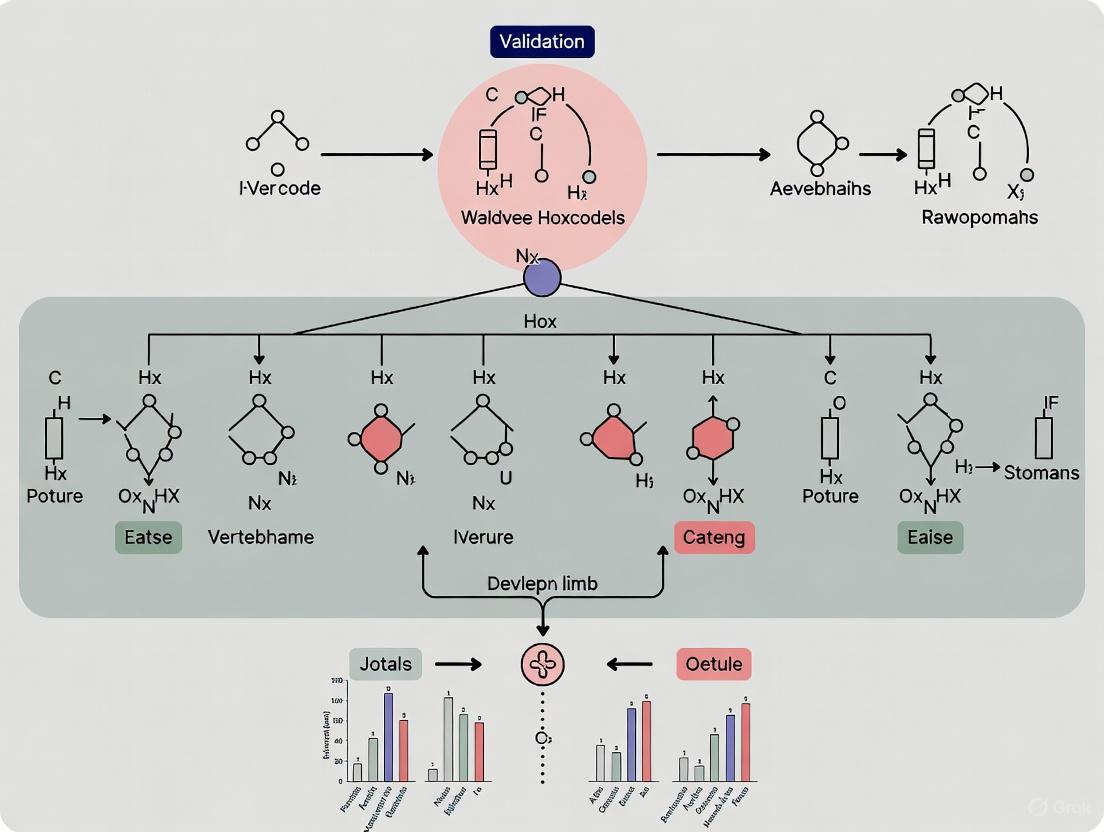
This article synthesizes current research on the Hox code model, a foundational concept in developmental biology that explains how Hox genes provide positional information for vertebrate limb formation.
Decoding the Hox Code: Validating Models of Limb Patterning in Vertebrate Development
Abstract
This article synthesizes current research on the Hox code model, a foundational concept in developmental biology that explains how Hox genes provide positional information for vertebrate limb formation. We explore the transition from correlative observations to functional validation, detailing the sophisticated genetic and epigenetic methodologies—from targeted mutagenesis to chromatin conformation analyses—that are testing and refining these models. The content addresses persistent challenges in the field, such as gene redundancy and the interpretation of mutant phenotypes, and provides a comparative analysis of Hox code implementation across species like mouse and chick, highlighting both conserved principles and species-specific adaptations. Aimed at researchers, scientists, and drug development professionals, this review underscores how validating the Hox code not only deepens our understanding of embryonic patterning and evolution but also reveals the regulatory frameworks governing cell fate, with significant implications for regenerative medicine and therapeutic design.
The Hox Code Blueprint: Foundational Principles of Limb Positioning and Patterning
The concept of a "Hox code" represents a fundamental principle in developmental biology, proposing that combinatorial expression of Hox genes provides positional information that instructs cells where they are located along the anterior-posterior axis, thereby determining their developmental fate. This code functions through a sophisticated network of transcription factors that exhibit both spatial and temporal collinearity—their expression domains and activation times correspond to their genomic order within Hox clusters [1] [2]. In vertebrate limb development, the Hox code operates as a critical regulatory mechanism that specifies positional identity, determines the boundary between limb-bearing and limbless body regions, and guides the precise patterning of limb structures [3] [2]. The validation of Hox code models has evolved significantly through advanced genetic manipulation techniques, revealing both conserved principles and species-specific modifications in how Hox genes orchestrate limb morphogenesis.
The classical model of a Hox code suggested that unique combinations of Hox genes specify positional values in developing tissues. However, recent research has revealed that this code is more complex than initially conceived, operating through combinatorial actions of multiple Hox paralog groups that provide both permissive and instructive signals [4]. This review systematically compares current models of Hox code function in vertebrate limb development, synthesizing evidence from loss-of-function studies, gain-of-function experiments, and evolutionary analyses to provide a comprehensive framework for understanding how these master regulatory genes establish limb positioning and morphology.
Comparative Analysis of Hox Code Models in Vertebrate Limb Development
Table 1: Comparative Analysis of Hox Code Functions in Vertebrate Limb Development
| Hox Gene Group | Function in Limb Positioning | Experimental Evidence | Species Studied | Key Target Genes |
|---|---|---|---|---|
| Hox4/5 Paralogs | Provide permissive signals for forelimb formation; demarcate territory with limb-forming potential | Dominant-negative loss-of-function suppresses Tbx5; necessary but insufficient for forelimb formation | Chicken embryo [4] | Tbx5 [4] [2] |
| Hox6/7 Paralogs | Provide instructive signals determining final forelimb position; sufficient to reprogram neck LPM to form ectopic limbs | Gain-of-function induces ectopic limb buds anterior to normal limb field | Chicken embryo [4] | Tbx5 [4] |
| Hox9 Paralogs | Antagonizes forelimb formation; promotes hindlimb identity through Pitx1 activation | Ectopic expression in forelimb field blocks Tbx5 and induces Pitx1; dominant-negative expands forelimb domain | Chicken embryo [2] | Tbx5 (repression), Pitx1 (activation) [2] |
| Hoxc12/c13 | Reboots developmental program during regeneration; not essential for development but critical for regeneration | Knockout inhibits cell proliferation and gene expression during regeneration but not development | Xenopus [5] | Multiple genes in limb development networks [5] |
| Hox10 Paralogs | Specifies vertebral identity by suppressing rib formation in lumbar region | Inactivation causes vertebrae in lower back to grow ribs | Mouse [1] | Rib development genes [1] |
Table 2: Temporal Regulation of Hox Genes and Limb Positioning Across Species
| Species | Forelimb Position (Somite Level) | Hox Expression Timing | Evolutionary Adaptation |
|---|---|---|---|
| Chicken | Somites 15-20 [2] | Standard timing with defined anterior boundaries [2] | Balanced cervical length and limb positioning |
| Mouse | Somites 8-10 [2] | Accelerated anterior Hox expression [2] | Compact body plan with anterior limb placement |
| Turkey | Posterior expansion [2] | Delayed termination of Hox4 expression [2] | Expanded forelimb field for flight adaptations |
Experimental Paradigms for Hox Code Validation
Loss-of-Function Approaches
The functional validation of Hox code models relies heavily on precise genetic manipulation techniques. Dominant-negative constructs have been employed to disrupt specific Hox gene functions in chicken embryos. These engineered variants lack the C-terminal portion of the homeodomain, rendering them incapable of binding target DNA while preserving their ability to interact with transcriptional co-factors, thereby sequestering essential regulatory components [4]. In practice, plasmids expressing dominant-negative Hoxa4, a5, a6, or a7 are electroporated into the dorsal layer of the lateral plate mesoderm (LPM) in Hamburger-Hamilton stage 12 chick embryos, with successful transfection confirmed by Enhanced Green Fluorescent Protein (EGFP) expression after 8-10 hours of development [4]. This approach has demonstrated that Hox4/5 genes are necessary for normal forelimb formation, as their disruption suppresses Tbx5 expression—the earliest marker of forelimb identity [4].
More sophisticated gene knockout systems using CRISPR-Cas9 have further elucidated Hox gene functions, particularly in regeneration contexts. In Xenopus studies, knocking out hoxc12 or hoxc13 revealed their dispensability for normal limb development but critical requirement for limb regeneration [5]. This regeneration-specific function represents a novel dimension of Hox code operation, where these genes reactivate developmental programs after injury. The knockout methodology involves designing guide RNAs targeting specific Hox genes, microinjecting CRISPR components into fertilized eggs, and validating gene disruption through sequencing and functional assays showing inhibited cell proliferation and disrupted gene expression patterns during regeneration [5].
Gain-of-Function Approaches
Complementary gain-of-function experiments provide crucial evidence for the instructive capabilities of Hox genes. Ectopic expression of Hox6/7 genes in the neck LPM of chicken embryos is sufficient to reprogram this tissue to form ectopic limb buds anterior to the normal limb field [4]. This remarkable transformation demonstrates that specific Hox combinations can activate the entire genetic program for limb formation in tissues that normally lack this potential. Similarly, mis-expression of Hoxc9 in the chicken forelimb field effectively blocks Tbx5 expression while inducing Pitx1 (an upstream activator of hindlimb marker Tbx4), illustrating how posterior Hox genes can suppress forelimb identity and promote hindlimb characteristics [2].
The most compelling evidence for Hox code function comes from studies where temporal manipulation of Hox expression alters limb positioning across species. Comparative analysis of quail, chicken, and turkey embryos reveals that variations in the timing of Hox gene expression directly correlate with species-specific limb positioning [2]. In turkeys, delayed termination of Hox4 expression leads to posterior expansion of the forelimb field, linking heterochrony in Hox regulation to evolutionary changes in morphology [2]. This temporal regulation is further connected to the timing of retinoic acid degradation enzyme Cyp26a1, providing a mechanistic link between signaling pathways and Hox-based positional information [2].
Signaling Pathways and Gene Regulatory Networks
Hox Gene Regulatory Network in Limb Positioning and Outgrowth
The Hox code operates within a complex regulatory network that integrates multiple signaling pathways. Retinoic acid (RA) establishes an anterior-posterior gradient that regulates the collinear expression of Hox genes along the axial level [2]. In the anterior region, Hox4 specifies the forelimb field by activating Tbx5 expression, while RA can also directly activate Tbx5 in parallel to Hox-mediated regulation [2]. This redundant activation mechanism ensures robustness in limb field specification. In the posterior region, Hox9 paralogs antagonize Tbx5 expression and induce Pitx1, which subsequently activates the hindlimb marker Tbx4 [2]. The precise boundaries of these expression domains are further refined by enzymes like Cyp26a1 that degrade RA, creating sharp transitions in positional identity [2].
Once limb fields are established, a core signaling module drives limb outgrowth through a positive feedback loop. Tbx5 activates Fgf10 expression in the lateral plate mesoderm, which then triggers Fgf8 expression in the overlying ectoderm, forming the apical ectodermal ridge (AER) [2]. Fgf8 protein travels back to the mesoderm, retro-activating Fgf10 and creating a self-sustaining signaling circuit that promotes limb bud outgrowth [2]. This module is highly conserved across amniote species, though its timing varies evolutionarily to produce species-specific limb positions. The integration of Hox-based positional information with this growth signaling network ensures that limbs form at the correct axial level and develop with proper size and morphology.
The Scientist's Toolkit: Essential Research Reagents
Table 3: Essential Research Reagents for Hox Code Investigation
| Reagent / Method | Application in Hox Research | Key Advantages | Experimental Examples |
|---|---|---|---|
| Dominant-Negative Hox Constructs | Disrupt specific Hox gene function by sequestering co-factors while lacking DNA binding | Allows targeted loss-of-function without complete gene knockout | Suppression of Tbx5 in chicken forelimb field [4] |
| CRISPR-Cas9 Genome Editing | Complete knockout of Hox genes to assess developmental requirements | Enables precise genetic manipulation in model organisms | Regeneration-specific function of hoxc12/c13 in Xenopus [5] |
| In Ovo Electroporation | Targeted gene delivery to specific embryonic regions in avian models | Spatiotemporal control of gene expression | Ectopic Hox expression in chicken lateral plate mesoderm [4] |
| Transcriptomic Analysis | Genome-wide expression profiling of developing tissues | Identifies downstream targets and regulatory networks | Identification of regeneration-specific genes in Xenopus [5] |
| Transgenic Animal Models | Tissue-specific and inducible gene expression systems | Enables temporal control of gene manipulation | Induction of hoxc12/c13 expression in Xenopus froglets [5] |
The validation of Hox code models in vertebrate limb development has revealed a sophisticated regulatory system where combinatorial Hox expression provides both permissive and instructive signals that establish limb positioning and morphology [4]. The emerging paradigm recognizes that anterior Hox genes (Hox4/5) create a permissive field with limb-forming potential, while more posterior Hox genes (Hox6/7) provide instructive signals that determine the precise position of limb formation [4]. This model successfully explains how limb positions can shift evolutionarily through changes in the timing and spatial extent of Hox expression, as demonstrated by comparative studies across avian species [2].
Future research directions will likely focus on understanding the epigenetic regulation of Hox clusters and how chromatin dynamics influence the collinear expression patterns that establish positional identity. Additionally, the discovery that Hox genes can function as "rebooters" of developmental programs during regeneration [5] opens exciting therapeutic possibilities for promoting regenerative capacity in humans. The continuing integration of genetic manipulation techniques, single-cell omics technologies, and computational modeling will further refine our understanding of how Hox codes integrate with other signaling systems to orchestrate the precise patterning of vertebrate limbs.
Historical Context and Early Correlative Evidence
The hypothesis that Hox genes provide a molecular code that determines where limbs are positioned along the vertebrate body axis is a foundational concept in developmental biology. For decades, the evidence supporting this was largely correlative, relying on observations of gene expression patterns. This guide examines the early studies that established this correlation and traces the evolution of research toward the functional, experimental validation of the Hox code model.
Early Correlative Evidence for the Hox-Limb Link
Initial support for the role of Hox genes in limb positioning came from consistent observations across different species and developmental stages, summarized in the table below.
Table 1: Key Early Correlative Evidence Linking Hox Genes to Limb Positioning
| Correlative Observation | Experimental System | Key Finding | Interpretation at the Time |
|---|---|---|---|
| Spatial Collinearity [6] [7] | Chicken & Mouse Embryos | Sequential expression domains of Hox genes along the anterior-posterior axis correlate with positions of the neck, trunk, and sacral regions. | Hox gene expression domains provide a map of positional identity that could pre-figure limb fields. |
| Cross-Species Expression Domains [6] | Comparative Bird Species (e.g., Sparrow vs. Swan) | The anterior expression boundary of specific Hox genes (e.g., Hoxc6) correlates with the axial position of the forelimb, which varies by up to 15 vertebrae between species. | Natural variation in limb position is linked to shifts in Hox gene expression domains, suggesting a regulatory role. |
| Overlap with Limb Fields [4] [8] | Chicken & Mouse Embryos | The expression domains of Hox4/5 and Hox6/7 genes overlap with the lateral plate mesoderm (LPM) region that forms the forelimb bud. | Specific Hox paralogy groups are expressed in the correct location to specify the forelimb-forming territory. |
| Regulatory Sequence Binding [6] | Reporter Gene Assays | Hox4/5 genes were shown to bind a regulatory sequence of Tbx5, a transcription factor essential for forelimb initiation. | Hox genes may directly activate key limb initiation genes, positioning the limb bud. |
From Correlation to Experimentation: Key Early Functional Studies
A significant challenge in the field was that functional studies, particularly in mouse mutants, often failed to show dramatic changes in limb position, leaving the correlative evidence unchallenged for years [6]. The transition to functional validation relied on innovative techniques in chick embryos, leading to critical breakthroughs.
Table 2: Evolution of Key Experimental Approaches in Hox Code Research
| Research Phase | Experimental Goal | Typical Approach | Key Limitation or Insight |
|---|---|---|---|
| Early Correlation | Map gene expression to limb position | Whole-mount in situ hybridization [9] | Estishes relationship but cannot prove function. |
| Initial Functional Tests | Test requirement of a single Hox gene | Gene knockout in mice [4] | Often showed no phenotype; later understood to be due to gene redundancy. |
| Advanced Functional Tests | Test combinatorial Hox code model | Electroporation of multiple Hox gene constructs (GOF + LOF) in chick [6] | Revealed that changing limb position requires both activating and repressing elements of the code. |
Critical Experimental Workflow: Combinatorial Hox Perturbation
A pivotal experiment that moved beyond correlation involved simultaneously manipulating multiple Hox genes in the chick embryo [6]. The logic and workflow of this experiment is as follows.
Detailed Experimental Protocol:
- Embryo Preparation: Fertilized chicken eggs are incubated to reach Hamburger-Hamilton (HH) stage 11-14 [4] [6].
- Plasmid Constructs: Generate expression plasmids for:
- Gain-of-Function (GOF): Full-length Hoxb4 cDNA.
- Loss-of-Function (LOF): Dominant-negative Hoxc9 (DN-Hoxc9), which lacks the DNA-binding domain but retains co-factor binding ability, thereby inhibiting the function of endogenous Hoxc9 proteins [6].
- Electroporation: Inject the plasmid combination into the posterior interlimb region of the lateral plate mesoderm (LPM). Apply electrical pulses to facilitate DNA uptake into LPM cells [6].
- Post-Experiment Analysis: Re-incubate embryos for 24-48 hours. Analyze results via:
- In situ hybridization: To detect ectopic expression of Tbx5 mRNA.
- Immunohistochemistry: To visualize translated proteins if constructs are tagged.
- Lineage tracing: Co-electroporation with a fluorescent reporter (e.g., EGFP) to identify transfected cells [4].
The Scientist's Toolkit: Key Research Reagents
This table catalogs essential reagents and models used in this field, as evidenced by the cited research.
Table 3: Essential Research Reagents and Models for Studying Limb Positioning
| Reagent / Model | Function in Research | Key Feature or Application |
|---|---|---|
| Chick Embryo (Gallus gallus) | Primary model organism for functional studies | Amenable to electroporation and grafting; allows precise spatiotemporal control of gene expression [4] [6]. |
| Dominant-Negative Hox Constructs | To inhibit specific Hox gene function | Lacks DNA-binding domain but competes for co-factors; used for loss-of-function studies [4] [6]. |
| Tbx5/lacZ Reporter | Readout for forelimb field activation | A transgenic reporter where the Tbx5 regulatory sequence drives lacZ expression; used to test enhancer activity [6]. |
| Zebrafish (Danio rerio) | Model for evolutionary context | Used to study deep homology of Hox regulatory landscapes in fins versus limbs [9]. |
| Axolotl (Ambystoma mexicanum) | Model for regeneration and positional memory | Used to study how Hox-related positional information is maintained in adult tissues and guides limb regeneration [10]. |
The Modern Hox Code Model: Permissive and Instructive Signals
Recent research has solidified the Hox code model, demonstrating that limb positioning is governed by a two-tiered system involving multiple Hox paralogy groups [4]. The following diagram illustrates this refined model.
This model posits that Hox4/5 genes define a broad "permissive" domain in the neck and thorax where it is possible for a limb to form. Within this domain, the instructive signal of Hox6/7 actively initiates the limb developmental program, precisely positioning the forelimb bud [4]. This explains why early experiments targeting single Hox genes failed; altering limb position requires modulating this complex, combinatorial code.
The reproducible formation of limbs at specific locations along the vertebrate body axis is a fundamental process in embryonic development. Despite the wide variation in limb position across species—for instance, the forelimb in birds can form at the level of the 10th vertebra in a sparrow or the 25th in a swan—the mechanism ensuring this precision is highly conserved [6]. For over three decades, Hox genes, a family of evolutionarily conserved transcription factors, have been hypothesized to be the primary architects of this process [4] [6]. Recent research has crystallized this theory into a defined Two-Phase Model, which delineates how these genes first establish broad limb-forming territories before precisely activating the genetic program for limb bud initiation [4] [6]. This guide objectively compares the experimental data supporting this model and details the key methodologies driving its validation.
The Molecular Basis of the Two-Phase Model
The Two-Phase Model posits that limb positioning is not a single event, but a sequential process orchestrated by Hox genes. The following table summarizes the core functions of the major Hox paralogous groups involved in this process.
Table 1: Key Hox Gene Functions in Limb Positioning and Initiation
| Hox Paralogous Group | Primary Role in Forelimb | Phase | Effect on Tbx5 | Genetic Evidence |
|---|---|---|---|---|
| Hox4/Hox5 (e.g., Hoxb4) | Establishes a permissive field for limb formation | Phase 1: Field Establishment | Acts as an activator [4] | Necessary but insufficient for Tbx5 induction [4] [6] |
| Hox6/Hox7 (e.g., Hoxc9) | Provides instructive cues for precise positioning | Phase 1: Field Establishment | Acts as a repressor [6] | Represses Tbx5; its inhibition is required for field shift [6] |
| Hox9 (e.g., Hoxc9) | Demarcates the interlimb region | Phase 1: Field Establishment | Represses Tbx5 expression [6] | Loss of repression expands limb field [6] |
| Tbx5 | Master regulator of forelimb initiation | Phase 2: Bud Initiation | N/A (Downstream target) | Directly induced by Hox code; essential for forelimb formation [8] [4] |
Phase 1: Establishing the Limb Field during Gastrulation
The first phase occurs during gastrulation, a critical period when the three germ layers are formed. Live-imaging and lineage-tracing studies in chick embryos reveal that the lateral plate mesoderm (LPM), the tissue that gives rise to limbs, is patterned into forelimb, interlimb, and hindlimb domains as it is generated [6]. This patterning is governed by the temporal and spatial collinearity of Hox genes: their sequential activation and expression along the anterior-posterior axis in the same order as their physical arrangement on the chromosome [11] [6].
Research shows that the combinatorial expression of Hox genes creates a "Hox code" that pre-patterns the LPM. In the prospective forelimb region, this involves a balance between activating and repressing factors. The expression of Hox4 and Hox5 genes marks a broad permissive territory where a limb can form [4]. However, within this territory, genes like Hoxc9 (a Hox9 paralog) are expressed in the interlimb domain and function to repress the limb program, thereby sharpening the boundaries of the future limb field [6].
Phase 2: Initiating the Limb Bud
The second phase begins once the Hox code has established the precise coordinates for the limb. At this stage, the key outcome is the activation of Tbx5, a transcription factor that serves as the master regulator of forelimb initiation [8] [4]. The Tbx5 gene is directly regulated by the Hox code established in Phase 1. Functional experiments demonstrate that while Hox4/Hox5 genes are necessary to activate Tbx5, they are not sufficient on their own [4] [6]. The simultaneous repression of Hoxc9 is required to relieve inhibition on the Tbx5 locus, allowing for its expression and the subsequent initiation of the limb bud [6]. Once activated, Tbx5 upregulates Fgf10 in the mesoderm, initiating a positive feedback loop with Fgf8 in the ectoderm that drives limb bud outgrowth and patterning [8].
Diagram: The Two-Phase Hox-Tbx5 Regulatory Axis in Forelimb Formation
This diagram illustrates the sequential regulatory logic, showing how early Hox patterning enables the precise activation of the core limb initiation genes.
Experimental Validation: Protocols and Key Data
The Two-Phase Model is supported by rigorous functional experiments, primarily conducted in chick and mouse embryos. The table below summarizes the quantitative outcomes from pivotal gain- and loss-of-function studies.
Table 2: Experimental Evidence for the Two-Phase Model in Chick Embryos
| Experimental Manipulation | Target Gene(s) | Effect on Tbx5 Expression | Effect on Limb Position | Key Finding |
|---|---|---|---|---|
| Hoxb4 Overexpression [6] | Hoxb4 (Activator) | No ectopic expression | No shift | Hox4/Hox5 are necessary but insufficient |
| Hoxc9 Dominant-Negative [6] | Hoxc9 (Repressor) | No ectopic expression | No shift | Repression removal is insufficient alone |
| Hoxb4 OE + Hoxc9 DN [6] | Hoxb4 & Hoxc9 | Robust ectopic expression | Posterior shift of bud | Combinatorial Hox code is required |
Detailed Experimental Protocol: Electroporation in Chick Embryos
The following methodology is adapted from key studies validating the model [4] [6].
Diagram: Workflow for Functional Hox Gene Analysis in Chick Embryos
Key Reagents and Solutions:
- Plasmids: CMV or CAG promoters driving expression of Hox genes, dominant-negative constructs, and EGFP.
- Dominant-Negative Hox Construction: Generated by deleting the C-terminal portion of the homeodomain, rendering the protein unable to bind DNA but capable of sequestering co-factors [4] [6].
- Electroporation Apparatus: Electroporator and microelectrodes for precise targeting of the lateral plate mesoderm.
- In Situ Hybridization Reagents: Digoxigenin-labeled RNA probes for Tbx5; anti-digoxigenin antibodies coupled to alkaline phosphatase for colorimetric detection.
The Scientist's Toolkit: Essential Research Reagents
The following table catalogues critical reagents for investigating the Two-Phase Model, based on the cited methodologies.
Table 3: Essential Reagents for Limb Positioning Research
| Reagent / Material | Function in Experimentation | Example Use Case |
|---|---|---|
| Hox Expression Plasmids (GoF) | To misexpress Hox genes in specific embryonic domains. | Testing sufficiency of Hoxb4 to induce Tbx5 [6]. |
| Dominant-Negative Hox Constructs (LoF) | To inhibit the function of an entire Hox paralogous group. | Blocking Hoxc9 repressive activity in the interlimb [4] [6]. |
| EGFP Reporter Plasmids | To visualize successfully transfected cells and monitor embryo health. | Marking electroporated cells in the lateral plate mesoderm [4]. |
| Tbx5 RNA Probe (for in situ) | To detect and visualize the spatial expression of the key limb initiator gene. | Assessing the expansion or reduction of the forelimb field [6]. |
| Chick/Quail Embryos | The primary in vivo model system due to accessibility for manipulation. | Grafting and lineage-tracing experiments to map cell fates [6]. |
The experimental data provide compelling evidence for the Two-Phase Model, demonstrating that limb positioning relies on a combinatorial Hox code rather than the action of a single gene. This model explains why single Hox gene knockouts in mice often fail to show dramatic limb positioning defects—the functional redundancy within paralogous groups and the balance between activators and repressors necessitate complex genetic manipulations to reveal the phenotype [4] [6].
Furthermore, this mechanism offers an elegant explanation for the evolutionary variation in limb position across vertebrate species. Differences in the timing and spatial extent of Hox gene activation during gastrulation can account for the different axial positions of the limbs in species like the finch and the ostrich [11] [6]. The deep conservation of the Hox code, from patterning the axial skeleton to positioning the limbs, underscores its fundamental role in translating positional information into morphological structure during vertebrate development.
In vertebrate limb development, the coordinated expression of Hox genes provides a positional code that instructs cells on their location and developmental fate along the anteroposterior (head-to-tail) and proximodistal (shoulder-to-fingertip) axes. These transcription factors are arranged in four clusters (HoxA, HoxB, HoxC, and HoxD) and are categorized into 13 paralog groups based on sequence similarity and genomic position. Research spanning chick, mouse, and zebrafish models has revealed that specific paralog groups perform distinct yet overlapping functions in limb positioning, specification, and patterning. This guide compares the functional roles of three key sets of paralogs—Hox4/5, Hox6/7, and Hox9-13—in vertebrate limb development, presenting experimental data and methodologies that validate the Hox code model.
Comparative Analysis of Hox Paralog Functions
The table below summarizes the core functions, experimental models, and phenotypic outcomes associated with each Hox paralog group in limb development.
| Hox Paralog Group | Core Function in Limb Development | Experimental Models & Key Findings | Loss-of-Function Phenotype | Gain-of-Function Phenotype |
|---|---|---|---|---|
| Hox4/5 | Positional permissiveness: Necessary but not sufficient for forelimb bud initiation [12]. AP patterning: Restricts Shh expression to the posterior limb bud [13]. | Chick electroporation (GOF): Misexpression in neck does not induce ectopic limbs [12]. Mouse KO (Hox5) : Loss leads to anterior Shh expansion and AP patterning defects [13]. | Downregulation of Tbx5 and Fgf10 in LPM; disrupted limb bud initiation [12]. | Not sufficient to induce ectopic limb budding [12]. |
| Hox6/7 | Positional instruction: Necessary and sufficient to specify forelimb position and induce budding [12]. Specifies Lateral Motor Column (LMC) identity in spinal cord [14]. | Chick electroporation (GOF): Misexpression in neck induces ectopic Tbx5+ limb buds [12]. Mouse KO (Hox6) : LMC identity is partially retained via redundancy with Hox5-8 genes [14]. | Severe downregulation of early limb markers (Tbx5, Fgf10); marked reduction in wing bud size [12]. | Induces ectopic forelimb buds in the neck region [12]. |
| Hox9-13 | PD Patterning: Governs segment identity (stylopod, zeugopod, autopod) [13] [15]. AP Patterning (Hox9): Initiates Shh expression for AP asymmetry [13]. | Mouse compound KOs: Loss of Hoxa/d9-11 results in severe truncation of specific limb segments [13] [15]. Zebrafish cluster mutants: Confirm conserved role in fin/limb outgrowth [16]. | Loss of entire limb segments; severe truncation when HoxA and HoxD clusters are deleted [16] [15]. | Alters digit number and length; can induce posterior homeotic transformations [15]. |
Table 1: Comparative functions of key Hox paralog groups in vertebrate limb development. GOF: Gain-of-Function; KO: Knockout; LPM: Lateral Plate Mesoderm; AP: Anteroposterior; PD: Proximodistal.
Experimental Protocols for Validating Hox Code Models
Dominant-Negative Loss-of-Function in Chick
This protocol tests the necessity of Hox genes for limb bud initiation [12].
- Objective: To determine if a specific Hox gene is required for the initial stages of limb formation.
- Methodology:
- Construct Design: A dominant-negative form of the Hox gene (e.g., Hoxa4, Hoxa5, Hoxa6, Hoxa7) is engineered. This construct lacks the DNA-binding domain but retains other functional domains, allowing it to interfere with the function of the endogenous wild-type Hox proteins [12].
- Electroporation: The construct is introduced into the prospective wing field of the lateral plate mesoderm (LPM) in HH12 stage chick embryos via electroporation [12].
- Phenotypic Analysis: Embryos are analyzed for downstream effects, including:
- Interpretation: Downregulation of marker genes and reduced bud size indicate the tested Hox gene is necessary for forelimb field specification and the establishment of the Fgf10-Fgf8 signaling feedback loop [12].
Gain-of-Function via Ectopic Expression in Chick
This protocol tests the sufficiency of a Hox gene to instruct limb identity [12].
- Objective: To assess if a Hox gene can reprogram non-limb forming tissue to initiate limb development.
- Methodology:
- Construct Design: A full-length, functional version of the Hox gene (e.g., Hoxa6 or Hoxa7) is cloned into an expression vector [12].
- Electroporation: The construct is electroporated into the LPM of the neck region, an area that is normally incompetent to form limbs [12].
- Phenotypic Analysis:
- Embryos are screened for ectopic expression of Tbx5 and Fgf10.
- The formation of an ectopic limb bud is assessed morphologically and histologically.
- RNA-sequencing can be performed on ectopic bud tissue to compare transcriptomes with normal limb buds and neck cells, revealing which parts of the limb genetic program were successfully activated [12].
- Interpretation: Induction of Tbx5 and a budding structure demonstrates the Hox gene is sufficient to confer limb-forming identity on non-limb tissue. Arrested outgrowth often occurs due to the incompetence of local tissues (e.g., neck ectoderm) to support later stages of limb development [12].
Compound Cluster Deletion in Zebrafish
This protocol investigates functional redundancy among Hox clusters in appendage development [16].
- Objective: To define the combined role of HoxA- and HoxD-related gene clusters in pectoral fin (forelimb homologue) development.
- Methodology:
- Mutant Generation: The CRISPR-Cas9 system is used to generate zebrafish mutants with single, double, and triple deletions of the hoxaa, hoxab, and hoxda clusters [16].
- Phenotypic Screening: Live larvae are screened for pectoral fin length and morphology.
- Cartilage Staining: Alcian blue staining is used to visualize and measure the cartilaginous endoskeletal disc and fin-fold in larvae [16].
- Molecular Characterization: Whole-mount in situ hybridization is performed on mutant embryos to analyze the expression of critical patterning genes like tbx5a (for fin bud initiation) and shha (for posterior proliferation and AP patterning) [16].
- Adult Skeletal Analysis: Micro-CT scanning is used to visualize the bone structure of pectoral fins in surviving adult mutants [16].
- Interpretation: A progressively severe fin truncation in double and triple mutants, coupled with normal tbx5a expression but reduced shha expression, demonstrates that these clusters act redundantly to promote fin outgrowth after the initial bud formation, primarily by maintaining the SHH signaling pathway [16].
Signaling Pathways and Genetic Hierarchies in Hox-Mediated Limb Development
The following diagrams, defined using the DOT language, illustrate the core genetic interactions governed by Hox paralogs during limb development.
Diagram 1: Hox gene functions in limb development stages.
Diagram 2: Experimental test of Hox sufficiency.
The Scientist's Toolkit: Essential Research Reagents
This table catalogs key reagents and their applications for studying Hox gene function in limb development.
| Research Reagent / Tool | Function & Application in Hox Research |
|---|---|
| Dominant-Negative Hox Constructs | Engineered to lack the DNA-binding domain. Used in loss-of-function studies to disrupt the activity of endogenous Hox proteins and test genetic necessity [12]. |
| Full-Length Hox Expression Vectors | Used for gain-of-function experiments to misexpress Hox genes in ectopic locations and test their sufficiency in cell fate specification [12]. |
| CRISPR-Cas9 System | Enables targeted deletion of single Hox genes, multiple paralogs, or entire Hox clusters in model organisms (e.g., mice, zebrafish) to study loss-of-function phenotypes and genetic redundancy [16]. |
| In Situ Hybridization (ISH) Probes | RNA or DNA probes designed to bind specific Hox mRNA transcripts (e.g., for Hoxa6, Hoxd13) or key downstream targets (e.g., Tbx5, Shh, Fgf10). Critical for visualizing spatial expression patterns [12] [16]. |
| RNA-Sequencing (Transcriptomics) | Profiling gene expression in wild-type vs. mutant tissue (e.g., Hox cluster knockout limbs) to identify genetic networks and downstream targets regulated by Hox genes [12]. |
| Mouse Hox Cluster Knockouts | Stable genetic lines with deletions of specific Hox genes or entire clusters. Fundamental for parsing the requirements of Hox genes in axial patterning, limb development, and organogenesis [14] [13] [15]. |
The development of the vertebrate limb is a classical model for understanding how positional identity is established in embryonic structures. A fundamental concept is that the spatial organization of the limb is not pre-determined but is mapped through the coordinated expression of specific genes. Central to this process are the Hox genes, a family of transcription factors that confer positional information along the anterior-posterior (head-to-tail) axis of the embryo [4]. The unique, combinatorial expression of these genes in the limb bud creates a "Hox code" that instructs cells on their location, ultimately determining the pattern and identity of skeletal elements, tendons, and muscles [13] [17]. This code is not a static blueprint but a dynamic system, interpreted through complex regulatory networks to guide the growth and patterning of a perfectly formed appendage. This guide evaluates and compares the experimental models that validate how this Hox code is established, regulated, and translated into the three-dimensional architecture of the limb.
Conceptual Framework: Permissive vs. Instructive Hox Signaling
A critical advance in understanding the Hox code is the distinction between permissive and instructive signals. Research on chick embryos has revealed that these two types of Hox-driven cues work in concert to define the precise location of the forelimb.
Table 1: Core Concepts of Permissive and Instructive Hox Signaling
| Concept | Definition | Key Hox Genes | Biological Role |
|---|---|---|---|
| Permissive Signal | Establishes a broad, competent territory where limb formation is allowed to occur. | Hox4/Hox5 paralogy groups [4] [12] | Demarcates the neck-to-thorax region as competent for forelimb formation, creating a permissive field [4]. |
| Instructive Signal | Provides the specific, location-defining cue that initiates the limb program within the permissive field. | Hox6/Hox7 paralogy groups [4] [12] | Actively directs cells within the permissive field to adopt a forelimb fate, determining the final position of the bud [4]. |
The model proposes that during evolution, the emergence of the neck involved Hox4/5 genes creating a permissive zone for forelimb formation. However, the final position is pinpointed by the instructive action of Hox6/7 within the lateral plate mesoderm [4]. This dual mechanism ensures limbs form at the correct anatomical boundary—the cervical-thoracic transition—across vertebrate species.
Key Experimental Models and Data
The following section compares major experimental approaches that have decoded the Hox logic of limb patterning, summarizing their key findings and methodological strengths.
Gain-of-Function Experiments in Chick Embryos
These experiments test the sufficiency of a Hox gene to induce limb formation by overexpressing it in a non-limb-forming region.
- Protocol: Full-length Hoxa6 or Hoxa7 genes were electroporated into the neck lateral plate mesoderm (LPM) of HH12 chick embryos. This region is normally incompetent for limb formation. The outcomes were analyzed using markers like Tbx5 and Fgf10 [4] [12].
- Key Findings: Overexpression of Hoxa6 or Hoxa7, but not Hoxa4 or Hoxa5, was sufficient to reprogram neck LPM and induce an ectopic limb bud anterior to the normal limb field. This bud expressed early limb markers like Tbx5 and Fgf10, demonstrating that Hox6/7 genes provide an instructive signal for limb positioning [4] [12].
- Limitations: The ectopic buds failed to express Fgf8 in the overlying ectoderm and did not progress beyond the early bud stage, indicating that neck ectoderm lacks the competence to support full limb outgrowth [12].
Loss-of-Function Experiments in Chick Embryos
These experiments test the necessity of a Hox gene for normal limb development by disrupting its function.
- Protocol: Dominant-negative (DN) forms of Hoxa4, a5, a6, or a7 (lacking the DNA-binding domain but retaining co-factor binding ability) were electroporated into the prospective wing field of the LPM in HH12 chick embryos [4] [12].
- Key Findings: Suppression of any of these four Hox genes led to downregulation of Tbx5 and Fgf10, a reduction in Fgf8 expression, and a marked decrease in wing bud size. This indicates that Hox4-7 genes are collectively necessary for the initial specification of the forelimb field [4] [12].
- Limitations: The evidence was assessed as "incomplete" because the DN constructs may lack specificity and could cause experimental artifacts. Proper controls to confirm specificity are crucial for interpretation [4] [12].
Single-Cell Transcriptomics in Mouse and Axolotl
This approach reveals the heterogeneity of Hox expression at the cellular level and its role in maintaining positional memory.
- Protocol: Single-cell RNA sequencing (scRNA-seq) was performed on mouse limb buds and on connective tissue cells from axolotl limbs to analyze transcriptional profiles [18] [10].
- Key Findings:
- In mice, single cells show a heterogeneous combinatorial expression of Hoxd genes (e.g., Hoxd9-d13), with distinct combinations correlating with specific cell types and a pseudotemporal sequence during differentiation [18].
- In axolotls, the transcription factor Hand2 is stably expressed in posterior limb cells from development through adulthood, priming them to activate Shh signaling upon amputation. This constitutes a molecular memory for posterior identity [10].
- Significance: These studies demonstrate that the Hox code operates at a single-cell level and can be maintained in adult tissues to guide regeneration.
Comparative Genomics: Mouse vs. Chick Regulation
This strategy compares the regulatory mechanisms of Hox genes across species with different limb morphologies.
- Protocol: Researchers compared transcriptomes, 3D genome conformation (Hi-C), and histone modifications at the HoxD locus in developing mouse and chick forelimbs and hindlimbs [19].
- Key Findings: The bimodal regulatory mechanism (switching between telomeric (T-DOM) and centromeric (C-DOM) chromatin domains) is highly conserved between mice and chicks. However, differences were found in the duration of T-DOM activity and the activity of specific enhancers, which may account for morphological differences, particularly in the hindlimb [19].
- Significance: This shows that evolutionary changes in limb morphology are linked to subtle modifications in the conserved Hox regulatory system.
Table 2: Comparison of Key Hox Gene Patterning Experiments
| Experimental Approach | Core Finding | Model Organism | Key Measured Outcome |
|---|---|---|---|
| Gain-of-Function | Hox6/7 genes are sufficient to instruct ectopic limb bud formation in competent territory. | Chicken [4] [12] | Ectopic Tbx5 expression and bud formation in neck LPM. |
| Loss-of-Function | Hox4-7 genes are collectively necessary for initial forelimb field specification. | Chicken [4] [12] | Downregulation of Tbx5, Fgf10, and reduced bud size. |
| Single-Cell Analysis | Hox expression is heterogeneous and combinatorial at single-cell resolution; Hand2 maintains positional memory. | Mouse, Axolotl [18] [10] | Identification of distinct Hoxd combinations; sustained Hand2 expression in posterior cells. |
| Comparative Genomics | The bimodal Hoxd regulatory system is conserved, but species-specific modifications underlie morphological divergence. | Mouse vs. Chicken [19] | Differences in TAD boundary width and enhancer activity between species. |
Visualization of Signaling Pathways and Workflows
Hox Code Logic in Forelimb Positioning
The following diagram summarizes the cooperative relationship between permissive and instructive Hox signals in establishing the forelimb field.
Experimental Workflow for Hox Gene Functional Analysis
A general workflow for conducting gain- and loss-of-function studies in chick embryos is outlined below.
The Scientist's Toolkit: Essential Research Reagents
Table 3: Key Reagent Solutions for Hox and Limb Development Research
| Reagent / Tool | Function / Application | Example Use Case |
|---|---|---|
| Dominant-Negative Hox Constructs | Disrupts function of specific Hox genes and their paralogs by competing for co-factor binding. | Testing gene necessity in chick LPM via electroporation [4] [12]. |
| Full-Length Hox Expression Vectors | Enables gain-of-function analysis through targeted overexpression. | Inducing ectopic limb buds in chick embryos [4] [12]. |
| Hox Reporter Transgenics (e.g., ZRS>TFP) | Visualizes cells with active Hox-related enhancers or gene expression in real-time. | Fate mapping of Shh-expressing cells in axolotl regeneration [10]. |
| scRNA-seq Platforms | Profiles heterogeneous gene expression at single-cell resolution across entire tissues. | Decoding combinatorial Hoxd expression in mouse limb buds [18]. |
| In situ Hybridization Probes | Spatially localizes specific mRNA transcripts in fixed tissue sections or whole mounts. | Assessing Tbx5, Fgf10, and Hox gene expression patterns post-intervention [4] [19]. |
Discussion and Synthesis
The experimental data from multiple models converge to validate a model where limb positional identity is mapped through a dynamic, combinatorial Hox code. The evidence from chick embryos firmly establishes the permissive-instructive hierarchy between Hox4/5 and Hox6/7 genes [4]. This functional segregation resolves how a broad region of competence is refined into a precise location for limb bud emergence.
Furthermore, the conservation of the fundamental bimodal regulatory mechanism for HoxD genes between mice and chickens, despite their different limb morphologies, highlights the deep evolutionary conservation of this system [19]. The observed morphological diversity appears to arise from species-specific tweaks—such as variations in the timing of enhancer activities and the width of topological domain boundaries—within this conserved framework [19].
Finally, the discovery of stable Hox-related transcription factor expression (e.g., Hand2) in adult axolotl tissues provides a direct molecular link between developmental patterning and regenerative positional memory [10]. This suggests that the Hox code is not only a blueprint for development but also a persistent record of positional information that can be reactivated during regeneration.
Beyond Correlation: Functional Methods for Hox Code Validation
{article}
Classical and Modern Loss-of-Function Approaches: From Mutants to Dominant-Negative Constructs
Loss-of-function (LOF) approaches are fundamental to functional genomics, enabling researchers to decipher gene function by analyzing the phenotypic consequences of gene disruption. This guide objectively compares classical mutagenesis techniques with modern molecular methods, including dominant-negative constructs, within the specific context of validating Hox code models in vertebrate limb development. We provide a structured comparison of performance data, detailed experimental protocols, and essential research reagent solutions to inform the selection of optimal methodologies for developmental biology research and therapeutic target validation.
Understanding gene function has long relied on the principle of loss-of-function (LOF) analysis, where the targeted disruption of a gene's activity reveals its wild-type role through resulting phenotypic changes [20]. The landscape of LOF methodologies has evolved dramatically from classical whole-organism mutagenesis to precise molecular tools such as CRISPR-based gene editing and sophisticated dominant-negative (DN) constructs. In the field of vertebrate limb development, these approaches have been instrumental in testing and validating the Hox code model, a paradigm positing that combinatorial Hox gene expression patterns along the anterior-posterior axis determine the positional identity and morphology of structures, including limbs [21]. This guide provides a systematic, data-driven comparison of these techniques, focusing on their application in elucidating the mechanisms governing limb positioning and development.
Comparative Analysis of LOF Methodologies
The choice of LOF method can significantly influence experimental outcomes, as each technique varies in its mechanism, duration, specificity, and applicability across model systems [20]. The following table summarizes the core characteristics of major LOF approaches.
Table 1: Key Characteristics of Loss-of-Function Approaches
| Loss-of-Function Approach | Level of Action | Duration of Effect | Specificity | Inducible | Reversible |
|---|---|---|---|---|---|
| Chemical Mutagens (e.g., EMS, ENU) | DNA | Sustained | None | No | No |
| Transposons | DNA | Sustained | None | Partially | In some cases |
| RNA Interference (RNAi) | mRNA | System-dependent | Variable | Yes | System-specific |
| Morpholinos | mRNA | Transient | Variable | Yes | No |
| Genome Editing (e.g., CRISPR-Cas9) | DNA | Sustained | High | Partially | No |
| Dominant-Negative Constructs | Protein (often) | Sustained | High | Partially | No |
| Small-Molecule Inhibitors | Protein | Transient | Variable | Yes | Yes |
Beyond their operational characteristics, a critical distinction lies in the molecular nature of the mutations they create. LOF mutations can be complete nulls (amorphic) or partial LOF (hypomorphic), while other mutation types include gain-of-function (GOF), which can be hypermorphic (increased activity) or neomorphic (novel function), and antimorphic (antagonistic to the wild-type allele, a category that includes dominant-negative effects) [20]. DN mutations are particularly notable for their protein-level mechanism, where a mutant subunit "poisons" multimetric protein complexes, effectively interfering with the activity of the wild-type protein [22] [23].
Table 2: Performance Data in Vertebrate Model Organisms
| Methodology | Typical Efficiency in Model Organisms | Key Advantages | Major Limitations |
|---|---|---|---|
| Classical Mutagenesis (EMS/ENU) | Saturation achievable in invertebrates (e.g., C. elegans, zebrafish); high mutation load [20] | Untargeted, discovery of novel genes; can create allelic series | Background mutations complicate analysis; not gene-specific |
| RNAi / Morpholinos | Variable; efficacy depends on target gene and system (e.g., zebrafish) [20] | Rapid application; tunable knockdown level | Off-target effects; transient nature; potential for phenotypic compensation |
| CRISPR-Cas9 Knockout | High efficiency in mice, zebrafish, cell culture [20] | High specificity; creates stable, heritable null alleles | Off-target editing possible; not easily reversible |
| Dominant-Negative Constructs | Highly effective for proteins forming complexes (e.g., transcription factors) [4] | Can inhibit specific protein functions within a multifunctional protein | Requires knowledge of functional domains; effectiveness is protein-specific |
Application in Validating Hox Code Models of Limb Development
The vertebrate limb is a premier model for studying the role of Hox genes in patterning. The Hox code model proposes that the combinatorial expression of Hox genes, such as those from paralogy groups 4-9, establishes the positional information for limb bud initiation and identity along the body axis [21]. LOF experiments have been critical in testing this model.
For instance, a recent study in chick embryos employed dominant-negative forms of Hoxa4, a5, a6, and a7 to investigate their roles in forelimb positioning. Electroporation of these DN constructs into the lateral plate mesoderm (LPM) of the prospective wing field resulted in the suppression of Tbx5 expression, a key marker and regulator of forelimb initiation [4]. This demonstrates a necessary role for these Hox genes in forelimb formation. Conversely, gain-of-function experiments showed that Hox6/7 genes are sufficient to reprogram neck LPM to form an ectopic limb bud anterior to the normal limb field [4]. These findings support a model where a permissive signal from Hox4/5 demarcates a territory competent for limb formation, while an instructive cue from Hox6/7 within this region determines the final forelimb position [4].
This research highlights the utility of DN constructs in dissecting such complex genetic interactions. The DN Hox proteins used in these studies lacked the C-terminal portion of the homeodomain, rendering them unable to bind DNA but still capable of sequestering essential transcriptional co-factors, thereby acting in a dominant-negative manner to disrupt the function of the wild-type Hox proteins [4].
The following diagram illustrates the logical workflow and core findings of such an experiment designed to validate the Hox code using LOF and GOF approaches in limb development.
Detailed Experimental Protocols
Protocol 1: Electroporation of Dominant-Negative Hox Constructs in Chick Embryos
This protocol is adapted from methodologies used to investigate Hox gene function in limb positioning [4].
- Plasmid Construction: Clone dominant-negative (DN) versions of the target Hox gene (e.g., Hoxa4, a5, a6, a7) into an expression plasmid containing a strong ubiquitous promoter (e.g., CAGGS) and a reporter gene like EGFP. The DN variant is engineered to lack the C-terminal portion of the homeodomain, preventing DNA binding while retaining the ability to dimerize with co-factors [4].
- Embryo Preparation: Incubate fertilized chick eggs to Hamburger-Hamilton (HH) stage 12. Window the eggs and visualize embryos using Indian ink injection for contrast.
- Electroporation Setup: Prepare plasmid DNA solution with fast green dye for visualization. Position an electrode on the dorsal layer of the lateral plate mesoderm (LPM) in the prospective wing field.
- Electroporation: Apply square electrical pulses (e.g., 5-10V, 50ms pulse length, 5 pulses) to drive DNA into the targeted LPM cells.
- Incubation & Analysis: Re-incubate electroporated embryos for 8-10 hours until they reach HH stage 14. Fix embryos and analyze EGFP expression to confirm transfection efficiency. Assess phenotypic outcomes via in situ hybridization for key markers like Tbx5 and examine limb bud morphology.
Protocol 2: CRISPR-Cas9-Mediated Knockout in Mouse Models
This standard protocol is essential for creating stable, heritable LOF alleles to study gene function in vivo [20].
- gRNA Design & Synthesis: Design single-guide RNAs (sgRNAs) targeting exonic regions of the Hox gene of interest. Synthesize sgRNAs and the Cas9 mRNA or produce Cas9 protein-sgRNA ribonucleoprotein (RNP) complexes.
- Zygote Injection: Harvest fertilized mouse oocytes. Microinject the CRISPR components (sgRNA + Cas9 mRNA/protein) into the pronucleus or cytoplasm of the zygotes.
- Embryo Transfer: Surgically transfer the injected zygotes into the oviducts of pseudopregnant foster female mice.
- Genotyping Founders: Genotype the resulting offspring (F0 founders) to identify indels at the target site using techniques like PCR followed by restriction fragment length polymorphism (RFLP) assay or sequencing.
- Phenotypic Analysis: Analyze F0 mosaics or establish stable F1 lines. Characterize limb phenotypes through skeletal preps, histology, and molecular analysis (e.g., RNA-Seq, in situ hybridization) to confirm the LOF effect and determine the consequence on the Hox code and downstream pathways.
The Scientist's Toolkit: Essential Research Reagent Solutions
Successful execution of LOF experiments requires a suite of reliable reagents. The following table details key materials and their functions.
Table 3: Key Research Reagents for LOF Studies in Limb Development
| Research Reagent / Solution | Primary Function in Experimentation |
|---|---|
| Dominant-Negative Hox Constructs | Engineered to disrupt the function of wild-type Hox proteins and their co-factors, used to dissect specific gene function in electroporation studies [4]. |
| CRISPR-Cas9 System (Cas9, sgRNAs) | Enables precise, targeted generation of null alleles in the genome of model organisms like mice and zebrafish to study gene function [20]. |
| Morpholino Oligonucleotides | Transiently blocks mRNA translation or splicing in model organisms like zebrafish, useful for rapid assessment of gene function [20]. |
| Tbx5/Tbx4 In Situ Hybridization Probe | A crucial molecular marker for visualizing and assessing the formation and position of forelimb (Tbx5) and hindlimb (Tbx4) buds following genetic perturbation [4] [21]. |
| Hox Gene Antibodies | Used for immunofluorescence or Western blot to detect Hox protein expression levels and localization after genetic manipulation. |
| FoldX Protein Stability Software | A computational tool used to predict the change in Gibbs free energy (ΔΔG) upon mutation, helping to interpret the structural and functional impact of missense variants, including DN mutations [23]. |
Visualization of Key Signaling Pathways
The following diagram synthesizes the current model of how Hox genes integrate signaling to position the forelimb, based on findings from LOF and GOF studies.
The strategic selection of LOF methodologies is paramount for rigorous functional genomics. Classical mutagenesis remains a powerful tool for unbiased discovery, while modern techniques like CRISPR-Cas9 knockout and dominant-negative constructs offer high specificity for targeted hypothesis testing. In the context of limb development, the complementary application of these tools has been instrumental in validating and refining the Hox code model, revealing a complex interplay of permissive and instructive signals. As the field advances, the integration of these classical and modern LOF approaches will continue to be a cornerstone for unraveling developmental mechanisms and advancing therapeutic discovery for congenital disorders.
Gain-of-function experiments represent a powerful approach for unraveling the complex mechanisms governing embryonic development and regeneration. By deliberately activating genes in ectopic locations—areas where they are not normally expressed—researchers can directly test hypotheses about gene function and the regulatory logic of developmental systems. In the field of vertebrate limb development, these experiments have been particularly instrumental in validating and refining models of the "Hox code," a set of rules wherein combinatorial Hox gene expression patterns determine positional identity along the body axes. This guide provides a comparative analysis of key gain-of-function methodologies, their applications in reprogramming the limb field, and the resulting quantitative data that underpin our current understanding of Hox-driven patterning.
Table 1: Comparison of Key Gain-of-Function Experimental Platforms
| Experimental System | Key Experimental Manipulation | Primary Readout / Phenotype | Molecular/Cellular Outcome | Key Quantitative Findings |
|---|---|---|---|---|
| Chick Embryo LPM (Hox Reprogramming) [4] | Electroporation of Hox6/7 genes into anterior neck Lateral Plate Mesoderm (LPM). |
Induction of ectopic limb bud. | Reprogramming of neck LPM to a limb-forming state; initiation of Tbx5 expression. |
Neck LPM was respecified to form a limb bud upon Hox6/7 expression. |
| Axolotl Accessory Limb Model (ALM) [24] | Grafting posterior cells to an anterior wound site with nerve deviation. | Formation of a complete, patterned ectopic limb. | Creation of a new signaling center (Shh expression); blastema formation and patterning. |
Requires 3 conditions: wound, nerve, and anterior-posterior positional discontinuity. |
| Mouse Enhancer Assay (dual-enSERT) [25] | CRISPR/Cas9 knock-in of pathogenic enhancer variant (ZRS404G>A) driving fluorescent reporter. |
Ectopic reporter expression in the anterior limb bud. | Ectopic activation of the Shh enhancer (ZRS) anteriorly, mimicking polydactyly. |
6.5-fold (forelimb) and 31-fold (hindlimb) increase in anterior reporter signal [25]. |
| Axolotl Cell Memory Reprogramming [10] | Transient exposure of anterior cells to Shh signaling during regeneration. |
Stable conversion of anterior cells to a posterior identity. | Establishment of a positive-feedback loop (Hand2-Shh); sustained Hand2 expression. |
Anterior cells gained lasting competence to express Shh in subsequent amputations [10]. |
| Butterfly Wing (Sindbis Virus) [26] | Recombinant Sindbis virus delivering Ultrabithorax (Ubx). |
Transformation of forewing scales and pigmentation to hindwing identity. | Ectopic Ubx expression in forewing imaginal discs. |
Sufficient to confer hindwing identity. |
Core Signaling Pathways in Limb Patterning and Reprogramming
Gain-of-function experiments have helped map the core circuitry that establishes and maintains positional identity in the limb. The following diagrams illustrate the key signaling pathways and experimental workflows that are frequently manipulated in these studies.
Diagram 1: Hand2-Shh Positive-Feedback Loop in Axolotl Limb
Diagram 2: Hox Code Logic in Chick Forelimb Positioning
Diagram 3: Accessory Limb Model (ALM) Workflow
Detailed Experimental Protocols
Accessory Limb Model (ALM) in Axolotl
The ALM is a classic gain-of-function assay that identifies the sequential requirements for de novo limb regeneration [24].
- Step 1: Creation of an Anterior Wound. A full-thickness skin wound is made on the anterior side of the limb, without damaging the underlying muscle.
- Step 2: Nerve Deviation. A nerve branch is surgically deviated to the site of the wound. This provides essential growth factors that create a "permissive" environment for blastema formation.
- Step 3: Grafting of Posterior Cells. A small piece of skin or tissue from the posterior side of the limb (a source of distinct positional information) is grafted into the anterior wound site.
- Step 4: Monitoring and Analysis. The wound site is observed for the formation of an ectopic blastema, which will progress through stereotypical limb development stages to form a complete, patterned ectopic limb. The process can be analyzed using histology, in situ hybridization, or transgenic reporter lines [10].
Enhancer Variant Testing via dual-enSERT in Mouse
The dual-enSERT system is a modern, quantitative platform for testing the functional impact of human enhancer variants in vivo [25].
- Step 1: Construct Design. Two transgenes are engineered: one containing the reference enhancer allele driving eGFP, and another containing the variant enhancer allele (e.g., the polydactyly-linked
ZRS404G>A) driving mCherry. - Step 2: Site-Specific Integration. Both transgenes are integrated into the
H11safe-harbour locus in the mouse genome using CRISPR/Cas9 to avoid position effects. - Step 3: Embryo Analysis. Live
E11.5embryos are imaged to visualize and quantify the spatial patterns and fluorescence intensities of eGFP and mCherry directly and simultaneously within the same embryo. - Step 4: Data Quantification. Fluorescence intensity in specific regions (e.g., posterior ZPA vs. anterior limb bud) is measured. The ratio of variant-to-reference signal is calculated, with promoter-driven heart fluorescence often used as an internal control for normalization [25].
Ectopic Hox Expression in Chick Embryo
This protocol tests the sufficiency of Hox genes to reprogram the lateral plate mesoderm (LPM) to a limb-forming fate [4].
- Step 1: Plasmid Preparation. Plasmids expressing
Hox6orHox7genes are prepared, often co-expressing a fluorescent marker like EGFP. - Step 2: Embryo Electroporation. Hamburger-Hamilton (HH) stage 12 chick embryos are windowed. The plasmid DNA is injected into the dorsal layer of the LPM in the prospective neck region and incorporated into the cells via electroporation.
- Step 3: Incubation and Fixation. Embryos are incubated for 24-48 hours until they reach HH stage 14-16, when the endogenous forelimb field is established.
- Step 4: In Situ Hybridization and Imaging. Embryos are analyzed by in situ hybridization for the key limb initiation marker
Tbx5. Induction ofTbx5expression in the electroporated (fluorescent) region of the neck LPM indicates successful reprogramming to a limb fate.
The Scientist's Toolkit: Key Research Reagent Solutions
| Reagent / Tool | Primary Function | Example Application |
|---|---|---|
| Recombinant Sindbis Virus [26] | Efficient gene delivery vector for ectopic expression in non-model arthropods. | Misexpression of Ultrabithorax in butterfly wing discs to alter appendage identity [26]. |
| Transgenic Reporter Axolotls [10] | In vivo lineage tracing and visualization of gene expression dynamics. | Hand2:EGFP and ZRS>TFP lines to track posterior identity and Shh expression during regeneration [10]. |
| Dual-Color Fluorescent Reporter Systems [25] | Quantitative, simultaneous comparison of two enhancer alleles in the same animal. | dual-enSERT system to measure the activity of reference vs. mutant ZRS enhancer variants in live mouse embryos [25]. |
| Dominant-Negative Hox Constructs [4] | Loss-of-function tool to disrupt specific Hox gene activity. | Electroporation of DN-Hoxa4/a5/a6/a7 in chick LPM to test for requirement in limb positioning [4]. |
| CRISPR/Cas9 Knock-in Systems [25] | Precise, site-specific integration of transgenes into safe-harbour loci. | Insertion of enhancer-reporter constructs into the mouse H11 locus to ensure reproducible, comparable expression analysis [25]. |
The concerted application of diverse gain-of-function experiments has been paramount in validating the Hox code model for limb development. From the physiological reprogramming demonstrated by the ALM to the precise quantitative readouts of the dual-enSERT system, each method provides complementary evidence for how combinatorial Hox gene function instructs limb positioning and pattern. The consistent observation that ectopic expression of key regulators like Hox6/7 or the forced establishment of a Hand2-Shh loop is sufficient to reprogram cell fate and induce new patterning centers strongly supports the model that Hox genes provide an instructive, rather than merely permissive, map for limb formation. These foundational insights and the continued refinement of experimental tools are critical for advancing the fields of regenerative medicine and developmental biology.
A fundamental challenge in modern developmental biology is to move from static snapshots of gene expression to a dynamic, real-time understanding of how Hox genes orchestrate complex morphological structures. These evolutionarily conserved transcription factors determine cell fate and positional identity along the anterior-posterior axis, yet how their precise spatiotemporal dynamics translate into specific anatomical outcomes remains incompletely understood [27] [4]. The integration of advanced live imaging with genetic lineage tracing now enables researchers to visualize these processes directly, transforming our ability to validate long-standing models of Hox-mediated patterning, particularly in vertebrate limb development.
This guide compares cutting-edge methodologies that bridge the gap between Hox expression and function, providing experimental data and protocols for researchers investigating how Hox codes govern morphogenesis. We focus specifically on their application in vertebrate limb models, where the precise positioning and patterning of structures depend on intricate Hox dynamics [4].
Technical Comparison: Live-Imaging Modalities for Hox Research
Tabular Comparison of Key Live Imaging and Lineage Tracing Technologies
| Technology/Platform | Key Strengths | Spatial/Temporal Resolution | Sample Compatibility | Hox-Specific Applications |
|---|---|---|---|---|
| Parhyale Leg Regeneration Imaging [28] [29] | Continuous imaging up to 10 days; minimal photodamage; single-cell resolution | 0.31×0.31×2.48 μm (x,y,z); 20-minute intervals | Transgenic crustaceans with immobilized limbs | Long-term lineage tracing of regenerating structures |
| Multigenerational DNA Tracking [30] | Tracks DNA replication & damage across 3-4 generations; endogenous protein labeling | Single-cell resolution over 30-55 hours | CRISPR-engineered mammalian cell lines | Investigating Hox effects on replication dynamics and heterogeneity |
| Mouse Artery-to-HSC Tracing [31] [32] | Non-invasive lineage tracing with tight temporal control (12-hour window) | Single-cell resolution in whole embryos | Cx40-CreERT2; ZsGreen mouse reporter lines | Defining Hox-expressing hematopoietic precursors |
| hPSC Hematopoietic Differentiation [31] [32] | Generates >90% pure HLF+HOXA+ progenitors in 10 days | Endpoint analysis with molecular characterization | Human pluripotent stem cells | Direct analysis of HOXA5-HOXA10 dynamics in blood specification |
Visualizing Experimental Workflows for Hox Research
Workflow for Long-Term Lineage Tracing
Hox-Dependent Cell Fate Determination Pathway
Experimental Data: Quantitative Insights into Hox Dynamics
Hox-Mediated Limb Positioning: Functional Validation
Recent research in chick embryos has elucidated how distinct Hox paralog groups collaborate to position the forelimb along the anterior-posterior axis through both permissive and instructive mechanisms [4]. Loss-of-function experiments using dominant-negative forms of Hoxa4, a5, a6, and a7 revealed that HoxPG4-7 genes are collectively required for forelimb formation. When electroporated into the lateral plate mesoderm (LPM) of stage HH12 chick embryos, these constructs specifically disrupted Tbx5 activation – the earliest marker of forelimb field specification.
The research demonstrated that Hox4/5 genes provide a permissive signal that establishes a territory competent for forelimb formation throughout the neck region. However, within this permissive field, the final forelimb position is determined by instructive cues from Hox6/7 genes in the LPM. Crucially, misexpression of Hox6/7 in the neck LPM was sufficient to reprogram this tissue to form an ectopic limb bud anterior to the normal limb field, providing direct experimental evidence that these Hox genes actively instruct limb positioning rather than simply permitting it [4].
Table: Quantitative Parameters from Live Hox Imaging Studies
| Experimental System | Key Measured Parameters | Numerical Findings | Biological Significance |
|---|---|---|---|
| Parhyale Leg Imaging [28] [29] | Regeneration duration; Imaging interval; Spatial resolution | 5-10 days full regeneration; 20-min intervals; 0.31μm pixel size | Optimal for cell tracking while minimizing photodamage |
| hPSC Hematopoietic Differentiation [31] [32] | Efficiency of progenitor generation; Purity; Timeline | >90% pure progenitors in 10 days; 1.01±0.15 progenitors per input hPSC | Near-stoichiometric efficiency for HLF+HOXA+ cells |
| Mouse Artery Lineage Tracing [31] [32] | Temporal competence window; Half-life of labeling agent | 2.5 days (E8.5-E11); 4OHT half-life <3 hours | Defines narrow developmental window for HSC generation from arteries |
| Multigenerational DNA Tracking [30] | Generations tracked; Duration; Cell cycle parameters | 3-4 generations over 55 hours; G1 duration heterogeneity | Links Hox expression to replication stress and cell fate asymmetry |
Methodological Protocols: Validating Hox Code Models
Protocol 1: Long-Term Live Imaging of Regenerating Limbs
The following protocol, adapted from crustacean leg regeneration studies, provides a framework for long-term imaging of Hox-expressing tissues while minimizing photodamage [28] [29]:
Sample Preparation:
- Use transgenic animals expressing histone-bound fluorescent proteins (e.g., H2B-mRFPruby) under heat-shock promoters
- Induce transgene expression with heat shock (45 minutes at 37°C) 12-18 hours before amputation
- For limb studies, amputate T4 or T5 legs at distal carpus to capture entire regenerating tissue in a single field of view
- Immobilize the chitinous exoskeleton onto microscope coverslips using surgical glue
Imaging Parameters:
- Use 20× objective (e.g., Zeiss Plan-Apochromat 20×/0.8) with confocal microscopy
- Set pixel size to 0.31 × 0.31 μm with z-step of 2.48 μm
- Employ 20-minute intervals between image stacks
- Use lowest laser power that yields acceptable image quality on sensitive GaAsP detectors
- Set scanning speed to 2.06 μs per pixel with averaging of two images
- Maintain temperature control throughout imaging period
Validation and Tracking:
- Perform post-hoc fixation and in situ staining of imaged legs to identify cell fates
- Use computer-assisted cell tracking software (e.g., Elephant) to determine lineages
- Correlate live imaging data with molecular markers of cell identity
Protocol 2: Multigenerational Single-Cell Lineage Tracing
This protocol enables tracking of Hox-expressing cells and their progeny across multiple divisions while monitoring DNA replication and damage [30]:
Genetic Engineering:
- Use CRISPR-Cas9 to endogenously tag proteins of interest (e.g., PCNA-mEmerald, 53BP1-mScarlet)
- Validate normal proliferation and unperturbed cell cycle profiles in engineered cells
- Confirm normal DNA damage response compared to parental cells
Live-Cell Imaging:
- Track asynchronously growing cells for 30-55 hours using time-lapse microscopy
- Capture images at intervals appropriate for process studied (e.g., 5-15 minutes for cell division)
- Use bright nuclear signals (H2B-fluorescent proteins) for software-assisted segmentation
- Maintain conditions that avoid detectable phototoxicity (validate with EdU incorporation, γH2AX staining)
Sequential Staining and Analysis:
- After live imaging, fix cells and perform iterative immunofluorescence staining
- Target key markers: γH2AX (DNA damage), pRb (cell cycle commitment), p53/p21 (stress response)
- Elute antibodies between staining rounds to enable multiplexing
- Correlate time-resolved lineage data with endpoint molecular measurements
- Construct cell lineage trees and analyze sister cell heterogeneity
Research Reagent Solutions for Hox Live Imaging
| Reagent/Resource | Function/Application | Example Use Case |
|---|---|---|
| H2B-Fluorescent Protein Fusions | Nuclear labeling for segmentation and tracking | Long-term lineage tracing in Parhyale leg regeneration [28] [29] |
| Endogenous Tagging with CRISPR-Cas9 | Native expression levels and localization | PCNA-mEmerald and 53BP1-mScarlet for replication/damage tracking [30] |
| Cx40-CreERT2 Mouse Line | Arterial-specific inducible lineage tracing | Defining HSC origins from artery endothelial cells [31] [32] |
| Inducible Dominant-Negative Hox Constructs | Tissue-specific Hox perturbation | Dissecting Hox4-7 requirements in chick limb positioning [4] |
| Computer-Assisted Tracking Software | Automated cell segmentation and lineage reconstruction | Elephant software for tracking dividing cells in crowded environments [28] |
| Iterative Immunofluorescence Staining | Multiplexed endpoint analysis of tracked cells | Live+QIBC method combining live imaging with sequential staining [30] |
Discussion: Integration and Future Directions
The methodologies compared in this guide represent complementary approaches to resolving Hox dynamics across different temporal and spatial scales. The Parhyale system offers exceptional accessibility for continuous long-term imaging, while mouse genetic models provide precise lineage tracing capabilities in mammals. The hPSC differentiation platform enables systematic manipulation of HOX gene expression during human cell fate specification, bridging model organism studies with human development.
A key emerging principle is that Hox specificity arises not merely from the binary presence or absence of particular genes, but from quantitative differences in expression levels, binding site affinities, and combinatorial codes [33]. Live imaging reveals how these molecular parameters translate into dynamic cellular behaviors including proliferation, migration, and fate decisions. For limb development specifically, the integration of permissive (Hox4/5) and instructive (Hox6/7) signals ensures precise positioning of appendages at the cervical-thoracic boundary while allowing evolutionary flexibility in neck length and limb position [4].
Future advances will likely focus on increasing the multiplexing capacity of live imaging to simultaneously track multiple Hox proteins and their targets, while improving spatial resolution and penetration depth for studying later stages of organogenesis. Combined with single-cell transcriptomic endpoint analyses, these approaches will continue to refine our understanding of how Hox dynamics shape morphological diversity, with important implications for regenerative medicine and evolutionary developmental biology.
The Hox gene network represents a paradigm for understanding how epigenetic mechanisms translate genetic information into precise morphological patterns during vertebrate development. These highly conserved transcription factors are organized into four clusters (HOXA, HOXB, HOXC, HOXD) and exhibit a remarkable collinear expression pattern along the anterior-posterior axis, where their genomic order corresponds with both their temporal activation and spatial expression domains [34]. In vertebrate limb development, this collinear regulation is particularly crucial for patterning the proximal-distal axis, where Hox genes provide positional information that determines the formation of structures from the shoulder to the digits [3]. The fundamental question of how these genes are selectively activated and silenced in specific developmental contexts finds its answer in the dynamic world of epigenetic regulation—a complex landscape of histone modifications and chromatin states that orchestrate Hox expression without altering the underlying DNA sequence.
At the core of this regulatory machinery lies the intricate interplay between histone post-translational modifications (hPTMs) and higher-order chromatin architecture. These modifications, including methylation, acetylation, and ubiquitination, create a "histone code" that is read by specialized protein complexes to determine whether genetic loci remain transcriptionally silent or become accessible for gene expression [35] [36]. In the context of Hox clusters, this epigenetic control is predominantly mediated by the antagonistic actions of Polycomb group (PcG) and Trithorax group (TrxG) protein complexes, which establish repressive or permissive chromatin states, respectively [34]. Understanding the precise mechanisms through which these epigenetic pathways converge on Hox gene clusters is essential for validating existing Hox code models and provides critical insights for therapeutic interventions targeting epigenetic dysregulation in cancer and developmental disorders.
Histone Modification Machinery: Writers, Erasers, and Readers
The establishment and maintenance of specific chromatin states at Hox loci depend on the coordinated activities of three fundamental classes of epigenetic regulators: "writer" complexes that deposit histone modifications, "eraser" enzymes that remove these marks, and "reader" proteins that interpret these signals and recruit additional effector complexes. The PRC2 complex (Polycomb Repressive Complex 2) serves as a primary writer of repressive marks, catalyzing the trimethylation of histone H3 at lysine 27 (H3K27me3), a hallmark of silenced developmental genes including Hox clusters [34]. This repressive mark is recognized by reader domains within the PRC1 complex, which subsequently monoubiquitinates histone H2A at lysine 119 (H2AK119ub), further reinforcing chromatin compaction and transcriptional silencing [34].
Opposing this repressive machinery, TrxG complexes function as writers of activating marks, particularly the trimethylation of histone H3 at lysine 4 (H3K4me3), which is associated with transcriptionally active promoters [34]. The dynamic interplay between these antagonistic modifications creates a bistable epigenetic landscape that allows Hox genes to transition between silent and active states in response to developmental cues. The bivalent domains observed in embryonic stem cells—where silent Hox promoters simultaneously carry both H3K4me3 (activating) and H3K27me3 (repressing) marks—exemplify this plasticity, poising these genes for rapid activation upon lineage commitment while maintaining transcriptional repression in the undifferentiated state [34].
Table 1: Major Histone Modifications and Their Functional Roles in Hox Regulation
| Modification | Enzyme Complex | Effect on Transcription | Role in Hox Regulation |
|---|---|---|---|
| H3K27me3 | PRC2 (EZH2) | Repressive | Maintains long-term silencing of posterior Hox genes |
| H3K4me3 | TrxG (MLL family) | Activating | Promotes Hox gene expression during patterning |
| H3K9ac | HAT complexes (p300/CBP) | Activating | Creates accessible chromatin in active Hox domains |
| H3K9me2/3 | SUV39H1/2, G9a | Repressive | Contributes to facultative heterochromatin at Hox loci |
| H2AK119ub | PRC1 (Ring1B) | Repressive | Stabilizes PRC2-mediated silencing |
| H3R17me2a | CARM1 (PRMT4) | Activating | Potentiates transcription through coactivator recruitment |
Beyond methylation, histone acetylation represents another critical layer of epigenetic control mediated by histone acetyltransferases (HATs) and histone deacetylases (HDACs). Acetylation of lysine residues on histones H3 and H4 (e.g., H3K9ac, H3K27ac) neutralizes their positive charge, reducing histone-DNA affinity and promoting an open chromatin configuration permissive to transcription [35]. In developing limbs, targeted acetylation at specific Hox loci coincides with their spatial activation domains, facilitating the recruitment of transcription factors and RNA polymerase II to implement the Hox code [35] [3].
The regulatory complexity increases with the involvement of histone demethylases such as KDM6 family proteins (UTX, JMJD3), which remove repressive H3K27me3 marks, and LSD1 (KDM1A), which erases activating H3K4me marks [34]. This dynamic reversibility allows for precise temporal control of Hox gene expression during limb morphogenesis, enabling rapid transitions in chromatin states in response to patterning signals like retinoic acid, FGFs, and BMPs [3].
Chromatin Dynamics and Hox Collinearity in Limb Development
The phenomenon of temporal collinearity—the sequential activation of Hox genes in the order of their genomic arrangement—represents one of the most intriguing aspects of Hox regulation during vertebrate limb development. Research on Hoxd genes during early limb morphogenesis has revealed that this collinear expression is achieved through two distinct waves of transcriptional activation, each controlled by different regulatory mechanisms and corresponding to different phylogenetic stages of limb evolution [37]. The first wave is time-dependent, involves the action of opposite regulatory modules, and is essential for the growth and patterning of the limb up to the forearm, while the second phase operates through a different regulatory logic and is required for the morphogenesis of autopod structures (digits) [37].
This sophisticated regulatory strategy is underpinned by dynamic changes in chromatin architecture and nuclear organization. The HoxD cluster is flanked by two topological domains characterized by contrasting chromatin states: a centromeric region with repressive characteristics and a telomeric region enriched in active marks [37]. During limb development, the cluster undergoes physical reorganization, establishing long-range contacts with distinct sets of enhancers located in these flanking regions. The proximal limb elements are primarily patterned through interactions with the centromeric domain, while the digit-forming autopod utilizes enhancers located in the telomeric domain [37] [38]. This bimodal regulatory landscape allows the same cluster of genes to implement two distinct patterning programs through selective chromatin looping.
Table 2: Experimental Evidence for Epigenetic Regulation of Hox Genes in Vertebrate Limb Development
| Experimental Approach | Key Findings | Biological Significance | References |
|---|---|---|---|
| Targeted chromosomal deletions/duplications | Identification of two distinct regulatory phases controlling proximal vs. distal limb patterning | Revealed evolutionary constraints in Hox regulation | [37] |
| ChIP-seq for H3K27me3/H3K4me3 | Sequential transition from repressive to active chromatin marks during Hox activation | Established link between histone modification dynamics and collinear expression | [34] |
| Chromatin conformation capture (4C) | Long-range enhancer-promoter interactions between Hox clusters and flanking regulatory landscapes | Demonstrated spatial reorganization of chromatin during limb patterning | [37] [38] |
| Mutagenesis of PRC2 components (Ezh2, Eed) | Derepression of posterior Hox genes and homeotic transformations | Confirmed essential role of PcG proteins in maintaining Hox silencing | [34] |
| In situ hybridization following epigenetic drug treatments | Altered Hox expression domains after inhibition of HDACs or DNMTs | Revealed plasticity of Hox regulation in response to epigenetic perturbations | [3] |
The molecular mechanisms governing these chromatin dynamics involve a sophisticated interplay between signaling pathways and chromatin modifiers. During early limb development, Wnt and FGF signals from the apical ectodermal ridge initiate the transcriptional activation of 3' Hoxd genes through the recruitment of TrxG complexes and histone acetyltransferases to the telomeric regulatory domain [3] [38]. As development proceeds, BMP and Gdf11 signaling from the distal mesenchyme promotes the recruitment of additional chromatin remodeling complexes to the centromeric domain, facilitating the activation of 5' Hoxd genes necessary for digit patterning [38]. This spatiotemporal coordination ensures that the appropriate combination of Hox proteins is expressed at each position along the proximal-distal axis, thereby implementing the positional information required for the specification of distinct limb segments.
Diagram 1: Epigenetic Regulation of Hox Genes in Limb Development. This flowchart illustrates the hierarchical relationship between developmental signaling, chromatin modifiers, histone marks, chromatin structure, and ultimately Hox gene expression and limb patterning.
Experimental Approaches for Analyzing Hox Epigenetics
Deciphering the epigenetic regulation of Hox genes requires a multidisciplinary approach combining molecular biology, genomics, and advanced imaging techniques. Chromatin Immunoprecipitation followed by sequencing (ChIP-seq) represents the gold standard for mapping the genomic distribution of histone modifications and chromatin-associated proteins [34] [36]. This technique allows researchers to generate high-resolution maps of repressive (H3K27me3) and activating (H3K4me3, H3K27ac) marks across Hox clusters during different stages of limb development, revealing how chromatin states transition from silent to active configurations during gene activation. For investigating the spatial organization of Hox clusters, chromatin conformation capture methods (3C, 4C, Hi-C) provide invaluable insights into the long-range interactions between Hox genes and their regulatory elements [34] [37]. These approaches have been instrumental in identifying the topological organizing centers that coordinate the collinear expression of Hox genes by facilitating physical contacts with specific enhancer elements located in flanking regulatory landscapes.
To functionally validate the role of specific epigenetic modifications, researchers employ both pharmacological and genetic strategies. Small molecule inhibitors targeting histone modifiers (e.g., GSK126 for EZH2, trichostatin A for HDACs) allow for acute perturbation of specific enzymatic activities, while conditional knockout mice for chromatin regulators (e.g., Ezh2, Cbx) enable tissue-specific and temporal control over epigenetic manipulation [34] [39]. These approaches have demonstrated that disruption of PcG function leads to premature activation of posterior Hox genes and homeotic transformations in the limb skeleton, providing direct evidence for the essential role of these complexes in maintaining the silent state of Hox genes until their appropriate time of activation [34].
Table 3: Essential Research Reagents for Epigenetic Analysis of Hox Regulation
| Reagent Category | Specific Examples | Research Application | Technical Considerations |
|---|---|---|---|
| Histone modification antibodies | Anti-H3K27me3, Anti-H3K4me3, Anti-H3K9ac | ChIP-seq, CUT&RUN, immunofluorescence | Specificity validation essential using peptide arrays or knockout cells |
| Epigenetic inhibitors | GSK126 (EZH2 inhibitor), Trichostatin A (HDAC inhibitor) | Functional perturbation studies | Off-target effects necessitate careful dose optimization and controls |
| CRISPR-based epigenome editors | dCas9-DNMT3A, dCas9-TET1, dCas9-p300 | Targeted epigenetic manipulation | Efficiency varies by genomic context; requires careful sgRNA design |
| Chromatin conformation capture kits | Hi-C, 4C, ChIA-PET kits | 3D genome architecture analysis | Cross-linking efficiency critical for capturing transient interactions |
| Transgenic reporter models | Hox-GFP reporters, LacZ knock-ins | Live imaging of expression dynamics | Position effects may influence expression pattern fidelity |
Advanced imaging technologies such as single-molecule fluorescence in situ hybridization (smFISH) and enhanced Electron Fluorescence in Situ Hybridization (EEL FISH) enable the visualization of Hox transcription and nuclear positioning in intact tissues, providing spatial context to molecular data [40]. When combined with immunofluorescence for histone modifications, these approaches can correlate chromatin states with transcriptional activity at the single-cell level, revealing the heterogeneity of epigenetic regulation within the developing limb bud. Furthermore, the emergence of single-cell multi-omics platforms now allows for simultaneous profiling of histone modifications, chromatin accessibility, and gene expression in individual cells, offering unprecedented resolution to dissect the relationship between epigenetic states and Hox expression patterns during limb morphogenesis [40] [36].
Comparative Analysis of Hox Epigenetic Regulation Across Biological Contexts
While the epigenetic principles governing Hox regulation exhibit remarkable conservation across different developmental contexts, important distinctions exist between the regulatory strategies employed in axial patterning versus limb development. In the developing limb, Hox genes function within a bimodal regulatory landscape where different sets of genes within the same cluster are controlled by distinct enhancer networks located on either side of the cluster [37]. This organization allows for the independent regulation of proximal (stylopod/zeugopod) and distal (autopod) patterning programs, with 5' Hoxd genes switching between two global regulatory states during the transition from proximal to distal limb development [37].
In contrast, Hox regulation during axial patterning follows a more strict temporal collinearity where genes are activated sequentially from 3' to 5' in response to a gradient of retinoic acid and FGF signaling [38]. This temporal sequence is linked to the progressive elongation of the body axis, with newly specified cells acquiring more posterior Hox codes as development proceeds. The chromatin dynamics underlying this process involve a wave of chromatin opening that propagates from the 3' to the 5' end of the clusters, accompanied by a progressive replacement of repressive H3K27me3 marks with activating H3K4me3 modifications [34] [38].
Diagram 2: Comparative Epigenetic Regulation of Hox Genes in Limb versus Axial Patterning. This diagram contrasts the distinct epigenetic mechanisms governing Hox gene regulation in two different developmental contexts.
Notably, the same Hox genes can be subjected to different epigenetic controls in different pathological contexts. In glioblastoma, a highly aggressive brain tumor, HOX genes that are normally silenced in the adult brain undergo aberrant reactivation through mechanisms that involve loss of repressive H3K27me3 marks and alterations in DNA methylation [41]. Similarly, in acute myeloid leukemia, changes in the epigenetic landscape lead to dysregulated HOX expression that promotes the maintenance of leukemia stem cells [39]. These pathological contexts reveal the plasticity of Hox epigenetic regulation and highlight the importance of maintaining strict control over these developmental genes in adult tissues.
The comprehensive analysis of histone modifications and chromatin landscapes has profoundly enhanced our understanding of Hox gene regulation, providing mechanistic insights that reinforce and refine existing models of the Hox code in vertebrate limb development. The emerging picture is one of remarkable complexity, where the implementation of positional information involves the coordinated action of multiple epigenetic layers—from the chemical modification of histone tails to the spatial organization of chromatin in the nuclear space. The bimodal regulation of Hoxd genes in the limb, with its evolutionary implications for the origin of proximal versus distal structures, exemplifies how epigenetic mechanisms can expand the regulatory capacity of a limited set of genes to generate morphological diversity [37].
Future research in this field will likely focus on achieving a more dynamic and integrated view of epigenetic regulation, moving from static snapshots to real-time monitoring of chromatin states during limb morphogenesis. The development of live chromatin imaging approaches, combined with the increasing sophistication of multi-omics technologies at single-cell resolution, will enable researchers to capture the epigenetic transitions that underlie Hox collinearity with unprecedented temporal and spatial precision [40] [36]. Additionally, the application of epigenome editing tools such as CRISPR-based targeted activators and repressors will allow for precise manipulation of specific epigenetic marks at endogenous Hox loci, establishing direct causal relationships between chromatin states and phenotypic outcomes [40].
From a clinical perspective, the growing recognition of HOX gene dysregulation in various cancers, including glioblastoma and leukemia, highlights the therapeutic potential of targeting the epigenetic machinery that controls these developmental genes [39] [41]. As we continue to decode the epigenetic regulation of Hox clusters, we not only advance our fundamental understanding of developmental biology but also pave the way for novel therapeutic strategies that manipulate epigenetic states to correct pathological gene expression patterns. The continued integration of epigenetic perspectives into the Hox code paradigm will undoubtedly yield new insights into the fundamental principles that govern embryonic patterning and their dysregulation in disease.
The three-dimensional (3D) architecture of the genome serves as a critical regulatory layer for gene expression, cellular identity, and disease progression [42] [43]. Within the nucleus, linear DNA undergoes a series of compression and folding events, forming various structural units including chromosomal territories, compartments, topologically associating domains (TADs), and chromatin loops [43]. This hierarchical organization enables precise spatiotemporal control of gene regulation by facilitating or constraining interactions between regulatory elements and their target genes [44] [45]. The structural context of these interactions—whether buried within the core of a domain or exposed on its surface—significantly influences regulatory outcomes, creating a sophisticated landscape for developmental patterning and cellular function [44].
In vertebrate development, the precise positioning of morphological structures such as limbs requires exquisite coordination of gene expression along the anterior-posterior axis. The Hox family of transcription factors plays a fundamental role in this process, providing positional information that directs tissue patterning [4]. Recent research has revealed that 3D genome architecture, particularly TAD organization, serves as an essential intermediary between Hox codes and the activation of specific genetic programs governing limb positioning and development [4] [46]. This review examines the interplay between TADs, regulatory landscapes, and Hox-directed patterning, providing a comparative analysis of experimental approaches and their findings in vertebrate limb development.
The Hierarchical Organization of the 3D Genome
The mammalian genome is organized into a series of nested structural features that facilitate its packaging into the nucleus while enabling regulatory specificity. Table 1 summarizes the key architectural features and their functional significance.
Table 1: Hierarchical Features of 3D Genome Architecture
| Architectural Feature | Size Range | Key Characteristics | Functional Role |
|---|---|---|---|
| Chromosome Territories (CTs) | Entire chromosomes | Discrete nuclear regions occupied by individual chromosomes; influenced by size, gene density, and transcriptional activity [43] | Maintain genomic integrity; facilitate chromosome-specific processes |
| A/B Compartments | 3-5 Mb [43] | A: transcriptionally active, euchromatin; B: transcriptionally silent, heterochromatin [43] [45] | Segregate active and inactive chromatin globally |
| Compartmental Domains | ~15 kb in Drosophila [45] | Smaller compartments identified with high-resolution Hi-C; correspond to transcriptional state [45] | Organize chromatin based on transcriptional activity at finer scale |
| Topologically Associating Domains (TADs) | 0.1-2 Mb [43] | Self-interacting regions; conserved across species and cell types; enriched internal interactions [43] [47] | Insulate regulatory interactions; fundamental units of 3D genome function |
| Chromatin Loops | <2 Mb [43] | Connect enhancers and promoters; facilitated by CTCF and cohesin [43] [48] | Enable precise enhancer-promoter communication |
This hierarchical organization creates a sophisticated framework for gene regulation. TADs, in particular, serve as the fundamental functional units of 3D genome architecture, often containing one or more genes and their associated regulatory elements [43] [47]. These domains are demarcated by boundaries enriched with the architectural protein CTCF, which helps compartmentalize external regulatory information and insulate the domain's internal interactions [43] [45]. The formation of TADs is thought to occur through a loop extrusion process where cohesin complexes progressively form larger loops until stalled by boundary elements, particularly CTCF binding in a convergent orientation [45].
TAD Classification and Structural Heterogeneity: T-DOM and C-DOM
Computational Classification of TAD Types
Advanced analytical tools have revealed significant heterogeneity in TAD structures and boundary properties. Mactop, a Markov clustering-based algorithm, has demonstrated superior performance in identifying and classifying TADs and their boundaries based on spatial interaction characteristics [47]. This tool distinguishes between stable boundaries (consistent across cell populations) and dynamic boundaries (variable across cells), enabling more biologically meaningful categorization of TAD types [47].
Mactop's analytical approach involves constructing chromatin interaction graphs from Hi-C data, where genomic bins serve as nodes and chromatin interactions form the edges. Through iterative sampling and Markov clustering, the method identifies consensus TAD boundaries and classifies them based on their conservation across resampling iterations [47]. This classification provides insights into the biological significance of different TAD categories, with stable boundaries often associated with stronger insulation and enrichment of architectural proteins like CTCF [47].
Structural and Functional Heterogeneity Within TADs
Further complexity arises from the internal structural organization of TADs. Genomic regions within TAD-like domains in single cells (scDomains) exhibit varying degrees of "coreness" or "surfaceness" relative to their 3D conformation [44]. The intra-TAD ratio—which measures the proportion of a region's contacts occurring within its TAD—serves as a metric for this positional relationship, with higher values indicating burial within the domain core and lower values suggesting surface positioning [44].
Table 2: Comparative Analysis of TAD Substructures and Their Functional Properties
| TAD Substructure | Definition | Functional Properties | Identification Methods |
|---|---|---|---|
| Core Regions | Genomic loci buried inside the 3D structure of scDomains [44] | Higher intra-TAD ratios; more isolated from outside regions; associated with repressed chromatin [44] | High intra-scDomain ratio in imaging data; high intra-TAD ratio in bulk Hi-C |
| Surface Regions | Genomic loci on the exterior of scDomains [44] | Lower intra-TAD ratios; more exposed to outside interactions; enriched for active regulatory elements [44] | Convex hull vertices in imaging data; low intra-TAD ratio in bulk Hi-C |
| sub-TADs | More isolated interaction regions within TADs [47] | Tissue-specific gene expression; nested within larger TAD structures [43] [47] | High-resolution Hi-C; insulation-based calling methods |
| Chromunities | Core self-interacting regions with connections to other TAD areas [47] | Complex interaction patterns across multiple regions within TADs; revealed by multi-way contact data [47] | Markov clustering on multi-way read similarity graphs |
This structural positioning has profound functional implications. Domain surfaces are permissive for high gene expression, with cell type-specific active cis-regulatory elements, active histone marks, and transcription factor binding sites enriched in these regions [44]. This enrichment occurs most strongly in chromatin subcompartments typically considered inactive, suggesting that positioning active regulatory elements on domain surfaces represents an important mechanism for gene regulation [44]. Consequently, disease-associated non-coding variants are also enriched on domain surfaces, highlighting the functional importance of this structural positioning [44].
Experimental Approaches for Mapping 3D Genome Architecture
Methodological Evolution from Bulk to Single-Cell Resolution
The field of 3D genomics has evolved dramatically from locus-specific methods to genome-wide approaches capable of capturing chromatin architecture at single-cell resolution. Traditional chromosome conformation capture (3C) technologies, beginning with 3C in 2002, provided the foundation for understanding chromatin interactions through formaldehyde crosslinking, restriction enzyme digestion, proximity ligation, and sequencing [42] [43]. The development of genome-wide methods like Hi-C and its derivatives (e.g., in situ Hi-C, Micro-C, Capture Hi-C) enabled unbiased mapping of chromatin interactions across the entire genome [42] [49].
However, these population-based methods obscure cell-to-cell heterogeneity in chromatin architecture, a critical driver of cellular identity, plasticity, and disease phenotypes [42]. To address this limitation, single-cell 3D genomics has emerged as a transformative field, resolving genome folding within individual nuclei [42]. Approaches such as scHi-C, sci-Hi-C, and snHi-C have enabled genome-wide chromatin contact mapping in individual cells, revealing substantial variability in TAD boundaries, compartmentalization, and loop dynamics [42]. Recent multi-omic protocols further integrate chromatin architecture data with transcriptomic and epigenetic profiles, offering a holistic view of nuclear organization and cellular function [42].
Figure 1: Experimental workflow for single-cell 3D genome architecture mapping, highlighting key steps from sample preparation to functional analysis.
Comparative Analysis of 3D Genome Mapping Technologies
Table 3: Comparison of Key Technologies for 3D Genome Architecture Mapping
| Technology | Resolution | Applicability | Advantages | Limitations |
|---|---|---|---|---|
| scHi-C [42] | ~100 kb-1 Mb | Genome-wide | Preserves single-cell structure; simple protocol | Sparse data; low throughput |
| sci-Hi-C [42] | ~100 kb-1 Mb | Genome-wide | High throughput via combinatorial indexing | Barcode complexity; still sparse data |
| scMicro-C [42] | ~10 kb | Genome-wide | Reveals PESs and multi-enhancer hubs | High sequencing depth; experimental complexity |
| Mactop [47] | Dependent on input data | TAD identification and classification | Classifies TAD boundaries; robust across resolutions | Computational resource requirements |
| GAGE-seq [42] | Multiscale | Genome-wide + multi-modal | Captures structure and expression in intact cells | Deep sequencing needed |
The high dimensionality, sparsity, and noise inherent in single-cell 3D genome data present major computational challenges. To address these, algorithms have been developed for quality control, normalization, contact imputation, structural reconstruction, and functional annotation [42]. Graph-based models, variational inference, and deep learning frameworks have enhanced the ability to infer 3D structures from sparse data, linking spatial genome architecture to gene regulation [42]. Tools like Mactop exemplify these advances, providing robust TAD identification across different data resolutions and sequencing depths while offering biological classifications of TAD boundaries [47].
Case Study: Hox Codes and Limb Positioning in Vertebrate Development
Hox Codes as Regulators of Limb Positioning
The positioning of limbs along the anterior-posterior axis represents a classic model for understanding the translation of positional information into morphological outcomes. In vertebrate embryos, Hox genes exhibit nested and combinatorial expression patterns along the anterior-posterior axis, forming a "Hox code" that determines regional identity [4]. For over 30 years, it has been speculated that Hox genes play a key role in limb positioning, but direct evidence has been limited [4].
Recent research using loss- and gain-of-function Hox gene variants in chick embryos has demonstrated that Hox4/5 genes are necessary but insufficient for forelimb formation [4]. Within the Hox4/5 expression domain, Hox6/7 genes are sufficient for reprogramming of neck lateral plate mesoderm to form an ectopic limb bud, thereby inducing forelimb formation anterior to the normal limb field [4]. These findings demonstrate that the forelimb program depends on combinatorial actions of these Hox genes, with Hox4/5 providing permissive cues for forelimb formation throughout the neck region, while the final position is determined by instructive cues of Hox6/7 in the lateral plate mesoderm [4].
3D Genome Architecture in Hox-Mediated Limb Patterning
The regulatory logic of Hox-mediated limb positioning operates within the context of 3D genome architecture. The initiation of the forelimb program is marked by Tbx5 expression in the lateral plate mesoderm, which is functionally required for pectoral fin formation in zebrafish and forelimb formation in chicken and mice [4]. However, forelimb-forming potential exists in mesodermal cells at the cervico-thoracic transitional zone long before Tbx5 activation, suggesting that cells first acquire positional identity through Hox expression, followed by a developmental program guided by this positional history [4].
This process involves dynamic reorganization of chromatin architecture to facilitate appropriate enhancer-promoter interactions. Studies in amphibian models have further demonstrated that alterations in Hox gene expression precede the appearance of ectopic limb buds in regenerating tails treated with vitamin A, with these Hox expression changes occurring upstream of key hind limb genes like Pitx1 [46]. This suggests that Hox genes sit atop the regulatory hierarchy governing limb positioning, with 3D chromatin architecture serving as an intermediary in translating this positional information into specific transcriptional outcomes.
Figure 2: Regulatory network of Hox-mediated limb positioning, showing the integration of positional information, 3D genome architecture, and morphological outcomes.
The Scientist's Toolkit: Essential Research Reagents and Solutions
Table 4: Key Research Reagent Solutions for 3D Genomics and Limb Development Studies
| Reagent/Resource | Function/Application | Key Features | Experimental Context |
|---|---|---|---|
| Mactop Algorithm [47] | TAD identification and classification | Markov clustering-based; classifies boundary types; robust across resolutions | Computational analysis of Hi-C data |
| Dominant-Negative Hox Constructs [4] | Loss-of-function studies of specific Hox genes | Lack DNA-binding domain but retain co-factor binding; block native Hox function | Chick embryo electroporation studies |
| Combinatorial Barcoding Systems [42] | Single-cell 3D genomics | Enables high-throughput scHi-C; molecular barcoding of individual cells | sci-Hi-C, snHi-C protocols |
| CTCF Antibodies [43] [47] | Mapping loop domains and boundary elements | Enrichment at TAD boundaries; critical for loop extrusion model | ChIP-loop, ChIA-PET, HiChIP |
| Microfluidic Platforms [42] | Single-cell capture and processing | Miniaturized reaction volumes; high-throughput capability | Droplet Hi-C, dscHi-C |
| Vitamin A/Retinoic Acid [46] | Alter Hox expression patterns | Induces homeotic transformations; anterior-posterior patterning shifts | Amphibian ectopic limb models |
The study of 3D genome architecture has transformed our understanding of gene regulation in development and disease. TADs and their substructures (T-DOM, C-DOM) serve as critical organizational units that shape the regulatory landscape, insulating certain interactions while permitting others. The case of Hox-mediated limb positioning illustrates how transcription factor codes interface with this 3D architectural framework to translate positional information into precise morphological outcomes.
Advanced experimental approaches, particularly single-cell 3D genomics and multiplex interaction mapping, continue to reveal the dynamic nature of chromatin organization and its functional consequences. Computational tools like Mactop provide increasingly sophisticated methods for classifying TAD types and boundaries, enabling researchers to move beyond simple identification to functional characterization of these architectural features. As these methods continue to evolve, they will further illuminate how 3D genome architecture serves as both a determinant and consequence of genomic function, shaping developmental processes including vertebrate limb patterning while being shaped in turn by regulatory activities within the nucleus.
Resolving Complexity: Challenges and Refinements in Hox Code Analysis
Addressing Functional Redundancy Among Hox Paralogs
The 39 Hox genes in mammals are organized into four clusters (A, B, C, D) and 13 paralog groups, encoding transcription factors that orchestrate embryonic development. A fundamental challenge in developmental biology lies in deciphering their functional relationships, particularly the extensive functional redundancy observed among paralogous genes—those occupying equivalent positions in different clusters. This redundancy stems from shared evolutionary origins and overlapping expression domains, creating a robust genetic system wherein single gene knockouts often yield minimal phenotypes as related paralogs compensate for lost functions. In limb development, this redundancy masks the true contributions of individual Hox genes, complicating efforts to establish precise Hox code models that define how combinatorial Hox expression patterns instruct morphological outcomes.
The verification of these models requires sophisticated genetic strategies to circumvent redundancy. This guide compares contemporary experimental approaches that successfully dissect Hox paralog functions, evaluating their protocols, data outputs, and applicability for validating specific aspects of the limb development Hox code.
Comparative Analysis of Experimental Approaches
Table 1: Comparison of Key Methodologies for Probing Hox Paralogue Function
| Methodology | Core Principle | Key Hox Groups Studied | Primary Readouts | Strengths | Limitations |
|---|---|---|---|---|---|
| Compound Mutant Mice [50] [51] | Sequential crossing of single mutants to generate mice lacking multiple paralogs. | PG5 (Hoxa5/b5), PG9-11 (Hoxa9-11/d9-11) | Lung branching morphogenesis, neonatal lethality, skeletal patterning (stylopod/zeugopod). | Reveals latent functions; models genetic interactions in vivo. | Time-intensive; neonatal lethality can preclude adult analysis. |
| Fitness Assays in Semi-Natural Environments [52] | Competition-based reproductive fitness measures in "Organismal Performance Assays" (OPAs). | PG1 (Hoxa1, Hoxb1) | Offspring genotype frequencies, territory acquisition. | Ultra-sensitive to subtle functional differences; ecological relevance. | Requires specialized facilities; does not identify mechanistic basis. |
| Genome-Wide Screening in hESC [53] | Loss-of-function screening in human embryonic stem cells differentiated into neuronal cells. | Multiple, including PG6 (HOXA6, HOXB6) | Essentiality scores for neuronal differentiation; identification of non-redundant roles. | Human-relevant model; high-throughput; systematic. | Limited to in vitro systems; may not capture full tissue context. |
| Chick Embryo Gain/Loss-of-Function [12] [4] | Electroporation of constructs in ovo for localized gene manipulation in the Lateral Plate Mesoderm (LPM). | PG4-7 (Hoxa4, a5, a6, a7) | Ectopic limb bud formation, Tbx5 and Fgf10 expression. | Spatiotemporally precise; tests necessity and sufficiency directly. | Potential for non-specific effects (e.g., dominant-negative). |
Detailed Experimental Protocols and Data Interpretation
Generation and Analysis of Compound Mutant Mice
The simultaneous inactivation of multiple Hox paralogs remains the gold standard for demonstrating functional redundancy. The protocol for creating and analyzing Hoxa5;Hoxb5 compound mutants illustrates this approach [50].
Experimental Workflow:
Key Protocol Steps [50]:
- Animal Crosses: Mate single-gene heterozygous mutants (e.g.,
Hoxa5+/−withHoxb5+/−) to generate double heterozygous animals (Hoxa5+/−;Hoxb5+/−). Intercross these double heterozygotes to produce embryos of all possible genotypic combinations, including compound homozygotes. - Tissue Collection and Processing: Collect embryos at critical developmental time points (e.g., E13.5, E15.5, E18.5). Weigh embryos and dissected lungs for weight ratio analysis. Fix tissues in 4% paraformaldehyde for paraffin embedding and sectioning.
- Phenotypic Characterization:
- Histology & Immunohistochemistry (IHC): Perform Hematoxylin and Eosin (H&E) staining for general morphology. Use Alcian Blue staining to detect mucus-producing goblet cells. Conduct IHC for key markers like phospho-Histone H3 (pHH3) for proliferation, cleaved caspase-3 for apoptosis, and pro-Surfactant Protein C (pro-SP-C) for lung epithelial differentiation.
- Morphometry: Quantify structural changes using methods like radial alveolar count (RAC) to assess air space complexity in the lung.
Data Interpretation: In the Hoxa5;Hoxb5 study, the absence of a lung phenotype in single Hoxb5 mutants, contrasted with the aggravated lung hypoplasia and neonatal lethality in compound mutants, provides direct evidence of partial redundancy, where Hoxa5 can compensate for Hoxb5 loss but not completely in a double-mutant context [50].
In vivo Fitness Assays Using Competitive Enclosures
When proximate molecular and morphological analyses show no phenotype, fitness assays in semi-natural environments can reveal subtle functional deficits.
Key Protocol Steps [52]:
- Mouse Line Generation: Create a "knock-in" lineage where the coding region of one paralog (e.g., Hoxa1) is replaced by another (eoxb1), creating a
Hoxa1^(B1/B1)genotype. Maintain an appropriate control lineage on the same genetic background. - Enclosure Trials: House mixed populations of mutant and control mice in large, semi-natural enclosures (Organismal Performance Assays - OPAs) for extended periods (e.g., 25 weeks). These environments feature limited, distributed resources to spur competition.
- Fitness Measurement: Track reproductive success by genotyping all offspring born within the enclosures. Calculate the relative frequency of mutant versus control alleles in the offspring generation.
Data Interpretation: A study on Hox group 1 found that despite apparent molecular-level redundancy, homozygous Hoxa1B1/B1 swap mice were out-reproduced by controls, with the mutant allele frequency dropping to ~87.5% of the control frequency. This 12.5% fitness deficit demonstrates incomplete redundancy and is attributable to subtle, uncharacterized neurological or physiological defects affecting competitive ability [52].
Functional Dissection in Chick Embryo Limb Bud
The chick embryo model allows for rapid spatiotemporal manipulation of gene function directly in the limb-forming lateral plate mesoderm (LPM).
- Construct Design:
- Loss-of-Function: Design dominant-negative (DN) forms of Hox genes (e.g., Hoxa4, a5, a6, a7). These DN constructs lack the DNA-binding domain but retain protein-interaction domains, potentially sequestering co-factors.
- Gain-of-Function: Use full-length Hox gene expression constructs.
- In ovo Electroporation: At Hamburger-Hamilton (HH) stage ~12, inject plasmid DNA into the lumen of the lateral plate mesoderm at the prospective forelimb level or anterior neck level. Use electrodes to apply a pulsed electric field, driving DNA into the dorsal LPM cells.
- Phenotypic Analysis: Harvest embryos 24-48 hours post-electroporation (HH14-20). Analyze via in situ hybridization for key marker genes like Tbx5 (limb field specification) and Fgf10 (limb bud outgrowth). Assess morphology for ectopic budding or limb reduction.
Data Interpretation: This approach revealed that HoxPG6/7 genes are sufficient to induce ectopic limb buds in the neck region (anterior to normal Hox expression), while HoxPG4/5 are necessary but insufficient. This supports a model where a permissive Hox code (PG4/5) and an instructive code (PG6/7) collectively govern limb position [12] [4].
Table 2: Quantitative Phenotypic Outcomes in Key Hox Mutant Studies
| Genetic Manipulation | System | Key Quantitative Phenotype | Interpretation |
|---|---|---|---|
| Hoxa5-/-; Hoxb5-/- [50] | Mouse lung | Neonatal lethality; aggravated lung hypoplasia vs. single mutants. | Partial functional redundancy; Hoxa5 plays a predominant role. |
| Hoxa9,10,11-/-; Hoxd9,10,11-/- [51] | Mouse limb | Severe reduction of ulna/radius; reduced Shh and Fgf8 expression. | Functional overlap among flanking and paralogous genes. |
| Hoxa1B1/B1 Swap [52] | Mouse fitness | Mutant allele frequency in offspring: 87.5% of control. | Incomplete redundancy; ~12.5% fitness cost. |
| HoxA6/B6 Paralog Knockout [53] | hESC neuronal differentiation | Unique essentiality scores in neurogenesis screen. | Non-redundant roles in a human-derived model system. |
Hox-Regulated Signaling Pathways in Limb Development
Compound mutant studies have been instrumental in mapping Hox genes onto specific nodes of the core limb development signaling network.
Key Pathway Interactions: Research on Hoxa9-11/Hoxd9-11 compound mutants revealed significantly reduced expression of two critical morphogens: Sonic hedgehog (Shh) in the Zone of Polarizing Activity (ZPA) and Fibroblast growth factor 8 (Fgf8) in the Apical Ectodermal Ridge (AER) [51]. These two signaling centers form a feedback loop essential for limb outgrowth and patterning along the anterior-posterior and proximodistal axes. Furthermore, RNA-Seq analysis of these mutants identified dysregulation of key genes involved in bone formation, including Gdf5, Bmpr1b, Igf1, Hand2, and Runx3 [51].
This diagram synthesizes findings from compound mutant studies, placing Hox genes as upstream regulators of the core Shh-Fgf feedback loop and direct modulators of bone morphogenesis pathways [51].
The Scientist's Toolkit: Essential Research Reagents
Table 3: Key Reagents for Investigating Hox Paralogue Function
| Reagent / Model | Primary Function | Key Application | Example Use Case |
|---|---|---|---|
| Compound Mutant Mice [50] [51] | In vivo analysis of genetic interactions. | Revealing latent phenotypes and partial redundancy. | Hoxa5;Hoxb5 mutants showing neonatal lung defects. |
| Dominant-Negative Hox Constructs [4] | Acute inhibition of Hox protein function in specific tissues. | Testing gene necessity in accessible model systems (e.g., chick). | Electroporation of DN-Hoxa6 in chick LPM to suppress Tbx5. |
| Homeobox Swap Alleles (e.g., Hoxa1B1) [52] | Testing functional equivalence of paralogous proteins. | Assessing degree of functional redundancy vs. divergence. | Fitness cost revealed in Hoxa1B1/B1 mice in competitive enclosures. |
| Laser Capture Microdissection (LCM) + RNA-Seq [51] | Isolation and transcriptomic profiling of specific cell populations. | Identifying cell-autonomous Hox-dependent gene networks. | Transcriptome analysis of wild-type vs. mutant zeugopod compartments. |
Addressing functional redundancy among Hox paralogs is not merely a technical challenge but a fundamental requirement for validating and refining models of the Hox code in limb development. The experimental approaches compared here—from classical compound genetics to modern fitness assays and high-throughput screens—each provide a distinct lens through which to view this problem. The emerging consensus is that functional redundancy among Hox paralogs is predominantly incomplete. The choice of methodology depends critically on the research question, whether it is mapping genetic interactions, quantifying organismal fitness, defining sufficiency in a precise embryonic field, or identifying unique roles in a human model system. Integrating data from these diverse strategies is building a more comprehensive and nuanced understanding of how Hox genes collectively pattern the vertebrate limb.
A central challenge in vertebrate limb development research lies in distinguishing the molecular origins of two distinct phenotypic classes: failures in limb positioning (where limbs form along the body axis) and errors in skeletal patterning (the morphology of the limb structures themselves). For decades, Hox genes have been implicated in both processes, but validating specific models of their function requires experimental designs that can disentangle these intertwined events [54]. This guide provides a structured comparison of key experimental approaches, their associated data, and the molecular tools that enable researchers to dissect the hierarchical genetic networks governing limb formation. By objectively comparing the performance of various methodologies, from classic gene manipulation to cutting-edge regulatory landscape analysis, we aim to equip scientists with the framework needed to validate and refine existing Hox code models.
The foundational model, derived primarily from chick and mouse studies, posits that Hox genes in the lateral plate mesoderm act upstream of key limb initiation genes like Tbx5 (forelimb) and Pitx1/Tbx4 (hindlimb), which in turn activate the Fgf10/Fgf8 feedback loop essential for bud outgrowth [8]. Disrupting limb positioning typically affects this early cascade, preventing bud initiation or placing it at an incorrect rostrocaudal level. In contrast, defects in skeletal patterning often manifest later, affecting the morphology of the established bud through genes like Shh or the 5' HoxA and HoxD members (Hoxa13, Hoxd13) that pattern the autopod [8] [9] [55].
Comparative Experimental Data
The tables below summarize phenotypic outcomes and quantitative data from pivotal experiments that help distinguish positioning from patterning defects.
Table 1: Gene Loss-of-Function Phenotypes This table compares the consequences of inactivating key genes, highlighting where in the hierarchical pathway the defect occurs.
| Gene | Experimental Model | Limb Positioning Phenotype | Skeletal Patterning Phenotype | Key Molecular Readouts | Primary Classification |
|---|---|---|---|---|---|
| Tbx5 | Mouse, Chick [8] | Forelimb agenesis (complete failure to initiate) | Not applicable | Loss of Fgf10 expression in LPM; failure to induce Fgf8 in ectoderm [8] | Positioning |
| Fgf10 | Mouse [8] | Limb agenesis (both fore- and hindlimbs) | Not applicable | Absence of Fgf8 expression in overlying ectoderm [8] | Positioning |
| Hoxa13/Hoxd13 (combined) | Mouse [9] | Normal limb bud initiation | Autopodial agenesis (loss of digits) | Disruption of late 5' HoxD regulation [9] | Patterning |
| Hoxa11/Hoxd11 (combined) | Mouse [56] | Normal limb bud initiation | Zeugopod defects (loss of radius/ulna) | N/A | Patterning |
| Hoxa6/Hoxa7 (LOF) | Chick [12] | Marked reduction in wing bud size; downregulation of Tbx5 and Fgf10 | Not reported | Downregulation of Fgf8 in ectoderm [12] | Positioning |
Table 2: Gene Gain-of-Function & Regulatory Landscape Phenotypes This table summarizes experiments that test the sufficiency of genes to induce limb formation or the effect of deleting large regulatory regions.
| Experimental Perturbation | Model | Limb Positioning Phenotype | Skeletal Patterning Phenotype | Molecular Evidence |
|---|---|---|---|---|
| Hoxa6/Hoxa7 overexpression in neck LPM | Chick [12] | Ectopic forelimb bud formation in neck | Arrested outgrowth; no Fgf8 or Shh expression | Ectopic Tbx5 & Fgf10; neck ectoderm is incompetent to form an AER [12] |
| Hoxa4/Hoxa5 overexpression in neck LPM | Chick [12] | No ectopic budding | No effect | Not sufficient to induce Tbx5 [12] |
| Deletion of 5DOM (distal enhancer landscape) | Mouse [9] | Normal limb bud initiation and positioning | Severe digit reduction | Loss of Hoxd13 and other 5' Hoxd gene expression in the autopod [9] |
| Deletion of 5DOM (distal enhancer landscape) | Zebrafish [9] | Normal fin bud initiation | No effect on distal fin development | Loss of hoxd13a expression in the cloaca, not the fin [9] |
| Activating mutations in vav2/wasl pathway | Zebrafish [57] | Normal fin bud initiation | Supernumerary long bones in fins, articulating with existing elements | Ectopic activation of hoxa11b; requires Hox11 function [57] |
Detailed Experimental Protocols
To reliably generate the data discussed, standardized protocols are essential. Below are detailed methodologies for two key approaches cited in the comparative tables.
Protocol for Dominant-Negative Hox Gene Loss-of-Function in Chick
This protocol is used to assess the necessity of specific Hox genes in limb positioning [12].
- Key Reagents:
- Constructs: Plasmid DNA encoding dominant-negative forms of Hox genes (e.g., Hoxa4, Hoxa5, Hoxa6, Hoxa7). These proteins lack the DNA-binding domain but retain other functional domains, interfering with the function of endogenous Hox proteins.
- Electroporation System: Electroporator and electrodes suitable for chick embryos.
- Embryos: Fertilized chick eggs incubated to Hamburger-Hamilton (HH) stage 12.
- Procedure:
- Window the eggshell to access the embryo.
- Inject the plasmid DNA solution into the prospective wing field of the lateral plate mesoderm (LPM) at HH12.
- Electroporate the region using specific parameters (e.g., 5-10V, 5 pulses of 50ms duration) to drive DNA into the LPM cells.
- Reseal the window with tape and return the eggs to the incubator for 24-48 hours.
- Harvest embryos at desired stages (e.g., HH20-25) and analyze phenotypes.
- Downstream Analysis:
- In Situ Hybridization: Analyze the expression of key marker genes like Tbx5, Fgf10, and Fgf8 to determine the effect on the limb initiation network [12].
- Histology: Section the embryos to assess the cellular architecture of the limb bud.
Protocol for Deleting Regulatory Landscapes (3DOM/5DOM) Using CRISPR-Cas9
This protocol is used to dissect the function of large genomic regions controlling Hox gene expression in patterning, as demonstrated in zebrafish and mouse [9].
- Key Reagents:
- CRISPR-Cas9 System: Cas9 protein or mRNA and multiple single-guide RNAs (sgRNAs) designed to target the flanking regions of the regulatory domain (e.g., 5DOM) to be deleted.
- Microinjection System: Micropipette puller, injector, and microscope for zebrafish or mouse zygotes.
- Genotyping Primers: Primer sets designed to amplify across the predicted deletion junction for genotyping.
- Procedure:
- Design sgRNAs: Select 2-4 sgRNAs that cut at the 5' and 3' boundaries of the target regulatory domain.
- Prepare Injection Mix: Co-inject Cas9 protein/mRNA with the pool of sgRNAs into the yolk or pronucleus of single-cell zebrafish/mouse embryos.
- Raise Founders (F0): Raise the injected embryos to adulthood. These mosaic founders are outcrossed to wild-type animals.
- Screen F1 Progeny: Genotype the F1 offspring by PCR to identify individuals carrying the large, heterozygous deletion.
- Establish Stable Lines: Intercross heterozygous (F1) fish/mice to generate homozygous mutants for phenotypic analysis.
- Downstream Analysis:
- Whole-Mount In Situ Hybridization (WISH): Assess the spatial expression of genes within the Hox cluster (e.g., Hoxd13a, Hoxd10a, Hoxd4a) in mutant versus wild-type embryos [9].
- Skeletal Staining: Use Alcian Blue (cartilage) and Alizarin Red (bone) staining to visualize the skeletal pattern in developed embryos.
- CUT&RUN/Tri-Hi-C: In subsequent studies, analyze changes in histone modifications (H3K27ac, H3K27me3) and 3D chromatin architecture in the mutant locus [9].
The Scientist's Toolkit
Table 3: Essential Research Reagents and Their Applications
| Research Reagent / Material | Primary Function in Limb Development Research |
|---|---|
| Dominant-Negative Hox Constructs | To disrupt the function of specific Hox paralogy groups and test their necessity in limb positioning without complex knockout crosses [12]. |
| CRISPR-Cas9 with sgRNAs | To generate targeted deletions of entire regulatory landscapes (e.g., 5DOM) or specific genes in model organisms like zebrafish and mouse [9] [57]. |
| RNA Probes for In Situ Hybridization | To visualize the spatial expression patterns of key genes (e.g., Tbx5, Fgf10, Hox genes), providing a readout of the activity of genetic pathways [8] [9]. |
| Antibodies for Histone Modifications | For CUT&RUN assays to map active (H3K27ac) and repressive (H3K27me3) chromatin marks, revealing the regulatory state of genomic regions [9]. |
| Zebrafish vav2/wasl Mutants | To study latent limb-like patterning potential in teleost fins and investigate the evolution of skeletal patterning mechanisms [57]. |
Signaling Pathways and Experimental Workflows
The following diagrams, generated with Graphviz, illustrate the core concepts and relationships discussed in this guide.
Diagram Title: Hierarchical Genetic Control of Limb Development
Diagram Title: A Workflow for Disentangling Limb Phenotypes
A foundational concept in vertebrate developmental biology is that the anteroposterior (AP) positioning of structures, including the limbs, is regulated by a combinatorial code of Hox gene expression [58]. For over three decades, it has been speculated that Hox genes are the prime candidates for determining the position of paired appendages along the AP axis [59]. However, a major challenge in unraveling their precise function has been the overlapping expression of Hox genes in multiple tissue types, particularly the paraxial mesoderm (which gives rise to the axial skeleton and musculature) and the lateral plate mesoderm (LPM, which gives rise to the limb skeleton) [60] [61]. This has made it difficult to distinguish whether Hox-mediated phenotypes are due to their function in patterning the axial skeleton—which provides a structural reference frame—or from a direct role in specifying limb position within the LPM.
This guide synthesizes current experimental evidence to objectively compare methodologies designed to isolate Hox function in these two distinct mesodermal compartments. The central thesis is that validating models of the vertebrate "Hox code" for limb development requires a tissue-centric approach, as it is now evident that paraxial and lateral plate mesoderm are governed by independent Hox codes [61]. We compare the performance of key models and techniques, providing the supporting data and protocols necessary for researchers to select appropriate strategies for targeted functional validation.
Comparative Analysis of Key Experimental Models
The following section provides a structured comparison of the primary model organisms and approaches used to dissect tissue-specific Hox function. The data is synthesized to highlight the strengths and limitations of each system.
Table 1: Comparison of Model Organisms for Tissue-Specific Hox Studies
| Model Organism | Key Genetic & Embryonic Manipulations | Strength of Evidence for LPM vs. Paraxial Function | Primary Findings on Limb Positioning |
|---|---|---|---|
| Zebrafish [59] | CRISPR-Cas9 generation of multi-gene cluster deletions (e.g., hoxba;hoxbb). Analysis of tbx5a expression. |
Convincing: Direct genetic evidence from LPM-specific gene expression. | hoxba;hoxbb double mutants show complete absence of pectoral fins and failed tbx5a induction in LPM. hoxb4a, hoxb5a, and hoxb5b are pivotal. |
| Chicken [4] [61] | Electroporation of dominant-negative Hox constructs; Grafting/transplantation experiments (e.g., quail-to-chick). | Incomplete to Solid: Gain-of-function is well-supported; loss-of-function lacks sufficient controls. Transplantation provides direct evidence. | Hox4/5 provide a permissive field; Hox6/7 provide an instructive signal for Tbx5 activation and limb bud formation in the LPM. |
| Mouse [58] | Classical and compound knockout mutants (e.g., Hoxb5). |
Limited: Global knockouts affect both LPM and paraxial mesoderm, confounding interpretation. | Subtle shifts (e.g., rostral) in forelimb buds with incomplete penetrance; clear role in limb patterning post-bud initiation. |
Table 2: Comparison of Core Experimental Protocols for Tissue-Specific Manipulation
| Experimental Protocol | Mechanism of Action | Ability to Isolate LPM Function | Key Technical & Interpretive Limitations |
|---|---|---|---|
| Multi-Cluster Gene Deletion (Zebrafish) [59] | CRISPR-Cas9 induces frameshifts and large deletions to eliminate entire Hox gene clusters. | High (via molecular readout). Phenotype is linked to loss of tbx5a expression, an LPM-specific marker. |
Functional redundancy across many Hox genes can require generation of complex multi-mutants. |
| Dominant-Negative Electroporation (Chicken) [4] | Electroporation of truncated Hox proteins that dimerize with co-factors but cannot bind DNA, blocking native Hox function. | Moderate. Can be targeted to specific tissues like LPM, but diffusion/off-target effects possible. | Evidence can be incomplete; potential for experimental artifact due to non-specific effects. |
| Heterotopic Transplantation (Quail-Chick) [61] | Grafting of segmental plate (containing progenitors) between species to track cell fate and Hox code maintenance. | High. Directly tests autonomy of Hox codes by moving progenitor cells to a new environment. | Surgically challenging. Relies on accurate histological tracking of donor cells (e.g., with quail-specific antibodies). |
Detailed Experimental Methodologies
Zebrafish Hox Cluster Deletion and Phenotypic Analysis
The following protocol, derived from Saitama University research, details the generation of zebrafish Hox cluster mutants to study pectoral fin formation [59].
- Experimental Workflow Overview: The process begins with guide RNA design and culminates in molecular and phenotypic validation.
- Key Procedural Steps:
- Guide RNA Design & Synthesis: Design multiple guide RNAs flanking the target
hoxbaandhoxbbgenomic clusters. Synthesize guide RNAs and Cas9 mRNA. - Microinjection: Co-inject guide RNAs and Cas9 mRNA into the yolk of one-cell stage wild-type zebrafish embryos.
- Mutant Screening & Line Establishment: Raise injected (F0) embryos and screen for germline transmission. Outcross F0 founders to wild-type fish and genotype the F1 generation to identify carriers of large deletions. Intercross F1 carriers to generate homozygous F2 mutants for analysis.
- Phenotypic Validation:
- Morphological Analysis: Fix embryos at 3 days post-fertilization (dpf) and score for the presence or absence of pectoral fins under a dissecting microscope.
- Molecular Analysis via In-situ Hybridization: Fix 24-48 hour post-fertilization (hpf) embryos and perform whole-mount in-situ hybridization using digoxigenin-labeled antisense riboprobes for
tbx5ato visualize LPM-specific expression.
- Guide RNA Design & Synthesis: Design multiple guide RNAs flanking the target
Quail-to-Chick Segmental Plate Transplantation
This classic protocol provides direct evidence for independent Hox codes by examining the behavior of transplanted mesoderm progenitors [61].
- Experimental Workflow Overview: The procedure involves transplanting tissue from a donor (quail) to a host (chicken) embryo and analyzing the results.
- Key Procedural Steps:
- Embryo Preparation: Incubate fertilized chick and quail eggs to Hamburger-Hamilton (HH) stage 10-12, when the segmental plate is present.
- Microsurgical Graft: Using fine glass needles and an electrolytically sharpened tungsten needle, isolate a segment of the segmental plate from a donor quail embryo. Transplant this tissue heterotopically into a chick host embryo from which the equivalent region has been removed.
- Incubation and Fixation: Allow the host embryo to develop for a further 24-72 hours, then fix for analysis.
- Analysis and Interpretation:
- Use species-specific antibodies (e.g., QCPN) to identify quail-derived donor cells.
- Perform in-situ hybridization or immunohistochemistry to determine the Hox gene expression profile of the donor cells in their new location.
- Analyze the morphological structures formed by the donor cells. Cells contributing to the dorsal compartment (paraxial mesoderm derivatives like vertebrae) maintain their original donor Hox code and morphology. In contrast, cells that cross the "somitic frontier" to contribute to the ventral compartment (LPM-derived structures like the limb) adopt the Hox expression of the host LPM and participate in host-appropriate morphology.
Chick Embryo Electroporation of Hox Constructs
This functional manipulation protocol tests the sufficiency and necessity of specific Hox genes in the limb-forming field [4].
- Key Procedural Steps:
- Plasmid Preparation: Clone dominant-negative (DN) forms of target Hox genes (e.g.,
Hoxa4,a5,a6,a7). These DN constructs lack the DNA-binding homeodomain but retain co-factor binding ability. Clone these into a vector also encoding EGFP for visualization. - Embryo Preparation & Electroporation: Window fertilized chick eggs and incubate to HH stage 12. Inject plasmid DNA into the dorsal part of the LPM at the prospective wing field. Place electrodes flanking the embryo and apply electrical pulses to drive DNA into the LPM cells.
- Incubation and Analysis: Incubate embryos 8-10 hours to HH14, then fix. Analyze EGFP fluorescence to confirm transfection location. Perform in-situ hybridization for
Tbx5to assess the impact on the limb initiation program.
- Plasmid Preparation: Clone dominant-negative (DN) forms of target Hox genes (e.g.,
Signaling Pathways and Molecular Mechanisms
The precise positioning of limbs is a multi-step process where Hox genes integrate global signals to activate limb-specific programs in the LPM.
- Limb Positioning Signaling Pathway: Hox genes translate positional information into limb bud initiation.
The diagram illustrates a three-tiered Hox code model derived from chicken and zebrafish studies [59] [4]. A permissive field, defined by Hox4/5 expression, demarcates a territory with limb-forming potential. Within this field, an instructive signal from Hox6/7 directly activates Tbx5 expression, initiating limb bud formation. This activation is spatially constrained by repressive signals from more posterior Hox genes (e.g., Hox9), which limit Tbx5 expression to the correct anteroposterior level.
The Scientist's Toolkit: Essential Research Reagents
This section catalogs key reagents and their functions, as cited in the experimental studies, to provide a resource for researchers designing similar investigations.
Table 3: Key Research Reagents for Isolating Hox Function
| Research Reagent / Tool | Function in Experiment | Key Application & Evidence |
|---|---|---|
| CRISPR-Cas9 System | Induces targeted double-strand breaks for generating knockout mutants and large genomic deletions. | Used in zebrafish to delete entire hoxba and hoxbb clusters, proving their essential role in pectoral fin formation [59]. |
| Dominant-Negative (DN) Hox Constructs | Acts as a loss-of-function tool by sequestering essential Hox co-factors (e.g., Pbx/Meis). | Electroporated in chick LPM to dissect the individual roles of Hox4-7 genes in establishing the limb field [4]. |
| Tbx5a/tbx5 In-situ Hybridization Probe | Molecular marker to visualize and quantify the initiation of the limb genetic program in the LPM. | Key readout in zebrafish (tbx5a) and chicken (Tbx5) mutants; loss indicates failure of limb specification [59] [4]. |
| Quail-Chick Chimeric System | Allows for fate-mapping and testing of autonomy of Hox codes due to species-specific cellular markers. | Demonstrated that paraxial and lateral plate mesoderm are governed by independent Hox codes [61]. |
| Anti-Quail Antibodies (e.g., QCPN) | Immunohistochemical marker to distinguish donor (quail) cells from host (chick) cells in transplantation studies. | Essential for tracking the fate and contribution of transplanted cells in the quail-chick system [61]. |
The objective comparison of experimental models confirms that isolating Hox function in the lateral plate versus paraxial mesoderm is not merely a technical challenge but is fundamental to validating the Hox code model for limb positioning. The most compelling evidence arises from synthesizing data across models: zebrafish genetics provides robust, direct evidence for the necessity of specific Hox clusters in the LPM [59], while chick transplantation studies directly demonstrate the existence of independent Hox codes in different mesodermal compartments [61]. The emerging model is one of combinatorial action, where a permissive Hox ground state is refined by instructive signals to precisely activate Tbx5 in the LPM, a process that is evolutionarily conserved but shows species-specific genetic redundancies [59] [4]. For drug development professionals and researchers, this underscores that targeting Hox-related pathways for therapeutic intervention requires a deep understanding of this tissue-specific context to avoid confounding effects on the axial skeleton.
The concept of a "Hox code" — a combinatorial expression of Hox genes that confers positional identity along the anterior-posterior axis — represents a foundational principle in developmental biology. For over three decades, this model has been central to explaining how vertebrate limbs are positioned and patterned during embryogenesis [62]. However, as research methodologies have evolved, so too has our understanding of the complexity of Hox gene function and the evidentiary support for existing models. Recent studies employing sophisticated genetic, genomic, and single-cell technologies have revealed both new dimensions of Hox gene regulation and significant gaps in our mechanistic understanding.
The validation of Hox code models faces unique challenges due to the remarkable redundancy within Hox gene clusters, the complex regulatory landscapes controlling their expression, and the difficulty of manipulating specific developmental processes without triggering compensatory mechanisms [62] [54]. This guide provides a critical assessment of the current experimental support for Hox code function in vertebrate limb development, comparing the strengths and limitations of key methodological approaches while placing recent findings within a framework of evidentiary reliability.
Comparative Analysis of Experimental Support for Hox Code Function
Table 1: Evidence Quality Assessment for Key Hox Code Findings in Limb Development
| Hox Gene Function | Supporting Evidence | Evidence Limitations | Confidence Level |
|---|---|---|---|
| Permissive role of Hox4/5 (Limb field competence) | Loss-of-function reduces Tbx5; Gain-of-function expands potential limb territory [4] | Dominant-negative constructs may cause artifacts; Limited to chicken model [4] | Medium |
| Instructive role of Hox6/7 (Precise limb positioning) | Ectopic Hox6/7 reprograms neck LPM to form limb buds [4] | Gain-of-function well supported; Loss-of-function evidence incomplete [4] | Medium-High |
| Distal limb regulation by Hox13 | Mouse Hoxa13/Hoxd13 double mutants show autopod agenesis [9] | Deep homology with fish fins questioned by new regulatory data [9] | High (tetrapods only) |
| Proximal limb patterning by 3' Hox genes | 3DOM deletion eliminates proximal Hox expression in mouse and zebrafish [9] | Strong conservation, but regulatory mechanism differs in distal fin/limb [9] | High |
| Differential forelimb/hindlimb regulation | HOXD genes higher in forelimb; HOXA/HOXB in hindlimb in duck embryos [63] | Transcriptional correlation without direct mechanistic evidence [63] | Medium |
Table 2: Methodological Approaches for Hox Gene Functional Analysis
| Experimental Approach | Key Strengths | Principal Limitations | Evidentiary Value |
|---|---|---|---|
| Gene targeting/Knockout | Direct assessment of gene function; Gold standard for genetic analysis [62] | Functional redundancy complicates interpretation; Lethality may prevent analysis [62] | High (with redundancy controls) |
| Dominant-negative constructs | Can overcome redundancy within paralog groups; Acute disruption [4] | Potential for artifactual effects; Off-target impacts on interacting proteins [4] | Medium (requires careful controls) |
| Single-cell RNA sequencing | Unprecedented resolution of cell populations; Natural experiments in comparative biology [64] | Correlational; Does not establish causal relationships [65] | Medium-High (hypothesis-generating) |
| Regulatory landscape deletion | Identifies enhancer functions; Reveals evolutionary conservation/divergence [9] | Large deletions may have complex positional effects | High |
| Spatial transcriptomics | Maintains anatomical context; Maps expression patterns precisely [65] | Resolution limits; Computational reconstruction needed [66] | Medium-High (validation required) |
Detailed Methodological Protocols for Key Hox Gene Experiments
Dominant-Negative Hox Gene Perturbation in Chicken Embryos
The use of dominant-negative constructs to dissect Hox gene function in limb positioning represents a sophisticated approach to overcome genetic redundancy [4]. The experimental workflow involves:
Construct Design: Dominant-negative variants of Hoxa4, Hoxa5, Hoxa6, or Hoxa7 are generated by removing the C-terminal portion of the homeodomain, rendering them incapable of DNA binding while preserving their ability to interact with transcriptional co-factors [4]. These constructs are cloned into plasmids alongside Enhanced Green Fluorescent Protein (EGFP) for visualization.
Embryo Electroporation: Hamburger-Hamilton stage 12 (HH12) chick embryos are prepared for electroporation. Plasmid DNA is injected into the dorsal layer of the lateral plate mesoderm (LPM) in the prospective wing field. Electroporation parameters typically include 5-7 pulses of 20-30V amplitude, 50-ms duration, delivered through 1-mm diameter electrodes [4].
Expression Analysis: After 8-10 hours of incubation (reaching HH14), EGFP fluorescence confirms successful transfection. Embryos are processed for whole-mount in situ hybridization to assess expression changes in key limb markers, particularly Tbx5 as the earliest indicator of forelimb formation [4].
Validation and Controls: Critical controls include empty vector electroporation and co-electroporation with full-length Hox genes to rescue phenotypes. The primary limitation is that dominant-negative proteins may sequester essential co-factors beyond their intended targets, potentially creating artifactual phenotypes [4].
Single-Cell RNA Sequencing for Comparative Limb Development
Recent advances in single-cell technologies have enabled unprecedented resolution in analyzing Hox gene expression patterns across species and cell types:
Tissue Processing: Forelimbs and hindlimbs are collected from mice (E11.5-E13.5) and bats (equivalent Carnegie stages CS15-CS17) during critical developmental windows of digit formation and separation [64]. Tissues are dissociated into single-cell suspensions using enzymatic digestion (collagenase/dispase) with gentle mechanical trituration.
Library Preparation and Sequencing: Single-cell suspensions are processed using droplet-based methods (10X Genomics Chromium). Cells are encapsulated with barcoded beads, reverse-transcribed, and libraries are prepared following standard protocols before sequencing on Illumina platforms [64].
Data Integration and Analysis: Sequencing data from multiple species are integrated using Seurat v3 integration tools. Cell clusters are identified through shared nearest neighbor modularity optimization and annotated based on marker gene expression. LPM-derived cells are subsetted for further analysis, revealing chondrogenic, fibroblast, and mesenchymal lineages [64].
Cross-Species Validation: Findings are validated through complementary approaches including LysoTracker staining for apoptosis detection, cleaved caspase-3 immunohistochemistry, and spatial mapping using established marker genes [64].
Regulatory Landscape Deletion Analysis
Understanding the role of chromatin architecture in Hox gene regulation requires sophisticated genetic engineering of regulatory domains:
CRISPR-Cas9 Mediated Deletion: Zebrafish lines with full deletions of either the 3DOM (proximal) or 5DOM (distal) regulatory landscapes are generated using CRISPR-Cas9 [9]. Two guide RNAs flanking each region (approximately 100-200kb each) are co-injected with Cas9 protein into single-cell embryos.
Expression Analysis: Mutant embryos are analyzed by whole-mount in situ hybridization at 36-72 hours post-fertilization, covering the onset and progression of hoxd13a, hoxd10a, and hoxd4a expression during pectoral fin development [9]. Probes are designed to avoid cross-hybridization with potential off-target genes.
Histone Modification Profiling: CUT&RUN assays are performed on posterior trunk tissue (where hox genes are active) and head tissue (negative control) to assess H3K27ac (active enhancer) and H3K27me3 (repressive) marks across the hoxda locus [9].
Comparative Analysis: Results are directly compared with existing mouse mutant data to assess evolutionary conservation of regulatory mechanisms, with particular attention to the unexpected finding that 5DOM deletion affects cloacal development but not distal fin patterning in zebrafish [9].
Signaling Pathways and Molecular Mechanisms
The molecular mechanisms through which Hox genes pattern the vertebrate body involve complex regulatory hierarchies and signaling interactions. The diagram below illustrates the current understanding of Hox-mediated limb positioning, integrating recent findings on permissive and instructive roles of specific Hox paralog groups.
Experimental Workflow for Hox Gene Functional Analysis
The complexity of Hox gene function necessitates integrated experimental approaches that combine genetic manipulation with high-resolution molecular analysis. The following diagram outlines a comprehensive workflow for critically assessing Hox code function, incorporating both established and emerging methodologies.
Research Reagent Solutions for Hox Code Studies
Table 3: Essential Research Reagents for Hox Gene Experimental Analysis
| Reagent/Category | Specific Examples | Research Application | Technical Considerations |
|---|---|---|---|
| Genetic Manipulation Tools | Dominant-negative Hox constructs [4]; CRISPR-Cas9 for regulatory deletions [9] | Functional assessment of specific Hox genes and regulatory elements | Dominant-negative may have artifactual effects; Large deletions require careful control for positional effects |
| Lineage Tracing Systems | Hoxa5FLAG epitope-tagged mouse line [67]; Hox reporter constructs | Precise protein localization; Target identification | Endogenous tagging preserves regulation; Epitope tags must not disrupt function |
| Genomic Analysis Platforms | scRNA-seq (10X Chromium) [65] [64]; CUT&RUN [9]; ATAC-seq [67] | Genome-wide binding site identification; Chromatin accessibility | Single-cell requires fresh tissue; Spatial methods need computational reconstruction [66] |
| Cross-species Models | Chicken electroporation [4]; Bat limb development [64]; Zebrafish regulatory mutants [9] | Evolutionary perspective; Overcoming redundancy | Species-specific differences in biology and available tools |
| Pathway Analysis Tools | HXR9 competitive peptide [68]; Signaling pathway inhibitors | Disruption of Hox/PBX interactions; Pathway specificity | Competitive inhibitors may have off-target effects; Specificity controls essential |
Critical Assessment and Future Directions
The experimental support for Hox code models in vertebrate limb development demonstrates both remarkable consistencies and significant evolutions in our understanding. The traditional view of Hox genes as primary determinants of positional identity has been refined through recent work suggesting they may instead execute region-specific patterning instructions that are loaded onto derivatives of axial progenitors through Hox-independent processes [54]. This conceptual shift underscores the importance of critical assessment when interpreting experimental evidence.
The most robust evidence currently exists for the role of specific Hox paralog groups in establishing limb positioning, particularly the demonstration that Hox4/5 genes provide permissive signals while Hox6/7 provide instructive cues for forelimb formation [4]. Similarly, the function of Hox13 paralogs in distal limb patterning is well-established in tetrapods, though its evolutionary origin remains debated [9]. In contrast, evidence supporting the role of Hox genes in specifying the basic vertebrate body plan appears increasingly incomplete, with growing recognition that earlier Hox-independent processes establish fundamental coordinates.
Future research directions should prioritize resolving the discrepancy between gain-of-function and loss-of-function evidence for certain Hox functions, particularly through the development of more specific perturbation systems that can overcome redundancy without creating dominant-negative artifacts. Additionally, the integration of single-cell multi-omics approaches across multiple vertebrate species will help distinguish conserved core functions from lineage-specific adaptations. Finally, a more complete understanding of the downstream targets and co-factors that confer specificity to Hox transcriptional programs remains a crucial frontier, with recent work on HOXA5 in lung development providing a template for such comprehensive target identification [67].
As the field moves forward, researchers should maintain a critical perspective on the strength of evidence supporting various aspects of Hox code models, recognizing that our understanding continues to evolve alongside methodological capabilities. The most robust conclusions will inevitably derive from the convergence of evidence across multiple experimental approaches and model systems.
The positioning of limbs along the anterior-posterior axis represents a fundamental patterning event in vertebrate embryogenesis, governed by the precise spatial and temporal expression of Hox genes. These highly conserved transcription factors establish a combinatorial code that prefigures the locations where limbs will emerge. Recent research has elucidated that this process relies on the integration of two distinct signaling paradigms: permissive signals that establish broad developmental potentials and instructive signals that confer precise positional information. This paradigm integration enables the remarkable conservation of limb positioning at the cervical-thoracic boundary across vertebrate species despite variations in vertebral number and overall body plan.
The validation of experimental models explaining this Hox code has become a central focus in developmental biology. For over three decades, indirect evidence suggested Hox genes control limb positioning, but only recent experimental approaches have provided direct mechanistic insights. This review synthesizes current understanding of how permissive Hox4/5 signals and instructive Hox6/7 signals integrate to position the forelimb bud, comparing established and emerging models that validate this paradigm through both in vivo and in vitro experimental systems.
Theoretical Framework: Permissive versus Instructive Signaling
In developmental biology, permissive and instructive signals represent distinct modes of cellular communication that operate through different mechanistic principles:
Permissive signaling creates a cellular environment or state that allows a developmental program to proceed but does not initiate it. These signals essentially establish developmental competence by providing necessary factors or conditions without specifying exact outcomes. In the context of limb positioning, permissive signals demarcate a broad field where limb formation can occur but do not determine the precise location within that field.
Instructive signaling actively directs cells toward specific developmental fates by initiating genetic programs that would not otherwise activate. These signals provide positional information that determines precise anatomical locations and patterns cellular differentiation accordingly.
The integration of these signaling modes enables both flexibility and precision in developmental systems, with permissive signals creating potential and instructive signals realizing specific outcomes.
Experimental Models for Validating the Hox Code
In Vivo Avian Model Systems
Avian embryos, particularly chickens, provide excellent model systems for investigating Hox function through their accessibility for surgical manipulation and genetic modification. Key experiments using this system have directly tested the permissive/instructive paradigm through both loss-of-function and gain-of-function approaches [4].
Dominant-negative constructs for Hoxa4, a5, a6, and a7 were electroporated specifically into the dorsal layer of lateral plate mesoderm (LPM) in Hamburger-Hamilton stage 12 chick embryos at the prospective wing field [4]. This tissue-specific approach allowed researchers to disrupt Hox function specifically in limb-forming mesoderm without altering vertebral identity, overcoming a key limitation of global knockout models. After 8-10 hours, embryos reached HH14 stage, with successful transfection confirmed by Enhanced Green Fluorescent Protein (EGFP) expression in the wing field.
Gain-of-function experiments employed Hox6/7 mis-expression to test their instructive capacity. These experiments demonstrated that Hox6/7 expression in neck LPM, which normally expresses only Hox4/5 genes, is sufficient to reprogram this tissue to form ectopic limb buds anterior to the normal limb field [4]. This represents a profound transformation of developmental fate mediated solely by altering the Hox code.
Ex Vivo Organ Culture Systems
Serum-free organ culture systems of fetal mouse limbs provide a complementary approach for investigating limb development mechanisms under controlled conditions [69] [70]. This model system demonstrates progressive increases in limb dimensions including surface area, perimeter, and length when maintained in culture [69].
Histological analysis of serial cross-sections reveals statistically significant increases in developmental scores, epidermal layer thickness, and collagen deposition in bone and dermis by day 4 of culture [69]. This system allows precise manipulation of signaling environments and therapeutic agents while monitoring morphological and molecular outcomes, though it cannot fully recapitulate the axial patterning context of intact embryos.
Emerging Human and Cross-Species Models
Recent advances in single-cell and spatial transcriptomics have enabled direct investigation of Hox patterning in human embryonic development. A comprehensive human embryonic limb cell atlas spanning 5-9 post-conception weeks has identified 67 distinct cell clusters from 125,955 captured single cells, with detailed mapping of Hox gene expression patterns [71].
Cross-species comparisons with mouse embryonic limbs reveal substantial homology in Hox expression patterns and limb patterning mechanisms [71]. These human-centric approaches provide crucial validation of mechanisms previously identified in model organisms and identify species-specific aspects of limb patterning.
Table 1: Comparison of Experimental Models for Hox Code Validation
| Model System | Key Advantages | Limitations | Primary Applications |
|---|---|---|---|
| Avian (Chick) Embryos [4] | Accessibility for manipulation; Tissue-specific electroporation; Real-time observation of development | Evolutionary distance from mammals; Limited genetic tools compared to mice | Loss/gain-of-function studies; Fate mapping; Signaling interactions |
| Mouse Organ Culture [69] [70] | Controlled environment; Precise chemical manipulation; Reduced ethical constraints | Absence of systemic influences; Limited culture duration | Therapeutic agent testing; Morphogenetic response studies |
| Human Transcriptomic Atlas [71] | Direct relevance to human development; Comprehensive cell state characterization | Observational rather than experimental; Limited developmental stages | Validation of model organism findings; Human-specific patterning events |
Comparative Analysis of Signaling Paradigms
The Permissive Role of Hox4/5 Genes
Hox4 and Hox5 paralog group genes establish a broad permissive field for forelimb development throughout the neck region [4]. Their expression defines a territory where limb formation can occur but does not activate the limb program alone. Several lines of evidence support this permissive role:
Necessity but insufficiency: Loss-of-function experiments demonstrate that Hox4/5 genes are required for normal forelimb formation, as dominant-negative constructs targeting these genes disrupt Tbx5 expression and subsequent limb bud development [4]. However, their presence throughout the neck region indicates they are not sufficient to activate limb formation, as this region does not normally form limbs.
Activation of limb competence: Hox4/5 genes appear to establish a state of limb competence in lateral plate mesoderm by priming the transcriptional landscape for potential limb formation. This includes creating permissive chromatin states at key limb specifier genes like Tbx5 [2].
Evolutionary conservation: The permissive function of Hox4/5 genes explains the consistent positioning of forelimbs at the cervical-thoracic boundary across vertebrate species with varying numbers of cervical vertebrae [4]. The maintained expression of these genes throughout the neck region provides a consistent permissive field, while the precise positioning is determined by other factors.
The Instructive Role of Hox6/7 Genes
Hox6 and Hox7 paralog group genes provide precise instructive signals that determine the exact position of forelimb formation within the permissive field established by Hox4/5 [4]. Several experimental findings support this instructive role:
Sufficiency for limb initiation: Gain-of-function experiments demonstrate that mis-expression of Hox6/7 in the neck region, which normally only expresses Hox4/5, is sufficient to reprogram lateral plate mesoderm to form ectopic limb buds anterior to the normal limb field [4]. This represents a direct transformation of cell fate mediated by these genes.
Positional specification: The sharp anterior boundary of Hox6/7 expression correlates precisely with the anterior boundary of Tbx5 expression and limb bud formation, suggesting these genes provide the positional information that defines where in the permissive field the limb will actually form [4].
Combinatorial action: The forelimb program depends on combinatorial actions of Hox genes, with Hox6/7 providing the critical instructive component that works within the permissive context of Hox4/5 expression [4].
Table 2: Key Characteristics of Permissive versus Instructive Hox Signals in Limb Positioning
| Characteristic | Permissive (Hox4/5) | Instructive (Hox6/7) |
|---|---|---|
| Spatial Expression | Broad domain throughout neck region [4] | Sharp boundary at cervical-thoracic transition [4] |
| Functional Role | Establish developmental competence [4] | Specify precise positional information [4] |
| Genetic Evidence | Necessary but insufficient for limb formation [4] | Sufficient to induce ectopic limbs [4] |
| Evolutionary Role | Define permissive field for limb formation [4] | Determine species-specific limb position [2] |
| Regulatory Target | Prime Tbx5 enhancer for activation [2] | Directly activate Tbx5 expression [2] |
Integration of Signaling Paradigms
The integration of permissive and instructive signals occurs through their coordinated action on key limb specification genes, particularly Tbx5:
Tbx5 enhancer regulation: A critical enhancer region upstream of Tbx5 intron 2 contains binding sites for both activating Hox4/5 factors and repressing Hox9 factors [2]. The permissive action of Hox4/5 likely establishes an open chromatin configuration at this enhancer, while the instructive action of Hox6/7 directly activates transcription.
Temporal coordination: The sequential activation of Hox genes follows temporal collinearity, with 3' Hox genes (including Hox4/5) activating before 5' genes (including Hox6/7) [2]. This temporal sequence ensures the permissive field is established before instructive signals specify position.
Antagonistic regulation: Posterior Hox genes, particularly Hox9 paralogs, antagonize forelimb formation by repressing Tbx5 expression [2]. This creates a sharp posterior boundary complementary to the anterior boundary established by Hox6/7 activation.
Signaling Pathway Integration and Experimental Workflows
Hox Code Integration in Forelimb Positioning
The diagram above illustrates the regulatory network integrating permissive and instructive signals for forelimb positioning. Key interactions include:
Upstream regulation: Retinoic acid gradients along the anterior-posterior axis activate Hox gene expression in a colinear fashion, with 3' Hox genes (including Hox4/5) activating before 5' genes [2].
Permissive-instructive integration: Hox4/5 expression establishes limb competence in lateral plate mesoderm throughout the neck region, creating a permissive field [4]. Within this field, Hox6/7 provides instructive signals that directly activate Tbx5 expression at the precise forelimb position [4].
Antagonistic regulation: Posterior Hox9 expression represses Tbx5, creating a sharp posterior boundary for forelimb formation and preventing limb development in posterior regions [2].
Experimental Workflow for Hox Code Validation
The experimental workflow for validating the Hox code model involves parallel loss-of-function and gain-of-function approaches in avian embryos:
Tissue-specific manipulation: Dominant-negative and gain-of-function constructs are electroporated specifically into the dorsal layer of lateral plate mesoderm at HH12 stage, allowing targeted manipulation of limb-forming tissue without affecting vertebral identity [4].
Temporal analysis: Embryos are analyzed at specific developmental stages (HH14 for initial molecular changes, later stages for morphological effects) to assess the consequences of Hox manipulation on Tbx5 expression and limb bud formation [4].
Functional validation: The ability of Hox6/7 to reprogram neck mesoderm to form ectopic limbs provides the most compelling evidence for their instructive role in limb positioning [4].
Research Reagent Solutions for Hox Code Investigation
Table 3: Essential Research Reagents for Hox Code Experiments
| Reagent/Category | Specific Examples | Function/Application | Experimental Use |
|---|---|---|---|
| Expression Constructs | Dominant-negative Hoxa4, a5, a6, a7 [4] | Disrupt specific Hox gene function; Contain truncated homeodomain but retain co-factor binding | Loss-of-function studies in chick LPM via electroporation |
| Lineage Tracing | Enhanced Green Fluorescent Protein (EGFP) plasmids [4] | Visualize transfected cells and monitor experimental efficacy | Co-electroporation with experimental constructs to identify manipulated cells |
| Molecular Probes | Tbx5, Hox4, Hox5, Hox6, Hox7 in situ hybridization probes [4] [2] | Detect spatial expression patterns of key patterning genes | Molecular phenotyping after experimental manipulations |
| Culture Systems | Serum-free organ culture [69] [70] | Maintain fetal mouse limbs ex vivo for controlled manipulation | Testing therapeutic agents; Isolating limb tissue from systemic influences |
| Gene Editing Tools | CRISPR/Cas9 systems for Hox cluster manipulation [62] | Precise genome editing of Hox genes and regulatory elements | Creating specific mutations in model organisms; Studying Hox regulation |
The integration of permissive and instructive signaling paradigms provides a robust framework for understanding vertebrate limb positioning. Experimental validation across multiple model systems confirms that Hox4/5 genes establish a broad permissive field for limb formation, while Hox6/7 genes provide precise instructive signals that determine the exact position of limb bud emergence. This integrated model explains both the conservation of limb positioning at the cervical-thoracic boundary across species and the evolutionary flexibility that allows variations in limb position relative to vertebral identity.
Future research directions should focus on identifying direct transcriptional targets of these Hox factors, elucidating the co-factors that provide specificity to Hox DNA binding, and understanding how this patterning system is modulated in evolutionary diversification. The continued refinement of experimental models that integrate permissive and instructive signaling paradigms will enhance our fundamental understanding of developmental patterning and inform regenerative approaches for congenital limb disorders.
Evolution and Validation: Comparative Hox Code Biology Across Species
A fundamental question in vertebrate developmental biology concerns how positional information is encoded and translated into precise anatomical structures. The Hox gene family, highly conserved transcription factors, are established key regulators of anterior-posterior (AP) identity across bilaterians [72]. In limb development, a "Hox code" model has been proposed wherein the combinatorial expression of specific Hox paralogous groups (PGs) determines limb positioning and patterning [13] [72]. This guide objectively compares experimental data from two foundational model systems—the mouse (Mus musculus) and the chicken (Gallus gallus)—to evaluate the conservation and species-specific nuances of core bimodal regulatory mechanisms governing limb formation. Cross-species validation in these amniotes is critical for distinguishing universal principles from lineage-specific adaptations, thereby strengthening the foundational models used in biomedical research.
Core Concepts: Hox Genes and Limb Positioning
The vertebrate limb is a prime model for studying patterning and integration of bone, tendon, and muscle tissues from distinct embryonic origins [13]. The 39 Hox genes in mammals are organized into four clusters (HoxA-D) and 13 paralogous groups, exhibiting spatiotemporal collinearity—their order on chromosomes reflects their expression sequence and anterior expression boundaries along the embryonic axis [13] [72].
- Axial vs. Limb Patterning: Along the AP axis, Hox genes provide a combinatorial code with overlapping functions, where mutations typically cause anterior homeotic transformations (one vertebra transforms into the identity of another). In contrast, during limb development, posterior HoxA and HoxD genes (PGs 9-13) function in a more modular fashion, with non-overlapping roles in patterning specific limb segments (stylopod, zeugopod, autopod). Loss of a paralogous group can lead to the complete absence of a specific limb segment [13].
- The "Limb Field" Concept: The potential to form a limb exists in a broader region of the lateral plate mesoderm (LPM) before being refined to a specific location. The initiation of the limb program is marked by expression of Tbx5 in the forelimb LPM, a key regulator functionally required for limb formation [4].
Comparative Analysis of Hox-Dependent Limb Positioning
Experimental evidence from loss-of-function and gain-of-function studies in chicken and mouse embryos reveals a conserved yet complex bimodal logic for limb positioning, integrating both permissive and instructive Hox signals.
The Bimodal Hox Code in Chick Limb Positioning
Recent research in the chick model has elucidated a two-step mechanism for forelimb specification [4].
Table 1: Hox Gene Functions in Chick Forelimb Positioning
| Hox Paralogous Group | Role Type | Function in Forelimb Positioning | Experimental Evidence |
|---|---|---|---|
| HoxPG4 & HoxPG5 | Permissive | Demarcates a broad territory in the neck and thorax LPM permissive for Tbx5 activation and limb formation. | Necessary but insufficient for forelimb formation [4]. |
| HoxPG6 & HoxPG7 | Instructive | Provides the specific signal within the permissive zone to actively initiate Tbx5 expression and determine the final limb position. | Ectopic expression in anterior neck LPM is sufficient to reprogram tissue to form an ectopic limb bud [4]. |
This demonstrates that the final position of the forelimb results from the combinatorial action of these Hox genes: Hox4/5 create a permissive field, and Hox6/7 provide the instructive cue within that field [4].
Functional Conservation and Nuances in Mouse Models
The core function of Hox genes in limb patterning is conserved in mice, though phenotypic manifestations can differ.
- Genetic Redundancy: Mice with loss-of-function mutations in single Hox genes often show only minor limb patterning defects, a phenomenon attributed to significant functional redundancy among paralogs within the same group. Strong phenotypes, such as the complete loss of a limb segment, are typically observed only when all members of a paralogous group are inactivated [13] [72].
- Shoulder Girdle vs. Limb Field Shifts: The interpretation of Hox mutant phenotypes in mice requires careful analysis. For instance, a Hoxb5 mutation leads to an anteriorly "shrugged" shoulder posture. However, this may primarily reflect a defect in the shoulder girdle rather than a true shift in the limb field itself, highlighting the importance of Hox genes in patterning all integrated components of the musculoskeletal system [4].
Experimental Protocols for Key Findings
This section details the methodologies underpinning the critical comparative data discussed in this guide.
Protocol 1: Functional Interrogation of Hox Code in Chick Embryos
This protocol outlines the approach used to dissect the roles of HoxPG4-7 in chick forelimb positioning [4].
- Model System: Fertilized chicken eggs incubated to Hamburger-Hamilton (HH) stage 12.
- Genetic Perturbation:
- Constructs: Plasmid DNA encoding dominant-negative (DN) forms of Hoxa4, a5, a6, or a7, and gain-of-function Hoxa6 or Hoxa7. All plasmids co-expressed Enhanced Green Fluorescent Protein (EGFP) as a transfection marker.
- Delivery: Plasmids were introduced into the dorsal layer of the lateral plate mesoderm (LPM) in the prospective wing field via electroporation.
- Analysis:
- Timing: Embryos were analyzed 8-10 hours post-electroporation (HH stage 14) for initial transgene expression and Tbx5 activation.
- Detection: EGFP fluorescence confirmed transfection efficiency. Effects on the limb program were assessed via in situ hybridization or immunohistochemistry for key markers like Tbx5.
- Phenotyping: Embryos were allowed to develop further to assess the capacity of anterior LPM to form ectopic limb structures following Hox6/7 misexpression.
Protocol 2: Analysis of Hox Gene Requirements in Mouse Limb Patterning
This protocol describes the standard genetic approach for determining Hox gene function in mouse limb development [13].
- Model System: Genetically engineered mouse lines.
- Genetic Perturbation:
- Targeting: Generation of loss-of-function alleles (knock-outs) for specific Hox genes using homologous recombination in embryonic stem cells.
- Overcoming Redundancy: Creation of compound mutants by crossing single knock-out lines to inactivate all members of a Hox paralogous group (e.g., Hox10: Hoxa10, Hoxc10, Hoxd10).
- Phenotypic Analysis:
- Skeletal Preparation: Embryos are collected at late gestation stages (e.g., E18.5), stained with Alcian Blue (cartilage) and Alizarin Red (bone), and cleared to visualize the entire skeletal pattern.
- Patterning Assessment: Limb phenotypes are characterized, focusing on the presence, absence, or identity of specific skeletal elements (e.g., stylopod, zeugopod, autopod) and homeotic transformations.
Signaling Pathways and Regulatory Networks
The Hox-dependent specification of the limb field is followed by the activation of highly conserved signaling centers that orchestrate limb outgrowth and patterning. The interplay between the anterior-posterior and proximal-distal axes is critical.
Diagram 1: Core Limb Patterning Signaling Network. The Hox code in the Lateral Plate Mesoderm (LPM) initiates the limb program by activating Tbx5 and restricting Hand2 to the posterior. This establishes signaling centers: Fgf8 in the anterior and later the Apical Ectodermal Ridge (AER), and Shh in the posterior Zone of Polarizing Activity (ZPA). A positive-feedback loop between Shh and Fgf8 fuels limb outgrowth and coordinates patterning along the anterior-posterior (AP) and proximodistal (PD) axes [13] [10] [4].
Evolutionary Rewiring and Conservation in Salamander
Interestingly, studies on the axolotl (a salamander) reveal an evolutionary rewiring of this network, while conserving downstream functions. In the axolotl limb, a Hand2-Shh positive-feedback loop is responsible for maintaining posterior positional memory throughout life, enabling regeneration [10].
- Memory Loop: Posterior cells retain Hand2 expression from development. After amputation, Hand2 primes Shh expression, and Shh, in turn, reinforces Hand2 expression during regeneration, creating a stable loop [10].
- Rewired Anterior Signal: While Fgf ligands are expressed in the distal AER in most vertebrates, in salamanders, Fgf8 is expressed anteriorly during regeneration, participating in the essential anterior-posterior interaction with Shh [10].
- Conserved Downstream Function: Despite the rewired upstream circuitry, the function of Shh in digit patterning remains conserved, as inhibition or misexpression of Shh in axolotls produces digit phenotypes similar to those in chick and mouse [10].
The Scientist's Toolkit: Essential Research Reagents
Table 2: Key Reagents for Vertebrate Limb Development Research
| Reagent / Resource | Function & Application | Example Use-Case |
|---|---|---|
| Dominant-Negative Hox Constructs | Inhibits DNA binding of endogenous Hox proteins and their co-factors; used for targeted loss-of-function studies. | Dissecting specific Hox gene requirements in chick electroporation studies [4]. |
| Hox Reporter Mouse Lines | Transgenic animals where fluorescent proteins are expressed under control of Hox gene regulatory elements. | Fate mapping and visualizing Hox expression domains in real-time [10] [73]. |
| Conditional Knock-Out Alleles | Enables tissue-specific and/or temporally controlled gene inactivation, overcoming embryonic lethality. | Analyzing Hox function specifically in the limb mesenchyme without affecting axial patterning [13]. |
| Shh Pathway Modulators | Agonists (e.g., SAG) or antagonists (e.g., Cyclopamine) of the Hedgehog signaling pathway. | Functionally testing the role of Shh signaling in limb patterning across species [10] [73]. |
| scRNA-seq Datasets | Profiling gene expression at single-cell resolution from entire embryos or specific tissues. | Identifying conserved and species-specific expression patterns, e.g., for genes like WFDC1 [74] [75]. |
The cross-species comparison between mouse and chick validates the core premise of Hox code models in vertebrate limb development, demonstrating a conserved bimodal logic integrating permissive (Hox4/5) and instructive (Hox6/7) signals for limb positioning [4]. While the fundamental principles of Hox function and key signaling pathways like Shh are deeply conserved, species-specific differences exist in genetic redundancy, phenotypic manifestation, and even some upstream regulatory wiring, as seen in salamanders [13] [10]. This underscores the necessity of a multi-model approach to distinguish universal developmental mechanisms from lineage-specific adaptations. The consistent finding of bimodal regulatory strategies—permissive/instructive Hox signals and anterior/posterior signaling interactions—across amniotes provides a robust, validated framework for understanding congenital limb defects and informs evolutionary developmental biology.
The staggering diversity of animal forms in nature, from the elongated neck of a giraffe to the specialized limbs of various vertebrates, arises not primarily from the invention of new proteins, but from evolutionary changes in how the same genetic toolkit is used. Species-specific adaptations are largely driven by modifications in the cis-regulatory elements (CREs)—non-coding DNA sequences that control the timing, location, and level of gene expression. These regulatory differences shape morphology by altering developmental pathways without disrupting the core functions of the proteins themselves, thereby minimizing pleiotropic effects [76]. The validation of models explaining how these regulatory codes operate is a central pursuit in modern evolutionary developmental biology. This guide objectively compares key experimental approaches and data that have been instrumental in testing and validating the Hox code model for vertebrate limb positioning and development, a classic paradigm for understanding the regulatory underpinnings of morphological diversity.
Core Concepts: Hox Genes and Regulatory Landscapes
Hox genes are an evolutionarily conserved family of transcription factors that play a fundamental role in patterning the anterior-posterior (head-to-tail) axis of all bilaterian animals. In vertebrates, they are crucial for determining the identity of structures along the body, including the positioning and patterning of limbs [62].
- The Hox Code Model: This model posits that the combinatorial expression of specific Hox genes provides a positional address for cells in the embryo. The unique combination of Hox proteins present in a cell (its "Hox code") instructs it to adopt a specific fate, such as forming a neck vertebra versus a thoracic vertebra or initiating a limb bud at a precise location [4].
- Cis-Regulatory Elements (CREs): The precise expression pattern of each Hox gene is controlled by a suite of CREs, often organized into large regulatory landscapes or domains. These landscapes are located in the gene deserts flanking the Hox gene clusters and contain multiple enhancers and silencers [9] [76].
- Evolutionary Changes: Morphological evolution, such as the variation in limb placement among species, often occurs through mutations within these CREs. This can change a gene's expression pattern without altering the function of the protein it encodes, providing a powerful mechanism for evolutionary change [76].
Experimental Approaches for Validating Hox Code Models
Researchers have employed diverse methodologies to test the predictions of the Hox code model and understand how its perturbation leads to morphological diversity. The table below compares the core experimental strategies, their applications, and key findings.
Table 1: Key Experimental Approaches in Validating Hox Codes in Limb Development
| Experimental Approach | Key Methodologies | Application in Limb Studies | Principal Findings |
|---|---|---|---|
| Gene Expression Mapping | In situ hybridization, RNA sequencing, Hox-reporter transgenic lines [62] [9] | Define spatial and temporal expression domains of Hox genes in limb bud mesoderm. | Revealed nested, combinatorial expression of Hox4-Hox7 genes correlating with forelimb position; identified conserved postaxial hox13a expression in zebrafish fins [4] [9]. |
| Functional Genetic Perturbations | CRISPR/Cas9 knockout, Dominant-negative constructs, Conditional alleles, Electroporation in model organisms (mouse, chick, zebrafish) [4] [9] | Test necessity and sufficiency of specific Hox genes and their regulatory landscapes for limb positioning and formation. | Showed Hox4/5 are necessary but insufficient for forelimb formation; Hox6/7 are sufficient to induce ectopic limbs; deletion of regulatory landscapes disrupts proximal (3DOM) but not distal (5DOM) fin expression in zebrafish [4] [9]. |
| Comparative Genomics & Regulatory Landscape Analysis | Genomic sequence alignment, Chromatin conformation assays (e.g., CUT&RUN), Deletion of entire regulatory domains (3DOM, 5DOM) [9] | Compare regulatory architecture across species (e.g., mouse vs. zebrafish) to infer deep homology and evolutionary co-option. | Discovered the zebrafish hoxda 5DOM landscape, while conserved, is not required for distal fin development but is essential for cloacal development, suggesting co-option in tetrapods [9]. |
| Cross-Species Enhancer Assays | Transplanting CREs from one species into another (e.g., bat Prx1 CRE into mouse) using reporter constructs [76] | Determine if CRE sequence differences are responsible for species-specific morphologies. | Demonstrated that a bat-specific Prx1 limb enhancer increases mouse forelimb bone length, directly linking CRE evolution to morphological adaptation [76]. |
Key Experimental Data and Comparative Findings
The application of these methods has generated quantitative and qualitative data that both support and refine the classical Hox code model. The following table synthesizes critical experimental outcomes from recent studies.
Table 2: Summary of Key Experimental Data on Hox-Driven Limb Positioning
| Subject of Study | Experimental Manipulation | Observed Phenotype / Expression Change | Interpretation & Implication |
|---|---|---|---|
| Chick Forelimb Positioning [4] | Dominant-negative suppression of Hoxa4, a5, a6, a7 in lateral plate mesoderm (LPM). | Loss of Tbx5 expression and failure of forelimb bud initiation. | HoxPG4-PG7 genes are collectively necessary for activating the core limb program via Tbx5. |
| Chick Forelimb Positioning [4] | Ectopic expression of Hoxa6/a7 in anterior (neck) LPM. | Induction of an ectopic limb bud anterior to the normal limb field. | HoxPG6/7 provide an instructive signal capable of re-specifying non-limb mesoderm to a limb fate within a permissive Hox4/5 context. |
| Zebrafish hoxda Cluster [9] | Full deletion of the 3' regulatory landscape (3DOM). | Complete loss of hoxd4a and hoxd10a expression in pectoral fin buds. | The regulatory function of 3DOM for proximal appendage development is an ancestral feature conserved from fish to tetrapods. |
| Zebrafish hoxda Cluster [9] | Full deletion of the 5' regulatory landscape (5DOM). | No effect on hoxd13a expression in postaxial fin bud cells; caused loss of cloacal expression. | The regulatory role of 5DOM in distal limbs (digits) is a tetrapod novelty; its ancestral function was in patterning the cloaca. |
| Mouse vs. Bat Forelimb [76] | Replacement of mouse Prx1 limb enhancer with the orthologous bat sequence. | ~6% lengthening of mouse forelimb bones at late gestation. | cis-regulatory changes are a direct driver of adaptive morphological evolution, such as elongation of bones for bat flight. |
Visualizing Regulatory Landscapes and Hox Codes
The following diagrams illustrate the core concepts and experimental findings related to Hox gene regulation in limb development.
Diagram 1: Hox Code Logic in Vertebrate Forelimb Positioning
Diagram 2: Evolutionary Co-option of the Hoxd Regulatory Landscape
The Scientist's Toolkit: Essential Research Reagents
Research in this field relies on a suite of specialized reagents and model systems. The table below details key solutions for investigating regulatory evolution in limb development.
Table 3: Research Reagent Solutions for Hox Code and Limb Development Studies
| Research Reagent / Solution | Function & Application | Key Experimental Use Cases |
|---|---|---|
| Hox-Reporter Transgenic Lines | Visualize endogenous Hox gene expression patterns in real-time via fluorescent proteins (e.g., GFP, LacZ). | Fate-mapping Hox-expressing cells; validating the effects of regulatory landscape deletions [62] [9]. |
| Conditional & Null Alleles (Mouse) | Enable tissue-specific (e.g., LPM-only) or complete knockout of Hox gene function to assess pleiotropy. | Dissecting limb-specific functions of Hox genes separate from their roles in axial patterning [62] [4]. |
| CRISPR/Cas9 Systems | Generate targeted knockouts (e.g., of entire regulatory domains) and knock-ins (e.g., reporter genes) in diverse model organisms. | Creating full deletions of 3DOM/5DOM in zebrafish; testing sufficiency of CREs from one species in another [9] [76]. |
| Dominant-Negative Hox Constructs | Competitively inhibit the function of an entire Hox paralog group by sequestering co-factors without DNA binding. | Assessing the collective requirement of HoxPG4-PG7 genes in chick limb bud initiation [4]. |
| Cross-Species CRE Reporter Constructs | Isolate CREs from one species (e.g., bat) and link to a reporter gene to test in another (e.g., mouse). | Directly demonstrating the functional impact of evolved CRE sequences on morphology (e.g., bat Prx1 enhancer) [76]. |
The integration of classical embryology with modern genetic and genomic tools has profoundly validated and refined the Hox code model for limb development. Evidence from cross-species comparisons, functional perturbations, and regulatory landscape analyses consistently demonstrates that species-specific adaptations, such as limb positioning, are governed by evolutionary changes in cis-regulatory elements. The emergence of the tetrapod limb, and its subsequent diversification, was not merely a product of new genes, but of the co-option and modification of ancient genomic landscapes [9]. The detailed dissection of these regulatory differences provides a powerful framework for understanding the mechanistic basis of morphological diversity, with broad implications for evolutionary biology, developmental genetics, and the study of congenital disorders.
The precise development of forelimbs and hindlimbs with distinct morphologies and functions represents a fundamental question in developmental biology. A core hypothesis explaining this phenomenon is the Hox code model, which posits that the combinatorial expression of Hox genes provides positional information that instructs limb identity and morphology [13]. Hox genes are a family of highly conserved homeodomain-containing transcription factors that play critical roles in skeletal patterning throughout the axial and appendicular skeleton [13]. In vertebrates, the 39 Hox genes are arranged in four clusters (HoxA, HoxB, HoxC, and HoxD) and exhibit spatial and temporal collinearity—their order on the chromosome reflects their expression patterns along the body axis [13].
This guide objectively compares the molecular regulation of forelimb and hindlimb development, validating the Hox code model through a synthesis of recent experimental data. We focus specifically on the divergent roles of Hox genes and their downstream effectors, providing researchers with a structured comparison of the key genes, experimental protocols, and reagent solutions driving this field.
Comparative Analysis of Limb Identity Determinants
The initial specification of limb identity is governed by a set of core transcription factors. The forelimb (FL) is primarily associated with Tbx5 expression, while the hindlimb (HL) is specified by Pitx1 and Tbx4 [77] [78]. Recent research has refined our understanding of how these factors interact with the broader Hox code.
Table 1: Core Transcription Factors Determining Limb Identity
| Factor | Primary Limb Association | Key Function | Experimental Evidence |
|---|---|---|---|
| Tbx5 | Forelimb | Initiates forelimb program; necessary for pectoral fin/forelimb formation [4]. | Loss-of-function in mice, chicken, and zebrafish leads to absent forelimbs [4]. |
| Tbx4 | Hindlimb | Primary effector of HL identity for skeleton and muscle; promotes growth [77]. | Harbors a unique repressor domain for HL identity; human mutations cause Small Patella syndrome [77]. |
| Pitx1 | Hindlimb | Imparts morphological identity to the developing hindlimb bud [78]. | Ectopic expression in forelimb can induce hindlimb-like features [78]. |
The classical view that Tbx5 and Tbx4/Pitx1 are simple initiators has been complicated by findings that the limb-forming potential exists in the mesoderm before their activation [4]. The current model suggests that the combinatorial expression of Hox genes in the lateral plate mesoderm (LPM) creates a permissive and instructive environment that ultimately triggers the expression of these limb identity determinants [4].
Hox Gene Expression and Function in Limb Patterning
Forelimb vs. Hindlimb Hox Signatures
Beyond the initial specification, Hox genes play a profound role in patterning the three segments of the limb: the proximal stylopod (humerus/femur), the medial zeugopod (radius/ulna or tibia/fibula), and the distal autopod (hand/foot) [13]. Gene expression profiling in duck embryos reveals distinct Hox signatures between forelimb (humerus) and hindlimb (tibia/femur) bones [63].
Table 2: Comparative Hox Gene Expression in Duck Embryo Limb Bones
| Hox Gene / Factor | Forelimb (Humerus) Expression | Hindlimb (Tibia/Femur) Expression | Inferred Role in Allometric Growth |
|---|---|---|---|
| HOXD genes (HOXD3,8,9,10,11,12) | Higher [63] | Lower [63] | Promotes forelimb-specific patterning. |
| HOXA11 | Low/None [63] | Higher [63] | Critical for zeugopod (forearm/shank) patterning in both limbs [13]. |
| HOXB8, HOXB9 | Low/None [63] | Higher [63] | Hindlimb-specific patterning. |
| SHOX2 | Higher [63] | Lower [63] | Promotes proximal skeletal element development. |
| TBX5 | High [63] | Low [63] | Forelimb identity and growth. |
| TBX4 | Low [63] | High [63] | Hindlimb identity and growth [77]. |
This divergent Hox expression correlates with asynchronous development. In ducks, a precocial bird, hindlimbs develop more rapidly than forelimbs; the weight and length disparity between the tibia and humerus increases from embryo day E12 to E28, and endochondral ossification is observed in the tibia but not the humerus at E12 [63]. The Hox code thus regulates not only spatial patterning but also temporal allometry.
The Two-Phase Model of Limb Positioning
Recent work in chick embryos has elucidated a two-phase model for how Hox genes determine limb position along the anterior-posterior (A-P) axis, a process integral to their identity [4].
- Phase 1 (Permissive): Hox genes like those in paralogy groups 4 and 5 (HoxPG4/5) are necessary to establish a broad domain in the LPM with forelimb-forming potential.
- Phase 2 (Instructive): Within this permissive field, the more posterior HoxPG6/7 genes provide an instructive signal that directly positions the forelimb bud by activating Tbx5 [4].
This model is validated by loss- and gain-of-function experiments. Misexpression of Hox6/7 in the neck LPM (which expresses Hox4/5) is sufficient to reprogram this tissue and induce an ectopic limb bud anterior to the normal limb, demonstrating that the combinatorial action of these Hox genes is the primary determinant of forelimb position [4].
The following diagram illustrates the signaling pathways and genetic interactions that establish limb identity and positioning.
Experimental Protocols for Key Studies
Transcriptome Analysis of Allometric Growth
A seminal study in duck embryos employed a multi-faceted approach to uncover the molecular basis of differential forelimb/hindlimb development [63].
- Objective: To identify key genes regulating the allometric growth of forelimb (humerus) and hindlimb (tibia/femur) bones in duck embryos.
- Experimental Workflow:
- Phenotypic & Histological Analysis: Embryos from stages E12 to E28 were collected. Weight and length of humerus and tibia were measured. Tissues were sectioned and stained to analyze the progression of endochondral ossification.
- RNA Sequencing: Total RNA was extracted from forelimb and hindlimb bones at key developmental stages (E12, E20, E28) for transcriptome sequencing.
- Bioinformatic Analysis: Differentially expressed genes (DEGs) between humerus and tibia at each stage were identified. Protein-protein interaction (PPI) networks were constructed from persistent DEGs to reveal key regulatory modules.
- Key Outcome: Revealed a core interacting network of HOX and TBX genes with divergent expression, providing a molecular explanation for observed advanced hindlimb ossification and growth [63].
Functional Validation via Electroporation
Research elucidating the Hox code for limb positioning relied on direct manipulation of gene expression in chick embryos [4].
- Objective: To test the necessity of specific Hox genes (Hoxa4, a5, a6, a7) in forelimb formation.
- Experimental Workflow:
- Construct Design: Dominant-negative (DN) forms of target Hox genes were generated. These DN variants lack the DNA-binding domain but retain co-factor binding ability, thereby inhibiting the function of endogenous Hox proteins.
- Electroporation: Plasmids encoding DN-constructs and a fluorescent reporter (EGFP) were electroporated specifically into the dorsal layer of the lateral plate mesoderm in the prospective wing field of HH12 chick embryos.
- Phenotypic Analysis: Embryos were harvested at HH14 and assessed for changes in the expression of the early limb marker Tbx5 via in situ hybridization on the transfected (EGFP-positive) side versus the control side.
- Key Outcome: Suppression of HoxPG4-7 signaling via DN-constructs abolished or reduced Tbx5 expression, demonstrating their combined requirement for forelimb initiation [4].
The Scientist's Toolkit: Key Research Reagents
The following table details essential reagents and models used in modern studies of limb development, as featured in the cited research.
Table 3: Key Research Reagents and Models for Limb Development Studies
| Reagent / Model | Function/Application | Example Use in Context |
|---|---|---|
| Duck Embryo Model | Model for allometric limb growth; precocial bird with advanced hindlimb development [63]. | Transcriptomic comparison of forelimb vs. hindlimb bone development [63]. |
| Chick Embryo Model | Classic model for functional genetics via in ovo electroporation and grafting [4]. | Loss-/gain-of-function studies of Hox genes in lateral plate mesoderm [4]. |
| Dominant-Negative Hox Constructs | To inhibit the function of a specific Hox paralogous group by sequestering co-factors [4]. | Testing the necessity of Hoxa4, a5, a6, a7 in forelimb positioning [4]. |
| Anuran Tadpole Model | Model for studying ectopic limb induction and homeotic transformations [46]. | Investigating Hox gene downregulation and ectopic limb formation after Vitamin A administration [46]. |
| Protein-Protein Interaction (PPI) Network Analysis | Bioinformatics tool to identify functional modules from transcriptomic data [63]. | Revealing strong interactions between HOX, TBX, and MEIS gene families in duck limbs [63]. |
The accumulated experimental evidence robustly validates the Hox code model as a central regulator of limb divergence. The model accounts for both the gross anatomical differences between forelimbs and hindlimbs and the fine-scale patterning of individual skeletal elements. The mechanistic insights have been refined from a simple one-to-one mapping of genes to structures toward a more complex understanding of combinatorial, hierarchical, and time-sensitive genetic interactions.
Key validated concepts include:
- Differential Hox Codes: Forelimbs and hindlimbs exhibit distinct Hox expression signatures, particularly from the HoxA and HoxD clusters, which correlate with their unique morphologies and developmental timing [63] [13].
- Hierarchical Regulation: A cascade exists where early Hox expression in the LPM determines limb position and identity (e.g., via Tbx5 and Tbx4), while later Hox expression patterns the individual segments of the established limb bud [13] [4].
- Integration of Musculoskeletal Tissues: Hox genes pattern not only the skeleton but also the associated tendons and muscle connective tissues, ensuring the coordinated development of a functional musculoskeletal unit [13].
Future research will likely focus on elucidating the precise transcriptional networks downstream of Hox genes and TBX factors, and how their regulation has evolved to generate the vast diversity of limb morphologies seen across vertebrates. The continued use of comparative models and advanced genomic techniques will be essential to these efforts.
The transition from aquatic fins to terrestrial limbs represents one of the most significant evolutionary innovations in vertebrate history, facilitating the colonization of land environments. For decades, evolutionary developmental biology has sought to understand the genetic and regulatory mechanisms underlying this profound morphological transformation. Central to this investigation has been the Hox code model, which posits that the spatially and temporally coordinated expression of Hox genes instructs positional identity along developing body axes, including paired appendages. This model has provided a foundational framework for understanding how modifications to developmental genetic programs can generate evolutionary novelty.
Recent research has critically tested and validated core predictions of Hox code models while simultaneously revealing unexpected complexities in their implementation. The discovery that similar regulatory architectures control Hox gene expression in structures as morphologically disparate as fish fins and tetrapod limbs provided initial support for the model's prediction that evolutionary changes would build upon conserved genetic frameworks. However, the evolutionary origin of digit-specific regulatory mechanisms remained an outstanding question in the field. This review examines how comparative analyses of fin and limb development are refining our understanding of Hox code functionality, with particular emphasis on the recently discovered phenomenon of regulatory landscape co-option from ancestral structures.
Historical Foundations: Hox Genes in Appendage Patterning
The foundational principle of Hox code models is that the transcription of Hox genes provides positional information that guides the formation of morphological structures along embryonic axes. In tetrapod limb development, Hox genes exhibit a bimodal regulation pattern that correlates with the formation of distinct limb segments. During early limb bud development, enhancers within a large regulatory landscape positioned 3′ of the HoxD gene cluster (dubbed 3DOM) control the transcription of Hoxd genes in a proximal expression domain that encompasses the future stylopod (upper arm) and zeugopod (forearm) [9]. Subsequently, developing limb cells switch their regulatory allegiance to another large landscape (called 5DOM) located 5′ to the gene cluster, which drives the expression of Hoxd13 and its neighboring genes in the forming autopod (hand/foot) [9].
Genetic evidence strongly supports the functional importance of this bimodal regulation. In mouse models, deletion of the 3DOM region abrogates Hoxd gene expression in the proximal limb domain, while deletion of 5DOM eliminates Hoxd transcripts from the developing autopod [9]. Similarly, combined inactivation of Hoxa13 and Hoxd13 in mice results in complete agenesis of the autopod [9], demonstrating their essential role in digit formation. These findings established a compelling correlation between Hox gene expression and limb patterning that formed the cornerstone of Hox code models.
The discovery of related hoxd gene expression patterns during zebrafish fin development suggested deep homology between the developmental mechanisms patterning distal fins and limbs [9] [79]. In zebrafish, hoxd genes are expressed in nested patterns during fin bud development, with hoxd9a and hoxd10a persisting in the anterior (preaxial) fin bud, while hoxd11a, hoxd12a, and hoxd13a become restricted to posterior (postaxial) cells [9]. Combined inactivation of these posterior genes disrupts distal fin skeletal development [9], analogous to the digit defects observed in mouse Hox mutants. This conservation across vast evolutionary distances provided compelling support for the Hox code model's prediction of shared ancestral patterning mechanisms.
Table 1: Comparative Hox Gene Expression and Function in Zebrafish Fins and Mouse Limbs
| Aspect | Zebrafish Fin | Mouse Limb | Implications |
|---|---|---|---|
| Early Hoxd expression | Nested patterns in fin bud [9] | Nested patterns in limb bud [9] | Conserved proximal/determinant mechanism |
| Distal Hoxd expression | hoxd13a in postaxial cells [9] | Hoxd13 in digit-forming region [9] | Deep homology of distal patterning |
| Functional requirement | Loss of distal structures after hox13 inactivation [9] | Autopod agenesis after Hox13 inactivation [9] | Essential role in distal appendage formation |
| Regulatory control | 3DOM required for proximal hoxd expression [9] | 3DOM required for proximal Hoxd expression [9] | Conservation of proximal regulatory mechanism |
A Paradigm Shift: Co-option of a Cloacal Regulatory Landscape
Despite the conserved features of Hox gene expression and function, recent research has revealed a surprising twist in the evolutionary history of limb patterning mechanisms. When scientists performed comparative genetic deletion of the zebrafish hoxda regulatory landscapes, they discovered that unlike in mice, deletion of the 5DOM region in fish had minimal impact on hoxd gene transcription during distal fin development [9] [80]. This finding challenged the assumption of complete functional conservation between fin and limb regulatory mechanisms.
Instead, researchers made a startling discovery: deletion of the 5DOM region in zebrafish completely abrogated hoxd gene expression within the developing cloaca, an ancestral structure related to the mammalian urogenital sinus [9] [80]. Furthermore, they demonstrated that distal hox13 genes are essential for proper cloacal formation in fish [9]. Intriguingly, Hoxd gene regulation in the mouse urogenital sinus also depends on enhancers located within the same 5DOM chromatin domain that controls digit development [9] [80].
These findings led to a novel hypothesis: the regulatory landscape active in tetrapod digits was co-opted as a complete unit from a pre-existing cloacal regulatory program [9] [80]. Rather than evolving entirely new regulatory sequences, the genetic machinery for building digits appears to have been borrowed from an ancestral system used for patterning the cloaca. This represents a significant extension of Hox code models, demonstrating that the same genetic code can be deployed in different developmental contexts through evolutionary rewiring of regulatory connections.
Table 2: Experimental Evidence Supporting Regulatory Co-option
| Experimental Approach | Key Findings | Interpretation |
|---|---|---|
| Comparative deletion of 5DOM | Zebrafish: Lost cloacal hoxd expression; minimal fin effect [9] [80]. Mouse: Lost digit and urogenital sinus expression [9] [80] | 5DOM has ancestral cloacal function; co-opted for digits in tetrapods |
| Histone modification profiling | H3K27ac enrichment in zebrafish 3DOM; H3K27me3 in 5DOM [9] | Both gene deserts serve regulatory functions |
| Expression analysis | hoxd13a expression maintained in Del(3DOM) zebrafish fin [9] | Distinct regulation of hoxd13a independent of 3DOM |
| Comparative genomics | Conserved synteny of Hoxd loci despite different desert sizes [9] | Deep conservation of genomic architecture |
Experimental Approaches and Methodologies
Genetic Landscape Deletion
The critical evidence supporting regulatory co-option came from systematic deletion of entire regulatory landscapes using CRISPR-Cas9 chromosome engineering in both zebrafish and mice [9]. Researchers generated mutant lines carrying full deletions of either the 5DOM (hoxdadel(5DOM)) or 3DOM (hoxdadel(3DOM)) regions, then assessed the phenotypic and molecular consequences. This approach allowed for determining the global functional contribution of these regions without prior assumptions about the importance of individual enhancer elements.
Gene Expression Analysis
Spatial and temporal patterns of hoxd gene expression were analyzed using whole-mount in situ hybridization (WISH) at critical developmental stages (36-72 hours post-fertilization in zebrafish) [9]. This technique enabled visualization of transcription domains for hoxd13a, hoxd10a, and hoxd4a in fin buds and cloacal regions, revealing the specific requirement for 5DOM in cloacal but not distal fin expression.
Chromatin Profiling
The regulatory potential of zebrafish hoxda gene deserts was evaluated using CUT&RUN (Cleavage Under Targets and Release Using Nuclease) assays to profile histone modifications indicative of active enhancers (H3K27ac) or repressed regions (H3K27me3) [9]. These experiments demonstrated that both 3DOM and 5DOM possess chromatin signatures consistent with regulatory function, despite their different roles in fin development.
Comparative Genomics
Interspecies genomic alignments and analysis of topologically associating domains (TADs) revealed remarkable conservation of three-dimensional chromatin architecture between zebrafish and mouse HoxD loci, despite a 2.6-fold size difference [9]. This conservation suggested preserved regulatory function predating the divergence of ray-finned fishes and tetrapods.
Diagram 1: Regulatory Co-option from Cloaca to Digits. The 5DOM regulatory landscape controlling Hoxd gene expression in the tetrapod autopod was co-opted from an ancestral program that patterned the cloaca, as revealed by comparative deletion experiments in zebrafish and mice [9] [80].
The Scientist's Toolkit: Essential Research Reagents and Methods
Table 3: Key Research Reagents and Experimental Tools for Studying Hox Regulation
| Reagent/Technique | Function/Application | Key Insights Generated |
|---|---|---|
| CRISPR-Cas9 genome editing | Precise deletion of regulatory landscapes [9] | Enabled functional assessment of entire 3DOM and 5DOM regions |
| Whole-mount in situ hybridization (WISH) | Spatial localization of gene expression patterns [9] [81] | Revealed hoxd expression domains in fins, limbs, and cloaca |
| CUT&RUN assays | Mapping histone modifications (H3K27ac, H3K27me3) [9] | Identified active regulatory regions based on chromatin state |
| Zebrafish mutant lines | hoxdadel(5DOM) and hoxdadel(3DOM) models [9] | Provided comparative platform for testing regulatory function |
| Mouse Hox knockout models | Hoxa13/Hoxd13 compound mutants [9] | Established essential role for Hox13 genes in autopod formation |
| Comparative genomic alignments | Identification of conserved non-coding elements [9] | Revealed deep conservation of regulatory architecture |
Signaling Pathways and Regulatory Networks
The regulation of Hox gene expression during appendage development occurs within complex signaling networks that integrate positional information. In tetrapod limbs, the transition from 3DOM to 5DOM utilization represents a fundamental switch in regulatory control that coincides with changes in cellular responsiveness to signaling molecules. While the precise upstream triggers for this switch remain partially characterized, interactions with FGF (Fibroblast Growth Factor), SHH (Sonic Hedgehog), and WNT signaling pathways have been implicated in modulating Hox gene expression in different appendage contexts.
In zebrafish fins, as in tetrapod limbs, the formation, maintenance, and function of the apical ectodermal ridge (AER) is essential for outgrowth, with Fgf8 playing a conserved role [81]. Similarly, Shh is expressed in the posterior fin bud and functions in anterior-posterior patterning [81], potentially influencing the posterior restriction of hoxd13a expression. However, the connection between these signals and the hoxd regulatory landscapes appears to have diverged between fishes and tetrapods, particularly regarding distal patterning.
The discovery that the same 5DOM regulatory landscape controls both digit development and urogenital sinus formation in mice suggests the existence of context-specific transcription factor combinations that determine which structures respond to this regulatory input. In tetrapod evolution, the acquisition of responsiveness to limb bud signals by the ancestral cloacal regulatory program would have enabled the recruitment of this genetic machinery to the novel context of digit formation.
Diagram 2: Integration of Hox Regulation within Appendage Patterning Networks. Hox gene regulation integrates positional information from multiple signaling centers, including the AER and ZPA, to pattern distinct appendage regions. The same 5DOM regulatory landscape controls both digit formation and cloacal development, indicating context-specific deployment [9] [81] [80].
Implications for Hox Code Models and Evolutionary Developmental Biology
The discovery of regulatory co-option from cloacal to digit patterning has several important implications for Hox code models and our understanding of evolutionary innovation:
First, it demonstrates that novel structures can emerge without evolving entirely new genetic regulatory programs. The borrowing of pre-existing regulatory architectures represents an efficient evolutionary mechanism for generating morphological novelty while maintaining developmental stability.
Second, it reveals that conservation of genomic architecture does not necessarily predict functional conservation. Despite remarkable preservation of TAD organization and enhancer sequences between zebrafish and mice, the functional requirement for these elements in appendage patterning has diverged significantly.
Third, it highlights the importance of context-dependent deployment of regulatory information. The same enhancer landscape can be interpreted differently depending on the cellular environment, suggesting that changes in the transcription factor milieu may be as important as changes in regulatory sequences themselves.
Finally, these findings validate a core prediction of Hox code models—that homologous genetic systems pattern diverse structures—while extending this principle to include homologous regulatory systems being deployed in novel developmental contexts. This refined understanding enhances our ability to interpret the genetic basis of morphological evolution across vertebrate history.
Future Directions and Research Applications
The co-option hypothesis opens several promising research directions with potential applications in regenerative medicine and evolutionary genetics. A key question concerns the transcription factor combinations that determine whether the 5DOM landscape activates Hoxd expression in the limb bud or urogenital sinus. Comparative chromatin accessibility studies across these tissues could identify candidate factors that confer context-specificity.
From a biomedical perspective, understanding how the same regulatory landscape can pattern both digits and genitalia has implications for understanding human congenital syndromes that affect both limbs and urogenital structures. The shared regulatory basis revealed by this research may explain the co-occurrence of defects in these seemingly unrelated body regions.
In evolutionary genetics, this paradigm of regulatory co-option provides a framework for investigating the origin of other novel structures. Similar approaches could be applied to understand how neural crest cells co-opted existing gene regulatory networks for building new cranial structures during vertebrate evolution, or how flight adaptations in birds recruited genetic programs from terrestrial locomotion.
The continued integration of comparative genomics, experimental embryology, and paleontology promises to further refine Hox code models, revealing both the conserved principles and evolutionary modifications that have shaped animal body plans over deep evolutionary time.
The Hox genes, a highly conserved family of transcription factors, are fundamental architects of the animal body plan. They provide positional information along the anterior-posterior axis during embryonic development, specifying the identity of body segments and limb structures [82]. A key feature of this system is the Hox code—a combinatorial expression of Hox genes that defines regional properties and cellular identities [83]. This concept extends beyond embryonic patterning; the Hox code serves as a persistent biological fingerprint that can distinguish between functionally distinct cell populations, even in adult tissues and stem cells [84]. This guide explores the validation of Hox code models in vertebrate limb development and other areas, comparing experimental approaches that leverage this code for cellular discrimination.
The utility of the Hox code as a fingerprint stems from its stability and specificity. In stem cells, for instance, Hox genes are "master regulators of cell identity and cell fate," establishing a positional identity that is maintained throughout life [83]. This specific Hox expression pattern, with its unique temporal-spatial topography, allows researchers to molecularly fingerprint cell types that may appear similar morphologically but have different developmental origins and functional capacities.
Hox Code Fundamentals: From Embryonic Patterning to Cellular Fingerprinting
Core Principles and Mechanisms
The Hox code operates on several fundamental principles. First, Hox genes are arranged in clusters, and their order on the chromosome correlates with their expression along the body axis—a phenomenon known as collinearity [82]. In vertebrates, which possess four Hox clusters (HoxA, HoxB, HoxC, and HoxD), morphological identity emerges from a combinatorial code involving genes from multiple clusters [82]. This complexity allows for finer gradations in positional specification compared to invertebrates like Drosophila.
Second, the Hox code is read through a system of writers, readers, and erasers that involve histone modifications. These epigenetic mechanisms create a chromatin state that regulates Hox gene accessibility and contributes to the stability of the cellular memory encoded by the Hox code [85]. Specific histone modifications are associated with transcriptionally active (e.g., H3K4me3) or repressed (e.g., H3K27me3) chromatin states at Hox loci, reinforcing their expression patterns [85].
The Hox Code in Vertebrate Limb Development
The vertebrate limb is a premier model for understanding how the Hox code translates into morphology. Its development involves two major phases of Hox gene activity:
- Patterning the Limb Field: Hox genes in the lateral plate mesoderm determine where limbs will form along the body axis [4].
- Patterning Limb Structures: Hox genes, particularly in the HoxA and HoxD clusters, specify the identity of segments along the limb's proximal-distal axis (stylopod, zeugopod, autopod) [3] [82] [9].
Recent research has refined this model, revealing that limb positioning is governed by a hierarchy of Hox codes. In chick embryos, Hox4/5 genes provide a permissive signal that demarcates a territory competent for forelimb formation. Within this domain, Hox6/7 genes provide an instructive signal that precisely positions the forelimb bud [4]. This combinatorial action ensures the accurate placement of limbs at the cervico-thoracic boundary.
Table 1: Key Hox Gene Functions in Vertebrate Limb Patterning
| Hox Gene / Group | Main Expression Domain | Functional Role in Limb Development | Phenotype upon Loss-of-Function |
|---|---|---|---|
| Hox4/5 (e.g., Hoxa5, Hoxb5) | Cervico-thoracic LPM | Provides permissive cue for forelimb formation potential [4] | Necessary but insufficient for forelimb formation [4] |
| Hox6/7 (e.g., Hoxa6, Hoxc6) | Thoracic LPM | Provides instructive cue for Tbx5 activation and forelimb bud positioning [4] | Eliminates instructive signal; affects final forelimb position [4] |
| Hox9 (e.g., Hoxa9, Hoxc9) | Posterior / Caudal LPM | Suppresses Tbx5 expression; limits forelimb field posteriorly [4] | Potential anterior expansion of forelimb field |
| Hox10 (e.g., Hoxa10, Hoxc10) | Lumbar / Sacral region | Suppresses rib formation; defines lumbar identity [82] | Homeotic transformation: lumbar vertebrae acquire rib-like structures [82] |
| Hox11 (e.g., Hoxa11, Hoxc11) | Sacral region | Patterns sacral vertebrae and hindlimb zeugopod [82] [86] | Defects in sacral and zeugopod development [82] |
| Hox13 (e.g., Hoxa13, Hoxd13) | Distal Autopod (digits) | Specifies digit identity and development [9] | Digit agenesis and malformations [9] |
Comparative Analysis: Hox Code Applications in Discriminating Cell Populations
The Hox code's specificity enables its use as a diagnostic tool to distinguish between closely related cell types. The following comparison highlights its application across different biological contexts.
Table 2: Comparative Analysis of Hox Code Applications in Cell Discrimination
| Application Context | Discriminated Cell Populations | Key Hox Gene Markers | Discrimination Method | Key Experimental Findings |
|---|---|---|---|---|
| Stem Cell Populations [84] | USSC vs. CB-MSC vs. BM-MSC | HOXA9, HOXB7, HOXC10, HOXD8 (positive in MSC, negative in USSC) [84] | RT-PCR Analysis | HOX code acts as a "biological fingerprint"; BM-MSC and CB-MSC are HOX-positive, while USSC and H9 embryonic stem cells are HOX-negative [84]. |
| Spinal Cord Neuron Subtypes [86] | Spinocerebellar neuron columns (e.g., Clarke's column) | Hoxc9, Hox10, Hox11 paralogs define axial-level specific subtypes [86] | Fluorescent Reporters, In Situ Hybridization | A "Hox code" based on axial level and neuronal column is essential for subtype regionalization; Hoxc9 is required for Clarke's column identity [86]. |
| Vertebral Identity [82] | Cervical (C), Thoracic (T), Lumbar (L), Sacral (S) vertebrae | Hox5, Hox6, Hox9, Hox10, Hox11 paralog groups | Paralogous Gene Knockout in Mice | Complete knockout of Hox6 transforms T1 vertebra into a C7 identity. Hox10/11 are required to suppress rib formation and define sacral identity [82]. |
| Limb Positioning [4] | Neck LPM vs. Forelimb-Forming LPM | Hox4/5 (permissive) vs. Hox6/7 (instructive) | Dominant-Negative and Gain-of-Function in Chick Embryos | Hox6/7 can reprogram neck LPM to form an ectopic limb, demonstrating its instructive role in final forelimb position [4]. |
Experimental Models and Methodologies for Hox Code Validation
Key Experimental Models in Limb Research
Research into the Hox code relies on robust experimental models, each offering distinct advantages.
- Chicken Embryo Model: Ideal for loss-of-function and gain-of-function experiments via in ovo electroporation. This model allows precise spatial and temporal manipulation of gene expression, enabling the dissection of permissive vs. instructive Hox signals in limb positioning [4].
- Mouse Genetic Models: Provide the tools for sophisticated genetic analysis. The generation of paralogous knockouts (simultaneously knocking out all genes in a paralog group, e.g., HoxA5, HoxB5, HoxC5) has been crucial due to the redundancy built into the vertebrate Hox system [82]. Advanced gene targeting also allows for the creation of conditional alleles and fluorescent reporters for lineage tracing.
- Zebrafish Model: Useful for evolutionary and developmental comparisons. Its transparent embryos facilitate live imaging, and CRISPR-Cas9 is used to delete large regulatory landscapes, such as the 3' (3DOM) and 5' (5DOM) control regions of the Hox clusters, to assess their conserved functions in appendage development [9].
Core Methodologies and Workflows
A standard workflow for validating the Hox code in a new cellular context involves several key techniques, as illustrated in the following protocol for profiling and validating a Hox code fingerprint.
Signaling Pathways and Molecular Regulation of the Hox Code
The establishment and maintenance of the Hox code are governed by complex regulatory networks. In limb development, the Hox code integrates inputs from major signaling pathways to translate positional information into precise gene expression patterns.
As shown in the diagram, the Hox code sits at the center of a regulatory network. In the limb bud, FGFs from the Apical Ectodermal Ridge (AER) and SHH from the Zone of Polarizing Activity (ZPA) are key inputs that induce and maintain Hox gene expression, particularly in the distal limb bud [3] [4]. Retinoic Acid (RA) plays a critical role in establishing the initial anterior-posterior Hox expression gradient [83]. Furthermore, the code is stabilized by epigenetic mechanisms, such as histone modifications carried out by COMPASS and other complexes, which create a heritable chromatin state that preserves cellular memory of positional identity [85].
Advancing research on the Hox code requires a specific set of reagents and tools. The following table details key solutions for researchers in this field.
Table 3: Essential Research Reagents and Resources for Hox Code Studies
| Reagent / Resource | Category | Primary Function | Example Application |
|---|---|---|---|
| Paralogous Knockout Mice | Genetic Model | Enables complete functional analysis of redundant Hox genes by knocking out all members of a paralog group (e.g., HoxA5, B5, C5) [82]. | Determining the total requirement of a Hox group in specifying vertebral identity [82]. |
| Dominant-Negative Hox Constructs | Molecular Tool | Suppresses the function of an entire Hox paralog group by competing for co-factors while being transcriptionally inactive [4]. | Loss-of-function studies in chick embryo electroporation to assess necessity of Hox4/5/6/7 in limb positioning [4]. |
| Hox-Reporter Mouse Lines | Tracking Tool | Visualizes the expression domains and lineages of Hox-expressing cells in vivo via fluorescent proteins [86] [62]. | Mapping spinocerebellar neuron subtypes and tracing Hox-expressing cell fates in adult tissues [86]. |
| Synthetic Hox DNA | Genomic Engineering | Tests the sufficiency of Hox clusters to confer positional information; allows transfer of clusters between species [87]. | Verifying that the compact Hox cluster alone contains all info needed for positional coding in stem cells [87]. |
| CUT&RUN Assay Kits | Epigenetic Profiling | Maps active (H3K27ac) and repressive (H3K27me3) histone modifications at Hox loci to understand their regulatory state [9]. | Assessing the activity of regulatory landscapes (e.g., 5DOM, 3DOM) in zebrafish vs. mouse Hox clusters [9]. |
The validation of Hox code models in vertebrate limb development underscores its power as a fundamental biological fingerprint. The experimental data compared in this guide consistently demonstrate that the combinatorial expression of Hox genes provides a highly specific and reliable signature for defining cellular identity, from broad anatomical regions like vertebrae to functionally distinct stem cell populations. The move towards synthetic Hox biology—building and testing artificial Hox genes and regulatory landscapes—promises to dissect the mechanistic basis of this code with unprecedented precision [87] [9].
Future research will likely focus on several key areas. First, there is a need to identify the downstream targets and co-factors that give Hox proteins their functional specificity in different contexts [62]. Second, the role of Hox genes in adult tissue homeostasis, repair, and disease is an emerging frontier, with implications for regenerative medicine and cancer biology [83] [62]. Finally, integrating Hox code analysis with single-cell multi-omics will reveal new dimensions of cellular heterogeneity and identity, solidifying the Hox code's status as an indispensable tool for decoding the complexity of biological systems.
Conclusion
The validation of Hox code models has profoundly advanced from descriptive correlation to robust functional understanding, revealing a complex system where combinatorial, context-dependent Hox gene activity instructs vertebrate limb development. Key takeaways include the necessity of both permissive (e.g., Hox4/5) and instructive (e.g., Hox6/7) signals for limb positioning, the critical role of large-scale chromatin architecture in regulating Hox expression, and the evolutionary flexibility of this system, which is largely conserved in its core logic but adaptable in its implementation. Future research must leverage single-cell technologies to deconstruct cellular heterogeneity within the limb bud and further elucidate the precise molecular mechanisms by which Hox transcription factors execute their programs. For biomedical research, a refined understanding of the Hox code offers profound implications for regenerative medicine, providing a blueprint for patterning tissues in vitro, and for oncology, where the re-emergence of developmental Hox-driven programs in cancers presents novel therapeutic targets.
References
- 1. Homeotic Genes and Body Patterns - Learn Genetics Utah [https://learn.genetics.utah.edu/content/basics/hoxgenes/]
- 2. The role of timing in the development and evolution ... [https://www.frontiersin.org/journals/cell-and-developmental-biology/articles/10.3389/fcell.2023.1135519/full]
- 3. The Hox Gene Network in Vertebrate Limb Development [https://link.springer.com/chapter/10.1007/978-0-387-68990-6_3]
- 4. Permissive and instructive Hox codes govern limb positioning [https://elifesciences.org/reviewed-preprints/100592]
- 5. hoxc12/c13 as key regulators for rebooting the ... [https://www.nature.com/articles/s41467-024-47093-y]
- 6. Hox genes: the key to decipher limb position - the Node [https://thenode.biologists.com/hox-genes-the-key-to-decipher-limb-position-the-story-behind-the-paper/research/]
- 7. a model system to study the Hox/HOM gene network during ... [https://pubmed.ncbi.nlm.nih.gov/1354436/]
- 8. Limb positioning and initiation: an evolutionary context of ... [https://pmc.ncbi.nlm.nih.gov/articles/PMC10623539/]
- 9. Co-option of an ancestral cloacal regulatory landscape ... [https://www.nature.com/articles/s41586-025-09548-0]
- 10. Molecular basis of positional memory in limb regeneration [https://www.nature.com/articles/s41586-025-09036-5]
- 11. A new breakthrough in limb development [https://www.pasteur.fr/en/home/research-journal/news/new-breakthrough-limb-development]
- 12. Permissive and instructive Hox codes govern limb positioning [https://elifesciences.org/reviewed-preprints/100592/reviews]
- 13. Hox Genes and Limb Musculoskeletal Development - PMC [https://pmc.ncbi.nlm.nih.gov/articles/PMC4216602/]
- 14. Genetic and Functional Modularity of Hox Activities in the ... [https://pmc.ncbi.nlm.nih.gov/articles/PMC3554521/]
- 15. The role of Hox genes during vertebrate limb development [https://www.sciencedirect.com/science/article/abs/pii/S0959437X07001165]
- 16. and HoxD-related clusters in the pectoral fin development [https://www.nature.com/articles/s41598-024-74134-9]
- 17. HOX and MEINOX in cellular plasticity, fibrosis, and cancer [https://pmc.ncbi.nlm.nih.gov/articles/PMC12476820/]
- 18. Heterogeneous combinatorial expression of Hoxd genes in ... [https://www.mousemine.org/mousemine/report.do;jsessionid=C178379692FC77FC96D581AE9752C12F?id=87853249&trail=%7C87853249]
- 19. Similarities and differences in the regulation of HoxD ... [https://pmc.ncbi.nlm.nih.gov/articles/PMC6283595/]
- 20. Loss-of-function genetic tools for animal models [https://pmc.ncbi.nlm.nih.gov/articles/PMC5206767/]
- 21. The role of timing in the development and evolution of the limb [https://pmc.ncbi.nlm.nih.gov/articles/PMC10185760/]
- 22. Loss-of-function, gain-of-function and dominant-negative ... [https://pubmed.ncbi.nlm.nih.gov/35794153/]
- 23. Loss-of-function, gain-of-function and dominant-negative ... [https://pmc.ncbi.nlm.nih.gov/articles/PMC9259657/]
- 24. The Axolotl Limb Regeneration Model as a Discovery Tool ... [https://pmc.ncbi.nlm.nih.gov/articles/PMC5722022/]
- 25. Rapid and quantitative functional interrogation of human ... [https://www.nature.com/articles/s41467-024-55500-7]
- 26. Ectopic gene expression and homeotic transformations in ... [https://www.sciencedirect.com/science/article/pii/S0960982200800494]
- 27. The role of Hox genes during vertebrate limb development [https://pubmed.ncbi.nlm.nih.gov/17644373/]
- 28. Long-term live imaging, cell identification and cell tracking ... [https://elifesciences.org/articles/107534]
- 29. Long-term live imaging, cell identification and cell tracking ... [https://pmc.ncbi.nlm.nih.gov/articles/PMC12334163/]
- 30. Multigenerational cell tracking of DNA replication and ... [https://www.nature.com/articles/s41586-025-08986-0]
- 31. Lineage-tracing hematopoietic stem cell origins in vivo to ... [https://pmc.ncbi.nlm.nih.gov/articles/PMC11072092/]
- 32. Lineage-tracing hematopoietic stem cell origins in vivo to ... [https://www.sciencedirect.com/science/article/pii/S1534580724001436]
- 33. Specificity of the Hox member Deformed is determined by ... [https://www.nature.com/articles/s41467-022-32408-8]
- 34. Chromatin organization and global regulation of Hox gene ... [https://pmc.ncbi.nlm.nih.gov/articles/PMC3682730/]
- 35. A comprehensive review of histone modifications during ... [https://pmc.ncbi.nlm.nih.gov/articles/PMC12206194/]
- 36. A dynamic histone-based chromatin regulatory toolkit ... [https://genomebiology.biomedcentral.com/articles/10.1186/s13059-025-03626-2]
- 37. Control of Hoxd Genes' Collinearity during Early Limb ... [https://www.sciencedirect.com/science/article/pii/S1534580705004739]
- 38. Embryonic timing, axial stem cells, chromatin dynamics, and ... [https://genesdev.cshlp.org/content/31/14/1406.full.html]
- 39. Epigenetic regulation of cancer stemness [https://www.nature.com/articles/s41392-025-02340-6]
- 40. Epigenetic orchestration of cancer-immune dynamics [https://www.sciencedirect.com/science/article/pii/S2090123225006721]
- 41. HOX gene dysregulation in glioblastoma: a narrative review of ... [https://pmc.ncbi.nlm.nih.gov/articles/PMC12092875/]
- 42. Navigating the 3D genome at single-cell resolution [https://pmc.ncbi.nlm.nih.gov/articles/PMC12499777/]
- 43. Three‐dimensional genome structure and function - PMC [https://pmc.ncbi.nlm.nih.gov/articles/PMC10329473/]
- 44. Regulatory roles of three-dimensional structures of chromatin ... [https://genomebiology.biomedcentral.com/articles/10.1186/s13059-025-03659-7]
- 45. Organizational Principles of 3D Genome Architecture - PMC [https://pmc.ncbi.nlm.nih.gov/articles/PMC6312108/]
- 46. Expression of hox Genes and Genes Related to Limb ... [https://pubmed.ncbi.nlm.nih.gov/41057282/]
- 47. Deciphering chromatin domain, domain community and ... [https://www.nature.com/articles/s42003-025-07635-6]
- 48. constructing a visual grammar for 3D genomics [https://genomebiology.biomedcentral.com/articles/10.1186/s13059-025-03646-y]
- 49. Mapping the 3D genome architecture [https://www.sciencedirect.com/science/article/pii/S2001037024004392]
- 50. Partial functional redundancy between Hoxa5 and Hoxb5 ... [https://pmc.ncbi.nlm.nih.gov/articles/PMC3680751/]
- 51. Key pathways regulated by HoxA9,10,11/HoxD9,10,11 during ... [https://bmcdevbiol.biomedcentral.com/articles/10.1186/s12861-015-0078-5]
- 52. Mouse fitness measures reveal incomplete functional ... [https://journals.plos.org/plosone/article?id=10.1371/journal.pone.0174975]
- 53. Genome-wide screening reveals essential roles for HOX ... [https://www.sciencedirect.com/science/article/pii/S2213671124002881]
- 54. Reassessing the Role of Hox Genes during Vertebrate ... [https://pubmed.ncbi.nlm.nih.gov/29269261/]
- 55. Geometric Morphometrics on Gene Expression Patterns ... [https://pmc.ncbi.nlm.nih.gov/articles/PMC4748747/]
- 56. Reconstructing the History of Human Limb Development [https://www.nature.com/articles/pr199928]
- 57. Latent developmental potential to form limb-like skeletal ... [https://www.sciencedirect.com/science/article/pii/S0092867421000039]
- 58. Hox Targets and Cellular Functions - PMC - PubMed Central [https://pmc.ncbi.nlm.nih.gov/articles/PMC3892749/]
- 59. HoxB-derived hoxba and hoxbb clusters are essential for ... [https://elifesciences.org/articles/105889]
- 60. Understanding paraxial mesoderm development and ... [https://www.nature.com/articles/s12276-020-0482-1]
- 61. Hox genes and morphological identity: axial versus lateral ... [https://pubmed.ncbi.nlm.nih.gov/10976057/]
- 62. Hox genes and patterning the vertebrate body [https://www.sciencedirect.com/science/article/abs/pii/S0070215324000322]
- 63. Transcriptome-based comparison reveals key genes ... [https://www.sciencedirect.com/science/article/pii/S0032579123008362]
- 64. Comparative single-cell analyses reveal evolutionary ... [https://www.nature.com/articles/s41559-025-02780-x]
- 65. HOX gene expression in the developing human spine [https://www.nature.com/articles/s41467-024-54187-0]
- 66. Spatio-temporal reconstruction of gene expression patterns ... [https://pubmed.ncbi.nlm.nih.gov/39982400/]
- 67. HOXA5-driven transcriptional program in lung development [https://www.sciencedirect.com/science/article/abs/pii/S0012160625002271]
- 68. A Subset of HOX Genes Negatively Correlates with HOX/PBX ... [https://pmc.ncbi.nlm.nih.gov/articles/PMC12294241/]
- 69. Validation of an experimental model of fetal limb growth ... [https://pubmed.ncbi.nlm.nih.gov/10614869/]
- 70. Validation of an experimental model of fetal limb growth ... [https://link.springer.com/article/10.1007/s11626-999-0098-1]
- 71. A human embryonic limb cell atlas resolved in space and ... [https://www.nature.com/articles/s41586-023-06806-x]
- 72. Hox Genes and Regional Patterning of the Vertebrate Body Plan [https://pmc.ncbi.nlm.nih.gov/articles/PMC2909379/]
- 73. SHH Protein Variance in the Limb Bud Is Constrained by ... [https://pmc.ncbi.nlm.nih.gov/articles/PMC5345715/]
- 74. The chicken embryo brings new insights into ... [https://pubmed.ncbi.nlm.nih.gov/39947419/]
- 75. The chicken embryo brings new insights into ... [https://www.sciencedirect.com/science/article/abs/pii/S0012160625000387]
- 76. Changes in Cis-regulatory Elements during Morphological ... [https://www.mdpi.com/2079-7737/1/3/557]
- 77. Divergent Transcriptional Activities Determine Limb Identity [https://pubmed.ncbi.nlm.nih.gov/20975709/]
- 78. Dispatch Limb development: Farewell to arms [https://www.sciencedirect.com/science/article/pii/S0960982299802292]
- 79. Fish fins or tetrapod limbs — a simple twist of fate? [https://www.sciencedirect.com/science/article/pii/S0960982295001692]
- 80. EVOLUTIONARY CO-OPTION OF AN ANCESTRAL ... - PubMed [https://pubmed.ncbi.nlm.nih.gov/38585989/]
- 81. The making of differences between fins and limbs - PMC [https://pmc.ncbi.nlm.nih.gov/articles/PMC3552418/]
- 82. Hox Genes in Development: The Hox Code [http://www.nature.com/scitable/topicpage/hox-genes-in-development-the-hox-code-41402]
- 83. HOX genes in stem cells: Maintaining cellular identity and ... [https://pmc.ncbi.nlm.nih.gov/articles/PMC9514042/]
- 84. The HOX Code as a "biological fingerprint" to distinguish ... [https://pubmed.ncbi.nlm.nih.gov/20434420/]
- 85. Analysis of the Hox epigenetic code - PMC [https://pmc.ncbi.nlm.nih.gov/articles/PMC3341740/]
- 86. A Hox Code Defines Spinocerebellar Neuron Subtype ... [https://www.sciencedirect.com/science/article/pii/S2211124719313622]
- 87. Building artificial Hox genes [https://www.drugtargetreview.com/news/103915/building-artificial-hox-genes/]