Evaluating Embryo Donor Efficiency: A Comparative Analysis of Natural Conception and Assisted Reproductive Technologies
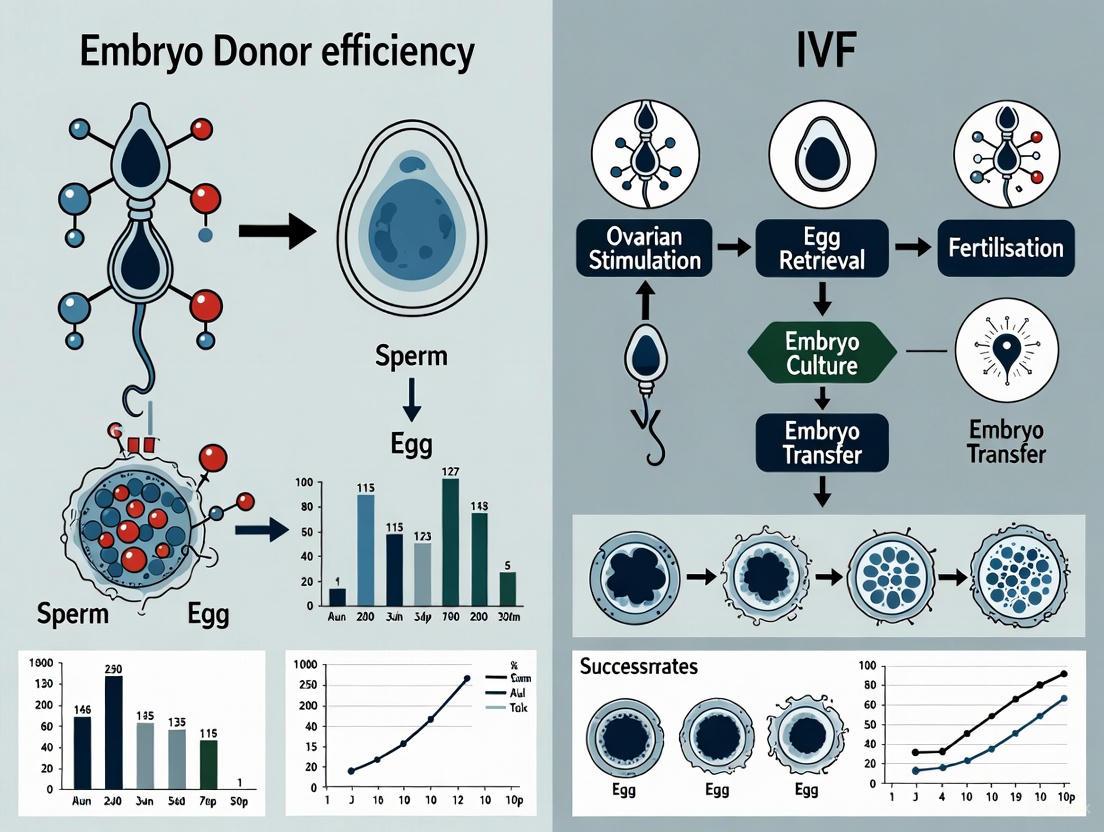
This article provides a comprehensive analysis of embryo donor efficiency, comparing the biological pathways of natural mating with the clinical protocols of In Vitro Fertilization (IVF).
Evaluating Embryo Donor Efficiency: A Comparative Analysis of Natural Conception and Assisted Reproductive Technologies
Abstract
This article provides a comprehensive analysis of embryo donor efficiency, comparing the biological pathways of natural mating with the clinical protocols of In Vitro Fertilization (IVF). Tailored for researchers, scientists, and drug development professionals, it synthesizes current data on fecundability, IVF success rates, and the logistical, ethical, and economic frameworks governing embryo donation. The scope spans from foundational reproductive biology and methodological advancements in ART to optimization strategies for donor cycles and a rigorous, evidence-based comparison of efficiency metrics between natural and assisted conception for donor embryo production.
Foundations of Human Conception and the Embryo Donation Landscape
Within human reproductive science, quantifying the inherent efficiency of natural conception and early embryonic development presents a significant challenge with direct implications for assisted reproductive technologies (ART) and drug development. This guide provides a systematic, data-driven comparison of reproductive efficiency between natural mating and in vitro fertilization (IVF), focusing on the critical metrics of fecundability and early embryo mortality. A precise understanding of natural conception rates and the points at which embryonic attrition occurs establishes the essential baseline against which the efficacy of IVF, particularly for embryo donation, must be evaluated. Framed within a broader thesis comparing natural mating and IVF for embryo donor efficiency, this analysis synthesizes current clinical data and established quantitative frameworks to offer researchers and scientists an objective reference. We summarize key quantitative data into structured tables, detail foundational experimental methodologies, and visualize core concepts to support ongoing research into enhancing reproductive outcomes.
Quantitative Data Comparison
The following tables consolidate key quantitative data, providing a clear comparison of reproductive efficiency metrics between natural conception and IVF.
Table 1: Fecundability and Pregnancy Loss in Natural Conception
| Metric | Value | Notes / Source |
|---|---|---|
| Total Prenatal Mortality (Fertilization to Birth) | ~40-60% | A reassessment of historical data suggests lower losses than the frequently cited 70%+ [1]. |
| Loss from Fertilization to Implantation | Not precisely quantified | Challenging to measure directly; Hertig's classic data is considered highly imprecise [1]. |
| Loss from Implantation to Clinical Recognition | ~22% | Derived from hCG-detected pregnancies [1]. |
| Clinical Pregnancy Loss (After 6 wks) | ~12-15% | Life table analyses [1]. |
| Effective Fecundability (Live Birth per Cycle) | ~20-30% | General population estimate [1]. |
Table 2: IVF Success Rates and Outcomes (U.S. National Data, 2022)
| Metric | Patient's Own Eggs (Age < 35) | Patient's Own Eggs (Age 41-42) | Donor Eggs | Notes |
|---|---|---|---|---|
| Live Births per Intended Retrieval | 53.5% | 13.0% | Not specified | Includes all subsequent transfers from one retrieval [2]. |
| Singleton Live Births | 51.3% | 12.6% | Not specified | [2]. |
| Pre-term Birth Rate | 11.4% | 12.4% | Not specified | Percentage of live births [2]. |
| Cryopreservation Rate | 88.9% | 67.0% | Not specified | Percentage of cycles yielding embryos for freezing [2]. |
Table 3: Comparative Pregnancy Outcomes (IVF vs. Natural Conception in Nulliparous of Advanced Maternal Age)
| Pregnancy Outcome | IVF Group | Natural Conception Group | Statistical Significance (P-value) |
|---|---|---|---|
| Oligohydramnios | Higher Incidence | Lower Incidence | < 0.05 [3] |
| Low Birth Weight | Lower Incidence | Higher Incidence | < 0.05 [3] |
| Gestational Diabetes (GDM) | No Significant Difference | No Significant Difference | > 0.05 [3] |
| Hypertensive Disorders | No Significant Difference | No Significant Difference | > 0.05 [3] |
| Preterm Birth | No Significant Difference | No Significant Difference | > 0.05 [3] |
Experimental Protocols and Methodologies
Quantitative Framework for Natural Embryo Mortality
A critical methodology for quantifying natural reproductive efficiency involves a conditional probability model that deconstructs the process into discrete, measurable stages [1]. This framework allows researchers to estimate embryo mortality at specific points between fertilization and birth.
- Protocol Overview: The model defines fecundability (probability of reproductive success per menstrual cycle) at different levels of detection. The probabilities between these levels allow for the calculation of stage-specific embryo loss [1].
- Key Fecundability Definitions:
- Total Fecundability (FEC~TOT~): The probability of fertilization occurring in a cycle, calculated as π~SOC~ × π~FERT~, where π~SOC~ is the probability of reproductive behavior leading to sperm-ovum co-localization and π~FERT~ is the probability of fertilization given co-localization.
- Detectable Fecundability (FEC~HCG~): The probability of implantation, signaled by elevated human chorionic gonadotrophin (hCG) levels. Calculated as FEC~TOT~ × π~HCG~, where π~HCG~ is the probability of implantation given fertilization.
- Apparent Fecundability (FEC~CLIN~): The probability of a clinically recognized pregnancy (e.g., via ultrasound). Calculated as FEC~HCG~ × π~CLIN~.
- Effective Fecundability (FEC~LB~): The probability of a live birth per cycle. Calculated as FEC~CLIN~ × π~LB~.
- Application: Using this model, the probability of embryo loss before implantation is [1 - π~HCG~], and loss before clinical recognition is [1 - (π~HCG~ × π~CLIN~)]. This structure helps resolve discrepancies in mortality estimates by assigning losses to specific biological phases.
hCG-Based Studies for Early Pregnancy Loss
Direct measurement of early embryo loss requires sensitive biochemical detection prior to clinical recognition of pregnancy.
- Objective: To quantify the rate of pregnancy loss between implantation and clinical recognition using the hormone hCG as a marker for implantation [1].
- Methodology:
- Cohort Enrollment: A large cohort of women not using contraception and attempting pregnancy is recruited.
- Specimen Collection: Participants provide daily or every-other-day urine samples starting around the expected time of implantation (6-7 days post-ovulation) and continuing until menstruation or clinical pregnancy confirmation.
- hCG Assay: Urine samples are analyzed using a highly sensitive, specific immunoassay for hCG to detect the onset and trajectory of hCG secretion.
- Outcome Classification: A pregnancy is defined by a specific rise and sustained elevation of hCG. Losses are classified as those where hCG levels rise but then decline before the pregnancy is confirmed clinically (e.g., by ultrasound at 6-7 weeks gestation).
- Data Analysis: The proportion of hCG-detected pregnancies that do not progress to clinical pregnancy provides an estimate of π~CLIN~, the probability of loss between implantation and clinical recognition. Re-analysis of such data suggests a total loss from fertilization to birth of approximately 40-60% [1].
Propensity Score Matching for IVF vs. Natural Conception Outcomes
Retrospective cohort studies using Propensity Score Matching (PSM) control for confounding variables to isolate the effect of IVF conception on pregnancy outcomes.
- Objective: To compare pregnancy outcomes between IVF and natural conception in a well-defined patient population (e.g., nulliparous women of advanced maternal age with singleton pregnancies) while minimizing selection bias [3].
- Methodology:
- Patient Selection: Retrospective identification of two groups from hospital records: an IVF group and a natural conception group.
- Inclusion/Exclusion Criteria: Application of strict criteria (e.g., age ≥35, singleton pregnancy, nulliparity, no severe comorbidities) and exclusion of multiple pregnancies, multiparous women, and fetal congenital anomalies [3].
- Propensity Score Matching:
- Covariate Selection: Key demographic and clinical variables such as maternal age, pre-pregnancy BMI, and early-pregnancy hemoglobin levels are chosen.
- Matching Algorithm: A nearest-neighbor matching method (e.g., 1:1 pairing) is used with a specified caliper width (e.g., 0.02) to create matched IVF and natural conception groups with balanced baseline characteristics [3].
- Outcome Assessment: Comparison of defined early and late pregnancy outcomes (e.g., oligohydramnios, GDM, HDP, preterm birth, low birth weight) between the matched groups using t-tests for continuous data and χ² or Fisher's exact tests for categorical data [3].
Visualizing Reproductive Efficiency and Research Workflows
Natural Conception Efficiency Framework
This diagram illustrates the quantitative framework for analyzing embryo mortality in natural conception, showing the conditional probabilities and key metrics from fertilization to live birth.
IVF versus Natural Conception Research Workflow
This flowchart outlines the key methodological steps for a comparative study of pregnancy outcomes using Propensity Score Matching to ensure a valid comparison.
The Scientist's Toolkit: Key Research Reagents and Materials
Table 4: Essential Reagents and Materials for Reproductive Efficiency Research
| Item | Function / Application |
|---|---|
| Human Chorionic Gonadotrophin (hCG) Immunoassay Kits | Essential for sensitive detection and quantification of hCG in urine or serum to identify very early pregnancies and measure implantation rates and early loss in natural conception studies [1]. |
| Propensity Score Matching (PSM) Statistical Software | Used with statistical software platforms like SPSS or R to perform PSM in retrospective cohort studies, balancing baseline characteristics between IVF and naturally conceiving groups to reduce confounding [3]. |
| Microsatellite Markers / SNP Panels | Used for high-resolution genotyping in genetic studies. Applications include determining parental origin of aneuploidies in donor egg cycles and studying mating systems in model organisms [4] [5]. |
| Preimplantation Genetic Screening (PGS) Platforms | Technologies like array Comparative Genomic Hybridization (aCGH) or Next-Generation Sequencing (NGS) screen blastocysts for aneuploidy before transfer in IVF, allowing research into how selecting euploid embryos affects implantation and live birth rates [4]. |
| Gonadotropins (FSH/hMG) | Exogenous follicle-stimulating hormones used in Controlled Ovarian Stimulation (COS) protocols during IVF to stimulate the development of multiple follicles, enabling research on optimal stimulation strategies [6]. |
| GnRH Agonists/Antagonists | Used in IVF cycles to prevent a premature luteinizing hormone surge, allowing for controlled final oocyte maturation. Critical for researching protocols that improve oocyte yield and maturity [6]. |
| Vitrification Media & Cryopreservation Equipment | Enable the ultra-rapid freezing of oocytes and embryos. Vital for researching the efficiency of freeze-all cycles and the comparative success of frozen versus fresh embryo transfers [4] [2]. |
Embryo donation represents a critical pathway in assisted reproductive technology (ART), enabling the repurposing of surplus IVF embryos to help others achieve parenthood while addressing the significant accumulation of cryopreserved embryos globally. This process transforms unused embryos into valuable resources for individuals and couples facing infertility, with an estimated 620,000 cryopreserved embryos in the United States alone as of 2014, with approximately 20,000 new embryos added yearly [7]. The terminology surrounding this practice varies, with "embryo donation" and "embryo adoption" used interchangeably, though the former is the medically preferred term [7]. This guide examines the embryo donation pathway through a research lens, focusing specifically on the comparative efficiency of embryos derived from natural mating versus IVF within the context of donor embryo production.
Embryo Donation Landscape and Utilization Trends
Embryo donation has seen steadily increasing utilization in recent years. National surveillance data from the United States demonstrates that between 2004 and 2019, the annual number of frozen donated embryo transfers more than tripled from 666 to 2,492, while the proportion of donated embryo transfers among all embryo transfers increased significantly from 0.6% to 1.5% [8]. Clinical success rates have also improved substantially, with live birth rates per frozen donated embryo transfer increasing from 33.3% in 2004 to 44.8% in 2019 [8].
This growth reflects both increasing acceptance of the practice and regulatory changes that facilitated greater access. A significant policy shift occurred in 2016 when the US Food and Drug Administration amended regulations to eliminate the need for an exemption request before transferring donated embryos, thereby streamlining the process [8]. The practice is now permitted in numerous countries including the United States, United Kingdom, Australia, Canada, France, Spain, and Japan, though regulatory frameworks vary significantly [7].
Table 1: National Trends in Frozen Donated Embryo Transfers in the US, 2004-2019
| Year | Number of Transfers | Proportion of All Transfers | Pregnancy Rate | Live Birth Rate |
|---|---|---|---|---|
| 2004 | 666 | 0.6% | 40.8% | 33.3% |
| 2019 | 2,492 | 1.5% | 54.3% | 44.8% |
For recipients, donated embryos offer a less medically complex and more cost-effective pathway to parenthood compared to IVF with donor oocytes, as recipients avoid the costs of ovarian stimulation, oocyte retrieval, fertilization, and embryo culture [8]. According to RESOLVE, a national infertility organization, embryo donation costs typically range between $2,500 and $4,000, significantly lower than other family-building options like surrogacy or adoption [9].
Decision Pathway for Surplus Embryo Disposition
Patients with remaining embryos after completing their IVF families face several disposition options, creating a complex decision pathway. The primary options include: discarding embryos, pursuing an additional child, donating to scientific research, donating to another person or couple, or opting for continued storage through non-decision [10]. This decision pathway is shaped by multiple factors including the moral status attributed to embryos (viewed as "cell clusters" versus "potential children"), religious beliefs, educational level, gamete origin, and storage duration [11].
Patients considering donation must grapple with numerous psychological and ethical questions: feelings about another family raising their genetic offspring; concerns about how their children will process having full genetic siblings in another family; potential future challenges if their child becomes ill or they disagree with the recipient family's parenting style; and decisions about whether to donate to someone they know or anonymously [10]. These complex considerations often lead to decision paralysis, with many patients opting for continued storage through inaction - essentially "abandoning" their embryos by stopping storage fee payments and avoiding clinic contact [10].
Table 2: Surplus Embryo Disposition Decision Pathway
| Disposition Option | Key Considerations | Reported Patient Preferences |
|---|---|---|
| Discard | Perception of embryo moral status; closure after family completion | Varies widely; often emotionally challenging |
| Additional Child | Family completeness; readiness for additional parenting | Pursued when embryos viewed as potential siblings for existing children |
| Donate to Research | Desire to contribute to scientific advancement; alternative to discarding | 60% support in Danish study [7] |
| Donate to Others | Comfort with genetic offspring in another family; recipient screening | 13-29% support across studies [7] |
| Continued Storage | Avoidance of decision; "psychological insurance" | Common; leads to embryo accumulation |
Regulatory frameworks governing embryo donation emphasize informed consent as a cornerstone. In the United States, FDA guidelines require attempting infectious disease testing on both oocyte and sperm sources when feasible, while the American Society for Reproductive Medicine recommends psychological counseling, comprehensive medical and genetic history collection, and legal consultation for all parties [9]. In the United Kingdom, the Human Fertilisation and Embryology Authority mandates that embryo donors meet specific eligibility criteria including age parameters and health checks similar to gamete donors [7].
Experimental Comparison: Natural Mating vs. IVF for Donor Embryo Production
Within research settings, the efficiency of producing donor embryos through natural mating versus IVF carries significant implications for germ-free animal model production. Recent methodological research has provided quantitative comparisons of these approaches, with implications for both animal research and human reproductive medicine.
Experimental Methodology and Protocol
A 2025 study established a rigorous protocol comparing natural mating (NM) and in vitro fertilization (IVF) for generating donor embryos specifically for cesarean section derivation [12]. The experimental design proceeded as follows:
Natural Mating Group: Thirty C57BL/6J female mice underwent natural mating with males of the same strain for 72 hours. Successful copulation was confirmed by presence of a vaginal plug, recorded as gestation day 0.5 (G0.5). Donor mothers were monitored for natural delivery from G18 onward before undergoing female reproductive tract-preserved cesarean section (FRT-CS).
IVF Group: Thirty CD-1 female mice served as IVF-derived embryo transfer recipients using C57BL/6J embryos. The implantation of two-cell stage embryos was designated as embryonic day 0.5 (E0.5). These IVF-derived donor mothers underwent pre-labor FRT-CS on the predicted delivery date.
Surgical Technique: The optimized female reproductive tract-preserved C-section (FRT-CS) technique was employed, which selectively clamps only the cervix base while preserving the entire reproductive tract (ovary, uterine horn, uterine junction, and cervix), unlike traditional C-section that clamps both cervix base and uterine horn top.
Sterility Maintenance: All procedures were conducted under aseptic conditions with pups disinfected with Clidox-S and transferred to sterile isolators. The entire procedure from euthanasia to transfer was completed within 5 minutes to ensure sterility and pup viability.
The following workflow diagram illustrates the experimental methodology:
Comparative Results and Efficiency Metrics
The study demonstrated distinct advantages and limitations for each approach. The key comparative findings included:
Delivery Timing Precision: IVF-derived donors provided significantly more precise control over delivery timing compared to naturally mated donors, enhancing experimental reproducibility and scheduling efficiency.
Pup Survival and Contamination Rates: Both methods successfully produced viable, sterile pups with no significant differences in contamination rates when proper protocols were followed.
Procedural Coordination: The IVF approach required more extensive coordination for embryo creation and transfer but offered predictable scheduling, while natural mating was simpler to initiate but resulted in greater variability in delivery timing.
The research also revealed that optimized cesarean techniques significantly impacted outcomes. The female reproductive tract-preserved C-section (FRT-CS) method demonstrated improved fetal survival rates compared to traditional C-section techniques while maintaining sterility, benefiting both NM and IVF-derived donors [12].
Table 3: Natural Mating vs. IVF for Donor Embryo Production Efficiency
| Parameter | Natural Mating | In Vitro Fertilization |
|---|---|---|
| Delivery Timing Control | Variable; dependent on natural conception timing | High precision with predicted transfer date |
| Experimental Reproducibility | Moderate due to conception variability | High due to standardized timing |
| Technical Complexity | Lower; relies on natural biological processes | Higher; requires laboratory expertise |
| Coordination Requirements | Simplified initiation; variable outcomes | Complex setup; predictable scheduling |
| Suitability for Germ-Free Production | Effective with optimized C-section | Excellent with precise timing advantage |
The Scientist's Toolkit: Essential Research Reagents and Materials
The experimental protocols for comparing natural mating and IVF efficiency require specific research reagents and materials optimized for reproductive studies:
Table 4: Essential Research Reagents for Embryo Donation Efficiency Studies
| Reagent/Material | Specification | Research Function |
|---|---|---|
| Clidox-S | Chlorine dioxide disinfectant, 1:3:1 dilution | Tissue sample sterilization and environmental disinfection [12] |
| Columbia Blood Agar Plates | Standard microbiological media | Aerobic and anaerobic culturing for sterility confirmation [12] |
| Labdiet 5CJL | Standardized rodent diet | Nutritional maintenance for donor and recipient animals [12] |
| SPF Mouse Strains | C57BL/6, BALB/c, CD-1, NSG | Donor and recipient models with defined genetic backgrounds [12] |
| PVC Isolators | Polyvinyl chloride sterile housing | Maintenance of germ-free environment for derived pups [12] |
Discussion and Research Implications
The comparison between natural mating and IVF for donor embryo production reveals a fundamental trade-off between technical complexity and experimental precision. While IVF demands more extensive laboratory resources and expertise, it offers superior control over developmental timing, a significant advantage in research requiring precise coordination between donor and recipient animals. This precision is particularly valuable in germ-free mouse production, where the efficiency of obtaining GF pups depends heavily on predictable delivery timing for successful cross-fostering [12].
The optimization of cesarean section techniques represents another critical advancement, with the female reproductive tract-preserved approach demonstrating improved fetal survival while maintaining sterility. This surgical refinement benefits both NM and IVF-derived donors, suggesting that procedural improvements can enhance efficiency regardless of the conception method [12].
For human embryo donation programs, these research findings highlight the importance of standardized protocols and precise timing in donation processes. The steady improvement in donated embryo transfer outcomes - with live birth rates increasing from 33.3% to 44.8% between 2004 and 2019 [8] - reflects how procedural refinements and better selection criteria enhance overall efficiency. Additionally, the finding that clinical pregnancy rates and live birth rates per frozen donated embryo transfer decrease with increasing age of the oocyte source [8] provides valuable guidance for donor embryo selection in clinical settings.
The embryo donation pathway represents a sophisticated interplay between clinical practice, regulatory frameworks, and evolving laboratory techniques. The comparative analysis of natural mating versus IVF for donor embryo production reveals that while both methods can successfully generate viable embryos, IVF offers distinct advantages in timing precision and experimental reproducibility, whereas natural mating provides a less technically complex approach. These findings have implications not only for animal model production but also for optimizing human embryo donation systems.
Future research directions should focus on further refining IVF protocols to reduce technical barriers while maintaining their precision advantages, developing even less invasive surgical techniques for embryo transfer and derivation, and establishing more nuanced criteria for matching donor embryo characteristics with recipient needs. As embryo donation continues to grow - with increasing numbers of transfers and improving success rates - the integration of research insights from comparative efficiency studies will be essential for advancing both scientific and clinical applications in this evolving field.
Current Trends and Utilization Rates of Donated Embryos in Clinical Practice
Donated embryos represent a vital option in assisted reproductive technology (ART), particularly for patients requiring both oocyte and sperm donation. Recent large-scale, clinic-based studies indicate that the clinical outcomes of embryo donation cycles are comparable to those of double gamete donation, providing patients and clinicians with validated alternatives for family building. This guide objectively compares the performance of donated embryos against other ART strategies, supported by current clinical data and experimental methodologies.
Data Comparison: Donated Embryos vs. Alternative ART Strategies
The following tables consolidate key quantitative findings from recent studies and national reports, providing a clear comparison of success rates and cycle characteristics.
Table 1: Live Birth and Pregnancy Outcome Comparison (Donated Embryos vs. Double Gamete Donation) [13] [14]
| Outcome Measure | Donated Embryos (Frozen) | Double Gamete Donation (Fresh) | Statistical Significance (P-value) |
|---|---|---|---|
| Live Birth Rate | 44.1% | 45.1% | Not Significant |
| Clinical Pregnancy Rate | 55.4% | 57.6% | Not Significant |
| Miscarriage Rate | 18.7% | 20.2% | Not Significant |
| Sample Size (Cycles) | 3,439 | 439 | N/A |
Source: Retrospective cohort study using 2016-2019 SART CORS data.
Table 2: National Success Rates for Various ART Procedures [2] [15]
| Procedure / Patient Category | Live Birth Rate per Intended Egg Retrieval | Notes |
|---|---|---|
| Frozen Donor Embryo (National Average, 2021) | 42.3% | CDC reported data [15] |
| Frozen Donor Embryo (Single Clinic Example) | 49.0% | Donor Nexus/HRC Fertility [15] |
| Patient's Own Eggs, Woman <35 | 53.5% | SART 2022 National Summary [2] |
| Patient's Own Eggs, Woman 41-42 | 13.0% | SART 2022 National Summary [2] |
| Natural IVF Cycle | 10% - 15% | Per cycle; highly age-dependent [16] |
Detailed Methodologies of Key Cited Experiments
To ensure reproducibility and critical appraisal, this section details the experimental protocols from the primary studies cited.
This large, national retrospective cohort study provides the core comparative data in Table 1.
- 1. Data Source & Study Population: The study utilized the Society for Assisted Reproductive Technology Clinic Outcomes Reporting System (SART CORS). It identified patients undergoing their first frozen embryo transfer of a donated embryo or their first fresh embryo transfer from cryopreserved donor oocytes fertilized with donor sperm between 2016 and 2019.
- 2. Exclusion Criteria: Cycles were excluded if they involved preimplantation genetic testing (PGT) or uterine factor infertility, ensuring a cleaner comparison of the donation mechanisms themselves.
- 3. Primary Outcome Measure: The main outcome measured was live birth rate per cycle start.
- 4. Statistical Analysis: The analysis used multivariable logistic regression to calculate odds ratios (ORs) and 95% confidence intervals (CIs) for live birth, clinical pregnancy, and miscarriage. The models adjusted for recipient age, body mass index, smoking status, gravidity, parity, race, infertility diagnosis, number of embryos transferred, and day of transfer to isolate the effect of the donation type.
This study illustrates a model-based approach to comparing strategies, including those involving donor gametes.
- 1. Model Design: A decision-analytic Markov model was built using TreeAge software to simulate one year of clinical care. The model compared three strategies: in vitro fertilization with preimplantation genetic testing for structural rearrangements (IVF PGT-SR), frozen donor sperm intrauterine insemination (IUI), and natural conception.
- 2. Simulated Workflow: The model simulated up to 3 cycles of IVF PGT-SR, 6 donor sperm IUIs, or 12 attempts at natural conception. It incorporated realistic delays between cycles for outcomes like miscarriage or successful pregnancy.
- 3. Outcome and Cost Measures: The primary outcomes were cost and quality-adjusted life years (QALYs) for the parents. Secondary outcomes included live births and reductions in adverse events like miscarriages, stillbirths, and neonatal deaths.
- 4. Data Inputs: All model inputs, including success rates and probabilities of adverse outcomes, were derived from published literature. Costs were sourced from the institution and direct company sourcing, weighted by market share.
Workflow and Conceptual Diagrams
The following diagrams illustrate the logical pathway of the comparative clinical study and the decision-making process for donor conception strategies.
Study Analysis Workflow
Donor Conception Strategy
The Scientist's Toolkit: Key Research Reagents and Materials
Table 3: Essential Reagents and Materials for Clinical Research in Embryo Donation [13] [14] [17]
| Item | Function in Research Context |
|---|---|
| SART CORS Database | A comprehensive, clinic-reported US national database used for large-scale retrospective studies on ART outcomes, including donor cycles [13] [14]. |
| Cryopreservation Media | Vitrification and warming solutions essential for the preservation and subsequent use of donor oocytes and embryos in frozen cycles [13] [14]. |
| Hormonal Preparation Regimens | Estrogen and progesterone protocols used to prepare the endometrial lining for the reception of a frozen-thawed donated embryo [14]. |
| Preimplantation Genetic Testing (PGT) | A suite of genetic screening tools used to select euploid embryos for transfer; its use is a key variable to control for in comparative studies [13] [17]. |
| Decision-Analytic Modeling Software | Software (e.g., TreeAge) used to build Markov models for cost-effectiveness analyses of different reproductive strategies [17]. |
Demographic and Clinical Profiles of Embryo Donation Recipients
Embryo donation represents a vital treatment option for individuals and couples facing severe infertility challenges. This guide provides a comparative analysis of the demographic and clinical profiles of embryo donation recipients against those utilizing other assisted reproductive technologies (ART), particularly double gamete donation. The data reveals that embryo donation recipients are a distinct patient population, typically presenting at an advanced reproductive age after exhausting other treatment options. When comparing treatment pathways, clinical outcomes between embryo donation and double gamete donation cycles demonstrate remarkable similarity despite significant age disparities between recipient groups [18]. This suggests that uterine receptivity and endometrial preparation protocols may play a more crucial role in success rates than the specific type of donated genetic material when both gametes come from donors.
Understanding these profiles is essential for optimizing patient counseling, clinical decision-making, and resource allocation within fertility practices. The comparable outcomes between these donor approaches highlight the need for further investigation into the relative contributions of endometrial factors versus embryonic factors in achieving successful pregnancies with donated materials.
Comparative Analysis of Recipient Profiles and Outcomes
Demographic Profiles of Recipients
Embryo donation recipients represent a specific demographic profile within the broader landscape of assisted reproduction. These patients typically present after other fertility treatments have failed or when both genetic contributions are required from donors.
Table 1: Demographic Profile of Embryo Donation Recipients vs. Double Gamete Donation Recipients
| Demographic Characteristic | Embryo Donation Recipients | Double Gamete Donation Recipients | Data Source |
|---|---|---|---|
| Median Age | 40 years | 44 years | [18] |
| Age Distribution (>42 years) | 28.8% | 65.8% | [18] |
| Oocyte Age (Median) | 28 years | 27 years | [18] |
| Indications | Severe male/factor infertility, recurrent implantation failure, genetic concerns, absence of both gametes | Primary ovarian insufficiency, advanced maternal age, severe male factor, genetic disorders | [19] [18] |
The data reveals a significant age disparity between these two recipient groups. Embryo donation recipients are generally younger than those pursuing double gamete donation, with nearly two-thirds of double gamete donation recipients being over age 42 compared to just over a quarter of embryo donation recipients [18]. This demographic pattern suggests that embryo donation may be pursued at a somewhat earlier stage in the fertility treatment pathway, potentially after failed IVF attempts with autologous oocytes but before reaching the advanced maternal age typically associated with double gamete donation.
Clinical Outcomes Comparison
Despite the pronounced age differences between recipient groups, clinical outcomes between these two treatment approaches show surprising similarity.
Table 2: Clinical Outcomes of Embryo Donation vs. Double Gamete Donation
| Outcome Measure | Embryo Donation | Double Gamete Donation | Statistical Significance |
|---|---|---|---|
| Live Birth Rate | No significant difference | No significant difference | P ≥ 0.05 [18] |
| Clinical Pregnancy Rate | No significant difference | No significant difference | P ≥ 0.05 [18] |
| Miscarriage Rate | No significant difference | No significant difference | P ≥ 0.05 [18] |
This equivalence in outcomes is particularly noteworthy given the substantial age gap between recipient groups. The similarity in success rates suggests that the age of the recipient's uterus may be less critical to implantation success than the age of the oocyte when both gametes come from young, healthy donors [18]. This finding has profound implications for clinical practice, as it supports embryo donation as a viable alternative to double gamete donation even for younger recipients who require both genetic materials from donors.
Experimental Protocols and Methodologies
Large-Scale Clinical Data Analysis
The fundamental research comparing embryo donation to other treatment modalities relies on robust analysis of clinical registry data.
Primary Data Source: The Society for Assisted Reproductive Technology Clinic Outcomes Reporting System (SART CORS) database serves as the primary data source for national outcome comparisons [18]. This comprehensive registry collects data from over 90% of all ART clinics in the United States, providing a representative sample of treatment outcomes.
Methodology:
- Population Selection: Researchers identified patients undergoing their first frozen embryo transfer of a donated embryo or their first fresh embryo transfer from cryopreserved donor oocytes and donor sperm [18].
- Time Frame: The study included first cycle embryo transfers between 2016 and 2019 to ensure contemporary practice patterns [18].
- Exclusion Criteria: Patients were excluded if they underwent preimplantation genetic testing for aneuploidy (PGT-A) to isolate the effect of the donation type without confounding from embryo selection technologies [18].
- Statistical Analysis: Multivariate logistic regression models were employed to adjust for potential confounding variables, including recipient age, body mass index, and race/ethnicity [18].
This methodological approach allows for direct comparison of treatment strategies while controlling for external factors that might influence outcomes, providing clinicians with high-quality evidence for counseling patients.
Endometrial Preparation Protocols
The success of any embryo transfer, particularly with donated materials, depends critically on endometrial preparation. Two primary protocols dominate clinical practice:
Natural Cycle Frozen Embryo Transfer (NC-FET) Protocol:
- Medication: No medication is administered, allowing for natural hormonal cycling [20].
- Monitoring: Ovulation is tracked using luteinizing hormone (LH) ovulation tests to determine the optimal transfer window [20].
- Transfer Timing: The embryo transfer is scheduled based on the detected LH surge, corresponding with the natural implantation window [20].
- Physiological Advantage: This approach preserves the corpus luteum, which produces critical reproductive hormones and may contribute to improved obstetrical outcomes [20].
Artificial Cycle Frozen Embryo Transfer (AC-FET) Protocol:
- Medication: Patients receive exogenous estrogen (oral or transdermal) followed by vaginal progesterone capsules to prepare the endometrium [20].
- Monitoring: Endometrial thickness is assessed via transvaginal ultrasound on cycle days 9-11, with a target thickness of ≥8mm [20].
- Transfer Timing: Once satisfactory endometrial development is achieved, progesterone is initiated and the transfer is scheduled for 5 days later [20].
- Clinical Considerations: This approach offers greater scheduling flexibility but lacks the corpus luteum, which may impact pregnancy outcomes and increase risks of hypertensive disorders [20].
Research indicates that NC-FET protocols are associated with significantly higher live birth rates (43% vs. 30% in one study) compared to AC-FET, though these differences may be influenced by patient characteristics and confounding factors [20].
Signaling Pathways and Molecular Mechanisms
The molecular basis of implantation failure in ART involves complex signaling pathways that differ between natural and artificial cycle preparations.
Wnt Signaling Pathway Dysregulation:
- Pathway Activation: IVF embryos demonstrate persistent Wnt signaling during the peri-implantation period, which disrupts normal embryonic development [21].
- Epigenetic Effects: Abnormal Wnt activation affects the deposition of histone modifications (H3K27ac and H3K27me3) on pluripotency genes and bivalent genes, leading to aberrant gene expression patterns [21].
- Developmental Consequences: These epigenetic changes result in an abnormal naïve-to-primed transition of pluripotency and suppress expression of critical developmental genes like Otx2 in the epiblast [21].
- Clinical Implications: The dysregulated Wnt signaling ultimately compromises implantation success and may contribute to long-term metabolic abnormalities in offspring [21].
- Therapeutic Intervention: Treatment with Wnt inhibitors (IWP2) promotes redistribution of histone modifications and improves gene expression, resulting in significantly improved implantation rates and intrauterine development of IVF embryos [21].
This molecular understanding provides potential targets for therapeutic interventions to improve embryo implantation success in both embryo donation and conventional IVF cycles.
Essential Research Reagent Solutions
Investigating embryo donation efficiency and implantation biology requires specific research tools and reagents designed to address unique challenges in reproductive biology.
Table 3: Essential Research Reagents for Embryo Donation Studies
| Reagent/Category | Specific Examples | Research Application | Key Function |
|---|---|---|---|
| Embryo Culture Media | Sequential culture media systems | In vitro embryo culture | Supports embryo development from cleavage to blastocyst stage under controlled conditions |
| Cryopreservation Solutions | Vitrification kits (e.g., Kitazato) | Embryo cryopreservation | Enables frozen embryo transfer cycles through ultra-rapid cooling without ice formation |
| Hormonal Preparations | Estradiol valerate, vaginal progesterone | Endometrial preparation | Creates receptive endometrium in artificial cycles for embryo implantation |
| Molecular Biology Kits | H3K27ac/H3K27me3 ChIP kits, RNA sequencing | Epigenetic analysis | Identifies histone modification patterns and gene expression in implantation studies |
| Signal Pathway Modulators | IWP-2 (Wnt inhibitor) | Mechanistic studies | Investigates role of specific signaling pathways in implantation failure and embryonic development |
| Immunologic Assays | HLA genotyping kits | Immune compatibility research | Examines genetic similarity between couples and its impact on infertility and donation success |
These research tools enable scientists to dissect the complex biological processes governing embryo implantation and development, particularly in the context of donated embryos where both gametes come from sources other than the recipients.
The demographic and clinical profiles of embryo donation recipients reveal a patient population distinct from those pursuing other forms of gamete donation, particularly in terms of age distribution. Despite significant age differences between embryo donation and double gamete donation recipients, clinical outcomes remain remarkably similar, challenging conventional assumptions about the impact of uterine age on receptivity.
The comparison between natural and artificial endometrial preparation protocols further refines our understanding of optimal cycle management for embryo donation recipients, with natural cycles demonstrating potential advantages that warrant further investigation. At the molecular level, dysregulation of Wnt signaling and associated epigenetic modifications represents a key mechanism underlying implantation failure in ART, offering promising targets for future therapeutic interventions.
These findings collectively underscore the need for personalized treatment approaches based on specific patient profiles and underlying biological mechanisms rather than chronological age alone. Further research into the complex interplay between endometrial receptivity, embryonic signaling, and epigenetic regulation will continue to refine and improve outcomes for embryo donation recipients.
Operational Frameworks: From Natural Cycle to Advanced ART Protocols
Natural and modified natural cycle in vitro fertilization (NC-IVF and MNC-IVF) represent a paradigm shift in assisted reproductive technology, moving away from conventional, high-dose ovarian stimulation towards protocols that aim to retrieve the single oocyte naturally selected during a menstrual cycle. Within the broader research context comparing natural mating to IVF for embryo donor efficiency, these minimal stimulation strategies are of paramount interest. They offer a model to study the fundamental biology of monofollicular development and the potential effects of exogenous hormones on oocyte competence and endometrial receptivity. The primary distinction between a true natural cycle (NC-IVF) and a modified natural cycle (MNC-IVF) lies in the use of pharmacological triggers for final oocyte maturation and/or luteal phase support, which are absent in pure natural cycles but introduced in modified protocols to enhance cycle control and efficacy [22] [23].
The rationale for exploring these protocols is multi-faceted. Firstly, they completely eliminate or significantly reduce the risk of ovarian hyperstimulation syndrome (OHSS), a serious iatrogenic complication of conventional IVF. Secondly, they offer a more patient-friendly treatment experience with fewer medications, reduced side effects, and lower monitoring demands. From a research perspective, they provide a unique window into studying the "natural" embryo, one that has developed under near-physiological hormonal conditions, which is highly relevant for comparing embryo efficiency outcomes against models of natural conception [24] [23]. Furthermore, the significantly lower medication burden and associated costs make these protocols a subject of interest for public health and accessibility research in donor programs [24].
Comparative Analysis of Cycle Protocols and Outcomes
Protocol Definitions and Key Characteristics
The following table outlines the core procedural and pharmacological differences between Natural IVF, Modified Natural IVF, and Minimal Stimulation IVF, which often uses oral compounds like clomiphene citrate (CC) or aromatase inhibitors (AIs).
Table 1: Protocol Definitions and Characteristics for Minimal Stimulation IVF
| Characteristic | Natural Cycle IVF (NC-IVF) | Modified Natural Cycle IVF (MNC-IVF) | Minimal Stimulation IVF (Min stim-IVF) |
|---|---|---|---|
| Ovarian Stimulation | None. Relies on the endogenous single dominant follicle. | Typically none, or very low-dose gonadotropins (e.g., ≤150 IU daily) may be used in some definitions [24]. | Uses oral compounds (e.g., CC, AIs) alone or in combination with low-dose gonadotropins (≤150 IU daily) [24] [22]. |
| Ovulation Trigger | None; monitoring for spontaneous LH surge. | Uses a pharmacological trigger (e.g., hCG or GnRH agonist) to control oocyte retrieval timing [23]. | Uses a pharmacological trigger (hCG or GnRH agonist). |
| Luteal Phase Support | None. | Often used (e.g., progesterone supplementation) [23]. | Routinely used. |
| Typical Oocytes Retrieved | 1 (the naturally selected oocyte) [25]. | 1 [22]. | 1-3 [25]. |
| Primary Advantage | Completely unstimulated; avoids medication side effects. | Reduces cycle cancellation from premature ovulation; allows for scheduled retrieval. | Higher yield per cycle than pure natural cycles while remaining "mild" [24]. |
| Primary Disadvantage | High cancellation rate due to premature ovulation or luteinization. | Still typically yields only one oocyte. | May still require injections and has a higher risk of OHSS than pure natural cycles, though lower than conventional IVF [24]. |
Comparative Efficacy and Laboratory Outcomes
Quantitative data from clinical studies reveal how these protocols perform in terms of oocyte yield, embryological outcomes, and ultimate success rates. The association between a patient's anti-Müllerian hormone (AMH) level and ovarian response is a critical factor that varies significantly across these protocols.
Table 2: Comparative Efficacy and Outcomes of Minimal Stimulation Protocols
| Outcome Measure | Natural Cycle IVF | Modified Natural Cycle IVF | Minimal Stimulation IVF | Conventional IVF (for context) |
|---|---|---|---|---|
| Predicted Oocytes with AMH <1 ng/ml | 0.85 [22] | Data integrated with NC-IVF in source. | Varies by protocol (oral compounds alone yield fewer) [22]. | 4.04 [22] |
| Predicted Oocytes with AMH ≥2 ng/ml | 0.83 [22] | Data integrated with NC-IVF in source. | Varies by protocol. | 10.54 [22] |
| Live Birth Rate (LBR) per Cycle (in poor responders) | Not separately reported in sources. | Not separately reported in sources. | Similar to conventional IVF (RR 0.91, CI 0.68-1.22) [24]. | Reference value [24]. |
| Live Birth Rate (LBR) per Cycle (in normal responders) | Not separately reported in sources. | Not separately reported in sources. | Similar to conventional IVF (RR 0.88, CI 0.69-1.12) [24]. | Reference value [24]. |
| Risk of Ovarian Hyperstimulation Syndrome (OHSS) | Virtually zero. | Virtually zero. | Significantly lower than conventional IVF (RR 0.22 in normal responders) [24]. | Reference value (higher risk). |
| Cycle Cancellation Rate | High (spontaneous LH surge) [23]. | Lower than pure NC-IVF. | Higher than conventional IVF in normal responders (RR 2.08) [24]. | Reference value (lower) [24]. |
Detailed Experimental Protocols for Research
To ensure reproducibility in a research setting, detailed methodologies for key experiments and clinical protocols are provided below.
Protocol for a Modified Natural Cycle IVF (MNC-IVF)
This protocol is commonly cited in research settings for its balance of minimal intervention and practical control.
- Cycle Monitoring (Day 2-3 onwards): Initiate transvaginal ultrasound monitoring and serum hormonal assessments (estradiol, LH, progesterone) from the early follicular phase. Continue monitoring every 1-3 days based on follicle growth [23].
- Trigger Administration: Upon observation of a leading follicle reaching 16-18 mm in diameter and an estradiol level consistent with a mature follicle, administer a trigger shot for final oocyte maturation. This is typically a GnRH agonist (e.g., Buserelin) or hCG [23].
- Oocyte Retrieval: Schedule the retrieval procedure for 34-36 hours post-trigger administration. The procedure is performed transvaginally under ultrasound guidance.
- Luteal Phase Support: Commence progesterone supplementation (e.g., vaginal suppositories or intramuscular injection) starting on the evening of the retrieval or the following day. This is often continued until pregnancy testing and, if positive, for several weeks thereafter [23].
- Embryo Transfer: Perform a fresh embryo transfer if a viable embryo is developed, typically on day 2, 3, or 5 post-retrieval. Alternatively, the embryo may be cryopreserved for a subsequent frozen-thawed embryo transfer cycle (FET). Some research suggests FET may yield better outcomes in cycles using GnRH agonist triggers or clomiphene citrate due to better endometrial receptivity [23].
Protocol for a Minimal Stimulation IVF with Sequential Clomiphene Citrate and Low-Dose Gonadotropins
This protocol is designed to maximize the yield of oocytes while maintaining a "mild" approach.
- Ovarian Stimulation (Day 2-3 onwards): Administer clomiphene citrate (e.g., 50-100 mg daily) for an extended period, often up to the day of the trigger injection. After several days of CC, add low-dose gonadotropins (e.g., ≤150 IU daily) to support follicular development [23].
- Cycle Monitoring: Conduct monitoring via ultrasound and serum hormones, similar to the MNC-IVF protocol, to track the growth of a cohort of 1-3 follicles.
- Trigger Administration: Once the leading follicles reach adequate size (e.g., ≥17 mm), administer a trigger injection (GnRH agonist or hCG). The use of a GnRH agonist trigger is emphasized to mitigate OHSS risk [23].
- Oocyte Retrieval and Fertilization: Perform retrieval 36 hours post-trigger. Fertilization is performed via conventional IVF or ICSI.
- Embryo Transfer Strategy: A "freeze-all" strategy with subsequent frozen embryo transfer is often recommended in this protocol. This avoids the potential negative effects of clomiphene citrate on endometrial lining thickness and the luteal phase defect associated with GnRH agonist triggers [23].
Signaling Pathways and Workflows
The following diagram illustrates the key decision points and procedural workflow in a minimal stimulation IVF protocol, integrating both MNC-IVF and Min stim-IVF approaches.
Diagram Title: Minimal Stimulation IVF Protocol Workflow
The Scientist's Toolkit: Key Research Reagents and Materials
For researchers conducting studies on natural and modified natural IVF cycles, specific pharmacological tools and laboratory materials are essential. The following table details key items and their functions in a experimental or clinical protocol.
Table 3: Essential Research Reagents for Minimal Stimulation IVF Studies
| Reagent / Material | Category | Primary Function in Protocol |
|---|---|---|
| Clomiphene Citrate (CC) | Oral Anti-estrogen | Stimulates follicular development by blocking estrogen receptors in the hypothalamus, increasing endogenous FSH secretion [23]. |
| Aromatase Inhibitors (e.g., Letrozole) | Oral Compound | Suppresses estrogen production, leading to increased FSH release and follicular recruitment, often used as an alternative to CC [22]. |
| Recombinant FSH (r-hFSH) | Low-Dose Gonadotropin | Directly stimulates the ovaries to promote the growth and development of multiple follicles in minimal stimulation protocols [24] [26]. |
| GnRH Agonist (e.g., Buserelin) | Trigger Medication | Induces a surge of luteinizing hormone (LH) from the pituitary for final oocyte maturation, virtually eliminating the risk of severe OHSS [23]. |
| Human Chorionic Gonadotropin (hCG) | Trigger Medication | Mimics the natural LH surge to trigger final oocyte maturation; commonly used in modified natural and minimal stimulation cycles [23]. |
| Micronized Progesterone | Luteal Phase Support | Provides hormonal support to the endometrium after ovulation or retrieval to facilitate and maintain implantation [23]. |
| Embryo Vitrification Kit | Laboratory Consumable | Contains the specialized solutions and devices required for the ultra-rapid freezing of embryos, which is often used in "freeze-all" strategies [23]. |
| Culture Media for Sequential Development | Laboratory Consumable | Nutrient-rich solutions designed to support embryo growth from fertilization through to the blastocyst stage (Day 5/6) under specific gas and temperature conditions. |
Conventional Ovarian Stimulation Protocols for Maximizing Oocyte Yield in Donor Cycles
In the context of reproductive medicine and embryo donor efficiency research, the optimization of ovarian stimulation (OS) protocols is paramount for maximizing oocyte yield in donor cycles. The choice of stimulation strategy directly influences the number of retrieved oocytes, their quality, and the subsequent success rates of assisted reproductive technology (ART) cycles, thereby affecting the overall efficiency of donor programs [27]. Within the broader thesis comparing natural mating (NM) and in vitro fertilization (IVF) for embryo donor efficiency, this guide objectively compares the performance of conventional ovarian stimulation protocols. For researchers and drug development professionals, understanding the nuances of gonadotropin dosing, protocol selection, and their impact on key biomarkers is essential for developing improved therapeutic agents and personalizing treatment strategies for oocyte donors.
Key Protocols and Comparative Data
Conventional ovarian stimulation for donor cycles primarily involves protocols using exogenous gonadotropins to induce multiple follicular development. The most common approaches include the GnRH agonist protocols (long and short) and the GnRH antagonist protocol, with variations in the type and dosage of gonadotropins used [28] [29].
Quantitative Comparison of Stimulation Protocols
The following table summarizes experimental data on the performance of different conventional ovarian stimulation protocols, highlighting their impact on oocyte yield and quality.
Table 1: Comparison of Ovarian Stimulation Protocols on Oocyte Yield and Quality
| Protocol | Typical Gonadotropin Dose | Key Biomarker Expression | Reported Oocyte Yield & Quality Metrics | Associated Clinical Outcomes |
|---|---|---|---|---|
| Long-Acting Follicular Phase (Long GnRH Agonist) | 150-300 IU/day [28] | Higher BMP-15 expression [28] | Improved oocyte maturity and embryo development [28] | Enhanced oocyte developmental potential [28] |
| Short-Acting Luteal Phase (Short GnRH Agonist) | 150-300 IU/day [28] | Higher GDF-9 and BMP-15 expression [28] | Improved oocyte maturity and embryo development [28] | Enhanced oocyte developmental potential [28] |
| GnRH Antagonist | 150-300 IU/day [28] | Lower GDF-9 and BMP-15 expression [28] | Reduced expression of oocyte quality markers [28] | Less favorable for oocyte quality [28] |
| High-Dose Stimulation (e.g., for PCOS) | 300 IU (initial, then 225 IU) [30] | Not Specified | Shorter stimulation duration; numerically higher retrieved oocytes, MII oocytes, and embryos [30] | Higher fertilization and clinical pregnancy rates without increased OHSS risk in non-obese PCOS patients [30] |
| Micro-Stimulation | 75-150 IU/day with oral agents [28] | Lower BMP-15 expression [28] | Not Specified | Less favorable for oocyte quality [28] |
Gonadotropin Dosing Strategies
The optimal gonadotropin dose is a critical factor in maximizing oocyte yield while maintaining safety.
Table 2: Impact of Gonadotropin Dosing on Oocyte Yield in Different Patient Profiles
| Patient Profile | Dosing Strategy | Impact on Oocyte Yield | Key Considerations |
|---|---|---|---|
| Expected Poor Responders (e.g., POSEIDON Group 4) | Increased starting dose (up to 300 IU) [31] | Higher number of retrieved and good-quality oocytes [31] | No significant difference in blastocyst number or live birth rates (LBR) in autologous cycles; significantly higher LBR with donor oocytes [31] |
| Polycystic Ovary Syndrome (PCOS) Patients | High-dose r-FSH (300 IU for 4 days, then 225 IU) [30] | Shorter stimulation; numerically higher oocytes retrieved, MII oocytes, and embryos formed [30] | Requires careful monitoring to mitigate Ovarian Hyperstimulation Syndrome (OHSS) risk; GnRH antagonist protocol with agonist trigger recommended [30] |
| General Donor Population | Individualized dosing based on age, BMI, AMH, and AFC [27] | Aims to maximize the number of oocytes retrieved, a key laboratory outcome [27] | Avoiding iatrogenic OHSS is paramount; strategies include GnRH agonist triggering and "freeze-all" cycles [27] |
Experimental Protocols and Methodologies
To ensure reproducibility and validate the comparative data presented, this section outlines the detailed methodologies commonly employed in studies investigating ovarian stimulation protocols.
Patient Stratification and Stimulation Protocols
In a typical study, such as the one analyzing POSEIDON group 4 patients (≥35 years with diminished ovarian reserve: AMH <1.2 ng/mL and AFC <5), participants are often stratified into groups for comparison [31]. A common design includes a control group undergoing a first ovarian stimulation cycle, which is compared to a group receiving repeated autologous stimulation with an increased gonadotropin dose, and a group utilizing donated oocytes [31]. The specific protocols are administered as follows:
- Long-acting GnRH agonist protocol (Follicular Phase): A long-acting GnRH agonist (e.g., leuprolide acetate 3.75 mg) is administered on day 2-3 of menstruation for pituitary downregulation. After 28-40 days, gonadotropin (Gn) stimulation is initiated at 150-300 IU/day. Ovulation is triggered with hCG (250 µg) when follicular criteria are met (e.g., ≥18 mm), followed by oocyte retrieval 36 hours later [28].
- Short-acting GnRH agonist protocol (Luteal Phase): A short-acting GnRH agonist (e.g., 0.1 mg daily) is started 7 days after ovulation. After 16-18 days, downregulation is confirmed, and Gn (150-300 IU/day) is initiated. Triggering and retrieval follow the same criteria as the long protocol [28].
- GnRH Antagonist Protocol: Recombinant FSH (150-300 IU/day) is initiated on day 2-3 of menstruation. A GnRH antagonist (e.g., cetrorelix 0.25 mg/day) is introduced when the leading follicle reaches 12-14 mm or serum E2 levels rise significantly, continuing until the day of trigger [28] [30].
Laboratory Assessment and Outcome Measures
The primary outcome measures focus on oocyte yield and quality [31] [28]:
- Oocyte Collection and Assessment: Oocyte retrieval is performed transvaginally under ultrasound guidance 36 hours post-trigger. The cumulus-oocyte complexes are collected, and cumulus cells (CCs) are denuded using hyaluronidase and mechanical methods for maturity assessment (GV, MI, MII stages) [28].
- Molecular Analysis: Cumulus granulosa cells are washed, centrifuged, and stored at -80°C. RNA is extracted, and the expression levels of key oocyte-secreted factors (OSFs) like GDF-9 and BMP-15 are quantified using real-time quantitative PCR (Q-PCR) [28].
- Embryo Culture and Evaluation: MII oocytes are fertilized via Intracytoplasmic Sperm Injection (ICSI). Fertilization is assessed by the presence of two pronuclei. Embryo quality is graded on Day 3 based on blastomere characteristics and fragmentation, and on Day 5/6 for blastocyst development, assessing inner cell mass and trophectoderm morphology [31] [28].
- Main Outcome Measures: The primary metrics include the number of retrieved, mature (MII), good-quality, and fertilized oocytes; the number of developed and good-quality embryos; and the number of blastocysts. Secondary clinical outcomes include clinical pregnancy and live birth rates [31].
Signaling Pathways and Experimental Workflows
The molecular mechanisms underlying oocyte quality are influenced by the stimulation protocol. Key signaling pathways involve oocyte-secreted factors (OSFs) like GDF-9 and BMP-15.
Oocyte-Secreted Factor Signaling Pathway
The following diagram illustrates the role of GDF-9 and BMP-15 in follicular development and how their expression is modulated by different stimulation protocols.
Diagram Title: OS Protocol Impact on Oocyte Quality Pathway
This diagram shows that ovarian stimulation protocols modulate the expression of GDF-9 and BMP-15 in cumulus cells. These factors regulate crucial cumulus cell functions, which in turn support oocyte quality and maturity, ultimately determining the embryo's developmental potential. Protocols like the short-acting luteal phase and long-acting follicular phase protocols are associated with higher expression of these beneficial factors compared to antagonist or micro-stimulation protocols [28].
Experimental Workflow for Protocol Comparison
A standard experimental workflow for comparing the efficacy of different ovarian stimulation protocols in a research setting is outlined below.
Diagram Title: OS Protocol Study Workflow
This workflow begins with careful patient recruitment and stratification using criteria like age, AMH, and AFC [31] [27]. Participants are then administered the different stimulation protocols (e.g., long agonist, antagonist) [28] [30]. After triggering and oocyte retrieval, extensive laboratory processing occurs, including cumulus cell (CC) collection for molecular analysis (e.g., GDF-9, BMP-15 via Q-PCR) and assessment of oocyte maturity, fertilization, and embryo development [28]. The final stages involve comprehensive data collection and the analysis of key clinical outcomes such as live birth rates [31].
The Scientist's Toolkit: Essential Research Reagents
For researchers aiming to replicate or build upon these studies, the following table details key reagents and their functions in the experimental process.
Table 3: Key Research Reagents for Ovarian Stimulation Studies
| Reagent / Material | Function in Experiment | Specific Examples / Notes |
|---|---|---|
| Gonadotropins (rec FSH, hMG) | To stimulate the recruitment and growth of multiple ovarian follicles. | Gonal-f (rec FSH) [28]; Human Menopausal Gonadotropin (hMG) [31] [28]. |
| GnRH Agonists | For pituitary downregulation to prevent premature luteinizing hormone (LH) surge. | Leuprolide acetate (long-acting) [28]; Dabigatran (short-acting) [28]. |
| GnRH Antagonists | To provide a rapid suppression of the LH surge by blocking pituitary GnRH receptors. | Cetrorelix (Cetrotide) [28] [30]. |
| Ovulation Trigger | To induce final oocyte maturation. | hCG (e.g., 250 µg) [28]; GnRH agonist (e.g., Triptorelin) [28] [30]. |
| Hyaluronidase | Enzyme used to denude cumulus cells from the oocyte for maturity assessment and ICSI. | Applied during cumulus-oocyte complex processing [28]. |
| Real-Time Q-PCR Kits | To quantify gene expression levels of biomarkers (e.g., GDF-9, BMP-15) in cumulus cells. | Critical for assessing molecular impact of different protocols [28]. |
| Embryo Culture Media | To support the development of embryos from fertilization to blastocyst stage. | Used in systems like Vitrolife Omni protocol [31]. |
The objective comparison of conventional ovarian stimulation protocols reveals that no single protocol is universally superior for maximizing oocyte yield in donor cycles. The long-acting follicular phase and short-acting luteal phase GnRH agonist protocols demonstrate a more favorable molecular profile, associated with higher expression of oocyte quality markers GDF-9 and BMP-15 [28]. However, the GnRH antagonist protocol offers a flexible and effective alternative with a significant role in specific populations, such as PCOS patients, where its use facilitates GnRH agonist triggering to mitigate OHSS risk [30] [27]. The critical lever for optimizing yield is the individualization of gonadotropin dosing, with higher doses (e.g., 300 IU) showing benefit in expected poor responders like POSEIDON group 4 patients and certain PCOS phenotypes, without necessarily compromising safety when managed correctly [31] [30]. For the research context of comparing NM and IVF for donor efficiency, these findings underscore that IVF with tailored stimulation protocols provides precise control over oocyte yield and quality, a variable that is inherently unpredictable in natural mating scenarios. Future research should continue to integrate molecular biomarkers with clinical outcomes to further refine stimulation strategies for oocyte donors.
The Role of Cryopreservation and Frozen Embryo Transfer (FET) in Donation Programs
The integration of cryopreservation and Frozen Embryo Transfer (FET) into donor programs represents a paradigm shift in assisted reproductive technology (ART), enabling unprecedented flexibility in fertility treatment scheduling and significantly improving cumulative live birth rates. Within the broader thesis comparing natural mating to in vitro fertilization (IVF) for embryo donor efficiency, these technologies address a critical bottleneck: the synchronization of donor availability with recipient readiness. The efficiency of embryo donation programs is fundamentally enhanced by cryopreservation, which decouples the embryo creation process from the transfer cycle, allowing for rigorous donor screening, genetic testing, and optimal preparation of the recipient's endometrium. This technical report provides a comparative analysis of clinical outcomes, details key experimental protocols, and delineates the technical workflows that underpin the successful implementation of FET in donation contexts, providing researchers and scientists with a data-driven framework for evaluating and optimizing these systems.
Comparative Performance Data of ART Techniques
The selection of an assisted reproductive technology is guided by clinical efficacy, risk profile, and economic considerations. The tables below provide a quantitative comparison of these factors across different techniques, with a specific focus on the role of cryopreservation.
Table 1: Comparison of Clinical Outcomes for Different ART Techniques
| Technology | Pregnancy Rate (%) | Live Birth Rate (%) | Miscarriage Rate (%) | Multiple Birth Rate (%) | Birth Defect Rate (%) |
|---|---|---|---|---|---|
| Donor Egg IVF (IVF-D) [32] | 74.5 | 62.4 | Not Specified | Higher | Higher |
| Donor Artificial Insemination (AI-D) [32] | 25.9 | 20.3 | Not Specified | Lower | Lower |
| Fresh Embryo Transfer [33] | 19.0 | 14.1 | 22.2 | 5.0 | Not Specified |
| Frozen Embryo Transfer (FET) [33] | 13.4 | 9.1 | 30.2 | 13.8 | Not Specified |
Table 2: Cost-Effectiveness Analysis of Donor Conception Methods
| Metric | Donor Egg IVF (IVF-D) | Donor Artificial Insemination (AI-D) |
|---|---|---|
| Mean Cost Per Couple [32] | CNY 32,575 | CNY 11,062 |
| Mean Cost Per Live Birth Cycle [32] | CNY 49,411 | CNY 31,246 |
| Cumulative Live Birth Rate (3 cycles) [32] | Not Specified | 32.42% |
| Key Advantages | Higher single-cycle success rates; solution for severe female factor infertility [34] | Lower risk, more cost-effective; recommended for unexplained infertility or mild male factor [32] |
Table 3: Impact of Cryopreservation Duration on Embryo Viability
| Cryopreservation Duration | Survival Rate Post-Thaw | Live Birth Outcome | Cryopreservation Method |
|---|---|---|---|
| 10 Years [35] | 58.3% (7/12 embryos) | Successful live birth | Slow Freezing |
| 3 Months [35] | 83.3% (5/6 embryos) | Successful live birth | Slow Freezing |
| Indefinitely (Theoretical) [35] | N/A | Viable | Vitrification |
Experimental Protocols in FET Research
To ensure reproducibility and validate the comparative data presented, the following details the key methodological frameworks from recent studies.
Protocol 1: Prospective Comparison of Fresh vs. Frozen Embryo Transfer
A 2025 prospective study at Al-Zahra Referral Women’s Hospital compared pregnancy and fetal outcomes between fresh and frozen embryo transfers in Intracytoplasmic Sperm Injection (ICSI) cycles [33].
- Study Population: 462 ICSI-ET cycles (142 fresh ET, 320 frozen ET) from women with primary infertility (83.3%). Inclusion criteria were age ≤42 years, endometrial thickness >8 mm, normal FSH, and use of a long GnRH agonist protocol. Exclusion criteria included endocrine disorders, uterine anomalies, and more than three prior ART cycles [33].
- Endometrial Preparation for FET: Embryos were cryopreserved on Day 5. For subsequent FET, patients underwent artificial cycles with oral estrogen. Once the endometrium reached 8mm, vaginal micronized progesterone was initiated. Embryos were thawed and transferred on the day corresponding to LH+6 or hCG+7. Luteal support with estrogen and progesterone continued until 11+5 weeks of gestation [33].
- Outcome Measurement: Serum beta-hCG was measured 14 days post-transfer. A chemical pregnancy was defined as β-hCG >50 U/ml 16 days post-transfer. Clinical pregnancy and live birth rates were the primary outcomes, with adjustments for confounders using multiple logistic regression [33].
Protocol 2: Long-Term Embryo Cryopreservation and Unpaired Thawing
A 2021 case report detailed a successful live birth following the transfer of an embryo cryopreserved for 10 years, highlighting the viability of long-term storage and the use of unpaired techniques [35].
- Embryo Creation and Freezing: A patient with tubal factor infertility underwent ovarian stimulation with recombinant FSH and GnRH antagonist trigger. A total of 18 cleaved embryos at the Day-2 cleavage stage were cryopreserved using the slow-freezing technique. This method relies on controlled cooling at 0.3-1.0°C/min in dehydrating solutions before storage in liquid nitrogen [35].
- Thawing and Transfer after 10 Years: After a decade in storage, 12 embryos were thawed using an ultra-rapid warming method at 37°C. Seven embryos survived (58.3% survival rate) and were cultured to the blastocyst stage. A single blastocyst was transferred during a natural cycle upon observation of a periovulatory follicle and an endometrium of 13.9mm, resulting in a live birth [35].
- Key Finding: This case demonstrates that embryos cryopreserved with slow freezing can survive ultra-rapid warming after a prolonged period, producing a viable pregnancy. This unpaired technique combination provides insights into embryo resilience [35].
Technical Workflows and Signaling Pathways in Cryopreservation
The efficacy of FET is underpinned by two primary cryopreservation techniques. The following diagram illustrates the workflows and critical pathways for these methods.
Cryopreservation Technique Comparison
The diagram illustrates two primary pathways. Vitrification utilizes high solute concentrations and ultra-rapid cooling to achieve a glass-like state, effectively avoiding intracellular ice crystal formation, which is a significant source of cellular damage [35]. In contrast, slow freezing employs a programmed, gradual reduction in temperature to facilitate controlled cellular dehydration. While effective, this method is more susceptible to ice crystal formation, which may explain the generally lower post-thaw survival rates compared to vitrification [35] [36].
The Scientist's Toolkit: Essential Research Reagents and Materials
The following table catalogues critical reagents and materials utilized in cryopreservation and FET research, detailing their specific functions in experimental protocols.
Table 4: Key Research Reagents and Materials for Cryopreservation Studies
| Reagent / Material | Function in Experimental Protocol |
|---|---|
| Cryoprotective Agents (CPA) [36] | Protect cells from ice crystal formation during freezing and thawing; used in high concentrations for vitrification and lower concentrations for slow freezing. |
| Liquid Nitrogen [36] | Provides ultra-low temperature environment (-196°C) for long-term storage of vitrified or slow-frozen embryos, halting all biochemical activity. |
| Programmable Freezing Machine [35] | Enables the controlled, slow reduction of temperature (0.3-1.0°C/min) required for the slow-freezing technique. |
| Recombinant FSH / GnRH Antagonists [35] | Used in ovarian stimulation protocols for donors to induce the development of multiple follicles prior to egg retrieval. |
| Oral Estrogen & Vaginal Progesterone [33] | Pharmacological agents for endometrial preparation in hormone replacement therapy (HRT) cycles for FET, synchronizing the recipient's uterus with the embryo's developmental stage. |
| Culture Media | Supports embryo development from cleavage to blastocyst stage post-thaw, a critical step for assessing embryo viability before transfer [35]. |
The integration of cryopreservation and FET into donation programs has fundamentally enhanced the efficiency and flexibility of assisted reproduction. The data confirms that while donor egg IVF offers higher per-cycle success rates, donor insemination presents a more cost-effective pathway for suitable candidates, with cryopreservation enabling the strategic use of both. The resilience of embryos frozen for over a decade, as demonstrated in clinical case studies, underscores the long-term viability of cryopreserved genetic material. Future research directions should focus on refining vitrification protocols to further improve survival rates, elucidating the long-term molecular and clinical outcomes of offspring from long-frozen embryos, and developing standardized, efficient protocols for the synchronization of donor cycles and recipient preparation in large-scale donation programs.
Vitrification has become the predominant method for cryopreserving human embryos in assisted reproductive technology (ART), with widespread adoption in IVF centers globally due to its reduced procedure time and high success rates [37]. This rapid-cooling technique transforms biological material into a glass-like state without forming damaging ice crystals, representing a significant advancement over traditional slow-freezing methods [38]. Within research comparing natural mating to IVF for embryo donor efficiency, vitrification technology plays a crucial role by enabling efficient preservation and utilization of genetically valuable embryos. The performance of different vitrification systems and protocols directly impacts embryo survival and developmental potential, thereby influencing the overall efficiency of embryo donor programs in both research and clinical settings.
Comparative Analysis of Vitrification Systems and Survival Outcomes
Vitrification Methodologies and Carrier Devices
Vitrification relies on the combination of high concentrations of cryoprotectants and extremely rapid cooling rates (greater than -10,000°C/min) to achieve a glass-like state [38]. The American Society for Reproductive Medicine notes that at least 30 different carrier tools have been described, with approximately 15 versions commercially available [38]. These systems are broadly categorized as open systems, where the embryo directly contacts liquid nitrogen, and closed systems, where a protective barrier prevents direct contact [38].
The Cryotop system, a popular open device, uses minimal volumes (1-2 μL) and provides ultra-rapid cooling rates [38]. Meanwhile, alternative approaches like the Global Fast Freeze Kit utilize larger straws that are easier to handle and allow for longer embryo exposure to vitrification solutions [37]. Research indicates that simplified protocols using cheaper and easier-to-load freezing straws can achieve equal success compared to specialized embryo vitrification devices [37].
Quantitative Survival Rates Across Vitrification Approaches
Table 1: Embryo survival and cell viability following different vitrification methods
| Vitrification Method | Embryo Survival Rate | Re-expansion Rate | Live Cell Percentage | Research Model |
|---|---|---|---|---|
| Vit Kit (Irvine Scientific) | No significant difference between groups | No significant difference between groups | Not different from controls | Human blastocysts [37] |
| Global Fast Freeze (Direct plunge) | No significant difference between groups | No significant difference between groups | Not different from controls | Human blastocysts [37] |
| Global Fast Freeze (-100°C holding) | No significant difference between groups | No significant difference between groups | Not different from controls | Human blastocysts [37] |
| Automated Vitrification-Thawing System | No significant difference from manual operation | Not specified | Survival, fertilization, and development rates comparable to manual | Mouse oocytes and embryos [39] |
Research comparing the Vit Kit Freeze/Thaw system with two protocols using the Global Fast Freeze/Thaw Kits found no significant differences in survival rates following thawing and after 24 hours of culture [37]. Importantly, the percentage of live cells in vitrified blastocysts did not differ from non-vitrified controls, demonstrating that properly executed vitrification does not adversely affect cell survival [37].
Impact of Double Vitrification on Embryo Viability
Table 2: Outcomes following single versus double vitrification
| Outcome Measure | Single Vitrification/Thawing (SVT) | Double Vitrification/Thawing (DVT) | Statistical Significance |
|---|---|---|---|
| Cryosurvival Rate | Reference | MHOR: 0.4 (CI: 0.3 to 0.8) | P < 0.01 [40] |
| Biochemical Pregnancy | Reference | MHOR: 0.7 (CI: 0.6 to 0.8) | P < 0.01 [40] |
| Clinical Pregnancy | Reference | MHOR: 0.7 (CI: 0.5 to 0.8) | P < 0.01 [40] |
| Live Birth | Reference | MHOR: 0.6 (CI: 0.5 to 0.7) | P < 0.01 [40] |
| Miscarriage Rate | Reference | MHOR: 1.4 (CI: 1.2 to 1.7) | P < 0.01 [40] |
A 2025 meta-analysis of 35 studies involving 46,749 embryo transfer cycles revealed that double vitrification/thawing (DVT) is associated with significant reductions in key success metrics compared to single vitrification/thawing (SVT) [40]. This analysis demonstrated a 40% reduction in cryosurvival rates, 30% reduction in clinical pregnancy rates, and 40% reduction in live birth rates with DVT [40]. Additionally, miscarriage rates were 40% higher in the DVT group [40]. These findings highlight the cumulative cryodamage that can occur with repeated vitrification cycles.
Thawing Assessment and Blastocyst Re-expansion as Viability Indicators
Blastocyst Re-expansion Timeframe and Clinical Outcomes
The assessment of blastocyst survival after warming remains controversial, with re-expansion serving as a key viability indicator [41]. Blastocyst re-expansion occurs when trophectoderm cells actively pump sodium ions, followed by passive water influx due to osmotic imbalances [41]. Delayed or absent re-expansion suggests trophectoderm cell damage during the freezing-warming process, impairing re-sealing capability [41].
Table 3: Clinical outcomes based on blastocyst re-expansion status after thawing
| Outcome Measure | Completely Shrunken Blastocysts (CSBT) | Re-expanded Blastocysts (REBT) | Statistical Significance |
|---|---|---|---|
| Clinical Pregnancy Rate | 28.8% | 61.5% | P < 0.001 [41] |
| Ongoing Pregnancy Rate | 22.1% | 52.9% | P < 0.001 [41] |
| Live Birth Rate | 20.2% | 50.0% | P < 0.001 [41] |
A 2025 retrospective study of 2,276 single blastocyst transfer cycles found significantly lower success rates for completely shrunken blastocysts (CSBT) compared to re-expanded blastocysts (REBT) when assessed 2-4 hours post-thawing [41]. Despite reduced success rates, CSBT cycles still resulted in viable pregnancies and live births, demonstrating that non-re-expanded blastocysts should not be considered non-viable [41].
Factors Influencing Success in Non-Re-expanded Blastocysts
For blastocysts that fail to re-expand within 2-4 hours post-thawing, the day of blastocyst formation emerges as a significant determinant of pregnancy outcomes [41]. Binary logistic regression analysis indicates that the clinical pregnancy rate was 3.062 times higher for day 5 blastocysts compared to day 6 blastocysts in CSBT cycles (adjusted OR 3.062, 95% CI 1.077–8.704, P = 0.036) [41]. Additional factors favoring pregnancy in CSBT cycles include younger maternal age, lower basal FSH levels, and blastocysts derived from good-quality day 3 embryos [41].
Advanced Protocols and Experimental Methodologies
Detailed Vitrification and Thawing Protocols
Blastocyst Vitrification Protocol (KITAZATO system) [42] [41]:
- Artificial Shrinkage: Blastocyst is artificially shrunk using a laser prior to vitrification
- Equilibration: Transfer blastocyst to equilibration solution (ES) containing 7.5% ethylene glycol (EG) and 7.5% dimethyl sulfoxide (DMSO) for 8-10 minutes at room temperature
- Vitrification: Transfer to vitrification solution (VS) containing 15% EG, 15% DMSO, and 0.5M sucrose for 1 minute
- Loading and Cooling: Load onto cryo-straws and plunge directly into liquid nitrogen for storage
Blastocyst Thawing Protocol [42]:
- Warming: Transfer cryo-straws directly from liquid nitrogen to WS1 thawing solution prewarmed to 37°C for 1 minute
- Dilution: Sequentially move embryos through WS2 (3 minutes), WS3 (5 minutes), and WS4 (5 minutes) solutions
- Culture: Transfer to culture medium in tri-gas incubator (6% CO2, 5% O2) for 2-24 hours before transfer
Post-Thaw Culture Duration and Embryo Selection
Research examining day-3 cleavage-stage embryo thawing compared immediate transfer (2-3 hours post-thaw) versus overnight culture (18-20 hours) prior to transfer [42]. While no significant differences were found in clinical pregnancy rates between these approaches (37.2% vs. 40.2%), embryo development during overnight culture provided valuable selection criteria [42].
Embryos showing ≥4 additional blastomeres after overnight culture (A1 subgroup) achieved a 44.2% clinical pregnancy rate, compared to 29.8% for those with 1-3 additional blastomeres (A2), and 25.5% for those with no increase (A3) [42]. This developmental progression during extended culture serves as a strong indicator of embryonic viability and implantation potential.
The Scientist's Toolkit: Essential Research Reagents and Materials
Table 4: Key research reagents and materials for embryo vitrification studies
| Reagent/Material | Function | Example Products | Application Notes |
|---|---|---|---|
| Permeable Cryoprotectants | Penetrate cell membrane to prevent intracellular ice formation | Ethylene Glycol (EG), Dimethyl Sulfoxide (DMSO) | DMSO-based and non-DMSO systems available; potential toxicity concerns [37] [38] |
| Non-Permeable Cryoprotectants | Create osmotic gradient for dehydration | Sucrose | Used in vitrification and thawing solutions [42] [41] |
| Open Vitrification Devices | Enable ultra-rapid cooling through direct LN2 contact | Cryotop, Open Pulled Straw (OPS), Cryoloop | Faster cooling rates (>-10,000°C/min); potential contamination concerns [38] |
| Closed Vitrification Devices | Protect samples from direct LN2 contact | Cryo-tip, sealed straw systems | Reduced contamination risk; slightly slower cooling rates [38] |
| Sequential Culture Media | Support embryo development during pre- and post-vitrification culture | G1-plus, G2-plus (Vitrolife) | Optimized for different embryonic stages [41] |
| Artificial Shrinkage Tools | Collapse blastocoel cavity before vitrification | Laser system (Octax) | Reduces ice crystal formation; improves survival [41] |
Vitrification technique selection directly impacts embryo survival and developmental potential, thereby influencing the overall efficiency of embryo donor programs. While simplified protocols using cost-effective carriers can achieve survival rates comparable to specialized systems, careful attention to technical execution remains paramount [37]. The assessment of blastocyst re-expansion within 2-4 hours post-thaw provides valuable prognostic information, though even completely shrunken blastocysts retain implantation potential, particularly when formed by day 5 [41].
For embryo donor efficiency research, these findings highlight the importance of standardized vitrification protocols, appropriate carrier selection based on specific research needs, and evidence-based embryo assessment post-thaw. The development of automated vitrification systems offers promising opportunities for enhanced standardization and reproducibility in multi-center studies [39]. As vitrification methodologies continue to evolve, ongoing comparative assessments of new technologies will be essential for optimizing embryo survival and maximizing donor program efficiency.
Maximizing Yield and Outcomes: Optimization and Ethical Challenges in Donor Programs
The pursuit of higher efficiency in assisted reproductive technology (ART) consistently centers on two pivotal, and often interconnected, factors: the quality of the gametes and the efficacy of embryo selection. Within the context of a broader thesis comparing natural mating to in vitro fertilization (IVF) for embryo donor efficiency, understanding and optimizing these factors becomes paramount. While natural selection in conception operates on a single, naturally selected egg per cycle, IVF, particularly with donor oocytes, allows for the manipulation and selection of multiple embryos, fundamentally altering the selective landscape [16]. This guide objectively compares the performance of different donor age brackets and embryo selection methodologies, providing a synthesis of current experimental data and protocols. The analysis is framed for researchers and scientists, focusing on the quantitative impact of these variables on key success metrics such as live birth rates, implantation failure, and pregnancy loss.
The Dominant Factor of Donor Age
The age of the oocyte donor is a primary determinant of IVF success, a fact well-established in clinical practice. However, recent research provides a more nuanced, data-driven picture of its specific impact, even when controlling for other variables.
Quantitative Impact on Success Rates
Data from the Society for Assisted Reproductive Technology (SART) illustrates a clear decline in live birth rates with increasing maternal age when using a patient's own eggs [43] [44]. For women under 35, the live birth rate per cycle is approximately 51-54%. This figure drops to 40% for ages 35-37, 25-26% for ages 38-40, and to 8-13% for women over 40 [43] [44]. The predominant reason for this decline is the age-related increase in oocyte aneuploidy, which leads to chromosomal abnormalities in embryos [45] [44].
The use of donor oocytes from young women (typically under 35) effectively resets the "embryonic clock" by providing genetically normal gametes. Table 1 summarizes the live birth rates achievable with donor oocytes compared to autologous oocytes.
Table 1: Comparative Live Birth Rates per Embryo Transfer: Autologous vs. Donor Oocytes
| Maternal Age | Live Birth Rate (Autologous Oocytes) | Live Birth Rate (Donor Oocytes) | Source Key Findings |
|---|---|---|---|
| < 35 | 51% - 54% | Not Typically Applicable | SART data [43] [44] |
| 38-40 | 25.1% | >50% | Donor eggs significantly increase success rates [16] |
| 41-42 | 12.7% | >50% | Donor eggs can raise rates to ~50% or more per cycle [16] |
| > 42 | 4.1% | >50% | Donor eggs can raise rates to ~50% or more per cycle [16] |
Challenging Paradigms: The Uterine Age Effect
Traditional paradigms attribute the detrimental effects of maternal age almost exclusively to oocyte quality. However, a large-scale, multicenter retrospective study challenges this view. The study analyzed 33,141 single embryo transfers using donor oocytes from women under 35, transferred to recipients aged 35 and older [46]. By controlling for embryonic factors, the study isolated the effect of the uterine environment.
The findings were revealing: even with young, high-quality donor oocytes, the recipient's age independently impacts outcomes. The study identified specific maternal ages at which reproductive rates worsen: 39 years for implantation failure, 40 years for live birth rates, and 43 years for pregnancy loss [46]. After age 40, the relative risk of implantation failure increases by 4.2% per year, and the risk of pregnancy loss increases by 3.2% per year [46]. This evidence strongly suggests that uterine factors, and not just oocyte quality, play a significant role in age-related declines in reproductive success.
A separate 2025 retrospective cohort study further corroborates the influence of uterine age, showing that even with donor oocytes, live birth rates were significantly lower in patients aged 45-49 compared to those aged 40-44 [47].
Table 2: Impact of Recipient Uterine Age on IVF Outcomes with Donor Oocytes
| Recipient Age Group | Implantation Failure Risk | Live Birth Rate Trend | Pregnancy Loss Risk | Source |
|---|---|---|---|---|
| 40-44 (Reference) | Baseline | Baseline | Baseline | [47] [46] |
| 45-49 | Increased | Significantly Lower | Increased | [47] |
| ≥50 | Increased | Lower (not always statistically significant) | Increased | [47] |
| Annual Increase after 40 | +4.2% per year | Decreasing | +3.2% per year | [46] |
Embryo Selection Criteria and Methodologies
The selection of the single most viable embryo for transfer is a critical step in optimizing IVF success and preventing multiple gestations. Embryo selection has evolved from simple morphological assessment to sophisticated, AI-integrated analyses.
Evolution of Selection Techniques
The methodology for embryo selection has progressed through several distinct phases, each adding a layer of predictive power, as illustrated in the workflow below.
Static Morphological Assessment is the traditional foundation, where embryologists grade embryos based on visual characteristics like cell size, symmetry, and fragmentation at specific days (e.g., Day 3 or Day 5) [45] [48]. While non-invasive and inexpensive, its predictive value is limited as it cannot assess genetic health or dynamic development patterns.
Morphokinetic Analysis using Time-Lapse Imaging represents a significant advance. This technique involves continuous monitoring of embryo development in a specialized incubator, capturing minute developmental transformations [49] [48]. It allows embryologists to assess the precise timing of cell divisions (e.g., the appearance of the 5-cell stage) without disturbing the embryo. This dynamic view provides a more accurate prediction of viability than static images alone [48].
Genetic Screening: PGT-A and niPGT. Preimplantation Genetic Testing for Aneuploidies (PGT-A) is an invasive but powerful tool. A small biopsy is taken from the trophectoderm of a blastocyst and analyzed for chromosomal abnormalities. Euploid embryos (those with the correct number of 46 chromosomes) have a far higher implantation rate and lower risk of miscarriage than aneuploid embryos [45] [49]. A 2024 systematic review confirmed that genetically tested normal embryos have significantly higher implantation rates [49]. The latest innovation in this area is non-invasive PGT (niPGT), which analyzes cell-free DNA found in the blastocoel fluid or spent embryo culture media, eliminating the need for an invasive biopsy and its associated risks [49] [50].
Artificial Intelligence (AI) and Multi-Modal Analysis is the frontier of embryo selection. Advanced AI algorithms are now being trained on vast datasets that include static images, time-lapse videos, and structured clinical data to predict embryo viability and live birth outcomes with high accuracy [49]. Some studies report AI prediction models with accuracy rates up to 99.5%, though these require further real-world validation [49]. This data-driven approach reduces human subjectivity and can integrate more information than any human assessor.
Experimental Protocols for Key Methods
For researchers seeking to implement or evaluate these techniques, a clear understanding of the underlying protocols is essential.
Protocol for PGT-A (Invasive)
- Ovarian Stimulation & Retrieval: The patient undergoes controlled ovarian hyperstimulation, and oocytes are retrieved transvaginally under ultrasound guidance.
- IVF/ICSI & Culture: Oocytes are fertilized via conventional IVF or Intracytoplasmic Sperm Injection (ICSI) and cultured to the blastocyst stage (Day 5/6).
- Trophectoderm Biopsy: Using a laser, a small hole is made in the zona pellucida. Approximately 5-10 cells from the trophectoderm (the future placenta) are gently extracted.
- Vitrification & Genetic Analysis: The biopsied blastocyst is immediately vitrified (flash-frozen) for preservation. The biopsied cells are processed and analyzed using comprehensive chromosome screening (CCS) methods, such as next-generation sequencing (NGS), to determine ploidy status (euploid/aneuploid/mosaic).
- Euploid Embryo Transfer: In a subsequent frozen cycle, a euploid embryo is thawed and transferred into a prepared uterus [45].
Protocol for Time-Lapse Morphokinetic Analysis
- Specialized Incubator: Fertilized embryos are placed in a time-lapse incubator, which contains an integrated camera and an internal cultivation system.
- Continuous Imaging: The camera automatically takes images of the embryos at set intervals (e.g., every 5-20 minutes) without removing them from the stable culture environment.
- Software Analysis: Specialized software compiles the images into a developmental video for each embryo. The software annotates key morphokinetic parameters, such as the time to 2-cell (t2), 3-cell (t3), 5-cell (t5), the start of blastulation, and the formation of the inner cell mass and trophectoderm.
- Selection Algorithm: Embryos are selected based on predefined, optimal ranges for these kinetic markers, which have been correlated with higher implantation and live birth rates in clinical studies [48].
The Scientist's Toolkit: Research Reagent Solutions
The execution of the experimental protocols described above relies on a suite of specialized reagents and materials. The following table details key solutions used in modern IVF and embryo selection workflows.
Table 3: Essential Research Reagents and Materials for Advanced Embryo Selection
| Item Name | Function/Application | Specific Use Case |
|---|---|---|
| Vitrification Solutions | Cryopreservation of oocytes/embryos using an ultra-rapid freezing technique to prevent ice crystal formation. | Vitrifying biopsied blastocysts post-PGT-A or surplus high-quality embryos for future transfer. High survival rates (>90%) are achieved with modern formulas [49] [20]. |
| Sequencing Kits (NGS) | Comprehensive chromosome screening for ploidy status determination. | Used in the PGT-A workflow to analyze biopsied trophectoderm cells. Identifies euploid, aneuploid, and mosaic embryos [45]. |
| Time-Lapse Culture Media | Specialized sequential media designed to support embryo development from fertilization to blastocyst stage. | Formulated for use inside time-lapse incubators, providing optimal nutrients while maintaining embryo health during continuous imaging [48]. |
| Laser System for Biopsy | Creates a precise opening in the zona pellucida for trophectoderm cell extraction. | A critical tool for the invasive PGT-A protocol, allowing for safe and efficient biopsy at the blastocyst stage [45]. |
| Artificial Intelligence (AI) Software Platforms | Analyzes embryo images, time-lapse videos, and clinical data to predict viability and live birth success. | Used for multi-modal AI analysis, providing a quantitative, data-driven grade to aid in the objective selection of the best embryo for transfer [49]. |
The optimization of IVF success rates hinges on a sophisticated understanding of both donor age and embryo selection criteria. The data conclusively shows that while the use of young donor oocytes effectively mitigates the age-related decline in oocyte quality, the uterine environment of the recipient remains a significant and independent factor influencing live birth outcomes after age 40. Concurrently, the field of embryo selection is undergoing a rapid transformation. The evolution from simple morphological grading to integrated models incorporating morphokinetics, genetic screening, and multi-modal AI analysis represents a paradigm shift towards more predictive, data-driven selection. These advancements, encapsulated in the provided experimental protocols and reagent toolkit, are steadily improving the efficiency of IVF. For the research community, this underscores the need to continue exploring both gamete quality and uterine receptivity, as the future of optimizing donor efficiency lies in a holistic approach that addresses all components of the reproductive system.
Within the broader context of comparing natural mating to in vitro fertilization (IVF) for embryo donor efficiency, a critical junction arises during the frozen embryo transfer (FET) phase. Two primary endometrial preparation protocols—natural cycles (NC-FET) and artificially programmed cycles (AC-FET)—present a significant trade-off for researchers and clinicians. The central challenge involves balancing the physiological advantages of natural cycles against the logistical predictability of artificial cycles, all while mitigating risks of cycle cancellation, implantation failure, and miscarriage. This analysis objectively compares the performance of these protocols, drawing on recent clinical data to inform strategic decisions in reproductive medicine and drug development.
Quantitative Data Comparison: NC-FET vs. AC-FET
Recent clinical studies provide robust quantitative data on the performance of natural and artificial frozen embryo transfer cycles. The table below summarizes key outcome measures from a 2025 single-center retrospective study and supporting data, offering a clear, side-by-side comparison [20].
Table 1: Comparative Outcomes of Natural Cycle vs. Artificial Cycle Frozen Embryo Transfer
| Outcome Measure | Natural Cycle FET (NC-FET) | Artificial Cycle FET (AC-FET) | Significance/Notes |
|---|---|---|---|
| Live Birth Rate | 43% | 30% | Significantly higher in NC-FET (P=0.001) in unadjusted analysis [20]. |
| Live Birth Rate (Adjusted) | After multivariate analysis, FET type was not an independent predictor; patient factors play a key role [20]. | ||
| Miscarriage Rate | Lower | Higher | AC-FET group experienced higher rates of spontaneous abortions [20]. |
| Biochemical Pregnancy Rate | Lower | Higher | AC-FET group experienced higher rates of biochemical pregnancies [20]. |
| Cycle Cancellation Risk | Higher | Lower | NC-FET is more prone to cancellation due to unpredictable ovulation [20] [51]. |
| Monitoring Intensity | High (Frequent ultrasounds & LH tests) | Lower | NC-FET requires strict monitoring of endogenous hormones [51]. |
| Patient Suitability | Requires regular ovulatory cycles | Suitable for women with irregular cycles [51]. | NC-FET is not an option for patients with ovulation disorders [51]. |
| Key Advantage | More physiological environment; absence of medication side effects [51]. | Scheduling flexibility; control over timing [20]. | AC-FET allows clinics to schedule transfers conveniently [20]. |
Additional data from a March 2025 research brief reinforces these findings, indicating that for specific patient populations, such as overweight/obese women with normal ovulatory cycles, natural cycle FETs led to improved pregnancy rates compared to medicated FETs [52].
Experimental Protocols and Methodologies
The comparative data presented above are derived from well-defined clinical protocols. Below, we detail the standard methodologies for both NC-FET and AC-FET, which are crucial for interpreting outcomes and designing future studies.
Natural Cycle FET (NC-FET) Protocol
The NC-FET protocol leverages the body's inherent hormonal machinery to prepare the endometrium [20] [51].
- Cycle Monitoring: Beginning around day 10 of the menstrual cycle, patients undergo serial transvaginal ultrasounds to track follicular growth and measure endometrial thickness. The goal is to achieve an endometrial lining of at least 7-10 mm with a trilaminar appearance [51].
- Ovulation Triggering or Detection: Ovulation is detected either by a surge in endogenous luteinizing hormone (LH), measured using urinary ovulation predictor kits or serum tests. Some protocols may use a trigger shot of human chorionic gonadotropin (hCG) to precisely time ovulation, though this was an exclusion criterion in the cited study [20].
- Embryo Transfer Timing: The frozen-thawed embryo transfer is scheduled based on the day of ovulation. A blastocyst (a day-5 embryo) is transferred precisely five days after ovulation to align with the natural window of implantation [51].
- Luteal Phase: In a true natural cycle, no medication is used. However, some clinicians may prescribe progesterone supplementation to support the luteal phase, though evidence for its necessity is debated [20] [51].
Artificial Cycle FET (AC-FET) Protocol
The AC-FET protocol uses exogenous hormones to create a controlled, synchronous endometrial environment, independent of ovarian activity [20].
- Endometrial Preparation: Patients receive exogenous estrogen, administered orally or transdermally, starting in the early follicular phase. This suppresses natural ovulation and stimulates the proliferation of the endometrial lining.
- Monitoring: After approximately 10-14 days of estrogen, an ultrasound is performed to confirm an endometrial thickness of ≥8 mm [20].
- Progesterone Initiation: Once the endometrium is deemed receptive, endometrial progesterone conversion is induced by administering exogenous progesterone, typically via vaginal capsules or gel. This mimics the luteal phase and transforms the endometrium into a receptive state.
- Embryo Transfer Timing: The transfer of a thawed blastocyst is scheduled for the fifth day of progesterone exposure, creating a standardized timeline for implantation [20].
- Luteal Phase Support: Hormonal support with estrogen and progesterone continues until the pregnancy test and, if successful, through the first trimester.
Signaling Pathways and Workflow Visualization
The choice between NC-FET and AC-FET fundamentally alters the hormonal signaling pathways that govern endometrial receptivity. The following diagrams illustrate these distinct physiological and clinical pathways.
Hormonal Signaling Pathways in Endometrial Preparation
Clinical Decision Workflow for Protocol Selection
The Scientist's Toolkit: Research Reagent Solutions
The experimental protocols for investigating and implementing FET cycles rely on a specific set of biological and chemical reagents. The following table details key components used in these advanced reproductive technologies [20] [53] [54].
Table 2: Essential Research Reagents for FET Cycle Studies
| Reagent / Material | Function in Protocol | Research Application |
|---|---|---|
| Gonadotropin-Releasing Hormone (GnRH) Antagonists | Prevents premature luteinizing hormone (LH) surge in controlled ovarian stimulation for embryo creation. | Used in antagonist protocols for egg retrieval cycles preceding FET [20]. |
| Recombinant Follicle-Stimulating Hormone (FSH) | Stimulates the recruitment and development of multiple ovarian follicles. | Key for ovarian hyperstimulation in IVF cycles to generate embryos for cryopreservation [53]. |
| Exogenous Estradiol (Oral/Transdermal) | Promotes endometrial proliferation and growth in artificial cycles. | Fundamental reagent for building the endometrial lining in AC-FET protocols [20] [51]. |
| Micronized Vaginal Progesterone | Induces secretory transformation of the endometrium, enabling receptivity. | Critical for the luteal phase in AC-FET protocols and often used for support in NC-FET [20] [51]. |
| Vitrification Solutions & Carriers (e.g., Cryotop) | Enables ultra-rapid freezing of blastocysts to prevent ice crystal formation. | Essential for cryopreserving embryos with high survival rates (>95%) for FET [20] [54]. |
| Human Chorionic Gonadotropin (hCG) | Triggers final oocyte maturation; can be used to induce ovulation in modified natural cycles. | Used in some NC-FET protocols to precisely time ovulation and embryo transfer [51]. |
| Preimplantation Genetic Testing (PGT) Assays | Screens embryos for chromosomal aneuploidies (PGT-A) prior to transfer. | Research tool to control for embryo quality and isolate endometrial factors in FET outcome studies [53] [54]. |
The comparative analysis between natural and artificial frozen embryo transfer cycles reveals a performance landscape defined by a key trade-off: physiological optimization versus logistical control. Robust clinical data from 2025 indicates that NC-FET is associated with superior clinical outcomes, including significantly higher live birth rates and lower miscarriage rates, likely due to a more receptive endometrial environment fostered by the presence of a corpus luteum [20]. However, this protocol carries a higher risk of cycle cancellation and demands intensive monitoring.
Conversely, AC-FET offers unparalleled scheduling flexibility and applicability to a wider patient population, including those with ovulatory disorders, making it a mainstay in clinical practice despite potentially lower success rates in some cohorts [20] [51]. For research and drug development focused on optimizing embryo donor efficiency, the choice of protocol must be strategically aligned with the experimental question, prioritizing either the biological fidelity of natural mating (NC-FET) or the standardized practicality required for large-scale trials (AC-FET). Future innovations should aim to harness the benefits of the natural cycle while developing interventions that mitigate its primary drawbacks of unpredictability and cancellation.
The efficiency of reproductive and biomedical research is fundamentally influenced by the source of embryos. Researchers primarily rely on two distinct sources: embryos sourced from fertile couples (often through dedicated cycles or specific arrangements) and surplus embryos created during In Vitro Fertilization (IVF) treatments. Each source presents a unique profile of ethical considerations, logistical challenges, and experimental suitability. This guide provides an objective comparison of these two sourcing pathways, detailing their respective protocols, efficiency metrics, and ethical frameworks to inform research design and material sourcing strategies.
Experimental Protocols and Methodologies
The methodologies for procuring and utilizing embryos from these two sources differ significantly, impacting research workflow, cost, and data interpretation.
Sourcing from Fertile Couples
Research involving fertile couples often utilizes protocols adapted from established assisted reproductive technologies (ART) in animal models. These studies typically involve controlled natural mating or artificial insemination (AI) followed by embryo recovery.
Detailed Experimental Protocol (Embryo Recovery from Fertile Couples):
- Animal Models and Synchronization: Research subjects (e.g., mares, ferrets) are selected based on reproductive history and age. Recipient or donor females are synchronized to a specific point in their estrus cycle using hormonal regimens to ensure a consistent experimental timeline [55] [56].
- Mating or Artificial Insemination: Females are bred either by natural mating (NM) or via artificial insemination (AI) using semen from a fertile male. The type of semen used (fresh, cooled, frozen) is a recorded variable as it impacts subsequent embryo development rates [56].
- Embryo Recovery: Embryos are non-surgically recovered from the uterus via flushing with a specialized medium, typically 7-9 days post-ovulation for most large species [56]. The flushing medium is collected and searched under a stereomicroscope.
- Embryo Assessment and Processing: Recovered embryos are evaluated under an inverted microscope. Key parameters include developmental stage (e.g., zygote, blastocyst), morphological quality, and diameter. Embryos are then washed and prepared for immediate transfer into synchronized recipients or for experimental procedures [55].
Sourcing from Surplus IVF Embryos
Surplus embryos are those created during an IVF cycle that are not transferred to a patient. They are typically cryopreserved and may later be donated for research, a process governed by complex consent and legal frameworks [57].
Detailed Experimental Protocol (Utilizing Surplus IVF Embryos):
- Source and Consent: Surplus embryos are sourced from IVF clinics, following strict ethical and legal protocols. Informed consent from the genetic parents is mandatory, specifying whether embryos are donated to research or to other couples [58] [57].
- Embryo Vitrification and Storage: Supernumerary embryos are cryopreserved, most commonly using vitrification. They are incubated in equilibration and vitrification solutions before being loaded onto a carrier (e.g., Cryotop) and plunged into liquid nitrogen for storage [20].
- Embryo Thawing and Preparation: For research use, vitrified blastocysts are thawed using specific warming solutions. They are then cultured and graded based on internationally recognized criteria before being used in experiments [20]. The grading assesses blastocoel expansion, inner cell mass (ICM) quality (A-D), and trophectoderm (TE) quality (A-D) [20].
- AI-Assisted Assessment: Modern research increasingly employs artificial intelligence (AI) for non-invasive assessment. For instance, deep learning algorithms like DeepEmbryo can use static images of embryos at different developmental stages (e.g., 19±1, 44±1, and 68±1 hours post-insemination) to predict pregnancy potential, providing a quantitative measure of embryo viability for research stratification [59].
Comparative Data Analysis
The choice between sourcing pathways is guided by empirical data on efficiency, cost, and success rates. The tables below summarize key comparative data.
Table 1: Comparative Efficiency and Logistical Factors
| Factor | Sourcing from Fertile Couples | Sourcing from Surplus IVF Embryos |
|---|---|---|
| Typical Yield | Varies by species and age; e.g., ~1 embryo per flush in horses [56]. | Batch availability from a single cycle can be high, but dependent on IVF success. |
| Developmental Stage | Typically in vivo-produced zygotes or blastocysts [55]. | In vitro-produced blastocysts, often vitrified-thawed [20]. |
| Developmental Competence | High; e.g., 90% fetal formation for blastocysts vs. 71% for zygotes in ferrets [55]. | Variable; influenced by maternal age, ovarian reserve, and in vitro culture conditions [59] [60]. |
| Influence of Maternal Age | Strong negative correlation; aged mares have higher embryonic loss [56]. | Strong negative correlation; egg quality and quantity decline with age [60]. |
| Primary Logistical Hurdle | Animal husbandry, cycle synchronization, and surgical/fluishing procedures [55] [56]. | Complex ethical consent, legal status of embryos, and long-term storage logistics [58] [57]. |
| Cost Driver | Animal maintenance, veterinary procedures, and recipient animals. | IVF procedure costs, annual cryopreservation storage fees [57]. |
Table 2: Comparative Success Rates in Assisted Reproduction
| Metric | Sourcing from Fertile Couples (via ART) | Sourcing from Surplus IVF Embryos (via FET) |
|---|---|---|
| Pregnancy Rate (Natural Cycle) | Natural mating (NM) in horses: Highest reproductive efficiency [56]. | Natural cycle FET (NC-FET): Reported 43% live birth rate [20]. |
| Pregnancy Rate (Assisted Cycle) | Artificial Insemination (AI) in horses: Lower per-cycle foaling rate than NM [56]. | Artificial cycle FET (AC-FET): Reported 30% live birth rate [20]. |
| Embryo Viability Assessment | Morphological assessment by embryologist; subjective and variable [59]. | AI-based assessment (e.g., DeepEmbryo): Up to 75% accuracy in predicting pregnancy [59]. |
Ethical and Legal Considerations
The ethical landscapes for these two sourcing methods are distinct and require careful navigation.
Sourcing from Fertile Couples: Ethics primarily concern animal welfare, the principles of the 3Rs (Replacement, Reduction, Refinement), and justifying the use of animal models in research. The protocols must be approved by an Institutional Animal Care and Use Committee (IACUC) or equivalent ethical review body [55].
Sourcing from Surplus IVF Embryos: This path involves significant ethical complexity related to the moral status of the human embryo. Key issues include:
- Informed Consent: Ensuring donors make a voluntary, informed, and deliberate choice about donating surplus embryos to research without coercion [58] [57].
- Embryo Status: Navigating varying legal definitions, where some jurisdictions grant embryos rights akin to children, while others treat them as property or a special category of biological material [57].
- Disposition Decisions: The emotional difficulty for donors in deciding to discard, donate, or keep embryos frozen leads to many embryos remaining in "suspended animation" indefinitely, creating a logistical and ethical challenge for clinics [57].
- Cross-Border Issues: International surrogacy and embryo donation arrangements raise additional ethical concerns regarding exploitation and legal harmonization [58].
Visualization of Sourcing Pathways
The following diagram illustrates the key decision points and outcomes for each sourcing pathway, highlighting their distinct ethical and logistical landscapes.
The Scientist's Toolkit: Key Research Reagents and Materials
Successful research in this field relies on a suite of specialized reagents and materials.
Table 3: Essential Research Reagents and Materials
| Item | Function in Research |
|---|---|
| Synchronization Hormones | (e.g., prostaglandins, progesterone) Used to control the estrus cycle in animal models, ensuring donor and recipient females are at the same reproductive stage for embryo transfer or recovery [55] [56]. |
| Embryo Flushing Media | Specialized solutions (e.g., modified PBS) used to non-surgically recover embryos from the uterus of donor animals [55]. |
| Vitrification/Warming Kits | Commercial kits (e.g., from Kitazato) containing equilibration and vitrification solutions, and open system carriers (e.g., Cryotop) for cryopreserving and thawing embryos with high survival rates [20]. |
| Embryo Culture Media | Sequential media formulations designed to support the development of embryos from fertilization to the blastocyst stage in an in vitro environment. |
| Time-Lapse Microscopy (TLI) Systems | Incubators with integrated imaging that allow continuous monitoring of embryo development without disturbing the culture environment, generating data for AI analysis [59]. |
| Convolutional Neural Networks (CNN) | AI architectures (e.g., AlexNet, ResNet) used with transfer learning to analyze embryo images and predict viability, providing an objective assessment tool [59]. |
The choice between sourcing embryos from fertile couples or from surplus IVF stocks is multifaceted, with no universally superior option. Sourcing from fertile couples, often in animal models, provides high-quality, in vivo-developed embryos but is resource-intensive and raises animal welfare considerations. Utilizing surplus IVF embryos offers a directly human-relevant model and addresses the ethical imperative of using donated biological material, but it is enmeshed in complex legal and consent frameworks and can be logistically challenging due to storage and status issues. Researchers must align their sourcing strategy with the specific scientific question, weighing the need for developmental normality against logistical pragmatism, all within a firmly established ethical boundary.
Economic and Regulatory Frameworks Governing Embryo Donation Efficiency
The efficiency of embryo donation is a critical component of assisted reproductive technology (ART), positioned at the intersection of medical science, economic policy, and regulatory oversight. This process involves the transfer of cryopreserved embryos from individuals who created them for their own in vitro fertilization (IVF) treatment to other individuals or couples for family building, representing a complex alternative to both natural conception and traditional gamete donation [61]. The American Society for Reproductive Medicine emphasizes that embryo donation is fundamentally a medical procedure distinct from embryo "adoption," as embryos, while deserving of special respect, should not be afforded the same legal status as persons [61].
Within the broader thesis comparing natural mating and IVF for embryo donor efficiency, this analysis examines the frameworks that govern and influence the effectiveness of embryo donation programs. Unlike natural reproduction, where an estimated 70% of embryos fail to result in live birth, donated embryos undergo additional procedural, regulatory, and economic filters that significantly impact their ultimate efficiency in achieving live births [61]. The growing significance of this field is evidenced by the more than doubling of both ART cycles using donated embryos and subsequent live births between 2004-2014, creating an urgent need for systematic analysis of the factors determining success [62].
Quantitative Comparison of Embryo Donation Efficiency
Success Rates by Transfer Protocol
Table 1: Live Birth Success Rates by Embryo Transfer Protocol
| Transfer Type | Live Birth Rate | Clinical Pregnancy Rate | Miscarriage Rate | Study Details |
|---|---|---|---|---|
| Fresh Embryo Transfer | 56.6% | 66.7% | 9.3% | 33,863 recipients undergoing fresh donor oocyte cycles (2014-2017) [63] |
| Frozen-Thawed Embryo Transfer | 44.0% | 54.2% | 9.4% | Same cohort as fresh transfers [63] |
| Frozen Embryos with CCS | 74.5% | N/R | 2.8% | Women of advanced maternal age (36-42 years) [64] |
| Fresh Embryos with CCS | 53.7% | N/R | 18.5% | Same cohort as frozen with CCS [64] |
N/R = Not Reported; CCS = Comprehensive Chromosomal Screening
The data reveals significant efficiency advantages for fresh embryo transfers in donor oocyte cycles, with an absolute difference in live birth rate of 12.6% compared to cryopreserved-thawed transfers [63]. However, this advantage reverses when considering embryos from advanced maternal age patients undergoing comprehensive chromosomal screening, where frozen transfers demonstrated markedly higher live birth rates (74.5% vs. 53.7%) and dramatically lower miscarriage rates (2.8% vs. 18.5%) [64].
Economic and Demographic Efficiency Factors
Table 2: Economic and Demographic Factors Influencing Efficiency
| Factor Category | Efficiency Impact | Data Source |
|---|---|---|
| Donor Age | Highest success with donors in their 20s; primary determinant of egg quality | [65] |
| Recipient Age | No significant correlation with success when using donor eggs | [65] [66] |
| Household Income | Women with household income >$100,000 twice as likely to succeed | [67] |
| Occupational Field | Teachers and sales reps significantly outperform bankers and engineers | [67] |
| Number of Cycles | Cumulative success increases: 59% (1st), 65% (2nd), 89% (3rd) | [65] |
| Cost-Benefit Threshold | ≥5 publicly funded cycles cost-beneficial for women <42 years | [68] |
The economic analysis demonstrates that from a taxpayer perspective, at least five publicly funded IVF cycles are cost-beneficial for women under 42 years, highlighting the complex interplay between economic policy and clinical efficiency [68]. The occupational and socioeconomic disparities in success rates suggest non-medical factors substantially influence outcomes, possibly through mechanisms such as stress, workplace flexibility, or ability to adhere to treatment protocols [67].
Regulatory Frameworks Governing Embryo Donation
International Regulatory Landscape
Table 3: Comparative International Regulatory Frameworks for IVF and Embryo Donation
| Country | Key Regulatory Provisions | Funding Arrangements | Notable Restrictions |
|---|---|---|---|
| United States | FDA tissue regulations; state-level parentage laws; no federal embryo limits | Variable state mandates; primarily out-of-pocket | Discriminatory donor conditions permitted; "personhood" laws in some states [62] |
| United Kingdom | HFEA comprehensive regulation; "special respect" for embryos | NICE recommends 3 cycles for women <40 | No personhood status for embryos [61] |
| Australia | No limits on cycles subsidized under Medicare | Partial public funding; substantial out-of-pocket costs | No age or cycle restrictions for subsidies [68] |
| France, Germany, Italy, Poland, Portugal, Sweden, Israel | Legal limits on embryos created/transferred; varied rules on PGT, sex selection, storage | Country-specific public funding models | Group-specific restrictions in some countries [69] |
The regulatory landscape for embryo donation varies substantially across jurisdictions, with significant implications for efficiency. In the United States, the FDA oversees donor tissue through extensive regulations, while states determine parentage laws, creating a patchwork of requirements [61] [19]. This contrasts with the United Kingdom's comprehensive HFEA regulation and Australia's unlimited-subsidy model with high patient cost-sharing [61] [68].
A critical regulatory distinction concerns the legal status of embryos. The American Society for Reproductive Medicine, alongside the American College of Obstetricians and Gynecologists and the UK's Human Fertilisation and Embryology Authority, affirm that while embryos deserve "special respect," they should not be afforded the same legal status as persons [61]. This position counters "fetal personhood" movements that have influenced legislation in states like Louisiana, where embryos are conferred juridical personhood, severely limiting disposition choices [62].
Terminology and Legal Implications
The terminology of "embryo donation" versus "embryo adoption" represents a significant regulatory and conceptual divide. The ASRM Ethics Committee explicitly recommends against using "adoption" terminology as it "reinforces a conceptualization and status of the embryo as a fully entitled legal being" and "may lead to a series of legal procedures required for the adoption of born children that are not appropriate" [61]. This terminology debate reflects deeper ideological conflicts, with the term "embryo adoption" promoted by Christian anti-abortion movements since the early 2000s, including through federal funding during the George W. Bush administration [62].
The regulatory framework directly impacts efficiency through administrative burden. Applying adoption procedures to embryos would impose "unwarranted burdens and potential restrictions on both donors and recipients," including home studies, parental fitness assessments, and judicial intervention that are "not appropriate or justified in the context of assisted conception through medical means" [61].
Experimental Protocols and Methodologies
Key Research Methodologies in Donation Efficiency
Experimental Workflow for Embryo Donation Efficiency Research
Detailed Methodological Protocols
Donor Selection and Oocyte Retrieval Protocol
- Donor Criteria: Healthy women aged 19-34 years undergoing controlled ovarian stimulation [63] [66]
- Stimulation Protocol: Recombinant FSH (Gonal-F) with GnRH antagonist (Cetrotide) pituitary blockage [66]
- Monitoring: Transvaginal ultrasound examination starting day 4 of gonadotropin administration [66]
- Triggering: Leuprolide acetate (Lupron) administered when adequate follicular growth and serum estradiol levels observed [66]
- Retrieval: Oocytes collected 35 hours post-trigger via transvaginal ultrasound pickup [66]
Embryo Laboratory Processing Protocol
- Assessment: Oocytes evaluated for nuclear status; metaphase II oocytes vitrified for recipients or subjected to ICSI [66]
- Vitrification Method: Cryotop method with initial exposure to equilibration solution followed by 30-second exposure to vitrification solution [66]
- Cooling: Individual oocytes placed in <0.1μL volume on polypropylene strip, immediately submerged in liquid nitrogen [66]
- Warming: Protective cover removed while submerged, strip immersed directly into thawing solution at 37°C for 1 minute [66]
- Culture: Embryos maintained in 50μL drop of Global culture medium covered with paraffin oil in humidified 6% CO2 at 37°C [66]
Embryo Quality Assessment Protocol
- Fertilization Check: 16 hours post-ICSI, confirmed by two pronuclei and second polar body extrusion [66]
- Cleavage-Stage Morphology: Evaluated days 2-3 for blastomere number, fragmentation percentage, symmetry, multinucleation, zona pellucida and cytoplasm defects [66]
- High-Quality Embryo Criteria: 4 cells (day 2) or 8-10 cells (day 3), <15% fragmentation, symmetric blastomeres, no multinucleation, colorless cytoplasm with moderate granulation, no inclusions, no perivitelline space granularity, no zona pellucida dysmorphism [66]
- Blastocyst Morphology: Numerical score 1-6 based on expansion and hatching status [66]
Recipient Preparation and Transfer Protocol
- Endometrial Preparation: Estrogen and progesterone supplementation via oral, vaginal, transdermal, or intramuscular routes [64]
- Monitoring: Baseline hormone assessments and ultrasound day 1-3; lining check days 12-14 targeting ≥7-8mm thickness [64]
- Timing: Progesterone initiated once optimal thickness achieved; blastocyst transfer typically 5 days later [64]
- Procedure: Soft catheter passed through cervix under abdominal ultrasound guidance; embryo released in uterus with confirmation of expulsion [64]
The Scientist's Toolkit: Essential Research Reagents
Table 4: Essential Research Reagents and Materials for Embryo Donation Studies
| Reagent/Material | Function | Example Products | Application in Research |
|---|---|---|---|
| Recombinant FSH | Controlled ovarian stimulation | Gonal-F | Standardized follicular development in donors [66] |
| GnRH Antagonist | Prevent premature ovulation | Cetrotide | Pituitary suppression during stimulation [66] |
| Triggering Agent | Final oocyte maturation | Lupron | Induce follicular maturation pre-retrieval [66] |
| Vitrification Kit | Cryopreservation | Kitazato Cryotop | Standardized vitrification/warming protocols [66] |
| Culture Medium | Embryo development | Global (LifeGlobal) | Maintain embryo viability pre-transfer [66] |
| Embryo Glue | Implantation enhancement | Hyaluronan-enriched medium | Improve endometrial adhesion [64] |
| Progesterone Formulations | Endometrial preparation | Various (IM, vaginal) | Support luteal phase post-transfer [64] |
Signaling Pathways and Physiological Mechanisms
Signaling Pathways in Embryo Donation and Implantation
The physiological mechanisms governing embryo donation efficiency involve complex endocrine signaling pathways. Exogenous gonadotropins (FSH) stimulate multiple follicular development in donors, while GnRH antagonists prevent premature LH surges [66]. Following oocyte retrieval and fertilization, the recipient's endometrial preparation involves precisely timed estrogen and progesterone administration to create the implantation window [64].
The efficiency disparity between fresh and frozen embryo transfers in donor cycles suggests endometrial receptivity factors significantly influence success. In fresh donor cycles, the recipient's endometrium may be exposed to different hormonal conditions compared to frozen cycles where the endometrium can be prepared under more controlled conditions without the influence of ovarian stimulation [63]. The strong correlation between implantation rates in oocyte donors and pregnancy achievement in recipients (ExpB: 1.181, CI: 1.138-1.226, p<0.001) demonstrates the predominant role of oocyte quality in success rates [66].
Molecular assessment tools like the Endometrial Receptivity Array (ERA) aim to identify the optimal window for embryo transfer, with approximately 30% of women showing significantly displaced implantation windows requiring personalized transfer timing [64].
The economic and regulatory frameworks governing embryo donation efficiency create a complex ecosystem where medical, legal, and financial factors interact to determine outcomes. The data reveals significant efficiency advantages for fresh embryo transfers in donor oocyte cycles (56.6% vs. 44.0% live birth rates), while simultaneously demonstrating the superior outcomes possible with frozen transfers when comprehensive chromosomal screening is employed, particularly for women of advanced maternal age [63] [64].
Regulatory approaches vary substantially across jurisdictions, with the fundamental distinction centering on whether embryos are treated as tissue subject to medical regulation or accorded legal personhood status with associated adoption frameworks [61] [62]. The evidence suggests that imposing adoption frameworks on embryo donation creates unnecessary administrative burdens without medical benefit, potentially reducing overall system efficiency [61].
From an economic perspective, the cost-benefit analysis supports multiple publicly funded cycles for women under 42, highlighting the value society places on fertility treatment despite challenges in traditional health technology assessment metrics [68]. Future research should focus on standardizing regulatory approaches that respect embryo potentiality while maintaining efficient medical practice, and developing more refined predictive models that incorporate both clinical and socioeconomic determinants of success.
A Data-Driven Comparison: Efficiency Metrics of Natural Conception vs. IVF for Donation
Comparative Analysis of Live Birth and Clinical Pregnancy Rates per Initiated Cycle
Within the broader thesis comparing the efficiency of natural mating versus in vitro fertilization (IVF) for embryo donor programs, a critical component is the quantitative analysis of success metrics. This guide provides a comparative analysis of live birth and clinical pregnancy rates per initiated cycle, serving as a foundational resource for researchers and scientists evaluating the efficacy of assisted reproductive technologies. The "initiated cycle" metric, defined as an episode of ovarian stimulation and all subsequent fresh and frozen embryo transfers, offers a comprehensive measure of treatment efficiency from the start of intervention [70]. This analysis objectively compares performance data across different maternal ages and treatment protocols, supported by experimental data from large-scale clinical studies and national registries, to inform research and development in reproductive medicine.
Quantitative Success Rates by Age and Cycle Number
Live Birth Rates per Initiated Cycle by Female Age
Success rates for IVF are highly correlated with female age when using autologous oocytes. The table below summarizes live birth rates per intended egg retrieval, encompassing all subsequent embryo transfers from that retrieval, based on comprehensive national data [2].
Table 1: Live Birth Rates per Intended Egg Retrieval (All Embryo Transfers) for Patients Using Own Oocytes
| Age of Woman | Number of Cycle Starts | Live Birth Rate (%) | Confidence Range (%) |
|---|---|---|---|
| < 35 | 55,968 | 53.5% | 53.1 - 53.9 |
| 35 - 37 | 36,899 | 39.8% | 39.3 - 40.3 |
| 38 - 40 | 36,690 | 25.6% | 25.1 - 26.0 |
| 41 - 42 | 18,778 | 13.0% | 12.6 - 13.5 |
| > 42 | 13,136 | 4.5% | 4.1 - 4.8 |
For women utilizing donor oocytes, which effectively decouples success from recipient age, live birth rates per transfer remain consistently high, typically in the 45-55% range across all recipient ages [71].
Cumulative Live Birth Rates Across Multiple Cycles
A single initiated cycle does not fully represent the potential success of IVF treatment. Cumulative live birth rates across multiple cycles provide a more realistic outlook for patients undergoing repeated treatments.
Table 2: Cumulative Prognosis-Adjusted Live Birth Rates Across Multiple Cycles
| Age of Woman | Cycle 1 | Cycle 3 | Cycle 6 |
|---|---|---|---|
| All Women | 29.5% | ~55% [71] | 65.3% [70] |
| <40 (Own Oocytes) | 32.3% | Information Missing | 68.4% [70] |
| 40-42 (Own Oocytes) | 12.3% | Information Missing | 31.5% [70] |
A large UK prospective study of 156,947 women demonstrated that live-birth rates remain above 20% up to and including the fourth cycle for women under 40 using their own oocytes, supporting the efficacy of extending the number of IVF cycles beyond the conventional limit of three or four [70].
Experimental Protocols and Methodologies
Large-Scale Cohort Study Design
The findings in Table 2 are derived from a robust prospective study design [70]:
- Cohort: 156,947 UK women who received 257,398 IVF ovarian stimulation cycles between 2003-2010, with follow-up until June 2012.
- Cycle Definition: An IVF cycle was defined as an initiation of ovarian stimulation and all resulting separate fresh and frozen embryo transfers.
- Primary Outcome: Live-birth rate per initiated cycle and cumulative live-birth rates across all cycles.
- Statistical Adjustment: To account for discontinuation, researchers calculated optimal, prognosis-adjusted, and conservative cumulative live-birth rates, reflecting 0%, 30%, and 100% of women discontinuing due to poor prognosis.
Endometrial Preparation Protocols for Frozen Embryo Transfer
With the growing prevalence of frozen embryo transfer (FET), different endometrial preparation protocols have been developed, whose outcomes are relevant for comparing laboratory and natural cycle efficiency.
FET Endometrial Preparation Methods
A 2023 retrospective study compared these protocols in 317 FET cycles [72]:
- Natural Cycle (NC): Timing of embryo transfer determined by spontaneous urinary LH peak, with transfer performed on day +6 from the LH surge.
- Modified Natural Cycle (m-NC): Ovulation triggered with hCG when a dominant follicle reached ≥18mm, with transfer on day +7 from trigger.
- Artificial Cycle (AC): Endometrium prepared with transdermal estradiol, with progesterone initiation once endometrial thickness reached ≥7mm.
This study found significantly increased risks of pregnancy-induced hypertension and abnormal placental insertion in pregnancies achieved after artificial endometrial preparation compared to natural/modified natural cycles (p=0.0327 and p=0.0191, respectively) [72]. A 2025 retrospective study further reported unadjusted live birth rates of 43% for NC-FET versus 30% for AC-FET, though the FET type was not an independent predictor after multivariate adjustment [20].
The Scientist's Toolkit: Key Research Reagents and Materials
Table 3: Essential Research Reagents for Embryo Transfer Efficiency Studies
| Reagent/Material | Research Function | Example Application |
|---|---|---|
| Urinary LH Detection Tests | Determines ovulation timing in natural cycles | Used in NC-FET protocols to identify LH surge for transfer scheduling [72] |
| Transdermal Estradiol | Creates artificial endometrial growth | Administered in AC-FET protocols to prepare endometrium without ovulation [72] [20] |
| Intravaginal Progesterone | Supports luteal phase transformation | Initiated after ovulation in NC/m-NC or after estrogen priming in AC-FET [72] |
| Human Chorionic Gonadotropin (hCG) | Triggers final oocyte maturation | Used in m-NC-FET when dominant follicle is identified [72] |
| Vitrification Solutions & Carriers | Cryopreserves embryos for FET | Employed with open system carriers (e.g., Cryotop) for blastocyst vitrification [20] |
| Embryo Transfer Catheters | Physically delivers embryos to uterus | Soft catheters (e.g., Cook) used under ultrasound guidance [72] [20] |
This comparative analysis demonstrates that live birth rates per initiated IVF cycle are profoundly influenced by female age when using autologous oocytes, with rates declining sharply after age 37. However, cumulative success rates across multiple cycles show that persistence with treatment can yield live births for a substantial proportion of patients, even in older age groups. The methodological comparison of endometrial preparation protocols reveals a trade-off between physiological outcomes favoring natural cycles and logistical advantages of artificial cycles. For research focused on comparing natural mating versus IVF efficiency, these data provide critical benchmarks for evaluating the relative performance of assisted reproductive technologies across different biological contexts and operational frameworks.
The evaluation of perinatal outcomes is a critical component in the broader comparison of natural mating and In Vitro Fertilization (IVF), particularly in the context of embryo donor efficiency research. For scientists and drug development professionals, understanding the nuanced differences in birthweight, gestational age, and preterm birth rates between these conception methods is essential for advancing reproductive technologies and improving clinical protocols. While IVF has enabled millions of births worldwide, questions persist regarding how perinatal outcomes compare to naturally conceived singletons, especially as laboratory techniques and culture media continue to evolve.
This comparison guide objectively analyzes current experimental data on singleton births, with a specific focus on preterm birth and birthweight outcomes. The synthesis of recent findings, including methodological approaches and quantitative results, provides a framework for researchers to assess the efficiency and safety profiles of different assisted reproductive technologies relative to natural conception.
Comparative Data on Perinatal Outcomes
Quantitative Analysis of Birthweight and Gestational Age
Recent studies have specifically investigated whether the stage of embryo transfer (cleavage-stage vs. blastocyst) in frozen embryo transfer (FET) cycles influences key perinatal parameters. A 2025 propensity score-matched study provides particularly relevant data for this comparison, having controlled for confounding variables such as maternal age, BMI, infertility duration, and embryo quality [73].
Table 1: Perinatal Outcomes Following Frozen Embryo Transfer by Developmental Stage
| Outcome Measure | Blastocyst Transfer Group | Cleavage-Stage Transfer Group | P-value |
|---|---|---|---|
| Mean Birth Weight (g) | 3380 (3050, 3665) | 3380 (3002.5, 3650) | 0.941 |
| Gestational Age (days) | 275 (269, 280) | 275 (270, 281) | 0.282 |
| Large for Gestational Age (LGA) | No significant difference | No significant difference | >0.05 |
| Preterm Birth (<37 weeks) | No significant difference | No significant difference | >0.05 |
Data presented as median (interquartile range) [73]
The findings demonstrate that after accounting for baseline characteristics through propensity score matching, no statistically significant differences emerged in birthweight or gestational age between the two embryo transfer stages. Multiple linear regression analysis further confirmed that the type of embryo transferred was not correlated with either neonatal birth weight or gestational age [73]. This suggests that laboratory techniques for culturing embryos to later stages may now mitigate previous concerns about adverse perinatal outcomes.
Impact of Endometrial Preparation Protocols
The method of endometrial preparation represents another variable in IVF that may influence perinatal outcomes. Research has compared natural cycles (NC-FET), which use the body's endogenous hormonal signaling, with artificial programmed cycles (AC-FET), which rely on exogenous hormone administration [20].
Table 2: Live Birth Rates by Endometrial Preparation Protocol
| Protocol Type | Number of Cycles | Live Birth Rate | Statistical Significance |
|---|---|---|---|
| Natural Cycle (NC-FET) | 164 | 43% | P = 0.001 |
| Artificial Cycle (AC-FET) | 741 | 30% | (Unadjusted analysis) |
A 2025 retrospective study of 905 cycles found significantly higher live birth rates in NC-FET groups compared to AC-FET groups in unadjusted analysis [20]. However, when researchers controlled for confounding variables in multivariate analysis, the type of FET was not identified as an independent predictor of live birth [20]. This highlights the importance of considering patient characteristics when evaluating these protocols, and suggests that the apparent advantage of natural cycles may be influenced by other factors such as patient selection rather than the protocol itself.
Experimental Protocols and Methodologies
Laboratory Protocols for Embryo Culture and Transfer
Standardized laboratory protocols are essential for ensuring consistent perinatal outcomes in IVF research. The following methodology from recent studies illustrates current best practices:
Oocyte Retrieval and Fertilization: Cumulus oocyte complexes (COCs) are selected 36-38 hours after hCG trigger administration and collected from follicular fluid. Fertilization occurs via either conventional IVF insemination or Intracytoplasmic Sperm Injection (ICSI) based on semen parameters and previous fertilization history [73].
Embryo Culture Protocol: Fertilized oocytes undergo culture in sequential media systems. Embryos are initially cultured in cleavage medium (e.g., Quinn's Advantage supplemented with 10% serum protein substitute) for 3 days, then transferred to blastocyst medium for extended culture through day 5 or 6. All embryo culture media are balanced in advance and covered with paraffin oil, with embryos maintained in incubators with tri-gas systems (typically 5% O₂ and 6% CO₂) at 37°C [73].
Embryo Quality Assessment: Cleavage-stage embryos are classified based on blastomere number, fragmentation, and symmetry. Blastocysts are graded according to blastocyst size, inner cell mass (ICM) evaluation, and trophectoderm development. Good-quality embryos are typically defined as those with a grade of at least 3BB using standardized grading systems [73].
Endometrial Preparation and Transfer: For frozen embryo transfer, three primary protocols are employed: (1) artificial cycles with sequential administration of estrogen and progesterone; (2) natural cycles for patients with regular ovulatory cycles; and (3) stimulated cycles based on natural cycles with hCG scheduling. Embryo transfer occurs on either day 3 or day 5 of progesterone administration, corresponding to the developmental stage of the embryo [73].
Study Population Selection Criteria
Research in this field typically employs strict inclusion and exclusion criteria to ensure population homogeneity and reduce confounding variables:
Inclusion Criteria: Studies generally include infertility patients with normal uterine cavity confirmed via transvaginal ultrasound, thyroid-stimulating hormone (TSH <2.5 mIU/L) and prolactin levels within reference limits, and vitrified-thawed blastocyst transfers [73] [20].
Exclusion Criteria: Common exclusion criteria encompass uterine factors (endometrial polyps, submucosal fibroids, endometriosis), cleavage-stage embryo plus blastocyst transfer in the same cycle, multiple births, vanished twins, congenital malformations, gestational diabetes, pregnancy-induced hypertension, and severe congenital abnormalities [73] [74].
Signaling Pathways and Experimental Workflows
Wnt Signaling Pathway in IVF Embryo Implantation
Recent research using mouse models has identified persistent Wnt signaling during the peri-implantation stage as a significant obstacle to IVF embryo implantation. This aberrant signaling affects the deposition of H3K27ac and H3K27me3 on pluripotency genes and bivalent genes, respectively, leading to abnormal naïve-primed transition and suppression of Otx2 expression in the epiblast [21]. Treatment with the Wnt inhibitor IWP2 promotes redistribution of histone modifications and normalized gene expression in the epiblast, significantly improving implantation rates and intrauterine development of IVF embryos while ameliorating offspring metabolic abnormalities [21].
Experimental Workflow for Perinatal Outcomes Research
The experimental workflow for perinatal outcomes research typically employs propensity score matching to address confounding variables, as demonstrated in recent studies comparing blastocyst versus cleavage-stage transfer [73]. This methodological approach helps balance baseline characteristics between comparison groups, thereby providing more reliable conclusions about the specific intervention being studied while controlling for factors such as maternal age, BMI, infertility duration, and embryo quality.
The Scientist's Toolkit: Research Reagent Solutions
Table 3: Essential Research Reagents and Materials for Perinatal Outcomes Studies
| Reagent/Material | Function/Application | Example Usage |
|---|---|---|
| Quinn's Advantage Media | Sequential culture system for embryo development | Used for fertilization, cleavage, and blastocyst culture media [73] |
| Serum Protein Substitute (SPS) | Protein supplementation for culture media | Added at 10% concentration to embryo culture media [73] |
| Vitrification Solutions | Cryopreservation of embryos | Kitazato solutions with Cryotop open system carrier [73] [20] |
| Hyaluronidase Solution | Removal of cumulus cells for ICSI | SAGE Media product for oocyte denudation [73] |
| Paraffin Oil | Overlay for culture media to prevent evaporation | SAGE Media product used to cover equilibrated culture media [73] |
| IWP2 Wnt Inhibitor | Modulation of Wnt signaling pathway | Treatment to improve implantation and normalize development [21] |
| Hormonal Preparations | Endometrial preparation for FET | Estradiol and progesterone for artificial cycles [20] |
The current evidence regarding perinatal outcomes of singleton births following IVF, with specific focus on preterm birth and birthweight, demonstrates that with modern laboratory techniques and appropriate methodological controls, significant differences between embryo transfer stages may be minimal. The 2025 study by Jiangsu Hospital of Traditional Chinese Medicine, which utilized propensity score matching to control for confounding variables, found no significant differences in birth weight or gestational age between blastocyst and cleavage-stage transfer in frozen embryo cycles [73].
These findings suggest that technical improvements in embryo culture systems, including optimized media and vitrification techniques, may have mitigated previous concerns about adverse perinatal outcomes associated with extended embryo culture. However, fundamental biological differences between IVF and natural conception, such as those involving Wnt signaling pathways, continue to represent important areas for further investigation [21].
For researchers and drug development professionals, these findings highlight the importance of both technical laboratory protocols and appropriate statistical methodologies when evaluating perinatal outcomes. The continued refinement of embryo culture systems, endometrial preparation protocols, and epigenetic modulators represents promising avenues for further improving IVF outcomes to more closely mirror those of natural conception.
Evaluating the efficiency of different methods for producing viable embryos is a critical endeavor in reproductive science and clinical practice. This guide provides an objective, data-driven comparison between natural mating and In Vitro Fertilization (IVF) within the specific context of embryo donor programs. For researchers and pharmaceutical developers, understanding the quantitative metrics of time-to-pregnancy and cost-effectiveness directly impacts experimental design, resource allocation, and the development of novel reproductive technologies. The analysis that follows synthesizes current clinical data, experimental protocols, and economic models to establish a rigorous framework for comparing these two fundamental approaches to embryo production.
Comparative Performance Data
The efficiency of natural mating and IVF can be quantified through several key performance indicators, primarily success rates, time investment, and financial cost. The data below provide a comparative baseline for resource utilization.
Success Rates and Time-to-Pregnancy
Table 1: Comparative Success Metrics for Embryo Production
| Metric | Natural Mating (General Population) | IVF with Donor Embryos | IVF with Patient's Own Eggs (National Average, <35) |
|---|---|---|---|
| Live Birth Rate per Cycle | Not directly applicable (non-cyclical) | 43% - 45% per embryo transfer [75] | 53.5% per intended egg retrieval [2] |
| Typical Time-to-Pregnancy | 1 year for 85% of fertile couples [76] | Single transfer cycle (weeks) | Multiple cycles often required (see Table 2) |
| Cumulative Success (Multiple Cycles) | Not systematically measured | Data suggests high cumulative success with multiple embryos | 2.3 cycles on average to achieve a live birth [77] |
For natural mating in a general population, efficiency is measured over extended periods. An estimated 19% of couples are unable to conceive after one year of unprotected intercourse [76]. In contrast, IVF with donor embryos offers a more condensed timeline, with a live birth rate of 43% to 45% per transfer [75]. It is critical to note that success rates for IVF using a patient's own eggs are highly age-dependent, as detailed in Table 2.
Table 2: Age-Dependent IVF Success Rates (Patient's Own Eggs) [2]
| Patient Age | Live Births per Intended Egg Retrieval | Cryopreservation Rate |
|---|---|---|
| < 35 | 53.5% | 88.9% |
| 35 - 37 | 39.8% | 84.0% |
| 38 - 40 | 25.6% | 76.9% |
| 41 - 42 | 13.0% | 67.0% |
| > 42 | 4.5% | 51.6% |
Cost-Effectiveness Analysis
From a resource perspective, cost encompasses both financial expenditure and the time investment required to achieve a successful outcome.
Table 3: Financial Cost Breakdown (2025 USD)
| Cost Component | Natural Mating | IVF with Donor Embryos | Standard IVF Cycle (Patient's Eggs) |
|---|---|---|---|
| Base Procedure Cost | Not applicable | \$5,000 - \$15,000 [75] | \$12,000 - \$30,000+ [78] [77] |
| Medications | Not applicable | Included in range | \$3,000 - \$8,000 [77] |
| Preimplantation Genetic Testing (PGT) | Not applicable | Optional (\$1,500 - \$5,000) [78] | \$2,000 - \$5,000+ [78] [77] |
| Estimated Total per Live Birth | Minimal direct costs | \$5,000 - \$15,000 (assuming success in 1-2 transfers) | \$40,000 - \$60,000+ (national average for 2.3 cycles) [77] |
The "true cost" of a live birth via standard IVF is often understated. While a single cycle may cost between \$12,000 and \$30,000+, the average patient requires 2.3 cycles to achieve a live birth, bringing the total financial outlay to an estimated \$40,000-\$60,000+ nationally [77]. Donor embryo treatment, while still a significant investment, presents a potentially more cost-effective pathway at \$5,000-\$15,000 per cycle, given its reported 43-45% success rate [75].
Experimental Protocols and Methodologies
To ensure reproducibility and valid comparisons, the following outlines standardized protocols for evaluating embryo production efficiency.
Protocol for Natural Cycle Frozen Embryo Transfer (NC-FET)
The NC-FET protocol aims to leverage the body's natural physiological environment for embryo transfer, minimizing pharmaceutical intervention [20].
- Cycle Monitoring: Participants with regular ovulation cycles are monitored from day 1 of their menstrual cycle. No medications for ovarian stimulation are administered.
- Ovulation Determination: The LH surge is tracked using urinary luteinizing hormone (LH) ovulation test kits. The transfer date is scheduled based on a detected LH surge.
- Embryo Transfer: A vitrified-thawed blastocyst is transferred to the uterus on a set day post-LH surge, corresponding to the natural window of implantation.
- Outcome Measurement: The primary outcome is live birth, defined as the delivery of a living infant at ≥24 weeks' gestation. Secondary outcomes include biochemical pregnancy (serum β-hCG ≥5 mIU/mL) and spontaneous abortion [20].
Protocol for Artificial Cycle Frozen Embryo Transfer (AC-FET)
The AC-FET protocol uses exogenous hormones to create a controlled, synchronous endometrial environment, offering scheduling flexibility [20].
- Endometrial Preparation: Patients receive daily doses of oral or transdermal estradiol starting on cycle day 1-3. Some protocols may include a GnRH agonist (e.g., triptorelin acetate) for pituitary suppression.
- Thickness Assessment: Endometrial thickness is assessed via transvaginal ultrasound on cycle days 9-11. A thickness of ≥8 mm is generally considered adequate. If thickness is insufficient, the cycle may be cancelled or the estradiol regimen adjusted.
- Luteal Phase Support: Once endometrial readiness is confirmed, vaginal progesterone capsules are initiated to mimic the luteal phase.
- Embryo Transfer: A vitrified-thawed blastocyst is transferred 5 days after the initiation of progesterone.
- Outcome Measurement: Primary and secondary outcomes are identical to the NC-FET protocol (live birth, biochemical pregnancy, spontaneous abortion) [20].
Protocol for Cost-Effectiveness Analysis via Microsimulation Modeling
Economic evaluation in reproductive carrier screening and intervention often employs microsimulation models to project long-term outcomes and costs [79].
- Model Development (PreconMOD): A microsimulation model is built using census data (e.g., Australian Census 2021) to establish a base population of reproductive-age individuals.
- Screening Intervention: The model simulates the offer of an expanded reproductive carrier screening (RCS) panel (e.g., for 569 recessive conditions) to all prospective parents, with a defined uptake rate (e.g., 50%).
- Pathway Simulation: For couples identified as at-risk, the model simulates downstream reproductive choices, including:
- Preimplantation Genetic Testing (PGT) during IVF: Up to two cycles of IVF with PGT are modeled.
- Use of Donated Gametes: One cycle of IVF using donor gametes is modeled.
- Natural Conception with Prenatal Diagnosis: The model includes probabilities for prenatal diagnostic testing and termination of pregnancy for an affected fetus.
- Cost and Outcome Calculation:
- Costs: The model incorporates direct costs (screening, IVF/PGT, prenatal diagnosis, lifetime treatment for genetic disorders) and indirect costs from a societal perspective.
- Outcomes: Key outcomes include the number of affected births averted, quality-adjusted life-years (QALYs), and incremental cost-effectiveness ratios (ICERs).
- Validation: The model structure and outcomes are reviewed by clinical genetics, modelling, and health economics experts to ensure face validity [79].
Workflow Visualization
The following diagrams illustrate the logical pathways and key differences between the natural and artificial embryo transfer protocols, as well as the structure of the cost-effectiveness model.
Natural vs. Artificial FET Preparation
Cost-Effectiveness Model Structure
The Scientist's Toolkit: Research Reagent Solutions
For researchers designing experiments in reproductive efficiency, the following table details key materials and their functions as derived from the cited clinical protocols and cost analyses.
Table 4: Essential Research Reagents and Materials
| Reagent/Material | Experimental Function | Protocol Context |
|---|---|---|
| Urinary Luteinizing Hormone (LH) Test Kits | Detects the endogenous LH surge to pinpoint ovulation timing for natural cycle synchronization. | Natural Cycle FET (NC-FET) [20] |
| Exogenous Estradiol (Oral/Transdermal) | Artificially prepares the endometrial lining by promoting proliferation and synchronization in a medication-controlled cycle. | Artificial Cycle FET (AC-FET) [20] |
| Vaginal Progesterone Capsules | Provides luteal phase support, transforming the endometrium to a receptive state for embryo implantation. | Artificial Cycle FET (AC-FET) [20] |
| GnRH Agonist (e.g., Triptorelin) | Suppresses the natural pituitary-ovarian axis to prevent untimely ovulation and allow complete external cycle control. | Artificial Cycle FET (AC-FET) [20] |
| Vitrification Solutions & Cryotop Carrier | Enables ultra-rapid freezing of blastocysts using an open system carrier, preserving embryo viability for future transfers. | Blastocyst Cryopreservation [20] |
| Expanded Carrier Screening Panel | A commercial gene panel used to identify couples at risk of transmitting specific autosomal recessive disorders. | Cost-Effectiveness Analysis [79] |
| Preimplantation Genetic Testing (PGT) Assays | Screens embryos for chromosomal abnormalities (PGT-A) or monogenic disorders (PGT-M) prior to transfer. | IVF with PGT Pathway [79] |
Analyzing the Impact of Endometrial Preparation Protocols on Placentation and Hypertensive Disorders
The rising global utilization of frozen-thawed embryo transfer (FET) has intensified the focus on the impact of endometrial preparation protocols on obstetric outcomes. Within assisted reproductive technology (ART), a critical clinical challenge is the increased incidence of hypertensive disorders of pregnancy (HDP), including preeclampsia, observed in FET-conceived pregnancies [80]. Emerging evidence strongly suggests that the choice of endometrial preparation protocol—specifically, the use of artificial cycles without corpus luteum function versus natural cycles that preserve it—is a key modifiable risk factor influencing placentation and subsequent maternal vascular health [80] [81]. This guide provides a comparative analysis of the experimental data and methodological approaches that underpin this critical association, offering a resource for researchers and drug development professionals investigating embryo-maternal interactions.
Comparative Analysis of Endometrial Preparation Protocols
The endometrium must undergo precise molecular and structural changes, termed decidualization, to become receptive to the implanting embryo. Different FET protocols modulate this preparatory phase distinctly, with significant downstream consequences.
Protocol Classifications and Key Methodological Differences
- Natural Cycle FET (NC-FET): Relies on the patient's endogenous hormonal cascade, culminating in the formation of a corpus luteum. The corpus luteum is a primary source of not only progesterone but also vasoactive substances like relaxin [81].
- Modified Natural Cycle FET: Similar to true NC-FET but incorporates a trigger shot of human chorionic gonadotropin (hCG) to precisely control ovulation timing. It is often grouped with NC-FET in analytical studies [82].
- Artificial Cycle FET (AC-FET) / Hormone Replacement Therapy (HRT) Cycle: Involves the administration of exogenous estrogen and progesterone to create an artificial secretory environment without ovulation or corpus luteum formation [83].
- Ovulatory Stimulation Cycle (OS-FET): Uses mild ovarian stimulation (e.g., with letrozole or gonadotropins) to induce the growth of one or more follicles, resulting in both endogenous hormone production and corpus luteum formation [83].
Table 1: Key Characteristics of Endometrial Preparation Protocols for FET
| Protocol | Ovulation/Corpus Luteum | Hormonal Source | Key Feature |
|---|---|---|---|
| Natural Cycle (NC-FET) | Present (Endogenous) | Endogenous | Preserves physiological corpus luteum function |
| Artificial Cycle (AC-FET/HRT) | Absent | Exogenous | Offers scheduling convenience; no corpus luteum |
| Ovulatory Stimulation (OS-FET) | Present (Stimulated) | Primarily Endogenous | Induces multiple follicles; retains corpus luteum function |
Quantitative Clinical Outcomes from Key Studies
Robust clinical data, including a major randomized controlled trial (RCT), demonstrate that protocol choice significantly impacts live birth and complication rates.
The COMPETE RCT, a large-scale study, compared NC-FET and HRT-FET in ovulatory women. It found that the NC-FET group had a significantly higher live birth rate (40.1% vs. 30.3%, RR 1.32, 95% CI 1.17–1.50) and a lower risk of miscarriage (13.0% vs. 20.3%, RR 0.64, 95% CI 0.50–0.82) and antepartum hemorrhage compared to the HRT-FET group [81].
Other large-scale observational studies corroborate these findings. A nationwide Korean cohort study found that in patients with endometriosis, AC-FET was associated with increased risks of threatened abortion, HDP, and placenta previa compared to NC-FET [82]. Similarly, a retrospective analysis of over 55,000 cycles showed that OS-FET was associated with a lower risk of HDP (3.5% vs. 5.3%) and placenta previa (0.6% vs. 1.2%) compared to HRT-FET [83].
Table 2: Summary of Key Obstetric and Perinatal Outcomes by FET Protocol
| Outcome Measure | NC-FET vs. HRT-FET (COMPETE RCT) [81] | OS-FET vs. HRT-FET (Retrospective Cohort) [83] |
|---|---|---|
| Live Birth Rate | Higher in NC-FET (40.1% vs 30.3%) | Not Reported |
| Miscarriage Rate | Lower in NC-FET (13.0% vs 20.3%) | Lower in OS-FET (17.7% vs 21.3%) |
| Hypertensive Disorders (HDP) | Not Reported | Lower in OS-FET (aOR 0.65, 95% CI 0.57–0.75) |
| Preeclampsia (PET) | Not Reported | Component of HDP, significantly lower |
| Placenta Previa | Not Reported | Lower in OS-FET (aOR 0.54, 95% CI 0.39–0.73) |
| Cesarean Section | Not Reported | Lower in OS-FET (76.3% vs 84.3%; aOR 0.61, 95% CI 0.57–0.66) |
Experimental Models and Mechanistic Insights
The correlation between artificial cycles and adverse outcomes is mechanistically linked to impaired placental development. Experimental models are elucidating the pathways involved.
The Role of the Corpus Luteum and Decidualization
A leading hypothesis is that the corpus luteum, absent in pure AC-FET/HRT cycles, secretes factors crucial for vascular adaptation and placentation. A meta-analysis of 85 studies identified that the highest risk of preeclampsia was associated with oocyte donation cycles (pooled OR 5.09, 95% CI 4.29–6.04), which are typically performed with HRT, highlighting a "double-sided" lack of genetic familiarity and absence of corpus luteum factors [80]. The same analysis found that within FET cycles, the use of an artificial (non-ovulatory) cycle for endometrial preparation was linked to a significantly higher risk of preeclampsia compared to ovulatory cycles (RR 1.97, 95% CI 1.59–2.44) [80].
Decidualization, the process by which endometrial stromal cells differentiate to support invasion, is critical. Engineered microvascular network models demonstrate that the decidualization status of endometrial cells directly modulates the complexity of the microvascular network and influences trophoblast motility [84]. This provides a direct biological link between the quality of endometrial preparation and the potential for adequate trophoblast invasion.
Diagram 1: Signaling pathways in placentation and HDP risk. This diagram illustrates the hypothesized mechanistic pathways linking different endometrial preparation protocols to the risk of hypertensive disorders of pregnancy, centered on the role of the corpus luteum and decidualization.
Methodologies for Assessing Endometrial Receptivity and Placentation
In Vitro Microvascular Network Models
To study decidualization and trophoblast invasion, researchers have co-cultured human endometrial microvascular endothelial cells (HEMECs) and endometrial stromal cells in Gelatin Methacryloyl (GelMA) hydrogels to create 3D engineered microvascular networks [84]. This protocol involves:
- Cell Culture: Isolation and expansion of HEMECs and stromal cells.
- Hydrogel Encapsulation: Mixing cells in a GelMA precursor solution at optimized ratios (e.g., 2:1 endothelial-to-stromal cell ratio) and crosslinking under light.
- Decidualization Induction: Treating networks with a hormonal cocktail (e.g., estradiol, cAMP, and medroxyprogesterone acetate) to mimic the secretory phase.
- Trophoblast Co-culture: Introducing fluorescently labeled trophoblast cell lines (e.g., HTR-8/SVneo) to assess invasion and motility.
- Outcome Quantification: Using confocal microscopy and image analysis software to measure metrics like network complexity (total length, branches) and trophoblast outgrowth distance [84].
Non-Invasive Proteomic Profiling of Uterine Fluid
A novel, non-invasive method for assessing receptivity involves analyzing the inflammatory proteome of uterine fluid (UF):
- Sample Collection: UF is aspirated from the uterine cavity using an embryo transfer catheter, typically 5 days after progesterone initiation (P+5) in an HRT cycle.
- Sample Preparation: The fluid is diluted in normal saline, centrifuged to remove debris, and the supernatant is stored.
- Protein Assay: Inflammatory proteins (92-plex) are quantified using high-sensitivity platforms like the OLINK Target-96 Inflammation panel.
- Data Analysis: A predictive model classifies the receptivity phase (receptive vs. displaced window of implantation) based on the differential expression of inflammatory proteins, which is characterized by increased inflammation in the displaced group [85].
The Scientist's Toolkit: Essential Research Reagents and Materials
Table 3: Key Reagent Solutions for Investigating Endometrial Receptivity and Placentation
| Research Reagent / Material | Function and Application in Research |
|---|---|
| Gelatin Methacryloyl (GelMA) | A tunable hydrogel that provides a 3D biomimetic scaffold for co-culturing endometrial and trophoblast cells to model implantation [84]. |
| Human Endometrial Microvascular Endothelial Cells (HEMECs) | Primary cells used to form the engineered microvascular networks that recapitulate the endometrial vascular niche for invasion studies [84]. |
| OLINK Target-96 Inflammation Panel | A high-throughput proteomics platform for multiplexed (92-plex), high-sensitivity quantification of inflammatory biomarkers in low-volume samples like uterine fluid [85]. |
| Decidualization Cocktail | A defined mixture of hormones (e.g., Estradiol, Medroxyprogesterone Acetate, and cAMP analogs) used to induce in vitro decidualization of endometrial stromal cells [84]. |
| Trophoblast Cell Lines (e.g., HTR-8/SVneo) | An immortalized extravillous trophoblast cell line used to model and quantify trophoblast invasion and motility in co-culture systems [84]. |
The collective evidence from clinical trials, cohort studies, and experimental models solidly indicates that endometrial preparation protocols which bypass the corpus luteum, specifically AC-FET/HRT, are associated with a higher risk of defective placentation and HDP. The presence of a corpus luteum in NC-FET and OS-FET appears to be protective, likely through the secretion of vasoactive factors that support decidualization and vascular remodeling. For clinical practice, this suggests NC-FET should be the preferred protocol for ovulatory women. For researchers, the focus must shift to a deeper molecular understanding of corpus luteum-derived factors and the development of improved diagnostic tools, such as UF proteomics, and targeted interventions to mitigate risks for patients requiring artificial cycles.
Conclusion
The comparative analysis reveals that while natural conception represents a biologically efficient model, ART provides a controlled, scalable, and increasingly efficient pathway for embryo donation, particularly through the use of frozen surplus embryos. Key takeaways indicate that success is profoundly influenced by donor age, with live birth rates for donated embryos exceeding 40% when oocytes are sourced from younger donors. The trend toward single embryo transfer and frozen embryo cycles optimizes perinatal outcomes and resource allocation. Future research directions should focus on refining ovarian stimulation protocols to maximize oocyte yield while minimizing patient risk, developing advanced embryo selection algorithms to improve implantation rates, and establishing standardized international registries to better track long-term outcomes. For biomedical research, this underscores the critical need to investigate the molecular mechanisms underlying the altered placental development observed in some ART pregnancies to fully optimize the safety and efficiency of donor embryo programs.
References
- 1. Early embryo mortality in natural human reproduction [https://pmc.ncbi.nlm.nih.gov/articles/PMC5443340/]
- 2. National Summary Report - SART [https://www.sartcorsonline.com/rptcsr_publicmultyear.aspx]
- 3. Differences in Pregnancy Outcomes Between in vitro ... [https://pmc.ncbi.nlm.nih.gov/articles/PMC11980792/]
- 4. Differences in pregnancy outcomes in donor egg frozen ... [https://pmc.ncbi.nlm.nih.gov/articles/PMC5330984/]
- 5. Mating Systems, Reproductive Success, and Sexual Selection ... [https://journals.plos.org/plosone/article?id=10.1371/journal.pone.0090616]
- 6. Cumulative live birth rates among over 13000 poor ovarian ... [https://link.springer.com/article/10.1007/s10815-025-03544-z]
- 7. Surplus embryo donation: terminology and ethico-legal ... [https://pmc.ncbi.nlm.nih.gov/articles/PMC12260842/]
- 8. Embryo donation: national trends and outcomes, 2004–2019 [https://pmc.ncbi.nlm.nih.gov/articles/PMC9975076/]
- 9. How Embryo Donation Works [https://www.americansurrogacy.com/parents/how-embryo-donation-works]
- 10. Embryo donation: One possible path after IVF [https://www.health.harvard.edu/blog/embryo-donation-one-possible-path-after-ivf-202112032649]
- 11. Patient motivations and barriers in the donation of surplus ... [https://www.sciencedirect.com/science/article/pii/S1472648325004250]
- 12. Optimized cesarean techniques, IVF use, and foster strain ... [https://www.nature.com/articles/s41598-025-05411-4]
- 13. Outcomes of in vitro fertilization cycles with embryo ... [https://www.sciencedirect.com/science/article/pii/S0015028225005503]
- 14. Outcomes of in vitro fertilization cycles with embryo ... [https://pubmed.ncbi.nlm.nih.gov/40618984/]
- 15. Donor Embryo Success Rates (Embryo Adoption or ... [https://blog.donornexus.com/donor-embryo-success-rates]
- 16. Natural IVF Cycle Success Rate 2025 [https://worldfertilityservices.com/blog/natural-ivf-cycle-success-rate/]
- 17. In vitro fertilization with preimplantation genetic testing ... [https://pmc.ncbi.nlm.nih.gov/articles/PMC12496424/]
- 18. Outcomes of in vitro fertilization cycles with embryo ... [https://www.sciencedirect.com/science/article/abs/pii/S0015028225005503]
- 19. Gamete and embryo donation guidance (2024) [https://www.asrm.org/practice-guidance/practice-committee-documents/guidance-regarding-gamete-and-embryo-donation/]
- 20. Live birth rates in natural compared to artificial frozen ... [https://pmc.ncbi.nlm.nih.gov/articles/PMC12257601/]
- 21. Persistent Wnt signaling affects IVF embryo implantation ... [https://www.sciencedirect.com/science/article/pii/S2095927325004724]
- 22. Ovarian response in natural cycle, minimal stimulation and ... [https://www.sciencedirect.com/science/article/pii/S0301211525009443]
- 23. Minimal Stimulation In Vitro Fertilization: A Better Outcome [https://www.ijfs.ir/article_45388.html]
- 24. Mild versus conventional ovarian stimulation for IVF in poor ... [https://pmc.ncbi.nlm.nih.gov/articles/PMC7902993/]
- 25. Mini IVF: How It Works, Success Rates, Pros & Cons & ... [https://www.illumefertility.com/fertility-blog/mini-ivf-cost-success-rates]
- 26. Agreement with U.S. Government to Expand Access to IVF ... [https://www.emdserono.com/us-en/company/news/press-releases/agreement-with-u-s-government-to-expand-access-to-ivf-therapies-16-10-2025.html]
- 27. The most appropriate indicators of successful ovarian ... [https://rbej.biomedcentral.com/articles/10.1186/s12958-024-01331-6]
- 28. The impact of different ovarian stimulation protocols on ... [https://www.frontiersin.org/journals/endocrinology/articles/10.3389/fendo.2025.1572388/full]
- 29. Comparison of pregnancy rates for poor responders using ... [https://www.asrm.org/practice-guidance/practice-committee-documents/comparison-of-pregnancy-rates-for-poor-responders-using-ivf-with-mild-ovarian-stimulation-versus-conventional-ivf-a-guideline-2018/]
- 30. Comparative evaluation of High- vs. Low-Ovarian stimulation ... [https://mefj.springeropen.com/articles/10.1186/s43043-025-00268-z]
- 31. In Vitro Fertilization Outcomes in Donor Oocyte Cycles ... [https://pmc.ncbi.nlm.nih.gov/articles/PMC11857636/]
- 32. Comparison of Clinical Outcomes, Risks, and Costs for 20,910 ... [https://pmc.ncbi.nlm.nih.gov/articles/PMC9917547/]
- 33. Comparison of live birth rate and fetal outcomes between ... [https://bmcpregnancychildbirth.biomedcentral.com/articles/10.1186/s12884-025-07247-2]
- 34. What Are the Success Rates When Using Donor Eggs? [https://www.cofertility.com/family-learn/donor-egg-success-rates]
- 35. Delivering embryos following 10 years of cryopreservation ... [https://pmc.ncbi.nlm.nih.gov/articles/PMC8489820/]
- 36. Embryo Freezing (Cryopreservation): Purpose & Results [https://my.clevelandclinic.org/health/treatments/15464-embryo-freezing-cryopreservation]
- 37. Survival, re-expansion and cell survival of human blastocysts following vitrification and warming using two vitrification systems - PMC [https://www.ncbi.nlm.nih.gov/pmc/articles/PMC4294875/]
- 38. A review of best practices of rapid-cooling vitrification for oocytes and embryos: a committee opinion (2021) | American Society for Reproductive Medicine | ASRM [https://www.asrm.org/practice-guidance/practice-committee-documents/a-review-of-best-practices-of-rapid-cooling-vitrication-for-oocytes-and-embryos-a-committee-opinion-2021/]
- 39. Automation in vitrification and thawing of mouse oocytes and embryos - PMC [https://pmc.ncbi.nlm.nih.gov/articles/PMC10764471/]
- 40. Embryonic and neonatal outcomes following double ... [https://pubmed.ncbi.nlm.nih.gov/40012071/]
- 41. The impact of completely shrunken blastocysts on clinical ... [https://www.nature.com/articles/s41598-025-17526-9]
- 42. The effect of overnight culture after thawing of D3 cleavage ... [https://www.frontiersin.org/journals/endocrinology/articles/10.3389/fendo.2025.1530112/full]
- 43. Chance of Pregnancy by Age: Naturally vs. IUI vs. IVF [https://www.newhopefertility.com/blog/chance-of-pregnancy-by-age-naturally-vs-iui-vs-ivf/]
- 44. IVF Success Rates By Age [https://www.today.com/parents/pregnancy/ivf-success-rate-rcna38775]
- 45. IVF Embryo Grading and Success Rates, Explained by An ... [https://www.illumefertility.com/fertility-blog/ivf-embryo-grading-and-success-rates]
- 46. Advanced maternal age was associated with an annual ... [https://www.sciencedirect.com/science/article/pii/S0015028225004388]
- 47. Pregnancy outcomes with increasing maternal age, greater ... [https://pubmed.ncbi.nlm.nih.gov/40112875/]
- 48. Making and Selecting the Best Embryo in In vitro Fertilization [https://www.sciencedirect.com/science/article/abs/pii/S0188440924001206]
- 49. Fertility Treatments in 2025: Advances in IVF and Egg ... [https://medistiq.com/advancesinivf/]
- 50. Fertility Treatments in 2025: The Biggest Innovations to ... [https://www.aspirefertility.com/blog/fertility-treatments-in-2025-the-biggest-innovations-to-watch]
- 51. Transfer in Embryo Cycles: Advantages & Disadvantages Natural [https://www.invitra.com/en/natural-cycle-of-embryo-transfer/]
- 52. Monthly IVF research brief for March 2025 [https://www.remembryo.com/monthly-ivf-research-brief-for-march-2025/]
- 53. Live birth rates with and without preimplantation genetic ... [https://link.springer.com/article/10.1007/s00404-025-08225-x]
- 54. Fresh vs Frozen Embryo Transfer: Which Has Higher IVF ... Success [https://ngc.clinic/en/articles/fresh-vs-frozen-embryo-transfer-which-path-is-best-for-your-ivf-journey]
- 55. Factors affecting the efficiency of embryo transfer in ... [https://pmc.ncbi.nlm.nih.gov/articles/PMC1893552/]
- 56. A retrospective comparison of the efficiency of different ... [https://www.sciencedirect.com/science/article/abs/pii/S0093691X19300937]
- 57. Deciding the fate of “leftover” embryos [https://www.technologyreview.com/2025/01/17/1110055/deciding-the-fate-of-leftover-embryos/]
- 58. FIGO position statement on surrogacy: Ethical considerations [https://pmc.ncbi.nlm.nih.gov/articles/PMC12553094/]
- 59. Frontiers | An artificial intelligence algorithm to select most viable embryos considering current process in IVF labs [https://www.frontiersin.org/journals/artificial-intelligence/articles/10.3389/frai.2024.1375474/full]
- 60. Pregnancy and birth outcomes in couples with infertility with and without assisted reproductive technology: with an emphasis on US population-based studies - PMC [https://pmc.ncbi.nlm.nih.gov/articles/PMC9761478/]
- 61. Defining embryo donation: an Ethics Committee opinion [https://www.asrm.org/practice-guidance/ethics-opinions/defining-embryo-donation-an-ethics-committee-opinion-2023/]
- 62. Embryo Donation: Prospective Parenthood, Fetal Personhood ... [https://studentreview.hks.harvard.edu/embryo-donation-prospective-parenthood-fetal-personhood-and-the-reproductive-justice-framework/]
- 63. Association of Fresh Embryo Transfers Compared With ... [https://pmc.ncbi.nlm.nih.gov/articles/PMC7804915/]
- 64. What Is Fresh vs. Frozen IVF Embryo Transfer [https://www.ccrmivf.com/fertility/frozen-ivf-advantage/]
- 65. Everything About Donor Egg Success Rates [https://ovogenebank.com/blog/everything-about-donor-egg-success-rates.html]
- 66. Predictive factors for successful pregnancy in an egg- ... [https://pmc.ncbi.nlm.nih.gov/articles/PMC7169914/]
- 67. Money, Occupation and IVF Success Rates [https://www.fertilityiq.com/fertilityiq/articles/money-occupation-and-ivf-success-rates]
- 68. Does in vitro fertilization (IVF) treatment provide good value ... [https://pmc.ncbi.nlm.nih.gov/articles/PMC10014591/]
- 69. Law Library Publishes New Report on Regulation of IVF ... [https://blogs.loc.gov/law/2025/05/law-library-publishes-new-report-on-regulation-of-ivf-and-related-issues/]
- 70. Live-birth rate associated with repeat in vitro fertilisation ... [https://pmc.ncbi.nlm.nih.gov/articles/PMC4934614/]
- 71. IVF Success Rates by Age: Complete 2025 Data Guide [https://ovu.com/fertility-insights/ivf-success-rates-by-age-complete-2025-data-guide-20861]
- 72. Reproductive and Obstetric Outcomes Following a Natural ... [https://pmc.ncbi.nlm.nih.gov/articles/PMC10299226/]
- 73. Comparison of the perinatal outcomes of live-born ... [https://pmc.ncbi.nlm.nih.gov/articles/PMC11852848/]
- 74. Associations of maternal age with outcomes in very low ... [https://www.frontiersin.org/journals/pediatrics/articles/10.3389/fped.2025.1444471/full]
- 75. Embryo Donation and Associated Costs [https://progyny.com/education/ivf-facts/embryo-donation-costs/]
- 76. What are the 2025 Fertility Statistics I Need to Know About? [https://www.cofertility.com/family-learn/fertility-statistics]
- 77. IVF Cost 2025: Breakdown of Prices, Add-Ons & How to Save [https://www.cnyfertility.com/ivf-cost/]
- 78. The Ultimate Guide to Fertility Treatment Costs (2025 ... [https://www.illumefertility.com/fertility-blog/ultimate-guide-to-fertility-treatment-costs]
- 79. Cost-effectiveness of population-based expanded ... [https://pmc.ncbi.nlm.nih.gov/articles/PMC12402222/]
- 80. IVF and pregnancy outcomes: the triumphs, challenges ... [https://pmc.ncbi.nlm.nih.gov/articles/PMC12532461/]
- 81. Natural cycle versus hormone replacement therapy as endometrial ... [https://journals.plos.org/plosmedicine/article?id=10.1371/journal.pmed.1004630]
- 82. Obstetric outcomes following artificial and natural cycle frozen ... [https://pmc.ncbi.nlm.nih.gov/articles/PMC12505903/]
- 83. Risks of Placenta Previa and Hypertensive of Pregnancy... Disorders [https://pmc.ncbi.nlm.nih.gov/articles/PMC8339408/]
- 84. Endometrial decidualization status modulates ... [https://www.nature.com/articles/s44294-024-00020-4]
- 85. Inflammatory proteomics of uterine fluid is potentially a non ... [https://link.springer.com/article/10.1007/s10815-025-03728-7]