Fluorescence In Situ Hybridization (FISH) Methods: A Comprehensive Technical Comparison for Biomedical Research
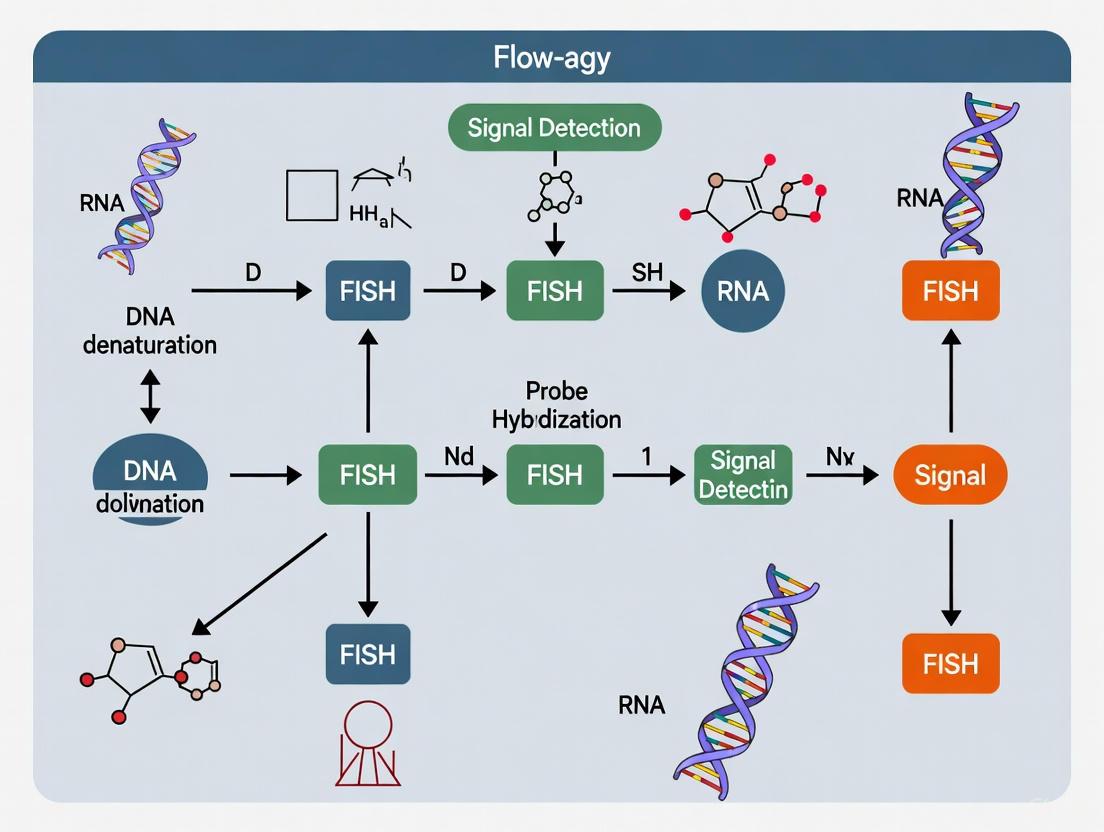
This article provides a comprehensive analysis of fluorescence in situ hybridization (FISH) methodologies, addressing the critical needs of researchers, scientists, and drug development professionals.
Fluorescence In Situ Hybridization (FISH) Methods: A Comprehensive Technical Comparison for Biomedical Research
Abstract
This article provides a comprehensive analysis of fluorescence in situ hybridization (FISH) methodologies, addressing the critical needs of researchers, scientists, and drug development professionals. We systematically compare foundational principles, advanced technical implementations, troubleshooting protocols, and validation frameworks across the FISH technology spectrum. Covering both established techniques and emerging enhancements like smFISH and HCR, this review integrates the latest research on sensitivity, specificity, and throughput optimization strategies. The analysis includes practical guidance on probe selection, experimental design, and quality control, alongside comparative assessments against alternative genomic technologies to inform method selection for diverse research and clinical applications in genetics, oncology, and drug discovery.
FISH Fundamentals: From Basic Principles to Advanced Probe Technologies
The evolution of in situ hybridization (ISH) from its radioactive origins to modern fluorescence-based detection represents a pivotal advancement in molecular pathology and biomedical research. This technique enables the precise localization of specific nucleic acid sequences within cells and tissues, providing critical spatial context that is lost in bulk extraction methods. The transition from radioactive to fluorescence in situ hybridization (FISH) was driven by the pursuit of greater resolution, safety, and multiplexing capability. This shift has fundamentally transformed how researchers investigate DNA, mRNA transcripts, regulatory noncoding RNA, and therapeutic oligonucleotides within their morphological context [1]. Understanding this historical progression and the current performance characteristics of different ISH methodologies is essential for researchers, scientists, and drug development professionals selecting appropriate techniques for their specific applications.
The Radioactive Beginnings and Technological Transition
The foundational ISH technique was first described in 1969 using tritium-labeled RNA probes to detect DNA sequences in oocytes of the toad Xenopus [2] [3]. This early methodology relied on autoradiography for visualization, which presented significant limitations including long exposure times, poor spatial resolution, and safety concerns associated with radioactive materials [3]. The first major evolutionary step occurred in the late 1970s and early 1980s with the introduction of fluorophore-labeled probes, initially called fluorescent ISH (FISH), for detecting chromosomal targets [1]. This was quickly followed by the development of chromogenic approaches using haptens such as biotin and digoxigenin in the 1980s, which offered safer alternatives while maintaining good sensitivity [1] [2].
The technological progression continued through the 1990s with improvements that allowed detection of single mRNA transcripts, setting the stage for contemporary innovations [1]. Recent years have witnessed remarkable refinements in ISH technology through the incorporation of synthetic nucleic acids, tandem oligonucleotide probes, and sophisticated signal amplification methods including branched DNA systems, hybridization chain reaction, and tyramide signal amplification [1]. These advancements have significantly enhanced the specificity and sensitivity of ISH assays, particularly on formalin-fixed paraffin-embedded (FFPE) tissues, while simultaneously expanding the application spectrum for this powerful technique in both research and clinical diagnostics.
Performance Comparison of Modern ISH Methodologies
Detection Sensitivity and Specificity
Contemporary ISH methodologies offer varying performance characteristics that influence their suitability for different applications. A comprehensive comparison of different ISH techniques for virus detection demonstrated that a commercial FISH-RNA probe mix achieved the highest detection rate and largest cell-associated positive area compared to self-designed digoxigenin-labeled RNA probes and commercially produced digoxigenin-labeled DNA probes [2]. This study investigated multiple viruses including atypical porcine pestivirus (APPV), equine hepacivirus (EqHV), and porcine circovirus 2 (PCV-2), finding that the FISH-RNA approach successfully identified nucleic acids of all tested viruses where other methods failed for some targets [2].
In clinical diagnostics, particularly for HER2 testing in breast cancer, both FISH and chromogenic ISH (CISH) show excellent concordance. One study analyzing 108 breast carcinomas found 99% agreement (Cohen κ coefficient, 0.9664) between FISH and CISH methodologies when assessing HER2 genetic status [4]. The same study noted that while both methods demonstrated high reliability, CISH technology offered superior efficiency for high-throughput HER2 genetic testing due to significantly faster scanning speeds (29 sec per mm² for CISH versus 764 sec per mm² for FISH) [4].
For bladder carcinoma detection, a meta-analysis of seven studies revealed that FISH alone achieved a sensitivity of 79% and specificity of 85%, while a combination approach of FISH with nuclear matrix protein 22 (NMP22) showed improved diagnostic performance with 82% sensitivity and 90% specificity [5].
Table 1: Comparison of Detection Performance Across ISH Methods and Applications
| Method | Application | Sensitivity | Specificity | Concordance | Reference |
|---|---|---|---|---|---|
| FISH-RNA probe mix | Viral detection | Highest detection rate | Specific detection | Superior to other ISH probes | [2] |
| FISH | HER2 testing in breast cancer | - | - | 99% with CISH | [4] |
| CISH | HER2 testing in breast cancer | - | - | 99% with FISH | [4] |
| FISH | Bladder carcinoma detection | 79% | 85% | - | [5] |
| FISH + NMP22 | Bladder carcinoma detection | 82% | 90% | - | [5] |
Technical Considerations and Limitations
Each ISH methodology presents unique technical considerations. Traditional FISH has inherent detection limitations that may underestimate the total number of chromosomal rearrangements, particularly for high linear energy transfer (LET) radiation exposure [6] [7]. Simulation studies indicate that 3-FISH (staining 3 pairs of chromosomes) underestimates both the total number of exchanges and their complexity due to the inability to detect small fragments and intra-chromosomal rearrangements [7]. For high LET ions, the majority of detected simple exchanges are actually true complex exchanges, highlighting a significant limitation of traditional FISH techniques [7].
Background autofluorescence, photobleaching of fluorophores, and poor tissue penetration depth remain challenges for fluorescence-based methods [8]. Additionally, the use of partial chromosome staining (3-FISH) provides different information compared to whole genome staining (mFISH), with each having distinct advantages and limitations for comprehensive chromosome analysis [7].
Table 2: Advantages and Limitations of Major ISH Methodologies
| Method | Advantages | Limitations |
|---|---|---|
| Radioactive ISH | High sensitivity (historically) | Poor resolution, long exposure, safety concerns |
| FISH | High resolution, multiplexing capability | Photobleaching, autofluorescence, complex analysis |
| CISH | Permanent slides, brightfield microscopy | Limited multiplexing capability |
| FISH-RNA probe mix | High detection rate, signal amplification | Higher cost, complex procedure |
Experimental Protocols for Key Applications
ISH for Viral Detection in FFPE Tissues
The detection of viral nucleic acids in tissue sections requires careful tissue preparation and specific hybridization conditions. For formalin-fixed paraffin-embedded (FFPE) tissues, sections of 2-3 μm thickness are recommended [2]. The protocol begins with deparaffinization in xylene followed by rehydration through a graded ethanol series [1] [2]. Permeabilization is achieved through proteolytic digestion using pepsin or proteinase K (e.g., 8 minutes at room temperature) to allow proper penetration of hybridization reagents [1] [4]. Subsequent steps include:
- Hybridization: Application of specific probes (DNA or RNA-based) under optimized conditions (usually between 55°C and 75°C) with precise control of stringency factors including probe concentration, ionic strength, and denaturants like formamide [1].
- Post-hybridization washes: Removal of nonspecifically bound probes through controlled stringency washes [1].
- Signal detection: For FISH, fluorescently labeled probes are directly visualized, while chromogenic methods require enzyme-conjugated antibodies (e.g., alkaline phosphatase-labelled anti-DIG antibody) with substrate development using nitroblue tetrazolium chloride/5-bromo-4-chloro-3-indolyl phosphate or Fast Red [2].
For the ViewRNA ISH Tissue Assay Kit utilizing FISH-RNA probe mixes, the protocol includes several signal amplification steps before development with Fast Red substrate, which can be visualized via both light and fluorescence microscopy [2].
HER2 Genetic Testing in Breast Cancer
The HER2 genetic testing protocol exemplifies a standardized clinical ISH application. The process typically involves:
- Tissue microarray construction: Multiple 1-2 mm cores from FFPE donor blocks are mounted in recipient blocks [4].
- Pretreatment: Slides are treated with pepsin for 8 minutes at room temperature [4].
- Hybridization: Using either formamide-based systems (traditional FISH/CISH) or ethylene carbonate-based systems (IQ-FISH) for accelerated protocol (4 hours vs. 2 days) [4].
- Stringency washes: Removal of nonspecific binding [4].
- Counterstaining and mounting: DAPI for FISH, hematoxylin for CISH [4].
- Digital imaging and scoring: Scanning with brightfield/fluorescent panoramic scanners and manual scoring of at least 60 signals from invasive tumor cells [4].
The scoring criteria follow ASCO/CAP guidelines with ratios <1.8 considered nonamplified, 1.8-2.2 equivocal, and >2.2 amplified [4]. For equivocal cases, additional signals are counted and the final ratio is calculated from the total number with a cut-off of ≥2.0 considered amplified [4].
Visualization of Experimental Workflows
ISH Experimental Workflow
ISH Experimental Workflow diagram illustrates the key steps in standard ISH protocols, highlighting the hybridization and signal detection phases that differentiate various methodologies.
FISH Detection Limitations
FISH Detection Limitations diagram outlines how technical constraints affect the accuracy of chromosome aberration analysis, particularly for high LET radiation studies.
The Scientist's Toolkit: Essential Research Reagents
Table 3: Key Research Reagent Solutions for Modern ISH Applications
| Reagent Category | Specific Examples | Function and Application |
|---|---|---|
| Fluorescent Dyes and Probes | FITC, Rhodamine, Cy3, Cy5, Alexa Fluor dyes [8] | Direct labeling of nucleic acid probes for fluorescence detection |
| Chromogenic Substrates | NBT/BCIP, Fast Red [2] | Enzyme substrate for colorimetric signal detection in CISH |
| Probe Labeling Systems | Digoxigenin (DIG), Biotin [2] | Hapten-based labeling for probe detection with antibodies |
| Signal Amplification Systems | Branched DNA, Tyramide Signal Amplification [1] | Signal enhancement for low-abundance targets |
| Commercial Probe Systems | RNAscope, ViewRNA ISH Tissue Assay [1] [2] | Standardized probe sets for specific targets with optimized protocols |
| Tissue Preparation Reagents | Neutral Buffered Formalin, Proteinase K, Pepsin [1] [4] | Tissue fixation and permeabilization for optimal probe access |
The historical evolution from radioactive ISH to modern fluorescence detection methodologies represents a remarkable trajectory of technological innovation in molecular pathology. While radioactive ISH established the fundamental principle of nucleic acid localization in situ, the transition to fluorescence-based detection has addressed critical limitations in resolution, safety, and multiplexing capability. Contemporary FISH and CISH methodologies now offer robust, reproducible platforms for both research and clinical applications, with performance characteristics tailored to specific needs. The continued refinement of probe design, signal amplification strategies, and detection systems promises to further expand the applications of ISH in drug research and development, particularly for investigating novel therapeutic oligonucleotides and biomarkers. Understanding the comparative performance, experimental requirements, and limitations of each approach enables researchers to select optimal methodologies for their specific scientific questions.
Fluorescence in situ hybridization (FISH) represents a cornerstone technique in molecular biology that enables the precise localization of specific nucleic acid sequences within cells, tissues, or entire organisms. By harnessing the fundamental principle of complementary nucleic acid hybridization coupled with fluorescent detection, FISH provides spatial context to genetic information that is lost in bulk extraction methods. This technology has evolved significantly from its initial development using radioactive probes to today's sophisticated fluorescence-based approaches that allow for multiplexed detection and single-molecule resolution. The continuous refinement of FISH methodologies has expanded its applications across diverse fields including cytogenetics, cancer diagnostics, neuroscience, and developmental biology. This guide objectively compares the performance characteristics of major FISH variants, supported by experimental data, to assist researchers in selecting appropriate methodologies for their specific research contexts.
Core Technical Principles
Nucleic Acid Hybridization Fundamentals
Nucleic acid hybridization is the foundational process underlying all FISH techniques, involving the specific base-pairing between complementary DNA or RNA strands through hydrogen bonding [9]. This specific recognition event forms a stable duplex structure (DNA:DNA, RNA:RNA, or DNA:RNA) under appropriate thermodynamic conditions. The specificity of this interaction is determined by factors including probe length, nucleotide composition, hybridization temperature, and buffer ionic strength [9]. Since its initial description in 1969 using tritium-labelled RNA, the technique has undergone substantial refinements leading to enhanced detection rates, practicability, and safety [2].
Fluorescence Visualization and Detection
Fluorescence visualization provides the signaling mechanism for detecting hybridized probes. Modern FISH employs fluorophore-labeled nucleic acid probes that, when bound to their targets, emit detectable light at specific wavelengths upon excitation [9]. The evolution from radioactive detection to fluorescence-based methods began with Rudkin & Stollar's 1977 work using hapten-labeled nucleotides targeted with rhodamine-labeled antibodies [9]. Current systems utilize advanced fluorophores with high quantum yields and photostability, coupled with sensitive detection systems such as cooled CCD cameras or photomultiplier tubes, to achieve exceptional signal-to-noise ratios necessary for detecting individual mRNA molecules [9] [10].
Comparative Analysis of FISH Methodologies
Performance Comparison of Major FISH Techniques
Table 1: Technical comparison of fluorescence in situ hybridization methods
| Method | Spatial Resolution | Detection Sensitivity | Multiplexing Capacity | Sample Compatibility | Relative Cost | Procedure Time |
|---|---|---|---|---|---|---|
| Chromogenic ISH (CISH) | Limited (light microscopy) | Moderate | Low | FFPE tissues, cytological preparations | Low | 1-2 days |
| Standard FISH | ~200-300 nm (diffraction-limited) | High (multiple transcripts) | Moderate (3-5 colors) | Cells, tissue sections, whole mounts | Moderate | 1-2 days |
| Single Molecule FISH (smFISH) | ~200 nm (diffraction-limited) | Single-molecule | High with sequential rounds | Cultured cells, thin tissue sections | High | 1-2 days |
| Inexpensive FISH (smiFISH) | ~200 nm (diffraction-limited) | Single-molecule | Moderate | Cells, tissue sections | Low-Moderate | 1-2 days |
| Hybridization Chain Reaction (HCR) | ~200 nm (diffraction-limited) | High (signal amplification) | High with barcoding | Whole mounts, thick tissues | Moderate | 1-2 days |
Table 2: Experimental performance data from comparative FISH studies
| Method | Probe Type | Target Viruses | Detection Rate | Cell-Associated Positive Area | Reference |
|---|---|---|---|---|---|
| CISH with self-designed DIG-RNA probes | DIG-labelled RNA (65-155 nt) | SBV, CBoV-2, PCV-2 | Moderate | Variable | [2] |
| CISH with commercial DIG-DNA probes | DIG-labelled DNA (~50 nt) | CBoV-2, PCV-2 | Moderate | Variable | [2] |
| FISH with FISH-RNA probe mix | Fluorescent RNA probes | APPV, EqHV, BovHepV, SBV, CBoV-2, PBoV, PCV-2 | Highest | Largest | [2] |
Experimental Protocol Comparison
Chromogenic ISH (CISH) Protocol The standard CISH protocol involves sequential steps: (1) deparaffinization of formalin-fixed paraffin-embedded (FFPE) tissue sections using xylene or substitutes, (2) proteolytic digestion with proteinase K to expose target nucleic acids, (3) hybridization with digoxigenin (DIG)-labeled RNA or DNA probes at specific melting temperatures, (4) stringency washes to remove non-specifically bound probes, and (5) visualization via enzyme-conjugated anti-DIG antibodies with chromogenic substrates (nitroblue tetrazolium chloride/5-bromo-4-chloro-3-indolyl phosphate) [2]. This method typically requires 1-2 days to complete and provides permanent slides viewable with standard light microscopy.
Standard FISH Protocol Basic FISH shares similar initial steps with CISH: tissue preparation, proteolytic digestion, and hybridization. However, FISH employs directly fluorophore-labeled probes or hapten-labeled probes detected with fluorescently conjugated antibodies [9]. Following hybridization and stringency washes, samples are mounted with anti-fade mounting media to preserve fluorescence. The detection is performed using epifluorescence or confocal microscopy. Multiplexing is achieved through sequential hybridization or using multiple fluorophores with distinct emission spectra [10].
Single Molecule FISH (smFISH) smFISH employs multiple short (~20 nt) singly-labeled oligonucleotide probes that collectively span the target mRNA [9] [10]. Each probe carries a single fluorophore, and when multiple probes bind to individual transcripts, they produce a diffraction-limited spot detectable by fluorescence microscopy. This method enables precise quantification and subcellular localization of individual mRNA molecules. The protocol involves hybridizing the probe set overnight at 37°C, followed by stringency washes and imaging using high-numerical aperture objectives [9].
Signal Amplification Methods (HCR, SABER) Hybridization Chain Reaction (HCR) utilizes metastable DNA hairpin probes that, upon initiation by a target-bound probe, self-assemble into fluorescent amplification polymers [10]. Signal Amplification By Exchange Reaction (SABER) employs primer exchange reactions to concatenate DNA sequences for enhanced signal detection [10]. These methods significantly improve detection sensitivity for low-abundance targets while maintaining high specificity through sequence-specific initiation.
Diagram 1: Generalized workflow for fluorescence in situ hybridization experiments
Enhancement Strategies for FISH Imaging
Sensitivity Enhancement Approaches
Multiple strategies have been developed to address the challenge of detecting low-abundance targets in FISH experiments. Signal amplification techniques such as HCR, branched DNA (bDNA), and rolling circle amplification (RCA) dramatically increase the fluorescent signal per binding event, enabling detection of targets with low copy numbers [10]. Advanced fluorophores including quantum dots and IRDye infrared dyes offer higher brightness and photostability compared to traditional organic dyes, with the additional benefit of reduced tissue autofluorescence in the near-infrared spectrum [11] [10]. Enzymatic amplification methods couple nucleic acid hybridization with enzymatic reactions for additional signal enhancement, as demonstrated in hybridization-activated catalysis systems [12].
Specificity and Throughput Enhancement
Specificity challenges from off-target probe binding are addressed through tissue clearing methods that reduce background autofluorescence, and split-probe designs that require simultaneous binding of multiple probe segments for signal generation [10]. For multiplexing, barcoding approaches using sequential hybridization or color-coded probes enable highly multiplexed experiments, with some methods capable of detecting hundreds of distinct targets in the same sample [10]. Recent computational advances in image analysis algorithms and machine learning approaches further enhance the capability to extract quantitative information from complex multiplexed FISH datasets [13].
Research Reagent Solutions
Table 3: Essential research reagents for fluorescence in situ hybridization
| Reagent Category | Specific Examples | Function and Application Notes |
|---|---|---|
| Probe Types | DIG-labelled RNA/DNA probes, fluorescent oligonucleotide probes, FISH-RNA probe mixes | Target-specific recognition; choice affects sensitivity and specificity [2] |
| Fluorophores | FITC, Cy3, Alexa Fluor dyes, quantum dots, IRDye infrared dyes | Signal generation; varying in brightness, photostability, and tissue penetration [11] [10] |
| Tissue Preparation | Formalin, paraffin, proteinase K, permeabilization buffers | Sample preservation and nucleic acid accessibility [2] [9] |
| Hybridization Components | Formamide, saline-sodium citrate (SSC) buffer, dextran sulfate | Control hybridization stringency and efficiency [9] |
| Signal Amplification | Tyramide signal amplification (TSA) reagents, HCR hairpins, SABER primers | Enhance detection sensitivity for low-abundance targets [10] |
| Mounting Media | Anti-fade mounting media with DAPI | Sample preservation and nuclear counterstaining [9] |
Diagram 2: Decision framework for selecting appropriate FISH methodologies
The landscape of fluorescence in situ hybridization technologies offers researchers a diverse toolkit for spatial nucleic acid detection, with each method presenting distinct advantages and limitations. Traditional CISH provides an economical approach for single-plex detection in clinical samples, while standard FISH enables multiplexed analysis with moderate sensitivity. Advanced approaches including smFISH achieve single-molecule resolution but at increased cost and complexity. Signal amplification methods such as HCR effectively bridge sensitivity and cost considerations. The optimal methodology selection depends on multiple factors including sample type, resolution requirements, multiplexing needs, and budget constraints. Future developments in FISH technology will likely focus on enhancing multiplexing capabilities, improving quantitative analysis, reducing costs, and simplifying protocols for broader accessibility across research and clinical applications.
Fluorescence in situ hybridization (FISH) is a cornerstone molecular cytogenetic technique that enables the visualization of specific nucleic acid sequences within chromosomes, cells, and tissues [14]. The efficacy and specificity of FISH are fundamentally dependent on the design and selection of appropriate probes. This guide provides a comparative analysis of three principal FISH probe strategies: locus-specific, centromeric, and whole chromosome painting probes. We objectively evaluate their performance, supported by experimental data and detailed methodologies, to inform researchers and drug development professionals in selecting the optimal probe design for their specific applications, from basic karyotyping to complex cancer genomics.
Core Principles of FISH Probe Design
FISH probes are single strands of DNA or RNA that are complementary to a target sequence of interest and tagged with fluorescent labels for detection [14]. The fundamental goal of probe design is to achieve a balance between specificity—ensuring the probe binds only to its intended target—and sensitivity—generating a signal strong enough for detection. Key considerations include:
- Probe Length: Longer probes (e.g., those derived from Bacterial Artificial Chromosomes (BACs) often >100 kb) generally provide stronger signals but lower resolution, whereas shorter oligonucleotide probes (e.g., 20-50 nucleotides) offer higher specificity and resolution but may require pooling to achieve sufficient signal strength [14] [15].
- Sequence Specificity: The probe sequence must be unique to the target to avoid off-target binding and background noise. Computational tools are often employed to screen for repetitive elements and ensure specificity [16].
- Labeling Efficiency: The method of incorporating fluorescent tags (e.g., via nick translation, PCR, or direct synthesis) directly impacts signal brightness and the signal-to-noise ratio.
Comparative Analysis of FISH Probe Types
The table below summarizes the key characteristics, applications, and performance data of the three probe types.
Table 1: Comparative Performance of Locus-Specific, Centromeric, and Whole Chromosome Painting Probes
| Probe Characteristic | Locus-Specific Probes | Centromeric Probes | Whole Chromosome Painting Probes |
|---|---|---|---|
| Target Region | Single gene or specific genomic locus [15] | Repetitive sequences in centromeres [17] [18] | Entire chromosomes or chromosome arms [19] [20] |
| Typical Probe Size | Varies; can be large-insert clones (e.g., 100-200 kb BACs) [15] or oligonucleotide pools [16] | Often oligonucleotides targeting repetitive monomers (e.g., 174-bp Fcr1 in Xenopus) [17] | Complex mixtures (e.g., 54,672 oligos for potato karyotyping) [21] |
| Primary Applications | Detecting deletions, amplifications, and translocations of specific genes [22] [15] | Chromosome enumeration and ploidy analysis [15] [18] | Identifying complex rearrangements, translocations, and marker chromosomes [19] [20] |
| Key Performance Metrics | High resolution for specific loci; signal strength dependent on probe size and labeling [15] | Very bright, compact signals due to highly repetitive targets [17] | Comprehensive chromosomal view; high sensitivity for structural aberrations [19] [20] |
| Experimental Data | Successfully detected DNMT1 gene amplification in Barrett's esophagus research [15] | Localized to ~60% of centromeres in Xenopus laevis using Fcr1 probes [17] | Established accurate karyotypes and identified translocations in Solanum species [21] |
| Limitations | Commercial availability is limited for non-standard loci [15] | Not all centromeric repeats are known or characterized for all species [17] | Cannot detect intra-chromosomal rearrangements or small aberrations [20] |
Experimental Protocols and Workflows
Design and Generation of Locus-Specific Probes
The protocol for creating custom locus-specific probes, as applied in studies of Barrett's esophagus, involves a multi-step process [15]:
- Clone Selection: Identify appropriate large-insert genomic clones (e.g., BACs) from a library that cover the genomic region of interest.
- DNA Extraction and Labeling: Culture the BAC clones, extract the DNA, and label it with fluorophores (e.g., Alexa Fluor dyes) via nick translation.
- Optimization and Validation: The initial FISH is performed on metaphase preparations from normal human lymphocytes to confirm the probe hybridizes to the correct chromosomal locus. A key optimization is determining the probe size; fragments of 100–500 bp after labeling were found to generate bright, compact signals suitable for interphase cell analysis [15].
- Application to Sample: The optimized probe is then used on interphase cell preparations from patient samples (e.g., touch preparations or tissue sections) to assess gene-specific copy number variations.
Centromeric Probe Identification and Validation
A modern approach to identifying centromeric probes in non-model organisms, as demonstrated in Xenopus laevis, uses an alignment-independent, k-mer-based analysis [17]:
- Cenpa ChIP-seq: Perform chromatin immunoprecipitation of the centromere-specific histone variant Cenpa, followed by high-throughput sequencing.
- k-mer Enrichment Analysis: Generate short DNA sequences (k-mers, e.g., 25-bp long) from the sequenced DNA. Calculate an enrichment score by comparing the frequency of each k-mer in the Cenpa sample versus the input (genomic) DNA.
- Sequence Clustering: Cluster the enriched sequences by similarity to identify families of centromeric repeat monomers (e.g., Frog Centromere Repeat - FCR).
- FISH Validation: Use the identified repeat sequences as FISH probes in combination with immunofluorescence for a constitutive centromere protein (e.g., Cenpc) to validate their centromeric localization and determine their prevalence across chromosomes.
Whole Chromosome Painting with Oligo-Based Probes
The development of oligo-based whole chromosome painting probes for plants illustrates a high-resolution strategy [21]:
- Oligo Design and Selection: Using a reference genome, bioinformatically select tens of thousands of oligonucleotides (e.g., 45-mers) from single-copy sequences distributed across each chromosome. Software like Chorus is used to filter out repetitive elements.
- Massive Parallel Synthesis: The oligo pool is synthesized de novo in parallel.
- Labeling and Hybridization: The pooled oligos are fluorescently labeled as FISH probes and hybridized to metaphase chromosomes.
- Karyotyping and Evolution Studies: The resulting staining pattern creates a unique "bar code" for each chromosome, allowing for precise karyotyping and the identification of evolutionary chromosomal rearrangements, such as translocations, when applied to related species.
Performance Comparison with Other Technologies
FISH remains a vital technique for visualizing the spatial organization of nucleic acids. However, its performance in detecting copy number variations (CNVs) must be contextualized alongside modern genomic technologies. A 2025 retrospective cohort study of 104 glioma patients directly compared FISH, Next-Generation Sequencing (NGS), and DNA Methylation Microarray (DMM) [23].
Table 2: Concordance of FISH, NGS, and DMM in CNV Detection in Gliomas
| Assayed Parameter | FISH vs. NGS/DMM Concordance | NGS vs. DMM Concordance | Notes |
|---|---|---|---|
| EGFR | High consistency [23] | Strong concordance [23] | All three methods performed well for this target. |
| CDKN2A/B, 1p, 19q, Chr 7, Chr 10 | Relatively low concordance [23] | Strong concordance for all parameters [23] | FISH showed limitations compared to the other two platforms. |
| Overall Findings | Discordances were associated with high-grade gliomas and high genomic instability [23]. | Demonstrated robust and reliable performance [23]. | Highlights the benefit of multi-platform integrated diagnosis. |
This study underscores that while FISH provides unique spatial information, NGS and DMM may offer more comprehensive and concordant data for genome-wide CNV assessment, particularly in complex, unstable genomes.
The Scientist's Toolkit: Essential Research Reagents
The following table details key reagents and their functions essential for successful FISH experiments as derived from the cited methodologies.
Table 3: Key Reagent Solutions for FISH Experiments
| Reagent / Resource | Function / Application | Example Use Case |
|---|---|---|
| BAC Clones | Source of DNA for generating large-insert, locus-specific FISH probes [15]. | Detecting single-gene amplifications or deletions in cancer research [15]. |
| Locus-Specific FISH Probes | Commercial or custom-designed probes for hybridizing to a specific gene locus [22]. | Identifying microdeletions, such as the 15q11.2-q13.1 region in Prader-Willi Syndrome [22]. |
| Centromeric Enumeration Probes | Probes targeting centromeric repeats to count chromosome numbers [18]. | Determining ploidy status or aneuploidy in interphase cells [15] [18]. |
| Whole Chromosome Painting Probes | Probes that stain entire chromosomes for karyotyping and translocation studies [19] [20]. | Identifying complex chromosomal rearrangements in cancer and genetic disorders [20]. |
| Oligo Pool Libraries | Massively synthesized oligonucleotide sets for high-resolution painting or bar-coding [21]. | Karyotype evolution studies and precise chromosome identification in non-model species [21]. |
| TrueProbes Software | Computational platform for designing high-specificity RNA-FISH oligonucleotide probes [16]. | Improving signal-to-noise ratio in single-molecule RNA detection by minimizing off-target binding [16]. |
The selection of an appropriate FISH probe strategy is dictated by the specific research question. Locus-specific probes are indispensable for high-resolution analysis of individual genes, while centromeric probes provide a robust tool for chromosome counting. Whole chromosome painting probes offer an unparalleled, comprehensive view for detecting complex structural variations. Evidence suggests that integrating FISH with complementary technologies like NGS can provide the most accurate diagnostic picture, especially in genomically unstable contexts like high-grade cancer. Future advancements will continue to emerge from refined probe design, such as the use of complex oligo pools and sophisticated computational tools, further enhancing the resolution and specificity of this foundational cytogenetic technique.
Fluorescence in situ hybridization (FISH) is a cornerstone molecular cytogenetic technique for localizing specific nucleic acid sequences within chromosomes, cells, and tissues. The resolution and specificity of FISH depend critically on the detection systems employed. This guide provides a comparative analysis of four fundamental systems: the fluorophores SpectrumOrange and SpectrumGreen, and the haptens Biotin and Digoxigenin. Understanding their performance characteristics, optimal applications, and experimental requirements is essential for researchers, scientists, and drug development professionals designing robust FISH assays within the broader context of advancing genomic and cytogenetic research.
The choice between direct and indirect detection methods represents a primary strategic decision in FISH experimental design. SpectrumOrange and SpectrumGreen are fluorophores used for direct detection, meaning they are fluorescent upon excitation and are directly conjugated to the nucleic acid probe. In contrast, Biotin and Digoxigenin are haptens used for indirect detection; they are non-fluorescent molecules incorporated into the probe that require a secondary recognition step with a fluorescently-labeled binding partner (e.g., avidin/streptavidin or an antibody) to generate a signal [24] [25].
The table below summarizes the core properties and primary applications of these four systems.
Table 1: Core Characteristics of SpectrumOrange, SpectrumGreen, Biotin, and Digoxigenin
| System | Type | Detection Method | Key Characteristics | Primary FISH Applications |
|---|---|---|---|---|
| SpectrumOrange | Fluorophore | Direct | Bright, photostable; compatible with TRITC/Cy3 filter sets [24] | Multiplex FISH, gene mapping, chromosome painting [26] |
| SpectrumGreen | Fluorophore | Direct | Bright, photostable; compatible with FITC/Alexa Fluor 488 filter sets [24] | Multiplex FISH, gene mapping, chromosome painting [26] |
| Biotin | Hapten | Indirect | Signal amplification; detectable with avidin/streptavidin conjugates [24] [25] | Detecting low-abundance targets, research applications [24] |
| Digoxigenin | Hapten | Indirect | Signal amplification; low background in mammalian tissues; detectable with anti-digoxigenin antibodies [24] [25] | Detecting low-abundance targets, research applications [24] |
Performance and Experimental Data
Signal Strength and Stability
A critical performance metric is the longevity and stability of the signal under proper storage conditions. A comprehensive 2025 study evaluated 581 FISH probes, including self-labeled homemade and commercial probes, that had been stored at -20°C in the dark for 1–30 years. The findings provide robust experimental data on the long-term performance of these labeling systems [24] [25].
Table 2: Experimental Performance Data from Long-Term Storage Study
| System | Probe Type | Age Range Tested (Years) | Performance Outcome | Key Observation |
|---|---|---|---|---|
| Biotin | Homemade | 1–30 | All 200 probes functioned perfectly [24] | Reliable long-term stability |
| Digoxigenin | Homemade | 1–29 | All 167 probes functioned perfectly [24] | Reliable long-term stability |
| SpectrumGreen | Homemade | 1–13 | All 27 probes functioned perfectly [24] | Reliable long-term stability |
| SpectrumOrange | Homemade & Commercial | 1–20 | All 100 probes functioned perfectly [24] | Commercial probes maintained short exposure times over years [24] |
| SpectrumAqua/ DECA | Homemade & Commercial | 1–9 | All 29 probes functioned [24] | Bright labeling for first 3 years, then signal faded [24] |
The study concluded that all systems, with the partial exception of SpectrumAqua/diethylaminocoumarin (DECA), perform excellently over decades when stored correctly, challenging regulatory-enforced expiration dates [24] [25].
Experimental Protocol for Indirect Detection Using Haptens
The protocol for using biotin and digoxigenin involves additional steps for signal amplification, which is particularly useful for detecting low-abundance targets [27].
Detailed Methodology:
- Probe Labeling and Hybridization: DNA probes are labeled by enzymatic incorporation of hapten-conjugated nucleotides (e.g., biotin-dUTP or digoxigenin-dUTP) via nick translation or PCR. The labeled probe is then hybridized to the target sample [24] [25].
- Post-Hybridization Washes: Unbound or weakly bound probes are removed through a series of stringent washes [14].
- Signal Detection and Amplification:
- For Biotin, samples are incubated with fluorophore-conjugated avidin or streptavidin.
- For Digoxigenin, samples are incubated with a fluorophore-conjugated anti-digoxigenin antibody.
- For enhanced sensitivity, additional layers (e.g., a biotinylated anti-avidin antibody followed by another round of fluorophore-conjugated avidin) can be applied to amplify the signal further [24].
- Counterstaining and Visualization: The sample is counterstained with a nuclear stain like DAPI and visualized under a fluorescence microscope equipped with appropriate filter sets [14].
Comparative Workflow and Selection Guidelines
Visualizing Detection Pathways
The fundamental difference between direct and indirect FISH detection methods is illustrated in the following workflow.
Selection Guidelines for FISH Assays
Choosing the appropriate system depends on several experimental factors, as outlined in the decision matrix below.
Table 3: Selection Guidelines for FISH Detection Systems
| Experimental Goal | Recommended System | Rationale |
|---|---|---|
| Multiplexing (3+ colors) | SpectrumOrange, SpectrumGreen, and other direct fluorophores | Simplifies workflow by eliminating cross-reactive secondary antibodies; enables simultaneous use of multiple probes from the same host species [27]. |
| Detecting low-abundance targets | Biotin or Digoxigenin | Signal amplification enhances sensitivity, making scarce antigens easier to visualize [27]. |
| Minimizing background in mammalian tissues | Digoxigenin | Mammalian tissues contain minimal endogenous digoxigenin, leading to lower background noise compared to biotin [25]. |
| Rapid workflow simplification | SpectrumOrange or SpectrumGreen | Direct detection removes the need for secondary antibody incubation steps, shortening experimental time [27]. |
| Long-term probe storage and use | All four systems | When stored at -20°C in the dark, all systems have demonstrated functionality for over a decade, and often up to 30 years [24] [25]. |
The Scientist's Toolkit: Essential Research Reagent Solutions
Successful FISH experiments rely on a suite of essential reagents and tools. The following table details key solutions and their functions.
Table 4: Essential Research Reagent Solutions for FISH
| Reagent / Solution | Function in FISH Workflow |
|---|---|
| BAC (Bacterial Artificial Chromosome) Clones | Source of high-purity, mapped DNA sequences used for generating locus-specific FISH probes [28]. |
| dUTPs conjugated to Fluorophores/Haptens | Modified nucleotides (e.g., SpectrumOrange-dUTP, Biotin-dUTP) enzymatically incorporated into DNA to create labeled probes [24] [26]. |
| Nick Translation Kit | Standard enzymatic method for uniformly labeling double-stranded DNA probes with fluorophores or haptens [26]. |
| Formaldehyde/Paraformaldehyde Fixative | Preserves cellular and tissue morphology and immobilizes nucleic acids for in situ analysis [14]. |
| Blocking Reagents | Reduce non-specific binding of probes and detection reagents, minimizing background fluorescence [14]. |
| Fluorophore-conjugated Streptavidin | High-affinity binding protein used to detect biotin-labeled probes [24] [25]. |
| Fluorophore-conjugated Anti-Digoxigenin | Antibody used to detect digoxigenin-labeled probes [24] [25]. |
| DAPI (4',6-diamidino-2-phenylindole) | Blue-fluorescent counterstain that binds DNA in the minor groove, used to visualize cell nuclei and chromosome morphology [24]. |
| Antifade Mounting Medium | Preserves fluorescence during microscopy by reducing photobleaching caused by exposure to excitation light [27]. |
SpectrumOrange, SpectrumGreen, Biotin, and Digoxigenin each offer distinct advantages for FISH-based research. The direct fluorophores SpectrumOrange and SpectrumGreen provide simplicity, excellent stability, and are ideal for multiplexed assays. The haptens Biotin and Digoxigenin offer powerful signal amplification for challenging, low-abundance targets. Experimental data confirms that all four systems exhibit remarkable longevity, maintaining performance for decades under proper storage. The choice among them is not a matter of overall superiority but should be guided by specific experimental needs—including target abundance, required level of multiplexing, and sensitivity requirements—enabling researchers to design optimal, reliable, and impactful FISH experiments.
Fluorescence in situ hybridization (FISH) has evolved from a technique for visualizing individual RNA species or genetic loci to a powerful tool in spatial-omics, enabling the multiplexed visualization of hundreds to thousands of different transcripts or genetic loci with single-molecule sensitivity [29]. The performance of FISH—encompassing its sensitivity, specificity, and quantitative accuracy—is fundamentally determined by three essential components: the sample types being analyzed, the methods used for their fixation, and the conditions under which hybridization is performed. This guide objectively compares the performance of various FISH methodologies by examining recent advances in these core components, providing a framework for researchers to optimize their experimental outcomes.
Performance Comparison of FISH Methodologies
The table below summarizes key performance metrics from recent studies implementing different FISH methodologies and optimizations.
Table 1: Performance Comparison of Recent FISH Methodologies and Optimizations
| Methodology / Platform | Sample Type | Key Performance Metrics | Comparative Outcome |
|---|---|---|---|
| Automated Leica BOND-III [30] | Breast cancer (77 cases) & Gastric cancer (8 cases) | Sensitivity: 95%, Specificity: 97% (Breast); Sensitivity & Specificity: 100% (Gastric) | 98% concordance with manual FISH; significantly reduced hands-on time and supply costs. |
| U-FISH (Deep Learning Detection) [29] | Diverse datasets from 7 spatial-omics methods (4,000+ images) | Median F1 Score: 0.924, Distance Error: 0.290 pixels | Superior accuracy and generalizability vs. deepBlink, DetNet, and rule-based methods (RS-FISH, TrackMate). |
| Multi-stage Image-based Approach [31] | Fish specimens (1,086 images, 2,216 instances) | F1-macro: 92.72%, MAPE-macro for weight: 18.06% | Outperformed single-stage approach F1 by 6.41 points and reduced MAPE by ~60%. |
| Protocol Optimization for MERFISH [32] | U-2 OS cell culture & colon Swiss roll tissues | Single-molecule signal brightness, Signal-to-Noise Ratio | Identified optimal hybridization conditions; new buffers improved photostability and effective brightness. |
| TrueProbes Probe Design [16] | Computational simulation & experimental validation | Specificity, Signal-to-Noise Ratio, Off-target binding | Outperformed Stellaris, MERFISH, Oligostan-HT, and PaintSHOP in computational and experimental benchmarks. |
Detailed Experimental Protocols
Protocol for Automated HER2 FISH Validation
A recent study validated an automated staining platform for HER2 FISH testing in clinical samples [30].
- Sample Type and Fixation: The study utilized 77 breast cancer cases and 8 gastric cancer cases. While the specific fixation method was not detailed, clinical FISH samples are typically formalin-fixed and paraffin-embedded (FFPE) tissues, which are then sectioned and mounted on slides.
- Hybridization Conditions: The hybridization was performed automatically using the Leica BOND-III platform. This system standardizes the denaturation, hybridization, and washing steps, minimizing the inter-run and inter-operator variability common in manual protocols.
- Comparison Method: The automated results were compared against the manual FISH method using Agilent HER2 IQFISH pharmDx assays.
- Performance Analysis: Concordance rates, sensitivity, and specificity were calculated. The platform's impact on technical hands-on time and overall laboratory supply costs was also assessed.
Workflow for Universal FISH Spot Detection with U-FISH
The U-FISH method provides a universal deep-learning model for detecting signal spots in diverse FISH images [29].
- Sample Type and Fixation: The model was trained and validated on a comprehensive dataset of over 4,000 images from seven different sources, encompassing a wide variety of sample types, fixation methods, and FISH protocols.
- Image Enhancement and Analysis: Raw FISH images with variable characteristics are processed by a U-Net model, which transforms them into enhanced images with uniform signal spots and improved signal-to-noise ratio.
- Spot Detection: The enhanced images are then analyzed for spot detection using fixed parameters, eliminating the need for manual parameter tuning for each new dataset.
- Performance Benchmarking: The performance was quantified using F1 scores and distance errors (in pixels) against established methods like deepBlink, DetNet, and Big-FISH on a standardized test dataset.
Protocol Optimization for MERFISH Performance
A systematic exploration was conducted to identify optimal protocol choices for Multiplexed Error-Robust FISH (MERFISH) [32].
- Sample Type: Experiments were conducted on U-2 OS cell cultures and colon Swiss roll tissue samples.
- Probe Design Variable: The impact of encoding probe target region length (20, 30, 40, or 50 nucleotides) on signal brightness was tested.
- Hybridization Conditions: A range of formamide concentrations at a fixed temperature of 37°C were screened for each probe set to find the optimal balance for probe assembly efficiency and specificity.
- Buffer and Reagent Optimization: The study introduced modifications to imaging buffers to improve fluorophore photostability and effective brightness. Methods to mitigate reagent "aging" during long experiments were also explored.
- Performance Measurement: The primary metric was the average brightness of single-molecule signals, serving as a proxy for probe assembly efficiency.
Experimental Workflow and Signaling Pathways
The following diagrams illustrate the core workflows and logical relationships of the FISH methods discussed.
Diagram 1: Automated vs. Manual FISH Workflow
Diagram 2: U-FISH Deep Learning Detection Logic
Diagram 3: MERFISH Barcode Readout Process
The Scientist's Toolkit: Key Research Reagent Solutions
The table below details essential materials and their functions for implementing modern FISH protocols, as derived from the featured experiments.
Table 2: Essential Research Reagents and Materials for FISH
| Item | Function / Description | Experimental Context |
|---|---|---|
| Automated Staining Platform | Standardizes denaturation, hybridization, and washing steps; reduces human error. | Leica BOND-III for clinical HER2 testing [30]. |
| Encoding Probes | Unlabeled DNA probes with a target-binding region and a barcode readout sequence. | Foundation for MERFISH and other multiplexed smFISH methods [32]. |
| Readout Probes | Fluorescently labeled probes that bind to readout sequences on encoding probes. | Used in sequential rounds to read out optical barcodes in MERFISH [32]. |
| U-FISH Software | Deep learning model for universal spot detection; enhances images and standardizes analysis. | Outperformed other detection methods in accuracy and generalizability [29]. |
| TrueProbes Design Software | Computational pipeline for designing high-specificity FISH probes using genome-wide binding analysis. | Generated probes with enhanced target selectivity and reduced off-target binding [16]. |
| Optimized Imaging Buffers | Chemical solutions that preserve fluorophore brightness and photostability over long imaging periods. | Critical for multi-round MERFISH; new formulations improved performance [32]. |
| Formamide | A chemical denaturant used in hybridization buffers to control stringency and probe binding efficiency. | Concentration was systematically optimized for different probe target lengths [32]. |
Microscopy Platforms and Detection Systems for FISH Analysis
Fluorescence in situ hybridization (FISH) has revolutionized molecular cytogenetics and biomedical research by enabling the visualization of specific nucleic acid sequences within intact cells or tissue sections. This powerful technique provides unprecedented spatial resolution for locating genes, diagnosing chromosomal abnormalities, and studying cellular structure and function [33] [34]. The effectiveness of FISH analysis depends critically on the integrated performance of microscopy platforms and detection systems, which have evolved significantly from customized setups to sophisticated commercial solutions [35]. This guide provides an objective comparison of current FISH detection methodologies, supported by experimental data, to assist researchers in selecting appropriate systems for their specific applications in drug development and basic research.
Fundamentals of FISH Technology
Basic Principles and Workflow
FISH operates on the principle of molecular recognition, where fluorescently labeled DNA or RNA probes hybridize to complementary target sequences within fixed biological samples [33] [34]. The fundamental process involves denaturing sample DNA and labeled probes to allow annealing of complementary sequences, followed by washing and visualization through fluorescence microscopy [33]. The technique has expanded from single-gene detection to whole-genome screening through multicolor approaches like multiplex FISH (M-FISH) and spectral karyotyping (SKY) [33].
Figure 1: Fundamental workflow of fluorescence in situ hybridization (FISH) experiments, highlighting key steps from sample preparation to final analysis.
Probe Design and Labeling Strategies
FISH probes vary significantly in design and application, with three main categories employed in research and diagnostics. Whole chromosome painting probes (wcps) consist of complex DNA sequences derived from specific chromosomes that homogeneously highlight entire chromosomes, making structural and numerical chromosomal rearrangements readily visible in metaphase spreads [33] [36]. Repetitive sequence probes target short, highly repeated sequences (such as centromeric α- and β-satellite DNA or telomeric TTAGGG repeats), resulting in bright fluorescent signals useful for detecting aneuploidies in both metaphase and interphase cells [33]. Locus-specific probes (LSPs) are genomic clones of varying sizes (from 1 kb to over 1 Mb) that detect specific genetic loci, translocations, inversions, and deletions [33] [36].
Probe labeling employs either direct or indirect methods. Direct labeling incorporates fluorophore-conjugated nucleotides (e.g., SpectrumGreen, SpectrumOrange, Texas Red) into probes, while indirect methods use haptens (biotin, digoxigenin) detected via secondary affinity reagents [33] [35]. Recent studies demonstrate that properly stored hapten-labeled DNA probes remain viable for decades, maintaining hybridization efficiency for 20-30 years when stored at -20°C in the dark [36].
Microscopy Platforms for FISH Analysis
Conventional Epifluorescence Systems
Modern epifluorescence microscopes designed for FISH applications feature critical components optimized for multicolor detection. The Quadfluor and similar epi-fluorescence illuminators accept multiple filter cubes (typically four), allowing researchers to work with several different probes without replacing filter cubes during analysis [35]. These systems employ precise linear sliders for filter switching, ensuring exceptional image registration across wavelengths [35]. High-quality objectives with chromatic correction are essential for multicolor analysis to maintain focus across different wavelengths, while high-sensitivity CCD cameras capture low-light signals with minimal noise [35].
Early FISH systems faced significant limitations in commercially available hardware, with researchers often requiring custom-configured microscopes that could cost over $200,000 [35]. Current commercial systems have addressed these challenges through integrated solutions featuring automated computer-driven XYZ stages for storing coordinates of cellular and chromosomal sites, allowing instant recall for further examination [35]. Modern filter cubes with proprietary antireflective coatings provide increased brightness and high contrast, while multi-pass dichroic and barrier filters enable simultaneous detection of multiple fluorophores [35].
Advanced Imaging Platforms
Advanced FISH applications, particularly in spatial transcriptomics and genomics, demand specialized imaging capabilities. Light-sheet microscopy has emerged for large-volume imaging, enabling comprehensive tissue analysis at single-molecule resolution [37]. These systems can generate datasets in the terabyte range, requiring sophisticated processing and analysis pipelines [37]. For high-plex spatial RNA imaging, conventional microscopes equipped with color-intensity barcoding capabilities can achieve 64-plex fluorescence imaging in a single round [38].
The integration of automated imaging systems with sophisticated software has dramatically improved throughput and analysis capabilities. Systems like Nikon's Optiphot with MultiFluor software provide automated image acquisition, storage, database management, and microscope control [35]. These solutions enable researchers to automatically capture images at multiple wavelengths and focal planes, visualize multicolor FISH probes, and perform quantitative analyses including probe counts, fluorescence intensity measurements, and cell morphometry [35].
Table 1: Comparison of Microscopy Platforms for FISH Analysis
| Platform Type | Key Features | Optimal Applications | Limitations | Representative Systems |
|---|---|---|---|---|
| Conventional Epifluorescence | Multi-filter cubes (e.g., Quadfluor), automated XYZ stage, CCD camera | Routine cytogenetics, clinical diagnostics, interphase FISH | Limited to smaller sample sizes, manual workflow steps | Nikon Optiphot with MultiFluor [35] |
| Automated Slide Scanning | High-throughput capability, automated focus, multi-well plate compatibility | High-content screening, large cohort studies, drug development | Higher initial cost, complex setup | MetaSystems ISIS imaging system [36] |
| Lightsheet Microscopy | Large volume imaging, minimal photobleaching, fast acquisition | 3D spatial transcriptomics, whole-tissue imaging, developmental biology | Specialized sample preparation, data storage challenges | Systems for EASI-FISH [37] |
| Microfluidic Integration | Reduced reagent volumes, shorter incubation times, potential for automation | Single-cell analysis, rare cell detection, point-of-care applications | Limited sample types, device fabrication complexity | Various lab-on-a-chip platforms [34] |
FISH Detection and Analysis Software
Performance Comparison of Detection Algorithms
The accurate detection of diffraction-limited spots in FISH images remains challenging due to varying background levels and spot intensities across datasets. Recent benchmarking studies comparing seven detection methods revealed significant differences in performance metrics including F1 scores and distance errors [29].
Table 2: Quantitative Performance Comparison of FISH Spot Detection Software
| Software | Method Type | F1 Score | Distance Error (pixels) | Key Strengths | Computational Requirements |
|---|---|---|---|---|---|
| U-FISH [29] | Deep learning (U-Net) | 0.924 | 0.290 | Superior accuracy, generalizability across datasets | 163k parameters, works on CPU/GPU |
| DeepBlink [29] | Deep learning | 0.901 | >0.290 | Good performance on standard datasets | Requires GPU for optimal performance |
| SpotLearn [29] | Deep learning | 0.910 | >0.290 | Competitive accuracy | Moderate computational demands |
| RS-FISH [37] | Radial symmetry | 0.888 | >0.290 | Fast processing, handles large volumes | Efficient CPU implementation |
| Big-FISH [29] | Rule-based | 0.857 | >0.290 | Integrated analysis pipeline | Moderate computational demands |
| Starfish [29] | Rule-based | 0.889 | >0.290 | Flexible pipeline design | Higher memory requirements |
| TrackMate [29] | Rule-based | 0.783 | >0.290 | User-friendly interface | Lightweight |
U-FISH employs a U-Net model trained on a comprehensive dataset of over 4,000 images and 1.6 million signal spots from seven sources, transforming raw FISH images with variable characteristics into enhanced images with uniform signal spots and improved signal-to-noise ratio [29]. This approach allows consistent detection performance across different FISH datasets without manual parameter adjustments. The compact network architecture (163k parameters) enables efficient processing on both GPU and CPU systems [29].
RS-FISH utilizes an extension of radial symmetry to identify single-molecule spots in 2D and 3D images with high precision [37]. Its efficient implementation allows distributed processing on workstations, clusters, or cloud environments, making it particularly suitable for large datasets and image volumes of cleared or expanded samples [37]. A key advantage is interactive parameter tuning through a Fiji plugin, enabling researchers to optimize detection parameters visually [37].
Experimental Protocols for Software Validation
Protocol for Benchmarking Detection Accuracy:
- Dataset Preparation: Collect FISH images from multiple sources representing various experimental conditions, sample types, and signal-to-noise ratios [29]. Include both synthetic images with known ground truth and experimental data.
- Performance Metrics Calculation: For each software tool, calculate F1 scores (harmonic mean of precision and recall) and distance errors (localization accuracy compared to ground truth) [29].
- Parameter Optimization: For rule-based methods, perform systematic parameter tuning to achieve optimal performance for each dataset. For deep learning methods, use pre-trained models without additional dataset-specific tuning [29].
- Runtime Assessment: Execute each software on standardized hardware configurations using datasets of varying sizes, recording processing times and computational resource utilization [37] [29].
Protocol for Large-Scale FISH Analysis Using RS-FISH:
- Image Preprocessing: Load raw microscopy images (supporting TIFF, N5, or Zarr formats). For 3D datasets, correct for anisotropy using the rescaling factor based on pixel spacing and point spread function characteristics [37].
- Seed Point Generation: Identify potential spot locations by thresholding the difference-of-Gaussian (DoG) filtered image, adjusting parameters for average spot size (sigma) and intensity (threshold) [37].
- Spot Localization: Extract image gradients from local pixel patches around each spot, optionally correcting for non-uniform fluorescence backgrounds. Apply RS-RANSAC to identify sets of image gradients supporting the same ellipsoid object [37].
- Result Export: Save detected spots as CSV files or transfer to Fiji's ROI manager for downstream analysis. For large volumes, use distributed processing with Apache Spark on compute clusters or cloud services [37].
Figure 2: Computational workflow for FISH image analysis, highlighting key steps from raw image processing to final quantification and visualization.
Emerging Platforms and Methodologies
Microfluidic FISH Platforms
Microfluidic lab-on-a-chip platforms for FISH analysis offer significant advantages including reduced reagent consumption, shorter incubation times, and potential for automation [34]. These systems shrink liquid handling into sub-millimeter channels with microliter or nanoliter volumes, improving mass transport and heat dissipation while enabling precise spatial and temporal control of the cell microenvironment [34].
Two main design approaches have emerged for microfluidic FISH: simple devices that interface with existing equipment and workflows, and fully integrated systems that perform the entire FISH protocol autonomously [34]. These platforms have been demonstrated for various applications including FISH analysis of immobilized cell layers, cells trapped in arrays, and tissue slices [34]. Technical considerations include the need for optically transparent materials compatible with high-resolution objectives, resistance to elevated temperatures and solvent treatments, and efficient transport of reagents to cells primarily through diffusion in the absence of active mixing [34].
Spatial-Omics and Live-Cell Applications
Recent advancements have expanded FISH applications to spatially resolved transcriptomics and genomics. Methods like multiplexed error-robust FISH (MERFISH) and spatial transcriptomics enable visualization of hundreds to thousands of different transcripts or genetic loci with single-molecule sensitivity in complex tissues [38] [29]. These approaches employ probe amplification, multiplexing, or barcoding strategies coupled with sophisticated computational analysis [29].
Live-FISH techniques enable the study of nucleic acid dynamics in living cells, with recent demonstrations on soil microbiomes showing applicability for dynamic gene expression studies [39]. Tetrahedral DNA dendritic nanostructure-enhanced FISH (TDDN-FISH) represents another advancement, using self-assembling DNA nanostructures for rapid, enzyme-free RNA detection that accelerates RNA detection while maintaining high sensitivity [38].
Essential Research Reagent Solutions
Successful FISH experiments require carefully selected reagents and materials optimized for specific applications. The following table summarizes key solutions used in modern FISH workflows.
Table 3: Essential Research Reagent Solutions for FISH Experiments
| Reagent Category | Specific Examples | Function | Performance Considerations |
|---|---|---|---|
| Fluorophores | SpectrumGreen, SpectrumOrange, Texas Red, Cyanine dyes [35] [36] | Direct signal generation | Photostability, brightness, spectral separation |
| Haptens | Biotin, Digoxigenin [33] [36] | Indirect labeling with signal amplification | Compatibility with detection systems, background levels |
| Probe Types | Whole chromosome paints, locus-specific probes, repetitive sequence probes [33] | Target specificity | Hybridization efficiency, signal-to-noise ratio |
| Enzymes | Proteinase K, Pepsin [34] | Sample permeabilization | Tissue-dependent optimization required |
| Mounting Media | DAPI-containing antifade media [35] | Nuclear counterstaining and preservation | Photobleaching resistance, compatibility with fluorophores |
| Microfluidic Materials | PDMS, glass [34] | Miniaturized reaction chambers | Optical clarity, chemical resistance, manufacturability |
The landscape of microscopy platforms and detection systems for FISH analysis has evolved dramatically, from custom-configured microscopes to integrated commercial solutions that offer improved accessibility and performance. Current systems span conventional epifluorescence microscopes for routine diagnostics to advanced light-sheet platforms for spatial omics applications. Detection software has similarly advanced, with deep learning methods like U-FISH demonstrating superior accuracy and generalizability across diverse datasets. Emerging microfluidic platforms promise to further transform FISH workflows through miniaturization, automation, and reduced reagent consumption. Selection of appropriate microscopy and detection systems should be guided by specific application requirements, sample characteristics, and throughput needs, with careful consideration of the demonstrated performance metrics outlined in this guide.
FISH Methodologies in Practice: Protocols and Research & Clinical Applications
This guide details the standard Fluorescence In Situ Hybridization (FISH) protocol and objectively compares its performance and methodology against leading alternative techniques, providing key experimental data to inform research and diagnostic applications.
The Core FISH Workflow
The FISH protocol is a multi-step process that allows for the visualization of specific nucleic acid sequences within cells and tissues. The standard procedure is outlined in the workflow below [40].
Detailed Experimental Protocols
Sample and Probe Preparation [9] [40]
- Sample Fixation: Cells or tissue sections are fixed to preserve morphology. Common fixatives include formaldehyde and Carnoy's solution. For formalin-fixed, paraffin-embedded (FFPE) tissues, sections are baked, deparaffinized with xylene, and rehydrated.
- Permeabilization and Digestion: Samples are treated with a permeabilization agent (e.g., detergent) and often digested with protease (e.g., pepsin) to allow probe access to the target nucleic acids.
- Probe Preparation: Double-stranded DNA probes are fluorescently labeled, often via nick translation which incorporates fluorophore-labeled nucleotides [41].
Denaturation and Hybridization [40]
- Denaturation: The probe and sample DNA are co-denatured at 75°C ± 1°C for 1-5 minutes using a specialized instrument like a ThermoBrite or hotplate. This step separates double-stranded DNA into single strands.
- Hybridization: The sample is incubated at 37°C in a humid environment for a defined period (often overnight) to allow the probe to bind to its complementary target sequence.
Post-Hybridization Washes and Signal Detection [9] [40]
- Stringency Washes: Unbound and non-specifically bound probes are removed through a series of washes. A common protocol involves:
- First Wash: In 0.4xSSC solution at 72°C for 2 minutes.
- Second Wash: In 2xSSC with 0.05% Tween-20 at room temperature for 30 seconds.
- Counterstaining and Mounting: A fluorescent counterstain, such as DAPI, is applied to visualize the nuclei. A mounting medium is added, and a coverslip is placed over the sample.
- Analysis: The sample is analyzed using a fluorescence microscope equipped with appropriate filters (e.g., for DAPI, FITC, Texas Red). For clinical diagnostics, scoring typically involves counting signals in 100-200 interphase cells [40].
Comparative Performance of Genetic Assays
Experimental data from a study of 108 breast cancer samples demonstrates how different FISH and CISH assays perform in a diagnostic setting [4].
| Assay Characteristic | Dako HER2 FISH | Dako HER2 IQFISH | Dako HER2 CISH | ZytoVision HER2 FISH | ZytoVision HER2 CISH |
|---|---|---|---|---|---|
| Probe Type (Gene/Reference) | DNA / PNA | DNA / PNA | DNA / PNA | DNA (Repeat-Free) / DNA (Repeat-Free) | DNA (Repeat-Free) / DNA (Repeat-Free) |
| Label Color (Gene/Reference) | TexasRed / FITC | TexasRed / FITC | Red / Blue | FITC / Rhodamine | Green / Red |
| Key Reagent / Technology | Formamide, alu-PNA blocking | Ethylene carbonate, alu-PNA blocking | Formamide, alu-PNA blocking | Formamide | Formamide |
| Hybridization Time | ~2 days | ~4 hours | ~2 days | ~2 days | ~2 days |
| Visualization Method | Fluorescence | Fluorescence | Bright-field microscopy | Fluorescence | Bright-field microscopy |
| Digital Scan Time (per mm²) | 764 seconds | 764 seconds | 29 seconds | 764 seconds | 29 seconds |
Experimental Context: This comparison was performed on tissue microarrays (TMAs) from breast cancer patients. The high concordance (99%) between FISH and CISH results validates both methods for HER2 status determination, with CISH offering significantly faster scanning [4].
Advanced FISH Methodologies and Performance
Multiplexed and Single-Molecule FISH
Advanced FISH variants enable highly multiplexed analysis and single-molecule detection [32] [9].
- smFISH (single-molecule FISH): Uses multiple short, singly-labeled oligonucleotide probes (e.g., twenty 20-mer probes) binding to a single transcript, allowing for semi-automated quantification of individual mRNA molecules with high signal-to-noise [9].
- MERFISH (Multiplexed Error-Robust FISH): A method for imaging hundreds to thousands of RNA species simultaneously. It uses encoding probes with readout sequences that are detected through sequential rounds of hybridization. Recent protocol optimizations have focused on improving signal brightness and reducing background by adjusting parameters like probe design, hybridization conditions, and buffer composition [32].
AI-Enhanced Signal Detection
A key challenge in imaging-based FISH is accurate signal spot detection. A 2025 study introduced U-FISH, a deep learning tool trained on over 4,000 images and 1.6 million signal spots. The benchmark performance data is shown below [29].
| Detection Method | F1 Score (Median) | Distance Error (Pixels, Median) |
|---|---|---|
| U-FISH | 0.924 | 0.290 |
| SpotLearn | 0.910 | 0.338 |
| deepBlink | 0.901 | 0.342 |
| DetNet | 0.886 | 0.355 |
| RS-FISH | 0.888 | 0.354 |
| Starfish | 0.889 | 0.353 |
| Big-FISH | 0.857 | 0.373 |
| TrackMate | 0.783 | 0.519 |
Experimental Context: The F1 score (a measure of accuracy combining precision and recall) and distance error (a measure of localization precision) were calculated on a diverse test dataset. U-FISH's superior performance demonstrates its utility as a universal spot detector for diverse FISH images without manual parameter tuning [29].
Comparison with Genomic Techniques
FISH is often compared with genome-wide techniques for detecting copy number variations (CNVs). A 2025 study of 104 glioma patients provides comparative data [23].
| Method | Target Specificity | Throughput | Key Finding in Glioma Study |
|---|---|---|---|
| FISH | Targeted (single to few loci) | Low | Lower concordance with NGS/DMM for CDKN2A/B, 1p, 19q, Chr7, Chr10 |
| Next-Generation Sequencing (NGS) | Genome-wide | High | Strong concordance with DMM for all 6 tested parameters |
| DNA Methylation Microarray (DMM) | Genome-wide | High | Strong concordance with NGS for all 6 tested parameters |
Experimental Context: While all three methods showed high consistency for EGFR assessment, FISH demonstrated relatively low concordance with NGS and DMM for other parameters, particularly in high-grade gliomas with high genomic instability. This highlights a limitation of targeted FISH versus genome-wide platforms in genomically complex tumors [23].
The Scientist's Toolkit: Essential Research Reagents
Critical reagents and their functions for a standard FISH experiment are summarized below [9] [42] [40].
| Reagent / Kit | Function / Application |
|---|---|
| FISH Tag DNA / RNA Kits | Enzymatically incorporate amine-modified nucleotides into probes, followed by chemical labeling with bright, photostable Alexa Fluor dyes for multiplex assays. |
| SuperBoost Signal Amplification Kits | Use poly-HRP mediated tyramide signal amplification (TSA) for detecting low-abundance targets, offering 10-200x higher sensitivity than standard methods. |
| Nick Translation System | Enables in-house preparation of FISH probes from user-provided template DNA, offering flexibility for any target sequence. |
| Formamide | A chemical denaturant used in hybridization buffers to balance probe assembly efficiency and specificity by modulating the melting temperature. |
| SSC Buffer (Saline-Sodium Citrate) | Used in post-hybridization washes to control stringency; its concentration and temperature determine the level of background signal removal. |
| Protease (e.g., Pepsin) | Digests proteins in the sample to uncover target nucleic acids, improving probe accessibility and hybridization efficiency. |
| DAPI Counterstain | A fluorescent DNA dye that stains cell nuclei, providing a morphological context for locating specific FISH signals within cells. |
In the context of fluorescence in situ hybridization (FISH) methods research, proper tissue processing forms the critical foundation for reliable and reproducible results. The quality of tissue fixation, embedding, and sectioning directly determines the success of subsequent FISH procedures by preserving morphological integrity and biomolecule accessibility. As precision medicine increasingly relies on molecular techniques like FISH to validate genetic aberrations uncovered by next-generation sequencing, standardized tissue processing protocols have become indispensable in both research and clinical settings [43]. Optimal processing maintains tissue architecture while ensuring the accessibility of DNA or RNA targets to hybridization probes, thereby maximizing signal-to-noise ratio and analytical sensitivity.
The complex interplay between processing conditions and FISH performance necessitates careful optimization across different tissue types and experimental goals. Researchers must balance morphological preservation with nucleic acid integrity, considering factors such as fixation chemistry, duration, embedding media, and sectioning parameters. This guide systematically compares tissue processing methodologies, providing evidence-based recommendations to support high-quality FISH experiments in diverse research applications, from basic science to drug development.
Comparative Analysis of Fixation Methods
Fixative Formulations and Properties
Table 1: Comparison of Common Tissue Fixatives
| Fixative Type | Chemical Composition | Primary Mechanism | Optimal Fixation Duration | Key Advantages | Key Limitations |
|---|---|---|---|---|---|
| 10% Neutral Buffered Formalin (NBF) | 4% formaldehyde, phosphate buffer [44] | Protein cross-linking | 24 hours at 21°C [44] | Standard for pathology; excellent protein preservation | Can mask epitopes; requires antigen retrieval; causes ~15-17% reduction in seminiferous epithelium thickness [45] |
| Bouin's Fluid (BF) | Picric acid, formaldehyde, acetic acid [44] | Protein precipitation and cross-linking | 12-24 hours [45] | Superior morphological detail for testis; excellent for PAS staining | Very low IHC staining efficiency; contains picric acid (explosive hazard) [45] |
| Modified Davidson's Fluid (mDF) | Formaldehyde, ethanol, glacial acetic acid [45] | Protein precipitation and dehydration | 12 hours [45] | Excellent morphology with good IHC compatibility; recommended for testis by Society of Toxicologic Pathology | Limited data for other tissue types; acidic nature may affect some targets |
| Zinc-Formalin | Formalin, zinc sulfate [44] | Protein cross-linking with metal ions | 6 hours at 4°C [44] | Enhanced antigen preservation; potential for molecular studies | Less studied; not yet standard |
| Formaldehyde/Glutaraldehyde | Formaldehyde, glutaraldehyde, calcium acetate [44] | Extensive protein cross-linking | Not specified | Superior ultrastructural preservation | May over-fix; challenging for nucleic acid retrieval |
Experimental Data on Fixation Performance
Quantitative studies directly comparing fixatives provide critical insights for method selection. In testicular tissue research, a systematic evaluation of 10% NBF, Bouin's Fluid, and modified Davidson's Fluid revealed significant differences in morphological preservation and staining efficacy [45]. After 12 hours of fixation, mouse testes fixed in mDF and BF demonstrated superior tissue morphology compared to 10% NBF, with the latter causing an approximately 15-17% reduction in seminiferous epithelium thickness [45].
The efficiency of periodic acid Schiff-hematoxylin (PAS-h) staining for acrosomes was excellent in both BF and mDF, whereas immunohistochemistry (IHC) for synaptonemal complex protein 3 (Sycp3) was superior in mDF compared to BF-fixed samples [45]. This demonstrates the critical relationship between fixative choice and downstream analytical success. For mouse testes, fixation for 12 hours with mDF provided the optimal balance of morphological detail, PAS-h staining efficiency, and IHC compatibility [45].
Fixation duration represents another crucial variable. Extended fixation times can compromise tissue integrity, as evidenced by increased morphological damage in testis tissue fixed beyond the optimal window [45]. For most applications with 10% NBF, fixation for 24 hours at 21°C provides satisfactory results, though this may require adjustment for specific tissues or experimental needs [44].
Embedding and Sectioning Methodologies
Embedding Protocols and Considerations
Following fixation, proper embedding is essential for providing structural support during sectioning. The standard medium for most FISH applications is paraffin wax, though specific formulations can improve results. To minimize tissue discontinuity in sections—a common challenge with delicate tissues like zebrafish—processing and embedding formalin-fixed tissues in plasticized forms of paraffin wax has proven beneficial [44].
For small specimens such as zebrafish larvae, array casting molds based on 3D microCT-derived contours significantly improve section plane consistency [44]. These specialized molds allow precise orientation of multiple specimens within a single block, facilitating comparative analysis and enhancing experimental throughput. The original rectangular array mold design accommodating 64 seven-day-old larvae has been refined to include triangular wells that fit one larva each, enabling more consistent positioning and easier digital imaging [44].
Sectioning Optimization Techniques
Sectioning represents a critical juncture where previously optimized processing can be compromised without proper technique. For zebrafish, periodic hydration of the block surface in ice water between sets of sections has been shown to minimize tissue discontinuity [44]. This approach counteracts the brittleness that can develop in certain tissues during microtomy.
Standard section thickness for FISH applications typically ranges from 4-5μm, balancing morphological preservation with probe penetration. For delicate tissues, slightly thicker sections (5-7μm) may be preferable, though this requires optimization based on specific experimental conditions [44].
Following sectioning, proper slide adhesion is essential, particularly for the stringent conditions of FISH procedures. Baking slides for 30-120 minutes at 60°C improves tissue adherence, while storage under RNase/DNase-free conditions at a constant 4°C or room temperature preserves nucleic acid integrity [46]. For fresh sections, cutting under RNase/DNase-free conditions onto charged slides provides superior adhesion, crucial for maintaining tissue architecture throughout the demanding FISH protocol [46].
Tissue Processing Protocols for FISH Applications
Detailed Methodologies for Optimal Results
Protocol 1: Standard Processing for Formalin-Fixed Paraffin-Embedded (FFPE) Tissues
Fixation: Immediately following euthanasia, place tissues in 20x volume of 10% NBF at room temperature for 24 hours with gentle rocking [44] [45]. For delicate tissues, use flat-bottom containers to maintain straight orientation and prevent bending.
Decalcification (if required): For bony tissues or zebrafish older than 21 days, use 0.35 M EDTA for effective decalcification. Duration depends on specimen size and age [44].
Dehydration: Process through graded ethanol series: 75% ethanol overnight, 85% ethanol for 4 hours, 95% ethanol for 1.5 hours, and absolute ethanol for 1 hour [45].
Clearing: Immerse tissues in xylene for 20 minutes to displace ethanol and prepare for paraffin infiltration [45].
Infiltration and Embedding: Process through two changes of molten paraffin wax for 1 hour each at 60°C. Embed in plasticized paraffin using oriented molds to ensure consistent sectioning planes [44].
Sectioning: Cut 4-5μm sections using a microtome, float on warm water bath (40-45°C), and mount on charged slides. Bake at 60°C for 60 minutes to ensure adhesion [46].
Protocol 2: Specialized Processing for Delicate Tissues (e.g., Zebrafish)
Euthanasia: Use 160 mg/L Tricaine-S pH 7.0 combined with hypothermal shock (2-4°C) for rapid, humane euthanasia that prevents reaction to fixatives [44].
Fixation: Fix in 10% NBF at 21°C for 24 hours. For larval arrays, use agarose embedding molds based on 3D microCT contours for consistent orientation [44].
Processing: Employ gentle agitation throughout processing. Use plasticized paraffin and periodic block surface hydration during sectioning to minimize tissue discontinuity [44].
Sectioning: For larval arrays, maintain consistent sectioning planes using the oriented blocks. Collect serial sections for comprehensive analysis.
Troubleshooting Common Processing Issues
Table 2: Troubleshooting Tissue Processing Problems
| Problem | Potential Causes | Solutions | Preventive Measures |
|---|---|---|---|
| Tissue brittleness/cracking | Over-fixation; excessive dehydration; improper clearing | Rehydrate and process again; adjust processing times | Standardize fixation duration; optimize processing schedule |
| Poor adhesion to slides | Insufficient slide charging; improper baking; thick sections | Use positively charged slides; increase baking time/temperature | Implement standardized baking protocol (60°C for 30-120 min) [46] |
| Tissue discontinuity | Hardness differences; improper infiltration; sectioning technique | Hydrate block surface; adjust knife angle; use plasticized wax | Use plasticized paraffin; periodic block hydration [44] |
| Inconsistent orientation | Improper embedding technique; unsuitable molds | Re-embed specimens; use customized orientation molds | Implement array casting molds based on 3D contours [44] |
| Suboptimal FISH signals | Nucleic acid degradation; improper fixation | Optimize fixation time; ensure RNase-free conditions | Process under RNase/DNase-free conditions; store slides appropriately [46] |
The Scientist's Toolkit: Essential Research Reagent Solutions
Table 3: Key Reagents for Tissue Processing and FISH Applications
| Reagent/Category | Specific Examples | Function/Application | Technical Notes |
|---|---|---|---|
| Fixatives | 10% NBF, Modified Davidson's Fluid, Bouin's Fluid | Tissue preservation and morphological stabilization | mDF recommended for testis; 10% NBF standard for most tissues [45] |
| Decalcification Agents | 0.35 M EDTA | Calcium removal from bony tissues | Effective for zebrafish juveniles through adults; milder than stronger acids [44] |
| Embedding Media | Plasticized paraffin wax | Structural support for sectioning | Minimizes tissue discontinuity in delicate specimens [44] |
| Sectioning Aids | Charged slides, ice water | Tissue adhesion and sectioning quality | Periodic block hydration improves sectioning of brittle tissues [44] |
| FISH Probes | Encoding probes, readout probes | Target sequence detection | Signal brightness depends on target region length (20-50 nt optimal) [32] |
| Hybridization Buffers | Formamide-containing buffers | Stringency control during hybridization | Concentration optimization critical for signal-to-noise ratio [32] |
| Signal Amplification Systems | HCR FISH, MERFISH | Enhanced detection sensitivity | HCR FISH compatible with tissue clearing methods [47] |
| Tissue Clearing Reagents | CLARITY, iDISCO+ | Tissue transparency for deep imaging | iDISCO+ provides better clearing and more uniform labeling for large samples [47] |
Optimal tissue processing for FISH applications requires a meticulous, integrated approach from fixation through sectioning. The evidence demonstrates that 10% NBF remains the standard fixative for most applications, though specialized tissues may benefit from alternatives like modified Davidson's Fluid or Bouin's Fluid, with fixation duration critically impacting morphological preservation [45]. Embedding in plasticized paraffin and employing specialized orientation molds significantly enhances section quality, particularly for challenging specimens like zebrafish [44].
The successful integration of optimized tissue processing with FISH methodologies enables researchers to address complex biological questions with enhanced precision and reliability. As molecular techniques continue to evolve, with emerging approaches like MERFISH pushing the boundaries of multiplexed RNA imaging [32], the foundation provided by proper tissue processing becomes increasingly important. By implementing these evidence-based guidelines, researchers can ensure that their tissue samples are prepared to meet the demanding requirements of contemporary FISH applications, ultimately supporting robust and reproducible scientific discoveries in the era of precision medicine.
Fluorescence in situ hybridization (FISH) has evolved significantly from its initial conception as a simple cytogenetic technique for visualizing specific DNA sequences on chromosomes. The development of advanced FISH variants has been driven by the need for higher precision, quantification, and multiplexing capabilities in both research and clinical diagnostics. These technological advancements have transformed FISH into a powerful tool for studying genetic alterations, gene expression, and spatial organization of nucleic acids within preserved cells and tissues. The progression from basic FISH to sophisticated single-molecule detection methods represents a paradigm shift in how researchers investigate genomic architecture and function, with each variant offering unique advantages for specific applications in basic research and drug development.
Among the most significant advancements are single-molecule RNA FISH (smFISH), which enables precise localization and quantification of individual RNA molecules; Quantitative FISH (Q-FISH), which enhances the accuracy of telomere length measurements; Flow-FISH, which combines flow cytometry with FISH for high-throughput analysis; and various multiplex approaches that allow simultaneous detection of numerous targets within a single sample. These methodologies have expanded the utility of FISH across diverse fields including cancer genomics, neuroscience, developmental biology, and drug discovery. The integration of novel probe design strategies, enhanced imaging modalities, and sophisticated computational analysis has positioned modern FISH technologies as indispensable tools for unraveling complex biological systems at unprecedented resolution.
Technical Comparison of FISH Methodologies
Performance Characteristics and Applications
Table 1: Comparative analysis of advanced FISH methodologies
| Method | Spatial Resolution | Multiplexing Capacity | Throughput | Primary Applications | Key Limitations |
|---|---|---|---|---|---|
| smFISH | Single-molecule (~7.5 μm lateral diffusion) [48] | High (up to 10,000 genes with barcoding) [48] | Low to moderate (imaging-limited) | Spatial transcriptomics, subcellular RNA localization, neuronal mapping [48] | Time-consuming imaging, requires specialized equipment and analysis pipelines [48] |
| Q-FISH | Chromosome-level | Low (typically 1-5 targets) | Low | Telomere length quantification, senescence studies, aging research | Limited to metaphase chromosomes, requires specialized imaging systems |
| Flow-FISH | Cellular (no subcellular information) | Moderate (typically 1-10 targets) | High (thousands of cells per second) | Hematopoietic disorders, immunology, stem cell research | Loses spatial context, requires cell suspension |
| EEL FISH | Single-cell (preserves tissue architecture) [48] | Very high (448 genes per color channel) [48] | High (large tissue sections in days) [48] | Tissue-scale spatial transcriptomics, brain mapping, human pathology [48] | Custom equipment required, 13.2% median detection efficiency [48] |
| Multiplex FISH (μPAD) | Cellular to tissue-level | Moderate (multiple pathogens simultaneously) [49] | High (point-of-care testing) [49] | Pathogen detection, clinical diagnostics, environmental monitoring [49] | Primarily for nucleic acid targets, limited clinical validation |
Quantitative Performance Metrics
Table 2: Experimental performance data across FISH platforms
| Method | Detection Sensitivity | Detection Efficiency | Sample Compatibility | Processing Time | Key Performance Metrics |
|---|---|---|---|---|---|
| smFISH | Single RNA molecules [48] | Varies by protocol (13.2% for EEL FISH) [48] | Cultured cells, fresh frozen tissue, some FFPE [48] | 1-3 days (including hybridization and imaging) [48] | False-positive rate: 0.025% ± 0.011% per gene [48]; Lateral diffusion: 7.5 μm [48] |
| TrueProbes smFISH | Enhanced target selectivity [50] | Superior to conventional designs [50] | Standard smFISH samples | Probe design time reduced | Improved specificity via thermodynamic modeling [50] |
| EEL FISH | 8,871,209 molecules detected in single experiment [48] | 19% RNA transfer, 13.2% end-to-end [48] | Mouse brain, human visual cortex, cryosections [48] | ~2 days for 440 genes [48] | 5-10x more RNA capture than Visium; Enables segmentation of >128,000 single cells [48] |
| Paper-based μPAD FISH | 10 copies/μL for HPV [49] | Comparable to PCR for some targets [49] | Saliva, blood, environmental samples [49] | <1 hour for some assays [49] | Cost-effective, portable, suitable for resource-limited settings [49] |
Experimental Protocols and Workflows
EEL FISH for Spatial Transcriptomics
The EEL FISH (Enhanced ELectric Fluorescence in situ Hybridization) protocol represents a significant innovation in spatial transcriptomics by combining electrophoretic RNA capture with highly multiplexed barcoding approaches [48]. This method addresses the critical trade-off between resolution and throughput that has limited conventional spatial transcriptomics methods. The complete workflow begins with tissue preparation, where 10-μm cryosections are placed onto specially prepared indium tin oxide (ITO)-coated capture slides that have been functionalized with oligo(dT) and positively charged poly(d-lysine) to facilitate RNA capture through both hybridization and electrostatic attraction [48]. The incorporation of poly(d-lysine) enhances transfer efficiency by 60-fold compared to oligo(dT) alone [48].
Following tissue placement, nuclei are stained and imaged for subsequent cell segmentation analysis. The tissue permeabilization step is critical for allowing RNA release during electrophoresis. The core innovation of EEL FISH follows: an electric potential difference of 10 V cm⁻¹ is applied for 20 minutes with the capture slide serving as the anode [48]. This electrophoretic transfer actively drives RNA molecules straight down toward the capture surface, minimizing lateral diffusion and preserving single-cell resolution. Measurements demonstrate that 50% of Vip transcripts remain within 7.5 μm of their original cell centroid, only slightly more than the 4.4 μm observed with conventional in-tissue smFISH [48].
After transfer, the tissue is digested,
leaving captured RNA molecules on the surface. This tissue removal significantly accelerates subsequent detection chemistry by eliminating the need for reagents to diffuse through tissue matrices. For multiplexed detection, EEL FISH employs a sophisticated barcoding system capable of targeting up to 448 genes per color channel using binary codes with "6 positive bits of 16 bits total" and a minimum of "4 bits of difference between any pair of codes" [48]. Encoding probes with overhanging tails corresponding to the six positive bits of the selected barcode are hybridized to their targets. Detection occurs through 16 cycles of fluorescent readout probe hybridization, imaging, and Tris (2-carboxyethyl) phosphine (TCEP)-mediated fluorophore cleavage [48]. The entire process can be automated using custom fluidic systems integrated with commercial microscopes.
Advanced Probe Design with TrueProbes
The TrueProbes platform represents a significant advancement in smFISH probe design through the integration of genome-wide BLAST-based binding analysis with sophisticated thermodynamic modeling [50]. Conventional smFISH probe design tools suffer from limitations including "narrow heuristics, incomplete off-target assessment, and reliance on trial-and-error approaches" [50]. TrueProbes addresses these challenges by implementing a comprehensive computational pipeline that ranks and selects probes based on multiple criteria including predicted binding affinity, target specificity, and structural constraints [50].
The probe design workflow begins with sequence input and parameter specification, where users define target regions and experimental conditions. The software then performs genome-wide off-target assessment using enhanced BLAST algorithms to identify potential cross-hybridization events. This is followed by thermodynamic modeling of probe-target interactions under user-defined hybridization conditions. The incorporation of thermodynamic-kinetic simulation provides predictive design metrics that optimize probe performance before experimental validation [50]. Probes are finally ranked according to a comprehensive scoring system that balances specificity, sensitivity, and structural accessibility.
Experimental validation demonstrates that TrueProbes "consistently outperformed alternatives across multiple computational metrics and experimental validation assays" [50]. Probes designed with this platform show "enhanced target selectivity and superior experimental performance" compared to those generated with conventional tools [50]. This advanced probe design approach is particularly valuable for quantitative applications requiring high specificity, such as distinguishing closely related splice variants or identifying point mutations in heterogeneous cell populations.
Paper-Based Microfluidic FISH (μPAD)
Paper-based microfluidic chips (μPADs) represent an innovative approach to deploying FISH technology in point-of-care settings [49]. These devices leverage the natural capillary action of paper to transport fluids through predefined channels, eliminating the need for external pumps or power sources. The basic fabrication process begins with selection of appropriate paper substrates, with cellulose-based paper, nitrocellulose membrane, and cellulose-based composites being the most common materials [49]. Each material offers distinct advantages: cellulose paper is low-cost and biodegradable; nitrocellulose provides higher protein binding capacity; while composites can enhance sensitivity through incorporated nanomaterials.
The manufacturing process typically involves creating hydrophobic barriers that define microfluidic channels. Wax printing is the most common method, where solid wax is deposited onto the paper substrate and then melted through heating to penetrate through the thickness of the paper [49]. More sophisticated approaches include photolithography using UV-sensitive polymers or flexographic printing with hydrophobic inks. For increased complexity, 3D μPADs can be created by stacking and folding multiple 2D layers, enabling more sophisticated fluid handling and multi-step reactions [49].
For FISH applications, μPADs are typically functionalized with nucleic acid probes specific to target pathogens. The sample is applied to the device, and capillary action transports it through various zones for lysis, hybridization, and detection. Detection is most commonly achieved through colorimetric readouts,
though electrochemical and fluorescence detection methods have also been implemented for enhanced sensitivity. The applications of μPAD FISH are particularly valuable in resource-limited settings for rapid detection of pathogens such as E. coli, norovirus, and SARS-CoV-2 [49]. One developed system achieved detection of SARS-CoV-2 in saliva with 100% specificity and a limit of detection of 200 copies/μL in under one hour [49]. Similar approaches have been used for multiplexed detection of Zika virus, Dengue virus, and Chikungunya virus simultaneously from serum samples [49].
Research Reagent Solutions
Table 3: Essential reagents and materials for advanced FISH applications
| Reagent/Material | Function | Example Specifications | Application Notes |
|---|---|---|---|
| ITO-coated Capture Slides | Electrically conductive transparent surface for RNA capture | Coated with oligo(dT) and poly-D-lysine [48] | Critical for EEL FISH; enables electrophoretic transfer |
| Encoding Probes | Target-specific probes with barcode tails | 6 positive bits of 16 bits total; minimum 4-bit difference [48] | Enable highly multiplexed detection |
| Fluorescent Readout Probes | Complementary to barcode tails for detection | TCEP-cleavable fluorophores [48] | Allow sequential detection through hybridization cycles |
| Cellulose/Nitrocellulose Substrates | Microfluidic channel material | Whatman filter paper, nitrocellulose membranes [49] | Form basis of μPAD devices |
| smFISH Probe Sets | Target individual RNA molecules | TrueProbes-designed for enhanced specificity [50] | Optimized via thermodynamic modeling |
| Hybridization Buffers | Create optimal hybridization conditions | Varying stringency based on application | Critical for specificity across methods |
| Tissue Digestion Enzymes | Remove tissue after RNA transfer | Proteinase K, other proteases [48] | Used in EEL FISH after electrophoretic transfer |
| Anti-fade Mounting Media | Preserve fluorescence during imaging | Commercial formulations with DABCO or similar | Essential for multi-cycle imaging |
Applications in Biomedical Research and Drug Development
Clinical Diagnostics and Biomarker Validation
Advanced FISH methodologies have become indispensable tools in clinical diagnostics, particularly in oncology where they enable precise detection of genetic alterations that inform treatment decisions. In non-small cell lung cancer (NSCLC), FISH-based approaches play a crucial role in identifying MET abnormalities, including METex14 skipping mutations and MET gene amplification, which represent important therapeutic targets [51]. METex14 skipping mutations occur in approximately 0.9%-2.0% of Chinese NSCLC patients and 2%-4% of Western populations, with significantly higher incidence (13%-22%) in the rare pulmonary sarcomatoid carcinoma subtype [51]. These mutations cause loss of the juxtamembrane domain containing the E3 ubiquitin protein ligase binding site, resulting in reduced MET degradation and sustained oncogenic signaling [51].
The clinical utility of FISH in identifying these alterations is particularly valuable given that METex14-positive patients typically demonstrate poor response to conventional chemotherapy (median overall survival of 6.7 months) and limited benefit from immune checkpoint inhibitors (objective response rate of 17%-35.7%) [51]. The ability to accurately identify these alterations using FISH-based approaches enables appropriate patient selection for targeted MET inhibitors, which have demonstrated significantly improved outcomes. Similarly, FISH detection of MET amplification is critical for identifying both de novo alterations (occurring in 1%-5% of NSCLC cases) and acquired resistance mechanisms to EGFR-TKIs (emerging in 5%-22% and 15%-20% of cases following first/second-generation and third-generation TKI treatment, respectively) [51].
Spatial Transcriptomics in Neuroscience
The application of advanced FISH variants in neuroscience has revolutionized our understanding of brain organization and function. EEL FISH has enabled comprehensive mapping of the mouse brain, revealing "complex tissue organization" through measurement of "expression patterns of up to 440 genes" [48]. This approach successfully profiled "eight entire sagittal sections of the mouse brain" and segmented "more than 128,000 single cells" to visualize "cell-type-specific expression profiles in their spatial context" [48]. The preservation of spatial relationships is critical in neural tissues where cellular organization directly reflects functional specialization.
A particularly powerful application of EEL FISH has been in the study of the human visual cortex, where the method successfully addressed the challenge of autofluorescent lipofuscin accumulation that typically impedes conventional smFISH in aged human tissues [48]. By electrophoretically transferring RNA from the tissue section onto a capture surface and subsequently digesting the tissue, EEL FISH eliminates the autofluorescence problem while maintaining spatial resolution sufficient for single-cell analysis. This capability opens new avenues for investigating human neurological disorders using post-mortem brain tissues, potentially revealing cell-type-specific transcriptional alterations underlying conditions such as Alzheimer's disease, Parkinson's disease, and schizophrenia.
Infectious Disease Diagnostics
Paper-based microfluidic FISH platforms have emerged as valuable tools for rapid pathogen detection in both clinical and field settings. These systems integrate sample preparation, hybridization, and detection in a single disposable device, making them ideal for point-of-care testing [49]. The development of μPADs for detection of pathogens such as SARS-CoV-2, malaria parasites, and enteric pathogens demonstrates the versatility of this approach [49]. One notable system achieved detection of SARS-CoV-2 in saliva with 100% specificity and completed the analysis in under one hour [49], representing a significant improvement over conventional PCR-based methods that require centralized laboratory facilities.
The multiplexing capability of μPAD FISH platforms is particularly valuable for differential diagnosis of infections with similar clinical presentations. Research has demonstrated simultaneous detection of Zika virus, Dengue virus, and Chikungunya virus from serum samples, achieving "100% accuracy in clinical sample validation" [49]. This multiplexing capability is enabled by the creation of distinct detection zones within the paper matrix, each functionalized with probes specific to different targets. The low cost and minimal equipment requirements of these systems make them particularly suitable for resource-limited settings where conventional laboratory infrastructure is unavailable.
The landscape of FISH technologies has expanded dramatically beyond conventional cytogenetic applications to encompass a diverse toolkit for spatial genomics, transcriptomics, and pathogen detection. Each advanced variant—smFISH, EEL FISH, μPAD FISH, and related methodologies—offers unique capabilities tailored to specific research questions and practical constraints. The ongoing innovation in this field is characterized by several convergent trends: increasing multiplexing capacity through sophisticated barcoding strategies, enhanced quantitative accuracy via improved probe design algorithms, and greater accessibility through miniaturization and simplification of platform architectures.
These technological advances have positioned advanced FISH methodologies as essential tools in both basic research and clinical applications. In drug development, they facilitate target validation, biomarker identification, and therapeutic response assessment. In clinical diagnostics, they enable precise molecular subtyping of diseases and detection of pathogens. The continuing evolution of FISH technologies promises even greater capabilities, with emerging directions including integration with sequencing technologies, expansion to single-cell multi-omics applications, and development of computational methods for extracting maximal biological insights from complex spatial data. As these methodologies become more accessible and robust, they will undoubtedly continue to transform our understanding of biological systems and enhance our ability to diagnose and treat human diseases.
In the field of molecular biology, visualizing genetic activity within its native spatial context is fundamental to advancing our understanding of cellular function, tissue organization, and disease pathology. Fluorescence in situ hybridization (FISH) serves as a cornerstone technique for this purpose. However, the detection of low-abundance RNA and DNA targets has consistently posed a significant challenge, driving the development of sophisticated signal amplification strategies. Among the most impactful are Hybridization Chain Reaction (HCR), Signal Amplification By Exchange Reaction (SABER), and Rolling Circle Amplification (RCA). These methods have dramatically improved the sensitivity, multiplexing capability, and resolution of spatial genomics. This guide provides an objective comparison of HCR, SABER, and RCA, drawing on recent experimental data and protocols to inform researchers and drug development professionals in their experimental design.
The core principle behind modern signal amplification methods involves using a primary probe to identify the target, followed by the hybridization of multiple secondary molecules that collectively amplify the signal far beyond what the primary probe alone can achieve [52].
- HCR is an enzyme-free process that employs metastable DNA hairpins. Upon initiation by a primary probe, these hairpins self-assemble into a long, fluorescently tagged polymerization chain, providing linear signal amplification [53] [52].
- SABER utilizes an in vitro enzymatic reaction (Primer Exchange Reaction) to synthesize long, concatemeric sequences of repeating DNA units onto primary probes. These concatemers serve as scaffolds for hybridizing numerous fluorescent "imager" strands, with the level of amplification controllable by the concatemer length [54] [55].
- RCA is an enzyme-dependent technique that uses a circular DNA template. When a primer (which can be part of a padlock probe ligated to the target) is extended by a polymerase, it generates a long, single-stranded DNA product containing hundreds of repeats of the complementary sequence, which can then be bound by fluorescent probes [56].
Table 1: Key Characteristics and Performance Comparison of HCR, SABER, and RCA
| Feature | HCR (v3.0) | SABER | RCA (as used in Cassini) |
|---|---|---|---|
| Amplification Mechanism | Enzyme-free, self-assembling DNA hairpins [53] | Primer Exchange Reaction (PER) to generate DNA concatemers [54] [55] | Phi29 polymerase-mediated rolling circle amplification [56] |
| Typical Signal Gain | Linear amplification | Highly tunable; increases with concatemer length [54] | Exponential; generates large "rolony" foci [56] |
| Multiplexing Capability | High (using orthogonal hairpin systems) [53] | Very High (with DNA-Exchange Imaging) [55] | High (sequential detection with stable RCA products) [56] |
| Experimental Time (Post-Hybridization) | ~8 hours or more per round [57] | Varies with concatemer length | ~18 minutes per target (for sequential readout) [56] |
| Key Advantages | Robust enzyme-free operation; predictable kinetics | Unified "one probe fits all" platform; compatible with various detection methods [54] | Extreme signal strength and stability; resistant to stripping [56] |
| Key Limitations | Can be slower than newer methods [57] | Long concatemers may reduce tissue penetration [52] | Requires enzymatic activity; can produce large foci that may overlap [56] |
| Best Suited For | Highly multiplexed, super-resolution imaging in cells and thin sections | Flexible and customizable assays across multiple sample types | Detection of very low-abundance targets and high-speed sequential multiplexing |
Table 2: Quantitative Performance Benchmarking from Recent Studies
| Method & Study | Comparison | Key Quantitative Findings |
|---|---|---|
| TDDN-FISH (Nanostructure-Based) [57] | vs. HCR & smFISH | ~8x faster per imaging round than HCR-FISH; significantly stronger signal intensity than smFISH, enabling detection of short RNAs like miRNAs with minimal probes [57]. |
| π-FISH Rainbow [53] | vs. HCR & smFISH | Showed highest sensitivity and fluorescence signal intensity for genes like ACTB, PPIA, and MTOR compared to HCR and smFISH using a similar number of probes [53]. |
| Cassini (RCA) [56] | vs. HCR-FISH | RCA foci were larger (mean 0.99 μm² vs. 0.55 μm² for HCR) but showed comparable transcript counting accuracy across 7 genes with different abundance levels [56]. |
| OneSABER [54] | N/A (Platform Demonstration) | A unified platform using SABER probes, demonstrated to work in whole-mount flatworms and mouse tissue for both fluorescent and colorimetric assays [54]. |
| ACE (for Mass Cytometry) [58] | vs. Immuno-SABER | Achieved a 3.6-fold higher signal-to-noise ratio than secondary antibody amplification and 27-fold higher than Immuno-SABER in flow cytometry analysis [58]. |
Experimental Protocols
The following protocols summarize the core workflows for each amplification method as described in the recent literature.
HCR In Situ Hybridization Protocol
HCR v3.0 employs split-initiator probes to minimize background noise [53]. The general workflow is as follows:
- Sample Preparation: Fix cells or tissues using standard protocols (e.g., 4% PFA). Permeabilize to allow probe entry.
- Hybridization of Primary Probes: Hybridize a set of ~20-30 ssDNA primary probes, each containing a unique target-binding sequence and a split initiator sequence, to the mRNA of interest. Incubate overnight at 37°C.
- Washing: Perform stringency washes to remove unbound and nonspecifically bound probes.
- Amplification: Add a solution containing two meta-stable fluorescent DNA hairpins (H1 and H2). The split initiator on the primary probe triggers the self-assembly of the hairpins into a long nicked duplex, amplifying the signal. This reaction typically runs for 4-8 hours at room temperature [57] [53].
- Imaging: Wash the sample to remove unassembled hairpins and image using a fluorescence microscope.
SABER-FISH Protocol
The SABER method distinguishes itself by performing the concatemerization step in vitro prior to hybridization [54] [55].
- Probe Design and Preparation: Design a pool of short ssDNA oligonucleotides (~35-45 nt) complementary to the RNA target, each with a common 9 nt 3' initiator sequence.
- In Vitro Concatemerization: Perform a Primer Exchange Reaction (PER) using a catalytic hairpin and strand-displacing polymerase. This reaction extends each primary probe with a long, tandem-repeat DNA sequence (e.g., 150-200 repeats). The reaction time controls the concatemer length and thus the amplification power [54] [55].
- Sample Hybridization: Hybridize the pool of concatemerized probes to the fixed and permeabilized sample.
- Signal Readout: Hybridize short, fluorescently labeled "imager" strands complementary to the concatemeric repeats. This step is short (~30 minutes) compared to HCR amplification. For multiplexing, sequential rounds of imaging can be performed using DNA-Exchange Imaging (DEI), where imagers are stripped without removing the underlying SABER probes [55].
RCA-Based Cassini Protocol
The Cassini protocol leverages the stability of RCA products for fast, sequential multiplexing [56].
- Probe Ligation: Design padlock probes that hybridize to the mRNA target. Use PBCV-1 DNA ligase (SplintR) to circularize the probes directly on the RNA template. This step ensures high specificity.
- RCA Reaction: Add Phi29 DNA polymerase to initiate the RCA reaction. Using the circularized padlock probe as a template, the polymerase generates a long single-stranded DNA product containing hundreds of repeats of the sequence complementary to the padlock probe. This reaction forms a large, diffuse DNA "rolony" at the site of each target molecule.
- Fluorescent Detection: Hybridize fluorescent readout probes complementary to the RCA product. Due to the massive amplification, this signal is very bright.
- Rapid Sequential Cycling: Image the fluorescence and then strip the fluorescent probes using an 80% formamide wash. The RCA product itself remains stably anchored in the tissue. The process (hybridize-detect-strip) can be repeated for a new target in under 20 minutes per gene [56].
Diagram Title: Experimental Workflow Comparison of HCR, SABER, and RCA
The Scientist's Toolkit: Essential Research Reagents
Table 3: Key Reagent Solutions for Signal Amplification Assays
| Reagent / Solution | Function | Example Usage / Note |
|---|---|---|
| Primary Probes (ssDNA) | Binds the target RNA/DNA sequence; contains an initiator for amplification. | HCR uses split-initiators; SABER uses a common initiator for PER; RCA uses padlock probes [54] [53] [56]. |
| Polymerases | Enzymatically synthesizes DNA for concatemerization or amplification. | SABER uses Bst polymerase for PER; RCA uses Phi29 polymerase for its high processivity [54] [56]. |
| Fluorescent Imagers / Readout Probes | Short oligonucleotides that bind the amplification product and provide the detectable signal. | SABER uses 20nt imager strands; Cassini uses probes against the RCA product [56] [55]. |
| Formamide-Based Stripping Buffer | Denatures DNA hybrids to remove fluorescent probes without disturbing the underlying amplification scaffold. | Critical for multiplexing in SABER (DEI) and Cassini. Cassini uses 80% formamide [56] [55]. |
| Custom Immunostaining Buffer | Enables simultaneous detection of proteins and RNA with enzymatic amplification steps. | Cassini uses a low-molecular-weight dextran sulfate buffer to block nonspecific antibody binding without inhibiting Phi29 polymerase [56]. |
| Photocrosslinker (CNVK) | Covalently crosslinks DNA hybrids for extreme stability. | Used in ACE (a SABER variant) for mass cytometry to withstand high-temperature vaporization [58]. |
The choice between HCR, SABER, and RCA is not a matter of identifying a single superior technology, but rather of selecting the right tool for the specific biological question and experimental constraints. HCR remains a robust, enzyme-free choice for standardized multiplexing. SABER offers unparalleled flexibility and a unified probe system, ideal for labs seeking a customizable platform adaptable to various detection modalities. RCA, particularly as implemented in methods like Cassini, provides exceptional speed and sensitivity for high-throughput sequential mapping of numerous targets. Emerging techniques like TDDN-FISH and π-FISH further push the boundaries of sensitivity and speed. As spatial transcriptomics continues to evolve, these core amplification strategies will remain fundamental to deciphering the intricate spatial architecture of gene expression in health and disease.
This guide provides an objective comparison of Fluorescence In Situ Hybridization (FISH) against modern genomic techniques like Next-Generation Sequencing (NGS) and DNA Methylation Microarray (DMM) across key clinical domains. FISH remains a gold standard for detecting specific chromosomal abnormalities, but its position is being re-evaluated with the rise of genome-wide high-throughput technologies.
FISH is a molecular cytogenetic technique that uses fluorescently labeled DNA probes to detect and localize specific DNA sequences on chromosomes [59] [60]. The process involves denaturing chromosomal DNA and fluorescent probes, allowing hybridization, and visualizing results with fluorescence microscopy [60].
Table 1: Comparative Performance of Genomic Techniques in Clinical Diagnostics
| Application Area | Performance Metric | FISH | Next-Generation Sequencing (NGS) | DNA Methylation Microarray (DMM) |
|---|---|---|---|---|
| Cancer Genetics (Glioma CNV Detection) [23] | Concordance with other methods (Overall) | Relatively low concordance with NGS/DMM | Strong concordance with DMM | Strong concordance with NGS |
| EGFR assessment | High consistency with NGS/DMM | High consistency with FISH/DMM | High consistency with FISH/NGS | |
| CDKN2A/B, 1p, 19q assessment | Low concordance with NGS/DMM | Strong concordance with DMM | Strong concordance with NGS | |
| Cancer Genetics (NSCLC Amplification) [61] | Correlation with FISH (Gold Standard) | Gold Standard | Strong correlation (Spearman's ρ=0.720-0.847) | Not Assessed |
| Effective Cutoff for Amplification | N/A | Fold change ≥2.0 | Not Assessed | |
| Prenatal Testing (Scope) [62] [63] | Detection of Common Trisomies (T21, T18, T13) | Possible (targeted) | Yes (targeted or genome-wide) | Not primary use |
| Detection of Rare Autosomal Trisomies (RATs) & Copy Number Variants (CNVs) | Limited (targeted) | Yes (Genome-wide NIPT) | Not primary use | |
| Hematological Malignancies | Role in Multiple Myeloma Risk Stratification [64] | Gold Standard for IGH rearrangements, 17p/1p/1q | Emerging role | Not primary use |
| Role in Acute Leukemia Classification [65] | Complementary (e.g., for Philadelphia chromosome) | Essential for classification/staging | Not primary use |
Experimental Protocols and Methodologies
FISH Testing in Multiple Myeloma
For newly diagnosed multiple myeloma (NDMM), the Cancer Genomics Consortium recommends a standardized FISH testing algorithm to ensure accurate risk stratification [64].
Workflow:
- Plasma Cell Enrichment: Bone marrow samples are processed to enrich for plasma cells, the malignant cells in MM.
- Initial Screening: An IGH break-apart (BAP) probe is used to screen for rearrangements of the immunoglobulin heavy chain locus. An abnormal result triggers reflex testing.
- Reflex Testing: Cases with an abnormal IGH BAP result undergo testing with dual-color, dual-fusion (DC-DF) probes for specific translocations: t(4;14), t(14;16), t(14;20), and t(11;14) [64].
- Concurrent Testing: All samples are simultaneously tested for high-risk secondary abnormalities using locus-specific probes for:
- 17p deletion (targeting the TP53 gene)
- 1p deletion (targeting the 1p32.3 region)
- 1q gain/amplification (gain=3 copies, amplification=≥4 copies) [64].
NGS for Gene Amplification in NSCLC
A 2025 study established a protocol for using NGS to detect gene amplifications, directly comparing it to FISH in non-small cell lung cancer (NSCLC) [61].
Workflow:
- Sample Preparation: DNA is extracted from Formalin-Fixed, Paraffin-Embedded (FFPE) tumor tissue after macrodissection of tumor regions.
- Library Preparation & Sequencing: DNA is fragmented, adapter-ligated, and enriched for target genes using a hybrid-capture panel. The library is sequenced on a platform like Illumina.
- Data Analysis - Fold Change Calculation: For a target gene (e.g., MET, ERBB2), the fold change is calculated. This is the ratio of the highest observed coverage for any target region of the gene to the mean coverage across all genes in the sequencing panel [61].
- Interpretation: A fold change of ≥2.0 was found to effectively distinguish FISH-positive amplified cases from non-amplified cases [61].
Genome-Wide NIPT in Prenatal Screening
As a first-tier test, genome-wide non-invasive prenatal testing (GW-NIPT) analyzes cell-free fetal DNA in maternal plasma to screen for a broader range of abnormalities than targeted tests [62] [63].
Workflow:
- Blood Draw: Cell-free DNA is isolated from a maternal peripheral blood sample.
- Sequencing and Bioinformatics: The cell-free DNA undergoes whole-genome sequencing. Bioinformatics tools analyze the data for chromosomal imbalances across the entire genome.
- Detection Scope: The test detects:
- Clinical Follow-up: Positive screening results are confirmed by invasive diagnostic procedures such as karyotyping, CMA, or FISH [63].
The Scientist's Toolkit: Key Research Reagent Solutions
Table 2: Essential Reagents and Materials for Genomic Studies
| Item Name | Function/Application | Specific Example |
|---|---|---|
| IGH Break-Apart FISH Probe | Detects rearrangements of the immunoglobulin heavy chain locus; initial screen in multiple myeloma workup [64]. | A probe set where separated signals indicate an IGH rearrangement. |
| Dual-Color, Dual-Fusion FISH Probes | Identifies specific translocation partners; used reflexively after a positive IGH BAP result [64]. | Probes for t(4;14), t(14;16), t(14;20), and t(11;14). |
| Locus-Specific Identifier (LSI) Probes | Detects specific deletions or amplifications of prognostic significance [64]. | Probes for 17p13 (TP53), 1p32, and 1q21. |
| Hybrid-Capture Target Enrichment Panels | Selectively captures genomic regions of interest from a sequencing library for targeted NGS [61]. | Panels containing genes relevant for therapy in specific cancers (e.g., 27-gene lung panel). |
| Cell-free DNA Extraction Kits | Isolates cell-free DNA from plasma samples for downstream applications like NIPT [63]. | Kits using a two-step centrifugation protocol to obtain plasma and extract DNA. |
| Chromosomal Microarray (CMA) Kits | Provides genome-wide detection of copy number variants (CNVs) and loss of heterozygosity (LOH) [63]. | Oligo CGH Microarray Kit for prenatal confirmation of NIPT findings. |
Comparison of Fluorescence In Situ Hybridization Methods Research
Performance Benchmarking of FISH Spot Detection Methods
Accurate spot detection is a foundational challenge in imaging-based spatial-omics. The following table compares the performance of various methods, including both deep learning and rule-based approaches, based on a benchmark study that utilized a comprehensive dataset of over 4,000 images and 1.6 million signal spots [29].
Table 1: Performance Comparison of FISH Spot Detection Methods
| Method | Type | F1 Score (Median) | Distance Error (Pixels, Median) | Key Characteristics |
|---|---|---|---|---|
| U-FISH | Deep Learning | 0.924 | 0.290 | Universal model; enhances images for consistent detection; suitable for 2D & 3D data [29]. |
| SpotLearn | Deep Learning | 0.910 | Not Specified | Deep learning model for spot detection [29]. |
| deepBlink | Deep Learning | 0.901 | Not Specified | Deep learning model for FISH spot detection [29]. |
| DetNet | Deep Learning | 0.886 | Not Specified | Deep learning model for FISH spot detection [29]. |
| RS-FISH | Rule-based | 0.888 | Not Specified | Rule-based method for spot detection [29]. |
| Starfish | Rule-based | 0.889 | Not Specified | Software platform for spatial transcriptomics analysis [29]. |
| Big-FISH | Rule-based | 0.857 | Not Specified | Analysis pipeline for FISH images [29]. |
| TrackMate | Rule-based | 0.783 | Not Specified | A platform for particle tracking in bioimages [29]. |
U-FISH demonstrated superior accuracy and generalizability, outperforming other methods without requiring dataset-specific parameter tuning. Its compact architecture of only 163k parameters also ensures high computational efficiency on both GPU and CPU systems [29].
Experimental Protocols for Key FISH Applications
Protocol: Unified Multi-Marker Biodosimetry via FISH
This protocol enables the simultaneous quantification of multiple cytogenetic biomarkers (dicentrics, translocations, fragments) from the same metaphase spread for precise radiation dose assessment [66].
- 1. Sample Preparation and Irradiation: Collect peripheral blood samples in heparinized vacutainers. Irradiate samples with a gamma radiation source (e.g., Cobalt-60) at doses relevant to the calibration curve (e.g., 0-4 Gy). Incubate at 37°C for 3 hours to allow for DNA repair [66].
- 2. Cell Culture and Chromosome Harvesting: Establish whole blood cultures using RPMI 1640 medium supplemented with fetal calf serum (FCS), phytohemagglutinin (PHA), and L-glutamine. Incubate at 37°C with 5% CO₂. Add colcemid at 24 hours to arrest cells in metaphase. Harvest metaphases at 52 hours using a hypotonic solution and fix with Carnoy's fixative (3:1 methanol:acetic acid). Prepare slides and treat with RNase [66].
- 3. Two-Color FISH Hybridization:
- Probes: Use chromosome paint probes specific to chromosomes 1 (FITC-labeled) and 2 (Texas Red-labeled) [66].
- Slide Treatment: Hydrate slides, treat with pepsin, and denature.
- Hybridization: Apply denatured probes to slides, cover-slip, and hybridize overnight at 37°C in a humidified chamber.
- Washing: Post-incubation, wash slides to remove non-specific binding, dehydrate through an ethanol series, and air dry.
- Counterstaining: Mount slides with an antifade medium containing DAPI [66].
- 4. Image Acquisition and Analysis: Scan slides using an automated fluorescence microscope (e.g., Zeiss Axio Imager Z2) equipped with appropriate filters (FITC, Texas Red, DAPI). Capture metaphase images at high magnification (e.g., 63x). Score aberrations (dicentrics, balanced translocations, unbalanced translocations, acentric fragments) in accordance with IAEA guidelines [66].
Protocol: Chromosome Conformation Clustering from Multiplexed FISH Data
This methodology classifies single-cell 3D chromosome structures into prevalent morphological states using data from multiplexed FISH imaging or genome modeling [67].
- 1. Structure Generation: Generate an ensemble of single-cell 3D genome structures. This can be derived from:
- 2. Distance Matrix Construction: For each individual chromosome copy from every single-cell genome structure, construct a normalized distance matrix. This matrix represents the pairwise spatial distances between genomic loci on the chromosome [67].
- 3. Dimensionality Reduction and Clustering:
- Step 1 - Convolutional Autoencoder: Process the normalized distance matrix as a 2D image. Use a convolutional autoencoder to reduce the matrix to a latent vector that preserves essential structural information [67].
- Step 2 - t-SNE Embedding: Further reduce the dimensionality by projecting the latent vectors into a 2-dimensional space using t-distributed Stochastic Neighbor Embedding (t-SNE) [67].
- 4. Density-Based Cluster Identification: Calculate a probability density function (pdf) representing the chromosome conformational space in the t-SNE-reduced dimensions. Identify local maxima in the pdf as cluster centers. Assign chromosome structures to these clusters using watershed segmentation, grouping structures with similar 3D morphologies [67].
Research Reagent Solutions for FISH Workflows
Table 2: Essential Reagents and Kits for FISH Experiments
| Item | Function | Example Use Case |
|---|---|---|
| Chromosome Paint Probes | Fluorescently labeled DNA probes that hybridize to specific chromosomes or regions for visualization. | Detection of translocations between chromosomes 1 and 2 in biodosimetry [66]. |
| DAPI (4',6-diamidino-2-phenylindole) | A fluorescent stain that binds strongly to A-T rich regions in DNA, used as a counterstain to visualize the entire nucleus. | Chromosome counterstaining in multi-color FISH protocols [66]. |
| Oligonucleotide Probes | Short, designed DNA sequences labeled with fluorophores for targeting specific RNA/DNA sequences. | High-plex RNA detection in techniques like MERFISH and smFISH [68]. |
| Permeabilization Reagents (e.g., Pepsin, Triton X-100) | Enable probes to access intracellular targets by creating pores in the cell membrane and nuclear envelope. | Tissue and cell pretreatment before FISH hybridization [66] [68]. |
| Hybridization Buffer | A solution providing optimal salt, pH, and denaturant conditions for specific annealing of probes to their targets. | Creating the environment for the FISH hybridization reaction [66]. |
| Antifade Mounting Medium | Preserves fluorescence by reducing photobleaching during microscopy and storage. | Mounting slides after FISH staining for long-term preservation [66]. |
Optimizing FISH Experiments: Troubleshooting and Quality Assurance
Fluorescence in situ hybridization (FISH) is a cornerstone technique in genomic and cell biological research, enabling the spatial visualization of specific nucleic acid sequences within cells and tissues. As a gold standard in diagnostics and research, it provides critical insights into gene expression, chromosomal abnormalities, and cellular heterogeneity [69]. Despite its widespread use, researchers consistently face three formidable technical challenges: high background fluorescence that obscures critical data, weak target signals that complicate detection, and probe degradation that compromises assay reliability. This guide objectively compares the performance of conventional FISH methods with emerging advanced technologies, presenting experimental data to inform researchers, scientists, and drug development professionals in their method selection and optimization.
Technical Challenges and Comparative Method Performance
Background Fluorescence
Background fluorescence, or noise, is a pervasive issue in FISH that can lead to erroneous interpretation of results. This challenge stems from multiple factors throughout the FISH procedure.
Sample Preparation and Fixation: Proper sample preparation is foundational. For formalin-fixed paraffin-embedded (FFPE) tissues, fixation must be precisely balanced. Under-fixation can cause incomplete preservation of cellular structure, leading to DNA degradation and increased non-specific probe binding. Conversely, over-fixation with formalin creates excessive protein-nucleic acid cross-linking, which can mask target sequences and paradoxically increase background by forcing probes to bind non-specifically to accessible non-target sites [70]. For blood smears, using hypotonic solutions like potassium chloride during fixation can help reduce background fluorescence [70].
Pre-treatment and Washes: Insufficient pre-treatment leaves cellular debris that exhibits natural autofluorescence or provides non-specific binding sites. Effective washing is critical for removing excess unbound probes. The stringency of washes (controlled by pH, temperature, and incubation time) must be optimized—too little stringency fails to remove background, while too much can strip specific signals [70]. Always using freshly prepared wash buffers prevents contamination or degradation that contributes to background [70].
Optical Equipment: Worn or damaged microscope optical filters can produce a mottled appearance that eventually obscures the signal. Filters should be inspected regularly and replaced according to manufacturer guidelines, typically every 2-4 years. Extending filter life involves closing the microscope shutter when not in use [70].
Table 1: Strategies to Mitigate Background Fluorescence in FISH
| Source of Background | Impact on Assay | Recommended Solution | Experimental Evidence |
|---|---|---|---|
| Improper Fixation | Under-fixation: Non-specific binding; Over-fixation: Masked targets | Use freshly prepared fixatives; adhere strictly to fixation times | FFPE tissue sections of 3-4μm thickness optimized for probe penetration [70] |
| Inadequate Washing | High non-specific background | Optimize stringency (pH, temperature); use fresh wash buffers | Incremental adjustment of incubation time significantly reduces background [70] |
| Sample Autofluorescence | Obscures true signals | Enzymatic pre-treatment with specific kits | CytoCell LPS 100 Tissue Pretreatment Kit improves signal clarity in FFPE tissues [70] |
| Probe Concentration | Non-specific hybridization | Titrate probe volume to optimal concentration | Excess probe volume increases background while insufficient volume weakens signal [70] |
Weak Signals
Weak hybridization signals compromise detection sensitivity, particularly for low-abundance targets. Signal strength is influenced by probe design, detection methodology, and target accessibility.
Probe Design Innovations: Traditional FISH methods require approximately 500 base pairs or longer for effective hybridization, limiting detection of short sequences like microRNAs [53]. The novel π-FISH rainbow technology incorporates primary target probes with 2-4 complementary base pairs that form a π-shaped bond, dramatically increasing stability during hybridization and washing. This design, combined with U-shaped bilateral amplification probes (versus traditional L-shaped unilateral probes), significantly boosts signal intensity [53].
Comparative Performance Data: In head-to-head comparisons detecting ACTB mRNA in HeLa cells, π-FISH rainbow demonstrated superior sensitivity and signal intensity versus established methods. The signal spot counts per cell were significantly higher with π-FISH rainbow compared to hybridization chain reaction (HCR), single-molecule FISH (smFISH), and smFISH with full-length transcripts (smFISH-FL) [53]. This performance advantage held true for both medium-abundance (PPIA, B2M) and low-abundance (MTOR) transcripts [53].
Denaturation Conditions: For FFPE tissues with extensive cross-linking, denaturation conditions critically impact signal strength. insufficient denaturation time prevents effective unwinding of DNA strands, reducing probe binding and producing weak signals. Excessive denaturation time can unmask non-specific binding sites, increasing background without improving true signal [70].
Table 2: Quantitative Comparison of FISH Methods for Signal Detection
| Method | Probe Design | Target Requirements | Signal Intensity (Relative to smFISH) | Detection Efficiency | Applications |
|---|---|---|---|---|---|
| π-FISH rainbow | π-shaped target probes with 2-4 complementary bp; U-shaped amplification | Flexible for short and long sequences | Highest (~3-5x smFISH) [53] | 99.1% for multiplexed decoding [53] | DNA, RNA, protein, neurotransmitter detection [53] |
| HCR (v3.0) | Split probes with hybridization chain reaction | ~500 bp for optimal performance | Moderate | High for long sequences | mRNA, some short RNAs [53] |
| smFISH | Multiple short oligonucleotides | Full transcript coverage ideal | Baseline | Limited for short sequences | Abundant transcripts [53] |
| Chromogenic ISH | DIG-labeled DNA or RNA probes | 50-155 nucleotides | N/A (chromogenic detection) | 94.1% concordance with FISH for HER2/neu [71] | Clinical diagnostics, FFPE tissues [2] [71] |
Probe Degradation
Probe integrity is essential for FISH reliability, as degraded probes yield false negatives and inconsistent results.
Physical Protection: Fluorescently labeled probes are light-sensitive and require protection from light exposure throughout the assay procedure, from storage through hybridization and washing [70].
Proper Storage: Maintaining probe stability demands strict adherence to storage conditions. For Carnoy's solution used in cell fixation, fresh preparation and storage at -20°C is essential to prevent moisture absorption and maintain effectiveness [70].
Enzymatic Degradation: Nucleic acid probes are susceptible to nuclease degradation. Using RNase-free conditions for RNA detection and including nuclease inhibitors in hybridization buffers can preserve probe integrity.
Experimental Protocols and Methodologies
Protocol 1: π-FISH Rainbow for Multiplexed Biomolecule Detection
The π-FISH rainbow method represents a significant advancement for detecting diverse biomolecules with high efficiency and robustness [53].
Sample Preparation:
- Fix cells or tissues appropriately (4% paraformaldehyde for 15-30 minutes)
- Permeabilize with 0.5% Triton X-100 for 15 minutes
- Dehydrate through ethanol series (70%, 85%, 100%) for 2 minutes each
Hybridization:
- Design π-FISH target probes with 2-4 complementary base pairs in the middle region (10-15 probes per gene recommended)
- Apply primary π-FISH target probes in hybridization buffer and incubate at 37°C for 4-16 hours
- Wash with saline-sodium citrate buffer (SSC) to remove unbound probes
- Apply secondary U-shaped amplification probes for 30 minutes at room temperature
- Wash with SSC buffer
- Apply tertiary U-shaped amplification probes for 30 minutes at room temperature
- Wash with SSC buffer
- Apply fluorescence signal probes for visualization (30 minutes at room temperature)
Image Acquisition and Analysis:
- Image using a fluorescence microscope with appropriate filter sets
- For multiplexed detection, utilize combinatorial fluorescence coding (4 fluorescence signal probes can generate 15 different signal codes)
- Analyze using automated image analysis software for quantification
Validation: This protocol has been successfully validated across various species (microorganisms, plants, animals) and sample types (frozen, paraffin, whole-mount) with false-positive rates below 0.51% [53].
Protocol 2: Automated FISH Image Analysis for Complex Samples
Environmental samples like manure and soil present unique challenges with cell aggregates and nonuniform background. This protocol enables robust quantitative analysis [72].
Sample Preparation and Dispersion:
- Fix samples with 4% paraformaldehyde or 100% ethanol for 2 hours on ice
- Wash paraformaldehyde-fixed samples three times in phosphate-buffered saline (PBS)
- Resuspend fixed samples in PBS-ethanol (1:1) and store at -20°C
- Dilute fixed swine manure samples 1:10 in 1× PBS; dilute soil samples 1:100 in 0.1% sodium pyrophosphate (NaPPi) buffer
- Sonicate 10μl of diluted sample in 2ml of appropriate buffer (5-second pulse, 250W output)
- Filter through black 0.22-μm polycarbonate membrane
- Transfer cells to gelatin-coated slides by pressing filters onto slides for at least 10 seconds
FISH Hybridization:
- Perform FISH with 16S rRNA-targeted oligonucleotide probes (e.g., Bact0338 for bacteria, Arch0915 for archaea)
- Use 15μl hybridization solution mixed with 1μl (50ng/μl) probe
- Hybridize at 46°C with wash temperature at 48°C
- Counterstain with 1μg/ml DAPI for 5 minutes
- Mount with Citifluor
Automated Image Analysis:
- Acquire images from 15 random locations using monochrome camera
- Save gray images in eight-bit TIFF format
- Detect cells from DAPI micrographs using Visilog software
- Extract maximum and mean fluorescence intensities for each cell from corresponding FISH images
- Apply fuzzy c-means clustering to intensity data to classify signals as target or nontarget
- Perform manual quality control to validate classification
Performance Validation: This automated method demonstrated strong agreement with manual counting, detecting 50.4% vs. 52.3% (automated vs. manual) bacterial cells in swine manure and 21.6% vs. 22.4% archaeal cells, respectively [72].
Research Reagent Solutions
Table 3: Essential Reagents for FISH Experiments
| Reagent/Category | Specific Examples | Function & Importance | Optimization Tips |
|---|---|---|---|
| Fixatives | Freshly prepared 4% paraformaldehyde; Carnoy's solution; Ethanol | Preserves cellular architecture while maintaining nucleic acid accessibility | Store Carnoy's at -20°C; discard after use; avoid over-fixation to prevent cross-linking [70] |
| Pre-treatment Kits | CytoCell LPS 100 Tissue Pretreatment Kit | Breaks down proteins/lipids masking target DNA; reduces autofluorescence | Heat pretreatment solution to 98-100°C; maintain temperature when introducing slides [70] |
| Probe Systems | π-FISH rainbow probes; DIG-labeled RNA/DNA probes; FISH-RNA probe mixes | Target-specific hybridization for nucleic acid detection | π-FISH design uses 2-4 complementary bp for enhanced stability [53]; FISH-RNA mixes show highest detection rates [2] |
| Detection Enzymes & Substrates | Alkaline phosphatase-labelled anti-DIG antibody; NBT/BCIP; Fast Red | Visualizes hybridized probes chromogenically or fluorogenically | Fast Red enables dual visualization via light and fluorescence microscopy [2] |
| Buffers & Solutions | Freshly prepared SSC buffers; sodium pyrophosphate buffer; hybridization solutions | Controls stringency of hybridization and washing | Degraded buffers increase background; always prepare fresh wash solutions [70] [72] |
Signaling Pathways and Experimental Workflows
Diagram 1: Standard FISH Experimental Workflow. This flowchart outlines the key steps in a typical FISH procedure, highlighting critical stages where technical challenges commonly arise, particularly during denaturation, hybridization, and washing steps where optimization is crucial.
Diagram 2: FISH Method Comparison and Technical Challenges. This diagram contrasts the limitations of traditional FISH methods with the solutions offered by advanced FISH technologies, illustrating how innovative approaches address core technical challenges to improve research outcomes.
The comparative analysis presented in this guide demonstrates that while traditional FISH methods remain valuable, advanced approaches like π-FISH rainbow offer substantial improvements in addressing background fluorescence, weak signals, and probe degradation. The experimental data confirm that innovative probe designs with complementary base pairs and U-shaped amplification systems significantly enhance signal intensity and specificity. Furthermore, optimized sample preparation protocols and automated image analysis with fuzzy c-means clustering provide robust solutions for quantitative FISH applications across diverse sample types. As FISH technologies continue evolving, researchers must consider these performance characteristics when selecting methodologies for specific applications, particularly when working with challenging samples or requiring multiplexed biomolecule detection.
The reliability of any fluorescence in situ hybridization (FISH) experiment is fundamentally contingent on the initial steps of sample preparation. Tissue fixation and permeabilization are critical pre-analytical procedures that preserve morphological integrity while allowing nucleic acid probes access to their targets. Fixation halts cellular degradation and maintains tissue architecture, whereas permeabilization renders the cellular and nuclear membranes permeable to FISH probes. Inadequate execution of these steps can compromise DNA integrity, leading to false negatives, reduced signal intensity, or increased background noise. This guide objectively compares the performance of common fixation and permeabilization methods, providing supporting experimental data to inform researchers and drug development professionals in optimizing their FISH protocols.
Technical Comparison of Fixation and Permeabilization Methods
The fixation and permeabilization steps are crucial for successful FISH as they must preserve cellular morphology and rRNA integrity while allowing diffusion of probes through the cell envelope [73]. A systematic study evaluating fixation/permeabilization protocols for Peptide Nucleic Acid (PNA)-FISH provides robust comparative data [73].
Table 1: Comparison of Permeabilization Agent Efficacy in PNA-FISH
| Permeabilization Agent | Mechanism of Action | Optimal Conditions | Relative Fluorescent Outcome (vs. Gram-negative) | Key Considerations |
|---|---|---|---|---|
| Ethanol [73] | Organic solvent that dehydrates and precipitates cellular components | Combination with paraformaldehyde; 50% concentration, 25 min incubation [73] | Superior for all bacteria, especially Gram-positive species [73] | Effectively increases permeability while maintaining structural integrity [73] |
| Lysozyme [73] | Enzyme that hydrolyzes peptidoglycan in bacterial cell walls | Combination with paraformaldehyde; 1 mg/mL concentration, 60 min incubation [73] | Moderate | Harsher conditions required for Gram-positive species [73] |
| Triton X-100 [73] | Non-ionic detergent that solubilizes lipid membranes | Combination with paraformaldehyde; 0.1% concentration, 18 min incubation [73] | Moderate |
The performance of these agents is highly dependent on the sample type, particularly the structure of the cell envelope. The study found that the optimal PNA-FISH fluorescent outcome in Gram-positive bacteria was obtained employing harsher permeabilization conditions compared to Gram-negative protocols [73]. The combination of paraformaldehyde and ethanol proved to have significantly superior performance for all tested bacteria, especially for Gram-positive species (p<0.05) [73].
Table 2: Impact of Sample Type on Protocol Optimization
| Sample Type | Cell Envelope Characteristics | Permeabilization Challenge | Recommended Strategy |
|---|---|---|---|
| Gram-negative Bacteria [73] | Complex; thin peptidoglycan layer surrounded by an outer membrane | Less restrictive; paraformaldehyde alone is often sufficient [73] | Standard protocols often adequate; paraformaldehyde with mild detergent or ethanol [73] |
| Gram-positive Bacteria [73] | Thick, multi-layered peptidoglycan wall | Highly restrictive; requires more aggressive permeabilization [73] | Harsher conditions required; paraformaldehyde with ethanol is highly effective [73] |
| Mammalian Tissues/Cells | No cell wall; nuclear membrane for DNA targets | Requires permeabilization for probe access to nucleus | Protease treatment (e.g., pepsin) or detergent-based permeabilization is common |
Experimental Protocols for Method Evaluation
Systematic Optimization Using Response Surface Methodology
A study designed to disclose the effect of different fixation/permeabilization strategies on PNA-FISH efficiency provides a robust methodological framework [73].
- Bacterial Strain Preparation: Overnight grown bacterial cells were harvested and suspended in phosphate-buffered saline (PBS) to a final concentration of 10^8 to 10^9 cells/mL [73].
- Fixation/Permeabilization Protocol: Cell suspensions were pelleted by centrifugation and resuspended in 400 μL of 4% (wt/vol) paraformaldehyde. Following incubation at room temperature, samples were treated with permeabilization agents (ethanol, triton X-100, or lysozyme) at varying concentrations and incubation times based on an experimental design [73].
- Hybridization and Detection: Samples were hybridized with a universal Eubacteria PNA probe (EUB338) labeled with AlexaFluor488. Signal quantification was assessed by flow cytometry to objectively measure the fluorescent outcome [73].
- Data Analysis: Response surface methodology was used to model the hybridization efficiency and identify optimal conditions for each bacterium and permeabilization agent [73].
Assessment of DNA Integrity for FISH Applications
While specific protocols for DNA integrity assessment were not detailed in the search results, the following general approach is recognized in the field:
- Visual Inspection via Microscopy: Evaluate sample morphology post-fixation. Over-fixation can cause excessive cross-linking and hardening of tissues, while under-fixation may result in poor structural preservation and nucleic acid degradation.
- Signal Quality in Control Experiments: Use a control FISH probe targeting a known, abundant DNA sequence (e.g., a centromeric region). Poor signal intensity or high background in a positive control can indicate issues with DNA integrity or probe accessibility due to suboptimal fixation/permeabilization.
- Alternative Fixative Testing: Compare paraformaldehyde fixation with other common fixatives like ethanol-acetic acid to determine which best preserves the DNA target of interest while maintaining morphology.
Visualization of Protocol Optimization and Outcome Relationships
The diagram below illustrates the decision-making workflow and logical relationships for assessing sample quality and selecting appropriate methods in FISH preparation.
The Scientist's Toolkit: Key Research Reagent Solutions
The following table details essential materials and their functions for the fixation, permeabilization, and integrity assessment steps in FISH protocols.
Table 3: Essential Reagents for FISH Sample Preparation
| Reagent/Material | Function | Application Notes |
|---|---|---|
| Paraformaldehyde [73] | Cross-linking fixative that preserves cellular morphology by creating a mesh-type structure within the cell [73]. | Standard concentration is 4% (wt/vol); requires careful pH buffering. |
| Ethanol [73] | Organic solvent that acts as a permeabilization agent by dehydrating cells and precipitating cellular components [73]. | Effective at 50% concentration; often used in combination with paraformaldehyde [73]. |
| Lysozyme [73] | Enzyme that hydrolyzes peptidoglycan in bacterial cell walls for permeabilization [73]. | Particularly relevant for Gram-positive bacteria; typical concentration 1 mg/mL [73]. |
| Triton X-100 [73] | Non-ionic detergent that solubilizes lipid membranes to facilitate probe penetration [73]. | Used at concentrations such as 0.1%; effective for many cell types [73]. |
| Proteases (e.g., Pepsin) | Enzymes that digest proteins in the extracellular matrix and nuclear membrane, particularly in tissue samples. | Concentration and incubation time require optimization to avoid over-digestion and loss of morphology. |
| Phosphate-Buffered Saline (PBS) [73] | Isotonic buffer used for washing cells and preparing reagent solutions to maintain physiological pH and osmolarity [73]. | Standard washing and suspension medium. |
| Control FISH Probes | Nucleic acid probes targeting known, abundant sequences (e.g., centromeric DNA) to verify DNA integrity and protocol success. | Essential positive control for troubleshooting; confirms probe accessibility to target. |
The comparative analysis presented in this guide underscores that sample quality assessment through optimized fixation and permeabilization is a prerequisite for reliable FISH outcomes. The experimental data demonstrates that the combination of paraformaldehyde and ethanol provides superior performance across diverse sample types, particularly for challenging Gram-positive bacteria. The intrinsic properties of the sample dictate the stringency of permeabilization required, with more robust cell walls necessitating harsher treatments. By adopting the systematic protocols and validation strategies outlined, researchers can objectively assess DNA integrity and ensure that their FISH results accurately reflect the underlying biological truth, thereby enhancing the rigor of genomic and transcriptomic studies in both research and diagnostic contexts.
Fluorescence in situ hybridization (FISH) represents a critical molecular cytogenetic technique that enables the localization of specific nucleic acid sequences within cellular structures. Within the broader context of comparison of fluorescence in situ hybridization methods research, the validation and stability of FISH probes emerge as fundamental parameters dictating experimental reproducibility and diagnostic reliability. The integrity of these sophisticated reagents—particularly under defined storage conditions such as -20°C—directly influences signal intensity, hybridization efficiency, and ultimately, the analytical accuracy of FISH assays across diverse applications from clinical diagnostics to environmental microbiology [74] [38].
This guide objectively compares the performance characteristics of FISH probes under varying preservation protocols, with particular emphasis on stability profiles at -20°C. We present supporting experimental data and detailed methodologies to equip researchers with the evidence necessary to implement robust, standardized probe handling procedures in their investigative workflows.
Comparative Analysis of FISH Probe Storage Conditions
The long-term preservation of FISH probe integrity necessitates precise temperature control. Research by Salimi et al. demonstrated that parameters including probe concentration, hybridization temperature, and formamide concentration significantly impact initial FISH efficiency, which in turn influences how probes withstand storage [74]. A dedicated study on storage conditions provides critical quantitative evidence for temperature selection.
Table 1: Comparison of FISH Probe Performance After 101-Day Storage at Various Temperatures
| Storage Temperature | Post-Storage Probe Performance | Key Observations | Recommended Use Cases |
|---|---|---|---|
| -80°C | Excellent recovery | Best preservation of signal integrity and intensity; minimal signal degradation | Long-term archival of rare or valuable probes; critical clinical assays |
| -20°C | Excellent recovery | Comparable to -80°C for most applications; practical and cost-effective | Routine laboratory storage; frequently used probes |
| 4°C | Reduced recovery | Significant signal degradation over time | Not recommended for long-term storage |
| 22°C (Room Temperature) | Poor recovery | Substantial signal loss and increased background noise | Not recommended for any storage |
The data reveal that storage at both -20°C and -80°C for 101 days resulted in the best probe recovery, with no significant practical difference observed between these two sub-zero temperatures for routine applications [75]. This finding is pivotal for laboratory practice, establishing -20°C as a sufficient and economically viable standard for long-term FISH probe preservation.
Experimental Validation of FISH Probes
Protocol for Probe Validation and Cross-Platform Comparison
The technical validation of any FISH probe is a prerequisite for its reliable application. A robust methodology for comparing probe performance is exemplified by a study technically comparing Abbott's UroVysion and Biocare's CytoFISH urine cytology probe panels.
Table 2: Key Reagents and Materials for FISH Probe Validation
| Reagent/Material | Function in Experiment | Specific Example |
|---|---|---|
| Specific Probe Panels | Target specific nucleic acid sequences | CytoFISH probe mix (Chromosomes 3, 7, 10, 5p15.2) [76] |
| Cell Specimens | Provide the biological substrate for hybridization | Formalin-fixed paraffin-embedded (FFPE) slides; urine specimens [75] [76] |
| Hybridization System | Automated control of denaturation and hybridization | ThermoBrite Hybridizer [76] |
| Fluorescence Microscope | Detection and quantification of hybridized signals | Epifluorescence microscope with appropriate filter sets [76] |
| Stringency Wash Solutions | Remove nonspecifically bound probes | Saline Sodium Citrate (SSC) with detergent [76] |
Experimental Procedure:
- Sample Preparation: Slides are prepared from patient specimens (e.g., urine, FFPE tissue sections). For FFPE tissues, slides are baked, deparaffinized, and pretreated with pepsin to permeabilize the tissue and allow probe access [75] [76].
- Probe Hybridization: Probe mixtures (3-5 µL) are applied to the target area, coverslipped, and sealed. Slides are placed in a hybridizer for denaturation (74°C for 3 minutes) and subsequent hybridization (39°C for 16 hours) [76].
- Post-Hybridization Washes: After incubation, coverslips are removed, and slides undergo stringency washes to eliminate unbound probe. A common protocol involves a 2-minute wash in 0.4X SSC/0.3% NP-40 at 73°C, followed by a 1-minute wash in 2X SSC/0.1% NP-40 at room temperature [76].
- Counterstaining and Detection: Slides are air-dried in the dark, counterstained with DAPI (4',6-diamidino-2-phenylindole) to visualize cell nuclei, coverslipped, and analyzed under an epifluorescence microscope [75] [76].
- Scoring and Analysis: A minimum of 25 cells with abnormal morphology are scored according to validated criteria. For urine FISH, a sample is typically considered positive if ≥4 cells show gains of two or more chromosomes or, for the UroVysion panel, if ≥12 cells show homozygous loss of 9p21 [76].
Performance Comparison Data
In a direct technical comparison of 216 patient samples, the CytoFISH and Abbott's UroVysion assays demonstrated a 95% concordance. This high rate of agreement establishes the CytoFISH panel as a robust alternative, with investigators noting that the 5p15.2 locus-specific probe was sometimes easier to score than UroVysion’s 9p21 deletion probe [76].
The Scientist's Toolkit: Essential Research Reagent Solutions
The execution of a reliable FISH experiment depends on a suite of specialized reagents and materials. The following toolkit outlines the essential components for probe validation and storage studies.
Table 3: Research Reagent Solutions for FISH Experiments
| Item | Function | Application Notes |
|---|---|---|
| Specific FISH Probes | Hybridize to complementary nucleic acid target sequences; the core detection reagent. | Newly designed probes can reveal previously unknown biological interactions, such as the endophytic abilities of Tuber magnatum [77]. |
| Formamide | A denaturant used in hybridization buffers to lower the melting temperature of DNA. | Also effective for removing hybridized probes from slides for recycling and re-probing [75]. |
| Saline Sodium Citrate (SSC) Buffer | Regulates stringency during post-hybridization washes; critical for minimizing background noise. | Used at varying concentrations (e.g., 0.4X, 2X) with detergents like NP-40 [76]. |
| DAPI (4',6-diamidino-2-phenylindole) | A fluorescent counterstain that binds to adenine-thymine-rich regions of DNA, visualizing cell nuclei. | Essential for determining the location and morphology of cells during fluorescence microscopy [75] [76]. |
| Formalin-Fixed Paraffin-Embedded (FFPE) Slides | Preserve tissue architecture and nucleic acids for analysis; a standard specimen type in clinical and research settings. | Used in studies for probe validation and storage stability [75]. |
| ThermoBrite Hybridizer | Provides precise automated control of denaturation temperature and time, and hybridization incubation. | Ensures experimental consistency and reproducibility across multiple samples and batches [76]. |
Workflow for FISH Probe Storage Stability Assessment
The following diagram illustrates the logical sequence and decision points in a standardized protocol for assessing the impact of storage conditions on FISH probe integrity, from experimental setup to data-driven conclusions.
The empirical data presented in this guide substantiate that long-term storage of FISH slides at -20°C provides an excellent recovery of probe signal, a finding congruent with preservation needs for both clinical diagnostics and research applications. Furthermore, the high concordance rates observed in technical comparisons of different probe panels underscore the maturity and reliability of modern FISH technologies. As the field advances with techniques like live-FISH for soil microbiomes [39] and highly multiplexed spatial transcriptomics [38], the foundational principles of rigorous probe validation and standardized storage at -20°C will remain cornerstones of experimental integrity, ensuring the generation of precise and reproducible data across the scientific community.
Fluorescence in situ hybridization (FISH) has emerged as a gold standard molecular cytogenetic technique for detecting genetic abnormalities in clinical diagnostics and research, particularly in oncology [23] [78]. The technique relies on the hybridization of fluorescently labeled DNA probes to complementary sequences within cellular structures, enabling visualization of specific genetic alterations such as gene amplifications, deletions, and chromosomal rearrangements. However, the effectiveness of FISH is profoundly influenced by pre-analytical factors, with enzyme digestion representing perhaps the most critical step requiring precise optimization [70] [78].
Enzyme digestion in FISH protocols serves to digest proteins, lipids, and other cellular components that may mask or obstruct target DNA sequences, thereby facilitating probe accessibility to its complementary target [70]. This process represents a delicate balancing act—insufficient digestion leaves cellular debris that contributes to autofluorescence and non-specific probe binding, resulting in high background signal and obscured data. Conversely, over-digestion damages cellular architecture and target DNA sequences, leading to weak or lost signals, tissue morphology destruction, and potentially erroneous diagnostic conclusions [70] [78]. This comparison guide objectively evaluates enzyme digestion methodologies within FISH protocols, providing experimental data and standardized approaches to achieve optimal balance between tissue preservation and target accessibility for researchers, scientists, and drug development professionals engaged in molecular pathology and diagnostic assay development.
Comparative Analysis of FISH Pretreatment and Digestion Methodologies
Experimental Design and Performance Metrics
The optimization of enzyme digestion protocols requires systematic evaluation across multiple parameters. Recent studies have compared different pretreatment methodologies using FFPE tissue samples from breast cancer patients (n=70) to assess hybridization efficiency, signal quality, and interpretability [78]. Performance was measured based on signal clarity, background fluorescence, preservation of tissue morphology, and overall hybridization success rate. The comparative analysis focused on two principal pretreatment systems: the Vysis/Abbott Paraffin Pretreatment Reagent Kit and the DAKO Histology FISH Accessory Kit, both used in conjunction with the PathVysion HER-2 DNA Probe Kit [78].
The experimental protocol involved sectioning FFPE tissues at 4μm thickness, mounting on either silanized or positively charged adhesive slides depending on fixation duration, and baking at standardized temperatures (56°C overnight or 70°C for 35 minutes) [78]. Enzyme digestion conditions were systematically varied, including digestion time and protease concentration, to identify optimal parameters for different sample types. Control tissue sections with known HER-2 amplification status were included in each run to ensure proper test performance, with evaluation conducted using fluorescence microscopy equipped with appropriate filters and digital imaging software [78].
Quantitative Comparison of Digestion Methodologies
Table 1: Comparative Performance of FISH Pretreatment and Digestion Systems
| Parameter | Vysis/Abbott System | DAKO System | Impact on Results |
|---|---|---|---|
| Time Efficiency | Longer processing time | More time-efficient [78] | Faster turnaround for diagnostics |
| Signal Uniformity | Variable signal quality | More uniform signals [78] | Easier interpretation and counting |
| Background Interference | Moderate to high background | Reduced background [78] | Enhanced signal-to-noise ratio |
| Morphology Preservation | Tissue-dependent results | Consistent preservation [78] | Better tissue structure maintenance |
| Enzyme Digestion Consistency | Requires extensive optimization | More reproducible [78] | Reduced inter-observer variability |
| Hybridization Efficiency | 98.6% overall success [78] | 98.6% overall success [78] | Comparable ultimate success rates |
| Optimal Digestion Time | 25-45 minutes [78] | 10-30 minutes [78] | Shorter processing with DAKO system |
Table 2: Enzyme Digestion Optimization Parameters for Different Sample Types
| Sample Characteristic | Under-digestion Indicators | Over-digestion Indicators | Optimal Digestion Parameters |
|---|---|---|---|
| Extended Fixation (>48 hours) | High background, weak signals [70] | Nuclear loss, fragmented morphology [70] | Increased digestion time (30-45 min) [78] |
| Standard Fixation (24 hours) | Non-specific binding, autofluorescence [70] | Reduced signal intensity [70] | Moderate digestion time (15-30 min) [78] |
| Dense Cellularity | Incomplete probe penetration | Tissue destruction | Progressive digestion with monitoring |
| Necrotic/Fibrotic Areas | Patchy hybridization | Architectural disruption | Zone-specific optimization required |
Concordance with Immunohistochemistry and Diagnostic Reliability
The critical importance of optimized enzyme digestion is reflected in concordance rates between FISH and immunohistochemistry (IHC). Studies demonstrate an overall 84.06% concordance between IHC and FISH for HER-2 assessment when proper digestion protocols are implemented [78]. The most significant discordance (82%) occurs specifically in IHC 2+ cases, highlighting the heightened need for precise digestion control in diagnostically challenging cases [78]. Properly optimized enzyme digestion protocols substantially reduce false-positive and false-negative results, with studies showing FISH demonstrates considerably higher diagnostic sensitivity (84.2%) than routine cytology (45.8%) in identifying malignant biliary strictures when appropriate methodologies are employed [79].
Technical Protocols and Optimization Strategies
Standardized Enzyme Digestion Protocol for FFPE Tissues
Based on comparative experimental data, the following optimized protocol represents best practices for enzyme digestion in FISH applications:
Sectioning and Mounting: Cut FFPE tissue sections at 3-4μm thickness [70]. Mount on appropriately charged slides (silanized for standard fixation, positively adhesive for extended fixation) [78].
Baking and Deparaffinization: Bake slides at 56°C overnight or 70°C for 35 minutes [78]. Deparaffinize in xylene and hydrate through graded ethanol series to water.
Pretreatment: Immerse slides in pretreatment solution heated to 98-100°C in a water bath, maintaining this temperature for at least 30 minutes (adjust based on tissue type, fixation, and section size) [70].
Enzyme Digestion: Treat with protease solution (0.5-2.0 mg/mL) at 37°C. Optimal digestion time must be determined empirically but typically ranges from 10-45 minutes depending on fixation duration and tissue characteristics [78].
Termination and Dehydration: Rinse thoroughly in buffer to terminate digestion. Dehydrate through graded ethanol series and air dry completely before probe application.
Troubleshooting Common Digestion Issues
Table 3: Troubleshooting Guide for Enzyme Digestion in FISH
| Problem | Potential Causes | Solutions | Preventive Measures |
|---|---|---|---|
| High Background Fluorescence | Insufficient digestion, residual proteins [70] | Increase digestion time incrementally (5-min steps) | Standardize fixation time, use fresh buffers |
| Weak or Absent Signals | Over-digestion, target destruction [70] | Reduce digestion time, decrease protease concentration | Implement checkerboard titration for new lots |
| Uneven Signal Distribution | Inconsistent digestion across tissue | Ensure complete immersion, agitate gently | Validate with control tissues each run |
| Tissue Loss or Morphology Damage | Excessive enzymatic activity, fragile tissue | Reduce digestion time, use lower protease concentration | Optimize slide charging, section thickness |
| Autofluorescence | Incomplete removal of cellular components [70] | Optimize pre-treatment temperature and duration | Use fresh fixatives, avoid over-fixation |
Visualization of Enzyme Digestion Optimization Workflow
Advanced Methodological Comparisons and Emerging Technologies
Comparison with Alternative FISH Methodologies
Recent technological advancements have introduced alternative approaches to traditional FISH methodologies. Next-generation sequencing (NGS) and DNA methylation microarray (DMM) have emerged as powerful techniques for copy number variation (CNV) assessment in integrated glioma diagnosis [23]. Comparative studies demonstrate that while FISH, NGS, and DMM show high consistency in epidermal growth factor receptor (EGFR) assessment, FISH exhibits relatively low concordance with NGS and DMM in detecting other parameters such as cyclin-dependent kinase inhibitor 2A/B (CDKN2A/B), 1p, 19q, chromosome 7, and chromosome 10 [23]. Notably, discordant cases are associated with high-grade gliomas and high fractions of genome alteration, indicating that enzymatic digestion limitations in FISH may contribute to reduced performance in genomically unstable samples [23].
Automation represents another significant advancement in FISH methodology. Recent validation studies of automated staining platforms such as the Leica BOND-III system demonstrate 95% sensitivity and 97% specificity in HER2 FISH testing for breast cancer, with 98% concordance with manual methods [30]. Automation significantly reduces technical hands-on time and inter-operator variability while maintaining high hybridization efficiency, suggesting that automated enzyme digestion steps may provide more consistent results compared to manual protocols [30].
The Scientist's Toolkit: Essential Research Reagent Solutions
Table 4: Essential Research Reagents for Enzyme Digestion Optimization
| Reagent/Kit | Primary Function | Application Notes | Performance Characteristics |
|---|---|---|---|
| DAKO Histology FISH Accessory Kit | Tissue pretreatment and enzyme digestion | Time-efficient, produces uniform signals [78] | Consistent results, easier interpretation [78] |
| Vysis/Abbott Paraffin Pretreatment Kit | Tissue preparation for FISH | Traditional approach, well-established protocol | Requires optimization for different tissues [78] |
| CytoCell LPS 100 Tissue Pretreatment Kit | Enhanced target accessibility | Optimal for FFPE tissues; pre-heat solution to 98-100°C [70] | Reduces background, improves hybridization [70] |
| PathVysion HER-2 DNA Probe Kit | Gene amplification detection | Used with various pretreatment methods [78] | Gold standard for HER-2 assessment [78] |
| Protease Enzymes (Various) | Digest masking proteins | Concentration and time critical for optimization [78] | Balance between accessibility and preservation [78] |
| Freshly Prepared Wash Buffers | Remove non-specifically bound probes | Prevent contamination, maintain stringency [70] | Critical for reducing background fluorescence [70] |
The comparative analysis of enzyme digestion methodologies for FISH applications demonstrates that optimal balance between tissue preservation and target accessibility is achievable through systematic protocol optimization and appropriate reagent selection. The DAKO pretreatment system offers time-efficient processing with uniform signals, while the Vysis/Abbott system provides an established alternative requiring more extensive optimization [78]. Successful implementation requires careful consideration of fixation duration, tissue characteristics, and digestion parameters, with empirical validation using control materials. As molecular diagnostics continues to evolve, proper enzyme digestion remains foundational to reliable FISH results, enabling accurate detection of genetic alterations essential for diagnosis, prognosis, and therapeutic targeting in cancer and other diseases. The integration of automated platforms may further enhance reproducibility, representing the future direction of standardized FISH methodologies in clinical and research applications [30].
Fluorescence in situ hybridization (FISH) has established itself as a cornerstone technique in genomic research and clinical diagnostics, providing unparalleled ability to visualize specific nucleic acid sequences within intact cells and tissues. The performance of this technique hinges critically on the precise optimization of three fundamental parameters: temperature, time, and stringency control. These factors collectively determine the efficiency and specificity of probe-target binding, ultimately dictating the success or failure of FISH experiments. The technique has evolved significantly since its earliest implementations in 1969, yet the fundamental challenges of achieving optimal hybridization conditions remain relevant today [69].
For researchers, scientists, and drug development professionals, understanding the interplay between these parameters is not merely theoretical—it directly impacts assay sensitivity, specificity, reproducibility, and ultimately, the reliability of scientific conclusions and diagnostic decisions. This guide provides a comprehensive comparison of FISH methods through the critical lens of hybridization efficiency, synthesizing experimental data and optimized protocols to empower professionals in making informed methodological choices for their specific research contexts.
Fundamental Principles: How Temperature, Time, and Stringency Govern Hybridization
Hybridization efficiency in FISH refers to the proportion of target sequences that successfully bind to their complementary probes during the assay, while specificity ensures that this binding occurs only with perfectly matched sequences. Temperature influences the kinetics of probe-target binding, with higher temperatures generally accelerating hybridization rates but potentially compromising specificity [80]. The standard FISH protocol typically conducts hybridization at 46°C for 2-3 hours, though significant deviations from these standards can yield superior results under specific conditions [81].
Stringency control, primarily managed through temperature adjustments and buffer composition during hybridization and post-hybridization washes, determines how perfectly the probe and target sequence must match to remain bound. Solution parameters such as temperature, salt concentration, and detergent concentration can be manipulated to remove non-specific interactions [82]. Higher stringency conditions (elevated temperature, reduced salt concentration) require greater complementarity for probe-target binding, thereby reducing non-specific signals but potentially diminishing overall signal intensity if too stringent.
The relationship between these parameters follows predictable biochemical principles, yet their optimal combination varies considerably depending on experimental factors including probe characteristics, target sequence composition, sample type, and fixation method. This complexity necessitates both a theoretical understanding of these principles and empirical optimization for specific applications.
Comparative Analysis of FISH Method Performance
Quantitative Comparison of Hybridization Protocols
Table 1: Comparative performance of standard and optimized FISH protocols across key efficiency metrics
| Protocol Type | Hybridization Temperature | Hybridization Time | Specificity | Signal Intensity | Application Context |
|---|---|---|---|---|---|
| Standard FISH [81] [80] | 46°C | 2-3 hours | Moderate | High | General purpose, balanced performance |
| One-Step High-Temp FISH [81] | 60-75°C | 30 minutes | High | Moderate to High | Rapid testing, well-characterized targets |
| Two-Step FISH [81] | Pretreatment: 90°C; Hybridization: 50-55°C | 15-20 minutes | High | High | Challenging samples, complex targets |
| Microfluidic FISH [69] | Variable, typically optimized | Significantly reduced | High | High | High-throughput applications, reagent conservation |
Experimental Data on Optimization Approaches
Table 2: Experimental results from hybridization optimization studies across different research applications
| Study Focus | Optimal Temperature Identified | Optimal Time Identified | Efficiency Improvement | Key Findings |
|---|---|---|---|---|
| High-temperature FISH for microbial detection [81] | 60-75°C (one-step); 50-55°C (two-step) | 30 min (one-step); 15-20 min (two-step) | Equivalent or better than standard protocol | High temperature protocols achieved rapid results without sacrificing performance |
| Simplified hybrid capture for genomic analysis [83] | Protocol-specific optimization | 1-2 hours (fast hybridization) | 50% reduction in workflow time | Eliminated bead-based capture and post-hybridization PCR while improving data quality |
| HER-2 FISH standardization in breast cancer [78] | Protocol-specific with stringency controls | Overnight (standard) | 98.6% hybridization success | Pretreatment method significantly impacted signal interpretability and time efficiency |
Detailed Experimental Protocols for Hybridization Optimization
High-Temperature FISH Protocol for Rapid Results
Based on the optimized protocols for microbial detection, this method achieves hybridization in less than 30 minutes with performance equivalent to or better than standard protocols [81]:
Sample Preparation:
- Fix bacterial cells (e.g., E. coli) with 4% paraformaldehyde in PBS overnight at 4°C
- Wash with PBS and store in 1:1 PBS-ethanol at -20°C until use
- For cell samples, use healthy, actively growing cells to ensure good chromosome/nuclear morphology [84]
One-Step High-Temperature Hybridization:
- Apply rRNA-targeted oligonucleotide probes (e.g., Eco541, Eco1482) in non-formamide hybridization buffer (0.9 M NaCl, 0.1% SDS, 20 mM Tris-HCl, pH 7.2)
- Hybridize at 60-75°C for 30 minutes in a humidified chamber
- For DNA probes, denature target nucleic acids using heat or alkaline treatment to make them single-stranded [84]
Two-Step Alternative Protocol:
- Pretreat fixed samples in a 90°C water bath for 5 minutes
- Hybridize with probes at 50-55°C for 15-20 minutes
- Permeabilize cells or tissues using agents such as Triton X-100, Tween-20, or proteinase K to allow probe access [84]
Post-Hybridization Washes:
- Perform stringent washes with appropriate salt concentrations (e.g., 0.1-2x SSC) at 25-75°C depending on desired stringency
- Temperature and stringency should be highest for repetitive probes (such as alpha-satellite repeats) [82]
- Wash twice in MABT (maleic acid buffer containing Tween 20) for 30 minutes at room temperature
Detection and Visualization:
- Counterstain with DAPI (0.5-1 μg/mL) for 1-2 minutes
- Mount slides with anti-fade mounting medium
- Visualize using fluorescence microscopy with appropriate filters
Stringency Optimization Protocol for HER-2 FISH
Developed for clinical HER-2 testing in breast cancer samples, this protocol emphasizes reproducibility and accurate signal interpretation [78]:
Sample Preparation:
- Use 4-μm thick sections from formalin-fixed paraffin-embedded (FFPE) tissue blocks
- Bake slides at 56°C overnight or at 70°C for 35 minutes
- Deparaffinize in xylene (2×3 minutes) and rehydrate through graded ethanol series (100%, 95%, 70%, 50%)
- Perform antigen retrieval with proteinase K (20 μg/mL in 50 mM Tris) for 10-20 minutes at 37°C
Probe Hybridization:
- Apply PathVysion HER-2 DNA Probe Kit mixtures following manufacturer specifications
- Denature slides at 73°C for 5 minutes
- Hybridize overnight at 37°C in a humidified hybridization chamber
- Incubate the prepared samples with the labeled FISH probes under appropriate hybridization conditions (temperature, time, and buffer composition) [84]
Stringency Washes:
- Wash slides in 2x SSC at 73°C for 2 minutes
- Follow with wash in 1x SSC at room temperature for 1 minute
- Adjust wash conditions (temperature, salt concentration, and duration) to maintain the desired signal-to-noise ratio [84]
Signal Analysis:
- Counterstain with DAPI
- Analyze signals using fluorescence microscopy at 1000x magnification
- Score HER-2/CEP17 ratio according to ASCO/CAP guidelines
Research Reagent Solutions for Hybridization Optimization
Table 3: Essential reagents and their functions in FISH hybridization protocols
| Reagent Category | Specific Examples | Function in Hybridization | Optimization Considerations |
|---|---|---|---|
| Fixatives | Paraformaldehyde, Formalin, Ethanol | Preserve cellular morphology and nucleic acid integrity | Over-fixation can reduce target accessibility; concentration and time require optimization [84] |
| Permeabilization Agents | Proteinase K, Triton X-100, Tween-20 | Enable probe access to intracellular targets | Concentration and incubation time must balance accessibility with morphology preservation [85] [84] |
| Hybridization Buffers | Formamide, SSC, Denhardt's solution, Dextran sulfate | Create optimal chemical environment for specific probe binding | Formamide concentration affects stringency; dextran sulfate increases hybridization rate [82] |
| Stringency Wash Solutions | SSC (varying concentrations), SSPE | Remove non-specifically bound probes | Higher temperatures and lower salt concentrations increase stringency [82] [84] |
| Detection Reagents | Fluorescently labeled antibodies, Streptavidin conjugates | Visualize bound probes | Signal amplification systems can enhance sensitivity for low-abundance targets |
Signaling Pathways and Workflow Diagrams
Diagram 1: FISH Experimental Workflow illustrates the standardized procedural sequence for fluorescence in situ hybridization, highlighting the central role of hybridization and stringency control steps.
Diagram 2: Stringency Control Relationships maps the relationship between primary stringency factors (temperature, time, buffer composition) and their effects on hybridization outcomes.
The comparative data presented in this guide demonstrates that optimal hybridization efficiency in FISH requires careful consideration of temperature, time, and stringency control in relation to specific experimental needs. While standard protocols (46°C for 2-3 hours) provide a reliable baseline for general applications, significant efficiency gains can be achieved through method-specific optimization. High-temperature approaches offer substantial time savings without compromising performance, while meticulous stringency control remains essential for assay specificity.
For researchers and drug development professionals, the selection of hybridization conditions should be guided by experimental priorities: diagnostic applications may prioritize specificity and reproducibility, while exploratory research might benefit from rapid hybridization protocols. The continued evolution of FISH technologies, particularly microfluidic implementations, promises further enhancements in hybridization efficiency through precise fluid control and reduced reagent consumption [69]. As these advancements mature, the fundamental principles of temperature, time, and stringency control will remain essential for maximizing the value of FISH across research and clinical applications.
Fluorescence in situ hybridization (FISH) plays an indispensable role in molecular pathology, particularly for detecting genomic aberrations in cancer and genetic disorders. As noted in recent literature, "FISH tests have been recognized as vital components of personalized medicine" despite being a classical cytogenetic technique [86]. In modern high-throughput settings such as clinical diagnostics and drug development laboratories, the challenges of technical variability, interpretation subjectivity, and procedural inconsistencies become magnified, potentially compromising result reliability. This guide objectively compares automated and standardized FISH platforms against traditional methods, providing experimental data to highlight performance differences critical for researchers, scientists, and drug development professionals seeking to implement robust genetic screening workflows.
Comparative Performance Analysis of FISH Methodologies
FDA-Cleared Clinical FISH Probes vs. Laboratory-Developed Tests
Rigorous validation of FDA-cleared FISH probes demonstrates how standardization enhances performance in clinical settings. Studies on CytoCell AML/MDS FISH probes revealed an analytical specificity of 100% across 1,600 examined loci, indicating no cross-hybridization [87]. Furthermore, these probes demonstrated analytical sensitivity exceeding 98%, surpassing the minimum threshold of 95% considered acceptable for clinical hybridization efficiency [87].
Table 1: Performance Metrics of Standardized vs. Traditional FISH Probes
| Performance Parameter | FDA-Cleared Probes | Traditional Laboratory-Developed Probes |
|---|---|---|
| Analytical Specificity | 100% (n=1600 loci) [87] | Variable (Typically 90-98%) [86] |
| Analytical Sensitivity | >98% [87] | Typically 90-95% [86] |
| Inter-Site Reproducibility | >95% agreement [87] | Not systematically reported |
| Shelf Life | 24 months (validated) [87] | Variable, often empirically determined |
| Freeze/Thaw Stability | 11 cycles (validated) [87] | Limited validation data |
Reproducibility studies spanning multiple sites demonstrated exceptional consistency with >95% agreement across intra-day, inter-day, and inter-site testing [87]. This reproducibility is particularly crucial in multi-center trials where standardized reagents minimize technical variability. Additional stability studies confirmed performance maintenance through 11 freeze-thaw cycles, two weeks at 40°C (simulating transportation stress), and 24-month shelf life, providing laboratories with flexibility in reagent management [87].
Automated High-Throughput FISH Platforms
Automated FISH platforms significantly enhance throughput and reduce hands-on time while maintaining analytical precision. One automated bDNA FISH platform demonstrated capacity for generating 192 concentration-response curves in a single run, dramatically increasing screening throughput for siRNA therapeutic development [88]. This automated approach addressed limitations of qRT-PCR by eliminating RNA isolation, cDNA generation, and PCR reactions - steps that introduce variability and limit throughput [88].
Table 2: Throughput Comparison of FISH Methodologies
| Methodology | Theoretical Maximum Throughput | Key Limitations | Hands-On Time |
|---|---|---|---|
| Manual Clinical FISH | ~20-30 samples/technician/day | Subjective interpretation, technician fatigue | High |
| Automated bDNA FISH | 192 concentration-response curves/run [88] | High initial capital investment | Minimal after setup |
| High-Throughput hiFISH | Up to millions of cells [89] | Complex data analysis requirements | Moderate to high |
| Single Molecule FISH (smFISH) | ~65,000 individual cells [90] | Specialized probe design required | High |
Advanced methodologies like high-throughput DNA FISH (hiFISH) combine multicolor combinatorial staining with automated image acquisition and analysis to visualize tens to hundreds of genomic loci in up to millions of cells [89]. Similarly, automated analysis of single molecule FISH (smFISH) enables quantification of individual RNA molecules with single-molecule resolution, providing insights into spatio-temporal gene expression patterns not available through population-averaged measurements [91] [90].
Experimental Protocols for Standardized FISH Workflows
Automated bDNA FISH for siRNA Therapeutic Screening
The branched DNA (bDNA) FISH protocol represents a highly standardized approach for quantifying gene silencing in high-throughput therapeutic development:
- Cell Plating and Treatment: Plate cells in 384-well imaging plates using automated liquid handlers. Treat with siRNA candidates at optimized concentrations.
- Fixation and Permeabilization: Fix cells with 4% paraformaldehyde for 15 minutes at room temperature. Permeabilize with 0.1% Triton X-100 for 10 minutes.
- Hybridization: Add target-specific bDNA probe sets and hybridize at 37°C for 2-4 hours in a controlled hybridization chamber.
- Signal Amplification: Apply amplifier and label probes according to manufacturer specifications with precisely timed incubation steps.
- Automated Imaging and Analysis: Acquire images using high-content imaging systems with automated focusing. Quantify fluorescence intensity per cell using integrated analysis software [88].
This automated protocol reduces hands-on time by approximately 70% compared to manual FISH while improving consistency through elimination of technician-specific variability in hybridization and washing steps.
RNA Single Molecule FISH (smFISH) for Quantitative Gene Expression
smFISH provides unprecedented resolution for studying transcriptional regulation at the single-cell level:
- Probe Design: Design 48 DNA oligonucleotides (20 nt each) complementary to the target mRNA sequence. Modify the 3'-end with amine groups for fluorophore coupling (TMR, Cy5) [90].
- Sample Preparation: Fix cells (S. cerevisiae) with 4% formaldehyde for 45 minutes. Permeabilize with 0.1% Triton X-100 followed by 70% ethanol storage at -20°C.
- Hybridization: Resuspend cells in hybridization buffer containing 10% formamide and 10% dextran sulfate. Add smFISH probes (50-100 nM final concentration) and hybridize at 37°C overnight in a dark humidified chamber.
- Washing and Mounting: Wash twice with 10% formamide in 2× SSC to remove unbound probes. Mount with antifade reagent containing DAPI for nuclear staining.
- Image Acquisition and Analysis: Acquire 3D image stacks using epifluorescence microscopy with precise z-sectioning (0.2-0.3 μm steps). Detect individual RNA molecules as diffraction-limited spots using automated detection algorithms [90].
This protocol enables absolute quantification of transcript numbers and subcellular localization, with demonstrated application across 65,000 individual yeast cells imaged in 3D [90].
Diagram 1: Standardized smFISH workflow for high-throughput analysis.
Standardized Reagent Solutions for FISH Assays
Table 3: Essential Research Reagent Solutions for Standardized FISH
| Reagent/Category | Function | Standardized Example |
|---|---|---|
| Pre-mixed FISH Probes | Ready-to-use probe mixtures reduce preparation variability | CytoCell FDA-cleared probes with DAPI [87] |
| Hybridization Buffers | Optimized pH and ionic strength for specific hybridization | bDNA FISH hybridization buffer with formamide [88] |
| Fluorophore-Labeled Oligonucleotides | Target-specific probes with high coupling efficiency | smFISH probes with amine-modified 3' ends [90] |
| Amplification Systems | Signal enhancement for low-abundance targets | bDNA signal amplification system [88] |
| Automated Liquid Handling | Precise reagent dispensing across 384-well plates | Automated bDNA FISH platform [88] |
Standardized reagent systems address key variability sources in FISH workflows. Pre-mixed probe formulations eliminate errors in probe concentration preparation and ratio miscalculations in multi-color FISH [87]. Optimized hybridization buffers with standardized formamide concentrations and blocking agents ensure consistent stringency across experiments. Automated liquid handling systems further minimize volumetric errors that disproportionately impact small-volume reactions in high-density plates [88].
Impact of Standardization on Data Quality and Interpretation
Standardized FISH methodologies significantly enhance data reliability through reduced technical variability. In clinical FISH applications, establishing validated cut-off values using statistical methods like the BETAINV function on 20-25 karyotypically normal samples provides robust reference ranges for distinguishing true positives from background signals [87]. This standardization directly impacts diagnostic accuracy in cancer genomics, where FISH detection of biomarkers like HER2 amplification, ALK rearrangements, and BCR/ABL1 translutations directly guides targeted therapy selection [86].
Diagram 2: Impact chain of FISH standardization on decision confidence.
In high-content screening applications, standardization enables more accurate kinetic expression analysis, as demonstrated in smFISH studies measuring STL1 and CTT1 mRNA induction in yeast under osmotic stress [90]. The implementation of standardized workflows allows researchers to distinguish true biological heterogeneity from technical noise - a critical consideration in single-cell analyses where population averaging is impossible.
The comparative data presented in this guide demonstrates that automation and standardization of FISH methodologies significantly enhance assay precision, throughput, and reproducibility across diverse applications from clinical diagnostics to drug discovery. Standardized reagent systems, automated platforms, and validated protocols collectively address key variability sources that have historically challenged FISH implementation in high-throughput settings. As FISH continues to evolve as a vital component of personalized medicine and basic research, further integration of automated workflows and standardized reagents will be essential for maximizing data reliability while enabling the scale required for modern genomic research and clinical applications.
FISH Technology Assessment: Validation Frameworks and Comparative Analysis with Genomic Methods
In the field of molecular diagnostics and genomic research, fluorescence in situ hybridization (FISH) has long been a cornerstone technique for detecting chromosomal abnormalities, gene amplifications, and rearrangements. However, technological advancements have introduced multiple competing platforms, including array comparative genomic hybridization (aCGH), single nucleotide polymorphism (SNP) arrays, and next-generation sequencing (NGS), each with distinct performance characteristics. Establishing the analytical validation parameters of sensitivity, specificity, and reproducibility is crucial for researchers and clinicians to select the most appropriate methodology for their specific applications. This guide provides an objective comparison of FISH against these alternatives, supported by experimental data and standardized validation frameworks.
The fundamental principle of FISH involves the hybridization of fluorescently labeled DNA probes to complementary target sequences within cells or tissue sections, allowing for the visualization of specific genetic loci through fluorescence microscopy. While FISH offers high sensitivity and specificity for targeted analysis, its resolution is limited compared to genome-wide approaches, and its reproducibility can be affected by procedural variables. Understanding how FISH performs relative to other technologies in terms of detection capabilities, technical requirements, and validation standards is essential for effective implementation in both research and clinical settings.
Performance Metrics Comparison
The analytical performance of genomic technologies varies significantly based on their underlying principles, probe design, and detection capabilities. The following comparison summarizes key metrics for FISH and alternative platforms based on published validation studies.
Table 1: Performance Comparison of Genomic Analysis Methods
| Method | Sensitivity | Specificity | Reproducibility | Resolution | Key Limitations |
|---|---|---|---|---|---|
| FISH | 82-93% (for defined targets) [92] [30] | 84-97% [92] [30] | 91-98% inter-method concordance; improved with automation [30] | ~50 kb - 1 Mb [93] [94] | Limited to targeted regions; requires prior knowledge of target [93] |
| SNP Array | 93% (borderline lesions); 61% for virtual FISH in same samples [92] | Higher than FISH for borderline lesions [92] | Varies by platform (4-489 CNV calls across arrays) [95] | ~40 bp - 8 Mbp (varies by platform) [95] | Inconsistent performance across platforms; some produce non-validated calls [95] |
| aCGH | Rapid, precise (2.9% error rate) [93] | Highly specific (1.9% error rate) [93] | Consistent across samples when validated [95] | Single nucleotide level (SNP arrays) [93] | Cannot detect balanced rearrangements [93] |
| NGS | High for sequence variations [93] | High for sequence variations [93] | Requires standardized bioinformatics [93] | Single base level [93] | High cost, data storage challenges, computational demands [93] |
Table 2: Practical Implementation Considerations
| Parameter | FISH | aCGH/SNP Array | NGS |
|---|---|---|---|
| Sample Requirements | Cells, tissue sections | DNA | DNA |
| Throughput | Moderate (manual), High (automated) | High | Very High |
| Hands-on Time | High (manual), Significantly reduced (automated) [30] | Moderate | Low after library prep |
| Cost per Sample | Low to Moderate | Moderate | High |
| Technical Expertise Required | Cytogenetics, microscopy | Bioinformatics | Advanced bioinformatics |
| Analysis Time | 1-2 days | 1-2 days | 3-7 days |
| Automation Potential | Yes (e.g., Leica BOND-III) [30] | Yes | Yes |
Experimental Validation Protocols
Establishing Sensitivity and Specificity for FISH
Experimental Protocol for FISH Validation:
Probe Selection and Design: Select probes targeting specific chromosomal regions of interest. For clinical applications, this often involves probes for known hematologic malignancies or solid tumor markers. Follow established guidelines such as CLSI MM07 to ensure proper probe design and selection [94].
Sample Preparation: Prepare metaphase spreads or interphase nuclei from cell cultures or tissue sections. Use appropriate fixation methods to preserve nuclear structure while allowing probe accessibility.
Hybridization and Stringency Washes: Denature probe and target DNA simultaneously, then allow hybridization overnight. Perform post-hybridization washes with appropriate salt concentration and temperature to control stringency and minimize off-target binding [94].
Signal Detection and Microscopy: Use epifluorescence microscopy with appropriate filter sets to visualize FISH signals. For automated systems, establish standardized imaging parameters to ensure consistency [30].
Validation Against Reference Methods: Compare FISH results with a validated reference method such as karyotyping for large abnormalities or aCGH/SNP array for copy number variations. For example, in a study of borderline melanocytic lesions, researchers performed both FISH and SNP array testing on the same samples to establish comparative performance [92].
Statistical Analysis: Calculate sensitivity as [True Positives/(True Positives + False Negatives)] × 100 and specificity as [True Negatives/(True Negatives + False Positives)] × 100. Establish normal cutoff values for detecting mosaicism and neoplastic abnormalities using statistical methods appropriate for the application [94].
Reproducibility Assessment
Interlaboratory Validation Protocol:
Study Design: Distribute identical sample sets to multiple participating laboratories, following the model of multi-laboratory validation studies used for other molecular methods [96].
Standardized Protocols: Provide all laboratories with identical standard operating procedures, including specific protocols for sample processing, hybridization, washing, and interpretation.
Blinded Analysis: Ensure samples are coded to prevent interpretation bias.
Concordance Calculation: Determine interlaboratory concordance rates by comparing results across all participating laboratories. For automated FISH systems, one study achieved 98% concordance between automated and manual methods [30].
Statistical Measures of Reproducibility: Calculate Cohen's kappa coefficient for categorical results or intraclass correlation coefficients for continuous measurements to quantify agreement beyond chance.
Figure 1: FISH Analytical Validation Workflow. This diagram illustrates the key steps in establishing sensitivity, specificity, and reproducibility for FISH assays.
Technology-Specific Performance Data
FISH Performance in Challinical Diagnostics
In clinical diagnostics, FISH has demonstrated particular utility for detecting chromosomal abnormalities in hematologic malignancies. The U.S. Food and Drug Administration has classified FISH-based detection of chromosomal abnormalities from patients with hematologic malignancies as a Class II medical device with special controls, indicating established performance characteristics and manageable risk profile when proper controls are implemented [97]. The identified risks to health for these devices primarily include incorrect test results and incorrect interpretation of test results, which are mitigated through special controls that address analytical validation [97].
For HER2 testing in breast and gastro-oesophageal carcinoma, automated FISH platforms have shown significantly improved reproducibility compared to manual methods. One validation study comparing automated Leica BOND-III staining platform with manual FISH methodology demonstrated 95% sensitivity and 97% specificity for breast cancer cases, and 100% sensitivity and specificity for gastric carcinoma cases [30]. The concordance rate between automated and manual methods was 98%, with the automated platform significantly reducing technical hands-on time and supply costs [30].
Comparison with SNP Arrays in Borderline Lesions
A critical comparison study examined the performance of FISH versus SNP arrays in diagnostically challenging borderline cutaneous melanocytic lesions. Using SNP array as the gold standard, virtual FISH demonstrated only 61% sensitivity in the borderline group, compared to 93% sensitivity of SNP array for definitive melanomas [92]. The specificity of virtual FISH was 84% in borderline lesions [92]. This study highlights that while FISH is highly effective for distinguishing between nevi and melanoma in straightforward histological diagnoses, it is significantly less sensitive and specific than SNP array when applied to diagnostically challenging borderline lesions.
Multi-Platform Performance for CNV Detection
A comprehensive performance comparison of 17 different high-resolution array platforms for genome-wide copy number variation (CNV) analysis revealed substantial variability in detection capabilities across platforms [95]. The arrays tested included both SNP and aCGH platforms with varying designs containing between approximately 0.5 to 4.6 million probes [95]. CNV detection varied widely across platforms in number of CNV calls (4-489), CNV size range (~40 bp to ~8 Mbp), and percentage of non-validated CNVs (0-86%) [95]. The study discovered strong effects of specific array design principles on performance, with some SNP array designs producing considerable numbers of non-validated CNV calls despite large probe numbers [95].
Figure 2: Technology Selection Guide Based on Application Needs. This diagram illustrates recommended technology selection based on specific application requirements and performance characteristics.
Essential Research Reagent Solutions
Successful implementation and validation of FISH methodologies requires specific reagent systems and tools. The following table outlines key solutions and their functions in the FISH analytical workflow.
Table 3: Essential Research Reagent Solutions for FISH Validation
| Reagent Category | Specific Examples | Function in FISH Workflow |
|---|---|---|
| Probe Labeling Systems | Nick Translation DNA Labeling System 2.0 [93] | Efficient incorporation of fluorescently labeled nucleotides into DNA probes for target detection |
| Fluorophores | SpectrumOrange, SpectrumGreen, FITC, Cy3, Cy5 [93] | Direct detection of hybridized probes through fluorescence emission at specific wavelengths |
| Automated Staining Platforms | Leica BOND-III [30] | Standardized processing of FISH assays to minimize inter-run and inter-operator variability |
| Hybridization Buffers | Proprietary hybridization solutions [93] | Optimal conditions for specific probe-target hybridization while minimizing non-specific binding |
| Stringency Wash Solutions | Saline-sodium citrate (SSC) buffers with varying concentrations [94] | Removal of non-specifically bound probes to enhance signal-to-noise ratio |
| Counterstains | DAPI (4',6-diamidino-2-phenylindole) | Nuclear staining to provide morphological context for signal localization |
| Probe Design Tools | TrueProbes, Stellaris, MERFISH [16] | Computational design of high-specificity probe sets with minimal off-target binding |
Standardization and Quality Assurance
Implementing robust quality assurance measures is essential for maintaining the analytical validity of FISH testing. The Clinical and Laboratory Standards Institute (CLSI) guideline MM07-A2 provides comprehensive recommendations for FISH methods in clinical laboratories [94]. This guideline addresses probe and assay development, validation, instrument requirements, quality assurance, and result interpretation to facilitate reproducible FISH assays and interlaboratory comparison of results [94].
Key aspects of FISH standardization include:
- Pre-analytical Controls: Standardization of sample collection, processing, and fixation methods to ensure optimal specimen quality.
- Analytical Controls: Implementation of positive, negative, and normal controls with each assay run to monitor technical performance.
- Post-analytical Controls: Establishment of standardized criteria for signal interpretation and reporting, including thresholds for positivity.
- Probe Validation: Demonstration of probe specificity and sensitivity before implementation in clinical or research testing [94].
- Personnel Competency: Regular assessment of technical staff and interpreters to maintain consistent performance.
For automated FISH platforms, validation should include direct comparison with manual methods using a sufficient number of samples to establish equivalence. One study achieved this by comparing 77 breast cancer cases and 8 gastric cancer cases between automated and manual methods [30].
The analytical validation of FISH establishes its particular strengths in targeted genetic analysis, with well-documented sensitivity and specificity for defined applications such as hematologic malignancies and solid tumor markers. While newer technologies including SNP arrays and aCGH demonstrate superior performance for genome-wide discovery applications and diagnostically challenging borderline cases, FISH maintains important advantages in cost-effectiveness, turnaround time, and technical accessibility, particularly when implemented with automated platforms that enhance reproducibility. The choice between these technologies should be guided by specific application requirements, with FISH remaining the method of choice for targeted analysis in both research and clinical settings when properly validated according to established guidelines.
Fluorescence in situ hybridization (FISH) is a critical molecular cytogenetic technique for detecting chromosomal abnormalities in clinical practice and research. Its value lies in providing diagnostic, prognostic, and predictive information that guides therapeutic decisions across various diseases, particularly in oncology. This guide objectively compares the performance of FISH against emerging and established technological alternatives, including immunohistochemistry (IHC), next-generation sequencing (NGS), and microarrays, presenting supporting experimental data from recent studies. Understanding the relative strengths and limitations of these methods is essential for researchers, scientists, and drug development professionals to select the optimal approach for their specific application, ensuring efficient resource allocation and robust, clinically actionable results.
Performance Comparison of FISH and Alternative Methods
The diagnostic accuracy and predictive value of FISH vary significantly depending on the clinical context and the alternative method to which it is compared. The tables below summarize key performance metrics from recent studies across different disease settings.
Table 1: Diagnostic Performance of FISH vs. IHC and NGS in Cancer
| Disease Context | Comparison Method | Key Performance Findings | Study Details |
|---|---|---|---|
| Breast Cancer (HER2) [98] | Immunohistochemistry (IHC) | Significant difference in HER2 amplification detection (p=0.019).• IHC (2+ equivocal): 81.8% of cases required reflex testing.• FISH confirmed 47.7% positive, 52.3% negative in IHC-equivocal cases. | Sample: 44 formalin-fixed paraffin-embedded tissue samples.Conclusion: FISH is more reliable than IHC, especially for IHC 2+ cases. |
| Chronic Lymphocytic Leukemia (CLL) [99] | Targeted Next-Generation Sequencing (NGS) | High concordance with FISH (gold standard).• Specificity: >95%• Sensitivity: >86%• Positive Predictive Value (PPV): >90%• Negative Predictive Value (NPV): >84% for del(17p), del(11q), del(13q), trisomy 12. | Sample: 509 individuals with CLL/MBL.Conclusion: Targeted NGS is a accurate alternative, detecting CNAs and mutations in a single assay. |
| Biliary Strictures [100] | Cytology & Meta-Analysis | Superior sensitivity over cytology.• Overall Sensitivity: 57.6% (95% CI: 49.4–65.4%)• Overall Specificity: 87.8% (95% CI: 79.2–93.2%)• Polysomy-only threshold: Sensitivity 49.4%, Specificity 96.2%. | Sample: 18 studies, 2516 specimens.Conclusion: FISH significantly improves sensitivity for malignancy detection versus cytology alone. |
Table 2: Performance of Novel and Rapid FISH Methodologies
| Methodology / Application | Performance Outcome | Operational Advantage | Study Context |
|---|---|---|---|
| Rapid FISH (IntelliFISH) [101] | 100% concordance with standard 1-hour hybridization and external PCR/cytogenetic results. | Hybridization time reduced to 10 minutes. Total assay time <1 hour, enabling same-day reporting. | Sample: 55 patients with haematological malignancies, 75 paired tests. |
| Methylation Microarray (CLL) [102] | Demonstrated high concordance with standard FISH for detecting clinical copy-number aberrations. | Provides concurrent methylation and CNA data from a single assay. | Benchmarking study against standard FISH analysis. |
| Quantitative Multi-Gene FISH (Breast Cancer) [103] | Detected recurrent CNAs (e.g., MDMx amp, Chek1 del) and linked higher CNA frequency to high-grade tumors (p=0.008) and poor survival. | Enables synchronous analysis of 30 genes at single-cell resolution, revealing co-occurring CNAs. | Sample: 66 breast cancers with synchronous DCIS and invasive carcinoma. |
Detailed Experimental Protocols and Methodologies
Protocol: FISH vs. IHC for HER2 Testing in Breast Cancer
The following protocol is derived from a study comparing IHC and FISH for detecting HER2 amplification [98].
- Sample Preparation: Forty-four formalin-fixed paraffin-embedded (FFPE) tissue samples with breast carcinoma were collected. Sections were cut to 4μm thickness, mounted on slides, and dried for 24 hours at 60-65°C.
- Immunohistochemistry (IHC) Protocol:
- Deparaffinization & Rehydration: Slides were immersed in xylene and a graded series of ethanol solutions.
- Antigen Retrieval: Slides were placed in Tris buffer (pH=9) and heated in an autoclave at 121°C for 20 minutes.
- Peroxidase Blocking: Incubation with 3% hydrogen peroxide in methanol for 15 minutes to quench endogenous peroxidase activity.
- Antibody Incubation: Slides were incubated with primary and secondary antibodies in a humid, dark chamber.
- Detection: Staining was performed using a 3,3'-diaminobenzidine (DAB) chromogen substrate, followed by counterstaining with hematoxylin.
- Scoring: Samples were scored by pathologists according to ASCO/CAP 2013 guidelines (0/+1: negative; 2+: equivocal; 3+: positive).
- FISH Protocol (Gold Standard): IHC-equivocal (2+) samples were sent for FISH analysis using a dedicated HER2 fluorescent probe. The results were used as the reference standard to calculate IHC's diagnostic accuracy.
Protocol: Targeted NGS for CNA Detection in CLL
This protocol outlines the methodology for validating targeted NGS against FISH for detecting copy number alterations (CNAs) in chronic lymphocytic leukemia (CLL) [99].
- Sample and DNA Preparation: DNA was extracted from peripheral blood mononuclear cells (PBMCs) of 509 treatment-naïve CLL or MBL patients. If tumor purity was below 80%, CD5+/CD19+ B-cells were first enriched using magnetic beads.
- Targeted Sequencing: A custom targeted sequencing panel was used, covering exons of 59 recurrently mutated genes and additional amplicons in regions of clinically relevant CNAs (e.g., chromosomes 11, 12, 13, 17). Sequencing was performed with a median coverage depth of 1799X.
- CNA Calling and Analysis: The PatternCNV algorithm was used to call CNAs from the sequencing data. The algorithm standardizes exon coverage across samples, estimates CNVs in bins, and smooths data across exons. Principal component analysis (PCA) was used to correct for batch effects. Samples with high noise (DiffMAD >0.3) were excluded.
- Validation against FISH: CNA calls from targeted sequencing were directly compared to results from standard clinical FISH panels, which served as the gold standard. Sensitivity, specificity, PPV, and NPV were calculated.
Diagram 1: NGS-FISH Validation Workflow in CLL
The Scientist's Toolkit: Key Research Reagent Solutions
Table 3: Essential Reagents and Kits for FISH and Comparative Analyses
| Reagent / Kit Name | Primary Function / Application | Specific Use-Case |
|---|---|---|
| UroVysion Probe Set (Abbott Molecular) [100] | Detects aneuploidy of chromosomes 3, 7, 17, and deletion of 9p21 (p16). | Diagnosis of bladder cancer and biliary strictures via brush cytology samples. |
| Vysis IntelliFISH Hybridization Buffer (Abbott Molecular) [101] | Significantly reduces FISH hybridization time from overnight to 1-10 minutes. | Rapid diagnosis of haematological malignancies (e.g., BCR-ABL1, PML-RARA). |
| Vysis Haematology FISH DNA Probes (Abbott Molecular) [101] | A portfolio of probes for specific gene rearrangements and aberrations in leukaemia/lymphoma. | Detection of BCR-ABL1, PML-RARA, MYC rearrangements, etc. |
| Custom Targeted Sequencing Panel [99] | Simultaneously detects somatic mutations and copy number alterations (CNAs) in a single assay. | Comprehensive genomic profiling in CLL for prognosis and risk stratification. |
| Her2 FISH Probe [98] | Quantifies HER2 gene amplification using a fluorescently labeled DNA probe. | Definitive determination of HER2 status in IHC-equivocal (2+) breast cancer cases. |
Analysis and Decision Pathways for Method Selection
Choosing the right molecular diagnostic method depends on the clinical or research question, required turnaround time, and available resources. The decision pathway below synthesizes evidence from the cited studies to guide this selection.
Diagram 2: Diagnostic Method Selection Pathway
As illustrated, IHC serves as a cost-effective first-line test for protein expression but requires reflex FISH testing for equivocal results to ensure accuracy [98]. Standard FISH remains the gold standard for confirming specific cytogenetic abnormalities. However, when both CNAs and mutation data are needed for comprehensive risk stratification, as in CLL, targeted NGS emerges as a powerful, consolidated alternative to FISH, offering high accuracy and additional information on complex karyotypes [99]. In time-sensitive clinical scenarios, such as determining eligibility for clinical trials, rapid FISH protocols provide the same diagnostic accuracy as standard FISH but with a significantly reduced turnaround time [101].
FISH maintains a critical role in clinical diagnostics due to its high specificity and well-established validation. Its predictive value is strongly demonstrated in prognostic models for cancers like bladder cancer, where FISH-identified aneuploidies are independent predictors of overall survival [104]. While IHC and FISH are often complementary, with IHC serving as an initial screen, FISH provides definitive results in ambiguous cases. Emerging methodologies like targeted NGS and methylation microarrays present a paradigm shift, offering more comprehensive genomic profiling in a single assay. The choice of method ultimately hinges on a balance between diagnostic question, required throughput, need for comprehensive data, and operational constraints like turnaround time. As the field advances, the integration of these techniques, leveraging the respective strengths of each, will continue to enhance precision medicine.
In the field of molecular cytogenetics, the ability to detect chromosomal abnormalities is fundamental for both research and clinical diagnostics. Fluorescence in situ hybridization (FISH) and array-based comparative genomic hybridization (aCGH) represent two pivotal technologies that have dramatically improved the resolution and scope of genomic analysis. While FISH has long been a staple technique for targeted investigation, aCGH emerged as a powerful tool for genome-wide screening. Each method operates on distinct principles, offering unique advantages and facing specific limitations. This guide provides an objective, data-driven comparison of their resolution, throughput, and application scope, equipping researchers and drug development professionals with the information necessary to select the optimal technique for their specific scientific inquiries. The evolution from targeted to whole-genome analysis underscores a broader trend in genomics toward comprehensive precision medicine, a transition in which both techniques continue to play critical roles.
FISH and aCGH are both hybridization-based techniques, but they differ fundamentally in their design, workflow, and analytical output. The core distinction lies in their scope: FISH is a targeted technique, while aCGH provides a whole-genome view.
FISH relies on fluorescently labeled DNA probes that bind to complementary sequences on metaphase chromosomes or within interphase nuclei. The results are visualized directly using fluorescence microscopy, allowing for the detection of specific genetic loci, chromosomal rearrangements, or aneuploidies [105] [93]. Its resolution is inherently limited by the sensitivity of light microscopy.
aCGH, in contrast, compares a test genome against a normal reference genome. The DNA from both samples is labeled with different fluorescent dyes and co-hybridized to a microarray slide containing thousands of immobilized DNA probes [106]. The resulting fluorescence ratio at each probe spot is measured, revealing copy number variations (CNVs)—such as deletions and duplications—across the entire genome at a resolution far exceeding that of traditional karyotyping [107].
The table below summarizes the fundamental technical characteristics of each method.
Table 1: Fundamental Technical Characteristics of FISH and aCGH
| Feature | FISH | aCGH |
|---|---|---|
| Basic Principle | Hybridization of fluorescent probes to complementary chromosomal sequences [105] | Competitive hybridization of test and reference DNA to arrayed probes [106] |
| Genomic Scope | Targeted (single or few loci per assay) [93] | Genome-wide [106] |
| Typical Resolution | Limited by microscopy (∼1-5 Mb) [106] | High (down to ∼10-100 kb, exon-level) [107] [105] |
| Throughput | Low to moderate | High |
| Detection Capabilities | Aneuploidy, translocations, specific microdeletions/duplications, gene fusions [105] [93] | Genome-wide unbalanced aberrations (CNVs, aneuploidy, microdeletions/duplications) [107] [106] |
| Key Limitations | Cannot detect balanced rearrangements; requires prior knowledge of target [105] | Cannot detect balanced rearrangements (e.g., inversions, translocations) [105] [93] |
Workflow Diagrams
The following diagrams illustrate the core experimental workflows for FISH and aCGH, highlighting the procedural differences that contribute to their varying throughput and application.
FISH Experimental Workflow
aCGH Experimental Workflow
Performance Comparison: Resolution and Throughput
When selecting a methodology, understanding its quantitative performance is critical. Direct comparisons in clinical and research settings reveal clear differences in the detection capabilities of FISH and aCGH.
Resolution and Diagnostic Yield
The resolution of a technique determines the smallest genetic alteration it can reliably identify. FISH resolution is constrained by the wavelength of light and is typically in the 1-5 megabase (Mb) range for clinical applications [106]. In practice, this means FISH is excellent for detecting large aneuploidies or rearrangements involving known, sizable genomic regions.
aCGH resolution is determined by the size and density of the probes on the microarray. Modern clinical arrays can reliably detect copy number variations as small as 10-100 kilobases (kb), which is over 1000 times higher than conventional karyotyping and significantly higher than FISH [107]. Some specialized arrays can even achieve exon-level resolution [105]. This allows aCGH to identify submicroscopic deletions and duplications that are invisible to other cytogenetic methods.
This difference in resolution directly translates to a higher diagnostic yield for aCGH in specific applications. For example, in the analysis of spontaneous abortions, one study found that while traditional karyotyping and FISH detected abnormalities in 77% and 68.9% of abnormal cases, respectively, aCGH achieved a 93.4% detection rate, identifying additional aneuploidies and structural variants missed by the other methods [108].
Table 2: Experimental Detection Rates in Spontaneous Abortion Analysis
| Technique | Abnormal Cases Detected | Key Findings & Advantages |
|---|---|---|
| Karyotyping | 77% (47/61) [108] | Lower detection rate due to culture failure and poor chromosome morphology [108]. |
| FISH | 68.9% (42/61) [108] | Limited by the number of probes used; missed 31.1% of abnormalities on other chromosomes [108]. |
| aCGH | 93.4% (57/61) [108] | Identified all abnormalities found by karyotyping/FISH (except triploids) and detected additional aneuploidies in samples with normal karyotypes [108]. |
Throughput and Analytical Scope
Throughput refers to the number of data points or genomic regions that can be analyzed in a single experiment.
FISH has low to moderate throughput. While multiple probes (typically 5-9) can be used in a single assay through multiplexing, each target requires a separate, specifically designed probe [93]. Analyzing the entire genome with FISH would be equivalent to performing thousands of individual experiments, making it impractical for genome-wide discovery [106].
aCGH is a high-throughput technology. A single microarray can contain millions of probes, enabling the simultaneous assessment of copy number across the entire genome in one experiment [107] [106]. This makes aCGH exceptionally powerful for unbiased screening where the causative genetic lesion is unknown.
The comprehensive nature of aCGH is evidenced in clinical studies. In a cohort of 8,789 patients with mental retardation or birth defects, aCGH identified clinically relevant chromosomal abnormalities in 11.9% of cases. It is estimated that only 3-5% of these abnormalities would have been detectable by traditional karyotyping or targeted FISH panels [106].
Application Scope in Research and Diagnostics
The complementary strengths of FISH and aCGH have cemented their roles in different, but sometimes overlapping, application domains.
Preferred Applications for FISH
FISH remains the gold standard or preferred method for several specific applications:
- Detection of Balanced Rearrangements: While aCGH cannot detect balanced translocations or inversions as no genetic material is gained or lost, FISH is ideal for identifying such events, including common gene fusions in cancers (e.g., BCR-ABL in chronic myelogenous leukemia) [105] [93].
- Tumor Heterogeneity and Minor Clones: FISH is performed at the single-cell level, allowing for the identification of minor abnormal subpopulations within a heterogeneous sample, such as a tumor. One study noted that some discrepancies with aCGH were due to a minor clone only detectable by single-cell FISH [109].
- Rapid Aneuploidy Screening: In prenatal and preimplantation genetic diagnosis, FISH provides rapid results for a limited set of chromosomes (e.g., 13, 18, 21, X, Y), which is sufficient for common aneuploidies [110].
- Validation: FISH is often used as an independent method to confirm findings from high-throughput but indirect techniques like aCGH or next-generation sequencing (NGS) [106].
Preferred Applications for aCGH
aCGH excels in scenarios requiring a comprehensive, genome-wide view:
- Unexplained Neurodevelopmental Disorders: aCGH is a first-tier diagnostic test for individuals with idiopathic intellectual disability, autism spectrum disorder, or multiple congenital anomalies, with a diagnostic yield of 10-20% [107] [106].
- Comprehensive Prenatal Diagnosis: In cases of abnormal ultrasound findings, aCGH can detect pathogenic microdeletions and microduplications associated with known syndromes, providing information beyond a standard karyotype [111].
- Cancer Genomics: aCGH is used to profile copy number alterations in tumors, identifying amplifications of oncogenes and deletions of tumor suppressor genes with high resolution, which can inform prognosis and therapeutic choices [112].
- Characterizing Complex Rearrangements: aCGH has been instrumental in revealing that chromosomal abnormalities are often more complex than previously thought, uncovering interstitial deletions and complex rearrangements with multiple copy number changes [106].
Table 3: Comparative Analysis of Application Scenarios
| Application Scenario | Recommended Technique | Supporting Experimental Evidence |
|---|---|---|
| Hematological Malignancy (e.g., CML) | FISH | Ideal for detecting specific gene fusions like BCR-ABL, a hallmark of CML [105]. |
| Idiopathic Developmental Delay | aCGH | First-tier test; detects causative CNVs in 10-20% of cases, far superior to karyotyping [107] [106]. |
| Preimplantation Genetic Diagnosis for Translocation Carriers | aCGH | Associated with a significantly higher ongoing pregnancy rate (36.4%) vs. FISH (9.0%) due to comprehensive aneuploidy screening [110]. |
| Analysis of Melanocytic Tumors | Complementary Use | aCGH showed 92% sensitivity for melanoma vs. 72% for a 4-probe FISH assay; the methods were 90% concordant, with FISH detecting minor clones [109]. |
| Recurrent Pregnancy Loss | aCGH | Overcomes culture failure issues of karyotyping; identifies ~56.5% abnormality rate, including ~17% structural aberrations missed by karyotype [111]. |
Essential Research Reagent Solutions
The successful application of FISH and aCGH relies on a suite of specialized reagents and kits. The table below details key materials essential for experiments in this field.
Table 4: Key Research Reagent Solutions for FISH and aCGH
| Item | Function | Example Use Case |
|---|---|---|
| Labeled Nucleotides & Nick Translation Kits | Enzymatic incorporation of fluorescent or biotin-labeled nucleotides to generate high-quality DNA probes for FISH [93]. | Creating custom FISH probes for validating a novel genomic rearrangement discovered via aCGH. |
| Fluorophores | Direct or indirect labeling of nucleic acid probes for fluorescence detection. | Multiplex FISH assays, using distinct fluorophores (e.g., FITC, Cy3, Cy5) to label different DNA probes simultaneously [93]. |
| CGH Labeling Kits | Fluorescently labels test and reference genomic DNA for competitive hybridization on microarrays. | Preparing samples for aCGH; specialized kits are available for low-input samples (e.g., 50 ng) or for SNP arrays [93]. |
| Whole Genome Amplification (WGA) Kits | Amplifies entire genomes from small quantities of starting DNA. | Enabling aCGH analysis from limited clinical samples, such as laser-capture microdissected tissues or single cells [112]. |
| Hybridization Buffers & Solutions | Creates optimal chemical conditions for specific probe-target hybridization while minimizing non-specific binding. | Essential for both FISH and aCGH protocols to ensure high signal-to-noise ratios [93]. |
The choice between FISH and aCGH is not a matter of one technology being universally superior, but rather of selecting the right tool for the biological question at hand. FISH remains an indispensable tool for targeted, single-cell analysis, particularly for detecting balanced rearrangements, validating findings, and analyzing heterogeneous tissues. Its strength lies in its specificity and direct visualization. In contrast, aCGH provides a comprehensive, high-resolution profile of genomic imbalances, making it the superior tool for unbiased discovery, especially in the diagnosis of neurodevelopmental disorders and the characterization of complex genomic alterations.
The future of molecular cytogenetics lies in the integrated use of these platforms, alongside next-generation sequencing (NGS). As the field moves toward greater automation and the incorporation of artificial intelligence for data analysis, both FISH and aCGH will continue to evolve [113]. For now, a clear understanding of their respective resolutions, throughput, and application scopes empowers scientists and clinicians to navigate the complexities of the genome with precision and confidence.
The evolution of cytogenetic and genomic technologies has fundamentally transformed the diagnostic and research landscape for human cancers and genetic disorders. For decades, fluorescence in situ hybridization (FISH) has served as a cornerstone technique for obtaining spatial genomic information, establishing itself as the gold standard for detecting chromosomal abnormalities in preventive and reproductive medicine, and oncology [69]. Meanwhile, the emergence of next-generation sequencing (NGS) has revolutionized genomic medicine through massively parallel, high-throughput sequencing approaches that offer unprecedented resolution across the entire genome [114] [115]. These technologies, while often viewed as competing methods, actually possess complementary strengths and limitations that make them uniquely suited for specific applications within clinical diagnostics and research settings. Understanding their distinct performance characteristics, technical requirements, and optimal use cases is essential for researchers, scientists, and drug development professionals seeking to implement the most appropriate genomic technologies for their specific needs. This comparison guide objectively examines both technologies through the lens of experimental data and clinical applications, providing a framework for their strategic deployment in modern genomic research.
Fluorescence In Situ Hybridization (FISH)
FISH represents one of the oldest cytogenetic techniques, with its earliest implementation documented in 1969 [69] [93]. This method utilizes fluorescently labeled DNA or RNA probes that are designed to hybridize with specific complementary sequences on chromosomes, which are then visualized by fluorescence microscopy [60]. The technique provides crucial information about both the copy number of a chromosomal region (deletions or duplications) and the chromosomal location of specific sequences (structural rearrangements like inversions or translocations) [60]. FISH can be performed on metaphase chromosomes, which requires cell culture to arrest cells during metaphase, or on interphase nuclei, allowing for analysis without cell culture—particularly valuable for formalin-fixed, paraffin-embedded (FFPE) tumor material [60]. Despite being labor-intensive and limited in its multiplexing capacity, FISH remains indispensable for many applications due to its ability to provide spatial genomic context and detect balanced translocations that other methods may miss [93] [60].
Next-Generation Sequencing (NGS)
NGS technologies emerged in the mid-2000s as a transformative approach that enables massively parallel sequencing of DNA fragments [114]. Unlike traditional Sanger sequencing, which processes individual DNA fragments, NGS extends this process across millions of fragments simultaneously, providing comprehensive coverage of the genome with high throughput data generation [93] [115]. The fundamental strength of NGS lies in its ability to detect a wide spectrum of genomic abnormalities—including single nucleotide variants, small insertions and deletions, copy number variations, and chromosomal rearrangements—across the entire genome using less DNA than required for traditional sequencing approaches [115]. While the technology has rapidly advanced to include whole genome, whole exome, and targeted sequencing approaches, it requires sophisticated bioinformatics systems, rapid data processing capabilities, and substantial data storage infrastructure [115].
Comparative Performance Characteristics
Direct Comparison of Technical Features
The table below summarizes the core technical characteristics and performance metrics of FISH and NGS based on current implementations:
Table 1: Direct comparison of technical features between FISH and NGS
| Feature | FISH | NGS |
|---|---|---|
| Resolution | Limited to probe size (typically >50-100 kbp) | Single nucleotide level |
| Multiplexing Capacity | Limited (typically 2-9 probes per assay) [93] | Virtually unlimited (entire genome possible) |
| DNA Requirement | Low | Low to moderate (less than traditional sequencing) [115] |
| Turnaround Time | 3 days for urgent cases to 42 days for standard [60] | Approximately 10 days for whole genome sequencing [115] |
| Therapeutic Area | Targeted regions only | Entire genome (whole-genome sequencing) [115] |
| Cell Culture Required | For metaphase FISH only [60] | Not required |
| Key Limitations | Limited number of probes, requires prior knowledge of target [93] | Requires sophisticated bioinformatics, large data storage [115] |
| Detects Balanced Translocations | Yes [60] | Yes (depending on method) [93] |
| Cost Considerations | Labor-intensive, reagent costs | High equipment costs, computational resources [115] |
Performance in Diagnostic Applications
Multiple studies have directly compared the performance of FISH and NGS in clinical diagnostic settings. A 2021 study comparing both technologies for detecting segmental chromosomal aberrations (SCAs) in neuroblastoma demonstrated that NGS could serve as a sensitive complementary method to conventional FISH [116]. The research analyzed 35 neuroblastoma patients for 1p deletion, 11q deletion, and 17q gain, finding that SCAs determined by NGS generally matched those identified by FISH [116]. Notably, NGS detected additional subsegmental gains of 17q that FISH missed, while FISH identified 11q deletion and 17q gain in a few tumor cells in two cases that NGS did not detect, highlighting the complementary nature of the two technologies [116].
In pancreaticobiliary brushings for malignancy detection, a comparative study of 81 specimens found that both technologies offered similar performance characteristics, but NGS provided additional advantages when combined with cytology [117]. While cytology alone demonstrated a sensitivity of 67% and specificity of 98%, the addition of NGS increased sensitivity to 85%, whereas FISH increased sensitivity to 76% [117]. The study concluded that ancillary NGS testing offered advantages over FISH, significantly increasing the area under the curve in receiver operating characteristic analysis [117].
Experimental Protocols and Methodologies
Standard FISH Protocol
The standard FISH methodology involves multiple critical steps that require optimization for consistent results:
Probe Preparation: Fluorescently labeled FISH probes complementary to the DNA region of interest are prepared. Commercial probe sets are available for common targets, or researchers can generate custom probes using systems like the Nick Translation DNA labeling system [93].
Sample Preparation: Patient cells (from blood, tissue, or tumor) are cultured and arrested in metaphase, then fixed onto glass slides. For interphase FISH, cells are directly fixed without culture, enabling analysis of FFPE tissue sections [60].
Denaturation: Both the FISH probe DNA and the sample genomic DNA are heat-denatured to separate double-stranded DNA into single strands [60].
Hybridization: The denatured probes are applied to the slide, and the temperature is lowered to allow probes to hybridize to their specific complementary target sequences [60].
Washing: Unbound or loosely bound probes are removed through a series of stringent washes to minimize non-specific hybridization [60].
Visualization and Analysis: The slide is examined under a fluorescence microscope, and hybridized probes are detected as distinct fluorescent signals. Multiple probes with different fluorophores can be used simultaneously for multiplex analysis [60].
Targeted NGS Protocol for Structural Variant Detection
Targeted NGS approaches for detecting chromosomal aberrations typically follow this workflow:
DNA Extraction: Genomic DNA is isolated from tumor samples, with quality and quantity assessments performed [116].
Library Preparation: DNA is fragmented, and adapters are ligated to create sequencing libraries. For targeted approaches, hybridization-based capture using panels like CancerSCAN or PedSCAN is employed to enrich for specific genomic regions of interest [116].
Sequencing: Libraries are sequenced on NGS platforms, generating millions of short reads that are aligned to the reference genome [116].
Copy Number Variation Analysis: Tools like DepthOfCoverage in GATK are used to calculate sequencing coverage for each target region. The mean coverage is normalized using reference datasets, and GC bias correction is applied [116].
Variant Calling: The log2 copy ratio of each region is adjusted for tumor purity, and segmentation algorithms identify regions with significant deviations from expected diploid ratios [116].
Interpretation: Segmental chromosomal aberrations are defined when the adjusted segment length exceeds one-third of the chromosomal arm and shows significant deviation from baseline [116].
Research Reagent Solutions
Table 2: Essential research reagents and their applications in FISH and NGS
| Reagent/Kit | Function | Application |
|---|---|---|
| Nick Translation DNA Labeling System [93] | Generates labeled DNA probes | FISH probe preparation |
| ZytoLight SPEC FISH Probes [116] | Locus-specific probes for targeted detection | Identification of specific chromosomal aberrations |
| CYTAG TotalCGH Labeling Kit [93] | Labels DNA for array CGH | SNP array analysis |
| CancerSCAN/PedSCAN Panels [116] | Target enrichment for NGS | Targeted sequencing of cancer-related genes |
| DAPI Stain [60] | Binds AT-rich DNA regions | Chromosome counterstaining in FISH |
Analysis Workflows
The following diagram illustrates the core procedural differences between FISH and NGS workflows:
Applications in Hematological Malignancies
The complementary roles of FISH and NGS are particularly evident in the diagnosis and management of hematological malignancies, where both technologies contribute essential information:
Myeloid Neoplasms
In acute myeloid leukemia (AML) and myelodysplastic syndrome (MDS), recurrent structural variants have significant diagnostic and prognostic implications [118]. FISH plays a crucial role in detecting balanced translocations such as t(8;21), inv(16), and t(15;17) that define specific AML subtypes [118]. Meanwhile, NGS provides a more comprehensive genomic profile, identifying additional mutations that impact risk stratification and treatment decisions. The European Leukemia Net recommends chromosome banding analysis at diagnosis with FISH supplementation for specific abnormalities, while noting the growing importance of NGS for mutation detection [118].
Lymphoid Neoplasms
For B-lymphoblastic leukemia/lymphoma (B-ALL), structural variants are detected in over 75% of cases and carry significant prognostic implications [118]. FISH effectively identifies key alterations like t(9;22) (BCR-ABL1), t(12;21) (ETV6-RUNX1), and iAMP21 [118]. Targeted NGS panels can simultaneously assess these structural variants while also detecting sequence-level mutations that may guide targeted therapies. In chronic lymphocytic leukemia (CLL), FISH remains the standard for detecting prognostic markers like del(17p)/TP53, del(11q), and trisomy 12, though NGS is increasingly used to provide a more comprehensive assessment of mutation status [118].
FISH and NGS represent complementary rather than competing technologies in the genomic analysis landscape. FISH maintains its utility as a targeted, rapid technique that provides spatial context and detects balanced rearrangements in a cost-effective manner, making it ideal for focused analysis of known genomic regions [60]. Conversely, NGS offers comprehensive genome-wide analysis with superior resolution, enabling discovery of novel variants and simultaneous assessment of multiple genomic alteration types [115]. The strategic integration of both technologies—leveraging FISH for specific clinical questions requiring rapid turnaround and cellular context, while employing NGS for comprehensive genomic profiling and discovery—represents the optimal approach for modern genomic medicine. As both technologies continue to evolve, with microfluidic implementations improving FISH parameters and computational methods enhancing NGS analysis, their complementary strengths will continue to provide researchers and clinicians with powerful tools for unraveling genomic complexity in human disease.
In the field of cytogenetics, fluorescence in situ hybridization (FISH) and karyotyping are fundamental techniques for visualizing and analyzing chromosomes. While both methods provide crucial insights into chromosomal structure and abnormalities, they differ significantly in their resolution, technical requirements, and applications. Karyotyping offers a genome-wide view at the microscopic level, whereas FISH provides a targeted, molecular approach with superior resolution. This guide provides an objective comparison of their performance, supported by experimental data, to inform researchers and drug development professionals selecting the appropriate cytogenetic tool for their specific research questions.
Technical Specifications and Performance Comparison
The core differences between karyotyping and FISH are rooted in their resolution, scope, and detection capabilities, as summarized in the table below.
Table 1: Key Performance Characteristics of Karyotyping and FISH
| Feature | Karyotyping | FISH (Fluorescence In Situ Hybridization) |
|---|---|---|
| Fundamental Principle | Microscopic visualization of stained metaphase chromosomes to analyze number and morphology. [119] [120] | Hybridization of fluorescently-labeled DNA probes to complementary sequences on chromosomes. [120] |
| Typical Resolution | 5-10 Megabases (Mbp). [119] | A few base pairs (within targeted sequence); generally, several kilobases to 1-2 Mbp. [119] [120] |
| Scope of Detection | Genome-wide, but low-resolution screening. [119] | Targeted; only detects abnormalities for which specific probes are used. [119] [121] |
| Key Abnormalities Detected | Aneuploidy, large translocations, deletions, duplications, inversions. [119] | Microdeletions/duplications, specific translocations, gene amplifications, submicroscopic copy number variations. [122] [119] |
| Sample Requirements | Requires fresh, proliferative cells that can be cultured and arrested in metaphase. [119] | Can be performed on metaphase spreads, interphase nuclei, archived samples (e.g., paraffin-embedded tissue), and blood/bone marrow smears. [122] [119] |
| Turnaround Time | Longer (days to weeks) due to cell culture requirements. [119] | Shorter (1-2 days); no cell culture needed for interphase FISH. [122] |
The resolution advantage of FISH is its most defining feature. While karyotyping is limited to alterations larger than 5-10 Mbp, FISH can identify abnormalities at the level of a few base pairs within its targeted sequence, making it indispensable for detecting microdeletions and subtle rearrangements. [119] For example, karyotyping can readily diagnose Trisomy 21 but struggles with conditions like Prader-Willi Syndrome (a deletion at 15q11-13), which is at its detection limit. FISH, with its targeted probes, can easily confirm such diagnoses. [119]
Furthermore, FISH's ability to analyze interphase nuclei eliminates the dependency on cell culture, enabling faster analysis and the use of a wider range of sample types, including fixed tissues. [122] [119] However, this advantage is counterbalanced by its narrow scope; FISH can only identify the specific alterations for which probes are applied, whereas karyotyping provides an unbiased, genome-wide overview. [119] [121]
Experimental Protocols and Workflows
The methodological workflows for karyotyping and FISH are distinct, with FISH often being applied as a follow-up to aberrant karyotyping results.
Standard Karyotyping Protocol (G-banding)
The karyotyping workflow is a multi-step process centered on preparing metaphase chromosomes. [119]
- Cell Culture and Metaphase Arrest: Fresh, proliferating cells (e.g., from bone marrow, amniotic fluid, or tumor biopsies) are cultured in vitro. After a period of growth, colchicine or a similar agent is added to disrupt the mitotic spindle, arresting the cells in metaphase—the stage where chromosomes are most condensed and visible. [119]
- Hypotonic Treatment and Fixation: Cells are exposed to a hypotonic solution, causing them to swell and the chromosomes to spread apart. They are then fixed onto a glass slide using a methanol:acetic acid solution. [119]
- Staining and Banding (G-banding): The fixed chromosomes are treated with trypsin and stained with Giemsa stain, producing a characteristic pattern of light and dark bands (G-bands) for each chromosome. This banding pattern is unique to each chromosome pair and allows for their identification. [119]
- Imaging and Karyogram Generation: Metaphase spreads are imaged under a microscope. A cytogeneticist then arranges (karyograms) the chromosomes from a single cell in pairs, ordered by size and banding pattern, to analyze their number and structure for abnormalities. [119]
Standard FISH Protocol
The FISH protocol involves preparing a probe, denaturing the target and probe DNA, and allowing for specific hybridization. [120]
- Probe Preparation: A cloned DNA sequence (e.g., from a Bacterial Artificial Chromosome or BAC) specific to the genomic region of interest is labeled. This can be done directly with a fluorophore or indirectly with a modified nucleotide (e.g., biotin- or digoxigenin-dUTP) that is later detected with a fluorescent antibody. Probes can be designed for specific genes, chromosomal regions, or even entire "paints" for whole chromosomes. [123] [119] [120]
- Slide Preparation and Denaturation: Metaphase chromosomes or interphase nuclei are prepared on a glass slide. Both the probe and the target chromosomal DNA on the slide are denatured using heat or chemicals to break the hydrogen bonds and create single-stranded DNA. [120]
- Hybridization: The denatured probe mixture is applied to the denatured slide, and the sample is incubated to allow the probe to hybridize to its complementary DNA sequence. [120]
- Washing and Detection (if indirect): Unbound probe is washed away. If an indirect labeling method was used, a fluorescently-labeled detection reagent (e.g., fluorescent avidin) is applied to bind to the probe. [120]
- Visualization and Analysis: The slide is counterstained with a DNA-specific stain like DAPI and analyzed using a fluorescence microscope. The presence, absence, location, and number of fluorescent signals are scored to interpret the genetic status of the target. [120]
Figure 1: The core workflow of a FISH experiment, from probe and target preparation to final analysis.
Research Reagent Solutions and Essential Materials
Successful execution of cytogenetic techniques requires specific reagents and materials. The table below details key solutions for a typical FISH experiment.
Table 2: Essential Research Reagents for FISH Experiments
| Reagent/Material | Function | Examples & Notes |
|---|---|---|
| DNA Probes | To bind specifically to complementary DNA sequences on the target chromosome for visualization. [120] | BAC clones (e.g., from the Human Genome Project), locus-specific probes, centromeric repeats, chromosome paints. [123] [120] |
| Fluorophores | To provide the detectable signal by tagging the DNA probes. | Directly-labeled probes with fluorochromes (e.g., FITC, Cy3, Cy5); or haptens (biotin, digoxigenin) for indirect labeling. [119] [120] |
| Labeling Kits | To incorporate fluorophores or haptens into DNA probes. | Nick translation kits are a rapid and efficient method for generating custom labeled DNA probes. [119] |
| Blocking DNA | To suppress hybridization of repetitive sequences (e.g., Cot-1 DNA) to improve specific signal. [120] | Unlabeled repetitive DNA (e.g., from salmon sperm) is added to the probe mixture. |
| Microscope Slides with Target | The substrate containing the metaphase or interphase chromosomes for analysis. | Prepared from cell cultures (metaphase) or uncultured samples (interphase). [122] |
| Fluorescence Microscope | To visualize and capture the fluorescent signals from the hybridized probes. | Equipped with appropriate filter sets for the fluorophores used and a high-resolution camera. |
Strategic Selection and Complementary Use
Choosing between FISH and karyotyping is not always an either-or proposition; they are often used strategically to complement each other.
- When to use Karyotyping: Karyotyping is the ideal first-line tool for an unbiased, genome-wide screen for large chromosomal abnormalities. It is cost-effective and methodologically straightforward for detecting aneuploidy, large translocations, and other gross structural changes. Its use is indicated when a broad search is needed, such as in initial prenatal diagnoses or the characterization of a new cell line. [119] [121]
- When to use FISH: FISH is the preferred method for targeted, high-resolution analysis. It is especially valuable for: [122] [119]
- Detecting abnormalities with a high frequency of false-negative cytogenetics, such as microdeletions in chronic lymphocytic leukemia (e.g., del(13q14), del(11q22)).
- Analyzing samples when conventional cytogenetics fails or is not possible (e.g., on fixed tissue).
- Clarifying complex karyotypic findings.
- Rapidly diagnosing specific conditions where a known, cryptic translocation is suspected (e.g., ETV6-RUNX1 in pediatric ALL).
A common and powerful strategy is to use karyotyping for an initial overview, followed by FISH to confirm or precisely define a suspected abnormality. For instance, a karyotype might suggest a translocation involving chromosome 19, but FISH with a specific BAC probe can narrow down the breakpoint region and identify the second chromosome involved. [120] This synergistic use of technologies provides a comprehensive cytogenetic profile, leveraging the strengths of each method.
Fluorescence in situ hybridization (FISH) is a cornerstone technique in clinical diagnostics and research for detecting chromosomal abnormalities in hematological malignancies [124]. It provides critical information for patient risk stratification and therapeutic decision-making in conditions such as multiple myeloma (MM) and acute myeloid leukemia (AML)/myelodysplastic syndrome (MDS) [124]. However, traditional FISH methodologies present significant economic and operational challenges for diagnostic laboratories. They typically assess only up to two biomarkers per slide, requiring multiple slides to complete a full diagnostic panel [124]. This approach consumes substantial reagents, increases technician time, and faces limitations when cancer cell yields are limited, particularly in post-treatment specimens [124].
Innovative approaches, such as the multi-well FISH method developed at Johns Hopkins Hospital, which enables simultaneous testing of multiple biomarkers on a single microscopic slide, promise enhanced efficiency [124]. This analysis provides a detailed cost-benefit comparison between this multi-well method and traditional FISH protocols, evaluating equipment, reagent, and personnel considerations to inform laboratory strategic planning.
Methodological Comparison: Traditional vs. Multi-Well FISH
Traditional FISH Workflow
The conventional FISH workflow is characterized by its sequential, slide-intensive processing. For a standard MM FISH panel that includes at least seven probes, the traditional method requires a minimum of four slides per patient sample to assess all biomarkers [124]. This process involves repetitive manual steps for each slide, including baking, denaturation, hybridization, and washing. A significant challenge is the consumption of a large volume of patient sample per slide, which becomes problematic when dealing with precious or limited clinical material, such as bone marrow aspirates with low cellularity from post-treatment patients [124].
Multi-Well FISH Workflow
The multi-well method revolutionizes this workflow by consolidating testing onto a single slide containing twelve strategically spaced 6mm wells [124]. This design allows multiple probes to be analyzed simultaneously from the same initial sample aliquot. The method utilizes the same core equipment as traditional FISH—fluorescence microscopes and standard laboratory equipment for slide processing—but achieves dramatically higher throughput per slide. The workflow is designed for minimal reagent consumption, with only 1.5 µL of probe required per well compared to substantially larger volumes in conventional methods [124].
The following diagram illustrates the streamlined workflow of the multi-well FISH method:
Quantitative Cost-Benefit Analysis
Direct Cost Comparisons
The multi-well FISH method demonstrates substantial advantages across key financial metrics compared to traditional FISH, primarily through resource consolidation and reduced consumption.
Table 1: Direct Cost Comparison Between Traditional and Multi-Well FISH
| Cost Component | Traditional FISH | Multi-Well FISH | Quantitative Improvement |
|---|---|---|---|
| Slide Consumption | 4+ slides per full panel [124] | 1 slide for multiple biomarkers [124] | ≥75% reduction in slides required |
| Reagent Volume | Standard volume (e.g., ~10-20µL per probe application) | 1.5µL per well [124] | >3-fold reduction in reagent volume [124] |
| Testing Capacity | Up to 2 biomarkers per slide [124] | 12 wells per slide [124] | 2.5-fold increase in wells per slide [124] |
| Probe Cost per Test | $75-$225 per probe in U.S. [124] | Reduced consumption, same unit cost [124] | Significant savings at scale |
Personnel and Operational Efficiency
Beyond direct consumable costs, the multi-well method generates significant efficiency gains in personnel utilization and workflow management. The consolidated approach reduces hands-on technician time per test through minimized slide handling, processing, and setup. Batching multiple tests on a single slide streamlines the workflow, decreasing total processing time from sample receipt to result reporting. Furthermore, the substantial reduction in slide storage requirements and data management for a single slide versus multiple slides per case creates additional operational efficiencies.
Diagnostic Performance and Clinical Value
In a validation study of 182 patients (53 MM and 129 AML/MDS cases) involving 1,016 FISH assays, the multi-well method demonstrated 100% sensitivity and specificity compared to traditional methods, confirming no compromise in diagnostic accuracy [124]. Its ability to perform comprehensive biomarker profiling even with limited cell counts—a common challenge in post-treatment monitoring—provides exceptional clinical value by enabling precise diagnostics where traditional methods might fail [124].
Experimental Protocol: Multi-Well FISH Implementation
Sample Preparation and Slide Setup
The multi-well FISH protocol begins with standard sample collection and processing. For MM, CD138+ plasma cells are isolated from bone marrow samples using immunomagnetic separation, which is cost-effective and requires less technical expertise than fluorescence-activated cell sorting [124]. For AML/MDS, interphase nuclei are prepared from direct cultures of bone marrow or blood samples [124]. The critical innovation comes in slide preparation: approximately 3 µL of the specimen is dispensed into each of the twelve 6mm wells on a multi-well slide, contrasting with conventional slides that feature one to two 15mm wells [124].
Hybridization and Detection
The slides are baked at 90°C for 10 minutes, followed by the addition of 1.5 µL of the specific DNA FISH probe to each well [124]. Disease-specific probe panels are used—for AML/MDS, this typically includes probes for 5p15.2, 5q31, 7cen, 7q31, 8cen, 11q23 (KMT2A), 20q12, and 20q13.12 from commercial suppliers such as Abbott Molecular and Cytocell [124]. Subsequent denaturation, hybridization, and washing steps follow standard FISH protocols adapted for the multi-well format. The significantly reduced probe volume per test is a key factor in the reagent cost savings.
Analysis and Interpretation
Analysis is performed using standard fluorescence microscopy. The multi-well format allows for efficient screening of multiple biomarkers from the same microscopic field. The strategic spacing of wells prevents cross-contamination between probes while maintaining the integrity of signal patterns essential for accurate abnormality detection [124]. The method leverages distinct FISH signal patterns to combine biomarkers within multiple wells, making it suitable for specimens from diagnosis, follow-ups, and relapses, regardless of cancer cell quantity [124].
Essential Research Reagent Solutions
Successful implementation of FISH testing requires specific reagent systems and laboratory materials. The following table details key components essential for both traditional and multi-well FISH methods.
Table 2: Essential Research Reagents and Materials for FISH Testing
| Category | Specific Examples | Function & Application Notes |
|---|---|---|
| Probe Systems | LSI AML/MDS probes (5q31 EGR1, 7q31 D7S522, 11q23 KMT2A); CEP probes (D7Z1, D8Z2) [124] | Target-specific DNA sequences to detect chromosomal abnormalities including deletions, amplifications, and translocations. |
| Cell Isolation Reagents | Anti-CD138 magnetic beads [124] | Immunomagnetic separation of plasma cells from bone marrow for Multiple Myeloma FISH testing. |
| Slide Systems | Multi-well slides (twelve 6mm wells) [124] | Enable multiple tests on single slide; reduce reagent consumption and processing time. |
| Hybridization Buffers | Standard FISH hybridization buffer | Maintain optimal conditions for probe-target binding during denaturation and hybridization steps. |
| Detection Reagents | Fluorescently-labeled antibodies (e.g., FITC, Cy3, Cy5) | Visualize bound probes through fluorescence; multiple fluorophores enable multiplexing. |
| Mounting Media | DAPI-containing antifade medium | Counterstains nuclei and preserves fluorescence signals for microscopy analysis. |
Strategic Implementation Considerations
Laboratory Workflow Integration
Implementing the multi-well FISH method requires careful consideration of laboratory workflow. Laboratories must assess their current test volumes and sample types to determine the optimal balance between traditional and multi-well approaches. For low-volume testing of single biomarkers, traditional methods may remain efficient. However, for high-volume panels or laboratories frequently processing samples with limited cellularity, the multi-well method offers substantial advantages. The transition requires technician training in precise liquid handling for small volumes and adapted hybridization protocols, though the core skills remain similar to traditional FISH.
Economic Modeling and Justification
The business case for implementing multi-well FISH depends on a laboratory's specific case mix and volume. The upfront investment includes purchasing multi-well slides (which may carry a price premium per slide compared to conventional slides) and potential minor workflow adjustments. Return on investment is primarily driven by reduced reagent consumption and improved personnel efficiency, particularly for laboratories performing large volumes of FISH testing. The method also creates value through expanded testing capability for limited samples, potentially reducing test cancellations or insufficient results.
The multi-well FISH method represents a significant advancement in cytogenetic diagnostics, addressing key limitations of traditional FISH approaches. The documented 2.5-fold increase in testing capacity per slide coupled with a greater than 3-fold reduction in reagent volumes delivers substantial economic benefits without compromising diagnostic accuracy [124]. For clinical laboratories and research institutions, adoption of this methodology can enhance operational efficiency, reduce consumable costs, and extend testing capabilities for challenging samples with limited cellularity. As precision medicine demands more comprehensive genetic profiling, the multi-well FISH method offers a cost-effective platform for delivering robust chromosomal analysis while optimizing resource utilization across equipment, reagents, and personnel.
Fluorescence in situ hybridization (FISH) is a cornerstone molecular cytogenetic technique that enables the detection and localization of specific DNA or RNA sequences within cells and tissues. Since its inception, FISH has revolutionized diagnostic pathology and basic research by providing high-resolution visualization of genetic abnormalities. The global FISH probe market, valued at approximately USD 1.06 billion in 2024, is projected to expand at a compound annual growth rate (CAGR) of 7.93% from 2025 to 2034, reaching an estimated USD 2.27 billion [125]. This growth is propelled by increasing applications in oncology, genetic disease diagnosis, and the rising adoption of personalized medicine approaches that require precise genetic characterization [125] [126].
The technological landscape of FISH is continuously evolving, with innovations enhancing the sensitivity, throughput, and specificity of detection systems. This guide provides an objective comparison of current FISH methodologies, analyzes key market trends driving commercial development, and details experimental protocols that underpin performance validation. Designed for researchers, scientists, and drug development professionals, this analysis frames FISH technology comparisons within the broader thesis of advancing spatial genomics and diagnostic precision.
Technical Comparison of FISH Methodologies
Core FISH Probe Technologies and Assay Formats
FISH technologies can be broadly categorized based on probe composition, labeling strategy, and detection methodology. The following table summarizes the principal characteristics of major FISH probe types and assay formats.
Table 1: Comparison of Core FISH Probe Technologies and Assay Formats
| Technology/Format | Probe Composition | Label Type | Key Features | Primary Applications |
|---|---|---|---|---|
| DNA Probes [125] [127] | DNA sequences | Fluorescent dyes (e.g., FITC, TxRed) [4] | High specificity and stability; can target specific gene sequences or entire chromosomes. | Chromosomal mapping, oncology diagnostics, genetic disorder detection [125]. |
| RNA Probes [125] | RNA sequences | Fluorescent dyes or quantum dots [125] | Used for detecting RNA transcripts; ideal for gene expression analysis and spatial transcriptomics. | Gene expression studies, single-cell transcriptomics, infectious disease research [125]. |
| Peptide Nucleic Acid (PNA) Probes [4] | Synthetic DNA analogs with peptide backbone | Fluorophores (e.g., FITC) [4] | Neutral backbone confers higher binding affinity and specificity to DNA/RNA than DNA probes. | Often used as alu-sequence blocking probes or for difficult targets [4]. |
| Standard FISH | DNA probes | Fluorescent dyes | Conventional method requiring formamide for denaturation; robust but time-consuming (≈24 hrs) [4] [10]. | Routine cytogenetics, HER2/neu amplification testing [4] [128]. |
| IQ-FISH [4] | DNA probes with proprietary reagents | Fluorescent dyes (TxRed, FITC) [4] | Uses ethylene carbonate instead of formamide; significantly faster protocol (≈4 hours) [4]. | Rapid genetic testing in low-throughput settings [4]. |
| Chromogenic ISH (CISH) [4] [128] | DNA probes | Chromogenic enzymes (peroxidase) [4] | Signal visualized with bright-field microscopy; allows for easy co-localization with histology. | High-throughput HER2 genetic testing; alternative to FISH for amplification detection [4] [128]. |
Performance Comparison of HER2 Genetic Assays
A critical application of FISH is in HER2/neu gene amplification testing for breast cancer, where multiple assay formats are used. The following performance data, derived from a study comparing five different HER2 genetic assays on 108 breast cancer tissue samples, highlights the analytical concordance between these technologies [4].
Table 2: Analytical Performance Comparison of HER2 Genetic Assays in Breast Cancer Testing [4]
| Assay Name | Technology | Reference Probe Type | Concordance with Consensus (%) | Key Practical Notes |
|---|---|---|---|---|
| Dako HER2 FISH | FISH | PNA (CEN17) | 97.9% | Standard two-day protocol with formamide [4]. |
| Dako HER2 IQFISH | FISH | PNA (CEN17) | 97.9% | Fast 4-hour protocol; superior for low-throughput, rapid results [4]. |
| ZytoVision HER2 FISH | FISH | DNA (CEN17) | 99.0% | Uses repeat-free oligonucleotides, eliminating need for blocking reagents [4]. |
| Dako HER2 CISH | CISH | PNA (CEN17) | 97.9% | Scanning speed 29 sec/mm²; superior for high-throughput workflows [4]. |
| ZytoVision HER2 CISH | CISH | DNA (CEN17) | 99.0% | Bright-field microscopy; permits archiving of slides [4]. |
Key Findings from Comparative Analysis:
- High Concordance: The overall agreement between FISH and CISH scoring results was 99% (94/95 cases), with a Cohen κ coefficient of 0.97, demonstrating that different assay characteristics (probe type, labeling, blocking) do not significantly impact analytic performance for HER2 testing [4].
- Throughput vs. Speed: CISH technology is superior for high-throughput settings due to significantly faster digital scanning times (29 seconds/mm² for CISH vs. 764 seconds/mm² for FISH). In contrast, IQ-FISH is ideal for fast, low-throughput testing due to its rapid hybridization time [4].
- Microscopy Considerations: CISH allows for visualization using a standard bright-field microscope and permits direct comparison with tissue morphology, while FISH requires a fluorescence microscope and specialized expertise for interpretation [4] [128].
Market Analysis and Commercial Development Trends
Current Market Size and Growth Projections
The FISH probe market is experiencing robust growth, driven by technological advancements and expanding clinical applications. Market size estimates vary slightly by source, but all indicate a strong upward trajectory.
Table 3: Global FISH Probe Market Size and Growth Projections
| Metric | Value | Source |
|---|---|---|
| 2024 Market Size | USD 1.06 Billion | [125] |
| 2025 Market Size | USD 1.14 Billion | [125] |
| 2032/2034 Forecast | USD 1.65 - 2.27 Billion | [125] [129] |
| CAGR (2025-2034) | 7.28% - 7.93% | [125] [129] |
Market Segmentation and Dominant Trends
Market analysis reveals clear trends in segmentation by product type, application, and geography, which inform commercial development strategies.
Table 4: FISH Probe Market Segmentation and Key Trends [125] [126]
| Segmentation Category | Dominant Segment (Market Share) | Fastest-Growing Segment | Key Drivers |
|---|---|---|---|
| Probe Type | DNA Probes (45%) | RNA Probes | Demand for genetic abnormality detection; rise in spatial transcriptomics [125]. |
| Application | Oncology (55%) | Prenatal & Genetic Disorder Diagnosis | Rising global cancer incidence; expansion of non-invasive prenatal testing (NIPT) [125]. |
| End User | Hospitals & Diagnostic Centers (50%) | Research & Academic Institutes | Routine integration into clinical diagnostics; increased research funding [125]. |
| Region | North America (47%) | Asia-Pacific | Advanced healthcare infrastructure; rapid industrialization and government initiatives [125] [126]. |
Key Market Dynamics:
- Drivers: The increasing prevalence of genetic disorders and cancer, coupled with the shift toward personalized medicine and targeted therapies, is a primary market driver. FISH probes are essential for identifying specific biomarkers that guide treatment decisions [125] [126].
- Restraints: High costs associated with FISH-based tests, the need for specialized equipment, and requirement for skilled technicians can limit market penetration, particularly in low-resource settings [125].
- Opportunities: The emergence of novel labeling technologies (e.g., quantum dots), signal amplification strategies, and automated imaging systems present significant growth opportunities. The push for early disease detection and screening also expands the addressable market [125] [10].
Experimental Protocols and Enhancement Strategies
Detailed Methodology: HER2 Genetic Testing on Tissue Microarrays (TMA)
The following protocol is adapted from a study that directly compared five HER2 assays, providing a validated workflow for performance assessment [4].
Diagram 1: HER2 Testing Workflow
Protocol Steps:
- TMA Construction: Using an automated TMA instrument, multiple tissue cores (1 mm or 2 mm in diameter) are transferred from donor FFPE blocks into a new recipient paraffin block [4].
- Sectioning and Staining: The TMA block is sectioned, and slides are stained with Hematoxylin and Eosin (H&E). A pathologist identifies and marks the areas of invasive tumor for analysis [4].
- Pretreatment and Digestion: TMA slides are deparaffinized, pretreated, and then subjected to enzymatic digestion using pepsin for 8 minutes at room temperature to allow probe penetration [4].
- Probe Hybridization: Fluorescently or enzymatically labeled DNA probes for HER2 and the centromere region of chromosome 17 (CEN17) are applied to the sections. Denaturation and hybridization are performed according to the manufacturer's instructions. Key variations include:
- Standard FISH: Uses formamide-based denaturation.
- IQ-FISH: Uses ethylene carbonate for faster denaturation (≈4 hours total).
- CISH: Uses formamide but results in a chromogenic signal [4].
- Stringency Washes: Post-hybridization washes are performed to remove unbound or nonspecifically bound probes [4].
- Signal Detection and Visualization:
- FISH: Slides are counterstained with DAPI and mounted with an anti-fade medium. Signals are visualized using a fluorescence microscope with appropriate filters [4].
- CISH: Signals are developed using an enzyme-substrate reaction resulting in a colored precipitate and visualized with a standard bright-field microscope [4] [128].
- Digital Imaging and Scoring: Slides are digitally scanned. For FISH, z-stacking (multiple focal layers) is recommended. Analysts, blinded to IHC status and other results, count at least 60 signals from invasive tumor cells. The HER2/CEN17 ratio is calculated. Scoring criteria per ASCO/CAP guidelines:
- Non-amplified: Ratio <1.8
- Equivocal: Ratio 1.8–2.2
- Amplified: Ratio >2.2 [4].
The Scientist's Toolkit: Key Research Reagent Solutions
Table 5: Essential Reagents and Materials for FISH Experiments
| Item | Function/Description | Example Use Case |
|---|---|---|
| Specific DNA Probes | Fluorescently labeled sequences targeting specific genes or chromosomal regions. | Detection of HER2 gene amplification in breast cancer [4]. |
| PNA Blocking Probes | Synthetic probes used to block repetitive sequences (e.g., alu repeats) within the genome, reducing background noise. | Used in Dako FISH assays to improve signal-to-noise ratio [4]. |
| Formamide/Ethylene Carbonate | Denaturing agents that disrupt hydrogen bonds in DNA double helixes to enable probe binding. Formamide is standard; ethylene carbonate enables faster IQ-FISH protocols. | Standard FISH (formamide) vs. IQ-FISH (ethylene carbonate) [4]. |
| Stringent Wash Buffers | Solutions with controlled pH and salt concentration to remove imperfectly matched or unbound probes after hybridization, ensuring specificity. | A critical step in all FISH protocols to minimize off-target signal [4] [10]. |
| Fluorophore-Conjugated Detection Systems | Secondary antibodies or affinity molecules used to amplify a primary signal in indirect labeling methods. | Used in branched DNA (bDNA) or HCR methods to detect low-abundance targets [10]. |
| Mounting Media with DAPI | A mounting medium containing 4',6-diamidino-2-phenylindole (DAPI), a blue-fluorescent DNA counterstain that labels cell nuclei. | Essential for FISH to visualize nuclear boundaries and chromatin structure [4]. |
Advanced Enhancement Strategies for FISH Imaging
Recent research focuses on overcoming the limitations of traditional FISH, particularly for detecting low-abundance targets and enabling highly multiplexed analysis. The following diagram and summary outline key strategic approaches.
Diagram 2: FISH Enhancement Strategies
- Sensitivity Enhancement: To detect low-abundance RNA molecules, methods like Hybridization Chain Reaction (HCR) and branched DNA (bDNA) are employed. These techniques use catalytic or sequential hybridization of nucleic acids to amplify the signal from a single probe molecule, enabling the visualization of individual RNA transcripts [10].
- Throughput Enhancement: High-throughput detection of multiple targets is achieved through barcoding strategies. By using unique color combinations or intensities for different probes, and/or through sequential rounds of hybridization and imaging, techniques like multiplexed FISH (mFISH) can profile dozens to thousands of genes within a single sample [10] [38].
- Specificity Enhancement: To reduce background fluorescence and false positives, split-FISH designs a probe that only produces a signal when two halves bind in close proximity to the correct target. Tissue clearing methods reduce light scattering and autofluorescence in thick samples, greatly improving the signal-to-noise ratio for 3D imaging [10].
The FISH probe market is poised for sustained growth, underpinned by its critical role in precision medicine and the continuous innovation in probe design, labeling chemistry, and imaging methodologies. While DNA probes currently dominate the market for clinical diagnostics, RNA-based applications represent the fastest-growing segment, fueled by the ascent of spatial transcriptomics [125]. Technologically, the future will focus on overcoming existing limitations. Key areas of development will include the widespread adoption of multiplexed imaging to analyze complex gene networks, the implementation of isothermal amplification strategies like HCR for superior sensitivity in detecting low-copy targets, and the integration of computational tools and artificial intelligence for automated, high-fidelity image analysis [10] [38].
The comparative data demonstrates that while different FISH and CISH assays show high analytical concordance, the choice of technology should be guided by specific laboratory needs—throughput, turnaround time, and available infrastructure. As the field moves forward, the convergence of FISH with other omics technologies and the development of more cost-effective, automated platforms will be crucial in solidifying its indispensable position in both clinical diagnostics and fundamental life science research.
Conclusion
Fluorescence in situ hybridization remains an indispensable technology in the molecular cytogenetics toolkit, offering unique advantages in spatial resolution, single-cell analysis, and clinical applicability that complement newer genomic methods. The future of FISH lies in continued innovation toward enhanced multiplexing capabilities, improved signal-to-noise ratios through advanced amplification strategies, and integration with complementary omics technologies. As research increasingly focuses on spatial organization of genetic material and cellular heterogeneity, FISH methodologies will continue to evolve, particularly through automation, computational image analysis, and novel probe chemistries. For researchers and clinicians, strategic selection of FISH methods should be guided by specific application requirements, balancing the technique's unparalleled visual validation of genetic alterations against throughput limitations. The ongoing development of high-content enhancement strategies ensures FISH will maintain its critical role in both fundamental biological discovery and clinical diagnostics, particularly in cancer genomics, developmental disorders, and personalized medicine applications.
References
- 1. Review of In Situ Hybridization Techniques for Drug Research ... [https://pmc.ncbi.nlm.nih.gov/articles/PMC10467011/]
- 2. Comparison of Different In Situ Hybridization Techniques for ... [https://pmc.ncbi.nlm.nih.gov/articles/PMC6071121/]
- 3. Applications of Fluorescence in Situ Hybridization ... [https://www.lidsen.com/journals/genetics/genetics-02-04-042]
- 4. Comparison of Fluorescence In Situ Hybridization and ... [https://pmc.ncbi.nlm.nih.gov/articles/PMC3870126/]
- 5. Comparison of the diagnostic performance of fluorescence ... [https://www.dovepress.com/comparison-of-the-diagnostic-performance-of-fluorescence-in-situ-hybri-peer-reviewed-fulltext-article-OTT]
- 6. Effect of fluorescence in situ hybridization detection ... [https://www.sciencedirect.com/science/article/pii/S2214552425000598]
- 7. Effect of fluorescence in situ hybridization detection ... [https://pubmed.ncbi.nlm.nih.gov/40774737/]
- 8. An update on recent advances in fluorescent materials for ... [https://pubs.rsc.org/en/content/articlehtml/2025/ra/d5ra03102h]
- 9. A technical review and guide to RNA fluorescence in situ ... [https://pmc.ncbi.nlm.nih.gov/articles/PMC7085896/]
- 10. High-content enhancement strategies for fluorescence in ... [https://www.sciencedirect.com/science/article/abs/pii/S0165993625002225]
- 11. Types of Fluorescence Imaging [https://www.licorbio.com/blog/types-of-fluorescence-imaging]
- 12. Activation of enzymatic catalysis via nucleic acid ... [https://www.nature.com/articles/s41467-025-64636-z]
- 13. Basic and Advanced Fluorescence Microscopy Techniques [https://www.goldbio.com/blogs/articles/basic-and-advanced-fluorescence-microscopy-techniques?srsltid=AfmBOoreStjptfb178R7PSZfbTHKlvFbI-8vc0rzB3Mq96t9AvuAa4pj]
- 14. Fluorescence in situ hybridization - Wikipedia [https://en.wikipedia.org/wiki/Fluorescence_in_situ_hybridization]
- 15. Generation of locus-specific probes for interphase ... [https://www.sciencedirect.com/science/article/abs/pii/S001448000400036X]
- 16. TrueProbes: Quantitative Single-Molecule RNA-FISH ... [https://elifesciences.org/reviewed-preprints/108599]
- 17. Identification and characterization of centromeric ... [https://pmc.ncbi.nlm.nih.gov/articles/PMC8168581/]
- 18. Chromosome 22 Control FISH Probe [https://empiregenomics.com/product/chromosome-22-control-fish-probe/]
- 19. FISH with Whole Chromosome Painting Probes [https://pubmed.ncbi.nlm.nih.gov/36066714/]
- 20. Whole Chromosome Painting Probes for FISH [https://www.creative-bioarray.com/support/whole-chromosome-painting-probes-for-fish.htm]
- 21. Comparative Oligo-FISH Mapping: An Efficient and ... [https://pmc.ncbi.nlm.nih.gov/articles/PMC5788518/]
- 22. High-resolution genomic profiling and locus-specific FISH ... [https://pmc.ncbi.nlm.nih.gov/articles/PMC10955090/]
- 23. Comparison of Fluorescence In Situ Hybridization, Next-Generation Sequencing, and DNA Methylation Microarray for Copy Number Variation Assessment in Gliomas - ScienceDirect [https://www.sciencedirect.com/science/article/pii/S0023683725000789]
- 24. Hapten-labeled DNA probes can be stored and used in ... [https://pmc.ncbi.nlm.nih.gov/articles/PMC12163036/]
- 25. https://www.frontiersin.org/journals/genetics/articles/10.3389/ ... [https://www.frontiersin.org/journals/genetics/articles/10.3389/fgene.2025.1569308/xml/nlm]
- 26. Molecular Cytogenetics Core | Department of Genetics [https://einsteinmed.edu/departments/genetics/resources/molecular-cytogenetics-core]
- 27. Guide To Selecting Fluorophores for ICC and IHC [https://fluorofinder.com/fluorophore-selection-icc-ihc/]
- 28. Full Karyotype Interphase Cell Analysis - PMC [https://pmc.ncbi.nlm.nih.gov/articles/PMC6071177/]
- 29. U-FISH: a fluorescent spot detector for imaging-based spatial ... [https://genomebiology.biomedcentral.com/articles/10.1186/s13059-025-03736-x]
- 30. Automation of fluorescent in situ hybridization (FISH) ... [https://pubmed.ncbi.nlm.nih.gov/40962484/]
- 31. Multi-stage image-based approach for fish detection and ... [https://www.sciencedirect.com/science/article/pii/S1537511025001758]
- 32. Protocol optimization improves the performance of ... [https://www.nature.com/articles/s41598-025-17477-1]
- 33. Fluorescence In Situ Hybridization (FISH) and Its Applications [https://pmc.ncbi.nlm.nih.gov/articles/PMC7122835/]
- 34. a review of microfluidic platforms for FISH analysis [https://link.springer.com/article/10.1007/s00430-019-00654-1]
- 35. Fluorescence in situ Hybridization [https://www.microscopyu.com/applications/fluorescence-in-situ-hybridization-fish/fluorescence-in-situ-hybridization]
- 36. Hapten-labeled DNA probes can be stored and used in ... [https://www.frontiersin.org/journals/genetics/articles/10.3389/fgene.2025.1569308/full]
- 37. precise, interactive, fast, and scalable FISH spot detection [https://www.nature.com/articles/s41592-022-01669-y]
- 38. Fluorescence in situ hybridization - Latest research and news [https://www.nature.com/subjects/fluorescence-in-situ-hybridization]
- 39. Applicability of live-fluorescence in situ hybridization ... [https://www.sciencedirect.com/science/article/pii/S0038071725002329]
- 40. What is fluorescence in situ hybridisation? [https://www.ogt.com/resources/fish-resources-and-support/introduction-to-fish/what-is-fish/]
- 41. Hybridization Techniques in Cytogenetics – FISH or CGH? [https://www.enzo.com/note/hybridization-techniques-in-cytogenetics-fish-or-cgh/]
- 42. Fluorescence In Situ Hybridization (FISH) [https://www.thermofisher.com/us/en/home/life-science/cell-analysis/cellular-imaging/in-situ-hybridization-ish/fluorescence-in-situ-hybridization-fish.html]
- 43. Optimization of Fluorescence In Situ Hybridization ... [https://pubmed.ncbi.nlm.nih.gov/38923415/]
- 44. Comparative analysis of fixation and embedding techniques ... [https://pmc.ncbi.nlm.nih.gov/articles/PMC5936644/]
- 45. Exploration of tissue fixation methods suitable for digital ... [https://eurjmedres.biomedcentral.com/articles/10.1186/s40001-024-01921-5]
- 46. Optimizing your in situ hybridization for success [https://cellcarta.com/science-hub/optimizing-your-in-situ-hybridization-for-success/]
- 47. Optimization and evaluation of fluorescence in situ ... [https://pmc.ncbi.nlm.nih.gov/articles/PMC7962668/]
- 48. Scalable in situ single-cell profiling by electrophoretic ... [https://www.nature.com/articles/s41587-022-01455-3]
- 49. Research progress on paper-based microfluidic chips in ... [https://pmc.ncbi.nlm.nih.gov/articles/PMC12598554/]
- 50. Quantitative Single-Molecule RNA-FISH Probe Design ... [https://pubmed.ncbi.nlm.nih.gov/40894740/]
- 51. Expert Consensus on Diagnosis and Treatment of NSCLC ... [https://pmc.ncbi.nlm.nih.gov/articles/PMC11931236/]
- 52. Recent Advances in High-sensitivity In Situ ... [https://www.jstage.jst.go.jp/article/ahc/56/3/56_23-00024/_html/-char/en]
- 53. Highly efficient and robust π-FISH rainbow for multiplexed ... [https://www.nature.com/articles/s41467-023-36137-4]
- 54. One probe fits all: a highly customizable modular RNA in situ ... [https://pmc.ncbi.nlm.nih.gov/articles/PMC12148028/]
- 55. SABER-FISH – Signal amplification for multiplexed ... [https://www.protocols.io/view/saber-fish-signal-amplification-for-multiplexed-fl-dzp975r6.html]
- 56. Cassini: streamlined and scalable method for in situ ... [https://pmc.ncbi.nlm.nih.gov/articles/PMC12488881/]
- 57. Tetrahedral DNA dendritic nanostructure-enhanced FISH ... [https://www.nature.com/articles/s41467-025-64294-1]
- 58. Signal amplification by cyclic extension enables high ... [https://www.nature.com/articles/s41587-024-02316-x]
- 59. Fluorescence In Situ Hybridization (FISH) [https://www.genome.gov/genetics-glossary/Fluorescence-In-Situ-Hybridization-FISH]
- 60. Fluorescent in situ hybridisation (FISH) — Knowledge Hub [https://www.genomicseducation.hee.nhs.uk/genotes/knowledge-hub/fluorescent-in-situ-hybridisation-fish/]
- 61. NGS coverage accurately predicts MET and HER2 (ERBB2 ... [https://www.frontiersin.org/journals/oncology/articles/10.3389/fonc.2025.1618509/full]
- 62. Clinical and economic impact of genome-wide non- ... [https://pmc.ncbi.nlm.nih.gov/articles/PMC12611151/]
- 63. Clinical experience of genome-wide non-invasive prenatal ... [https://journals.plos.org/plosone/article?id=10.1371/journal.pone.0329463]
- 64. a report of the Cancer Genomics Consortium Plasma Cell ... [https://www.nature.com/articles/s41408-025-01286-w]
- 65. An Update on Flow Cytometry Analysis of Hematological ... [https://pmc.ncbi.nlm.nih.gov/articles/PMC12190783/]
- 66. FISH unveils a unified method for multi-marker biodose ... [https://www.nature.com/articles/s41598-025-87549-9]
- 67. Unveiling the role of chromosome structure morphology on ... [https://pmc.ncbi.nlm.nih.gov/articles/PMC11827233/]
- 68. Spatial transcriptomics: Innovations in gene mapping [https://www.abcam.com/en-us/knowledge-center/dna-and-rna/spatial-transcriptomics]
- 69. Fluorescence in situ hybridization (FISH): History ... [https://www.sciencedirect.com/science/article/pii/S259000721830008X]
- 70. How do I reduce high background in my FISH assay? [https://www.ogt.com/resources/fish-resources-and-support/fish-resources/optimise-your-fish-assay-simple-fixes-for-reducing-high-background-signal/]
- 71. Comparing Fluorescence In Situ Hybridization and ... [https://www.nature.com/articles/3880868]
- 72. Automated Image Analysis for Quantitative Fluorescence In ... [https://pmc.ncbi.nlm.nih.gov/articles/PMC1892889/]
- 73. Influence of the fixation/permeabilization step on peptide ... [https://journals.plos.org/plosone/article?id=10.1371/journal.pone.0196522]
- 74. Efficiency of fluorescence in situ hybridization (FISH) ... [https://www.sciencedirect.com/science/article/abs/pii/S0167701219306773]
- 75. Recycling and long-term storage of fluorescence in situ ... [https://pubmed.ncbi.nlm.nih.gov/24515765/]
- 76. Technical comparison of Abbott's UroVysion® and ... [https://pmc.ncbi.nlm.nih.gov/articles/PMC10704636/]
- 77. Newly Designed Fluorescence In Situ Hybridization Probes ... [https://pubmed.ncbi.nlm.nih.gov/40338317/]
- 78. Standardization and optimization of fluorescence in situ ... [https://pmc.ncbi.nlm.nih.gov/articles/PMC5988532/]
- 79. Comparison of fluorescence in situ hybridization and ... [https://pubmed.ncbi.nlm.nih.gov/40345927/]
- 80. What are the factors that influence Fluorescence in situ ... [https://www.aatbio.com/resources/faq-frequently-asked-questions/what-are-the-factors-that-influence-fluorescence-in-situ-hybridization-fish-performance]
- 81. High-Temperature Fluorescent In Situ Hybridization for ... [https://pmc.ncbi.nlm.nih.gov/articles/PMC1317419/]
- 82. ISH: in situ hybridization protocol [https://www.abcam.com/en-us/technical-resources/protocols/in-situ-hybridization]
- 83. A simplified hybrid capture approach retains high ... [https://pmc.ncbi.nlm.nih.gov/articles/PMC12403294/]
- 84. FISH Tips and Troubleshooting [https://www.creative-bioarray.com/support/fish-tips-and-troubleshooting.htm]
- 85. 10 Tips for Optimizing In Situ Hybridization (ISH) [https://www.enzo.com/note/10-tips-for-optimizing-in-situ-hybridization-ish/]
- 86. Fluorescence in situ hybridization (FISH): an increasingly ... [https://pmc.ncbi.nlm.nih.gov/articles/PMC3917523/]
- 87. Reducing your FISH probe validation burden [https://www.ogt.com/us/resources/fish-resources-and-support/fish-resources/reducing-your-fish-probe-validation-burden/]
- 88. An Automated High-Throughput Fluorescence In Situ ... [https://pubmed.ncbi.nlm.nih.gov/33016168/]
- 89. High-Throughput DNA FISH (hiFISH) [https://www.twistbioscience.com/resources/publication/high-throughput-dna-fish-hifish]
- 90. Multiplex RNA single molecule FISH of inducible mRNAs in ... [https://pmc.ncbi.nlm.nih.gov/articles/PMC6572782/]
- 91. Single Molecule FISH (smFISH) Imaging [https://www.bruker.com/en/products-and-solutions/fluorescence-microscopy/super-resolution-microscopes/single-molecule-fish-smfish-rna-visualization-and-quantification.html]
- 92. SNP array is more sensitive and specific than FISH [https://pubmed.ncbi.nlm.nih.gov/30576704/]
- 93. What are the Pros and Cons of FISH, aCGH and NGS? [https://www.enzo.com/note/what-are-the-pros-and-cons-of-fish-acgh-and-ngs/]
- 94. MM07 | Fluorescence In Situ Hybridization Methods for ... [https://clsi.org/shop/standards/mm07/]
- 95. Comprehensive performance comparison of high-resolution ... [https://bmcgenomics.biomedcentral.com/articles/10.1186/s12864-017-3658-x]
- 96. Multi-laboratory validation study of a real-time PCR method ... [https://www.sciencedirect.com/science/article/abs/pii/S0740002025000930]
- 97. Classification of the Fluorescence In Situ Hybridization- ... [https://www.federalregister.gov/documents/2025/06/26/2025-11793/medical-devices-hematology-and-pathology-devices-classification-of-the-fluorescence-in-situ]
- 98. Comparison of Immunohistochemical Methods (IHC) and ... [https://pmc.ncbi.nlm.nih.gov/articles/PMC9985809/]
- 99. Utility of Targeted Sequencing Compared to FISH for ... [https://pmc.ncbi.nlm.nih.gov/articles/PMC11240685/]
- 100. Diagnostic Accuracy Performance of Fluorescence In Situ ... [https://www.mdpi.com/2077-0383/13/21/6457]
- 101. Rapid FISH results within one hour [https://www.sciencedirect.com/science/article/abs/pii/S2210776222000254]
- 102. Methylation microarray-based detection of clinical copy- ... [https://www.sciencedirect.com/science/article/pii/S0888754322002555]
- 103. Detection of gene copy number alterations in DCIS and ... [https://pmc.ncbi.nlm.nih.gov/articles/PMC5126342/]
- 104. Development and external validation of a FISH-clinical ... [https://pmc.ncbi.nlm.nih.gov/articles/PMC12554245/]
- 105. What are the Differences between FISH, aCGH, and NGS? [https://www.creative-bioarray.com/support/what-are-the-differences-between-fish-acgh-and-ngs.htm]
- 106. Microarray-based Comparative Genomic Hybridization ... [http://www.nature.com/scitable/topicpage/microarray-based-comparative-genomic-hybridization-acgh-45432]
- 107. Advances in chromosomal microarray analysis: Transforming ... [https://pmc.ncbi.nlm.nih.gov/articles/PMC11847126/]
- 108. Array-based comparative genomic hybridization is more ... [https://pmc.ncbi.nlm.nih.gov/articles/PMC3488553/]
- 109. A Genome-Wide High-Resolution Array-CGH Analysis of ... [https://www.sciencedirect.com/science/article/pii/S1525157813000925]
- 110. Comparison between fluorescent in-situ hybridisation and ... [https://www.hkmj.org/abstracts/v21n1/16.htm]
- 111. Application of array comparative genomic hybridization ... [https://link.springer.com/article/10.1007/s10815-022-02400-8]
- 112. Challenges in array comparative genomic hybridization for ... [https://www.nature.com/articles/gim200789]
- 113. Molecular Cytogenetics Market Size 2025 to 2034 [https://www.precedenceresearch.com/molecular-cytogenetics-market]
- 114. Significance and limitations of the use of next-generation ... [https://pmc.ncbi.nlm.nih.gov/articles/PMC9478565/]
- 115. Strengths and Limitations of Next-Generation Sequencing [https://www.healio.com/hematology-oncology/learn-genomics/whole-genome-sequencing/strengths-and-limitations-of-next-generation-sequencing]
- 116. Comparison of Next-Generation Sequencing and ... [https://pmc.ncbi.nlm.nih.gov/articles/PMC8465051/]
- 117. Next-Generation Sequencing and Fluorescence in Situ ... [https://www.sciencedirect.com/science/article/pii/S1525157815002226]
- 118. Genomic technologies for detecting structural variations in ... [https://pmc.ncbi.nlm.nih.gov/articles/PMC10903520/]
- 119. How to Choose the Right Cytogenetics Technique For Your ... [https://www.clinicallab.com/how-to-choose-the-right-cytogenetics-technique-for-your-research-22062]
- 120. Fluorescence In Situ Hybridization (FISH) [http://www.nature.com/scitable/topicpage/fluorescence-in-situ-hybridization-fish-327]
- 121. Which Cytogenetic Technique Is Right for You? [https://www.thermofisher.com/blog/behindthebench/which-cytogenetic-technique-is-right-for-you/]
- 122. Guidance for Fluorescence in Situ Hybridization Testing ... [https://pmc.ncbi.nlm.nih.gov/articles/PMC1867444/]
- 123. Fluorescence In Situ Hybridization (FISH) [https://pmc.ncbi.nlm.nih.gov/articles/PMC4825637/]
- 124. A Multi-Well Method for the CD138 and AML/MDS FISH ... [https://www.mdpi.com/2673-8856/5/2/31]
- 125. Fluorescent In Situ Hybridization (FISH) Probe Market Size, ... [https://www.precedenceresearch.com/fluorescent-in-situ-hybridization-probe-market]
- 126. Fluorescence In-Situ Hybridization (Fish) Probe Market ... [https://www.linkedin.com/pulse/fluorescence-in-situ-hybridization-fish-probe-l7nqf]
- 127. FISH Probe Market Report 2025 (Global Edition) [https://www.cognitivemarketresearch.com/fish-probe-market-report]
- 128. a viable alternative to fluorescence in-situ hybridization ... [https://www.sciencedirect.com/science/article/pii/S0893395222033762]
- 129. Fluorescence in situ Hybridization (FISH) Probe Market ... [https://www.credenceresearch.com/report/fluorescence-in-situ-hybridization-probe-market]