FRAP for Morphogen Diffusion Analysis: Protocols, Optimization, and Advanced Applications in Biomedical Research
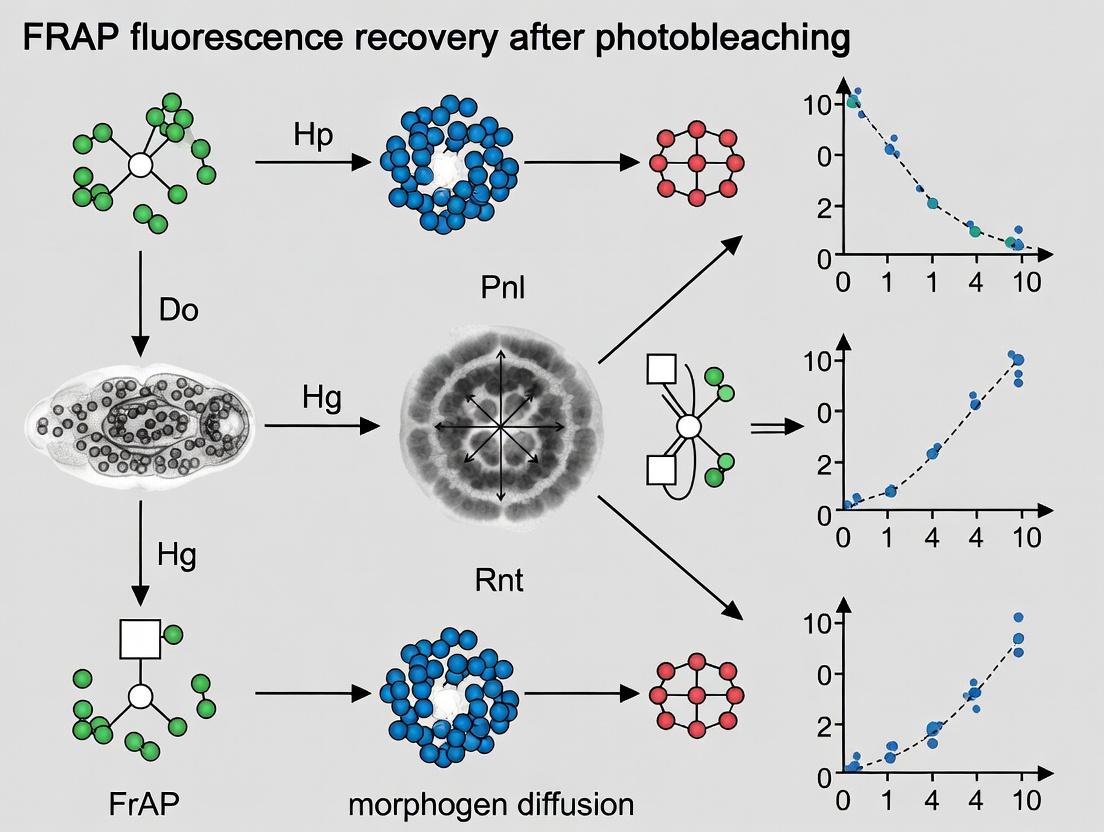
This comprehensive guide explores Fluorescence Recovery After Photobleaching (FRAP) as a cornerstone technique for quantifying morphogen diffusion kinetics in biological systems.
FRAP for Morphogen Diffusion Analysis: Protocols, Optimization, and Advanced Applications in Biomedical Research
Abstract
This comprehensive guide explores Fluorescence Recovery After Photobleaching (FRAP) as a cornerstone technique for quantifying morphogen diffusion kinetics in biological systems. Tailored for researchers, scientists, and drug development professionals, the article progresses from foundational principles to advanced applications. It covers the core theory linking FRAP data to diffusion coefficients, detailed step-by-step protocols for in vitro and in vivo setups, common pitfalls and optimization strategies for robust data acquisition, and a comparative analysis of FRAP against alternative methods like FCS and SPT. The synthesis provides actionable insights for designing experiments, interpreting complex recovery curves, and applying FRAP to study signaling gradients in development, disease models, and therapeutic targeting.
Understanding Morphogen Gradients: How FRAP Illuminates Diffusion Dynamics
Morphogens are signaling molecules that govern tissue patterning and cell fate determination during embryonic development by forming concentration gradients. The direct measurement of their mobility—through diffusion rates, binding constants, and effective range—is a central challenge in developmental biology. Accurate quantification resolves longstanding debates about gradient formation mechanisms (e.g., pure diffusion vs. planar transcytosis) and informs models of signaling precision. Within the context of Fluorescence Recovery After Photobleaching (FRAP)-based morphogen diffusion research, this article details why precise mobility quantification is indispensable and provides modern protocols to achieve it.
The Imperative for Quantification: Resolving Theoretical Models
The debate between different models of morphogen gradient establishment hinges on kinetic parameters. Quantifying mobility allows researchers to distinguish between mechanisms.
Table 1: Key Morphogen Gradient Formation Models and Their Predicted Kinetic Parameters
| Model | Core Mechanism | Predicted Diffusion Coefficient (D) | Key Parameter to Quantify via FRAP |
|---|---|---|---|
| Simple Diffusion | Free extracellular diffusion with reversible binding. | Relatively high (e.g., ~10 µm²/s). | Mobile fraction near 100%; recovery fit by simple diffusion model. |
| Restricted Diffusion | Hindered diffusion through extracellular matrix. | Reduced relative to free diffusion. | Lower effective D; recovery may be incomplete. |
| Planar Transcytosis | Repeated cellular uptake and re-secretion. | Very low effective extracellular D. | FRAP recovery dependent on endocytic trafficking kinetics. |
| Cytoneme-Based Transport | Direct delivery via cellular protrusions. | Negligible extracellular diffusion. | Minimal FRAP recovery in extracellular space. |
Application Notes & Protocols
Protocol 1: Sample Preparation forIn VivoMorphogen FRAP
Objective: Prepare a living embryonic tissue sample expressing a fluorescently tagged morphogen (e.g., GFP-Dpp in Drosophila wing imaginal disc).
- Genetic Construction: Generate or obtain fly stocks expressing the morphogen of interest fused to a photostable fluorescent protein (e.g., GFP, mCherry) under its endogenous promoter.
- Sample Mounting: Dissect third-instar larval wing imaginal discs in sterile Schneider’s insect medium. Place the disc on a glass-bottom dish, convex side up, in a drop of medium.
- Immobilization: Cover with a bridged coverslip sealed with vacuum grease to prevent compression. Maintain at 25°C during imaging.
Protocol 2: FRAP Acquisition and Analysis for Effective Diffusion Coefficient (D_eff)
Objective: Perform FRAP to quantify the effective diffusion coefficient and mobile fraction.
- Microscope Setup: Use a confocal laser scanning microscope with a 488 nm laser (for GFP), a 40x or 63x water-immersion objective, and a heated stage at 25°C.
- Pre-bleach Imaging: Acquire 5-10 pre-bleach frames at low laser power (1-2%) to establish baseline fluorescence.
- Photobleaching: Define a circular region of interest (ROI, 1-2 µm diameter) within the morphogen gradient. Bleach using 100% laser power for 0.5-1 second.
- Post-bleach Imaging: Immediately resume time-lapse imaging at low laser power every 0.5-5 seconds for 5-30 minutes.
- Data Analysis:
- Fluorescence Normalization: Normalize intensity in the bleached ROI (Iroi) to a reference background region (Iref) and an unbleached control region (Icont) to correct for acquisition bleaching: Inorm = (Iroi/Iref) / (Icont/Iref).
- Curve Fitting: Fit the normalized recovery curve to the appropriate model. For simple diffusion in a uniform 2D membrane:
F(t) = F_∞ * (1 - (τ/t) * exp(-τ/t) * I1(2τ/t))(where I1 is a modified Bessel function) is approximated for an effective diffusion coefficient. - Parameter Extraction: Use specialized software (e.g., FRAPbot, easyFRAP) to extract Deff and the mobile fraction (Mf).
Table 2: Typical FRAP-Derived Parameters for Select Morphogens
| Morphogen (System) | Tag | Effective D (µm²/s) | Mobile Fraction | Implied Transport Mechanism |
|---|---|---|---|---|
| Dpp (Drosophila wing disc) | GFP | 0.1 - 0.4 | ~0.7 - 0.9 | Restricted diffusion/transcytosis. |
| Wg (Drosophila wing disc) | GFP | < 0.1 | ~0.5 | Highly restricted, likely lipoprotein associated. |
| FGF8 (Zebrafish embryo) | GFP | 20 - 40 | ~0.9 | Relatively free diffusion. |
| Nodal (Zebrafish embryo) | GFP | 5 - 15 | ~0.8 | Moderately restricted diffusion. |
Protocol 3: Fluorescence Correlation Spectroscopy (FCS) Complement
Objective: Measure absolute diffusion coefficients and concentration at a single point in the gradient.
- Setup: Use a confocal microscope equipped for FCS with single-photon counting detectors and a 488 nm laser focused to a diffraction-limited spot (~0.2 fL).
- Measurement: Place the spot in a defined position along the morphogen gradient. Record fluorescence fluctuations for 30-60 seconds.
- Analysis: Compute the autocorrelation curve G(τ). Fit with a model for 3D diffusion with triplet state:
G(τ) = 1/N * (1 + τ/τ_D)^-1 * (1 + τ/(τ_D*ω²))^-0.5 * (1 + T*exp(-τ/τ_T))where N is particle number, τD is diffusion time, ω is structure parameter, T is triplet fraction, τT is triplet time. CalculateD = ω² / (4τ_D).
The Scientist's Toolkit: Research Reagent Solutions
Table 3: Essential Materials for Morphogen Mobility Studies
| Item | Function & Rationale |
|---|---|
| Photostable Fluorescent Protein Tag (e.g., mGFP, HaloTag) | Genetically encoded label for morphogen; mGFP is monomeric to prevent artifunctional clustering. |
| In Vivo Expression System (e.g., GAL4/UAS, CRISPR knock-in) | Enables tissue-specific expression of tagged morphogen at near-endogenous levels. |
| Glass-Bottom Imaging Dishes (#1.5 coverslip) | Optimal for high-resolution microscopy with minimal spherical aberration. |
| Live Imaging Medium (e.g., Schneider's, Danieau's buffer) | Maintains tissue viability and morphogen signaling during extended imaging. |
| Pharmacological Inhibitors (e.g., Dynasore, Latrunculin A) | Inhibits endocytosis or cytoskeletal dynamics to test mechanisms of mobility restriction. |
| FRAP Analysis Software (e.g., FRAPbot, easyFRAP, FIJI/ImageJ plugins) | Standardizes curve fitting and parameter extraction, reducing analytical variability. |
| FCS Calibration Dye (e.g., Rhodamine 6G) | Used to measure the confocal volume dimensions (ω) precisely for absolute D calculation. |
Visualizing Pathways and Workflows
Within the broader thesis on FRAP fluorescence recovery after photobleaching morphogen diffusion research, understanding the core principles of the photobleaching event and the subsequent fluorescence recovery is paramount. These principles form the theoretical and practical foundation for quantifying the dynamics of morphogen gradients, which are crucial for developmental biology and targeted drug delivery research. This document outlines the fundamental theory, key application notes, and detailed protocols for implementing FRAP in this specific context.
Core Principles and Quantitative Data
The Photobleaching Event
Photobleaching is the irreversible destruction of a fluorophore's ability to emit light upon prolonged or intense excitation. In FRAP, a high-intensity laser pulse is used to bleach a defined region of interest (ROI) within a sample containing fluorescently tagged molecules (e.g., a GFP-tagged morphogen). This creates a non-fluorescent "hole" in a background of fluorescent molecules.
Key Quantitative Parameters of the Bleach Pulse:
Diagram Title: Key Parameters of the FRAP Bleach Pulse
Theory of Fluorescence Recovery
Recovery of fluorescence in the bleached ROI occurs via the diffusion of unbleached, fluorescent molecules from the surrounding area into the bleached zone. The rate and extent of recovery are analyzed to derive quantitative diffusion coefficients (D) and the mobile fraction (M_f) of the molecule population.
Table 1: Core Quantitative Outputs from FRAP Recovery Analysis
| Parameter | Symbol | Description | Typical Units | Interpretation in Morphogen Research |
|---|---|---|---|---|
| Diffusion Coefficient | D | Measure of the rate of lateral diffusion. | µm²/s | Determines the speed of morphogen gradient formation and spread. |
| Mobile Fraction | M_f | Percentage of molecules free to diffuse. | % | Indicates proportion of morphogen not immobile (e.g., bound to receptors/ECM). |
| Immobile Fraction | I_f | Percentage of molecules not recovering. | % | Suggests irreversible binding or sequestration. |
| Half-Recovery Time | t_{1/2} | Time for recovery to reach 50% of its final value. | s | Practical measure of diffusion speed within the specific cellular context. |
| Recovery Plateau | F_{∞} | Fluorescence intensity at full recovery. | A.U. | Normalized to pre-bleach levels to calculate M_f. |
The recovery curve is typically fit to a simplified solution of Fick's second law of diffusion for a circular bleach spot: F(t) = F_{∞} * (1 - (τ / t)), where τ is a time constant related to the diffusion coefficient and bleach spot radius (ω): D = ω² / (4τ).
Detailed FRAP Protocol for Morphogen Diffusion Studies
Protocol 1: Cell Preparation and Sample Imaging
Objective: To prepare a monolayer of cells expressing a fluorescently tagged morphogen for FRAP analysis.
Research Reagent Solutions & Materials:
| Item | Function/Explanation |
|---|---|
| Cell Line (e.g., HEK293, S2) | Model system expressing the morphogen of interest. |
| Plasmid: pEGFP-Morphogen | Vector for expressing the morphogen fused to Enhanced GFP. |
| Transfection Reagent (e.g., PEI) | For introducing plasmid DNA into cells. |
| Imaging Medium (Phenol-red free) | Reduces background fluorescence and maintains pH during imaging. |
| Confocal Microscope | Equipped with 488nm laser, high-sensitivity detectors, and FRAP module. |
| 35mm Glass-Bottom Dish | #1.5 coverslip thickness for high-resolution oil immersion objectives. |
| Environmental Chamber | Maintains sample at 37°C and 5% CO₂ during live imaging. |
Procedure:
- Transfection: Transfect cells with the pEGFP-Morphogen construct using standard protocols 24-48 hours prior to imaging.
- Preparation: On the day of imaging, replace culture medium with pre-warmed, phenol-red free imaging medium.
- Microscope Setup:
- Use a 63x oil immersion objective (NA ≥ 1.4).
- Set the 488nm laser to low power (0.5-2%) for imaging to minimize pre-bleach.
- Define three ROIs: a bleach ROI, a reference ROI (for monitoring total fluorescence loss), and a background ROI.
- Acquisition Settings: Set timelapse acquisition to capture 5-10 pre-bleach images, the bleach event, and recovery images for 2-5 minutes (frame rate: 0.5-2 seconds per frame).
Protocol 2: Photobleaching and Recovery Acquisition
Objective: To execute the FRAP experiment with parameters optimized for morphogen-GFP.
Procedure:
- Pre-bleach Acquisition: Acquire the defined number of pre-bleach frames to establish baseline fluorescence (F_pre).
- Bleach Pulse: Target the bleach ROI with a high-intensity 488nm laser pulse. Typical parameters:
- Laser Power: 100% (or as calibrated for ~50-80% bleach depth).
- Duration: 0.5 - 2.0 seconds.
- Iterations: 1-5 rapid iterations.
- Post-bleach Acquisition: Immediately resume timelapse imaging to capture the fluorescence recovery into the bleached ROI. Ensure minimal delay (< 1 sec).
Diagram Title: Stepwise FRAP Experimental Workflow
Data Analysis and Normalization Protocol
Objective: To extract the diffusion coefficient (D) and mobile fraction (M_f) from raw recovery data.
Procedure:
- Background Correction: Subtract the intensity from the background ROI from all other ROIs.
- Bleach Correction: Correct for general photobleaching during imaging using the reference ROI:
- Icorr(t) = Ibleach(t) * (Iref(pre) / Iref(t))
- Normalization:
- Normalize all corrected bleach ROI intensities to the average pre-bleach intensity (set to 1.0).
- Set the intensity immediately post-bleach to 0.
- Curve Fitting: Fit the normalized recovery curve (see Table 1) to the appropriate diffusion model using software (e.g., ImageJ FRAP Analyzer, GraphPad Prism).
- Calculation:
- Mobile Fraction (Mf) = (F∞ - F0) / (Fpre - F_0)
- Diffusion Coefficient (D) is derived from the fitted time constant (τ) and bleach spot radius (ω).
Table 2: Example FRAP Data from a Hypothetical Morphogen-GFP Experiment
| Condition | Half-Recovery Time t_{1/2} (s) | Mobile Fraction M_f (%) | Calculated D (µm²/s) | Interpretation |
|---|---|---|---|---|
| Morphogen-GFP (Control) | 15.2 ± 2.1 | 78 ± 5 | 12.5 ± 1.8 | Freely diffusible morphogen pool. |
| + Heparan Sulfate Inhibitor | 8.5 ± 1.5 | 85 ± 4 | 22.4 ± 2.5 | Faster diffusion due to reduced ECM binding. |
| + Cross-linking Antibody | 45.6 ± 10.3 | 30 ± 8 | 4.1 ± 0.9 | Slowed diffusion, increased immobile fraction. |
Diagram Title: Molecular States and Recovery Pathway in FRAP
Within the broader thesis investigating morphogen gradient formation via Fluorescence Recovery After Photobleaching (FRAP), translating the observed fluorescence recovery into a quantitative diffusion coefficient (D) is paramount. This application note details the core mathematical models, their underlying assumptions, and the protocols required to reliably extract D from FRAP data, a critical step for researchers and drug development professionals studying protein mobility and interaction in developmental biology and pharmacodynamics.
Core Mathematical Models and Assumptions
The choice of model depends heavily on the biological context and experimental design. Violating key assumptions leads to significant errors in estimated D.
Table 1: Key FRAP Models for Diffusion Coefficient Calculation
| Model Name | Core Equation (Simplified) | Key Assumptions | Best Used For |
|---|---|---|---|
| Standard 2D Diffusion (Axelrod et al.) | ( D = \omega^2 / (4 \tau_{1/2}) ) • ( \gamma ) | Pure 2D diffusion; instantaneous bleaching; infinite reservoir; no binding. | Lateral diffusion of lipids or freely diffusing membrane proteins. |
| ( \omega ): ( 1/e^2 ) bleach radius, ( \tau_{1/2} ): recovery half-time, ( \gamma ): bleach depth factor. | |||
| Full 2D Diffusion (Soumpasis) | ( F(t) = \exp(-2\tau{1/2}/t) [I0(2\tau{1/2}/t) + I1(2\tau_{1/2}/t)] ) | Pure diffusion; Gaussian bleach profile; circular bleach spot. | Cytoplasmic or nuclear soluble molecules with negligible binding. |
| ( F(t) ): normalized recovery, ( I0, I1 ): modified Bessel functions. | |||
| Reaction-Dominant (Binding) | ( F(t) = 1 - A \exp(-k_{\text{off}} t) ) | Recovery dominated by binding/unbinding kinetics; diffusion is fast. | Molecules with immobile binding sites (e.g., chromatin-bound factors). |
| ( A ): amplitude, ( k_{\text{off}} ): dissociation rate. | |||
| Reaction-Diffusion (Hybrid) | Complex, often solved numerically. | Combined diffusion and binding interactions. | Morphogens or signaling molecules with transient binding. |
Critical Assumptions Checklist:
- The Bleach Spot: Must have a Gaussian intensity profile. Deviations require more complex modeling.
- Photobleaching During Acquisition: Must be minimal and corrected for.
- Fluorescence Equilibrium: The system must be at steady-state before bleaching.
- Uniform Mobility: All fluorescent molecules should exhibit the same diffusion behavior within the region of interest (ROI).
- No Latent Bleaching: The bleach pulse must not cause long-term damage affecting mobility.
Experimental Protocol: From Imaging to D
This protocol details the steps for a standard 2D diffusion FRAP experiment on a confocal microscope.
A. Sample Preparation & Calibration
- Cell Culture & Transfection: Plate cells on glass-bottom dishes. Transfect with fluorescently tagged protein of interest (e.g., GFP-morphogen). Include untransfected controls for autofluorescence.
- Microscope Setup: Use a confocal laser-scanning microscope with a stable environmental chamber (37°C, 5% CO₂). Select appropriate laser line and filter set.
- Define Imaging Parameters:
- Use the lowest possible laser power for acquisition to minimize incidental photobleaching.
- Set pixel dwell time and resolution to achieve a temporal resolution sufficient to capture the recovery kinetics (typically 5-20 frames pre-bleach, 100-200 frames post-bleach).
- Define three ROIs: Bleach region, reference region (for fluorescence loss correction), and background region.
B. FRAP Acquisition Sequence
- Pre-bleach: Acquire 5-10 frames at low laser power to establish initial fluorescence (F_pre).
- Bleach: Deliver a high-intensity laser pulse (100% laser power) to the defined bleach ROI (circular, 1-3 µm radius) for a brief duration (0.5-2 seconds).
- Post-bleach: Immediately resume time-lapse acquisition at low laser power. Capture recovery until a plateau is reached (F_∞).
C. Data Analysis Workflow
- Background Subtraction: Subtract mean background ROI intensity from all other ROIs for each frame.
- Bleach Correction: Normalize bleach ROI intensity to the reference ROI to correct for overall fluorescence loss during imaging: ( F{\text{corr}}(t) = (F{\text{bleach}}(t) / F_{\text{ref}}(t)) ).
- Normalization: Normalize corrected recovery curve: ( F{\text{norm}}(t) = (F{\text{corr}}(t) - F{\text{corr}}(0)) / (F{\text{corr}}(\text{pre}) - F{\text{corr}}(0)) ) Where ( F{\text{corr}}(\text{pre}) ) is the average pre-bleach intensity.
- Curve Fitting & D Calculation:
- Fit the normalized data to the chosen model (e.g., Soumpasis equation for pure diffusion).
- Extract the recovery half-time (( \tau{1/2} )).
- Calculate D: ( D = \omega^2 / (4 \tau{1/2}) ) where ( \omega ) is the calibrated ( 1/e^2 ) radius of the bleach spot. Calibrate ( \omega ) by bleaching a fixed fluorescent sample and fitting the bleach spot profile to a Gaussian.
Diagram Title: FRAP Experimental & Analysis Workflow
The Scientist's Toolkit: Essential Reagents & Materials
Table 2: Key Research Reagent Solutions for FRAP Morphogen Studies
| Item | Function & Rationale |
|---|---|
| Glass-Bottom Culture Dishes | Provide optimal optical clarity for high-resolution imaging with minimal background fluorescence. |
| Fluorescent Protein (FP)-Tagged Constructs | (e.g., GFP, mCherry). Genetically encoded labels for the protein of interest. Photostability varies (e.g., mEos, mMaple are photoswitchable). |
| Live-Cell Imaging Medium | Phenol-red free, with buffers (e.g., HEPES) to maintain pH without CO₂, and additives to reduce phototoxicity. |
| Transfection Reagent (e.g., Lipofectamine, PEI) | For introducing FP-tagged construct DNA into cells. Choice depends on cell type and efficiency required. |
| Inert Fluorescent Dye (e.g., Alexa Fluor 488 dextran) | Used for calibration and control experiments to measure effective bleach spot size (ω) and validate pure diffusion. |
| Immobilization Agent (e.g., Poly-D-Lysine, Fibronectin) | Coats dishes to ensure cell adhesion and stability during time-lapse imaging. |
| Microscope Stage Top Incubator | Maintains precise temperature (37°C), humidity, and CO₂ levels to ensure physiological health during long acquisitions. |
| High NA (≥1.4) Oil-Immersion Objective Lens | Critical for collecting maximum light and achieving the spatial resolution needed for small bleach spots. |
Diagram Title: FRAP Model Selection Logic Tree
Application Notes: Investigating Morphogen Dynamics via FRAP
Morphogens are signaling molecules that form concentration gradients to direct cell fate during development. Their controlled diffusion, regulated by processes like extracellular matrix binding, receptor-mediated endocytosis, and transcytosis, is fundamental to patterning. Fluorescence Recovery After Photobleaching (FRAP) is a cornerstone technique for quantitatively analyzing the diffusion kinetics and binding interactions of fluorescently tagged morphogens in living cells and tissues. This protocol is framed within a thesis investigating the mechanisms of morphogen gradient formation and perturbation.
Key Quantitative Parameters from FRAP Studies: FRAP analysis yields critical quantitative parameters that describe morphogen behavior. The following table summarizes typical output metrics and their biological interpretation.
Table 1: Key Quantitative Parameters Derived from FRAP Analysis
| Parameter | Symbol | Typical Range (Example: GFP-tagged Morphogen) | Biological Interpretation |
|---|---|---|---|
| Mobile Fraction | Mf | 0.3 - 0.8 (unitless) | Proportion of molecules free to diffuse; a low Mf indicates strong/immobile binding. |
| Immobile Fraction | Imf | 0.2 - 0.7 (unitless) | Proportion of molecules bound or trapped; complementary to Mf (Mf + Imf = 1). |
| Half-Time of Recovery | t₁/₂ | 1 - 30 seconds | Time for fluorescence to recover to half of its final level; inversely related to diffusion speed. |
| Diffusion Coefficient | D | 0.1 - 20 µm²/s | Measure of the rate of random molecular motion in a given medium. |
| Effective Diffusion Coefficient | D_eff | Often < 0.5 D | Apparent diffusion rate in vivo, reduced by reversible binding interactions. |
Table 2: Impact of Molecular Perturbations on FRAP Parameters
| Experimental Condition | Expected Effect on Mobile Fraction (Mf) | Expected Effect on t₁/₂ / D_eff | Implied Mechanism |
|---|---|---|---|
| Heparan Sulfate Proteoglycan (HSPG) Knockdown | Increase | Decrease (faster recovery) | Reduction in extracellular matrix binding sites. |
| Dominant-Negative Dynamin (Endocytosis Block) | Decrease | Increase (slower recovery) | Trapping of morphogen on cell surface, hindering dispersal. |
| Ectopic Expression of a High-Affinity Binder | Decrease | Significant Increase | Increased reversible binding sequesters morphogen. |
| Protease Treatment (Cleave ECM) | Increase | Decrease | Release of morphogen from immobilized state. |
Protocol: FRAP Assay for Morphogen-GFP Diffusion in a Cultured Cell Monolayer
I. Materials and Reagent Setup
The Scientist's Toolkit: Essential Research Reagents & Materials
| Item | Function in Experiment |
|---|---|
| Cell Line (e.g., HEK293, C2C12, or relevant progenitor cells) | Model system expressing or seeded with the morphogen of interest. |
| Expression Construct (Morphogen-GFP/pHGB-Morphogen-EGFP) | Encodes the fluorescently tagged morphogen for live imaging. |
| Transfection Reagent (e.g., Lipofectamine 3000, PEI) | For introducing the expression construct into cells. |
| Imaging Chamber (e.g., µ-Slide, Lab-Tek) | Glass-bottom dish for high-resolution microscopy. |
| Live-Cell Imaging Medium (Phenol-red free, with HEPES) | Maintains pH and health during imaging; reduces autofluorescence. |
| Confocal Microscope with FRAP module | Equipped with 488nm laser, high-sensitivity detectors, and software-controlled bleaching region. |
| Temperature & CO₂ Controller | Maintains cells at 37°C and 5% CO₂ throughout the experiment. |
| Analysis Software (e.g., FIJI/ImageJ with FRAP plugin, Imaris) | For quantifying fluorescence intensity over time and curve fitting. |
II. Detailed Methodology
Day 1: Cell Seeding and Transfection
- Seed appropriate cells into a glass-bottom imaging chamber at 60-70% confluence in complete growth medium.
- Incubate overnight (16-24 hrs) at 37°C, 5% CO₂.
Day 2: Sample Preparation
- Transfection: Transfect cells with the Morphogen-GFP expression construct using the manufacturer’s protocol. Include a control transfected with soluble GFP alone.
- Incubation: Allow 18-24 hours for expression and proper secretion/trafficking of the morphogen-GFP.
Day 3: FRAP Experiment
- Prepare Imaging Medium: Replace growth medium with pre-warmed, phenol-red-free live-cell imaging medium.
- Microscope Setup:
- Mount the chamber on the confocal stage with temperature/CO₂ control active.
- Using a 63x oil-immersion objective, locate a field of cells expressing moderate levels of Morphogen-GFP. Focus on a plane showing clear extracellular or membrane-associated signal.
- Set the 488nm laser to low power (0.5-2%) for imaging to minimize pre-bleach phototoxicity.
- Define the bleach region (e.g., a circular ROI, 2-3 µm diameter) in an area of uniform fluorescence.
- Define two reference ROIs for background and fluorescence normalization.
- Acquisition Protocol:
- Pre-bleach: Acquire 5-10 frames at 1-second intervals to establish baseline fluorescence.
- Bleach: Execute a high-intensity 488nm laser pulse (100% power, 5-10 iterations) within the defined ROI.
- Post-bleach: Immediately resume imaging at 1-second intervals for 2-5 minutes, capturing fluorescence recovery.
- Replicates: Perform at least 15-20 FRAP experiments on different cells per condition (e.g., control vs. treated).
III. Data Analysis
- Intensity Extraction: Use FIJI to measure mean intensity over time for: (Ibleach), (Ireference), and (I_background).
- Normalization: Correct for background and overall photobleaching during imaging:
I_corr(t) = (I_bleach(t) - I_background(t)) / (I_reference(t) - I_background(t))Normalize to pre-bleach average (set to 1.0) and post-bleach minimum (set to 0.0). - Curve Fitting & Parameter Extraction: Fit the normalized recovery curve to an appropriate model (e.g., single or double exponential, diffusion-dominated) in GraphPad Prism or similar.
- Extract the Mobile Fraction (Mf) from the plateau of the recovery curve.
- Extract the Half-Time of Recovery (t₁/₂) from the fitted curve.
- Calculate the Effective Diffusion Coefficient (Deff) if using a pure diffusion model: Deff ≈ 0.224 * r² / t₁/₂, where r is the bleach spot radius.
Visualizations
Title: Morphogen Dispersal & Key Regulatory Interactions
Title: FRAP Experimental Workflow for Morphogen Diffusion
Fluorescence Recovery After Photobleaching (FRAP) remains a cornerstone technique for quantifying the dynamics of morphogen diffusion, gradient formation, and receptor interactions in living cells and tissues. This Application Note details contemporary protocols and findings from FRAP studies applied to Hedgehog (Hh), Wnt, Bone Morphogenetic Protein (BMP), and other key signaling families, framed within the broader thesis of elucidating morphogen dispersal mechanisms.
Recent FRAP studies provide critical kinetic parameters for morphogen movement. The data below are synthesized from current literature (2023-2024).
Table 1: Quantitative FRAP Recovery Parameters for Key Morphogens
| Morphogen Family | System / Model | Immobile Fraction (%) | Half-time of Recovery (t₁/₂ in seconds) | Apparent Diffusion Coefficient (D in µm²/s) | Key Insight from FRAP |
|---|---|---|---|---|---|
| Hedgehog (Shh) | Mammalian cell membranes (with DISP1) | 25-40 | 45-90 | 0.05 - 0.1 | Lipoprotein particles and DISP1 facilitate rapid long-range dispersal; high immobile fraction indicates receptor clustering. |
| Wnt (Wnt3a) | Drosophila wing disc / Cultured cells | 30-50 | 30-60 | 0.02 - 0.08 | Diffusion is highly restricted by heparan sulfate proteoglycans (HSPGs); recovery is incomplete, suggesting stable complexes. |
| BMP (Dpp) | Drosophila embryo / S2 cells | 20-35 | 120-300 | 0.005 - 0.03 | Very slow diffusion, influenced by extracellular matrix (ECM) interactions; type I receptor binding dramatically reduces mobility. |
| FGF (FGF8) | Zebrafish embryo | 15-30 | 20-50 | 0.1 - 0.3 | Exhibits the fastest diffusion among major morphogens; gradient shaped by controlled degradation. |
| Nodal | Mouse embryonic stem cells | 40-60 | 60-150 | 0.01 - 0.05 | High immobility due to co-receptor (Cripto) interactions and rapid internalization. |
Detailed Experimental Protocols
Protocol 1: FRAP for Membrane-Associated Morphogens (e.g., Hh, Wnt)
Objective: To measure lateral diffusion and binding dynamics of lipid-modified morphogens on the cell surface.
Materials:
- Cells expressing fluorescently tagged morphogen (e.g., Shh-GFP, Wnt-mCherry).
- Confocal microscope with FRAP module (e.g., Zeiss LSM 980 with Airyscan 2).
- Imaging chamber with temperature & CO₂ control.
- HEPES-buffered live-cell imaging medium.
Procedure:
- Sample Preparation: Plate cells on glass-bottom dishes. Transfect with verified, functional fluorescent protein (FP)-morphogen construct. Image 24-48h post-transfection.
- Pre-bleach Imaging: Set microscope to minimal laser power (e.g., 488nm at 0.5-2%). Capture 5-10 pre-bleach images at 2-second intervals.
- Photobleaching: Define a circular region of interest (ROI, 2µm diameter) on a cell membrane. Perform bleaching with high-intensity laser (100% power, 488nm/514nm, 5-10 iterations).
- Post-bleach Recovery: Immediately switch back to low laser power. Acquire images every 2 seconds for 2-5 minutes.
- Data Analysis:
- Measure mean fluorescence intensity in the bleached ROI, a reference unbleached region, and a background region over time.
- Correct for background and total photobleaching during acquisition using the reference.
- Normalize intensity:
I_norm(t) = (I_roi(t) - I_bg) / (I_ref(t) - I_bg). - Fit normalized recovery curve to a single or double exponential model to extract
t₁/₂and mobile fraction:M_f = (I_∞ - I_0) / (I_pre - I_0).
Protocol 2: FRAP for Extracellular Matrix-Diffusing Morphogens (e.g., BMP/Dpp)
Objective: To quantify intercellular morphogen movement in tissue contexts or 3D matrices.
Materials:
- Drosophila wing imaginal disc explant or cultured cells in 3D Matrigel.
- Morphogen-FP (e.g., Dpp-GFP).
- Spinning disk confocal microscope for rapid 3D acquisition.
- Microinjection system for dye/morphogen introduction (if needed).
Procedure:
- Sample Mounting: For wing discs, dissect in PBS and mount in live imaging medium under a coverslip sealed with Vaseline/paraffin.
- 3D FRAP Setup: Define a 3D cylindrical bleaching ROI along a presumptive gradient axis. Use a series of rapid axial scans.
- Bleaching & Acquisition: Perform bleaching with a focused 405nm or 488nm laser (high power, 50-100ms per plane). Acquire 3D z-stacks (5-10 slices) every 30 seconds for 30-60 minutes.
- Analysis: Generate kymographs or plot fluorescence intensity over distance from the bleach boundary. Fit data to a reaction-diffusion model (e.g.,
∂C/∂t = D∇²C - k_offC + k_on) to estimate effective diffusion coefficient (D) and binding/unbinding rates (k_on,k_off).
Visualization of Pathways and Workflows
The Scientist's Toolkit: Research Reagent Solutions
Table 2: Essential Reagents and Materials for Morphogen FRAP Studies
| Item / Reagent | Function in FRAP Experiment | Example Product / Specification |
|---|---|---|
| Functional FP-Tagged Morphogen | Enables specific visualization without significantly perturbing biological activity. | pCAG-Shh-EGFP plasmid, pCS2-Wnt3a-mCherry; validate signaling competence via reporter assays. |
| Fast-Refresh Live Imaging Medium | Maintains pH and health during prolonged, sensitive imaging without phenol red. | FluoroBrite DMEM, CO₂-independent Leibovitz's L-15 medium. |
| High-Resolution Confocal System | Provides precise optical sectioning and controlled laser bleaching/imaging. | Zeiss LSM 980 with Airyscan, Nikon A1R HD, or Leica Stellaris; <100ms switch time between bleach/imaging. |
| Environmental Chamber | Maintains physiological conditions (37°C, 5% CO₂, humidity) for live samples. | Okolab Cage Incubator, Tokai Hit Stage Top Incubator. |
| FRAP Analysis Software | Quantifies recovery kinetics and extracts diffusion/binding parameters. | Fiji/ImageJ with FRAP profiler plugin, Imaris (Bitplane), or custom MATLAB/Python scripts. |
| Heparan Sulfate Proteoglycan (HSPG) Inhibitors | Probes the role of ECM in restricting morphogen diffusion (e.g., for Wnt). | Heparinase III, sodium chlorate. |
| Recycling/Endocytosis Inhibitors | Dissects the contribution of internalization to recovery kinetics. | Dynasore (dynamin inhibitor), Pitstop 2 (clathrin inhibitor). |
| Matrigel / 3D Matrix | Provides a physiological environment for studying ECM-influenced morphogens (e.g., BMP). | Corning Matrigel Growth Factor Reduced, concentration 5-8 mg/mL. |
Step-by-Step FRAP Protocol: From Setup to Data Acquisition for Morphogen Studies
Within the context of a thesis investigating morphogen gradient formation and dynamics via FRAP (Fluorescence Recovery After Photobleaching), the selection and optimization of core equipment are not merely logistical concerns but are foundational to data integrity and biological relevance. This application note details the essential confocal microscopy setup, laser specifications, and environmental control systems required for robust, quantitative FRAP studies of diffusive processes.
Core Confocal Microscope & Laser Specifications
A point-scanning confocal microscope with high sensitivity detectors and precise laser control is mandatory. The following table summarizes critical quantitative specifications gathered from current manufacturer data sheets and peer-reviewed methodological publications.
Table 1: Essential Laser Specifications for Live-Cell FRAP of Morphogens
| Parameter | Recommended Specification | Rationale for FRAP/Morphogen Studies |
|---|---|---|
| Laser Lines (Excitation) | 405 nm, 488 nm, 561 nm, 640 nm | Covers common fluorophores (e.g., GFP, mCherry, Alexa Fluor dyes). 405 nm is crucial for photoactivation/photoconversion controls. |
| Laser Power Stability | < ±0.5% fluctuation over 1 hour | Ensures consistent bleaching and imaging power, critical for quantitative recovery kinetics. |
| Acoustic-Optic Tunable Filter (AOTF) | < 0.1% transmission resolution, µs-switching | Enables precise, rapid region-of-interest (ROI) bleaching without stage movement. |
| Bleaching Laser Power | High-power diode or fiber laser capable of 50-100% power in < 1 ms pulse | Achieves complete, rapid photobleaching in the defined ROI to initiate the FRAP experiment. |
| Pixel Dwell Time | Adjustable from 0.1 µs to 50 µs | Allows optimization of imaging speed versus signal-to-noise for capturing fast diffusion events. |
Table 2: Critical Confocal Microscope & Detector Parameters
| Component | Recommended Specification | Impact on FRAP Data Quality |
|---|---|---|
| Detector Type | GaAsP or high-sensitivity HyD/PMT | Maximizes signal-to-noise ratio, allowing lower imaging laser power to minimize incidental photobleaching. |
| Pinhole Size | Adjustable, 1 Airy Unit (AU) standard | Ensures optical sectioning; smaller pinholes may be used for thinner sections but reduce signal. |
| Scanning Zoom & ROI | Ability to define arbitrary ROIs at 512x512 or higher resolution | Permits selective bleaching of specific cellular compartments or gradient regions. |
| Frame Rate (Full Frame) | > 30 fps at 512x512 (with reduced lines) | Essential for capturing the rapid initial recovery phase of fast-diffusing molecules. |
| Environmental Chamber | Stage-top enclosure maintaining 37°C ± 0.5°C and 5% CO₂ | Non-negotiable for live-cell viability and physiologically relevant diffusion coefficients. |
Environmental Control Protocols
Maintaining physiological conditions is paramount. Deviations can alter membrane fluidity, cytoskeletal dynamics, and overall cell health, directly impacting diffusion measurements.
Protocol 2.1: Calibration and Validation of the Microscope Incubation System
Objective: To verify and stabilize temperature, humidity, and CO₂ levels at the sample plane. Materials: Microscope stage-top incubator, in-chamber petri dish thermistor (e.g., Warner Instruments), CO₂ sensor, culture medium (pre-equilibrated overnight). Procedure:
- Setup: Install the stage-top incubator per manufacturer instructions. Place the thermistor probe in a dish filled with 2 mL of culture medium, sealed with a coverslip and immersion oil if using an oil objective.
- Temperature Calibration: Set controller to 37.0°C. Monitor the thermistor readout for 60 minutes. Adjust controller offset until the medium reads 37.0°C ± 0.2°C. Allow 30 min stabilization post-adjustment.
- CO₂ Calibration: Set CO₂ controller to 5.0%. Place a calibrated external CO₂ sensor probe inside the chamber near the sample area. After 60 minutes, adjust the flow meter or controller setting to achieve 5.0% ± 0.2% at the sample.
- Humidity Management: Always fill the chamber’s water reservoir with sterile distilled water. Imaging medium should contain 25mM HEPES buffer as a precaution against pH drift during short, open imaging sessions.
- Daily Validation: Before each experiment, run a 15-minute validation with a dummy sample dish and probe to confirm setpoints.
Detailed FRAP Experimental Protocol for Morphogen Diffusion
Protocol 3.1: FRAP Acquisition for Cytosolic Morphogen-GFP
Objective: To measure the cytoplasmic diffusion coefficient and mobile fraction of a GFP-tagged morphogen. Research Reagent Solutions:
| Reagent/Material | Function |
|---|---|
| Cells expressing Morphogen-GFP | Sample system; morphogen of interest fused to GFP. |
| Live-cell Imaging Medium | Phenol-red free medium with HEPES, serum, and supplements. Maintains pH and health. |
| 35mm Glass-bottom Dish (#1.5) | High-quality optical substrate for high-resolution imaging. |
| Silicone Gasket or MatTek Dish | Prevents medium evaporation and gas exchange during imaging. |
| Immersion Oil (Type 37°C) | High-quality oil with matched refractive index and thermal stability. |
Pre-experiment Setup:
- Seed cells 24-48 hours prior to achieve 60-70% confluence.
- Switch to pre-warmed, pre-equilibrated live-cell imaging medium 1 hour before experiment.
- Mount dish on the calibrated stage and allow 15 minutes for thermal equilibration.
- Using the microscope software, define three key ROIs:
Bleach ROI(e.g., a 2µm diameter circle),Background ROI(cell-free area), andReference ROI(an unbleached cell region for fluorescence loss correction).
Acquisition Parameters:
- Laser Power (Imaging): Use the lowest possible 488nm laser power (e.g., 0.5-2%) to achieve a clear signal, minimizing scan-based bleaching.
- Bleaching Parameters: Set the
Bleach ROIto receive a 500 ms pulse of 488nm laser at 100% power. This is typically defined in the "Bleach" or "FRAP" module of the software. - Timing:
- Pre-bleach: Acquire 10 frames at 1-second intervals to establish baseline fluorescence (
F_pre). - Bleach: Execute bleach pulse on frame 11.
- Post-bleach: Acquire 300-500 frames. Initial 60 seconds at 1-second intervals, then slower to 5-second intervals for up to 15 minutes total.
- Pre-bleach: Acquire 10 frames at 1-second intervals to establish baseline fluorescence (
- Detector Gain: Set to maximize dynamic range without saturation in the pre-bleach images.
Data Normalization & Analysis:
- For each time point (t), measure mean fluorescence in Bleach ROI (
F_roi(t)), Background (F_bg(t)), and Reference (F_ref(t)). - Correct for background and overall fluorescence loss:
F_corr(t) = (F_roi(t) - F_bg(t)) / (F_ref(t) - F_bg(t)) - Normalize to pre-bleach average and post-bleach minimum:
F_norm(t) = (F_corr(t) - F_corr(post-bleach min)) / (Avg(F_corr(pre-bleach)) - F_corr(post-bleach min)) - Fit normalized recovery curve to appropriate diffusion model (e.g., simple diffusion) to extract halftime of recovery (t₁/₂) and mobile fraction.
Title: FRAP Experimental Workflow for Morphogen Diffusion
Title: Morphogen Signaling & FRAP Measurement Context
Fluorescence Recovery After Photobleaching (FRAP) is a cornerstone technique for quantifying the diffusion dynamics, binding interactions, and mobility of morphogens in biological systems. The fidelity of FRAP data is fundamentally dependent on the physiological relevance and quality of the sample preparation. This protocol details optimized methods for preparing cell cultures, tissue explants, and in vivo models specifically for morphogen FRAP studies, framed within a thesis investigating morphogen gradient formation and disruption in disease.
Sample Preparation Protocols
Cell Culture Models
Objective: To establish a monolayer system for studying morphogen dynamics in a controlled environment. Protocol: Stable Cell Line Generation for Morphogen-FP Expression
- Cell Line Selection: Use HEK293T, C2C12, or MDCK cells for high transfection efficiency or epithelial modeling.
- Transfection: Transfect cells with a plasmid encoding the morphogen (e.g., GFP-Shh, mScarlet-BMP4) using a lipid-based reagent (e.g., Lipofectamine 3000).
- Selection & Cloning: Apply appropriate antibiotic selection (e.g., 2 µg/mL puromycin) for 10-14 days. Isolate single-cell clones using dilution cloning or FACS.
- Validation: Validate clones via fluorescence microscopy for expression level and Western blot for correct protein size.
- FRAP Sample Prep:
- Seed validated cells onto 35mm glass-bottom dishes (No. 1.5 coverglass) at 70% confluence.
- Culture for 24-48 hrs until desired confluence is reached.
- Critical: 1 hour prior to imaging, replace medium with pre-warmed, phenol-red-free imaging medium supplemented with 10-25 mM HEPES buffer to maintain pH without CO₂.
Tissue Explant Models
Objective: To preserve native tissue architecture and extracellular matrix for studying morphogen diffusion in a near-physiological context. Protocol: Murine Limb Bud or Neural Plate Explant Preparation
- Dissection: Euthanize pregnant mouse at appropriate gestational stage (E10.5-E11.5 for limb bud). Dissect uterus in ice-cold PBS.
- Expliant Isolation: Transfer embryos to dissection medium (DMEM/F12 + 10% FBS). Under a stereomicroscope, dissect target tissue using fine forceps and microscissors.
- Mounting for Imaging:
- Option A (Embedded): Embed explant in a drop of growth factor-reduced Matrigel (~50 µL) on a glass-bottom dish. Solidify for 15-20 min at 37°C before adding imaging medium.
- Option B (Adhered): For flat tissues, carefully place explant onto a poly-D-lysine/laminin-coated glass dish. Allow adherence for 1-2 hours before adding medium.
- Labeling (if not transgenic): Micropipette-inject/soak explant in a solution of recombinant morphogen-FP fusion protein (50-100 nM) for 30 min pre-imaging.
In VivoModels
Objective: To measure morphogen dynamics within the intact, living organism. Protocol: Drosophila Melanogaster Embryo Preparation for FRAP
- Fly Strains: Use flies expressing a morphogen-GFP fusion under endogenous promoter control (e.g., gbc-GFP).
- Embryo Collection & Dechorionation: Collect embryos on apple juice agar plates. Wash with 0.1% Triton X-100, then dechorionate in 50% commercial bleach for 2 min. Rinse thoroughly with water.
- Mounting:
- Align embryos on a coverslip coated with heptane glue.
- Cover with Halocarbon Oil 700 to prevent desiccation.
- Invert coverslip onto a custom imaging chamber or gas-permeable membrane.
- Imaging Constraint: For vertebrate models (e.g., zebrafish embryo), anesthetize and mount in low-melt agarose. Depth and scattering limit FRAP resolution.
Table 1: Comparative Characteristics of FRAP Sample Models
| Model System | Physiological Relevance | Experimental Control | Technical Difficulty | Typical Recovery Half-time (t₁/₂) Range* | Primary Use Case |
|---|---|---|---|---|---|
| 2D Cell Culture | Low | High | Low | 1 - 10 seconds | Fundamental diffusion/binding kinetics, high-throughput screening. |
| Tissue Explant | High | Moderate | High | 10 - 100 seconds | ECM interactions, planar polarity, gradient establishment. |
| In Vivo | Highest | Low | Very High | Highly variable (sec to min) | Holistic system dynamics, role of tissue architecture. |
*Example for a typical secreted morphogen like Nodal or Decapentaplegic (Dpp). t₁/₂ is model and context-dependent.
Table 2: Key Parameters for FRAP Experiment Setup
| Parameter | Cell Culture | Tissue Explant | In Vivo (Embryo) |
|---|---|---|---|
| Bleach ROI Diameter | 1 - 2 µm | 2 - 5 µm | 3 - 5 µm |
| Bleach Pulse Duration | 50 - 200 ms | 100 - 500 ms | 200 - 1000 ms |
| Image Acquisition Rate | 0.1 - 1 sec/frame | 1 - 5 sec/frame | 5 - 30 sec/frame |
| Total Acquisition Time | 30 - 60 sec | 2 - 10 min | 10 - 60 min |
| Critical Control | Untransfected cells, cytosolic FP | Adjacent non-bleached region | Non-fluorescent sibling |
The Scientist's Toolkit: Research Reagent Solutions
| Item | Function & Rationale |
|---|---|
| Glass-Bottom Dishes (No. 1.5) | Optimal for high-resolution microscopy. #1.5 thickness (0.17mm) matches correction collar of oil objectives. |
| Phenol-Red-Free Medium | Eliminates autofluorescence background, crucial for sensitive FP detection. |
| HEPES-buffered Saline | Maintains physiological pH outside a CO₂ incubator during imaging. |
| Growth Factor-Reduced Matrigel | Provides a defined, bioactive 3D matrix for explant culture that mimics native ECM. |
| Halocarbon Oil 700 | Oxygen-permeable, prevents desiccation of Drosophila embryos without gas exchange inhibition. |
| Recombinant Morphogen-FP Protein | For acute labeling of explants or cells lacking endogenous fluorescent tags. |
| Anti-Fade Reagents (e.g., ascorbic acid) | Can be added to imaging medium to reduce photobleaching during long acquisitions (use with caution for FRAP). |
Experimental Workflow & Pathway Diagrams
Title: FRAP Experimental Workflow for Morphogen Research
Title: Key Pathways Affecting Morphogen FRAP Dynamics
Within the broader thesis on morphogen gradient formation and tissue patterning, quantifying the diffusion dynamics of fluorescently-tagged morphogens (e.g., Nodal, BMP, Wnt) is critical. FRAP provides a direct method to measure lateral diffusion coefficients (D), mobile fractions (M_f), and binding kinetics in living embryos or cell monolayers, informing models of gradient robustness and scaling.
Defining the Region of Interest (ROI)
The selection of ROIs determines the specificity and quantifiability of the recovery data.
- Bleach ROI: Must be precisely defined geometrically. For morphogen studies, a circular or rectangular spot within a expressing cell or extracellular region is common.
- Reference ROI: An unbleached area for correcting for overall photobleaching during imaging.
- Background ROI: An area outside the sample to subtract camera noise and autofluorescence.
Quantitative Considerations for ROI Definition:
| ROI Type | Recommended Size (Pixels) | Rationale | Morphogen-Specific Note |
|---|---|---|---|
| Bleach Spot | 5-10 px radius (confocal) | Balances signal intensity with spatial precision. | For extracellular gradients, size should be small relative to predicted gradient length-scale. |
| Whole-Cell | Variable | Used when measuring total cytoplasmic pool dynamics. | Relevant for morphogens like Hedgehog, where cytoplasmic dynamics are key. |
| Reference | Equal to bleach ROI | Normalizes for laser intensity fluctuations. | Should be in an equivalent expression domain. |
| Background | 20x20 px | Averages over sufficient camera area. | Avoid regions with high yolk or pigment autofluorescence in embryos. |
Optimizing Bleach Parameters
Bleach parameters are interdependent and must be optimized to achieve sufficient contrast without causing cellular damage or non-linear photophysics.
Protocol: Iterative Bleach Optimization
- Initial Setup: Use a medium laser power (e.g., 50% of 488nm laser) and a short bleach duration (100-500 ms).
- Perform Test Bleach: Execute on a sample region. Target intensity reduction of 60-80%.
- Assess Damage: Monitor cell viability (membrane integrity, continued division) and morphology post-bleach over the recovery period.
- Adjust: If recovery is incomplete (>95%) but damage is absent, increase laser power or duration incrementally. If damage is observed, reduce parameters and consider using a pulsed bleach protocol.
Table: Typical Bleach Parameters for Confocal Microscopy
| Parameter | Typical Range | Impact on Experiment | Optimization Goal |
|---|---|---|---|
| Laser Power | 50-100% of 488nm/561nm | Higher power increases bleach depth but risks phototoxicity. | Achieve >60% bleach depth without morphological changes. |
| Bleach Duration | 100 ms - 2 s | Longer duration increases bleach volume consistency. | Minimize while achieving target depth; shorter is better for fast dynamics. |
| Iterations/ Pulses | 1-10 | Multiple short pulses can reduce overall energy deposition. | Use for sensitive samples (e.g., early embryos). |
| Bleach Depth | 60-80% reduction | Shallower bleach complicates curve fitting; deeper increases damage risk. | Maximize signal-to-noise of recovery curve. |
Timing: Acquisition and Recovery
The temporal resolution and total acquisition time must capture the recovery kinetics.
Protocol: Setting Acquisition Intervals
- Pre-bleach Acquisition: Acquire 5-10 frames at the intended recovery rate to establish baseline fluorescence (F_pre).
- Bleach Event: Execute at maximum speed.
- Post-bleach Acquisition:
- Initial Fast Phase: For morphogen diffusion (typical D ~1-10 µm²/s), start with 100-500 ms intervals for the first 30s.
- Slower Phase: Gradually increase intervals to 2-5s for longer acquisitions (5-10 min).
- Total Duration: Continue until fluorescence plateaus (F_inf). For binding interactions, this may require >30 min.
Table: Timing Scheme for Different Molecular Scenarios
| Scenario | Expected Half-time (t_{1/2}) | Pre-bleach Frames | Initial Interval | Total Duration | Rationale |
|---|---|---|---|---|---|
| Free Diffusion (e.g., GFP in cytosol) | < 1 s | 10 @ 100 ms | 100 ms | 20 s | Capture very fast recovery. |
| Membrane Protein | 10-30 s | 5 @ 1 s | 1 s | 5 min | Account for hindered diffusion. |
| Morphogen with Binding (e.g., Nodal-GFP) | 30 s - 2 min | 5 @ 2 s | 2 s | 15-30 min | Capture slow, binding-limited recovery. |
Detailed FRAP Protocol for Morphogen Diffusion
Materials: Live samples expressing fluorescently-tagged morphogen, confocal microscope with FRAP module, heated/CO2 stage, imaging chamber.
Step-by-Step Method:
- Sample Preparation: Mount live embryos or cells expressing the fluorescent morphogen. Allow to equilibrate for 15 min.
- Microscope Setup: Use a 40x or 63x oil immersion objective. Set imaging laser power to the lowest possible that gives a clear signal (typically 1-5% of bleach laser power).
- Define ROIs: As per Section 2. Draw bleach, reference, and background ROIs using the FRAP software interface.
- Set Bleach Parameters: Input optimized parameters (e.g., 75% laser power, 500 ms bleach, 3 iterations).
- Set Acquisition Timeline: Program according to the "Morphogen with Binding" timing scheme (see Table above).
- Execute Experiment: Run the automated FRAP routine. Include at least 3 technical replicates per sample and N≥5 biological replicates.
- Data Export: Export mean fluorescence intensity over time for all ROIs.
Data Analysis Workflow
- Background Subtraction: Subtract the background ROI intensity from both bleach and reference ROI intensities.
I_corr(t) = I_raw(t) - I_bg(t)
- Photobleach Correction: Normalize bleach ROI intensity to the reference ROI to correct for acquisition bleaching.
I_norm(t) = (I_bleach(t) / I_ref(t)) / (Avg(I_pre-bleach) / Avg(I_ref-pre-bleach))
- Normalize to Pre-bleach & Bleach Depth: Express recovery relative to initial (100%) and post-bleach (0%) values.
I_frap(t) = (I_norm(t) - I_norm(t0)) / (Avg(I_norm(pre)) - I_norm(t0))
- Curve Fitting: Fit normalized data to an appropriate diffusion model (e.g., single exponential, anomalous diffusion) to extract
t_{1/2},M_f, andD.
Title: FRAP Experimental and Analysis Workflow
The Scientist's Toolkit: FRAP for Morphogen Research
| Category | Item/Reagent | Function in Experiment |
|---|---|---|
| Microscopy | Confocal Microscope with FRAP module | Provides precise spatial control of bleach laser and rapid acquisition. |
| Sample Prep | H2B-GFP or Gap43-mCherry plasmid | Co-transfection marker for nuclear/ membrane delineation and cell viability. |
| Sample Prep | Morphogen-GFP fusion plasmid (e.g., Nodal-GFP, BMP4-GFP) | Direct fluorescent tagging of the protein of interest for tracking. |
| Sample Prep | Live-cell imaging medium (phenol red-free) | Reduces background fluorescence and maintains pH during imaging. |
| Analysis | FRAP analysis software (e.g., FIJI/ImageJ with FRAP profiler, Imaris) | Enables intensity measurement over time and ROI management. |
| Analysis | Curve fitting software (e.g., Prism, MATLAB with custom scripts) | Fits recovery data to diffusion/binding models to extract kinetic parameters. |
| Controls | Photoconvertible protein (e.g., Dendra2-Morphogen) | Alternative to FRAP for validating diffusion measurements via photoactivation. |
| Controls | Fluorescent dextran (e.g., 70kDa) | Inert diffusion standard for calibrating system performance. |
Introduction & Thesis Context Within the broader investigation of morphogen diffusion, defining the binding kinetics and residence times of signaling molecules with their cellular receptors and extracellular matrix (ECM) components is critical. Fluorescence Recovery After Photobleaching (FRAP) provides a powerful, quantitative live-cell imaging method to measure these dynamics. This application note details protocols for employing FRAP to dissect receptor-ligand binding and ECM interactions, generating essential parameters for models of morphogen gradient formation and stability.
Research Reagent Solutions (The Scientist's Toolkit)
| Reagent/Material | Function in FRAP Experiment |
|---|---|
| Fluorescently-labeled Ligand/Morphogen (e.g., GFP-tagged BMP, FGF) | The probe molecule whose diffusion and binding kinetics are measured. Fluorescent tag must not alter bioactivity. |
| Live-Cell Imaging Medium (Phenol-red free, with HEPES) | Maintains pH and cell viability during imaging without autofluorescence. |
| High-NA Confocal Microscope with 405nm or 488nm laser | For precise photobleaching and high-temporal resolution imaging. |
| Temperature & CO₂ Control Chamber | Maintains physiological conditions for accurate kinetic measurements. |
| FRAP Analysis Software (e.g., ImageJ/Fiji with FRAP plugins) | For quantitative curve fitting and extraction of kinetic parameters. |
| Heparan Sulfate Proteoglycan (HSPG)-deficient Cells | Model system to specifically probe the role of ECM binding in ligand dynamics. |
| Receptor Tyrosine Kinase (RTK) Inhibitors | Chemical tool to decouple ligand binding from receptor activation and downstream trafficking. |
Application Note 1: Quantifying Ligand-Receptor Binding Kinetics
Objective: To determine the dissociation constant (Kd) and bound fraction of a fluorescent morphogen to its cell-surface receptors.
Detailed Protocol:
- Cell Preparation: Seed cells expressing the target receptor on glass-bottom dishes. Culture to 70-80% confluence.
- Ligand Binding: Incubate cells with a defined concentration (e.g., 50 nM) of fluorescent ligand in imaging medium at 4°C for 60 minutes to allow binding without internalization.
- FRAP Acquisition: Using a confocal microscope, define a circular region of interest (ROI, ~2µm diameter) on the cell membrane.
- Pre-bleach: Acquire 5-10 frames at low laser power (0.5-2%).
- Bleach: Illuminate the ROI with a high-intensity 488nm laser pulse (100% power, 5-10 iterations).
- Post-bleach: Immediately resume time-lapse imaging at low laser power every 0.5 seconds for 2-3 minutes.
- Control Experiment: Repeat on cells pre-treated with a 100-fold excess of unlabeled ligand to define non-specific binding and background recovery.
Data Analysis & Interpretation: Recovery curves are fitted to a single exponential model: F(t) = F0 + (F∞ - F0)(1 - e-kt), where F(t) is fluorescence intensity, F0 is post-bleach intensity, F∞ is plateau intensity, and k is the recovery rate constant. The mobile fraction (Mf) = (F∞ - F0) / (Fpre - F0). The immobile fraction represents ligand bound to immobile receptors during the assay timeframe. The k relates to the off-rate (koff).
Table 1: Sample FRAP Data for BMP2-GFP Binding to Receptor Complex
| Condition | Mobile Fraction (%) | Immobile Fraction (%) | Recovery Half-time (t1/2, seconds) | Inferred koff (s-1)* |
|---|---|---|---|---|
| BMP2-GFP (50 nM) | 35 ± 5 | 65 ± 5 | 15.2 ± 2.1 | 0.046 |
| + Excess Unlabeled BMP2 | 85 ± 8 | 15 ± 8 | 5.1 ± 0.7 | 0.136 |
| In HSPG-deficient Cells | 55 ± 7 | 45 ± 7 | 10.5 ± 1.5 | 0.066 |
Application Note 2: Assessing ECM Sequestration & Release
Objective: To measure the binding affinity and exchange rate of morphogens with heparan sulfate proteoglycans (HSPGs) in the ECM.
Detailed Protocol:
- ECM Pre-conditioning: Incubate cells with fluorescent ligand (e.g., 100 nM) for 2 hours at 37°C. Perform a stringent acid wash (pH 3.0 buffer) to remove cell-surface bound ligand, leaving only ECM-sequestered ligand.
- FRAP on ECM-Only Regions: Select an ROI in the ECM adjacent to cells.
- Follow the standard FRAP sequence (Pre-bleach, Bleach, Post-bleach) with imaging every 2 seconds for 10 minutes.
- Inhibitor Modulation: Pre-treat cells with sodium chlorate (an inhibitor of sulfation) to disrupt HSPG function and repeat the assay.
Data Analysis & Interpretation: Recovery in the ECM is often slower, requiring a two-component diffusion-binding model for fitting. The results directly quantify the reservoir capacity and exchange kinetics of the ECM for the morphogen.
Table 2: FRAP Analysis of Wnt-GFP Dynamics in ECM
| Condition | Fast Mobile Fraction (%) | Slow Mobile Fraction (%) | Immobile Fraction (%) | t1/2 Slow (s) |
|---|---|---|---|---|
| Control ECM | 20 | 30 | 50 | 45.3 |
| Heparinase III-treated ECM | 60 | 25 | 15 | 18.7 |
Visualization: FRAP Workflow in Morphogen Research
FRAP Workflow for Morphogen Dynamics
Visualization: FRAP Informs Morphogen Gradient Models
How FRAP Data Informs Gradient Models
Fluorescence Recovery After Photobleaching (FRAP) is a cornerstone technique for quantifying the in vivo dynamics of morphogens, proteins that establish tissue patterns during embryonic development. This application note, framed within a thesis on morphogen gradient research, details a case study applying FRAP to analyze the diffusion of Nodal, a key TGF-β family morphogen, in zebrafish embryos. Understanding Nodal's diffusion coefficient and effective range is critical for models of mesendoderm patterning and has implications for developmental disorders and regenerative medicine strategies.
Table 1: FRAP-Derived Diffusion Parameters for Nodal in Zebrafish Embryo (Animal Pole Region)
| Parameter | Mean Value ± SD | Experimental Condition (Temperature) | Reference Model System |
|---|---|---|---|
| Diffusion Coefficient (D) | 5.2 ± 1.3 µm²/s | 28.5°C | Zebrafish (shield stage) |
| Mobile Fraction (M_f) | 78 ± 8 % | 28.5°C | Zebrafish (shield stage) |
| Immobile Fraction | 22 ± 8 % | 28.5°C | Zebrafish (shield stage) |
| Half-Recovery Time (t_{1/2}) | 4.8 ± 1.1 s | 28.5°C | Zebrafish (shield stage) |
| Effective Diffusion Range | ~8-10 cell diameters | 28.5°C | From combined FRAP & fluorescence correlation spectroscopy |
Table 2: Comparison of Morphogen Diffusion Coefficients via FRAP
| Morphogen | Model System | Approx. D (µm²/s) | Key Regulatory Factor |
|---|---|---|---|
| Nodal (GFP-tagged) | Zebrafish embryo | 5.2 | Chordin, Tarp |
| FGF8 (GFP-tagged) | Zebrafish embryo | 10-15 | Heparan Sulfate Proteoglycans |
| Decapentaplegic (Dpp) | Drosophila wing disc | 0.1 - 0.5 | Dally, Dlp (Glypicans) |
| Wingless (GFP-tagged) | Drosophila embryo | 0.02 - 0.04 | Lipoproteins, Extracellular matrix |
Detailed Experimental Protocols
Protocol: FRAP Assay for Nodal-GFP in Live Zebrafish Embryos
A. Sample Preparation
- Transgenic Line: Use stable transgenic zebrafish line Tg(sqt:GFP-sqt) or Tg(cyc:GFP-cyc), where GFP is fused to the Nodal ligand Squint (Sqt) or Cyclops (Cyc).
- Embryo Mounting: At shield stage (6 hpf), dechorionate embryos and mount in 1% low-melting-point agarose in a glass-bottom dish. Orient animal pole/embryonic shield facing the objective.
- Microscope Setup: Use a confocal microscope with a 40x water-immersion objective, 488 nm laser line, and a heated stage set to 28.5°C.
B. Image Acquisition and Bleaching
- Pre-bleach: Acquire 5-10 baseline images at low laser power (1-2% of 488 nm laser) to minimize phototoxicity.
- Region of Interest (ROI) Definition: Define a circular bleach ROI (diameter: ~2 µm, approx. 1 cell) within the extracellular space or a specific cell in the Nodal expression domain.
- Photobleaching: Bleach the ROI using a high-intensity 488 nm laser pulse (100% power, 5-10 iterations). Ensure bleaching depth is >70% of initial fluorescence.
- Post-bleach Recovery: Immediately switch back to low laser power and acquire images every 0.5 seconds for 60 seconds. Maintain constant acquisition settings.
C. Data Analysis
- Fluorescence Intensity Quantification: Measure mean intensity in the bleached ROI (I(t)), a reference unbleached region (Iref(t)), and a background region (Ibg) for each time point.
- Normalization: Correct for acquisition bleaching:
I_corr(t) = (I(t) - I_bg) / (I_ref(t) - I_bg). - Curve Fitting: Fit normalized recovery curve to the equation for diffusion into a circular disk:
I_norm(t) = I_f * (1 - (τ / t) * exp(-τ / t) * I_1(τ / t)), whereI_fis the mobile fraction,τis a time constant, andI_1is a modified Bessel function. The diffusion coefficientD = ω² / (4τ), whereωis the bleach spot radius. - Statistical Analysis: Perform experiments on a minimum of 10 embryos from at least 2 independent crosses. Report mean ± standard deviation.
Visualizations
Title: Nodal Signaling & FRAP Assay Workflow
Title: Step-by-Step FRAP Experimental Protocol
The Scientist's Toolkit
Table 3: Essential Research Reagent Solutions for FRAP Morphogen Studies
| Item | Function in Experiment | Example/Specification |
|---|---|---|
| Transgenic Reporter Line | Expresses fluorescently tagged morphogen for in vivo visualization. | Tg(sqt:GFP-sqt) zebrafish; GFP fused to Nodal ligand Squint. |
| Low-Melting-Point Agarose | For immobilizing live embryos without toxicity during imaging. | 1% in embryo medium. |
| Glass-Bottom Culture Dishes | Provides optimal optical clarity for high-resolution confocal microscopy. | No. 1.5 cover glass thickness (0.16-0.19 mm). |
| Confocal Microscope System | Enables precise photobleaching and fast time-lapse imaging. | System with 488nm laser, acousto-optic tunable filter (AOTF), heated stage. |
| FRAP Analysis Software | Quantifies fluorescence recovery and calculates diffusion parameters. | FIJI/ImageJ with FRAP profiler plugin or custom MATLAB/Python scripts. |
| Morphogen Pathway Inhibitors | Validates specificity and probes regulation of diffusion. | SB431542 (ALK4/5/7 inhibitor for Nodal receptors). |
| Extracellular Matrix Enzymes | Tests role of matrix in restricting/guiding diffusion. | Heparinase III (cleaves heparan sulfate). |
Solving Common FRAP Challenges: Artifact Reduction and Data Reliability
Identifying and Correcting for Phototoxicity and Unintended Bleaching During Acquisition
Within the context of a broader thesis on FRAP (Fluorescence Recovery After Photobleaching) for morphogen diffusion research, managing light-induced damage is paramount. Phototoxicity and unintended bleaching during acquisition corrupt quantitative data, leading to inaccurate diffusion coefficient calculations and erroneous biological conclusions. This document provides application notes and protocols to identify, mitigate, and correct for these artifacts.
Identifying Phototoxicity and Unintended Bleaching: Key Indicators
Phototoxicity manifests as aberrant cell behavior, while unintended bleaching reduces signal non-specifically. The table below summarizes quantitative indicators and their diagnostic thresholds.
Table 1: Quantitative Indicators of Phototoxicity and Unintended Bleaching
| Indicator | Measurement Method | Normal Range | Problematic Range | Implication |
|---|---|---|---|---|
| Cell Retraction/Detachment | % of cells in field over time | <5% per hour | >15% per hour | High phototoxicity |
| Morphogen Diffusion Coefficient (D) | FRAP curve fitting | Consistent across replicates (e.g., D ± 10%) | D decreases with repeated imaging | Unintended bleaching alters local environment |
| Baseline Fluorescence Decay | Pre-bleach intensity over time | <2% per minute | >5% per minute | Significant unintended bleaching |
| Recovery Plateau (Rmax) | FRAP final recovered intensity | Consistent across cells | Decreasing trend per experiment | Cumulative photodamage impairing mobility |
| Mitochondrial Morphology Index | Aspect ratio & circularity | Cell-type specific | Trend toward fragmentation | Metabolic phototoxicity |
Detailed Experimental Protocols
Protocol 2.1: System Calibration for Safe Illumination
Objective: Determine the maximum permissible exposure (MPE) for your sample to minimize phototoxicity.
- Sample Preparation: Plate cells expressing your morphogen-fluorophore conjugate (e.g., GFP-Shh) on a glass-bottom dish.
- Setup: Use confocal or TIRF microscope. Set laser power at 1% of maximum. Define a region of interest (ROI) for monitoring.
- Iterative Imaging: Acquire a time-lapse series (10 sec intervals for 5 min) at a set laser power.
- Analysis: Plot baseline intensity decay and monitor cell morphology.
- Power Escalation: Repeat steps 3-4, increasing laser power in 0.5% increments.
- Determine MPE: The MPE is the power below which intensity decay is <2%/min and no morphological changes occur over 5 minutes. Record this value for all acquisition protocols.
Protocol 2.2: FRAP Acquisition with Phototoxicity Controls
Objective: Acquire a valid FRAP dataset while monitoring for artifacts.
- Pre-imaging: Using MPE from Protocol 2.1, capture 5 pre-bleach images at low laser power (1-2% of bleach power).
- Bleaching: Define a small, precise ROI. Bleach with high-intensity laser (100% power, 1-5 iterations). Crucially, bleach only the intended ROI.
- Post-bleach Acquisition: Immediately switch back to low-power (MPE) acquisition. Capture images at a high frequency (e.g., every 100-500 ms) for the initial 30s, then slower (e.g., every 2s) for 5-10 minutes.
- Control ROI: Monitor a separate, non-bleached region of the same cell for unintended bleaching (should show <2% decay).
- Morphology Control: Include a brightfield or phase-contrast channel imaged once at the end to assess cell health.
Protocol 2.3: Post-hoc Correction for Unintended Bleaching
Objective: Mathematically correct FRAP curves for global signal loss.
- Data Extraction: Extract mean intensity over time for: I(t) = Bleached ROI, Iref(t) = Reference ROI (unbleached cell), Ibg(t) = Background.
- Normalize: Calculate corrected normalized intensity, Inorm(t): Icorr(t) = (I(t) - Ibg(t)) / (Iref(t) - Ibg(t)) Inorm(t) = Icorr(t) / (mean of pre-bleach Icorr values)
- Fitting: Fit the corrected Inorm(t) to your chosen diffusion model (e.g., single-component, anomalous diffusion) to extract the diffusion coefficient (D) and mobile fraction.
Signaling Pathways and Experimental Workflows
Title: How Phototoxicity Impacts FRAP Morphogen Research
Title: Workflow for Phototoxicity-Corrected FRAP
The Scientist's Toolkit: Research Reagent Solutions
Table 2: Essential Materials for Phototoxicity-Aware FRAP
| Item | Function & Rationale |
|---|---|
| Glass-bottom Culture Dishes (#1.5 Coverslip) | Provides optimal optical clarity and minimal spherical aberration for precise, low-power imaging. |
| Low-Autofluorescence Medium | Reduces background noise, allowing lower excitation light to achieve sufficient signal-to-noise ratio. |
| Morphogen-Fluorophore Conjugate (e.g., SNAP-tag labeled) | Enables specific, bright labeling of the morphogen of interest, preferable over overexpression of GFP-fusions. |
| Pharmacological ROS Scavengers (e.g., Trolox, Ascorbic Acid) | Added to medium to mitigate reactive oxygen species (ROS), a primary driver of phototoxicity. |
| Mitochondrial Vital Dye (e.g., TMRM) | Used as an early indicator of phototoxic stress through changes in mitochondrial membrane potential. |
| Immersion Oil with Matched Refractive Index | Critical for maximizing light collection efficiency and minimizing required laser power. |
| Validated FRAP Analysis Software (e.g., ImageJ FRAP Profiler, easyFRAP) | Enables consistent application of correction algorithms (Protocol 2.3) for quantitative comparison. |
Application Notes
Within the context of FRAP (Fluorescence Recovery After Photobleaching) research on morphogen diffusion, a critical analytical challenge is the accurate interpretation of the immobile fraction. A significant fluorescence recovery deficit is commonly observed, but this can arise from two fundamentally distinct mechanisms: genuine binding to immobile cellular components (e.g., receptors, extracellular matrix) or slowed/restricted diffusion within a complex microenvironment (e.g., cytoskeletal meshworks, membrane domains). Misattribution can lead to incorrect conclusions about ligand-receptor kinetics or the nature of the extracellular space.
Key Principles for Distinguishing Mechanisms:
- Dependence on Bleach Spot Size: Restricted diffusion exhibits a strong recovery time dependence on the radius of the bleached region. Larger bleach spots recover more slowly. Recovery times for pure binding are largely independent of bleach geometry.
- Mathematical Modeling: Fitting recovery curves to appropriate models is essential. The classic simple diffusion and binding models must be compared with models incorporating anomalous diffusion (e.g., using an anomalous diffusion exponent α).
- Variable Observation Scales: Combining FRAP with techniques like FCS (Fluorescence Correlation Spectroscopy) or SPT (Single Particle Tracking) that probe diffusion at different spatial and temporal scales can resolve heterogeneous populations.
- Pharmacological/Genetic Perturbation: Disrupting putative binding sites (e.g., with heparinase for heparan sulfate proteoglycans) or altering mesh density (e.g., cytoskeletal drugs) provides functional evidence for the dominant mechanism.
Protocols
Protocol 1: FRAP Experiment with Variable Bleach Spot Geometry
Objective: To determine the dependence of recovery kinetics on bleach spot size, indicative of restricted diffusion.
Materials: See "Research Reagent Solutions" table.
Method:
- Sample Preparation: Seed cells expressing a fluorescently tagged morphogen (e.g., GFP-FGF2) in an 8-well chambered coverglass. Culture to desired confluence.
- Microscope Setup: Use a confocal microscope with a 63x/1.4 NA oil immersion objective and a 488 nm laser line. Set imaging power to minimal (0.5-2%) to avoid inadvertent bleaching. Set the pinhole to 1 Airy unit.
- Defining Bleach Regions: Using the FRAP module, define circular Regions of Interest (ROIs) of three distinct diameters (e.g., 0.5 µm, 1.0 µm, 2.0 µm). Position ROIs in areas of uniform fluorescence.
- Acquisition Parameters:
- Pre-bleach: Acquire 5-10 frames at standard imaging speed.
- Bleach: Deliver a high-intensity 488 nm laser pulse (100% power, 5-20 iterations) to the defined ROI.
- Post-bleach: Acquire 300-500 frames at the same speed as pre-bleach. Total duration should be 2-5 minutes.
- Replicates: Perform at least 10 replicates per condition (spot size, cell type, treatment).
- Data Export: Export raw fluorescence intensity over time for the bleach ROI, a background region, and an unbleached control region for normalization.
Protocol 2: FRAP Data Analysis and Modeling
Objective: To fit normalized recovery data to diffusion and binding models.
Method:
- Normalization: Correct for background and total photobleaching during acquisition.
I_norm(t) = (I_roi(t) - I_bg) / (I_ref(t) - I_bg) * (Pre-bleach_avg_ref / Pre-bleach_avg_roi) - Curve Fitting: Fit the normalized recovery curve using scientific software (e.g., GraphPad Prism, MATLAB).
- Model A: Simple Diffusion
F(t) = f_immobile + (1 - f_immobile) * (1 - (τ/t) * exp(-τ/t) * I1(τ/t))where I1 is a modified Bessel function. Fit parameters: Mobile fraction (Mf), diffusion coefficient (D), and immobile fraction (fimmobile). - Model B: Anomalous Diffusion
F(t) = f_immobile + (1 - f_immobile) * (1 - (τ/t)^α * exp(-(τ/t)^α) * Iα(τ/t)^α ). Fit parameters: Mf, anomalous exponent (α), characteristic time (τ). α < 1 indicates subdiffusion. - Model C: Reversible Binding (Reaction-Dominant)
Use a two-state kinetic model:
F(t) = A*(1 - exp(-k_on*t)) + B. Fit parameters: apparent binding rate (kon), immobile fraction.
- Model A: Simple Diffusion
- Model Selection: Use the Akaike Information Criterion (AIC) to compare the goodness-of-fit between models for different bleach spot sizes. A model where D is independent of spot size supports simple diffusion/binding. A model where the fitted D decreases with increasing spot size, or where the anomalous model (B) is preferred, indicates restricted diffusion.
Table 1: Comparative Analysis of FRAP Models for Morphogen GFP-FGF2
| Condition (Bleach Radius) | Best-Fit Model | Fitted Parameters | Mobile Fraction (%) | Interpretation |
|---|---|---|---|---|
| Control, 0.5 µm | Anomalous Diffusion | α = 0.65, τ = 12.5 s | 78 ± 5 | Dominated by hindered diffusion in ECM. |
| Control, 2.0 µm | Anomalous Diffusion | α = 0.62, τ = 45.3 s | 75 ± 6 | Recovery time scales with spot size → Restricted Diffusion. |
| Heparinase-treated, 1.0 µm | Simple Diffusion | D = 4.2 µm²/s | 92 ± 3 | Removal of HSPGs reduces binding, revealing faster free diffusion. |
| Cytoskeletal Disrupted, 1.0 µm | Simple Diffusion | D = 5.8 µm²/s | 95 ± 2 | Breakdown of actin mesh eliminates restriction, recovery approaches free diffusion. |
Table 2: Key Reagent Solutions for FRAP Experiments
| Reagent / Material | Function in Experiment | Key Consideration |
|---|---|---|
| GFP-tagged Morphogen (e.g., GFP-Shh, GFP-Wnt) | The fluorescent probe whose mobility is measured. | Ensure tagging does not disrupt protein function or secretion. |
| Live-Cell Imaging Medium (Phenol-red free) | Maintains cell viability while minimizing background fluorescence and auto-bleaching. | Must contain buffers (e.g., HEPES) for stable pH without CO2. |
| Chambered Coverglass (e.g., Lab-Tek II) | Provides optical-quality glass bottom for high-resolution imaging. | Ensure chamber material is compatible with possible drugs/solvents. |
| Pharmacological Agents (e.g., Heparinase III, Latrunculin A) | Used to perturb specific binding sites or cytoskeletal structures. | Titrate to achieve functional effect without overt toxicity. |
| FRAP Analysis Software (e.g., FIJI/ImageJ with FRAP plugins, MATLAB scripts) | For data normalization, curve fitting, and model selection. | Use consistent analysis parameters across all replicates. |
Visualizations
Mechanistic Decision Tree for Immobile Fraction
FRAP Workflow and Model Fitting Process
Optimizing Signal-to-Noise Ratio and Temporal Resolution for Accurate Kinetic Measurements
Within FRAP-based morphogen diffusion research, accurate quantification of recovery kinetics is paramount. The core challenge lies in maximizing the signal-to-noise ratio (SNR) while achieving sufficient temporal resolution to capture rapid diffusion events. This document provides application notes and protocols for optimizing these parameters to derive biologically meaningful diffusion coefficients and binding constants, critical for understanding gradient formation and disruption in disease or drug treatment scenarios.
Key Parameters and Optimization Strategies
The following table summarizes the primary factors affecting SNR and temporal resolution, along with recommended optimization approaches.
Table 1: Optimization Parameters for FRAP Kinetic Measurements
| Parameter | Impact on SNR | Impact on Temporal Resolution | Recommended Optimization Strategy |
|---|---|---|---|
| Laser Power (Bleach/Imaging) | High bleach power reduces initial signal; high imaging power increases photobleaching & noise. | Limits speed due to need for lower, non-damaging imaging power. | Use highest tolerable bleach power for a sharp deficit. Use just enough imaging laser power (~1-10% of bleach) to track recovery. |
| Detection Gain/PMT Voltage | Excessive gain amplifies noise; too low loses signal. | Indirectly limits by forcing longer dwell times for sufficient signal. | Set to keep background just above detector noise floor; use digital gain sparingly. |
| Pixel Dwell Time & Averaging | Longer dwell/averaging increases SNR per frame. | Directly reduces frame rate (lower temporal resolution). | Find balance: use fastest scan (shortest dwell) that yields SNR > 10 for the bleached region. |
| Temporal Sampling Rate | No direct impact. | Must be ≥ 2-3 times faster than the fastest kinetic process (Nyquist criterion). | Perform pilot experiments to estimate half-recovery time (t₁/₂). Set sampling interval ≤ t₁/₂ / 5. |
| Numerical Aperture (NA) of Objective | Higher NA collects more light, dramatically improving SNR. | Allows shorter dwell times. | Use the highest NA oil-immersion objective compatible with sample depth (e.g., NA 1.4 or 1.49). |
| Fluorophore Brightness & Photostability | Fundamental determinant of maximum achievable SNR. | Brighter fluorophores allow faster sampling. | Choose mature, photostable fluorescent proteins (e.g., mEGFP, mScarlet) over original variants. |
| Background Subtraction | Crucial for accurate normalized recovery curves. | Post-processing step. | Acquire signal from a control unbleached region for systematic noise removal. |
Detailed Experimental Protocol: FRAP for Morphogen-GFP Diffusion
Protocol 1: Optimized FRAP Acquisition for Membrane-Associated Morphogens
I. Sample Preparation
- Cell Line: Mammalian cells (e.g., HEK293, MDCK) stably expressing a morphogen (e.g., GFP-Shh, GFP-Wnt) fused to a membrane-tethering domain.
- Imaging Chamber: Use #1.5 high-performance cover glass in a temperature- and CO₂-controlled live-cell imaging chamber.
- Medium: Live-cell imaging medium without phenol red, supplemented with 25mM HEPES.
II. Microscope Setup (Confocal System)
- Objective: 63x/1.4 NA Plan-Apochromat oil immersion objective.
- Laser Lines: 488 nm laser for GFP excitation.
- Detection: Set emission bandpass filter to 500-550 nm. Initially set PMT gain to 700-750 V (or its optimal linear range).
- Pinhole: Set to 1 Airy unit for optimal optical sectioning and light throughput.
III. Pre-bleach Acquisition & Bleach ROI Definition
- Focus on a plane displaying clear membrane localization.
- Minimize Illumination: Reduce the 488 nm laser power to 0.5-2% (using an AOTF) to minimize pre-bleach. Acquire 5-10 frames at this low power to establish baseline fluorescence (F_pre).
- Define a bleach Region of Interest (ROI). For membrane diffusion, a rectangular strip spanning the membrane is effective. Define a similar control ROI in a non-bleached cell.
IV. Bleaching and Recovery Acquisition
- Bleach: Switch to high-power 488 nm laser (100% AOTF transmission) and illuminate the bleach ROI for 50-200 ms. This duration should achieve 60-80% fluorescence loss.
- Recovery: Immediately switch back to the low-power imaging setting.
- Temporal Sampling: Acquire images at the maximum feasible rate for the first 10-20 seconds (e.g., 100-500 ms intervals), then gradually decrease frequency (e.g., 1s, 2s, 5s intervals) over a total period of 3-5 minutes. The total number of post-bleach frames should be ≥ 100.
V. Data Extraction & Normalization
- Measure mean fluorescence intensity in the bleach ROI (Froi(t)), the control ROI (Fcontrol(t)), and a background region (F_bg(t)) for all time points.
- Correct for background and bleaching during acquisition:
- Icorrected(t) = [Froi(t) - Fbg(t)] / [Fcontrol(t) - F_bg(t)]
- Normalize to pre-bleach and post-bleach levels:
- Inormalized(t) = [Icorrected(t) - Icorrected(t=0)] / [Icorrected(pre-bleach mean) - I_corrected(t=0)]
- Where t=0 is the first post-bleach frame.
VI. Kinetic Modeling
- Fit the normalized recovery curve to an appropriate diffusion-binding model (e.g., a simplified reaction-dominant or diffusion-dominant equation) using non-linear least squares regression (e.g., in GraphPad Prism, MATLAB).
- Extract the half-time of recovery (t₁/₂) and the mobile fraction.
- Calculate the effective diffusion coefficient (Deff) using: Deff = (w² * γd) / (4 * t₁/₂), where w is the half-width of the bleach ROI and γd is a geometry-dependent constant (~0.88 for a strip).
FRAP Experimental Workflow (76 chars)
Morphogen Kinetic States in FRAP (53 chars)
The Scientist's Toolkit: Key Research Reagent Solutions
Table 2: Essential Materials for FRAP-based Morphogen Diffusion Studies
| Item | Function & Rationale | Example Product/Catalog |
|---|---|---|
| High-NA, Oil-Immersion Objective | Maximizes photon collection for superior SNR and spatial resolution, critical for membrane events. | Zeiss Plan-Apochromat 63x/1.40 Oil, Nikon CFI Apochromat TIRF 100x/1.49 Oil |
| Photostable Fluorescent Protein Tag | Reduces confounding photobleaching during acquisition, enabling longer, higher-SNR time series. | mEGFP (monomeric enhanced GFP), mScarlet. Cloned into morphogen expression vector. |
| Live-Cell Imaging Medium | Maintains cell health without autofluorescence. HEPES buffer allows off-CO₂ incubation. | FluoroBrite DMEM (Thermo Fisher) or Leibovitz's L-15 medium. |
| Temperature & Gas Control System | Maintains physiological conditions (37°C, 5% CO₂) to ensure normal membrane dynamics and protein function. | Okolab stage-top incubator or microscope environmental enclosure. |
| Fast & Sensitive Detector | Enables high temporal resolution with minimal signal loss. GaAsP PMTs are superior to standard PMTs. | Confocal system with GaAsP hybrid or high-sensitivity spectral detectors. |
| Mathematical Analysis Software | For rigorous curve fitting to extract kinetic parameters from normalized recovery data. | GraphPad Prism, MATLAB with custom scripts, or dedicated FRAP analysis packages (e.g., SimFCS, FIJI/ImageJ plugins). |
| Glass-Bottom Culture Dishes | Provides optimal optical clarity for high-resolution imaging. #1.5 thickness matches objective correction. | MatTek dishes or Ibidi μ-Slides. |
Addressing Sample Drift, ROI Misalignment, and Background Fluorescence Corrections
In FRAP experiments for morphogen diffusion research, quantitative accuracy is compromised by technical artifacts. Sample drift physically displaces the region of interest (ROI), ROI misalignment arises from inaccurate post-bleach registration, and background fluorescence inflates recovery signals. These issues, if uncorrected, lead to erroneous calculations of diffusion coefficients and mobile fractions, fundamentally undermining the thesis on morphogen gradient formation. This application note details protocols to identify, correct, and mitigate these critical artifacts.
Table 1: Impact of Uncorrected Artifacts on Calculated FRAP Parameters
| Artifact | Typical Magnitude in Live Imaging | Effect on Mobile Fraction | Effect on Apparent Diffusion Coefficient (D) | Reference in Literature |
|---|---|---|---|---|
| Lateral Sample Drift | 0.5 - 2 µm/min | Over/Under-estimation by up to 30% | Error up to 50% | Mueller et al., 2013 |
| Axial Drift (Z) | 0.2 - 0.5 µm/min | Severe under-estimation if ROI lost | Error > 100% | |
| ROI Misalignment | 1-5 pixel offset | Systematic under-estimation of recovery | Variable, often under-estimation | |
| Background Fluorescence | 10-40% of total signal | Over-estimation of plateau | Under-estimation of D |
Table 2: Recommended Correction Tools & Software
| Tool/Software | Primary Function | Applicable Artifact | Key Metric for Validation |
|---|---|---|---|
| Template Matching | Image registration | Sample Drift | Correlation Coefficient (>0.9) |
| Sub-pixel Cross-Correlation | Drift correction | Sample Drift | Mean Squared Error (Minimized) |
| Bleach Frame Marking | Temporal alignment | ROI Misalignment | Visual overlay fit |
| Background ROI Analysis | Signal subtraction | Background Fluorescence | Signal-to-Background Ratio (>3) |
Experimental Protocols
Protocol 1: Pre-Experiment Setup to Minimize Artifacts
- Sample Stabilization: Allow sample to equilibrate on microscope stage for 15-20 minutes post-mounting to reduce thermal drift.
- Hardware Focus Stabilization: Engage hardware autofocus systems (e.g., laser-based or infrared).
- Define Control ROIs: In acquisition software, define:
- Bleach ROI: Target region for photobleaching.
- Background ROI: A cell-free or non-expressing region of identical size.
- Reference ROI: A non-bleached region expressing the fluorophore to monitor global photobleaching.
- Acquisition Settings: Use the lowest possible laser power for imaging to minimize acquisition photobleaching. Set a pre-bleach acquisition of at least 5 frames.
Protocol 2: Post-Acquisition Correction Workflow
This workflow must be applied before fitting recovery curves.
Step 1: Background Subtraction
- For every frame t, measure the mean intensity F_bg(t) in the background ROI.
- Subtract this value from the mean intensities of the bleach ROI (F_bleach(t)) and reference ROI (F_ref(t)):
F_corr(t) = F_raw(t) - F_bg(t)
Step 2: Sample Drift Correction (Image Registration)
- Use a stable cellular structure (e.g., nucleus membrane, non-bleached vesicle) as a reference anchor.
- Apply a template-matching or cross-correlation algorithm (available in ImageJ/Fiji plugins like
StackRegorTemplate Matching) to align all post-bleach frames to the pre-bleach reference frame. - Visually verify alignment by overlaying the bleach ROI from the first frame onto corrected frames.
Step 3: ROI Re-alignment
- If drift was significant, the physical position of the bleached zone may have moved relative to the static analysis ROI.
- Manually adjust the bleach ROI position frame-by-frame to track the corrected bleached zone, or use a semi-automated intensity centroid tracking script.
- Extract the corrected intensity values F_bleach_corr(t) from the realigned ROIs.
Step 4: Normalization
- Correct for acquisition photobleaching using the reference ROI.
I_norm(t) = (F_bleach_corr(t) / F_ref_corr(t)) / (F_bleach_corr(pre) / F_ref_corr(pre)) - Plot
I_norm(t)vs. time to generate the corrected recovery curve for analysis.
Visualizing the Correction Workflow and Key Pathways
Title: FRAP Data Correction Workflow
Title: Artifact Impact on Morphogen Research Thesis
The Scientist's Toolkit: Key Research Reagent Solutions
Table 3: Essential Materials for Robust FRAP Experiments
| Item | Function & Rationale | Example Product/Type |
|---|---|---|
| Stable Cell Line | Expressing fluorescently tagged morphogen (e.g., GFP-Hh). Minimizes expression variability. | Inducible/stable clones; use CRISPR knock-in. |
| Imaging Chamber | Provides physiological temp & CO2 control. Reduces thermal drift and sample stress. | Stage-top incubator or perfusion chamber. |
| High-N.A. Objective Heater | Prevents objective-induced thermal drift. Critical for Z-stability. | Objective collar heater. |
| Immersion Oil (Low Autofluorescence) | Maximizes signal collection and minimizes background. | Specially formulated for live-cell imaging. |
| Fiducial Markers | Inert fluorescent beads for drift tracking and correction validation. | TetraSpeck microspheres (100nm). |
| Software with Drift Correction | For post-hoc image registration and analysis. | Fiji/ImageJ with StackReg, or commercial packages (Imaris, Metamorph). |
| Anti-Fade Reagents (Cautious Use) | Can reduce global photobleaching but may affect biology. Not always suitable for live cells. | For fixed samples only. |
Within a broader thesis on FRAP morphogen diffusion research, accurate validation of analytical models is paramount. The core challenge is distinguishing between simple diffusion, hindered diffusion, and binding interactions from the recovery curve. Incorrect model fitting can lead to erroneous conclusions about transport mechanisms and binding kinetics, directly impacting downstream drug development targeting morphogen signaling pathways.
Core Concepts in Model Validation for FRAP
FRAP analysis involves fitting the normalized recovery curve to mathematical models. Common models include:
- Pure Diffusion: Single-component, free Brownian motion.
- Reaction-Diffusion: Incorporates binding/unbinding events (e.g., morphogen to receptors).
- Anomalous Diffusion: Time-dependent diffusion coefficient.
- Two-Component Diffusion: Mixed mobile/immobile fractions.
Validation ensures the selected model is not just a good statistical fit but is also biophysically plausible.
Application Notes: A Systematic Validation Protocol
Pre-Fitting Data Quality Control
- Bleach Profile Validation: Confirm the bleach region geometry and depth using pre-bleach and immediate post-bleach images.
- Background Subtraction: Correct for photobleaching during acquisition and background fluorescence.
- Normalization: Normalize intensity to pre-bleach and full recovery plateaus correctly.
Key Metrics for Model Comparison
Quantitative metrics must be used to compare model fits.
Table 1: Key Metrics for Model Fit Validation
| Metric | Formula / Description | Ideal Value | Interpretation for Validation |
|---|---|---|---|
| R-squared (R²) | 1 - (SSres / SStot) | Close to 1.0 | Measures goodness-of-fit. Higher is better, but can be misleadingly high for overfitted models. |
| Adjusted R² | 1 - [(1-R²)(n-1)/(n-k-1)] | Close to 1.0 | Penalizes adding unnecessary parameters (k). Preferred over R² for model comparison. |
| Root Mean Square Error (RMSE) | √( Σ(ŷi - yi)² / n ) | As low as possible | Absolute measure of fit error. Compare between models on the same data. |
| Akaike Information Criterion (AIC) | 2k - 2ln(L) | Lower is better | Balances model fit and complexity. A difference >2 between models is significant. |
| Bayesian Information Criterion (BIC) | kln(n) - 2ln(L) | Lower is better | Similar to AIC with a stronger penalty for parameters. |
| Residual Analysis | Plot of residuals vs. time/fitted value | Random scatter | Non-random patterns (trends, periodicity) indicate a poor or incomplete model. |
The Validation Workflow
A stepwise approach is critical for robust conclusions.
Diagram 1: FRAP Model Validation Workflow
Protocol: Residual Bootstrap for Confidence Intervals
This protocol assesses parameter uncertainty.
Protocol Steps:
- Fit the selected model to the original FRAP recovery data
y(t). Obtain the fitted curveŷ(t)and residualse(t) = y(t) - ŷ(t). - Generate a bootstrap sample:
y*(t) = ŷ(t) + e*(t), wheree*(t)is a random resample (with replacement) of the residualse(t). - Fit the model to
y*(t)and store the fitted parameters (e.g., D (diffusion coefficient), mobile fraction). - Repeat steps 2-3 at least 1000 times.
- Calculate the 95% confidence interval (CI) for each parameter from the 2.5th and 97.5th percentiles of the bootstrap distribution.
- Validation Criterion: Tight, symmetric CIs indicate a robust fit. Asymmetric or very wide CIs suggest the data may not constrain the model well.
Table 2: Example Bootstrap Results for a Diffusion Model
| Parameter | Best-Fit Value | Bootstrapped 95% CI | Interpretation |
|---|---|---|---|
| D (µm²/s) | 4.2 | [3.8, 4.7] | Well-constrained, precise estimate. |
| Mobile Fraction | 0.75 | [0.68, 0.94] | Less constrained upper bound; suggests variability. |
| RMSE | 0.021 | [0.018, 0.025] | Model error is consistent across resamples. |
The Scientist's Toolkit: Research Reagent Solutions
Table 3: Essential Reagents for FRAP Morphogen Diffusion Studies
| Reagent / Material | Function in FRAP Experiment | Key Consideration |
|---|---|---|
| Fluorescently Tagged Morphogen (e.g., GFP-FGF, GFP-Wnt) | Enables visualization and photobleaching. | Tag must not alter bioactivity or binding kinetics. Use functional assays to verify. |
| Inert Fluorescent Dextran (e.g., 70 kDa FITC-Dextran) | Control for extracellular fluid-phase diffusion. | Provides a reference diffusion coefficient (D) for the cellular environment. |
| Photostable Immobilized Fluorophore (e.g., fluorescent beads) | Control for instrumental drift & bleaching during acquisition. | Verifies recovery is due to diffusion, not laser fluctuation or focus drift. |
| Live-Cell Imaging Medium | Maintains cell viability during experiment. | Must be phenol-red-free, with buffering (e.g., HEPES). Serum can cause background. |
| Inhibitors / Modulators (e.g., cytoskeletal drugs, protease inhibitors) | Probes mechanism of diffusion. | Test for effects on recovery kinetics to infer roles of binding, barriers, or degradation. |
| Reference Dye Solution (e.g., free GFP in buffer) | In vitro calibration of the bleaching setup. | Provides the theoretical maximum diffusion coefficient for the instrument geometry. |
Advanced Validation: Distinguishing Diffusion from Binding
A critical task in morphogen research is differentiating transport modes.
Diagram 2: Logic for Distinguishing Diffusion Mechanisms
Experimental Protocol: FRAP with Model Validation Workflow
A. Sample Preparation & Imaging
- Cell Culture: Plate cells expressing fluorescent morphogen on glass-bottom dishes.
- Control Samples: Prepare matched samples with fluorescent dextran and immobilized beads.
- Microscope Setup: Use a confocal microscope with a stable 37°C/5% CO₂ environmental chamber. Set up a 488 nm laser line for imaging and a high-intensity 405 nm or 488 nm pulse for bleaching.
- Define ROIs: Designate a circular bleach ROI (2-3 µm diameter), a reference background ROI, and a whole-cell ROI for normalization.
B. Data Acquisition
- Acquire 5-10 pre-bleach frames at low laser power (0.5-2%).
- Bleach the target ROI with a high-intensity laser pulse (100% power, 50-500 ms).
- Immediately switch back to low laser power and acquire post-bleach images every 0.5-5 seconds for 2-5 minutes, until recovery plateaus.
C. Data Processing & Model Fitting (Using software like Fiji/ImageJ with FRAP plugins or custom MATLAB/Python scripts)
- Extract mean intensity over time for all ROIs.
- Correct for background and acquisition photobleaching using the reference ROI.
- Normalize intensities:
I_norm(t) = (I_bleach(t) - I_bg(t)) / (I_prebleach - I_bg(t)). - Fit the normalized curve to candidate models (e.g., using nonlinear least squares regression).
- Execute the Validation Workflow (Diagram 1), calculating metrics from Table 1 and performing the Bootstrap Protocol.
- Report the best-fit model with its parameters and their 95% confidence intervals (Table 2 format).
Beyond FRAP: Comparative Analysis with FCS, SPT, and Computational Modeling
Within the broader thesis investigating morphogen gradient formation and tissue patterning, quantifying the diffusion coefficient (D) of signaling molecules is paramount. Fluorescence Recovery After Photobleaching (FRAP) stands as a cornerstone live-cell imaging technique for this purpose. This application note delineates the specific scenarios where FRAP is the optimal methodological choice for measuring diffusion, detailing its strengths against its limitations, and provides updated protocols for robust experimentation in morphogen research.
FRAP measures the lateral mobility of fluorescently tagged molecules by selectively bleaching a region of interest (ROI) with a high-intensity laser and monitoring the subsequent influx of unbleached molecules from the surrounding area. The recovery kinetics yield the diffusion coefficient and the mobile fraction.
Table 1: Key Quantitative Parameters from Model FRAP Studies
| Parameter / Molecule Type | Typical Diffusion Coefficient (µm²/s) | Typical Mobile Fraction (%) | Measurement Conditions (Approx.) |
|---|---|---|---|
| Membrane Lipid (e.g., DiI) | 1 - 10 | 90 - 100 | Synthetic lipid bilayer, 37°C |
| Transmembrane Protein | 0.01 - 0.5 | 50 - 90 | Live cell membrane |
| Cytosolic Protein (e.g., GFP) | 20 - 30 | 95 - 100 | Cytoplasm of mammalian cell |
| Morphogen (e.g., GFP-Hedgehog) | 0.1 - 5.0 | 70 - 95 | Apical cell membrane, in vivo |
| Nuclear Protein | 5 - 25 | Varies widely | Cell nucleus |
When FRAP is the Optimal Choice: Strengths
- Direct Measurement in Native Environments: FRAP is unparalleled for measuring diffusion within living cells, tissues, or embryos, preserving physiological context crucial for morphogen studies.
- Spatiotemporal Control: Enables precise interrogation of diffusion within specific subcellular compartments (e.g., plasma membrane, nucleus, cytoplasmic region).
- Relative Technical Accessibility: Implementable on most commercial confocal laser scanning microscopes without need for highly specialized hardware.
- Proven for In Vivo Morphogen Studies: Historically and currently critical for establishing diffusion coefficients of Hedgehog, Wnt, and Decapentaplegic (Dpp) in developing Drosophila and vertebrate tissues.
Key Limitations and Alternative Scenarios
FRAP is not optimal when:
- Measuring Very Fast Diffusion (D > ~50 µm²/s): Recovery is too rapid for standard scan speeds.
- Resolving Multiple Mobile Components: Standard analysis assumes a single, homogeneously diffusing population.
- Studying Very Slow or Immobile Populations: Full recovery may take hours, prone to phototoxicity and drift.
- Tracking Single Molecules: Provides ensemble averages, not trajectories or heterogeneities. Techniques like Single Particle Tracking (SPT) or Fluorescence Correlation Spectroscopy (FCS) are superior for these questions.
Table 2: Technique Selection Guide for Diffusion Measurement
| Measurement Goal | Optimal Technique | Rationale vs. FRAP |
|---|---|---|
| Ensemble diffusion in live tissue | FRAP | Best balance of feasibility and physiological relevance. |
| Single-molecule trajectories | SPT / sptPALM | FRAP cannot track individual molecules. |
| Fast diffusion in solution | FCS | FRAP temporal resolution may be insufficient. |
| Anomalous diffusion parameters | RICS (Raster Image Correlation Spectroscopy) | FRAP models often assume simple Brownian diffusion. |
| Absolute concentration & brightness | Number & Brightness (N&B) Analysis | FRAP measures mobility, not oligomeric state. |
Detailed Experimental Protocol: FRAP for Membrane-Associated Morphogens
I. Sample Preparation
- Cell/ Tissue System: Express fluorescent protein (FP)-tagged morphogen (e.g., GFP-Shh) in appropriate model system (cultured cells, Drosophila wing imaginal disc, zebrafish embryo).
- Mounting: Use glass-bottom dishes. For tissues, mount in suitable medium with minimal phenol red. Consider gentle agarose embedding for immobilization.
- Environmental Control: Maintain at 37°C with 5% CO₂ if required, using a stage-top incubator.
II. Image Acquisition & Bleaching (Confocal Microscope)
- Pre-bleach Imaging: Acquire 5-10 frames at low laser power (0.5-2% of 488nm laser) to establish baseline fluorescence.
- Bleaching: Define a circular or square ROI (2-5 µm in diameter). Bleach with 100% laser power at 488nm for 5-20 iterations. For point bleaching, a single high-intensity pulse may be used.
- Post-bleach Recovery: Immediately resume imaging at low laser power every 100-500 ms for 30-180 seconds total. Ensure minimal photobleaching during recovery.
III. Data Analysis
- Background Correction: Subtract background intensity from all measurements.
- Normalization: Normalize fluorescence intensity in the bleached ROI:
- Inorm(t) = (Iroi(t) - Ibg) / (Iref(t) - Ibg)
- Where Iref is the intensity in an unbleached control region or total cell fluorescence.
- Curve Fitting: Fit the normalized recovery curve to a model for diffusion into a circular bleach spot. A standard simplified equation is:
- Inorm(t) = If * (1 - (τ / (τ + t)))
- Where I_f is the mobile fraction, τ is the recovery half-time, and D is calculated as D = ω² / (4τ), where ω is the radius of the bleached spot.
Visualizations
FRAP Experimental & Analysis Workflow
FRAP in Morphogen-Receptor Interaction Context
The Scientist's Toolkit: Key Research Reagent Solutions
Table 3: Essential Materials for Morphogen FRAP Experiments
| Item | Function & Relevance | Example / Specification |
|---|---|---|
| Fluorescent Protein (FP)-Tagged Morphogen | Enables visualization. Tag must not disrupt protein function or secretion. | GFP-, mCherry-, or HALO-tagged Shh, Wnt, Dpp. |
| Live-Cell Imaging Medium | Maintains viability without background fluorescence. | Phenol red-free medium, with HEPES or stage-top incubator. |
| Glass-Bottom Culture Dish | Provides optimal optical clarity for high-resolution imaging. | #1.5 coverslip thickness (≈0.17 mm). |
| Inverted Confocal Microscope | Essential for FRAP execution and time-series imaging. | Equipped with 488nm & 561nm lasers, environmental chamber. |
| FRAP Module/Software | Controls laser intensity, ROI definition, and acquisition timing. | Vendor-specific (e.g., Zeiss Zen, Leica LAS X). |
| Immobilization Agent | Secures tissues/embryos without toxicity. | Low-melt agarose (0.5-1.5% for embryos). |
| Analysis Software | For curve fitting and D calculation. | FIJI/ImageJ with FRAP plugins, GraphPad Prism, custom MATLAB/Python scripts. |
Application Notes
Within a thesis on FRAP-based morphogen diffusion research, FCS emerges as a critical complementary technique. FRAP excels at measuring macroscopic diffusion coefficients and mobile fractions over micrometer scales and seconds to minutes. However, it has inherent limitations in studying low-abundance morphogens and very fast binding or diffusion events. FCS addresses these gaps by analyzing the temporal fluctuations of fluorescence intensity from a tiny, fixed observation volume (~0.25 fL), providing insights into dynamics at the nanomolar concentration and microsecond timescale.
Core Advantages of FCS in Morphogen Research:
- Single-Molecule Sensitivity: Effective at concentrations as low as 0.1 nM, ideal for endogenous morphogen levels.
- Fast Temporal Resolution: Captures dynamics from microseconds to seconds, resolving rapid binding/unbinding kinetics.
- Non-Invasive: No photobleaching step required, allowing continuous observation of native dynamics.
- Multi-Parameter Output: From a single measurement, one can derive concentration, diffusion coefficients, and chemical kinetic rates.
Quantitative Comparison: FRAP vs. FCS Table 1: Characteristic Comparison of FRAP and FCS Techniques
| Parameter | FRAP | FCS |
|---|---|---|
| Typical Sample Concentration | High (≥ 10 nM) | Low (0.1 – 100 nM) |
| Temporal Resolution | Seconds to minutes | Microseconds to seconds |
| Spatial Scale | Micrometers (whole cell/ tissue region) | Sub-micrometer (~0.5 μm radial) |
| Measured Parameters | Diffusion coefficient (D), Mobile/Immobile fraction | Diffusion coefficient (D), Concentration (C), Chemical rate constants (k) |
| Primary Perturbation | Intentional photobleaching | Minimal (only observation excitation) |
| Ideal for Morphogen Studies of... | Long-range, population-averaged flow and trapping | Local, fast dynamics and binding at native expression levels |
Key Experimental Protocol: Performing FCS to Study Morphogen Receptor Binding Kinetics
Objective: To measure the diffusion coefficient and determine the binding kinetics of a GFP-tagged morphogen (e.g., GFP-Hedgehog) to its receptor (Patched) in a live cell membrane.
Materials & Reagent Solutions: Table 2: Key Research Reagent Solutions
| Item | Function |
|---|---|
| Confocal Microscope with FCS Module | Equipped with high-sensitivity detectors (e.g., APDs), 488nm laser, 40x/1.2NA water immersion objective, and hardware/software correlator. |
| Culture Chamber (e.g., Lab-Tek) | For maintaining live cells under physiological conditions during imaging. |
| Live Cell Imaging Medium | Phenol-red free medium, buffered for CO₂-independence, to reduce background fluorescence. |
| Cells expressing GFP-Morphogen | Sample system; e.g., Drosophila or mammalian cells expressing GFP-tagged morphogen. |
| Control Cells (GFP-only) | Necessary for calibrating the setup and establishing free diffusion parameters. |
| FCS Calibration Dye | Rhodamine 6G or Atto 488 with known diffusion coefficient (D=~280 μm²/s or ~400 μm²/s) for defining the observation volume. |
Protocol Steps:
- System Calibration:
- Place a drop of calibration dye solution (50 nM) on a coverslip.
- Focus into the solution. Set laser power low (1-5 μW at sample) to avoid saturation and triplet state buildup.
- Acquire an FCS measurement for 5x 10-second runs. Fit the autocorrelation curve (ACF) using a 3D diffusion model with a triplet state component. The known D of the dye is used to precisely calculate the structural parameter (S=ωₓ/ωₓ) and the lateral beam waist (ωₓ), typically ~0.2-0.3 μm.
Sample Preparation & Mounting:
- Culture cells expressing the GFP-morphogen or control GFP on a glass-bottom chamber.
- Wash cells and replace growth medium with live cell imaging medium.
- Mount the chamber on the microscope stage pre-warmed to 37°C.
Data Acquisition:
- Locate a suitable cell expressing low to moderate levels of the fluorescent construct.
- Position the beam focus on the region of interest (e.g., apical cell membrane).
- Acquire FCS data: Use the same laser power as during calibration. Perform 10-20 acquisitions of 10 seconds each to ensure good statistics. Save the time-dependent fluorescence intensity trace.
Data Analysis:
- Calculate the autocorrelation function G(τ) for each trace using the software: G(τ) = ⟨δF(t)·δF(t+τ)⟩ / ⟨F(t)⟩², where δF is the fluctuation from the mean intensity.
- For free diffusion (e.g., cytosolic GFP), fit the ACF to a 3D diffusion model:
G(τ) = 1/N * (1/(1 + τ/τ_D)) * (1/(1 + (ωₓ/ωₓ)^2 * τ/τ_D)^{1/2})where N is the average number of particles in the volume, and τ_D is the diffusion time (ωₓ²/4D). - For membrane-bound morphogen-receptor interaction, fit to a two-component diffusion model with a binding term:
G(τ) = 1/N * [ F_fast/(1 + τ/τ_fast) + (1-F_fast)/(1 + τ/τ_slow) ] * (1 + (K/(1-K)) * exp(-τ/τ_reaction) )where τfast/slow are diffusion times of free and bound species, Ffast is the fraction of the fast component, K is the bound fraction, and τ_reaction is the characteristic binding time.
Interpretation:
- A shift to longer diffusion time (τ_D) compared to control GFP indicates binding/immobilization.
- The reaction kinetics extracted from the ACF provide the kon and koff rates of morphogen-receptor interaction.
Visualization
Title: FCS Experimental Workflow for Binding Kinetics
Title: Complementary Role of FRAP and FCS in Morphogen Research
Application Notes
Within morphogen gradient research, understanding diffusion dynamics is central to models of tissue patterning. Traditional FRAP provides ensemble-averaged transport parameters (e.g., an effective diffusion coefficient, D_eff, and mobile fraction) by observing the bulk recovery of fluorescence in a bleached region. This averaging obscures heterogeneity. In contrast, SPT tracks individual labeled morphogen molecules (or complexes), revealing multiple subpopulations with distinct diffusion states, transient immobilization events, and trajectories that define the actual paths taken through the extracellular space or plasma membrane.
For drug development, this single-molecule resolution is critical. It allows researchers to directly visualize and quantify how a therapeutic candidate alters specific binding interactions or transport modes of a target protein, moving beyond averaged cellular responses to mechanistic, molecule-by-molecule validation.
Quantitative Data Comparison: FRAP vs. SPT in Model Morphogen Studies
Table 1: Comparative Outputs from FRAP and SPT Analyses
| Parameter | FRAP (Ensemble Average) | SPT (Single-Molecule Resolved) |
|---|---|---|
| Diffusion Coefficient | Single D_eff value (e.g., 0.5 - 5 µm²/s for a morphogen). | Distribution of values, often revealing 2-3 states (e.g., fast: ~10 µm²/s; slow: ~0.1 µm²/s; immobile). |
| Mobile Fraction | Percentage of molecules free to diffuse (e.g., 60-80%). | Molecular trajectories classified as directed, confined, Brownian, or immobile. |
| Binding Kinetics | Inferred indirectly from recovery half-time. | Direct observation of residence times at specific locales; calculation of kon and koff rates. |
| Spatial Information | Averaged over the bleach zone. | Precise localization (10-30 nm precision) and mapping of trajectories onto cellular landmarks. |
| Key Insight for Morphogens | Provides a bulk measure of transport rate and immobile fraction. | Distinguishes free diffusion from hindered diffusion and transient binding events that shape the gradient. |
Experimental Protocols
Protocol 1: FRAP for Morphogen-GFP Diffusion in a Tissue Sample This protocol is integral to the thesis context for establishing baseline ensemble kinetics.
- Sample Preparation: Express a morphogen (e.g., Dpp, Wnt) fused to a photostable fluorescent protein (e.g., mEGFP) in a Drosophila wing imaginal disc or cultured mammalian cells.
- Imaging Setup: Use a confocal microscope with a 488 nm laser and a 40x or 63x oil immersion objective. Maintain sample at 28°C (for Drosophila) or 37°C in a climate chamber.
- Bleaching & Acquisition:
- Define a circular region of interest (ROI, 2-3 µm diameter) within the tissue expressing the morphogen.
- Acquire 5-10 pre-bleach frames at low laser power (0.5-2%).
- Bleach the ROI with a high-intensity 488 nm laser pulse (100% power, 5-10 iterations).
- Immediately resume imaging at low laser power every 500 ms for 3-5 minutes.
- Data Analysis:
- Normalize fluorescence intensity in the bleached ROI to the intensity in an unbleached control region and to the pre-bleach average.
- Fit the recovery curve to a model for diffusion (or diffusion with binding) to extract D_eff and mobile fraction.
Protocol 2: sptPALM for Single-Molecule Tracking of a Morphogen This protocol provides the single-molecule alternative, requiring different reagents and analysis.
- Sample Preparation: Express the morphogen fused to a photoswitchable fluorescent protein (e.g., Dendra2, mEos3.2) at endogenous levels using CRISPR knock-in or transient transfection at low concentration. Use fixed or live cells/tissues prepared on high-precision #1.5H coverslips.
- Imaging Setup: Use a TIRF (Total Internal Reflection Fluorescence) or HILO (Highly Inclined and Laminated Optical sheet) microscope equipped with 405 nm and 561 nm lasers to achieve thin illumination and reduce background.
- Data Acquisition:
- Use continuous 561 nm laser at low power (~0.5 kW/cm²) to image already-active molecules.
- Use a very low flux of 405 nm activation laser to stochastically convert single molecules from the dark to the fluorescent state.
- Acquire a movie at 20-50 ms frame rate for 10,000-30,000 frames.
- Data Analysis (Localization & Tracking):
- Use localization software (ThunderSTORM, Picasso) to determine the precise (x,y) position of each molecule in each frame with Gaussian fitting.
- Link localizations across frames into trajectories using tracking algorithms (e.g., u-track, TrackMate).
- Analyze trajectories to calculate mean squared displacement (MSD), classify motion types, and determine diffusion coefficients and residence times.
Diagrams
Title: FRAP Experimental & Analysis Workflow
Title: sptPALM Acquisition to Analysis
The Scientist's Toolkit: Research Reagent Solutions
Table 2: Essential Materials for SPT vs. FRAP Experiments
| Item | Function | Typical Example/Note |
|---|---|---|
| Photoswitchable FP | Enables stochastic single-molecule activation for SPT. | mEos3.2, Dendra2 (photoconvertible); PA-GFP (photoactivatable). |
| Photostable FP | Minimizes bleaching during FRAP recovery. | mEGFP, mNeonGreen. |
| High-Precision Coverslips | Essential for SPT localization accuracy. | #1.5H, thickness 170 µm ± 5 µm. |
| Oxygen Scavenging System | Prolongs single-molecule fluorescence in live-cell SPT. | Glucose Oxidase/Catalase, PCA/PCD. |
| Fiducial Markers | Correct for sample drift during long SPT acquisitions. | TetraSpeck microspheres (100 nm). |
| Mounting Medium | Preserves physiology; low fluorescence for imaging. | Phenol-red free medium, with appropriate CO₂ control for live cells. |
| Analysis Software | Localization, tracking, and MSD analysis for SPT. | Localization: ThunderSTORM, Picasso. Tracking: u-track, TrackMate. |
This application note details protocols for integrating Fluorescence Recovery After Photobleaching (FRAP) with advanced imaging modalities, framed within a broader thesis investigating morphogen gradient formation and dynamics. A central hypothesis in morphogen research posits that precise spatial-temporal distribution, governed by diffusion and binding kinetics, dictates cell fate decisions. While FRAP provides unparalleled quantitative insight into in vivo diffusion coefficients and mobile fractions of fluorescently tagged morphogens, it is inherently limited by diffraction. Correlative microscopy bridges this gap by contextualizing FRAP-derived kinetic data within ultrastructural or nanoscale organizational frameworks provided by super-resolution microscopy (SRM) or electron microscopy (EM). This integration allows researchers to correlate, for example, the measured diffusion rate of a morphogen with its precise localization to specific extracellular matrix niches (via SRM) or synaptic clefts (via EM), thereby testing models of hindered diffusion or directed transport.
Application Notes
2.1 FRAP-Super-Resolution Correlation (FRAP-SRM) This approach is ideal for linking morphogen dynamics with nanoscale architecture in living or fixed cells. A typical workflow involves performing FRAP experiments on live cells expressing a morphogen (e.g., GFP-tagged Hedgehog or Wnt) to quantify its recovery kinetics within a specific region of interest (ROI). The same sample is then fixed at a critical time point (e.g., immediately post-bleach or after full recovery) and processed for SRM (e.g., STORM/dSTORM or STED) using photoconvertible dyes or immunofluorescence with high-affinity antibodies. The correlative analysis can reveal whether fast-diffusing morphogens (high mobile fraction from FRAP) are associated with specific nanodomains on the plasma membrane.
Recent Search Data (2023-2024): A study on the BMP4 morphogen utilized FRAP-STED correlation. FRAP in zebrafish embryos yielded a diffusion coefficient (D) of ~2.1 µm²/s. Subsequent STED imaging of fixed embryos revealed BMP4 concentrated in sub-100 nm punctae adjacent to type I receptor clusters, providing a structural rationale for the constrained diffusion measured by FRAP.
2.2 FRAP-Electron Microscopy Correlation (FRAP-EM) This powerful but challenging correlation links dynamic mobility data with ultrastructural context. FRAP is performed on live cells or tissues, often using fluorescent protein (FP) tags. Following the FRAP time-lapse, the sample is high-pressure frozen at a defined recovery state, then processed for correlative light and electron microscopy (CLEM). This involves resin embedding, sectioning, and imaging of the previously bleached ROI via transmission EM (TEM) or scanning EM (SEM). This method is crucial for determining if morphogens with a slow-diffusing component (from FRAP) are sequestered within intracellular vesicles, bound to specific extracellular fibrils, or present in cytonemes.
Recent Search Data (2023-2024): Research on Decapentaplegic (Dpp) gradient formation in Drosophila wing imaginal discs employed FRAP-TEM CLEM. FRAP analysis indicated two distinct kinetic pools. TEM of the bleached region identified the slow pool with Dpp-positive exosomes in multivesicular bodies and the fast pool associated with less electron-dense extracellular matrix corridors.
Table 1: Summary of Correlative FRAP Studies on Model Morphogens
| Morphogen (System) | FRAP Metrics (Mean ± SD) | Correlated Modality | Key Correlative Finding | Reference Year |
|---|---|---|---|---|
| BMP4 (Zebrafish) | D = 2.1 ± 0.3 µm²/s; Mobile Fraction = 78 ± 5% | STED Nanoscopy | Punctate localization (<100 nm) near receptor microdomains. | 2023 |
| Dpp (Drosophila) | Fast Pool: D = 0.05 µm²/s; Slow Pool: D < 0.005 µm²/s | TEM (CLEM) | Slow pool in intracellular vesicles; fast pool in ECM. | 2024 |
| SHH (Mammalian Cells) | D = 0.12 ± 0.02 µm²/s; Mobile Fraction = 65 ± 8% | dSTORM | Enrichment in primary cilia and lipid raft nanodomains. | 2023 |
| Nodal (Xenopus) | D = 4.5 ± 0.7 µm²/s; Mobile Fraction = 90 ± 4% | SIM | Association with fibrillin-2-rich extracellular networks. | 2024 |
Detailed Experimental Protocols
Protocol 4.1: Integrated FRAP and dSTORM for Morphogen Imaging
A. Live-Cell FRAP Acquisition:
- Cell Preparation: Culture cells expressing the morphogen of interest fused to a photoconvertible/photoactivatable FP (e.g., Dendra2, mEos) or a standard FP (e.g., GFP) for subsequent immuno-labeling.
- FRAP Setup: Use a confocal microscope with a 488 nm or 405 nm laser for photoactivation/conversion. Define a circular ROI (1-2 µm diameter) within the region of morphogen activity.
- Acquisition Parameters:
- Pre-bleach: 5 frames at low laser power (0.5-1%).
- Bleach: High-intensity 488 nm/405 nm laser pulse (100% power, 5-10 iterations) within the ROI.
- Post-bleach: Time-lapse imaging at low power (0.5-1%) for 2-5 minutes (frame rate: 0.5-1 sec/frame).
- Data Output: Record fluorescence intensity in the bleached ROI, a control region, and a background region.
B. Sample Fixation and dSTORM Labeling:
- Fixation: Immediately after the final FRAP frame, fix cells with 4% PFA + 0.1% glutaraldehyde in PBS for 10 min at room temperature (RT). Quench with 0.1 M glycine.
- Immunostaining: Permeabilize with 0.25% Triton X-100 (if intracellular). Block with 3% BSA. Incubate with primary antibody against the FP tag or morphogen (1-2 hours, RT), followed by secondary antibody conjugated to a photoswitchable dye (e.g., Alexa Fluor 647).
- dSTORM Imaging Buffer: Prepare an oxygen-scavenging, thiol-containing buffer (e.g., 50 mM Tris, 10 mM NaCl, 10% glucose, 0.5 mg/ml glucose oxidase, 40 µg/ml catalase, 50-100 mM mercaptoethylamine).
- dSTORM Acquisition: Image on a TIRF/STORM microscope. Use a 640 nm laser (high power) to switch dyes to the dark state and a 405 nm laser (gradually increased) to reactivate molecules. Acquire 20,000-60,000 frames.
C. Correlation and Analysis:
- Alignment: Use fiduciary markers (e.g., TetraSpeck beads) imaged in both channels to align the diffraction-limited FRAP image stack with the dSTORM reconstruction.
- Analysis: Overlay the FRAP ROI onto the dSTORM image. Quantify nanocluster density, size, and distribution within and surrounding the FRAP ROI.
Protocol 4.2: Correlative FRAP and TEM (FRAP-CLEM)
A. FRAP in a CLEM-Compatible Dish:
- Sample Preparation: Grow cells or explant tissue in a glass-bottom dish with a finder grid (e.g., MatTek dish with alphanumeric grid). Transfer to a tissue culture medium lacking phenol red.
- FRAP Experiment: Perform FRAP as in Protocol 4.1A. Critically, document the precise grid coordinates and take a low-magnification map of the bleached ROI relative to the grid.
B. High-Pressure Freezing and Freeze-Substitution:
- Freezing: At the desired recovery time point, rapidly transfer the sample from the dish to a specimen carrier and high-pressure freeze (e.g., using a Leica EM ICE).
- Freeze-Substitution: Process the frozen sample in anhydrous acetone containing 1-2% osmium tetroxide and 0.1% uranyl acetate at -90°C for 72 hours, then warm to 0°C over 24 hours.
C. Embedding, Sectioning, and TEM:
- Embedding: Infiltrate with EPON resin and polymerize at 60°C for 48 hours.
- Trimming & Sectioning: Using the light microscopy map, trim the resin block to the ROI. Cut 70-100 nm ultrathin sections.
- TEM Imaging: Stain sections with lead citrate and image at 80-120 kV. Acquire overlapping tiles to reconstruct the ultrastructure of the FRAP region.
Diagrams
Workflow for Correlative FRAP and Super-Resolution Microscopy
Morphogen Pathway & Correlative Measurement Points
The Scientist's Toolkit: Research Reagent Solutions
Table 2: Essential Materials for Correlative FRAP Experiments
| Item | Function/Application | Example Product/Specification |
|---|---|---|
| Photoconvertible FPs | Enable live FRAP and subsequent SRM targeting via irreversible spectral shift. | mEos4b, Dendra2; optimal for PALM/dSTORM correlation. |
| CLEM-Finder Grid Dishes | Provide coordinate system for relocating live-cell ROIs during EM processing. | MatTek P35G-1.5-14-C-Grid, ibidi µ-Dish with grid. |
| High-Affinity, Validated Antibodies | Critical for specific labeling in SRM and immuno-EM with minimal linkage error. | Recombinant Nanobodies (e.g., GFP-Trap), monoclonal antibodies validated for SRM. |
| Photoswitchable Dyes | Probes for dSTORM; allow single-molecule localization. | Alexa Fluor 647, CF680; paired with appropriate secondary antibodies. |
| Oxygen-Scavenging Buffer | Creates reducing environment for optimal photoswitching in dSTORM. | GLOX buffer (Glucose Oxidase/Catalase) + Mercaptoethylamine (MEA). |
| High-Pressure Freezer | Instantaneous physical fixation for optimal ultrastructure preservation for EM. | Leica EM ICE, Bal-Tec HPM010. |
| Low-Autofluorescence Immersion Oil | Reduces background noise in sensitive SRM imaging. | Nikon NSPARC or R.I.M.S. oil. |
| Fiduciary Markers | Essential for precise alignment of light and EM images. | TetraSpeck beads (multi-wavelength), 100 nm gold beads (for LM-EM). |
This application note is framed within a broader thesis investigating morphogen gradient formation and dynamics using Fluorescence Recovery After Photobleaching (FRAP). Morphogens, such as Decapentaplegic (Dpp) in Drosophila or Fibroblast Growth Factors (FGFs) in vertebrates, provide positional information during development. A central question is whether observed gradients form via simple, freely diffusing mechanisms or require more complex facilitated transport. Computational modeling, calibrated and validated against quantitative FRAP data, provides a powerful tool to discriminate between competing hypotheses and predict system behavior under novel conditions, with direct implications for understanding developmental disorders and designing therapeutic interventions.
Core Computational Framework: From FRAP to Predictive Models
The workflow integrates experimental FRAP data with mathematical models to estimate biophysical parameters and predict gradient formation.
Figure 1: Computational Modeling Workflow for FRAP Data.
Key Protocols for FRAP Experimentation and Model Fitting
Protocol: FRAP for Morphogen Diffusion Measurement
Objective: To quantitatively measure the recovery kinetics of a fluorescently tagged morphogen (e.g., GFP-Dpp) after a high-intensity laser bleach in a defined region.
Materials: See Scientist's Toolkit below. Procedure:
- Sample Preparation: Culture cells or prepare tissue expressing the fluorescently tagged morphogen of interest. Mount sample for live imaging under appropriate physiological conditions.
- Image Acquisition Setup: Define a Region of Interest (ROI) for bleaching, a reference ROI for monitoring overall photobleaching, and a background ROI. Use low laser power (<1% of bleach power) for pre-bleach imaging to minimize unintentional bleaching.
- Pre-bleach Imaging: Acquire 5-10 image frames at the desired interval (e.g., 1-5 seconds).
- Photobleaching: Apply a high-intensity laser pulse (100% power, 50-500 ms) to the bleach ROI.
- Post-bleach Recovery Imaging: Immediately resume time-lapse imaging at low laser power for a duration sufficient to observe a recovery plateau (typically 5-20 minutes, frame interval 2-10 seconds).
- Data Extraction: Measure the mean fluorescence intensity in the bleach ROI, reference ROI, and background ROI for each time point. Normalize intensity:
I_norm(t) = (I_bleach(t) - I_background(t)) / (I_reference(t) - I_background(t))Then, normalize to pre-bleach average and bleach depth:FRAP(t) = (I_norm(t) - I_norm(t0)) / (I_norm(prebleach) - I_norm(t0))wheret0is the first post-bleach time point.
Protocol: Parameter Estimation via Computational Fitting
Objective: To fit a mathematical diffusion model to the extracted FRAP recovery curve and estimate the effective diffusion coefficient (D) and mobile fraction (M_f).
Procedure:
- Select Model: For simple diffusion of a single species, the analytical solution for a circular bleach spot is used:
FRAP(t) = M_f * (1 - (τ_d / t) * exp(-2τ_d / t) * (I0(2τ_d / t) + I1(2τ_d / t)))whereτ_d = r^2 / (4D),ris the bleach spot radius, andI0,I1are modified Bessel functions. - Initial Parameter Guesses: Set
M_finitial guess between 0.5-1.0. EstimateDusing approximationt_{1/2} ≈ 0.88 * r^2 / (4D), wheret_{1/2}is the experimental half-recovery time. - Perform Least-Squares Fitting: Use computational tools (e.g., Python's
scipy.optimize.curve_fit, MATLAB'slsqcurvefit) to minimize the sum of squared residuals between the modelFRAP_model(t, D, M_f)and experimentalFRAP_exp(t)data. - Extract Parameters & Confidence Intervals: The fitting routine returns best-fit values for
DandM_f. Calculate 95% confidence intervals from the covariance matrix.
Data Presentation: Representative FRAP Fitting Results
Table 1: Best-Fit Parameters for GFP-Tagged Morphogens from Simulated FRAP Data.
| Morphogen Model System | Effective Diffusion Coefficient (D) µm²/s | Mobile Fraction (M_f) | Model R² Value | Proposed Transport Mechanism |
|---|---|---|---|---|
| GFP-Dpp (Drosophila wing disc) | 0.10 ± 0.02 | 0.78 ± 0.05 | 0.97 | Hindered Diffusion / Transcytosis |
| GFP-FGF8 (Zebrafish embryo) | 20.5 ± 3.1 | 0.95 ± 0.03 | 0.99 | Free Diffusion |
| GFP-Nodal (Mammalian cell culture) | 5.2 ± 0.8 | 0.65 ± 0.07 | 0.93 | Receptor-Mediated Trapping |
| Control: Free GFP | 25.0 ± 2.5 | 0.98 ± 0.01 | 0.99 | Free Diffusion |
Table 2: Predictions from Validated Models for Steady-State Gradient Properties.
| Morphogen Model | Estimated Source Concentration (nM) | Predicted Gradient Length (µm) | Critical Parameter for Shape (Sensitivity > 50%) | Key Prediction for Drug Intervention |
|---|---|---|---|---|
| Dpp (Reaction-Diffusion) | 1.5 | ~30 | Endocytic Recycling Rate | Inhibiting a specific endocytic regulator will shorten gradient length non-linearly. |
| FGF8 (Free Diffusion) | 0.8 | ~200 | Degradation Rate Constant | Increasing degradation (e.g., via protease) will linearize the gradient. |
| Nodal (Restricted Diffusion) | 2.2 | ~15 | Cell Surface Binding Affinity (Kd) | A competitive binding agent can expand signaling range by 40%. |
Pathway & Hypothesis Visualization
Figure 2: FRAP Kinetics Discriminate Between Transport Hypotheses.
The Scientist's Toolkit: Key Research Reagents & Materials
Table 3: Essential Toolkit for FRAP and Modeling Studies in Morphogen Research.
| Item | Function/Description | Example Product/Catalog Number (Representative) |
|---|---|---|
| Fluorescent Protein Tag | Genetically encoded tag for live imaging of the morphogen. | mEGFP, HaloTag; Addgene plasmids for GFP-Dpp. |
| Inverted Confocal Microscope | High-resolution live imaging with laser scanning and photobleaching capability. | Zeiss LSM 980 with Airyscan 2, 37°C incubation chamber. |
| FRAP Module Software | Controls laser intensity, ROI definition, and time-series acquisition for FRAP. | Zen FRAP, Nikon NIS-Elements FRAP. |
| Mathematical Modeling Software | Platform for parameter estimation and simulation of diffusion models. | Python (SciPy, NumPy), MATLAB, COPASI. |
| Immobilization Reagent | Secures live samples for imaging without affecting viability. | Low-melt Agarose for Drosophila embryos; Matrigel for organoids. |
| Culture Medium for Live Imaging | Phenol-red free medium buffered for ambient CO₂. | Leibovitz's L-15 Medium, supplemented. |
| Membrane Dye (Optional Control) | Labels cell membranes to monitor sample stability during FRAP. | CellMask Deep Red Plasma Membrane Stain. |
Conclusion
FRAP remains an indispensable, versatile tool for directly measuring morphogen diffusion, providing critical quantitative parameters that underpin theoretical models of gradient formation. Mastering its methodology—from careful experimental design and execution to nuanced data interpretation and troubleshooting—is essential for generating reliable biological insights. The future of FRAP lies in its integration with complementary techniques like FCS and super-resolution microscopy, and its application to more complex, physiologically relevant 3D and in vivo environments. For drug development, particularly in targeting morphogen pathways in cancer and regenerative medicine, FRAP offers a unique window into the dynamics of therapeutic agents and their interactions with cellular components, bridging the gap between molecular function and tissue-level outcomes.