H3K4me3 vs. H3K27me3: The Bivalent Chromatin Switch Controlling Cell Fate Decisions in Development and Disease
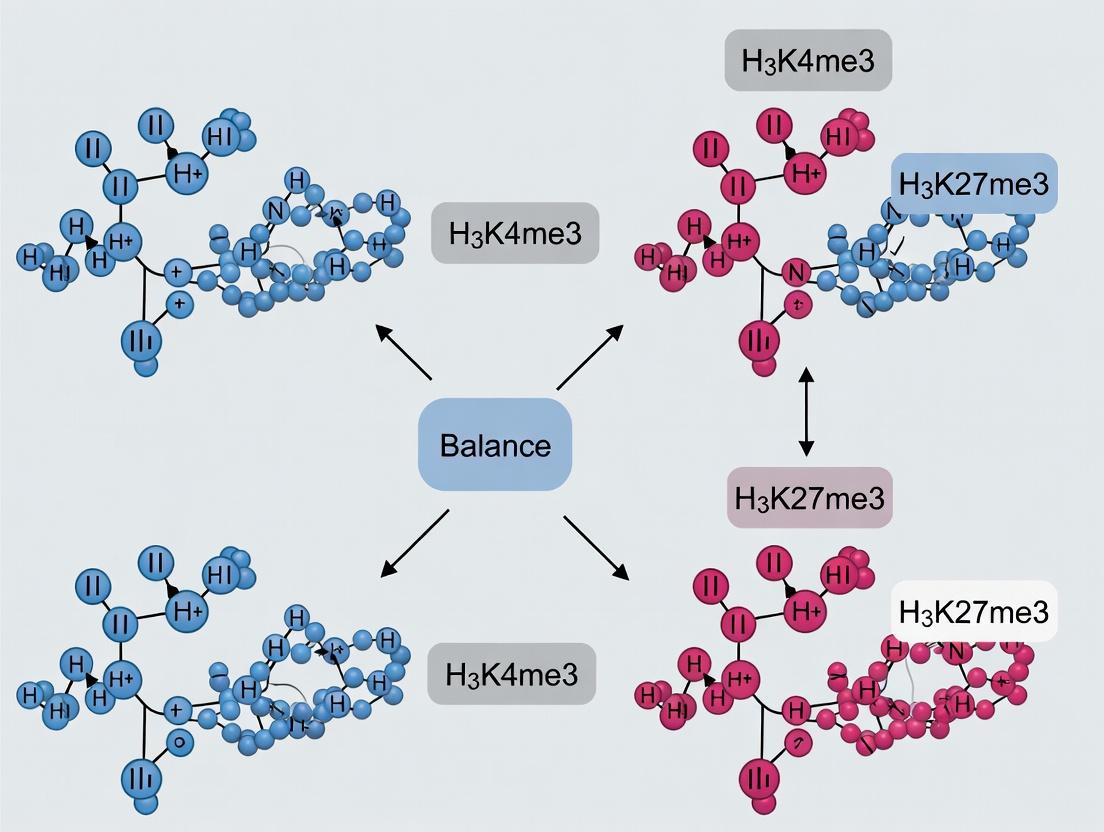
This article explores the critical balance between the activating histone mark H3K4me3 and the repressive mark H3K27me3 in regulating cell identity and fate decisions.
H3K4me3 vs. H3K27me3: The Bivalent Chromatin Switch Controlling Cell Fate Decisions in Development and Disease
Abstract
This article explores the critical balance between the activating histone mark H3K4me3 and the repressive mark H3K27me3 in regulating cell identity and fate decisions. Targeting researchers and drug development professionals, we first establish the molecular foundations of these 'bivalent domains' in pluripotency and differentiation. We then review current methodologies for profiling and manipulating these epigenetic states, including cutting-edge CUT&Tag and dCas9-based approaches. The article addresses common experimental challenges in interpreting bivalent chromatin data and optimizing perturbation studies. Finally, we compare validation strategies and discuss emerging therapeutic implications, particularly in cancer and regenerative medicine, providing a comprehensive resource for leveraging this epigenetic axis in biomedical research.
Decoding Bivalent Chromatin: How H3K4me3 and H3K27me3 Coexist to Prime Cell Fate
The precise regulation of cell identity, differentiation, and proliferation hinges on the dynamic and complex language of histone modifications. Within this epigenetic code, the trimethylation of histone H3 at lysine 4 (H3K4me3) and lysine 27 (H3K27me3) serve as quintessential antagonistic players. H3K4me3 is a canonical marker of active gene promoters, associated with transcriptional initiation and competence. In stark contrast, H3K27me3, deposited by Polycomb Repressive Complex 2 (PRC2), defines facultative heterochromatin and enforces transcriptional silencing. The coexistence of these two marks at the same genomic loci—termed "bivalent domains"—creates a poised transcriptional state, particularly crucial in embryonic stem cells (ESCs) and progenitor cells. These bivalent domains silence developmental genes while keeping them primed for rapid activation upon differentiation signals. This whitepaper delineates the molecular machinery governing these marks, their functional crosstalk, and the experimental frameworks used to dissect their balance, which is a central thesis in modern cell fate decision research.
Molecular Machinery: Writers, Erasers, Readers, and Antagonists
The H3K4me3 System
- Writers: The SET1/COMPASS and MLL/COMPASS-like complexes are the primary H3K4 methyltransferases. Their catalytic subunits (SETD1A/B, MLL1-4) require a conserved core complex (WDR5, RBBP5, ASH2L, DPY30) for full activity.
- Erasers: H3K4 demethylation is performed by KDM5 (JARID1) family members (e.g., KDM5A-D) and the LSD1/KDM1A complex.
- Readers: Effector proteins recognize H3K4me3 via specialized domains, including PHD fingers, Tudor domains, and WD40 repeats. Key readers include TAF3, ING tumor suppressor family proteins, and chromatin remodelers like BPTF.
- Table 1: Core Components of the H3K4me3 Machinery
Component Type Key Examples Primary Function Methyltransferase Writer SETD1A, SETD1B, MLL1-4 Catalyzes mono- to trimethylation of H3K4. Core Complex Writer Scaffold WDR5, RBBP5, ASH2L, DPY30 Stabilizes complex, enhances catalytic activity. Demethylase Eraser KDM5A-D, LSD1/KDM1A Removes methyl groups from H3K4. Reader Domain Effector PHD finger (ING2, BPTF), Tudor Binds H3K4me3 to recruit downstream complexes.
The H3K27me3 System
- Writers: PRC2 is the sole complex capable of de novo initiating and maintaining H3K27me3. Its core consists of EZH1/2 (catalytic subunit), SUZ12, EED, and RBBP4/7. JARID2 and AEBP2 are common ancillary subunits.
- Erasers: The KDM6 subfamily, specifically UTX (KDM6A) and JMJD3 (KDM6B), are the primary H3K27me3/me2 demethylases.
- Readers: The CBX proteins (part of PRC1) bind H3K27me3 via their chromodomains, facilitating chromatin compaction and transcriptional repression.
- Table 2: Core Components of the H3K27me3 Machinery
Component Type Key Examples Primary Function Methyltransferase Writer EZH1, EZH2 Catalyzes mono- to trimethylation of H3K27. PRC2 Core Writer Scaffold SUZ12, EED, RBBP4/7 Essential for complex stability and allosteric activation. Demethylase Eraser UTX/KDM6A, JMJD3/KDM6B Removes methyl groups from H3K27. Reader Effector CBX2, CBX4, CBX7 (PRC1) Binds H3K27me3, mediates transcriptional silencing.
Functional Crosstalk and Antagonism
The balance between H3K4me3 and H3K27me3 is not static but involves active crosstalk:
- Mutual Antagonism: H3K4me3 can inhibit PRC2 methyltransferase activity in cis, protecting active regions from spurious silencing. Conversely, H3K27me3 can recruit histone deacetylases (HDACs) to remove activating marks.
- Regulation of Demethylases: The H3K4me3 reader protein NURF (via BPTF) can recruit the H3K27me3 demethylase UTX to bivalent loci, promoting H3K27me3 removal and gene activation during differentiation.
- Sequential and Cooperative Dynamics: During ESC differentiation, the resolution of bivalency often involves the loss of H3K27me3 (via UTX/JMJD3) followed by stabilization of H3K4me3 at activated loci, or loss of H3K4me3 followed by H3K27me3 spread at stably silenced loci.
Diagram 1: Molecular Crosstalk Between H3K4me3 and H3K27me3 Systems
Experimental Methodologies for Profiling and Manipulation
Chromatin Immunoprecipitation Sequencing (ChIP-seq) for Mapping
Protocol Overview:
- Crosslinking: Treat cells (~1x10^6) with 1% formaldehyde for 8-10 minutes at room temperature to fix protein-DNA interactions. Quench with 125mM glycine.
- Cell Lysis & Chromatin Shearing: Lyse cells and isolate nuclei. Sonicate chromatin to ~200-500 bp fragments using a focused ultrasonicator (e.g., Covaris). Validate fragment size by agarose gel electrophoresis.
- Immunoprecipitation: Incubate sheared chromatin with 2-5 µg of highly validated, specific antibody (e.g., anti-H3K4me3 [CST, C42D8], anti-H3K27me3 [CST, C36B11]) conjugated to magnetic beads overnight at 4°C.
- Washes & Elution: Wash beads stringently with low-salt, high-salt, LiCl, and TE buffers. Elute chromatin complexes and reverse crosslinks at 65°C with high salt.
- DNA Purification & Library Prep: Purify DNA using spin columns. Prepare sequencing library with adaptor ligation and PCR amplification. Sequence on an Illumina platform.
- Data Analysis: Align reads to reference genome (e.g., hg38). Call peaks using tools like MACS2. Identify bivalent domains by overlapping H3K4me3 and H3K27me3 peaks (e.g., with ChIPseeker in R).
Functional Perturbation Using dCas9-Epigenetic Editors
Protocol Overview:
- Design & Cloning: Design sgRNAs targeting the promoter or enhancer of a bivalent gene of interest (e.g., PAX6 in ESCs). Clone sgRNAs into a lentiviral vector expressing dCas9 fused to an epigenetic effector (e.g., dCas9-p300 for activation, dCas9-KRAB for repression, or dCas9-EZH2 for targeted H3K27me3).
- Virus Production & Transduction: Co-transfect HEK293T cells with the lentiviral vector and packaging plasmids (psPAX2, pMD2.G). Harvest lentivirus supernatant at 48-72 hours. Transduce target cells (ESCs) with virus plus polybrene.
- Selection & Validation: Select transduced cells with appropriate antibiotics (e.g., puromycin). Validate targeting efficiency by ChIP-qPCR at the locus for the induced mark and by RNA-seq or RT-qPCR for transcriptional changes.
- Phenotypic Assay: Assess functional consequences on cell fate by differentiating edited ESCs and analyzing marker expression (flow cytometry, immunofluorescence) or performing lineage bias assays.
Diagram 2: Targeted Epigenetic Editing for Functional Studies
The Scientist's Toolkit: Key Research Reagent Solutions
| Category | Reagent/Kit | Supplier Examples | Primary Function in H3K4me3/K27me3 Research |
|---|---|---|---|
| Validated Antibodies | Anti-H3K4me3 (Rabbit mAb) | Cell Signaling Tech (C42D8), Abcam (ab8580) | Immunoprecipitation for ChIP-seq, Western blot validation of global levels. |
| Validated Antibodies | Anti-H3K27me3 (Rabbit mAb) | Cell Signaling Tech (C36B11), Millipore (07-449) | Specific detection of PRC2-mediated repression mark in ChIP and IF. |
| ChIP-seq Kits | Magna ChIP A/G, SimpleChIP | MilliporeSigma, Cell Signaling Tech | Optimized buffers and magnetic beads for robust, reproducible ChIP. |
| Epigenetic Editors | dCas9-EZH2, dCas9-p300, sgRNA Libraries | Addgene, Sigma-Aldrich | Targeted deposition or removal of epigenetic marks for functional studies. |
| Cell Lines | Wild-type & Knockout ESCs (e.g., Eed-/-, Utx-/-, Mll+/-) | ATCC, WiCell, or from collaborators | Models to study loss-of-function of writers, erasers, or readers. |
| Small Molecule Inhibitors | EPZ6438 (Tazemetostat), GSK126, CPI-455 | Selleckchem, Cayman Chemical | Selective inhibition of EZH2 (PRC2) or KDM5 to perturb mark balance. |
| Demethylase Assays | Fluorogenic LSD1/KDM1 Assay Kit, KDM5 Inhibitor Screening Kit | BPS Bioscience, Cayman Chemical | In vitro screening of eraser enzyme activity and inhibitor potency. |
| Next-Gen Sequencing | Illumina ChIP-seq Library Prep Kits | Illumina, NEB | Preparation of sequencing libraries from low-input ChIP DNA. |
The Discovery and Hallmark of Bivalent Domains in Embryonic Stem Cells
Bivalent chromatin domains, defined by the co-occurrence of active H3K4me3 and repressive H3K27me3 histone modifications on the same nucleosome, represent a key epigenetic signature of pluripotency in embryonic stem cells (ESCs). Discovered in 2006, these domains poise lineage-specific developmental regulator genes for rapid activation or stable silencing upon differentiation, thereby governing cell fate decisions. This whitepaper provides a technical overview of their discovery, function, and the experimental paradigms used to study them within the broader thesis of histone modification balance in cellular differentiation.
Cell fate commitment requires precise spatial and temporal control of gene expression. The "histone code" hypothesis posits that post-translational modifications of histone tails constitute a critical regulatory layer. In ESCs, a unique chromatin configuration maintains pluripotency while enabling lineage specification. The discovery of bivalent domains resolved the paradox of how key developmental genes remain transcriptionally silent yet primed for activation in pluripotent cells.
Historical Discovery and Initial Characterization
The seminal study by Bernstein et al. (2006) utilized chromatin immunoprecipitation coupled to promoter microarray analysis (ChIP-chip) in mouse ESCs. This revealed a novel chromatin state where promoters of developmentally important transcription factors (e.g., Pax6, Sox1, Nkx2-2) concurrently bore both H3K4me3 (associated with active transcription) and H3K27me3 (associated with Polycomb-mediated repression).
Table 1: Key Quantitative Findings from the Discovery Study (Bernstein et al., 2006)
| Parameter | Value/Observation | Implication |
|---|---|---|
| Number of bivalent promoters identified | ~2,500 in mouse ESCs | Widespread mechanism for developmental gene regulation |
| Enrichment in specific gene classes | Homeobox (HOX), transcription factors, developmental regulators | Direct role in cell fate decisions |
| Transcriptional output | Low or absent ("poised") | Silenced but activatable state |
| H3K4me3 peak breadth | Narrower at bivalent vs. active promoters | Distinct from canonical active marks |
| Fate upon differentiation | Resolution to monovalent (H3K4me3-only or H3K27me3-only) | Commitment to expressed or stably silenced state |
Core Methodology: Experimental Protocols for Bivalent Domain Analysis
Chromatin Immunoprecipitation Sequencing (ChIP-seq)
The gold standard for genome-wide mapping of histone modifications.
Detailed Protocol:
- Crosslinking: Treat ESCs with 1% formaldehyde for 10 min at room temperature to fix protein-DNA interactions. Quench with 125mM glycine.
- Cell Lysis & Chromatin Shearing: Lyse cells in SDS buffer. Sonicate chromatin to ~200-500 bp fragments using a focused ultrasonicator (e.g., Covaris). Verify fragment size by agarose gel electrophoresis.
- Immunoprecipitation: Incubate sheared chromatin with specific, validated antibodies:
- Anti-H3K4me3 (e.g., Millipore 07-473)
- Anti-H3K27me3 (e.g., Millipore 07-449) Include an input DNA control (no IP).
- Washing & Elution: Capture antibody-chromatin complexes on protein A/G magnetic beads. Wash stringently (e.g., low salt, high salt, LiCl buffers). Elute complexes and reverse crosslinks at 65°C overnight.
- Library Preparation & Sequencing: Purify DNA, perform end-repair, A-tailing, adapter ligation, and PCR amplification. Sequence on a high-throughput platform (Illumina).
- Bioinformatic Analysis: Align reads to reference genome (e.g., mm10). Call peaks (MACS2). Define bivalent domains as genomic regions with significant overlap of H3K4me3 and H3K27me3 peaks.
Sequential ChIP (Re-ChIP)
Confirms bivalency on the same nucleosome physically.
Detailed Protocol:
- Perform first ChIP as above (e.g., with anti-H3K4me3).
- Elution for Re-ChIP: Elute the H3K4me3-bound chromatin not with standard elution buffer, but with 10mM DTT (to disrupt antibody linkages) at 37°C for 30 min.
- Second Immunoprecipitation: Dilute the eluate 1:50 in fresh ChIP dilution buffer. Perform a second ChIP using anti-H3K27me3 antibody.
- Analyze final DNA by qPCR or sequencing to confirm co-occupancy.
The Functional Role in Cell Fate Decisions
Bivalent domains are a hallmark of the pluripotent state, maintaining developmental genes in a "poised" state. Upon differentiation signals, they resolve to monovalent states:
- Activation: Loss of H3K27me3, retention/gain of H3K4me3, recruitment of RNA Pol II.
- Silencing: Loss of H3K4me3, retention/gain of H3K27me3, chromatin compaction. This resolution is directed by lineage-specific transcription factors and signaling pathways, tipping the balance between antagonistic chromatin regulators.
Diagram 1: Resolution of Bivalent Domains Upon Differentiation
The Molecular Machinery and Regulatory Balance
Bivalent domains are established and maintained by the balanced action of competing complexes.
Table 2: Core Complexes Regulating Bivalent Domains
| Complex | Component Examples | Primary Function | Effect on Mark |
|---|---|---|---|
| COMPASS-like / TrxG | MLL1/2, SET1A/B, WDR5 | H3K4 methyltransferases | Deposits/ maintains H3K4me3 |
| Polycomb Repressive Complex 2 (PRC2) | EZH1/2, SUZ12, EED | H3K27 methyltransferase | Deposits/ maintains H3K27me3 |
| UTX / JMJD3 (KDM6) | KDM6A, KDM6B | H3K27 demethylases | Removes H3K27me3 |
| LSD1 / KDM1A | KDM1A, RCOR1 | H3K4 demethylase | Removes H3K4me3 |
Diagram 2: Balancing Act of Chromatin Modifiers at Bivalent Domains
The Scientist's Toolkit: Essential Research Reagents
Table 3: Key Reagent Solutions for Bivalent Domain Research
| Reagent / Material | Supplier Examples | Function & Application |
|---|---|---|
| Validated ChIP-grade Antibodies | MilliporeSigma, Cell Signaling, Abcam, Diagenode | Specific immunoprecipitation of H3K4me3, H3K27me3, and control histones. Critical for signal-to-noise ratio. |
| Magnetic Protein A/G Beads | Thermo Fisher, MilliporeSigma | Efficient capture of antibody-chromatin complexes for ChIP and Re-ChIP. |
| Chromatin Shearing Reagents (Covaris) | Covaris, Inc. | Consistent, tunable acoustic shearing of crosslinked chromatin to optimal fragment size. |
| High-Sensitivity DNA Assay Kits | Agilent (Bioanalyzer), Thermo Fisher (Qubit) | Accurate quantification and quality control of low-concentration ChIP DNA before library prep. |
| ChIP-seq Library Prep Kits | Illumina, NEB, Takara Bio | Preparation of sequencing libraries from low-input ChIP DNA, often with indexing for multiplexing. |
| J1, E14TG2a, R1 Mouse ESCs; H1, H9 Human ESCs | ATCC, WiCell | Standard pluripotent cell lines for comparative studies. |
| Small Molecule Inhibitors | Cayman Chemical, Tocris | EZH2 inhibitors (GSK126, UNC1999), LSD1 inhibitors (ORY-1001) to perturb balance and study domain resolution. |
Current Perspectives and Therapeutic Implications
Dysregulation of bivalent domain resolution is implicated in oncogenesis (e.g., aberrant silencing of tumor suppressors or activation of oncogenes). Inhibitors targeting the balance machinery (EZH2, LSD1) are in clinical trials for cancers characterized by epigenetic dysregulation. Understanding the precise rules of bivalency in ESCs informs reprogramming, regenerative medicine, and cancer therapy strategies.
Bivalent domains are a cornerstone of the epigenetic framework that underpins pluripotency and cell fate determination. Their study requires rigorous methodologies to map, quantify, and functionally validate the delicate balance of H3K4me3 and H3K27me3. This balance serves as a paradigm for how chromatin dynamics integrate developmental cues to orchestrate gene expression programs, with far-reaching implications for basic biology and drug development.
Abstract This whitepaper provides a technical examination of the molecular mechanisms enabling the co-occurrence of the antagonistic histone modifications H3K4me3 (associated with active transcription) and H3K27me3 (associated with repressed chromatin) on the same nucleosome. Framed within the critical context of bivalent chromatin and its role in pluripotency and cell fate decisions, this guide details the experimental paradigms and molecular players that facilitate this paradoxical state. It is intended to inform researchers and drug development professionals targeting epigenetic pathways in development and disease.
1. Introduction: Bivalency and Cell Fate The coexistence of H3K4me3 and H3K27me3 at promoters of developmentally crucial genes, termed "bivalent domains," is a hallmark of pluripotent stem cells. This poised chromatin state is resolved during differentiation—H3K4me3 is retained on activated lineage-specific genes, while H3K27me3 spreads on silenced ones. Understanding the mechanisms of co-occupancy is therefore central to manipulating cell identity for regenerative medicine and cancer therapy, where bivalency is often disrupted.
2. Core Molecular Mechanisms of Co-Occupancy Multiple non-mutually exclusive models explain how opposing marks can share a nucleosome.
2.1. Sequential/Competitive Recruitment Model Polycomb Repressive Complex 2 (PRC2), which deposits H3K27me3, can be recruited to nucleosomes already containing H3K4me3 through specialized subunits or adaptor proteins.
2.2. cis vs. trans Histone Modification A single nucleosome contains two H3 histone tails. Bivalency may be achieved by having one tail modified with H3K4me3 and the other with H3K27me3 (in cis on the same nucleosome), rather than both marks on the same tail.
2.3. Inter-Nucleosomal "Bridging" or "Spreading" PRC2 can engage with and modify a nucleosome that is in close 3D proximity to an H3K4me3-marked nucleosome within the same chromatin domain, facilitated by looping or clustering.
Table 1: Key Protein Complexes and Their Roles in Bivalency
| Protein Complex/Component | Primary Function | Role in Bivalency Mechanism |
|---|---|---|
| COMPASS-like Complexes (e.g., MLL3/4) | H3K4 methyltransferases (KMT2 family) | Deposit the activating H3K4me3 mark. |
| Polycomb Repressive Complex 2 (PRC2) | H3K27 methyltransferase (EZH1/2) | Deposits the repressive H3K27me3 mark. |
| PRC2.1 (with PALI1/2 or PRC1) | Variant PRC2 complex with DNA/nucleosome binding | Contains subunits that can recognize H3K4me3-nucleosomes, facilitating recruitment. |
| KDM6 Family Demethylases (e.g., UTX) | H3K27me3 demethylases | Dynamically erode H3K27me3, contributing to the poised, resolvable state. |
| Histone H2A Ubiquitin Ligase (PRC1/RING1B) | Deposits H2AK119ub | Can recruit PRC2 and stabilize bivalent domains. |
3. Experimental Methodologies for Detection and Validation Rigorous demonstration of true nucleosomal co-occupancy requires complementary techniques.
3.1. Sequential Chromatin Immunoprecipitation (ChIP-reChIP)
- Purpose: To prove two marks reside on the same chromatin fragment.
- Protocol:
- First ChIP: Cross-link cells (e.g., mouse embryonic stem cells - mESCs). Sonicate chromatin. Immunoprecipitate with antibody against H3K4me3.
- Elution: Elute the H3K4me3-bound chromatin complexes from the beads using a mild elution buffer (e.g., 10mM DTT, 1% SDS) at 37°C for 30 minutes.
- Dilution & Second ChIP: Dilute eluate 1:50 with ChIP dilution buffer. Perform a second immunoprecipitation with antibody against H3K27me3.
- Analysis: Reverse cross-links, purify DNA, and analyze by qPCR or sequencing at known bivalent promoters (e.g., PAX6, SOX1).
3.2. Single-Nucleosome Immunoprecipitation with Paired-End Tag Sequencing (snIP-seq)
- Purpose: To map combinations of histone modifications on individual nucleosomes.
- Protocol:
- Micrococcal Nuclease (MNase) Digestion: Isolate nuclei from mESCs. Digest chromatin with MNase to yield primarily mononucleosomes.
- Immunoprecipitation: Use a bivalent-specific antibody (if available) or perform sequential IP. More commonly, use an antibody for one mark (e.g., H3K4me3) and analyze the co-presence of the other mark (H3K27me3) on the same pulled-down nucleosome via western blot.
- Library Preparation & Sequencing: Ligate adapters to the nucleosomal DNA ends and perform paired-end sequencing.
- Bioinformatic Analysis: Map reads to the genome. Paired-end tags from a single nucleosome provide precise positioning. Overlap of H3K4me3 and H3K27me3 signals at the same genomic coordinates indicates co-occupancy.
3.3. Asymmetric Hairpin Bisulfite Sequencing
- Purpose: To assess if marks are on the same histone tail (in cis) or on different tails (in trans) by analyzing DNA methylation on individual strands of a single nucleosome.
- Protocol:
- MNase Digestion & Hairpin Linker Ligation: Digest chromatin to mononucleosomes. Ligate a hairpin oligonucleotide to both ends of the nucleosomal DNA, covalently linking the two DNA strands.
- Immunoprecipitation: IP nucleosomes with antibodies for H3K4me3 and H3K27me3.
- Bisulfite Treatment & Sequencing: Treat purified DNA with bisulfite (converts unmethylated C to U), then PCR amplify and sequence. The hairpin allows reconstruction of the original double-stranded methylation pattern of the single nucleosome, inferring symmetry/asymmetry of associated proteins.
4. Visualization of Key Concepts and Workflows
Diagram 1: Molecular Model of a Bivalent Nucleosome (74 characters)
Diagram 2: ChIP-reChIP Workflow for Bivalency (47 characters)
5. The Scientist's Toolkit: Key Research Reagents Table 2: Essential Reagents for Studying Histone Co-Occupancy
| Reagent | Function & Application | Key Consideration |
|---|---|---|
| Validated ChIP-grade Antibodies (α-H3K4me3, α-H3K27me3) | Specific immunoprecipitation of modified chromatin. Critical for ChIP-reChIP and snIP-seq. | Stringently validate specificity via peptide arrays or using histone mutant cell lines. |
| Micrococcal Nuclease (MNase) | Digests linker DNA to isolate mononucleosomes for snIP-seq or nucleosome mapping. | Titration is crucial to optimize mono- vs. di-nucleosome yield. |
| Hairpin Oligonucleotide Linkers | Covalently link complementary DNA strands from a single nucleosome for asymmetric analysis. | Requires specialized ligation protocols and subsequent bisulfite sequencing. |
| Cell Lines with Bivalent Loci (e.g., Mouse/human ESCs, induced pluripotent stem cells) | Model systems containing well-characterized bivalent domains (e.g., HOX clusters). | Maintain pluripotency status; differentiation rapidly resolves bivalency. |
| Small Molecule Inhibitors (e.g., EZH2i: GSK126, KDM6i: GSK-J4) | Probe functional outcomes of disrupting bivalency (inhibit writing/erasing of H3K27me3). | Off-target effects and compensation by paralogs (EZH1) must be controlled. |
| CUT&Tag/Tagmentation Kits | For low-input, high-resolution mapping of histone marks (alternative to ChIP-seq). | Can be adapted for sequential assays but requires careful optimization for co-occupancy proof. |
6. Quantitative Landscape of Bivalency Table 3: Quantitative Data on Bivalent Domains in Pluripotent Cells
| Metric | Typical Value/Range | Measurement Method | Interpretation |
|---|---|---|---|
| Genomic Prevalence | ~2,200 - 3,500 promoters in mESCs | ChIP-seq peak overlap | Indicates a specialized regulatory program for developmental genes. |
| Nucleosome Occupancy | High at bivalent promoters | MNase-seq, ATAC-seq | Dense chromatin structure despite active mark presence. |
| H3K27me3/H3K4me3 Ratio | Can vary; H3K27me3 often lower signal | snIP-seq, quantitative ChIP | Suggests a dynamic equilibrium rather than equal stoichiometry. |
| Resolution upon Differentiation | >70% of domains resolve to either H3K4me3-only or H3K27me3-only | ChIP-seq time courses | Demonstrates functional relevance for lineage commitment. |
7. Conclusion and Therapeutic Implications The co-occupancy of H3K4me3 and H3K27me3 is a precisely regulated epigenetic phenomenon, not a technical artifact. Its mechanistic basis—involving specialized PRC2 complexes, cis/trans modification, and dynamic enzyme recruitment—represents a sophisticated layer of gene control in fate decisions. Disruption of this balance is implicated in cancers (e.g., aberrant silencing of tumor suppressors or activation of oncogenes). Therapeutic strategies targeting the writers (EZH2 inhibitors), erasers (KDM6 inhibitors), or readers of these marks are actively being pursued, with a nuanced understanding of bivalency mechanisms essential for predicting on-target effects and therapeutic windows. Future research leveraging single-nucleosome technologies will further elucidate the dynamics and combinatorial rules governing this critical epigenetic state.
The Priming Hypothesis posits that pluripotent stem cells maintain a poised transcriptional state for key lineage-specific genes, enabling rapid and specific differentiation upon receiving appropriate cues. This poise is molecularly encoded by a unique chromatin signature: the co-occurrence of the active histone mark H3K4me3 and the repressive mark H3K27me3 at the same genomic locus, termed a "bivalent domain." The dynamic resolution of these bivalent domains—through the loss of H3K27me3 (leading to activation) or H3K4me3 (leading to deep silencing)—is a fundamental epigenetic mechanism governing the transition from pluripotency to committed lineage states. This whitepaper examines the priming hypothesis through the lens of this critical histone modification balance, detailing its mechanisms, experimental evidence, and implications for directed differentiation and disease modeling.
The Molecular Architecture of Priming and Bivalency
Bivalent domains are predominantly found at promoters of developmentally important transcription factors (e.g., PAX6, SOX17, TBXT) in embryonic stem cells (ESCs). They are established and maintained by the antagonistic actions of the Polycomb Repressive Complex 2 (PRC2), which deposits H3K27me3, and COMPASS-like complexes (MLL/Trithorax), which deposit H3K4me3.
Key Quantitative Data on Bivalent Domains in ESCs:
Table 1: Characteristics of Bivalent Domains in Mouse and Human ESCs
| Parameter | Mouse ESCs (approx.) | Human ESCs (approx.) | Notes |
|---|---|---|---|
| Number of Domains | 2,200 - 3,500 | 3,000 - 5,000 | Varies by cell line and detection method. |
| Associated Genes | ~20% of all promoters | ~15-20% of all promoters | Enriched for homeobox (HOX) and other TF genes. |
| H3K4me3 Peak Width | Narrow (~1-2 kb) | Narrow (~1-2 kb) | Typical of active promoters. |
| H3K27me3 Peak Width | Broad (~5-10 kb) | Broad (~5-10 kb) | Characteristic of Polycomb repression. |
| Transcriptional Output | Low or null | Low or null | RNA Polymerase II is often paused at these loci. |
Experimental Protocols for Investigating Priming
3.1 Chromatin Immunoprecipitation Sequencing (ChIP-seq) for Bivalent Domain Mapping
Objective: To map genome-wide distributions of H3K4me3 and H3K27me3 in pluripotent and differentiating cells.
Detailed Protocol:
- Crosslinking & Harvesting: Fix ~1x10^7 cells with 1% formaldehyde for 10 min at room temperature. Quench with 125mM glycine.
- Cell Lysis & Chromatin Shearing: Lyse cells in SDS buffer. Sonicate chromatin to an average fragment size of 200-500 bp using a focused ultrasonicator (e.g., Covaris). Confirm fragment size by agarose gel electrophoresis.
- Immunoprecipitation: Incubate sheared chromatin with:
- Antibody 1: Anti-H3K4me3 (e.g., Millipore 07-473, Diagenode C15410003).
- Antibody 2: Anti-H3K27me3 (e.g., Millipore 07-449, Cell Signaling Technology 9733).
- Control: Species-matched IgG. Use protein A/G magnetic beads for capture. Wash beads stringently (Low Salt, High Salt, LiCl, TE buffers).
- Elution & Decrosslinking: Elute complexes in ChIP Elution Buffer (1% SDS, 0.1M NaHCO3). Reverse crosslinks at 65°C overnight with 200mM NaCl.
- DNA Purification: Treat with RNase A and Proteinase K. Purify DNA using spin columns (e.g., QIAquick PCR Purification Kit).
- Library Prep & Sequencing: Prepare sequencing libraries using a commercial kit (e.g., NEBNext Ultra II DNA Library Prep). Sequence on an Illumina platform (≥30 million reads/sample recommended).
- Data Analysis: Align reads to reference genome (e.g., hg38). Call peaks using tools like MACS2. Identify bivalent domains as genomic regions with significant peaks for both marks.
3.2 Assay for Transposase-Accessible Chromatin with Sequencing (ATAC-seq) for Accessibility Dynamics
Objective: To assess changes in chromatin accessibility at primed loci during differentiation, correlating with bivalent domain resolution.
Detailed Protocol:
- Nuclei Isolation: Wash ~50,000 viable cells in cold PBS. Lyse in ATAC-seq Lysis Buffer (10mM Tris-HCl pH 7.4, 10mM NaCl, 3mM MgCl2, 0.1% IGEPAL CA-630). Immediately pellet nuclei.
- Tagmentation: Resuspend nuclei in Transposition Mix (25µL 2x TD Buffer, 2.5µL Tn5 Transposase (Illumina), 22.5µL nuclease-free water). Incubate at 37°C for 30 min.
- DNA Purification: Purify tagmented DNA using a MinElute PCR Purification Kit (Qiagen).
- Library Amplification & Sequencing: Amplify library for 10-14 cycles using indexed primers. Purify and size-select for fragments < 1kb. Sequence on Illumina platform.
- Data Analysis: Align reads, call peaks. Overlap with ChIP-seq data to track accessibility changes at bivalent promoters.
Visualization of Core Concepts
Title: Priming Hypothesis: Bivalent Domain Fate in Differentiation
Title: Writers and Erasers of Bivalent Histone Marks
The Scientist's Toolkit: Key Research Reagent Solutions
Table 2: Essential Reagents for Priming Hypothesis Research
| Reagent / Kit | Supplier Examples | Function in Priming Research |
|---|---|---|
| Anti-H3K4me3 Antibody (ChIP-seq grade) | Diagenode (C15410003), Active Motif (39159), Millipore (07-473) | Immunoprecipitation of the active mark component of bivalent domains for genome-wide mapping. |
| Anti-H3K27me3 Antibody (ChIP-seq grade) | Cell Signaling (9733), Diagenode (C15410195), Millipore (07-449) | Immunoprecipitation of the repressive mark component of bivalent domains. |
| Recombinant Tn5 Transposase | Illumina (20034197), Custom from vendor (e.g., Diagenode) | Enzyme for tagmentation in ATAC-seq to profile chromatin accessibility dynamics. |
| EZ-Tn5 Transposase | Lucigen (TNP92110) | Alternative, commonly used transposase for ATAC-seq library preparation. |
| ChIP-seq Library Prep Kit | NEBNext Ultra II DNA (NEB #E7645), Diagenode MicroPlex | Efficient conversion of low-input ChIP DNA into sequencing-ready libraries. |
| ATAC-seq Kit | 10x Genomics Chromium Single Cell ATAC, Illumina Tagmentase TDE1 | Optimized, standardized reagents for bulk or single-cell ATAC-seq workflows. |
| Small Molecule Inhibitors (EZH2) | GSK126 (Cayman 16475), EPZ-6438 (Selleckchem S7128) | Pharmacological inhibition of PRC2 (H3K27me3 writer) to test functional role of bivalency resolution. |
| Directed Differentiation Kits | STEMdiff (StemCell Tech.), TeSR (StemCell Tech.) | Chemically defined media to provide controlled lineage signals for studying priming resolution. |
| Single-Cell Multiome Kit | 10x Genomics Chromium Single Cell Multiome ATAC + Gene Expression | Simultaneously profile chromatin accessibility (ATAC) and transcriptome in single cells to link priming state to fate. |
Genomic Distribution and Target Genes of Bivalent Domains
Within the broader thesis on the balance of H3K4me3 (an activating mark) and H3K27me3 (a repressive mark) in cell fate decisions, bivalent chromatin domains represent a critical epigenetic mechanism. These domains, defined by the co-occurrence of both histone modifications at promoter regions of key developmental genes, are hypothesized to maintain genes in a poised state—repressed but primed for rapid activation upon differentiation signals. This technical guide details the genomic distribution of these domains, their target gene repertoires, and the experimental paradigms used to study them, with direct implications for understanding cellular pluripotency and oncogenic states in drug development.
The precise orchestration of gene expression during development requires dynamic epigenetic regulation. The "bivalency" model, centered on the simultaneous presence of H3K4me3 and H3K27me3, provides a framework for understanding how pluripotent stem cells maintain lineage-specific genes in a transcriptionally silent yet activatable state. Disruption of this balance, such as loss of H3K27me3 leading to premature gene activation or excessive repression locking cells in an undifferentiated state, is a focal point in developmental biology and cancer research, where cell fate decisions go awry.
Genomic Distribution and Characteristics
Bivalent domains are predominantly located at the promoters of developmental transcription factor genes (e.g., HOX, PAX, SOX families) in embryonic stem cells (ESCs). They are evolutionarily conserved and are often associated with CpG-rich sequences (CpG islands).
Table 1: Genomic Features of Bivalent Domains in Mouse ESCs
| Feature | Typical Characteristic | Notes |
|---|---|---|
| Genomic Location | Primarily promoter-proximal (TSS ± 1-2 kb) | Also found at some enhancers in ESCs. |
| Sequence Context | High CpG Island density | ~70-80% of bivalent promoters are associated with CGIs. |
| Chromatin State | Generally nucleosome-dense, but with accessible TSS | "Poised" RNA Polymerase II may be present. |
| Prevalence in ESCs | ~2000-3000 domains identified | Represents ~5-10% of all promoters in ESCs. |
| Evolutionary Conservation | High, especially for key developmental genes | Bivalent genes are often conserved across vertebrates. |
Target Gene Ontology and Functional Roles
Bivalent target genes are overwhelmingly enriched for functions in developmental processes. Their poised state resolves upon differentiation, with marks resolving to a monovalent active (H3K4me3-only) or repressive (H3K27me3-only) state consistent with the chosen cell lineage.
Table 2: Functional Categories of Bivalent Target Genes
| Gene Category | Example Genes | Role in Pluripotency/Differentiation |
|---|---|---|
| Homeobox Transcription Factors | HOXA1, HOXB1, HOXD1 | Anterior-posterior patterning; silenced in ESCs, activated in specific lineages. |
| Basic Helix-Loop-Helix (bHLH) Factors | NEUROG1, ASCL1 | Neurogenesis; held poised until neuroectoderm commitment. |
| Paired-box (PAX) Genes | PAX3, PAX6 | Tissue specification (e.g., eye, neural tube). |
| SRY-related HMG-box (SOX) Genes | SOX1, SOX17 | Ectoderm and endoderm lineage specification. |
| Signaling Pathway Components | WNT family, DKK1 | Morphogen signaling; tightly regulated during gastrulation. |
Core Experimental Methodologies
Chromatin Immunoprecipitation Sequencing (ChIP-seq) for Bivalent Domain Mapping
This is the definitive technique for identifying bivalent domains genome-wide.
Protocol Overview:
- Crosslinking: Treat cells (e.g., ESCs) with 1% formaldehyde for 10 min at room temperature to fix protein-DNA interactions.
- Cell Lysis & Chromatin Shearing: Lyse cells and sonicate chromatin to generate 200-500 bp fragments.
- Immunoprecipitation (IP): Perform two sequential or parallel IPs.
- IP 1: Incubate chromatin with antibody against H3K4me3 (e.g., Diagenode C15410003).
- IP 2: Incubate an aliquot of chromatin with antibody against H3K27me3 (e.g., Cell Signaling Technology 9733S).
- Include an Input DNA control (no IP).
- Washing, Elution & Reverse Crosslinking: Wash beads stringently, elute complexes, and reverse crosslinks at 65°C overnight.
- DNA Purification & Library Prep: Purify DNA and prepare sequencing libraries for high-throughput sequencing.
- Bioinformatic Analysis:
- Align sequence reads to reference genome.
- Call peaks for each mark (using tools like MACS2).
- Define bivalent domains as genomic regions where H3K4me3 and H3K27me3 peak calls significantly overlap (typically within 1 kb of a TSS).
Functional Validation: CRISPR-Based Epigenetic Editing
To test the functional consequence of a specific bivalent domain.
Protocol Overview:
- Design & Construct: Design guide RNA (gRNA) targeting the bivalent promoter of interest. Fuse to a nuclease-dead Cas9 (dCas9) tethered to an epigenetic effector.
- For erasure: dCas9 fused to the catalytic domain of KDM6A/B (H3K27me3 demethylase) or LSD1 (H3K4me3 demethylase).
- For reinforcement: dCas9 fused to EZH2 (H3K27 methyltransferase) or SET1A complex component.
- Delivery: Transfect or transduce stem cells with the dCas9-effector and gRNA constructs.
- Assessment:
- ChIP-qPCR: Validate loss/gain of histone marks at the target site.
- RNA-seq/qPCR: Measure changes in target gene expression.
- Phenotypic Assays: Assess impacts on differentiation potential.
Visualization of Key Concepts and Workflows
Title: Resolution of Bivalent Domains Upon Cell Fate Decision
Title: ChIP-seq Workflow to Map Bivalent Domains
The Scientist's Toolkit: Key Research Reagents
Table 3: Essential Reagents for Bivalent Domain Research
| Reagent | Example Product/Catalog # | Function in Research |
|---|---|---|
| Anti-H3K4me3 Antibody | Diagenode, C15410003 | Immunoprecipitation of the activating mark in ChIP assays. Critical for defining bivalent domain boundaries. |
| Anti-H3K27me3 Antibody | Cell Signaling Technology, 9733S | Immunoprecipitation of the repressive Polycomb mark in ChIP assays. The second essential component for bivalency detection. |
| dCas9-Epigenetic Effector Fusions | Addgene plasmids (e.g., dCas9-p300, dCas9-KRAB, dCas9-EZH2) | Functional manipulation of histone marks at specific loci to establish causality between bivalency and gene expression. |
| JAK/STAT or BMP Pathway Inhibitors | Stemgent, Tocris | Used in differentiation assays to direct cell fate, allowing observation of bivalent mark resolution in real-time. |
| Polycomb Repressive Complex 2 (PRC2) Inhibitors | GSK126 (EZH2 inhibitor) | Small molecule probes to dissect the role of H3K27me3 maintenance in preserving the bivalent state. |
| Next-Generation Sequencing Kits | Illumina TruSeq ChIP Library Prep Kit | Preparation of sequencing libraries from ChIP-enriched DNA for genome-wide analysis. |
Cell fate decisions during development and differentiation are orchestrated by precise epigenetic programs. Two central, antagonistic chromatin-modifying complexes, the Trithorax-group (TrxG)/MLL complexes and the Polycomb Repressive Complex 2 (PRC2), establish and maintain the transcriptional states of key developmental genes. This balance is physically represented by the dynamic distribution of histone H3 lysine 4 trimethylation (H3K4me3), a mark associated with active transcription and deposited by TrxG/MLL, and histone H3 lysine 27 trimethylation (H3K27me3), a repressive mark deposited by PRC2. Bivalent domains—chromatin regions co-decorated with both H3K4me3 and H3K27me3—are a hallmark of pluripotent stem cells, poising developmental genes for rapid activation or silencing upon lineage commitment. Disruption of this equilibrium is a hallmark of cancer and developmental disorders, making these "writers" and their associated "readers" and "erasers" prime targets for therapeutic intervention.
Core Complexes: Mechanisms and Components
The TrxG/MLL Complexes: Writers of H3K4me3
The MLL family (KMT2A-G) are histone methyltransferases (HMTs) that catalyze mono-, di-, and trimethylation of H3K4. They function within large, multi-subunit COMPASS-like complexes. The core catalytic unit requires WRAD subunits (WDR5, RbBP5, ASH2L, and DPY30) for stability and activity. MLL complexes are recruited to specific genomic loci by sequence-specific transcription factors, histone modifications (like H3K27ac), and readers such as menin. H3K4me3 is recognized by "reader" domains, including PHD fingers in numerous chromatin regulators, which tether activating complexes to promote transcription initiation.
The PRC2 Complex: Writer of H3K27me3
PRC2 is the sole writer complex for H3K27me1/2/3. Its core consists of EZH1 or EZH2 (catalytic subunit), SUZ12, EED, and RbAp46/48. EED's recognition of pre-existing H3K27me3 (a read-and-write mechanism) allows for PRC2 propagation. JARID2 and AEBP2 are common accessory subunits that modulate recruitment and activity. PRC2 is recruited by GC-rich sequences (CpG islands) via interactions with DNA-binding proteins and specific chromatin features. H3K27me3 is read by the chromodomain of Polycomb-like proteins and CBX family members within PRC1, facilitating chromatin compaction and stable transcriptional silencing.
Erasers and Dynamic Regulation
The demethylases KDM5A-D (for H3K4me3) and UTX/KDM6A and JMJD3/KDM6B (for H3K27me3) are crucial "erasers" that dynamically remove these marks, allowing for state transitions. Their activity is tightly regulated by cellular signaling pathways and is essential for exiting pluripotency and initiating differentiation programs.
Table 1: Core Components and Functions of TrxG/MLL and PRC2 Complexes
| Complex | Core Catalytic Subunit(s) | Key Accessory Subunits | Histone Mark Written | Primary Genomic Targets | Cellular Function |
|---|---|---|---|---|---|
| TrxG/MLL (COMPASS-like) | MLL1-4 (KMT2A-D) | WDR5, RbBP5, ASH2L, DPY30, menin | H3K4me1/2/3 | Active and poised promoters, enhancers | Transcriptional activation, maintenance of cellular identity |
| PRC2 | EZH1/2 | SUZ12, EED, RbAp46/48, JARID2, AEBP2 | H3K27me1/2/3 | CpG islands of developmental regulators | Transcriptional repression, maintenance of silencing, lineage commitment |
Table 2: Key Erasers and Readers of H3K4me3 and H3K27me3
| Category | Protein Family/Example | Specific Target | Molecular Function | Impact on Gene Expression |
|---|---|---|---|---|
| Erasers | KDM5 (JARID1) | H3K4me2/3 | Histone Demethylase | Repression |
| UTX (KDM6A), JMJD3 (KDM6B) | H3K27me2/3 | Histone Demethylase | Activation | |
| Readers | PHD finger domains (e.g., in MLL, TAF3) | H3K4me3 | Chromatin Binding/Bridging | Activation/Recruitment |
| Chromodomains (e.g., in CBX proteins, Polycomb) | H3K27me3 | Chromatin Compaction/Recruitment | Repression |
Experimental Protocols for Key Assays
Chromatin Immunoprecipitation Sequencing (ChIP-seq) for Bivalent Domains
- Purpose: To map genome-wide distributions of H3K4me3 and H3K27me3.
- Protocol Summary:
- Crosslinking: Treat cells with 1% formaldehyde for 10 min at room temperature to fix protein-DNA interactions. Quench with 125mM glycine.
- Cell Lysis & Chromatin Shearing: Lyse cells and isolate nuclei. Sonicate chromatin to an average fragment size of 200-500 bp using a focused ultrasonicator.
- Immunoprecipitation: Incubate sheared chromatin with validated antibodies specific to H3K4me3 and H3K27me3 overnight at 4°C. Use Protein A/G magnetic beads to capture antibody-bound complexes.
- Washing & Elution: Wash beads with low-salt, high-salt, LiCl, and TE buffers. Elute chromatin with fresh elution buffer (1% SDS, 0.1M NaHCO3).
- Reverse Crosslinking & Purification: Reverse crosslinks at 65°C overnight. Treat with RNase A and Proteinase K. Purify DNA using spin columns.
- Library Prep & Sequencing: Prepare sequencing libraries from input and IP DNA using a kit (e.g., NEBNext Ultra II). Sequence on an Illumina platform.
- Data Analysis: Align reads to a reference genome. Call peaks using tools like MACS2. Identify bivalent domains as genomic regions with significant enrichment for both marks.
In Vitro Histone Methyltransferase (HMT) Assay
- Purpose: To measure the catalytic activity of purified MLL or PRC2 complexes.
- Protocol Summary:
- Substrate Preparation: Use recombinant nucleosomes or histone octamers as substrate.
- Reaction Setup: In a 25 µL reaction, combine 1 µg substrate, 50-100 ng purified recombinant complex, 1-5 µCi ³H-labeled S-adenosylmethionine (SAM) or cold SAM in HMT assay buffer (50 mM Tris-HCl pH 8.5, 50 mM NaCl, 1 mM DTT).
- Incubation: Incubate at 30°C for 45-90 minutes.
- Detection:
- For radioactive SAM: Spot reaction mix on P81 filter paper, wash in 50 mM NaHCO₃ buffer (pH 9.0), and measure incorporation by scintillation counting.
- For cold SAM: Stop reaction with SDS sample buffer, run SDS-PAGE, and perform western blot with specific antibodies (e.g., anti-H3K4me3, anti-H3K27me3).
Visualization: Pathways and Workflows
Title: Writer-Reader Pathways for Activation and Repression
Title: Resolution of Bivalency During Cell Fate Choice
The Scientist's Toolkit: Key Research Reagents
Table 3: Essential Research Reagents for Studying TrxG/MLL and PRC2
| Reagent Category | Example(s) | Function & Application |
|---|---|---|
| Specific Inhibitors | EPZ-6438 (Tazemetostat), GSK126 (EZH2); MI-2, KO-539 (Menin-MLL) | Chemically probe complex function. EZH2 inhibitors used in cancer (e.g., follicular lymphoma). Menin-MLL inhibitors under investigation for MLL-rearranged leukemia. |
| Validated Antibodies | Anti-H3K4me3 (CST C42D8), Anti-H3K27me3 (CST C36B11), Anti-MLL (Bethyl), Anti-EZH2 (CST D2C9) | Essential for ChIP-seq, western blot, and immunofluorescence to detect mark deposition and complex localization. |
| Recombinant Complexes | Purified recombinant human PRC2 (EZH2/EED/SUZ12/RbAp48) or MLL-core (MLL/WRAD) | Used for in vitro HMT assays to study enzymatic kinetics and screen for inhibitors in a controlled system. |
| Cell Line Models | Embryonic stem cells (mESC/hESC), MLL-rearranged leukemia lines (e.g., MV4;11), EZH2 mutant lymphoma lines | Model systems to study bivalency, differentiation, and oncogenic mechanisms in a physiological context. |
| Demethylase Tools | Recombinant KDM5B, UTX; chemical inhibitors (e.g., GSK-J4 for JMJD3/UTX) | To study mark erasure and its functional consequences. |
Tools of the Trade: Profiling and Perturbing H3K4me3/H3K27me3 Balance in Research
Within the broader thesis on the balance of H3K4me3 (a mark of active gene promoters) and H3K27me3 (a repressive Polycomb mark) in cell fate decisions, precise mapping of chromatin states is fundamental. This bivalent chromatin, harboring both activating and repressive marks, is a key feature of developmental regulators in pluripotent cells. Understanding its resolution during differentiation or its misregulation in disease requires robust, high-resolution epigenomic profiling. This guide details the core technologies—ChIP-seq, CUT&Tag, and multiomics approaches—that enable such mapping.
Core Technologies for Chromatin State Mapping
Chromatin Immunoprecipitation Sequencing (ChIP-seq)
ChIP-seq remains the gold standard for genome-wide profiling of histone modifications and transcription factor binding.
Detailed Protocol:
- Crosslinking: Cells are fixed with formaldehyde (typically 1% for 10 min at room temperature) to covalently link proteins to DNA.
- Chromatin Preparation: Cells are lysed, and chromatin is sheared via sonication to fragments of 200-600 bp.
- Immunoprecipitation: Sheared chromatin is incubated with a target-specific antibody (e.g., anti-H3K4me3). Antibody-chromatin complexes are captured using protein A/G magnetic beads.
- Washing & Elution: Beads are stringently washed. Crosslinks are reversed (65°C overnight), and proteins are digested with Proteinase K.
- DNA Purification: Immunoprecipitated DNA is purified via phenol-chloroform extraction or columns.
- Library Preparation & Sequencing: DNA fragments are end-repaired, A-tailed, ligated to adapters, amplified by PCR, and sequenced on a high-throughput platform.
Cleavage Under Targets and Tagmentation (CUT&Tag)
CUT&Tag is a recently developed, low-input, high-signal-to-noise alternative to ChIP-seq that uses a protein A-Tn5 fusion enzyme (pA-Tn5) for in situ tagmentation.
Detailed Protocol:
- Permeabilization: Isolated nuclei are immobilized on Concanavalin A-coated magnetic beads and permeabilized with digitonin.
- Antibody Binding: Nuclei are incubated with a primary antibody against the target (e.g., anti-H3K27me3), followed by a secondary antibody.
- pA-Tn5 Binding: A pre-loaded pA-Tn5 adapter complex binds to the secondary antibody.
- Targeted Tagmentation: Addition of Mg²⁺ activates the Tn5 transposase, which cleaves DNA and inserts sequencing adapters only in the vicinity of the antibody target.
- DNA Extraction & PCR: DNA fragments are released, amplified with barcoded primers, and sequenced. No sonication or phenol-chloroform purification is needed.
Multiomics Approaches
Integrative methods allow simultaneous mapping of multiple chromatin features from the same single cells or samples.
Key Techniques:
- scATAC-seq + scRNA-seq: Assays for Transposase-Accessible Chromatin (ATAC-seq) and RNA from the same single cell, linking open chromatin regions to gene expression.
- CUT&Tag + RNA-seq: Parallel profiling of a histone modification and the transcriptome from the same sample, directly correlating chromatin state with expression.
- CUT&Tag-IC: Simultaneous mapping of two histone modifications (e.g., H3K4me3 and H3K27me3) in the same cell using barcoded secondary antibodies and sequential tagmentation.
Quantitative Comparison of Key Methods
Table 1: Technical Comparison of ChIP-seq and CUT&Tag
| Feature | ChIP-seq | CUT&Tag |
|---|---|---|
| Starting Material | 0.1 - 10 million cells | 100 - 100,000 cells |
| Typical Hands-on Time | 3-4 days | 1-2 days |
| Key Steps | Crosslinking, Sonication, IP, Reverse X-link, Purification | Permeabilization, Antibody Incubation, In Situ Tagmentation |
| Background Noise | Higher (non-specific IP, open chromatin bias) | Very Low (tagmentation is antibody-targeted) |
| Resolution | 100-300 bp (limited by sonication) | ~25 bp (defined by Tn5 cut sites) |
| Best For | Robust, established protocols; any histone mark or factor; tissues requiring crosslinking. | Low-input samples (stem cells, rare populations); high-resolution mapping; bivalent mark co-profiling. |
| Cost per Sample | Moderate to High | Low to Moderate |
Table 2: Application in H3K4me3/H3K27me3 Bivalency Studies
| Method | Advantages for Bivalent Loci | Limitations |
|---|---|---|
| Sequential ChIP-seq | Direct biochemical proof of co-occurrence on the same allele. | Extremely low yield, high technical noise, requires large input. |
| Single-Cell CUT&Tag | Can identify subpopulations of cells with distinct bivalent signatures during fate decisions. | Current low throughput; complex data analysis. |
| CUT&Tag-IC | Direct, simultaneous mapping of both marks in the same nuclei. | Requires careful antibody titration and validation. |
| ChIP-seq (separate) | Large historical datasets for comparison; robust for each individual mark. | Cannot determine if marks are on the same or different chromosomes in a cell population. |
The Scientist's Toolkit: Research Reagent Solutions
Table 3: Essential Reagents for Chromatin State Mapping
| Item | Function | Key Considerations for H3K4me3/K27me3 |
|---|---|---|
| Validated Antibodies | High-specificity binding to target epitope. | Critical: Use ChIP-seq/CUT&Tag-validated antibodies (e.g., from Diagenode, CST, Active Motif). Lot-to-lot variation must be checked. |
| Protein A/G Magnetic Beads (ChIP-seq) | Capture antibody-target complexes. | Choice depends on antibody species/isotype. |
| pA-Tn5 Fusion Protein (CUT&Tag) | Target-specific DNA cleavage and adapter insertion. | Can be produced in-house or purchased commercially. Must be loaded with sequencing adapters. |
| Concanavalin A Beads (CUT&Tag) | Immobilize nuclei for efficient washing and tagmentation. | Essential for workflow fluidics. |
| Digitonin | Mild detergent for nuclear membrane permeabilization. | Concentration optimization is key for antibody/pA-Tn5 entry. |
| High-Fidelity PCR Mix | Amplify low-yield libraries without bias. | Essential for CUT&Tag and low-input ChIP-seq. |
| Dual-Indexed Sequencing Adapters | Multiplex samples for efficient sequencing. | Necessary for all modern high-throughput workflows. |
| SPRI Beads | Size-select and purify DNA fragments post-library prep. | Used for cleanup in both ChIP-seq and CUT&Tag protocols. |
Visualized Workflows & Conceptual Diagrams
Figure 1: ChIP-seq Workflow (6 Steps)
Figure 2: CUT&Tag Workflow (6 Steps)
Figure 3: Bivalent Locus Resolution in Cell Fate (7 Nodes)
Thesis Context: Within the broader investigation of H3K4me3 and H3K27me3 balance in cell fate decisions, the precise identification and quantification of bivalent chromatin domains—genomic regions co-marked by these opposing histone modifications—is a critical computational challenge. This guide details the current pipelines and inherent analytical hurdles.
Bivalent chromatin, defined by the simultaneous presence of activating H3K4me3 and repressive H3K27me3 marks, is a hallmark of poised regulatory elements in pluripotent and multipotent cells. Accurately calling bivalent domains from ChIP-seq data is non-trivial due to technical noise, differential antibody efficacy, and the inherent biological complexity of overlapping but distinct peak signals.
Primary methodologies for bivalent domain identification rely on overlaying peaks called from individual H3K4me3 and H3K27me3 ChIP-seq experiments. More sophisticated approaches use joint modeling. The table below summarizes key pipeline characteristics.
Table 1: Comparison of Bivalent Domain Calling Pipelines
| Pipeline/Method Name | Core Algorithm | Key Strength | Primary Limitation | Typical Output |
|---|---|---|---|---|
| Simple Overlap | Intersection of peaks from independent calls (e.g., MACS2). | Straightforward, easy to implement. | Ignores peak shape and signal intensity; prone to false positives from technical overlap. | BED files of overlapping genomic intervals. |
| ChIP-sequencing Peak Overlap Re-analysis (ChIP-POOR) | Statistical assessment of overlap significance using permutation testing. | Controls for random overlap, provides p-values. | Computationally intensive; depends on quality of initial peak calls. | BED files with significance metrics. |
| Multi-HMM (e.g., ChromHMM, Segway) | Unsupervised multivariate Hidden Markov Model across multiple marks. | Genome-wide segmentation, discovers chromatin states beyond bivalency. | Requires multiple marks, large training data; segments may not align with sharp peaks. | Genome segmentation (BED) with state annotations. |
| Bivalent Finder (BIVAL) | Integrates peak shape and signal from both marks using a probabilistic model. | Specifically designed for bivalency, considers signal enrichment. | Less commonly packaged; may require custom implementation. | Scored bivalent regions. |
| JBR (Joint Bivalent Region Caller) | Joint peak calling using a multivariate Poisson model on the two channels. | Reduces bias from sequential analysis, improves specificity. | Complex model; sensitive to input parameters. | Bivalent peaks with joint statistics. |
Detailed Experimental Protocol: ChIP-seq for Bivalency Analysis
Note: This protocol is prerequisite for all computational analysis.
A. Cell Fixation & Chromatin Preparation:
- Crosslink cells with 1% formaldehyde for 10 min at room temperature. Quench with 125 mM glycine.
- Lyse cells, isolate nuclei, and shear chromatin via sonication to an average fragment size of 200-500 bp. Verify fragmentation by agarose gel electrophoresis.
- Clarify sheared chromatin by centrifugation.
B. Chromatin Immunoprecipitation (Dual-Mark Consideration):
- Aliquot chromatin. For each mark (H3K4me3, H3K27me3) and input control, pre-clear with Protein A/G beads.
- Immunoprecipitate overnight at 4°C with specific, high-quality antibodies:
- Anti-H3K4me3 (e.g., Millipore 07-473, Diagenode C15410003).
- Anti-H3K27me3 (e.g., Millipore 07-449, Cell Signaling Technology 9733).
- Recover complexes with Protein A/G beads, followed by sequential washes.
- Reverse crosslinks at 65°C overnight, then treat with RNase A and Proteinase K.
- Purify DNA using a column-based PCR purification kit.
C. Library Preparation & Sequencing:
- Construct sequencing libraries using a compatible kit (e.g., NEBNext Ultra II DNA Library Prep). Include size selection (200-300 bp insert).
- Perform quality control (Bioanalyzer/Qubit).
- Sequence on an Illumina platform (minimum recommended depth: 20 million non-duplicate reads per mark per sample).
Key Challenges in Peak Calling for Bivalency
A. Differential Peak Morphology: H3K4me3 peaks are typically sharp at promoters, while H3K27me3 forms broad domains. Standard peak callers optimized for one type perform poorly on the other, complicating overlap analysis.
B. Signal-to-Noise Ratio: H3K27me3 signals can be diffuse, leading to high false-negative rates in broad region detection.
C. Threshold Dependency: The definition of bivalency is highly sensitive to the statistical thresholds (q-value, fold-enrichment) used in initial peak calling for each mark.
D. Biological vs. Technical Co-occurrence: Distinguishing true bivalency from adjacent but distinct marked regions is a major challenge, requiring careful genomic distance criteria and joint modeling.
Visualization of Analytical Workflows
Diagram 1: Core Computational Pipeline for Bivalent Calling
Diagram 2: Peak Morphology Challenge for Bivalency
The Scientist's Toolkit: Research Reagent Solutions
Table 2: Essential Reagents for Bivalency Research
| Item | Function & Importance | Example Product/Catalog |
|---|---|---|
| High-Specificity Antibodies | Critical for mark-specific ChIP. Low cross-reactivity is essential for clean signal separation. | H3K4me3: Diagenode C15410003; H3K27me3: Cell Signaling 9733. |
| Chromatin Shearing Reagents | Consistent shearing to optimal size range impacts resolution and IP efficiency. | Covaris microTUBEs with Adaptive Focused Acoustics. |
| ChIP-validated Protein A/G Magnetic Beads | Efficient capture of antibody-chromatin complexes with low background. | Dynabeads Protein A/G, Millipore Magna ChIP beads. |
| Library Prep Kit for Low Input | Adapting to low-yield ChIP DNA is common, especially for H3K27me3. | NEBNext Ultra II FS DNA Library Prep. |
| Spike-in Control Chromatin & Antibodies | Normalization control for technical variability, crucial for quantitative comparisons. | Drosophila S2 chromatin & antibodies (e.g., Active Motif 61686). |
| Peak Calling Software | Flexible algorithms capable of both narrow and broad peak calling. | MACS2, BroadPeak, SICER2. |
| Genomic Annotation Databases | For functional interpretation of called bivalent domains. | ENSEMBL, UCSC RefGene, ChipBase. |
Genetic and Pharmacological Perturbation of PRC2 and TrxG/MLL Complexes
1. Introduction The precise regulation of histone modifications is a cornerstone of epigenetic control in development and disease. The dynamic balance between the activating histone H3 lysine 4 trimethylation (H3K4me3), deposited by Trithorax group/Mixed Lineage Leukemia (TrxG/MLL) complexes, and the repressive histone H3 lysine 27 trimethylation (H3K27me3), deposited by Polycomb Repressive Complex 2 (PRC2), forms a critical bivalent chromatin landscape that governs cell fate decisions. This whitepaper provides an in-depth technical guide to the genetic and pharmacological tools used to perturb these complexes, enabling researchers to dissect their individual and combined roles in maintaining pluripotency, directing differentiation, and contributing to oncogenesis.
2. Core Complexes and Their Functional Balance
Table 1: Core Components and Functions of PRC2 and TrxG/MLL Complexes
| Complex | Core Catalytic Subunit | Key Scaffold/Regulatory Subunits | Histone Modification | Primary Function |
|---|---|---|---|---|
| PRC2 | EZH1/2 (HMTase) | SUZ12, EED, RbAp46/48 | H3K27me3 | Transcriptional repression, lineage commitment |
| TrxG/MLL | MLL1-4 (KMT2A-D) | WDR5, ASH2L, RBBP5, DPY30 | H3K4me3 | Transcriptional activation, maintenance of cell identity |
3. Genetic Perturbation Methodologies 3.1. Knockout/Knockdown Strategies
- CRISPR-Cas9 Knockout: Design sgRNAs targeting essential exons of genes like EZH2, SUZ12 (PRC2), or KMT2A (MLL1), WDR5 (TrxG/MLL). Use homology-directed repair (HDR) templates for introducing frameshifts or early stop codons.
- RNAi/shRNA Knockdown: Utilize lentiviral or inducible systems for transient or stable knockdown. Key targets include EED (PRC2) and ASH2L (TrxG/MLL). Include non-targeting shRNA controls.
- Protocol - CRISPR-Cas9 Mediated Knockout Validation:
- Transfection/Transduction: Deliver Cas9 and sgRNA ribonucleoprotein (RNP) complexes or lentiviral vectors into target cells.
- Selection: Apply appropriate antibiotics (e.g., puromycin) for 3-5 days.
- Clonal Isolation: Perform single-cell sorting into 96-well plates.
- Genotyping: Extract genomic DNA and perform PCR across the target site. Analyze amplicons by Sanger sequencing (for indels) or next-generation sequencing (for mutation spectrum).
- Phenotypic Validation: Confirm loss of protein via western blot (anti-EZH2, anti-MLL1) and reduction of respective histone marks via chromatin immunoprecipitation (ChIP)-qPCR or CUT&Tag for H3K27me3/H3K4me3 at known target loci (e.g., HOX genes).
3.2. Inducible and Conditional Systems
- Cre-loxP/Tamoxifen-inducible systems are critical for studying developmental timing. Example: Cross Ezh2fl/fl mice with tissue-specific Cre drivers.
- Degron Tagging: Fuse proteins of interest (e.g., SUZ12, WDR5) to degron domains (dTAG, AID) for rapid, small-molecule-induced degradation to study acute effects.
4. Pharmacological Perturbation Agents 4.1. PRC2 Inhibitors
- EZH2 Catalytic Inhibitors: Tazemetostat (EPZ-6438), GSK126. Competitively bind the S-adenosylmethionine (SAM) binding pocket.
- PRC2 Allosteric Inhibitors: MAK683, A395. Bind to the EED subunit, disrupting allosteric activation by H3K27me3.
- Dosage: Typical in vitro concentrations range from 100 nM to 5 µM, with treatment duration of 72-120 hours for sustained mark depletion.
4.2. TrxG/MLL Complex Inhibitors
- Menin-MLL Interaction Inhibitors: Revumenib (SNDX-5613), MI-503. Block the protein-protein interface critical for MLL-fusion or wild-type MLL complex recruitment.
- WDR5 Win Site Inhibitors: OICR-9429, MM-401. Disrupt the WDR5-MLL interaction.
- Dosage: Varies by compound; Revumenib is typically used at 100-500 nM in vitro.
Table 2: Quantitative Effects of Pharmacological Perturbation (Representative Data)
| Compound (Target) | Cell Model | IC50/EC50 (nM) | Key Phenotypic Outcome | Change in H3K27me3/H3K4me3 (Global) |
|---|---|---|---|---|
| GSK126 (EZH2) | DLBCL (Karpas-422) | 5-10 nM | Growth inhibition, G1 arrest | >80% reduction in H3K27me3 |
| Tazemetostat (EZH2) | SMARCB1-mutant MRT | 20-50 nM | Differentiation, senescence | >70% reduction in H3K27me3 |
| Revumenib (Menin-MLL) | MV4;11 (MLL-r AML) | 5-30 nM | Differentiation, apoptosis | Significant reduction in H3K4me3 at target genes (e.g., HOXA9) |
| OICR-9429 (WDR5) | MLL-r Leukemia | 15,000-40,000 nM | Reduced proliferation | Modest global H3K4me3 reduction |
5. Integrated Experimental Workflow for Studying Bivalent Domains A typical experiment involves perturbation followed by multi-omics readouts.
Diagram 1: Workflow for perturbing and analyzing bivalent chromatin.
6. Key Signaling and Regulatory Pathways The balance between PRC2 and TrxG/MLL is regulated by upstream signals and feedback loops.
Diagram 2: Regulatory network controlling the H3K4me3-H3K27me3 balance.
7. The Scientist's Toolkit: Key Research Reagent Solutions
Table 3: Essential Reagents for Perturbation Studies
| Reagent Category | Specific Example(s) | Function/Application |
|---|---|---|
| Small Molecule Inhibitors | GSK126 (EZH2i), Revumenib (Menin-MLLi), UNC1999 (EZH1/2i) | Pharmacological inhibition of complex activity in vitro and in vivo. |
| Validated Antibodies (ChIP-grade) | Anti-H3K27me3 (C36B11), Anti-H3K4me3 (C42D8), Anti-EZH2 (D2C9), Anti-MLL1 (D7O7W) | Detection of histone marks and complex components via ChIP-seq, CUT&Tag, western blot. |
| CRISPR-Cas9 Tools | Lentiguide-Puro vectors, TrueCut Cas9 Protein v2, synthetic sgRNAs | Genetic knockout of specific subunits. |
| Inducible Degron Systems | dTAG-13/dTAG-7 ligands, Auxin (IAA) for AID systems | Rapid, reversible protein degradation for acute perturbation studies. |
| Cell Line Models | Mouse embryonic stem cells (mESCs), MLL-rearranged leukemia cells (e.g., MV4;11), SMARCB1-null MPC lines | Models with defined bivalent domains or oncogenic dependency on PRC2/TrxG. |
| Epigenetic Profiling Kits | CUT&Tag Assay Kit (e.g., Hyperactive pA-Tn5), ChIP-seq Kit | High-sensitivity, low-input mapping of histone modifications. |
Epigenome Editing with dCas9 to Write or Erase Specific Histone Marks
Thesis Context: H3K4me3 and H3K27me3 Balance in Cell Fate Decisions
Cell fate decisions, such as differentiation, reprogramming, and oncogenic transformation, are governed by a complex epigenetic landscape. A paradigmatic regulatory mechanism involves the balance between the active histone mark trimethylated lysine 4 on histone H3 (H3K4me3) and the repressive mark trimethylated lysine 27 on histone H3 (H3K27me3). Genomic regions co-occupied by these opposing marks, termed "bivalent domains," are a hallmark of pluripotent stem cells, poising key developmental genes for rapid activation or silencing upon lineage commitment. Disruption of this balance is implicated in developmental disorders and cancer. Therefore, technologies for precisely writing or erasing these specific histone marks are essential for dissecting their causal roles in cell fate decisions. This whitepaper details the use of nuclease-dead Cas9 (dCas9)-based epigenome editors as targeted molecular tools to manipulate this balance with locus-specific precision.
Core Technology: dCas9 as an Epigenetic Scaffold
The catalytically dead Streptococcus pyogenes Cas9 (dCas9) retains its ability to bind DNA via a guide RNA (gRNA) but lacks endonuclease activity. By fusing dCas9 to effector domains that catalyze the addition or removal of histone modifications, researchers can direct epigenetic changes to specific genomic loci defined by a 20-nucleotide gRNA sequence.
- Key Reagent Solutions:
- dCas9 Core: The backbone protein for DNA targeting. Common variants include dCas9 from S. pyogenes (SpdCas9) and its shorter derivative, dCas9-mini.
- gRNA Expression System: Plasmid or viral vectors for expressing a single guide RNA (sgRNA) targeting the locus of interest. Critical for specificity.
- Effector Domains: Enzymatic "writers" or "erasers" of histone marks.
- Delivery Vehicles: Lentivirus, adeno-associated virus (AAV), or lipid nanoparticles for in vitro/in vivo delivery.
- Validation Tools: Antibodies for chromatin immunoprecipitation (ChIP) and next-generation sequencing to confirm on-target editing and assess off-target effects.
Effector Domains for H3K4me3 and H3K27me3 Manipulation
The specificity of editing is determined by the fused effector domain. The table below summarizes key domains for writing or erasing H3K4me3 and H3K27me3.
Table 1: Effector Domains for Targeted Histone Mark Editing
| Target Mark | Desired Action | Effector Domain | Origin/Name | Core Function | Key Considerations |
|---|---|---|---|---|---|
| H3K4me3 | Write/Deposit | Catalytic core of human MLL1 | Methyltransferase (KMT2A/B) | SET domain deposits mono-, di-, and tri-methylation. | Often requires additional complex subunits (e.g., WDR5, RbBP5) for full activity; can be large. |
| Erase/Remove | Catalytic core of human LSD1/KDM1A | Lysine-specific demethylase 1 | Removes mono- and di-methylation (H3K4me1/2). | Cannot remove H3K4me3 directly; requires prior demethylation steps. Not effective alone for full H3K4me3 erasure. | |
| Erase/Remove | Human KDM5B/JARID1B | Jumonji C (JmjC) domain-containing demethylase | Specifically removes di- and tri-methylation (H3K4me2/3). | Preferred for direct H3K4me3 erasure. | |
| H3K27me3 | Write/Deposit | Catalytic domain of EZH2 | Polycomb Repressive Complex 2 (PRC2) subunit | SET domain catalyzes mono-, di-, and tri-methylation. | Requires co-factors (e.g., SUZ12, EED) for optimal activity; often delivered as a "mini-PRC2" complex. |
| Erase/Remove | Catalytic domain of JMJD3/KDM6B or UTX/KDM6A | Jumonji C (JmjC) domain-containing demethylase | Specifically removes di- and tri-methylation (H3K27me2/3). | UTX is large; JMJD3 is smaller and more frequently used in dCas9 fusions. |
Experimental Protocol: Writing H3K27me3 at a Specific Locus
This protocol details using dCas9-EZH2 (or dCas9-miniPRC2) to establish a repressive domain and study its impact on gene expression in a cell fate model.
A. Experimental Design & Vector Assembly
- Target Selection: Identify a 20-nt genomic sequence (protospacer) within the promoter or enhancer of a bivalent developmental gene (e.g., PAX6) in pluripotent stem cells. Ensure proximity to the nucleosome-rich region.
- gRNA Cloning: Clone the target sequence into a sgRNA expression vector (e.g., Addgene #41824).
- Effector Vector: Use a plasmid expressing dCas9 fused to the catalytic domain of EZH2, or a dCas9 fused to a "mini-PRC2" tripartite system (dCas9-EED, EZH2, SUZ12 co-expressed).
B. Cell Culture & Transfection
- Cells: Human induced pluripotent stem cells (hiPSCs) maintained in mTeSR Plus medium on Matrigel.
- Delivery: Co-transfect the dCas9-effector and sgRNA plasmids using a high-efficiency transfection reagent (e.g., Lipofectamine Stem). Include controls: dCas9-only + sgRNA, and effector-only.
- Selection: If vectors contain selection markers (e.g., puromycin), apply selection 48 hours post-transfection for 3-5 days.
C. Validation & Analysis (Day 7-10 Post-Transfection)
- ChIP-qPCR/ChIP-seq:
- Crosslink cells with 1% formaldehyde for 10 min.
- Sonicate chromatin to 200-500 bp fragments.
- Perform immunoprecipitation with antibodies against H3K27me3 and a control IgG.
- Use qPCR with primers flanking the target site to quantify enrichment. Follow up with ChIP-seq for genome-wide profiling.
- Transcriptional Analysis:
- Extract total RNA. Perform RT-qPCR for the target gene (PAX6) and relevant lineage markers.
- Perform RNA-seq to assess global transcriptional changes and potential off-target effects.
- Phenotypic Assessment:
- Initiate differentiation protocols (e.g., towards neural lineage).
- Monitor differentiation efficiency via flow cytometry for lineage-specific surface markers and compare to control cells to assess the functional consequence of H3K27me3 deposition.
Table 2: Example Quantitative Data from dCas9-EZH2 Editing Experiment
| Sample Group | H3K27me3 Enrichment at Target Locus (ChIP-qPCR, % Input) | Target Gene (PAX6) Expression (RT-qPCR, Fold Change vs. Control) | Neural Differentiation Efficiency (% PAX6+ cells) |
|---|---|---|---|
| Non-targeting sgRNA Control | 0.1% ± 0.02 | 1.0 ± 0.2 | 65% ± 5% |
| dCas9-only + Target sgRNA | 0.15% ± 0.03 | 0.9 ± 0.15 | 63% ± 6% |
| dCas9-EZH2 + Target sgRNA | 4.8% ± 0.7* | 0.15 ± 0.05* | 22% ± 4%* |
(p < 0.01, n=3 biological replicates)*
The Scientist's Toolkit: Research Reagent Solutions
Table 3: Essential Materials for dCas9-Based Histone Editing Experiments
| Item | Function | Example Product/Resource |
|---|---|---|
| dCas9-Effector Plasmids | Source of the dCas9-fusion protein. | Addgene: dCas9-p300 (activator), dCas9-KRAB (repressor), dCas9-LSD1, dCas9-EZH2, dCas9-JMJD3. |
| sgRNA Cloning Vector | Backbone for expressing target-specific guide RNA. | Addgene: pU6-sgRNA EF1Alpha-puro-T2A-BFP (for mammalian cells). |
| Cell Line | Relevant biological model. | hiPSCs, HEK293T (for validation), primary cells, or patient-derived organoids. |
| Transfection Reagent | Delivers plasmids into cells. | Lipofectamine 3000 (adherent lines), Lipofectamine Stem (for stem cells), Nucleofector (primary cells). |
| Validated Antibodies | Critical for ChIP validation. | Anti-H3K4me3 (Cell Signaling Tech #9751), Anti-H3K27me3 (CST #9733), Anti-HA/FLAG (for dCas9 fusion detection). |
| ChIP-seq Kit | For genome-wide mapping of histone marks. | Diagenode MicroChIP-seq Kit, Cell Signaling Technology Magna ChIP Kit. |
| Next-Gen Sequencing | For ChIP-seq and RNA-seq analysis. | Services: Illumina NovaSeq; Analysis: Bowtie2 (alignment), MACS2 (peak calling), DESeq2 (RNA-seq). |
Visualizations
Title: Experimental Workflow for Targeted Histone Editing
Title: Balancing H3K4me3 and H3K27me3 in Cell Fate Decisions
Cell fate decisions, from pluripotency to terminal differentiation, are governed by complex epigenetic landscapes. Central to this regulation is the dynamic balance between the activating histone mark H3K4me3 and the repressive mark H3K27me3, which co-occupy promoters in a bivalent state in stem and progenitor cells. This bivalency is thought to poise key developmental genes for rapid activation or stable silencing, a paradigm critical for understanding cellular heterogeneity. Traditional bulk epigenomic assays average signals across cell populations, obscuring the nuances of individual cell states. Single-cell epigenomics has emerged as a transformative field, enabling the deconvolution of this heterogeneity by profiling chromatin states at the resolution of individual cells. This technical guide explores the methodologies, data analysis, and biological insights of single-cell epigenomics, framed within the thesis that the quantitative balance and spatial coordination of H3K4me3 and H3K27me3 at single-cell resolution are fundamental determinants of cell fate trajectories.
The Bivalent Chromatin Framework: H3K4me3 and H3K27me3
Bivalent chromatin, characterized by the simultaneous presence of H3K4me3 and H3K27me3 at gene promoters, was first described in embryonic stem cells (ESCs). The prevailing thesis posits that this balance is not static but is precisely titrated during differentiation, resolving to monovalent states (H3K4me3-only for activation or H3K27me3-only for stable repression). Recent single-cell studies challenge the uniform nature of bivalency, revealing a spectrum of co-occupancy levels that correlate with distinct lineage biases within seemingly homogeneous populations.
Table 1: Key Features of Bivalent Chromatin Marks
| Histone Mark | Associated Enzyme Complexes | General Function | Typical Genomic Location | Outcome in Resolved State |
|---|---|---|---|---|
| H3K4me3 | COMPASS/MLL, SET1A/B | Transcriptional activation | Promoters of active/poised genes | Stable activation; lineage-specific gene expression |
| H3K27me3 | Polycomb Repressive Complex 2 (PRC2) | Transcriptional repression | Promoters of developmentally silenced genes | Stable silencing; suppression of alternative fates |
| Bivalent Domain | COMPASS & PRC2 | Gene poising | Promoters of key developmental regulators (e.g., HOX, PAX, SOX families) | Resolution to either H3K4me3 or H3K27me3 monovalency upon fate commitment |
Core Single-Cell Epigenomic Technologies
Single-Cell ATAC-seq (scATAC-seq)
Assays Transposase-Accessible Chromatin to map open chromatin regions, inferring transcription factor binding and regulatory element activity at single-cell resolution.
- Key Protocol (10x Genomics Chromium Platform):
- Nuclei Isolation: Tissue or cells are lysed in a hypotonic buffer with non-ionic detergent to isolate intact nuclei.
- Tagmentation: Nuclei are combined with a transposase (Tn5) pre-loaded with sequencing adapters. The transposase inserts adapters into open, accessible regions of the genome.
- Barcoding & Partitioning: Tagmented nuclei are loaded onto a microfluidic chip where each nucleus is encapsulated in a droplet with a unique barcoded gel bead. The barcodes are attached to the DNA fragments.
- Library Preparation & Sequencing: Emulsions are broken, and barcoded DNA is amplified by PCR and sequenced. Reads sharing the same barcode originate from a single cell.
Single-Cell CUT&Tag (scCUT&Tag)
Profiles histone modifications or transcription factor binding by using a protein A-Tn5 fusion protein to target and tagment DNA bound by a specific antibody.
- Key Protocol for H3K4me3/H3K27me3:
- Permeabilization: Isolated nuclei are permeabilized with Digitonin to allow antibody entry while preserving chromatin structure.
- Antibody Incubation: Nuclei are incubated with a primary antibody specific to H3K4me3 or H3K27me3.
- Protein A-Tn5 Binding: A recombinant Protein A-Tn5 fusion protein, loaded with sequencing adapters, is added. It binds the Fc region of the primary antibody.
- Tagmentation Activation: Magnesium is added to activate Tn5, which cleaves and tags genomic DNA immediately adjacent to the antibody-bound epitope.
- Nuclear Barcoding & Sequencing: Nuclei are individually barcoded (e.g., via combinatorial indexing or droplet-based methods) and processed into sequencing libraries.
Single-Cell Multiome Assays
These allow simultaneous profiling of epigenomic and transcriptomic states from the same cell (e.g., scATAC-seq + scRNA-seq).
- Key Workflow (10x Multiome ATAC + Gene Expression):
- Nuclei are isolated and processed in a single tube.
- Simultaneous tagmentation (for ATAC) and reverse transcription (for RNA) occur.
- Nuclei are partitioned into droplets where both DNA and cDNA from the same nucleus share a common cell barcode but different molecule-specific indexes.
- Libraries are constructed separately and sequenced, then linked bioinformatically per cell.
Table 2: Comparison of Key Single-Cell Epigenomic Methods
| Method | Target | Resolution | Throughput | Key Application in Fate Choices | Primary Challenge |
|---|---|---|---|---|---|
| scATAC-seq | Chromatin accessibility | ~500 bp peaks | 10,000-100,000 cells | Mapping regulatory landscape heterogeneity; inferring TF dynamics. | Indirect inference of histone marks. |
| scCUT&Tag | Histone modifications (e.g., H3K4me3/K27me3), TF binding | Nucleosome-level | 1,000-10,000 cells | Direct, quantitative measurement of bivalent mark balance per cell. | Lower throughput; requires high-quality antibodies. |
| scChIP-seq | Histone modifications, TF binding | Nucleosome-level | 100-1,000 cells | Direct profiling of histone marks. | Extremely low throughput and high noise. |
| Multiome (ATAC+RNA) | Accessibility + Gene Expression | Multi-modal | 5,000-20,000 cells | Directly linking regulatory element activity to transcriptional output in the same cell. | Complex data integration; higher cost. |
Data Analysis Workflow for Resolving Fate Heterogeneity
- Preprocessing & Quality Control: Filter cells based on unique fragments, transcription start site (TSS) enrichment (for ATAC), and fraction of reads in peaks. Remove doublets.
- Dimension Reduction & Clustering: Use latent semantic indexing (LSI) for scATAC/CUT&Tag or principal component analysis (PCA) on normalized counts. Apply graph-based clustering (e.g., Louvain) to identify cell states.
- Integration with Transcriptomics: For multiome data, use weighted nearest neighbor (WNN) analysis. For separate assays, employ tools like Seurat's canonical correlation analysis (CCA) or Symphony for robust integration.
- Trajectory Inference: Apply pseudotime algorithms (e.g., Monocle3, Slingshot) on integrated data to reconstruct dynamic transitions and fate branches. Order cells based on epigenetic similarity.
- Motif & Footprinting Analysis: Use chromVAR or ArchR to analyze transcription factor motif accessibility and infer TF activity changes along trajectories.
- Bivalent Domain Analysis: For scCUT&Tag data, identify genomic regions with significant signals for both marks in single cells. Quantify the H3K4me3/H3K27me3 ratio per region per cell and correlate with pseudotime and gene expression.
Diagram Title: Single-Cell Epigenomics Data Analysis Pipeline
Experimental Case Study: Mapping Early Differentiation
Aim: To dissect the role of H3K4me3/H3K27me3 balance in early neural progenitor cell (NPC) fate bifurcation.
Protocol Summary:
- Model System: Mouse embryonic stem cells (mESCs) differentiated toward neural lineages in a 2D monolayer system.
- Sampling: Cells harvested at days 0 (ESC), 2, 4, and 6 of differentiation. A portion analyzed by flow cytometry for lineage markers (e.g., Sox1, Pax6).
- scCUT&Tag: Parallel profiling of H3K4me3 and H3K27me3 from the same cell pool using a commercial droplet-based platform.
- scRNA-seq: Performed on a separate aliquot from the same time points for integration.
- Data Integration & Trajectory: Integrated H3K4me3, H3K27me3, and RNA data using a multi-omics factor analysis (MOFA+) framework. Pseudotime analysis rooted in ESCs.
Key Quantitative Finding: Table 3: Bivalent Domain Resolution Dynamics in Neural Differentiation
| Gene Class | State in ESCs (Day 0) | State in NPCs (Day 6) - Fate A | State in NPCs (Day 6) - Fate B | Inferred Function |
|---|---|---|---|---|
| Pluripotency (e.g., Nanog, Pou5f1) | High H3K4me3, Low H3K27me3 | Low H3K4me3, High H3K27me3 (Silenced) | Low H3K4me3, High H3K27me3 (Silenced) | Silencing of stemness program. |
| Early Neural (e.g., Sox1) | Bivalent (Moderate H3K4me3 & H3K27me3) | High H3K4me3, Low H3K27me3 (Activated) | High H3K4me3, Low H3K27me3 (Activated) | Commitment to neural lineage. |
| Fate A Specifier (e.g., Pax6) | Bivalent | High H3K4me3, Low H3K27me3 (Activated) | Low H3K4me3, High H3K27me3 (Repressed) | Drives specification toward Fate A (e.g., Glial). |
| Fate B Specifier (e.g., Nkx2-2) | Bivalent | Low H3K4me3, High H3K27me3 (Repressed) | High H3K4me3, Low H3K27me3 (Activated) | Drives specification toward Fate B (e.g., Neuronal). |
Diagram Title: Bivalent Domain Resolution Drives Cell Fate Bifurcation
The Scientist's Toolkit: Essential Research Reagents & Materials
Table 4: Key Reagent Solutions for Single-Cell Epigenomics
| Reagent/Material | Function & Description | Example Vendor/Product |
|---|---|---|
| Chromatin-grade Antibodies | High-specificity, validated antibodies for histone modifications (H3K4me3, H3K27me3) for CUT&Tag/ChIP. Critical for data quality. | Cell Signaling Technology, Active Motif, Abcam |
| Recombinant Protein A-Tn5 | Fusion protein for antibody-directed tagmentation in CUT&Tag assays. Must be pre-loaded with sequencing adapters. | Homemade or commercial kits (e.g., from EpiCypher). |
| Nuclei Isolation Kits | Optimized buffers and protocols for releasing intact, clean nuclei from various tissue/cell types without clumping. | 10x Genomics Nuclei Isolation Kit, Sigma NUC-101. |
| Droplet-Based scEpigenomic Kits | All-in-one reagent systems for barcoding and library prep of single nuclei (ATAC or CUT&Tag). | 10x Genomics Chromium Next GEM Single Cell ATAC/CUT&Tag. |
| Multiome ATAC + Gene Exp Kits | Integrated kits for simultaneous profiling of chromatin accessibility and mRNA from the same nucleus. | 10x Genomics Chromium Single Cell Multiome ATAC + Gene Exp. |
| High-Sensitivity DNA Assay Kits | For accurate quantification of low-input and library DNA (e.g., qPCR, fluorometric assays) prior to sequencing. | Thermo Fisher Qubit dsDNA HS, Agilent Bioanalyzer HS. |
| Indexed Sequencing Primers & Kits | Set of primers and enzymes for final library amplification and addition of sample indexes for multiplexing. | Illumina sequencing index kits, KAPA HiFi HotStart. |
| Bioinformatic Software Pipelines | Essential for data processing (e.g., Cell Ranger ARC, ArchR, Signac, Seurat). | 10x Genomics, Bioconductor, Satija Lab tools. |
Implications for Drug Development
Understanding epigenetic heterogeneity provides a new axis for therapeutic intervention. In cancer, where abnormal epigenetic states drive heterogeneity and drug resistance, single-cell epigenomics can identify rare subpopulations with distinct bivalent landscapes that serve as reservoirs for relapse. Drugs targeting the writers/erasers of H3K4me3 (e.g., LSD1 inhibitors) or H3K27me3 (EZH2 inhibitors) may be more effective when guided by single-cell profiles that reveal which epigenetic programs are active in resilient cells. In regenerative medicine, mapping the precise bivalent resolution trajectories of stem cells can inform strategies to direct differentiation more efficiently or to reprogram cells with higher fidelity.
Single-cell epigenomics, particularly when applied to the central paradigm of H3K4me3/H3K27me3 balance, provides an unprecedented view into the epigenetic heterogeneity underlying cell fate choices. The technologies and analytical frameworks described here allow researchers to move beyond population averages and dissect the dynamic, cell-specific resolution of bivalent domains that guide lineage commitment. As these methods become more robust and multi-modal, they will solidify the thesis that fate decisions are encoded in the quantitative and combinatorial logic of histone modifications at the single-cell level, offering profound insights for both basic biology and translational applications.
1. Introduction: A Bivalent Balance in Cell Fate and Disease
The precise regulation of cell identity is orchestrated by complex epigenetic landscapes, with histone modifications serving as key determinants. Central to this regulation is the bivalent chromatin state, marked by the simultaneous presence of the activating H3K4me3 and repressive H3K27me3 modifications at promoters of developmentally critical genes. This bivalency poises genes for rapid activation or stable silencing during lineage commitment. Disruption of the delicate balance between these marks is a fundamental mechanism underlying diverse disease states. This whitepaper examines how this bivalent balance is perturbed in cancer and neurodevelopmental disorders, and how its manipulation is central to cellular reprogramming for disease modeling and therapy.
2. Quantitative Data on Bivalent Domains in Disease Contexts
Table 1: Alterations in H3K4me3/H3K27me3 in Disease Models
| Disease/Model | Genomic Loci Affected | Change in H3K4me3 | Change in H3K27me3 | Functional Consequence | Key Reference (Example) |
|---|---|---|---|---|---|
| Glioblastoma | Promoters of differentiation genes (e.g., SOX1, PAX6) | ↓ Loss | ↑ Gain | Aberrant silencing of tumor-suppressive lineages, maintenance of stem-like state | Suva et al., Cell (2014) |
| Colorectal Cancer | Wnt/β-catenin target genes | ↑ Hyper-trimethylation | ↓ Loss | Constitutive oncogenic pathway activation | Sierra et al., Nat. Gen. (2021) |
| ASD (Autism Spectrum Disorder) | Promoters of synaptic genes (e.g., SHANK3) | ↓ | ↑ | Impaired neuronal connectivity and function | Li et al., Nature (2022) |
| Fibroblast to iPSC Reprogramming | Pluripotency gene promoters (OCT4, NANOG) | ↑ Acquisition | ↓ Erasure | Re-establishment of self-renewal capacity | Takahashi & Yamanaka, Cell (2006) |
Table 2: Key Enzymes Modifying Bivalent Marks and Their Pharmacological Inhibitors
| Epigenetic Regulator | Function | Associated Diseases | Example Inhibitor (Clinical Stage) |
|---|---|---|---|
| EZH2 (PRC2 subunit) | Catalyzes H3K27me3 | Lymphoma, Glioblastoma, Sarcoma | Tazemetostat (FDA-approved) |
| KDM6A/B (UTX/JMJD3) | Demethylates H3K27me3 | Neurodevelopmental disorders, Cancer | GSK-J4 (Preclinical) |
| MLL/SET1 Complex | Catalyzes H3K4me3 | Leukemia, Solid Tumors | MI-2 (Menin-MLL inhibitor, Clinical) |
| KDM5 family | Demethylates H3K4me3 | Cancer, Drug Resistance | CPI-455 (Preclinical) |
3. Experimental Protocols for Investigating Bivalent Domains
Protocol 1: Profiling Bivalent Marks via CUT&RUN/CUT&TAG
- Cell Preparation: Fix ~500k cells with 0.1% formaldehyde for 2 min, quench with glycine. Permeabilize with Digitonin.
- Antibody Binding: Incubate with concanavalin A-coated magnetic beads. Bind cells to beads. Incubate with primary antibody (anti-H3K4me3 or anti-H3K27me3, 1:100) overnight at 4°C.
- pA-Tn5 Transposition: Wash, then incubate with Protein A-Tn5 fusion protein loaded with sequencing adapters for 1 hour.
- Tagmentation & DNA Extraction: Add MgCl₂ to activate Tn5 for 1 hour. Extract DNA with phenol-chloroform, purify.
- Library Amplification & Sequencing: Amplify with indexed primers for 12-15 cycles. Sequence on an Illumina platform. Align reads and call peaks. Bivalent domains are defined as genomic regions with significant peaks for both marks.
Protocol 2: Functional Validation via CRISPR-dCas9 Epigenetic Editing
- sgRNA Design: Design two sgRNAs targeting the promoter of a bivalent gene of interest.
- Plasmid Construction: Clone sgRNAs into a plasmid expressing dCas9 fused to the catalytic domain of an epigenetic writer (e.g., dCas9-p300Core for H3K27ac/H3K4me3 induction) or eraser (e.g., dCas9-KDM6A for H3K27me3 removal).
- Cell Transfection: Co-transfect target cells (e.g., cancer cell line) with the dCas9-effector and sgRNA plasmids using nucleofection.
- Validation: After 72-96 hrs, assess by:
- ChIP-qPCR: Quantify local histone mark changes.
- RT-qPCR: Measure target gene expression.
- Phenotypic Assay: e.g., proliferation (MTT), differentiation, or apoptosis assay.
4. Visualization of Core Concepts
Title: Bivalent Chromatin Dynamics in Fate and Disease
Title: Overcoming Epigenetic Barriers in Reprogramming
5. The Scientist's Toolkit: Research Reagent Solutions
Table 3: Essential Reagents for Bivalent Chromatin Research
| Reagent Category | Specific Example | Function & Application |
|---|---|---|
| Validated Antibodies | Anti-H3K4me3 (CST #9751), Anti-H3K27me3 (CST #9733) | Gold-standard for ChIP-seq/CUT&RUN to map histone modifications. |
| Epigenetic Chemical Probes | EPZ-6438 (Tazemetostat), GSK-J4, MI-503 | Inhibit EZH2 or KDM6 to functionally test the role of specific marks in disease models. |
| Epigenetic Editor Systems | dCas9-p300, dCas9-KRAB, SunTag-dCas9-DNMT3A | Targeted recruitment of epigenetic modifiers for locus-specific gain/loss of function studies. |
| Bivalent Cell Lines | H9 hESCs, Patient-derived glioblastoma stem cells (GSCs) | Models to study native bivalency in development or its dysregulation in disease. |
| Library Prep Kits | CUTANA CUT&Tag v3 Kit, Illumina TruSeq ChIP Library Prep Kit | Standardized, high-sensitivity workflows for next-generation sequencing of chromatin. |
| Methyltransferase/Demethylase Assays | EZH2 TR-FRET Assay Kit, LSD1/KDM1A Activity Assay Kit | Quantitative measurement of enzyme activity for drug screening or mechanistic studies. |
Resolving Ambiguity: Troubleshooting Bivalent Domain Analysis and Experimental Pitfalls
Distinguishing True Bivalency from Technical Artifacts or Mixed Cell Populations.
1. Introduction
Within the study of epigenetic regulation of cell fate, the coexistence of the active chromatin mark H3K4me3 and the repressive mark H3K27me3 at the same genomic locus—termed a "bivalent domain"—is a cornerstone concept. Initially described in embryonic stem cells, these domains are theorized to poise key developmental genes for rapid activation or silencing upon differentiation. However, as research has expanded, the accurate identification of true bivalency has become a significant challenge. Apparent bivalency can arise from technical limitations in assay resolution or from analyzing heterogeneous cell populations. This guide, framed within the broader thesis of understanding H3K4me3/H3K27me3 balance in cell fate decisions, provides a technical roadmap for distinguishing biologically meaningful bivalent chromatin from experimental artifacts.
2. Sources of Artifactual "Bivalency"
- Mixed Cell Populations: The most prevalent source of artifact. In a bulk assay, H3K4me3 in one cell type and H3K27me3 in another at the same locus will appear as bivalency in the aggregated signal.
- Technical Limitations of ChIP-seq:
- Cell Number & Sequencing Depth: Low cell input or insufficient sequencing depth reduces signal-to-noise, causing poor peak calls and spurious overlap.
- Antibody Specificity: Cross-reactivity or low efficiency of ChIP-grade antibodies can lead to false-positive signals.
- Peak Calling & Thresholding: Inappropriate statistical thresholds during bioinformatic analysis can artificially inflate or create overlapping peaks.
- Cellular Subpopulations & Dynamic Fluctuations: Even within a clonal population, transient, asynchronous epigenetic states can be averaged into a bivalent signal.
3. Experimental & Analytical Frameworks for Validation
3.1. Single-Cell and Single-Molecule Epigenomics This is the gold standard for resolving population heterogeneity.
- Protocol: scChIP-seq (Paired-Tag)
- Cell Fixation & Permeabilization: Use disuccinimidyl glutarate (DSG) followed by formaldehyde for dual crosslinking. Permeabilize with 0.2–0.5% Triton X-100.
- Nuclei Isolation & Barcoding: Isolate nuclei. Use microfluidic platforms (e.g., BD Rhapsody, 10x Genomics) or droplet-based methods to tag chromatin from individual cells with a unique cellular barcode.
- Pooled Immunoprecipitation: Pool all barcoded chromatin and perform a single, standard ChIP reaction with antibodies against H3K4me3 and H3K27me3 (sequentially or using a multiplexed approach).
- Library Prep & Sequencing: Construct sequencing libraries where each DNA fragment carries both a cellular barcode and the histone modification information.
- Analysis: Demultiplex reads to single cells. Bivalent domains are identified only in cells where both marks are confidently called at the same locus.
- Protocol: scCUT&Tag
A lower-input, cleaner-background alternative.
- Cell Attachment: Bind permeabilized nuclei to Concanavalin A-coated beads.
- Antibody Incubation: Incubate with primary antibody (e.g., H3K4me3), followed by a secondary antibody conjugated to Protein A-Tn5 transposase.
- Tagmentation: Activate the tethered Tn5 to simultaneously cleave and insert sequencing adapters into adjacent DNA.
- Sequential or Combinatorial Indexing: Perform a second round of indexing to barcode individual cells, or use combinatorial cellular indexing strategies.
- Multiplexing: Repeat the process for H3K27me3 on an aliquot from the same sample, or use a multiplexed antibody approach.
3.2. Orthogonal Validation at the Population Level When single-cell is not feasible, these methods add confidence.
- Protocol: Sequential ChIP (Re-ChIP)
- First ChIP: Perform standard ChIP with antibody #1 (e.g., anti-H3K4me3). Elute the immunoprecipitated complexes not with SDS buffer, but with a gentle elution buffer (e.g., 10 mM DTT, 37°C for 30 min).
- Immunocomplex Dissociation & Re-Immunoprecipitation: Dilute the eluate 50-fold with dilution buffer. Perform a second immunoprecipitation with antibody #2 (e.g., anti-H3K27me3).
- DNA Recovery & Analysis: Reverse crosslinks, purify DNA, and analyze by qPCR or sequencing. Successfully re-ChIPped DNA originates from chromatin originally bound by both antibodies.
3.3. Functional Correlates True bivalency should correlate with specific transcriptional and functional states.
- Assay: Simultaneous measurement of chromatin state and transcriptome.
- Method: Assay for Transposase-Accessible Chromatin with sequencing (ATAC-seq) or CUT&Tag for histone marks, coupled with RNA-seq from the same single cells (e.g., SNARE-seq, SHARE-seq).
- Interpretation: True bivalent loci should show low but detectable transcriptional output or promoter accessibility, distinct from actively transcribed (H3K4me3-only) or fully silenced (H3K27me3-only) states.
4. Data Presentation: Key Quantitative Metrics for Comparison
Table 1: Metrics Differentiating True Bivalency from Artifact
| Metric | True Bivalency (Single Cell) | Artifact from Mixed Population | Measurement Method |
|---|---|---|---|
| Cell-to-Cell Concordance | High co-occurrence of both marks in the same cell. | Marks are mutually exclusive, residing in different cells. | scChIP-seq / scCUT&Tag |
| Re-ChIP Efficiency | Enrichment in sequential ChIP (≥2% of 1st ChIP input is typical). | No significant enrichment over control. | Sequential ChIP-qPCR |
| Transcriptional Output | Low, poised RNA Polymerase II binding; low-level "transcriptional noise". | Bimodal: either active expression or complete silence across population. | scRNA-seq, PRO-seq |
| Temporal Stability | Relatively stable in a stem/progenitor state; resolved upon differentiation. | Pattern is static, reflecting fixed population proportions. | Time-course ChIP-seq after perturbation |
Table 2: Typical Antibody Performance Specifications
| Reagent | Target | Typical Vendor | Recommended Clonality/Type | Key Quality Control |
|---|---|---|---|---|
| Anti-H3K4me3 | Histone H3 tri-methyl Lys4 | Cell Signaling, Active Motif, Abcam | Rabbit monoclonal (e.g., C42D8) | ELISA, peptide dot blot, ChIP-seq spike-in controls. |
| Anti-H3K27me3 | Histone H3 tri-methyl Lys27 | Cell Signaling, Millipore | Rabbit monoclonal (e.g., C36B11) | Specificity for trimethyl over mono/di; validated in knockout cells. |
| Protein A/G Magnetic Beads | Antibody Fc region | Thermo Fisher, Diagenode | Recombinant Protein A and G fused | Low non-specific binding; consistent size for washing. |
5. The Scientist's Toolkit: Essential Research Reagent Solutions
| Item | Function | Critical Consideration |
|---|---|---|
| Ultra-specific Histone Modification Antibodies | Immunoprecipitation of target epigenomic mark. | Monoclonal preferred; validate with peptide competition and known positive/negative control loci. |
| Crosslinking Reagents (DSG + Formaldehyde) | Preserve protein-DNA and protein-protein interactions. | DSG enhances fixation of chromatin-bound complexes before formaldehyde addition. |
| Tn5 Transposase (for CUT&Tag) | Tagmentation enzyme for low-input, high-signal assays. | Load with custom adapters for direct library prep after antibody binding. |
| Single-Cell Barcoding Platform | Indexing chromatin or RNA from individual cells. | Throughput, doublet rate, and compatibility with downstream epigenomic library prep are key. |
| Spike-in Control DNA/Chromatin | Normalization across samples. | Use chromatin from a distant species (e.g., Drosophila S2) to control for technical variation in ChIP efficiency. |
| PCR Duplication Removal Bioinformatics Tools | Accurate mapping of unique fragments in ChIP-seq. | Use tools that consider both alignment coordinates and molecular barcodes if used. |
6. Visualized Workflows & Pathways
Decision Flow for Validating Bivalent Chromatin Domains
Single-Cell CUT&Tag Experimental Workflow
Epigenetic Regulation of Cell Fate by Bivalent Domains
Optimizing Antibody Specificity for ChIP and Immunofluorescence
The precise delineation of bivalent chromatin domains, marked by the co-occurrence of H3K4me3 (activation) and H3K27me3 (repression), is critical for understanding cell fate decisions in development, differentiation, and disease. The reliability of this research hinges on the specificity of antibodies used in Chromatin Immunoprecipitation (ChIP) and Immunofluorescence (IF). This guide provides a technical framework for validating and optimizing antibody specificity to ensure accurate interpretation of the H3K4me3/H3K27me3 balance.
The Specificity Challenge in Epigenetic Research
Antibodies against histone post-translational modifications (PTMs) are prone to cross-reactivity due to sequence homology, similar chemical structures, or context-dependent epitope accessibility. Non-specific binding in ChIP-seq leads to false-positive peaks, while in IF, it results in misleading localization patterns, directly confounding the study of bivalent domains.
Quantitative Validation Data & Benchmarks
Table 1: Key Validation Metrics for H3K4me3 and H3K27me3 Antibodies
| Validation Method | Optimal Metric for H3K4me3 | Optimal Metric for H3K27me3 | Acceptable Threshold |
|---|---|---|---|
| ELISA/Peptide Array | Signal Ratio (Target/Unmodified) | Signal Ratio (Target/H3K27me1/2) | > 50:1 |
| Dot Blot | No detection of H3K4me1/2, H3K27me3 | No detection of H3K27me1/2, H3K4me3 | Visual zero cross-reactivity |
| Western Blot (Acid Extraction) | Single band at ~17 kDa | Single band at ~17 kDa | No secondary bands |
| ChIP-seq Spike-in (S. cerevisiae) | % Reads mapping to spike-in genome | % Reads mapping to spike-in genome | < 5% for high specificity |
| IF with KO/KD Controls | Loss of signal in SETD1A/B KO | Loss of signal in EZH1/2 KO | > 90% signal reduction |
Table 2: Common Cross-reactivity Concerns
| Target PTM | Primary Cross-reactivity Risk | Secondary Risk | Validation Imperative |
|---|---|---|---|
| H3K4me3 | H3K4me2, H3K4me1 | H3K9me3 | Use unmodified & me2/me1 peptides in validation. |
| H3K27me3 | H3K27me2, H3K27me1 | H3K9me3 | Distinguish from other repressive marks via peptide arrays. |
Experimental Protocols for Validation
Protocol 1: Peptide Dot Blot for Specificity Screening
Purpose: Rapid, semi-quantitative assessment of antibody cross-reactivity. Materials: Nitrocellulose membrane, synthetic histone peptides (target PTM, unmodified, related PTMs), blocking buffer (5% BSA/TBST), HRP-conjugated secondary antibody. Procedure:
- Spot 1 µL (100 ng) of each peptide onto a nitrocellulose membrane. Air dry.
- Block membrane with 5% BSA in TBST for 1 hour at RT.
- Incubate with primary antibody (diluted in blocking buffer) for 2 hours at RT.
- Wash 3x with TBST, 5 min each.
- Incubate with HRP-conjugated secondary antibody (1:5000) for 1 hour at RT.
- Wash 3x with TBST. Develop using ECL reagent and image. Interpretation: Antibody should only produce a strong signal at the spot corresponding to its intended PTM.
Protocol 2: ChIP-qPCR with Genetic Knockout Controls
Purpose: Gold-standard validation of antibody specificity in a native chromatin context. Materials: Wild-type and mutant cells (e.g., EZH2 KO for H3K27me3), crosslinking solution (1% formaldehyde), ChIP-validated antibodies, Protein A/G magnetic beads, qPCR primers for known positive/negative genomic loci. Procedure:
- Crosslink cells with 1% formaldehyde for 10 min at RT. Quench with glycine.
- Sonicate chromatin to 200-500 bp fragments.
- Immunoprecipitate with 1-5 µg antibody overnight at 4°C.
- Capture immune complexes with Protein A/G beads, followed by stringent washes.
- Reverse crosslinks, purify DNA. Analyze by qPCR at control loci. Interpretation: Specific antibody will show significant enrichment (>10-fold) at positive loci in WT cells and >90% reduction in signal in the corresponding KO cells.
Protocol 3: Immunofluorescence with Chemical Inhibition
Purpose: Validate antibody specificity in situ for IF applications. Materials: Cells grown on coverslips, EZH2 inhibitor (GSK126 for H3K27me3 loss), demethylase inhibitor (tranylcypromine for H3K4me3 retention), fixation solution (4% PFA), permeabilization buffer (0.5% Triton X-100). Procedure:
- Treat cells with relevant inhibitor (e.g., 5µM GSK126 for 72-96 hrs) or DMSO control.
- Fix with 4% PFA for 15 min, permeabilize with 0.5% Triton X-100 for 10 min.
- Block with 5% normal serum/1% BSA for 1 hour.
- Incubate with primary antibody overnight at 4°C.
- Incubate with fluorophore-conjugated secondary (1-2 hours, RT), counterstain with DAPI, mount. Interpretation: Specific H3K27me3 signal should be abolished in GSK126-treated cells. Nuclear signal should remain, confirming antibody specificity over background.
Visualization of Workflows and Relationships
Title: Antibody Validation Workflow for Epigenetic Research
Title: Bivalent Domain Regulation of Cell Fate
The Scientist's Toolkit: Research Reagent Solutions
Table 3: Essential Reagents for Antibody Validation in Bivalent Chromatin Studies
| Reagent/Material | Function/Purpose | Key Consideration |
|---|---|---|
| Synthetic Modified Histone Peptides | Specificity validation via Dot Blot/ELISA. Must include target PTM, unmodified, and related PTMs (e.g., me1, me2). | Purchase from reputable vendors with MS/MS certification of modification. |
| Genetic Knockout Cell Lines (EZH2 KO, SETD1A/B DKO) | Provide definitive negative controls for ChIP and IF by abolishing the target mark. | Use inducible or validated CRISPR-Cas9 lines. Confirm loss of mark by WB. |
| Chemical Inhibitors (GSK126, UNC0638) | Pharmacological reduction of specific marks for IF validation controls. | Titrate for complete mark loss without excessive cytotoxicity. |
| Spike-in Chromatin (S. cerevisiae, Drosophila) | Normalization control for ChIP-seq, identifies technical variation and antibody specificity. | Use chromatin from an organism lacking the target epigenetic mark. |
| ChIP-validated Reference Antibodies | Positive controls for known genomic loci in ChIP-qPCR (e.g., GAPDH promoter for H3K4me3). | Use antibodies with published high-quality datasets (e.g., from ENCODE). |
| Methyltransferase/ Demethylase Assay Kits | Confirm activity of enzymes modifying target PTM in inhibitor/KO validation experiments. | Provides biochemical confirmation alongside immunological data. |
Rigorous, multi-faceted validation of antibody specificity is non-negotiable for accurate mapping and interpretation of the dynamic H3K4me3 and H3K27me3 landscape. By implementing the quantitative benchmarks, protocols, and controls outlined here, researchers can generate reliable data crucial for elucidating how bivalent chromatin governs cell fate decisions in health and disease.
Challenges in Interpreting Pharmacological Inhibitor Data (e.g., EZH2 inhibitors)
Within the critical framework of studying H3K4me3 (trimethylation of histone H3 lysine 4) and H3K27me3 (trimethylation of histone H3 lysine 27) balance in cell fate decisions, pharmacological inhibitors serve as indispensable tools. These compounds, particularly EZH2 inhibitors, are used to dissect the functional contributions of Polycomb Repressive Complex 2 (PRC2) to the bivalent chromatin domains that poise developmental genes for expression or silencing. However, interpreting data from these experiments is fraught with challenges that can lead to erroneous conclusions. This technical guide outlines these pitfalls and provides methodologies for robust experimental design and data interpretation.
Key Challenges in Inhibitor Studies
Target Selectivity and Off-Target Effects
While modern EZH2 inhibitors (e.g., GSK126, Tazemetostat/EPZ-6438) are designed for high specificity, they can exhibit off-target activity against other histone methyltransferases like EZH1 or non-epigenetic targets. This is particularly problematic when studying the precise balance of H3K27me3 and H3K4me3, as off-target effects can indirectly alter the activity of Trithorax-group complexes responsible for H3K4me3.
Compensatory Mechanisms and Cellular Adaptation
Acute pharmacological inhibition often triggers rapid compensatory feedback loops. For example, EZH2 inhibition can lead to the upregulation of EZH1 or other PRC2 components, potentially blunting the phenotypic effect and complicating the interpretation of H3K27me3 loss on gene expression and cell fate.
Temporal Dynamics and Reversibility
The effects of EZH2 inhibition on H3K27me3 levels are time- and concentration-dependent. The relationship between inhibitor exposure, H3K27me3 loss, and subsequent transcriptional changes is not linear, and the reversibility of effects upon washout must be characterized to understand the plasticity of the bivalent state.
Cell State and Context Dependence
The outcome of EZH2 inhibition is highly context-dependent. In pluripotent stem cells, inhibition may destabilize the poised state of bivalent promoters, leading to aberrant differentiation. In cancer cells (e.g., with gain-of-function EZH2 mutations), the effect is profoundly different. This variability challenges the generalizability of findings.
Distinguishing Direct from Indirect Effects
A reduction in H3K27me3 at a specific bivalent promoter following EZH2i treatment does not automatically mean that the observed change in gene expression is a direct consequence. It may be an indirect effect secondary to the altered expression of upstream transcription factors.
Table 1: Common EZH2 Inhibitors and Their Reported Selectivity Profiles
| Inhibitor Name | Primary Target (IC50) | Notable Off-Targets (IC50) | Common Cellular Assay Readout (H3K27me3 Reduction) | Key Context for Use |
|---|---|---|---|---|
| GSK126 | EZH2 (9.9 nM) | EZH1 (>15 µM) | >80% reduction at 5 µM, 72h (DLD1 cells) | In vitro studies; germinal center B-cell lymphoma models |
| EPZ-6438 (Tazemetostat) | EZH2 (13 nM) | EZH1 (392 nM) | ~50% reduction at 1 µM, 96h (SMARCB1-mut MRT cells) | FDA-approved for epithelioid sarcoma, FNHL; in vivo studies |
| UNC1999 | EZH2 (45 nM) | EZH1 (148 nM) | NA | Orally bioavailable tool compound; used in vivo |
| EI1 | EZH2 (15 nM) | EZH1 (175 nM) | >90% reduction at 3 µM, 72h (HeLa cells) | Crystallography co-factor competitor; biochemical studies |
Table 2: Interdependence of H3K27me3 and H3K4me3 Following EZH2 Inhibition
| Cell Type | EZH2i Used (Concentration/Duration) | Change in Global H3K27me3 | Change at Canonical Bivalent Promoters (e.g., HOX clusters) | Observed Cell Fate Outcome | Reference (Example) |
|---|---|---|---|---|---|
| Mouse Embryonic Stem Cells (mESCs) | GSK126 (5 µM, 96h) | ~70% decrease | H3K27me3 loss; variable H3K4me3 changes (stable/increase) | Skewed differentiation; upregulation of lineage-specific genes | PMID: 28525742 |
| Diffuse Large B-Cell Lymphoma (DLBCL) Cell Line | EPZ-6438 (1 µM, 144h) | ~60% decrease | Not assayed | Growth arrest & apoptosis (in mutant EZH2 cells) | PMID: 23051747 |
| Primary Human Hematopoietic Stem/Progenitor Cells (HSPCs) | GSK126 (2.5 µM, 120h) | ~50% decrease | Coordinated loss of H3K27me3; gain of H3K4me3 at subsets | Enhanced erythroid differentiation potential | PMID: 31080020 |
Experimental Protocols for Robust Interpretation
Protocol 1: Comprehensive Dose-Response & Time-Course Analysis
Objective: To establish the pharmacodynamic relationship between inhibitor concentration, target engagement, histone mark loss, and functional outcomes.
- Treatment: Seed cells in 6-well plates. Treat with a dilution series of EZH2i (e.g., 0.01, 0.1, 1, 5, 10 µM) and a DMSO vehicle control.
- Time Points: Harvest cells at 24h, 48h, 72h, and 96h post-treatment (including a washout/recovery arm if studying reversibility).
- Target Engagement Assay: Perform Cellular Thermal Shift Assay (CETSA) to confirm direct binding of the inhibitor to EZH2 in cells.
- Primary Readout: Isolate histones and perform quantitative Western Blotting using validated antibodies for H3K27me3, H3K4me3, and total H3 for normalization.
- Secondary Readout: RNA-seq at the 72h time point across doses to link histone mark changes to transcriptional output.
- Analysis: Generate IC50 curves for H3K27me3 loss. Correlate with gene expression changes, focusing on known bivalent loci.
Protocol 2: Distinguishing Direct from Indirect Transcriptional Effects
Objective: To separate direct PRC2 target genes from secondary responders.
- Treatment: Treat cells with EZH2i (at IC90 for H3K27me3) or DMSO for 48h.
- Genomic Colocalization: Perform ChIP-seq for H3K27me3, H3K4me3, and RNA Polymerase II Phospho-Ser5 (transcription initiation).
- Rapid Inhibition & Nascent Transcription: In parallel, perform a PRO-seq (Precision Run-On sequencing) experiment after acute treatment (e.g., 6h) with inhibitor. This maps de novo RNA synthesis, identifying genes whose transcription changes immediately following PRC2 inhibition.
- Integration: Direct targets are defined as genes that: (a) lose H3K27me3 at their promoter in ChIP-seq, and (b) show a significant change in nascent transcription in PRO-seq within 6h. Genes that change only in RNA-seq at 48-72h but not in PRO-seq are likely indirect targets.
Protocol 3: Assessing Compensatory Mechanisms
Objective: To monitor potential adaptive responses to chronic inhibition.
- Long-Term Treatment: Establish cells under continuous EZH2i pressure (at IC70) for 2-4 weeks, passaging as needed.
- Expression Profiling: Perform qRT-PCR or RNA-seq for PRC2 components (EZH1, EED, SUZ12) and demethylases (KDM6A/UTX, KDM6B/JMJD3) at weekly intervals.
- Functional Rescue/Enhancement: At the endpoint, transfer cells to inhibitor-free media for 72h and re-challenge with the original IC90 dose. Assess H3K27me3 levels to test for altered sensitivity.
- Genetic Validation: Use siRNA or CRISPRi to knock down EZH1 concurrently with pharmacological EZH2 inhibition. If the phenotypic effect (e.g., differentiation, growth arrest) is enhanced compared to EZH2i alone, it indicates functional compensation.
Visualizing the Experimental and Conceptual Framework
Title: Challenges in EZH2 Inhibitor Action & Interpretation
Title: Integrated Workflow for Robust EZH2 Inhibitor Studies
The Scientist's Toolkit: Key Research Reagent Solutions
Table 3: Essential Reagents for EZH2 Inhibitor Studies in Epigenetics Research
| Reagent Category | Specific Item/Product | Function & Rationale |
|---|---|---|
| Validated Inhibitors | GSK126 (Selleckchem, Cayman), EPZ-6438 (Tazemetostat) | High-specificity tool compounds for in vitro studies. Aliquots stored at -80°C in DMSO to prevent freeze-thaw degradation. |
| Antibodies (ChIP-seq grade) | Anti-H3K27me3 (Cell Signaling, C36B11), Anti-H3K4me3 (Millipore, 04-745), Anti-H3 (total, ab1791) | Essential for measuring histone mark changes. Must be validated for specificity (e.g., by peptide array or knock-down cells). |
| Antibodies (Western Blot) | Anti-EZH2 (D2C9), Anti-EZH1 (Cell Signaling), Anti-β-Actin | To monitor target protein levels and potential compensatory upregulation. |
| Cell Viability/Proliferation Assay | CellTiter-Glo Luminescent Assay (Promega) | To correlate epigenetic changes with functional outcomes like growth inhibition, distinguishing on-target from cytotoxic effects. |
| ChIP-seq Kit | MAGnify Chromatin Immunoprecipitation System (Thermo) or equivalent | For robust, low-background enrichment of chromatin for sequencing. Includes necessary buffers and magnetic beads. |
| RNA-seq Library Prep | NEBNext Ultra II Directional RNA Library Prep Kit | For strand-specific transcriptome profiling to identify coding and non-coding RNA changes. |
| Genetic Complementation Tools | Lentiviral vectors for wild-type EZH2 (addgene) or CRISPRi system for EZH1 knockdown | To perform rescue experiments (confirm on-target) or block compensation (unmask full phenotype). |
| Positive Control Cell Lines | KARPAS-422 (EZH2 mutant DLBCL), LNCaP (EZH2 overexpressing) | Cell lines with known dependence on EZH2 activity, serving as positive controls for inhibitor efficacy. |
Interpreting data from EZH2 inhibitor experiments within the context of H3K4me3/H3K27me3 balance demands a meticulous, multi-faceted approach. Reliance on single time points, concentrations, or readouts is insufficient to navigate the complexities of compensatory adaptation, indirect effects, and context-specific outcomes. By employing integrated experimental protocols—combining dose-response kinetics, direct nascent transcript mapping, and genetic validation—researchers can more accurately delineate the specific role of PRC2 activity in modulating bivalent chromatin states and driving cell fate decisions. This rigor is paramount for both basic biological discovery and the translational development of epigenetic therapies.
Within chromatin biology, the classification of genomic domains as bivalent (co-enriched for H3K4me3 and H3K27me3) or monovalent is not binary but exists on a continuum. This technical guide, framed within research on cell fate decisions, establishes quantitative and qualitative thresholds for this critical distinction. Precise definition is paramount for interpreting developmental gene regulation, epigenetic plasticity, and dysregulation in disease.
Bivalent chromatin domains, first characterized in embryonic stem cells (ESCs), are postulated to "poise" key developmental regulators for rapid activation or silencing upon lineage commitment. The dynamic balance between the activating H3K4me3 mark (catalyzed by COMPASS-like complexes) and the repressive H3K27me3 mark (deposited by Polycomb Repressive Complex 2, PRC2) creates a metastable epigenetic state fundamental to pluripotency and differentiation. Misinterpretation of this balance can lead to incorrect models of disease etiology, such as in cancers where bivalency is aberrantly resolved.
Core Quantitative Thresholds for Classification
Classification hinges on ChIP-seq (Chromatin Immunoprecipitation followed by sequencing) data analysis. The thresholds below synthesize current best practices.
Table 1: Quantitative Thresholds for Bivalent Domain Calling
| Parameter | Bivalent Domain Criteria | Monovalent (H3K4me3-only) Criteria | Monovalent (H3K27me3-only) Criteria |
|---|---|---|---|
| Peak Call Significance | Significant peak for both marks (e.g., p < 10^-5, q < 0.01). | Significant peak for H3K4me3 only. | Significant peak for H3K27me3 only. |
| Normalized Read Density | Signal for each mark must be ≥ 2-fold over input/control. | H3K4me3 signal ≥ 2-fold; H3K27me3 signal < 1.5-fold. | H3K27me3 signal ≥ 2-fold; H3K4me3 signal < 1.5-fold. |
| Spatial Overlap | ≥ 50% reciprocal overlap of called peak regions. | N/A. | N/A. |
| Bivalency Index/Score | Log2(H3K4me3 signal * H3K27me3 signal) ≥ Threshold (e.g., ≥ 2). | Applies to only one mark. | Applies to only one mark. |
Table 2: Typical Bivalent Domain Characteristics in Mouse ESCs
| Feature | Average Value/Range | Measurement Technique |
|---|---|---|
| Width | 1 - 5 kb | ChIP-seq peak width at half-maximum. |
| H3K4me3 Density | ~2-5x input | Normalized ChIP-seq read count (RPKM/CPM). |
| H3K27me3 Density | ~2-4x input | Normalized ChIP-seq read count (RPKM/CPM). |
| Genomic Location | Primarily CpG-rich promoters of developmental genes. | Genomic annotation (e.g., HOMER, ChIPseeker). |
| Resolution in Differentiation | ~60-80% resolve to monovalent states within 72h of induction. | Time-course ChIP-seq. |
Experimental Protocols for Determination
High-Resolution Sequential ChIP-seq (Re-ChIP)
This is the gold-standard validation for true bivalency on the same nucleosome.
- Crosslinking & Lysis: Fix cells with 1% formaldehyde for 10 min. Quench with 125mM glycine. Lyse cells to isolate nuclei.
- First Immunoprecipitation (IP): Sonicate chromatin to 200-500 bp fragments. Incubate with antibody against H3K4me3 and Protein A/G beads overnight at 4°C.
- Elution: Wash beads and elute the bound chromatin complex with 10mM DTT at 37°C for 30 min. This reverses the formaldehyde crosslinks for the first IP.
- Second Immunoprecipitation: Dilute the eluate and perform a second ChIP using an antibody against H3K27me3.
- Library Prep & Sequencing: Reverse crosslinks of the final eluate, purify DNA, and prepare sequencing library. Compare signals to parallel single ChIP-seq controls.
CUT&RUN or CUT&Tag for Profiling Rare Cells
Provides low-background, high-signal data from low cell numbers (e.g., 50k-100k cells).
- Cell Permeabilization: Bind concanavalin A-coated magnetic beads to permeabilized cells/nuclei.
- Antibody Binding: Incubate with primary antibody (anti-H3K4me3 or H3K27me3).
- Protein A-Tn5 Fusion Binding: For CUT&Tag, incubate with a Protein A-Tn5 transposase fusion protein pre-loaded with sequencing adapters.
- Tagmentation: Activate Tn5 to cleave DNA and insert adapters locally. (For CUT&RUN, a micrococcal nuclease is used instead).
- DNA Extraction & Sequencing: Extract DNA, amplify with index primers, and sequence.
Signaling and Logic Pathways
Title: Resolution of Bivalent Domains During Cell Fate Transition
Title: Computational Workflow for Bivalent Domain Identification
The Scientist's Toolkit: Key Research Reagents & Solutions
Table 3: Essential Reagents for Bivalency Research
| Item | Function | Example/Provider |
|---|---|---|
| Anti-H3K4me3 Antibody (ChIP-grade) | Immunoprecipitation of activating mark. Critical for specificity. | Millipore 07-473, CST 9751S, Abcam ab8580. |
| Anti-H3K27me3 Antibody (ChIP-grade) | Immunoprecipitation of repressive mark. Critical for specificity. | Millipore 07-449, CST 9733S, Active Motif 39155. |
| Protein A/G Magnetic Beads | Efficient capture of antibody-chromatin complexes for ChIP. | Thermo Fisher Scientific, Diagenode. |
| Sequential ChIP Kit | Optimized buffers and protocols for Re-ChIP. | Diagenode iDeal ChIP-seq kit for Transcription Factors. |
| CUT&Tag/CUT&RUN Kit | Low-input, high-resolution mapping of histone marks. | EpiCypher CUTANA, Cell Signaling Technologies CUT&RUN Assay Kit. |
| PCR-Free Library Prep Kit | Prevents amplification bias in ChIP-seq library construction. | Illumina TruSeq ChIP Library Prep Kit, NEB Next Ultra II FS. |
| Spike-in Control Chromatin/ Antibodies | Normalizes ChIP-seq signals between samples (e.g., D. melanogaster, S. pombe). | EpiCypher SNAP-CUTANA, Active Motif Spike-in. |
| Epigenetic Modulators (Small Molecules) | To perturb balance (e.g., PRC2 inhibitors: GSK126, UNC1999). | Cayman Chemical, Tocris. |
| Validated Cell Lines | ESCs, induced pluripotent stem cells (iPSCs), or differentiation models. | ATCC, WiCell, commercial iPSC lines. |
Best Practices for Cell Synchronization and Fate Decision Time-Courses
Understanding the molecular drivers of cell fate decisions is a central goal in developmental biology, regenerative medicine, and oncology. A critical paradigm in this field is the balance of antagonistic histone modifications, specifically the trimethylation of histone H3 at lysine 4 (H3K4me3, an activating mark) and lysine 27 (H3K27me3, a repressive mark). These bivalent domains, poised for rapid activation or silencing, are hallmarks of pluripotency and differentiation. Rigorous investigation of this balance requires precise experimental control over cell cycle phase and high-resolution temporal mapping. This guide details best practices for cell synchronization and fate decision time-course experiments, framed within the study of H3K4me3/H3K27me3 dynamics.
Section 1: Cell Synchronization Methodologies
Accurate time-course data hinges on starting with a homogeneous population. The choice of synchronization method depends on cell type, desired phase, and downstream assays.
Chemical Inhibition
Reversible inhibitors are the most common method for synchronizing adherent cell lines.
Detailed Protocol: Double Thymidine Block
- Principle: High concentrations of thymidine deplete cellular dCTP pools, arresting cells at the G1/S boundary.
- Procedure:
- Seed cells at ~25% confluence 24 hours prior.
- First Block: Add thymidine to a final concentration of 2 mM directly to the culture medium. Incubate for 16-18 hours.
- Release: Wash cells twice with warm 1X PBS. Add complete, pre-warmed medium without thymidine. Incubate for 9-10 hours (allowing progression through S, G2, and M phases).
- Second Block: Add thymidine (2 mM final) again. Incubate for 14-16 hours. This second block captures the cohort that was in G1 during the first block, achieving >95% synchrony at G1/S.
- Time-Course Release: Wash twice with PBS and add fresh medium to initiate the experiment. Collect samples at designated time points.
Table 1: Comparison of Common Chemical Synchronization Methods
| Method | Target Phase | Key Reagent | Typical Efficiency | Major Consideration for Epigenetic Studies |
|---|---|---|---|---|
| Double Thymidine | G1/S | Thymidine (2 mM) | >90% | Can induce replication stress; include recovery controls. |
| Nocodazole | M | Nocodazole (100 ng/mL) | 85-95% | Disrupts microtubules; may trigger stress pathways. |
| RO-3306 (CDK1i) | G2/M | RO-3306 (9 µM) | >90% | More specific than nocodazole; requires precise timing. |
| Serum Starvation | G0/G1 | 0.1-0.5% Serum | Variable | Can alter metabolism and gene expression profoundly. |
| Lovastatin | Early G1 | Lovastatin (20 µM) | 80-90% | Affects cholesterol synthesis; cell type-specific. |
Physical & Mechanical Methods
For non-adherent or sensitive primary cells, physical methods are preferred.
- Mitotic Shake-off: Selectively detaches rounded mitotic cells. High purity (>98%) but low yield.
- Centrifugal Elutriation: Separates cells by size/density in a specialized centrifuge. Can isolate large populations from multiple phases without chemicals. Requires specialized equipment.
- Fluorescence-Activated Cell Sorting (FACS): Cells stained with DNA dyes (e.g., Hoechst 33342) can be sorted based on DNA content. Provides excellent purity for G1, S, and G2/M populations. Stress from sorting may require a recovery period before time-course initiation.
Section 2: Designing Fate Decision Time-Courses
The objective is to capture the temporal sequence of chromatin remodeling and transcriptional changes following a fate perturbation.
Core Protocol: Differentiation Time-Course with Synchronized Cells
- Synchronize cells using an appropriate method (e.g., Double Thymidine for G1/S).
- Initiate Fate Decision: At the point of release from synchronization, add the differentiation inducer (e.g., retinoic acid, growth factor, small molecule). Time Zero (T0) is this moment.
- High-Resolution Sampling: Collect samples at tightly spaced intervals initially (e.g., every 2-4 hours for the first 24h), then broader intervals (12-24h) over 3-7 days. Sample more frequently when targeting early chromatin events.
- Parallel Sampling for Multi-Omics: For each time point, harvest material for:
- Flow Cytometry: Confirm cell cycle profile and early markers (e.g., CD surface proteins).
- RNA-seq/ qPCR: Assess transcriptional dynamics.
- Chromatin Immunoprecipitation (ChIP-seq/qPCR): Measure H3K4me3, H3K27me3, and other histone modifications at key loci.
- Western Blot: Analyze protein expression of fate regulators and histone modifiers (EZH2, UTX, etc.).
Title: Workflow for Synchronized Cell Fate Decision Time-Course
Section 3: Analyzing H3K4me3/H3K27me3 Balance Dynamics
Data integration is key to linking cell cycle, fate, and chromatin.
Table 2: Example Time-Course Data Structure for a Key Pluripotency Locus (e.g., POUSF1)
| Time Point (hrs) | Cell Cycle Phase | H3K4me3 ChIP Signal (RPKM) | H3K27me3 ChIP Signal (RPKM) | Gene Expression (FPKM) | Fate Marker (Flow %+) |
|---|---|---|---|---|---|
| 0 (G1/S) | G1/S | 15.2 | 8.1 | 25.5 | SSEA-4: 95% |
| 4 | Late S/G2 | 14.8 | 8.3 | 24.1 | SSEA-4: 93% |
| 12 | G1 | 10.5 | 12.7 | 15.2 | SSEA-4: 85% |
| 24 | G1 | 5.2 | 18.4 | 3.1 | Early Diff: 40% |
| 72 | G1 | 2.1 | 22.5 | 0.5 | Lineage A: 78% |
Analysis Workflow:
- Alignment & Peak Calling: Process ChIP-seq data per time point. Call broad domains for H3K27me3, sharp peaks for H3K4me3.
- Identify Bivalent Domains: Locate genomic regions where both marks are present at T0 (e.g., using ChromHMM or a overlapping peaks method).
- Track Dynamics: Quantify signal changes over time at these domains. Resolution occurs via:
- Activation: H3K4me3 increase, H3K27me3 loss, RNA Pol II recruitment.
- Silencing: H3K27me3 increase, H3K4me3 loss.
- Correlate with Cell Cycle: Ensure chromatin changes are not merely secondary to cell cycle progression by comparing to synchronized, un-induced controls.
Title: Chromatin State Transitions During Fate Decisions
The Scientist's Toolkit: Research Reagent Solutions
Table 3: Essential Reagents for Synchronization & Fate Time-Course Studies
| Reagent Category | Specific Item/Kit | Primary Function in This Context |
|---|---|---|
| Synchronization | Thymidine (Sigma, T9250) | Induces reversible arrest at G1/S phase for population syncing. |
| Synchronization | Nocodazole (Sigma, M1404) | Microtubule destabilizer for arresting cells in mitosis. |
| Cell Cycle Analysis | Click-iT EdU Alexa Fluor 488 Kit (Thermo) | More sensitive, less toxic alternative to BrdU for S-phase detection. |
| Cell Cycle Analysis | PI/RNase Staining Solution (BD Biosciences) | For DNA content quantification via flow cytometry. |
| Fate Induction | Recombinant Human/Mouse Growth Factors (e.g., BMP4, FGF) | Precisely defined molecules to trigger specific differentiation pathways. |
| Chromatin Analysis | MAGnify Chromatin IP Kit (Thermo) | Streamlined ChIP protocol for high-quality, low-backdown ChIP-seq/qPCR. |
| Histone Antibodies | Anti-H3K4me3 (Diagenode, C15410003) | High-specificity antibody for ChIP of the active mark. |
| Histone Antibodies | Anti-H3K27me3 (Cell Signaling, 9733S) | High-specificity antibody for ChIP of the repressive Polycomb mark. |
| RNA Analysis | SMART-Seq v4 Ultra Low Input RNA Kit (Takara) | For high-quality full-length cDNA from low cell numbers at early time points. |
| Cell Surface Markers | Flow Cytometry Antibody Panels (BioLegend) | To track the emergence of lineage-specific proteins during differentiation. |
Mastering cell synchronization and temporal design is non-negotiable for dissecting the causal relationships between cell cycle position, chromatin remodeling (specifically H3K4me3/H3K27me3 dynamics), and cell fate decisions. By integrating the precise protocols, analytical frameworks, and tools outlined here, researchers can generate high-fidelity data that moves beyond correlation to reveal mechanism, ultimately informing therapeutic strategies in regenerative medicine and cancer.
The interplay between the activating histone mark H3K4me3 and the repressive mark H3K27me3 forms a bivalent chromatin landscape critical for cell fate decisions. Bivalent domains, co-localizing both marks at promoters of developmental genes, poise cells for rapid activation or stable silencing upon differentiation cues. This technical guide details integrative methodologies to quantitatively correlate these histone modification states with gene expression (transcriptional output) and chromatin accessibility, providing a framework to decipher their balanced regulation in stemness, differentiation, and disease.
Key genomic features associated with histone marks are quantified below.
Table 1: Genomic Features of H3K4me3, H3K27me3, and Bivalent Domains
| Feature | Typical Genomic Location | Correlation with Transcription | Correlation with DNA Accessibility (ATAC-seq/FAIRE) | Average Width in Embryonic Stem Cells |
|---|---|---|---|---|
| H3K4me3 | Promoter, TSS-proximal | Strong Positive | Strong Positive (Open Chromatin) | ~1-2 kb |
| H3K27me3 | Promoter, Polycomb Targets | Strong Negative | Strong Negative (Closed Chromatin) | ~1-10 kb |
| Bivalent (H3K4me3+H3K27me3) | Promoters of Developmental Genes | Poised/Low; resolves upon fate commitment | Often intermediately accessible; resolves to open or closed | ~1-3 kb |
Table 2: Common Assays for Multi-Omics Integration
| Assay | Target | Key Output Metric | Resolution | Integration Use Case |
|---|---|---|---|---|
| ChIP-seq | Histone Modifications (H3K4me3, H3K27me3) | Peak Enrichment, Signal Density | 100-300 bp | Define mark localization |
| ATAC-seq | DNA Accessibility | Insertion Fragment Counts, Peak Calls | 1-100 bp | Map open chromatin regions |
| RNA-seq | Transcriptional Output | FPKM/TPM, Read Counts | Gene/Transcript | Quantify gene expression |
| scMulti-ome (e.g., 10x Multiome) | Chromatin Access + RNA from single cell | Linked ATAC + RNA profiles per cell | Single-cell | Correlate dynamics at cellular resolution |
Detailed Experimental Protocols
Protocol A: Parallel ChIP-seq for H3K4me3 and H3K27me3
Objective: Generate genome-wide maps of histone modifications from the same cell population.
- Cell Fixation & Lysis: Crosslink cells with 1% formaldehyde for 10 min, quench with glycine. Lyse cells to isolate nuclei.
- Chromatin Shearing: Sonicate chromatin to ~200-500 bp fragments using a focused ultrasonicator (e.g., Covaris).
- Immunoprecipitation: Split sheared chromatin into two aliquots. Incubate each with validated antibodies: Anti-H3K4me3 (e.g., Diagenode C15410003) and Anti-H3K27me3 (e.g., Cell Signaling Technology 9733S). Use protein A/G magnetic beads for capture.
- Wash, Elution & Reverse Crosslinking: Wash beads stringently. Elute complexes, reverse crosslinks at 65°C overnight, and purify DNA.
- Library Prep & Sequencing: Prepare sequencing libraries using kits (e.g., NEBNext Ultra II DNA) for Illumina sequencing (~40M reads/sample recommended).
Protocol B: Integrated ATAC-seq and RNA-seq from the Same Sample
Objective: Obtain matched chromatin accessibility and transcriptome data.
- Nuclei Isolation: Harvest cells, lyse with ice-cold lysis buffer (10 mM Tris-HCl, pH 7.4, 10 mM NaCl, 3 mM MgCl2, 0.1% IGEPAL CA-630).
- ATAC-seq Reaction: Resuspend nuclei in Transposase reaction mix (Illumina Tagmentase TDE1) for 30 min at 37°C. Immediately purify tagmented DNA using a DNA Clean & Concentrator kit.
- RNA Stabilization & Extraction: From the initial cell pellet (aliquot saved prior to nuclei isolation), extract total RNA using TRIzol or a column-based kit (e.g., RNeasy).
- Parallel Library Construction:
- ATAC-seq: PCR-amplify tagmented DNA for 10-12 cycles, size-select for fragments < 600 bp.
- RNA-seq: Deplete ribosomal RNA and construct strand-specific libraries.
- Sequencing: Sequence ATAC-seq libraries (PE50) and RNA-seq libraries (PE100) on an Illumina platform.
Protocol C: Bioinformatic Integration Pipeline
- Alignment & Peak Calling: Map ChIP-seq/ATAC-seq reads to reference genome (e.g., hg38) using Bowtie2/BWA. Call peaks using MACS2. Call ATAC-seq peaks with MACS2 in BAMPE mode.
- Quantification: Generate count matrices for peaks (ATAC-seq, ChIP-seq) and genes (RNA-seq) using featureCounts.
- Correlation Analysis:
- Global: Calculate correlation coefficients between H3K4me3 signal intensity, ATAC-seq signal intensity, and RNA-seq TPM across all promoters (e.g., ±3 kb from TSS).
- Bivalent Resolution: For genes with bivalent promoters, compare changes (H3K27me3 loss, H3K4me3/ATAC-seq gain) versus transcriptional upregulation upon differentiation using differential analysis tools (DESeq2 for RNA, diffBind for ChIP/ATAC).
Visualization of Integrative Relationships and Workflows
Title: Bivalent Chromatin Resolution Dictates Cell Fate Outcomes
Title: Multi-Omics Sample Processing Workflow
The Scientist's Toolkit: Essential Research Reagents & Solutions
Table 3: Key Reagents for Integrative Epigenomics
| Item | Function/Application | Example Product/Catalog |
|---|---|---|
| Validated Histone Modification Antibodies | Specific immunoprecipitation for ChIP-seq. Critical for data quality. | H3K4me3: Millipore 04-745; H3K27me3: Cell Signaling 9733S |
| Tagmentase (Tn5) | Engineered transposase for simultaneous fragmentation and tagging in ATAC-seq. | Illumina Tagmentase TDE1 (20034197) |
| Dual RNA/DNA Purification Kit | Co-isolation of RNA and chromatin from the same starting sample. | Zymo Research Quick-DNA/RNA Miniprep Plus Kit |
| Magnetic Beads (Protein A/G) | Efficient capture of antibody-chromatin complexes in ChIP. | Pierce Protein A/G Magnetic Beads (88802) |
| Ribosomal RNA Depletion Kit | Enriches for mRNA/ncRNA prior to RNA-seq, improving gene expression data. | Illumina Ribo-Zero Plus |
| High-Fidelity DNA Polymerase | Low-bias amplification of limited ChIP/ATAC-seq DNA for library prep. | NEB Q5 High-Fidelity DNA Polymerase (M0491) |
| Single-Cell Multi-ome Kit | Simultaneous profiling of chromatin accessibility and gene expression in single cells. | 10x Genomics Chromium Single Cell Multiome ATAC + Gene Expression |
| Crosslinking Reagent | Reversible fixation of protein-DNA interactions for ChIP. | Formaldehyde (16%), methanol-free (Thermo Fisher 28908) |
From Correlation to Causation: Validating the Functional Role of Bivalent Marks
1. Introduction in the Context of H3K4me3/H3K27me3 Balance Functional validation is the cornerstone of causal inference in molecular biology. In studying the delicate balance between the activating histone mark H3K4me3 (trimethylation of histone H3 at lysine 4) and the repressive mark H3K27me3, this process is paramount. This bivalent chromatin state, often maintained by Polycomb Repressive Complex 2 (PRC2) and COMPASS-like complexes, poises key developmental genes for fate decisions. Disrupting this balance can lead to aberrant differentiation or oncogenesis. Validating the role of specific genes or complexes in regulating this equilibrium requires robust, orthogonal strategies: permanent knockout via CRISPR-Cas9, transient knockdown via RNA interference (RNAi), and definitive confirmation through rescue experiments.
2. Core Validation Strategies: Principles and Applications
2.1 CRISPR-Cas9 Knockout (CRISPR-KO) CRISPR-Cas9 mediates permanent, DNA-level disruption of a target gene, ideal for studying essential regulators of bivalent domains.
- Principle: A guide RNA (gRNA) directs the Cas9 nuclease to a specific genomic locus, creating a double-strand break (DSB). Erroneous repair via non-homologous end joining (NHEJ) introduces insertions or deletions (indels), leading to frameshifts and premature stop codons.
- Application in H3K4me3/H3K27me3 Research: Used to ablate genes encoding histone methyltransferases (e.g., EZH2 of PRC2, KMT2 family members of COMPASS), demethylases (e.g., KDM5, KDM6), or "reader" proteins. Phenotypes may include global shifts in histone mark distribution, altered gene expression programs, and impaired differentiation.
2.2 RNA Interference (RNAi) RNAi achieves transient, post-transcriptional gene silencing via small interfering RNAs (siRNAs) or short hairpin RNAs (shRNAs).
- Principle: siRNAs or processed shRNAs are loaded into the RNA-induced silencing complex (RISC), which binds and cleaves complementary mRNA sequences, preventing translation.
- Application: Suitable for studying genes where permanent knockout is lethal or for rapid screening. In bivalency studies, it can knock down histone modifiers to observe acute effects on mark deposition and transcriptional bursting without clonal selection.
2.3 Rescue Experiments Rescue experiments provide the most stringent validation by demonstrating phenotype reversal upon re-introduction of the target gene.
- Principle: Following CRISPR-KO or RNAi, a rescue construct—a version of the target gene resistant to the initial perturbation (e.g., with silent mutations in the gRNA or siRNA target site)—is expressed. Successful phenotypic reversion confirms specificity.
- Application Critical for Bivalency: Allows functional dissection of protein domains. For instance, rescuing an EZH2 KO with a catalytically dead mutant determines if H3K27me3 deposition is required for observed changes in H3K4me3 balance and cell fate.
3. Quantitative Comparison of Strategies
Table 1: Comparative Analysis of Functional Validation Methods
| Feature | CRISPR-KO | RNAi | Rescue Experiment |
|---|---|---|---|
| Molecular Target | Genomic DNA | mRNA | N/A (Follows KO/Knockdown) |
| Genetic Alteration | Permanent | Transient | Permanent or Transient |
| Typical Efficiency | High (often >70% indel rate) | Variable (40-90% knockdown) | Confirmation of specificity |
| Key Advantage | Complete, stable loss-of-function; studies clonal phenotypes | Faster; suitable for essential genes | Gold standard for specificity; domain analysis |
| Major Limitation | Off-target genomic edits; clonal variability | Off-target effects; transient knockdown | Complex experimental design |
| Optimal Use Case | Studying long-term effects on bivalent domains & differentiation | Rapid screening & acute modulation | Validating causality after initial KO/KD |
4. Detailed Methodological Protocols
4.1 Protocol: CRISPR-Cas9 Knockout of a Histone Modifier
- gRNA Design: Design two gRNAs targeting early exons of the gene (e.g., EZH2). Use online tools (e.g., CRISPOR) to minimize off-targets.
- Vector Cloning: Clone gRNA sequences into a lentiviral Cas9/gRNA expression plasmid (e.g., lentiCRISPRv2).
- Virus Production: Co-transfect packaging plasmids and the lentiviral vector into HEK293T cells. Harvest virus supernatant at 48/72h.
- Transduction & Selection: Transduce target cells (e.g., mESCs), then select with puromycin (2-5 µg/mL) for 5-7 days.
- Validation: Isolate single-cell clones. Confirm knockout by Sanger sequencing of the target locus and Western blot for protein loss (e.g., anti-EZH2). Assess functional impact via ChIP-qPCR for H3K27me3 at bivalent promoters.
4.2 Protocol: RNAi Knockdown Using siRNAs
- siRNA Design: Choose 2-3 validated siRNA duplexes targeting the gene of interest (e.g., KMT2D).
- Cell Transfection: Plate cells to reach 40-60% confluency. Transfect with 20-50 nM siRNA using a lipid-based transfection reagent (e.g., Lipofectamine RNAiMAX). Include non-targeting siRNA control.
- Incubation: Harvest cells 48-96 hours post-transfection.
- Validation: Assess knockdown efficiency by qRT-PCR (mRNA) and Western blot (protein). Measure downstream effects via immunofluorescence for H3K4me3 levels.
4.3 Protocol: Rescue Experiment Following CRISPR-KO
- Rescue Construct Design: Clone the cDNA of the target gene into an expression vector. Introduce silent point mutations in the PAM sequence or gRNA-binding region using site-directed mutagenesis.
- Cell Line Generation: Transfect or transduce the homozygous KO clone with the rescue construct. Select with appropriate antibiotic (e.g., blasticidin).
- Validation: Confirm expression of the rescue protein via Western blot (tag-specific antibody). Assess phenotypic rescue: restore H3K27me3 levels (by ChIP), re-establish bivalent gene silencing, and normalize differentiation capacity in a directed differentiation assay.
5. The Scientist's Toolkit: Research Reagent Solutions
Table 2: Essential Reagents for Functional Validation in Epigenetics
| Reagent/Tool | Function/Application | Example Product/Catalog |
|---|---|---|
| LentiCRISPRv2 Vector | All-in-one lentiviral vector for co-expression of Cas9 and gRNA. | Addgene #52961 |
| High-Fidelity Cas9 | Reduces off-target editing events. | Alt-R S.p. HiFi Cas9 Nuclease |
| ON-TARGETplus siRNA | Smart-pool siRNA designed for high potency and reduced off-targets. | Dharmacon ON-TARGETplus |
| Lipofectamine RNAiMAX | Reagent for high-efficiency siRNA delivery with low cytotoxicity. | Thermo Fisher #13778150 |
| Anti-H3K4me3 Antibody | ChIP-grade antibody for detecting active histone mark. | Cell Signaling #9751S |
| Anti-H3K27me3 Antibody | ChIP-grade antibody for detecting repressive histone mark. | Millipore #07-449 |
| Site-Directed Mutagenesis Kit | For introducing silent mutations into rescue constructs. | Agilent QuikChange II |
| Mammalian Expression Vector (C-terminal tag) | For constitutive or inducible expression of rescue constructs. | pCDH-EF1-MCS-T2A-Puro |
| Puromycin Dihydrochloride | Selection antibiotic for cells transduced with puromycin-resistant vectors. | Gibco A1113803 |
6. Visualization of Experimental Workflows and Signaling Logic
Diagram 1: CRISPR-KO Workflow (74 chars)
Diagram 2: RNAi Knockdown Workflow (76 chars)
Diagram 3: Rescue Experiment Decision Logic (78 chars)
Diagram 4: From Gene Perturbation to Fate Change (79 chars)
This analysis is framed within a broader thesis investigating the role of the H3K4me3 (activating) and H3K27me3 (repressive) bivalent chromatin balance in regulating pluripotency, differentiation, and reprogramming. The equilibrium of these histone modifications at key developmental gene promoters is a hallmark of pluripotent stem cell identity and is dynamically reshaped during cell fate decisions. A comparative study of mouse Embryonic Stem Cells (mESCs), human ESCs (hESCs), and induced Pluripotent Stem Cells (iPSCs) reveals model-specific nuances in this balance, with critical implications for their experimental applications in developmental biology, disease modeling, and drug development.
Core Comparative Analysis
Origin and Pluripotency States
| Feature | mESCs | hESCs | iPSCs (Human) |
|---|---|---|---|
| Developmental Origin | Inner Cell Mass (ICM) of pre-implantation blastocyst. | ICM of pre-implantation blastocyst. | Somatic cells reprogrammed via defined factors (e.g., OSKM). |
| Naïve vs. Primed State | Canonically derived and maintained in naïve pluripotency (LIF/Stat3 signaling). Can be converted to primed. | Typically exist in a primed pluripotency state (FGF2/Activin signaling). Naïve-like states require specific culture. | Reflect the pluripotency state of the derivation conditions (often primed for human). Naïve iPSCs can be generated. |
| Key Transcription Factors | Nanog, Oct4 (Pou5f1), Sox2, Klf4, Esrrb. | OCT4, NANOG, SOX2. KLF4 is less dominant. | OCT4, SOX2, KLF4, c-MYC (OSKM) are the core reprogramming factors. |
| Signaling Pathways | LIF/STAT3, BMP4, WNT/β-catenin. | FGF2/TGF-β/Activin/Nodal, WNT, PI3K/AKT. | Dependent on culture post-reprogramming; often same as hESCs. |
| Morphology | Dome-shaped, compact colonies. | Flat, monolayer colonies. | Similar to hESCs; colony morphology can vary with reprogramming efficiency. |
Epigenetic Landscape: H3K4me3/H3K27me3 Balance
| Feature | mESCs | hESCs | iPSCs |
|---|---|---|---|
| Bivalent Domains | Widespread at developmental gene promoters; hallmark of naïve state. | Present but may differ in distribution and resolution compared to mESCs. | Often retain epigenetic memory of somatic origin, reflected in incomplete resetting or aberrant bivalency at some loci. |
| Dynamic upon Differentiation | Rapid resolution upon differentiation (loss of one mark). | Resolution occurs but may follow different kinetics. | Resolution patterns may be influenced by residual memory, potentially skewing differentiation efficiency. |
| Reprogramming to iPSCs | N/A (starting point). | N/A (starting point). | Involves erasure and re-establishment of bivalent domains; incomplete at loci associated with donor cell type. |
| Implications for Research | Ideal for studying de novo establishment of bivalency in early development. | Key for modeling human-specific bivalent gene regulation and early lineage commitment. | Critical for assessing epigenetic fidelity; aberrant balance can impact differentiation potential and disease modeling accuracy. |
Table: Representative Quantitative Metrics Across Models (Literature Averages)
| Metric | mESCs (Naïve) | hESCs (Primed) | Human iPSCs (Primed) | Notes |
|---|---|---|---|---|
| Doubling Time (hours) | ~12-14 | ~24-36 | ~24-48 | iPSCs can show variability. |
| Karyotype Stability | High in established lines. | Can develop abnormalities (e.g., 20q11.21 amp). | Similar to hESCs; risk from reprogramming stress. | Regular karyotyping is essential. |
| % Genes with Bivalent Promoters | ~10-15% of RefSeq genes | ~5-10% of RefSeq genes | Variable; often 5-10%, with outliers. | Highly dependent on ChIP-seq analysis parameters. |
| Reprogramming Efficiency | N/A | N/A | 0.01% - 1% (viral OSKM) | Highly method- and cell type-dependent. |
| Teratoma Formation | Yes (all three germ layers). | Yes (all three germ layers). | Yes; potency gold standard. | In vivo assay for pluripotency. |
Key Experimental Protocols
Protocol: ChIP-seq for H3K4me3 and H3K27me3 in PSCs
Objective: To map genome-wide distributions of activating and repressive histone marks.
- Crosslinking: Treat ~1x10^6 cells with 1% formaldehyde for 10 min at RT. Quench with 125mM glycine.
- Cell Lysis & Chromatin Shearing: Lyse cells in SDS buffer. Sonicate chromatin to ~200-500 bp fragments. Validate size on agarose gel.
- Immunoprecipitation: Incubate chromatin with 2-5 µg of specific antibody (anti-H3K4me3 or anti-H3K27me3) and Protein A/G magnetic beads overnight at 4°C.
- Critical Control: Include an input DNA sample (no IP).
- Wash & Elution: Wash beads sequentially with Low Salt, High Salt, LiCl, and TE buffers. Elute complex with elution buffer (1% SDS, 0.1M NaHCO3).
- Reverse Crosslinks & Purification: Incubate eluates and input at 65°C overnight with 200mM NaCl. Treat with RNase A and Proteinase K. Purify DNA with SPRI beads.
- Library Prep & Sequencing: Use a commercial library prep kit for Illumina. Sequence on an appropriate platform (e.g., NovaSeq) to achieve >20 million non-duplicate reads per sample.
- Data Analysis: Align reads to reference genome (mm10 for mouse, hg38 for human). Call peaks using tools like MACS2. Identify bivalent domains as genomic regions with significant peaks for both marks.
Protocol: Directed Differentiation to Definitive Endoderm (DE)
Objective: Assess differentiation potential, often perturbed by epigenetic memory in iPSCs.
- Culture PSCs: Maintain mESCs/hESCs/iPSCs in their respective pluripotency media until 80% confluent.
- Dissociation: Use gentle cell dissociation reagent to create a single-cell suspension.
- DE Induction (Human PSCs): Seed cells in RPMI 1640 + B27 supplement + 100 ng/mL Activin A + 25 ng/mL Wnt3a. Culture for 1 day.
- Media Change: Replace with RPMI 1640 + B27 + 100 ng/mL Activin A for next 2-3 days.
- Assessment: Analyze by flow cytometry for DE markers (e.g., SOX17, CXCR4, FOXA2). Efficiency >70% is typical for high-quality lines.
Visualization of Pathways and Workflows
Title: Pluripotency States and Bivalent Chromatin Dynamics
Title: ChIP-seq Experimental Workflow
The Scientist's Toolkit: Research Reagent Solutions
| Reagent/Category | Example Product/Kit | Primary Function in Research Context |
|---|---|---|
| Pluripotency Media | mESC: 2i/LIF media; hESC/iPSC: mTeSR1, StemFlex | Chemically defined media for maintaining stem cells in an undifferentiated state. |
| Reprogramming Kits | CytoTune-iPS 2.0 Sendai Kit, Episomal Vectors | Non-integrating delivery of OSKM factors for generating iPSCs. |
| ChIP-grade Antibodies | Anti-H3K4me3 (CST C42D8), Anti-H3K27me3 (CST C36B11) | Specific immunoprecipitation of histone modifications for epigenetic profiling. |
| Chromatin Shearing Kit | Covaris truChIP Chromatin Shearing Kit | Standardized, optimized fragmentation of crosslinked chromatin for ChIP. |
| ChIP-seq Library Prep Kit | NEBNext Ultra II DNA Library Prep Kit | Preparation of sequencing-ready libraries from low-input ChIP DNA. |
| Directed Differentiation Kits | STEMdiff Definitive Endoderm Kit | Robust, standardized protocols for lineage-specific differentiation assays. |
| Karyotyping Service/Kits | G-band Karyotyping, CytoScan HD Array | Detection of chromosomal abnormalities acquired during culture or reprogramming. |
| Pluripotency Marker Antibodies | Anti-OCT4, Anti-NANOG, Anti-TRA-1-60 | Validation of pluripotent state via immunocytochemistry or flow cytometry. |
| Single-Cell RNA-seq Platform | 10x Genomics Chromium, Parse Biosciences | Profiling heterogeneity within PSC cultures and differentiating populations. |
Epigenetic regulation, particularly the balance between the activating trimethylation of histone H3 at lysine 4 (H3K4me3) and the repressive trimethylation at lysine 27 (H3K27me3), is a fundamental determinant of cellular identity and plasticity. This bivalent chromatin state primes key developmental genes for rapid activation or silencing during cell fate decisions. The ability to precisely manipulate these marks is therefore critical for dissecting gene regulatory networks and developing novel therapeutic strategies. This whitepaper provides an in-depth technical guide for benchmarking the current suite of epigenome editing tools, focusing on their efficiency and specificity in modulating H3K4me3 and H3K27me3, within the broader research context of controlling cell fate decisions.
Key Epigenome Editing Platforms
Epigenome editors consist of a programmable DNA-binding domain (e.g., CRISPR-dCas9, TALE) fused to catalytic or recruiting domains of chromatin-modifying enzymes.
CRISPR-dCas9-Based Systems: The most widely adopted platform due to its ease of retargeting.
- Activation (H3K4me3 deposition): dCas9 fusions with catalytic cores of methyltransferases like MLL3/4 (e.g., dCas9-p300 for acetylation that facilitates methylation) or direct recruiters of endogenous complexes.
- Repression (H3K27me3 deposition): dCas9 fusions with the catalytic subunit of Polycomb Repressive Complex 2 (PRC2), such as EZH2 (e.g., dCas9-EZH2).
TALE-Based Systems: Transcription Activator-Like Effectors (TALEs) offer an alternative with potentially higher DNA-binding specificity and the ability to target methylated DNA more effectively.
Experimental Protocol for Benchmarking
A rigorous benchmarking study requires a standardized experimental workflow.
3.1. Experimental Workflow
Diagram Title: Benchmarking Experimental Workflow
3.2. Detailed Methodology
- Cell Line: Use a well-characterized, relevant model (e.g., human iPSCs, HEK293T for validation).
- Target Loci: Select 3-5 genomic loci with known bivalent (H3K4me3/H3K27me3) signatures in the cell type.
- Tool Delivery: Co-transfect cells with plasmids encoding the dCas9-editor and gRNAs (or TALE constructs) using a standardized method (e.g., lipofection, nucleofection). Include controls: empty vector, catalytically dead editor.
- Harvest: Collect cells 72-96 hours post-transfection for downstream analysis.
- Key Assays:
- On-Target Efficiency (ChIP-qPCR): Perform chromatin immunoprecipitation for H3K4me3 or H3K27me3, followed by qPCR at the target locus. Calculate fold-change relative to control.
- Functional Output (RT-qPCR/RNA-seq): Measure mRNA expression changes of the target gene.
- Genome-Wide Specificity (CUT&RUN or ChIP-seq): Profile genome-wide enrichment of the edited histone mark and dCas9 binding (using anti-FLAG tag if tagged) to identify off-target effects.
Quantitative Data Comparison
Table 1: Benchmarking Summary of Epigenome Editors for H3K4me3/H3K27me3
| Editor System | Example Construct | Primary Function | Avg. On-Target Mark Fold-Change (Range) | Avg. Target Gene Expression Fold-Change | Key Specificity Concerns |
|---|---|---|---|---|---|
| H3K4me3 Writer | dCas9-p300Core | Acetylation priming for methylation | 5-15x (H3K27ac) | 10-50x | Spreading of H3K27ac; gRNA-dependent off-target binding. |
| H3K4me3 Writer | dCas9-MLL4 | Direct H3K4 methylation | 3-8x (H3K4me3) | 5-20x | Lower catalytic efficiency; potential sequestration of endogenous MLL. |
| H3K27me3 Writer | dCas9-EZH2 | Direct H3K27 methylation | 4-12x (H3K27me3) | 0.05-0.3x (Repression) | Pronounced off-target methylation & transcriptional repression; persistent effects. |
| H3K27me3 Eraser | dCas9-JMJD3 | H3K27me3 demethylation | 0.2-0.5x (H3K27me3) | 3-10x (Activation) | Potential activation of non-target genes in polycomb domains. |
| TALE-Based Writer | TALE-EZH2 | Direct H3K27 methylation | 5-10x (H3K27me3) | 0.1-0.4x (Repression) | Higher DNA-binding specificity than dCas9; complex cloning. |
The Scientist's Toolkit: Research Reagent Solutions
Table 2: Essential Materials for Epigenome Editing Benchmarks
| Item | Function & Rationale |
|---|---|
| dCas9-Epigenetic Effector Plasmids | Core tools. Source from repositories (Addgene). Key: Use identical backbone and promoter systems for fair comparison. |
| High-Fidelity DNA Polymerase | For amplifying gRNA expression cassettes and genotyping. Critical to avoid mutations in repetitive TALE arrays. |
| Lipofectamine 3000 or Nucleofector Kit | For efficient, transient delivery of editor constructs into mammalian cells. Choice depends on cell type. |
| Validated ChIP-Grade Antibodies | Anti-H3K4me3, Anti-H3K27me3, Anti-H3K27ac. Specificity is paramount for accurate readout. |
| Magnetic Protein A/G Beads | For efficient chromatin-antibody complex pulldown in ChIP assays. |
| Library Prep Kit for NGS | For preparing RNA-seq and CUT&RUN/ChIP-seq libraries to assess genome-wide effects. |
| CRISPR Off-Target Prediction Software | e.g., Cas-OFFinder, to design potential off-target site primers for validation. |
| qPCR System with SYBR Green | For high-throughput quantification of ChIP and gene expression results. |
Pathway: Epigenetic Balance in Cell Fate
Diagram Title: Editing Bivalent Marks Directs Cell Fate
Benchmarking reveals critical trade-offs: dCas9-p300 and dCas9-MLL4 systems offer strong gene activation but vary in mark specificity, while dCas9-EZH2 is potent but prone to off-target repression. TALE-based systems may offer specificity advantages. For research on H3K4me3/H3K27me3 balance, tool choice must be dictated by the required precision, persistence, and desired functional outcome. Future development must focus on improving catalytic specificity, developing more precise effector domains, and creating orthogonal systems for simultaneous, independent editing of multiple marks to truly mimic and control the bivalent chromatin state driving cell fate decisions.
The precise regulation of gene expression during development and differentiation is governed by epigenetic mechanisms. A cornerstone concept in this field is the "bivalent domain," a chromatin state where promoters are simultaneously marked by both the activating histone modification H3K4me3 and the repressive modification H3K27me3. Initially discovered in embryonic stem cells (ESCs), these domains are thought to poise key developmental regulator genes for rapid activation or stable silencing upon lineage commitment. This whitepaper examines the conservation and critical differences of bivalent domains between pluripotent stem cells and differentiated somatic cells, framed within the broader thesis that the dynamic balance between H3K4me3 and H3K27me3 is a fundamental rheostat for cell fate decisions.
Core Characteristics: Conservation and Divergence
Bivalent domains are fundamentally conserved in their core structure—the coexistence of opposing marks. However, their genomic distribution, functional role, and molecular regulation exhibit significant differences between cell types.
Conserved Features:
- Dual-Mark Presence: Both contexts involve nucleosomes harboring H3K4me3 and H3K27me3, deposited and maintained by COMPASS/TrxG and Polycomb Repressive Complex 2 (PRC2), respectively.
- Association with Developmental Regulators: They are predominantly found at promoters of genes critical for development and cell identity.
- Poised for Expression: The state represents transcriptional "poising," allowing for rapid, signal-dependent resolution to an active or repressed state.
Key Differences: Recent data highlight crucial distinctions. In somatic cells, bivalent domains are often more restricted, less abundant, and may represent a more stable silencing mechanism compared to the dynamic poising seen in ESCs.
Table 1: Quantitative Comparison of Bivalent Domains in Stem vs. Somatic Cells
| Feature | Embryonic Stem Cells (ESCs) | Differentiated Somatic Cells (e.g., Fibroblasts, T-cells) |
|---|---|---|
| Prevalence | ~2200-3000 domains | ~1000-2000 domains (cell-type dependent) |
| Genomic Coverage | ~0.5-1% of genome | ~0.1-0.5% of genome |
| Associated Genes | Pluripotency & lineage-specifying TFs | Tissue-specific & stimulus-responsive TFs |
| Mark Intensity (ChIP-seq) | High H3K27me3, moderate H3K4me3 | Variable; often lower H3K27me3 levels |
| Transcriptional Output | Very low/basal ("poised") | Often completely silent ("locked") |
| Stability | Highly dynamic upon differentiation | More stable, resistant to perturbation |
| Developmental Role | Maintain pluripotency, enable lineage priming | Maintain terminal identity, limit plasticity |
Experimental Protocols for Bivalent Domain Analysis
Chromatin Immunoprecipitation Sequencing (ChIP-seq) for Bivalent Marks
Objective: Genome-wide mapping of H3K4me3 and H3K27me3 to identify co-occupied promoters. Detailed Protocol:
- Crosslinking: Treat ~1x10^7 cells with 1% formaldehyde for 10 min at room temp. Quench with 125mM glycine.
- Cell Lysis & Chromatin Shearing: Lyse cells in SDS lysis buffer. Sonicate chromatin to 200-500 bp fragments using a focused ultrasonicator (e.g., Covaris S220). Confirm fragment size by agarose gel electrophoresis.
- Immunoprecipitation: Dilute sheared chromatin in ChIP dilution buffer. Incubate 10 µg chromatin overnight at 4°C with 5 µg of specific antibody (anti-H3K4me3, Millipore 07-473; anti-H3K27me3, Cell Signaling Technology 9733). Use Protein A/G magnetic beads for capture.
- Washes & Elution: Wash beads sequentially with Low Salt, High Salt, LiCl, and TE buffers. Elute chromatin in Elution Buffer (1% SDS, 0.1M NaHCO3).
- Reverse Crosslinking & Purification: Incubate eluates with 200mM NaCl at 65°C overnight. Treat with RNase A and Proteinase K. Purify DNA using SPRI beads.
- Library Prep & Sequencing: Prepare sequencing libraries using the NEBNext Ultra II DNA Library Prep Kit. Sequence on an Illumina platform (≥20 million reads/sample, paired-end 150bp recommended).
- Bioinformatic Analysis: Align reads to reference genome (e.g., hg38). Call peaks (MACS2). Identify bivalent domains as genomic regions with significant peaks for both marks within a defined promoter window (e.g., ±2 kb from TSS).
CUT&Tag for Low-Input and Single-Cell Profiling
Objective: Map histone modifications with high signal-to-noise ratio from limited cell numbers, enabling somatic cell subpopulation analysis. Detailed Protocol:
- Cell Permeabilization: Bind ~50,000 cells to Concanavalin A-coated magnetic beads. Permeabilize with Digitonin wash buffer.
- Antibody Incubation: Incubate with primary antibody (as above) in Antibody Buffer overnight at 4°C.
- Secondary & pA-Tn5 Adapter Binding: Incubate with anti-rabbit IgG secondary antibody, followed by a pre-assembled Protein A-Tn5 transposase complex loaded with sequencing adapters.
- Tagmentation: Activate Tn5 by adding MgCl₂, facilitating tagmentation (simultaneous fragmentation and adapter tagging) of antibody-adjacent DNA.
- DNA Extraction & PCR: Extract DNA with Phenol-Chloroform-Isoamyl alcohol. Amplify libraries by PCR (12-15 cycles).
- Sequencing & Analysis: Sequence and analyze as for ChIP-seq. CUT&Tag produces cleaner profiles ideal for comparing mark co-occupancy in rare somatic cell types.
Signaling and Regulatory Pathways Governing Bivalent Domains
The establishment and resolution of bivalent domains are controlled by competing writer/eraser complexes, responsive to cell signaling.
Title: Balance of Writers and Erasers at a Bivalent Promoter
The Scientist's Toolkit: Key Research Reagent Solutions
Table 2: Essential Reagents for Bivalent Domain Research
| Reagent Category | Specific Example(s) | Function & Rationale |
|---|---|---|
| Validated Antibodies | Anti-H3K4me3 (CST 9751, Millipore 04-745), Anti-H3K27me3 (CST 9733, Millipore 07-449) | Critical for ChIP-seq/CUT&Tag. Batch validation for specificity in your system is mandatory. |
| Epigenetic Chemical Probes | UNC1999 (EZH2 inhibitor), GSK-J4 (KDM6/JMJD3 inhibitor), MM-102 (KMT2/MLL1 inhibitor) | Functionally perturb writer/eraser activity to test domain stability and gene output. |
| Cell State Modulators | Recombinant BMP4, WNT3A, Retinoic Acid | Provide differentiation signals to trigger resolution of bivalency and study dynamic changes. |
| Library Prep Kits | NEBNext Ultra II DNA Library Prep, Illumina DNA Prep | Robust, high-yield library construction from low-input ChIP or CUT&Tag DNA. |
| Sensitive Detection Kits | PerkinElmer AlphaLISA SureFire Ultra, Luminex xMAP Assays | Quantify histone modification levels in bulk or single-cell lysates without sequencing. |
| Bioinformatics Pipelines | nf-core/chipseq, CUT&Tag processing (EpiCypher pipelines), Seurat (for scCUT&Tag) | Standardized, reproducible analysis of genome-wide histone modification data. |
Experimental Workflow for Comparative Studies
Title: Workflow for Comparing Bivalency Across Cell Types
Bivalent domains represent a conserved epigenetic mechanism for regulating cell fate plasticity, but their nature evolves from a dynamic, priming state in stem cells to a more locked, identity-preserving state in somatic cells. This shift in the H3K4me3/H3K27me3 balance has direct implications for drug development. In cancer, where somatic cells may re-acquire stem-like bivalency at oncogenes, targeting the writers (EZH2 inhibitors like tazemetostat) or erasers (KDM6 inhibitors) represents a promising strategy to force differentiation or re-silence pro-growth genes. Conversely, in regenerative medicine, transient manipulation of bivalent domains in somatic cells could be leveraged to enhance reprogramming or transdifferentiation efficiency. A deep, comparative understanding of bivalency across cell states is therefore essential for advancing epigenetic therapeutics.
Cross-Referencing with Public Databases (ENCODE, Roadmap Epigenomics)
Within the broader thesis investigating the balance of the activating histone mark H3K4me3 and the repressive mark H3K27me3 in cell fate decisions, robust data validation is paramount. Public consortium databases, primarily the Encyclopedia of DNA Elements (ENCODE) and the Roadmap Epigenomics Project, provide indispensable reference epigenomes. This guide details the methodology for cross-referencing experimental findings with these repositories to contextualize results, enhance statistical power, and generate biologically relevant hypotheses regarding bivalent chromatin domains and lineage commitment.
ENCODE (https://www.encodeproject.org/) aims to identify all functional elements in the human and mouse genomes. Its data includes ChIP-seq for histone modifications (including H3K4me3 and H3K27me3), transcription factors, chromatin accessibility (ATAC-seq, DNase-seq), and RNA-seq across hundreds of cell types.
Roadmap Epigenomics (https://egg2.wustl.edu/roadmap/web_portal/) generated integrative epigenomic maps for over 100 primary human cell and tissue types. It provides a core set of reference epigenomes crucial for comparing disease states or engineered cell models to normal developmental counterparts.
Table 1: Core Database Features for Chromatin State Analysis
| Feature | ENCODE | Roadmap Epigenomics |
|---|---|---|
| Primary Species | Human, Mouse | Human |
| Key Assays | ChIP-seq, ATAC-seq, RNA-seq, Hi-C | ChIP-seq, DNA methylation, RNA-seq |
| H3K4me3/H3K27me3 Data | Extensive, in engineered cell lines | Extensive, in primary tissues & cells |
| Access Portal | Encodeproject.org | Egg2.wustl.edu/roadmap |
| File Formats | BAM, bigWig, narrowPeak | bigWig, broadPeak, gappedPeak |
Step-by-Step Cross-Referencing Protocol
Data Retrieval for Histone Marks
- Define Your Genomic Region: Identify the locus of interest (e.g., gene promoter, enhancer) via coordinates (hg38 recommended).
- Query the Portals:
- Use the ENCODE Search Portal with filters: Assay =
ChIP-seq, Target =H3K4me3orH3K27me3, Biosample (e.g.,H1-hESC,K562). - Use the Roadmap Epigenomics Matrix to select relevant tissue/cell type and download pre-processed signal files (bigWig).
- Use the ENCODE Search Portal with filters: Assay =
- Download Processed Data: For initial visualization and comparison, download bigWig files for signal tracks and narrowPeak/broadPeak files for peak calls. For re-analysis, download aligned reads (BAM files).
Integrative Analysis Workflow
The core analysis involves comparing internal experimental data (e.g., ChIP-seq for H3K4me3 in a stem cell model) with public datasets to identify conserved or cell-type-specific regulatory patterns.
Diagram 1: Cross-referencing workflow for histone mark data.
Quantitative Overlap Analysis Protocol
Tool: BEDTools (v2.30.0+). Input: Your experimental peaks (BED format) and public dataset peaks (BED format from ENCODE/Roadmap). Command for Intersection:
Statistical Evaluation: Calculate the Jaccard index or percentage overlap relative to your experimental peak set.
Table 2: Example Overlap Analysis of H3K4me3 Peaks in hESC with Public Data
| Comparison Dataset (Cell Type) | Total Peaks (Internal) | Overlapping Peaks | % Overlap | Jaccard Index |
|---|---|---|---|---|
| ENCODE H1-hESC (H3K4me3) | 24,567 | 21,432 | 87.2% | 0.72 |
| Roadmap Fetal Brain (H3K4me3) | 24,567 | 15,876 | 64.6% | 0.51 |
| ENCODE H1-hESC (H3K27me3) | 8,921 | 1,245 | 14.0% | 0.08 |
The Scientist's Toolkit: Research Reagent Solutions
Table 3: Essential Reagents & Resources for Validation Studies
| Item / Resource | Function / Purpose | Example Vendor/Catalog |
|---|---|---|
| H3K4me3-specific Antibody | Chromatin immunoprecipitation for activating mark. | Cell Signaling Technology, #9751S |
| H3K27me3-specific Antibody | Chromatin immunoprecipitation for repressive mark. | Millipore Sigma, #07-449 |
| ChIP-seq Grade Protein A/G Beads | Immunoprecipitation of antibody-bound chromatin complexes. | Diagenode, C03010020 |
| Cell Line Reference Standards | Positive control cells with well-characterized bivalent domains (e.g., H1-hESCs). | WiCell Research Institute |
| High-Fidelity PCR Kit | Validation of ChIP enrichment at specific loci post-sequencing. | Takara Bio, #R302A |
| ENCODE/Roadmap Processed Data | Reference epigenomic signal tracks and peaks for comparison. | Public Consortium Portals |
Advanced Integration: Chromatin State Segmentation
Roadmap Epigenomics provides 15- or 18-state chromatin models (e.g., 1_Active_Promoter, 7_Weak_Enhancer, 9_Bivalent_Poised_Promoter) predicted by algorithms like ChromHMM. This is critical for identifying "bivalent" promoters marked by both H3K4me3 and H3K27me3.
Protocol for Segmentation Analysis:
- Download the chromatin state BED files for your cell type of interest from the Roadmap portal.
- Use
bedtools intersectto map your experimental peaks to these predefined states. - Annotate your genomic regions of interest with the Roadmap state calls to infer their regulatory potential in a reference cell type.
Diagram 2: Logic for assigning chromatin states using reference models.
This systematic cross-referencing approach, integrating quantitative overlap analysis with chromatin state annotation, provides a powerful framework for validating and interpreting H3K4me3/H3K27me3 dynamics within the mechanistic thesis of cell fate regulation.
Bivalent chromatin domains, marked by the simultaneous presence of activating H3K4me3 and repressive H3K27me3 histone modifications, are pivotal regulators of developmental gene expression and cell fate decisions. Their dysregulation is a hallmark of numerous cancers, making them attractive therapeutic targets. This whitepaper provides an in-depth technical guide on the validation of therapies targeting bivalent domains within oncology clinical trials, framed within the fundamental research on H3K4me3/H3K27me3 balance. We detail current clinical strategies, quantitative data from trials, experimental protocols for mechanistic validation, and essential research tools.
The concept of bivalent domains originated from embryonic stem cell research, where they poise key developmental genes for rapid activation or silencing during differentiation. In oncology, this poised state is often co-opted. Cancer cells can aberrantly maintain bivalency at tumor suppressor genes (keeping them repressed but poised) or at oncogenes (keeping them activated but restrained), thereby enhancing plasticity, driving heterogeneity, and promoting therapy resistance. The therapeutic hypothesis is that pharmacologically resolving bivalency—by inhibiting writers or erasers of these marks—can force cancer cells toward differentiation or apoptosis.
Quantitative Landscape of Clinical Trials Targeting Bivalent Domains
The primary therapeutic strategies involve: 1) Inhibiting EZH2 (the histone methyltransferase for H3K27me3) to reactivate silenced genes. 2) Inhibiting BET proteins (readers of acetylated marks, often co-localized with bivalent domains) to disrupt oncogenic transcription. 3) Combining these with other agents.
Table 1: Selected Active/Recent Clinical Trials Targeting Bivalent Domain Components
| Target/Pathway | Drug(s) | Phase | Cancer Type | Key Efficacy Metric (Example) | NCT Identifier |
|---|---|---|---|---|---|
| EZH2 Inhibition | Tazemetostat | I/II | DLBCL, Follicular Lymphoma | ORR: 69% in EZH2 mutant FL | NCT01897571 |
| EZH2 + BET Inhibition | Tazemetostat + CPI-0610 | I | Advanced Solid Tumors, Lymphomas | Disease Control Rate: 45% | NCT04309841 |
| BET Inhibition | Molibresib (GSK525762) | I/II | NUT Midline Carcinoma, Other Solids | ORR: 22% in NUT Carcinoma | NCT01587703 |
| EZH2 + PD-1 Inhibition | Tazemetostat + Pembrolizumab | II | Urothelial Carcinoma | Combined ORR: 37% | NCT03854474 |
Table 2: Key Biomarkers and Assay Parameters for Patient Stratification
| Biomarker | Assay Method | Cut-off/Definition | Clinical Purpose |
|---|---|---|---|
| EZH2 Gain-of-Function Mutation | Tumor DNA Sequencing | Y646X, A682G, A692V | Predict response to EZH2i |
| H3K27me3 Global Level | IHC (Tumor Section) | H-Score ≥ 100 | Pharmacodynamic (PD) marker |
| Bivalent Gene Signature | RNA-seq from Tumor | 10-Gene Poised Signature | Identify susceptible tumors |
| PRC2 Complex Presence | ChIP-seq/ CUT&RUN | Occupancy at Target Loci | Mechanistic validation |
Core Experimental Protocols for Mechanistic Validation
Protocol: Chromatin Immunoprecipitation Sequencing (ChIP-seq) for Bivalent Domain Mapping in Trial Biopsies
Objective: To map genome-wide changes in H3K4me3 and H3K27me3 before and after treatment. Materials: Pre- and post-treatment FFPE or frozen tumor sections, crosslinking reagents, specific antibodies (see Toolkit), protein A/G beads, library prep kit. Procedure:
- Crosslink & Shear: Crosslink tissue with 1% formaldehyde for 10 min. Quench with glycine. Isolate nuclei and sonicate chromatin to 200-500 bp fragments.
- Immunoprecipitation: Incubate chromatin with antibodies against H3K4me3 and H3K27me3 (separate reactions) overnight at 4°C. Use IgG control. Capture with beads.
- Wash, Elute, Reverse Crosslink: Wash beads stringently. Elute complexes. Reverse crosslinks at 65°C overnight.
- Library Prep & Sequencing: Purify DNA. Prepare sequencing libraries using a kit (e.g., Illumina). Sequence on a high-throughput platform (minimum 20 million reads/sample).
- Bioinformatic Analysis: Align reads to reference genome. Call peaks (MACS2). Identify bivalent domains as genomic regions with significant enrichment for both marks.
Protocol: High-Throughput Drug Screening in Bivalent-Dependent Cell Lines
Objective: To identify synergistic drug combinations targeting bivalent resolution. Materials: Cancer cell lines with defined bivalent status (e.g., SMARCB1-deficient MRT), 384-well plates, compound libraries (EZH2i, BETi, CDKi, etc.), cell viability reagent (CellTiter-Glo). Procedure:
- Plate Cells: Seed 500 cells/well in 384-well plates.
- Compound Addition: Using a liquid handler, treat with single agents or a matrix of combinations across a 8-point dose range (e.g., 10 nM to 10 µM). Include DMSO controls.
- Incubate: Culture for 96-120 hours.
- Viability Assay: Add CellTiter-Glo reagent, measure luminescence.
- Analysis: Calculate % viability. Determine IC50 and synergy scores (e.g., using Bliss Independence or Loewe models).
Visualizing Pathways and Workflows
Therapeutic Targeting of Bivalent Domain Regulation
Clinical Trial Biomarker Validation Workflow
The Scientist's Toolkit: Research Reagent Solutions
Table 3: Essential Reagents for Bivalent Domain Research in Preclinical and Clinical Studies
| Reagent/Category | Example Product/Supplier | Function in Validation |
|---|---|---|
| High-Specificity Antibodies | Anti-H3K4me3 (CST, C42D8), Anti-H3K27me3 (CST, C36B11), Anti-EZH2 (Active Motif) | Gold-standard for IHC, Western Blot, and ChIP-seq to assess mark levels and target engagement. |
| EZH2/BET Inhibitors (Tool Compounds) | GSK126 (EZH2i), JQ1 (BETi), EPZ-6438 (Tazemetostat) | Positive controls for in vitro and in vivo studies to benchmark effects. |
| ChIP-seq/CUT&RUN Kits | Cell Signaling Technology MagNa ChIP-seq Kit, EpiCypher CUTANA CUT&RUN Kits | Optimized, reproducible workflows for low-input chromatin analysis from trial specimens. |
| Multiplex IHC/IF Platforms | Akoya Phenocycler/CODEX, NanoString GeoMx DSP | Enable spatial profiling of histone marks, PRC2 components, and immune context in tumor microenvironment. |
| Bivalent Reporter Cell Lines | Engineered lines with bivalent locus-driven GFP/Luciferase (e.g., ATCC) | Functional live-cell readout of bivalent domain resolution activity in drug screens. |
| DNA Methylation Inhibitors | 5-Azacytidine, Decitabine | Used in combination studies to assess epigenetic priming and synergistic effects. |
Conclusion
The dynamic equilibrium between H3K4me3 and H3K27me3 represents a fundamental epigenetic mechanism governing cellular plasticity and commitment. As methodologies for profiling and manipulating these marks advance, our ability to decipher their precise roles in development, disease, and regeneration grows exponentially. Key takeaways include the necessity of robust validation to move beyond correlative observations, the importance of single-cell resolution to understand heterogeneous fate decisions, and the translational potential of targeting these pathways, particularly the PRC2 complex in cancers reliant on epigenetic dysregulation. Future directions must focus on understanding the temporal dynamics of bivalent resolution in real-time, developing more precise tools to edit one mark without affecting the other, and translating foundational insights into novel epigenetic therapies for cancer and regenerative medicine applications.