Hox Gene Regulation in Forelimb vs. Hindlimb Development: Mechanisms, Models, and Biomedical Implications
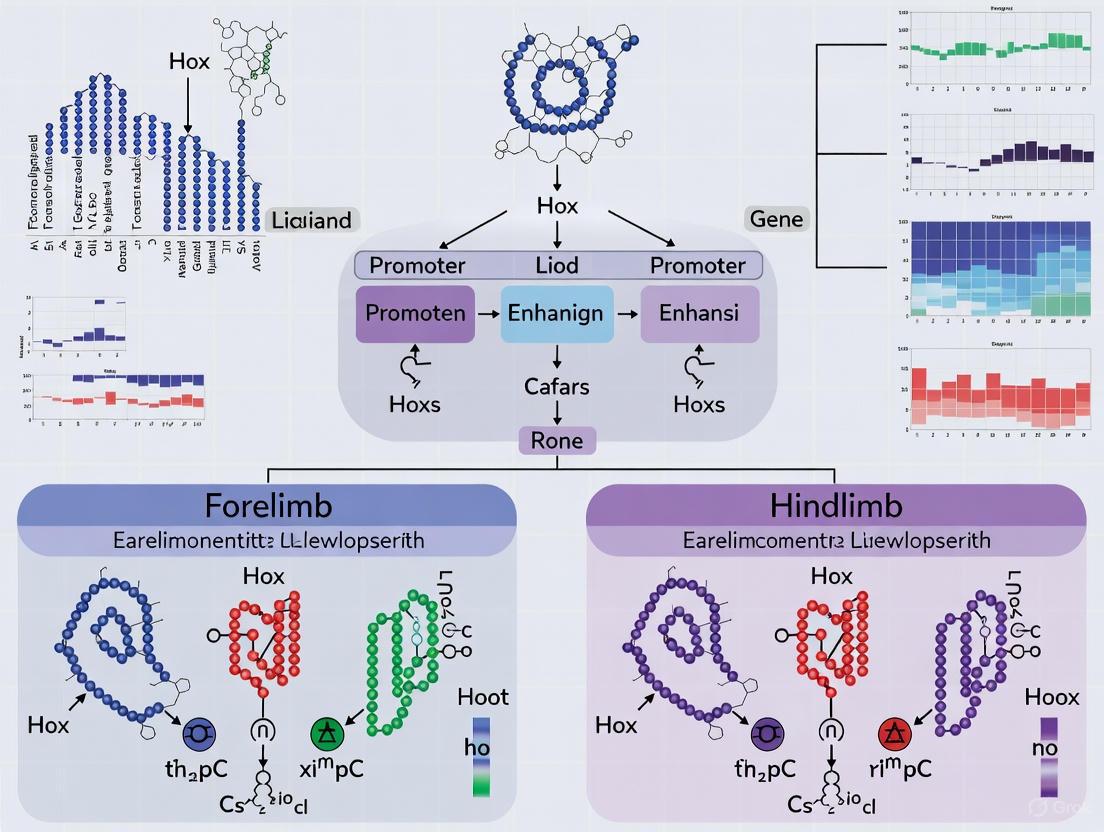
This article provides a comprehensive analysis of the distinct roles and regulatory mechanisms of Hox genes in forelimb versus hindlimb development, synthesizing recent comparative studies across model organisms.
Hox Gene Regulation in Forelimb vs. Hindlimb Development: Mechanisms, Models, and Biomedical Implications
Abstract
This article provides a comprehensive analysis of the distinct roles and regulatory mechanisms of Hox genes in forelimb versus hindlimb development, synthesizing recent comparative studies across model organisms. We explore the foundational principles of Hox-mediated limb patterning, methodological advances in studying tissue-specific gene regulation, challenges in functional analysis, and validation through cross-species comparative genomics. For researchers and drug development professionals, this review highlights how species-specific modifications in the conserved bimodal regulatory system underlie morphological diversification, with significant implications for understanding congenital limb disorders and regenerative medicine strategies.
Core Principles of Hox-Mediated Limb Patterning and Morphological Diversification
The development of the vertebrate limb requires precise spatial and temporal control of gene expression to pattern its proximal-distal axis. A key mechanism underlying this process is a bimodal regulatory system, governed by two distinct topologically associating domains (TADs) flanking the HoxD gene cluster: a telomeric domain (T-DOM) and a centromeric domain (C-DOM). This guide compares the function of this system in forelimb versus hindlimb development, synthesizing current molecular genetic data to objectively evaluate its performance across species and anatomical contexts. We detail experimental approaches for investigating this system and provide a toolkit of essential reagents, offering a structured comparison for research and therapeutic development.
In tetrapods, the HoxD cluster is centrally regulated by two large, flanking gene deserts that function as distinct regulatory landscapes [1]. These are organized into two topologically associating domains (TADs):
- The Telomeric Domain (T-DOM): This regulatory landscape controls the initial phase of proximal limb patterning (stylopodium and zeugopodium), primarily regulating genes from Hoxd8 to Hoxd11 [1] [2].
- The Centromeric Domain (C-DOM): This landscape takes over subsequently to drive distal limb patterning (autopodium, i.e., the handplate and digits), regulating genes from Hoxd9 to Hoxd13 [1] [2].
A critical feature of this system is its sequential and mutually exclusive operation. A regulatory switch ensures that in a given cell, only one domain is active at a time. The transition zone between these two active domains, where Hox gene expression is low, is fated to form the wrist and ankle articulations (mesopodium) [1] [3]. This switch is not merely a passive process but is actively mediated by HOX13 proteins themselves, which reinforce C-DOM activity while repressing T-DOM [1].
Comparative Analysis: Forelimb vs. Hindlimb Development
While the core bimodal regulatory mechanism is conserved between forelimbs and hindlimbs, and across species like mouse and chick, critical modifications in its implementation contribute to morphological differences [2].
Quantitative Data Comparison
The following table summarizes key experimental findings comparing T-DOM and C-DOM regulation between forelimbs and hindlimbs.
Table 1: Comparative Analysis of Bimodal Regulation in Forelimb vs. Hindlimb
| Aspect | Forelimb (Mouse/Chick) | Hindlimb (Mouse/Chick) | Experimental Support & Observations |
|---|---|---|---|
| Core Bimodal Mechanism | Conserved; sequential T-DOM to C-DOM switch [2] | Conserved; sequential T-DOM to C-DOM switch [2] | Global conservation observed in transcriptome and 3D genome conformation analyses [2]. |
| T-DOM Activity Duration | Sustained activity [2] | Importantly shortened duration [2] | In chicken hindlimb buds, shortened T-DOM activity accounts for reduced Hoxd gene expression in the zeugopod [2]. |
| Hindlimb-Specific Gene Recruitment | Not typically involved | Involves genes from the HoxC cluster [2] | The HoxC cluster contributes specifically to hindlimb development, adding a layer of regulatory complexity [2]. |
| Enhancer Activity (e.g., within T-DOM) | Strong enhancer activity in chick forelimb buds [2] | Weaker enhancer activity in chick hindlimb buds [2] | Correlated with striking differences in mRNA levels; chick-mouse comparison reveals species-specific enhancer function [2]. |
| Morphological Outcome | Specialized structure (e.g., wing in chick, arm in mouse) [2] | Specialized structure (e.g., leg in chick, hindlimb in mouse) [2] | Specializations (e.g., bat forelimbs, bird wings/legs) linked to variations in the bimodal system's timing and enhancer strength [2]. |
Key Experimental Evidence
- Genetic Dissection in Mice: Studies on murine models have been foundational. In mice, the deletion of a large part of the T-DOM revealed regulatory differences between fore- and hindlimbs, demonstrating that the reliance on specific enhancers can vary between these appendages [2].
- Cross-Species Comparison (Mouse vs. Chick): Research shows that the TAD boundary interval—the genomic region separating T-DOM and C-DOM—differs in width between mice and chickens [2]. This structural variation in the chromatin architecture may underlie species-specific differences in how the bimodal switch is regulated.
Experimental Protocols for Investigating the Bimodal Switch
To objectively analyze the T-DOM/C-DOM system, researchers employ a suite of molecular and cellular techniques. The following diagram outlines a generalized workflow for a key experiment analyzing gene expression and chromatin conformation in mutant models.
Detailed Methodologies
RNA-seq for Transcriptome Analysis
- Purpose: To quantify the precise expression levels of all Hoxd genes and other limb-patterning genes (e.g., Tbx5, Shox2) in proximal versus distal limb domains, and between forelimbs and hindlimbs [1] [2].
- Protocol:
- Tissue Collection: Microdissect proximal (zeugopod) and distal (autopod) regions from staged (e.g., E12.5) mouse or HH28 chick forelimb and hindlimb buds.
- RNA Extraction: Use trizol-based or column-based kits to isolate high-quality total RNA. Assess integrity with a Bioanalyzer (RIN > 8.0).
- Library Preparation: Construct stranded mRNA-seq libraries using kits such as Illumina's TruSeq. This allows for strand-specific detection of transcripts.
- Sequencing & Analysis: Sequence on an Illumina platform (e.g., NovaSeq) to a depth of ~30 million reads per sample. Map reads to the reference genome (mm10 for mouse, galGal6 for chicken) using aligners like STAR. Quantify gene-level counts with featureCounts and perform differential expression analysis (e.g., DESeq2) to identify proximal vs. distal and forelimb vs. hindlimb gene signatures [1].
4C-seq for 3D Chromatin Conformation
- Purpose: To assess the physical interactions between the HoxD gene promoters and enhancers located within the T-DOM and C-DOM, revealing which regulatory landscape is active in a given cell population [1] [2].
- Protocol:
- Crosslinking & Digestion: Fix dissected limb bud tissues with 2% formaldehyde to crosslink DNA and proteins. Lyse cells and digest chromatin with a restriction enzyme (e.g., DpnII).
- Proximity Ligation: Under dilute conditions, perform ligation to join crosslinked DNA fragments, creating chimeric circles containing interacting loci.
- Inverse PCR: Design primers viewpointing a specific promoter of interest (e.g., Hoxd13 promoter). Perform a large-scale inverse PCR to amplify all sequences that interacted with that viewpoint.
- Sequencing & Analysis: Sequence the PCR products and map the reads to the reference genome. The frequency of interactions between the viewpoint and specific genomic regions (e.g., CS65 enhancer in T-DOM or digit enhancers in C-DOM) provides a quantitative measure of regulatory activity [1].
The Scientist's Toolkit: Essential Research Reagents
The following table catalogs key reagents and models used to dissect the T-DOM/C-DOM regulatory system.
Table 2: Key Research Reagents for Investigating Limb Bimodal Patterning
| Reagent / Model | Function / Application | Key Findings Enabled |
|---|---|---|
| Hoxa13-/-; Hoxd13-/- Double Mutant Mice [1] | Complete loss of HOX13 protein function to study their role in the T-DOM/C-DOM switch. | Revealed that HOX13 proteins are required to shut down T-DOM and sustain C-DOM activity; mutant limbs grow without a wrist articulation [1]. |
| Ulnaless (Ul) Mutant Mice [3] | A natural inversion at the HoxD locus used to study regulatory landscape disruption. | Demonstrated that repositioning Hoxd13 next to zeugopodial enhancers causes ectopic expression and severe zeugopod defects (mesomelic dysplasia) [3]. |
| T-DOM Deletion Mutants (e.g., Del(9-13)) [2] | Large-scale deletion of the telomeric regulatory domain to probe T-DOM-specific function. | Uncovered regulatory differences between fore- and hindlimbs and showed that T-DOM is dispensable for digit formation [2]. |
| ZRS (Limb Shh Enhancer) Transgenic Reporter (e.g., ZRS>TFP) [4] | Fate-mapping and live imaging of Shh-expressing cells, a key signal from the Zone of Polarizing Activity (ZPA). | Showed that cells outside the embryonic Shh lineage can activate Shh during limb regeneration, guided by positional memory [4]. |
| Dominant-Negative Hox Constructs (Chick Electroporation) [5] | To knock down specific Hox gene function in a spatially and temporally controlled manner in the chick Lateral Plate Mesoderm (LPM). | Helped elucidate the Hox code (e.g., Hox4/5 permissive, Hox6/7 instructive) that positions the forelimb bud along the anterior-posterior axis [5]. |
| H3K27ac / H3K4me1 Antibodies for ChIP-seq | To map the genomic locations of active enhancers in proximal vs. distal limb mesenchyme. | Identified and validated specific enhancer elements (e.g., CS39, CS65 in T-DOM; digit-specific islands in C-DOM) [1] [2]. |
Signaling Pathways and Molecular Interactions
The core regulatory logic and the key molecular players involved in the bimodal switch are summarized in the following pathway diagram.
The T-DOM/C-DOM bimodal system represents a paradigm of long-range gene regulation in development and evolution. Its core mechanism is remarkably conserved, yet subtle variations in the timing, strength, and genomic structure of these domains underpin the vast morphological diversity of tetrapod limbs. Future research, leveraging single-cell multi-omics and advanced genome engineering in diverse model organisms, will further elucidate how perturbations in this system contribute to congenital limb disorders and inform regenerative strategies. The reagents and methods detailed herein provide a foundational toolkit for these ongoing investigations.
Hox genes, a family of highly conserved homeodomain-containing transcription factors, are fundamental architects of the body plan during embryonic development [6] [7]. In the vertebrate limb, these genes provide the instructional code that dictates the formation of its segments [6]. The limb is organized into three primary regions along the proximodistal axis: the stylopod (the proximal segment, e.g., humerus/femur), the zeugopod (the middle segment, e.g., radius-ulna/tibia-fibula), and the autopod (the distal segment, e.g., hand/foot) [6] [2]. In mammals, the 39 Hox genes are organized into four clusters (HoxA, HoxB, HoxC, HoxD) and are further subdivided into 13 paralog groups based on sequence similarity and chromosomal position [8] [6]. This guide provides a comparative analysis of the specific functions of key Hox paralog groups in patterning the limb segments, synthesizing experimental data from foundational studies in model organisms.
Comparative Functions of Hox Paralog Groups in Limb Patterning
Extensive loss-of-function studies in model organisms, primarily mice, have delineated the essential roles of posterior Hox paralog groups in limb development. The table below summarizes the phenotypic outcomes and primary gene clusters involved for each major limb segment.
Table 1: Hox Paralog Group Functions in Vertebrate Limb Segmentation
| Limb Segment | Key Hox Paralog Groups | Phenotype of Loss-of-Function Mutation | Primary Hox Clusters Involved |
|---|---|---|---|
| Stylopod | Hox9, Hox10 | Severe mis-patterning of the stylopod (e.g., humerus/femur) [6]. Hox9 is critical for initiating posterior Shh expression, establishing the anterior-posterior axis [6]. | HoxA, HoxD [6] |
| Zeugopod | Hox11 | Severe mis-patterning of the zeugopod (e.g., radius/ulna, tibia/fibula) [6]. Expression is initially controlled by the telomeric regulatory domain (T-DOM) [2]. | HoxA, HoxD [6] |
| Autopod | Hox12, Hox13 | Complete loss of autopod skeletal elements (hand/foot bones) [6]. Expression is controlled by the centromeric regulatory domain (C-DOM) and is antagonistic to zeugopod patterning [2]. | HoxA, HoxD [6] |
| Wrist/Ankle | Low Hox Expression | A domain of low Hoxd gene expression, where both T-DOM and C-DOM regulations are silent, gives rise to the future wrist and ankle articulations [2]. | HoxD [2] |
A key finding in the field is that the function of Hox paralogs in the limb is non-overlapping, unlike their combinatorial code along the main body axis. The loss of a single paralog group leads to the specific absence of a limb segment rather than a transformation of its identity [6].
Experimental Approaches for Delineating Hox Gene Function
Our understanding of Hox gene functions is rooted in rigorous experimental genetics. The following table outlines core methodologies and their applications in this field.
Table 2: Key Experimental Protocols in Hox Limb Patterning Research
| Methodology | Key Application | Experimental Workflow Summary |
|---|---|---|
| Genetic Loss-of-Function | To determine the requirement of a specific gene or paralog group [6]. | 1. Generate mutant embryos (e.g., via CRISPR/Cas9) lacking functional alleles of one or more Hox genes [6]. 2. Use histological staining (e.g., Alcian Blue for cartilage) to analyze the skeletal phenotype of mutant embryos versus wild-type controls [6]. 3. Map the morphological defects to specific limb segments. |
| Whole-Mount In Situ Hybridization (WISH) | To visualize the spatial and temporal expression patterns of Hox mRNAs [2] [9]. | 1. Design complementary DNA (cDNA) probes for the Hox gene of interest [9]. 2. Hybridize probes to fixed wild-type and mutant embryo limb buds [9]. 3. Detect the bound probe to reveal the precise domains of gene expression, allowing correlation with morphological boundaries [9]. |
| Chromatin Conformation Analysis | To understand the bimodal regulatory mechanism controlling Hox gene expression in limbs [2]. | 1. Perform Chromatin Conformation Capture (3C-based) techniques on limb bud cells from different developmental stages [2]. 2. Identify physical interactions between Hox gene promoters and distal enhancers in the telomeric (T-DOM) and centromeric (C-DOM) regulatory domains [2]. 3. Correlate switching of regulatory domains with changes in gene expression (e.g., from zeugopod to autopod) [2]. |
Regulatory Landscapes and Forelimb vs. Hindlimb Patterning
The remarkable morphological diversity between forelimbs and hindlimbs, both across species and within a single organism (e.g., chicken wings vs. legs), is orchestrated by modifications in the regulatory landscape controlling Hox genes rather than changes in the genes themselves [2] [9]. A conserved bimodal regulatory system governs the expression of Hoxd genes during limb development [2].
This system involves two large, antagonistic chromatin domains situated on either side of the HoxD cluster: a telomeric domain (T-DOM) containing enhancers that drive expression in the zeugopod, and a centromeric domain (C-DOM) containing enhancers that drive expression in the autopod [2]. The transition between these two regulatory states creates a zone of low Hoxd expression that prefigures the wrist or ankle [2]. Variations in the timing, duration, and strength of interactions with these domains underpin differences in limb morphology.
Diagram Title: Bimodal Regulatory System of the HoxD Cluster in Limb Development
For instance, in chicken hindlimb buds, the duration of T-DOM regulation is significantly shortened compared to forelimb buds, accounting for a concurrent reduction in Hoxd gene expression and contributing to the distinct morphology of the leg [2]. Furthermore, enhancer elements within these domains can exhibit differential activity; a conserved enhancer in the T-DOM shows stronger activity in chicken forelimbs than hindlimbs, correlating with morphological specialization [2].
The Scientist's Toolkit: Essential Research Reagents
Research in this field relies on a suite of well-established model organisms and molecular tools.
Table 3: Key Research Reagent Solutions for Hox Gene Studies
| Research Reagent / Model | Function and Application in Hox Research |
|---|---|
| Mouse (Mus musculus) | The primary model organism for genetic loss-of-function studies due to well-established gene targeting techniques (e.g., CRISPR) and significant functional redundancy among Hox paralogs [6]. |
| Chicken (Gallus gallus) | A key model for comparative studies of forelimb vs. hindlimb development and evolutionary morphology, facilitated by accessibility for surgical manipulations (e.g., graft experiments) [2] [9]. |
| Hox Mutant Alleles | A collection of engineered loss-of-function alleles (e.g., Hoxa11-/-; Hoxd11-/-) is essential for probing gene function and redundancy, often requiring compound mutants to ablate entire paralog groups [6]. |
| Hox-Specific cDNA Probes | Designed antisense RNA probes are critical for Whole-Mount In Situ Hybridization to map precise Hox gene expression patterns in developing embryos [9]. |
| Anti-HOX Antibodies | Antibodies against specific HOX proteins allow for protein-level localization via immunohistochemistry and assessment of post-translational regulation. |
The functional allocation of Hox paralog groups—with Hox9/10 governing the stylopod, Hox11 the zeugopod, and Hox12/13 the autopod—provides a fundamental framework for understanding limb patterning [6]. This paradigm is supported by consistent data from genetic loss-of-function experiments. However, the morphological diversity observed between different species and between forelimbs and hindlimbs arises from subtle, yet critical, evolutionary modifications in the complex regulatory landscapes surrounding the Hox clusters [2] [9]. Continued research using the established toolkit of model organisms and molecular techniques will further elucidate how these genomic regulatory networks are modified to generate the vast array of limb morphologies found in nature.
The development of paired appendages is a classic model for studying the molecular mechanisms that control morphological patterning in vertebrates. A key question in developmental biology is how the forelimbs and hindlimbs, which share a common basic structure, acquire their distinct identities and morphologies. The Hox family of transcription factors plays a fundamental role in this process, providing positional information along the major body axes and within developing structures. This guide provides a comprehensive comparison of Hox gene expression profiles between forelimb and hindlimb buds, synthesizing experimental data from multiple model organisms to elucidate the transcriptional basis of limb identity.
Comparative Analysis of Hox Gene Expression Patterns
Hox genes exhibit distinct spatial and temporal expression dynamics between forelimb and hindlimb buds, which underlie the specification of limb-type identity and the regulation of allometric growth.
Table 1: Comparative Hox gene expression in forelimb versus hindlimb buds.
| Hox Gene / Factor | Forelimb Expression | Hindlimb Expression | Functional Role | Experimental Model |
|---|---|---|---|---|
| HOXD genes (HOXD3/8/9/10/11/12) | Higher expression [10] | Lower expression [10] | Regulates allometric growth; forelimb patterning [10] | Duck embryos [10] |
| HOXA & HOXB genes | Low or no expression [10] | Higher expression [10] | Regulates allometric growth; hindlimb patterning [10] | Duck embryos [10] |
| Tbx5 | Strongly expressed [11] [5] | Not expressed (hindlimb-specific Tbx4) [10] | Initiation of forelimb program; activated by Hox genes [11] [5] | Zebrafish, Chick [11] [5] |
| Tbx4 | Not expressed (forelimb-specific Tbx5) [10] | Strongly expressed [10] | Initiation of hindlimb program [10] | Duck embryos [10] |
| Hoxc genes (e.g., Hoxc4, Hoxc5) | Not expressed or low [6] [2] | Specifically expressed [6] [2] | Hindlimb identity specification [6] | Mouse [6] [2] |
| Hoxb4, Hoxb5 | Expressed in forelimb field [11] [5] | Not expressed in hindlimb field [11] | Positional identity for forelimb initiation; activate Tbx5 [11] [5] | Zebrafish, Chick [11] [5] |
Limb-Type Specific Hox Codes
The identity of forelimbs and hindlimbs is determined early by a combinatorial "Hox code" in the lateral plate mesoderm. Research in chick embryos reveals that a permissive signal from Hox4 and Hox5 paralogs delineates a territory competent to form a limb, while an instructive signal from Hox6 and Hox7 paralogs within this region directly determines the final position of the forelimb bud by activating Tbx5 expression [5]. In zebrafish, genetic evidence confirms that the hoxba and hoxbb clusters (derived from the HoxB cluster) are essential for inducing tbx5a expression and specifying the position of pectoral fin (forelimb homologue) formation [11].
Regulation of Allometric Growth and Ossification
Transcriptional differences extend beyond initial patterning to the regulation of growth rates and ossification timing. In duck embryos, which exhibit precocial hindlimb development for walking shortly after hatching, the hindlimb bones (tibia/femur) show advanced development compared to forelimb bones (humerus). This allometric growth is correlated with distinct Hox expression profiles: HOXD genes show higher expression in the humerus, while HOXA and HOXB genes show higher expression in the tibia. Furthermore, endochondral ossification begins earlier in the tibia, being evident at embryonic day 12 (E12) in the tibia but not yet in the humerus [10].
Key Experimental Data and Methodologies
Transcriptomic Profiling and Phenotypic Correlation
A powerful approach for understanding limb development involves integrating transcriptomic data with phenotypic and histological analyses.
Table 2: Key methodologies for analyzing Hox gene expression and function in limbs.
| Methodology | Application | Key Insight | Representative Study |
|---|---|---|---|
| RNA-seq & Transcriptome Analysis | Identify differentially expressed genes (DEGs) between forelimb and hindlimb buds at different stages. | The number of DEGs increases over development, correlating with phenotypic divergence [10] [12]. | Duck embryonic study [10] |
| Weighted Gene Co-expression Network Analysis (WGCNA) | Construct gene networks and identify hub genes associated with specific developmental stages. | Identified TF networks crucial for hindlimb morphogenesis, including Sox9, Twist1, and Klf4 [12]. | Mouse hindlimb transcriptome study [12] |
| Whole-mount In Situ Hybridization (WISH) | Visualize spatial expression patterns of specific Hox genes in developing embryos. | Revealed important deviations in Hoxd gene expression between chick and mouse fore- and hindlimbs [2]. | Chick and mouse comparative study [2] |
| Protein-Protein Interaction (PPI) Network Analysis | Identify strong functional interactions among key regulatory genes. | Revealed strong interactions within HOXD, HOXB, TBX, and HOXA gene families in regulating allometric growth [10]. | Duck embryonic study [10] |
| CRISPR-Cas9 Gene Deletion | Generate loss-of-function mutants for specific Hox clusters or genes. | hoxba;hoxbb double-deletion in zebrafish leads to a complete absence of pectoral fins and tbx5a expression [11]. | Zebrafish study [11] |
Detailed Experimental Workflow
A typical integrated workflow for profiling transcriptional differences is outlined below, synthesizing protocols from multiple studies [10] [12].
Regulatory Networks and Signaling Pathways
The differential patterning of forelimbs and hindlimbs is governed by complex gene regulatory networks where Hox genes occupy a central position.
Core Transcriptional Network for Hindlimb Development
Transcriptome analysis of mouse hindlimbs across stages E10.5 to E13.5 identified stage-specific modules of co-expressed genes. WGCNA revealed key transcription factors driving hindlimb morphogenesis, with hub genes like Sox9 (critical for chondrogenesis and endochondral ossification), Twist1, Snai2, and Klf4 forming central nodes in regulatory networks. Functional validation confirmed that knockdown of these TFs in the ATDC5 cell line led to the downregulation of crucial limb-development genes, demonstrating their essential role [12].
Hox-Shh Feedback Loop in Posterior Patterning
A conserved positive-feedback loop between Hox genes and Sonic hedgehog (Shh) is critical for patterning the posterior aspect of both forelimbs and hindlimbs. During limb bud initiation, Hox proteins help establish the zone of polarizing activity (ZPA) by regulating Shh expression [13]. Recent work in axolotl limb regeneration has illuminated the persistence of this circuitry, where posterior cells maintain expression of the transcription factor Hand2 (itself a target of Hox) from development into adulthood. This "positional memory" primes them to re-activate Shh after injury. During regeneration or development, Shh and Hand2 engage in a positive-feedback loop that stabilizes posterior identity [4]. This mechanism is conserved in mouse and chick limb development, where Hox9 genes promote posterior Hand2 expression, which in turn inhibits the hedgehog pathway inhibitor Gli3, thereby permitting the induction of Shh expression [6].
The Scientist's Toolkit: Essential Research Reagents
Table 3: Key research reagents and resources for studying Hox gene function in limb development.
| Reagent / Resource | Function/Application | Example Use Case |
|---|---|---|
| CRISPR-Cas9 Systems | Targeted gene deletion or mutation to create loss-of-function models. | Generating hox cluster-deficient mutants in zebrafish to study fin/limb loss [11]. |
| Dominant-Negative (DN) Hox Constructs | Suppresses signaling of specific Hox genes by competing for co-factors while lacking DNA-binding ability. | Electroporation of DN-Hoxa4/5/6/7 in chick LPM to test necessity for forelimb formation [5]. |
| Hox Reporter Transgenic Animals | Fate-mapping and live visualization of cells expressing specific Hox genes. | Using ZRS>TFP axolotls to track Shh-expressing cells during limb regeneration [4]. |
| siRNA/shRNA for TF Knockdown | Transient silencing of target transcription factor genes in cell lines. | Validating the role of hub TFs (Sox9, Twist1) from WGCNA in ATDC5 chondrogenic cells [12]. |
| AnimalTFDB Database | Bioinformatics resource for identifying and classifying transcription factors in animal genomes. | Prioritizing TFs from a list of hub genes after transcriptome analysis [12]. |
| STRING Database | Database of known and predicted protein-protein interactions. | Constructing PPI networks from lists of differentially expressed genes [10] [12]. |
The distinct morphologies of forelimbs and hindlimbs are orchestrated by deeply conserved, yet divergent, transcriptional programs governed by Hox genes. Key differences include the limb-type-specific expression of Tbx5 and Tbx4, the opposing gradients of HOXD versus HOXA/HOXB genes that regulate allometric growth, and the unique involvement of the HoxC cluster in hindlimb development. The emerging paradigm is that a combinatorial Hox code first confers positional identity to the lateral plate mesoderm, which then executes the limb-appropriate genetic program through complex, interacting networks. Future research leveraging single-cell multi-omics and sophisticated genetic tools will continue to decode these intricate regulatory hierarchies, with profound implications for understanding evolutionary biology and congenital limb malformations.
The precise positioning and morphological distinctness of paired appendages are fundamental to vertebrate locomotion and manipulation. This guide examines the central role of Hox gene codes in establishing positional identity and regional morphology in forelimbs versus hindlimbs. We compare the molecular mechanisms governing limb-type specification across species, analyzing experimental data from key model organisms including chicken, mouse, and duck embryos. The evidence demonstrates that combinatorial Hox expression in the lateral plate mesoderm during gastrulation creates a pre-pattern that determines both limb position and type-specific morphology, acting through downstream effectors including Tbx genes. This synthesis of comparative developmental data provides researchers with a framework for understanding the evolutionary conservation and diversification of limb patterning mechanisms.
Hox genes encode an evolutionarily conserved family of transcription factors characterized by a DNA-binding homeodomain, functioning as master regulators of embryonic patterning along the anterior-posterior axis [14] [15]. In vertebrates, the 39 Hox genes are organized into four clusters (HoxA, B, C, and D) and exhibit temporal and spatial collinearity—their order of activation and anterior expression boundaries correspond to their chromosomal arrangement [16] [15]. This systematic expression creates a "Hox code" that confers positional information to embryonic tissues, specifying the identity of anatomical regions including the distinct morphologies of paired appendages [16].
The fundamental principle governing Hox gene function in limb development is that these transcription factors impart positional values rather than directly specifying particular structures. These positional cues are then interpreted by cells to influence developmental fate, ultimately determining whether limb buds develop into wings, arms, legs, or fins [15]. This review provides a comparative analysis of the experimental evidence establishing how Hox codes specify limb morphology, with specific focus on the divergent developmental programs governing forelimb versus hindlimb formation.
Fundamental Principles of Limb Positioning by Hox Codes
Establishing the Limb Fields During Gastrulation
The positioning of limbs along the body axis is determined remarkably early in development. Research in avian embryos has demonstrated that the forelimb position is established at Hamburger-Hamilton stage 11 (approximately 2 days of development), a full 24 hours before visible limb initiation [17]. This timing coincides with the patterning of the lateral plate mesoderm (LPM) during gastrulation.
Dynamic lineage analysis in chicken embryos reveals that forelimb, interlimb, and hindlimb domains are sequentially generated during gastrulation, with Hox genes exhibiting collinear activation that correlates precisely with this temporal sequence [17]. For instance, Hoxb4 expression corresponds with forelimb formation, while Hoxb7 and Hoxb9 expression demarcates the interlimb region. This coordinated spatial and temporal expression pattern creates a precise molecular coordinate system that prefigures limb positioning.
The Hox Code Model for Limb Specification
The Hox code model proposes that specific combinations of Hox genes expressed in the LPM create a molecular address that determines limb type identity [18]. This model is supported by several lines of evidence:
- Rostral Hox genes (e.g., Hox4 and Hox5 paralogs) are expressed in prospective forelimb regions and activate forelimb-specific programs
- Caudal Hox genes (e.g., Hox9 paralogs) are expressed in interlimb and hindlimb regions and repress forelimb identity
- The combinatorial expression of these genes creates mutually exclusive domains that precisely position limb-forming territories
Functional evidence for this model comes from experiments showing that simultaneous manipulation of both rostral and caudal Hox genes is necessary to alter limb position. For example, in chicken embryos, only the combined overexpression of Hoxb4 (a forelimb marker) with repression of Hoxc9 (an interlimb marker) successfully extended the Tbx5-positive forelimb domain posteriorly [17]. This demonstrates that the balance between activating and repressing Hox factors establishes the precise boundary of limb fields.
Table 1: Key Hox Genes in Limb Positioning and Their Roles
| Hox Gene | Expression Domain | Function in Limb Patterning | Experimental Evidence |
|---|---|---|---|
| Hox4/Hox5 | Rostral LPM (forelimb) | Activates Tbx5 and forelimb program | Electroporation in chick embryos [17] |
| Hoxc9 | Intermediate LPM (interlimb) | Represses Tbx5 and forelimb identity | Dominant-negative constructs [17] |
| Hox10 | Hindlimb region | Suppresses rib formation (lumbar identity) | Compound mutants in mice [16] |
| Hox11 | Hindlimb region | Patterns hindlimb morphology and skeletal elements | Epitope-tagged allele studies [19] |
Comparative Analysis of Forelimb versus Hindlimb Patterning
Molecular Signatures of Limb-Type Specification
The distinct morphological characteristics of forelimbs and hindlimbs reflect fundamentally different Hox gene expression signatures established early in development. Research across multiple species has revealed consistent differences in the Hox codes governing these appendages:
In duck embryos, transcriptome analysis reveals striking differences in Hox gene expression between developing forelimb and hindlimb bones. All HOXD gene family members (HOXD3, D8, D9, D10, D11, D12) show higher expression in the humerus (forelimb) compared to tibia/femur (hindlimb), while HOXA and HOXB genes show the opposite pattern, with low or no expression in the forelimb [10]. This suggests distinct roles for different Hox clusters in specifying limb-type identity.
Furthermore, the T-box transcription factors Tbx5 and Tbx4 exhibit completely mutually exclusive expression patterns—Tbx5 in forelimbs and Tbx4 in hindlimbs—that are established by the underlying Hox code [18]. These factors act as critical intermediaries between the positional information provided by Hox genes and the initiation of limb outgrowth.
Evolutionarily Conserved Bimodal Regulation
Despite morphological diversification, the fundamental regulatory mechanism controlling Hox gene expression in limbs is highly conserved across tetrapods. Studies comparing mouse and chicken limb development have revealed a conserved bimodal regulatory system based on large chromatin domains called topologically associating domains (TADs) [2].
At the HoxD locus, two partially overlapping sets of genes are controlled by enhancers located in either the telomeric regulatory domain (T-DOM) or centromeric regulatory domain (C-DOM) [2]. This bimodal regulation enables the coordinated expression of Hox genes required for proper limb patterning:
- T-DOM controls genes like Hoxd10 and Hoxd11 in proximal limb domains
- C-DOM regulates Hoxd12 and Hoxd13 in distal autopod regions
Interestingly, modifications to this conserved system contribute to species-specific differences. In chicken hindlimb buds, the duration of T-DOM regulation is significantly shortened compared to forelimbs, accounting for reduced Hoxd gene expression in the zeugopod and potentially contributing to morphological differences between wings and legs [2].
Diagram 1: Bimodal regulatory system at the HoxD locus. Genes are regulated by either telomeric (T-DOM) or centromeric (C-DOM) enhancers located in distinct topologically associating domains (TADs).
Experimental Approaches and Key Data
Functional Studies in Model Organisms
Understanding Hox gene function in limb development has relied heavily on comparative approaches using multiple model organisms. The table below summarizes quantitative data from key studies examining Hox gene expression and function in limb patterning.
Table 2: Comparative Hox Gene Expression and Function in Limb Development
| Species | Experimental Approach | Key Findings | Hox Genes Studied |
|---|---|---|---|
| Chicken [17] | Electroporation + dominant-negative constructs | Combined Hoxb4 overexpression + Hoxc9 repression extended Tbx5 domain | Hoxb4, Hoxc9 |
| Mouse [18] | Transgenic reporter analysis | Identified 361bp Tbx5 regulatory element with 6 Hox binding sites | Hoxa4, Hoxa5, Hoxb5, Hoxc4, Hoxc5 |
| Duck [10] | Transcriptome analysis | 38 differentially expressed genes between forelimb/hindlimb across stages | Multiple HoxA, HoxB, HoxD genes |
| Mouse [2] | Chromatin conformation | Conserved bimodal Hoxd regulation with species-specific modifications | Hoxd10-13 |
| Mouse [19] | CRISPR/Cas9 epitope tagging | Validated Hoxa11/Hoxd11 function in kidney and limb development | Hoxa11, Hoxd11 |
Detailed Methodologies for Key Experiments
Identifying Hox-Responsive Regulatory Elements
Critical insight into how Hox genes direct limb positioning came from identifying and characterizing the Tbx5 forelimb-specific enhancer. The experimental approach included [18]:
- Comparative genomics to identify conserved non-coding sequences around the Tbx5 locus
- Transgenic reporter assays in mouse embryos to test regulatory potential
- Site-directed mutagenesis of predicted Hox binding sites to validate functionality
- Electrophoretic mobility shift assays (EMSAs) to confirm direct Hox protein binding
- Chick electroporation for functional testing in vivo
This multi-step approach identified a minimal 361-basepair regulatory sequence within the second intron of Tbx5 that contains six predicted Hox binding sites and is sufficient to drive forelimb-restricted expression [18]. Mutagenesis of these sites abolished reporter expression, demonstrating they are essential for proper regulation.
Epitope Tagging for Genome-Wide Binding Studies
Recent technical advances have enabled more precise analysis of Hox protein function through CRISPR/Cas9-mediated epitope tagging. The methodology for generating Hoxa11-3XFLAG and Hoxd11-3XFLAG alleles includes [19]:
- gRNA design targeting sequences 3' of translational start sites
- Donor construct design with 3XFLAG sequence flanked by homology arms
- Microinjection of Cas9 protein, sgRNAs, and donor DNA into mouse zygotes
- Genotyping and sequencing to confirm proper targeting
- CUT&RUN and CUT&Tag analyses for genome-wide binding profiling
This approach circumvents the limitation of unreliable Hox antibodies and enables precise mapping of Hox binding sites in developing tissues, providing unprecedented insight into Hox-regulated gene networks in limb development [19].
Diagram 2: Experimental workflows for studying Hox gene function in limb development, including regulatory element identification (red) and epitope tagging approaches (green).
The Scientist's Toolkit: Essential Research Reagents
Table 3: Key Research Reagents for Studying Hox Gene Function in Limb Development
| Reagent/Technique | Application | Key Features | References |
|---|---|---|---|
| Hoxa11-3XFLAG and Hoxd11-3XFLAG mouse lines | Genome-wide binding studies | Endogenous tagging preserves function; enables CUT&RUN/Tag | [19] |
| Tbx5-lacZ reporter constructs | Regulatory element analysis | 361bp element drives forelimb-specific expression | [18] |
| Dominant-negative Hox constructs (e.g., Hoxc9) | Functional perturbation in chick | Represses endogenous Hox function without ablation | [17] |
| pCIG expression vector | Chick electroporation | Bicistronic vector with IRES-eGFP for lineage tracing | [18] |
| CUT&RUN/CUT&Tag | Epigenomic profiling | Low-input methods for mapping transcription factor binding | [19] |
The comprehensive analysis of Hox gene function in limb development reveals a sophisticated system wherein combinatorial codes of transcription factors establish positional identity and specify regional morphology in paired appendages. The experimental evidence demonstrates that Hox genes function as master regulators upstream of key limb initiation genes like Tbx5 and Tbx4, creating a pre-pattern in the lateral plate mesoderm that determines both limb position and type-specific characteristics.
Future research directions will likely focus on identifying the complete regulatory networks downstream of Hox genes in limb patterning, utilizing novel techniques such as the epitope-tagged alleles that enable genome-wide binding studies [19]. Additionally, understanding how modifications to the conserved bimodal regulatory system at Hox clusters contribute to evolutionary diversity in limb morphology remains a rich area for investigation [2]. The continued comparison of Hox gene function across species provides not only fundamental insights into developmental mechanisms but also reveals the molecular basis for evolutionary adaptations in paired appendages.
Advanced Techniques for Mapping Hox Expression and Regulatory Networks
The development of limbs is a complex process orchestrated by precise spatial and temporal control of gene expression. Central to this process are the Hox genes, which encode transcription factors that provide positional information along the developing limb bud [6]. In recent years, it has become evident that the three-dimensional (3D) organization of chromatin into Topologically Associating Domains (TADs) plays a crucial role in orchestrating the precise expression of these developmental regulators [20] [21]. TADs are self-interacting genomic regions where DNA-DNA contacts occur more frequently within the domain than with adjacent regions, thereby creating constrained environments for gene regulation [21] [22]. In the context of limb development, the HoxA and HoxD gene clusters are regulated by distinct, large regulatory landscapes that align with TADs, containing multiple enhancers that drive stage-specific and tissue-specific gene expression patterns [20] [22]. This guide provides a comprehensive comparison of methodologies for mapping TADs in limb buds, with a specific focus on their application in studying Hox gene regulation in forelimb versus hindlimb development.
Computational Methods for Comparing Chromatin Contact Maps
Before investigating specific biological systems, researchers must select appropriate computational tools for comparing chromatin conformation data. A 2025 benchmark study systematically evaluated 25 methods for comparing contact maps, categorizing them into global methods and biologically-informed contact map methods [23].
Table 1: Comparison of Chromatin Contact Map Analysis Methods
| Method Category | Specific Methods | Best Use Cases | Key Limitations |
|---|---|---|---|
| Global Methods | Spearman's Correlation, Mean Squared Error (MSE), Structural Similarity Index (SSIM) | Initial screening for large-scale differences; Quick implementation without biological assumptions | May miss biologically relevant focal changes; Sensitive to technical artifacts [23] |
| 1D Feature Comparison Methods | Contact Directionality, Insulation, Distance Enrichment, Eigenvector, Triangle | Identifying differences in specific architectural features (TAD boundaries, compartments) | Lose some information present in the full 2D contact matrix [23] |
| 2D Feature-Based Methods | Arrowhead, CHESS, dcHiC, HiCcompare, TADcompare | Detecting changes in specific features like loops, TAD boundaries | Dependent on accurate feature-calling; May have limited score range in small regions [23] |
The study found that global methods like Correlation and MSE often prioritize different aspects of map differences and can yield divergent rankings of the same map pairs [23]. For example, Correlation effectively identifies structural rearrangements even when contact frequencies are low, while MSE is more sensitive to intensity changes [23]. For focused biological investigations in limb development, contact map methods that target specific architectural features generally provide more interpretable results linking structure to function [23].
Experimental Models and Key Findings in Limb Bud TAD Organization
TAD Organization at the Hox Loci
Research across multiple model systems has revealed conserved principles of TAD organization at Hox loci with important variations between species and between forelimbs and hindlimbs:
Table 2: Comparative TAD Organization in Limb Development Models
| Genomic Locus | Model System | TAD Organization | Forelimb vs. Hindlimb Regulation |
|---|---|---|---|
| HoxD | Mouse | Bimodal regulation: Telomeric (T-DOM) for proximal limb; Centromeric (C-DOM) for distal limb [22] | Generally similar regulation with some timing differences [22] |
| HoxD | Chicken | Conserved bimodal regulation | Stronger T-DOM enhancer activity in forelimbs; Reduced Hoxd transcription in hindlimbs [22] |
| HoxA | Mouse | Multiple sub-TADs containing distinct enhancers grouping upstream of cluster [20] | Not specifically addressed in available studies |
| Shh | Mouse | Single TAD with enhancer action sometimes crossing boundaries [24] | Not specifically addressed in available studies |
A comparative study of HoxD regulation in chick and mouse revealed that while the fundamental bimodal regulatory mechanism is conserved, important differences exist in enhancer activity strength and timing between forelimbs and hindlimbs, particularly in chick [22]. The study also identified species-specific differences in TAD boundary width and the activity of conserved enhancer elements [22]. For instance, the chicken ortholog of a specific enhancer showed stronger activity in forelimb buds than in hindlimb buds, correlating with differential Hoxd gene expression levels [22].
Functional Sub-TAD Organization at HoxA Locus
At the HoxA locus, research has revealed a complex organization where multiple enhancers are grouped into distinct sub-megabase topological domains (sub-TADs) during limb development [20]. These sub-TADs facilitate specific physical interactions between enhancers and their target genes, creating a sophisticated regulatory network [20]. Notably, this spatial clustering of enhancers occurs independently of their transcriptional activity, suggesting that chromatin architecture may define the functional landscape of enhancers rather than simply reflecting their activity state [20]. Even when enhancer activity is suppressed, the contacts with HoxA genes are maintained, indicating that the HoxA regulatory region acquires a permissive conformation prior to gene activation [20].
Advanced Technologies for Chromatin Conformation Mapping
Experimental Assays for 3D Genome Architecture
Multiple high-throughput sequencing assays have been developed to measure 3D chromatin conformation, each with distinct advantages and limitations:
Table 3: Chromatin Conformation Capture Technologies
| Assay Type | Key Features | Resolution | Applications in Limb Development |
|---|---|---|---|
| Hi-C | Genome-wide; Uses cross-linking and sequencing of ligated fragments | Moderate to high | Mapping overall TAD organization [25] [26] |
| Micro-C | Uses micrococcal nuclease for improved resolution | Very high | Fine-scale chromatin architecture [23] |
| ChIA-PET/PLAC-seq | Targets contacts mediated by specific proteins | High | Protein-specific interactions (e.g., CTCF, cohesin) [25] [26] |
| SPRITE | Uses split-pool barcoding without ligation | High | Complex nuclear organizations [25] [26] |
Recent work has highlighted how these different assays provide complementary insights into 3D genome organization. For instance, Micro-C typically provides higher resolution than conventional Hi-C, enabling more precise mapping of TAD boundaries and internal structures [23].
Predictive Modeling with Sphinx
To address the challenge of limited experimental data across all possible biosample-assay combinations, the Sphinx model has been developed as a deep tensor factorization method for imputing missing contact maps [25] [26]. This machine learning approach uses learned representations of biosamples, assays, and genomic positions to predict contact maps for unmeasured combinations of assays and cell types [25] [26]. The model architecture incorporates embedding layers for cell type, assay, and genomic position, along with distance factors encoding the spatial separation between genomic loci [26]. This approach is particularly valuable for limb development studies where tissue availability is limited, as it can provide preliminary characterization of chromatin architecture across a wide range of biosamples and assays using only existing data [25].
Experimental Approaches for Functional Validation
Perturbation Strategies for TAD Function Analysis
Several sophisticated genetic and molecular approaches have been developed to test the functional significance of TAD organization in limb development:
Enhancer Relocation Experiments: A 2022 study tested enhancer function by transferring a potent distal limb enhancer (II1) from its native location in the C-DOM TAD to the proximal limb-specific T-DOM TAD at the HoxD locus [21]. Surprisingly, this enhancer lost most of its distal limb activity in the new context, despite maintaining binding with HOX13 transcription factors essential for its function [21]. This suggests that the local chromatin environment can exert dominant control over enhancer activity.
CTF Site Deletions: Systematic deletion of CTCF sites at TAD boundaries has revealed context-dependent effects on gene regulation. At the Shh locus, deletion of individual CTCF sites did not disrupt Shh expression or cause developmental defects, suggesting robustness in the system [24]. However, larger deletions encompassing multiple CTCF sites or intra-TAD regulatory elements can produce significant phenotypic consequences [24].
Live Imaging and Lineage Tracing: In avian models, live imaging has been used to track the dynamic behaviors of lateral plate mesoderm (LPM) precursor cells during gastrulation, revealing how forelimb, interlimb, and hindlimb domains are sequentially generated [17]. This approach has been instrumental in understanding how Hox gene expression domains are established in the LPM.
Multi-assay Integration for Comprehensive Analysis
Comprehensive understanding of TAD function requires integration of multiple data types. A typical experimental workflow includes:
- Chromatin Conformation Analysis (Hi-C/Micro-C) to define TAD boundaries
- Histone Modification Mapping (H3K27ac, H3K4me1) to identify active enhancers
- Transcription Factor Binding Profiling (ChIP-seq/CUT&RUN) for factors like HOX13, CTCF
- Chromatin Accessibility Assessment (ATAC-seq) to map open chromatin regions
- Transcriptomic Analysis (RNA-seq) to correlate structure with gene expression
This multi-assay approach was effectively employed in a study of the HoxA locus, where ChIP-seq for RNA polymerase II and Mediator subunits in distal limb buds identified candidate enhancer sequences, which were then contextualized within the 3D chromatin architecture revealed by chromosome conformation capture [20].
TAD Analysis Workflow: From experimental design to biological interpretation.
Table 4: Essential Research Reagents and Resources for TAD Mapping in Limb Buds
| Resource Category | Specific Examples | Application in TAD Research |
|---|---|---|
| Computational Tools | Sphinx [25] [26], TADcompare [23], CHESS [23] | Contact map prediction, TAD boundary comparison, differential feature analysis |
| Genomic Datasets | 4D Nucleome Data Portal [25] [26], GEO Accession GSE115563 [22] | Reference contact maps, multi-omics integration |
| Model Organisms | Mouse mutants (Hox gene deletions, CTCF deletions) [20] [24], Chicken embryo electroporation [17] [22] | Functional testing of TAD boundaries, enhancer activities |
| Molecular Biology Reagents | CTCF antibodies, Cohesin antibodies, HOX13 antibodies [20] [21] | Protein-binding profiling, perturbation studies |
The comparison of TAD mapping methodologies reveals a complex landscape of complementary approaches, each with distinct strengths for investigating Hox gene regulation in limb development. Computational methods for comparing contact maps continue to evolve, with recent benchmarks indicating that method selection should be guided by specific biological questions rather than seeking a universal optimal solution [23]. Experimental models demonstrate both conserved principles and important species-specific differences in TAD organization, particularly in the regulation of forelimb versus hindlimb development [22]. The emerging paradigm suggests that chromatin architecture establishes permissive environments for gene regulation [20], but that the relationship between structure and function is complex, with examples of enhancer activity both respecting [21] and crossing [24] TAD boundaries. Future research will likely focus on integrating multi-scale data from predictive models [25] [26], single-cell technologies, and sophisticated genetic perturbations to further elucidate how 3D genome organization contributes to the remarkable diversity of limb morphology across species.
The intricate process of limb development, a cornerstone of vertebrate embryogenesis, is orchestrated by precise spatiotemporal gene expression patterns. Central to this process are the Hox genes, a family of transcription factors that determine the identity of structures along the anterior-posterior axis [27]. A key question in developmental biology concerns how the differential function of Hox genes instructs the formation of morphologically distinct forelimbs and hindlimbs. Addressing this requires transcriptomic technologies capable of not only identifying which genes are expressed but also precisely where and when they are active during embryogenesis. This guide objectively compares two foundational technologies—RNA-seq and In Situ Hybridization (ISH)—for mapping gene expression, with a specific focus on their application in studying Hox gene regulation in limb development. We evaluate their performance based on experimental data, highlight their complementary strengths and limitations, and provide detailed methodologies to inform researchers' experimental design.
RNA Sequencing (RNA-seq)
RNA-seq is a high-throughput, sequencing-based method that captures a snapshot of the total RNA transcripts present in a cell, tissue, or entire organism at a given time [28]. It operates on the principle of converting RNA into a library of complementary DNA (cDNA) fragments, which are then sequenced en masse using high-throughput platforms. The resulting sequences are mapped to a reference genome to quantify the abundance of each transcript. The information content of an organism is recorded in the DNA of its genome and expressed through transcription, and RNA-seq provides a powerful tool to decode this expression systematically [28]. This technique is highly versatile, allowing researchers to measure gene expression across different tissues, conditions, or time points, thereby inferring gene function and regulation. When applied to developing forelimbs and hindlimbs, RNA-seq can identify the full suite of Hox genes and co-expressed networks that are differentially active, providing a comprehensive, if spatially blended, molecular signature of each limb type [10].
In Situ Hybridization (ISH)
In situ hybridization (ISH) is a technique that uses labeled complementary DNA or RNA strands (probes) to localize specific DNA or RNA sequences within tissues, cells, or even entire embryos (in whole-mount ISH) [29]. Unlike RNA-seq, ISH preserves the spatial architecture of the sample, allowing researchers to visualize the exact anatomical location of gene expression. The basic process involves fixing the tissue to retain target mRNAs, permeabilizing it to allow probe access, and then hybridizing the labeled probe to the target sequence. After washing away excess probe, the signal is detected via microscopy, revealing the spatial expression pattern [30] [29]. For Hox gene analysis, this means determining whether, for example, Hoxd9 is expressed in the proximal or distal mesenchyme of the hindlimb bud, providing critical insights into its potential role in patterning specific limb segments [27].
Table 1: Core Principles of the Two Transcriptomic Technologies
| Feature | RNA-seq | In Situ Hybridization (ISH) |
|---|---|---|
| Fundamental Principle | High-throughput sequencing of cDNA from extracted RNA [28] | Hybridization of labeled nucleic acid probes to target RNA within intact samples [29] |
| Spatial Context | Lost during RNA extraction (unless using spatial protocols) | Preserved, allowing visualization of expression patterns within tissue architecture [29] |
| Primary Output | Quantitative count of transcripts for each gene | Qualitative or semi-quantitative image of transcript location |
| Typical Scale | Genome-wide profiling of the entire transcriptome | Targeted analysis of a limited number of genes per experiment |
Performance Comparison in a Limb Development Context
Direct comparison of RNA-seq and ISH reveals a trade-off between comprehensiveness and spatial resolution. The choice between them is often dictated by the specific research question, whether it is the discovery of all differentially expressed genes or the high-resolution mapping of key regulators.
Key Performance Metrics
The following table summarizes the objective performance characteristics of each technology, drawing from direct experimental comparisons and documented protocols.
Table 2: Objective Performance Comparison of RNA-seq and ISH
| Performance Metric | RNA-seq | In Situ Hybridization | Experimental Support & Context |
|---|---|---|---|
| Throughput & Multiplexing | High; can profile >10,000 genes simultaneously [28] | Low to moderate; typically 1-4 genes per assay, but expanding with multiplex FISH [31] [32] | Standard RNA-seq protocols are genome-wide. Multiplexed FISH (e.g., FISHnCHIPs, seqFISH) can image dozens to hundreds of genes by pooling probes [31]. |
| Sensitivity & Dynamic Range | High dynamic range (>10⁵); can detect low-abundance transcripts [28] | Lower dynamic range (10³-10⁴ for microarrays); sensitivity is protocol-dependent [28] | RNA-seq's sensitivity is limited by sequencing depth. Branched DNA ISH assays can achieve single-molecule sensitivity [29]. |
| Quantitation Accuracy | ~90% (limited by sequence coverage and library prep bias) [28] | Semi-quantitative; brightness correlates with mRNA level but is influenced by probe efficiency and permeability [30] | Semi-quantitative ISH with a co-stain (internal standard) allows for statistical comparison of mRNA levels across samples [30]. |
| Spatial Resolution | None in bulk RNA-seq (requires computational deconvolution). Achieves single-cell resolution with scRNA-seq, but loses native tissue context. | Cellular and sub-cellular resolution while preserving tissue architecture [33] [32] | Advanced ISH methods like seqFISH and smFISH can localize and count individual mRNA molecules within single cells in intact tissue [32]. |
| Tissue Requirements | Requires RNA extraction; compatible with frozen or stabilized tissues. | Requires intact, fixed tissue sections or whole mounts; tissue permeability is a key factor [30] [29] | ISH requires careful tissue fixation and sectioning (e.g., with a cryostat) to preserve RNA and allow probe penetration [29]. |
Application to Hox Gene Studies: Forelimb vs. Hindlimb
The comparison of these technologies is brought into sharp focus in studies of Hox gene function during limb development. For instance, a transcriptome-based study of duck embryos used RNA-seq to reveal that 38 genes were differentially expressed between forelimb (humerus) and hindlimb (tibia/femur) bones across multiple developmental stages [10]. This approach identified key regulatory genes, including members of the HOXD and HOXB families, and the transcription factors TBX4 and TBX5. Critically, RNA-seq provided the quantitative data to show that all HOXD genes had higher expression in the forelimb (humerus), whereas HOXA and HOXB genes showed the opposite trend or low expression in the humerus [10].
However, this quantitative data alone does not reveal the spatial organization of these expression domains. This is where ISH provides indispensable information. A spatiotemporal analysis of Hox genes emphasized that their expression in early mesoderm formation is highly dynamic and does not strictly follow a co-linear "Hox code" at early stages, a finding that requires the spatial fidelity of ISH to uncover [27]. Therefore, a synergistic approach is often most powerful: using RNA-seq to identify the full catalog of differentially expressed Hox genes and signaling pathways between limb types, and then employing ISH to validate and map the precise expression patterns of key candidates (e.g., TBX4 in hindlimb and TBX5 in forelimb) within the developing limb bud to understand their role in patterning.
Experimental Protocols for Key Applications
Protocol: Semi-Quantitative ISH with Co-Stain for mRNA Level Comparison
This protocol, adapted from a study on Drosophila embryos, allows for more rigorous comparison of transcript levels across samples, which is essential for quantifying differences in Hox gene expression between forelimb and hindlimb buds [30].
- Step 1: Sample Preparation and Fixation. Collect and fix embryonic tissues at defined developmental stages using a cross-linking fixative like formaldehyde. This is critical for preserving target mRNA and tissue morphology. For limb buds, this may require careful micro-dissection.
- Step 2: Probe Design and Labeling. Generate labeled antisense RNA probes (riboprobes) for the target gene (e.g., a specific Hox gene) and for a co-stain gene. The co-stain should be a transcript that is uniformly expressed across the samples and co-varies with the target to control for embryo-to-embryo variation in permeability and staining efficiency [30]. Probes are typically labeled with haptens like DIG or DNP.
- Step 3: In Situ Hybridization. Permeabilize the fixed tissues (e.g., with proteinase K) to allow probe entry. Incubate tissues with the labeled probes for the target and co-stain simultaneously. Hybridize at an elevated temperature, then wash stringently to remove non-specifically bound probe [30] [29].
- Step 4: Signal Detection. Detect the probes using sequential immunohistochemistry with enzyme-conjugated antibodies (e.g., anti-DIG-HRP and anti-DNP-HRP) and fluorescent or colorimetric substrates. RNase treatment and nuclear staining (e.g., Sytox Green) may follow to aid in cell segmentation [30].
- Step 5: Image Acquisition and Analysis. Acquire high-resolution 3D image stacks using confocal or two-photon microscopy. For analysis, the fluorescence intensity for the target gene is normalized to the intensity of the co-stain in the same region. This normalized value can be compared across different samples (e.g., forelimb vs. hindlimb) to perform statistical tests on mRNA levels [30].
Protocol: RNA-seq for Differential Gene Expression Analysis
This workflow outlines the primary steps for identifying differentially expressed genes, such as those between forelimb and hindlimb tissues [34].
- Step 1: RNA Isolation and Library Preparation. Extract total RNA from forelimb and hindlimb tissues, enriching for mRNA using poly-A selection. Fragment the mRNA and synthesize cDNA. Ligate sequencing adapters to the fragments to create the final library [28] [34].
- Step 2: High-Throughput Sequencing. Sequence the cDNA libraries on an Illumina or similar platform to generate millions of short sequence reads (typically 150 bp paired-end) [34].
- Step 3: Read Alignment and Quantification. Quality-check the raw reads and align them to a reference genome using tools like HISAT2 or STAR. Alternatively, use pseudo-alignment tools like Kallisto to directly estimate transcript abundances. Tools like HTseq or StringTie are then used to generate a count matrix or FPKM values for each gene in each sample [34].
- Step 4: Differential Expression Analysis. Using the count matrix, perform statistical analysis with software packages like DESeq2 or edgeR to identify genes with significant expression differences between forelimb and hindlimb groups. The output is a list of differentially expressed genes (DEGs) with p-values and fold-changes [34].
Signaling Pathways and Workflow Visualization
The following diagrams illustrate the core workflows for the two main technologies and a specific advanced application, showing how they integrate into the study of limb development.
Diagram 1: In Situ Hybridization Workflow. This diagram outlines the key steps in a standard ISH protocol, from tissue preparation to the visualization of spatial gene expression patterns.
Diagram 2: RNA-seq Workflow for Differential Expression. This diagram shows the primary phases of an RNA-seq experiment, from biochemical processing of RNA to computational identification of differentially expressed genes.
Diagram 3: Advanced Spatial Transcriptomics using Gene Modules. This diagram illustrates the workflow for highly sensitive spatial transcriptomics methods like FISHnCHIPs, which use co-expressed gene modules from scRNA-seq data to enhance signal and map cell types in tissues like the developing limb [31].
The Scientist's Toolkit: Essential Research Reagents and Materials
Successful transcriptomic analysis relies on a suite of specialized reagents and tools. The following table details key solutions for implementing the discussed protocols.
Table 3: Essential Research Reagents and Materials
| Reagent/Material | Function | Example Application |
|---|---|---|
| Fixed Tissue Samples | Preserves RNA integrity and tissue morphology for both ISH and RNA-seq. | Formaldehyde-fixed, paraffin-embedded (FFPE) or frozen embryonic limb buds. |
| Labeled Nucleic Acid Probes | Complementary sequences that bind target mRNA for detection in ISH. | DIG-labeled riboprobes for detecting Hoxa13 mRNA expression in the autopod [29]. |
| Poly-A Selection Beads | Enriches for messenger RNA (mRNA) by binding the poly-A tail, reducing ribosomal RNA background in RNA-seq. | Magnetic Oligo(dT) beads used during RNA-seq library prep from total limb bud RNA [28] [34]. |
| cDNA Synthesis Kit | Converts RNA templates into more stable complementary DNA (cDNA) for sequencing or probe generation. | Reverse transcriptase kits for first-strand cDNA synthesis in RNA-seq library construction [34]. |
| Sequence Alignment Software (e.g., HISAT2, STAR) | Maps short sequencing reads to a reference genome to determine their origin. | Aligning RNA-seq reads from duck forelimb/hindlimb to the reference genome to quantify gene expression [10] [34]. |
| Differential Expression Analysis Tools (e.g., DESeq2, edgeR) | Statistical models that identify genes with significant expression changes between conditions. | Identifying TBX4 and TBX5 as significantly enriched in hindlimb and forelimb, respectively [10] [34]. |
In the endeavor to decipher the Hox-dependent transcriptional programs governing forelimb versus hindlimb specification, RNA-seq and In Situ Hybridization are not competing but fundamentally complementary technologies. RNA-seq provides the unbiased, quantitative power to discover the entire cast of molecular players—from Hox genes to downstream effectors—differentially active between limb types [10]. In contrast, ISH provides the essential spatial context, mapping the expression of these key genes to specific progenitor cell populations within the limb bud, thereby illuminating their potential roles in patterning distinct anatomical structures [27].
The future of spatiotemporal transcriptomics lies in the integration of these approaches and the adoption of emerging technologies that push the boundaries of multiplexing and sensitivity. Methods like FISHnCHIPs [31] and seqFISH [32], which simultaneously image dozens of co-expressed genes, are bridging the gap by offering higher-throughput spatial profiling. For researchers studying complex patterning events like limb development, a sequential strategy is often most effective: employing RNA-seq for comprehensive discovery across multiple stages and limb types, followed by high-resolution spatial mapping of candidate genes via multiplex ISH to build a complete, spatially resolved model of gene regulation. This integrated toolkit empowers a deeper understanding of the fundamental principles of developmental biology.
Hox genes, encoding a family of evolutionarily conserved transcription factors, are master regulators of embryonic patterning along the anterior-posterior body axis. In mammals, the 39 Hox genes are organized into four clusters (HoxA, HoxB, HoxC, HoxD) and are critical for specifying regional identity in structures including the axial skeleton and limbs [6]. A longstanding hypothesis posits that paralogous genes (genes within the same group across clusters, resulting from gene duplication) exhibit functional redundancy, wherein one paralog can compensate for the loss of another. This review compares experimental approaches, primarily leveraging mouse knockout models, to test this hypothesis, with a specific focus on insights into the parallel mechanisms governing forelimb versus hindlimb development.
Quantitative Fitness Consequences of Hox Gene Manipulations
Conventional laboratory phenotyping often reveals minimal consequences for single Hox gene knockouts, suggesting redundancy. However, sophisticated fitness assays in semi-natural environments challenge this view. The table below summarizes key quantitative findings from such studies.
Table 1: Fitness Outcomes in Mouse Hox Paralogous Group 1 Swap Models
| Genetic Manipulation | Standard Lab Phenotype | Semi-Natural Environment Fitness Outcome | Proposed Evolutionary Mechanism |
|---|---|---|---|
| Hoxb1A1(Hoxb1 coding region replaced by Hoxa1) | No discernible embryonic or physiological phenotype reported [35]. | - 10.6% fewer territories acquired by homozygous males [35].- Mutant allele frequency decreased from 0.500 to 0.419 in offspring [35]. | Subfunctionalization or Neofunctionalization [35] |
| Hoxa1B1(Hoxa1 coding region replaced by Hoxb1) | No differences in litter size or Mendelian genotypic deviations [36]. | - Mutant allele frequency in offspring was only 87.5% of control [36].- Homozygous founders produced 77.9% as many offspring as controls [36]. | Subfunctionalization or Neofunctionalization [36] |
Experimental Protocols for Assessing Hox Gene Function
Organismal Performance Assays (OPAs) for Fitness Measurement
Objective: To detect cryptic fitness deficits not apparent under standard laboratory conditions [35] [36].
- Animal Preparation: Generate mutant mice (e.g., Hoxb1A1 or Hoxa1B1) on a genetic background that includes wild-derived strains to ensure natural behavioral repertoires [35] [36].
- Population Establishment: Found semi-natural enclosure populations with a 50:50 mix of homozygous mutant and matched wild-type control mice [35].
- Competition and Monitoring: Allow mice to compete for limited resources, territories, and mates over multiple weeks (e.g., 25 weeks) [36].
- Endpoint Analysis:
- Control Experiments: Perform parallel, standard heterozygous breeding cage experiments to measure litter sizes and genotypic ratios in a non-competitive environment [36].
Comparative Analysis of Limb Regulation
Objective: To decipher the conserved and divergent roles of Hox genes in forelimb versus hindlimb patterning [2].
- Embryo Collection: Harvest mouse and chick embryonic forelimb and hindlimb buds at equivalent developmental stages [2].
- Gene Expression Analysis:
- Chromatin Conformation Analysis:
- Data Integration: Correlate differences in gene expression with variations in chromatin structure and enhancer activity between species and between limbs [2] [10].
Hox Gene Regulatory Logic in Limb Patterning
The development of limbs is governed by a complex, bimodal regulatory mechanism, particularly well-studied at the HoxD locus. The following diagram illustrates this key pathway and its species-specific variations.
Diagram: Bimodal HoxD Regulation in Limb Development. The HoxD gene cluster is regulated by two flanking topological associating domains (TADs). The telomeric domain (T-DOM) controls genes early in proximal limb development, while a later switch activates the centromeric domain (C-DOM) for distal limb patterning. A zone of low expression between these phases gives rise to the wrist/ankle. This system is conserved but shows variations in timing and enhancer strength between species like mouse and chicken [2].
The Scientist's Toolkit: Key Research Reagents
Table 2: Essential Reagents for Hox Gene and Limb Development Research
| Research Reagent / Model | Key Function in Experimental Design |
|---|---|
| Gene-Targeted Mice (Knockout/Swap) | Precise replacement or disruption of a gene's function in vivo to study its specific role and test redundancy with paralogs [35] [36]. |
| Wild-Derived Mouse Strains | Provide genetic diversity and natural behavioral traits essential for ecologically relevant fitness assays (OPAs) [35] [36]. |
| Chick Embryo Model | Ideal for gain/loss-of-function studies via electroporation; allows direct comparison to mouse due to stark forelimb/hindlimb differences [2] [5]. |
| Dominant-Negative Hox Constructs | Used in chick electroporation to suppress the function of a specific Hox gene and its paralogs during development [5]. |
| Semi-Natural Enclosures (OPAs) | Controlled competitive environments to measure Darwinian fitness components like survival, territory acquisition, and reproductive success [35] [36]. |
| Hox-Specific RNAi Lines (Drosophila) | Enables conditional, post-developmental knockdown of Hox gene function in specific neuronal subsets of adult flies [37]. |
The deployment of mouse knockout and gene-swap models has been instrumental in moving beyond the simplistic binary of redundancy versus necessity. While standard lab phenotyping often supports functional redundancy between Hox paralogs, competitive fitness assays reveal that this redundancy is incomplete. The subtle deficits uncovered in semi-natural environments are consistent with divergence via subfunctionalization, where paralogs have partitioned ancestral functions. Furthermore, comparative studies in limb development show that the core bimodal regulatory logic of Hox genes is deeply conserved, yet species-specific and limb-type-specific modifications in the timing and strength of this regulation underpin morphological diversity. Therefore, the most complete understanding of Hox gene function requires a multi-faceted approach: precise genetic manipulation must be coupled with physiological, behavioral, and evolutionary-level analyses in ecologically relevant contexts.
A fundamental goal of developmental biology is to understand how genetic information is translated into the diverse phenotypes observed across organisms. At the heart of this process lies an intricate regulatory network that controls gene expression with remarkable spatial and temporal precision [38]. Cis-regulatory elements (CREs)—including promoters, enhancers, insulators, and silencers—coordinate the recruitment of transcription factors (TFs) to DNA to establish and maintain cell identity [38]. Enhancers are of particular importance as they act as integrators of developmental and environmental cues [38]. These elements can be located far from their target genes and contain clusters of short TF binding motifs (~8–10 bp) whose number can influence the strength of TF binding [38].
In the context of Hox gene function in forelimb versus hindlimb development, understanding enhancer activity is particularly crucial. Hox genes are a family of highly conserved homeodomain-containing transcription factors that instruct positional identity along the anterior to posterior body axis [6]. In the vertebrate limb, the posterior HoxA and HoxD clusters are expressed in both the forelimb and hindlimb, while the HoxC cluster is only expressed in the hindlimb [6]. This differential expression pattern suggests that distinct cis-regulatory logic controls Hox gene deployment in forelimb versus hindlimb contexts. The vertebrate limb can be divided into three segments: the proximal stylopod (humerus/femur), the medial zeugopod (radius and ulna/tibia and fibula), and the distal autopod (hand/foot bones) [6]. Loss of Hox paralogous groups in the limb results in a complete loss of patterning information within specific limb segments, highlighting their crucial role in specifying limb identity and morphology [6].
Recent advances in comparative genomics and functional assays have revealed that enhancer evolution is a universal feature of mammalian genomes, with most recently evolved enhancers arising from ancestral DNA exaptation rather than lineage-specific expansions of repeat elements [39]. This rapid evolution of enhancers compared to promoters suggests that regulatory adaptations, including those potentially underlying limb specialization, may frequently occur through changes in enhancer activity. This article provides a comprehensive comparison of computational and experimental frameworks for identifying and testing enhancer activities across species, with particular relevance to researchers investigating Hox gene function in limb development.
Computational Frameworks for Enhancer Prediction
Advancements in genome-scale experimental profiling have enabled researchers to map CREs across diverse cell types systematically. This progress has been made possible by genome-wide techniques such as ATAC-seq (assay for transposase-accessible chromatin with sequencing) and ChIP-seq (chromatin immunoprecipitation with sequencing) of TF binding sites and histone marks indicative of enhancer activity [38]. Several computational approaches have been developed to predict enhancer activity from sequence and epigenetic features.
The Bag-of-Motifs (BOM) Framework
The Bag-of-Motifs (BOM) framework represents distal cis-regulatory elements as unordered counts of transcription factor motifs [38]. This minimalist representation, combined with gradient-boosted trees, enables accurate prediction of cell-type-specific enhancers across mouse, human, zebrafish, and Arabidopsis datasets [38]. Despite its simplicity, BOM outperforms more complex deep-learning models while using fewer parameters [38]. The model represents each cis-regulatory element as a vector of motif counts independent of motif order, orientation, or spacing [38]. Classification and regression tasks are performed using the XGBoost gradient-boosting algorithm, and SHAP values quantify the contribution of each motif to individual predictions [38].
Table 1: Performance Comparison of Computational Methods for Enhancer Prediction
| Method | Approach | Mean auPR | Mean MCC | Key Advantages | Limitations |
|---|---|---|---|---|---|
| BOM | Gradient-boosted trees on motif counts | 0.99 [38] | 0.93 [38] | High interpretability, cross-species applicability, minimal parameters | Does not model motif spacing or orientation |
| LS-GKM | Gapped k-mer support vector machine | 0.844 [38] | 0.524 [38] | Can discover novel sequence patterns | Requires additional motif annotation |
| DNABERT | Transformer-based language model | 0.638 [38] | 0.299 [38] | Can learn long-range dependencies | Computationally intensive, requires large training datasets |
| Enformer | Hybrid convolutional-transformer architecture | 0.898 [38] | 0.697 [38] | Models long-range interactions up to 196 kb | Computationally intensive, specialized interpretation tools needed |
Experimental Validation of Computational Predictions
BOM's predictions have been validated experimentally by constructing synthetic enhancers from the most predictive motifs, demonstrating that these motif sets drive cell-type-specific expression [38]. This approach provides direct interpretability and broad applicability, revealing a highly predictive sequence code at distal regulatory regions [38]. The framework offers a scalable approach for dissecting cis-regulatory grammar across diverse species and conditions, making it particularly valuable for evolutionary comparisons such as those investigating regulatory differences between forelimb and hindlimb development.
Experimental Methods for Enhancer Identification
While computational prediction provides a powerful starting point, experimental validation is essential for confirming enhancer activity. Several experimental approaches have been developed to identify functional enhancers across different biological contexts and species.
Histone Modification Profiling
One established method for enhancer identification involves mapping regions enriched for acetylated lysine 27 on histone H3 (H3K27ac) via chromatin immunoprecipitation followed by high-throughput sequencing (ChIP-seq) [39]. Similarly, active gene promoters can be identified as containing both H3K27ac and trimethylated lysine 4 of histone H3 (H3K4me3), which marks sites of transcription initiation [39]. This approach has been used to profile promoter and enhancer regulatory evolution in mammalian liver across 20 species, revealing that enhancer evolution is appreciably more rapid than proximal promoter evolution [39].
Table 2: Experimental Methods for Enhancer Identification
| Method | Principle | Resolution | Throughput | Key Applications |
|---|---|---|---|---|
| H3K27ac/H3K4me3 ChIP-seq | Histone modification profiling | 200-1000 bp | Medium | Genome-wide enhancer/promoter mapping across species [39] |
| ncRNA profiling | Detection of enhancer-derived transcripts | Single-base | High | Identification of cell type-specific CREs [40] |
| ATAC-seq | Chromatin accessibility | Single-nucleus | High | Mapping open chromatin regions across cell types [38] |
| MPRA | Massively parallel reporter assays | Single-bp | Very High | High-throughput testing of candidate CREs [40] |
Non-Coding RNA Profiling
An alternative approach involves identifying context-specific CREs through context-specific non-coding RNA (ncRNA) profiling, based on the observation that active CREs produce ncRNAs [40]. This method has been applied to identify rod and cone photoreceptor CREs from wild-type and mutant mouse retinas, defined by presence or absence of the rod-specific transcription factor Nrl [40]. Nrl-dependent ncRNA expression strongly correlated with epigenetic profiles of rod and cone photoreceptors and identified motifs for rod- and cone-specific TFs [40].
The experimental workflow for ncRNA profiling typically involves:
- Sample preparation: Isolation of polyA- RNA as an approximation of non-coding RNA from relevant tissues or cell types [40]
- Library preparation and sequencing: Construction of cDNA libraries and high-throughput sequencing
- Differential expression analysis: Identification of significantly misregulated ncRNA transcripts between experimental conditions
- Integration with epigenetic data: Correlation of ncRNA expression with histone modifications and TF binding data
- Motif analysis: Identification of transcription factor binding sites enriched in ncRNA-defined CREs
This approach has been used to identify thousands of Nrl-dependent ncRNAs, an order of magnitude more than identified in previous analyses [40]. Differential ncRNA expression strongly correlates with local coding gene expression, consistent with the observation that altered ncRNA abundance identifies active CREs [40].
Cross-Species Enhancer Analysis
Comparative analysis of enhancers across species provides powerful insights into regulatory evolution. A study profiling promoter and enhancer elements in liver across 20 mammalian species revealed distinct features for the evolution of enhancers compared to promoters over 180 million years [39].
Evolutionary Dynamics of Enhancers
The data from cross-species comparison demonstrates that enhancer evolution is significantly more rapid than promoter evolution [39]. While promoter activity tracks remarkably closely with the alignability of the underlying DNA, indicating evolutionarily stable promoter activity, enhancer activity shows much lower conservation relative to DNA alignability [39]. This suggests that regulatory innovation frequently occurs through changes in enhancer activity rather than promoter activity.
In adult liver, a typical mammalian genome contains on average 12,500 H3K4me3 locations (representing active promoter elements) and 22,500 H3K27ac-enriched regions (representing active enhancers) [39]. The interplay of H3K4me3 and H3K27ac creates a genomic regulatory landscape that is a uniform feature across mammals [39].
Implications for Limb Development Research
The rapid evolution of enhancers has important implications for understanding species-specific adaptations in limb development. Differences in Hox gene regulation between forelimb and hindlimb, as well as between species, may be largely driven by changes in enhancer activity rather than promoter sequences or coding regions. The finding that most recently evolved enhancers arise from ancestral DNA exaptation rather than lineage-specific expansions of repeat elements [39] suggests that regulatory innovations in limb development may often repurpose existing regulatory sequences rather than creating entirely new ones.
Specialized Enhancer Classes and Complex Regulation
Recent research has revealed that the traditional enhancer-promoter dichotomy represents an oversimplification of regulatory complexity. Specialized classes of regulatory elements with dual functions have been identified, expanding our understanding of transcriptional regulation.
Dual-Function Regulatory Elements
A novel class of dual cis-regulatory elements, termed "ESpromoters," exhibits both enhancer and silencer function as regulators of nearby genes [41]. These elements challenge the conventional enhancer-silencer dichotomy and highlight the sophistication of transcriptional regulation [41]. The discovery of such elements argues for an integrated approach combining genetics, epigenetics, and genomics to identify new therapeutic targets for complex diseases [41].
In the context of limb development, such dual-function elements may play crucial roles in precisely defining expression boundaries of Hox genes and their targets. The precise spatial and temporal expression of Hox genes is critical for proper limb patterning, and elements with both enhancer and silencer activity could provide the necessary regulatory precision.
Transcription Factor Interactions in Cell-Type Specificity
Research in photoreceptor development has provided quantitative evidence that heterotypic TF interactions distinguish cell type-specific CRE activity [40]. Colocalization of NRL and the retinal TF CRX correlated with rod-specific ncRNA expression, whereas CRX alone favored cone-specific ncRNA expression [40]. This supports a model for photoreceptor-specific gene regulatory network selection in which combinatorial binding of TFs drives cell type-specific expression patterns.
Similar mechanisms likely operate in limb development, where combinations of Hox proteins with other transcription factors may determine forelimb versus hindlimb-specific regulatory outputs. The finding that Hox genes are not expressed in differentiated cartilage or other skeletal cells, but rather are highly expressed in the tightly associated stromal connective tissues as well as regionally expressed in tendons and muscle connective tissue [6], suggests that Hox proteins may function in large part through regulating the expression of other factors that directly pattern musculoskeletal tissues.
Research Reagent Solutions for Enhancer Analysis
Table 3: Essential Research Reagents for Enhancer Analysis
| Reagent/Resource | Function | Example Applications | Key Features |
|---|---|---|---|
| GimmeMotifs | Database of clustered TF binding motifs | Motif annotation for BOM analysis [38] | Reduces redundancy in motif databases |
| H3K27ac antibody | Histone modification profiling | Enhancer identification via ChIP-seq [39] | Marks active enhancers and promoters |
| H3K4me3 antibody | Histone modification profiling | Promoter identification via ChIP-seq [39] | Marks active transcription start sites |
| XGBoost algorithm | Gradient-boosted machine learning | BOM model training [38] | Handles motif count data efficiently |
| ATAC-seq reagents | Chromatin accessibility mapping | Identification of open chromatin regions [38] | Requires minimal cell input |
| MPRA libraries | Massively parallel reporter assays | High-throughput enhancer validation [40] | Tests thousands of sequences simultaneously |
Experimental Workflows and Signaling Pathways
The following diagrams illustrate key experimental workflows and regulatory relationships in enhancer analysis.
BOM Enhancer Prediction Workflow
Hox Regulation in Limb Development
Cross-Species Enhancer Analysis
Addressing Experimental Challenges in Limb-Specific Hox Gene Analysis
Within the context of Hox gene function in forelimb versus hindlimb development research
Functional redundancy, a phenomenon where multiple genes perform overlapping functions, is a significant hurdle in genetic research. This is particularly true for Hox genes, a family of transcription factors critical for patterning the anterior-posterior axis and limb development in vertebrates. In tetrapods, the development and patterning of limbs require the activation of gene members of the HoxD cluster, which are regulated by a complex bimodal process [2]. A core challenge in elucidating the specific roles of individual Hox genes arises from the fact that they are organized into paralogous groups—families of genes with similar sequences and functions that originated from gene duplication events [42]. When a single gene is knocked out, the phenotypic consequences are often minimal because other members of the same paralogous group can compensate for its loss. This "phenotypic buffering" severely hampers efforts to uncover novel gene functions and delays both basic genetic research and applied breeding or drug development programs [43] [44]. Consequently, strategies for generating multi-gene knockouts are essential for probing the intricate genetic networks governing complex processes such as the differential development of forelimbs and hindlimbs.
Multi-Gene Knockout Strategies: A Comparative Analysis
To overcome functional redundancy, researchers have developed several sophisticated genetic editing strategies. The table below summarizes and compares the core features of three primary approaches.
Table 1: Comparison of Multi-Gene Knockout Strategies
| Strategy | Core Principle | Key Advantage | Scalability / Typical Targets | Demonstrated Application |
|---|---|---|---|---|
| Multi-Knock / Multi-targeted sgRNAs [43] [45] | A single sgRNA is designed to target a conserved sequence shared by multiple genes within a family. | High efficiency in disrupting entire gene subclades with a single construct; genome-scale library feasibility. | High (e.g., 59,129 sgRNAs targeting 16,152 genes in Arabidopsis) [43] | Plant transportome screening; identification of novel cytokinin transporters [43]. |
| Multiplexed sgRNA Vectors [45] [46] | A single vector is engineered to express multiple distinct sgRNAs, each targeting a different gene or locus. | Flexible and simultaneous targeting of non-homologous genes; customizable for specific pathways. | Medium (e.g., 6 sgRNAs for 3 genes in tomato fruit color [45]) | Tomato fruit development and flavor traits; primary human leukemia xenograft models [45] [46]. |
| Multi-colored Lenti-CRISPR [46] | Multiple individual lentiviral vectors, each with a unique fluorescent marker and a specific sgRNA, are co-transduced into target cells. | Enables FACS sorting to isolate cells with 1-4 different knockouts; applicable to primary cells and in vivo models. | Flexible (Typically 2-4 genes) | Simultaneous deletion of four programmed cell death mediators in leukemic cells [46]. |
Experimental Protocols for Key Multi-Knockout Strategies
Protocol: Multi-Targeted sgRNA Library Screening
This protocol is adapted from genome-scale screens in plants [43] [45] and can be conceptually applied to Hox gene studies.
sgRNA Design and Library Construction:
- Gene Family Analysis: Compile all protein-coding genes and group them into families based on amino acid sequence similarity.
- Phylogenetic Subgrouping: Reconstruct a phylogenetic tree for each gene family to identify closely related subgroups (e.g., HoxA, HoxB, HoxC, HoxD and their internal paralogous groups).
- sgRNA Selection: Use algorithms like CRISPys to design optimal sgRNAs that target conserved sequences within each subgroup. The target site is typically confined to the first two-thirds of the coding sequence to maximize the likelihood of a knockout.
- Off-Target Filtering: Computationally filter sgRNAs to eliminate those with potential off-target effects, applying stricter thresholds for exonic regions than for non-coding regions.
- Library Synthesis: Clone the validated sgRNAs into an appropriate Cas9-expression vector, often using the Golden Gate assembly method. The library can be partitioned into sub-libraries based on gene function (e.g., transcription factors, transporters) [43].
Transformation and Mutant Generation:
- Introduce the sgRNA library into cells (e.g., via transfection, transduction, or plant transformation) expressing the Cas9 nuclease.
- Generate a large number of independent mutant lines to ensure coverage of the library.
Phenotypic Screening and Validation:
- Screen the mutant population for phenotypes of interest.
- For selected mutants, use next-generation sequencing of the targeted genomic loci to confirm the presence of insertion/deletion (indel) mutations.
- Critical Validation: Confirm knockout at the protein level via Western blot or other immunoassays, as DNA-level mutations do not invariably lead to protein loss [46].
Protocol: Multi-colored Lenti-CRISPR for Cell Lines and Xenografts
This protocol is designed for use in mammalian cells, including patient-derived samples, making it highly relevant for disease modeling [46].
sgRNA Design and Vector Preparation:
- Design three sgRNAs per target gene using online tools (e.g., http://crispr.mit.edu) to maximize success probability.
- Clone each sgRNA into a separate LentiCRISPR vector where the selection marker (e.g., puromycin resistance) has been replaced with a gene for a distinct fluorescent protein (e.g., EGFP, mCherry, tagBFP, RFP657).
Lentiviral Production and Transduction:
- Produce lentiviral particles for each LentiCRISPR vector separately.
- Transduce the target cells (e.g., leukemic cell lines or patient-derived xenograft cells) with a mixture of the different lentiviral vectors. The multiplicity of infection (MOI) should be optimized to ensure a single integration event per cell.
Isolation of Knockout Cells:
- Use Fluorescence-Activated Cell Sorting (FACS) 3-5 days post-transduction to isolate cells expressing the desired combination of fluorescent markers, indicating the presence of multiple sgRNAs.
Validation of Knockout:
- Analyze sorted cell populations for protein loss via Western blot or flow cytometry. Functional assays should be performed to confirm the biological consequence of the multi-gene knockout.
Diagram: Experimental workflow for multi-colored Lenti-CRISPR
The Scientist's Toolkit: Essential Reagents for Multi-Gene Knockout Experiments
Table 2: Key Research Reagents and Their Applications
| Research Reagent / Tool | Function in Experiment | Specific Examples / Notes |
|---|---|---|
| CRISPR/Cas9 System | Core genome-editing machinery; creates targeted double-strand breaks in DNA. | Can be delivered as plasmid, mRNA, or ribonucleoprotein (RNP) complexes. |
| sgRNA Design Algorithms | Computationally predicts optimal sgRNA target sites and minimizes off-target effects. | CRISPys [43] [45], CRISPR design tool (http://cripr.mit.edu) [46]. |
| Lentiviral Vectors | Efficient delivery of CRISPR components into a wide range of cell types, including primary and difficult-to-transfect cells. | Can be pseudotyped with VSV-G envelope for broad tropism [46]. |
| Fluorescent Reporters (e.g., EGFP, mCherry) | Enable visualization and isolation of successfully transduced cells via FACS, especially in multi-vector systems. | Essential for the multi-colored LentiCRISPR strategy [46]. |
| FACS (Fluorescence-Activated Cell Sorter) | Precisely isolates cell populations based on fluorescent marker expression. | Critical for generating pure multi-knockout populations without single-cell cloning [46]. |
Hox Genes in Limb Development: A Prime Target for Multi-Knockout Strategies
The study of Hox genes in limb development provides a compelling rationale for using multi-gene knockout approaches. In vertebrates, the shapes of limbs vary greatly, even between the forelimbs and hindlimbs of the same animal. Hox genes are key regulators of this proper growth and patterning [2]. For instance, in ducks, which exhibit advanced hindlimb development, gene expression profiling revealed that all HOXD genes showed higher expression in the humerus (forelimb) compared to the tibia (hindlimb), while opposite trends were observed for HOXA and HOXB genes [10]. This complex and differential expression pattern underscores the potential for significant functional redundancy within and between these paralogous groups.
The regulatory control of Hox genes during limb development is equally complex, involving a bimodal mechanism governed by two large, opposing chromatin domains (T-DOM and C-DOM) [2] [47]. This intricate system makes it difficult to dissect the contribution of individual genes. Research in chicken and mouse embryos has shown that while the bimodal regulatory system is largely conserved, important differences exist in its implementation between forelimbs and hindlimbs [2]. These observations suggest that the morphological diversification of limbs may result partly from variations in Hox gene expression, necessitating genetic tools that can target multiple genes to unravel these cooperative functions.
Diagram: Simplified Hox gene regulatory landscape in tetrapod limb development
Overcoming functional redundancy is not merely a technical challenge but a fundamental requirement for advancing our understanding of complex genetic systems. Strategies like multi-targeted sgRNA libraries and multi-colored Lenti-CRISPR provide powerful, scalable, and complementary solutions for generating multi-gene knockouts. When applied to the study of Hox gene function in limb development, these methodologies enable researchers to move beyond the limitations of single-gene knockouts and finally probe the collective, redundant, and specific roles of paralogous genes. As these tools continue to be refined and applied, they promise to unlock new insights into the molecular mechanisms that shape morphological diversity and offer new avenues for therapeutic intervention in developmental disorders and cancer.
A primary challenge in developmental genetics is deconvoluting the distinct functions a single gene may play across different tissues and stages of development. This is particularly true for key regulatory genes, such as the Hox family, which orchestrate fundamental processes like the specification of forelimb versus hindlimb identity. Traditional knockout models, which delete a gene from the entire organism, often result in embryonic lethality or complex, confounding phenotypes when the gene is essential in multiple organ systems. The solution to this problem lies in the combination of two powerful technologies: conditional alleles and tissue-specific Cre drivers. This guide provides a comparative overview of these tools, focusing on their application in discerning Hox gene functions in limb development.
The Cre-loxP system is a site-specific recombination technology that allows for the precise deletion, inversion, or translocation of specific DNA sequences. Its power in genetic research comes from the ability to spatially and temporally control these genetic alterations [48] [49].
- Conditional Alleles ("Floxed" Alleles): These are engineered versions of a target gene where an essential exon or sequence is flanked by loxP (floxed) sites. On its own, a floxed allele functions normally; the presence of loxP sites does not disrupt gene expression. The gene is only inactivated upon exposure to the Cre recombinase enzyme [49].
- Tissue-Specific Cre Drivers: These are transgenic mouse lines where the expression of the Cre recombinase is controlled by a tissue-specific promoter. For example, a promoter active only in the forelimb bud would restrict Cre expression—and consequently, gene knockout—to the developing forelimb [48] [50].
The following diagram illustrates the fundamental workflow of how these two components interact to achieve a tissue-specific knockout.
Comparative Analysis of Cre Driver Efficacy
Not all Cre driver lines are created equal. Their performance can vary significantly based on factors like the promoter's specificity and the efficiency of the Cre enzyme itself. The table below summarizes key performance metrics for different types of Cre drivers, which are critical for experimental design.
Table 1: Characteristics of Common Cre Driver Types
| Cre Driver Type | Key Features | Typical Uses | Advantages | Limitations/Pitfalls |
|---|---|---|---|---|
| Constitutive Tissue-Specific (e.g., Tbx5-Cre) | Cre is always expressed in a specific cell lineage [48]. | Fate mapping; studying gene function in a specific organ. | Simple breeding; strong, consistent activity. | Potential for ectopic expression in non-target tissues; cannot control timing after specification [51]. |
| Inducible Tissue-Specific (e.g., Cre-ERT2) | Cre is fused to a modified estrogen receptor (ERT2), requiring tamoxifen to become active [48] [49]. | Studying gene function at specific postnatal or adult stages. | Precise temporal control; can avoid developmental roles. | Tamoxifen toxicity; potential for "leaky" activity without induction; incomplete recombination (mosaicism) [49] [52]. |
| Broad Developmental (e.g., Wnt1-Cre) | Targets a broad cell population, like the neural crest [50]. | Studying gene function in an entire developmental lineage. | Useful for analyzing complex cell populations. | Lacks granularity; cannot address roles in sub-lineages or specific structures [50]. |
Quantitative Factors Influencing Recombination Efficiency
The success of a conditional knockout experiment is not guaranteed. Several quantitative factors can influence the efficiency and completeness of Cre-mediated recombination. A systematic analysis of these factors provides a framework for optimizing experimental design [52].
Table 2: Key Factors Affecting Cre-lox Recombination Efficiency
| Factor | Optimal Condition for High Efficiency | Experimental Impact |
|---|---|---|
| Inter-loxP Distance | < 4 kb for wildtype loxP sites; < 3 kb for mutant loxP sites [52]. | Recombination fails completely with distances ≥ 15 kb (wildtype) or ≥ 7 kb (mutant lox71/66) [52]. |
| Cre Driver Strain | Dependent on the promoter's strength and specificity [52]. | The choice of Cre driver is a pivotal determinant of efficiency, independent of other factors [52]. |
| Zygosity of Floxed Allele | Heterozygous floxed allele [52]. | Crossing with a heterozygous floxed allele yields more efficient recombination than using a homozygous floxed allele [52]. |
| Age of Cre Breeder | 8 to 20 weeks old [52]. | Breeder age outside this window can reduce recombination efficiency [52]. |
Application in Limb Development: Dissecting Hox Gene Function
The interplay between Hox genes and the Tbx5/Tbx4 pathway is a classic example where conditional mutagenesis is required to resolve gene function. In the lateral plate mesoderm, a complex "Hox code" establishes the positions of the forelimb (expressing Tbx5) and hindlimb (expressing Tbx4) [53]. The diagram below illustrates this regulatory network.
Evidence from Animal Models:
- Mouse Studies: Single Hox gene knockouts often show subtle or no limb positioning defects due to functional redundancy between paralogs. For example, Hoxb5 knockout mutants show only a rostral shift of forelimb buds with incomplete penetrance [11] [53]. This highlights the limitation of global knockouts and the need for conditional, compound mutants.
- Zebrafish Studies: Genetic evidence confirms the essential role of Hox genes. Double-deletion mutants for the hoxba and hoxbb clusters result in a complete absence of pectoral fins (homologous to forelimbs) due to a failure to induce tbx5a expression [11]. This demonstrates the cooperative function of Hox genes in establishing the limb field.
Advanced Strategies: Beyond Single Cre Drivers
For questions requiring extreme precision, strategies beyond a single Cre driver are necessary.
- Intersectional Genetics: This approach uses two distinct recombinase systems (e.g., Cre-loxP and Flp-FRT or Dre-rox) to achieve gene manipulation only in cells where two specific genetic lineages intersect. This allows for targeting very specific cell subpopulations that a single promoter cannot uniquely define [48] [50].
- Inducible Control: Using a system like Cre-ERT2 allows researchers to control the timing of gene deletion with tamoxifen. This is crucial for separating a gene's role in the initial specification of a limb (e.g., via Hox genes) from its later role in patterning or growth [49].
The following diagram visualizes how intersectional genetics provides an additional layer of specificity.
The Scientist's Toolkit: Essential Reagents and Solutions
Table 3: Key Research Reagents for Conditional Genetics
| Reagent / Solution | Function in Experiments |
|---|---|
| Floxed (Conditional) Allele | The engineered target gene; the substrate for Cre recombinase. Available for many genes from repositories like the International Mouse Phenotyping Consortium (IMPC) [49] [50]. |
| Tissue-Specific Cre Drivers | Provides the spatial control for gene deletion. Examples include Tbx5-Cre (forelimb bud) and Tbx4-Cre (hindlimb bud) [53]. |
| Inducible Cre-ERT2 | A modified Cre recombinase that requires tamoxifen for activation, enabling temporal control [49]. |
| Alternative Recombinase Systems (Flp, Dre) | Used in intersectional genetics strategies to achieve higher specificity. They recognize distinct target sites (FRT, rox) and do not cross-react with loxP sites [48] [50]. |
| CRISPR/Cas9 | Genome editing tool that greatly accelerates the generation of floxed alleles and novel Cre driver lines in mouse models [49] [52]. |
The strategic combination of conditional alleles and tissue-specific Cre drivers has revolutionized our ability to assign function to genes in specific tissues and at specific times. In the complex field of limb development, these tools have been indispensable for untangling the redundant and specific roles of Hox genes in positioning the forelimb and hindlimb. As the toolkit expands with more specific Cre drivers, inducible systems, and intersectional approaches, researchers are equipped to dissect gene function with ever-greater precision, driving forward our understanding of developmental biology and disease mechanisms.
The Hox gene family, encoding a deeply conserved set of homeodomain-containing transcription factors, has long been recognized for its canonical role in patterning the anterior-posterior (A-P) body axis through the principle of colinearity—where the genomic order of Hox genes correlates with their sequential expression domains along the A-P axis and the timing of their activation [42]. However, a more complex picture has emerged, revealing that these key developmental regulators are also deployed in non-canonical domains through processes of evolutionary co-option, whereby existing gene networks are re-purposed for novel functions [54]. This phenomenon is particularly evident in the development and evolution of tetrapod limbs, where the same Hox genes responsible for A-P patterning have been recruited to pattern structures along the proximodistal (P-D) limb axis and to facilitate the integration of musculoskeletal components [6]. This review compares the specific mechanisms of Hox gene co-option in forelimb versus hindlimb development, synthesizing recent findings on their non-canonical expression patterns, regulatory landscapes, and functional diversification.
Canonical Versus Non-Canonical Hox Functions: A Conceptual Framework
The canonical function of Hox genes involves colinear patterning of body parts, particularly in segmented bilaterians, where they establish positional identity along the A-P axis during embryogenesis [42]. This function is implemented through complex, precisely coordinated mechanisms that are especially crucial during the phylotypic period or "zootype" stage, when representatives of a particular phylum exhibit maximum morphological similarity [42].
In contrast, non-canonical Hox functions extend beyond early axial patterning to include:
- Neuronal terminal identity specification: Regulating the terminal differentiation of postmitotic neurons, including their neurotransmitter profiles, receptor expression, and connectivity [42] [55]
- Cellular plasticity and tissue homeostasis: Maintaining adult tissue homeostasis and regulating processes such as cell-cycle control, apoptosis, and DNA repair [56]
- Appendage patterning: Controlling the development and integration of limb musculoskeletal tissues [6]
- Evolutionary novelties: Facilitating the development of recently evolved structures through network co-option [54]
The mechanism of co-option represents a fundamental evolutionary process whereby ancestral gene regulatory networks are deployed in new developmental contexts to generate novel morphological structures [54]. This process operates at the level of individual enhancers and their constituent transcription factor binding sites, enabling the reuse of existing genetic circuitry without necessitating the evolution of entirely new regulatory genes [54].
Comparative Analysis of Hox-Dependent Regulation in Forelimb versus Hindlimb Development
Shared Principles of Bimodal Hox Regulation in Paired Appendages
In both forelimbs and hindlimbs, Hox gene expression is governed by a conserved bimodal regulatory system based on large chromatin domains [2] [47]. At the HoxD locus, two partially overlapping subsets of genes are controlled by enhancers located in two distinct topologically associating domains (TADs): a telomeric domain (T-DOM) and a centromeric domain (C-DOM) [2]. This bimodal mechanism enables the same genes to pattern different limb segments through dynamic regulatory switching:
Table 1: Bimodal Regulatory Phases at the HoxD Locus in Limb Development
| Regulatory Phase | Active Landscape | Hox Genes Expressed | Limb Domain Patterned | Key Functions |
|---|---|---|---|---|
| Early/Proximal | T-DOM (telomeric) | Hoxd1-Hoxd11 | Stylopod & Zeugopod | Proximal limb bud patterning; initiation of skeletal elements [2] |
| Late/Distal | C-DOM (centromeric) | Hoxd9-Hoxd13 | Autopod (distal elements) | Digit formation; termination of limb growth [2] [47] |
| Transition | Neither domain active | Low Hoxd expression | Mesopod (wrist/ankle) | Formation of articulation points [2] |
Forelimb versus Hindlimb Specificity in Hox Regulation
Despite the shared bimodal mechanism, important differences exist in how Hox genes are deployed between forelimbs and hindlimbs:
Table 2: Comparative Hox Gene Expression and Function in Forelimb versus Hindlimb Development
| Aspect of Regulation | Forelimb Development | Hindlimb Development | Functional Consequences |
|---|---|---|---|
| Primary Hox Clusters | HoxA, HoxD [6] | HoxA, HoxC, HoxD [6] | Additional HoxC input in hindlimbs provides regulatory complexity |
| Positioning along A-P axis | Controlled by Hox4-Hox7 paralogs in lateral plate mesoderm [5] | Controlled by more posterior Hox genes | Forelimb positioned at cervical-thoracic boundary; hindlimb at lumbar level |
| Transcriptional Dynamics in Avians | Sustained Hoxd expression [2] | Shortened duration of T-DOM regulation [2] | Reduced Hoxd transcription in zeugopod of chick hindlimbs |
| Key Transcriptional Regulators | Tbx5 [5] | Tbx4 [10] | Distinct initiation factors for forelimb (Tbx5) versus hindlimb (Tbx4) |
| HOXA Gene Expression in Ducks | Lower expression of HOXA genes [10] | Higher expression of HOXA/HOXB genes [10] | Differential regulation of endochondral ossification |
| HOXD Gene Expression in Ducks | Higher expression of all HOXD genes [10] | Lower expression of HOXD genes [10] | Distinct patterning inputs along P-D axis |
Species-Specific Variations in Hox Deployment
The implementation of Hox-dependent limb patterning varies significantly across species, reflecting evolutionary adaptations:
Avian Specializations: In chickens, the bimodal regulatory system is globally conserved but shows important modifications compared to mice, including variations in enhancer activity and the width of TAD boundaries [2]. Notably, the chicken enhancer within T-DOM shows stronger activity in forelimb buds than in hindlimb buds, correlating with mRNA level differences [2].
Mammalian Patterns: In mice, compound mutations of paralogous Hox genes reveal functional compensation and synergism between genes within the same group [57]. For example, loss of Hox10 paralogs causes severe stylopod mis-patterning, while loss of Hox11 paralogs disrupts zeugopod patterning [6].
Evolutionary Origins: Recent evidence suggests that the regulatory landscape active in distal limbs was co-opted from a pre-existing cloacal regulatory machinery [47]. Genetic evaluation of zebrafish Hoxd regulatory landscapes shows that their deletion does not disrupt hoxd gene transcription during distal fin development but leads to loss of expression within the cloaca [47].
Experimental Approaches for Analyzing Hox Co-option
Key Methodologies for Dissecting Hox Regulatory Networks
Table 3: Essential Experimental Protocols for Studying Hox Co-option
| Methodology | Key Applications | Representative Findings | Technical Considerations |
|---|---|---|---|
| Chromatin Conformation Capture | Mapping 3D genome architecture; identifying TADs and enhancer-promoter interactions | Revealed bimodal regulation at HoxD locus with distinct T-DOM and C-DOM landscapes [2] [47] | Requires high-resolution protocols (e.g., Hi-C) and cell-type specific profiling |
| CRISPR-Cas9 Genome Editing | Deleting regulatory landscapes; creating targeted mutations | Deletion of 5DOM abrogates Hoxd expression in autopod without affecting proximal domains [47] | Essential to target both coding and regulatory regions to fully dissect function |
| Whole-Mount In Situ Hybridization | Spatial mapping of gene expression patterns | Revealed differential Hoxd expression between mouse and chick forelimbs versus hindlimbs [2] | Provides spatial context but limited in quantitative precision |
| Histone Modification Profiling | Identifying active (H3K27ac) and repressed (H3K27me3) regulatory regions | Demonstrated that zebrafish hoxda gene deserts serve as regulatory landscapes with conserved histone marks [47] | CUT&RUN provides higher resolution than ChIP-seq with lower cell input |
| Domain Swap Experiments | Testing functional equivalence of paralogous genes | Hoxa11 and Hoxa13 homeodomain swaps reveal tissue-specific functional requirements [57] | Reveals context-dependent functions of protein domains |
| Transgenic Reporter Assays | Tracing enhancer activities across species | Ancestral Poxn enhancer from non-lobed Drosophila species drives posterior lobe expression in D. melanogaster [54] | Demonstrates deep conservation of regulatory potential |
The Scientist's Toolkit: Essential Research Reagents
Table 4: Key Research Reagent Solutions for Hox Co-option Studies
| Reagent Category | Specific Examples | Research Applications | Functional Role |
|---|---|---|---|
| Dominant-Negative Hox Constructs | DN-Hoxa4, a5, a6, a7 [5] | Loss-of-function studies in chick embryo LPM | Inhibits DNA binding while sequestering cofactors |
| Hox Reporter Lines | Poxn-GFP transgenic reporters [54] | Tracing enhancer activity in evolutionary novelties | Visualizes spatial and temporal activity of conserved enhancers |
| Conditional Alleles | Tissue-specific Hox deletions [6] | Dissecting tissue-autonomous versus non-autonomous functions | Enables precise manipulation in specific tissues (e.g., LPM versus somites) |
| TALE Protein Probes | PBX, MEIS expression constructs [56] | Studying Hox-cofactor interactions | Resolves Hox specificity paradox by defining cooperative binding |
| Phylogenetic Comparative Tools | Orthologous enhancer sequences from multiple species [54] | Tracing evolutionary history of regulatory elements | Identifies deep conservation and species-specific adaptations |
Regulatory and Evolutionary Implications of Hox Co-option
Molecular Resolution of the Hox Specificity Paradox
The "Hox specificity paradox" refers to the question of how highly similar Hox proteins achieve distinct functional outcomes despite recognizing similar DNA sequences [57] [56]. This paradox is resolved through several key mechanisms:
Cooperative Binding with TALE Cofactors: HOX proteins form dimeric or trimeric complexes with PBX and MEINOX proteins, which belong to the three amino acid loop extension (TALE) family of homeodomain proteins [56]. These complexes significantly enhance DNA-binding specificity and affinity, enabling precise transcriptional regulation [56].
Distinct Interaction Profiles: HOX paralog groups 1-9 are classified as TALE-interactive, while HOX paralog groups 10-13 function as TALE-noninteractive, explaining differential cofactor requirements along the A-P axis [56].
Context-Dependent Functions: Domain swap experiments demonstrate that homeodomains can have tissue-independent and tissue-specific roles, suggesting that functional specificity arises from both intrinsic protein properties and developmental context [57].
Diagram Title: Molecular Resolution of Hox Specificity Paradox
Evolutionary Trajectories of Limb Regulatory Landscapes
The evolution of tetrapod limbs involved substantial co-option of existing regulatory machinery:
Deep Homology of Distal Regulation: The regulatory landscape controlling digit development shares deep evolutionary roots with the circuitry patterning the zebrafish cloaca [47]. Deletion of the 5DOM region in zebrafish ablates cloacal expression but does not affect fin development, suggesting ancestral function in cloacal patterning [47].
Network Co-option in Morphological Novelties: The posterior lobe in Drosophila melanogaster genitalia evolved through co-option of the ancestral Hox-regulated network deployed in the larval posterior spiracle [54]. This co-option occurred at the level of individual enhancers and their constituent transcription factor binding sites [54].
Regulatory Tinkering: Species-specific differences in limb morphology arise through modifications in the timing, duration, and spatial extent of conserved Hox regulatory activities rather than through entirely novel regulatory inventions [2].
Diagram Title: Evolutionary Trajectory of Hox Network Co-option
The comparative analysis of Hox gene function in forelimb versus hindlimb development reveals both deeply conserved principles and significant context-specific adaptations. The bimodal regulatory mechanism, based on dynamic chromatin interactions between the Hox cluster and its flanking regulatory landscapes, represents a fundamental architectural framework deployed in both limb pairs [2] [47]. However, modifications in the implementation of this system—including differences in the duration of T-DOM activity, species-specific enhancer functions, and divergent deployment of Hox paralog groups—underlie the morphological diversification between forelimbs and hindlimbs across tetrapod lineages [2] [10].
The emerging paradigm emphasizes that Hox genes operate as integrated components of complex regulatory networks rather than as isolated determinants of positional identity. Their functions in limb development illustrate the evolutionary process of co-option, whereby ancient regulatory circuits are repurposed for novel developmental contexts [47] [54]. This mechanistic understanding of Hox gene co-option provides not only fundamental insights into evolutionary developmental biology but also potential therapeutic avenues for addressing human musculoskeletal birth defects and regenerative medicine challenges, where precise control of positional identity and tissue integration remains a formidable hurdle.
Publish Comparison Guides
Forelimb vs. Hindlimb Patterning: A Comparative Analysis of Hox Gene Function
The development of paired appendages is a classic model for studying how genetic programs orchestrate complex tissue interactions. Hox genes, encoding evolutionarily conserved transcription factors, are central regulators that determine where limbs form and how they are patterned. This guide provides a comparative analysis of Hox gene function, focusing on the distinct regulatory strategies employed in forelimb versus hindlimb development across model organisms. We objectively compare phenotypic outcomes, supported by experimental data, to highlight conserved principles and key differences essential for researchers and drug development professionals.
Hox Gene Expression and Function: A Comparative Table
The following table summarizes the core functions of key Hox genes and paralogous groups in limb development, providing a foundation for understanding their roles in musculoskeletal connectivity.
| Hox Gene / Paralogous Group | Primary Expression Domain | Main Function in Limb Development | Phenotype of Loss-of-Function | Key Model Organism(s) |
|---|---|---|---|---|
| Hoxb4a, Hoxb5a, Hoxb5b | Lateral Plate Mesoderm (LPM) at forelimb level | Determines anteroposterior positioning of forelimb/pectoral fin; induces Tbx5a expression [11] [58]. |
Complete absence of pectoral fins; failure to initiate tbx5a expression [11] [58]. |
Zebrafish |
| Hoxc genes | Hindlimb | Contributes specifically to hindlimb development [6] [22]. | Not fully detailed in results; inferred specific hindlimb patterning defects. | Mouse, Chick |
| Hox9-13 (Posterior HoxA & HoxD) | Developing limb bud | Controls proximal-distal (PD) patterning of the limb skeleton [6] [11]. | Loss of entire limb segments; e.g., Hox11 loss causes zeugopod (radius/ulna) mis-patterning [6]. | Mouse |
| Hox5 paralogous group | Anterior limb bud | Restricts Shh expression to the posterior limb bud, ensuring proper anterior-posterior (AP) patterning [6]. |
Ectopic anterior Shh expression, leading to anterior patterning defects [6]. |
Mouse |
| Hoxa11 & Hoxd11 | Zeugopod (forelimb and hindlimb) | Patterning of the mammalian forelimb zeugopod (radius and ulna) [59]. | Zeugopod patterning defects [59]. | Mouse |
| HOXD genes (e.g., HOXD3, 8, 9, 10, 11, 12) | Limb bud (showing differential expression) | Regulation of skeletal development, particularly in the autopod; often show higher expression in forelimbs [59]. | Affects autopod (hand/foot) development [6]. | Duck, Mouse |
Molecular Regulation of Limb Positioning and Patterning
The initiation and patterning of limbs are governed by distinct Hox-dependent genetic circuits. The diagrams below illustrate the core regulatory logic for forelimb positioning and the biphasic control of limb patterning.
- Forelimb Positioning Circuit: In zebrafish, the
hoxbaandhoxbbclusters, containinghoxb4a,hoxb5a, andhoxb5b, are essential for pectoral fin (forelimb homologue) formation. These genes provide positional information along the anterior-posterior axis within the lateral plate mesoderm. They directly activate the expression ofTbx5a, a cardinal regulator of forelimb initiation. This genetic hierarchy is crucial, as the competence to respond to retinoic acid, a key morphogen, is lost inhoxba;hoxbbcluster mutants, preventingtbx5ainduction and leading to a complete absence of pectoral fins [11] [58].
- Biphasic Control of Limb Patterning: In tetrapods like mice and chicks, the HoxD cluster is regulated by a bimodal process involving two topologically associating domains (TADs). The telomeric domain (T-DOM) controls the early phase of
Hoxdgene expression (e.g.,Hoxd9-d8), which is critical for patterning the proximal limb segment (stylopod). Subsequently, the centromeric domain (C-DOM) drives the later phase of expression (e.g.,Hoxd9-d13), which is essential for forming the distal autopod (hand/foot). The cells at the boundary of these two regulatory waves, where Hox expression is low, contribute to the formation of the wrist and ankle joints [22]. This mechanism is globally conserved between mouse and chick, though species-specific differences in enhancer activity and TAD boundary width contribute to morphological variation [22].
Experimental Data: Comparative Gene Expression in Avian Limbs
Transcriptomic analyses provide direct, quantitative evidence for the differential Hox codes underlying forelimb and hindlimb identity. A study in duck embryos revealed distinct expression patterns for different Hox clusters in the forelimb (wing) versus hindlimb (leg) bones, correlating with their allometric growth [59].
- Experimental Protocol: Researchers performed phenotypic, histological, and transcriptome-based gene expression analyses on the humerus (forelimb) versus the tibia and femur (hindlimb) at embryonic days 12, 20, and 28 (E12, E20, E28). They conducted RNA sequencing to identify differentially expressed genes (DEGs) between these tissues at each stage [59].
- Key Findings: The number of DEGs increased over developmental time, consistent with the growing phenotypic disparity between the limbs. Protein-protein interaction network analysis identified strong interactions among Hox family members [59]. Critically, gene expression profiling showed:
- HOXD genes (e.g.,
HOXD3,HOXD8,HOXD9,HOXD10,HOXD11,HOXD12) were expressed at higher levels in the forelimb (humerus). - HOXA and HOXB genes showed higher expression in the hindlimb (tibia) and low or no expression in the humerus [59].
- HOXD genes (e.g.,
This data underscores that the differential deployment of Hox clusters is a key mechanism for specifying forelimb versus hindlimb identity.
Hox Genes in Neuromuscular Connectivity
A critical aspect of musculoskeletal integration is the establishment of functional connections between motor neurons (MNs) and muscles. Hox genes expressed within the central nervous system play a deterministic role in this process.
- Molecular Pathway: Hox proteins, often in collaboration with Meis co-factors, coordinate MN subtype diversification and target connectivity by directly regulating the expression of the
RetandGfrα(Gfrα1,Gfrα3) families of receptor genes. These receptors are displayed on the surface of MNs and gate their ability to respond to guidance cues derived from the developing limb. The specific combination and levels of these receptors determine the axonal trajectories and muscle connection specificity [60]. Loss ofRetorGfrα3leads to MN specification and innervation defects that phenocopy Hox mutant errors, while expression ofRetandGfrα1can bypass the requirement for Hox genes, confirming their role as key downstream effectors [60].
The Scientist's Toolkit: Essential Research Reagents
The following table catalogs key reagents and model systems used to dissect Hox gene function in limb development, as featured in the cited research.
| Research Reagent / Model | Function in Hox/Limb Research | Example Application |
|---|---|---|
| Zebrafish hox cluster mutants | To study functional redundancy and specific requirements of Hox clusters in fin/limb positioning due to teleost-specific genome duplication. | hoxba;hoxbb double mutants revealed complete loss of pectoral fins and tbx5a expression [11] [58]. |
| Conditional Knockout Mice (Cre-lox) | To bypass embryonic lethality and delete Hox gene function in specific tissues (e.g., limb mesenchyme) or at later developmental stages. | Used to analyze post-embryonic Hox functions in skeletal stem cells and musculoskeletal stromal cells [6] [61]. |
| CRISPR-Cas9 Gene Editing | For targeted generation of loss-of-function mutations, deletions, and knock-in reporter alleles in a wide range of model organisms. | Used to generate all seven hox cluster-deficient mutants in zebrafish [11] [58] [61] and a Hand2:EGFP knock-in in axolotl [4]. |
| 4C-seq / Hi-C | To map the 3D chromatin architecture and identify long-range genomic interactions (e.g., between Hox clusters and their TADs). | Revealed the bimodal TAD-based regulation of the HoxD cluster in mouse and chick limb buds [22]. |
| Transgenic Reporter Axolotls | To visualize and fate-map specific cell populations (e.g., Shh- or Hand2-expressing cells) during limb regeneration. |
ZRS>TFP and Hand2:EGFP animals tracked posterior cell lineage and the Hand2-Shh feedback loop [4]. |
| RNA-Seq / Transcriptomics | To comprehensively profile and compare gene expression patterns between different limb regions, stages, or experimental conditions. | Identified differential Hox gene expression between duck forelimb and hindlimb bones [59] and anterior/posterior axolotl cells [4]. |
Cross-Species Validation and Evolutionary Perspectives on Limb Divergence
The regulation of HoxD genes, crucial for tetrapod limb development, follows a deeply conserved bimodal mechanism across mouse and chicken embryos, as established in foundational studies. This regulatory paradigm, governed by two distinct topological associating domains (TADs), is a cornerstone of evolutionary developmental biology. However, recent high-resolution comparative analyses have uncovered significant species-specific modifications in enhancer activity, TAD boundary architecture, and forelimb versus hindlimb control. These differences provide a molecular framework for understanding the morphological divergence between mammalian and avian limbs. This guide objectively compares the experimental data and methodological approaches that underpin our current understanding of this conserved yet flexible regulatory system.
In tetrapods, the development and patterning of limbs require the coordinated activation of HoxD cluster genes [62] [22]. Research in model organisms, primarily mouse, has established that these genes are not regulated as a single block but are instead controlled by a sophisticated bimodal process [22].
- The Two Regulatory Domains: This mechanism involves two large, flanking regulatory landscapes with distinct functions:
- The Telomeric Domain (T-DOM): Contains enhancers that drive the expression of genes like Hoxd1 to Hoxd8 during the early phase of limb development, patterning proximal structures (stylopodium and zeugopodium).
- The Centromeric Domain (C-DOM): Contains enhancers that activate genes like Hoxd13 to Hoxd9 during a later phase, governing the development of distal structures (autopodium, including digits) [22].
- The Transition Zone: The shift between these two regulatory modalities creates a domain of low Hoxd gene expression. The cells in this domain are fated to become the wrist and ankle articulations, a crucial anatomical junction in the limb [62] [22].
Comparative Analysis of Regulatory Architectures
The core bimodal regulatory strategy is conserved between mice and chickens. However, direct comparison reveals key differences in implementation that correlate with their distinct limb morphologies.
Table 1: Key Differences in HoxD Regulation Between Mouse and Chick
| Feature | Mouse | Chick | Biological Implication |
|---|---|---|---|
| Overall Bimodal Strategy | Conserved [62] [22] | Conserved [62] [22] | Fundamental mechanism for proximal-distal patterning is ancient and shared among tetrapods. |
| TAD Boundary Interval | Specific width | Variation reported [62] [22] | May affect the precision of the switch between T-DOM and C-DOM, influencing the wrist/ankle domain. |
| Specific Enhancer Activity | Balanced between limbs | Stronger in forelimb (wing) buds than hindlimb buds [62] [22] | Correlates with the dramatic morphological divergence between chicken wings and legs. |
| Forelimb vs. Hindlimb Control | More similar regulation | More divergent regulation [62] [22] | Reflects adaptive evolution for specialized limb functions (e.g., flight vs. walking). |
A striking finding from this cross-species work is that certain aspects of regulation in the chicken appear more similar to those in bats than in mice. This suggests that the regulatory mechanism can be flexibly tuned in different lineages, potentially correlating with the extent of morphological divergence between forelimbs and hindlimbs [62] [22].
Experimental Data and Methodologies
The conclusions outlined above are supported by a suite of sophisticated molecular biology techniques. The following section details the key experimental protocols and the data they generate.
Core Methodologies for Profiling Chromatin and Gene Regulation
Table 2: Key Experimental Protocols in Mouse-Chick Regulatory Comparisons
| Method | Function | Application in HoxD Studies |
|---|---|---|
| RNA-seq | Quantifies gene expression transcriptome-wide. | Measures mRNA levels of HoxD genes and other targets in forelimb vs. hindlimb at different stages [22]. |
| ChIP-seq (H3K4me1, H3K27ac) | Maps histone modifications to identify active enhancers and promoters. | Defines the active epigenetic landscape of T-DOM and C-DOM in both species [63] [22]. |
| 4C-seq / Hi-C | Captures 3D chromatin architecture and long-range DNA interactions. | Visualizes interactions between HoxD genes and their distal enhancers, confirming TAD structures [22]. |
| ATAC-seq | Identifies open, accessible chromatin regions. | Pinpoints putative cis-regulatory elements (CREs) on a genome-wide scale [63]. |
| Whole-mount In Situ Hybridization (WISH) | Provides spatial visualization of gene expression patterns in the embryo. | Reveals the precise expression domains of HoxD genes in developing limb buds [22]. |
Visualizing the Bimodal Regulatory Model and Workflow
The following diagram illustrates the conserved bimodal regulatory mechanism of the HoxD locus and the key experimental approaches used to study it.
Diagram 1: The conserved bimodal regulatory model of the HoxD locus and key methodologies for its study. The centromeric (C-DOM) and telomeric (T-DOM) domains interact with the gene cluster to control distal and proximal patterning, respectively, separated by a TAD boundary. Dashed lines indicate which experimental method interrogates each component.
The Scientist's Toolkit: Research Reagent Solutions
This table details essential reagents and resources used in the featured studies, providing a practical guide for researchers seeking to conduct similar comparative work.
Table 3: Key Research Reagents and Genomic Resources
| Reagent/Resource | Function/Description | Example Use in HoxD Studies |
|---|---|---|
| Mouse & Chick Embryos | Model organisms for comparative developmental biology. | Analysis of limb buds at equivalent stages (e.g., mouse E10.5-E11.5, chick HH22-HH24) [62] [22]. |
| Specific HoxD Reporter Lines | Genetically modified embryos where HoxD gene expression is tagged with a fluorescent protein (e.g., GFP). | Visualizing and quantifying the spatial and temporal dynamics of HoxD expression in vivo. |
| Antibodies for Histone Marks | For Chromatin Immunoprecipitation (ChIP). | Mapping active enhancers (e.g., H3K4me1, H3K27ac) within T-DOM and C-DOM [22]. |
| Cross-linking Reagents (e.g., Formaldehyde) | Fixative for capturing protein-DNA interactions. | A critical step for 3C-derived methods (4C-seq, Hi-C) and ChIP-seq to freeze native chromatin states [22]. |
| Annotated Genome Assemblies | High-quality reference genomes for mouse (mm10/11) and chicken (galGal6). | Essential for mapping and aligning sequencing reads from RNA-seq, ChIP-seq, and Hi-C experiments [63]. |
| Synteny-Based Algorithms (e.g., IPP) | Computational tools to identify orthologous genomic regions beyond sequence alignment. | Identifying "indirectly conserved" cis-regulatory elements (CREs) between distantly related species like mouse and chicken [63]. |
Discussion and Future Directions
The mouse-chick comparison paradigm powerfully demonstrates that complex gene regulatory systems can maintain a core architectural logic while permitting subtle, functionally significant modifications. The observed species-specific differences in enhancer activity and TAD boundary properties are likely a genetic basis for the evolutionary diversification of limb morphology.
Future research will focus on several key areas:
- Mechanistic Insight: Determining the precise transcription factors and co-factors responsible for the differential activity of conserved enhancers in chick versus mouse limbs.
- Broader Phylogenetic Sampling: Extending these comparative analyses to other species with specialized limbs (e.g., bats for flight, hoofed mammals for running) to determine if the modifications seen in chick are convergent or lineage-specific.
- Functional Validation: Using genome editing technologies like CRISPR-Cas9 in both models to directly test the phenotypic impact of swapping regulatory elements between species. The integration of multi-omics data—as showcased in recent cross-species comparisons of other organs [64]—will be crucial for building predictive models of limb development and evolution.
In the evolution and development of birds, the dramatic morphological divergence between forelimbs (wings) and hindlimbs (legs) represents a fascinating case of adaptive specialization. These structures, while homologous in their basic organization, have undergone extensive modification to support vastly different functions—flight versus terrestrial locomotion. Research has increasingly demonstrated that this divergence is orchestrated by the precise expression and regulation of Hox genes, a family of evolutionarily conserved transcription factors that provide positional information along the body axes during embryonic development [65]. This guide provides a comparative analysis of the distinct Hox gene signatures and their functional outcomes in avian forelimb versus hindlimb development, synthesizing key experimental data and methodologies to serve as a resource for researchers in evolutionary and developmental biology.
Comparative Hox Expression Profiles in Avian Limbs
The specification of limb identity and the determination of their distinct morphological trajectories are governed by unique combinations of Hox gene expression. The following section details the characteristic Hox codes for wings and legs, supported by quantitative transcriptomic data.
Table 1: Key Hox Gene Expression Differences in Avian Forelimbs (Wings) and Hindlimbs (Legs)
| Gene / Factor | Expression in Forelimb (Wing) | Expression in Hindlimb (Leg) | Functional Role & Evidence |
|---|---|---|---|
| Tbx5 | High expression, essential for initiation [17] | Not expressed (or very low) | Master regulator of forelimb initiation; directly activated by Hox factors [11] [17] |
| Tbx4 | Not expressed | High expression, essential for initiation | Master regulator of hindlimb identity and initiation [66] |
| HoxD genes (e.g., Hoxd9-d13) | Generally higher expression in humerus (forelimb bud) compared to tibia (hindlimb bud) [66] | Lower expression in tibia compared to humerus [66] | Control proximodistal patterning of skeletal elements; differential expression correlates with allometric growth [66] [2] |
| HoxA & HoxB genes | Low or no expression in forelimb bud [66] | Higher expression in hindlimb bud [66] | Impart identity to the developing hindlimb bud [66] [67] |
| Hoxc9 | Repressed in forelimb field | Expressed in interlimb field, represses Tbx5 | Acts as a critical repressor to prevent forelimb program in hindlimb/interlimb territory [17] |
| Pitx1 | Not expressed | High expression | Key determinant of hindlimb morphology; induces Tbx4 expression [67] |
Forelimb (Wing) Hox Signature
The initiation of the forelimb bud is dependent on the expression of Tbx5, a transcription factor whose expression domain is tightly restricted along the anterior-posterior axis. This restriction is directly controlled by Hox genes. In the forelimb field, genes from the Hox4 and Hox5 paralogy groups (e.g., Hoxb4) are expressed and activate Tbx5 [17]. Concurrently, the forelimb field is characterized by the repression of hindlimb-specific genes and specific repressors like Hoxc9, which, if expressed, would inhibit Tbx5 and prevent forelimb initiation [17]. The subsequent development of the wing skeleton is associated with a specific signature of HoxD cluster genes, which show generally higher expression in the forelimb bud compared to the hindlimb bud in ducks, correlating with differences in ossification timing [66].
Hindlimb (Leg) Hox Signature
Hindlimb identity is initiated by the transcription factor Pitx1, which is a master regulator of hindlimb morphology [67]. Pitx1 activates another key hindlimb determinant, Tbx4 [66]. The molecular identity of the hindlimb is further reinforced by the expression of specific HoxA and HoxB cluster genes, which are expressed at higher levels in the hindlimb than in the forelimb [66]. A critical feature of the hindlimb and interlimb field is the expression of Hoxc9, which acts to repress the forelimb program by suppressing Tbx5 expression, ensuring a clear molecular and morphological distinction between the two appendage types [17].
Key Experimental Data and Methodologies
Understanding the Hox-driven divergence of limbs requires insights from specific experimental approaches. The table below summarizes foundational experiments and their core findings.
Table 2: Summary of Key Experimental Evidence in Avian Limb Divergence
| Experimental Approach | Model System | Key Finding | Implication |
|---|---|---|---|
| Transcriptome Analysis | Duck embryos (E12-E28) [66] | Identified 38 consistently differentially expressed genes (DEGs) between humerus and tibia; revealed opposing expression trends for HOXD vs. HOXA/HOXB genes. | Provides a quantitative molecular basis for allometric growth and differential ossification in forelimbs vs. hindlimbs. |
| Functional Perturbation (Electroporation) | Chicken embryos [17] | Ectopic Hoxb4 + dominant-negative Hoxc9 in interlimb induced Tbx5 expression and shifted forelimb position. | Directly demonstrates that a combination of activating (Hoxb4) and repressive (Hoxc9) Hox inputs determines forelimb position. |
| Chromatin Conformation Analysis | Chicken vs. Mouse limb buds [2] | The bimodal regulatory system of HoxD is conserved, but the duration of T-DOM regulation is shortened in chick hindlimb buds. | Reveals that evolutionary changes in chromatin architecture and regulatory timing contribute to limb morphology differences. |
| Lineage Tracing & Live Imaging | Chicken embryos [17] | Forelimb, interlimb, and hindlimb progenitor cells in the Lateral Plate Mesoderm (LPM) are sequentially generated during gastrulation. | Establishes that limb position is determined very early in development, coinciding with the collinear activation of Hox genes. |
Detailed Experimental Protocols
3.1.1 Transcriptomic Profiling of Limb Buds (as described in [66])
- Objective: To identify genes differentially expressed between forelimb and hindlimb bones during embryonic development.
- Sample Collection: Humerus (forelimb) and tibia (hindlimb) tissues are dissected from duck embryos at specific stages (e.g., E12, E20, E28).
- RNA Extraction & Sequencing: Total RNA is extracted using Trizol reagent. mRNA is purified, fragmented, and used to synthesize cDNA libraries, which are then sequenced on a platform such as Illumina Novaseq 6000.
- Data Analysis: Raw reads are quality-controlled and aligned to the reference genome (Anas platyrhynchos). Differential gene expression analysis is performed using tools like the DEseq2 R package, with genes considered significant if they meet a threshold of P-value < 0.05 and |log2(Fold Change)| > 1.
- Validation: Findings from transcriptomic data can be validated through methods like qPCR or in situ hybridization.
3.1.2 Functional Analysis via In Ovo Electroporation (as described in [17])
- Objective: To test the functional role of specific Hox genes in limb positioning.
- Plasmid Construction: Expression plasmids containing the gene of interest (e.g., Hoxb4) or a dominant-negative construct (e.g., for Hoxc9) are prepared.
- Embryo Preparation: Fertilized chicken eggs are incubated until the desired developmental stage (e.g., Hamburger-Hamilton stage 10-14). A small window is made in the eggshell to access the embryo.
- Electroporation: DNA solution is injected into the target region (e.g., lateral plate mesoderm). Electrodes are positioned around the embryo, and electrical pulses are applied to facilitate DNA uptake into the cells.
- Analysis: Embryos are harvested after further incubation and analyzed for changes in gene expression (e.g., Tbx5 via in situ hybridization) or morphological shifts in limb bud position.
The Scientist's Toolkit: Essential Research Reagents
Table 3: Key Research Reagents and Resources for Limb Development Studies
| Reagent / Resource | Function / Application | Example Use Case |
|---|---|---|
| CRISPR-Cas9 System | Targeted genome editing to create loss-of-function mutants. | Generating zebrafish hoxba;hoxbb cluster mutants to study pectoral fin loss [11] [58]. |
| In Ovo Electroporation | Efficient gene overexpression or knockdown in avian embryos. | Testing the role of Hoxb4 and Hoxc9 in regulating Tbx5 expression and forelimb positioning [17]. |
| RNA-Seq (Transcriptomics) | Genome-wide profiling of gene expression. | Identifying differentially expressed genes between duck forelimb and hindlimb buds [66]. |
| Whole-Mount In Situ Hybridization (WISH) | Spatial visualization of gene expression patterns. | Comparing Hoxd gene mRNA expression domains in mouse and chick fore- and hindlimb buds [2]. |
| Histological Staining (Alcian Blue & Alizarin Red) | Differentiates cartilage (blue) from calcified bone (red) in embryonic skeletons. | Analyzing the progression of endochondral ossification in duck embryo limbs [66]. |
| Chromatin Conformation Capture | Mapping of 3D genome architecture and enhancer-promoter interactions. | Comparing the activity of T-DOM and C-DOM regulatory landscapes at the HoxD locus in different limbs [2]. |
Molecular Pathways and Regulatory Logic
The precise positioning and identity of limbs are controlled by a Hox-dependent regulatory logic. The following diagram synthesizes the key genetic interactions and pathways governing this process, particularly during early specification.
Diagram 1: Hox Regulatory Logic in Avian Limb Specification. This diagram illustrates how the collinear activation of Hox genes during gastrulation patterns the lateral plate mesoderm (LPM) into forelimb, interlimb, and hindlimb precursor domains. The forelimb field is defined by Hox4/Hox5 genes activating Tbx5. The hindlimb field is defined by Pitx1 and Tbx4, with Hoxc9 playing a critical role in repressing the forelimb program (Tbx5) in the hindlimb and interlimb regions, ensuring clear morphological divergence.
Evolutionary and Ecological Implications
The distinct Hox gene regulatory networks governing wing and leg development have profound evolutionary consequences. In birds, the evolution of separate forelimb and hindlimb locomotor modules allowed for the independent adaptation of wings and legs to different ecological functions, such as flight and walking or perching [68]. This modularity is thought to be a key factor underlying the high morphological and behavioral disparity observed in crown birds [68]. In contrast, a recent study on bats demonstrated that strong evolutionary integration between the forelimb and hindlimb exists, enforced by the wing membrane [69]. This integration inhibits the independent evolution of limb proportions, potentially explaining the lower rates of phenotypic evolution and more homogeneous limb dynamics in bats compared to birds [69]. Thus, the differential regulation of Hox genes and the degree of limb integration they permit represent a fundamental dichotomy in the evolutionary trajectories of the two major clades of flying vertebrates.
Teleost fishes, boasting immense morphological diversity and representing the largest group of vertebrate species, provide unparalleled insights into the evolutionary developmental biology of paired appendages. A key genomic event in their evolution was a teleost-specific whole-genome duplication (TSGD), which generated additional copies of crucial developmental genes, including the Hox gene clusters responsible for patterning the body axis [11] [58]. Researchers leverage teleost models like the zebrafish (Danio rerio) to investigate the deep conservation and functional specialization of Hox genes, which are fundamental to determining the anterior-posterior position, patterning, and morphology of limbs in tetrapods and their fin homologs in fish [11] [58] [70]. This guide objectively compares the experimental findings and methodologies from key teleost systems, framing them within the broader thesis of understanding Hox gene function in paired appendage development.
Hox Cluster Duplications and Functional Divergence in Teleosts
The genomic landscape of Hox genes in teleosts is distinct from that of tetrapods. While mammals possess four Hox clusters (HoxA, HoxB, HoxC, and HoxD), the TSGD event, followed by subsequent gene loss, resulted in seven Hox clusters in zebrafish (hoxaa, hoxab, hoxba, hoxbb, hoxca, hoxcb, and hoxda) [11] [58] [70]. This expansion and diversification created a more complex and partially redundant genetic system for controlling development.
The table below summarizes the configuration of Hox clusters in zebrafish and their primary roles in fin development, based on recent genetic deletion studies:
Table 1: Functional Roles of Zebrafish Hox Clusters in Fin Development
| Hox Cluster (Zebrafish) | Evolutionary Origin | Primary Role in Fin Development | Key Phenotype of Multi-Cluster Mutants |
|---|---|---|---|
| hoxba & hoxbb | HoxB | Anterior-Posterior positioning of pectoral fins; induction of tbx5a expression [11] [58]. | Complete absence of pectoral fins [11] [58]. |
| hoxaa, hoxab & hoxda | HoxA & HoxD | Pectoral fin growth and patterning after bud formation; regulation of shha expression [70]. | Severe shortening of pectoral fins; defective endoskeletal disc and fin-fold [70]. |
| Posterior Genes (e.g., hox13 paralogs) | HoxA & HoxD | Patterning of distal fin structures [70]. | Severe truncation of the pectoral fin in adults [70]. |
This genomic complexity allows for functional redundancy, where one cluster can compensate for the loss of another, as well as functional specialization (subfunctionalization), where derived clusters partition the ancestral roles [70]. For instance, the role of the ancestral HoxB cluster in limb positioning, which is subtle in mice, is prominently carried by the derived hoxba and hoxbb clusters in zebrafish [11] [58].
Comparative Analysis of Hox Gene Function in Forelimb/Hindlimb vs. Paired Fin Development
A central thesis in evolutionary developmental biology investigates how the developmental genetic programs for tetrapod limbs were modified from those governing paired fins. Research in teleost models provides critical data for this comparison, revealing both deep conservation and significant divergence.
Conservation of HoxA and HoxD Function in Proximal-Distal Patterning
The cooperative function of HoxA and HoxD cluster genes in patterning the proximal-distal axis of limbs is a conserved feature across tetrapods and bony fishes. In mice, simultaneous deletion of HoxA and HoxD clusters leads to severe limb truncation [70]. Similarly, in zebrafish, triple mutants lacking the hoxaa, hoxab, and hoxda clusters exhibit significantly shortened pectoral fins [70]. This phenotype is not due to a failure to initiate the fin bud but rather to defective subsequent growth and patterning, highlighting a conserved role for these clusters in appendage outgrowth.
Divergence and Specialization in HoxB Function
A striking difference between mammalian and teleost models lies in the function of the HoxB cluster. In mice, deletion of most HoxB cluster genes does not result in a loss of forelimbs [11] [58]. In contrast, zebrafish mutants with double deletions of the hoxba and hoxbb clusters completely lack pectoral fins due to a failure to induce tbx5a expression in the lateral plate mesoderm, which defines the fin field [11] [58]. This provides the first clear genetic evidence that HoxB-derived genes are essential for specifying the initial position of a paired appendage in a vertebrate, a function that is either latent or compensated for in mammals.
Bimodal Regulation of HoxD is an Evolutionarily Conserved Mechanism
Studies comparing mice and chickens have shown that the bimodal regulatory mechanism controlling HoxD gene expression during limb development—switching between telomeric (T-DOM) and centromeric (C-DOM) regulatory domains—is highly conserved [2]. This mechanism creates a domain of low Hoxd expression that gives rise to the wrist/ankle, and its conservation underscores a fundamental architectural principle in tetrapod limb patterning. Modifications in the timing and duration of these regulatory domain activities are associated with morphological differences between fore- and hindlimbs and across species [2].
The following diagram illustrates the conserved bimodal regulatory mechanism of the HoxD cluster and how its modification can lead to divergent appendage morphology, as observed in comparative studies between mice and chickens.
Diagram 1: HoxD bimodal regulation and morphological outcomes.
Experimental Data and Protocols in Teleost Hox Research
Key Quantitative Data from Loss-of-Function Studies
The following table consolidates key phenotypic data from cluster deletion mutants in zebrafish, providing a quantitative basis for comparing the functional weight of each cluster.
Table 2: Quantitative Phenotypic Data from Zebrafish Hox Cluster Mutants
| Genotype | Phenotype | Penetrance | Key Molecular Change | Citation |
|---|---|---|---|---|
| hoxba-/-; hoxbb-/- | Complete absence of pectoral fins | 5.9% (15/252) | Absence of tbx5a expression in fin field | [11] [58] |
| hoxaa-/-; hoxab-/-; hoxda-/- | Severe shortening of pectoral fins | 100% (in homozygous mutants) | Marked down-regulation of shha expression | [70] |
| hoxab-/-; hoxda-/- | Shortened endoskeletal disc and fin-fold | 100% (in homozygous mutants) | Reduced shha expression | [70] |
| hoxa13a/b & hoxd13a mutants | Severe truncation of adult pectoral fin | Not specified | Not specified | [70] |
Detailed Experimental Methodologies
Protocol 1: Generation of Hox Cluster-Deletion Mutants using CRISPR-Cas9
This protocol is adapted from Yamada et al. (2021) and subsequent studies [11] [58] [70].
- Guide RNA (gRNA) Design: Design multiple gRNAs targeting the flanking regions of the entire genomic locus of the target Hox cluster (e.g., hoxba).
- Microinjection: Co-inject Cas9 mRNA and the pool of gRNAs into single-cell zebrafish embryos.
- Mutant Screening: Raise injected embryos (F0) to adulthood and outcross to identify founders. Screen the F1 generation for large genomic deletions via PCR and DNA sequencing.
- Establishment of Stable Lines: Intercross heterozygous (F1) fish to generate homozygous mutant lines. For double or triple cluster mutants, cross individual heterozygous lines and perform genotyping to identify compound mutants.
Protocol 2: Analysis of Pectoral Fin Phenotypes
- Morphological Analysis: Image live larvae at 3-5 days post-fertilization (dpf) under a stereomicroscope to assess gross fin morphology.
- Cartilage Staining: Fix larvae at 5 dpf and stain with Alcian Blue to visualize the cartilaginous endoskeletal disc of the pectoral fin for detailed morphological measurement.
- Whole-Mount In Situ Hybridization (WISH):
- Fix embryos/larvae at key developmental stages (e.g., 30 hpf for tbx5a, 48 hpf for shha).
- Generate digoxigenin-labeled RNA antisense probes for genes of interest.
- Hybridize probes to fixed samples, wash stringently, and detect signal using an alkaline phosphatase-conjugated anti-digoxigenin antibody and colorimetric substrate (e.g., NBT/BCIP).
- Genotype Analysis: After WISH, individually genotype the stained embryos to correlate molecular expression patterns with specific mutant backgrounds.
Signaling Pathways in Fin Development and Morphology
Beyond Hox genes, other key signaling pathways interact to shape the fins. The Sonic hedgehog (Shh) pathway, a classic regulator of limb patterning, has been shown to play a novel role in imprinting the shape of unpaired fins in zebrafish.
Shh Signaling in Caudal Fin Patterning
While Shh is not endogenously required for early caudal fin formation, a transient pulse of shha overexpression during a critical window in late embryogenesis (2 dpf) can permanently alter adult fin shape from forked to truncate [71]. This occurs by promoting excess proliferation in the central fin rays and expanding hox13 expression domains. The induced truncate shape is "remembered" and regenerated after amputation, indicating that Shh can imprint a persistent morphological blueprint [71].
The diagram below summarizes the experimental induction of a novel fin shape through the Shh pathway.
Diagram 2: Shh pathway manipulation and fin shape imprinting.
The Scientist's Toolkit: Essential Research Reagents
The following table lists key reagents and resources used in the featured experiments, which are fundamental for research in this field.
Table 3: Essential Research Reagents for Teleost Fin Development Studies
| Reagent/Resource | Function/Application | Example Use Case |
|---|---|---|
| CRISPR-Cas9 System | Targeted genome editing for generating cluster and gene-specific mutants. | Creating hox cluster deletion mutants [11] [58] [70]. |
| RNA Antisense Probes | Detection of specific mRNA transcripts via in situ hybridization. | Analyzing expression of tbx5a, shha, and Hox genes [11] [70]. |
| hsp70l:shha-EGFP Transgenic Line | Heat-shock-inducible overexpression of Sonic hedgehog. | Studying the effect of transient Shh pathway activation on fin shape [71]. |
| Alcian Blue | Histochemical stain for cartilaginous structures. | Visualizing the pectoral fin endoskeletal disc in larvae [70]. |
| Whole-Genome Alignments | Comparative genomics and phylogenetic analysis. | Understanding teleost evolution and Hox cluster diversity [72]. |
A central question in evolutionary biology concerns the genetic origins of morphological diversity. While gene products—the proteins that build organisms—are largely conserved across taxa, the instructions governing when, where, and how much of these proteins are produced show remarkable evolutionary flexibility. This has led to the hypothesis that changes in cis-regulatory elements (CREs), non-coding DNA sequences such as enhancers that control gene expression, are a primary driver of morphological evolution [73]. Enhancers are modular; each typically affects gene expression in only one or a few tissues. This modularity allows a mutation within an enhancer to alter the morphology of a specific body part without producing widespread deleterious effects elsewhere—a phenomenon known as avoiding pleiotropic constraints [73] [74]. This review compares the mechanisms of enhancer evolution, focusing on their pivotal role in the diversification of limb structures governed by Hox genes, to provide a framework for understanding the genetic basis of anatomical innovation.
Core Concepts and Evolutionary Significance
What Are Cis-Regulatory Elements?
Cis-regulatory elements (CREs) are regions of non-coding DNA that regulate the transcription of nearby genes. They function as molecular switches and dials, controlled by the binding of transcription factors (a trans-acting influence). The activity of a CRE is determined by the specific arrangement of transcription factor binding sites within its sequence [74].
- Enhancers: Activate or enhance transcription in specific tissues and at specific times.
- Silencers: Repress transcription.
- Pleiotropic Constraint: A key evolutionary advantage of CREs is their modularity. Since developmental genes often have multiple, tissue-specific enhancers, a mutation in one enhancer can alter the gene's expression in one tissue without affecting its other essential functions, thereby avoiding the negative consequences of pleiotropy [73].
The Hox Gene System: A Master Regulator of Body Plan
The Hox genes are a deeply conserved family of transcription factors that act as master regulators of the animal body plan. They are uniquely organized in linked clusters on chromosomes, and their order within a cluster corresponds to their spatial and temporal domains of expression along the anterior-posterior axis of the embryo, a property known as colinearity [75] [76].
In vertebrates, the Hox system was elaborated through whole-genome duplication, resulting in four main clusters: HoxA, HoxB, HoxC, and HoxD. This expansion allowed for a more complex "Hox code," where the combinatorial expression of Hox paralogs from different clusters specifies segment identity [76]. This system is critically important for limb development, as the morphological differences between forelimbs and hindlimbs (e.g., wings versus legs) are largely directed by distinct Hox gene expression profiles [2] [10].
Comparative Analysis of Cis-Regulatory Mechanisms in Limb Evolution
The development of tetrapod limbs is governed by a complex, bimodal regulatory mechanism at the Hox loci, which is highly conserved yet flexible enough to generate dramatic morphological diversity [2]. The following table summarizes key examples of how changes in cis-regulation have driven limb diversification.
Table 1: Cis-Regulatory Changes Driving Morphological Evolution in Limbs
| Taxon & Trait | Gene & Cis-Regulatory Element | Molecular Nature of Change | Functional Outcome |
|---|---|---|---|
| Threespine Stickleback (Pelvic fin loss) | Pitx1 (Pelvis-specific enhancer) | Deletion of the upstream pelvis enhancer [73]. | Loss of Pitx1 expression in the pelvis, leading to reduction/loss of pelvic structures [73]. |
| Bat (Forelimb elongation) | Prx1 (Limb-specific enhancer) | Sequence changes in a 1 kb upstream CRE [73]. | Increased Prx1 expression, contributing to elongated forelimb bones in the bat wing [73]. |
| Mouse vs. Chicken (Vertebral formulae) | Hoxc8 ("Early enhancer" CRE) | Mutations in putative transcription factor binding sites within the CRE [73]. | Posterior shift of Hoxc8 expression boundary in chicken, correlating with different vertebral numbers [73]. |
| Duck (Allometric limb growth) | HOXD gene cluster & TBX4/TBX5 | Higher expression of most HOXD genes in humerus; TBX4 specific to tibia, TBX5 to humerus [10]. | Advanced endochondral ossification in hindlimbs, enabling precocial walking after hatching [10]. |
Forelimb versus Hindlimb Development: A Hox-Driven Paradigm
The distinct morphologies of forelimbs and hindlimbs, both within a species (e.g., human arms vs. legs) and between species (e.g., bat wings vs. mouse legs), are a classic example of Hox-directed diversification.
- Regulatory Bimodality: In both mice and chickens, the HoxD cluster is regulated by two flanking topological associating domains (TADs)—a telomeric domain (T-DOM) and a centromeric domain (C-DOM). The Hoxd genes are transcribed in two waves: an early wave, controlled by T-DOM, patterns the proximal limb (stylopod and zeugopod), and a late wave, controlled by C-DOM, patterns the distal limb (autopod, including digits) [2] [75].
- Species-Specific and Limb-Type-Specific Modifications: Despite the overall conservation of this bimodal system, differences in its implementation drive morphological variation. In chickens, which have highly divergent forelimbs (wings) and hindlimbs (legs), the duration of T-DOM regulation is significantly shortened in the hindlimb bud. This reduces Hoxd gene expression in the zeugopod and contributes to the distinct morphology of the leg [2]. Furthermore, specific enhancers within the T-DOM can have different activities; one conserved enhancer showed stronger activity in chicken forelimbs than hindlimbs, a pattern not seen in mouse [2].
- Transcriptomic Evidence: A transcriptome-based study in duck embryos revealed distinct Hox codes for forelimb and hindlimb bones. Most HOXD gene family members were more highly expressed in the developing humerus (forelimb), whereas HOXA and HOXB genes showed higher expression in the tibia (hindlimb). The critical limb identity transcription factors TBX5 and TBX4 were exclusively highly expressed in the humerus and tibia, respectively [10].
Table 2: Key Gene Expression Differences in Duck Forelimb vs. Hindlimb Development [10]
| Gene Family / Gene | Expression in Humerus (Forelimb) | Expression in Tibia (Hindlimb) | Inferred Role |
|---|---|---|---|
| HOXD genes (e.g., HOXD3,8,9,10,11,12) | High | Low | Promotes forelimb-type skeletal development |
| HOXA/B genes (e.g., HOXA11, HOXB8, HOXB9) | Low/None | High | Promotes hindlimb-type skeletal development |
| TBX5 | High | Low | Specifies forelimb identity |
| TBX4 | Low | High | Specifies hindlimb identity |
| SHOX2 | High | Low | Regulation of proximal limb patterning |
| MEIS2 | High | Low | Regulation of proximal limb patterning |
The following diagram synthesizes the conserved bimodal regulatory system of the HoxD cluster during limb development and how its modification leads to diversity.
Experimental Approaches and Methodologies
Dissecting the role of enhancers in evolution requires a suite of sophisticated molecular and computational techniques. The workflow below outlines a standard pipeline for identifying and validating a functional cis-regulatory change responsible for a morphological trait.
Key Experimental Protocols
1. Identifying Candidate Cis-Regulatory Elements
- Comparative Genomics: Scan genomes of related species with different morphologies to find non-coding regions with high sequence divergence or signatures of accelerated evolution [73] [63].
- Chromatin Profiling: Use techniques like ATAC-seq (Assay for Transposase-Accessible Chromatin with sequencing) or ChIP-seq for histone modifications (e.g., H3K27ac) to map open chromatin and putative enhancer elements in relevant tissues at specific developmental stages [63].
2. Linking CREs to Gene Expression and Phenotype
- Reporter Gene Assays (Functional Test): Clone the candidate CRE sequence (e.g., from mouse and bat) and link it to a reporter gene like lacZ or GFP. Introduce this construct into a model organism (e.g., mouse) via transgenesis. The resulting expression pattern of the reporter reveals the spatial and temporal activity of the enhancer [73] [2].
- CRISPR/Cas9 Genome Editing (Causality Test): To prove that a CRE is necessary for a trait, use CRISPR/Cas9 to delete or alter the endogenous CRE in the genome. The resulting phenotype can then be compared to wild-type animals [73] [74].
3. Analyzing Cross-Species Conservation of CREs
- Synteny-Based Algorithms (e.g., IPP): For distantly related species (e.g., mouse and chicken), sequence alignment often fails. The Interspecies Point Projection (IPP) algorithm uses synteny (conserved gene order) and bridging species to map orthologous genomic regions, identifying "indirectly conserved" CREs that are functionally equivalent despite sequence divergence [63].
The Scientist's Toolkit: Essential Research Reagents
Table 3: Key Reagents and Resources for Studying Enhancer Evolution
| Reagent / Resource | Function and Application |
|---|---|
| ATAC-seq & ChIP-seq Kits | Profiling chromatin accessibility and histone modifications to identify putative active CREs genome-wide. |
| Gateway or In-Fusion Cloning Kits | Efficiently cloning candidate CRE sequences into reporter or expression vectors. |
| lacZ/GFP Reporter Constructs | Visualizing the spatial and temporal activity pattern of a CRE in a transgenic animal. |
| CRISPR/Cas9 System | (gRNAs, Cas9 protein/mRNA) For targeted deletion or mutation of endogenous CREs to test their necessity. |
| Transgenic Animal Models (Mouse, Chick) | In vivo platforms for testing CRE activity (reporter assays) and for modeling human regulatory mutations. |
| Synteny Mapping Algorithms (IPP) | Computational tools for identifying orthologous CREs between distantly related species. |
Emerging Insights and Future Directions
Recent research has challenged the classical view of enhancers as simple, autonomous modules. New findings reveal that CREs can be highly interdependent, often pleiotropic (regulating multiple traits), and can maintain function despite significant sequence turnover [77]. A landmark 2025 study demonstrated that over large evolutionary distances (e.g., mouse-chicken), many CREs with crucial developmental functions are "indirectly conserved"—they retain their positional and functional orthology despite being undetectable by standard sequence alignment [63]. This suggests that the role of trans-acting changes (shifts in the cellular environment of transcription factors) and the co-option of existing regulatory networks may be more prevalent than previously thought [78] [74] [77]. Future work will need to integrate these complex, network-level understandings of gene regulation to fully unravel the cis-regulatory code of morphological evolution.
Conclusion
The comparison of Hox gene function in forelimb versus hindlimb development reveals a deeply conserved bimodal regulatory system that has been flexibly modified across species through changes in regulatory domain activity, timing, and enhancer specificity. These modifications underlie the profound morphological diversification observed in paired appendages, from bat wings to avian limbs. The emerging understanding that Hox genes pattern the limb through their expression in stromal connective tissues, coordinating the integration of musculoskeletal components, provides a new paradigm for developmental patterning. Future research should focus on elucidating the direct transcriptional targets of Hox proteins in limb development, exploring the postnatal functions of Hox genes in tissue maintenance and regeneration, and leveraging single-cell technologies to resolve the cellular heterogeneity of Hox expression patterns. These advances hold significant promise for biomedical applications, including understanding the genetic basis of congenital limb malformations and developing novel regenerative strategies for musculoskeletal repair.
References
- 1. A role for HOX13 proteins in the regulatory switch between ... [https://pmc.ncbi.nlm.nih.gov/articles/PMC4888838/]
- 2. Similarities and differences in the regulation of HoxD ... [https://pmc.ncbi.nlm.nih.gov/articles/PMC6283595/]
- 3. lessons from solving complex congenital limb disorders [https://genesdev.cshlp.org/content/37/7-8/261.full]
- 4. Molecular basis of positional memory in limb regeneration [https://www.nature.com/articles/s41586-025-09036-5]
- 5. Permissive and instructive Hox codes govern limb positioning [https://elifesciences.org/reviewed-preprints/100592]
- 6. Hox Genes and Limb Musculoskeletal Development - PMC [https://pmc.ncbi.nlm.nih.gov/articles/PMC4216602/]
- 7. Hox Gene - an overview [https://www.sciencedirect.com/topics/neuroscience/hox-gene]
- 8. Hox Genes in Evolution: Protein Surfaces and Paralog ... [https://pubmed.ncbi.nlm.nih.gov/9097725/]
- 9. Hox Genes and the Evolution of Vertebrate Axial Morphology ... [https://embryo.asu.edu/pages/hox-genes-and-evolution-vertebrate-axial-morphology-experiment-1995]
- 10. Transcriptome-based comparison reveals key genes ... [https://www.sciencedirect.com/science/article/pii/S0032579123008362]
- 11. HoxB-derived hoxba and hoxbb clusters are essential for ... [https://elifesciences.org/articles/105889]
- 12. Identification of Transcription Factor Networks during Mouse ... [https://pmc.ncbi.nlm.nih.gov/articles/PMC9818828/]
- 13. The role of Hox genes during vertebrate limb development [https://www.sciencedirect.com/science/article/abs/pii/S0959437X07001165]
- 14. Hox gene [https://en.wikipedia.org/wiki/Hox_gene]
- 15. Hox Gene - an overview [https://www.sciencedirect.com/topics/biochemistry-genetics-and-molecular-biology/hox-gene]
- 16. Hox Genes and Regional Patterning of the Vertebrate Body Plan [https://pmc.ncbi.nlm.nih.gov/articles/PMC2909379/]
- 17. Hox genes: the key to decipher limb position - the Node [https://thenode.biologists.com/hox-genes-the-key-to-decipher-limb-position-the-story-behind-the-paper/research/]
- 18. Hox genes regulate the onset of Tbx5 expression in the forelimb [https://pmc.ncbi.nlm.nih.gov/articles/PMC3413163/]
- 19. Generation of Hoxa11-3XFLAG and Hoxd11- ... [https://www.sciencedirect.com/science/article/abs/pii/S0012160625001368]
- 20. Clustering of Tissue-Specific Sub-TADs Accompanies the ... [https://pmc.ncbi.nlm.nih.gov/articles/PMC3873244/]
- 21. Context-dependent enhancer function revealed by targeted ... [https://www.nature.com/articles/s41467-022-31241-3]
- 22. Similarities and differences in the regulation of HoxD genes ... [https://journals.plos.org/plosbiology/article?id=10.1371/journal.pbio.3000004]
- 23. Comparing chromatin contact maps at scale - nature methods [https://www.nature.com/articles/s41592-025-02630-5]
- 24. Bystander activation across a TAD boundary supports a ... [https://genesdev.cshlp.org/content/39/17-18/1012.full]
- 25. Predicting chromatin conformation contact maps | PLOS One [https://journals.plos.org/plosone/article?id=10.1371/journal.pone.0331124]
- 26. Predicting chromatin conformation contact maps - PMC [https://pmc.ncbi.nlm.nih.gov/articles/PMC12478923/]
- 27. Comparative spatiotemporal analysis of Hox gene expression ... [https://pubmed.ncbi.nlm.nih.gov/22930565/]
- 28. Transcriptomics technologies - PMC [https://pmc.ncbi.nlm.nih.gov/articles/PMC5436640/]
- 29. In situ hybridization - Wikipedia [https://en.wikipedia.org/wiki/In_situ_hybridization]
- 30. Comparing mRNA levels using in situ hybridization of a target gene and co-stain - PMC [https://www.ncbi.nlm.nih.gov/pmc/articles/PMC4048779/]
- 31. Highly sensitive spatial transcriptomics using FISHnCHIPs ... [https://www.nature.com/articles/s41467-024-46669-y]
- 32. In situ transcription profiling of single cells reveals spatial ... [https://pmc.ncbi.nlm.nih.gov/articles/PMC5087994/]
- 33. Fluorescent in situ sequencing (FISSEQ) of RNA for gene expression profiling in intact cells and tissues - PubMed [https://pubmed.ncbi.nlm.nih.gov/25675209/]
- 34. A comparison of transcriptome analysis methods with ... [https://bmcgenomics.biomedcentral.com/articles/10.1186/s12864-022-08465-0]
- 35. Fitness Assays Reveal Incomplete Functional Redundancy of ... [https://pmc.ncbi.nlm.nih.gov/articles/PMC4596679/]
- 36. Mouse fitness measures reveal incomplete functional ... [https://journals.plos.org/plosone/article?id=10.1371/journal.pone.0174975]
- 37. A novel post-developmental role of the Hox genes underlies ... [https://pmc.ncbi.nlm.nih.gov/articles/PMC9894213/]
- 38. Motif-based models accurately predict cell type-specific ... [https://www.nature.com/articles/s41467-025-65362-2]
- 39. Enhancer Evolution across 20 Mammalian Species - PMC [https://pmc.ncbi.nlm.nih.gov/articles/PMC4313353/]
- 40. Enhancer transcription identifies cis-regulatory elements ... [https://pmc.ncbi.nlm.nih.gov/articles/PMC7033740/]
- 41. Article Unraveling an enhancer-silencer regulatory element ... [https://www.sciencedirect.com/science/article/pii/S2666979X25001454]
- 42. Irreducible Complexity of Hox Gene: Path to the Canonical ... [https://link.springer.com/article/10.1134/S0006297924060014]
- 43. Multi-Knock – a multi-targeted genome-scale CRISPR toolbox ... [https://pmc.ncbi.nlm.nih.gov/articles/PMC7615256/]
- 44. Understanding redundancy and resilience [https://pmc.ncbi.nlm.nih.gov/articles/PMC8892264/]
- 45. Construction of multi-targeted CRISPR libraries in tomato ... [https://www.nature.com/articles/s41467-025-59280-6]
- 46. Efficient Generation of Multi-gene Knockout Cell Lines and ... [https://bio-protocol.org/en/bpdetail?id=2222&type=0]
- 47. Co-option of an ancestral cloacal regulatory landscape ... [https://www.nature.com/articles/s41586-025-09548-0]
- 48. Cre-lox & Other Recombinase Systems [https://www.jax.org/news-and-insights/jax-blog/2025/july/recombinase-systems]
- 49. How To Obtain A Conditional Knockout [https://www.genetargeting.com/exclusive-newsletter-content/how-to-obtain-a-conditional-knockout]
- 50. there is more to conditional mutagenesis than Cre - PMC [https://pmc.ncbi.nlm.nih.gov/articles/PMC8284883/]
- 51. Be mindful of potential pitfalls when using the Cre-LoxP ... [https://pmc.ncbi.nlm.nih.gov/articles/PMC10650779/]
- 52. Systematic optimization and prediction of cre recombinase for ... [https://genomebiology.biomedcentral.com/articles/10.1186/s13059-025-03560-3]
- 53. The role of timing in the development and evolution ... [https://www.frontiersin.org/journals/cell-and-developmental-biology/articles/10.3389/fcell.2023.1135519/full]
- 54. Co-option of an ancestral Hox-regulated network underlies ... [https://pmc.ncbi.nlm.nih.gov/articles/PMC4573913/]
- 55. Hox gene functions in the C. elegans nervous system [https://www.sciencedirect.com/science/article/pii/S1084952122003597]
- 56. HOX and MEINOX in cellular plasticity, fibrosis, and cancer [https://pmc.ncbi.nlm.nih.gov/articles/PMC12476820/]
- 57. The Hox protein conundrum: The “specifics” of DNA binding ... [https://pmc.ncbi.nlm.nih.gov/articles/PMC8846413/]
- 58. HoxB-derived hoxba and hoxbb clusters are essential for ... [https://pmc.ncbi.nlm.nih.gov/articles/PMC12638046/]
- 59. Transcriptome-based comparison reveals key genes regulating... [https://pubmed.ncbi.nlm.nih.gov/38160613/]
- 60. Hox Proteins Coordinate Motor Neuron Differentiation and ... [https://www.sciencedirect.com/science/article/pii/S2211124716300602]
- 61. Hox genes and patterning the vertebrate body [https://www.sciencedirect.com/science/article/abs/pii/S0070215324000322]
- 62. Similarities and differences in the regulation of HoxD ... [https://pubmed.ncbi.nlm.nih.gov/30475793/]
- 63. Conservation of regulatory elements with highly diverged ... [https://www.nature.com/articles/s41588-025-02202-5]
- 64. A multimodal cross-species comparison of pancreas ... [https://www.nature.com/articles/s41467-025-64774-4]
- 65. Homeotic Genes and Body Patterns - Learn Genetics Utah [https://learn.genetics.utah.edu/content/basics/hoxgenes/]
- 66. Transcriptome-based comparison reveals key genes ... [https://pmc.ncbi.nlm.nih.gov/articles/PMC10792745/]
- 67. Dispatch Limb development: Farewell to arms [https://www.sciencedirect.com/science/article/pii/S0960982299802292]
- 68. Early diversification of avian limb morphology and the role ... [https://pubmed.ncbi.nlm.nih.gov/36611286/]
- 69. Evolutionary integration of forelimb and hindlimb ... [https://www.nature.com/articles/s41559-024-02572-9]
- 70. and HoxD-related clusters in the pectoral fin development [https://www.nature.com/articles/s41598-024-74134-9]
- 71. Caudal fin shape imprinted during late zebrafish ... [https://journals.plos.org/plosbiology/article?id=10.1371/journal.pbio.3003336]
- 72. A genomic compendium of hundreds of teleost fishes ... [https://www.sciencedirect.com/science/article/pii/S2666675825003807]
- 73. Changes in Cis-regulatory Elements during Morphological ... [https://pmc.ncbi.nlm.nih.gov/articles/PMC4009813/]
- 74. Enhancer evolution and the origins of morphological novelty [https://pmc.ncbi.nlm.nih.gov/articles/PMC5623808/]
- 75. Hox genes in development and beyond - PMC - PubMed Central [https://pmc.ncbi.nlm.nih.gov/articles/PMC10216783/]
- 76. Hox Genes in Development: The Hox Code [http://www.nature.com/scitable/topicpage/hox-genes-in-development-the-hox-code-41402]
- 77. new questions in cis-regulatory evolution [https://www.sciencedirect.com/science/article/abs/pii/S0169534724001708]
- 78. Human gene regulatory evolution is driven by the ... [https://pmc.ncbi.nlm.nih.gov/articles/PMC9949080/]