Immunofluorescence Microscopy for Embryo Research: A Guide to Techniques, Troubleshooting, and Advanced Applications
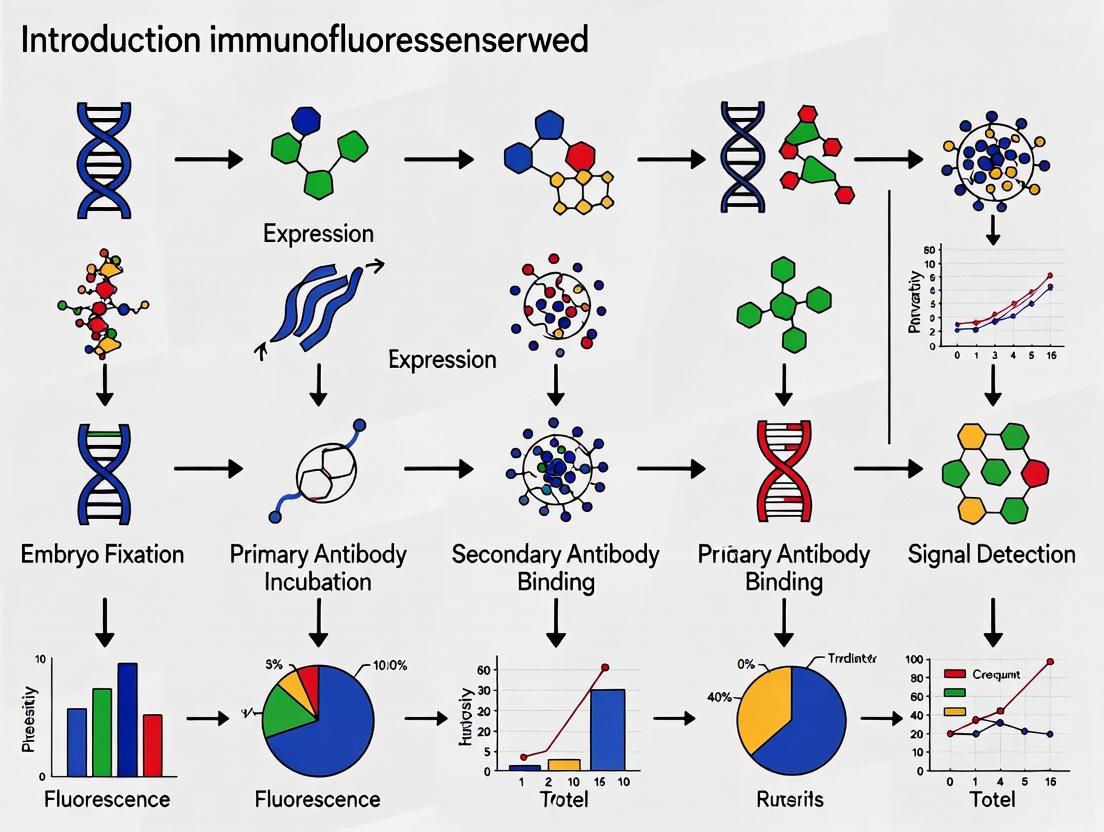
This article provides a comprehensive guide to immunofluorescence (IF) microscopy for researchers, scientists, and drug development professionals working with embryonic models.
Immunofluorescence Microscopy for Embryo Research: A Guide to Techniques, Troubleshooting, and Advanced Applications
Abstract
This article provides a comprehensive guide to immunofluorescence (IF) microscopy for researchers, scientists, and drug development professionals working with embryonic models. It covers foundational principles, from antibody selection to fixation protocols, and details robust methodological workflows for both basic and advanced applications, including the latest techniques for live embryo imaging and 3D visualization. The guide includes a systematic troubleshooting section to optimize signal quality and minimize background, and it concludes with a comparative analysis of methodological choices and validation strategies to ensure data reproducibility and reliability in studying developmental biology, infertility, and embryogenesis.
Understanding Immunofluorescence: Core Principles for Embryo Imaging
What is Immunofluorescence? Defining the Technique for Embryonic Studies
Immunofluorescence (IF) is a cornerstone light microscopy technique that enables the detection and localization of a vast array of target biomolecules within cells and tissues by leveraging the specific binding of antibodies conjugated to fluorescent dyes, or fluorophores [1]. In the context of embryonic research, this technique provides unparalleled insights into the spatial and temporal expression patterns of proteins, glycans, and other molecules critical to development [2] [3]. This whitepaper delineates the core principles of immunofluorescence, details specialized methodologies for embryonic specimens, and presents advanced quantitative data and protocols to guide researchers in leveraging IF for dynamic developmental studies.
The principle of immunofluorescence, first established in 1942 and pioneered by Albert H. Coons, is founded upon a specific antigen-antibody binding reaction, where the antibody is conjugated to a fluorophore [1] [4]. A fluorophore is a compound that emits light of a longer, specific wavelength upon excitation by light of a shorter wavelength [5]. This emitted light is then captured using a fluorescence microscope, allowing researchers to visualize the precise subcellular location of the target antigen within an intact sample [6]. For embryonic studies, this capability is paramount for understanding how the distribution of key proteins and structures shifts during intricate processes like morphogenesis, cell differentiation, and tissue patterning [3].
The technique is exceptionally versatile and can be performed on various sample types, including cultured cell lines (a application often termed immunocytochemistry, or ICC), tissue sections (immunohistochemistry, IHC), and entire organisms or embryos, provided they are suitably prepared and fixed [6] [4]. A significant consideration for embryonic research is the choice between fixed and live samples. Traditional immunofluorescence is generally limited to fixed (i.e., dead) cells because the large antibody proteins cannot penetrate the intact membranes of living cells [1]. To study protein dynamics in living embryonic cells, researchers often use recombinant proteins fused to fluorescent tags, such as Green Fluorescent Protein (GFP) [1].
Core Principles and Methodologies
Direct vs. Indirect Immunofluorescence
There are two primary methodologies for performing immunofluorescence, each with distinct advantages and limitations.
- Direct Immunofluorescence (Primary): This one-step method involves a primary antibody that is directly conjugated to a fluorophore. This antibody binds specifically to the target antigen, and the site of binding is visualized directly [1] [2]. The direct method is quicker, involves fewer steps, and typically results in lower background signal due to reduced potential for non-specific antibody binding [1] [6]. Its main disadvantage is potentially lower sensitivity and the cost of conjugating a fluorophore to every primary antibody [6].
- Indirect Immunofluorescence (Secondary): This two-step method is more widely used. First, an unlabeled primary antibody binds to the antigen. Then, a fluorophore-conjugated secondary antibody, which is raised against the immunoglobulins of the primary antibody's host species, is applied. This secondary antibody recognizes and binds to the primary antibody [2] [5]. The indirect method offers significant signal amplification because multiple secondary antibodies can bind to a single primary antibody [5] [1]. It is also more cost-effective, as a single conjugated secondary antibody can be used with many different primary antibodies from the same host species [6].
The following diagram illustrates the logical workflow and key decision points for these two core methods:
The Immunofluorescence Workflow for Embryonic Samples
Performing IF on embryonic specimens requires careful attention to preservation and preparation to maintain delicate morphology and antigen integrity. The workflow can be broadly divided into several critical steps, as shown below and detailed in the subsequent protocol [2] [6].
Detailed Protocol for Embryonic Tissues
Step 1: Fixation The goal of fixation is to preserve the native cellular architecture and immobilize the target antigens while maintaining their immunoreactivity. For embryos, which are rich in lipids and delicate structures, the choice of fixative is critical.
- Cross-linking reagents (e.g., Formaldehyde): Excellent for preserving morphology. They work by creating methylene cross-links between proteins, but can sometimes mask epitopes, necessitating antigen retrieval [2].
- Organic solvents (e.g., Methanol, Acetone): Precipitate proteins and remove lipids, which also permeabilizes the cells. This can be harsher on morphology but better for certain epitopes [2].
- Protocol Note: For zebrafish embryos, fixation is often performed with 4% Paraformaldehyde (PFA) for several hours at room temperature or overnight at 4°C, followed by extensive washing [7].
Step 2: Sample Preparation
- Permeabilization: Essential for intracellular targets. Using a detergent like Triton X-100 or Tween-20 post-fraction creates pores in the membrane, allowing antibodies access to the interior of the cell [4].
- Antigen Retrieval: Often necessary when cross-linking fixatives like formaldehyde are used, as they can mask epitopes. The two main methods are:
- Heat-Induced Epitope Retrieval (HIER): Heating the sample in a buffer solution (e.g., citrate or EDTA buffer) to cleave cross-links. HIER is generally more effective but requires optimization of buffer pH, temperature, and duration [2].
- Protease-Induced Epitope Retrieval (PIER): Using enzymes like proteinase K or trypsin to digest cross-links. This method is faster but carries a higher risk of damaging tissue morphology and the epitope itself [2].
Step 3: Blocking To prevent antibodies from binding non-specifically to reactive sites in the tissue, a blocking step is crucial. This is typically done by incubating the sample with a concentrated protein solution.
Step 4: Primary Antibody Incubation The primary antibody, specific for the target antigen, is applied.
- Dilution: The optimal concentration must be determined empirically and can vary widely. Always refer to the manufacturer's datasheet and relevant literature [6].
- Incubation: Often performed overnight at 4°C for maximum binding and specificity.
Step 5: Secondary Antibody Incubation A fluorophore-conjugated secondary antibody, specific to the host species of the primary antibody, is applied.
- Selection: Must be raised against the species of the primary antibody (e.g., anti-rabbit for a rabbit primary). Choose a fluorophore whose excitation/emission spectra are compatible with your microscope's filters and that has minimal spectral overlap with other fluorophores in a multiplex experiment [2] [6].
- Incubation: Typically 1-2 hours at room temperature, protected from light to prevent photobleaching.
Step 6: Preservation and Imaging
- Mounting: Samples are mounted on slides using an antifade mounting medium to preserve fluorescence and reduce photobleaching [2].
- Counterstaining: It is common to include counterstains that label general cellular structures. DAPI (4',6-diamidino-2-phenylindole) is widely used to label DNA and visualize all nuclei [1] [8].
- Imaging: Embryonic samples are often imaged using confocal microscopy, which provides optical sectioning and the ability to reconstruct 3D structures, which is vital for understanding embryonic anatomy [3] [4].
Advanced Applications in Embryonic Research
Multiplex Immunofluorescence
A powerful advancement in IF is the ability to perform multiplexing—simultaneously detecting multiple different antigens within the same sample [5] [9]. This is achieved by using a set of primary antibodies raised in different host species (e.g., mouse, rabbit, goat), followed by a corresponding set of secondary antibodies, each conjugated to a spectrally distinct fluorophore [6]. This allows researchers to study cell composition, protein co-localization, and cell-cell interactions within the complex microenvironment of a developing embryo [9]. Critical to this technique is selecting fluorophores with minimal spectral overlap and using appropriate microscope filter sets to accurately separate the signals [2].
Live Imaging of Embryonic Dynamics
While traditional IF is for fixed samples, the principle of fluorescence is also the basis for live imaging of embryonic processes. This involves using transgenic organisms that express fluorescent proteins (e.g., GFP, mCherry) fused to proteins of interest [3] [1]. This allows for the real-time observation of dynamic events such as cell migration, neural crest cell movement, and heart development [3] [7]. A key challenge in live imaging is balancing the need for high temporal resolution to capture fast processes without causing phototoxicity to the sensitive embryonic tissue [3].
Table 1: Quantitative Considerations for Live Imaging of Embryonic Processes
| Biological Process | Approximate Speed | Required Spatial Resolution | Required Frame Rate (Est.) | Reference |
|---|---|---|---|---|
| Cell Migration (Neural Crest) | 140 – 170 μm/h | ~1 μm (cell shape) | ~1 /min | [3] |
| Heartbeat (Zebrafish Embryo) | ~120-180 beats/min | ~10 μm (chamber wall) | ≥ 60 fps | [7] |
| Calcium Waves | 10 – 50 μm/sec | Subcellular (~1 μm) | ~10 fps | [3] |
| Cilia Beating | 3 – 40 Hz | Subcellular (~0.5 μm) | ≥ 80 fps | [3] |
The Scientist's Toolkit: Essential Reagents and Materials
Successful immunofluorescence, especially in demanding samples like embryos, relies on a suite of essential reagents.
Table 2: Key Research Reagent Solutions for Immunofluorescence
| Reagent / Material | Function / Purpose | Common Examples |
|---|---|---|
| Fixatives | Preserves cellular morphology and immobilizes antigens. | Formaldehyde, Paraformaldehyde (PFA), Methanol, Acetone [2] |
| Permeabilization Agents | Creates pores in cell membranes to allow antibody entry for intracellular targets. | Triton X-100, Tween-20, Saponin, Methanol [4] |
| Blocking Reagents | Reduces non-specific binding of antibodies to the sample. | BSA, Normal Serum, Non-fat Dry Milk [2] |
| Primary Antibodies | Binds with high specificity to the target antigen. | Monoclonal (high specificity) or Polyclonal (high sensitivity) antibodies [4] |
| Secondary Antibodies | Fluorophore-conjugated; binds to the primary antibody to provide a detectable signal. | Anti-Rabbit, Anti-Mouse, Anti-Goat IgG; conjugated to Alexa Fluor dyes, Cy dyes [2] [6] |
| Fluorophores | Emits light upon excitation, enabling visualization. | FITC, TRITC, Alexa Fluor series, DyLight Fluors [2] [1] |
| Mounting Media | Preserves the sample, reduces photobleaching, and allows for imaging. | Antifade media (e.g., with Mowiol or commercial products), often with DAPI [2] |
Limitations and Troubleshooting
Despite its power, immunofluorescence has several technical limitations that researchers must navigate:
- Photobleaching: The permanent loss of fluorescence upon repeated exposure to light. This can be mitigated by using more photostable fluorophores (e.g., Alexa Fluors), reducing light intensity/exposure, and using antifade mounting media [1].
- Autofluorescence: The natural emission of light by biological structures within the sample, such as collagen or lipofuscin, which can create a high background. This can sometimes be blocked chemically (e.g., with Sudan Black) or titered out during image acquisition [8].
- Non-specific Staining: Occurs when an antibody binds to an epitope other than its intended target. This underscores the critical importance of proper blocking, antibody validation, and the use of appropriate controls (e.g., no-primary controls, isotype controls) [1] [6].
- Spectral Overlap: When the emission spectra of two different fluorophores overlap, leading to bleed-through signal. Careful fluorophore selection and the use of sequential imaging can help resolve this issue [2].
The field of immunofluorescence continues to evolve with exciting new technologies. Multiplex immunofluorescence is becoming more sophisticated, allowing for the visualization of dozens of markers on a single tissue section using cyclic staining and elution methods or oligonucleotide-barcoded antibodies [5] [9]. Furthermore, super-resolution microscopy techniques (e.g., STED, STORM, PALM) are breaking the diffraction limit of light, enabling the visualization of subcellular structures and protein interactions at a nanoscale level of detail that was previously inaccessible [3] [1].
In conclusion, immunofluorescence is an indispensable and dynamically advancing technique in the developmental biologist's arsenal. Its ability to provide precise spatial and, when adapted for live imaging, temporal information on molecular localization makes it fundamental to elucidating the complex mechanisms that govern embryonic development. By understanding its core principles, optimizing protocols for embryonic specimens, and leveraging new multiplexing and high-resolution imaging capabilities, researchers can continue to uncover the intricate details of life's earliest stages.
Immunofluorescence (IF) microscopy stands as a cornerstone technique in embryology, enabling the precise visualization of protein localization and expression during critical developmental stages. The choice between direct and indirect immunofluorescence is pivotal, balancing the competing demands of experimental simplicity and detection sensitivity. This technical guide provides an in-depth analysis of these two core methodologies, framing them within the context of embryo research. We summarize quantitative comparisons in structured tables, detail specialized protocols for embryonic tissues, and visualize experimental workflows to equip researchers with the knowledge to optimize their staining strategies for discerning complex spatiotemporal expression patterns in developing embryos.
Immunofluorescence (IF) is a powerful immunochemical technique that allows for the detection and localization of a wide variety of antigens within cells and tissues, utilizing fluorescence microscopy for visualization [2]. In the context of embryo research, IF is indispensable for studying protein expression dynamics, cell fate specification, and the intricate signaling pathways that orchestrate development. The technique's foundation was laid in 1941 by Albert Hewett Coons and his team, who first used fluorescently labeled antibodies to detect antigens in tissue, a breakthrough that revolutionized the ability to visualize specific molecules within their native biological context [10]. The core principle of IF relies on tagging antibodies with fluorophores—molecules that absorb light at one wavelength and emit it at a longer, specific wavelength. This emitted light, captured by a fluorescence microscope, produces an image revealing the precise subcellular localization of the target antigen [10] [11].
For embryologists, the application of IF extends beyond simple protein detection. It is a critical tool for answering fundamental questions about the distribution of transcription factors, the activity of signaling pathways (such as the TGF-β superfamily involving phosphorylated SMAD proteins), and the emergence of complex tissue architecture [12] [13]. The unique challenges of working with embryonic specimens—including their delicacy, small size, and the frequent need for whole-mount processing—make the choice of IF method a critical determinant of experimental success. This guide delves into the two primary IF categories, direct and indirect, to aid researchers in selecting and optimizing the most appropriate technique for their experimental needs within the specialized field of developmental biology.
Core Principles: Direct vs. Indirect Immunofluorescence
Direct Immunofluorescence
Direct immunofluorescence is a straightforward method wherein the primary antibody, which is specific to the target antigen, is directly conjugated to a fluorophore [14] [10]. In this approach, the fluorescently labeled antibody is applied directly to the sample, where it binds to its target antigen. After incubation and a wash step to remove unbound antibody, the sample can be visualized under a fluorescence microscope [10]. The simplicity of this protocol, involving fewer steps and reagents, makes it less prone to experimental error and significantly faster to perform.
Indirect Immunofluorescence
Indirect immunofluorescence employs a two-step detection process. The first step involves an unlabeled primary antibody that binds specifically to the target antigen. Following a wash, a fluorophore-conjugated secondary antibody is applied. This secondary antibody is raised against the immunoglobulin of the species in which the primary antibody was generated (e.g., a goat anti-rabbit antibody) and binds to the primary antibody [14] [10]. A key advantage of this method is signal amplification; multiple secondary antibody molecules can bind to a single primary antibody, dramatically increasing the fluorescent signal at the site of the target antigen [10] [15]. This makes indirect IF particularly valuable for detecting low-abundance proteins.
The logical relationship and workflow of these two methods are visualized in the diagram below.
Selecting between direct and indirect IF requires a careful assessment of their respective advantages and limitations, as summarized in the table below. This decision is further nuanced when working with embryonic models.
Table 1: Comprehensive Comparison of Direct and Indirect Immunofluorescence
| Feature | Direct Immunofluorescence | Indirect Immunofluorescence |
|---|---|---|
| Antibodies Used | Single fluorophore-conjugated primary antibody [14] [10] | Unlabeled primary antibody + fluorophore-conjugated secondary antibody [14] [10] |
| Process Time | Shorter (fewer steps; single incubation) [14] | Longer (additional incubation and wash steps) [14] [11] |
| Complexity | Lower (simpler workflow) [14] | Higher (more complex due to secondary antibody) [14] |
| Sensitivity | Weaker (no signal amplification) [14] [11] | Stronger (signal amplification via multiple secondary antibodies) [14] [10] [15] |
| Species Cross-reactivity | Low [14] | Higher (can be mitigated with cross-adsorbed secondary antibodies) [14] [16] |
| Cost | More expensive (costly labeled primary antibodies) [14] [16] | Less expensive (versatile, reusable secondary antibodies) [14] [11] |
| Flexibility & Multiplexing | Less flexible; can be ideal for multiplexing antibodies from the same host species [14] [16] | Highly flexible; easy to change fluorophores; multiplexing requires primaries from different host species [14] [10] [15] |
| Key Consideration for Embryos | Best for highly expressed antigens and when minimizing background is critical. | Preferred for low-abundance targets, phospho-proteins (e.g., pSMADs), and when signal amplification is needed in opaque tissues [12]. |
The choice fundamentally hinges on the specific requirements of the embryo experiment. Direct IF offers speed and simplicity, while indirect IF provides powerful signal amplification and flexibility, making it the more frequently used method in research settings, including embryology [17].
Experimental Protocols for Embryo Staining
The following protocols are adapted for embryonic tissues, which require careful handling to preserve morphology and antigenicity.
General Sample Preparation Workflow for Embryos
Proper sample preparation is critical for successful embryo immunofluorescence. The workflow below outlines the key stages from collection to imaging.
Detailed Protocol: Indirect Immunofluorescence for Pre-Implantation Embryos
This protocol is adapted for sensitive targets like phosphorylated SMAD proteins in pre-implantation human and mouse embryos, a key readout for TGF-β superfamily signaling activity [12].
Key Resources Table: Table 2: Essential Reagents for Embryo Immunofluorescence
| Reagent or Resource | Function | Example |
|---|---|---|
| Paraformaldehyde (PFA) | Cross-linking fixative to preserve cellular structure and immobilize antigens. | 4% PFA in PBS [12] [2] |
| Phosphate-Buffered Saline (PBS) | Isotonic buffer for washing and dilution to maintain pH and osmolarity. | PBS with or without Ca²⁺/Mg²⁺ [12] |
| Triton X-100 | Detergent for permeabilization, allowing antibodies to access intracellular antigens. | 0.1-0.5% in PBS [12] |
| Normal Serum | Blocking agent to reduce non-specific binding of antibodies. | Normal donkey or goat serum [12] [2] |
| Primary Antibody | Unlabeled antibody that provides specificity for the target antigen. | e.g., Rabbit anti-phospho-SMAD2 [12] |
| Fluorophore-Conjugated Secondary Antibody | Labeled antibody that binds the primary antibody, providing detection and signal amplification. | e.g., Donkey anti-rabbit, Alexa Fluor 488 [12] |
| DAPI | Nuclear counterstain for visualizing all nuclei in the sample. | 1 µg/mL in mounting medium or PBS [12] [10] |
Step-by-Step Procedure:
- Fixation: Transfer embryos into 4% PFA solution. Incubate on a rocking platform at room temperature for a specified duration (e.g., 30-60 minutes, requires optimization). Critical: The PFA solution should be fresh (no older than 7 days and stored at 4°C) to ensure optimal detection, especially for nuclear transcription factors and phosphorylated epitopes [12].
- Permeabilization and Blocking: Remove PFA and wash embryos 3 x 5 minutes in PBS. Incubate embryos in a solution of 0.1% Triton X-100 in PBS for permeabilization. Prepare a blocking solution (e.g., 3% BSA or 5-10% normal serum in PBS). Incubate embryos in blocking solution for 1-2 hours at room temperature to minimize background staining [12] [2].
- Primary Antibody Incubation: Prepare the primary antibody at the optimal dilution in blocking solution. Incubate embryos in the primary antibody solution overnight at 4°C on a rocker for maximum binding.
- Washing: Remove the primary antibody solution and perform extensive washing to remove unbound antibody. Wash 3-4 times for 15-30 minutes each with PBS containing 0.1% Tween-20 (PBSw) or blocking solution.
- Secondary Antibody Incubation: Prepare the fluorophore-conjugated secondary antibody in blocking solution, protected from light. Incubate embryos for 1-2 hours at room temperature on a rocker.
- Final Washing and Mounting: Wash embryos 3-4 times for 15-30 minutes each with PBSw, protected from light. Perform a final wash in PBS alone. Mount embryos on a glass slide in a DAPI-containing anti-fade mounting medium to preserve fluorescence and visualize nuclei [12] [10].
- Imaging: Image the samples using epifluorescence or confocal microscopy. For whole-mount embryos that have become opaque, consider tissue clearing (e.g., with ethyl cinnamate) combined with light sheet microscopy to achieve high-resolution 3D imaging [13].
Advanced Applications and Integration in Embryology
Immunofluorescence is increasingly combined with other powerful techniques to provide a more holistic understanding of embryonic development. A prime example is its integration with RNA fluorescence in situ hybridization (HCR RNA-FISH) to simultaneously visualize gene expression at the mRNA and protein levels within the same embryo. This combined approach is invaluable for correlating the onset of gene transcription with the localization of the corresponding protein or for depicting gene expression in gain- or loss-of-function contexts [13].
Furthermore, the need for comprehensive 3D information in whole-mount embryos at later stages of development (e.g., E3.5 to E5.5 in chicken embryos) has led to the adaptation of IF protocols for tissue clearing. Methods such as ethyl cinnamate (ECi) clearing render the embryo transparent, allowing for light sheet microscopy and enabling the exploration of protein localization and gene expression with subcellular resolution throughout the entire embryo volume [13]. These advanced integrations push the boundaries of what is possible in embryological research, allowing scientists to dissect molecular mechanisms with unprecedented spatial and molecular resolution.
The decision between direct and indirect immunofluorescence in embryo research is not a matter of one technique being universally superior, but rather of selecting the right tool for the specific biological question and experimental constraints. Direct immunofluorescence offers an expedient, simple pathway ideal for detecting abundant antigens and minimizing potential background. In contrast, indirect immunofluorescence, with its superior sensitivity and flexibility, is the method of choice for challenging targets, low-abundance proteins, and multiplexing experiments. As embryology continues to embrace complex whole-mount imaging and multi-omics integrations, a deep understanding of these foundational techniques will remain essential for unraveling the exquisite complexities of embryonic development.
Immunofluorescence (IF) microscopy is an indispensable technique in developmental biology, enabling the visualization and spatial localization of specific proteins within the intricate architecture of embryos. The technique relies on the specific binding of antibodies to target antigens, which are then visualized using fluorescent labels (fluorophores), with all cellular structures preserved in a life-like state through chemical fixation [18]. The unique challenges of embryo research—such as the need to preserve three-dimensional structure, manage autofluorescence, and detect often low-abundance signaling proteins—make the careful selection of antibodies, fluorophores, and fixatives particularly critical. This guide details these core components and their optimized application in embryo studies, providing a technical foundation for researchers aiming to investigate protein localization, expression, and signaling dynamics during embryogenesis.
Core Technical Components of Immunofluorescence
Fixatives: Preserving Embryonic Architecture
Fixation is the foundational step in any immunofluorescence protocol, halting degradation and preserving morphological and subcellular structure. The choice of fixative profoundly impacts antigen accessibility, background fluorescence, and the overall success of the experiment.
Crosslinking Fixatives (Aldehydes): These fixatives, such as formaldehyde and paraformaldehyde (PFA), create covalent methylene bridges between proteins, thereby stabilizing cellular structures and providing excellent preservation of tissue morphology. They are the most common choice for embryo immunofluorescence.
- Paraformaldehyde (PFA): Typically used as a 4% solution, PFA provides strong tissue penetration and preserves a wide range of antigens. It is the standard fixative for many protocols, including the detection of phosphorylated SMAD proteins in human blastocysts [19] [18]. A key consideration is that over-fixation can mask epitopes, often necessitating an antigen retrieval step to break crosslinks and restore antibody binding.
- Formalin: A saturated aqueous solution containing 37-40% formaldehyde, often with methanol added to prevent polymerization. "10% formalin" is a common working solution that approximates 4% PFA [18].
- Glyoxal: A dialdehyde fixative gaining attention as a less toxic alternative to formaldehyde. Recent studies in medaka fish and Drosophila embryos indicate that glyoxal can offer superior antigen preservation and reduced protein cross-linking compared to formaldehyde, leading to improved immunofluorescence specificity for certain neuronal markers [20] [21].
Precipitating Fixatives (Alcohols): Fixatives like methanol and ethanol act by dehydrating tissues and precipitating proteins. While they preserve protein secondary structure well, they are generally less effective at maintaining overall cell and tissue morphology compared to crosslinkers. Their use is often limited to specific antigens or cell cultures, and they are typically incompatible with antigen retrieval techniques [18].
Non-Toxic Alternatives: Growing safety and environmental concerns have spurred the development of aldehyde-free fixatives. These compositions often rely on ethanol as the primary fixing agent, combined with polymers and polar aprotic solvents. They have been demonstrated to effectively preserve cell morphology and fluorescent protein signals, such as GFP, in human embryonic stem cells [22].
Table 1: Comparative Analysis of Common Fixatives in Embryo Research
| Fixative | Mechanism | Best For | Advantages | Disadvantages |
|---|---|---|---|---|
| Paraformaldehyde (PFA) [19] [18] | Crosslinking | General use; phosphorylated proteins (e.g., pSMAD); human blastocysts | Excellent morphology; good tissue penetration; wide antibody compatibility | Over-fixation can mask epitopes (requires antigen retrieval) |
| Glyoxal [20] [21] | Crosslinking | Neural markers; improving specificity; reducing toxicity | Reduced cross-linking; improved antigen preservation for some targets | Can induce green/red autofluorescence; requires pH control |
| Davidson's Solution [21] | Crosslinking & Precipitation | Histological detail (H&E staining) | Rapid preservation; minimal tissue shrinkage | Induces blue autofluorescence; can reduce IF specificity |
| Alcohols (Methanol/Ethanol) [22] [18] | Precipitation | Specific antigens; cell cultures | Fast; preserves some epitopes well; no antigen retrieval needed | Poor morphology; not suitable for many tissue antigens |
Antibodies: Targeting Embryonic Proteins
Antibodies are the key reagents that confer specificity in immunofluorescence. Their performance is dictated by the recognition of a specific epitope on the target antigen.
Primary Antibodies: These bind directly to the protein of interest. In embryo research, common targets include transcription factors and signaling proteins critical for development, such as the phosphorylated SMAD proteins (pSMAD) that are downstream effectors of the TGF-β signaling superfamily (including NODAL and BMP pathways) [19]. Other neuronal markers like PGP9.5 have been successfully visualized in medaka brain tissue [21]. It is crucial to note that not all antibodies are compatible with all fixation methods; for instance, NeuN and NCAM antibodies may not work in fixed medaka brain tissue, highlighting the importance of antibody validation for the specific embryo model and fixation protocol [21].
Secondary Antibodies: These are conjugated to fluorophores or enzymes and bind to the constant region of the primary antibody. Using secondary antibodies raised against the species of the primary antibody allows for signal amplification and flexibility.
Validation and Specificity: The reliability of IF data hinges on antibody specificity. Controls, including the use of knockout tissue or isotype controls, are essential. Furthermore, the fixation method can dramatically affect antibody binding, as demonstrated by the abolition of insulin staining in ethanol-fixed pancreas tissue compared to formalin-fixed tissue [18].
Fluorophores and Detection Modalities
Fluorophores convert the specific antibody binding into a detectable signal. The choice of fluorophore depends on the microscope's filter sets, the need for multiplexing, and the potential for background autofluorescence.
Immunofluorescence (IF): This is the dominant detection method, relying on fluorophore-conjugated antibodies. It allows for multiplexing—the simultaneous detection of multiple targets—by using fluorophores with distinct excitation and emission spectra, such as Alexa Fluor 488, 594, and far-red dyes [18] [19]. A major advantage is the ability to co-localize proteins within subcellular compartments.
Immunohistochemistry (IHC): This chromogenic method uses enzyme-conjugated antibodies (e.g., Horseradish Peroxidase, HRP) that generate a colored precipitate at the antigen site. While less common for multiplexing, it is robust and compatible with bright-field microscopy. Some antigens, like PGP9.5 in medaka, may be detectable by IF but not by IHC, underscoring the need to match the detection method to the target [21].
Advanced Multiplexing and Virtual Labeling: Standard IF is typically limited to 3-4 markers (4-plex) due to spectral overlap. To overcome this, advanced frameworks like Extensible Immunofluorescence (ExIF) have been developed. ExIF uses generative deep learning to integrate data from multiple, carefully designed 4-plex panels, creating a unified virtual dataset with much higher plexity. This approach allows for complex analyses, such as mapping cell phenotype heterogeneity and inferring marker dynamics during processes like epithelial-mesenchymal transition, without requiring complex experimental multiplexing [23].
Experimental Protocols for Embryo Research
Workflow for Immunofluorescence in Embryos
The following diagram illustrates the generalized, critical path for conducting immunofluorescence in embryo samples.
Detailed Protocol: Detecting Signaling Proteins in Human Blastocysts
This protocol, adapted from Brumm et al., outlines the steps for immunofluorescence detection of phosphorylated SMAD proteins combined with other transcription factors in pre-implantation human embryos [19].
Fixation and Antigen Retrieval:
- Fix human blastocysts immediately after collection to preserve the native state of phospho-proteins. Use an appropriate aldehyde-based fixative like 4% PFA.
- Perform antigen retrieval to break methylene crosslinks formed during fixation and expose epitopes. This is a critical step for detecting phosphorylated SMAD proteins. Use a heat-induced method with a citrate-based or ImmunoSaver solution [19] [21].
Immunostaining:
- Permeabilization and Blocking: Incubate embryos in a buffer containing a detergent (e.g., Triton X-100) to permit antibody penetration, followed by a blocking solution (e.g., BSA or serum) to minimize non-specific binding.
- Primary Antibody Incubation: Incubate with validated primary antibodies against the target (e.g., anti-pSMAD). Perform long incubations in a humidity chamber to prevent sample drying [18].
- Secondary Antibody Incubation: Incubate with fluorophore-conjugated secondary antibodies. Protect samples from light from this step onward.
Imaging and Quantification:
- Acquire z-stack images to capture the entire volume of the blastocyst using fluorescence or confocal microscopy.
- Nuclear Segmentation: Use the Fiji plugin StarDist for accurate segmentation of individual nuclei within the blastocyst, which is essential for quantitative analysis [19].
- Fluorescence Intensity Quantification: Employ CellProfiler to measure the mean fluorescence intensity within each segmented nucleus, allowing for tracking and quantification of protein signaling across the embryo [19].
The Scientist's Toolkit: Research Reagent Solutions
Table 2: Essential Reagents and Tools for Embryo Immunofluorescence
| Tool/Reagent | Function | Example Use in Embryos |
|---|---|---|
| Paraformaldehyde (PFA) [19] [18] | Crosslinking fixative | General preservation of human blastocyst morphology and protein localization. |
| Glyoxal Fixative [21] | Crosslinking fixative | Alternative to PFA for improved neuronal marker (PGP9.5) specificity in medaka brain. |
| Anti-pSMAD Antibodies [19] | Detect TGF-β superfamily signaling | Key for quantifying NODAL/BMP pathway activity in human blastocysts. |
| Anti-PGP9.5 Antibody [21] | Pan-neuronal marker | Labeling neurons in fixed medaka brain tissue for neurodevelopmental studies. |
| Alexa Fluor Conjugates [21] | Secondary antibody fluorophores | Multiplexed detection of multiple proteins in the same embryo sample. |
| Stardist (Fiji Plugin) [19] | AI-based nuclear segmentation | Segmenting nuclei in 3D embryo images for single-cell analysis. |
| CellProfiler [19] | Image analysis software | Quantifying immunofluorescence intensity and tracking nuclei through z-stacks. |
| ExIF Framework [23] | Computational data integration | Extending plexity by integrating multiple standard 4-plex IF images via deep learning. |
Advanced Techniques and Future Directions
The field of embryo imaging is rapidly advancing with the integration of new technologies. Light sheet fluorescence microscopy (LSFM) is proving invaluable for monitoring processes like drug delivery and pharmacokinetics during organogenesis, as it enables high-resolution, rapid, and low-phototoxicity imaging of live embryos over time [24]. Furthermore, Artificial Intelligence (AI) is transforming how we analyze embryonic development. Deep learning models, such as StembryoNet (based on a ResNet18 architecture), can automatically classify the developmental potential of stem cell-derived embryo models with high accuracy, forecasting trajectories and identifying key morphological features predictive of normal development [25]. These AI-based approaches are crucial for standardizing the analysis of complex, variable embryo models and uncovering the fundamental principles of self-organization.
The Critical Role of Immunofluorescence in Visualizing Embryo Development and Implantation
Immunofluorescence (IF) is an indispensable immunochemical technique that enables the precise detection and subcellular localization of a wide variety of antigens within tissues and cells. This capability is particularly valuable in the field of developmental biology, where understanding the spatial and temporal distribution of key proteins during critical stages like embryo implantation is fundamental to unraveling the mechanisms of human development. The technique leverages fluorophore-tagged antibodies that emit light upon excitation, providing excellent sensitivity and signal amplification compared to conventional immunohistochemical methods [2]. For researchers investigating human embryo development, IF offers an unparalleled tool to probe the complex signaling events and cellular differentiation processes that occur during the peri-implantation period, a window of development that remains challenging to study in vivo.
Recent methodological advances have significantly expanded the potential of IF. While standard immunofluorescence imaging typically captures only about 4 molecular markers (4-plex) per cell due to technical constraints like spectral bleed-through, newer frameworks such as Extensible Immunofluorescence (ExIF) now enable the integration of carefully designed 4-plex panels into unified datasets with theoretically unlimited marker plexity [23]. This capability is crucial for dissecting complex biological processes during embryogenesis, where multiple signaling pathways interact simultaneously within limited cellular material.
Technical Foundations of Immunofluorescence
Core Methodological Principles
Immunofluorescence relies on the specific binding of antibodies to target antigens, followed by detection through fluorescence microscopy. Two primary methodological approaches exist:
- Direct Immunofluorescence: The primary antibody is directly conjugated to a fluorophore, enabling straightforward single-step detection [26] [2]. This method is quicker but typically less sensitive.
- Indirect Immunofluorescence: An unlabeled primary antibody binds to the target antigen, followed by a fluorophore-conjugated secondary antibody that recognizes the primary antibody [26] [2]. This two-step method provides significant signal amplification through multiple secondary antibodies binding to each primary antibody, greatly enhancing detection sensitivity.
The indirect method is more widely employed in research settings due to its enhanced sensitivity, signal amplification capabilities, and ability to detect multiple targets simultaneously within the same sample through multiplexing approaches [2]. For embryo research specifically, the amplification advantage of indirect IF is particularly valuable when working with limited material where target antigens may be present in low abundance.
Critical Protocol Steps for Embryo Specimens
Successful immunofluorescence staining of embryo specimens requires meticulous attention to several critical steps that significantly impact result quality:
Fixation: This essential preliminary step prevents autolysis, mitigates putrefaction, and preserves cellular morphology while maintaining antigenicity. For embryo tissues, 4% paraformaldehyde (PFA) in phosphate buffer is commonly used, with fixation duration optimized based on tissue size and density [26]. The ideal fixative adequately immobilizes target antigens without disturbing cellular architecture, though optimal fixation conditions must often be determined empirically as no universal fixative exists for every antigen [2].
Antigen Retrieval: Necessary to restore epitope-antibody reactivity altered during fixation, where protein cross-linking can mask target epitopes. Two main methods are employed:
- Heat-Induced Epitope Retrieval (HIER): Uses heat and pressure in buffer solutions (commonly citrate-based buffers at pH 6.0) to cleave cross-links and restore protein conformation [26] [2].
- Protease-Induced Epitope Retrieval (PIER): Utilizes enzymes like Proteinase K or trypsin to cleave protein cross-links, though this method carries higher risk of damaging tissue morphology [2].
Blocking: Critical step to prevent non-specific antibody binding. Protein solutions like bovine serum albumin (BSA) or normal serums from the same species as the secondary antibody are used to block non-target reactive sites [26] [2]. For embryo tissues, 5% BSA in permeabilization solution is typically effective.
Antibody Selection and Validation: Particularly crucial for embryo research where material is often limited. Primary antibodies should be selected based on previously published validation when possible, with proper controls included to confirm specificity [26]. For embryonic studies, antibodies raised in different species from the model organism are recommended to minimize cross-reactivity.
Figure 1: Comprehensive Workflow for Immunofluorescence Staining of Embryo Tissues
Advanced Applications in Embryo Development Research
Investigating Signaling Pathways in Early Development
Immunofluorescence has proven instrumental in elucidating key signaling pathways that govern human embryo development. Recent research has particularly highlighted the importance of the transforming growth factor β (TGF-β) signaling superfamily, which includes NODAL and bone morphogenetic protein (BMP) signaling pathways that regulate critical developmental events through phosphorylation of different SMAD proteins [27]. The ability to detect and localize phosphorylated SMAD proteins via immunofluorescence has provided unprecedented insights into the signaling activity that guides embryogenesis.
Protocols for immunofluorescence detection of phosphorylated SMAD proteins combined with other transcription factors in pre-implantation human embryos have enabled researchers to segment nuclei in human blastocysts and quantify immunofluorescence intensity with precision [27]. This technical advancement has been crucial in demonstrating that the initiation and maintenance of the pluripotent epiblast in pre-implantation human development occurs independently of NODAL signaling, challenging previous assumptions about the regulatory mechanisms governing early embryonic cell fate decisions.
Figure 2: TGF-β/SMAD Signaling Pathway and IF Detection in Embryos
Visualization of Post-Implantation Development
The application of immunofluorescence has been transformative in developing and validating in vitro models of human post-implantation development. Recent studies have utilized three-dimensional embryo models kinetically matured to promote multi-lineage organogenesis with tissues comparable to Carnegie stage 12-16 human embryos [28]. In these sophisticated models, immunofluorescence has been crucial for identifying and characterizing SOX17+RUNX1+ hemogenic buds where maturation of hematopoietic stem cells (HSCs) occurs.
These hemogenic niches, where endothelial-to-hematopoietic transition takes place, contain both instructive (DLL4, SCF) and restrictive (FGF23) factors for HSC maturation that can be visualized and quantified through multiplex immunofluorescence [28]. The ability to simultaneously detect multiple protein markers has enabled researchers to confirm that HSCs derived from these models have the potential to differentiate into myeloid and lymphoid lineages, establishing their equivalence to definitive hematopoiesis in natural embryonic development.
Quantitative Analysis and High-Plexity Imaging
Traditional immunofluorescence has been limited by its relatively low plexity, but recent computational advances have dramatically expanded its analytical power. The Extensible Immunofluorescence (ExIF) framework now enables the integration of standard 4-plex immunofluorescence panels into unified datasets with theoretically unlimited marker plexity [23]. This approach uses generative deep learning-based virtual labeling to integrate carefully designed panels, each containing a mixture of anchoring channels (which recur in every panel) and variable channels (which differ across panels).
For embryo research, this capability is particularly valuable as it allows researchers to investigate complex multimolecular processes using standard 4-plex IF methods that are widely accessible. The ExIF framework employs computational integration inspired by multi-omics data integration strategies, using data anchors—measured features and/or cell populations common across otherwise independent datasets—to guide the quantitative integration process [23]. This approach has demonstrated significant improvements in downstream quantitative analyses including classification of cell phenotypes, manifold learning of cell phenotype heterogeneity, and pseudotemporal inference of molecular marker dynamics.
Table 1: Comparison of Immunofluorescence Modalities for Embryo Research
| Method | Plexity | Key Advantages | Technical Requirements | Applications in Embryo Research |
|---|---|---|---|---|
| Standard IF | ~4 markers | Widely accessible, established protocols | Standard fluorescence microscope | Initial protein localization, basic co-localization studies |
| Sequential IF | Moderate (~8-10 markers) | Increased marker capacity without specialized equipment | Standard microscope with quenching capability | Time-course studies of multiple related proteins |
| ExIF Framework | Theoretically unlimited | Integrates standard 4-plex data, no specialized hardware | Computational integration pipeline | Complex cell state heterogeneity, signaling network analysis |
| Multiplexed IF (4i) | High (10+ markers) | Maximum experimental resolution | Specialized reagents, spectral imaging hardware | Comprehensive atlas creation, systems-level analysis |
Essential Research Reagents and Materials
Table 2: Essential Research Reagent Solutions for Embryo Immunofluorescence
| Reagent Category | Specific Examples | Function in Protocol | Application Notes for Embryo Research |
|---|---|---|---|
| Fixatives | 4% Paraformaldehyde (PFA), Methanol, Acetone | Preserve cellular architecture, immobilize antigens | PFA most common; duration critical for embryo tissues |
| Permeabilization Agents | Triton X-100, Tween-20, Saponin | Enable antibody access to intracellular epitopes | Concentration optimization essential for embryo sections |
| Blocking Solutions | 5% BSA, Normal serum, Commercial protein-free blockers | Reduce non-specific antibody binding | Serum from secondary antibody species recommended |
| Primary Antibodies | Anti-phospho-SMAD, SOX17, RUNX1, Transcription factors | Specific recognition of target antigens | Validate specificity with embryonic material when possible |
| Secondary Antibodies | Species-specific conjugates (Cy3, Cy5, FITC) | Signal amplification and detection | Multiple fluorophores enable multiplexing |
| Mounting Media | DAPI-containing anti-fade media | Nuclear counterstaining and signal preservation | Essential for orientation in embryonic tissues |
| Antigen Retrieval Buffers | Citrate-based (pH 6.0), Tris/EDTA (high pH) | Restore antigenicity masked by fixation | pH optimization critical for different embryonic antigens |
Quantitative Analysis and Data Interpretation
Automated Signal Identification and Quantification
The quantitative analysis of immunofluorescence data, particularly for embryo specimens where sample material is often limited, requires robust and automated approaches. Software solutions like SignalFinder-IF have been developed to address the challenge of automated signal identification through algorithms such as Segment-Fit Thresholding, which shows robust performance across images with variable characteristics [29]. This algorithm bases signal detection on properties of nonsignal or background regions, which typically have more predictable statistical characteristics than true signals, allowing for precise threshold setting tailored to each image.
For embryo research applications, the threshold for identifying signal pixels is typically calculated using the formula: T = mean + M * SD, where T represents the pixel threshold, mean and SD are the mean and standard deviation of the background respectively, and M is a user-specified multiplier (default = 3) [29]. This approach allows for consistent analysis across multiple embryo specimens, which is essential for comparative studies of developmental stages or experimental conditions.
Signal Quantification and Colocalization Analysis
The primary quantitative output in embryo immunofluorescence studies typically includes both the extent of signal (percentage of tissue-containing pixels with signal) and the intensity of the signal. The percentage of pixels surpassing threshold at various intensity levels is often preferred over raw intensity measurements, as percentages are less sensitive to experimental variations between samples [29]. This approach mirrors typical analyses in developmental pathology, where researchers estimate the extent of staining at various intensity levels to assess protein expression patterns.
For advanced applications, utilities like ColocFinder enable the quantification and mapping of relationships between an unlimited number of markers through user-defined sequences of AND, OR, and NOT operators [29]. This capability is particularly valuable in embryo research for analyzing complex signaling interactions, such as quantifying cells that express specific combinations of transcription factors or phosphorylated signaling molecules that define particular developmental states.
Future Directions and Concluding Remarks
Immunofluorescence continues to evolve as a critical methodology for investigating embryo development and implantation. The ongoing development of increasingly sophisticated computational integration approaches like ExIF promises to further enhance the analytical power of standard immunofluorescence methods, potentially enabling systems-level investigations of embryonic signaling networks using accessible laboratory techniques [23]. As these tools become more widely adopted, they will likely accelerate discoveries in fundamental developmental biology and provide new insights into the molecular mechanisms governing human embryogenesis.
For the research community investigating embryo development, immunofluorescence offers a versatile and powerful toolkit that bridges cellular resolution with molecular specificity. The techniques and applications outlined in this technical guide provide a foundation for designing robust experimental approaches to address critical questions in developmental biology. Through continued methodological refinement and computational integration, immunofluorescence will undoubtedly remain a cornerstone technique for unraveling the complex processes that guide the earliest stages of human development.
From Lab to Image: Step-by-Step IF Protocols for Embryo Analysis
Immunofluorescence (IF) microscopy is an indispensable technique in developmental biology, allowing researchers to visualize the precise spatial and temporal localization of proteins and other molecules within the intricate architecture of embryos. The reliability of this technique hinges on proper sample preparation, which aims to preserve native cellular structures, maintain antigenicity, and ensure antibody accessibility while minimizing background and artifacts. This guide provides a standardized framework for the critical initial stages of immunofluorescence—sample preparation, fixation, and permeabilization—tailored specifically for embryo research, forming an essential foundation for any subsequent thesis work in this field.
The fundamental principle of immunofluorescence involves using antibodies conjugated to fluorophores to visualize target antigens within cells and tissues [2]. When applied to embryos, the technique must accommodate unique challenges, including the presence of extracellular barriers like eggshells, the large size and fragility of specimens, and the dynamic nature of developmental processes. The workflow can be broadly divided into preliminary steps (fixation, permeabilization) and immunostaining steps (blocking, antibody incubation); this protocol focuses on the first set of stages, which are crucial for all subsequent analysis [6].
The journey from a live embryo to a prepared sample ready for immunofluorescence staining involves a series of critical, sequential steps. The following workflow outlines this standardized process, highlighting key decision points and procedures.
Fixation Protocols and Parameters
Fixation is the critical first step that preserves cellular architecture and immobilizes antigens by preventing autolysis and putrefaction [2]. The ideal fixative maintains the delicate balance between preserving morphology and retaining antigenicity. No universal fixative exists for every antigen, so optimal conditions must be determined empirically based on the specific antigen and embryo type [2].
Table 1: Fixation Methods for Embryos
| Fixative Type | Concentration | Incubation Time | Temperature | Key Applications | Advantages | Disadvantages |
|---|---|---|---|---|---|---|
| Paraformaldehyde (PFA) | 4% | 2-3 hours to overnight | 4°C | General protein preservation; human and zebrafish embryos [12] [30] | Excellent morphology preservation; cross-linking | Potential epitope masking; may require antigen retrieval |
| Methanol | 100% | 10-15 minutes | -20°C | Large-scale screening; Drosophila embryos [31] | Permeabilizes and fixes simultaneously; good for intracellular antigens | Can denature some proteins; poor preservation of membrane structures |
| Acetone | 100% | 5-10 minutes | -20°C | Cytoskeletal antigens; zebrafish whole-mount [30] | Strong dehydration; excellent for many epitopes | Can make tissues brittle; not suitable for all antigens |
Specialized Fixation Considerations by Embryo Type
Different embryo models present unique challenges that require specialized fixation approaches:
Human Embryos: For pre-implantation human blastocysts, fixation in freshly prepared 4% PFA is recommended, with the solution no older than 7 days and stored at 4°C [12]. Aged or inappropriately stored PFA adversely affects detection of nuclear transcription factors. Fixation is typically performed at room temperature with gentle rocking to ensure homogeneous exposure [12].
Zebrafish Embryos: Whole-mount fixation requires overnight incubation in 4% PFA at 4°C on a gentle shaker to ensure homogeneous fixation throughout the tissue [30]. For retinal studies, proper fixation is crucial for preserving the complex laminated structure.
Drosophila Embryos: The presence of a protective eggshell complicates fixation. For late-stage Drosophila embryos (>8 hours), rearing embryos at 18°C prior to fixation helps maintain the eggshell in a permeable state [31].
Permeabilization Strategies
Permeabilization creates openings in cellular membranes to allow antibodies to access intracellular targets. This step is particularly crucial for embryos with additional extracellular barriers, such as the vitelline membrane in Drosophila or the chorion in zebrafish.
Table 2: Permeabilization Methods for Embryos
| Method | Concentration | Incubation Time | Applications | Mechanism of Action |
|---|---|---|---|---|
| Triton X-100 | 0.1-1% in PBS | 30 minutes to several hours | General purpose; human blastocysts (0.1%) [12]; zebrafish whole-mount (up to 1%) [30] | Non-ionic detergent that dissolves membrane lipids |
| Tween-20 | 0.1-0.5% in PBS | 30 minutes to several hours | Alternative to Triton X-100; zebrafish embryos [30] | Mild non-ionic detergent suitable for delicate epitopes |
| Acetone | 100% | 5-10 minutes at -20°C | Zebrafish whole-mount (post-fixation) [30] | Organic solvent that extracts lipids and dehydrates cells |
| d-Limonene (EPS) | 1:40 dilution in buffer | 30-90 seconds | Drosophila embryos with intact vitelline membrane [31] | Organic solvent-surfactant mixture that compromises waxy eggshell layers |
Embryo-Specific Permeabilization Techniques
Human Embryos: For human blastocysts, permeabilization with 0.1% Triton X-100 in PBS without calcium and magnesium ions is recommended. The solution should be prepared fresh on the day of use to ensure optimal permeabilization [12].
Zebrafish Embryos: For whole-mount staining of thick, densely packed tissues like the retina, increasing detergent concentration from the standard 0.1% to 1% Triton X-100 or Tween-20 significantly improves antibody penetration [30]. Extended wash times are necessary for intact retinae compared to tissue sections.
Drosophila Embryos: The waxy layer of the Drosophila eggshell presents a substantial barrier. The Embryo Permeabilization Solvent (EPS), containing d-limonene and surfactants, effectively compromises this barrier while maintaining embryo viability [31]. For embryos older than approximately eight hours, permeabilization becomes more challenging, but can be achieved with longer EPS exposure times (60-90 seconds) and pre-aging at reduced temperature (18°C) [31].
The Scientist's Toolkit: Essential Reagents
Table 3: Key Research Reagent Solutions for Embryo Immunofluorescence
| Reagent | Function | Example Applications | Technical Notes |
|---|---|---|---|
| Paraformaldehyde (PFA) | Cross-linking fixative that preserves protein structure and cellular architecture | Primary fixative for most embryo types [12] [30] | Must be fresh or freshly thawed; avoid freeze-thaw cycles; prepare in PBS |
| Triton X-100 | Non-ionic detergent for membrane permeabilization | Standard permeabilization for human and zebrafish embryos [12] [30] | Concentration varies by application (0.1-1%); prepare fresh daily |
| d-Limonene (EPS) | Organic solvent-based permeabilization for refractory barriers | Drosophila embryos with intact vitelline membranes [31] | Low toxicity alternative to heptane/octane; requires sequential PBS washes |
| Methanol | Organic solvent that both fixes and permeabilizes | Alternative fixative for large-scale screens; precipitates proteins [31] | Can be used at -20°C for better morphology preservation |
| Bovine Serum Albumin (BSA) | Blocking agent to reduce non-specific antibody binding | Component of blocking buffer (1-5%) in most protocols [12] | Binds non-specific sites; use protein-free buffers for phospho-epitopes |
| Normal Serum | Blocking agent matched to secondary antibody species | Common component of blocking solutions (1-10%) | Reduces cross-reactivity; should match host species of secondary antibody |
| Sucrose | Cryoprotectant for frozen sectioning | 30% solution for cryoprotection of fixed zebrafish embryos [30] | Prevents ice crystal formation; incubate overnight at 4°C before freezing |
Antigen Retrieval and Specialized Methods
For many targets, particularly after cross-linking fixation with PFA, antigen retrieval may be necessary to restore epitope-antibody reactivity. This process reverses protein cross-links formed during fixation that can mask target epitopes [2].
Implementation of Antigen Retrieval
Two main methods of antigen retrieval are commonly employed:
Heat-Induced Epitope Retrieval (HIER): This method involves heating mounted tissue samples in a buffer solution, with heat cleaving cross-links and buffer maintaining protein conformation [2]. Buffer solutions vary in pH (low pH with glycine-HCl, neutral with citric acid, high pH with Tris or EDTA), with high pH solutions generally most effective though potentially harsher on tissue morphology [2]. For zebrafish whole-mount IF, effective antigen retrieval can be achieved by incubating larvae in antigen retrieval buffer in Eppendorf tubes on a heat block at 70°C for 15 minutes [30].
Protease-Induced Epitope Retrieval (PIER): This method uses enzymes such as Proteinase K, Trypsin, or Pepsin to cleave protein cross-links and unmask target epitopes [2]. The specific enzyme should be detailed in the antibody manufacturer's datasheet. A significant disadvantage of PIER is potential non-specific enzyme digestion that can destroy tissue morphology and antigens of interest, requiring strict optimization of incubation times and enzyme concentrations [2].
For zebrafish whole-mount immunofluorescence, a 20-minute treatment with ice-cold acetone at -20°C following standard antigen retrieval can drastically improve staining quality [30].
Quality Assessment and Troubleshooting
Proper execution of sample preparation steps can be verified through several quality indicators:
Morphological Integrity: After fixation and permeabilization, embryos should maintain normal cellular and tissue architecture without significant shrinkage, swelling, or distortion.
Permeabilization Efficiency: For challenging specimens like Drosophila embryos, permeability can be assessed using far-red dyes (e.g., CY5) that serve as permeability indicators compatible with downstream fluorescent applications [31].
Antigen Preservation: Positive controls using antibodies against well-characterized, abundant antigens can verify that epitopes remain accessible after processing.
Common issues in embryo preparation include inadequate penetration of fixatives or detergents in large or densely packed embryos, over-fixation leading to epitope masking, and excessive permeabilization causing loss of cellular structure. These can be addressed by optimizing incubation times, temperatures, and reagent concentrations for specific embryo types and stages.
Within the field of developmental biology, immunofluorescence (IF) microscopy serves as a critical tool for visualizing protein localization and expression patterns throughout embryonic development. When applied to embryonic tissues, this technique must be adapted to address unique challenges such as tissue thickness, heightened sensitivity to fixation, and the imperative to preserve three-dimensional architecture. The core steps of blocking, antibody incubation, and mounting are particularly pivotal; their precise optimization is a prerequisite for achieving high-specificity staining with low background, thereby ensuring reliable and interpretable results. This guide provides an in-depth technical overview of these critical steps, framed within the context of optimizing immunofluorescence for embryonic research, to equip scientists with the protocols necessary for successful imaging.
Foundational Principles for Embryonic Tissues
Immunofluorescence on embryonic tissues, especially in whole-mount formats, fundamentally differs from standard procedures used on cell cultures or thin sections. The three-dimensional nature and variable density of embryos necessitate extended times for reagent penetration and more stringent conditions to control non-specific binding [32]. The primary challenges researchers encounter include:
- Poor Antibody Penetration: Reagents may fail to reach the core of the tissue, leading to weak or absent staining in internal structures [32].
- Epitope Masking: Over-fixation, particularly with cross-linking fixatives like paraformaldehyde (PFA), can obscure antibody binding sites. Importantly, heat-induced antigen retrieval is often not feasible for delicate whole embryos, as the heating process can destroy tissue integrity [32].
- High Background Signal: This can arise from inadequate blocking, insufficient washing, or non-specific antibody binding within the complex tissue matrix [33].
- Photobleaching: Fluorophores are susceptible to fading during imaging or storage, which is a significant concern for large-scale imaging projects or sample archiving [34].
Consequently, each step of the protocol must be carefully optimized to balance antigen preservation, antibody accessibility, and signal-to-noise ratio.
Optimizing the Blocking Step
The blocking step is designed to minimize non-specific binding of antibodies to non-target sites within the tissue, thereby reducing background fluorescence. The selection of blocking agents and the duration of blocking are critical for embryonic tissues.
Choice of Blocking Agents
A combination of proteins and sera is often most effective. The key principle is that the serum used for blocking should not originate from the same species as the primary antibody [35]. Using serum from the host species of the secondary antibody can prevent the secondary antibody from binding non-specifically to endogenous immunoglobulins in the tissue.
Table 1: Common Blocking Agents for Embryonic Immunofluorescence
| Blocking Agent | Typical Concentration | Mechanism of Action | Considerations for Embryonic Tissues |
|---|---|---|---|
| Normal Serum | 1-10% [36] | Occupies Fc receptors and non-specific protein-binding sites. | Must be from a different species than the primary antibody host [35]. |
| Bovine Serum Albumin (BSA) | 1-5% [35] [26] | Inert protein that coats non-specific binding sites. | A common and effective component of blocking buffers; can be used alone or with serum. |
| Non-Fat Dry Milk | 1-5% | Contains casein and other proteins to block non-specific sites. | Can be less pure than BSA and sometimes leads to higher background; use with caution. |
A recommended standard blocking buffer for embryonic tissues is 1-5% BSA or normal serum in PBS, often supplemented with a detergent for permeabilization [26]. For tissues with high endogenous immunoglobulin or Fc receptor activity, a combination of 1-5% serum and 1% BSA is highly effective.
Blocking Protocol and Duration
For thin sections (5-15 µm), a 30-minute block at room temperature is often sufficient [36]. However, for whole-mount embryos, the blocking time must be significantly extended to allow for full penetration. Blocking in whole-mount procedures can require several hours to overnight at 4°C [32]. The incubation buffer used for blocking can also serve as the diluent for the primary and secondary antibodies to maintain consistent conditions.
Strategic Antibody Incubation
Antibody incubation is the core of immunofluorescence, and its optimization is paramount for achieving a strong, specific signal.
Antibody Dilution and Incubation Time
There is an inverse relationship between antibody concentration and incubation time; higher concentrations may require less time, but also risk increasing background. A general starting point for primary antibodies is a 1-2 hour incubation at room temperature or overnight at 4°C [35]. For whole-mount embryos, extended incubation times—often 24-72 hours for the primary antibody—are necessary to enable diffusion into the tissue core [32]. Secondary antibody incubations for whole mounts similarly require extended times, typically overnight at 4°C [32].
Table 2: Optimizing Antibody Incubation Parameters
| Parameter | Standard Conditions (Sections) | Whole-Mount Conditions (Embryos) | Optimization Consideration |
|---|---|---|---|
| Primary Antibody Incubation | 1-2 h (RT) to overnight (4°C) [35] | 24-72 h (4°C) [32] | Longer times at lower temperatures improve penetration and specificity. |
| Secondary Antibody Incubation | 30-60 min (RT) [36] | Overnight (4°C) [32] | Protect from light from this step onward to prevent fluorophore bleaching. |
| Antibody Diluent | Blocking buffer (e.g., 1% BSA in PBS) [35] | Blocking buffer with permeabilizer [32] | Consistent matrix prevents artifacts. |
| Washing Steps | 3 x 15 min in PBS [36] | Multiple extended washes (e.g., 6-12 h with multiple buffer changes) [32] | Crucial for reducing background; use volumes much larger than the sample. |
Controls and Titration
Appropriate controls are essential for validating staining specificity. These include:
- No-Primary Control: Incubation with secondary antibody only to identify non-specific binding of the secondary reagent [36].
- Isotype Control: Use of a non-specific immunoglobulin of the same isotype as the primary antibody.
- Tissue Control: Use of tissue known to be negative for the antigen of interest.
A titration experiment is highly recommended for any new antibody. Testing a range of dilutions (e.g., 1:50, 1:100, 1:200, 1:500) will help identify the concentration that provides the optimal signal-to-noise ratio [35].
Mounting for Preservation and Imaging
The final mounting step protects the sample and is critical for high-quality imaging. The choice of mounting medium directly impacts signal longevity and optical clarity.
Selecting a Mounting Medium
Mounting media can be broadly categorized into aqueous (water-based) and non-aqueous (solvent-based) types [37]. For fluorescent samples, an anti-fade mounting medium is non-negotiable, as it significantly retards photobleaching [34].
Table 3: Characteristics of Mounting Media for Immunofluorescence
| Mounting Medium Type | Key Features | Workflow | Suitability for Embryos |
|---|---|---|---|
| Aqueous | Protects against photobleaching, often contains anti-fade agents [34]. May be hardening or non-hardening. | Direct transfer from aqueous buffer (e.g., PBS) to medium [37]. | Ideal for whole-mount samples and routine fluorescence; allows quick checking of staining. |
| Non-Aqueous (e.g., VectaMount PT) | Provides long-term archival stability, superior for preserving chromogenic stains [34]. | Requires sample dehydration through an ethanol series and a clearing agent (e.g., xylene) before mounting [37]. | Less common for thick whole-mount fluorescent samples due to dehydration steps. |
For most embryonic immunofluorescence applications, a hardened, aqueous, anti-fade mounting medium like VECTASHIELD Vibrance is an excellent choice. It provides anti-fade protection, sets to a firm consistency to stabilize the sample, and is compatible with a wide range of fluorophores [34].
Mounting and Sealing Protocol
- Embedding: For whole embryos, the sample can be mounted in a drop of medium on a slide or in a dish. For 3D preservation, use spacers to prevent crushing and ensure the sample is immersed in medium [32].
- Coverslipping: Carefully lower a coverslip to avoid introducing air bubbles.
- Sealing: To prevent evaporation and preserve the sample for long-term storage, seal the edges of the coverslip with nail polish or a specialized sealant [35] [37]. Note that some sealants are themselves fluorescent, so avoid imaging near the sealed edges.
- Storage: Store mounted slides in the dark at 4°C or -20°C to further preserve fluorescence [35].
The Scientist's Toolkit: Essential Reagents
Table 4: Key Research Reagent Solutions
| Reagent | Function/Purpose | Example & Notes |
|---|---|---|
| Fixative | Preserves tissue architecture and antigenicity. | 4% Paraformaldehyde (PFA) is standard; Methanol is an alternative if PFA masks the epitope [32] [35]. |
| Permeabilization Detergent | Enables antibody access to intracellular targets. | Triton X-100 (0.1-0.5%) for general use; milder agents like Saponin are for membrane surface proteins [35]. |
| Blocking Agent | Reduces non-specific antibody binding. | Bovine Serum Albumin (BSA) or serum from the secondary antibody host species [35] [26]. |
| Primary Antibody | Binds specifically to the target antigen. | Validate for IHC on cryosections; likely to work for whole-mount [32]. |
| Fluorophore-conjugated Secondary Antibody | Binds to primary antibody for detection. | Select against the host species of the primary antibody. NorthernLights antibodies are noted for brightness [36]. |
| Nuclear Counterstain | Labels nuclei for spatial orientation. | DAPI is the most common; incubate for 2-5 minutes before mounting [36]. |
| Anti-fade Mounting Medium | Preserves fluorescence and allows imaging. | VECTASHIELD series; choose between hardening (e.g., Vibrance) or non-hardening (e.g., Plus) formulations [34]. |
Workflow and Visualization
The following diagram summarizes the optimized workflow for blocking, antibody incubation, and mounting of embryonic tissues, highlighting the critical decision points and extended timelines required for whole-mount samples.
Workflow for Optimizing Key Immunofluorescence Steps in Embryonic Tissues
The successful application of immunofluorescence to embryonic research hinges on the meticulous optimization of blocking, antibody incubation, and mounting. By understanding the unique demands of embryonic tissues—particularly their three-dimensional structure and sensitivity—researchers can adapt standard protocols to achieve clear, specific, and reliable results. The strategic use of extended incubation times, rigorous controls, specialized blocking buffers, and robust anti-fade mounting media forms the foundation of high-quality imaging. Mastering these steps is not merely a technical exercise but a critical gateway to unlocking profound insights into the dynamic processes of embryonic development.
In the field of developmental biology, understanding the complex orchestration of cell behaviors, molecular mechanisms, and physical forces that shape a multicellular organism is a primary goal. Traditional methods, which rely on inferring dynamics from sequentially staged, fixed embryos, provide only a snapshot in time. The ability to observe multiple molecular targets simultaneously in a single, living embryo—a technique known as multiplexing—represents a paradigm shift. It moves analysis into a dynamic context, revealing the precise cell behaviors underlying normal and aberrant embryonic development. This technical guide explores advanced multiplexing methodologies, framed within the context of immunofluorescence microscopy, to provide researchers and drug development professionals with the tools to visualize the interactome of embryonic development.
Core Principles and Benefits of Multiplexing
Multiplexing transforms the study of embryos by enabling the visualization of tens of proteins or cellular structures within a single, scarce biospecimen. This approach is particularly valuable for mammalian oocytes and embryos, where sample quantity is limited.
- From Snapshots to Dynamics: Conventional methods analyze multiple fixed embryos to infer developmental sequences. In contrast, live imaging of multiplexed specimens fosters an understanding of the actual developmental progression by documenting events in a single embryo over time, providing 4D data (3D over time) [38].
- System-Level Biology: Studying the interactome—how organelles and cells interact as a systematic community—requires simultaneous observation of multiple subcellular compartments. Multiplexing moves beyond one-to-one labeling to provide a holistic view of the cellular landscape [39].
- Conservation of Precious Samples: For scarce and challenging biospecimens like mammalian oocytes, highly multiplexed imaging allows for the maximal extraction of information from a single sample, making studies more efficient and ethically favorable [40].
Key Methodologies for Multiplexed Imaging
Several technological approaches enable highly multiplexed imaging. The choice of method depends on the research question, required resolution, and the balance between spatial detail and temporal resolution.
Iterative Immunofluorescence Imaging (4i)
Iterative Indirect Immunofluorescence Imaging (4i) is a cost-effective and accessible method for highly multiplexed imaging of biospecimens like oocytes and early embryos.
- Core Principle: 4i uses iterative rounds of immunofluorescence staining, imaging, and gentle fluorophore inactivation or antibody elution. This cycles a limited set of dyes to visualize a large number of targets in the same sample [40].
- Application to Embryos: This protocol is specifically designed for large, non-adherent cells like mouse oocytes and is directly adaptable to early embryos. It allows for the capture of the distribution and abundance of tens of proteins from a single specimen [40].
Fluorescent Cell Barcoding (FCB)
While often used in flow cytometry, the principles of Fluorescent Cell Barcoding (FCB) are adaptable to imaging applications where multiplexing experimental conditions is required.
- Core Principle: FCB uses differing levels of amine-reactive fluorescent dyes to covalently label cells from different samples with a unique spectral signature. These samples are then pooled, processed, and imaged together, ensuring uniform staining conditions and reducing reagent consumption [41].
- Experimental Advantage: Barcoding and pooling increase throughput, reduce costs, and minimize technical variability. This is particularly useful for high-content screening of chemical compounds or signaling inputs on embryonic cell populations [41].
One-to-Many Labeling and Computational Segmentation
A revolutionary approach abandons the traditional "one-to-one" specific labeling strategy in favor of a "one-to-many" strategy, powered by computational analysis.
- Core Principle: This method uses a single, environment-sensitive dye (e.g., Nile Red) to stain multiple intracellular compartments simultaneously. The dye's emission spectrum shifts based on the lipid polarity of its environment, providing an "optical fingerprint" for different organelles [39].
- Computational Power: Deep convolutional neural networks (DCNN) are trained to segment up to 15 different subcellular structures from the high-resolution ratiometric images obtained from the single dye. This method avoids the spectral crosstalk and low efficiency of multi-color fluorescent protein labeling [39].
Quantitative Comparison of Multiplexing Techniques
The table below summarizes the key characteristics of the featured multiplexing methodologies to aid in experimental design.
Table 1: Comparison of Multiplexed Imaging Techniques
| Method | Core Principle | Maximum Targets Demonstrated | Key Advantage | Key Limitation |
|---|---|---|---|---|
| Iterative Immunofluorescence (4i) [40] | Sequential staining and imaging cycles | Tens of proteins | Cost-effective; adaptable to standard microscopes | Not applicable to live, dynamic imaging |
| Computational Segmentation with a Single Dye [39] | Ratiometric imaging of an environment-sensitive dye + DCNN | 15 subcellular structures | High speed and minimal phototoxicity for live cells; bypasses spectral crosstalk | Requires training robust DCNN models |
| Fluorescent Cell Barcoding (FCB) [41] | Covalent sample labeling with unique dye ratios | Primarily for multiplexing experimental conditions, not targets | High-throughput, reduces reagent use and variability | Applied to multiplexing samples, not targets within one sample |
Essential Research Reagent Solutions
Successful multiplexed imaging relies on a toolkit of specialized reagents, from fluorescent probes to analysis software.
Table 2: The Scientist's Toolkit for Multiplexed Imaging
| Category | Item | Function in Multiplexed Imaging |
|---|---|---|
| Fluorescent Reporters | Genetically Encoded FPs (e.g., EGFP, mWasabi, Venus) [38] | Vital reporters to label specific tissues, cells, or proteins in live embryos. |
| Fluorescent Reporters | Environment-Sensitive Dyes (e.g., Nile Red) [39] | Stains multiple membrane-associated organelles; emission shift acts as an "optical fingerprint". |
| Barcoding Reagents | Amine-Reactive Fluorescent Dyes (e.g., Alexa Fluor NHS esters) [41] | Covalently label samples for Fluorescent Cell Barcoding (FCB) to enable sample pooling. |
| Analysis Software | General Purpose (Imaris, Amira, Volocity, ImageJ) [38] | Used for 3D/4D visualization, quantification, and segmentation of image data. |
| Analysis Software | Specialized Algorithms (DebarcodeR, DCNN Models) [41] [39] | Demultiplexes FCB data or segments organelles from ratiometric images using deep learning. |
Visualization of Experimental Workflows
The following diagrams illustrate the logical flow of two primary multiplexing techniques described in this guide.
Workflow for Iterative Immunofluorescence
Workflow for Computational Segmentation
Detailed Experimental Protocol: Highly Multiplexed Imaging of Oocytes/Embryos
This protocol is adapted from the highly multiplexed immunofluorescence imaging method for mouse oocytes, which is directly relevant to early embryo research [40].
- Sample Preparation: Begin with fixed mouse oocytes or early embryos. Permeabilize cells using a suitable detergent (e.g., Triton X-100) to allow antibody penetration.
- Iterative Staining Cycles:
- Primary Antibody Incubation: Incubate samples with a carefully selected panel of primary antibodies raised in the same host species.
- Secondary Antibody Incubation: Apply a panel of fluorescently labeled secondary antibodies with distinct spectral signatures.
- Image Acquisition: Image the sample using a fluorescence microscope, capturing each channel.
- Fluorophore Inactivation: Gently elute or chemically inactivate the fluorescent antibodies without damaging the antigenicity of the sample or the morphology of the embryo. This step is critical for the success of subsequent cycles.
- Data Alignment and Analysis: Repeat the staining cycle for each new antibody panel. After the final cycle, computationally align all image stacks from different rounds to account for any minor sample drift. The resulting multidimensional dataset can then be analyzed for protein colocalization and abundance.
Multiplexing technologies have fundamentally expanded the toolbox for developmental biologists. By enabling the visualization of dozens of targets within a single embryo, these methods provide an unprecedented, system-level view of the dynamic processes that orchestrate embryonic development. From the accessible, iterative rounds of 4i to the innovative, AI-powered segmentation with single dyes, these techniques allow researchers to move beyond static snapshots and begin to construct a true four-dimensional atlas of life's earliest stages. As these methodologies continue to evolve and become more integrated, they will undoubtedly unlock deeper insights into the mysteries of development, homeostasis, and disease.
The field of reproductive biology has been transformed by advanced imaging technologies that allow researchers to visualize biological processes previously hidden from scientific observation. Within the context of immunofluorescence microscopy, two techniques are particularly revolutionary: live imaging of human preimplantation embryos and three-dimensional tissue clearing of uterine and ovarian structures. These methodologies provide unprecedented windows into early human development and maternal-fetal interactions, offering critical insights for addressing infertility, understanding early pregnancy loss, and developing novel therapeutic interventions.
Live imaging enables researchers to observe dynamic cellular events in real-time, revealing the precise mechanisms of embryonic development and implantation. Complementary to this, 3D tissue clearing techniques provide static but comprehensive architectural information about intact reproductive organs at single-cell resolution. When integrated with immunofluorescence microscopy, these approaches form a powerful toolkit for investigating the complex molecular and cellular interactions that underpin successful reproduction. This technical guide explores the methodologies, applications, and integration of these cutting-edge techniques for researchers, scientists, and drug development professionals working in reproductive medicine.
Live Imaging of Human Embryos
Technical Foundations and Methodological Optimization
Live imaging of human embryos at advanced preimplantation stages presents significant technical challenges due to embryo sensitivity, the need for long-term culture, and requirements for high-resolution capture of delicate cellular processes. Traditional confocal microscopy has proven unsuitable for extended imaging due to excessive phototoxicity that can compromise embryo viability [42]. A breakthrough methodology has been developed that combines optimized nuclear DNA labeling with gentle light-sheet fluorescence microscopy, enabling extended observation of embryonic development without compromising viability [42].
The critical innovation lies in the nuclear labeling approach. Researchers systematically compared multiple labeling methods including lentivirus, adeno-associated virus (AAV), baculovirus (BacMam), DNA dyes, and mRNA electroporation. They determined that mRNA electroporation provided the most effective labeling with minimal developmental impact [42]. Specific parameters were optimized for human blastocysts, with mRNA concentrations of 700-800 ng/μl delivered via electroporation achieving approximately 41% efficiency without affecting progression to the blastocyst stage [42]. This method successfully introduced H2B-mCherry mRNA, allowing clear visualization of chromosomes during cell division.
For imaging, the light-sheet microscope offers significant advantages through its dual illumination and double detection system that captures dual views of samples [42]. This configuration minimizes light exposure compared to confocal systems, enabling continuous imaging for up to 46 hours while preserving embryo development [42]. The gentle nature of this imaging approach has revealed that human blastocysts display significant differences in interphase duration compared to mouse embryos, with human mural and polar cells having mean interphase durations of 18.10 ± 3.82 hours and 18.96 ± 4.15 hours respectively, significantly longer than the 11.33 ± 3.14 hours and 10.51 ± 2.03 hours observed in mouse embryos [42].
Table 1: Comparison of Nuclear Labeling Methods for Live Embryo Imaging
| Method | Efficiency | Duration | Impact on Development | Species Tested |
|---|---|---|---|---|
| Lentivirus (H2B-GFP) | Not detected | N/A | No obvious impact | Mouse |
| Baculovirus (BacMam H2B-GFP) | Faint signals in 1/20 embryos | Transient | Not reported | Mouse |
| AAV6-GFP | Low expression | 24 hours | Not reported | Mouse |
| DNA Dyes (SPY650-DNA) | Majority at cleavage stage, only TE at blastocyst | Continuous culture | Nonspecific cytoplasmic staining in ICM | Mouse |
| mRNA Electroporation (H2B-mCherry) | 75% (mouse), 41% (human) | Up to 48 hours | No impact on cell number or lineage specification | Mouse and Human |
Key Experimental Findings and Workflow
Application of this optimized live imaging approach has revealed previously uncharacterized mitotic errors in human blastocysts. Researchers observed de novo chromosome segregation errors including multipolar spindle formation, lagging chromosomes, misalignment, and mitotic slippage [42]. These abnormalities occurred at a relatively late developmental stage and were predominantly found in the outer layer of the blastocyst that develops into the placenta rather than the inner cell mass that becomes the fetus [43]. This finding has profound implications for preimplantation genetic testing for aneuploidy (PGT-A), as it suggests that biopsies may detect abnormalities in cells that would not ultimately affect fetal development [43].
To manage the substantial imaging data generated, researchers developed an open-source, semi-automated segmentation method using a customized deep learning model optimized for variability in embryo size, shape, and signal [42]. This computational approach enables tracking of individual nuclei over time, revealing that most externally positioned cells maintain their placental progenitor fate, though rare contributions to the inner cell mass were observed [42].
Table 2: Quantitative Analysis of Mitotic Timing in Blastocyst-Stage Embryos
| Cell Type | Species | Mitotic Duration (minutes, mean ± SD) | Interphase Duration (hours, mean ± SD) | Sample Size (cells/embryos) |
|---|---|---|---|---|
| Mural Cells | Human | 51.09 ± 11.11 | 18.10 ± 3.82 | 90 cells from 13 embryos |
| Polar Cells | Human | 52.64 ± 9.13 | 18.96 ± 4.15 | 90 cells from 13 embryos |
| Mural Cells | Mouse | 49.95 ± 8.68 | 11.33 ± 3.14 | 90 cells from 10 embryos |
| Polar Cells | Mouse | 49.90 ± 8.32 | 10.51 ± 2.03 | 90 cells from 10 embryos |
3D Tissue Clearing for Uterine and Ovarian Structures
Principles and Methodological Approaches
Three-dimensional tissue clearing represents a revolutionary approach for visualizing intact reproductive organs without the need for physical sectioning. Traditional histological methods are limited to two-dimensional views that restrict understanding of spatial relationships in complex structures like the ovary and uterus [44]. Tissue clearing techniques overcome these limitations by rendering organs transparent through the removal of light-absorbing and scattering molecules, primarily lipids and endogenous chromophores like hemoglobin and myoglobin [44] [45].
The fundamental principle underlying tissue clearing involves equalizing the refractive index (RI) throughout the sample by modifying, removing, or substituting tissue components [44]. This reduction in light scattering enables comprehensive visualization of large tissue volumes with single-cell resolution when combined with appropriate microscopy techniques. For reproductive tissues, which present specific challenges due to their high blood content (placenta) and muscular composition (uterus), specialized clearing approaches have been optimized [45].
The three primary categories of tissue clearing techniques include:
- Organic solvent-based methods (e.g., BABB, 3DISCO): Effective for lipid removal but may damage fluorescent proteins [44]
- Hydrogel-based methods (e.g., CLARITY): Preserve biomolecules but require specialized equipment [44]
- Hydrogel-embedded methods (e.g., CUBIC): Combine effective decolorization with good fluorescence preservation [45]
For uterine and ovarian tissues, the CUBIC (Clear, Unobstructed Brain/Body Imaging Cocktails) method has proven particularly effective due to its capacity to remove heme without disrupting fluorescence proteins [45]. Researchers have modified the standard CUBIC protocol to address the specific challenges of pregnant uterine tissues, extending incubation times with CUBIC-1 reagent to 10 days for later-stage pregnant uteri (E14.5) to achieve optimal transparency [45].
Implementation and Integration with Imaging Technologies
Successful application of tissue clearing to uterine and ovarian structures requires careful sample preparation. For nuclear staining in deep tissue sites, researchers have modified standard protocols by adding propidium iodide (PI) directly to the fixative solution (4% PFA/PBS) during transcardial perfusion, ensuring consistent staining throughout the tissue block [45]. This approach maintains fluorescent signals through the clearing process and enables visualization with single-cell resolution.
For specific labeling of conceptus-derived cells, innovative genetic approaches have been employed. By mating CAG-EGFP male mice with wild-type female mice, researchers created EGFP-positive conceptuses within EGFP-negative uteri, enabling clear distinction between fetal and maternal tissues [45]. This strategy has allowed precise 3D mapping of invading trophoblasts throughout the uterine wall, particularly at the feto-maternal interface where critical developmental events occur [45].
The integration of cleared tissues with advanced microscopy is essential for optimal results. Light-sheet fluorescence microscopy (LSFM) is particularly well-suited for imaging these large transparent samples due to its rapid acquisition times, minimal photobleaching, and capacity to image large volumes [44]. Multiphoton microscopy (MPFM) represents another valuable approach, especially for deeper tissue imaging [44]. These technologies enable the reconstruction of comprehensive 3D images from sequential X-Y cross-sections, with the capability to generate angle-free cross-sections and stereoscopic views without physical sectioning [45].
Table 3: Tissue Clearing Methods Applied to Uterine and Ovarian Research
| Clearing Method | Sample Type | Microscope Used | Imaging Structure | Data Analysis |
|---|---|---|---|---|
| BABB | Mouse ovaries | Laser Scanning Confocal Microscopy (LSCM) | Spatial analysis of ovarian follicles | MATLAB |
| BABB | Mouse uterus | LSCM | Uterine gland reorientation with implantation | Imaris |
| 3DISCO | Mouse uterus | Light-Sheet Fluorescence Microscopy (LSFM) | Uterine vasculature and immune cells | Imaris |
| CUBIC (modified) | Pregnant mouse uterus | Light-Sheet Microscopy | Intrauterine conceptus through uterine wall | Custom software |
Integrated Applications in Reproductive Research
The Scientist's Toolkit: Essential Research Reagents and Materials
Successfully implementing these advanced imaging techniques requires specific reagents and materials optimized for reproductive tissues. The following table details essential components for establishing these methodologies in research settings.
Table 4: Essential Research Reagent Solutions for Advanced Reproductive Imaging
| Reagent/Material | Application | Function | Example Specifications |
|---|---|---|---|
| H2B-mCherry mRNA | Live embryo imaging | Nuclear DNA labeling for chromosome visualization | 700-800 ng/μl concentration via electroporation [42] |
| Modified CUBIC reagents | Tissue clearing | Refractive index matching for tissue transparency | Extended incubation (10 days) for pregnant uterus [45] |
| Propidium Iodide (PI) | Nuclear staining in cleared tissues | Fluorescent DNA labeling for cellular resolution | Added to fixative solution (4% PFA/PBS) for deep tissue penetration [45] |
| Anti-CDX2 antibodies | Immunofluorescence | Trophectoderm lineage specification marker | Validate cell fate following experimental manipulation [42] |
| Anti-NANOG antibodies | Immunofluorescence | Epiblast lineage specification marker | Assess inner cell mass development and pluripotency [42] |
| Glass-bottom culture dishes | Live imaging | Optimal optical properties for microscopy | IBIDI plates with 0.1% gelatin or laminin coating [46] |
| Light-sheet microscope | 3D imaging | Gentle optical sectioning for live or cleared samples | Dual illumination and detection paths [42] |
Experimental Protocols for Key Methodologies
Protocol: mRNA Electroporation for Human Blastocyst Labeling
This protocol outlines the optimized method for introducing fluorescent nuclear labels into human blastocysts for live imaging studies [42].
- Embryo Preparation: Thaw cryopreserved human blastocysts (5 days post-fertilization) and culture in appropriate medium until recovery is confirmed.
- mRNA Preparation: Dilute H2B-mCherry mRNA to working concentration of 700-800 ng/μl in electroporation buffer.
- Electroporation Setup: Transfer embryos to electroporation chamber containing mRNA solution.
- Electroporation Parameters: Apply optimized electrical parameters (specific voltage and pulse duration not detailed in search results).
- Post-Electroporation Recovery: Immediately transfer embryos to culture medium and maintain under standard conditions for 2-4 hours before imaging.
- Validation: Confirm expression of fluorescent label before proceeding with live imaging experiments.
Protocol: Modified CUBIC Method for Pregnant Uterus
This protocol describes the tissue clearing procedure optimized for pregnant murine uterine tissues [45].
- Perfusion Fixation: Perform transcardial perfusion with 4% PFA/PBS containing propidium iodide (PI) to ensure deep tissue nuclear labeling.
- Tissue Isolation: Dissect pregnant uterus at desired developmental stage (E9.5-E14.5) and post-fix in the same fixative for 6-12 hours at 4°C.
- CUBIC-1 Treatment: Immerse tissue in CUBIC-1 reagent (25% urea, 25% N-butyldiethanolamine in water) with gentle shaking. For E14.5 uteri, extend incubation to 10 days with solution changes every 3-4 days.
- Washing: Rinse tissue in PBS to remove excess CUBIC-1 reagent.
- CUBIC-2 Treatment: Transfer tissue to CUBIC-2 reagent (50% sucrose, 25% urea, 10% triethanolamine in water) for 2-5 days until fully transparent.
- Mounting and Imaging: Mount cleared tissue in CUBIC-2 reagent for light-sheet microscopy.
Integration with Complementary Techniques
The true power of these imaging methodologies emerges when integrated with complementary approaches. Spatial transcriptomics combined with tissue clearing enables comprehensive 3D molecular mapping while preserving structural context [44]. This integration facilitates correlation of gene expression patterns with specific anatomical locations within reproductive organs, revealing previously inaccessible relationships between cellular position and function.
For immunofluorescence applications, these techniques provide essential validation and contextual information. The preserved antigenicity in cleared tissues allows traditional immunofluorescence staining of specific proteins after 3D imaging, connecting molecular localization with tissue architecture [45]. Similarly, live imaging findings can be validated through subsequent immunofluorescence analysis of fixed specimens, creating a comprehensive understanding of dynamic processes.
Advanced computational approaches, particularly AI-driven analytical tools, are increasingly essential for extracting meaningful information from the complex datasets generated by these techniques [44]. Machine learning algorithms can automate cell tracking in live imaging data, identify rare events in large 3D volumes, and quantify spatial relationships that would be impractical to assess manually. These computational tools transform raw imaging data into quantitative biological insights, accelerating discovery in reproductive research.
Live imaging of human embryos and 3D tissue clearing of uterine and ovarian structures represent transformative methodologies that are reshaping reproductive research. The optimized techniques described in this guide enable unprecedented visualization of early human development and maternal-fetal interactions at cellular resolution, providing critical insights into the fundamental processes that support successful reproduction.
These approaches have already yielded significant discoveries, including the identification of previously uncharacterized mitotic errors in human blastocysts and the precise 3D mapping of trophoblast invasion at the maternal-fetal interface. As these methodologies continue to evolve and integrate with complementary technologies like spatial transcriptomics and AI-driven analysis, they promise to accelerate discoveries that will ultimately improve clinical outcomes for individuals struggling with infertility and pregnancy-related disorders.
The technical protocols and reagent specifications provided here offer researchers a foundation for implementing these cutting-edge approaches in their own investigations, contributing to the advancement of reproductive medicine through enhanced visualization of the complex processes that underlie human development.
Solving Common IF Problems: A Troubleshooting Guide for Embryo Researchers
Immunofluorescence (IF) microscopy is a cornerstone technique in embryonic development research, enabling the visualization of specific proteins, cellular structures, and dynamic processes critical for understanding embryogenesis. However, researchers frequently encounter the significant technical challenge of weak or absent signal when working with precious embryo samples. This problem can stem from a multitude of factors spanning the entire experimental workflow, from sample preparation to image acquisition. For embryo research, where sample availability is often limited and each specimen represents a significant investment, optimizing signal detection is not merely a technical concern but a prerequisite for obtaining reliable, publishable data. This guide provides a comprehensive, technical roadmap for diagnosing and resolving signal issues, ensuring that researchers can maximize the informational yield from every embryo sample.
Core Causes of Weak or No Signal
Weak or absent signal in embryo immunofluorescence can be attributed to issues across several domains. The following table synthesizes the primary causes and their underlying mechanisms.
Table 1: Core Causes of Weak or No Signal in Embryo Immunofluorescence
| Category | Specific Cause | Mechanism of Signal Loss | Common Indicators |
|---|---|---|---|
| Sample Preparation | Inefficient Labeling | Failure to introduce fluorescent markers effectively into the dense, multi-cellular structure of the embryo. [42] | Patchy or absent signal; signal only on outer cell layers. |
| Improper Fixation | Over-fixation can mask epitopes; under-fixation leads to protein degradation and loss of cellular integrity. | Poor cellular morphology; high background autofluorescence. | |
| Permeabilization Issues | Inadequate permeabilization prevents antibodies from reaching intracellular targets. | Strong signal on membrane proteins but absence for nuclear/cytoplasmic targets. | |
| Antibody & Staining | Antibody Specificity/Titer | Primary antibody not specific to the target, used at too high a concentration (causes quenching), or too low (no detection). | No signal or high, non-specific background; inconsistent staining between batches. |
| Fluorophore Degradation | Exposure of fluorophore-conjugated antibodies or dyes to light or repeated freeze-thaw cycles leads to photobleaching. | Signal diminishes rapidly during imaging; no signal even with positive controls. | |
| Microscopy & Imaging | Phototoxicity/Damage | Excessive light exposure during imaging, particularly with confocal microscopy, can damage cells and bleach fluorophores. [42] | Embryo arrest or morphological degradation during time-lapse imaging; signal fading. |
| Suboptimal Imaging Setup | Use of an inappropriate filter set, low numerical aperture (NA) objective, or detector gain set too low. | Faint signal even when visually inspecting through eyepiece; poor signal-to-noise ratio. | |
| Biological & Experimental | Low Target Abundance | The protein of interest is expressed at a level below the detection threshold of the conventional protocol. | Negative result despite positive controls working; may be confirmed with more sensitive methods. |
| Incorrect Experimental Timeline | Target protein is not expressed at the specific embryonic developmental stage being analyzed. | No signal at one stage, but signal at an earlier or later stage. |
Systematic Diagnostic Workflow
A systematic approach is essential for efficiently diagnosing the root cause of signal failure. The following workflow diagram outlines a step-by-step diagnostic process.
Diagram Title: Signal Failure Diagnostic Workflow
Diagnostic Experimental Protocols
Protocol 1: Validating Antibody Specificity and Titration This protocol is critical for confirming that an observed lack of signal is not due to antibody-related issues.
- Positive Control Preparation: Obtain a known positive control sample (e.g., a cell line with confirmed expression of the target protein, or a different embryo stage known to express the protein).
- Antibody Titration: Prepare a series of dilutions for the primary antibody (e.g., 1:50, 1:100, 1:200, 1:500) in antibody dilution buffer.
- Parallel Staining: Process the positive control and the experimental embryo sample(s) in parallel using the same antibody dilutions, fixation, and permeabilization conditions.
- Inclusion of Controls: Include a no-primary-antibody control (secondary only) for both samples to assess non-specific background from the secondary antibody.
- Imaging and Analysis: Image all samples using identical microscope settings. The optimal dilution is the one that gives the strongest specific signal with the lowest background in the positive control. If the positive control shows signal but the embryo sample does not, the issue likely lies with the target accessibility or expression in the embryo, not the antibody.
Protocol 2: Verification of Labeling Efficiency via mRNA Electroporation As demonstrated in recent human embryo studies, conventional labeling methods can fail at later preimplantation stages. [42] This protocol outlines a robust alternative.
- mRNA Preparation: Acquire in vitro transcribed mRNA for a fluorescent protein fused to a nuclear localization signal (e.g., H2B-mCherry) or a protein of interest. Ensure the mRNA is purified and free of contaminants.
- Electroporation Setup: Place a blastocyst-stage embryo (e.g., 5 days post-fertilization) in an electroporation cuvette with a solution containing the mRNA at a concentration of 700-800 ng/µL. [42]
- Electroporation Parameters: Apply optimized electrical pulses. For human and mouse blastocysts, this method has achieved labeling efficiencies of ~41% and ~75%, respectively, without impacting cell number or lineage specification. [42]
- Post-Electroporation Culture: Immediately after electroporation, transfer the embryo to pre-equilibrated culture medium and return to the incubator for several hours to allow for protein expression.
- Validation: Confirm successful labeling using fluorescence microscopy before proceeding with fixation and immunostaining. Efficient cytoplasmic expression of the electroporated mRNA confirms that the sample is accessible to macromolecules and capable of producing a signal.
Advanced Solutions and Optimized Protocols
Optimized Labeling and Imaging Strategies
For challenging embryo samples, standard protocols often require enhancement. The table below details advanced reagent solutions and methodologies.
Table 2: Research Reagent Solutions for Embryo Immunofluorescence
| Reagent/Method | Function | Application in Embryo Research |
|---|---|---|
| mRNA Electroporation | Introduces genetic instructions for fluorescent proteins directly into embryo cells, enabling robust internal labeling. [42] | Superior to passive dye uptake for labeling nuclei or cytoplasmic proteins in blastocysts; bypasses permeability barriers. |
| Tyramide Signal Amplification (TSA) | An enzyme-mediated detection method that deposits numerous fluorescent tyramide molecules at the antigen site, dramatically amplifying a weak signal. [47] | Detecting low-abundance transcription factors or signaling molecules in early embryos; highly sensitive but requires rigorous optimization to control background. |
| Validated Primary Antibodies | Immunoglobulins that bind specifically to the target antigen. Validation for use in embryo models is critical. | Target-specific detection. Always cross-reference with published embryonic studies or vendor validation data. |
| Light-Sheet Fluorescence Microscopy | An imaging technique that illuminates only a thin plane of the sample, drastically reducing phototoxicity and enabling long-term live imaging. [42] | Ideal for 3D imaging of large embryo samples and time-lapse studies of development, preserving viability and signal integrity. |
| Multiplex Immunofluorescence (mIF) Chemistries | Allow simultaneous detection of multiple biomarkers on a single sample using DNA-barcoded antibodies or TSA-based cycles. [47] | Unraveling complex cell-to-cell communication and lineage specification in embryos by visualizing several protein targets concurrently. |
Integrated Workflow for Maximizing Signal
The following diagram integrates the key solutions into a cohesive workflow designed to prevent signal issues from sample to image.
Diagram Title: Optimized Embryo IF Workflow
Detailed Integrated Protocol
Sample Preparation and Gentle Fixation:
- Fixative: Use 4% Paraformaldehyde (PFA) in a suitable buffer for 30-60 minutes at room temperature. Avoid over-fixation.
- Permeabilization: Treat with 0.5% Triton X-100 for 30 minutes. For tougher tissues, consider a graded series of methanol or digitonin.
- Blocking: Incubate in a blocking solution (e.g., 5% BSA or serum from the secondary antibody host) containing 0.1% Tween-20 for 2 hours to reduce non-specific binding.
Advanced Labeling and Staining:
- Primary Antibody Incubation: Apply the validated primary antibody at the optimized dilution in blocking buffer overnight at 4°C.
- Signal Amplification: If the target is of low abundance, employ a Tyramide Signal Amplification (TSA) kit according to the manufacturer's instructions. This step replaces the standard secondary antibody incubation. [47]
- Alternative Internal Labeling: For live imaging or when antibodies fail to penetrate, use mRNA electroporation to express a fluorescent protein tag, as described in Protocol 2. [42]
Optimized Image Acquisition:
- Microscope Selection: For 3D embryo samples, prioritize light-sheet microscopy to minimize photodamage and acquire high-quality z-stacks rapidly. [42] If using a confocal microscope, use low laser power, high sensitivity detectors, and fast scanning speeds.
- Settings: Use the lowest laser power that provides a clear signal. Set pinhole to 1 Airy unit for optimal resolution and light collection. Adjust gain and offset to utilize the full dynamic range of the detector without saturating pixels.
The Scientist's Toolkit
Table 3: Essential Materials and Reagents for Embryo Immunofluorescence
| Item | Specification/Recommended Type | Critical Function |
|---|---|---|
| Microscope | Light-sheet or spinning disk confocal; high-NA water or silicone immersion objectives. | Enables high-resolution, 3D, live imaging with minimal phototoxicity to preserve embryo health and signal. [42] |
| Validated Antibodies | Antibodies validated for use in the specific embryo model (e.g., human, mouse). Check scientific literature for citations. | Ensures specific binding to the target protein, reducing false negatives and non-specific background. |
| mRNA for Electroporation | In vitro transcribed, capped, polyadenylated mRNA for H2B-mCherry, NLS-GFP, or target fusion proteins. | Provides a reliable method for internal labeling of embryo cells, bypassing permeability issues of antibodies. [42] |
| Tyramide Signal Amplification Kits | Commercially available kits (e.g., from Ultivue, Akoya Biosciences, or Cell Signaling Technology). [47] | Amplifies faint signals from low-abundance targets to detectable levels, crucial for transcription factors and signaling molecules. |
| Image Analysis Software | Open-source (e.g., ImageJ/Fiji, CellProfiler) or commercial with AI capabilities (e.g., Mindpeak PhenoScout AI). [47] [48] | Provides tools for 3D reconstruction, cell segmentation, and quantitative analysis of signal intensity and localization, even in complex samples. |
Reducing High Background and Non-Specific Staining
In the intricate field of immunofluorescence (IF) microscopy for embryo research, the clarity of the visual signal is paramount. Immunofluorescence is a powerful immunochemical technique that permits the visualization of a wide variety of antigens in various cell preparations and tissues, offering excellent sensitivity and signal amplification [2]. However, high background and non-specific staining present significant obstacles, potentially obscuring critical biological findings and compromising data integrity. Within the context of studying delicate specimens like embryos, where the accurate localization of proteins such as phosphorylated SMAD is crucial for understanding developmental events, optimizing staining specificity is not just beneficial—it is essential [12]. This guide provides an in-depth technical framework for researchers and drug development professionals to systematically identify, troubleshoot, and resolve these common artifacts, thereby ensuring the rigor and reproducibility of their imaging data [49].
To effectively reduce background, one must first understand its diverse origins. Background staining in immunofluorescence can arise from both technical artifacts and inherent properties of the biological sample.
Autofluorescence
Autofluorescence describes background fluorescence in a tissue that is not attributed to the specific staining of an antigen-antibody-fluorophore interaction [50]. Its sources are varied:
- Cross-link Fixation Induced Autofluorescence: Aldehyde fixatives like formalin and paraformaldehyde create covalent bonds between proteins, but an unfortunate consequence is that they combine with amines to form Schiff bases, which results in autofluorescence. The level of autofluorescence follows the order: glutaraldehyde > paraformaldehyde > formaldehyde [50]. This type of autofluorescence has a broad emission spectrum, occurring across the blue, green, and red spectral ranges.
- Endogenous Pigments: Several native compounds within tissues naturally fluoresce [50]:
- Lipofuscin: A granular, lipophilic pigment that accumulates in lysosomes with age. It fluoresces across the spectra, most strongly at 500-695 nm, and its granular appearance can be mistaken for specific staining.
- Collagen: A ubiquitous structural protein with an emission spectrum in the blue region around 300-450 nm.
- NADH: An essential metabolic enzyme whose amount increases in metabolically active cells; it emits around 450 nm.
- Heme Group: The porphyrin ring in red blood cells exhibits broad autofluorescence.
Antibody-Related Non-Specific Binding
Non-specific binding can occur when antibodies interact with cellular components other than the target epitope.
- Insufficient Blocking: If non-target reactive sites are not adequately blocked, antibodies may bind to them [2].
- Over-fixation: Excessive fixation can mask the target epitope, necessitating antigen retrieval which can sometimes increase background, or can create new, non-specific reactive sites [2].
- Non-optimal Antibody Concentration: Using an antibody concentration that is too high can lead to off-target binding [51].
- Charge Interactions: Highly charged fluorescent dyes or antibody regions can bind non-specifically to cellular structures [51].
The following workflow diagram summarizes the strategic approach to diagnosing and resolving high background issues.
A Methodological Toolkit for Troubleshooting
This section provides detailed protocols and reagent solutions to empower researchers in addressing staining artifacts.
Experimental Protocols for Mitigation
Standard Immunofluorescence Protocol with Integrated Background Reduction
This protocol, adapted for embryo staining, incorporates key steps to minimize background from the outset [51] [12].
- Fixation: Rinse cells/embryos twice with PBS (buffer with Ca²⁺/Mg²⁺ may be optimal for adherent cells) to remove culture medium. Fix cells using 4% paraformaldehyde (PFA) in PBS for 20 minutes at room temperature. Note: Check antibody supplier recommendations for fixation. Methanol pre-chilled to -20°C fixed for 5-10 minutes is an alternative that reduces aldehyde-induced autofluorescence, but it is not compatible with phalloidin staining. Fix for the minimum required time to reduce autofluorescence [51] [50].
- Permeabilization and Blocking: Incubate samples in a blocking/permeabilization solution such as PBS containing 2% fish gelatin and 0.1% Triton X-100 for 30 minutes. Note: When using highly charged fluorescent dyes, specialized blocking buffers like the TrueBlack IF Background Suppressor System may be more effective at reducing background [51]. For embryos, permeability may need to be extended [12].
- Primary Antibody Incubation: Dilute the primary antibody in fresh blocking buffer at the supplier-recommended concentration. Incubate for 1-2 hours at room temperature or overnight at 4°C (4°C overnight often yields best results). Critical: Always perform a titration experiment to determine the optimal concentration and minimize non-specific binding [51].
- Washing: Rinse cells twice with PBS, then wash 3 times for 5 minutes each with PBS [51].
- Secondary Antibody Incubation: Dilute the fluorophore-conjugated secondary antibody in blocking buffer (e.g., 1 µg/mL). Incubate for 30 minutes to 2 hours at room temperature, protected from light [51].
- Final Washes and Mounting: Wash cells as before. Mount samples in an antifade mounting medium. For wet-set mounting medium, seal the coverslip edges with nail polish or a dedicated sealant. Store samples in the dark at 4°C [51].
Specific Protocol for Autofluorescence Reduction
This add-on protocol can be performed after fixation and before blocking.
- Treatment for Aldehyde-Induced Autofluorescence: Prepare a 1 mg/mL solution of sodium borohydride (NaBH₄) in PBS. Incubate the fixed samples for 10-30 minutes. Rinse thoroughly with PBS. Note: This treatment has variable effects and is not always well-recommended, but can be tested empirically [50].
- Treatment for Lipofuscin and General Autofluorescence: Prepare a 0.1-1.0% solution of Sudan Black B in 70% ethanol. Incubate the samples for 10-30 minutes after all staining is complete but before mounting. Rinse thoroughly with PBS. Critical: Sudan Black B fluoresces in the far-red channel and must be considered when planning multiplex panels [50].
- Removing Red Blood Cells: Where possible, perfuse tissues with PBS prior to fixation to remove the heme-containing red blood cells that cause autofluorescence. For post-mortem or embryonic tissue, treating with CuSO₄ and NH₄Cl at a low pH or bleaching with H₂O₂ can be attempted [50].
The Scientist's Toolkit: Key Reagent Solutions
The table below catalogues essential reagents for effective background reduction in immunofluorescence experiments.
| Reagent/Category | Function & Rationale | Specific Examples |
|---|---|---|
| Fixatives | Preserves cellular architecture and immobilizes antigens. Choice impacts autofluorescence. | 4% Paraformaldehyde (freshly prepared); Pre-chilled Methanol (-20°C) [51] [50] |
| Blocking Agents | Binds to non-specific reactive sites to prevent antibody attachment. | Fish Gelatin (2%); Normal Serum (from secondary host); Bovine Serum Albumin (BSA); Commercial protein-free blockers [51] [2] |
| Detergents | Permeabilizes cell membranes to allow antibody entry. | Triton X-100 (0.1-0.5%); Tween-20 [51] [12] |
| Autofluorescence Quenchers | Chemically reduces endogenous fluorescence after it has occurred. | Sudan Black B (for lipofuscin); Sodium Borohydride (for aldehyde-induced); Commercial reagents (e.g., TrueVIEW from VectorLabs) [50] |
| Specialized Background Suppressors | Specifically formulated to suppress background from dyes or sample material. | TrueBlack IF Background Suppressor System [51] |
| Fluorophores | The choice of fluorophore can help avoid overlap with autofluorescence spectra. | CoraLite594 (red); CoraLite647 (far-red) – preferable for tissues with high blue/green autofluorescence [50] |
Strategic Experimental Design and Essential Controls
Rigorous experimental design is the foundation for obtaining specific, reliable staining and interpretable data.
The Role of Controls
Implementing the correct controls is non-negotiable for distinguishing specific signal from artifact [49]. The table below outlines the critical controls required for a robust immunofluorescence experiment.
| Control Type | Description | What it Identifies |
|---|---|---|
| No Primary Antibody Control | Incubate with only dilution buffer and secondary antibody. | Non-specific binding of the secondary antibody and level of background autofluorescence. |
| Isotype Control | Use an irrelevant antibody of the same isotype as the primary antibody. | Non-specific binding mediated by the Fc region of the primary antibody. |
| Antigen Absorption Control | Pre-incubate the primary antibody with an excess of its target peptide. | Confirms the specificity of the primary antibody for its intended target. |
| Untreated / "No Dye" Control | A sample that is not incubated with any antibodies or fluorescent dyes. | The intrinsic autofluorescence level of the sample itself [50] [49]. |
| Biological Negative Control | A tissue or cell type known not to express the target antigen. | Further confirms antibody specificity in a relevant biological context. |
Optimizing Key Parameters
Several parameters require careful optimization for each new antibody and sample type:
- Antibody Titration: A titration experiment must be performed to determine the optimal concentration of the primary antibody, balancing strong specific signal with minimal background [51].
- Fixation and Antigen Retrieval: The ideal fixation method preserves morphology and antigenicity without masking the epitope or creating excessive autofluorescence. If cross-linking fixatives like PFA mask the epitope, antigen retrieval methods such as Heat-Induced Epitope Retrieval (HIER) or Protease-Induced Epitope Retrieval (PIER) may be necessary, but these must be optimized to prevent damage to the sample [2].
- Fluorophore Selection: Choose fluorophores whose emission spectra are distant from the autofluorescence profile of your sample. For tissues with high levels of collagen or NADH (which emit in blue/green), selecting red or far-red fluorophores (e.g., CoraLite594, CoraLite647) will help distinguish specific signal [50]. Also consider brightness, photostability, and compatibility with your microscope's lasers and filters [2].
Reducing high background and non-specific staining in immunofluorescence is an achievable goal through a systematic and knowledgeable approach. It requires a clear understanding of the potential sources of artifact, from fixation-induced autofluorescence to inadequate blocking. By employing the detailed protocols and reagent strategies outlined in this guide, and by adhering to the principles of rigorous experimental design—including the mandatory use of controls and careful optimization of antibodies—researchers can significantly enhance the quality and reliability of their data. In the demanding field of embryo research, where clarity is paramount, mastering these techniques is essential for generating accurate, reproducible, and meaningful scientific insights.
Immunofluorescence (IF) microscopy is an indispensable tool in developmental biology, enabling the visualization of protein localization and expression within the intricate architecture of embryonic tissues. However, the path to obtaining high-quality, reliable data is often obstructed by technical artefacts that can compromise interpretation. Among the most pervasive challenges are autofluorescence, cell detachment, and over-fixation. These issues are particularly acute in embryo research, where sample availability is often limited and the preservation of delicate morphological structures is paramount. This guide provides an in-depth technical examination of these artefacts, grounded in the context of embryonic research, and presents robust, validated strategies to overcome them. By integrating recent methodological advances, from high-speed fluorescence lifetime imaging to optimized fixation protocols, we aim to empower researchers to produce data of the highest integrity for studying developmental processes.
Autofluorescence: Origins and Digital Suppression
Autofluorescence (AF) is background fluorescence not attributed to specific antibody-fluorophore staining. It arises from endogenous biomolecules and is exacerbated by specific fixation methods [52]. In embryonic tissues, key sources include:
- Cross-link Fixation Induced Autofluorescence: Aldehyde fixatives like formalin and paraformaldehyde create Schiff bases by reacting with amines, resulting in autofluorescence with a broad emission spectrum across blue, green, and red wavelengths [52]. The effect is more pronounced with glutaraldehyde than paraformaldehyde.
- Endogenous Pigments: Lipofuscin, a lipophilic pigment that accumulates with age; collagen, a ubiquitous structural protein emitting in the blue region (300-450 nm); NADH, an essential metabolic enzyme emitting around 450 nm; and the heme group in red blood cells, with its polyphyrin ring structure [52].
Chemical and Physical Reduction Methods
Several methods aim to reduce autofluorescence during sample preparation:
- Sudan Black B: Effectively quenches lipofuscin autofluorescence, though it itself fluoresces in the far-red channel, which must be considered in multiplex panels [52].
- Sodium Borohydride: Can reduce formalin-induced autofluorescence but yields variable results and is not universally recommended [52].
- Alternative Fixatives: Using chilled (-20°C) ethanol instead of cross-linking aldehydes minimizes fixation-induced autofluorescence [52].
- PBS Perfusion: Prior to fixation, perfusion with PBS removes red blood cells, thereby reducing heme-associated autofluorescence [52]. This can be technically challenging for some embryonic tissues.
Advanced Imaging: High-Speed FLIM for Autofluorescence Suppression
Fluorescence Lifetime Imaging Microscopy (FLIM) offers a powerful digital approach to autofluorescence suppression by leveraging the distinct lifetime-spectrum profiles of fluorophores, which act as a unique fingerprint [53]. Traditional FLIM's slow data acquisition has limited its utility, but GPU-accelerated high-speed FLIM now enables effective separation of autofluorescence from specific immunofluorescence signals in various tissues, achieving the throughput required for biomedical workflows [53].
The process involves exciting tissues with a pulsed laser and performing time-resolved fluorescence analysis. The fluorescence lifetime decay curves are transformed into a phasor plot using sine and cosine transformations, a process optimized with GPU parallel computing to be completed in approximately 3 seconds for a 512x512 image [53]. In the phasor plot, autofluorescence and specific immunofluorescence signals occupy distinct regions. The fractional contribution of immunofluorescence in a mixed-signal pixel is calculated geometrically based on the distances between the pixel's phasor and the reference phasors for autofluorescence and immunofluorescence.
Table 1: Performance Metrics of High-Speed FLIM for Autofluorescence Suppression
| Parameter | Specification/Value | Impact on Performance |
|---|---|---|
| Photon Acquisition Rate | >125 MHz | Enables distinction between IF and AF signals [53] |
| Photon Count per Pixel | ~500 photons per pixel per second | Sufficient for effective signal separation [53] |
| Computation Time (512x512 image) | ~3 seconds | Real-time analysis capability [53] |
| IF Signal Standard Deviation | ~0.087 ns (for PanCK-CF450) | Narrow, well-behaved lifetime variance [53] |
| AF Signal Standard Deviation | ~0.441 ns (tonsil tissue) | Wide lifetime distribution, enabling separation [53] |
This FLIM-based approach has been shown to enhance the correlation of immunofluorescence images with immunohistochemistry data, outperforming methods like chemically-assisted photobleaching and hyperspectral imaging [53]. The following diagram illustrates the workflow of this high-speed FLIM method for isolating specific immunofluorescence signals from background autofluorescence.
Cell Detachment: Ensuring Sample Integrity
Challenges in Embryo and Cell Handling
Cell detachment during processing for immunofluorescence can result in the loss of critical structural information, especially problematic in rare embryonic samples. Traditional methods like cytospin centrifugation require careful tuning of centrifugal force to balance cell adhesion with morphology preservation and can be too harsh for fragile primary cells, leading to membrane damage [54].
Optimized Adhesion and Fixation Protocols
Robust alternative methods have been developed to improve cell retention:
- Adhesion to Charged Slides: Functional tests with primary lymphocytes and neutrophils can be performed directly on charged microscopy slides like Superfrost Plus, which provide reliable cell adhesion without additional coating or centrifugal force [54]. This eliminates stress from centrifugation and improves morphology.
- Incubation and Fixation: For adherent cells, a simplified approach involves culturing cells directly on microscopy slides. For cells in suspension, incubation on Superfrost Plus slides for 30+ minutes allows sufficient adhesion for media to be gently removed without cell loss [54].
- Controlled Drying and Fixation: A comparison of drying methods for murine splenocytes on Superfrost Plus slides showed that gentle fixation techniques are crucial for preserving cell integrity [54].
Table 2: Comparison of Cell Preparation Methods to Prevent Detachment
| Method | Procedure | Advantages | Considerations |
|---|---|---|---|
| Charged Slide Adhesion | Incubate cells on Superfrost Plus slides; gently remove media [54] | Preserves fragile cell morphology; no special equipment needed | Requires optimization of incubation time |
| Controlled Heat Drying | Apply cell suspension to slide; dry on hot plate (55-60°C) [54] | Eliminates centrifugation stress; precise time-point snapshots | Requires careful temperature control |
| Traditional Cytospin | Centrifugal deposition of cells onto slides [54] | Standardized for low-cellularity samples | Can damage fragile cells; poor morphology preservation |
Over-fixation: Balancing Preservation and Epitope Integrity
The Consequences of Over-fixation
Fixation is essential for preserving tissue morphology and preventing proteolytic degradation of target proteins. However, excessive fixation (over-fixation) with cross-linking agents like formaldehyde can mask epitopes through excessive protein-protein cross-links, resulting in strong non-specific background staining or loss of specific signal [55]. This is particularly critical for embryonic tissues where antigenicity may be more susceptible to alteration.
Optimization of Fixation Parameters
Achieving the right balance in fixation requires careful consideration of several parameters:
- Fixative Concentration and Duration: For cultured cells, fixation with 2% formaldehyde for 20 minutes at room temperature is often sufficient [55]. For tissues, immersion fixation with 4% formaldehyde for 4-24 hours at room temperature is common, but must be optimized for specific embryos and antigens [55].
- Fixative Choice: While formaldehyde is suitable for most applications, alternatives like absolute methanol or ethanol are appropriate when epitopes are sensitive to cross-linking. Alcohols fix cells by precipitating proteins through dehydration but may not preserve tissue morphology as well as formaldehyde [55].
- Post-fixation Retrieval: For overfixed samples, antigen retrieval techniques can often break cross-links and restore antibody binding, though this is less effective following alcohol fixation [55].
The following diagram outlines the key decision points and optimization parameters for a fixation protocol to avoid over-fixation.
Integrated Workflow for Embryo Immunofluorescence
Building upon the specific strategies for addressing autofluorescence, detachment, and over-fixation, here is an integrated protocol for immunofluorescence in embryonic samples, incorporating best practices for artefact prevention.
Sample Preparation and Fixation
- Tissue Collection: Handle pre-implantation human embryos using glass capillaries with smooth, rounded openings large enough to accommodate the embryo (>300 μm diameter) to prevent mechanical damage [12].
- Fixation Solution: Use fresh 4% paraformaldehyde (PFA) in PBS, prepared no older than 7 days and stored at 4°C. Aged or inappropriately stored PFA adversely affects detection of nuclear transcription factors [12].
- Fixation Protocol: For human blastocysts, fix in 4% PFA for 15 minutes at room temperature [12]. This short duration helps minimize autofluorescence induced by aldehyde fixation [52].
Permeabilization and Blocking
- Permeabilization Solution: Prepare fresh 0.1% Triton X-100 in PBS without calcium and magnesium ions on the day of use to ensure optimal washing and permeabilization [12].
- Blocking Buffer: Use 1X PBS containing 5% normal serum and 0.3% Triton X-100 [56]. Block for 60 minutes at room temperature to reduce non-specific antibody binding.
Immunostaining and Mounting
- Antibody Incubation: Incubate primary antibody diluted in antibody dilution buffer (1X PBS / 1% BSA / 0.3% Triton X-100) overnight at 4°C [56]. Always include controls without primary antibody to assess autofluorescence and non-specific secondary antibody binding [52].
- Fluorophore Selection: Choose fluorophores that emit in wavelengths distant from autofluorescence compounds in your sample. Far-red wavelength fluorophores such as CoralLite 647 are often optimal, as autofluorescence is typically less pronounced in far-red channels [52].
- Mounting: Mount samples with DAPI-containing mounting medium for nuclear counterstaining. For long-term storage, keep samples at 4°C protected from light [56].
The Scientist's Toolkit: Essential Reagents and Materials
Table 3: Key Research Reagent Solutions for Artefact Prevention in Immunofluorescence
| Reagent/Material | Function | Application Notes |
|---|---|---|
| Superfrost Plus Microscope Slides | Provides charged surface for enhanced cell adhesion without centrifugation [54] | Prevents cell detachment; suitable for fragile primary cells and time-series experiments |
| Methanol-Free Formaldehyde (4%) | Cross-linking fixative preserving tissue architecture and antigenicity [56] [55] | Fresh preparation critical; short fixation times (15-20 min) reduce autofluorescence [12] [52] |
| Normal Serum (from secondary host) | Blocking agent reducing non-specific antibody binding [56] | Used at 5% concentration in blocking buffer; crucial for lowering background |
| Triton X-100 | Detergent for cell membrane permeabilization [56] [12] | Enables antibody access to intracellular targets; typically used at 0.1-0.3% concentration |
| Sudan Black B | Lipophilic dye quenching lipofuscin autofluorescence [52] | Effective for granular autofluorescence; note: fluoresces in far-red channel |
| TrueVIEW Autofluorescence Quencher | Commercial reagent reducing autofluorescence from multiple causes [52] | Compatible with cleared myocardial tissues; shows potential for improved SNR and imaging depth [57] |
| CUBIC (Clear, Unobstructed Brain/Body Imaging Cocktails) | Tissue-clearing reagent for improving imaging depth in 3D microscopy [57] | Enables visualization of microvascular networks up to 150 μm deep in myocardial tissues |
| DAPI (4',6-diamidino-2-phenylindole) | Nuclear counterstain for identifying cell locations [12] | Standard for multiplex IF; compatible with various fluorophore combinations |
Immunofluorescence (IF) microscopy is an indispensable technique in developmental biology for visualizing the spatial and temporal localization of proteins within embryos. A typical protocol involves fixing embryos, permeabilizing their membranes, incubating with antigen-specific primary antibodies, and detecting them with fluorophore-conjugated secondary antibodies [58]. However, embryo research presents unique challenges; the embryo is protected by outer layers like the chorion and vitelline envelope, which render it inaccessible to aqueous solutions and must be carefully removed or permeated without compromising the delicate internal structures [58]. Achieving high-quality results requires a careful balance between preserving tissue morphology and allowing sufficient antibody penetration. This guide provides a detailed optimization checklist covering antibody titration, buffer selection, and imaging parameters to ensure reproducible, high-quality data in embryo research.
Antibody Titration for Optimal Signal-to-Noise Ratio
Antibody titration is the most critical step for optimizing the signal-to-noise ratio. Using an antibody at an incorrect concentration is a primary source of failed experiments, leading to excessive background or a weak specific signal.
Experimental Protocol for Titration
- Prepare a Dilution Series: Using a blocking buffer (e.g., PBS with 1% BSA and 0.1% Triton X-100), prepare a series of dilutions for the primary antibody. A typical starting range is from 1:50 to 1:2000, depending on the antibody manufacturer's recommendation [51] [59].
- Apply to Test Samples: Apply each dilution to parallel embryo sections or whole-mount embryos that have been fixed and processed under identical conditions. Include a no-primary-antibody control for each secondary antibody used.
- Standardized Detection: Process all samples simultaneously with the same secondary antibody concentration (typically 1:500-1:1000) and the same imaging parameters [60] [51].
- Quantitative Evaluation: Image the samples and compare the specific signal intensity against the background. The optimal dilution is the one that provides the strongest specific signal with the cleanest background, not necessarily the very strongest signal.
Table 1: Interpretation of Antibody Titration Results
| Observation | Interpretation | Recommended Action |
|---|---|---|
| High background across all tissues | Primary antibody concentration too high | Further dilute the primary antibody |
| Weak specific signal, low background | Primary antibody concentration too low | Increase the concentration of the primary antibody |
| High background in a no-primary control | Secondary antibody cross-reactivity | Change blocking serum or use a different secondary antibody batch |
The following workflow diagram outlines the key steps and decision points in the titration process:
Buffer Selection and Fixation Optimization
The choice of fixation and buffer systems is paramount for preserving embryo morphology and antigen integrity. Different cellular proteins and structures require diverse fixation procedures [58].
Fixation Methods
- Aldehyde Fixatives (e.g., 4% PFA): Cross-link proteins, providing excellent preservation of fine cellular structure. This is the most common fixative for embryo studies [60] [58]. Best for: Most intracellular and structural proteins. Considerations: Can mask some epitopes, potentially requiring antigen retrieval.
- Organic Solvents (e.g., Methanol, Methanol/Acetone): Precipitate proteins and dissolve lipids. They simultaneously fix and permeabilize cells. Best for: Some intracellular antigens, especially nuclear proteins [60] [51]. Considerations: Not suitable for membrane-associated proteins as they destroy membranes; can disrupt cellular morphology more than PFA [60] [58]. Not compatible with fluorescent protein (FP) tags or phalloidin staining [51].
Blocking and Permeabilization Buffers
Blocking buffers reduce non-specific antibody binding, while permeabilization buffers allow antibodies to access intracellular targets.
Table 2: Composition and Application of Common Buffers
| Buffer Type | Key Components | Function & Mechanism | Ideal For |
|---|---|---|---|
| Serum-Based Blocking Buffer [60] [58] | 1-5% Normal Serum (from secondary host), 0.1-0.3% Triton X-100, PBS | Serum proteins block non-specific sites. Detergent permeabilizes membranes. | Standard indirect IF. Use serum from the same species as the secondary antibody host. |
| BSA-Based Blocking Buffer [60] [59] | 1-3% Bovine Serum Albumin (BSA), 0.1-0.3% Triton X-100, PBS | BSA blocks non-specific binding. Detergent permeabilizes membranes. | General use; essential when using primary antibodies from the same species as the secondary. |
| Specialized Blocking Buffer (PBT-G) [60] | 1% BSA, 0.05% Tween-20, 300 mM Glycine, PBS | Glycine quenches unreacted aldehyde groups from PFA fixation, reducing background. | Situations with high background after aldehyde fixation. |
| Alternative Permeabilization Agent [58] | 0.1-0.5% Saponin, PBS | Saponin permeabilizes membranes by complexing with cholesterol, but does not destroy them. | Preserving membrane-associated proteins; allows reversible permeabilization. |
Antigen Retrieval for Embryos
A highly efficient method for antigen retrieval in whole-mount fish embryos involves a heating step. Fixed, cryoprotected embryos are heated at 70°C for 15 minutes in 150 mM Tris-HCl buffer at pH 9.0 before proceeding with the standard immunostaining protocol [61]. This method significantly enhances signals for various antibodies without damaging the delicate morphology of the embryo, making it a versatile tool for embryo research.
Imaging Parameters and Quantitative Detection
Selecting appropriate imaging parameters and detection methods is crucial for data accuracy, especially for quantitative analyses.
Detection Methods for Quantification
Different detection methods offer varying degrees of suitability for quantitative image analysis.
Table 3: Comparison of Detection Methods for Quantitative Immunohistochemistry
| Detection Method | Principle | Advantages for Quantification | Limitations |
|---|---|---|---|
| Fluorescence Microscopy [62] | Detection of light emitted from fluorophores. | High sensitivity, multiplexing capability. | Signal can photobleach; prone to background autofluorescence. |
| Alkaline Phosphatase (AP) with Vector Red [62] | Enzyme-mediated precipitation of a red chromogen. | Linear over a wide range; permanently mounted; excellent for bright-field microdensitometry. | Not suitable for multiplexing with other chromogenic methods. |
| Immunogold-Silver Epipolarization [62] | Silver-enhanced immunogold particles detected by epipolarization microscopy. | Very low background; high resolution. | Requires specialized microscopy equipment. |
Imaging Setup and Storage
- Minimize Photobleaching: From the moment secondary antibodies are applied, protect samples from light. Use mounting media containing anti-fade reagents like DABCO [58] [51].
- Image Promptly: For some stains, such as phalloidin conjugates, image within 24 hours for best results, even though antibody staining itself can be stable for months at 4°C [51].
- Confocal Microscopy: For embryo imaging, confocal laser scanning microscopy is often the preferred method as it eliminates out-of-focus light, providing clear optical sections of thick samples [63].
The Scientist's Toolkit: Essential Research Reagent Solutions
The following table details key reagents and their critical functions in an immunofluorescence protocol for embryos.
Table 4: Essential Reagents for Embryo Immunofluorescence
| Reagent / Material | Function / Application | Technical Notes |
|---|---|---|
| Paraformaldehyde (PFA) [60] [12] | Cross-linking fixative. Preserves cellular morphology. | Use 4% in PBS, methanol-free. Prepare fresh or store at 4°C for <7 days. Aged PFA adversely affects staining [12]. |
| Triton X-100 [60] [12] | Non-ionic detergent for permeabilizing cell membranes. | Concentrations of 0.1-0.5% are common. Destroys membranes, so not ideal for membrane protein targets [60]. |
| Normal Serum [60] [58] | Component of blocking buffer to reduce non-specific antibody binding. | Should be from the same species as the secondary antibody host (e.g., use Normal Donkey Serum for donkey secondaries) [60]. |
| Primary Antibody | Specifically binds to the target protein (antigen). | Always titrate for optimal concentration. Host species should be different if performing multiplexing [60]. |
| Fluorophore-conjugated Secondary Antibody [60] [51] | Binds to the primary antibody, providing the detectable signal. | Typically used at 1:500 - 1:1000 dilution. Incubate in the dark to prevent photobleaching. |
| DAPI [60] [58] [59] | Fluorescent nuclear counterstain. Binds to DNA. | Used at ~1 μg/mL. Allows for visualization of all nuclei in the sample. |
| Anti-fade Mounting Medium [58] [51] | Preserves fluorescence and prepares the sample for microscopy. | Prevents photobleaching during imaging and storage. Can include DAPI for convenient counterstaining. |
Integrated Workflow for Embryo Immunofluorescence
The following diagram integrates the key optimization steps discussed in this guide into a complete, streamlined workflow for immunofluorescence in embryo research.
Ensuring Rigor: Validation, Controls, and Comparative Method Analysis
In the field of embryonic development research, immunofluorescence (IF) microscopy has become an indispensable technique for visualizing the spatial and temporal distribution of key antigens within the complex architecture of the embryo. IF allows for excellent sensitivity and amplification of signal, enabling researchers to detect a wide variety of antigens in different types of tissues or cell preparations [2]. However, the inherent complexity of embryonic tissues, combined with the multi-step, technically demanding nature of IF protocols, introduces numerous potential sources of error and variability. Without a rigorous framework of controls and replicates, even the most striking microscopic images can lead to erroneous biological interpretations, wasted resources, and irreproducible findings.
This guide establishes the critical role of systematic controls and replication strategies in ensuring the validity, reproducibility, and biological relevance of IF data obtained from embryo research. By integrating these principles into every stage of experimental design—from sample preparation to image acquisition and quantitative analysis—researchers can transform qualitative images into robust, quantitative scientific evidence.
The Critical Role of Controls in Immunofluorescence
Controls are the cornerstone of experimental interpretation, allowing researchers to distinguish specific signal from artifact and verify the identity of the detected antigen. In embryo IF, where development is a dynamic process and tissue composition is heterogeneous, a multi-layered control strategy is non-negotiable.
Types of Essential Controls
Table 1: Essential Controls for Immunofluorescence Experiments on Embryos
| Control Type | Purpose | Methodology | Interpretation of Result |
|---|---|---|---|
| No-Primary Antibody Control | Detect non-specific binding of the secondary antibody or background fluorescence. | Omit the primary antibody; apply only the fluorophore-conjugated secondary antibody [2]. | Specific signal in the experimental sample that is absent in this control confirms true primary antibody binding. |
| Isotype Control | Account for non-specific Fc receptor binding or other protein interactions. | Use an immunoglobulin from the same species and of the same class/subclass as the primary antibody, but with irrelevant specificity [2]. | Signal above the isotype control level indicates antigen-specific binding. |
| Positive Control | Validate that the antibody and entire IF protocol are functioning correctly. | Use a tissue or cell sample known to express the target antigen at high levels. | Successful detection in the positive control confirms protocol efficacy; failure suggests technical problems. |
| Biological Specificity Control | Confirm the identity of the antigen being detected. | Use tissue from a genetic knockout embryo (if available) where the target gene/protein is absent [64]. | Loss of signal in the knockout confirms antibody specificity. Alternatively, use siRNA, morpholinos, or CRISPR/Cas9-mediated knockdown [64]. |
| Autofluorescence Control | Identify signal originating from the tissue itself, not the fluorophore. | Process an untreated embryo sample without any antibodies and image with the same settings. | Signal present in this control must be subtracted or disregarded during analysis. |
Controls for Multiplexed Immunofluorescence
When detecting multiple antigens simultaneously in the same embryo sample, additional controls are necessary to prevent cross-reactivity and spectral bleed-through. These include:
- Single-stain controls: Staining for each antigen individually is mandatory for setting compensation to correct for spectral overlap when using multiple fluorophores [2].
- Cross-absorption controls: Verify that secondary antibodies do not bind non-specifically to primary antibodies of other species or to endogenous immunoglobulins in the tissue. Blocking with normal serum from the host species of the secondary antibody is a common and effective strategy to mitigate this [2].
Replication ensures that observed effects are consistent and not the product of chance, unique biological circumstances, or minor technical fluctuations. In embryo IF, replication must be considered at multiple hierarchical levels.
Hierarchical Levels of Replication
The structure of IF data is inherently hierarchical: multiple images (fields of view) are taken from a single embryo, and multiple embryos are used per experimental group. A robust statistical analysis must account for this structure to avoid pseudo-replication, a common error where sub-samples (e.g., multiple images from one embryo) are treated as independent data points (n), artificially inflating the degrees of freedom and increasing the risk of false-positive conclusions [65]. The true sample size (n) for statistical testing is the number of independent biological replicates (e.g., different embryos), not the number of technical replicates (e.g., images from one embryo) [65].
Diagram 1: Replication Hierarchy in Embryo IF
Determining Appropriate Sample Size
The large clutch sizes of common embryo models like zebrafish (70-300 embryos per mating pair) are a distinct advantage, enabling high statistical power even in the face of genetic heterogeneity [64]. To determine the necessary number of biological replicates (n), researchers should perform a priori power analysis. This statistical exercise estimates the sample size required to detect an effect of a certain size with a given level of confidence (power) [65]. Power analysis incorporates the underlying distribution of the data, the expected effect size, and the number of images captured per sample, thereby decreasing both ethical and financial burden through experimental optimization [65].
Integrated Workflow: Implementing Controls and Replicates in an Embryo IF Protocol
The following workflow integrates the principles of controls and replication into a standard indirect IF protocol for embryos.
Diagram 2: Rigorous Embryo IF Workflow
Detailed Methodology for Key Steps
- Sample Preparation (Multiple Embryos): Collect a sufficient number of embryos based on power analysis. For zebrafish, consider genetic heterogeneity and use clutches from at least 15-25 crosses to maintain diversity and prevent bottlenecks [64]. Account for maternal contribution; phenotypes may be masked by maternal RNA in early development [64].
- Fixation & Antigen Retrieval: Fixation preserves morphology but can mask epitopes. The ideal fixative must be determined empirically [2]. Heat-Induced Epitope Retrieval (HIER) is highly effective but requires optimization of buffer pH and heating conditions to avoid damaging delicate embryonic tissues [2].
- Blocking: Incubate samples with blocking agents like Bovine Serum Albumin (BSA) or normal serum from the host species of the secondary antibody to prevent non-specific antibody binding [2].
- Antibody Incubation: For indirect IF, first apply the unlabeled primary antibody, then a fluorophore-conjugated secondary antibody that recognizes the primary. This two-step method provides high sensitivity and signal amplification [2].
- Imaging & Analysis: Acquire multiple, non-overlapping images from each embryo using consistent microscope settings across all samples and controls. For quantitative analysis, employ statistical methods designed for hierarchical data and consider advanced, topology-based machine learning pipelines like TDAExplore for nuanced image analysis [66].
The Scientist's Toolkit: Essential Reagents for Rigorous Embryo IF
Table 2: Key Research Reagent Solutions for Embryo Immunofluorescence
| Item | Function | Key Considerations |
|---|---|---|
| Cross-linking Fixatives (e.g., Formaldehyde) | Preserve cellular architecture by creating protein cross-links. | Can mask epitopes; may require subsequent antigen retrieval. Optimal concentration and time must be determined [2]. |
| Primary Antibodies | Bind specifically to the target antigen. | Must be validated for use in the specific embryo species. Monoclonal antibodies offer high specificity; polyclonal can offer amplified signal [2]. |
| Fluorophore-Conjugated Secondary Antibodies | Bind the primary antibody and provide detectable signal. | Must be raised against the host species of the primary antibody. Choose fluorophores with high quantum yield and minimal spectral overlap for multiplexing [2]. |
| Blocking Reagents (BSA, Normal Serum) | Bind to non-specific reactive sites to reduce background. | Normal serum from the secondary antibody host is particularly effective at blocking endogenous immunoglobulin binding [2]. |
| Antigen Retrieval Buffers (e.g., Citrate, EDTA, Tris) | Restore antibody reactivity by cleaving cross-links formed during fixation. | High-pH buffers (EDTA/Tris) are effective but can damage embryonic morphology [2]. |
| Mounting Media with Antifade | Preserve samples and reduce photobleaching of fluorophores during imaging. | Critical for maintaining signal intensity over time, especially for dim targets or during long acquisition sessions [2]. |
Advanced Topics: Quantitative Analysis and Statistical Rigor
Moving from qualitative observation to quantitative measurement is the final step in establishing rigor. Biostatistical analysis of quantitative IF images must leverage the hierarchical nature of the data (images nested within embryos) to improve statistical power [65]. This involves:
- Distribution Fitting: Identifying the underlying statistical distribution of the quantitative data (e.g., pixel intensities, cell counts) before selecting appropriate statistical tests [65].
- Hierarchical Modeling: Using statistical models that account for variance both between biological replicates (embryos) and within them (multiple images per embryo) to make correct inferences [65].
- Topological Data Analysis (TDA): Emerging methods like TDAExplore use topology and machine learning to classify images based on nuanced features, providing insight into how classification decisions are made, which goes beyond traditional intensity-based measurements [66].
By meticulously implementing a comprehensive strategy of controls and replicates, and by applying rigorous statistical models to the quantitative data generated, researchers can ensure that their immunofluorescence findings in embryo research are robust, reproducible, and truly reflective of biological reality.
In immunofluorescence microscopy for embryo research, the choice of fixative is a critical determinant of experimental success. Fixatives preserve cellular structure and retain antigenicity; however, their chemical actions can also introduce confounding variables, with autofluorescence being a significant challenge. This technical guide provides a comparative analysis of two fixatives—Davidson's solution (D-fix), a formaldehyde-based fixative, and 9% glyoxal (G-fix), a dialdehyde alternative—evaluating their performance in tissue preservation, immunolabeling efficacy, and induction of autofluorescence. Framed within the context of embryo and neuroscience research, the findings herein are drawn from a recent study on medaka (Oryzias latipes) brain tissue, a valuable model organism with relevance to embryonic development [21] [67]. The objective is to equip researchers with the data and protocols necessary to optimize their fixation strategies for high-quality morphological and fluorescence-based analyses.
Background and Rationale
Fixation fundamentally aims to preserve tissue in a life-like state by preventing autolysis and decay. This is achieved through chemical cross-linking or precipitation of cellular components, which stabilizes proteins and nucleic acids for downstream applications [68]. The mechanism of action differs significantly between fixative types:
- Cross-linking Fixatives (e.g., Glyoxal, Paraformaldehyde): These aldehydes create covalent bonds between protein molecules, forming a molecular meshwork that stabilizes cellular architecture. While excellent for morphology, over-fixation can mask antigenic epitopes, reducing antibody binding in immunofluorescence [68].
- Coagulating Fixatives (e.g., Alcohols in Davidson's): These agents dehydrate tissues and disrupt hydrophobic bonds, precipitating soluble proteins. They generally better preserve antigenicity but can cause more tissue shrinkage and hardening [68].
Davidson's solution is a mixture of formalin, ethanol, acetic acid, and water, widely used in fish histology for its rapid penetration and excellent morphological preservation [21]. Glyoxal, a smaller dialdehyde, has emerged as a promising alternative due to reports of reduced protein cross-linking and improved antigenicity, outperforming formaldehyde in some murine and avian brain studies [21] [69]. A paramount challenge in fluorescence microscopy is autofluorescence—the non-specific emission of light by biological structures or the fixative itself. Fixation-induced autofluorescence can obscure specific antibody signals, leading to inaccurate data interpretation [21] [67]. This analysis directly addresses these trade-offs, providing a quantitative basis for fixative selection.
Comparative Experimental Data
A direct comparative study on medaka brain tissue yielded the following key results, summarized in the table below [21] [67].
Table 1: Comparative Analysis of Glyoxal and Davidson's Fixatives on Medaka Brain Tissue
| Parameter | Glyoxal (9%, G-fix) | Davidson's Solution (D-fix) |
|---|---|---|
| Autofluorescence Profile | Increased green and red channel fluorescence [21] | Enhanced blue channel signal [21] |
| Autofluorescence Intensity | Significantly weaker than conventional fluorescent dyes and antibody signals [21] [67] | Significantly weaker than conventional fluorescent dyes and antibody signals [21] [67] |
| Immunofluorescence Specificity | Superior, more neuron-specific staining for PGP9.5 [21] | Broader, less specific distribution of PGP9.5 signal [21] |
| H&E Staining Quality | Inferior histological detail [21] | Superior, providing enhanced morphological detail [21] |
| IHC Detection of PGP9.5 | Not detectable [21] | Not detectable [21] |
| Antigen Preservation | Improved, likely due to reduced protein cross-linking [21] | Standard; potential for epitope masking due to cross-linking [21] [68] |
| Tissue Hardness (AFM data from other models) | Softer tissue preservation, closer to live-state mechanical properties [69] | Stiffer tissue preservation (inferred from PFA data) [69] |
Key Findings Elaboration
- Autofluorescence: Both fixatives induced autofluorescence, but with distinct spectral profiles. D-fix enhanced signals in the blue channel (e.g., DAPI), whereas G-fix increased fluorescence in the green and red channels (e.g., FITC, TRITC). Critically, this background was substantially dimmer than the specific signals from fluorescent dyes or immunolabeling, suggesting it may be manageable for many applications [21].
- Immunolabeling vs. Histology: A central trade-off was observed. Glyoxal fixation proved superior for immunofluorescence, yielding more specific and restricted neuronal staining for the pan-neuronal marker PGP9.5. In contrast, Davidson's solution provided superior results in H&E staining, offering better-defined cellular and tissue morphology [21]. This inverse relationship highlights the need to align the fixation strategy with the primary analytical goal.
- Antibody Compatibility: It is crucial to note that not all antibodies are compatible with every fixative. In the medaka study, NeuN and NCAM markers were not detected with either fixative, likely due to antibody incompatibility rather than a failure of the fixation itself [21]. This underscores the importance of antibody validation for specific tissue-fixative combinations.
Detailed Experimental Protocols
The following protocols are adapted from the comparative study to ensure reproducibility.
Preparation of Fixative Solutions
A. 9% Glyoxal Fixative (G-fix) [21]
- Mix the following components:
- 28 mL of distilled water
- 7.89 mL of absolute ethanol (analytical grade)
- 3.13 mL of glyoxal (40% solution)
- 0.3 mL of acetic acid
- Vortex the mixture thoroughly.
- Adjust the pH to 4.0 using drops of 1 N NaOH.
- Bring the final volume to 40 mL with distilled water. The final concentration of glyoxal is approximately 3% (v/v), equating to a 9% solution of the 40% stock.
- Prepare the fixative fresh on the day of the experiment and keep it cool.
B. Davidson's Solution (D-fix) [21]
- Davidson's solution is typically purchased pre-mixed. The standard composition is:
- 7% Formaldehyde
- 2% Methanol
- 11.5% Acetic Acid
- 33% Ethanol
- 46.5% Water
Tissue Fixation and Processing Workflow
The following diagram outlines the core experimental workflow for processing and analyzing tissue with these fixatives.
Detailed Steps:
- Fixation: Immediately following dissection, immerse tissue samples in a sufficient volume of the chosen fixative (at least 15-20 times the tissue volume) [68]. Fixation should be performed at 4°C on a rotator overnight to ensure even penetration and minimize autolysis.
- Dehydration and Paraffin Embedding: After fixation, wash the tissues thoroughly in phosphate-buffered saline (PBS). Process the tissues through a graded series of ethanol, clear with xylene, and infiltrate and embed in paraffin wax using standard histological protocols.
- Sectioning: Use a rotary microtome to cut thin sections (e.g., 10 µm thickness) from the paraffin blocks and mount them on glass slides.
- Deparaffinization and Antigen Retrieval: Prior to staining, deparaffinize slides in xylene and rehydrate through a graded ethanol series to water. For immunostaining, perform heat-induced antigen retrieval by incubating slides in 0.5% ImmunoSaver solution at 95-100°C for 20-40 minutes, followed by cooling [21].
The Scientist's Toolkit: Essential Research Reagents
The following table catalogues key reagents and their functions as used in the cited comparative study [21].
Table 2: Key Research Reagents and Materials for Fixation and Staining Experiments
| Reagent / Material | Function and Application | Example Source / Catalog |
|---|---|---|
| Glyoxal (40% solution) | Active ingredient in G-fix; a dialdehyde cross-linking fixative. | FUJIFILM Wako Pure Chemical (#078-00905) [21] |
| Davidson's Solution | Pre-mixed formaldehyde-based fixative for histology. | Muto Pure Chemicals (#16801) [21] |
| Anti-PGP9.5 Antibody | Primary antibody for labeling neurons in immunofluorescence. | GeneTex (GTX109637) [21] |
| Alexa Fluor-conjugated Secondary Antibodies | Fluorescently-labeled antibodies for detecting primary antibodies. | Thermo Fisher Scientific (e.g., A-11008, A-11036) [21] |
| Mayer’s Hematoxylin | Nuclear stain used in H&E staining. | FUJIFILM Wako Pure Chemical (#131-09665) [21] |
| Eosin Y Solution | Cytoplasmic stain used in H&E staining. | FUJIFILM Wako Pure Chemical (#051-06515) [21] |
| Propidium Iodide (PI) | Red-fluorescent nuclear and chromosome counterstain. | FUJIFILM Wako Pure Chemical (#169-26281) [21] |
| Hoechst 33342 | Blue-fluorescent DNA counterstain. | Thermo Fisher Scientific (R37605) [21] |
| ImmunoSaver Solution | Solution for heat-induced antigen retrieval. | FUJIFILM Wako Pure Chemical (#097-06192) [21] |
Discussion and Strategic Guidance for Researchers
The data reveals a clear performance trade-off: Glyoxal excels in immunofluorescence applications, while Davidson's solution is optimal for traditional histology. The choice between them should be guided by the primary research question.
Decision Framework for Fixative Selection
The following decision diagram can help researchers select the appropriate fixative based on their experimental goals.
Mitigating Autofluorescence
While both fixatives cause autofluorescence, its impact can be minimized:
- Know the Spectrum: D-fix's blue autofluorescence can interfere with DAPI/Hoechst. G-fix's green/red autofluorescence may overlap with FITC and TRITC signals. Use fluorescent dyes in less conflicted channels where possible [21].
- Use Control Sections: Always include tissue sections stained only with secondary antibodies to quantify and account for background autofluorescence [21].
- Pre-screening: The medaka study found that posterior body tissue exhibited autofluorescence patterns similar to brain sections, suggesting its utility for pre-screening fixation protocols before using valuable brain samples [21].
Broader Implications for Embryo Research
The findings from medaka are highly relevant to embryo research. The superior antigen preservation with glyoxal is critical for visualizing low-abundance proteins and fine neuronal structures in developing embryos. Furthermore, independent research using atomic force microscopy has shown that glyoxal fixation preserves tissue in a much softer state compared to PFA, maintaining mechanical properties closer to the live state [69]. This is a significant advantage for studies investigating biophysical cues, such as tissue stiffness, during embryogenesis.
This comparative analysis demonstrates that there is no universal "best" fixative. Glyoxal (9%) is the recommended choice for studies where immunofluorescence and antigenicity are the primary concerns, despite its lesser performance in H&E staining. Davidson's solution remains the superior agent for studies prioritizing exquisite morphological detail in traditional histology. The induction of autofluorescence is an inherent property of both, but its spectral characteristics differ and can be managed with appropriate controls. Researchers are encouraged to use the provided protocols, reagent toolkit, and decision framework to strategically select and optimize their fixation methods, thereby ensuring the highest quality and reliability of data in embryo and neuroscience research.
Immunofluorescence microscopy (IFM) is a foundational tool in embryonic research, enabling the precise localization of specific proteins and biomolecules within the complex architecture of developing tissues. However, a significant limitation of IFM is its reliance on predefined labels, which provides a targeted but inherently incomplete picture of the molecular landscape. Correlative microscopy addresses this limitation by integrating IFM with complementary, label-free imaging modalities. This approach allows researchers to first identify specific cellular or subcellular structures using IFM and then investigate the same sample with techniques that provide broader molecular or ultrastructural context, thereby validating and enriching the initial immunofluorescence findings within the context of a broader thesis on embryonic development [70] [71].
The core advantage of this methodology is the acquisition of complementary datasets from a single biological specimen. For instance, while IFM can pinpoint the location of a specific antigen, correlative techniques can subsequently map untargeted lipid or metabolite distributions to the same region or resolve ultrastructural details, creating a multimodal, multi-scale view of the embryo [70]. This is particularly powerful in a dynamic and complex environment like the developing embryo, where understanding the relationship between specific protein expression, spatial lipidomics, and cellular ultrastructure is crucial for unraveling developmental mechanisms. This guide details the practical application of these techniques, focusing on experimental protocols and data integration for validating IF findings.
Key Correlative Imaging Modalities and Applications
Several imaging modalities are uniquely suited for correlation with IFM in embryonic research. The selection of a complementary technique is dictated by the specific biological question, whether it concerns spatial metabolomics, ultrastructural analysis, or high-throughput cellular phenotyping.
IFM with Mass Spectrometry Imaging (MALDI-MSI): This combination is ideal for linking specific antibody-based identification with untargeted molecular mapping. A primary application is investigating spatial lipidomic adaptations in specific cell populations during embryonic development. For example, after using IFM to identify a specific cell type, MALDI-MSI can be applied to the same tissue section to map the distribution of lipids like arachidonic acid-containing phospholipids, providing insights into localized metabolic interactions [71]. The label-free nature of MALDI-MSI allows for the discovery of novel molecular signatures associated with developmentally critical cell populations initially identified by IFM.
IFM with Electron Microscopy (EM): This correlation bridges the resolution gap between light and electron microscopy. It allows researchers to relate the precise molecular localization achieved with fluorescent tags to detailed subcellular ultrastructure. A key methodology involves using nanometer-scale registration to precisely locate fluorescent markers within subsequent EM images [70]. This is particularly valuable in embryology for visualizing organelle dynamics, intercellular junctions, and the detailed morphology of cells that exhibit specific protein markers.
IFM with Flow Cytometry: While traditionally not "imaging" in the spatial sense, advanced flow cytometry serves as a powerful validation tool. Imaging flow cytometry combines the high-throughput, quantitative capabilities of flow cytometry with morphological information. Furthermore, Fluorescence Lifetime Imaging Flow Cytometry is an emerging technology that measures the fluorescence lifetime of fluorophores, a parameter independent of concentration and robust to intensity fluctuations. This provides an additional, more reliable dimension for validating and quantifying IF findings from dissociated embryonic cells at very high speeds, distinguishing subpopulations based on lifetime differences even when intensity signals are similar [72].
Experimental Protocols for Correlative Workflows
Protocol A: Correlating IFM with Mass Spectrometry Imaging
This protocol outlines the steps for integrating IFM with MALDI-MSI to validate molecular findings in consecutive embryonic tissue sections, based on established methodologies [71].
Materials & Reagents:
- Tissue: Fresh-frozen embryonic tissue embedded in optimal cutting temperature (OCT) compound.
- Sectioning: Cryostat.
- Microscopy Slides: Conductive indium tin oxide (ITO)-coated slides for MALDI-MSI.
- IFM Reagents: Primary antibodies, fluorescently-labeled secondary antibodies, mounting medium with DAPI, phosphate-buffered saline (PBS), blocking buffer.
- MALDI-MSI Reagents: Appropriate matrix (e.g., 2,5-dihydroxybenzoic acid for lipids), organic solvents (e.g., ethanol, acetonitrile), trifluoroacetic acid.
Methodology:
- Tissue Sectioning: Serially section the frozen embryonic tissue onto ITO slides and standard glass slides at a consistent thickness (e.g., 8-10 µm). Consecutive sections are used for MALDI-MSI and IFM, respectively.
- Immunofluorescence Staining: On the glass slide, perform standard IFM staining.
- Fix sections in ice-cold 4% paraformaldehyde for 15 minutes.
- Permeabilize and block with 0.1% Triton X-100 and 5% normal serum in PBS for 1 hour.
- Incubate with primary antibody diluted in blocking buffer overnight at 4°C.
- Wash and incubate with fluorophore-conjugated secondary antibody for 1 hour at room temperature.
- Counterstain with DAPI and mount.
- Image the slide using a confocal fluorescence microscope.
- Matrix Application: For the consecutive section on the ITO slide, apply the MALDI matrix uniformly using an automated sprayer system to ensure a fine, homogeneous coating.
- MALDI-MSI Data Acquisition: Acquire mass spectrometry imaging data using a MALDI-2 instrument (e.g., time-of-flight or orbitrap mass analyzer). The pixel size should be optimized for the research question.
- Data Pre-processing and Co-registration:
- Pre-process the MALDI-MSI data. This includes spectral smoothing, peak picking, peak alignment, matrix peak removal, and normalization [71].
- Use the tissue's autofluorescence image from IFM and a dimensionality-reduced image from MALDI-MSI (e.g., a UMAP component) for co-registration.
- Employ advanced normalization tools to perform a deformable registration, aligning the IFM and MALDI-MSI images to account for tissue deformation between sections [71].
Protocol B: Correlating Fluorescence Microscopy with Flow Cytometry for Viability
This protocol compares fluorescence microscopy and flow cytometry for cell viability assessment, a common validation step in cell-based assays using embryonic cells [73].
Materials & Reagents:
- Cells: Dissociated embryonic cells or cell line of interest.
- Viability Stains:
- For Fluorescence Microscopy: Fluorescein diacetate and Propidium Iodide.
- For Flow Cytometry: A multiparametric stain such as Hoechst (DNA), DiIC1 (membrane potential), Annexin V-FITC (apoptosis), and Propidium Iodide (necrosis) [73].
- Buffers: Cell culture medium, Annexin V binding buffer.
Methodology:
- Cell Treatment: Apply the experimental condition (e.g., treatment with a biomaterial or drug) to the cells.
- Staining for Fluorescence Microscopy:
- Harvest cells and incubate with FDA and PI.
- Transfer a droplet to a hemocytometer or chamber slide.
- Image immediately using a fluorescence microscope with appropriate filter sets. Viable cells fluoresce green, non-viable cells fluoresce red.
- Staining for Flow Cytometry:
- Harvest and wash cells.
- Resuspend in Annexin V binding buffer and incubate with Annexin V-FITC.
- Add Propidium Iodide shortly before analysis.
- Acquire data on a flow cytometer, collecting a minimum of 10,000 events per sample.
- Data Analysis:
- Microscopy: Viability is calculated as (Number of viable cells / Total number of cells) × 100% from multiple fields of view.
- Flow Cytometry: Use a bivariate plot of Annexin V-FITC vs. Propidium Iodide to distinguish viable (Annexin V-/PI-), early apoptotic (Annexin V+/PI-), late apoptotic (Annexin V+/PI+), and necrotic (Annexin V-/PI+) populations [73].
Table 1: Comparative Analysis of Viability Assessment Techniques
| Parameter | Fluorescence Microscopy | Flow Cytometry |
|---|---|---|
| Throughput | Low (manual counting of limited fields) | High (automated analysis of 10,000+ cells) |
| Quantification | Semi-quantitative, prone to observer bias | Highly quantitative and objective |
| Subpopulation Distinction | Limited to live/dead | Distinguishes viable, apoptotic, and necrotic |
| Spatial Context | Retained (cells can be visualized in situ) | Lost (cells are in suspension) |
| Key Limitation | Photobleaching, shallow depth of field, sampling bias | Requires single-cell suspension, no spatial data |
Essential Research Reagent Solutions
The success of correlative microscopy hinges on the careful selection and application of reagents. The following table details key materials used in the featured protocols.
Table 2: Key Research Reagent Solutions for Correlative Microscopy
| Reagent / Material | Function / Application | Technical Notes |
|---|---|---|
| Conductive ITO Slides | Provides a conductive surface required for the application of the high voltage used in MALDI-MSI. | Essential for preventing charging effects during MSI analysis. |
| MALDI Matrix (e.g., DHB) | Absorbs laser energy and facilitates the desorption/ionization of analytes from the tissue surface. | Choice of matrix is critical and depends on the analyte class (lipids, metabolites, peptides). |
| Calcein-AM | Cell-permeant esterase substrate; used as a viability probe. Fluorescence indicates intracellular esterase activity. | A common live-cell stain for both microscopy and flow cytometry [73] [72]. |
| Propidium Iodide (PI) | Cell-impermeant DNA intercalator; used as a death probe. Only enters cells with compromised membranes. | Used in both FM and FCM viability assays [73]. |
| Annexin V-FITC | Binds to phosphatidylserine (PS) residues, which are externalized to the outer leaflet of the plasma membrane during early apoptosis. | Enables flow cytometry to distinguish apoptosis from necrosis [73]. |
| 7-AAD | Membrane-impermeant fluorescent DNA intercalator, an alternative to PI for discriminating dead cells in flow cytometry. | Used in viability assessment of chondrocytes in allografts [74]. |
| Collagenase Type II | Enzyme for the digestion of the extracellular matrix to isolate cells from tissues for flow cytometry analysis. | Crucial for liberating cells from complex tissues like cartilage [74]. |
Workflow Visualization and Data Integration
Successful correlation requires a robust computational workflow for data integration. The following diagram illustrates the automated steps for co-registering IFM and MALDI-MSI data, a process enabled by software tools like msiFlow [71].
The workflow begins with the parallel processing of IFM and MALDI-MSI data from consecutive sections. A critical step is the generation of a structural image from the high-dimensional MSI data using dimensionality reduction, which is then co-registered with the IFM autofluorescence image. This alignment allows for the precise extraction of molecular data from MSI corresponding to the cellular regions identified by IFM, enabling a truly integrated analysis.
Correlative microscopy represents a paradigm shift in validation strategies for immunofluorescence microscopy in embryonic research. By moving beyond single-technique observations, researchers can construct a more holistic and validated understanding of developmental processes. The integration of IFM with modalities like MALDI-MSI and EM provides a powerful framework for linking specific protein localization with untargeted molecular profiles and nanoscale ultrastructure. While the technical and computational demands are significant, the payoff is a more comprehensive, data-driven picture of embryonic development, reducing the reliance on inference and strengthening experimental conclusions. As the protocols and tools for correlation become more standardized and accessible, this multimodal approach is poised to become a cornerstone of rigorous developmental biology.
Within the framework of a broader thesis on immunofluorescence microscopy for embryo research, understanding the critical trade-offs between throughput, spatial resolution, and phototoxicity is paramount for experimental design. These methodologies enable the investigation of dynamic processes such as cell proliferation, lineage specification, and morphogenesis within embryos [75]. However, the choice between live and fixed imaging paradigms dictates the biological questions that can be addressed, balancing the need for high-resolution structural data against the imperative to preserve sample viability in dynamic studies. This guide provides a technical assessment of these trade-offs to inform researchers and drug development professionals.
Core Principles of Live and Fixed Imaging
Fundamental Differences
The distinction between live and fixed imaging is foundational. Fixed sample imaging involves preserving embryos at a specific state, typically using chemical fixatives like formaldehyde. This process halts all biological activity, rendering the sample static but stable for long-term storage and detailed, high-resolution analysis [76]. A significant advantage is the ability to use harsh staining protocols, including antibodies that require permeabilization of the cell membrane, allowing for highly multiplexed imaging [76]. Conversely, live imaging entails observing embryos while they are alive and maintained in their growth medium, capturing dynamic behaviors and temporal changes [76] [75]. This approach is indispensable for studying processes like embryogenesis in real-time but requires non-invasive staining and careful control of environmental conditions to maintain viability.
Visualization and Contrast Techniques
Achieving contrast in transparent embryonic tissues presents a challenge. For live imaging without fluorescent labels, phase-contrast microscopy is a cornerstone technology. It transforms subtle differences in the thickness and refractive index of cellular components into observable contrast, enabling the visualization of cell boundaries and major organelles without toxic dyes [76]. Advances like quantitative phase-contrast can extract substantial quantitative data from these images [76].
For specific molecular visualization, fluorescence microscopy is required. In live embryos, this is primarily achieved through genetically encoded fluorescent proteins (FPs), such as GFP, which are heritably expressed by the cells and do not require invasive staining [76]. For fixed embryos, a wider arsenal of fluorescent labeling is available, including immunostaining with dye-conjugated antibodies and various other affinity-based binders, which can offer superior brightness and photostability but preclude dynamic observation [77].
Technical Trade-offs: A Quantitative Analysis
The choice of imaging methodology involves a critical balance between three competing parameters: spatial resolution, temporal resolution (which influences throughput for dynamic processes), and phototoxicity. The following table summarizes the performance characteristics of key imaging techniques in the context of embryo imaging.
Table 1: Performance Comparison of Fluorescence Microscopy Techniques
| Imaging Technique | Spatial Resolution | Key Technical Principle | Primary Trade-offs and Challenges |
|---|---|---|---|
| Widefield (WF) | ~200 nm (Diffraction-limited) [78] [79] | Widefield illumination and detection. | Low resolution; high out-of-focus light, but fast and low light dose. |
| Confocal | ~200 nm (Diffraction-limited) | Point-scanning with a pinhole to reject out-of-focus light. | Improved optical sectioning, but slower than WF and increased photobleaching. |
| Structured Illumination Microscopy (SIM) | 100-200 nm [78] [79] [77] | Illumination with patterned light to decode high-frequency information. | 2x resolution gain over WF. Fast acquisition but fails with excessive out-of-focus light; reconstruction artifacts possible [78]. |
| Stimulated Emission Depletion (STED) | ~50 nm [79] | Point-scanning with a depletion laser to shrink the fluorescent spot. | High resolution, but very high light intensities can cause severe phototoxicity and photobleaching, limiting live-cell use [78] [79]. |
| Single-Molecule Localisation Microscopy (SMLM: PALM/STORM) | ~10-20 nm [78] [79] | Stochastic activation and precise localization of single fluorophores over thousands of frames. | Highest resolution. Very slow acquisition (minutes to hours), requires specific fluorophores, and high light dose often prohibitive for live imaging [78] [79]. |
| Deep Learning-enhanced SR (e.g., PCSR) | ~10 nm [79] | Computational reconstruction from a single LR WF image using physical priors and neural networks. | Achieves high spatiotemporal resolution with low phototoxicity. Generalizability and dependence on training data quality are key considerations [79]. |
The Phototoxicity Challenge in Live Embryo Imaging
Phototoxicity is a critical constraint in live imaging. Excitation light can damage cellular macromolecules, impairing sample physiology and potentially leading to cell death, which compromises the biological relevance of the data [80]. Subtle manifestations of phototoxicity may not alter immediate morphology but can change the underlying biological process being observed [80]. Mitigation strategies include using the lowest possible light intensity, limiting illumination to the focal plane (e.g., with light-sheet microscopy), and employing sensitive detectors [80]. Furthermore, the choice of fluorophore is crucial; genetically encoded fluorescent proteins are standard for live work, but they often have lower brightness and photostability compared to the synthetic dyes usable in fixed samples [77].
Experimental Protocols for Embryo Imaging
Protocol for Fixed Embryo Immunofluorescence and SMLM
This protocol is designed for achieving the highest spatial resolution, suitable for techniques like STORM or PALM.
- Fixation: Permeabilize fixed embryos using a detergent like Triton X-100.
- Staining: Incubate with primary antibodies targeting the protein of interest, followed by secondary antibodies conjugated to photoswitchable or photoactivatable dyes compatible with SMLM (e.g., Alexa Fluor 647) [77]. Alternatively, use genetically encoded tags like FPs for PALM in fixed samples.
- Mounting: Embed samples in a specialized imaging buffer that induces stochastic blinking of fluorophores. This buffer typically contains thiols (e.g., β-mercaptoethanol) and an oxygen-scavenging system to promote fluorophore photoswitching and enhance photostability.
- Data Acquisition: Acquire a long sequence (typically 10,000-50,000 frames) under continuous laser illumination to stochastically activate and bleach individual fluorophores.
- Image Reconstruction: Use specialized software (e.g., ThunderSTORM, Picasso) to precisely localize the centroid of each fluorophore in each frame and render a composite super-resolution image.
Protocol for Live Embryo Imaging with SIM
This protocol prioritizes speed and reduced phototoxicity to observe dynamic processes.
- Sample Preparation: Generate transgenic embryos expressing genetically encoded fluorescent proteins (e.g., GFP, mCherry) fused to proteins of interest.
- Mounting: Immobilize live embryos in a suitable chamber with culture medium, maintaining correct temperature, humidity, and CO₂ levels throughout the experiment.
- Data Acquisition: Use a commercial or custom SIM microscope. For each super-resolution frame, acquire a series of images (typically 9-15) with the illumination grating rotated and shifted [78]. Use low laser power and short exposure times to minimize phototoxicity, balancing signal-to-noise.
- Image Reconstruction: Process the raw image stack using dedicated reconstruction algorithms to generate the final super-resolution image. Be aware that rapid cellular movements during acquisition can cause reconstruction artifacts.
The logical workflow for selecting an appropriate imaging methodology based on experimental goals is summarized below.
The Scientist's Toolkit: Key Research Reagents
The following table details essential materials and their functions for advanced immunofluorescence and live imaging of embryos.
Table 2: Essential Research Reagents for Embryo Imaging
| Reagent / Material | Function in Experiment | Key Considerations |
|---|---|---|
| Genetically Encoded FPs (e.g., GFP, mCherry) | Non-invasive fluorescent labeling for live-cell and whole-organism imaging [76] [77]. | Ideal for live imaging but may have lower brightness and photostability than synthetic dyes; potential for oligomerization [77]. |
| Self-Labeling Enzymes (e.g., HaloTag, SNAP-tag) | Genetic encoding of an enzyme that covalently binds to a synthetic fluorophore ligand, enabling live-cell labeling with brighter dyes [77]. | Requires optimization to reduce background staining and ensure ligand permeability [77]. |
| Small Affinity Binders (e.g., Nanobodies, Affimers) | Small protein binders for immunostaining, reducing linkage error compared to full-size antibodies [77]. | Smaller size improves penetration and resolution; limited commercial availability for some targets [77]. |
| Bioorthogonal Click Chemistry | Enables specific labeling of biomolecules in live or fixed cells via small, non-interfering chemical tags [77]. | Minimizes linkage error and perturbation; requires genetic engineering or metabolic incorporation [77]. |
| SMLM Imaging Buffer | A chemical environment that induces photoswitching and enhances photostability of dyes for super-resolution imaging [77]. | Critical for successful SMLM; typically contains thiols and an oxygen-scavenging system. |
| Antibodies | High-specificity binders for a vast range of protein targets in fixed samples. | Large size can cause linkage error, potentially blocking epitopes and reducing labeling density; generally not suitable for live-cell intracellular targets [77]. |
Emerging Technologies and Future Directions
Technological innovation is continuously reshaping the landscape of imaging trade-offs. Deep learning approaches, such as the Physical Convolutional Super-Resolution Network (PCSR), demonstrate the potential to reconstruct high-resolution images (~10 nm) from single, low-resolution widefield images acquired with low light doses [79]. This method significantly reduces the dependence on high-quality training data by incorporating physical priors of the imaging system, offering a path toward high spatiotemporal resolution with minimal phototoxicity [79]. Furthermore, the development of smaller, brighter, and more photostable labels, including those based on genetic code expansion, continues to minimize linkage error and improve the fidelity of super-resolution images [77]. The integration of these computational and molecular tools promises to unlock new possibilities for observing complex biological processes in live embryos with unprecedented clarity and minimal physiological disruption.
Conclusion
Immunofluorescence microscopy remains an indispensable tool in embryo research, providing unparalleled insights into the spatial and temporal dynamics of development. By mastering the foundational principles, applying optimized and validated protocols, and effectively troubleshooting common issues, researchers can generate highly reliable and reproducible data. The future of the field lies in the integration of IF with cutting-edge technologies such as long-term live imaging, advanced 3D tissue clearing, and spatial transcriptomics. These advancements promise to deepen our understanding of fundamental processes like human embryo implantation, the causes of infertility, and the mechanisms of developmental disorders, ultimately driving innovation in clinical diagnostics and therapeutic development.
References
- 1. Immunofluorescence [https://en.wikipedia.org/wiki/Immunofluorescence]
- 2. An introduction to Performing Immunofluorescence Staining [https://pmc.ncbi.nlm.nih.gov/articles/PMC6918834/]
- 3. Fast fluorescence microscopy for imaging the dynamics of ... [https://pmc.ncbi.nlm.nih.gov/articles/PMC2645566/]
- 4. Immunocytochemistry/Immunofluorescence Guide - ICC/IF ... [https://www.antibodies.com/applications/immunofluorescence]
- 5. What is the principle of immunofluorescence? [https://nanostring.com/blog/what-is-the-principle-of-immunofluorescence/]
- 6. Antibodies 101: Introduction to Immunofluorescence [https://blog.addgene.org/introduction-to-immunofluorescence]
- 7. A low-cost smartphone fluorescence microscope for ... [https://www.nature.com/articles/s41598-023-29182-y]
- 8. Immunofluorescence - an overview [https://www.sciencedirect.com/topics/agricultural-and-biological-sciences/immunofluorescence]
- 9. What are immunofluorescence techniques? [https://nanostring.com/blog/what-are-immunofluorescence-techniques/]
- 10. Immunofluorescence staining: Visualizing cellular structures [https://www.abcam.com/en-us/knowledge-center/immunocytochemistry/immunofluorescence-staining]
- 11. Immunofluorescence | Immunostaining [https://www.bdbiosciences.com/en-us/learn/applications/immunofluorescence]
- 12. Protocol for immunofluorescence detection and ... [https://pmc.ncbi.nlm.nih.gov/articles/PMC12156156/]
- 13. 3D exploration of gene expression in chicken embryos ... [https://bmcbiol.biomedcentral.com/articles/10.1186/s12915-024-01922-0]
- 14. Direct vs Indirect Immunofluorescence: Which is the Better ... [https://www.creative-diagnostics.com/direct-vs-indirect-immunofluorescence-which-is-the-better-technique.htm]
- 15. Immunolabeling | Thermo Fisher Scientific - US [https://www.thermofisher.com/us/en/home/life-science/cell-analysis/cell-analysis-learning-center/molecular-probes-school-of-fluorescence/imaging-basics/labeling-your-samples/immunolabeling.html]
- 16. Direct vs Indirect Detection in Microscopy [https://fluorofinder.com/direct-indirect-detection/]
- 17. Which one is better, indirect IF or dierect IF? [https://www.sinobiological.com/category/if-icc-faq-indirect-dierect-if]
- 18. Immunohistochemistry (IHC): The Complete Guide [https://www.antibodies.com/applications/immunohistochemistry]
- 19. Protocol for immunofluorescence detection and ... [https://www.sciencedirect.com/science/article/pii/S2666166725002552]
- 20. Protocol Glyoxal-based fixation of Drosophila embryos for ... [https://www.sciencedirect.com/science/article/pii/S2666166723003520]
- 21. Comparative Analysis of Davidson and Glyoxal Fixatives on ... [https://pmc.ncbi.nlm.nih.gov/articles/PMC12383498/]
- 22. Compositions and methods for preservation and fixation [https://patents.google.com/patent/WO2022098857A1/en]
- 23. Extensible Immunofluorescence (ExIF) accessibly ... [https://www.nature.com/articles/s41467-025-59592-7]
- 24. Light sheet fluorescence microscopy for monitoring drug ... [https://www.sciencedirect.com/science/article/pii/S0169409X25000055]
- 25. AI-based approach to dissect the variability of mouse stem ... [https://www.nature.com/articles/s41467-025-56908-5]
- 26. Immunofluorescence Staining of Paraffin Sections Step by ... [https://pmc.ncbi.nlm.nih.gov/articles/PMC7680859/]
- 27. Protocol for immunofluorescence detection and ... [https://pubmed.ncbi.nlm.nih.gov/40440177/]
- 28. A post-implantation model of human embryo development ... [https://www.sciencedirect.com/science/article/pii/S2211124725011441]
- 29. Automated Identification and Quantification of Signals in ... [https://pmc.ncbi.nlm.nih.gov/articles/PMC6616976/]
- 30. Immunofluorescence techniques in zebrafish retina [https://www.ptglab.com/news/blog/immunofluorescence-techniques-in-zebrafish-retina/?srsltid=AfmBOooYREgepWaHWfaIv4b3BHYfmMwNy4AqbOqMk1QQ3WUDIdDC61Ww]
- 31. A Method of Permeabilization of Drosophila Embryos for ... [https://pmc.ncbi.nlm.nih.gov/articles/PMC4214599/]
- 32. IHC staining protocol for whole mount samples [https://www.abcam.com/en-us/technical-resources/protocols/wholemount-staining-for-ihc]
- 33. Ten Approaches That Improve Immunostaining: A Review of ... [https://pmc.ncbi.nlm.nih.gov/articles/PMC8836139/]
- 34. Mounting Media [https://vectorlabs.com/browse/mounting-media/?srsltid=AfmBOoogDHh6rqB1W_NEPrrIIhQtzNZRw7bebqi1wYgpXWWQiTt5RZ8j]
- 35. 9 Tips to optimize your IF experiments [https://www.ptglab.com/news/blog/9-tips-to-optimize-your-if-experiments/?srsltid=AfmBOoqkipmVto6DH5NDMrERi2AIxmV2u2MyBJtPsalOrOFdw58qGUnz]
- 36. Frozen Tissue Preparation & IHC Cryosection Staining ... [https://www.rndsystems.com/resources/protocols/protocol-preparation-and-fluorescent-ihc-staining-frozen-tissue-sections]
- 37. Mounting Media | Thermo Fisher Scientific - US [https://www.thermofisher.com/us/en/home/life-science/cell-analysis/cell-analysis-learning-center/molecular-probes-school-of-fluorescence/imaging-basics/labeling-your-samples/mounting-media.html]
- 38. Live Imaging Mouse Embryonic Development - PubMed Central [https://pmc.ncbi.nlm.nih.gov/articles/PMC3967567/]
- 39. Fast segmentation and multiplexing imaging of organelles ... [https://www.nature.com/articles/s41467-025-57877-5]
- 40. Highly Multiplexed Immunofluorescence Imaging of Mouse ... [https://pubmed.ncbi.nlm.nih.gov/40736799/]
- 41. Multiplexed cytometry for single cell chemical biology - PMC [https://pmc.ncbi.nlm.nih.gov/articles/PMC12236058/]
- 42. Live imaging of late-stage preimplantation human embryos ... [https://www.nature.com/articles/s41587-025-02851-1]
- 43. Widely-used technique for assessing IVF embryos may be ... [https://www.cam.ac.uk/research/news/widely-used-technique-for-assessing-ivf-embryos-may-be-flawed-study-suggests]
- 44. 3D visualization of uterus and ovary: tissue clearing ... [https://pmc.ncbi.nlm.nih.gov/articles/PMC12277315/]
- 45. Three-dimensional visualization of intrauterine conceptus ... [https://www.nature.com/articles/s41598-017-06549-6]
- 46. A quick, cheap, and reliable protocol for ... [https://pmc.ncbi.nlm.nih.gov/articles/PMC9876944/]
- 47. Leading multiplex immunofluorescence chemistries for ... [https://www.zeiss.com/microscopy/en/about-us/newsroom/press-releases/2025/multiplex-immunofluorescence-chemistries.html]
- 48. AI-based hardware and software tools in microscopy to ... [https://www.frontiersin.org/journals/immunology/articles/10.3389/fimmu.2025.1610345/full]
- 49. A beginner's guide to rigor and reproducibility in fluorescence ... [https://pmc.ncbi.nlm.nih.gov/articles/PMC6080651/]
- 50. How to reduce autofluorescence [https://www.ptglab.com/news/blog/how-to-reduce-autofluorescence/?srsltid=AfmBOop7HiBhHQwmFvno3IYqF2sggYZw0mG_oNSUxWnMQLaR2ZiDFMCe]
- 51. Protocol: Immunofluorescence Staining of Cells for ... [https://biotium.com/tech-tips-protocols/protocol-immunofluorescence-staining-of-cells-for-microscopy/]
- 52. How to reduce autofluorescence [https://www.ptglab.com/news/blog/how-to-reduce-autofluorescence/?srsltid=AfmBOooh2Rn8BdzkV536Mwz8I9mXxF0Z-kUJS7oYbvVNJREIopMSaHmz]
- 53. A robust method for autofluorescence-free ... [https://www.nature.com/articles/s41598-025-89142-6]
- 54. New Approaches to Old Techniques in Cell Handling ... [https://pmc.ncbi.nlm.nih.gov/articles/PMC12385152/]
- 55. Appropriate Fixation of IHC/ICC Samples [https://www.rndsystems.com/resources/protocols/appropriate-fixation-ihcicc-samples]
- 56. Immunofluorescence Protocol with Formaldehyde Fixation [https://www.cellsignal.com/learn-and-support/protocols/protocol-if?srsltid=AfmBOoqF7wWwFipfNzqvvP7pvFXsgDmSYRuZQA80na71RZedMFGKzSDR]
- 57. Immersion‐Based Clearing and Autofluorescence ... [https://pmc.ncbi.nlm.nih.gov/articles/PMC12589860/]
- 58. Immunolabelling of embryos - PMC [https://pmc.ncbi.nlm.nih.gov/articles/PMC3513711/]
- 59. Immunofluorescence - Protocols - Microscopy [https://biotech.unl.edu/immunofluorescence-protocols-microscopy/]
- 60. ICC/IF Protocol [https://www.antibodies.com/applications/immunofluorescence/immunofluorescence-protocol]
- 61. One for All—A Highly Efficient and Versatile Method for ... [https://journals.plos.org/plosone/article?id=10.1371/journal.pone.0019713]
- 62. Comparison of Different Detection Methods in Quantitative ... [https://pmc.ncbi.nlm.nih.gov/articles/PMC1850311/]
- 63. The advent of confocal laser scanning microscopy in ... [https://www.nature.com/articles/s41580-025-00905-5]
- 64. Zebrafishology, study design guidelines for rigorous and ... [https://www.nature.com/articles/s42003-025-07496-z]
- 65. Biostatistical analysis of quantitative immunofluorescence ... [https://pubmed.ncbi.nlm.nih.gov/27439177/]
- 66. Article TDAExplore: Quantitative analysis of fluorescence ... [https://www.sciencedirect.com/science/article/pii/S2666389921002294]
- 67. Comparative Analysis of Davidson and Glyoxal Fixatives ... [https://pubmed.ncbi.nlm.nih.gov/40868255/]
- 68. Use of fixatives for immunohistochemistry and their ... [https://www.sciencedirect.com/science/article/abs/pii/S0076687920301221]
- 69. Comparative Analysis of Brain Stiffness Among Amniotes ... [https://www.frontiersin.org/journals/cell-and-developmental-biology/articles/10.3389/fcell.2020.574619/full]
- 70. Correlative Imaging Methods for Multimodal Biological Insights [https://www.theclarklab.org/correlative-imaging-methods-for-multimodal-biological-insights/]
- 71. msiFlow: automated workflows for reproducible and ... [https://www.nature.com/articles/s41467-024-55306-7]
- 72. High-throughput fluorescence lifetime imaging flow cytometry [https://www.nature.com/articles/s41467-024-51125-y]
- 73. Evaluating cell viability assessment techniques [https://pmc.ncbi.nlm.nih.gov/articles/PMC12492793/]
- 74. A Comparative Study Using Fluorescent Confocal ... [https://www.mdpi.com/2306-5354/9/10/515]
- 75. To see and to know: the power of live imaging ... [https://www.sciencedirect.com/science/article/pii/S1673852725002826]
- 76. What Is Live Cell Imaging? [https://www.teledynevisionsolutions.com/learn/learning-center/scientific-imaging/what-is-live-cell-imaging/]
- 77. Fluorescent labeling strategies for molecular bioimaging - PMC [https://pmc.ncbi.nlm.nih.gov/articles/PMC11914189/]
- 78. Super-resolution imaging in live cells - PMC [https://pmc.ncbi.nlm.nih.gov/articles/PMC4405210/]
- 79. Super resolution reconstruction of fluorescence microscopy ... [https://pmc.ncbi.nlm.nih.gov/articles/PMC11563314/]
- 80. Phototoxicity in live fluorescence microscopy, and how to ... [https://pubmed.ncbi.nlm.nih.gov/28749075/]