In Vivo vs. In Vitro Fertilized Zygotes: A Systematic Review of Cryotolerance for Research and Drug Development
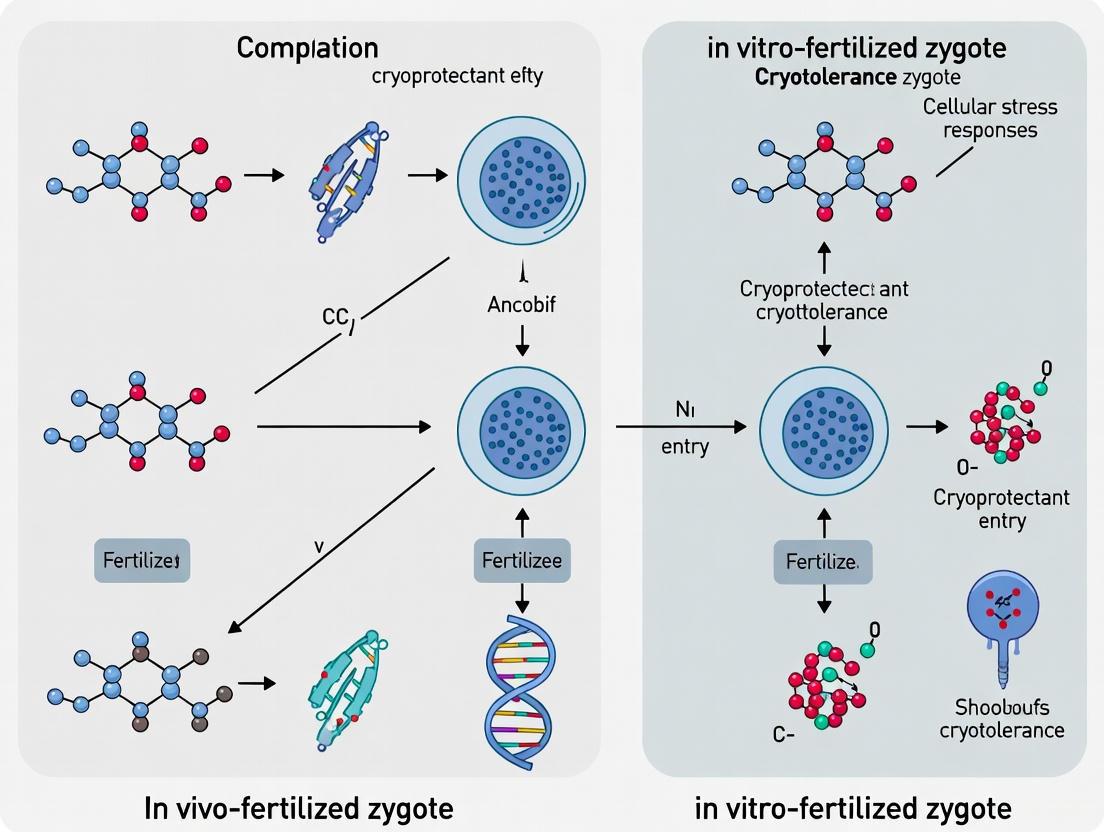
This article systematically reviews the critical differences in cryotolerance between in vivo- and in vitro-fertilized zygotes, a key consideration for biomedical research utilizing cryopreserved genetic resources.
In Vivo vs. In Vitro Fertilized Zygotes: A Systematic Review of Cryotolerance for Research and Drug Development
Abstract
This article systematically reviews the critical differences in cryotolerance between in vivo- and in vitro-fertilized zygotes, a key consideration for biomedical research utilizing cryopreserved genetic resources. We explore the foundational biological mechanisms underlying this disparity, including membrane lipid composition and response to osmotic stress. The content details optimized cryopreservation protocols that enhance survival and developmental rates, supported by validation data from genome editing experiments. Aimed at researchers, scientists, and drug development professionals, this review synthesizes evidence to guide protocol selection and optimization, ultimately supporting the production of genetically engineered animal models with greater efficiency and reliability.
Unraveling the Biological Basis of Cryotolerance Disparity
Cryotolerance is a critical parameter in reproductive biotechnology, defined as the ability of cells or tissues to survive the process of cryopreservation and subsequent warming while maintaining their structural integrity, biological functions, and developmental potential. For zygotes, this encompasses not only survival post-thaw but also the crucial capacity to continue normal development into blastocysts and ultimately viable offspring [1] [2]. The cryotolerance of zygotes varies significantly based on their origin, with a growing body of evidence demonstrating substantial differences between in vivo-fertilized (derived from natural mating) and in vitro-fertilized (produced under laboratory conditions) zygotes [1]. Understanding these differences is essential for improving assisted reproductive technologies across multiple species, from agricultural applications to biomedical research and preservation of genetically engineered animal models.
Comparative Analysis: In Vivo vs. In Vitro Derived Zygotes
Direct Comparative Studies
Recent systematic comparisons reveal consistent and significant advantages for in vivo-derived zygotes in cryotolerance metrics across multiple species and strains. A 2024 study on SD and F344 rats provided compelling quantitative evidence of this disparity, demonstrating that in vivo-fertilized oocytes exhibited superior survival and developmental outcomes compared to their in vitro-fertilized counterparts [1].
Table 1: Cryotolerance Comparison of In Vivo vs. In Vitro Fertilized Rat Zygotes
| Parameter | SD Rats - In Vivo | SD Rats - In Vitro | F344 Rats - In Vivo | F344 Rats - In Vitro |
|---|---|---|---|---|
| Survival Rate Post-Vitrification | Slightly higher | Lower | Higher | Significantly lower |
| Development to Fetuses | Higher rates | Lower rates | Higher rates | Lower rates |
| Polyspermic Fertilization Rate | Lower | Higher | Lower | Higher |
The fundamental developmental competence of in vitro-produced embryos is also inherently lower, as noted in bovine studies where "there are still unresolved aspects of IVP of embryos that limit a wider implementation of the technology, including potentially reduced fertility from the use of SS, reduced oocyte quality after in vitro oocyte maturation and lower embryo cryotolerance, resulting in reduced pregnancy rates compared to in vivo–produced embryos" [3].
Underlying Mechanisms of Cryotolerance Differences
The disparity in cryotolerance between in vivo and in vitro derived zygotes stems from multiple physiological and molecular factors:
Oxidative Stress Management: In oil palm zygotic embryos, the cryotolerance mechanism involves coordinated activity of antioxidant enzymes including catalase (CAT), peroxidase (POD), and superoxide dismutase (SOD), which effectively scavenge reactive oxygen species (ROS) generated during cryopreservation [4]. Transcriptome analysis reveals that genes involved in ROS production (RBOH, PAO, and PRX) and ROS scavenging (APX, PER, SOD, CAT, GPX, and AOX) show different expression patterns between zygotic embryos and embryogenic calli, contributing to their differential cryotolerance [4].
Structural Integrity: The presence of cumulus cells during bovine zygote vitrification significantly improves survival outcomes. As noted in bovine studies, "the presence of cumulus cells is important for the success of the process" [5]. These cells likely provide physical protection and biochemical support during the cryopreservation process.
Cryoprotectant Permeability: Differences in membrane composition between in vivo and in vitro derived zygotes may affect the uptake and removal of cryoprotective agents, influencing the effectiveness of cryopreservation protocols [2] [6].
Experimental Protocols for Cryotolerance Assessment
Rat Zygote Vitrification and Warming Protocol
A comprehensive protocol for assessing rat zygote cryotolerance has been systematically optimized [1] [7]:
Table 2: Key Protocol Factors Affecting Rat Zygote Cryotolerance
| Protocol Factor | Optimal Condition | Impact on Cryotolerance |
|---|---|---|
| Sucrose Concentration in Warming Solution | 0.1 M | Enhanced survival and development to two-cell embryos |
| Oocyte Donor Age | 6-7 weeks | Higher cryotolerance and developmental ability |
| Fertilization Method | In vivo fertilization | Superior to in vitro fertilization |
Vitrification Procedure: Zygotes are pretreated with PB1 containing 1 M dimethyl sulfoxide (DMSO) at room temperature. The solution with zygotes is transferred to cryotubes and placed in a block cooler at 0°C for 5 minutes. A vitrification solution (DAP213; 2 M DMSO, 1 M acetamide, and 3 M propylene glycol in PB1) is added at 0°C. After 5 minutes, samples are plunged directly into liquid nitrogen [7].
Warming Procedure: Cryotubes are warmed at room temperature for 60 seconds, then 0.9 mL of PB1 with optimized sucrose concentration (0.1 M), prewarmed at 37°C, is added. The contents are transferred to a plastic dish to recover zygotes, which are then washed in three drops of PB1 and placed into mHTF medium [7].
Bovine Zygote Bulk Vitrification Protocol
For bovine zygotes, a bulk vitrification approach has been developed that preserves developmental competence:
Modified IVF Protocol: A 2-step IVF protocol using a short (30 min) co-incubation interval allows zygote culture with attached cumulus cells until vitrification while reducing polyspermy rates without affecting total fertilization rate [5].
Vitrification Method: Cumulus-enclosed zygotes are equilibrated in 2% (v/v) ethylene glycol + 2% (v/v) propylene glycol for 13-15 minutes then vitrified in groups of 52-100 in 2 μL microdrops of 17.5% (v/v) ethylene glycol + 17.5% (v/v) propylene glycol supplemented with 0.3 M sucrose and 50 mg/mL polyvinylpyrrolidone [5].
This protocol demonstrates that "vitrification of zygotes did not reduce developmental competence to the blastocyst stage" when properly optimized, highlighting the importance of protocol-specific factors in determining cryotolerance outcomes [5].
Molecular Mechanisms of Cryotolerance
Oxidative Stress Response Pathways
The molecular basis of cryotolerance involves sophisticated response mechanisms to cryopreservation-induced stresses:
Diagram 1: Molecular Pathways of Oxidative Stress During Cryopreservation
As identified in oil palm research, the cryotolerance mechanism involves coordinated enzymatic activities where "changes in enzyme activities (CAT, POD, and SOD) showed a consistent trend with H2O2 production among ZE samples, indicating that these antioxidants were involved in ROS scavenging" [4]. Furthermore, transcriptomic analyses reveal that "differently expressed genes (DEGs) related to ROS, osmotic, and cold stress responses" form a complex regulatory network determining cryotolerance outcomes [4].
Cryoprotectant Mechanisms of Action
Different classes of cryoprotectants function through distinct molecular mechanisms to enhance cryotolerance:
Permeating Cryoprotectants (DMSO, glycerol, 1,2-propanediol): These compounds penetrate cell membranes and reduce ice crystal formation by disrupting water molecule organization, thereby decreasing freezing points and preventing intracellular ice formation [2] [6].
Non-Permeating Cryoprotectants (sucrose, trehalose, polymers): These create osmotic gradients that facilitate cellular dehydration before freezing, reduce toxic solute concentrations, and stabilize membrane structures through water substitution effects [2] [8].
Ice-Binding Proteins (antifreeze proteins): These proteins "change ice crystal morphology, exhibiting thermal hysteresis, and IRI activity in different degrees following 'adsorption-inhibition' mechanism" [8], directly inhibiting the recrystallization processes that damage cellular structures.
The Scientist's Toolkit: Essential Research Reagents
Table 3: Key Reagents for Zygote Cryotolerance Research
| Reagent/Category | Specific Examples | Function in Cryotolerance Research |
|---|---|---|
| Permeating Cryoprotectants | DMSO, ethylene glycol, propylene glycol, glycerol | Penetrate cells to prevent intracellular ice formation |
| Non-Permeating Cryoprotectants | Sucrose, trehalose, polyvinylpyrrolidone | Create osmotic gradients, stabilize membranes |
| Commercial Cryopreservation Media | CELLBANKER series | Standardized formulations with optimized CPA combinations |
| Basal Media | PB1, mHTF, TCM199, CR1aa | Maintain pH and osmotic balance during procedures |
| Antioxidant Enzymes | CAT, POD, SOD | Scavenge reactive oxygen species generated during cryopreservation |
The CELLBANKER series represents advanced commercial cryopreservation media that "include 10% DMSO in addition to glucose and the high polymer that has been recommended and pH buffers" [2]. Different formulations are optimized for specific applications: CELLBANKER 1 and 1+ (with serum) for most mammalian cell types, CELLBANKER 2 (serum-free) for serum-free culture conditions, and CELLBANKER 3 (xeno-free) for clinically applicable stem cell research [2].
The comprehensive analysis of cryotolerance reveals a consistent pattern across species: in vivo-fertilized zygotes demonstrate superior survival and developmental competence after cryopreservation compared to in vitro-fertilized counterparts. This differential cryotolerance stems from complex molecular mechanisms involving oxidative stress management, structural integrity, and gene expression patterns. The optimized protocols detailed herein, particularly addressing factors such as warming solution composition and donor characteristics, provide researchers with validated methodologies to maximize zygote survival across experimental and applied contexts. As cryopreservation technologies continue to evolve, particularly with emerging bio-based cryoprotectants and refined vitrification techniques, the fundamental understanding of cryotolerance mechanisms will remain essential for advancing reproductive biotechnology in both research and clinical applications.
The cryopreservation of zygotes and embryos is a fundamental technique for the efficient archiving and transport of valuable genetic resources, particularly in biomedical research and livestock breeding. Within this field, a consistent and critical question arises: does the origin of a zygote—created either within the living organism (in vivo) or in a laboratory setting (in vitro)—influence its ability to survive the rigors of freezing and thawing? A growing body of systematic evidence indicates that in vivo-fertilized zygotes possess markedly superior cryotolerance. This guide objectively compares the performance of in vivo versus in vitro-derived zygotes, drawing on recent experimental data to provide researchers and drug development professionals with a clear, evidence-based analysis.
Tabular Comparison of Developmental Outcomes
The following tables synthesize quantitative data from systematic studies, primarily in rat models, highlighting the performance gap between zygotes of different origins post-cryopreservation.
Table 1: Systematic Comparison of Fertilization and Cryotolerance in SD and F344 Rats [9]
| Parameter | Strain | In Vivo Fertilization | In Vitro Fertilization |
|---|---|---|---|
| Fertilization Rate | SD | 64.7% | 93.0% |
| F344 | 95.7% | 97.6% | |
| Polyspermy Rate | SD & F344 | Lower | Higher |
| Survival Rate (Post-Vitrification) | SD | Slightly Higher | Slightly Lower |
| F344 | Higher | Lower | |
| Developmental Rate to Blastocyst (Post-Warming) | SD | Higher | Lower |
| Developmental Rate to Fetus (Post-Warming) | SD & F344 | Higher | Lower |
Table 2: Protocol Optimization for In Vitro-Fertilized Rat Zygotes [7]
| Optimization Factor | Condition | Impact on Survival/Development |
|---|---|---|
| Warming Solution Sucrose Concentration | 0.1 M | Enhanced survival and development to 2-cell stage |
| Oocyte Donor Age | 3 weeks old | Lower cryotolerance and developmental ability |
| 6-7 weeks old | Higher cryotolerance and developmental ability |
Detailed Experimental Protocols and Workflows
To ensure the reproducibility of the data presented, this section outlines the key methodologies employed in the cited research.
- Animal Models: Female Sprague-Dawley (SD) and Fischer 344 (F344) rats were used as oocyte donors.
- Production of Zygotes:
- In vivo fertilization: Female rats were superovulated and mated with males. Fertilized oocytes at the pronuclear stage were collected from the oviducts.
- In vitro fertilization (IVF): Oocytes were collected from superovulated females and fertilized with capacitated sperm in modified human tubal fluid (mHTF) medium.
- Vitrification and Warming: Pronuclear-stage zygotes were cryopreserved using a vitrification protocol. The survival of zygotes was assessed based on morphological integrity after warming.
- Assessment of Developmental Ability:
- In vitro development: Surviving zygotes were cultured in mR1ECM medium, and the rate of development to the blastocyst stage was recorded.
- In vivo development (Embryo Transfer): Surviving zygotes were transferred into the oviducts of pseudopregnant recipient females. The development to fetuses was subsequently evaluated.
The workflow below illustrates the experimental design.
Recognizing the inherent limitations of in vitro-fertilized zygotes, research has been conducted to optimize their cryopreservation.
- Optimization of Warming Solution: Vitrified-warmed IVF zygotes were exposed to warming solutions containing different sucrose concentrations (0 M, 0.05 M, 0.1 M, 0.2 M, and 0.3 M). The survival rate and development to the two-cell stage were evaluated.
- Effect of Oocyte Donor Age: Zygotes for IVF were obtained from female SD rats of different ages (3, 4, 5, 6, and 7 weeks old). The cryotolerance and developmental ability of these zygotes were compared after vitrification and warming.
Molecular Mechanisms Underlying Cryotolerance Differences
The differential cryotolerance observed between in vivo and in vitro derived embryos is not merely phenotypic but is rooted in profound molecular disparities established during early development. Proteomic analyses of bovine embryos reveal distinct protein expression profiles from the 4–6 cell stage onwards, leading to a clear separation based on origin [10].
The diagram below illustrates the key molecular pathways and factors contributing to the superior quality of in vivo embryos.
The molecular basis for the superior cryotolerance of in vivo embryos can be summarized as follows:
- Metabolic and Detoxification Superiority: Proteins significantly more abundant in in vivo-derived embryos are enriched in pathways for carbohydrate metabolism and cellular detoxification (e.g., glutathione metabolism) [10]. This efficient energy metabolism and enhanced capacity to handle oxidative stress is a key advantage during the intense stress of cryopreservation.
- The "Quiet Embryo" Hypothesis: In vivo embryos exhibit a proteome consistent with a less stressed, more metabolically quiet state, particularly around the time of embryonic genome activation (EGA). In contrast, in vitro-derived embryos show a marked overabundance of proteins involved in mitochondrial matrix function and protein synthesis, indicating higher levels of cellular stress and potentially dysregulated metabolism [10].
- Maternal Interaction: In vivo embryos actively internalize beneficial maternal proteins from the reproductive tract, such as oviductin, which are absent in in vitro culture conditions. These proteins are thought to play a crucial role in supporting early embryonic development and quality [10].
The Scientist's Toolkit: Key Research Reagents and Materials
The following table lists essential reagents and materials used in the featured experiments, which are critical for researchers aiming to replicate these studies or apply similar principles.
Table 3: Research Reagent Solutions for Embryo Cryotolerance Studies
| Reagent/Material | Function/Application | Example Use in Context |
|---|---|---|
| CARD HyperOva | Superovulation induction in rodents | Used to stimulate oocyte production in female rats prior to mating or oocyte collection [7]. |
| Modified Human Tubal Fluid (mHTF) | In vitro fertilization medium | The base medium for capacitating sperm and incubating oocytes during IVF procedures [9] [7]. |
| mR1ECM Medium | In vitro culture of rodent embryos | Used for culturing vitrified-warmed pronuclear oocytes to assess development to the blastocyst stage [9]. |
| Vitrification/Warming Solutions | Cryoprotectant solutions for freezing and thawing | Contain permeating (e.g., ethylene glycol) and non-permeating (e.g., sucrose) agents to prevent ice crystal formation [7]. |
| Sucrose | Non-permeating cryoprotectant | Used in warming solutions at optimized concentrations (e.g., 0.1 M) to control osmotic stress and improve survival of vitrified IVF zygotes [7]. |
| Alpha-Lipoic Acid (ALA) | Antioxidant supplement | Added to in vitro culture media for bovine embryos to reduce oxidative stress and improve cryosurvival [11]. |
| Linoleic Acid (LA) | Unsaturated fatty acid supplement | Used in bovine oocyte maturation media to modulate membrane fluidity and improve post-vitrification survival and function [12]. |
| Growth Differentiation Factor-8 (GDF-8) | Signaling molecule (TGF-β superfamily) | Supplemented in bovine embryo culture to improve trophoblast development and tight junction integrity, enhancing cryotolerance [13]. |
Systematic experimental evidence firmly establishes the superior cryotolerance of in vivo-fertilized zygotes over their in vitro-derived counterparts. This difference is quantifiable in higher post-warming survival, blastocyst development, and fetal formation rates, as demonstrated in rat models. The underlying causes are rooted in fundamental molecular and metabolic disparities, including a more favorable proteomic profile, efficient energy metabolism, and reduced cellular stress. While in vitro fertilization remains an indispensable tool for its efficiency, the evidence strongly supports the preferential use of in vivo-derived zygotes for cryopreservation when the experimental goal is maximum viability and developmental potential after thawing. For situations requiring the cryopreservation of IVF zygotes, protocol optimizations, such as adjusting the osmotic environment during warming and selecting oocytes from older donors, can yield significant improvements.
Within reproductive and biomedical research, the selection of an appropriate animal model is critical for experimental validity and translational success. This guide provides a comparative analysis of two widely used rat strains, the outbred Sprague-Dawley (SD) and inbred Fischer 344 (F344), within the specific context of in vivo-fertilized versus in vitro-fertilized zygote cryotolerance research. Strain-specific characteristics significantly influence reproductive parameters, stress responses, and cellular resilience to cryopreservation procedures. Understanding these variations is essential for researchers designing experiments, interpreting results, and selecting the most appropriate model for studies involving assisted reproductive technologies, gamete cryobiology, and embryo development. This guide synthesizes objective experimental data to highlight key performance differences between SD and F344 rats, providing a foundational resource for scientists and drug development professionals.
Comparative Strain Characteristics
The SD and F344 rat strains exhibit fundamental genetic and physiological differences that predispose them to distinct experimental outcomes. SD rats are an outbred strain, characterized by greater genetic heterogeneity and variability between individuals, making them a representative model of a diverse population [14]. In contrast, F344 rats are an inbred strain, possessing a homozygous genome that ensures genetic uniformity and experimental reproducibility, which is particularly valuable for controlled studies investigating specific mechanisms [15] [16]. Beyond genetics, these strains display differing behavioral and physiological profiles. F344 rats exhibit lower spontaneous locomotor activity and a reduced preference for drugs of abuse like morphine and amphetamine compared to other strains, including SD rats [15] [16]. Furthermore, F344 rats are susceptible to experimental autoimmune encephalomyelitis and exhibit a distinct hypothalamic-pituitary-adrenal (HPA) axis response, indicating an altered neuroimmune profile that can influence overall physiological resilience [15] [17].
Table 1: Fundamental Characteristics of SD and F344 Rat Strains
| Characteristic | Sprague-Dawley (SD) | Fischer 344 (F344) |
|---|---|---|
| Breeding Status | Outbred | Inbred |
| Genetic Diversity | High (Heterogeneous) | Low (Homogeneous) |
| Typical Use Cases | General toxicology, behavioral studies, reproductive research | Cancer research, immunology, neuroscience, aging studies |
| Key Behavioral Notes | Higher spontaneous motor recovery after neural injury [17]; faster acquisition of operant tasks [16] | Lower wheel-running activity [15]; lower preference for drugs of abuse [15] [16] |
| Common Health Concerns | Standard spontaneous disease profile | High incidence of testicular interstitial cell tumors in aged males; nephropathy; mononuclear cell leukemia [15] |
Experimental Data on Fertilization and Cryotolerance
A systematic comparison of fertilization methods and subsequent cryotolerance in SD and F344 rats reveals critical strain-specific variations. A 2024 study provides quantitative data on the fertilization efficiency and developmental competence of zygotes following in vivo (natural mating) and in vitro fertilization, both before and after vitrification [9].
Fertilization Efficiency
Significant strain differences were observed in the success of natural mating. The copulation rate was markedly lower in F344 rats (25%) compared to SD rats, highlighting a potential challenge in generating in vivo-fertilized zygotes for this strain [9]. However, once copulation occurred, the fertilization rate was high in F344 rats (95.7%), comparable to their in vitro fertilization rate (97.6%). In SD rats, the in vivo fertilization rate (64.7%) was notably lower than the in vitro rate (93.0%) [9]. Furthermore, in vivo fertilization resulted in significantly lower rates of polyspermic fertilization compared to in vitro fertilization in both strains [9].
Cryotolerance and Developmental Potential
Cryotolerance—defined as the ability of cells to withstand the freezing and thawing process—was assessed by survival rates after vitrification and warming. In both strains, in vivo-fertilized oocytes demonstrated higher survival rates post-warming than in vitro-fertilized oocytes [9]. Moreover, a clear strain effect was evident, with F344 rat zygotes generally showing greater sensitivity to the vitrification and warming procedures compared to SD rat zygotes [9].
The developmental potential of vitrified-warmed zygotes was evaluated through both in vitro culture to the blastocyst stage and embryo transfer to assess fetal development. In SD rats, in vivo-fertilized zygotes developed into blastocysts at a higher rate than in vitro-fertilized zygotes after warming [9]. Notably, in this study, F344 fertilized oocytes did not develop into blastocysts in vitro under the tested culture conditions [9]. Following embryo transfer, the developmental rates to fetuses were consistently higher for in vivo-fertilized oocytes in both SD and F344 rats, underscoring the superior quality and cryotolerance of zygotes derived from natural mating [9].
Table 2: Comparative Fertilization and Cryotolerance Data in SD and F344 Rats
| Parameter | Sprague-Dawley (SD) | Fischer 344 (F344) |
|---|---|---|
| In Vivo Copulation Rate | Higher | 25% [9] |
| In Vivo Fertilization Rate | 64.7% [9] | 95.7% [9] |
| In Vitro Fertilization (IVF) Rate | 93.0% [9] | 97.6% [9] |
| Polyspermy Rate | Lower in in vivo vs IVF [9] | Lower in in vivo vs IVF [9] |
| Cryotolerance (General) | Moderate to High | More sensitive than SD [9] |
| Cryosurvival of In Vivo Zygotes | Higher than in vitro counterparts [9] | Higher than in vitro counterparts [9] |
| Blastocyst Development (from vitrified in vivo zygotes) | Achieved [9] | Not achieved in vitro under tested conditions [9] |
| Fetal Development (from vitrified in vivo zygotes) | Achieved, higher rate than from IVF zygotes [9] | Achieved, higher rate than from IVF zygotes [9] |
Detailed Experimental Protocols
To ensure reproducibility and provide a clear framework for the comparative data presented, this section outlines key methodologies cited in the research.
Protocol for In Vivo and In Vitro Fertilized Oocyte Production and Cryopreservation
The following workflow details the systematic comparison of in vivo and in vitro derived zygotes and their cryotolerance testing in SD and F344 rats [9].
Protocol for Basal Dopaminergic Receptor Characterization
This method is relevant for understanding potential neurobiological differences between strains, which can underlie variations in stress response and overall physiological resilience—factors that may indirectly influence reproductive outcomes and gamete quality [18].
The Scientist's Toolkit: Key Research Reagents
The following table catalogues essential materials and reagents derived from the experimental protocols used in the cited studies, providing a resource for experimental design.
Table 3: Essential Research Reagents for Rat Zygote and Behavioral Studies
| Reagent / Material | Function / Application | Example Use in Context |
|---|---|---|
| Tris-Based Extender | A cryoprotective medium used for diluting and preserving sperm or embryos during freezing. | Used in the cryopreservation of ram semen; contains TRIS buffer, glycerol, and egg yolk for membrane stabilization [19]. |
| Hoechst 33342 Dye | A fluorescent dye that binds to DNA, used for live cell staining. | Used to stain sperm DNA for fluorescence-activated cell sorting (FACS) to separate X- and Y-chromosome bearing sperm [20]. |
| FluoroRuby (Tetramethylrhodamine Dextran) | A fluorescent retrograde neuronal tracer. | Injected into the rubrospinal tract to label and quantify rubrospinal neurons (RSNs) after spinal cord injury in different rat strains [17]. |
| Lactated Ringer's Solution | A balanced isotonic solution used as a vehicle or base for drug solutions. | Used as the vehicle control in intracranial self-administration studies with dextroamphetamine [16]. |
| Isoflurane | A volatile inhalation anesthetic for general anesthesia in laboratory animals. | Used for surgical maintenance during compression spinal cord injury (SCI) induction in SD and Wistar rats [21]. |
| Ketamine/Xylazine Mixture | An injectable anesthetic combination for surgical procedures in rodents. | Used for anesthesia during spinal cord contusion injury in SD, LEW, and F344 rats [17]. |
| Dextroamphetamine Sulfate | A psychostimulant drug acting on the monoamine systems, used in neuropharmacology studies. | Served as the drug reinforcer in intracranial self-administration studies comparing SD and F344 rats [16]. |
Cryopreservation of zygotes and early embryos is a cornerstone of assisted reproductive technologies (ART), crucial for preserving genetic resources in biomedical research and managing fertility treatments. However, not all embryos survive the rigors of freezing and thawing, a quality known as cryotolerance. A growing body of evidence indicates that the origin of an embryo—whether derived from in vivo fertilization (within the living organism) or in vitro fertilization (in a laboratory setting)—significantly impacts this cryotolerance. This divergence is not merely a physiological observation but is rooted in profound molecular differences. The plasma membrane serves as the primary interface between the embryo and its environment during cryopreservation. Its composition and the proteins that regulate the movement of water and cryoprotectants are fundamental to surviving osmotic stress and ice crystal formation. This review synthesizes current molecular insights, focusing on the distinct roles of membrane lipids and aquaporins (AQPs) in explaining the superior cryotolerance of in vivo-derived zygotes. We will objectively compare the performance of in vivo and in vitro-produced embryos, supported by experimental data, to provide a guide for researchers and scientists in the field.
Comparative Performance: In Vivo vs. In Vitro Derived Zygotes
Systematic comparisons reveal that in vivo-fertilized oocytes consistently outperform their in vitro-produced counterparts in post-thaw survival and development.
Table 1: Comparative Cryotolerance and Developmental Ability of In Vivo vs. In Vitro-Derived Zygotes
| Strain/Species | Fertilization Method | Post-Warm Survival Rate | Developmental Rate to Fetus after ET | Key Molecular/Observational Findings |
|---|---|---|---|---|
| SD Rats [9] | In Vivo | ~90% [9] | ~60% [9] | Lower rates of polyspermic fertilization. |
| In Vitro | Slightly lower than in vivo [9] | ~30% [9] | Higher rates of polyspermic fertilization. | |
| F344 Rats [9] | In Vivo | ~90% [9] | ~40% [9] | Lower rates of polyspermic fertilization. |
| In Vitro | Significantly lower than in vivo [9] | ~10% [9] | Higher rates of polyspermic fertilization. | |
| Bovine Embryos [22] | In Vitro | Similar morphological survival | N/A | Male and female embryos show different molecular stress responses (gene expression of HSPA1A, CASP3, G6PD). Bull selection affects embryo production and cryotolerance. |
A 2024 study on SD and F344 rats provided a direct, systematic comparison. The research demonstrated that in vivo-fertilized oocytes had higher cryotolerance and developmental ability than in vitro-fertilized oocytes in both strains [9]. After vitrification and warming, the survival rate of in vivo-derived SD rat oocytes was slightly higher, while F344 in vitro-fertilized oocytes had a markedly lower survival rate. More strikingly, the developmental potential to fetuses following embryo transfer was twice as high for in vivo-derived zygotes in SD rats and four times higher in F344 rats [9]. The study also noted that in vivo fertilization led to lower rates of polyspermic fertilization, pointing to inherent qualitative differences established at conception [9].
Furthermore, the source of the embryo is not the only variable. Studies in bovine embryos indicate that cryotolerance is also influenced by genetic factors, such as the sex of the embryo and the specific bull used for fertilization, which can alter molecular responses to vitrification stress even when morphological survival appears similar [22].
Experimental Protocols and Methodologies
Protocol 1: Systematic Comparison of In Vivo vs. In Vitro Derived Rat Zygotes
This protocol is designed to directly evaluate the impact of fertilization origin on cryotolerance [9].
1. Zygote Production:
- In Vivo Group: Superovulate female SD or F344 rats using hormonal treatment. Mate with fertile males and check for copulation plugs. Collect pronuclear-stage zygotes from the oviducts.
- In Vitro Group: Superovulate females and collect oocytes. Perform in vitro fertilization using sperm from the same strain. Collect fertilized pronuclear-stage oocytes.
2. Cryopreservation by Vitrification:
- Equilibrate zygotes in a vitrification solution containing permeating cryoprotectants (e.g., Ethylene Glycol (EG) and Dimethyl sulfoxide (DMSO)) and a non-permeating sugar (e.g., sucrose).
- Use a minimum-volume vitrification device like the Cryotop.
- Plunge the device directly into liquid nitrogen rapidly to achieve a glassy state.
3. Post-Warm Assessment:
- Warming: Rapidly warm zygotes by plunging the Cryotop into a warming solution at 37°C.
- Rehydration: Sequentially transfer zygotes into decreasing concentrations of sucrose solutions to remove cryoprotectants osmotically.
- Survival Rate Assessment: Morphologically evaluate zygotes for intact structure and membrane integrity.
- Developmental Competence: Culture surviving zygotes in vitro to the blastocyst stage in a defined medium (e.g., mR1ECM) or transfer them to synchronized recipient females to assess fetal development.
Protocol 2: Delipidation of Porcine Embryos for Enhanced Cryosurvival
This protocol targets the lipid content of embryos, a key difference between in vivo and in vitro samples, to improve cryotolerance in a closed system [23] [24].
1. Two-Step Centrifugation for Lipid Externalization:
- First Step (Polarization): Centrifuge early-stage embryos (e.g., four-cell to morula) in a physiological osmolality solution to polarize intracellular lipid droplets to one side of the blastomere.
- Second Step (Externalization): Transfer embryos to a hypertonic solution (e.g., 300-500 mOsm) to shrink the blastomeres and temporarily increase the perivitelline space. Centrifuge again to completely disassociate the polarized lipid droplets from the blastomeres without damaging the zona pellucida.
2. Closed-System Cryopreservation:
- Slow Cooling: Equilibrate delipidated embryos in 1.5 M PROH (1,2-Propanediol) with sucrose. Load into sealed 0.25 mL straws. Cool in a programmable freezer using a controlled rate (e.g., seed at -6.5°C, cool at 0.3°C/min to -30°C) before plunging into liquid nitrogen [24].
- Vitrification: As an alternative, vitrify delipidated embryos using the Open Pulled Straw (OPS) method after equilibration in a vitrification solution (e.g., EG and DMSO) [24].
3. Post-Thaw Analysis:
- Thaw straws in a warm water bath and rehydrate embryos in descending sucrose concentrations.
- Assess cryosurvival based on membrane and zona pellucida integrity.
- Culture embryos to the blastocyst stage to evaluate developmental competence.
Molecular Mechanisms Underlying Cryotolerance
The Critical Role of Aquaporins (AQPs) in Osmotic Balance
Aquaporins are transmembrane channel proteins that facilitate the transport of water and small solutes, which is critical for cells to manage osmotic stress during the addition and removal of cryoprotectants.
Stage and Species-Specific Expression: The permeability of the plasma membrane to water and cryoprotectants is not constant. In mouse oocytes and early embryos, water and cryoprotectants like glycerol and ethylene glycol move slowly via simple diffusion [25]. However, in later stages (morulae and blastocysts), the permeability to water, glycerol, and ethylene glycol increases dramatically due to the facilitated diffusion mediated by Aquaporin 3 (AQP3) [25]. This stage-dependent change is conserved but shows species-specific variations; for instance, in pigs, permeability markedly increases at the blastocyst stage, not the morula stage [25].
AQP7 as a Key Mediator in Hyperosmotic Stress: Mouse oocytes subjected to hyperosmotic stress from cryoprotectants (EG, DMSO) or sucrose show a selective upregulation of AQP7 protein levels, but not AQP3 or AQP9 [26]. This upregulation is a protective mechanism to improve osmotic balance. Knockdown experiments confirm its necessity; oocytes with reduced AQP7 expression had a survival rate of 0% after vitrification, compared to 64% in controls [26]. AQP7 binds with F-actin, which may aid in its trafficking to the cell membrane under stress [26].
Regulatory Pathway of AQP7: The hyperosmosis-induced upregulation of AQP7 is not a passive event but an active signaling process. It is mediated by the PI3K and PKC pathways, which lead to the phosphorylation of Aurora A kinase and CPEB (Cytoplasmic Polyadenylation Element-Binding protein) [26]. Phosphorylated CPEB then promotes the translation of stored maternal mRNAs, including that for AQP7, enabling a rapid cellular response to osmotic stress [26].
Figure 1: AQP7 Upregulation Pathway in Oocytes under Hyperosmotic Stress
Membrane Lipid Composition and Cytoplasmic Organization
The lipid content and organization within the embryo are another major differentiator of cryotolerance.
Intracellular Lipids as a Cryosensitivity Factor: In vitro-produced embryos, particularly in species like pigs and cows, have a higher cytoplasmic lipid content and larger lipid droplets than their in vivo counterparts [23]. These lipids are primarily in the form of triacylglycerols, which undergo phase transitions during cooling, promoting deadly intracellular ice crystal formation. The process of delipidation or lipid polarization through centrifugation, as described in Protocol 2, significantly improves the cryosurvival of porcine embryos by physically reducing this risk [23] [24].
Membrane Permeability Dynamics: The presence of aquaglyceroporins like AQP3, AQP7, and AQP9 is crucial because they are permeable not only to water but also to glycerol, a common cryoprotectant [27]. Embryos with higher expression or activity of these channels can more efficiently equilibrate intracellular and extracellular concentrations of water and cryoprotectants, minimizing prolonged osmotic stress and toxic exposure. The developmental stage-dependent shift from simple diffusion to facilitated diffusion via AQPs, as shown in the diagram below, is a key adaptation that enhances the cryotolerance of more advanced embryos [25].
Figure 2: Developmental Shift in Water/Cryoprotectant Transport Mechanisms
The Scientist's Toolkit: Key Research Reagents and Solutions
Table 2: Essential Reagents for Zygote Cryotolerance Research
| Reagent/Solution | Function in Research | Specific Example |
|---|---|---|
| Cryoprotectant Agents (CPAs) | Penetrating (e.g., EG, DMSO, PROH) and non-penetrating (e.g., sucrose) agents used to protect cells from ice crystal formation during freezing. | Used in vitrification solutions for rat and porcine embryos [9] [24]. |
| Hyperosmotic Solutions | Solutions with elevated osmolality (e.g., 300-500 mOsm) used to study osmotic stress response or to create perivitelline space for delipidation. | Applied in a two-step centrifugation protocol for porcine embryo delipidation [23]. |
| siRNA for Gene Knockdown | Small interfering RNA used to transiently silence specific genes to investigate their function, such as in cryotolerance pathways. | AQP7 siRNA was used to confirm its critical role in mouse oocyte cryosurvival [26]. |
| Pathway Inhibitors & Activators | Chemical compounds that inhibit or activate specific signaling pathways to delineate their role in the cellular stress response. | PI3K and PKC inhibitors were used to block hyperosmosis-induced AQP7 upregulation [26]. |
| Antibodies for Immunodetection | Used for Western Blot and immunofluorescence to detect protein expression, localization, and post-translational modifications. | Antibodies against AQP7, pCPEB, and F-actin were used to track molecular responses [26]. |
| Defined Culture Media (e.g., PZM-3, mR1ECM) | Media for the in vitro culture and production of embryos, supporting development post-fertilization and post-thaw. | PZM-3 for porcine embryo culture; mR1ECM for rat embryo culture [9] [24]. |
| Minimum-Volume Vitrification Devices (Cryotop, OPS) | Devices that allow vitrification in an extremely small volume of solution, enabling ultra-rapid cooling rates for improved survival. | Cryotop used for rat and goat embryo vitrification; OPS used for porcine embryos [9] [28] [24]. |
The collective evidence firmly establishes that in vivo-fertilized zygotes possess superior cryotolerance compared to those produced in vitro. This is not a simple qualitative difference but is underpinned by distinct molecular architectures, particularly at the plasma membrane. The regulated expression and function of aquaporins, especially the stress-responsive AQP7, provide in vivo-derived embryos with a more robust system for managing the profound osmotic shifts during cryopreservation. Concurrently, a more favorable cytoplasmic lipid profile reduces the risk of intracellular ice formation. For researchers and drug development professionals, these insights are pivotal. They highlight that improving the cryotolerance of in vitro-produced embryos—a common necessity in transgenic model generation and human ART—may be achieved by mimicking the in vivo environment to promote a more natural membrane lipid composition and optimizing protocols to harness the protective potential of aquaporin pathways. Future research should focus on precisely modulating these pathways in vitro to bridge the quality gap with in vivo-derived embryos.
The production of genetically modified animal models is a cornerstone of modern biomedical research, with the laboratory rat serving as a primary species for physiological, pharmacological, and toxicological studies [7]. Zygote quality is a critical determinant of success in these endeavors, particularly for genome editing technologies like CRISPR-Cas9 that require viable embryos for electroporation or microinjection [7]. While in vitro fertilization (IVF) efficiently generates zygotes in numbers sufficient for genetic manipulation, these in vitro-produced embryos consistently demonstrate lower cryotolerance and developmental competence compared to their in vivo-fertilized counterparts [7]. This discrepancy represents a significant technical bottleneck in the efficient production and preservation of valuable genetic models.
Donor age emerges as a fundamental factor influencing oocyte developmental competence and subsequent embryo viability. Although advanced maternal age is well-established as detrimental to fertility, the impact of very young donor age on zygote quality remains surprisingly undercharacterized [29]. This review synthesizes current evidence on how donor age affects zygote quality, with particular emphasis on implications for cryotolerance within the broader context of comparing in vivo-fertilized versus in vitro-fertilized zygotes. We present experimental data comparing donor age effects, detail critical methodological protocols, and identify key reagent solutions to optimize zygote quality for research applications.
Comparative Analysis of Donor Age Impact on Zygote Quality
Experimental Evidence from Animal Models
Table 1: Donor Age Effects on Zygote Cryotolerance and Developmental Competence in Rats
| Donor Age (Weeks) | Survival Rate Post-Vitrification (%) | Development to 2-Cell Embryo (%) | Developmental Ability Post-Transfer |
|---|---|---|---|
| 3 | Lower | Lower | Reduced |
| 4 | - | - | - |
| 5 | - | - | - |
| 6 | Higher | Higher | Improved |
| 7 | Higher | Higher | Improved |
Note: Data adapted from Nakagata et al. (2025), where specific percentage data were not provided in the abstract, but statistical significance was reported for "higher" and "lower" categories [7].
Rat model studies demonstrate a clear effect of oocyte donor age on zygote cryotolerance. Research optimizing vitrification protocols for rat zygotes revealed that zygotes derived from 6- and 7-week-old female rats exhibited significantly higher cryotolerance and developmental ability compared to those from 3-week-old donors [7]. This enhanced viability was observed through improved survival rates post-warming and increased development to two-cell embryos, indicating that reproductive maturity in donors enhances zygote resilience to cryopreservation stresses.
Clinical Evidence from Human IVF Studies
Table 2: Reproductive Outcomes by Donor Age in Human IVF Cycles
| Donor Age Group (Years) | Fertilization Rate | Clinical Pregnancy Rate (RR) | Live Birth Rate (RR) | Miscarriage Rate |
|---|---|---|---|---|
| <25 | Lower [29] | 0.90 [30] | 0.87 [30] | Higher [29] |
| 25-<30 | - | Reference [30] | Reference [30] | - |
| 30-<35 | - | - | - | - |
Note: RR = Risk Ratio compared to reference group (donors age 25-<30 years); Dash indicates no significant difference or reference group status.
Contrary to conventional assumptions, human IVF data challenge the notion that younger donors invariably produce superior oocytes. One study comparing infertility patients aged 19-25 years to those aged 30-35 years found that younger patients demonstrated lower fertilization rates and produced fewer top-quality embryos [29]. Although clinical pregnancy and implantation rates were similar between age groups, younger women experienced significantly higher miscarriage rates [29].
A comprehensive retrospective cohort study further substantiates these findings, reporting that donors under 25 years showed no advantage in clinical pregnancy or live birth rates compared to donors aged 25-<30 years [30]. After adjusting for recipient age, cycles using donors <25 years were not associated with higher incidence of clinical pregnancy or live birth compared to donors age 25-<30 years [30].
Experimental Protocols for Zygote Vitrification and Assessment
Vitrification and Warming Protocol for Rat Zygotes
Optimized Vitrification-Warming Methodology for Rat Zygotes [7]:
Animal Preparation:
- Utilize 6-7-week-old female Sprague Dawley rats as oocyte donors for optimal results
- Administer CARD HyperOva for Rat (0.2-0.3 mL) followed by human chorionic gonadotropin (hCG, 30 IU) after 54-56 hours
- For 6-7-week-old females, administer (des-Gly10, D-Ala6)-LH-RH ethylamide acetate salt hydrate (0.04 mg) 48-50 hours before CARD HyperOva injection
In Vitro Fertilization:
- Collect sperm from male rats (11-13 weeks old) and incubate in modified human tubal fluid (mHTF) for capacitation
- Sacrifice females 15-16 hours post-hCG injection and collect oviducts
- Release cumulus oocyte complexes into fertilization medium with sperm (500 sperm/μL)
- Assess fertilization rates 6-7 hours post-insemination under inverted microscope
Vitrification and Warming:
- Warm zygotes in solution containing 0.1 M sucrose for enhanced survival
- Implement cryotop vitrification method for optimal results
- This optimized protocol yielded zygotes competent for genome editing, with 86.5% of resulting pups showing targeted gene mutation after electroporation with Cas9 ribonucleoprotein and gRNA [7]
Cryotop Vitrification Method for IVP Embryos
Technical Protocol for Embryo Cryopreservation [28]:
Optimal Parameters for Cỏ Goat Embryos:
- Developmental Stage: Blastocysts show higher survival rates (90.92%) than zygotes (66.86%)
- CPA Concentration: 16.5% EG + 16.5% DMSO yields superior survival (91.34%) compared to lower or higher concentrations
- Vitrification Volume: 0.3 μL provides the highest hatching blastocyst rate (44.18%)
Procedure:
- Place embryos onto Cryotop device in minimal vitrification solution volume (0.3 μL)
- Immerse directly into liquid nitrogen for rapid cooling
- This minimum-volume approach facilitates rapid passage through critical temperature range, enhancing post-warming survival rates [28]
Signaling Pathways and Experimental Workflows
Diagram: Donor Age Impact on Zygote Quality and Downstream Applications
The diagram illustrates the relationship between donor age and key zygote quality parameters, showing how mature donors (6-7 weeks) yield zygotes with improved cryotolerance and developmental ability, ultimately enhancing the efficiency of genome editing applications. In contrast, zygotes from younger donors (3-5 weeks) exhibit reduced resilience to cryopreservation and lower developmental competence.
The Scientist's Toolkit: Essential Research Reagents
Table 3: Key Research Reagent Solutions for Zygote Research
| Reagent Solution | Specific Function | Experimental Application |
|---|---|---|
| CARD HyperOva for Rat | Superovulation induction | Efficient oocyte collection from donor rats [7] |
| Modified Human Tubal Fluid (mHTF) | Sperm capacitation and fertilization medium | Supports in vitro fertilization process [7] |
| Cryotop Device | Minimum-volume vitrification | Enables high survival rates for vitrified zygotes and embryos [28] |
| 0.1 M Sucrose Warming Solution | Osmotic stabilization during warming | Enhances survival of vitrified-warmed zygotes [7] |
| 16.5% EG + 16.5% DMSO | Cryoprotectant combination | Optimal CPA concentration for embryo vitrification [28] |
| (des-Gly10, D-Ala6)-LH-RH ethylamide | Ovulation trigger | Coordinates oocyte maturation in mature donors [7] |
These reagent solutions represent critical components for successful zygote production, cryopreservation, and subsequent genetic manipulation. The optimized concentrations and specific applications have been experimentally validated to enhance zygote quality and cryotolerance outcomes.
Donor age significantly influences zygote quality with direct implications for cryotolerance and developmental competence. Optimal reproductive maturity in donors (6-7 weeks in rat models) yields zygotes with enhanced resilience to cryopreservation stresses and improved developmental outcomes compared to those from very young donors. These findings align with human IVF data challenging the assumption that younger donors invariably produce superior oocytes. The optimized protocols and reagent solutions presented here provide researchers with practical tools to enhance zygote quality for genetic engineering applications, particularly important given the inherent cryotolerance limitations of in vitro-fertilized zygotes compared to in vivo-fertilized counterparts. Future research should further elucidate the molecular mechanisms underlying these age-related quality differences to refine strategies for preserving and utilizing valuable genetic models.
Optimized Protocols for Enhanced Zygote Vitrification and Warming
Vitrification and warming are pivotal techniques in assisted reproductive technology (ART) and biomedical research, enabling the long-term preservation of gametes, embryos, and reproductive tissues. The pursuit of optimized protocols has become increasingly important as applications expand across clinical medicine, veterinary science, and laboratory animal model preservation. Current research demonstrates that standardized methodologies can significantly improve post-warming survival, developmental potential, and clinical outcomes while enhancing laboratory efficiency.
This guide provides a comprehensive comparison of contemporary vitrification and warming practices, with particular emphasis on how protocol modifications impact biological materials with differing origins and cryotolerances. The analysis is framed within emerging research on the differential cryotolerance between in vivo-fertilized and in vitro-fertilized zygotes, a critical consideration for researchers designing preservation strategies. The following sections present experimental data, detailed methodologies, and analytical tools to inform evidence-based protocol selection for specific research or clinical applications.
Comparative Analysis of Vitrification and Warming Outcomes
The efficacy of vitrification and warming protocols varies significantly based on biological material, methodology, and specific outcome measures. The tables below summarize key experimental findings from recent studies, enabling direct comparison of performance metrics across different approaches.
Table 1: Comparative Survival and Development Rates Following Different Warming Protocols
| Biological Material | Protocol Type | Survival Rate | Blastocyst Formation | Live Birth/Pregnancy | Study |
|---|---|---|---|---|---|
| Human donor oocytes | Conventional Warming (CWP) | 93.7% | 57.5% | 50.4% | [31] [32] |
| Human donor oocytes | Modified Warming (MWP) | 93.9% | 77.3% | 66.7% | [31] [32] |
| Human donor oocytes | Fresh (control) | N/A | 69.2% | Reference | [31] [32] |
| Slow-frozen ovarian tissue | Conventional thawing | N/A | 33% (primordial follicle preservation) | N/A | [33] |
| Slow-frozen ovarian tissue | Rapid warming | N/A | 52-57% (primordial follicle preservation) | N/A | [33] |
| Mouse MII oocytes | Standard Vitrification/Warming | 94.2% | 83.4% | 47.8% | [34] |
| Mouse MII oocytes | Fast Vitrification/Warming | 97.2% | 80.9% | 38.7% | [34] |
Table 2: Cryotolerance Comparison of In Vivo vs. In Vitro Fertilized Zygotes
| Strain | Fertilization Method | Post-Warming Survival | Development to Blastocyst | Development to Fetus | Study |
|---|---|---|---|---|---|
| SD Rats | In vivo | High | 72.7% | 26.7% | [9] |
| SD Rats | In vitro | Lower than in vivo | 47.8% | 13.3% | [9] |
| F344 Rats | In vivo | High | Did not develop | 22.2% | [9] |
| F344 Rats | In vitro | Lower than in vivo | Did not develop | 5.6% | [9] |
| SD Rats (optimized) | In vitro with 0.1M sucrose warming | Enhanced | Improved | Improved | [7] |
Experimental Protocols: Detailed Methodologies
Universal Rapid Warming Protocol for Ovarian Tissue
A 2025 study investigated applying a universal rapid warming protocol to slow-frozen human ovarian tissue, potentially creating a single protocol for both slow-frozen and vitrified samples [33].
Methodology:
- Tissue Sources: Slow-frozen ovarian tissue samples from 25 patients
- Experimental Groups:
- Conventional thawing protocol (control)
- Rapid warming with 'in-house' produced media
- Rapid warming with commercially available media
- Assessment Metrics:
- Anti-Müllerian hormone (AMH) values pre-cryopreservation
- Follicular viability assessed pre-cryopreservation and 24-hours post-warming
- Hypoxic tissue culture for 48 hours measuring VEGF-A levels to estimate angiogenic potential
- Histological analysis via TUNEL staining for apoptosis and haematoxylin and eosin staining for primordial follicles
Key Findings: Rapid-warming protocols provided similar to superior results compared with conventional thawing, with the highest follicular viability in rapid warming groups and significantly improved primordial follicle preservation after 48 hours in culture (52-57% vs. 33% in conventional) [33].
Modified Warming Protocol for Donor Oocytes
A large-scale clinical study (2025) compared conventional and modified warming protocols across 13,103 donor oocytes [31] [32].
Methodology:
- Sample Size: 9486 mature oocytes from 452 vitrified donor cycles and 3617 mature oocytes from 174 fresh donor cycles
- Protocol Specifications:
- Conventional Warming Protocol (CWP): Thawing Solution (TS, 1 min) at 37°C → Dilution Solution (DS, 3 min) at room temperature → Wash Solution (WS, 5-6 min) at room temperature
- Modified Warming Protocol (MWP): Single-step process using only TS for 1 minute at 37°C, eliminating DS and WS
- Outcome Measures: Survival rates, degeneration post-ICSI, fertilization rates, blastocyst formation, and ongoing pregnancy/live birth rates
Key Findings: The MWP significantly improved blastocyst formation (77.3% vs. 57.5%) and ongoing pregnancy/live birth rates (66.7% vs. 50.4%) while reducing laboratory processing time [31] [32].
Optimized Protocol for Rat Zygotes
Research on rat zygotes (2025) demonstrated protocol optimization through warming solution composition and donor age considerations [7].
Methodology:
- Experimental Variables:
- Sucrose concentrations in warming solution (0, 0.05, 0.1, 0.2, 0.3 M)
- Oocyte donor age (3, 4, 5, 6, 7 weeks old)
- Assessment: Survival rates post-warming, development to two-cell embryos, and fetus development after embryo transfer
- Application: Genome editing via electroporation with Cas9 ribonucleoprotein following vitrification/warming
Key Findings: Warming solution with 0.1 M sucrose and oocytes from 6-7 week old donors significantly improved cryotolerance and developmental ability of vitrified-warmed in vitro fertilized zygotes [7].
Workflow Visualization: Protocol Decision Pathways
The following diagram illustrates the key decision points and procedural steps in selecting and implementing optimal vitrification and warming protocols based on biological material characteristics.
Diagram 1: Protocol selection workflow for different biological materials.
The Scientist's Toolkit: Essential Research Reagents
Table 3: Key Reagent Solutions for Vitrification and Warming Protocols
| Reagent Solution | Composition/Characteristics | Primary Function | Protocol Applications |
|---|---|---|---|
| Thawing Solution (TS) | High osmolarity (≈1.0M sucrose/trehalose) | Rapid warming at 37°C prevents ice crystal formation; creates osmotic gradient for controlled rehydration | Used in all protocols; sole solution in modified fast warming [35] [31] |
| Dilution Solution (DS) | Lower osmolarity (≈0.5M sucrose) | Gradual dilution of cryoprotectants at room temperature | Conventional multi-step protocols; eliminated in modified fast warming [35] |
| Washing Solution (WS) | HEPES-buffered culture medium | Removes residual cryoprotectants; prepares for culture | Conventional protocols; eliminated in modified fast warming [35] [31] |
| "In-house" Produced Media | Laboratory-specific formulations | Customized cryoprotectant combinations | Rapid warming of ovarian tissue [33] |
| Commercial Warming Kits | Standardized compositions (e.g., Kitazato, Cryotec) | Consistent performance across laboratories | Clinical oocyte programs; various tissue types [36] [31] |
| Sucrose-Modified Solutions | 0.1M sucrose concentration | Optimized osmotic balance for specific zygote types | Rat in vitro-fertilized zygote warming [7] |
The current evidence demonstrates that protocol optimization must consider both technical efficiency and biological material characteristics. Modified fast warming protocols offer significant advantages for oocytes and embryos, streamlining laboratory workflow while improving key outcome measures. The universal application of rapid warming techniques shows promise for standardizing approaches across different preservation methods and tissue types.
Critically, the origin of biological materials significantly impacts cryotolerance, with in vivo-fertilized zygotes consistently demonstrating superior post-warming survival and developmental competence compared to their in vitro-fertilized counterparts. This fundamental understanding enables researchers to tailor protocols accordingly—implementing optimized warming solutions for more sensitive materials while recognizing that certain applications may benefit from source material selection rather than solely protocol refinement.
These findings provide a robust framework for researchers and clinicians seeking to implement evidence-based vitrification and warming practices, with clear implications for reproductive medicine, animal model preservation, and biodiversity conservation.
The cryopreservation of zygotes and embryos is a cornerstone of assisted reproductive technologies (ART) and biomedical research, enabling the archiving and distribution of valuable genetic resources. A critical factor determining post-thaw survival and developmental potential is the composition of the cryopreservation solutions, particularly the concentration of non-permeating cryoprotectants like sucrose. Sucrose acts primarily as an osmotic buffer, controlling the rate of water efflux during freezing and influx during thawing, thereby minimizing the lethal effects of intracellular ice formation and osmotic shock [37].
The optimization of sucrose concentration is not merely a technical exercise; it must be considered within the broader biological context of the zygote's origin. A growing body of evidence, particularly from rat models, indicates that in vivo-fertilized oocytes exhibit higher cryotolerance than their in vitro-fertilized counterparts [9]. This differential resilience underscores the need for finely-tuned protocols that account for the intrinsic biological variations of the samples. This guide provides a comparative analysis of sucrose concentration protocols, presenting experimental data to help researchers optimize warming solutions for applications in both basic science and drug development.
Comparative Analysis of Sucrose Concentration Protocols
The concentration of sucrose in freezing and warming media has a direct and measurable impact on survival rates and subsequent developmental outcomes. The following tables summarize key experimental findings from studies comparing different sucrose levels.
Table 1: Impact of Sucrose Concentration on Embryo Cryosurvival and Clinical Outcomes in Human IVF
| Sucrose Concentration | Post-Thaw Outcome | Study Findings | Citation |
|---|---|---|---|
| 0.1 M (Conventional) | Embryo Survival | Baseline for comparison | [38] |
| Couples with ≥50% embryos intact | 45 out of 74 couples (60.8%) | [38] | |
| 0.3 M (Elevated) | Embryo Survival | Significantly improved survival | [38] |
| Couples with ≥50% embryos intact | 53 out of 63 couples (84.1%) | [38] | |
| Likelihood of having ≥50% embryos intact | 3.4-fold increase vs. 0.1 M | [38] | |
| Cumulative Live Birth Rate | No significant increase observed | [38] |
Table 2: Sucrose Protocol in Oocyte Slow Freezing and Corresponding Survival Rates
| Protocol Phase | Sucrose Concentration | Biological Outcome | Citation |
|---|---|---|---|
| Dehydration (Freezing) | 0.2 M | [39] | |
| Rehydration (Warming) | 0.3 M | [39] | |
| Overall Cycle | N/A | Survival Rate: 71.8% | [39] |
| Fertilization Rate: 77.9% | [39] | ||
| Pregnancy Rate per Transfer: 22.8% | [39] |
Table 3: Differential Cryotolerance of In Vivo vs. In Vitro Derived Zygotes in a Rat Model
| Fertilization Origin | Strain | Post-Thaw Survival Rate | Developmental Outcome | [9] |
|---|---|---|---|---|
| In Vivo | SD Rats | Higher than in vitro-derived | Higher developmental ability to fetuses | [9] |
| In Vitro | SD Rats | Lower than in vivo-derived | Lower developmental ability to fetuses | [9] |
| In Vivo | F344 Rats | Higher than in vitro-derived | Higher developmental ability to fetuses | [9] |
| In Vitro | F344 Rats | Lower than in vivo-derived | Lower developmental ability to fetuses | [9] |
Detailed Experimental Protocols
To ensure reproducibility and provide a clear basis for comparison, the core methodologies from the cited studies are outlined below.
Human Embryo Freezing with 0.1 M vs. 0.3 M Sucrose
This randomized controlled trial compared conventional and elevated sucrose concentrations for freezing supernumerary human pronucleate and cleavage-stage embryos [38].
- Freezing Protocol: Embryos were frozen using 1,2-propanediol (PrOH) as the permeating cryoprotectant. The control group was frozen in a medium containing 1.5 M PrOH + 0.1 M sucrose, while the intervention group was frozen in a medium containing 1.4 M PrOH + 0.3 M sucrose.
- Cooling Cycle: Embryos were cooled at 2°C/min to -7°C, seeded, then cooled at 0.3°C/min to -30°C, and finally at 10°C/min to -150°C before storage in liquid nitrogen.
- Thawing and Rehydration: The thawing solutions were also specific to the group. Control embryos were thawed into a solution containing 0.2 M sucrose, whereas intervention embryos were thawed into a solution containing 0.3 M sucrose. Embryos were then transferred through a series of solutions with decreasing sucrose concentrations to rehydrate them gradually [38].
- Primary Outcome: The primary measure was the proportion of couples with at least 50% of their embryos intact after thawing.
Oocyte Slow Freezing with Differential Sucrose Concentrations
This clinical study utilized a protocol where the sucrose concentration differed between the freezing and warming steps [39].
- Freezing Protocol: Oocytes were dehydrated for freezing using a solution containing 0.2 M sucrose in combination with other cryoprotectants.
- Warming Protocol: During the thawing process, oocytes were rehydrated using a solution with a higher sucrose concentration of 0.3 M.
- Assessment: Post-thaw survival was defined as an oocyte with an intact zona pellucida and cell membrane, and a cytoplasm without dark areas or vacuoles. Survived oocytes were then fertilized via ICSI, and subsequent embryonic development and clinical pregnancy rates were tracked [39].
The Scientist's Toolkit: Essential Research Reagents
The following table lists key reagents and materials critical for conducting experiments in zygote cryopreservation and related research.
Table 4: Essential Reagents for Cryopreservation Research
| Reagent/Material | Function in Research | Examples / Notes |
|---|---|---|
| Permeating Cryoprotectants | Penetrate the cell to depress the freezing point and inhibit intracellular ice formation. | 1,2-Propanediol (PrOH) [38]; Dimethyl Sulfoxide (DMSO) [37]; Ethylene Glycol (EG) [37] |
| Non-Permeating Cryoprotectants | Create an osmotic gradient for controlled dehydration; stabilize the extracellular environment. | Sucrose [38]; Trehalose [37] [40] |
| Base Media & Supplements | Provide a physiologically sound environment, pH buffering, and nutritional support. | Phosphate-Buffered Saline (PBS) [41]; Human Serum Albumin (HSA) [38] |
| Enzymes for Reproductive Research | Used for digesting cell walls or cumulus cells in preparation for fertilization or other manipulations. | Zymolyase (for yeast/fungal models) [42] |
Conceptual Workflow: Sucrose Optimization and Cryotolerance
The following diagram illustrates the logical pathway and key relationships between sucrose concentration, biological origin of zygotes, and experimental outcomes discussed in this guide.
The strategic selection of oocyte donor age and genetic strain is a critical determinant of success in reproductive biotechnology, directly influencing cryotolerance and developmental potential. This guide synthesizes experimental data demonstrating that younger donors and strain-specific selection significantly enhance oocyte survival, blastocyst formation, and live birth rates post-cryopreservation. Optimizing these donor factors provides a foundational strategy for maximizing yield in embryo production and genetic resource archiving.
Comparative Performance Data: Donor Age and Strain
Impact of Donor Age on Cryopreservation Outcomes
Table 1: Effect of Donor Age on Cumulative Live Birth Rate (CLBR) after Oocyte Cryopreservation
| Donor Age Group | Cumulative Live Birth Rate per Warm Cycle | Key Findings |
|---|---|---|
| Under 35 years | 49.0% | Highest success rate, optimal for preservation [43]. |
| 35-40 years | 36.8% | Moderate success rate [43]. |
| Over 40 years | 17.2% | Lowest success rate, significant decline in viability [43]. |
Table 2: Effect of Donor Age on Cryotolerance of In Vitro Fertilized (IVF) Rat Zygotes
| Donor Age (Weeks) | Survival Rate of Vitrified-Warmed Zygotes | Developmental Ability Post-Warming |
|---|---|---|
| 3-week-old | Lower | Reduced [7]. |
| 6- and 7-week-old | Higher | Enhanced cryotolerance and developmental ability [7]. |
Impact of Donor Strain on Cryopreservation Outcomes
Table 3: Strain-Dependent Variations in Fertilization and Cryotolerance in Rats
| Strain | Copulation Rate (In Vivo) | Cryotolerance of Vitrified-Warmed Oocytes |
|---|---|---|
| Sprague Dawley (SD) | 70.8% (High) | Higher survival and fetal development rates post-warming [1]. |
| Fischer 344 (F344) | 25.0% (Low) | More sensitive to vitrification-warming damage [1]. |
Detailed Experimental Protocols
Protocol: Analyzing Donor Age and Warming Solution in Rats
This protocol is adapted from research optimizing the survival of vitrified-warmed IVF zygotes in SD rats [7].
- 1. Oocyte Donor Preparation: Female Crl:CD(SD) rats at ages 3, 4, 5, 6, and 7 weeks were superovulated. Prepubertal (3-5 weeks) rats received 20 IU hCG, while older (6-7 weeks) rats received a pre-treatment with a gonadotropin-releasing hormone analog and 30 IU hCG.
- 2. In Vitro Fertilization (IVF): Sperm was collected from male Crl:CD(SD) rats. Cauda epididymal sperm were incubated in modified human tubal fluid (mHTF) for capacitation. Cumulus-oocyte complexes were collected from donors and inseminated.
- 3. Vitrification and Warming: Zygotes were vitrified. For warming, solutions with different sucrose concentrations (0, 0.05, 0.1, 0.2, and 0.3 M) were tested to reduce osmotic stress.
- 4. Outcome Assessment: Zygote survival was assessed post-warming. Developmental ability was evaluated by transferring surviving zygotes to recipient females and monitoring fetus production.
Protocol: Comparing In Vivo vs. In Vitro Fertilized Oocytes in Rats
This protocol systematically compares the cryotolerance of oocytes derived from different fertilization methods across strains [1].
- 1. Animal Models: SD and F344 rats were used.
- 2. Fertilized Oocyte Production:
- In Vivo Group: Female rats were mated with males, and zygotes were collected from their oviducts.
- In Vitro Group: Oocytes were collected from superovulated females and fertilized in vitro with sperm from the same strain.
- 3. Vitrification and Warming: Pronuclear-stage fertilized oocytes were vitrified using a standardized method and subsequently warmed.
- 4. Outcome Assessment:
- Survival Rate: Oocytes were examined morphologically post-warming.
- Developmental Ability: Surviving oocytes were either cultured in vitro to the blastocyst stage or transferred to recipient females to assess fetal development rates.
Strategic Workflows and Relationships
Experimental Workflow for Optimizing Donor Selection
Decision Pathway for Maximizing Oocyte Yield and Cryotolerance
The Scientist's Toolkit: Essential Research Reagents
Table 4: Key Reagents for Oocyte Cryotolerance Research
| Research Reagent | Function/Application | Example Use-Case |
|---|---|---|
| CARD HyperOva | Superovulation treatment in rats and mice. | Used to stimulate oocyte production in donor female rats [7]. |
| Modified Human Tubal Fluid (mHTF) | Medium for sperm capacitation and in vitro fertilization. | Served as the fertilization medium for rat IVF procedures [7]. |
| Dimethyl Sulfoxide (DMSO) | Cryoprotectant agent (CPA). | Standard component (e.g., 10%) in freeze solutions for oocyte and stem cell cryopreservation [44]. |
| Sucrose | Non-penetrating osmotic buffer. | Critical component of warming solutions (e.g., 0.1 M) to reduce osmotic shock post-thaw [7]. |
| Extracellular Vesicles (from Follicular Fluid) | Novel supplement to improve oocyte cryotolerance. | Supplementation during IVM mitigated vitrification-induced damage in bovine oocytes [45]. |
The integration of cryopreservation techniques with modern genome editing technologies has revolutionized the production of genetically engineered animal models. Cryopreserved zygotes serve as vital starting materials for creating genetically modified rats and mice using CRISPR-Cas9 systems, offering flexibility in timing and logistics for research facilities. Recent advances have demonstrated significant differences in cryotolerance between in vivo- and in vitro-fertilized zygotes, highlighting the critical importance of selecting appropriate zygote sources for downstream genome editing applications [46] [9]. This comparison guide examines the performance characteristics of different zygote preservation and editing approaches, providing researchers with evidence-based protocols for integrating these technologies into their workflows.
The fundamental challenge in this field lies in balancing zygote viability with editing efficiency. While in vitro fertilization (IVF) enables efficient production of zygotes, these have demonstrated lower cryotolerance compared to their in vivo-derived counterparts [9]. This technical limitation has prompted investigations into optimizing both cryopreservation methods and genome editing delivery systems to maximize the yield of genetically modified animals. Understanding these variables is essential for establishing efficient and reproducible genome editing pipelines in research settings.
Comparative Performance of In Vivo vs. In Vitro Fertilized Zygotes
Systematic comparisons between in vivo- and in vitro-fertilized zygotes have revealed significant differences in post-thaw survival and developmental potential. Research conducted on Sprague Dawley (SD) and Fischer 344 (F344) rats demonstrates that in vivo-fertilized oocytes exhibit superior cryotolerance and developmental ability following vitrification and warming procedures [9]. These findings have profound implications for genome editing workflows, as the quality of starting materials directly impacts mutation efficiency and the viability of resulting embryos.
The observed cryotolerance advantage of in vivo-fertilized zygotes manifests in multiple developmental parameters. When comparing survival rates after vitrification and warming, in vivo-fertilized oocytes consistently outperform in vitro-fertilized counterparts across both SD and F344 rat strains [9]. This performance gap persists through subsequent developmental stages, with in vivo-derived zygotes demonstrating higher rates of development to fetuses following embryo transfer [9]. These strain-specific and source-dependent variations underscore the need for careful selection of zygote sources in genome editing pipelines.
Table 1: Comparative Cryotolerance of In Vivo vs. In Vitro Fertilized Zygotes
| Strain | Fertilization Method | Survival Rate Post-Warming | Developmental Rate to Fetuses | Key Observations |
|---|---|---|---|---|
| SD Rats | In vivo | High | High | Superior performance across all parameters |
| SD Rats | In vitro | Lower | Lower | Reduced cryotolerance and developmental ability |
| F344 Rats | In vivo | High | High | Good performance despite lower copulation rate |
| F344 Rats | In vitro | Significantly lower | Significantly lower | Poor developmental ability to blastocysts in culture |
Technical Limitations and Practical Considerations
Despite the apparent advantages of in vivo-fertilized zygotes, practical constraints often influence protocol selection. The lower success and fertilization rates of mating in certain rat strains can limit the reliable production of in vivo-fertilized zygotes [46] [47]. This variability has motivated researchers to develop improved protocols for in vitro-fertilized zygotes, making them more suitable for genome editing applications despite their inherent cryotolerance limitations [46].
Additional factors such as donor age and genetic background further complicate zygote selection. Studies have demonstrated that zygotes derived from 6- and 7-week-old female rats exhibit higher cryotolerance and developmental ability compared to those from 3-week-old donors [46] [47]. Similarly, strain-specific responses to cryopreservation necessitate careful consideration of genetic background when designing genome editing experiments [9].
Protocol Optimization: Enhancing IVF Zygote Cryotolerance
Improved Vitrification and Warming Methods
Recent research has yielded significant improvements in the cryopreservation of in vitro-fertilized rat zygotes through systematic optimization of warming solutions and donor conditions. Investigations into warming solutions containing different sucrose concentrations (0-0.3 M) revealed that a solution containing 0.1 M sucrose substantially enhanced both the survival rate of vitrified-warmed zygotes and their developmental rate to two-cell embryos [46] [47]. This optimization addresses a critical bottleneck in the application of IVF-derived zygotes to genome editing workflows.
The optimization process employed a standardized vitrification protocol using DAP213 solution (2 M DMSO, 1 M acetamide, and 3 M propylene glycol in PB1) followed by warming in sucrose-containing solutions [47]. The resulting zygotes were evaluated based on morphological normality, defined as no damage to the zona pellucida or cytoplasm and no deformation of the cytoplasm [47]. This method provides a reproducible approach for enhancing the viability of IVF-derived zygotes, making them more suitable for downstream genome editing applications.
Table 2: Optimization Parameters for IVF Zygote Cryopreservation
| Parameter | Optimal Condition | Effect | Application Note |
|---|---|---|---|
| Sucrose concentration in warming solution | 0.1 M | Enhanced survival and development to two-cell embryos | Concentrations above 0.2 M showed reduced efficacy |
| Donor age | 6-7 weeks | Higher cryotolerance and developmental ability | 3-week-old donors yielded zygotes with poor cryotolerance |
| Strain background | SD rats | Better overall response to optimization | F344 rats showed higher sensitivity to vitrification damage |
Integration with Genome Editing Workflows
The utility of optimized cryopreservation protocols was validated through subsequent genome editing experiments. Vitrified-warmed rat zygotes produced using the improved protocol successfully underwent genome editing by electroporation with Cas9 ribonucleoprotein and gRNA targeting the Tyr gene [46] [47]. Remarkably, 86.5% of the pups derived from these zygotes demonstrated mutation of the targeted gene, confirming that the cryopreservation optimization did not compromise editing efficiency [46].
This successful integration demonstrates the feasibility of incorporating cryopreserved IVF-derived zygotes into efficient genome editing pipelines. The optimized protocol provides a practical solution for managing rat strains without maintaining breeding colonies and contributes to reducing animal numbers in research, aligning with the 3Rs principles (Replacement, Reduction, and Refinement) in animal research [9].
Genome Editing Delivery Systems: Electroporation vs. Alternative Methods
Electroporation-Based Genome Editing
Electroporation has emerged as a streamlined alternative to traditional microinjection for delivering genome editing reagents into zygotes. This approach simplifies the production of genetically modified rats by eliminating the need for sophisticated micromanipulation equipment and specialized technical expertise [46] [48]. The fundamental principle involves applying electrical pulses to create temporary pores in the zona pellucida and plasma membrane, allowing CRISPR-Cas9 ribonucleoproteins to enter the zygotes [48].
Electroporation parameters require careful optimization to balance editing efficiency with embryo viability. Studies indicate that higher voltages, longer pulse lengths, and higher Cas9/sgRNA concentrations generally increase editing efficiency but decrease embryo survival rates [48]. The optimal parameters vary across species, with mouse and rat zygotes typically tolerating poring pulses of 25-50 V/mm (2-7 pulses), while livestock zygotes require lower voltages (15-30 V/mm) [48]. This species-specific optimization is crucial for successful genome editing outcomes.
Diagram 1: Integrated workflow for cryopreserved zygote genome editing
Alternative Delivery Methods
While electroporation has gained popularity, other delivery methods offer distinct advantages for specific applications. Microinjection remains the traditional approach for delivering CRISPR components into zygotes but requires expensive equipment and considerable technical skill [48] [49]. Lipofection using Lipofectamine CRISPRMAX represents a non-invasive alternative that has successfully generated gene-edited porcine and bovine embryos, though with variable efficiency [49].
Recent innovations include recombinant adeno-associated virus (rAAV)-mediated transduction, which can efficiently deliver CRISPR-Cas9 components to intact mouse embryos without specialized equipment [50]. This approach achieved high-efficiency indel mutations at the Tyrosinase locus, with 100% of embryos showing modifications at higher viral titers [50]. Each delivery method offers distinct trade-offs in efficiency, accessibility, and technical requirements that researchers must consider for their specific applications.
Table 3: Comparison of Genome Editing Delivery Methods for Zygotes
| Method | Efficiency | Technical Requirements | Advantages | Limitations |
|---|---|---|---|---|
| Electroporation | High (86.5% mutation rate in rats) [46] | Electroporator, standard slides/cuvettes | Processes multiple zygotes simultaneously; technically accessible | Species-specific parameter optimization needed |
| Microinjection | Variable | Micromanipulation equipment, specialized training | Established history; direct delivery | Time-consuming; single-zygote processing |
| rAAV Transduction | High (100% modification at high titer) [50] | Standard cell culture equipment | No specialized equipment; high transduction efficiency | Potential for mosaicism; viral production required |
| Lipofection | Moderate (30% edited bovine blastocysts) [49] | Standard cell culture equipment | Non-invasive; simple protocol | Variable efficiency across species |
The Scientist's Toolkit: Essential Research Reagents
Table 4: Essential Reagents for Zygote Cryopreservation and Genome Editing
| Reagent/Category | Specific Examples | Function | Application Notes |
|---|---|---|---|
| Cryoprotectants | DAP213 (2M DMSO, 1M acetamide, 3M propylene glycol) [47] | Prevent ice crystal formation during vitrification | Used in rat zygote vitrification protocols |
| Osmotic Buffers | Sucrose (0.1-0.3M) in PB1 [47] | Control osmotic pressure during warming | Critical for reducing osmotic shock |
| CRISPR Components | Alt-R S.p. Cas9 Nuclease 3NLS [47] | Targeted DNA cleavage | Ribonucleoprotein format reduces mosaicism |
| Electroporation Reagents | Opti-MEM I [47] | Medium for electroporation | Maintains viability during electrical pulses |
| Hormonal Stimulation | CARD HyperOva, hCG [47] | Superovulation in donors | Increases zygote yield |
| Culture Media | modified HTF (mHTF), mR1ECM [9] [47] | Supports zygote development post-warming | Strain-specific optimization may be needed |
The integration of cryopreserved zygotes into genome editing workflows represents a powerful approach for generating genetically modified animal models. The comparative data presented in this guide enables researchers to make evidence-based decisions regarding zygote sources, cryopreservation methods, and editing techniques. While in vivo-fertilized zygotes generally demonstrate superior cryotolerance, protocol optimizations have significantly improved the utility of IVF-derived zygotes, expanding the options available to researchers.
Successful implementation requires careful consideration of multiple interdependent factors, including donor age, genetic background, cryopreservation protocol specifics, and editing delivery methods. The optimized protocols detailed herein—particularly the use of 0.1 M sucrose in warming solutions and electroporation parameters tailored to specific species—provide robust starting points for establishing efficient genome editing pipelines. As these technologies continue to evolve, they promise to further accelerate the creation of advanced animal models for biomedical research.
Diagram 2: Decision framework for cryopreserved zygote genome editing strategy
The laboratory rat is a cornerstone model in biomedical research for physiological, pharmacological, and toxicological studies, with genetically modified rats playing an increasingly vital role in understanding human diseases and evaluating drug efficacy and safety [47] [51]. The production of these models often relies on genome editing technologies, such as CRISPR-Cas9 electroporation, applied to zygotes [47] [7]. A critical step in this pipeline is the cryopreservation of zygotes, which allows for the archiving, management, and transport of valuable genetic resources without maintaining live breeding colonies, aligning with the 3Rs principles in animal research [9] [52].
However, a significant challenge exists: the origin of the zygote profoundly impacts its ability to withstand cryopreservation. Recent, systematic comparisons have established that in vivo-fertilized zygotes (produced by mating) possess significantly higher cryotolerance and developmental ability post-warming than in vitro-fertilized (IVF) zygotes in both Sprague Dawley (SD) and Fischer 344 (F344) rat strains [9] [52]. This inherent limitation of IVF zygotes presents a technical bottleneck, as IVF is an efficient method for generating large numbers of zygotes, particularly for rat strains with low mating success rates [47] [53]. This case study explores a targeted protocol optimization that overcame the low cryotolerance of IVF zygotes, enabling their successful use in producing Tyr gene-modified rats after vitrification and warming.
Comparative Analysis: In Vivo vs. In Vitro Fertilized Zygote Cryotolerance
The foundational context for this case study is the demonstrated performance gap between in vivo and in vitro-derived zygotes. A 2024 study directly compared the fertilizing ability, cryotolerance, and developmental ability of cryopreserved pronuclear-stage oocytes from SD and F344 rats [9] [52].
Table 1: Comparative Cryotolerance and Developmental Ability of In Vivo vs. In Vitro Fertilized Rat Oocytes
| Strain & Fertilization Type | Survival Rate Post-Warming | Developmental Rate to Fetuses | Key Findings |
|---|---|---|---|
| SD - In Vivo | High | High | In vivo-fertilized oocytes had higher cryotolerance and developmental ability than in vitro-fertilized oocytes in both SD and F344 rats. [9] [52] |
| SD - In Vitro | Lower than In Vivo | Lower than In Vivo | |
| F344 - In Vivo | High | High | |
| F344 - In Vitro | Significantly Lower than In Vivo | Significantly Lower than In Vivo | Fertilized oocytes of F344 rats were more sensitive to vitrification-warming damage than those of SD rats. [52] |
This research conclusively showed that in vivo-derived zygotes are more suitable for cryopreservation, but it also highlighted a strain-dependent difference in cryotolerance [52]. The lower success rates of mating, especially in strains like F344 which had a copulation rate of just 25%, necessitate a solution for IVF zygotes [52]. The subsequent case study addresses this need by focusing on improving the vitrification and warming protocol specifically for IVF-derived SD rat zygotes.
Experimental Protocol: Optimizing Vitrification and Warming for IVF Zygotes
The improved protocol was centered on two key optimization parameters: the composition of the warming solution and the age of the oocyte donor [47] [7].
Animals and In Vitro Fertilization
- Animals: Female Crl:CD[SD] rats aged 3–7 weeks served as oocyte donors. Male rats of the same strain and Crlj:LE strain, aged 11–13 weeks, were sperm donors [47] [7].
- Superovulation and IVF: Females were superovulated using CARD HyperOva for Rat and human chorionic gonadotropin (hCG). For older females (6-7 weeks), a pre-treatment with an LHRH analog was administered 48-50 hours before HyperOva injection to synchronize the estrus cycle [7]. Sperm from euthanized males were collected, capacitated, and used for insemination. Fertilization rates typically exceeded 90% [47] [7].
Vitrification and Warming Protocol
- Vitrification: Zygotes were pretreated with PB1 medium containing 1 M Dimethyl Sulfoxide (DMSO) at room temperature. They were then transferred to cryotubes and placed in a block cooler at 0°C. A vitrification solution (DAP213: 2 M DMSO, 1 M acetamide, and 3 M propylene glycol in PB1) was added at 0°C. After 5 minutes, the samples were plunged directly into liquid nitrogen for storage [47].
- Warming Optimization: Cryotubes were warmed at room temperature for 60 seconds. Then, 0.9 mL of PB1 prewarmed to 37°C and containing various concentrations of sucrose (0, 0.05, 0.1, 0.2, or 0.3 M) was added. The recovered zygotes were washed and placed in culture medium [47] [7]. The key optimized variable here was the sucrose concentration in this warming solution.
Genome Editing and Embryo Transfer
- Electroporation: Surviving vitrified-warmed zygotes were subjected to electroporation using an Opti-MEM I solution containing Cas9 ribonucleoprotein and a guide RNA (gRNA) targeting the Tyr (tyrosinase) gene, which is responsible for melanin production [47] [53].
- Embryo Transfer: Morphologically normal zygotes were transferred into the oviducts of pseudo-pregnant recipient females approximately 30 minutes after warming to develop to term [47].
The following workflow diagram illustrates the optimized experimental procedure.
Key Experimental Data and Findings
The optimization process yielded clear, data-driven conclusions on the best parameters for cryopreserving IVF zygotes.
Effect of Warming Solution and Donor Age
The research team systematically evaluated the effects of sucrose concentration in the warming solution and the age of the oocyte donor on the survival and developmental rates of vitrified-warmed IVF zygotes [47] [7].
Table 2: Optimization Results for Vitrified-Warmed IVF SD Rat Zygotes
| Optimization Parameter | Optimal Condition | Experimental Outcome |
|---|---|---|
| Sucrose Concentration in Warming Solution | 0.1 M | A warming solution containing 0.1 M sucrose enhanced the survival rate of vitrified-warmed zygotes and their rate of development to two-cell embryos. [47] [7] |
| Oocyte Donor Age | 6 and 7 weeks old | Zygotes derived from 6- and 7-week-old female rats had higher cryotolerance and developmental ability than those from 3-week-old ones. [47] [7] |
Success in Tyr Gene-Modified Rat Production
Using the optimized protocol (oocyte donors aged 6-7 weeks, warming solution with 0.1 M sucrose), the vitrified-warmed rat zygotes underwent genome editing by electroporation with Cas9 ribonucleoprotein and gRNA targeting the Tyr gene [47].
- Mutation Efficiency: The experiment resulted in a high mutation efficiency, with 86.5% of the pups derived from the vitrified-warmed zygotes demonstrating mutation of the targeted Tyr gene [47] [7].
- Phenotypic Validation: Disruption of the Tyr gene leads to an albino phenotype (lack of pigmentation), providing a clear visual confirmation of successful gene editing [53]. This high efficiency proves the protocol's utility for preserving and producing genetically modified rats.
The Scientist's Toolkit: Essential Research Reagents
The following table details key reagents and materials used in the optimized protocol, which are critical for researchers aiming to replicate this work.
Table 3: Key Research Reagent Solutions for Rat Zygote Vitrification and Genome Editing
| Reagent / Material | Function / Application | Specific Example / Note |
|---|---|---|
| CARD HyperOva | Superovulation induction in female rats. | A commercially available reagent used to stimulate oocyte production. [47] [7] |
| DAP213 Vitrification Solution | Cryoprotectant solution for vitrification. | Contains 2 M DMSO, 1 M acetamide, and 3 M propylene glycol in PB1 medium. [47] |
| Sucrose (0.1 M) | Osmotic buffer in warming solution. | Critical for preventing osmotic shock and ensuring high survival rates during the warming step. [47] [7] |
| Cas9 RNP + gRNA | Genome editing machinery. | Recombinant Cas9 protein and target-specific guide RNA for Tyr gene disruption, delivered by electroporation. [47] |
| Electroporation System | Delivery of CRISPR components into zygotes. | A simpler alternative to microinjection; used with an electrode and Genome Editor device. [47] [51] |
This case study demonstrates that the intrinsic low cryotolerance of in vitro-fertilized rat zygotes is not an insurmountable barrier. Through systematic optimization of the warming solution and oocyte donor age, researchers developed a robust protocol that yielded a high survival rate and, crucially, a high genome editing efficiency (86.5%) in vitrified-warmed IVF zygotes [47].
This advancement has significant practical implications for biomedical research:
- Efficient Resource Management: It enables the use of efficient IVF techniques for generating and cryopreserving zygotes from genetically modified rats, even for strains with poor reproductive performance.
- Practical Archiving and Transport: Cryopreserved fertilized oocytes are easier and cheaper to transport than live animals, facilitating the sharing of rat models among institutions [9] [52].
- Accelerated Model Generation: The combination of optimized IVF, vitrification, and electroporation streamlines the pipeline for creating and archiving novel rat models, thereby accelerating basic and translational research.
The study underscores that protocol refinement, even for a single step like warming, can resolve critical bottlenecks in the production of advanced animal models, ensuring that the valuable rat resource continues to propel scientific discovery forward.
Solving Common Challenges in Zygote Cryopreservation
Addressing the Inherent Cryosensitivity of In Vitro-Fertilized Zygotes
A growing body of comparative research reveals a fundamental challenge in reproductive biology: in vitro-fertilized (IVF) zygotes consistently demonstrate lower cryotolerance compared to their in vivo-fertilized counterparts. This cryosensitivity presents a significant obstacle in assisted reproductive technologies (ART) and biomedical research, limiting the efficiency of preserving valuable genetic material, particularly for model organisms and agricultural species. The differential freezing resilience is not merely a procedural artifact but stems from profound physiological differences established during the very early stages of embryonic development. Understanding these disparities is crucial for developing targeted strategies to improve cryopreservation outcomes. This guide objectively examines the experimental data comparing the performance of in vivo- and in vitro-fertilized zygotes after cryopreservation, explores the underlying molecular mechanisms, and summarizes the key methodological approaches used in this critical area of research.
Quantitative Comparison of Cryotolerance
Systematic comparisons across multiple species provide compelling evidence for the superior freeze-resilience of in vivo-derived embryos. The following tables summarize key experimental findings that form the foundation for this conclusion.
Table 1: Comparative Fertilization and Developmental Outcomes in Rat Models (SD & F344 Strains)
| Parameter | In Vivo Fertilization | In Vitro Fertilization | Notes |
|---|---|---|---|
| Fertilization Rate (SD Rats) | 64.7% | 93.0% | Higher IVF rate does not predict cryotolerance [1]. |
| Fertilization Rate (F344 Rats) | 95.7% | 97.6% | Comparable fertilization rates between methods [1]. |
| Polyspermic Fertilization | Lower | Higher | Observed in both SD and F344 strains [1]. |
| Post-Warming Survival Rate | Higher | Lower | Consistent trend in both SD and F344 strains [1]. |
| Developmental Rate to Blastocyst (SD) | Higher | Lower | After vitrification and warming [1]. |
| Developmental Rate to Fetus | Higher | Lower | After embryo transfer in both SD and F344 rats [1]. |
Table 2: Lipid Profile and Cryosurvival in Bovine Blastocysts
| Parameter | In Vivo Produced (IVD) | In Vitro Produced (IVP) | Impact on Cryotolerance |
|---|---|---|---|
| Cytoplasmic Lipid Content | Lower | Abnormally High [54] | High lipid content correlates with cryo-susceptibility [54]. |
| Key Lipid Differences | Enriched in Glycerophospholipids (PE, PS, PG, PI) | Enriched in Triglycerides (TG) and Oxidised Glycerophospholipids [54] | Membrane composition affects fluidity and cold shock resistance [54]. |
| Post-Thaw Survival | Higher | Lower | Associated with lipid-induced membrane damage during freezing [54]. |
Experimental Protocols for Cryotolerance Assessment
The conclusive data presented above are generated through standardized, rigorous experimental workflows. The following protocols detail the key methodologies used for producing and evaluating zygotes in comparative studies.
Protocol 1: Systematic Comparison in Rodent Models
This protocol is designed to directly compare the yield, cryotolerance, and developmental potential of zygotes from different origins in controlled laboratory settings [1].
- 1. Zygote Production:
- In Vivo Group: Superovulate female rats and mate with fertile males. Check for copulatory plugs and collect pronuclear-stage zygotes from the oviducts.
- In Vitro Group: Superovulate females and collect oocytes. Perform in vitro fertilization using sperm from the same male strain. Confirm normal fertilization by identifying two pronuclei (2PN) approximately 16-18 hours post-insemination [1] [55].
- 2. Cryopreservation: Employ the vitrification method. Expose zygotes to equilibration solution (ES) and vitrification solution (VS) containing a combination of permeable cryoprotectants (e.g., DMSO, Ethylene Glycol) and non-permeable agents (e.g., sucrose) [56]. Load zygotes onto a specialized device like the Cryotop and plunge directly into liquid nitrogen [1] [56].
- 3. Post-Warming Evaluation:
- Warming & Rehydration: Rapidly warm samples and sequentially transfer through decreasing concentrations of sucrose solutions to remove cryoprotectants osmotically [56].
- Viability Assessment: Morphologically evaluate survival based on membrane integrity and cellular structure. A common criterion is classifying zygotes with at least 70% of cells intact as viable [57].
- 4. Developmental Competence Assessment:
Protocol 2: Lipidomic Analysis of Bovine Embryos
This protocol investigates the molecular basis for cryotolerance differences by analyzing the lipid composition of embryos from different origins before and after freezing [54].
- 1. Embryo Production & Grouping: Produce grade-1 blastocysts either in vivo (IVD) by uterine flushing or in vitro (IVP) via ovum pick-up and IVF from the same donor heifers in a Latin square design to control for genetic variability [54].
- 2. Cryopreservation & Biopsy: Subject a subset of embryos from each group to a standard slow-freezing protocol. For lipidomic analysis, use individual, biopsied embryos to ensure sufficient analytical sensitivity and to allow for sex determination [54].
- 3. Lipid Extraction and Analysis:
- Sample Preparation: Perform lipid extraction from single embryos.
- Mass Spectrometry: Analyze lipid extracts using Liquid Chromatography-High Resolution Mass Spectrometry (LC-HRMS). Identify and annotate lipid species (e.g., triglycerides, glycerophospholipids) using specialized databases [54].
- 4. Data Integration: Use multivariate statistical analyses, such as Principal Component Analysis (PCA) and Orthogonal Partial Least Squares-Discriminant Analysis (O-PLS-DA), to identify lipid features that most significantly differentiate the experimental groups (e.g., IVD vs. IVP, fresh vs. frozen) [54].
Molecular Mechanisms of Cryosensitivity
The experimental data point to specific biochemical and metabolic disparities that underpin the differential cryotolerance. The following diagram and text outline the primary signaling and metabolic pathways involved.
Diagram: Molecular Pathways Differentiating Cryotolerance. The in vitro environment triggers lipid accumulation and oxidative stress, leading to membrane alterations and low cryotolerance. The in vivo environment supports normal metabolism and stable membranes, conferring high freeze-resilience.
The core of the cryosensitivity issue lies in the metabolic and structural modifications induced by the in vitro environment. In vitro culture conditions often include supplements like fetal calf serum (FCS), which, while supporting development, can stimulate an abnormal accumulation of lipid droplets in the cytoplasm of IVF embryos [54]. This high intracellular lipid content, particularly triglycerides, is strongly correlated with increased cryo-susceptibility. During cryopreservation, the lipid phase can undergo separation and transition, causing membrane chilling injuries and damage that compromises embryo survival upon thawing [54]. Furthermore, mass spectrometry reveals that IVF embryos have an enriched profile of oxidized glycerophospholipids and a reduced abundance of key structural glycerophospholipids compared to in vivo embryos, making their membranes more vulnerable to osmotic and cold shock [54].
The Scientist's Toolkit: Essential Research Reagents
Successful research in this field relies on a set of specialized reagents and materials. The following table catalogs key solutions and their functions in the study of zygote cryotolerance.
Table 3: Key Reagents for Cryotolerance Research
| Research Reagent / Material | Function in Experimental Protocol |
|---|---|
| Cryoprotectant Agents (CPAs) | Protect cells from ice crystal formation; include permeable agents (e.g., DMSO, PROH, Ethylene Glycol) and non-permeable agents (e.g., sucrose) [58] [59] [56]. |
| Vitrification Kit (e.g., Cryotop Method) | An open system device for minimum-volume loading, enabling ultra-rapid cooling and warming rates critical for successful vitrification [56]. |
| Equilibration Solution (ES) | Initial solution with lower CPA concentration for partial cellular dehydration and initial CPA permeation [56]. |
| Vitrification Solution (VS) | High-concentration CPA solution for final dehydration and induction of a glass-like state upon cooling [56]. |
| Defined Culture Media (e.g., mR1ECM) | Supports in vitro development of zygotes to blastocysts under standardized conditions for post-warming competence assessment [1]. |
| Lipidomics Standards | Internal standards for mass spectrometry-based identification and quantification of lipid species (e.g., triglycerides, phospholipids) in single embryos [54]. |
| Hormones for Superovulation | Gonadotropins used to stimulate synchronous development of multiple ovarian follicles in donor animals [1]. |
The body of evidence unequivocally demonstrates that the origin of fertilization—in vivo versus in vitro—imparts a significant and measurable impact on zygote cryotolerance. In vivo-fertilized zygotes consistently outperform IVF-derived ones in post-thaw survival and developmental potential, a phenomenon observed across species from rodents to cattle. The primary determinant of this disparity appears to be the altered lipid metabolism induced by suboptimal in vitro conditions, leading to cytoplasmic lipid overload and a compromised membrane architecture. For researchers and clinicians, this underscores the necessity of selecting the most robust biological material for cryopreservation when options exist. Future efforts must focus on refining in vitro culture systems, potentially through the addition of lipolytic agents like L-carnitine or the modulation of key signaling pathways such as the Hippo pathway, to steer the metabolic profile of IVF embryos toward a more cryo-resistant state [60].
Cryopreservation is a cornerstone of modern biomedical sciences, vital for preserving gametes, embryos, and cellular therapeutics in assisted reproductive technologies (ART) and regenerative medicine. However, the freezing and thawing processes inflict two primary types of damage on biological samples: physical injury from intracellular ice crystal formation and biochemical degradation from oxidative stress induced by reactive oxygen species (ROS). These cryoinjuries compromise cellular viability, structural integrity, and developmental potential, presenting significant challenges for clinical and research applications.
This guide objectively compares strategies to mitigate these damages, with a specific focus on the differential cryotolerance observed between in vivo-derived and in vitro-derived zygotes. The systematic evaluation of experimental data and protocols provided herein is designed to assist researchers in selecting and optimizing cryopreservation methods for enhanced post-thaw survival and function.
Comparative Cryotolerance: In Vivo vs. In Vitro Fertilized Zygotes
The origin of zygotes significantly influences their ability to withstand the stresses of cryopreservation. A 2024 systematic comparison in SD and F344 rats revealed that in vivo-fertilized oocytes consistently exhibit superior cryotolerance and developmental potential compared to their in vitro-produced counterparts [1].
Table 1: Survival and Development of Vitrified-Warmed Rat Zygotes
| Strain | Fertilization Method | Post-Warm Survival Rate | Developmental Rate to Fetuses |
|---|---|---|---|
| SD Rats | In Vivo | ~90% [1] | ~60% [1] |
| SD Rats | In Vitro (IVF) | Lower than In Vivo [1] | Lower than In Vivo [1] |
| F344 Rats | In Vivo | ~90% [1] | ~70% [1] |
| F344 Rats | In Vitro (IVF) | Significantly Lower than In Vivo [1] | ~40% [1] |
The data demonstrates that in vivo-fertilized oocytes maintain higher survival rates and developmental competence across different strains. The lower copulation rate in F344 rats (25% vs. 70.8% in SD rats) can limit the practical yield of in vivo zygotes, but their superior cryotolerance makes them the preferred choice for archiving valuable genetic resources [1]. The cryodamage in IVF-derived zygotes is attributed to factors like higher polyspermic fertilization and potentially suboptimal in vitro conditions that render them more susceptible to osmotic stress, cryoprotectant toxicity, and oxidative damage [1].
Mitigating Physical Cryoinjury: Ice Crystal Prevention
Advanced Vitrification Techniques and Protocols
Vitrification is an ultra-rapid cooling technique that solidifies the cellular environment into a glass-like state without forming ice crystals. Its efficacy is highly dependent on the protocol and equipment used.
Table 2: Vitrification Protocol Comparison for Embryo Cryopreservation
| Method/Parameter | Cryotop Vitrification | Open Pulled Straw (OPS) |
|---|---|---|
| Principle | Minimum-volume cooling (<0.3 μL) [61] | Rapid cooling in a thin-walled straw |
| Reported Survival Rate | ~91% (Cỏ goat blastocysts) [61] | Lower than Cryotop in some studies [61] |
| Key Advantage | Very high cooling/warming rates; minimal CPA required | Simpler equipment |
| Optimal CPA Volume | 0.3 μL yielded 44.2% hatching blastocyst rate vs. ~14% in 0.5/1μL [61] | Larger volume, slower cooling |
Optimizing Cryoprotectant Agents (CPAs)
Cryoprotectants are essential for vitrification, but their concentration must be carefully balanced to avoid toxicity.
- CPA Type and Concentration: A study on Cỏ goat embryos found that a combination of 16.5% ethylene glycol (EG) + 16.5% DMSO resulted in a significantly higher survival rate (91.3%) compared to both lower (12.5% EG + 12.5% DMSO; 43.2%) and higher (20% EG + 20% DMSO; 61.2%) concentrations [61]. This demonstrates a clear optimum concentration for minimizing both ice formation and chemical toxicity.
- Novel Antifreeze Peptides (AFpeps): Emerging research explores multifunctional AFpeps inspired by freeze-tolerant organisms. These peptides inhibit ice recrystallization, stabilize cell membranes, and some variants even possess antioxidant and antimicrobial properties, offering a multi-pronged defense against cryoinjury [62]. Their low immunogenicity and potential for cellular penetration make them promising candidates for next-generation CPA formulations [62].
Counteracting Biochemical Cryoinjury: Oxidative Stress
The Mechanism of Oxidative Stress in Cryopreservation
The freezing and thawing process dramatically increases the production of Reactive Oxygen Species (ROS) such as superoxide radicals (O₂•⁻), hydrogen peroxide (H₂O₂), and hydroxyl radicals (OH•) [63] [64]. These molecules, particularly the highly destructive OH•, overwhelm the cell's natural antioxidant defenses, leading to oxidative stress [63]. This state causes severe damage, including:
- Lipid peroxidation of cell membranes [65]
- DNA damage and strand breaks [63]
- Protein misfolding and oxidation [63] [64]
- Mitochondrial dysfunction, further amplifying ROS production [63] [65]
Antioxidant Strategies and Experimental Data
Incorporating antioxidants into cryopreservation media is a proven strategy to neutralize ROS and improve outcomes.
Table 3: Efficacy of Selected Antioxidants in Gamete Cryopreservation
| Antioxidant | Reported Effect | Experimental Context |
|---|---|---|
| Elamipretide (Mitochondria-targeted) | Significantly increased sperm motility (up to 65%), reduced ROS, improved membrane integrity (61.8%) at 9 µmol/L. Higher concentrations (12 µmol/L) were toxic. [65] | Rooster sperm cryopreservation [65] |
| MitoQ (Mitochondria-targeted) | Effectively counteracts mitochondrial ROS, enhances cellular defense mechanisms. [63] [64] | Oocyte cryopreservation (Review) [63] |
| Melatonin-loaded Nanoparticles (M@HBn) | Enhanced viability, motility, and DNA integrity of human sperm by scavenging ROS. [66] | Human sperm cryopreservation [66] |
| Glutathione & Melatonin (Non-enzymatic) | Demonstrated ability to neutralize ROS and improve oocyte viability and developmental outcomes. [63] [64] | Oocyte cryopreservation (Review) [63] |
Detailed Experimental Protocols
This protocol is optimized for in vivo-fertilized zygotes, which show higher cryotolerance.
Vitrification Steps:
- Pretreatment: Expose 20-30 zygotes to PB1 medium containing 1M Dimethyl Sulfoxide (DMSO) at room temperature for equilibration.
- Vitrification Solution: Transfer 5 μL of the solution containing zygotes into a cryotube. Place on a block cooler at 0°C for 5 minutes.
- Loading: Add 45 μL of pre-chilled DAP213 vitrification solution (2M DMSO, 1M Acetamide, 3M Propylene Glycol in PB1) to the cryotube at 0°C.
- Equilibration and Vitrification: Wait 5 minutes, then plunge the cryotube directly into liquid nitrogen for storage.
Warming Steps:
- Rapid Warming: Hold the cryotube at room temperature for 60 seconds.
- Dilution: Add 0.9 mL of PB1 with 0.1M sucrose (pre-warmed to 37°C) to the tube. This sucrose concentration is critical for mitigating osmotic shock and has been shown to enhance survival and development to the two-cell stage in rat zygotes [47].
- Recovery: Transfer the contents to a dish to recover the zygotes.
- Washing: Wash the zygotes in three drops of PB1 to remove cryoprotectants.
- Culture: Place the zygotes into culture medium (e.g., mR1ECM) for subsequent development or transfer.
This methodology can be adapted for gametes and embryos to test the efficacy of novel antioxidants like Elamipretide.
- Experimental Groups: Cryopreserve samples using a standard extender (e.g., Lake buffer with glycerol) supplemented with a range of antioxidant concentrations (e.g., 0, 6, 9, 12 µmol/L for Elamipretide). Include a control with no antioxidant.
- Post-Thaw Analysis:
- Viability and Motility: Use computer-assisted sperm analysis (CASA) systems for objective motility assessment.
- Membrane Integrity: Perform the Hypo-Osmotic Swelling Test (HOST).
- Oxidative Stress: Measure ROS levels and lipid peroxidation using fluorescent probes or biochemical assays.
- Mitochondrial Function: Assess mitochondrial membrane potential using JC-1 or similar dyes.
- DNA Integrity: Utilize comet assays or TUNEL staining to evaluate DNA fragmentation.
- Developmental Competence: For embryos, culture post-thaw to assess rates of cleavage, blastocyst formation, and hatching.
The Scientist's Toolkit: Key Research Reagents
Table 4: Essential Reagents for Cryopreservation Research
| Reagent / Material | Function / Application | Example Use Case |
|---|---|---|
| DAP213 Vitrification Solution | A common, ready-to-use vitrification cocktail containing DMSO, acetamide, and propylene glycol. | Effective for vitrifying rat and other mammalian zygotes. [47] |
| Cryotop Device | A minimum-volume vitrification tool for ultra-rapid cooling. | Superior for vitrifying IVP Cỏ goat embryos with high survival rates. [61] |
| Elamipretide | A mitochondria-targeted antioxidant peptide. | Protecting rooster sperm from oxidative stress during cryopreservation. [65] |
| MitoQ | A mitochondria-targeted form of Coenzyme Q10. | Mitigating mitochondrial ROS in oocyte cryopreservation. [63] [64] |
| Hyaluronic Acid-Bilirubin Nanoparticles (M@HBn) | A drug delivery platform for antioxidants like melatonin. | Enhancing the bioavailability of melatonin to protect human sperm from ROS. [66] |
| Antifreeze Peptides (AFpeps) | Bioinspired peptides that inhibit ice recrystallization. | Emerging as multifunctional cryoprotectants with antioxidant properties. [62] |
| Lake Extender Buffer | A defined base medium for sperm cryopreservation. | Used as the basis for creating optimized freezing media with additives like Elamipretide. [65] |
Cryopreservation is a fundamental technique in assisted reproductive technology (ART) and genetic conservation, enabling long-term storage of gametes and embryos at ultralow temperatures. However, the physiological and molecular stresses imposed during freezing and thawing—particularly intracellular ice crystal formation, osmotic shock, and oxidative stress—can severely compromise cellular viability and function [67]. Among the key cellular constituents, lipids have emerged as critically important determinants of cryosurvival. The lipid composition of cellular membranes, including phospholipids (PLs), cholesterol, and polyunsaturated fatty acids (PUFAs), directly influences membrane fluidity and stability during temperature fluctuations [67] [68]. During cryopreservation, membranes undergo lipid phase transition (LPT), a shift from a liquid-crystalline to a crystalline-gel state, resulting in loss of elasticity, increased rigidity, and poor membrane permeability [67]. Consequently, strategic modification of lipid content and composition represents a promising approach to enhance the cryotolerance of gametes and embryos, with significant implications for both clinical ART and agricultural breeding programs.
This review comprehensively examines lipid modification strategies across different biological systems and their impacts on cryotolerance. Particular emphasis is placed on the context of broader research comparing in vivo-fertilized versus in vitro-fertilized zygotes, where inherent differences in lipid metabolism significantly influence freezing resistance [9] [52] [69].
Lipid Composition and Membrane Cryostability
The biochemical properties of cellular membranes are largely dictated by their lipid constituents. Spermatozoa membranes are characterized by high concentrations of polyunsaturated fatty acids (PUFAs), whose kinked structures prevent tight packing of acyl chains, thereby increasing membrane fluidity and lowering the temperature at which harmful lipid phase transition occurs [67]. Similarly, the cholesterol-to-phospholipid ratio serves as a crucial regulator of membrane microviscosity, with higher cholesterol content generally conferring greater resistance to cold shock [67] [70].
In oocytes and embryos, cytoplasmic lipid droplets serve as energy reservoirs but also pose a significant challenge to cryopreservation. Elevated lipid content, particularly large lipid droplets, is strongly correlated with reduced cryosurvival in in vitro-produced (IVP) embryos across multiple species [70] [71]. Comparative analyses reveal that in vivo-derived embryos consistently exhibit better post-thaw survival than their in vitro-produced counterparts, a difference attributable at least partially to more favorable lipid profiles acquired in vivo [69] [71].
Table 1: Key Lipid Components Influencing Cellular Cryotolerance
| Lipid Component | Cellular Role | Impact on Cryotolerance |
|---|---|---|
| Polyunsaturated Fatty Acids (PUFAs) | Membrane fluidity regulation | High PUFA content increases fluidity and lowers LPT temperature, generally improving cryoresistance [67] |
| Cholesterol | Membrane microviscosity regulation | Higher cholesterol-to-phospholipid ratio stabilizes membranes against cold shock [67] [70] |
| Cytoplasmic Lipid Droplets | Energy storage in oocytes/embryos | High lipid content correlates with reduced cryosurvival; associated with IVP systems [70] [71] |
| Phosphatidylcholine (PC) | Major membrane phospholipid | Higher PC content in post-thaw sperm associated with better motility and membrane integrity [68] |
| Triglycerides (TG) | Lipid droplet core component | Elevated TG in IVP embryos reduces cryotolerance; reduction strategies improve survival [71] |
Comparative Analysis of Lipid Modification Strategies
Lipid Reduction in Oocytes and Embryos
A significant body of research focuses on reducing the cytoplasmic lipid content of IVP embryos to improve their cryotolerance. A recent systematic review and meta-analysis demonstrated that reducing lipid content during in vitro culture (IVC) significantly improves the cryotolerance of bovine embryos [71]. This analysis identified several effective chemical modulators:
- Forskolin: An adenylate cyclase activator that stimulates lipid metabolism through the cAMP pathway.
- Phenazine ethosulfate (PES): A compound that oxidizes NADPH, indirectly reducing lipid synthesis.
- L-carnitine: Facilitates fatty acid transport into mitochondria for β-oxidation.
The meta-analysis revealed that experiments successfully reducing lipid content resulted in improved cryotolerance in 50% of cases, with only 8% showing negative effects [71]. Importantly, the efficacy of lipid reduction depends on the production method, with in vivo-derived embryos naturally exhibiting lower lipid content and superior freezing tolerance compared to IVP embryos [69] [71].
Table 2: Efficacy of Lipid Modulators in Improving Embryo Cryotolerance
| Intervention | Mechanism of Action | Effect on Lipid Content | Impact on Cryotolerance |
|---|---|---|---|
| Forskolin | Activates adenylate cyclase, increases cAMP | Reduces lipid accumulation | Significant improvement in bovine embryos [71] |
| L-carnitine | Enhances fatty acid β-oxidation | Reduces lipid droplets | Positive effect on cryosurvival [71] |
| Phenazine ethosulfate (PES) | Oxidizes NADPH | Reduces cytoplasmic lipids | Improves cryotolerance, even in serum-free cultures [70] [71] |
| Conjugated Linoleic Acid (CLA) | Alters lipid metabolism | Variable effects on composition | Impaired embryonic development; no cryotolerance benefit [71] |
| Serum Removal from Culture | Reduces exogenous lipid source | Lowers lipid accumulation | Associated with improved freezing survival [70] [71] |
Membrane Lipid Manipulation in Spermatozoa
Unlike the lipid reduction approach beneficial for embryos, sperm cryopreservation strategies often focus on modifying membrane composition to enhance stability. Two prominent techniques include:
Seminal Plasma (SP) Manipulation: Seminal plasma contains critical components that stabilize sperm membranes during cryoinjury. Recent research in rams demonstrates that replacing the seminal plasma of low-cryotolerance individuals with that from high-cryotolerance rams significantly improves post-thaw semen quality across multiple parameters [19]. This approach suggests that specific protective factors in "high-quality" SP—including proteins like Glutathione S-transferase mu 5 (GSTM5) and heat shock protein 90 (HSP90)—enhance freezing resistance [19].
Extracellular Vesicle (EV) Supplementation: A novel approach involves using extracellular vesicles from seminal plasma to improve sperm cryosurvival. A 2025 study on human sperm demonstrated that co-culture with SP EVs prior to cryopreservation significantly improved post-thaw motility and mitochondrial membrane potential [72]. Electron microscopy confirmed that these EVs bind directly to sperm plasma membranes, providing stabilization and antioxidant protection during freezing stress [72].
3In Vivovs.In VitroProduction Systems
The origin of embryos—whether produced in vivo or in vitro—significantly impacts their lipid metabolism and consequent cryotolerance. A systematic 2024 comparison in rats revealed that in vivo-fertilized oocytes exhibited significantly higher survival rates after vitrification and warming (cryotolerance) and greater developmental competence to fetuses compared to in vitro-fertilized counterparts [9] [52]. Similar findings in bovine embryos demonstrate that in vivo-produced embryos survive cryopreservation at higher rates than IVP embryos, with lipid content being a major contributing factor [69] [71].
These differences highlight how the physiological environment of the oviduct and uterus provides optimal conditions for lipid metabolism, resulting in embryos with more favorable lipid composition for withstanding cryopreservation stresses.
Experimental Protocols for Key Methodologies
Seminal Plasma Replacement in Ram Semen
A detailed 2025 protocol for improving cryotolerance in low-freezing-quality rams illustrates the seminal plasma replacement approach [19]:
- Semen Collection and Grouping: Collect normospermic ejaculates from previously identified low-cryotolerance (n=6) and high-cryotolerance (n=5) rams during the breeding season.
- Experimental Groups:
- Control: Dilute ejaculate using a standard two-step process with a Tris-based extender.
- SP- Group: Remove seminal plasma by centrifugation (600 × g for 10 minutes) and resuspend the sperm pellet in Tris-based extender only.
- SP+ Group: Remove seminal plasma as above, but resuspend the sperm pellet with fresh SP from high-cryotolerance rams.
- Cryopreservation: Redilute all groups with a Tris-based extender containing 10% egg yolk and 5% glycerol. Equilibrate at 4°C for 3 hours, then freeze in 0.25 mL straws over liquid nitrogen vapor, and store in liquid nitrogen.
- Assessment: After thawing (37°C for 30 seconds), assess sperm quality parameters (motility, membrane integrity, acrosome integrity) via computer-assisted sperm analysis (CASA) and flow cytometry.
This method demonstrated that SP replacement, particularly with SP from high-cryotolerance rams, significantly improved post-thaw semen quality compared to controls [19].
Lipidomic Analysis of Cryopreserved Sperm
To evaluate lipid changes during cryopreservation, a 2022 study employed the following protocol for lipidomic analysis of goat sperm [68]:
- Sperm Cryopreservation: Collect ejaculates from 20 goats, wash twice with Tris-citric-glucose base solution by centrifugation (600 × g at 4°C for 3 minutes) to remove seminal plasma. Adjust concentration to 2 × 10⁸ sperm/mL with freezing diluent (300 mM Tris, 95 mM citric acid, 56 mM glucose, 10% egg yolk, 5% glycerol, 1% antibiotics). Equilibrate at 4°C for 3 hours, freeze in 0.25 mL straws over liquid nitrogen vapor (4 cm height, 7 minutes), then store in liquid nitrogen.
- Post-Thaw Grouping: After thawing (37°C for 30 seconds), assess sperm motility via CASA. Classify samples into High Freezers (HF, >60% total motility) and Low Freezers (LF, <45% total motility).
- Lipid Extraction: Use methyl tert-butyl ether (MTBE) method for lipid extraction. Homogenize samples in 240 μL methanol and 200 μL water.
- Lipidomic Analysis: Perform untargeted lipidomic analysis using UHPLC-MS/MS. Identify lipid subclasses and individual molecular species.
- Data Analysis: Use multivariate statistical analysis (PCA, OPLS-DA) to identify differentially abundant lipids between HF and LF groups.
This approach identified 29 lipid subclasses and 1,133 lipid molecules, with phosphatidylcholine and triglyceride molecules significantly differentiating high and low cryotolerance groups [68].
Assessing Cryotolerance inIn Vivo- vs.In Vitro-Derived Embryos
A 2024 study comparing cryotolerance of rat embryos provides a standardized protocol for evaluating origin effects [9] [52]:
- Embryo Production:
- In vivo group: Superovulate female SD and F344 rats, mate with fertile males, and collect pronuclear-stage fertilized oocytes from oviducts.
- In vitro group: Collect oocytes from superovulated females and perform in vitro fertilization with capacitated sperm.
- Vitrification and Warming: Vitrify pronuclear-stage embryos using the Cryotop method with equilibration and vitrification solutions containing ethylene glycol, dimethyl sulfoxide, and sucrose. Warm in successive sucrose solutions for osmotic reversion.
- Assessment:
- Survival Rate: Evaluate morphological integrity 2 hours post-warming.
- In vitro development: Culture surviving embryos in mR1ECM medium to assess blastocyst formation rates.
- In vivo development: Transfer surviving embryos to pseudopregnant recipient females and assess fetal development rates.
This systematic approach confirmed that in vivo-derived embryos exhibited significantly higher cryotolerance and developmental competence than in vitro-derived embryos in both rat strains [9].
Visualization of Key Concepts and Pathways
Lipid Metabolism in Embryo Cryotolerance
Diagram Title: Lipid Modification Strategies for Enhanced Cryotolerance
This diagram illustrates the two primary approaches to lipid modification for improving cryotolerance. The in vivo environment naturally promotes favorable lipid characteristics, while in vitro systems require intervention through either lipid reduction strategies or direct membrane composition modification to achieve comparable cryosurvival outcomes.
Experimental Workflow for Cryotolerance Assessment
Diagram Title: Experimental Workflow for Cryotolerance Research
This workflow outlines the standardized experimental approach for evaluating lipid modification strategies, from sample collection through comprehensive post-thaw assessment, culminating in lipidomic analysis to elucidate the molecular mechanisms underlying cryotolerance differences.
The Scientist's Toolkit: Essential Research Reagents
Table 3: Key Reagents for Lipid Modification and Cryotolerance Research
| Reagent/Category | Specific Examples | Research Function |
|---|---|---|
| Lipid Reduction Agents | Forskolin, L-carnitine, Phenazine ethosulfate (PES) | Reduce cytoplasmic lipid content in IVP oocytes/embryos to improve cryotolerance [71] |
| Membrane Stabilizers | Cholesterol-loaded cyclodextrin, Egg yolk, Trehalose | Modify membrane composition; cholesterol increases microviscosity; trehalose forms hydrogen bonds with phospholipids [19] [70] |
| Seminal Plasma Components | Whole SP, SP extracellular vesicles (EVs), GSTM5, HSP90 proteins | Replace deficient SP in low-cryotolerance samples; EVs provide membrane stabilization and antioxidant protection [19] [72] |
| Cryoprotectants | Glycerol, Ethylene glycol, Dimethyl sulfoxide (DMSO) | Penetrating agents that reduce ice crystal formation; used in vitrification and slow-freezing protocols [9] [73] |
| Analysis Kits/Reagents | Annexin V/Propidium iodide, FITC-PNA, JC-1 dye | Flow cytometry assessment of membrane integrity, acrosome status, and mitochondrial membrane potential [68] |
| Culture Media | Synthetic Oviduct Fluid (SOF), CR1aa, mSOF | Defined media for embryo culture; composition affects lipid accumulation and cryotolerance [71] |
Lipid modification represents a powerful, biologically-informed approach to enhancing the cryotolerance of gametes and embryos. The evidence consistently demonstrates that strategic intervention in lipid metabolism and membrane composition—whether through reduction of cytoplasmic lipids in embryos or stabilization of sperm membranes—can significantly improve post-thaw survival and functionality. The persistent superiority of in vivo-derived embryos in cryopreservation outcomes underscores the importance of the physiological environment in establishing optimal lipid profiles. Future research should focus on refining these modification protocols, particularly for clinical human applications and endangered species conservation, where cryopreservation success carries significant implications. As lipidomic technologies continue to advance, more precise targeting of specific lipid species will likely yield further improvements in cryopreservation efficacy across diverse biological systems.
Cryopreservation of rat embryos is an indispensable tool for managing valuable genetic resources, particularly with the proliferation of genetically engineered models. However, not all rat strains respond equally to assisted reproductive technologies. The Fischer 344 (F344) inbred strain presents unique challenges compared to outbred strains like Sprague-Dawley (SD), requiring optimized protocols for successful embryo cryopreservation and reanimation. This guide systematically compares the performance of F344 and SD rats across key reproductive parameters, providing evidence-based protocols for researchers navigating strain-specific challenges in embryo cryopreservation.
Strain Performance Comparison: F344 vs. SD Rats
Table 1: Comparative Analysis of Reproductive Parameters Between F344 and SD Rats
| Parameter | F344 Rats | SD Rats | Significance |
|---|---|---|---|
| Copulation Rate | 25.0% [1] | 70.8% [1] | Dramatically lower in F344 |
| In Vivo Fertilization Rate | 95.7% [1] | 64.7% [1] | Higher in F344 when copulation occurs |
| In Vitro Fertilization Rate | 97.6% [1] | 93.0% [1] | Comparable between strains |
| Polyspermy Rate (in vitro) | Lower [1] | Higher [1] | F344 shows better fertilization quality |
| Post-warming Survival (in vivo zygotes) | Lower than SD [1] | Higher than F344 [1] | SD exhibits better cryotolerance |
| Fetal Development (vitrified in vivo zygotes) | Reduced rate [1] | Higher rate [1] | SD demonstrates better developmental competence |
Table 2: Optimal Superovulation and Cryopreservation Conditions by Strain
| Protocol Component | F344 Strain | SD Strain | References |
|---|---|---|---|
| Superovulation (PMSG/hCG) | 150 IU/kg + 75 IU/kg [74] | Similar response to same protocol [74] | Taketsuru et al., 2013 |
| Preferred Zygote Source | In vivo fertilization [1] | In vivo fertilization [1] | Ishizuka et al., 2024 |
| Optimal Embryo Stage | 2-cell embryos [74] | Pronuclear stage [1] | Taketsuru et al., 2013; Ishizuka et al., 2024 |
| 2-cell Embryo Development | 32% to offspring [74] | Higher than F344 [1] | Taketsuru et al., 2013 |
| Pronuclear Stage Freezability | Extremely low [74] | Moderate [1] | Taketsuru et al., 2013 |
Detailed Experimental Protocols
Superovulation and Embryo Collection
For F344 rats, the optimal superovulation protocol utilizes 150 IU/kg PMSG followed by 75 IU/kg hCG, which achieves high efficiency embryo collection while minimizing hormonal stress [74]. This protocol yields similar superovulation response in both F344 and Wistar rats, suggesting broader applicability [74].
- Animal Preparation: Use 6-7 week old female F344 rats as oocyte donors for optimal yield and quality [47] [7]
- Hormone Administration: Inject PMSG (150 IU/kg) intraperitoneally, followed 48 hours later by hCG (75 IU/kg)
- Mating Setup: For in vivo fertilization, place superovulated females with proven males overnight and check for copulation plugs the next morning
- Embryo Collection: Sacrifice females 15-16 hours post-hCG for pronuclear stage zygotes or 48 hours post-hCG for 2-cell embryos
- Note: F344 strains show significantly lower copulation rates (25%) compared to SD strains (70.8%), requiring more mating setups to obtain sufficient in vivo embryos [1]
Vitrification and Warming Protocols
Small-Volume Vitrification in Cryotubes
Recent advances enable successful cryopreservation of F344 one-cell embryos using small-volume vitrification in conventional cryotubes with rapid warming [75]. This method avoids intracellular ice formation through optimized warming rates.
- Vitrification Solution: Prepare DAP213 solution (2M DMSO, 1M acetamide, 3M propylene glycol in PB1) [47] [7]
- Procedure: Pretreat 20-30 zygotes in PB1 with 1M DMSO at room temperature, transfer to cryotube, then add DAP213 solution at 0°C [47]
- Cooling: Plunge samples directly into liquid nitrogen after 5 minutes equilibration [47]
- Alternative Method: For F344 one-cell embryos, use 15μL cryopreservation solution (5μL 5% propylene glycol + 10μL PEPeS) in cryotubes [75]
Optimized Warming for IVF-Derived Zygotes
For in vitro-fertilized zygotes, which demonstrate lower cryotolerance, warming solution optimization is critical:
- Sucrose Concentration: Use 0.1M sucrose in warming solution for highest survival rates [47] [7]
- Procedure: Warm cryotubes at room temperature for 60 seconds, then add 0.9mL prewarmed sucrose solution (37°C) [47]
- Rapid Warming: For F344 one-cell embryos, add 1mL of 0.3M sucrose solution at 50°C for optimal survival [75]
- Post-warming Care: Wash embryos in three drops of PB1 before transfer to mHTF culture medium [47]
In Vitro Fertilization Protocol
When in vivo fertilization is not feasible due to low copulation rates, IVF provides an alternative despite reduced cryotolerance:
- Sperm Preparation: Collect cauda epididymides from proven males, make incisions to release sperm into mHTF medium [47] [7]
- Sperm Capacitation: Incubate sperm suspension for 2 hours at 37°C with 5% CO₂ to achieve final concentration of 500 sperm/μL [47]
- Oocyte Collection: Collect cumulus-oocyte complexes from superovulated females 15-16 hours post-hCG [47]
- Insemination: Transfer oocytes to fertilization medium with capacitated sperm for 6-7 hours [47]
- Fertilization Assessment: Check for two pronuclei and sperm tail to confirm fertilization [47]
Signaling Pathways in Embryo Development and Cryotolerance
The TGF-β signaling pathway, particularly through GDF-8 (growth differentiation factor-8), plays a significant role in embryo development and cryotolerance. GDF-8 improves in vitro implantation and cryo-tolerance by stimulating the ALK5-SMAD2/3 signaling pathway in bovine IVF embryo development [13].
Diagram 1: GDF-8 Signaling Pathway in Embryo Development. This pathway illustrates how GDF-8 activation of ALK5-SMAD2/3 signaling improves trophectoderm development and cryotolerance. GDF-8 binding initiates a signaling cascade that ultimately increases expression of genes critical for embryo implantation and stress resistance [13].
The Scientist's Toolkit: Essential Research Reagents
Table 3: Key Reagents for Rat Embryo Cryopreservation Protocols
| Reagent | Function | Application Notes | References |
|---|---|---|---|
| PMSG | Induces follicular development | Use 150 IU/kg for F344 strain | [74] |
| hCG | Triggers ovulation | Use 75 IU/kg for F344 strain | [74] |
| DAP213 Vitrification Solution | Cryoprotectant mixture | Contains 2M DMSO, 1M acetamide, 3M propylene glycol | [47] [7] |
| Modified HTF | Fertilization medium | Supports capacitation and fertilization | [47] [7] |
| CARD HyperOva | Superovulation cocktail | Alternative to conventional hormones | [47] [7] |
| PB1 with Sucrose | Warming solution | 0.1M optimal for IVF zygotes; 0.3M for rapid warming | [47] [75] [7] |
| Propylene Glycol | Permeating cryoprotectant | Component of vitrification solutions | [74] [75] |
| Ethylene Glycol | Permeating cryoprotectant | Used in combination with propylene glycol | [74] |
Discussion and Technical Recommendations
Strain Selection Strategy
The comparative data reveal fundamental differences in how F344 and SD rats respond to reproductive technologies. While F344 shows excellent in vivo fertilization rates when copulation occurs, the low copulation rate (25%) makes this approach inefficient for routine operations [1]. For F344 strains, we recommend:
- Prioritize in vivo fertilization for critical genetic resources despite lower efficiency, as resulting embryos show superior cryotolerance and developmental competence [1] [52]
- Implement IVF for high-volume production despite reduced cryotolerance, utilizing optimized warming protocols with 0.1M sucrose [47] [7]
- Consider embryo stage selection - for F344, cryopreserve at 2-cell stage rather than pronuclear stage when possible [74]
Protocol Optimization for Sensitive Strains
For F344 and other sensitive strains, several protocol adjustments can significantly improve outcomes:
- Donor Age Optimization: Use 6-7 week old oocyte donors for improved embryo quality and cryotolerance [47] [7]
- Rapid Warming Techniques: Implement high-temperature (50°C) rapid warming with 0.3M sucrose for one-cell embryos [75]
- Strain-Specific Superovulation: Avoid excessive hormone doses; 150 IU/kg PMSG + 75 IU/kg hCG is sufficient for F344 [74]
Applications in Genome Editing
Optimized cryopreservation protocols enable more efficient genome editing workflows. Vitrified-warmed rat zygotes produced using these optimized protocols demonstrate high genome editing efficiency, with 86.5% of resulting pups showing targeted gene mutations [47] [7]. This facilitates preservation and distribution of valuable genetic models without maintaining live colonies.
Strain-specific differences between F344 and SD rats significantly impact reproductive technology outcomes. F344 strains present particular challenges including low copulation rates and heightened sensitivity to cryopreservation procedures. However, through optimized superovulation protocols, preference for in vivo derived embryos when possible, implementation of strain-specific vitrification and warming methods, and careful attention to donor age and embryo developmental stage, researchers can successfully navigate these challenges. The protocols and comparisons provided herein offer a roadmap for effective management of valuable F344 genetic resources while maintaining scientific rigor in experimental design.
Cryopreservation of zygotes and embryos is a cornerstone of assisted reproductive technologies (ART), genetic resource banking, and biomedical research. The central challenge lies in the significant variability in post-thaw survival and subsequent developmental potential, which is critically influenced by the origin of the zygote—whether derived from in vivo fertilization (within the living organism) or in vitro fertilization (in a laboratory setting). Framed within a broader thesis on in vivo-fertilized versus in vitro-fertilized zygote cryotolerance, this guide objectively compares the performance of these two fundamental sources by synthesizing experimental data across multiple species. It provides researchers and drug development professionals with a detailed analysis of quantitative outcomes, standardized experimental protocols for assessment, and insights into the underlying molecular mechanisms governing cryotolerance, thereby supporting informed decision-making in reproductive science and technology development.
Performance Comparison:In Vivovs.In VitroFertilized Zygotes
The developmental origin of a zygote is a primary determinant of its ability to withstand the physical and chemical stresses of cryopreservation. The following tables synthesize experimental data, highlighting consistent performance differences.
Table 1: Post-Thaw Survival and Developmental Rates in Rat Models (SD & F344 Strains)
| Species/Strain | Fertilization Method | Survival Rate (%) | Development to Blastocyst (%) | Development to Fetus (%) | Key Findings |
|---|---|---|---|---|---|
| SD Rat | In Vivo | Slightly Higher [1] | 82.8 [1] | 59.1 [1] | Higher cryotolerance and developmental competence. |
| SD Rat | In Vitro | Slightly Lower [1] | 66.0 [1] | 40.9 [1] | Lower survival and developmental rates. |
| F344 Rat | In Vivo | Higher [1] | Did not develop in vitro [1] | 50.0 [1] | Strain-specific sensitivity to in vitro culture. |
| F344 Rat | In Vitro | Lower [1] | Did not develop in vitro [1] | 16.7 [1] | Very low fetal development rate post-thaw. |
Table 2: Clinical and Livestock Embryo Outcomes Following Cryopreservation
| Model | Fertilization Method | Implantation Rate (%) | Live Birth Rate per Embryo | Key Findings |
|---|---|---|---|---|
| Human (Cleavage-Stage) | In Vitro | Significantly higher with short (2-5h) post-thaw culture [76] | Significantly higher with short (2-5h) post-thaw culture [76] | Prolonged post-thaw culture amplifies suboptimal environmental stresses on embryos. |
| Dairy Cattle (IVP Blastocyst) | In Vitro (Frozen) | 41.6 (d32) [77] | 30.2 [77] | Frozen in vitro-produced embryos have lower success than fresh ones or artificial insemination. |
| Dairy Cattle (IVP Blastocyst) | In Vitro (Fresh) | 56.1 (d32) [77] | 45.5 [77] | Fresh embryo transfer outcomes comparable to artificial insemination. |
Experimental Protocols for Assessment
Standardized methodologies are crucial for generating comparable data on cryotolerance. Below are detailed protocols from key studies.
Protocol for Comparing In Vivo and In Vitro Derived Zygotes in Rats
This systematic approach directly compares the cryotolerance of zygotes from different origins [1].
1. Zygote Production:
- In Vivo Group: Superovulate female SD or F344 rats, mate with fertile males, and collect pronuclear-stage zygotes from the oviducts.
- In Vitro Group: Collect oocytes from superovulated females and fertilize in vitro with capacitated sperm. Select resulting pronuclear-stage zygotes.
2. Cryopreservation (Vitrification):
- Equilibrate zygotes in a solution containing low concentrations of cryoprotectants (e.g., ethylene glycol and dimethyl sulfoxide).
- Transfer zygotes to a highly concentrated vitrification solution (e.g., containing 1.0 M ethylene glycol and 1.0 M dimethyl sulfoxide).
- Immediately load zygotes onto a cryodevice (e.g., cryoloop or open-pulled straw) and plunge directly into liquid nitrogen.
3. Post-Thaw Assessment:
- Warming: Rapidly warm zygotes by plunging the cryodevice into a warming solution at 37°C.
- Cryosurvival Rate: Remove cryoprotectants using descending sucrose solutions. Assess survival microscopically after 1-2 hours of culture, based on membrane integrity and morphological normality.
- Developmental Competence:
- In Vitro Culture: Culture surviving zygotes for several days to monitor progression to the blastocyst stage.
- In Vivo Development: Surgically transfer surviving zygotes into the oviducts of pseudopregnant recipient females. Assess fetal development at a predetermined gestational stage.
Protocol for Assessing Human Embryo Post-Thaw Culture Duration
This clinical protocol evaluates how post-thaw culture length impacts implantation potential [76].
1. Embryo Cryopreservation: Cryopreserve cleavage-stage (day 2-3) human embryos using a slow-freezing protocol with 1,2-propanediol (PROH) and sucrose as cryoprotectants.
2. Thawing and Allocation:
- Rapidly thaw embryos and remove cryoprotectants.
- Allocate embryos to one of two groups:
- Short Culture Group: Culture for 2-5 hours post-thaw before transfer.
- Long Culture Group: Culture overnight (18-24 hours) post-thaw before transfer.
3. Outcome Measures:
- Implantation Rate: Calculate as the number of gestational sacs observed on ultrasound per embryo transferred.
- Live Birth Rate: Calculate as the number of live births per embryo transferred.
Molecular Mechanisms of Cryotolerance
Understanding the biological underpinnings of cryotolerance provides avenues for improving outcomes. Key mechanisms include cellular stress response pathways and structural integrity.
The GDF-8/ALK5 Signaling Pathway in Embryo Cryotolerance
The GDF-8 signaling pathway enhances cryotolerance by promoting trophectoderm development and integrity, which is critical for the survival of blastocysts after thawing.
Diagram Title: GDF-8 Signaling Pathway for Embryo Cryotolerance
Stimulation of this pathway leads to improved blastocoel re-expansion and structural integrity after thawing, directly contributing to higher survival rates [13].
Oxidative Stress and Cryoinjury
A universal challenge in cryopreservation is oxidative stress. The vitrification and warming process induces the overproduction of reactive oxygen species (ROS), which can damage cellular lipids, proteins, and DNA [78] [4]. Studies in oil palm and human oocytes show that in vitro-derived biological materials often have higher baseline ROS levels or inferior ROS-scavenging systems, making them more vulnerable to cryoinjury [1] [4]. Strategies like sublethal stress preconditioning can upregulate antioxidant defenses, such as thioredoxin, to improve cryotolerance [79] [78].
The Scientist's Toolkit: Research Reagent Solutions
This section catalogs key reagents and materials essential for conducting research in zygote and embryo cryotolerance.
Table 3: Essential Reagents for Cryotolerance Research
| Reagent/Material | Function in Research | Application Example |
|---|---|---|
| Vitrification Kits | Commercial kits provide optimized, standardized solutions for the vitrification process. | Used in human oocyte and rodent embryo studies to ensure high survival rates [1] [78]. |
| Plant Vitrification Solution 2 (PVS2) | A standard vitrification solution in plant cryobiology; induces tissue tolerance to dehydration. | Critical for the cryopreservation of oil palm embryogenic callus [4]. |
| Transient Hydrostatic Pressure (THP) Device | Applies sublethal physical stress for preconditioning cells, inducing a stress-tolerant state. | Pre-treatment of human in vitro matured oocytes before vitrification to improve developmental competence [78]. |
| GDF-8 (Recombinant Protein) | A cytokine used to activate the ALK5-SMAD2/3 pathway during in vitro embryo culture. | Supplementation in bovine IVF embryo culture to improve blastocyst quality and cryotolerance [13]. |
| Nitric Oxide Donors | Used as a sublethal nitrosative stressor for preconditioning sperm before cryopreservation. | Pre-incubation of human sperm to improve post-thaw motility and viability by modulating redox balance [79]. |
| SSR/ISSR Markers | Molecular tools for assessing genetic stability and integrity after cryopreservation and regeneration. | Verification of genetic fidelity in oil palm plantlets regenerated from cryopreserved zygotic embryos and callus [4]. |
Validating Outcomes and Comparative Analysis for Protocol Selection
Cryopreservation has revolutionized assisted reproductive technology (ART), enabling the long-term storage of gametes and embryos and thereby improving cumulative live birth rates from a single stimulation cycle. Within the broader thesis context of comparing the cryotolerance of in vivo-fertilized versus in vitro-fertilized zygotes, benchmarking the success of established cryopreservation protocols provides a critical reference point. This guide objectively compares the performance of two predominant cryopreservation methods—vitrification and slow freezing—across key metrics of survival, blastocyst development, and live births. The data presented herein serve as a foundational benchmark for researchers and drug development professionals evaluating the efficacy of novel cryoprotectants, freezing protocols, or cellular pre-treatments aimed at enhancing cryosurvival, particularly for more sensitive biological materials such as in vivo-derived zygotes. The subsequent sections provide a synthesis of current comparative data, detailed experimental methodologies, and an exploration of the cellular mechanisms underpinning cryotolerance.
Performance Benchmarking: Vitrification vs. Slow Freezing
The following tables summarize quantitative performance data for vitrification and slow freezing across different stages of embryonic development and clinical outcomes.
Table 1: Post-Thaw Survival and Embryo Development Rates
| Metric | Vitrification | Slow Freezing | Context |
|---|---|---|---|
| Cleavage-Stage Embryo Survival Rate | 96.9% [80] | 82.8% [80] | Human day 2/3 embryos [80] |
| Blastocyst Survival Rate | >98% [57] | Information Missing | Short-term storage (1-90 days) [57] |
| Oocyte Survival Rate | 96% [36] | Information Missing | Post-thaw assessment [36] |
| Fertilization Rate (Vitrified Oocytes) | 84% [36] | Information Missing | Using ICSI [36] |
| Blastulation Rate (Vitrified Oocytes) | 65% [36] | Information Missing | Embryos cultured to days 5-6 [36] |
| Excellent Morphology Post-Thaw | 91.8% [80] | 56.2% [80] | All blastomeres intact in cleavage embryos [80] |
Table 2: Clinical and Neonatal Outcomes
| Metric | Vitrification | Slow Freezing | Context |
|---|---|---|---|
| Clinical Pregnancy Rate | 40.5% [80] | 21.4% [80] | Per transfer cycle for cleavage-stage embryos [80] |
| Implantation Rate | 16.6% [80] | 6.8% [80] | Cleavage-stage embryos [80] |
| Live Birth Rate (NC-FET) | 43% [81] | Not Applicable | Frozen blastocyst transfer in a natural cycle [81] |
| Live Birth Rate (AC-FET) | 30% [81] | Not Applicable | Frozen blastocyst transfer in an artificial cycle [81] |
| Cumulative Live Birth Rate (Donor Oocytes) | 66.7% [36] | Not Applicable | Includes fresh and subsequent frozen transfers [36] |
| Congenital Anomalies Risk | No significant difference [57] | No significant difference [57] | Compared to fresh embryos [57] |
Detailed Experimental Protocols
To ensure the reproducibility of the benchmark data, this section outlines the core experimental protocols cited in the comparison.
Vitrification Protocol for Cleavage-Stage Embryos
The following protocol, adapted from a 2009 clinical study, details the steps for vitrifying human cleavage-stage embryos (day 2/3 post-fertilization) [80].
- Equipment and Reagents: Cryotop or similar open carrier system; Equilibration Solution (ES) containing 7.5% ethylene glycol (EG) and 7.5% dimethyl sulfoxide (DMSO); Vitrification Solution (VS) containing 15% EG, 15% DMSO, and 0.5 M sucrose; base medium supplemented with a protein source (e.g., 20% human serum albumin); liquid nitrogen [80].
- Procedure:
- Equilibration: At room temperature, expose embryos to the ES for 10-15 minutes [80].
- Vitrification: Transfer embryos to the VS for a brief incubation of under 60 seconds [80].
- Loading and Plunging: Within the VS, load embryos onto the Cryotop in a minimal volume. Immediately plunge the carrier directly into liquid nitrogen for storage [80].
- Thawing Procedure:
- Warming: Rapidly warm the Cryotop by immersing it in a thawing solution at 37°C for 60 seconds [80].
- Dilution: Transfer embryos through a series of diluent solutions containing decreasing concentrations of sucrose (e.g., 0.5 M, 0.25 M) for 3-5 minutes each to gradually remove cryoprotectants [80].
- Washing: Rinse embryos in a sucrose-free washing solution before transferring them to standard culture medium [80].
Natural vs. Artificial Cycle for Frozen Embryo Transfer (FET)
A 2025 study compared endometrial preparation protocols for frozen blastocyst transfers, relevant to the live birth data in Table 2 [81].
- Natural Cycle FET (NC-FET) Protocol:
- Medication: No medication was administered to control the cycle [81].
- Monitoring: Ovulation was tracked using luteinizing hormone (LH) ovulation test kits [81].
- Transfer Timing: The blastocyst transfer was scheduled based on the detected LH surge, aligning with the patient's natural window of implantation [81].
- Artificial Cycle FET (AC-FET) Protocol:
- Medication: Patients received exogenous oestradiol (oral or transdermal) to build the endometrial lining, followed by vaginal progesterone capsules to induce secretory transformation [81].
- Monitoring: Endometrial thickness was assessed via transvaginal ultrasound on cycle days 9-11. A thickness of ≥8 mm was deemed satisfactory [81].
- Transfer Timing: Once endometrial readiness was confirmed, progesterone was initiated, and the FET was performed after 5 days of progesterone exposure [81].
Molecular Mechanisms of Cryotolerance and Cryoinjury
Understanding the performance differences between vitrification and slow freezing requires an examination of the cellular and molecular mechanisms they engage.
The Role of Aquaporins in Osmoregulation
A primary challenge in cryopreservation is managing osmotic stress. Aquaporins (AQPs), channel proteins embedded in the plasma membrane of oocytes and embryos, are central to this process. They facilitate the rapid transport of water and small uncharged solutes, including some cryoprotectants like glycerol and ethylene glycol [82].
- During CPA Addition: AQPs allow water to efflux from the cell rapidly, preventing excessive cell shrinkage and membrane damage during dehydration [82].
- During CPA Removal: Upon thawing, AQPs help water re-enter the cell, mitigating the osmotic swelling that can cause lysis [82].
The expression and function of AQPs are therefore a key determinant of a cell's intrinsic cryotolerance. Variations in AQP profiles between cell types and species may partly explain differences in their optimal cryopreservation protocols [82].
Signaling Pathways in Cryopreservation Stress
The freeze-thaw process imposes multiple stresses on cells. The following diagram maps the key pathways of cryoinjury and cellular response, which are critical for understanding the differential cryotolerance of in vivo vs. in vitro derived zygotes.
Vitrification's superiority largely stems from its ability to minimize the "Mechanical & Osmotic Stress" pathway. By eliminating ice crystal formation, it directly reduces membrane and spindle damage. Furthermore, the rapid transition avoids the prolonged exposure to intermediate temperatures that drives "Molecular & Oxidative Stress." [59] [80] [83] The "Cellular Defense & Repair" pathway represents a compelling theory that freezing and thawing may activate low-level stress (hormesis) that triggers endogenous repair mechanisms, potentially improving the developmental competence of some embryos [83].
The Scientist's Toolkit: Essential Research Reagents
The following table details key reagents and materials essential for conducting cryopreservation research, based on the protocols and studies cited in this guide.
Table 3: Key Research Reagent Solutions
| Reagent / Material | Function in Protocol | Example from Search Results |
|---|---|---|
| Ethylene Glycol (EG) | Penetrating cryoprotectant; lowers freezing point and prevents intracellular ice. | Used in vitrification solutions at 7.5%-15% [80]. |
| Dimethyl Sulfoxide (DMSO) | Penetrating cryoprotectant; stabilizes membrane phospholipids. | Used in combination with EG in vitrification solutions [80]. |
| Sucrose | Non-penetrating cryoprotectant; induces controlled cellular dehydration osmotically. | Used in vitrification (0.5 M) and thawing/dilution solutions [80]. |
| 1,2-Propanediol (PROH) | Penetrating cryoprotectant; commonly used in slow-freezing protocols. | Used at 1.5 mol/L in slow freezing of cleavage-stage embryos [80]. |
| Open Carrier System (e.g., Cryotop) | Holds embryos in minimal volume for ultra-rapid cooling. | Critical for achieving high cooling rates required for vitrification [57] [80]. |
| Protein Supplement (e.g., HSA) | Added to base medium to stabilize membranes and reduce osmotic shock. | 20% Albuminal-5 used in slow-freezing base medium [80]. |
| Polarized Light Imaging System (Polscope) | Non-invasive visualization of the meiotic spindle in MII oocytes. | Used to select oocytes with intact spindles pre-vitrification [84]. |
| Time-Lapse Monitoring (TLM) System | Continuous, non-invasive assessment of embryo morphokinetics post-thaw. | Used to identify delays in development of embryos from vitrified oocytes [84]. |
The benchmark data presented in this guide unequivocally demonstrate the superior performance of vitrification over slow freezing in terms of survival rates, embryo morphology, and clinical outcomes. This performance advantage is rooted in vitrification's fundamental mechanism of avoiding ice crystallization, thereby mitigating the primary pathways of cryoinjury. For researchers investigating the cryotolerance of in vivo-fertilized zygotes, these benchmarks provide a critical standard against which to evaluate new findings. The detailed protocols, mechanistic insights, and essential toolkit offer a foundation for designing rigorous experiments to explore the molecular and physiological bases of cryotolerance, ultimately driving innovation in cryopreservation science for both assisted reproduction and biodiversity conservation.
The generation of genetically engineered animal models is a cornerstone of biomedical research, enabling the functional validation of genes and pathways in vivo. The CRISPR/Cas9 system has emerged as the method of choice for this purpose due to its efficiency, versatility, and affordability [85] [86]. Traditionally, CRISPR/Cas9 delivery via microinjection or electroporation requires a steady, scheduled supply of fresh zygotes, necessitating the maintenance of extensive animal colonies year-round [87]. This operational bottleneck presents significant logistical and financial challenges for research facilities.
Cryopreservation of zygotes offers a potential solution, allowing for the creation of "cryobanks" of ready-to-use embryos. However, the critical question remains whether vitrified-warmed zygotes can serve as a competent substrate for genome editing, matching the efficiency achieved in their fresh counterparts. Furthermore, the origin of the zygotes—whether derived from in vivo fertilization (mating) or in vitro fertilization (IVF)—may significantly impact their cryotolerance and subsequent editing potential [1]. This guide objectively compares the performance of cryopreserved zygotes against fresh controls for high-efficiency genome editing, framing the analysis within broader research on the superior cryotolerance of in vivo-fertilized oocytes.
Comparative Performance Data: Fresh vs. Cryopreserved Zygotes
Recent empirical studies have directly compared the outcomes of CRISPR/Cas9-mediated genome editing in fresh and vitrified zygotes. The data below summarize the key performance metrics from these investigations, providing a quantitative basis for comparison.
Table 1: In Vitro Development and Editing Efficiency of Fresh vs. Vitrified Zygotes
| Performance Metric | Fresh Zygotes | Vitrified Zygotes | Notes |
|---|---|---|---|
| Post-injection Survival Rate | ~50% | ~50% | No significant difference was observed [87]. |
| Cleavage Rate (to 2-cell) | ~80% | ~80% | No significant difference was observed [87]. |
| Blastocyst Development Rate | 55.0% | 32.6% | Significantly higher for fresh zygotes (P < 0.05) [87]. |
| In Vitro Mutation Rate (Blastocysts) | No significant difference | No significant difference | Determined by indel analysis [87]. |
Table 2: In Vivo Development and Live Model Generation
| Performance Metric | Fresh Zygotes | Vitrified Zygotes | Notes |
|---|---|---|---|
| Post-injection Survival Rate | 49.2% | 62.7% | Significantly higher for vitrified zygotes (P < 0.05) [87]. |
| Pregnancy Rate | 70.0% | 58.3% | Not a statistically significant difference [87]. |
| Birth Rate (Live Pups/Transferred Embryos) | 11.9% | 11.2% | Not a statistically significant difference [87]. |
| Offspring Mutation Rate | 89.5% | 41.7% | Significantly higher for fresh zygotes as determined by Sanger sequencing (P = 0.006) [87]. |
The Impact of Zygote Origin: In Vivo vs. In Vitro Fertilization
The method of zygote production is a critical variable influencing cryotolerance, independent of genome editing procedures. Systematic comparisons in rat models demonstrate clear performance differences.
Table 3: Impact of Fertilization Method on Cryotolerance and Development
| Performance Metric | In Vivo-Fertilized Zygotes | In Vitro-Fertilized Zygotes | Strain |
|---|---|---|---|
| Survival Rate Post-Warming | Slightly Higher | Slightly Lower | SD Rats [1] |
| Developmental Rate to Blastocyst | Higher | Lower | SD Rats [1] |
| Developmental Rate to Fetus | Higher | Lower | SD & F344 Rats [1] |
| Polyspermic Fertilization Rate | Lower | Higher | SD & F344 Rats [1] |
Detailed Experimental Protocols
Zygote Vitrification and Warming Protocol
The successful application of cryopreserved zygotes in genome editing relies on optimized vitrification protocols. The following method, based on the Spatula Montevideo (MVD) minimum volume system, has been validated for this purpose [87].
- Vitrification Solution Preparation: Prepare equilibration and vitrification solutions using a base medium (e.g., M2) supplemented with CPAs. A common combination is ethylene glycol (EG) and DMSO in a two-step loading process.
- Equilibration: Expose zygotes to the equilibration solution (e.g., 7.5% EG + 7.5% DMSO) for 12-15 minutes at room temperature.
- Vitrification: Transfer zygotes to the vitrification solution (e.g., 15% EG + 15% DMSO + a non-permeating sucrose) for less than 60 seconds.
- Loading and Plunging: Rapidly load a small number of zygotes (1-2 µL volume) onto the spatula device and immediately plunge them into liquid nitrogen for storage.
- Warming: Warm the spatula rapidly in a warming solution (e.g., 1.0 M sucrose) at 37°C for 1 minute.
- CPA Removal: Sequentially transfer zygotes through decreasing concentrations of sucrose solutions (e.g., 0.5 M and 0.25 M) to remove CPAs gradually.
- Recovery: Wash zygotes in a culture medium and incubate for at least 1 hour before microinjection to assess survival and allow for cellular recovery [87] [88].
CRISPR/Cas9 Microinjection Protocol
The genome editing procedure is performed similarly on both fresh and vitrified-warmed zygotes.
- CRISPR Reagent Preparation: Design and synthesize guide RNAs (gRNAs) targeting the gene of interest. The Cas9 protein and gRNA can be pre-complexed to form a ribonucleoprotein (RNP) for microinjection.
- Microinjection Setup: Prepare an injection pipette and backfill it with the RNP mixture. Place zygotes in a drop of manipulation medium (e.g., M2) under oil on an inverted microscope equipped with a micromanipulator.
- Cytoplasmic Microinjection: Perform cytoplasmic injection of the RNP complex into the zygotes. The concentration of Cas9 protein and gRNA is typically around 50 ng/µL and 200 ng/µL, respectively [87].
- Post-injection Culture: After injection, transfer all surviving zygotes to culture medium and incubate overnight.
- Embryo Transfer or Analysis: For in vivo evaluation, transfer two-cell embryos into the oviducts of pseudopregnant recipient females. For in vitro analysis, culture embryos to the blastocyst stage before genotyping [87].
Workflow Diagram
The following diagram illustrates the comparative experimental workflows for generating genetically modified animals from fresh and cryopreserved zygotes, highlighting key decision points and outcomes.
The Scientist's Toolkit: Essential Research Reagents
Table 4: Key Reagent Solutions for Zygote Genome Editing
| Reagent / Material | Function / Application | Examples / Notes |
|---|---|---|
| Cryoprotective Agents (CPAs) | Protect cells from ice crystal formation and osmotic shock during freezing/thawing. | Ethylene Glycol (EG), Dimethyl Sulfoxide (DMSO). Often used in combination [88]. |
| Base Media | Provide a supportive, pH-buffered environment for embryo manipulation and culture. | M2 Medium (for bench manipulation), KSOM or mR1ECM (for extended culture) [1] [87]. |
| CRISPR/Cas9 Components | Execute targeted genomic cleavage. | Cas9 mRNA or Protein, guide RNA (gRNA). Using pre-complexed RNP is efficient [85] [87]. |
| Donor Templates | Serve as a repair template for introducing specific sequences via HDR. | Single-Stranded Oligodeoxynucleotides (ssODN) for small edits; Plasmid DNA for larger insertions [86]. |
| Vitrification Device | Enables ultra-rapid cooling and warming by holding a minimal sample volume. | Spatula MVD, Cryotop, Open Pulled Straw. The Spatula MVD can be fabricated in-house [87]. |
The functional validation data presented in this guide demonstrates that cryopreserved zygotes represent a viable alternative to fresh zygotes for generating genome-edited animal models. While fresh zygotes may retain an advantage in specific metrics, such as blastocyst development rates and higher mutation efficiency in offspring, vitrified zygotes achieve comparable birth rates and, crucially, offer immense operational flexibility.
The ability to create a cryobank of zygotes dissociates the intensive workload of embryo production from microinjection sessions, allowing research to be conducted on demand and reducing the need to maintain large animal colonies year-round. Furthermore, the selection of in vivo-fertilized zygotes, where feasible, can leverage their inherent superior cryotolerance to potentially enhance overall experimental outcomes. The integration of zygote cryobanking into standard workflows for CRISPR/Cas9-mediated genome editing provides a practical and efficient strategy for advancing functional genomics research.
The cryopreservation of zygotes and embryos is a cornerstone technique in assisted reproductive technologies, crucial for the preservation and distribution of valuable genetic resources in both biomedical research and agriculture. The developmental origin of these embryos—whether derived from fertilization within the living organism (in vivo) or in a laboratory setting (in vitro)—is a critical factor influencing their resilience to the profound stresses of cryopreservation. This guide provides an objective, data-driven comparison of in vivo- versus in vitro-fertilized zygotes, focusing on their cryotolerance and subsequent developmental potential. Framed within broader thesis research on cryotolerance, this analysis synthesizes empirical evidence from multiple species to inform researchers, scientists, and drug development professionals in their selection of embryo production methods for cryopreservation programs.
Tabular Comparison of Key Endpoints
The following tables summarize quantitative experimental data comparing in vivo and in vitro-derived zygotes and embryos across species.
Table 1: Comparative Cryotolerance and Post-Thaw Development in Rodent Models
| Endpoint | Species/Strain | In Vivo Derivation | In Vitro Derivation | Citation |
|---|---|---|---|---|
| Survival Rate (Post-Warm) | SD Rat | Higher | Lower | [1] |
| Survival Rate (Post-Warm) | F344 Rat | Higher | Lower | [1] |
| Development to Blastocyst (Post-Warm) | SD Rat | Higher | Lower | [1] |
| Development to Fetus (Post-Warm) | SD Rat | Higher | Lower | [1] |
| Development to Fetus (Post-Warm) | F344 Rat | Higher | Lower | [1] |
| Polyspermic Fertilization Rate | SD Rat | Lower | Higher | [1] |
| Polyspermic Fertilization Rate | F344 Rat | Lower | Higher | [1] |
Table 2: Comparative Cryotolerance and Embryo Quality in Livestock Models
| Endpoint | Species | In Vivo Derivation | In Vitro Derivation | Citation |
|---|---|---|---|---|
| Blastocyst Yield (Day 8) | Bovine | 32% | 36% | [69] |
| Cryosurvival (Post-Thaw) | Bovine | Higher | Significantly Lower | [69] |
| Tight Junction & Aquaporin Gene Expression | Bovine | Higher (Inferred) | Lower | [89] |
| Blastocyst Re-expansion Rate (Post-Thaw) | Bovine | N/A | 53.4% (Control) | [89] |
| Blastocyst Re-expansion Rate (Post-Thaw, with EVs) | Bovine | N/A | 67.5% (With EVs) | [89] |
Detailed Experimental Findings and Protocols
Key Studies in Rat Models
A seminal 2024 study provided a systematic, side-by-side comparison of in vivo- and in vitro-fertilized zygotes in Sprague Dawley (SD) and Fischer 344 (F344) rats, specifically assessing their suitability for cryopreservation [1].
Experimental Protocol:
- In Vivo Derivation: Female rats were superovulated and mated with proven males. Fertilized oocytes at the pronuclear stage were collected from the oviducts [1].
- In Vitro Derivation: Oocytes were collected from superovulated females and fertilized in modified human tubal fluid (mHTF) medium using capacitated sperm. Fertilization occurred over 6-7 hours [1] [7].
- Cryopreservation and Assessment: All zygotes were vitrified at the pronuclear stage, warmed, and then assessed for survival based on morphological integrity. Subsequent developmental ability was evaluated both in vitro (culture to blastocyst) and in vivo (embryo transfer to recipient females and assessment of fetal development) [1].
Critical Findings:
- In both SD and F344 strains, in vivo-derived zygotes demonstrated superior survival rates after vitrification and warming compared to their in vitro-derived counterparts [1].
- The developmental competence of these survived zygotes was significantly higher for the in vivo group. This was evident in higher rates of blastocyst formation in SD rats and higher rates of development to fetuses in both SD and F344 strains following embryo transfer [1].
- The study also identified a higher incidence of polyspermic fertilization in the in vitro fertilization (IVF) groups, pointing to a potential source of compromised embryo quality [1].
Underlying Mechanisms of Cryotolerance
The observed differences in cryotolerance are not merely phenotypic but are rooted in fundamental molecular and structural disparities.
Trophectoderm Integrity and Gene Expression: Research on bovine embryos has shed light on the molecular mechanisms. In vitro-produced (IVP) blastocysts exhibit impaired expression of genes critical for maintaining the trophectoderm (TE) integrity, including core transcription factors like CDX2, tight junction components (Claudins, OCLN), and water channel proteins (Aquaporins) [89]. The TE acts as a protective epithelium; its compromised integrity in IVP embryos makes them more susceptible to the osmotic and physical stresses of freezing and thawing. Supplementation of culture medium with oviduct-derived extracellular vesicles (EVs) was shown to upregulate these genes and significantly improve blastocyst re-expansion and hatching rates post-thaw, highlighting a pathway to mitigate the deficiencies of IVP embryos [89].
Oxidative Stress Management: Studies in oil palm and other species indicate that the cryopreservation process induces oxidative stress. In vivo-derived zygotes appear to have a more robust antioxidant system, with higher activities of enzymes like catalase (CAT), peroxidase (POD), and superoxide dismutase (SOD), which effectively scavenge reactive oxygen species (ROS) [4]. In vitro-derived cells show higher expression of genes related to ROS production, making them more sensitive to oxidative damage during cryopreservation [4].
Protocol Optimization for In Vitro-Derived Zygotes
Recognizing the inherent challenges with IVF-derived zygotes, research has focused on optimizing protocols to enhance their cryotolerance.
Optimization of Warming Solutions: A 2025 study on vitrified-warmed rat zygotes demonstrated that the sucrose concentration in the warming solution is critical. A solution containing 0.1 M sucrose resulted in significantly higher survival rates and development to 2-cell embryos compared to other concentrations tested [7].
Impact of Oocyte Donor Age: The same study found that the age of the oocyte donor is a significant factor. Zygotes derived from 6- and 7-week-old female SD rats exhibited higher cryotolerance and developmental ability after vitrification and warming than those from 3-week-old donors [7]. This optimized protocol was successfully applied to produce genetically modified rats via genome editing, achieving a 86.5% mutation rate in pups derived from vitrified-warmed zygotes [7].
Signaling Pathways and Workflows
The experimental workflow for comparing in vivo and in vitro derived zygotes, along with the key molecular pathways influencing their cryotolerance, can be visualized as follows:
Experimental Workflow for Comparative Cryotolerance Studies
Molecular Mechanisms Influencing Zygote Cryotolerance
The Scientist's Toolkit: Essential Research Reagents
The following table details key reagents and materials used in the featured experiments, which are essential for researchers replicating or building upon these cryotolerance studies.
Table 3: Essential Reagents for Zygote Cryotolerance Research
| Reagent/Material | Function in Protocol | Specific Example |
|---|---|---|
| CARD HyperOva | Superovulation induction in rodents to increase oocyte yield. | KYD-FR-003, COSMOBIO [7] |
| Modified HTF (mHTF) | Base medium for in vitro fertilization and sperm capacitation. | Contains electrolytes, energy substrates, and proteins [7] |
| Ethylene Glycol | Permeating cryoprotectant used in vitrification solutions to prevent intracellular ice formation. | Component of PVS2 and slow-freezing media [4] [90] |
| Sucrose | Non-permeating cryoprotectant used in warming/thawing solutions for osmotic control. | 0.1M in warming solution for rat zygotes [7] |
| Synthetic Oviduct Fluid (SOF) | A defined medium for the in vitro culture of embryos to the blastocyst stage. | Used in bovine embryo culture studies [69] [89] |
| Plant Vitrification Solution 2 (PVS2) | A standard, high-concentration vitrification solution for cryopreserving plant and animal tissues. | Contains glycerol, ethylene glycol, DMSO, and sucrose [4] |
| Extracellular Vesicles (EVs) | Supplement to in vitro culture media to improve embryo quality and cryotolerance. | Derived from bovine oviduct epithelial cells (BOECs) [89] |
| Tris-Based Extender | A common base solution for diluting and cryopreserving semen. | Contains Tris buffer, citric acid, fructose, egg yolk, and glycerol [19] |
The body of evidence consistently demonstrates that in vivo-fertilized zygotes possess superior cryotolerance compared to those produced in vitro, as measured by post-thaw survival, morphological integrity, and developmental competence across rodent and livestock models. The primary factors underlying this disparity are linked to the suboptimal in vitro environment, which can lead to increased polyspermy, compromised trophectoderm formation, impaired tight junction function, and a reduced capacity to manage oxidative stress.
However, the derivation of zygotes in vitro remains a highly valuable technique due to its efficiency and the ease of integrating it with other biotechnologies like genome editing. Promising strategies to bridge the quality gap include optimizing culture conditions with supplements like extracellular vesicles, refining cryopreservation protocols (e.g., warming solution composition), and paying close attention to donor factors such as age. The choice between in vivo and in vitro derivation ultimately depends on the research or production goals, weighing the need for maximum cryosurvival and embryo quality against the practical advantages and scalability of in vitro production.
Cryopreservation has revolutionized reproductive medicine by enabling the long-term storage of embryos, a cornerstone of assisted reproductive technology (ART) and biomedical research. The central question of how storage duration impacts embryo developmental competence remains a critical area of investigation, particularly when framed within the broader context of comparing embryos derived from in vivo fertilization versus in vitro fertilization. Understanding these relationships is paramount for researchers and clinicians optimizing cryobanking strategies and for drug development professionals assessing preclinical model systems.
This review synthesizes current evidence on the temporal limits of embryo cryostorage and examines the fundamental cryobiological differences between in vivo- and in vitro-derived embryos. The cryotolerance of an embryo—its ability to survive the physical and molecular stresses of freezing and thawing—is influenced by a complex interplay of factors including cytoplasmic composition, membrane integrity, and metabolic function, all of which may be affected by the fertilization environment and storage duration.
Impact of Prolonged Cryostorage: Clinical and Experimental Evidence
Current research presents seemingly conflicting evidence regarding the effect of extended cryostorage on embryo viability, with outcomes likely modulated by technical protocols and embryo origin.
Evidence for No Significant Impact
A 2022 systematic review and meta-analysis that included 18,047 embryos found that survival rate, miscarriage, live birth and major malformation rates were all similar between embryos stored for ≤12 months and those stored for >12 months [91]. This comprehensive analysis included subgroups of untested vitrified cleavage-stage embryos (1,739 embryos) and untested/eupolid vitrified blastocysts (16,308 embryos combined), providing robust evidence that long-term cryo-storage beyond 12 months does not adversely affect key reproductive outcomes [91].
Documented cases consistently demonstrate that properly cryopreserved embryos can remain viable for decades. Births have been reported from embryos frozen for over 20 years, with success rates comparable to those of fresh embryos or embryos stored short-term [92]. Technical advances, particularly the widespread adoption of vitrification over slow-freezing methods, have been instrumental in achieving these outcomes. Vitrification prevents damaging intracellular ice crystal formation through ultra-rapid cooling, yielding post-thaw survival rates exceeding 95% [92].
Evidence for Negative Impact
Conversely, a large 2021 multicenter retrospective study of 17,826 women undergoing frozen embryo transfer (FET) observed a different trend. This analysis found that storage duration was inversely associated with the possibility of pregnancy and live birth, leading to the conclusion that early FET might achieve a better outcome for patients adopting a freeze-all strategy [93].
Stratification analyses in this study indicated the inverse correlation was most significant in specific subpopulations: women younger than 40 years, those with more than 3 oocytes retrieved, and those receiving only high-quality blastocysts [93]. This suggests that the negative impact of prolonged storage may be more pronounced in patients with otherwise favorable prognoses.
Table 1: Summary of Clinical Studies on Cryostorage Duration and Embryo Viability
| Study Type | Sample Size | Storage Duration Comparison | Key Findings | Conclusion |
|---|---|---|---|---|
| Systematic Review & Meta-Analysis (2022) [91] | 18,047 embryos | ≤12 months vs >12 months | Similar survival, miscarriage, live birth, and malformation rates | No adverse impact from storage >12 months |
| Multicenter Retrospective Study (2021) [93] | 17,826 women | 3-8 weeks (ref) vs >52 weeks | Inverse association with pregnancy and live birth rates | Prolonged storage negatively affects outcomes; earlier transfer recommended |
In Vivo vs. In Vitro Fertilized Zygote Cryotolerance: Experimental Data
The fertilization environment significantly influences embryonic characteristics and subsequent cryotolerance. A 2024 systematic comparison in SD and F344 rats revealed profound differences between in vivo- and in vitro-derived embryos.
Cryosurvival and Developmental Potential
In both SD and F344 rat strains, in vivo-fertilized oocytes exhibited higher cryotolerance than their in vitro-fertilized counterparts after vitrification and warming [1]. This superior resilience translated directly to enhanced developmental competence, with in vivo-derived embryos showing higher developmental rates to blastocysts in SD rats and greater fetal development following embryo transfer in both strains [1].
The study also identified notable strain-dependent differences in cryotolerance, highlighting the importance of genetic background in cryopreservation success [1]. Additionally, in vivo fertilization yielded lower rates of polyspermic fertilization compared to in vitro fertilization in both SD and F344 rats, suggesting fundamental differences in fertilization quality that may contribute to subsequent cryotolerance [1].
Table 2: Comparative Analysis of In Vivo vs. In Vitro Fertilized Oocytes in Rat Models
| Parameter | In Vivo-Fertilized Oocytes | In Vitro-Fertilized Oocytes | Significance |
|---|---|---|---|
| Cryotolerance (Survival Post-Warming) | Higher in both SD and F344 rats | Lower in both SD and F344 rats | In vivo oocytes more resistant to cryoinjury [1] |
| Developmental Ability to Fetuses | Higher in both SD and F344 rats | Lower in both SD and F344 rats | In vivo oocytes have superior developmental competence post-warming [1] |
| Polyspermy Rate | Lower | Higher | In vivo fertilization provides better quality control [1] |
| Reported Underlying Factors | Likely better cytoplasmic maturation & membrane stability | Potential suboptimal culture conditions & epigenetic alterations | Mirrors findings in bovine, ovine, and Holstein embryos [1] |
Experimental Protocols for Cryotolerance Assessment
Protocol for Comparative Cryotolerance in Animal Models
The 2024 rat study provides a robust methodological framework for evaluating fertilization source effects on cryotolerance [1]:
- Embryo Production: Collect in vivo-fertilized oocytes from superovulated females after mating. For in vitro groups, collect oocytes from superovulated females and fertilize with capacitated sperm in defined media.
- Cryopreservation: Perform vitrification at the pronuclear stage using appropriate cryoprotectant solutions (e.g., ethylene glycol + dimethyl sulfoxide [DMSO] + sucrose) and ultra-rapid cooling in liquid nitrogen.
- Post-Warming Assessment:
- Survival Rate: Evaluate morphological integrity and membrane integrity immediately post-warming.
- In Vitro Development: Culture surviving embryos in sequential media (e.g., mR1ECM) to blastocyst stage, recording developmental rates.
- In Vivo Development: Transfer surviving embryos to synchronized pseudopregnant recipients and assess fetal development at appropriate gestational stages.
Vitrification Methodology for Human Embryos
Modern human embryo cryopreservation typically utilizes vitrification with standardized protocols [91] [92]:
- Preparation: Equilibrate embryos at room temperature in solutions with increasing concentrations of permeating cryoprotectants (e.g., DMSO, ethylene glycol, propylene glycol) and non-permeating sugars (e.g., sucrose).
- Cooling: Load embryos onto specialized devices and plunge directly into liquid nitrogen for cooling rates exceeding -20,000°C/min.
- Storage: Maintain at stable cryogenic temperatures (-196°C) in liquid nitrogen tanks.
- Warming: Rapidly warm embryos by immersing in warming solutions with decreasing cryoprotectant concentrations and increasing sugar concentrations to control osmotic stress.
- Viability Assessment: Evaluate survival based on morphological integrity, continue culture for transfer, and track clinical outcomes including implantation, pregnancy, and live birth rates.
Mechanisms of Cryodamage and Cryoprotection
Cryopreservation-induced damage occurs through multiple pathways that vitrification aims to mitigate.
Diagram 1: Pathways of cryopreservation-induced damage and key protective factors. In vivo-derived embryos may possess inherent resistance to membrane and DNA damage pathways.
Primary Cryoinjury Pathways
- Intracellular Ice Formation: The most critical damage mechanism, intracellular ice crystals physically disrupt organelles and membranes. Vitrification prevents this by achieving a glass-like state without crystallization [2].
- Solution Effects: As water freezes, solutes concentrate in the remaining liquid, exposing cells to hypertonic conditions that can denature proteins and disrupt membrane lipids [6].
- Osmotic Stress: During cryoprotectant addition/removal, osmotic imbalances can cause damaging cell swelling or shrinkage beyond physiological limits [94].
- Oxidative Stress: The freeze-thaw process can generate reactive oxygen species that damage cellular components including DNA, proteins, and lipids [1].
Cryoprotective Mechanisms
- Permeating Cryoprotectants: Small molecules like DMSO and glycerol penetrate cells, displacing water and reducing ice formation by hydrogen bonding with cellular water [2] [6].
- Non-Permeating Cryoprotectants: Large molecules like sucrose and trehalose create osmotic gradients that promote controlled dehydration before freezing [6].
- Ice-Nucleating/Blocking Agents: Specific compounds can either control ice crystal formation size or inhibit recrystallization during warming [6].
- Macromolecular Cryoprotectants: Polymers like polyvinyl pyrrolidone and hydroxyethyl starch stabilize membranes and provide extracellular protection [2].
The Scientist's Toolkit: Essential Research Reagents
Table 3: Key Reagents for Embryo Cryopreservation Research
| Reagent/Material | Function | Example Applications |
|---|---|---|
| Permeating CPAs (DMSO, Ethylene Glycol) | Penetrate cells, reduce intracellular ice formation | Standard vitrification solutions for oocytes/embryos [2] [6] |
| Non-Permeating CPAs (Sucrose, Trehalose) | Create osmotic gradient, promote controlled dehydration | Vitrification solutions; osmotic stabilization during warming [6] |
| Serum-Free Cryopreservation Media | Chemically-defined CPA mixtures; avoid animal components | CELLBANKER series for standardized cryopreservation [2] |
| Synthetic Polymers (PVP, HES) | Extracellular protection, membrane stabilization | Supplementation in slow-freezing protocols [2] |
| Antioxidants | Mitigate oxidative stress during freeze-thaw | Improved post-thaw survival in sensitive cell types |
| Specialized Vitrification Devices | Enable ultra-rapid cooling rates | Cryoloops, Cryotops, microdroplet systems [92] |
The relationship between cryostorage duration and embryo viability presents a complex picture, with high-quality evidence supporting both neutral and negative impacts. This apparent contradiction may reflect differences in patient populations, cryopreservation protocols, or embryo quality factors not fully accounted for across studies. The consistent finding from multiple investigations is that when modern vitrification techniques are properly applied, embryos can maintain viability for remarkably extended periods—certainly exceeding 12 months and potentially for decades.
Furthermore, the fertilization environment represents a significant determinant of cryotolerance, with in vivo-fertilized embryos demonstrating superior survival and developmental competence post-warming compared to their in vitro-derived counterparts across multiple species. This underscores the importance of continued research into the cytoplasmic and molecular differences between these embryo types, which could lead to improved in vitro culture systems and cryopreservation protocols that better mimic in vivo conditions.
For researchers and clinicians, these findings support the safety of long-term embryo cryobanking while suggesting that, when possible, earlier transfer may optimize outcomes in specific clinical scenarios. The ongoing refinement of cryoprotectant formulations, vitrification protocols, and warming techniques continues to push the boundaries of achievable storage duration while maintaining embryonic potential.
This guide objectively compares the cryotolerance of in vivo-fertilized versus in vitro-fertilized zygotes, a critical consideration for efficient genetic resource banking. Experimental data from rodent models demonstrate that in vivo-derived zygotes generally exhibit superior survival and developmental rates post-cryopreservation. However, protocol refinements for in vitro-produced zygotes and their successful integration with genome editing technologies present a viable alternative that significantly advances the implementation of the 3Rs principles (Replacement, Reduction, and Refinement) in biomedical research.
Performance Comparison: In Vivo vs. In Vitro Fertilized Zygotes
The choice between in vivo and in vitro-derived zygotes for cryobanking involves a trade-off between developmental competence and logistical feasibility. The following tables summarize key performance metrics based on recent experimental data.
Table 1: Cryotolerance and Post-Warm Development in Rat Models
| Performance Metric | In Vivo-Fertilized Zygotes | In Vitro-Fertilized Zygotes | Strain | Citation |
|---|---|---|---|---|
| Survival Rate (Post-Warm) | ~90% | ~80% | Sprague Dawley (SD) | [1] |
| Survival Rate (Post-Warm) | ~90% | ~70% | Fischer 344 (F344) | [1] |
| Development to Fetuses | ~40% | ~20% | Sprague Dawley (SD) | [1] |
| Development to Fetuses | ~30% | ~10% | Fischer 344 (F344) | [1] |
| Blastocyst Development | ~55% | Not Reported | Sprague Dawley (SD) | [1] |
| Polyspermic Fertilization | Lower Rate | Higher Rate | SD & F344 | [1] |
Table 2: Integration with Genome Editing in Mouse Models
| Performance Metric | Fresh Zygotes | Vitrified-Warmed Zygotes | Citation |
|---|---|---|---|
| In Vitro Blastocyst Rate | 55.0% | 32.6% | [87] |
| Embryo Survival (Post-Microinjection) | 49.2% | 62.7% | [87] |
| Birth Rate | 11.9% | 11.2% | [87] |
| Offspring Mutation Rate | 89.5% | 41.7% | [87] |
Detailed Experimental Protocols
Protocol for Evaluating Cryotolerance in Rat Zygotes
This protocol is adapted from studies that systematically compared the cryotolerance of in vivo and in vitro-fertilized zygotes in different rat strains [1].
1. Zygote Production:
- In Vivo: Superovulate female rats (e.g., SD or F344) and mate with stud males. Collect zygotes from the oviducts post-copulation [1].
- In Vitro (IVF): Collect sperm from euthanized male rats. Induce capacitation and co-incubate with oocytes collected from superovulated females in modified human tubal fluid (mHTF) medium. Assess fertilization by the presence of two pronuclei and a sperm tail [47] [1].
2. Vitrification:
- Pretreat zygotes with PB1 medium containing 1 M Dimethyl Sulfoxide (DMSO) at room temperature.
- Transfer zygotes in a small volume (5 µL) into a cryotube and place on a block cooler at 0°C for 5 minutes.
- Add 45 µL of vitrification solution (DAP213: 2 M DMSO, 1 M acetamide, 3 M propylene glycol in PB1) at 0°C.
- After 5 more minutes, plunge the cryotubes directly into liquid nitrogen for storage [47].
3. Warming:
- Warm cryotubes at room temperature for 60 seconds.
- Add 0.9 mL of pre-warmed PB1 containing 0.1 M sucrose (osmotic pressure control) to the tube.
- Transfer contents to a dish to recover zygotes.
- Wash zygotes in three drops of PB1 and place into culture medium (mHTF) [47].
4. Assessment:
- Survival Rate: Calculate the percentage of zygotes with normal morphology (intact zona pellucida/cytoplasm, no deformation) post-warming [47] [1].
- Developmental Ability: Culture surviving zygotes in vitro to the blastocyst stage (mR1ECM medium) or transfer them to recipient females to assess fetal development rates [1].
Protocol for Genome Editing in Vitrified Zygotes
This protocol demonstrates the feasibility of using cryobanked zygotes for the production of genetically engineered models [87].
- 1. Vitrification & Warming: Vitrify zygotes using a minimum volume method (e.g., the Spatula MVD method) shortly after collection. Warm zygotes as needed [87].
- 2. Electroporation/Microinjection: Perform genome editing shortly after warming.
- Electroporation: Rinse zygotes and place in an electrode gap with Opti-MEM I solution containing Cas9 ribonucleoprotein (RNP) and guide RNA (gRNA). Perform electroporation (e.g., 20 V, 3 ms ON + 97 ms OFF, 7 times) [47].
- Microinjection: Perform pronuclear or cytoplasmic microinjection of CRISPR/Cas9 components [87].
- 3. Embryo Transfer & Genotyping: Transfer the genome-edited embryos into pseudopregnant recipient females. Genotype the resulting offspring to determine mutation rates [87].
The Scientist's Toolkit: Research Reagent Solutions
Table 3: Essential Reagents for Zygote Cryopreservation and Research
| Reagent / Solution | Function / Application | Example Use Case |
|---|---|---|
| DAP213 Vitrification Solution | A mixture of permeating cryoprotectants (DMSO, acetamide, propylene glycol) that prevents intracellular ice crystal formation during vitrification. | Successful vitrification of in vivo and in vitro-fertilized rat zygotes [47]. |
| Sucrose (0.1-0.3 M) | A non-permeating cryoprotectant used in warming solutions. It controls osmotic pressure and prevents osmotic shock during the removal of permeating cryoprotectants. | A concentration of 0.1 M sucrose was shown to enhance the survival of vitrified-warmed rat IVF zygotes [47]. |
| Modified HTF (mHTF) | A culture medium designed to support the in vitro fertilization of oocytes and the subsequent culture of zygotes. | Used as the fertilization and culture medium for rat IVF procedures [47] [1]. |
| CARD HyperOva | A hormone cocktail used for the superovulation of females to increase the yield of oocytes and zygotes. | Effective superovulation of female rats for both in vivo and in vitro fertilization studies [47] [1]. |
| Cas9 RNP Complex | A pre-assembled complex of Cas9 protein and guide RNA (gRNA) used for genome editing. It is highly efficient and can be delivered via electroporation or microinjection. | Used for introducing targeted mutations (e.g., Tyr gene disruption) in both fresh and vitrified-warmed zygotes [47] [87]. |
| GDF-8 (Growth Differentiation Factor-8) | A member of the TGF-β superfamily that can improve embryo cryotolerance by stimulating trophectoderm integrity and tight junction function. | Supplementation in bovine IVF embryo culture improved blastocyst re-expansion rates after vitrification and warming [13]. |
Visualizing Workflows and Logical Pathways
Experimental Workflow for Cryotolerance Assessment
Decision Pathway for Genetic Resource Banking
The comparison between in vivo and in vitro fertilized zygotes for cryobanking directly informs strategies to uphold the 3Rs principle (Replacement, Reduction, and Refinement) in research [95].
- Reduction: Cryobanking zygotes, particularly those produced in vitro, allows the creation of "ready-to-use" biobanks. This temporally dissociates embryo production from experiments, eliminating the need to maintain large, live breeding colonies of donor animals year-round, thereby reducing the total number of animals used [87].
- Refinement: The strategic choice of in vivo-derived zygotes for critical archiving projects, where their superior developmental potential minimizes the number of embryo transfer procedures required, constitutes a refinement. This reduces the overall experimental burden on animals [1]. Furthermore, optimizing IVF and vitrification protocols for in vitro-produced zygotes refines the process by improving efficiency and minimizing wastage of biological resources.
- Replacement: While not a direct replacement, the enhanced efficiency and reliability of cryobanking support the broader use of lower organisms and in vitro systems by ensuring that valuable genetically modified rodent models are created and archived with maximum efficiency.
In summary, while in vivo-fertilized zygotes remain the gold standard for superior post-thaw developmental competence, continued optimization of in vitro fertilization and cryopreservation protocols is making IVF-derived zygotes an increasingly powerful and ethically sound tool for modern genetic resource banking.
Conclusion
The evidence conclusively demonstrates that in vivo-fertilized zygotes possess inherently superior cryotolerance and developmental ability compared to their in vitro-derived counterparts. This fundamental difference, influenced by factors such as membrane composition and donor age, has direct and significant implications for the efficiency of creating and preserving genetically engineered models. By adopting the optimized protocols outlined—particularly the careful control of warming solutions and donor selection—research and drug development workflows can achieve higher survival rates and more reliable experimental outcomes. Future research should focus on further elucidating the molecular mechanisms of cryotolerance, refining lipid modification techniques to protect in vitro-derived samples, and exploring the long-term stability of cryopreserved genetic resources. These advancements will be crucial for enhancing biobanking efforts, supporting reproductive technologies, and accelerating preclinical research in biomedical science.
References
- 1. In vivo fertilization improved the cryotolerance and ... [https://pmc.ncbi.nlm.nih.gov/articles/PMC11480081/]
- 2. Cryopreservation: A Review Article - PMC [https://pmc.ncbi.nlm.nih.gov/articles/PMC9756256/]
- 3. Review: Recent advances in bovine in vitro embryo ... [https://www.sciencedirect.com/science/article/pii/S1751731119002775]
- 4. Cryopreservation and Cryotolerance Mechanism in Zygotic ... [https://www.mdpi.com/1999-4907/14/5/966]
- 5. Bulk vitrification of in vitro produced bovine zygotes without ... [https://www.sciencedirect.com/science/article/abs/pii/S0011224022000463]
- 6. Chemical approaches to cryopreservation [https://www.nature.com/articles/s41570-022-00407-4]
- 7. Improved protocol for the vitrification and warming of rat ... [https://journals.plos.org/plosone/article?id=10.1371/journal.pone.0328718]
- 8. Bio-based cryoprotectants, mechanisms, and advanced ... [https://www.sciencedirect.com/science/article/pii/S0924224425003000]
- 9. In vivo fertilization improved the cryotolerance and ... [https://www.nature.com/articles/s41598-024-76073-x]
- 10. The proteomic analysis of bovine embryos developed in vivo ... [https://bmcgenomics.biomedcentral.com/articles/10.1186/s12864-022-09076-5]
- 11. Effect of Alpha-Lipoic Acid on the Development, Oxidative ... [https://www.mdpi.com/2306-7381/12/2/120]
- 12. Optimization of bovine oocyte cryopreservation: membrane ... [https://www.frontiersin.org/journals/veterinary-science/articles/10.3389/fvets.2025.1628947/full]
- 13. GDF-8 improves in vitro implantation and cryo-tolerance by ... [https://www.frontiersin.org/journals/cell-and-developmental-biology/articles/10.3389/fcell.2024.1345669/full]
- 14. Distinct dynamics of social motivation drive... | Nature Communications [https://www.nature.com/articles/s41467-020-19569-0?error=cookies_not_supported&code=b21541b3-5bfc-4f3c-abaa-fe1b5b1e399e]
- 15. MGI - Inbred Strains: F344 - Mouse Genome Informatics [http://www.informatics.jax.org/inbred_strains/rat/docs/F344.shtml]
- 16. Differences in performance between Sprague–Dawley and ... [https://pmc.ncbi.nlm.nih.gov/articles/PMC2943215/]
- 17. Lewis, Fischer 344, and Sprague-Dawley Rats Display ... [https://www.frontiersin.org/journals/neurology/articles/10.3389/fneur.2015.00108/full]
- 18. Strain differences between Lewis and Fischer 344 rats in ... [https://pubmed.ncbi.nlm.nih.gov/19376142/]
- 19. Improving Ram Semen Low Cryotolerance by Replacing ... [https://pmc.ncbi.nlm.nih.gov/articles/PMC12036697/]
- 20. Comparative analysis of AQP7 expression and ... [https://www.frontiersin.org/journals/cell-and-developmental-biology/articles/10.3389/fcell.2025.1582961/full]
- 21. Sex and Strain - Specific in Motor Recovery Following... Variations [https://www.mdpi.com/2076-3425/15/2/191]
- 22. Effect of sex on cryotolerance of bovine embryos produced ... [https://www.sciencedirect.com/science/article/abs/pii/S0093691X19301219]
- 23. High-Throughput Cryopreservation of In Vivo-Derived ... [https://pmc.ncbi.nlm.nih.gov/articles/PMC3676344/]
- 24. Cryopreservation of In Vitro-Produced Early-Stage Porcine ... [https://pmc.ncbi.nlm.nih.gov/articles/PMC4497712/]
- 25. The movement of water and cryoprotectants across ... [https://pmc.ncbi.nlm.nih.gov/articles/PMC5004785/]
- 26. Aquaporin7 plays a crucial role in tolerance to ... [https://www.nature.com/articles/srep17741]
- 27. Relevance of Aquaporins for Gamete Function and ... [https://www.mdpi.com/2076-2615/12/5/573]
- 28. Effects of the cryotop vitrification method for ... [https://www.sciencedirect.com/science/article/abs/pii/S0011224025001294]
- 29. The effect of age on in vitro fertilization outcome [https://pmc.ncbi.nlm.nih.gov/articles/PMC3059529/]
- 30. Is younger better? Donor age less than 25 does not predict ... [https://pmc.ncbi.nlm.nih.gov/articles/PMC6708004/]
- 31. Improved clinical outcomes with a modified warming ... [https://pmc.ncbi.nlm.nih.gov/articles/PMC12357474/]
- 32. Improved clinical outcomes with a modified warming protocol ... [https://ovarianresearch.biomedcentral.com/articles/10.1186/s13048-025-01776-2]
- 33. Towards a universal rapid warming protocol for ... [https://www.sciencedirect.com/science/article/pii/S147264832500358X]
- 34. Preclinical validation of fast oocyte vitrification and ... [https://pubmed.ncbi.nlm.nih.gov/40334080/]
- 35. Understanding the Warming Procedure for Vitrified Embryos [https://www.aab.org/NewsBot.asp?MODE=VIEW&ID=1070]
- 36. Comparison of Cumulative Live Birth Rates Between Fresh ... [https://pmc.ncbi.nlm.nih.gov/articles/PMC12087671/]
- 37. Cryopreservation: An Overview of Principles and Cell- ... [https://pmc.ncbi.nlm.nih.gov/articles/PMC7995302/]
- 38. A pragmatic RCT of conventional versus increased ... [https://pmc.ncbi.nlm.nih.gov/articles/PMC3137387/]
- 39. Oocyte slow freezing using a 0.2–0.3 M sucrose ... [https://www.sciencedirect.com/science/article/pii/S0015028212001860]
- 40. Comparison of Sucrose and Trehalose for Protein ... [https://pmc.ncbi.nlm.nih.gov/articles/PMC11129304/]
- 41. Efficacy assessment of different cryoprotectants for ... [https://www.nature.com/articles/s41598-024-71529-6]
- 42. Zymolyase Yeast Lytic Enzyme [https://www.zymoresearch.com/products/zymolyase?srsltid=AfmBOoouplD4-jqigWZEQqd9bRGIh8RT-mCY2i_AKLrKnx8bLpBq2lxW]
- 43. Outcomes of oocyte cryopreservation: an analysis based ... [https://pubmed.ncbi.nlm.nih.gov/40796142/]
- 44. implications for clinical transplantation and stability programs [https://pmc.ncbi.nlm.nih.gov/articles/PMC7280863/]
- 45. Enhancing developmental potential of vitrified in vitro ... [https://www.nature.com/articles/s41598-025-17981-4]
- 46. Improved protocol for the vitrification and warming of rat ... [https://pubmed.ncbi.nlm.nih.gov/40920796/]
- 47. Improved protocol for the vitrification and warming of rat ... [https://pmc.ncbi.nlm.nih.gov/articles/PMC12416641/]
- 48. Electroporation-Mediated Genome Editing of Livestock ... [https://pmc.ncbi.nlm.nih.gov/articles/PMC8078910/]
- 49. Optimizing the delivery of CRISPR/Cas9 ... [https://www.sciencedirect.com/science/article/abs/pii/S0378111925005049]
- 50. Streamlined ex vivo and in vivo genome editing in mouse ... [https://www.nature.com/articles/s41467-017-02706-7]
- 51. Recent Advances in the Production of Genome-Edited Rats [https://www.mdpi.com/1422-0067/23/5/2548]
- 52. In vivo fertilization improved the cryotolerance and ... [https://pubmed.ncbi.nlm.nih.gov/39406819/]
- 53. Efficient derivation of knock-out and knock-in rats using ... [https://www.nature.com/articles/s41598-019-47964-1]
- 54. Lipid profile of bovine grade-1 blastocysts produced either ... [https://www.nature.com/articles/s41598-021-90870-8]
- 55. Timeline with images of embryo development in IVF [https://www.inviafertility.com/blog/blog/infertility/azzurrifan/timeline-embryo-development-ivf/]
- 56. Vitrification - IVF Lifecycle [https://kitazato-ivf.com/ivf-lifecycle/vitrification/]
- 57. Effects of vitrified cryopreservation duration on IVF and ... [https://ovarianresearch.biomedcentral.com/articles/10.1186/s13048-022-01035-8]
- 58. Effect of cryoprotectants and their concentration on post- ... [https://pubmed.ncbi.nlm.nih.gov/8822451/]
- 59. Cryopreservation of Gametes and Embryos and Their ... [https://pmc.ncbi.nlm.nih.gov/articles/PMC8509660/]
- 60. Factors Affecting the Success of Ovum Pick-Up, In Vitro ... [https://pmc.ncbi.nlm.nih.gov/articles/PMC11815730/]
- 61. Effects of the cryotop vitrification method for ... [https://www.sciencedirect.com/science/article/pii/S0011224025001294]
- 62. Expanding the cryoprotectant toolbox in biomedicine by ... [https://www.sciencedirect.com/science/article/abs/pii/S073497502500031X]
- 63. Antioxidant strategies to mitigate oxidative stress-induced ... [https://www.degruyterbrill.com/document/doi/10.1515/fzm-2025-0009/html?srsltid=AfmBOorApu9PKcCbljgiGeWq8aM74Q2PedIHQQ6sJaInhvdaZFjIzesF]
- 64. Antioxidant strategies to mitigate oxidative stress-induced ... [http://www.frigidzonemedicine.com.cn/en/article/doi/10.1515/fzm-2025-0009]
- 65. Elamipretide enhances post-thaw rooster sperm quality by ... [https://www.nature.com/articles/s41598-025-09943-7]
- 66. Melatonin-loaded nanoparticles protecting human sperm ... [https://pubmed.ncbi.nlm.nih.gov/40285548/]
- 67. Lipid modification to improve cryotolerance of gametes ... [https://www.frontiersin.org/journals/marine-science/articles/10.3389/fmars.2023.1235958/full]
- 68. Evaluation of lipidomic change in goat sperm after ... [https://pmc.ncbi.nlm.nih.gov/articles/PMC9630556/]
- 69. Culture of in vitro produced bovine zygotes in vitro vs in vivo [https://www.sciencedirect.com/science/article/abs/pii/S0093691X00003812]
- 70. Modifying oocytes and embryos to improve their ... [https://pubmed.ncbi.nlm.nih.gov/16263160/]
- 71. Impact of reducing lipid content during in vitro embryo ... [https://www.sciencedirect.com/science/article/abs/pii/S0093691X24001419]
- 72. Changes in Cryotolerance of Spermatozoa in Men with ... [https://pmc.ncbi.nlm.nih.gov/articles/PMC12471674/]
- 73. Impact of cryopreservation agents on sperm quality, DNA ... [https://www.nature.com/articles/s41598-025-15456-0]
- 74. Efficient collection and cryopreservation of embryos in ... [https://pubmed.ncbi.nlm.nih.gov/23928269/]
- 75. Rat one-cell embryo vitrification in F344, Long-Evans, and ... [https://www.sciencedirect.com/science/article/pii/S0011224025000665]
- 76. Influence of post-thaw culture on the developmental ... [https://pmc.ncbi.nlm.nih.gov/articles/PMC3430768/]
- 77. Research Incidence and timing of pregnancy loss following ... [https://www.sciencedirect.com/science/article/pii/S002203022401155X]
- 78. Improved cryotolerance and developmental competence of ... [https://www.sciencedirect.com/science/article/abs/pii/S0011224016303571]
- 79. Proteomics study reveals the molecular mechanisms ... [https://pubmed.ncbi.nlm.nih.gov/34729646/]
- 80. Vitrification versus slow freezing gives excellent survival ... [https://pmc.ncbi.nlm.nih.gov/articles/PMC2729856/]
- 81. Live birth rates in natural compared to artificial frozen ... [https://pmc.ncbi.nlm.nih.gov/articles/PMC12257601/]
- 82. Aquaporins and Animal Gamete Cryopreservation [https://pmc.ncbi.nlm.nih.gov/articles/PMC8833750/]
- 83. The Present and Future of Embryo Cryopreservation [https://www.intechopen.com/chapters/63808]
- 84. Morphokinetic evaluation of embryos generated from ... [https://www.sciencedirect.com/science/article/abs/pii/S0011224021000729]
- 85. CRISPR/Cas9-mediated gene editing in human ... [https://pmc.ncbi.nlm.nih.gov/articles/PMC4417674/]
- 86. Efficient genome editing of two-cell mouse embryos via ... [https://www.nature.com/articles/s41598-024-81198-0]
- 87. Zygote cryobanking applied to CRISPR/Cas9 ... [https://pmc.ncbi.nlm.nih.gov/articles/PMC11232997/]
- 88. Cryopreservation and its clinical applications - PMC [https://pmc.ncbi.nlm.nih.gov/articles/PMC5395684/]
- 89. Extracellular vesicles improve embryo cryotolerance by ... [https://pmc.ncbi.nlm.nih.gov/articles/PMC8942337/]
- 90. Cryopreservation and Transfer of Sheep Embryos ... [https://pmc.ncbi.nlm.nih.gov/articles/PMC10375972/]
- 91. The effect of extended cryo-storage following vitrification on ... [https://pmc.ncbi.nlm.nih.gov/articles/PMC9050987/]
- 92. How long can frozen embryos remain viable [https://www.herserenity.com/blog/how-long-can-frozen-embryos-remain-viable]
- 93. Prolonged Cryopreservation Negatively Affects Embryo ... [https://www.frontiersin.org/journals/endocrinology/articles/10.3389/fendo.2021.709648/full]
- 94. Cryopreservation of biological materials: applications and ... [https://link.springer.com/article/10.1007/s11626-025-01027-0]
- 95. The 3Rs - Replacement, Reduction and Refinement [https://www.ucl.ac.uk/biological-services/3rs-replacement-reduction-and-refinement]