Integrated RNAscope and Immunohistochemistry Co-Detection: A Multi-Omics Guide for Spatial Biology
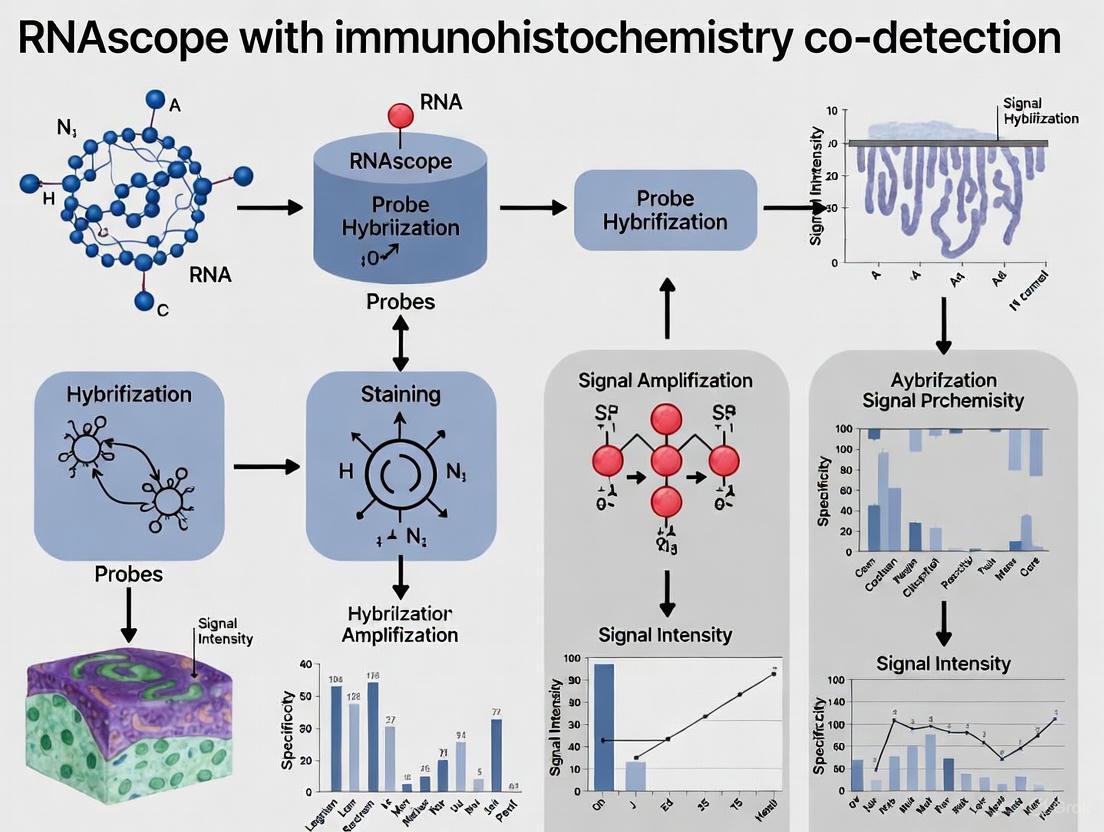
This article provides a comprehensive guide to RNA-protein integrated co-detection workflows, combining RNAscope in situ hybridization with immunohistochemistry (IHC) or immunofluorescence (IF).
Integrated RNAscope and Immunohistochemistry Co-Detection: A Multi-Omics Guide for Spatial Biology
Abstract
This article provides a comprehensive guide to RNA-protein integrated co-detection workflows, combining RNAscope in situ hybridization with immunohistochemistry (IHC) or immunofluorescence (IF). Tailored for researchers and drug development professionals, it covers foundational principles, detailed methodological protocols for manual and automated platforms, and troubleshooting strategies for common challenges. The content explores diverse applications including viral detection, host-pathogen interactions, antibody validation, and cell-type-specific marker identification, while comparing this multi-omics approach with traditional single-plex methods. Practical optimization tips and validation frameworks support successful implementation in both research and clinical pathology settings.
Understanding RNAscope and IHC Co-Detection: Principles and Core Applications
RNAscope Technology represents a groundbreaking advancement in the field of spatial genomics, providing a novel in situ hybridization (ISH) platform for the detection of target RNA within intact cells. Its key innovation lies in a proprietary probe design strategy that achieves unprecedented single-molecule sensitivity while preserving tissue morphology, a significant leap over traditional RNA ISH methods [1] [2]. This technology allows researchers to visualize and quantify individual RNA molecules as distinct, punctate dots within the histological context of clinical specimens, such as formalin-fixed paraffin-embedded (FFPE) tissues [2].
The fundamental challenge overcome by RNAscope is the high technical complexity and insufficient sensitivity and specificity of conventional RNA ISH techniques, which have historically limited the clinical application of RNA biomarkers [2]. RNAscope addresses this through a unique double Z probe design that amplifies target-specific signals while effectively suppressing background noise from non-specific hybridization [1]. This design ensures that signal amplification only occurs when two independent probes hybridize contiguously to the target RNA, making it highly improbable for non-specific targets to be amplified [1].
Technology Mechanism: Probe Design and Signal Amplification
The exceptional performance of RNAscope stems from its sophisticated probe architecture and amplification cascade, which work in concert to achieve single-molecule detection.
Double Z Probe Architecture
The probe design is the cornerstone of RNAscope's specificity. For each target RNA, approximately 20 pairs of "double Z" probes are designed [1]. Each individual Z probe contains three distinct elements:
- Lower Region: An 18-25 base sequence complementary to the target RNA, selected for specific hybridization [1].
- Spacer Sequence: A linker connecting the two functional components of the probe [1].
- Tail Sequence: A 14-base upper region that facilitates the subsequent amplification steps [1].
A pair of these Z probes must bind side-by-side (in tandem) to the target RNA. Only when this occurs do their two tail sequences form a combined 28-base binding site for the pre-amplifier. This requirement is the critical control that prevents background noise, as it is statistically unlikely for two independent probes to bind nonspecifically to a non-target molecule in the correct orientation and proximity [1] [2].
Signal Amplification Cascade
Once the target probes are correctly bound, a multi-step hybridization process creates a powerful, yet specific, signal amplification [1]:
- Pre-amplifier Binding: The pre-amplifier hybridizes to the 28-base site created by the double Z probe pair.
- Amplifier Binding: Multiple amplifier molecules then bind to the ~20 binding sites on each pre-amplifier.
- Label Probe Binding: Finally, numerous label probes, each conjugated to a fluorescent molecule or chromogenic enzyme (e.g., HRP or AP), bind to the ~20 sites on each amplifier [1] [2].
This cascade can theoretically generate up to 8000 labels for each target RNA molecule, providing the sensitivity required to visualize single transcripts [2]. The following diagram illustrates this robust mechanism:
Key Advantages of the RNAscope System
Table 1: Key Advantages of RNAscope Technology
| Advantage | Technical Basis | Research Impact |
|---|---|---|
| High Sensitivity | Detection requires only 3 of 20 double Z probes to bind; 20 probes provide robustness against partial degradation [1]. | Enables reliable detection of low-abundance RNA targets previously inaccessible by ISH. |
| Exceptional Specificity | Double Z design prevents amplification of non-specifically bound single probes, drastically reducing background [1] [2]. | Allows for highly precise spatial localization and differentiation of highly homologous sequences. |
| Single-Molecule Quantification | Each punctate dot corresponds to a single RNA molecule, enabling digital resolution [1]. | Facilitates accurate, cell-by-cell manual or automated (e.g., HALO software) quantification [1] [3]. |
| Compatibility with FFPE Tissues | Short probe target regions (40-50 bases) are ideal for partially degraded RNA in archival samples [1]. | Unlocks vast repositories of clinical samples for retrospective spatial genomic studies. |
| Multiplexing & Multiomics | Multiple probe sets with different labels allow simultaneous detection of up to 4 RNA targets or combination with protein detection [2] [4] [5]. | Provides comprehensive cellular profiling within a preserved morphological context. |
Detailed Experimental Protocols
The RNAscope assay can be performed manually or on automated staining systems (e.g., Roche DISCOVERY ULTRA, Leica BOND RX) and is typically completed within a single day [3].
Standard Workflow for FFPE Tissues
The standard manual protocol for FFPE tissue sections involves the following key steps [1] [2]:
- Pretreatment: Tissue sections are deparaffinized and rehydrated. Heat-induced epitope retrieval is performed in citrate buffer (10 mM, pH 6) at 100–103°C for 15 minutes, followed by protease digestion (e.g., 10 μg/mL) at 40°C for 30 minutes. This step is critical to unmask target RNA and permeabilize the cells without damaging tissue morphology [1] [2].
- Probe Hybridization: Target probes in a specialized hybridization buffer are applied to the slides and incubated at 40°C for 2 hours. The proprietary probe mix is designed for the specific target(s) of interest [2].
- Signal Amplification: A series of sequential hybridizations are performed, each followed by stringent washes:
- Incubate with pre-amplifier in hybridization buffer at 40°C for 30 minutes.
- Wash and incubate with amplifier in hybridization buffer at 40°C for 15 minutes.
- Wash and incubate with label probes (conjugated to HRP, AP, or fluorophores) for 15 minutes at room temperature [2].
- Visualization: For chromogenic detection, the appropriate substrate (e.g., DAB for HRP, Fast Red for AP) is applied. The reaction is then stopped, and the slides are counterstained (e.g., with hematoxylin), dehydrated, and mounted [2].
- Quantification: Punctate dot signals are visualized under a microscope. The number of dots per cell can be quantified manually or using automated image analysis software such as HALO [1] [3].
Integrated RNA-Protein Co-Detection Workflow
For a comprehensive multiomic analysis within the context of the user's thesis, RNAscope can be seamlessly integrated with immunohistochemistry (IHC) on the same tissue section. This allows for the correlation of RNA and protein expression with spatial and morphological context [4] [5].
A key advancement is the protease-free workflow, which preserves sensitive protein epitopes that might be damaged by the standard protease digestion step. This is enabled by new pretreatment reagents like VS PretreatPro, making the co-detection assay more robust and allowing the use of a wider range of antibodies [6] [5].
The typical workflow for co-detection is as follows [4]:
- Initial RNA In Situ Hybridization: Perform the RNAscope assay through the signal amplification steps using the protease-free pretreatment.
- Immunohistochemistry: After the RNA detection is complete, apply the primary antibody against the protein of interest, followed by the appropriate IHC detection system (e.g., polymer-HRP/AP with a chromogen that contrasts with the RNA signal).
- Counterstaining and Mounting: Apply a light counterstain and mount the slide for analysis.
This integrated approach enables key applications such as identifying the cellular source of secreted proteins, correlating RNA and protein expression levels, validating antibodies, and detecting pathogens alongside host cell markers [4].
Research Reagent Solutions and Automation
Table 2: Essential Research Reagent Solutions for RNAscope Experiments
| Item / Solution | Function / Purpose | Example Kits & Catalog Numbers |
|---|---|---|
| Target Probes | Proprietary probes designed to hybridize to specific RNA targets; available for thousands of genes, pathogens, and custom targets. | RNAscope Probe Sets [7] |
| Pretreatment Kit | Unmasks target RNA and permeabilizes cells in tissue sections or cells fixed on slides. | RNAscope Pretreatment Kit [1] |
| Detection Reagents | Contains pre-amplifiers, amplifiers, and label probes for the signal amplification cascade. | RNAscope 2.5 HD RED Assay, Multiplex Fluorescent v2 Assay [4] |
| Chromogenic Substrates | Enzymatic substrates (e.g., DAB, Fast Red) for bright-field microscopy visualization. | Included in detection kits [2] |
| Co-detection Kits | Specialized reagents for integrated RNA-protein co-detection workflows. | RNA-Protein Co-detection Ancillary Kit (Cat. No. 323180) [4] |
| Automation Reagents | Reagents optimized for specific automated staining systems. | VS RNA-Protein Co-detection Ancillary Kit (Cat. No. 323760) for Roche DISCOVERY ULTRA [4] |
Troubleshooting and Quality Control
To ensure reliable and interpretable results, each experiment should include controls [2]:
- Positive Control: A probe for a ubiquitous housekeeping gene (e.g., Ubiquitin C, UBC) confirms tissue RNA integrity and the success of the assay procedure.
- Negative Control: A probe for a bacterial gene (e.g., DapB) that is not present in the sample assesses non-specific background staining.
The following diagram summarizes the key decision points in selecting the appropriate RNAscope assay variant based on research goals:
Application in Drug Development and Biomedical Research
RNAscope technology has become an indispensable tool in translational research and drug development, enabling:
- Biomarker Development: Qualifying biomarkers for disease progression and patient stratification with high spatial precision [7].
- Gene Therapy: Visualizing AAV vector biodistribution, cellular tropism, and transduction efficiency in situ [7].
- Cell Therapy: Quantifying the infiltration and activation of engineered cells (e.g., CAR-T cells) in tumor microenvironments [7].
- Therapeutic Oligonucleotides: Detecting the spatial distribution and effect of antisense oligonucleotides (ASOs) and siRNAs, which is crucial for monitoring biodistribution and off-target risks [6].
- Infectious Disease and Virology: Identifying and characterizing viral reservoirs, as demonstrated in HIV research, by visualizing viral RNA within specific host cells [7].
Concluding Remarks
RNAscope Technology provides a robust and versatile platform for in situ RNA analysis with single-molecule sensitivity. Its powerful probe design and amplification system overcome the traditional limitations of ISH, enabling highly specific and quantitative detection of RNA biomarkers within their native tissue context. The ongoing development of fully automated and multiomic co-detection workflows solidifies its role as a cornerstone technology in spatial biology, empowering researchers in both basic science and drug development to acquire more data, conserve precious samples, and gain deeper insights into gene expression and disease pathology.
Key Advantages of Integrated Co-Detection Over Single-Plex Methods
In the evolving landscape of molecular biology and diagnostic research, the ability to simultaneously detect multiple analytes within a single biological sample has become a cornerstone for advanced scientific inquiry. This application note details the key advantages of integrated co-detection methodologies, with a specific focus on the combination of RNAscope in situ hybridization with immunohistochemistry (IHC), over traditional single-plex methods. Integrated co-detection enables researchers to visualize RNA and protein targets within the context of intact tissue architecture, providing spatial context that is lost in homogenized sample analyses. Framed within the broader thesis of RNAscope with IHC co-detection research, this document provides a comprehensive overview of the quantitative benefits, detailed experimental protocols, and essential reagent solutions to guide researchers and drug development professionals in implementing these powerful techniques.
Key Advantages and Quantitative Comparisons
Integrated co-detection systems offer several distinct advantages over sequential or single-plex methods. The primary benefit is the ability to preserve epitope integrity for protein detection while achieving high-quality RNA in situ hybridization. The integrated co-detection workflow cross-links the primary antibody prior to the protease digestion step, thereby conserving the antigen for subsequent detection [8]. This is a significant improvement over sequential workflows where protease treatment, necessary for RNAscope, can degrade sensitive protein epitopes, often requiring extensive optimization and sometimes rendering certain antibodies incompatible.
The following table summarizes the core advantages of integrated co-detection for RNA and protein targets:
Table 1: Core Advantages of Integrated RNAscope/IHC Co-Detection
| Feature | Integrated Co-Detection Workflow | Sequential Single-Plex Methods |
|---|---|---|
| Epitope Preservation | Cross-linking step protects antigens from protease degradation [8] | Protein epitopes vulnerable to protease digestion; requires optimization |
| Workflow Efficiency | Single, unified protocol | Multiple, separate procedures for RNA and protein detection |
| Spatial Context | Simultaneous visualization of RNA and protein within the same cellular context | Risk of tissue loss or damage between sequential stainings |
| Data Richness | Direct observation of RNA-protein relationships in individual cells | Correlation often inferred from separate sections or experiments |
| Assay Specificity | RNAscope's "Z-probe" design minimizes off-target fluorescence [9] | Varies with individual ISH and IHC protocol specificity |
Beyond these core advantages, integrated co-detection demonstrates significant performance benefits in diagnostic and research applications. Studies comparing multiplex molecular panels to single-plex PCR reveal substantial gains in operational efficiency and diagnostic accuracy. The table below illustrates a quantitative comparison from clinical microbiology:
Table 2: Performance Comparison of Multiplex Panels vs. Single-Plex PCR in Clinical Diagnostics
| Parameter | Multiplex Syndromic Panel | Single-Plex PCR | Context & Notes |
|---|---|---|---|
| Turnaround Time | ~80 minutes [10] | Several hours [11] | Time from sample loading to result |
| Detection Rate | 84.3-85.9% [11] [10] | 82.5% [11] | For respiratory viruses and CNS infections |
| Sample Volume | 200 µL [10] | Multiple aliquots required [12] | Reduced volume conserves precious samples |
| Concordance with Reference | 96.8% (above viral load threshold) [10] | N/A (Reference Method) | For viral CNS infections |
| Hands-on Time | Significant reduction [11] | Laborious and time-consuming [11] | Enables higher testing throughput |
Experimental Protocol for Integrated RNAscope/IHC Co-Detection
The following detailed protocol is optimized for thicker (14-μm) fixed central nervous system (CNS) tissue sections, such as spinal cord, but can be adapted for other tissue types with appropriate validation [9].
Tissue Preparation and Fixation
- Perfusion and Collection: Euthanize subjects following approved animal care protocols. Perform transcardial perfusion with ice-cold 0.9% saline followed by 4% paraformaldehyde (PFA) in 0.1 M phosphate buffer (PB), pH 7.4 [9].
- Post-fixation: Isolate the tissue region of interest (e.g., lumbar spinal cord). Post-fix by immersion in 4% PFA/PB for 4 hours at 4°C. Note: Post-fixation time is a critical variable; shorter times may be required for more sensitive epitopes.
- Cryosectioning: Embed tissue in optimal cutting temperature (OCT) compound. Section tissues at a thickness of 14 μm using a cryostat and mount onto charged slides. Bake slides onto the slide after heat treatment and protease steps to ensure adhesion, particularly for white matter-rich tissues [9].
Integrated Co-Detection Staining Workflow
The integrated workflow performs key IHC steps before the protease treatment required for RNAscope, thereby preserving antigen integrity.
- Antigen Retrieval (Optional): Depending on the primary antibody, a gentle antigen retrieval step may be performed. However, the integrated workflow often makes this unnecessary for many targets.
- Primary Antibody Incubation:
- Apply primary antibody (e.g., IBA1 for microglia, NeuN for neurons) diluted in ACD's Co-Detection Antibody Diluent [8].
- Incubate slides overnight at 4°C or for 2 hours at room temperature in a humidified chamber.
- Cross-linking: Cross-link the primary antibody to the tissue using a suitable cross-linking agent according to the manufacturer's instructions (e.g., the Co-Detection Blocker [8]). This step is crucial for protecting the antibody-antigen complex during subsequent protease digestion.
- RNAscope Assay:
- Protease Treatment: Treat slides with RNAscope Protease, typically for 20-30 minutes. The cross-linking step preserves the epitope during this digestion.
- Probe Hybridization: Apply target-specific RNAscope Z-probes. These are pairs of oligonucleotide probes designed to hybridize to adjacent stretches of the target RNA, ensuring high specificity [9].
- Signal Amplification: Perform the series of amplification steps as per the RNAscope Multiplex Fluorescent V2 manual. The amplifier structures bind to the Z-probe tails, enabling powerful signal amplification for single-molecule detection [9] [13].
- IHC Detection:
- Apply the fluorophore- or enzyme-conjugated secondary antibody appropriate for your primary antibody. Any secondary antibody used in standard IHC workflows can be used, including HRP-conjugated or fluorescent-conjugated secondaries [8].
- If using an HRP-conjugated secondary, develop the signal using a compatible chromogen or tyramide signal amplification (TSA) fluorophore.
- Counterstaining and Mounting: Apply a nuclear counterstain (e.g., DAPI) that provides appropriate contrast and does not interfere with chromogen or fluorophore interpretation [14]. Mount slides with a compatible, anti-fade mounting medium.
Image Acquisition and Analysis
Image acquired samples using a confocal or high-resolution fluorescence microscope. For chromogenic multiplexing, use brightfield microscopy. For quantification of RNA transcripts within IHC-labeled cells, use standard image analysis software (e.g., Imaris) to count the number of labeled RNA transcripts within the boundaries of the immunolabeled cells [9].
The Scientist's Toolkit: Essential Research Reagent Solutions
Successful implementation of integrated co-detection relies on a set of core reagents and solutions. The following table details the essential materials, their functions, and considerations for use in the featured protocol.
Table 3: Essential Research Reagents for RNAscope/IHC Co-Detection
| Reagent / Solution | Function / Purpose | Application Notes |
|---|---|---|
| RNAscope Probe Sets | Target-specific "Z-probes" for in situ hybridization of RNA transcripts. | Pairs of probes ensure high specificity and signal amplification [9]. |
| Co-Detection Blocker | Cross-links primary antibody to epitope, protecting it from protease degradation. | Fundamental for epitope preservation in the integrated workflow [8]. |
| Co-Detection Antibody Diluent | Optimized medium for diluting primary antibodies. | Formulated to maximize retention of RNA sample quality [8]. |
| RNAscope Protease | Digests tissue to allow probe access while preserving RNA integrity. | Protease digestion occurs after cross-linking step to protect protein epitopes [9]. |
| Signal Amplification System | Pre-amplifier and amplifier molecules that bind to Z-probes. | Enables single-molecule sensitivity via branched DNA (bDNA) technology [9]. |
| Fluorophore/Chromogen System | Visualizes detected targets (e.g., HRP substrates, fluorescent secondaries). | For multiplexing, ensure fluorophores have non-overlapping emission spectra [14]. |
The transition from single-plex methods to integrated co-detection platforms represents a significant technological advancement for biomedical research and diagnostic development. The integration of RNAscope with IHC provides unparalleled capability to visualize the complex interplay between gene expression and protein localization within the native tissue microenvironment. The key advantages—superior epitope preservation, enhanced workflow efficiency, robust multiplexing capability, and conserved spatial context—make this approach indispensable for understanding disease mechanisms, validating therapeutic targets, and developing novel biomarkers. The protocols and reagents outlined in this application note provide a foundational roadmap for researchers to leverage these powerful techniques in their own investigations.
Analysis of both RNA and protein within the morphological context of tissue provides invaluable information for understanding gene expression regulation and cellular function [15]. The ability to concurrently detect viral pathogens and validate antibody specificity through RNAscope in situ hybridization (ISH) combined with immunohistochemistry (IHC) has become a powerful approach in biomedical research and drug development. This Application Note details standardized protocols and analytical frameworks for leveraging this integrated co-detection technology, enabling researchers to precisely identify viral infection, characterize host responses, and confirm antibody specificity within intact tissue architecture.
Application Note: Viral Pathogen Detection & Characterization
Background: In infectious disease research, it is critical to not only identify the presence of a viral pathogen but also to understand the infected cell types and the concomitant host response. The RNAscope assay, with its high sensitivity and specificity, is ideally suited for detecting viral RNA genomes and transcripts [16].
Experimental Approach: Cohorts of formalin-fixed, paraffin-embedded (FFPE) tissue samples from infected hosts and appropriate controls are analyzed using the RNAscope Multiplex Fluorescent Assay. Probes targeting specific viral RNA sequences are paired with probes for host cell markers (e.g., immune cell markers) and host response genes (e.g., cytokines, interferon-stimulated genes). Subsequent IHC or immunofluorescence (IF) staining for viral proteins and key host proteins provides a comprehensive multi-omics view of the infection.
Key Findings: This co-detection approach enables:
- Confirmation of Active Infection: Direct visualization of viral mRNA transcripts confirms active viral replication beyond mere presence of viral particles [8].
- Identification of Target Cells: Simultaneous detection of viral RNA and cell-specific protein markers (e.g., CD4, CD8, CD68) pinpoints the specific cell types susceptible to infection.
- Analysis of Host-Pathogen Interactions: Co-localization analysis of viral RNA with host response factors reveals the spatial relationships driving pathogenesis and immunity [16].
The diagram below illustrates the strategic approach to viral characterization using this technology.
Table: Viral Pathogen Detection Data Analysis
| Analysis Metric | Method of Quantification | Application & Significance |
|---|---|---|
| Viral Load per Cell | Average dots per cell in target cell population [17] [16] | Semi-quantitative scoring (0-4) to assess replication activity and infection burden. |
| Host Response Level | H-score calculation for host response genes (e.g., IFNγ) [16] | (Σ (ACD score x % cells per bin)). Evaluates strength and heterogeneity of immune activation. |
| Target Cell Tropism | Percentage of cell subtype positive for viral RNA [16] | (Number of marker-positive cells with ≥1 viral dot / Total marker-positive cells). Identifies susceptible populations. |
Application Note: Antibody Validation
Background: A significant challenge in protein detection methods like IHC is the lack of standardized validation for antibody specificity. RNA-protein co-detection provides a morphological context-based method for antibody validation by comparing the signal from an antibody with the expression of its corresponding mRNA transcript [15].
Experimental Approach: FFPE tissues or cell lines with known, heterogeneous expression of the target protein are used. The RNAscope assay for the target mRNA is performed alongside IHC staining using the antibody under investigation. The patterns of mRNA and protein expression are then compared qualitatively and quantitatively.
Key Findings: A validated antibody demonstrates a strong, direct correlation between its protein staining pattern and the mRNA signal. Discrepancies can reveal:
- Non-specific Binding: Protein signal in cells lacking the corresponding mRNA indicates off-target antibody binding.
- Sensitivity Issues: mRNA signal present in cells lacking protein staining may indicate poor antibody sensitivity or post-transcriptional regulation.
- Epitope Masking/Degradation: Differences in signal can highlight issues with sample processing that affect protein, but not RNA, detectability [8].
The workflow for this validation strategy is outlined below.
Table: Antibody Validation Correlation Assessment
| Correlation Scenario | Interpretation | Recommended Action |
|---|---|---|
| Strong Spatial CorrelationProtein and mRNA signals co-localize in the same cells. | High confidence in antibody specificity. | Antibody is validated for use in IHC. |
| mRNA Present / Protein AbsentmRNA signal in cells with no protein detection. | Potential poor antibody sensitivity, antigen masking, or rapid protein turnover. | Optimize IHC protocol (epitope retrieval); consider biological context. |
| Protein Present / mRNA AbsentProtein signal in cells with no mRNA detection. | High probability of non-specific antibody binding or cross-reactivity. | Do not use antibody; seek alternative, validated reagent. |
Detailed Protocols
Protocol 1: RNAscope & IHC Sequential Co-Detection for FFPE Tissue
This protocol is ideal for targets where the protein epitope is robust and can withstand the RNAscope protease pretreatment step [15] [18].
Materials & Equipment:
- RNAscope Fluorescent Multiplex Reagent Kit (ACD)
- Target-specific RNAscope probes (Positive, Negative, and Target of interest)
- Primary antibody for protein target
- ACD Co-Detection Blocking Reagent
- Fluorophore-conjugated secondary antibody
- HybEZ II Hybridization Oven (ACD)
- SuperFrost Plus Microscope Slides
Procedure:
- Sample Preparation: Cut 5 μm sections from FFPE tissue blocks and mount on SuperFrost Plus slides. Bake slides at 60°C for 1 hour.
- Deparaffinization & Dehydration: Deparaffinize slides in xylene and dehydrate through a graded series of ethanol.
- RNAscope Pretreatment: Perform target retrieval and protease treatment as specified in the RNAscope user manual for your tissue type.
- RNAscope Hybridization: Apply target probes and run the RNAscope assay according to the kit instructions in the HybEZ oven.
- IHC Staining: a. Blocking: Apply Co-Detection Blocker to prevent cross-detection of the RNAscope signal by subsequent IHC steps [8]. b. Primary Antibody: Apply primary antibody diluted in ACD Antibody Diluent (formulated to preserve RNA quality) and incubate. c. Secondary Antibody: Apply fluorophore-conjugated secondary antibody and incubate in the dark.
- Counterstaining & Mounting: Apply DAPI counterstain and mount with an anti-fade mounting medium.
- Image Acquisition & Analysis: Image using a fluorescent or confocal microscope with appropriate filters. Analyze for co-localization using quantitative image analysis software.
Protocol 2: RNA-Protein Integrated Co-Detection Workflow (ICW)
This advanced protocol is superior for delicate protein epitopes that may be damaged by protease treatment. It cross-links the primary antibody prior to the RNAscope protease step, preserving the antigen-antibody complex [8] [19].
Materials & Equipment:
- All materials from Protocol 1.
- RNAscope Integrated Co-Detection Workflow Reagents (ACD).
Procedure:
- Sample Preparation & Deparaffinization: Follow Steps 1 and 2 from Protocol 1.
- Target Retrieval: Perform heat-induced target retrieval.
- Primary Antibody Incubation: Apply the primary antibody and incubate.
- Cross-linking: Cross-link the primary antibody to its epitope using a suitable cross-linking agent per the ICW protocol.
- RNAscope Assay: Proceed with the full RNAscope assay, including the protease treatment step. The cross-linked antibody complex is protected from degradation.
- Fluorescent Detection: Detect the RNAscope signal. The protein signal is then detected using a secondary antibody that recognizes the cross-linked primary antibody.
- Counterstaining, Mounting, and Analysis: Follow Step 6 and 7 from Protocol 1.
The Scientist's Toolkit
Table: Essential Research Reagent Solutions
| Item | Function & Application |
|---|---|
| Co-Detection Blocker | Prevents cross-detection of the RNAscope signal by the IHC detection system, critical for low-abundance targets [8]. |
| ACD Antibody Diluent | A specially formulated diluent that maintains RNA integrity during antibody incubation steps [8]. |
| RNAscope Control Probes | Essential assay controls: Positive control (e.g., PPIB, POLR2A) to assess RNA quality; Negative control (dapB) to confirm specificity [17] [18]. |
| RNAscope Multiplex Fluorescent Kit | Enables simultaneous detection of up to 4 RNA targets in a single sample, ideal for complex gene expression studies [17] [20]. |
| HybEZ II Oven System | Provides precise temperature and humidity control for optimal RNAscope probe hybridization [20]. |
| Protease IV / Protease Plus | Enzymes for tissue permeabilization; concentration and incubation time are key optimization points for signal-to-noise ratio [20]. |
Quantitative Data Analysis
Robust quantification is essential for deriving meaningful conclusions. RNAscope signals are visualized as punctate dots, with each dot representing a single mRNA transcript [17]. Analysis should focus on dot count per cell rather than dot intensity [16] [18].
Software Solutions:
- Open-Source: QuPath and ImageJ (FIJI) are powerful platforms for automated cell detection and dot counting, especially in complex tissues like brain [17] [20].
- Commercial: HALO (Indica Labs) and other commercial packages offer optimized workflows for multiplex RNAscope and co-detection analysis.
Scoring Methods:
- Semi-quantitative Scoring: Manual scoring of dots per cell (0, 1-3, 4-10, >10 dots/cell) provides a rapid assessment [16] [18].
- Quantitative H-Score: For heterogeneous expression, the H-score (range 0-400) accounts for both the intensity and distribution of signal: H-score = Σ (ACD score x % of cells per score) [16].
- Thresholding with Controls: Use negative control (dapB) slides to establish a background threshold; signals above this threshold are considered specific [20].
The simultaneous detection of RNA and protein biomarkers within their native morphological context represents a significant advancement in spatial biology, enabling researchers to directly correlate gene expression with protein production at the single-cell level. This multi-omic approach provides invaluable information for understanding the regulation of gene expression, particularly for applications in cancer research, neuroscience, and biomarker validation [15]. Traditional methods for analyzing RNA and protein expression typically require separate tissue sections or different experimental workflows, potentially losing critical spatial relationships between molecules. The integration of RNA in situ hybridization (ISH) with immunohistochemistry (IHC) or immunofluorescence (IF) addresses this limitation by allowing researchers to visualize both analyte types within the exact same cellular context, preserving tissue architecture while providing comprehensive molecular profiling [15] [9].
The fundamental biological relationship between RNA and protein expression provides strong rationale for these integrated approaches. Typically, transcripts are expressed at a much lower level than proteins—for example, murine liver cells have a median copy number of 43,100 proteins but only 3.7 mRNA molecules per gene [21]. Similarly, the dynamic range of expression is much greater for proteins, with copy numbers spanning about 6-7 orders of magnitude, whereas transcript copy numbers span about 2 orders of magnitude [21]. The correlation between gene expression and protein expression has been estimated to have a Pearson correlation coefficient between 0.4 and 0.6, highlighting the importance of direct simultaneous measurement rather than inference [21].
RNAscope ISH Technology
RNAscope represents a breakthrough in in situ hybridization technology through its proprietary "double Z" probe design, which enables highly specific and sensitive detection of target RNA with minimal off-target signal [22] [9]. This system utilizes paired "Z probes" that must bind adjacently to the same RNA molecule for signal amplification to occur, creating a mechanism that ensures single-molecule visualization with exceptional specificity [9]. The amplification system attaches a large fluorescent surface area to each Z probe pair, providing sufficient signal intensity to detect individual RNA transcripts using standard light microscopy [9]. This robust signal-to-noise ratio allows researchers to precisely localize and quantify gene expression within complex tissue architectures while seamlessly fitting into existing anatomic pathology workflows [22].
Immunohistochemistry and Immunofluorescence
Immunohistochemistry and immunofluorescence are well-established techniques for protein detection in tissue sections, utilizing antibodies conjugated to enzymes (for chromogenic detection) or fluorophores (for fluorescent detection) to visualize protein distribution and abundance [9]. When combined with RNAscope, these techniques enable true multi-omic analysis at the single-cell level, providing spatial context that is lost in bulk analysis methods like RNA sequencing and mass spectrometry. The combination is particularly valuable for identifying cell types through protein markers while simultaneously assessing gene expression patterns, enabling researchers to answer complex biological questions about cellular identity, function, and response to perturbation [9].
Experimental Workflows and Methodologies
Sequential Dual ISH-IHC Workflow
The traditional approach for RNA-protein co-detection involves performing RNAscope ISH first, followed by IHC staining. This method requires careful optimization of protease treatment conditions, as the necessary protease step for RNA detection can damage protein epitopes and compromise subsequent IHC results [8] [23]. The sequential workflow consists of the following key steps:
- Tissue Pretreatment: Antigen retrieval using heat-induced epitope retrieval (15 minutes at 99°C in a steamer) followed by protease treatment (15-20 minutes at room temperature) [23]
- RNAscope ISH: Hybridization with target-specific probes, amplification steps, and chromogenic development
- IHC Staining: Blocking (15 minutes with normal serum), primary antibody incubation (optimized concentration), HRP-conjugated secondary antibody (30 minutes), and chromogen development [23]
- Counterstaining and Mounting: Hematoxylin counterstain (30 seconds) and mounting with appropriate media [23]
This approach has been successfully applied to various tissue types and targets. For FFPE tonsil tissue, specific conditions have been established for markers including CD68, FoxP3, CD8, Gata3, Vimentin, and CD52 [23]. However, optimal protease incubation times must be adjusted based on tissue density—decreased for less dense tissues (breast, normal lung, colon) and increased for denser tissues (liver, muscle) or highly expressed protein targets [23].
Integrated Co-Detection Workflow (ICW)
A significant advancement in RNA-protein co-detection is the Integrated Co-Detection Workflow, which addresses the primary limitation of the sequential method by preserving protease-sensitive epitopes [8]. This novel approach incorporates a cross-linking step that fixes the primary antibody to its epitope before protease treatment, thereby protecting the antigen-antibody complex from degradation during subsequent RNAscope procedures [8]. Key advantages of ICW include:
- Superior Epitope Preservation: Cross-linking primary antibodies prior to protease treatment enables detection of proteins with protease-sensitive epitopes that would be damaged in sequential protocols [8]
- Reduced Optimization: Minimizes the need for extensive protease titration experiments
- Broad Antibody Compatibility: Works with a wide range of antibody clones without special modifications [8]
The ICW utilizes specialized reagents including Co-Detection Blocker to prevent cross-detection of RNAscope signal by IHC detection steps, and a proprietary Antibody Diluent formulated to ensure maximal retention of RNA sample quality [8].
Protease-Free Workflow
The most recent innovation in RNA-protein co-detection is the introduction of protease-free pretreatment assays, now available on automated platforms like the Roche DISCOVERY ULTRA [24] [6]. This workflow eliminates protease treatment entirely, instead using VS PretreatPro to enable RNA detection without disrupting protease-sensitive epitopes [6]. This advancement is particularly valuable for:
- Therapeutic Development: Monitoring biodistribution of oligonucleotide therapeutics (ASOs, siRNAs) and their effects on target genes and cell markers [6]
- Sensitive Epitopes: Preserving protein antigens that are highly susceptible to protease degradation
- Automated High-Throughput Applications: Enabling fully automated co-detection of small RNAs (17-50 bases), mRNAs, and proteins on the same FFPE tissue section [6]
This workflow leverages translucent chromogens for visualization of multiple RNAs and proteins at the single-cell level, combining different HRP and AP-based detection systems [6].
Table 1: Comparison of RNA-Protein Co-Detection Workflows
| Workflow Type | Key Feature | Advantages | Limitations | Best Applications |
|---|---|---|---|---|
| Sequential Dual ISH-IHC | ISH followed by IHC | Established protocol, widely accessible | Protease may damage epitopes, requires optimization | Robust antigens, established targets |
| Integrated Co-Detection (ICW) | Antibody cross-linking before protease | Preserves sensitive epitopes, broader antibody compatibility | Additional specialized reagents required | Protease-sensitive proteins, novel targets |
| Protease-Free | Eliminates protease step | Maximum epitope preservation, automated compatibility | Newest technology, platform-specific | Therapeutic development, high-throughput screening |
Quantitative Data and Biological Insights
Protein-to-RNA Ratios in Biological Systems
Absolute multi-omic analyses have revealed fundamental quantitative relationships between RNA and protein expression levels in various biological systems. In mixed bacterial-archaeal consortia, the protein-to-RNA ratio—defined as the number of protein molecules per RNA molecule for a given gene—ranges from 10² to 10⁴ for bacterial populations and 10³ to 10⁵ for archaea, the latter being more comparable to eukaryotic systems including humans and yeast [25]. These ratios mean that for every RNA molecule, one can expect from 100 to 10,000 corresponding protein molecules in bacteria, with a median value of approximately 949 [25].
Population-specific variations in protein-to-RNA ratios have been observed within bacterial communities, with median ratios at 18 hours ranging from 658 in CLOS1 (Clostridium sp.) to 1137 in RCLO1 (Ruminiclostridium thermocellum) [25]. These differences highlight taxon-specific regulatory mechanisms and potential adaptations to ecological niches and metabolic lifestyles within complex communities.
Applications in Neuroscience Research
The combination of RNAscope with IHC has proven particularly valuable in neuroscience, where researchers need to precisely localize gene expression to specific cell types within complex neural circuits. A recently developed protocol for thicker (14-μm) fixed spinal cord sections enables simultaneous visualization of FISH and IHC without requiring RNase-removing reagents [9]. This method has been used to quantify cell-type-specific expression of challenging inflammatory targets, including:
- IL-1β: Proinflammatory cytokine difficult to measure accurately with IHC alone due to nonspecific antibodies
- NLRP3: Inflammasome component with dot-like protein distributions hard to distinguish in tissue [9]
This approach demonstrated that microglia are primarily responsible for increased inflammatory mRNA within the spinal cord after nerve injury, and revealed that total increases in IL-1b and NLRP3 mRNA expression result from both increased transcription density within individual microglia, rather than simply from additional microglia proliferation or recruitment [9].
Table 2: Experimentally Determined Protein-to-RNA Ratios Across Biological Systems
| Biological System | Protein-to-RNA Ratio | Measurement Context | Technical Approach |
|---|---|---|---|
| Bacteria (E. coli axenic culture) | 10² - 10⁴ | Steady-state growth | Absolute quantification [25] |
| Bacteria (SEM1b community) | Median 949 (Range 10² - 10⁴) | 18h post-inoculation | Absolute meta-omics [25] |
| Archaea (Methanothermobacter) | 10³ - 10⁵ | Mixed consortium | Absolute meta-omics [25] |
| Eukaryotes (murine liver) | ~43,100 proteins : 3.7 mRNA molecules per gene | Steady state | Single-cell analysis [21] |
Research Reagent Solutions
Successful implementation of RNA-protein co-detection workflows requires specific reagents optimized for compatibility and performance. The following essential materials represent key components of integrated RNA-protein detection systems:
- RNAscope Probe Sets: Target-specific probes designed with the proprietary "double Z" architecture enabling single-molecule sensitivity and single-cell resolution [22] [9]
- Co-Detection Blocker: Specialized reagent that prevents cross-detection of RNAscope signal by IHC detection steps, essential for minimizing background in integrated workflows [8]
- ACD Antibody Diluent: Formulated specifically to maximize retention of RNA sample quality during antibody incubation steps [8]
- Protease-Free Pretreatment Reagents: VS PretreatPro enables RNA detection without protease treatment, preserving sensitive protein epitopes [6]
- Translucent Chromogens: Roche chromogenic substrates allowing simultaneous detection of multiple RNA and protein targets through HRP and AP-based systems [6]
- Automated Assay Kits: Optimized reagent systems for platforms like Roche DISCOVERY ULTRA, enabling fully automated co-detection without manual optimization [24] [6]
Visualizing Workflow Logic and Signaling Pathways
The following diagrams illustrate key experimental workflows and biological relationships explored through RNA-protein co-detection approaches.
RNA-Protein Integrated Co-Detection Workflow
RNAscope Double-Z Probe Mechanism
Technical Considerations and Troubleshooting
Optimization Strategies
Successful implementation of RNA-protein co-detection requires careful optimization of several key parameters:
- Protease Titration: For sequential workflows, protease concentration and incubation time must be balanced to provide sufficient RNA access while preserving protein epitopes [23]. Recommended starting points are 15 minutes at room temperature for most tissues, with adjustments based on tissue density and fixation [23]
- Antibody Validation: All antibodies should be validated for compatibility with the chosen co-detection workflow, as some clones may not recognize epitopes after protease treatment or cross-linking steps [8] [21]
- Signal Separation: Ensure sufficient spectral separation between ISH and IHC detection channels, particularly for fluorescent applications [9]
- Control Experiments: Include appropriate controls including single-plex ISH and IHC, no-probe controls, and species-matched IgG controls to verify specificity [9]
Advanced Applications
Recent technological advancements have expanded the applications of RNA-protein co-detection into new areas:
- Therapeutic Development: Monitoring biodistribution of oligonucleotide therapeutics (ASOs, siRNAs) and their effects on target genes and cell markers [6]
- Spatial Biomarker Discovery: Identifying novel biomarkers with spatially restricted expression patterns in cancer and neurological disorders [24] [22]
- Automated High-Throughput Screening: Implementing co-detection on automated platforms like Roche DISCOVERY ULTRA and Leica Biosystems systems for reproducible, high-throughput applications [24] [19]
- Small RNA Detection: New assays enable detection of small RNAs (17-50 bases) including miRNAs, ASOs, and siRNAs in combination with mRNA and protein detection [6]
The continued evolution of RNA-protein co-detection technologies promises to further enhance our understanding of gene expression regulation in morphological context, providing increasingly powerful tools for basic research and therapeutic development.
Essential Workflow Components and Required Equipment
The simultaneous detection of RNA and protein within the same tissue section, known as co-detection, represents a significant advancement in molecular morphology, enabling a more complete analysis of gene expression regulation within a spatially relevant context. This multi-omics approach is particularly powerful for validating antibody specificity, visualizing the source of secreted proteins, and ascertaining cell-type-specific marker expression and spatial mapping [26]. The RNAscope in situ hybridization (ISH) assay, when combined with immunohistochemistry (IHC), provides a robust platform for this co-detection, bridging the critical gap between transcriptomic and proteomic analysis [27] [26]. The technology's high sensitivity and specificity, capable of detecting single RNA molecules, make it an indispensable tool for researchers and drug development professionals requiring precise spatial gene expression data [27] [28]. This application note details the essential workflow components and equipment required to successfully implement RNAscope and IHC co-detection in a research setting.
Core Technology and Signaling Pathways
The exceptional performance of the RNAscope assay is founded on its patented signal amplification and background suppression technology. Unlike traditional RNA ISH, which often suffers from high background and poor sensitivity, RNAscope uses a unique "Z probe" design [27] [28]. Each target RNA is detected by multiple pairs of these Z probes. The lower region of each Z probe hybridizes to the target RNA sequence, while the tail region contains a binding site for pre-amplifier molecules [27]. A critical feature of this system is that the pre-amplifier can only bind when two Z probes are hybridized to adjacent sequences on the target RNA. This requirement for a probe pair drastically reduces off-target binding and background noise [28]. Following initial binding, a multi-step amplification occurs: each pre-amplifier binds multiple amplifiers, and each amplifier, in turn, provides numerous binding sites for fluorescent or chromogenic labels. This sequential amplification can theoretically yield an 8,000-fold increase in signal per target RNA molecule, enabling the detection of single transcripts with high specificity [29] [27].
The diagram below illustrates this proprietary signal amplification pathway.
Essential Workflow Components
The successful integration of RNAscope ISH with IHC requires careful attention to sample preparation, reagent selection, and procedural sequence. The following workflow diagram and subsequent breakdown outline the critical path from sample to image.
Sample Preparation and Fixation
Proper tissue preparation is the foundational step for successful co-detection. For optimal RNA preservation, fixation in fresh 10% Neutral Buffered Formalin (NBF) for 16–32 hours is strongly recommended [30]. While formalin-fixed paraffin-embedded (FFPE) tissues are most common, the protocol is also compatible with fresh-frozen tissues and fixed cells [27] [28]. For FFPE samples, freshly cut sections (mounted less than two weeks prior) are required to ensure RNA integrity and successful hybridization [26]. For co-detection with IHC, establishing a working IHC protocol independently is a critical first step before attempting the combined workflow [26].
Pretreatment: Antigen Retrieval and Permeabilization
Pretreatment is critical for accessing the target RNA and epitopes while preserving tissue morphology.
- Antigen Retrieval: Conditions may require optimization based on tissue type and fixation. A key difference from standard IHC is that no cooling is required after the boiling step; slides should be directly transferred to room temperature water to stop the reaction [30].
- Protease Digestion: A protease digestion step is essential for tissue permeabilization. The temperature must be meticulously maintained at 40°C during this step [30]. The duration can be adjusted based on the experiment's needs; for RNA-protein co-detection, a shorter treatment (e.g., 20 minutes at room temperature) is often used to preserve protein antigenicity, whereas RNA-only detection may use longer treatments (e.g., 40 minutes at 40°C) [31].
Sequential Assay Execution
For co-detection, the RNAscope assay is typically performed before IHC staining [28]. The stringent hybridization and amplification steps of RNAscope could damage antibodies already bound to their protein targets. The RNAscope assay involves a series of hybridizations and amplifications performed at 40°C using a specialized HybEZ Oven to maintain optimum humidity and temperature [30] [29]. Following the completion of the RNAscope signal development, standard IHC protocols for antibody incubation and detection are applied.
The Scientist's Toolkit: Essential Equipment and Reagents
Successful implementation of the RNAscope with IHC co-detection assay requires specific equipment and validated reagents. The following table catalogs the essential components of the research toolkit.
Table 1: Essential Research Reagent Solutions and Equipment for RNAscope IHC Co-Detection
| Item | Function & Importance | Specific Examples & Notes |
|---|---|---|
| HybEZ Hybridization System | Maintains optimum humidity and temperature (40°C) during critical RNAscope hybridization and amplification steps. Essential for assay performance. | Includes oven and humidity control tray [30] [31] [29]. |
| RNAscope Probe(s) | Target-specific probes designed to hybridize to the RNA of interest. Available as catalogued or custom designs. | Probes are channel-specific (C1, C2, C3); C1 is most sensitive [29]. Positive (e.g., PPIB, UBC) and negative (dapB) controls are mandatory [30] [27]. |
| RNAscope Multiplex Kit | Contains all necessary reagents for the sequential hybridization, amplification, and detection steps of the RNAscope assay. | Kits are available for fluorescent (e.g., Multiplex Fluorescent V2) or chromogenic detection [31] [29]. |
| Protease | Digests proteins to permeabilize the tissue, allowing probe access to target RNA. Treatment time is a key optimization variable. | Protease III is commonly used; duration adjusted for co-detection (shorter) vs. RNA-only (longer) [31]. |
| Primary Antibody | Protein-specific antibody for the IHC portion of the co-detection. Must be validated and compatible with the RNAscope workflow. | Concentration may need re-optimization within the context of the full co-detection protocol [26]. |
| Superfrost Plus Slides | Required slide type to prevent tissue detachment during the rigorous assay procedure. Other slides may result in tissue loss [30]. | |
| ImmEdge Hydrophobic Barrier Pen | The only recommended barrier pen, as it maintains a hydrophobic barrier throughout the entire RNAscope procedure, preventing sections from drying out [30] [29]. | |
| Mounting Media | Preserves staining and prepares slides for microscopy. Must be chosen based on the detection assay. | Xylene-based media for Brown assay; EcoMount or PERTEX for Red and 2-plex assays [30]. Aqueous media for fluorescent detection [29]. |
Quantitative Analysis and Assay Validation
The output of RNAscope is highly quantitative, with each fluorescent dot or chromogenic precipitate representing a single RNA molecule [27]. Analysis involves quantifying these dots within the tissue, providing a direct measure of transcript abundance. Scoring can be performed manually using manufacturer-provided semi-quantitative guidelines or through quantitative digital image analysis with sophisticated software platforms like HALO or QuPath [27] [32].
Table 2: RNAscope Scoring Guidelines for Assay Validation and Quantification
| Score | Criteria | Interpretation |
|---|---|---|
| 0 | No staining or <1 dot/10 cells | Negative expression. |
| 1 | 1-3 dots/cell (visible at 20-40X magnification) | Low expression level. |
| 2 | 4-9 dots/cell. None or very few dot clusters. | Moderate expression level. |
| 3 | 10-15 dots/cell and <10% dots are in clusters. | High expression level. |
| 4 | >15 dots/cell and >10% dots are in clusters. | Very high expression level. |
Validation of the entire co-detection assay is critical. This is achieved by running positive control probes (e.g., for housekeeping genes like PPIB, POLR2A, or UBC) and a negative control probe (the bacterial dapB gene) on your sample tissue [30] [27]. A successful assay shows a score of ≥2 for PPIB and a dapB score of <1, indicating strong signal and low background, respectively [30]. This validation step qualifies the sample's RNA integrity and confirms the assay was performed correctly before proceeding to expensive target-specific probes.
Detailed Experimental Protocol: Fluorescent Co-Detection in Frozen Sections
The following protocol provides a detailed methodology for performing RNAscope and IHC co-detection on thicker fresh-frozen sections, adapted from published research for neural tissue [28] and cardiomyocytes [31].
Day 1: Sample Preparation and RNAscope Hybridization
- Fixation and Dehydration: Refix cryosections in 4% PFA for 15 minutes at room temperature (RT). Wash once with ddH₂O. Dehydrate through an ethanol series: incubate in 50% EtOH for 5 min, 70% EtOH for 5 min, and two washes in 100% EtOH for 5 min each. Allow sections to dry completely [31].
- Pretreatment: Treat slides with H₂O₂ for 10 minutes at RT to quench endogenous peroxidases. Wash twice with ddH₂O. Circle sections with an ImmEdge Hydrophobic Barrier Pen. Perform protease treatment (e.g., Protease III) for 20 minutes at room temperature to permeabilize the tissue for co-detection [31].
- Probe Hybridization: Apply the target-specific RNAscope probe mixture to the sections. Incubate slides for 2 hours at 40°C in the HybEZ oven. Wash twice with 1x RNAscope wash buffer for 2 minutes each. For optimal signal, incubate slides in 5x SSC buffer (pH 5.2) at room temperature overnight [31].
Day 2: Signal Amplification and IHC
- Signal Amplification: Perform the sequential amplifier incubations as per the RNAscope kit protocol.
- Incubate with AMP1 for 30 min at 40°C, followed by two 2-minute washes.
- Incubate with AMP2 for 30 min at 40°C, followed by two 2-minute washes.
- Incubate with AMP3 for 15 min at 40°C, followed by two 2-minute washes [31].
- Channel Detection: Incubate with the corresponding HRP-based channel blocker (e.g., HRP-C1) for 15 min at 40°C, then wash. Develop the signal by incubating with a fluorescent dye (e.g., Cy3, FITC, Cy5) diluted in TSA buffer (e.g., 1:500) for 30 min at 40°C, protected from light. Wash and then block the HRP signal by incubating with HRP blocker for 15 min at 40°C [31]. Repeat this step for each additional channel.
- Immunohistochemistry: After completing the RNAscope assay, proceed with standard IHC protocols. Block the tissue, then incubate with the primary antibody overnight at 4°C or for 1-2 hours at RT [28].
- Final Staining and Mounting: The next day, incubate with the appropriate fluorescently conjugated secondary antibody. Perform DAPI counterstaining to visualize nuclei. Apply an appropriate aqueous mounting medium and coverslip [31] [28].
The integration of RNAscope in situ hybridization with immunohistochemistry provides a powerful, multi-parametric tool for visualizing the complex interplay between transcription and translation directly in tissue architecture. By adhering to the essential workflow components, utilizing the required specialized equipment, and rigorously validating the assay with appropriate controls, researchers can generate highly specific and quantifiable data. This co-detection approach is invaluable for accelerating research and drug development, offering unparalleled insights into gene expression and protein localization within a morphological context.
RNAscope-IHC Co-Detection Protocols: Manual and Automated Implementation
Proper sample preparation is the foundational step for successful RNAscope analysis, particularly when combined with immunohistochemistry (IHC) for co-detection studies. The integrity of RNA and protein targets, along with preserved tissue morphology, directly determines the reliability and quality of experimental outcomes in drug development research. This application note details evidence-based protocols for fixation, sectioning, and slide selection to ensure optimal results for simultaneous RNA and protein detection.
Critical Fixation Parameters for RNA and Protein Preservation
Fixation represents the most critical step in sample preparation, directly impacting RNA integrity, protein antigenicity, and morphological preservation. Suboptimal fixation conditions constitute a primary source of experimental failure in co-detection workflows.
Fixation Protocol for Different Sample Types
Table 1: Fixation Guidelines by Sample Type
| Sample Type | Fixative | Fixation Time | Temperature | Post-fixation Processing |
|---|---|---|---|---|
| FFPE Tissues | 10% Neutral Buffered Formalin (NBF) | 16–32 hours [18] [33] | Room Temperature [18] [33] | Dehydrate through graded ethanol series, xylene, paraffin embedding [18] |
| Fresh-Frozen Tissues (for co-detection) | 4% Paraformaldehyde (PFA) in PBS | 2 hours (minimum 15 minutes) [34] | Room Temperature [34] | Cryoprotection with sucrose, OCT embedding, cryosectioning [34] [9] |
| Cell Cultures | 4% PFA or 10% NBF | 30-45 minutes | Room Temperature | May require permeabilization for antibody access |
Fixation Impact on Experimental Outcomes
Precise fixation conditions balance RNA preservation with protein epitope accessibility. Under-fixation results in protease over-digestion during pretreatment, leading to RNA degradation and compromised tissue morphology [33]. Conversely, over-fixation causes excessive cross-linking, resulting in protease under-digestion that masks target RNA and diminishes signal intensity despite preserved morphology [33] [34].
For central nervous system tissues in co-detection studies, post-perfusion fixation with 4% PFA for 4 hours at 4°C effectively preserves both RNA quality and protein antigenicity [9]. Researchers must note that fixation at 4°C is not recommended for FFPE samples, as low temperatures impede proper formalin penetration and cross-linking [33].
Sectioning Specifications and Morphology Preservation
Sectioning parameters must be optimized according to sample preparation method to maintain tissue integrity throughout the demanding RNAscope procedure, particularly for multiplexed assays with IHC.
Section Thickness Guidelines
Table 2: Sectioning Parameters by Sample Type
| Sample Type | Optimal Thickness | Microtome/Cryostat | Slide Type | Section Adhesion |
|---|---|---|---|---|
| FFPE | 5 ± 1 μm [18] [35] | Microtome | SuperFrost Plus [18] [35] | Baking at 60°C for 1-2 hours [18] |
| Fresh-Frozen | 10-20 μm [18] | Cryostat | SuperFrost Plus [34] | Air drying, storage at -80°C [34] |
| Fixed-Frozen (co-detection) | 14-16 μm [9] | Cryostat | SuperFrost Plus [34] [9] | Baking after heat treatment/protease steps [9] |
Sectioning Considerations for Co-detection Studies
Thicker sections (14-16 μm) prove beneficial for co-detection experiments as they preserve more cellular material for simultaneous RNA and protein visualization while maintaining structural integrity during stringent hybridization and washing steps [9]. For tissue microarrays (TMAs), core-to-core variability may necessitate pretreatment optimization to account for differential fixation histories across samples [33].
Post-sectioning, proper slide storage is essential: FFPE sections should be used within 3 months when stored with desiccants at room temperature, while frozen sections are best stored at -80°C and used promptly to prevent RNA degradation [18] [34].
Slide Selection and Tissue Adhesion Strategies
Slide selection critically influences tissue adhesion throughout the rigorous RNAscope procedure, which involves multiple heating steps, protease treatments, and stringent washes.
Recommended Slide Types
- SuperFrost Plus Slides (Fisher Scientific, #12-550-15) are explicitly recommended across all RNAscope protocols for all tissue types to prevent tissue loss [18] [35]. The electrostatic coating and surrounding frost ring significantly enhance tissue adhesion.
- For co-detection workflows involving IHC, additional baking steps after heat treatment and protease application help secure thicker tissue sections (14 μm) to the slide surface [9].
Adhesion Enhancement Protocol
The following procedure optimizes tissue adhesion for challenging samples:
- Bake FFPE slides at 60°C for 1 hour in a dry oven [35]
- Deparaffinize through xylene and ethanol series [35]
- Create hydrophobic barrier around sections using ImmEdge pen [34]
- Verify barrier integrity throughout the procedure to prevent section drying [34]
The Scientist's Toolkit: Essential Research Reagent Solutions
Table 3: Essential Materials for RNAscope with IHC Co-detection
| Reagent/Equipment | Function | Specific Recommendation |
|---|---|---|
| HybEZ Oven System | Provides controlled humidity and temperature for hybridization | Required for proper assay performance [35] |
| RNAscope Control Probes | Assess RNA quality and assay specificity | PPIB (positive), dapB (negative) [18] |
| Protease Plus | Tissue permeabilization for probe access | Requires optimization for fixation conditions [33] [35] |
| Target Retrieval Reagents | Antigen exposure for IHC compatibility | May require optimization based on tissue type [18] [35] |
| ImmEdge Hydrophobic Barrier Pen | Creates liquid barrier around sections | Prevents solution evaporation during incubations [34] |
| SuperFrost Plus Slides | Tissue adhesion platform | Specifically validated for all tissue types [18] [35] |
Quality Control and Troubleshooting
Implementing rigorous quality control measures ensures reliable co-detection results:
- Always run control probes with each assay: housekeeping genes (PPIB, UBC, or POLR2A) as positive controls and bacterial dapB as negative control [18]. Successful staining demonstrates PPIB/POLR2A scores ≥2 or UBC scores ≥3 with dapB scores <1 [18].
- Validate IHC compatibility by testing antibody performance after RNAscope pretreatment conditions, as protease treatment and heat-induced epitope retrieval may affect protein antigenicity [9].
- Optimize pretreatment conditions when tissue preparation history is unknown by systematically varying target retrieval and/or protease digestion times [18] [33].
Following these comprehensive sample preparation guidelines will ensure optimal tissue integrity, maximize RNA and protein target accessibility, and provide the foundation for successful RNAscope with IHC co-detection experiments.
The Integrated Co-Detection Workflow (ICW) represents a significant advancement in molecular morphology, enabling the simultaneous detection of RNA and protein biomarkers within a single tissue sample. This multi-omics approach provides invaluable information for understanding the regulation of gene expression while conserving crucial morphological context [19] [15]. The ICW is particularly valuable for researchers and drug development professionals seeking to validate antibody specificity, visualize the source of secreted proteins, ascertain marker expression and activation, and perform spatial mapping of targets within the tissue microenvironment [36].
A key innovation of the integrated workflow, as opposed to sequential detection methods, is its strategic use of cross-linking to preserve antigen-antibody complexes through the rigorous RNAscope pretreatment steps. In traditional sequential ISH-IHC workflows, the necessary protease pretreatment for RNAscope can damage protein epitopes, potentially compromising subsequent immunohistochemistry detection [8]. The ICW overcomes this limitation by cross-linking the primary antibody to its target antigen before the protease digestion step, thereby conserving the antigen-antibody complex and enabling robust detection of both RNA and protein from the same tissue section [8]. This protocol details the application of this workflow from sample preparation through image analysis, with particular attention to the critical considerations for success.
The following diagram illustrates the key stages of the Integrated Co-Detection Workflow, highlighting the crucial difference in antibody introduction timing compared to a sequential method.
ICW Workflow Sequence
Comparison of Detection Methodologies
The table below compares the core characteristics of the Integrated Co-Detection Workflow with a standard sequential ISH-IHC approach.
Table 1: Comparison of Integrated Co-Detection Workflow (ICW) vs. Sequential ISH-IHC
| Feature | Integrated Co-Detection (ICW) | Sequential ISH-IHC |
|---|---|---|
| Workflow Order | Primary antibody applied before RNAscope protease step | IHC typically performed after complete RNAscope assay |
| Epitope Preservation | High, due to cross-linking of antibody-antigen complex before protease | Variable; dependent on epitope resistance to protease treatment |
| Key Innovation | Cross-linking step preserves IHC signal | Requires optimization of protease concentration to balance RNA access and epitope survival |
| Antibody Compatibility | Broad, with proper titration in ACD's Co-Detection Antibody Diluent | Limited to antibodies whose epitopes survive protease pretreatment |
| Best Application | When preserving a sensitive protein epitope is critical | When the target protein is known to be robust to protease treatment |
Materials and Reagents
The Scientist's Toolkit: Essential Research Reagents
Successful implementation of the ICW relies on specific reagents formulated to maintain the integrity of both RNA and protein targets throughout the demanding procedure.
Table 2: Essential Reagents for the Integrated Co-Detection Workflow
| Item | Function | Notes and Recommendations |
|---|---|---|
| RNAscope Assay Kit | Provides core reagents for in situ hybridization | Use the appropriate kit for your sample type (e.g., Fluorescent Multiplex for fresh frozen) [20]. |
| Target-Specific Z Probes | Hybridize to RNA of interest; enable signal amplification | Design in different channels (C1, C2, C3) for multiplexing [20]. |
| Validated Primary Antibody | Binds to target protein for IHC detection | Use preferred clones; titrate in ACD's Antibody Diluent for best results [8]. |
| Co-Detection Blocker | Prevents cross-detection of RNAscope signal by IHC detection system | Critical for reducing background and non-specific signal [8]. |
| ACD Antibody Diluent | Formulated to maximize retention of RNA quality during antibody incubation | Recommended over standard diluents for the primary antibody step [8]. |
| Appropriate Secondary | Visualizes the primary antibody | Use any HRP-conjugated or fluorescent-conjugated secondary established in your lab for IHC [8]. |
| Positive/Negative Control Probes | Validate assay performance and set quantification thresholds | Essential for establishing background and positive signal [20]. |
Step-by-Step Protocol
Stage 1: Tissue Preparation and Pretreatment
- Sample Preparation: Use freshly cut formalin-fixed paraffin-embedded (FFPE) tissue sections mounted on histological slides (sectioned less than two weeks prior is recommended to ensure RNA integrity) [36]. For frozen tissues, snap-freeze in chilled 2-methylbutane (-30°C to -40°C) and store at -80°C for long-term preservation [20].
- Baking and Deparaffinization: For FFPE sections, bake slides at 60°C for 1 hour, followed by standard deparaffinization in xylene and ethanol series.
- Fixation: Post-deparaffinization or cryosectioning, post-fix slides in 4% Paraformaldehyde (PFA) for 1 hour at room temperature.
- Protease Treatment: Apply RNAscope RTU Protease IV reagent to the sections and incubate for 30 minutes at room temperature. This step is critical for permeabilizing the tissue and allowing probe access.
Stage 2: Primary Antibody Application and Cross-Linking
- Antibody Incubation: Apply the primary antibody, diluted in ACD's Co-Detection Antibody Diluent, to the tissue sections. Incubate as per the optimized conditions for the specific antibody (typically 1-2 hours at room temperature or overnight at 4°C).
- Cross-Linking: Immerse the slides in a cross-linking solution (e.g., 1-2% PFA) for 30 minutes at room temperature. This is the critical step that stabilizes the antibody-antigen complex, protecting it from denaturation during the subsequent RNAscope hybridization and stringent wash steps [8].
- Rinse: Gently rinse slides with phosphate-buffered saline (PBS) to remove excess cross-linking agent.
Stage 3: RNAscope In Situ Hybridization
- Probe Hybridization: Apply the desired RNAscope target probes (e.g., PPIB as a positive control, target-specific probes, and bacterial DapB as a negative control) to the sections. Incubate the slides in a pre-warmed HybEZ oven at 40°C for 2 hours [20].
- Signal Amplification: Perform the series of amplifications (Amp1, Amp2, Amp3 for fluorescent detection) as specified in the RNAscope kit protocol, with stringent washes between each step.
- Fluorophore Labeling: For fluorescent detection, incubate with the appropriate HRP-blockers and fluorophore tyramide signals (e.g., Opal dyes) for each channel, followed by HRP quenching.
Stage 4: Protein Detection and Finalization
- Secondary Antibody Application: Apply the fluorophore- or HRP-conjugated secondary antibody against the host species of the primary antibody. Incubate for 1 hour at room temperature. If using a fluorescent secondary, proceed to the next step. For chromogenic IHC, develop the signal with DAB or another compatible substrate at this stage.
- Counterstaining and Mounting: Counterstain nuclei with DAPI (for fluorescent detection) or hematoxylin (for chromogenic detection). Apply an anti-fade mounting medium and carefully place a coverslip on the slide.
- Image Acquisition: Acquire images using a slide scanner or confocal microscope. For multiplex fluorescent imaging, establish sequential acquisition settings to minimize bleed-through between channels.
Data Analysis and Quantification
Quantitative analysis of co-detection samples requires careful thresholding to distinguish true signal from background. The following diagram outlines a robust analysis workflow using open-source software.
Automated Image Analysis Workflow
Establishing Quantification Thresholds
A standardized approach to quantification is vital for reproducibility. Manual quantification is laborious and subjective; therefore, leveraging automated image analysis software like QuPath is recommended [20]. The protocol involves:
- Using Negative Controls: RNAscope 3-plex negative control probes (e.g., bacterial DapB) must be used to establish the background fluorescence level. This negative control signal is used to derive an objective mRNA signal threshold [20].
- Automated Cell Detection: In QuPath, built-in algorithms are used for cell detection based on the DAPI counterstain or IHC signal. Parameters must be carefully optimized and validated for the specific tissue and cell type [20].
- Threshold Application: The fluorescence intensity threshold derived from the negative control is applied to the target probe images. Cells with a signal above this threshold are classified as transcript-positive.
- Data Extraction: The software can then output quantitative data, such as the number of transcripts per cell, the percentage of positive cells within a specific marker-defined population (e.g., IBA1+ microglia or NeuN+ neurons), and transcript density within anatomical regions [28].
Table 3: Troubleshooting Common Issues in ICW
| Problem | Potential Cause | Solution |
|---|---|---|
| Weak or No RNA Signal | Inadequate protease treatment; RNA degradation | Titrate protease concentration/time; ensure fresh tissue sections are used. |
| Weak or No Protein Signal | Over-fixation; epitope damaged by pretreatment | Optimize cross-linking step; titrate primary antibody in co-detection diluent. |
| High Background (RNA) | Insufficient washing; probe over-hybridization | Increase wash stringency; follow manufacturer's hybridization times precisely. |
| High Background (IHC) | Cross-detection of RNA signal by IHC system | Ensure Co-Detection Blocker is applied correctly [8]. |
| Tissue Loss | Adhesive slides not used; harsh treatment | Use positively charged slides; be gentle during liquid exchanges, especially with spinal cord sections [28]. |
Application in Neuroscience Research
This ICW protocol has been successfully applied to address complex questions in neuroscience, such as identifying the cellular source of inflammatory mediators in pain states. In a model of neuropathic pain (Chronic Constriction Injury), this method enabled the quantification of inflammatory gene transcripts IL-1b and NLRP3 specifically within neurons (NeuN+) and microglia (IBA1+) in the spinal cord [28]. The results demonstrated that microglia were the primary source of increased inflammatory mRNA, and that this increase was due to heightened transcription density within individual microglia, not merely microglia proliferation [28]. This nuanced analysis, which would be intractable using IHC or ISH alone, highlights the power of the Integrated Co-Detection Workflow to provide deeper insights into gene expression regulation within specific cell types in a morphological context.
Automated in situ hybridization (ISH) platforms are crucial for standardizing biomarker research and diagnostic assay development, enabling reproducible RNA detection with single-cell resolution within morphological context. The RNAscope technology represents a major advancement over traditional RNA ISH methods, providing high signal-to-noise ratio and the capability for precise RNA quantification [37]. For researchers integrating RNAscope with immunohistochemistry (IHC) for multi-omics investigations, the choice between the two predominant automated platforms—Leica Biosystems' BOND RX and Roche Ventana's DISCOVERY ULTRA—involves critical considerations of protocol parameters, reagent compatibility, and co-detection capabilities. This application note provides detailed, platform-specific protocols for implementing RNAscope and RNA-protein co-detection within the framework of advanced biomarker research and therapeutic development.
Platform-Specific Protocol Parameters
Core RNAscope Assay Workflow
The following diagram illustrates the generalized automated RNAscope workflow, highlighting key stages where platform-specific parameter differences occur:
Detailed Platform Comparison
Table 1: Key Platform-Specific Protocol Parameters for RNAscope Assays
| Protocol Parameter | Leica BOND RX | Ventana DISCOVERY ULTRA |
|---|---|---|
| Baking/Deparaffinization | Performed on instrument | 32 minutes at 37°C [37] |
| Target Retrieval | 15 min at 88°C (cell pellets) or 15 min at 95°C (tissues) using Epitope Retrieval Buffer 2 [37] | 16 min at 97°C (cell pellets) or 24 min at 97°C (tissues) [37] |
| Protease Treatment | 15 minutes at 40°C [37] | 16 minutes at 37°C [37] |
| Probe Hybridization | 2 hours at 42°C [37] | 2 hours at 43°C [37] |
| Recommended Standard Pretreatment | 15 min ER2 at 95°C + 15 min Protease at 40°C [30] | Software version-dependent; fully automated setting for brain/spinal cord in v2.0 [30] |
| Pretreatment Adjustment | Increase ER2 in 5-min increments; Protease in 10-min increments [30] | Adjust Pretreat 2 (boiling) and/or protease times per manual [30] |
| Instrument Maintenance | Routine cleaning and reagent replacement | Decontamination every 3 months; bulk solution replacement [30] |
| Wash Buffer | 1x Bond Wash Solution [30] | DISCOVERY 1X SSC Buffer only (diluted 1:10) [30] |
RNA-Protein Co-Detection Workflows
Multi-Omic Integration Strategies
Combining RNAscope ISH with IHC enables true multi-omic spatial analysis, allowing researchers to:
- Identify cellular sources of secreted proteins [38] [39]
- Validate antibody specificity through orthogonal verification [39]
- Characterize cell-type-specific gene expression within complex tissues [40]
- Dissect regulatory mechanisms of gene expression [40]
The following diagram illustrates the strategic decision process for implementing co-detection workflows:
Platform-Specific Co-detection Reagents
Table 2: RNA-Protein Co-detection Reagent Compatibility
| Platform | Co-detection Ancillary Kit | Compatible Assays | Key Features |
|---|---|---|---|
| Leica BOND RX | Co-detection Antibody Diluent [4] | RNAscope 2.5 LS Assay – RED, BaseScope LS Red Assay, RNAscope LS Multiplex Fluorescent Assay [4] | Sequential detection workflow; Protease-free pretreatment available [41] |
| Ventana DISCOVERY ULTRA | VS RNA-Protein Co-detection Ancillary Kit (Cat No. 323760) [4] | RNAscope Multiplex Fluorescent v2, RNAscope 2.5 HD RED, BaseScope v2 RED [4] | Includes VS Co-Detection Inhibitor, VS Co-Detection Protease; Integrated or sequential workflows [41] |
Essential Research Reagent Solutions
Table 3: Key Reagents for Automated RNAscope and Co-detection Experiments
| Reagent Category | Specific Products | Function & Application Notes |
|---|---|---|
| Control Probes | PPIB, POLR2A, UBC (positive); dapB (negative) [30] | Assess sample RNA quality and optimal permeabilization; PPIB score ≥2 indicates acceptable quality [30] |
| Detection Kits | RNAscope LS Brown/Red, BaseScope LS Red, miRNAscope LS [41] | Platform-specific formulations; Red chromogen recommended for pigmented tissues [41] |
| Slide & Mounting | Superfrost Plus slides [30]; Xylene-based (Brown) vs EcoMount/PERTEX (Red) [30] | Critical for tissue adhesion; mounting medium must match detection chromogen |
| Multi-Omic Assays | RNAscope Multiomic LS (6-plex) [41]; RNAscope PLUS smRNA-RNA [41] | Enable simultaneous RNA and protein detection; Multiomic allows 6-plex RNA/protein combination [41] |
| Pretreatment Reagents | VS PretreatPro (Ventana) [6]; Epitope Retrieval Buffer 2 (Leica) [37] | Protease-free options preserve sensitive epitopes; requirements vary by platform [6] |
Experimental Protocols for Key Applications
Protocol 1: Automated RNAscope on Leica BOND RX
This protocol details the standardized workflow for RNAscope implementation on the Leica BOND RX platform:
- Slide Preparation: Cut FFPE sections at 5μm thickness and mount on Superfrost Plus slides. Use freshly cut sections (<2 weeks since sectioning) [39].
- Instrument Setup: Place slides on the BOND RX and confirm "Mock probe" and "Bond wash" containers are filled with 1x Bond Wash Solution [30].
- Deparaffinization and Target Retrieval: Perform on-instrument deparaffinization followed by 15 minutes Epitope Retrieval 2 (ER2) at 95°C [37] [30].
- Protease Treatment: Apply protease for 15 minutes at 40°C [37]. For over-fixed tissues, increase protease time in 10-minute increments while maintaining 40°C [30].
- Probe Hybridization: Hybridize with target-specific RNAscope probes for 2 hours at 42°C [37].
- Signal Amplification and Detection: Perform RNAscope amplification steps followed by chromogenic detection using Bond Polymer Refine Detection (brown) or Bond Polymer Refine Red Detection (red) kits [30].
- Counterstaining and Mounting: Apply hematoxylin counterstain (dilute Gill's Hematoxylin 1:2 recommended) [30] and mount with appropriate medium (EcoMount or PERTEX for Red detection) [30].
Protocol 2: RNA-Protein Co-detection on Ventana DISCOVERY ULTRA
This protocol enables simultaneous detection of RNA and protein biomarkers:
- Independent Protocol Optimization: First establish working ISH and IHC protocols separately before combining them [38]. This is a critical prerequisite step.
- Reagent Setup: Use the VS RNA-Protein Co-detection Ancillary Kit (Cat No. 323760) [4] and ensure DISCOVERY 1X SSC Buffer is diluted 1:10 in the RiboWash bulk container [30].
- RNAscope ISH First: Perform the RNAscope assay first using VS Red detection [38]. Complete through the signal amplification steps.
- IHC Application: Without slide removal, continue with IHC protocol. Note that primary antibody concentrations typically need increasing (due to RNAscope pretreatments affecting protein stability) [38].
- Antibody Incubation: Apply primary antibody diluted in VS Co-Detection Antibody Diluent [4]. Incubation time and concentration require optimization based on individual antibody characteristics.
- Detection and Mounting: Complete IHC detection using DISCOVERY reagents. For fluorescent detection, avoid Sudan Black for autofluorescence reduction as it quenches Fast Red signal [38].
Protocol 3: Duplex RNA Detection with Protein Co-detection
This advanced protocol enables detection of two RNA targets plus protein:
- Probe Selection: Select RNAscope probes in different channels (C1 and C2) for the two RNA targets [37]. C1 probes are ready-to-use while C2 probes are 50X concentrated and must be diluted 1:50 with C1 probe in the mixture [30].
- Platform-Specific Considerations:
- Workflow Integration: For protein co-detection, follow the RNAscope duplex protocol with appropriate ancillary co-detection reagents, then proceed with IHC as described in Protocol 2.
Troubleshooting and Quality Control
Platform-Specific Troubleshooting Guidelines
Leica BOND RX Issues:
- Insufficient Signal: Increase ER2 time in 5-minute increments and protease time in 10-minute increments while keeping temperatures constant [30].
- High Background: Ensure proper reagent preparation and use recommended dilutions for Bond Wash Solution [30].
Ventana DISCOVERY ULTRA Issues:
- Microbial Contamination: Perform decontamination protocol every 3 months to prevent microbial growth in fluidic lines [30].
- Inconsistent Results: Replace all bulk solutions with recommended buffers before running RNAscope assays; purge internal reservoir several times with appropriate buffer [30].
- Software Settings: Uncheck the "Slide Cleaning" option; for software version 2.0, note that fully automated setting is applicable only for brain and spinal cord samples [30].
Quality Control Assessment
Implement rigorous QC measures for reliable results:
- Control Probes: Always run positive (PPIB, POLR2A, or UBC) and negative (dapB) control probes to qualify samples and assess assay performance [30].
- Scoring Guidelines: Use semi-quantitative RNAscope scoring criteria (0-4) based on dots per cell rather than signal intensity [37] [30].
- Sample Qualification: Consider samples with PPIB scores ≥2 and dapB scores <1 as passing quality control [37].
In the advancing field of spatial biology, the ability to visualize multiple molecular targets within their native tissue context has become indispensable for comprehensive biological understanding. Multiplexing strategies enable researchers to detect several RNA or protein targets simultaneously on a single sample, preserving precious tissues while yielding rich data on cellular heterogeneity, cell-to-cell interactions, and complex tissue organization. Within the context of RNAscope with immunohistochemistry co-detection research, these strategies are particularly powerful for correlating transcriptional activity with protein expression in situ. The two primary technical approaches—chromogenic and fluorescent detection—each offer distinct advantages tailored to different research requirements, instrumentation availability, and desired outcomes. Chromogenic methods, visualized through enzyme-mediated color precipitation, provide permanent staining compatible with routine brightfield microscopy. In contrast, fluorescent techniques, relying on fluorophore emission, enable higher plexing capabilities and more straightforward quantification. This application note details both methodologies, providing structured comparisons, detailed protocols, and practical guidance for implementing these techniques in drug development and basic research settings.
Technology Comparison: Chromogenic vs. Fluorescent mIHC
The choice between chromogenic and fluorescent multiplex immunohistochemistry (mIHC) is foundational to experimental design. Each method has distinct characteristics that make it suitable for specific applications, tools, and research objectives [42]. The following table summarizes the core differences to guide selection.
Table 1: Comparative Analysis of Chromogenic and Fluorescent mIHC
| Feature | Chromogenic mIHC | Fluorescent mIHC |
|---|---|---|
| Marker Capacity | 3–5 markers, limited by color resolution [42] | 5–10+ markers, with advanced systems enabling 12-plex or more [43] [42] [44] |
| Instrumentation | Standard brightfield microscope [42] | Fluorescence microscope or multispectral scanner [42] [44] |
| Signal Durability | Permanent; slides can be stored for years without signal degradation [42] | Fluorophores fade over time; requires careful storage and imaging [42] |
| Quantitative Analysis | Basic, semi-quantitative analysis [42] [44] | Highly quantitative with a wide linear dynamic range [42] [44] |
| Co-localization Studies | Limited due to potential color mixing and overlap [42] | Excellent, with spectral separation allowing clear signal discrimination [42] |
| Relative Cost | More affordable and widely accessible [42] | More expensive, requiring specialized imaging systems [42] [44] |
| Best Applications | Clinical diagnostics, routine pathology, and long-term archiving [42] | Complex research, immune profiling, high-plex co-localization, and quantitative studies [42] |
Guidance for Method Selection
- Choose Chromogenic mIHC for projects with limited budgets, when using standard laboratory microscopes, for clinical diagnostics with a need for permanent archival slides, or when the research question involves a limited number of markers (typically up to 4-5) [42].
- Choose Fluorescent mIHC for complex research questions requiring the simultaneous detection of many markers (5 or more), for studies demanding precise quantification of marker intensity, or for detailed analysis of protein co-localization within the same cellular compartment [42] [44]. It is the preferred method for highly heterogeneous tissue analysis, such as tumor immunology or neuroscience.
The RNAscope in situ hybridization (ISH) technology represents a significant advancement in RNA detection within intact cells and tissues. Its core innovation lies in a proprietary double-Z probe design that enables simultaneous signal amplification and background suppression, achieving single-molecule sensitivity [2]. This design is crucial for reliable multiplexing.
Each target probe consists of a region complementary to the target RNA, a spacer, and a tail sequence. A pair of these probes (a "double Z") must bind contiguously to the target RNA to create a docking site for the preamplifier molecule [2] [29]. This requirement ensures that nonspecific, off-target hybridization of a single probe does not lead to background signal amplification. The bound preamplifier then recruits multiple amplifiers, each of which subsequently binds numerous label probes, resulting in a powerful, target-specific signal [2]. For multiplex applications, different probe sets are designed with unique tail sequences that correspond to independent signal amplification systems, each ultimately labeled with a distinct chromogen or fluorophore [29]. This fundamental mechanism makes RNAscope an ideal foundation for both chromogenic and fluorescent multiplexing and co-detection with IHC.
Experimental Protocols
Protocol 1: Multiplex Fluorescent RNAscope Assay on Fresh-Frozen Sections
This protocol is adapted for sensitive detection of up to three RNA targets in neuronal or other fresh-frozen tissues [29].
Materials
- RNAscope Fluorescent Multiplex Kit (ACD, Cat. No. 320851) [29]
- RNAscope Pretreatment Kit (ACD, Cat. No. 322380) for fresh-frozen tissues [29]
- Target Probes: Species-specific probes for Channels 1 (C1), 2 (C2), and 3 (C3) [29]
- Optional Controls: Positive control probe (e.g., Polr2a-C1, Ppib-C2, Ubc-C3 for mouse) and negative control probe (e.g., bacterial DapB) [29]
- Sample: 10–20 μm-thick fresh-frozen sections on Superfrost slides [29]
- 4% Paraformaldehyde (PFA) in PBS
- Ethanol (100%, 70%, and 50%)
- Hydrophobic barrier pen
- Humidifying chamber and slide rack
- Oven or hybridization system preheated to 40°C
Procedure
- Fixation and Pretreatment: Fix fresh-frozen sections in 4% PFA for 60 minutes at 4°C. Dehydrate through an ethanol series (50%, 70%, 100%) and air-dry. Draw a hydrophobic barrier around the section. Follow the RNAscope Pretreatment Kit instructions, which typically include a protease digestion step [29].
- Probe Hybridization: Prepare the probe mix by diluting C2 and C3 50x stock probes into the C1 probe solution [29]. Apply the probe mix to the sections and incubate at 40°C for 2 hours in a preheated oven.
- Signal Amplification: Perform a series of sequential amplifications as per the Multiplex Fluorescent Kit instructions. All amplification steps are performed at 40°C [29]:
- Wash slides and apply Amp 1 for 30 minutes.
- Wash slides and apply Amp 2 for 30 minutes.
- Wash slides and apply Amp 3 for 15 minutes.
- Fluorescent Development: Apply the fluorophore-labeled probe (e.g., from the kit or Opal dyes for FFPE tissues) for 15 minutes at 40°C [43] [29]. Protect from light from this step forward.
- Counterstaining and Mounting: Wash slides and apply DAPI for 30 seconds. Wash and mount with an aqueous mounting medium. Coverslip and store slides in the dark at 4°C prior to imaging [29].
Protocol 2: RNA-Protein Integrated Co-Detection Workflow
This protocol allows for the simultaneous detection of RNA targets via RNAscope and protein targets via IHC on the same sample, preserving epitopes through a novel cross-linking step [8].
Materials
- RNAscope Multiplex Fluorescent Reagent Kit v2 (ACD, Cat. No. 323100) [43]
- Primary Antibodies for your protein targets of interest
- ACD Co-Detection Blocker [8]
- ACD Antibody Diluent [8]
- Appropriate secondary antibody (HRP-conjugated for fluorescent detection) [8]
- Opal fluorescent dyes (if using the v2 kit for FFPE tissues) [43]
Procedure
- Fixation and Permeabilization: Process FFPE tissue sections through deparaffinization and rehydration. Perform target retrieval as standard.
- Protein Antigen Cross-linking: Apply the primary antibody diluted in ACD Antibody Diluent and incubate. Following this, cross-link the antibody to its epitope. This critical step protects the antigen-antibody complex from subsequent protease digestion [8].
- RNAscope Assay with Co-Detection Block: Proceed with the standard RNAscope multiplex fluorescent protocol, including protease treatment. After protease, apply the Co-Detection Blocker to prevent the IHC detection system from binding to the RNAscope signal [8].
- Protein Detection: After completing the RNAscope assay, apply the HRP-conjugated secondary antibody to detect the bound primary antibody. Develop the signal using a fluorescent tyramide signal amplification (TSA) system, such as Opal dyes [43] [8].
- Counterstaining and Mounting: Counterstain with DAPI and mount slides for fluorescent microscopy.
Table 2: Essential Reagents for RNA-Protein Co-Detection
| Reagent / Material | Function / Purpose | Example / Source |
|---|---|---|
| RNAscope Multiplex Kit | Provides core reagents for probe hybridization and signal amplification for RNA targets. | ACD (e.g., Cat. No. 323100) [43] |
| Co-Detection Blocker | Prevents cross-reactivity by blocking the IHC detection system from binding the RNAscope signal. | ACD [8] |
| Antibody Diluent | A specially formulated diluent that helps preserve RNA integrity during antibody incubation. | ACD [8] |
| Opal Fluorophores | TSA-based fluorescent dyes used for signal development in the multiplex fluorescent v2 kit. | Akoya Biosciences [43] |
| HRP-Conjugated Secondary | Enzyme-linked antibody for detecting the primary antibody in the IHC portion of the assay. | Various suppliers [8] |
| Protease | Enzyme used for tissue permeabilization to allow probe access; requires optimization. | Provided in ACD kits [2] |
Advanced Applications and Multiplexing Platforms
For research demands exceeding 4-plex, the RNAscope HiPlex v2 system enables the detection of up to 12 different RNA targets simultaneously on a single tissue section [43]. This system utilizes cleavable fluorophores, allowing for iterative hybridization, imaging, and signal removal cycles. This approach is particularly powerful for detailed cellular phenotyping and mapping complex cellular interactions in tissues like tumors or the brain [43]. The protocol for HiPlex is more complex and has a total turnaround time of approximately 9 hours [43].
Another advanced technique mentioned in the literature is BaseScope, a variation of the RNAscope technology with even higher sensitivity. BaseScope utilizes a single "ZZ" probe pair and is capable of discriminating RNA targets that differ by as little as a single nucleotide, making it ideal for detecting splice variants, point mutations, or short non-coding RNAs. A current limitation of BaseScope is that it is typically restricted to single-plex detection [29].
Troubleshooting and Best Practices
- Autofluorescence: A common challenge in fluorescent mIHC, especially in FFPE tissues. Using multispectral imaging can help separate true signal from autofluorescence [42]. For lipofuscin-associated autofluorescence, using tissue from younger animals can be beneficial [29].
- Probe Channel Assignment: For RNAscope multiplex fluorescent, assign your probes strategically. Channel 1 (C1) is the most sensitive, followed by C3, while C2 is the least sensitive. Assign low-abundance targets to C1 and high-abundance targets to C2 [29].
- Signal Optimization: Always include positive control probes (e.g., for housekeeping genes like UBC) and negative control probes (e.g., bacterial DapB) to validate your assay conditions and specificity [2] [29].
- Antibody Validation: In co-detection experiments, the success of the IHC portion heavily depends on antibody specificity and affinity. Use validated antibodies and titrate them in the context of the co-detection workflow for optimal results [8] [44].
The ability to visualize gene expression within the native morphological and spatial context of tissues has become a cornerstone of modern biological research. This application note details the use of RNAscope in situ hybridization (ISH) technology, framed within a broader thesis on its integration with immunohistochemistry (IHC) for co-detection studies. The RNAscope assay provides highly sensitive and specific detection of target RNA, with each visualized dot representing a single RNA transcript [16]. When combined with protein detection via IHC, this multiomics approach enables researchers to gain a comprehensive understanding of gene regulation and cellular function directly in intact tissue sections. The following case studies in viral detection, neuroscience, and immunology demonstrate how this technology provides unique insights that complement and extend data obtained from traditional molecular techniques like PCR and RNA-seq.
Case Study 1: Viral Detection and Pathogenesis
Biological Context and Challenge
Establishing a causative link between a novel pathogen and disease represents a significant challenge in infectious disease research. Molecular detection methods like PCR can identify viral presence but lack the spatial context needed to confirm the virus is located at the site of histopathological lesions [45]. This limitation was evident during the investigation of a neurological outbreak in foxes, where a novel circovirus was identified through metagenomics but its role in causing observed meningoencephalitis remained unproven [45].
Experimental Approach and Protocol
Researchers employed a custom RNAscope ISH assay to localize the novel fox circovirus within brain tissues. The protocol followed a standardized workflow with specific adaptations for viral detection [46] [45]:
- Custom Probe Design: A target-specific probe was designed against the Rep coding RNA of the novel fox circovirus. The RNAscope platform allows for rapid custom probe design and manufacture within approximately two weeks [46].
- Tissue Preparation: Formalin-fixed paraffin-embedded (FFPE) fox brain tissue sections were prepared, ensuring preservation of tissue morphology and RNA integrity.
- Automated Hybridization: The RNAscope assay was performed, leveraging the proprietary "Z" probe design which enables specific signal amplification while suppressing background noise [27]. This design requires two independent "Z" probes to bind adjacent to each other on the target RNA before initiating the amplification cascade, ensuring high specificity.
- Controls: Appropriate positive and negative control probes were run in parallel to validate assay performance and specificity.
- Visualization and Analysis: Viral RNA was visualized as distinct punctate dots, with each dot representing an individual RNA molecule. The spatial distribution of signals was analyzed relative to histopathological lesions.
Table 1: Key Advantages of RNAscope for Viral Detection
| Feature | Advantage | Application in Fox Circovirus Study |
|---|---|---|
| Sensitivity | Single RNA molecule detection [16] | Enabled detection despite potentially low viral load |
| Specificity | Proprietary probe design minimizes off-target binding [46] [27] | Accurate detection of novel circovirus without cross-reactivity |
| Spatial Context | Preserves tissue morphology for cellular localization [46] | Confirmed viral RNA within cerebral lesions, supporting causation |
| Custom Probes | Rapid design for novel targets (~2 weeks) [46] | Accelerated investigation of a previously unknown pathogen |
Key Findings and Application
The RNAscope assay successfully localized fox circovirus RNA to cells within the specific foci of lymphoplasmacytic meningoencephalitis in the cerebrum [45]. This spatial association provided compelling indirect evidence supporting a causative role of the virus in the neurological disease, a link that could not be established by metagenomics alone. The study underscores the utility of RNAscope in fulfilling Koch's postulates in the molecular era by visually connecting the pathogen to the site of tissue damage. Furthermore, the technology is applicable to a wide range of viral families, with ACD offering pre-designed probes for over 100 viruses and custom capabilities for emerging threats [46].
Experimental Workflow for Viral Detection
The following diagram illustrates the key steps in the RNAscope viral detection protocol, from sample preparation to final analysis:
Case Study 2: Neural Marker Localization and Cell Typing
Biological Context and Challenge
The nervous system is composed of a vast diversity of cell types and subtypes with exquisite topological organization. Techniques that homogenize tissue, such as RT-qPCR and RNA-seq, average gene expression across these heterogeneous populations, obscuring critical cell-type-specific expression patterns and spatial relationships [47]. Understanding the distribution of specific neuronal subtypes, such as dopaminergic receptor-expressing neurons, is crucial for neuroscience research and drug development.
Experimental Approach and Protocol
The multiplexing capability of RNAscope was leveraged to simultaneously detect multiple neuronal marker mRNAs within the mouse brain, allowing for precise cellular classification and spatial mapping [47]. A typical protocol for fresh frozen or FFPE brain tissue involves:
- Multiplex Probe Design: Selection of specific probe pairs for target mRNAs. For example, to distinguish striatal neuronal populations, probes for Drd1 (striatonigral pathway) and Drd2 (striatopallidal pathway) are used [47].
- Tissue Sectioning: Preparation of thin (5-10 µm) sections from fresh frozen or FFPE mouse brain tissue, mounted on charged slides.
- Multiplex Fluorescent Assay: The RNAscope Multiplex Fluorescent assay is performed. This protocol uses a series of sequential amplifications and HRP reactions with different fluorophores (e.g., FITC, Cy3, Cy5) to label each target RNA with a distinct color [48].
- Counterstaining and Coverslipping: Nuclei are counterstained with DAPI, and slides are coverslipped with a fluorescent mounting medium.
- Imaging and Analysis: High-resolution fluorescence microscopy is used to acquire images. The expression of multiple targets is analyzed at single-cell resolution to identify distinct cell populations based on their co-expression profiles.
Table 2: Quantitative Analysis of Neuronal Subtypes in Mouse Striatum
| Target Gene | Neuronal Population | Expression Pattern | Key Functional Role |
|---|---|---|---|
| Drd1 | Striatonigral neurons [47] | Distinct, non-overlapping population [47] [16] | Direct pathway, movement initiation |
| Drd2 | Striatopallidal neurons [47] | Distinct, non-overlapping population [47] [16] | Indirect pathway, movement suppression |
| Vglut1 / Vglut2 | Glutamatergic neurons [16] | Subpopulation-specific [16] | Excitatory neurotransmission |
| Vgat | GABAergic neurons [16] | Subpopulation-specific [16] | Inhibitory neurotransmission |
Key Findings and Application
Multiplex RNAscope analysis visually confirmed the existence of distinct, non-overlapping populations of Drd1 and Drd2-expressing neurons in the mouse striatum (Figure 12) [47] [16]. This ability to profile multiple genes simultaneously within the spatial context of the tissue is invaluable for validating cell types identified by single-cell RNA sequencing, mapping complex neural circuits, and investigating changes in gene expression in disease models. The technology is particularly useful for detecting targets like G protein-coupled receptors (GPCRs) and ion channels, for which high-quality antibodies are often unavailable [47] [27].
Probe Design and Detection Principle
The core of RNAscope's sensitivity and specificity lies in its unique probe design and signal amplification system, as illustrated below:
Case Study 3: Immune Cell Profiling in the Tumor Microenvironment
Biological Context and Challenge
The composition, spatial distribution, and activation state of immune cells within the tumor microenvironment (TME) are critical determinants of disease progression and response to immunotherapy. Traditional methods like flow cytometry lack spatial information, while standard immunofluorescence is limited by the number of simultaneous targets and antibody availability [49]. A comprehensive understanding requires spatially resolved, multiplexed detection of immune cell markers alongside cytokines and checkpoint molecules.
Experimental Approach and Protocol
Advanced multiplex RNAscope assays, such as the HiPlex v2 and fully automated HiPlex Pro on the COMET platform, enable highly multiplexed spatial immune profiling [48] [49]. The workflow for the HiPlex v2 assay, which can detect up to 12 targets in FFPE tissues and up to 48 in fresh frozen samples, is outlined below.
- Panel Design: A panel of probes is designed to target immune cell markers (e.g., CD4, CD8), activation/exhaustion markers (e.g., PD-1, CTLA-4), and cytokines/chemokines.
- Iterative Hybridization and Detection:
- The assay uses an iterative process where a subset of targets (e.g., 4) is detected in each "round" using fluorophores with distinct channels.
- After imaging, the fluorophores are cleaved in a rapid process that does not damage the RNA or tissue morphology.
- The process is repeated for subsequent rounds until all targets are imaged.
- Image Registration: Specialized software aligns the images from all rounds into a single, multi-channel composite image for analysis.
- Automated Analysis: Image analysis software is used to identify single cells and quantify the multi-target expression profile for each cell, enabling deep immunophenotyping in situ.
Table 3: Key Metrics from Systematic Review of RNAscope Performance
| Comparison Method | Concordance Range with RNAscope | Key Reason for Discrepancy |
|---|---|---|
| IHC | 58.7% - 95.3% [27] | Measures different molecules (RNA vs. protein); post-transcriptional regulation |
| qPCR / qRT-PCR | 81.8% - 100% [27] | High correlation; RNAscope adds spatial context to quantitative data |
| DNA ISH | 81.8% - 100% [27] | High correlation; both are in-situ nucleic acid detection methods |
Key Findings and Application
This multiomics approach has successfully demonstrated the ability to detect key cytokine markers and profile immune cell subtypes, such as CD8-positive T cells, within the tumor landscape of melanoma and lung cancer tissues [16] [49]. By revealing the spatial relationships between different immune cells and their functional states, researchers can identify mechanisms of immune recruitment, infiltration, and exclusion. This information is crucial for developing and validating biomarkers for cancer immunotherapy, understanding mechanisms of resistance, and identifying novel therapeutic targets.
The Scientist's Toolkit: Essential Research Reagent Solutions
The following table catalogs key reagents and platforms essential for implementing the RNAscope ISH and co-detection workflows described in this note.
Table 4: Essential Research Reagents and Platforms for RNAscope Applications
| Item | Function | Example Use Case |
|---|---|---|
| RNAscope HiPlex v2 Reagent Kit | Enables multiplex detection of up to 12 (FFPE) or 48 (fresh frozen) RNA targets [48] | Spatial profiling of immune cell gene signatures in the TME [48] |
| Custom RNAscope Probes | Target-specific probes for novel genes or pathogens; designed and manufactured in ~2 weeks [46] | Detection of novel fox circovirus Rep RNA [45] |
| Positive Control Probes (PPIB, Polr2A, UBC) | Validate assay success and RNA integrity; selected based on target expression level [27] | Run alongside experimental probes on every slide to ensure technical success |
| Negative Control Probe (dapB) | Confirms absence of background noise and non-specific signal [27] | Essential control to establish assay specificity |
| Protease-Free Pretreatment Reagents | Enables combined RNA-protein detection without disrupting protease-sensitive epitopes [6] [24] | Co-detection of RNA and proteins like GPCRs in neural tissues [47] |
| Automated Platforms (e.g., Roche DISCOVERY ULTRA) | Provides fully automated, high-throughput, and highly reproducible ISH and IHC workflows [6] [24] | Accelerated biomarker development and validation for drug discovery programs |
The case studies presented herein demonstrate the power of RNAscope technology to provide spatially resolved, highly specific gene expression data that is indispensable for modern life science research. When integrated with protein detection in a multiomics workflow, it offers an unparalleled tool for validating molecular discoveries, understanding complex biological systems, and advancing therapeutic development. The continued evolution of this technology—with advancements in multiplexing, automation, and protease-free co-detection—ensures its growing role in elucidating mechanistic insights in virology, neuroscience, oncology, and beyond.
RNAscope-IHC Troubleshooting: Optimization Strategies and Quality Control
The integration of RNAscope in situ hybridization (ISH) with immunohistochemistry (IHC) co-detection represents a powerful advancement in spatial biology, enabling researchers to correlate gene expression with protein localization within the complex architecture of intact tissues. This multiomic approach provides unprecedented insights into cellular function and disease mechanisms in preclinical research and drug development. However, the technical complexity of combining nucleic acid detection with protein immunostaining necessitates rigorous pre-assay validation to ensure data reliability and reproducibility. Proper validation is not merely a preliminary step but a fundamental component of the experimental workflow that directly impacts the interpretation of treatment responses, biomarker discovery, and therapeutic target engagement.
The RNAscope technology, known for its single-molecule sensitivity and high specificity in formalin-fixed, paraffin-embedded (FFPE) tissues, relies on a unique double Z (ZZ) probe design that simultaneously amplifies target-specific signals while suppressing background noise [50]. Despite this robust design, several pre-analytical factors can compromise assay performance, including tissue fixation variability, RNA degradation during archival storage, and differences in tissue processing protocols [51]. These challenges are particularly pronounced in FFPE tissues, where formalin fixation causes cross-linking and fragmentation of nucleic acids, potentially leading to false negative results or inaccurate quantification [51]. Systematic validation using appropriate control probes addresses these variables and ensures that the resulting data accurately reflect biological reality rather than technical artifacts.
Control Probe Selection and Implementation
Principles of Control Probe Selection
Advanced Cell Diagnostics (ACD), a Bio-Techne brand, recommends a two-level quality control practice for RNAscope assays that is equally critical for combined ISH-IHC workflows: technical assay control checks and sample/RNA quality control checks [52]. This systematic approach verifies both the proper execution of the assay procedure and the integrity of the sample RNA, providing confidence in subsequent experimental results involving both RNA and protein detection.
The technical assay control serves to confirm that the RNAscope protocol is being performed correctly with the specific reagents and equipment in use. This control is easily performed using a cell pellet control sample tested with a low-copy housekeeping gene positive control probe and a non-specific bacterial negative control probe [52]. When the assay is run properly, this technical control will show strong positive control probe staining and clean negative control probe staining, indicating that all reagents are functioning as expected and the protocol has been followed correctly.
The sample/RNA quality control check addresses the inherent variability in tissue samples, particularly concerning RNA integrity. While the RNAscope Assay has universal assay conditions with identical hybridization conditions for every target-specific probe, tissue RNA quality and fixation conditions often vary significantly [52]. Empirical observations indicate that the vast majority of properly fixed tissues are suitable for RNA detection with RNAscope ISH, but optimization of pretreatment conditions is occasionally necessary for optimal RNA exposure and detection.
Positive Control Probes
Careful selection of appropriate positive control probes is crucial for meaningful validation results. The expected expression level of your target RNA should guide this selection, as the positive control probe should have a similar expression profile to provide a relevant quality benchmark [52]. ACD provides three different housekeeping genes as positive control probes, each with distinct expression levels suitable for different experimental contexts.
Table 1: RNAscope Positive Control Probe Selection Guide
| Positive Control Probe Gene | Expression Level (copies per cell)* | Recommendations |
|---|---|---|
| UBC (ubiquitin C) | Medium / High (>20) | Use with high expression targets. Not recommended for low-expressing targets as it may give false negative results. |
| PPIB (Cyclophilin B) | Medium (10-30) | Recommended for most tissues. Provides a rigorous control for sample quality and technical performance. |
| POLR2A (DNA-directed RNA polymerase II) | Low (3-15) | Use with low expression targets. Alternative to PPIB for proliferating tissues like tumors. |
For duplex assays, premixed duplex positive control probes are available, typically containing PPIB probe in channel 1 and POLR2A probe in channel 2, configured for 20 reactions [53]. This combination allows simultaneous validation of two expression levels in a single assay, providing more comprehensive quality assessment.
Recent research emphasizes the importance of selecting positive controls with appropriate expression levels. A 2025 systematic assessment of RNA degradation in archival tissues demonstrated that RNA degradation in FFPE tissues is most pronounced in high-expressor housekeeping genes (UBC and PPIB) compared to low-to-moderate expressors (POLR2A and HPRT1) with statistical significance (p<0.0001) [51]. The study further revealed that PPIB, which typically has the highest signal, was the most degraded in both adjusted transcript and H-score quantification methods (R² = 0.35 and R² = 0.33, respectively) [51]. This evidence strongly supports using multiple control probes with varying expression levels, particularly for archived samples.
Negative Control Probes
Negative control probes are equally essential for distinguishing specific signal from background staining and non-specific hybridization. ACD has developed a universal negative control with probes targeting the DapB gene (accession # EF191515) from the Bacillus subtilis strain SMY, a soil bacterium not present in mammalian tissues [52]. This probe should generate no signal in properly fixed and processed tissue, with successful validation yielding a dapB score of <1, indicating low to no background [54].
For specialized applications, alternative negative control probes can be made-to-order, including probes for genes of interest in the sense direction (RNAscope probes are antisense) or scrambled probes [52]. However, ACD discourages the use of sense probes because occasional transcription occurs on the opposite strand, which may lead to ambiguous results with what was intended to be a negative control. Alternatively, researchers can apply probes from unrelated species, such as using a zebrafish probe on human tissue, to establish background levels [52].
For the RNAscope 2.5 HD Duplex assay, a premixed duplex negative control probe is available, containing DapB probes in both channel 1 and channel 2, configured for 20 reactions [53]. This allows simultaneous assessment of background in both detection channels for multiplexed experiments.
Experimental Protocols for Sample Qualification
Recommended Workflow for Sample Qualification
A standardized workflow for sample qualification ensures consistent and reliable results across experiments. The recommended workflow involves sequential validation steps that systematically address both technical performance and sample-specific variables [54].
Figure 1: RNAscope Sample Qualification Workflow. This diagram outlines the systematic approach for qualifying samples prior to experimental assays, incorporating both technical and sample quality checks.
The initial step involves running control slides provided by ACD (Human Hela Cell Pellet, Cat. No. 310045, or Mouse 3T3 Cell Pellet, Cat. No. 310023) using positive and negative control probes [54]. These cell pellets serve as standardized reference materials that are processed alongside experimental samples to control for technical variables. The positive control probes should include housekeeping genes appropriate for the expected expression level of target RNAs, with PPIB recommended as a medium-expression control for most applications [52].
Following the assay, staining results should be evaluated using the RNAscope scoring guidelines, which employ a semi-quantitative approach based on counting dots per cell rather than signal intensity [54]. Successful positive control staining should generate a score ≥2 for PPIB and ≥3 for UBC with relatively uniform signal distribution throughout the sample, while the negative control (dapB) should yield a score <1, indicating minimal background [54]. Samples meeting these criteria may proceed to target probe evaluation, while those failing to meet these standards require pretreatment optimization before continuing.
Sample Preparation and Pretreatment Optimization
Proper sample preparation is foundational to successful RNAscope experiments, particularly for FFPE tissues. ACD recommends fixing samples in fresh 10% neutral-buffered formalin (NBF) for 16-32 hours for optimal results [54]. Tissue sections should be mounted on Superfrost Plus slides, as other slide types may result in tissue detachment during the rigorous hybridization procedure [54].
For samples that do not meet quality control standards after initial testing, pretreatment optimization is necessary. The two key pretreatment parameters that often require adjustment are antigen retrieval (Pretreatment 2) and protease digestion (Pretreatment 3) [54].
Antigen Retrieval Optimization:
- Standard boiling time is 15 minutes using Epitope Retrieval 2 (ER2) at 95°C
- For over-fixed tissues, increase ER2 time in increments of 5 minutes while maintaining temperature
- For delicate tissues or under-fixed tissues, consider a milder pretreatment: 15 minutes ER2 at 88°C
Protease Digestion Optimization:
- Standard protease treatment is 15 minutes at 40°C
- For over-fixed tissues, increase protease time in increments of 10 minutes while maintaining temperature at 40°C
- Extended conditions might include 25 minutes ER2 at 95°C and 35 minutes protease at 40°C
For fresh frozen tissues (FFT), a different pretreatment approach is required, beginning with tissue fixation using 4% paraformaldehyde (PFA) at room temperature for 20 minutes, optimized before performing RNAscope experiments [51]. FFT samples generally show superior RNA preservation compared to FFPE tissues, with a recent study demonstrating significantly higher RNAscope signals in FFTs compared to FFPETs in an archival duration-dependent fashion [51].
Scoring and Interpretation Guidelines
The RNAscope assay uses a semi-quantitative scoring system that correlates dot count with RNA copy number. This approach differs from traditional IHC scoring, as it focuses on discrete punctate signals rather than diffuse cytoplasmic or nuclear staining.
Table 2: RNAscope Scoring Guidelines for Sample Qualification
| Score | Criteria | Interpretation |
|---|---|---|
| 0 | No staining or <1 dot/10 cells | Inadequate RNA quality or technical failure |
| 1 | 1-3 dots/cell | Low expression level; may be acceptable for low-copy targets |
| 2 | 4-9 dots/cell; none or very few dot clusters | Medium expression level; acceptable for qualification |
| 3 | 10-15 dots/cell and <10% dots in clusters | High expression level; optimal qualification |
| 4 | >15 dots/cell and >10% dots in clusters | Very high expression level; optimal qualification |
When interpreting RNAscope staining, it is essential to score the number of dots per cell rather than signal intensity, as the number of dots correlates directly with RNA copy numbers, while dot intensity reflects the number of probe pairs bound to each molecule [54]. The scoring criteria should be scaled according to the expected expression level of the target RNA, with low-expression targets requiring more sensitive detection thresholds.
For samples showing low signal (score <2) with positive control probes, or high background (score ≥1) with negative control probes, pretreatment conditions should be systematically optimized before proceeding with experimental assays. This iterative process of testing and optimization ensures that both sample quality and technical performance are adequately validated before investing in valuable target-specific probes and antibodies.
Integration with IHC Co-Detection Workflows
Special Considerations for Combined ISH-IHC Assays
The integration of RNAscope ISH with IHC co-detection introduces additional complexity to the validation process, requiring careful consideration of how each methodology impacts the other. The multiomic approach enables researchers to visualize protein-protein interactions and the underlying mRNA expression within the same tissue section, providing critical insights into cellular function and treatment responses [55]. For example, this approach has been deployed to characterize the tumor immune microenvironment in muscle-invasive bladder cancer patients receiving anti-PD-L1 checkpoint inhibitor therapy, assessing PD-1/PD-L1 interactions alongside cellular phenotyping markers [55].
When combining RNAscope with IHC, several key differences in the workflow must be accounted for. While antigen retrieval conditions often require optimization in both techniques, the RNAscope assay includes a protease digestion step to permeabilize tissue, which must be maintained at 40°C throughout the procedure [54]. Additionally, the HybEZ Hybridization System is required to maintain optimum humidity and temperature during RNAscope hybridization steps, creating specific equipment requirements not typically needed for standard IHC [54].
Mounting media selection becomes particularly important in combined workflows. The RNAscope 2.5 HD Brown assay requires xylene-based mounting media (such as CytoSeal XYL), while the RNAscope 2.5 HD Red and 2-plex assays require EcoMount (Biocare Medical) or PERTEX (HistoLab) media [54]. These specific mounting media requirements must be factored into experimental planning when combining RNA detection with protein immunohistochemistry.
Validation Strategies for Multiomic Assays
For researchers implementing combined ISH-IHC detection, a modified validation approach is recommended:
- Validate each detection method separately before combining them, establishing optimal conditions for RNAscope and IHC independently
- Include controls for both methodologies in every experiment, using positive and negative controls for RNA detection alongside isotype controls for antibody staining
- Evaluate potential interference between detection systems, particularly when using enzymatic detection methods that may share substrates or chromogens
- Establish appropriate scoring criteria that account for potential masking or enhancement effects between different detection signals
The order of detection can significantly impact results in combined assays. While simultaneous detection is theoretically possible, sequential detection with RNAscope typically performed before IHC often yields superior results, as the RNA detection probes are more susceptible to alteration from antibody staining procedures than vice versa.
The Scientist's Toolkit: Essential Research Reagents and Materials
Successful implementation of RNAscope with IHC co-detection requires specific reagents and equipment designed to maintain the integrity of both RNA and protein targets throughout the experimental workflow.
Table 3: Essential Research Reagent Solutions for RNAscope with IHC Co-Detection
| Item | Function | Recommendation |
|---|---|---|
| ImmEdge Hydrophobic Barrier Pen | Creates hydrophobic barrier around tissue sections | Vector Laboratories Cat. No. 310018; only pen recommended for RNAscope procedure [54] |
| Superfrost Plus Slides | Tissue adhesion during stringent hybridization | Required; other slide types may result in tissue detachment [54] |
| HybEZ Oven | Maintains optimum humidity and temperature | Required for RNAscope hybridization steps [54] |
| Positive Control Probes | Assess sample RNA quality and technical performance | PPIB for medium expression; POLR2A for low expression; UBC for high expression [52] |
| Negative Control Probes | Determine background staining levels | DapB targeting bacterial gene not in mammalian tissues [52] |
| Cell Pellet Control Slides | Technical assay control check | Human Hela Cell Pellet (Cat. No. 310045) or Mouse 3T3 (Cat. No. 310023) [54] |
| Mounting Media | Preserves signal and enables visualization | Xylene-based for Brown assay; EcoMount or PERTEX for Red assay [54] |
Additional specialized equipment may be required depending on the detection method and automation platform. For automated workflows, the RNAscope assay is compatible with the Ventana DISCOVERY XT or ULTRA systems and the Leica Biosystems' BOND RX system, with specific protocol adjustments for each platform [54]. For fluorescent detection, appropriate filter sets compatible with the chosen fluorophores are essential, with Opal dyes (520, 570, 620, 690) commonly used for multiplex fluorescent applications [51].
Comprehensive pre-assay validation using appropriate control probes and sample qualification protocols is not an optional preliminary step but a fundamental requirement for generating reliable, reproducible data with RNAscope technology, particularly when combined with IHC co-detection. The systematic approach outlined in this application note provides researchers with a framework for establishing robust experimental conditions that ensure both technical success and biological relevance.
The critical importance of this validation process is underscored by recent research demonstrating significant RNA degradation in archived FFPE tissues, which follows predictable patterns based on gene expression levels and archival duration [51]. By implementing a rigorous validation workflow that includes both technical and sample quality controls, researchers can confidently interpret their experimental results, distinguishing true biological signals from technical artifacts.
For drug development professionals and translational researchers, this rigorous validation approach directly enhances the reliability of biomarker discovery, target engagement assessment, and treatment response evaluation. The integration of proper controls and systematic sample qualification ultimately strengthens experimental conclusions and supports the development of more effective therapeutic strategies based on robust spatial genomics data.
This application note provides a detailed protocol for optimizing tissue pretreatment—specifically antigen retrieval and protease digestion—for the RNAscope in situ hybridization (ISH) assay, particularly within the context of combined RNAscope and immunohistochemistry (IHC) co-detection workflows. Proper pretreatment is paramount for successful RNA visualization, as it directly influences target RNA accessibility, signal intensity, and tissue morphology preservation. We summarize optimized conditions for various tissue types and automated platforms, provide step-by-step methodologies for optimization, and list essential reagents to ensure reliable and reproducible results for researchers and drug development professionals.
In the RNAscope assay, tissue pretreatment is a critical first step that enables the subsequent hybridization probes to access their target RNA sequences within the fixed tissue. The process primarily involves two key steps: antigen retrieval (or target retrieval) to partially reverse the cross-links formed during formalin fixation, and protease digestion to permeabilize the cell membrane and unmask nucleic acid targets by degrading bound proteins [56]. The balance of these steps is delicate; insufficient treatment results in weak or absent signal due to poor probe access, while over-treatment can degrade RNA and compromise tissue morphology [30] [57]. This balance becomes even more critical in dual RNAscope with IHC co-detection research, where conditions must be found that optimally expose both the target RNA and the protein antigen of interest without destroying either [58] [9]. This document outlines a systematic approach to finding this balance.
Key Principles and Optimization Workflow
A successful optimization experiment is guided by a logical workflow that begins with validating the assay system and systematically testing pretreatment variables. The following diagram illustrates this recommended workflow:
The core principle is to use the control probes as your guide. PPIB (a medium-copy housekeeping gene), UBC (a high-copy housekeeping gene), and the bacterial dapB (negative control) provide a benchmark for RNA quality and assay performance [30] [18]. Successful staining is indicated by a PPIB score ≥2 or a UBC score ≥3, coupled with a dapB score of <1 [30] [18] [56]. Deviations from these benchmarks direct the appropriate adjustment to the pretreatment parameters.
Quantitative Pretreatment Condition Guidelines
Optimal pretreatment conditions are not universal; they vary significantly with tissue type, fixation method, and species. The tables below consolidate recommended conditions from empirical studies.
Automated Platform-Specific Guidelines
For automated platforms, standard and mild pretreatment conditions have been established. The following table outlines the starting parameters for the Leica BOND RX system, which can be adapted as needed.
Table 1: Standardized Pretreatment Conditions for Leica BOND RX System
| Pretreatment Type | Epitope Retrieval | Protease Digestion | Recommended For |
|---|---|---|---|
| Standard [57] | 15 min at 95°C in ER2 Buffer | 15 min at 40°C | Majority of FFPE tissues (e.g., liver, muscle). |
| Mild [57] | 15 min at 88°C in ER2 Buffer | 15 min at 40°C | Lymphoid tissues, retina, and other delicate tissues. |
Tissue and Target-Specific Manual Protocol Optimization
For manual protocols or challenging targets, more granular optimization may be required. The following table provides examples of conditions optimized for specific tissues and protein targets in a dual ISH-IHC context, using FFPE tonsil tissue.
Table 2: Tissue and Target-Specific Pretreatment Optimization Examples
| Target | Antigen Retrieval | Protease Treatment | Notes & Tissue Considerations |
|---|---|---|---|
| CD68, FoxP3, CD8, Gata3 [58] [59] | 15 min at 99°C (Steamer) | 15 min at Room Temperature | For less dense tissues (e.g., breast, lung, colon), decrease protease time. |
| Vimentin, CD52 [58] [59] | 15 min at 99°C (Steamer) | 20 min at Room Temperature | For denser tissues (e.g., liver, muscle) or highly expressed targets, longer protease time is required. |
| CNS Tissue (e.g., Spinal Cord) [9] | As per kit protocol | As per kit protocol | For thicker CNS sections (14 μm), a 4-hour post-fixation in 4% PFA is recommended to preserve tissue integrity during pretreatment. |
Detailed Experimental Protocol: Optimization on Leica BOND RX
This section provides a detailed step-by-step protocol for optimizing pretreatment conditions on the Leica BOND RX automated system, based on the workflow in Section 2.
Materials and Equipment
- Leica BOND RX Research Advanced Staining System
- RNAscope 2.5 LS Reagent Kit (or appropriate kit for your assay)
- FFPE tissue sections (5 μm) on SuperFrost Plus slides
- Control Probes: Positive (e.g., Hs-PPIB, Hs-UBC) and negative (dapB)
- BOND Epitope Retrieval Buffer 2 (ER2)
- BOND Wash Solution
- HybEZ Oven or Hybridization System (if manual steps are involved)
Step-by-Step Procedure
- Slide Preparation: Cut 5 μm sections from the FFPE tissue block of interest and mount them on SuperFrost Plus slides. Bake the slides at 60°C for 1-2 hours to ensure adhesion [18].
- Initial Run: Program the BOND RX with the standard RNAscope LS assay protocol, using the Standard Pretreatment condition (15 min ER2 at 95°C, 15 min protease at 40°C) [57].
- Control Staining: Apply the positive control (PPIB) and negative control (dapB) probes to sequential sections of the test tissue. Do not use the target probe in the initial optimization phase.
- Assessment and Scoring: After the run is complete, image the slides. Score the PPIB and dapB signals according to the official RNAscope scoring guidelines (see Table 3).
- Iterative Optimization:
- CASE 1: Weak or No PPIB Signal; Good Morphology: This indicates under-treatment. Increase the pretreatment intensity. The next logical step is to use the Standard Pretreatment (if you started with Mild) or move to an Extended Pretreatment (e.g., 20 min ER2 at 95°C and 25 min protease at 40°C) [30].
- CASE 2: High Background (dapB > 0) or Poor Morphology: This indicates over-treatment. Reduce the pretreatment intensity. Switch from Standard to Mild Pretreatment (15 min ER2 at 88°C, 15 min protease) [57] or reduce the protease time in 5-minute increments.
- Validation: Repeat the assay with the adjusted conditions and the control probes until the scoring criteria (PPIB ≥2, dapB <1) are met with well-preserved tissue structure. Once optimized, these conditions can be applied to your target-specific probes.
The Scientist's Toolkit: Essential Research Reagent Solutions
The following table catalogues key reagents and materials critical for successful RNAscope pretreatment optimization and execution.
Table 3: Essential Research Reagents and Materials for RNAscope Pretreatment
| Item | Function/Application | Examples & Notes |
|---|---|---|
| Control Probes (PPIB, UBC, dapB) [30] [18] | Verify sample RNA quality, assay performance, and optimal permeabilization. | PPIB is a medium-copy positive control. UBC is a high-copy control. Bacterial dapB is the negative control. |
| RNAscope Protease Reagents [56] | Permeabilize cell membranes and unmask RNA targets by degrading bound proteins. | Different types (Protease Plus, III, IV) are available for different sample preparations. |
| BOND ER2 Buffer [57] | Epitope retrieval solution used on Leica BOND RX to reverse cross-links from fixation. | Used at 95°C (standard) or 88°C (mild). |
| SuperFrost Plus Microscope Slides [30] [18] | Provide superior tissue adhesion during stringent pretreatment and hybridization steps. | Mandatory to prevent tissue loss. Other slide types are not recommended. |
| ImmEdge Hydrophobic Barrier Pen [30] | Creates a well around the tissue section to retain reagents and prevent drying. | The only barrier pen recommended for use throughout the RNAscope procedure. |
| HybEZ Hybridization System [30] | Maintains optimum humidity and temperature (40°C) during the hybridization steps. | Required for manual RNAscope assays to prevent evaporation and ensure consistent results. |
Scoring and Data Interpretation
The outcome of the optimization process is evaluated using a semi-quantitative scoring system that focuses on the number of punctate dots per cell, not the signal intensity. Each dot represents an individual RNA molecule [30] [56]. The standard scoring criteria are outlined below.
Table 4: RNAscope Assay Staining Scoring Guidelines
| Score | Criteria | Interpretation |
|---|---|---|
| 0 | No staining or <1 dot/10 cells | Negative expression. |
| 1 | 1-3 dots/cell (visible at 20x-40x) | Low expression level. |
| 2 | 4-9 dots/cell. None or very few dot clusters | Medium expression level. |
| 3 | 10-15 dots/cell and <10% dots are in clusters | High expression level. |
| 4 | >15 dots/cell and >10% dots are in clusters | Very high expression level. |
Systematic optimization of tissue pretreatment is a non-negotiable prerequisite for robust and reliable RNAscope data, especially in sophisticated co-detection assays with IHC. By adhering to the structured workflow—utilizing control probes and slides as quantitative guides, and making incremental adjustments to antigen retrieval and protease digestion parameters—researchers can confidently establish conditions that maximize target-specific signal while preserving tissue integrity. This rigorous approach ensures the generation of high-quality, publication-ready spatial gene expression data that can reliably inform drug development and basic research hypotheses.
In the advancing field of RNAscope with immunohistochemistry (IHC) co-detection, researchers are empowered to visualize RNA and protein targets within the morphological context of a single tissue sample. However, this powerful multi-omics approach is often challenged by technical obstacles including weak signal, high background, and tissue loss. These issues can compromise data integrity and reproducibility, particularly in drug development research where quantitative accuracy is paramount. This application note details the underlying causes of these common problems and provides validated, actionable protocols to overcome them, ensuring reliable and interpretable results for scientists advancing molecular research.
Troubleshooting Common RNAscope Co-Detection Issues
The following table synthesizes the primary challenges encountered in RNAscope/IHC co-detection workflows, their root causes, and recommended solutions to optimize assay performance.
Table 1: Troubleshooting Guide for Signal, Background, and Tissue Integrity
| Issue | Potential Causes | Recommended Solutions |
|---|---|---|
| Weak or No Signal | RNA degradation; suboptimal protease treatment; over-fixed tissue; omitted assay steps [30] [60]. | Use positive control probes (e.g., PPIB, POLR2A, UBC) to verify RNA quality [30] [60]; Titrate protease treatment time [30] [60]; For over-fixed tissue, incrementally increase retrieval and protease times [30] [60]. |
| High Background | Non-specific signal; inadequate blocking; endogenous enzyme activity [17]. | Use bacterial dapB negative control probe to assess background [30] [17]; Ensure use of Co-Detection Blocker to prevent IHC detection of RNAscope signal [8]; Use ACD's recommended Antibody Diluent to preserve RNA sample quality [8]. |
| Tissue Detachment | Use of incorrect slide type; tissue over-digestion with protease; drying of tissue sections [30]. | Use Superfrost Plus slides exclusively [30] [60]; Use ImmEdge Hydrophobic Barrier Pen to maintain a proper liquid barrier [30]; Optimize protease concentration and time; Avoid letting slides dry out during assay steps [30] [60]. |
Signal Interpretation and Quantitative Analysis
A critical step in troubleshooting is accurately distinguishing true signal from background. The RNAscope assay generates punctate dots, where each dot represents a single mRNA molecule [17]. Scoring should be based on the number of dots per cell, not dot intensity or size [30] [17]. The following semi-quantitative scoring system, validated on control cell pellets, serves as a key reference [30] [60].
Table 2: RNAscope Semi-Quantitative Scoring Guidelines [30] [60]
| Score | Criteria | Interpretation |
|---|---|---|
| 0 | No staining or <1 dot/10 cells | Negative |
| 1 | 1-3 dots/cell | Low expression |
| 2 | 4-9 dots/cell; very few clusters | Moderate expression |
| 3 | 10-15 dots/cell; <10% in clusters | High expression |
| 4 | >15 dots/cell; >10% in clusters | Very high expression |
For robust quantification, especially in large tissue sections, automated image analysis is recommended. Open-source software like QuPath or ImageJ/Cell Profiler can be used, while ACD utilizes HALO software for in-house quantitative analysis [17] [20]. Image acquisition at 40x magnification is ideal for accurate dot counting [61].
Experimental Protocols for Reliable Co-Detection
Workflow Selection: Sequential vs. Integrated Co-Detection
Two primary workflows exist for RNAscope and IHC co-detection. The choice depends on the sensitivity of the target protein to protease treatment.
Detailed Integrated Co-Detection Workflow (ICW) Protocol
The ICW workflow cross-links the primary antibody before the RNAscope protease step, preserving sensitive epitopes [8]. The following protocol is optimized for manual assays on FFPE tissue.
Pre-hybridization Steps:
- Deparaffinize and Hydrate: Bake slides at 60°C for 1 hour, then deparaffinize in xylene and graded ethanol (100%, 100%, 70%) per standard protocols [30].
- Antibody Cross-linking: Apply primary antibody diluted in ACD Antibody Diluent [8]. Incubate as required for your target. Do not use a detection kit at this stage. Cross-link the antibody according to the ICW protocol specifications (e.g., using UV light or a chemical cross-linker as per manufacturer's instructions [8]).
- Antigen Retrieval: Perform target retrieval by heating slides in a pre-warmed retrieval buffer at 95-100°C for 15-30 minutes, depending on tissue and fixation [30] [60]. Transfer slides to room temperature water to stop the reaction immediately [30].
- Protease Digestion: Apply RNAscope Protease (e.g., Protease IV) and incubate at 40°C for 30 minutes. This step is critical for signal strength and must be meticulously optimized [30].
RNAscope Hybridization and Detection:
- Hybridize Probes: Apply your target probe, plus positive control (e.g., PPIB) and negative control (e.g., dapB) probes to separate slides [30] [17]. Perform hybridization in a HybEZ Oven at 40°C for 2 hours [30].
- Signal Amplification: Perform the series of amplifications (Amp 1-6) exactly as described in the RNAscope user manual. Omitting any step will result in no signal [30].
- IHC Detection: After completing RNAscope detection, apply the IHC detection system (fluorescent- or HRP-conjugated secondary antibodies) using your standard protocol [8].
- Mounting and Imaging: Apply appropriate mounting medium (e.g., EcoMount for Red assay, xylene-based for Brown assay [30]) and coverslip. Image using a microscope with filters appropriate for your chosen fluorophores or brightfield setup [17].
Protocol for Automated Platforms
For high-throughput applications on platforms like the Leica BOND RX:
- Standard Pretreatment: 15 minutes Epitope Retrieval 2 (ER2) at 95°C and 15 minutes Enzyme (Protease) at 40°C [30] [60].
- For Over-fixed or Stubborn Tissues: Increase ER2 time in 5-minute increments and Protease time in 10-minute increments (e.g., 20 min ER2 + 25 min Protease) [30] [60].
- Do not alter the staining protocol in any way, as parameters are pre-optimized for the instrument [30].
The Scientist's Toolkit: Essential Research Reagents
Success in RNAscope co-detection relies on using specific, validated reagents. The following table details essential items and their critical functions in the workflow.
Table 3: Essential Research Reagent Solutions for RNAscope Co-Detection
| Reagent/Material | Function | Recommendation |
|---|---|---|
| Positive Control Probes (PPIB, POLR2A, UBC) | Verify sample RNA integrity and assay performance [30] [60]. | Run minimum 1 slide per sample. PPIB/POLR2A score ≥2, UBC score ≥3 indicates success [30]. |
| Negative Control Probe (dapB) | Assess non-specific background staining [30] [17]. | A score of <1 indicates appropriately low background [30]. |
| Co-Detection Blocker | Prevents cross-detection of RNAscope signal by IHC detection steps [8]. | Essential for clean signal separation in sequential workflows [8]. |
| ACD Antibody Diluent | Formulated to maximize retention of RNA quality during antibody incubation [8]. | Use for diluting primary antibodies in co-detection workflows [8]. |
| Superfrost Plus Slides | Provides superior tissue adhesion to prevent detachment during stringent assay steps [30] [60]. | Required; other slides may result in tissue loss [30]. |
| ImmEdge Hydrophobic Barrier Pen | Maintains a consistent hydrophobic barrier around tissue to prevent drying [30]. | The only pen validated to maintain a barrier throughout the entire procedure [30]. |
| HybEZ Hybridization System | Maintains optimum humidity and temperature (40°C) during hybridization and amplification steps [30]. | Required for all RNAscope manual assays to ensure consistent results [30]. |
Mastering the RNAscope and IHC co-detection technique requires a systematic approach to troubleshooting and protocol optimization. By understanding the core principles behind signal generation, employing the correct controls, and meticulously executing the recommended workflows for either sequential or integrated detection, researchers can confidently overcome challenges related to signal weakness, background noise, and tissue integrity. This enables the generation of high-quality, publication-ready data that robustly captures the complex spatial relationships between RNA and protein expression, thereby accelerating discovery in basic research and drug development.
For researchers conducting RNAscope with immunohistochemistry (IHC) co-detection, robust performance of automated staining platforms is paramount for generating reliable, reproducible data on the spatial relationships between RNA and protein biomarkers. Automated systems like the Roche Ventana DISCOVERY and Leica BOND RX provide superior precision and workflow integration for these complex multiplex assays. However, their mechanical complexity and reagent delivery systems require disciplined maintenance to prevent assay failure. This application note details essential, platform-specific maintenance protocols to ensure optimal instrument function and data integrity for your RNAscope-IHC co-detection research.
Essential Maintenance Protocols for Automated Platforms
Proper maintenance is the foundation of consistent assay performance. The following protocols are critical for preventing background noise, weak signal, or complete assay failure, which is especially detrimental when working with precious co-detection samples.
Roche Ventana DISCOVERY XT/ULTRA System Maintenance
Adherence to a strict maintenance schedule is non-negotiable for the Ventana platform. Key procedures include:
- Quarterly Decontamination: Perform a full system decontamination every three months to prevent microbial growth in the instrument's fluidic lines. This procedure must be conducted by your Ventana/Roche Diagnostics representative [30] [60].
- Bulk Solution Management: Before running the sensitive RNAscope assay, replace all bulk solutions with the recommended buffers. This includes thoroughly rinsing the solution containers and purging the internal reservoir several times with the appropriate buffer. Critical Note: Use only DISCOVERY 1X SSC Buffer (diluted 1:10) for the assay; do not use the Benchmark 10X SSC Buffer [30].
- Software Configuration: Ensure the "Slide Cleaning" option is unchecked in the software settings. For software version 2.0, note that the fully automated setting is applicable primarily for brain and spinal cord samples. Do not adjust the recommended hybridization temperatures unless specifically instructed by ACD’s technical support [30].
Leica BOND RX System Maintenance
The Leica BOND RX system requires careful attention to its reagent and wash containers to ensure precise fluidics during the automated protocol.
- User-Filled Containers: The “Mock probe” and “Bond wash” open containers must be user-filled with 1x Bond Wash Solution [30] [60].
- Recommended Detection Kits: Use only Leica Biosystems’ approved chromogen kits. The RNAscope 2.5 LS Brown and LS Red assays are designed to work with Bond Polymer Refine Detection and Bond Polymer Refine Red Detection kits, respectively. The use of other kits is not supported and can lead to suboptimal results [60].
Troubleshooting Common Performance Issues
When assay performance declines, systematic troubleshooting of the instrument and reagents is required. The workflow below outlines a logical diagnostic path.
Figure 1. Logical workflow for troubleshooting automated RNAscope assay failures. Following this path helps systematically isolate the root cause, whether instrumental, reagent-based, or sample-specific.
Reagent and Assay Optimization
If instrument maintenance is confirmed, the issue likely lies with reagent handling or sample pretreatment.
- Control Probes: Always include positive control probes (e.g., PPIB, POLR2A, or UBC) and a negative control probe (dapB) in every run. Successful staining is indicated by a PPIB/POLR2A score ≥2 or a UBC score ≥3, with a dapB score of <1, confirming low background [30] [60].
- Pretreatment Optimization: For over- or under-fixed tissues, adjustment of target retrieval and protease treatment times may be necessary. On the Leica BOND RX, for example, standard pretreatment is 15 minutes ER2 at 95°C and 15 minutes Protease at 40°C. For extended pretreatment, increase ER2 time in 5-minute increments and Protease time in 10-minute increments while keeping temperatures constant [30] [60].
The Scientist's Toolkit: Research Reagent Solutions
The table below lists essential materials and their critical functions in the automated RNAscope workflow, emphasizing non-negotiable items specified by the manufacturer.
Table 1: Essential Research Reagents and Materials for Automated RNAscope
| Item | Function in Automated Workflow | Key Considerations |
|---|---|---|
| Superfrost Plus Slides | Provides tissue adhesion during stringent thermal and chemical steps. | Required to prevent tissue detachment; other slide types are not recommended [30] [60]. |
| Control Probes (PPIB, POLR2A, UBC, dapB) | Qualifies sample RNA integrity and assay performance on every run. | Positive controls (PPIB/POLR2A) should score ≥2; negative control (dapB) should score <1 [30] [60]. |
| Platform-Specific Buffers | Ensures chemical compatibility and proper fluidics within automated instruments. | For Ventana: Use DISCOVERY 1X SSC Buffer only, not Benchmark SSC [30]. For Leica: Use 1x BOND Wash Solution in specified containers [60]. |
| Approved Detection Kits | Generates the chromogenic or fluorescent signal. | Use only kits validated for the platform (e.g., Bond Polymer Refine for Leica); others can cause failure [60]. |
| RNAscope LS Assay Reagents | The core reagents for target probe hybridization and signal amplification. | Do not alter the staining protocol; parameters are pre-optimized for automation [60]. |
Maintaining the operational excellence of automated staining systems is a critical component of successful RNAscope-IHC co-detection research. By rigorously adhering to the platform-specific maintenance schedules, utilizing the correct buffers and consumables, and employing a structured troubleshooting workflow, researchers can minimize instrument-derived variability. This ensures the generation of high-quality, quantifiable data that reliably reveals the spatial interplay of RNA and protein within the tissue microenvironment, thereby advancing drug discovery and development.
The RNAscope in situ hybridization (ISH) technology represents a major advance over traditional RNA ISH methods, enabling the detection of target RNA within intact cells with single-molecule sensitivity and sub-cellular resolution [30] [62]. Proper scoring and interpretation of RNAscope results are critical for generating meaningful data, particularly in the context of RNA-protein co-detection studies where both transcriptional and translational information must be correlated. The semi-quantitative scoring approach provides researchers with a standardized method to evaluate gene expression levels based on direct visualization of RNA molecules within their morphological context [30] [17].
This application note outlines the standardized scoring guidelines for RNAscope assays, details the essential experimental protocols for proper assay implementation, and demonstrates how these methods integrate with immunohistochemistry co-detection workflows. The provided framework ensures consistent interpretation of results across experiments and laboratories, enabling reliable assessment of biodistribution, cellular tropism, and therapeutic efficacy in gene therapy and drug development research [62].
RNAscope Scoring Fundamentals and Methodology
Principles of Signal Interpretation
RNAscope signal detection is based on the visualization of punctate dots within cells, with each dot representing a single mRNA molecule [17]. This fundamental principle distinguishes RNAscope from protein-based detection methods and forms the basis for all quantitative and semi-quantitative assessments. When interpreting results, researchers should focus on dot counting per cell rather than signal intensity, as the number of dots correlates directly with RNA copy numbers, while dot intensity primarily reflects the number of probe pairs bound to each target molecule [30] [18].
Signal patterns may occasionally appear as clusters rather than distinct individual dots. These clusters typically result from overlapping signals from multiple mRNA molecules that are in close proximity to each other [17]. For scoring purposes, clusters are counted as multiple transcripts, though the specific approach to cluster quantification may vary depending on the image analysis method employed.
Standardized Scoring System
The RNAscope assay employs a semi-quantitative scoring guideline that categorizes expression levels based on the number of dots observed per cell [30] [18]. The standardized scoring system is outlined in Table 1.
Table 1: RNAscope Semi-Quantitative Scoring Guidelines
| Score | Criteria | Interpretation |
|---|---|---|
| 0 | No staining or <1 dot/10 cells | Negative/Undetectable expression |
| 1 | 1-3 dots/cell | Low expression |
| 2 | 4-9 dots/cell; None or very few dot clusters | Moderate expression |
| 3 | 10-15 dots/cell; <10% dots in clusters | High expression |
| 4 | >15 dots/cell; >10% dots in clusters | Very high expression |
These scoring criteria were developed based on the expression pattern of the housekeeping gene PPIB (Cyclophilin B), which typically demonstrates expression levels of 10-30 copies per cell [30]. Researchers should note that genes with expression levels outside this range may require scaling of the criteria accordingly. For example, high-copy genes like Ubiquitin C (UBC), which typically shows 5-15 copies per cell, would be expected to yield higher scores under optimal conditions [18].
Experimental Protocol for RNAscope Assay Implementation
Sample Preparation Requirements
Proper sample preparation is critical for successful RNAscope staining. For FFPE tissues, specimens should be fixed for 16-32 hours in fresh 10% neutral-buffered formalin (NBF) at room temperature [18]. Tissues should be processed into paraffin blocks with a thickness of 3-4 mm and sectioned at 5±1μm thickness. SuperFrost Plus slides are required for all tissue types to prevent tissue detachment during the assay procedure [30].
For samples not prepared according to these recommended guidelines, optimization of antigen retrieval conditions may be necessary. This is particularly important for archived samples or tissues with unknown fixation history. RNAscope has been successfully applied to FFPE samples stored for extended periods, with documented cases of successful staining in samples up to 25-27 years old when proper fixation protocols were followed [63].
Control Probe Implementation
The inclusion of appropriate controls is essential for validating RNAscope results. ACD recommends running a minimum of three slides per sample: the target marker panel, a positive control probe, and a negative control probe [17]. The implementation of control probes is detailed in Table 2.
Table 2: Essential Control Probes for RNAscope Validation
| Control Type | Probe Target | Purpose | Expected Result |
|---|---|---|---|
| Positive Control | PPIB (Cyclophilin B) | Assess sample RNA quality & permeabilization | Score ≥2 [18] |
| Positive Control | POLR2A (RNA Pol II) | Alternative low-copy control | Score ≥2 [18] |
| Positive Control | UBC (Ubiquitin C) | High-copy positive control | Score ≥3 [18] |
| Negative Control | dapB (bacterial gene) | Assess background/non-specific signal | Score <1 [18] |
Successful staining is characterized by positive control probes (PPIB or POLR2A) yielding scores ≥2, or UBC scores ≥3, with relatively uniform signal distribution throughout the sample. The negative control dapB should generate scores <1, indicating minimal background staining [18].
Assay Workflow and Integration with IHC
The following diagram illustrates the complete RNAscope workflow with integrated co-detection capabilities:
The integrated RNA-protein co-detection workflow represents a significant advancement over sequential methods. In the integrated approach, primary antibody application occurs before the protease digestion step, with cross-linking that preserves the antigen-antibody complex throughout subsequent RNA detection steps. This method enhances epitope conservation compared to sequential ISH/IHC workflows where protease treatment can impact the target protein of interest [8].
Research Reagent Solutions for RNAscope Assays
Successful implementation of RNAscope assays requires specific reagents and equipment to ensure optimal results. Table 3 details the essential materials and their functions within the experimental workflow.
Table 3: Essential Research Reagent Solutions for RNAscope Implementation
| Category | Specific Product/Requirement | Function/Rationale |
|---|---|---|
| Slide Type | SuperFrost Plus slides | Prevents tissue detachment during stringent assay conditions [30] |
| Barrier Pen | ImmEdge Hydrophobic Barrier Pen | Maintains hydrophobic barrier throughout procedure; other pens not recommended [30] |
| Mounting Media | CytoSeal XYL (Brown assay)EcoMount or PERTEX (Red assay) | Preserves signal and tissue morphology; assay-specific requirements [30] |
| Counterstain | Gill's Hematoxylin I (diluted 1:2) | Provides nuclear contrast without interfering with RNA signals [30] |
| Equipment | HybEZ Hybridization System | Maintains optimum humidity and temperature during hybridization [30] |
| Co-detection | RNA-Protein Co-detection Ancillary Kit | Enables simultaneous detection of RNA and protein targets [4] |
For RNA-protein co-detection applications, the Co-detection Blocker prevents cross-detection of RNAscope signals by IHC detection steps, while the specialized Antibody Diluent formulation ensures maximal retention of RNA sample quality throughout the extended procedure [8].
Advanced Applications in Drug Development and Gene Therapy
The semi-quantitative scoring approach for RNAscope has proven particularly valuable in gene therapy development and biodistribution studies. The technology enables researchers to visualize tissue biodistribution and cellular tropism of viral vectors such as AAV, as well as transgenes and RNA therapeutics delivered by non-viral platforms [62]. This application provides critical data for regulatory submissions, as the FDA strongly recommends biodistribution studies to characterize engineered gene therapy products [62].
In these advanced applications, the semi-quantitative scoring system enables researchers to quantify expression and persistence of transgenes, including codon-optimized or gene-edited cargo, with single-molecule sensitivity. Furthermore, the integration with IHC co-detection allows for correlation of RNA and protein expression patterns, providing insights into functional efficacy and safety of therapeutic interventions in disease models [62] [64].
Studies implementing simultaneous multiplexed imaging of mRNA and proteins have demonstrated that mRNA-to-protein correlations vary significantly across different targets. For example, in breast cancer samples, HER2 mRNA and protein levels show moderate correlation on the single-cell level, while CK19 exhibits strong patient-dependent heterogeneity in mRNA-to-protein ratios [64]. These findings highlight the importance of simultaneous detection rather than assuming concordance between transcript and protein levels.
The following diagram illustrates the decision-making process for RNAscope scoring and troubleshooting within the context of a complete experimental workflow:
This integrated approach to scoring and validation ensures that researchers can confidently interpret their RNAscope results, distinguishing true biological signals from potential artifacts, and generating reliable data for both basic research and drug development applications.
Validation and Comparative Analysis: Establishing Method Superiority
Orthogonal Antibody Validation Using mRNA-Protein Co-Localization
The reproducibility of antibody-based research has been a significant challenge in biomedical science, with issues of specificity and selectivity often leading to unreliable results [65] [66]. Orthogonal validation strategies, which cross-reference antibody-based findings with data from non-antibody-dependent methods, have emerged as a critical solution to this problem [67]. The International Working Group for Antibody Validation (IWGAV) has proposed five pillars for antibody validation, emphasizing methods that do not require prior knowledge of the target protein [65].
Among these strategies, mRNA-protein co-localization using RNAscope in situ hybridization (ISH) combined with immunohistochemistry (IHC) provides a powerful approach for confirming antibody specificity within the morphological context of tissues and cells. This application note details the methodology and implementation of this orthogonal validation strategy, framed within the broader context of RNAscope with IHC co-detection research for researchers, scientists, and drug development professionals.
The Principle of Orthogonal Validation
Conceptual Framework
Orthogonal validation operates on the principle of verifying antibody performance through independent methodological pathways. As illustrated in Figure 1, this approach cross-references antibody-dependent protein detection with antibody-independent mRNA detection to establish specificity.
Figure 1. Workflow for Orthogonal Antibody Validation. This diagram illustrates the parallel assessment of protein detection via IHC and mRNA detection via RNAscope ISH, with subsequent correlation analysis to determine antibody specificity.
Advantages of RNAscope for Orthogonal Validation
RNAscope ISH offers several distinct advantages for antibody validation:
- High Sensitivity and Specificity: RNAscope utilizes a proprietary probe design system that allows for single-molecule visualization at the cellular level, providing exceptional resolution for mRNA detection [20] [68].
- Morphological Context Preservation: Unlike bulk methods like RT-PCR, RNAscope maintains tissue architecture, enabling direct spatial comparison between protein and mRNA signals [68].
- Quantitative Capabilities: With proper image analysis, RNAscope can provide semi-quantitative or quantitative data on mRNA expression levels, allowing for correlation studies with IHC intensity [20].
- Broad Applicability: The technology can be applied to various sample types including fresh frozen and formalin-fixed paraffin-embedded (FFPE) tissues, making it suitable for both research and clinical diagnostic applications [58] [68].
Quantitative Evidence for Validation Concordance
Performance Comparison with Gold Standard Methods
A systematic review evaluating RNAscope in clinical diagnostics analyzed 27 studies comparing RNAscope with established techniques [68]. The concordance rates demonstrate the reliability of RNAscope as a validation tool.
Table 1: Concordance Rates Between RNAscope and Established Methods
| Comparison Method | Concordance Rate Range | Number of Studies | Key Findings |
|---|---|---|---|
| IHC | 58.7%-95.3% | Multiple | Variation due to different targets (RNA vs. protein) |
| qPCR/qRT-PCR | 81.8%-100% | 8 | High concordance for mRNA quantification |
| DNA ISH | 81.8%-100% | 4 | Excellent agreement for gene detection |
| Overall | 27 | RNAscope is highly sensitive and specific |
Case Study Evidence
Multiple studies demonstrate the practical utility of RNAscope for antibody validation:
- PD-L1 Validation: Researchers observed "a significant correlation between PD-L1 mRNA expression as detected by RNAscope in situ hybridization and PD-L1 protein expression as detected by IHC using two different antibodies," while noting that "the signal to noise ratio of RNAscope probe was far better than observed with IHC detection" [66].
- COL11A1 Expression: A study on serous ovarian cancer found that "COL11A1 protein levels and pattern of expression in the serial sections were consistent with COL11A1 RNA levels and pattern of expression; however, in situ hybridization provided a higher resolution signal at a cellular level" [66].
- Challenging Targets: One research group reported testing "13 different antibodies with different conditions and didn't get trustworthy results" before turning to RNAscope, which provided reliable detection when antibodies failed [66].
Integrated RNAscope-IHC Co-Detection Protocol
Reagent Solutions and Materials
Table 2: Essential Research Reagents for RNAscope-IHC Co-Detection
| Reagent Category | Specific Products | Function | Notes |
|---|---|---|---|
| RNAscope Kit | RNAscope 2.5 HD Reagent Kit-RED [58] | Complete system for RNA detection | Includes detection reagents, wash buffer, target retrieval |
| Probes | Target-specific probes [20] | mRNA target detection | Custom designs available for any 300+ bp unique sequence |
| IHC Reagents | Normal serum blocking reagent, HRP polymer-conjugated secondary, chromogen [58] | Protein detection | Use established IHC protocol components |
| Specialized Buffers | Co-Detection Blocker, Antibody Diluent [8] | Prevent cross-reaction, preserve RNA | Formulated for compatibility |
| Tissue Preparation | Paraformaldehyde, O.C.T. compound, protease reagents [20] | Sample preservation and preparation | Optimization needed for different tissues |
Detailed Experimental Workflow
The integrated co-detection workflow, as visualized in Figure 2, cross-links the primary antibody before protease treatment, preserving the antigen-antibody complex through the RNAscope procedure [8].
Figure 2. Integrated RNAscope-IHC Co-Detection Workflow. This protocol cross-links the primary antibody before RNAscope protease treatment, preserving antigen-antibody complexes while allowing mRNA detection.
Tissue Preparation and Pretreatment
- Fresh Frozen Tissues: Snap-freeze in 2-methylbutane at -30°C to prevent mRNA degradation [20]. Store at -80°C for up to 12 months.
- FFPE Tissues: Use standard formalin fixation (15-24 hours) followed by paraffin embedding [58].
- Sectioning: Cut 5-10 μm sections using a cryostat (fresh frozen) or microtome (FFPE).
- Slide Treatment: Bake FFPE slides at 60°C for 1 hour, then deparaffinize with xylene and ethanol series.
Antigen Retrieval and Protease Optimization
- Target Retrieval: Heat slides in target retrieval reagent at 99°C for 15 minutes in a steamer [58].
- Protease Treatment: Optimize protease incubation based on tissue type:
- 15 minutes at room temperature for less dense tissues (e.g., breast, normal lung, colon)
- 20 minutes at room temperature for denser tissues (e.g., liver, muscle) or highly expressed proteins [58]
Integrated Co-Detection Procedure
Primary Antibody Application:
Cross-linking:
- Cross-link primary antibody to preserve antigen-antibody complex during subsequent steps
- This critical step prevents dissociation during RNAscope procedure [8]
RNAscope Hybridization:
- Apply target-specific RNAscope probes
- Follow manufacturer's protocol for hybridization and amplification steps [20]
- Develop signal using appropriate chromogen (e.g., Fast Red for fluorescent detection)
IHC Detection Completion:
Counterstaining and Mounting:
Controls and Optimization
- Negative Controls: Include RNAscope 3-plex negative control probes to establish background signal thresholds [20].
- Positive Controls: Use tissues with known expression patterns of target mRNA and protein.
- Antibody Titration: Titrate primary antibody concentration in ACD's Co-Detection Antibody Diluent for optimal results [8].
- Protease Optimization: Adjust protease concentration and incubation time based on tissue density and fixation conditions [58].
Image Analysis and Quantification
Automated Analysis Workflow
Advanced image analysis platforms enable quantitative assessment of co-localization:
- Platform Selection: Use open-source software like QuPath or commercial alternatives [20].
- Cell Detection: Employ built-in algorithms for automated cell identification and segmentation.
- Signal Thresholding: Establish mRNA signal thresholds using negative controls to define positive cells [20].
- Quantitative Parameters: Measure:
- Percentage of positive cells for both mRNA and protein
- Signal intensity correlation between mRNA and protein
- Spatial co-localization coefficients
Data Interpretation Guidelines
- High Concordance: Strong spatial correlation between mRNA and protein signals validates antibody specificity.
- Regional Discrepancies: Consider post-transcriptional regulation, protein trafficking, or technical issues.
- mRNA Signal Without Protein: May indicate translation inhibition, rapid protein turnover, or nonspecific antibody staining.
- Protein Signal Without mRNA: Could suggest protein stability, noncanonical translation, or cross-reactive antibody binding.
Applications in Research and Drug Development
Biomarker Development
The RNAscope-IHC co-detection platform provides robust validation for biomarker identification and verification in drug development pipelines. The high concordance with qPCR (81.8-100%) establishes confidence in biomarker expression patterns [68].
Target Engagement Studies
In preclinical therapeutic development, the platform enables precise assessment of target expression and modulation at both transcriptional and translational levels, providing critical pharmacodynamic data.
Companion Diagnostic Development
The compatibility of RNAscope with FFPE tissues and its high sensitivity make it suitable for clinical diagnostic applications, including companion diagnostic development for targeted therapies [68].
Orthogonal antibody validation using mRNA-protein co-localization with RNAscope and IHC provides a robust framework for verifying antibody specificity in morphological context. The integrated co-detection protocol enables simultaneous assessment of transcriptional and translational events within the same tissue section, providing compelling evidence for antibody validation. With concordance rates exceeding 80% compared to established molecular techniques and the ability to validate targets without prior protein knowledge, this approach addresses critical challenges in antibody reproducibility while advancing both basic research and drug development applications.
The selection of an appropriate molecular detection technique is a critical determinant of success in both research and clinical diagnostics. Each method offers a unique balance of sensitivity, specificity, morphological preservation, and analytical throughput. This application note provides a systematic comparison of the analytical sensitivity of four foundational technologies—RNAscope in situ hybridization (ISH), polymerase chain reaction (PCR), next-generation sequencing (NGS), and immunohistochemistry (IHC)—to guide researchers and drug development professionals in selecting optimal platforms for their specific applications. Data compiled from recent clinical and research studies demonstrate that while PCR and NGS frequently exhibit superior quantitative sensitivity for nucleic acid detection in homogenized samples, RNAscope uniquely preserves spatial context with single-molecule sensitivity, and IHC provides protein-level information with varying concordance to mRNA-based techniques.
The following tables consolidate quantitative sensitivity and concordance data from recent studies comparing these methodologies across various applications.
Table 1: Comparative Sensitivity for Viral and Gene Expression Analysis
| Technology | Reported Sensitivity / Concordance | Application Context | Source |
|---|---|---|---|
| RNAscope | Single RNA molecule detection; identifies viral particles despite low/undetectable viral loads [46] | Viral pathogen research [46] | |
| RNAscope | 81.8%–100% concordance with qPCR, qRT-PCR, and DNA-ISH [68] | Gene expression and gene detection in clinical diagnostics (Systematic Review) [68] | |
| RNAscope | 58.7%–95.3% concordance with IHC [68] | Gene expression vs. protein detection (Systematic Review) [68] | |
| qPCR / qRT-PCR | Gold standard comparator for RNAscope concordance studies [68] | Molecular diagnostics [68] |
Table 2: Comparative Performance for Mutation Detection (BRAF V600E in Papillary Thyroid Carcinoma)
| Technology | Detection Rate (n=48 samples) | Statistical Significance vs. Sanger Sequencing |
|---|---|---|
| Immunohistochemistry (IHC) | 89.6% (43/48) [69] | P = 0.001 [69] |
| Droplet Digital PCR (ddPCR) | 83.3% (40/48) [69] | P < 0.001 [69] |
| Sanger Sequencing (SS) | 72.9% (35/48) [69] | (Reference method) [69] |
Table 3: Concordance in Microsatellite Instability (MSI) / Mismatch Repair (MMR) Detection
| Compared Techniques | Concordance Rate | Study Context |
|---|---|---|
| NGS vs. IHC | Strong correlation; 2 of 12 MSI-H tumors retained MMR protein expression [70] | Pan-cancer cohort (n=139) [70] |
| PCR vs. IHC | High concordance; 45 discordant cases out of 855 patients [71] | Colorectal cancer (n=855) [71] |
| PCR vs. IHC | 97% for PCR; 88.8% for IHC [71] | Colorectal cancer (Literature) [71] |
Detailed Experimental Protocols
To ensure reproducibility and facilitate the adoption of these techniques, detailed protocols for key comparative experiments are outlined below.
Protocol: RNAscope In Situ Hybridization for Viral RNA Detection
This protocol is adapted from studies detecting viral mRNA in infected cell cultures and tissues [46].
- Sample Preparation: Culture HCV-infected HuH-7 cells on chamber slides. Fix cells in 10% neutral buffered formalin for 30 minutes at room temperature, followed by dehydration through a graded ethanol series.
- Pretreatment: Rehydrate slides and subject them to a mild protease treatment to permeabilize cells and expose target RNA, while preserving cellular morphology.
- Hybridization: Apply proprietary double-Z probe pairs designed specifically for the target HCV mRNA. Incubate slides at 40°C for 2 hours. The probe design enables signal amplification with single-molecule sensitivity.
- Signal Amplification: Perform a series of amplifier hybridizations per the manufacturer's instructions (RNAscope kit, ACD) to build a significant signal on the hybridized probe pairs.
- Detection: Detect the amplified signal using a chromogenic or fluorescent substrate. For multiplexing, repeat the hybridization and detection steps with probes targeting different targets (e.g., 18S rRNA as an internal control).
- Counterstaining and Mounting: Counterstain nuclei with DAPI and mount slides with an appropriate mounting medium.
- Visualization and Analysis: Image slides using a standard or fluorescent microscope. The successful detection of HCV mRNA (green) colocalized with the 18S rRNA control (red) in infected cells validates the assay.
Protocol: Droplet Digital PCR (ddPCR) for BRAF V600E Mutation Detection
This protocol is based on a comparative study of BRAF mutation detection in papillary thyroid carcinoma [69].
- DNA Extraction: Extract genomic DNA from formalin-fixed, paraffin-embedded (FFPE) tumor tissue samples using a commercial DNA isolation kit. Quantify DNA using a fluorometric method.
- Reaction Setup: Prepare a 20 µL ddPCR reaction mixture containing 10 µL of ddPCR Supermix for Probes, 250 nM of TaqMan Copy Number Reference Assay, and 20–40 ng of template DNA.
- Droplet Generation: Transfer the reaction mixture to a DG8 cartridge and generate approximately 20,000 droplets using a QX200 Droplet Generator.
- PCR Amplification: Perform emulsified PCR on a thermal cycler with the following conditions: 95°C for 10 minutes (enzyme activation), followed by 40 cycles of 94°C for 30 seconds (denaturation) and 60°C for 60 seconds (annealing/extension), and a final 98°C incubation for 10 minutes (enzyme deactivation).
- Droplet Reading and Analysis: Read the plate on a QX200 Droplet Reader. Analyze the data using QuantaSoft software to quantify the number of positive (mutant) and negative (wild-type) droplets. The mutant allele fraction is calculated as the ratio of mutant droplets to total (mutant + wild-type) droplets. A sample is considered positive with a mutant allele fraction >1.0%.
Protocol: Comparative MSI/MMR Analysis by PCR and IHC
This protocol summarizes the procedures from a large-scale study on colorectal cancer [71].
- Sample Cohort: Utilize paired tumor and normal tissue samples from 855 colorectal cancer patients.
- PCR-based MSI Testing:
- DNA Extraction: Isolate DNA from FFPE tumor and normal tissues.
- PCR Amplification: Amplify five monomorphic mononucleotide markers (NR-24, BAT-25, CAT-25, BAT-26, MONO-27) and two pentanucleotide markers (Penta D, Penta E) using a fluorescently-labeled MSI detection kit.
- Fragment Analysis: Separate PCR products by capillary electrophoresis on a genetic analyzer (e.g., ABI3500Dx).
- Interpretation: Compare fragment sizes in tumor vs. normal DNA. A sample is classified as MSI-H if ≥2 mononucleotide markers show a size shift ≥3bp; MSI-L if one marker shows a shift; and MSS with no shifts.
- IHC-based MMR Testing:
- Sectioning: Cut 4 µm thick sections from FFPE tumor tissue blocks.
- Staining: Perform automated IHC staining using antibodies against MLH1, MSH2, MSH6, and PMS2.
- Interpretation: Assess nuclear staining in tumor cells. Loss of nuclear expression of one or more MMR proteins in tumor cells, with intact staining in internal non-tumoral cells (e.g., lymphocytes, stromal cells), is interpreted as dMMR. Retained expression of all four proteins is interpreted as pMMR.
Technology Workflow and Logical Diagrams
The following diagrams illustrate the key procedural and logical workflows for the discussed technologies.
RNAscope ISH Experimental Workflow
MSI/MMR Testing Decision Pathway
Research Reagent Solutions
A curated list of essential materials and their functions for implementing the described RNAscope and comparative techniques is provided below.
Table 4: Essential Research Reagents and Resources
| Item / Solution | Function / Application | Example / Source |
|---|---|---|
| RNAscope Probe Sets | Target-specific ZZ probes for in situ detection of viral RNA, transgenes, or endogenous mRNAs. | ACD catalog probes (e.g., for WPRE, CBA) or Made-to-Order probes [46] [62] |
| RNAscope Control Probes | Assess sample quality, RNA integrity, and assay technique success. | ACD positive control (e.g., Polr2a) and negative control (e.g., DapB) probes [68] |
| MMR IHC Antibody Panel | Detect loss of MMR protein expression (MLH1, MSH2, MSH6, PMS2) for dMMR assessment. | Commercial clones (e.g., MLH1 ES05, MSH2 FE11, MSH6 EP49, PMS2 EP51) [70] [71] |
| Monomorphic Mononucleotide Markers | PCR-based MSI detection. | NR-24, BAT-25, CAT-25, BAT-26, MONO-27 [71] |
| Automated Slide Staining System | Standardized and high-throughput performance of IHC and ISH assays. | Benchmark Ultra System (Ventana), Dako OMNIS, or automated RNAscope platforms [69] [70] |
| Droplet Digital PCR System | Absolute quantification of mutant allele fractions with high sensitivity. | Bio-Rad QX200 system [69] |
| Image Analysis Software | Quantify signal intensity, percentage of positive cells, and perform multiplex analysis. | HALO software (Indica Labs) or similar platforms [62] |
Within molecular pathology and spatial biology research, the accurate in-situ detection of low abundance transcripts and the cellular origin of secreted proteins presents a significant technical challenge. While immunohistochemistry (IHC) has been the cornerstone for protein visualization, it faces limitations for targets with low expression or when precise cellular origin needs correlation with gene expression. The integration of RNAscope in situ hybridization with immunohistochemistry within a single experimental workflow provides a powerful solution to these challenges, enabling researchers to simultaneously visualize RNA transcripts and protein markers within the precise morphological context of intact tissue [72] [73]. This Application Note details how this co-detection approach offers distinct advantages for investigating difficult targets, supported by quantitative data and detailed protocols.
Technological Superiority for Low Abundance Targets
The RNAscope platform achieves exceptional sensitivity and specificity through its proprietary double-Z (ZZ) probe design and signal amplification system [27] [74]. This technology is specifically engineered to overcome the limitations of traditional RNA in situ hybridization (ISH) and protein-based methods for challenging targets.
- Single-Molecule Sensitivity: Each dot-shaped signal in an RNAscope assay represents a single RNA molecule, allowing for the direct visualization and quantification of transcript levels at the single-cell level [75] [27]. This capability is crucial for detecting low-abundance transcripts that are often near or below the detection limit of other techniques.
- High Specificity with Background Suppression: The double-Z probe design requires two independent probe segments to bind adjacent to each other on the target RNA before signal amplification can proceed. This mechanism minimizes non-specific binding and background noise, ensuring that the detected signals are specific even for transcripts expressed at very low levels [27] [74].
- Preservation of Sample Integrity: The RNAscope assay is compatible with formalin-fixed, paraffin-embedded (FFPE) tissue samples, which are the standard in clinical pathology but often contain partially degraded RNA. The technology's ability to detect short RNA sequences makes it robust for use with these archived clinical specimens [27].
Table 1: Performance Comparison of RNAscope with Other Gold Standard Techniques
| Technique | Target | Concordance with RNAscope | Key Limitations for Challenging Targets |
|---|---|---|---|
| Quantitative PCR (qPCR) | RNA | 81.8% - 100% [27] | Loses spatial context; requires RNA extraction where low-abundance signals may be lost. |
| Immunohistochemistry (IHC) | Protein | 58.7% - 95.3% [27] | Measures protein, not RNA; concordance affected by post-transcriptional regulation; antibody non-specificity. |
| Traditional RNA ISH | RNA | N/A | High background noise; insufficient sensitivity for low-copy transcripts [27]. |
| RNAscope | RNA | N/A | Provides single-molecule sensitivity and spatial context; ideal for low-abundance transcripts. |
Application to Secreted Proteins
A primary challenge in studying secreted proteins is disentangling the site of synthesis from the sites of action and accumulation. IHC alone can identify the presence of the protein but cannot distinguish between local production and uptake from the extracellular environment. The combined RNAscope/IHC protocol directly addresses this fundamental problem.
- Identifying Cellular Origin: By detecting the mRNA transcript of a secreted protein, RNAscope pinpoints the exact cells that are actively producing that protein. When combined with IHC to detect the secreted protein itself, researchers can correlate synthesis with protein presence and localization in neighboring cells [73]. This is exemplified in neuroinflammation research, where the cellular sources of inflammatory mediators like IL-1β can be definitively assigned to specific cell types, such as microglia or neurons [73].
- Resolving Ambiguous IHC Results: Antibodies against secreted proteins can yield diffuse or non-specific staining that is difficult to interpret. The presence of a clear, dot-like RNA signal within a cell provides unequivocal evidence that the observed protein is indeed being synthesized there, rather than being internalized or non-specifically bound [73].
The following workflow diagram illustrates the integrated procedure for simultaneous detection of RNA and protein in a single tissue section.
Experimental Protocol: Combined RNAscope and IHC
This protocol is optimized for the codetection of low-abundance inflammatory gene transcripts and cell-type-specific protein markers in 14-μm thick fixed tissue sections, as described in neurological research [73].
Materials and Reagents
Table 2: Research Reagent Solutions for Co-Detection Experiments
| Item | Function/Description | Example |
|---|---|---|
| RNAscope Probe Set | Target-specific ZZ probes for in situ hybridization. | Probes for gene of interest (e.g., IL-1β, NLRP3) [73]. |
| Positive Control Probe | Validates assay success and RNA integrity. | PPIB (moderate expression) or Polr2A (low expression) [27]. |
| Negative Control Probe | Assesses background noise and non-specific binding. | Bacterial dapB gene [27]. |
| Primary Antibodies | Protein-specific antibodies for IHC. | Anti-IBA1 (microglia), Anti-NeuN (neurons) [73]. |
| Signal Amplification Kits | RNAscope multiplex fluorescent kit v2. | Enables chromogenic or fluorescent RNA detection [73]. |
| Detection Kit | IHC detection system. | HRP-polymer system with DAB or fluorescent tyramide. |
| Mounting Medium | Preserves fluorescence and allows imaging. | Antifade mounting medium with DAPI. |
Step-by-Step Methodology
Tissue Preparation and Pretreatment:
- Use 14-μm thick formalin-fixed paraffin-embedded (FFPE) or fixed frozen tissue sections mounted on charged slides.
- Bake FFPE slides at 60°C for 1 hour, followed by deparaffinization in xylene and ethanol series.
- Perform antigen retrieval using a steamer or autoclave with appropriate buffer (e.g., citrate-based).
- Treat slides with proteases to permeabilize the tissue and allow probe access, following the RNAscope protocol recommendations [73].
RNAscope In Situ Hybridization:
- Apply the target-specific RNAscope ZZ probe mixture to the tissue section.
- Incubate slides in a HybEZ oven at 40°C for 2 hours for probe hybridization.
- Perform a series of signal amplification steps (Amp 1-6) as per the RNAscope multiplex fluorescent kit manual [73].
- Develop the RNA signal using a fluorescent dye (e.g., Cy3, Cy5) conjugated to the probe system. For chromogenic detection, use enzymes like HRP with a chromogen.
Immunohistochemistry Staining:
- After completing the RNAscope protocol, block the tissue sections with a protein block (e.g., serum from the species of the secondary antibody) for 30 minutes at room temperature.
- Incubate with the primary antibody (e.g., anti-IBA1 for microglia) diluted in antibody diluent overnight at 4°C.
- The next day, apply a fluorophore-conjugated secondary antibody (e.g., Alexa Fluor 488) for 1-2 hours at room temperature, protected from light.
Counterstaining and Mounting:
- Counterstain nuclei with DAPI for 5-10 minutes.
- Wash slides and coverslip using an antifade mounting medium.
Image Acquisition and Analysis:
Data Analysis and Quantification
The combination of RNAscope and IHC generates rich, quantitative data on gene expression within defined cellular populations.
- Single-Cell Resolution: The protocol enables the quantification of transcript numbers (dots) in specific cell types identified by IHC [73]. For example, one can quantify the number of IL-1β transcripts specifically in IBA1+ microglia versus NeuN+ neurons.
- Software-Assisted Quantification: Automated image analysis platforms like HALO and QuPath are essential for robust, reproducible quantification. These tools can segment individual cells based on nuclear (DAPI) and cytoplasmic (IHC) markers and then count the RNA dots within each segmented cell [27] [76].
- Assessing Heterogeneity: This approach allows researchers to assess not only the mean expression of a target but also the heterogeneity of expression across a cell population within the tissue, which is often a critical factor in disease mechanisms and therapy response [76].
The mechanism of the core RNAscope technology that enables this precise detection is illustrated below.
The combined RNAscope and IHC protocol represents a significant advancement for researchers confronting the complexities of low abundance transcripts and secreted proteins. By providing single-molecule sensitivity for RNA detection within the spatial context of protein expression, this method moves beyond the limitations of either technique alone. Its application is particularly powerful in fields like neuroinflammation, oncology, and drug development, where understanding the precise cellular source and regulation of challenging targets is paramount for deciphering disease mechanisms and validating therapeutic efficacy.
A significant challenge in neuroscience research is the precise co-detection and colocalization of gene and protein expression within the complex architecture of the central nervous system (CNS). Understanding the expression of inflammatory mediators like NLRP3 and IL-1β within specific neural cell types is crucial for unraveling the mechanisms of neuroinflammation. This application note details a case study utilizing RNAscope in situ hybridization (ISH) combined with immunohistochemistry (IHC) to achieve simultaneous visualization and cell-type-specific quantification of NLRP3 and IL-1β mRNA in a model of neuropathic pain. The protocol presented is optimized for thicker (14-μm) fixed spinal cord tissue sections, enabling reliable quantification of gene transcripts within IHC-labeled cellular boundaries [73] [77].
Background
The NLRP3 inflammasome is a multiprotein complex that mediates caspase-1 activation and the subsequent cleavage and release of the highly inflammatory cytokine IL-1β [78] [79]. The dysregulation of this signaling axis is implicated in a wide range of CNS pathologies. Accurate spatial profiling of these molecules is technically challenging; available antibodies for NLRP3 and IL-1β can suffer from non-specificity, and distinguishing dot-like protein visualizations within tissue is difficult [73]. Furthermore, IL-1β production can occur through both NLRP3-dependent and independent pathways, adding a layer of regulatory complexity that necessitates precise analytical methods [80] [81]. The RNAscope platform addresses these challenges by providing a highly sensitive and specific method for visualizing single RNA molecules in situ, preserving the histological context that is lost in grind-and-bind RNA analysis methods like RT-PCR [2].
Methodology
Experimental Model
- Animals: Male Sprague-Dawley rats (n=6, 10 weeks old) were housed in an AAALAC-approved facility [77].
- Neuroinflammation Model: All rats received a unilateral chronic constriction injury (CCI) of the sciatic nerve to induce neuroinflammation in the ipsilateral spinal cord [73] [77].
- Tissue Collection: Seven days post-CCI, animals were perfused, and lumbar spinal cords (L3-L6) were isolated. Tissues were post-fixed in 4% paraformaldehyde for 4 hours at 4°C and cryoprotected in sequential sucrose solutions (15%, 20%, and 30%). Frozen sections of 14 μm thickness were cut on a cryostat [77].
Detailed Protocol: RNAscope and IHC Co-Detection
The following protocol is described for fluorescent RNAscope combined with IHC [73] [77].
Tissue Pretreatment and Hybridization
- Dehydration and Permeabilization: Slide-mounted sections were dehydrated in an ethanol series, treated with hydrogen peroxide to quench endogenous peroxidases, and subjected to target retrieval.
- Protease Digestion: Tissue sections were digested with a mild protease to expose target RNA sequences.
- Probe Hybridization: Sections were incubated with target probes for
NLRP3,IL-1β, and appropriate controls (e.g., bacterialdapBas a negative control, and a housekeeping gene likeUBCas a positive control) in a hybridization oven at 40°C [73] [2]. The RNAscope probe design uses a unique "double-Z" strategy, where pairs of probes must bind contiguously to the target RNA for signal amplification to occur, ensuring high specificity and single-molecule sensitivity [2].
Signal Amplification and Immunohistochemistry
- Signal Amplification: Following probe hybridization, a series of sequential amplifications (preamplifier, amplifier) were performed per the RNAscope Multiplex Fluorescent Reagent Kit v2 protocol. The signal was tagged with a fluorescent dye (e.g., TSA-based Opal fluorophores) [73] [82].
- Immunohistochemistry: Immediately after RNAscope labeling, tissue sections were incubated overnight at 4°C in primary antibodies dissolved in a co-detection diluent.
- Microglia Marker: Rabbit anti-IBA1 (1:500)
- Neuron Marker: Mouse anti-NeuN (1:500) [73]
- Secondary Antibody Detection: Sections were washed and incubated with species-appropriate fluorescent secondary antibodies (e.g., Alexa Fluor conjugates) for 2 hours at room temperature [77].
- Mounting: Slides were washed in deionized water and coverslipped with an anti-fade mounting medium.
Image Acquisition and Analysis
- Confocal Microscopy: Images were acquired using a laser-scanning confocal microscope. For accurate quantification, a Z-stack was collected, and 2D single confocal Z slices from the central optical plane were used for analysis [73] [77].
- Quantitative Analysis: Standard image analysis software (e.g., Imaris) was used to colocalize RNAscope puncta with IHC-labeled cell bodies. A brightness threshold was applied to identify authentic RNA puncta. The spatial coordinates (X, Y) of each punctum were recorded and assigned to specific cell-type regions (IBA1+ or NeuN+) for quantification [73]. This allows for the measurement of both the total mRNA within a cell-type region and the density of mRNA per modeled cell.
Signaling Pathway
The following diagram illustrates the core NLRP3 inflammasome signaling pathway leading to IL-1β activation, a key process investigated in this case study.
Figure 1: NLRP3 Inflammasome Activation Pathway. The pathway requires two signals: a priming signal (e.g., PAMPs/DAMPs) leading to NF-κB-mediated synthesis of pro-IL-1β, and an activation signal triggering inflammasome assembly and Caspase-1-dependent cleavage of pro-IL-1β into its mature, active form [80] [78] [79].
Results and Data
The combined RNAscope and IHC approach successfully quantified cell-type-specific changes in NLRP3 and IL-1β mRNA expression in the spinal cord dorsal horn following CCI. The tables below summarize the key quantitative findings.
Table 1: Summary of Quantitative Changes in NLRP3 mRNA Expression in Lamina IV/V of the Dorsal Horn 7 Days Post-CCI
| Measurement | Cell Type / Region | Ipsilateral vs. Contralateral | p-value |
|---|---|---|---|
| Overall Expression | Lamina IV/V | Significant Increase | p = 0.0053 |
| Expression within | IBA1+ (Microglia) | Significant Increase | p < 0.0001 |
| Density within | Modeled IBA1+ Cells | Significant Increase | p < 0.0110 |
| Expression within | NeuN+ (Neurons) | Not Significant | p = 0.5952 |
| Density within | Modeled NeuN+ Cells | Not Significant | p = 0.0847 |
Table 2: Summary of Quantitative Changes in IL-1β mRNA Expression in Lamina IV/V of the Dorsal Horn 7 Days Post-CCI
| Measurement | Cell Type / Region | Ipsilateral vs. Contralateral | p-value |
|---|---|---|---|
| Overall Expression | Lamina IV/V | Significant Increase | p = 0.0364 |
| Expression within | IBA1+ (Microglia) | Significant Increase | p = 0.0011 |
| Density within | Modeled IBA1+ Cells | Significant Increase | p = 0.0065 |
| Expression within | NeuN+ (Neurons) | Not Significant | p = 0.6211 |
| Density within | Modeled NeuN+ Cells | Not Significant | p = 0.3094 |
The data demonstrate that CCI-induced nerve injury leads to a significant upregulation of both NLRP3 and IL-1β mRNA specifically within microglia of the ipsilateral dorsal horn. The increased mRNA density within modeled microglia indicates heightened transcription per cell, not merely microglia proliferation or recruitment. In contrast, neuronal populations did not show a significant change in the expression of these inflammatory genes [73] [77].
Discussion
This case study validates the power of combining RNAscope with IHC to answer empirical questions about cell-type-specific gene expression that are intractable with IHC or ISH alone. The method provided unambiguous evidence that microglia are the primary source of elevated NLRP3 and IL-1β transcription in the spinal cord in this neuroinflammatory pain model, while neurons in the same region did not significantly contribute to this specific transcriptional response [73]. This finding is critical for understanding the cellular drivers of neuroinflammation and for targeting future therapeutics.
The study successfully overcame challenges related to the nonspecificity of available antibodies for NLRP3 and IL-1β proteins by targeting their mRNA with high specificity using RNAscope. The protocol's optimization for thicker tissue sections (14 μm) proved advantageous for performing confocal microscopy and 3D analysis, allowing for more accurate cellular modeling and quantification of transcripts within entire cell bodies [73]. The observed microglial-specific inflammasome priming aligns with other research highlighting the role of IL-1β in CNS pathologies, such as the maintenance of spatial learning deficits after viral encephalitis, where inflammasome-derived IL-1β from newly generated astrocytes alters neural stem cell fate [81].
The Scientist's Toolkit
Table 3: Essential Research Reagents and Equipment for RNAscope and IHC Co-Detection
| Item | Function / Description | Example/Catalog |
|---|---|---|
| RNAscope Probe | Target-specific oligonucleotide probes for mRNA detection. | NLRP3, IL-1β, Positive Control (UBC), Negative Control (dapB) [73] [2] |
| RNAscope Detection Kit | Signal amplification reagents for visualizing RNA probes. | RNAscope Multiplex Fluorescent Reagent Kit v2 [73] [82] |
| Primary Antibodies | Cell-type-specific protein markers for IHC. | Anti-IBA1 (microglia), Anti-NeuN (neurons) [73] |
| Fluorescent Secondaries | Fluorescently-conjugated antibodies for IHC detection. | Alexa Fluor Donkey anti-Rabbit 488, Alexa Fluor Donkey anti-Mouse 594 [77] |
| HybEZ Oven | Specialized oven for controlled temperature during hybridization. | HybEZ Hybridization System [82] [83] |
| Confocal Microscope | High-resolution imaging system for Z-stack acquisition. | Laser-scanning confocal microscope (e.g., Zeiss, Leica) [73] |
| Image Analysis Software | Software for colocalization and quantitative analysis of signals. | Imaris, ImageJ [73] |
Experimental Workflow
The diagram below summarizes the key stages of the integrated experimental workflow.
Figure 2: Integrated RNAscope and IHC Workflow. The sequential process from tissue preparation to quantitative analysis, highlighting the combination of two powerful techniques on a single sample [73] [77].
The convergence of RNA in situ hybridization (ISH) and immunohistochemistry (IHC) represents a transformative approach in spatial biology, enabling researchers to simultaneously visualize RNA and protein biomarkers within their native tissue context. This integration addresses a critical need in biomedical research by providing a comprehensive molecular perspective that single-method approaches cannot achieve. The technology allows for the examination of gene expression regulation, cellular functional states, and cell-to-cell heterogeneity while preserving valuable morphological information [15].
Spatial multi-omics has emerged as one of the most powerful tools for discovering new biology and advancing precision medicine, named by Nature as one of the top seven technologies to watch [84]. For cancer research specifically, these techniques help unravel the complex tumor microenvironment (TME), characterized by diverse cell populations including immune cells like CD8+ T-cells, which play pivotal roles in antitumor immunity but often exhibit exhaustion under chronic antigen exposure [85]. The ability to co-map RNA and protein markers within this spatial context provides invaluable insights for developing targeted immunotherapies and understanding treatment resistance mechanisms.
Technological Foundations and Workflows
RNAscope Technology Core Principles
The RNAscope platform utilizes a novel double-Z probe design strategy that enables simultaneous signal amplification and background suppression through a proprietary hybridization-based signal amplification system [2]. This unique design features target probes containing an 18-25 base region complementary to the target RNA, a spacer sequence, and a 14-base tail sequence. Pairs of these probes (double Z) hybridize contiguously to a target region (~50 bases), creating a 28-base hybridization site for the preamplifier, which then enables significant signal amplification through subsequent layers [2].
This technology achieves single-molecule sensitivity while preserving tissue morphology, making it particularly valuable for detecting low-abundance RNA targets [83] [2]. The signal amplification system can theoretically yield up to 8000 labels for each target RNA molecule when targeting a 1-kb region, providing robust detection capabilities even for challenging targets [2]. The double-Z probe design ensures superior background control because it is highly unlikely that nonspecific hybridization events will juxtapose a pair of target probes along an off-target mRNA molecule to form the required 28-base hybridization site for preamplifier binding [2].
Sequential RNA-Protein Co-Detection Workflow
The integrated RNAscope-IHC workflow follows a sequential process that can be adapted based on sample type and research requirements. For formalin-fixed paraffin-embedded (FFPE) tissues, sections are typically deparaffinized in xylene followed by ethanol dehydration [2]. Pretreatment optimization is crucial and involves heat-induced epitope retrieval in citrate buffer and protease digestion to permit probe and antibody access while preserving RNA integrity and protein antigenicity [2].
Recent advancements introduce protease-free pretreatment workflows that better preserve tissue morphology and antigen integrity, particularly beneficial for sensitive protein epitopes [15] [85] [5]. Following pretreatment, RNAscope ISH is performed first, with hybridizations occurring at 40°C using target-specific probes, followed by sequential amplification steps [2]. Once RNA detection is complete, IHC or immunofluorescence (IF) staining is performed using standard protocols with primary antibodies against target proteins, followed by appropriate secondary detection systems [15] [86].
The workflow is compatible with both chromogenic detection (using DAB or Fast Red) for bright-field microscopy and fluorescent detection for multiplex analysis, with the latter enabling higher plexing capabilities [87] [2]. For thick free-floating tissue sections, as commonly used in neuroscience research, modifications include extended fixation and careful adjustment of protease treatment duration to accommodate the increased tissue thickness while maintaining signal penetration and morphological preservation [86].
Key Application Protocols
Protease-Free Multiplexed RNA-Protein Co-Detection
The latest technological advancement in spatial multiomics is the development of protease-free workflows that enable superior preservation of tissue morphology and antigen integrity. This approach eliminates the enzymatic disruption step that can compromise certain protein epitopes while maintaining robust RNA detection sensitivity [85] [5].
The protease-free RNAscope Multiplex Fluorescent v2 Assay enables simultaneous spatial profiling of RNA and protein markers in FFPE tissues without enzymatic disruption [85]. In a representative study presented at AACR 2025, researchers applied this workflow to tumor microarrays (TMAs) from breast, cervical, and gastric cancers to simultaneously detect key RNA targets (TNFA, TCF7, IFNG) and protein markers (CD8, PD-1) [85]. This approach revealed distinct CD8+ T-cell phenotypes and their spatial distribution across different TME niches, providing insights into immune activation and exhaustion states relevant to immunotherapeutic strategies [85].
The protocol for this application involves:
- Sample Preparation: 5μm FFPE sections mounted on charged slides
- Deparaffinization: Xylene and ethanol series per standard protocols
- Heat-Induced Retrieval: Citrate-based buffer at 100-103°C for 15 minutes
- Protease-Free Treatment: Proprietary buffer conditions instead of enzymatic digestion
- RNAscope Hybridization: Sequential hybridization with target probes, preamplifier, amplifier, and fluorescent label probes
- Protein Detection: Incubation with primary antibodies against target proteins followed by fluorophore-conjugated secondary antibodies
- Imaging: Multispectral fluorescent microscopy and analysis with platforms like HALO software [85] [88]
Thick Free-Floating Tissue Section Protocol
For neuroscience applications and other research requiring thicker sections, a modified protocol enables RNAscope-IHC integration in free-floating tissue sections. This method was successfully demonstrated in 20μm and 40μm thick rat brain sections, allowing co-localization of genes and proteins in individual cells while preserving tissue architecture [86].
Key modifications for thick sections include:
- Extended Fixation: Transcardial perfusion with 4% paraformaldehyde followed by 18-24 hour post-fixation
- Cryoprotection: Sucrose equilibration (15% followed by 30%) before sectioning
- Section Storage: Cryoprotectant solution until processing
- Adjusted Protease Treatment: Optimized concentration and duration for increased thickness
- Modified Hybridization Conditions: Extended incubation times for probe penetration [86]
This protocol has been validated with multiple ISH probes (Sprr1a, βIII-tubulin, tau, β-actin) and IHC antibody stains (tyrosine hydroxylase, βIII-tubulin, NeuN, glial fibrillary acidic protein) in rat brain sections, demonstrating its versatility across different molecular targets [86]. The approach also works effectively in primary neuronal cultures and for detecting ectopic DNA in virally transduced neurons [86].
Research Reagent Solutions
Table 1: Essential Research Reagents for RNAscope-IHC Integration
| Reagent Category | Specific Examples | Function & Application Notes |
|---|---|---|
| RNAscope Assay Kits | RNAscope 2.5 HD Reagent Kit-RED [83]RNAscope Multiplex Fluorescent v2 Assay [85]RNAscope 6-Plex Multiomics Kit [5] | Core detection systems for RNA targets; selection depends on plexing needs, detection method (chromogenic/fluorescent), and expression level |
| Control Probes | Species-specific positive control probes (e.g., PPIB, UBC) [15] [2]Negative control probes (e.g., bacterial dapB) [2] | Essential for assay validation and troubleshooting; assess RNA quality, procedure efficacy, and background levels |
| Target Probes | Catalog probes for known genesCustom Made-to-Order C1 Probes [83] | Target-specific detection; custom probes required for novel targets or specific splice variants |
| IHC/IF Detection | Primary antibodies validated for IHC/IFFluorophore or enzyme-conjugated secondary antibodiesChromogenic substrates (DAB, Fast Red) | Protein target detection; antibody validation for combined workflows is critical |
| Pretreatment Reagents | RNAscope Pretreatment Kit [83]Protease-free retrieval buffers [85] [5] | Enable probe and antibody access to targets while preserving RNA and protein integrity |
| Hybridization System | HybEZ Oven [83] | Provides controlled temperature environment for optimal hybridization conditions |
| Imaging & Analysis | HALO Image Analysis Platform [87] [88]Multispectral imaging systems | Quantitative analysis of RNA and protein signals, cell phenotyping, and spatial analysis |
Quantitative Data Analysis and Interpretation
Signal Quantification and Validation
RNAscope technology provides semi-quantitative data through direct visualization and counting of RNA molecules as discrete punctate signals [2] [88]. Studies have demonstrated that the number of fluorescent puncta per cell corresponds well to the number of mRNA transcripts per cell as measured by alternative quantitative methods [2]. This correlation enables researchers to obtain quantitative gene expression data while maintaining spatial context.
For combined RNA-protein analysis, validation controls are essential for accurate interpretation:
- Positive Control Probes: Housekeeping genes like ubiquitin C (UBC) assess tissue RNA integrity and assay procedure [2]
- Negative Control Probes: Bacterial genes like dapB evaluate background and nonspecific hybridization [2]
- Antibody Validation: IHC antibodies must be validated in the integrated workflow, as pretreatment conditions may affect epitope recognition
- Morphological Assessment: Tissue and cellular structure preservation indicates appropriate pretreatment conditions [86]
Advanced image analysis platforms like HALO software facilitate quantitative analysis of RNAscope assays, enabling researchers to perform cell phenotyping, quantify signal intensity, assess co-expression patterns, and analyze spatial relationships within the tissue microenvironment [87] [88]. For duplex and multiplex assays, these tools are particularly valuable for evaluating multiple cell phenotypes and spatial relationships within complex tissue environments [88].
Multi-Omics Data Integration Strategies
Table 2: Multi-Omics Data Integration Approaches in Spatial Biology
| Integration Strategy | Data Processing Approach | Advantages | Implementation in RNAscope-IHC |
|---|---|---|---|
| Early Integration | Merge all features before analysis | Captures all cross-omics interactions; preserves raw information | Challenging due to different data types; requires specialized computational methods |
| Intermediate Integration | Transform datasets before combination | Reduces complexity; incorporates biological context through networks | Network-based analysis connecting RNA and protein expression patterns |
| Late Integration | Analyze separately then combine predictions | Handles missing data well; computationally efficient | Separate quantification of RNA and protein signals followed by correlation analysis |
| Spatial Mapping | Direct co-localization in tissue context | Maintains native tissue architecture and cellular relationships | Direct visualization of RNA and protein co-expression within individual cells |
The integration of RNA and protein data enables researchers to address fundamental biological questions about the relationship between gene expression regulation and functional protein output. Discrepancies between mRNA and protein levels can indicate post-transcriptional regulation, differences in protein turnover rates, or technical limitations in detection sensitivity [86]. When signals correlate well, this provides strong evidence for active transcription and translation of the target of interest within specific cell populations.
Biological Signaling Pathways in Cancer Immunology
The integration of RNAscope ISH with IHC has proven particularly valuable for elucidating key signaling pathways in cancer immunology. Spatial multiomics analysis has revealed the therapeutic potential of PD1+ TCF1+ stem-like CD8+ T-cells, which retain regenerative capacity and can be reinvigorated through cytokine signaling and checkpoint modulation [85]. These cells represent a critical target for immunotherapy, as they maintain the ability to proliferate and differentiate into effector cells despite chronic antigen exposure in the tumor microenvironment.
The simultaneous detection of TCF7 (encoding TCF1) mRNA and PD-1 protein enables researchers to identify and localize this therapeutically relevant T-cell subpopulation within tumor tissues [85]. Similarly, mapping the expression of effector cytokines like IFNG and TNFA at the RNA level while identifying CD8+ T-cells through protein detection provides insights into functional immune activation states and their spatial distribution relative to tumor cells [85]. This integrated approach helps researchers understand why some patients respond to immunotherapies while others develop resistance, guiding the development of more effective combination treatment strategies.
The integration of RNAscope in situ hybridization with immunohistochemistry represents a powerful spatial multiomics approach that enables comprehensive profiling of both RNA and protein biomarkers within their native tissue context. The development of protease-free workflows and increasingly multiplexed detection capabilities continues to expand the applications of this technology across basic research, translational studies, and drug development [85] [5].
For researchers and drug development professionals, these integrated approaches provide critical insights into disease mechanisms, biomarker discovery, and therapeutic response evaluation. The ability to simultaneously assess multiple analytical layers within the same tissue section conserves valuable samples while providing a more complete understanding of molecular relationships than sequential studies on adjacent sections. As spatial biology continues to evolve, the integration of RNAscope with complementary technologies will play an increasingly important role in advancing precision medicine across oncology, neuroscience, and infectious disease research.
Conclusion
RNAscope combined with immunohistochemistry represents a transformative multi-omics approach that enables simultaneous visualization of RNA and protein within morphological context, overcoming limitations of traditional single-plex methods. This integrated co-detection workflow provides unparalleled capabilities for validating antibody specificity, identifying cellular sources of secreted proteins, detecting low-abundance viral RNA, and understanding cell-type-specific gene regulation. As spatial biology advances, these methodologies are poised to become essential tools for drug development, clinical pathology, and complex disease research—particularly in oncology, neuroscience, and infectious diseases. Future directions include expanded multiplexing capabilities, enhanced quantification algorithms, and broader integration into clinical diagnostic workflows to advance personalized medicine.
References
- 1. RNAscope Enables Spatial Genomic ISH ... [https://acdbio.com/science/how-it-works]
- 2. RNAscope: A Novel in Situ RNA Analysis Platform for ... [https://pmc.ncbi.nlm.nih.gov/articles/PMC3338343/]
- 3. RNAscope Workflow, In Situ Hybridization Steps | ACD [https://acdbio.com/ebook/introduction/rnascope-workflow]
- 4. RNA Protein Co Detection Assays | In Situ Hybridization ... [https://acdbio.com/co-detection-of-mrna-and-protein]
- 5. Spatial Multiomics Simplified: Same-Tissue Co-Detection ... [https://acdbio.com/2024-nov-14-spatial-multiomics-simplified-same-tissue-co-detection-rna-and-protein-confidence-using]
- 6. Detecting small RNAs and ASOs with RNAscope [https://www.bio-techne.com/resources/literature/automated-co-detection-of-rna-and-proteins-with-new-rnascope-assay]
- 7. RNAscope ISH Technology [https://www.bio-techne.com/reagents/rnascope-ish-technology]
- 8. RNA/Protein Co-Detection | In Situ Hybridization, RNA-ISH [https://acdbio.com/support-solution-category/rnaprotein-co-detection]
- 9. Combining RNAscope and immunohistochemistry to visualize ... [https://pmc.ncbi.nlm.nih.gov/articles/PMC10470653/]
- 10. Performance Evaluation of Multiplex Molecular Syndromic ... [https://www.mdpi.com/2076-2607/13/4/892]
- 11. Comparison of FTD® respiratory pathogens 33 and a ... [https://pmc.ncbi.nlm.nih.gov/articles/PMC7127211/]
- 12. Single-Plex Quantitative Assays for the Detection and ... [https://journals.plos.org/plosone/article?id=10.1371/journal.pone.0121064]
- 13. 2020 Oct 27 - Visualize your RNA and RNA-Protein Co ... [https://acdbio.com/2020-oct-27-visualize-your-rna-and-rna-protein-co-detection-using-rnascope%E2%84%A2-multiplex-fluorescent-v2]
- 14. How to choose chromogen colors for multiplex [https://www.leicabiosystems.com/us/articles/ls-articles/tips-tricks-to-multiplexing-how-to-choose-chromogen-colors-for-multiplex-and/]
- 15. Dual ISH and IHC [https://acdbio.com/science/applications/research-solutions/sequential-rna-protein-detection]
- 16. A Guide for RNAscope™ Data Analysis [https://www.bio-techne.com/reagents/rnascope-ish-technology/rnascope/guide-rnascope-data-analysis]
- 17. RNAscope Assay Visualization and Interpretation [https://acdbio.com/support-solution-category/rnascope-assay-visualization-and-interpretation]
- 18. RNAscope Assay Technical Support and FAQ [https://acdbio.com/technical-support/getting-started]
- 19. Integrated Co-Detection Workflow with RNAscope [https://www.leicabiosystems.com/us/educational-resources/webinars/combining-rnascopetm-technology-with-protein-detection-a-multi-omics/]
- 20. Quantitative Analysis of Gene Expression in RNAscope ... [https://pmc.ncbi.nlm.nih.gov/articles/PMC9901451/]
- 21. A Targeted Multi-omic Analysis Approach Measures Protein ... [https://pmc.ncbi.nlm.nih.gov/articles/PMC7224638/]
- 22. 2025 Jan 14 - Unlock the role of spatial profiling in ... [https://acdbio.com/2025-jan-14-unlock-role-spatial-profiling-detecting-diverse-mrna-markers-and-short-targets]
- 23. Dual ISH-IHC Application Protocol Using RNAScope [https://www.novusbio.com/support/support-by-application/dual-ish-ihc/protocol.html?srsltid=AfmBOoqnGTY_OcQO3uixY2hXWdYRHNborVC9TZs6hR2YVE4f7Bfg9xne]
- 24. 2025 Mar 18 - Accelerate RNA and Protein Biomarker ... [https://acdbio.com/2025-mar-18-accelerate-rna-and-protein-biomarker-development-new-rnascope%E2%84%A2-ish-protease-free-assays]
- 25. Integration of absolute multi-omics reveals dynamic protein ... [https://www.nature.com/articles/s41467-020-18543-0]
- 26. Dual ISH-IHC using RNAscope [https://www.novusbio.com/application/rnascope-ish-ihc?srsltid=AfmBOorjs3KQqySpzfjeYzvFvYMoOI9WFqZiHT_tpmi3PMR13fr3ja1P]
- 27. Evaluation of the Suitability of RNAscope as a Technique ... [https://pmc.ncbi.nlm.nih.gov/articles/PMC8710359/]
- 28. Combining RNAscope and immunohistochemistry to ... [https://www.frontiersin.org/journals/molecular-neuroscience/articles/10.3389/fnmol.2023.1225847/full]
- 29. Detection and Quantification of Multiple RNA Sequences ... [https://pmc.ncbi.nlm.nih.gov/articles/PMC7476812/]
- 30. RNAscope Troubleshooting Guide and FAQ [https://acdbio.com/technical-support/solutions]
- 31. Optimized RNAscope Protocol for Cardiomyocyte Nuclei ... [https://www.protocols.io/view/optimized-rnascope-protocol-for-cardiomyocyte-nucl-d5mf843n.html]
- 32. An Overview of Quantitative Image Analysis of RNAscope ... [https://acdbio.com/2023-oct-10-overview-quantitative-image-analysis-rnascope-ish-data-professional-assay-services]
- 33. Sample Preparation | In Situ Hybridization, RNA-ISH [https://acdbio.com/support-solution-category/sample-preparation]
- 34. Fresh Frozen RNAScope Protocol [https://www.protocols.io/view/fresh-frozen-rnascope-protocol-hfnab3maf.html]
- 35. FFPE Sample Preparation and Pretreatment [https://www.bio-techne.com/resources/protocols-troubleshooting/ffpe-sample-preparation-pretreatment-rnascope-2.5-assay]
- 36. Dual ISH-IHC using RNAscope [https://www.novusbio.com/application/rnascope-ish-ihc?srsltid=AfmBOooSoEYFakQRJeeZtO_tIF9WK-wXKjqm1igSOb7peY2_rXEBBDv8]
- 37. Fully Automated RNAscope In Situ Hybridization Assays for ... [https://pmc.ncbi.nlm.nih.gov/articles/PMC5132049/]
- 38. Insights on Dual ISH-IHC with RNAscope [https://www.bio-techne.com/resources/testimonials/insights-on-dual-ish-ihc-rnascope]
- 39. Dual ISH-IHC using RNAscope [https://www.novusbio.com/application/rnascope-ish-ihc?srsltid=AfmBOoodbAUwyJ_3uCwnwJbatXghZws0naVyFM5Xh3J8pyJC2L9gKEGU]
- 40. Introducing New RNA-Protein Co-Detection Assays [https://www.leicabiosystems.com/us/educational-resources/webinars/introducing-new-rna-protein-co-detection-assays/]
- 41. RNAscope ISH Automated Assays for Leica BOND Rx [https://www.bio-techne.com/reagents/rnascope-ish-technology/leica-automation-assays]
- 42. Chromogenic vs. Fluorescent Techniques [https://www.celnovte.com/solution/multiplex-immunohistochemistry-chromogenic-vs-fluorescent-techniques/]
- 43. RNAscope™ Fluorescent Multiplex Assays by ACD [https://acdbio.com/rnascope-fluorescent-multiplex-assays]
- 44. Multiplexing Techniques for IHC and IF | CST Blog [https://blog.cellsignal.com/pros-and-cons-of-different-multiplexing-techniques]
- 45. Sarah Getu and Saskia Smits Testimonials | RNA-ISH [https://www.bio-techne.com/resources/testimonials/detecting-novel-circovirus-rnascope]
- 46. Viral RNA Detection using RNAscope® ISH | ACD [https://acdbio.com/science/applications/research-areas/infectious-diseases]
- 47. Neuroscience Research, Neuronal Cell Markers [https://acdbio.com/science/applications/research-areas/neuroscience]
- 48. RNAscope™ HiPlex v2 Assays | In Situ Hybridization, RNA ... [https://acdbio.com/rnascope-hiplex-assays]
- 49. RNAscope Multiomics Assay - Immune Cell Profiling [https://www.bio-techne.com/resources/literature/novel-fully-automated-multiomics-assay-for-profiling-the-immune-cell-landscape]
- 50. RNAscope ISH [https://www.bio-techne.com/reagents/rnascope-ish-technology/rnascope]
- 51. RNAscope Multiplex FISH Signal Assessment in FFPE and ... [https://pmc.ncbi.nlm.nih.gov/articles/PMC11755420/]
- 52. Control Slides and Control Probes for RNAscope [https://acdbio.com/control-slides-and-control-probes-rnascope]
- 53. Control Probes: Manual Duplex | In Situ Hybridization, RNA ... [https://acdbio.com/control-probes-manual-duplex]
- 54. RNAscope Troubleshooting Guide and FAQ [https://acdbio.com/technical-support/solutions/faq]
- 55. RNAscope Multiomic LS CoDetection of PD1-PDL1 [https://www.bio-techne.com/resources/literature/co-detection-of-immune-cell-markers-and-cytokines-with-rnascope-multiomics]
- 56. Learn How RNAscope Technology Works [https://www.bio-techne.com/reagents/rnascope-ish-technology/get-started]
- 57. Pretreatment Conditions, In Situ Hybridization Temperature [https://acdbio.com/ebook/introduction/materialsmethod/optimal-pretreatment-conditions]
- 58. Dual ISH-IHC Protocol Using RNAScope [https://www.bio-techne.com/resources/protocols-troubleshooting/dual-ish-ihc]
- 59. Dual ISH-IHC Application Protocol Using RNAScope [https://www.novusbio.com/support/support-by-application/dual-ish-ihc/protocol.html?srsltid=AfmBOoqf4Qytqqe3zJrvbJkRw9HdJN5Su7pkFpH80_FtpcZM4oXqX3-_]
- 60. RNAscope ISH Troubleshooting [https://www.bio-techne.com/resources/protocols-troubleshooting/rnascope-ish-troubleshooting]
- 61. RNAscope common questions, troubleshooting, and tips ... [https://indicalab.com/news/rnascope-common-questions-troubleshooting-and-tips-and-tricks-2/]
- 62. [RNAscope enables visualization of biodistribution] | [ACD] [https://acdbio.com/science/applications/research-areas/gene-therapy]
- 63. Innovative Uses of RNAscope [https://acdbio.com/innovations-rnascope]
- 64. Simultaneous Multiplexed Imaging of mRNA and Proteins with ... [https://pmc.ncbi.nlm.nih.gov/articles/PMC5791659/]
- 65. Enhanced validation of antibodies for research applications [https://www.nature.com/articles/s41467-018-06642-y]
- 66. Antibody Validation & Challenges [https://acdbio.com/science/applications/research-solutions/antibody-validation-and-challenges]
- 67. Hallmarks of Antibody Validation: Orthogonal Strategy [https://www.cellsignal.com/about-us/approach-validation-principles/orthogonal-data?srsltid=AfmBOooKA9ES0pwMhZCr5oP0_1-672AwfXPqRP9-rULiFlm9xflD4Qpd]
- 68. Evaluation of the Suitability of RNAscope as a Technique ... [https://link.springer.com/article/10.1007/s40291-021-00570-2]
- 69. Accuracy comparison of direct Sanger sequencing ... [https://pmc.ncbi.nlm.nih.gov/articles/PMC12621767/]
- 70. Comparative Analysis of Next-Generation Sequencing and ... [https://pmc.ncbi.nlm.nih.gov/articles/PMC12527557/]
- 71. Evaluation of Inconsistency between PCR and IHC [https://www.jcancer.org/v14p1132.htm]
- 72. Combined RNAscope and immunohistochemistry staining ... [https://www.sciencedirect.com/science/article/pii/S0022175923000522]
- 73. Combining RNAscope and immunohistochemistry to visualize ... [https://pubmed.ncbi.nlm.nih.gov/37664240/]
- 74. RNAscope: A Novel in Situ RNA Analysis Platform for ... [https://www.sciencedirect.com/science/article/pii/S1525157811002571]
- 75. RNAscope® technology | In Situ Hybridization, RNA-ISH [https://acdbio.com/dataanalysisguide]
- 76. QuantISH: RNA in situ hybridization image analysis framework ... [https://pmc.ncbi.nlm.nih.gov/articles/PMC9249626/]
- 77. Visualization of Inflammatory Gene Products in Neuronal ... [https://www.creative-bioarray.com/support/visualization-of-inflammatory-gene-products-in-neuronal-cells-by-rnascope-and-ihc.htm]
- 78. Mechanisms of NLRP3 activation and inhibition elucidated ... [https://www.nature.com/articles/s41590-025-02088-9]
- 79. Detection of inflammasome activation in liver tissue during ... [https://www.nature.com/articles/s41420-024-02042-y]
- 80. NLRP3-Dependent and -Independent Processing of ... [https://pmc.ncbi.nlm.nih.gov/articles/PMC6337576/]
- 81. IL-1 reprogramming of adult neural stem cells limits ... [https://pmc.ncbi.nlm.nih.gov/articles/PMC10236567/]
- 82. in situ Hybridization Kits, Hybridization Assays [https://acdbio.com/manual-assays-rnascope]
- 83. RNAscope 2.5 HD Assay—RED [https://acdbio.com/rnascope-25-hd-assay%E2%80%94red]
- 84. Spatial multi-omics technologies and applications in cancer [https://www.sciencedirect.com/science/article/abs/pii/S0303264725001868]
- 85. AACR 2025 - RNAscope Multiplex v2 Assay [https://www.bio-techne.com/resources/literature/spatial-multiomics-reveals-t-cell-activation-in-tumor-microenvironment]
- 86. A Method for Combining RNAscope In Situ Hybridization with Immunohistochemistry in Thick Free-Floating Brain Sections and Primary Neuronal Cultures - PMC [https://pmc.ncbi.nlm.nih.gov/articles/PMC4368734/]
- 87. RNAscope Technology | Assay selection Guide [https://lifescience.invitro.com.au/applications-and-techniques/spatial-biology/rnascope-technology-assay-selection-guide/]
- 88. image Quantitative guide RNAscope analysis [https://www.selectscience.net/resource/quantitative-rnascope-image-analysis-guide]