Lineage Specification in Human Preimplantation Embryos: Molecular Mechanisms, Models, and Clinical Translation
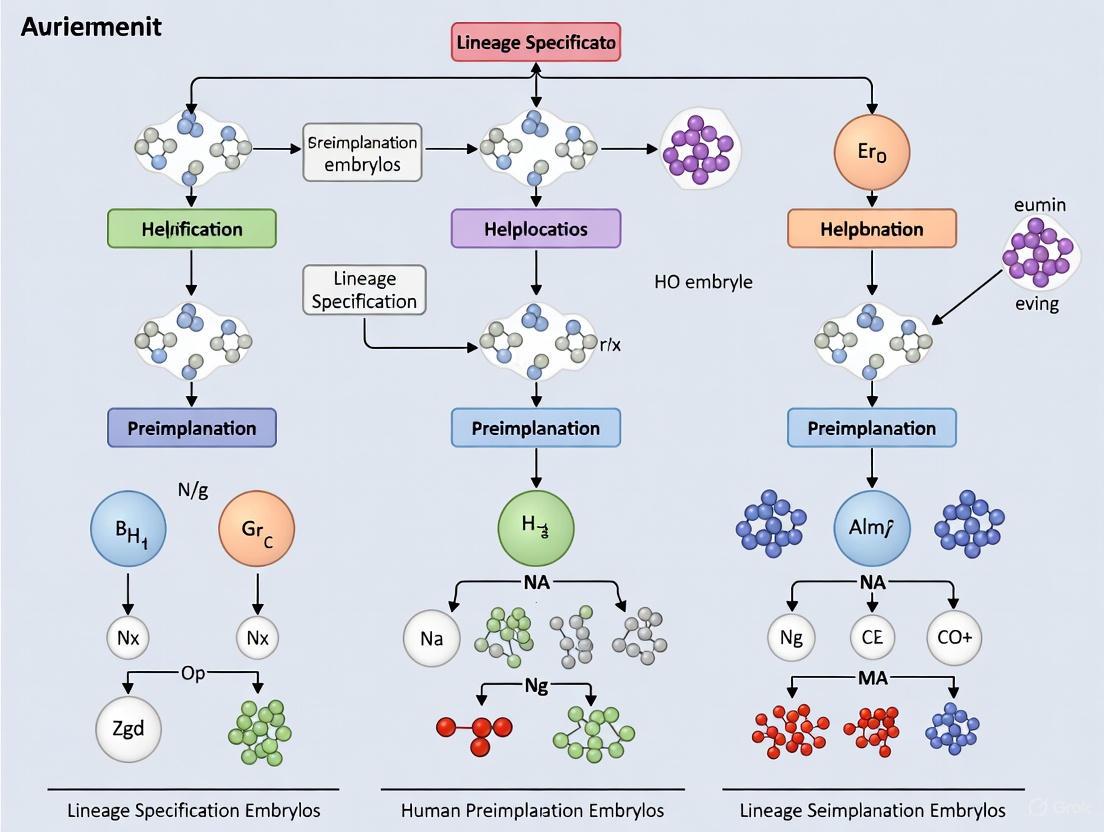
This article provides a comprehensive overview of the molecular and cellular events governing lineage specification during human preimplantation development.
Lineage Specification in Human Preimplantation Embryos: Molecular Mechanisms, Models, and Clinical Translation
Abstract
This article provides a comprehensive overview of the molecular and cellular events governing lineage specification during human preimplantation development. It explores the foundational biology of trophectoderm, epiblast, and primitive endoderm formation, highlighting conserved and human-specific regulatory mechanisms. The content details cutting-edge methodological approaches, including blastoid models and single-cell technologies, for studying these events. It further addresses key challenges in the field, such as optimizing in vitro culture systems, and discusses rigorous validation strategies to ensure experimental fidelity. Finally, the article synthesizes how a deeper understanding of early lineage decisions can inform assisted reproductive technologies, stem cell-based therapies, and drug development.
Blueprint of Life: The Core Principles of Human Preimplantation Lineage Segregation
Human preimplantation development represents a remarkably orchestrated process during which a single-cell zygote is transformed into a complex, multicellular blastocyst ready for implantation. This critical period, spanning approximately seven days post-fertilization, establishes the foundational blueprint for all subsequent embryonic development and adult life [1]. Understanding the precise temporal sequence of morphological, cellular, and molecular events during this phase is not only fundamental to developmental biology but also carries significant implications for assisted reproductive technology (ART), stem cell research, and the treatment of infertility [2] [3]. Within the context of lineage specification research, the preimplantation timeline is particularly crucial as it encompasses the first two major cell fate decisions that generate the precursor populations for the entire human body and its supporting extra-embryonic tissues [4] [1]. This whitepaper synthesizes current research to provide a detailed technical guide to the human preimplantation timeline, with a specific focus on the mechanisms governing lineage specification.
The journey from zygote to blastocyst is characterized by a series of predictable morphological transformations and key genetic events. The table below provides a comprehensive, chronological summary of these critical developmental milestones.
Table 1: Detailed Timeline of Human Preimplantation Development
| Day Post-Fertilization | Developmental Stage | Key Morphological & Cellular Events | Key Molecular & Genetic Events |
|---|---|---|---|
| Day 0 | Zygote | Fertilization; formation of pronuclei [5]. | Oocyte-to-embryo transition begins [2]. |
| Days 1-2 | Cleavage (2-cell, 4-cell, 8-cell) | Series of mitotic cell divisions (cleavage) [6]. | Degradation of maternal transcripts; initial epigenetic reprogramming [7]. |
| Day 3 | Morula (8-cell+) | Compaction: cells tighten adhesion, forming a solid ball [6] [1]. | Major Embryonic Genome Activation (EGA) occurs at 4- to 8-cell stage; onset of zygotic transcription [2] [1]. |
| Days 4-5 | Early Blastocyst | Formation of fluid-filled blastocoel cavity (cavitation) [6]. | First Lineage Specification: outer cells become Trophectoderm (TE); inner cells form Inner Cell Mass (ICM) [4] [1]. |
| Days 5-6 | Mature Blastocyst | Blastocoel expands; distinct ICM and TE; hatching from zona pellucida begins [6] [5]. | Second Lineage Specification within ICM: Epiblast (EPI) and Primitive Endoderm (PrE) precursors emerge [1]. |
| Day 7 | Hatched Blastocyst | Blastocyst fully hatches from zona pellucida [6]. | Ready for implantation; expression of adhesion molecules for uterine attachment [1]. |
This timeline provides a structural framework. The subsequent sections will delve into the specific cellular and molecular mechanisms that drive these transformations, with a particular emphasis on the signals that guide cell fate decisions.
Key Events in Lineage Specification
Compaction and Polarity Establishment
Around day 3, the embryo undergoes compaction, where loose blastomeres form a compact ball of cells, the morula, through enhanced E-cadherin-mediated adhesion [1]. Concurrently, the establishment of apical-basal cell polarity begins, which is the foundational event for the first lineage decision [8]. This process is driven by the reorganization of the actin cytoskeleton and the asymmetric localization of polarity proteins, such as the apical polarity complex containing atypical Protein Kinase C (aPKC), to the contact-free outer surface of each cell [8] [4].
The First Lineage Decision: TE vs. ICM
The emergence of polarity directly leads to the first lineage specification. Outer, polarized cells will differentiate into the Trophectoderm (TE), which gives rise to the placenta. Inner, apolar cells will form the Inner Cell Mass (ICM), which produces the embryo proper and some extra-embryonic tissues [4] [1]. The Hippo signaling pathway is a critical regulator of this fate decision, as illustrated below.
The Second Lineage Decision: EPI vs. PrE
As the blastocyst matures (days 5-7), the ICM undergoes a second lineage segregation into the Epiblast (EPI) and the Primitive Endoderm (PrE). The EPI comprises pluripotent cells that will form the embryo proper, while the PrE gives rise to the yolk sac [4] [1]. This decision is coordinated by a combination of transcription factors and signaling pathways, including FGF and Nodal/BMP signaling [1]. Cells destined to become PrE express receptors for FGF and respond to FGF ligands secreted by EPI precursors, promoting their differentiation. In contrast, EPI cells are characterized by the expression of core pluripotency factors like NANOG and OCT4 [4].
Signaling Pathways Governing Lineage Specification
The precise progression through the preimplantation timeline is directed by an intricate network of signaling pathways. Beyond the Hippo pathway, several other cascades play critical roles in mediating cell fate decisions and blastocyst morphogenesis.
Table 2: Key Signaling Pathways in Preimplantation Development
| Signaling Pathway | Core Components | Primary Role in Preimplantation Development | Experimental Modulators |
|---|---|---|---|
| Hippo | MST1/2, LATS1/2, YAP/TAZ, TEAD1-4 | Primary regulator of TE vs. ICM fate; integrates cell polarity and position [1]. | aPKC inhibitor (CRT0276121): activates Hippo, blocks TE fate [4] [1]. |
| FGF | FGF4, FGFR2 | Promotes Primitive Endoderm (PrE) specification from the ICM; key in second lineage decision [1]. | FGFR inhibitors (e.g., PD173074): blocks PrE differentiation [1]. |
| Wnt/β-catenin | β-catenin, TCF/LEF | Involved in pluripotency maintenance in EPI; potential role in TE maturation [1]. | CHIR99021 (GSK3 inhibitor): activates Wnt signaling [1]. |
| Nodal/BMP (TGF-β) | Nodal, Activin, BMP4, Smads | Cooperates with FGF to pattern the ICM; influences EPI/PrE balance [1]. | A83-01 (Alk5 inhibitor): inhibits Nodal/TGF-β signaling [1]. |
Experimental Approaches for Investigating Lineage Specification
Research into human preimplantation development relies on sophisticated methodologies that allow for the manipulation and analysis of embryos at a molecular level. The following diagram and table outline a typical experimental workflow and the essential reagents used in this field.
Table 3: Essential Research Reagents for Investigating Lineage Specification
| Reagent / Tool | Category | Specific Example | Function in Experiment |
|---|---|---|---|
| CRISPR-Cas9 System | Genome Editing | sgRNA targeting OCT4 (POU5F1) [4] | Knocks out gene function to study its role in lineage specification and blastocyst development. |
| Pathway Modulators | Small Molecule Inhibitors/Activators | aPKC inhibitor (CRT0276121) [4] [1] | Pharmacologically inhibits apical polarity to probe Hippo pathway function in TE specification. |
| Culture Media Supplements | Biochemical Factors | Recombinant FGF4 [1] | Added to culture medium to promote differentiation towards the Primitive Endoderm lineage. |
| Antibodies | Immunofluorescence | Anti-CDX2, Anti-NANOG, Anti-GATA3, Anti-YAP [4] [1] | Visualizes protein expression and localization to define cell lineages and signaling activity. |
| Single-Cell RNA-Seq Kits | Omics Analysis | Commercial scRNA-seq library prep kits | Enables transcriptomic profiling of individual cells from embryos to define lineage-specific gene expression. |
Detailed Protocol: Investigating a Gene's Role via CRISPR-Cas9
A pivotal methodology for establishing causal relationships in lineage specification is functional genetic manipulation. The following protocol outlines the key steps for using CRISPR-Cas9 in human preimplantation embryos, based on the landmark study by Niakan and colleagues [4].
- Guide RNA (gRNA) Design and Validation: Design gRNAs with high predicted efficiency and specificity for the target gene (e.g., OCT4). Validate gRNA efficacy and specificity using an inducible human embryonic stem cell (hESC) system to minimize the use of human embryos [4].
- Microinjection: Microinject the CRISPR-Cas9 ribonucleoprotein complex (Cas9 protein + gRNA) into the cytoplasm of donated, fertilized human zygotes. Optimize injection conditions (pressure, timing) using mouse zygotes first [4].
- In Vitro Culture and Phenotypic Assessment: Culture injected embryos and control embryos (uninjected or injected with non-targeting gRNA) in parallel under standardized conditions. Use time-lapse microscopy to monitor developmental progression, timing of cleavages, cavitation, and blastocyst formation [4].
- Molecular Analysis: At the blastocyst stage or upon developmental arrest, fix embryos for immunofluorescence to assess lineage marker expression (e.g., loss of NANOG in OCT4-null embryos). Alternatively, dissociate embryos for single-cell RNA-sequencing to analyze transcriptomic consequences across all lineages [4].
- Genotyping and Off-Target Analysis: Use sequencing of target loci to confirm gene editing efficiency. Employ computational analysis of single-cell genomics data to assess potential unintended on-target effects (e.g., large deletions, loss-of-heterozygosity) [4].
The journey from a zygote to a blastocyst is a precisely timed sequence of morphological remodeling and cell fate decisions. The preimplantation timeline is not merely a descriptive chronology but a dynamic framework for understanding the core principles of human lineage specification. Research has illuminated the conserved yet distinct roles of signaling pathways like Hippo, FGF, and Wnt in humans compared to model organisms [4] [1]. Advanced tools, particularly CRISPR-Cas9 genome editing and single-cell multi-omics, have transitioned the field from observational to mechanistic, allowing researchers to dissect the gene regulatory networks that underpin cell identity [7] [4]. Future research will continue to unravel the complex interplay between epigenetic reprogramming, transcriptional regulation, and signaling dynamics that guide this foundational stage of human life, with direct implications for improving ART outcomes and harnessing the potential of stem cell-based therapies.
In human preimplantation development, the first lineage segregation event is the differentiation of the trophectoderm (TE) from the inner cell mass (ICM), establishing the foundational cellular populations for the embryo proper and its supporting tissues [9]. This critical developmental transition occurs as the embryo progresses from the morula to the blastocyst stage, typically around days 5-7 post-fertilization [9]. The TE, the outer epithelial layer of the blastocyst, gives rise to the fetal components of the placenta and is essential for implantation, while the ICM subsequently differentiates into the epiblast (which forms the embryo proper) and the primitive endoderm (which contributes to the yolk sac) [9] [10]. Understanding the molecular regulation of this first cell fate decision is not only fundamental to developmental biology but also has direct implications for improving assisted reproductive technologies and understanding early pregnancy failure [9] [11].
This whitepaper synthesizes current research on the mechanisms governing TE and ICM specification, focusing on signaling pathways, transcriptional networks, metabolic differences, and innovative experimental models that enable functional studies of this critical developmental window.
Molecular Regulation of Lineage Specification
Core Signaling Pathways
The segregation of TE and ICM lineages is orchestrated by an intricate interplay of conserved signaling pathways that respond to positional cues and cell-cell interactions.
Table 1: Key Signaling Pathways in TE/ICM Lineage Specification
| Pathway | Key Components | Role in TE/ICM Specification | Experimental Manipulations |
|---|---|---|---|
| Hippo | MST1/2, LATS1/2, YAP/TAZ, TEAD1-4 | Primary regulator; inactive in outer cells (YAP/TAZ nuclear localization promotes TE fate), active in inner cells (YAP/TAZ cytoplasmic retention promotes ICM fate) [9]. | CRT0276121 (activator) reduces TE markers; TRULI (inhibitor) increases ICM markers [9]. |
| Wnt/β-catenin | Wnt3, β-catenin | Modulates lineage specification; precise role in human embryos under investigation [9]. | 1-Azakenpaullone (activator) and Cardamonin (inhibitor) affect blastocyst development rates and TE markers [9]. |
| FGF | FGF2, FGFR, ERK | Promotes primitive endoderm differentiation from ICM; suppresses pluripotency markers [9]. | PD0325901/PD173074 (inhibitors) increase ICM markers and decrease primitive endoderm markers [9]. |
| TGF-β/Nodal | Nodal, Activin A, SB431542 | Regulates pluripotency and primitive endoderm specification within the ICM [9]. | SB431542 (inhibitor) increases ICM markers; Activin A (activator) shows no significant effect [9]. |
| BMP | BMP4 | Involvement in early lineage decisions; effects observed in in vitro culture [9]. | BMP4 supplementation can significantly reduce blastocyst development rates [9]. |
Transcriptional Networks and Regulatory Genomics
Lineage specification is executed through cell-type-specific transcriptional programs. TEAD4, activated by nuclear YAP/TAZ in outer cells, initiates a TE genetic program including CDX2 and GATA3 expression [9]. Conversely, inner cells maintain ICM potential through transcription factors such as OCT4 (POU5F1), NANOG, and SOX2 [9] [10]. Single-cell RNA-sequencing atlases of human embryogenesis have delineated the transcriptional trajectories of these lineages, revealing continuous progression from early to late states and identifying key transcription factors associated with each lineage branch [10].
Recent research has uncovered human-specific regulatory mechanisms, including the involvement of hominoid-specific endogenous retroviral elements (HERVK LTR5Hs) that function as enhancers during preimplantation development [12]. These elements contribute to the diversification of the epiblast transcriptome, with at least one human-specific LTR5Hs insertion being essential for blastoid formation by regulating the expression of ZNF729, a KRAB zinc-finger protein [12].
Experimental Models and Methodologies
Human Embryo and Blastoid Models
Functional studies of human preimplantation development utilize both donated human embryos and stem cell-based embryo models (blastoids). Blastoids generated from human naive pluripotent stem cells (hnPSCs) recapitulate the morphology and lineage specification of human blastocysts, containing analogues to the epiblast, trophectoderm, and hypoblast [12]. These models offer unprecedented opportunities for genetic manipulation and mechanistic studies, though validation against natural embryos remains essential [10] [12].
Live Imaging and Lineage Tracing
Advanced live imaging techniques have enabled direct observation of cell behaviors during lineage specification. Optimization of nuclear DNA labeling via mRNA electroporation coupled with light-sheet microscopy allows long-term imaging of chromosome dynamics and cell movements in human blastocysts with minimal phototoxicity [13]. These approaches have revealed de novo mitotic errors in human blastocysts, including multipolar spindle formation, lagging chromosomes, and mitotic slippage [13].
Table 2: Key Research Reagents and Tools
| Reagent/Tool | Category | Function/Application | Example Use |
|---|---|---|---|
| CRT0276121 | Small Molecule Inhibitor/Activator | Hippo pathway activator | Reduces TE marker expression [9] |
| TRULI | Small Molecule Inhibitor/Activator | Hippo pathway inhibitor | Increases ICM marker expression [9] |
| PD0325901 | Small Molecule Inhibitor/Activator | FGF pathway inhibitor (MEK inhibitor) | Modulates ICM and primitive endoderm markers [9] |
| SB431542 | Small Molecule Inhibitor/Activator | TGF-β/Nodal pathway inhibitor | Increases ICM markers [9] |
| H2B-mCherry mRNA | Fluorescent Reporter | Nuclear DNA labeling for live imaging | Tracking cell divisions and positions in blastocysts [13] |
| LTR5Hs-CARGO | CRISPR-based Perturbation | Represses HERVK LTR5Hs elements | Functional study of human-specific regulatory elements [12] |
| scRNA-seq | Genomic Technology | Single-cell transcriptome profiling | Lineage annotation and trajectory inference [10] |
Diagram: Sequence of cellular events and signaling leading to TE and ICM fate specification. Early asymmetries at the 4-cell stage influence polarization timing at the 8-cell stage [14]. Position-dependent Hippo pathway activity then directs lineage specification [9].
Metabolic Profiling
Metabolic differences between ICM and TE lineages have been identified through lipidomic and metabolomic profiling. In bovine models, TE cells demonstrate heightened abundance of various lipid classes, while ICM cells show specific increases in amino acids [15]. These distinct metabolic profiles reflect the different functional requirements of each lineage, with TE cells preparing for placentation and ICM cells orchestrating the development of diverse tissues and organs.
Technical Challenges and Assessment Methods
Limitations of Static Morphological Assessment
In clinical IVF practice, blastocyst quality is typically assessed using static morphological evaluation based on the Gardner scoring system, which separately grades the blastocoel expansion, ICM, and TE [11] [16]. However, the subjective nature of this assessment and technical limitations of 2D static imaging present challenges. The ICM's visibility in static images can be limited by embryo orientation and focal plane rather than reflecting true quality [16]. Recent evidence suggests that TE quality may be more predictive of live birth outcomes than ICM quality in some contexts [11].
Lineage Validation and Benchmarking
For stem cell-based embryo models, rigorous validation against natural human embryos is essential. Integrated scRNA-seq datasets covering human development from zygote to gastrula serve as universal references for benchmarking the fidelity of embryo models [10]. Without proper benchmarking using relevant references, there is a risk of misannotation of cell lineages in embryo models [10].
Diagram: Experimental workflow for live imaging of chromosome dynamics and cell behaviors in human blastocysts [13].
The segregation of the trophectoderm from the inner cell mass represents the foundational lineage decision in human development, governed by an integrated network of signaling pathways, transcriptional regulators, and metabolic programs. While core mechanisms like the Hippo pathway are conserved, human-specific features such as HERVK-derived regulatory elements highlight the importance of direct studies in human models. Continued refinement of blastoid systems, live imaging technologies, and single-cell omics approaches will further illuminate the molecular intricacies of this first fate decision, with significant implications for reproductive medicine and regenerative biology.
The second fate decision represents a pivotal milestone in human preimplantation development, during which the seemingly homogeneous inner cell mass (ICM) differentiates into two distinct lineages: the epiblast (EPI) and the primitive endoderm (PrE). This binary specification process not only establishes the foundational cellular blueprint for the embryo proper but also creates essential extraembryonic structures necessary for successful gestation. The EPI gives rise to the entire fetus and contributes to some extraembryonic mesoderm, while the PrE primarily forms the yolk sac, which provides essential nutritional support during early development [9] [17]. Within the context of broader research on human lineage specification, understanding this critical developmental transition provides fundamental insights into the molecular principles governing cell fate decisions, with significant implications for assisted reproductive technologies, stem cell biology, and developmental disorders.
Recent advances in single-cell technologies and improved in vitro culture systems have revealed that human development exhibits both conserved features and significant differences compared to model organisms like mice [18]. For instance, while key transcription factors such as NANOG and GATA6 play central roles in both species, their expression patterns and temporal dynamics display notable species-specific variations [17] [18]. This technical guide synthesizes current understanding of the molecular mechanisms, signaling pathways, and experimental methodologies essential for investigating EPI and PrE specification, providing researchers with a comprehensive framework for studying this critical developmental window.
Biological Mechanisms: From Pluripotency to Lineage Segregation
Developmental Context of the Second Fate Decision
Human preimplantation development follows a meticulously orchestrated sequence of events culminating in the second lineage decision:
- Days 1-3: Fertilization, zygotic cleavage, and compaction form the morula
- Days 4-5: Formation of the blastocyst with distinct ICM and trophectoderm (TE) lineages
- Days 5-7: ICM undergoes second lineage specification into EPI and PrE [9]
The emerging PrE cells eventually form a polarized epithelium adjacent to the blastocoel cavity, while the EPI cells remain enclosed between the PrE and the polar TE [17]. This spatial reorganization is crucial for subsequent developmental events, including implantation and gastrulation.
Key Transcription Factors and Regulatory Networks
The second lineage decision is governed by a core transcriptional network centered around the reciprocal expression and mutual exclusion of key pluripotency and differentiation factors:
Table 1: Core Transcription Factors in EPI/PrE Specification
| Transcription Factor | Primary Lineage Role | Functional Significance | Expression Dynamics |
|---|---|---|---|
| NANOG | EPI | Maintains pluripotency; suppresses PrE differentiation | Initially salt-and-pepper in ICM; becomes EPI-restricted |
| GATA6 | PrE | Promotes PrE differentiation; suppresses pluripotency network | Initially salt-and-pepper in ICM; becomes PrE-restricted |
| SOX2 | EPI | Cooperates with OCT4 to maintain pluripotent state | Broadly expressed in ICM; maintained in EPI |
| OCT4 (POU5F1) | Both | Required for both EPI and PrE specification | Persists in both lineages longer in humans than mice |
| SOX17 | PrE | Executes PrE differentiation program | Emerges in GATA6+ cells; reinforces PrE commitment |
In mice, live imaging of endogenously tagged transcription factors has revealed that the initial symmetry-breaking event involves the formation of a primary EPI lineage linked to SOX2 expression dynamics from the prior ICM/TE fate decision [19]. This primary EPI population then influences surrounding cells through paracrine signaling, particularly FGF pathways, initiating their trajectory toward PrE differentiation [19] [17]. Interestingly, cell fate remains plastic during a defined developmental window, with some cells capable of switching trajectories to form secondary EPI cells, a process influenced by seemingly stochastic fluctuations in NANOG expression levels [19].
Signaling Pathways Governing Lineage Specification
Multiple evolutionarily conserved signaling pathways interact with the core transcriptional network to coordinate EPI and PrE fate determination:
Table 2: Signaling Pathways in EPI/PrE Specification
| Signaling Pathway | Primary Role in Second Fate Decision | Key Effectors | Experimental Manipulations |
|---|---|---|---|
| FGF Signaling | Promotes PrE differentiation | FGF4, FGFR2, GRB2, MAPK | PD0325901 (MEK inhibitor) increases NANOG+ EPI cells [9] |
| Wnt/β-Catenin | Modulates lineage specification | β-catenin, TCF/LEF | Cardamonin (inhibitor) reduces blastocyst development rate to 46% [9] |
| Hippo Pathway | Primarily regulates first lineage decision | YAP, TAZ, TEAD4 | Influences ICM/TE segregation preceding EPI/PrE decision [9] |
| TGF-β/Nodal/Activin | Fine-tunes lineage proportions | SMAD2/3, NODAL, ACTIVIN | SB431542 (inhibitor) increases EPI markers [9] |
The FGF pathway exhibits particularly strong conservation between mouse and human development. In both species, FGF4 secreted by early EPI precursors acts on FGFR2 in neighboring cells to promote PrE differentiation through MAPK signaling [9] [17]. Inhibition of this pathway with small molecules such as PD0325901 shifts the balance toward EPI specification, while exogenous FGF2 supplementation promotes PrE differentiation [9].
Figure 1: Transcription Factor Dynamics During EPI/PrE Specification. The diagram illustrates how SOX2 expression establishes primary EPI lineage, which then secretes FGF4 to induce GATA6 expression in adjacent cells, promoting PrE differentiation. Cell fate remains plastic during a defined window, with NANOG expression levels influencing whether cells commit to PrE or switch to secondary EPI fate.
Experimental Models and Methodologies
In Vivo and Ex Vivo Embryo Studies
Direct study of human preimplantation embryos remains technically challenging and ethically constrained, but critical insights have been gained through:
- Time-lapse imaging of donated IVF embryos: Reveals morphological landmarks and developmental kinetics
- Single-cell RNA sequencing of human embryos: Identifies transcriptional states and lineage markers [18]
- Immunofluorescence and spatial transcriptomics: Maps protein expression and spatial relationships within embryos
These approaches have demonstrated that human embryos exhibit prolonged co-expression of lineage-specific markers compared to mice, with distinct EPI and PrE transcriptional states emerging between early and mid-stages of day 5 blastocysts [17].
Stem Cell-Based Model Systems
Stem cell models provide powerful, scalable alternatives for investigating the second fate decision:
Table 3: Stem Cell Models for Studying EPI/PrE Specification
| Model System | Lineage Representation | Key Features | Applications |
|---|---|---|---|
| Human Embryonic Stem Cells (hESCs) | EPI/Pluripotent state | Self-renewing, differentiate toward all embryonic lineages | Study of pluripotency maintenance and exit |
| Naive hPSCs | Pre-implantation EPI | Correspond to early human EPI; enhanced developmental potential | Modeling earliest stages of lineage specification |
| Primed hPSCs | Post-implantation EPI | Similar to later developmental stage; limited differentiation capacity | Study of lineage commitment processes |
| Extraembryonic Endoderm (XEN) Cells | PrE lineage | Self-renewing, restricted to extraembryonic endoderm fates | Modeling PrE differentiation and function |
| Stem Cell-Based Embryo Models (SCBEMs) | Integrated embryonic and extraembryonic lineages | 3D models mimicking embryonic architecture | Study of tissue-tissue interactions and self-organization |
Recent advances in stem cell-based embryo models (SCBEMs) have been particularly transformative, enabling researchers to recreate key aspects of early development in vitro [20] [21]. These models typically combine embryonic stem cells with extraembryonic stem cell types (e.g., trophoblast stem cells and extraembryonic endoderm cells) to form structures that closely resemble natural embryos in their spatial organization and lineage relationships [21]. The International Society for Stem Cell Research (ISSCR) has established guidelines for SCBEM research, recommending that all such models have a clear scientific rationale, defined endpoints, and appropriate oversight mechanisms [22].
The Scientist's Toolkit: Essential Research Reagents
Table 4: Key Research Reagents for EPI/PrE Studies
| Reagent/Category | Specific Examples | Primary Function | Application Context |
|---|---|---|---|
| Small Molecule Inhibitors | PD0325901 (MEK inhibitor), SB431542 (TGF-β inhibitor), Cardamonin (Wnt inhibitor) | Modulate signaling pathways to manipulate lineage specification | Dose-dependent studies in stem cell culture and embryo models |
| Growth Factors/Cytokines | FGF2/FGF4, Activin A, BMP4, LIF | Promote self-renewal or direct differentiation toward specific lineages | Media supplementation for stem cell maintenance or differentiation |
| Cell Culture Media Systems | 2i/LIF (for naive pluripotency), FA condition (FGF2/Activin A for primed state) | Stabilize specific pluripotent states or support differentiation | Maintenance of distinct stem cell types for experimentation |
| Antibodies for Characterization | Anti-NANOG, anti-GATA6, anti-SOX2, anti-OCT4, anti-SOX17 | Lineage marker identification through immunostaining or flow cytometry | Assessment of lineage specification efficiency |
| Gene Editing Tools | CRISPR-Cas9 systems, siRNA/shRNA | Functional perturbation of key regulators | Loss-of-function and gain-of-function studies |
Experimental Protocols: Key Methodologies
Protocol 1: Directed Differentiation of hPSCs to PrE/XEN-like Cells
This protocol enables the efficient generation of PrE-like cells from human pluripotent stem cells, facilitating the study of PrE specification and function:
- Culture hPSCs in defined naive or primed conditions until 70-80% confluent
- Transition cells to basal differentiation medium (e.g., RPMI 1640 supplemented with B27)
- Add patterning factors:
- Culture for 5-7 days with medium changes every 48 hours
- Assess differentiation efficiency via flow cytometry or immunocytochemistry for GATA6 and SOX17
This approach typically yields 40-60% GATA6+ cells, which can be further purified using surface markers such PDGFRα [17].
Protocol 2: Generating 3D Stem Cell-Based Embryo Models
3D SCBEMs provide a sophisticated platform for studying EPI/PrE specification in a context that recapitulates embryonic architecture:
- Prepare single-cell suspensions of hESCs, trophoblast stem cells (TSCs), and extraembryonic endoderm (XEN) cells
- Mix in precise ratios (typically 10:5:3 for EPI:TE:PrE precursors)
- Aggregate cells in low-adhesion U-bottom plates (approximately 300-500 cells per aggregate)
- Culture in 3D embryo medium containing:
- FGF2 (100 ng/mL)
- TGF-β1 (20 ng/mL)
- Y-27632 (ROCK inhibitor, 10 μM) to support cell survival
- Other pathway modulators as needed for experimental goals
- Monitor formation over 5-7 days, with key morphological events typically occurring by day 3-4
These models should be cultured according to ISSCR guidelines, which include establishing a clear scientific rationale, defining endpoints, and implementing appropriate oversight mechanisms [22]. The resulting structures can be analyzed using single-cell RNA sequencing, immunostaining, or live imaging to assess lineage specification and spatial organization.
Figure 2: Experimental Workflows for Modeling EPI/PrE Specification. The diagram outlines two primary approaches: direct differentiation from primed pluripotent stem cells using specific growth factors, and the generation of 3D stem cell-based embryo models that self-organize into structures containing both EPI and PrE lineages.
Discussion and Future Perspectives
The study of the second fate decision continues to evolve rapidly, driven by technological advances in single-cell analysis, gene editing, and stem cell biology. Several emerging areas represent particularly promising directions for future research:
First, the integration of multi-omics approaches—including single-cell transcriptomics, epigenomics, and proteomics—is enabling unprecedented resolution of the molecular events underlying EPI and PrE specification. These technologies are revealing the complex regulatory networks that orchestrate lineage decisions, including the role of non-coding RNAs, chromatin accessibility changes, and protein expression dynamics.
Second, advanced stem cell-based embryo models are becoming increasingly sophisticated in their ability to recapitulate human development. Recent efforts have successfully generated models that mimic post-implantation stages, incorporating embryonic and extraembryonic tissues with remarkable architectural fidelity [20] [21]. These models provide powerful platforms for studying human-specific aspects of development and disease, though they also raise important ethical considerations that must be carefully addressed [22] [20].
Third, there is growing recognition of the need to better understand species-specific differences between human and mouse development. While murine models have provided fundamental insights into the principles of lineage specification, recent studies highlight important differences in the timing, regulation, and molecular players involved in human EPI/PrE establishment [17] [18]. These differences underscore the importance of developing and validating human-specific model systems.
Finally, the translational applications of this research continue to expand, with implications for improving assisted reproductive technologies, understanding early pregnancy loss, and developing cell-based therapies for regenerative medicine. As our understanding of the second fate decision deepens, so too does our ability to manipulate these processes for therapeutic benefit, highlighting the fundamental importance of basic research in guiding clinical advances.
Human preimplantation embryonic development is a highly programmed process wherein a single-cell zygote undergoes a series of cleavages and morphological changes to form a blastocyst capable of implantation. This blastocyst consists of three distinct cell lineages: the epiblast (EPI), which gives rise to the embryo proper; the trophectoderm (TE), which forms placental structures; and the primitive endoderm (PrE), which contributes to the yolk sac [9]. The specification of these lineages is governed by the precise spatiotemporal regulation of several evolutionarily conserved signaling pathways. Among these, the Hippo, Fibroblast Growth Factor (FGF), and Transforming Growth Factor-Beta (TGF-β) pathways play particularly critical roles [9]. Understanding the molecular mechanisms of these pathways is not only fundamental to developmental biology but also crucial for advancing assisted reproductive technology (ART), where blastocyst quality remains a key limiting factor for successful pregnancy [9]. This review provides an in-depth analysis of these core signaling pathways, their interactions, and their experimental manipulation in the context of human lineage specification.
The Hippo Signaling Pathway: Master Regulator of the First Cell Fate Decision
Pathway Mechanism and Key Components
The Hippo pathway is a highly conserved kinase cascade that functions as a central regulator of organ size and cell fate. Its core components in mammals include the MST1/2 and LATS1/2 kinases, their adaptor proteins SAV1 and MOBKL1A/B, and the downstream transcriptional co-activators YAP and TAZ [9]. In its active state, the kinase cascade leads to the phosphorylation of YAP/TAZ, resulting in their sequestration and degradation in the cytoplasm. When the pathway is inactive, dephosphorylated YAP/TAZ translocate to the nucleus, where they interact with TEAD transcription factors (TEAD1-4) to activate the expression of target genes [9].
Role in Trophectoderm (TE) Specification
The Hippo pathway is the primary regulator of the first lineage specification event, separating the inner cell mass (ICM) from the trophectoderm (TE). This process is mechanically coupled to the establishment of cell polarity [9] [23].
- In outer polar cells: At the morula stage, outer cells establish an apical-basal polarity. The apical polarity complex, including aPKC, sequesters and inactivates Hippo pathway components like LATS1/2 and angiomotin (AMOT). This inhibits the Hippo pathway, allowing YAP/TAZ to enter the nucleus. There, they partner with TEAD4 (and potentially TEAD1 in humans) to drive the expression of TE-specific genes such as CDX2 and GATA3, committing these cells to the TE lineage [9] [23].
- In inner apolar cells: Lacking an apical domain, the Hippo pathway remains active in the inner cells. YAP/TAZ are phosphorylated and retained in the cytoplasm, which suppresses TE-specific gene expression and allows for the maintenance and expression of ICM markers like NANOG and SOX2 [9].
A comparative embryology approach has confirmed that the role of the Hippo pathway in initiating TE specification is conserved across mammals, including humans, despite some species-specific differences in the timing and localization of molecular markers [23].
The following diagram illustrates the core mechanism of the Hippo pathway in lineage specification:
The FGF Signaling Pathway: Orchestrating the Second Lineage Decision
Pathway Mechanism and Key Components
The Fibroblast Growth Factor (FGF) pathway is a versatile signaling system that regulates a multitude of processes, including cell proliferation, migration, and differentiation. The family comprises 22 FGF ligands in humans, which bind to four high-affinity tyrosine kinase receptors (FGFR1-4) [24] [25]. Ligand-receptor binding, which often requires heparan sulfate proteoglycans (HSPGs) as co-factors, induces receptor dimerization and trans-autophosphorylation. This activates several downstream signaling cascades, most notably the RAS/MAPK, PI3K/AKT, and PLCγ pathways [24] [25] [26]. The specific cellular response is determined by the combination of ligands, receptors, and downstream effectors present.
Role in Primitive Endoderm (PrE) vs. Epiblast (EPI) Specification
Following the formation of the ICM, FGF signaling becomes the principal driver of the second lineage segregation, specifying the Primitive Endoderm (PrE) from the Epiblast (EPI). This process operates through a MAPK-mediated signaling gradient [9].
- In future PrE cells: These cells typically express higher levels of FGFR2. Activation by FGF4 (secreted by EPI precursors) leads to strong ERK1/2 signaling, which promotes the expression of PrE markers such as GATA6 and SOX17, thereby committing the cell to the PrE lineage [9].
- In future EPI cells: These cells have lower FGF/MAPK signaling activity. This allows for the expression and maintenance of EPI-specific transcription factors like NANOG, specifying the EPI lineage [9].
The centrality of FGF/MAPK signaling in this binary fate decision is demonstrated by experimental manipulation: inhibition of the MAPK pathway (e.g., with PD0325901) leads to a loss of PrE and an expansion of NANOG-positive EPI cells, while supplementation with FGF ligands (e.g., FGF2/FGF4) promotes PrE differentiation [9].
The core FGF signaling mechanism is summarized below:
The TGF-β Signaling Pathway: A Family of Multifunctional Regulators
Pathway Mechanism and Key Components
The Transforming Growth Factor-Beta (TGF-β) superfamily includes TGF-βs proper, Bone Morphogenetic Proteins (BMPs), Nodal, and Activins. These ligands signal through transmembrane serine/threonine kinase receptors. Upon ligand binding, type II receptors phosphorylate type I receptors (e.g., ALK4, ALK5, ALK7 for TGF-β/Nodal), which then activate downstream SMAD proteins ( Receptor-regulated SMADs or R-SMADs) [9] [27]. The phosphorylated R-SMads (SMAD2/3 for TGF-β/Nodal; SMAD1/5/8 for BMP) form a complex with the common mediator SMAD4. This complex translocates to the nucleus to regulate the transcription of target genes. The pathway can also signal through non-canonical, SMAD-independent routes such as MAPK and PI3K/AKT [27].
Roles in Preimplantation Development
The roles of the TGF-β superfamily in human preimplantation development are complex and context-dependent, influencing both the first and second lineage decisions.
- Nodal Signaling: Nodal, a member of the TGF-β superfamily, appears to play a role in reinforcing the segregation of the EPI and PrE lineages. Studies using inhibitors like SB431542 (which targets the Nodal type I receptor ALK4) suggest that Nodal signaling helps restrict EPI potential and promotes PrE differentiation [9].
- BMP Signaling: BMP4 has been implicated in regulating trophectoderm-related genes. However, its precise role in humans is still being delineated. Exposure of human embryos to BMP4 can suppress overall blastocyst development rates, but its specific effects on lineage specification require further investigation [9].
Experimental Modulation of Signaling Pathways: Data and Reagents
Research into human lineage specification relies heavily on the use of small molecule inhibitors and recombinant growth factors to precisely modulate these signaling pathways in vitro. The table below summarizes key experimental data from studies on human preimplantation embryos.
Table 1: Experimental Modulation of Signaling Pathways in Human Preimplantation Embryos
| Small Molecule / Ligand | Target Pathway | Action | Treatment Duration | Key Findings on Lineage | Blastocyst Development Rate (Control) | Citation |
|---|---|---|---|---|---|---|
| TRULI | Hippo | Inhibitor (LATS) | Pre-compaction to blastocyst | ↑ ICM, ↓ TE | 100% (100%) | [9] |
| CRT0276121 | Hippo | Activator (?) | Pre-compaction to blastocyst | → ICM, ↓ TE | 25% (83%) | [9] |
| PD0325901 | FGF | Inhibitor (MEK) | Day 3–6/7 | → EPI, → PrE | - | [9] |
| FGF2 | FGF | Activator | Day 5–6/7 | ↓ EPI, ↑ PrE | - | [9] |
| SB431542 | TGF-β/Nodal | Inhibitor (ALK4/5/7) | Day 3–6 | ↑ EPI, → PrE | 25% (28%) | [9] |
| Activin A | TGF-β/Nodal | Activator | Day 3–6 | → EPI, → PrE | 27% (28%) | [9] |
| BMP4 | BMP | Activator | Day 3–6 | → EPI, → TE, → PrE | 17.4% (61.5%) | [9] |
Note: → non-significant change; ↑ significantly increased; ↓ significantly decreased; - not described.
The Scientist's Toolkit: Essential Research Reagents
To experimentally investigate these pathways, researchers utilize a well-defined toolkit of pharmacological and biological reagents.
Table 2: Key Research Reagents for Studying Lineage Specification
| Reagent Name | Target / Function | Primary Use in Research | Brief Mechanism |
|---|---|---|---|
| TRULI | LATS Kinase (Hippo Pathway Inhibitor) | Promote ICM fate; study TE specification. | Inhibits LATS, preventing YAP phosphorylation and promoting its nuclear localization. [9] |
| PD0325901 | MEK (FGF Pathway Inhibitor) | Promote EPI fate; study PrE specification. | Inhibits MEK, blocking the MAPK cascade downstream of FGFR. [9] |
| SB431542 | ALK4/5/7 (TGF-β/Nodal Inhibitor) | Promote EPI fate; study Nodal's role. | Inhibits TGF-β/Nodal type I receptors, blocking Smad2/3 phosphorylation. [9] |
| Recombinant FGF2/FGF4 | FGFR Agonist | Promote PrE differentiation. | Binds and activates FGFR, stimulating the MAPK signaling pathway. [9] [26] |
| Recombinant Activin A | Nodal/Activin Receptor Agonist | Support self-renewal in primed pluripotent stem cells. | Activates Smad2/3 signaling via ALK4. [9] |
The precise coordination of the Hippo, FGF, and TGF-β signaling pathways is fundamental to the successful specification of the TE, EPI, and PrE lineages in the human preimplantation embryo. The Hippo pathway translates mechanical and polarity cues into the first cell fate decision. The FGF pathway then acts as a morphogenetic signal to pattern the ICM. Meanwhile, the TGF-β superfamily, including Nodal, provides additional layers of regulation to ensure robust lineage segregation.
Significant progress has been made by using small molecule inhibitors and activators to dissect the functions of these pathways, offering a powerful experimental paradigm. A deeper understanding of the crosstalk between these pathways and their species-specific nuances will be crucial. Furthermore, translating this knowledge into optimized, defined in vitro culture conditions holds immense promise for improving the efficacy of assisted reproductive technologies and for guiding the directed differentiation of stem cells for regenerative medicine.
The human preimplantation embryo undergoes a meticulously orchestrated series of developmental events, culminating in the formation of the blastocyst and the initial specification of embryonic and extra-embryonic lineages. Recent research has unveiled that species-specific genomic elements, particularly endogenous retroviruses (ERVs), are integral regulators of this process. This whitepaper synthesizes cutting-edge findings on the functional impact of the most recent human ERV, HERVK (HML-2), and its subtype LTR5Hs. We detail how these elements, activated during embryonic genome activation, exert cis-regulatory control over genes critical for epiblast formation, cellular proliferation, and blastocyst development. The methodologies, quantitative data, and reagent toolkits compiled herein provide a foundational resource for researchers dissecting the mechanisms of human-specific regulation in early development and its implications for diseases such as cancer and infertility.
The period of human preimplantation development is characterized by profound epigenetic reprogramming and the initial establishment of cellular potency, leading to the first lineage decisions that separate the future embryo (epiblast) from its supporting tissues (trophectoderm and hypoblast). While the broad outlines of mammalian development are conserved, many regulatory mechanisms have diverged, contributing to species-specific characteristics. A significant source of this regulatory innovation stems from transposable elements, which comprise nearly half of the human genome. Among these, Endogenous Retroviruses (ERVs), remnants of ancient retroviral infections, have been repeatedly co-opted into the regulatory circuitry of their hosts. The most recently acquired human ERV, HERVK (HML-2), along with other elements like HERVH, has emerged as a critical player in shaping the transcriptional landscape of the early human embryo. Their expression is not merely a vestigial echo but a functional necessity, directly influencing gene networks governing pluripotency and cell fate. This review focuses on the mechanistic role of HERVK, framed within the context of lineage specification in the human preimplantation embryo.
Mechanistic Insights into HERVK and LTR5Hs Function
Species-Specific Expression and Activation in the Preimplantation Embryo
HERVK is the evolutionarily youngest ERV in the human genome, with numerous integrations occurring after the divergence of hominoids (apes) from Old World monkeys, and a subset being human-specific [12]. Its transcriptional activation is a hallmark of human embryonic genome activation (EGA).
- Developmental Timing: Single-cell RNA sequencing (scRNA-seq) analyses reveal that HERVK transcripts, particularly those driven by the LTR5Hs subtype, are induced at the 8-cell stage, persist through the morula stage, and remain active in the epiblast (EPI) and hypoblast of the blastocyst [28] [29]. This expression is subsequently silenced during the derivation of human embryonic stem cells (hESCs) from blastocyst outgrowths [28].
- Regulatory Control: The activation of LTR5Hs is synergistically driven by two key factors:
- DNA Hypomethylation: The profound epigenomic reprogramming during preimplantation leads to hypomethylation of LTR5Hs elements, making them accessible to the transcriptional machinery [28] [29].
- Transactivation by OCT4 (POU5F1): Sequence analysis of LTR5Hs reveals a conserved OCT4 binding motif that is absent in older LTR5a/LTR5b subtypes. Chromatin immunoprecipitation (ChIP) in permissive cells like embryonic carcinoma cells (hECCs) confirms OCT4 and co-activator p300 occupancy at LTR5Hs, and mutation of this motif impairs reporter activity [28].
- Naïve Pluripotency: HERVK and LTR5Hs are highly upregulated in human naïve-state pluripotent stem cells compared to their primed counterparts, reinforcing their association with a pre-implantation epiblast-like state [28].
Table 1: Expression Profile of Key Endogenous Retroviral Elements in Human Preimplantation Development
| Genomic Element | Family | Peak Expression Stage | Expression in Blastocyst Lineages | Key Regulatory Transcription Factors |
|---|---|---|---|---|
| LTR5Hs (HERVK) | HERVK (HML-2) | 8-cell to Blastocyst [28] | Epiblast, Hypoblast [12] [28] | OCT4 [28] |
| LTR7 (HERVH) | HERVH | Throughout preimplantation [28] | All lineages, including Trophectoderm [28] | OCT4, NANOG, SOX2, TFCP2L1 [30] |
| HERVK-Derived Rec | HERVK (HML-2) | Blastocyst (protein) [29] | Not specified | N/A |
Essential Role in Blastocyst Formation and Lineage Specification
Functional studies using advanced in vitro models demonstrate that HERVK LTR5Hs is not a passive marker but an active, essential regulator of preimplantation development.
- Impact on Blastoid Formation: Research utilizing human blastoids (3D stem cell-based embryo models) has shown that CRISPR-mediated repression of LTR5Hs activity leads to a dose-dependent failure in blastoid formation [12]. High levels of repression result in the formation of "dark spheres" that fail to cavitate, exhibit widespread apoptosis (e.g., cleaved CASP3+ cells), and show significant misregulation of genes involved in embryo morphogenesis, cell proliferation, and immune response [12].
- Human-Specific cis-Regulatory Function: A key finding is the human-specific LTR5Hs enhancer that regulates the primate-specific gene ZNF729, which encodes a KRAB zinc-finger transcription factor [12]. This LTR5Hs-ZNF729 axis was identified as essential for endowing naïve human pluripotent stem cells with blastoid-forming potential.
- Downstream Transcriptional Network: ZNF729, in turn, binds to GC-rich promoter sequences of genes involved in fundamental cellular processes like proliferation and metabolism. Despite recruiting the repressive complex protein TRIM28, ZNF729 appears to function as a transcriptional activator at many of these promoters, illustrating a novel and complex regulatory mechanism essential for early development [12].
The following diagram illustrates the core regulatory mechanism of HERVK LTR5Hs in human preimplantation development:
Experimental Protocols for Functional Interrogation
Key Methodology: Perturbing HERVK Function in Human Blastoids
The following workflow details a critical protocol for studying HERVK function, as derived from recent literature [12].
Detailed Protocol Steps:
Cell Line Engineering:
- Objective: To create human naïve pluripotent stem cell (hnPSC) lines capable of inducible, genome-wide repression of LTR5Hs.
- Procedure:
- Generate clonal hnPSC lines expressing a cumate-inducible catalytically dead Cas9 (dCas9) fused to the transcriptional repressor domain KRAB (KRAB-dCas9).
- Introduce a CARGO-CRISPRi guide RNA (gRNA) array designed to target the majority of the ~697 LTR5Hs instances in the human genome (LTR5Hs-CARGO). A control cell line with a non-targeting gRNA array (nontarg-CARGO) must be generated in parallel.
- Validate clonal cell lines for inducible KRAB-dCas9 expression and gRNA array integrity.
Induction of Repression and Validation:
- Objective: To repress LTR5Hs and confirm target engagement.
- Procedure:
- Treat LTR5Hs-CARGO and nontarg-CARGO hnPSCs with cumate to induce KRAB-dCas9 expression.
- After induction (e.g., 96 hours), assess repression efficiency using:
- qRT-PCR: With TaqMan probes specific for LTR5Hs-originating transcripts to quantify repression levels.
- ChIP-qPCR/Seq: For the repressive histone mark H3K9me3 across LTR5Hs loci to confirm epigenetic silencing.
Blastoid Formation Assay:
- Objective: To determine the phenotypic consequence of LTR5Hs repression on embryonic development.
- Procedure:
- Subject the induced and control hnPSCs to a established blastoid generation protocol [12].
- Quantify blastoid formation efficiency by counting structures with a characteristic blastocyst-like morphology (cavitated, with clear inner cell mass analogue) versus aberrant structures (dark, non-cavitating spheres).
- Correlate formation efficiency with the level of LTR5Hs repression measured in Step 2.
Phenotypic and Molecular Analysis:
- Objective: To characterize the developmental failure and identify dysregulated genes and pathways.
- Procedure:
- Immunostaining: Use markers for blastocyst lineages (e.g., NANOG for epiblast, GATA3 for trophectoderm, SOX17 for hypoblast) and apoptosis (cleaved CASP3) on the resulting structures.
- Transcriptomic Analysis: Perform bulk RNA-seq or scRNA-seq on control blastoids and repressed "dark spheres."
- Bioinformatic Analysis: Identify differentially expressed genes and perform Gene Ontology enrichment analysis to uncover affected biological processes (e.g., morphogenesis, proliferation, apoptosis).
Supporting Protocol: Detecting HERVK Proteins and Particles in Embryos
A separate foundational study provided direct evidence of HERVK activity in human blastocysts [28] [29].
- Immunofluorescence for HERVK Gag Protein:
- Fixation and Staining: Fix human blastocysts and stain with a well-characterized monoclonal antibody recognizing HERVK Gag/Capsid protein.
- Analysis: Visualize using confocal microscopy. A positive signal appears as dense cytoplasmic puncta, which should be absent in appropriate negative controls (e.g., Gag siRNA-treated cells).
- Transmission Electron Microscopy (TEM) for Viral-like Particles (VLPs):
- Sample Preparation: Fix blastocysts for heavy metal staining and TEM processing.
- Analysis: Image to identify cytoplasmic, electron-dense particles of approximately 100 nm in diameter, consistent with the reported size of reconstructed HERVK VLPs.
The functional impact of HERVK and related elements is supported by key quantitative findings from recent research.
Table 2: Quantitative Findings on HERVK/LTR5Hs Functional Impact
| Parameter Measured | Experimental System | Key Quantitative Result | Biological Implication |
|---|---|---|---|
| LTR5Hs Repression vs. Blastoid Efficiency | hnPSCs -> Blastoids [12] | High LTR5Hs repression → 0% blastoid formation; Intermediate repression → Reduced efficiency; Low repression → ~70% efficiency (control level). | LTR5Hs activity is dose-dependently essential for blastocyst development. |
| Apoptosis in LTR5Hs-Repressed Structures | "Dark spheres" vs. Blastoids [12] | Median of 29 cleaved CASP3+ cells in dark spheres vs. 3 in control blastoids. | Loss of LTR5Hs function triggers widespread apoptosis, preventing normal development. |
| HERVK Protein Detection | Human Blastocysts [28] [29] | 19/19 blastocysts showed robust Gag/Capsid protein signal. | HERVK viral products are a consistent feature of normal human preimplantation development. |
| Genomic Prevalence of LTR5Hs | Human Genome Analysis [12] | ~700 LTR5Hs insertions in human genome; subset is human-specific. | Provides a vast reservoir of species-specific regulatory potential. |
The Scientist's Toolkit: Key Research Reagents
The following table catalogues essential reagents and resources for investigating HERVK biology in early development.
Table 3: Research Reagent Solutions for HERVK Functional Studies
| Reagent / Resource | Function / Application | Example Use Case |
|---|---|---|
| Human Naïve PSCs (hnPSCs) | In vitro model of pre-implantation epiblast; capable of forming blastoids. | Starting cell population for genetic engineering and blastoid assays [12]. |
| CARGO-CRISPRi System (KRAB-dCas9 + LTR5Hs-gRNA) | Enables simultaneous, inducible repression of hundreds of LTR5Hs instances across the genome. | Functional perturbation of HERVK to study its role in blastoid formation [12]. |
| Human Blastoid Model | 3D, stem cell-based embryo model that recapitulates human blastocyst morphology and lineage specification. | Ethical, scalable platform for functional studies of human preimplantation development [12] [31]. |
| HERVK Gag/Capsid Antibody | Specific detection of HERVK Gag protein by immunofluorescence or immuno-gold TEM. | Validating the presence of HERVK viral products in human blastocysts and stem cells [28] [29]. |
| LTR5Hs-Specific TaqMan Probes | Quantitative measurement of LTR5Hs-derived transcripts via qRT-PCR. | Accurately quantifying the level of HERVK repression or activation in experimental models [12]. |
| ERVcancer Database | Web resource for querying HERV expression across cancer types, normal tissues, and embryonic stages. | Profiling HERV activation in pathological vs. normal contexts; identifying oncologically relevant HERVs [32]. |
Discussion and Future Directions
The evidence is compelling that HERVK, specifically its LTR5Hs regulatory elements, has been co-opted as a critical component of the human-specific gene regulatory network governing preimplantation development and lineage specification. Its essential role in blastocyst formation, mediated through the direct enhancement of genes like ZNF729, underscores a fundamental principle: evolution can repurpose viral sequences to drive innovation in developmental programming.
Future research must leverage the experimental tools outlined here—particularly advanced blastoid models and precision perturbation techniques—to further decode the complete network of genes controlled by HERVK and other human-specific ERVs. A significant challenge and opportunity lie in understanding how the aberrant reactivation of these developmentally potent elements contributes to diseases such as cancer [32] and disorders of development. Furthermore, the ethical considerations surrounding the use of increasingly sophisticated embryo models must remain at the forefront of this research [33]. Ultimately, deciphering the functional impact of human-specific genomic elements like HERVK will not only illuminate the unique path of human development but also reveal novel molecular targets for therapeutic intervention.
Beyond the Natural Embryo: Innovative Models and Tools to Decipher Lineage Commitment
Human Blastoids: A Scalable 3D Model for Functional Studies of Lineage Specification
An In-depth Technical Guide
Human preimplantation development, the period from fertilization to implantation, encompasses the foundational cell fate decisions that give rise to the embryo proper and its essential extra-embryonic tissues. The first lineage specification events within the blastocyst segregate the trophectoderm (TE), epiblast (EPI), and primitive endoderm (PrE), a process critical for successful pregnancy and healthy offspring [34]. Direct functional studies on human embryos face significant ethical and practical limitations, restricting our ability to interrogate the molecular circuitry of development, particularly human-specific features [12] [35].
The advent of stem cell-based embryo models (SCBEMs), specifically blastoids, represents a paradigm shift in developmental biology. Blastoids are three-dimensional structures derived from pluripotent stem cells that mimic the cellular composition and architecture of the human blastocyst [36] [35]. This technical guide details how human blastoids serve as a scalable and ethical in vitro platform for functional dissection of lineage specification, offering unprecedented access to the "black box" of early human development [35] [37].
Protocol for High-Efficiency Generation of Human Blastoids
A robust and reproducible protocol is essential for leveraging blastoids in functional studies. The following methodology, achieving efficiencies of over 70%, utilizes naive human pluripotent stem cells (hnPSCs) and targeted pathway inhibition to recapitulate lineage segregation [36] [38].
Core Experimental Workflow
The process of blastoid formation, from cell culture to mature structures, follows a defined sequence over approximately four days. The workflow is summarized in Figure 1 below.
Figure 1. Experimental workflow for the efficient generation of human blastoids from naive pluripotent stem cells.
Key Reagents and Rationale
The efficiency of this protocol hinges on the precise manipulation of signaling pathways that govern cell fate in the natural embryo. The core components of the culture system and their functions are detailed in Table 1.
Table 1: Essential Reagents for Human Blastoid Generation
| Reagent / Component | Function / Rationale | Key Target / Outcome |
|---|---|---|
| Naive hPSCs (e.g., Shef6, H9, HNES1) | Starting cell population with broad developmental potential, capable of forming all blastocyst lineages [36]. | Foundation for EPI, TE, and PrE analogues. |
| LPA (Lysophosphatidic acid) | Inhibits the Hippo pathway, mimicking the polarization event in outer cells of the embryo [36]. | Induces nuclear YAP1 accumulation and TE specification [36]. |
| A83-01 | Inhibitor of TGF-β family receptors (e.g., Nodal/Activin signaling). | Works in concert with ERK inhibition to promote TE fate from naive PSCs [36]. |
| PD0325901 | Inhibitor of the ERK (MAPK) signaling pathway. | Suppresses pluripotency networks to allow for TE differentiation; essential for lineage segregation [36]. |
| LIF (Leukemia Inhibitory Factor) | Activator of STAT3 signaling. | Supports the self-renewal of naive pluripotent stem cells [36]. |
| Y-27632 | ROCK (Rho-associated kinase) inhibitor. | Enhances cell survival during aggregation and single-cell passaging, improving overall viability and efficiency [36]. |
Validating Blastoid Fidelity and Function
A critical step is to confirm that the generated blastoids accurately model the transcriptional, cellular, and functional characteristics of natural human blastocysts.
Molecular and Cellular Characterization
Comprehensive single-cell RNA sequencing (scRNA-seq) analyses demonstrate that blastoids form three distinct transcriptomic states marked by canonical lineage-specific genes: GATA2/GATA3/CDX2 for TE, POU5F1/NANOG/KLF17 for EPI, and GATA4/SOX17/PDGFRα for PrE [36]. These transcriptomes cluster closely with those of human blastocysts and are distinct from post-implantation stages [36]. Immunostaining confirms the spatial organization of these lineages: a outer GATA3+ TE layer, an inner NANOG+ EPI cluster, and a SOX17+ PrE population adjacent to the blastocoel cavity [12] [36].
Quantitative Metrics of Blastoid Quality
Benchmarking blastoids against human blastocysts derived from fertilization involves assessing key morphometric and compositional parameters. Table 2 summarizes quantitative data from established protocols.
Table 2: Quantitative Benchmarks for Human Blastoids
| Parameter | Human Blastoid Profile | Corresponding Human Blastocyst Reference | Validation Method |
|---|---|---|---|
| Formation Efficiency | >70% [36] [38] | N/A | Bright-field microscopy, morphological scoring |
| Diameter | 150–250 μm [36] | Similar to stages B3–B6 (5–7 dpf) [36] | Bright-field microscopy |
| Total Cell Number | ~129 ± 27 [36] | Comparable to 5–7 dpf blastocysts [36] | Nuclear staining (e.g., DAPI) |
| Lineage Composition | EPI: ~26% (OCT4+)PrE: ~7% (GATA4+/SOX17+)TE: ~67% (GATA3+/CDX2+) [36] | Reflects lineage proportions in native blastocysts [36] | Immunofluorescence, scRNA-seq |
| Developmental Potential | Derivation of naive PSCs and TSCs; attachment and trophoblast invasion in 3D cultures [36] [38] | Capacity to establish stem cell lines and initiate implantation [36] | In vitro stem cell derivation, co-culture with endometrial models |
Functional Validation: Modeling Post-Implantation Events
Advanced blastoid systems can be cultured on thick 3D extracellular matrices to model post-implantation events up to early gastrulation. This extended culture recapitulates epiblast lumenogenesis, trophoblast expansion and diversification, and the emergence of primitive streak markers (e.g., TBXT) by day 14-21, providing a continuous model from pre- to post-implantation [38].
Application: Decoding Lineage Specification with Functional Perturbations
The true power of the blastoid model lies in its scalability for functional genetic and chemical screens to dissect the mechanisms of lineage specification.
Signaling Pathways Governing Lineage Fate
The specification of the three blastocyst lineages is controlled by a core signaling network. The interactions between these pathways and their outcomes in the blastoid are illustrated in Figure 2.
Figure 2. Core signaling pathways and transcriptional network regulating lineage specification in human blastoids. Pathway inhibition (red) or activation (green) drives cell fate toward specific lineages.
Case Study: Perturbing a Human-Specific Regulatory Element
A recent groundbreaking study used blastoids to demonstrate the essential role of the hominoid-specific endogenous retrovirus HERVK LTR5Hs in human pre-implantation development [12].
Experimental Protocol:
- CRISPRi Knockdown: Generate hnPSC clonal lines expressing a cumate-inducible KRAB-dCas9 system, along with a CARGO guide RNA array targeting ~697 LTR5Hs instances genome-wide (LTR5Hs-CARGO) or a non-targeting control (nontarg-CARGO) [12].
- Blastoid Formation Assay: Induce KRAB-dCas9 and initiate the blastoid formation protocol. Measure blastoid formation efficiency and LTR5Hs expression levels using TaqMan probes [12].
- Phenotypic and Molecular Analysis: Compare the morphology of resulting structures (blastoids vs. apoptotic "dark spheres") and perform bulk RNA-seq to identify dysregulated genes and pathways [12].
Key Findings:
- Dose-Dependent Phenotype: LTR5Hs activity is correlated with blastoid-forming potential. Near-complete repression leads to a failure of cavitation and the formation of apoptotic dark spheres, while intermediate repression reduces efficiency [12].
- Essential Gene Regulation: Repression causes widespread gene dysregulation, including genes involved in embryo morphogenesis and cell proliferation. A specific human-specific LTR5Hs insertion was found to be essential for enhancing expression of the primate-specific gene ZNF729, which is critical for blastoid formation [12].
- Mechanistic Insight: ZNF729, a KRAB zinc-finger protein, acts as a transcriptional activator at GC-rich promoters of genes involved in basic cellular functions, revealing a novel, human-specific regulatory mechanism essential for development [12].
This case exemplifies how blastoids enable the functional annotation of human-specific genetic elements, a feat nearly impossible with other model systems.
Table 3: Key Research Reagent Solutions for Blastoid Studies
| Category / Reagent | Specific Example / Product | Critical Function in Workflow |
|---|---|---|
| Stem Cell Lines | Naive hESCs (e.g., Shef6, H9); naive hiPSCs | Self-renewing, pluripotent starting material capable of forming all three blastocyst lineages. |
| Signaling Pathway Modulators | LPA (Hippo inhibitor); A83-01 (TGF-β inhibitor); PD0325901 (ERK inhibitor); Y-27632 (ROCK inhibitor) | Directly control cell fate decisions during blastoid formation by recapitulating embryonic signaling. |
| Characterization Antibodies | Anti-CDX2 (TE); Anti-NANOG (EPI); Anti-SOX17 (PrE); Anti-GATA3 (TE); Anti-H3K9me3 (for CRISPRi validation) | Validate lineage identity and spatial patterning via immunofluorescence; confirm epigenetic perturbations. |
| Functional Genomics Tools | CARGO-CRISPRi systems (KRAB-dCas9 + gRNA arrays); scRNA-seq kits (e.g., 10x Genomics) | Enable high-throughput genetic perturbation and unbiased transcriptomic analysis of lineage specification. |
| Advanced Culture Systems | Thick 3D extracellular matrices (e.g., Matrigel, synthetic hydrogels) | Support extended culture to model post-implantation events like trophoblast invasion and gastrulation [38]. |
Human blastoids, generated via the precise inhibition of Hippo, TGF-β, and ERK signaling in naive hPSCs, represent a faithful, scalable, and ethically tractable model of the human blastocyst. As demonstrated by their use in characterizing human-specific regulatory elements like HERVK LTR5Hs, blastoids provide an unparalleled platform for functional studies of lineage specification. The ability to integrate high-efficiency generation protocols with cutting-edge perturbation tools and advanced 3D culture systems positions blastoids as a cornerstone technology that will dramatically accelerate our understanding of human development and its implications for infertility and regenerative medicine.
The regulation of lineage specification during human preimplantation development has long been a fundamental question in developmental biology. While transcription factors and signaling pathways have been extensively studied, a growing body of evidence now implicates transposable elements (TEs) as critical players in early embryonic gene regulatory networks. Specifically, hominoid-specific endogenous retroviral elements with long terminal repeats (LTR5Hs) have recently been identified as essential regulatory components in human preimplantation development [12] [39]. These elements, once considered "junk DNA," are now recognized as species-specific regulatory innovations that have been co-opted by the host genome [40].
The emergence of stem cell-based human embryo models, particularly blastoids that recapitulate human blastocyst morphology and lineage specification, has created unprecedented opportunities for functional genetic studies that were previously limited by ethical and practical constraints associated with human embryo research [12]. When combined with CRISPR-based screening technologies, these models enable systematic perturbation of regulatory elements like LTR5Hs to elucidate their functional contributions to lineage specification. This technical guide provides a comprehensive framework for designing and implementing CRISPR-based screens to investigate these regulatory elements in human embryo models, with specific emphasis on their role in the broader context of preimplantation development research.
Biological Foundation: LTR5Hs as Key Regulatory Elements
Origin and Genomic Features of LTR5Hs
LTR5Hs represents the evolutionarily youngest class of endogenous retroviral elements in the human genome, originating from the HERVK (HML-2) family. These elements invaded the genome after the hominoid (ape) lineage split from Old World monkeys, with a subset of insertions occurring specifically after the human-chimpanzee divergence, making them human-specific genomic features [12] [39]. Approximately 700 LTR5Hs instances are annotated in the human genome (GRCh38), many of which function as cis-regulatory elements that influence nearby gene expression [12] [41].
These elements are characterized by their flanking long terminal repeats that originally functioned as retroviral promoters. Through evolutionary processes, most LTR5Hs now exist as "solo LTRs" due to homologous recombination between flanking repeats, leaving behind densely packed regulatory information including transcription factor binding sites [40] [41]. During human preimplantation development, LTR5Hs elements become transcriptionally activated around the eight-cell stage and remain active through the blastocyst stage, suggesting they play a stage-specific regulatory role [12].
Functional Significance in Early Development
Recent studies have demonstrated that LTR5Hs elements exert pleiotropic effects across multiple developmental contexts:
- In human blastoids (3D embryo models of the blastocyst), LTR5Hs contributes to the hominoid-specific diversification of the epiblast transcriptome and is essential for blastoid-forming potential [12].
- During primordial germ cell (PGC) specification, LTR5Hs elements function as TEENhancers (TE Embedded eNhancers) that facilitate germline development, with inactivation significantly compromising hPGC specification [39].
- In cranial neural crest cells (CNCCs), approximately 250 human-specific LTR5Hs elements function as enhancers that fine-tune gene expression networks governing cell migration, potentially contributing to lineage-specific craniofacial evolution [41].
The functional requirement of LTR5Hs is dose-dependent, with near-complete repression resulting in developmental arrest and apoptotic phenotypes in blastoids, while partial repression permits formation but with reduced efficiency [12].
Experimental Framework: CRISPR-Based Screening in Embryo Models
CRISPR-based screening technologies have evolved beyond simple gene knockout to include precise transcriptional regulation through engineered Cas9 variants. The table below summarizes the primary CRISPR systems applicable to perturbing regulatory elements in embryo models:
Table 1: CRISPR Systems for Regulatory Element Perturbation
| CRISPR System | Key Components | Mechanism of Action | Applications for LTR5Hs |
|---|---|---|---|
| CRISPRi (Interference) | dCas9-KRAB fusion | Recruits repressive complexes; deposits H3K9me3 histone marks | Transcriptional repression of LTR5Hs enhancer activity [12] [42] |
| CRISPRa (Activation) | dCas9-VPR fusion | Recruits transcriptional activation complexes | Potential enhancement of LTR5Hs activity (theoretical) |
| CARGO-CRISPRi | dCas9-KRAB with gRNA arrays | Enables simultaneous targeting of multiple homologous elements | Genome-wide perturbation of ~80% of LTR5Hs instances [12] |
| Orthogonal Screening | Alternative gRNA arrays | Targets distinct sequences within same element class | Validation of on-target effects [12] |
Core Experimental Workflow
The following diagram illustrates the comprehensive workflow for CRISPR-based screening of LTR5Hs in human embryo models:
Detailed Methodological Components
Cell Line Engineering and Validation
The foundation of successful screening requires carefully engineered cell lines:
- Starting Material: Use human naive pluripotent stem cells (hnPSCs) that maintain an LTR5Hs-active state, as these elements are predominantly silenced in primed PSCs [12].
- CRISPRi Integration: Generate stable cell lines expressing a cumate-inducible dCas9-KRAB fusion protein through lentiviral transduction and antibiotic selection [12] [42].
- gRNA Library Delivery: Implement CARGO-CRISPRi technology using a 12-mer gRNA array designed to target the majority of 697 LTR5Hs instances (LTR5Hs-CARGO) alongside non-targeting control arrays (nontarg-CARGO) [12].
- Clonal Validation: Establish multiple clonal cell lines (20+ per condition) and validate LTR5Hs repression efficiency through H3K9me3 ChIP-seq and measurement of LTR5Hs-originating transcripts [12].
Blastoid Formation and Phenotypic Assessment
The functional assessment of LTR5Hs perturbation requires robust embryo model systems:
- Blastoid Generation: Employ established 3D culture protocols with approximately 70% efficiency from hnPSCs, with confirmation of trilineage differentiation (epiblast, trophectoderm, hypoblast) through immunostaining and scRNA-seq [12].
- Efficiency Quantification: Measure blastoid formation efficiency as a function of LTR5Hs expression levels using TaqMan probes, establishing correlation between repression levels and developmental potential [12].
- Phenotypic Classification: Categorize outcomes based on repression efficiency: (1) High repression → dark spheres without cavitation, (2) Intermediate repression → reduced blastoid formation, (3) Low repression → normal blastoid efficiency [12].
- Apoptosis Assessment: Quantify apoptotic cells using cleaved CASP3 staining, with high-repression clones showing significantly increased apoptosis (median 29 CASP3+ cells vs. 3 in controls) [12].
Molecular Profiling and Validation
Comprehensive molecular characterization is essential for mechanistic insights:
- Transcriptomic Analysis: Perform bulk RNA-seq after 96 hours of LTR5Hs repression to identify differentially expressed genes, with principal component analysis revealing distinct clustering based on repression efficiency [12].
- Epigenetic Confirmation: Verify H3K9me3 deposition at LTR5Hs loci through ChIP-seq to confirm on-target activity of the CRISPRi system [12] [41].
- Orthogonal Validation: Employ alternative gRNA arrays (LTR5Hs-Ortho-CARGO) targeting distinct sequences to rule out off-target effects and confirm phenotype specificity [12].
- Rescue Experiments: Test functional rescue through genomic integration of active HERVK viral protein transgenes (gag, pro, pol) to determine whether phenotypes result from loss of regulatory function versus viral proteins [12].
Key Findings and Quantitative Assessment
Phenotypic Consequences of LTR5Hs Perturbation
The functional requirement of LTR5Hs in human embryo models demonstrates a clear dose-dependent relationship, with quantitative outcomes varying based on repression efficiency:
Table 2: Phenotypic Spectrum of LTR5Hs Perturbation in Blastoids
| Repression Level | Blastoid Formation Efficiency | Morphological Outcome | Molecular Signature | Apoptotic Incidence |
|---|---|---|---|---|
| High Repression (≥80% reduction) | Near-complete failure (<5%) | Homogeneous dark spheres without cavitation | Widespread gene dysregulation; apoptosis pathway activation | High (median 29 CASP3+ cells/structure) |
| Intermediate Repression (40-60% reduction) | Significantly reduced (30-50%) | Blastoid-like structures with abnormal morphology | Selective gene misregulation; embryo morphogenesis pathways affected | Moderate (5-15 CASP3+ cells/structure) |
| Low Repression (<20% reduction) | Normal (∼70%) | Normal blastocyst-like morphology | Minimal transcriptome changes | Baseline (median 3 CASP3+ cells/structure) |
Transcriptional Consequences and Gene Regulatory Networks
LTR5Hs perturbation produces widespread transcriptional changes that reflect its essential role in embryonic gene regulation:
Table 3: Transcriptional Changes Following LTR5Hs Repression
| Analysis Method | Key Findings | Statistical Significance | Functional Categories |
|---|---|---|---|
| Bulk RNA-seq (96h post-repression) | Stronger misregulation in high vs. medium repression clones | PCA shows distinct clustering by repression efficiency | Embryo morphogenesis, immune response, cell proliferation |
| scRNA-seq (blastoids vs. dark spheres) | Clear transcriptome separation in PCA space | Significant differential expression | Migration, metabolism, apoptosis pathways |
| Gene Ontology Analysis | Upregulated genes in high repression | p-value < 0.01, FDR < 0.05 | Apoptosis, morphogenesis, metabolic processes |
| Pathway Analysis | Downregulated genes in high repression | p-value < 0.01, FDR < 0.05 | Cell cycle, DNA repair, lineage specification |
Essential Research Reagents and Tools
Successful implementation of CRISPR-based screening for regulatory elements requires specific reagents and tools optimized for embryo model systems:
Table 4: Essential Research Reagents for LTR5Hs Perturbation Studies
| Reagent Category | Specific Examples | Function/Application | Validation Requirements |
|---|---|---|---|
| CRISPRi System | Inducible dCas9-KRAB (cumate or doxycycline) | Targeted transcriptional repression | Western blot for dCas9 expression; H3K9me3 ChIP-seq |
| gRNA Libraries | LTR5Hs-CARGO (12-mer array), LTR5Hs-Ortho-CARGO | Simultaneous targeting of multiple LTR5Hs instances | Sequencing of integrated arrays; repression efficiency |
| Cell Lines | Human naive PSCs (LTR5Hs-active) | Blastoid formation with native LTR5Hs expression | Karyotyping; pluripotency markers; LTR5Hs activity |
| Embryo Model Culture | 3D blastoid formation media | Support development of trilineage embryo models | Immunostaining for epiblast, trophectoderm, hypoblast markers |
| Validation Tools | TaqMan probes for LTR5Hs, scRNA-seq, H3K9me3 ChIP | Quantification of perturbation efficiency and molecular effects | Correlation with phenotypic outcomes |
| Control Reagents | Non-targeting CARGO arrays, viral protein transgenes | Control for off-target effects and rescue experiments | Confirmation of phenotype specificity |
Technical Considerations and Optimization Strategies
Addressing Experimental Challenges
Several technical challenges require specific consideration when implementing CRISPR screens in embryo models:
- gRNA Design Specificity: Due to the repetitive nature of LTR5Hs elements, carefully design gRNAs to maximize on-target activity while minimizing off-target effects by leveraging unique flanking sequences where possible [12] [41].
- Temporal Control of Perturbation: Implement inducible CRISPRi systems to precisely control the timing of LTR5Hs repression, as constitutive repression may impact the initial establishment of the naive pluripotent state [12] [42].
- Cell Line Variability: Utilize multiple clonal cell lines (20+ per condition) to account for clonal variation and ensure robust phenotypic assessment [12].
- Phenotypic Scoring Criteria: Establish clear morphological criteria for classifying blastoids versus abnormal structures, including cavitation, size uniformity, and lineage marker expression [12].
Analytical Framework and Data Interpretation
Proper interpretation of screening data requires specialized analytical approaches:
- Multidimensional Phenotypic Scoring: Integrate quantitative metrics including blastoid formation efficiency, apoptotic index, and transcriptomic changes to establish dose-response relationships [12] [43].
- Gene Regulatory Network Analysis: Employ single-cell RNA-sequencing to resolve how LTR5Hs perturbation affects transcriptional networks at the level of individual cells and lineages [42].
- Cross-Species Comparative Analysis: Leverage data from chimpanzee CNCCs or other primate models to identify human-specific regulatory functions of LTR5Hs [41].
- Power Calculations for Screening: Utilize statistical frameworks like Waterbear to optimize experimental parameters including cell coverage, multiplicity of infection, and bin sizes for FACS-based screens where applicable [43].
CRISPR-based screening in embryo models represents a powerful approach for systematically perturbing regulatory elements like LTR5Hs to elucidate their functional contributions to human preimplantation development. The methodologies outlined in this technical guide provide a framework for conducting such screens with appropriate controls, validation steps, and analytical approaches.
The discovery that LTR5Hs elements are essential for blastoid formation and lineage specification underscores the importance of species-specific regulatory innovations in human development. These findings also highlight the value of embryo models coupled with CRISPR screening technologies for advancing our understanding of human embryology while addressing ethical constraints associated with human embryo research.
Future developments in this field will likely include the integration of single-cell multi-omics approaches, advanced CRISPR perturbation tools (e.g., base editing, prime editing), and refined embryo models that more closely recapitulate later stages of development. These technical advances will further enhance our ability to dissect the functional contributions of regulatory elements to lineage specification during human embryogenesis.
The advent of single-cell RNA sequencing (scRNA-seq) has revolutionized our ability to study early human development, a process fundamental to understanding life's beginnings yet challenging to investigate due to ethical constraints and limited biological material [44]. This technology provides unprecedented resolution for mapping the transcriptional landscape of human preimplantation embryos, enabling researchers to decipher the complex sequence of molecular events that guide lineage specification—the process where totipotent cells differentiate into specialized lineages that form the embryo proper and its supporting tissues [44]. The creation of a high-resolution transcriptomic roadmap is not merely an academic exercise; it offers crucial insights into the causes of infertility, early miscarriages, and congenital diseases while serving as an essential reference for validating stem cell-derived embryo models [10] [44]. This technical guide examines how scRNA-seq methodologies are being deployed to construct comprehensive transcriptional blueprints of human embryogenesis from the zygote through gastrulation stages, with particular emphasis on their application in studying lineage specification events that occur during preimplantation development.
The Transcriptomic Landscape of Human Preimplantation Embryogenesis
Key Transitions and Lineage Specification Events
Human preimplantation development encompasses the period from fertilization to blastocyst formation, characterized by dramatic restructuring of transcriptional programs and the emergence of distinct cellular lineages. scRNA-seq analyses of this process have revealed several critical developmental milestones:
Maternal-to-zygotic transition (MZT): Studies profiling approximately 2000 individual cells from human preimplantation embryos have documented the highly dynamic transcriptome changes during this period, with the most notable shift in gene expression occurring between the 4-cell and 8-cell stages, coinciding with major zygotic genome activation (ZGA) [44]. At this transition, approximately 2,500 genes are upregulated with strong enrichment for Gene Ontology terms including "RNA metabolism and translation," "chromosome organization," "cell division," and "DNA packaging" [44].
Lineage segregation: The blastocyst stage exhibits clear transcriptional demarcation of three fundamental lineages: the epiblast (EPI), primitive endoderm (PrE, also called hypoblast), and trophectoderm (TE) [10] [44]. Research has identified distinct marker genes for each lineage: NANOG and SOX2 for EPI; GATA4 and PDGFRA for PrE; and GATA2 and GATA3 for TE [44].
Developmental continuum: Slingshot trajectory inference analysis based on 2D UMAP embeddings has revealed three main developmental trajectories originating from the zygote, corresponding to the epiblast, hypoblast, and TE lineages [10]. Along these trajectories, 367, 326, and 254 transcription factor genes respectively show modulated expression with inferred pseudotime, highlighting the progressive nature of lineage commitment [10].
Table 1: Key Lineage Markers in Human Preimplantation Development
| Lineage | Key Marker Genes | Functional Enrichment | Developmental Trajectory |
|---|---|---|---|
| Epiblast (EPI) | NANOG, SOX2, POU5F1, TDGF1 | Stem cell maintenance, cell fate specification | Pluripotency markers expressed in preimplantation epiblast, decrease post-implantation [10] [44] |
| Primitive Endoderm (PrE) | GATA4, PDGFRA, SOX17, FOXA2 | Morphogenesis of epithelium, endoderm development | GATA4 and SOX17 show early expression; FOXA2 and HMGN3 increase in later stages [10] [44] |
| Trophectoderm (TE) | GATA2, GATA3, CDX2, NR2F2 | Apical plasma membrane, active transmembrane transporter activity | CDX2 and NR2F2 show early expression; GATA2, GATA3 and PPARG increase during TE development to cytotrophoblast [10] [44] |
The creation of a universal scRNA-seq reference for human embryonic development represents a significant methodological advancement. Researchers have developed such a reference through the integration of six published human datasets covering developmental stages from zygote to gastrula, comprising 3,304 early human embryonic cells [10]. This integrated dataset enables:
Unbiased authentication of embryo models: The reference provides a benchmark for evaluating stem cell-based embryo models, highlighting risks of misannotation when relevant references are not utilized [10].
Cross-species validation: Lineage annotations can be contrasted and validated with available human and non-human primate datasets, enhancing the reliability of identified markers [10] [45].
Prediction tool development: Using stabilized Uniform Manifold Approximation and Projection (UMAP), researchers have constructed an early embryogenesis prediction tool where query datasets can be projected on the reference and annotated with predicted cell identities [10].
Table 2: Quantitative Features of Integrated Human Embryo scRNA-seq Reference
| Parameter | Specification | Application |
|---|---|---|
| Dataset Scale | 3,304 early human embryonic cells | Comprehensive coverage from zygote to gastrula [10] |
| Developmental Window | Zygote to Carnegie Stage 7 (E16-19) gastrula | Preimplantation through gastrulation [10] |
| Data Integration Method | fast mutual nearest neighbor (fastMNN) | High-resolution transcriptomic roadmap with minimized batch effects [10] |
| Lineage Trajectories | 3 main trajectories (epiblast, hypoblast, TE) with 367, 326, and 254 TF genes respectively | Identification of transcription factors driving lineage specification [10] |
| Validation Approach | Comparison with human and non-human primate datasets | Confirmation of lineage annotations [10] |
Core Methodological Framework: From Single-Cell Isolation to Data Integration
Experimental Workflow and Platform Infrastructure
The standard scRNA-seq workflow for embryonic analysis involves multiple critical steps, each requiring specialized reagents and computational tools:
Sample preparation and single-cell isolation: Embryos or embryoids are dissociated into single-cell suspensions, with careful attention to cell viability and representation of all cell populations [45].
Library preparation and sequencing: Using platforms such as 10× Genomics, researchers prepare barcoded scRNA-seq libraries that preserve the transcriptional identity of individual cells [45].
Data processing and normalization: Raw sequencing data undergoes alignment, quality control, and normalization using standardized pipelines to minimize batch effects, often employing the Seurat package in R [10] [46] [45].
Integration and batch correction: The fast mutual nearest neighbor (fastMNN) method is employed to integrate multiple datasets while minimizing technical variations, creating a unified reference space [10].
Visualization and clustering: Dimensionality reduction techniques including UMAP, t-SNE, and PCA are applied to visualize cellular relationships and identify distinct populations [10] [47].
The infrastructure for these analyses typically relies on R programming environments (v4.1.2+) with key packages including Seurat (v4.1.1+) for data analysis, SingleCellExperiment (v1.16.0+) for data structure, and specialized tools like Nebula (v1.2.2+) for differential expression analysis [46]. These tools enable the processing of high-dimensional scRNA-seq data into interpretable formats that reveal developmental relationships.
Advanced Visualization and Interpretation Methods
Effective visualization of scRNA-seq data is crucial for interpreting the complex relationships between embryonic cells. The GDC Single Cell RNA Visualization Platform exemplifies the standard approach, offering multiple dimensionality reduction methods, each with distinct advantages [47]:
UMAP (Uniform Manifold Approximation and Projection): Visualizes both local and global cellular relationships, preserving population structure across scales. This has become the default visualization method for many embryonic datasets [10] [47].
t-SNE (t-Distributed Stochastic Neighbor Embedding): Emphasizes local cellular relationships and highlights fine population structure, optimal for detailed cluster analysis [47].
PCA (Principal Component Analysis): Displays primary sources of variation and reveals underlying data patterns through variance distribution across components [47].
These visualization approaches enable researchers to interactively explore cellular relationships through zoom functionality, pan controls, and cluster highlighting. Advanced features include contour mapping for density analysis, gradient visualization of gene expression patterns, and customizable dot size and opacity settings to reveal population transitions and rare cell types [47].
Analytical Approaches for Lineage Specification Analysis
Trajectory Inference and Pseudotime Analysis
Understanding the continuum of embryonic development requires analytical methods that reconstruct developmental trajectories from static snapshots of cellular transcriptomes. Several computational approaches have been successfully applied to human embryonic scRNA-seq data:
Slingshot trajectory inference: This method has been used to reconstruct developmental trajectories based on 2D UMAP embeddings, revealing three main trajectories related to epiblast, hypoblast, and TE development starting from the zygote [10]. The analysis identified transcription factors such as DUXA and FOXR1 that exhibit high expression during morula stages but decrease during the development of all three lineages, while lineage-specific factors like ZSCAN10 (epiblast-specific) and GATA4 (hypoblast-specific) emerge as lineages diverge [10].
RNA velocity analysis: This technique predicts future cellular states by comparing the ratio of unspliced to spliced mRNAs, revealing developmental trajectories such as the AMLC lineage (EpiLC → nascent AMLC → AMLC1 → AMLC2) and MeLC lineage (EpiLC → primitive streak-like cell → MeLC1/MeLC2) in embryoid models [45].
Partition-based graph abstraction (PAGA): This method analyzes lineage relations between different cell clusters, revealing connections such as the relationship between primordial germ cell-like cells (PGCLCs) and the nascent AMLC cluster in embryoids [45].
Diffusion maps: These provide a non-linear dimensionality reduction technique particularly useful for visualizing developmental processes, with 3D diffusion maps clearly displaying distinct and well-separated trajectories for amniotic ectoderm, mesoderm, and primordial germ cell lineages in embryoid models [45].
Regulatory Network Inference and Validation
Transcription factors and their regulatory networks play pivotal roles in guiding lineage specification during embryogenesis. Single-cell regulatory network inference and clustering (SCENIC) analysis has been applied to identify key transcription factors based on mutual nearest neighbor-corrected expression values across different embryonic time points [10]. This approach has captured known important transcription factors including:
- DUXA in 8-cell lineages [10]
- VENTX in the epiblast [10]
- OVOL2 in the trophectoderm [10]
- ISL1 in amnion formation [10]
- MESP2 in mesoderm development [10]
Additionally, researchers have performed gene regulatory network (GRN) analysis using SCENIC on embryoid models to identify regulatory modules associated with specific lineages such as amniotic ectoderm-like cells (AMLCs), mesoderm-like cells (MeLCs), and primordial germ cell-like cells (PGCLCs) [45]. These analyses help validate the fidelity of in vitro models by comparing regulatory networks with those active in natural embryos.
Table 3: Essential Research Reagents and Computational Tools for Embryonic scRNA-seq
| Resource Category | Specific Tools/Reagents | Application and Function |
|---|---|---|
| Experimental Platforms | 10× Genomics Chromium | Single-cell partitioning and barcoding [45] |
| Analysis Packages | Seurat (v4.1.1+), SingleCellExperiment (v1.16.0+) | scRNA-seq data processing and analysis [46] |
| Batch Correction | fastMNN, Harmony | Data integration and technical variation removal [10] |
| Trajectory Inference | Slingshot, RNA Velocity, PAGA | Reconstruction of developmental pathways [10] [45] |
| Regulatory Analysis | SCENIC | Transcription factor network inference [10] [45] |
| Visualization Tools | UMAP, t-SNE, scViewer | Dimensionality reduction and data exploration [46] [47] |
| Reference Datasets | Integrated human embryo atlas (zygote to gastrula) | Benchmarking and annotation of new datasets [10] |
Validation and Application: From Reference Maps to Functional Insights
Embryo Model Validation and Comparative Analysis
The integrated scRNA-seq reference spanning human development from zygote to gastrula has become indispensable for validating stem cell-derived embryo models [10]. These models, including microfluidic amniotic sac embryoids (μPASE) and other embryoid structures, require rigorous molecular validation to ensure they faithfully recapitulate in vivo developmental processes [45]. The reference enables:
Assessment of molecular fidelity: Direct transcriptional comparison between embryo models and their in vivo counterparts at corresponding developmental stages [10].
Lineage authentication: Identification of potential misannotations in embryo models when relevant references are not utilized for benchmarking [10].
Developmental staging: Precise alignment of in vitro differentiation timecourses with in vivo developmental timelines based on transcriptional similarity [45].
For example, comparative transcriptome analyses between human embryoids and in vivo primate data have revealed the critical role of NODAL signaling in human mesoderm and primordial germ cell specification, which was subsequently functionally validated [45]. Similarly, these comparisons have enabled researchers to establish stringent criteria for distinguishing between human blastocyst trophectoderm and early amniotic ectoderm cells, resolving previous ambiguities in lineage annotation [45].
Functional Discovery and Pathway Analysis
Beyond descriptive cataloging, scRNA-seq data enables functional discovery through comprehensive pathway and regulatory analysis. Differential expression analysis coupled with gene set enrichment analysis (GSEA) identifies signaling pathways and biological processes active in specific lineages or developmental transitions [47]. The standard analytical approach includes:
Cluster-based differential expression: Identification of genes significantly enriched in specific cell populations compared to all other cells, typically using non-parametric statistical tests like the Wilcoxon Rank Sum test [47].
Gene set enrichment analysis: Evaluation of enriched or depleted pathways using multiple gene set collections, including those from Reactome, Wikipathways, and Hallmark gene sets [47].
Pseudotime-associated expression: Analysis of genes showing modulated expression along inferred developmental trajectories, revealing factors potentially driving lineage decisions [10].
These analyses have revealed, for instance, that transcription factors including GSC, PRDM1, and SPIC may underlie the decisions of inner cell mass fate, while novel human ICM marker genes such as EPHA4 and CCR8 have been discovered and validated through immunofluorescence [48].
Future Directions and Concluding Remarks
The creation of high-resolution transcriptomic roadmaps using scRNA-seq has fundamentally transformed our understanding of human preimplantation development and lineage specification. As the technology continues to evolve, several emerging trends promise to further enhance our resolution of these processes:
Multimodal integration: Combining scRNA-seq with epigenetic profiling methods, similar to the TACIT approach for histone modifications in mouse embryos, will provide comprehensive views of the regulatory landscape driving lineage decisions [49].
Deep learning applications: Neural network models are being developed to integrate and classify multiple datasets, defining cell types, lineages, and states in an unbiased fashion while identifying informative gene sets used for these classifications [50].
Improved visualization techniques: Advanced methods like deep visualization (DV) that preserve inherent data structure while handling batch effects will enhance our ability to extract biological insights from complex embryonic datasets [51].
Spatial transcriptomics integration: Correlating temporal transcriptional information with spatial context will bridge the gap between lineage specification and morphogenetic events.
The transcriptomic roadmaps being generated through scRNA-seq not only illuminate the fundamental processes of human development but also provide critical references for regenerative medicine, toxicology screening, and understanding developmental disorders. As these resources become more comprehensive and accessible, they will continue to drive discoveries in developmental biology and beyond, ultimately enabling researchers to decode the complex molecular instructions that guide the emergence of human life.
The journey of human embryonic development begins with a series of meticulously orchestrated cellular events during the preimplantation phase. This critical period, spanning approximately seven days from fertilization to implantation, involves fundamental processes including zygotic genome activation (ZGA), compaction, cavitation, and lineage specification, culminating in the formation of a differentiated blastocyst [9] [1]. The blastocyst possesses three distinct cell lineages: the epiblast (EPI), which gives rise to the embryo proper; the trophectoderm (TE), which forms placental structures; and the primitive endoderm (PrE), which contributes to the yolk sac [9]. The quality of blastocyst development is a pivotal determinant of successful pregnancy outcomes in assisted reproductive technology (ART), with high-quality blastocysts achieving implantation rates up to 72.8%, compared to only 28.1% for low-quality counterparts [9] [1].
The precise regulation of these developmental events relies on the coordinated activity of multiple conserved signaling pathways. Lineage specification in the human blastocyst is not a passive process but is actively directed by the interplay of Hippo, Wnt/β-catenin, Fibroblast Growth Factor (FGF), Nodal/Activin, and Bone Morphogenetic Protein (BMP) signaling cascades [9] [52]. These pathways form a complex regulatory network that responds to both intrinsic cellular cues and the in vitro culture environment. Understanding and manipulating these signaling networks with small molecules offers promising strategies for optimizing ART culture systems, potentially improving blastocyst quality, developmental competence, and clinical pregnancy rates [9].
Core Signaling Pathways in Lineage Specification
The Hippo Pathway: Master Regulator of TE Differentiation
The Hippo signaling pathway serves as a primary mechanical sensor and key determinant of the first lineage segregation between the inner cell mass (ICM) and TE [9] [1]. This highly conserved pathway centers on a serine/threonine kinase cascade that negatively regulates the transcriptional coactivators YAP and TAZ. When the pathway is active, YAP/TAZ are phosphorylated and retained in the cytoplasm. When inhibited, dephosphorylated YAP/TAZ translocate to the nucleus and interact with TEAD transcription factors to activate target genes [1].
- Mechanism of Action: In outer polar cells of the morula, apical polarity complexes sequester and inactivate Hippo components, allowing YAP/TAZ nuclear localization and activating TE-specific genes including CDX2 and GATA3. In inner apolar cells, the active Hippo pathway retains YAP/TAZ in the cytoplasm, promoting ICM specification [9] [1].
- Species-Specific Differences: While conserved in mammals, human embryos exhibit distinct Hippo pathway regulation compared to mice. In human embryos, TEAD4 knockout reduces CDX2 but not GATA3 expression, and blastocoel formation still occurs, suggesting compensatory mechanisms or alternative effectors in humans [1].
- Small Molecule Applications: Targeting the Hippo pathway with specific inhibitors demonstrates functional significance. CRT0276121 (activator) reduces TE marker expression, while TRULI (inhibitor) increases ICM markers, confirming the pathway's pivotal role in lineage fate decisions [9].
Wnt/β-Catenin Signaling: A Context-Dependent Regulator
The Wnt/β-catenin pathway exhibits complex, context-dependent roles during preimplantation development, influencing multiple aspects of lineage specification and embryonic patterning [9] [52].
- Dual Roles in Early Development: Canonical Wnt signaling stabilization promotes the formation of primitive streak/mesoderm progenitors in human embryonic stem cells (hESCs), operating in concert with Activin/Nodal and BMP signaling [52]. However, its activation before compaction can disrupt blastocyst development, highlighting temporal sensitivity in pathway manipulation [9].
- Experimental Evidence: Studies using small molecule modifiers reveal nuanced functions. The activator 1-Azakenpaullone maintains ICM markers but reduces TE formation, while the inhibitor Cardamonin similarly compromises TE development without affecting ICM specification [9]. This suggests Wnt signaling participates in TE differentiation rather than ICM/TE fate decisions.
- Cross-Pathway Integration: Wnt/β-catenin signaling cooperates with other pathways; its synergy with Activin/Nodal specifically promotes anterior primitive streak/endoderm formation, demonstrating how pathway integration guides precise lineage outcomes [52].
FGF/ERK Signaling: Orchestrating ICM Segregation
The FGF pathway, particularly through its downstream effector ERK, plays a conserved role in the second lineage segregation within the ICM, determining epiblast versus hypoblast (primitive endoderm) fate [53].
- Lineage Specification Mechanism: In human blastocysts, FGF4 is expressed specifically in epiblast cells, while its receptor FGFR1 is present throughout the ICM. FGF stimulation through ERK signaling drives hypoblast specification, while ERK inhibition promotes epiblast formation [53].
- Experimental Modulation: Exogenous FGF4 stimulation in human blastocysts produces a dose-dependent expansion of hypoblast cells (GATA4+) with a corresponding reduction in epiblast cells (NANOG+). Conversely, the ERK inhibitor Ulixertinib virtually eliminates hypoblast formation, resulting in ICMs composed almost exclusively of epiblast cells [53].
- Developmental Implications: This FGF/ERK-mediated fate decision demonstrates the importance of balanced signaling activity for proper lineage proportions. The ability to manipulate this ratio has significant implications for deriving specific stem cell populations and understanding developmental disorders.
TGF-β Superfamily: Nodal/Activin and BMP Pathways
The TGF-β superfamily pathways, including Nodal/Activin and BMP signaling, contribute to lineage patterning through complementary and antagonistic interactions [9] [52] [54].
- Nodal/Activin Signaling: This branch typically supports pluripotency and endoderm specification. In human preimplantation embryos, Activin A treatment maintains pluripotency marker expression, while its inhibitor SB431542 expands epiblast markers, suggesting a role in balancing ICM lineages [9].
- BMP Signaling: BMP4 treatment severely compromises blastocyst development rates (17.4% vs 61.5% in controls), indicating potential disruptive effects when improperly timed [9]. In model systems, BMP4/7 heterodimers induce epidermal and ventral mesodermal fates, functioning as potent morphogens [54].
- Signaling Cross-Talk: The orchestrated balance between Activin/Nodal and BMP signaling defines cell fate decisions from pluripotent cells, with BMP inhibition shifting mesoderm toward anterior primitive streak progenitors [52]. This interplay highlights how pathway integration, rather than isolated signals, guides developmental outcomes.
Quantitative Analysis of Pathway Modulation
Table 1: Experimental Effects of Small Molecule Pathway Modulators in Human Preimplantation Embryos
| Small Molecule | Target Pathway | Action | Concentration | Blastocyst Development Rate | ICM Marker | TE Marker | PrE Marker |
|---|---|---|---|---|---|---|---|
| CRT0276121 | Hippo | Activator | 1.5 μM | 25% (vs 83% control) | → | ↓ | - |
| TRULI | Hippo | Inhibitor | 2.5 μM | 100% (vs 100% control) | ↑ | ↓ | - |
| 1-Azakenpaullone | Wnt/β-catenin | Activator | 20 μM | 70% (vs 86% control) | → | ↓ | - |
| Cardamonin | Wnt/β-catenin | Inhibitor | 20 μM | 46% (vs 75% control) | → | ↓ | - |
| PD0325901 | FGF/ERK | Inhibitor | 1.0 μM | - | → | - | → |
| PD173074 | FGF | Inhibitor | 0.5 μM | - | ↑ | - | ↓ |
| FGF2 | FGF | Activator | 250 ng/mL | - | ↓ | - | ↑ |
| SB431542 | TGF-β/Activin/Nodal | Inhibitor | 10 μM | 25% (vs 28% control) | ↑ | - | → |
| Activin A | TGF-β/Activin/Nodal | Activator | 50 ng/mL | 27% (vs 28% control) | → | - | → |
| BMP4 | BMP | Activator | 100 ng/mL | 17.4% (vs 61.5% control) | → | → | → |
Note: → = non-significant change; ↑ = significantly increased; ↓ = significantly decreased; - = not described. Data compiled from [9].
Experimental Protocols for Pathway Targeting
Protocol: Modulating FGF/ERK Signaling in Human Blastocysts
Objective: To assess the role of ERK signaling in ICM lineage specification using pharmacological inhibition.
Materials:
- Day 5 human blastocysts
- ERK inhibitor: Ulixertinib (5 μM in DMSO)
- Control medium with volume-matched DMSO
- Culture medium (e.g., G-TL or equivalent)
- Immunofluorescence reagents: antibodies against NANOG (epiblast), GATA4 (hypoblast), GATA3 (TE)
Methodology:
- Randomize Day 5 human blastocysts to treatment (Ulixertinib) or control (DMSO) groups.
- Culture embryos for 36 hours in respective conditions at 37°C, 6% CO2, 5% O2.
- Fix, permeabilize, and stain embryos with primary antibodies against NANOG, GATA4, and GATA3.
- Counterstain with appropriate fluorescent secondary antibodies and DNA stain (e.g., DAPI).
- Image using confocal microscopy and perform quantitative cell counting for each lineage.
Expected Outcomes: ERK inhibition should significantly reduce or eliminate GATA4+ hypoblast cells while increasing NANOG+ epiblast proportion in the ICM, without affecting total cell number or TE composition [53].
Protocol: Systematic Screening of Signaling Modulators
Objective: To evaluate multiple pathway modulators for effects on blastocyst development and lineage specification.
Materials:
- Day 3 human embryos (cleavage stage)
- Small molecule inhibitors/activators (see Table 1 for concentrations)
- Control medium
- Time-lapse incubation system
- Immunostaining and qPCR reagents for lineage markers (NANOG, SOX2, CDX2, GATA3, GATA4, SOX17)
Methodology:
- Treat embryos from Day 3 to Day 5/6 with individual small molecules or combinations.
- Culture in time-lapse system to monitor developmental timing and blastocyst formation.
- Assess blastocyst development rates on Day 5/6.
- Fix subsets of embryos for immunostaining and lineage quantification.
- Process additional embryos for qPCR analysis of lineage-specific genes.
- Compare treatment effects against controls for developmental and molecular endpoints.
Applications: This systematic approach enables identification of optimal conditions supporting blastocyst development while maintaining appropriate lineage proportions, providing insights for improved culture media formulation [9].
The Scientist's Toolkit: Essential Research Reagents
Table 2: Key Research Reagents for Targeting Signaling Pathways in Preimplantation Embryos
| Reagent | Target | Function/Application | Key Findings |
|---|---|---|---|
| Ulixertinib | ERK1/2 inhibitor | Blocks FGF downstream signaling | Eliminates hypoblast, expands epiblast [53] |
| PD0325901 | MEK1/2 inhibitor | Suppresses ERK activation | Maintains epiblast and hypoblast markers [9] |
| FGF4 | FGF receptor activator | Drives hypoblast specification | Dose-dependent hypoblast expansion [53] |
| TRULI | Hippo pathway inhibitor | Prevents YAP phosphorylation | Increases ICM markers, decreases TE markers [9] |
| CRT0276121 | Hippo pathway activator | Promotes YAP phosphorylation | Reduces TE formation [9] |
| 1-Azakenpaullone | GSK-3 inhibitor | Activates Wnt signaling | Maintains ICM but reduces TE markers [9] |
| Cardamonin | Wnt pathway inhibitor | Suppresses β-catenin activity | Reduces blastocyst development and TE markers [9] |
| SB431542 | Activin/Nodal inhibitor | Blocks Smad2/3 phosphorylation | Increases epiblast markers [9] |
| Activin A | Activin/Nodal activator | Promotes Smad2/3 signaling | Maintains lineage markers [9] |
| BMP4 | BMP receptor activator | Induces epidermal/ventral mesoderm | Severely reduces blastocyst development [9] |
Signaling Pathway Integration and Experimental Design
Diagram Title: Signaling Pathways and Small Molecule Control of Lineage Specification
The strategic application of small molecules to target specific signaling pathways represents a powerful approach for investigating and manipulating human preimplantation development. The experimental evidence summarized in this review demonstrates that precise temporal control of Hippo, Wnt, FGF/ERK, and TGF-β signaling can direct lineage specification outcomes in cultured embryos [9] [53]. These findings not only advance our fundamental understanding of human embryology but also hold significant promise for improving ART outcomes.
Future research directions should focus on several key areas:
- Developing more refined temporal delivery systems for pathway modulators to match dynamic embryonic needs
- Investigating pathway crosstalk and compensatory mechanisms that may limit single-target approaches
- Establishing standardized assays for functional validation of manipulated embryos
- Exploring novel small molecule combinations that better recapitulate in vivo signaling environments
As the field progresses, the integration of small molecule strategies with other advanced technologies—including time-lapse imaging, omics analyses, and stem cell-based embryo models—will provide unprecedented opportunities to decipher the complex signaling network governing human development. These advances will ultimately contribute to enhanced clinical protocols in reproductive medicine and deeper insights into the fundamental principles of human life.
The journey from a fertilized oocyte to a blastocyst-ready embryo is a highly programmed process fundamental to the success of Assisted Reproductive Technology (ART). With over 8 million ART offspring born worldwide, the technology has become a cornerstone in addressing global infertility [9]. However, clinical pregnancy rates remain constrained by embryo quality; only about half of embryos cultured in vitro develop into blastocysts suitable for transfer, with implantation rates varying dramatically from 28.1% for low-quality blastocysts to 72.8% for high-quality ones [9]. This stark quality-outcome relationship underscores that the greatest potential for breaking the current bottleneck in ART efficacy lies in optimizing in vitro culture systems. Such optimization depends entirely on a deep and precise understanding of the molecular mechanisms governing human preimplantation embryogenesis, particularly the events of lineage specification that result in a blastocyst composed of three distinct cell types: the epiblast (EPI), which gives rise to the fetus proper; the trophectoderm (TE), which forms the placenta; and the primitive endoderm (PrE), which contributes to the yolk sac [9]. The precise coordination of multiple signaling pathways—including Hippo, Wnt/β-catenin, FGF, and TGF-β—orchestrates these first cell fate decisions [9]. Disruptions in these regulatory networks are closely associated with developmental arrest and morphological abnormalities, making them prime targets for intervention. This guide synthesizes current research on lineage specification to provide clinical researchers and scientists with a technical framework for advancing ART outcomes, from fundamental molecular mechanisms to translational applications.
Molecular Regulation of Human Preimplantation Development
Core Signaling Pathways in Lineage Specification
The Hippo Signaling Pathway: Master Regulator of TE Differentiation
The Hippo pathway is a highly conserved kinase cascade that serves as a pivotal regulator of the first lineage segregation—the separation of the inner cell mass (ICM) from the TE. The pathway's core components in mammals include MST1/2, LATS1/2, and the downstream transcriptional coactivators YAP and TAZ [9]. When the pathway is active, phosphorylated YAP/TAZ are sequestered in the cytoplasm. When inhibited, dephosphorylated YAP/TAZ translocate to the nucleus and partner with TEAD transcription factors to activate TE-specific genes like CDX2 [9].
A critical species-specific difference has been observed: while mouse embryos initiate Cdx2 expression prior to blastocyst formation, human embryos initiate CDX2 expression only after the blastocyst is formed, with persistent co-localization of CDX2 and the pluripotency marker OCT4 in the TE [18]. This suggests significant differences in the initiation and restriction of lineage-defining transcription factors between species, with direct implications for extrapolating mouse model findings to human ART.
Wnt/β-catenin, FGF, and TGF-β Pathways in Lineage Patterning
Beyond the Hippo pathway, several other signaling cascades contribute to the intricate patterning of the human blastocyst. The Wnt/β-catenin pathway is involved in regulating cell fate decisions and pluripotency. The FGF signaling pathway plays a crucial role in the second lineage segregation within the ICM, particularly in specifying the PrE. Studies using FGF pathway inhibitors like PD0325901 (MEK inhibitor) have demonstrated that modulating this pathway can alter the balance between EPI and PrE markers [9]. Similarly, the TGF-β pathway, including its Nodal and Activin sub-branches, influences ICM composition and plasticity, with inhibition leading to an expansion of EPI markers [9].
Table 1: Experimentally-Determined Effects of Pathway Modulation in Human Embryos
| Small Molecule | Target Pathway | A./I. | Concentration | Blastocyst Development Rate (Control) | ICM Marker | TE Marker | PrE Marker | Reference |
|---|---|---|---|---|---|---|---|---|
| CRT0276121 | Hippo | A. | 1.5 μM | 25% (83%) | → | ↓ | - | [9] |
| TRULI | Hippo | I. | 2.5 μM | 100% (100%) | ↑ | ↓ | - | [9] |
| 1-Azakenpaullone | Wnt/β-catenin | A. | 20 μM | 70% (86%) | → | ↓ | - | [9] |
| Cardamonin | Wnt/β-catenin | I. | 20 μM | 46% (75%) | → | ↓ | - | [9] |
| PD0325901 | FGF | I. | 1.0 μM | - | → | - | → | [9] |
| FGF2 | FGF | A. | 250 ng/mL | - | ↓ | - | ↑ | [9] |
| SB431542 | TGF-β/ACTIVIN/Nodal | I. | 10 μM | 25% (28%) | ↑ | - | → | [9] |
| Activin A | TGF-β/ACTIVIN/Nodal | A. | 50 ng/mL | 27% (28%) | → | - | → | [9] |
| BMP4 | BMP | A. | 100 ng/mL | 17.4% (61.5%) | → | → | → | [9] |
A./I.: Activation/Inhibition; →: non-significant change; ↑: significantly increased; ↓: significantly decreased; -: not described.
Experimental Methodologies for Studying Human Lineage Specification
Key Experimental Protocols and Workflows
Research into human lineage specification employs sophisticated functional genomics and embryo culture techniques. The workflow typically begins with the ethical procurement of donated human embryos, followed by in vitro culture under specific intervention conditions. Key methodologies include microinjection of reagents, immunofluorescence analysis, and single-cell RNA sequencing to assess transcriptional outcomes.
Protocol 1: Functional Interrogation of Signaling Pathways in Cultured Embryos
- Embryo Culture: Culture donated human zygotes in sequential media under conditions of 37°C, 5% O₂, and 6% CO₂.
- Intervention Timing: Introduce small molecule inhibitors or activators at specific developmental stages (e.g., pre-compaction for the first lineage decision, or day 5 for the second ICM decision).
- Dose Optimization: Utilize a range of concentrations based on prior literature (e.g., 1-2.5 μM for Hippo pathway modulators, 10-100 μM for Wnt/TGF-β modulators) with appropriate vehicle controls.
- Phenotypic Assessment: Monitor and record blastocyst formation rates, blastocyst morphology, and the timing of developmental milestones daily.
- Endpoint Analysis: At the blastocyst stage, fix embryos for immunostaining or dissociate for single-cell transcriptomic analysis.
Protocol 2: Immunofluorescence and Lineage Tracing
- Fixation and Permeabilization: Fix embryos in 4% paraformaldehyde for 15-20 minutes, followed by permeabilization with 0.5% Triton X-100.
- Antibody Staining: Incubate with primary antibodies against lineage-specific transcription factors (e.g., OCT4 (ICM), NANOG (EPI), GATA6 (PrE), CDX2 (TE)).
- Imaging and Quantification: Use confocal microscopy to acquire z-stack images. Quantify fluorescence intensity and nuclear localization to determine the expression levels and the number of cells positive for each marker.
- Statistical Analysis: Compare marker expression profiles between treatment and control groups using appropriate statistical tests (e.g., t-test, ANOVA) to determine significant shifts in lineage allocation.
The Scientist's Toolkit: Key Research Reagents
Table 2: Essential Reagents for Investigating Lineage Specification
| Reagent / Tool | Function / Target | Key Application in Research |
|---|---|---|
| CRT0276121 | Hippo Pathway Activator | Promotes YAP phosphorylation; used to study TE suppression and ICM fate. |
| TRULI | Hippo Pathway Inhibitor | Prevents YAP phosphorylation; used to study TE expansion and CDX2 regulation. |
| 1-Azakenpaullone | Wnt/β-catenin Activator | Mimics Wnt signaling; used to assess its role in pluripotency and lineage priming. |
| Cardamonin | Wnt/β-catenin Inhibitor | Suppresses Wnt signaling; used to investigate its necessity in early patterning. |
| PD0325901 | FGF/ERK Pathway Inhibitor (MEK) | Blocks FGF signaling; crucial for dissecting EPI vs. PrE specification. |
| FGF2 (bFGF) | FGF Pathway Activator | Recombinant protein used to stimulate PrE differentiation. |
| SB431542 | TGF-β/ACTIVIN/Nodal Inhibitor | Blocks Activin/Nodal signaling; used to expand EPI population. |
| Activin A | TGF-β/ACTIVIN/Nodal Activator | Recombinant protein used to study PrE specification and ICM plasticity. |
| BMP4 | BMP Pathway Activator | Used to investigate the role of BMP signaling in early human development. |
Translational Applications: From Molecular Insights to Clinical ART
The ultimate goal of deciphering lineage specification is to translate these molecular insights into improved clinical outcomes in ART. The signaling pathways detailed above represent a rich source of potential targets for optimizing in vitro culture systems (IVC). The core translational hypothesis is that by creating a culture environment that more closely mimics the in vivo signaling milieu, it is possible to enhance the proportion of embryos that develop into high-quality, euploid blastocysts with balanced lineage composition.
Strategic Optimization of IVC Media: The data from pathway modulation experiments can directly inform the design of "smart" culture media. For instance, the temporal addition of an FGF pathway inhibitor could be tested to prevent premature PrE differentiation, while the transient inhibition of the Hippo pathway might be explored to support a robust TE lineage. The quantitative data on blastocyst development rates from experimental studies provides a benchmark for assessing the efficacy of any new formulation. The challenge lies in precisely timing these interventions and determining the correct, non-toxic concentration to achieve the desired lineage balance without compromising embryonic viability.
Novel Stem Cell Models and Biomarker Discovery: Research into lineage specification enables the derivation of novel human stem cell lines, including extra-embryonic stem cells, which have importance for modeling placental-related failures of pregnancy and the earliest stages of embryogenesis [18]. Furthermore, the gene expression patterns identified through this research serve as a foundation for discovering non-invasive biomarkers of embryo viability. The expression levels of key lineage-specific transcription factors, or their downstream targets, could potentially be correlated with blastocyst developmental potential, offering a new tool for embryo selection in single-embryo transfer cycles.
The journey from bench to clinic in ART is fundamentally guided by a meticulous understanding of human preimplantation embryology. The molecular mechanisms of lineage specification—orchestrated by the Hippo, Wnt, FGF, and TGF-β signaling pathways—are no longer subjects of purely basic research but have emerged as critical levers for improving clinical outcomes. The experimental evidence gathered from modulating these pathways in human embryos provides a robust foundation for rationally designing the next generation of ART protocols and culture systems. By translating these insights into targeted interventions, researchers and clinicians can move closer to the ultimate goal of ART: maximizing the chances of a healthy pregnancy for every patient.
Overcoming Hurdles: Challenges and Optimization Strategies in Lineage Research
Developmental arrest prior to blastocyst formation represents a significant barrier in assisted reproductive technology (ART), with its incidence strongly correlated with advancing maternal age. This technical review synthesizes current research demonstrating that embryo developmental arrest (EDA) and embryonic aneuploidy are independent biological processes, both influenced by maternal age but not directly causative of one another. Through analysis of 25,974 embryos, this whitepaper establishes that EDA rates increase progressively from 33% in women under 35 to 44% in those over 42, while aneuploidy rates in developing blastocysts show minimal correlation with arrest rates (r=0.07, R²=0.00) after age adjustment. The mechanisms underlying these phenomena involve dysregulation of conserved signaling pathways—including Hippo, Wnt/β-catenin, FGF, Nodal, and BMP—that govern lineage specification, alongside novel human-specific regulatory elements such as HERVK LTR5Hs. This comprehensive analysis provides researchers with experimental frameworks for investigating signaling disruptions and identifies potential therapeutic targets to mitigate blastocyst failure.
Within human preimplantation embryology, developmental arrest describes the failure of an embryo to progress to the blastocyst stage, effectively eliminating its potential for implantation and pregnancy. The clinical significance of EDA is profound, as it substantially reduces the number of embryos available for transfer in ART cycles. Recent large-scale analyses reveal that EDA affects approximately 40.3% (95% CI: 39.8–40.9%) of all fertilized oocytes, with maternal age serving as the primary predictive factor [55]. This arrest typically occurs during key developmental transitions—particularly the maternal-to-zygotic transition and lineage specification phases—when precise regulation of signaling pathways is paramount.
The thesis of this whitepaper posits that developmental arrest constitutes a failure of lineage specification mechanisms, driven by disruptions in conserved signaling networks and exacerbated by age-related cellular dysfunction. This framework positions blastocyst failure not as a uniform phenomenon but as the endpoint of multiple potential disruptions in the carefully orchestrated program of preimplantation development. Understanding these mechanisms provides critical insights for both basic reproductive biology and clinical interventions aimed at improving ART outcomes.
Quantitative Landscape of Developmental Arrest
Large-scale cohort studies provide compelling evidence that EDA and aneuploidy represent distinct, age-related challenges in embryo viability. Analysis of 1,928 embryo cohorts demonstrates their independent contributions to reducing the pool of transferable embryos.
Table 1: Developmental Arrest Rates by Maternal Age Group
| Age Group | Median Arrest Rate | Interquartile Range | Sample Size |
|---|---|---|---|
| <35 years | 33.0% | 22.0–50.0% | 9,045 embryos |
| 35-37 years | 38.0% | 25.0–50.0% | 3,941 embryos |
| 38-40 years | 40.0% | 29.0–54.0% | 1,989 embryos |
| 41-42 years | 44.0% | 38.8–56.5% | 396 embryos |
| >42 years | 44.0% | 40.0–58.0% | 124 embryos |
The relationship between EDA and aneuploidy further illuminates their independence. Across all age groups, only a very weak positive correlation exists between EDA rate and aneuploidy rate (r=0.07, 95% CI 0.03–0.11; R²=0.00, p<0.01) [56]. When analyzed within age cohorts, no consistent increase in arrest rates corresponds with higher aneuploidy quartiles, reinforcing that these are separate biological processes with independent impacts on ART success [55].
Table 2: Aneuploidy and Arrest Rates Across Age Groups
| Age Group | Aneuploidy Quartile Range | Arrest Rate |
|---|---|---|
| <35 years | 0.0–16.7% | 47.3% |
| 16.7–25.0% | 47.9% | |
| 25.0–83.3% | 48.9% | |
| 35-37 years | 0.0–16.7% | 50.0% |
| 16.7–25.0% | 50.5% | |
| 25.0–40.0% | 49.9% | |
| 40.0–100.0% | 48.1% | |
| 38-40 years | 0.0–29.6% | 52.1% |
| 29.6–44.4% | 49.1% | |
| 44.4–60.0% | 50.6% | |
| 60.0–100.0% | 54.1% |
Signaling Pathways in Lineage Specification
The formation of a mature blastocyst requires precise spatial and temporal regulation of multiple evolutionarily conserved signaling pathways that direct the first lineage decisions—segregating the trophectoderm (TE), which forms extra-embryonic tissues, from the inner cell mass (ICM), which gives rise to the epiblast (EPI) and primitive endoderm (PE) [57].
Core Pathway Mechanisms
Hippo Pathway: The Hippo signaling cascade serves as the primary regulator of TE and ICM segregation through its control of Yes-associated protein (YAP) nuclear localization. In outer cells, the absence of cell-cell contact inhibits Hippo signaling, allowing dephosphorylated YAP to translocate to the nucleus. There, it complexes with TEAD4 to activate transcription of TE-specific genes including CDX2. In inner cells, cell adhesion molecules activate Hippo signaling, leading to phosphorylation and cytoplasmic retention of YAP, enabling ICM differentiation [57].
Wnt/β-catenin Pathway: Wnt signaling exhibits stage-specific roles during preimplantation development. While initially suppressed during early cleavage stages, controlled Wnt activation becomes essential for EPI maturation and PE specification. The pathway regulates the expression of key pluripotency factors including NANOG and OCT4, with dysregulation leading to aberrant lineage allocation and developmental arrest [57].
FGF Signaling: The fibroblast growth factor pathway operates as the principal regulator of PE specification through FGF4-FGFR2 paracrine signaling between EPI and PE precursors. FGF signaling activates MAPK/ERK cascades to induce GATA6 expression, repress NANOG, and promote PE lineage commitment. Inhibition of FGF signaling results in complete absence of PE derivatives, demonstrating its necessity for this lineage branch [57].
Nodal/Activin and BMP Pathways: These transforming growth factor-β (TGF-β) superfamily pathways contribute to the reinforcement of lineage identity. Nodal signaling through SMAD2/3 supports EPI maintenance, while BMP signaling influences both TE and PE differentiation programs. The precise coordination of these pathways ensures proper allocation of the three founding lineages of the blastocyst [57].
Visualizing Signaling Networks in Lineage Specification
Human-Specific Regulatory Mechanisms
Recent advances in stem cell-based embryo models have revealed human-specific regulatory elements that profoundly influence preimplantation development. The HERVK LTR5Hs endogenous retrovirus, active during human preimplantation, represents a hominoid-specific innovation with essential functions in blastocyst formation [12].
HERVK LTR5Hs Functional Characterization
Functional studies using human blastoids—3D embryo models that recapitulate human blastocyst morphology and lineage specification—demonstrate that LTR5Hs elements exert pervasive cis-regulatory effects on the epiblast transcriptome. CRISPRi-mediated repression of LTR5Hs activity results in dose-dependent impairment of blastoid formation, with near-complete repression producing apoptotic "dark spheres" rather than properly cavitated blastoids [12].
Notably, at least one human-specific LTR5Hs insertion is essential for blastoid-forming potential through its enhancement of ZNF729 expression, encoding a KRAB zinc-finger protein. ZNF729 binds GC-rich sequences at promoters regulating fundamental cellular processes including proliferation and metabolism, acting as a transcriptional activator despite mediating TRIM28 recruitment [12]. This illustrates how recently evolved transposable elements can acquire developmentally essential functions in humans.
Experimental Workflow for HERVK Functional Analysis
Molecular Etiology of Developmental Arrest
The mechanisms underlying EDA involve multiple molecular pathways that become compromised with advancing maternal age, independently of chromosomal segregation errors.
Primary Etiological Factors
Maternal Effect Gene Mutations: Genes encoding oocyte-derived factors essential for early embryonic development represent a significant cause of EDA. Mutations in TUBB8, which regulates spindle assembly, disrupt mitotic divisions and cause arrest during cleavage stages. Other maternal effect genes including PADI6, NLRP5, and KHDC3L have similarly been implicated in human EDA, though their age-related dysregulation requires further investigation [55].
Mitochondrial Dysfunction: The central role of mitochondria in energy production and signaling makes them crucial for preimplantation development. Animal models demonstrate that impaired mitochondrial protein folding or deletion of mitochondrial fusion proteins (e.g., MFN2) significantly reduces blastocyst formation. Age-related accumulation of mitochondrial DNA mutations and oxidative damage likely contributes to the energy deficiency observed in arrested embryos [55].
Epigenetic Reprogramming Failures: The dramatic epigenetic remodeling required during preimplantation development represents a vulnerable period. Dysregulation of DNA demethylation, histone modification, and chromatin accessibility can disrupt the maternal-to-zygotic transition and gene activation programs, leading to developmental arrest prior to blastulation.
Experimental Models and Methodologies
Human Blastoid Generation Protocol
The development of human blastoids from hnPSCs provides an experimentally tractable model for investigating human preimplantation development. The following protocol enables systematic investigation of signaling disruptions and their relationship to developmental arrest [12]:
hnPSC Culture Maintenance: Maintain hnPSCs in naive pluripotency medium (e.g., 5i/LF or PXGL formulation) on irradiated mouse embryonic fibroblasts or recombinant laminin-521-coated plates. Passage cells every 4-5 days using gentle cell dissociation reagent.
CRISPRi Line Generation: Engineer hnPSCs to express cumate-inducible KRAB-dCas9 system via lentiviral transduction and antibiotic selection. Introduce LTR5Hs-CARGO or nontarg-CARGO gRNA arrays through a second round of transduction and selection to generate clonal cell lines.
Blastoid Differentiation: Seed 4,000-5,000 hnPSCs per well in ultra-low attachment 96-well U-bottom plates in blastoid differentiation medium (BDM). BDM typically contains advanced DMEM/F12 supplemented with specific growth factors and small molecule inhibitors including CHIR99021 (Wnt activator), A83-01 (TGF-β inhibitor), and LPA (lysophosphatidic acid).
Culture and Analysis: Culture for 6-8 days, monitoring morphological progression daily. Fix blastoids at day 7 for immunostaining or dissociate for single-cell RNA sequencing analysis.
Signaling Pathway Perturbation Experiments
To experimentally link signaling disruptions to developmental arrest, researchers can employ targeted pathway modulation during in vitro embryo culture or blastoid differentiation:
Hippo Pathway Perturbation: Treat developing embryos or blastoids with Verteporfin (YAP-TEAD inhibitor) or XMU-MP-1 (MST1/2 inhibitor) to disrupt positional sensing and lineage specification. Assess effects on CDX2 and NANOG expression patterns via immunostaining.
FGF Pathway Inhibition: Apply small molecule inhibitors (e.g., PD173074 for FGFR, PD0325901 for MEK) at specific developmental windows to disrupt PE specification. Quantify GATA6+ and NANOG+ cell ratios in resulting structures.
Wnt Modulation: Temporally control Wnt signaling using CHIR99021 (activator) or IWP-2 (inhibitor) during morula-to-blastocyst transition to examine effects on EPI maturation and blastocoel formation.
Research Reagent Solutions
Table 3: Essential Research Reagents for Investigating Developmental Arrest
| Reagent/Category | Specific Examples | Research Application | Key Functions |
|---|---|---|---|
| CRISPRi Systems | KRAB-dCas9, LTR5Hs-CARGO gRNA arrays | HERVK LTR5Hs functional studies | Enables targeted repression of specific retroelement families genome-wide to assess developmental requirements |
| hnPSC Culture Reagents | 5i/LF medium, Laminin-521, ROCK inhibitor Y-27632 | Human blastoid generation | Maintains naive pluripotent state essential for blastoid competence and differentiation potential |
| Signaling Pathway Modulators | Verteporfin (Hippo), CHIR99021 (Wnt), PD173074 (FGF), A83-01 (Nodal/TGF-β) | Pathway perturbation experiments | Specifically inhibits or activates key developmental signaling pathways to establish functional requirements |
| Lineage Tracing Tools | Antibodies against CDX2 (TE), NANOG (EPI), GATA6 (PE), GATA3 (TE) | Lineage specification analysis | Enables identification and quantification of lineage allocation and maturation via immunostaining |
| Blastoid Culture Systems | Ultra-low attachment U-bottom plates, Blastoid differentiation medium | 3D embryo model establishment | Provides optimal physical and chemical environment for self-organization into blastocyst-like structures |
| Mitochondrial Probes | MitoTracker dyes, TMRM, JC-1 | Metabolic assessment | Visualizes mitochondrial distribution and membrane potential as indicators of embryonic health and metabolic competence |
This technical review establishes that developmental arrest constitutes a distinct failure mode in human preimplantation development, independent of aneuploidy yet strongly influenced by maternal age. The mechanisms involve precise dysregulations in the signaling networks that orchestrate lineage specification—particularly the Hippo, FGF, and Wnt pathways—compounded by human-specific regulatory elements such as HERVK LTR5Hs. The emergence of sophisticated experimental models including human blastoids now enables systematic dissection of these processes and high-throughput screening for interventions that may rescue developmental competence.
Future research directions should prioritize the identification of biomarkers predictive of developmental arrest, the development of culture conditions that support compromised embryos, and the exploration of therapeutic strategies to mitigate age-related declines in oocyte quality. By addressing the signaling disruptions that underlie blastocyst failure, researchers and clinicians can work toward improving ART outcomes for patients of advanced reproductive age.
In vitro fertilization (IVF) and embryo culture represent a cornerstone of assisted reproductive technology (ART), yet the conditions of in vitro culture systems often fail to fully replicate the dynamic, physiological environment of the maternal reproductive tract. The preimplantation period is marked by profound epigenetic reprogramming and the first lineage segregation events, processes highly susceptible to environmental influences [58]. Suboptimal culture conditions can induce cellular stress, impair developmental potential, and fundamentally alter the trajectory of embryonic cells [59] [58]. This technical guide examines the impact of in vitro culture conditions on lineage fidelity and blastocyst quality, framing the discussion within the broader context of lineage specification research. For researchers and scientists in reproductive biology and drug development, understanding these relationships is paramount for refining ART protocols, developing superior culture systems, and ensuring the long-term health of ART-conceived offspring. The evidence underscores that the in vitro environment is not a passive backdrop but an active determinant of embryonic fate, influencing metabolic pathways, gene expression networks, and ultimately, the faithful formation of the trophectoderm (TE), epiblast (EPI), and primitive endoderm (PrE) [59] [60].
The Molecular Basis of Lineage Specification in Preimplantation Embryos
Key Lineage Transitions and Developmental Timeline
Mammalian development begins with a totipotent zygote that undergoes cleavage divisions, leading to the formation of a morula. The first lineage segregation occurs at this stage, where outer cells polarize to form the TE, the precursor to the placenta, and inner cells form the inner cell mass (ICM) [60]. Following blastocyst cavity formation, a second specification event occurs within the ICM, giving rise to the EPI, which will form the embryo proper, and the PrE, which contributes to the yolk sac [60]. These fate decisions are highly regulative and dynamic, governed by a complex interplay of transcription factors, cell signaling, and metabolic changes.
- Zygotic Genome Activation (ZGA): A pivotal metabolic switch occurs around ZGA. In human embryos, this happens at the 4- to 8-cell stage, transitioning the embryo from reliance on maternal mRNA to its own transcriptional activity and shifting energy substrate preferences from pyruvate and lactate to glucose [58].
- Transcriptional Regulation: Single-cell RNA sequencing (scRNA-seq) has been instrumental in defining the transcriptional landscapes of these early lineages. Computational models built from scRNA-seq data now allow for the precise classification of cell types and states in both in vivo-derived and in vitro-cultured embryos [60].
Analytical Frameworks: Deep Learning for Lineage Classification
The integration of multiple scRNA-seq datasets through deep learning tools has created powerful reference models for preimplantation development. These models address the challenges of limited cell numbers, technical noise, and intrinsic biological variation.
Workflow for scRNA-seq Data Integration and Lineage Classification
- Data Integration: Tools like single-cell Variational Inference (scVI) and single-cell Annotation using Variational Inference (scANVI) are used to integrate multiple datasets, correcting for batch effects while preserving biological heterogeneity. These methods use neural networks to project cells into a shared latent space that captures essential transcriptional features [60].
- Model Interpretation: A key advancement is the application of Shapley Additive Explanations (SHAP) to interpret the "black box" nature of deep learning models. SHAP analysis identifies the specific genes the model uses to assign lineage identity, providing biological insight into the classification logic [60].
Impact of Culture Conditions on Lineage Fidelity and Embryo Physiology
Culture-Induced Transcriptomic and Metabolic Alterations
Comparative transcriptomic studies of in vivo-derived (IVV) and in vitro-cultured (IVC) blastocysts have revealed significant culture-induced deviations. A single-cell RNA-seq study of bovine blastocysts demonstrated that in vitro culture alters the cell lineage composition and cellular metabolism of the blastocyst [59].
Table 1: Transcriptomic and Metabolic Differences in Blastocysts Under Different Culture Conditions
| Parameter | In Vivo (IVV) Blastocysts | In Vitro - Conventional (IVC) | In Vitro - Optimized (IVR) |
|---|---|---|---|
| Lineage Commitment | Normal timing of ICM fate commitment | Delayed ICM fate commitment [59] | Delayed ICM fate commitment [59] |
| Metabolic Processes | Balanced metabolic activity | Highly active metabolic & biosynthetic processes [59] | Lower activity in metabolic & biosynthetic processes [59] |
| Cellular Signaling | Normal signaling activity | Reduced cellular signaling [59] | Increased cellular signaling [59] |
| Transmembrane Transport | Normal transport activity | Reduced transmembrane transport activities [59] | Increased transmembrane transport activities [59] |
| Developmental Potential | High | Reduced [59] | Improved vs. IVC, but compromised vs. IVV [59] |
Key findings from this comparative analysis include:
- Lineage Impairment: The developmental potential differences were primarily attributed to alterations in ICM and a population of transitional cells, highlighting the particular vulnerability of the non-TE lineages to in vitro stress [59].
- Metabolic Dysregulation: IVC embryos exhibited a hyperactive metabolic state, which may reflect stress or inefficiency. In contrast, embryos from an optimized reduced nutrient medium (IVR) showed a metabolic profile closer to in vivo conditions, though not identical [59].
- Ion Homeostasis: A notable finding was that IVR embryos, while improved, showed over-active transmembrane transport that impaired ion homeostasis, suggesting that even refined culture media can introduce new challenges [59].
Key Culture Parameters and Their Optimization
The in vitro environment is composed of multiple interlinked parameters, each of which must be carefully controlled to minimize stress and support normal development.
Table 2: Key In Vitro Culture Parameters and Their Impact on Embryos
| Culture Parameter | Physiological Role & Impact | Optimization Strategies |
|---|---|---|
| Culture Media | Provides nutrients, energy substrates, and osmotic support; composition drives metabolic activity and epigenetic programming [58]. | Use of sequential or single-step media optimized for metabolic shifts; inclusion of amino acids; avoidance of suboptimal component concentrations [58]. |
| Oxygen Tension | Oxidative stress from high O₂ levels can damage DNA and alter metabolism. Lower O₂ (∼5%) is closer to in vivo oviductal conditions [58]. | Culturing under reduced oxygen tension (5%) instead of atmospheric O₂ (20%) to minimize reactive oxygen species (ROS) production [58]. |
| pH & Temperature | Tightly regulated in vivo; fluctuations in vitro can induce cellular stress and disrupt enzyme function [58]. | Use of specialized incubators with minimized gas and temperature fluctuations; precise buffering systems (e.g., bicarbonate/CO₂) [58]. |
| Cryopreservation | Vitrification can cause oxidative and osmotic stress, potentially affecting embryo viability and epigenetics [58]. | Refinement of cryoprotectant mixtures and cooling/warming rates to minimize cellular damage [58]. |
The evolution of culture media—from simple salt solutions to complex, sequential or single-step media—reflects the growing understanding of embryonic physiology. A significant advancement was the introduction of the "simplex optimization" approach, which uses a single medium from fertilization to blastocyst, reducing stress from media changes [58].
Advanced Non-Invasive Assessment of Blastocyst Quality
The Embryo Secretome: A Window into Viability
Given the sensitivity of embryos to invasive procedures, there is a major research focus on non-invasive assessment using the spent embryo culture medium (SECM). The embryo secretome—comprising molecules secreted or consumed by the embryo, including metabolites, proteins, cell-free DNA, and small non-coding RNAs (sncRNAs)—provides a rich source of biomarkers for viability and implantation potential [61] [62].
Methodology for Spent Embryo Culture Medium (SECM) Analysis
Promising biomarkers and analytical techniques include:
- MicroRNAs (miRNAs): Studies have validated differential expression of specific miRNAs, such as hsa-miR-16-5p and hsa-miR-92a-3p, in the SECM of blastocysts that successfully implanted versus those that did not [61].
- Metabolomics: Techniques like 3D fluorescence spectrophotometry can identify metabolic fingerprints in SECM. Preliminary results indicate differences in metabolic activity between embryos with high and low implantation potential [61].
- Proteomics and Extracellular Vesicles: The secretome also contains proteins and extracellular vesicles that play roles in cell communication and reflect embryo quality [62].
This multi-omics approach to SECM analysis promises a future where embryo selection is based on robust, objective, and non-invasive biomarkers.
Predictive Modeling Using Machine Learning
Beyond individual biomarkers, machine learning (ML) models are being developed to predict blastocyst formation and quality by integrating multiple clinical and morphological features.
- Model Performance: In predicting blastocyst yield per cycle, ML models like LightGBM, XGBoost, and SVM significantly outperformed traditional linear regression (R²: 0.673–0.676 vs. 0.587) [63].
- Key Predictive Features: Feature importance analysis revealed the number of embryos in extended culture, the mean cell number on Day 3, and the proportion of 8-cell embryos as the most critical predictors of blastocyst yield [63]. These models provide a quantitative, cycle-level perspective that aids in personalized clinical decision-making for extended embryo culture.
The Scientist's Toolkit: Essential Reagents and Methods
Table 3: Key Research Reagent Solutions for Embryo Culture and Analysis
| Reagent/Method | Function/Application | Specific Examples / Notes |
|---|---|---|
| Sequential Culture Media | Supports stage-specific metabolic needs (pre- and post-ZGA) by changing media composition on day 3 [58]. | SAGE, Vitrolife G-TL, Cook media [58]. |
| Single-Step Culture Media | Minimizes embryo stress by using one medium from fertilization to blastocyst; based on "simplex optimization" [58]. | Various commercial formulations available. |
| scVI / scANVI | Deep learning tools for integrating scRNA-seq datasets and classifying cell types/lineages in early embryos [60]. | Part of the scvi-tools Python package; requires GPU for efficient computation [60]. |
| TaqMan miRNA Assays | Sensitive and specific detection and quantification of microRNA expression in spent culture medium [61]. | Used for validating miRNA biomarkers like hsa-miR-16-5p and hsa-miR-92a-3p [61]. |
| miRNeasy Micro Kit | Isolation of high-quality small RNAs from low-volume spent embryo culture medium samples [61]. | Includes a DNase treatment step to remove genomic DNA contamination [61]. |
| 3D Fluorescence Spectrophotometry | A sensitive, rapid, and cost-effective method for profiling the metabolomic profile of spent culture medium [61]. | Detects differences in metabolic signatures between implantation-competent and -incompetent embryos [61]. |
Optimizing in vitro culture conditions is a profound challenge that requires a multidisciplinary approach, integrating developmental biology, metabolomics, transcriptomics, and computational science. The evidence is clear that conventional culture systems can alter the very foundation of embryonic development—its lineage specification and metabolic programming. However, the field is advancing rapidly. The development of optimized reduced-nutrient media, while not perfect, shows that metabolic activity can be modulated toward a more in vivo-like state [59]. The non-invasive analysis of the embryo secretome, powered by advanced spectroscopic and molecular techniques, heralds a new era of embryo selection that moves beyond morphology [61] [62]. Furthermore, deep learning models are providing unprecedented resolution for classifying lineage identity and benchmarking in vitro models against a gold standard of in vivo development [60]. Future research must focus on validating these non-invasive biomarkers in large, multi-center cohorts, further refining culture media to avoid disruptions like aberrant ion transport, and continuously updating computational models with new data. The ultimate goal is an in vitro environment that not only supports the formation of a blastocyst but does so while ensuring the complete fidelity of its molecular, metabolic, and lineage programs.
For decades, the mouse model has served as a fundamental cornerstone of biomedical research, providing invaluable insights into complex biological processes. Within the specific field of human preimplantation development, research into the earliest stages of embryogenesis—including the critical process of lineage specification whereby the inner cell mass, trophectoderm, epiblast, and primitive endoderm are first established—has heavily relied on findings from mouse studies [64]. However, a growing body of evidence underscores a critical paradox: despite their widespread use and physiological similarities, mouse models frequently fail to accurately predict human biology and disease responses [65] [66] [67]. This translational gap has profound implications for drug development and our basic understanding of human embryology.
This whitepaper examines the fundamental species-specific differences that limit the translational fidelity of mouse models, with a particular focus on the context of lineage specification in human preimplantation embryos. We synthesize recent findings that reveal significant divergences in gene expression patterns, transcriptional networks, signaling pathways, and cellular mechanisms between mice and humans. By understanding these differences, researchers, scientists, and drug development professionals can better interpret murine data and design more robust, predictive experimental models for human development and disease.
Key Limitations of Mouse Models in Biomedical Research
The challenges in translating findings from mouse models to humans are not confined to a single field but are observed across multiple areas of biomedical research. The following examples illustrate the scope and nature of these limitations:
Inflammatory Diseases: A landmark genomic study revealed a strikingly low correlation in gene expression patterns between human inflammatory conditions (burns, trauma, endotoxemia) and their corresponding mouse models. While human patients showed highly correlated gene expression profiles across different inflammatory diseases, the mouse models demonstrated very low correlation between each other and with the human response [65]. Furthermore, the recovery time for gene expression to return to baseline differed dramatically—mice recovered in hours to days, while humans took months [65].
Neuroscience and Brain Disorders: Mice dominate neuroscience research, constituting about 95% of animal models, yet they exhibit one of the highest attrition rates in drug translation [66]. A critical limitation lies in the profound structural differences; the human brain is characterized by a highly elaborated connectome where white matter occupies approximately 50% of the total brain volume, compared to only about 12% in rodents [67]. This evolutionary advance enables complex human behaviors and cognitive functions that cannot be adequately modeled in the murine brain.
Autoimmune and Demyelinating Diseases: In the experimental autoimmune encephalomyelitis (EAE) mouse model for multiple sclerosis (MS), demyelination is primarily mediated by macrophages and T cells. In contrast, B cells play the leading role in orchestrating the demyelination process in humans [67]. Additionally, significant differences exist in the innate immune response, with human microglia possessing distinct functional regulation and a more complex expression profile of surface receptors [67].
Table 1: Key Translational Failures of Mouse Models Across Disease Areas
| Disease Area | Mouse Model Limitations | Impact on Translation |
|---|---|---|
| Inflammatory Conditions | Poor correlation in genomic response; vastly different recovery timelines [65] | Limited predictive value for anti-inflammatory treatments |
| Neurological Disorders | Fundamental differences in white matter complexity and connectivity [67] | High failure rate for neurotherapeutic drug development [66] |
| Autoimmune Diseases | Divergent immune cell subsets and mechanisms driving pathology [67] | Poor translation of immunomodulatory therapies |
Species-Specific Differences in Preimplantation Development
The process of preimplantation development, culminating in the formation of the blastocyst with its first embryonic lineages, exhibits significant molecular differences between mice and humans. These divergences directly impact the study of human lineage specification.
Transcriptional Regulation and Lineage Specification
The core transcriptional network governing the earliest cell fate decisions operates differently between species. Research from the Niakan lab demonstrates that the initiation and restriction of lineage-defining transcription factors follow distinct timelines and patterns in human versus mouse embryos [18]. Specifically, the caudal-related homeodomain transcription factor CDX2—critical for trophectoderm formation—is expressed later in human embryos and shows persistent co-localization with the pluripotency factor OCT4 in the trophectoderm, a pattern not observed in mice [18].
MicroRNAs (miRNAs), key post-transcriptional regulators of gene expression, also exhibit species-specific expression dynamics and functions during early development. The miR-290-295 and miR-302/367 clusters, which are important regulators of the embryonic stem cell cycle and pluripotency in mouse embryonic stem cells (mESCs), may have divergent roles or targets in human systems [64]. These differences in the miRNA landscape between species add another layer of complexity to the comparative analysis of lineage specification mechanisms.
Signaling Pathways and Developmental Timing
The signaling pathways that pattern the embryo and guide lineage decisions often utilize conserved components but may be wired differently in human and mouse embryos. For example, the Hippo signaling pathway, which plays a central role in trophectoderm specification, interacts with miRNA biogenesis factors like DDX17 and DDX5 in mice [64]. However, the precise regulatory interactions and their functional significance in human embryos require further investigation. Such differences in pathway architecture can lead to divergent outcomes when manipulating these signals in mouse models versus human embryos.
Table 2: Key Molecular Differences in Preimplantation Development Between Mouse and Human
| Developmental Aspect | Mouse Characteristics | Human Characteristics |
|---|---|---|
| CDX2/OCT4 Expression | Mutually exclusive expression in trophectoderm vs. inner cell mass [18] | Persistent co-localization in the trophectoderm [18] |
| Pluripotency-Associated miRNAs | Naïve mESCs: high miR-290-295; Primed mESCs: high miR-302/367 [64] | Distinct miRNA profiles with potential different functional roles |
| Developmental Timeline | Relatively accelerated progression through early stages | More protracted development with extended gene expression windows |
Experimental Approaches and Methodologies
Genomic Response Analysis
The study by Seok et al. (cited in [65]) provides a powerful methodology for quantitatively assessing the translational relevance of mouse models. Their protocol involves:
- Sample Collection: Collecting tissue samples from human patients with specific inflammatory conditions (burns, trauma, endotoxemia) and from corresponding mouse models at equivalent disease stages.
- RNA Sequencing: Extracting and sequencing transcriptomic RNA to analyze genome-wide expression patterns.
- Bioinformatic Analysis: Identifying significantly dysregulated genes in human diseases (5,544 genes in the original study) and determining their murine orthologs (4,918 genes).
- Cross-Species Correlation: Using multiple statistical methods to compare the magnitude and direction of gene expression changes between human conditions and mouse models.
- Validation: Expanding the analysis to additional disease models (sepsis, acute respiratory distress syndrome, infection) to confirm initial observations.
This rigorous approach revealed that the genomic responses in mouse models poorly mimicked human inflammatory diseases, with correlation values close to zero [65].
Comparative Embryo and Stem Cell Studies
To directly investigate species-specific aspects of preimplantation development, researchers employ comparative studies using embryos and stem cells:
- Embryo Culture and Manipulation: Human and mouse embryos are cultured in vitro under conditions optimized for each species. Microinjection techniques allow for gene knockdown or overexpression at specific developmental stages.
- Lineage Tracing and Live Imaging: Fluorescent reporters for key lineage-specific markers (e.g., CDX2 for TE, NANOG for EPI) enable the visualization of lineage specification dynamics in live embryos.
- Stem Cell Modeling: Stem cell lines—including naïve and primed pluripotent stem cells, trophoblast stem cells (modeling TE), and extraembryonic endoderm stem cells (modeling PrE)—are derived from both species and used as accessible in vitro models [64].
- Single-Cell Transcriptomics: Sequencing the RNA of individual cells from developing embryos or stem cell cultures provides a high-resolution view of the molecular changes driving lineage decisions and reveals species-specific gene expression patterns.
Diagram: Divergent Genomic Responses to Inflammation
Research Reagent Solutions for Comparative Studies
A standardized toolkit is essential for investigating species-specific differences in development. The following table details key reagents and their applications in comparative preimplantation research.
Table 3: Essential Research Reagents for Studying Lineage Specification
| Reagent / Tool | Function/Description | Example Application in Comparative Studies |
|---|---|---|
| Species-Specific Cell Culture Media | Defined media formulations optimized for mouse or human embryo/stem cell culture. | Supporting the distinct metabolic and signaling requirements of mouse vs. human embryos in vitro [64]. |
| Lineage-Specific Reporter Lines | Stem cells or embryos with fluorescent reporters (e.g., GFP) under control of lineage-specific promoters (OCT4, CDX2, NANOG). | Live imaging of the timing and dynamics of lineage specification events in both species [64] [18]. |
| Antibodies for Key Transcription Factors | Antibodies validated for immunofluorescence or Western blot in mouse and human samples (e.g., anti-OCT4, anti-CDX2). | Assessing protein expression patterns and co-localization studies in fixed embryos [18]. |
| miRNA Inhibitors and Mimics | Synthetic molecules to knock down or overexpress specific microRNAs. | Functional testing of miRNA roles in maintaining pluripotency or driving differentiation in mouse vs. human stem cells [64]. |
| Single-Cell RNA-Seq Kits | Reagents for preparing sequencing libraries from individual cells. | Profiling transcriptomes to build detailed maps of lineage segregation and identify species-specific gene expression [64]. |
Diagram: Comparative Lineage Specification Pathways
The evidence is clear: mouse models, while invaluable research tools, possess inherent limitations for direct translation to human development, particularly in the nuanced process of preimplantation lineage specification. The significant differences in gene expression networks, transcriptional regulation, developmental timing, and signaling pathways between species necessitate a more cautious and critical interpretation of murine data.
For researchers and drug development professionals, this underscores the imperative to embrace a multi-faceted approach. This includes conducting more direct studies on human stem cells and embryos (where ethically and technically feasible), developing advanced in vitro models like human blastoids, and employing sophisticated comparative genomics to better understand the functional significance of species differences. By acknowledging and systematically investigating these species-specific differences, the scientific community can bridge the translational gap and accelerate progress toward understanding human development and improving clinical outcomes.
Ethical and Technical Limitations in Working with Human Embryos
The study of human preimplantation development is crucial for advancing fundamental knowledge of embryogenesis, improving assisted reproductive technologies (ART), and understanding the causes of infertility and early pregnancy loss. However, research on human embryos is governed by a complex framework of ethical considerations and constrained by significant technical challenges. These limitations are particularly acute in the context of investigating lineage specification—the process by which cells in the early embryo commit to becoming the trophectoderm (TE), epiblast (EPI), or primitive endoderm (PrE). This whitepaper provides a comprehensive analysis of these constraints and the innovative methodologies being developed to overcome them, framed within the specific needs of researchers studying early human development.
Technical Limitations in Human Embryo Research
Challenges in Live Imaging and Cell Tracking
Studying dynamic processes like cell division and lineage specification ideally requires live imaging approaches. However, these techniques present substantial technical hurdles when applied to human embryos.
Table 1: Technical Limitations in Live Imaging of Human Embryos
| Limitation | Impact on Lineage Specification Research | Emerging Solutions |
|---|---|---|
| Phototoxicity from prolonged imaging [13] | Limits duration of observation, potentially altering normal development; restricts study of later stages. | Light-sheet fluorescence microscopy minimizes light exposure and enables long-term imaging (up to 46 hours) of late-stage preimplantation embryos [13]. |
| Difficulty in nuclear labeling [13] | Prevents tracking of individual cell divisions and fates over time. | mRNA electroporation of H2B-fluorescent protein fusions optimized for blastocyst-stage embryos (41% efficiency in human embryos) [13]. |
| Cell segmentation and tracking in 3D [13] [68] | Manual tracking is infeasible for the ~100+ cells in a blastocyst; hinders quantitative analysis of cell positioning and fate. | Semi-automated deep learning models (e.g., EDT-DMFNet) enable 3D cell segmentation and lineage tracing despite variability in embryo size and shape [13] [68]. |
| Species-specific developmental timing [13] | Data from mouse models does not perfectly translate to human development. | Comparative studies reveal longer interphase duration in human blastocysts (~18 hours) versus mouse (~11 hours), highlighting need for human-specific data [13]. |
A primary technical challenge is the visualization of chromosome segregation and cell division in living embryos. As noted in a recent Nature study, "Existing methods to image chromosome segregation errors are not suitable for studying human embryos at advanced preimplantation stages" [13]. This gap has limited our understanding of mitotic errors, which are a leading cause of miscarriage and infertility. The same study optimized an electroporation method to introduce H2B-mCherry mRNA into human blastocysts, combined with light-sheet microscopy, to reveal de novo mitotic errors just before implantation, including multipolar spindle formation and lagging chromosomes [13].
Limitations in Transcriptomic and Proteomic Analysis
While single-cell RNA sequencing (scRNA-seq) has revolutionized our understanding of cell identity and lineage relationships, it requires the dissociation of the embryo, destroying its spatial context and developmental potential. This creates a fundamental tension between obtaining high-resolution molecular data and preserving structural integrity.
To address the scarcity of human embryos, researchers have created integrated scRNA-seq reference datasets. One such resource integrates six published human datasets "covering development from the zygote to the gastrula," providing a universal reference for benchmarking embryo models [10]. However, transcriptomics alone does not fully capture the regulatory state of a cell. As highlighted in a proteomic study of mouse gastruloids, "proteome-based studies of early mammalian development are scarce" [69]. This represents a significant knowledge gap, as protein levels and post-translational modifications (e.g., phosphorylation) are the direct functional effectors of cell signaling and fate decisions.
Ethical and Regulatory Frameworks
The 14-Day Rule and the Push for Extension
The most prominent ethical boundary in human embryo research is the 14-day rule, a limit cemented in law in many countries, including the UK under the Human Fertilisation and Embryology Act [70]. This rule stipulates that human embryos can be cultured in vitro only for a maximum of 14 days, a point that roughly coincides with the emergence of the primitive streak and the loss of potential for twinning.
Historically, this limit was also a technical limitation. However, "human embryo culture has now advanced to a point where embryos are being destroyed at the 14-day deadline because of legal restrictions, rather than practical limitations" [70]. This has ignited a vigorous debate about a potential extension. Scientists argue that allowing culture beyond 14 days could provide crucial insights into healthy development, miscarriages, and congenital abnormalities [70] [71].
The Nuffield Council on Bioethics has begun a major review of the rule, noting that "Government must have access to up-to-date, independent ethical analysis if it is to appropriately consider whether now is the time for change" [70]. A position from the ESHRE Task Force argues for an extension to 28 days, stating that the balance between potential benefits and ethical concerns remains positive until this point, after which research on aborted tissues becomes a viable alternative (the principle of subsidiarity) [71].
The Status of Embryo-Like Structures (ELSs)
Stem cell-based embryo models, or Embryo-Like Structures (ELSs), such as blastoids and gastruloids, offer a potential pathway to bypass some ethical and technical constraints [20]. These models are generated from pluripotent stem cells (PSCs) and can recapitulate aspects of early embryogenesis without using a natural embryo.
The ethical consideration of ELSs hinges on their developmental potential. A key distinction is made between integrated ELSs (which contain all cell types for the fetus and its supporting tissues) and non-integrated ELSs (which lack some tissues) [71]. There is a growing consensus that "integrated ELSs should not currently be given the same moral status as natural embryos. However, if they pass the relevant tests, they should be subject to the same rules as natural embryos" [71]. This creates a moving regulatory target as the technology for ELSs continues to advance rapidly.
Alternative Experimental Models and Their Validation
The limitations of working with human embryos have driven the development of alternative models, whose utility depends on their fidelity to in vivo development.
Table 2: Alternative Models for Studying Human Embryogenesis
| Model System | Description | Utility for Lineage Specification Studies | Limitations / Fidelity Concerns |
|---|---|---|---|
| Stem cell-based Embryo Models (ELSs) [20] | 3D structures (e.g., blastoids, gastruloids) derived from PSCs. | Enable high-throughput studies of early lineage decisions; amenable to genetic manipulation [72] [45]. | Require rigorous benchmarking against gold-standard embryo references to avoid misannotation [10]. |
| Microfluidic Amniotic Sac Embryoid (μPASE) [45] | A specialized ELS that models post-implantation events up to gastrulation. | Allows mapping of lineage diversification from epiblast to amniotic ectoderm, mesoderm, and primordial germ cells [45]. | Represents a specific stage of development; may not fully recapitulate the in vivo spatial organization. |
| Primate Embryos [45] | Non-human primate (e.g., cynomolgus monkey) embryos. | Provide a closely related in vivo system for comparative transcriptome analysis and validation [45]. | Still face ethical and practical constraints; may not be perfectly identical to human development. |
| Mouse Embryos & Gastruloids [13] [69] | Widely used mammalian model organism and its derived models. | Useful for optimizing techniques (e.g., electroporation, live imaging) and understanding conserved principles [13]. | Exhibit significant species-specific differences in signaling and timing (e.g., interphase duration, Hippo pathway function) [13] [1]. |
A critical step in utilizing these models is their authentication. A comprehensive scRNA-seq reference tool has been developed specifically for this purpose, integrating data from zygote to gastrula stages. Using this reference, researchers have examined published human embryo models, "highlighting the risk of misannotation when relevant references are not utilized for benchmarking and authentication" [10]. For example, scRNA-seq analysis of a microfluidic amniotic sac embryoid (μPASE) enabled the construction of molecular maps of lineage diversification and validated the critical role of NODAL signaling in human mesoderm specification [45].
The Scientist's Toolkit: Key Reagents and Methods
Table 3: Research Reagent Solutions for Human Embryo and Embryoid Studies
| Reagent / Method | Function | Application in Lineage Studies |
|---|---|---|
| H2B-Fluorescent Protein mRNA [13] | Labels nuclear DNA for live-cell tracking. | Visualizing chromosome segregation, mitosis, and tracking nucleus position over time [13]. |
| Light-Sheet Microscopy [13] | Enables long-term 3D imaging with minimal phototoxicity. | Monitoring cell division dynamics and cell positioning in living blastocysts and embryoids for up to 48 hours [13]. |
| scRNA-seq Reference Atlas [10] | Provides integrated transcriptome data from zygote to gastrula. | Benchmarking embryo models; annotating cell identities and lineages in query datasets [10]. |
| LTR5Hs-CARGO CRISPRi [72] | Enables selective perturbation of HERVK LTR5Hs elements. | Functional study of human-specific endogenous retroviruses in blastoids; reveals cis-regulatory roles in epiblast diversification [72]. |
| Signaling Pathway Modulators [1] | Small molecules to activate/inhibit specific pathways (e.g., BMP, NODAL, FGF). | Probing the role of key signals (e.g., Hippo, Wnt) in lineage specification in embryos and ELSs [1] [45]. |
| Deep Learning Segmentation (CMap/EDT-DMFNet) [68] | Automated 3D cell membrane recognition and morphology quantification. | Extracting cell shape, volume, surface area, and contact area from densely packed late-stage embryos/embryoids [68]. |
Signaling Pathways in Lineage Specification and Technical Constraints
The molecular mechanisms governing lineage specification are orchestrated by a limited set of conserved signaling pathways. Studying these pathways in human embryos is technically difficult, but work in embryos and ELSs has revealed both conserved and human-specific features.
Pathway Logic in Early Development: This diagram summarizes the core signaling pathways governing human preimplantation lineage specification and the key constraints that limit their study. The Hippo pathway is a key regulator of the first lineage decision, suppressing TE fate in the inner cell mass. The Wnt/β-catenin and Nodal pathways are critical for priming and executing primitive streak and mesoderm formation. The BMP and FGF pathways drive differentiation towards amnion and other fates. These pathways are direct targets of the field's major constraints, including the 14-day rule, which prevents the study of pathways like Wnt and Nodal in actual human embryos during gastrulation.
For example, the Hippo pathway's role in TE specification shows notable human-specific aspects. While TEAD4 knockout in mice prevents blastocyst formation, "in human embryos, TEAD4 knockout similarly reduces CDX2 expression but does not affect GATA3, and blastocoel formation still proceeds" [1]. This finding, made possible through gene editing in embryo models, underscores the necessity of human-specific research and the limitations of relying solely on animal data.
Research on human preimplantation development is at a pivotal juncture. The field remains constrained by enduring technical challenges in live imaging, molecular analysis, and long-term culture, all of which are compounded by a firm ethical and regulatory landscape, most notably the 14-day rule. These limitations directly impact the study of lineage specification by restricting observation of key developmental transitions and access to the necessary experimental material. In response, the scientific community has developed a sophisticated toolkit of alternative models, primarily stem cell-derived ELSs, and powerful analytical methods like scRNA-seq and deep learning-based image analysis. The path forward requires a balanced, interdisciplinary approach that vigorously pursues the validation of these new models against gold-standard references, fosters ongoing public and ethical dialogue regarding the boundaries of research, and maintains a clear focus on the human-specific aspects of embryogenesis that are most relevant for improving human health.
The emergence of stem cell-based embryo models (SEMs) has revolutionized the study of early human development by providing unprecedented access to previously inaccessible stages of embryogenesis. These models offer invaluable platforms for investigating congenital diseases, advancing regenerative medicine, and understanding fundamental developmental processes [20]. However, the utility of these models hinges entirely on their molecular and cellular fidelity to the in vivo embryos they aim to replicate. Within the context of research on lineage specification in human preimplantation embryos, establishing rigorous, standardized quality metrics becomes paramount [10]. Without systematic validation, conclusions drawn from embryo models may reflect artifactual processes rather than genuine biological mechanisms, potentially leading to erroneous interpretations in both basic research and drug development applications.
This technical guide provides a comprehensive framework for assessing two cornerstone aspects of embryo model quality: lineage composition and molecular fidelity. We detail current methodologies, quantitative benchmarks, and experimental protocols that enable researchers to rigorously evaluate how faithfully their models recapitulate the spatiotemporal patterns of embryonic development. By integrating these assessment strategies, the scientific community can advance the reliability and reproducibility of embryo model research, ensuring that these powerful tools fulfill their transformative potential in developmental biology and therapeutic discovery [20] [10].
Quantitative Frameworks for Assessing Lineage Composition
Benchmarking Against Integrated Reference Atlases
The most robust approach for evaluating lineage composition in embryo models involves comparison to integrated reference datasets derived from authentic human embryos. A comprehensive human embryo reference tool has been established through the integration of six published single-cell RNA-sequencing (scRNA-seq) datasets spanning development from the zygote to the gastrula stage. This resource encompasses 3,304 carefully annotated embryonic cells and provides a standardized basis for evaluating model fidelity [10].
Table 1: Key Lineage Markers for Embryo Model Validation
| Developmental Stage | Lineage | Key Marker Genes | Reference |
|---|---|---|---|
| Preimplantation | Trophectoderm (TE) | CDX2, NR2F2, GATA2, GATA3, PPARG | [10] |
| Preimplantation | Epiblast | POU5F1, NANOG, VENTX, TDGF1 | [10] |
| Preimplantation | Hypoblast | GATA4, SOX17, FOXA2, HMGN3 | [10] |
| Primitive Streck | Primitive Streak | TBXT | [10] |
| Gastrula | Amnion | ISL1, GABRP | [10] |
| Gastrula | Extraembryonic Mesoderm | LUM, POSTN, HOXC8 | [10] |
When utilizing this reference framework, researchers can project their scRNA-seq data from embryo models onto the standardized UMAP embedding to visually and quantitatively assess congruence with natural embryonic trajectories. This approach enables the identification of lineage mis-specification and the detection of off-target cell types that may arise in synthetic models [10]. The reference tool has demonstrated particular utility in identifying instances where embryo models purportedly representing specific developmental stages actually contain cells expressing markers of inappropriate lineages, highlighting the risk of misinterpretation when such comprehensive references are not employed.
Analytical Approaches for Lineage Quantification
Beyond qualitative assessment, quantitative evaluation of lineage composition requires computational methods that can precisely measure the representation of specific cell types within embryo models. The following analytical pipeline provides a standardized approach for this purpose:
- Data Integration: Process scRNA-seq data from embryo models using the same bioinformatic pipeline employed for the reference atlas (GRCh38 genome reference) to minimize technical batch effects [10].
- Cell Type Prediction: Utilize the stabilized UMAP projection method to map cells from embryo models onto the reference and assign predicted lineage identities based on transcriptional similarity [10].
- Lineage Scoring: Calculate enrichment scores for specific lineage programs using methods like AUCell, which determines the activity of gene signatures in individual cells [73]. An AUCell score threshold of >0.15 has been effectively used to distinguish hematopoietic stem and progenitor cells from more differentiated lineages, providing a binary classification system that can be adapted for embryo model assessment [73].
- Composition Analysis: Quantify the percentage of cells in the embryo model that correspond to each embryonic lineage and compare these proportions to stage-matched natural embryos.
This quantitative framework enables researchers to move beyond binary assessments of presence/absence for specific lineages and instead measure the precise cellular composition of their models. Such granular analysis is essential for evaluating whether embryo models achieve the appropriate balance of embryonic and extraembryonic lineages necessary for faithful recapitulation of development.
Molecular Fidelity Assessment: From Transcriptomics to Regulatory Networks
Evaluating Transcriptional Programs
Assessment of molecular fidelity extends beyond lineage assignment to encompass the precise transcriptional states of cells within embryo models. Single-cell RNA sequencing has emerged as the gold standard for this evaluation, providing unbiased resolution of gene expression patterns at cellular resolution [73] [10]. The analytical workflow for transcriptional assessment includes:
- Differential Expression Analysis: Identify genes that are significantly upregulated or downregulated in embryo models compared to reference embryos at corresponding developmental stages.
- Developmental Trajectory Reconstruction: Utilize pseudotime analysis tools (e.g., Slingshot) to determine whether cells in embryo models progress along developmental trajectories that mirror natural embryogenesis [10].
- Stage-Specific Program Activation: Evaluate the expression of genes known to display stage-specific patterns in natural embryos, such as the transition from preimplantation epiblast markers (NANOG, POU5F1) to postimplantation markers (HMGN3) [10].
Application of these methods has revealed that certain transcription factors show dynamically regulated expression along distinct lineage trajectories during normal development. For example, analysis of the integrated human embryo reference identified 367 transcription factor genes with modulated expression along the epiblast trajectory, 326 along the hypoblast trajectory, and 254 along the trophectoderm trajectory [10]. Embryo models should recapitulate these precise temporal patterns to be considered high-fidelity.
Analyzing Gene Regulatory Networks
Beyond individual gene expression, the fidelity of gene regulatory networks (GRNs) represents a more sophisticated dimension of molecular assessment. Single-cell regulatory network inference and clustering (SCENIC) analysis can reconstruct active regulatory networks by identifying transcription factors and their target genes that are co-expressed across cells in a dataset [10].
Table 2: Experimental Protocols for Molecular Fidelity Assessment
| Method | Key Steps | Applications in Fidelity Assessment | Technical Considerations |
|---|---|---|---|
| scRNA-seq | 1. Single-cell isolation2. Library preparation3. Sequencing4. Data integration with reference | Transcriptome comparison, Lineage identification, Developmental trajectory mapping | Use standardized processing pipeline; Sequence depth: >50,000 reads/cell; Align to GRCh38 |
| SCENIC Analysis | 1. Gene regulatory network inference2. Identification of regulons3. Assessment of regulon activity | Evaluation of transcription factor activities, Regulatory network conservation, Identification of aberrant regulatory states | Use MNN-corrected expression values; Compare regulon activities to reference embryos |
| Lineage Tracing | 1. Introduction of heritable barcodes2. Time-resolved scRNA-seq3. Clonal relationship reconstruction | Mapping fate restriction events, Tracing lineage relationships, Quantifying lineage bias | Use transcribed barcodes for compatibility with scRNA-seq; Employ high-diversity barcode libraries |
When applied to the human embryo reference atlas, SCENIC analysis successfully captured known lineage-specific transcription factors including DUXA in 8-cell lineages, VENTX in the epiblast, OVOL2 in the trophectoderm, and MESP2 in the mesoderm [10]. Similarly, in hematopoietic development, analysis of 57,489 hematopoietic stem and progenitor cells revealed significant transitions in GRNs underlying lineage specification throughout ontogeny [73]. Embryo models should demonstrate conservation of these stage-appropriate and lineage-specific regulatory networks to establish their molecular fidelity.
Experimental Protocols for Quality Assessment
Protocol 1: Reference-Based Validation of Embryo Models
This protocol details the procedure for benchmarking embryo models against the integrated human embryo reference using scRNA-seq data [10]:
- Sample Preparation: Harvest cells from embryo models at the developmental stage of interest. For complex models containing multiple tissue types, consider gentle dissociation to preserve cell viability while achieving single-cell suspension.
- scRNA-seq Library Construction: Prepare single-cell libraries using a platform compatible with the reference datasets (e.g., 10x Genomics). Follow standardized protocols to minimize technical variation.
- Data Preprocessing: Process raw sequencing data through a standardized pipeline including:
- Alignment to GRCh38 human genome reference
- Quality control filtering (remove cells with <500 genes or >10% mitochondrial reads)
- Normalization and log-transformation
- Data Integration: Use fast mutual nearest neighbor (fastMNN) methods to integrate the embryo model data with the reference atlas, effectively removing batch effects while preserving biological variation.
- Lineage Annotation: Project the integrated data onto the reference UMAP and assign preliminary lineage identities based on clustering and reference mapping.
- Marker Validation: Confirm lineage identities by examining expression of canonical lineage markers from Table 1.
- Quantitative Fidelity Assessment: Calculate the percentage of cells in the embryo model that appropriately map to expected lineages in the reference and identify any aberrant cell populations.
Protocol 2: Time-Resolved Analysis of Lineage Specification
This protocol enables tracking of lineage commitment and fate decisions in real time during embryo model differentiation [74]:
- Lineage Barcoding: Introduce transcribed genetic barcodes into starting stem cell populations to enable clonal tracking. Use high-diversity barcode libraries to uniquely mark individual cells.
- Directed Differentiation: Induce embryoid formation using established protocols specific to the embryo model system being tested.
- Time-Point Sampling: Harvest cells at multiple time points throughout the differentiation process (e.g., days 0, 2, 4, 6, 8).
- scRNA-seq with Barcode Recovery: Perform single-cell RNA sequencing while simultaneously recovering lineage barcodes from each cell.
- Clonal Analysis: Reconstruct lineage relationships by identifying cells sharing common barcodes. This enables mapping of fate restriction events and revealing the developmental potential of progenitor populations.
- Fate Bias Quantification: Calculate the degree of lineage bias in progenitor populations by measuring the diversity of descendant cell types arising from individual barcoded clones.
Application of this approach to pluripotent stem cell differentiation toward T cell lineages revealed that mast and myeloid potential bifurcate early in hematopoiesis, upstream of T lineage restriction [74]. Similar principles can be applied to embryo models to determine whether they recapitulate the precise timing of lineage specification events observed in natural embryos.
Visualization of Assessment Workflows and Lineage Relationships
Embryo Model Validation Workflow
Lineage Specification Hierarchy
Essential Research Reagent Solutions
Table 3: Key Research Reagents for Embryo Model Quality Assessment
| Reagent/Category | Specific Examples | Function in Quality Assessment | Application Notes |
|---|---|---|---|
| scRNA-seq Platforms | 10x Genomics Chromium | Transcriptome profiling at single-cell resolution | Enables comparison to reference atlas; Compatible with lineage tracing barcodes |
| Reference Datasets | Integrated human embryo atlas (3,304 cells) | Benchmarking standard for lineage composition | Covers zygote to gastrula stages; Available for public use |
| Lineage Tracing Systems | Transcribed genetic barcodes | Clonal tracking of lineage relationships | Requires high-diversity barcode library; Compatible with scRNA-seq |
| Bioinformatic Tools | fastMNN, SCENIC, AUCell | Data integration, regulatory network inference, gene signature scoring | Use standardized pipelines for reproducibility |
| Key Antibodies | Anti-CDX2, Anti-SOX17, Anti-POU5F1, Anti-ISL1 | Validation of specific lineage identities by immunostaining | Confirm scRNA-seq-based lineage assignments at protein level |
| Stem Cell Culture Reagents | CD1530, CHIR-99021, PD0325901, elvitegravir | Induction and maintenance of totipotent-like states for embryo modeling | Chemical cocktail used to generate proliferative totipotent-like cells |
As stem cell-based embryo models continue to evolve in complexity and developmental accuracy, establishing community-wide standards for assessing lineage composition and molecular fidelity becomes increasingly critical. The framework presented here, centered on comprehensive reference datasets and rigorous analytical methods, provides a pathway toward standardized quality assessment that will enhance reproducibility and reliability across the field. By adopting these metrics and methodologies, researchers can not only validate their specific models but also contribute to the collective advancement of embryo model technology. Ultimately, such standardized approaches will ensure that these powerful experimental systems yield biologically meaningful insights into human development and disease mechanisms, fulfilling their potential to transform both basic research and therapeutic development.
Ensuring Fidelity: Benchmarking Models and Cross-Species Comparative Analysis
The emergence of stem cell-based embryo models has revolutionized the study of early human development, offering unprecedented tools for investigating a period that remains largely inaccessible in vivo. The scientific utility of these models hinges entirely on their fidelity to natural human embryos. This technical review examines the critical importance of integrated single-cell RNA sequencing (scRNA-seq) reference datasets in authenticating these models. We explore how comprehensive transcriptional roadmaps from zygote to gastrula stages provide an essential benchmark for evaluating embryo models, preventing lineage misannotation, and validating developmental progression. The implementation of these references, alongside specialized computational tools and standardized experimental protocols, represents a paradigm shift in developmental biology, ensuring the reliability and interpretability of research using embryo models.
Studies of early human development are of fundamental importance for understanding human life beginnings, infertility, early miscarriages, and congenital diseases [10]. However, research on human embryos faces significant limitations due to the scarcity of donated embryos, technical challenges, and ethical/legal constraints such as the 14-day rule [10]. Stem cell-based embryo models have emerged as transformative tools with the potential to overcome these limitations, but their scientific value depends entirely on how accurately they recapitulate in vivo development [10].
A fundamental challenge in the field has been the lack of organized, integrated human scRNA-seq datasets serving as universal references for benchmarking embryo models [10]. Without such references, researchers risk drawing erroneous conclusions based on incomplete transcriptional profiles or inappropriate marker genes. This whitepaper examines the development and implementation of comprehensive scRNA-seq reference tools, detailing their construction, analytical frameworks, and essential role in authenticating human embryo models within the broader context of lineage specification research.
Data Integration and Computational Framework
The creation of a comprehensive human embryogenesis transcriptome reference involves collecting and harmonizing multiple published datasets generated with scRNA-seq. A robust reference spans developmental stages from zygote to gastrula, incorporating data from cultured human preimplantation stage embryos, three-dimensional cultured postimplantation blastocysts, and Carnegie Stage 7 human gastrula specimens [10].
Standardized processing pipelines are critical to minimize batch effects. This includes mapping and feature counting using the same genome reference and annotation across all datasets [10]. For integration, advanced computational methods such as fast mutual nearest neighbor (fastMNN) are employed to establish a high-resolution transcriptomic roadmap [10]. The resulting dataset typically encompasses expression profiles of thousands of early human embryonic cells embedded into a unified dimensional space using visualization techniques like Uniform Manifold Approximation and Projection (UMAP) [10].
Table 1: Key Components of an Integrated Embryo Reference
| Component | Description | Developmental Coverage |
|---|---|---|
| Preimplantation datasets | Transcriptomes from cultured human preimplantation stage embryos | Zygote to blastocyst stages |
| Postimplantation datasets | 3D cultured postimplantation blastocysts | Early postimplantation period |
| Gastrulation data | Carnegie Stage 7 human gastrula at embryonic day 16-19 | Gastrulation stages |
| Primate validation data | Nonhuman primate datasets for cross-validation | Multiple stages for comparative analysis |
Lineage Annotation and Developmental Trajectories
The integrated UMAP visualization reveals continuous developmental progression with time and lineage specification. The first lineage branch point occurs as the inner cell mass (ICM) and trophectoderm (TE) cells diverge during E5, followed by the lineage bifurcation of ICM cells into the epiblast and hypoblast [10]. The reference captures critical transitions, such as early epiblast cells from E5 to E8 clustering together, while most epiblast cells from E9 to CS7 forming a distinct "late epiblast" cluster [10].
Trajectory inference analyses using tools like Slingshot reveal three main trajectories related to epiblast, hypoblast, and TE lineage development starting from the zygote [10]. These analyses identify hundreds of transcription factor genes showing modulated expression with inferred pseudotime, providing valuable information for functional characterization of key regulators driving differentiation of the three main lineages [10].
Figure 1: Lineage Trajectories in Early Human Development. This diagram illustrates the major lineage specification events from zygote to gastrula stages, based on integrated scRNA-seq data. The epiblast (green) and trophectoderm (red) lineages diverge early, with subsequent specification into specialized cell types.
Analytical Applications for Model Authentication
Cell Identity Prediction and Mapping
The integrated reference enables the construction of an early embryogenesis prediction tool where query datasets from embryo models can be projected onto the reference and annotated with predicted cell identities [10]. This approach allows researchers to directly compare their embryo models with authentic in vivo development at single-cell resolution.
The stabilized UMAP projection serves as a coordinate framework where cells from embryo models are mapped based on their transcriptional similarity to reference cells. This enables systematic assessment of how well the model recapitulates expected cell types at specific developmental stages and identifies potential off-target populations that may represent aberrant differentiation.
Marker Gene Validation and Lineage Verification
Comprehensive references facilitate the identification of unique markers for each distinct cell cluster from zygote to gastrula. These include known markers such as:
- DUXA in morula [10]
- TDGF1 and POU5F1 in epiblast [10]
- TBXT in primitive streak cells [10]
- ISL1 and GABRP in amnion [10]
- LUM and POSTN in extraembryonic mesoderm [10]
When evaluating embryo models, researchers can verify the expression of these established markers while also identifying potentially novel or aberrant markers that might indicate deviations from normal development.
Table 2: Critical Lineage Markers for Embryo Model Validation
| Developmental Stage | Cell Type | Key Marker Genes | Expression Pattern |
|---|---|---|---|
| Morula | Totipotent cells | DUXA, FOXR1 | High in morula, decreases during lineage development |
| Preimplantation | Epiblast | NANOG, POU5F1 | Expressed in preimplantation epiblast, decreases postimplantation |
| Preimplantation | Trophectoderm | CDX2, NR2F2 | Early expression in TE lineage |
| Postimplantation | Hypoblast | GATA4, SOX17 | Early hypoblast markers |
| Postimplantation | Mature Trophectoderm | GATA2, GATA3, PPARG | Increased expression during TE development to CTB |
| Gastrulation | Primitive Streak | TBXT | Definitive primitive streak marker |
| Gastrulation | Amnion | ISL1, GABRP | Specific amnion expression |
Pseudotime Analysis for Developmental Timing
Pseudotime analysis reconstructs early embryo development by ordering cells along developmental trajectories based on transcriptional similarity [75]. This approach has revealed that human trophectoderm/inner cell mass transcriptomes diverge at the transition from the B2 to B3 blastocyst stage, just before blastocyst expansion [75]. For embryo models, pseudotime analysis determines whether developmental progression mirrors authentic timing, particularly for critical lineage specification events.
Studies using time-lapse imaging of annotated embryos provide an integrated, ordered, and continuous analysis of transcriptomic changes throughout human development [75]. These established trajectories serve as benchmarks for evaluating the developmental kinetics of embryo models, with significant deviations potentially indicating aberrant in vitro differentiation.
Experimental and Computational Methodologies
scRNA-seq Workflow and Quality Control
The reliability of embryo model authentication depends heavily on proper scRNA-seq experimental design and execution. A standardized workflow includes:
Experimental Design Considerations:
- Species specification: Critical for appropriate gene name mapping and data resources [76]
- Sample origin: Influences analysis strategies and interpretation [76]
- Case-control design: Essential for disease modeling studies [76]
Raw Data Processing:
- Sequencing read quality control
- Read mapping using standardized pipelines (Cell Ranger, CeleScope)
- Cell demultiplexing and UMI-count table generation [76]
Quality Control Metrics:
- Total UMI count (count depth)
- Number of detected genes per cell
- Fraction of mitochondria-derived counts [76]
- Doublet detection and removal [76]
Figure 2: Experimental Workflow for Embryo Model Authentication. This diagram outlines the key steps from experimental design through computational analysis to final model validation, highlighting the integration between wet-lab and computational procedures.
Computational Tools for Data Analysis
A comprehensive toolkit has emerged for analyzing scRNA-seq data from embryo models:
Dimensionality Reduction and Visualization: Tools like UMAP preserve global and local data structure when reducing dimensionality for visualization [77]. The choice of method parameters significantly impacts structure preservation, requiring careful optimization for embryonic datasets [77].
Trajectory Inference: Pseudotime algorithms (e.g., Slingshot) reconstruct developmental trajectories from scRNA-seq data [10] [75]. These methods order cells along differentiation paths based on transcriptional similarity, enabling comparison of developmental kinetics between models and references.
Regulatory Network Analysis: Single-cell regulatory network inference and clustering (SCENIC) explores transcription factor activities based on mutual nearest neighbor-corrected expression values [10]. This analysis captures known important transcription factors for different lineages and provides complementary validation of cell identities.
Table 3: Research Reagent Solutions for Embryo Model Authentication
| Resource Type | Specific Examples | Function in Authentication |
|---|---|---|
| scRNA-seq platforms | 10x Genomics Chromium, Singleron systems | High-throughput single-cell transcriptome profiling |
| Reference datasets | Integrated human embryo atlas (zygote to gastrula) | Benchmarking embryo model fidelity |
| Computational tools | Seurat, Scater, SCENIC, Slingshot | Data processing, visualization, and trajectory analysis |
| Cell type markers | DUXA (morula), POU5F1 (epiblast), CDX2 (TE) | Lineage identity verification |
| Embryo model systems | Stem cell-based blastocyst models, postimplantation models | In vitro systems for developmental studies |
| Quality control tools | Cell Ranger, CeleScope, UMI-tools | Processing raw sequencing data and QC metrics |
Case Studies and Applications
Identifying Misannotation in Published Models
Implementation of comprehensive reference tools has revealed risks of misannotation in human embryo models when relevant references are not utilized for benchmarking [10]. For example, some embryo models have shown incorrect lineage specification that only became apparent when mapped against integrated references containing the full spectrum of embryonic cell types.
These references have proven particularly valuable for distinguishing closely related lineages that share common markers but differ in subtle aspects of their transcriptional programs. The ability to project query datasets against a stabilized reference UMAP provides an unbiased method for identifying such misannotations before erroneous biological conclusions are drawn.
Validating Advanced Embryo Models
Recent sophisticated embryo models, including those extending into post-implantation stages, have leveraged these references for validation. For instance, hematoid models containing SOX17+RUNX1+ hemogenic buds equivalent to the aorta-gonad-mesonephros niche have been authenticated against appropriate developmental stage references [78]. This validation confirmed the presence of definitive hematopoiesis in these models, establishing their utility for studying human blood development.
The field continues to evolve with several promising developments. Multi-modal single-cell omics now enable comprehensive characterization of static cell fates, integrating transcriptomic, epigenomic, and spatial information [79]. Lineage tracing technologies have advanced significantly, combining CRISPR-based barcoding with single-cell profiling to establish definitive lineage relationships [80]. Additionally, artificial intelligence tools are emerging for predicting cell fate outcomes and modeling perturbation responses [79].
In conclusion, integrated scRNA-seq references represent an indispensable resource for the embryo modeling community. They provide essential benchmarks for model validation, prevent lineage misannotation, and establish standardized evaluation frameworks across laboratories. As embryo models increase in complexity and sophistication, these references will play an increasingly critical role in ensuring their biological relevance and scientific utility. The continued refinement and expansion of human embryonic references will parallel advancements in embryo models, creating a virtuous cycle that accelerates our understanding of early human development.
The study of early mammalian embryogenesis has long relied on mouse models, yet it is increasingly evident that key regulatory mechanisms governing lineage specification can vary significantly between species. Understanding these differences is critical for translating basic developmental biology into clinically relevant insights for human reproductive medicine and stem cell research. This whitepaper provides a comparative analysis of two fundamental regulators of preimplantation development—the transcription factor OCT4 and FGF signaling—in human and mouse embryos. The central thesis is that while these regulators are conserved in name, their specific functions, dependencies, and downstream consequences exhibit notable species-specific characteristics that impact our fundamental understanding of lineage specification. Recent advances in genome editing and human embryo culture have finally enabled direct functional investigations, revealing that the core program of pluripotency and differentiation is implemented differently in these two species [81] [53].
OCT4: A Conserved Transcription Factor with Divergent Functions
Molecular Regulation of OCT4 Expression
OCT4 (encoded by the POU5F1 gene) is a POU-domain transcription factor widely recognized as a master regulator of pluripotency. Its expression is tightly controlled by cis-regulatory elements, primarily the distal enhancer (DE) and proximal enhancer (PE). Recent loss-of-function studies in mouse models reveal that these enhancers serve distinct, stage-specific functions: the DE is required for sustaining the naive pluripotent state, while the PE is necessary for the primed pluripotent state [82]. This enhancer specialization creates a sophisticated regulatory system that governs OCT4 expression during different phases of early development in mice.
Functional Divergence in Preimplantation Development
Despite conserved expression patterns, functional studies reveal striking differences in OCT4 requirements between species. CRISPR-Cas9-mediated knockout of POU5F1 in human zygotes demonstrates that OCT4 is essential for successful blastocyst formation, with null embryos failing to properly form the inner cell mass (ICM) [81]. Transcriptomic analysis of these OCT4-deficient human embryos shows downregulation of genes across all three lineages: epiblast (NANOG), trophectoderm (CDX2, GATA2), and primitive endoderm (GATA4) [81].
In contrast, mouse embryos lacking Pou5f1 initiate blastocyst formation, with the ICM initially expressing appropriate markers including NANOG [83] [81]. However, they subsequently fail to maintain the ICM and cannot establish the primitive endoderm lineage, ultimately leading to embryonic lethality [83] [81]. This comparison suggests OCT4 plays an earlier and more fundamental role in human blastocyst development compared to mouse.
Table 1: Comparative Analysis of OCT4 Function in Human vs. Mouse Preimplantation Development
| Aspect | Human Embryos | Mouse Embryos |
|---|---|---|
| Blastocyst Formation | Initiated but collapses; poor ICM formation [81] | Occurs normally [81] |
| ICM Specification | Severely compromised [81] | Initial specification occurs [83] |
| NANOG Expression | Downregulated in OCT4-null cells [81] | Maintained in initial ICM of null embryos [83] |
| Primitive Endoderm | Fails to specify (GATA4 downregulated) [81] | Fails to specify (no SOX17+ cells) [81] |
| Trophectoderm Genes | CDX2, GATA2 downregulated [81] | Not initially affected [83] |
Role in Lineage Priming and Specification
In mouse embryos, OCT4 plays a critical role in lineage priming within the inner cell mass. Deletion of Oct4 disrupts the ability of ICM cells to adopt lineage-specific identities and acquire molecular profiles characteristic of either epiblast or primitive endoderm [83]. Interestingly, Sox17, a key primitive endoderm marker, is not detected in Oct4-deficient embryos but can be rescued by provision of exogenous FGF4 [83]. This positions OCT4 upstream of FGF signaling in the mouse lineage specification hierarchy and suggests its role includes priming the ICM for responsiveness to differentiation signals.
FGF/ERK Signaling: Conserved Pathway with Species-Specific Outputs
The Core FGF/ERK Signaling Pathway
The Fibroblast Growth Factor (FGF) signaling pathway, particularly through the extracellular signal-regulated kinase (ERK) branch, represents a crucial signaling cascade governing the first cell fate decisions in the mammalian embryo. The pathway is initiated when FGF ligands (notably FGF4) bind to FGF receptors (primarily FGFR1) on the cell surface, leading to activation of the GRB2/SOS complex, which in turn activates RAS. This triggers a phosphorylation cascade through RAF, MEK, and finally ERK, which phosphorylates various cytosolic and nuclear targets to regulate gene expression and cell fate decisions [53].
Diagram 1: Core FGF/ERK signaling pathway in lineage specification. The pathway shows activation from FGF4 binding through to phosphorylated ERK (pERK) regulating lineage specification. Key pharmacological inhibitors are shown in red.
Distinct Roles in Hypoblast Specification
In mouse embryos, FGF4 secretion by epiblast precursors activates ERK signaling in neighboring cells to drive primitive endoderm (hypoblast) specification, with GATA6 as a key downstream target [83] [53]. This mechanism is conserved across multiple mammals including rats, cows, and pigs [53]. Inhibition of ERK signaling in mouse embryos completely blocks hypoblast formation, resulting in ICMs composed exclusively of epiblast cells [53].
Recent research demonstrates that this pathway functions similarly in human embryos, but with important distinctions. Exogenous FGF4 stimulation in human blastocysts leads to expanded hypoblast marker expression (GATA4) at the expense of epiblast cells (NANOG+) [53]. Conversely, ERK inhibition (using Ulixertinib) in human embryos blocks hypoblast formation and expands the epiblast population [53]. However, the functional consequences differ between species: human ERK-inhibited epiblast retains naive pluripotency, while mouse ERK-inhibited epiblast enters a dormant pluripotent state [53].
Table 2: FGF/ERK Signaling in Human vs. Mouse Embryos
| Parameter | Human Embryos | Mouse Embryos |
|---|---|---|
| FGF4 Source | Epiblast cells [53] | Epiblast cells [53] |
| Response to FGF4 | Expanded hypoblast (GATA4+), reduced epiblast (NANOG+) [53] | Expanded hypoblast (GATA6+), reduced epiblast (NANOG+) [53] |
| ERK Inhibition Effect | Loss of hypoblast, expanded naive epiblast [53] | Loss of hypoblast, dormant epiblast [53] |
| Dependence on OCT4 | Required for FGF4 expression and lineage specification [81] | Required for FGF4 expression; Sox17 expression rescued by FGF4 [83] |
Experimental Approaches and Methodologies
Genome Editing in Embryos
CRISPR-Cas9-mediated genome editing has enabled direct functional studies of key regulators in both human and mouse embryos. Optimized protocols now utilize preassembled ribonucleoprotein complexes (Cas9 protein + sgRNA) microinjected into zygotes, which reduces mosaicism and increases editing efficiency compared to mRNA injections [81]. For OCT4 studies, researchers have identified highly efficient sgRNAs targeting critical functional domains, with sgRNA2b (targeting the POU homeodomain) showing superior mutagenicity and specificity in both human stem cells and mouse embryos [81].
Signaling Modulation Experiments
Investigating FGF/ERK signaling requires precise pharmacological manipulation. Studies typically involve culturing day 5 embryos in medium supplemented with either FGF4 (at concentrations ranging from 250-750 ng/ml) to stimulate signaling, or specific inhibitors such as Ulixertinib (ERKi, 5 μM) to block ERK activity [53]. Treatment duration is typically 36 hours, after which embryos are fixed and analyzed by quantitative immunofluorescence for lineage-specific markers including NANOG (epiblast), GATA4/GATA6 (hypoblast), and GATA3/CDX2 (trophectoderm) [53].
The Scientist's Toolkit: Essential Research Reagents
Table 3: Key Research Reagents for Studying Lineage Specification
| Reagent | Function/Application | Example Use |
|---|---|---|
| Ulixertinib (ERKi) | Selective ATP-competitive ERK1/2 inhibitor | Blocks hypoblast specification in human and mouse embryos [53] |
| PD0325901 | Potent and selective MEK inhibitor | Inhibits upstream of ERK; reduces pERK in hESCs [53] |
| Recombinant FGF4 + Heparin | Activates FGF signaling pathway | Drives hypoblast specification in dose-dependent manner [53] |
| CRISPR-Cas9 RNP Complex | Enables efficient gene editing | Microinjection for OCT4 knockout; 50 ng/μL Cas9 protein + 25 ng/μL sgRNA optimal [81] |
| Lineage Marker Antibodies | Immunofluorescence detection of cell types | NANOG (epiblast), GATA4/6 (hypoblast), GATA3/CDX2 (TE) [81] [53] |
Discussion: Implications for Developmental Biology and Beyond
The comparative analysis of OCT4 and FGF signaling reveals a fascinating principle: while the molecular players are conserved across mammalian species, their functional hierarchies and developmental responsibilities have been reconfigured through evolution. In the mouse, OCT4 primarily safeguards pluripotency and prevents trophoblast differentiation, while in humans it assumes a more fundamental role as an architect of the entire blastocyst. Similarly, the FGF/ERK pathway executes hypoblast specification in both species but produces functionally different pluripotent states when inhibited.
These distinctions have profound implications for extending embryology research beyond traditional models. The developing field of synthetic embryology uses stem cells to create blastocyst-like structures (blastoids) that offer promising alternatives for studying human early development while overcoming the ethical and practical limitations of human embryo research [84]. Similarly, characterization of new model organisms like the guinea pig, which shares features with human embryogenesis such as a 6-7 day preimplantation period, provides additional comparative perspectives [85].
The functional differences between human and mouse development highlighted in this analysis underscore the importance of direct investigation of human embryos where possible, and the careful validation of animal models for specific research questions. As single-cell technologies and genome editing continue to advance, they will further refine our understanding of how these key regulators orchestrate the intricate dance of lineage specification across mammalian species.
The regulation of lineage specification in human preimplantation embryos represents a distinct variation on conserved mammalian developmental themes. OCT4 plays a more central and earlier role in human blastocyst formation compared to mouse, while the FGF/ERK pathway directs hypoblast specification in both species but generates different pluripotent states in the epiblast. These species-specific differences highlight the importance of direct human embryo research and the careful interpretation of model organism data. As the field moves toward increasingly sophisticated models including blastoids and alternative species, our understanding of human-specific developmental mechanisms will continue to deepen, offering new insights for regenerative medicine and reproductive health.
The molecular mechanisms governing human embryogenesis remain largely enigmatic, primarily due to profound technical challenges and significant ethical constraints associated with direct experimentation on human embryos [86]. For decades, murine models have served as the cornerstone for inferring mammalian developmental biology, facilitated by their experimental tractability, short generation times, and established genome engineering technologies [86]. However, as research has progressed, species-specific differences between rodents and primates have become increasingly apparent, limiting the translational value of mouse data for understanding human development [86]. This fundamental gap has catalyzed the strategic adoption of bovine and non-human primate (NHP) models, which offer closer evolutionary proximity to humans and unique windows into the conserved and divergent mechanisms of lineage specification during preimplantation development. These models are indispensable for constructing an accurate molecular roadmap of human embryogenesis, a prerequisite for advancing assisted reproductive technology (ART) and understanding the etiology of early pregnancy failure [57] [87].
Model Organisms in Evolutionary Context
The Genomic Landscape of Primates
From an evolutionary genomics perspective, primates and rodents belong to the same subclade, Euarchontoglires, but their evolutionary paths diverged approximately 80 million years ago [86]. Within the primate order, humans are most closely related to chimpanzees (divergence ~5-7 million years ago), followed by other great apes and Old World monkeys like macaques [86]. The genomic similarity between humans and chimpanzees is striking, with >99.5% homology in protein-coding regions [86]. This high degree of conservation suggests that phenotypic differences arise less from protein sequence variation and more from divergence in non-coding regulatory elements [86] [88]. Recent comparative analyses of 239 primate genomes have identified thousands of human-specific constrained sequences, many of which function as regulatory elements influencing gene expression and complex disease risk [89].
The Bovine Model in Mammalian Development
Bovine models occupy a distinct niche in reproductive research. While evolutionarily more distant from humans than NHPs, cattle share key physiological similarities in preimplantation development, including embryonic timing and morphology, making them a valuable intermediate model [87] [90]. Furthermore, the ability to obtain large numbers of bovine oocytes and embryos from commercial abattoirs facilitates robust experimental designs that are impractical in NHPs due to cost and availability constraints [90].
Table: Key Characteristics of Model Organisms in Preimplantation Research
| Characteristic | Mouse | Bovine | Non-Human Primate |
|---|---|---|---|
| Evolutionary Proximity to Humans | Distant | Intermediate | Close |
| Generation Time | Short (~10 weeks) | Long (~1 year) | Very Long (years) |
| Embryo Availability | High | High | Limited |
| Regulatory Element Conservation | Low | Moderate | High |
| Key Advantage | Experimental tractability | Physiological similarity to humans | Genomic and developmental homology to humans |
Conserved Molecular Mechanisms in Lineage Specification
Despite significant evolutionary distances, core signaling pathways and transcription factors governing the first cell fate decisions are remarkably conserved across mammalian species.
Signaling Pathways in Blastocyst Development
The formation of the blastocyst, comprising the trophectoderm (TE), epiblast (EPI), and primitive endoderm (PE), is orchestrated by an evolutionarily conserved network of signaling pathways. Key among these are the Hippo, Wnt/β-catenin, FGF, Nodal, and BMP pathways, which interact to define the embryonic and extra-embryonic lineages [57]. In the bovine embryo, the Hippo signaling pathway plays a pivotal role in regulating the nuclear localization of transcriptional coactivators like YAP, which, in conjunction with TEAD4, activates the expression of TE-associated genes such as GATA3 and CDX2 [90]. This mechanism is a fundamental point of conservation from mice to primates.
The Role of GATA3 in Trophectoderm Regulation
Functional studies in bovine embryos demonstrate the conserved role of key transcription factors. While CDX2 is crucial for TE integrity in mice, its knockout in bovine embryos does not impair blastocyst formation, suggesting compensatory mechanisms [90]. In contrast, GATA3 emerges as a critical regulator of the TE lineage in bovine embryos. Knockout of GATA3 using a cytosine base editor (CBE) system leads to a significant downregulation of NANOG expression within the TE [90]. Single-blastocyst RNA-sequencing confirmed that GATA3 deletion causes widespread transcriptome disruption, establishing its role in maintaining the bovine TE lineage program and highlighting both conserved and species-specific functions [90].
Divergent and Species-Specific Mechanisms
Human-Specific Regulatory Innovation via Transposable Elements
A paradigm of species-specific innovation is the co-option of transposable elements as novel regulatory modules. The human genome contains numerous hominoid-specific endogenous retroviruses of the HERVK (LTR5Hs) family [12]. A groundbreaking 2025 study revealed that these elements are pervasively active during human pre-implantation development and function as cis-regulatory enhancers that diversify the epiblast transcriptome [12]. Crucially, experimental repression of LTR5Hs activity in human blastoids (stem cell-based blastocyst models) severely compromises their formation, inducing apoptosis and demonstrating the functional essentiality of these recently evolved sequences [12]. One specific human-specific LTR5Hs insertion was found to be indispensable for blastoid formation by enhancing the expression of ZNF729, a primate-specific zinc-finger protein that regulates genes involved in fundamental cellular processes like proliferation and metabolism [12].
Lineage-Specific Accelerated Regions (LinARs)
Comparative genomics across 49 primate species has identified genomic elements known as Lineage-Specific Accelerated Regions (LinARs)—highly conserved sequences that have undergone accelerated evolution in specific lineages [88]. These elements are significantly enriched in cis-regulatory elements active in tissues like the brain, spinal cord, and eye [88]. For instance, human LinARs are associated with genes involved in midbrain-hindbrain development and neuron recognition [88]. Similarly, LinARs in gibbons are linked to the development of their unique limb structures, while in leaf-eating Colobinae monkeys, they are associated with genes for metabolite detoxification [88]. This highlights how divergent LinARs underpin species-specific adaptations.
Table: Examples of Species-Specific Regulatory Mechanisms in Mammals
| Species | Regulatory Element | Functional Role | Experimental Evidence |
|---|---|---|---|
| Human | HERVK (LTR5Hs) | Enhancer activity in pre-implantation epiblast; essential for blastoid formation [12] | CRISPRi repression in human blastoids; RNA-seq, apoptosis assays [12] |
| Human | Human LinARs | Regulation of brain development genes (e.g., GBX2, CNTN4) [88] | Genomic conservation analysis across 49 primates; in situ hybridization [88] |
| Bovine | GATA3 in TE | Maintains NANOG expression and TE lineage transcriptome [90] | Cytosine Base Editor (CBE) knockout; immunofluorescence; single-blastocyst RNA-seq [90] |
| Gibbon | Gibbon LinARs | Potential role in unique limb development [88] | Genomic conservation analysis [88] |
Experimental Methodologies and Workflows
Functional Gene Knockout in Bovine Embryos
To elucidate gene function in bovine embryogenesis, researchers employ advanced genome editing techniques. The following workflow, detailed in [90], outlines the process for knocking out a gene of interest (e.g., GATA3 or CDX2) using a base editing system:
Diagram: Experimental Workflow for Bovine Embryo Gene Editing
Detailed Steps:
- Oocyte Collection & Maturation: Cumulus-oocyte complexes are collected from ovaries and matured in vitro for 22-24 hours in medium supplemented with fetal bovine serum (FBS) and hormones [90].
- In Vitro Fertilization: Matured oocytes are fertilized with purified spermatozoa. Putative zygotes are denuded of cumulus cells 9-12 hours post-fertilization [90].
- Microinjection: Approximately 10 hours post-IVF, a mixture of BE3 base editor mRNA (200 ng/µL) and gene-specific sgRNAs (100 ng/µL), often as a cocktail targeting multiple sites, is microinjected into the zygotes [90].
- In Vitro Culture: Embryos are cultured in specific IVC medium under controlled conditions (38.5°C, 5% CO₂) until they reach the blastocyst stage [90].
- Genotype Analysis: Individual embryos are lysed, and the target locus is amplified via nested PCR followed by Sanger sequencing to confirm editing efficiency [90].
- Phenotypic Assessment: Edited blastocysts are analyzed using immunofluorescence for key lineage markers (e.g., CDX2, NANOG, GATA6) and/or single-blastocyst RNA-seq to assess transcriptome-wide changes [90].
Primate Functional Genomics Using Blastoids
Given ethical and practical limitations, stem cell-derived blastocyst models (blastoids) are a transformative tool for studying primate-specific gene regulation. The following workflow is adapted from a 2025 Nature study investigating HERVK LTR5Hs function [12]:
Diagram: Functional Interrogation of Regulatory Elements in Human Blastoids
Detailed Steps:
- Cell Line Engineering: Human naive pluripotent stem cells (hnPSCs) are engineered to stably express a cumate-inducible KRAB-dCas9 system. These cells are further modified with a CARGO-CRISPRi array, which contains multiple guide RNAs (gRNAs) designed to simultaneously target hundreds of HERVK LTR5Hs instances across the genome [12].
- Induction & Differentiation: KRAB-dCas9 expression is induced, leading to repression of LTR5Hs via deposition of repressive H3K9me3 histone marks. The hnPSCs are then differentiated into blastoids using a established 3D culture protocol [12].
- Phenotypic Scoring: The resulting structures are scored based on morphology: properly cavitated blastoids versus failed "dark spheres" [12].
- Molecular Analysis: Bulk and single-cell RNA-seq profiles transcriptomic changes. ChIP-seq for H3K9me3 confirms on-target repression. Differential expression and Gene Ontology analyses identify affected biological processes [12].
- Rescue & Validation: To test if phenotypic consequences are due to loss of viral proteins, a transgene encoding HERVK proteins (gag, pro, pol) can be introduced. Apoptosis is validated by staining for cleaved CASP3 [12].
The Scientist's Toolkit: Essential Research Reagents and Solutions
Table: Key Reagents and Materials for Preimplantation Embryo Research
| Reagent / Material | Function / Application | Example Use Case |
|---|---|---|
| Cytosine Base Editor (BE3) | Induces C-to-T point mutations for precise gene knockout without double-strand breaks [90]. | Knockout of GATA3 or CDX2 in bovine zygotes [90]. |
| CRISPR/dCas9-KRAB System | Enables targeted transcriptional repression (CRISPRi) of genomic loci without cutting DNA [12]. | Genome-wide repression of HERVK LTR5Hs elements in human blastoids [12]. |
| Human Naive PSC (hnPSC) | A state of pluripotency that closely resembles the pre-implantation epiblast and has high blastoid-forming potential [12]. | Generation of human blastoid models for functional studies [12]. |
| BO-IVC / IVC Media | Specialized culture media formulated to support the development of bovine embryos in vitro [90]. | Culture of bovine embryos from zygote to blastocyst stage after microinjection [90]. |
| Lineage Tracing Antibodies | Immunofluorescence markers for specific cell lineages (e.g., GATA3 for TE, NANOG for EPI, SOX17 for PE) [90] [12]. | Validation of lineage identity and specification defects in edited embryos or blastoids. |
Bovine and primate models collectively provide a powerful, complementary framework for deconstructing the complexities of human preimplantation development. The bovine model offers a physiologically relevant and experimentally accessible system for testing fundamental hypotheses about conserved lineage specification mechanisms, as demonstrated by the functional analysis of GATA3 [90]. In parallel, NHP models and human blastoids are unparalleled for revealing human-specific regulatory innovations, such as those driven by HERVK LTR5Hs and LinARs [12] [88]. The integration of findings from both systems is critical for building a complete and accurate model of human embryogenesis. Future research will increasingly rely on sophisticated in vitro models like blastoids, expansive comparative genomics across hundreds of species [89], and precise genome editing tools to move from observational correlation to causal understanding. This integrated approach will ultimately illuminate the black box of early human development, with profound implications for reproductive medicine, regenerative therapy, and our fundamental evolutionary story.
The precise delineation of cell lineages during human preimplantation development is a cornerstone of developmental biology with profound implications for assisted reproductive technologies and stem cell research. During this critical period, the nascent embryo undergoes a series of fate decisions, culminating in the formation of the blastocyst with its three distinct lineages: the epiblast (EPI), which gives rise to the embryo proper; the trophectoderm (TE), which generates placental tissues; and the hypoblast (HYPO), which contributes to the yolk sac [57] [18]. Traditional lineage validation has heavily relied on the expression of key marker genes. However, research reveals significant limitations in this approach; for instance, unlike in mouse models, human embryos demonstrate persistent co-localization of lineage-associated transcription factors like OCT4 and CDX2 in the trophectoderm, highlighting species-specific differences that complicate extrapolation from model systems [18]. This underscores the necessity for a more robust, multi-faceted validation strategy that integrates molecular, functional, and morphological benchmarks to conclusively establish lineage identity, particularly with the emergence of sophisticated in vitro models like blastoids [12].
Core Signaling Pathways Governing Human Lineage Specification
The establishment of lineage identity in the human blastocyst is orchestrated by a complex interplay of evolutionarily conserved and human-specific signaling pathways. These pathways precisely regulate the transcriptional networks that drive cell fate decisions. The table below summarizes the core pathways, their key components, and primary functions in human preimplantation development.
Table 1: Core Signaling Pathways in Human Preimplantation Lineage Specification
| Pathway | Key Molecular Components | Primary Functions in Lineage Specification | Representative Target Genes |
|---|---|---|---|
| Hippo | LATS1/2, YAP, TAZ, TEAD1-4 | Regulation of TE vs. EPI fate; controls cell polarity and position-dependent gene expression [57] | CTGF, CYR61 |
| Wnt/β-catenin | β-catenin, LEF1/TCF, GSK3β | Involvement in EPI and HYPO specification; maintains pluripotency [57] | AXIN2, MYC |
| FGF | FGF2, FGF4, FGFR1-3 | Promotion of HYPO differentiation from EPI precursors [57] | GATA4, SOX17 |
| Nodal | NODAL, SMAD2/3, FOXH1 | Patterning of EPI and HYPO; establishment of embryonic-abembryonic axis [57] | NODAL, PITX2 |
| BMP | BMP4, BMPR1A/1B, SMAD1/5/9 | Potential role in EPI and TE maturation; interacts with other pathways [57] | ID1, MSX2 |
These pathways do not operate in isolation but form an intricate network. The following diagram illustrates the logical relationships and regulatory interactions between these key pathways during the specification of the epiblast, trophectoderm, and hypoblast lineages.
Figure 1: Signaling Pathways in Lineage Specification. This diagram shows the primary signaling pathways and their major influences on the specification of the three blastocyst lineages (EPI, TE, HYPO).
Advanced Functional and Molecular Benchmarking Assays
Moving beyond static marker expression, functional and molecular benchmarking assesses the dynamic and physiological properties of a cell lineage, providing a more definitive validation of its identity.
Functional Assays for Developmental Potential
The gold standard for functional validation is testing a cell population's capacity to contribute to its intended tissue in vivo. However, for human models, this is ethically and technically challenging. Consequently, researchers leverage blastoid formation as a powerful in vitro benchmark. This assay tests the fundamental ability of stem cells to self-organize into a structure mimicking the natural blastocyst. Recent work has demonstrated that the repression of the hominoid-specific endogenous retrovirus HERVK LTR5Hs disrupts the blastoid-forming potential of human naive pluripotent stem cells (hnPSCs), leading to the formation of apoptotic "dark spheres" instead of cavitated blastoids [12]. This finding not only establishes a functional role for HERVK but also highlights blastoid formation as a critical functional assay for developmental competence.
Table 2: Key Functional and Molecular Benchmarking Assays
| Assay Type | Description | Key Readouts | Interpretation of Positive Validation |
|---|---|---|---|
| Blastoid Formation | 3D differentiation of stem cells into blastocyst-like structures [12]. | Morphology (cavitation), lineage marker expression (NANOG, GATA3, SOX17), scRNA-seq profiling [12]. | Recapitulation of the three blastocyst lineages and their spatial organization. |
| Apoptosis Assay | Measures programmed cell death, e.g., via cleaved CASP3 staining [12]. | Percentage of cleaved CASP3+ cells per structure. | Low apoptosis levels indicate healthy, developmentally viable structures. High levels suggest underlying defects. |
| scRNA-seq Integration | Compares transcriptome of test cells to reference atlas of human embryos [12] [91]. | Transcriptional similarity, clustering with reference lineages, identification of aberrant gene expression. | High concordance with the transcriptional profile of the intended in vivo lineage. |
| LLM-assisted Annotation | Uses large language models for de novo cell type annotation from marker genes [91]. | Automated label assignment, agreement scores with manual annotation, inter-LLM consensus. | Provides a scalable, quantitative measure of annotation accuracy and label consistency. |
Molecular Benchmarking via Transcriptomics and LLMs
Molecular benchmarking involves rigorous comparison of a cell's molecular signature against a gold-standard reference. Single-cell RNA sequencing (scRNA-seq) is indispensable for this, allowing researchers to determine if a cell population clusters with its purported in vivo counterpart from reference datasets of human embryos or blastoids [12]. A novel advancement in this area is the use of large language models (LLMs) to automate and standardize cell type annotation. Tools like AnnDictionary enable the benchmarking of LLMs for de novo cell type annotation based on differentially expressed genes from unsupervised clustering [91]. In benchmarking studies, models like Claude 3.5 Sonnet demonstrated over 80-90% accuracy in annotating major cell types and recovered functional gene set annotations in over 80% of test sets, providing a quantitative and reproducible method for validating lineage identity [91].
Detailed Experimental Protocols for Comprehensive Validation
Protocol: Genetic Perturbation and Functional Assessment in Human Blastoids
This protocol outlines the methodology for investigating gene function in human preimplantation development using a blastoid model, based on the work of [12].
Cell Line Engineering:
- CRISPRi System: Generate hnPSCs expressing a cumate-inducible dCas9-KRAB fusion protein (KRAB–dCas9).
- Guide RNA Array: Design and clone a 12-mer gRNA array (e.g., LTR5Hs-CARGO) to target the majority of genomic instances of the element of interest (e.g., 697 LTR5Hs instances). A non-targeting gRNA array (nontarg-CARGO) serves as the control.
- Clonal Selection: Introduce the gRNA arrays into the parental hnPSC line and isolate distinct clonal cell lines for both targeting and control arrays.
Perturbation Validation:
- Induce KRAB–dCas9 expression in the clonal lines with cumate.
- H3K9me3 ChIP-seq: Confirm repressive histone modification deposition across the targeted genomic loci.
- RT-qPCR/RNA-seq: Quantify the repression of transcripts originating from the targeted elements using TaqMan probes or RNA sequencing.
Blastoid Formation Assay:
- Induce blastoid generation from a minimum of 20 distinct clonal cell lines per condition (targeting and control) using an established 3D differentiation protocol [12].
- Efficiency Quantification: Measure blastoid formation efficiency and correlate it with the level of target repression (e.g., LTR5Hs expression level).
- Phenotypic Scoring: Classify resulting structures as cavitated blastoids or homogeneous "dark spheres" based on bright-field microscopy.
Downstream Analysis:
- Immunostaining: Perform whole-mount immunostaining on resulting structures with validated lineage markers:
- EPI: NANOG, KLF17, SUSD2, IFI16
- TE: GATA3
- HYPO: SOX17, GATA4
- Apoptosis: Cleaved CASP3
- Transcriptomic Analysis: Conduct bulk RNA-seq or scRNA-seq on control blastoids versus phenotypically aberrant structures (e.g., dark spheres). Perform differential gene expression and Gene Ontology analysis to identify dysregulated biological processes.
- Immunostaining: Perform whole-mount immunostaining on resulting structures with validated lineage markers:
The following workflow diagram summarizes this multi-stage experimental protocol.
Figure 2: Blastoid Perturbation Workflow. This diagram outlines the key steps for functionally testing genetic elements in a human blastoid model.
Protocol: LLM-assisted Benchmarking of Lineage Annotations
This protocol leverages the AnnDictionary package for standardized, quantitative benchmarking of lineage annotations [91].
Data Pre-processing and Reference Creation:
- Process scRNA-seq data from the test system (e.g., blastoids, in vitro differentiated cells) following standard workflows: normalize, log-transform, identify high-variance genes, perform PCA, calculate neighborhood graphs, and cluster cells using the Leiden algorithm.
- Compute differentially expressed genes (DEGs) for each cluster.
- Establish a manual annotation for the test dataset or use a publicly available reference dataset with validated lineage labels (e.g., Tabula Sapiens).
LLM Backend Configuration:
- Use AnnDictionary's
configure_llm_backend()function to select the LLM provider and model (e.g., Claude 3.5 Sonnet).
- Use AnnDictionary's
Automated Annotation:
- Input the lists of top DEGs for each cluster into the AnnDictionary cell type annotation function.
- Run the annotation in replicates for statistical robustness.
- Optionally, use the LLM to review and merge redundant labels automatically.
Agreement Metrics Calculation:
- Direct String Match: Calculate the percentage of exact string matches between LLM-generated labels and manual labels.
- Cohen's Kappa (κ): Compute inter-rater agreement, using an LLM to unify label categories if necessary for a consistent calculation.
- LLM-as-a-Judge: Use a separate LLM call to rate the quality of each match as "perfect", "partial", or "not-matching".
The Scientist's Toolkit: Essential Research Reagent Solutions
A successful lineage validation strategy relies on a suite of critical reagents and tools. The following table details key solutions for researchers in this field.
Table 3: Research Reagent Solutions for Lineage Validation
| Reagent / Tool | Function / Application | Specific Examples / Notes |
|---|---|---|
| Human Naive Pluripotent Stem Cells (hnPSCs) | Foundational starting cell type for generating in vitro models like blastoids. | Must be maintained in naive culture conditions; used as the base for genetic engineering [12]. |
| Inducible CRISPRi/a Systems | For precise, temporal perturbation (repression or activation) of genes or regulatory elements. | dCas9-KRAB (repression) or dCas9-VP64 (activation); allows control over the timing of perturbation [12]. |
| Validated Antibody Panels | Essential for immunostaining to confirm protein-level expression of lineage markers. | EPI: NANOG, KLF17 [12] [18]. TE: GATA3, CDX2 [12] [18]. HYPO: SOX17, GATA4 [12]. Apoptosis: Cleaved CASP3 [12]. |
| Blastoid Culture Media & 3D Scaffolds | Specialized reagents to support the self-organization and differentiation of stem cells into blastoids. | Commercially available kits or published medium formulations; low-attachment plates for 3D culture [12]. |
| AnnDictionary Python Package | Open-source tool for LLM-provider-agnostic cell type and gene set annotation. | Facilitates benchmarking of lineage annotations against manual labels or across different LLMs [91]. |
| scRNA-seq Reference Atlases | Gold-standard datasets for comparative transcriptomic analysis. | Human preimplantation embryo datasets; Tabula Sapiens atlas [91]. |
The Risk of Misannotation and the Path to Standardized Validation Practices
The study of human preimplantation development is fundamental for understanding infertility, early miscarriages, and congenital diseases. The emergence of stem cell-based embryo models has provided unprecedented tools for investigating early human development, potentially overcoming the ethical and practical limitations associated with using actual human embryos. However, the utility of these models depends entirely on their molecular, cellular, and structural fidelity to the in vivo counterparts they aim to replicate. A significant and underappreciated risk in this field is misannotation—the incorrect identification of cell lineages within these models. This error perpetuates when studies utilize irrelevant or incomplete transcriptional references for benchmarking, leading to invalid biological conclusions and compromising scientific reproducibility. Within the specific context of lineage specification in human preimplantation embryos, such errors can fundamentally misdirect research on fundamental biological processes, including the first lineage bifurcations that give rise to the inner cell mass (ICM) and trophectoderm (TE). This technical guide examines the sources and implications of misannotation and outlines a path toward standardized validation practices to ensure research reliability.
The Molecular Basis of Lineage Specification and Misannotation
Lineage Trajectories in Early Human Development
Cell lineage specification is orchestrated through complex transcriptional circuitry and epigenetic regulation. In the preimplantation mouse embryo—a foundational model for understanding mammalian development—successive differentiation events lead to the formation of a blastocyst comprising three distinct lineages: the pluripotent epiblast (EPI), which forms the embryo proper, and two extraembryonic tissues, the trophectoderm (TE) and the primitive endoderm (PrE) [34]. The first lineage decision separates the ICM from the TE, followed by a second bifurcation within the ICM to form the EPI and PrE. This process integrates morphogenesis with lineage specification, often initiated by the upregulation of key lineage-specific transcription factors like CDX2 in the TE at the early morula stage [34].
The Mechanism and Impact of Misannotation
Misannotation occurs when cell types are incorrectly identified based on an incomplete or biased molecular profile. A pervasive form of this error is chimeric mis-annotation, where distinct adjacent genes are mistakenly merged into a single model during genome annotation [92]. These errors, once established in databases, are propagated through data sharing and reanalysis, a phenomenon known as annotation inertia. The consequences are severe: mis-annotated genes, often larger due to the fusion, achieve higher sequence alignment scores, making them more likely to be retained over correct, smaller models. This compromises almost all downstream analyses, including gene expression studies and comparative genomics, and can lead to contradictory conclusions in subsequent research [92]. A study investigating 30 recently annotated genomes across invertebrates, vertebrates, and plants identified 605 confirmed cases of chimeric mis-annotations, with the highest prevalence in invertebrates and plants [92]. The functions of these mis-annotated genes often involve multi-copy gene families critical for detoxification, metabolism, and DNA structure, such as cytochrome P450s and glutathione S-transferases [92].
Table 1: Prevalence and Impact of Chimeric Gene Mis-annotations
| Category | Finding | Implication |
|---|---|---|
| Total Confirmed Cases | 605 across 30 genomes [92] | Demonstrates the pervasiveness of the problem. |
| Taxonomic Distribution | 314 in invertebrates, 221 in plants, 70 in vertebrates [92] | Indicates errors are widespread but frequency varies. |
| Common Composition | 499 cases involved two genes fused; 81 involved three genes [92] | Most are simple fusions, but complex errors exist. |
| Impact on Gene Length | Reference chimeras: 500-1250 amino acids; Corrected models: ~250 and ~500 amino acids [92] | Chimeras create artificially large gene models. |
| Functional Categories Affected | Cytochrome P450s, Proteases, Hormone esterases, Glutathione S-Transferases [92] | Impacts studies on metabolism, detoxification, and signaling. |
A Universal Reference Tool to Mitigate Misannotation
Development of an Integrated Embryo Transcriptome Reference
To address the critical need for a standardized benchmark, researchers have developed a comprehensive human embryo reference using single-cell RNA sequencing (scRNA-seq) data. This reference was constructed by integrating six published human datasets, covering developmental stages from the zygote to the gastrula, including cultured preimplantation embryos, three-dimensional cultured postimplantation blastocysts, and a Carnegie Stage 7 human gastrula [10]. The integration of 3,304 early human embryonic cells was achieved using the fast mutual nearest neighbor (fastMNN) method to minimize batch effects, with results visualized in a Uniform Manifold Approximation and Projection (UMAP) plot [10]. This high-resolution transcriptomic roadmap displays a continuous developmental progression, clearly capturing the first lineage branch point where ICM and TE cells diverge, followed by the bifurcation of ICM into epiblast and hypoblast [10].
Key Features and Validation of the Reference Tool
The reference tool incorporates multiple layers of validation and analysis to ensure its robustness:
- Lineage Annotation: Annotations were contrasted and validated with available human and non-human primate datasets, confirming known lineage identities and transitions [10].
- Regulatory Network Analysis: Single-cell regulatory network inference and clustering (SCENIC) analysis was performed to explore transcription factor activities, capturing known key factors like DUXA in morula, VENTX in the epiblast, and OVOL2 in the TE [10].
- Trajectory Inference: Slingshot trajectory inference based on UMAP embeddings revealed three main developmental trajectories for the epiblast, hypoblast, and TE, identifying hundreds of transcription factors with modulated expression along these paths [10].
- Marker Gene Identification: The tool identifies unique markers for distinct cell clusters, such as PRSS3 in ICM cells, TDGF1 and POU5F1 in epiblast, and TBXT in primitive streak cells [10].
Table 2: Key Analytical Components of the Embryo Reference Tool
| Analytical Method | Function | Key Outcome |
|---|---|---|
| fastMNN Integration | Integrates multiple scRNA-seq datasets while minimizing batch effects [10]. | A unified reference of 3,304 cells from zygote to gastrula [10]. |
| UMAP Visualization | Embeds high-dimensional data into a 2D space for visual analysis [10]. | Reveals continuous developmental progression and lineage bifurcations [10]. |
| SCENIC Analysis | Infers transcription factor regulatory networks from expression data [10]. | Captured known lineage-specific factors (e.g., DUXA, VENTX, OVOL2) [10]. |
| Slingshot Trajectory | Infers developmental pseudotime and branching lineages [10]. | Identified 367, 326, and 254 transcription factors associated with epiblast, hypoblast, and TE trajectories, respectively [10]. |
| Differential Expression | Finds unique marker genes for each cell cluster [10]. | Provides a definitive marker list for authenticating cell identity (e.g., ISL1 for amnion, LUM for extraembryonic mesoderm) [10]. |
Standardized Experimental Protocols for Model Validation
Protocol 1: Projection and Authentication of Embryo Models
This protocol describes how to use the integrated reference to benchmark a query dataset, such as a stem cell-derived embryo model.
Step 1: Sample Preparation and scRNA-seq
- Isolate single cells from the embryo model of interest.
- Perform single-cell RNA sequencing using a standardized platform (e.g., 10x Genomics) to generate gene expression matrices.
- Process the raw sequencing data through a standardized pipeline for mapping and feature counting using a consistent genome reference (e.g., GRCh38) to minimize technical variation [10].
Step 2: Data Preprocessing and Projection
- Normalize and log-transform the gene expression matrix from the query dataset.
- Utilize the provided early embryogenesis prediction tool to project the query data onto the reference UMAP space [10].
- The tool will annotate the query cells with predicted cell identities based on their transcriptional similarity to the reference cells.
Step 3: Analysis and Fidelity Assessment
- Assess the distribution of the projected cells relative to the in vivo reference landmarks.
- High-Fidelity Outcome: Query cells cluster appropriately with their in vivo counterparts along the expected developmental trajectories.
- Misannotation Indicator: Query cells cluster in an inappropriate location or form a distinct, separate cluster, indicating a lack of corresponding in vivo identity [10].
- Quantify the percentage of cells correctly assigned to expected lineages and identify any consistent misannotation patterns.
Protocol 2: Whole-Genome Screening for Genetic Validation
This protocol, adapted from a clinical validation study, can be used to ensure the genetic integrity of embryo models or trophectoderm biopsies [93].
Step 1: DNA Amplification and Sequencing
- Extract genomic DNA from cell lines or trophectoderm biopsies.
- Perform a whole-genome screening assay, amplifying DNA with a success rate of >98% for embryo biopsies [93].
- Subject the amplified DNA to next-generation sequencing (NGS) to reach a minimum sequencing depth of 30X [93].
Step 2: Variant Calling and Analysis
- Adhere to Genome Analysis Toolkit (GATK) best practices for variant calling [93].
- Compare the sample data to reference genomes to calculate accuracy, sensitivity, specificity, and precision.
- For known pathogenic variants (e.g., in CFTR or BRCA1), determine the assay's sensitivity to detect these changes from the NGS data alone [93].
Step 3: Interpretation and Ploidy Assessment
- Distinguish between noncarrier, carrier, and compound heterozygous states for inherited variants.
- Simultaneously screen for aneuploidy and other severe monogenic diseases. This assay has demonstrated >99.9% accuracy for aneuploidy calls and 99.99% for genetic variants, even without parental genome information [93].
Diagram 1: Embryo Model Validation Workflow. This diagram outlines the key steps for projecting a query dataset onto a universal reference to authenticate cell identities and identify misannotation [10].
The Scientist's Toolkit: Essential Research Reagents and Materials
Table 3: Key Research Reagent Solutions for Embryo Model Validation
| Reagent / Material | Function / Description | Application in Validation |
|---|---|---|
| Integrated Embryo scRNA-seq Reference | A universal transcriptome reference integrating data from zygote to gastrula stages [10]. | Core benchmark for projecting and authenticating stem cell-based embryo models. |
| Early Embryogenesis Prediction Tool | A user-friendly online tool that projects query scRNA-seq data onto the reference [10]. | Automated annotation of query datasets with predicted cell identities. |
| Whole-Genome Screening Assay | A laboratory-developed next-generation sequencing assay for comprehensive genetic analysis [93]. | Validating genetic integrity, detecting aneuploidy (>99.9% accuracy), and severe monogenic variants in embryos. |
| Helixer | A machine-learning-based tool for annotating protein-coding genes without extrinsic evidence [92]. | Identifying and correcting chimeric gene mis-annotations in genomic datasets for non-model organisms. |
| Standardized scRNA-seq Pipeline | A consistent bioinformatic pipeline for mapping and feature counting against a unified genome reference (e.g., GRCh38) [10]. | Minimizing batch effects during data reprocessing for accurate integration and comparison. |
Visualization of Lineage Trajectories and Regulatory Networks
Diagram 2: Key Lineage Trajectories and Regulators. This diagram maps the major cell fate decisions from zygote to gastrula, highlighting key transcription factors driving each lineage branch, based on trajectory inference analysis [10] [34].
The risk of misannotation represents a significant threat to the validity and reproducibility of research in human preimplantation development. The path forward requires a community-wide shift toward standardized validation practices. The development of a comprehensive, integrated transcriptional reference is a critical step in this direction, providing an unbiased and universal benchmark for authenticating stem cell-based embryo models. As research progresses, these references must be continuously updated and expanded. Furthermore, the adoption of robust computational tools like Helixer to identify and correct pervasive chimeric mis-annotations in genomic databases will enhance the reliability of the underlying data [92]. By mandating the use of relevant human embryo references for benchmarking, employing rigorous whole-genome screening for genetic validation, and proactively correcting annotation errors, the scientific community can mitigate the risk of misannotation. This commitment to standardized validation is not merely a technical formality but a fundamental prerequisite for generating accurate knowledge about the earliest stages of human life and for translating this knowledge into effective clinical applications.
Conclusion
The study of lineage specification in human preimplantation embryos has been revolutionized by the integration of sophisticated embryo models, advanced genomic tools, and comprehensive reference datasets. Research has uncovered not only conserved developmental principles but also critical human-specific mechanisms, such as the role of HERVK-derived elements, highlighting the unique nature of our own early development. The successful application of this knowledge hinges on overcoming optimization challenges and employing rigorous, cross-species validated benchmarking. Moving forward, these foundational insights promise to significantly enhance the efficacy of ART by improving blastocyst culture systems, provide novel templates for stem cell-based regenerative therapies by informing directed differentiation protocols, and open new avenues for understanding the earliest origins of developmental disorders. The future of the field lies in refining the fidelity of models to encompass later developmental stages and directly translating mechanistic discoveries into clinical interventions.
References
- 1. Signaling Pathways in Human Blastocyst Development [https://www.mdpi.com/2221-3759/13/3/33]
- 2. Human pre-implantation embryo development - PMC [https://pmc.ncbi.nlm.nih.gov/articles/PMC3274351/]
- 3. Updates on preimplantation embryo research [https://www.sciencedirect.com/science/article/pii/S0015028223003369]
- 4. Pre-implantation development of human embryos [https://www.crick.ac.uk/research/research-case-studies/pre-implantation-development-of-human-embryos]
- 5. Fetal Development: Week-by-Week Stages of Pregnancy [https://my.clevelandclinic.org/health/articles/7247-fetal-development-stages-of-growth]
- 6. Timeline human development [https://embryology.med.unsw.edu.au/embryology/index.php/Timeline_human_development]
- 7. 揭示早期胚胎发育过程中表观遗传重编程的时空密码 [https://life.tongji.edu.cn/7a/72/c12615a359026/page.htm]
- 8. 早期胚胎极性建立及对谱系分化的影响 - 遗传 [http://www.chinagene.cn/CN/10.16288/j.yczz.23-268]
- 9. Signaling Pathways in Human Blastocyst Development [https://pmc.ncbi.nlm.nih.gov/articles/PMC12452331/]
- 10. A comprehensive human embryo reference tool using ... [https://www.nature.com/articles/s41592-024-02493-2]
- 11. Trophectoderm, Inner Cell Mass, and Expansion Status for ... [https://www.mdpi.com/2075-1729/14/11/1360]
- 12. A human-specific regulatory mechanism revealed in a pre- ... [https://www.nature.com/articles/s41586-025-09571-1]
- 13. Live imaging of late-stage preimplantation human embryos ... [https://www.nature.com/articles/s41587-025-02851-1]
- 14. Asynchronous mouse embryo polarization leads to ... [https://pubmed.ncbi.nlm.nih.gov/40667208/]
- 15. Differential lipid and metabolic profiles of embryonic inner ... [https://www.sciencedirect.com/science/article/abs/pii/S0012160625003021]
- 16. Evaluating the Impact of Inner Cell Mass Visibility on ... [https://pmc.ncbi.nlm.nih.gov/articles/PMC12306722/]
- 17. Divergent destinies: insights into the molecular mechanisms ... [https://pmc.ncbi.nlm.nih.gov/articles/PMC11711469/]
- 18. Lineage specification in human preimplantation ... [https://www.crick.ac.uk/research/labs/kathy-niakan/areas-of-interest/lineage-specification-in-human-preimplantation-development-and-derivation-of-novel-stem-cell-lines]
- 19. Live imaging endogenous transcription factor dynamics ... [https://www.sciencedirect.com/science/article/pii/S0960982225008978]
- 20. Stem Cell and Synthetic Embryo Models [https://pmc.ncbi.nlm.nih.gov/articles/PMC12356733/]
- 21. The building blocks of embryo models: embryonic and ... [https://www.nature.com/articles/s41421-025-00780-6]
- 22. Guidelines — International Society for Stem Cell Research [https://www.isscr.org/guidelines]
- 23. A conserved role of the Hippo signalling pathway in ... [https://pubmed.ncbi.nlm.nih.gov/36971487/]
- 24. Functional Roles of FGF Signaling in Early Development ... [https://pmc.ncbi.nlm.nih.gov/articles/PMC8391977/]
- 25. FGF/FGFR signaling in health and disease [https://www.nature.com/articles/s41392-020-00222-7]
- 26. FGF Signaling Pathway: A Key Regulator of Stem Cell ... [https://www.frontiersin.org/journals/cell-and-developmental-biology/articles/10.3389/fcell.2020.00079/full]
- 27. The roles and regulatory mechanisms of TGF-β and BMP ... [https://www.nature.com/articles/s41422-023-00918-9]
- 28. Intrinsic retroviral reactivation in human preimplantation ... [https://pmc.ncbi.nlm.nih.gov/articles/PMC4503379/]
- 29. Intrinsic retroviral reactivation in human preimplantation embryos and pluripotent cells - PubMed [https://pubmed.ncbi.nlm.nih.gov/25896322/]
- 30. HERVH and the evolution of human pluripotency [https://www.sciencedirect.com/science/article/abs/pii/S1879625717300226]
- 31. Scientists program stem cells to mimic first days of embryonic ... [https://genomics.ucsc.edu/uncategorized/2025/03/scientists-program-stem-cells-to-mimic-first-days-of-embryonic-development/]
- 32. a web resource designed for querying activation of human ... [https://www.sciencedirect.com/science/article/abs/pii/S1673852724002418]
- 33. Lab-grown embryo models are getting more realistic. ... [https://www.cnn.com/2025/07/30/science/human-embryo-models-stem-cells-ethics]
- 34. Understanding the Molecular Circuitry of Cell Lineage ... [https://pmc.ncbi.nlm.nih.gov/articles/PMC3927619/]
- 35. Three-Dimensional Models of Implantation Using Human ... [https://pmc.ncbi.nlm.nih.gov/articles/PMC12292578/]
- 36. Human blastoids model blastocyst development and ... [https://www.nature.com/articles/s41586-021-04267-8]
- 37. Human embryo implantation recorded in real time for the ... [https://ibecbarcelona.eu/graban-por-primera-vez-el-proceso-de-implantacion-de-un-embrion-humano/]
- 38. 3D-cultured blastoids model human embryogenesis from ... [https://www.sciencedirect.com/science/article/pii/S1934590923002886]
- 39. Human reproduction is regulated by retrotransposons derived ... [https://pmc.ncbi.nlm.nih.gov/articles/PMC8786967/]
- 40. From Junk DNA to Genomic Treasure - PubMed Central - NIH [https://pmc.ncbi.nlm.nih.gov/articles/PMC12350819/]
- 41. Hominoid-specific transposable elements reshaped neural ... [https://link.springer.com/article/10.1038/s44320-025-00151-z]
- 42. Large-scale CRISPR screening in primary human 3D ... [https://www.nature.com/articles/s41467-025-62818-3]
- 43. A model for accurate quantification of CRISPR effects in ... [https://pmc.ncbi.nlm.nih.gov/articles/PMC11213010/]
- 44. Single Cell RNA Sequencing and Its Impact on ... [https://www.mdpi.com/1422-0067/26/16/7741]
- 45. Single-cell analysis of embryoids reveals lineage ... [https://pmc.ncbi.nlm.nih.gov/articles/PMC9499422/]
- 46. scViewer: An Interactive Single-Cell Gene Expression ... - PMC [https://pmc.ncbi.nlm.nih.gov/articles/PMC10253102/]
- 47. scRNA Visualization - GDC Docs - National Cancer Institute [https://docs.gdc.cancer.gov/Data_Portal/Users_Guide/scRNA/]
- 48. Integrative analysis of single-cell embryo data reveals ... [https://www.sciencedirect.com/science/article/pii/S0012160623001306]
- 49. Genome-coverage single-cell histone modifications for ... [https://www.nature.com/articles/s41586-025-08656-1]
- 50. Deep learning-based models for preimplantation mouse ... [https://pubmed.ncbi.nlm.nih.gov/39543284/]
- 51. Structure-preserving visualization for single-cell RNA-Seq ... [https://www.nature.com/articles/s42003-023-04662-z]
- 52. Defining early lineage specification of human embryonic ... [https://pubmed.ncbi.nlm.nih.gov/18667462/]
- 53. Suppression of ERK signalling promotes pluripotent ... [https://www.nature.com/articles/s41467-025-61830-x]
- 54. Quantitative analysis of transcriptome dynamics provides ... [https://pmc.ncbi.nlm.nih.gov/articles/PMC9588240/]
- 55. Developmental arrest rate of an embryo cohort correlates ... [https://pmc.ncbi.nlm.nih.gov/articles/PMC12606960/]
- 56. Embryo Arrest in IVF Linked to Maternal Age, Not ... [https://www.aging-us.com/news-room/embryo-arrest-in-ivf-linked-to-maternal-age-not-chromosomal-abnormalities]
- 57. Signaling Pathways in Human Blastocyst Development [https://pubmed.ncbi.nlm.nih.gov/40981269/]
- 58. Association Between Human Embryo Culture Conditions ... [https://pmc.ncbi.nlm.nih.gov/articles/PMC12298697/]
- 59. In vitro culture alters cell lineage composition and cellular ... [https://pubmed.ncbi.nlm.nih.gov/38408205/]
- 60. Deep learning-based models for preimplantation mouse ... [https://www.nature.com/articles/s41592-024-02511-3]
- 61. New approaches in the analysis of spent embryo culture ... [https://pmc.ncbi.nlm.nih.gov/articles/PMC12334517/]
- 62. Embryo secretome in predicting embryo quality and IVF ... [https://www.sciencedirect.com/science/article/pii/S147264832500032X]
- 63. Development and validation of machine learning models ... [https://www.nature.com/articles/s41598-025-06998-4]
- 64. Evidence for Functional Roles of MicroRNAs in Lineage ... Specification [https://pmc.ncbi.nlm.nih.gov/articles/PMC10751869/]
- 65. mouse models of human disease [https://pmc.ncbi.nlm.nih.gov/articles/PMC4003194/]
- 66. Mice in translational neuroscience: What R we doing? [https://www.sciencedirect.com/science/article/pii/S0301008222001162]
- 67. Critical analysis of translational potential of rodent models ... [https://www.nature.com/articles/s41419-025-07893-6]
- 68. Cell lineage-resolved embryonic morphological map ... [https://www.nature.com/articles/s41467-025-58878-0]
- 69. Deciphering lineage specification during early ... [https://www.sciencedirect.com/science/article/pii/S1934590924001449]
- 70. Nuffield Council on Bioethics begin major review of the 14- ... [https://www.nuffieldbioethics.org/news-blog/nuffield-council-on-bioethics-begin-major-review-of-the-14-day-rule-for-research-on-human-embryos/]
- 71. Ethical considerations on the moral status of the embryo and ... [https://pmc.ncbi.nlm.nih.gov/articles/PMC11532601/]
- 72. A human-specific regulatory mechanism revealed in a pre- ... [https://pmc.ncbi.nlm.nih.gov/articles/PMC12589118/]
- 73. Transitions in lineage specification and gene regulatory ... [https://pmc.ncbi.nlm.nih.gov/articles/PMC8456780/]
- 74. Tracking the gene expression programs and clonal ... [https://www.sciencedirect.com/science/article/pii/S2405471224003107]
- 75. Integrated pseudotime analysis of human pre-implantation ... [https://pubmed.ncbi.nlm.nih.gov/34004179/]
- 76. Data analysis guidelines for single-cell RNA-seq in ... [https://mmrjournal.biomedcentral.com/articles/10.1186/s40779-022-00434-8]
- 77. A Quantitative Framework for Evaluating Single-Cell Data ... [https://www.sciencedirect.com/science/article/pii/S2211124720305258]
- 78. A post-implantation model of human embryo development ... [https://www.sciencedirect.com/science/article/pii/S2211124725011441]
- 79. Decoding cell fate: integrated experimental and computational ... [https://pmc.ncbi.nlm.nih.gov/articles/PMC12646649/]
- 80. Next generation lineage tracing and its applications ... [https://www.nature.com/articles/s41540-025-00542-w]
- 81. Genome editing reveals a role for OCT4 in human ... [https://pmc.ncbi.nlm.nih.gov/articles/PMC5815497/]
- 82. Dissecting Oct4 enhancer function in pluripotent stem cells ... [https://www.sciencedirect.com/science/article/pii/S2213671125003108]
- 83. Oct4 is required for lineage priming in the developing inner ... [https://pmc.ncbi.nlm.nih.gov/articles/PMC3929414/]
- 84. Human Blastoid: A Next-Generation Model for ... [https://pubmed.ncbi.nlm.nih.gov/41154841/]
- 85. Guinea pigs as embryo models [https://www.nature.com/articles/s41592-025-02733-z]
- 86. Non-human primates as a model for human development [https://pmc.ncbi.nlm.nih.gov/articles/PMC8185448/]
- 87. Article Single-cell transcriptional landscapes of bovine peri ... [https://www.sciencedirect.com/science/article/pii/S2589004224008277]
- 88. Lineage-specific accelerated sequences underlying primate ... [https://pmc.ncbi.nlm.nih.gov/articles/PMC10413682/]
- 89. Identification of constrained sequence elements across ... [https://www.nature.com/articles/s41586-023-06798-8]
- 90. Functional role of GATA3 and CDX2 in lineage ... [https://pmc.ncbi.nlm.nih.gov/articles/PMC9986393/]
- 91. Benchmarking cell type and gene set annotation by large ... [https://www.nature.com/articles/s41467-025-64511-x]
- 92. Chimeric mis-annotations of genes remain pervasive in ... [https://bmcgenomics.biomedcentral.com/articles/10.1186/s12864-025-11765-w]
- 93. The first clinical validation of whole-genome screening on ... [https://www.sciencedirect.com/science/article/pii/S2666334124000011]