Mechanical and Molecular Control of Anteroposterior Axis Patterning by the Visceral Endoderm
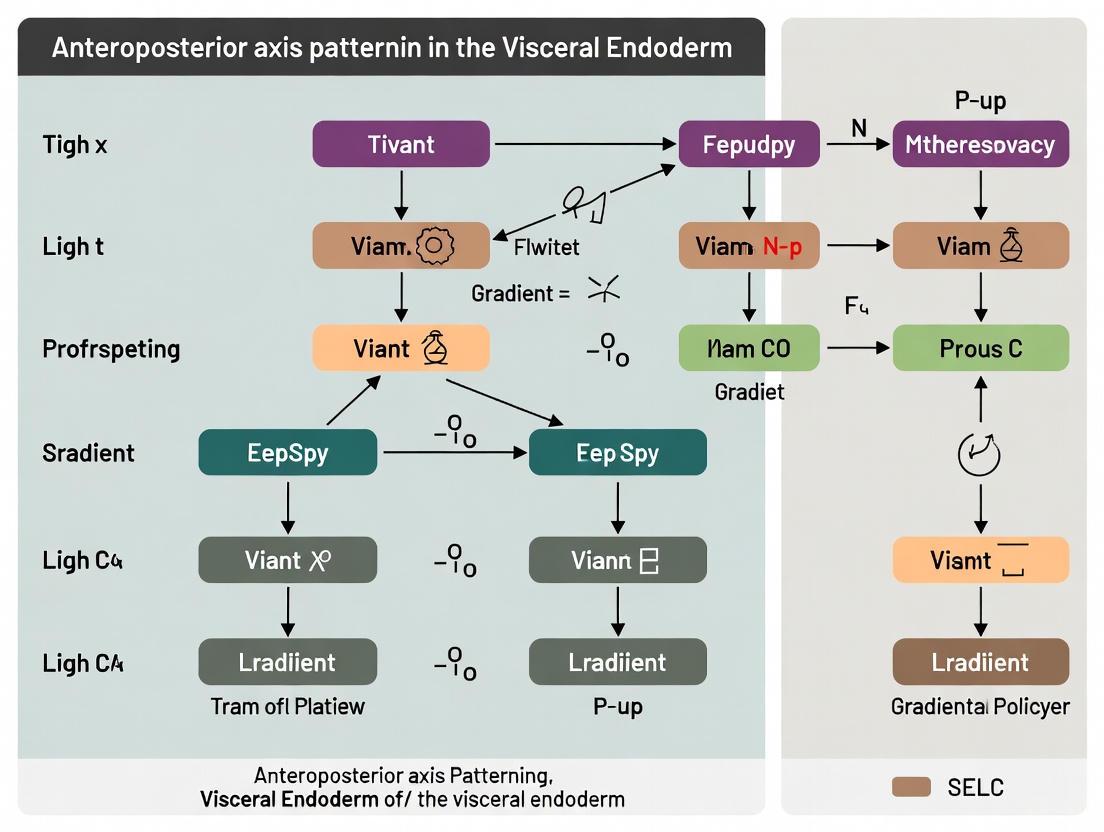
This article synthesizes current research on the pivotal role of the visceral endoderm in breaking symmetry and establishing the anteroposterior (AP) axis in mammalian embryos.
Mechanical and Molecular Control of Anteroposterior Axis Patterning by the Visceral Endoderm
Abstract
This article synthesizes current research on the pivotal role of the visceral endoderm in breaking symmetry and establishing the anteroposterior (AP) axis in mammalian embryos. We explore foundational principles, from the directed migration of the distal visceral endoderm (DVE) to its transformation into the anterior visceral endoderm (AVE). The review details advanced methodologies like single-cell transcriptomics and live-imaging for probing these events, addresses common challenges in modeling AP patterning, and validates findings through cross-species and genetic perturbation studies. Aimed at researchers and drug development professionals, this resource connects fundamental developmental mechanisms with potential biomedical applications in early development and patterning disorders.
Breaking Symmetry: The Visceral Endoderm's Role in Initiating the AP Axis
The establishment of the anteroposterior (A-P) axis is a foundational event in mammalian embryonic development, setting the blueprint for the entire body plan. This process is uniquely governed not by the embryo proper, but by extraembryonic tissues, with the primitive endoderm (PrE) lineage playing the leading role [1]. The PrE, one of the first lineages to differentiate in the mammalian blastocyst, undergoes a sophisticated developmental cascade to produce specialized signaling centers that direct axial patterning [2] [1]. This journey begins with the specification of the PrE within the inner cell mass and culminates in the formation of the distal visceral endoderm (DVE) and its subsequent migration to become the anterior visceral endoderm (AVE), a transient signaling center essential for defining the anterior pole of the embryo [3] [4]. Framed within a broader thesis on anteroposterior patterning, this whitepaper provides an in-depth technical guide to the core molecular and cellular mechanisms governing the transition from PrE to DVE/AVE. We synthesize current research to detail the key players—transcription factors, signaling pathways, and cellular processes—and present standardized experimental protocols and reagents essential for investigating this critical axis-determining system.
The Developmental Trajectory: From Primitive Endoderm to AVE
Primitive Endoderm Specification and Differentiation
The primitive endoderm is specified in the mouse blastocyst between embryonic days 3.25 (E3.25) and E3.75 [1]. Cell fate commitment is an iterative process driven by FGF/MAPK signaling. A random subset of inner cell mass (ICM) cells initially upregulates FGF4 secretion. Neighboring cells that receive and transduce high levels of this FGF signal via the MAPK pathway upregulate PrE markers, while cells with lower FGF/MAPK signaling adopt the epiblast (EPI) fate [1]. This results in a "salt-and-pepper" distribution of PrE and EPI precursors within the ICM, which subsequently sort into a coherent epithelial layer on the surface of the ICM facing the blastocoel cavity [5].
The core transcriptional network driving PrE specification involves the upregulation of GATA6 and SOX17, which mutually repress the EPI transcription factors NANOG and SOX2 [1] [6]. This fate decision is reinforced by LIF signaling via JAK/STAT and PDGF receptor signaling via PI3K [1]. Following implantation (~E4.5-E5.0), the PrE differentiates into two distinct extraembryonic lineages: the parietal endoderm (PE) and the visceral endoderm (VE) [2]. The PE, together with trophoblast giant cells, forms the parietal yolk sac, a temporary nutrient-exchange structure [2] [1]. The VE, a polarized epithelium that ensheathes the EPI and extraembryonic ectoderm (ExE), is the direct precursor to the DVE and AVE and is poised to provide patterning signals to the embryo [2] [3] [1].
Formation of the Distal Visceral Endoderm (DVE)
Around E5.0-E5.5, a subset of VE cells at the distal tip of the elongating egg cylinder differentiates into the DVE [3] [4]. The induction of the DVE is a tightly regulated process dependent on the interplay of signaling from the EPI and a repressive influence from the ExE.
- Inductive Signals: Nodal signaling from the EPI, in concert with MAPK signaling, is crucial for DVE induction [3] [7]. The transformation of the blastocyst into an elongated egg cylinder is thought to move the distal tip VE cells beyond the range of repressive signals from the ExE, allowing them to respond to these inductive cues [3].
- Mechanical Cues: Recent evidence suggests that mechanical constraints imposed by the surrounding uterine tissue are critical for egg cylinder elongation and subsequent DVE induction. Experiments culturing embryos in microfabricated cavities showed that physical constraint is a key driver of the elongation required for DVE induction [3].
DVE cells become molecularly distinct, expressing characteristic markers such as Lefty1, Cerberus-like 1 (Cer1), and Hex [3] [4]. These genes encode secreted antagonists of key signaling pathways, prefiguring the DVE's role as a signaling center.
Migration to Form the Anterior Visceral Endoderm (AVE)
The defining behavior of the DVE is its active, directed migration. Between E5.5 and E6.0, the entire DVE domain moves unilaterally from the distal tip to a proximal position on the future anterior side of the embryo, thus becoming the AVE [3] [4]. This migration is critical for correctly orienting the A-P axis, as the AVE will define the anterior pole, diametrically opposite the site where the primitive streak (the posterior pole) will form [8].
The cellular basis of AVE migration involves a unique mechanism of directional intercalation within an intact epithelium [3]. AVE cells extend long basal protrusions in the direction of migration and exchange neighbors with surrounding VE cells without disrupting the epithelial integrity, which is maintained by intact tight and adherens junctions [3]. The proximal migration halts abruptly when AVE cells reach the boundary between the EPI and the ExE. The ExE-associated VE is largely static and non-permissive to the cell rearrangements required for migration, thus acting as a boundary [3]. The AVE's role is to secrete antagonists like Cer1 (Nodal/BMP antagonist), Lefty1 (Nodal antagonist), and Dkk1 (Wnt antagonist) to suppress posteriorizing signals and thereby specify the anterior identity of the underlying EPI [1] [9].
Table 1: Key Markers and Functional Roles of PrE and Its Derivatives
| Cell Type | Key Molecular Markers | Primary Function |
|---|---|---|
| Primitive Endoderm (PrE) | GATA6, SOX17, GATA4, PDGFRα [2] [1] | Progenitor population for all extraembryonic endoderm lineages. |
| Parietal Endoderm (PE) | GATA6, SOX17, MYCN, SPARC (Secretes ECM) [2] [6] | Secretes Reichert's membrane; forms parietal yolk sac with trophoblast cells. |
| Visceral Endoderm (VE) | GATA6, SOX17, GATA4, HNF4α [2] [6] | Forms a protective and nutritive epithelium around the conceptus. |
| Distal VE (DVE) | Lefty1, Cer1, Hex [3] [4] | Initial signaling center at the distal tip; precursors to AVE. |
| Anterior VE (AVE) | Lefty1, Cer1, Hex, Dkk1 [3] [1] | Migrated population that patterns the anterior epiblast and positions the primitive streak. |
Molecular Control and Signaling Pathways
The specification and migration of the DVE/AVE are controlled by a complex, interlinked network of signaling pathways. The following diagram illustrates the core signaling interactions between the embryonic and extraembryonic tissues that govern DVE/AVE formation and function.
Figure 1: Signaling Network Controlling DVE/AVE Formation. The epiblast-derived Nodal signal induces DVE/AVE formation, while the ExE-derived BMP4 signal represses it, restricting DVE/AVE to the distal tip. The mature AVE then secretes antagonists to inhibit posteriorizing signals in the anterior epiblast.
The Transcriptional Network of Lineage Segregation
The divergence of the PE and VE lineages from a common PrE progenitor is governed by a core transcriptional module. Single-cell transcriptomic and epigenomic analyses have identified GATA6, SOX17, and FOXA2 as central regulators [6]. In this network:
- GATA6/SOX17 drive the PE gene program, directly activating Mycn to impart self-renewal properties and concurrently repressing a FOXA2-dependent VE gene program (including Hnf4a and Ttr) [6].
- FOXA2 acts as a potent suppressor of Mycn while activating the VE gene program, creating a mutually antagonistic relationship with GATA6/SOX17 [6].
- External cues, particularly BMP signaling, promote the VE cell fate by activating VE transcription factors and repressing PE factors like GATA6 and SOX17 [6].
This regulatory module demonstrates the plasticity of the PrE lineage and explains how external signals can bias fate decisions.
Quantitative Data in DVE/AVE Development
The development of the DVE/AVE is characterized by precise temporal and spatial control, supported by quantitative data on cell numbers, timings, and genetic requirements. The following tables summarize key quantitative and phenotypic data essential for experimental planning and analysis.
Table 2: Key Quantitative Metrics in Early Mouse Embryo Development
| Parameter | Value | Developmental Stage | Context / Notes |
|---|---|---|---|
| ICM Cell Number | 20-25 cells | E4.5 [2] | Pre-patterning, pre-DVE specification. |
| Epiblast Cell Number | ~120 cells | E5.5 [2] | DVE is specified at the distal tip. |
| Epiblast Cell Number | ~660 cells | E6.5 [2] | AVE migration is complete; primitive streak forms. |
| Egg Cylinder Length for AVE Induction | ~180 µm | ~E5.5 [3] | Length required to escape ExE repression. |
| Embryo Culture Success Rate (Optimal Matrix) | 38% (5/13) | Pre-to-post-implantation [4] | On collagen-coated polyacrylamide hydrogel. |
Table 3: Genetic and Phenotypic Evidence in DVE/AVE Development
| Gene/Pathway | Modification | AVE Phenotype | Molecular Function |
|---|---|---|---|
| Nodal | Knockout (KO) | Failure of AVE formation [3] [7] | TGF-β family ligand; induces DVE. |
| Cripto / Foxh1 | KO | AVE migration arrest [3] | Nodal co-receptor / transcription factor; Nodal signaling. |
| Lefty1 | KO | AVE overmigration onto ExE [3] | Nodal antagonist; restricts AVE domain. |
| β-catenin | KO | Cer1 expressed but cells do not migrate [3] | Canonical Wnt signaling transducer. |
| Rac1 / Nap1 / WAVE | KO | AVE migration severely impaired or arrested [3] | Regulates actin cytoskeleton for cell migration. |
| BMP4 / Bmpr1a | RNAi / KO | AVE migration arrest [3] | TGF-β family signaling; ExE-derived signal. |
| Otx2 | KO | AVE migration arrest; thickening of DVE [3] | Transcription factor. |
| PCP Signaling (e.g., Celsr1) | Disruption | AVE overmigration and dispersion [3] | Planar Cell Polarity pathway; regulates epithelial behavior. |
Detailed Experimental Methodologies
In Vitro Culture of Post-Implantation Mouse Embryos
The inaccessibility of the implanting embryo in utero has been a major technical hurdle. A validated in-vitro culture system enables real-time, high-resolution imaging of the blastocyst-to-egg-cylinder transition and AVE migration [4].
Protocol:
- Surface Preparation: Prepare a soft polyacrylamide hydrogel bonded to a glass-bottom culture dish. Optimize stiffness by adjusting the ratio of acrylamide to bis-acrylamide. Coat the gel surface with a mixture of Type I rat-tail collagen, laminin, and fibronectin [4].
- Embryo Collection: Dissect E3.5 blastocysts from pregnant mice and remove the zona pellucida.
- Culture Setup: Seed individual zona-free blastocysts onto the prepared hydrogel matrix. Culture in media supplemented with human cord serum at 37°C with 5% CO₂ [4].
- Time-Lapse Imaging: Use spinning-disc confocal microscopy for four-dimensional imaging. Embryos expressing fluorescent reporters (e.g., Hex-GFP for AVE) are ideal for tracking cell dynamics [3] [4].
- Validation: After imaging, fix and immunostain embryos for marker genes (e.g., OCT4 for epiblast, CDX2 for ExE, GATA4 for VE) to confirm normal morphology and patterning compared to in vivo-developed embryos [4].
Expected Outcomes: Under optimal conditions, approximately 38% of cultured blastocysts will form morphologically normal egg cylinders with properly specified and migrating AVE cells over 4-5 days in culture [4].
Genetic Ablation of Specific AVE Sub-Populations
To dissect the function of specific AVE cells, such as the Hex-expressing sub-population (Hex-AVE), an inducible genetic ablation model can be employed [8].
Protocol:
- Mouse Model: Generate a mouse line where the Diphtheria Toxin subunit A (DTA) gene is knocked into the Hex locus, preceded by a loxP-flanked stop cassette (Hex-DTA) [8].
- Induction of Ablation: Cross Hex-DTA mice with a ubiquitous or endoderm-specific CreERᵀ² driver line. Administer tamoxifen to pregnant females at E5.5 to induce Cre-mediated recombination and DTA expression specifically in Hex+ cells, ablating them [8].
- Phenotypic Analysis: Harvest embryos at E6.5-E7.5 and analyze for:
- Lineage Tracing: Use a concurrent fluorescent reporter (e.g., tdTomato) to confirm the loss of Hex+ cells.
- Marker Analysis: Perform whole-mount in situ hybridization (ISH) or immunofluorescence for AVE markers (Cer1, Lefty1) and posterior markers (Bmp2, Wnt3, Nodal) [8].
- Phenotyping: Assess for patterning defects, including delayed or misplaced primitive streak formation, and failures in anterior neural development [8].
Expected Outcomes: Embryos lacking the Hex-AVE sub-population display defective restriction of Bmp2, Wnt3, and Nodal expression, leading to miss-patterning of the anterior primitive streak, demonstrating this population's role in patterning the posterior embryo [8].
The following workflow diagram maps the logical sequence of this genetic ablation experiment.
Figure 2: Genetic Ablation Experimental Workflow. The process for generating and analyzing mouse embryos with an inducibly ablated Hex+ AVE sub-population to study its specific function.
The Scientist's Toolkit: Essential Research Reagents
Table 4: Key Research Reagent Solutions for DVE/AVE Studies
| Reagent / Tool | Function / Application | Example Use |
|---|---|---|
| Hex-GFP Reporter Mouse | Live imaging and tracking of AVE cells [3] [4]. | Visualizing AVE migration dynamics via time-lapse microscopy. |
| Inducible DTA Ablation Model (e.g., Hex-DTA) | Specific ablation of defined cell populations [8]. | Functional analysis of the Hex+ AVE sub-population in patterning. |
| FGF/MAPK Pathway Inhibitors (e.g., PD0325901) | Chemical inhibition of MEK to block FGF/MAPK signaling [1]. | Testing the role of FGF signaling in PrE specification in cultured embryos. |
| Collagen-Coated Polyacrylamide Hydrogel | Physiologically soft substrate for in vitro embryo culture [4]. | Supporting normal development from blastocyst to egg cylinder stage for imaging. |
| scRNA-seq Library Prep Kits | Profiling the transcriptome of individual cells from dissociated embryos. | Identifying transcriptional states and heterogeneity in PrE, VE, DVE, and AVE. |
| Antibodies: GATA6, SOX17, NANOG, OCT4 | Immunofluorescence staining for lineage markers. | Characterizing cell fate decisions and lineage segregation in fixed embryos. |
| RNA Probes for ISH: Cer1, Lefty1, Bmp2, Wnt3 | Spatial localization of gene expression patterns. | Assessing the molecular patterning of the embryo in wild-type and mutant contexts. |
The journey from the primitive endoderm to the anterior visceral endoderm represents a cornerstone of mammalian anteroposterior axis patterning. This process, orchestrated by a precise sequence of cell fate decisions, transcriptional regulation, and coordinated cellular migrations, ensures the correct spatial organization of the embryonic body plan. The core signaling pathways of Nodal, FGF, BMP, and Wnt, along with a central transcriptional network involving GATA6, SOX17, and FOXA2, form an integrated system that transforms a simple progenitor population into a sophisticated signaling center. The experimental frameworks and reagents detailed herein provide a roadmap for continued investigation into this critical developmental period. Future research, leveraging advanced in vitro models, single-cell technologies, and precise genetic tools, will undoubtedly uncover deeper layers of complexity in how the AVE executes its pivotal role, with profound implications for understanding developmental biology and improving regenerative medicine strategies.
The establishment of the anterior-posterior (A-P) body axis is a foundational event in mammalian embryogenesis, determining the future orientation of all major anatomical structures. In mouse embryos, this process is orchestrated by a specialized group of extraembryonic cells known as the distal visceral endoderm (DVE) and its descendant anterior visceral endoderm (AVE) [3]. These cells function as a signaling center that specifies the orientation of the A-P axis and the relative positions of the brain and heart [3]. For decades, the prevailing model held that A-P patterning initiated only after embryo implantation, around embryonic day (E) 5.5, when the DVE forms at the distal tip of the egg cylinder and subsequently migrates unilaterally to establish the anterior pole [10]. However, recent research has revealed that the origin of this polarity occurs much earlier, with molecular asymmetries apparent even in pre-implantation stages [10] [11].
This whitepaper synthesizes current understanding of DVE/AVE biology, focusing on the cellular and molecular mechanisms governing their formation, migration, and patterning functions. We situate these processes within the broader context of visceral endoderm research, highlighting how this specialized cell population integrates multiple signaling pathways to break embryonic symmetry and establish the fundamental blueprint for development. The directed migration of the DVE represents a crucial model system for studying epithelial cell movement and the coordination of tissue-level patterning events, with implications for understanding birth defects and improving stem cell differentiation protocols.
DVE/AVE Development and Migration Dynamics
Origins and Induction Mechanisms
The DVE originates from precursor cells that exhibit molecular signatures of anterior identity much earlier than previously recognized. While the DVE becomes morphologically distinct at E5.5, expression of key marker genes begins before implantation:
- Lefty1 expression initiates in a subset of inner cell mass (ICM) cells in the implanting blastocyst [11].
- Cer1 (cerberus-like 1) expression also commences before implantation, becoming consolidated in the primitive endoderm lineage [10].
- Hex (haematopoietically expressed homeobox) is evident at the blastocyst stage [10].
Genetic fate mapping experiments demonstrate that these early Lefty1-expressing cells are true progenitors of the DVE, indicating that the foundation for A-P polarity is established by blastomeres in the implanting blastocyst [11]. The induction of the DVE at the distal tip of the egg cylinder (approximately E5.0) requires the interaction of Nodal and MAPK signaling pathways [3]. Interestingly, this induction is spatially restricted by repressive signals from the extraembryonic ectoderm (ExE), with egg cylinder elongation (to approximately 180µm) potentially moving distal tip cells beyond this inhibitory influence [3].
Mechanical forces also contribute to DVE induction. Hiramatsu et al. demonstrated that compressive forces from surrounding uterine tissue drive egg cylinder elongation and AVE marker induction [3]. When E5.0 embryos were cultured in narrow cavities (90µm diameter), they elongated and expressed the AVE marker Cer1, while embryos in wider cavities (180µm) showed limited elongation and no Cer1 induction [3]. This reveals a biomechanical component to the establishment of embryonic polarity.
The Migration Process: Cellular Mechanisms and Behavioral Patterns
The proximal migration of DVE cells to become the AVE represents a crucial phase in axis establishment. Seminal labeling experiments by Beddington and colleagues first documented this relocation, showing that AVE cells move from the distal tip to a position opposite the future primitive streak [3]. Time-lapse studies using Hex-GFP reporter embryos have revealed the dynamic cellular behaviors underlying this process:
- Active Migration: AVE cells extend long cellular projections (several cell diameters in length) predominantly in the direction of migration [3]. These projections emerge from the basal region of the cells (closest to the epiblast) [3].
- Directional Intercalation: AVE cells migrate proximally via directional intercalation within the visceral endoderm epithelium, undergoing neighbor exchange with surrounding VE cells while maintaining epithelial integrity with intact tight and adherens junctions [3].
- Regional Differences: The VE overlying the epiblast (Epi-VE) shows extensive neighbor exchange and cell shape changes, while the VE overlying the ExE (ExE-VE) remains largely static with minimal cellular rearrangements [3]. This behavioral difference creates a natural stopping point for AVE migration at the epiblast-ExE boundary.
The migration endpoint is critically regulated, as failure to stop migration leads to patterning defects. Mutants with disrupted planar cell polarity (PCP) signaling or Lefty1 null mutants exhibit "overmigration," with AVE cells anomalously migrating onto the ExE [3]. This suggests that PCP and TGF-β pathways regulate the differential permissiveness of Epi-VE versus ExE-VE to cell rearrangement.
Table 1: Key Molecular Markers for DVE/AVE Identification
| Marker | Expression Pattern | Functional Role | First Detection |
|---|---|---|---|
| Lefty1 | DVE/AVE cells | Nodal antagonist | Pre-implantation ICM |
| Cer1 | DVE/AVE cells | Nodal and BMP antagonist | Pre-implantation primitive endoderm |
| Hex | DVE/AVE cells | Transcription factor | Blastocyst stage |
| Sox17 | Primitive endoderm | Transcription factor | E4.5-E5.5 |
Molecular Regulation of DVE/AVE Formation and Migration
Signaling Pathways Governing DVE/AVE Biology
The formation and migration of the DVE/AVE are coordinated by multiple intersecting signaling pathways that ensure precise temporal and spatial regulation:
Nodal Signaling: Nodal, expressed throughout the epiblast, is essential for AVE formation. In Nodal mutants, the AVE fails to form [3] [10]. Nodal works with MAPK signaling to induce DVE differentiation at the distal tip [3]. The AVE then expresses Nodal antagonists (Lefty1, Cer1), creating a feedback loop that restricts Nodal signaling to the posterior, facilitating primitive streak formation [10].
BMP Signaling: BMP4 from the extraembryonic ectoderm regulates AVE migration, with BMP4 knockdown leading to AVE migration arrest [3]. This represents one way that extraembryonic tissues pattern embryonic structures.
WNT/PCP Signaling: Planar cell polarity pathways regulate the stopping mechanism for AVE migration. Disruption of PCP signaling (e.g., in mutants expressing membrane-tethered Celsr1) causes overmigration of AVE cells onto the ExE [3].
Mechanical Signaling: Biomechanical forces from uterine confinement influence egg cylinder elongation and potentially DVE induction through mechanotransduction pathways not yet fully characterized [3].
The following diagram illustrates the key signaling interactions in DVE/AVE formation and migration:
Genetic Requirements for DVE/AVE Development
Genetic studies have identified numerous genes essential for proper DVE/AVE formation and migration. The table below summarizes key genetic factors and their mutant phenotypes:
Table 2: Genetic Requirements for DVE/AVE Development and Migration
| Gene/Allele | Pathway/Function | AVE Phenotype in Mutants | References |
|---|---|---|---|
| Nodal | TGF-β signaling | Failure of AVE formation | [3] |
| Cripto | Nodal co-receptor | AVE migration arrest | [3] |
| Lefty1 | Nodal antagonist | Overmigration into ExE-VE | [3] |
| β-catenin | Wnt signaling | Cer1 expressed but cells do not migrate | [3] |
| Rac1 | Rho-GTPase | AVE migration arrest | [3] |
| Pten | Phosphoinositide regulation | Reduced migration, AVE more dispersed | [3] |
| Rab7 | Endosome regulation | AVE migration arrest | [3] |
| Otx2 | Transcription factor | AVE migration arrest, thickening of DVE | [3] |
| FLRT3 | Cell adhesion | Disorganized basement membrane, migration delay | [3] |
Experimental Approaches for DVE/AVE Research
Key Methodologies and Protocols
Research into DVE/AVE biology employs sophisticated embryological, genetic, and live-imaging techniques. The following workflow illustrates a comprehensive experimental approach for studying DVE/AVE dynamics:
Detailed Experimental Protocols
Embryo Collection and Culture
- Collect embryos from natural matings of strain-specific mice (e.g., F1 (C57BL6 x CBA) or transgenic reporter lines like Cer1/GFP) [10].
- For pre-implantation stages (E3.5-E4.5), flush embryos from the uterus in M2 medium [10].
- For post-implantation stages (E5.0-E6.5), dissect deciduae from the uterus and carefully extract embryos from uterine crypts using fine forceps [10].
- For mechanical constraint experiments, culture E5.0 embryos in microfabricated cavities of varying diameters (90µm vs. 180µm) to test the role of biomechanical forces in AVE induction [3].
Genetic Fate Mapping and Lineage Tracing
- Use transgenic reporter lines (e.g., Cer1/GFP, Hex-GFP) to mark AVE cells in live embryos [10].
- Perform DiI labeling to track cell movements in wild-type embryos [3].
- For genetic ablation studies, specifically target Lefty1-expressing DVE cells to assess their role in guiding subsequent AVE migration [11].
Molecular Analysis of Gene Expression
- In situ hybridization: Fix embryos in 4% paraformaldehyde, hybridize with digoxygenin-labeled probes (Cer1, Lefty1, Hex), omit proteinase K treatment for fragile peri-implantation embryos [10].
- Immunostaining: Remove parietal endoderm to prevent antibody trapping. Fix embryos, block with 3% BSA/10% DMSO, incubate with primary antibodies (Cer1, Lefty1, vHNF1/HNF1β), then with appropriate secondaries. Image using confocal microscopy with 40X oil objective [10].
- Single-cell RT-PCR: Dissociate E4.75 blastocysts with pancreatin/trypsin-EDTA treatment, separate GFP-positive and negative cells using UV light, extract RNA, and perform RT-PCR with gene-specific primers (Cer1, GFP, Lefty1, Hex, histone H2A as control) [10].
Essential Research Reagents and Tools
Table 3: Research Reagent Solutions for DVE/AVE Studies
| Reagent/Category | Specific Examples | Function/Application |
|---|---|---|
| Transgenic Mouse Lines | Cer1/GFP, Hex-GFP | Live visualization of AVE cells and migration dynamics |
| Antibodies | Anti-Cer1 (R&D MAB1986), Anti-Lefty1 (Abcam), Anti-vHNF1/HNF1β | Protein localization and expression analysis |
| ISH Probes | Digoxygenin-labeled Cer1, Lefty1, Hex probes | mRNA expression pattern determination |
| Cell Lineage Tracers | DiI lipophilic dye, Genetic inducible fate mapping | Tracking cell movements and lineage relationships |
| Culture Systems | Microfabricated cavities, DMEM+10% FCS | Examining biomechanical influences and ex vivo development |
The directed migration of the DVE represents a paradigm for how specialized signaling centers establish embryonic pattern through coordinated cell movement. The emerging picture reveals a sophisticated developmental program where pre-implantation molecular asymmetries are refined through post-implantation signaling interactions and biomechanical influences to break embryonic symmetry. The DVE/AVE system exemplifies how epithelial cells can undergo directed migration while maintaining tissue integrity, offering insights into both developmental biology and disease processes like cancer metastasis.
Future research directions include elucidating the molecular mechanisms of mechanical signal transduction in DVE induction, characterizing the full complement of AVE-derived signals that pattern the epiblast, and exploring the conservation of these processes in human embryogenesis. A deeper understanding of DVE/AVE biology may inform efforts to direct stem cell differentiation toward specific embryonic lineages and provide insights into the origins of birth defects affecting axial patterning. As a model system, the migrating DVE continues to offer valuable lessons in how cells integrate multiple signaling cues to execute complex morphogenetic movements that shape the embryo.
The Basement Membrane (BM), a specialized sheet-like extracellular matrix (ECM), has long been recognized for its structural role in supporting tissue architecture. However, emerging research firmly establishes it as a dynamic, instructive entity that actively directs fundamental developmental processes. Far from being a passive scaffold, the BM provides precise mechanical, topological, and biochemical cues that govern cell fate, guide tissue morphogenesis, and break embryonic symmetry [12] [13] [14]. This paradigm shift is critically exemplified in the patterning of the anteroposterior (AP) axis in mammalian embryos, where spatiotemporal remodeling of the BM is not merely permissive but essential for initiating the first symmetry-breaking events [15] [16]. This review synthesizes current evidence on the multifaceted instructive functions of the BM and ECM, with a particular focus on the mechanisms orchestrating AP axis formation, and provides a toolkit for ongoing research in this field.
Molecular Composition and Assembly of an Instructive Basement Membrane
The instructive capacity of the BM stems from its specific molecular composition and dynamic assembly. The core BM toolkit consists of laminins, type IV collagen, nidogens, and the heparan sulfate proteoglycan perlecan [17] [13]. The precise combination of these components creates tissue-specific BMs with unique signaling properties.
- Laminins: These heterotrimeric glycoproteins (composed of α, β, and γ subunits) are among the first components to assemble, forming a cell-adhesive polymer network. The specific laminin isoform present provides critical instructions to adjacent cells. In the early post-implantation mouse embryo, the epiblast BM is characterized by laminin-511 (composed of α5, β1, and γ1 chains), which serves as a key ligand for integrin receptors on pluripotent cells [17].
- Type IV Collagen: This network provides tensile strength and mechanical stability. It assembles into a robust network that interlocks with the laminin mesh, often through linker proteins [13].
- Nidogens and Perlecan: These molecules act as cross-linkers, stabilizing the composite BM structure. Perlecan also plays a vital role as a reservoir for growth factors and morphogens, modulating their bioavailability to influence cell signaling gradients [13] [14].
The assembly is hierarchical and often tissue-specific. Studies in Drosophila indicate a temporal sequence where laminin deposition precedes type IV collagen, followed by perlecan [13]. The origin of these components can also differ; laminins are typically synthesized by the adjacent epithelium, whereas collagen IV can be secreted by more distant mesenchymal cells and incorporated into the BM, highlighting a complex, multi-tissue effort in building this instructive structure [13].
Table 1: Core Components of the Basement Membrane and Their Instructive Roles
| Component | Key Isoforms in Development | Primary Instructive Function | Associated Receptors |
|---|---|---|---|
| Laminin | Laminin-511 (epiblast), Laminin-111 (early BM) [17] [14] | Cell adhesion, polarization, survival, and migration guidance; major determinant of BM identity. | Integrins α6β1, α3β1; α-dystroglycan [17] [14] |
| Type IV Collagen | (α1)2α2(IV) (early embryonic BM) [17] | Provides mechanical integrity and structural stability; forms a scaffold for other components. | Integrins α1β1, α2β1; DDR1 [14] |
| Perlecan | Single gene with modified polysaccharide chains [13] | Cross-links networks; acts as a reservoir for growth factors (e.g., FGF, BMP). | Syndecans; via growth factor presentation [14] |
| Nidogen | Nidogen-1 & Nidogen-2 [17] | Cross-links laminin and collagen IV networks; contributes to BM stability and organization. | Integrins αvβ3, α3β1 [14] |
The Instructive BM in Anteroposterior Axis Patterning: A Case Study
The establishment of the AP axis is a foundational event in mammalian development, and recent research has identified BM remodeling as a central instructor in this process. In mice, the critical step is the directed migration of the Distal Visceral Endoderm (DVE) to become the Anterior Visceral Endoderm (AVE), which defines the anterior pole [15].
The Model: Asymmetric Perforations Guide Directional Migration
The prevailing model, supported by targeted perturbation experiments, posits that an asymmetric distribution of perforations in the BM between the epiblast and visceral endoderm creates a physical and guidance cue that breaks embryonic symmetry.
- The Cue: Before DVE migration begins, matrix metalloproteinases (MMPs), particularly those expressed in extra-embryonic tissues, create an uneven pattern of perforations in the BM, with a bias toward the future anterior side [15] [16].
- The Cellular Response: Migrating DVE cells extend actin-rich protrusions that probe their environment. These protrusions are guided toward and through regions of locally degraded BM, directing the collective, unidirectional migration of the DVE cohort [15].
- The Outcome: This directed migration ensures the AVE is correctly positioned to secrete antagonists of Nodal and Wnt signaling, thereby restricting primitive streak formation to the posterior end and establishing a molecularly defined AP axis [15].
Experimental Validation: Perturbing the BM Disrupts AP Patterning
Key experiments demonstrate the instructive necessity of BM perforations:
- Global BM Degradation: Treating E5.5 embryos with collagenase to globally degrade the BM results in DVE cells losing their cohesive, directional migration. They migrate at twice the speed of controls but fail to establish a proper axis, often leading to multiple or mislocalized primitive streaks, as marked by BRACHYURY (TBXT) expression [15].
- Inhibiting BM Remodeling: When MMP activity is pharmacologically inhibited (e.g., with Batimastat), the BM contains fewer perforations. In this scenario, DVE migration is significantly slowed, halts prematurely, and often redirects laterally, failing to reach the correct anterior position [15].
- Localized BM Disruption: To conclusively prove that local BM integrity is an instructive cue, researchers performed targeted electroporation of a membrane-tethered MMP (hMT1-MMP) on one side of the embryo. Strikingly, DVE cells preferentially migrated toward the side with the experimentally degraded BM. Similarly, placing a collagenase-soaked bead on one side of the embryo was sufficient to bias DVE migration toward the bead [15].
These findings reveal an unrecognized role for BM remodeling and mechanical heterogeneity in guiding directional tissue migration during mammalian development [15].
Detailed Experimental Workflow: Key Methodologies for Investigating BM Function
The following section outlines critical protocols used to decipher the instructive roles of the BM, particularly in AP patterning.
Ex Vivo Embryo Culture and Perturbation Assay
This protocol is used to directly test the function of the BM during early axis specification [15].
- Embryo Collection: Dissect post-implantation mouse embryos (e.g., E5.5) from the uterus in a physiological buffer.
- Experimental Perturbation:
- Proteolytic Degradation: Treat embryos with a pulse of collagenase (e.g., 1-2 mg/mL) to globally degrade the BM.
- MMP Inhibition: Culture embryos in the presence of a broad-spectrum MMP inhibitor such as Batimastat (e.g., 10 µM) to prevent BM perforation.
- Control Groups: Culture embryos in parallel in a standard medium (e.g., DMEM/F12 with serum replacement).
- Live Imaging and Tracking: Culture treated embryos in an appropriate setup (e.g., in an incubator on a confocal microscope stage). Use transgenic embryos expressing a fluorescent reporter in the DVE (e.g., Cerl-GFP). Acquire time-lapse images every 10-20 minutes over 12-24 hours to track DVE cell migration speed, directionality, and cohesion.
- Endpoint Analysis: Fix embryos after culture and perform immunofluorescence for markers of the primitive streak (e.g., BRACHYURY/TBXT) and BM components (e.g., Laminin α5, Collagen IV) to assess AP patterning and BM integrity.
Localized BM Disruption via Electroporation
This method tests the sufficiency of local BM degradation to instruct migration direction [15].
- Embryo Preparation: Isulate E5.25 Cerl-GFP embryos, ensuring the removal of decidual tissues.
- Plasmid Preparation: Prepare a plasmid mix for electroporation containing a gene of interest (e.g., hMT1-MMP for BM degradation) and a fluorescent lineage tracer (e.g., H2B-RFP) to mark transfected cells.
- Targeted Electroporation: Position the embryo so that the electrode is oriented toward one side. Apply precise electrical pulses to introduce the plasmid DNA into cells on a single side of the embryo.
- Culture and Analysis: Culture the electroporated embryos for 12-24 hours. Analyze the fixed embryos by confocal microscopy to determine the co-localization of the GFP+ DVE population with the RFP+ region of BM degradation.
The Scientist's Toolkit: Essential Research Reagents
Table 2: Key Reagents for Studying the Instructive Roles of the BM
| Reagent / Tool | Function / Target | Key Experimental Use |
|---|---|---|
| Collagenase [15] | Degrades collagenous proteins in the BM (e.g., Collagen IV). | Global depletion of the BM to study its overall requirement in morphogenesis. |
| Batimastat (BB-94) [15] | Broad-spectrum inhibitor of Matrix Metalloproteinases (MMPs). | To inhibit BM remodeling and perforation, demonstrating the role of dynamic turnover. |
| hMT1-MMP Plasmid [15] | Membrane-tethered MMP for localized ECM degradation. | Targeted electroporation to create ectopic BM perforations and test sufficiency in guiding cell migration. |
| Cerl-GFP Mouse Line [15] | Genetically labels Distal Visceral Endoderm (DVE) cells. | Live imaging and tracking of DVE migration dynamics in response to BM perturbations. |
| Anti-Laminin α5 Antibody [17] | Specific marker for the major laminin isoform in embryonic BM. | Immunohistochemistry to visualize and quantify BM architecture, thickness, and continuity. |
| Anti-BRACHYURY (TBXT) Antibody [15] | Marker for the primitive streak and nascent mesoderm. | Readout for proper AP axis formation after BM perturbation. |
Broader Mechanistic Insights: BM in Tissue Morphogenesis and Disease
The instructive principles of the BM extend beyond the mouse embryo. In the Drosophila egg chamber, the BM is not uniform but exhibits a mechanical stiffness gradient, which is essential for biasing tissue growth to achieve an elongated egg shape [18]. This gradient is associated with a polarized array of BM protein fibrils, and disrupting this architecture leads to round eggs, demonstrating how BM mechanics directly instruct tissue morphology [18]. Furthermore, BM components are critical for maintaining stem cell niches in adult tissues, influencing cell fate decisions by presenting a specific molecular landscape that modulates growth factor signaling and cell adhesion [14]. Dysregulation of BM composition and structure is a hallmark of numerous diseases, including fibrosis, cancer metastasis, and genetic disorders like Pierson syndrome (linked to laminin-521 mutations) and Alport syndrome (linked to collagen IV mutations) [14]. Understanding the normal, instructive functions of the BM therefore provides critical insights into the pathogenesis of these conditions.
The evidence is compelling: the Basement Membrane is a master instructor in development. Through its dynamic composition, regulated assembly, and spatiotemporal remodeling, it provides essential cues that guide cell migration, direct tissue morphogenesis, and break embryonic symmetry to establish the body plan. The mechanistic insights from AP axis patterning, where asymmetric BM perforations direct DVE migration, offer a powerful paradigm for how the ECM can generate directional information.
Future research will need to further elucidate the upstream signals that pattern the BM itself and integrate our understanding of its biochemical composition with its biophysical properties. Advanced imaging, synthetic ECM models, and organoid systems [19] that incorporate controlled BM environments will be invaluable tools. Ultimately, deciphering the instructive language of the BM will not only deepen our knowledge of development but also open new avenues for regenerative medicine and therapeutic intervention in disease.
The anterior-posterior (AP) axis in mammals is established through a meticulously coordinated sequence of signaling events, with the anterior visceral endoderm (AVE) playing an indispensable role. This specialized extraembryonic signaling center functions as a source of secreted antagonists, including Dickkopf-1 (Dkk1), Cerberus 1 (Cer1), and Lefty1, which suppress Wnt and Nodal signaling to pattern the embryonic epiblast. This whitepaper synthesizes current research on the AVE's emergence, migration, and signaling function, framing it within the broader context of anteroposterior axis patterning. We integrate recent findings on tissue-intrinsic regulation, the novel role of basement membrane mechanics in guiding AVE migration, and the transient transcriptional identity of AVE cells. Designed for researchers and drug development professionals, this review provides structured data, experimental protocols, and visualization tools to support ongoing investigations into this fundamental developmental process.
The establishment of the anterior-posterior axis is a foundational symmetry-breaking event in mammalian embryogenesis. In mice, this process is orchestrated by the anterior visceral endoderm (AVE), a specialized signaling center that arises from the visceral endoderm (VE) at the distal tip of the embryo around embryonic day 5.5 (E5.5) [20] [15]. The AVE is defined by its expression of key transcription factors such as Otx2, Hesx1, and Lhx1, and, critically, its secretion of potent Wnt and Nodal antagonists including Dkk1, Cer1, and Lefty1 [20]. These secreted factors establish a signaling gradient that restricts the formation of the primitive streak—the site of gastrulation—to the posterior side of the embryo, thereby defining the AP axis [20] [15].
Traditional models posit that AVE differentiation is globally promoted by Nodal signals from the epiblast and spatially restricted by a BMP gradient emanating from the extraembryonic ectoderm (ExE) [20]. However, recent studies using stem cell-based embryo models have revealed that tissue-intrinsic factors within the VE itself, particularly β-catenin activity, can antagonize Nodal-driven AVE differentiation, providing a flexible mechanism for axis patterning that may be conserved across mammalian species with diverse embryo geometries [20]. Furthermore, the directed migration of the AVE precursors, the distal visceral endoderm (DVE), is now understood to be guided by mechanical cues from the basement membrane, revealing an integrated signaling and mechanical framework for AP axis establishment [15] [21].
Molecular Identity and Signaling Function of the AVE
The AVE executes its patterning function primarily through the secretion of molecules that inhibit key developmental pathways.
Key Antagonists and Their Targets
- Wnt Antagonists: The AVE expresses several secreted inhibitors of Wnt/β-catenin signaling. Dickkopf-1 (Dkk1) binds to the Wnt co-receptors LRP5/6, preventing signal transduction [22] [23]. Cerberus 1 (Cer1) is a multi-functional antagonist that can inhibit Wnt, Nodal, and BMP signaling [20].
- Nodal Antagonists: Lefty1 is a primary antagonist of Nodal signaling, acting by binding to Nodal ligands and preventing their interaction with receptors [20]. By suppressing Nodal activity on the future anterior side, Lefty1 ensures that Nodal-driven primitive streak formation occurs only posteriorly.
The coordinated action of these antagonists creates a signaling landscape within the epiblast: low Wnt and Nodal activity anteriorly, and high activity posteriorly. This gradient is essential for the correct spatial specification of embryonic tissues.
Transcriptional Dynamics and Heterogeneity
Recent single-cell RNA sequencing studies have revealed that the AVE is not a static, homogeneous population. Its transcriptional state is transient and highly dynamic [24]. As AVE cells migrate, they downregulate characteristic "anteriorizing" genes like Cerl and Lefty1 [24]. Furthermore, sub-populations with distinct transcriptional signatures have been identified, correlating with their position within the migrating cohort, suggesting a tight coupling between cellular location and molecular identity during AP axis formation [24].
Mechanisms of AVE Specification and Migration
Signaling Pathways in AVE Specification
The initial specification of the AVE from the visceral endoderm is governed by a interplay of signaling pathways.
Diagram Title: Signaling in AVE Specification
As the diagram illustrates, Nodal secretion from the epiblast promotes AVE differentiation within the visceral endoderm [20]. Counteracting this, tissue-intrinsic β-catenin activity within the VE itself antagonizes the AVE-inducing signal of Nodal [20]. This opposition creates a system where AVE differentiation is restricted to specific clusters, a mechanism that can operate independently of extra-embryonic BMP gradients.
Basement Membrane Remodeling Guides Migration
Following specification, the DVE/AVE undergoes a directed, collective migration toward the future anterior side. Recent groundbreaking work has identified asymmetric perforations in the basement membrane—a specialized extracellular matrix layer separating the VE and epiblast—as the key physical cue guiding this migration [15] [21].
Mechanism of Guidance: Before DVE migration, matrix metalloproteinases (MMPs), particularly those expressed in extra-embryonic tissues, create an uneven distribution of perforations in the basement membrane, with an enrichment on the future anterior side [15]. Migrating DVE cells extend actin-rich protrusions that explore these perforations, generating active forces that direct movement toward regions of higher perforation density [15] [21].
Functional Evidence:
- Global Depletion: Enzymatic degradation of the basement membrane with collagenase leads to loss of DVE cohesion and misdirected, faster migration [15].
- Inhibition of Perforation: Treatment with the MMP inhibitor Batimastat reduces perforations, causing a threefold slowdown and failure of DVE migration, often resulting in lateral redirection [15].
- Local Depletion: Localized expression of an MMP on one side of the embryo or placement of a collagenase-soaked bead is sufficient to bias DVE migration toward the site of basement membrane degradation [15].
This mechanism, integrating biochemical signaling with mechanical guidance, ensures the robust and unidirectional migration required for proper AP axis formation.
Quantitative Data and Experimental Evidence
Table 1: Quantitative Findings on Basement Membrane Perturbations in DVE Migration
| Experimental Condition | Effect on Basement Membrane | DVE Migration Speed | DVE Migration Direction & Cohesion | Outcome on AP Patterning |
|---|---|---|---|---|
| Control (Wild-type) | Asymmetric anterior perforations | Normal | Cohesive, unidirectional proximal migration | Normal TBXT localization (posterior) |
| Collagenase Treatment [15] | Global depletion | 2x faster than control | Loss of cohesiveness, misdirected | Ectopic/distal TBXT patches (74% of embryos) |
| Batimastat (MMP Inhibitor) [15] | Reduced perforations | 3x slower than control | Collective migration halted, redirected laterally | N/D |
| Local hMT1-MMP Electroporation [15] | Local degradation on one side | N/D | Migration biased toward electroporated side (75% co-localization) | N/D |
Table 2: Key Antagonists Secreted by the AVE and Their Functions
| Antagonist | Targeted Signaling Pathway | Molecular Function | Phenotype of Loss-of-Function |
|---|---|---|---|
| Dickkopf-1 (Dkk1) [20] [22] | Wnt/β-catenin | Binds LRP5/6 co-receptor, preventing Wnt signal transduction | Ectopic Wnt signaling, potential axis patterning defects |
| Cerberus 1 (Cer1) [20] | Wnt, Nodal, BMP | Binds multiple ligands, inhibiting pathway activation | Multiple symmetry-breaking defects |
| Lefty1 [20] | Nodal | Binds Nodal ligand, preventing receptor interaction | Ectopic primitive streak formation |
Experimental Protocols for Key Assays
This protocol allows for the study of AVE specification in a simplified system that recapitulates epiblast-VE interactions.
- Cell Line Preparation: Use GATA4-inducible mouse embryonic stem cells (mESCs).
- Differentiation Induction:
- Culture mESCs in N2B27 medium.
- Pulse with doxycycline for 16 hours to induce GATA4 expression and trigger differentiation into a mixture of epiblast and primitive endoderm (PrE, the VE precursor) cells.
- BELA Formation:
- After 16 hours, re-seed the cell mixture on low-adhesion substrates.
- Cells will spontaneously aggregate and form BELAs within several days. These are spherical, bilayered structures with an outer GATA6+ VE layer and an inner POU5F1+ epiblast layer surrounding a central lumen.
- Analysis:
- Immunofluorescence: Stain for AVE markers (e.g., OTX2, CER1, LEFTY1) to identify AVE cells.
- Single-cell RNA-seq: Profile BELAs to transcriptomically identify AVE cells and their differentiation state relative to in vivo benchmarks.
This assay tests the sufficiency of local basement membrane degradation to guide DVE migration.
- Embryo Collection: Collect E5.0-E5.25 mouse embryos from a Cerl-GFP reporter line (GFP labels the DVE).
- Bead Preparation:
- Experimental: Soak agarose beads in a solution of collagenase.
- Control: Soak beads in a solution of BSA.
- Bead Implantation: Using fine manipulation tools, place a single collagenase-soaked or BSA-soaked bead on one side of the embryo.
- Embryo Culture: Culture the embryos in vitro for 12-24 hours.
- Imaging and Analysis:
- Use time-lapse confocal microscopy to track the migration of GFP+ DVE cells.
- Quantify the direction of migration relative to the bead location. A significant bias (e.g., 50% toward collagenase bead vs. random distribution in controls) indicates guidance by local basement membrane degradation.
This integrated approach characterizes the molecular underpinnings of AVE migration.
- Tissue Dissection and Dissociation: Microdissect the VE from mouse embryos at stages just prior to (E5.5) and during (E6.0) AVE migration. Create a single-cell suspension.
- Single-Cell RNA Sequencing (scRNA-seq):
- Process cells using a platform like the 10x Genomics Chromium.
- Sequence the libraries to obtain transcriptome-wide data for thousands of individual cells.
- Phosphoproteomics:
- In parallel, isolate proteins from pools of migrating AVE cells and surrounding VE.
- Enrich for phosphopeptides and analyze by mass spectrometry to identify active signaling pathways.
- Data Integration:
- Cluster scRNA-seq data to identify AVE sub-populations and analyze trajectory inference to model the transient transcriptional state.
- Overlay phosphoproteomic data to link signaling pathway activity to transcriptional states.
- Use cell communication analysis to predict active signaling pathways (e.g., Semaphorin signaling) between cell populations.
- Functional Validation:
- Perturb predicted pathways (e.g., generate Sema6D mutant embryos) and use high-resolution live imaging (e.g., lattice light-sheet microscopy) to quantify changes in migration speed, protrusion dynamics, and final AVE positioning.
Diagram Title: AVE Molecular Analysis Workflow
The Scientist's Toolkit: Essential Research Reagents
Table 3: Key Reagent Solutions for AVE Research
| Reagent / Tool | Function / Application | Key Example |
|---|---|---|
| Reporter Mouse Lines | Visualizing and tracking AVE/DVE cells in real time. | Cerl-GFP [15], Axin2-mGFP (Wnt activity reporter) [25] |
| Stem Cell-Based Models | Studying lineage interactions and AVE specification in a tractable, synthetic system. | Bilayered Embryo-like Aggregates (BELAs) [20], Gastruloids [26] |
| Pathway Modulators | Experimentally manipulating key signaling pathways. | CHIR99021 (GSK3β inhibitor, activates Wnt/β-catenin) [25], Batimastat (MMP inhibitor, blocks BM perforation) [15] |
| Advanced Imaging & Analysis | Quantifying cell behaviors and tissue-scale remodeling. | Lattice Light-Sheet Microscopy for live imaging of migration [24], ImSAnE software for tissue cartography and BM mapping [15] |
| Engineered Exosomes | Targeted activation of Wnt signaling for functional studies. | exoWNT3A/RSPO1 exosomes for potent, localized pathway activation [25] |
The establishment of the anterior-posterior (AP) axis represents a fundamental symmetry-breaking event in mammalian embryonic development. Within this process, the anterior visceral endoderm (AVE) serves as a critical signaling center that migrates to one side of the embryo and secretes antagonists of Nodal and Wnt signaling, thereby restricting primitive streak formation to the opposite side and establishing the first embryonic asymmetry [15]. Understanding the transcriptional landscapes that define the emergence, heterogeneity, and migratory behavior of AVE sub-populations provides crucial insights into the molecular basis of embryonic patterning and has implications for understanding developmental disorders and improving regenerative medicine strategies. This technical guide examines the molecular underpinnings of AVE development, focusing on the transcriptional and cellular mechanisms that guide its formation and function within the broader context of visceral endoderm research.
Molecular Characterization of AVE Sub-Populations
Transcriptional Heterogeneity and State Transitions
Recent single-cell RNA sequencing (scRNA-seq) studies have revealed that the AVE is composed of transcriptionally and spatially distinct sub-populations rather than representing a uniform cell population. These investigations demonstrate that the AVE transcriptional state is transient and undergoes significant attenuation as cells migrate, creating heterogeneities in gene expression patterns relative to the AVE's position within the embryo [24]. The emergent sub-populations display distinct transcriptional profiles that correlate with their developmental stage, positional information, and functional specialization within the migrating cell population.
Table 1: Key Transcriptional Markers and Functional Attributes of AVE Sub-Populations
| Sub-Population | Key Transcriptional Markers | Functional Attributes | Developmental Transition |
|---|---|---|---|
| Early DVE | Cerl-GFP, Lefty1, Hex | Distal positioning, initiation of migration | Committed to AVE lineage but not yet migratory |
| Migratory AVE | Sema6D, cytoskeletal regulators | Active migration, basal projections | Undergoing directed movement |
| Anterior-Positioned AVE | Attenuated "anteriorizing" genes | Signaling center function | Established anterior position, secreting antagonists |
| Lateral VE | Standard VE markers | Non-migratory, epithelial functions | Surrounding tissue not specified as AVE |
Methodological Framework for scRNA-Seq Analysis
Comprehensive transcriptional mapping of AVE sub-populations requires specialized methodological approaches:
Cell Isolation and Sorting: Embryos are collected at precise developmental stages (E5.5-E6.5 in mouse). Visceral endoderm tissue is dissociated, and AVE cells are isolated using fluorescence-activated cell sorting (FACS) with specific marker combinations (e.g., Cerl-GFP transgenic lines) [15] [24].
Single-Cell RNA Sequencing Library Preparation: Single-cell suspensions are processed using high-throughput scRNA-Seq platforms (e.g., 10X Genomics). The SMART-Seq2 protocol is often employed for higher sensitivity in detecting low-abundance transcripts.
Bioinformatic Analysis Pipeline: Raw sequencing data undergoes quality control (FastQC), alignment (STAR/CELLRANGER), and unique molecular identifier (UMI) counting. Dimensionality reduction is performed using PCA, followed by graph-based clustering (Seurat/Scanpy) and trajectory inference (Monocle/PAGA) to reconstruct developmental continuums.
Sub-Population Identification: Differential expression analysis identifies marker genes distinguishing sub-populations. Cell-cell communication networks are inferred using tools like NicheNet to map signaling interactions.
Figure 1: Experimental workflow for single-cell RNA sequencing analysis of AVE sub-populations.
Experimental Models for Investigating AVE Development
Ex Vivo Embryo Culture and Live Imaging
The molecular characterization of AVE migration requires specialized imaging and culture techniques that preserve three-dimensional tissue architecture while allowing real-time observation:
Embryo Culture Conditions: E5.5 embryos are cultured in rat serum-based media at 37°C with 5% CO2. For experimental interventions, embryos are treated with specific inhibitors (e.g., Batimastat for MMP inhibition) or enzymes (e.g., collagenase for basement membrane degradation) [15].
Lattice Light-Sheet Microscopy: This advanced imaging modality enables high-resolution, rapid, and minimally phototoxic imaging of living embryos. The technique captures the dynamic cellular behaviors during AVE migration, including protrusion formation and collective cell movement [24].
Time-Lapse Confocal Microscopy: Cerl-GFP transgenic embryos are imaged over extended periods (12-24 hours) with frame intervals of 5-10 minutes. Migration parameters including speed, directionality, and cohesion are quantified using tracking software (e.g., TrackMate, Imaris) [15].
Tissue Cartography and 3D Reconstruction: Using software packages like ImSAnE, three-dimensional embryos are computationally flattened into two-dimensional projections while preserving spatial relationships, enabling comprehensive mapping of basement membrane architecture and cell positions [15].
Functional Perturbation Approaches
Precise functional investigations require targeted perturbation strategies:
Regional Electroporation: Plasmid DNA (e.g., hMT1-MMP for basement membrane degradation) is introduced into specific regions of E5.5 embryos using focused electroporation, creating localized perturbations that test the instructive role of microenvironmental cues [15].
Genetic Mutant Analysis: Mouse models with targeted mutations in genes of interest (e.g., Sema6D, Rac1, WAVE complex components) reveal essential molecular pathways guiding AVE migration [24].
Bead-Based Localized Perturbation: Collagenase-soaked agarose beads positioned on one side of the embryo create ectopic gradients of enzymatic activity to test directional cues in AVE migration [15].
Extracellular Matrix Regulation of AVE Migration
Basement Membrane Perforations as Directional Cues
Emerging research has revealed that asymmetric perforations in the basement membrane provide critical mechanical and guidance cues for directed DVE/AVE migration. The basement membrane, composed of LAMININs, COLLAGEN IV, and NIDOGENs, forms a continuous barrier between the VE and epiblast before undergoing spatially biased remodeling [15].
Matrix metalloproteinases (MMPs), particularly those expressed in extra-embryonic tissues, create uneven perforations in the basement membrane that are enriched on the future anterior side before DVE specification. These perforations establish mechanical heterogeneity that guides the unidirectional, collective migration of the DVE [15] [21]. Experimental evidence demonstrates that local depletion of basement membrane components is sufficient to redirect DVE migration, confirming its instructive role in AP axis formation.
Experimental Evidence for ECM Instructive Role
Several experimental approaches have established the functional significance of basement membrane perforations:
Global Basement Membrane Disruption: Collagenase treatment of E5.5 embryos results in loss of DVE cohesiveness, increased migration speed (2x faster), and failure to maintain directional persistence [15].
MMP Inhibition Studies: Batimastat treatment reduces basement membrane perforations, slowing DVE migration by threefold and causing aberrant lateral migration rather than normal proximal directionality [15].
Localized ECM Perturbation: Regional electroporation of membrane-tethered MMP (hMT1-MMP) on one side of the embryo demonstrates that DVE cells preferentially migrate toward sites of basement membrane degradation (75% co-localization vs. 50% in controls) [15].
Table 2: Quantitative Effects of Basement Membrane Perturbations on AVE Migration
| Experimental Condition | Migration Speed | Directionality | Cohesion | TBXT Localization Defects |
|---|---|---|---|---|
| Control | Normal (1x) | Proximal toward EPI-ExE boundary | Collective | 10% |
| Collagenase Treatment | 2x faster | Erratic, non-directional | Dispersed | 74% |
| Batimastat (MMP Inhibitor) | 3x slower | Lateral along circumference | Collective | N/A |
| hMT1-MMP Electroporation | Unchanged | Toward degradation site | Collective | N/A |
Signaling Pathways Controlling AVE Migration
Semaphorin Signaling Mechanisms
The integration of transcriptomic and phosphoproteomic approaches has identified Semaphorin 6D (Sema6D) as a critical regulator of AVE migration. Semaphorins typically function as guidance cues in neuronal development but have recently been implicated in embryonic patterning events [24].
Single-cell RNA sequencing reveals that Sema6D is specifically expressed in migratory AVE populations, and its loss results in aberrant basal projection dynamics and reduced migration speed. Lattice light-sheet microscopy of Sema6D mutants shows abnormalities in the formation and stability of actin-rich protrusions that normally guide AVE migration, suggesting a role in cytoskeletal reorganization and force generation [24].
Figure 2: Sema6D-mediated signaling pathway in AVE migration.
Cytoskeletal Regulators and Force Generation
AVE migration depends on the precise regulation of actin dynamics and cellular protrusions:
Rac1 and WAVE Complex: Genetic analyses demonstrate essential roles for these actin regulators in guiding DVE migration. Loss of function leads to defective protrusion formation and failed migration [15].
Basal Protrusion Dynamics: Migrating DVE cells extend filopodia-like, actin-rich protrusions that probe the microenvironment. These structures exhibit distinct dynamics in different sub-regions of the AVE and are influenced by both chemical and mechanical cues [15] [24].
Active Force Generation: Physical modeling combined with live imaging indicates that basement membrane perforations orchestrate active force generation within the DVE, creating mechanical heterogeneity that guides directional migration [15].
The Scientist's Toolkit: Essential Research Reagents
Table 3: Key Research Reagent Solutions for AVE Investigations
| Reagent/Catalog Number | Function/Application | Experimental Use |
|---|---|---|
| Cerl-GFP Mouse Line | AVE-specific reporter | Live imaging and FACS isolation of AVE cells |
| Batimastat (BB-94) | Broad-spectrum MMP inhibitor | Testing basement membrane requirement (10-20μM) |
| Collagenase Type IV | Basement membrane degradation | Global ECM disruption (0.5-1mg/mL) |
| hMT1-MMP Plasmid | Localized ECM degradation | Regional electroporation for directional cues |
| Anti-LAMININ Antibody | Basement membrane visualization | Immunofluorescence mapping of perforations |
| Anti-BRACHYURY (TBXT) | Primitive streak marker | Assessing AP patterning after perturbations |
| Cerl-GFP AVE Reporter | -- | -- |
| Rac1 Inhibitor (NSC23766) | Actin cytoskeleton perturbation | Testing protrusion requirements (50-100μM) |
| Phos-tag Reagents | Phosphoproteomic analysis | Identifying signaling activation in AVE |
Integration of Findings and Future Directions
The emergence of AVE sub-populations represents an integrated process involving transcriptional regulation, signaling pathway activation, and mechanical cues from the extracellular environment. The transient transcriptional state of the AVE, coupled with its dynamic migration behavior, suggests a tightly coordinated developmental program that ensures robust AP axis specification.
Future investigations will need to further resolve the spatial relationships between transcriptional sub-states and positional information within the embryo, potentially through emerging technologies such as spatial transcriptomics and improved in toto imaging approaches. Additionally, the conservation of these mechanisms in human development requires further exploration using stem cell-derived models and extended analysis of human embryonic specimens where possible.
The molecular insights gained from studying AVE sub-populations not only advance our fundamental understanding of embryonic patterning but also provide frameworks for understanding developmental disorders and improving directed differentiation protocols in regenerative medicine applications.
Tools for Decoding Axis Formation: From Single-Cell Omics to Live Embryo Imaging
The period following embryo implantation is a transformative and critically important phase in mammalian development, marked by profound events including axis formation, gastrulation, and the emergence of the hematopoietic system [27]. Despite its significance, our mechanistic understanding of this window of human life remains limited, primarily due to restricted access to in vivo samples for both technical and ethical reasons [27]. The inaccessibility of natural embryos beyond implantation, coupled with the 14-day international ethical limit on human embryo culture, has created a substantial knowledge gap in developmental biology [28] [29].
Recent advances in stem cell biology have catalyzed a paradigm shift, enabling the creation of sophisticated in vitro models that recapitulate key aspects of post-implantation embryogenesis [30]. These models, collectively termed embryoids or gastruloids, leverage the self-organizing capabilities of pluripotent stem cells to form structures that mirror the embryonic and extra-embryonic compartments of developing embryos [31] [27]. For researchers focused on anteroposterior (AP) axis patterning and visceral endoderm research, these systems provide an unprecedented opportunity to investigate the symmetry-breaking events that establish the primary body axes—a process critically dependent on the proper migration and function of the visceral endoderm and its derivatives [15] [32].
This technical guide explores the most advanced in vitro culture systems for modeling post-implantation embryos, with particular emphasis on their application in studying AP axis formation. We provide detailed methodologies, quantitative comparisons, and visualization tools to empower researchers in implementing these platforms for their investigations into the fundamental mechanisms governing mammalian embryogenesis.
Fundamentals of Anteroposterior Axis Formation
Key Developmental Events and Cellular Players
The establishment of the anteroposterior axis is a critical symmetry-breaking event in mammalian development. In mice, this process involves the directed migration of the distal visceral endoderm (DVE), a specialized cell population that originates at the distal tip of the embryo and moves proximally to form the anterior visceral endoderm (AVE) [15] [32]. The AVE subsequently functions as a signaling center, secreting Nodal and Wnt antagonists that establish signaling gradients restricting primitive streak formation to the posterior epiblast, thereby establishing AP polarity at the onset of gastrulation [15].
The basement membrane, an extracellular matrix structure composed of LAMININs, COLLAGEN IV, and NIDOGens situated between the visceral endoderm and epiblast, has recently been identified as playing an instructive role in guiding DVE migration [15]. Research using targeted perturbations has demonstrated that asymmetric perforations in this basement membrane, created by matrix metalloproteinases (MMPs) in extra-embryonic tissues, establish directional cues for cohesive DVE migration [15]. This mechanical guidance system works in concert with molecular signaling to ensure proper AP axis specification.
Conservation Across Mammalian Species
While many mechanisms of AP patterning were first elucidated in mouse models, emerging evidence suggests conservation in human embryogenesis. The AVE is conserved in human embryos, though how it becomes localized to one side of the epiblast remains less understood [15]. Recent analyses of human embryos and stem cell-derived models have identified basement membranes with enriched perforations near the anterior hypoblast, suggesting a conserved mechanism for AP axis specification [15].
Advanced In Vitro Culture Systems
Integrated Stem Cell-Derived Embryo Models
Recent breakthroughs have enabled the generation of increasingly sophisticated embryo models from pluripotent stem cells. The table below summarizes four prominent systems for modeling post-implantation development:
Table 1: Advanced In Vitro Culture Systems for Post-Implantation Embryos
| Model Name | Stem Cell Source | Key Components | Development Timeline | AP Axis Patterning | Efficiency |
|---|---|---|---|---|---|
| heX-embryoid [27] | iGATA6-hiPS + WT hiPS | Embryonic tissue + extra-embryonic endoderm/mesoderm | Up to yolk sac blood emergence | Anterior hypoblast pole + posterior domain formation | ~74% in physiological size range |
| Peri-gastruloids [31] | Human extended pluripotent stem cells (EPSCs) | Embryonic (epiblast) + extra-embryonic (hypoblast) tissues | Up to early neurulation and organogenesis | Symmetry breaking and AP axis formation on day 8 | ~70% |
| hEEs (Human Extra-Embryoids) [30] | hESCs in intermediate pluripotency states | Epiblast-like + hypoblast-like compartments | Up to bilaminar disc formation | Anterior visceral endoderm-like state marked by BMP/NODAL/FGF antagonists | ~79% |
| Gastruloids [29] | ESCs (mouse/human) | Three germ layers | Axial elongation, somite formation | Not comprehensive (focuses on posterior development) | Protocol-dependent |
Detailed Experimental Protocols
- Cell Line Engineering: Establish a human-induced pluripotent stem (hiPS) cell line with an inducible GATA6 transgene (iGATA6). GATA6 is a key transcription factor for extra-embryonic endodermal fate decision.
- Initial Seeding: Mix iGATA6-hiPS cells with wild-type (WT) hiPS cells at a defined ratio (optimized at 81:5) and plate onto standard culture plates at a density of 54,000 cells per cm².
- Induction and Culture:
- Treat with doxycycline (Dox) to induce GATA6 expression in iGATA6 cells.
- Within 48 hours, WT cells organize into disc-shaped clusters confined by iGATA6 cells.
- Culture in mTeSR medium, observing iGATA6 cell migration over the upper surface of WT clusters concurrent with 3D growth within the WT disc.
- Morphogenesis: The process leads to a membrane of extra-embryonic endoderm-like cells (GATA4+, SOX17+, OCT4-) over a multilayer WT structure.
- Lumen Formation: iGATA6 cells deposit a laminin membrane triggering polarization and rosette formation within WT clusters, which subsequently convert into lumens mimicking the pro-amniotic cavity.
- Maturation: By day 5, the system forms a bilaminar disc-like structure with an epiblast-like WT (NANOG+) layer and an endoderm-like GATA6+ layer positioned on either side of a laminin membrane.
- Cell Source: Utilize human extended pluripotent stem cells (EPSCs) generated from ES or iPS cell lines via a standard chemical cocktail.
- Initial Differentiation:
- Culture EPSCs in hypoblast differentiation medium (tHDM) with a low dose of MEK inhibitor to optimize FGF signaling activity.
- Allow cells to aggregate and spontaneously sort into hypoblast and epiblast lineages.
- Morphogenesis:
- By day 4, lumen formation is evident in both compartments.
- Transfer aggregates to morphogen-free IVC medium supplemented with 4% Matrigel to support self-guided development.
- Axis Formation:
- By day 6, well-defined structures, primordial germ cell specification, and onset of gastrulation (marked by Brachyury expression) are observed.
- On day 8, peri-gastruloids replicate symmetry breaking and anterior-posterior axis formation.
- By days 10-12, they show onset of neurulation and organogenesis.
Quantitative Analysis of Embryoid Systems
To facilitate model selection and experimental design, the table below synthesizes key quantitative parameters from the literature:
Table 2: Quantitative Parameters of Post-Implantation Embryo Models
| Parameter | heX-embryoid [27] | Peri-gastruloid [31] | Native Human Embryo (Reference) |
|---|---|---|---|
| Formation Efficiency | 74% in target size range | ~70% | N/A |
| Culture Duration | Up to yolk sac blood emergence | Up to 12 days | Up to 14 days (ethical limit) |
| Lumen Formation | Single lumen in 70.9% of embryoids | Evident by day 4 | Carnegie Stage 5b-5c |
| Cell Number (Epiblast-like) | Optimized for E9-E17 human bilaminar disc size | Not specified | ~20 cells at day 7-8 to 328 cells by day 11 [28] |
| Symmetry Breaking | Anterior hypoblast pole + posterior domain | Day 8 | Around gastrulation |
| Secreted Markers | High AFP and APOA1 | Not specified | Tissue-specific markers |
Signaling Pathways and Molecular Regulation
The self-organization and patterning observed in these advanced culture systems are governed by complex signaling networks. The following diagram illustrates the key pathways involved in AP patterning and the crosstalk between embryonic and extra-embryonic compartments:
Diagram Title: Signaling Networks in AP Patterning
The diagram illustrates how anterior-posterior patterning emerges from the interplay between:
- Signaling antagonists (BMP, Nodal, Wnt inhibitors) secreted by the anterior visceral endoderm (AVE) [30]
- Mechanical guidance through basement membrane perforations created by matrix metalloproteinases (MMPs) [15]
- Epiblast proliferation driven by Nodal and BMP signaling, which creates population pressure facilitating DVE movement [32]
The Scientist's Toolkit: Essential Research Reagents
Table 3: Key Research Reagents for Embryo Model Research
| Reagent/Category | Specific Examples | Function/Application | Example Use Case |
|---|---|---|---|
| Stem Cell Lines | iGATA6-hiPS [27], EPSCs [31], naïve hESCs [30] | Source cells for embryoid formation; inducible systems enable controlled differentiation | iGATA6-hiPS for engineered extra-embryonic niche formation [27] |
| Culture Media | RSeT medium [30], tHDM [31], IVC medium + Matrigel [31] | Maintain pluripotency states; support specific lineage differentiation; enable 3D morphogenesis | tHDM with MEK inhibitor for hypoblast differentiation [31] |
| Induction Agents | Doxycycline [27], Small molecule inhibitors | Controlled transgene expression; modulation of key signaling pathways | Doxycycline induction of GATA6 for extra-embryonic fate specification [27] |
| Extracellular Matrix | Matrigel [31], Laminin [27] | Support 3D organization; provide structural and signaling cues | 4% Matrigel in IVC medium for peri-gastruloid maturation [31] |
| Inhibitors/Modulators | Batimastat (MMP inhibitor) [15], MEK inhibitors [31], Dkk1 (Wnt inhibitor) [32] | Probe functional roles of specific pathways; rescue experiments | Batimastat to test basement membrane perforation role in DVE migration [15] |
| Detection Markers | Cerl-GFP [15], BRACHYURY (TBXT) [15], OCT4, GATA6, SOX17 [28] | Lineage tracing; cell fate identification; migration tracking | Cerl-GFP for live imaging of DVE migration [15] |
Advanced in vitro culture systems for post-implantation embryos have revolutionized our ability to study the dynamic processes of early mammalian development, particularly the establishment of the anteroposterior axis. These models—including heX-embryoids, peri-gastruloids, and related systems—provide unprecedented access to developmental events that were previously obscured in utero. While each platform has distinct strengths and limitations, collectively they offer powerful, scalable, and ethically manageable approaches to decipher the molecular and mechanical cues that guide embryogenesis. As these systems continue to mature through improved protocol efficiency and more comprehensive replication of embryonic structures, they will undoubtedly yield deeper insights into the fundamental principles of AP patterning, visceral endoderm function, and human development.
The formation of the anterior-posterior (A-P) axis is a fundamental symmetry-breaking event in mammalian embryonic development. In mouse embryos, a specialized tissue known as the anterior visceral endoderm (AVE) plays an indispensable role in this process by establishing embryonic polarity and ensuring proper positioning of the primitive streak [33]. The AVE originates as distal visceral endoderm (DVE) at the distal tip of the embryo around embryonic day 5.5 (E5.5) and subsequently undergoes a collective migration toward the future anterior side [15] [33]. This migratory population functions as a signaling center that secretes potent antagonists of Nodal and Wnt signaling, including Cerberus (Cer1) and Lefty1, which suppress posterior fate in the underlying anterior epiblast and help establish the A-P axis [33]. Understanding the molecular underpinnings of AVE specification, migration, and signaling function provides critical insights into the earliest stages of mammalian body plan establishment. Single-cell RNA sequencing (scRNA-seq) has emerged as a powerful tool for deconstructing the cellular heterogeneity and dynamic transcriptional landscapes of the visceral endoderm and its specialized subtypes during these crucial developmental events.
Technical Framework: scRNA-seq Workflow for Visceral Endoderm
Experimental Design and Single-Cell Preparation
Investigating the visceral endoderm via scRNA-seq requires careful experimental design to capture the relevant spatiotemporal windows of A-P patterning. Embryos are typically collected at strategic time points, such as from E5.5 to E6.5 in mouse, encompassing DVE formation, onset of migration, and AVE establishment [24]. The visceral endoderm tissue is often isolated using microdissection or enzymatic digestion, followed by fluorescence-activated cell sorting (FACS) if viable fluorescent reporter lines (e.g., Cer1-GFP) are available to enrich for AVE/DVE populations [15] [24]. The use of biological replicates (e.g., embryos from multiple litters) is crucial to control for natural variation, and batch effect mitigation should be incorporated into the design by processing control and experimental samples in parallel during RNA isolation, library preparation, and sequencing runs [34].
Library Preparation and Sequencing
The choice of scRNA-seq platform (e.g., 10x Genomics, Singleron) dictates the specific library preparation protocol. The general workflow involves: (1) Single-cell suspension: Dissociating tissue into single cells while maintaining viability and minimizing stress-induced transcriptional changes. (2) Cell barcoding: Capturing individual cells into droplets or wells where each cell's transcripts are tagged with a unique cellular barcode. (3) Reverse transcription: Converting RNA into cDNA incorporating unique molecular identifiers (UMIs) to account for amplification bias and enable digital transcript counting. (4) Library construction: Amplifying cDNA, adding sequencing adapters, and indexing samples for multiplexing. (5) High-throughput sequencing on platforms such as Illumina NextSeq to a sufficient depth (typically 50,000-100,000 reads per cell) to robustly detect both highly and lowly expressed transcripts [35] [34].
Computational Data Analysis
The analysis of scRNA-seq data involves a multi-step computational pipeline, often implemented using tools such as the Seurat R package [35] [36].
- Raw Data Processing: Sequencing reads are demultiplexed (e.g., using bcl2fastq), aligned to a reference genome (e.g., mm10 for mouse using STAR or Cell Ranger), and quantified to generate a UMI count matrix using tools such as Cell Ranger or zUMIs [35] [34].
- Quality Control (QC): Cells are filtered based on QC metrics to remove low-quality cells and doublets. Typical thresholds include: total UMI counts (or library size) and number of detected genes per cell should be above a minimum threshold, while the percentage of mitochondrial reads should be low (e.g., <10-20%) [35]. Table 1 summarizes key QC metrics and filtering strategies.
- Normalization and Dimensionality Reduction: The UMI count data is normalized (e.g., by log-normalization) and scaled. Highly variable genes are identified for downstream analysis. Principal component analysis (PCA) is performed on these variable genes to reduce dimensionality. Cells are then embedded in two dimensions using Uniform Manifold Approximation and Projection (UMAP) or t-Distributed Stochastic Neighbor Embedding (t-SNE) for visualization [37] [35] [36].
- Cell Clustering and Annotation: Cells are grouped into clusters based on their gene expression profiles using graph-based clustering algorithms (e.g., Louvain). Differential expression analysis between clusters identifies marker genes, which are used to annotate cell types (e.g., AVE, DVE, posterior VE, parietal endoderm) by referencing known lineage markers from the literature (e.g., Cer1, Lefty1, Otx2 for AVE) [37] [35].
- Advanced Analyses: For developmental time series data, trajectory inference (pseudotime analysis) using tools such as Slingshot can reconstruct the continuous differentiation path from DVE to AVE and other VE subtypes [37] [35]. Cell-cell communication analysis (e.g., with CellChat or NicheNet) can infer signaling interactions between the VE/AVE and the epiblast [35] [24].
Table 1: Key Quality Control Metrics for scRNA-seq Data from Visceral Endoderm
| QC Metric | Description | Typical Threshold/Fate | Biological/Technical Interpretation |
|---|---|---|---|
| Total UMI Counts | Total number of transcripts (UMIs) detected per cell | Too Low → Filter Out | Damaged cell, empty droplet |
| Too High → Filter Out | Potential doublet/multiplet | ||
| Number of Genes | Total number of genes detected per cell | Too Low → Filter Out | Damaged cell, empty droplet |
| Too High → Filter Out | Potential doublet/multiplet | ||
| Mitochondrial % | Percentage of reads mapping to mitochondrial genes | High → Filter Out | Stressed, dying, or low-quality cell |
Key Molecular Insights into Anterior-Posterior Patterning
Transcriptional Signatures of Visceral Endoderm Subpopulations
Application of scRNA-seq to the mouse visceral endoderm has revealed its transcriptional heterogeneity and identified distinct subpopulations. A recent integrated study combining scRNA-seq and phosphoproteomics on VE cells before and during AVE migration identified a transient AVE transcriptional state characterized by high expression of classic AVE markers such as Cer1, Lefty1, Otx2, Hhex, and Ttr [24]. This "anteriorizing" gene expression signature is attenuated as AVE cells migrate, and heterogeneities in transcriptional states emerge relative to the AVE's position [24]. Furthermore, AVE cells are spatially and transcriptionally distinct from the surrounding VE and the primitive endoderm (PrE) precursor. The PrE and its derivatives express key transcription factors such as Gata4, Gata6, Sox17, and Pdgfra, with Gata6 acting as a critical upstream regulator sufficient to drive the differentiation program toward extraembryonic endoderm in embryonic stem cells [38]. Table 2 summarizes key marker genes for major visceral endoderm subpopulations.
Table 2: Key Marker Genes for Visceral Endoderm Subpopulations
| Cell Type / Population | Key Marker Genes | Proposed Function |
|---|---|---|
| Distal Visceral Endoderm (DVE) | Cer1, Lefty1, Hexx, Otx2 | Precursor to AVE; initiates symmetry breaking |
| Anterior Visceral Endoderm (AVE) | Cer1, Lefty1, Otx2, Ttr, Sfrp1, Sfrp5 | Secretes Nodal/Wnt antagonists; patterns anterior epiblast |
| Posterior Visceral Endoderm (PVE) | Wnt3, Bmp2 (weaker/absent AVE markers) | Supports primitive streak formation |
| Primitive Endoderm (PrE) / precursors | Gata4, Gata6, Sox17, Pdgfra, Dab2 | Gives rise to VE and Parietal Endoderm (PE) |
| Parietal Endoderm (PE) | Sparc, LamB1, Tpbpa, Dab2 | Produces basement membrane components |
Signaling Pathways Governing AVE Migration and Function
The directed migration of the AVE is a critical step in A-P patterning. Recent research has highlighted the role of extracellular matrix (ECM) remodeling in guiding this process. In mouse embryos, asymmetric perforations in the basement membrane, created by matrix metalloproteinases (MMPs) in extra-embryonic tissues, establish directional cues for cohesive DVE/AVE migration [15]. These perforations are enriched on the future anterior side before DVE specification, and local depletion of the basement membrane is sufficient to redirect DVE migration, demonstrating its instructive role [15]. Furthermore, scRNA-seq and functional studies have identified specific signaling pathways that control AVE migration. For instance, Semaphorin 6D (Sema6D)-mediated signaling was identified as a key regulator through cell communication analysis, with mutants exhibiting abnormalities in basal projections and migration speed [24]. The PTEN/PI3K signaling pathway has also been implicated in sensing chemoattractant gradients during this collective cell migration [33].
Table 3: Essential Research Reagents for Visceral Endoderm and A-P Patterning Studies
| Reagent / Resource | Type | Example & Function | Application in VE Research |
|---|---|---|---|
| Genetic Reporter Mouse Lines | In vivo model | Cerl-GFP [15] [24] | Labels DVE/AVE cells for live imaging, FACS isolation for scRNA-seq. |
| Morphogens & Inhibitors | Small molecules/Proteins | Batimastat (MMP inhibitor) [15], Recombinant Nodal/Wnt proteins | Functionally test role of ECM remodeling and signaling pathways in embryo culture. |
| Antibodies for IF/IHC | Protein detection | Anti-LAMININ, Anti-COLLAGEN IV [15], Anti-GATA4/GATA6 [38], Anti-OTX2 | Visualize basement membrane integrity and protein localization in embryonic sections. |
| RNA Probes for ISH | RNA detection | Digoxigenin-labeled probes for Cer1, Lefty1, Wnt3, T (Brachyury) [39] | Validate scRNA-seq findings and map gene expression patterns in whole mount/sections. |
| scRNA-seq Platforms & Kits | Consumables | 10x Genomics Chromium Single Cell 3' Kit, Singleron GEXSCOPE Kit [35] | Generate barcoded scRNA-seq libraries from FACS-sorted VE/AVE cells. |
| Bioinformatics Pipelines | Software | Seurat [36], Cell Ranger [35], Slingshot [37] | Process raw sequencing data, perform QC, clustering, trajectory inference. |
Single-cell RNA sequencing has fundamentally advanced our understanding of the visceral endoderm's role in anterior-posterior axis formation. By moving beyond bulk tissue analysis, scRNA-seq has enabled the deconstruction of the VE into its constituent cellular states, revealing the transient transcriptional identity of the AVE, the molecular pathways guiding its migration, and its signaling interactions with the epiblast. Future efforts in building a comprehensive Human Developmental Cell Atlas (HDCA), which aims to create a complete reference map of cells during human development, will be critical [40]. Integrating scRNA-seq data with spatial transcriptomics, lineage tracing, and functional perturbations in both model organisms and emerging human stem cell-based embryo models will further illuminate the conserved and species-specific mechanisms of visceral endoderm function in patterning the mammalian embryo.
The formation of the anteroposterior (A-P) axis is a foundational event in mouse embryonic development, initiating the process by which the basic body plan is established. Central to this event is the migration of the anterior visceral endoderm (AVE), a specialized population of cells critical for correct A-P patterning [41]. Visualizing these dynamic morphogenetic processes, which occur as the embryo implants within the uterus, has historically been challenging. This technical guide details the application of Lattice Light-Sheet Microscopy (LLSM) for the live-imaging of post-implantation mouse embryos, providing unprecedented spatial and temporal resolution to capture cellular behaviors during AVE migration while minimizing photodamage [42]. We present detailed protocols, data processing pipelines, and essential reagent solutions to equip researchers with the tools to investigate axial patterning in developing embryos and stem cell-derived models.
In mouse embryogenesis, the period following implantation is marked by profound morphogenetic events, including the establishment of the definitive germ layers and the first organs. The establishment of the A-P axis is a fundamental event during this time and requires coordinated interactions between multiple tissues, tight spatiotemporal control of signaling pathways, and the coordination of tissue growth with morphogenetic movements [41]. A crucial component of this process is the AVE, which undergoes a directional migration to specify the site of the future head [41] [4].
Understanding the mechanistic underpinnings of AVE migration requires visualizing and characterizing dynamic cellular behaviors—such as cell shape changes, protrusion dynamics, and collective cell movements—in four dimensions. However, the embryo's in utero development, relatively low transparency, and high sensitivity to photodamage have made high-resolution live-imaging particularly difficult [42]. While confocal microscopy has been used, it often involves significant photodamage, limiting the ability to capture fast events at high resolution over long durations.
Lattice Light-Sheet Microscopy (LLSM) overcomes these limitations by generating a thin light-sheet from two-dimensional optical lattices of interfering Bessel beams. This technology offers superior resolution compared to conventional Gaussian light-sheets and, owing to selective plane illumination, significantly reduces illumination overhead, photobleaching, and phototoxicity [42]. This makes LLSM exceptionally well-suited for imaging the highly dynamic and photo-sensitive processes of A-P axis formation, allowing researchers to build accurate maps of cellular behavior.
Experimental Protocol: Lattice Light-Sheet Imaging of Post-Implantation Embryos
The following protocol is adapted from established methodologies for imaging post-implantation mouse embryos, using the ZEISS LLSM L7 system as an example [42]. The goal is to visualize cellular dynamics, such as AVE migration, in embryos around 5.5 days post coitum (dpc).
Before You Begin: Institutional Permissions and Timed Mating
- Institutional Permissions: All animal experimentation must be performed in accordance with local institutional guidelines and approved by the relevant ethical review bodies. The described procedures should be conducted under a project license by personal license holders [42].
- Timed Mating:
- Plan experiments in advance to ensure availability of mice with desired reporter alleles (e.g., fluorescent reporters for AVE markers).
- Pair stud males with females (6-18 weeks old) near the start of the dark cycle. Checking for a vaginal plug the next morning indicates successful mating; noon on that day is designated as 0.5 dpc [42].
- Females from outbred strains like CD1 can be crossed with homozygous reporter males to yield large litters for imaging.
Preparation of Media and Reagents
Table 1: Embryo Culture Medium Composition for 5.5 dpc Embryos [42]
| Component | Volume | Final Concentration/Note |
|---|---|---|
| CMRL | 2 mL | Base medium |
| Knock Out Serum | 2 mL | 50% final concentration |
| L-Glutamine (200 mM) | 42 µL | Essential nutrient; ensure no crystals are present |
| Total Volume | ~4 mL | Sufficient for ~fifteen 5.5 dpc embryos |
CRITICAL: Prepare the Embryo Culture Medium in a laminar flow hood to minimize infection risk. After mixing, loosen the tube cap and equilibrate in a humidified incubator at 37°C and 5% CO₂ for at least 1 hour before use [42]. For dissection, warm M2 medium to room temperature.
Mounting Embryos for Imaging
CRITICAL: Handle glass carefully and clean tools with 70% ethanol to minimize infection risk.
- Preparing Glass Capillaries: Using a Bunsen burner, heat the center of a glass capillary over the flame. Once malleable, remove it and pull both ends apart evenly and quickly to create a fine, tapered tip. Break the pulled capillary into fragments roughly the length of the imaging chamber's width using a diamond knife [42].
- Assembling the Imaging Chamber:
- Take an 8-chambered slide and fill the four end wells with 400 µL of pre-equilibrated culture medium to maintain humidity.
- Using a syringe with a tip nozzle, extrude vacuum grease to create two barriers at the top and bottom of the central, unfilled wells. Avoid smearing grease in the center of the well.
- The embryos will be placed in the central wells and immobilized using the pulled glass capillaries.
Image Acquisition on the LLSM
- Mounting and Culture: Transfer isolated post-implantation embryos into the central well of the prepared chamber. Using fine forceps, carefully position the pulled glass capillaries over the embryos to immobilize them without causing damage. Fill the central well with pre-warmed, equilibrated Embryo Culture Medium [42].
- Setting Imaging Parameters: The specific parameters (laser power, exposure time, step size, time interval) will depend on the fluorescent reporters and the biological process being observed. However, the key advantage of LLSM is the ability to use fast acquisition with low light levels to minimize photodamage while capturing high-resolution z-stacks over time [42].
- Concurrent Imaging: A significant advantage of this protocol is the ability to image several embryos simultaneously, which is crucial for accounting for biological variability between embryos [42].
The Scientist's Toolkit: Essential Research Reagents
Table 2: Key Research Reagent Solutions for Live-Imaging Morphogenesis
| Reagent / Material | Function / Application |
|---|---|
| CMRL & Knock Out Serum | Base components of the Embryo Culture Medium supporting embryo development in vitro [42]. |
| L-Glutamine | Essential nutrient added to the culture medium; must be fully dissolved to avoid imaging artifacts [42]. |
| Pulled Glass Capillaries | Used for physically immobilizing embryos in the imaging chamber without chemical fixation, allowing for live imaging [42]. |
| Polyacrylamide Hydrogels | Optimized culture surface (e.g., coated with type I rat-tail collagen) that promotes embryo attachment and development for imaging, mimicking the natural implantation environment [4]. |
| Fluorescent Reporter Alleles | Genetically encoded labels (e.g., for AVE markers like Lefty1 or Cerl) enabling visualization of specific cell populations [42] [4]. |
| Live Dyes | Alternative to genetic reporters; fluorescent dyes that label nuclei or membranes in wild-type embryos [42]. |
Data Processing and Workflow Visualization
The raw data generated from LLSM time-lapse experiments is vast and requires specialized processing pipelines to prepare it for downstream analysis. This typically involves steps such as deskewing (to correct for the oblique light-sheet angle), deconvolution (to enhance image clarity), and channel registration (for multi-color images) [42]. The following workflow diagram outlines the key stages from embryo preparation to data analysis.
Diagram 1: Experimental workflow from embryo isolation to data analysis.
Biological Context: Visualizing Anterior Visceral Endoderm Migration
The experimental protocol above enables the direct observation of key developmental events. A-P axis formation requires the AVE, which originates in the implanting blastocyst, to migrate unilaterally across the surface of the egg cylinder. This movement is critical for specifying the anterior of the embryo [4]. LLSM has been used to show that this migration is led by cells expressing the highest levels of AVE markers, indicating that intrinsic asymmetry within the AVE domain dictates the direction of migration. Furthermore, ablation of these leading cells prevents AVE migration, underscoring their importance [4]. The following diagram illustrates the key signaling interactions and cellular behaviors during this process.
Diagram 2: Signaling and cellular events in AVE migration and A-P patterning.
Protein phosphorylation is a dynamic post-translational modification that serves as a key molecular mechanism regulating protein function in response to environmental stimuli and developmental cues [43]. In the context of embryonic development, phosphorylation-mediated signaling networks control critical processes including cell fate specification, tissue patterning, and axis formation. The phosphoproteome represents a rich source of functional data that reveals active signaling hubs—key nodes within cellular networks where phosphorylation events converge to direct biological outcomes. Technical advances in mass spectrometry now enable the identification and quantification of thousands of phosphorylation sites from limited biological material, providing unprecedented insights into signaling networks that govern embryogenesis [44].
The analysis of anterior-posterior (AP) axis formation provides an ideal model system for exploring how phosphoproteomics can decode fundamental developmental processes. The AP axis is the most ancient embryonic axis, existing in most metazoans, with different species employing varied mechanisms for its establishment [45]. Recent research has demonstrated that developmental signals not only pattern the embryo but also directly influence chromosomal stability and cell fate decisions through phosphorylation-mediated pathways [46]. This technical guide explores how phosphoproteomic approaches are revolutionizing our understanding of AP axis patterning, with particular emphasis on the visceral endoderm, and provides detailed methodologies for implementing these techniques in developmental biology research.
Phosphoproteomic Applications in Visceral Endoderm and AP Patterning Research
Molecular Controllers of Anterior Visceral Endoderm Migration
Recent phosphoproteomic studies have revealed the intricate signaling networks that control anterior visceral endoderm (AVE) migration, a critical process in establishing the murine anterior-posterior axis. By combining single-cell RNA sequencing with phosphoproteomics, researchers have identified semaphorin signaling as a essential pathway for normal AVE migration [47]. This integrated approach demonstrated that AVE is a transient population with attenuation of "anteriorizing" gene expression as cells migrate, creating heterogeneities in transcriptional states relative to positional information.
Lattice light-sheet microscopy of Sema6D mutants revealed abnormalities in basal projections and migration speed, directly linking phosphorylation-mediated signaling to cellular behaviors that shape the embryo [47]. These findings point to a tight coupling between transcriptional state and AVE position, with phosphoproteomic data identifying the molecular controllers that coordinate this process. The ability to profile both transcriptomic and phosphoproteomic states from the same biological system provides unprecedented insight into how signaling pathways direct embryonic patterning events.
Cross-Species Differences in Embryonic Polarity Formation
Comparative phosphoproteomic analyses across species have revealed fundamental differences in AP axis establishment. Single-cell transcriptome analysis with pseudotime prediction has shown that distal visceral endoderm (DVE) and AVE independently originate from the specialized primary endoderm in mouse blastocysts [48]. These lineages undergo four representative states with stage-specific transcriptional patterns around implantation, creating a complex regulatory network ideally suited for phosphoproteomic investigation.
Notably, comparative analysis demonstrates that AVE, but not DVE, is detected in human and non-human primate embryos, defining critical differences in polarity formation across species [48]. This finding has important implications for stem cell-based embryo models, as current human blastoids lack DVE or AVE precursors, suggesting that additional induction of stem cells with DVE/AVE potential could enhance current embryonic models and their post-implantation growth capacity.
Signaling Control of Chromosome Segregation in Pluripotency
Phosphoproteomic approaches have uncovered unexpected connections between developmental signaling and chromosome segregation fidelity during lineage specification. Multiple patterning signals—including WNT, BMP, and FGF—converge to modulate DNA replication stress and damage during S-phase, which in turn controls chromosome segregation fidelity in mitosis [46]. This signaling control of chromosomal stability declines during specification into the three germ layers but re-emerges in neural progenitors, potentially explaining the elevated chromosomal mosaicism observed in the developing brain.
Experimental evidence demonstrates that WNT/GSK3 signaling sits at the helm of this regulatory cascade, protecting cells from different sources of DNA replication stress [46]. The neurogenic factor FGF2 induces DNA replication stress-mediated chromosome missegregation during neurogenesis onset, providing a rationale for the elevated chromosomal mosaicism of the developing brain. These findings highlight roles for morphogens and cellular identity in genome maintenance that contribute to somatic mosaicism during mammalian development, with phosphorylation events serving as the central regulatory mechanism.
Table 1: Key Signaling Pathways in AP Patterning and Their Phosphoproteomic Roles
| Signaling Pathway | Role in AP Patterning | Phosphoproteomic Function | Developmental Stage |
|---|---|---|---|
| WNT | Posteriorizing signal | Controls chromosome segregation via GSK3; protects from replication stress | Pluripotency through gastrulation |
| BMP | Posteriorizing signal | Modulates origin firing; regulates DNA damage response | Pluripotency and early lineage specification |
| FGF | Neurogenic factor | Induces replication stress-mediated missegregation in neurogenesis | Neural specification and patterning |
| Semaphorin | AVE migration guidance | Regulates basal projections and migration speed | Pre-gastrulation to early gastrulation |
| NODAL | Anteriorizing signal | Promotes chromosome segregation errors when inhibited | Pluripotency and early lineage decisions |
Experimental Design and Methodological Considerations
Phosphoproteomic Workflow Strategies
The selection of an appropriate phosphoproteomic workflow is critical for obtaining biologically meaningful data. Two primary strategies dominate the field: fractionation-based approaches (e.g., SCXPhos) and single-run high-throughput methods (e.g., HighPhos/EasyPhos). Research demonstrates that these methods show strong bias in identifying phosphorylation signaling targets, with significant implications for biological interpretation [49].
When embryonic stem cells were exposed to ionizing radiation and profiled by both methods, each achieved equivalent coverage (approximately 20,000 phosphosites), while a combined dataset significantly increased depth (>30,000 phosphosites) [49]. Importantly, while both methods reproducibly quantified a shared subset of DNA damage and cell-cycle-related phosphorylation events, most responsive phosphoproteins (>82%) and phosphosites (>96%) were method-specific. This workflow bias directly impacts uncovered biology, as each method identified a distinct set of previously unreported responsive kinome/phosphatome components (95% disparate).
Core Methodological Protocols
Tissue Collection and Protein Isolation
For visceral endoderm studies, tissue collection timing relative to developmental stage is critical. In murine models, embryos are typically collected at specific somite stages or fixed timepoints post-implantation. Protocol from recent AP patterning research: tissue is disrupted in a reciprocal mixer mill under liquid nitrogen, followed by gentle resuspension in specialized buffer (e.g., SII buffer: 100 mM sodium phosphate, pH 8.0, 150 mM NaCl, 5 mM EDTA, 5 mM EGTA, 0.1% Triton X-100) supplemented with protease and phosphatase inhibitors [43]. Extracts are clarified by centrifugation and subjected to cold acetone precipitation to remove buffer contaminants and lipophilic metabolites before protein quantification.
Protein Digestion and Phosphopeptide Enrichment
Protein samples are reduced with tris(2-carboxyethyl)phosphine, alkylated with iodoacetamide, and digested with trypsin before desalting. For phosphopeptide enrichment, the High-Select TiO2 Phosphopeptide Enrichment kit provides reliable results, with bound peptides eluted using specialized elution buffer [43]. Titanium dioxide has emerged as a preferred enrichment method due to shorter preparation time and increased capacity relative to IMAC resins, though both techniques demonstrate differential bias and selectivity [44].
Tandem Mass Tag Labeling for Quantification
Isobaric labeling using tandem mass tag (TMT) reagents enables multiplexed quantitative comparisons across multiple samples. Typically, 100μg of each digested sample is labeled according to TMT reagent kit instructions, with a reference pooled sample composed of equal amounts from all samples included to link TMT experiments [43]. This approach facilitates accurate quantification of phosphorylation dynamics across experimental conditions and developmental timepoints.
LC-MS/MS Analysis and Data Processing
Samples are analyzed by liquid chromatography coupled to tandem mass spectrometry, with peptide identification searched against appropriate genomic databases (e.g., TAIR10 for Arabidopsis, Ensembl for mouse/human) with false discovery rate typically set to 1% [43]. Peptide abundance changes are assessed for statistical significance using Student's t-test or ANOVA, with phosphorylation site localization determined using tools such as AScore or PTM-RS.
Diagram 1: Comprehensive Phosphoproteomics Workflow. This diagram outlines the major steps in phosphoproteomic analysis from sample preparation through data integration, highlighting critical stages for successful implementation in developmental biology research.
Technical Implementation Guide
Research Reagent Solutions for Phosphoproteomics
Table 2: Essential Research Reagents for Phosphoproteomic Studies
| Reagent/Category | Specific Examples | Function & Application | Technical Notes |
|---|---|---|---|
| Phosphatase Inhibitors | Sodium fluoride, β-glycerophosphate, phosphatase inhibitor cocktails II & III | Preserve phosphorylation states during sample preparation | Use multiple inhibitors targeting different phosphatase classes for comprehensive protection |
| Enrichment Materials | TiO2 beads, IMAC (Fe3+, Ga3+), MOAC materials | Selective phosphopeptide isolation from complex mixtures | TiO2 offers increased capacity; IMAC provides complementary selectivity; combine for maximal coverage |
| Proteases | Trypsin/Lys-C mix | Protein digestion into peptides for MS analysis | Optimization of enzyme-to-protein ratio critical for phosphopeptide detection; consider multiple proteases |
| Labeling Reagents | TMT 10-plex, TMTpro 16-plex | Multiplexed quantification across experimental conditions | Enable comparison of multiple samples in single MS run; reduce technical variability |
| Chromatography Materials | C18 cartridges, SCX chromatography, high-pH reversed-phase | Sample cleanup and fractionation | Fractionation increases depth but reduces throughput; select based on coverage requirements |
| MS Instrumentation | Orbitrap series, TIMS-TOF | High-sensitivity identification and quantification | Modern instruments enable identification of >10,000 phosphosites from complex samples |
Optimizing Phosphoproteomic Studies for Developmental Biology
Successful phosphoproteomic analysis of embryonic tissues requires careful consideration of several technical factors. First, material limitation often constraints experimental design, necessitating efficient sample preparation and high-sensitivity MS methods. Second, the dynamic nature of developmental processes demands precise timing of sample collection, as phosphorylation states can change within minutes in response to signaling events. Third, the integration of phosphoproteomic data with other omics datasets (transcriptomics, proteomics) provides a more comprehensive view of regulatory networks controlling development [47] [48].
For AP patterning research specifically, experimental design should account for the rapid morphological changes occurring during gastrulation and early organogenesis. Studies of visceral endoderm migration benefit from collection of precisely staged embryos and rapid stabilization of phosphorylation states through immediate freezing or chemical fixation [47]. Spatial considerations are also critical, as anterior and posterior regions exhibit distinct signaling activities that may be obscured in whole-embryo analyses—laser capture microdissection or emerging spatial proteomics approaches can address this limitation.
Signaling Pathway Visualization
Diagram 2: Signaling Network Controlling AP Patterning. This diagram illustrates the interconnected phosphorylation-mediated pathways that regulate anterior-posterior axis formation, highlighting key nodes where signaling converges to control developmental outcomes.
Phosphoproteomics has emerged as an indispensable tool for decoding the signaling networks that orchestrate embryonic development. The application of these techniques to anterior-posterior axis formation, particularly in visceral endoderm research, has revealed unexpected connections between patterning signals, chromosome segregation, and cell fate decisions. As methodology continues to advance, with improvements in sensitivity, throughput, and spatial resolution, phosphoproteomics will undoubtedly uncover further complexity in the signaling hubs that guide embryogenesis.
The integration of phosphoproteomic data with other functional genomics approaches—including single-cell transcriptomics, chromatin accessibility mapping, and live imaging—will provide increasingly comprehensive models of how phosphorylation events direct developmental processes. Furthermore, the application of these techniques to stem cell-based embryo models will enhance their fidelity and utility for studying human development. By continuing to refine phosphoproteomic methodologies and apply them to fundamental questions in developmental biology, researchers will not only advance our understanding of embryogenesis but also illuminate the signaling disruptions underlying developmental disorders and diseases.
{Abstract} This technical guide details the application of targeted electroporation and genetic ablation for functional perturbation in mammalian developmental biology, with a specific focus on anteroposterior (AP) axis patterning in the visceral endoderm. We provide a comprehensive framework of methodologies, from foundational principles to advanced protocols for spatially controlled gene manipulation and cell ablation in murine and stem cell-derived models. The content is structured to equip researchers with the necessary tools to interrogate the molecular mechanisms governing symmetry-breaking events, supported by quantitative data tables, standardized reagent solutions, and detailed workflow visualizations.
{Introduction} The breaking of embryonic symmetry and the establishment of the anterior-posterior (AP) axis is a pivotal event in mammalian development. In mice, this process is initiated by the directed migration of the distal visceral endoderm (DVE), a specialized cell population that moves proximally to form the anterior visceral endoderm (AVE) and define the future anterior of the embryo [15] [21]. A precise understanding of this event requires techniques that can perturb gene function with high spatial and temporal resolution. Targeted electroporation enables the transient introduction of genetic constructs into specific embryonic regions, while genetic ablation allows for the selective elimination of cell populations. This whitepaper consolidates current methodologies for these functional perturbation techniques, framing them within the context of ongoing research into the molecular and mechanical cues—such as asymmetric basement membrane remodeling—that guide DVE migration and AP axis specification [15] [24].
{Section 1: Core Principles and Signaling Context} {1.1 The Role of the Basement Membrane in AP Patterning} The basement membrane, an extracellular matrix (ECM) structure composed of LAMININs, COLLAGEN IV, and NIDOGENs, is not merely a passive scaffold but an active instructor of cell migration during AP axis formation [15]. Recent findings demonstrate that before DVE migration, matrix metalloproteinases (MMPs) originating from extra-embryonic tissues create an asymmetric pattern of perforations in the basement membrane [15] [21]. This mechanical heterogeneity provides directional cues, guiding the cohesive, unidirectional migration of the DVE towards regions of degraded matrix. This mechanism is conserved, with similar basement membrane perforations observed near the anterior hypoblast in human embryos [15].
{1.2 Key Signaling Pathways in DVE Migration} The migration of the DVE is a complex process regulated by multiple signaling pathways and mechanical forces. The following diagram illustrates the core signaling and mechanical interactions that govern DVE migration and can be targeted for perturbation.
{Diagram 1: Signaling and Mechanical Regulation of DVE Migration.}
{Section 2: Targeted Electroporation Methodologies} {2.1 Principle} Targeted electroporation uses a focused electrical field to transiently permeabilize cell membranes in a specific region of a developing embryo, facilitating the uptake of nucleic acid payloads (e.g., plasmids, CRISPR components, siRNAs). This technique is ideal for gain-of-function or loss-of-function studies in a spatially restricted manner.
{2.2 Protocol: Regional Gene Manipulation in Post-Implantation Embryos} This protocol is adapted from studies demonstrating successful regional transgene expression and targeted basement membrane degradation in E5.25-E5.5 mouse embryos [15].
- Step 1: Embryo Isolation and Preparation. Isolate E5.25-E5.5 embryos from timed-pregnant mice, such as the Cerl-GFP strain, which visually labels the DVE [15]. Maintain embryos in pre-warmed, gassed culture media throughout the procedure.
- Step 2: Payload Preparation. Prepare a plasmid solution at a concentration of 1-3 µg/µL. For loss-of-function studies, this could include a CRISPR-Cas9 construct targeting a gene of interest. For localized ECM disruption, a membrane-tethered matrix metalloproteinase (e.g., hMT1-MMP) can be used [15]. Include a fluorescent reporter plasmid (e.g., H2B-RFP) at a 1:1 ratio to monitor electroporation efficiency.
- Step 3: Micro-electroporation Setup. Pull glass microcapillaries to a fine tip (1-2 µm) and backfill with the plasmid solution. Position the embryo using a holding pipette. Gently impale the target region of the embryo (e.g., the future anterior side) with the injection capillary.
- Step 4: Pulse Application. Inject a small volume of the plasmid solution. Immediately apply electrical pulses using tweezer-type electrodes positioned around the target site. Typical parameters are: 5-7 pulses of 30-50 V, with a pulse duration of 50 ms and intervals of 100-500 ms.
- Step 5: Post-Electroporation Culture and Analysis. Transfer the embryos to an in vitro culture system for 6-24 hours. Analyze the localization of the fluorescent reporter relative to migratory DVE cells (Cerl-GFP+) via live imaging or fixed immunofluorescence [15].
{2.3 Parameter Optimization Table} The following table summarizes key electroporation parameters and their functional impacts for optimizing experimental design.
Table 1: Electroporation Parameter Optimization Guide
| Parameter | Typical Range | Impact & Consideration |
|---|---|---|
| Voltage | 30 - 50 V | Higher voltage increases transfection efficiency but also risks cell viability and embryo survival. |
| Pulse Duration | 50 - 100 ms | Longer pulses increase molecular uptake but can exacerbate non-specific electroporation and damage. |
| Number of Pulses | 5 - 10 | More pulses can enhance payload delivery; balance against increased physical disruption to the tissue. |
| Plasmid Concentration | 1 - 3 µg/µL | Must be optimized to ensure sufficient expression without causing cellular toxicity. |
| Embryonic Stage | E5.0 - E5.5 | Critical for targeting pre-migratory DVE; later stages may miss key symmetry-breaking events. |
{Section 3: Genetic Ablation and Targeted Perturbation Techniques} {3.1 Chemical and Genetic Ablation of the Basement Membrane} Direct perturbation of the basement membrane serves as a powerful ablation technique to disrupt the mechanical environment guiding DVE migration.
- Global Enzymatic Ablation: Treat intact E5.5 embryos with a pulse of collagenase (e.g., 1 mg/mL for 15-30 minutes) to globally degrade the basement membrane. This perturbation results in a loss of DVE migration directionality and cohesion, with cells migrating at twice the speed of controls and failing to form a proper AVE [15].
- Pharmacological Inhibition of Remodeling: To prevent the natural formation of perforations, culture embryos with a broad-spectrum MMP inhibitor such as Batimastat (e.g., 10-20 µM). This treatment leads to a threefold reduction in DVE migration speed and causes aberrant, circumferential migration instead of directed proximal movement [15].
- Localized Ablation via Bead Implantation: For spatially controlled ablation, co-culture embryos with collagenase-soaked agarose beads placed on one side of the embryo. This creates an ectopic gradient of basement membrane degradation, which is sufficient to bias DVE migration towards the bead in 50% of cases, demonstrating the instructive role of the matrix [15].
{3.2 Phenotypic Outcomes of Perturbation} The consequences of ablating key guidance structures are profound and quantifiable, as detailed in the table below.
Table 2: Phenotypic Outcomes of Basement Membrane and DVE Perturbation
| Perturbation Method | Effect on DVE Migration | Effect on AP Axis Patterning |
|---|---|---|
| Global Collagenase Treatment [15] | Loss of cohesion; migration speed doubles; directionality is randomized. | High incidence (74%) of multiple or aberrantly localized TBXT+ primitive streaks. |
| MMP Inhibition (Batimastat) [15] | Speed reduces threefold; migration halts prematurely and redirects laterally. | Failure to properly define the anterior, leading to mis-specification of posterior fate. |
| Local hMT1-MMP Overexpression [15] | DVE migration is biased towards the site of local basement membrane degradation. | Alters the axis position relative to the embryonic-recessive-embryonic axis. |
| Sema6D Mutation [24] | Abnormalities in basal cellular projections and migration speed. | Disruption of normal AVE migration, potentially compromising anterior signaling. |
{Section 4: The Scientist's Toolkit} A successful functional perturbation study relies on a suite of specialized reagents and tools. The following table lists essential solutions for research in this domain.
Table 3: Research Reagent Solutions for Visceral Endoderm Perturbation
| Reagent / Tool | Function & Application | Example & Notes |
|---|---|---|
| Cerl-GFP Mouse Line [15] | Visualizes DVE/AVE cells in live embryos for migration tracking. | Enables high-resolution live imaging and quantitative analysis of cell trajectories. |
| Membrane-tethered MMP (hMT1-MMP) [15] | Used for targeted, localized degradation of the basement membrane via electroporation. | Creates an ectopic guidance cue, demonstrating the instructive role of the ECM. |
| Broad-spectrum MMP Inhibitor (Batimastat) [15] | Inhibits endogenous matrix remodeling, preventing asymmetric perforation formation. | Used to probe the necessity of active basement membrane breakdown for DVE directionality. |
| Collagenase [15] | Enzymatically ablates the basement membrane globally or locally (via beads). | Useful for acute, severe disruption of the ECM scaffold. |
| Anti-LAMININ / COLLAGEN IV Antibodies [15] | Labels the basement membrane for visualization and quantification of perforations. | Essential for immunofluorescence analysis of matrix architecture (e.g., via Airyscan2 microscopy). |
| Anti-BRACHYURY (TBXT) Antibody [15] | Marker for the primitive streak and mesoderm; assesses AP axis integrity post-perturbation. | Mis-localization indicates failed AP patterning due to erroneous DVE migration. |
| Semaphorin Signaling Modulators [24] | Perturbs a key signaling pathway identified as necessary for normal AVE migration. | Sema6D mutants show defects in cell protrusions and migration speed. |
{Section 5: Integrated Experimental Workflow} To investigate the role of a specific gene in the context of DVE migration and basement membrane interaction, the following integrated workflow, combining the techniques detailed above, is recommended. The process is summarized in the diagram below.
{Diagram 2: Integrated Workflow for Functional Perturbation Studies.}
{Conclusion} Targeted electroporation and genetic ablation are indispensable tools for deconstructing the complex interplay of molecular signals and mechanical forces that pattern the mammalian embryo. The methodologies outlined herein provide a robust framework for perturbing the visceral endoderm to uncover the mechanisms of AP axis specification. As the field advances, the integration of these techniques with single-cell omics, high-resolution live imaging, and AI-driven experimental design [50] will further refine our ability to link targeted functional perturbations to systemic developmental outcomes, ultimately accelerating the pace of discovery in developmental biology and regenerative medicine.
Resolving Patterning Defects: Challenges in Modeling and Guiding AVE Migration
The primitive streak serves as the fundamental organizing center for anteroposterior (AP) axis formation in amniote embryos, directing the transformation of epithelial cells into mesoderm and endoderm during gastrulation. Recent research has illuminated how precise patterning of this transient structure depends on complex signaling interactions with the anterior visceral endoderm (AVE) and regulated basement membrane remodeling. Mis patterning of the primitive streak disrupts germ layer specification, axial elongation, and notochord formation, leading to severe developmental defects including spina bifida, caudal dysgenesis, and congenital heart anomalies. This technical review synthesizes current molecular and mechanical understanding of primitive streak mispatterning, providing detailed experimental protocols and analytical frameworks for researchers investigating AP axis defects.
The primitive streak emerges as a definitive morphological structure at the onset of gastrulation, establishing the bilateral symmetry and primary body plan of the developing embryo [51] [52]. This transient structure forms along the midline of the embryonic disc and extends through the embryonic midline, creating the anterior-posterior (A-P) body axis while transforming primitive ectoderm ("epiblast") into mesoderm and endoderm [51]. The streak's posterior end has been particularly enigmatic, with recent evidence suggesting it extends beyond the embryo proper into the exocoelomic cavity, creating a node-like cell reservoir from which the allantois emerges [51].
The anterior visceral endoderm (AVE) plays a critical role in correctly positioning the primitive streak. Before streak formation, the AVE migrates unilaterally to the prospective anterior, where it secretes Nodal and Wnt antagonists that restrict primitive streak formation to the posterior epiblast [15] [53]. This symmetry-breaking event ensures proper AP axis specification, with defects in AVE migration or signaling capacity resulting in mispositioned or malformed primitive streaks [53]. The molecular dialogue between the AVE, epiblast, and extraembryonic tissues creates precise signaling environments that guide the complex morphogenetic events of gastrulation.
Molecular Control of Primitive Streak Patterning
Signaling Pathways Governing Primitive Streak Formation
The initiation and patterning of the primitive streak are regulated by an integrated network of signaling pathways, including TGF-β/Nodal, Wnt/β-catenin, BMP, and FGF signaling. The interplay between these pathways establishes the positional information required for proper streak formation and regression.
Table 1: Key Signaling Pathways in Primitive Streak Patterning
| Signaling Pathway | Key Components | Role in Primitive Streak | Mutant Phenotypes |
|---|---|---|---|
| Nodal/TGF-β | Nodal, Lefty1/2, Cer1, Foxh1, Smad2/3 | Induces primitive streak formation; regulates EMT | Ectopic or expanded primitive streak; AVE migration defects |
| Wnt/β-catenin | Wnt3, β-catenin, Tcf/Lef, Axin2, Lrp5/6 | Promotes posterior mesoderm fate; regulates Brachyury | Absent or shortened primitive streak; no mesoderm formation |
| BMP | Bmp2/4, Smad1/5/8, BMPR | Patterns mesoderm; regulates streak length | Multiple primitive streaks; dorsoventral patterning defects |
| FGF | Fgf8, Fgfr1, Ras-MAPK | Maintains mesoderm progenitors; regulates EMT | Accumulated cells in primitive streak; migration defects |
Nodal signaling stands as a master regulator of primitive streak induction. Nodal, a TGF-β family member, is expressed in the posterior epiblast and initiates the gene regulatory network that leads to streak formation [53]. The AVE secretes Nodal antagonists including Lefty1 and Cerberus1 (Cer1), which restrict Nodal activity to the posterior, thereby confining primitive streak formation to the appropriate location [53]. Genetic ablation of the Hex-expressing AVE subpopulation results in defective restriction of Nodal signaling, leading to miss-patterning of the anterior primitive streak [53].
Wnt signaling acts in concert with Nodal to establish the posterior signaling center. Wnt3 is expressed in the posterior epiblast and is essential for the initiation of the primitive streak and subsequent mesoderm formation [54]. Mutations in Wnt pathway components such as Lrp5 and Lrp6 cause severe gastrulation defects, including failure to form a proper primitive streak [54]. The Wnt target gene Axin2 serves as a negative feedback regulator to fine-tune signaling duration and intensity [54].
BMP signaling from the extraembryonic ectoderm promotes the formation of posterior mesoderm and helps establish the proximodistal axis. In the absence of BMP signaling, the primitive streak fails to form correctly, while ectopic BMP activation can induce multiple primitive streaks [53]. The restriction of Bmp2 expression to the proximal visceral endoderm is essential for correct primitive streak patterning, a process that requires signals from the AVE [53].
Figure 1: Signaling Network Regulating Primitive Streak Patterning. The AVE secretes inhibitors that restrict posteriorizing signals to the posterior embryo, thereby properly positioning the primitive streak.
Transcription Factor Networks in Germ Layer Specification
As cells ingress through the primitive streak, they undergo fate specification governed by a network of transcription factors. The T-box transcription factor Brachyury (T) is a key regulator of mesoderm formation and migration, expressed throughout the primitive streak, node, and notochord [54]. Mutations in Brachyury result in severe defects in posterior mesoderm formation and impaired axial elongation [54].
The T-box transcription factor Eomesodermin (Eomes) is expressed in the primitive streak and embryonic mesoderm during gastrulation and is required for the epithelial-mesenchymal transition (EMT) that enables ingression [54]. Eomes mutant embryos display defective gastrulation with impaired mesoderm formation [54].
Snail, a zinc-finger transcription factor, is upregulated in the primitive streak and mediates EMT by repressing E-cadherin expression, allowing delaminating cells to lose epithelial characteristics and acquire migratory potential [54]. Additional transcription factors including Mixl1, Foxa2, and Sox17 play critical roles in directing cells toward mesodermal and endodermal fates as they exit the primitive streak.
Cellular and Mechanical Mechanisms of Gastrulation
Epithelial-Mesenchymal Transition and Cell Ingression
The transformation of epiblast cells into migratory mesoderm and endoderm precursors occurs through a carefully regulated process of epithelial-mesenchymal transition (EMT). As cells approach the primitive streak, they undergo apical constriction, delaminate from the epiblast layer, and ingress through the streak [54]. This process involves profound cytoskeletal reorganization and changes in cell-adhesion properties.
Cells lose contact with the basal lamina as they reach the primitive streak and undergo EMT, facilitated by altered adhesion properties and cytoskeletal rearrangements that enable movement through and out of the primitive streak [54]. The basal lamina is perforated specifically in the region of the primitive streak, creating portals for ingressing cells [15]. Matrix metalloproteinases (MMPs) degrade extracellular matrix components to facilitate this process, and inhibition of MMP activity severely disrupts cell ingression [15].
Rho family GTPases, including Rac1, regulate the actin dynamics necessary for cell shape changes and migration during ingression [54]. Mutants in Rac1 or its regulators (such as Nckap1) display accumulated cells in the primitive streak, indicating failed migration away from the streak [54].
Basement Membrane Remodeling as a Guidance Cue
Recent research has revealed an unexpected role for basement membrane remodeling in guiding directional cell migration during AP axis formation. Asymmetric perforations in the basement membrane establish mechanical heterogeneity that guides the directed migration of the distal visceral endoderm (DVE) [15] [21].
Table 2: Experimental Evidence for Basement Membrane Role in AP Patterning
| Experimental Approach | Key Findings | Technical Methodology |
|---|---|---|
| Collagenase treatment (global BM depletion) | DVE cells migrate at twice the speed of controls and lose cohesiveness; 74% of embryos show multiple TBXT patches | Pulse treatment of E5.5 Cerl-GFP embryos; time-lapse confocal microscopy |
| Batimastat (MMP inhibition) | Fewer BM perforations; DVE migration slowed threefold and redirected laterally | Broad-spectrum MMP inhibitor treatment; airyscan2 super-resolution microscopy |
| Regional hMT1-MMP electroporation | 75% co-localization of DVE with H2B-RFP at degradation site (vs. 50% controls) | Co-electroporation of H2B-RFP + hMT1-MMP on one side of E5.25 embryos |
| Collagenase-soaked bead implantation | 50% of embryos exhibited DVE migration toward bead (vs. 16% away) | Agarose beads soaked in collagenase placed on one side of E5.0-E5.25 embryos |
Before DVE specification, matrix metalloproteinases in extra-embryonic tissues create uneven basement membrane perforations, with enrichment on the future anterior side [15]. These perforations establish directional cues for cohesive DVE migration, as demonstrated by the finding that DVE cells preferentially migrate toward regions of local basement membrane depletion [15]. This mechanism appears conserved in human embryos, where basement membranes with enriched perforations are observed near the anterior hypoblast [15] [21].
Physical modeling and live imaging of DVE protrusions indicate that basement membrane perforations orchestrate active force generation within the DVE [15]. Migrating DVE deforms surrounding tissues, and the mechanical heterogeneity of the basement membrane prepatterns DVE migration directionality [15]. These findings reveal an unrecognized role of basement membrane remodeling and mechanical heterogeneity in guiding directional tissue migration during mammalian development.
Aberrant Primitive Streak Development: Phenotypes and Mechanisms
Ectopic Cell Accumulations and Traffic Jam Phenotypes
A common manifestation of primitive streak mispatterning is the appearance of ectopic cell accumulations that protrude from the streak as a bulge. These "traffic jam" phenotypes result from disruptions in the balance between cell ingression and emigration from the primitive streak [54]. Mutants in Fgfr1, Shp2, and other signaling components display such accumulations, where mesodermal cells fail to properly exit the streak and instead form protruding masses [54].
The identity of the accumulated cells is predominantly mesodermal, though they are often covered with a layer of epithelial cells [54]. The severity of the accumulation correlates with the subsequent developmental defects, with more severe bulges predicting more profound structural abnormalities later in development [54].
Figure 2: Cellular Mechanisms of Ectopic Cell Accumulation in the Primitive Streak. Disrupted signaling and basement membrane remodeling lead to incomplete EMT and impaired cell migration, causing "traffic jam" phenotypes.
Consequences for Axial Elongation and Organogenesis
Primitive streak mispatterning has profound consequences for subsequent development, particularly affecting structures derived from the posterior embryo. Defective gastrulation manifests as insufficient mesoderm formation, leading to specific developmental anomalies depending on the timing and location of the disruption [54].
Caudal dysgenesis represents one of the most severe outcomes of primitive streak malfunction. This condition involves incomplete development of the caudal region of the body, ranging from sacral agenesis to sirenomelia (fusion of the lower limbs) [54] [52]. The severity correlates with the stage of gastrulation affected, with earlier disruptions causing more extensive defects.
Neural tube defects, particularly spina bifida, are common consequences of primitive streak mispatterning. Only about 5% of mouse neural tube defect models exhibit only spina bifida, while approximately 20% display spina bifida together with exencephaly [54]. These defects arise from abnormal mesoderm formation that secondarily affects neural tube closure.
Congenital heart defects frequently accompany primitive streak abnormalities, reflecting the crucial role of early mesoderm in heart development. The heart mesoderm is among the first cell populations to ingress through the primitive streak, and disruptions at this stage affect cardiac progenitor specification and migration [54].
Experimental Models and Methodological Approaches
Genetic Ablation of AVE Subpopulations
The functional dissection of AVE subpopulations has been enabled by sophisticated genetic ablation techniques. Stuckey et al. (2011) developed an inducible diphtheria toxin A (DTA) system targeted to the Hex-expressing cells of the AVE (Hex-AVE) [53]. This approach revealed that the Hex-AVE subpopulation is required between 5.5 and 6.5dpc for patterning the primitive streak, not just for anterior patterning as previously thought [53].
Table 3: Key Research Reagent Solutions for Primitive Streak Studies
| Reagent/Model | Application | Key Findings Enabled | Technical Considerations |
|---|---|---|---|
| Cerl-GFP mice | Live imaging of DVE migration | Revealed DVE migration speed and directionality changes after BM disruption | Suitable for time-lapse confocal microscopy of intact embryos |
| Hex-DTA inducible ablation | Specific AVE subpopulation deletion | Demonstrated Hex-AVE requirement for primitive streak patterning | Toxin activation requires Cre recombinase; timing crucial |
| Batimastat (MMP inhibitor) | Blockade of basement membrane remodeling | Established role of BM perforations in DVE guidance | Broad-spectrum inhibition; effects on multiple MMP classes |
| Regional electroporation | Localized gene expression | Allowed asymmetric BM degradation to test guidance models | Optimized for one-side transfection of E5.5 embryos |
| Nodal-LacZ reporter | Visualization of Nodal signaling | Revealed mis-restriction of Nodal in AVE-ablated embryos | Bacterial LacZ may have subcellular localization differences |
Detailed Protocol: Genetic Ablation of Hex-AVE Cells
- Mouse strains: Generate Hexd mice by knocking LoxPneoSTOPRLoxP-DTA construct into the Hex locus. Cross with either β-actin-Cre or Sox2Cre mice for ubiquitous or epiblast-specific ablation, respectively.
- Timing: For AVE-specific functions, analyze embryos between 5.5-6.5dpc. Earlier ablation may prevent AVE formation entirely.
- Genotyping: Use primers for DTA (CGACAATAAATACGACGCTGCGGG and CATCGCATCTTGGCCACGTTTTCC) and Cre (CCAGCTAAACATGCTTCATC and CGCTCGACCAGTTTAGTTAC).
- Phenotypic analysis: Assess primitive streak formation using Brachyury (T) staining and AVE migration with Hex-GFP reporter.
- Molecular characterization: Examine Bmp2 restriction to proximal VE and Wnt3/Nodal restriction to posterior epiblast by whole-mount in situ hybridization.
Embryos lacking the Hex-AVE display delayed initiation of primitive streak formation and miss-patterning of the anterior primitive streak [53]. These defects are associated with failure to properly restrict Bmp2 expression to the proximal visceral endoderm and incorrect restriction of Wnt3 and Nodal to the posterior epiblast [53]. Reducing Nodal signaling in Hex-AVE ablated embryos increases the frequency of observed phenotypes, suggesting these primitive streak patterning defects are due to defective Nodal signaling restriction [53].
Basement Membrane Perturbation Strategies
The role of basement membrane remodeling in AP patterning has been investigated through both enzymatic and genetic approaches. Chen et al. (2025) employed multiple perturbation strategies to dissect this mechanism [15]:
Collagenase Treatment Protocol:
- Isolate E5.5 embryos from Cerl-GFP mice under sterile conditions.
- Treat with a pulse of collagenase (0.5-1.0 mg/mL in culture medium) for 15-30 minutes.
- Wash thoroughly and culture in vitro for 12-24 hours.
- Image GFP+ DVE cells using time-lapse confocal microscopy at 10-15 minute intervals.
- Quantify migration speed, directionality, and coherence using tracking software.
Regional Basement Membrane Degradation:
- Electroporate one side of E5.25 Cerl-GFP embryos with hMT1-MMP plasmid using optimized electroporation parameters.
- Include H2B-RFP as a transfection marker.
- Culture embryos for 6-24 hours and fix for immunostaining.
- Analyze co-localization of H2B-RFP and Cerl-GFP to determine DVE migration preference.
Bead Implantation Approach:
- Prepare collagenase-soaked agarose beads (50-100 μm diameter).
- Position beads on one side of E5.0-E5.25 embryos using fine manipulation tools.
- Culture for 12-24 hours and assess DVE migration direction relative to bead position.
- Compare with BSA-soaked control beads to establish specificity.
These approaches collectively demonstrated that local basement membrane degradation creates attractive cues for DVE migration, establishing the basement membrane as an instructive element in AP axis formation rather than merely a structural scaffold [15].
The precise patterning of the primitive streak represents a cornerstone of vertebrate body plan establishment, with mispatterning leading to severe structural birth defects. The integrated signaling network involving Nodal, Wnt, BMP, and FGF pathways must be precisely balanced and spatially restricted by the AVE to ensure proper streak formation and regression. Recent discoveries highlighting the role of mechanical cues, particularly basement membrane remodeling, add a new dimension to our understanding of how cellular migration is guided during AP axis formation.
Future research directions should focus on elucidating the crosstalk between biochemical signaling and mechanical forces in primitive streak patterning, developing more precise temporal control over gene function in specific subpopulations of streak-derived cells, and translating findings from murine models to human development using stem cell-based models. The continued refinement of experimental approaches, including those detailed in this review, will enable deeper understanding of primitive streak mispatterning and potentially inform preventive strategies for associated congenital anomalies.
The formation of the anteroposterior (AP) axis represents a foundational event in mammalian embryogenesis, establishing the fundamental blueprint for the future body plan. In mouse embryos, the initial landmark for AP axis specification is the formation of the distal visceral endoderm (DVE), a specialized group of cells that arises at the distal tip of the egg cylinder around embryonic day 5.5 (E5.5) [55]. These cells subsequently undergo a precise, directed migration toward the prospective anterior, forming the anterior visceral endoderm (AVE) [53] [55]. The AVE is not a homogeneous structure; it comprises sub-populations defined by distinct molecular signatures, including cells expressing Hex (Hhex), Cerl1, Lefty1, and Dkk1 [53] [55]. The successful translocation of the DVE/AVE is a critical morphogenetic event, as this tissue serves as a signaling center that patterns the underlying epiblast. Its functions are twofold: it inhibits primitive streak formation in the anterior of the embryo, thereby positioning the site of gastrulation, and it promotes the development of anterior neural fates [53]. This guide analyzes mutants in which this migratory process is disrupted, providing a framework for investigating the cellular and molecular consequences of failed AVE specification and movement within the broader context of visceral endoderm research.
Analyzing Mutant Phenotypes: Key Markers and Defects
The analysis of mutants with disrupted DVE/AVE movement involves a systematic examination of phenotypic outcomes across molecular, cellular, and morphological levels. Disruptions can occur at various stages—from initial DVE specification to the initiation and execution of migration—resulting in a spectrum of defects in AP patterning. The table below summarizes the core phenotypic features to analyze when characterizing such mutants.
Table 1: Key Analysis Criteria for Mutants with Disrupted DVE/AVE Movement
| Analysis Category | Wild-Type Profile (E5.5-E7.5) | Mutant Indicators of Disruption |
|---|---|---|
| DVE/AVE Specification | Coordinated expression of markers (Hex, Cer1, Lefty1, Otx2, Dkk1) at the distal tip by E5.5-5.75 [53] [55]. | Absence, severe reduction, or failure to maintain marker expression. Ectopic or asymmetric expression (e.g., Otx2 tilted posteriorly) [55]. |
| Cell Movement/Migration | Directed, unilateral movement of DVE cells to the prospective anterior, forming the AVE by E6.5 [55]. | Failure to initiate movement, random or misguided migration, or incomplete translocation. Cells may remain distal [53]. |
| Anterior Patterning | AVE restricts Nodal signaling from the anterior, allowing forebrain and other anterior structures to form. Expression of anterior markers (e.g., Hex, Otx2) [53]. | Loss or reduction of anterior neural markers. Ectopic expression of posterior markers in the anterior. Anterior truncations or headfold defects [53]. |
| Posterior Patterning & Primitive Streak | AVE inhibition restricts primitive streak formation to the posterior. Confined expression of Brachyury (T), Wnt3, and Nodal posteriorly [53]. | Miss-patterning, broadening, or bifurcation of the primitive streak. Delayed initiation of streak formation. Failure to restrict Bmp2, Wnt3, and Nodal to the posterior [53]. |
| AVE Sub-Domain Organization | By E6.5, the AVE is subdivided into specific domains (most anterior, anterior, main, antero-lateral) with distinct molecular profiles [55]. | Failure to establish or maintain this refined sub-domain organization, leading to a blurred molecular boundary. |
Quantitative Data in Mutant Models
The phenotypic consequences of genetic disruptions can be quantified to provide robust, statistically significant evidence for the role of specific genes in DVE/AVE migration. The following table compiles exemplary quantitative data from key studies.
Table 2: Quantitative Phenotypic Data from Selected Mutant Models
| Genetic Model / Intervention | Key Measured Phenotype | Experimental Readout | Reference |
|---|---|---|---|
| Hex-AVE Ablation (Hexdact/+) | Primitive Streak Patterning Defects | Delayed initiation and miss-patterning of the anterior primitive streak at early- to mid-streak stage [53]. | Stuckey et al., 2011 [53] |
| Hex-AVE Ablation (Hexdact/+) | Genetic Interaction with Nodal | Reducing Nodal signaling in Hex-AVE ablated embryos increased the frequency of primitive streak patterning phenotypes [53]. | Stuckey et al., 2011 [53] |
| Cerl1-/-; Lefty1-/- | AVE Function in Nodal Inhibition | Demonstrates that the AVE inhibits primitive streak formation via the inhibition of Nodal signalling [53]. | Stuckey et al., 2011 [53] |
Experimental Protocols: Methodologies for Lineage Tracing and Ablation
To dissect the behavior and function of the DVE/AVE, researchers employ sophisticated genetic and embryological techniques. Below are detailed protocols for key methodologies cited in the literature.
Genetic Ablation of Specific AVE Sub-Populations
This protocol, adapted from Stuckey et al. (2011), describes the use of a diphtheria toxin-based system to selectively ablate the Hex-expressing cells of the AVE [53].
- Mouse Model Generation: A LoxP-flanked STOP cassette followed by the diphtheria toxin subunit A (DTA) gene is knocked into the Hex locus, creating the Hexd allele [53].
- Cre-Mediated Induction: Cross Hexd mice with a appropriate Cre-driver line (e.g., β-actin-Cre for widespread, early activation) to generate Hexdact/+ embryos. The Cre recombinase excises the STOP cassette, allowing DTA expression specifically in cells that normally express Hex [53].
- Validation of Ablation:
- Reporter Line: Cross the ablation model with a Hex-GFP reporter line. The successful ablation is confirmed by the absence or significant reduction of GFP-positive cells at E5.5 and E6.5 compared to controls [53].
- Histology: Analyze sections via immunohistochemistry for HEX protein or in situ hybridization for Hex mRNA to confirm the loss of the target cell population [53].
- Phenotypic Analysis: Analyze ablated embryos between E6.5 and E8.5 for defects in AP patterning using whole-mount in situ hybridization for key markers (e.g., Otx2 for anterior identity; T (Brachyury), Wnt3, Nodal for the primitive streak) [53].
Genetic Cell Lineage Tracing at Single-Cell Resolution
This protocol, based on contemporary methods, outlines a strategy for high-resolution lineage tracing of endodermal populations, which can be adapted to study AVE descendants [56].
- Tracing Code Design: Generate a panel of inducible CreER-loxP mouse models (e.g., CreER under the control of specific AVE or endodermal promoter elements like Foxa2, Sox17) crossed with fluorescent reporter alleles (e.g., Rosa26-loxP-STOP-loxP-tdTomato).
- Tamoxifen Induction: Administer a low dose of tamoxifen to pregnant females at a precise developmental window (e.g., E5.5) to activate CreER and induce heritable fluorescent labeling in a sparse population of target cells.
- Tissue Processing and Cell Dissociation: Harvest embryos at the desired stage (e.g., E8.5). Dissect the visceral endoderm/embryonic portion and dissociate into a single-cell suspension using enzymatic digestion (e.g., Trypsin-EDTA, Accutase).
- Fluorescence-Activated Cell Sorting (FACS): Use an antibody against EpCAM (a surface marker for epithelial/endodermal cells) to enrich for endodermal cells. Sort the tdTomato-positive (lineage-traced) and -negative populations separately for downstream analysis [56].
- Downstream Single-Cell RNA Sequencing (scRNA-seq):
- Prepare scRNA-seq libraries from the sorted cells using a platform like 10x Genomics Chromium.
- Sequence the libraries to a sufficient depth.
- Perform bioinformatic analysis (clustering, trajectory inference, differential expression) to map the fate and transcriptional identity of the lineage-traced AVE progeny [56].
- Spatial Validation: Perform whole-mount or section immunofluorescence/RNA in situ hybridization on parallel embryos using antibodies/riboprobes against the fluorescent reporter (tdTomato) and key regional markers (e.g., OTX2, CER1) to confirm the spatial location of the lineage-traced cells [56].
Signaling Pathways and Molecular Mechanisms
The directed movement of the DVE/AVE and its role as a patterning center are governed by a network of intercellular signaling pathways. The following diagram synthesizes the core pathways involved, highlighting key genetic interactions.
The Scientist's Toolkit: Essential Research Reagents
A systematic analysis of DVE/AVE migration requires a well-curated set of research tools. The following table details key reagents, including their specific functions and example applications.
Table 3: Essential Research Reagents for DVE/AVE Analysis
| Reagent / Tool | Function / Target | Key Application in DVE/AVE Research |
|---|---|---|
| Hex-GFP Reporter Mouse [53] | Visualizes Hex-expressing cells in live or fixed tissue. | Tracing the emergence, position, and migration of DVE/AVE cells; validating genetic ablation models. |
| Inducible Cre-loxP Systems (e.g., CreER) [56] | Enables spatially and/or temporally controlled genetic recombination. | Sparse lineage tracing of AVE cells; conditional gene knockout or activation specifically in the visceral endoderm. |
| Genetic Ablation Models (e.g., Hex-DTA) [53] | Mediates targeted cell death in specific populations. | Functionally testing the requirement of specific AVE sub-populations (e.g., Hex-AVE) in axis patterning. |
| Antibody: Anti-HHEX [55] | Detects HHEX protein via immunohistochemistry. | Precise spatial mapping of the Hex-AVE sub-population at different developmental stages. |
| Antibody: Anti-OTX2 [55] | Detects OTX2 protein via immunohistochemistry. | Assessing A-P patterning and AVE sub-domain organization, as OTX2 expression shifts during DVE formation. |
| Antibody: Anti-CER1 [55] | Detects CER1 protein via immunohistochemistry. | Defining the molecular heterogeneity of the AVE and its signaling output (Nodal inhibition). |
| RNA Probes for in situ hybridization | Detects specific mRNA transcripts (Lefty1, Dkk1, Nodal, Wnt3, T). | Analyzing gene expression patterns to evaluate AVE signaling function and primitive streak patterning. |
| Nodal-LacZ Reporter Mouse [53] | Reports Nodal signaling activity. | Monitoring Nodal activity domains in wild-type vs. mutant embryos to assess AVE-mediated restriction. |
| EpCAM-APC Antibody [56] | Fluorescently labels endodermal cells for FACS. | Isolating pure populations of visceral/definitive endoderm cells for scRNA-seq or other molecular analyses. |
The meticulous analysis of mutant embryos with disrupted DVE/AVE migration provides profound insights into the fundamental mechanisms of AP axis patterning in mammals. The integration of classical embryological techniques with modern genetic tools—such as inducible lineage tracing and single-cell transcriptomics—allows researchers to move beyond correlation and establish direct causal relationships between cell behavior and embryonic patterning. The evidence demonstrates that the failure of AVE migration leads to a cascade of defects, including the loss of anterior identity and the miss-patterning of the primitive streak, primarily through the dysregulation of Nodal, Wnt, and Bmp signaling. Furthermore, research has revealed that the AVE is not a monolithic structure; specific sub-populations, such as the Hex-AVE cells, possess unique and critical functions in patterning both the anterior and posterior regions of the embryo [53]. This refined understanding, framed within the broader context of visceral endoderm research, is essential for interpreting developmental defects and advances the foundational knowledge necessary for applications in regenerative medicine and the engineering of complex tissue structures from stem cells.
The establishment of the anterior-posterior (AP) axis is a fundamental symmetry-breaking event in mammalian embryonic development. In mice, this process is directed by the coordinated migration of the distal visceral endoderm (DVE), a specialized cell population that travels proximally to form the anterior visceral endoderm (AVE) and initiate signaling gradients that pattern the embryo [15]. While genetic and signaling pathways governing DVE migration have been extensively studied, emerging research reveals that extracellular matrix (ECM) remodeling, particularly of the basement membrane, plays an equally critical role in guiding this directional movement [15] [21].
This technical review examines how balanced matrix metalloproteinase (MMP) activity and basement membrane integrity regulate AP axis formation, focusing on mechanistic insights from recent perturbation studies. We synthesize quantitative evidence from experimental models demonstrating how both depletion and over-stabilization of basement membranes disrupt embryonic patterning, with implications for developmental biology and therapeutic MMP inhibition.
Basement Membrane Architecture in Early Embryogenesis
The basement membrane is a thin, specialized extracellular matrix (~100-400 nm) that separates the embryonic epiblast (EPI) from the visceral endoderm (VE) during early post-implantation development [57]. Its core structural components include:
- Laminin: Trimeric glycoproteins that initiate BM assembly and regulate cell adhesion
- Collagen IV: Triple-helical proteins that provide tensile strength and structural support
- Nidogen: Cross-linking proteins that connect laminin and collagen IV networks
- Perlecan: Heparan sulfate proteoglycans that stabilize laminin interactions with cell surfaces [57]
During mouse embryonic development between E4.5-E5.5, the basement membrane undergoes spatially regulated remodeling characterized by asymmetric perforations that create mechanical and chemical heterogeneity essential for DVE migration [15].
Table 1: Core Basement Membrane Components in Early Mammalian Development
| Component | Structure | Primary Function | Role in Early Development |
|---|---|---|---|
| Laminin | Cross-shaped αβγ trimer (400-900 kDa) | Initiates BM assembly, cell adhesion | Regulates EPI polarization, DVE adhesion |
| Collagen IV | Triple-helical protomer (540 kDa) | Provides tensile strength | Forms structural scaffold between EPI and VE |
| Nidogen | Globular glycoprotein | Connects laminin and collagen IV networks | Stabilizes BM architecture |
| Perlecan | Heparan sulfate proteoglycan | Binds growth factors, stabilizes laminin | Hydration, growth factor presentation |
MMP-Mediated Perforations Guide Directional DVE Migration
Mechanism of Basement Membrane Perforation
Matrix metalloproteinases (MMPs), particularly those expressed in extra-embryonic tissues, create uneven perforations in the basement membrane before DVE specification [15]. These perforations establish directional cues that guide cohesive DVE migration through:
Creating Physical Guidance Cues: Asymmetric perforations provide regions of reduced physical resistance where DVE cells can extend protrusions and migrate.
Generating Mechanical Heterogeneity: Variations in basement membrane integrity create stiffness gradients that direct cell movement.
Modifying Signaling Environments: Perforations may alter the distribution of signaling molecules bound to basement membrane components.
Live imaging studies using Cerl-GFP transgenic mice (which label DVE cells) combined with tissue cartography approaches have demonstrated that DVE cells preferentially migrate toward regions with increased basement membrane perforations [15].
Experimental Evidence for Perforation-Guided Migration
Several experimental approaches have validated the role of basement membrane perforations in guiding DVE migration:
Localized Depletion Studies: Using targeted electroporation to express membrane-tethered MMP (hMT1-MMP) on one side of E5.25 embryos resulted in 75% of DVE cells migrating toward the degraded region, compared to 50% random distribution in controls [15].
Collagenase Bead Implants: Placement of collagenase-soaked agarose beads created ectopic basement membrane degradation sites, with 50% of embryos exhibiting DVE migration toward beads versus only 16% migrating away [15].
Table 2: Quantitative Effects of Basement Membrane Perturbations on DVE Migration
| Experimental Condition | DVE Migration Speed | Directionality | Cohesiveness | Primitive Streak Defects |
|---|---|---|---|---|
| Control (untreated) | Normal (reference) | Unidirectional proximal | Collective, cohesive | 10% aberrant TBXT localization |
| Global collagenase treatment | 2× faster than control | Erratic, non-directional | Loss of cohesion | 74% multiple TBXT patches |
| Batimastat (MMP inhibitor) | 3× slower than control | Halts before boundary, redirects laterally | Collective maintained | N/A |
| Local hMT1-MMP expression | Unchanged | 75% toward degradation site | Collective maintained | N/A |
Consequences of MMP Inhibition on AP Axis Formation
Experimental Protocol: Batimastat Inhibition
Methodology:
- Embryo Collection: E5.5 embryos from Cerl-GFP transgenic mice
- Inhibitor Treatment: Culture with Batimastat (broad-spectrum MMP inhibitor) at recommended concentrations
- Imaging: Time-lapse confocal microscopy to track GFP+ DVE cells
- Analysis: Quantification of migration speed, directionality, and basement membrane integrity via immunostaining
Results: Batimastat treatment significantly reduced basement membrane perforations compared to controls. DVE migration slowed threefold, halted before reaching the EPI-extraembryonic ectoderm (ExE) boundary, and redirected laterally along the circumference [15]. This demonstrates that MMP activity is essential for normal proximal migration, and its inhibition disrupts the precise directional cues needed for proper AP axis formation.
Molecular Pathways Regulating MMP Activity
MMP expression and activity in the embryonic context are regulated through multiple pathways:
- Transcriptional Regulation: Inflammatory cytokines like TNF-α stimulate MMP-9 biosynthesis in fibroblasts and smooth muscle cells [58]
- Zymogen Activation: MMPs are secreted as inactive pro-enzymes requiring proteolytic cleavage for activation
- Endogenous Inhibition: Tissue inhibitors of metalloproteinases (TIMPs) provide natural regulation of MMP activity [58] [59]
The balance between MMPs and TIMPs creates a tightly regulated system for controlled basement membrane remodeling during development. Disruption of this balance leads to either excessive degradation or abnormal stabilization, both detrimental to embryonic patterning.
Research Reagent Solutions
Table 3: Essential Research Reagents for Studying MMP-Basement Membrane Interactions
| Reagent/Condition | Function | Application in DVE Migration Studies |
|---|---|---|
| Cerl-GFP transgenic mice | Labels DVE/AVE cells | Live imaging of DVE migration patterns |
| Batimastat (BB-94) | Broad-spectrum MMP inhibitor | Testing MMP requirement in basement membrane perforation |
| Collagenase Type IV | Enzymatic degradation of basement membrane | Global basement membrane depletion studies |
| hMT1-MMP plasmid | Membrane-tethered MMP expression | Localized basement membrane degradation |
| Agarose beads | Slow release vehicle | Localized application of matrix enzymes/inhibitors |
| Laminin/Collagen IV antibodies | Basement membrane visualization | Quantifying perforation patterns via immunofluorescence |
| Light-sheet microscopy | 3D imaging of intact embryos | Visualizing tissue deformation during DVE migration |
Signaling Pathways and Experimental Workflows
MMP-Basement Membrane Signaling in DVE Migration
Discussion and Research Implications
The precise regulation of basement membrane remodeling through MMP activity represents a crucial mechanical component of AP axis formation that complements established genetic and molecular pathways. The experimental evidence demonstrates that both excessive depletion and insufficient perforation of basement membranes disrupt the directional migration of DVE cells, leading to failures in AP axis specification.
These findings have significant implications for:
Developmental Biology: Reveals how extracellular matrix mechanics integrate with biochemical signaling to pattern the embryo.
Therapeutic MMP Inhibition: Highlights potential developmental toxicity of broad-spectrum MMP inhibitors and underscores the need for selective targeting approaches [59] [60].
Conserved Mechanisms: The identification of similar basement membrane perforations in human embryos suggests evolutionary conservation of this mechanism [15].
Future research directions should focus on identifying the specific MMP isoforms responsible for physiological basement membrane perforation, developing more selective MMP inhibitors that spare developmental processes, and elucidating how mechanical cues from the basement membrane are transduced into directional cell migration.
Matrix remodeling during early mammalian development represents a precisely orchestrated balance where both inhibition of MMP activity and depletion of basement membrane components can disrupt the intricate process of AP axis formation. The evidence from perturbation studies demonstrates that asymmetric basement membrane perforations, generated by regulated MMP activity, provide essential physical guidance cues for directional DVE migration. Maintenance of this delicate equilibrium between basement membrane integrity and controlled perforation is essential for proper embryonic patterning, with implications extending to therapeutic MMP inhibition and regenerative medicine applications.
The quest to understand the fundamental events in early mammalian development, particularly the symmetry-breaking process of anteroposterior (AP) axis formation, relies heavily on advanced embryo culture and imaging technologies. Within the context of visceral endoderm research, the physical and chemical properties of the surfaces and environments in which embryos are cultured are not merely supportive but are now recognized as active participants in developmental patterning. The basement membrane, a specialized extracellular matrix (ECM) situated between the visceral endoderm (VE) and the epiblast (EPI), has emerged as a critical structural and signaling interface guiding morphogenetic events [15]. This technical guide explores the primary hurdles in optimizing these surfaces for both physiological embryo culture and high-resolution imaging, providing researchers with detailed methodologies and quantitative frameworks to advance the study of AP axis specification.
Recent groundbreaking research has illuminated the mechanical role of the basement membrane in directing the migration of the distal visceral endoderm (DVE), a prerequisite for AP axis establishment. Studies using targeted perturbations demonstrate that asymmetric perforations in the basement membrane, created by matrix metalloproteinases (MMPs) in extra-embryonic tissues, provide directional cues for the cohesive, unidirectional migration of DVE cells [15] [21]. This migration is a cornerstone event in mouse development, and evidence suggests a conserved mechanism in human embryos, with observed basement membrane perforations near the anterior hypoblast [15]. Therefore, recreating or accommodating such nuanced mechanical microenvironments in vitro presents a significant technical hurdle that this guide aims to address.
The Basement Membrane: Architecture and Function in AP Patterning
Mechanical Guidance of DVE Migration
The basement membrane serves as far more than a static scaffold; it is a dynamic, mechanically active structure that instructs cell behavior. At approximately embryonic day 5.5 (E5.5) in mice, the DVE initiates its proximal migration. Key experiments involving perturbation of the basement membrane reveal its essential role:
- Enzyme-Mediated Depletion: Global depletion of the basement membrane in E5.5 mouse embryos via collagenase treatment resulted in a loss of DVE cohesiveness and a twofold increase in migration speed. This unregulated movement subsequently led to aberrant positioning of the primitive streak, as evidenced by mislocalized BRACHYURY (TBXT) expression in 74% of treated embryos [15].
- Inhibition of Remodeling: Pharmacological inhibition of MMPs using Batimastat reduced basement membrane perforations. This intervention slowed DVE migration by threefold and caused a failure to reach the embryonic-extraembryonic boundary, with cells instead re-routing laterally [15].
- Localized Ectopic Degradation: To test instructiveness, researchers performed localized electroporation of a membrane-tethered MMP (hMT1-MMP) on one side of the embryo. This local degradation was sufficient to bias DVE migration, with 75% of embryos showing DVE movement towards the degraded side, compared to 50% (random distribution) in controls [15].
These findings underscore that the basement membrane's physical integrity and patterned perforation are prerequisites for the speed, cohesion, and directionality of DVE migration, thereby ensuring correct AP axis formation.
Quantitative Analysis of Basement Membrane Properties
Table 1: Quantitative Effects of Basement Membrane Perturbations on DVE Migration
| Experimental Condition | Effect on Perforations | Migration Speed vs. Control | Directionality & Cohesion | Outcome on AP Patterning |
|---|---|---|---|---|
| Control (Wild-type) | Asymmetric anterior enrichment | Baseline (1x) | Cohesive, unidirectional, proximal | Normal TBXT localization (10% aberrant) |
| Collagenase Treatment | Global depletion | 2x increase (200%) | Non-cohesive, multidirectional | 74% aberrant TBXT localization |
| MMP Inhibition (Batimastat) | Significant reduction | 0.33x (67% decrease) | Cohesive but halted, lateral re-routing | Failure of proper AVE positioning |
| Local hMT1-MMP Expression | Localized degradation on one side | Not significantly altered | Biased toward degradation site | Ectopic AVE positioning possible |
Advanced Imaging Techniques for 3D Morphological Analysis
3D Reconstruction from Time-Lapse Imaging
Moving beyond traditional 2D microscopy, 3D reconstruction techniques are revolutionizing the quantitative assessment of embryo morphology. A significant technical hurdle has been achieving high-fidelity 3D models without disrupting the culture environment. A recently developed, non-invasive method leverages standard time-lapse (TL) imaging systems to reconstruct 3D blastocyst structures directly from multi-focal images using AI-driven algorithms [61].
This protocol involves:
- Image Acquisition: Capturing multi-focal plane images of blastocysts using a standard TL incubator.
- AI-Driven 3D Model Generation: Processing the 2D image stacks through a reconstruction algorithm to generate a quantitative 3D model.
- Parameter Quantification: The model automatically calculates 20 distinct 3D morphological parameters associated with embryo viability [61].
This method was validated against fluorescence staining reconstructions, achieving a low relative error for key parameters: blastocyst surface area (2.13% ± 1.63%), volume (4.03% ± 2.24%), and diameter (1.98% ± 1.32%) [61]. This integration of TL with 3D reconstruction is fully compatible with clinical workflows and enables automated, objective embryo assessment.
Key 3D Morphological Parameters and Associations with Outcomes
The 3D reconstruction of 2025 blastocysts revealed specific parameters significantly correlated with clinical pregnancy and live birth outcomes [61].
Table 2: 3D Blastocyst Morphological Parameters Associated with Clinical Outcomes
| Parameter Category | Specific Parameter | Association with Clinical Pregnancy & Live Birth | P-value |
|---|---|---|---|
| Overall Blastocyst Morphology | Surface Area, Volume, Diameter | Larger values associated with higher success | < 0.001 |
| Surface Area/Volume Ratio | Smaller values associated with higher success | < 0.001 | |
| Trophectoderm (TE) Quality | TE Surface Area, TE Volume, TE Cell Number | Larger values associated with higher success | < 0.001 |
| TE Density (Cell Number/Surface Area) | Larger values associated with higher success | < 0.001 | |
| Inner Cell Mass (ICM) Quality | ICM Shape Factor (sphericity) | Smaller values (more spherical) associated with higher success | < 0.05 |
| Spatial Distance between ICM and TE | Larger values associated with higher success | < 0.05 | |
| ICM Volume / Blastocyst Volume | Smaller values associated with higher success | < 0.05 |
Experimental Protocols for Key Methodologies
Protocol 1: Perturbing Basement Membrane Function in Mouse Embryos
This protocol details methods to assess the role of the basement membrane in DVE migration and AP patterning [15].
A. Global Enzymatic Disruption
- Materials: E5.5 Cerl-GFP reporter mouse embryos, culture medium, collagenase.
- Method:
- Harvest E5.5 embryos and transfer to culture.
- Treat with a pulse of collagenase (concentration optimized for basement membrane depletion without complete dissociation).
- Culture embryos for 12-24 hours under time-lapse confocal microscopy to track GFP+ DVE cells.
- Fix and immunostain for TBXT to assess primitive streak localization.
- Outcome Analysis: Quantify DVE migration speed, cohesion, and trajectory. Score TBXT expression patterns (normal vs. aberrant).
B. Pharmacological Inhibition of MMPs
- Materials: E5.5 Cerl-GFP embryos, Batimastat (broad-spectrum MMP inhibitor).
- Method:
- Culture embryos in medium supplemented with Batimastat.
- Image via time-lapse microscopy to monitor DVE behavior.
- Process for immunofluorescence against LAMININ to quantify basement membrane perforations.
- Outcome Analysis: Compare perforation density to controls. Measure distance and route of DVE migration.
C. Localized Degradation via Electroporation
- Materials: E5.25 Cerl-GFP embryos, electroporator, plasmids (H2B-RFP with/without hMT1-MMP).
- Method:
- Position embryo and pipette containing plasmid solution.
- Apply electrical pulses to introduce DNA into cells on one side.
- Culture for 6-24 hours and image for H2B-RFP (electroporation site) and Cerl-GFP (DVE) localization.
- Outcome Analysis: Determine the percentage of embryos where DVE migrates towards the RFP+ (electroporated) domain.
Protocol 2: Non-Invasive 3D Reconstruction of Human Blastocysts
This protocol enables 3D morphological analysis directly from TL images [61].
- Materials: Time-lapse incubator (e.g., Geri+), multi-focal image data of blastocysts, 3D reconstruction software algorithm.
- Method:
- Culture & Imaging: Culture embryos to blastocyst stage within the TL incubator, ensuring multi-focal image acquisition is active.
- Data Export: Export the multi-focal image stack (Z-plane images) for the target blastocyst.
- Algorithmic Reconstruction: Input the image stack into the dedicated 3D reconstruction software. The AI algorithm automatically generates the 3D model.
- Parameter Extraction: Run the quantitative analysis module to compute the 20 predefined 3D morphological parameters (e.g., volumes, surface areas, spatial relationships).
- Outcome Analysis: Correlate computed 3D parameters with known implantation data or transfer outcomes to identify viability predictors. The system achieves a volume calculation error of just 4.03% ± 2.24% compared to fluorescence verification [61].
The Scientist's Toolkit: Research Reagent Solutions
Table 3: Essential Reagents and Tools for Embryo Surface and Imaging Research
| Item | Function/Application | Example Use Case |
|---|---|---|
| Cerl-GFP Reporter Mouse Line | Visualizing DVE/AVE cells in live embryos. | Tracking migration dynamics in response to basement membrane perturbations [15]. |
| Broad-Spectrum MMP Inhibitor (e.g., Batimastat) | Inhibiting matrix metalloproteinase activity to prevent basement membrane remodeling. | Studying the effect of reduced perforations on DVE directionality [15]. |
| Collagenase | Enzymatically digesting collagen in the basement membrane for global depletion studies. | Testing the necessity of basement membrane integrity for cohesive migration [15]. |
| Membrane-Tethered MMP (hMT1-MMP) Plasmid | Tool for localized, targeted degradation of the basement membrane. | Electroporation to create ectopic directional cues for DVE [15]. |
| Time-Lapse Incubator with Multi-Focal Imaging | Non-invasive, continuous imaging of embryo development across multiple Z-planes. | Acquiring data for 3D reconstruction and morphokinetic analysis [62] [61]. |
| AI-Based 3D Reconstruction Algorithm | Generating quantitative 3D models from 2D multi-focal images. | Objective assessment of blastocyst morphology and viability prediction [61]. |
Visualizing Signaling and Workflows
Basement Membrane-Guided DVE Migration Workflow
3D Blastocyst Reconstruction & Analysis Pipeline
Optimizing surfaces for embryo culture and imaging is a complex, multidisciplinary challenge central to advancing visceral endoderm and AP axis research. The evidence now clearly indicates that the mechanical and structural properties of the basement membrane are instrumental in guiding key morphogenetic events like DVE migration. Concurrently, technological innovations in 3D reconstruction from TL imaging provide an unprecedented, non-invasive capacity to quantify embryo viability. By adopting the detailed experimental protocols and quantitative frameworks outlined in this guide, researchers can systematically overcome these technical hurdles. This will not only refine in vitro culture models but also accelerate the discovery of fundamental mechanisms governing the earliest stages of mammalian development, with profound implications for reproductive medicine and developmental biology.
Within the complex landscape of embryonic development, the establishment of the anteroposterior (AP) axis represents a fundamental symmetry-breaking event. This technical guide examines the essential, non-redundant signaling pathways that orchestrate this process, with a specific focus on semaphorin-mediated guidance mechanisms and extracellular matrix (ECM) remodeling. We synthesize recent advances demonstrating how Sema6D-Plexin-B2 signaling and asymmetric basement membrane perforations collectively regulate directed migration of the anterior visceral endoderm (AVE), a critical event in murine AP patterning. The integration of these distinct cue systems ensures robust axial specification through complementary but non-overlapping mechanisms, providing a paradigm for understanding how multiple guidance pathways converge to establish embryonic polarity.
In mammalian development, the breaking of embryonic symmetry and establishment of the AP axis occurs during early post-implantation stages. The murine visceral endoderm (VE) plays an indispensable role in this process, with a specialized population of distal visceral endoderm (DVE) cells migrating proximally to form the anterior visceral endoderm (AVE) [15]. This migration event establishes signaling centers that restrict primitive streak formation to the posterior embryo, thereby defining the AP axis [15]. The molecular mechanisms guiding this directed tissue migration involve multiple cue systems that function non-redundantly to ensure precision in embryonic patterning.
Recent research has revealed that successful AVE migration requires the integration of both biochemical signaling pathways (particularly semaphorins) and biophysical cues (through ECM remodeling) [15] [24]. While both systems contribute to the overall guidance process, they represent distinct mechanistic modules that cannot substitute for one another, thus embodying the concept of non-redundancy in developmental signaling networks.
Semaphorin Signaling: A Canonical Guidance Pathway
Semaphorin Protein Family and Receptor Complexes
Semaphorins constitute a large protein family characterized by the presence of a conserved ~500 amino acid sema domain that forms a 7-blade beta-propeller structure [63]. This diverse family includes secreted, transmembrane, and GPI-anchored proteins divided into eight classes based on structural features [63]. In vertebrates, semaphorins primarily signal through plexin receptors, which are large transmembrane proteins containing an extracellular sema domain and a conserved intracellular GTPase activating protein (GAP) domain [63]. The functional repertoire of semaphorin signaling is expanded through associations with co-receptors, most notably neuropilins (for class 3 semaphorins), receptor tyrosine kinases, and cell adhesion molecules [63].
Table 1: Major Semaphorin-Plexin Signaling Pairs in Development
| Semaphorin | Receptor Complex | Cellular Function | Developmental Role |
|---|---|---|---|
| Sema3A | Npn1/PlexinA | Growth cone collapse | Axon guidance, vascular patterning |
| Sema3E | PlexinD1 | Endothelial repulsion | Vascular patterning |
| Sema4C | PlexinB2 | RhoA activation, cytoskeletal remodeling | Inflammatory pain, neural development |
| Sema6D | PlexinB2 | Actin protrusion formation, migration | AVE migration, AP patterning [24] |
| Sema4D | PlexinB1 | R-Ras GAP activity, cytoskeletal dynamics | Immune regulation, bone remodeling |
Sema6D-Plexin-B2 Signaling in AVE Migration
Recent single-cell RNA sequencing and phosphoproteomic analyses have identified Sema6D-mediated signaling as a critical regulator of AVE migration [24]. High-resolution lattice light-sheet microscopy of murine embryos revealed that Sema6D mutants exhibit specific abnormalities in basal projections and migration speed of AVE cells, establishing this ligand-receptor pair as essential for proper AP axis formation [24]. The Sema6D-Plexin-B2 signaling axis represents a non-redundant pathway because genetic perturbation of this specific interaction produces migration defects not compensated by other guidance systems.
The downstream signaling mechanisms of Plexin-B2 involve regulation of small GTPases, particularly RhoA-ROCK-dependent pathways that modulate cytoskeletal dynamics [64]. This signaling module enables precise control over cellular protrusions and adhesive interactions necessary for coordinated tissue migration during embryogenesis.
Diagram 1: Sema6D-PlexinB2 signaling cascade regulating AVE migration through RhoA-ROCK mediated cytoskeletal remodeling.
Basement Membrane Remodeling: Mechanical Guidance Cues
Asymmetric Perforations as Directional Cues
Parallel to semaphorin signaling, the basement membrane serves as a critical source of mechanical guidance cues during AP axis formation. The basement membrane, composed of LAMININs, COLLAGEN IV, and NIDOGENs, forms a physical barrier between the VE and epiblast [15]. Recent research has revealed that asymmetric perforations in this basement membrane, generated by matrix metalloproteinases (MMPs) in extra-embryonic tissues, create directional cues that guide collective DVE migration [15].
This mechanical guidance system operates through spatially biased expression of MMPs that generate uneven basement membrane architecture before DVE specification. The resulting mechanical heterogeneity prepatterns the embryonic environment, establishing a permissive pathway for unidirectional DVE migration toward regions of reduced basement membrane integrity [15].
Experimental Evidence for Basement Membrane Instructive Role
Perturbation experiments demonstrate the essential, non-redundant function of basement membrane architecture in AP patterning. Global depletion of basement membrane components via collagenase treatment results in disorganized DVE migration with increased speed and loss of cohesiveness [15]. Conversely, inhibition of MMP activity with Batimastat reduces basement membrane perforations and causes migration arrest before reaching the EPI-ExE boundary [15].
Most conclusively, local manipulation of basement membrane integrity through regional electroporation of membrane-tethered MMP (hMT1-MMP) demonstrates that DVE cells preferentially migrate toward sites of basement membrane degradation [15]. This definitive experiment establishes that basement membrane perforations are not merely permissive but actively instructive for directional migration.
Table 2: Quantitative Effects of Basement Membrane Perturbations on DVE Migration
| Experimental Condition | Migration Speed | Directionality | Cohesiveness | TBXT Mis-localization |
|---|---|---|---|---|
| Control (untreated) | Normal (baseline) | Proximal trajectory | Collective | 10% |
| Collagenase (global depletion) | 2x faster | Disorganized | Lost | 74% |
| Batimastat (MMP inhibition) | 3x slower | Lateral redirection | Maintained | N/D |
| Local hMT1-MMP expression | Unchanged | Directed to degradation site | Maintained | N/D |
Methodological Approaches for Pathway Identification
High-Resolution Live Imaging and Tissue Cartography
The identification of non-redundant signaling pathways in AP patterning has been enabled by advanced imaging methodologies. Light-sheet microscopy of intact embryos permits quantitative analysis of cellular dynamics during DVE migration [15]. This approach, combined with tissue cartography techniques that generate two-dimensional projections of three-dimensional embryos, has revealed the global patterning of ECM architecture and its correlation with cell migration trajectories [15].
For semaphorin signaling analysis, lattice light-sheet microscopy provides unprecedented resolution of basal projections and enables precise quantification of migration parameters in mutant backgrounds [24]. These imaging data are complemented by computational modeling approaches that integrate physical parameters to understand force generation within migrating tissues.
Integrated Omics Approaches
Comprehensive understanding of non-redundant pathways requires multi-modal molecular profiling. Single-cell RNA sequencing of the VE before and during AVE migration has identified transient transcriptional states and heterogeneities that underlie migratory behaviors [24]. Coupling transcriptomic data with phosphoproteomics enables mapping of signaling pathway activity, as demonstrated by the identification of semaphorin signaling as a key regulator through cell communication analysis [24].
Genetic perturbation approaches, including conditional mutagenesis and regional electroporation, allow functional validation of identified pathways with spatiotemporal precision. The combination of these methodologies provides compelling evidence for non-redundancy by demonstrating that perturbation of specific pathway components produces defects not rescued by parallel guidance systems.
Diagram 2: Integrated experimental workflow for identifying non-redundant signaling pathways in AP patterning.
The Scientist's Toolkit: Essential Research Reagents
Table 3: Key Research Reagents for Investigating Semaphorin and ECM Signaling
| Reagent / Tool | Category | Application | Key Function |
|---|---|---|---|
| Cerl-GFP mice | Genetic model | Lineage tracing | Visualizing DVE/AVE migration in live embryos [15] |
| Plexin-B2-LacZ mice | Reporter model | Expression mapping | Monitoring Plexin-B2 expression patterns [64] |
| Batimastat | Small molecule inhibitor | MMP inhibition | Reducing basement membrane perforations [15] |
| Collagenase | Enzyme | ECM depletion | Global basement membrane disruption [15] |
| hMT1-MMP plasmid | Molecular biology tool | Local ECM perturbation | Regional basement membrane degradation [15] |
| Lattice light-sheet microscopy | Imaging technology | Live embryo imaging | High-resolution analysis of cell dynamics [24] |
| SNS-Cre mice | Genetic tool | Conditional mutagenesis | Tissue-specific gene deletion [64] |
The establishment of the AP axis in mammalian development exemplifies how complex morphogenetic events are coordinated through multiple non-redundant signaling systems. The Sema6D-Plexin-B2 pathway provides specific biochemical guidance information through regulated cytoskeletal rearrangements, while asymmetric basement membrane perforations establish mechanical guidance cues through spatial patterning of the ECM. These systems operate in parallel but cannot substitute for one another, as evidenced by the distinct phenotypes resulting from their individual perturbation.
This paradigm of non-redundant cue integration has significant implications for understanding congenital disorders of embryonic patterning and for developing targeted therapeutic approaches. The continued application of multi-modal investigative approaches—combining high-resolution imaging, omics technologies, and precise genetic perturbations—will undoubtedly reveal additional essential signaling pathways and their interactions in this fundamental developmental process.
Conserved Mechanisms and Models: Validating AP Patterning Across Species and Systems
The establishment of the anterior-posterior (AP) axis represents a critical symmetry-breaking event in mammalian development. In mice, this process requires the directed migration of the distal visceral endoderm (DVE), a specialized cell population that moves unidirectionally to form the anterior visceral endoderm (AVE) and initiate signaling gradients that pattern the embryo. Recent research has revealed that asymmetric perforations in the basement membrane serve as fundamental mechanical guides for this directional migration. This whitepaper examines the mechanistic basis of this guidance system, detailing how matrix metalloproteinases (MMPs) in extra-embryonic tissues create uneven basement membrane perforations that establish directional cues for cohesive DVE migration. Through targeted perturbations, live imaging, and physical modeling, we demonstrate how basement membrane perforations orchestrate active force generation within the DVE. Furthermore, we extend these findings to human embryos and stem cell-derived models, identifying conserved basement membrane architectures with enriched perforations near the anterior hypoblast, suggesting a conserved mechanism for AP axis specification across mammalian species.
The specification of the anterior-posterior (AP) axis has been extensively studied across various model organisms, revealing both conserved and unique mechanisms. While nematodes and frogs utilize the sperm entry point for polarizing the egg upon fertilization, and fruit flies and zebrafish employ asymmetric localization of maternal morphogens, mammals establish AP axis specification later in development [65] [15]. In mice, the blastocyst implants at embryonic day 4.5 (E4.5), undergoing major morphogenetic changes across its three primary tissues: the pluripotent epiblast (EPI, which forms the fetus), the extra-embryonic ectoderm (ExE, which forms the placenta), and the visceral endoderm (VE, which develops into the yolk sac) [65] [15].
The critical symmetry-breaking event establishing the AP axis occurs at E5.5, when a specialized subset of VE cells at the distal tip of the embryo, the distal visceral endoderm (DVE), migrates proximally to form the anterior visceral endoderm (AVE) [65] [15]. The AVE cells subsequently secrete Nodal and Wnt antagonists, establishing signaling gradients that restrict primitive streak formation to the posterior epiblast, thereby establishing AP polarity at the onset of gastrulation [65] [15]. While the AVE is conserved in human embryos, the mechanisms underlying its localization have remained incompletely understood until recently.
The basement membrane, a thin, sheet-like extracellular matrix structure composed of LAMININs, COLLAGEN IV, and NIDOGENs, lies between the VE and the EPI before gastrulation and serves crucial structural and signaling functions [65] [15] [13]. Emerging evidence demonstrates that beyond its role as a structural scaffold, the basement membrane provides mechanical cues that direct cell migration and tissue patterning during embryogenesis. This review synthesizes recent findings establishing basement membrane perforations as conserved guidance mechanisms for DVE migration and AP axis formation from mouse to human.
Core Mechanistic Insights: How Basement Membrane Perforations Guide DVE Migration
Basement Membrane Perforations as Regulatory Hubs for Directed Migration
The basement membrane undergoes spatially regulated remodeling during early embryogenesis, creating asymmetric perforations that guide directional cell migration. Research demonstrates that during implantation, matrix metalloproteinases (MMPs) in extra-embryonic tissues create uneven basement membrane perforations, establishing directional cues for cohesive DVE migration [65] [15]. Using light-sheet microscopy and tissue cartography, studies have revealed that migrating DVE actively deforms surrounding tissues, while physical modeling and live imaging of DVE protrusions indicate that basement membrane perforations orchestrate active force generation within the DVE [65] [15].
The mechanistic relationship between basement membrane architecture and DVE migration has been elucidated through targeted perturbation experiments. When E5.5 embryos from Cerl-GFP mice (which label the DVE) were treated with collagenase to globally deplete the basement membrane, DVE cells migrated at twice the speed of controls and lost their cohesiveness [65] [15]. Conversely, inhibition of MMP activities with Batimastat, a broad-spectrum MMP inhibitor, resulted in embryos with fewer basement membrane perforations and threefold slower DVE migration that halted before reaching the EPI-ExE boundary and redirected laterally [65] [15]. These findings establish that a properly perforated basement membrane regulates the speed, cohesion, and directionality of DVE migration.
instructive Role of Local Basement Membrane Remodeling
The basement membrane functions not merely as a permissive substrate but as an instructive cue that actively directs DVE migration. To test the instructive capacity of basement membrane remodeling, researchers developed methods for regional transgene overexpression in embryos [65] [15]. When one side of E5.25 Cerl-GFP embryos was electroporated with a membrane-tethered matrix metalloproteinase (hMT1-MMP) to locally degrade basement membrane components, DVE cells preferentially migrated toward the side with reduced basement membrane levels in 75% of embryos, compared to 50% co-localization in controls [65] [15].
This instructive role was further validated using collagenase-soaked agarose beads placed on one side of E5.0-E5.25 embryos to create ectopic gradients of collagenase activity [65] [15]. In these experiments, 50% of embryos cultured with collagenase-soaked beads exhibited DVE migration toward the bead, while only 16% migrated away, further supporting a directional bias toward regions of basement membrane depletion [65] [15]. These findings collectively demonstrate that local basement membrane degradation directly influences DVE migration direction, reinforcing its role as a key regulator of early embryonic patterning.
Conservation in Human Embryos and Stem Cell Models
Extending these findings beyond murine models, investigation of human embryos and stem cell-derived models has revealed conserved mechanisms for AP axis specification. Research has identified basement membranes with enriched perforations near the anterior hypoblast in human embryos, suggesting a conserved mechanism for AP axis specification [65] [15] [21]. This conservation across mammalian species underscores the fundamental nature of basement membrane remodeling in directing the critical symmetry-breaking events that establish embryonic axes.
Table 1: Quantitative Effects of Basement Membrane Perturbations on DVE Migration
| Experimental Condition | Basement Membrane Integrity | Migration Speed | Directionality | Cohesion | TBXT Mis-localization |
|---|---|---|---|---|---|
| Control | Normal perforations | Baseline | Unidirectional | High | 10% |
| Collagenase Treatment | Global depletion | 2x faster | Disrupted | Low | 74% |
| MMP Inhibition (Batimastat) | Reduced perforations | 3x slower | Lateral redirection | High | N/D |
| Local hMT1-MMP Expression | Local degradation | Unchanged | Bias toward degradation | Unchanged | N/D |
Experimental Approaches and Methodologies
Basement Membrane Perturbation Strategies
The functional requirement for basement membrane perforations in DVE migration has been established through multiple complementary perturbation approaches:
Global Basement Membrane Depletion: E5.5 embryos from Cerl-GFP mice were treated with a pulse of collagenase to globally deplete the basement membrane, followed by time-lapse confocal microscopy to track GFP+ DVE cell migration patterns [65] [15]. This approach revealed that basement membrane loss accelerated migration but disrupted cohesiveness and directionality.
MMP Inhibition: To assess the role of matrix-modifying enzymes in patterning basement membrane perforations, E5.5 Cerl-GFP embryos were treated with Batimastat, a broad-spectrum MMP inhibitor [65] [15]. Treated embryos exhibited reduced basement membrane perforations and impaired DVE migration, establishing MMPs as essential regulators of basement membrane architecture.
Localized Degradation: To test the instructive role of basement membrane heterogeneity, researchers developed regional electroporation techniques to express hMT1-MMP (a membrane-tethered matrix metalloproteinase) on one side of E5.25 Cerl-GFP embryos [65] [15]. This approach enabled spatially controlled basement membrane degradation and demonstrated that DVE cells migrate toward regions of reduced basement membrane.
Bead Implantation: As an alternative approach for localized perturbation, E5.0-E5.25 embryos were co-cultured with collagenase-soaked agarose beads placed on one side to create ectopic gradients of collagenase activity [65] [15]. This method confirmed the attractive influence of local basement membrane degradation on DVE migration.
Imaging and Analytical Techniques
Advanced imaging methodologies have been essential for characterizing basement membrane architecture and DVE dynamics:
In Toto Imaging and Tissue Cartography: Using airyscan2 super-resolution microscopy and the software package ImSAnE, researchers generated comprehensive three-dimensional maps of basement membrane architecture in post-implantation embryos [65] [15]. This approach enabled the extraction and flattening of 3–6-micron-thick surfaces-of-interest specifically highlighting the basement membrane, facilitating quantitative analysis of perforation patterns.
Light-Sheet Microscopy: Implementation of light-sheet microscopy enabled live imaging of DVE migration with minimal phototoxicity, revealing how migrating DVE deforms surrounding tissues and extends actin-rich protrusions through basement membrane perforations [65] [15] [21].
Physical Modeling: Computational approaches integrating live imaging data with physical models have elucidated how basement membrane perforations orchestrate active force generation within the DVE, providing mechanistic insight into the biomechanics of directed migration [65] [15].
Table 2: Key Research Reagents and Experimental Tools
| Reagent/Tool | Function/Application | Key Findings Enabled |
|---|---|---|
| Cerl-GFP Mice | Labels DVE cells for live imaging | Enabled tracking of DVE migration patterns and dynamics |
| Collagenase | Global basement membrane depletion | Demonstrated requirement for basement membrane in migration control |
| Batimastat | Broad-spectrum MMP inhibitor | Established role of MMPs in creating functional perforations |
| hMT1-MMP Plasmid | Localized basement membrane degradation | Confirmed instructive role of basement membrane heterogeneity |
| Collagenase-soaked Agarose Beads | Localized enzyme delivery | Validated attractive influence of local degradation sites |
| Airyscan2 Super-resolution Microscopy | High-resolution ECM imaging | Revealed detailed architecture of basement membrane perforations |
| ImSAnE Software | Tissue cartography and 3D reconstruction | Enabled quantitative mapping of perforation patterns |
Signaling Pathways and Mechanical Principles
The process of basement membrane-guided DVE migration integrates biochemical signaling with mechanical principles. The following diagram illustrates the core signaling and mechanical interactions:
Figure 1: Signaling and mechanical pathway of basement membrane perforation-guided DVE migration. The core pathway (green-blue) demonstrates the sequence from MMP expression to AP axis specification, while the inhibition pathway (red) shows consequences of disrupting this process.
The experimental workflow for investigating basement membrane perforation mechanisms involves multiple integrated approaches:
Figure 2: Integrated experimental workflow for investigating basement membrane perforation mechanisms across model systems, perturbation approaches, and analytical methods.
Discussion and Implications for Developmental Biology
The identification of basement membrane perforations as guidance cues for DVE migration represents a significant advancement in understanding the mechanical control of embryonic patterning. This mechanism integrates biochemical signaling with physical cues, revealing how extracellular matrix architecture can direct collective cell migration during critical developmental events. The conservation of this mechanism from mouse to human embryos underscores its fundamental importance in mammalian development.
The perforated basement membrane serves as a mechano-signaling hub that regulates multiple aspects of DVE behavior. The physical gaps in the basement membrane not only provide permissive regions for protrusion extension but also establish mechanical heterogeneity that guides directional migration. This guidance system ensures the robust, coordinated movement of DVE cells as a cohesive group, which is essential for proper AP axis specification and subsequent embryonic patterning.
These findings have broader implications for understanding tissue morphogenesis and cell migration in other developmental contexts and disease processes. Similar mechanisms of basement membrane remodeling may guide other migratory events during organogenesis, while dysregulation of these processes may contribute to developmental disorders or cancer invasion [66] [13]. The conservation between mouse and human suggests that fundamental principles of extracellular matrix-guided migration operate across mammalian species, providing important insights for regenerative medicine and tissue engineering applications.
The evidence from murine embryogenesis, complemented by findings in human embryos and stem cell models, establishes a conserved mechanism whereby asymmetric basement membrane perforations guide directed DVE migration to break embryonic symmetry and establish the AP axis. This mechanism relies on spatially regulated MMP activity creating mechanical heterogeneity in the basement membrane, which in turn orchestrates active force generation and directional migration within the DVE. The integration of biochemical signaling with physical guidance cues represents an elegant solution to the challenge of coordinating collective cell migration during critical developmental events. These insights fundamentally advance our understanding of extracellular matrix biology and its role in patterning the mammalian embryo.
The genetic validation of key developmental genes through phenotypic analysis of knockout models represents a cornerstone of modern developmental biology research. Within the specific context of anteroposterior (AP) axis patterning and visceral endoderm research, understanding the functional roles of genes such as Sema6D and HNF1B provides critical insights into the fundamental mechanisms governing embryonic development. The AP axis establishment is a critical symmetry-breaking event in mammalian development, directing the organization of the entire embryonic body plan [15] [21]. In murine models, this process involves the directed migration of the distal visceral endoderm (DVE), a specialized cell population that transitions to form the anterior visceral endoderm (AVE) and establishes signaling gradients that restrict primitive streak formation to the posterior epiblast [15]. This review synthesizes current findings from key knockout models, detailing their phenotypic outcomes, methodological approaches for validation, and implications for understanding AP axis formation, with particular emphasis on the interplay between genetic programs and structural cues from the extracellular environment.
Phenotypic Analysis of Sema6D Knockout Models
Expression Patterns and Conservation
Semaphorin 6D (Sema6D) belongs to the class 6 transmembrane semaphorin family, which functions as Plexin A receptor ligands in various developmental contexts [67]. Phylogenetic analysis reveals significant conservation of Sema6D across vertebrate species, including zebrafish, mice, and humans, indicating its fundamental role in developmental processes [68]. During embryonic development, Sema6D exhibits enriched expression patterns in both the neural system and blood vessels, as demonstrated by in situ hybridization studies in zebrafish embryos [68]. This expression profile suggests dual roles for Sema6D in orchestrating both neural and vascular development, potentially through guidance mechanisms shared by both systems.
Vascular and Neural Phenotypes in Zebrafish Models
Functional studies of Sema6D deficiency in zebrafish models reveal striking phenotypes affecting both vascular patterning and neuronal development. Table 1 summarizes the quantitative phenotypic data observed in Sema6D perturbation studies.
Table 1: Phenotypic Outcomes in Sema6D-Deficient Zebrafish Models
| Model System | Vascular Phenotype | Neuronal Phenotype | Experimental Validation |
|---|---|---|---|
| Morphant (MO) | Dramatic pathfinding defects in intersegmental vessels (ISVs) | Defective primary motor neuron (PMN) axon growth in spinal cord | Morpholino specificity confirmed; 0.3 mM concentration [68] |
| F0 Knockout | Impaired ISV development | Aberrant PMN axon guidance | CRISPR/Cas9 with gRNA: 5'-GGCGTGGCAGAAGTAATGAGTGG-3' [68] |
| Rescue Experiment | Partial to complete restoration of ISV patterning | Improvement in PMN axon pathfinding | Overexpression of sema6D mRNA in morphants [68] |
The consistency of phenotypes across multiple perturbation methods (morpholino knockdown and CRISPR/Cas9 knockout) and rescue through mRNA overexpression provides compelling evidence for Sema6D's specific role in guiding both vascular and neural patterning [68]. These findings position Sema6D as a key regulatory molecule at the interface of neurovascular development, with potential implications for understanding coordinated tissue patterning.
Retinal Development Phenotypes in Murine Models
In mammalian systems, Sema6D, along with other class 6 semaphorins (Sema6B and Sema6C), shows unique expression domains in specific cell types of the developing retina [67]. However, unlike the pronounced phenotypes observed in zebrafish models, mice carrying null mutations in Sema6B or combined deficiencies in Sema6C and Sema6D do not exhibit obvious defects in the stereotypical lamina-specific neurite stratification of retinal neuron subtypes [67]. This suggests that these particular class 6 semaphorins may not serve as major Plexin A receptor ligands for assembling murine retinal circuit laminar organization, indicating potential compensatory mechanisms or context-specific functions across different model organisms and tissue types [67].
Phenotypic Analysis of HNF1B Knockout Models
Multi-System Involvement and Genotypic Spectrum
Hepatocyte nuclear factor 1-beta (HNF1B) represents a transcription factor with critical roles in organ development, particularly in tissues of endodermal origin. Mutations in HNF1B constitute one of the most common monogenetic causes of congenital anomalies of the kidney and urinary tract (CAKUT) [69]. The genotypic spectrum encompasses various mutation types, with total gene deletion observed in approximately 43% of pediatric cases, followed by missense, frameshift, and nonsense mutations [69]. This heterogeneity in genotypic alterations contributes to the extreme phenotypic variability characteristic of HNF1B-related disorders.
Renal and Extrarenal Phenotypes
Table 2 summarizes the comprehensive phenotypic manifestations observed in pediatric patients with HNF1B mutations, highlighting the multi-system nature of the resulting pathology.
Table 2: Phenotypic Spectrum in Pediatric Patients with HNF1B Mutations
| Organ System | Phenotypic Manifestation | Frequency | Clinical Implications |
|---|---|---|---|
| Renal | Bilateral renal abnormalities | 100% | Universal involvement [69] |
| Multiple renal cysts | Predominant form | Characteristic feature [69] | |
| Progressive renal functional deterioration | 86% | Median annual eGFR reduction: -2.1 mL/min/1.73 m² [69] | |
| Progression to kidney failure | 43% | Significant morbidity [69] | |
| Pancreatic | Diabetes (MODY5) | 36% | Includes post-transplantation diabetes [69] |
| Pancreatic abnormalities | More frequent with missense mutations | Genotype-phenotype correlation [69] | |
| Metabolic | Hypomagnesemia | Common | Electrolyte imbalance [69] |
| Hyperuricemia | Common | Metabolic disturbance [69] | |
| Neurological | Neurological deficits | 21% | Observed with total deletion and missense mutations [69] |
Notably, despite the comprehensive phenotypic spectrum, genotype-phenotype correlations remain elusive for most manifestations, with no significant correlation observed between mutation type and renal outcomes or most extrarenal manifestations [69]. This underscores the potential involvement of modifier genes, environmental factors, or complex gene regulatory networks in shaping the ultimate phenotypic expression.
Methodological Framework for Genetic Validation
Experimental Protocols for Knockout Generation and Validation
The genetic validation of knockout models requires meticulous experimental design and multiple validation approaches. The following protocols outline key methodologies referenced in the cited studies:
Zebrafish Gene Knockdown and Knockout
Morpholino Design and Injection: Splicing-blocking morpholinos (e.g., 5'-TGTGAGCTGAGTGAATGCAGACCT-3' for sema6D) are diluted to 0.3 mM with RNase-free water [68]. Microinjections of 2-3 nL are performed at the single-cell stage of transgenic zebrafish embryos (e.g., Tg(kdrl:ras-mCherry) for vascular visualization) [68].
CRISPR/Cas9 Knockout: Cas9 mRNA is synthesized by in vitro transcription from linearized plasmid pXT7-Cas9 [68]. Guide RNAs (e.g., 5'-GGCGTGGCAGAAGTAATGAGTGG-3' for sema6D) are designed and co-injected with Cas9 mRNA into one-to-two-cell stage zebrafish embryos [68].
Phenotypic Rescue: Full-length sema6D mRNA is synthesized and injected into morphant embryos to confirm specificity of observed phenotypes through rescue experiments [68].
Murine Model Validation
Null Mutation Generation: Conventional gene targeting approaches are employed to generate null alleles for Sema6B, Sema6C, and Sema6D [67].
Histological Analysis: Immunofluorescence with broad range of inner and outer retinal markers (e.g., against stratifying neurites) assesses lamina-specific connectivity defects [67].
Whole-Mount In Situ Hybridization: Spatial expression patterns are determined using digoxigenin-labeled RNA probes on embryos fixed in 4% PFA, with detection using NBT/BCIP solution [68].
Molecular Genetic Test Validation Framework
The implementation of molecular genetic tests for diagnostic validation follows standardized frameworks encompassing development, validation, and verification phases [70]. Key components include:
Analytical Validation: Establishes test accuracy through measurements of sensitivity, specificity, and precision using well-characterized samples [70].
Clinical Validation: Demonstrates the association between the genetic variant and the clinical phenotype [70].
Quality Measures: Incorporation of controls (positive, negative, no-template), assessment of interference substances, and prevention of carryover contamination [70].
For functional validation of genetic variants of unknown significance, approaches include biomarker studies, mRNA expression analysis, and functional assays in cell models [71]. The integration of omics strategies, such as RNA-seq, has been shown to increase diagnostic yield by 10-35% in some disorders [71].
Integration with Anteroposterior Axis Patterning Mechanisms
Extracellular Matrix Regulation of AP Patterning
Recent research has revealed an unrecognized role of basement membrane remodeling in guiding directional tissue migration during AP axis formation [15] [21]. In murine embryos, asymmetric perforations in the basement membrane, created by matrix metalloproteinases (MMPs) in extra-embryonic tissues, establish directional cues for the cohesive migration of the distal visceral endoderm (DVE) [15] [21]. This mechanical heterogeneity prepatterns DVE migration before the onset of gastrulation.
Perturbation experiments demonstrate the critical importance of balanced basement membrane integrity. Global depletion using collagenase treatment results in loss of DVE cohesiveness and doubled migration speed, while inhibition of MMP activities with Batimastat reduces basement membrane perforations, slows migration threefold, and causes aberrant lateral redirection [15]. These findings position the basement membrane as an essential regulator of speed, cohesion, and directionality during DVE migration.
Conserved Mechanisms Across Species
The mechanisms of AP axis formation show significant conservation across species. In zebrafish, Sema6D regulates the patterning of both intersegmental vessels and primary motor neurons in the spinal cord, demonstrating guidance functions relevant to axial patterning [68]. In human embryos, basement membranes with enriched perforations are observed near the anterior hypoblast, suggesting conservation of the mechanical guidance mechanism for AP axis specification [15]. Stem cell-derived models exposed to countervailing morphogen gradients using microfluidic devices further enable the study of anterior-posterior endoderm patterning in vitro, complementing embryo studies [72].
AP Axis Patterning Mechanism
The Scientist's Toolkit: Essential Research Reagents
Table 3: Essential Research Reagents for Genetic Validation Studies
| Reagent/Category | Specific Examples | Function/Application |
|---|---|---|
| Gene Perturbation Tools | Morpholinos (sema6D: 5'-TGTGAGCTGAGTGAATGCAGACCT-3') | Transient gene knockdown [68] |
| CRISPR/Cas9 with guide RNAs (sema6D: 5'-GGCGTGGCAGAAGTAATGAGTGG-3') | Permanent gene knockout [68] | |
| Visualization Reagents | Digoxigenin-labeled RNA probes (Whole-mount in situ hybridization) | Spatial gene expression analysis [68] |
| Tg(kdrl:ras-mCherry) transgenic zebrafish | Vascular patterning visualization [68] | |
| Tg(mnx1:EGFP) transgenic zebrafish | Motor neuron axon visualization [68] | |
| Biochemical Modulators | Collagenase | Global basement membrane depletion [15] |
| Batimastat | Broad-spectrum MMP inhibition [15] | |
| hMT1-MMP plasmid | Localized basement membrane degradation [15] | |
| Analytical Software | PhenoMetaboDiff R package | Analysis of metabolic array data [73] |
| ImSAnE software package | Tissue cartography and 3D reconstruction [15] |
The phenotypic analysis of Sema6D and HNF1B knockout models reveals complex interactions between genetic programs and physical cues during embryonic development. While Sema6D demonstrates conserved functions in guidance mechanisms affecting both neural and vascular systems across species, HNF1B mutations illustrate the profound phenotypic heterogeneity that can arise from disruption of developmental transcription factors. The integration of these findings with recent advances in understanding basement membrane mechanics during AP axis patterning provides a more comprehensive framework for investigating the fundamental principles of embryonic patterning. Future research directions should focus on elucidating the precise molecular cascades downstream of these genes, developing more sophisticated in vitro models using microfluidic platforms to replicate patterning events, and exploring potential therapeutic interventions for related congenital disorders. The continued refinement of genetic validation methodologies will be essential for advancing our understanding of how individual genes coordinate to orchestrate the complex process of embryonic development.
The emergence of sophisticated stem cell-derived models, including synthetic embryo models (SEMs) and gastruloids, has revolutionized the study of early human development by providing unprecedented experimental accessibility for a phase of development often obscured by technical and ethical constraints [37] [74] [75]. The scientific utility of these models hinges entirely on their demonstrated fidelity to the in vivo developmental processes they aim to replicate [37] [76]. This establishes benchmarking—the rigorous, quantitative comparison of models against genuine embryonic data—as a foundational activity in developmental biology. For research focused on the critical event of anteroposterior (AP) axis patterning, a process intimately linked to visceral endoderm function, benchmarking becomes particularly crucial [15] [21]. Inaccurate models can lead to profound misannotation of cell lineages and flawed mechanistic insights, as highlighted by a recent integrated transcriptomic atlas, which revealed significant risks when embryo models are authenticated without reference to relevant in vivo data [37]. This technical guide provides a comprehensive framework for the design and execution of benchmarking studies, leveraging the latest technological advancements to ensure that stem cell-derived models faithfully recapitulate the molecular, cellular, and mechanical events of AP axis formation.
Establishing the Gold Standard: In Vivo Reference Data
The first and most critical step in any benchmarking workflow is the establishment of a robust, high-quality in vivo reference. This reference serves as the "ground truth" against which all models are measured.
Integrated ScRNA-Seq Atlases
A primary source of molecular reference data comes from integrated single-cell RNA sequencing (scRNA-seq) atlases. A landmark 2025 resource integrated six published human datasets, creating a comprehensive transcriptomic roadmap of early human development from the zygote to the gastrula stage, encompassing 3,304 individual cells [37]. This atlas captures the continuum of lineage specification, including the emergence and maturation of the visceral endoderm and its descendants. The authors employed the fast Mutual Nearest Neighbor (fastMNN) method for batch correction and data integration, followed by Uniform Manifold Approximation and Projection (UMAP) for visualization, creating a stable prediction tool onto which new query datasets can be projected and their cell identities annotated [37]. This approach provides an unbiased, system-level view of the transcriptional states present during normal development.
Table 1: Key In Vivo Reference Atlases for Benchmarking
| Reference Atlas | Developmental Scope | Key Lineages Captured | Analysis Methods | Utility for AP Axis Research |
|---|---|---|---|---|
| Human Embryo scRNA-seq Atlas [37] | Zygote to Gastrula (E16-19, CS7) | Trophectoderm, Epiblast, Hypoblast, Primitive Streak, Amnion, Definitive Endoderm | fastMNN integration, UMAP, Slingshot trajectory inference | Identifies transcriptional signatures of anterior hypoblast and primitive streak |
| Mouse Visceral Endoderm Maturation [77] | Post-implantation (E5.0) | Primitive Endoderm, Visceral Endoderm, Epiblast | scRNA-seq, Differential Expression Analysis | Reveals dynamic signaling (e.g., BMP) and nutrient transport pathways in VE |
Spatial and Mechanistic Data for AP Patterning
Beyond transcriptomes, benchmarking must incorporate spatial and mechanical data. A pivotal 2025 study on mouse AP axis formation revealed that asymmetric basement membrane perforations, created by matrix metalloproteinases (MMPs) in extra-embryonic tissues, provide critical directional cues that guide the migration of the distal visceral endoderm (DVE), a key event in breaking embryonic symmetry [15] [21]. This finding provides a specific, measurable benchmark for models attempting to recapitulate AP patterning. The study utilized light-sheet microscopy and tissue cartography to map the 3D architecture of the basement membrane in toto, demonstrating an anterior enrichment of perforations prior to DVE migration [15]. This work was further validated in human embryos and stem cell-derived models, suggesting a conserved mechanism [15]. These findings establish a multi-modal gold standard, combining transcriptional, spatial, and biomechanical data.
Core Benchmarking Methodologies and Experimental Protocols
Effective benchmarking requires the application of standardized, reproducible protocols to both the reference data and the stem cell-derived models.
Genomic Benchmarking Workflow
The genomic benchmarking workflow is designed for the quantitative, cell-by-cell comparison of a stem cell model against an in vivo reference atlas.
Diagram 1: Genomic benchmarking workflow for transcriptomic fidelity.
Protocol: Transcriptomic Integration and Projection
- Data Preprocessing: Process the scRNA-seq data from the stem cell model using the same genome reference and annotation (e.g., GRCh38) as the in vivo reference to minimize technical batch effects [37].
- Reference-Based Integration: Project the processed query data onto the established reference atlas using an integration algorithm such as fastMNN or a similar mutual nearest neighbors approach. This step corrects for technical variability while preserving biological differences [37].
- Joint Clustering and Visualization: Generate a joint UMAP embedding containing both reference and query cells. This allows for direct visual assessment of how well the model cells overlap with their in vivo counterparts across different lineages (e.g., epiblast, hypoblast, anterior visceral endoderm) [37].
- Quantitative Assessment:
- Cell Identity Prediction: Use the reference's prediction tool to assign probabilistic cell identities to each cell in the model. A high-fidelity model will show confident assignment to appropriate in vivo cell states [37].
- Differential Expression: Identify marker genes for key lineages (e.g., ISL1 and GABRP for amnion; TBXT for primitive streak) in the reference [37]. Validate that these markers are appropriately expressed in the corresponding cell populations within the model.
- Trajectory Inference: Apply tools like Slingshot to the integrated data to infer pseudotemporal developmental trajectories. Compare the trajectories and the dynamics of key transcription factors (e.g., GATA4 along the hypoblast trajectory) between the model and the reference [37].
Functional Benchmarking of AP Axis Mechanisms
For research specifically on AP patterning, benchmarking must extend to functional and spatial mechanisms.
Protocol: Assessing Basement Membrane Remodeling and DVE Migration This protocol is based on perturbation experiments conducted in mouse embryos [15] [21].
- Perturbation of Basement Membrane:
- Enzymatic Disruption: Treat model embryos at a stage equivalent to ~E5.5 with a pulse of collagenase to globally deplete the basement membrane, or with a broad-spectrum MMP inhibitor like Batimastat to reduce perforations.
- Localized Disruption: Use targeted electroporation to express a membrane-tethered MMP (e.g., hMT1-MMP) on one side of the model to create an asymmetric basement membrane [15].
- Live Imaging and Cartography: Use time-lapse light-sheet or confocal microscopy to track the migration of DVE/AVE cells (e.g., labeled with a reporter like CER1-GFP). Employ tissue cartography software (e.g., ImSAnE) to generate 2D projections from 3D datasets, specifically focusing on the basement membrane layer [15].
- Quantitative Readouts:
- Migration Directionality: Calculate the vector of DVE migration. In controls, migration should be proximal and collective. In collagenase-treated models, expect loss of cohesiveness and increased speed; in MMP-inhibited models, expect slowed or misdirected (e.g., lateral) migration [15].
- Perforation Asymmetry: Quantify the number and area of basement membrane perforations in the anterior versus posterior regions. The expectation, based on in vivo data, is an anterior enrichment prior to and during DVE migration [15].
- Axis Outcome: After culture, assay for the expression and localization of posterior markers like BRACHYURY (TBXT). Proper AP patterning should result in a single, localized TBXT domain, while failed patterning shows multiple or distally localized patches [15].
The Scientist's Toolkit: Essential Reagents and Technologies
Successful benchmarking relies on a suite of specialized reagents and technologies.
Table 2: Research Reagent Solutions for Benchmarking Experiments
| Reagent / Technology | Function in Benchmarking | Specific Application Example |
|---|---|---|
| Integrated scRNA-seq Atlas [37] | Universal transcriptional reference for cell identity authentication | Projecting a synthetic human gastrula model to validate hypoblast and primitive streak formation |
| Matrix Metalloproteinase (MMP) Inhibitors (e.g., Batimastat) [15] | Perturbation tool to test the functional role of basement membrane remodeling | Inhibiting perforation formation to assess impact on DVE/AVE migration directionality in a stem cell model |
| Light-Sheet Microscopy & Tissue Cartography (ImSAnE) [15] | High-resolution, 3D spatial mapping of tissue architecture and ECM | Visualizing and quantifying asymmetric basement membrane perforations in a 3D cultured embryo model |
| Quantitative Phase Imaging (QPI) with ML [78] | Label-free, non-invasive analysis of single-cell kinetics and morphology | Classifying hematopoietic stem cell diversity based on dynamic behavior; potentially applicable to DVE cell behavior |
| Cerl-GFP Reporter System [15] [21] | Live-cell labeling and tracking of anterior visceral endoderm cells | Monitoring the speed, directionality, and cohesiveness of AVE migration in real time |
| Systems Biology & AI (SysBioAI) [79] | Holistic, multi-omics data integration and predictive modeling | Identifying novel biomarkers of model fidelity by integrating transcriptomic, epigenomic, and kinetic data |
A Practical Framework for Benchmarking SEMs in AP Axis Research
To effectively benchmark a stem cell-based embryo model (SCBEM) for AP axis and visceral endoderm research, a multi-stage, iterative framework is recommended.
Diagram 2: Staged framework for comprehensive model benchmarking.
This framework emphasizes that benchmarking is not a single experiment, but a cyclical process of validation and refinement. The initial stage of Lineage Authenticity confirms that the model generates the correct cell types [37] [76]. The second stage, Spatial & Functional Patterning, tests whether these cells organize and behave appropriately, using the basement membrane and DVE migration as a key readout for AP patterning [15]. The third stage, Signaling Pathway Activity, delves deeper into the molecular logic, validating that the signaling gradients (e.g., Nodal, Wnt antagonists from the AVE) that pattern the epiblast are correctly established [15] [77]. Finally, Systems-Level Validation uses advanced computational tools to move beyond descriptive comparison to predictive understanding, ensuring the model is robust enough to simulate developmental outcomes [79].
The accelerating development of stem cell-derived embryo models presents tremendous opportunity, tempered by the responsibility to rigorously validate these systems. For the specific study of anteroposterior axis patterning and visceral endoderm function, benchmarking is non-negotiable. By leveraging integrated genomic atlases, adopting protocols that probe biomechanical mechanisms, and employing a staged framework for validation, researchers can ensure their models are trustworthy. This disciplined approach will enable the research community to fully harness the power of these models to decipher the complex logic of human development, with profound implications for regenerative medicine and the understanding of congenital disease.
The anteroposterior (AP) axis, the fundamental head-to-tail body plan element, is established through divergent mechanistic strategies across animal phylogeny. This whitepaper provides a comparative analysis of AP axis specification in three key model organisms: mice (representing mammals), Drosophila melanogaster (fruit flies), and Danio rerio (zebrafish). We focus specifically on the function of the mouse Anterior Visceral Endoderm (AVE) as a primary anterior patterning center, contrasting its cellular origins, molecular signaling pathways, and functional relationships with the Drosophila anterior system and the zebrafish dorsal organizer. While these systems exhibit significant mechanistic differences rooted in their distinct embryonic architectures, they converge on evolutionarily conserved signaling pathways, particularly Wnt, BMP, and FGF, to achieve robust AP patterning. This analysis underscores how conserved molecular toolkits are deployed in novel embryonic contexts to solve the fundamental challenge of axial patterning.
A defining characteristic of bilaterian animals is the establishment of an anteroposterior (AP) body axis. In mammalian development, a key structure responsible for initiating anterior patterning is the Anterior Visceral Endoderm (AVE). The AVE is a transient population of cells in the mouse embryo that emerges from the distal visceral endoderm and migrates to a prospective anterior position, where it secretes antagonists of posteriorizing signals, thereby specifying the anterior neural fate [80]. Research into the AVE is critical for understanding the evolutionary origins of cephalic specification and the molecular basis of congenital axial disorders. This whitepaper situates the mammalian AVE within a broader comparative context, contrasting its mechanisms with the well-characterized systems for AP axis formation in the fruit fly Drosophila melanogaster and the zebrafish Danio rerio.
Mammalian Axis Formation: The Role of the Anterior Visceral Endoderm (AVE)
Embryonic Context and Development
In the early mouse embryo, the AP axis is established in conjunction with the formation of the primitive streak, which defines the posterior pole. Before gastrulation begins, the AVE originates at the distal tip of the embryo. These cells then undergo a coordinated migration to one side of the embryo, which becomes the prospective anterior region. This relocation is a critical symmetry-breaking event [80]. The positioning of the AVE opposite the site of primitive streak formation ensures the specification of an anterior-posterior polarity.
Molecular Mechanisms and Signaling Pathways
The AVE functions primarily as a signaling center that protects the underlying epiblast from posteriorizing signals. It achieves this through the secretion of multiple secreted antagonists [80].
- Antagonism of Wnt/β-catenin signaling: The AVE expresses specific Wnt inhibitors, such as Dkk1 and Sfrp. By creating a local zone of low Wnt signaling in the anterior, the AVE permits the development of anterior fates, which would otherwise be suppressed by canonical Wnt activity.
- Antagonism of Nodal signaling: The AVE also secretes Nodal antagonists, including Lefty1 and Cer1. Nodal, a TGF-β family member, is a key driver of mesendodermal formation and primitive streak initiation at the posterior. Its inhibition in the anterior prevents the ectopic formation of primitive streak-like structures.
- Interaction with Signaling Centers: The AVE interacts with the anterior definitive endoderm (ADE) and the node (the mammalian equivalent of Spemann's organizer). These interactions refine the anterior pattern and are essential for the proper induction and patterning of the forebrain and midbrain [80].
The following diagram illustrates the key signaling interactions centered on the AVE:
Key Experimental Evidence and Protocols
The functional role of the AVE has been elucidated through several key experimental approaches:
- Lineage Tracing and Genetic Labeling: Experiments using fluorescent dyes or Cre-lox-based genetic fate mapping in transgenic mice have visualized the origin and migration path of AVE cells from the distal tip to the anterior region.
- Gene Knockout Studies: The generation of mouse mutants lacking AVE-specific genes (e.g., Otx2, Hhex, Cer1, Lefty1) has been instrumental. For instance, Cer1 null mutants display mild anterior truncations, while double mutants (e.g., Cer1-/-;Lefty1-/-) exhibit severe axial patterning defects, demonstrating functional redundancy [80].
- Embryo Reconstitution and Explant Assays: Isolating the AVE and co-culturing it with naïve epiblast tissue demonstrates its ability to induce anterior neural markers (e.g., Otx2, Hesx1) in the target tissue, confirming its inductive capacity.
Drosophila Axis Formation: A Syncytial and Maternal Framework
Embryonic Context and Development
The fruit fly Drosophila melanogaster employs a fundamentally different strategy for AP patterning, facilitated by its syncytial blastoderm structure. After fertilization, rapid nuclear divisions occur without immediate cytokinesis, resulting in a multinucleated cell. These nuclei arrange in a monolayer at the embryo periphery, allowing transcription factors to diffuse freely through the common cytoplasm [81]. This architecture permits a direct and rapid interpretation of maternal morphogen gradients without the need for intercellular signaling initially.
Molecular Mechanisms and Signaling Pathways
The Drosophila AP axis is defined by a hierarchical cascade of maternal and zygotic genes, with the anterior determinant Bicoid playing a central role.
- Maternal Gradients: The homeodomain transcription factor Bicoid (Bcd) is translated from maternal mRNA localized at the anterior pole of the oocyte. It forms a concentration gradient along the AP axis, functioning as a true morphogen to directly activate or repress target genes in a concentration-dependent manner [81] [82]. At the posterior pole, Nanos (Nos) forms a complementary gradient and is critical for abdominal development.
- Zygotic Gene Hierarchy: The Bicoid gradient activates the expression of gap genes (e.g., hunchback, Krüppel) in broad, overlapping domains. The gap genes, in turn, regulate the expression of pair-rule genes, which define the segmental periodicity of the embryo. This cascade culminates in the activation of segment polarity genes that pattern the individual segments [81].
- Evolutionary Variation: Notably, the bicoid gene is a derived feature of higher Diptera (like Drosophila). More basal flies, such as midges and mosquitoes, use unrelated genes (e.g., cucoid in mosquitoes) to perform the analogous anterior patterning function, revealing evolutionary flexibility in the molecular determinants of the axis [82].
The following table summarizes the quantitative differences in gene content and embryonic strategy between the models.
Table 1: Comparative Genomic and Embryonic Context for Axis Patterning
| Feature | Mouse (Mammal) | Zebrafish (Teleost Fish) | Drosophila (Insect) |
|---|---|---|---|
| Total Gene Number | ~20,000-25,000 (est.) | ~26,000 (est.) | ~14,000 [81] |
| Non-coding DNA per gene | High (>10,000 nucleotides) | Moderate | ~10,000 nucleotides [81] |
| Genetic Redundancy | High (frequent gene duplicates) | Moderate (post-genome duplication) | Low [81] |
| Early Embryonic Architecture | Cellular | Cellular | Syncytial [81] |
| Primary Anterior Determinant | AVE (secreted inhibitors) | Dharma (transcription factor) | Bicoid (maternal morphogen gradient) [81] [83] |
Key Experimental Evidence and Protocols
The Drosophila model has benefited from unparalleled genetic tools.
- Saturation Mutagenesis Screens: Large-scale genetic screens identified the four major classes of segmentation genes (maternal effect, gap, pair-rule, segment polarity) based on their mutant phenotypes [81].
- Complementation Testing: This classic genetic technique is used to determine whether two similar mutant phenotypes are caused by mutations in the same gene or different genes, allowing for the systematic classification of patterning genes [81].
- In Situ Hybridization and Immunostaining: These techniques allow for the visualization of mRNA and protein distributions in the fixed whole embryo, directly revealing the gradients of Bicoid and the expression domains of its downstream targets [81].
- Ectopic Expression: Using the GAL4/UAS system or other tools to mis-express Bicoid in other regions of the embryo leads to the ectopic activation of anterior structures, demonstrating its sufficiency as an anterior determinant.
Zebrafish Axis Formation: The Dorsal Organizer and its Role
Embryonic Context and Development
In zebrafish, the AP axis is intrinsically linked to the dorsoventral (DV) axis. The symmetry-breaking event is initiated by the cytoplasmic streaming of yolk-free cytoplasm to the future dorsal side of the embryo. This translocation transports maternal mRNAs and proteins, including the key dorsal determinant wnt8a, and leads to the nuclear accumulation of β-catenin on the future dorsal side [83]. This region gives rise to the embryonic shield, the functional equivalent of Spemann's organizer in amphibians and the node in mice.
Molecular Mechanisms and Signaling Pathways
The embryonic shield functions as the "dorsal organizer" and is critical for patterning all three body axes, including the AP axis.
- Shield as an Inductive Center: Like the mouse node, the zebrafish shield has the ability to induce a secondary body axis when transplanted to an ectopic site [83]. It patterns the mesoderm and neural tube along the AP axis.
- Secretion of Antagonists: The shield secretes potent antagonists of ventralizing and posteriorizing signals. These include:
- Nodal and FGF Signaling: Nodal-related factors are essential for mesendoderm formation. FGF signaling works in concert with Wnt and BMP pathways to pattern the posterior mesoderm and neural tube [83] [84]. Recent evidence suggests that an FGF antagonist, R-spondin 2 (Rspo2), creates a signaling gradient that contributes to left-right axis patterning, forming a triad of Wnt/AP, BMP/DV, and FGF/LR signaling [84].
The following diagram illustrates the conserved signaling pathways used across species for AP patterning.
Comparative Analysis: AVE vs. Fly vs. Zebrafish Systems
The comparison of these three model systems reveals a core principle: the use of a small set of conserved signaling pathways (Wnt, BMP, Nodal, FGF) to achieve AP patterning, but deployed in dramatically different embryonic contexts and with different primary molecular actors.
Table 2: Comparative Analysis of AP Axis Specification Mechanisms
| Feature | Mouse (AVE) | Drosophila | Zebrafish (Shield) |
|---|---|---|---|
| Primary Anterior Determinant | AVE (extraembryonic tissue) | Bicoid (maternal mRNA gradient) | Dorsal Organizer/Shield (embryonic tissue) |
| Key Molecular Players | Cer1, Lefty1, Dkk1, Otx2 | Bicoid, Hunchback, Nanos | Dharma, Bozozok, Chordin, Dkk1 |
| Conserved Pathways | Wnt, BMP, Nodal | (Hedgehog, Wnt in later segmentation) | Wnt, BMP, Nodal, FGF |
| Primary Mechanism | Secreted inhibitors from an extraembryonic signaling center | Diffusion of transcription factors in a syncytium; hierarchical gene cascade | Secreted inhibitors from an embryonic signaling center |
| Evolutionary Relationship | Derived feature of mammalian evolution | Derived feature of higher Diptera; other flies use different determinants [82] | Conserved vertebrate mechanism (homologous to Spemann's Organizer) |
| Key Experimental Paradigms | Gene knockouts, embryo explants, lineage tracing | Saturation mutagenesis, ectopic expression, in situ hybridization | Mutant screens (e.g., bozozok), organizer grafts, morpholino knock-downs |
The most significant contrast lies in the embryonic origin of the patterning signals. The mammalian AVE is an extraembryonic tissue, highlighting a key innovation in mammals where extraembryonic structures play an inductive role in the embryo proper. In contrast, both the Drosophila Bicoid system and the zebrafish shield are intrinsic to the embryo itself. Furthermore, while zebrafish and mice share a homologous organizer structure (shield/node) that uses secreted inhibitors, the AVE acts earlier and in a distinct location from the node, adding a layer of regulatory control unique to mammals.
The Scientist's Toolkit: Essential Research Reagents
Table 3: Key Research Reagent Solutions for Axis Formation Studies
| Reagent / Tool | Organism | Function and Application |
|---|---|---|
| Anti-Otx2 Antibody | Mouse | Immunohistochemical marker for identifying AVE cells and anterior neural fates. |
| Anti-β-Catenin Antibody | Mouse, Zebrafish | Readout for canonical Wnt pathway activation; nuclear localization indicates signaling activity. |
| Cre-lox System (e.g., Sox1-Cre) | Mouse | For lineage-specific gene knockouts or fate mapping of visceral endoderm and neural lineages. |
| bicoid-GFP Transgene | Drosophila | Visualizing the endogenous Bicoid protein gradient in live or fixed embryos. |
| UAS-bicoid Line | Drosophila | For controlled, ectopic expression of Bicoid using the GAL4/UAS system to test sufficiency. |
| Morpholino Oligonucleotides | Zebrafish | Transient knock-down of gene function (e.g., dharma, chordin) to assess loss-of-function phenotypes. |
| dharma (bozozok) Mutant | Zebrafish | Loss-of-function model to study the role of this key dorsal determinant in shield formation. |
| In Situ Hybridization Kit | All | For spatial localization of specific mRNA transcripts (e.g., Cer1 in AVE, hunchback in Drosophila). |
The comparative analysis of AP axis specification in mammals, flies, and zebrafish reveals a fascinating interplay between evolutionary conservation and mechanistic divergence. The mammalian AVE, the Drosophila Bicoid gradient, and the zebrafish dorsal organizer represent three distinct solutions to the problem of establishing axial polarity. The AVE stands out as a mammalian innovation that recruits extraembryonic tissues to pattern the embryo, while the zebrafish shield represents a conserved vertebrate organizer, and the Drosophila Bicoid system is a lineage-specific adaptation leveraging a syncytial embryo. Despite these different strategies, all three systems ultimately converge on the regulation of a core set of signaling pathways—Wnt, BMP, and Nodal—to partition the embryo into distinct anterior and posterior domains. This deep conservation underscores the fundamental nature of these pathways in animal development and provides a robust framework for understanding the molecular etiology of human congenital disorders affecting the body axis. Future research will continue to explore how these conserved gene regulatory networks are rewired in different embryonic contexts to generate animal diversity.
Functional confirmation in developmental biology relies on the synergy of two powerful approaches: lineage tracing, which maps the developmental fate of cells, and short-term intervention studies, which disrupt specific processes to test their function. Within the context of anteroposterior (AP) axis patterning, these methods are indispensable for deciphering the role of the visceral endoderm, a tissue critical for establishing embryonic polarity [85] [86]. This technical guide details the modern methodologies that enable researchers to confirm the functional contributions of specific cells and signaling pathways to this fundamental developmental event. The advent of high-resolution lineage tracing and targeted perturbations has been particularly transformative for visualizing and manipulating the behaviors of visceral endoderm populations, such as the distal visceral endoderm (DVE) and anterior visceral endoderm (AVE), thereby providing mechanistic insights into AP axis specification [15].
Evolution of Lineage Tracing Technologies
Lineage tracing has evolved from simple direct observation to complex genetic labeling systems that allow for the permanent marking of progenitor cells and all of their progeny, enabling the reconstruction of developmental trajectories [85] [86].
From Direct Observation to Genetic Markers
Early lineage tracing methods were based on the direct observation of cell divisions in transparent embryos or the use of vital dyes. While foundational, these approaches were limited by dye dilution through cell divisions and the opacity of mammalian embryos [85]. The field was revolutionized by the introduction of genetic labeling strategies, particularly those employing site-specific recombinase systems such as Cre/loxP. These systems allow for the heritable, permanent labeling of a defined cell population and its descendants, overcoming the limitations of dye dilution [85].
Advanced Recombinase Systems
A significant innovation in genetic lineage tracing is the development of orthogonal recombinase systems. These involve engineered enzyme-substrate pairs (e.g., Cre/loxP and Dre/Rox) that operate independently without cross-reactivity. This allows researchers to simultaneously label and track distinct or overlapping cell lineages with high specificity and spatiotemporal resolution, significantly refining fate-mapping efforts [85]. For studying the visceral endoderm, the Cer1-GFP mouse line is a vital tool, as it specifically labels the DVE/AVE cell population, enabling their migration to be visualized and tracked in real-time [15].
Integrating Single-Cell and Spatial Transcriptomics
The most recent advances leverage single-cell RNA sequencing (scRNA-seq) and spatial transcriptomics. scRNA-seq enables the simultaneous interrogation of lineage relationships and transcriptomic profiles of individual cells, while spatial transcriptomics preserves the crucial spatial context of cell fate decisions. These technologies are poised to generate high-resolution fate maps that integrate lineage history, gene expression, and spatial location [85] [86].
Lineage Tracing and the Murine Anteroposterior Axis
The mouse embryo serves as a key model for understanding AP axis formation. A pivotal symmetry-breaking event occurs at embryonic day ~5.5 (E5.5) when the DVE migrates proximally to become the AVE, which secretes antagonists to position the primitive streak [15]. Modern lineage tracing and perturbation studies have been critical in elucidating the cellular behaviors and extrinsic cues guiding this migration.
The Role of the Basement Membrane
A recent groundbreaking discovery is that asymmetric perforations in the basement membrane guide the directional migration of the DVE [15]. The basement membrane, an extracellular matrix (ECM) layer composed of LAMININ, COLLAGEN IV, and NIDOGEN, lies between the visceral endoderm and the epiblast. Before DVE migration, matrix metalloproteinases (MMPs) in the extra-embryonic tissue create an uneven distribution of perforations in this membrane, with enrichments on the future anterior side. These perforations provide a physical and mechanical cue that directs the collective, unidirectional migration of the DVE [15].
Table 1: Key Experimental Findings on Basement Membrane Role in DVE Migration
| Experimental Perturbation | Effect on Basement Membrane | Observed DVE Migration Phenotype | Implication for AP Axis |
|---|---|---|---|
| Global collagenase treatment [15] | Global depletion | Loss of cohesiveness; 2x faster migration speed [15] | Multiple/aberrant TBXT+ primitive streak patches [15] |
| Batimastat (MMP inhibitor) treatment [15] | Fewer perforations | 3x slower migration; halted before boundary; lateral redirection [15] | Not directly assessed post-migration, but mispositioning inferred |
| Local hMT1-MMP electroporation [15] | Localized degradation | 75% of embryos showed DVE migration towards degraded zone [15] | Demonstrates basement membrane is an instructive cue |
| Local collagenase bead placement [15] | Localized degradation | 50% of embryos showed DVE migration towards bead [15] | Confirms bias towards regions of basement membrane depletion |
Functional Confirmation via Targeted Interventions
The function of the basement membrane in guiding DVE migration has been confirmed through a series of targeted, short-term intervention studies, as summarized in Table 1. These experiments functionally test the requirement for basement membrane remodeling by either disrupting its integrity globally or manipulating it locally.
Detailed Experimental Protocols for Functional Studies
This section provides detailed methodologies for key experiments that functionally confirm the role of the basement membrane and cellular lineages in AP patterning.
Ex Vivo Embryo Culture and DVE Migration Assay
This protocol is used to observe DVE migration in real-time under controlled conditions [15].
- Embryo Isolation: Dissect E5.5 mouse embryos from timed-pregnant Cer1-GFP reporter mice in pre-warmed dissection medium.
- Experimental Treatment: Transfer embryos to culture medium containing:
- Control: DMSO vehicle only.
- Collagenase: 1-2 mg/mL collagenase for global basement membrane disruption.
- Batimastat: 10-20 µM Batimastat (BB-94), a broad-spectrum MMP inhibitor, to reduce basement membrane perforations.
- Culture and Imaging: Culture embryos for 24-48 hours in a specialized embryo culture incubator. Acquire time-lapse confocal or light-sheet microscopy images every 10-20 minutes to track Cer1-GFP+ DVE cells.
- Analysis: Use tracking software to quantify DVE migration speed, directionality, and collective cohesion.
Localized Perturbation via Electroporation
This method tests the sufficiency of local basement membrane degradation to guide DVE migration [15].
- Embryo Preparation: Isolate E5.25 Cer1-GFP embryos.
- Plasmid Preparation: Prepare a plasmid mix for electroporation containing a membrane-tethered MMP (e.g., hMT1-MMP) and a fluorescent marker (e.g., H2B-RFP) to identify the electroporated region.
- Regional Electroporation: Using fine electrodes and a square-wave electroporator, target one side of the embryo with the plasmid solution. A control group should be electroporated with H2B-RFP alone.
- Culture and Fixation: Culture the electroporated embryos for 6-12 hours to allow for transgene expression and subsequent DVE migration.
- Immunofluorescence and Analysis: Fix embryos and stain for RFP, GFP, and basement membrane components (e.g., LAMININ). Analyze the co-localization of the Cer1-GFP+ DVE with the H2B-RFP+ region.
Lineage Tracing of Visceral Endoderm Progenitors
This protocol describes the use of a dual-recombinase system for precise lineage tracing [85].
- Mouse Crosses: Generate compound mutant mice, for example,
Cdh5-Dre; Prox1-RSR-CreER; Rosa26-tdTomato. - Spatial and Temporal Control: The
Cdh5-DreandProx1-RSRcomponents provide spatial specificity for labeling a progenitor population. Administer tamoxifen at the desired developmental stage (e.g., E5.0) to activate theCreERrecombinase, permanently labeling the target cells and their progeny with tdTomato. - Tissue Collection and Analysis: Collect embryos at later stages (e.g., E7.5-E8.5). Analyze the distribution of tdTomato+ cells via fluorescence microscopy and/or scRNA-seq to determine the fate of the labeled progenitors and their contribution to anterior structures.
The Scientist's Toolkit: Research Reagent Solutions
Table 2: Essential Research Reagents for Lineage Tracing and Perturbation Studies
| Reagent / Tool | Function / Application | Example Use in AP Axis Research |
|---|---|---|
| Cerl-GFP Mouse Line [15] | Reporter that specifically labels DVE/AVE cells. | Visualizing and tracking the migration of DVE/AVE cells in live embryos. |
| Cre/loxP System [85] | Enables tissue-specific, heritable genetic labeling and gene knockout. | Fate-mapping specific subpopulations of the visceral endoderm. |
| Orthogonal Recombinases (Dre/Rox) [85] | Allows independent, simultaneous labeling of multiple lineages. | Tracing overlapping or distinct cell fates within the complex embryo environment. |
| Broad-Spectrum MMP Inhibitor (e.g., Batimastat/BB-94) [15] | Chemically inhibits matrix metalloproteinases. | Testing the functional requirement of basement membrane remodeling in DVE guidance. |
| Collagenase [15] | Enzyme that degrades collagen and other ECM components. | Global perturbation of basement membrane integrity to study its role in cell migration. |
| hMT1-MMP Plasmid [15] | Membrane-tethered metalloproteinase for localized ECM degradation. | Creating ectopic basement membrane perforations to test instructive guidance cues. |
Signaling and Experimental Workflow Diagrams
Diagram 1: Mechanism of DVE Guidance by BM Perforations. This diagram illustrates the established signaling cascade where matrix metalloproteinases (MMPs) from extra-embryonic tissues create asymmetric perforations in the basement membrane (BM). These perforations guide the formation of cellular protrusions and active force generation within the distal visceral endoderm (DVE), leading to its directed migration and the subsequent establishment of the anteroposterior (AP) axis [15].
Diagram 2: Workflow for Functional Confirmation Studies. This diagram outlines a generalized experimental workflow for integrating short-term interventions with lineage tracing and fate mapping. Isolated embryos are subjected to either global or local perturbations, followed by ex vivo culture and live imaging. The subsequent analysis yields quantitative data on cell behavior, fate maps, and molecular profiles, providing a comprehensive functional confirmation [85] [15].
Conclusion
The establishment of the AP axis is a precisely orchestrated process where the visceral endoderm acts as a master regulator, integrating mechanical cues from a remodeled basement membrane with dynamic transcriptional and signaling networks. The emergent paradigm highlights basement membrane perforations as critical instructive cues that guide collective DVE migration, a mechanism that appears conserved in human development. Methodological advances in live imaging and single-cell omics have unveiled the transient, heterogeneous nature of the AVE, while genetic studies confirm the necessity of specific pathways like semaphorin signaling. Future research must focus on translating these mechanistic insights from model systems to human embryogenesis, with significant implications for understanding developmental disorders and improving the differentiation of anterior fates in synthetic embryo models and regenerative medicine applications.
References
- 1. Primitive means first, not worst - PubMed Central [https://pmc.ncbi.nlm.nih.gov/articles/PMC12533486/]
- 2. Primitive Endoderm - an overview [https://www.sciencedirect.com/topics/engineering/primitive-endoderm]
- 3. Heading forwards: anterior visceral endoderm migration in ... [https://pmc.ncbi.nlm.nih.gov/articles/PMC4216468/]
- 4. Dynamics of anterior–posterior axis formation in the ... [https://www.nature.com/articles/ncomms1671]
- 5. Hypoblast - an overview | ScienceDirect Topics [https://www.sciencedirect.com/topics/medicine-and-dentistry/hypoblast]
- 6. Transcriptional network governing extraembryonic ... [https://www.sciencedirect.com/science/article/pii/S0012160623001288]
- 7. Endoderm specification - StemBook - NCBI Bookshelf [https://www.ncbi.nlm.nih.gov/books/NBK27052/]
- 8. Correct patterning of the primitive streak requires ... [https://pubmed.ncbi.nlm.nih.gov/21445260/]
- 9. Gastrulation and Germ Layer Formation [https://www.creative-diagnostics.com/gastrulation-and-germ-layer-formation.htm]
- 10. The anterior visceral endoderm of the mouse embryo is established from both preimplantation precursor cells and by de novo gene expression after implantation - PMC [https://pmc.ncbi.nlm.nih.gov/articles/PMC3353121/]
- 11. Origin and role of distal visceral endoderm, a group of cells that determines anterior-posterior polarity of the mouse embryo - PubMed [https://pubmed.ncbi.nlm.nih.gov/21623358/]
- 12. The extracellular matrix in development - PMC [https://pmc.ncbi.nlm.nih.gov/articles/PMC7272360/]
- 13. Basement membrane dynamics and mechanics in tissue ... [https://pmc.ncbi.nlm.nih.gov/articles/PMC10411871/]
- 14. Basement membrane components are key players in ... [https://pmc.ncbi.nlm.nih.gov/articles/PMC2921489/]
- 15. Basement membrane perforations guide anterior–posterior ... [https://www.nature.com/articles/s41467-025-61441-6]
- 16. Mechanical perspectives on the anterior-posterior axis ... [https://www.sciencedirect.com/science/article/pii/S0925477316300624]
- 17. Molecular profiling of the basement membrane ... [https://pmc.ncbi.nlm.nih.gov/articles/PMC6933449/]
- 18. Matrix Biology [https://www.sciencedirect.com/science/article/abs/pii/S0945053X25000575]
- 19. Construction of a mammalian embryo model from stem ... [https://www.nature.com/articles/s41467-021-23653-4]
- 20. Tissue-intrinsic beta-catenin signals antagonize Nodal- ... [https://www.nature.com/articles/s41467-024-49380-0]
- 21. Basement membrane perforations guide anterior-posterior ... [https://pubmed.ncbi.nlm.nih.gov/40695803/]
- 22. Therapeutic targeting of Wnt antagonists by small ... [https://www.sciencedirect.com/science/article/abs/pii/S0006295224005872]
- 23. Wnt signaling in cancer: from biomarkers to targeted therapies ... [https://molecular-cancer.biomedcentral.com/articles/10.1186/s12943-025-02306-w]
- 24. An integrated approach identifies the molecular ... [https://www.sciencedirect.com/science/article/pii/S1534580724003320]
- 25. Dual-ligand engineered exosome regulates WNT signaling ... [https://pmc.ncbi.nlm.nih.gov/articles/PMC12514257/]
- 26. Towards an integrated view and understanding of ... [https://www.sciencedirect.com/science/article/pii/S266729012500035X]
- 27. Modelling post-implantation human development to yolk ... [https://www.nature.com/articles/s41586-023-06914-8]
- 28. Self-organisation of the human embryo in the absence of ... [https://pmc.ncbi.nlm.nih.gov/articles/PMC5049689/]
- 29. Development in a Dish—In Vitro Models of Mammalian ... [https://www.frontiersin.org/journals/cell-and-developmental-biology/articles/10.3389/fcell.2021.655993/full]
- 30. unveiling sophisticated self-organization of stem cells during ... [https://pmc.ncbi.nlm.nih.gov/articles/PMC10625954/]
- 31. Modeling post-implantation stages of human development ... [https://www.sciencedirect.com/science/article/pii/S0092867423007948]
- 32. Coordination of cell proliferation and anterior-posterior axis ... [https://pmc.ncbi.nlm.nih.gov/articles/PMC3062422/]
- 33. Anterior-Posterior Axis Formation in the Mouse Embryo [https://www.sciencedirect.com/science/article/abs/pii/S0070215317300650]
- 34. A Beginner's Guide to Analysis of RNA Sequencing Data [https://pmc.ncbi.nlm.nih.gov/articles/PMC6096346/]
- 35. Data analysis guidelines for single-cell RNA-seq in ... [https://mmrjournal.biomedcentral.com/articles/10.1186/s40779-022-00434-8]
- 36. A practical guide for single-cell transcriptome data analysis ... [https://www.sciencedirect.com/science/article/pii/S0168010225000653]
- 37. A comprehensive human embryo reference tool using ... [https://www.nature.com/articles/s41592-024-02493-2]
- 38. Differentiation of embryonic stem cells is induced by GATA ... [https://pmc.ncbi.nlm.nih.gov/articles/PMC186328/]
- 39. A network of transient domains for breaking symmetry during ... [https://pmc.ncbi.nlm.nih.gov/articles/PMC12344223/]
- 40. A roadmap for the Human Developmental Cell Atlas [https://www.nature.com/articles/s41586-021-03620-1]
- 41. Anterior-Posterior Axis Formation in the Mouse Embryo [https://pubmed.ncbi.nlm.nih.gov/29477169/]
- 42. Protocol for lattice light-sheet time-lapse imaging of early post ... [https://pmc.ncbi.nlm.nih.gov/articles/PMC12593599/]
- 43. Quantitative Proteomics and Phosphoproteomics Support a ... [https://pmc.ncbi.nlm.nih.gov/articles/PMC8066427/]
- 44. Quantitative phosphoproteomics by mass spectrometry [https://pmc.ncbi.nlm.nih.gov/articles/PMC2701620/]
- 45. Anterior-posterior patterning in early development - PubMed [https://pubmed.ncbi.nlm.nih.gov/pubmed/23801439/]
- 46. Developmental signals control chromosome segregation ... [https://www.nature.com/articles/s41467-024-51821-9]
- 47. An integrated approach identifies the molecular ... [https://pubmed.ncbi.nlm.nih.gov/38843837/]
- 48. Decoding anterior-posterior axis emergence among mouse ... [https://pubmed.ncbi.nlm.nih.gov/36626872/]
- 49. Phosphoproteomics Sample Preparation Impacts ... [https://www.mdpi.com/2073-4409/10/12/3407]
- 50. AI-powered CRISPR could lead to faster gene therapies ... [https://med.stanford.edu/news/all-news/2025/09/ai-crispr-gene-therapy.html]
- 51. The enigmatic primitive streak: prevailing notions and ... [https://pmc.ncbi.nlm.nih.gov/articles/PMC2949267/]
- 52. Primitive Streak - an overview [https://www.sciencedirect.com/topics/medicine-and-dentistry/primitive-streak]
- 53. Correct Patterning of the Primitive Streak Requires the ... [https://journals.plos.org/plosone/article?id=10.1371/journal.pone.0017620]
- 54. Traffic Jam in the Primitive Streak: The Role of Defective ... [https://pmc.ncbi.nlm.nih.gov/articles/PMC9828327/]
- 55. AVE protein expression and visceral endoderm cell ... [https://www.sciencedirect.com/science/article/pii/S0012160615001748]
- 56. Article Spatiotemporal and genetic cell lineage tracing of ... [https://www.sciencedirect.com/science/article/abs/pii/S0092867424014259]
- 57. Basement membranes at a glance - PMC - PubMed Central [https://pmc.ncbi.nlm.nih.gov/articles/PMC12450471/]
- 58. Matrix Metalloproteinases and Their Inhibitors in the ... [https://pmc.ncbi.nlm.nih.gov/articles/PMC12193277/]
- 59. Directed evolution of metalloproteinase inhibitor TIMP-1 for ... [https://pmc.ncbi.nlm.nih.gov/articles/PMC12206030/]
- 60. Directed evolution of metalloproteinase inhibitor TIMP-1 for ... [https://www.sciencedirect.com/science/article/pii/S0021925825021088]
- 61. Timelapse-based 3D reconstruction of blastocysts reveals ... [https://www.nature.com/articles/s41746-025-02028-9]
- 62. Time-lapse imaging systems for embryo incubation and ... [https://pubmed.ncbi.nlm.nih.gov/40730404/]
- 63. Semaphorins and their Signaling Mechanisms - PMC [https://pmc.ncbi.nlm.nih.gov/articles/PMC5538787/]
- 64. Semaphorin 4C Plexin-B2 signaling in peripheral sensory ... [https://www.nature.com/articles/s41467-017-00341-w]
- 65. Basement membrane perforations guide anterior–posterior ... [https://pmc.ncbi.nlm.nih.gov/articles/PMC12284222/]
- 66. Mechanisms of Basement Membrane Micro-Perforation ... [https://www.mdpi.com/2310-2861/8/9/567]
- 67. Sema6B, Sema6C, and Sema6D expression and function ... [https://pubmed.ncbi.nlm.nih.gov/23646199/]
- 68. Sema6D Regulates Zebrafish Vascular Patterning and ... [https://www.frontiersin.org/journals/molecular-neuroscience/articles/10.3389/fnmol.2022.854556/full]
- 69. Genotype and Phenotype Analyses in Pediatric Patients ... [https://pmc.ncbi.nlm.nih.gov/articles/PMC7408390/]
- 70. A standardized framework for the validation and verification ... [https://www.nature.com/articles/ejhg2010101]
- 71. functional validation of genetic variants - PMC - PubMed Central [https://pmc.ncbi.nlm.nih.gov/articles/PMC5959958/]
- 72. Article A microfluidic platform for anterior-posterior human ... [https://www.sciencedirect.com/science/article/pii/S2589004225000033]
- 73. PhenoMetaboDiff: R Package for Analysis and ... [https://pmc.ncbi.nlm.nih.gov/articles/PMC11593505/]
- 74. Stem Cell and Synthetic Embryo Models [https://pmc.ncbi.nlm.nih.gov/articles/PMC12356733/]
- 75. Early human development and stem cell-based ... [https://www.sciencedirect.com/science/article/pii/S1934590924003163]
- 76. Approaches to benchmark and characterize in vitro human ... [https://pmc.ncbi.nlm.nih.gov/articles/PMC10906492/]
- 77. Primitive to visceral endoderm maturation is essential for ... [https://www.sciencedirect.com/science/article/pii/S2589004224028980]
- 78. Quantitative phase imaging with temporal kinetics predicts ... [https://www.nature.com/articles/s41467-025-61846-3]
- 79. Artificial intelligence and systems biology analysis in stem cell ... [https://pmc.ncbi.nlm.nih.gov/articles/PMC12476622/]
- 80. PPT - Early Development of Vertebrates PowerPoint Presentation... [https://www.slideserve.com/fontaine/early-development-of-vertebrates]
- 81. Drosophila and the Molecular Genetics of Pattern Formation [https://www.ncbi.nlm.nih.gov/books/NBK26906/]
- 82. Embryonic Axis Determinants in Flies, Midges, and Mosquitoes [https://schmidtottlab.uchicago.edu/functional-evolution-of-embryonic-axis-determinants/]
- 83. Cell signaling pathways controlling an axis organizing ... [https://www.sciencedirect.com/science/article/abs/pii/S0070215322000485]
- 84. 'Three signals - three body axes' as patterning principle in ... [https://www.sciencedirect.com/science/article/pii/S2667290124000457]
- 85. Cell Fate Determination and Lineage Tracing - PubMed Central [https://pmc.ncbi.nlm.nih.gov/articles/PMC12591152/]
- 86. Next-Generation Lineage Tracing and Fate Mapping to ... [https://www.sciencedirect.com/science/article/pii/S1534580720308418]