Optimized Gastruloid Protocols for Robust Germ Layer Differentiation: From Foundational Principles to Advanced Applications
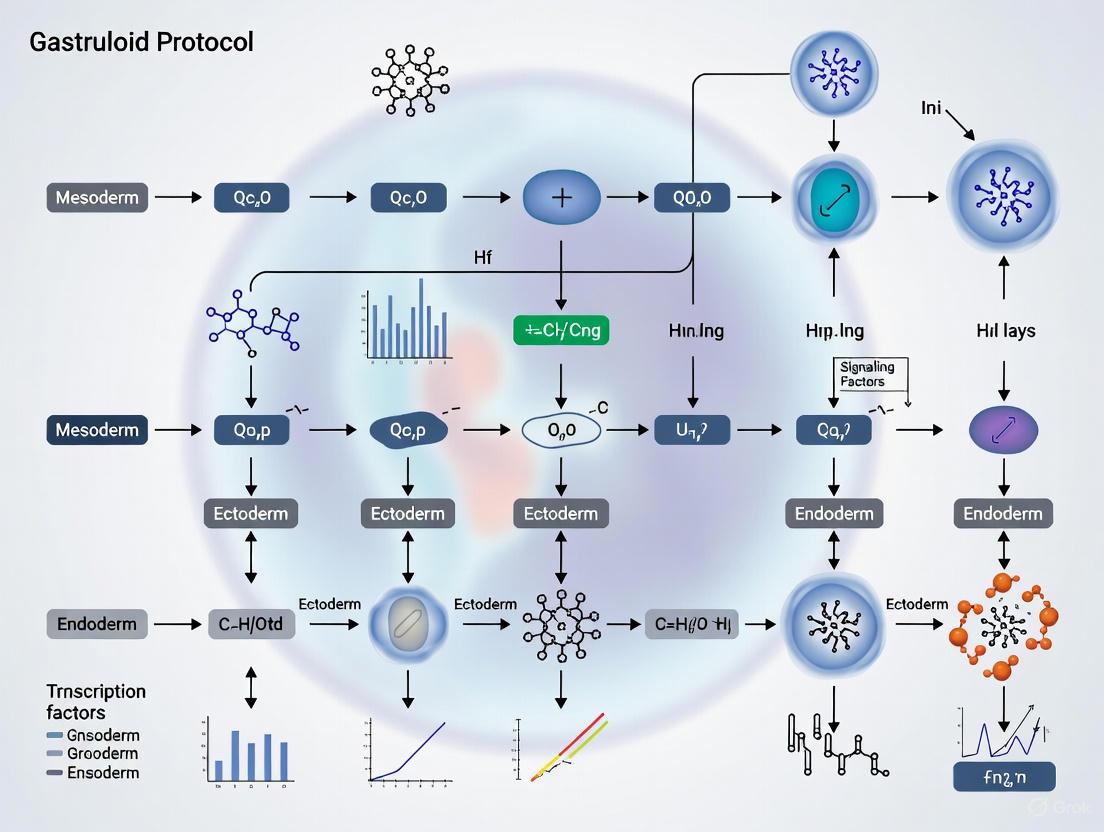
This article provides a comprehensive guide to gastruloid protocols for reproducible germ layer differentiation, tailored for researchers and drug development professionals.
Optimized Gastruloid Protocols for Robust Germ Layer Differentiation: From Foundational Principles to Advanced Applications
Abstract
This article provides a comprehensive guide to gastruloid protocols for reproducible germ layer differentiation, tailored for researchers and drug development professionals. It covers the foundational biology of self-organization in these 3D stem cell models, details optimized methodological pipelines for inducing definitive endoderm, mesoderm, and ectoderm, and offers systematic troubleshooting for common variability issues. Furthermore, it explores advanced validation techniques and comparative analyses with other model systems, highlighting the transformative potential of gastruloids in developmental biology, disease modeling, and drug screening.
Understanding Gastruloid Biology: Principles of Self-Organization and Germ Layer Specification
Gastruloids are three-dimensional (3D) aggregates derived from pluripotent stem cells (PSCs) that recapitulate key aspects of early mammalian embryogenesis in vitro, including symmetry breaking, germ layer specification, and axial organization [1] [2]. This Application Note provides a consolidated overview of murine gastruloid protocols, focusing on their application in studying germ layer differentiation. We detail standardized methodologies, key signaling pathways, and analytical workflows to ensure reproducibility in modeling early developmental processes for basic research and drug development.
Fundamental Principles of Gastruloid Self-Organization
The self-organization of gastruloids is governed by the same signaling pathways that orchestrate embryonic gastrulation. The process begins with the aggregation of mouse Embryonic Stem Cells (mESCs) into a uniform cluster. A critical pulse of Wnt activation between 48 and 72 hours post-aggregation initiates symmetry breaking, leading to the emergence of a posterior pole marked by the mesodermal marker Brachyury (T) [2]. This event is followed by axial elongation and the specification of the three germ layers—ectoderm, mesoderm, and endoderm—in a spatially organized manner.
Central to this patterning are the interactions between key signaling pathways. BMP, Wnt, and Nodal signaling act combinatorially to specify cell fates [3]. Furthermore, recent studies highlight an instructive role for metabolism in this process; glycolytic activity is essential for mesoderm and endoderm formation by regulating the activity of Nodal and Wnt signaling pathways [4]. Inhibition of glycolysis leads to a dose-dependent increase in ectodermal fates at the expense of mesoderm and endoderm, demonstrating that metabolic conditions can directly control germ layer proportions [4].
Core Protocols for Murine Gastruloid Culture
Standard Protocol for Baseline Germ Layer Formation
The foundational protocol for generating gastruloids involves the aggregation of a defined number of mESCs (typically ~300 cells) in low-adhesion U-bottom 96-well plates [2] [5]. The culture is maintained in a standardized medium, and the pivotal step is the addition of a Wnt agonist (such as CHIR99021) for a 24-hour pulse between 48 and 72 hours. This pulse is sufficient to break radial symmetry and induce the formation of a primitive-streak-like region [2].
Optimized Extended Culture Protocol
To study later developmental events, such as organogenesis and hematopoietic development, an extended culture protocol is employed. A key modification is the embedding of gastruloids in 10% Matrigel at 96 hours post-aggregation [5]. This step significantly enhances the reproducibility and longevity of the cultures, allowing for the sustained development and differentiation of derivatives from all three germ layers for up to 168 hours (7 days) [5].
Specialized Protocol for Hematopoietic Development
To model specific lineages like blood development, the base protocol can be steered by supplementing the culture medium with specific factors. The addition of VEGF, bFGF (FGF2), and ascorbic acid (AA) from the time of aggregation promotes cardiovascular and hematopoietic development [1]. In these conditions, gastruloids display a hematopoiesis-related transcriptional signature and give rise to blood progenitor cells (CD34+/c-Kit+/CD41+) and erythroid-like cells (Ter-119+) between 144 and 168 hours of culture [1].
Quantitative Atlas of Germ Layer and Lineage Markers
Tracking the emergence of specific cell populations is crucial for analyzing gastruloids. The following tables summarize key markers and their dynamics.
Table 1: Key Surface Markers in Hematopoietic Gastruloid Development (120-168 hours) [1]
| Marker | Cell Type/Population | Expression Dynamics | Functional Significance |
|---|---|---|---|
| CD34 | Hematopoietic and vascular progenitors | Upregulated from 120h | Marks hemogenic endothelium |
| c-Kit | Early hematopoietic cells | Fluctuating expression | Receptor for stem cell factor |
| CD41 | Early hematopoietic progenitors | Accumulates from 144-168h | Key marker for hematopoietic onset |
| Ter-119 | Erythroid lineage cells | Emerges around 120h | Erythroid progenitor marker |
| CD45 | Pan-hematopoietic (later stages) | Emerges in late stages | Upregulated upon blood cell maturation |
Table 2: Key Transcriptional Markers in Gastruloid Development (0-168 hours) [1] [2]
| Time Window | Developmental Process | Key Transcriptional Markers |
|---|---|---|
| 0-48 h | Pluripotency Exit / Early Patterning | Sox2, Esrrb (naive pluripotency); Fgf4, Trh, Wnt3 (epiblast states) |
| 48-72 h | Wnt Activation / Primitive Streak | T/Brachyury, Mixl1, Pdgfra, Kdr/Flk1 |
| 72-120 h | Germ Layer Specification & Differentiation | Tal1/SCL, Lmo2, Gata2 (hematopoietic progenitors); Sox17 (endoderm); T (mesoderm) |
| >120 h | Lineage Commitment & Maturation | Kit, Cd34, Cd41, Hbb-y, Hbb-bh1 (hematopoietic & erythroid maturation) |
The Scientist's Toolkit: Essential Research Reagents
Table 3: Essential Reagents for Gastruloid Research
| Reagent / Tool | Function / Application | Example Use Case |
|---|---|---|
| CHIR99021 | GSK-3β inhibitor / Wnt pathway agonist | Symmetry breaking pulse (48-72h) [2] |
| VEGF & bFGF | Growth factors for vascular/hematopoietic development | Steering differentiation towards cardiovascular and blood lineages [1] |
| Matrigel | Basement membrane extract for 3D support | Embedding for extended culture and enhanced structural integrity (from 96h) [5] |
| Microraft Arrays | High-throughput screening and sorting platform | Automated image-based assays and sorting of individual gastruloids based on phenotype [6] |
| Sox1-GFP::Brachyury-mCherry Reporter Cell Line | Live-cell imaging of ectoderm and mesoderm differentiation | Real-time tracking of germ layer specification and spatial patterning [1] |
Experimental Workflow and Signaling Pathways
The following diagrams, generated with Graphviz, illustrate the core experimental workflow and the regulatory network governing germ layer specification.
Core Experimental Workflow for Gastruloid Generation
Signaling and Metabolic Network in Germ Layer Specification
Gastruloids represent a powerful, scalable, and ethically accessible in vitro platform for investigating the principles of early mammalian development. The protocols detailed herein provide a framework for studying germ layer differentiation and subsequent lineage specification with high spatiotemporal resolution. Their compatibility with high-throughput screening and single-cell technologies makes them particularly valuable for uncovering novel developmental mechanisms and for applications in toxicology and drug discovery.
The precise orchestration of germ layer differentiation—forming ectoderm, mesoderm, and endoderm—is a cornerstone of embryonic development and a critical process in in vitro models of embryogenesis. Within this framework, the Wnt, BMP, and Nodal signaling pathways function as a core regulatory network, interpreting extracellular cues to direct cell fate decisions. In the context of gastruloid protocols, which are three-dimensional aggregates that recapitulate early embryogenesis, mastering the control of these pathways is essential for generating reproducible and representative models [5]. These pathways do not operate in isolation; they engage in complex combinatorial signaling that determines developmental outcomes based on their relative timing, concentration, and the intrinsic state of the cell [7] [8]. This application note details the roles of these key pathways and provides optimized protocols for their manipulation to achieve robust germ layer differentiation in gastruloid systems, supported by quantitative data and practical methodologies for researchers and drug development professionals.
The Roles of Wnt, BMP, and Nodal in Germ Layer Specification
Wnt Signaling: The Mesoderm Inducer
Wnt signaling is paramount for the initiation of mesoderm formation and the maintenance of posterior mesodermal progenitors. During gastrulation, Wnt activity is crucial for the formation of the primitive streak (PS), the site through which cells ingress to form the mesoderm and endoderm. In gastruloid protocols, activation of the Wnt pathway is typically the first step in breaking pluripotency and directing cells toward mesodermal fates. The GSK-3 inhibitor CHIR99021 is commonly used to activate Wnt signaling. Studies have shown that treatment with 3 μM CHIR99021 for 48 hours efficiently differentiates human pluripotent stem cells (hPSCs) into TBXT+/MIXL1+ mesoderm progenitor (MP) cells [9].
BMP Signaling: A Fate Decoder through Timing and Dose
BMP signaling exerts a profound influence on cell fate that is determined by both signal duration and concentration. It directly promotes the specification of extraembryonic mesoderm (ExM) and influences the formation of lateral plate mesoderm (LPM). The classic view is that lower BMP levels promote intermediate mesoderm (IM), while higher levels favor LPM [9]. Recent systems-level analysis reveals that BMP signaling duration is a critical control parameter. Through its interplay with endogenous Wnt signaling, BMP produces a "temporal morphogen" effect:
- Intermediate BMP pulses cooperate with Wnt to specify primitive streak and mesodermal fates.
- Sustained, high BMP signaling directly converts pluripotent cells to extraembryonic fates [8]. This combinatorial interpretation means that a cell's fate is not determined by BMP alone, but by the integrated signal from both the BMP and WNT pathways [8].
Nodal Signaling: The Mesendoderm Specifier
Nodal, a member of the TGF-β family, plays a central role in specifying mesoderm and endoderm fates. Traditionally viewed as a graded morphogen, high levels of Nodal signaling are associated with endoderm formation, while lower levels promote mesoderm development [9]. In many differentiation protocols, Activin A is used to mimic Nodal signaling. Interestingly, some optimized protocols for generating intermediate mesoderm have found that suppressing Nodal signaling during the mesoderm specification step can enhance the efficiency and fidelity of the target fate [9].
Integration and Epigenetic Priming
The response of a cell to these promiscuously used signals is not solely determined by the external environment. The cell's internal state, particularly its epigenetic landscape, predetermines its response. Regionalized epiblast populations possess distinct epigenetic signatures, including DNA methylation and chromatin accessibility, that prime them to respond divergently to the same signaling cues [7]. For instance, it has been shown that DNA methylation, and not chromatin accessibility, predetermines the fates of neuroectoderm, definitive endoderm, and neuromesodermal lineages [7]. This cell-context response means that the same WNT cue can trigger anterior or posterior fate decisions depending on the pre-existing epigenetic state of the cell [7].
Table 1: Core Signaling Pathways in Germ Layer Specification
| Pathway | Primary Role in Differentiation | Key Effectors | Typical Inhibitors/Activators |
|---|---|---|---|
| Wnt | Initiates mesoderm formation; maintains posterior progenitors | β-catenin, TBXT (Brachyury) | CHIR99021 (Activator); IWP-2 (Inhibitor) |
| BMP | Controls fate choice between mesoderm and extraembryonic lineages; concentration- and time-dependent | SMAD1/5/8, ID proteins | BMP4 (Activator); Dorsomorphin (Inhibitor) |
| Nodal | Specifies mesendoderm; high levels promote endoderm | SMAD2/3, FoxA2 | Activin A (Activator); SB431542 (Inhibitor) |
Quantitative Data for Pathway Modulation
Successful differentiation requires precise control over signaling pathway activity. The table below summarizes optimized concentrations and durations from published studies for directing specific cell fates.
Table 2: Quantitative Guide to Signaling Modulation for Fate Control
| Target Cell Fate | Signaling Inputs | Concentration | Duration | Key Markers Induced | Source Context |
|---|---|---|---|---|---|
| Mesoderm Progenitors (MP) | CHIR99021 (Wnt) | 3 μM | 48 h | TBXT+, MIXL1+ | hPSC Differentiation [9] |
| Intermediate Mesoderm (IM) | CHIR99021 (Wnt) + BMP4 | 3 μM + 4 ng/mL | Subsequent 48 h | OSR1+, GATA3+, PAX2+ | hPSC Differentiation [9] |
| Primitive Streak / Posterior Fate | CHIR99021 (Wnt) | 3 μM | 96 h | OSR1+, LHX1+, PAX2+ | hPSC Differentiation [9] |
| Extraembryonic Mesoderm | High BMP Pulse | Varying (High) | Long Duration / Constant | GATA4+, SOX17+ (ExM) | Mouse ES Cell Model [8] |
| Primitive Streak / Mesoderm | Intermediate BMP Pulse | Varying (Intermediate) | Intermediate Duration | TBXT+ (PS/Mesoderm) | Mouse ES Cell Model [8] |
Detailed Experimental Protocols
Protocol 1: Induction of Intermediate Mesoderm from hPSCs
This protocol is adapted from a study that optimized Wnt and BMP signaling to generate OSR1+/GATA3+/PAX2+ IM cells from human induced pluripotent stem cells (hiPSCs) with high efficiency and reproducibility [9].
Materials:
- Cell Line: Human iPSCs (e.g., UCSD167i-99-1).
- Basal Medium: Appropriate pluripotent stem cell medium (e.g., mTeSR1 or mTeSR Plus).
- Matrigel: hPSC-qualified Matrigel for coating culture vessels.
- Key Reagents:
- CHIR99021 (Tocris Bioscience, Cat. No. 4423)
- Recombinant Human BMP4 (R&D Systems, Cat. No. 314-BP)
Procedure:
- Culture and Preparation: Maintain hiPSCs in feeder-free conditions on Matrigel-coated plates in mTeSR1 or mTeSR Plus medium. Culture cells in a 5% CO2 environment at 37°C, changing the medium daily. Passage cells every 4-6 days when they reach 70-80% confluence.
- Mesoderm Induction (Day 0-2): When starting differentiation, replace the culture medium with fresh medium containing 3 μM CHIR99021. Incubate the cells for 48 hours.
- Expected Outcome: By day 2, cells should differentiate into TBXT+/MIXL1+ mesoderm progenitors.
- Intermediate Mesoderm Induction (Day 2-4): After 48 hours, replace the medium with a new mixture containing both 3 μM CHIR99021 and 4 ng/mL BMP4. Incubate for a further 48 hours.
- Expected Outcome: By day 4, cells should efficiently express IM markers OSR1, GATA3, and PAX2.
- Validation: Perform molecular characterization via immunofluorescence staining and/or RT-qPCR for the key markers (OSR1, GATA3, PAX2) to confirm successful IM differentiation.
Protocol 2: Extended Culture of Gastruloids with Matrigel Embedding
This protocol outlines a method for generating and extending the culture of mouse embryonic stem cell (mESC)-derived gastruloids, enabling the study of post-gastrulation events [5].
Materials:
- Cell Line: Mouse Embryonic Stem Cells (mESCs).
- Aggregation Plates: Low-attachment U-bottom 96-well plates.
- Basal Medium: Appropriate for gastruloid formation (e.g., N2B27-based medium).
- Matrigel: Corning Matrigel, Growth Factor Reduced (GFR).
Procedure:
- Aggregation (Day 0): Harvest and count mESCs. Resuspend cells in gastruloid formation medium and seed a defined number of cells (e.g., 300-500 cells) per well in a U-bottom 96-well low-attachment plate. Centrifuge the plate briefly to encourage aggregation.
- Gastruloid Formation (Day 1-4): Culture the aggregates for 96 hours. The specific factors (e.g., CHIR99021) and their timing should be optimized based on the desired axial organization, often involving a pulse of Wnt activation.
- Embedding for Extended Culture (Day 4): At 96 hours post-aggregation, carefully embed the formed gastruloids in 10% Matrigel.
- Preparation: Dilute Matrigel on ice in cold culture medium.
- Embedding: Transfer individual gastruloids into the Matrigel solution in a new plate or dish and incubate at 37°C for 20-30 minutes to allow the Matrigel to polymerize. Once solidified, gently overlay with culture medium.
- Extended Culture (Day 4+): Continue culture with regular medium changes. Embedding in Matrigel provides structural support and relevant extracellular matrix cues, allowing gastruloids to be cultured for up to 168 hours post-aggregation and develop derivatives of all three germ layers.
Signaling Pathway and Workflow Visualizations
Signaling Circuit Logic in Fate Decision
Diagram 1: Combinatorial BMP and WNT signaling logic.
Experimental Workflow for IM Differentiation
Diagram 2: Workflow for IM differentiation from hiPSCs.
The Scientist's Toolkit: Essential Research Reagents
Table 3: Key Reagents for Germ Layer Differentiation Studies
| Reagent Name | Function / Target | Commonly Used Concentrations | Brief Application Notes |
|---|---|---|---|
| CHIR99021 | GSK-3 inhibitor; activates Wnt/β-catenin signaling | 3 - 5 μM | Critical for primitive streak and mesoderm induction. Concentration and time must be optimized for specific cell lines. [9] |
| Recombinant BMP4 | Activates BMP/SMAD1/5/8 signaling | 4 - 100 ng/mL | Concentration drastically alters fate. Low doses (e.g., 4 ng/mL) promote IM; high doses promote LPM/ExM. [9] [8] |
| Activin A | Activates Nodal/SMAD2/3 signaling | 100 ng/mL | Used for definitive endoderm differentiation. Can be suppressed in some mesoderm protocols. [9] |
| hPSC-qualified Matrigel | Extracellular matrix for cell attachment & signaling | Varies (coating) | Standard substrate for feeder-free hPSC culture and differentiation. Essential for maintaining pluripotency pre-differentiation. [9] |
| PD0325901 (PD03) | MEK inhibitor; suppresses FGF/ERK signaling | 1 μM | Used in some protocols to modulate the epigenetic state and promote differentiation toward neuroectoderm or other lineages. [7] |
The Role of Symmetry Breaking and Axial Organization in Patterning
Symmetry breaking and axial organization are fundamental processes in embryonic development, establishing the primary body plan from a seemingly uniform cluster of cells. Within the context of germ layer differentiation research, gastruloids—three-dimensional stem cell aggregates that self-organize into embryo-like structures—have emerged as a powerful in vitro model system. These structures break symmetry and form an anterior-posterior (A-P) axis, providing a reproducible and ethically favorable platform for investigating the patterning cues that guide cellular differentiation [3] [10].
This Application Note details the protocols and analytical tools for leveraging gastruloids to study the mechanisms of symmetry breaking. We focus on the role of key signaling pathways, including Wnt and Nodal, and outline how synthetic biology and advanced imaging can be used to decode the spatiotemporal dynamics of pattern formation.
Theoretical Framework: Mechanisms of Symmetry Breaking
In gastruloids, symmetry breaking can be driven by distinct mechanistic principles. Research indicates that two primary models are often considered:
- Reaction-Diffusion (Turing) Patterning: This mechanism relies on the interaction of a short-range activator and a long-range inhibitor to spontaneously generate periodic or polarized patterns from a homogeneous field [11].
- Cell Sorting and Rearrangement: An alternative model proposes that initial, patchy heterogeneity in cell states is resolved into a coherent pattern through physical cell rearrangements, rather than changes in individual cell states [12].
A pivotal study using synthetic gene circuits provided direct evidence supporting the cell sorting model in 3D gastruloids. It demonstrated that patchy domains of Wnt-active cells rearrange into a single polarized pole, which defines the A-P axis. Furthermore, this Wnt heterogeneity was traced to even earlier pre-patterning by Nodal signaling [12]. The prevailing model of signaling interactions is summarized in the following diagram.
Diagram: Signaling cascade in gastruloid symmetry breaking. Pre-patterning by Nodal and BMP signaling initiates Wnt heterogeneity, which triggers cell sorting to establish axial polarization [12].
Key Experimental Protocols
This section provides detailed methodologies for investigating symmetry breaking and axial patterning in gastruloids.
Protocol 1: Generating 3D Mouse Gastruloids with a Polarized A-P Axis
This protocol is adapted from established methods for generating 3D mouse gastruloids that break symmetry and elongate in response to a uniform Wnt activation pulse [12] [13].
Workflow Overview:
Diagram: Core workflow for 3D polarized gastruloid generation. haa: hours after aggregation.
Detailed Procedure:
-
- Maintain mouse Embryonic Stem Cells (mESCs) in "2i+LIF" medium to stabilize a homogeneous ground state of pluripotency. This step is critical for reducing pre-existing heterogeneity and ensuring reproducible symmetry breaking.
Aggregate Formation ( [12])
- Dissociate pre-cultured mESCs and aggregate 300-600 cells per aggregate in low-adhesion 96-well U-bottom plates.
- Culture aggregates in N2B27 basal medium for 48 hours.
Wnt Activation Pulse ( [12])
- At 48 hours after aggregation (haa), supplement the medium with 3 µM CHIR-99021 (a GSK3β inhibitor and Wnt pathway activator).
- After a 24-hour pulse (at 72 haa), remove the CHIR-containing medium and replace it with fresh N2B27 medium.
Monitoring and Analysis ( [12] [14])
- Imaging: For fixed samples, use whole-mount immunofluorescence and advanced clearing protocols (e.g., 80% glycerol mounting) to image entire gastruloids. Two-photon microscopy is recommended for deep imaging of these dense 3D structures [14].
- Key Readouts:
- Morphology: The onset of elongation is typically visible from 96-108 haa.
- Wnt Activity: Use a TCF/LEF-iRFP-PEST transcriptional biosensor to monitor the transition from uniform high activity (72 haa) to patchy (96 haa) and finally polarized (108-144 haa) activity.
- Cell Fate Markers: Immunostaining for Brachyury (posterior mesoderm) and Sox2 (neuroectoderm) confirms axial organization.
Protocol 2: Mapping Cell Fate Decisions with a Synthetic Signal-Recording Circuit
This innovative protocol uses engineered gene circuits to permanently record signaling pathway activity within a defined temporal window, linking early cell states to final positions and fates [12].
Principle of the Signal-Recording Circuit: The circuit functions as an AND gate, requiring both signaling pathway activity and the presence of doxycycline (Dox) to trigger a permanent, heritable fluorescent switch from dsRed to GFP.
Detailed Procedure:
Cell Line Engineering
- Generate mESCs harboring the signal-recording construct:
- A sentinel enhancer (e.g., TCF/LEF-responsive for Wnt recording) drives expression of a destabilized reverse tetracycline-controlled transactivator (rtTA).
- A Dox-responsive promoter (PTetON) drives expression of a destabilized Cre recombinase (Cre-PEST).
- A constitutively active promoter drives dsRed expression, which is flanked by loxP sites. Upon Cre activation, the dsRed cassette is excised, leading to a permanent switch to GFP expression.
- Generate mESCs harboring the signal-recording construct:
Fate-Mapping Experiment
- Form gastruloids from the recorder cell line as in Protocol 1.
- To record which cells experienced Wnt activity between 84-90 haa (a critical window for initial heterogeneity), administer a 1.5-3 hour pulse of Dox (100-200 ng/mL) during this period.
- Continue gastruloid culture until the desired endpoint (e.g., 144 haa).
Analysis and Data Interpretation ( [12])
- Image the gastruloids to determine the final position of GFP+ cells (which were Wnt-active during the Dox pulse) relative to the A-P axis.
- Interpretation: If GFP+ cells are found clustered specifically at the posterior Wnt pole, it provides direct evidence for the cell sorting model, as it shows that early Wnt-active cells rearranged to a single location.
Quantitative Data and Analysis
Key Quantitative Findings in Symmetry Breaking
Table 1: Summary of key quantitative observations in gastruloid patterning.
| Parameter | Observation | Experimental Model | Significance |
|---|---|---|---|
| Onset of Wnt Heterogeneity | Between 90-96 hours after aggregation [12] | 3D Mouse Gastruloid | Precedes morphological polarization by ~12 hours. |
| Axial Polarization | Coherent Wnt domain emerges by 108 hours after aggregation [12] | 3D Mouse Gastruloid | Defines the posterior pole of the A-P axis. |
| Size-Dependent Symmetry Breaking | Colonies with radius <100 µm break symmetry; larger ones (>200 µm) remain centro-symmetric [11] | 2D Adherent Gastruloid | Demonstrates that system size is a critical control parameter for patterning. |
| Mesodermal Domain Scaling | Brachyury+ domain area scales with colony size via a power law, independent of cell density [11] | 2D Adherent Gastruloid | Indicates an intrinsic mechanism for size-sensing. |
| Signal Recording Kinetics | Circuit faithfully records signaling state within a 6-hour window; >68% labeling efficiency with a 1-hour Dox pulse [12] | Synthetic Gene Circuit | Enables high-resolution temporal fate mapping. |
Essential Research Reagent Solutions
Table 2: Key reagents and materials for gastruloid-based patterning research.
| Reagent / Material | Function / Application | Key Details / Considerations |
|---|---|---|
| CHIR-99021 | GSK3β inhibitor, Wnt pathway activator. | Used in a 24-hour pulse (e.g., 3 µM) to trigger symmetry breaking [12] [13]. |
| 2i/LIF Medium | Pre-culture medium for mESCs. | Promotes a homogeneous "ground state" of pluripotency, improving reproducibility [12] [13]. |
| Synthetic Signal-Recording Circuit | Lineage tracing of signaling activity. | Allows permanent labeling of cells active in a specific pathway (e.g., Wnt, Nodal) during a user-defined window [12]. |
| Doxycycline (Dox) | Inducer for synthetic gene circuits. | Used as a temporal control input (e.g., 100-200 ng/mL) for the signal-recording system [12]. |
| Brachyury (T) Antibody | Marker for nascent mesoderm and the primitive streak. | Identifies the posterior domain in elongated gastruloids [12] [11]. |
| Two-Photon Microscopy & Clearing (e.g., 80% Glycerol) | Deep-tissue 3D imaging of whole-mount gastruloids. | Essential for quantifying 3D gene expression patterns and cell morphology in opaque aggregates [14]. |
The Scientist's Toolkit
Successful investigation of symmetry breaking requires a combination of biological, computational, and imaging tools.
- Advanced Imaging Pipeline: A complete pipeline for gastruloid analysis includes whole-mount immunostaining, optical clearing with agents like 80% glycerol, and dual-view two-photon microscopy to overcome light scattering in thick samples. Computational tools like Tapenade (a Python package) can then be used for 3D nucleus segmentation, signal normalization, and quantitative analysis of gene expression and morphology across scales [14].
- Computational Modeling: Theoretical frameworks like Turing's reaction-diffusion models with self-organized reactive boundaries can be used to simulate and test hypotheses about pattern formation, especially for explaining size-dependent symmetry breaking and scaling laws observed in 2D gastruloids [11].
- Protocol Optimization for Human Models: When working with human iPSC-derived gastruloids (e.g., Elongating Multi-lineage Organized (EMLO) gastruloids), protocol modifications are necessary. These often involve pre-treatment with CHIR and FGF2, aggregation in low-adhesion shaking cultures, and the use of growth factors like HGF and IGF-1 to support complex tissue co-development, such as central and peripheral neurons with trunk mesendoderm [10].
Gastruloids provide a uniquely tractable system to dissect the core principles of symmetry breaking and axial patterning. The integration of defined biochemical perturbations, synthetic biology tools for fate mapping, and advanced quantitative imaging has shifted the paradigm from observing patterns to understanding their mechanistic origins. The evidence strongly supports a model where pre-patterning by pathways like Nodal creates initial heterogeneity in Wnt activity, which is subsequently resolved into a coherent axis through cell sorting and rearrangement. The continued refinement of these protocols, including the adoption of human models and computational frameworks, promises to deepen our understanding of the fundamental rules governing the emergence of form and structure in mammalian development.
This document outlines standardized protocols for analyzing pluripotency states in gastruloid differentiation research. It provides methodologies for quantifying transcriptional and epigenetic features, alongside visualization guidelines to ensure data clarity and accessibility. The protocols are designed for researchers studying germ layer induction and drug screening applications.
Key metrics for assessing pluripotency states are summarized below:
Table 1: Transcriptional and Epigenetic Markers in Pluripotency States
| Pluripotency State | Key Markers (RNA) | Expression Level (RPKM) | Epigenetic Features | Chromatin Accessibility (ATAC-seq Peaks) |
|---|---|---|---|---|
| Naive | NANOG, TFCP2L1 | 150–300 | H3K27me3-low, H3K4me3-high | 5,000–7,000 |
| Primed | OTX2, ZIC2 | 100–200 | H3K27me3-high, H3K4me3-low | 3,000–5,000 |
| Transitional | DUSP6, FGF5 | 50–150 | Mixed H3K27ac/H3K9me3 | 2,000–4,000 |
Table 2: Functional Assays for Pluripotency Validation
| Assay | Purpose | Readout | Acceptance Criteria |
|---|---|---|---|
| Alkaline Phosphatase | Confirm pluripotency | Fluorescence intensity | ≥80% positive cells |
| Embryoid Body Formation | Assess differentiation | Germ layer marker expression | All three germ layers detected |
| RNA-seq Correlation | Validate transcriptional state | Pearson correlation (vs. reference) | r ≥ 0.9 |
Experimental Protocols
RNA-seq for Transcriptional Landscaping
Materials:
- TRIzol reagent (RNA isolation)
- Poly-A selection beads (mRNA enrichment)
- SuperScript IV (cDNA synthesis)
- Illumina Nextera XT (library prep)
Steps:
- Extract total RNA from 10^6 cells using TRIzol.
- Enrich mRNA via poly-A selection and fragment to 300 bp.
- Synthesize cDNA and amplify with 12 PCR cycles.
- Sequence on Illumina NovaSeq (150 bp paired-end).
- Align reads to GRCh38 with STAR and quantify gene counts via featureCounts.
ATAC-seq for Epigenetic Profiling
Materials:
- Tn5 transposase (tagmentation)
- Q5 High-Fidelity DNA Polymerase (library amplification)
- AMPure XP beads (size selection)
Steps:
- Lyse cells in NP-40 buffer to isolate nuclei.
- Tagment DNA with Tn5 (37°C, 30 min).
- Purify and amplify DNA using indexed primers.
- Size-select fragments (100–600 bp) for sequencing.
- Analyze peaks with MACS2 and visualize via Integrative Genomics Viewer.
Visualization of Signaling Pathways and Workflows
Pluripotency Signaling Network
Title: Signaling Pathways Regulating Pluripotency States
Experimental Workflow for Gastruloid Differentiation
Title: Gastruloid Differentiation and Analysis Workflow
Research Reagent Solutions
Table 3: Essential Materials for Pluripotency Research
| Reagent/Material | Function | Example Product |
|---|---|---|
| mTeSR Plus | Maintain pluripotency in culture | STEMCELL Technologies #100-0276 |
| LIF Recombinant Protein | Support naive state self-renewal | PeproTech #300-05-100UG |
| CHIR99021 | GSK3 inhibitor for naive stabilization | Tocris #4423/10 |
| - TRizol Reagent | RNA isolation for transcriptional profiling | Thermo Fisher #15596026 |
| - Tn5 Transposase | Tagmentation for ATAC-seq | Illumina #20034197 |
| - H3K27ac Antibody | ChIP-seq for active enhancers | Abcam #ab4729 |
Data Visualization Color Guidelines
- Categorical Palettes: Use distinct hues (e.g., #4285F4 [blue], #EA4335 [red], #FBBC05 [yellow]) for pluripotency states to ensure clarity [15] [16].
- Sequential Palettes: Gradient from #F1F3F4 (low) to #EA4335 (high) for chromatin accessibility data [16] [17].
- Diverging Palettes: Use #EA4335 (negative) → #FFFFFF (neutral) → #4285F4 (positive) for differential expression [15] [16].
- Accessibility: All colors meet WCAG contrast ratios ≥ 3:1 [18] [19]. Test palettes with grayscale and colorblind simulators [15] [20].
Protocols validated in human pluripotent stem cells (H1 and H9 lines). For gastruloid differentiation, adapt culture conditions per [reference to relevant thesis chapter].
Comparative Analysis of Murine and Human Gastruloid Systems
Gastruloids, three-dimensional aggregates derived from pluripotent stem cells, have emerged as powerful in vitro models for studying early mammalian embryogenesis, particularly the process of gastrulation where the three primary germ layers are established. These models offer an unprecedented window into developmental events that are otherwise challenging to study in vivo due to ethical considerations and technical limitations. This application note provides a comparative analysis of murine and human gastruloid systems, detailing their unique characteristics, experimental protocols, and applications in germ layer differentiation research. Designed for researchers, scientists, and drug development professionals, this document synthesizes current methodologies and insights to support the implementation and optimization of gastruloid technology in research settings.
Fundamental Divergences Between Murine and Human Gastruloid Models
Murine and human gastruloid systems, while sharing fundamental principles of self-organization, exhibit critical species-specific differences in their developmental trajectories and signaling requirements. Understanding these distinctions is paramount for selecting the appropriate model system for specific research applications and for accurate interpretation of experimental results.
Developmental Patterning and Signaling Dependencies: A primary distinction lies in the differential signaling requirements for posterior embryonic patterning. Mouse embryonic stem cells (mESCs) spontaneously generate trunk-like structures (TLS) with neural tubes and segmented somites when embedded in Matrigel, recapitulating key aspects of axial organization [21]. In stark contrast, conventional human gastruloids lack this capacity despite similar Matrigel supplementation, instead forming elongated structures devoid of these complex morphological features. This fundamental difference is attributed to a mesodermal bias in human neuromesodermal progenitors (NMPs), the bipotential cells responsible for generating both posterior mesoderm and neural tissues [21].
Metabolic and Molecular Basis for Divergent Differentiation: Transcriptomic analyses reveal that this mesodermal bias in human gastruloids correlates with significantly lower expression of ALDH1A2, a key enzyme in retinoic acid (RA) synthesis, and elevated expression of CYP26 genes, which encode RA-degrading enzymes [21]. Concurrently, human gastruloids exhibit higher expression of WNT pathway genes during early development. This opposing signaling environment—insufficient RA and excess WNT—underpins the differential patterning capacity between species. Consequently, human gastruloids require precise exogenous RA modulation to restore NMP bipotentiality and induce posterior embryo-like structures, whereas murine systems possess an intrinsic capacity for this developmental progression [21].
Table 1: Core Differences Between Murine and Human Gastruloid Systems
| Parameter | Murine Gastruloids | Human Gastruloids |
|---|---|---|
| Axial Patterning | Spontaneous neural tube & somite formation with Matrigel [21] | Requires retinoic acid pulse + Matrigel for neural tube & somites [21] |
| NMP Behavior | Balanced differentiation into mesoderm & neural lineages [21] | Mesodermally biased; requires RA for neural differentiation [21] |
| RA Pathway Gene Expression | High ALDH1A2 (RA synthesis), Low CYP26 (RA degradation) [21] | Low ALDH1A2, High CYP26 [21] |
| WNT Signaling | Lower expression of WNT genes at initiation [21] | Higher expression of WNT genes at 0-24h [21] |
| Developmental Stage Correspondence | E6.5–E8.5 mouse embryos [22] | Carnegie Stage 7 human embryos; E9.5 mouse with RA [21] [22] |
| Germ Layer Organization | Self-organized three-dimensional anteroposterior axis [23] | Radial organization in micropatterned systems [22] |
Experimental Protocols for Gastruloid Generation
Murine Gastruloid Protocol
The generation of murine gastruloids involves the aggregation of mouse embryonic stem cells (mESCs) under defined conditions to initiate self-organization and germ layer specification. The pluripotency state of the starting mESC population critically influences the reproducibility and outcome of gastruloid formation [13].
Pre-culture Conditions for mESCs: mESCs can be maintained in either ESLIF medium (containing serum) or 2i medium (serum-free with GSK3β and MEK inhibitors), which confer distinct pluripotency states. Cells grown in ESLIF exhibit a "naive" state comparable to the peri-implantation epiblast, while 2i culture promotes a more homogeneous "ground-state" pluripotency resembling the pre-implantation inner cell mass [13]. Protocol optimization indicates that subjecting mESCs to a 2i-ESLIF transition prior to aggregation generates gastruloids more consistently, with enhanced complexity in mesodermal derivatives compared to ESLIF-only culture [13].
Aggregation and Differentiation Protocol:
- Cell Aggregation: Harvest and aggregate 300-600 mESCs per aggregate in U-bottom low-attachment 96-well plates [13].
- Wnt Activation: At 48 hours post-aggregation, add the Wnt agonist CHIR99021 (CHIR) to the medium at concentrations typically ranging from 1-3 µM to induce primitive streak-like behavior [5] [13].
- Extended Culture (Optional): For modeling post-gastrulation events, transfer gastruloids to a culture dish at 96 hours and embed in 10% Matrigel to support extended development up to 168 hours post-aggregation [5]. This embedding step enhances tissue complexity, facilitating the formation of structures resembling somites, neural tubes, and gut tubes [5].
Human Gastruloid Protocol
Human gastruloids require more precise signaling manipulation to overcome their inherent mesodermal bias and achieve balanced germ layer differentiation, particularly for posterior neural structures.
Standard Human Gastruloid Protocol:
- Cell Seeding: Aggregate human pluripotent stem cells (hPSCs) in low-attachment plates. Optimal results are achieved with specific cell seeding densities that require empirical determination for each cell line [21].
- Wnt Activation: Treat aggregates with CHIR99021, typically at 3-6 µM, beginning at 24 hours post-aggregation to induce primitive streak formation [21].
- Basal Medium: Use a defined medium such as Essential 6 or advanced DMEM/F12 supplemented with specific factors depending on the developmental outcomes desired.
Retinoic Acid Protocol for Posterior Embryonic Structures: To induce human gastruloids with posterior embryo-like structures including neural tubes and segmented somites:
- Early RA Pulse: Supplement culture medium with 100 nM - 1 µM all-trans retinoic acid for the first 24 hours of differentiation [21].
- RA Withdrawal: Remove RA-containing medium at 24 hours.
- Matrigel Embedding and RA Re-addition: At 48 hours, embed gastruloids in 10% Matrigel and reintroduce RA (100 nM - 1 µM) until 120 hours [21]. This discontinuous RA regimen is critical for restoring NMP bipotentiality and promoting balanced neuromesodermal differentiation.
Micropatterned 2D Gastruloid System: As an alternative to 3D aggregates, plate hPSCs on 500 µm-diameter circular micropatterns of extracellular matrix (e.g., fibronectin). Treat with BMP4 (10-50 ng/mL) for 44 hours to induce self-organized, radially patterned germ layers and extraembryonic-like cells [22]. This system generates highly reproducible patterns with ectoderm (SOX2+), mesoderm (T+), endoderm (SOX17+), and extraembryonic-like cells (CDX2+) arranged concentrically from center to edge [22].
Diagram Title: Human Gastruloid with RA Protocol
Signaling Pathways Controlling Germ Layer Specification
Gastrulation across mammalian species is governed by an evolutionarily conserved yet species-specifically modulated network of signaling pathways. Understanding the temporal dynamics and interactions of these pathways is essential for manipulating gastruloid differentiation.
Core Signaling Pathways: The initiation of gastrulation events in both murine and human gastruloids depends on the coordinated activity of BMP, Wnt, Nodal, and Fgf signaling pathways, which collectively induce and pattern the primitive streak [3]. In mouse gastruloids, these pathways interact in a self-organizing manner to establish the body plan with minimal external intervention. In human gastruloids, however, exogenous pathway modulation is often necessary to achieve balanced germ layer patterning, particularly along the anteroposterior axis.
Retinoic Acid Signaling as a Key Determinant: Retinoic acid signaling emerges as a critical differentiator between murine and human systems. In conventional human gastruloids, insufficient endogenous RA signaling combined with elevated WNT activity creates a signaling environment that biases NMP differentiation toward mesodermal fates at the expense of neural lineages [21]. The temporally regulated RA supplementation protocol directly counteracts this bias, restoring the bipotentiality of NMPs and enabling the coordinated formation of neural tubes flanked by segmented somites [21]. This requirement for exogenous RA manipulation represents a fundamental distinction from murine gastruloids, which endogenously regulate the RA signaling landscape to support balanced neuromesodermal progression.
Epigenetic Regulation of Differentiation Potential: Underlying the transcriptional responses to signaling pathways are epigenetic mechanisms that modulate developmental potential. Culture conditions of the starting pluripotent stem cells significantly influence their epigenetic state, particularly at promoter regions of developmental regulators [13]. Differences in DNA methylation and H3K27me3 distributions established during pre-culture persist through gastruloid differentiation, influencing lineage specification efficiency and contributing to inter-gastruloid heterogeneity [13].
Diagram Title: Signaling Pathways in Gastruloid Patterning
The Scientist's Toolkit: Essential Research Reagents
Successful implementation of gastruloid technology requires carefully selected reagents and materials that support the complex process of self-organization and differentiation. The following table details essential research reagent solutions for gastruloid research.
Table 2: Essential Research Reagents for Gastruloid Research
| Reagent/Category | Function | Example Applications |
|---|---|---|
| CHIR99021 | GSK-3β inhibitor activating Wnt/β-catenin signaling; induces primitive streak-like population [13] [21] | Murine: 1-3 µM from 48h; Human: 3-6 µM from 24h [13] [21] |
| All-trans Retinoic Acid (RA) | Morphogen directing posterior neural patterning and somite segmentation; critical for human NMP bipotentiality [21] | Human: 100 nM - 1 µM pulse 0-24h, then 48-120h with Matrigel [21] |
| Matrigel | Basement membrane extract providing structural support and signaling cues for tissue morphogenesis [5] [21] | Extended culture embedding (10%) from 96h (mouse) or 48h (human) [5] [21] |
| BMP4 | Morphogen inducing radial patterning in micropatterned systems; promotes germ layer and ExE differentiation [22] | 2D human gastruloids: 10-50 ng/mL for 44h [22] |
| Y-27632 (ROCK inhibitor) | Prevents anoikis in dissociated pluripotent stem cells, enhancing aggregation survival | Often included in initial aggregation medium (typically 5-10 µM) |
| 2i/LIF Medium | Maintains ground-state pluripotency in mESCs; enhances homogeneity and differentiation consistency [13] | mESC pre-culture: GSK3β + MEK inhibitors + LIF [13] |
| ESLIF Medium | Supports naive pluripotency in mESCs; creates heterogeneous starting population [13] | mESC culture: Serum-based medium with LIF [13] |
| Aggregation Plates | U- or V-bottom wells facilitating uniform spheroid formation by forced cell aggregation | 96-well low-attachment plates for consistent gastruloid initiation |
Applications in Developmental Biology and Disease Modeling
Gastruloid systems have transcended their initial role as models for basic developmental mechanisms and are increasingly applied to address diverse research questions spanning evolutionary biology, disease modeling, and toxicology.
Comparative Evolutionary Developmental Biology: The parallel analysis of murine and human gastruloids enables direct comparison of species-specific developmental programs. Cross-species transcriptomic analyses reveal that human micropatterned gastruloids correspond to early-mid gastrula stage, showing high resemblance in cellular composition and gene expression to E7.0 mouse and 16 dpf cynomolgus monkey gastrulae [22]. These comparisons highlight primate-specific features of development, including differences in amniogenesis and primordial germ cell specification [22].
Developmental Disorder Modeling and Therapeutic Screening: Gastruloids provide a scalable platform for investigating the mechanistic basis of developmental disorders. Genetic perturbations can be introduced through mutant cell lines or CRISPR-based approaches to assess their impact on germ layer specification and morphogenesis [21]. Similarly, chemical perturbation using small molecule inhibitors or teratogens allows for high-throughput screening of compounds that disrupt embryonic development, offering powerful applications in pharmaceutical toxicity testing [21].
Modeling Cell Behaviors and Tissue Morphogenesis: Beyond transcriptional profiling, gastruloids enable the study of evolutionarily conserved cell behaviors such as sorting and segregation. When dissociated gastruloid cells are reseeded onto micropatterned substrates, they exhibit motility and spontaneously aggregate with similar cell types while segregating from distinct lineages, recapitulating behaviors observed in amphibian and fish gastrulae [22]. This system provides a unique opportunity to investigate the principles of self-organization that underlie tissue boundary formation in mammalian development.
Murine and human gastruloid systems represent complementary approaches for investigating the principles of mammalian embryogenesis. While murine gastruloids offer a more tractable system with greater self-organizing capacity, human gastruloids provide essential insights into primate-specific aspects of development, despite requiring more precise signaling manipulation. The continuing refinement of gastruloid protocols, including optimized pre-culture conditions, defined temporal signaling modulation, and advanced embedding matrices, is enhancing the reproducibility and physiological relevance of these models. As the field progresses, gastruloids are poised to become increasingly indispensable tools for decoding the complex processes of germ layer differentiation, with broad applications in developmental biology, disease modeling, and drug discovery.
Step-by-Step Protocols for Reproducible Germ Layer Induction and Advanced Morphogenesis
Gastruloids, three-dimensional (3D) aggregates derived from pluripotent stem cells, have emerged as a powerful in vitro model for studying early embryonic development, including germ layer specification and axial organization [5] [13]. These structures recapitulate key morphogenetic events, such as symmetry breaking and the formation of derivatives of all three germ layers, providing a tractable system for developmental biology and drug screening [12] [13]. However, standard protocols often suffer from heterogeneity in morphology, elongation efficiency, and final cell type composition [13]. This application note details optimized protocols for generating reproducible gastruloids, focusing on the critical parameters of cell number, base medium formulation, and coating strategies to ensure high-fidelity germ layer differentiation for research applications.
Optimization of Aggregation Parameters
Successful gastruloid formation requires precise control over initial conditions to ensure reproducible self-organization. The following parameters are critical and should be optimized for specific cell lines and experimental goals.
Table 1: Key Parameters for Gastruloid Aggregation
| Parameter | Recommended Starting Point | Optimization Range | Biological Impact |
|---|---|---|---|
| Cell Number per Aggregate | 300 - 600 mouse ESCs [13] | 100 - 1000 cells | Determines final gastruloid size, viability, and germ layer composition [13]. |
| Base Medium | N2B27 [12] | DMEM, AR5, XVIVO, RPMI blends [24] | Provides essential nutrients; composition can be optimized for specific objectives like viability [24]. |
| Pre-Culture Pluripotency State | 2i/LIF for "ground state" [13] | 2i/LIF vs. ESLIF (serum/LIF) [13] | Alters epigenome, influencing differentiation potential and gastruloid reproducibility [13]. |
| Aggregation Enhancer | Methyl Cellulose (1-5 mg/mL) [25] | Varying concentrations of Heparin, PEG, PVA [26] | Promotes cell-cell adhesion, discourages monolayer formation, and enhances aggregate stability [25] [26]. |
| Coating for Extended Culture | 10% Matrigel embedding at 96 hours [5] | Various ECM proteins (e.g., Collagen) [25] | Supports complex morphogenesis and tissue structure formation for longer-term culture [5]. |
Impact of Cell Number and Pre-Culture Conditions
The number of cells aggregated is a primary determinant of gastruloid size and developmental potential. Low numbers of mouse embryonic stem cells (mESCs; typically 300-600) are aggregated to initiate gastruloid formation [13]. The pluripotency state of these starter cells, dictated by pre-culture conditions, profoundly influences the outcome. mESCs maintained in 2i/LIF medium reside in a more homogeneous "ground state" of pluripotency, akin to the pre-implantation embryo. In contrast, culture in ESLIF medium (serum-containing) yields a more heterogeneous "naive state" [13]. Shifting pre-culture from ESLIF to a 2i-ESLIF pulse significantly improves the consistency of gastruloid formation, enhances the aspect ratio (elongation), and promotes more complex mesodermal contributions [13].
Base Medium and Aggregation Enhancers
The base medium must support viability while permitting differentiation. While N2B27 is commonly used, data-driven optimization of basal media blends using machine learning can identify formulations that maximize specific objectives like cell viability [24]. To facilitate robust 3D aggregation, additives are often required. Methyl cellulose acts as an inert, non-cytotoxic suspending agent that enhances cell-cell adhesion and prevents the formation of an adherent monolayer [25]. For bioreactor scale-up, other polymers like Polyethylene Glycol (PEG) and Poly (vinyl alcohol) (PVA) are effective. They improve aggregate stability, control size by limiting fusion, and reduce shear stress, with optimized mixtures shown to reduce cell doubling time by 40% compared to standard E8 medium [26].
Detailed Experimental Protocols
Protocol: Gastruloid Formation via Cell Aggregation
This protocol is adapted for generating gastruloids from mouse ESCs in a reproducible manner [25] [13].
Materials:
- Cell Line: Mouse Embryonic Stem Cells (mESCs)
- Pre-Culture Medium: 2i/LIF medium or ESLIF medium
- Aggregation Medium: N2B27 base medium, supplemented with 1-5 mg/mL methyl cellulose
- Equipment: 96-well U-bottom cell-repellent plate, low-binding pipette tips
Procedure:
- Pre-culture mESCs: Maintain mESCs in 2i/LIF medium or a 2i-ESLIF pulse for at least 48 hours to establish a defined pluripotency state [13].
- Prepare Cell Suspension:
- Dissociate pre-cultured mESCs to a single-cell suspension using TrypLE or Accutase [26] [13].
- Neutralize the enzyme, centrifuge the suspension at 500 × g for 10 minutes, and resuspend the pellet in aggregation medium.
- Count cells and adjust concentration to (1 \times 10^5) cells/mL in aggregation medium.
- Seed Aggregation Plate:
- Aggregation and Culture:
- Transfer the plate to a tissue culture incubator (37°C, 5% CO₂).
- Cells will settle and aggregate into a single spheroid per well within 24-48 hours.
- To confirm successful spheroid formation, gently pipette medium over the aggregate after 48 hours; a properly formed 3D spheroid will loosen and roll [25].
- Induce Gastruloid Development:
Protocol: Extended Culture via Matrigel Embedding
To model post-gastrulation events, gastruloids can be embedded in Matrigel to support extended culture and more complex tissue formation [5].
Materials:
- Gastruloids: 96-hour-old gastruloids (from Protocol 2.1)
- Matrigel, growth factor-reduced, on ice
- Pre-chilled Equipment: Pipette tips, 8-well tissue culture chamber slide
Procedure:
- Chill all reagents and equipment. Keep Matrigel on ice to prevent premature polymerization.
- Prepare the embedding chamber:
- Gently transfer individual gastruloids to the well of an 8-well chamber slide using a wide-bore pipette tip.
- Carefully remove the existing culture medium.
- Embed gastruloids:
- Slowly add enough cold Matrigel to each well to cover the gastruloid, creating a layer approximately 1-2 mm thick (a minimum of 100 µL per well) [5].
- Avoid creating bubbles.
- Polymerize Matrigel:
- Place the chamber slide in a 10 cm tissue culture dish alongside a 35 mm dish filled with ultrapure water to maintain humidity.
- Incubate at 37°C for 1 hour to allow the Matrigel to polymerize.
- Extended Culture:
- Once polymerized, carefully overlay the Matrigel with fresh N2B27 culture medium.
- Continue culture for the desired duration, up to 168 hours post-aggregation, with medium changes as needed [5].
Signaling Pathways in Germ Layer Differentiation
Metabolic and signaling pathways are intricately linked during cell fate decisions. Glycolytic activity plays an instructive role in regulating key developmental signaling pathways that govern germ layer specification [4].
Diagram 1: Glycolysis Regulates Germ Layer Fate via Signaling Pathways. Glycolytic flux, driven by glucose availability, acts as an upstream regulator of Nodal and Wnt signaling pathway activity. These pathways are essential for specifying mesoderm and endoderm fates. Inhibition of glycolysis leads to reduced Nodal and Wnt signaling, resulting in a dose-dependent increase in ectodermal lineages at the expense of mesoderm and endoderm [4].
The Scientist's Toolkit: Research Reagent Solutions
Table 2: Essential Reagents for Gastruloid Research
| Reagent | Function / Mechanism | Example Application |
|---|---|---|
| Methyl Cellulose | Inert polymer that promotes cell-cell adhesion and prevents monolayer formation by increasing medium viscosity [25]. | Spheroid aggregation in U-bottom plates [25]. |
| Heparin Sodium Salt (HS) | A glycosaminoglycan that can reduce aggregate fusion and help maintain pluripotency in suspension culture [26]. | Bioreactor culture of hiPSC aggregates to control size and stability [26]. |
| Polyethylene Glycol (PEG) | Polymer that improves aggregate stability and reduces cell clumping in 3D suspension cultures [26]. | Media additive for controlling aggregate fusion in bioreactors [26]. |
| Matrigel | Basement membrane extract providing a complex 3D extracellular matrix environment that supports tissue morphogenesis [5]. | Embedding gastruloids to enable extended culture and formation of complex tissue structures [5]. |
| CHIR99021 | A GSK-3β inhibitor that activates Wnt/β-catenin signaling, the key trigger for symmetry breaking and axial polarization [12] [13]. | Induction of gastruloid development (e.g., 3 µM pulse from 48-72 hours post-aggregation) [13]. |
| 2i/LIF Medium | Contains inhibitors of MEK and GSK-3β to maintain mESCs in a homogeneous, "ground-state" of pluripotency [13]. | Pre-culture of mESCs to enhance subsequent gastruloid reproducibility and differentiation potential [13]. |
| Y-27632 (ROCK inhibitor) | Inhibits Rho-associated kinase, reducing apoptosis in dissociated single cells (anoikis) [26]. | Improving cell survival after passaging, especially when seeding for aggregation [26]. |
The reproducibility and biological fidelity of gastruloid models are highly dependent on a meticulously optimized aggregation process. Controlling the starting cell number, modulating the pluripotency state through pre-culture, utilizing defined base media with aggregation-enhancing polymers, and employing supportive coatings for extended culture are all critical steps. Furthermore, understanding the metabolic regulation of core signaling pathways like Wnt and Nodal provides a mechanistic basis for manipulating germ layer outcomes. The protocols and strategies outlined here provide a robust foundation for researchers to generate high-quality gastruloids for studying early mammalian development and disease modeling.
Within the field of synthetic embryology, gastruloids have emerged as a powerful, scalable in vitro model for studying early embryonic development, including germ layer specification and axial patterning. A critical factor determining the success of these models is the precise timing and concentration of key morphogens that guide cell fate decisions. This Application Note synthesizes current research to provide detailed protocols and quantitative data on the use of three critical inducers: CHIR99021 (a Wnt/β-catenin pathway activator), BMP4, and Retinoic Acid (RA). Properly titrating these signals is essential for replicating the complex signaling dynamics of natural embryogenesis, enabling the generation of gastruloids with robust and reproducible anteroposterior patterning, including the previously elusive anterior neural tissues [27] [3]. The following sections provide a structured overview of reagent solutions, quantitative dosing data, specific protocols, and visualized signaling pathways to serve as a core resource for researchers in developmental biology and drug development.
The Scientist's Toolkit: Research Reagent Solutions
The following table catalogues essential reagents, their molecular targets, and primary functions in gastruloid differentiation protocols.
Table 1: Key Reagents for Gastruloid Differentiation and Patterning
| Reagent Name | Primary Target/Pathway | Key Function in Differentiation |
|---|---|---|
| CHIR99021 | GSK-3β / Wnt pathway | Activates canonical Wnt signaling, promotes primitive streak and mesoderm formation, and drives axial elongation [28] [29]. |
| Retinoic Acid (RA) | Retinoic Acid Receptors (RARs) | Patterns the anteroposterior axis, specifies posterior fates, and is critical for primordial germ cell and atrial cardiomyocyte differentiation [28] [30]. |
| BMP4 | Bone Morphogenetic Protein pathway | Induces primordial germ cell differentiation and promotes the formation of extraembryonic trophectoderm-like cells at the gastruloid edge [6]. |
| IWR-1 | Wnt pathway (via Axin stabilization) | Inhibits canonical Wnt signaling; crucial for enabling the emergence of anterior neural progenitors [28] [27]. |
| XAV939 | Wnt pathway (Tankyrase inhibitor) | Inhibits Wnt signaling by stabilizing the β-catenin destruction complex; used to promote anterior fates and epiblast induction [27] [31]. |
| FGF2 (bFGF) | FGF receptor / MAPK pathway | Supports epiblast identity and self-renewal, and is involved in the maintenance of pluripotency [27] [29]. |
| Activin A | Nodal/Activin pathway (TGF-β) | Promotes differentiation toward mesendodermal lineages and supports a post-implantation epiblast-like state [27] [29]. |
Quantitative Data on Inducer Titration and Timing
Precise concentration and timing are non-negotiable for the successful patterning of gastruloids. The tables below summarize critical quantitative data from key studies.
Table 2: Titration and Timing for Key Inducers in Protocols
| Inducer | Effective Concentration Range | Critical Timing Window | Primary Outcome |
|---|---|---|---|
| CHIR99021 | 3 μM [28] | 1-3 days [28] [29] | Initiates differentiation, activates Wnt/β-catenin, and induces primitive streak markers (e.g., T/Bra) [28] [29]. |
| Retinoic Acid (RA) | 1 μM [28] | 9-12 days [28] | Promotes differentiation of PGCs and regulates anteroposterior patterning in conjunction with Wnt [28]. |
| BMP4 | Not specified in results | Not specified in results | Triggers trophectoderm differentiation and initiates the signaling cascade for germ layer patterning in 2D gastruloids [6]. |
| IWR-1 / XAV939 | 2 μM (XAV939) [27] | Early stages (days 0-3) [27] | Inhibition of Wnt signaling during aggregate formation is essential for the development of anterior neural tissues (SOX1+/SOX2+ progenitors) [27]. |
Table 3: Protocol-Specific Treatment Sequences and Outcomes
| Protocol Aim | Cell Type | Treatment Sequence | Key Results |
|---|---|---|---|
| PGC Differentiation [28] | hESCs | • 3d CHIR99021 → 9d RA• 12d CHIR99021 + RA (co-treatment) | • ~8-10% DAZL+ cells (3d+9d); up to 41.1% DAZL+ (co-treatment)• Expression of DDX4, BLIMP1, NANOS• Formation of haploid (1N) cells |
| Anterior Neural Gastruloids [27] | mESCs (EPI Aggregates) | • No CHIR; FGF2 + Activin A ± XAV939 (days 0-3) | • Symmetry breaking and axial elongation without exogenous Wnt activation• Emergence of SOX1+/SOX2+ anterior neural progenitors |
| Conventional Gastruloids [29] | mESCs | • CHIR99021 (day 1) | • Polarized T/Bra expression and axial elongation• Lack of anterior neural tissues |
Detailed Experimental Protocols
Protocol 1: Differentiation of Primordial Germ Cells from hESCs using CHIR99021 and Retinoic Acid
This protocol outlines a method for generating Primordial Germ Cell-like Cells (PGCLCs) from human embryonic stem cells (hESCs), demonstrating a synergistic effect between Wnt activation and RA signaling [28].
Key Reagents:
- CHIR99021
- All-trans Retinoic Acid (RA)
- IWR-1 (for inhibition control)
- Appropriate hESC culture medium
Procedure:
- Culture hESCs: Maintain hESCs in a primed pluripotent state using standard culture conditions.
- Initiate Differentiation:
- Control Groups: Include groups with CHIR99021 only, RA only, and a reverse sequence (3d RA + 9d CHIR99021).
- Mechanistic Validation (Optional): To confirm Wnt pathway involvement, add a Wnt inhibitor like IWR-1 alongside the CHIR99021 and RA treatment.
- Analysis:
- Immunofluorescence: Assess protein expression of key PGC markers such as DAZL and SCP3 after 12 days [28].
- Flow Cytometry: Quantify the percentage of cells positive for surface markers c-KIT and CXCR4, and intracellular marker DAZL [28].
- Fluorescent In Situ Hybridization (FISH): Use probes for chromosomes 16 and 22 to detect the presence of haploid (1N) cells [28].
Protocol 2: Generating Gastruloids with Anterior Neural Tissues via Wnt Inhibition
This protocol describes the generation of mouse epiblast-like (EPI) aggregates that undergo symmetry breaking and axial elongation without an exogenous Wnt agonist, leading to the formation of anterior neural tissues when early Wnt signaling is inhibited [27].
Key Reagents:
- PEG Hydrogel Microwell Arrays (400 μm diameter)
- FGF2
- Activin A
- XAV939
- Knockout Serum Replacement
Procedure:
- Form EPI Aggregates:
- Harvest mouse ESCs and resuspend them in EPI medium (DMEM/F12 + GlutaMAX, supplemented with Knockout Serum Replacement, FGF2 [12 ng/mL], and Activin A [20 ng/mL]) [27].
- Seed the cell suspension into PEG hydrogel microwell arrays (e.g., 100 cells/well) to generate uniformly sized aggregates. Centrifuge to ensure cells settle into the microwells.
- Culture the aggregates for 72 hours. The defined size and geometry of the microwells promote robust and reproducible formation of EPI aggregates.
- Inhibit Wnt Signaling:
- To promote anterior neural fates, supplement the EPI medium with 2 μM XAV939 during the initial 72-hour aggregation period [27].
- Induce Morphogenesis:
- After 72 hours, transfer individual aggregates to low-attachment 96-well plates using wide-bore tips.
- Continue culture in a serum-free differentiation medium (e.g., based on Neurobasal and DMEM/F12, supplemented with N2 and B27) without exogenous Wnt activation for an additional 2-4 days to allow for axial elongation and patterning.
- Analysis:
- Live Imaging: Use reporter cell lines (e.g., T/BRA-mCherry for mesoderm, SOX1-GFP for neuroectoderm) to monitor patterning dynamics [27] [29].
- Immunostaining: Analyze the elongated gastruloids for the presence of SOX1+/SOX2+ anterior neural progenitors at the distal end and T/BRA+ posterior mesoderm at the proximal end [27].
Signaling Pathways and Workflow Diagrams
The following diagrams, generated using DOT language, illustrate the core signaling interactions and experimental workflows.
Signaling Pathway Crosstalk in Germ Layer Differentiation
Experimental Workflow for Anterior Neural Gastruloids
Protocol for Extended Culture and Complex Tissue Formation using Matrigel Embedding
Within the field of stem cell-based embryo models (SCBEMs), gastruloids have emerged as a powerful in vitro system to study the self-organization and germ layer differentiation events that mimic mammalian gastrulation [32]. These three-dimensional aggregates of embryonic stem cells can recapitulate key developmental milestones, such as symmetry breaking and the emergence of the three germ layers, providing a scalable and searchable experimental model for developmental biology and drug development [32]. A critical factor for the successful and reproducible generation of complex gastruloids is the use of Matrigel as an embedding substrate [33] [34]. This protocol details the methodology for the extended culture of gastruloids using Matrigel embedding to drive robust germ layer differentiation and complex tissue formation. We provide quantitative data on the effects of Matrigel, a comparative table of dissolving methods for downstream analysis, a detailed procedural workflow, and a list of essential research reagents.
Quantitative Effects of Matrigel on Gastruloid Development
Matrigel is not an inert scaffolding material; it exerts specific and significant biochemical effects on stem cell aggregates. The following table summarizes key quantitative findings on its role in gastruloid differentiation and morphogenesis, crucial for planning and interpreting experiments.
Table 1: Quantitative Effects of Matrigel on Gastruloid Differentiation and Morphology
| Aspect | Effect of Matrigel | Comparative Context | Experimental Evidence |
|---|---|---|---|
| Elongation & Morphology | Inhibits elongation [33] | Compared to aggregates grown in agarose (inert polysaccharide) or suspension, which showed greater elongation [33]. | Light microscopy and morphological analysis [33]. |
| Germ Layer Commitment | Drives differentiation into endoderm; inhibits ectoderm differentiation [33] | Not observed in control aggregates grown in inert agarose, indicating a biochemical rather than physical effect [33]. | Quantitative PCR (qPCR) and immunostaining for lineage-specific markers [33]. |
| Differentiation Efficiency | Enables high-efficiency organoid formation from isolated vesicles (e.g., ~90% for inner ear organoids) [34] | Efficiency depends on the developmental stage of vesicle isolation and requires Matrigel supplementation [34]. | Efficiency scoring based on vesicle maturation into cyst-like organoids [34]. |
Essential Reagents and Materials
Table 2: The Scientist's Toolkit: Key Research Reagent Solutions
| Item | Function / Role in Protocol |
|---|---|
| Matrigel (Basement Membrane Matrix) | Serves as a critical substrate providing biochemical cues (growth factors, glycoproteins) and structural support to drive stem cell self-organization, differentiation, and complex tissue formation [33] [34]. |
| mES Cells (129/Ola strain) | The pluripotent stem cell population used to form embryoid bodies and gastruloids [33]. |
| Dispase II | An enzyme used for the gentle lifting of mES cell colonies from feeder layers and for the efficient dissolution of the Matrigel matrix to recover organoids for analysis with minimal proteomic contamination [33] [35]. |
| N2B27 Medium | A defined, serum-free medium used for the differentiation of stem cell aggregates, supporting the formation of various germ layers [33]. |
| CHIR99021 (Chiron) | A small molecule agonist of Wnt signaling, used in a pulse to initiate differentiation and symmetry-breaking events in the aggregates, mimicking in vivo developmental signaling [33]. |
| Cell Recovery Solution | A non-enzymatic, commercial solution for dissolving Matrigel, though it may leave more residual contaminants compared to dispase for proteomic studies [35]. |
Detailed Experimental Protocol
mES Cell Culture and Aggregate Formation
- Cell Culture: Maintain 129/Ola mouse embryonic stem (mES) cells on a feeder layer of inactivated murine embryonic fibroblasts in a 6-well plate coated with 0.1% gelatin. Culture the cells in 2i + LIF medium (base medium supplemented with 3 µM CHIR99021, 1 µM PD0325901, and 10 ng·mL⁻¹ LIF), changing the medium daily [33].
- Harvesting Cells: To passage or create aggregates, treat mES cell colonies with Dispase II (5 mg·mL⁻¹) and incubate at 37 °C for 20 minutes. Inactivate the enzyme, collect the cell suspension in a tube, and centrifuge. Wash the pellet with PBS to remove residual medium [33].
- Forming Aggregates in Suspension: Resuspend the cell pellet in N2B27 medium and dilute to a concentration of 1 × 10⁴ cells·mL⁻¹. Plate 40 µL droplets of the cell suspension into each well of a non-adhesive 96-well U-bottom plate. Incubate the plate at 37 °C and 5% CO₂ for 48 hours [33].
Matrigel Embedding and Differentiation
- Chiron Pulse: After 48 hours, add a pulse of the Wnt agonist CHIR99021 (3 µM final concentration) to the aggregates in the U-bottom plate. Incubate for an additional 24 hours [33].
- Preparing for Embedding: Following the Chiron pulse, carefully remove the medium. Wash the cell aggregates twice with PBS to remove all traces of the medium [33].
- Resuspension in Matrigel: Count the aggregates and aliquot the desired number. Centrifuge to form a pellet and thoroughly resuspend the aggregate pellet in an appropriate volume of Matrigel to achieve a concentration of 2 × 10⁴ cells·mL⁻¹. Note: All steps involving Matrigel must be performed on ice using pre-chilled tips and tubes to prevent premature polymerization.
- Droplet Embedding: Plate 20-40 µL droplets of the Matrigel-aggregate suspension into each well of a flat-bottom culture plate.
- Polymerization: Place the culture plate in a 37 °C, 5% CO₂ incubator for 20-30 minutes to allow the Matrigel droplets to solidify.
- Extended Culture: Once polymerized, gently overlay each Matrigel droplet with pre-warmed N2B27 medium. Change the medium every day until the desired endpoint is reached (e.g., up to 168 hours post-aggregation). Monitor morphogenesis daily using light microscopy.
Post-Culture Analysis: Matrigel Dissolving and Cell Recovery
For downstream analysis such as proteomics, quantitative PCR, or immunostaining, it is crucial to efficiently remove the organoids from the Matrigel with minimal contamination. The following table compares three common methods, with dispase being optimal for proteomic workflows [35].
Table 3: Quantitative Comparison of Matrigel Dissolving Methods
| Method | Mechanism | Conditions | Key Findings / Recommendation |
|---|---|---|---|
| Dispase | Enzymatic digestion [35]. | 1 U/mL in medium, 37 °C, 2x 30 min incubations [35]. | Optimal for proteomics: Highest peptide yield, highest SILAC incorporation (97.1%), and least Matrigel contamination [35]. |
| Cell Recovery Solution | Non-enzymatic, proprietary [35]. | 4 °C, 30-minute incubation(s) [35]. | Less efficient than dispase; leaves more Matrigel contaminants, which can interfere with protein identification and quantification [35]. |
| PBS-EDTA Buffer | Chemical chelation [35]. | 4 °C, 2x 30 min incubations [35]. | Similar to CR solution, less efficient than dispase for proteomic sample preparation [35]. |
Procedure using Dispase (Recommended):
- After culture, discard the supernatant medium and collect the Matrigel-embedded organoids using PBS.
- Wash the samples twice with PBS.
- Add pre-warmed dispase solution (1 U/mL in basal medium, 1 mL/well) and incubate at 37 °C for 30 minutes.
- Centrifuge to pellet the organoids and discard the supernatant.
- Add fresh dispase solution and incubate for another 30 minutes at 37 °C.
- Pellet the organoid cells and wash twice with PBS before proceeding to cell lysis or other analytical techniques [35].
Workflow and Signaling Visualization
The following diagram illustrates the core experimental workflow and the pivotal role of Matrigel in guiding germ layer fate, summarizing the protocol described in previous sections.
The study of early embryonic development and the specification of germ layer derivatives has been revolutionized by the advent of 3D gastruloid models. These pluripotent stem cell-derived structures recapitulate key features of post-implantation embryogenesis, including symmetry breaking, gastrulation, and multi-lineage organogenesis [36] [37]. Unlike two-dimensional differentiation systems, gastruloids exhibit remarkable spatial and temporal organization, providing a unique platform for investigating the complex signaling dynamics that govern cell fate decisions. This protocol article details specialized methodologies for generating three critical progenitor populations—hemogenic, cardiac, and neuromesodermal—within the context of gastruloid differentiation. These protocols offer unprecedented access to developmental processes that are otherwise challenging to study in vivo, particularly for human embryogenesis where ethical and technical limitations restrict direct investigation [38]. By faithfully replicating the sequential waves of hematopoietic development, heart field specification, and posterior axis elongation, these systems enable researchers to dissect the cellular and molecular mechanisms underlying normal development and disease states, including developmental leukemias and congenital disorders.
Hemogenic Gastruloid Protocol for Multi-wave Hematopoiesis
Background and Principles
The hemogenic gastruloid (haemGx) system captures the spatiotemporal complexity of embryonic blood formation, which occurs through successive waves of hematopoiesis in distinct embryonic niches [36] [39]. During normal development, the first wave produces unipotent red blood cell and macrophage precursors in the yolk sac at mouse embryonic day (E)7-E7.5, followed by definitive waves generating erythro-myeloid progenitors (EMPs; E8-E8.5), myelo-lymphoid progenitors (MLPs; E9.5-E10), multipotent progenitors (MPPs; E10-E11.5), and hematopoietic stem cells (HSCs; E10.5-E11.5) in the aorta-gonad-mesonephros (AGM) region [39]. The haemGx protocol recapitulates this progression through specification of hemogenic endothelium (HE) and endothelial-to-hematopoietic transition (EHT), generating hematopoietic progenitors capable of short-term engraftment in immunodeficient mice [36].
Detailed Methodology
Starting Cell Line and Culture Preparation
- Utilize Kdr(Flk1)-GFP mouse embryonic stem cells (mESCs) to track hemato-endothelial specification [39]
- Prepare single-cell suspension at appropriate concentration for 3D aggregation
Protocol Timeline and Key Interventions
Critical Signaling Pathway Manipulations
- 48-hour pulse: Activin A to induce hemato-endothelial programs via TGF-β signaling [39]
- WNT activation: CHI99021 supplementation at 48 hours for gastruloid patterning [39]
- VEGF and FGF2: Added at 72 hours to promote hemato-endothelial programs [39]
Functional Validation Assays
- Flow cytometry: Monitor emergence of VE-cadherin+ C-Kit+ cells (suggestive of EHT) and CD41+ hematopoietic cells [39]
- Colony-forming unit (CFU) assay: Demonstrate myeloid potential of cKit+/CD34+/TER119-/CD41+ hematopoietic progenitors at 168 hours [37]
- In vivo transplantation: Inject dissociated gastruloids into lethally irradiated mouse recipients with competitor bone marrow cells to assess engraftment potential [37]
Application Notes: Modeling Developmental Leukemia
The haemGx system has been successfully applied to investigate the cellular origins of MNX1-rearranged infant acute myeloid leukemia (infAML) [36] [39]. Enforced MNX1 expression in haemGx promotes expansion and in vitro transformation of yolk sac-like erythroid-myeloid progenitors at the HE-to-hematopoietic transition, faithfully recapitulating patient transcriptional signatures [39]. This application demonstrates the utility of gastruloids for disease modeling and therapeutic target identification.
Cardiac Progenitor Differentiation for Heart Field Specification
Background and Principles
Cardiac development involves the sequential specification of first heart field (FHF) and second heart field (SHF) progenitors, which give rise to the left and right ventricles, respectively [38]. During mammalian embryogenesis, these populations arise from mesodermal precursors that migrate through the primitive streak and receive patterning signals from adjacent endoderm [40]. The process is governed by conserved signaling pathways (BMP, Wnt, FGF) and transcription factors (Nkx2-5, Tbx5, GATA4/5/6, MEF2) that activate cardiac structural genes [40]. Recent lineage tracing studies in human iPSC differentiation systems have revealed a surprising predominance of FHF-derived left ventricular cardiomyocytes using standard 2D Wnt modulation protocols [38].
Detailed Methodology for Cardiac Progenitor Specification
TBX5/MYL2 Lineage Tracing System
- Engineer a TBX5 expression-driven Cre/LoxP lineage tracing system in hiPSCs [38]
- Target P2A-Cre Recombinase to replace the stop codon of TBX5 [38]
- Integrate CMV-Lox-STOP-Lox-TurboGFP construct into CCR5 safe harbor site [38]
- Utilize MYL2-tdTomato construct to identify ventricular cardiomyocytes [38]
Cardiac Differentiation Protocol
- Employ small molecule-based protocols modulating WNT signaling for efficient cardiomyocyte generation [38]
- Apply WNT activation followed by inhibition to mimic developmental cardiac induction [40]
- Culture in serum-free conditions with timed growth factor supplementation
Signaling Pathways and Cardiac Specification
Characterization of Heart Field Progenitors
- FHF markers: TBX5, MYL2 [38]
- SHF markers: TBX1, FGF10, ISL1 [38]
- Single-cell RNA sequencing: Profile differentiating hiPSCs across multiple timepoints to identify progenitor populations [38]
- Comparison with 3D cardiac organoids: Assess differential potential for generating SHF-derived cell types [38]
Application Notes: Ventricular Specification and Disease Modeling
Current 2D differentiation protocols predominantly generate FHF-derived left ventricular cardiomyocytes (>90%), while 3D cardiac organoid systems show greater potential for generating SHF-derived cell types [38]. This has important implications for disease modeling, as different congenital heart disorders may affect specific heart fields and their derivatives. The TBX5/MYL2 lineage tracing system enables precise identification of FHF progenitors and their descendants, providing a powerful tool for studying left ventricular-specific disorders and developmental defects.
Neuromesodermal Progenitor Differentiation for Posterior Tissues
Background and Principles
Neuromesodermal progenitors (NMPs) are bipotent cells that generate both spinal cord and paraxial mesoderm derivatives during posterior axis elongation [41] [42] [43]. These progenitors are characterized by co-expression of the neural factor Sox2 and the mesodermal factor Brachyury (T), and are located in the sinus rhomboidalis region at the posterior end of the embryo [41]. NMPs exhibit a stem cell-like mode of growth, continually generating derivatives while maintaining a progenitor pool in the posterior growth zone [42]. The balance between neural and mesodermal fate is governed by a core regulatory network involving Wnt/β-catenin, FGF, and retinoic acid (RA) signaling, which maintains the bipotent state or promotes differentiation toward specific lineages [42] [43].
Detailed Methodology for NMP Differentiation
In Vitro Differentiation Strategy
- Activate Wnt and Fgf signaling in mouse or human pluripotent stem cells timed to emulate in vivo development [43]
- Generate cells that co-express Sox2 and Brachyury with posterior Hox gene expression [43]
- Differentiate into spinal cord neural cells or paraxial mesoderm in vitro and in vivo [43]
Signaling Pathways in NMP Fate Specification
Stepwise Differentiation Protocol
- Pluripotent stem cell culture: Maintain mouse or human ESCs/iPSCs in defined conditions
- NMP induction: Apply Wnt and FGF activation with precise timing to generate Sox2+/Bra+ NMPs [43]
- Neural specification: Differentiate NMPs into spinal cord neural progenitors and motor neurons
- Mesoderm specification: Direct NMPs toward paraxial mesoderm and somite derivatives
Critical Parameters for NMP Differentiation
- Timing of signaling activation: Precise temporal control of Wnt and FGF exposure is essential for proper NMP specification [43]
- Signal intensity: Carefully calibrated levels of Wnt and FGF signaling determine the balance between neural and mesodermal fates [43]
- Inhibitor application: Use retinoic acid to promote neural differentiation or enhance Wnt/FGF for mesodermal specification [42]
Application Notes: Spinal Cord and Paraxial Mesoderm Derivatives
The NMP differentiation protocol generates spinal cord neural cells with posterior identity, including thoracic and lumbar spinal cord markers (Hoxc8-10) that are typically difficult to obtain with standard neural differentiation protocols [43]. These cells can differentiate into functional spinal cord motor neurons. Similarly, the mesodermal derivatives can form somite-like structures that undergo further differentiation into skeletal muscle, cartilage, and bone [43]. This system provides unique opportunities for studying posterior axis disorders, modeling neuromuscular diseases, and generating specific cell types for regenerative applications.
Comparative Analysis of Progenitor Differentiation Systems
Table 1: Key Signaling Pathways in Progenitor Specification
| Progenitor Type | Key Inducing Signals | Critical Transcription Factors | Primary Derivatives | Developmental Origin |
|---|---|---|---|---|
| Hemogenic | VEGF, FGF2, TGF-β/Activin A, WNT | Flk1, Runx1, GATA2, cKit | Erythroid, myeloid, lymphoid progenitors | Hemogenic endothelium |
| Cardiac (FHF) | BMP, WNT (modulated), FGF | Nkx2-5, Tbx5, GATA4, MEF2 | Left ventricular cardiomyocytes | Anterior mesoderm |
| Cardiac (SHF) | BMP, WNT (modulated), FGF, SHH | Tbx1, Isl1, FGF10, Nkx2-5 | Right ventricular cardiomyocytes, outflow tract | Pharyngeal mesoderm |
| Neuromesodermal | WNT, FGF, RA | Sox2, Brachyury, Tbx6 | Spinal cord, paraxial mesoderm | Posterior epiblast |
Table 2: Functional Outcomes of Progenitor Differentiation
| Progenitor Type | In Vitro Functional Assays | In Vivo Potential | Disease Modeling Applications |
|---|---|---|---|
| Hemogenic | CFU assays, endothelial-to-hematopoietic transition | Short-term engraftment in immunodeficient mice | Infant leukemias (e.g., MNX1-r AML), blood disorders |
| Cardiac | Contractility analysis, calcium imaging, electrophysiology | Not typically transplanted; in vitro disease modeling | Congenital heart disease, cardiomyopathies, channelopathies |
| Neuromesodermal | Neural and mesodermal differentiation potential | Teratoma formation, chick embryo grafting | Spinal cord disorders, muscular dystrophies, axial birth defects |
The Scientist's Toolkit: Essential Research Reagents
Table 3: Key Research Reagent Solutions for Progenitor Differentiation
| Reagent/Category | Specific Examples | Function in Differentiation | Application Notes |
|---|---|---|---|
| Signaling Agonists | CHIR99021 (Wnt activator), VEGF, FGF2, BMP4, Activin A | Direct lineage specification through pathway activation | Concentration and timing critical; test multiple concentrations |
| Cell Lines | Kdr(Flk1)-GFP mESCs, TBX5/MYL2 reporter hiPSCs | Lineage tracing and monitoring differentiation progression | Validate reporter specificity with immunostaining |
| Extracellular Matrices | Matrigel, synthetic hydrogels, laminin isoforms | Provide 3D environment for self-organization | Matrix composition influences patterning and differentiation |
| Characterization Tools | CD41, CD34, cKit antibodies (hematopoietic); TBX5, MYL2 antibodies (cardiac); Sox2, Brachyury antibodies (NMP) | Identify and isolate progenitor populations | Combine multiple markers for precise population identification |
| Functional Assay Kits | MethoCult for CFU assays, calcium imaging kits, electrophysiology systems | Validate functional properties of differentiated cells | Include appropriate controls and standardization |
The specialized protocols described herein for generating hemogenic, cardiac, and neuromesodermal progenitors within gastruloid models represent significant advances in our ability to study human development and disease in vitro. Each system offers unique advantages: the haemGx model captures multi-wave hematopoiesis with spatial and temporal accuracy; cardiac gastruloids enable heart field specification and ventricular lineage tracing; and NMP differentiation provides access to posterior axis development. Together, these approaches demonstrate how reverse engineering developmental mechanisms enables the differentiation of specific cell types that are otherwise difficult to access or study. Future refinements will likely focus on extending culture duration to capture later developmental events, enhancing maturation of derived cell types, and integrating multiple progenitor systems to model complex tissue interactions. As these protocols become more widely adopted and further optimized, they will continue to drive discoveries in developmental biology and provide new platforms for disease modeling and therapeutic development.
The study of early mammalian development, particularly gastrulation and germ layer differentiation, has been revolutionized by the advent of gastruloid models—three-dimensional aggregates of pluripotent stem cells that recapitulate key aspects of embryogenesis. These in vitro systems provide a scalable and ethically accessible platform for investigating developmental principles, disease modeling, and drug screening. However, the inherent variability and self-organizing nature of gastruloids present challenges for quantitative studies. Recent advances have addressed these limitations through the integration of engineering tools including micropatterned substrates, bioinert hydrogels, and microfluidic systems. These technologies enable unprecedented control over the physical and biochemical microenvironment, allowing researchers to decouple complex variables that are intertwined in vivo. This application note details how these engineered tools are being implemented to standardize gastruloid protocols, enhance reproducibility, and provide mechanistic insights into the processes governing germ layer differentiation and morphogenesis.
Micropatterned Substrates for Controlled 2D Gastruloid Differentiation
Micropatterning encompasses a set of methods borrowed from microelectronics that allow precise spatial control of molecules on material surfaces [44]. When applied to biological systems, these methods enable researchers to impose physical constraints on cells, effectively reducing the variability inherent in traditional culture systems and facilitating quantitative analysis. The foundational principle, established over 50 years ago, involves confining cells to defined adhesive islands separated by non-adhesive regions to create standardized cultures [44]. For gastruloid research, this approach is particularly valuable for controlling colony size, shape, and cell density, which are critical parameters influencing symmetry breaking and germ layer patterning.
Fabrication Methods for Gastruloid Research
Several micropatterning techniques have been adapted for developmental biology applications:
Photolithography and Soft Lithography: These methods use light-sensitive polymers (photoresists) to create microstructured master molds, which are then used to pattern surfaces with extracellular matrix (ECM) proteins via techniques like microcontact printing [44]. While highly precise, these methods require specialized equipment and cleanroom access.
Direct Photopatterning: More accessible for biology labs, these techniques involve first creating a passivated surface (e.g., with polyethylene glycol) and then using selective illumination to locally degrade the cell-repellent molecules, allowing ECM adsorption only in irradiated regions [44]. Light-induced molecular adsorption patterning (LIMAP) uses a digital micromirror device docked to a microscope to project high-resolution patterns, enabling dynamic pattern changes even with live cells already in culture [44].
Application Notes for Germ Layer Differentiation
The application of micropatterning to human embryonic stem cells (hESCs) has enabled highly reproducible models of germ layer differentiation. The standardized protocol involves:
- Micropattern Fabrication: Create circular ECM islands (typically 500-1000 µm diameter) on non-adhesive surfaces [22].
- Cell Seeding and Culture: Seed hESCs at optimized density onto patterned surfaces and culture for 24 hours to form uniform colonies [45].
- BMP4 Induction: Treat with BMP4 (a key inducer of gastrulation) for 44-48 hours to initiate patterned differentiation [22].
This system consistently generates radially organized "gastruloids" with concentric rings of germ layer markers: SOX2+ ectoderm in the center, surrounded by Brachyury (T)+ mesoderm, then SOX17+ endoderm, and CDX2+ extraembryonic-like cells at the periphery [22]. The reproducibility of this system enables quantitative studies of patterning mechanisms and high-content screening.
Table 1: Quantitative Analysis of Cell Fate Distribution in 2D Micropatterned Gastruloids (48 hours)
| Germ Layer Marker | Spatial Location | Average Percentage of Cells | Key Regulators |
|---|---|---|---|
| SOX2+ (Ectoderm) | Central region | 61% ± 14% | BMP inhibition [22] |
| Brachyury+ (Mesoderm) | Intermediate ring | 42% ± 8% | Wnt, Nodal signaling [22] |
| SOX17+ (Endoderm) | Outer ring (inside ExE) | 18% ± 6% | Nodal, BMP signaling [22] |
| CDX2+ (ExE-like) | Peripheral ring | 32% ± 13% | High BMP signaling [22] |
Advanced Applications: Extended Culture and Mesoderm Specification
Recent protocol extensions to 96 hours have revealed remarkable morphogenetic events in 2D gastruloids. Following the initial 48-hour patterning, cells from the primitive streak-like region migrate inward to form a mesenchymal layer beneath a maintained epiblast-like epithelium [45]. Single-cell RNA sequencing has identified distinct mesodermal subpopulations that arise with spatial organization:
- Paraxial mesoderm-like cells marked by TBX6, DLL3, RSPO3
- Lateral plate mesoderm-like cells expressing FOXF1, HAND1
- Connecting stalk-like mesoderm marked by TBX4, PITX1 [45]
This extended model provides a powerful system for studying human mesoderm morphogenesis and differentiation with unprecedented spatial and temporal resolution.
Diagram 1: Workflow for 2D micropatterned gastruloid differentiation, showing standard and extended protocol timelines with key morphological outcomes.
Bioinert Hydrogels for Controlled Mechanical Environments
The Need for Defined Mechanical Environments
Traditional gastruloid culture often uses Matrigel as an extracellular matrix substitute, but its ill-defined chemical composition, batch-to-batch variability, and coupled biochemical-mechanical properties limit its utility for mechanistic studies [46]. Bioinert hydrogels address these limitations by providing a chemically defined environment with independently tunable mechanical properties, enabling researchers to specifically investigate the role of mechanical forces in development.
System Design and Implementation
A recently developed platform uses dextran-based hydrogels with tunable stiffness ranging from 1 to 300 Pa, encompassing the mechanical regime relevant for gastruloid development [46]. The bioinert nature of these hydrogels minimizes extraneous signaling, thereby isolating the effects of mechanical constraints. The embedding procedure involves encapsulating murine gastruloids (at 96 hours post-seeding) in hydrogels of varying stiffness and monitoring their development through the critical elongation phase (96-120 hours) [46].
Key Findings on Mechanical Regulation of Development
This approach has revealed how mechanical constraints selectively influence different aspects of gastruloid development:
- Ultra-soft hydrogels (<30 Pa) permit robust elongation while preserving anteroposterior patterning and transcriptional profiles similar to free-floating controls [46].
- Higher stiffness hydrogels (>30 Pa) disrupt polarization and elongation but surprisingly leave core transcriptional programs largely unaffected, demonstrating uncoupling of morphology and gene expression [46].
- Timing of mechanical constraint is critical—earlier embedding significantly impacts transcriptional profiles independently of polarization defects [46].
These findings challenge the conventional view of tight coordination between mechanical morphogenesis and transcriptional programs, suggesting distinct cellular states have different sensitivity to external constraints.
Table 2: Effects of Hydrogel Stiffness on Murine Gastruloid Development
| Hydrogel Stiffness | Elongation Morphology | AP Patterning | Transcriptional Profiles | Cell Motility |
|---|---|---|---|---|
| Ultra-soft (<30 Pa) | Robust elongation (~80% of control), straighter morphology | Preserved BRA/SOX2 polarity | Minimal changes from control | Permits collective migration |
| Intermediate (30-100 Pa) | Partial elongation, variable effects | Altered spatial boundaries | Largely unaffected | Impaired motility |
| High (>100 Pa) | Limited to no elongation, straightness ratio ~1 | Disrupted polarization | Significant impact with early embedding | Severely restricted |
Practical Advantages for Experimental Workflows
Beyond mechanistic insights, hydrogel embedding offers practical benefits:
- Imaging stabilization by minimizing thermal fluctuations during live imaging
- Reduced morphological variability with straighter elongation contours
- Precise cell tracking enabled by mechanical stabilization [46]
These advantages make the platform particularly valuable for quantitative morphogenesis studies and high-resolution imaging approaches.
Diagram 2: Uncoupled effects of mechanical constraints on gastruloid development, showing how stiffness and timing independently influence morphology and transcription.
Microfluidic Systems for Scalable Gastruloid Generation
Technology Integration for Enhanced Throughput
Microfluidic systems offer unique advantages for gastruloid research by enabling high-throughput production of uniform aggregates and precise control over signaling environments. These systems address the scalability limitations of traditional gastruloid protocols, facilitating large-scale screening applications and the generation of more complex embryo-like structures.
Protocol for Microfluidics-Assisted Gastruloid Formation
An advanced protocol for generating embryo-like structures combines chemical induction with microfluidic encapsulation [47]:
- Spheroid Formation: Treat mouse ESCs with a chemical inhibitor of SUMOylation to generate adherent spheroids with three cell types.
- Dissociation and Encapsulation: Dissociate spheroids and encapsulate cells in microfluidic droplets.
- Gastruloid Formation: Allow cells to self-organize into gastruloids within droplets.
- Matrix Embedding: Transfer gastruloids to Matrigel for further development into embryo-like structures with anterior neural and trunk somite-like regions [47].
This approach leverages the microfluidic environment to create highly uniform culture conditions for thousands of individual gastruloids simultaneously, dramatically increasing experimental throughput compared to traditional methods.
Integrated Systems for Complex Embryoid Models
More sophisticated microfluidic platforms have been developed to generate EpiTS embryoids—hybrid structures combining epiblast-like and trophoblast stem cell aggregates [48]. The workflow involves:
- Scalable Aggregate Formation: Use cell-repellent hydrogel microwell arrays to generate uniform, epithelialized EPI aggregates and TSC aggregates.
- Controlled Assembly: Combine EPI and TSC aggregates in serum-free medium in low-attachment wells.
- Self-organization: Observe symmetry breaking and axial morphogenesis yielding structures with pronounced anterior development, including brain-like regions [48].
This integrated approach demonstrates that the presence of a proper epithelium in EPI aggregates is a major determinant for the axial morphogenesis and anterior development seen in the resulting embryoids [48].
Integrated Toolkit for Gastruloid Engineering
Research Reagent Solutions
Table 3: Essential Materials and Reagents for Engineered Gastruloid Systems
| Category | Specific Reagent/Material | Function/Application | Key Considerations |
|---|---|---|---|
| Micropatterning | Polyethylene glycol (PEG)-based passivation | Creates non-adhesive regions for patterning | Biocompatible, resistant to protein adsorption [44] |
| Fibronectin, Laminin | ECM proteins for adhesive regions | Influences cell adhesion and signaling | |
| Hydrogel Systems | Dextran-based hydrogels | Bioinert mechanical confinement | Tunable stiffness (1-300 Pa), minimal signaling [46] |
| Matrigel | ECM substitute for differentiation | Biochemically complex, batch variability [46] | |
| Induction Factors | BMP4 | Primary patterning morphogen | Concentration critical for germ layer specification [22] |
| Wnt agonists (CHIR99021) | Symmetry breaking induction | Timing critical (48-72h in mouse systems) [2] | |
| SUMOylation inhibitors | Alternative induction pathway | Enables complex structure formation [47] | |
| Cell Sources | Mouse ESCs (129/svev) | Standard gastruloid formation | Homogeneous population for robust organoids [46] |
| Human ESCs (H1, H9) | Human gastruloid models | Requires optimized seeding density [22] [45] | |
| Trophoblast stem cells (TSCs) | Extraembryonic components | Enables embryonic-extraembryonic interactions [48] |
Signaling Pathways in Engineered Gastruloids
Diagram 3: Key signaling pathways and mechanical inputs that pattern gastruloids, showing how biochemical and physical cues integrate to specify germ layers.
The integration of engineering tools—micropatterned substrates, bioinert hydrogels, and microfluidic systems—has transformed gastruloid research from an observational science to a quantitative, mechanistic discipline. These technologies provide unprecedented control over the biophysical and biochemical microenvironment, enabling researchers to decouple variables that are intrinsically linked in vivo. The standardized protocols and application notes detailed here provide a roadmap for implementing these tools to study germ layer differentiation with enhanced reproducibility, scalability, and analytical precision.
Looking forward, the convergence of these engineering approaches with advanced genomic technologies and live imaging will further enhance our understanding of early development. In particular, the ability to dynamically modulate microenvironmental cues while monitoring cellular responses in real time will uncover fundamental principles of self-organization and pattern formation. As these platforms continue to evolve, they will not only advance basic developmental biology but also provide powerful tools for disease modeling, drug screening, and potentially regenerative medicine applications.
Solving Common Challenges: From Variability Control to Enhanced Reproducibility
Addressing Inter-Gastruloid Heterogeneity in Morphology and Cell Fate
Gastruloids, three-dimensional aggregates derived from pluripotent stem cells, have emerged as a powerful in vitro model for studying early embryonic development, including germ layer differentiation [3]. Unlike embryos, which develop with high stereotypic precision, gastruloids exhibit substantial inter-individual heterogeneity in their morphology, cell type composition, and differentiation levels [14] [49]. This heterogeneity poses a significant challenge for quantitative research and reproducible experimentation. Variability may originate from differences in the initial cell differentiation state, initial cell number, or a less controlled biochemical and mechanical environment compared to embryos [14]. Addressing this variability is crucial for leveraging gastruloids in fundamental biological research and drug development. This Application Note details a suite of experimental and computational protocols designed to quantify, analyze, and mitigate inter-gastruloid heterogeneity, thereby enhancing the reliability of this model system for studying germ layer specification.
Quantitative Assessment of Heterogeneity
Computational Pipeline for 3D Morphological and Molecular Phenotyping
A multi-scale imaging and analysis pipeline is essential to move beyond qualitative assessments and quantitatively capture the spectrum of heterogeneity within a gastruloid population.
Experimental Protocol: In toto Multi-Color Two-Photon Imaging [14]
- Sample Preparation: Fix and immunostain gastruloids using standard protocols for target proteins (e.g., transcription factors marking germ layers).
- Sample Clearing and Mounting: Clear gastruloids using 80% glycerol as a mounting medium, which provides a 3-fold reduction in intensity decay at 100 µm depth compared to PBS. Mount samples between two glass coverslips using spacers (250-500 µm thick) to avoid compression and enable dual-view imaging.
- Image Acquisition: Use a two-photon microscope to image each gastruloid iteratively from two opposing sides. Employ spectral imaging to achieve four-color 3D acquisition for simultaneous analysis of multiple markers.
Computational Analysis with Tapenade [14]
The acquired images are processed using the open-source Python package, Tapenade, which includes napari plugins for interactive exploration.
- Image Processing: Correct for optical artifacts, perform spectral unmixing to remove signal cross-talk, and register dual-view images to reconstruct an entire in toto gastruloid image.
- 3D Nuclei Segmentation: Accurately segment individual cell nuclei in 3D, enabling cell counting and spatial localization deep within the tissue.
- Signal Normalization: Normalize signal intensity across different depths and channels to allow for quantitative comparison of gene expression levels between cells and gastruloids.
- Data Extraction: Extract properties across scales, from cell-level correlations of gene expression to tissue-scale maps of morphology and gene expression patterns.
Table 1: Key Outputs from the Tapenade Computational Pipeline for Quantifying Heterogeneity
| Scale of Analysis | Measurable Parameter | Insight into Heterogeneity |
|---|---|---|
| Tissue Scale | Coarse-grained 3D spatial patterns of gene expression | Reveals variability in the size, shape, and polarization of germ layer domains between gastruloids. |
| Global nuclear density and distribution | Identifies differences in tissue architecture and compaction. | |
| Cellular Scale | Single-cell 3D morphology (e.g., deformation) | Links local cell shapes to tissue-scale organization and mechanical constraints. |
| Co-expression levels of multiple genes per cell | Quantifies the proportion and spatial distribution of bi-potent or multi-lineage progenitors. |
High-Throughput Screening and Sorting of Gastruloids
For large-scale assays, such as drug screening, an automated platform is required to classify and physically sort gastruloids based on phenotypic features.
Experimental Protocol: Microraft Array-Based Screening and Sorting [6]
- Array Fabrication: Use polydimethylsiloxane (PDMS) microwell arrays containing hundreds of uniform, releasable polystyrene "microrafts" (789 µm side length).
- Surface Patterning: Photopattern a central circular region (500 µm diameter) of extracellular matrix (ECM) onto each microraft with high accuracy (93 ± 1%) to define the site for a single gastruloid formation.
- Gastruloid Culture and Induction: Seed human pluripotent stem cells (hPSCs) onto the microraft array and induce gastruloid formation with the required stimuli (e.g., BMP4).
- Image-Based Assaying: Automatically image the entire array using transmitted light and fluorescence. An analysis pipeline extracts features (e.g., morphology, DNA content, marker expression) from each gastruloid.
- Automated Sorting: Release target microrafts using a thin needle and collect them with a magnetic wand, achieving high efficiency (98 ± 4% release, 99 ± 2% collection). This allows for the gentle isolation of specific gastruloids for downstream transcriptomic analysis.
Table 2: Phenotypic Parameters for Assessing Heterogeneity via Microraft Screening
| Parameter | Measurement Technique | Association with Heterogeneity |
|---|---|---|
| DNA/Area | Fluorescence intensity of DNA stain | Serves as a proxy for ploidy and nuclear density; aneuploid gastruloids show significantly less DNA/area [6]. |
| Lineage Marker Expression (e.g., NOG, KRT7) | Immunofluorescence or reporter lines | Identifies gastruloids with abnormal patterning; e.g., aneuploid gastruloids show upregulation of NOG and KRT7 [6]. |
| Morphology (Elongation, Symmetry) | Transmitted light image analysis | Classifies gastruloids based on successful symmetry breaking and axial elongation. |
Strategies to Reduce Heterogeneity
Standardized Protocol for Inducing Posterior Structures
The inherent variability of gastruloids can be reduced by optimizing induction protocols to yield more consistent and advanced morphological structures.
Experimental Protocol: Generating Human RA-Gastruloids [21]
This protocol robustly induces human gastruloids with posterior embryo-like structures (neural tube flanked by somites), reducing inter-individual variation.
- Cell Seeding: Use a larger, optimized number of hPSCs for initial gastruloid seeding.
- First RA Pulse: At 0 hours, induce gastruloids with a medium containing a WNT activator (CHIR99021) and 100 nM - 1 µM retinoic acid (RA).
- RA Withdrawal: At 24 hours, switch to a medium without RA.
- Matrigel Supplementation: At 48 hours, supplement the medium with 10% Matrigel to support 3D structure and morphogenesis.
- Culture and Analysis: Culture gastruloids until desired maturity (up to 120 hours). This discontinuous RA regimen successfully induces segmented somites and a neural tube-like structure in ~89% of elongated gastruloids, demonstrating high reproducibility [21].
Lineage Tracing and Signal Recording
Understanding the origins of heterogeneity requires tracing cell fates back to their early signaling states.
Experimental Protocol: Using Synthetic Signal-Recording Gene Circuits [12]
This method permanently records a cell's exposure to a specific morphogen signal within a defined time window.
- Cell Line Engineering: Generate mouse ESCs harboring a signal-recorder circuit. A typical Wnt-responsive circuit consists of:
- A TCF/LEF-responsive sentinel enhancer driving a destabilized doxycycline-dependent transcription factor (rtTA).
- An rtTA-dependent promoter (PTetON) driving a destabilized Cre recombinase.
- A constitutive reporter that switches expression (e.g., from DsRed to GFP) upon Cre-mediated recombination.
- Gastruloid Formation and Recording: Form gastruloids from the engineered cells. To record Wnt activity, add a low concentration of doxycycline (100-200 ng/mL) for a short pulse (e.g., 1.5-3 hours) during the desired time window.
- Analysis: The resulting permanent fluorescent label identifies all progeny of cells that experienced Wnt signaling during the dox pulse, allowing you to link early signaling states to final cell fates and positions.
The Scientist's Toolkit
Table 3: Essential Research Reagent Solutions for Addressing Gastruloid Heterogeneity
| Reagent / Tool | Function / Application | Example Use |
|---|---|---|
| Tapenade (Python Package) [14] | Computational pipeline for 3D image processing, nucleus segmentation, and quantitative analysis of gene expression and morphology. | Correcting optical artifacts from deep imaging and quantifying 3D spatial patterns of gene expression across multiple gastruloids. |
| Microraft Array Platform [6] | High-throughput screening and gentle, automated sorting of individual adherent gastruloids based on phenotypic features. | Isolating subpopulations of gastruloids with specific patterning defects (e.g., high vs. low NOG expression) for downstream transcriptomics. |
| Retinoic Acid (RA) [21] | Signaling molecule that promotes neural differentiation from neuromesodermal progenitors (NMPs). | Pulses of RA are used to induce human gastruloids with consistent posterior embryo-like structures (neural tube, somites), reducing morphological variation. |
| Synthetic Signal-Recording Circuit [12] | Genetically-encoded tool that permanently labels cells based on their activity of a specific signaling pathway (e.g., Wnt, Nodal) during a user-defined time window. | Tracing the origins of heterogeneity by linking early, patchy Wnt signaling domains to their contribution to the final polarized axis. |
| CHIR99021 (CHIR) [12] [21] | Small molecule agonist of the WNT signaling pathway. | Used to initiate gastruloid formation and symmetry breaking. Concentration and timing are critical parameters that influence patterning outcomes and variability. |
| Matrigel [21] | Extracellular matrix supplement that supports 3D structure and morphogenesis. | Enhancing gastruloid elongation and, in combination with RA, promoting the formation of advanced morphological structures. |
Workflow Integration
Integrating the above protocols into a cohesive workflow allows for a systematic approach to tackling gastruloid heterogeneity. The diagram below outlines this integrated strategy, from initial characterization to the implementation of solutions.
Within germ layer differentiation research, gastruloids have emerged as a powerful three-dimensional in vitro model for studying early embryonic development, including axis formation and the emergence of the three germ layers [50] [51]. A critical, often overlooked variable in this system is the starting pluripotency state of the mouse embryonic stem cells (mESCs). The culture conditions used to maintain mESCs prior to aggregation—specifically the choice between 2i/LIF and ESLIF media—fundamentally alter the epigenetic and transcriptional landscape of the cells. This pre-culture state directly impacts developmental competence, leading to significant variability in gastruloid morphology, elongation efficiency, and ultimate cell type composition [50] [52] [13]. Optimizing this pre-culture step is therefore not merely a technical detail, but a central strategy for enhancing the reproducibility and robustness of gastruloid-based research for scientists and drug development professionals.
Comparative Analysis of 2i and ESLIF Pluripotency States
The terms "naive" and "primed" pluripotency represent distinct cellular states reflective of different embryonic stages. mESCs maintained in ESLIF medium (containing serum and Leukemia Inhibitory Factor) reside in a heterogeneous "naive" state, most comparable to the peri-implantation epiblast. In contrast, mESCs cultured in 2i/LIF medium (containing inhibitors for MEK and GSK3β alongside LIF) are pushed into a more homogeneous "ground state" of pluripotency, resembling the inner cell mass of the pre-implantation blastocyst [50] [53] [54]. This distinction is not merely nominal; it has profound implications for the cells' epigenetic configuration and developmental potential.
Table 1: Characteristics of mESCs in 2i/LIF vs. ESLIF Pre-Culture Conditions
| Feature | 2i/LIF Medium (Ground State) | ESLIF Medium (Naive State) |
|---|---|---|
| Embryonic Analogue | Pre-implantation Inner Cell Mass [50] [54] | Peri-implantation epiblast [50] |
| Transcriptional State | Homogeneous and naive [50] [52] | Heterogeneous population [50] [13] |
| Global DNA Methylation | Low (~30%) [50] [54] | High (~80%) [50] |
| H3K27me3 Distribution | General spread across the genome [50] | Focused on promoter regions [50] |
| Developmental Competence | High gastruloid formation efficiency (up to 95-98%) [52] | Lower and more variable gastruloid formation efficiency [52] [13] |
The choice of pre-culture medium directly dictates the epigenetic landscape of the stem cells. Research indicates that 2i-grown mESCs exhibit genome-wide DNA methylation levels of approximately 30%, while ESLIF-grown mESCs display a hypermethylated state, with about 80% of the genome methylated [50]. Furthermore, the repressive histone mark H3K27me3 shows a generalized spread across the genome in 2i conditions but is more focused on promoter regions in ESLIF conditions [50]. These epigenetic differences are particularly dominant in the promoter regions of developmental regulators, effectively priming the cells for specific differentiation trajectories and contributing to variability in gastruloid outcomes [50] [13].
Quantitative Data on Pre-Culture Impact on Gastruloid Differentiation
The physiological impact of these differing pluripotency states becomes evident when the cells are directed to form gastruloids. Studies have systematically quantified how pre-culture conditions affect the resulting organoids.
Table 2: Impact of Pre-Culture on Gastruloid Formation and Differentiation
| Parameter | 2i/LIF Pre-Culture | ESLIF Pre-Culture | Experimental Details |
|---|---|---|---|
| Gastruloid Formation Efficiency (GFE) | ~95% - 98% [52] | ~75% [52] | Protocol using FACS-sorted live cells [52] |
| Typical Aggregation Diameter | 166 μm (mean) [52] | 156 μm (mean) [52] | Measured at 48 hours after aggregation |
| Mesodermal Contribution | More complex [50] [13] | Less complex [50] | scRNA-seq and immunofluorescence analysis |
| Overall Reproducibility | Higher consistency in aspect ratio and cell composition [50] [13] | Considerable heterogeneity [50] [51] | Morphological and genomic analysis |
A key functional test, the Gastruloid Formation Efficiency (GFE), starkly highlights the difference in developmental competence. One study demonstrated that mESCs pre-cultured in 2i/LIF and aggregated using an optimized protocol (including accutase dissociation and FACS sorting of live cells) achieved a GFE of 95-98%. In contrast, the same cell line under ESLIF pre-culture showed significantly lower and more variable efficiency [52]. Beyond formation success, the resulting cell type composition is also modulated. mESCs subjected to a 2i-to-ESLIF pulse preceding aggregation generated gastruloids more consistently and with more complex mesodermal contributions compared to the ESLIF-only control [50] [13].
Detailed Protocols for Pre-Culture and Gastruloid Formation
Pre-Culture: Modulating the Pluripotency State
The following protocol is adapted from published methods that successfully modulated the pluripotency state of mESCs prior to gastruloid formation [50] [52].
Key Materials:
- mESC lines (e.g., 129S1/SvImJ, C57BL/6, 129/Ola E14-IB10)
- 2i/LIF Medium: For a example formulation: NDiff 227 (Takara, Y40002) or a 1:1 mix of DMEM/F12 and Neurobasal, supplemented with 0.5% N-2, 1% B-27, 1% GlutaMAX, 1% penicillin-streptomycin, 0.1 mM β-mercaptoethanol, 1000 units/mL mLIF, and the inhibitors 3 μM CHIR99021 (Chiron) and 1 μM PD0325901 (PD) [50].
- ESLIF Medium: DMEM or GMEM base, supplemented with 10-15% fetal bovine serum (FBS), 1 mM Sodium Pyruvate, 1% non-essential amino acids, 1% GlutaMAX, 1% penicillin-streptomycin, 0.1 mM β-mercaptoethanol, and 1000 units/mL mLIF [50].
- Gelatin-coated cell culture dishes
Method:
- Maintenance: Culture mESCs on gelatin-coated plates in a humidified incubator (37°C, 5% CO₂). Split cells every second day at ~80% confluency using TrypLE or trypsin-EDTA.
- Pre-Culture Modulation: To shift the pluripotency state, split and plate cells into the desired pre-culture medium (2i/LIF or ESLIF). The specific regimen can vary:
- Harvesting for Aggregation: On the day of gastruloid aggregation, dissociate the cells to a single-cell suspension. For optimal results, especially when transitioning to primed states, use a milder dissociation reagent like accutase instead of trypsin to preserve cell-cell adhesion capability [52].
- Optional - Viability Sort: To maximize aggregation consistency and GFE, remove dead cells and debris by sorting for live cells using Fluorescence-Activated Cell Sorting (FACS) [52].
Gastruloid Generation from Pre-Cultured mESCs
This protocol outlines the subsequent steps for generating gastruloids from the pre-cultured mESCs [50] [52].
Key Materials:
- Pre-cultured mESCs
- N2B27 medium (commercially available or formulated from DMEM/F12, Neurobasal, N-2, B-27 supplements)
- CHIR99021 (Chiron) in DMSO
- Ultra-low attachment 96-well U-bottom plates
Method:
- Cell Counting and Seeding:
- Accurately count the live, pre-cultured mESCs using a method like trypan blue exclusion and an automated cell counter.
- Prepare a cell suspension in N2B27 medium to a concentration that allows seeding 300-600 cells in a 40-50 µL droplet per well of a U-bottom plate [50] [52]. The optimal cell number is line-dependent.
- Centrifuge the plate (e.g., 300 g for 3 mins) to facilitate aggregation at the bottom of the wells.
- Aggregation and Wnt Activation:
- Continued Development:
- After the Wnt pulse, refresh the medium with plain N2B27.
- Continue culture for up to 120 hours (5 days) total, with medium changes as needed. The gastruloids will typically undergo symmetry breaking and axial elongation during this period.
Signaling Pathways and Experimental Workflows
The diagrams below illustrate the core signaling pathways influenced by the pre-culture media and the subsequent experimental workflow for generating gastruloids.
Signaling Pathways in Pluripotency and Differentiation
Diagram Title: Signaling Pathways Modulated by 2i/LIF and ESLIF Media
Experimental Workflow for Pre-Culture and Gastruloid Formation
Diagram Title: Workflow from mESC Pre-Culture to Gastruloid Analysis
The Scientist's Toolkit: Essential Research Reagents
Table 3: Key Reagent Solutions for Gastruloid Research
| Reagent / Material | Function / Application | Example Details |
|---|---|---|
| CHIR99021 (Chiron) | GSK-3β inhibitor; activates Wnt signaling crucial for symmetry breaking and axial elongation. | Used at 3 μM for a 24-hour pulse during gastruloid protocol [50] [52]. |
| PD0325901 (PD) | MEK inhibitor; maintains ground state pluripotency in 2i/LIF pre-culture. | Used at 1 μM in 2i/LIF pre-culture medium [50] [53]. |
| LIF (Leukemia Inhibitory Factor) | Cytokine; supports self-renewal and pluripotency in both 2i and ESLIF media. | Used at 1000 units/mL in pre-culture media [50]. |
| N2B27 Medium | Defined, serum-free medium; base medium for gastruloid differentiation. | Used during aggregation and subsequent development [50] [52]. |
| Ultra-Low Attachment Plates | Prevents cell adhesion, forcing 3D aggregation into gastruloids. | 96-well U-bottom plates are standard [51] [52]. |
| Accutase | Mild enzyme for cell dissociation; preserves viability and aggregation competence. | Preferred over trypsin, especially for primed-state cells [52]. |
The strategic optimization of the pluripotency state through 2i versus ESLIF pre-culture is a decisive factor in the success and reproducibility of gastruloid experiments. The evidence demonstrates that a 2i/LIF pre-culture establishes a homogeneous, ground-state population with an epigenome primed for efficient gastruloid formation and robust differentiation, particularly into mesodermal lineages. In contrast, ESLIF pre-culture yields a heterogeneous, naive state associated with higher variability. For researchers in basic and applied developmental biology, adopting a standardized and optimized pre-culture protocol—potentially involving a short 2i pulse—is a critical step toward reducing experimental noise, enhancing data reliability, and harnessing the full potential of gastruloids for modeling germ layer differentiation and embryonic patterning.
The interplay between biochemical and physical cues is fundamental to embryonic development. In vitro, three-dimensional models known as gastruloids recapitulate key events of early embryogenesis, including symmetry breaking, anteroposterior (AP) axis elongation, and germ layer specification [46]. A critical, yet often underexplored, factor guiding these processes is the mechanical microenvironment. This Application Note details protocols and mechanistic insights for controlling gastruloid development by systematically fine-tuning two crucial parameters: hydrogel stiffness and the timing of embedding. We provide a structured framework for researchers to apply these mechanical constraints to direct morphogenesis and cell fate decisions within gastruloid models, thereby enhancing the reproducibility and physiological relevance of in vitro studies on germ layer differentiation.
The Impact of Hydrogel Stiffness on Gastruloid Development
Key Stiffness-Dependent Phenotypes
Embedding gastruloids in hydrogels of defined stiffness reveals distinct mechanical thresholds that selectively influence developmental outcomes. The table below summarizes the morphological and transcriptional responses observed at different stiffness levels.
Table 1: Phenotypic outcomes of murine gastruloid development in hydrogels of varying stiffness
| Hydrogel Stiffness | Elongation | AP Patterning | Transcriptional Profiles | Key Observations |
|---|---|---|---|---|
| Ultra-Soft (< 30 Pa) | Robust (~80% of control length) | Preserved (BRA/SOX2 pole formation) | Largely unaffected | Straighter morphology; reduced shape variability; ideal for live imaging [46] |
| Intermediate (30 Pa - 300 Pa) | Disrupted or limited | Can be disrupted | Largely unaffected | Reveals uncoupling of patterning and morphology from transcription [46] |
| High/Stiff (> 300 Pa) | Severely impaired | Disrupted (impaired polarization) | Significant impact, especially with early embedding | Impaired cell motility underlies polarization defects [46] |
Protocol: Gastruloid Embedding in Tunable Stiffness Hydrogels
This protocol utilizes a bioinert, dextran-based hydrogel system to isolate mechanical effects from biochemical signaling.
Materials:
- Dextran-based hydrogel precursor solutions (e.g., 0.7 mM, 0.8 mM, 1.0 mM, 1.5 mM) to achieve a stiffness range of 1-300 Pa [46]
- 96-hour post-aggregation murine gastruloids (e.g., derived from 129/svev mESCs) [46]
- Rheometer for validating hydrogel storage modulus (G') [46]
Procedure:
- Hydrogel Preparation and Characterization:
- Prepare hydrogel solutions at varying concentrations (e.g., 0.7 mM to 1.5 mM) according to manufacturer specifications.
- Using a rheometer, confirm the storage modulus (G') of each hydrogel batch to ensure it falls within the desired mechanical range (e.g., <30 Pa for ultra-soft, >30 Pa for stiff environments) [46].
Embedding Process:
- At 96 hours post-aggregation, carefully transfer individual gastruloids into a multi-well plate.
- Gently mix each gastruloid with the prepared hydrogel solution to ensure full encapsulation.
- Initiate gelation according to the specific hydrogel's protocol (e.g., temperature-induced or photo-crosslinking).
Culture and Analysis:
- Culture the embedded gastruloids under standard conditions (e.g., Serum+2i+LIF for mESCs). Analyze outcomes at 120 hours post-seeding for AP patterning and elongation [46].
- For immunofluorescence, fix samples and perform staining for key markers (e.g., BRA/T for mesoderm, SOX2 for ectoderm, FOXC1 for anterior mesoderm). Normalize fluorescence intensity profiles to the medial axis length of each gastruloid for quantitative comparison [46].
- For transcriptional analysis, extract RNA and perform qRT-PCR or RNA-seq for germ layer markers.
The Critical Role of Embedding Timing
The timing of mechanical confinement is a decisive factor in gastruloid development, capable of producing outcomes distinct from those dictated by stiffness alone.
Temporal Regulation of Development
- Early Embedding (Pre-96 hours): Initiating mechanical confinement at earlier developmental stages significantly impacts transcriptional profiles, even in gastruloids that eventually manage to polarize. This highlights a critical window where mechanical cues directly influence gene expression programs independent of later morphological events [46].
- Standard Embedding (96 hours): This timing aligns with the typical onset of AP axis development in many protocols. Embedding at this stage allows for the study of mechanical effects on elongation and patterning with minimal direct perturbation of the initial transcriptional cascade [46].
- Extended Culture (to 168 hours): Embedding in matrices like 10% Matrigel at 96 hours can support extended culture, enabling the study of post-gastrulation processes and the formation of derivatives from all three germ layers [5].
Diagram: The interplay of stiffness and timing in directing gastruloid development
Underlying Mechanisms: Mechanotransduction and Signaling Pathways
The observed phenotypes are mediated by intracellular mechanotransduction pathways that convert physical constraints into biochemical signals.
Key Mechanosensitive Pathways
- YAP/TAZ Signaling: Mechanical stress can lead to the nuclear translocation of the transcriptional coactivors YAP/TAZ, which interact with TEAD transcription factors to regulate genes controlling cell proliferation and differentiation. In confined gastruloids, this pathway can be modulated to trigger gastrulation-like events [55].
- WNT Signaling: Mechanotransduction is frequently coupled with the activation of WNT signaling. The confinement of pluripotent stem cells on hydrogel islands can trigger WNT signaling, leading to epithelial-to-mesenchymal transition (EMT) and the emergence of a SOX17+/T(BRACHYURY)+ primitive streak-like population, even without exogenous morphogens [55].
- Cytoskeletal Remodeling and Cell Motility: Stiffer environments (>30 Pa) physically restrict cell motility, which is a primary driver of polarization defects during gastruloid elongation. Live imaging and cell tracking have directly linked high stiffness to impaired cell movement [46].
Diagram: Simplified signaling pathway from mechanical confinement to germ layer differentiation
The Scientist's Toolkit: Essential Research Reagents and Materials
Successful implementation of these protocols relies on key materials. The table below lists essential reagents and their functions.
Table 2: Key research reagents and materials for hydrogel-based gastruloid culture
| Reagent/Material | Function/Description | Example Application |
|---|---|---|
| Bioinert Hydrogels (Dextran-based) | Provides a mechanically tunable, chemically defined environment; minimizes confounding biochemical signaling [46]. | Isolating the effects of stiffness on gastruloid elongation and patterning. |
| Polyacrylamide (PA) Hydrogels | Synthetic hydrogel with widely tunable stiffness (∼2 Pa to 55 kPa); surface can be functionalized with adhesion proteins [56]. | Studying mechanotransduction and spontaneous differentiation in hiPSCs [55]. |
| Recombinant Human Vitronectin | Defined, stable adhesion protein suitable for microcontact printing on hydrogel surfaces [55]. | Promoting hiPSC attachment and proliferation on patterned hydrogels. |
| Fibrin Hydrogels | Biocompatible and biodegradable natural polymer; stiffness modulated by fibrinogen concentration and thrombin crosslinking ratio [57]. | Investigating endodermal differentiation of ESCs in 2D and 3D [57]. |
| Matrigel | Basement membrane extract; undefined but biologically active matrix commonly used for organoid culture [5]. | Extended culture of gastruloids (e.g., 10% embedding for culture to 168h) [5]. |
| Rho-kinase inhibitor (Y-27632) | Enhances cell survival after dissociation and seeding, particularly in 3D hydrogel cultures [55]. | Improving viability of single hiPSCs seeded into or onto hydrogels. |
Fine-tuning the mechanical environment through precise control of hydrogel stiffness and embedding timing provides a powerful, orthogonal approach to direct gastruloid development. The protocols and data outlined herein demonstrate that mechanical constraints can uncouple patterning from transcriptional programs and directly influence germ layer specification. Integrating these defined mechanical parameters into standard gastruloid protocols will enhance the reproducibility, scalability, and physiological relevance of these in vitro models. This approach offers a refined toolkit for fundamental research in developmental biology and for generating more predictive tissue models for drug screening and toxicology studies.
Troubleshooting Elongation Failure and Patterning Defects
Within the context of germ layer differentiation research, the gastruloid model system provides a reproducible and scalable platform for investigating the principles of mammalian embryogenesis [58]. A critical challenge in this field involves the consistent generation of gastruloids that successfully undergo axial elongation and establish proper anteroposterior (AP) patterning, as these processes are fundamental for the subsequent differentiation of the three germ layers and their derivatives. This application note systematically addresses the common problems of elongation failure and patterning defects by synthesizing recent advances in our understanding of the mechanical and signaling requirements for robust gastruloid development. We provide evidence-based troubleshooting methodologies, quantitative benchmarks, and optimized protocols to enhance experimental reproducibility and success in germ layer differentiation studies.
Quantitative Parameters for Assessing Gastruloid Development
To effectively diagnose and troubleshoot gastruloid defects, researchers must first establish quantitative benchmarks for normal development. The following parameters serve as key indicators of successful elongation and patterning.
Table 1: Quantitative Parameters for Assessing Gastruloid Morphology and Patterning
| Parameter | Normal Range | Elongation Defect | Patterning Defect | Measurement Method |
|---|---|---|---|---|
| Medial Axis Length | ~80% of control gastruloids [46] | Significant reduction (<50% of control) | Variable | 2D or 3D imaging analysis |
| Elongation Index | High (protocol-dependent) [46] | Strong decrease | Variable | Length-to-width ratio |
| Straightness Ratio | Approaches 1 in confined environments [46] | Variable | Not applicable | Curvilinear length/straight-line distance |
| BRA/SOX2 Boundary Position | Consistent with AP axis [46] | May be preserved | Spatial deviations | Immunofluorescence intensity profiling |
| Wnt Activity Distribution | Polarized posterior domain by 108 haa [12] | May occur without elongation | Multiple domains or unpolarized | Biosensor imaging, signal-recording circuits |
Troubleshooting Elongation Failure
Diagnosing Mechanical Constraint Issues
The mechanical environment plays a decisive role in gastruloid elongation. To determine if elongation failure stems from improper mechanical constraints, employ bioinert hydrogels with tunable stiffness as a diagnostic tool [46].
Protocol: Mechanical Constraint Testing
- Hydrogel Preparation: Prepare dextran-based hydrogels at concentrations of 0.7 mM, 0.8 mM, and 1.0 mM, yielding stiffness values of <30 Pa, ~30 Pa, and >30 Pa respectively [46].
- Embedding: Transfer gastruloids to hydrogels at 96 hours after aggregation (haa).
- Assessment: Image gastruloids at 120 haa and quantify medial axis length and elongation index.
- Interpretation:
- Successful elongation in 0.7-0.8 mM hydrogels indicates proper intrinsic elongation capacity.
- Failure only in 1.0 mM hydrogels confirms stiffness-sensitive elongation.
- Failure across all conditions suggests intrinsic gastruloid defects.
Solution: For gastruloids requiring mechanical support, use ultra-soft hydrogels (<30 Pa) which provide permissive environments for robust elongation while minimizing morphological variability [46].
Addressing Cell Motility Defects
Impaired cell motility represents another mechanism underlying elongation failure, particularly when gastruloids exhibit normal gene expression but defective morphology.
Protocol: Cell Motility Assessment
- Live Imaging: Culture gastruloids in bioinert hydrogels to minimize sample movement during imaging [46].
- Cell Tracking: Employ two-photon microscopy with 6 h intervals from 90-108 haa to track individual cell movements [12].
- Quantification: Calculate mean squared displacement and velocity vectors for cells throughout the gastruloid.
- Analysis: Compare motility parameters between elongating and non-elongating gastruloids.
Solution: If motility defects are identified, verify pre-differentiation culture conditions. Maintenance in 2i/LIF media prior to gastruloid seeding promotes homogeneous Wnt response and subsequent collective cell behaviors necessary for elongation [12].
Resolving Patterning Defects
Mapping Signaling Heterogeneity
Patterning defects often arise from improper establishment or interpretation of morphogen gradients. Synthetic gene circuits can precisely trace the evolution of signaling patterns to diagnose patterning failures.
Protocol: Signal-Recorder Circuit Implementation
- Cell Line Engineering: Generate mESCs harboring Wnt-responsive signal-recorder circuits (TCF/LEF-responsive sentinel enhancer driving rtTA) [12].
- Temporal Recording: Apply doxycycline (100-200 ng/mL) for 1.5-3 h pulses during critical windows (84-96 haa) to permanently label cells with active Wnt signaling [12].
- Fate Mapping: Analyze the spatial distribution of labeled cells at 120-144 haa relative to the AP axis.
- Interpretation:
- Normal: Early Wnt-active cells coalesce at the posterior pole.
- Defective: Wnt-active cells remain scattered or form multiple clusters.
Solution: If early Wnt heterogeneity fails to polarize, consider cell sorting defects. Verify expression of adhesion molecules and ensure proper tissue tension establishment.
Correcting Coordination Defects Between Germ Layers
Patterning defects may stem from fragile coordination between germ layers, particularly evident in endoderm morphogenesis [51].
Protocol: Endoderm-Mesoderm Coordination Assessment
- Live Imaging: Monitor developing gastruloids expressing dual reporters (Bra-GFP for mesoderm, Sox17-RFP for endoderm) [51].
- Morphological Tracking: Quantify gastruloid size, length, width, and aspect ratio throughout differentiation.
- Machine Learning Analysis: Apply classification algorithms to early parameters (48-72 haa) to predict endodermal morphotype outcomes [51].
- Intervention: Based on predictive models, implement personalized interventions:
- Adjust CHIR concentration or duration for under-represented mesoderm
- Add Activin for deficient endoderm specification [51]
Integrated Workflow for Robust Gastruloid Generation
The following diagram illustrates a comprehensive troubleshooting workflow that integrates mechanical, signaling, and coordination aspects to diagnose and resolve elongation and patterning defects.
Essential Research Reagent Solutions
The following table compiles key reagents and their optimized applications for troubleshooting gastruloid development, as validated by recent studies.
Table 2: Essential Research Reagents for Gastruloid Troubleshooting
| Reagent/Category | Function | Application Notes | Optimal Concentration |
|---|---|---|---|
| Bioinert Hydrogels | Tunable mechanical constraint | Enables separation of mechanical vs. chemical effects; Use dextran-based for consistency | 0.7-0.8 mM (<30 Pa) for elongation [46] |
| Wnt-Recorder Circuits | Tracing Wnt signaling history | Permanent labeling of Wnt-active cells during defined windows; 6 h temporal resolution | Doxycycline: 100-200 ng/mL, 1.5-3 h pulses [12] |
| CHIR-99021 | Wnt pathway activation | Triggers symmetry breaking; concentration and duration affect germ layer balance | 24 h pulse (48-72 haa); optimize concentration by cell line [12] |
| 2i/LIF Media | Pre-culture maintenance | Promotes homogeneous naive state, reducing initial variability | For 2D culture before aggregation [12] |
| Dual Reporters (Bra-GFP/Sox17-RFP) | Live monitoring of germ layers | Tracks mesoderm and endoderm coordination in real time | Stable integration for consistent expression [51] |
| Activin | Promote endoderm differentiation | Rescue for under-represented endoderm lineages | Titrate based on cell line response [51] |
Successful troubleshooting of elongation failure and patterning defects in gastruloid models requires a systematic approach that addresses both mechanical and signaling constraints. By implementing the diagnostic protocols and solutions outlined in this application note, researchers can significantly improve the reproducibility and reliability of their gastruloid systems for germ layer differentiation studies. The integration of quantitative morphological assessments, signaling recording tools, and personalized interventions based on predictive modeling provides a comprehensive framework for overcoming the most common challenges in gastruloid development. As the field advances, these strategies will enhance the utility of gastruloids both in basic research of embryonic development and in biomedical applications requiring robust in vitro models of early embryogenesis.
Within the field of developmental biology and pharmaceutical research, gastruloids have emerged as a powerful in vitro model for studying early embryonic development and germ layer specification [5]. These three-dimensional aggregates derived from embryonic stem cells recapitulate key events of embryogenesis, including the formation of ectoderm, mesoderm, and endoderm lineages. However, traditional gastruloid culture methods face significant challenges in scalability and standardization, limiting their application in high-throughput screening (HTS) campaigns [59]. The transition from small-scale experimental setups to large-scale production requires innovative platforms that maintain phenotypic fidelity while enabling rapid processing and analysis.
Large-scale microraft array technology represents a transformative approach for scaling gastruloid production and analysis. By integrating principles of microfluidics with high-content imaging, these systems facilitate the parallel culture, manipulation, and monitoring of thousands of individual gastruloids [60]. This capability is particularly valuable for investigating germ layer differentiation, as it enables researchers to systematically probe the effects of genetic, chemical, and metabolic perturbations on developmental pathways with unprecedented statistical power. The application of this technology within a gastruloid research framework provides a unique opportunity to decipher the complex signaling networks that govern cell fate decisions during early development.
Key Principles of High-Throughput Gastruloid Screening
Fundamental Design Requirements for Scalability
Successful implementation of large-scale microraft arrays for gastruloid screening depends on several interdependent design principles that enable both high-content imaging and high-throughput processing. These requirements address the primary bottlenecks in conventional gastruloid culture and analysis.
Table 1: Core Design Requirements for High-Throughput Gastruloid Screening
| Design Feature | Technical Specification | Functional Importance |
|---|---|---|
| Parallel Processing | 96-well format with 40 parallel traps per population [60] | Enables simultaneous screening of multiple experimental conditions with sufficient biological replicates |
| Immobilization Geometry | Three-step tapered channel with reduced dimensions in height and width [60] | Facilitates proper orientation and immobilization of gastruloids for consistent imaging |
| Imaging Compatibility | Densely packed traps matched with large FOV camera (1.5 mm coverage) [60] | Maximizes data acquisition efficiency while maintaining cellular resolution |
| Environmental Control | Matrigel embedding for extended culture up to 168 hours [5] | Supports long-term differentiation studies and post-gastrulation development |
| Liquid Handling | Pressure-driven flow with on/off cycling [60] | Enables rapid loading and uniform distribution of gastruloids across the array |
Integration with Gastruloid Germ Layer Differentiation
The microraft array platform must accommodate the specific biological requirements of germ layer differentiation in gastruloids. Recent research has demonstrated that metabolic pathways, particularly glycolysis, play an instructive role in regulating the proportions of germ layers through modulation of key developmental signaling pathways [4]. The platform must therefore maintain precise control over the metabolic environment while enabling real-time monitoring of differentiation outcomes.
Glycolytic activity has been shown to directly influence germ layer specification through regulation of Nodal and Wnt signaling pathways [4]. Inhibition of glycolysis shifts differentiation toward ectodermal lineages at the expense of mesoderm and endoderm formation, demonstrating that metabolic conditions can actively instruct cell fate decisions rather than merely supporting growth. This relationship exhibits dose dependency, enabling metabolic control of germ layer proportions through manipulation of exogenous glucose levels in the culture medium.
Experimental Protocols
Fabrication of Large-Scale Microraft Arrays
The production of microraft arrays for high-throughput gastruloid screening requires precise manufacturing to ensure consistent performance across the entire platform. While specific protocols for microraft fabrication are not detailed in the search results, the general principles can be inferred from microfluidic device design and gastruloid culture requirements [60] [59].
Protocol: Microfluidic Device Preparation
- Design Implementation: Create a photomask with the trap array pattern featuring 96 conical reservoirs spaced 9 mm apart, each with 40 parallel trapping channels.
- Master Fabrication: Use standard soft lithography techniques to produce a silicon master mold with SU-8 photoresist features corresponding to the trap array design.
- PDMS Molding: Mix PDMS base and curing agent (10:1 ratio), pour over the master, and cure at 65°C for 4 hours to create the microfluidic chip.
- Device Assembly: Bond the PDMS layer to a glass substrate using oxygen plasma treatment and install the custom gasket system for equal pressurization.
- Quality Control: Verify channel dimensions and trap functionality using microscopic examination before introducing gastruloids.
Gastruloid Generation and Loading Protocol
The following protocol adapts established gastruloid culture methods for compatibility with high-throughput microraft screening platforms, incorporating optimization for extended culture and germ layer differentiation studies [5].
Protocol: Gastruloid Production and Array Loading
- mESC Preparation:
- Culture mouse embryonic stem cells (mESCs) in 2i/LIF medium to maintain pluripotency.
- Harvest cells at 70-80% confluence using accutase dissociation to create a single-cell suspension.
Gastruloid Aggregation:
- Resuspend mESCs at a density of 3 × 10⁵ cells/mL in gastruloid medium.
- Plate 300 cells per well in 96-well low-attachment U-bottom plates.
- Centrifuge plates at 300 × g for 3 minutes to promote aggregate formation.
- Culture for 96 hours at 37°C with 5% CO₂, replacing 50% of medium daily.
Matrix Embedding for Extended Culture:
- At 96 hours post-aggregation, carefully transfer gastruloids to 10% Matrigel solution.
- Plate the Matrigel-embedded gastruloids in the microraft array chambers.
- Continue culture for up to 168 hours total, with medium changes every 48 hours [5].
Array Loading:
- Prime the microraft array with culture medium using pressure-driven flow.
- Introduce the gastruloid suspension into the loading reservoir.
- Apply cyclic on/off pressure (2 seconds on, 1 second off) to distribute gastruloids into traps.
- Monitor loading efficiency microscopically, targeting >95% trap occupancy [60].
High-Content Imaging and Analysis Protocol
The imaging protocol must balance resolution requirements with throughput constraints to enable quantitative analysis of germ layer differentiation in thousands of gastruloids.
Protocol: Automated Image Acquisition and Processing
- System Calibration:
- Perform automated calibration to determine XYZ coordinates of each well using reference features on the chip.
- Establish focal plane offsets for consistent imaging across the entire array.
Image Acquisition:
- Acquire 15 z-stack images at 5 μm steps using a 10× objective with 0.3 NA [60].
- Use a large area CCD camera (15 × 15 mm², 2,048 × 2,048 pixels) to capture multiple traps per image.
- Image the entire chip containing ~4,000 gastruloids in approximately 16 minutes.
Germ Layer Quantification:
- Implement automated image analysis to identify and quantify germ layer-specific markers.
- For mesoderm/endoderm analysis: Quantify Brachyury-positive cells (mesoderm) and Sox17-positive cells (endoderm).
- For glycolysis inhibition studies: Analyze germ layer proportions following 2-Deoxy-D-glucose (2-DG) treatment [4].
- Calculate aggregation phenotypes using custom algorithms that account for intensity, shape, and spatial distribution of markers.
Signaling Pathways in Germ Layer Differentiation
Germ layer specification in gastruloids is governed by an intricate network of signaling pathways that respond to both biochemical and metabolic cues. Understanding these regulatory relationships is essential for designing effective screening strategies using microraft arrays.
Diagram 1: Signaling Pathways in Germ Layer Differentiation (62 characters)
The diagram illustrates how glycolytic activity serves as an upstream regulator of key developmental signaling pathways. Inhibition of glycolysis (e.g., with 2-DG) reduces Nodal, Wnt, and Fgf signaling activity, resulting in decreased mesoderm and endoderm formation and a corresponding increase in ectodermal differentiation [4]. This mechanistic insight enables researchers to design screening assays that target specific nodes within this network to modulate germ layer outcomes.
Experimental Workflow for High-Throughput Screening
The complete workflow for conducting high-throughput screening of gastruloids using large-scale microraft arrays integrates multiple technical steps from gastruloid generation to data analysis.
Diagram 2: High-Throughput Gastruloid Screening Workflow (65 characters)
This optimized workflow enables researchers to process thousands of gastruloids in parallel, with critical path points at the Matrigel embedding stage (for extended culture) and during the automated imaging phase (for high-content phenotyping) [5] [60]. Each stage must be rigorously quality-controlled to ensure reproducible differentiation and minimize batch effects that could compromise screening data.
Research Reagent Solutions
Successful implementation of high-throughput gastruloid screening requires specific reagents and materials optimized for scalability and reproducibility. The following table details essential research reagent solutions for large-scale microraft array experiments.
Table 2: Essential Research Reagents for High-Throughput Gastruloid Screening
| Reagent Category | Specific Products/Formulations | Function in Protocol |
|---|---|---|
| Extracellular Matrix | Matrigel (10% solution for embedding) [5] | Provides 3D scaffold for extended gastruloid culture and supports proper morphogenesis |
| Metabolic Modulators | 2-Deoxy-D-glucose (2-DG), D-glucose concentration gradients [4] | Manipulates glycolytic activity to investigate metabolic control of germ layer specification |
| Signaling Agonists/Antagonists | Nodal agonists (Activin A), Wnt agonists (CHIR99021), small molecule inhibitors [4] | Rescues differentiation phenotypes and tests specific pathway requirements in germ layer formation |
| Cell Culture Medium | Advanced gastruloid medium with defined growth factors [5] [4] | Supports stem cell maintenance and directed differentiation toward specific germ layers |
| Detection Reagents | Immunostaining antibodies for Brachyury (mesoderm), Sox17 (endoderm), Sox1 (ectoderm) [4] | Enables quantification of germ layer differentiation outcomes in high-content imaging |
Data Analysis and Interpretation
Quantitative Assessment of Germ Layer Differentiation
The high-content imaging data generated from microraft array screens requires specialized analytical approaches to extract meaningful biological insights about germ layer differentiation. The massive datasets (potentially terabytes per screen) necessitate automated processing pipelines with rigorous quality control metrics [60].
Table 3: Key Parameters for Gastruloid Phenotyping
| Analysis Parameter | Measurement Method | Biological Significance |
|---|---|---|
| Germ Layer Proportions | Quantitative immunofluorescence for lineage-specific markers [4] | Determines the efficiency of differentiation toward target lineages |
| Aggregation Morphology | Size, circularity, and structural integrity assessment | Evaluates overall gastruloid health and developmental progression |
| Signaling Activity | Phospho-antibody staining or reporter expression for Nodal, Wnt, Fgf pathways [4] | Probes mechanistic basis for observed phenotypic changes |
| Metabolic State | Fluorescent glucose analogs or metabolic dye incorporation | Correlates metabolic activity with differentiation outcomes |
| Multiparametric Scoring | Combined z-scoring across multiple phenotypic descriptors | Enables holistic assessment of treatment effects on development |
Quality Control and Validation Metrics
Robust screening outcomes depend on implementing stringent quality control throughout the experimental workflow. The following metrics should be monitored to ensure data integrity:
- Z′-factor: Calculate using positive and negative controls for each screening plate; aim for Z′ > 0.8 indicating excellent assay quality [60].
- Trap Efficiency: Monitor the percentage of occupied traps (>95% target) and exclude poorly loaded arrays from analysis [60].
- Differentiation Consistency: Assess coefficient of variation for germ layer markers across technical replicates; <15% indicates acceptable reproducibility.
- Viability Metrics: Exclude gastruloids with pyknotic nuclei or abnormal morphology from final analysis.
Troubleshooting and Optimization
Even with optimized protocols, researchers may encounter challenges when implementing large-scale microraft arrays for gastruloid screening. The following table addresses common issues and provides evidence-based solutions.
Table 4: Troubleshooting Guide for High-Throughput Gastruloid Screening
| Problem | Potential Causes | Recommended Solutions |
|---|---|---|
| Poor Trap Loading Efficiency | Incorrect pressure cycling, gastruloid size heterogeneity, channel blockages | Optimize on/off pressure intervals (2s/1s), size-select gastruloids before loading, increase channel dimensions for larger gastruloids [60] |
| Inconsistent Germ Layer Differentiation | Batch-to-batch matrix variability, improper growth factor concentrations, metabolic insufficiency | Pre-test Matrigel lots, validate growth factor activity with reporter assays, optimize glucose concentration (2-25mM range) [4] |
| High Intra-Experimental Variability | Uneven temperature distribution, gradient formation in large arrays, technical handling differences | Implement pre-warmed media, validate uniform conditions across array, automate fluid handling steps [59] |
| Inadequate Imaging Resolution | Suboptimal focal plane determination, gastruloid movement, photobleaching | Increase z-stack density (15 stacks at 5μm), utilize immobilization geometry, optimize exposure times [60] |
| Weak Statistical Power | Insufficient replicate number, high well-to-well contamination, inconsistent culture conditions | Include minimum 40 gastruloids per condition, implement physical barriers between wells, standardize culture protocols [60] [5] |
Ensuring Fidelity: Validating Germ Layer Identity and Benchmarking Against In Vivo Development
Essential Markers for Validating Definitive Endoderm, Mesoderm, and Ectoderm
Within the rapidly advancing field of developmental biology, gastruloid models have emerged as a powerful in vitro platform for studying human embryonic development and germ layer specification. The fidelity of these models hinges on the accurate identification and validation of the three primary germ layers: definitive endoderm, mesoderm, and ectoderm. This application note provides a detailed framework for the essential markers and signaling pathways required for rigorous germ layer validation, contextualized within gastruloid protocol development. We summarize critical molecular markers into structured tables, outline definitive experimental protocols, visualize key signaling pathways, and provide a comprehensive research reagent toolkit to support standardization and reproducibility in developmental biology and drug discovery research.
Essential Germ Layer Markers
Definitive Endoderm Markers
Table 1: Definitive Endoderm Essential Markers
| Marker | Expression & Function | Detection Methods | Notes |
|---|---|---|---|
| SOX17 | Master transcription factor for DE specification; regulates downstream endoderm genes [61] [62] | IF, FC, qRT-PCR (SOX17-eGFP reporter lines) | High specificity for DE; not expressed in visceral/primitive endoderm [63] |
| FOXA2 | Pioneer transcription factor; regulates foregut/midgut endoderm development [64] | IF, FC, qRT-PCR | Often co-expressed with SOX17; marks anterior DE |
| GATA4 | Transcription factor; involved in early endoderm patterning and liver development [65] | IF, qRT-PCR | Expressed in both DE and ExM; use with other markers for specificity [65] |
| CXCR4 | Chemokine receptor; cell surface marker for DE [61] | FC (live cell) | Useful for FACS isolation of DE populations |
DE = definitive endoderm; IF = immunofluorescence; FC = flow cytometry; FACS = fluorescence-activated cell sorting.
Mesoderm Markers
Table 2: Mesoderm and Extraembryonic Mesoderm Essential Markers
| Marker | Expression & Function | Detection Methods | Notes |
|---|---|---|---|
| TBXT (Brachyury) | T-box transcription factor; marks nascent mesoderm and primitive streak [63] | IF, FC, qRT-PCR | Early mesoderm specification; expression decreases with maturation |
| NCAM1 | Cell adhesion molecule; surface marker for mesodermal progenitors [63] | FC, IF | Useful for isolating early mesoderm populations |
| KDR (FLK1) | VEGF receptor; marks endothelial and hematopoietic precursors [65] | IF, FC | Key marker for mesoderm-derived vascular lineages |
| HAND1 | Transcription factor; specific for extraembryonic mesoderm (ExM) [65] | IF, qRT-PCR | Distinguishes ExM from embryonic mesoderm |
| GATA6 | Transcription factor; highly expressed in ExM [65] | IF, qRT-PCR | Co-expressed with SNAIL in ExM [65] |
| SNAIL (SNAI1) | Transcription factor; regulates EMT in ExM specification [65] | IF, FC, qRT-PCR | Essential for mesenchymal phenotype in ExM |
ExM = extraembryonic mesoderm; EMT = epithelial-to-mesenchymal transition.
Ectoderm Markers
Table 3: Ectoderm Essential Markers
| Marker | Expression & Function | Detection Methods | Notes |
|---|---|---|---|
| PAX6 | Paired-box transcription factor; key regulator of neuroectoderm and eye development [63] | IF, FC, qRT-PCR | Specific for neuroectoderm; preferred over NES [63] |
| SOX1 | SRY-box transcription factor; early neuroectoderm marker [66] | IF, qRT-PCR | Robust marker for neural specification |
| OTX2 | Homeobox transcription factor; anterior neuroectoderm [63] | IF, qRT-PCR | Marks anterior neural patterns |
| NES (Nestin) | Intermediate filament protein; neural progenitor cells [63] | IF, qRT-PCR | Caution: Can be expressed in undifferentiated iPSCs; use with pluripotency exclusion [63] |
| TUBB3 (β-III-Tubulin) | Neuronal-specific tubulin; marks mature neurons [63] | IF, qRT-PCR | Later-stage neuronal marker |
Experimental Protocols for Germ Layer Validation
Protocol 1: Definitive Endoderm Differentiation & Validation
This protocol is adapted from established DE differentiation methods [61] [62] and optimized for gastruloid applications.
3.1.1 Materials
- Basal Medium: RPMI-1640
- Supplements: 1% Non-Essential Amino Acids, 2 mM L-Glutamine, Penicillin/Streptomycin
- Key Factors: Activin A (100 ng/mL), CHIR99021 (6.45 µM), BMP4 (50 ng/mL) [61]
- Additives: B27 Supplement (1%) [61]
3.1.2 Procedure
- Initial Preparation: Culture human iPSCs to 80-90% confluence in essential stem cell maintenance medium.
- Day 0 - Differentiation Initiation: Replace maintenance medium with DE differentiation medium containing Activin A (100 ng/mL), CHIR99021 (6.45 µM), and 1% B27 supplement [61].
- Days 1-3 - DE Specification: Replace medium with fresh basal medium containing only Activin A (100 ng/mL).
- Day 4 - Analysis: Harvest cells for analysis. Expected DE efficiency: >80% SOX17+/FOXA2+ cells by flow cytometry [61].
3.1.3 Validation
- Flow Cytometry: Analyze SOX17 and CXCR4 co-expression [61].
- Immunofluorescence: Confirm nuclear SOX17 and FOXA2 expression.
- qRT-PCR: Validate upregulation of SOX17, FOXA2, and GATA4 versus pluripotency markers (OCT4, NANOG).
Protocol 2: Extraembryonic Mesoderm Differentiation & Validation
This protocol enables rapid, efficient ExM differentiation from naive human embryonic stem cells (hESCs) [65].
3.2.1 Materials
- Basal Medium: Modified N2B27 medium
- Key Factors: FGF4, Heparin, CHIR99021, BMP4
- Matrix: Matrigel-coated culture dishes
3.2.2 Procedure
- Initial Preparation: Dissociate naive hESCs and inoculate onto Matrigel-coated dishes.
- Induction: Culture cells in FH-N2B27 medium supplemented with CHIR99021 and BMP4 (CB treatment) for 4 days [65].
- Analysis: Harvest mesenchymal cells at day 4 for validation. Expected efficiency: >90% GATA6+/SNAIL+ cells [65].
3.2.3 Validation
- Flow Cytometry: Quantify GATA6 and SNAIL double-positive population.
- Immunofluorescence: Confirm expression of GATA6, SNAIL, VIM, KDR, and FLT1.
- qRT-PCR: Verify upregulation of HAND1, KDR, FLT1, GATA4, GATA6, and PDGFRA.
Protocol 3: Trilineage Gastruloid Differentiation & Analysis
This protocol outlines a comprehensive approach for trilineage validation within gastruloids, incorporating critical quality controls.
3.3.1 Materials
- Gastruloid Base: Mouse or human ESCs/iPSCs
- Aggregation Plates: Low-attachment U-bottom 96-well plates
- Induction Factors: CHIR99021 (Wnt activator) [13]
3.3.2 Procedure
- Pre-culture Optimization: Modulate pluripotency state using 2i/ESLIF medium pulses to reduce heterogeneity [13].
- Aggregation: Harvest pre-cultured cells and aggregate 300-600 cells per well in U-bottom plates.
- Gastruloid Induction: Treat with CHIR99021 from 48-72 hours to induce axial organization [13].
- Maturation: Culture for 120 hours to allow germ layer specification.
- Analysis: Process gastruloids for molecular and histological analysis at day 5.
3.3.3 Validation
- Immunofluorescence Multiplexing: Simultaneously stain for all three germ layers:
- Endoderm: SOX17/FOXA2
- Mesoderm: TBXT/NCAM1
- Ectoderm: PAX6/SOX1
- Single-Cell RNA Sequencing: Comprehensively assess cellular heterogeneity and identify aberrant cell populations [65] [66].
- Quality Control: Exclude markers with poor specificity (e.g., NES, TUBB3, OTX2 in ectoderm) without proper controls [63].
Signaling Pathway Diagrams
Germ Layer Specification from Primitive Streak
NF2 Regulation of Endoderm via Hippo-YAP1 Pathway
The Scientist's Toolkit
Table 4: Essential Research Reagents for Germ Layer Differentiation
| Reagent Category | Specific Examples | Function in Differentiation |
|---|---|---|
| Small Molecule Inhibitors/Activators | CHIR99021 (GSK3β inhibitor), BMP4, Activin A, Y27632 (ROCK inhibitor) [65] [61] | Modulate Wnt, BMP, TGF-β, and Nodal signaling pathways critical for germ layer patterning |
| Cell Culture Supplements | B27 Supplement (with and without vitamin A), N2 Supplement [61] | Provide essential nutrients, hormones, and antioxidants; BSA component aids cell survival [61] |
| Extracellular Matrices | Matrigel, Cultrex Reduced Growth Factor BME, Synthemax | Provide physiological substrate for cell attachment and polarization; influence mechanotransduction |
| Mechanotransduction Tools | PDMS substrates of varying stiffness [67] | Investigate role of substrate mechanics on lineage specification via YAP/TAZ signaling [67] |
| Reporter Cell Lines | SOX17-eGFP [61], SOX2-fluorescent reporters | Enable real-time monitoring and FACS isolation of specific lineage-committed cells |
| Cytokines & Growth Factors | Activin A, FGF4, VEGF, BMP4 [65] [64] | Direct lineage specification through precise activation of developmental signaling pathways |
This application note provides a comprehensive framework for validating definitive endoderm, mesoderm, and ectoderm in gastruloid models, emphasizing the critical importance of marker specificity, signaling pathway control, and methodological rigor. The integrated approach—combining definitive molecular markers with robust differentiation protocols and analytical techniques—enables researchers to generate high-quality, reproducible data in developmental biology studies. As gastruloid technologies continue to evolve, these validation standards will be essential for advancing our understanding of human embryogenesis and developing novel therapeutic applications.
Functional potency assays are critical tools for quantifying the biological activity of progenitor cells, providing essential data for both basic research and the development of cell-based therapies. Within the expanding field of gastruloid research—which utilizes in vitro models to recapitulate embryonic development and germ layer differentiation—validated potency assays are indispensable for quantifying progenitor cell quality and lineage potential. This application note provides detailed methodologies and comparative analysis of functional assays for three key progenitor cell types: hematopoietic, cardiac, and neural. By establishing standardized protocols for assessing progenitor cell potency, researchers can more effectively qualify their cellular models, including gastruloid systems, for investigating germ layer specification, lineage commitment, and developmental processes.
Hematopoietic Progenitor Cell Assays
Colony-Forming Unit (CFU) Assay
The CFU assay represents a fundamental in vitro method for quantifying hematopoietic stem and progenitor cells (HSPCs) based on their capacity to proliferate and differentiate into clonal colonies within a semi-solid medium [68] [69]. This functional potency test enables researchers to enumerate and characterize multipotent and lineage-restricted progenitors through morphological identification of mature blood cell types [70] [68].
Table 1: Hematopoietic Progenitor Colony Types and Characteristics
| Colony Type | Progenitor Cell | Differentiated Cell Lineages | Identification Features |
|---|---|---|---|
| CFU-GEMM | Colony-Forming Unit–Granulocyte, Erythrocyte, Monocyte, Megakaryocyte | Multilineage: Granulocytes, Erythrocytes, Monocytes, Megakaryocytes | Large, mixed cell morphology; contains multiple hematopoietic lineages |
| BFU-E | Burst-Forming Unit–Erythroid | Erythroid lineage only | Large, dense clusters of red hemoglobinized cells |
| CFU-E | Colony-Forming Unit–Erythroid | Erythroid lineage only | Smaller erythroid colonies with red coloration |
| CFU-GM | Colony-Forming Unit–Granulocyte, Macrophage | Granulocytes and Macrophages | Mixed colonies containing granulocytes and monocytes/macrophages |
| CFU-G | Colony-Forming Unit–Granulocyte | Granulocytes only | Colonies consisting exclusively of granulocytes |
| CFU-M | Colony-Forming Unit–Macrophage | Macrophages only | Colonies consisting exclusively of monocytes/macrophages |
Detailed Protocol
Materials Required:
- MethoCult or similar methylcellulose-based semi-solid medium [69]
- Specific cytokine cocktails (SCF, GM-CSF, G-CSF, IL-3, IL-6, EPO) [70]
- HSPC source (bone marrow, mobilized peripheral blood, or cord blood) [69]
- 35-mm culture dishes
- Humidified CO₂ incubator (37°C, 5% CO₂)
Procedure:
- Cell Preparation: Isolate mononuclear cells or CD34⁺ cells from your HSPC source. For cord blood, bone marrow, or mobilized peripheral blood, density gradient centrifugation is recommended [69].
- Medium Preparation: Thaw methylcellulose-based medium completely and vortex thoroughly to ensure even suspension.
- Cell Seeding: Resuspend cells in culture medium at appropriate concentrations (typically 1-2×10⁴ cells/mL for human BM or mPB; 1×10³ to 1×10⁴ cells/mL for CB) [69]. Combine cells with methylcellulose medium according to manufacturer's instructions.
- Plating: Pipet 1.1 mL of cell-medium mixture into 35-mm dishes. Gently swirl dishes to ensure even distribution.
- Culture Conditions: Place dishes in a humidified CO₂ incubator at 37°C with 5% CO₂ for 12-14 days. Avoid disturbing dishes during incubation.
- Colony Enumeration and Scoring: After 14 days, count colonies using an inverted microscope at 10-40× magnification. Identify colony types based on morphological characteristics (Table 1).
Quantitative Phase Imaging with Machine Learning
Recent technological advances have introduced quantitative phase imaging (QPI) with machine learning as a powerful, non-invasive method for assessing HSPC diversity and functional quality [71]. This approach analyzes temporal kinetics of individual HSCs during ex vivo expansion, capturing previously undetectable heterogeneity through parameters including:
- Proliferation rate and division kinetics
- Cellular dry mass
- Morphological parameters (sphericity, length/width ratio)
- Cell velocity and migration patterns [71]
Integration of QPI with machine learning algorithms enables prediction of HSC functional quality based on past cellular behavior, representing a paradigm shift from static snapshot analysis to dynamic, time-resolved potency assessment [71].
In Vivo Transplantation Assays
While CFU assays provide valuable in vitro data, in vivo transplantation remains the gold standard for assessing long-term repopulating HSCs [70]. The procedure involves transplanting human HSPCs into immunodeficient mouse models (e.g., NOD/SCID or NSG mice) and monitoring engraftment through flow cytometric analysis of human CD45⁺ cells in peripheral blood and bone marrow [70]. Successful engraftment is quantified by the presence of multiple human hematopoietic lineages in recipient mice several months post-transplantation [70].
Cardiac Progenitor Cell Assays
Paracrine Activity and Secretome Analysis
Cardiac progenitor cells (CPCs) mediate their therapeutic effects primarily through paracrine mechanisms rather than direct differentiation [72] [73]. The secretome of CPCs includes cytokines, chemokines, growth factors, and extracellular vesicles (exosomes) containing proteins, lipids, and non-coding RNAs that promote angiogenesis, cardioprotection, cardiomyogenesis, and anti-fibrotic activity [72].
VEGF Potency Assay Validation
For CD34⁺ cell-based cardiac therapies, a validated potency assay based on vascular endothelial growth factor (VEGF) secretion has been developed [74]. This automated ELISA approach provides a quantitative measure of pro-angiogenic activity, which correlates with the revascularization potential of cell therapy products.
Table 2: Validation Parameters for VEGF Potency Assay
| Validation Parameter | Acceptance Criteria | Experimental Results |
|---|---|---|
| Linearity (Working Range) | R² ≥ 0.95 | R² = 0.9972 (20-2800 pg/mL) |
| Repeatability Precision | CV ≤ 10% | CV ≤ 10% |
| Intermediate Precision | CV ≤ 20% | CV ≤ 20% |
| Accuracy | Recovery 85-115% | 85-105% recovery across range |
| Specificity | Unspiked medium < LLOQ | 2 pg/mL in medium (<20 pg/mL LLOQ) |
| LLOQ | Sufficient for sample range | 20 pg/mL |
Detailed Protocol:
- Cell Culture: Expand CD34⁺ cells for 9 days in appropriate culture medium.
- Supernatant Collection: Collect cell culture supernatant after expansion period.
- VEGF Quantification: Use automated ELLA system with Simple Plex Cartridge Kit for VEGF-A.
- Data Analysis: Calculate VEGF concentration against factory-calibrated standard curve.
- Quality Control: Include high and low positive controls with each run; results must fall within predefined ranges (high control: 1108-2274 pg/mL; low control: 24.4-42.0 pg/mL) [74].
Extracellular Vesicle Functional Analysis
CPC-derived exosomes have emerged as promising cell-free therapeutic candidates for cardiac repair [72] [73]. These nanovesicles (50-150 nm) mediate cardioprotection through horizontal transfer of bioactive molecules. Functional assessment includes:
- Size and Concentration: Nanoparticle tracking analysis
- Cargo Profiling: miRNA sequencing, proteomic analysis
- In Vitro Functional Assays: Cardiomyocyte protection under hypoxic conditions, angiogenesis tube formation assays
- In Vivo Efficacy: Myocardial infarction models with endpoints including infarct size, left ventricular function, and inflammatory markers [72] [73]
Neural Progenitor Cell Assays
In Vitro Differentiation and Maturation Assays
Neural progenitor cells (NPCs) demonstrate therapeutic potential for neurological disorders including stroke [75] [76]. Functional potency assays for NPCs focus on their differentiation capacity, maturation potential, and functional integration capabilities.
FOXG1 Forebrain Progenitor Differentiation
An optimized differentiation protocol for generating FOXG1-positive forebrain neural progenitors from human induced pluripotent stem cells (iPSCs) enables production of diverse cortical neurons with balanced excitatory and inhibitory populations [76].
Detailed Protocol:
- Neural Induction: Culture iPSCs in mTeSR1 medium for 4 days, then dissociate to form embryonic bodies (EBs).
- Dual SMAD Inhibition: Treat EBs with noggin (100 ng/mL) and SB431542 (10 μM) for 7 days to induce neural rosette formation.
- Forebrain Patterning: Culture attached EBs in neural induction medium for 14 days to form rosette neural aggregates.
- Neurosphere Formation: Manually separate aggregates and culture in neurobasal medium with B27 supplement to form neurospheres.
- Maturation Cocktail: Dissociate neurospheres and plate cells in differentiation medium containing SU5402 (FGF receptor inhibitor), BIBF1120 (VEGF receptor inhibitor), and IBMX (PDE inhibitor) to promote rapid maturation [76].
Characterization and Quality Control:
- Immunofluorescence staining should show high purity of neural precursors: SOX2⁺ (95±3%), FOXG1⁺ (97±1%), PAX6⁺ (88±1%) [76]
- Balanced excitatory (LHX2⁺) and inhibitory (NKX2.1⁺) neuronal precursors
- Demonstration of multilineage differentiation potential into upper- and deep-layer cortical neurons
In Vivo Integration and Functional Recovery
For stroke therapy applications, NPC functional potency is ultimately validated through transplantation studies in rodent stroke models [75] [76]. Key assessment parameters include:
- Cell Survival and Differentiation: Histological analysis at 4-12 weeks post-transplantation
- Synaptic Integration: Immunoelectron microscopy and viral tracing of synaptic connections
- Functional Maturation: Electrophysiological properties of graft-derived neurons
- Behavioral Recovery: Sensorimotor function tests (e.g., cylinder test, adhesive removal test)
- Circuit Repair: Non-invasive synaptic PET imaging (e.g., ¹⁸F-SynVesT-1) to quantify synapse formation [76]
Metabolic Regulation in Germ Layer Specification
Within gastruloid research, metabolic pathways play an instructive role in germ layer specification [4]. Glycolytic activity directly regulates Nodal and Wnt signaling pathways, thereby influencing mesoderm and endoderm formation. Functional assessment of metabolic regulation includes:
- Glycolysis Inhibition: Using 2-deoxy-D-glucose or other glycolytic inhibitors
- Germ Layer Quantification: Flow cytometry for specific lineage markers
- Signaling Pathway Activation: Rescue experiments with Nodal or Wnt activation
- Glucose Titration: Dose-dependent effects on germ layer proportions [4]
This metabolic regulation demonstrates how environmental conditions, including nutrient availability, can directly instruct cell fate decisions—a critical consideration for both gastruloid differentiation protocols and progenitor cell potency assays.
Research Reagent Solutions
Table 3: Essential Research Reagents for Progenitor Cell Functional Assays
| Reagent/Category | Specific Examples | Research Application | Function |
|---|---|---|---|
| Semi-Solid Culture Media | MethoCult [69] | Hematopoietic CFU Assay | Provides matrix for clonal growth and spatial isolation of HSPC colonies |
| Cytokine Cocktails | SCF, GM-CSF, G-CSF, IL-3, IL-6, EPO [70] | HSPC Expansion & Differentiation | Supports proliferation and lineage-specific differentiation of hematopoietic progenitors |
| Neural Induction Supplements | Noggin, SB431542 [76] | Neural Progenitor Differentiation | Dual SMAD inhibition for efficient neural induction from pluripotent stem cells |
| Maturation Cocktails | SU5402, BIBF1120, IBMX [76] | Neural Progenitor Maturation | Promotes rapid functional maturation of forebrain neural progenitors |
| Automated Immunoassay Systems | ELLA System [74] | Potency Assay Validation | Automated, quantitative measurement of secreted factors (e.g., VEGF) |
| Cell Surface Markers | CD34, CD45, CD90, CD201 [71] [70] | Cell Population Identification | Flow cytometric identification and isolation of specific progenitor populations |
Functional potency assays provide critical quantitative data on progenitor cell quality, differentiation capacity, and therapeutic potential. The standardized protocols described herein for hematopoietic, cardiac, and neural progenitor cells enable robust comparison across experimental systems and research laboratories. For the growing field of gastruloid research, these assays offer validated approaches for quantifying germ layer differentiation efficiency and progenitor cell functionality. As the field advances, integration of novel technologies such as quantitative phase imaging with machine learning [71] and synaptic PET imaging [76] will further enhance our capacity to predict and validate progenitor cell potency, ultimately accelerating the development of cell-based therapies and advanced disease models.
Single-Cell RNA Sequencing for Profiling Lineage Heterogeneity and In Silico Staging
Single-cell RNA sequencing (scRNA-seq) has revolutionized the study of complex biological systems by enabling the comprehensive analysis of gene expression profiles at the individual cell level. This technology has brought about a revolutionary change in the transcriptomic world, paving the way for understanding cellular heterogeneity in complex biological systems [77]. Within the context of germ layer differentiation research using gastruloid models, scRNA-seq provides an indispensable tool for deconstructing lineage specification events, identifying novel and rare cell types, and mapping developmental pathways with unprecedented resolution [77] [13].
Gastruloids, which are three-dimensional aggregates derived from mouse embryonic stem cells (mESCs), recapitulate key events of early embryogenesis and display an anteroposterior organisation of cell types derived from all three germ layers [5] [13]. However, current gastruloid protocols display considerable heterogeneity between experiments in terms of morphology, elongation efficiency, and cell type composition [13]. scRNA-seq technology enables researchers to investigate how different cells behave at single-cell levels within these models, providing new insights into the complex process of germ layer specification and the underlying molecular mechanisms that drive the transition between pluripotent states [77] [78].
This application note outlines detailed methodologies for employing scRNA-seq to profile lineage heterogeneity and perform in silico staging within gastruloid models, providing researchers with comprehensive protocols from sample preparation through computational analysis.
Key Methodologies and Experimental Protocols
Gastruloid Generation and Pluripotency Modulation
The starting point for high-quality scRNA-seq analysis of germ layer differentiation is the reproducible generation of gastruloids with minimized inter-gastruloid variability. Current evidence indicates that the pluripotency state of mESCs significantly influences the consistency and cell type composition of resulting gastruloids [13].
Optimized Gastruloid Generation Protocol:
- mESC Culture Conditions: Maintain mouse embryonic stem cells in either ESLIF medium (serum-containing) or 2i medium (serum-free with GSK3b and MEK inhibitors) based on the desired pluripotency state. Cells grown in 2i are more homogeneous and correspond to stem cells found in the inner cell mass of the pre-implantation embryo (ground-state pluripotency), while ESLIF-grown cells represent a more heterogeneous peri-implantation epiblast-like state (naive pluripotency) [13].
- Aggregation: Aggregate 300-600 mESCs in low-cell-adhesion U-bottom 96-well plates using standard centrifugation protocols (e.g., 300g for 30 seconds) [13].
- Wnt Activation: Induce gastruloid formation by adding a Wnt activator (e.g., CHIR99021 at 1-3 μM) to the culture medium from 48 to 72 hours post-aggregation [13].
- Extended Culture (Optional): For studying post-gastrulation developmental processes, embed gastruloids in 10% Matrigel at 96 hours post-aggregation to extend culture up to 168 hours. This embedding enables reproducible generation of gastruloids with derivatives of all three germ layers [5].
Research indicates that optimizing the mESC pluripotency state through different pre-culture conditions allows modulation of cell differentiation during gastruloid formation. mESCs subjected to 2i-ESLIF pulses preceding aggregation generated gastruloids more consistently, including more complex mesodermal contributions compared to ESLIF-only controls [13].
Single-Cell Suspension Preparation from Gastruloids
The quality of single-cell suspensions directly impacts scRNA-seq data quality. For gastruloid analysis, specific considerations must be addressed to overcome the challenges of three-dimensional aggregates.
Detailed Dissociation Protocol:
- Collection: Harvest gastruloids at desired time points (typically 96-168 hours post-aggregation) and transfer to microcentrifuge tubes.
- Washing: Wash gastruloids twice with cold PBS containing 0.04% BSA to remove residual Matrigel (if embedded) and culture medium [79].
- Enzymatic Dissociation: Incubate gastruloids in enzyme solution such as TrypLE Select or Accutase supplemented with 10 μM Y-27632 (ROCK inhibitor) to prevent anoikis. Gently dissociate by pipetting every 3-5 minutes during a 15-20 minute incubation at 37°C [79] [78].
- Quenching and Filtration: Quench the enzyme activity with cold complete medium. Pass the cell suspension through a 20-40 μm cell strainer to remove aggregates and debris.
- Viability Assessment: Determine cell viability using trypan blue exclusion or automated cell counters. Acceptable viability for scRNA-seq should exceed 85% [80].
- Concentration Adjustment: Centrifuge suspension at 300-400g for 5 minutes and resuspend in appropriate buffer at target concentration (700-1200 cells/μL for 10X Genomics) [80].
For particularly challenging samples or when working with fixed material, recent fixation-based methods such as ACME (methanol maceration) or reversible dithio-bis(succinimidyl propionate) fixation can be applied to preserve transcriptomic states [80].
Library Preparation and Sequencing Strategies
Selecting appropriate scRNA-seq methods depends on the specific research goals, whether focusing on transcript quantification, isoform detection, or targeting low-abundance transcripts.
Table 1: Comparison of scRNA-seq Methods for Gastruloid Research
| Method | Isolation Strategy | Transcript Coverage | UMI | Amplification Method | Best Applications in Gastruloid Research |
|---|---|---|---|---|---|
| Smart-Seq2 [77] [78] | FACS | Full-length | No | PCR | Detection of low-abundance transcripts; isoform usage analysis; allelic expression |
| Drop-Seq [77] | Droplet-based | 3′-end | Yes | PCR | High-throughput profiling of large cell numbers; cost-effective for population heterogeneity |
| inDrop [77] | Droplet-based | 3′-end | Yes | IVT | Efficient barcode capture with hydrogel beads; population heterogeneity |
| 10X Genomics Chromium [81] | Droplet-based | 3′ or 5′ | Yes | PCR | Standardized workflow; large cell numbers; compatibility with CRISPRclean enhancement |
| SPLiT-Seq [77] | Not required | 3′-only | Yes | PCR | Fixed cells; extremely high throughput; no specialized equipment needed |
| scCLEAN [81] | Compatible with droplet-based | 3′-end | Yes | PCR with CRISPR/Cas9 | Enhanced detection of low-abundance transcripts; reduced background from highly abundant genes |
Smart-Seq2 Protocol for High-Resolution Analysis:
For studies requiring high sensitivity for detecting low-abundance transcripts or analyzing isoform usage during lineage specification, the Smart-Seq2 protocol offers full-length transcript coverage:
- Single-Cell Isolation: Use FACS to sort individual cells into 96- or 384-well plates containing lysis buffer [78].
- Reverse Transcription: Perform first-strand cDNA synthesis using oligo-dT primers and template-switching activity [78].
- cDNA Amplification: Pre-amplify cDNA using PCR (typically 20 cycles initially followed by additional 9 cycles if needed) [78].
- Library Preparation: Fragment amplified cDNA using Covaris shearing, followed by 3' fragment capture with Dynabeads. Use Kapa Hyper Prep Kit for library construction with Illumina-compatible adapters [78].
- Quality Control and Sequencing: Assess library quality using Bioanalyzer or TapeStation. Sequence on Illumina platforms (e.g., HiSeq 2000, NovaSeq) with paired-end reads [78].
Droplet-Based Methods for Population Heterogeneity:
For large-scale studies focusing on cellular heterogeneity across germ layers, droplet-based methods (10X Genomics, Drop-Seq) provide cost-effective solutions:
- Single-Cell Suspension: Prepare high-viability cell suspension as described in section 2.2.
- Partitioning: Load cells onto microfluidic chips to encapsulate individual cells with barcoded beads in nanoliter-scale droplets [77].
- Library Preparation: Follow manufacturer's protocols for reverse transcription, cDNA amplification, and library construction targeting either 3' or 5' ends of transcripts [77] [81].
- Sequencing: Sequence libraries on Illumina platforms with recommended read depth (20,000 reads/cell for standard applications) [80].
Enhancement with scCLEAN for Low-Abundance Transcript Detection:
The recently developed scCLEAN method addresses the challenge of detecting biologically meaningful low-abundance transcripts obscured by highly abundant genes:
- Library Preparation: Generate full-length cDNA libraries using standard methods (e.g., 10X Genomics 3' v3.1) [81].
- CRISPR/Cas9 Treatment: Design sgRNA arrays targeting highly abundant, low-variance transcripts (rRNAs, mitochondrial genes, ribosomal protein genes, and non-variable genes). Treat libraries with CRISPR/Cas9 to remove targeted molecules [81].
- Sequencing and Analysis: Sequence processed libraries and analyze with redistributed reads focusing on less abundant transcripts [81].
This method is particularly valuable for uncovering subtle transcriptional differences during early lineage specification events in gastruloids.
Computational Analysis for Lineage Heterogeneity and In Silico Staging
Computational analysis of scRNA-seq data enables researchers to decode lineage relationships and reconstruct developmental trajectories during gastruloid differentiation.
Primary Analysis Workflow:
Quality Control and Preprocessing:
- Perform initial quality assessment using FastQC [78].
- Align reads to appropriate reference genome (GRCh38 for human, mm10 for mouse) using specialized aligners (HISAT2) [78].
- Quantify transcript expression using featureCounts or similar tools [78].
- Filter low-quality cells based on unique gene counts, mitochondrial percentage, and total UMI counts [77].
Normalization and Feature Selection:
Dimensionality Reduction and Clustering:
Differential Expression Analysis:
In Silico Staging and Trajectory Inference:
- Pseudotime Analysis: Utilize Monocle R package to order cells along pseudotime trajectories, reconstructing the transition from pluripotent states to differentiated lineages [78].
- RNA Velocity: Calculate RNA velocity to infer developmental directionality and transition rates between cell states.
- Cell Type Annotation: Combine automated annotation tools (e.g., SingleR, SCINA) with manual curation using known germ layer markers [82].
- Lineage Tracing: Apply computational lineage tracing methods to reconstruct differentiation trees from scRNA-seq data.
The following workflow diagram illustrates the complete experimental and computational process for profiling lineage heterogeneity in gastruloids:
Workflow for scRNA-seq Analysis of Gastruloid Lineage Heterogeneity
Essential Research Reagents and Tools
Table 2: Key Research Reagent Solutions for Gastruloid scRNA-seq
| Category | Specific Product/Kit | Application Note | Key Considerations |
|---|---|---|---|
| Cell Culture | mTeSR1 [78] | Maintenance of human ESCs | Used in transition from ESCs to ffEPSCs |
| LCDM-IY Medium [78] | Generation of feeder-free extended pluripotent stem cells | Contains LIF, CHIR99021, dimethindene maleate, minocycline, IWR-endo-1, Y-27632 | |
| 2i Medium [13] | Ground-state pluripotency maintenance | Creates homogeneous cell populations; GSK3b and MEK inhibitors | |
| ESLIF Medium [13] | Naive pluripotency culture | Generates heterogeneous cell populations; contains serum | |
| Dissociation | TrypLE Select [78] | Gentle cell dissociation | Preferred over trypsin for sensitive cells |
| Accutase [78] | Single-cell separation | Effective for dissociating pluripotent stem cells | |
| Y-27632 (ROCK inhibitor) [78] | Prevention of anoikis | Critical for survival after single-cell dissociation | |
| scRNA-seq Kits | 10X Genomics Chromium [81] | Droplet-based scRNA-seq | High throughput; standardized workflow; 3' or 5' counting |
| Smart-Seq2 Reagents [77] [78] | Full-length scRNA-seq | High sensitivity; detects low-abundance transcripts | |
| Parse Biosciences [80] | Combinatorial indexing | Fixed cells; no specialized equipment; high cell numbers | |
| Library Prep | Kapa Hyper Prep Kit [78] | Library construction | Compatible with Smart-Seq2 protocols |
| Nextera XT | Tagmentation-based prep | Fast library preparation for Illumina sequencing | |
| Analysis Tools | Seurat [78] [80] | scRNA-seq analysis | R package; comprehensive toolkit for clustering and DEG |
| Monocle [78] | Trajectory inference | Pseudotime analysis and developmental ordering | |
| Scanpy [80] | scRNA-seq analysis | Python package; scalable to very large datasets | |
| Specialized | scCLEAN [81] | CRISPR/Cas9 enhancement | Removes highly abundant transcripts; enhances low-abundance detection |
| Matrigel [5] | 3D culture embedding | Enables extended gastruloid culture and complex structure formation |
The integration of scRNA-seq technologies with gastruloid models provides a powerful platform for decoding lineage heterogeneity and reconstructing developmental trajectories during germ layer specification. The protocols and methodologies outlined in this application note offer researchers comprehensive guidance for implementing these cutting-edge approaches in their investigations of early embryonic development. As single-cell technologies continue to advance—with innovations such as CRISPR-enhanced scRNA-seq, long-read isoform sequencing, and improved computational annotation methods—our ability to resolve the complex cellular decisions driving germ layer differentiation will continue to deepen, accelerating both basic developmental biology research and drug discovery applications.
Within the context of a broader thesis on gastruloid protocol for germ layer differentiation research, precise benchmarking against in vivo embryonic timelines is paramount. Gastruloids, three-dimensional aggregates derived from embryonic stem cells, offer a powerful in vitro model for studying early developmental events, including germ layer specification. However, their utility hinges on validating that the developmental processes they recapitulate accurately mirror those in the embryo. The transition from mouse embryonic day E8.5 to E9.5 and the corresponding human Carnegie Stages 9-11 represent a critical window for gastrulation and early organogenesis. This application note provides a structured comparison of these stages and integrates this knowledge into robust protocols for gastruloid research, enabling scientists and drug development professionals to align their in vitro findings with established in vivo benchmarks.
Comparative Embryonic Timeline: Mouse vs. Human
Stages are based on the external and/or internal morphological development of the vertebrate embryo and are not directly dependent on age or size. The following tables summarize the key comparative data. [83]
Table 1: Carnegie Stage Comparison for Mouse E8.5-E9.5 and Human Embryos
| Carnegie Stage | Approximate Mouse Age (Days Post Coitum) | Approximate Human Age (Days Post Fertilization) | Key Morphological Features |
|---|---|---|---|
| Stage 9 | ~E8.0 [84] | 20 [83] | Embryonic axis forms, gastrulation begins, primitive streak emerges. [84] |
| Stage 10 | ~E8.5 - E9.0 [84] | 22 [83] | Neural folds begin to form, somites start to appear. [83] |
| Stage 11 | ~E9.0 - E9.5 [84] | 24 [83] | Embryo turns, head fold prominent, 13-20 somite pairs. [83] |
Table 2: Detailed Theiler Staging of Mouse Embryogenesis from E8.5 to E9.5
| Theiler Stage | Mouse Age (dpc) | Equivalent Carnegie Stage | Key Developmental Landmarks in Mouse |
|---|---|---|---|
| 12 | ~E8.5 | 9-10 | Early somite formation, neural tube begins to close. |
| 13 | ~E9.0 | 10-11 | Turning of the embryo, 13-20 somite pairs. [84] |
| 14 | ~E9.5 - E10.0 | 11 | Anterior neuropore closes, forelimb buds appear. [84] |
Experimental Protocols for Gastruloid Differentiation
The following protocols leverage the morphological benchmarks from the embryonic timelines to generate and analyze gastruloids.
Optimized Protocol for Extended Mouse Gastruloid Culture
This protocol enables reproducible generation of gastruloids with derivatives of all three germ layers, providing an extended experimental window to study post-gastrulation developmental processes in vitro. [5]
Day 0: Aggregation
- Preparation: Harvest mouse embryonic stem cells (mESCs) cultured in the appropriate pre-culture medium (e.g., 2i/LIF or ESLIF). [13]
- Aggregation: Resuspend cells to a concentration of 300-600 cells per 40 μL aggregate in gastruloid medium. [13]
- Plating: Dispense 40 μL drops containing the cells into the lid of a culture dish. Invert the lid over the dish body filled with PBS to create a hanging drop culture.
- Incubation: Culture for 48 hours in a 37°C, 5% CO₂ incubator.
Day 2: Wnt Activation
- Chiron Addition: At 48 hours post-aggregation, add the Wnt agonist CHIR99021 (Chiron) to the culture medium at a final concentration of 3 μM to induce symmetry breaking and germ layer specification. [13]
Day 4: Embedding for Extended Culture
- Matrigel Embedding: At 96 hours post-aggregation, carefully embed the individual gastruloids in 10% Matrigel droplets.
- Extended Culture: Continue culture in gastruloid medium without Chiron for up to 168 hours (7 days) total post-aggregation. [5]
Endpoint Analysis: Gastruloids can be harvested for downstream analysis such as single-cell RNA sequencing, immunostaining, or microscopy to assess germ layer composition and spatial organization.
Protocol Modulations Based on mESC Pluripotency State
The pluripotency state of the starting mESCs significantly influences gastruloid heterogeneity and differentiation potential. [13]
Pre-culture Conditions:
- ESLIF Medium: Maintains a "naive" pluripotency state, more heterogeneous, comparable to the peri-implantation epiblast.
- 2i/LIF Medium: Maintains a "ground-state" pluripotency, more homogeneous, comparable to the inner cell mass of the pre-implantation embryo. [13]
Experimental Workflow:
- Cell Pre-culture: Maintain at least two separate cultures of your mESC line in standard ESLIF medium and in 2i/LIF medium for a minimum of 3 passages.
- Gastruloid Generation: Generate gastruloids from each pre-culture condition in parallel using the protocol in section 3.1.
- Analysis: Compare the resulting gastruloids for aspects of morphology, elongation efficiency, and cell type composition via RNA-seq or immunostaining. mESCs subjected to a 2i-to-ESLIF transition before aggregation often generate gastruloids more consistently, including more complex mesodermal contributions. [13]
Signaling Pathways Governing Germ Layer Specification
Metabolic and signaling pathways are intricately linked during cell fate decision-making. Recent research underscores the instructive role of glycolytic activity in regulating the key signaling pathways that orchestrate mesoderm and endoderm specification. [4]
The following diagram illustrates the logical relationships and regulatory interactions between core signaling pathways and inputs during germ layer specification, a process central to gastruloid development.
Diagram 1: Signaling in Germ Layer Specification. This diagram shows that glycolytic activity acts as an upstream regulator of Nodal, Wnt, and Fgf signaling. Activation of these pathways promotes mesoderm and endoderm formation, while their inhibition biases cell fate toward ectoderm. [4]
The Scientist's Toolkit: Essential Research Reagents
Table 3: Key Research Reagent Solutions for Gastruloid and Germ Layer Research
| Reagent / Material | Function / Application | Example Use in Protocol |
|---|---|---|
| mESCs (Mouse Embryonic Stem Cells) | The foundational, pluripotent starting material for forming gastruloids. | Pre-cultured in 2i/LIF or ESLIF media to modulate pluripotency state prior to aggregation. [13] |
| CHIR99021 (Chiron) | A potent and selective GSK-3β inhibitor that activates Wnt/β-catenin signaling. | Added at 48h post-aggregation (3μM) to induce symmetry breaking and germ layer specification. [13] |
| Matrigel | A basement membrane matrix extract rich in extracellular matrix proteins and growth factors. | Used at 10% concentration for embedding gastruloids at 96h to support extended culture and complex tissue formation. [5] |
| 2i/LIF Medium | A defined serum-free medium containing MEK and GSK3 inhibitors with Leukemia Inhibitory Factor (LIF). | Used for mESC pre-culture to maintain a homogeneous, "ground-state" of pluripotency. [13] |
| ESLIF Medium | Serum-containing medium with LIF. | Used for mESC pre-culture, resulting in a more heterogeneous, "naive" pluripotency state. [13] |
| Single-Cell RNA-Seq Kits | For profiling the transcriptional state of thousands of individual cells. | Used to analyze the cell type composition and validate the presence of germ layer derivatives in gastruloids. [85] |
The study of early mammalian development has been revolutionized by the advent of three-dimensional (3D) in vitro model systems. These models, including embryoid bodies (EBs), gastruloids, and organoids, provide unprecedented experimental access to developmental processes that are otherwise challenging to study in utero [86]. For researchers investigating germ layer differentiation, these systems offer scalable, ethically feasible, and highly manipulable platforms that recapitulate key aspects of embryogenesis [87]. Embryoid bodies represent the most fundamental of these models—3D aggregates of pluripotent stem cells that spontaneously differentiate into derivatives of all three germ layers [88]. Gastruloids, which are typically derived from precise numbers of aggregated embryonic stem cells under defined signaling conditions, exhibit more advanced self-organization including axial patterning and collinear Hox gene expression [13]. Organoids represent further specialized models that mimic the cellular composition, architecture, and function of specific organs [89]. This application note provides a comparative analysis of these systems alongside in vivo embryos, with a specific focus on their utility for germ layer differentiation research within the context of an optimized gastruloid protocol.
Comparative Analysis of Model Systems
Defining Characteristics and Developmental Potential
Table 1: Key Characteristics of In Vitro Embryonic Models and In Vivo Embryos
| Model System | Developmental Stage Modeled | Germ Layer Representation | Self-Organization Capacity | Key Advantages | Major Limitations |
|---|---|---|---|---|---|
| Embryoid Bodies (EBs) | Early post-implantation (E5.5-E7.5) | Endoderm, Mesoderm, Ectoderm (spontaneous, variable proportions) | Limited, primarily stochastic differentiation | Simplicity of generation; suitable for high-throughput screening; captures diverse cell types [88] | High heterogeneity; limited spatial organization; lacks anterior structures [13] [88] |
| Gastruloids | Gastrulation to early organogenesis (E7.5-E9.5) | All three germ layers with axial organization | High; exhibits anteroposterior patterning and collinear Hox gene expression [13] | Reproducible axial organization; amenable to genetic/chemical perturbation; models signaling crosstalk [13] [4] | Lacks extra-embryonic tissues; limited anterior development including brain precursors [13] |
| Organoids | Organ-specific development (fetal to adult) | Varies by organ type; typically specialized derivatives | High tissue-level organization; recapitulates organ-specific microarchitecture [89] | Patient-specific modeling; reproduces organ functionality; applications in disease modeling and drug screening [89] | Limited cellular diversity compared to in vivo organs; often lacks stromal, immune, and vascular components [90] [89] |
| In Vivo Embryos | Complete developmental progression | All germ layers with spatiotemporal precision | Complete developmental program with native microenvironment | Gold standard for developmental biology; complete tissue context and physiological signaling [91] | Technically challenging to access and manipulate; ethical constraints; limited scalability for screening |
Quantitative Comparison of Germ Layer Differentiation
Table 2: Germ Layer Differentiation Efficiency Across Model Systems
| Model System | Typical Differentiation Timeline | Mesoderm Markers | Endoderm Markers | Ectoderm Markers | Reproducibility (Inter-experiment Variability) |
|---|---|---|---|---|---|
| EBs (Single Cell Protocol) | 7-21 days [88] | HAND1+ (variable) [88] | SOX17+, FOXA2+ (variable) [88] | PAX6+ (variable) [88] | Low to moderate; highly dependent on aggregation method and cell line [92] [88] |
| EBs (Clump Protocol) | 7-21 days [92] | HAND1+ (variable) [92] | SOX17+, FOXA2+ (variable, primitive endoderm phenotype) [92] | PAX6+ (variable) [92] | Moderate; more homogeneous EB size improves reproducibility [92] |
| Mouse Gastruloids | 120-168 hours (5-7 days) [5] [13] | Brachyury+ (T), TBX6+ (high efficiency with optimized protocols) [13] [4] | SOX17+, FOXA2+ (present but less abundant) [4] | SOX1+, PAX6+ (present, anterior types limited) [13] | Moderate to high with optimized pre-culture; aspect ratio provides quantitative metric [13] |
| Human Gastruloids | 5-7 days [4] | Brachyury+ (T), TBX6+ (glycolysis-dependent) [4] | SOX17+, FOXA2+ (glycolysis-dependent) [4] | SOX1+, PAX6+ (increased with glycolysis inhibition) [4] | Protocol still being optimized; shows inter-individual variation [4] |
| In Vivo Mouse Embryos | E6.5-E8.5 (gastrulation) | Brachyury+ (T) with spatiotemporal precision | SOX17+, FOXA2+ with spatiotemporal precision | SOX1+, PAX6+ with spatiotemporal precision | High biological consistency within strains |
Detailed Methodologies for Key Experimental Approaches
Optimized Gastruloid Protocol for Germ Layer Differentiation
Principle: This protocol leverages the self-organization capacity of mouse embryonic stem cells (mESCs) to form gastruloids with reproducible anteroposterior organization and germ layer patterning when provided with appropriate Wnt activation and culture conditions [13]. The protocol has been optimized to reduce heterogeneity through standardized pre-culture conditions.
Materials:
- Mouse embryonic stem cells (mESCs) of chosen genetic background
- 2i/LIF medium: Advanced DMEM/F12 supplemented with N2, B27, LIF, CHIR99021 (3µM), and PD0325901 (1µM)
- ESLIF medium: DMEM with 15% FBS, LIF, and supplements
- Gastruloid medium: Advanced DMEM/F12 with N2 and B27 supplements
- Chiron (CHIR99021) for Wnt activation
- Rho kinase inhibitor (Y-27632) for single-cell survival
- U-bottom 96-well low cell-adhesion plates for aggregation
- Matrigel (for extended culture protocol) [5]
Procedure:
- Pre-culture Optimization (Critical Step): Maintain mESCs in either 2i/LIF or ESLIF medium for at least three passages prior to gastruloid formation. 2i/LIF promotes ground-state pluripotency and results in more consistent gastruloid formation with enhanced mesodermal contributions [13].
- Cell Dissociation: Harvest mESCs using standard enzymatic dissociation (e.g., Accutase) to create a single-cell suspension.
- Aggregation: Count cells and prepare suspension at appropriate density (300-600 cells in 40µL per well of gastruloid medium in U-bottom 96-well plates). Centrifuge plates at 300×g for 5 minutes to ensure uniform aggregation [13].
- Wnt Activation: At 48 hours post-aggregation, add Chiron (CHIR99021) to a final concentration of 3µM to activate Wnt signaling. Continue incubation for 48-72 hours [13].
- Extended Culture (Optional): For advanced development (up to 168 hours), carefully embed gastruloids in 10% Matrigel at 96 hours post-aggregation to support complex tissue morphogenesis including somite-like formation [5].
- Analysis: Harvest gastruloids at desired time points (typically 120 hours for germ layer analysis) for downstream applications including immunostaining, RNA sequencing, or live imaging.
Technical Notes:
- Pre-culture conditions significantly impact differentiation outcomes; 2i/LIF pre-culture enhances mesodermal differentiation while ESLIF alone yields more heterogeneous results [13].
- Initial cell number per aggregate must be optimized for specific cell lines and experimental needs.
- For human gastruloid differentiation, modulate glucose levels to influence germ layer proportions through metabolic control of Nodal and Wnt signaling [4].
Embryoid Body Formation for Comparative Studies
Principle: Embryoid bodies serve as a foundational model for spontaneous differentiation, generating diverse cell types from all three germ layers through self-organization without directed patterning cues [88]. The method of EB formation (single-cell vs. clump aggregation) influences early developmental trajectories and pluripotency marker retention.
Materials:
- Pluripotent stem cells (mESCs, hESCs, or hiPSCs)
- EB formation medium: DMEM/F12 with appropriate serum or serum replacements
- Accutase enzyme solution for single-cell dissociation
- EDTA solution (0.5 mM) for clump dissociation
- Rho kinase inhibitor (Y-27632)
- Low-attachment 6-well or 96-well plates
- Retinoic acid and other supplements for specific lineage enrichment (optional)
Procedure:
- Single Cell Protocol (SCP):
- Dissociate pluripotent stem cells to single cells using Accutase.
- Add Rho kinase inhibitor (Y-27632, 10µM) to enhance single-cell survival.
- Seed cells in low-attachment plates at optimized density (e.g., 250 cells/well for 96-well plates) to control EB size [92].
- Culture in EB formation medium for 4-7 days before analysis or further differentiation.
- Clump Protocol (CP):
- Dissociate pluripotent stem cells into small clumps using EDTA.
- Transfer cell clumps to low-attachment plates without Rho kinase inhibitor.
- Culture in EB formation medium for 4-7 days.
Technical Notes:
- SCP generates more homogeneous, uniformly sized EBs but shows prolonged pluripotency marker retention compared to CP [92].
- CP EBs exhibit heterogeneity in shape and size but may show more synchronous differentiation in some contexts.
- EB size directly influences differentiation outcomes; smaller EBs (<200µm) favor endodermal differentiation while larger EBs (>300µm) promote mesodermal fates [92].
Signaling Pathways Governing Germ Layer Specification
The formation of germ layers in gastruloids is governed by conserved signaling pathways that mirror in vivo development. Metabolic processes, particularly glycolysis, have recently been identified as upstream regulators of these signaling cascades [4].
Diagram 1: Metabolic regulation of germ layer specification. Glycolytic activity acts as an upstream regulator of key signaling pathways that determine germ layer fates in gastruloids [4].
Experimental Workflow for Gastruloid Analysis
A standardized workflow is essential for reproducible gastruloid generation and analysis, particularly when investigating germ layer differentiation.
Diagram 2: Experimental workflow for gastruloid generation and analysis. Pre-culture conditions represent a critical optimization point that significantly impacts germ layer differentiation outcomes [13].
The Scientist's Toolkit: Essential Research Reagents
Table 3: Key Reagents for Gastruloid and Germ Layer Differentiation Research
| Reagent Category | Specific Examples | Function in Germ Layer Differentiation | Application Notes |
|---|---|---|---|
| Pluripotency Maintenance | LIF (Leukemia Inhibitory Factor), CHIR99021 (GSK3β inhibitor), PD0325901 (MEK inhibitor) | Maintains stem cells in naive (2i/LIF) or primed (ESLIF) pluripotent states [13] | Pre-culture in 2i/LIF enhances mesodermal differentiation in subsequent gastruloids [13] |
| Signaling Pathway Modulators | Chiron (CHIR99021, Wnt activator), SB431542 (TGF-β inhibitor), LDN193189 (BMP inhibitor) | Directs germ layer specification; Wnt activation essential for mesendodermal lineages [13] [4] | Concentration and timing critically affect patterning outcomes; optimize for each cell line |
| Metabolic Regulators | Glucose, 2-Deoxy-D-glucose (2-DG, glycolysis inhibitor) | Controls germ layer proportions through regulation of Nodal and Wnt signaling [4] | Glucose levels provide dose-dependent control of mesoderm/endoderm vs. ectoderm balance [4] |
| Extracellular Matrix | Matrigel, Laminin, Collagen | Supports complex morphogenesis during extended culture; provides structural support [5] | Embedding in 10% Matrigel at 96h enables extended culture and advanced tissue organization [5] |
| Cell Dissociation Reagents | Accutase, Trypsin-EDTA, EDTA alone | Generates single cells or clumps for aggregation; affects survival and initial patterning [92] | Rho kinase inhibitor (Y-27632) essential for single-cell survival in aggregation protocols [92] |
| Lineage Tracing Reagents | Fluorescent reporters (Brachyury-T, SOX17, SOX1), Immunostaining antibodies | Enables visualization and quantification of germ layer formation | Live reporters allow real-time tracking of differentiation dynamics |
Discussion and Research Applications
The comparative analysis presented here reveals distinct advantages and limitations of each model system for germ layer differentiation research. Embryoid bodies provide a accessible system for generating diverse cell types but lack the spatial organization and reproducibility required for detailed studies of patterning events [88]. Gastruloids offer significant advantages in this regard, with reproducible axial organization and the capacity to model signaling crosstalk during germ layer specification [13]. The optimization of pre-culture conditions and the recent discovery of metabolic control mechanisms have substantially improved the reliability and applicability of gastruloids for germ layer research [13] [4].
For drug development applications, the 3D embryoid model has demonstrated particular utility in embryolethality testing during the peri-implantation stage, showing improved sensitivity and specificity compared to 2D monocultures or zebrafish embryos [91]. The ability to detect adverse effects on specific germ layers or extraembryonic structures makes these models valuable for developmental and reproductive toxicity (DART) screening.
Future directions in the field include the integration of extra-embryonic cell types to better recapitulate the complete embryonic microenvironment, the development of more robust anterior patterning protocols, and the standardization of differentiation protocols across different stem cell lines to reduce variability [13] [91]. As these models continue to improve in their fidelity to in vivo development, they offer increasingly powerful platforms for fundamental research in developmental biology, disease modeling, and toxicological screening.
Conclusion
The continued refinement of gastruloid protocols has established them as a powerful and scalable platform for studying germ layer differentiation and early embryogenesis. By integrating foundational biological principles with optimized methodologies, robust troubleshooting guides, and rigorous validation standards, researchers can now generate highly reproducible and complex models. Future directions will focus on incorporating extra-embryonic tissues, achieving greater morphological fidelity, and leveraging these systems for large-scale drug screening and personalized disease modeling, particularly for developmental disorders and pediatric cancers. The integration of advanced engineering tools promises to further enhance control over the gastruloid microenvironment, solidifying their role as an indispensable tool in biomedical research.
References
- 1. Gastruloids as in vitro models of embryonic blood ... [https://www.nature.com/articles/s41598-022-17265-1]
- 2. Multimodal characterization of murine gastruloid development [https://pmc.ncbi.nlm.nih.gov/articles/PMC10241222/]
- 3. Towards an integrated view and understanding of ... [https://www.sciencedirect.com/science/article/pii/S266729012500035X]
- 4. Glycolytic activity instructs germ layer proportions through ... [https://www.sciencedirect.com/science/article/pii/S1934590925001018]
- 5. An Optimized Protocol for the Extended Culture of ... [https://pubmed.ncbi.nlm.nih.gov/40973928/]
- 6. Development of large-scale gastruloid array to identify ... [https://pmc.ncbi.nlm.nih.gov/articles/PMC12158465/]
- 7. Cell-context response to germ layer differentiation signals ... [https://www.nature.com/articles/s41467-025-60348-6]
- 8. Combinatorial interpretation of BMP and WNT controls the ... [https://www.sciencedirect.com/science/article/pii/S2405471224001169]
- 9. Optimizing Nodal, Wnt and BMP signaling pathways for robust ... [https://pmc.ncbi.nlm.nih.gov/articles/PMC11182123/]
- 10. Co-development of central and peripheral neurons with ... [https://www.nature.com/articles/s41467-021-23294-7]
- 11. Self-organization drives symmetry-breaking, scaling, and ... [https://arxiv.org/html/2507.18887v1]
- 12. Recording morphogen signals reveals mechanisms ... [https://pmc.ncbi.nlm.nih.gov/articles/PMC11806519/]
- 13. Stem cell culture conditions affect in vitro differentiation ... [https://journals.plos.org/plosone/article?id=10.1371/journal.pone.0317309]
- 14. A quantitative pipeline for whole-mount deep imaging and ... [https://elifesciences.org/reviewed-preprints/107154]
- 15. The Best Chart & Graph Color Palettes for Data Visualization [https://color-analysis.app/blog/best-chart-graph-color-palettes-data-visualization]
- 16. 12 Great Data Visualization Color Palettes to Use [https://wpdatatables.com/data-visualization-color-palette/]
- 17. Mastering The Art of Data Visualization Color Palettes [https://www.datylon.com/blog/a-guide-to-data-visualization-color-palette]
- 18. Color palettes and accessibility features for data visualization [https://medium.com/carbondesign/color-palettes-and-accessibility-features-for-data-visualization-7869f4874fca]
- 19. High-contrast mode support in Power BI visuals [https://learn.microsoft.com/en-us/power-bi/developer/visuals/high-contrast-support]
- 20. What to consider when choosing colors for data visualization [https://academy.datawrapper.de/article/140-what-to-consider-when-choosing-colors-for-data-visualization]
- 21. Retinoic acid induces human gastruloids with posterior ... [https://www.nature.com/articles/s41556-024-01487-8]
- 22. High-resolution transcriptional and morphogenetic profiling ... [https://elifesciences.org/articles/59445]
- 23. The ever-growing world of gastruloids: autogenous models ... [https://www.sciencedirect.com/science/article/pii/S0959437X23000825]
- 24. Accelerating cell culture media development using ... [https://www.nature.com/articles/s41467-025-61113-5]
- 25. An Efficient and Flexible Cell Aggregation Method for 3D ... [https://pmc.ncbi.nlm.nih.gov/articles/PMC5564434/]
- 26. Addressing bioreactor hiPSC aggregate stability, maintenance ... [https://stemcellres.biomedcentral.com/articles/10.1186/s13287-024-03802-4]
- 27. Gastruloids generated without exogenous Wnt activation ... [https://pmc.ncbi.nlm.nih.gov/articles/PMC8185432/]
- 28. CHIR99021 combined with retinoic acid promotes the ... [https://pmc.ncbi.nlm.nih.gov/articles/PMC5352363/]
- 29. A New Approach to Generate Gastruloids to Develop ... [https://en.bio-protocol.org/en/bpdetail?id=4722&type=0]
- 30. Retinoic acid signaling in heart development [https://pmc.ncbi.nlm.nih.gov/articles/PMC8581056/]
- 31. The building blocks of embryo models: embryonic and ... [https://www.nature.com/articles/s41421-025-00780-6]
- 32. Gastruloids: Pluripotent stem cell models of mammalian ... [https://pmc.ncbi.nlm.nih.gov/articles/PMC9477185/]
- 33. Matrigel inhibits elongation and drives endoderm ... [https://pmc.ncbi.nlm.nih.gov/articles/PMC12319711/]
- 34. Matrigel is required for efficient differentiation of isolated ... [https://www.sciencedirect.com/science/article/pii/S1873506121001410]
- 35. In-Depth Comparison of Matrigel Dissolving Methods on ... [https://pmc.ncbi.nlm.nih.gov/articles/PMC8733271/]
- 36. Dissecting infant leukemia developmental origins with a ... [https://elifesciences.org/articles/102324]
- 37. Gastruloids as in vitro models of embryonic blood ... - preLights [https://prelights.biologists.com/highlights/gastruloids-as-in-vitro-models-of-embryonic-blood-development-with-spatial-and-temporal-resolution/]
- 38. Combined lineage tracing and scRNA-seq reveals ... [https://elifesciences.org/articles/80075]
- 39. Dissecting infant leukemia developmental origins with a ... [https://pmc.ncbi.nlm.nih.gov/articles/PMC12425479/]
- 40. Differentiation of Human ES and iPS Cells to Cardiomyocytes [https://pmc.ncbi.nlm.nih.gov/articles/PMC3578601/]
- 41. The Origin and Regulation of Neuromesodermal Progenitors ... [https://pmc.ncbi.nlm.nih.gov/articles/PMC10968745/]
- 42. Neuromesodermal Progenitors: A Basis for Robust Axial ... [https://www.frontiersin.org/journals/cell-and-developmental-biology/articles/10.3389/fcell.2020.607516/full]
- 43. In Vitro Generation of Neuromesodermal Progenitors Reveals ... [https://journals.plos.org/plosbiology/article?id=10.1371/journal.pbio.1001937]
- 44. Quantitative developmental biology in vitro using ... [https://pmc.ncbi.nlm.nih.gov/articles/PMC8353268/]
- 45. Extended culture of 2D gastruloids to model human ... [https://pmc.ncbi.nlm.nih.gov/articles/PMC10996563/]
- 46. Fine-tuning mechanical constraints reveals uncoupled ... [https://pmc.ncbi.nlm.nih.gov/articles/PMC12516319/]
- 47. Protocol Generation of embryo-like structures from mouse ... [https://www.sciencedirect.com/science/article/pii/S2666166723005403]
- 48. Bioengineered embryoids mimic post-implantation ... [https://www.nature.com/articles/s41467-021-25237-8]
- 49. Lineage recording in monoclonal gastruloids reveals heritable ... [https://pubmed.ncbi.nlm.nih.gov/40475526/]
- 50. Stem cell culture conditions affect in vitro differentiation ... [https://pmc.ncbi.nlm.nih.gov/articles/PMC11940422/]
- 51. Gastruloid optimization - PMC [https://pmc.ncbi.nlm.nih.gov/articles/PMC10754328/]
- 52. Gastruloid Development Competence Discriminates Different ... [https://pmc.ncbi.nlm.nih.gov/articles/PMC7878839/]
- 53. Comparative analysis of naive, primed and ground state ... [https://www.nature.com/articles/s41598-018-24051-5]
- 54. Epigenetic differences between naïve and primed ... [https://pmc.ncbi.nlm.nih.gov/articles/PMC5843680/]
- 55. Defined Microenvironments Trigger In Vitro Gastrulation in ... [https://pmc.ncbi.nlm.nih.gov/articles/PMC9929265/]
- 56. Effects of hydrogel stiffness and viscoelasticity on organoid ... [https://molmed.biomedcentral.com/articles/10.1186/s10020-025-01131-7]
- 57. Inducing endoderm differentiation by modulating ... [https://pmc.ncbi.nlm.nih.gov/articles/PMC4130804/]
- 58. Gastruloids: Pluripotent stem cell models of mammalian gastrulation and embryo engineering - PubMed [https://pubmed.ncbi.nlm.nih.gov/35537519/]
- 59. High-throughput solutions in tumor organoids: from culture ... [https://pmc.ncbi.nlm.nih.gov/articles/PMC11811636/]
- 60. Large-scale microfluidics providing high-resolution and ... [https://www.nature.com/articles/ncomms13023]
- 61. Improvement of Cell Survival During Human Pluripotent Stem Cell Definitive Endoderm Differentiation - PMC [https://pmc.ncbi.nlm.nih.gov/articles/PMC4620527/]
- 62. Potential role of Sigma-1 receptor inhibition and ER stress ... [https://www.sciencedirect.com/science/article/abs/pii/S0014482725001533]
- 63. Evaluation of commonly used ectoderm markers in iPSC trilineage differentiation - PMC [https://pmc.ncbi.nlm.nih.gov/articles/PMC6570500/]
- 64. Co-development of mesoderm and endoderm enables ... [https://www.sciencedirect.com/science/article/abs/pii/S0092867425006282]
- 65. Deciphering signaling mechanisms and developmental ... [https://www.nature.com/articles/s41467-025-59491-x]
- 66. Transposable element expression and sub-cellular ... [https://www.nature.com/articles/s41467-025-63080-3]
- 67. Effects of PDMS culture on stem cell differentiation towards ... [https://pubmed.ncbi.nlm.nih.gov/40345307/]
- 68. Hematopoietic stem cell discovery: unveiling the historical ... [https://peerj.com/articles/18854/]
- 69. Six considerations when evaluating functionality of hematopoietic stem and progenitor cells in cell therapy products - RegMedNet [https://www.regmednet.com/six-considerations-when-evaluating-functionality-of-hematopoietic-stem-and-progenitor-cells-in-cell-therapy-products/]
- 70. Hematopoietic Stem and Progenitor Cells (HSPCs): Isolation, Culture, and Assays | STEMCELL Technologies [https://www.stemcell.com/hematopoietic-stem-and-progenitor-cells-lp.html]
- 71. Quantitative phase imaging with temporal kinetics predicts ... [https://www.nature.com/articles/s41467-025-61846-3]
- 72. Cardiac progenitor cell therapy: mechanisms of action | Cell & Bioscience | Full Text [https://cellandbioscience.biomedcentral.com/articles/10.1186/s13578-024-01211-x]
- 73. Cardiac repair and regeneration: cell therapy, in vivo ... [https://pmc.ncbi.nlm.nih.gov/articles/PMC12586717/]
- 74. Validation of a potency assay for CD34 + cell based therapy [https://www.nature.com/articles/s41598-025-14828-w]
- 75. Human pluripotent stem cell–derived neuronal progenitor ... [https://pmc.ncbi.nlm.nih.gov/articles/PMC12488434/]
- 76. Forebrain neural progenitors effectively integrate into host ... [https://www.nature.com/articles/s41467-025-60187-5]
- 77. Navigating single-cell RNA-sequencing: protocols, tools ... [https://pmc.ncbi.nlm.nih.gov/articles/PMC12085826/]
- 78. High-resolution single-cell RNA-seq data and ... [https://www.nature.com/articles/s41597-025-05024-6]
- 79. Protocol for single-cell RNA sequencing and spatial ... [https://www.sciencedirect.com/science/article/pii/S2666166725000930]
- 80. Establishing single cell RNA transcriptomics: a brief guide [https://frontiersinzoology.biomedcentral.com/articles/10.1186/s12983-025-00579-x]
- 81. A CRISPR/Cas9-based enhancement of high-throughput ... [https://pmc.ncbi.nlm.nih.gov/articles/PMC12089397/]
- 82. Advancing Automated Cell Type Annotation with Large ... [https://www.sciencedirect.com/science/article/pii/S2001037025004775]
- 83. Carnegie Stage Comparison - Embryology - UNSW [https://embryology.med.unsw.edu.au/embryology/index.php/Carnegie_Stage_Comparison]
- 84. Mouse Stages - Embryology - UNSW [https://embryology.med.unsw.edu.au/embryology/index.php/Mouse_Stages]
- 85. A single-cell time-lapse of mouse prenatal development ... [https://www.nature.com/articles/s41586-024-07069-w]
- 86. A new era of stem cell and developmental biology [https://www.nature.com/articles/s12276-023-01097-8]
- 87. Translating Embryogenesis to Generate Organoids: Novel ... [https://www.sciencedirect.com/science/article/pii/S2589004220306775]
- 88. Human embryoid bodies as a novel system for genomic ... [https://elifesciences.org/articles/71361]
- 89. Human organoids in basic research and clinical applications [https://www.nature.com/articles/s41392-022-01024-9]
- 90. In Vitro Models of Cardiovascular Disease: Embryoid ... [https://www.mdpi.com/2227-9059/12/12/2714]
- 91. In vitro embryolethality testing during the peri-implantation ... [https://www.sciencedirect.com/science/article/pii/S0890623825001121]
- 92. The Analysis of Embryoid Body Formation and Its Role ... [https://pmc.ncbi.nlm.nih.gov/articles/PMC10855324/]