Optimizing Embryo Survival: The Critical Role of Foster Mother Strain Selection in Mouse Reproductive Technologies
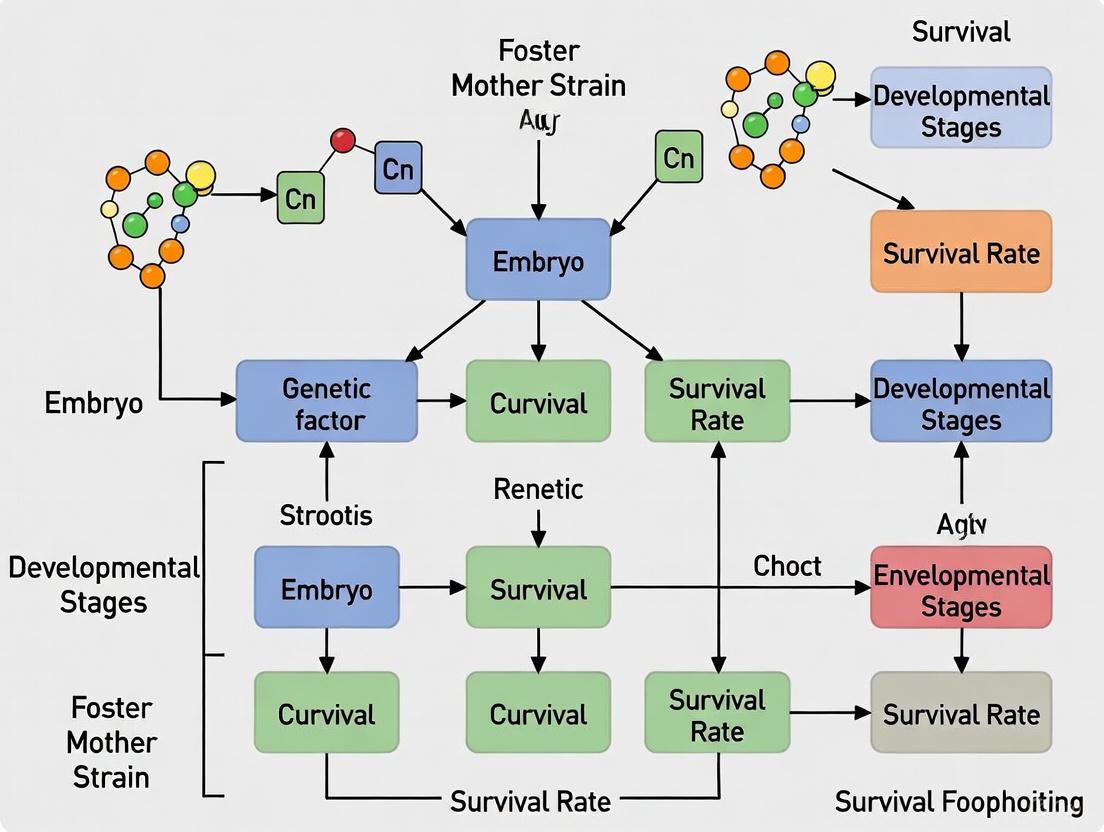
This article synthesizes current research on the profound impact of foster mother genetic strain on the success of mouse embryo transfer and pup survival.
Optimizing Embryo Survival: The Critical Role of Foster Mother Strain Selection in Mouse Reproductive Technologies
Abstract
This article synthesizes current research on the profound impact of foster mother genetic strain on the success of mouse embryo transfer and pup survival. Tailored for researchers, scientists, and drug development professionals, it explores the foundational biological principles of maternal care, provides methodological guidance for strain selection, offers troubleshooting strategies for common challenges, and presents comparative data on the performance of common inbred and outbred strains. By integrating evidence from recent studies, this review serves as a comprehensive guide for optimizing reproductive efficiency in genetically engineered mouse production, germ-free mouse derivation, and preclinical modeling.
The Biological Basis: How Foster Mother Genetics Shape the Postnatal Environment
Defining the Foster Mother's Role in Rodent Reproductive Science
In mouse model generation, the role of the foster mother is a critical determinant of experimental success. While the genetic contribution comes entirely from the donor embryo, the foster mother provides the in vivo environment necessary for embryonic development, birth, and postnatal care. The choice of foster mother strain significantly impacts implantation rates, litter viability, and weaning success, making it a crucial variable in reproductive research and genome editing workflows. This technical guide examines the genetic considerations, experimental protocols, and practical recommendations for optimizing foster mother selection to enhance embryo survival and pup development in rodent reproductive science.
The Biological Role of Foster Mothers
Foster mothers, or recipient females, are pseudopregnant mice that receive manipulated or transferred embryos, allowing them to develop to term. They contribute no genetic material to the offspring but provide the complete gestational and postnatal environment. Their role encompasses several critical physiological functions:
- Uterine Receptivity: Providing a hormonally-primed endometrium capable of supporting embryo implantation and placental development.
- Gestational Support: Maintaining pregnancy through hormonal regulation and nutrient provision to developing fetuses.
- Parturition and Postnatal Care: Delivering live young and exhibiting appropriate maternal behaviors including nursing, grooming, and pup retrieval.
The "sterile womb hypothesis" underpins the use of cesarean derivation for generating germ-free (GF) mice, which remains the gold standard method. This theory posits that the placental epithelium acts as a barrier protecting the fetus from microbial exposure, supporting the consensus that term fetuses develop in a sterile intrauterine environment [1]. Foster mothers are essential for rearing these GF pups after cesarean delivery.
Critical Strain Selection Criteria
Genetic Background and Reproductive Fitness
The genetic background of the foster mother significantly influences reproductive outcomes. Selection priorities should emphasize reproductive fitness over genetic compatibility with the embryos, as the foster mother contributes no genomic material to the offspring [2].
Recommended strains fall into two categories:
- F1 Hybrids: Crosses between two standard inbred strains, such as (B6 × CBA), offer hybrid vigor with improved reproductive performance and maternal characteristics [2].
- Outbred Strains: Commercially available outbred strains like CD-1 or Swiss Webster demonstrate robust mothering abilities and are commonly used for their reproductive reliability [3].
Strain-Specific Maternal Performance
Recent research has quantified significant strain-dependent variation in maternal capabilities, particularly in germ-free (GF) settings. These differences in nursing efficiency and pup survival highlight the importance of evidence-based strain selection.
Table 1: Strain Comparison of Maternal Performance in Germ-Free Settings
| Strain | Genetic Background | Weaning Success Rate | Maternal Characteristics |
|---|---|---|---|
| BALB/c | Inbred | Superior | Exhibits superior nursing capabilities and weaning success; milk contributes significantly to pup weight gain [1] |
| NSG | Inbred | Superior | Demonstrates excellent nursing and weaning performance as GF foster mother [1] |
| KM | Outbred | Moderate | Used in GF mouse production; preference for interacting with different strains may influence maternal behavior [1] [4] |
| C57BL/6J | Inbred | Lowest | Poor weaning success as GF foster mother, contrasting with better performance under SPF conditions [1] |
Coat Color Considerations
When using vasectomized males to induce pseudopregnancy, a coat color difference between the foster mother and expected pups provides visual confirmation of successful embryo transfer. This allows researchers to distinguish naturally-born pups (from potential vasectomy failure) from transferred offspring [2].
- Recommended Approach: Use albino foster mothers (e.g., CD-1) when embryos are derived from pigmented strains [2].
- Alternative: When coat color distinction isn't feasible, ensure reliable vasectomy procedures and maintain capacity for genetic verification if needed.
Experimental Protocols and Workflows
Foster Mother Preparation
Successful embryo transfer requires careful preparation of recipient females to ensure optimal reproductive receptivity.
Induction of Pseudopregnancy
- Mate sexually mature females (8 weeks to 6 months) with vasectomized males [2].
- Check for vaginal plugs each morning; females with plugs are considered at day 0.5 of pseudopregnancy [1] [3].
- Unlike primates, mice require sexual stimulation to create a uterine environment receptive to implantation, with accompanying hormonal changes that assume pregnancy will ensue [2].
Optimal Transfer Timing
- Embryos are typically transferred to the oviduct or uterus of pseudopregnant females at developmental stages matching the recipient's reproductive status [3].
- The synchronized timing between embryo development and the recipient's pseudopregnant state is critical for implantation success.
Embryo Transfer Techniques
Table 2: Embryo Transfer Methodologies
| Technique | Procedure | Application |
|---|---|---|
| Oviductal Transfer | Surgical placement of embryos into the infundibulum [3] | Suitable for early-stage embryos (zygotes to morulae) |
| Uterine Transfer | Surgical placement of embryos into the uterine horn [5] | Appropriate for later-stage embryos (blastocysts) |
| Cesarean Derivation | Surgical delivery of near-term pups from donor mothers, transfer to GF foster mothers [1] | Production of germ-free mice; requires optimized techniques like FRT-CS |
Workflow Visualization
The following diagram illustrates the complete foster mother preparation and embryo transfer workflow:
Strain Selection Decision Framework
The following logic diagram outlines the evidence-based decision process for selecting optimal foster mother strains:
Essential Research Reagents and Materials
Table 3: Research Reagent Solutions for Foster Mother Protocols
| Reagent/Material | Function | Application Notes |
|---|---|---|
| Vasectomized Males | Induction of pseudopregnancy in females | Use proven fertile males pre-screened for mating performance; allow 2-3 days rest between mating [2] |
| Hormonal Reagents | Superovulation of embryo donors | eCG & hCG combinations; inhibin antiserum protocols can enhance yield [3] |
| Anesthetic Agents | Surgical procedures | Isoflurane (typically 5% for induction, 1.5-2% for maintenance) used for embryo transfer surgeries [6] |
| Disinfectants | Sterility maintenance | Chlorine dioxide (Clidox-S) at 1:3:1 dilution for germ-free procedures [1] |
| Surgical Instruments | Embryo transfer and cesarean section | Autoclaved microsurgical tools for aseptic techniques [1] |
| Sterile Isolators | Germ-free housing | Polyvinyl chloride (PVC) isolators with controlled environment for GF colonies [1] |
Impact on Research Outcomes
Quantitative Success Metrics
The choice of foster mother strain directly impacts key performance indicators in reproductive research:
- Embryo Survival Rates: Outbred CD-1 foster mothers demonstrated 40% birth rates relative to transferred microinjected embryos, compared to 53% for (C57Bl/6 × CBA) F1 hybrids in genome editing research [3].
- Weaning Efficiency: In germ-free mouse production, BALB/c and NSG foster mothers showed superior weaning success compared to C57BL/6J, which had the lowest weaning rate despite adequate maternal care in SPF conditions [1].
- Litter Viability: Cross-fostering studies indicate that nurturing environment significantly impacts offspring development, with implications for research reproducibility [4].
Troubleshooting Common Challenges
Poor Implantation Rates
- Verify synchronization between embryo developmental stage and recipient pseudopregnancy timeline.
- Confirm proper surgical technique for embryo placement.
- Ensure vasectomized males are properly sterilized through trial matings.
Pup Loss Post-Birth
- Select strains with documented strong maternal instincts (BALB/c, NSG for GF settings).
- Provide adequate nesting materials and minimize environmental disturbances.
- Monitor foster mothers for appropriate nursing behaviors.
Germ-Free Colony Contamination
- Implement optimized cesarean techniques that preserve the female reproductive tract (FRT-CS) to improve fetal survival while maintaining sterility [1].
- Use appropriate disinfectants (Clidox-S) and sterile isolator protocols.
The selection and preparation of foster mothers represents a critical methodological component in rodent reproductive science that directly impacts experimental outcomes and reproducibility. Evidence-based strain selection, particularly the superior performance of BALB/c and NSG strains in germ-free settings, provides actionable guidance for researchers. The integration of optimized protocols—from pseudopregnancy induction through postnatal care—ensures maximum viability of genetically engineered and experimentally manipulated embryos.
Future research directions should focus on further elucidating the genetic and physiological basis of strain-specific maternal behaviors, particularly in specialized applications such as germ-free research. Additionally, standardization of foster mother protocols across research institutions would enhance reproducibility in transgenic animal production and reproductive studies. As genome editing technologies continue to advance, the role of the foster mother remains indispensable for translating embryonic manipulations into viable animal models for biomedical research.
Within the field of laboratory mouse research, the role of the foster mother is a critical, yet often variable, factor in the success of experiments ranging from germ-free mouse production to the maintenance of valuable genetic lines. The maternal behavior of a mouse, encompassing activities from pup retrieval to nursing, is not a universal constant but is profoundly influenced by its genetic background. Framed within broader research on the role of foster mother strain in mouse embryo survival, this whitepaper synthesizes recent findings to serve as a technical guide for researchers and scientists. We will explore the quantifiable differences in maternal care across common inbred and outbred strains, detail the experimental protocols used to uncover these differences, and provide a toolkit for applying this knowledge in a laboratory setting.
Strain Comparison: Quantitative Data on Maternal Care
The choice of foster mother strain can significantly impact pup survival and weaning rates in experimental settings. A 2025 study systematically evaluated the maternal care capabilities of three inbred strains (C57BL/6J, BALB/c, NSG) and one outbred strain (KM) as germ-free (GF) foster mothers [1]. The results demonstrated clear strain-specific advantages and challenges.
Table 1: Strain-Specific Weaning Success and Maternal Care Efficiency
| Strain | Strain Type | Weaning Success | Key Maternal Characteristics |
|---|---|---|---|
| BALB/c | Inbred | Superior | Exhibits superior nursing and weaning success; milk contributes significantly to pup weight gain. |
| NSG (NOD/SCID Il2rg–/–) | Inbred | Superior | Exhibits superior nursing and weaning success. |
| KM (Kunming) | Outbred | Moderate | -- |
| C57BL/6J | Inbred | Lowest | Lowest weaning rate among strains tested, contrasting with findings on maternal care in SPF C57BL/6J foster mothers. |
It is crucial to note that these findings for GF mice can contrast with data from Specific Pathogen-Free (SPF) environments. For instance, while C57BL/6J performed poorly as a GF foster, previous research on SPF inbred mice has indicated that C57BL/6J mothers can exhibit more active maternal behaviors than BALB/c mothers [1]. This highlights that the optimal strain selection is dependent on the specific health status and experimental conditions.
Neurobiology and Hormonal Regulation of Maternal Behavior
The strain-specific behaviors outlined above are underpinned by complex neurobiological and hormonal systems. Parenting behavior represents a fundamental state transition, requiring a comprehensive reorganization of an animal's priorities and physiology [7]. This transition is facilitated by combinatorial hormone action on specific cell types that are integrated throughout brain-wide neuronal circuits.
In rodents, the motivation to care for pups is a key component of the maternal state. This can be measured experimentally; for example, mother rats will learn to lever-press for pup delivery, a behavior not seen in virgin females, indicating that pups become a potent reinforcing stimulus [7]. This motivational state is regulated by interconnected brain circuits, particularly in the hypothalamus. Importantly, maternal behavior emerges from a combination of intrinsic, or "hard-wired," mechanisms and learned information, which can be shaped by experience and environmental factors [7].
Diagram 1: Key factors influencing strain-specific maternal behavior
Experimental Protocols for Assessing Maternal Behavior
Protocol 1: Cesarean Derivation and Foster Mother Assessment
A key protocol for evaluating foster mother efficacy involves cesarean derivation of pups and cross-fostering. The following optimized method, termed female reproductive tract-preserved C-section (FRT-CS), was used to generate the data in Section 2 [1].
- Objective: To obtain germ-free pups and assess the nursing capability of different GF foster mother strains.
- Donor Mice: Use timed-pregnant SPF mice (e.g., C57BL/6 or BALB/c). Gestation day 0.5 (G0.5) is confirmed by the presence of a vaginal plug after natural mating.
- Cesarean Section: Euthanize the donor female at term. The FRT-CS technique involves selectively clamping only the cervix base, which preserves the entire reproductive tract (ovary, uterine horn, uterine junction, and cervix), in contrast to traditional methods that clamp both the cervix and the top of the uterine horn [1].
- Pup Processing: The intact uterus is disinfected with Clidox-S and transferred to a sterile isolator. The uterine sac is removed, and the amniotic membrane is incised to expose the pup. The umbilical cord is cut, and amniotic fluid is cleared to stimulate breathing. The entire procedure must be completed within 5 minutes to ensure pup viability and sterility [1].
- Cross-Fostering: The derived pups are immediately introduced to a lactating GF foster mother. The study used 4-month-old foster mothers (BC, KM, NSG, C57) that had previously given birth once [1].
- Data Collection: Monitor and record pup survival and successful weaning rates across the different foster strains.
Protocol 2: Utilizing In Vitro Fertilization (IVF) for Timed Pregnancies
A significant challenge in cesarean derivation is the variability in natural mating times. Integrating IVF can provide precise control over the timing of donor pregnancies [1].
- Objective: To achieve precise control over the delivery date of donor mice for C-section.
- IVF Procedure: Harvest oocytes from superovulated female mice and fertilize them in vitro with sperm in HTF medium. For cleavage-stage embryo transfer, use recipients like CD-1 females [1].
- Timing: The implantation of two-cell stage embryos is designated as embryonic day 0.5 (E0.5). This allows for the precise prediction of the delivery date.
- C-section: IVF-derived donor mothers undergo pre-labor FRT-CS on the predicted delivery date. This method enhances experimental reproducibility by eliminating the uncertainty of natural birth timing [1].
Diagram 2: Experimental workflow for foster strain assessment
The Scientist's Toolkit: Essential Reagents and Materials
The following table details key reagents and materials essential for conducting experiments in germ-free mouse production and maternal behavior assessment, as derived from the cited protocols [1].
Table 2: Research Reagent Solutions for Germ-Free Mouse Production
| Item | Specification / Example | Function in Protocol |
|---|---|---|
| Mouse Strains | C57BL/6J, BALB/c, NSG, KM, CD-1 | Donor embryos, foster mothers; strain selection is critical for success. |
| Disinfectant | Clidox-S (1:3:1 dilution) | Sterilizing the uterine sac during transfer into the isolator. |
| Culture Media | HTF Medium, KSOM Medium | For in vitro fertilization and subsequent embryo culture. |
| Hormones | HyperOva, human chorionic gonadotropin (hCG) | To induce superovulation in donor females for IVF. |
| Housing Equipment | Polyvinyl Chloride (PVC) Isolators | Maintaining a germ-free environment for foster mothers and pups. |
| Cryopreservation | DMSO, DAP213 Solution | For freezing one-cell stage embryos for long-term storage. |
The evidence clearly demonstrates that foster mother strain is a decisive variable in mouse embryo and pup survival. The quantification of strain performance, such as the superior weaning success of BALB/c and NSG strains in a germ-free context, provides a actionable data for researchers to optimize their experimental designs. The interplay between genetic background, neurobiology, and environment dictates complex maternal behaviors like pup retrieval and nursing. Moving forward, the integration of refined techniques like FRT-CS and IVF with a deliberate selection of foster strain will enhance reproducibility and efficiency in sensitive reproductive technologies, thereby supporting robust advancements in drug development and biomedical research.
The maternal environment serves as a critical interface between external conditions and fetal development, exerting profound influences on offspring phenotype through epigenetic programming. This programming involves molecular mechanisms that alter gene expression without changing the underlying DNA sequence, including DNA methylation, histone modifications, and non-coding RNAs. Within the context of foster mother strain research in mouse models, maternal care transcends genetic inheritance to encompass a powerful environmental factor that can dynamically shape the developmental trajectory of offspring. Evidence from cross-fostering studies demonstrates that the fostering mother's biological and behavioral characteristics can induce lasting changes in the offspring's neurodevelopment, physiology, and behavior through epigenetic modifications [8] [9]. These findings highlight the remarkable plasticity of the developing organism in response to maternal signals and provide crucial insights into how maternal strain-specific effects might influence embryo survival and long-term health outcomes.
The concept of maternal programming posits that environmental exposures during critical developmental windows can permanently organize physiological systems, with consequences that may persist throughout the lifespan and even across generations. The foster mother strain represents a unique variable in this equation, contributing not only genetic factors but also a distinct uterine environment, placental function, and postnatal care repertoire. Research has shown that even in genetically diverse offspring, the maternal strain provides a specific epigenetic landscape that can modify the expression of the offspring's genetic potential [10]. This review synthesizes evidence from experimental mouse models examining how maternal care, particularly in cross-fostering paradigms, induces enduring epigenetic changes in offspring, with implications for understanding the complex interplay between nature and nurture in developmental origins of health and disease.
Experimental Approaches for Studying Maternal Effects
Cross-Fostering as a Powerful Experimental Tool
Cross-fostering represents a foundational experimental approach for disentangling the effects of prenatal and postnatal maternal environment from genetic influences in rodent models. This methodology involves transferring newborn pups from their biological mother to a genetically unrelated foster mother shortly after birth, typically within 24-48 hours [11] [9]. The experimental design creates four distinct groups: (1) pups born to and reared by their biological mother (non-cross-fostered controls), (2) pups born to one mother but reared by another (cross-fostered), (3) strain-matched fostering, and (4) cross-strain fostering. This design permits researchers to systematically investigate how the postnatal maternal environment, independent of genetic relatedness, contributes to offspring development and epigenetic programming.
The technical execution of cross-fostering requires precise timing and careful handling to maximize pup survival and minimize stress. Key steps include: checking for newborn litters at least twice daily with particular attention to light-dark cycle transitions when births frequently occur; gently removing the biological mother from the home cage before transferring pups; rubbing pups in bedding from the foster mother's cage to transfer olfactory cues; and ensuring that fostered pups are similar in age and size to any existing biological pups in the foster mother's litter [11]. Successful cross-fostering depends on multiple factors, including the maternal responsiveness of the foster dam, environmental stability, and pup viability. In studies examining foster mother strain effects, researchers typically utilize inbred strains with well-characterized behavioral and physiological profiles to identify strain-specific contributions to offspring outcomes.
Molecular Assessment of Epigenetic Modifications
The investigation of epigenetic modifications in cross-fostering studies relies on sophisticated molecular techniques that can detect changes in DNA methylation, histone modifications, and gene expression patterns. Bisulfite sequencing stands as the gold standard for analyzing DNA methylation patterns, wherein bisulfite treatment converts unmethylated cytosines to uracils while methylated cytosines remain unchanged, allowing for precise mapping of methylation status at single-base resolution [11]. This approach has been successfully employed to examine methylation changes in imprinted genes in brain tissues of cross-fostered mice, revealing strain-specific and maternal care-dependent effects.
Additional methodologies include chromatin immunoprecipitation (ChIP) for assessing histone modifications, RNA sequencing for transcriptome profiling, and quantitative PCR for validating expression changes in candidate genes. For example, in studies of advanced maternal age effects, researchers have utilized microarray analysis followed by qPCR validation to identify differentially expressed genes in fetal brain tissues [10]. Tissue collection timing represents another critical consideration, with embryonic timepoints capturing prenatal effects and postnatal timepoints reflecting the cumulative impact of maternal care. The combination of cross-fostering designs with these molecular techniques provides a powerful framework for elucidating how maternal strain influences epigenetic programming in offspring.
Table 1: Key Experimental Methodologies in Maternal Epigenetic Programming Research
| Methodology | Key Applications | Technical Considerations |
|---|---|---|
| Cross-fostering | Disentangling genetic vs. environmental maternal effects; Assessing foster mother strain contributions | Critical timing window (24-48hrs postpartum); Pup handling techniques; Olfactory cue transfer |
| Bisulfite sequencing | DNA methylation analysis at single-base resolution; Imprinted gene analysis | Coverage depth requirements; Bioinformatics analysis for differential methylation |
| Microarray/RNA-seq | Transcriptome profiling; Identifying differentially expressed genes | Tissue-specific considerations; Multiple testing correction |
| Chromatin Immunoprecipitation (ChIP) | Histone modification profiling; Transcription factor binding sites | Antibody specificity; Chromatin fragmentation optimization |
| Quantitative PCR | Candidate gene validation; High-sensitivity expression analysis | Normalization strategy; Primer validation requirements |
Epigenetic Mechanisms of Maternal Influence
DNA Methylation and Imprinted Genes
DNA methylation represents one of the most extensively studied epigenetic mechanisms in maternal programming research. This process involves the addition of a methyl group to cytosine bases, typically within CpG dinucleotides, leading to transcriptional repression when occurring in gene promoter regions. Cross-fostering studies in mice have demonstrated that maternal care can significantly alter DNA methylation patterns in offspring, particularly at imprinted genes that exhibit parent-of-origin-specific expression [11] [9]. For example, research has identified strain-specific methylation patterns in paternally imprinted genes such as Rasgrf1 and Zdbf2 in the brains of mice selectively bred for increased voluntary wheel-running, with fostering between strains modifying methylation profiles for additional imprinted genes including Mest, Peg3, Igf2, Snrpn, and Impact [11].
The developmental timing of maternal influence appears crucial to methylation outcomes. Studies have shown that maternal factors can establish, maintain, or dynamically alter methylation patterns during critical windows of epigenetic plasticity in early development. The persistence of these changes varies, with some methylation patterns remaining stable into adulthood while others may be reversible or transient. In the context of foster mother strain effects, these findings suggest that the fostering environment can potentially override or modify genetically determined epigenetic patterns, with implications for embryo survival and developmental trajectories. The functional consequences of these methylation changes often involve alterations to key physiological systems, including neurodevelopment, stress responsiveness, and metabolic regulation, ultimately contributing to phenotypic variation in offspring [10] [11].
Chromatin Remodeling and Non-Coding RNAs
Beyond DNA methylation, maternal care influences additional epigenetic mechanisms including chromatin remodeling and regulation by non-coding RNAs. Chromatin remodeling involves biochemical modifications to histone proteins that alter DNA accessibility and gene expression potential. Specific histone modifications, including acetylation, methylation, and phosphorylation, create a "histone code" that can be influenced by maternal behavior and subsequently affect offspring development [12]. While technically challenging to assess in small tissue samples, advances in low-input ChIP methodologies have begun to illuminate how maternal strain and care quality influence the offspring's chromatin landscape.
Non-coding RNAs, particularly microRNAs (miRNAs) and small interfering RNAs (siRNAs), represent another mechanism through which maternal effects can be mediated. These small RNA molecules can regulate gene expression post-transcriptionally by binding to target mRNAs and mediating their degradation or translational repression. Research in model organisms has demonstrated that siRNAs can mediate transgenerational epigenetic inheritance, with studies in Caenorhabditis elegans showing that siRNAs are involved in neural gene expression and chemotaxis behavior across three generations [12]. In mammals, evidence suggests that sperm RNAs may carry paternal environmental information to offspring, and similar mechanisms may operate in the maternal line. The foster mother strain may contribute distinct profiles of non-coding RNAs through milk or other maternal secretions, potentially influencing the epigenetic state of fostered offspring [13].
Key Signaling Pathways and Biological Systems
Neurodevelopmental and Behavioral Pathways
Maternal care exerts profound effects on neurodevelopmental pathways in offspring through epigenetic mechanisms. Research using cross-strain fostering approaches has demonstrated that the foster mother's strain can influence the development of the offspring's circadian system, including amplitudes of Bmal1 clock gene expression in the suprachiasmatic nucleus (SCN) - the central pacemaker of the brain [8]. These effects extend to clock-driven activity/rest rhythms and their entrainment to external light/dark cycles. Better maternal care, as provided by Wistar rat mothers to spontaneously hypertensive rat (SHR) pups, facilitated the development of robust circadian rhythms, while worse maternal care impaired entrainment of central clock parameters during early developmental stages [8].
The stress response system represents another key pathway shaped by maternal care through epigenetic mechanisms. Studies have focused on genes regulating hypothalamic-pituitary-adrenal (HPA) axis function, including the glucocorticoid receptor (NR3C1) and FK506 binding protein 5 (FKBP5) [14]. Maternal stress during pregnancy has been associated with altered DNA methylation in these genes in fetal tissues, with timing-specific effects - early gestation stress associates with different epigenetic signatures than later gestation stress [14]. These epigenetic modifications program offspring stress responsiveness, potentially predisposing to anxiety-like behaviors or stress-related pathologies in adulthood. Within foster mother strain research, these findings suggest that the genetic background of the foster mother may program fundamental neurobehavioral systems in offspring through epigenetic mechanisms.
Metabolic and Physiological Programming
The foster mother strain significantly influences metabolic programming and physiological systems in offspring through epigenetic mechanisms. Cross-strain fostering studies have demonstrated that maternal care quality can affect peripheral clocks in tissues such as the liver and colon, with consequences for metabolic function [8]. For instance, the circadian phenotype of a Wistar rat foster mother remedied dampened amplitudes of the colonic clock in SHR pups and improved their cardiovascular functions, including heart rate parameters [8]. These findings highlight how maternal care can counter genetic predispositions to metabolic and cardiovascular disorders through epigenetic programming of peripheral oscillators.
The immune system also appears susceptible to maternal epigenetic programming, though this area has received less attention in cross-fostering research. Existing evidence suggests that maternal stress and care quality can influence immune function in offspring through mechanisms potentially involving DNA methylation of immune-related genes. Additionally, growth and metabolic pathways are regulated by imprinted genes that are particularly sensitive to maternal effects. Genes such as insulin-like growth factor 2 (Igf2) and mesoderm-specific transcript (Mest) have been shown to exhibit altered methylation patterns in response to cross-fostering [11] [9]. Given that these genes play crucial roles in fetal growth, energy balance, and resource allocation, their epigenetic regulation by maternal environment has important implications for understanding how foster mother strain might influence embryo survival and developmental trajectories.
Quantitative Data from Key Studies
Table 2: Maternal Care Effects on Offspring Epigenetics and Phenotype in Cross-Fostering Studies
| Study Model | Maternal Intervention | Key Epigenetic Findings | Functional Outcomes |
|---|---|---|---|
| BTBR vs B6 mouse strains [10] | Advanced maternal age with cross-fostering to control postnatal environment | Altered fetal brain gene expression (Gabra5, Gabrb1, Gabrb3); Placental gene expression changes | Strain-dependent effects on offspring sociability, learning skills, perseverative behaviors |
| Selectively bred high-runner mice [11] | Cross-fostering between HR and control lines | Altered DNA methylation of imprinted genes (Rasgrf1, Zdbf2, Mest, Peg3, Igf2); Maternal upbringing and sex-dependent effects | Potential contribution to increased wheel-running behavior |
| SHR vs Wistar rats [8] | Cross-strain fostering to alter maternal care quality | Improved circadian clock gene (Bmal1) amplitudes in SCN; Enhanced peripheral clock rhythms in liver and colon | Improved cardiovascular functions; Better entrainment to light/dark cycles |
| LG/J x SM/J mouse intercross [9] | Half-litter cross-fostering with QTL mapping | 10 QTLs showing interaction with fostering; 4 with imprinting x fostering interactions | Body weight and growth effects dependent on maternal environment |
Research Reagent Solutions
Table 3: Essential Research Reagents for Maternal Epigenetics Studies
| Reagent/Category | Specific Examples | Research Applications |
|---|---|---|
| Mouse Strains | BTBR T+ Itpr3tf/J, C57BL/6J, LG/J, SM/J, SHR, Wistar | Genetic models for cross-fostering; Strain-specific maternal effects |
| DNA Methylation Analysis | Bisulfite Conversion Kits; Agilent SurePrint G3 Microarrays; Methylation-specific PCR primers | Genome-wide methylation profiling; Targeted analysis of imprinted genes |
| RNA Analysis | Universal RNA Purification Kit; Low Input QuickAmp Labeling Kit; LightCycler 96 qPCR System | Transcriptomic analysis; Gene expression validation |
| Histone Modification | Histone Modification-specific Antibodies; ChIP-seq Kits | Chromatin state assessment; Epigenetic mechanism elucidation |
| Behavioral Assessment | Wheel-running monitoring systems; Social interaction tests; Learning and memory assays | Functional validation of epigenetic changes |
The evidence from cross-fostering studies unequivocally demonstrates that maternal care, independent of genetic relatedness, induces lasting epigenetic changes in offspring that influence neurodevelopmental, metabolic, and physiological outcomes. The foster mother strain contributes significantly to this epigenetic programming through multiple mechanisms, including DNA methylation of imprinted genes, chromatin remodeling, and potentially through non-coding RNA species. These findings have profound implications for understanding how maternal environment shapes developmental trajectories and may influence embryo survival in both research and clinical contexts.
Future research directions should include more comprehensive assessments of tissue-specific epigenetic changes, examination of sex-specific effects in response to maternal programming, and exploration of potential windows for reversal of detrimental epigenetic modifications. The integration of multi-omics approaches will further elucidate the complex networks connecting maternal care to offspring outcomes. From a translational perspective, this research underscores the importance of quality maternal care and environmental stability during critical developmental periods, with potential implications for optimizing foster care practices and early life interventions to promote long-term health outcomes.
The selection of dam strains is a critical determinant in the success of rodent-based biomedical research, particularly in studies involving embryo transfer, germ-free derivation, and behavioral phenotyping. This whitepaper provides a comprehensive technical guide to the fundamental classifications of laboratory mouse dams—inbred, outbred, and F1 hybrids—framed within the context of foster mother strain selection for optimizing embryo survival and postnatal development. Synthesizing empirical data from contemporary studies, we detail the distinct phenotypic characteristics, maternal behavioral profiles, and experimental performances of commonly used strains. The document further presents standardized protocols for cesarean derivation and embryo transfer, alongside a curated toolkit of essential research reagents. Aimed at researchers, scientists, and drug development professionals, this guide serves as a strategic resource for enhancing experimental reproducibility and efficiency by enabling evidence-based selection of dam strains.
In laboratory mouse research, the genetic background of the animals used is a fundamental variable that can profoundly influence experimental outcomes. This is especially true for dams used in reproductive and developmental studies, where maternal genetics can affect everything from embryo implantation to postnatal care of offspring. The three primary classifications—inbred, outbred, and F1 hybrid—each offer a unique set of advantages and challenges for the researcher.
- Inbred strains are generated by repeated sibling mating for 20 or more generations, resulting in individuals that are essentially genetically identical to one another (homozygous at all loci). This genetic uniformity minimizes experimental variability and makes strains like C57BL/6J and BALB/c mainstays in controlled studies [15]. However, this homozygosity can also lead to reduced fitness and strain-specific susceptibilities.
- Outbred strains are maintained as closed populations with a set of rules to minimize inbreeding, leading to high levels of heterozygosity and genetic diversity among individuals. Strains like CD-1 and Kunming (KM) are valued for their robust health, high fecundity, and frequent use as foster mothers [1] [3]. Their genetic heterogeneity, however, can introduce greater variance into experimental results.
- F1 Hybrids are the first-generation offspring from a cross between two different inbred strains. They combine the genetic uniformity of inbred strains with a phenomenon known as "hybrid vigor" (heterosis), which often manifests as improved health, larger litters, and enhanced resilience to experimental manipulation. A common example is the (C57BL/6 × CBA) F1 hybrid [3].
Within the context of foster motherhood, the dam's strain shapes the prenatal uterine environment and postnatal behavioral repertoire, both of which are critical for embryo survival and the normative development of offspring.
Comparative Performance of Foster Mother Strains
The efficiency of generating germ-free mice or producing genome-edited offspring is highly dependent on the foster mother's ability to provide competent maternal care and a supportive physiological environment. Performance varies significantly across strain classifications, necessitating careful selection for specific experimental goals.
Table 1: Comparison of Foster Mother Strain Performance in Germ-Free Mouse Production
| Strain | Classification | Weaning Success Rate | Key Maternal Behavioral Traits |
|---|---|---|---|
| BALB/c | Inbred | Superior | Exhibits superior nursing and weaning success; milk contributes significantly to pup weight gain [1]. |
| NSG | Inbred | Superior | Shows excellent nursing capabilities and weaning success in germ-free conditions [1]. |
| NMRI | Outbred | Good (Literature) | Characterized by good nursing and solid maternal care; commonly maintained as foster colonies in breeding facilities [15]. |
| KM | Outbred | Good | Used as a reliable germ-free foster mother [1]. |
| C57BL/6J | Inbred | Lowest | Lowest weaning rate in germ-free conditions; associated with impaired maternal care and increased offspring aggressiveness in specific settings [1] [15]. |
Table 2: Strain Performance in Genome Editing and Reproductive Workflows
| Strain | Classification | Role | Performance Metrics |
|---|---|---|---|
| (C57BL/6 × CBA) F1 | F1 Hybrid | Zygote Donor | High yield (8.39 zygotes/mouse with standard hormones; 33.20 with enhanced protocol) [3]. |
| Outbred CD-1 | Outbred | Foster Mother | 15.4% embryo survival to birth from microinjected zygotes [3]. |
| (C57BL/6 × CBA) F1 | F1 Hybrid | Foster Mother | 10.7% embryo survival to birth from microinjected zygotes [3]. |
| FVB | Inbred | Zygote Donor | High yield (22.83 zygotes/mouse with enhanced superovulation protocol) [3]. |
The Impact of Strain on Offspring Phenotype
The influence of the foster mother extends beyond survival metrics to the long-term phenotypic and neurobehavioral profile of the offspring. Cross-fostering studies, where pups are raised by a dam of a different strain, have demonstrated this profound effect. For instance, C57BL/6N offspring reared by outbred NMRI foster mothers exhibited significant changes in emotionality and stress-related behaviors compared to those raised by their biological C57BL/6N mothers or C57BL/6N foster mothers [15]. This highlights that the dam's strain is a key environmental variable that can interact with the pup's genetic background to shape adult outcomes—a critical consideration for the interpretation of behavioral and physiological data.
Essential Research Reagent Solutions
The following toolkit compiles critical reagents and resources required for establishing and maintaining effective foster dam colonies and associated reproductive technologies.
Table 3: Research Reagent Solutions for Mouse Reproductive Technologies
| Reagent / Resource | Function | Application Notes |
|---|---|---|
| Hormonal Agents (eCG & hCG) | To induce superovulation in zygote donors. | Standard protocol; efficiency is strain-dependent [3]. |
| Inhibin Antiserum + eCG (e.g., CARD HyperOva) | Enhanced superovulation protocol. | Significantly increases zygote yield in F1 and FVB strains [3]. |
| Clidox-S | Chlorine dioxide disinfectant. | Used for sterilizing tissues and disinfecting the germ-free isolator environment [1]. |
| Vasectomized Males | To induce pseudopregnancy in foster mothers. | Mating with vasectomized males triggers the hormonal state required for embryo implantation [3]. |
| Polyvinyl Chloride (PVC) Isolators | Sterile housing for germ-free mice. | Requires pre-warming with heating pads to prevent pup hypothermia during C-section recovery [1]. |
| Mouse Assisted Reproductive Technology (MART) Core | Professional service provider. | Offers specialized services like IVF, embryo transfer, and cesarean rederivation [16]. |
Detailed Experimental Protocols
Optimized Sterile Cesarean Section for Germ-Free Mouse Derivation
The cesarean section is the gold standard for deriving germ-free mice. An optimized technique can significantly improve fetal survival rates [1].
- Donor Preparation: Use timed-pregnant SPF donor females. Delivery timing can be controlled via natural mating (NM) or, more precisely, by using donors derived from in vitro fertilization (IVF).
- Euthanasia: Euthanize the donor female via cervical dislocation on the predicted delivery date.
- Surgical Technique - FRT-CS: Perform the female reproductive tract-preserving C-section (FRT-CS). This method involves clamping only the cervix base, preserving the entire reproductive tract (ovary, uterine horn, uterine junction, and cervix), which has been shown to significantly improve fetal survival rates compared to the traditional technique [1].
- Disinfection and Transfer: Rapidly remove the uterine sac and disinfect it with a chlorine dioxide solution like Clidox-S. Transfer the uterus into a sterile isolator within 5 minutes to maintain sterility and viability.
- Pup Extraction: Inside the isolator, incise the amniotic membrane with surgical scissors to expose the pup. Cut the umbilical cord and use a sterile cotton swab to wipe away amniotic fluid until spontaneous breathing is noted.
Embryo Transfer to Foster Mothers
This protocol is critical for generating genome-edited mice and for the rederivation of strains into clean facilities [3] [17].
- Induce Pseudopregnancy: Mate sexually mature female foster mothers (e.g., CD-1 or F1 hybrids) with vasectomized males. Confirm successful mating by the presence of a vaginal plug, designating this as day 0.5 of pseudopregnancy.
- Zygote Collection: Superovulate zygote donors (e.g., F1 hybrids or FVB) using an appropriate hormonal regimen. Mate them with fertile males and harvest zygotes the following day by dissecting the oviducts.
- Microinjection (if applicable): For genome editing, microinject CRISPR/Cas9 components or other gene-editing constructs into the harvested zygotes.
- Surgical Transfer: On the day of the procedure, anesthetize the pseudopregnant foster mother. Perform a surgical intervention to expose the reproductive tract. Using a fine pipette, transfer the microinjected zygotes into the oviductal infundibulum. The number of embryos transferred can impact litter size and survival.
- Post-operative Care: Return the foster mother to its cage and monitor closely for pregnancy and parturition. The choice of foster strain (e.g., CD-1) can influence the final yield of live pups.
Workflow for Foster Mother-Assisted Research
The following diagram illustrates the logical decision-making process for selecting and utilizing different dam strains in a research project aimed at optimizing offspring survival.
The role of the foster dam is not merely supportive but is an active and determinant factor in experimental outcomes. The choice between an inbred, outbred, or F1 hybrid dam must be a deliberate one, aligned with the specific endpoints of the study.
- For Germ-Free Derivation: Prioritize inbred BALB/c or NSG strains as germ-free foster mothers, as they demonstrate superior weaning success. The C57BL/6J strain should be avoided in this specific role due to its documented poor performance in germ-free nursing [1].
- For Maximizing Zygote Yield: Utilize F1 Hybrid donors like (C57BL/6 × CBA) F1, coupled with enhanced superovulation protocols involving inhibin antiserum, to achieve the highest number of embryos for microinjection [3].
- For General Embryo Transfer and Rederivation: Outbred CD-1 females are a robust and reliable choice for pseudopregnant recipients, offering good pregnancy rates and maternal care for genetically manipulated or transferred embryos [3].
- For Controlling Behavioral Phenotypes: Acknowledge that cross-fostering, particularly between strains (e.g., C57BL/6 to NMRI), induces lasting emotional and stress-physiological changes in offspring. Standardizing the foster dam strain within and between experiments is crucial for reproducible behavioral research [15].
In summary, an evidence-based approach to dam selection, grounded in an understanding of strain-specific characteristics, is indispensable for advancing the rigor and reproducibility of mouse embryo survival research and the broader field of biomedical science.
Strategic Strain Selection: A Practical Guide for Experimental Design
This technical guide examines the critical criteria for selecting optimal foster mother strains in mouse embryo transfer and germ-free (GF) mouse production. Within the broader thesis on the role of the foster mother strain in mouse embryo survival research, we synthesize experimental data to demonstrate that strain-specific characteristics—litter size, maternal instinct, and hardiness—are decisive for postnatal pup survival and experimental reproducibility. While outbred strains often exhibit superior maternal care and resilience, specific inbred and F1 hybrid strains provide unique advantages for specialized applications. This whitepaper provides researchers and drug development professionals with evidence-based selection guidelines and detailed methodologies to enhance efficiency in transgenic and germ-free mouse generation.
In mouse model generation, from transgenic creation to germ-free rederivation, the recipient foster mother provides the sole postnatal environment for developing offspring. Her genetic background directly influences critical reproductive fitness traits. Uterine capacity and embryonic viability are key physiological components that determine a strain's inherent litter size potential [18]. Furthermore, the perinatal environment shaped by maternal care has documented long-term effects on the neurophysiological and behavioral phenotype of offspring [15]. Selecting a foster mother based on pragmatic criteria—litter size potential, robust maternal instinct, and overall hardiness—is not merely a husbandry concern but a critical methodological variable that can significantly impact litter success rates, pup survival, and the consistency of experimental outcomes. This guide details these criteria within the operational context of embryo transfer and germ-free mouse production.
Quantitative Strain Comparison: Litter Size and Weaning Success
Empirical data from reproductive studies provide a foundation for evidence-based strain selection. The tables below summarize key performance metrics related to litter size and weaning success for common laboratory mouse strains.
Table 1: Inherent Litter Size in Select Inbred and F1 Hybrid Strains
| Strain | Type | Average Litter Size (TNB) | Notes |
|---|---|---|---|
| FVB/N | Inbred | 9.5 (up to 13) | Large, prominent pronuclei ideal for transgenic injection [2]. |
| C57BL/6J | Inbred | 6.7 | Common genetic background; poor responder to superovulation [19] [2]. |
| RR/Sgn | Inbred | ~6.7 (NBA) | RR allele associated with reduced litter size and increased stillbirth [19]. |
| B6 x RR F1 | F1 Hybrid | 8.5 (NBA) | Demonstrates hybrid vigor for litter size [19]. |
Table 2: Weaning Success of Germ-Free Foster Mothers (Post Cesarean Section)
| Foster Mother Strain | Type | Weaning Success | Maternal Care Profile |
|---|---|---|---|
| BALB/c | Inbred | Superior | Exhibits superior nursing and weaning success; milk contributes significantly to pup weight gain [1]. |
| NSG (NOD/SCID Il2rg–/–) | Inbred | Superior | Exhibits superior nursing and weaning success as a GF foster mother [1]. |
| KM (Kunming) | Outbred | Good | Good maternal capabilities [1]. |
| C57BL/6J | Inbred | Lowest | Lowest weaning rate in GF environment, contrasting with SPF findings [1]. |
| NMRI | Outbred | Good | Common choice in breeding facilities; characterized by good nursing and solid maternal care [15]. |
| CD-1 | Outbred | Good | Frequently used as pseudopregnant recipient; good reproductive fitness [2] [3]. |
Detailed Selection Criteria
Litter Size and Reproductive Performance
Litter size is a polygenic quantitative trait with low to moderate heritability. Its genetic basis is evidenced by the identification of specific quantitative trait loci (QTL), such as Lsq1 on chromosome 7, which influences litter size in backcross mice [19]. From a physiological standpoint, litter size is determined by a model incorporating ovulation rate, potential embryonic viability, and uterine capacity [18]. In selective breeding experiments, ovulation rate is often the more limiting factor compared to uterine capacity [18].
For embryo transfer, a foster mother's inherent litter size indicates her physiological capacity to support implantation and gestation. However, a critical practice to maximize zygote yield from valuable donor strains is superovulation. The response to superovulation protocols is highly strain-dependent. For instance, C57BL/6J and BALB/cJ are poor responders, while F1 hybrids like (C57Bl/6 × CBA) often show a robust response, especially with modern protocols using inhibin antiserum (e.g., CARD HyperOva) which can yield a median of 33.2 zygotes per donor mouse compared to 8.39 with traditional eCG & hCG hormones [3].
Figure 1: Key factors influencing litter size in foster mother selection.
Maternal Instinct and Behavioral Considerations
Maternal instinct encompasses behaviors such as pup retrieval, nest building, and nursing, which are critical for pup survival. This trait varies significantly between strains and can be dramatically different under Specific Pathogen-Free (SPF) versus Germ-Free (GF) conditions.
- Strain-Specific Behaviors: In SPF environments, C57BL/6J mothers are generally observed to be active and reliable caregivers. However, in a GF isolator environment, their performance can be poor, with one study reporting the lowest weaning rate among the strains tested [1]. Conversely, BALB/c and NSG strains demonstrated superior nursing and weaning success as GF foster mothers [1].
- Impact of Fostering: Interstrain cross-fostering (e.g., C57BL/6 pups raised by NMRI mothers) can induce significant and lasting emotional and behavioral changes in the offspring, including altered anxiety-related and social behaviors [15]. This confirms that the dam's strain and its associated behavioral repertoire are potent environmental modifiers.
Therefore, a strain considered to have a good "maternal instinct" in conventional housing may not perform optimally in the specialized conditions required for GF derivation or other stressful procedures.
General Hardiness and Robustness
Hardiness refers to a strain's overall resilience, disease resistance, and ability to thrive under the minor stresses associated with experimental procedures like surgery and embryo transfer.
- Outbred Strains: Strains such as CD-1, Swiss Webster, and NMRI are widely recommended as foster mothers due to their good reproductive fitness, large litter sizes, and robust nature [2] [3] [15]. Their genetic heterogeneity is thought to contribute to this overall hardiness.
- F1 Hybrid Vigor: F1 hybrids (e.g., B6CBAF1/J) often exhibit hybrid vigor, resulting in improved health, viability, and maternal ability compared to their inbred parents [2]. They represent a strong choice for many embryo transfer procedures.
- Hardiness in Practice: Robust strains are less prone to cannibalize or neglect their litters post-surgery, tolerate longer nursing periods, and generally contribute to higher pup survival rates, making them a reliable and efficient choice for high-throughput projects.
Recommended Strains for Specific Applications
Table 3: Recommended Foster Mother Strains by Application
| Application | Recommended Strains | Rationale |
|---|---|---|
| General Embryo Transfer | CD-1, Swiss Webster, (C57BL/6 × CBA) F1 | Good reproductive fitness, reliable maternal care, and hardiness [2] [3]. |
| Germ-Free (GF) Rederivation | BALB/c, NSG | Superior weaning success demonstrated in GF isolator environments [1]. |
| Transgenic Production (Zygote Donor) | FVB/N | Large pronuclei for easy injection, good survival rates post-injection, and good litter size [2]. |
| High-Yield Zygote Donor (Superovulation) | (C57Bl/6 × CBA) F1, CBA (with optimized protocol) | High response to superovulation protocols, particularly with inhibin antiserum [3]. |
Experimental Protocols for Optimization
Protocol: Assessing Maternal Care in Germ-Free Foster Mothers
This protocol is adapted from a study optimizing germ-free mouse production [1].
- Objective: To evaluate and compare the nursing capabilities of different GF inbred and outbred strains as foster mothers.
- Mouse Model: Utilize GF female foster mothers (e.g., BALB/c, KM, NSG, C57BL/6J) that are 4 months old and have previously given birth once.
- Procedure:
- Perform a sterile Cesarean section on time-mated SPF donor females using the Female Reproductive Tract Preserved (FRT-CS) technique, which improves fetal survival.
- Aseptically disinfect and transfer pups into a GF isolator.
- Gently peel the amniotic membrane, cut the umbilical cord, and stimulate breathing.
- Foster the pups to a pre-mated, lactating GF dam of the test strain within 5 minutes of the C-section.
- Monitor and record the number of pups successfully weaned by each foster strain.
- Key Metrics: The primary outcome is the weaning success rate (number of pups weaned per number of pups transferred). Secondary observations can include nest quality and pup retrieval latency.
Protocol: Optimized Superovulation for Zygote Production
This protocol compares traditional and modern superovulation methods [3].
- Objective: To maximize the yield of fertilized zygotes from donor females for microinjection.
- Mouse Models: Use (C57Bl/6 × CBA) F1 hybrid or FVB/N females as zygote donors.
- Hormonal Regimens:
- Standard Protocol: Intraperitoneal injection of 5 IU eCG (e.g., Follimag) between 10 a.m.-12 p.m., followed by 5 IU hCG (e.g., Chorulon) 48 hours later. Mate immediately after hCG injection.
- Enhanced Protocol (Inhibin Antiserum): Intraperitoneal injection of 100-140 μl of Inhibin Antiserum + eCG (e.g., CARD HyperOva) at 5 p.m., followed by 5 IU hCG 48 hours later at 3 p.m. Mate immediately after hCG injection.
- Zygote Collection: The following morning, check for vaginal plugs to confirm mating. Sacrifice plugged females and isolate zygotes from the oviducts.
- Data Analysis: Compare the median number of zygotes produced per donor mouse and the percentage of mated females between the two protocols. The enhanced protocol using inhibin antiserum has been shown to significantly increase zygote yield [3].
Figure 2: Experimental workflow for superovulation and zygote collection.
The Scientist's Toolkit: Essential Research Reagents
Table 4: Key Reagents for Foster Mother and Embryo Transfer Studies
| Reagent / Solution | Function / Application | Example |
|---|---|---|
| Gonadotropins (eCG & hCG) | Standard hormones for inducing superovulation in donor females. | Follimag (eCG), Chorulon (hCG) [3]. |
| Inhibin Antiserum | Neutralizes inhibin to enhance follicle maturation, significantly increasing superovulated zygote yield. | CARD HyperOva [3]. |
| Clidox-S | A chlorine dioxide disinfectant used for sterilizing tissue samples and surfaces before transfer into germ-free isolators. | N/A [1]. |
| Vasectomized Males | Males rendered sterile for mating with recipient females to induce pseudopregnancy, required for embryo transfer. | Surgically prepared males of a robust strain (e.g., F1 hybrid, CD-1) [2] [3]. |
| Germ-Free Isolator | A sterile polyvinyl chloride (PVC) environment for housing GF mice and performing derivations. | Commercially available from lab equipment suppliers [1]. |
The selection of an optimal foster mother strain is a critical, evidence-based decision that directly impacts the efficiency and success of mouse model generation. Key criteria include:
- Litter Size & Reproductive Performance: Select strains with high inherent litter size or those that respond well to superovulation protocols, with F1 hybrids and outbred strains generally outperforming standard inbred strains.
- Maternal Instinct: Choose strains with documented robust maternal care, recognizing that performance under SPF conditions may not translate to specialized environments like GF isolators. BALB/c and NSG strains show particular promise for GF work.
- General Hardiness: Prioritize robust strains like CD-1 or F1 hybrids for their resilience and reliability in postoperative and nursing contexts.
Integrating these criteria with optimized experimental protocols ensures the highest standards of animal welfare and research reproducibility, ultimately advancing studies in genetics, immunology, and drug development.
The selection of an appropriate mouse strain is a critical determinant of success in reproductive and transgenic research, particularly in studies investigating the role of foster mother strain in mouse embryo survival. Genetic background significantly influences reproductive performance, maternal behavior, and the uterine environment, all of which directly impact embryo development and survival rates. This technical guide provides an in-depth analysis of four strategically important mouse categories: the widely used inbred strains BALB/c and C57BL/6J, the immunodeficient NSG strain, and genetically diverse outbred counterparts such as CD-1 and Swiss Webster. Understanding their distinct phenotypic characteristics, reproductive parameters, and experimental strengths is essential for designing robust, reproducible studies in embryo survival research.
Strain Profiles and Characteristics
Inbred Strains: BALB/c and C57BL/6J
Inbred strains are defined as those derived from 20 or more consecutive generations of brother-sister matings, resulting in individuals that are genetically identical to one another [20]. This genetic uniformity minimizes experimental variability and provides a consistent background for phenotypic analysis.
Table 1: Comparative Profile of Key Inbred Strains
| Characteristic | BALB/c | C57BL/6J |
|---|---|---|
| Coat Color | Albino [21] | Black [21] |
| Temperament | Generally docile [22] | More aggressive [22] |
| Reproductive Performance | Moderate litter size [2] | Moderate litter size [2] |
| Response to Superovulation | Poor responder (<15 eggs) [2] | Good responder (40-60 eggs) [2] |
| Embryo Transfer Utility | Limited data as foster mother | Recommended as blastocyst recipient for ES cells [21] |
| Key Research Applications | Immunobiology, cancer research [22] | Neuroscience, genetics, as background for mutant models [22] [21] |
| Circadian Rhythm Adaptability | Rapid adaptation to phase shifts [23] | Slower adaptation to phase shifts [23] |
Outbred Counterparts: CD-1, Swiss Webster, and ICR
Outbred strains are maintained as closed, randomly mating populations to maintain genetic heterogeneity [20]. Commonly used outbred strains include CD-1, ICR, and Swiss Webster [20] [21].
Table 2: Profile of Common Outbred Strains
| Characteristic | Outbred Strains (CD-1, Swiss Webster, ICR) |
|---|---|
| Genetic Status | Genetically heterogeneous [20] |
| Coat Color | Typically albino [21] |
| Reproductive Performance | High reproductive performance, larger litters, lower neonatal mortality [20] |
| Health & Longevity | Longer lifespan, higher disease resistance, hybrid vigor [20] |
| Response to Superovulation | Generally good responders [2] |
| Primary Research Applications | General toxicology, reproductive studies, foster mothers for transgenic experiments [20] [2] |
| Cost Considerations | Generally less expensive than inbred or hybrid mice [21] |
The NSG Strain (NOD.Cg-PrkdcscidIl2rgtm1Wjl/SzJ)
The NSG (NOD-scid IL2Rγnull) strain is a highly immunodeficient mouse model generated by backcrossing the IL2Rγ gene mutation onto the NOD-scid background. This strain lacks functional T cells, B cells, and NK cells, providing a superior model for xenotransplantation studies [24].
While specific data on NSG mice as foster mothers for embryo transfer was not extensively covered in the search results, their immunodeficient nature is a critical consideration for reproductive studies. The uterine environment in NSG mice may differ significantly from immunocompetent strains, potentially affecting embryo implantation and survival outcomes.
The Role of Foster Mother Strain in Embryo Survival
Strain Selection Criteria for Foster Mothers
The selection of an appropriate foster mother strain is paramount for successful embryo transfer experiments. Key considerations include:
- Reproductive Fitness and Mothering Characteristics: F1 hybrids or outbred strains are recommended due to their excellent reproductive performance and strong maternal instincts [2].
- Genetic Distinguishability: Using foster mothers with different coat color (e.g., albino) from the transferred embryos (e.g., pigmented) allows visual confirmation of successful transfer versus natural pregnancy from failed vasectomy [2].
- Pseudopregnancy Induction: Foster mothers must be successfully mated with sterile (vasectomized) males to induce a receptive uterine state without contributing genetically to offspring [2].
Recommended Strains for Foster Mothers
For embryo transfer studies, outbred strains such as CD-1 or Swiss Webster are particularly suited as foster mothers due to their hybrid vigor, which translates to higher disease resistance, better reproductive performance, and lower neonatal mortality compared to inbred mice [20] [2]. These strains exhibit excellent reproductive fitness and mothering characteristics, creating an optimal uterine environment for embryo survival and development.
The following diagram illustrates the strategic decision-making process for selecting foster mother strains based on research objectives and embryo genetic background:
Experimental Protocols and Methodologies
Embryo Transfer Workflow for Foster Mothers
The following workflow details the standard procedure for embryo transfer using foster mothers, adapted from established protocols in the field [2] [25]:
- Strain Selection and Preparation: Select healthy outbred (e.g., CD-1) or F1 hybrid females as foster mothers based on research requirements.
- Pseudopregnancy Induction: Mate foster mothers with vasectomized males of proven sterility. Check for vaginal plugs the following morning to confirm mating.
- Embryo Collection and Preparation: Collect embryos from donor females (e.g., superovulated FVB/N for transgenic studies) at the appropriate developmental stage.
- Surgical Transfer: Anesthetize pseudopregnant foster mothers and surgically transfer embryos into the oviduct or uterus, depending on developmental stage.
- Post-Operative Care and Monitoring: Monitor foster mothers for successful pregnancy progression and parturition.
- Pup Identification: Identify successfully transferred pups based on coat color differences from any potential naturally-born offspring from failed vasectomy.
Superovulation Protocols by Strain
Response to superovulation protocols is highly strain-dependent [2]:
- Good Responders (40-60 eggs): C57BL/6J, BALB/cByJ, 129/SvJ, CBA/CaJ
- Poor Responders (≤15 eggs): BALB/cJ, A/J, C3H/HeJ, DBA/2J
- Intermediate Responders (≤25 eggs): FVB/N
The FVB/N strain, while a moderate responder to superovulation, is particularly valuable for transgenic research due to its large, prominent pronuclei that facilitate microinjection [2] [21].
The Scientist's Toolkit: Essential Research Reagents
Table 3: Essential Reagents for Mouse Embryo Transfer Research
| Reagent/Material | Function/Application | Strain-Specific Considerations |
|---|---|---|
| Gonadotropins (PMSG/hCG) | Superovulation induction in donor females | Strain-specific response variation requires dose optimization [2] |
| M2 and M16 Media | Embryo collection and in vitro culture | Appropriate for most strains; FVB embryos culture well [21] |
| Embryo-Tested Mineral Oil | Overlay culture media to prevent evaporation | Standardized across strains |
| Dexamethasone | Synchronize circadian rhythms in fibroblast cells; study strain-dependent circadian responses [23] | BALB/c cells show wider entrainment range than C57BL/6 [23] |
| Cryoprotectants (DMSO, EG) | Embryo vitrification for cryopreservation | Standard protocol effective across strains with >80% survival [25] |
| Anaesthetics (Ketamine/Xylazine) | Surgical anesthesia for embryo transfer | Standardized across strains with dose by weight |
| Vasectomized Males | Induction of pseudopregnancy in foster mothers | Outbred (CD-1) or F1 hybrids recommended for reliability [2] |
Strategic selection of mouse strains, particularly foster mothers, is fundamental to experimental success in embryo survival research. Outbred strains like CD-1 and Swiss Webster offer practical advantages as foster mothers due to their reproductive robustness and maternal capabilities. In contrast, inbred strains such as C57BL/6J and BALB/c provide genetically defined systems for mechanistic studies, while specialized models like NSG enable research in immunodeficient environments. Understanding the distinctive reproductive phenotypes, physiological responses, and experimental applications of each strain allows researchers to design more precise, reproducible experiments and generate clinically relevant insights into the critical factors influencing embryo survival and development.
In the field of genetically engineered mouse model generation, the synchronization between donor embryos and recipient mothers is a critical determinant of success. Timed mating and pseudopregnancy induction protocols form the foundational framework for reproductive technologies including embryo transfer, in vitro fertilization, and germ-free mouse production. These techniques enable researchers to precisely coordinate developmental stages between donor embryos and the uterine environment of recipient females, ensuring optimal conditions for embryo implantation and development. Within the broader context of studying the role of foster mother strain in mouse embryo survival, these synchronization protocols take on added significance, as the intricate interplay between embryonic developmental stage, uterine receptivity, and maternal environment varies considerably across different genetic backgrounds. This technical guide provides comprehensive methodologies and evidence-based recommendations for implementing these essential procedures in research settings, with particular emphasis on their application to investigating foster mother strain effects.
Fundamental Principles and Biological Mechanisms
The Estrous Cycle and Synchronization
The murine estrous cycle typically spans 4-5 days and consists of four distinct phases: proestrus, estrus, metestrus, and diestrus. Ovulation occurs during the estrus phase, which lasts approximately 15 hours, typically during the dark phase of the light cycle [26]. Females are only receptive to males during this brief window, making accurate timing crucial for successful mating.
Two pheromone-mediated phenomena can be leveraged to synchronize estrous cycles in group-housed females:
- The Lee-Boot Effect: When female mice are group-housed without male exposure, their estrous cycles tend to become longer and more irregular, with prolonged diestrus phases [26].
- The Whitten Effect: Introducing male-soiled bedding or pheromones to group-housed females synchronizes their estrous cycles, with approximately 50% entering estrus on the third night after exposure [26].
These natural synchronization mechanisms can significantly enhance the efficiency of producing timed-pregnant females for embryo donation.
Pseudopregnancy: Physiological Basis
Pseudopregnancy is a hormonally-mediated state that mimics early pregnancy, characterized by functional corpor lutea that produce progesterone, maintaining a receptive uterine environment for embryo implantation. This state typically lasts 10-12 days in mice and can be induced through:
- Natural mating with vasectomized males resulting in vaginal stimulation that triggers the neuroendocrine cascade required for pseudopregnancy [27] [28].
- Cervical manipulation using mechanical stimulation that mimics the physiological effects of copulation [27].
The synchronization between embryonic developmental stage and the pseudopregnant state of the recipient is critical, as the uterine environment undergoes precisely timed changes that must align with embryonic development for successful implantation and gestation.
Technical Protocols and Methodologies
Timed Natural Mating Setup
The following optimized protocol maximizes success rates for establishing timed-pregnant donors:
Pre-conditioning of Animals: House proven stud males individually for 1-2 weeks prior to mating to ensure sperm count recovery [26]. Use females aged 8-15 weeks, as virgin females older than 15 weeks may mate less reliably.
Estrus Synchronization: Group-house females (4-10 per cage) for 10-14 days to exploit the Lee-Boot effect. Introduce soiled bedding from male cages 2-3 days before mating to utilize the Whitten effect [26].
Estrus Verification: Prior to mating, visually identify females in proestrus or estrus by examining external genitalia. A swollen, pink, moist vaginal opening in the late afternoon indicates likely receptivity for mating that night. Vaginal cytology can confirm estrus stage [26].
Mating Setup: Place 1-2 synchronized females into each stud male's cage in the late afternoon. Check for vaginal plugs the following morning, typically between 7-9 AM [26].
Timing Designation: The morning of plug detection is designated as gestational day 0.5 (G0.5) or days post coitum 0.5 (dpc 0.5) [1] [26].
Table 1: Troubleshooting Timed Mating
| Issue | Possible Causes | Solutions |
|---|---|---|
| Low plug rate | Females not in estrus, inexperienced males | Verify estrus state before pairing; use proven stud males |
| Thin or dissolved plugs | Common in C57BL/6 strain | Check plugs earlier in morning; use brighter light source |
| Plugs but no pregnancy | Non-receptive mating, male infertility | Use younger females (8-15 weeks); confirm male fertility |
| Aggression during pairing | Territorial behavior | Introduce females to male's cage; consider using less aggressive strains |
Pseudopregnancy Induction Methods
Vasectomized Male Mating
The traditional approach involves surgical vasectomy of male mice:
- Vasectomy Procedure: Males are anesthetized, and a 5mm incision is made over each vas deferens, which is separated bilaterally. Each end is cauterized to prevent recanalization [28].
- Recovery and Validation: Allow 2 weeks postsurgical recovery before use. Validate sterility by mating with fertile females and confirming absence of pregnancies [28].
- Mating Protocol: House vasectomized males individually. Introduce receptive females (2 per male) in the afternoon. Check for vaginal plugs the next morning [28].
Cervical Manipulation Protocol
A recently developed non-surgical alternative eliminates the need for vasectomized males:
- Procedure: The blunt end of a small plastic rod (3mm diameter) is inserted vaginally to contact the cervix and vibrated for 30 seconds using a trimmer [27].
- Timing: Perform the procedure on females in estrus or proestrus. No anesthesia or analgesia is required [27].
- Efficiency: For CD1 mice, cervical manipulation achieved 83% pseudopregnancy induction efficiency in females in estrus, compared to 38% plug rate by vasectomized males [27].
Hormonal Synchronization for Superovulation
Superovulation enhances embryo yield from valuable donor females:
- Standard Protocol: Intraperitoneal injection of 5-8 IU pregnant mare serum gonadotropin (eCG) between 10 AM-12 PM, followed by 5-8 IU human chorionic gonadotropin (hCG) 48 hours later [28] [3].
- Enhanced Protocol: Administration of inhibin antiserum + eCG, followed by hCG 48 hours later, significantly increases oocyte yield [3].
- Mating: Following hCG administration, place females with proven stud males (1:1 ratio). Check for vaginal plugs the next morning [3].
Table 2: Superovulation Efficiency Across Mouse Strains
| Strain | Hormonal Protocol | Number of Fertilized Mice/Total (%) | Zygotes per Mouse (Median) | Zygote Survival Post-Microinjection (%) |
|---|---|---|---|---|
| (C57Bl/6 × CBA) F1 hybrid | eCG & hCG | 619/2007 (30.8%) | 8.39 | 43% |
| (C57Bl/6 × CBA) F1 hybrid | Inhibin antiserum + eCG & hCG | 105/166 (63.3%) | 33.20 | 33% |
| Inbred CBA | eCG & hCG | 92/540 (17.0%) | 5.11 | 50% |
| Inbred FVB | Inhibin antiserum + eCG & hCG | 64/105 (61.0%) | 22.83 | 41% |
Strain-Specific Considerations in Foster Mother Selection
The genetic background of foster mothers significantly impacts maternal behavior and embryo survival outcomes. Research demonstrates substantial strain differences in maternal capabilities:
Maternal Behavior and Weaning Success
- BALB/c and NSG strains exhibit superior nursing behavior and weaning success as germ-free foster mothers [1].
- C57BL/6J strain demonstrates the lowest weaning rate in germ-free conditions, contrasting with findings in specific pathogen-free (SPF) conditions where they show active maternal behavior [1].
- Outbred strains (CD-1, KM, NMRI) generally show robust maternal instincts and are commonly used as foster mothers due to their reliability and large litter size tolerance [1] [15] [3].
Impact on Offspring Phenotype
The foster mother's strain influences the emotional and physiological development of offspring:
- C57BL/6 offspring reared by NMRI foster mothers showed increased body weight and altered emotional behaviors compared to those reared by C57BL/6 foster mothers [15].
- Embryo transfer procedures using different recipient strains result in lasting behavioral and physiological changes in offspring, including altered anxiety-like behavior and stress responses [28].
Experimental Workflows and Integration
The following diagram illustrates the integrated workflow for synchronized embryo production and transfer, highlighting critical decision points where foster mother strain selection influences outcomes:
The Scientist's Toolkit: Essential Research Reagents
Table 3: Key Reagents for Timed Mating and Pseudopregnancy Protocols
| Reagent/Equipment | Manufacturer Examples | Function/Application |
|---|---|---|
| Pregnant Mare Serum Gonadotropin (eCG) | Prospec, ZAO Mosagrogen | Mimics FSH action; stimulates follicular development and superovulation |
| Human Chorionic Gonadotropin (hCG) | Prospec, MSD Animal Health | Mimics LH surge; induces ovulation approximately 12 hours after administration |
| Inhibin Antiserum + eCG | Cosmobio LTD (CARD HyperOva) | Neutralizes inhibin to enhance superovulation efficiency; increases oocyte yield |
| M2 and M16 Media | Millipore | Embryo handling and culture media for collection and maintenance of embryos |
| Cervical Manipulation Rod | ParaTechs | Non-surgical instrument for pseudopregnancy induction via mechanical cervical stimulation |
| mNSET Device | ParaTechs | Non-surgical embryo transfer device for uterine embryo placement |
| Vasectomy Kit | Fine Science Tools | Surgical instruments for vas deferens isolation and cauterization |
The synchronization of donor embryos with pseudopregnant recipients represents a critical technical foundation in mouse reproductive technology. Successful implementation requires careful attention to strain-specific characteristics, both in donor selection and foster mother assignment. The emerging evidence that foster mother strain significantly influences not only embryo survival but also long-term phenotypic outcomes of offspring underscores the importance of strategic planning in these protocols. By integrating the precise timing afforded by estrus synchronization, the efficiency gains from optimized superovulation protocols, and the strategic selection of foster mother strains based on research objectives, scientists can significantly enhance the reproducibility and success of studies investigating maternal effects on embryonic development. As research continues to elucidate the complex interactions between embryonic genotype and maternal environment, these synchronization protocols will remain essential tools for generating robust, reliable data in developmental genetics and reproductive biology.
Standardized Cross-Fostering Procedures to Minimize Pup Stress
Within the broader research context of the role of foster mother strain in mouse embryo survival, the cross-fostering procedure serves as a pivotal technical intervention. This process, which involves transferring pups from a biological mother to a foster dam, is indispensable for rederiving pathogen-free colonies, rescuing valuable genetic lines, and studying early-life environmental influences [29]. However, the procedure itself introduces potential stressors that can compromise pup welfare and experimental outcomes. The strategic selection of the foster mother's strain is not merely a logistical detail but a critical experimental variable, as genetic background profoundly influences maternal behavior and nursing efficiency [1] [15]. This guide outlines standardized, evidence-based cross-fostering protocols designed to maximize pup survival and minimize stress, thereby enhancing both animal welfare and data reproducibility.
The Impact of Foster Mother Strain on Pup Viability
The genetic background of the foster mother is a primary determinant of cross-fostering success. Different strains exhibit significant variation in maternal care behaviors, milk quality, and overall nursing success, which directly impacts pup survival and stress levels.
Quantitative Comparison of Foster Strain Performance
Recent systematic evaluations provide clear guidance on strain selection for optimal fostering outcomes. The table below summarizes the key findings on the performance of different mouse strains as foster mothers.
Table 1: Comparison of Foster Mother Strain Performance
| Mouse Strain | Strain Type | Reported Weaning Success Rate | Key Behavioral and Physiological Characteristics |
|---|---|---|---|
| BALB/c | Inbred | Superior [1] | Exhibits superior nursing and weaning success; milk contributes significantly to pup weight gain [1]. |
| NSG (NOD/SCID Il2rg–/–) | Inbred | Superior [1] | Demonstrates excellent weaning success as a germ-free foster mother. |
| NMRI | Outbred | Good [15] | Characterized by good nursing and solid maternal care; commonly used for fostering in breeding facilities. |
| C57BL/6J | Inbred | Lowest [1] | Shows the lowest weaning rate in germ-free conditions, despite active maternal care in specific pathogen-free (SPF) conditions. |
| CD-1 | Outbred | Good [29] [3] | Considered a good foster mother strain; often used in embryo transfer and fostering procedures. |
Behavioral and Long-Term Effects of Strain Selection
Beyond immediate survival, the foster mother's strain can induce lasting effects on the offspring. Studies comparing intrastrain (e.g., C57BL/6J raised by C57BL/6J) and interstrain (e.g., C57BL/6J raised by NMRI) fostering have revealed that:
- Emotional and Behavioral Programming: Offspring reared by foster mothers of a different strain can exhibit significant changes in emotionality, including altered levels of anxiety-like and depressive-like behaviors in adulthood [15].
- Strain-Specific Interactions: The impact is not always symmetrical. For instance, while C57BL/6J pups might be sensitive to being raised by an NMRI dam, the reverse pairing may not produce identical behavioral shifts [15].
- Epigenetic Influence: The maternal environment provided by the foster mother, including her licking/grooming behavior, can lead to epigenetic modifications in the offspring, affecting stress reactivity and behavior throughout life [30] [31].
Standardized Cross-Fostering Protocol for Minimal Stress
The following step-by-step protocol synthesizes best practices from current literature to maximize pup survival and minimize stress during cross-fostering.
Pre-Procedural Preparation
- Foster Dam Selection and Conditioning: Select a proven multiparous (having given birth at least once) foster dam of a high-performing strain like BALB/c, NSG, or NMRI [1] [15]. The dam should have a healthy litter of her own, ideally within a critical age window of 1-2 days old for the highest acceptance rate, though successful fostering can occur with pups up to 12 days old [29].
- Scent Transfer Strategy: To mask the foreign scent of the new pups, prepare a mixture of soiled bedding and nesting material from the foster dam's cage. This mixture will be used to gently rub onto the pups being introduced [29].
- Environmental Setup: Ensure the procedure room is quiet, warm (to prevent pup hypothermia), and has minimal disruptive vibrations. Pre-warm a clean cage or a heating pad to place pups on during the transfer [1].
Pup Transfer and Litter Management
- Litter Composition: The existing litter of the foster dam can be either partially removed or fully replaced. Evidence suggests that success rates are high with both methods, but the practice of full replacement is common for disease control [29]. When fostering, consider the age of the foster dam's original litter; while age-matching is traditional, successful fostering can occur with litters of disparate ages (e.g., 10-12-day-old pups introduced with younger ones), though this should be done with caution as it can sometimes reduce success [29].
- The Transfer Procedure:
- Gently remove the foster dam from her cage and place her in a temporary holding cage.
- Quickly remove her biological pups (if performing full replacement) or the number of pups you plan to replace.
- Take the donor pups and gently rub them with the prepared scent-transfer mixture, focusing on the back and flanks.
- Place the donor pups into the nest, ensuring they are nestled deeply and surrounded by nesting material.
- Return the foster dam to the cage promptly.
The following workflow diagram illustrates the key stages of this standardized procedure.
Post-Transfer Monitoring and Troubleshooting
- Critical Observation Period: For the first 60 minutes after the dam's return, monitor the cage every 15 minutes for signs of rejection, such as agitation, ignoring the pups, or carrying them around the cage without returning them to the nest [29].
- Intervention: If clear rejection behaviors are observed, remove the pups immediately and euthanize them humanely according to institutional guidelines. Alternatively, attempt to foster them with a different dam if available.
- Long-Term Monitoring: Avoid disturbing the cage for the first 72 hours to minimize stress that could lead to cannibalism [29]. After this period, conduct daily checks for pup viability and signs of milk bands (indicating feeding) in neonatal pups.
Advanced Applications: Repeated Cross-Fostering (RCF) and Germ-Free Derivation
Repeated Cross-Fostering (RCF) as a Model of Early Instability
Beyond simple fostering, a more intensive protocol known as Repeated Cross-Fostering (RCF) is used to model early-life environmental instability. In this paradigm, a litter is transferred to a new adoptive dam every 24 hours for the first 3-4 days of life [30]. This procedure is designed to disrupt the formation of a stable attachment bond. Research shows that RCF can induce a specific psychopathological profile in adulthood, including heightened respiratory response to CO₂ (a marker for panic disorder in humans), without necessarily altering baseline HPA axis function, distinguishing it from the effects of other early-life stressors [30].
Integration with Germ-Free Rederivation Techniques
Cross-fostering is a key component in the production of germ-free (GF) mice via cesarean section. Optimizing this step is critical for efficiency.
- Synchronization: Using in vitro fertilization (IVF) to generate donor embryos allows for precise prediction of delivery dates, ensuring foster dams are at the correct pseudopregnant stage [1] [3].
- Surgical Technique: An optimized female reproductive tract-preserving C-section (FRT-CS) has been shown to significantly improve fetal survival rates compared to the traditional method, providing healthier pups for fostering [1] [32].
- Strain Choice is Critical: The choice of GF foster mother strain remains paramount, with BALB/c and NSG strains demonstrating superior nursing and weaning success in the GF isolator environment [1].
The Scientist's Toolkit: Essential Reagents and Materials
Table 2: Key Research Reagents and Materials for Cross-Fostering
| Item | Function/Application | Example/Note |
|---|---|---|
| Proven Foster Dams | Providing maternal care and nutrition to fostered pups. | Strains like BALB/c, NSG, NMRI, and CD-1 are recommended for their reliable maternal instincts [1] [15] [3]. |
| Sterile Bedding & Nesting Material | Scent transfer and nest building. | Autoclaved aspen wood shavings or similar; material from the foster dam's cage is used for scent masking [1] [29]. |
| Hormonal Regimens (eCG & hCG) | Superovulation of donor females for synchronized embryo production. | Used in protocols for generating timed-pregnant donors for C-section rederivation and fostering [3]. |
| Inhibin Antiserum + eCG/hCG | Enhanced superovulation protocol. | Increases the yield of zygotes from donor mice (e.g., CARD HyperOva) [3]. |
| Chlorine Dioxide Disinfectant (e.g., Clidox-S) | Surface sterilization of uterine sac during GF C-section. | Protects the sterility of GF pups during derivation [1]. |
| PVC Isolators | Housing for germ-free mice post-derivation. | Maintains a sterile environment for GF pups and their foster mothers [1]. |
The standardization of cross-fostering procedures is fundamental for ensuring the well-being of mouse pups and the generation of robust, reproducible scientific data. The evidence unequivocally identifies the selection of an appropriate foster mother strain as the most critical factor in this process, with strains like BALB/c and NSG demonstrating superior performance in germ-free settings. By adhering to detailed protocols for scent transfer, litter management, and post-procedural monitoring, researchers can significantly minimize pup stress. Furthermore, recognizing that the early-life environment provided by the foster mother can have profound and lasting effects on the offspring's neurobiological and behavioral phenotype is essential for the rigorous design and interpretation of experiments in developmental programming.
Overcoming Pitfalls: Enhancing Weaning Rates and Litter Stability
Addressing Poor Weaning Success in Problematic Strains like C57BL/6J
C57BL/6J mice represent a cornerstone of biomedical research, yet they present significant challenges in breeding and pup survival, particularly at the weaning stage. This technical guide examines the critical factors contributing to poor weaning success in this strain and evaluates evidence-based strategies for improvement. Data from controlled studies indicate that foster mother strain selection is a paramount factor, with BALB/c and NSG strains demonstrating superior efficacy in rearing C57BL/6J pups compared to biological C57BL/6J mothers. Additional interventions, including optimized weaning age, social housing strategies, and refined cesarean techniques, provide complementary pathways to enhance survival rates. The integration of these methods into a standardized operational framework offers researchers a multifaceted approach to mitigate losses, improve animal welfare, and increase the reliability of experimental mouse models.
The Core Problem: Understanding C57BL/6J Weaning Challenges
The C57BL/6J inbred strain is ubiquitously employed as a genetic background for transgenic models, but its reproductive performance and maternal behavior often limit colony efficiency. The primary issue manifests as pre-weaning pup mortality, leading to reduced litter sizes at weaning and the potential loss of valuable genotypes.
Several interconnected factors contribute to this problem:
- Inadequate Maternal Care: C57BL/6J dams can exhibit insufficient pup retrieval, nursing, and nesting behaviors compared to other strains [1] [15]. This directly impacts pup thermoregulation, nutrition, and survival.
- Strain-Specific Physiology: Pup vulnerability may be exacerbated by underlying physiological traits. For instance, one study on a C57BL/6J congenic strain noted that knockout pups suffered disadvantages leading to perinatal death, with a second peak in mortality around postnatal day 13 (P13), requiring an extended weaning age of ~28 days to improve survival [33].
- Environmental Stressors: Evidence suggests that C57BL/6J pups are particularly susceptible to external stressors. Building construction noise and vibration were correlated with significantly increased early pup deaths (at P1) in a BK knockout colony on a C57BL/6J background, deviating from expected Mendelian ratios [33].
- Post-Weaning Housing: The developmental period immediately after weaning is critical. Individual housing of male C57BL/6J mice directly at weaning impairs adolescent growth rates and predisposes them to obesity in adulthood, indicating the stress of isolation during this transition can have long-term metabolic consequences [34].
Quantitative Evidence: Foster Strain Efficacy
The use of foster mothers from robust, maternal strains is a well-established rederivation technique. Recent research provides quantitative evidence for its application in improving weaning success for difficult strains.
Table 1: Weaning Success Rates of C57BL/6J Pups Reared by Different Foster Strains
| Foster Mother Strain | Weaning Success Rate | Key Behavioral & Physiological Findings | Citation |
|---|---|---|---|
| BALB/c | Superior | Exhibited superior nursing and weaning success as a germ-free foster mother. | [1] |
| NSG (NOD/SCID Il2rg–/–) | Superior | Exhibited superior nursing and weaning success as a germ-free foster mother. | [1] |
| C57BL/6J | Lowest | Had the lowest weaning rate in a germ-free production setting. | [1] |
| NMRI (Outbred) | Effective | Suitable for nursing cross-fostered pups; common in breeding facilities for good maternal care. | [15] |
These findings are striking, as they demonstrate that the poor weaning performance of C57BL/6J is not an immutable characteristic of the pups but is significantly modulated by the maternal environment. The superior performance of BALB/c foster mothers is particularly notable because it occurs despite findings from specific pathogen-free (SPF) conditions that sometimes show C57BL/6J mothers as more active [1]. This reversal underscores the context-dependent nature of maternal behavior and the potential for fostering to overcome innate limitations.
Detailed Experimental Protocols
Protocol: Assessing Foster Mother Efficacy
The following workflow details the process for evaluating different foster strains, derived from studies on germ-free mouse production and cross-fostering [1] [15].
Title: Foster Mother Assessment Workflow
Key Procedural Details:
- Litter Standardization: To control for the effect of litter size on maternal care and milk availability, standardize litters to a uniform size (e.g., 6-8 pups) within 48 hours of birth [35].
- Cross-Fostering Procedure: Pups should be transferred to the foster dam within the first few days postpartum, ideally on the day of birth (P0). Gently rub the pups in the foster mother's nesting material to transfer scent before introducing them to the new cage. Remove an equivalent number of the foster mother's own pups to maintain an appropriate litter size [15].
- Maternal Behavior Scoring: Conduct observations during active (dark) cycles. Key behaviors to score include:
- Weaning Age Determination: While standard weaning often occurs at P21, for struggling litters or specific genotypes on a C57BL/6J background, extending weaning to P28 can significantly improve survival and post-weaning viability [33].
Protocol: Optimized Cesarean Derivation for Pup Survival
For generating germ-free mice or salvaging pups from failing litters, cesarean section is critical. An optimized technique can dramatically improve fetal survival.
Table 2: Comparison of Cesarean Section Techniques for Pup Survival
| Technique | Procedure | Impact on Fetal Survival |
|---|---|---|
| Female Reproductive Tract Preserved C-section (FRT-CS) | Selectively clamps only the cervix base, preserving the entire reproductive tract (ovary, uterine horn, uterine junction, cervix). | Significantly improved fetal survival rates while maintaining sterility. |
| Traditional C-section (T-CS) | Clamps are placed at both the cervix base and the top of the uterine horn. | Lower fetal survival rate compared to FRT-CS. |
Key Procedural Details [1]:
- Donor Source: Using in vitro fertilization (IVF)-derived donors allows for precise control over the delivery date, enhancing reproducibility and planning.
- Aseptic Technique: The entire procedure, from euthanizing the donor female to transferring the uterine horn into the sterile isolator, must be completed swiftly within a 5-minute window to maximize pup viability.
- Pup Resuscitation: Inside the isolator, the uterine sac is incised, and the pup is carefully exposed. The amniotic membrane is removed, and the umbilical cord is cut. A sterile cotton swab is used to gently wipe away amniotic fluid until spontaneous breathing is noted before the pup is transferred to a pre-warmed foster mother.
Complementary Strategies for Enhancing Weaning Success
Post-Weaning Social Housing
The transition to independent feeding is a major hurdle. Individual housing immediately at weaning is a significant stressor that can compromise growth and health.
- Evidence: Individually housed male C57BL/6J mice after weaning showed reduced growth rates during adolescence, lower lean body mass, and higher white adipose tissue mass by P43 compared to socially housed (paired) counterparts. This metabolic disadvantage persisted into adulthood, with individually housed mice showing greater weight gain and adiposity [34].
- Recommendation: House weanlings in same-sex pairs or small groups whenever possible. This provides social thermoregulation, reduces stress, and encourages normal feeding behavior. If single housing is experimentally necessary, provide enhanced environmental enrichment and monitor food and water intake closely.
Strategic Weaning Age Adjustment
The standard P21 weaning age may not be optimal for all C57BL/6J litters.
- Evidence: In a colony of BK knockout mice on a C57BL/6J background, researchers noted that later pup deaths peaked near P13. Consequently, they kept knockout pups with dams until an age of ~28 days to improve survival [33].
- Recommendation: For litters showing poor weight gain or signs of immaturity at P21, consider a delayed weaning strategy. Monitor pup weight and general development to determine the optimal weaning time on a per-litter basis.
The Scientist's Toolkit: Essential Research Reagents
Table 3: Key Reagents and Materials for Improving Weaning Success
| Reagent / Material | Function / Purpose | Application Notes |
|---|---|---|
| BALB/c Foster Dams | Provides a superior maternal environment for C57BL/6J pups, enhancing survival to weaning. | Use synchronously pregnant or lactating dams. Most effective when pups are cross-fostered early (P0-P3). |
| NSG Foster Dams | Serves as an effective alternative, especially in immunodeficient or germ-free research contexts. | Ideal for germ-free derivation protocols and for housing immunocompromised C57BL/6J models. |
| NMRI Foster Dams | An outbred strain known for reliable maternal instincts and good nursing ability. | A common choice in breeding facilities for raising neglected pups or pups from low-care strains. |
| Clidox-S Disinfectant | A chlorine dioxide-based sterilant for disinfecting surgical instruments and maintaining isolator sterility. | Used in a 1:3:1 dilution, activated for 15 minutes before use in cesarean sections. |
| DietGel 76A or Similar | A high-calorie, hydrating nutritional supplement placed on cage floor for easy access by newly weaned pups. | Critical for supporting pups struggling with the transition to solid food, especially after delayed weaning. |
| Nesting Material (Cotton Square) | Allows dams to build proper nests, which is critical for pup thermoregulation and well-being. | Provision of ample nesting material is a simple yet effective way to support maternal behavior. |
Addressing the poor weaning success of C57BL/6J mice requires a paradigm shift from passive acceptance to active management of the early-life environment. The evidence is clear: the genetic phenotype of the mother is a major determinant of pup survival. The strategic implementation of cross-fostering using BALB/c or NSG dams represents the most powerful single intervention to boost weaning rates. This core strategy can be effectively combined with optimized cesarean techniques, judicious adjustment of weaning age, and post-weaning social housing to create a robust, multi-layered approach. By adopting these evidence-based practices, research facilities can significantly reduce animal loss, improve welfare, enhance the reproducibility of studies, and protect invaluable genetically modified lines.
Within-strain fostering, the practice of transferring newborn pups to a dam of the same genetic background, is a common procedure in rodent behavioral genetics to control for postnatal maternal effects. Contrary to long-held assumptions, emerging evidence demonstrates that this practice is not a neutral manipulation. Instead, it induces significant and unexpected behavioral, neurobiological, and physiological changes in offspring. These findings necessitate a re-evaluation of fostering protocols within the broader context of research on the role of foster mother strain in mouse embryo survival and development. This whitepaper synthesizes recent findings on the profound effects of within-strain fostering, providing detailed methodologies and data analysis to guide researchers and drug development professionals in experimental design and data interpretation.
The role of the postnatal maternal environment in shaping offspring phenotype is a critical consideration in biomedical research. To disentangle genetic from environmental influences, scientists often employ cross-fostering techniques. While between-strain fostering (transferring pups to a dam of a different strain) is explicitly used to study these interactions, within-strain fostering has been conventionally treated as a benign control procedure. Historically, it was used to provide consistent maternal care or to raise pups from dams with poor maternal performance [15].
However, a paradigm shift is underway. Groundbreaking studies reveal that the act of fostering itself, even to a genetically identical dam, can significantly alter the offspring's developmental trajectory. The maternal care provided by a foster dam differs measurably from that of the biological mother, leading to epigenetic reprogramming and lasting changes in brain and behavior [37]. These findings have profound implications for the reproducibility and interpretation of experiments, particularly in the sensitive field of embryo survival and postnatal development, where the foster mother's strain is a recognized critical variable [1] [3]. This technical guide details the experimental evidence and protocols underlying these unexpected consequences.
Key Experimental Findings and Quantitative Data
The impact of within-strain fostering has been characterized across multiple behavioral domains and neurobiological systems. The following tables summarize key quantitative findings from pivotal studies.
Table 1: Impact of Within-Strain Fostering on Adult Offspring Behavior in C57BL/6J Mice [37]
| Behavioral Parameter | Biological Rearing (Control) | Within-Strain Fostering | Statistical Effect |
|---|---|---|---|
| Aggression (Latency to 1st attack) | Longer latency | Significantly shorter latency | Enhanced aggressive behavior |
| Amygdala AVP mRNA | Baseline levels | Significantly increased | Correlated with aggression |
| Amygdala CRH mRNA | Baseline levels | Significantly increased | Correlated with aggression |
Table 2: Comparison of Fostering Types on Emotional Behavior in C57BL/6(N) Offspring [15]
| Fostering Condition | Anxiety-Related Behavior | Exploratory Behavior | Social Interaction | Depressive-Like Behavior |
|---|---|---|---|---|
| Biological Mother | Baseline | Baseline | Baseline | Baseline |
| C57BL/6 Foster | Altered (Sex-specific) | Altered (Sex-specific) | No significant change | Altered (Sex-specific) |
| NMRI Foster (Inter-strain) | More pronounced changes | More pronounced changes | Significantly impaired | More pronounced changes |
Table 3: Strain-Specific Weaning Success of Germ-Free Mice [1]
| Foster Mother Strain | Strain Type | Weaning Success | Relative Performance |
|---|---|---|---|
| BALB/c | Inbred | Superior | High |
| NSG | Inbred | Superior | High |
| KM | Outbred | Moderate | Intermediate |
| C57BL/6J | Inbred | Lowest | Low |
Detailed Experimental Protocols
To ensure reproducibility, this section outlines the core methodologies used in the cited investigations.
Protocol 1: Within-Strain Fostering and Behavioral Analysis
This protocol is adapted from studies examining aggression and emotionality [37] [15].
- Animals: Use experienced, multiparous female mice (e.g., C57BL/6J). Only dams that have successfully weaned a previous litter should be used as foster mothers.
- Mating: House breeder pairs and check daily for vaginal plugs. The day a plug is found is designated as gestational day 0.5.
- Fostering Procedure:
- On the day of birth (Postnatal Day 0 - PN0), gently remove the biological dam from her cage.
- Quickly gather the entire litter from the biological dam.
- To avoid litter size effects, cull the litter to a standardized size (e.g., 4-6 pups), maintaining an equal sex ratio when possible.
- For the within-strain fostered group, scatter the pups in the cage of a synchronously birthing foster dam of the same strain. The foster dam's own biological pups should have been previously removed.
- For the biological control group, briefly remove and then return the pups to their biological mother to control for the short-term handling stress.
- Ensure the foster dam initiates nursing behavior before leaving the cage.
- Weaning and Housing: Wean pups at PN21 and house them in same-sex sibling pairs or groups.
- Behavioral Testing: Conduct tests during adulthood (e.g., PN60+).
- Resident-Intruder Test: Place a novel, passive intruder mouse (e.g., A/J strain) into the home cage of the experimental subject. Record the latency to the first aggressive bout (bite, chase, lunge) over a 10-minute session [37].
- Emotional Battery: Utilize a test battery including the Elevated Plus Maze, Open Field Test, Light/Dark Box, and Forced Swim Test to assess anxiety, exploration, and depressive-like behavior [15].
Protocol 2: Assessment of Maternal Behavior
Changes in offspring behavior are linked to alterations in maternal care by the foster dam [37].
- Observation Schedule: Observe foster dams and biological control dams on PN1.
- Procedure: Conduct observations during both the light and dark phases of the light cycle. Perform multiple 60-minute sessions, scoring behavior every 20 seconds (totaling 360 observations/dam).
- Behaviors Scored:
- Nursing: Dam in a high or low crouch posture over pups.
- Licking/Grooming: Dam actively licking or grooming any pup.
- Nest Building: Dam manipulating bedding material to build or rearrange the nest.
- On Nest: Dam on the nest but not engaged in active nursing or grooming.
- Off Nest: Dam away from the nest and pups.
Underlying Mechanisms and Visual Workflows
The behavioral consequences of within-strain fostering are mediated by distinct neurobiological and experiential pathways.
Experimental Workflow and Behavioral Outcomes
The following diagram outlines the key procedural steps and their primary outcomes in a within-strain fostering experiment.
Proposed Neurobiological Pathway
The experience of being reared by a foster mother translates into behavioral change through a defined neurohormonal pathway, as illustrated below.
The Scientist's Toolkit: Essential Research Reagents
Table 4: Key Reagents and Resources for Fostering Studies
| Item | Function/Description | Example Strains & Notes |
|---|---|---|
| Inbred Mouse Strains | Genetically uniform subjects for fostering; exhibit strain-specific maternal behaviors. | C57BL/6J: Common background, studied for fostering effects. BALB/c: Contrasting maternal style. DBA/2J: More aggressive baseline [37] [38]. |
| Outbred Mouse Strains | Often used as robust foster mothers due to good maternal care and high reproductive performance. | CD-1, NMRI, KM: Recommended as efficient embryo recipients or foster mothers for hard-to-wean litters [1] [15] [3]. |
| Vasectomized Males | Used to induce pseudopregnancy in embryo transfer recipients or foster mothers, synchronizing their maternal state with donor pups. | Can be of any robust strain (e.g., CD-1, F1 hybrids). Success confirmed by presence of a vaginal plug [3]. |
| Hormones for Synchronization | To control reproductive cycles and synchronize births between donor and foster dams. | eCG (e.g., Follimag): Mimics FSH. hCG (e.g., Chorulon): Mimics LH. Protocols vary by strain [3]. |
| Behavioral Testing Apparatus | For quantifying offspring outcomes like aggression, anxiety, and exploration. | Resident-Intruder Setup, Elevated Plus Maze, Open Field Arena. Standardized protocols are critical [37] [15]. |
Discussion and Research Implications
The data conclusively demonstrate that within-strain fostering is a significant experimental variable, not a mere procedural control. The observed behavioral changes—including enhanced aggression, altered emotionality, and sex-specific effects—are likely mediated by subtle differences in maternal care (e.g., licking/grooming, nursing postures) provided by the foster dam compared to the biological mother [37]. These differential experiences can induce epigenetic modifications in the offspring's brain, particularly in regions like the amygdala, leading to long-term alterations in gene expression (e.g., AVP, CRH) and stress reactivity.
For researchers focused on the role of foster mother strain in mouse embryo survival, these findings are particularly critical. While strain selection is paramount for postnatal pup survival (e.g., BALB/c and NSG over C57BL/6J as foster mothers [1]), the identity of the caregiver—biological versus foster—adds another layer of complexity. A pup's survival and subsequent phenotype are products of both the genetic suitability of the foster strain and the behavioral sequelae of the fostering event itself.
Recommendations for Experimental Design
- Explicit Reporting: All publications should explicitly state whether pups were reared by their biological dam or a foster dam, including the strain of the foster mother.
- Re-evaluate Controls: The use of within-strain fostering as a "neutral" control for between-strain fostering experiments should be reconsidered. Appropriate controls must be carefully designed.
- Standardize Protocols: Laboratories should standardize their fostering protocols (e.g., litter size, age at fostering) to minimize variability.
- Strain Selection: Choose the foster mother strain with clear intent, balancing practical efficiency (e.g., weaning rates) with the potential for introducing behavioral confounds.
Environmental Enrichment and Housing Conditions to Support Foster Dams
Within the critical field of transgenic mouse model generation, the role of the foster dam is often underestimated. The postnatal survival of manipulated embryos and the validity of subsequent research data are profoundly influenced by the health, welfare, and maternal capabilities of the foster mother. This technical guide details evidence-based protocols for the housing and environmental enrichment of foster dams, framed within the broader thesis that the choice of foster mother strain is a decisive factor in mouse embryo survival research. Proper husbandry is not merely an animal welfare concern; it is a fundamental methodological variable that directly impacts reproductive efficiency, pup survival, and behavioral outcomes in offspring [1] [15]. The guidelines herein are designed to assist researchers, scientists, and drug development professionals in optimizing this crucial component of their work.
Essential Housing and Environmental Conditions
Standardized, stress-free housing conditions are the foundation for successful fostering and reliable research outcomes. Consistency in the environment minimizes confounding variables and promotes natural maternal behaviors.
Table 1: Standardized Housing Conditions for Foster Dams
| Parameter | Specification | Rationale & References |
|---|---|---|
| Caging System | Individually Ventilated Cages (IVC) | Prevents pathogen spread; controls microenvironment [3]. |
| Bedding Material | Aspen wood shavings or Lignocel; autoclaved before use. | Provides comfort, absorbs waste; sterilization prevents microbial contamination [1] [3]. |
| Cage Change Frequency | Once per week. | Maintains hygiene and ammonia levels without excessive disturbance [1]. |
| Ambient Temperature | 20–24°C. | Prevents hypothermia, particularly in neonates [1] [3]. |
| Relative Humidity | 30–70% (ideally 55-60%). | Prevents dehydration and respiratory stress [1]. |
| Light/Dark Cycle | 12-hour light/12-hour dark (e.g., lights on at 08:00). | Maintains circadian rhythms and reproductive cyclicity [1] [3]. |
| Diet | Autoclaved, standard lab diet (e.g., Labdiet 5CJL); provided ad libitum. | Ensures nutritional support for lactation; sterilization supports germ-free status [1] [3]. |
| Water | Purified (e.g., reverse osmosis), autoclaved; provided ad libitum. | Hydration without microbial contamination [3]. |
Critical Environmental Enrichment Strategies
Environmental enrichment is designed to simulate a more natural habitat, thereby reducing stress and stereotypic behaviors while promoting the expression of species-typical maternal care.
Nesting Material
The provision of nesting material is a primary and non-negotiable form of enrichment for a dam. It allows her to construct a secure nest, which is critical for thermoregulation of pups and for the dam to exhibit natural nursing and protective behaviors.
- Material: An entire sterile cotton nestlet (approx. 2.8-3g) should be provided to each dam [1] [39].
- Importance: Studies manipulating nesting material as a stressor (e.g., nest restriction) have demonstrated its direct link to altered neurodevelopment and social behavior in offspring, underscoring its fundamental role [39]. Adequate nesting material is a key indicator of maternal welfare.
Social Housing
Whenever possible, foster dams should be group-housed prior to and following the fostering period, except when single-housing is required for late gestation or pup rearing.
- Practice: House in small, stable groups (e.g., 3-5 animals per cage) [3].
- Benefit: Social housing reduces anxiety and aggression, contributing to a more stable behavioral profile that is conducive to good maternal care.
Structural Enrichment
- Shelters/Huts: Providing small, opaque shelters or red transparent tunnels within the cage gives the dam a place to hide and feel secure, which can reduce stress.
- Running Wheels: While beneficial for general activity, their use should be monitored during late pregnancy and lactation to prevent excessive energy expenditure.
The Impact of Foster Dam Strain on Pup Survival
The genetic background of the foster dam is not a minor detail but a critical experimental variable. Different strains exhibit profound differences in their innate maternal behaviors and nursing capabilities, which directly translate to varying success rates in pup weaning.
Table 2: Strain-Specific Comparison of Foster Dam Performance
| Foster Dam Strain | Pup Survival/Weaning Rate | Key Maternal Characteristics | Research Context |
|---|---|---|---|
| BALB/c | Superior weaning success [1]. | Exhibits superior nursing capabilities; milk contributes significantly to pup weight gain [1]. | Germ-free (GF) production; contrasts with poorer performance of SPF BALB/c [1]. |
| NSG (NOD/SCID Il2rg–/–) | Superior weaning success [1]. | Excellent maternal care and nursing performance. | Germ-free (GF) production [1]. |
| Outbred Strains (CD-1, KM, NMRI) | Good to high weaning rates; robust and reliable [1] [3] [15]. | Strong maternal instincts, good litter size, and generally robust health. NMRI is noted for "good nursing and solid maternal care" [15]. | Widely used for embryo transfer and cross-fostering due to hybrid vigor and reliability [1] [3] [15]. |
| C57BL/6J | Lowest weaning rate among tested GF strains [1]. | In GF conditions, shows impaired maternal care. In SPF conditions, can be a good mother. | Not recommended as a GF foster mother; performance is context-dependent [1] [15]. |
The data in Table 2 highlights a critical finding: the maternal performance of a strain in one health status (e.g., Specific Pathogen-Free, SPF) does not necessarily predict its performance in another (e.g., Germ-Free, GF). For instance, while the C57BL/6J strain is a "gold standard" in many research contexts, its GF counterpart exhibits the lowest weaning success, a stark contrast to its SPF profile [1]. Furthermore, interstrain cross-fostering (e.g., placing C57BL/6 pups with NMRI mothers) can induce significant and lasting emotional and behavioral changes in the offspring, including alterations in anxiety-like behavior and social competence [15]. This underscores that the foster dam's strain is an integral part of the postnatal environment that can shape the phenotype of the experimental animals.
Detailed Experimental Protocol for Foster Dam Management
This section outlines a standardized workflow for preparing and utilizing foster dams, from mating to pup weaning.
Induction of Pseudopregnancy
Foster dams must be in a state of pseudopregnancy to provide a receptive uterine environment for embryo implantation.
- Mating: House a single vasectomized male (proven to be sterile) with one or two female mice. Vasectomized CD-1 or F1 hybrid males are commonly used [1] [3].
- Verification: The morning after mating, check for a vaginal plug. The presence of a plug confirms mating and is designated as embryonic day 0.5 (E0.5) [1] [3].
- Foster Dam Selection: Select healthy females, ideally 2-8 months old and with prior successful birthing experience, from a strain known for strong maternal care (e.g., CD-1, BALB/c (GF), NMRI) [1] [2] [15].
Pre- and Post-Operative Care for Embryo Transfer
- Pre-operative Preparation: On the day of embryo transfer (E0.5), single-house the pseudopregnant foster dam and provide a full, sterile nestlet. Allow her several hours to acclimate and begin nest building before any procedure.
- Post-operative Monitoring: After the embryo transfer surgery, return the dam to her home cage with minimal disruption. Monitor her daily for signs of pain, distress, or illness. The quality of the nest she builds is a key non-invasive indicator of her well-being and maternal motivation [15].
Post-Birth Pup Rearing
- Litter Size: Standardize litter sizes where possible (e.g., 6-8 pups) to ensure equal nutritional access and minimize developmental variance.
- Minimal Disturbance: For the first 5-7 days postpartum, minimize cage disturbances and interventions to allow for stable bonding and nursing. Observations should be discreet.
- Weaning: Pups are typically weaned and separated by sex at postnatal day 21-28 [39].
The Scientist's Toolkit: Research Reagent Solutions
Table 3: Essential Materials and Reagents for Foster Dam Management
| Item | Function/Application | Example/Specification |
|---|---|---|
| Individually Ventilated Cage (IVC) System | Provides a controlled, hygienic housing environment to protect immunocompromised or valuable lines. | TECNIPLAST S.p.A. system [3]. |
| Sterilized Bedding | Provides substrate for burrowing and nesting; autoclaving prevents microbial contamination. | Aspen wood shavings, Lignocel [1] [3]. |
| Nesting Material | Allows dam to build a nest for thermoregulation and pup security; a key enrichment. | Cotton nestlets (autoclaved) [1] [39]. |
| Autoclaved Diet | Provides nutrition in a sterile form, essential for maintaining germ-free or gnotobiotic status. | Labdiet 5CJL, Sniff Spezialdiaten GmbH feed [1] [3]. |
| Vasectomized Males | Used to mate with females to induce pseudopregnancy without fertilization. | CD-1, F1 hybrids; sterility must be validated [1] [3]. |
| Disinfectant | For sterilizing surgical instruments and the exterior of items passing into sterile isolators. | Clidox-S (chlorine dioxide) [1]. |
| Germ-Free Isolator | A sterile environment for housing and performing cesarean sections for GF mouse production. | Polyvinyl chloride (PVC) isolators [1]. |
The optimization of environmental enrichment and housing conditions for foster dams is a scientific necessity that directly underpins the integrity and efficiency of research involving mouse embryo transfer. By meticulously controlling the housing parameters, providing essential enrichments like nesting material, and making an informed, evidence-based selection of foster dam strain, researchers can significantly enhance the welfare of the animals and the reliability of their experimental outcomes. The foster dam is more than a vessel; she is an active and influential component of the postnatal developmental environment, and her care should be prioritized as such in any rigorous experimental design.
Health Monitoring and Contamination Prevention in Germ-Free Derivation
Germ-free (GF) mice are indispensable tools in biomedical research, serving as "clean slates" for establishing causal relationships between the microbiome and host physiology, immune function, and disease pathogenesis [40]. Their derivation and maintenance represent a significant technical challenge, requiring rigorous protocols to ensure sterility and animal viability. This process is framed within a broader investigation into the role of foster mother strain selection in mouse embryo survival, a critical variable influencing the success of gnotobiotic research [1]. This technical guide details the essential practices for health monitoring and contamination prevention throughout the germ-free derivation workflow, integrating specific experimental data on strain-specific efficacy to provide a comprehensive resource for researchers and drug development professionals.
Establishing a Health Monitoring Framework
A robust health monitoring regime is fundamental to confirming and maintaining the germ-free status of derived animals. This involves systematic screening for a comprehensive range of microorganisms.
Sterility Confirmation Testing
- Frequency and Sampling: Regular testing should be performed on samples collected from multiple sources within the isolator, including fecal pellets, skin swabs, and environmental swabs of the interior surfaces [1] [40].
- Methodology: Testing relies on a combination of culture-based and molecular techniques. Samples are inoculated into various culture media (aerobic and anaerobic) and observed for microbial growth over several days. Concurrently, DNA-based methods (e.g., PCR) are used to detect the presence of microbial DNA, including that from fastidious or unculturable organisms [40].
- Scope of Testing: The monitoring program must screen for bacteria, fungi, viruses, and other parasites. Specific pathogens of concern include Pasteurella pneumotropica and Mycoplasma species, which are known to potentially cross the placental barrier during cesarean derivation [40].
Key Advantages of IVF Derivation
The derivation method itself is a critical factor in contamination prevention. While cesarean section is a established technique, in vitro fertilization (IVF) is the preferred method for germ-free derivation as it significantly reduces the risk of vertical transmission of microbes from the donor mother to the offspring [40]. This method eliminates the exposure to pathogens that can cross the placental barrier, such as Lymphocytic Choriomeningitis Virus (LCMV) and Lactate Dehydrogenase Elevating Virus (LDHV) [40].
Table 1: Comparison of Germ-Free Derivation Methods
| Feature | Cesarean Section | In Vitro Fertilization (IVF) |
|---|---|---|
| Risk of Contamination | Higher risk from pathogens that cross the placenta [40] | Lower risk; preferred method to avoid vertical transmission [40] |
| Control over Timing | Variable, depends on natural mating [1] | High, enables precise scheduling of embryo transfer and birth [1] |
| Technical Demand | Requires optimized surgical technique [1] | Technically demanding, requires specialized expertise [40] |
| Fetal Survival | Improved with optimized techniques (e.g., FRT-CS) [1] | Survival rates can be variable post-transfer [1] |
Contamination Prevention in the Derivation Workflow
Preventing contamination requires strict controls at every stage, from the initial derivation to long-term husbandry.
Isolator Operation and Sterile Technique
- Isolator Integrity: Germ-free mice are housed in polyvinyl chloride (PVC) isolators, which form a physical barrier against the external environment. All materials entering the isolator, including food, water, bedding, and instruments, must be sterilized, typically via autoclaving at 121°C for at least 20 minutes [1].
- Entry Protocols: A key entry point for materials is through a chemical disinfectant dunk tank or a double-door autoclave attached to the isolator. Surfaces of all items are sterilized with a validated disinfectant like chlorine dioxide (Clidox-S), which is activated for 15 minutes before use [1].
- Procedural Rigor: All manipulations inside the isolator are performed using attached gloves. Surgical procedures, such as cesarean sections, must be completed swiftly and aseptically, with a recommended total time from euthanasia to pup transfer of under 5 minutes to ensure pup viability and sterility [1].
Strategic Selection of Donor and Foster Strains
The genetic background of the animals used in derivation significantly impacts efficiency and success, directly relating to the thesis on the role of the foster mother strain.
- Donor Strains for IVF: For procedures involving IVF, the FVB/N strain is often selected for egg production due to its large, prominent pronuclei that facilitate microinjection, and its good survival rate post-manipulation [2].
- Foster Mother Efficacy: The maternal care capabilities of the GF foster mother are a major determinant of pup survival. Recent research demonstrates that strain performance under GF conditions can differ from specific-pathogen-free (SPF) conditions. Specifically, GF BALB/c and NSG strains exhibit superior nursing and weaning success, whereas GF C57BL/6J mice show the lowest weaning rate, a finding that contrasts with maternal care behaviors observed in their SPF counterparts [1].
Table 2: Strain-Specific Assessment of Germ-Free Foster Mothers
| Strain | Strain Type | Reported Weaning Success | Key Characteristics |
|---|---|---|---|
| BALB/c | Inbred | High [1] | Exhibits superior nursing capabilities and contributes significantly to pup weight gain [1]. |
| NSG | Inbred | High [1] | Demonstrates excellent maternal care and weaning success in a germ-free environment [1]. |
| KM | Outbred | Moderate [1] | Serves as a viable foster mother with reliable performance. |
| C57BL/6J | Inbred | Low [1] | Shows the lowest weaning rate among assessed strains when raised germ-free. |
| F1 Hybrids (e.g., B6 x CBA) | Hybrid | High (as reported in embryology protocols) [2] | Recommended for optimal reproductive fitness and mothering characteristics in embryo transfer studies [2]. |
Experimental Protocols for Key Procedures
Optimized Cesarean Section Technique
The female reproductive tract-preserved C-section (FRT-CS) has been shown to significantly improve fetal survival rates compared to the traditional method [1].
- Euthanasia: The pregnant SPF donor female is euthanized via cervical dislocation.
- Aseptic Preparation: The abdominal surface is sterilized to prepare for surgery.
- Surgical Technique (FRT-CS): The uterus is exposed, and a clamp is placed selectively only at the cervix base, thereby preserving the entire reproductive tract, including the ovary, uterine horn, and cervix [1].
- Uterine Transfer: The entire uterus is excised and immediately submerged in a disinfectant solution such as Clidox-S (1:3:1 dilution) for sterilization [1].
- Pup Extraction: The disinfected uterus is rapidly transferred into a sterile isolator. Within the isolator, the amniotic membrane is incised, the pup is exposed, and the umbilical cord is cut. Amniotic fluid is cleared with a sterile swab until spontaneous breathing is noted [1].
- Fostering: Pups are immediately presented to a pre-conditioned GF foster mother.
In Vitro Fertilization and Embryo Transfer
IVF provides precise control over the timing of pregnancy, enhancing experimental reproducibility [1].
- Egg Donor Selection and Superovulation: Female mice (e.g., FVB/N for transgenics or other high-ovulator strains) are superovulated with timed injections of gonadotropins [2].
- Fertile Stud Males: Healthy males (2-8 months old) of proven fertility are used for mating or sperm collection [2].
- IVF and Culture: Eggs are fertilized in vitro, and resulting zygotes or two-cell stage embryos are cultured briefly.
- Embryo Transfer: Cultured embryos are surgically transferred into the reproductive tract of a pseudopregnant foster mother. The day of transfer is designated as embryonic day 0.5 (E0.5) [1].
- Foster Mother Preparation: Pseudopregnancy is induced in the foster mother by mating with a vasectomized (sterile) male. For optimal results, F1 hybrid or outbred strains like CD-1 are recommended for their superior mothering skills [2].
The following workflow diagram illustrates the critical decision points and steps in the germ-free derivation process, highlighting the role of foster mother selection.
The Scientist's Toolkit: Essential Research Reagents and Materials
The following table catalogues key reagents, materials, and equipment essential for successful germ-free derivation and maintenance.
Table 3: Essential Research Reagents and Materials for Germ-Free Derivation
| Item | Function/Application | Specific Examples / Notes |
|---|---|---|
| PVC Isolators | Primary housing unit providing a physical barrier against microbial contamination [1]. | Sourced from specialized manufacturers (e.g., Suzhou Fengshi Laboratory Animal Equipment Co., Ltd). Requires integrated gloves and entry ports [1]. |
| Chemical Disinfectant | Surface sterilization of all materials entering the isolator. | Chlorine dioxide (e.g., Clidox-S), used in a 1:3:1 dilution and activated for 15 minutes before use [1]. |
| Autoclave | Sterilization of inanimate materials (food, water, bedding, cages, surgical instruments). | Standard equipment; materials are autoclaved at 121°C for 1200 seconds (20 minutes) [1]. |
| Sterile Diet | Nutritionally complete food that supports GF animal growth and survival after sterilization. | Example: Labdiet 5CJL. Diet formulation and sterilization are critical to meet the augmented nutritional needs of GF animals [1] [41]. |
| Gonadotropins | Hormonal induction of superovulation in egg donor females for IVF. | Commercially available reagents (e.g., PMSG and hCG) administered via intraperitoneal injection [2]. |
| SPF Donor Mice | Source of embryos for derivation. Must be free of a defined list of pathogens. | Strains like C57BL/6, BALB/c, or FVB/N are commonly used. Health status should be verified [1] [2]. |
| GF Foster Mice | Care for and nurse derived pups after C-section or embryo transfer. | Strain selection is critical; BALB/c, NSG, and outbred strains like KM are effective [1]. |
The successful production and maintenance of germ-free mice hinge on an integrated approach that combines rigorous health monitoring, uncompromising contamination prevention protocols, and strategic experimental design. The optimization of technical procedures like FRT-CS and IVF, coupled with evidence-based selection of robust foster mother strains such as BALB/c and NSG, significantly enhances derivation efficiency. By adhering to these detailed methodologies and utilizing the essential research toolkit, scientists can reliably leverage the power of germ-free models to advance mechanistic studies in host-microbiome interactions across diverse fields of biomedical research.
Data-Driven Decisions: Comparative Performance Metrics Across Strains
The selection of an appropriate foster mother strain is a critical determinant in the success of germ-free (GF) mouse production, directly impacting pup survival and weaning rates. Contemporary research demonstrates that genetic background significantly influences maternal care behaviors and neonatal outcomes. This whitepaper synthesizes quantitative evidence establishing that BALB/c and NSG strains exhibit superior fostering capabilities, resulting in significantly higher weaning success compared to C57BL/6J. We present structured experimental data, detailed methodologies for cesarean rederivation, and practical guidance for optimizing germ-free mouse production pipelines. These findings provide a scientific foundation for strain selection to enhance efficiency and reproducibility in biomedical research requiring axenic animal models.
The generation of germ-free mice is a cornerstone technology for investigating host-microbiome interactions, requiring sophisticated rederivation techniques to derive animals free of all microorganisms. Sterile cesarean section followed by cross-fostering onto a healthy GF dam is a gold-standard method, yet its success is notoriously variable. A pivotal, often underestimated factor in this process is the genetic background of the foster mother itself. Different mouse strains exhibit profound differences in innate maternal behaviors, milk quality, and stress responsiveness, which collectively determine the survival and thriving of fostered pups [42].
Historically, maternal care in specific pathogen-free (SPF) conditions has been studied, with C57BL/6J mothers often displaying more active maternal behaviors than BALB/c dams [1]. However, emerging evidence indicates that these behavioral phenotypes are not necessarily transferable to the germ-free isolator environment. Within the confined and artificial setting of an isolator, stress responses and maternal instincts interact differently, making strain selection not merely a matter of convenience but a critical experimental variable. This whitepaper quantitatively assesses the weaning success of major inbred and immunodeficient strains utilized as GF foster mothers, providing a definitive guide for researchers in drug development and related life sciences fields.
Comparative Quantitative Data on Weaning Success
A systematic evaluation of foster mother performance is essential for standardizing GF mouse production. The following data, derived from a controlled study comparing three inbred strains (C57BL/6J, BALB/c, NSG) and one outbred strain (KM), reveals stark contrasts in weaning efficacy.
Table 1: Weaning Success Rates of Different GF Foster Mother Strains
| Foster Mother Strain | Strain Type | Key Maternal Characteristics | Weaning Success |
|---|---|---|---|
| BALB/c | Inbred | Superior nursing capabilities, excellent responder to immunization [42]. | High |
| NSG | Inbred, Immunodeficient | Exhibits superior nursing and weaning success [1]. | High |
| KM | Outbred | Good maternal performance, though potentially less consistent than BALB/c or NSG. | Moderate to High |
| C57BL/6J | Inbred | Lowest weaning rate among tested strains in GF conditions [1]. | Low |
The data unequivocally demonstrates a hierarchy in fostering proficiency. BALB/c and NSG strains are the most reliable choices, showing consistently high weaning success. This is particularly noteworthy for NSG mice, which are valued for their immunodeficient phenotype in xenotransplantation studies and now also for their robust maternal care in isolators. In stark contrast, C57BL/6J mice exhibit the lowest weaning rate in the germ-free environment [1]. This finding is paradoxical, as SPF C57BL/6J mothers are known for active maternal care; the stress of the germ-free isolator environment or other unknown factors may underlie this poor performance, highlighting that SPF behavioral data cannot be directly extrapolated to GF conditions.
Underlying Strain Characteristics and Physiological Mechanisms
The differential success rates among foster strains are not arbitrary but are rooted in distinct genetic, physiological, and behavioral profiles.
BALB/c Strain Profile
BALB/c mice are among the most widely used inbred strains in biomedical research. While historically characterized as more anxious and stress-responsive [42], this predisposition does not negatively impact their maternal performance in isolators. On the contrary, they possess a long reproductive life span and good breeding performance [42]. Furthermore, studies have indicated that the milk produced by BALB/c mothers contributes significantly to pup weight gain, a critical factor for weaning success [1]. Their well-established use in immunology and as robust breeders makes them a dependable choice for the demanding task of raising GF pups.
NSG Strain Profile
The NOD-scid IL2Rγnull (NSG) strain is severely immunodeficient, lacking functional T, B, and NK cells. This absence of a adaptive immune system appears to have no negative impact on their intrinsic maternal instincts or nursing ability. In fact, their superior weaning success positions them as an ideal foster strain for reconstitution experiments where the pups themselves are of an immunodeficient genotype, minimizing the risk of graft-versus-host disease from the foster mother.
C57BL/6J Strain Profile
C57BL/6J is the most common inbred strain, serving as the background for countless genetically engineered models. Despite their prevalent use and generally good maternal behavior in SPF conditions, they are the least effective foster mothers in GF environments [1]. The reasons for this discrepancy are likely multifactorial, potentially involving a higher sensitivity to the stress of confinement in isolators or other strain-specific physiological adaptations that are disadvantageous under these unique conditions. This makes them a suboptimal choice for cross-fostering in GF derivation protocols.
Figure 1: Relationship between foster strain genetics, maternal behavior, and weaning success. Strain-specific genetic and physiological traits directly influence the resulting maternal care phenotype, which is the primary determinant of quantitative weaning outcomes.
Detailed Experimental Protocols for Foster Strain Assessment
The quantitative data presented herein are generated through standardized protocols designed to rigorously assess foster mother efficacy and optimize cesarean rederivation.
Optimized Cesarean Section for Enhanced Fetal Survival
The surgical technique for deriving pups is a primary variable affecting neonatal survival. Studies have compared the Traditional C-section (T-CS) with a refined technique that preserves the Female Reproductive Tract (FRT-CS).
- Traditional C-section (T-CS): Clamps are placed at both the cervix base and the top of the uterine horn before excision.
- FRT-preserved C-section (FRT-CS): Clamps are placed selectively only at the cervix base, preserving the entire reproductive tract, including the ovary, uterine horn, and cervix [1].
Experimental Findings: Optimizing the surgical method to FRT-CS significantly improved fetal survival rates while maintaining the sterility required for GF derivation. This technique is recommended as a best practice to maximize the number of viable pups available for cross-fostering [1].
Standardized Cross-Fostering and Weaning Assessment Protocol
The protocol for evaluating foster mothers must be controlled and consistent.
- Donor Pup Production: Pregnant SPF donor females (e.g., C57BL/6) are euthanized, and pups are delivered via sterile FRT-CS. The uterine sac is disinfected with a chlorine dioxide solution (e.g., Clidox-S) and transferred into a sterile isolator within 5 minutes to prevent hypothermia and ensure sterality [1].
- Pup Preparation: Within the isolator, the amniotic membrane is incised, the pup is gently wiped clean of fluid with a sterile swab, and the umbilical cord is cut once spontaneous breathing is noted [1].
- Cross-Fostering: Pups are randomly assigned to lactating GF foster mothers of the test strains (BALB/c, NSG, C57BL/6J, etc.). All foster mothers should be of similar age and parity (e.g., four months old and having given birth once before) to control for experience [1].
- Data Collection: The number of pups successfully weaned (at 21 days of age) per foster mother is recorded. Weaning success is calculated as the percentage of fostered pups that survive to weaning age.
Figure 2: Experimental workflow for assessing foster mother strain efficacy. The process begins with donor mating and proceeds through sterile C-section to cross-fostering and final quantitative assessment of weaning success.
The Scientist's Toolkit: Essential Reagents and Materials
Table 2: Key Research Reagent Solutions for Germ-Free Rederivation
| Item | Function & Application in Protocol |
|---|---|
| Chlorine Dioxide Disinfectant (e.g., Clidox-S) | Used for surface sterilization of the excised uterine sac containing pups during transfer into the germ-free isolator. It is critical for maintaining sterility [1]. |
| Germ-Free Isolator (PVC) | A sterile, positive-pressure housing unit that provides a controlled, microbe-free environment for foster mothers and derived pups [1]. |
| Holding Medium (e.g., M2, FHM) | A specialized washing medium used to sanitize embryos or handle tissues during rederivation processes, removing potential contaminants [43]. |
| Hormones (PMS & HCG) | Used for superovulation of donor females in IVF protocols, which allows for precise timing of embryo development and donor delivery dates [43]. |
| KSOM Medium | A culture medium used for in vitro development of embryos, for example, from morula to blastocyst stage before transfer [43]. |
The quantitative evidence is clear: foster mother strain selection is a non-trivial, high-impact variable in germ-free mouse production. The demonstrated superiority of BALB/c and NSG strains over C57BL/6J provides a concrete strategy for significantly improving weaning rates and operational efficiency. This guidance is particularly crucial for core facilities and research programs focused on generating complex genetically engineered models on various backgrounds, where successful rederivation is a bottleneck.
By adopting the optimized FRT-CS technique and selecting proven foster strains like BALB/c or NSG, researchers can achieve greater reproducibility, reduce animal loss, and accelerate the production of high-quality germ-free mice. These findings firmly place foster strain ecology within the scope of rigorous experimental design, ensuring that this critical step in maintaining biomedical model integrity is guided by empirical data rather than tradition or assumption.
The production of germ-free (GF) mice is a cornerstone of biomedical research, enabling scientists to dissect the intricate relationships between host physiology and the microbiome. Within this specialized field, the selection of an appropriate foster mother strain is not merely a husbandry detail but a critical experimental variable that directly determines the survival rate of pups derived via sterile cesarean section. This technical guide articulates how strategic foster strain selection enhances germ-free mouse production efficiency, a key component within the broader thesis on the role of the foster mother strain in mouse embryo survival research. The maternal care behavior and lactational performance of the foster dam are now recognized as decisive factors for successful weaning, influencing everything from immediate pup survival to long-term physiological outcomes [1] [15]. By optimizing this single factor, research facilities can significantly shorten production timelines, improve reproducibility, and ensure the reliable availability of these invaluable animal models for drug development and mechanistic studies.
Comparative Analysis of Foster Mother Strain Performance
Quantitative Survival Outcomes Across Strains
Systematic evaluation of different foster strains has revealed significant disparities in their efficiency of nurturing cross-fostered GF pups. The data indicate that strain-specific traits, rather than individual dam behavior, are the primary determinants of success.
Table 1: Weaning Success Rates of Germ-Free Pups by Foster Mother Strain
| Foster Mother Strain | Strain Type | Reported Weaning Success | Key Maternal Characteristics |
|---|---|---|---|
| BALB/c | Inbred | Superior | Exhibits superior nursing and weaning success [1] |
| NSG (NOD/SCID Il2rg–/–) | Inbred | Superior | Exhibits superior nursing and weaning success [1] |
| KM (Kunming) | Outbred | Good (Inferior to BALB/c/NSG, superior to C57BL/6J) | Good maternal performance [1] |
| C57BL/6J | Inbred | Lowest | Lowest weaning rate, impaired maternal care in GF state [1] |
A pivotal study explicitly designed to assess maternal care among GF foster mothers demonstrated that BALB/c and NSG mice exhibited superior nursing and weaning success, whereas the C57BL/6J strain had the lowest weaning rate. This finding is particularly notable as it stands in stark contrast to established data on maternal care in specific pathogen-free (SPF) C57BL/6J foster mothers, highlighting that behavioral phenotypes can differ significantly between GF and conventional housing conditions [1].
The C57BL/6J Paradox and Strain-Specific Behavioral Profiles
The case of the C57BL/6J strain exemplifies the complexity of maternal behavior. While often a preferred genetic background in many research contexts, its utility as a foster mother is limited. Under SPF conditions, C57BL/6J mothers are known to display more active maternal behaviors compared to BALB/c mothers. However, this dynamic shifts in the germ-free environment, where GF C57BL/6J dams demonstrate impaired maternal care [1]. This reversal suggests that the absence of a microbiome may interact with genetic predispositions in unexpected ways, potentially affecting neurodevelopmental or endocrine pathways governing maternal behavior.
Supplementary evidence from behavioral studies further cautions against using C57BL/6 foster mothers, noting they can be associated with increased aggressiveness in adult offspring, correlated with alterations in the expression of vasopressin and corticotrophin-releasing hormone [15]. Conversely, outbred strains like NMRI and CD-1 are frequently maintained in breeding facilities specifically for their good nursing and solid maternal care, making them reliable choices for raising pups from strains with poor maternal performance [15] [3].
Experimental Protocols for Assessing Maternal Efficiency
Core Methodology for Cesarean Derivation and Fostering
The standard protocol for deriving GF mice via cesarean section and assessing foster mother efficacy involves a meticulously timed sequence of procedures to ensure pup viability and sterility.
- Donor Preparation and Euthanasia: Pregnant SPF donor female mice at term gestation (e.g., C57BL/6) are euthanized via cervical dislocation [1].
- Aseptic Cesarean Section: Two surgical techniques can be compared:
- Traditional C-section (T-CS): Clamps are placed at both the cervix base and the top of the uterine horn.
- Female Reproductive Tract Preserved C-section (FRT-CS): Clamps selectively placed only at the cervix base, preserving the entire reproductive tract. This optimized method has been shown to significantly improve fetal survival rates while maintaining sterility [1].
- Uterine Transfer and Pup Extraction: The intact uterus is exteriorized and immediately transferred into a sterile polyvinyl chloride (PVC) isolator containing a disinfectant solution such as Clidox-S (used in a 1:3:1 dilution, activated for 15 minutes). Within the isolator, the amniotic membrane is incised, the pup is exposed, and the umbilical cord is cut. Amniotic fluid is cleared with a sterile cotton swab until spontaneous breathing is noted. The entire procedure, from euthanasia to pup recovery, must be completed within 5 minutes to ensure sterility and pup viability [1].
- Fostering Procedure: Recovered pups are introduced to a proven lactating GF foster mother. To improve acceptance, pups can be gently mixed with dirty bedding and nesting material from the foster dam's cage to transfer her scent. The cage should be placed on a static rack and monitored visually every 15 minutes for the first 60 minutes for signs of rejection (e.g., agitation, carrying pups around). Cages are ideally not disturbed for the first 72 hours to minimize cannibalism risk [1] [29].
Key Variables in Experimental Design
- Control of Donor Timing: Utilizing in vitro fertilization (IVF) for producing donor embryos, as opposed to reliance on natural mating (NM), allows for precise synchronization of donor delivery dates, thereby enhancing experimental reproducibility and efficiency [1].
- Foster Mother Standardization: To ensure robust comparisons, all GF foster mothers should be of a consistent age (e.g., four months old) and have prior birthing and nursing experience. This controls for variables related to maternal inexperience [1].
- Environmental Control: GF mice must be housed in sterile isolators. Pre-procedural preparation includes heating the isolator floor with a pad set to 40–45°C for at least 15 minutes before the C-section to prevent pup hypothermia. All life supplements (food, water, bedding) and surgical instruments must be autoclaved prior to use [1].
The Scientist's Toolkit: Essential Research Reagents and Materials
Table 2: Key Research Reagents and Materials for Germ-Free Mouse Production
| Item | Function/Application | Example/Specification |
|---|---|---|
| PVC Isolator | Provides a sterile barrier environment for housing GF mice and performing C-sections. | Suzhou Fengshi Laboratory Animal Equipment Co., Ltd. [1] |
| Clidox-S | Chlorine dioxide-based disinfectant for sterilizing the uterine sac and disinfecting the isolator environment. | Used in 1:3:1 dilution, activated for 15 min [1] |
| Autoclave | Sterilization of all supplies entering the isolator (food, water, bedding, instruments). | 121°C for 1200 seconds (20 minutes) [1] |
| Aspen Wood Shavings | Sterile bedding for housing GF mice. | Autoclaved before use [1] |
| LabDiet 5CJL | Standardized, sterilizable diet for GF mice. | Provided ad libitum [1] |
| SPF Donor Strains | Source of embryos/pups for GF derivation. | C57BL/6, BALB/c (e.g., from Shanghai SLAC Laboratory Animal Co., Ltd.) [1] |
| GF Foster Strains | Lactating dams for rearing derivated GF pups. | BALB/cAnSlac, Kunming (KM), NSG [1] |
Visualizing the Workflow and Impact of Foster Strain Selection
The following diagram synthesizes the experimental workflow and highlights the critical decision point of foster mother selection, illustrating its direct impact on the success of germ-free mouse production.
Discussion and Strategic Implementation
The body of evidence unequivocally demonstrates that the genetic background of the foster mother is a fundamental determinant in the efficient production of GF mice. The superior performance of BALB/c and NSG strains as GF foster mothers, coupled with the poor performance of C57BL/6J, provides a clear actionable strategy for research facilities. This knowledge allows for strategic resource allocation, enabling the maintenance of dedicated foster colonies composed of high-performing strains to maximize the return on investment in GF technology.
For drug development professionals and scientists, adhering to these optimized protocols ensures the generation of robust, reproducible GF mouse models. This reliability is paramount for studies investigating the microbiome's role in drug metabolism, efficacy, and toxicity, ultimately strengthening the translational value of preclinical data. Future research should continue to elucidate the underlying mechanisms—whether hormonal, neural, or immune—that drive these strain-specific differences in maternal behavior within the germ-free state.
Long-Term Offspring Viability and Phenotypic Stability by Foster Strain
The selection of an appropriate foster mother strain is a critical, yet often underestimated, variable in the generation and maintenance of genetically engineered mouse lines. This technical guide synthesizes recent evidence demonstrating that the genetic background of the foster dam is a decisive factor influencing long-term offspring viability, behavioral phenotype stability, and the success of reproductive technologies such as germ-free mouse derivation. Beyond providing basic neonatal care, the foster strain exerts lasting effects on offspring metabolism, neurodevelopment, and immune function, with significant implications for the reproducibility and interpretation of biomedical research. This whitepaper provides a comprehensive overview of the mechanisms involved, comparative data on common laboratory strains, and detailed protocols for optimizing foster strain selection to ensure phenotypic stability across generations.
In mouse embryo survival research, the role of the foster mother extends far beyond gestation and parturition. The postpartum environment she creates—shaped by her genetic makeup—programs the physiological and behavioral trajectory of the offspring. The foster strain influences the offspring through multiple mechanisms: the nutritional and immunological composition of her milk, her specific maternal care behaviors, and microbe-mediated interactions during early postnatal development [44] [45]. These early-life exposures can act as significant modifiers of offspring phenotype, sometimes masking or mimicking the effects of the offspring's own genotype.
Understanding these effects is paramount for studies involving germ-free (GF) animal generation, embryo transfer, and the maintenance of lines with complex genetic backgrounds. The choice of foster mother can determine the success rate of weaning, impact the stability of metabolic or neurological phenotypes in adulthood, and ultimately affect the translational value of animal models. This guide details the experimental evidence and provides a framework for selecting the optimal foster strain to ensure long-term offspring viability and phenotypic stability.
Comparative Analysis of Foster Strains
The maternal performance of different mouse strains varies significantly, affecting key outcomes such as pup survival, weaning rates, and long-term health. The following table synthesizes quantitative data on the performance of common inbred and outbred strains used as foster mothers.
Table 1: Comparative Performance of Common Foster Mouse Strains
| Strain | Strain Type | Key Findings on Offspring Outcomes | Reported Weaning Rate/Success |
|---|---|---|---|
| BALB/c | Inbred | Exhibits superior nursing capabilities; milk contributes significantly to pup weight gain; recommended for germ-free mouse production [44]. | Superior [44] |
| NSG (NOD/SCID Il2rg–/–) | Inbred | Exhibits superior nursing capabilities and high weaning success; good as embryo transfer recipient and foster mother [44] [46]. | Superior [44] |
| KM (Kunming) | Outbred | Good maternal care; viable for germ-free production [44]. | Good [44] |
| C57BL/6J | Inbred | Under germ-free (GF) conditions, shows the lowest weaning rate. This is in stark contrast to its adequate maternal performance under specific pathogen-free (SPF) conditions, highlighting how environment interacts with genotype [44]. | Lowest under GF conditions [44] |
| CD-1 | Outbred | Frequently used as embryo transfer recipients; known for high reproductive success and being "good mothers," supporting optimal pup development [46] [10]. | High (Commonly reported in practice) [46] |
Key Insights from Comparative Data
- Strain-Specific strengths: BALB/c and NSG strains have been empirically shown to provide superior maternal care in demanding contexts like germ-free derivation, resulting in higher weaning rates [44].
- The C57BL/6J Paradox: The poor performance of the C57BL/6J strain as a germ-free foster mother underscores a critical principle: a strain's maternal performance under conventional (SPF) conditions does not necessarily predict its efficacy in a specialized environment [44]. The stress of the GF isolator environment may interact negatively with the C57BL/6J behavioral repertoire.
- Outbred Strains as Reliable Workhorses: Outbred strains like CD-1 and KM are often selected for their robustness, high fecundity, and generally reliable maternal instincts, making them a default choice for routine embryo transfer and cross-fostering experiments [46] [10].
Underlying Mechanisms and Impact on Offspring Phenotype
The influence of the foster strain on long-term offspring viability is mediated through several interconnected biological pathways. The following diagram illustrates the primary mechanisms and their functional consequences for the offspring.
Diagram 1: Foster Strain Influence Pathways
Maternal Care and Neurodevelopment
The strain-specific pattern of maternal behaviors, such as licking and grooming, directly shapes the offspring's stress response and brain development. For instance, cross-fostering experiments have shown that the foster mother's genotype can modulate autism-like behaviors in offspring, including social deficits and repetitive behaviors, independent of the offspring's genetic background [10]. This highlights the role of the postnatal maternal environment in behavioral programming.
Milk Immunology and Microbiome
Milk is not merely a source of nutrition but a complex immunological and biological signal. It contains maternal antibodies (e.g., IgA), microbes, and metabolites that shape the neonatal gut microbiome and educate the developing immune system. Perturbations in the dam's microbiota, induced by factors like dietary emulsifiers, can be transmitted to offspring via milk, leading to transient alterations in the offspring's microbiota and a lasting increase in susceptibility to colitis and diet-induced obesity in adulthood [45]. This establishes a direct link between the foster dam's physiological state and the offspring's long-term health.
Metabolic Programming
The nutritional and hormonal components of milk can have persistent effects on the offspring's metabolic pathways. Studies show that maternal consumption of emulsifiers can alter the metabolic patterns of offspring CD4+ T cells, an effect that can be rescued by cross-fostering to an unexposed dam, demonstrating the causal role of the early postnatal environment in metabolic rearrangement [45] [47].
Experimental Protocols for Foster Strain Evaluation
To systematically evaluate the suitability of a foster strain for a specific research objective, the following detailed protocols can be employed.
Protocol: Cross-Fostering for Phenotype Disentanglement
Objective: To determine whether an offspring phenotype is driven by in utero developmental factors versus the postnatal maternal environment.
Materials:
- Timed-pregnant dams of the donor strain(s).
- Synchronized foster dams of the test strain(s) (e.g., BALB/c, C57BL/6, CD-1).
- Standard rodent housing equipment.
Procedure:
- Breeding and Synchronization: Set up breeding for donor and foster strains to ensure that the birth of litters is synchronized within a 24-48 hour window.
- Parturition Monitoring: Closely monitor pregnant dams for signs of impending birth.
- Cross-Fostering: Within 24 hours of birth (ideally less), gently remove pups from the biological mother. Mix the pups genetically and assign them to foster mothers. A critical control group should include pups fostered to a dam of their own biological strain to control for the fostering procedure itself.
- Standardized Litter Size: Adjust all litters to a standardized size (e.g., 5-6 pups) to equalize nutritional demand and maternal care load [46] [10].
- Post-weaning Analysis: Wean pups at the standard age (e.g., 21 days) and house them by sex. Subsequently, perform the desired phenotypic analyses, which may include:
Protocol: Germ-Free Rederivation via Cesarean Section
Objective: To derive germ-free pups from specific pathogen-free (SPF) donors and assess the impact of the GF foster strain on weaning success.
Materials:
- SPF pregnant donor female at term.
- Germ-free foster mothers of different strains (e.g., BALB/c, NSG, C57BL/6J).
- Sterile isolator with pre-sterilized heating pad.
- Surgical tools for cesarean section.
- Disinfectant (e.g., Clidox-S).
Procedure:
- Isolator Preparation: Assemble the polyvinyl chloride (PVC) isolator and heat the internal pad to 40-45°C to prevent pup hypothermia [44].
- Euthanasia and Hysterectomy: Euthanize the term-pregnant SPF donor via cervical dislocation. Perform a hysterectomy using aseptic technique, swiftly removing the intact uterus.
- Disinfection and Transfer: Immerse the uterus in a disinfectant solution such as Clidox-S. Rapidly transfer it into the sterile isolator. The entire procedure from euthanasia to transfer should be completed within 5 minutes to ensure pup viability and sterility [44].
- Pup Extraction: Inside the isolator, incise the uterine wall and amniotic sac. Gently wipe the pups with a sterile swab to stimulate breathing and clear amniotic fluid.
- Fostering: Immediately place the resuscitated pups with a lactating GF foster mother whose own litter has been removed. Use multiple foster strains in parallel experiments to compare success rates.
- Data Collection: Record key metrics including:
- Fetal survival rate post-surgery.
- Pup acceptance by the foster dam.
- Weaning rate (the primary outcome measure for foster strain competence) [44].
- Long-term sterility of the derived offspring.
The Scientist's Toolkit: Essential Research Reagents
The following table details key materials and reagents essential for conducting rigorous foster strain research.
Table 2: Key Research Reagents for Foster Strain Studies
| Reagent / Material | Function / Application | Example Use Case |
|---|---|---|
| Inbred Foster Strains (e.g., BALB/c, C57BL/6J) | To provide a genetically uniform maternal environment for studying strain-specific effects on offspring. | Comparing weaning success under germ-free conditions [44]. |
| Outbred Foster Strains (e.g., CD-1, KM) | To provide robust, general-purpose maternal care with high fecundity. | Serving as reliable recipients for embryo transfer and cross-fostering in high-throughput studies [46] [10]. |
| Germ-Free (GF) Isolator | A sterile housing unit to maintain animals without any microorganisms. | Essential for deriving and maintaining GF lines and for studying the pure effect of foster strain without microbial confounders [44]. |
| Dietary Emulsifiers (e.g., CMC, P80) | To perturb the maternal gut microbiota and study its transgenerational impact via fostering. | Investigating how maternal diet-induced dysbiosis affects offspring susceptibility to colitis and metabolic syndrome [45]. |
| Cross-Fostering Cages | Standardized housing for transferring newborn pups to a foster dam. | The core setup for disentangling prenatal and postnatal maternal effects [10]. |
The genetic background of the foster mother is a fundamental determinant of long-term offspring viability and phenotypic stability in mouse models. Empirical evidence clearly demonstrates that strains like BALB/c and NSG are superior for technically demanding applications such as germ-free derivation, while the common C57BL/6J strain may perform poorly in this specific context. The mechanisms—encompassing maternal behavior, milk biochemistry, and microbiome transmission—have profound and lasting effects on offspring neurodevelopment, metabolism, and immunity. Therefore, the selection of a foster strain should be a deliberate, well-justified decision in experimental design, documented with the same rigor as the genetic background of the experimental animals themselves. This practice is critical for ensuring the reproducibility, reliability, and translational validity of preclinical research.
The selection of optimal foster mother strains represents a critical determinant of success in both germ-free (GF) mouse production and the generation of transgenic models. Within the broader thesis on the role of foster mother strain in mouse embryo survival research, this case study demonstrates that strategic strain selection directly impacts neonatal survival, weaning rates, and overall experimental efficiency. Recent 2025 findings reveal that BALB/c and NSG mice exhibit superior nursing capabilities as GF foster mothers, whereas the commonly used C57BL/6J strain shows significantly poorer performance in GF environments despite adequate maternal performance under specific pathogen-free (SPF) conditions [1]. Furthermore, in transgenic embryo transfer workflows, outbred CD-1 and F1 hybrid strains demonstrate enhanced receptivity and pup viability post-implantation [3]. These strain-specific phenotypic differences, modulated by complex gut-brain axis signaling and maternal behavior pathways, underscore the necessity of aligning foster strain capabilities with specific production objectives to maximize research outcomes and resource utilization in pharmaceutical and biomedical research.
The reproducibility and success of studies utilizing genetically engineered or germ-free mice depend fundamentally on the efficient and reliable production of these specialized animal models. The foster mother, a lactating female that receives and nurtures pups or embryos not her own, plays an indispensable role in this process. Her genetic background influences a complex array of physiological and behavioral traits including maternal care quality, milk composition and yield, stress response, and immune function—all factors that collectively determine offspring survival and developmental trajectory [1] [35] [48].
Within the context of a broader thesis investigating the mechanisms through which foster mother strain influences embryo and neonatal survival, this case study examines specific experimental approaches to strain optimization. It synthesizes quantitative data on strain performance and details the practical protocols that leverage these biological differences to enhance efficiency in both germ-free derivation and transgenic mouse production. The objective is to provide researchers and drug development professionals with an evidence-based framework for selecting foster strains that maximize viability and support the rigorous demands of contemporary biomedical research.
Quantitative Analysis of Foster Mother Strain Performance
Systematic evaluation of different mouse strains has identified significant variation in their efficacy as foster mothers. The performance metrics vary between two primary applications: germ-free pup rearing following cesarean section and recipient viability in transgenic embryo transfer.
Strain Performance in Germ-Free Mouse Production
A pivotal 2025 study directly compared the maternal performance of three inbred strains (C57BL/6J, BALB/c, NSG) and one outbred strain (KM) within a germ-free production pipeline [1]. The results, summarized in Table 1, demonstrate stark contrasts in weaning success.
Table 1: Maternal Care and Weaning Success of Different GF Foster Mother Strains [1]
| Foster Mother Strain | Strain Type | Nursing Performance | Weaning Rate | Key Behavioral Observations |
|---|---|---|---|---|
| BALB/c | Inbred | Superior | High | Consistent nursing, proper pup retrieval, nest-building |
| NSG (NOD/SCID Il2rg–/–) | Inbred | Superior | High | Excellent maternal care despite immunodeficient status |
| KM (Kunming) | Outbred | Moderate | Moderate | Adequate but variable maternal behavior across individuals |
| C57BL/6J | Inbred | Poor | Lowest (in GF conditions) | High incidence of neglect, poor nest-building, fragmented care |
The finding that C57BL/6J mice performed poorest is particularly notable, as it stands "in stark contrast to findings on maternal care in SPF C57BL/6J foster mothers" [1]. This indicates that the stress of the germ-free environment, isolator housing, or the derivation procedure itself may interact negatively with this strain's behavioral tendencies, overriding its normally adequate maternal instincts.
Strain Performance in Transgenic Embryo Transfer
In transgenic production, the recipient female's ability to sustain a pregnancy and support the development of implanted embryos is paramount. Data from a large-scale optimization study comparing different recipient strains for embryo transfer is presented in Table 2.
Table 2: Efficiency of Different Mouse Strains as Foster Mothers for Embryo Transfer [3]
| Foster Mother Strain | Strain Type | Number of Transferred Embryos | Number of Pups Born | Birth Rate (%) |
|---|---|---|---|---|
| Outbred CD-1 | Outbred | 1532 | 154 | 10.0% |
| (C57Bl/6 × CBA) F1 | F1 Hybrid | 1361 | 145 | 10.7% |
The comparable high performance of both the outbred CD-1 and F1 hybrid strains highlights their general robustness and reliability as embryo recipients. F1 hybrids often exhibit "hybrid vigor," which can translate to larger litter sizes and better overall health, while outbred strains like CD-1 are selected for their excellent reproductive fitness and maternal skills [3] [49].
Experimental Protocols for Strain Optimization
To achieve the high efficiencies reported in the quantitative data, specific, optimized experimental protocols must be followed. This section details the key methodologies for germ-free derivation via cesarean section and the preparation of foster mothers for embryo transfer.
Protocol: Germ-Free Rederivation via Hysterectomy and Fostering
This protocol is designed to derive a germ-free mouse line from an SPF donor by performing a hysterectomy under sterile conditions and transferring the pups to a pre-established GF foster mother [50].
Key Materials & Reagents:
- Donor Mice: Timed-pregnant females of the strain to be made germ-free (e.g., C57BL/6).
- Foster Mice: Swiss Webster (SW) or other robust strains (e.g., BALB/c, based on Table 1) that have given birth within the last 1-2 days.
- Equipment: Flexible film isolator with sterilant trap, surgical instruments, heating pad, sterile gauze.
- Reagents: Exspor sterilant, progesterone.
Step-by-Step Workflow:
- Synchronization and Mating: Synchronize the estrus cycles of both donor and GF foster females by exposing them to soiled male bedding. Time the mating of foster females to ensure they deliver their litters approximately 1-2 days before the donor females.
- Progesterone Administration: On gestation day 18.5 for the donor, administer 1 mg of progesterone subcutaneously to delay the onset of natural labor and ensure pup viability for the derivation [50].
- Euthanasia and Hysterectomy: On day 19.5, euthanize the donor female via cervical dislocation. Aseptically open the abdominal cavity, clamp the cervix, and remove the entire uterus.
- Sterilization and Transfer: Immediately submerge the intact uterus in a warm sterilant bath (e.g., Exspor) located in a sterilant trap attached to the GF isolator. Pass the uterus through the sterilant into the sterile isolator environment.
- Pup Extraction and Revival: Inside the isolator, incise the uterine wall to release the pups. Gently clean amniotic fluid with sterile gauze and stimulate breathing by rubbing the pup's body. The umbilical cord may be cauterized or tied.
- Cross-Fostering: Once the pups are breathing spontaneously, transfer them to the cage of the prepared GF foster mother. To improve acceptance, mix the scent of the foster mother's own pups with the new pups by gently rubbing them together or using soiled bedding [49] [50].
Protocol: Preparing Foster Mothers for Transgenic Embryo Transfer
This protocol outlines the steps to generate pseudopregnant recipient females, which are essential for the development of microinjected zygotes in transgenic projects [3] [49].
Key Materials & Reagents:
- Recipient Females: Sexually mature females of a robust strain (e.g., CD-1 or (C57Bl/6 × CBA) F1), 6-8 weeks old.
- Vasectomized Males: Males of a fertile strain (e.g., CD-1 or F1 hybrid) that have been surgically rendered sterile.
- Equipment: Surgical suite for embryo transfer, stereomicroscope.
- Hormones (Optional): Equine Chorionic Gonadotropin (eCG) and Human Chorionic Gonadotropin (hCG) for estrus synchronization.
Step-by-Step Workflow:
- Induce Pseudopregnancy: Place the recipient females with vasectomized males. Check for vaginal plugs the following morning; the presence of a plug indicates mating and defines day 0.5 of pseudopregnancy [3].
- Embryo Transfer: On the same day, perform a surgical embryo transfer, implanting the microinjected zygotes or embryos into the oviduct (for day 0.5 pseudopregnant females) or uterus (for day 2.5 pseudopregnant females) of the recipient.
- Post-Operative Care: Allow the foster mother to carry the pregnancy to term and give birth. She will nurse the pups until weaning, typically at 21 days of age.
The Scientist's Toolkit: Essential Research Reagents
The following table catalogs key reagents and their critical functions in the foster mother optimization workflows described in this case study.
Table 3: Essential Research Reagents for Foster Mother and Embryo Transfer Studies
| Reagent / Material | Function / Application | Experimental Context |
|---|---|---|
| Progesterone | Delays parturition in donor females; ensures pup viability for scheduled Cesarean sections. | Germ-free rederivation [50] |
| Chlorine Dioxide (Clidox-S) | Sterilizing agent for disinfecting the uterine sac and surgical instruments before entry into the isolator. | Germ-free rederivation [1] |
| Equine Chorionic Gonadotropin (eCG) | Hormone used to stimulate follicular growth and superovulate female zygote donors. | Transgenic production (IVF) [3] |
| Human Chorionic Gonadotropin (hCG) | Hormone used to trigger ovulation in superovulated females, allowing for timed mating. | Transgenic production (IVF) [3] |
| Inhibin Antiserum (e.g., CARD HyperOva) | Enhances superovulation yields by neutralizing inhibin, leading to increased follicle-stimulating hormone (FSH) levels. | Transgenic production (IVF) [3] |
| Vasectomized Males | Genetically fertile males rendered sterile via surgery; used to induce pseudopregnancy in recipient females. | Embryo Transfer [3] [49] |
Biological Mechanisms: Linking Strain, Microbiota, and Maternal Behavior
The profound differences in foster mother efficacy are not arbitrary; they are rooted in distinct biological mechanisms influenced by genetics and mediated by the gut-brain axis.
The Gut-Brain Axis and Maternal Behavior
Emerging research solidifies the connection between the gut microbiome and complex behaviors, including maternal care. A landmark study demonstrated that colonizing germ-free mice with a specific strain of E. coli (O16:H48) led to significant maternal neglect, resulting in stunted pup growth [48]. These mothers spent less time nursing, grooming, and nest-building. Notably, this behavioral deficit was not linked to alterations in oxytocin but was instead associated with potential changes in serotonin signaling in the brain [48]. This provides a mechanistic basis for how the foster mother's own microbial status—distinct from that of the pups—can directly modulate the quality of care provided.
Signaling Pathways in Microbiota-Modulated Maternal Care
The following diagram illustrates the proposed signaling pathway through which gut microbiota can influence maternal behavior, integrating findings from the case study and underlying research.
Diagram Title: Gut-Brain Axis in Maternal Behavior
This pathway elucidates the biological rationale for strain selection. Different foster strains, due to their genetics, maintain distinct baseline gut microbiota [51]. These microbial communities produce a unique profile of chemical signals that can modulate key neurochemical pathways in the brain, such as serotonin, which in turn governs the expression of strain-typical maternal behaviors [35] [48]. This creates a predictable phenotype—good or poor maternal care—that can be selected for or against in experimental design.
Integrated Workflow for Optimized Mouse Model Production
Combining the principles of strain selection, technical protocols, and biological mechanisms leads to a highly efficient integrated workflow for producing germ-free or transgenic mice. The following diagram maps this optimized process.
Diagram Title: Optimized Mouse Model Production Workflow
This integrated workflow emphasizes the critical decision points where strategic strain selection directly influences downstream success. By choosing a foster strain with proven maternal performance in the specific context (germ-free versus transgenic), researchers can significantly increase the yield of viable, healthy mice for their research programs.
This case study establishes that foster mother strain selection is not a minor technical detail but a fundamental experimental variable in the generation of advanced mouse models. The data demonstrates that:
- BALB/c and NSG inbred strains are superior for germ-free pup rearing, while C57BL/6J performs poorly in this specific context [1].
- Outbred CD-1 and F1 hybrid strains are highly efficient as recipients for transgenic embryo transfer [3].
- The biological basis for these performance differences is linked to strain-specific genetics and their interaction with the gut-brain axis, which modulates core maternal behaviors [48].
For the broader thesis on embryo and neonatal survival, these findings indicate that the genetic background of the foster mother creates a distinct in utero and postnatal environment that can either support or hinder developmental potential. Future research should focus on further elucidating the specific genetic loci and microbial metabolites responsible for optimal maternal phenotypes. Leveraging these insights will enable even more refined strain selection and genetic engineering of dedicated foster lines, ultimately accelerating the pace of discovery in drug development and systems biology.
Conclusion
The selection of an appropriate foster mother strain is not a minor technical detail but a critical experimental variable that directly dictates the success of mouse embryo transfer and survival. Evidence conclusively demonstrates significant strain-specific differences in maternal care, with BALB/c and NSG strains often exhibiting superior weaning success compared to C57BL/6J, a finding that reverses some assumptions based on specific pathogen-free (SPF) housing conditions. Furthermore, the act of fostering itself can alter maternal behavior and offspring outcomes, necessitating careful experimental design. Future research should focus on elucidating the molecular mechanisms linking dam genetics to maternal behavior and further refining strain selection protocols for emerging techniques like germ-free derivation and complex genetic engineering. A strategic, evidence-based approach to foster mother selection will enhance reproducibility, improve animal welfare, and increase the overall efficiency of biomedical research reliant on mouse models.
References
- 1. Optimized cesarean techniques, IVF use, and foster strain ... [https://www.nature.com/articles/s41598-025-05411-4]
- 2. 6.2 EMBRYO MANIPULATION: GENETIC CONSIDERATIONS [https://www.informatics.jax.org/silver/chapters/6-2.shtml]
- 3. Simple Recommendations for Improving Efficiency in ... [https://pmc.ncbi.nlm.nih.gov/articles/PMC7245961/]
- 4. Neural mechanisms underlying strain preference ... [https://www.nature.com/articles/s41598-025-90885-5]
- 5. Embryo cell allocation patterns are not altered by biopsy ... [https://pmc.ncbi.nlm.nih.gov/articles/PMC5747100/]
- 6. Early detection and staging of spontaneous embryo resorption ... [https://pmc.ncbi.nlm.nih.gov/articles/PMC4037759/]
- 7. The neurobiology of parenting and infant-evoked aggression [https://pmc.ncbi.nlm.nih.gov/articles/PMC12208620/]
- 8. Circadian alignment in a foster mother improves the offspring's ... [https://pmc.ncbi.nlm.nih.gov/articles/PMC6265554/]
- 9. Change in maternal environment induced by cross ... [https://pmc.ncbi.nlm.nih.gov/articles/PMC2817211/]
- 10. Prenatal gene-environment interactions mediate the impact ... [https://www.nature.com/articles/s41598-024-82070-x]
- 11. DNA Methylation Analysis of Imprinted Genes in the Cortex ... [https://link.springer.com/article/10.1007/s10519-022-10112-z]
- 12. Transgenerational Epigenetic Inheritance During Plant ... [https://pmc.ncbi.nlm.nih.gov/articles/PMC11560745/]
- 13. Adaptation and changing phenotypes through ... [https://pmc.ncbi.nlm.nih.gov/articles/PMC12351697/]
- 14. Effects of Maternal stress on epigenetic markers on fetal ... [https://www.medrxiv.org/content/10.1101/2025.04.05.25325300v1]
- 15. What makes a good mother? Implication of inter-, and ... [https://www.sciencedirect.com/science/article/abs/pii/S0166432814005336]
- 16. Mouse Assisted Reproductive Technology (MART) [https://www.bumc.bu.edu/camed/research/cores/mart/]
- 17. Embryo survival in pseudopregnant and in pregnant but ... [https://www.sciencedirect.com/science/article/pii/0093691X9190475S]
- 18. A simulation model including ovulation rate, potential ... [https://pubmed.ncbi.nlm.nih.gov/9078478/]
- 19. Genetic analysis of litter size in mice - PMC [https://pmc.ncbi.nlm.nih.gov/articles/PMC4383785/]
- 20. Outbred Strain - an overview [https://www.sciencedirect.com/topics/biochemistry-genetics-and-molecular-biology/outbred-strain]
- 21. Outbred Strain - an overview [https://www.sciencedirect.com/topics/medicine-and-dentistry/outbred-strain]
- 22. Brief introduction in phenotypic and genetic differences of ... [https://pubmed.ncbi.nlm.nih.gov/40903912/]
- 23. Adaptive Differences in Cellular and Behavioral ... [https://www.mdpi.com/1422-0067/25/19/10404]
- 24. Mouse Genetic Nomenclature: Standardization of Strain ... [https://pmc.ncbi.nlm.nih.gov/articles/PMC3039125/]
- 25. Long-Term Phenotypic and Proteomic Changes Following ... [https://www.mdpi.com/2076-2615/10/6/1043]
- 26. 6 steps for setting up timed pregnant mice [https://www.jax.org/news-and-insights/jax-blog/2014/september/six-steps-for-setting-up-timed-pregnant-mice]
- 27. Inducing Pseudopregnancy in Female Mice Without the ... [https://pmc.ncbi.nlm.nih.gov/articles/PMC10642351/]
- 28. Effects of Embryo Transfer on Emotional Behaviors in C57BL ... [https://pmc.ncbi.nlm.nih.gov/articles/PMC5029820/]
- 29. Effects of Age of Pups and Removal of Existing Litter on ... [https://pmc.ncbi.nlm.nih.gov/articles/PMC3189666/]
- 30. Early handling and repeated cross-fostering have opposite ... [https://pmc.ncbi.nlm.nih.gov/articles/PMC4404916/]
- 31. Cross-Fostering - an overview [https://www.sciencedirect.com/topics/neuroscience/cross-fostering]
- 32. Optimized cesarean techniques, IVF use, and foster strain ... [https://pubmed.ncbi.nlm.nih.gov/40715200/]
- 33. Survival and growth of C57BL/6J mice lacking the BK channel ... [https://pmc.ncbi.nlm.nih.gov/articles/PMC5328773/]
- 34. Individual housing of male C / 57 mice after BL ... | PLOS One 6 J weaning [https://journals.plos.org/plosone/article?id=10.1371/journal.pone.0225488]
- 35. Developmental Shifts in the Behavioral Phenotypes of Inbred ... [https://pmc.ncbi.nlm.nih.gov/articles/PMC2862468/]
- 36. Variations in Maternal Behavior in C57BL/6J Mice [https://pmc.ncbi.nlm.nih.gov/articles/PMC3135877/]
- 37. Foster Dams Rear Fighters: Strain-Specific Effects of Within ... [https://pmc.ncbi.nlm.nih.gov/articles/PMC3769275/]
- 38. Inbred mouse strains and genetic stability: a review | animal | Cambridge Core [https://www.cambridge.org/core/journals/animal/article/abs/inbred-mouse-strains-and-genetic-stability-a-review/3264C8D84306C8EBD7C3CA6FF5921692]
- 39. Microbial modulation via cross-fostering prevents the effects of ... [https://pmc.ncbi.nlm.nih.gov/articles/PMC10719943/]
- 40. Germ-Free Mice: Powerful Tools for Microbiome Research [https://www.taconic.com/resources/what-are-germ-free-mice]
- 41. Best practices for germ-free derivation and gnotobiotic ... [https://pmc.ncbi.nlm.nih.gov/articles/PMC5568843/]
- 42. BALB/c - an overview [https://www.sciencedirect.com/topics/veterinary-science-and-veterinary-medicine/balb-c]
- 43. Mouse Assisted Reproductive Technology (MART) Core [https://www.bu.edu/research/ethics-compliance/animal-subjects/mart/]
- 44. Optimized cesarean techniques, IVF use, and foster strain ... [https://pmc.ncbi.nlm.nih.gov/articles/PMC12297627/]
- 45. Maternal emulsifier consumption alters the offspring early-life ... [https://pmc.ncbi.nlm.nih.gov/articles/PMC12307616/]
- 46. Pre-Conception Maternal Obesity Confers Autism Spectrum ... [https://pmc.ncbi.nlm.nih.gov/articles/PMC12345829/]
- 47. Maternal vitamin D regulates the metabolic rearrangement ... [https://www.sciencedirect.com/science/article/pii/S221112472500628X]
- 48. In mice, a mother's love comes from the gut [https://theconversation.com/in-mice-a-mothers-love-comes-from-the-gut-154565]
- 49. When Laboratory Mice Can't be Parents [https://clearh2o.com/blogs/animal-research/when-laboratory-mice-cant-be-parents-how-to-circumvent-biology?srsltid=AfmBOoroJyaXXEVNXXvaa88qMqjF13NTMEPQfdHXjApU-9ETSzpGZD-L]
- 50. Germfree Mouse - an overview [https://www.sciencedirect.com/topics/immunology-and-microbiology/germfree-mouse]
- 51. Cohousing or cross-fostering followed by ... [https://www.sciencedirect.com/science/article/pii/S2211124725011738]