Optimizing Morpholino Knockdowns: Advanced Strategies for Enhanced Efficiency and Reliability in Research and Therapeutics
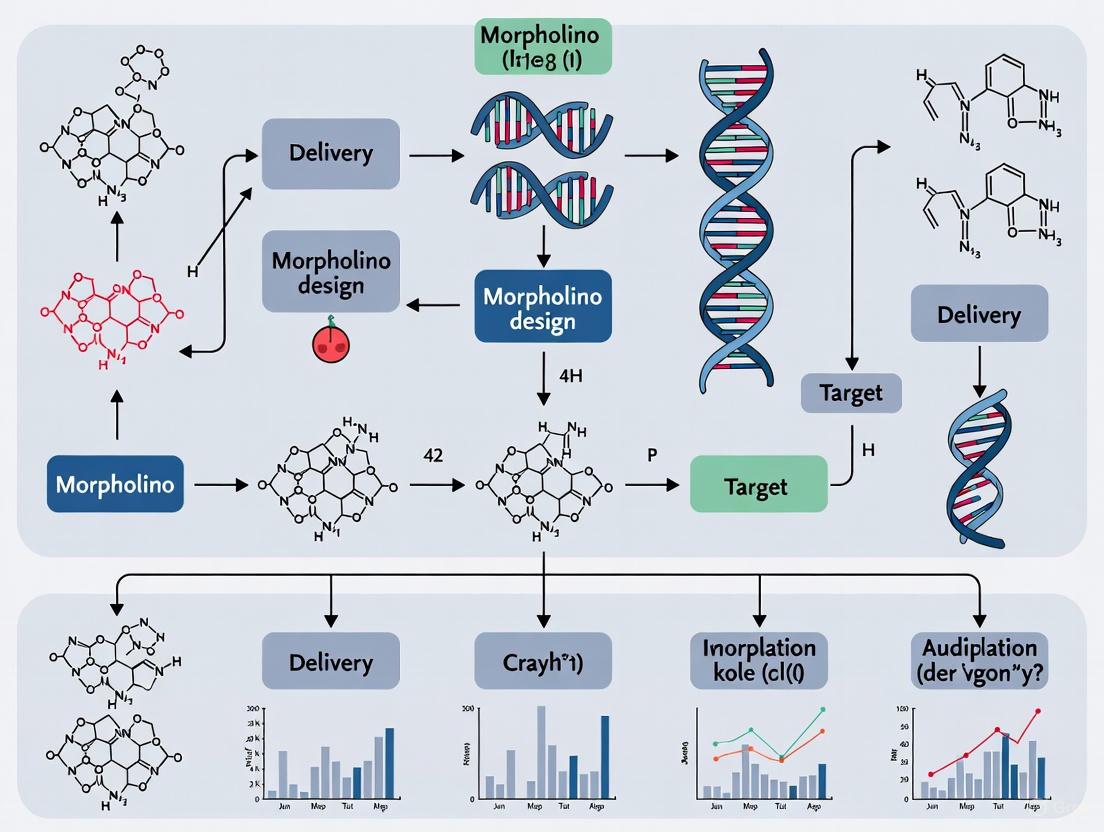
This article provides a comprehensive guide for researchers and drug development professionals seeking to optimize morpholino oligonucleotide (MO) efficacy.
Optimizing Morpholino Knockdowns: Advanced Strategies for Enhanced Efficiency and Reliability in Research and Therapeutics
Abstract
This article provides a comprehensive guide for researchers and drug development professionals seeking to optimize morpholino oligonucleotide (MO) efficacy. It covers foundational principles of MO design and mechanism, explores advanced methodological applications across models including zebrafish and chick, details practical troubleshooting for common pitfalls like off-target effects and delivery challenges, and establishes robust validation frameworks against technologies like CRISPR/Cas9. By synthesizing current best practices and emerging innovations such as Vivo-Morpholinos and optochemical control, this resource aims to empower scientists to achieve more reliable, reproducible, and efficient gene knockdowns, thereby accelerating both basic research and the development of MO-based therapeutics.
Mastering Morpholino Fundamentals: From Molecular Design to Mechanism of Action
FAQ: Core Principles and Troubleshooting
What is the fundamental structure of a Phosphorodiamidate Morpholino Oligomer (PMO)?
A PMO is a synthetic nucleic acid analog where each subunit consists of a nucleic acid base attached to a six-membered morpholine ring instead of a pentose sugar. These subunits are linked by uncharged phosphorodiamidate groups, replacing the anionic phosphodiester linkages found in natural DNA and RNA [1]. This structure makes the entire PMO backbone neutral and resistant to nucleases [2] [3].
How does the neutral backbone of a Morpholino affect its function and delivery?
The neutral backbone is a double-edged sword. It prevents degradation by cellular nucleases, leading to a long-lasting effect within cells [4] [3]. However, the lack of charge also eliminates nonspecific interactions with cellular proteins, which can reduce passive uptake into cells. While microinjection is effective in embryos, efficient delivery into cultured cells or adult tissues often requires specialized delivery systems or chemical modifications, such as covalent conjugation to cell-penetrating peptides (e.g., PPMOs) [1].
A common problem is a weak or absent knockdown phenotype. What are the primary areas to troubleshoot?
- Delivery Efficiency: This is the most common issue. Confirm that the Morpholino is entering the cells effectively. For new cell types, optimize transfection or electroporation parameters using a fluorescently labeled control Morpholino [5] [3].
- Morpholino Design and Specificity: Ensure the sequence is specific to your target by performing a BLAST search. For translation-blocking Morpholinos, the target site should be within the 5' UTR or the first 25 bases of the coding sequence. For splice-blocking Morpholinos, verify efficacy by RT-PCR to detect the predicted band shift in the mRNA [3].
- Biological Validation: Always include appropriate controls. A standard practice is to use two different Morpholinos targeting the same mRNA to confirm the phenotype is reproducible. Where possible, perform an mRNA rescue experiment to confirm phenotype specificity [1] [3].
What causes off-target effects, and how can they be mitigated?
A well-documented off-target effect is the induction of p53-mediated apoptosis, which can manifest as cell death in the central nervous system and somites, particularly in zebrafish embryos [1] [3]. This is often a sequence-specific effect. A standard mitigation strategy is to co-inject a anti-p53 Morpholino along with your experimental Morpholino. This can suppress the apoptotic phenotype and help reveal the true, target-specific morphological changes [3].
Experimental Protocols for Knocking Down Gene Expression
Protocol: Gene Knockdown in Zebrafish Embryos Using Microinjection
This protocol is a cornerstone technique in developmental biology for studying gene function [4].
Materials:
- Wild-type zebrafish adults and embryo media.
- Morpholino oligonucleotide (1–3 mM stock in DEPC-free water) [3].
- Microinjection apparatus (pressurized air source, micromanipulator, needle holder).
- Capillary glass needles and needle puller.
- Petri dishes for embryo collection and injection molds.
Method:
- Morpholino Preparation: Dilute the Morpholino stock to the desired working concentration (typically 0.1–0.5 mM) in Danieu solution or DEPC-free water. A dose of 1–10 ng per embryo is standard, but a dose-response curve (e.g., 1, 2, 4, 8 ng) should be performed for new Morpholinos [3].
- Needle Loading: Back-fill a capillary needle with a few microliters of the diluted Morpholino solution.
- Embryo Collection & Preparation: Collect single-cell or few-cell stage embryos and align them in the grooves of an injection mold.
- Microinjection: Using the micromanipulator, carefully inject a calibrated volume (typically 1–10 nL) into the yolk or cytoplasm of the embryo.
- Post-injection Care: After injection, return the embryos to embryo media and incubate at the appropriate temperature (e.g., 28.5°C) for development. Monitor for phenotypic changes over time [4] [3].
Validation:
- For translation-blocking Morpholinos, the most direct validation is Western blotting to detect a reduction in the target protein level. As an alternative, co-inject an mRNA encoding a tagged version of the target protein that lacks the Morpholino binding site [3].
- For splice-blocking Morpholinos, extract total RNA from control and injected embryos at the desired stage. Perform RT-PCR using primers that flank the targeted splice site. Analyze the PCR products by gel electrophoresis for a mobility shift, indicating aberrant splicing [3].
Protocol: Validating Knockdown Efficacy via RT-PCR for Splice-Modifying Morpholinos
This protocol is essential for confirming the activity of splice-blocking Morpholinos [3].
Materials:
- Total RNA from control and Morpholino-injected embryos or treated cells.
- Reverse transcriptase and PCR reagents.
- Thermostable DNA polymerase.
- Primers designed to flank the targeted exon-intron boundary.
- Agarose gel electrophoresis equipment.
Method:
- RNA Isolation: Isolate high-quality total RNA from your samples.
- cDNA Synthesis: Perform reverse transcription using an oligo(dT) or random hexamer primer to generate cDNA.
- PCR Amplification: Amplify the target region using gene-specific primers. Ensure the PCR is within the linear amplification range.
- Analysis: Separate the PCR products on an agarose gel. A successful splice-blocking Morpholino will produce a differently sized band compared to the wild-type control. Sequence the aberrant band to confirm the exact nature of the splice modification (e.g., exon skipping, intron retention) [3].
Quantitative Data and Reagent Toolkit
Troubleshooting Guide: Common Morpholino Issues and Solutions
Table 1: Troubleshooting Common Morpholino Experimental Issues
| Problem | Potential Cause | Recommended Solution |
|---|---|---|
| Weak or no phenotypic effect | Inefficient delivery | Optimize delivery method; use a fluorescent control Morpholino to assess efficiency [3]. |
| Incorrect Morpholino design/target | Verify target sequence accessibility; design and test a second, non-overlapping Morpholino [3]. | |
| Protein too stable (maternal mRNA) | Use a splice-blocking Morpholino to target zygotic transcripts only [3]. | |
| Non-specific or cytotoxic effects | Activation of p53-pathway | Co-inject with a validated p53-targeting Morpholino to suppress apoptosis [1] [3]. |
| Sequence-specific off-targeting | Titrate Morpholino to the lowest effective dose; confirm phenotype with a second Morpholino [3]. | |
| High experimental variability | Inconsistent injection volume/technique | Calibrate injection needles to ensure precise, consistent delivery [3]. |
| Embryo quality | Standardize embryo husbandry and health conditions. |
Research Reagent Solutions
Table 2: Essential Reagents for Morpholino-Based Research
| Reagent | Function | Notes |
|---|---|---|
| Standard PMOs | Steric-blocking antisense oligomers for gene knockdown. | The classic, nuclease-resistant tool for blocking translation or splicing [1] [3]. |
| Vivo-Morpholinos / PPMOs | Peptide-conjugated PMOs for enhanced cellular uptake in vivo. | Essential for systemic delivery in adult animals or hard-to-transfect cells [1]. |
| Caged Morpholinos | Photo-activatable PMOs for spatiotemporal control of gene knockdown. | Allows precise, conditional knockdown at specific times and locations in developing tissues [4]. |
| Fluorescently-Tagged Control Morpholino | A non-targeting Morpholino with a fluorescent tag (e.g., FITC). | Critical for optimizing and monitoring delivery efficiency in any new system [5] [3]. |
| p53-Targeting Morpholino | A control Morpholino that knocks down p53 expression. | Used to suppress p53-mediated apoptotic off-target effects and confirm specificity [3]. |
Visualization of Concepts and Workflows
Morpholino Mechanism of Action
Morpholino Experimental Workflow
Core Mechanisms of Morpholino Oligonucleotides
Morpholino oligonucleotides (MOs) are synthetic antisense molecules widely used to knock down gene function. They are typically 25 subunits in length and feature a unique backbone where standard nucleic acid bases are positioned on morpholine rings connected by phosphorodiamidate linkages [6]. This unnatural backbone makes them highly resistant to degradation by nucleases [6]. MOs function by binding to complementary RNA sequences through Watson-Crick base pairing, and they primarily employ two distinct mechanisms to inhibit gene expression: translation blocking and splice modification [6]. Unlike RNAi approaches, MOs typically do not degrade their target RNA but instead act via steric hindrance [7].
Translation-Blocking Morpholinos
Mechanism of Action: Translation-blocking MOs bind to sequences in the 5' untranslated region (UTR) or the early coding region of a target mRNA (typically between position -50 and +25 relative to the start codon) [6]. This binding sterically hinders the progression of the ribosomal initiation complex, effectively preventing the translation of the target protein [6] [8].
Key Considerations:
- They can inhibit both zygotic and maternally-loaded mRNAs [6] [4].
- Since they do not cause degradation of the targeted mRNA transcript, RT-PCR is not suitable for assessing their efficacy [6].
- Knockdown efficiency is best determined using antibodies against the target protein or by co-injecting a tagged version of the target mRNA with the MO [6].
Splice-Modifying Morpholinos
Mechanism of Action: Splice-blocking MOs target specific sequences at splice junctions (donor or acceptor sites) in pre-mRNA and interfere with the normal splicing machinery [6]. This disruption prevents proper intron removal and exon joining, leading to the production of aberrant mature mRNAs [8].
Key Considerations:
- They primarily affect zygotic transcripts since they target pre-mRNA processing [6].
- Successful splice modification typically results in mRNA products that contain retained introns or skipped exons, which can be detected by RT-PCR as mobility shifts or complete loss of the wild-type transcript [6].
- The aberrant mRNA products often contain premature stop codons and may be eliminated through nonsense-mediated decay [6].
Experimental Design & Optimization
Morpholino Design Guidelines
Translation-Blocking MO Design:
- Target the 25 bases surrounding the start codon, spanning either the 5' UTR or extending at most about 30 bases upstream of the start codon [6].
- Optimal target sequences have 40-60% GC-content, contain no more than three contiguous guanine residues and no more than nine total guanines, and lack significant self-complementarity [6] [8].
- Efficiency drops rapidly when the target site is moved further upstream of the translation initiation site [6].
Splice-Blocking MO Design:
- Target either splice-donor or splice-acceptor sites [6].
- Targeting the splice-donor site of the first exon or the splice acceptor site of the last exon often leads to inclusion of the entire associated intron [6].
- Targeting internal exons typically results in exon skipping [6].
- Always perform BLAST searches to confirm target sequence specificity and avoid off-target effects [6].
Quantitative Assessment of Knockdown Efficiency
Researchers have developed quantitative methods to assess MO knockdown efficiency. One established approach uses a luciferase assay-based system where a fusion reporter construct containing the 5'-mRNA sequence of the gene of interest is fused to the luciferase coding sequence [9]. The decrease in luciferase activity in embryos co-injected with this reporter and the MO correlates well with the level of inhibition of the corresponding endogenous protein synthesis and the appearance of knockdown phenotypes [9].
Table 1: Efficiency Assessment Methods for Different MO Types
| MO Type | Primary Assessment Method | Alternative Methods | Key Indicators |
|---|---|---|---|
| Translation-Blocking | Antibody detection of protein reduction [6] | Coinjection with tagged target mRNA (e.g., HA, FLAG, GFP) [6]; Luciferase reporter assays [9] | ≥80% protein reduction; Phenotype correlation [9] |
| Splice-Modifying | RT-PCR to detect mobility shifts or loss of wild-type transcript [6] | Sequencing of PCR products to confirm splice alterations [6] | Detection of aberrant splice products; Frameshift confirmation |
Research Reagent Solutions
Table 2: Essential Research Reagents for Morpholino Experiments
| Reagent/Category | Function/Description | Application Notes |
|---|---|---|
| Standard PMOs (Phosphorodiamidate Morpholinos) | Basic morpholinos with phosphorodiamidate backbone [10] | Standard gene knockdown; High stability and nuclease resistance [10] |
| Vivo-Morpholinos | Cell-penetrating peptide conjugates for enhanced delivery [10] | In vivo applications; Better tissue penetration [11] |
| Photo-Morpholinos | Light-activatable MOs with photo-cleavable groups [10] | Spatiotemporal control of gene knockdown [4] |
| Endo-Porter | Delivery reagent for cell culture systems [11] | Enables cytosolic delivery in cultured cells [11] |
| Phenol Red Injection Tracer | Visual indicator for microinjection [12] | Helps monitor injection success and volume [12] |
| Danieu's Buffer | Standard injection buffer for zebrafish embryos [12] | Provides optimal ionic conditions for embryo injections [12] |
Troubleshooting Guides & FAQs
Frequently Asked Questions
Q1: What are the most critical controls for validating MO specificity?
- Phenocopy of known genetic mutations when available [7]
- Verification of reduced protein by western blot or immunostaining [7]
- mRNA rescue by adding back a MO-resistant mRNA [7]
- Using two different MOs (translation blocking and splice blocking) targeting the same gene [7]
- Dose-response analysis to find the lowest effective concentration [13]
Q2: How can I minimize off-target effects in MO experiments?
- Always perform BLAST searches to ensure target sequence specificity [6]
- Use the lowest effective concentration (typically 1-10 ng per embryo) [8] [11]
- Co-inject with p53-targeting MO to suppress apoptosis-dependent off-target effects [8]
- Consider using two MOs at low concentrations for synergistic, specific effects [9]
Q3: My MO isn't producing the expected phenotype - what could be wrong?
- Verify MO concentration and solubility (heat at 65°C for 10 min with vortexing if needed) [6] [11]
- Confirm target sequence accuracy and check for polymorphisms in your strain [8] [11]
- Ensure you're analyzing at the appropriate time point for your target protein [11]
- Try increasing concentration gradually, remembering that specificity decreases at high concentrations [11]
Q4: What's the difference between MO knockdown and genetic knockout?
- MO knockdown provides transient, partial reduction of gene function [4]
- Genetic knockout confers complete, permanent gene inactivation [4]
- MOs can inhibit both maternal and zygotic transcripts, while mutants typically only affect zygotic function [8]
- MO concentration can be titrated to bypass embryolethality, unlike many mutants [4]
Advanced Technical Issues
Q5: How long do MO effects typically last in developing embryos? Most MO phenotypes are observed within the first 3 days of development in zebrafish, but effects can persist up to 5 days post-fertilization [8]. Efficacy is limited by dilution through cell division rather than MO degradation, as MOs are not recognized by cellular enzymes and are extremely stable [8] [11].
Q6: What are the key differences between standard MOs and newer modifications?
- Thiomorpholinos (TMOs): Sulfur-containing analogs with enhanced binding affinity and potency at lower concentrations [10]
- Vivo-Morpholinos: Peptide-conjugated for improved tissue delivery [10]
- Photo-Morpholinos: Enable spatiotemporal control with light activation [10]
Protocol Summaries & Best Practices
Standard Microinjection Protocol
MO Preparation:
- Resuspend lyophilized MO in cell culture grade distilled water (without DEPC treatment) to 1-3 mM concentration [6]
- Heat at 65°C for 10 minutes with vortexing to encourage full resuspension [6] [11]
- Verify concentration using spectrophotometry: dilute in 0.1 N HCl and measure absorbance at 265 nm [6]
- Store stocks at room temperature in tightly sealed tubes - avoid freeze-thaw cycles and chilling, which can cause precipitation [6] [11]
Embryo Injection:
- Inject 1-8 cell stage embryos with 1-10 ng MO per embryo [6] [8]
- Use injection buffer (e.g., Danieu's buffer) with 1% phenol red as tracer [12]
- Perform dose-response experiments for new MOs to optimize phenotype-to-toxicity ratio [6]
Efficiency Validation Workflow
- For Translation Blockers: Coinject with in vitro transcribed mRNA encoding a version of the target gene containing an epitope tag (e.g., HA, FLAG, GFP) [6]
- For Splice Blockers: Perform RT-PCR using primers flanking the targeted splice site to detect aberrant splicing patterns [6]
- Quantitative Assessment: Use luciferase reporter assays for quantitative assessment of knockdown efficiency [9]
- Phenotypic Correlation: Correlate molecular knockdown with observed morphological phenotypes [9]
By understanding these dual mechanisms and implementing rigorous experimental design and validation protocols, researchers can significantly improve the efficiency and reliability of morpholino knockdowns in their research programs.
A successful Morpholino experiment hinges on two critical initial steps: accurate target gene identification and thorough sequence verification. These foundational actions ensure that your Morpholino oligonucleotide is designed against the correct and accessible region of your target mRNA, directly influencing the efficiency and specificity of your knockdown. This guide provides troubleshooting and best practices to navigate these first steps effectively, minimizing experimental delays and maximizing the reliability of your research outcomes.
Key Concepts in Morpholino Applications
What is a Morpholino?
A Morpholino oligonucleotide is a synthetic, uncharged molecule used to block complementary sequences of RNA. This binding prevents cellular machinery, such as the ribosome, from interacting with the RNA, thereby blocking processes like translation initiation or pre-mRNA splicing. Morpholinos are known for their high efficacy, specificity, and stability within cells [14].
How Do They Work?
Morpholinos primarily function through two mechanisms:
- Translation Blocking: The Morpholino binds to the target mRNA sequence in the 5' untranslated region (UTR) and including the first 25 bases of the coding sequence. This binding sterically hinders the ribosome from initiating protein synthesis [15].
- Splice Modifying: The Morpholino binds to pre-mRNA at specific splice junctions (e.g., intron-exon boundaries), disrupting the splicing machinery and often causing the exclusion (skipping) of an exon from the mature mRNA [14].
Troubleshooting Guides & FAQs
Target Selection and Sequence Verification
FAQ: My Morpholino shows no activity. Could the target sequence be wrong? Answer: Yes, inaccurate target sequence information is a common cause of failure. Before ordering your Morpholino, you must:
- Verify RNA Sequence Accuracy: Cross-reference your target RNA sequence using multiple databases like NCBI Gene and Ensembl to rule out errors in public data or from in-house sequencing [15].
- Check for Genetic Variants: If using a model organism, be aware of natural genetic variations. For example, when designing a Morpholino for use in both surface- and cave-dwelling forms of Astyanax mexicanus, you must identify and avoid any polymorphic regions in your target site, as these variations can prevent effective binding [15].
- Confirm Oligo Complementarity: Ensure the Morpholino sequence ordered is the reverse complement of your desired target sequence [15].
FAQ: How do I choose the best region of the mRNA to target? Answer: The target region depends on your experimental goal. Follow these design rules:
- For Translation Blockers: Target the 5'-UTR and the first 25 coding bases, which include the start codon (AUG). This location is optimal for blocking the assembly of the translation initiation complex [14] [11].
- For Splice Blockers: Target the pre-mRNA sequence spanning a splice junction (e.g., an exon-intron or intron-exon boundary). Blocking these sites can force the splicing machinery to skip an exon, which is a common strategy to disrupt gene function [14].
FAQ: How can I ensure my Morpholino will be specific to my gene of interest? Answer: To minimize off-target effects:
- Perform a Homology Search: Use a tool like BLAST to check the selected target sequence for significant homologies with other RNAs. If the sequence is too similar to off-target mRNAs, select a different target site on your desired mRNA to prevent non-specific binding and unintended knockdowns [14].
- Design Appropriate Controls: Always include a standard control oligo in your experiments. A common best practice is to use a Morpholino designed to target a completely unrelated sequence or a gene not present in your organism [14] [15].
Morpholino Preparation and Handling
FAQ: I'm having trouble getting my Morpholino to dissolve. What should I do? Answer: Difficulty in dissolution can occur. The recommended procedure is:
- Use Sterile Water: Resuspend the lyophilized Morpholino in sterile, distilled water. Do not use DEPC-treated water unless it has been autoclaved afterward, as residual DEPC can react with the oligo's bases and impair its function [14] [11].
- Autoclave the Solution: If the oligo does not dissolve easily, or if it forms complexes during storage, autoclaving the solution on a liquid cycle can help. Remove the solution from the autoclave as soon as the cycle is complete to prevent evaporation [14] [11].
- Reduce Concentration: For sequences with high guanine (G) content or those with added fluorescent tags, solubility may be reduced. In these cases, prepare a stock solution no more concentrated than 0.5 mM [11].
FAQ: How can I accurately determine the concentration of my Morpholino stock solution? Answer: Use UV absorbance with the following protocol:
- Dissolve in HCl: Pipette 5 µL of your aqueous Morpholino solution into 995 µL of 0.1 M HCl. The acidic environment un-stacks the nucleobases (A, C, and G become protonated), which is necessary for an accurate concentration reading [14].
- Measure at 265 nm: Blank the spectrophotometer with 0.1 M HCl, then measure the absorbance of your sample at 265 nm [14].
- Calculate Concentration: Use the molar absorptivity of the individual nucleobases to calculate the concentration based on the measured absorbance [14].
Experimental Setup and Optimization
FAQ: What is the right amount of Morpholino to use in my experiment? Answer: The optimal concentration must be determined empirically for each gene target and delivery method. The tables below summarize general guidelines.
Table 1: Recommended Morpholino Concentrations by Delivery Method
| Delivery Method | Recommended Starting Concentration | Key Considerations |
|---|---|---|
| Microinjection | 400 pg per egg (or ~2-10 ng for zebrafish) [15] | Final intracellular concentration should be ≥ 2 µM [11]. |
| Endo-Porter | 10 µM Morpholino [11] | Test a range of Endo-Porter concentrations (e.g., 2-8 µM) for optimal delivery. |
| Vivo-Morpholinos | ≥ 3 µM for optimal results [11] | Conjugation aids in delivery; standard oligos do not efficiently enter wild-type muscle. |
Table 2: Troubleshooting Low Activity
| Problem | Potential Cause | Suggested Solution |
|---|---|---|
| No knockdown observed | Incorrect target sequence or poor accessibility. | Re-verify sequence and design a new oligo to a different target site. |
| Weak or incomplete knockdown | Oligo concentration is too low. | Titrate the Morpholino concentration upward. |
| Target protein has a long half-life. | Analyze activity at a later time point to allow pre-existing protein to degrade. | |
| Non-specific effects | Oligo concentration is too high. | Reduce concentration to the minimum needed for efficacy. |
FAQ: When should I analyze the knockdown effect? Answer: The timing depends on the turnover rate of your target mRNA and protein.
- For proteins with rapid turnover (e.g., some enzymes or transcription factors), effects may be seen within 24 hours.
- For stable structural proteins, it may take several days before a detectable knockdown is observed. Morpholinos are highly stable, and effects can often be assayed a week after delivery, provided the oligo has not been overly diluted by cell division [11].
Essential Experimental Protocols
This protocol outlines the systematic process for planning a successful Morpholino experiment.
- Choose the Target Gene.
- Select the Cells or Organism for delivery.
- Choose the Target Process: Decide between blocking translation or modifying splicing. This choice determines the molecular assays you will use.
- Obtain the Target RNA Sequence: Use mRNA 5'-UTR and the first 25 coding bases for translation blockers, or pre-mRNA with defined introns and exons for splice blockers.
- Choose a Delivery Method (e.g., microinjection, Endo-Porter).
- Select Control Oligos.
- Decide if End-modification (e.g., fluorescent tagging) is necessary.
- For Splice Blockers, select the specific splice junction to target.
- Select the Oligo Target Sequence following the rules above and generate the reverse complement.
- Test for Homologies using BLAST.
- Order the Morpholino from a specialized manufacturer.
This is a common method for delivering Morpholinos in embryonic models like zebrafish or cavefish.
- Preparation of Injection Plates: Pour 3% agarose into a Petri dish and place an egg injection mold into the warm agarose to create wells. Remove once solidified.
- Collection of Single-Cell Stage Eggs: Collect eggs shortly after laying and transfer them to an injection plate using glass pipettes (eggs stick to plastic).
- Pico-injection Setup:
- Backfill a glass injection needle with your Morpholino solution.
- Trim the needle tip with forceps.
- Mount the needle on a micromanipulator connected to a picolitre injector.
- Set injection time to ~0.03 s and adjust pressure (often ~10-30 psi) to achieve a bolus of ~1.0 nL. Calibrate by injecting into mineral oil.
- Injection: Draw excess water off the top of the eggs with a lab tissue. Use the manipulator to penetrate each egg and inject the solution directly into the yolk. A single plate can typically be injected within 15 minutes.
The Scientist's Toolkit: Research Reagent Solutions
Table 3: Essential Materials for Morpholino Experiments
| Item | Function / Description | Example Manufacturer |
|---|---|---|
| Custom Morpholino Oligo | The core reagent; a synthetic antisense oligonucleotide. | Gene Tools, LLC [15] |
| Standard Control Morpholino | A negative control oligo with a sequence that does not target any known gene in the organism. | Gene Tools, LLC [15] |
| Glass Capillary Tubes | Used for creating fine needles for microinjection. | Sutter Instruments [15] |
| Pipette Puller | Instrument to fabricate injection needles from glass capillaries. | Sutter Instruments [15] |
| Picoinjector | Provides precise pressure control for delivering nanolitre volumes. | Warner Instruments [15] |
| Micromanipulator | Allows for fine, controlled movement of the injection needle. | World Precision Instruments [15] |
| Phenol Red | A dye added to the injection solution to visualize the bolus during injection. | Sigma-Aldrich [15] |
| Endo-Porter | An amphiphilic peptide that delivers Morpholinos into cells in culture via endocytosis. | Gene Tools, LLC [14] [11] |
Workflow Visualization
The following diagram illustrates the critical path from gene identification to sequence verification and experimental analysis, highlighting key decision points and troubleshooting areas covered in this guide.
Diagram 1: Gene Identification and Sequence Verification Workflow
This second diagram contrasts the two primary mechanisms of action for Morpholino oligonucleotides.
Diagram 2: Morpholino Mechanisms of Action
Troubleshooting Guides
Why is my morpholino (MO) exhibiting low knockdown efficiency or off-target effects?
Low efficiency or off-target effects in morpholino experiments are often related to suboptimal design parameters. The table below summarizes common issues, their probable causes, and recommended solutions.
| Problem | Probable Cause | Recommended Solution |
|---|---|---|
| Low Knockdown Efficiency | MO target site is inaccessible due to stable mRNA secondary structure [16]. | Prioritize target site accessibility over GC-content; use software to predict open target sites [16]. |
| Off-Target Effects | MO has 15 bases or longer of contiguous homology with an unintended gene target [9]. | Perform a BLAST search to ensure the MO sequence is unique to the intended target and avoid long stretches of perfect homology with other sequences [9]. |
| Non-Specific Binding | GC-content is too high, promoting stable binding to non-target sites [16]. | Design MOs with a GC content between 40-60% to balance specificity and stability [17] [18]. |
| Inefficient Knockdown | Using a single MO at a high concentration, which can increase off-target effects [9]. | Employ a strategy using two lower-concentration MOs that target the same mRNA for a synergistic and more specific effect [9]. |
How do I design a morpholino for maximum specificity and binding stability?
Achieving a balance between specificity and binding stability is key to an effective morpholino. The following workflow outlines the critical design steps and parameters.
Frequently Asked Questions (FAQs)
What is the optimal length for a morpholino?
Morpholinos are typically 25 bases in length, which provides a good balance of specificity and binding affinity [9]. This length is sufficient for unique targeting within a complex genome while minimizing the risk of off-target effects that can occur with shorter sequences. While principles from PCR primer design suggest a range of 18-24 nucleotides for optimal hybridization rates and specificity, morpholinos are commonly designed at 25 bases for effective gene knockdown [17] [9].
What is the ideal GC content for a morpholino, and why is it critical?
The ideal GC content for a morpholino is between 40% and 60% [17] [18]. This range is critical for two main reasons:
- Binding Stability: Guanine (G) and cytosine (C) base pairs form three hydrogen bonds, whereas adenine (A) and thymine (T) form only two. A higher GC content therefore leads to stronger binding and a higher melting temperature (Tm) [17].
- Specificity: However, a very high GC content (above 60%) can increase the risk of non-specific, off-target binding because the MO may form overly stable interactions with partially complementary sites [17] [16]. Conversely, a very low GC content may result in weak and inefficient binding.
How does GC content relate to target site accessibility?
High GC content in the target mRNA region is often an indicator of poor accessibility. This is because regions with high GC content are more likely to form stable secondary structures, such as hairpins, which can hide the binding site from the morpholino [16] [19]. Research on RNA interference (RNAi) has shown that the negative correlation between GC-content and knockdown efficiency is almost entirely due to this issue of target site inaccessibility [16]. Therefore, when selecting a target site, prioritizing an accessible region (often with moderate GC content) is more important than the GC content of the MO itself [16].
What strategies can I use to enhance specificity and reduce off-target effects?
- Check for Contiguous Homology: Ensure your MO does not have 15 bases or more of perfect contiguous homology with any other gene, as this can lead to the knockdown of unintended targets [9].
- Use a Double MO Strategy: A highly effective method is to use two different MOs targeting the same mRNA at low concentrations. This approach leverages a synergistic effect to achieve potent and specific knockdown while minimizing the off-target effects associated with using a single MO at high concentration [9].
- Utilize Specificity-Enhanced MO Variants: Emerging MO chemistries, such as Guadinium-linked Morpholino (GMO)-PMO chimeras, are designed to enhance cell permeability and duplex stability. These chimeras can offer improved performance and are synthesized using automated platforms [20].
Research Reagent Solutions
The table below lists key reagents and tools used in advanced morpholino research, as identified from the literature.
| Reagent / Tool | Function | Application in Research |
|---|---|---|
| GMO-PMO Chimera [20] | Enhances cell permeability and binding affinity of standard PMOs. | Used in novel optochemical systems for spatiotemporal control of gene expression in live embryos [20]. |
| Translation-Blocking MO (tbMO) [20] | Binds to mRNA and inhibits ribosome binding, thereby blocking protein translation. | Standard tool for gene knockdown; used in conjunction with cPMO in strand-displacement systems to control translation [20]. |
| Photocaged PMO (cPMO) [20] | An inactive MO that is activated by UV light to bind and displace a tbMO. | Enables precise, light-induced activation of protein translation at specific times and locations in vivo [20]. |
| Luciferase Assay System [9] | Quantitative reporter assay to measure changes in protein production. | Validates MO knockdown efficiency by measuring the reduction in luciferase activity from a target reporter construct [9]. |
Troubleshooting Guide: Common Morpholino Challenges
1. Problem: Lack of Observed Phenotype
- Potential Cause: The morpholino may not be effectively blocking its target. For translation-blocking morpholinos, the target site might be inaccessible. For splice-blocking morpholinos, the induced splice variant might still be partially functional [3].
- Solution:
- Validate Knockdown Efficiency: For translation-blocking MOs, co-inject an mRNA for a tagged version of the target protein and check for a reduction in protein expression via western blot. For splice-blocking MOs, use RT-PCR with primers flanking the targeted splice site to confirm the expected molecular weight shift [3].
- Re-optimize Dose: Perform a dose-response curve. The phenotype may only be apparent within a narrow concentration window [21] [3].
- Check for Genetic Compensation: In some cases, mutant lines can activate compensatory mechanisms that mask a phenotype, which may still be revealed by a transient morpholino knockdown [21] [22].
2. Problem: Non-Specific or Off-Target Effects (e.g., Cell death, gross developmental defects)
- Potential Cause: The morpholino concentration may be too high, leading to non-specific effects or activation of a p53-dependent apoptotic pathway [21] [3].
- Solution:
- Titrate the Morpholino: Systematically test lower doses to find the minimum concentration that produces the specific phenotype [21].
- Use a p53 Co-suppression Control: Co-inject a validated p53 morpholino to suppress apoptosis and confirm that the phenotype is specific to the target gene [3].
- Employ Robust Specificity Controls: The gold standard is to phenocopy the result with a second, non-overlapping morpholino targeting the same mRNA [22]. Alternatively, rescue the phenotype by co-injecting a morpholino-resistant mRNA of the target gene [21].
3. Problem: Low Delivery Efficiency into Cultured Cells
- Potential Cause: Standard morpholinos have an uncharged backbone and cannot be delivered using standard lipid-based transfection methods [23].
- Solution: Use a specialized delivery system. One effective method involves complexing the morpholino with a complementary DNA "carrier" and a weakly-basic ethoxylated polyethylenimine (EPEI). The complex is efficiently endocytosed, and the EPEI promotes endosomal release into the cytosol [23].
4. Problem: Discrepancy Between Morpholino and Mutant Phenotypes
- Potential Cause: This can be due to true off-target effects of the morpholino, but also to genetic compensation in the mutant or the difference between a transient knockdown (morpholino) and a permanent knockout (mutant) [21] [22].
- Solution:
- Re-evaluate Morpholino Specificity: Ensure all specificity controls (see above) have been performed and the morpholino was used at an optimized dose [21].
- Consider the Biological Context: A morpholino can knock down both maternal and zygotic mRNA, while a genetic mutant may only affect zygotic expression. Furthermore, mutants may undergo genetic compensation, which can obscure the phenotype [21] [22].
Comparison of Morpholino Types
| Feature | Standard Morpholinos | Vivo-Morpholinos | Novel Chimeras |
|---|---|---|---|
| Primary Use | Microinjection into embryos (e.g., zebrafish, frog) [3] | Systemic delivery in live animals [24] | Enhanced cellular delivery and efficacy |
| Delivery Method | Microinjection, electroporation [24] [3] | Intravenous, intraperitoneal injection [24] | Varies by design (e.g., with cell-penetrating peptides) |
| Key Advantage | Rapid, transient knockdown; cost-effective for embryonic studies [3] | Enables gene knockdown in specific tissues and adult animals [24] | Aims to improve uptake, specificity, and stability |
| Key Limitation | Limited to early developmental stages; not suitable for systemic delivery in adults [3] | Higher cost; requires specialized synthesis [24] | Still under development; not yet widely commercialized |
| Ideal for | Rapidly assessing gene function in embryogenesis [24] [3] | Studying gene function in juvenile or adult organisms; target validation for therapeutics [24] | Pushing the boundaries of antisense technology for difficult targets |
Experimental Protocol: Standard Morpholino Knockdown in Zebrafish
1. Morpholino Design and Preparation [3]
- Design: Morpholinos are typically 25 bases in length with 40-60% GC content. For translation blocking, target the sequence from -50 to +25 relative to the start codon. For splice blocking, target splice donor or acceptor sites. Always perform a BLAST search to ensure specificity.
- Resuspension: Resuspend the morpholino in cell culture-grade water to a stock concentration of 1-3 mM. Heat at 65°C for 10 minutes and vortex to ensure full dissolution.
- Storage: Store stock solutions at room temperature in tightly sealed tubes to prevent precipitation. Avoid repeated freeze-thaw cycles.
2. Microinjection Setup [3]
- Prepare injection samples by diluting the morpholino stock in Danieu's solution (e.g., 1-8 nL per embryo at a dose of 1-10 ng).
- Load the injection sample into a capillary needle.
- Calibrate the injection volume by measuring the diameter of the droplet expelled into a drop of mineral oil.
3. Embryo Injection [3]
- Align one-cell to eight-cell stage zebrafish embryos on an injection ramp.
- Inject the morpholino solution directly into the yolk or cell cytoplasm.
- Transfer injected embryos to egg water and incubate at 28.5°C.
4. Validation and Analysis
- For Splice-Blocking MOs: At the desired stage, pool 10-20 embryos for RNA extraction. Perform RT-PCR with primers flanking the targeted splice site and run the product on a gel. A successful knockdown will show a band shift relative to the control [3].
- For Translation-Blocking MOs: The most direct validation is western blot with an antibody against the target protein. Alternatively, co-inject a tagged rescue mRNA and detect the tag [3].
- Phenotypic Analysis: Score and image morphological or behavioral phenotypes. Compare to uninjected controls and specificity controls (e.g., p53 MO, standard control MO).
The Scientist's Toolkit: Research Reagent Solutions
| Reagent / Material | Function |
|---|---|
| Morpholino Oligo | The core synthetic molecule that binds to target RNA to block translation or splicing [3]. |
| Danieu's Solution | A standard buffer used for diluting morpholinos for microinjection into zebrafish embryos [3]. |
| p53 Morpholino | A specific morpholino used as a control to suppress off-target apoptosis activated by some morpholinos [3]. |
| Control Morpholino | A standard control with a scrambled or irrelevant sequence to account for non-specific effects of injection [21]. |
| Ethoxylated Polyethylenimine (EPEI) | A polymer used for efficient delivery of standard morpholinos into cultured cells via an endocytosis-mediated mechanism [23]. |
| Vivo-Morpholino | A morpholino conjugated to a dendrimeric delivery moiety that enables efficient systemic delivery in live animals [24]. |
Workflow and Pathway Diagrams
Frequently Asked Questions (FAQs)
Q1: What are the main types of morpholinos and when should I use each? A: The two primary types are standard morpholinos and vivo-morpholinos. Standard morpholinos are ideal for experiments in early embryos (e.g., zebrafish, frog) where microinjection is feasible. Vivo-morpholinos are conjugated to a delivery moiety that enables them to be taken up systemically, making them suitable for studies in juvenile or adult animals or for tissue-specific delivery in larger organisms [24] [3].
Q2: Why is there sometimes a difference between the phenotype of a morphant (morpholino-injected embryo) and a mutant for the same gene? A: Differences can arise for several reasons. Mutant organisms may activate genetic compensation mechanisms, where other genes alter their expression to compensate for the lost function, potentially masking the phenotype. In contrast, morpholinos cause an acute knockdown, which may more directly reveal the gene's function. Furthermore, morpholinos can effectively knock down both maternal and zygotic mRNA transcripts, whereas a genetic mutant might only affect zygotic expression [21] [22].
Q3: What are the best practices for controlling morpholino experiments? A: Rigorous controls are essential for interpreting morpholino data correctly [21] [3] [22]:
- Dose-Response: Always test a range of morpholino concentrations to find the lowest effective dose and rule out toxicity from over-dosing.
- Phenocopy: Use a second, non-overlapping morpholino targeting the same mRNA. Reproducing the phenotype with two independent morpholinos is strong evidence for specificity.
- Rescue: Co-inject a morpholino-resistant version of the target mRNA to see if it restores the wild-type phenotype.
- p53 Control: Co-inject a p53-targeting morpholino to suppress potential off-target activation of apoptosis.
- Standard Control: Include a group injected with a standard control morpholino (scrambled sequence).
Q4: My morpholino isn't working in cultured cells. What delivery method can I use? A: Standard morpholinos cannot be delivered with standard lipid-based transfection reagents due to their uncharged backbone. A proven method is to use an ethoxylated polyethylenimine (EPEI)-based system. In this approach, the morpholino is first paired with a complementary DNA "carrier," and this complex is then bound to the EPEI polymer. The complex is endocytosed by cells, and the EPEI helps rupture the endosome, releasing the morpholino into the cytoplasm [23].
Advanced Delivery and Application Techniques Across Model Systems
Microinjection Protocols for Early Embryos (Zebrafish, Xenopus)
Microinjection is a foundational technique for introducing macromolecules such as DNA, RNA, and Morpholino oligonucleotides into early embryos of model organisms like zebrafish and Xenopus. Within the context of a thesis focused on improving the efficiency of morpholino knockdowns, mastering this protocol is paramount. Consistent and precise delivery of morpholinos is a significant variable that can influence the penetrance and reproducibility of knockdown phenotypes. This technical support center addresses the most common challenges researchers face, providing targeted troubleshooting guides and FAQs to enhance the reliability of your experimental outcomes.
Frequently Asked Questions (FAQs) & Troubleshooting
Zebrafish Embryo Microinjection
Q1: What is the optimal stage and volume for injecting zebrafish embryos to ensure even distribution of morpholinos?
Injecting at the 1-cell stage is critical for uniform distribution of the morpholino throughout the embryo. The injection volume must be carefully controlled [25].
- Recommended Stage: 1-cell stage. Ideally, embryos should be injected before they progress beyond the 4-cell stage [25].
- Recommended Volume: Typical injection volumes range from 500 pL to 1 nL [25]. The volume should be calibrated to fill approximately 10% of the egg volume to avoid lethality [25].
- Troubleshooting:
- Problem: High embryo mortality after injection.
- Solution: The injection volume may be too large. Use a micrometer to calibrate the injection volume. Inject into a drop of mineral oil on the micrometer; a bead with a diameter of 0.1 mm contains approximately 500 pL [25].
- Problem: Inconsistent distribution of the morpholino.
- Solution: Ensure injections are performed at the 1-cell stage and that the needle is inserted into the yolk. Verify that the compensation pressure on your microinjector is properly set to prevent medium from flowing into and diluting the needle's contents [26].
Q2: How should I determine and prepare the correct concentration of morpholino for my zebrafish experiment?
Morpholino concentration is a key variable for achieving specific knockdown without non-specific toxic effects [4] [25].
- Typical Working Range: Morpholinos are typically injected at doses ranging from 1 to 10 ng per embryo. A common stock concentration for injection is 500 µM [25].
- Preparation Protocol:
- Resuspension: Resuspend the morpholino in cell culture-grade distilled water (DEPC-free) to a stock concentration of 1-3 mM [6].
- Heating: Heat the stock for 10 minutes at 65°C and vortex to ensure full resuspension [6].
- Concentration Verification: Verify the concentration spectrophotometrically. Dilute the morpholino in 0.1 N HCl and measure absorbance at 265 nm [6].
- Storage: For long-term stability, store morpholino stocks at room temperature or lyophilized in small glass vials. Avoid repeated freeze-thaw cycles or storing on ice, which can cause the morpholino to precipitate [6].
- Troubleshooting:
- Problem: Embryo lethality or non-specific toxicity.
- Solution: Perform a dose-response experiment. Titrate the morpholino concentration to find the lowest dose that produces the expected phenotype. For genes with available mutants, aim to phenocopy the mutant phenotype [4] [6].
- Problem: Weak or no phenotypic effect.
- Solution: Confirm the morpholino concentration and injection volume. For translation-blocking morpholinos, the efficiency should be confirmed by antibody staining if available. For splice-blocking morpholinos, use RT-PCR to check for aberrant splicing [6].
Xenopus Embryo Microinjection
Q3: How do I target microinjection to specific tissues, like the pronephros, in Xenopus embryos?
Targeted microinjection in Xenopus relies on well-established fate maps that predict which blastomeres will give rise to specific tissues [27].
- Key Resource: Consult the interactive cell fate maps available on Xenbase [27].
- Blastomere Selection:
- At the 4-cell stage: The ventral blastomeres (larger, darker cells) contribute more to the developing kidney than the dorsal blastomeres. Inject the left ventral blastomere to target the left kidney [27].
- At the 8-cell stage: The ventral, vegetal blastomeres (V2) are the primary contributors to the kidney. Inject the left V2 blastomere to target the left kidney [27].
- Lineage Tracing: Always co-inject a lineage tracer (e.g., MEM-RFP mRNA or fluorescent dextran) to verify successful targeting to the tissue of interest [27].
- Troubleshooting:
- Problem: Mosaicism or inconsistent targeting.
- Solution: Slow the developmental rate by incubating embryos at cooler temperatures (14-16°C). This provides a longer window for performing injections at the desired stage before the embryos cleave [27].
- Problem: Inability to identify blastomeres correctly.
- Solution: Use the pigmentation as a guide. The animal pole is darkly pigmented, the vegetal pole is white and yolky, and dorsal cells at the 4-cell stage are smaller and have less pigment than ventral cells [27].
Q4: What are the critical equipment settings for a successful Xenopus microinjection setup?
A stable and correctly configured setup is essential for reproducible injections [28].
- Microscope: A stereomicroscope on a boom stand is recommended to provide a large working distance (at least 8-10 cm) for manipulators and hands [28].
- Needle Preparation: Pull borosilicate glass capillaries to create a fine, sharp tip. The needle should be trimmed to a diameter that can pierce the chorion and yolk without causing excessive damage [27] [26].
- Pressure Settings: Use a microinjector that allows control over injection and compensation pressure. The compensation pressure is critical to prevent backflow of medium into the needle tip, which would dilute your injection sample [26].
General Microinjection Challenges
Q5: My injection needle keeps clogging. How can I prevent this?
Clogging is often related to needle quality or sample preparation [26].
- Solution:
- Centrifuge Your Sample: Before loading the needle, centrifuge the morpholino or RNA solution to pellet any particulate debris.
- Use Filtered Solutions: Prepare solutions using sterile, filtered buffers.
- Optimize Needle Pulling: Use a micropipette puller and optimize the parameters (heat, pull force, velocity) to produce a smooth, tapered needle without a closed tip. A needle with a tip diameter of 0.5 µm is often suitable for cytoplasmic injection [26].
- Proper Trimming: If the needle tip is closed, gently tap it against a clean object on the agarose pad or use forceps to break it open to the correct diameter [29].
Q6: How can I improve embryo survival after microinjection?
Embryo viability can be compromised by physical damage, contamination, or suboptimal conditions [25].
- Solutions:
- Minimize Physical Damage: Ensure the needle tip is sharp. Pierce the chorion and enter the yolk in one smooth, swift motion to avoid crushing or tearing [25].
- Maintain Sterility and Hydration: Use sterile solutions and instruments. After injection, maintain embryos in a clean Petri dish with fresh egg water, replacing the water periodically to prevent microbial growth [25].
- Control Temperature: Regulate incubation temperatures according to standard protocols for each species to ensure normal development [27].
Quantitative Data for Microinjection
The following tables summarize key quantitative parameters for microinjection in zebrafish and Xenopus embryos, based on standard protocols.
Table 1: Microinjection Parameters for Zebrafish Embryos
| Parameter | Typical Value/Range | Technical Notes |
|---|---|---|
| Optimal Injection Stage | 1-cell stage | Ensures uniform distribution of injected material [25]. |
| Injection Volume | 500 pL - 1 nL | Volume is calibrated to be ~10% of egg volume [25]. |
| Morpholino Concentration | 200 - 500 µM (injection solution) | Must be determined empirically for each morpholino [25]. |
| Morpholino Dose | 1 - 10 ng per embryo | A dose-response curve is recommended [6]. |
| Needle Tip Diameter | 0.5 - 1.0 µm | Fine enough to penetrate, wide enough to avoid clogging [26]. |
Table 2: Microinjection Parameters for Xenopus Embryos
| Parameter | Typical Value/Range | Technical Notes |
|---|---|---|
| Targeted Injection Stages | 4-cell, 8-cell, 16-cell | Later stages allow for more precise tissue targeting using fate maps [27]. |
| Targeted Blastomere (Pronephros) | V (4-cell); V2 (8-cell); V2.2/C3 (16-cell) | Consult fate maps for other tissues (e.g., heart, eyes) [27]. |
| Injection Volume | 5 - 10 nL per blastomere | Volume is relative to the larger size of Xenopus embryos [27]. |
| Developmental Temperature | 14 - 16 °C | Slower development provides more time for injections [27]. |
Experimental Workflow and Visualization
The following diagram illustrates the core decision-making and action workflow for a microinjection experiment aimed at morpholino knockdown, from preparation to validation.
Microinjection and Knockdown Validation Workflow
The Scientist's Toolkit: Essential Research Reagents & Materials
Table 3: Key Reagents and Equipment for Embryo Microinjection
| Item | Function | Application Notes |
|---|---|---|
| Morpholino Oligos | Antisense oligonucleotides for transient gene knockdown by blocking translation or splicing [4] [6]. | Designed to be 25 bases, 40-60% GC content. Resistant to nuclease degradation [6]. |
| Borosilicate Glass Capillaries | Used to fabricate microinjection needles [29] [26]. | Choose capillaries with a microfilament for easy backfilling [26]. |
| Micropipette Puller | Instrument to heat and pull glass capillaries into fine-tipped needles [29] [26]. | Parameters (heat, pull force) must be optimized for consistent needle shape [26]. |
| Microinjector | Applies regulated pressure to expel solution from the needle [29] [26]. | Must control injection pressure, time, and a constant compensation pressure [26]. |
| Micromanipulator | Allows fine, three-dimensional control of the needle position [29] [28]. | Essential for precise targeting of blastomeres. |
| Lineage Tracer (e.g., MEM-RFP, Fluorescent Dextran) | Co-injected to visualize the progeny of the injected cell and verify tissue targeting [27]. | Critical for assessing the success of targeted injections in Xenopus. |
In Vivo Electroporation for Spatiotemporal Control (Chick, Adult Tissues)
Troubleshooting Common In Vivo Electroporation Challenges
Q1: I am experiencing high embryonic lethality or tissue damage when electroporating early-stage (E1) chick embryos. What factors should I investigate?
- A1: High lethality in early embryos often results from excessive electrical current or poorly configured electrodes. To mitigate this:
- Employ Microelectrodes: Switch from "macroelectroporation" (400-500 μm electrodes) to "microelectroporation" using fine electrodes (e.g., 25-40 μm platinum wire). This confines the current and significantly reduces tissue damage and dysmorphology [30].
- Optimize Electrical Parameters: Use lower voltage settings. For early chick embryos (HH4-HH6), a voltage of 7V has been successfully used with microelectrodes, compared to the 10-25V typical for later stages [30].
- Verify Electrode Configuration: Ensure the anode is curved and can be gently inserted under the embryo to minimize current exposure to the entire tissue [30].
Q2: The expression of my electroporated construct is too weak or sparse. How can I improve efficiency?
- A2: Low efficiency can be addressed by optimizing both the solution and the electroporation pulse.
- Increase DNA Viscosity: Mix your plasmid DNA (typically at 1 µg/µL) with 20% Fast Green dye. This increases viscosity, prevents wide dispersal of the DNA solution, and keeps it concentrated over the target region [31].
- Optimize Pulse Protocol: The standard pulse parameters for chick cerebellar slices are 3 pulses of 10V, each with a 10 msec duration [31]. For in vivo DNA vaccine delivery in muscle, parameters such as 12V, 30 ms pulse duration, and 950 ms intervals have been optimized for high expression with low injury [32]. Use a square wave electroporator for consistent results.
- Ensure Circuit Conductance: When placing the cathode, avoid direct contact with the tissue. Use the surface tension of the DNA solution to maintain conductance by placing the electrode as close as possible without touching [31].
Q3: My morpholino knockdown results are inconsistent or I observe off-target effects. What controls and optimizations are critical?
- A3: Morpholino (MO) experiments require careful design and validation.
- Confirm Specificity and Dose: Perform a dose-response curve for each MO. Start with 1-10 ng per embryo (for zebrafish) and titrate to the lowest effective dose to minimize toxicity [4] [3].
- Use Appropriate Controls: A standard control is a mismatch or standard control MO from the manufacturer. A critical practice is to co-inject a p53-targeting MO to suppress apoptotic off-target effects that are independent of your target gene [4] [3].
- Validate Knockdown Efficacy:
- Rescue Experiments: The gold standard for confirming specificity is to co-express a recombinant version of the target gene that is not complementary to the MO, to see if it restores the wild-type phenotype [4].
Q4: How can I achieve highly focal, single-cell electroporation within intact, developing tissue?
- A4: Single-cell electroporation (SCE) allows for precise genetic manipulation of individual cells.
- Specialized Equipment: You will need a micropipette puller to create fine-tipped glass needles and a stimulator (e.g., Axoporator 800A) capable of delivering controlled pulses [33].
- Technique: The micropipette, filled with the DNA or dye solution, is gently placed against the target cell membrane. A series of low-voltage pulses is applied, creating transient pores only in that specific cell [33].
- Application: This technique is ideal for cell-autonomous studies in transparent model systems like Xenopus tadpoles, allowing for the visualization of single neuron morphology and growth within an unaltered brain [33].
Frequently Asked Questions (FAQs)
Q: What is the fundamental mechanism by which electroporation works? A: Electroporation uses high-voltage electric shocks to create transient pores in cell membranes. This temporary permeability allows macromolecules like plasmid DNA or Morpholinos in the surrounding solution to enter the cell [34] [35].
Q: What are the main advantages of using electroporation over viral gene delivery? A: Electroporation is a non-viral, physical method. It requires less laborious preparation than viral vectors, avoids safety concerns associated with biological agents, and can be performed in most standard animal workstations [34] [36].
Q: Can electroporation be used in adult tissues, and what are the key considerations? A: Yes, in vivo electroporation is used in adult tissues, particularly for DNA vaccination and gene therapy. The procedure involves injecting DNA directly into the tissue (e.g., muscle) and applying pulses via electrodes placed around the injection site. Key parameters to optimize include pulse width, number, amplitude, and electrode configuration [35] [32].
Q: What is the difference between a translation-blocking and a splice-blocking Morpholino? A:
- Translation-blocking MOs bind to the 5' UTR or start codon of an mRNA, physically preventing the ribosome from initiating protein synthesis. They can knock down both maternal and zygotic transcripts [3].
- Splice-blocking MOs target splice junctions in pre-mRNA, disrupting proper RNA processing and often leading to exon skipping or intron retention. They typically only affect zygotic transcripts [3].
Optimized Electroporation Parameters for Different Applications
The table below summarizes key parameters from various established protocols. Use this as a starting point for your experiments.
Table 1: Summary of Optimized Electroporation Parameters Across Models
| Application / Model | Voltage & Pulse Characteristics | DNA Concentration & Solution | Key Technical Notes |
|---|---|---|---|
| Chick Cerebellar Slices (Ex Vivo) [31] | 3 x 10 V pulses, 10 msec duration | 1 µg/µL plasmid DNA in 20% Fast Green | Custom chamber with culture insert resting on anode; cathode placed close to tissue without touching. |
| Early Chick Embryo (In Ovo, HH4) [30] | ~7 V (via microelectrodes) | 1 µg/µL | Use of platinum microelectrodes (~25µm diameter) is crucial to reduce tissue damage and lethality. |
| Neonatal Mouse Retina (In Vivo) [36] | 5 x 80 V pulses, 50 msec duration, 950 msec interval | ~5 µg/µL plasmid DNA with Fast Green | DNA injected into subretinal space; tweezer-type electrodes placed on head with eye facing anode. |
| Mouse Muscle (DNA Vaccine, In Vivo) [32] | 3 x 12 V pulses, 30 ms duration, 950 ms intervals | 0.5–1.0 µg/µL in sterile saline | Using a square wave pulse generator; protocol designed for high expression with low tissue injury. |
Essential Research Reagent Solutions
This table outlines key reagents and their roles in setting up your electroporation experiment.
Table 2: Essential Reagents and Materials for In Vivo Electroporation
| Reagent / Material | Function / Purpose | Example / Notes |
|---|---|---|
| Plasmid DNA | The genetic material for overexpression or reporter expression. | Purified via CsCl gradient or endotoxin-free maxiprep; often used with strong promoters like CMV or CAG [35] [36] [37]. |
| Fast Green FCF Dye | A visible tracer to monitor the injection site and ensure the DNA solution is viscous and localized. | Typically used at 0.1-1% or mixed at 20% for increased viscosity [31] [36] [37]. |
| Electroporation Buffer / HBSS | A physiologically compatible salt solution to maintain cell health during the procedure. | Hank's Balanced Salt Solution (HBSS) or other isotonic, low-conductivity buffers are common [31] [37]. |
| Morpholino Oligos | Synthetic antisense molecules for transient gene knockdown by blocking translation or splicing. | Designed as 25-base oligos; resuspend in water to 1-3 mM stock; avoid repeated freeze-thaw cycles [4] [3]. |
| Culture Medium | Supports tissue health and reporter gene expression after electroporation in ex vivo settings. | Often based on Basal Medium Eagle (BME) with glucose, L-glutamine, and antibiotics [31]. |
Workflow and Mechanism Diagrams
In Vivo Electroporation Workflow
The following diagram outlines the key stages of a generalized in vivo electroporation procedure.
Morpholino Knockdown Mechanisms
This diagram illustrates the two primary mechanisms by which Morpholino oligonucleotides achieve gene knockdown.
Systemic and Localized Delivery with Vivo-Morpholinos
Vivo-Morpholinos represent a significant advancement in antisense technology, combining a Morpholino oligomer with a specialized delivery moiety that enables efficient cellular uptake in vivo. This delivery system comprises a dendritic structure assembled around a triazine core that positions eight guanidinium head groups in a conformation effective for penetrating cell membranes [38]. The conjugate, known as a Vivo-Morpholino, demonstrates remarkable efficacy in entering and functioning within cultured cells even in the presence of 100% serum and achieves widespread tissue distribution in living mice [38] [39].
The guanidinium groups mimic the cell-penetrating properties of arginine-rich peptides but with improved stability and reduced cost [39]. This design allows Vivo-Morpholinos to be transported into cells via endocytosis, protecting them from degradation by proteases and nucleases [40]. The delivery moiety is conjugated to the Morpholino oligo during synthesis while still bound to its solid-phase resin, ensuring proper assembly and facilitating purification [39].
Vivo-Morpholinos are provided in three standard quantities (400, 2000, and 10,000 nmole) in lyophilized form and can be solubilized in phosphate-buffered saline for administration [39]. For systemic delivery, intravenous injection is the most effective method, though intraperitoneal injection also achieves modest systemic distribution [39]. Localized delivery can be accomplished through direct injection into target tissues [39] [41].
Quantitative Delivery Efficiency Across Tissues
Systemic Delivery Efficiency
The tissue distribution and efficiency of Vivo-Morpholinos have been quantitatively assessed in multiple studies. Following systemic administration, these oligonucleotides demonstrate varied but significant uptake across numerous tissues, enabling effective gene targeting in vivo.
Table 1: Tissue Delivery Efficiency of Systemically Administered Vivo-Morpholinos
| Tissue Type | Delivery Efficiency | Experimental Evidence | Key Findings |
|---|---|---|---|
| Liver | High | Near-complete splice correction [38] | Effective protein restoration in therapeutic models |
| Skeletal Muscle | High | Near-complete splice correction [38] | Demonstrated in multiple muscle groups |
| Kidney | High | Near-complete splice correction [38] | Consistent uptake and function |
| Small Intestine | High | Near-complete splice correction [38] | Robust delivery to gastrointestinal tissues |
| Colon | High | Near-complete splice correction [38] | Effective targeting throughout intestinal tract |
| Stomach | High | Near-complete splice correction [38] | Significant functional activity |
| Lung | Quantifiable | Splice correction detection [39] | Reliable but lesser efficiency than major organs |
| Spleen | Quantifiable | Splice correction detection [39] | Moderate but consistent delivery |
| Heart | Quantifiable | Splice correction detection [39] | Measurable but lower than skeletal muscle |
| Skin | Quantifiable | Splice correction detection [39] | Detectable activity in dermal tissues |
| Brain | Limited (systemic)Enhanced (direct) | Minimal with IV/IP [40]Effective with ICV [39] | Requires direct CSF injection or blood-brain barrier permeabilization |
Protein Knockdown Efficacy
The functional efficacy of Vivo-Morpholinos has been demonstrated through targeted protein knockdown across multiple biological systems.
Table 2: Documented Protein Knockdown Efficiencies
| Target Protein | Tissue | Knockdown Efficiency | Biological Model | Citation |
|---|---|---|---|---|
| Drd1 | Skeletal muscle | 60-97% | Mouse physical activity model | [40] |
| Vmat2 | Skeletal muscle | 60-97% | Mouse physical activity model | [40] |
| Glut4 | Skeletal muscle | 60-97% | Mouse physical activity model | [40] |
| Dystrophin | Muscle tissues | Functional restoration | mdx mouse model (Duchenne muscular dystrophy) | [38] |
| PCNA | Zebrafish retina | Significant knockdown | Adult zebrafish retinal regeneration model | [41] |
Troubleshooting Common Experimental Issues
Toxicity and Mortality Concerns
Several researchers have reported unexpected toxicity and mortality rates when using Vivo-Morpholinos, particularly with specific batches and cocktail administrations.
Table 3: Documented Mortality Rates with Vivo-Morpholino Treatments
| Treatment | Dosage | Mortality Rate | Observed Symptoms | Proposed Solution |
|---|---|---|---|---|
| Casq1 + Anxa6 Cocktail | 11 mg/kg | 14/17 (82%) | Immediate loss of consciousness, increased breathing, fluid leakage from nose | Use smaller synthesis batches (400 nmol) |
| Casq1 Alone | 11 mg/kg | 6/9 (66%) | Cardiac arrest signs, cloudy opaque eyes, necrotic heart tissue | Avoid cocktail combinations |
| Anxa6 Alone | 11 mg/kg | 2/8 (25%) | Blood clot formation in vena cava and aorta | Pre-screen oligos for blood clotting effects |
| Reduced Dose Cocktail | 4 mg/kg | 8/8 (100%) | Persistent toxicity despite dose reduction | Test different mouse strains and ages |
| Historical Controls | 11 mg/kg | 0% (no fatalities) | No adverse effects reported | Follow established protocols from successful studies |
Recommendations for Mitigating Toxicity:
- Use 400 nmol synthesis batches rather than 2000 nmol batches [42]
- Avoid Vivo-Morpholino cocktails when possible [42]
- Pre-screen individual Vivo-Morpholinos for blood clotting effects [42]
- Consider mouse strain, age, and health status, as compromised animals may tolerate Vivo-Morpholinos poorly [39]
- Test lower doses cautiously, as reduced dosage may not resolve toxicity issues [42]
Solubility and Preparation Issues
Problem: Difficulty resuspending lyophilized Vivo-Morpholinos, particularly high-G-content sequences or fluorescently tagged oligos.
Solutions:
- Autoclave the solution on liquid cycle and remove immediately when pressure returns to normal [11]
- Leave the solution overnight on a vigorous shaker [11]
- Prepare stock solutions no more concentrated than 0.5 mM (600 μL sterile water added to 300 nmol oligo) [11]
- Heat stocks at 65°C for 10 minutes with vortexing prior to aliquoting [11]
- Store oligos at room temperature in sterile, pure water without DEPC treatment [11]
Problem: Loss of activity in stored Vivo-Morpholinos.
Solutions:
- Store resuspended oligos in sterile, untreated water at room temperature [11]
- Avoid freezing or chilling stock solutions, which can cause precipitation [11]
- If contamination occurs, filter sterilize using 0.2 micron polysulfone membranes (avoid other membrane types) [39]
- Autoclave only once if necessary, as repeated autoclaving degrades the delivery dendrimer [39]
Delivery and Efficacy Optimization
Problem: Poor delivery to specific tissues, particularly brain.
Solutions:
- For brain targeting, use direct injection into cerebrospinal fluid (intracerebroventricular infusion) or specific brain regions [39]
- Employ blood-brain barrier permeabilization agents like bradykinin analog RMP-7 (6.5 μg/kg) [40]
- Consider localized injection directly into the target tissue [39] [41]
Problem: Insufficient target protein knockdown.
Solutions:
- Ensure proper target sequence selection: for translation blocking, target 5' UTR through first 25 bases of coding sequence; for splice blocking, target splice junctions or regulatory protein binding sites [11]
- Use appropriate concentrations: 3-10 μM for cell culture, 12.5 mg/kg for systemic delivery in mice [39] [11]
- For systemic delivery in mice, use two days of IV injections at 12.5 mg/kg followed by analysis on day 3 for short-term experiments [39]
- Account for protein half-life when scheduling analysis - structural proteins may require days to show knockdown [11]
Detailed Experimental Protocols
Systemic Delivery in Mouse Models
Materials: Vivo-Morpholino, phosphate-buffered saline, sterile water, injection equipment.
Procedure:
- Prepare a 0.5 mM solution of Vivo-Morpholino in sterile PBS [39]
- For a 20g mouse, calculate dose at 12.5 mg/kg (approximately 25 nmole per injection) [39]
- Administer via intravenous (tail vein) or intraperitoneal injection [39]
- For short-term experiments (3-day): Administer injections for two consecutive days, analyze on day 3 [39]
- For long-term experiments: Begin with loading dose equivalent to short-term protocol, then adjust maintenance dosing based on target protein turnover [39]
Notes:
- Maximum suggested dosage in mammals is 12.5 mg/kg in a 24-hour period [39]
- Younger or older mice may not tolerate Vivo-Morpholinos as well and may require lower doses [39]
- Mice with compromised health or less robust genetic backgrounds may require dose limitations [39]
Localized Delivery in Zebrafish Retina
Materials: Custom Vivo-Morpholino, Tricaine/MS222, injection equipment, zebrafish.
Procedure:
- Anesthetize adult zebrafish with 0.02% Tricaine solution until unresponsive (3-5 minutes) [41]
- Prepare Vivo-Morpholino solution at appropriate concentration in sterile water [41]
- Using fine glass needle, perform intravitreal injection with 1-2 μL volume [41]
- Return zebrafish to fresh system water for recovery [41]
- Analyze knockdown effects after 24-48 hours via immunohistochemistry or other methods [41]
Application Notes:
- This method enables gene knockdown without electroporation equipment [41]
- Effective for targeting both proliferating cells and terminally differentiated cells [41]
- Does not cause acute damage response in the retina [41]
Cell Culture Applications
Materials: Vivo-Morpholino, cell culture medium, appropriate cell lines.
Procedure:
- Add Vivo-Morpholino directly to culture medium to achieve final concentration of 1-10 μM [39]
- Swirl to mix thoroughly [39]
- Harvest cells as early as 24 hours after treatment [39]
- For toxic oligos, remove oligo-containing medium after 2-4 hours and replace with fresh medium [39]
- Use lower serum concentrations if possible, as serum inhibits Vivo-Morpholino efficacy [39]
Analysis:
- For splice-targeting oligos: Detect effect by reverse transcriptase PCR [39]
- For translation-blocking oligos: Assess protein levels by Western blot [39]
- Account for target protein half-life when scheduling analysis [11]
Research Reagent Solutions
Table 4: Essential Materials for Vivo-Morpholino Experiments
| Reagent/Equipment | Specification | Function | Usage Notes |
|---|---|---|---|
| Vivo-Morpholino | 400-10,000 nmol quantities | Antisense gene knockdown | Lyophilized, store at room temperature |
| Sterile PBS | pH 7.4 | Solvent for administration | Use for preparing 0.5 mM working solutions |
| Polysulfone Filters | 0.2 micron | Sterilization | Avoid other membrane types to prevent oligo loss |
| Tricaine/MS222 | 4% stock solution | Anesthesia for localized delivery | Adjust to pH 7.0 with Tris base |
| RMP-7 | 6.5 μg/kg dosing | Bradykinin analog for BBB permeabilization | Enhances brain delivery when co-administered |
| Endo-Porter | 2-8 μM final concentration | Alternative delivery method for standard Morpholinos | Not needed for Vivo-Morpholinos |
| Fluorescent Tags | 5'-FITC modification | Cellular localization studies | Adds 1019 daltons to molecular mass |
Advanced Applications and Modifications
Vivo-Morpholino Cocktails
While combining multiple Vivo-Morpholinos in cocktail administrations can enable simultaneous knockdown of multiple targets, this approach carries significant toxicity risks [42]. Successful cocktail use has been documented with Drd1 and Glut4 Vivo-Morpholinos without adverse effects [40], but other combinations have resulted in high mortality rates [42]. When attempting cocktail formulations:
- Pre-test individual Vivo-Morpholinos for toxicity
- Screen for blood clotting effects before combining
- Consider using the smallest effective doses
- Use 400 nmol synthesis batches rather than larger batches [42]
5' Modification Options
Gene Tools offers specialized 5' modifications for Vivo-Morpholinos to expand experimental capabilities:
Fluorescein-Labeled Vivo-Morpholino:
- Covalently attached water-soluble carboxy fluorescein
- Excitation peak: 501.5 nm, Emission peak: 525.5 nm
- Adds 1019 daltons to molecular mass
- Enables visualization of cellular delivery by fluorescence microscopy [39]
Azide-Modified Vivo-Morpholino:
- Contains azide functional group at 5' end
- Adds 304 daltons to oligo mass
- Enables further modifications using click chemistry
- Requires consideration of hydrophilicity and total positive charges [39]
Optochemical Control Systems
Recent advances have integrated Vivo-Morpholino technology with optochemical control systems using photocaged GMO-PMO chimeras [20]. This approach enables:
- Light-induced protein translation at specific times and locations
- Strand displacement of translation-blocking morpholinos from mRNA
- Spatial and temporal control of gene expression in live embryos
- Applications in developmental biology and patterning studies [20]
The GMO-PMO chimera incorporates four guanidinium linkages to enhance cellular uptake compared to unmodified PMO [20]. This technology provides a robust method for inducing protein expression by controlled displacement of inhibitory morpholinos from target mRNAs.
Lipid-Based Nanoparticles for Enhanced Cellular Uptake
Scientific Foundation: Cellular Uptake Mechanisms
Understanding how Lipid Nanoparticles (LNPs) enter cells is fundamental to designing effective experiments. The internal nanostructure of LNPs directly determines their cellular entry pathways, which in turn impacts the efficiency of delivered cargo, such as morpholinos.
LNP Uptake Pathways by Nanostructure
The diagram below illustrates how different lipid nanoparticle nanostructures influence their cellular uptake mechanisms.
Key Insight: Non-lamellar nanoparticles (e.g., cubosomes) offer a significant advantage for morpholino delivery by predominantly utilizing membrane fusion, a passive non-endocytic pathway. This bypasses the endosomal system, a major bottleneck where active cargoes like morpholinos are often trapped and degraded before reaching their cytoplasmic or nuclear targets [43] [44]. In contrast, traditional liposomes (lamellar) rely heavily on endocytic pathways, leading to potential entrapment.
Troubleshooting Guide: Common Experimental Issues
This section addresses specific, high-impact problems researchers encounter when working with lipid nanoparticles for morpholino delivery.
Low Knockdown Efficiency
Problem: Despite high encapsulation efficiency, the target protein expression is not sufficiently reduced.
Solutions:
- Verify Uptake Pathway: Confirm the LNP's internal nanostructure. If using standard liposomes, consider formulating cubosomes to utilize the more efficient membrane fusion pathway and avoid endosomal entrapment [43] [44].
- Synergistic Morpholino Dosing: Co-injecting two different morpholinos targeting the same gene at low concentrations can have a synergistic effect, improving knockdown specificity and efficiency while reducing off-target effects [9].
- Quantify Knockdown: Implement a luciferase assay-based system. Inject a fusion reporter construct containing the 5'-mRNA sequence of your target gene fused to a luciferase coding sequence. The decrease in luciferase activity directly correlates with the knockdown efficiency of the endogenous protein [9].
Off-Target Effects
Problem: The morpholino causes unintended phenotypic effects or knocks down non-target genes.
Solutions:
- Ensure Sufficient Binding Length: Morpholinos require at least 14-15 contiguous bases to block a gene transcript. This length provides sufficient sequence information for unique targeting. Always perform a BLAST search to ensure your 25-base morpholino does not have 15 bases or longer of contiguous homology with unintended gene targets [9] [45].
- Leverage Morpholino Specificity: Compared to other knockdown agents like siRNA or S-DNA, morpholinos exhibit superior sequence specificity and fewer off-target effects because they do not interact electrostatically with proteins and are not susceptible to RNase H activation, which can cleave short duplexes [45].
Poor Cellular Uptake In Vivo
Problem: LNPs fail to deliver morpholinos effectively to target cells in an adult animal model.
Solutions:
- Use Cell-Penetrating Morpholinos: Standard morpholinos require electroporation for in vivo delivery. Instead, use Vivo-Morpholinos, which are conjugated to a molecular transporter with eight guanidinium head groups, enabling efficient cellular uptake without the need for electroporation [46].
- Functionalize LNP Surface: Incorporate targeting ligands (e.g., hyaluronic acid) onto the LNP surface. This functionalization can improve specificity and cellular uptake in the target tissue [47].
Experimental Protocols
Quantitative Assessment of Morpholino Knockdown Efficiency
This protocol uses a luciferase reporter assay to accurately measure the efficacy of a translation-blocking morpholino [9].
Workflow:
- Construct Reporter: Create a fusion reporter construct containing the 5'-mRNA sequence (including the UTR) of your gene of interest fused to the luciferase coding sequence.
- Prepare Embryos/Cells: Co-inject the in vitro transcribed reporter RNA along with the morpholino into zebrafish embryos or your model system.
- Measure Luciferase Activity: After an appropriate incubation period, lyse the cells/embryos and measure luciferase activity using a standard assay kit.
- Analyze Data: The decrease in luciferase activity compared to a control (e.g., standard control morpholino) directly correlates with the level of inhibition of endogenous protein synthesis.
In Vivo Gene Knockdown in Adult Zebrafish Retina Using Vivo-Morpholinos
This is a detailed method for targeted knockdown in a complex tissue, demonstrating effective in vivo application [46].
Materials:
- Vivo-Morpholino (GeneTools, LLC) resuspended in sterile water to 200 µM stock.
- Phosphate-buffered saline (PBS).
- Adult zebrafish (6-12 months old).
- Microinjection system.
Procedure:
- Prepare Working Solution: Dilute the Vivo-Morpholino stock to a working concentration of 40 µM in sterile, filtered PBS.
- Anesthetize Fish: Anesthetize an adult zebrafish using tricaine.
- Intravitreal Injection: Using a fine glass needle, inject 1-2 µL of the 40 µM Vivo-Morpholino solution directly into the vitreous humor of the eye.
- Recovery and Analysis: Allow the fish to recover and return to system water. Analyze knockdown after 48 hours via immunohistochemistry or qPCR. Note: Vivo-Morpholinos can diffuse systemically; include the contralateral eye as an internal control.
Research Reagent Solutions
The table below summarizes key reagents and their functions for research involving lipid nanoparticles and morpholinos.
Table: Essential Reagents for LNP and Morpholino Research
| Reagent / Material | Function / Application | Key Characteristics |
|---|---|---|
| Vivo-Morpholino (GeneTools) [46] | In vivo gene knockdown without electroporation | Cell-penetrating; Eight guanidinium head groups for transport; Blocks translation or splicing. |
| Ionizable Lipids (e.g., DLin-MC3-DMA, SM-102) [48] [49] | Core component of LNPs for RNA encapsulation | Positively charged at low pH for RNA complexation; Facilitates endosomal escape. |
| Polyethylene Glycol (PEG)-Lipid [48] | Surface component of LNPs | Improves nanoparticle stability and circulation time; Reduces nonspecific interactions. |
| Microfluidic Mixer [49] | Reproducible synthesis of LNPs | Enables precise control over LNP size and polydispersity; Critical for reproducible research. |
| RiboGreen Assay Kit [49] | Quantification of RNA encapsulation efficiency | Measures encapsulated vs. free RNA; Critical for assessing LNP quality. |
| Liposomes (Lamellar) [47] [43] | Traditional nanocarrier for drug delivery | Phospholipid bilayer; Uptake primarily via endocytosis. |
| Cubosomes/Hexosomes (Non-Lamellar) [43] [44] | Advanced nanocarriers for enhanced delivery | Lyotropic liquid crystalline structures; Enhanced uptake via membrane fusion. |
Frequently Asked Questions (FAQs)
Q1: Why are my lipid nanoparticles ineffective in adult zebrafish models despite working in embryos? A: Delivery is a greater challenge in adult tissues. Standard morpholinos require electroporation in adults, which is impractical for many tissues. Switch to Vivo-Morpholinos, which have a built-in delivery moiety, or use LNPs that are optimized for in vivo use, such as those containing ionizable lipids like C12-200 [49] [46].
Q2: How can I minimize off-target effects in my morpholino experiments? A: Two key strategies are: 1) Bioinformatic Screening: Always BLAST your morpholino sequence to ensure it does not have 15 or more contiguous bases of homology with off-target genes. 2) Dosing Strategy: Use a combination of two low-dose morpholinos targeting the same gene, which acts synergistically for on-target effects while reducing individual off-target activities [9] [45].
Q3: What is the most critical factor in synthesizing reproducible LNPs? A: Consistent mixing is paramount. Pipette and vortex mixing produce highly variable results. Microfluidic mixing using a syringe pump and a commercial chip is the gold standard for achieving low polydispersity (PDI < 0.2) and consistent particle size, which is crucial for reproducible cellular uptake and in vivo behavior [49].
Q4: How does the internal structure of an LNP impact the delivery of morpholinos? A: The internal nanostructure dictates the cellular uptake pathway. Lamellar LNPs (liposomes) are taken up via endocytosis and risk degradation in the endosomal system. Non-lamellar LNPs (cubosomes/hexosomes) predominantly enter cells via membrane fusion, bypassing the endosomal system entirely and delivering their cargo directly into the cytoplasm, which is ideal for morpholino function [43] [44].
Cell-Penetrating Peptides and Other Conjugation Strategies
FAQs: Addressing Common Experimental Challenges
Q1: What is the primary advantage of conjugating a Cell-Penetrating Peptide (CPP) to a Morpholino oligonucleotide?
The primary advantage is the significant enhancement of cellular uptake and subsequent bioactivity, especially in challenging primary cells and in vivo applications. While standard Morpholinos can be effective in many cell lines, their delivery into harder-to-transfect cells can be inefficient. CPPs facilitate translocation across the plasma membrane. For instance, research on splice-switching oligonucleotides (SSOs) for treating X-linked agammaglobulinemia demonstrated that only CPP-conjugated phosphorodiamidate morpholino oligomers (PMOs) were efficient for in vivo phenotypic correction, whereas unconjugated Morpholinos showed limited activity [50].
Q2: My CPP-Morpholino conjugate shows high cellular uptake but low functional efficacy. What could be the issue?
This common problem often indicates that the conjugate is trapped in endosomes and unable to reach its cytosolic or nuclear target. Several strategies can improve endosomal escape:
- Use amphipathic CPPs: Peptides like Model Amphipathic Peptide (MAP) have been shown to be far more effective for functional siRNA delivery than purely cationic CPPs like R6, demonstrating 170 to 600-fold greater uptake and significant gene silencing [51].
- Incorporate endosomolytic agents: Modify your CPP with components that disrupt endosomal membranes. For example, the PepFect 6 (PF6) peptide is a stearyl-TP10 analog modified with a chloroquine derivative, which improves endosomal escape and has proven effective in transfecting difficult cell lines like HUVEC and Jurkat [52].
- Chemical modifications: Adding a hydrophobic stearic acid moiety (stearylation) to CPPs like octa-arginine (stearyl-R8) can enhance membrane interaction and promote endosomal release [52].
Q3: How can I quantitatively assess the knockdown efficiency of my Morpholino in a live-cell system?
A robust method involves using a luciferase-based reporter assay. This system requires a fusion reporter construct containing the 5'-untranslated region (5'-UTR) or other target sequence from your gene of interest cloned upstream of the luciferase coding sequence.
- Workflow: Co-inject or co-transfect zebrafish embryos (or other model systems) with this reporter construct and your Morpholino.
- Measurement: The decrease in luciferase activity directly correlates with the level of inhibition of translation, providing a quantitative measure of knockdown efficiency that also correlates with the appearance of a knockdown phenotype [9].
Q4: How can I minimize the off-target effects of Morpholinos?
Off-target effects can arise from unintended sequence homology. To mitigate this:
- Sequence Specificity: Ensure your Morpholino has less than 15 contiguous bases of homology with any non-target gene [9].
- Synergistic Use of Low-Concentration MOs: A highly effective strategy is to use two different Morpholinos targeting the same gene at low concentrations. This approach leverages a synergistic effect to achieve potent and specific knockdown while reducing the dose-dependent risk of off-target effects [9].
- Proper Controls: Always include standard control Morpholinos, such as scrambled or mismatch sequences, to distinguish specific from non-specific effects.
Troubleshooting Guides
Problem: Low Knockdown Efficiency
| Possible Cause | Diagnostic Experiment | Solution |
|---|---|---|
| Inefficient delivery | Test a fluorescently labeled Morpholino and measure cellular uptake via flow cytometry or microscopy. | Conjugate to an efficient CPP (e.g., amphipathic Pip6a or MAP) [51] [50]. |
| Poor endosomal escape | Use a dual-fluorescence reporter system that signals upon endosomal escape. | Switch to or incorporate an endosomolytic CPP (e.g., PF6) or add a stearyl modification [52]. |
| Insufficient Morpholino concentration | Perform a dose-response curve with the luciferase reporter assay [9]. | Titrate the Morpholino to find the optimal concentration. Consider using a synergistic double-MO strategy at low doses [9]. |
| Ineffective target site | Use in vitro splicing or translation assays to validate the target site accessibility. | Redesign the Morpholino to target the translation start site or splice sites, ensuring high specificity. |
Problem: High Cytotoxicity
| Possible Cause | Diagnostic Experiment | Solution |
|---|---|---|
| Cationic charge-related membrane disruption | Perform a cell viability assay (e.g., MTT, LDH) after treatment. | Use arginine-rich CPPs with 6-12 residues, which balance efficacy with low cytotoxicity, rather than longer polyarginines or cationic polymers [52]. |
| Off-target effects | Conduct RNA-seq to analyze global gene expression changes. | Redesign the Morpholino to avoid >15 base contiguous homology with off-target genes. Use a control Morpholino to identify sequence-independent toxicity [9]. |
| Impurities in the oligonucleotide preparation | Analyze the Morpholino preparation by HPLC or mass spectrometry. | Repurify the Morpholino or obtain a new batch from a reputable supplier. |
Quantitative Data and Reagent Solutions
Table 1: Comparison of CPPs for Oligonucleotide Delivery
This table summarizes key peptides discussed in the search results for delivering various oligonucleotides, including Morpholinos.
| CPP Name | Sequence/Type | Key Feature | Demonstrated Efficacy |
|---|---|---|---|
| Pip6a | Not specified in detail | Cell-penetrating peptide | Effective for in vivo systemic delivery of PMO SSOs, partially restoring B-cell phenotype in an XLA mouse model [50]. |
| MAP (Model Amphipathic Peptide) | Amphipathic α-helical structure | Superior cellular uptake and endosomal escape | Showed 170- and 600-fold greater siRNA uptake at 1h and 6h compared to R6, and significant gene silencing [51]. |
| Stearyl-R8 | Stearyl-Oligoarginine (8 residues) | N-terminal stearyl group for membrane interaction & complex condensation | Effectively condensed plasmid DNA, yielding transfection efficiency comparable to Lipofectamine 2000 but with lower cytotoxicity [52]. |
| PepFect 6 (PF6) | Stearyl-TP10 analog with trifluoromethylquinoline | Incorporated endosomolytic agent | Effective for siRNA delivery in hard-to-transfect cells (HUVEC, Jurkat) where commercial reagents failed [52]. |
| 9R (for protein/RNA delivery) | (Cys)-(Gly)₃-Arg₉-Leu₄-(Cys) | High positive charge for complexing nucleic acids | Formed condensed, positively charged nanoparticles with sgRNA, enabling plasmid-free delivery of CRISPR/Cas9 components [53]. |
Table 2: Quantitative Assessment of Morpholino Knockdown Efficiency
Data derived from a luciferase assay system for quantifying Morpholino efficacy [9].
| Parameter | Measurement Method | Interpretation & Utility |
|---|---|---|
| Knockdown Level | % Reduction in Luciferase Activity | Directly correlates with the level of inhibition of endogenous protein synthesis. |
| Functional Correlation | Correlation with Phenotype Severity | Confirms that the observed molecular knockdown translates to a biological effect. |
| Off-Target Potential | Analysis of 15+ base contiguous homology | MOs with >15 bases of contiguous homology to non-target genes can exert considerable off-target effects. |
| Specificity Validation | Synergistic effect of double MOs at low doses | Effective and specific knockdown can be achieved with low doses of two different MOs, reducing off-target risk. |
Research Reagent Solutions
Core Reagents for CPP-Morpholino Research:
- Morpholino Oligonucleotides: Designed to target the translation start site or splice junctions of your gene of interest. Phosphorodiamidate Morpholino Oligomers (PMOs) are a common, nuclease-resistant backbone chemistry [50] [24].
- Cell-Penetrating Peptides (CPPs): Arginine-rich peptides (e.g., 9R, R8) or amphipathic peptides (e.g., MAP, Pip6a) are crucial for enhancing delivery. These can be conjugated to Morpholinos via stable linkages [50] [52] [53].
- Luciferase Reporter Construct: A plasmid with the 5'-UTR/target sequence from your gene fused to a luciferase gene (e.g., Firefly or Renilla luciferase) for quantitative assessment of translation blocking [9].
- Control Morpholinos: Standard control Morpholinos are essential, including a Gene-Specific Knockdown MO, a Standard Control (scrambled or irrelevant sequence), and a "Double MO" Control (a second, non-overlapping MO for the same gene to confirm specificity) [9].
Experimental Workflow and Strategy Diagrams
This technical support center provides troubleshooting and methodological guidance for researchers implementing optochemical control of gene expression using photocaged Morpholino Oligonucleotides (MOs), with the goal of improving the efficiency and precision of gene knockdown research.
Frequently Asked Questions
Q1: What is the core mechanism behind optochemical control with photocaged GMO-PMO chimeras?
The system relies on a light-activated strand displacement mechanism [20]. A translation-blocking morpholino (tbMO) is first bound to the target mRNA, inhibiting protein synthesis. A photocaged, cell-permeable guanidinium-linked morpholino (GMO)-phosphorodiamidate morpholino oligonucleotide (PMO) chimera is introduced. Upon UV irradiation, the caged chimera is activated, binds to the tbMO with high affinity, and displaces it from the mRNA. This releases the mRNA and allows translation to proceed, offering precise spatiotemporal control over protein production [20] [54].
Q2: My caged oligos show poor cellular uptake. How can this be improved?
Uptake can be enhanced by using the GMO-PMO chimera design. Incorporating a 5-mer GMO segment at the 5' end of the PMO significantly improves cell permeability compared to unmodified PMOs [20]. Furthermore, increasing lipophilicity by incorporating modifications like phenylacetylene-modified nucleobases (e.g., on cytosine) can also enhance penetration into live embryos [20].
Q3: After UV uncaging, I observe low displacement efficiency of the translation-blocking MO. What could be the cause?
This is often related to insufficient duplex stability between the activated PMO and the tbMO. Ensure the oligo design promotes strong binding by checking the sequence complementarity and length. You can troubleshoot by measuring the thermal melting temperature (Tm) of the duplex formed between your uncaged PMO and the tbMO; a higher Tm indicates greater stability and more efficient displacement [20].
Q4: What are the key considerations for handling and storing photocaged morpholinos?
Resuspend morpholino stocks in cell culture-grade distilled water (DEPC-free) to a concentration of 1-3 mM. Heat at 65°C for 10 minutes and vortex to ensure full resuspension [6]. Verify concentration spectrophotometrically. For secure long-term storage (months to years), lyophilization in small, sealed glass vials is recommended. Avoid repeated freeze-thaw cycles or storing on ice, as this can cause the oligos to precipitate on container walls, leading to loss of activity [6].
Q5: The uncaging efficiency seems low. How can I optimize the photoactivation step?
The uncaging efficiency depends on the specific photocaging group and light source. For UV-triggered groups (e.g., at 365 nm), ensure that the irradiation intensity and duration are optimized. The system described by Dhamodharan et al., for instance, used intense 365 nm light (8 W) for 16 minutes for nearly complete deprotection of a photocaged guanine [55]. Always perform control experiments to calibrate the uncaging conditions for your specific setup.
Troubleshooting Guide
| Problem | Possible Cause | Solution |
|---|---|---|
| No protein expression after UV | tbMO not effectively displaced | Check Tm of PMO-tbMO duplex; ensure UV dose is sufficient for full uncaging [20]. |
| High background translation (no UV) | "Leaky" uncaging or non-specific MO binding | Optimize caging group placement; include proper negative controls (e.g., non-complementary cPMO) [20]. |
| Low cell viability | UV phototoxicity or high oligo concentration | Titrate oligo dose to lowest effective concentration; consider using a longer-wavelength caging group if possible [20] [56]. |
| Poor reproducibility | Inconsistent oligo handling or storage | Adhere to storage protocols (room temperature, lyophilized for long-term); avoid freeze-thaw cycles; verify concentrations before use [6]. |
| Inefficient splice blocking | MO target site not optimal | For splice-blocking, target splice-donor or acceptor sites; confirm knockdown efficacy via RT-PCR to detect mobility shifts in the transcript [6]. |
Key Experimental Parameters and Reagents
Table 1: Key Quantitative Parameters from Photocaged GMO-PMO Studies
| Parameter | Value / Description | Experimental Context |
|---|---|---|
| Oligo Length | 25 bases (typical for tbMO); 10-mer for GMO-PMO chimera (5-mer GMO + 5-mer PMO) | Standard design for effective binding and specificity [20] [6]. |
| GC Content | 40-60% | Recommended for optimal performance and to minimize non-specific binding [6]. |
| UV Irradiation | 365 nm, 16 min (example) | Condition used for deprotecting a photocaged guanine molecule [55]. |
| GMO Component | 5-mer with 4 guanidinium linkages | Found to be necessary for ensuring cell-permeability of the chimera [20]. |
| Melting Temperature (Tm) | Measured for cPMO2-tbMO duplex | Critical for confirming efficient strand displacement after uncaging [20]. |
Table 2: Essential Research Reagent Solutions
| Reagent | Function / Explanation |
|---|---|
| Translation-Blocking MO (tbMO) | Standard Morpholino that binds target mRNA and sterically blocks ribosome binding, inhibiting translation [20] [6]. |
| Photocaged GMO-PMO Chimera (cPMO2) | Cell-permeable oligo with photolabile groups; upon UV light exposure, it binds and removes the tbMO to turn translation ON [20]. |
| Guanidinium Morpholino (GMO) | A modification that enhances cellular uptake of the oligo due to its positive charge and improved hydrophobicity [20] [55]. |
| Phenylacetylene-modified C | A nucleobase modification used to increase the lipophilicity and duplex stability of the oligo [20]. |
| Photocaged Guanine (pc-G) | A small, soluble molecule used to optochemically control gene expression via engineered guanine riboswitches [55]. |
Detailed Experimental Workflow
The following diagram outlines the core experimental workflow for using photocaged MOs to control mRNA translation, from preparation to validation.
Advanced Applications and Future Directions
The development of photocaged MOs, particularly the GMO-PMO chimera, moves beyond simple gene knockdown to enable sophisticated functional studies. This method allows researchers to induce protein expression at specific times and locations in live organisms, facilitating the study of rapid biological processes, cell labeling, tissue ablation, and signaling in embryonic development [20]. Future improvements are focused on enhancing the usability and scope of this technology. Key areas include the development of near-infrared (NIR) activated photocages for deeper tissue penetration and reduced phototoxicity [56], and the creation of user-friendly, late-stage caging protocols to make the technology more accessible to non-specialists [56]. Furthermore, the synthesis of spectrally distinct caged MOs will enable the combinatorial regulation of multiple genes within the same organism [6].
Solving Common Challenges: A Practical Guide to Increasing Knockdown Efficiency
Mitigating Off-Target Effects and p53-Mediated Toxicity
Frequently Asked Questions (FAQs)
Q1: What are the primary off-target effects observed in Morpholino experiments? The major off-target effect is the activation of the p53 pathway, leading to widespread cell death. This is not a specific effect of targeting your gene of interest, but rather a sequence-independent response to the knockdown technology itself. This p53 activation can trigger a cell death pathway that confounds phenotypic analysis [57].
Q2: How can I confirm that cell death in my experiment is due to p53 off-target effects and not my specific gene knockdown? You can use diagnostic tools to detect markers of p53 pathway activation. These include:
- TUNEL Assay: To detect DNA fragmentation and apoptosis [57].
- Acridine Orange Staining: To identify apoptotic cells [57].
- p21 Transcriptional Activation Assays: p21 is a key downstream target of p53 [57].
- Quantitative RT-PCR: To detect transcription of a diagnostic N-terminal truncated p53 isoform that uses an internal promoter, which is a hallmark of this off-target effect [57].
Q3: What is the most effective strategy to mitigate p53-mediated toxicity? The most validated strategy is the concurrent knockdown of p53 itself. Research shows that co-injecting a p53-targeting Morpholino specifically ameliorates the cell death induced by off-targeting without disrupting the specific phenotypic effects caused by the loss of your gene of interest (e.g., the cell death from chordin knockdown) [57].
Q4: Does optimizing Morpholino concentration help reduce off-target effects? Yes, optimizing concentration is crucial. Using the lowest effective concentration of Morpholino is a standard practice to minimize off-target effects while achieving sufficient gene knockdown. Performing a dose-response curve is recommended to determine this optimal concentration [24].
Q5: Are there specific controls I should use in my experiment? Absolutely. Always include control Morpholinos to verify specificity. Standard control options include:
- Standard Control Vivo-Morpholino: A random sequence that does not target any gene [41].
- Mismatch Morpholino: A sequence with several base mismatches to your target [24].
Q6: Are these p53-related off-target effects unique to Morpholinos? No, this is a shared challenge between different knockdown technologies. Similar unspecified p53 activation has also been observed in experiments using short interfering RNAs (siRNAs) [57].
Troubleshooting Guides
Problem: Widespread, Unspecific Cell Death After Morpholino Injection
Potential Cause: p53 pathway activation due to Morpholino off-target effect.
Solutions:
- Co-inject p53 Morpholino: The most direct solution is to target p53 concurrently with your gene of interest. This has been shown to specifically block the off-target cell death pathway [57].
- Titrate Morpholino Dose: Reduce the injection concentration to the minimum required for effective knockdown. High concentrations exacerbate off-target effects [24].
- Validate with Genetic Mutants: Compare the Morpholino-induced phenotype with that of a well-studied genetic mutant for the same gene. True loss-of-function phenotypes will be consistent, while p53-driven effects will not [57].
Diagnostic Experiments:
- Assay for Apoptosis: Perform TUNEL or acridine orange staining on injected embryos. A significant increase in positive cells suggests p53-mediated apoptosis [57].
- Measure p53 Pathway Activity: Use quantitative RT-PCR to check for upregulation of p53 target genes like
p21or the distinctive truncated p53 isoform [57].
Problem: Lack of Expected Phenotype or Unexpected Phenotype
Potential Cause: The observed phenotype is dominated by p53-mediated toxicity, masking the specific effect of your gene knockdown.
Solutions:
- Implement p53 Knockdown: Repeat the experiment with a p53-targeting Morpholino. If the phenotype changes or the specific expected phenotype emerges, it confirms p53 interference [57].
- Use Multiple Morpholinos: Target different regions of the same mRNA (e.g., translation start site and a splice junction). Consistent phenotypes across different oligos are more likely to be specific [14].
Table 1: Markers for Diagnosing p53-Dependent Off-Target Effects
| Assay Type | Target/Marker | Expected Outcome with p53 Activation | Key Reference |
|---|---|---|---|
| Histochemical Staining | Acridine Orange | Increased apoptotic cells | [57] |
| Molecular Assay | TUNEL | Increased DNA fragmentation | [57] |
| Gene Expression (qRT-PCR) | p21 | Transcriptional activation | [57] |
| Gene Expression (qRT-PCR) | Truncated p53 isoform | Diagnostic transcriptional activation | [57] |
Table 2: Strategies to Mitigate p53-Mediated Toxicity
| Strategy | Method | Key Consideration | Reference |
|---|---|---|---|
| p53 Co-knockdown | Inject p53-targeting Morpholino | Does not interfere with specific loss-of-function phenotypes | [57] |
| Dose Optimization | Perform dose-response curve | Use the lowest concentration that gives a consistent phenotype | [24] |
| Control Morpholinos | Use standard negative control or mismatch Morpholinos | Essential for establishing baseline and specificity | [24] [41] |
| Phenotypic Validation | Compare with genetic mutants | The gold standard for confirming specificity | [57] |
Experimental Protocols
Protocol 1: Co-injection of p53 and Target Gene Morpholino
This protocol outlines the steps to suppress p53-mediated off-target effects during a Morpholino knockdown experiment.
Materials:
- p53-targeting Morpholino (sequence validated) [57]
- Target gene-specific Morpholino
- Standard Control Morpholino
- Microinjection equipment
- Embryos (e.g., zebrafish)
Procedure:
- Design and Prepare Morpholinos:
- Prepare Injection Mixes:
- Experimental Group: A mixture of the target gene Morpholino and the p53 Morpholino.
- Control Group 1: Target gene Morpholino alone.
- Control Group 2: p53 Morpholino alone.
- Control Group 3: Standard Control Morpholino.
- Keep concentrations optimal; the total Morpholino concentration should not exceed levels that cause toxicity.
- Microinjection:
- Inject the mixes into single-cell or early-stage embryos.
- Ensure all groups are injected in the same session to maintain consistency.
- Incubate and Analyze:
- Incubate embryos under standard conditions.
- Score for phenotypes and perform downstream analyses (e.g., in situ hybridization, PCR, staining) to assess both the specific gene knockdown efficacy and the level of p53 activation.
Protocol 2: Detecting p53 Activation via qRT-PCR
This protocol describes how to confirm p53 pathway activation using gene expression analysis.
Materials:
- Injected and control embryos
- RNA extraction kit
- cDNA synthesis kit
- qPCR system and reagents
- Primers for
p21, truncatedp53isoform, and housekeeping genes (e.g.,β-actin)
Procedure:
- Sample Collection: Collect pools of embryos (e.g., 10-20) at the desired developmental stage.
- RNA Extraction: Extract total RNA following the kit protocol. Treat with DNase if necessary.
- cDNA Synthesis: Synthesize first-strand cDNA from equal amounts of RNA.
- Quantitative PCR:
- Set up qPCR reactions with primers for your genes of interest (
p21, truncatedp53). - Include a housekeeping gene for normalization.
- Run the qPCR program according to your reagent specifications.
- Set up qPCR reactions with primers for your genes of interest (
- Data Analysis:
- Calculate relative gene expression using the ΔΔCt method.
- Significant upregulation of
p21and the truncatedp53isoform in the Morpholino-injected group compared to controls indicates p53 pathway activation [57].
p53 Activation and Mitigation Pathway
This diagram illustrates the mechanism of p53-mediated off-target toxicity and the primary mitigation strategy.
Research Reagent Solutions
Table 3: Essential Reagents for Morpholino and p53 Research
| Reagent / Material | Function / Purpose | Example from Literature |
|---|---|---|
| p53-Targeting Morpholino | Co-injection reagent to specifically inhibit p53-mediated off-target apoptosis. | Validated in zebrafish models to ameliorate cell death from other Morpholinos [57]. |
| Standard Negative Control Morpholino | A non-targeting control oligo to establish a baseline for phenotypes and control for non-specific effects. | Sequence: CCTCTTACCTCAGTTACAATTTATA [41]. |
| Vivo-Morpholino | A Morpholino conjugated to a delivery moiety for enhanced cellular uptake in vivo, without needing electroporation. | Used for gene knockdown in adult zebrafish retina [41]. |
| Translation Blocking Morpholino | Binds to the translation start site to sterically hinder ribosome assembly and block protein synthesis. | Common application for gene knockdown [24] [14]. |
| Splice-Site Blocking Morpholino | Binds to pre-mRNA splice junctions to alter RNA splicing, often leading to exon skipping or intron retention. | Common application for gene knockdown and creating specific mutant isoforms [14]. |
| Pifithrin-α (PFTα) | A small-molecule pharmacological inhibitor of p53. Can be used in addition to genetic tools to suppress p53 activity. | Shown to attenuate p53-dependent oxidative stress and apoptosis in various chemical toxicity models [58] [59]. |
Overcoming Delivery Barriers in Hard-to-Transfect Tissues
Troubleshooting Guides
Guide 1: Addressing Poor Morpholino Delivery and Efficacy
Problem: My morpholino does not seem to be working, and I observe no knockdown phenotype.
| Possible Cause | Diagnostic Steps | Solution |
|---|---|---|
| Insufficient oligo concentration | Check stock concentration via UV absorbance [14]; verify delivery method efficiency | For microinjection: Ensure final embryo concentration ≥2 µM [11]. For Endo-Porter: Test Morpholino at 10 µM with 2-8 µM Endo-Porter [11]. |
| Incorrect target sequence | Verify sequence complementarity; confirm accuracy of target RNA sequence from database or sequencing | Re-design oligo targeting 5'-UTR through first 25 coding bases (translation blockers) or splice junctions (splice blockers) [14] [11]. |
| Poor oligo solubility | Observe if lyophilized oligo was "fluffy" or hardened; check for precipitation | Autoclave solution on liquid cycle and vortex; for difficult sequences (high G%, fluorescent tags), make stock ≤0.5 mM [11]. |
| Suboptimal delivery timing/analysis | Consider target protein turnover rate; highly stable proteins require longer wait times | Analyze antisense activity later (up to days post-delivery); account for mRNA and protein stability [11]. |
| Off-target effects masking phenotype | Co-inject p53-targeting Morpholino to suppress nonspecific cell death [8]; validate with genetic mutants if possible [60] | Use lowest effective concentration; employ multiple controls including standard control and mismatch oligos [14] [8]. |
Guide 2: Troubleshooting Tissue-Specific Delivery Challenges
Problem: I cannot effectively deliver morpholinos into my target tissue (e.g., internal organs, larval structures).
| Possible Cause | Diagnostic Steps | Solution |
|---|---|---|
| Physical barriers prevent direct injection | Assess tissue size/accessibility (e.g., larval caudal fin) [61] | Use cardiac ventricular injection for systemic delivery; allows dispersion to multiple tissues via vasculature [61]. |
| Inefficient uptake in specific cell types | Use fluorescent-tagged Morpholino to monitor distribution and uptake [11] | Employ Endo-Porter or Vivo-Morpholinos for improved cytosolic delivery; for Vivo-Morpholinos, use ≥3 µM concentration [11]. |
| Rapid dilution from cell division | Consider developmental stage and mitotic activity in target tissue [8] | Re-deliver oligo at later stages if needed; Morpholinos are stable but dilute with cell division [8]. |
| Tissue sensitivity to delivery method | Evaluate tissue integrity post-electroporation or direct injection [61] | For sensitive tissues, use cardiac injection with sharp, bevelled needles (∼20 µm diameter) to minimize damage [61]. |
Quantitative Data for Experimental Optimization
Table 1: Optimal Morpholino Concentrations for Different Delivery Methods
| Delivery Method | Target System | Recommended Concentration | Key Considerations |
|---|---|---|---|
| Microinjection | Zebrafish embryos [11] | 2-10 µM final intracellular concentration | Inject 1-8 cell stage; use cytoplasmic bridges for distribution |
| Endo-Porter | Cell culture [11] | 10 µM Morpholino + 2-8 µM Endo-Porter | Test Endo-Porter concentration range; check fluorescence |
| Vivo-Morpholino | Systemic delivery in vivo [11] | ≥3 µM for optimal results | Conjugated for enhanced cellular uptake |
| Cardiac Injection | Zebrafish larva multiple tissues [61] | 3.5 mM in injection solution | Delivers to previously hard-to-target tissues like caudal fin |
Table 2: Efficiency Validation Methods for Morpholino Knockdowns
| Validation Method | Application | Key Metrics | Technical Considerations |
|---|---|---|---|
| Luciferase assay fusion reporter [9] | Translation-blocking MOs | Correlation between luciferase activity reduction and endogenous protein knockdown | Co-inject reporter construct with MO; quantitative measurement |
| RT-PCR analysis [8] | Splice-blocking MOs | Detect aberrant splicing products; reduction of wild-type mRNA | Design primers flanking target exon; monitor multiple transcripts |
| Antibody detection [8] | Translation-blocking MOs | Direct protein level quantification | Requires specific, validated antibody |
| Phenotypic rescue [60] | All MO types | Co-injection of MO-resistant mRNA to rescue phenotype | Distinguishes specific from nonspecific effects |
Experimental Protocols
Protocol 1: Cardiac Ventricular Injection for Multi-Tissue Delivery in Zebrafish Larvae
This protocol enables morpholino delivery to multiple hard-to-transfect tissues in zebrafish larvae, including previously inaccessible structures like the caudal fin [61].
Materials:
- Glass capillaries (0.75 mm diameter)
- Needle puller and microinjection system
- Morpholino oligo (Gene Tools)
- Endo-Porter transfection reagent
- Phosphate-buffered saline (PBS)
- Zebrafish larvae (3-7 days post-fertilization)
Procedure:
- Needle Preparation:
- Pull glass capillaries to create injection needles using parameters: heat cycle 463, pull cycle 230, velocity 150 msec, time 150 ms [61].
- Break pulled capillary to 20 µm diameter under stereoscope.
- Sharpen needle using a wet rubber grinding wheel to create a 20 µm bevel for easier ventricular insertion.
Morpholino Solution Preparation:
- Prepare morpholino stock solution at 7.5 mM in 1× PBS.
- Mix 2.5 µL morpholino stock with 2.8 µL Endo-Porter solution (1 mM) for final concentrations of 3.5 mM morpholino and 0.5 mM Endo-Porter [61].
Injection Setup:
- Load sharpened needle with 5 µL morpholino-Endo-Porter solution using a microloader pipette tip.
- Mount needle in micromanipulator at approximately 45° angle relative to microscope stage.
Larval Injection:
- Anesthetize larvae in tricaine solution.
- Position larva to visualize heart ventricle.
- Insert needle into ventricle using micromanipulator.
- Inject solution using pneumatic Pico pump with injection time ~0.03 seconds and pressure 10-30 psi to deliver ~1 nL volume.
- Withdraw needle carefully; muscle will self-seal due to clean penetration [61].
Post-Injection Recovery:
- Return larvae to fresh system water for recovery.
- Assess morpholino distribution using fluorescent-tagged oligos if available.
- Analyze phenotypes after 24-48 hours depending on target gene function.
Protocol 2: Systematic Validation of Morpholino Specificity and Efficiency
This comprehensive validation approach distinguishes specific from nonspecific morpholino effects, which is particularly crucial for hard-to-transfect tissues where delivery challenges complicate interpretation [9] [60].
Materials:
- Target-specific morpholino(s)
- Standard control morpholino (Gene Tools)
- 5-base mismatch control morpholino
- p53 morpholino (if assessing cell death-related artifacts)
- RNA isolation kit
- RT-PCR reagents
- Luciferase assay system (if using reporter method)
Procedure:
- Dose-Response Optimization:
- Inject a range of morpholino concentrations (e.g., 1-10 ng for zebrafish embryos) [11].
- Identify the lowest concentration that produces a consistent phenotype.
- Use this concentration for all experiments to minimize off-target effects.
Multiple Control Strategy:
- Include three control groups in all experiments:
- Standard control morpholino (non-targeting sequence)
- 5-base mismatch control (specificity control)
- Uninjected controls [8]
- Include three control groups in all experiments:
Efficiency Assessment:
- For translation-blocking morpholinos:
- Use luciferase reporter fusion construct containing 5'-UTR and coding region of target gene [9].
- Co-inject reporter with morpholino and measure luciferase activity reduction.
- For splice-blocking morpholinos:
- Perform RT-PCR with primers flanking targeted splice site.
- Verify reduction of wild-type transcript and appearance of aberrantly spliced products [8].
- For translation-blocking morpholinos:
Phenotypic Validation:
Documentation:
- Report all controls, concentrations, and validation data in publications.
- Acknowledge potential limitations of morpholino approach compared to genetic mutants.
Frequently Asked Questions
Q1: What are the key advantages of morpholinos over other gene knockdown techniques like RNAi or CRISPR? Morpholinos offer high specificity, ease of use, and flexibility for transient knockdowns [24]. They work through steric blocking without activating RNAse H, allowing precise inhibition of translation or splicing [14]. Unlike CRISPR which permanently alters DNA, morpholinos provide temporary knockdown, making them ideal for studying gene function at specific developmental windows [60].
Q2: How can I improve morpholino solubility, especially for high GC-content sequences? For difficult-to-dissolve morpholinos (high GC content or fluorescent tags), autoclave the solution on liquid cycle and remove immediately when pressure returns to ambient [11]. Consider making a less concentrated stock (≤0.5 mM) and store at room temperature in sterile water without DEPC, which can react with adenines [14] [11].
Q3: What is the optimal time window for analyzing morpholino effects? This depends on your target protein's stability. For enzymes or transcription factors with rapid turnover, effects may be visible within 24 hours. For structural proteins with slow turnover, wait several days to a week [11]. Morpholinos are stable but become diluted with cell division, so earlier timepoints generally show stronger effects [8].
Q4: How can I distinguish specific from nonspecific morpholino effects? Use multiple strategies: (1) Include mismatch controls with 5-base mismatches; (2) Co-inject p53 morpholino if nonspecific apoptosis is concern; (3) Validate with mRNA rescue; (4) Compare with genetic mutants when available; (5) Use two different non-overlapping morpholinos targeting the same gene [60] [8].
Q5: What alternative delivery methods exist for tissues resistant to standard approaches? Cardiac ventricular injection effectively delivers morpholinos to multiple tissues in larvae [61]. Vivo-Morpholinos (systemic delivery) work at ≥3 µM concentrations [11]. For specific organs, consider direct injection coupled with electroporation, though this may damage sensitive tissues [61].
The Scientist's Toolkit: Essential Research Reagents
| Item | Function | Application Notes |
|---|---|---|
| Standard Control Morpholino [15] | Negative control for non-sequence-specific effects | Use at same concentration as experimental morpholino |
| Endo-Porter Transfection Reagent [11] [61] | Peptide-based delivery for cultured cells; enables endosomal escape | Test range of 2-8 µM with 10 µM Morpholino; effective in presence of serum |
| Vivo-Morpholino [11] | Systemic delivery formulation with enhanced cellular uptake | Use at ≥3 µM for optimal results; conjugated for improved pharmacokinetics |
| Fluorescent-Tagged Morpholino [11] | Visualization of delivery and distribution | Monitor uptake by fluorescence microscopy; may have reduced solubility |
| Phenol Red [15] | Injection tracer | Add to 10% of final injection volume to visualize successful delivery |
| Danieau's Solution [15] | Injection buffer for embryos | Isotonic buffer alternative to water; 58 mM NaCl, 0.7 mM KCl, 0.4 mM MgSO₄, 0.6 mM Ca(NO₃)₂, 5.0 mM HEPES, pH 7.6 |
Workflow Visualization
Systematic Troubleshooting Workflow for Hard-to-Transfect Tissues
Cardiac Injection Method for Multi-Tissue Delivery
Titration and Dosage Optimization for Maximal Efficacy
Troubleshooting Guides and FAQs
Frequently Asked Questions
Q1: What is the fundamental starting point for Morpholino titration? A good starting point for titration is a concentration of 400 pg per egg when performing microinjections in fish embryos [15]. However, the optimal concentration must be determined empirically for each gene target and experimental system to balance efficacy with toxicity [15].
Q2: Why is it critical to prepare and store Morpholino stock solutions correctly? Proper preparation and storage prevent loss of activity and ensure experimental reproducibility. Aqueous solubility is sequence-dependent, and stock solutions should typically be made at 1 mM concentration using sterile distilled water. Sub-micromolar concentrations can lose significant activity by binding to glass and plastic surfaces. For storage, keep solutions in sealed tubes at room temperature in a humid chamber [14].
Q3: What are the key controls needed to verify Morpholino specificity? Essential controls include [62]:
- Standard control oligo (to control for non-antisense effects)
- Multiple, non-overlapping Morpholinos targeting the same gene
- Rescue experiments with mRNA insensitive to the Morpholino
- Validation of knockdown efficacy at the protein level
Q4: How can I verify the concentration of my Morpholino stock solution? Concentration should be checked by UV absorbance at 265 nm using 0.1 M HCl to unstack the nucleobases and avoid erroneously low readings due to hypochromic effects [14].
Common Problems and Solutions
Problem: Morpholino shows no efficacy or weak knockdown.
- Solution:
- Verify oligo sequence complementarity to target and check for genetic polymorphisms in target site [15].
- Increase concentration systematically (see Table 1 for guidelines).
- Confirm delivery method efficiency; for difficult cells, consider using amphiphilic peptides to enhance uptake [14].
- Check stock solution concentration and oligo integrity.
Problem: Non-specific toxicity or developmental defects.
- Solution:
- Titrate down concentration to find minimal effective dose.
- Include appropriate control Morpholinos to distinguish specific from non-specific effects [62].
- Consider alternative delivery methods that might reduce stress on cells or embryos.
- Verify that observed phenotypes are consistent across multiple Morpholinos targeting the same gene.
Problem: Inconsistent results between experiments.
- Solution:
Experimental Protocols
Protocol 1: Preparation and Verification of Morpholino Stock Solutions [14]
Materials:
- Lyophilized Morpholino oligo (Gene Tools)
- Distilled autoclaved water without DEPC, sterile
- 0.1 M HCl
- Quartz spectrophotometer cell (1-cm path length)
- UV spectrophotometer
Procedure:
- Using sterile technique, add appropriate volume of distilled sterile water to lyophilized Morpholino to make 1 mM stock solution.
- Cap vial and shake to dissolve.
- Autoclave using liquid setting and remove immediately when pressure returns to ambient.
- Dispense into several tubes, label with concentration and oligo name.
- Store in sealed tubes at room temperature in humid chamber.
- For concentration verification:
- Set spectrophotometer to 265 nm.
- Pipette 995 μL of 0.1 M HCl into quartz cell and blank spectrophotometer.
- Add 5 μL Morpholino solution to cell and measure absorbance.
- Calculate concentration using molar absorptivity of unstacked nucleobases.
Protocol 2: Microinjection of Morpholinos in Fish Embryos [15]
Materials:
- Custom Morpholino (Gene Tools, LLC)
- Phenol Red (Sigma Aldrich)
- Glass Capillary Tubes (Sutter Instruments)
- Picoinjector (Warner Instruments)
- Micromanipulator
Procedure:
- Prepare injection plates with 3% agarose in Petri dish using egg injection mold.
- Collect single-cell stage eggs and transfer to injection plates using glass pipettes.
- Prepare Morpholino injection solution: Morpholino (desired concentration), RNase-free H2O or Danieau's solution, and phenol red (10% of final volume).
- Backfill injection needles and trim with forceps.
- Set injection time to 0.03 s and optimize pressure (~10-30 psi) to achieve 1.0 nL injection bolus.
- Draw water off top of eggs using lab tissue.
- Use micromanipulator to penetrate each egg and inject directly into yolk.
- A full plate of ~200 eggs can typically be injected within 15 minutes.
Data Presentation
Table 1: Morpholino Dosage Optimization Guidelines
| Application System | Starting Concentration | Concentration Range | Delivery Method | Key Considerations |
|---|---|---|---|---|
| Fish Embryos [15] | 400 pg/egg | 200-800 pg/egg | Yolk microinjection | Optimize per gene target; higher doses may cause toxicity |
| Cell Culture [14] | 1-10 μM | 0.5-20 μM | Endocytosis with amphiphilic peptide | Cell type dependent; requires delivery enhancer for standard Morpholinos |
| Duchenne Muscular Dystrophy (Therapeutic) [63] | Varies by target | Multiple doses tested | Systemic delivery | Personalized medicine approach; different exons require different optimization |
Table 2: Troubleshooting Morpholino Efficacy Issues
| Problem | Potential Causes | Diagnostic Tests | Solutions |
|---|---|---|---|
| No knockdown | Incorrect target sequence | BLAST to verify complementarity | Redesign Morpholino [14] |
| Weak knockdown | Suboptimal concentration | Dose-response curve | Titrate upward; check delivery efficiency [15] |
| High toxicity | Off-target effects or dose too high | Control Morpholino comparison | Titrate downward; use multiple Morpholinos to same gene [62] |
| Inconsistent results | Variable delivery or solution degradation | UV verification of stock concentration | Standardize protocol; use fresh aliquots [14] |
The Scientist's Toolkit
Table 3: Essential Research Reagent Solutions
| Reagent | Function | Example Sources | Key Specifications |
|---|---|---|---|
| Custom Morpholinos | Gene-specific knockdown | Gene Tools, LLC | 25-base length typically; design complementarity to target |
| Standard Control Morpholino | Control for non-antisense effects | Gene Tools, LLC | Sequences with no known target in experimental system |
| Phenol Red | Injection tracer | Sigma Aldrich | 10% of final injection volume for visualization [15] |
| Danieau's Solution | Isotonic injection buffer | Various | Alternative to water for maintaining osmotic balance |
| Amphiphilic Peptides | Enhance cellular uptake | Custom synthesis | Required for efficient delivery in many cell types [14] |
Optimization Workflow and Relationships
Diagram 1: Morpholino Titration and Optimization Workflow
Diagram 2: Relationship Between Dosage and Experimental Outcomes
Frequently Asked Questions
Q1: Why should I consider using multiple Morpholinos instead of just one? Using a combination of Morpholinos (MOs) allows for an effective and specific knockdown at lower individual concentrations. This strategy leverages the synergistic effect of double MOs, which can reduce the risk of off-target effects that become more likely when a single MO is used at high doses. It is a reliable method to improve knockdown efficiency while minimizing toxicity [9].
Q2: What is the primary cause of off-target effects with Morpholinos? A significant cause of off-target effects is the accidental targeting of unintended genes. Research indicates that a MO can exert considerable knockdown effects on unintended gene targets if there is 15 bases or longer of contiguous homology between the MO and an off-target transcript [9]. This is why careful sequence design and BLAST searches are critical.
Q3: How can I verify that my Morpholino is working as intended? The method depends on the type of MO you are using:
- For translation-blocking MOs: Directly measuring the decrease in the corresponding endogenous protein is ideal, using methods like Western blot. An effective alternative is to co-inject the MO with a fusion reporter construct (e.g., luciferase fused to the target 5' mRNA sequence) and measure the reduction in reporter activity [9] [3].
- For splice-blocking MOs: Use RT-PCR with primers that flank the targeted splice site. A successful knockdown will result in a mobility shift or the complete loss of the wild-type transcript, which can be confirmed by sequencing [3].
Q4: My Morpholino seems to be toxic. What could be happening? One common off-target effect is the activation of apoptotic pathways by upregulating p53. A established troubleshooting method is to co-inject a MO against both your target of interest and p53 to compensate for this specific off-target effect [3].
Q5: How do I design an effective Morpholino? Optimal MOs are typically 25 bases in length and should meet the following criteria [3]:
- GC-content: Between 40–60%.
- Guanine residues: No more than three contiguous guanines and no more than nine total.
- Self-complementarity: Avoid significant self-complementarity (no more than 16 contiguous intrastrand hydrogen bonds).
- Specificity check: Always perform a BLAST search to confirm the sequence is unique to your target gene.
Quantitative Data on Knockdown Efficiency
Table 1: Summary of Key Findings on MO Efficiency and Specificity
| Aspect Investigated | Key Finding | Quantitative Data / Implication | Source |
|---|---|---|---|
| Multiple MO Synergy | A synergistic effect is observed when using double MOs at low concentrations. | Enables effective and specific knockdown without the need for high, potentially toxic, single doses. | [9] |
| Off-Target Specificity | MOs can knockdown unintended targets with sufficient contiguous homology. | 15 bases or longer of contiguous homology between a 25-base MO and an off-target gene can cause effects. | [9] |
| Comparison to Other Oligos | MOs require longer contiguous sequences to block a transcript compared to other technologies. | MOs need ~15 bases of complementarity to start knockdown, while RNAi or S-DNA can act with as little as 7. This contributes to superior specificity. | [45] [64] |
Experimental Protocols
Protocol 1: Quantitative Assessment of MO Knockdown Efficiency Using a Luciferase Assay
This protocol allows for quantitative monitoring of translation-blocking MO efficacy [9].
- Reporter Construct Design: Create a fusion reporter construct. This construct should contain the 5'-UTR and the beginning of the coding sequence (approximately the first 25 bases) of your target gene fused directly to the coding sequence of luciferase.
- In Vitro Transcription: Transcribe the reporter construct in vitro to generate reporter RNA.
- Microinjection: Co-inject the reporter RNA together with the MO (or a combination of MOs) into zebrafish embryos at the 1-8 cell stage.
- Control Groups: Include control embryos injected with the reporter RNA alone or with a standard control MO.
- Luciferase Measurement: At the desired developmental stage, prepare lysates from pools of embryos and measure luciferase activity.
- Data Analysis: The decrease in luciferase activity in MO-injected embryos, compared to controls, correlates with the level of inhibition of endogenous protein synthesis.
Protocol 2: Validating Splice-Blocking Morpholino Efficacy
This protocol is used to confirm that a splice-blocking MO is inducing the intended pre-mRNA alteration [3].
- MO Injection: Inject the splice-blocking MO into embryos as described in the general microinjection procedure.
- RNA Extraction: After the expected onset of zygotic transcription (for zygotic transcripts), collect pools of embryos or specific tissues and extract total RNA using a commercial kit, including an on-column DNase I treatment to remove genomic DNA.
- Reverse Transcription (RT): Perform reverse transcription to generate cDNA.
- Polymerase Chain Reaction (PCR): Design PCR primers that bind in exons flanking the targeted splice site (e.g., one in the exon before the targeted intron, and one in the exon after). Perform PCR using the generated cDNA as a template.
- Gel Electrophoresis: Analyze the PCR products by agarose gel electrophoresis.
- A successful splice blockade will produce one or more PCR products with different sizes compared to the wild-type control.
- The wild-type control should produce a single, expected band.
- Sequencing (Optional but Recommended): Purify the aberrant PCR product and sequence it to confirm the precise nature of the splice alteration (e.g., exon skipping, intron retention).
The Scientist's Toolkit
Table 2: Essential Research Reagents for Morpholino Experiments
| Item | Function | Specification / Note |
|---|---|---|
| Morpholino Oligo | The primary antisense reagent used to block translation or splicing of a target mRNA. | Typically 25 bases in length; designed with 40-60% GC content. |
| Vivo-Morpholino | A Morpholino conjugated to a delivery moiety that enables uptake by cells in culture or intact tissues without microinjection. | Used for experiments in cell culture or adult animals where microinjection is not feasible [65]. |
| Fusion Reporter Construct (e.g., Luciferase) | A quantitative reporter used to validate the efficacy of a translation-blocking MO without the need for an antibody. | Fuses the 5' target sequence of the gene of interest to a luciferase reporter gene [9]. |
| p53 Morpholino | A standard control used to suppress a common off-target apoptotic response triggered by some MOs. | Co-injected with the primary MO to confirm phenotype specificity [3]. |
| Microinjection Apparatus | The system used for the precise delivery of MOs into early-stage embryos. | Essential for work in zebrafish and other model embryos. |
Workflow and Pathway Diagrams
Logical Workflow for Addressing Variable MO Efficiency
Mechanism of Off-target vs. Specific Knockdown
Stability and Storage Conditions for Long-Term Activity
Research Reagent Solutions
The following table lists key reagents and materials essential for working with Morpholino oligonucleotides, particularly for preparing and verifying stock solutions to ensure long-term activity.
| Reagent/Material | Function/Explanation |
|---|---|
| Lyophilized Morpholino Oligo | Starting material for preparing stock solutions. Must be stored properly before reconstitution [14] [66]. |
| Sterile, DEPC-free Distilled Water | Recommended solvent for preparing stock solutions. Using DEPC-treated water that has not been autoclaved can damage the oligo by reacting with adenines [14] [66]. |
| 0.1 M HCl | Used to unstack nucleobases for accurate concentration verification via UV absorbance, preventing hypochromic effects [14] [66]. |
| Quartz Spectrophotometer Cell | Required for UV absorbance measurements at 265 nm. Must be handled carefully to avoid skin oils on light-passing surfaces [14] [66]. |
| Endo-Porter (Amphiphilic Peptide) | A delivery agent used to introduce Morpholinos into cells via endocytosis [14] [66]. |
| Cationic Polyelectrolytes (e.g., PDDAC) | Polymers that can improve the delivery efficiency of neutral Morpholinos both in vitro and in vivo, offering an alternative to cell-penetrating peptides [67]. |
Morpholino Storage and Handling Guidelines
Adhering to proper storage conditions is critical for maintaining the stability and efficacy of Morpholino oligonucleotides over time. The table below summarizes the key protocols.
| Aspect | Recommended Protocol | Rationale & Additional Notes |
|---|---|---|
| Stock Solution Concentration | Prepare a 1 mM stock solution [14] [66]. | Prevents significant activity loss from binding to container surfaces, which occurs at sub-micromolar concentrations [14] [66]. |
| Solvent | Distilled, sterile, autoclaved water (without residual DEPC) [14] [66]. | DEPC reacts with adenine bases, compromising binding ability. Autoclaving destroys residual DEPC [14] [66]. |
| Long-Term Storage of Solutions | Store in sealed tubes at room temperature in a humid chamber, or at 4°C. Can be stored frozen, but must be heated post-thaw [14] [66]. | Ice crystal formation during slow freezing can cause precipitation. Heating at 65°C for 10 min ensures complete re-dissolution [66]. |
| Stability & Activity | Extremely stable; activity can last for weeks in vivo. If activity drops, autoclaving the solution can disrupt complexes [14] [66]. | Morpholinos are not recognized by proteins or degraded by cellular enzymes, leading to prolonged asymptotic activity [14] [68]. |
| Fluorescent-Tagged Oligos | Store in a closed, dark box [14] [66]. | Protects fluorescent moieties from photobleaching [14] [66]. |
Experimental Protocol: Preparing and Verifying a Morpholino Stock Solution
Materials:
- Lyophilized Morpholino oligo (Gene Tools)
- Distilled autoclaved water without DEPC, sterile
- 0.1 M HCl
- Glass or polypropylene/polyethylene tubes
- 65°C water bath
- Quartz spectrophotometer cell (1-cm path length)
- UV spectrophotometer capable of measurements at 265 nm
- Morpholino product information sheet (for molar absorptivity)
Procedure:
- Reconstitution: Using sterile technique, add the appropriate volume of sterile water to the vial to create a 1 mM stock solution (e.g., 0.1 mL water for 100 nmol of Morpholino) [66].
- Dissolution: Cap the vial, shake it, and wait 5 minutes. If the oligo has not dissolved, warm the vial for 5 minutes in a 65°C water bath [66].
- Dispensing: If desired, dispense the solution into several aliquots to avoid repeated freeze-thaw cycles. Label tubes with concentration and oligo name [66].
- Verification of Concentration: a. Turn on and blank the UV spectrophotometer at 265 nm using a quartz cell containing 995 µL of 0.1 M HCl [14] [66]. b. Pipette 5 µL of the Morpholino stock solution into the quartz cell. Seal and invert to mix [66]. c. Wipe the cell and read the absorbance at 265 nm (A265) [66]. d. Calculate the molar concentration (C) of the stock solution: C = (A265 × 200) / (ɛ × b) where 200 is the dilution factor, ɛ is the molar absorptivity (L·mol⁻¹·cm⁻¹) from the product sheet, and b is the path length (1 cm) [66].
Diagram 1: Workflow for Morpholino Stock Solution Preparation
FAQs and Troubleshooting
Q1: My Morpholino solution precipitated after being stored in the freezer. Is it still usable? Yes, it is likely still usable. Precipitation can occur due to ice crystal formation during freezing, which concentrates and causes the oligos to come out of solution. To recover, heat the solution at 65°C for 10 minutes in a water bath to ensure complete re-dissolution before use [66].
Q2: How can I accurately determine the concentration of my Morpholino stock solution? The most reliable method is UV absorbance at 265 nm after dissolving an aliquot in 0.1 M HCl [14] [66]. The acidic environment unprotonates the A, C, and G bases, eliminating the hypochromic effect caused by base stacking that would otherwise lead to an underestimation of concentration. Use the formula: C = (A265 × 200) / (ɛ × b) [66].
Q3: I am observing a loss of Morpholino activity in my experiments after the stock solution has been stored for several months. What could be the cause and solution? A loss of activity during storage can sometimes occur. A recommended troubleshooting step is to autoclave the oligo solution using the liquid setting, which can help disrupt molecular complexes that may have formed and restore activity [14]. Ensure the solution is removed from the autoclave as soon as pressure returns to ambient to prevent evaporation.
Q4: What is the best way to store fluorescently tagged Morpholinos? Fluorescent-tagged Morpholinos must be protected from light to prevent photobleaching of the fluorophore. Store the stock solution in a closed box or dark tube [14] [66]. All other storage conditions (concentration, temperature) are the same as for unlabeled Morpholinos.
Verify Morpholino Solution Integrity and Concentration
A primary step is to confirm your Morpholino stock solution is prepared correctly and has not degraded or precipitated.
- Preparation Protocol: Resuspend lyophilized Morpholino in sterile, distilled water to make a 1 mM stock solution. If the oligo does not dissolve, warm the vial for 5 minutes in a 65°C water bath. If it remains undissolved, dilute further to 0.5 mM [69] [14]. Avoid using water treated with diethylpyrocarbonate (DEPC) unless it has been autoclaved afterward, as residual DEPC can react with the Morpholino and impair its function [69] [14].
- Verification by UV Absorbance: Due to base stacking, the concentration of a Morpholino solution can be underestimated. To get an accurate measurement, dissolve the oligo in 0.1 M HCl, which protonates A, C, and G bases, unstacking them and eliminating the hypochromic effect [69] [14].
- Blank the spectrophotometer at 265 nm with 0.1 M HCl.
- Add 5 µL of your Morpholino stock to 995 µL of 0.1 M HCl and mix.
- Measure the absorbance at 265 nm.
- Calculate the concentration using the molar absorptivity values for unstacked bases provided by the manufacturer [69].
- Storage: Store stock solutions at room temperature or 4°C in a sealed tube. Avoid repeated freeze-thaw cycles, as ice crystal formation can cause precipitation. Fluorescent-tagged Morpholinos should be stored in the dark to prevent bleaching [69]. If activity is suspected to have dropped over time, autoclaving the solution can help redissolve the oligo [14].
Evaluate and Optimize Delivery Method
Inefficient delivery is a major cause of poor knockdown. Morpholinos are not readily taken up by cells and require a method to facilitate entry into the cytosol or nuclear compartment [69].
Delivery Method Comparison
| Delivery Method | Typical Applications | Key Considerations |
|---|---|---|
| Microinjection [69] [70] [71] | Zebrafish, Xenopus, or mouse embryos; specific brain regions. | Direct cytoplasmic delivery. Requires specialized equipment. Volume and pressure must be optimized to avoid cell damage. |
| Endocytosis with Amphiphilic Peptide [69] [14] [72] | Mammalian cell culture, organ culture. | Uses a special delivery peptide. Efficiency depends on peptide-to-oligo ratio and cell type. |
| Vivo-Morpholinos [71] | Adult zebrafish brain, tissues in vivo. | Covalently linked to an arginine-rich delivery peptide. Superior uptake without additional permeabilization. |
- Microinjection Troubleshooting: When injecting embryos, ensure the needle orifice is the correct size. Test by immersing the tip in water and applying a continuous pressure pulse; a single row of air bubbles indicates an optimum setup [71]. For adult tissue, such as the zebrafish brain, precise orientation of the needle and avoidance of tissue damage are critical for dispersion and uptake [71].
- Peptide-Based Delivery: If using a delivery peptide (e.g., for mammalian organ culture), confirm the protocol for forming the Morpholino-peptide complex has been followed meticulously [72].
Confirm Knockdown Efficiency with Appropriate Controls and Assays
An apparent lack of phenotype may be due to insufficient knockdown rather than a lack of gene function. Validating reduction of the target is crucial.
- Molecular Assays: The choice of assay depends on your Morpholino's mechanism.
- Control Oligos: Always include the following controls to confirm that observed effects are specific to your target [69] [70] [71].
- Standard Control: A Morpholino with a scrambled sequence or one targeting a human gene not present in your model (e.g., Human Globin Morpholino). This controls for non-specific effects of the oligo itself and the injection/delivery procedure [70].
- Positive Control: A Morpholino known to cause a reliable and measurable phenotype (e.g., PCNA Morpholino in zebrafish [71]). This verifies your entire experimental system is working.
- Phenotypic Validation: If possible, attempt to rescue the knockdown phenotype by co-injecting with in vitro transcribed wild-type mRNA that is not targeted by the Morpholino (for translation blockers) [73]. The restoration of normal phenotype confirms the specificity of your Morpholino.
Review Morpholino Design and Target Selection
The underlying design of the Morpholino is fundamental to its success.
- Target Sequence Rules:
- Specificity Check: Before ordering, use a homology search tool like BLAST to verify your selected target sequence is unique to your gene of interest. High homology with an off-target mRNA can lead to non-specific effects and misinterpretation of results [69] [14].
- Consider a Different Target: If one Morpholino fails, it may be bound by secondary RNA structure or proteins. Designing a second Morpholino against a different target site on the same mRNA can often solve the problem [69].
The following workflow diagram summarizes the key diagnostic steps from this checklist.
The Scientist's Toolkit: Key Research Reagent Solutions
| Reagent / Material | Function / Application | Technical Notes |
|---|---|---|
| Standard Morpholino [69] | Standard gene knockdown in systems where delivery is facilitated (e.g., microinjection). | Uncharged, water-soluble, and resistant to nucleases. Requires a delivery method for cell culture. |
| Vivo-Morpholino [71] | Knockdown in vivo and in adult tissues. | Covalently linked to a cell-penetrating peptide (e.g., arginine-rich) for efficient uptake without additional permeabilization. |
| Delivery Peptide [69] [72] | Enables Morpholino uptake in cell culture via endocytosis. | An amphiphilic, protonatable peptide is mixed with the Morpholino to form a complex that enters cells. |
| Fluorescent Tracking Dye [71] | Visualize injection accuracy and distribution of the injected solution. | Use a dye that becomes fluorescent only upon cellular uptake (e.g., CellTracker Red CMTPX). |
| Mismatch Control Morpholino [70] [71] | Negative control with a scrambled or non-targeting sequence. | Controls for non-antisense/off-target effects and toxicity from the oligonucleotide or procedure. |
| Gene-Tools | Primary commercial supplier of Morpholino oligonucleotides. | Source for standard, vivo-, and fluorescent-tagged Morpholinos, and design resources. |
Ensuring Specificity and Context: Validation Frameworks and Technology Comparison
Rescue experiments represent the gold standard for validating the specificity of gene knockdowns in morpholino oligonucleotide (MO) research. These experiments test whether reintroducing a modified, morpholino-resistant version of the target mRNA can reverse the observed phenotypic effects, thereby confirming that the observed effects are specific to the intended gene target rather than off-target artifacts. This technical guide provides comprehensive protocols and troubleshooting advice for implementing robust rescue experiments to improve the efficiency and reliability of your morpholino knockdown research.
Core Principles of Rescue Experiments
Rescue experiments operate on a straightforward but powerful logical principle: if a morpholino-induced phenotype is specifically caused by knockdown of the target gene, then providing a version of the target mRNA that is resistant to the morpholino should reverse or "rescue" this phenotype. This approach definitively links the observed phenotype to the targeted gene, addressing growing concerns about off-target effects in morpholino studies.
The molecular strategy involves designing a rescue construct with a modified coding sequence that maintains the original amino acid sequence but contains nucleotide substitutions in the morpholino-binding site. These changes prevent the morpholino from binding and inhibiting the rescue construct while preserving normal protein function. For translation-blocking morpholinos, this typically involves modifying the 5' untranslated region (UTR) and the beginning of the coding sequence; for splice-blocking morpholinos, modifications target the splice site regions while maintaining proper splicing.
Table 1: Rescue Experiment Applications by Morpholino Type
| Morpholino Type | Rescue Strategy | Key Considerations |
|---|---|---|
| Translation-blocking | Modify 5' UTR and start codon region | Maintain Kozak sequence if applicable; preserve regulatory elements |
| Splice-blocking | Modify splice site regions | Ensure new sequence maintains proper splicing signals |
| Gene-specific | Sequence-optimized synthetic gene | Complete gene synthesis with optimized codons while maintaining wild-type protein sequence [74] |
Experimental Protocols
Designing the Rescue Construct
Principle: Create a morpholino-resistant version of your target gene that retains wild-type protein function but contains sufficient nucleotide changes in the morpholino-binding site to prevent hybridization.
Methodology:
- Identify the morpholino target sequence (typically 25 bases) within your gene of interest
- Design a modified sequence with synonymous codon substitutions or strategic nucleotide changes that disrupt morpholino binding while maintaining the authentic amino acid sequence
- Consider codon optimization - GeneArt gene synthesis can produce optimized sequences sufficiently different from wild-type to serve as effective RNAi rescue controls while maintaining wild-type protein sequence [74]
- For maximal effectiveness, order the complete modified gene as an optimized synthetic construct rather than attempting piecemeal modifications
Validation Steps:
- Confirm rescue construct expression using primers specific to the exogenous sequence [74]
- Verify protein production and function through western blot or functional assays
- Test construct specificity by demonstrating resistance to morpholino targeting while maintaining sensitivity to positive controls
Microinjection Protocol for Zebrafish Embryos
Materials:
- Vivo-morpholinos (cell-penetrant morpholinos with delivery peptides) [75]
- Rescue construct mRNA (synthesized via in vitro transcription)
- Fluorescent tracking dye (e.g., CellTracker Red CMTPX) [75]
- Microinjection apparatus with needle puller
- Phosphate-buffered saline (PBS) for dilution
Procedure:
- Prepare injection mixture:
- Combine 9μL morpholino solution (stock concentration 500μM) with 1μL fluorescent tracking dye [75]
- For rescue experiments, include rescue construct mRNA at empirically determined concentrations
- Mix thoroughly and store at room temperature until injection
Set up injection apparatus:
Perform microinjection:
Post-injection recovery and validation:
- Transfer fish to fresh water for recovery
- Re-anesthetize briefly to verify fluorescent distribution under microscope
- Process specimens at desired time points (earliest efficient knockdown observed at 12 hours) [75]
Rescue Experiment Workflow
Troubleshooting Guide
Incomplete or Failed Rescue
Problem: The rescue construct fails to reverse the morpholino-induced phenotype despite confirmed expression.
Potential Causes and Solutions:
- Insufficient rescue mRNA concentration: Perform dose-response titration to determine optimal concentration
- Improper timing of expression: Ensure rescue mRNA is present before or simultaneously with morpholino action
- Critical regulatory elements missing: Verify 5' and 3' UTRs contain necessary regulatory sequences for proper spatial and temporal expression
- Protein misfolding or mislocalization: Confirm proper protein function and localization through immunofluorescence or western blot
Validation Experiment:
- Use primers specific to the exogenous rescue construct to distinguish it from endogenous mRNA [74]
- Demonstrate that the rescue construct alone (without morpholino) does not cause phenotypic abnormalities
Off-Target Effects Confirmation
Problem: Uncertainty persists about whether observed phenotypes result from specific target gene knockdown or off-target effects.
Diagnostic Approaches:
- Use multiple non-overlapping morpholinos - Different morpholinos targeting the same gene should produce similar phenotypes, while rescue with a single construct should reverse all [74]
- Quantitative assessment - Implement luciferase assay systems to monitor morpholino knockdown levels and specificity [9]
- Control morpholinos - Include standard control morpholinos (5-base mismatch or scrambled sequences) to identify sequence-independent effects [74] [75]
Table 2: Troubleshooting Rescue Experiments
| Problem | Possible Causes | Solutions |
|---|---|---|
| No phenotype observed | Inefficient knockdown | Validate knockdown with quantitative methods (luciferase assay, Western blot) [9]; Titrate morpholino concentration [74] |
| Rescue construct ineffective | Insufficient expression or protein function | Optimize rescue mRNA concentration; Verify protein production and function; Check for proper regulatory elements |
| Variable rescue between embryos | Injection technique inconsistency | Standardize injection volumes; Include fluorescent tracer to verify delivery [75]; Increase sample size |
| Unexpected phenotypes | Off-target effects | Use second, non-overlapping morpholino; Employ appropriate control morpholinos [74]; Consider synergistic low-dose double MO strategy [9] |
Research Reagent Solutions
Table 3: Essential Research Reagents for Rescue Experiments
| Reagent/Category | Function | Specific Examples/Considerations |
|---|---|---|
| Vivo-Morpholinos | Cell-penetrant morpholinos for efficient delivery | Superior cellular uptake without additional permeabilization [75] |
| Control Morpholinos | Specificity controls for comparison | Standard control, mismatch (typically 5-base), or scrambled sequences [74] |
| Gene Synthesis Services | Production of optimized rescue constructs | GeneArt sequences optimized for expression while maintaining wild-type protein [74] |
| Fluorescent Tracers | Injection accuracy verification | CellTracker Red CMTPX (becomes fluorescent after cellular uptake) [75] |
| Validation Primers | Distinguish endogenous vs. rescue transcripts | Design primers specific to exogenous rescue construct sequence [74] |
FAQs
What constitutes adequate evidence for a successful rescue experiment?
A successful rescue requires both phenotypic and molecular evidence. Phenotypically, the rescue construct should significantly reverse the morpholino-induced phenotype toward wild-type conditions. Molecularly, you must demonstrate that the rescue construct is expressed and produces functional protein, and that this expression correlates with phenotypic rescue across multiple specimens. Using primers specific to the exogenous rescue construct helps confirm its expression separately from endogenous mRNA [74].
How can I distinguish between incomplete rescue and off-target effects?
The most reliable approach is to use multiple independent morpholinos targeting the same gene. If all morpholinos produce similar phenotypes that are rescued by the same rescue construct, this strongly indicates specificity. Conversely, if phenotypes differ between morpholinos or only some are rescued, off-target effects are likely [74]. Additionally, quantitative assessment using reporter assays can help determine knockdown specificity [9].
What are the optimal controls for rescue experiments?
Essential controls include:
- Morpholino-only controls to establish baseline phenotype
- Rescue construct-only controls to verify it doesn't cause abnormalities
- Negative control morpholinos (mismatch or scrambled sequences) to identify sequence-independent effects [74] [75]
- Positive control morpholinos (e.g., PCNA morpholinos with known efficiency) to validate experimental conditions [75]
How long after morpholino injection should I assess rescue?
The timing depends on your specific experimental system and the nature of the phenotype. For zebrafish embryos, efficient knockdown can be observed as early as 12 hours post-injection [75]. However, the optimal timeframe should be determined empirically based on when the morpholino phenotype is fully penetrant but before potential developmental compensation occurs.
Can rescue experiments be quantitative?
Absolutely. Incorporating quantitative measures strengthens rescue experiments significantly. For translation-blocking morpholinos, luciferase assay-based systems can quantitatively monitor knockdown levels [9]. For phenotypic assessment, use measurable endpoints such as percentage of embryos with rescued phenotype, quantitative morphological measurements, or functional assays with numerical outputs.
This guide provides a structured framework for confirming the efficacy of morpholino oligonucleotide (MO) knockdowns, a cornerstone technique in functional genomics and drug discovery research. A morpholino is a synthetic antisense oligonucleotide, typically 25 bases in length, designed to bind to complementary RNA sequences and block either protein translation or pre-mRNA splicing [3] [4]. Accurately assessing the extent of knockdown is not a mere formality; it is a critical step to ensure the validity of your subsequent phenotypic observations. Without robust confirmation, what appears to be a specific gene knockdown effect could be an artifact of off-target toxicity or an ineffective experiment. This technical support center is designed to help you navigate the primary confirmation methods—RT-PCR, Western Blot, and Immunofluorescence—and troubleshoot the specific challenges associated with each in the context of MO experiments.
Frequently Asked Questions (FAQs)
1. Why can't I use RT-PCR to validate all my morpholino experiments? The suitability of RT-PCR depends entirely on your MO's mechanism of action. Translation-blocking MOs prevent the ribosome from initiating protein synthesis but do not degrade the target mRNA. Therefore, RT-PCR will show normal mRNA levels even when protein production is successfully knocked down [3] [6]. RT-PCR is the appropriate validation method primarily for splice-blocking MOs, as these alter pre-mRNA processing, leading to detectable changes in mRNA size or sequence via RT-PCR [3] [4] [6].
2. My Western blot shows no signal after morpholino injection. What does this mean? A absent signal on a Western blot can be interpreted as a successful knockdown, but only after you have conclusively ruled out technical failures. You must systematically investigate the following common pitfalls [76] [77]:
- Inefficient transfer: Confirm your transfer efficiency by staining the gel post-transfer or using a reversible membrane stain.
- Low antigen abundance: Increase the amount of total protein loaded per lane. For low-abundance targets, especially post-translationally modified proteins, loading up to 100 µg may be necessary [76].
- Sub-optimal antibody sensitivity: Verify that your antibody is capable of detecting endogenous levels of your protein and is being used at the correct dilution. Always include a positive control sample (e.g., from an uninjected embryo) on the same blot.
3. I see multiple bands on my Western blot. Is my knockdown specific? Multiple bands can indicate non-specific antibody binding, but they can also have biological explanations that do not invalidate your knockdown [76]:
- Isoforms or splice variants: Your target gene may have multiple protein isoforms that are recognized by the antibody.
- Post-translational modifications (PTMs): Modifications like phosphorylation, glycosylation, or ubiquitination can alter a protein's molecular weight.
- Protein degradation: Use fresh samples and include protease and phosphatase inhibitors in your lysis buffer to prevent degradation [76]. To determine the cause, consult protein databases like UniProt or PhosphoSitePlus and ensure you are using the recommended antibody dilution and blocking buffer [76].
4. What is the most critical control for a morpholino experiment? The most important control is the rescue experiment. This involves co-injecting the morpholino with a synthetic mRNA that codes for the target protein but has a modified sequence that does not bind the MO [4] [6]. If the observed phenotype is specifically due to the knockdown, introducing this "rescue" mRNA should restore normal protein function and reverse the phenotype. This control is the gold standard for confirming the specificity of your morpholino.
Troubleshooting Guides
RT-PCR for Splice-Blocking Morpholinos
Problem: No size shift is detected in the PCR product. This suggests the splice-blocking morpholino was ineffective.
| Possible Cause | Recommended Solution |
|---|---|
| Inefficient MO delivery | Optimize microinjection technique and dosage; use a standard control MO to confirm delivery. |
| Sub-optimal MO design | Redesign the MO to target a different splice donor/acceptor site. Confirm the target gene has at least two exons. |
| Low RNA quality or quantity | Check RNA integrity using an agarose gel or bioanalyzer. Ensure accurate RNA quantification. |
| Incorrect PCR primer placement | Design primers that flank the targeted exon-intron boundary to effectively detect exon skipping or intron retention [6]. |
Western Blot for Translation-Blocking Morpholinos
Problem: High background obscures the specific band.
| Possible Cause | Recommended Solution |
|---|---|
| Antibody concentration too high | Titrate both primary and secondary antibodies to find the optimal, minimal concentration [77]. |
| Insufficient blocking | Extend blocking time to at least 1 hour at room temperature or overnight at 4°C. Increase the concentration of blocking agent (e.g., BSA or non-fat dry milk) [77]. |
| Sub-optimal buffer choice | Avoid using milk-based buffers with biotin-avidin systems or for some phospho-specific antibodies; use BSA in Tris-buffered saline instead [76] [77]. |
| Insufficient washing | Increase wash frequency and volume. Include 0.05% Tween 20 in wash buffers, but avoid excessive concentration as it can strip proteins [77]. |
Problem: Weak or no signal.
| Possible Cause | Recommended Solution |
|---|---|
| Incomplete protein transfer | Verify transfer efficiency by staining the gel after transfer. For high molecular weight proteins, increase transfer time or add 0.01-0.05% SDS to the buffer [77]. |
| Antibody concentration too low | Increase the concentration of the primary antibody. Perform a dot blot to check antibody activity [77]. |
| Insufficient antigen present | Load more protein per lane. For whole tissue extracts, 20-30 µg is a starting point, but 100 µg or more may be needed for modified targets [76]. |
| Protein degradation | Always use fresh protease and phosphatase inhibitors during sample preparation [76]. |
Immunofluorescence
Problem: High background fluorescence.
| Possible Cause | Recommended Solution |
|---|---|
| Non-specific antibody binding | Include a no-primary-antibody control. Pre-absorb antibodies if necessary. Use highly cross-adsorbed secondary antibodies [77]. |
| Insufficient permeabilization or blocking | Optimize permeabilization agent concentration and time. Extend blocking time and consider using serum from the secondary antibody host species. |
| Antibody concentration too high | Titrate both primary and secondary antibodies to the lowest concentration that provides a clear specific signal. |
| Sample drying out | Ensure the sample is always covered with liquid during incubations and washing steps [77]. |
Problem: Weak specific signal.
| Possible Cause | Recommended Solution |
|---|---|
| Inefficient fixation or permeabilization | Experiment with different fixatives (e.g., PFA vs. methanol) and optimize permeabilization conditions for your target antigen. |
| Antibody concentration too low | Increase primary antibody concentration and/or extend incubation time (e.g., overnight at 4°C). |
| Epitope masking | Try antigen retrieval methods. |
| Signal quenching | Use an antifade mounting medium and minimize exposure to light during and after staining. |
Experimental Protocols & Workflows
Workflow Diagram: Choosing the Right Validation Method
Detailed Protocol: Validating a Splice-Blocking MO with RT-PCR
This protocol is designed to detect the aberrant splicing events caused by an effective splice-blocking morpholino [6].
Materials:
- RNA extraction reagent (e.g., TRIzol) [78]
- Chloroform, Isopropanol, 75% Ethanol
- RNase-free water [78]
- Primers designed to flank the targeted splice junction
- Reverse Transcription Kit (e.g., Superscript III First-Strand Synthesis System) [78]
- qRT-PCR Master Mix (e.g., SYBR Green)
- Thermal cycler
Procedure:
- RNA Extraction: Isolate total RNA from MO-injected and control embryos/larvae using TRIzol according to the manufacturer's instructions [78]. Treat samples with DNase to remove genomic DNA contamination.
- cDNA Synthesis: Convert 1 µg of total RNA into cDNA using a reverse transcription kit with random hexamers or oligo(dT) primers.
- PCR Amplification:
- Design primers that bind in exons upstream and downstream of the targeted intron. This will allow you to detect a size difference between the wild-type and aberrantly spliced PCR products.
- Perform standard PCR or qPCR using the synthesized cDNA as template.
- Analysis:
- Run the PCR products on a high-percentage agarose gel (e.g., 2-3%).
- A successful splice knockdown will result in one or more additional bands on the gel, representing PCR products from mRNAs that have skipped an exon or retained an intron [6].
- For confirmation, the aberrant bands can be excised, purified, and sequenced.
Detailed Protocol: Validating a Translation-Blocking MO with Western Blot
This protocol confirms knockdown by directly measuring the reduction in target protein levels.
Materials:
- Lysis Buffer (e.g., RIPA buffer) supplemented with fresh protease and phosphatase inhibitors [76]
- BCA or Bradford Protein Assay Kit
- SDS-PAGE gel, Nitrocellulose or PVDF membrane
- Primary antibody against target protein, Secondary antibody-HRP conjugate
- Chemiluminescent substrate
- Imaging system
Procedure:
- Protein Extraction:
- Lyse MO-injected and control samples in ice-cold lysis buffer.
- For complete lysis and to shear genomic DNA (which can interfere with electrophoresis), sonicate samples on ice: 3 bursts of 10 seconds at 15W with a microtip probe sonicator [76].
- Centrifuge to pellet insoluble debris and collect the supernatant.
- Protein Quantification and Gel Loading: Determine the protein concentration of each lysate using a colorimetric assay. Load equal amounts of protein (e.g., 20-30 µg for cell lysates) into each well of the SDS-PAGE gel [76].
- Electrophoresis and Transfer: Run the gel and transfer proteins to a membrane using a wet or semi-dry transfer system.
- Immunoblotting:
- Block the membrane with 5% non-fat dry milk or BSA in TBST for 1 hour at room temperature.
- Incubate with primary antibody diluted in the recommended buffer overnight at 4°C.
- Wash the membrane and incubate with HRP-conjugated secondary antibody for 1 hour at room temperature.
- Detect the signal using chemiluminescent substrate and image.
- Normalization: Probe the same membrane for a stably expressed loading control protein (e.g., MAPK1/ERK2, total actin/tubulin) to ensure equal loading [79]. Densitometric analysis of the bands will provide a quantitative measure of knockdown efficiency.
The Scientist's Toolkit: Research Reagent Solutions
| Reagent / Material | Function in Morpholino Validation | Key Considerations |
|---|---|---|
| Splice-Blocking MO | Binds to splice sites to disrupt pre-mRNA processing, leading to aberrant mRNA products [6]. | Target must be a multi-exon gene. Validate effect by RT-PCR for size shift [6]. |
| Translation-Blocking MO | Binds to translation start site or 5' UTR to sterically hinder ribosome assembly and protein synthesis [3] [6]. | Does not degrade mRNA; requires protein-level detection (Western Blot/IF) for validation [6]. |
| Protease/Phosphatase Inhibitor Cocktail | Added to lysis buffer to prevent protein degradation and preserve post-translational modifications during sample preparation [76]. | Essential for obtaining clean, reproducible Western blot results, especially for labile or modified proteins. |
| Phospho-Specific Antibodies | Detect post-translationally modified proteins (e.g., phosphorylated signaling proteins). | Often require specific blocking and dilution buffers (e.g., BSA instead of milk) for optimal sensitivity [76]. |
| Validated Loading Control Antibodies | Detect constitutively expressed proteins (e.g., MAPK1, α-Tubulin) to normalize for protein load in Western blot [79]. | Crucial: Many common "housekeeping" proteins (e.g., β-Actin) vary expression during development; validate stability for your system [79]. |
| Cross-Adsorbed Secondary Antibodies | Used in immunofluorescence to minimize non-specific binding and reduce background signal [77]. | Particularly important for multiplexing experiments with antibodies from similar host species. |
Technical Comparison: Core Mechanisms and Applications
The following table summarizes the fundamental characteristics of Morpholinos and CRISPR/Cas9 to help you select the appropriate tool for your experimental goals.
| Feature | Morpholino Oligonucleotides | CRISPR/Cas9 System |
|---|---|---|
| Molecular Target | mRNA (transcript level) [3] [6] | DNA (genome level) [80] [81] |
| Primary Mechanism | Steric blockade of translation or pre-mRNA splicing [3] [6] | RNA-guided DNA double-strand break, repaired via NHEJ or HDR [80] [81] |
| Main Applications | Rapid, transient gene knockdown; splice modulation; studying maternal mRNA [82] [3] | Permanent gene knockout, knock-in (e.g., point mutations, reporter genes), genome-wide screening [80] [83] |
| Typical Timeline for Knockdown/KO | Hours to a few days (transient) [21] | Permanent; effect manifests as mutant alleles are expressed [21] |
| Key Technical Considerations | Dose optimization is critical to minimize off-target effects [82] [21] | Efficiency of HDR is low compared to NHEJ; potential for mosaicism in founder organisms [83] [81] |
Troubleshooting Guides and FAQs
FAQ 1: Why might my Morpholino and CRISPR/Cas9 knockout phenotypes differ for the same gene?
Differences are not necessarily due to off-target effects alone and can reveal important biology.
- Genetic Compensation (a key cause of false negatives in CRISPR): Mutant lines generated by CRISPR/Cas9 can sometimes activate compensatory mechanisms, where other genes alter their expression to buffer the loss of the targeted gene, potentially obscuring a phenotype. This is less common in transient Morpholino knockdowns [22] [21].
- Permanence of the Manipulation: CRISPR creates a permanent, developmental-level knockout, allowing for systemic adaptation. Morpholinos produce an acute, transient knockdown, revealing the immediate consequence of gene loss [21].
- Maternal vs. Zygotic Transcripts: Translation-blocking Morpholinos can inhibit both maternal and zygotic mRNA. CRISPR knockouts typically only affect the zygotic genome, leaving maternal contributions intact, which can lead to phenotypic discrepancies [3].
Troubleshooting Guide:
- For Morpholinos: Always perform a dose-response curve and use the lowest effective dose. Validate specificity by using a second, non-overlapping Morpholino or performing an mRNA rescue experiment [82] [21].
- For CRISPR: Outcross the mutant line and analyze the phenotype in the F2 generation to rule out background mutations. Use RT-PCR to confirm the mutant transcript and check for the presence of genetic compensation [22].
FAQ 2: How can I improve the knock-in efficiency of CRISPR/Cas9?
The low efficiency of Homology-Directed Repair (HDR) is a major bottleneck. The following table outlines strategies to enhance HDR rates.
| Strategy Category | Specific Method | Brief Explanation & Function |
|---|---|---|
| Cell Cycle Synchronization | Chemical inhibitors (e.g., Nocodazole, Aphidicolin) | Arrests cells in S/G2 phase, where HDR is more active than NHEJ [81]. |
| Modulating Repair Pathways | NHEJ inhibitors (e.g., Scr7, KU0060648) | Pharmacologically inhibits the dominant NHEJ pathway, favoring HDR [81]. |
| Engineered Cas9 Variants | High-fidelity Cas9 (e.g., eSpCas9, SpCas9-HF1) | Reduces off-target cutting, increasing the specificity of the DSB [81]. |
| Cas9 Fusions | HDR-Cas9 (e.g., Cas9 fused to Brex27) | Directly fuses Cas9 to motifs that recruit the cell's HDR machinery [81]. |
| Optimized Reagent Delivery | Ribonucleoprotein (RNP) Complex Delivery | Direct delivery of pre-formed Cas9 protein and sgRNA complexes reduces toxicity and can increase editing efficiency [81]. |
FAQ 3: What are the best practices for controlling Morpholino off-target effects?
Off-target effects, particularly the activation of p53-mediated apoptosis, are a well-known concern.
Use a Standardized Control Set:
- Gene-Specific Control: A 5-base mismatch Morpholino.
- Standard Control: A scrambled sequence Morpholino with no known target.
- p53 Morpholino: To determine if a phenotype is specific or due to p53-mediated apoptosis, co-inject a p53-targeting Morpholino. If the phenotype is rescued, it is likely off-target [3].
Validate Your Knockdown:
- For Translation Blockers: The most direct method is immunoblotting with an antibody against the target protein. Alternatively, co-inject an mRNA for a tagged version of the target protein (e.g., HA, GFP) and check for reduced signal [3] [6].
- For Splice Blockers: Use RT-PCR with primers flanking the targeted exon to confirm the predicted splice defect and the loss of the wild-type band [3] [6].
The Scientist's Toolkit: Essential Research Reagent Solutions
This table details key reagents and their functions for implementing Morpholino and CRISPR/Cas9 techniques effectively.
| Reagent / Material | Function & Application | Key Considerations |
|---|---|---|
| Morpholino Oligos [3] [6] | Synthetic antisense oligonucleotides for transient gene knockdown. | Design 25-mer oligos with 40-60% GC content. Resuspend in DEPC-water, store at room temperature to prevent precipitation. |
| Cas9 Protein [81] | The endonuclease that creates double-strand breaks in DNA. | Using purified Cas9 protein for RNP complex formation can reduce off-target effects and immune responses compared to plasmid delivery. |
| Single-Guide RNA (sgRNA) [80] [81] | A synthetic RNA molecule that guides the Cas9 protein to the specific genomic target site. | sgRNA design is critical for efficiency. Use validated online tools and check for potential off-target sites. |
| HDR Donor Template [81] | A DNA template containing the desired insertion or mutation flanked by homology arms. | Can be single-stranded (ssODN) for small edits or double-stranded for larger insertions. Optimize arm length and sequence. |
| Microinjection Apparatus [3] | For delivering reagents (Morpholinos, CRISPR RNP complexes) into zygotes or early-stage embryos. | Requires technical skill. Needle calibration is crucial for embryo viability and consistent delivery volume. |
| NHEJ Inhibitors (e.g., Scr7) [81] | Small molecules that inhibit key proteins in the NHEJ pathway, thereby favoring HDR for precise knock-in. | Must be titrated carefully to minimize cytotoxicity while enhancing HDR efficiency. |
In functional genomics and therapeutic development, achieving precise gene knockdown is paramount. Two primary technologies dominate this landscape: Morpholino oligonucleotides and RNA interference (RNAi). While both aim to silence gene expression, their underlying mechanisms, specificity profiles, and experimental applications differ significantly. Understanding these differences is crucial for researchers and drug development professionals to select the appropriate tool, optimize experimental outcomes, and accurately interpret results. This technical support center articulates these distinctions within the broader context of improving the efficiency of morpholino knockdowns, providing a foundational comparison to guide your experimental planning. The following diagram illustrates the core mechanistic differences between these two technologies.
Mechanisms of Action: A Fundamental Divide
The core distinction between Morpholinos and RNAi lies in their biochemical mechanisms for inhibiting gene expression. This fundamental difference dictates their experimental applications, specificity, and potential off-target effects.
Morpholinos: The Steric Blockers
Morpholinos are synthetic antisense oligonucleotides typically 25 bases in length. They are structurally characterized by a backbone where standard nucleic acid bases are attached to morpholine rings instead of ribose/deoxyribose sugars, linked through phosphorodiamidate groups [84]. This unique structure makes them uncharged, highly resistant to nucleases, and incapable of triggering enzymatic RNA degradation [45] [84]. Their action is purely through steric hindrance:
- Translation Blocking: A Morpholino binds to a target sequence in the 5' untranslated region (UTR) or start codon of an mRNA, physically preventing the ribosomal initiation complex from assembling and scanning the RNA, thereby blocking protein synthesis [84] [6].
- Splice Modification: By binding to splice donor, acceptor, or branch sites on pre-mRNA, Morpholinos obstruct the splicing machinery, leading to altered mRNA processing such as exon skipping or intron retention [84] [6].
RNAi: The Catalytic Degraders
RNAi, typically mediated by small interfering RNA (siRNA), operates through a catalytic degradation pathway. siRNAs are short (~21-23 nt) double-stranded RNA molecules that are loaded into the RNA-induced silencing complex (RISC). The guide strand of the siRNA directs RISC to complementary mRNA sequences, where the Argonaute protein within RISC cleaves the target mRNA, leading to its destruction [45] [85]. This enzymatic process is highly efficient but requires less complementarity (as few as 7 base-pairs) to mediate cleavage, which is a key factor influencing its specificity compared to Morpholinos [45].
Direct Comparison: Efficiency, Specificity, and Stability
Choosing between Morpholinos and RNAi requires a balanced consideration of their performance characteristics. The table below provides a structured comparison of key parameters based on empirical data.
Table 1: Quantitative and Qualitative Comparison of Morpholinos and RNAi (siRNA)
| Parameter | Morpholino | RNAi (siRNA) | Experimental Implication |
|---|---|---|---|
| Mechanism | Steric blocking of translation/splicing [84] | Catalytic mRNA degradation via RISC [85] | MO: No mRNA degradation. RNAi: mRNA loss detectable by RT-PCR. |
| Minimum Effective Complementarity | ~14-15 contiguous bases [45] | ~7 base-pairs [45] | MO requires longer unique sequences for specific targeting. |
| Typical Oligo Length | 25 bases [84] [6] | 21-23 nucleotides [85] | Design parameters differ significantly. |
| Backbone & Charge | Neutral phosphorodiamidate Morpholino [84] | Anionic phosphate backbone [64] | MO has minimal electrostatic protein interaction, reducing non-antisense effects [45]. |
| Stability in Biological Systems | High (Nuclease-resistant) [45] [84] | Moderate (Susceptible to nucleases) [65] | MO allows for long-term knockdown (days in embryos) [64]. |
| Primary Application in Research | Gene knockdown in embryos (e.g., zebrafish, Xenopus); splice modulation [45] [6] | Gene knockdown in cell culture; adult animal models [65] | MO dominates developmental biology for acute knockdowns. |
| Common Delivery Methods | Microinjection (embryos), Electroporation, Vivo-Morpholinos [24] [84] | Transfection, viral transduction, electroporation [65] | Delivery must be tailored to the oligo type and biological system. |
Troubleshooting Common Experimental Issues
Even with a well-designed experiment, challenges can arise. The following FAQs address specific issues and provide evidence-based solutions to improve the efficiency and specificity of your knockdowns.
FAQ: How can I confirm that my observed phenotype is specific to the targeted gene knockdown and not an off-target effect?
Answer: Off-target effects can confound experimental interpretation. Implement a multi-pronged strategy to confirm specificity:
- Dose-Response Curve: Always perform an initial titration of your Morpholino. The lowest concentration that produces a consistent phenotype is optimal, as higher doses increase the risk of non-specific interactions [86] [6]. Toxicity can often be mitigated by lowering the dose.
- Rescue Experiment: The gold standard for proving specificity is a phenotypic rescue. Co-inject the Morpholino with a synthetic, wild-type mRNA that codes for the target protein but has a modified 5'-UTR that is not complementary to the Morpholino. Restoration of the wild-type phenotype strongly indicates that the Morpholino's effect is specific to the loss of the targeted protein [84] [6].
- Control Morpholinos: Use standard control oligos, including:
- Standard Control: A Morpholino with a random or scrambled sequence that has no known target in the organism.
- 5-Base Mismatch Control: A Morpholino with 5 mismatched bases relative to the target sequence. This controls for any non-antisense effects related to the oligo's sequence [86].
- p53 Morpholino Co-injection: Some Morpholinos can non-specifically activate p53-dependent apoptosis, leading to cell death in the central nervous system. Co-injection of an anti-p53 Morpholino can suppress this effect without interfering with specific, target-gene phenotypes. This helps determine if a phenotype is specific or a consequence of generalized apoptosis [84].
FAQ: My Morpholino is not producing a knockdown phenotype. What could be wrong?
Answer: A lack of phenotype does not necessarily mean the gene is non-essential. Consider these troubleshooting steps:
- Verify Oligo Quality and Concentration: Confirm the concentration of your stock solution using a spectrophotometer. Improper storage or resuspension can lead to oligos precipitating out of solution, reducing effective concentration. Gene Tools recommends storing stocks at room temperature and avoiding repeated freeze-thaw cycles to prevent this [6].
- Check Morpholino Design and Target Accessibility: Ensure your Morpholino is designed according to best practices: 25 bases, 40-60% GC content, and minimal self-complementarity. For translation blockers, the target site should be within the 5' UTR or the first 25 bases of the coding sequence [6]. Use BLAST to confirm sequence uniqueness.
- Assess Knockdown Efficacy Biochemically:
- For splice-blocking Morpholinos, use RT-PCR with primers flanking the targeted exon-intron boundary. A successful knockdown will show a band shift on a gel due to exon skipping or intron retention [84] [6].
- For translation-blocking Morpholinos, the best validation is a Western blot showing a reduction in the target protein. If an antibody is unavailable, co-inject the Morpholino with an mRNA encoding a tagged (e.g., GFP, FLAG) version of the target protein and measure tag signal [6].
- Optimize Delivery: Ensure the Morpholino is being delivered effectively into the cells. For microinjection in zebrafish, target the 1-8 cell stage. For other systems or adult tissues, consider using Vivo-Morpholinos, which are covalently linked to a cell-penetrating dendrimer that facilitates systemic uptake [65] [84].
FAQ: When should I choose a Morpholino over RNAi for my experiment?
Answer: The choice hinges on your experimental model, goals, and required specificity.
Choose Morpholinos when:
- Working with embryos (e.g., zebrafish, Xenopus), where they are the established gold standard due to their stability and low toxicity [45] [24].
- You need to distinguish between maternal and zygotic transcript effects using a translation blocker, as they can inhibit existing mRNA pools [6].
- Your goal is splice modulation rather than transcript degradation [84].
- Long-term knockdown (up to several days) is required in a system where dilution by cell division is slow [64].
- Exquisite specificity is critical, and you can implement rigorous controls like mRNA rescue [45].
Consider RNAi (siRNA/shRNA) when:
- Working with cell culture systems or adult animals where delivery methods are well-established.
- Performing high-throughput functional screens.
- Long-term, stable knockdown is needed through viral integration of shRNA constructs.
The Scientist's Toolkit: Essential Research Reagents
Successful gene knockdown experiments require more than just the oligonucleotide. The following table lists key reagents and their functions for a typical Morpholino-based experiment.
Table 2: Essential Reagents for a Morpholino Knockdown Experiment
| Reagent / Material | Function / Description | Key Considerations |
|---|---|---|
| Morpholino Oligo | Synthetic antisense oligonucleotide for steric blocking of RNA. | Designed to be 25 bases, 40-60% GC content. Order as HPLC-purified [6]. |
| Vivo-Morpholino | A Morpholino conjugated to a delivery dendrimer for enhanced cellular uptake in vivo. | Enables systemic delivery in live animals, organ explants, and some cell cultures without additional techniques [65] [84]. |
| Control Morpholinos | Scrambled or 5-base mismatch sequences. | Critical for distinguishing specific from non-specific phenotypes [86]. |
| p53 Targeting Morpholino | Used as a co-injection to suppress off-target apoptosis. | Helps validate that observed phenotypes are not due to p53 activation [84]. |
| Microinjection Apparatus | For precise delivery of Morpholinos into embryos or tissues. | Includes micropipette puller, injector, and micromanipulator [6]. |
| Phenol Red | A dye mixed with the Morpholino solution for injection. | Allows visual tracking of the injected bolus [6]. |
| Danieau's Buffer | A common injection buffer for zebrafish embryos. | Provides a physiologically compatible medium for the oligo [6]. |
| mRNA for Rescue | In vitro transcribed, Morpholino-immune mRNA for the target gene. | Must have a modified 5' UTR that does not bind the Morpholino [84]. |
Advanced Protocols: Key Experimental Workflows
To ensure reproducibility and success, follow these detailed protocols for core Morpholino experiments.
Protocol: Microinjection of Morpholinos in Zebrafish Embryos
Objective: To deliver Morpholinos into early-stage zebrafish embryos for gene knockdown.
Materials:
- Morpholino stock solution (1-3 mM in DEPC-free water)
- Danieau's injection buffer (58 mM NaCl, 0.7 mM KCl, 0.4 mM MgSO₄, 0.6 mM Ca(NO₃)₂, 5.0 mM HEPES; pH 7.6)
- Phenol Red
- Microinjection setup (pullered needles, injector, manipulator)
Method:
- Prepare Working Solution: Dilute the Morpholino stock in Danieau's buffer to a final concentration typically between 0.1 and 0.5 mM (leading to injections of 1-10 ng per embryo). Add ~0.5% Phenol Red to visualize the solution during injection [6].
- Load the Needle: Centrifuge the Morpholino working solution briefly to pellet any debris. Back-fill a clean injection needle with the solution.
- Calibrate Injection Volume: Break the needle tip to the appropriate diameter and calibrate the injection pressure and duration to deliver a volume of ~1 nL per embryo. The volume can be estimated by measuring the diameter of the injected droplet under oil.
- Inject Embryos: Aliquot one-cell to eight-cell stage embryos onto an injection mold. Inject the Morpholino solution directly into the yolk or cell cytoplasm.
- Post-Injection Care: After injection, return embryos to embryo medium and incubate at the desired temperature. Remove any unviable embryos.
Protocol: Validating Splice-Blocking Morpholino Efficacy
Objective: To confirm that a splice-blocking Morpholino induces the intended alteration in mRNA splicing.
Materials:
- Injected and control embryos (e.g., 24-48 hours post-fermentation)
- RNA extraction kit (e.g., RNeasy Mini Kit)
- DNase I
- Reverse transcription kit
- PCR reagents, thermocycler, gel electrophoresis equipment
Method:
- Extract RNA: Pool 5-10 embryos and extract total RNA using a commercial kit, including an on-column DNase I digestion to remove genomic DNA contamination [65].
- Synthesize cDNA: Perform reverse transcription using oligo(dT) or random hexamer primers.
- RT-PCR: Design PCR primers that bind in exons flanking the Morpholino's target splice junction. Run a standard PCR protocol.
- Analyze Products: Separate the PCR products by agarose gel electrophoresis. A successful splice-blocking Morpholino will result in a PCR product with a different size (larger for intron retention, smaller for exon skipping) compared to the control embryos [84] [6]. Sequence the aberrant band to confirm the exact nature of the splice alteration.
The following workflow summarizes the key steps in a Morpholino experiment, from design to validation.
Troubleshooting Guide: Morpholino Knockdowns
Q1: My morpholino (MO) produces a more severe phenotype than the corresponding mutant. What could be the cause? This common issue can arise from several factors [87]:
- Maternal mRNA Contribution: The zygotic mutant may be partially rescued by maternally provided wild-type mRNAs, whose translation is still blocked by the MO. Compare your morphant phenotype to a maternal-zygotic (MZ) mutant if possible [87].
- MO Off-Target Effects: The MO may be binding to and disrupting the function of unintended RNA targets due to partial sequence homology [87] [9].
- Genetic Compensation: The mutant, but not the morphant, may trigger compensatory mechanisms from related genes, masking the full phenotypic effect [87].
- Hypomorphic Mutant Allele: The mutant allele you are using may not be a complete functional null [87].
Q2: What are the definitive experiments to validate the specificity of my MO? The most decisive control is to inject your MO into an embryo that is homozygous for a confirmed null allele of your target gene or an allele that lacks the MO-binding site. If the MO-induced phenotype persists in this null mutant background, it is a strong indicator of an off-target effect [87].
Q3: What are the essential routine controls for every MO experiment? Follow these key guidelines [87]:
- Use Multiple MOs: Employ at least two different MOs (e.g., splice-blocking and translation-blocking) targeting the same gene.
- Perform Rescue Experiments: Co-inject synthetic mRNA (lacking the MO-binding site) to attempt phenotypic rescue. A critical control is to show that a mutant version of the mRNA does not rescue the phenotype.
- Conduct Dose-Response: Titrate the MO to the lowest effective dose. Be cautious if more than 5 ng of MO is required to elicit a phenotype.
- Use Appropriate Controls: Include a standard negative control MO or a 5-base mismatch control. Note that these do not control for the specificity of your experimental MO sequence.
- Assess Efficiency: Whenever possible, use Western blot or RT-PCR/qPCR to measure the knockdown efficiency at the protein or RNA level.
Quantitative Assessment of MO Knockdown Efficiency
The following table summarizes a luciferase assay method for quantitatively measuring the efficacy of translation-blocking MOs [9].
| Assessment Method | Procedure Description | Key Findings & Utility |
|---|---|---|
| Luciferase Assay | Co-inject a fusion reporter construct (containing the 5' mRNA sequence of the gene of interest fused to the luciferase coding sequence) along with the target MO into zebrafish embryos. Measure the resulting luciferase activity [9]. | The decrease in luciferase activity correlates well with the inhibition of endogenous protein synthesis and the appearance of the knockdown phenotype [9]. The assay can identify off-target effects when a MO has ≥15 contiguous bases of homology to an unintended gene. It also shows that a strategy using two low-dose MOs can achieve effective and specific knockdown [9]. |
Experimental Protocol: Validating MO Specificity with a Luciferase Assay
Objective: To quantitatively assess the knockdown efficiency and specificity of a translation-blocking morpholino. Materials:
- Zebrafish embryos at the 1-cell stage.
- Experimental MO and standard control MO.
- Fusion reporter plasmid: The 5'-UTR and coding sequence of the target gene fused to the firefly luciferase gene.
- In vitro transcription kit for mRNA synthesis.
- Microinjection equipment.
- Luciferase assay kit and a luminometer. Method [9]:
- mRNA Synthesis: Linearize the fusion reporter plasmid and synthesize the capped reporter mRNA in vitro.
- Embryo Injection: Divide embryos into two groups:
- Experimental Group: Co-inject the reporter mRNA with the experimental MO.
- Control Group: Co-inject the same amount of reporter mRNA with a standard control MO.
- Incubation: Incubate the injected embryos until the desired developmental stage.
- Luciferase Measurement: Homogenize pools of embryos and measure the luciferase activity using the assay kit and a luminometer.
- Data Analysis: Normalize the luciferase readings. A significant decrease in luciferase activity in the experimental group compared to the control indicates effective MO-mediated knockdown of the reporter.
The Scientist's Toolkit: Research Reagent Solutions
| Reagent / Technology | Category | Primary Function |
|---|---|---|
| Morpholino (MO) | Gene Knockdown | Antisense oligonucleotide that binds to target mRNA to block its translation or splicing [87]. |
| PROTAC (Proteolysis-Targeting Chimera) | Targeted Protein Degradation | Heterobifunctional molecule that recruits a target protein to an E3 ubiquitin ligase for ubiquitination and proteasomal degradation [88] [89]. |
| Molecular Glue | Targeted Protein Degradation | A small molecule that induces a novel interaction between a target protein and an E3 ligase, leading to the target's degradation [88] [90]. |
| CRISPR/Cas9 | Genome Editing | A system for generating stable mutant lines, providing a definitive genetic tool to compare against MO-induced phenotypes [87]. |
| E3 Ligase Recruiter (e.g., for VHL, CRBN, MDM2) | TPD Component | A ligand within a PROTAC that binds to a specific E3 ubiquitin ligase, a key factor in inducing target degradation [89] [90]. |
Frequently Asked Questions (FAQs)
Q: With the rise of CRISPR, are morpholinos still a relevant tool? Yes, when used correctly. MOs are not a replacement for mutants but a complementary tool. They are invaluable for studying maternally deposited transcripts, for creating partial loss-of-function series via dose titration, and for rapidly analyzing gene function in genetic backgrounds where generating a mutant is challenging [87].
Q: What is the key advantage of Targeted Protein Degradation technologies like PROTACs over traditional inhibitors? Traditional inhibitors use "occupancy-driven" pharmacology, where they must bind to and block a protein's active site, which can be challenging for proteins without defined binding pockets. PROTACs use "event-driven" pharmacology; they catalytically induce the destruction of the target protein, which can be more potent and effective against a wider range of protein targets, including those considered "undruggable" [88] [90].
Q: I am getting inconsistent MO results. What should I check first? First, ensure your MO is stored and handled correctly to maintain stability. Next, rigorously re-examine your dose-response curve and confirm you are using the minimal effective dose. Finally, repeat the injection with a freshly prepared MO solution and include all recommended controls (multiple MOs, rescue) in a single, blinded experiment to minimize technical and observational bias [87].
Workflow: Integrating MOs & TPD in Target Validation
Troubleshooting Guides
Resuspension and Stock Solution Problems
Q: I am having difficulty getting my Morpholino oligo into solution. What should I do?
A: Difficulty in resuspension is a common issue, often related to moisture exposure or oligo sequence. The recommended protocols are [11]:
- For a pellet that is not "fluffy" (expanded and dry): This indicates potential moisture exposure, which can harden the pellet. Autoclave the solution on a liquid cycle and remove it immediately when the cycle completes. Alternatively, leave the solution on a vigorous shaker overnight [11].
- For a fluffy pellet that still won't dissolve: This can occur with high guanine (G) content or from added moieties like a fluorescent tag. Autoclaving on a liquid cycle is also recommended here [11].
- General best practice: To avoid dissolution problems, do not make stock solutions more concentrated than 0.5 mM. Store the vial in a desiccator at room temperature or aliquot the oligo for long-term storage [11].
Q: How should I store my Morpholino stock solutions to maintain activity?
A: Morpholinos are extremely stable if stored correctly [11].
- Resuspension medium: Always use sterile, pure water. Do not use DEPC-treated water [11].
- Storage conditions: Resuspended oligos can be stored at room temperature. Avoid freezing or chilling, as this can cause oligos to fall out of solution if the concentration is near its solubility limit [11].
- Long-term activity: Oligos stored properly in sterile water at room temperature do not lose activity. If a stock does lose activity over time, autoclaving can often restore it [11].
Delivery and Concentration Issues
Q: I am not seeing the expected knockdown effect. What are the first parameters I should check?
A: Lack of efficacy can stem from several correctable factors. Follow this troubleshooting workflow [11]:
Experimental Protocol 1: Verifying Oligo Concentration You can verify the concentration of your stock solution at any time using a simple spectrophotometric protocol [11]:
- Dilute an aliquot of your stock solution 1:100 in sterile water.
- Measure the absorbance at 265 nm in a UV spectrophotometer.
- Calculate the concentration using the formula: Concentration (µM) = (A265 × Dilution Factor) / ε, where ε (molar extinction coefficient) is provided for each oligo by the manufacturer.
Q: What are the recommended concentrations for different delivery methods?
A: Ensuring the correct final concentration is critical for success. The following table summarizes the key parameters for common delivery methods [11]:
| Delivery Method | Recommended Final Morpholino Concentration | Key Parameters & Notes |
|---|---|---|
| Microinjection | Not less than 2 µM inside embryo [11] | Typically requires 2-10 ng injections in zebrafish models [11]. |
| Endo-Porter | Start at 10 µM [11] | Titrate Endo-Porter concentration (e.g., 2, 4, 6, 8 µM) to find optimal delivery efficiency. Use fluorescent-labeled oligos for confirmation [11]. |
| Vivo-Morpholinos | ≥ 3 µM for optimal results [11] | Designed for systemic delivery; follow specific vendor protocols for in vivo administration [11]. |
Target and Analysis Validation
Q: I have verified my concentration and delivery, but my oligo still fails. What could be wrong?
A: The issue may lie with the target itself or the experimental design [11].
- Target Sequence Validation: Ensure the oligo sequence is complementary to the intended target. Be aware that inaccuracies in public database RNA sequences or from in-house sequencing can lead to improper targeting [11].
- Temporal Analysis: Analyze antisense activity at the appropriate time. The time to observe a phenotype depends on the stability of the pre-existing target protein. For a stable structural protein, it may take days to see knockdown, whereas for a transcription factor, effects may be visible in 24 hours [11].
- Specificity and Secondary Structure: While increasing concentration can boost activity, it reduces specificity. Be aware of potential off-target effects from homologous genes (especially in tetraploid organisms like Xenopus laevis) or random sequence similarities. Inter-strand pairing between oligos can also tie up the active oligo, though this is uncommon with well-designed sequences [11].
Experimental Protocol 2: Validating Knockdown Efficacy A proper MO experiment requires validation of the knockdown at the molecular level.
- For Translational Blockers: Use western blotting to confirm a reduction in the target protein level. Ensure you have a loading control (e.g., Actin).
- For Splice Blockers: Use RT-PCR with primers flanking the targeted exon to detect mis-spliced mRNA products, visualized as size shifts on an agarose gel. Always sequence the PCR products to confirm the exact nature of the splice defect.
Frequently Asked Questions (FAQs)
Q: My oligo worked perfectly six months ago, but now it fails. What happened? A: Morpholino oligos are extremely stable and do not degrade under normal storage conditions. The most likely cause is that the oligo has come out of solution. Autoclave the stock solution on a liquid cycle and vortex thoroughly to restore activity. Always store stock solutions at room temperature [11].
Q: How long does a Morpholino knockdown last in my system? A: Morpholinos are remarkably stable. A knockdown can often be assayed a week or more after delivery. The primary mechanism for signal dilution is cell division in the organism or cell culture, which divides the oligo among daughter cells [11].
Q: I see a phenotype, but my molecular validation is inconclusive. Can I trust the result? A: No. A phenotype without robust molecular validation (western blot for protein or RT-PCR for splicing defects) is not conclusive. The effect could be off-target. Always include a second, non-overlapping Morpholino to rule out sequence-specific artifacts, and consider rescue experiments with an RNA construct to confirm phenotype specificity.
The Scientist's Toolkit: Essential Research Reagents
| Reagent / Material | Function & Role in Experiment |
|---|---|
| Morpholino Oligo | The core reagent; a synthetic antisense oligonucleotide designed to block translation or pre-mRNA splicing of a specific target gene [11]. |
| Sterile Water (non-DEPC) | The required suspension medium for stock solutions. DEPC-treated water can inactivate the oligo and must be avoided [11]. |
| Endo-Porter | A delivery agent that enables Morpholino escape from endosomes into the cell cytoplasm, used in cell culture applications [11]. |
| Fluorescent-Tagged Morpholino | A control oligo used to visually confirm and optimize delivery efficiency into cells or tissues via fluorescence microscopy [11]. |
| Standard Control Morpholino | A non-targeting scrambled or irrelevant sequence oligo used as a negative control to rule out non-sequence-specific effects [11]. |
| Vivo-Morpholino | A special Morpholino formulation conjugated to a delivery moiety, designed for systemic administration in live animal studies [11]. |
Experimental Workflow for a Morpholino Study
The diagram below outlines a robust workflow for a Morpholino knockdown experiment, integrating validation and troubleshooting steps to improve efficiency and data reliability.
Conclusion
Optimizing morpholino knockdown efficiency is a multifaceted endeavor that hinges on rigorous design, advanced delivery methods, systematic troubleshooting, and uncompromising validation. The foundational principles of MO chemistry and mechanism provide the bedrock for effective application, while innovations in delivery, such as Vivo-Morpholinos and electroporation, expand their utility into adult organisms and complex tissues. Crucially, the reliability of MO-based findings is ensured through robust validation, including rescue experiments and a clear understanding of how MOs complement other technologies like CRISPR/Cas9. As research advances, the integration of AI in oligo design, the refinement of optochemical control for spatiotemporal precision, and lessons from clinical applications of PMOs in diseases like Duchenne Muscular Dystrophy will further enhance the power and specificity of morpholinos. By adhering to these optimized strategies, researchers can confidently leverage morpholinos to unravel gene function, model disease, and contribute to the next generation of genetic medicines.
References
- 1. nucleic acid - Wikipedia Morpholino [https://en.wikipedia.org/wiki/Morpholino_nucleic_acid]
- 2. Synthesis of Backbone -Modified Morpholino Oligonucleotides Using... [https://www.mdpi.com/1420-3049/28/14/5380]
- 3. Morpholino - an overview | ScienceDirect Topics [https://www.sciencedirect.com/topics/neuroscience/morpholino]
- 4. Gene knockdown by morpholino-modified oligonucleotides in the zebrafish model: applications for developmental toxicology - PMC [https://pmc.ncbi.nlm.nih.gov/articles/PMC4218736/]
- 5. Getting Started with RNAi | Thermo Fisher Scientific - US [https://www.thermofisher.com/us/en/home/references/ambion-tech-support/rnai-sirna/tech-notes/getting-started-with-rnai.html]
- 6. Morpholino Oligonucleotide - an overview | ScienceDirect Topics [https://www.sciencedirect.com/topics/neuroscience/morpholino-oligonucleotide]
- 7. Xenopus Atlas: epigenetic phenotypes - Xenbase [https://www.xenbase.org/xenbase/static/reagents/morpholinos.jsp]
- 8. A Primer for Morpholino Use in Zebrafish - PMC [https://pmc.ncbi.nlm.nih.gov/articles/PMC2776066/]
- 9. Quantitative assessment of the knockdown of efficiency ... morpholino [https://pubmed.ncbi.nlm.nih.gov/18196596/]
- 10. Phosphorodiamidate Morpholinos and Thiomorpholinos for Therapeutic... [https://www.biosyn.com/tew/Phosphorodiamidate-Morpholinos-and-Thiomorpholinos-for-Therapeutic-Oligonucleotides.aspx]
- 11. Troubleshooting | Gene Tools, LLC [https://www.gene-tools.com/troubleshooting]
- 12. The function of tcf3 in medaka embryos: efficient with... knockdown [https://bmcbiotechnol.biomedcentral.com/articles/10.1186/s12896-017-0411-0]
- 13. Controlling morpholino experiments: don't stop making antisense - PubMed [https://pubmed.ncbi.nlm.nih.gov/18403413/]
- 14. Using Morpholinos to Control Gene Expression - PMC [https://pmc.ncbi.nlm.nih.gov/articles/PMC7162182/]
- 15. Mediated Gene Editing: A Gene Morpholino Technique... Knockdown [https://www.jove.com/t/30314/morpholino-mediated-gene-editing-gene-knockdown-technique-using]
- 16. A structural interpretation of the effect of GC-content on efficiency of RNA interference | BMC Bioinformatics | Full Text [https://bmcbioinformatics.biomedcentral.com/articles/10.1186/1471-2105-10-S1-S33]
- 17. Primer design - 5 tips for best PCR results guide [https://the-dna-universe.com/2022/09/05/primer-design-guide-the-top-5-factors-to-consider-for-optimum-performance/]
- 18. Primer Design Tool | VectorBuilder [https://en.vectorbuilder.com/tool/primer-design.html]
- 19. A structural interpretation of the effect of GC-content on efficiency of RNA interference - PubMed [https://pubmed.ncbi.nlm.nih.gov/19208134/]
- 20. Optochemical control over mRNA translation... | Nature Communications [https://www.nature.com/articles/s41467-025-58207-5?error=cookies_not_supported&code=594be542-e6a9-4e02-8842-f44c3a9c6884]
- 21. Gene Editing Versus Morphants - PMC [https://pmc.ncbi.nlm.nih.gov/articles/PMC4675175/]
- 22. Morpholinos, mutants, and phenocopying | Gene Tools, LLC [https://www.gene-tools.com/content/morpholinos-mutants-and-phenocopying]
- 23. Achieving efficient delivery of morpholino oligos in cultured cells - PubMed [https://pubmed.ncbi.nlm.nih.gov/11477682/]
- 24. Unlocking Developmental Genetics with Morpholino Oligonucleotides [https://www.numberanalytics.com/blog/ultimate-guide-morpholino-oligonucleotides-developmental-genetics]
- 25. of Microinjection to Analyze Gene Function - PMC Zebrafish Embryos [https://pmc.ncbi.nlm.nih.gov/articles/PMC2762901/]
- 26. technique and protocol to single cells · GitHub Microinjection [https://gist.github.com/scientificprotocols/9a66d5aafcc740999354]
- 27. Technique to Target Microinjection to the Developing Xenopus ... [https://pmc.ncbi.nlm.nih.gov/articles/PMC4876824/]
- 28. cambridge.org/core/books/abs/key-experiments-in-practical... [https://www.cambridge.org/core/books/abs/key-experiments-in-practical-developmental-biology/microinjection-of-xenopus-embryos/4E944A6A968F0AD0E30A6BE4E034D482]
- 29. Transformation and microinjection - WormBook - NCBI Bookshelf [https://www.ncbi.nlm.nih.gov/books/NBK19648/]
- 30. A simple technique for early in of E1 vivo ... electroporation chick [https://pmc.ncbi.nlm.nih.gov/articles/PMC3423080/]
- 31. Ex Vivo of Electroporation Embryo Cerebellar Slices... Chick [https://www.jove.com/t/30189/ex-vivo-electroporation-chick-embryo-cerebellar-slices-method-to]
- 32. Optimization of In Conditions and Delivery of... Vivo Electroporation [https://pubmed.ncbi.nlm.nih.gov/36365078/]
- 33. Single Cell Electroporation within the Intact Developing Brain in vivo [https://app.jove.com/t/705/single-cell-electroporation-in-vivo-within-the-intact-developing-brain]
- 34. of the central nervous system: a non-viral... In vivo electroporation [https://pubmed.ncbi.nlm.nih.gov/20937354/]
- 35. Transfection by Electroporation - PMC [https://pmc.ncbi.nlm.nih.gov/articles/PMC2975437/]
- 36. Video: In vivo Electroporation of Developing Mouse Retina [https://www.jove.com/v/2847/in-vivo-electroporation-of-developing-mouse-retina]
- 37. of Embryonic Electroporation Eyes Chick [https://bio-protocol.org/en/bpdetail?id=1498&type=0]
- 38. - Vivo : a non-peptide transporter Morpholinos Morpholinos... delivers [https://pubmed.ncbi.nlm.nih.gov/19238792/]
- 39. - Vivo | Gene Tools, LLC Morpholinos [https://www.gene-tools.com/vivomorpholinos]
- 40. Vivo-Morpholinos Induced Transient Knockdown of Physical Activity Related Proteins | PLOS One [https://journals.plos.org/plosone/article?id=10.1371/journal.pone.0061472]
- 41. Gene Knockdown in Adult Zebrafish Retina by Intravitreal... Efficient [https://bio-protocol.org/en/bpdetail?id=5436&type=0]
- 42. Lessons learned from vivo-morpholinos: How to avoid vivo-morpholino toxicity - PMC [https://www.ncbi.nlm.nih.gov/pmc/articles/PMC4182913/]
- 43. The Internal Nanostructure of Lipid Influences Their... Nanoparticles [https://pubmed.ncbi.nlm.nih.gov/40392028/]
- 44. The Internal Nanostructure of Lipid Influences... | CoLab Nanoparticles [https://colab.ws/articles/10.1002%2Fsmll.202500903]
- 45. , Morpholino , and S-DNA compared: impact of structure and... siRNA [https://pubmed.ncbi.nlm.nih.gov/17430206/]
- 46. Frontiers | Cost-effective strategies to knock genes of interest in... down [https://www.frontiersin.org/journals/cellular-neuroscience/articles/10.3389/fncel.2023.1321337/full]
- 47. Fluorescence and Electron Microscopy to Visualize the Intracellular Fate of Nanoparticles for Drug Delivery - PMC [https://pmc.ncbi.nlm.nih.gov/articles/PMC4933830/]
- 48. Navigating the intricate in-vivo journey of lipid nanoparticles tailored for... [https://jnanobiotechnology.biomedcentral.com/articles/10.1186/s12951-024-02972-w]
- 49. Standardizing a Protocol for Streamlined Synthesis and Characterization of Lipid Nanoparticles to Enable Preclinical Research and Education | Sciety [https://sciety.org/articles/activity/10.1101/2025.07.31.667476]
- 50. - Cell - penetrating , splice-switching... peptide conjugated [https://pubs.rsc.org/en/content/articlehtml/2025/cb/d4cb00312h]
- 51. of cationic and amphipathic cell penetrating peptides for... Comparison [https://pubmed.ncbi.nlm.nih.gov/22171592/]
- 52. Cell-penetrating peptides ( CPPs ) as a vector for the delivery of... [https://pubs.rsc.org/en/content/articlehtml/2013/mb/c2mb25467k]
- 53. Gene disruption by cell-penetrating peptide-mediated delivery of Cas9 protein and guide RNA - PMC [https://pmc.ncbi.nlm.nih.gov/articles/PMC4032848/]
- 54. over mRNA translation by photocaged... Optochemical control [https://pubmed.ncbi.nlm.nih.gov/40240365/]
- 55. of gene expression by photocaged guanine and... Optochemical control [https://pubs.rsc.org/en/content/articlehtml/2018/cc/c8cc02290a]
- 56. Near-Infrared-Activated Photocages Made to Order: Late-Stage... [https://pubmed.ncbi.nlm.nih.gov/40575296/]
- 57. activation by knockdown technologies p 53 [https://pubmed.ncbi.nlm.nih.gov/17530925/]
- 58. Pathologies Associated with the p53 Response - PMC [https://pmc.ncbi.nlm.nih.gov/articles/PMC2890204/]
- 59. Functional Role of p53 in the Regulation of Chemical-Induced Oxidative Stress - PMC [https://pmc.ncbi.nlm.nih.gov/articles/PMC7066401/]
- 60. Out with the old, in with the new: reassessing morpholino knockdowns in light of genome editing technology - the Node [https://thenode.biologists.com/out-with-the-old-in-with-the-new-reassessing-morpholino-knockdowns-in-light-of-genome-editing-technology/discussion/]
- 61. Reverse Genetic Morpholino Approach Using Cardiac... | JoVE [https://www.jove.com/es/t/51595/reverse-genetic-morpholino-approach-using-cardiac-ventricular]
- 62. Making a Morpholino Experiment Work: Controls... | SpringerLink [https://link.springer.com/protocol/10.1007/978-1-4939-6817-6_2]
- 63. Bioinformatic and Functional Optimization of Antisense... | SpringerLink [https://link.springer.com/protocol/10.1007/978-1-61737-982-6_10]
- 64. Why Choose Morpholinos | Gene Tools, LLC [https://www.gene-tools.com/why_morpholinos]
- 65. Gene silencing through RNAi and antisense Vivo-Morpholino increases the efficacy of pyrethroids on larvae of Anopheles stephensi | Malaria Journal | Full Text [https://malariajournal.biomedcentral.com/articles/10.1186/s12936-019-2925-5]
- 66. Using Morpholinos to Control Gene Expression - PMC [https://pmc.ncbi.nlm.nih.gov/articles/PMC7162184/]
- 67. Cationic polyelectrolyte-mediated delivery of antisense morpholin | IJN [https://www.dovepress.com/cationic-polyelectrolyte-mediated-delivery-ofnbspantisense-morpholino--peer-reviewed-fulltext-article-IJN]
- 68. Unlocking New Possibilities in Research, Therapeutics, and Beyond... [https://www.pharmasalmanac.com/articles/unlocking-new-possibilities-in-research-therapeutics-and-beyond-with-morpholino-antisense-oligos]
- 69. Using Morpholinos to Control Gene Expression - PMC [https://pmc.ncbi.nlm.nih.gov/articles/PMC7162361/]
- 70. -mediated gene Morpholino in the... | Research Square knockdown [https://www.researchsquare.com/article/nprot-576/v1]
- 71. Micromanipulation of Gene Expression in the Adult Zebrafish Brain... [https://www.jove.com/t/50415/micromanipulation-gene-expression-adult-zebrafish-brain-using]
- 72. -Mediated Gene Morpholino in Mammalian... | SpringerLink Knockdown [https://link.springer.com/protocol/10.1007/978-1-61779-851-1_27]
- 73. in Zebrafish: A Tool to Investigate the... Morpholino Knockdown [https://link.springer.com/article/10.1007/s12017-025-08890-w]
- 74. Top 10 Ways to Validate Your RNAi Data | Thermo Fisher Scientific - IN [https://www.thermofisher.com/in/en/home/references/ambion-tech-support/rnai-sirna/general-articles/top-ten-ways-to-ensure-valid-rnai-data.html]
- 75. Micromanipulation of Gene Expression in the Adult Zebrafish Brain... [https://app.jove.com/t/50415/micromanipulation-gene-expression-adult-zebrafish-brain-using]
- 76. | Cell Signaling Technology Western Blotting Troubleshooting Guide [https://www.cellsignal.com/learn-and-support/troubleshooting/western-blot-troubleshooting-guide]
- 77. | Thermo Fisher Scientific - RU Western Blot Troubleshooting [https://www.thermofisher.com/ru/ru/home/life-science/protein-biology/protein-biology-learning-center/protein-gel-electrophoresis-information/western-blot-troubleshooting.html]
- 78. Methods to Study the Mitochondria - qRT- PCR , Western ... Blotting [https://pmc.ncbi.nlm.nih.gov/articles/PMC9955455/]
- 79. Avoiding Pitfalls of Internal Controls: Validation of Reference Genes for Analysis by qRT-PCR and Western Blot throughout Rat Retinal Development | PLOS One [https://journals.plos.org/plosone/article?id=10.1371/journal.pone.0043028]
- 80. Advanced In vivo Use of CRISPR / Cas and Anti-sense DNA Inhibition... 9 [https://pmc.ncbi.nlm.nih.gov/articles/PMC4709581/]
- 81. Current Strategies for Increasing Knock -In Efficiency in... [https://pmc.ncbi.nlm.nih.gov/articles/PMC10931195/]
- 82. What are morpholinos ? What advantages vs disadvantages do they... [https://www.linkedin.com/pulse/what-morpholinos-advantages-vs-disadvantages-do-rd-luke-mclaughlin-q4ctf]
- 83. / CRISPR : Cas , 9 , and... | Taconic Biosciences Advantages Limitations [https://www.taconic.com/resources/crispr-genome-engineering-advantages-limitations]
- 84. Morpholino nucleic acid - Wikipedia [https://en.wikipedia.org/wiki/Morpholino]
- 85. RNAi-Mediated Gene silencing in Zebrafish Triggered by Convergent Transcription | Scientific Reports [https://www.nature.com/articles/srep05222]
- 86. Making a Morpholino Experiment Work: Controls, Favoring Specificity... [https://pubmed.ncbi.nlm.nih.gov/28364230/]
- 87. Guidelines for morpholino use in zebrafish | PLOS Genetics [https://journals.plos.org/plosgenetics/article?id=10.1371/journal.pgen.1007000]
- 88. : mechanisms, strategies and application Targeted protein degradation [https://pubmed.ncbi.nlm.nih.gov/35379777/]
- 89. Dual functionality of MDM2 in PROTACs expands the horizons of... [https://biomarkerres.biomedcentral.com/articles/10.1186/s40364-025-00826-7]
- 90. Frontiers | Targeted in CNS disorders... protein degradation [https://www.frontiersin.org/journals/molecular-neuroscience/articles/10.3389/fnmol.2024.1370509/full]