Optogenetic Control of TGF-β Signaling: A Spatiotemporal Revolution in Cell Signaling Research
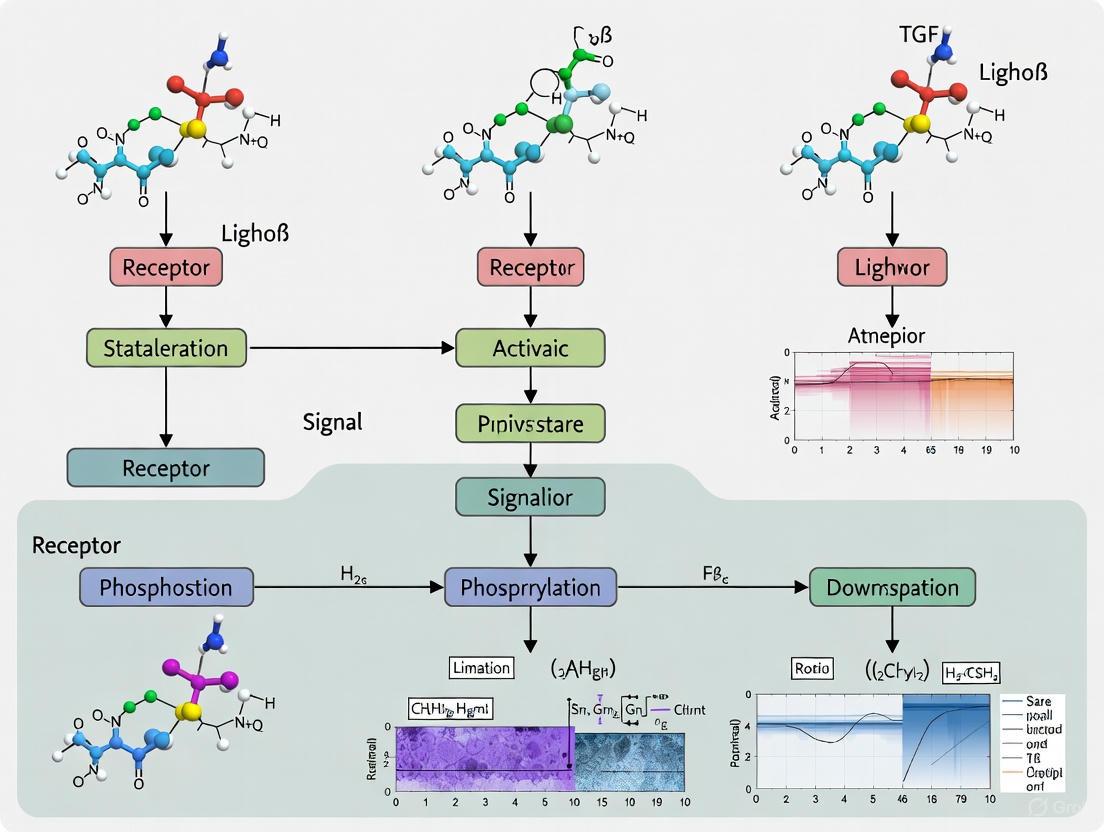
This article provides a comprehensive overview of the principles, methodologies, and applications of optogenetics for controlling Transforming Growth Factor-beta (TGF-β) signaling.
Optogenetic Control of TGF-β Signaling: A Spatiotemporal Revolution in Cell Signaling Research
Abstract
This article provides a comprehensive overview of the principles, methodologies, and applications of optogenetics for controlling Transforming Growth Factor-beta (TGF-β) signaling. Tailored for researchers and drug development professionals, it explores the foundational biology of TGF-β, details the engineering of light-sensitive receptor systems like optoTGFBRs, and outlines protocols for precise spatiotemporal manipulation. The content further addresses troubleshooting, validation against traditional methods, and comparative analysis with other control techniques. By synthesizing recent advances, this review serves as a critical resource for leveraging optogenetics to decode TGF-β dynamics in development, disease, and therapeutic discovery.
The TGF-β Signaling Pathway: From Fundamental Biology to Manipulation Challenges
Core Components and Canonical Smad-Dependent Signaling
Transforming Growth Factor-β (TGF-β) signaling represents one of the most versatile and highly regulated communication systems in mammalian cells, governing fundamental processes including cell growth, differentiation, migration, apoptosis, and homeostasis [1] [2]. The canonical Smad-dependent pathway serves as the primary signaling conduit for TGF-β ligands, transmitting information from the cell surface directly to the nucleus to regulate gene expression programs. Recent technological advances have enabled unprecedented precision in manipulating this pathway, with optogenetic control emerging as a powerful strategy for interrogating TGF-β signaling dynamics with temporal precision previously unattainable through genetic or pharmacological approaches [3] [4]. This technical guide examines the core components of canonical Smad-dependent TGF-β signaling and illustrates how optogenetic methodologies are revolutionizing our understanding of pathway dynamics in cellular decision-making.
The development of optogenetic tools for controlling TGF-β signaling represents a paradigm shift in signal transduction research, allowing researchers to move beyond static perturbation studies to dynamically manipulate signaling events with minute-scale resolution [3]. These approaches have revealed that TGF-β signaling employs not only concentration-dependent but also temporal dynamics to encode information, with specific patterns of pathway activation leading to distinct transcriptional and cellular outcomes [3] [4]. This guide provides both the foundational knowledge of canonical Smad-dependent signaling and the technical methodologies required for implementing optogenetic control in TGF-β research, with particular emphasis on applications for drug discovery and developmental biology.
Core Components of the Canonical TGF-β/Smad Pathway
TGF-β Ligands and Biosynthesis
The TGF-β signaling pathway initiates with ligands belonging to the TGF-β superfamily, which in mammals includes three primary isoforms: TGF-β1, TGF-β2, and TGF-β3 [1] [5]. These isoforms share 70-82% amino acid homology yet perform non-redundant functions in vivo, as demonstrated by their distinct knockout phenotypes [5]. TGF-β1 is the predominant isoform in adult tissues, while TGF-β2 and TGF-β3 play more specialized roles during development and in specific cellular contexts [5].
The biosynthesis of TGF-β ligands involves multiple processing steps that ensure tight regulation of activity:
- Precursor Synthesis: Each TGF-β monomer is initially synthesized as a precursor polypeptide containing an N-terminal signal peptide, a latency-associated peptide (LAP) region, and a C-terminal mature cytokine domain [1].
- Dimerization and Cleavage: The precursor dimerizes via disulfide bonds in the endoplasmic reticulum and undergoes proteolytic cleavage by furin proteases in the Golgi apparatus, separating LAP from the mature TGF-β domain while maintaining non-covalent association in a small latent complex (SLC) [1].
- Secretion and Storage: The latent complex is frequently cross-linked to latent TGF-β binding protein (LTBP) via disulfide bonds, forming a large latent complex (LLC) that targets and sequesters TGF-β within the extracellular matrix (ECM) through interactions with fibrillin [1] [5].
Table 1: Mammalian TGF-β Isoforms and Their Characteristics
| Isoform | Amino Acid Homology | Key Physiological Functions | Knockout Phenotype in Mice |
|---|---|---|---|
| TGF-β1 | Reference (100%) | Immune regulation, tissue homeostasis | Severe multiorgan inflammation, early death [5] |
| TGF-β2 | 70-82% | Embryonic development, EndMT | Perinatal death with cardiac, craniofacial, skeletal defects [5] |
| TGF-β3 | 70-82% | Palate development, lung maturation | Death within 20 hours due to abnormal lung development and cleft palate [5] |
TGF-β Activation Mechanisms
The bioavailability of active TGF-β ligands is tightly controlled through multiple activation mechanisms that liberate mature TGF-β from latent complexes:
Integrin-Mediated Activation: αVβ6 and αVβ8 integrins represent the best-characterized activators of TGF-β [1]. The αVβ6 integrin, predominantly expressed on epithelial cells, applies contractile forces to the latent complex via connections to the actin cytoskeleton, inducing conformational changes that release active TGF-β [1]. In contrast, αVβ8 integrin employs proteolytic mechanisms through membrane type 1-matrix metalloproteinase (MT1-MMP/MMP14) to activate TGF-β [1].
Proteolytic Activation: Various proteases including matrix metalloproteinases (MMP2/MMP9) can cleave latent complexes to release active TGF-β [5].
Chemical Activation: Exposure to reactive oxygen species (ROS), extreme pH conditions (pH 2.5-4 or 10-12), or thrombospondin-1 can activate latent TGF-β through non-proteolytic mechanisms [1] [5].
Trans-Activation: Membrane molecules such as GARP (LRRC32) and LRRC33 present latent TGF-β on cell surfaces where it can be activated in trans by αVβ8 integrins expressed on adjacent cells [1].
TGF-β Receptors and Complex Assembly
TGF-β signaling is mediated through specific cell surface receptors with serine/threonine kinase activity:
Type II Receptors (TβRII): TGF-β receptor II is a constitutively active serine/threonine kinase that initiates signaling by binding directly to TGF-β ligands [2] [5]. TGF-β1 and TGF-β3 exhibit high affinity for TβRII, while TGF-β2 requires additional co-receptors for efficient binding [5].
Type I Receptors (TβRI/ALK): Seven type I receptors (ALK1-7) have been identified in humans, with ALK5 (TβRI) being the primary mediator for TGF-β signaling [2] [5]. Type I receptors are recruited by ligand-bound type II receptors to form heterotetrameric complexes [2].
Type III Receptors/Accessory Proteins: Betaglycan and endoglin serve as TGF-β co-receptors that enhance ligand presentation, particularly for TGF-β2 [5]. These proteoglycans lack signaling domains but facilitate ligand-receptor interactions and modulate signaling specificity [5].
Upon ligand binding, TβRII transphosphorylates TβRI in the GS domain (a glycine/serine-rich region), activating its kinase function [2] [5]. The FKBP12 protein normally prevents leaky activation of TβRI by binding to the GS domain and dissociates upon receptor complex formation [5].
Diagram 1: Canonical TGF-β/Smad Signaling Pathway. The diagram illustrates the sequential activation process from latent complex activation to nuclear gene regulation.
Smad Proteins and Classification
Smad proteins serve as the primary intracellular effectors of canonical TGF-β signaling, functioning as transcription factors that shuttle between cytoplasm and nucleus. The name "Smad" derives from fusion of C. elegans Sma and Drosophila Mad proteins [6]. Nine Smad proteins have been identified in mammals, categorized into three functional classes:
Table 2: Classification and Functions of Mammalian Smad Proteins
| Smad Category | Family Members | Primary Functions | Signaling Pathways |
|---|---|---|---|
| Receptor-Regulated Smads (R-Smads) | Smad2, Smad3 | Phosphorylated by TβRI/ALK5; mediate TGF-β/Activin signaling [2] [6] | TGF-β, Activin, Nodal |
| Smad1, Smad5, Smad8/9 | Phosphorylated by BMP receptors; mediate BMP signaling [7] [2] [6] | BMP, GDF | |
| Common-Mediator Smad (Co-Smad) | Smad4 | Forms complexes with phosphorylated R-Smads; essential for transcriptional responses [2] [6] | All TGF-β superfamily pathways |
| Inhibitory Smads (I-Smads) | Smad6, Smad7 | Antagonize R-Smad activation; provide negative feedback regulation [2] [6] | TGF-β and BMP pathways |
All Smad proteins share conserved structural elements:
- MH1 Domain: N-terminal Mad Homology 1 domain responsible for DNA binding [6].
- MH2 Domain: C-terminal Mad Homology 2 domain mediating protein-protein interactions and transcriptional activation [6].
- Linker Region: Proline-rich intermediate region connecting MH1 and MH2 domains, subject to regulatory phosphorylation [6].
Signal Transduction and Nuclear Translocation
The canonical Smad signaling cascade follows a sequential activation process:
R-Smad Phosphorylation: Activated TβRI phosphorylates R-Smads (primarily Smad2/3 for TGF-β) at C-terminal serine residues [2] [6]. This phosphorylation is facilitated by SARA (Smad Anchor for Receptor Activation), which recruits R-Smads to the receptor complex through clathrin-mediated endocytosis [2].
Complex Formation with Smad4: Phosphorylated R-Smads undergo conformational changes that promote dissociation from receptors and association with Smad4 [2] [6]. The resulting heterotrimeric complex accumulates in the nucleus through exposed nuclear localization signals [2].
Transcriptional Regulation: Nuclear Smad complexes collaborate with DNA-binding partners, co-activators, and co-repressors to regulate target gene expression [2] [8]. The specific transcriptional outcomes depend on cellular context, partner transcription factors, and chromatin accessibility.
Signal Termination: Multiple mechanisms ensure appropriate signal duration, including:
Optogenetic Control of TGF-β Signaling
Principles of Optogenetic Interference
Optogenetic control represents a breakthrough technology for precise manipulation of TGF-β signaling dynamics, enabling researchers to achieve temporal resolution impossible with genetic or pharmacological approaches [3] [4]. These systems utilize light-sensitive domains from various organisms to control protein localization, interaction, or activity with minute-scale precision.
The fundamental advantage of optogenetic systems lies in their capacity to mimic native signaling dynamics observed in physiological contexts. Research has revealed that TGF-β signaling components exhibit pulsatile behavior during differentiation processes, with YAP (a Hippo pathway component interconnected with TGF-β signaling) showing dynamic fluctuations in approximately 36-51% of differentiating mESCs, with pulses lasting 2.4-2.7 hours on average [3]. Such native dynamics are difficult to replicate with conventional experimental approaches but can be precisely engineered through optogenetic control.
Implementation Strategies
Light-Gated Nuclear Export Systems
The iLEXY (inducible nuclear export system) represents an effective strategy for controlling TGF-β signaling effectors [3]. This approach involves:
Molecular Design: Fusion of the light-sensitive AsLOV2 domain to the protein of interest (e.g., YAP or Smads) along with a nuclear export signal (NES) that becomes exposed upon blue light illumination [3].
Mechanism of Action: Blue light (450-490 nm) induces conformational changes in the AsLOV2 domain, exposing the cryptic NES and promoting rapid nuclear export of the fusion protein (~5 minutes) [3]. Cessation of illumination allows nuclear re-import (~15 minutes) [3].
Implementation: The LEXY-YAP system demonstrated nuclear depletion of approximately 60% with light exposure, enabling pulsatile control that mimics endogenous dynamics [3].
Optogenetic Control of TGF-β Signaling in iPSCs
Recent research has established protocols for optogenetic control of TGF-β signaling during directed differentiation of human induced pluripotent stem cells (iPSCs) [4]. This approach enables precise temporal control over mesenchymal lineage specification through light-regulated signaling manipulation, providing unprecedented control over stem cell fate decisions [4].
Experimental Workflow for Optogenetic Control
The implementation of optogenetic TGF-β control follows a systematic workflow:
Diagram 2: Experimental Workflow for Optogenetic Control of TGF-β Signaling
Quantitative Analysis of TGF-β Signaling Dynamics
Dynamic Decoding of Signaling Patterns
Optogenetic control has revealed that cells employ sophisticated decoding mechanisms for TGF-β signaling, responding differentially to various temporal patterns of pathway activation:
Table 3: Cellular Responses to Different YAP/TGF-β Signaling Dynamics
| Signaling Pattern | Experimental Parameters | Transcriptional Responses | Cellular Outcomes |
|---|---|---|---|
| Sustained Low | Continuous nuclear export [3] | Oct4 repression [3] | Cellular differentiation [3] |
| Pulsatile/Oscillatory | 2.4-2.7 hour pulses (mimicking native dynamics) [3] | Optimal Oct4 induction [3] | Enhanced proliferation [3] |
| Frequency-Modulated | Varying pulse intervals [3] | Differential Oct4/Nanog expression [3] | Fate specification [3] |
Research has demonstrated that the Oct4 pluripotency factor functions as an adaptive change sensor that optimally responds to specific YAP dynamics rather than simply tracking absolute nuclear concentrations [3]. This dynamic decoding capacity enables cells to multiplex information transmission through a single signaling pathway.
Research Reagent Solutions for TGF-β Studies
Table 4: Essential Research Tools for TGF-β/Smad Signaling Studies
| Reagent Category | Specific Examples | Key Applications | Experimental Notes |
|---|---|---|---|
| Optogenetic Systems | iLEXYi-AsLOV2 [3], LEXY-YAP [3] | Dynamic control of nuclear localization | Enables minute-scale temporal precision; requires blue light (450-490 nm) illumination [3] |
| Chemical Inhibitors | SB431542 [2] | Selective inhibition of ALK4/5/7 | Useful for comparative studies with optogenetic approaches [2] |
| Smad Phosphorylation Antibodies | Phospho-Smad1/5/8, Phospho-Smad2/3 [7] | Monitoring pathway activation | Critical for validating optogenetic manipulation efficiency [7] |
| Lineage Tracing Systems | SNAP-tag reporters [3], Fluorescent protein fusions | Real-time tracking of differentiation | Enables live imaging of cellular responses to dynamic signaling inputs [3] |
| Gene Editing Tools | CRISPR/Cas9 for knockout backgrounds [3] | Creating defined cellular contexts | Essential for eliminating confounding endogenous signaling [3] |
Technical Protocols for Key Experiments
Protocol: Optogenetic Control of TGF-β Signaling in Stem Cells
This protocol outlines the implementation of light-gated TGF-β signaling control in pluripotent stem cells, adapted from established methodologies [3] [4]:
Materials Required:
- iLEXYi-SNAP-YAP (LEXY-YAP) construct [3]
- Doxycycline-inducible expression system [3]
- YAP knockout background cells [3]
- Blue light illumination system (450-490 nm)
- Live-cell imaging compatible incubation system
Procedure:
- Cell Line Generation:
- Introduce doxycycline-inducible LEXY-YAP construct into YAP KO cells
- Validate expression levels across doxycycline concentrations (0.1-1000 ng/mL)
- Confirm nuclear/cytoplasmic shuttling dynamics in response to light
Signaling Dynamics Programming:
- For sustained signaling inhibition: Apply continuous blue light illumination
- For pulsatile activation: Program light/dark cycles (e.g., 15 min light/45 min dark)
- For frequency modulation: Systematically vary pulse duration and interval
Response Monitoring:
- Image nuclear YAP localization every 5-10 minutes
- Monitor downstream transcriptional activity using MS2/MCP RNA labeling system
- Assess pluripotency factor expression (Oct4, Nanog) via immunofluorescence
Phenotypic Analysis:
- Quantify proliferation rates under different signaling regimes
- Assess differentiation markers after 48-72 hours of patterned stimulation
- Perform single-cell RNA sequencing to profile transcriptional responses
Technical Considerations:
- Maintain consistent light intensity (0.5-5 mW/mm²) across experiments
- Include dark controls and genetic/pharmacological controls for comparison
- Account for potential heating effects from prolonged illumination
- Use appropriate statistical methods for time-series data analysis
Protocol: Monitoring Smad Phosphorylation Dynamics
Materials Required:
- Phospho-specific Smad antibodies (pSmad1/5/8, pSmad2/3) [7]
- Proximity ligation assay reagents for protein interaction detection
- Standard immunofluorescence and western blotting equipment
Procedure:
- Stimulation and Fixation:
- Apply TGF-β ligand (2-10 ng/mL) or optogenetic stimulation
- Fix cells at timed intervals (0, 15, 30, 60, 120 minutes)
- Process for immunofluorescence or protein extraction
Detection and Quantification:
- Perform immunofluorescence with phospho-Smad antibodies
- Quantify nuclear fluorescence intensity
- Alternatively, use western blotting with phospho-specific antibodies
- Normalize to total Smad protein levels
Interaction Analysis:
- Implement proximity ligation assays to detect R-Smad/Smad4 complexes
- Quantify nuclear foci formation over time
Technical Considerations:
- Include specificity controls with pathway inhibitors
- Optimize fixation and permeabilization for phospho-epitope preservation
- Use high-content imaging systems for population-level analysis
Applications in Drug Development and Disease Modeling
The integration of optogenetic control with TGF-β signaling research has profound implications for pharmaceutical development and disease modeling:
High-Throughput Screening: Optogenetic systems enable precise temporal control of TGF-β signaling in screening contexts, allowing identification of compounds that modulate specific aspects of pathway dynamics rather than simply inhibiting or activating the pathway [3].
Therapeutic Target Validation: The ability to mimic pathological signaling dynamics (e.g., sustained vs. pulsatile activation) facilitates better understanding of disease mechanisms and validation of potential therapeutic targets [1] [5].
Stem Cell Engineering and Regenerative Medicine: Optogenetic control of TGF-β signaling provides unprecedented precision in directing stem cell differentiation for tissue engineering applications [4]. The capacity to dynamically pattern signaling activation enables more precise generation of specific cell types for regenerative therapies.
Cancer Biology: TGF-β signaling plays dual roles in cancer, acting as both tumor suppressor and promoter [1] [5]. Optogenetic approaches can help decipher how signaling dynamics contribute to this context-dependent functionality, potentially informing novel therapeutic strategies.
The emerging toolkit for optogenetic control of TGF-β signaling represents a transformative approach for both basic research and therapeutic development, providing temporal precision that matches the dynamic nature of cellular signaling networks. As these technologies continue to evolve, they will undoubtedly yield new insights into the sophisticated communication codes that govern cellular behavior in health and disease.
The Critical Roles of TGF-β in Physiology and Disease
Transforming Growth Factor-β (TGF-β) is a multifunctional cytokine expressed by almost every tissue and cell type in the human body [1]. Since its initial discovery as "sarcoma growth factor" in 1978, TGF-β has emerged as a critical regulator of diverse cellular processes including proliferation, differentiation, migration, and apoptosis [1]. The TGF-β signaling pathway controls embryonic development, wound healing, tissue homeostasis, and immune function in healthy organisms [1] [9]. Conversely, dysregulation of TGF-β signaling is implicated in numerous disease processes, including fibrosis, cancer, inflammation, and developmental disorders [1] [5] [9]. This whitepaper examines the critical roles of TGF-β in both physiological and pathological contexts, with particular emphasis on how emerging optogenetic technologies are revolutionizing our ability to precisely dissect TGF-β signaling mechanisms and their therapeutic applications.
Molecular Mechanisms of TGF-β Signaling
TGF-β Biosynthesis, Latency, and Activation
TGF-β is synthesized as a precursor polypeptide consisting of an N-terminal signal peptide, a latency-associated peptide (LAP), and a C-terminal mature cytokine [1] [5]. Following signal peptide removal in the endoplasmic reticulum, the precursor dimerizes and undergoes proteolytic cleavage by furin in the Golgi apparatus, resulting in the formation of the small latent complex (SLC) where mature TGF-β remains non-covalently associated with LAP [1]. In most cases, the SLC binds to latent TGF-β-binding protein (LTBP) via disulfide bonds to form the large latent complex (LLC), which targets TGF-β to the extracellular matrix (ECM) for storage [1] [5]. Alternatively, LAP can form disulfide linkages with leucine-rich repeat-containing proteins (LRRC32/GARP or LRRC33) to tether the SLC to the cell surface [1].
The activation of TGF-β requires liberation of the mature cytokine from the latent complex. Several activation mechanisms have been identified:
- Integrin-mediated activation: αVβ6 and αVβ8 integrins bind to the RGD motif in LAP of TGF-β1 and TGF-β3, inducing conformational changes that release active TGF-β [1].
- Proteolytic activation: Enzymes including matrix metalloproteinases (MMP2/MMP9) and membrane type 1-matrix metalloproteinase (MT1-MMP/MMP14) can proteolytically cleave and activate TGF-β [1] [5].
- Physical and chemical activation: Exposure to extreme pH (acidic or basic conditions), reactive oxygen species, or thrombospondin-1 can activate latent TGF-β [1] [5].
Table 1: Key Components of TGF-β Biosynthesis and Activation
| Component | Structure/Composition | Function |
|---|---|---|
| TGF-β Precursor | 390-amino-acid polypeptide with signal peptide, LAP, and mature cytokine | Initial translation product that undergoes post-translational processing [1] |
| Small Latent Complex (SLC) | Non-covalent association of LAP dimer with mature TGF-β dimer | Masks receptor-binding site of TGF-β, maintaining latency [1] |
| Large Latent Complex (LLC) | SLC disulfide-linked to Latent TGF-β Binding Protein (LTBP) | Targets TGF-β to extracellular matrix for storage [1] [5] |
| LAP | ~12,500 Dalton subunit derived from precursor | Maintains TGF-β latency by masking receptor-binding sites [1] |
| Integrins αVβ6/αVβ8 | Heterodimeric transmembrane receptors | Bind RGD motif in LAP to activate TGF-β through force transmission or proteolysis [1] |
Canonical (Smad-Dependent) Signaling Pathway
The canonical TGF-β signaling pathway involves receptor activation and subsequent Smad protein phosphorylation and translocation. The process follows these key steps:
- Receptor binding and activation: Mature TGF-β ligand binds to TGF-β type II receptor (TβRII) homodimers, facilitating recruitment and transphosphorylation of TGF-β type I receptor (TβRI/ALK5) homodimers [10] [5].
- R-Smad phosphorylation: Activated TβRI phosphorylates receptor-regulated Smads (R-Smads: Smad2 and Smad3) at C-terminal serine residues [11] [5].
- Complex formation and nuclear translocation: Phosphorylated R-Smads form heterotrimeric complexes with Smad4 (Co-Smad) that accumulate in the nucleus [11] [5].
- Gene regulation: The Smad complexes associate with transcription factors and co-regulators to control expression of target genes, including those involved in proliferation, differentiation, and immune regulation [10] [5].
The specificity of TGF-β signaling is modulated by inhibitory Smads (I-Smads: Smad6 and Smad7) that negatively regulate the pathway, and by various post-translational modifications that affect Smad activity and turnover [11].
Diagram 1: TGF-β Canonical Signaling Pathway
Non-Canonical Signaling Pathways
In addition to the canonical Smad pathway, TGF-β can activate various non-canonical signaling cascades including MAPK pathways (ERK, JNK, p38), PI3K/AKT, Rho-like GTPases, and NF-κB [12]. These pathways typically operate independently of Smad proteins and contribute to the diverse cellular responses to TGF-β, particularly in disease contexts such as cancer and fibrosis [12].
Quantitative Dynamics of TGF-β Signaling
Temporal Dynamics and Signaling Responses
TGF-β signaling exhibits distinct temporal dynamics that influence cellular outcomes. Research has revealed that cells respond differently to continuous versus pulsatile TGF-β stimulation [11]. Short-term Smad2 phosphorylation (within minutes to hours) demonstrates a graded response to TGF-β concentration, whereas long-term signaling (over several hours) exhibits switch-like, ultrasensitive behavior where small changes in TGF-β concentration within a specific range produce large changes in Smad2 phosphorylation [11].
Table 2: Quantitative Dynamics of TGF-β Signaling Responses
| Signaling Parameter | Short-Term Response (<3 hours) | Long-Term Response (>3 hours) | Biological Significance |
|---|---|---|---|
| Smad2 Phosphorylation | Graded response to TGF-β concentration [11] | Ultrasensitive, switch-like response [11] | Converts continuous ligand doses into discrete cellular decisions [11] |
| Gene Expression Patterns | Graded Smad7 expression [11] | Switch-like PAI-1 expression [11] | Differential regulation of immediate vs. late target genes [11] |
| Response to Pulsatile Stimulation | Transient signaling with single pulses [11] | Integration of repeated pulses at short intervals [11] | Cellular memory and signal processing capability [11] |
| Critical Threshold | ~60,000 TGF-β molecules/cell induce detectable Smad2 phosphorylation [11] | Switch-like behavior at specific concentration ranges [11] | Enables binary fate decisions in development [11] |
Mathematical modeling incorporating time-delayed positive and negative feedback loops has demonstrated that coupling these regulatory circuits enables TGF-β signaling to exhibit both short-term and long-term switching responses at different TGF-β concentrations [12]. The negative feedback through Smad7 and positive feedback through miR-433-mediated suppression of Azin1 are particularly important for generating these dynamic properties [12].
Morphogen Gradients and Cellular Decision Making
In developmental contexts, TGF-β family members function as morphogens, forming concentration gradients that convey positional information to cells [13]. For example, Nodal (a TGF-β family member) forms a vegetal-to-animal concentration gradient in zebrafish embryos that patterns the mesendoderm, with higher Nodal levels directing cells toward endodermal fates and lower levels specifying mesodermal fates [13]. Cells can extract complex information from these gradients, including not only local morphogen concentration but also domain size, geometric features, and temporal dynamics [13].
TGF-β Functions in Physiological and Pathological Contexts
Roles in Physiological Processes
TGF-β signaling plays critical roles in numerous physiological processes:
- Embryonic development: TGF-β isoforms are essential for normal embryogenesis, with knockout studies demonstrating severe developmental defects and embryonic or perinatal lethality for each isoform [5].
- Immune homeostasis: TGF-β maintains immune tolerance by regulating T cell differentiation and function, particularly through the generation and maintenance of regulatory T cells (Tregs) [1] [9].
- Wound healing and tissue repair: TGF-β coordinates multiple aspects of tissue repair, including inflammation, angiogenesis, fibroplasia, and matrix remodeling [1] [5].
- Tissue homeostasis: In adult tissues, TGF-β maintains proper balance between cell proliferation, differentiation, and apoptosis [9].
Roles in Disease Pathogenesis
Dysregulated TGF-β signaling contributes to numerous human diseases:
- Cancer: TGF-β has dual roles in cancer, acting as a tumor suppressor in early stages by inhibiting epithelial cell proliferation, and as a tumor promoter in advanced stages by enhancing invasion, metastasis, and treatment resistance [1] [9] [12].
- Fibrotic disorders: Excessive TGF-β signaling drives pathological extracellular matrix accumulation in renal, pulmonary, hepatic, and cardiac fibrosis [1] [5].
- Developmental disorders: Mutations in TGF-β signaling components cause various hereditary conditions, such as Marfan syndrome (FBN1 mutations), Loeys-Dietz syndrome (TGFBR1/2 mutations), and other connective tissue disorders [5].
- Vascular diseases: TGF-β signaling abnormalities contribute to aortic aneurysms, vascular malformations, and hereditary hemorrhagic telangiectasia [5].
Optogenetic Control of TGF-β Signaling
Development of Optogenetic Tools for TGF-β Signaling
Optogenetics has emerged as a powerful technology for controlling TGF-β signaling with high spatiotemporal precision. Several optogenetic systems have been developed to manipulate TGF-β signaling pathways:
- optoTGFBRs: This system uses blue light-sensitive CRY2/CIBN heterodimerizers to control interactions between TβRI and TβRII cytoplasmic domains, enabling precise temporal and spatial activation of Smad signaling in single cells [10].
- OptoNodal/optoNodal2: These tools fuse Nodal receptors to light-sensitive domains (LOV in optoNodal; Cry2/CIB1N in optoNodal2) to control mesendodermal patterning in zebrafish embryos [13].
- Improved optoNodal2 reagents: Recent advancements eliminate dark activity and improve response kinetics while maintaining dynamic range, enabling precise spatial control over Nodal signaling and downstream gene expression [13].
Diagram 2: Optogenetic Control of TGF-β Signaling
Experimental Protocols for Optogenetic Control
Protocol 1: Activation and Monitoring of optoTGFBRs in Cultured Cells
- Cell preparation: Culture optoTGFBRs-HeLa cells stably expressing Myr-cytTβRI-CIBN, cytTβRII-PHR-tdTomato, and iRFP-Smad2 in appropriate medium [10].
- Light stimulation: Illuminate cells with blue light (488 nm, 12.4 μW) using a patterned illumination system. For spatial control, restrict illumination to specific subcellular regions or single cells [10].
- Live imaging: Monitor TβRII-PHR-tdTomato recruitment to the plasma membrane (occurs within seconds) and iRFP-Smad2 nuclear translocation (occurs within minutes) using time-lapse microscopy [10].
- Inhibition controls: Treat control samples with TGF-β receptor inhibitor LY364947 to confirm specificity of light-induced signaling [10].
- Validation: Assess Smad2 phosphorylation and downstream gene expression by immunoblotting and qPCR at appropriate time points [10].
Protocol 2: Patterning Nodal Signaling in Zebrafish Embryos
- Embryo preparation: Dechorionate zebrafish embryos at the 1-cell stage and inject with optoNodal2 mRNA [13].
- Mounting and orientation: Arrange embryos in a custom imaging chamber with proper orientation for targeted illumination [13].
- Patterned illumination: Use an ultra-widefield microscopy platform to deliver customized light patterns to up to 36 embryos in parallel [13].
- Signaling monitoring: Track Nodal signaling activity through downstream gene expression patterns using in situ hybridization or live reporters [13].
- Phenotypic analysis: Assess mesendodermal patterning and cell internalization movements during gastrulation [13].
Research Reagent Solutions
Table 3: Essential Research Reagents for Optogenetic TGF-β Research
| Reagent/Tool | Composition/Type | Function/Application | Key Features |
|---|---|---|---|
| optoTGFBRs System | Myr-cytTβRI-CIBN + cytTβRII-PHR-tdTomato | Precise spatiotemporal control of TGF-β receptor activation [10] | Blue light-inducible; reversible; single-cell resolution [10] |
| OptoNodal2 System | Nodal receptors fused to Cry2/CIB1N | Control of mesendodermal patterning in zebrafish embryos [13] | Minimal dark activity; improved kinetics; high dynamic range [13] |
| CRY2/CIBN Pair | Blue light-sensitive heterodimerizers | Optogenetic control of protein-protein interactions [10] | Fast association/dissociation kinetics; minimal basal interaction [10] |
| LEXY-YAP System | iLEXYi-SNAP-YAP fusion protein | Optogenetic control of YAP nuclear export [3] | Reversible nuclear export; compatible with TGF-β studies [3] |
| Ultra-Widefield Patterned Illumination | Custom microscopy platform | Spatial light patterning in multiple embryos [13] | Parallel processing of 36+ embryos; subcellular resolution [13] |
| TGF-β Pathway Inhibitors | LY364947, SB-431542 | Specific inhibition of TGF-β type I receptor kinase activity [10] | Validation of optogenetic system specificity [10] |
Applications and Therapeutic Implications
Research Applications of Optogenetic TGF-β Control
Optogenetic control of TGF-β signaling enables numerous advanced research applications:
- Decoding morphogen patterning: Precisely defined Nodal signaling patterns in zebrafish embryos have revealed how cells interpret morphogen gradients to make fate decisions [13].
- Directed differentiation of stem cells: Light-controlled TGF-β signaling enables precise manipulation of human induced pluripotent stem cell (iPSC) differentiation into mesenchymal lineages [4].
- Single-cell signaling dynamics: The optoTGFBRs system allows characterization of TGF-β signaling dynamics in individual cells, revealing heterogeneous responses within populations [10].
- Temporal coding of signaling information: Studies with optogenetic YAP demonstrate that stem cells decode both steady-state concentrations and timing of pathway activation to control proliferation and cell fate decisions [3].
Therapeutic Implications and Future Directions
The precise control afforded by optogenetic approaches has significant therapeutic implications:
- Tissue engineering and regenerative medicine: Light-controlled differentiation protocols could improve the purity and efficiency of generating specific cell types for transplantation [4].
- Spatially targeted therapeutics: Optogenetic principles could inspire development of therapies that activate TGF-β signaling pathways in specific tissues while minimizing off-target effects [10].
- Dynamic disease modeling: Optogenetic tools enable recreation of disease-relevant signaling dynamics in vitro, facilitating drug screening and mechanistic studies [10] [3].
- Synthetic developmental biology: The ability to create arbitrary morphogen patterns with light provides unprecedented opportunities to engineer tissue formation and organogenesis [13].
As optogenetic technologies continue to advance, they will likely bridge fundamental research and clinical applications, potentially leading to light-controlled therapies for diseases involving TGF-β signaling dysregulation.
The Rationale for Spatiotemporal Precision in Pathway Control
The transformation of an extracellular biochemical signal into a specific cellular response represents one of the most fundamental processes in biology. The Transforming Growth Factor-β (TGF-β) signaling pathway exemplifies a system where a relatively simple canonical pathway elicits an astonishing diversity of cellular outcomes, including proliferation, differentiation, migration, and apoptosis [14]. This pleiotropy presents a fundamental question: how does activation of a single pathway generate such context-dependent responses? Emerging evidence demonstrates that cells utilize both the spatial organization and temporal dynamics of signaling to encode and decode information, moving beyond a simple binary "on/off" paradigm [15] [11]. In TGF-β signaling, cells can read ligand concentration with high precision, enabling them to sense their position in morphogen gradients during development and wound healing [14]. Furthermore, the duration and pattern of signaling activation—whether transient or sustained, pulsatile or constant—can determine ultimate cell fate decisions [11]. The development of optogenetic tools now provides the necessary spatiotemporal precision to dissect this complex signaling code, offering unprecedented control over pathway activity with light. This technical guide explores the rationale for spatiotemporal precision in pathway control, focusing specifically on the application of optogenetic techniques to TGF-β signaling research, and provides a practical toolkit for researchers seeking to implement these approaches.
Theoretical Foundation: How Signaling Dynamics Encode Information
The Quantitative Nature of TGF-β/Smad Signaling
The canonical TGF-β pathway operates through a relatively straightforward molecular mechanism: TGF-β ligands bind to cell surface receptors (TβRI and TβRII), which then phosphorylate receptor-regulated Smads (R-Smads: Smad2/3). These phosphorylated R-Smads form complexes with Smad4 and translocate to the nucleus where they regulate target gene expression [14]. Despite this apparent simplicity, this pathway exhibits sophisticated quantitative properties. Cells can distinguish subtle differences in TGF-β concentration and orchestrate distinct responses. For instance, activin concentration can induce five distinct differentiation fates in Xenopus animal cap cells, while kidney tubule cells proliferate in response to low-dose BMP-7 but undergo apoptosis at high doses [14].
The signaling dynamics of this pathway occur across multiple timescales. Receptor activation happens within seconds to minutes, Smad phosphorylation and nuclear translocation within minutes, and subsequent transcriptional responses within hours [14]. Importantly, the duration of signaling activation carries specific information. Short-term Smad2 phosphorylation responses to TGF-β are typically graded, while long-term responses become switch-like, enabling cells to convert continuous ligand stimulation into discrete fate decisions [11].
Table 1: Temporal Response Patterns in TGF-β Signaling
| Timescale | Signaling Response | Characteristic | Biological Implication |
|---|---|---|---|
| Short-term (minutes-hours) | Smad2 Phosphorylation | Graded | Proportional sensing of ligand concentration |
| Long-term (hours-days) | Smad2 Phosphorylation | Switch-like (ultrasensitive) | Fate determination boundaries |
| Transient (single pulse) | Target Gene Expression | Transient response | Temporary adaptation |
| Sustained (repeated pulses) | Target Gene Expression | Integrated, sustained response | Commitment to fate decisions |
Dynamic Decoding Mechanisms in Signaling Pathways
The concept of dynamic decoding extends beyond TGF-β signaling to other critical pathways. Research on the transcriptional regulator YAP (yes-associated protein) revealed that cells decode both steady-state concentrations and timing of YAP activation to control proliferation, cell fate, and expression of pluripotency regulators [3]. While oscillatory YAP inputs optimally induce Oct4 expression and proliferation at frequencies mimicking native dynamics, cellular differentiation requires persistently low YAP levels [3]. Similarly, in the MAPK pathway, transient ERK activation by EGF is associated with cell proliferation while persistent ERK activation by NGF leads to cell differentiation [11]. These examples illustrate a broader principle: temporal dynamics represent a fundamental layer of information encoding in biological systems.
The spatial organization of signaling components also contributes significantly to information specificity. Signaling pathways employ various strategies to control spatial range—from direct cell-contact-mediated signaling like Notch, which activates only immediately adjacent cells, to diffusible morphogens that form concentration gradients across developing tissues [15]. In TGF-β signaling, receptor trafficking between different cellular compartments (clathrin-coated pits versus caveolae) influences signaling strength and duration, adding another layer of spatial regulation [14].
Optogenetic Control: Achieving Spatiotemporal Precision in TGF-β Signaling
Optogenetic Systems for Pathway Manipulation
Optogenetic control refers to the use of light-sensitive proteins to precisely manipulate biological processes in time and space. While traditional genetic approaches (knockdown, knockout, or overexpression) lack temporal precision and often spatial specificity, optogenetic tools enable researchers to control signaling pathway activity with second-to-minute temporal resolution and subcellular spatial precision. Although direct examples of optogenetic TGF-β control were limited in the search results, the principles can be extrapolated from optogenetic YAP studies [3] and other signaling pathways.
The fundamental components of an optogenetic signaling control system include:
- A light-sensitive domain (e.g., AsLOV2, CRY2/CIB) that undergoes conformational changes upon illumination
- A signaling effector domain (e.g., transcription factor, kinase, receptor) whose activity is controlled by the light-sensitive domain
- A targeting system that localizes the construct to specific cellular compartments
- A light delivery system capable of administering precise illumination patterns to cells or tissues
In the context of TGF-β signaling, potential optogenetic strategies include controlling receptor clustering and activation, regulating Smad nucleocytoplasmic shuttling, or directly controlling transcriptional activity of Smad complexes.
Experimental Implementation and Workflow
The implementation of optogenetic control for TGF-β signaling follows a structured workflow that integrates molecular engineering, cell biology, and precise stimulation protocols. Based on analogous systems [3], a typical experimental setup would include:
Diagram 1: Optogenetic Workflow
Quantitative Analysis of Signaling Dynamics
A critical advantage of optogenetic control is the ability to generate quantitative input-output relationships for signaling pathways. By systematically varying the parameters of light stimulation (intensity, duration, frequency), researchers can build comprehensive maps of how signaling dynamics control cellular responses. In the case of YAP signaling, different frequencies of oscillatory input optimally controlled distinct downstream processes—proliferation was best induced by dynamic inputs mimicking native YAP fluctuations, while differentiation required sustained low YAP levels [3].
Table 2: Stimulation Parameters and Their Biological Effects
| Stimulation Parameter | Experimental Manipulation | Measured Output | Key Finding |
|---|---|---|---|
| Amplitude | Light intensity or expression level | Nuclear Smad concentration | Threshold effects in gene activation |
| Duration | Continuous vs. pulsed illumination | Sustained vs. transient signaling | Fate determination vs. adaptive responses |
| Frequency | Oscillatory input patterns | Transcriptional activation | Optimal frequencies for target genes |
| Spatial pattern | Targeted illumination | Localized pathway activation | Community effects in cell populations |
For TGF-β signaling, similar principles likely apply. Research has shown that cells respond differently to continuous versus pulsating TGF-β stimulation [11]. While a single pulse of TGF-β elicits a transient signaling response, repeated pulses at short intervals can integrate to produce sustained phospho-Smad2 and transcriptional responses [11]. This pulsatile integration capability suggests temporal filtering mechanisms that could be precisely mapped using optogenetic approaches.
Research Reagent Solutions for Optogenetic TGF-β Studies
Implementing optogenetic control of TGF-β signaling requires specialized reagents and tools. The following table summarizes key resources and their applications:
Table 3: Essential Research Reagents for Optogenetic TGF-β Studies
| Reagent Category | Specific Examples | Function/Application | Technical Considerations |
|---|---|---|---|
| Optogenetic Platforms | iLEXY system, LOV2-based tools, CRY2/CIB systems | Light-controlled protein sequestration or dimerization | Reversibility kinetics match TGF-β signaling timescales |
| Cell Lines | Modified mESCs, Epithelial cells, Fibroblasts | Cellular context for signaling studies | Endogenous pathway expression and responsiveness |
| Reporting Systems | Live-cell Smad translocation reporters, Transcriptional GFP reporters | Real-time monitoring of pathway activity | Signal-to-noise ratio and temporal resolution |
| Activation Ligands | Photoactivatable TGF-β analogs, Caged compounds | Precise initiation of signaling | Uncaging efficiency and temporal precision |
| Modulation Equipment | Programmable LED arrays, Laser systems, DMD setups | Spatially and temporally patterned illumination | Intensity control and pattern flexibility |
Experimental Protocols for Key Investigations
Protocol 1: Establishing Dynamic Signaling Response Profiles
Objective: To characterize how different temporal patterns of TGF-β pathway activation control distinct transcriptional outputs.
Materials:
- Optogenetic TGF-β pathway cell line (e.g., light-controllable Smad system)
- Programmable light illumination system capable of pulsed and continuous outputs
- Live-cell imaging setup with environmental control
- qPCR reagents or reporter cell lines for target genes (PAI-1, Smad7, etc.)
Method:
- Plate cells in appropriate imaging-compatible vessels and allow to adhere for 24 hours
- Divide cells into experimental groups with different illumination patterns:
- Group 1: Continuous illumination (24 hours)
- Group 2: Pulsed illumination (e.g., 30 min on/30 min off for 24 hours)
- Group 3: Single pulse (30 min) followed by dark period
- Group 4: Frequency-sweep (systematically varying pulse frequency)
- For each group, monitor nuclear Smad localization in real-time using live-cell imaging
- At endpoint (24 hours), fix cells for immunostaining or harvest for RNA analysis
- Quantify expression of early (e.g., Smad7) and late (e.g., PAI-1) target genes
- Correlate temporal signaling dynamics with transcriptional outputs
Expected Results: Early response genes may show graded responses to cumulative stimulation, while late response genes may exhibit threshold behaviors requiring sustained or specific dynamic patterns of activation [11].
Protocol 2: Spatial Patterning Through Targeted Pathway Activation
Objective: To demonstrate how spatially restricted TGF-β pathway activation can create patterns of gene expression within a cell population.
Materials:
- Optogenetic TGF-β reporter cell line with uniform expression
- Digital micromirror device (DMD) or spatial light modulator for patterned illumination
- High-resolution live-cell imaging system
- Image analysis software with single-cell resolution
Method:
- Plate cells at appropriate density to form a confluent monolayer
- Design illumination patterns (e.g., stripes, circles, gradients) using light patterning software
- Apply illumination patterns for specified duration (4-24 hours depending on response kinetics)
- Monitor spatial propagation of signaling in real-time using live reporters
- Fix cells at endpoint and perform multiplexed RNA FISH for target genes
- Analyze correlation between illumination pattern and gene expression pattern at single-cell level
Expected Results: Spatial patterns of pathway activation should directly translate into spatial patterns of target gene expression, though signal propagation to neighboring cells may occur through secondary mechanisms, creating more complex patterns [16].
Applications and Future Directions in Drug Development
The spatiotemporal precision offered by optogenetic control of TGF-β signaling has profound implications for therapeutic development. As TGF-β signaling plays paradoxical roles in cancer—acting as a tumor suppressor in early stages but promoting metastasis in advanced disease [17]—understanding how signaling dynamics control these opposing outcomes is critical for developing context-appropriate therapies. By defining the precise temporal patterns that promote tumor-suppressive versus tumor-promoting responses, researchers can design drugs that selectively modulate specific dynamic aspects of pathway activity.
Furthermore, the ability to control signaling with spatiotemporal precision enables the engineering of synthetic developmental systems. Recent work with synthetic Notch (synNotch) circuits has demonstrated how synthetic signaling pathways can be designed to generate self-organizing spatial patterns [16]. Similar principles applied to TGF-β signaling could enable the programming of tissue morphogenesis for regenerative medicine applications. These synthetic systems also serve as valuable testing grounds for understanding general principles of spatiotemporal control in multicellular contexts.
Diagram 2: Research Applications
In conclusion, spatiotemporal precision in controlling TGF-β signaling represents not merely a technical improvement but a fundamental shift in how we interrogate and manipulate cellular communication. By moving beyond static activation to dynamic control, researchers can finally decode the rich information content embedded in signaling dynamics and harness this understanding for fundamental discoveries and therapeutic innovations.
Engineering Light-Switched Receptors: A Guide to the optoTGFBRs System and Its Uses
Cells make fate decisions, such as proliferation or differentiation, in response to signals from their environment. These decisions are orchestrated by complex signaling networks where the spatiotemporal dynamics of the signal are often as important as its identity. Transforming Growth Factor Beta (TGF-β) and its related pathways, including Nodal signaling, are quintessential examples of such pathways, governing everything from embryonic development to tissue homeostasis [10] [13]. Traditional methods to study these pathways, such as ligand addition or chemical inhibition, are limited in their spatial and temporal resolution, making it difficult to mimic the precise dynamics of natural signaling.
Optogenetics, the use of light to control biological processes in genetically modified cells or organisms, has emerged as a powerful solution. By fusing signaling proteins to light-sensitive domains, researchers can control protein-protein interactions with unparalleled precision. This whitepaper provides an in-depth guide to one of the most prominent optogenetic dimerizer systems, CRY2/CIBN, explores key alternatives, and details its application in controlling TGF-β signaling, offering researchers a toolkit for mechanistic studies and therapeutic development.
The CRY2/CIBN Dimerizer System: A Deep Dive
The CRY2/CIBN system is derived from the plant Arabidopsis thaliana. The core components are the photolyase homology region (PHR) of Cryptochrome 2 (CRY2) and the N-terminal domain of CIB1 (CIBN). In the dark, these proteins interact only minimally. Upon illumination with blue light (~450 nm), CRY2 undergoes a conformational change, enabling it to bind CIBN with rapid kinetics—association occurs within seconds [18] [19]. This interaction is reversible; once light is removed, the complex dissociates in the dark with a half-life of several minutes [18] [20].
Quantitative Performance Characteristics
The following table summarizes the key biophysical and performance characteristics of the core CRY2/CIBN system and its engineered variants.
Table 1: Key Characteristics of the CRY2/CIBN System and Its Variants
| Component / Variant | Size (Amino Acids) | Excitation λ | Reversion Half-Life | Key Properties and Applications |
|---|---|---|---|---|
| CRY2PHR | 1–498 | 450 nm | ~5.5 min [20] | Standard widely used module; can exhibit dark self-association [20]. |
| CRY2(535) | 1–535 | 450 nm | Similar to PHR | 26-fold reduction in dark activity vs. CRY2PHR; reduced self-association [20]. |
| CRY2(L348F) | Varies | 450 nm | ~24 min [20] | Long-lived photocycle mutant; ideal for applications requiring sustained activity. |
| CRY2(W349R) | Varies | 450 nm | ~2.5 min [20] | Short-lived photocycle mutant; ideal for high temporal resolution. |
| CIBN | 1–170 | N/A | N/A | Standard partner; robust light-dependent binding [20] [21]. |
| CIB81 | 1–81 | N/A | N/A | Minimal domain; maintains light-dependent interaction [20]. |
Practical Optimization and Engineering
Early versions of CRY2/CIBN faced challenges, including significant "dark activity" (unwanted interaction in the absence of light) and clustering of CRY2 molecules. To address these issues, several optimized variants have been developed:
- Improved Truncations: While the common CRY2PHR (aa 1-498) truncation expresses well, it can have high background. The slightly larger CRY2(535) demonstrates a 26-fold reduction in dark activity while maintaining strong light-induced interaction, offering a superior dynamic range for sensitive applications [20].
- Minimized Binding Partners: The CIB81 truncation (aa 1-81 of CIB1) maintains robust, light-dependent binding to CRY2, providing a smaller genetic tag that can be advantageous for viral vector packaging or when minimizing perturbation to the host protein [20].
- Tunable Kinetics: Mutations can significantly alter the lifetime of the active signaling state. The L348F mutation creates a long-cycling variant (half-life ~24 min), whereas the W349R mutation creates a fast-cycling variant (half-life ~2.5 min). This allows researchers to match the tool's kinetics to the biological process under study [20].
A Comparative Look at Alternative Optogenetic Dimerizers
While CRY2/CIBN is a versatile workhorse, the ideal optogenetic tool depends on the specific experimental needs. Other classes of switches offer distinct advantages, such as different excitation wavelengths or faster reversibility.
Table 2: Comparison of Major Optogenetic Dimerizer Systems
| System | Cofactor | Mode of Action | Excitation λ | Reversion λ / Method | Key Advantages |
|---|---|---|---|---|---|
| CRY2/CIBN [19] | FAD | Heterodimerization | 450 nm (Blue) | Dark (min) | Fast activation; endogenous cofactor; widely validated. |
| CRY2 homo-olig. [19] | FAD | Homo-oligomerization | 450 nm (Blue) | Dark (min) | Useful for clustering receptors or scaffolding proteins. |
| PhyB/PIF [19] | PCB | Heterodimerization | 660 nm (Red) | 740 nm (Far-red) | Bidirectional, rapid control with far-red light; low phototoxicity. |
| iLID [19] | FMN | Heterodimerization | 450 nm (Blue) | Dark (sec-min) | Very low dark activity; fast dissociation. |
| LOVTRAP [19] | FMN | Protein Dissociation | 450 nm (Blue) | Dark (sec-min) | Unique "release-on-demand" mechanism. |
| Magnets [19] | FAD | Heterodimerization | 450 nm (Blue) | Dark (sec-hours) | Tunable dissociation kinetics across variants. |
Application in Focus: Optogenetic Control of TGF-β Signaling
The TGF-β pathway is an ideal candidate for optogenetic control due to its reliance on ligand-induced receptor complex assembly. The canonical pathway begins when the TGF-β ligand binds to the constitutively active Type II receptor (TβRII), which then recruits and trans-phosphorylates the Type I receptor (TβRI). TβRI then phosphorylates transcription factors Smad2/3, which complex with Smad4 and translocate to the nucleus to regulate gene expression [10].
The optoTGFBRs System: Design and Validation
A seminal study developed an optogenetic TGF-β receptor system ("optoTGFBRs") using CRY2/CIBN [10]. The key design was to physically separate the receptor components and tether them back together with light:
- optoTβRI: The cytoplasmic region of TβRI was fused to CIBN and anchored to the plasma membrane using a myristoylation sequence (Myr-cytTβRI-CIBN).
- optoTβRII: The cytoplasmic region of TβRII was fused to CRY2PHR and a fluorescent tag (cytTβRII-PHR-tdTomato), resulting in its cytosolic localization in the dark.
Upon blue light illumination, CRY2-TβRII is recruited to the membrane-bound CIBN-TβRI, forcing receptor proximity and initiating the downstream signaling cascade, including phosphorylation of Smad2 and its translocation to the nucleus within minutes [10]. This system was shown to be specific, as signaling could be blocked by a TGF-β receptor inhibitor (LY364947), and it successfully induced the expression of endogenous TGF-β responsive genes [10].
Figure 1: Mechanism of the optoTGFBRs System. In the dark, receptor components are separated. Blue light induces CRY2/CIBN interaction, forming an active receptor complex that triggers downstream Smad signaling.
Detailed Experimental Protocol: Activating and Measuring TGF-β Signaling with Light
The following workflow, adapted from the optoTGFBRs study, provides a template for implementing an optogenetic TGF-β signaling experiment [10].
1. Cell Line Engineering:
- Stable Cell Line Generation: Use HeLa or another suitable cell line. Co-transfect constructs for:
- Myr-cytTβRI-CIBN (e.g., cloned into a pcDNA3.1 vector with a selectable marker).
- cytTβRII-PHR-tdTomato (for visualizing recruitment).
- iRFP-Smad2 (a fluorescent reporter for Smad2 activation and nuclear translocation).
- Selection and Cloning: Select transfected cells using appropriate antibiotics (e.g., G418, puromycin) for 2-3 weeks. Isolve single-cell clones and validate expression of all three components via immunoblotting and fluorescence microscopy.
2. Live-Cell Imaging and Light Stimulation:
- Culture and Setup: Plate the stable optoTGFBRs cells on glass-bottom dishes and allow to adhere overnight in a CO~2~-independent medium for imaging.
- Microscope Configuration: Use a confocal or widefield microscope with environmental control (37°C). Essential light sources include:
- A blue laser (488 nm) for activation of CRY2/CIBN.
- Lasers/lines for exciting tdTomato (~554 nm) and iRFP (~642 nm).
- Activation Protocol: To activate signaling, deliver a short pulse of blue light (e.g., 488 nm, 12.4 μW) to the entire field of view or a specific region of interest. The recruitment of TβRII-tdTomato to the membrane should be visible within seconds.
3. Data Acquisition and Analysis:
- Image Acquisition: Capture time-lapse images of the tdTomato (receptor) and iRFP (Smad2) channels every 30-60 seconds for 60-90 minutes post-activation.
- Quantification:
- Receptor Recruitment: Measure the fluorescence intensity of tdTomato at the plasma membrane versus the cytosol over time. A increase in the membrane/cytosol ratio indicates successful light-induced recruitment.
- Smad2 Nuclear Translocation: Calculate the nuclear-to-cytoplasmic (N/C) ratio of iRFP-Smad2 fluorescence. A sustained increase in the N/C ratio is a direct measure of pathway activation.
- Validation Controls:
- Inhibitor Control: Treat cells with 10 μM LY364947 (a TβRI kinase inhibitor) for 1 hour prior to light stimulation. This should block Smad2 nuclear translocation.
- Ligand Control: Apply 5 ng/mL TGF-β1 ligand in the dark. This should activate Smad2 without causing TβRII-tdTomato recruitment, confirming the orthogonality of the optogenetic system.
Advanced Applications and Emerging Directions
The utility of CRY2/CIBN extends beyond simplified cell models, enabling complex biological questions to be addressed.
Spatiotemporal Patterning in Development: The CRY2/CIBN system was recently used to create a next-generation "optoNodal2" system in zebrafish embryos [13]. By sequestering the Type II receptor in the cytosol, researchers eliminated dark activity and achieved high dynamic range. Using a custom widefield illumination platform, they projected arbitrary patterns of blue light onto up to 36 embryos simultaneously, demonstrating precise spatial control over Nodal signaling and the resulting endodermal precursor internalization during gastrulation. This allows systematic testing of how morphogen patterns instruct cell fate [13].
Control Across Biological Kingdoms: The CRY2/CIBN system has been successfully deployed even in prokaryotes. A 2024 study demonstrated its use in E. coli for rapidly recruiting proteins to subcellular locations like the nucleoid, cell pole, and membrane, and even for inhibiting cytokinesis. This highlights the system's robustness and versatility across vastly different cellular environments [21].
The Scientist's Toolkit: Essential Research Reagents
Table 3: Key Reagent Solutions for CRY2/CIBN-Based TGF-β Signaling Research
| Reagent / Resource | Function and Description | Example Use Case |
|---|---|---|
| CRY2/CIBN Plasmids | Core optogenetic components; available as CRY2PHR, CRY2(535), CIBN, CIB81, and photocycle mutants (L348F, W349R). | Cloning fusion proteins for specific applications requiring different kinetics or size. |
| optoTGFBRs Constructs | Validated plasmids for Myr-cytTβRI-CIBN and cytTβRII-PHR-fluorophore. | Establishing a stable cell line for optogenetic TGF-β signaling [10]. |
| Live-Cell Smad Reporter | Fluorescently tagged Smad2/3 (e.g., iRFP-Smad2, Smad2-GFP). | Real-time, live-cell imaging of pathway activation via nuclear translocation [10]. |
| TβRI Kinase Inhibitor (e.g., LY364947) | Selective chemical inhibitor of the TGF-β Type I receptor kinase. | Validating the specificity of optogenetically induced signaling [10]. |
| Patterned Illumination Device | Microscope setup or dedicated device (e.g., DMD) for spatial light patterning. | Creating custom morphogen patterns in 2D cell cultures or 3D embryos [13]. |
The CRY2/CIBN optogenetic dimerizer system, particularly in its optimized forms, provides a powerful and versatile means to dissect the spatiotemporal dynamics of cell signaling pathways with the turn of a dial or the patterning of a light beam. Its successful application to the TGF-β pathway has revealed new insights into how the dynamics of receptor activation control transcriptional outcomes. As illustrated by its use in zebrafish and even bacteria, the system's robustness continues to expand the frontiers of biological inquiry. When choosing an optogenetic tool, researchers must consider the unique demands of their biological question, balancing factors such as activation kinetics, spectral overlap, and genetic payload size. CRY2/CIBN remains a premier choice for rapid, reversible, and precise control of cellular processes.
The transforming growth factor beta (TGF-β) signaling pathway regulates fundamental cellular processes, including proliferation, differentiation, migration, and apoptosis [10]. Its context-dependent roles, which can shift from tumor-suppressive to tumor-promoting activities, present a substantial challenge for therapeutic targeting. A significant limitation in traditional TGF-β research has been the inability to activate this pathway with high spatiotemporal precision, hindering our understanding of its dynamic functions in complex biological systems [10]. The advent of optogenetics has provided a powerful solution, enabling non-invasive, reversible, and precise control of cellular signaling with light. This technical guide details the blueprint of the optoTGFBRs system, an optogenetic tool that allows researchers to dissect TGF-β signaling dynamics at the single-cell level and within complex tissues, thereby framing a new paradigm for investigating context-dependent signaling in development and disease [10] [22].
System Blueprint: Architectural Principles and Core Components
The optoTGFBRs system is engineered to reconstitute the initial, membrane-proximal step of TGF-β signaling—the ligand-induced assembly of receptor complexes—using light.
Molecular Architecture and Design Logic
The core design principle involves replacing the natural ligand-receptor interaction with a light-inducible protein dimerization system. The system utilizes the CIB1-CRY2 module from Arabidopsis thaliana, which dimerizes rapidly upon exposure to blue light [10] [22].
- Optogenetic TGF-β Type I Receptor (optoTβRI): This synthetic receptor is designed for stable membrane anchoring. It consists of an N-terminal myristoylation signal sequence (Myr) to tether the protein to the plasma membrane, fused to the cytoplasmic domain of the native TGF-β Type I receptor (cytTβRI), which is in turn fused to the CIBN domain (a truncated, N-terminal fragment of CIB1) [10]. The myristoylation signal ensures the constitutive localization of the entire construct to the plasma membrane.
- Optogenetic TGF-β Type II Receptor (optoTβRII): This component is designed for light-recruitable cytoplasmic localization. It comprises the cytoplasmic domain of the constitutively active TGF-β Type II receptor (cytTβRII) fused to the photosensitive PHR domain of CRY2 (CRY2PHR). This fusion is typically tagged with a fluorescent protein like tdTomato for visualization [10] [23].
The functional logic is as follows: in the dark, the two receptor fragments reside in separate cellular compartments. Upon blue light illumination, the CRY2PHR domain undergoes a conformational change and binds to CIBN. This interaction recruits cytTβRII-PHR from the cytoplasm to the plasma membrane, bringing it into close proximity with the membrane-anchored cytTβRI-CIBN. This forced dimerization initiates the canonical signaling cascade, where the kinase domain of TβRII trans-phosphorylates and activates TβRI, leading to the phosphorylation of downstream SMAD proteins (Figure 1) [10].
Visualizing the optoTGFBRs Mechanism and Workflow
The following diagram illustrates the core mechanism of the optoTGFBRs system and a typical experimental workflow for its application.
Figure 1: Mechanism and workflow of the optoTGFBRs system. (1) In the dark state, the type I receptor is membrane-anchored, and the type II receptor is cytoplasmic. Blue light induces dimerization between CIBN and CRY2PHR, bringing the receptor cytoplasmic domains together to initiate signaling. (2) A typical workflow for using the system involves preparing a stable cell line, setting up live imaging, applying precise light stimulation, and monitoring outputs in real-time and endpoint analyses [10].
Quantitative Characterization of System Performance
A key strength of the optoTGFBRs system is the quantitative tunability of its signaling output, which can be controlled by modulating the parameters of light stimulation.
System Output as a Function of Light Input
Table 1: Quantitative characterization of optoTGFBRs signaling outputs in response to different light stimulation parameters. Data based on characterization in HeLa cells [10].
| Stimulation Parameter | Input Value | Quantitative Output & Dynamics | Experimental Readout |
|---|---|---|---|
| Light Power | 1.5 μW | Low Smad2 phosphorylation | Immunoblot (pSmad2) |
| 6.2 μW | Moderate Smad2 phosphorylation | Immunoblot (pSmad2) | |
| 12.4 μW | High Smad2 phosphorylation | Immunoblot (pSmad2) | |
| Activation Kinetics | Single pulse (12.4 μW) | TβRII membrane recruitment: < 60 secondsSmad2 nuclear translocation: within minutes | Live-cell imaging (tdTomato, iRFP-Smad2) |
| Spatial Precision | Single-cell illumination | Selective Smad2 activation in illuminated cell; surrounding cells remain inactive | Live-cell imaging (iRFP-Smad2) |
Key Experimental Protocols and Validations
To ensure the system's fidelity and specificity, a series of validation experiments are critical.
- Inhibitor and Ligand Controls: The light-induced Smad2 activation can be specifically blocked by the selective TGF-β receptor kinase inhibitor LY364947, confirming that the downstream signaling is dependent on the kinase activity of the synthetic receptors. Furthermore, treatment with native TGF-β1 ligand induces Smad2 activation without recruiting the cytTβRII-PHR-tdTomato to the membrane, demonstrating that the endogenous and optogenetic pathways can operate in parallel within the same cell [10].
- Specificity and Toxicity Tests: Immunoblotting confirms that the phosphorylation dynamics of the reporter iRFP-Smad2 mirror those of endogenous Smad2 upon both light and natural ligand stimulation. Crucially, cell viability assays (e.g., MTT and trypan blue staining) confirm that the blue light intensities used for activation are not phototoxic to the cells [10].
Table 2: Essential experimental protocols for implementing and validating the optoTGFBRs system.
| Protocol Category | Key Steps | Purpose & Outcome |
|---|---|---|
| Cell Line Development | 1. Lentiviral transduction with pCMV-OptoTGFBRs plasmid [23].2. Clonal selection with G418/neomycin.3. Expansion and validation of tdTomato-positive clones. | Generate a stable, homogenous cell population for reproducible experiments. |
| Live-Cell Imaging & Activation | 1. Culture optoTGFBRs cells in glass-bottom dishes.2. Use a confocal microscope with a 488 nm laser or a blue LED array.3. Illuminate with precise patterns (e.g., single-cell, sequential, whole-field).4. Simultaneously monitor tdTomato (receptor recruitment) and iRFP-Smad2 (nuclear translocation). | Visualize and quantify the spatiotemporal dynamics of pathway activation in real-time. |
| Endpoint Validation | 1. Immunoblotting for pSmad2, total Smad2, and fluorescent protein tags.2. Quantitative RT-PCR for TGF-β target genes (e.g., SERPINE1).3. Immunofluorescence for pSmad2 and differentiation markers. | Correlate dynamic imaging data with biochemical and transcriptional outputs. |
The Scientist's Toolkit: Key Research Reagents and Solutions
Successful implementation of the optoTGFBRs system relies on a defined set of core reagents, which are available to the academic research community.
Table 3: Essential research reagents for the optoTGFBRs platform.
| Reagent / Resource | Source / Identifier | Function in the System |
|---|---|---|
| pCMV-OptoTGFBRs Plasmid | Addgene, Plasmid #118942 [23] | Mammalian expression vector for the two optogenetic receptor constructs. |
| CIBN Domain | A. thaliana; part of the Addgene plasmid [10] | The membrane-anchored binding partner for the light-activated CRY2PHR. |
| CRY2PHR Domain | A. thaliana; part of the Addgene plasmid [10] | The photosensory domain that dimerizes with CIBN upon blue light exposure. |
| tdTomato Fluorescent Protein | Part of the Addgene plasmid [23] | Visual reporter for confirming expression and monitoring cytTβRII-PHR localization. |
| TGF-β Receptor Kinase Inhibitor (e.g., LY364947) | Commercially available [10] | Pharmacological control to confirm signaling specificity through the engineered receptors. |
| Blue Light Source | Microscope (488 nm laser) or custom LED array [10] [24] | The external trigger for inducing receptor dimerization and pathway activation. |
The optoTGFBRs system represents a significant leap forward in our ability to interrogate TGF-β biology. By providing a blueprint for precise, spatiotemporal control over receptor activation, this technology enables researchers to move beyond population-averaged, bulk measurements and dissect signaling dynamics at the single-cell level. Its application is already yielding insights in diverse contexts, from probing Liebig's law of the minimum in receptor abundance [25] [26] to directing the patterned differentiation of human iPSCs into mesenchymal lineages for tissue engineering [22] [4]. As optogenetic tools continue to evolve, the principles embedded in the optoTGFBRs blueprint—specific membrane anchoring, controlled cytoplasmic recruitment, and quantitative tunability—will undoubtedly serve as a foundation for the next generation of tools designed to unravel the complex communication codes of mammalian cells.
Step-by-Step Protocol for Activation with Blue Light and Microscopy
Transforming Growth Factor-beta (TGF-β) signaling is a critical pathway regulating numerous cellular functions, including proliferation, differentiation, and migration. Its dysregulation is implicated in various diseases, from cancer to fibrosis. Traditional methods to study this pathway, such as ligand addition or chemical inhibitors, lack the spatiotemporal precision to dissect its dynamic nature. Optogenetics, the use of light to control biological processes, has emerged as a powerful solution to this challenge. By engineering light-sensitive domains into signaling proteins, researchers can now activate TGF-β signaling with unprecedented spatial and temporal resolution, enabling the deconstruction of its complex signaling logic in living cells [10]. This guide provides a detailed protocol for activating and imaging an optogenetic TGF-β system, the optoTGFBRs, using blue light illumination, and frames this methodology within the broader context of current optogenetic TGF-β research.
The core principle of the optoTGFBRs system is the blue light-induced dimerization of the CRY2 and CIB1 plant protein domains. In this engineered system, the cytoplasmic region of the TGF-β Type I receptor (TβRI) is fused to the CIBN domain and anchored to the plasma membrane. Concurrently, the cytoplasmic region of the constitutively active TGF-β Type II receptor (TβRII) is fused to the PHR domain of CRY2. Upon blue light illumination, CIBN and PHR dimerize, bringing the cytoplasmic domains of TβRI and TβRII into close proximity. This mimics the natural ligand-induced receptor complex formation, initiating downstream signaling, including the phosphorylation and nuclear translocation of Smad proteins [10]. The following diagram illustrates this core molecular mechanism:
The Scientist's Toolkit: Essential Research Reagents and Materials
Successful implementation of this protocol requires the following key reagents and cell lines.
Table 1: Key Research Reagent Solutions for Optogenetic TGF-β Signaling
| Item | Description | Function in the Protocol |
|---|---|---|
| optoTGFBRs-HeLa Cell Line | HeLa cell line stably co-expressing Myr-cytTβRI-CIBN, cytTβRII-PHR-tdTomato, and a reporter (e.g., iRFP-Smad2) [10]. | The primary cellular system for optogenetic experimentation. |
| Blue Light Source | LED array (470 nm) or confocal laser microscope (e.g., 488 nm laser on Zeiss 800 or Olympus FV3000) [10] [27]. | Provides the specific blue light wavelength for CRY2/CIBN dimerization. |
| TGF-β Receptor Inhibitor | Small molecule inhibitor such as LY364947 [10]. | Serves as a critical control to confirm the specificity of light-induced signaling. |
| Cell Culture Media | Appropriate media (e.g., DMEM) with 10% FBS and 1% penicillin/streptomycin [27]. | For routine cell maintenance and culture during experiments. |
| Imaging-Compatible Dish | Glass-bottom dish or chambered coverglass. | Provides an optimal surface for high-resolution live-cell microscopy. |
A Step-by-Step Experimental Protocol
Cell Preparation and Plating
- Culture: Maintain optoTGFBRs-HeLa cells in standard culture conditions (37°C, 5% CO₂). For consistency, culture cells in the dark until ready for experimentation to prevent unintended receptor activation [28].
- Plating: One to two days before the experiment, plate cells onto glass-bottom imaging dishes at a density conducive to confocal microscopy (e.g., 50-70% confluency).
- Serum Starvation (Optional): For some experiments, reducing serum concentration 4-24 hours before imaging can lower basal signaling activity.
Microscope Setup and Configuration
This protocol is optimized for a laser-scanning confocal microscope, such as a Zeiss 800 or Olympus FV3000, but can be adapted to widefield systems with a programmable LED source [28] [10].
Software Definition: Familiarize yourself with the microscope's sequence or time-lapse control software (e.g., ZEN Blue for Zeiss systems). Define the key parameters [28]:
- ROI (Region of Interest): Designate specific cellular or sub-cellular areas for laser activation.
- Iterations: Set the number of immediate laser scans over the activation ROI (e.g., 1-4 iterations).
- Scan Speed: A slower scan speed results in more laser exposure and brighter images.
- Intervals: Define the time between each cycle of activation and imaging.
Laser Configuration:
- Activation Laser: Set the 488 nm (blue) laser for activation at a low power to minimize phototoxicity. A power of 12.4 μW has been successfully used [10].
- Imaging Lasers: Configure lasers appropriate for the fluorescent probes (e.g., 561 nm for tdTomato, 640 nm for iRFP-Smad2). Use the lowest possible laser power and fastest scan speed for imaging to avoid bleaching and unintended activation.
Phototoxicity Controls: Always include control groups. Perform MTT cell viability tests or trypan blue staining to confirm that your chosen blue light stimulation parameters are not phototoxic to the cells [10].
Blue Light Activation and Live-Cell Imaging
The following workflow outlines the core experimental sequence for activation and imaging.
- Acquire Pre-stimulation Image: Capture a baseline image of the field of view using the imaging lasers. This is critical for quantifying subsequent changes.
- Define Activation ROI: Using the microscope software, select the specific region for activation. For high spatial precision, this can be a single cell or even a sub-cellular compartment using a "timed bleaching" option [28].
- Deliver Blue Light Pulse: Initiate a short pulse of the 488 nm laser over the defined ROI. The number of iterations and scan speed will determine the total light dose.
- Monitor Early Events: Immediately after activation, image the tdTomato signal (TβRII-PHR) to visualize its rapid recruitment from the cytoplasm to the plasma membrane, which occurs within seconds [10].
- Time-Lapse Imaging of Smad Dynamics: Acquire images of the iRFP-Smad2 reporter at regular intervals (e.g., every 5-15 minutes) over the course of 1-3 hours. Smad2 nuclear translocation typically occurs over minutes to hours post-activation [10].
- Spatiotemporal Control: To demonstrate precise control, sequentially activate different single cells in the same field of view at different time points, keeping the surrounding cells in the dark [10].
Data Quantification and Analysis
- Quantify Smad2 Translocation: Use image analysis software like ImageJ or the microscope's proprietary software (e.g., ZEN's "relative ROI intensity" application).
- Draw ROIs in the nucleus and cytoplasm.
- Measure the mean fluorescence intensity in each ROI over time.
- Calculate the nuclear-to-cytoplasmic (N/C) ratio for iRFP-Smad2.
- Quantify TβRII Recruitment: Measure the fluorescence intensity of TβRII-PHR-tdTomato at the plasma membrane before and after blue light stimulation.
- Generate Kinetic Curves: Plot the N/C ratio and membrane recruitment over time to visualize the signaling dynamics.
Quantitative Data and Experimental Parameters
The ability to titrate the input signal is a key advantage of optogenetics. The tables below summarize critical parameters for reproducible experiments.
Table 2: Key Microscope and Laser Settings for Activation and Imaging
| Parameter | Description | Example Settings / Range |
|---|---|---|
| Activation Wavelength | Laser line for CIBN/PHR dimerization | 488 nm [10] |
| Activation Power | Intensity of blue light laser | 12.4 μW [10] (Up to 250 μW/cm² for LED [29]) |
| Light Delivery Pattern | Method for applying blue light | Short pulses (sec-min) [10] or continuous illumination [29] |
| Imaging Modality | Microscope type for live-cell imaging | Laser Scanning Confocal (e.g., Zeiss 800, Olympus FV3000) [28] |
| Key Software Controls | Microscope software parameters for protocol design | ROI (Region of Interest), Iterations, Scan Speed, Intervals [28] |
Table 3: Expected Signaling Dynamics and Key Experimental Controls
| Parameter | Expected Outcome / Purpose | Notes and Validation |
|---|---|---|
| TβRII Recruitment | Occurs within seconds of blue light pulse [10]. | Visualized by cytTβRII-PHR-tdTomato movement to plasma membrane. |
| Smad2 Nuclear Translocation | Initiated within minutes, peaks around 1 hour [10]. | Quantified by nuclear-to-cytoplasmic ratio of iRFP-Smad2. |
| Inhibitor Control (LY364947) | Blocks light-induced Smad2 activation [10]. | Confirms specificity of the optogenetic signal through the canonical TGF-β pathway. |
| TGF-β Ligand Control | Induces Smad2 activation without TβRII recruitment [10]. | Validates the parallel, ligand-induced endogenous pathway. |
| Phototoxicity Check | Confirms cell health under illumination regimes. | Use MTT assay or trypan blue staining [10]. |
Discussion: Context within Broader Research Applications
The optoTGFBRs protocol is not an isolated method but a foundational technique that is driving innovation in TGF-β research. Its precision enables experiments that were previously impossible, revealing new dimensions of cellular signaling logic.
Decoding Signaling Dynamics: Research has moved beyond simple on/off readouts. By applying different patterns of blue light illumination (e.g., oscillations versus sustained input), researchers can dissect how signaling dynamics encode information. Similar optogenetic studies on the YAP transcription factor revealed that oscillatory inputs optimally induce pluripotency gene expression, while sustained low levels promote differentiation [3]. The optoTGFBRs system allows for analogous discoveries within the TGF-β pathway.
Directing Cell Fate and Disease Modeling: The spatiotemporal control offered by this protocol is being leveraged to direct stem cell differentiation. Recent work has demonstrated the directed differentiation of human iPSCs into mesenchymal lineages through optogenetic control of TGF-β signaling, a critical step for tissue engineering and regenerative medicine [4]. Furthermore, by enabling the precise manipulation of pathways like PI3K (a key non-Smad pathway in TGF-β signaling), optogenetics helps dissect its specific role in processes like TGF-β-induced epithelial-mesenchymal transition (EMT) in cancer [27].
Therapeutic Potential: The principles underlying this protocol extend to potential future therapies. The optogenetic delivery of trophic (pro-survival) signals has been demonstrated in a genetic model of Parkinson's disease, where a light-activated receptor successfully suppressed mitochondrial defects and tissue degeneration [29]. This showcases a future where optogenetic control could enable remote-controlled, cell-type-specific tissue repair with minimal off-target effects.
In conclusion, this detailed protocol for blue light activation and microscopy provides a reliable roadmap for implementing the optoTGFBRs system. When integrated with the broader landscape of optogenetic research, it becomes clear that this is more than a mere technique; it is a powerful lens for examining the temporal and spatial codes of cellular communication, with profound implications for basic science and translational medicine.
Applications in Directing Stem Cell Fate and Differentiation
The transformative potential of stem cells in regenerative medicine and developmental biology hinges on the precise control of their fate. The TGFβ (Transforming Growth Factor Beta) superfamily of signaling pathways, which includes TGFβ, Nodal, and BMP (Bone Morphogenetic Protein) pathways, plays a fundamental role in directing cellular decisions such as pluripotency, proliferation, and differentiation into specific lineages. Traditional methods to manipulate these pathways, using growth factors or small molecules, lack the spatiotemporal precision required to mimic natural developmental processes. Optogenetics, the genetic engineering of cells to make signaling pathways light-responsive, has emerged as a powerful solution to this challenge. By fusing light-sensitive protein domains to key signaling components, researchers can now control pathway activity with unprecedented resolution in time and space. This technical guide explores the core principles, methodologies, and applications of optogenetic control over TGFβ signaling, framing it as an essential tool for deconstructing the logic of stem cell fate and for pioneering new strategies in tissue engineering and drug development.
Core Optogenetic Tools and Mechanisms
The fundamental principle of optogenetics involves tagging signaling pathway components with photoreceptor domains that undergo conformational changes upon light illumination, typically with blue light. This allows for the reversible, on-demand control of protein-protein interactions that govern pathway activity.
Primary Optogenetic Systems Used:
- CRY2/CIBN System: The CRY2 (Cryptochrome 2) protein binds its partner CIBN upon blue light exposure. This system is characterized by its rapid activation and decay kinetics, making it suitable for studying high-frequency dynamics [10] [13].
- LOV (Light-Oxygen-Voltage) Domain System: The LOV domain, derived from plant phototropins, exposes a cryptic nuclear export sequence (NES) or facilitates homodimerization when illuminated. The iLEXYi tool, which uses an AsLOV2 domain to control nuclear export, is an example applied to control the transcriptional regulator YAP [3].
- FKF1/GI System: This plant-derived blue-light system involves the interaction between FKF1 and GIGANTEA (GI), which can be engineered to create a light-activated transcription factor [30].
The general strategy involves using these light-gated interactions to control the proximity of TGFβ superfamily receptors. For instance, fusing CIBN to a membrane-anchored Type I receptor and CRY2 to a cytosolic Type II receptor ensures that blue light brings the receptors together, initiating downstream Smad phosphorylation and signaling without the need for the native ligand [10] [13]. Similarly, the LOV domain has been used to artificially dimerize Nodal receptors [13].
Quantitative Data on Signaling Dynamics and Cell Fate
Optogenetic control has enabled the discovery of how the dynamics of signaling—beyond mere amplitude—encode information for cell fate decisions. The following table summarizes key quantitative relationships uncovered through precise optogenetic perturbations.
Table 1: Quantitative Relationships Between Optogenetic TGFβ Signaling Inputs and Stem Cell Outcomes
| Signaling Input | Quantitative Parameters | Stem Cell System | Key Outcomes | Source |
|---|---|---|---|---|
| YAP/TAZ Dynamics | Oscillatory pulses (1.5-fold amplitude, 2.4-2.7 hr duration) | Mouse Embryonic Stem Cells (mESCs) | Optimal induction of Oct4 expression and proliferation | [3] |
| YAP Steady-State | Sustained low concentration | Mouse Embryonic Stem Cells (mESCs) | Induction of cellular differentiation | [3] |
| BMP2 Expression | Blue light (450 nm, 0.1-2.0 mW/cm²) | Rat Mesenchymal Stem Cells (MSCs) | Osteogenic differentiation and bone regeneration; prior Lhx8 expression promotes proliferation | [30] |
| Nodal Signaling | Spatial patterning via improved Cry2/CIBN (optoNodal2) | Zebrafish Embryos | Control of mesendodermal patterning and cell internalization during gastrulation | [13] |
| TGF-β Signaling | Precise control of receptor dimerization kinetics | Human Induced Pluripotent Stem Cells (iPSCs) | Directed differentiation into mesenchymal lineages | [4] |
These data highlight a critical principle: cells decode not only how much signal is present but also how the signal is presented in time. The frequency, duration, and spatial pattern of activation are all critical parameters that influence the final cellular decision.
Detailed Experimental Protocols
This section provides a detailed methodology for a representative experiment: using an optogenetic TGFβ system to direct the differentiation of human induced pluripotent stem cells (iPSCs) into mesenchymal lineages [4].
Protocol: Optogenetic Differentiation of Human iPSCs
A. Cell Line Engineering
- Vector Design: Construct lentiviral vectors encoding the optogenetic TGFβ receptor system. A common configuration is:
- Plasmid 1: A myristoylated (Myr) cytoplasmic domain of TβRI fused to CIBN, localized to the plasma membrane.
- Plasmid 2: The cytoplasmic domain of TβRII fused to CRY2-PHR-tdTomato.
- Generation of Reporter Line: Engineer the iPSC line to stably express a fluorescent reporter for downstream signaling activity, such as iRFP-tagged Smad2/3 for monitoring nuclear translocation.
- Virus Production & Transduction: Package the vectors into lentiviruses in HEK293T cells. Transduce the target iPSCs and select a stable polyclonal or clonal population using antibiotic selection or fluorescence-activated cell sorting (FACS).
B. Validation of the Optogenetic System
- Kinetics Assay: Illuminate cells with a short pulse of blue light (e.g., 488 nm, 10-50 μW) and perform live-cell imaging to monitor:
- Receptor Recruitment: Recruitment of cytTβRII-PHR-tdTomato to the membrane (occurs within seconds).
- Smad Translocation: Nuclear translocation of iRFP-Smad2/3 (occurs within minutes).
- Dose-Response: Illuminate cells with varying light intensities (e.g., 1-50 μW) or durations and harvest protein lysates for immunoblotting to quantify phosphorylation of Smad2 (pSmad2) and confirm light-dose-dependent pathway activation.
- Specificity Control: Treat cells with a TGFβ receptor kinase inhibitor (e.g., LY364947) to confirm that light-induced Smad2 phosphorylation and translocation are blocked.
C. Differentiation Experiment Workflow
- Culture and Plating: Maintain human iPSCs in feeder-free conditions. Plate the engineered iPSCs on a suitable extracellular matrix (e.g., Matrigel) for differentiation.
- Light Stimulation Regime:
- Pattern: Based on the research question, define the light stimulation pattern. This could be chronic illumination for sustained signaling or pulsed illumination (e.g., 5 minutes ON/55 minutes OFF) to mimic dynamic signaling.
- Delivery: Use a custom LED array or a modified incubator-wide light source for population-level studies. For spatial patterning, use a digital micromirror device (DMD) coupled to a microscope.
- Duration: Continue the light stimulation protocol for several days, typically 7-14 days, with regular media changes.
- Monitoring and Analysis:
- Live Imaging: Regularly image the iRFP-Smad2/3 reporter to confirm pathway activation throughout the experiment.
- Endpoint Analysis: At the end of the differentiation protocol, analyze cells for mesenchymal markers using:
- qPCR: For genes such as CD73, CD90, CD105.
- Flow Cytometry: To quantify the percentage of cells expressing mesenchymal surface markers.
- Immunocytochemistry: For visual confirmation of protein expression.
Diagram 1: iPSC differentiation workflow.
Signaling Pathway Diagrams and Logical Workflows
Understanding the molecular wiring of both the native and the engineered optogenetic pathways is crucial for experimental design and data interpretation.
Native TGFβ/Smad Signaling Pathway
The canonical TGFβ pathway begins with ligand binding to cell surface receptors, leading to the phosphorylation and activation of Smad transcription factors, which then regulate target gene expression.
Diagram 2: Native TGFβ/Smad signaling.
Optogenetically Engineered TGFβ Signaling Pathway
The optogenetic system bypasses the need for the native ligand by using light to directly control receptor dimerization and activation.
Diagram 3: Optogenetic TGFβ pathway activation.
The Scientist's Toolkit: Essential Research Reagents
Implementing optogenetic control of TGFβ signaling requires a suite of specialized reagents and tools. The following table catalogues the key components.
Table 2: Essential Research Reagents for Optogenetic Control of TGFβ Signaling
| Reagent / Tool Category | Specific Example | Function and Role in the Experiment |
|---|---|---|
| Optogenetic Receptors | optoTGFBRs (TβRI-CIBN + TβRII-CRY2) [10]; optoNodal2 [13] | Core light-sensitive components that initiate the signaling cascade upon illumination. |
| Live-Cell Reporters | Endogenous SNAP-YAP [3]; iRFP-Smad2/3 [10]; Endogenous β-catenin-tdmRuby2 [31] | Enable real-time, quantitative monitoring of pathway activity (e.g., transcription factor localization, target gene expression). |
| Light Delivery Equipment | Custom LED arrays; Microscope with DMD; Two-photon excitation (860 nm) [10] | Provides the precise wavelength (typically blue light, ~450-488 nm) and pattern of illumination to activate the system. |
| Cell Lines | Engineered mESCs [3]; Human iPSCs [4]; H9 hESCs [31]; OptoTGFBRs-HeLa [10] | Genetically tractable host cells that are engineered to express the optogenetic system and reporters. |
| Inhibitors & Controls | TβRI Kinase Inhibitor (LY364947) [10] | Essential control to confirm the specificity of the optogenetically induced phenotype is due to the intended pathway. |
Optogenetic control has fundamentally shifted how researchers interrogate the TGFβ signaling paradigm. It has moved the field from observing static signaling states to actively programming dynamic signaling inputs, revealing that information is encoded in the temporal and spatial dynamics of the pathway. The ability to dictate stem cell fate with light, as demonstrated in the directed differentiation of iPSCs into mesenchymal lineages and the precise patterning of embryos, holds immense promise for regenerative medicine. It offers a path towards engineering complex tissues with heterogeneous cell types by delivering specific light patterns. For drug development, these tools provide a high-precision platform for screening how dynamic pathway modulation affects cell behavior, potentially identifying new therapeutic strategies for diseases like cancer and fibrosis where TGFβ signaling is dysregulated. As optogenetic tools continue to improve in dynamic range, kinetics, and wavelength compatibility, their integration into biomedical research will undoubtedly illuminate new principles of cellular control and unlock novel applications in synthetic biology and precision medicine.
The transformation of biological signals into cellular responses represents one of the most fundamental processes in physiology and disease. Traditional molecular biology has excelled at identifying components of signaling pathways, but has struggled to capture the dynamic, time-varying nature of cellular communication. This technical review explores how optogenetic tools have revolutionized our understanding of signaling dynamics, with particular emphasis on TGF-β signaling. By enabling precise spatiotemporal control with unprecedented resolution, these approaches reveal that cells utilize complex dynamic codes—including oscillations, pulses, and amplitude modulation—to transmit information that determines fate outcomes. The integration of optogenetics with live-cell imaging and computational modeling provides a powerful framework for decoding how temporal patterns of signaling activity instruct cellular decision-making in development, homeostasis, and disease.
Cellular signaling pathways have traditionally been conceptualized as binary switches—turning on or off in response to stimuli. However, a wealth of evidence now demonstrates that signaling systems display complex temporal dynamics including oscillations, pulses, and adaptive responses [32]. These dynamics are not merely noise; they carry specific information that cells decode to make critical decisions about proliferation, differentiation, and function.
The challenge in studying signaling dynamics has been the lack of tools capable of precisely controlling signaling activity with sufficient spatial and temporal resolution. Traditional approaches using growth factors or chemical inducers create step-like changes that cannot mimic the complex dynamics occurring in native contexts. Micropipette and microfluidic methods offered some improvements but remained limited in their ability to spatially confine signals or provide reversible, dynamic control [33].
Optogenetics has emerged as a transformative solution to these limitations. By leveraging light-sensitive proteins from various organisms, researchers can now engineer signaling components that respond to specific wavelengths of light with subcellular spatial precision and temporal control in the subsecond range [33]. This technical guide explores how these approaches are decoding the dynamic language of cellular signaling, with particular emphasis on TGF-β pathways and their far-reaching implications for basic research and therapeutic development.
Core Principles of Optogenetic Control
Fundamental Advantages Over Traditional Methods
Optogenetic control offers several distinct advantages for studying signaling dynamics:
- Spatiotemporal Precision: Light can be focused to diffraction-limited spots (~250 nm) and modulated on millisecond timescales, enabling subcellular control of signaling activity [33]
- Reversibility: Most optogenetic systems rapidly return to their basal state when illumination ceases, allowing true pulsatile stimulation [33]
- Non-invasiveness: Appropriate light intensities and wavelengths are non-toxic to cells, enabling long-term studies [10]
- Spectral Multiplexing: Different optogenetic actuators can be controlled independently using distinct wavelengths [33]
- Genetic Targeting: Actuators can be expressed in specific cell types or subcellular compartments [33]
Common Optogenetic Systems and Their Applications
Table 1: Major Optogenetic Systems for Controlling Signaling Pathways
| System | Origin | Activation Wavelength | Key Features | Applications in Signaling |
|---|---|---|---|---|
| CRY2/CIB | Arabidopsis thaliana | Blue (450-490 nm) | Rapid binding upon illumination; fast dissociation in dark | Receptor oligomerization [10] |
| LOV Domain | Various plants, bacteria | Blue (450 nm) | Conformational change exposes cryptic motifs | Allosteric control of signaling proteins [3] |
| Phytochrome (Phy) | Plants | Red/Far-red (650-750 nm) | Reversible dimerization with PIF; two-color control | Nuclear translocation, gene expression |
| Opsins | Animal retina | Various (450-550 nm) | Naturally couple to G-proteins | GPCR signaling [33] |
These light-sensitive domains serve as engineering scaffolds for constructing synthetic signaling controllers that can be targeted to specific pathways, including GPCRs, receptor tyrosine kinases, and downstream effectors [33].
Optogenetic Control of TGF-β Signaling
Engineering Light-Activated TGF-β Receptors
The TGF-β pathway presents particular challenges for dynamic control due to its complex receptor activation mechanism and diverse physiological roles. A breakthrough solution came with the development of the optoTGFBRs system, which enables optical control of TGF-β signaling with high spatiotemporal precision [10].
The optoTGFBRs system utilizes the CRY2/CIBN blue-light-induced dimerization system to bring TGF-β receptor components into proximity, initiating downstream signaling without the need for ligand binding. The successful configuration consists of:
- Myr-cytTβRI-CIBN: The cytoplasmic region of TGF-β type I receptor fused to CIBN and anchored to the plasma membrane via a myristoylation sequence
- cytTβRII-PHR-tdTomato: The cytoplasmic region of constitutively active TGF-β type II receptor fused to the PHR domain of CRY2 and fluorescently tagged [10]
Upon blue light illumination, CIBN and PHR domains interact, bringing the receptor cytoplasmic domains into proximity and initiating downstream Smad signaling. This system demonstrates rapid activation kinetics, with TβRII recruitment to the membrane occurring within seconds and Smad2 nuclear translocation within minutes [10].
Diagram 1: Mechanism of optoTGFBRs system activation
Validation and Functional Characterization
The optoTGFBRs system recapitulates canonical TGF-β signaling events, as demonstrated through multiple validation experiments:
- Smad2 Phosphorylation: Immunoblotting confirms light-induced phosphorylation of both exogenous iRFP-Smad2 and endogenous Smad2 [10]
- Nuclear Translocation: Live imaging shows rapid nuclear accumulation of Smad2 following blue light stimulation [10]
- Downstream Gene Expression: Light activation induces expression of native TGF-β target genes [10]
- Inhibitor Sensitivity: Signaling is blocked by TGF-β receptor kinase inhibitors (e.g., LY364947) but remains responsive to native TGF-β ligand [10]
- Dose Responsiveness: Smad2 phosphorylation amplitude can be tuned by modulating light power [10]
This system enables precise manipulation of TGF-β signaling at the single-cell level, demonstrating sequential activation of individual cells within a population while neighboring cells remain inactive [10].
Decoding Dynamic Signaling Patterns
Pulsatile Stimulation and Signaling Throughput
Microfluidic studies of TGF-β signaling revealed a fundamental property: the pathway displays adaptive responses to continuous stimulation. When C2C12 cells are exposed to a step increase in TGF-β1, both Smad4 nuclear localization and transcriptional activity from a CAGA12-Nluc reporter peak within approximately one hour then decline toward baseline despite continued ligand presence [34].
This adaptive behavior has profound implications for how cells interpret temporal patterns of stimulation. When cells are stimulated with pulsatile TGF-β1 delivery (1-hour pulses separated by 6-hour intervals), each pulse elicits a transient response, but the reporter output accumulates with successive pulses [34]. This pulsatile stimulation overcomes adaptation and increases pathway throughput compared to continuous stimulation.
Table 2: Cellular Responses to Different Temporal Patterns of TGF-β Stimulation
| Stimulation Pattern | Smad4 Localization | Transcriptional Output | Functional Outcome in C2C12 Cells |
|---|---|---|---|
| Continuous Step | Transient nuclear localization (adaptation) | Transient pulse followed by return to baseline | Partial inhibition of differentiation |
| Well-Spaced Pulses | Discrete nuclear pulses with each stimulation | Additive accumulation of reporter output | Enhanced inhibition of differentiation |
| Rapid Pulses | Sustained elevated nuclear levels | Reduced amplitude responses | Less effective differentiation blockade |
Dynamic Decoding of YAP Signaling
Similar dynamic decoding principles operate in other developmental signaling pathways. In mouse embryonic stem cells (mESCs), YAP (a transcriptional regulator of pluripotency and proliferation) exhibits pulsatile nuclear localization during differentiation, with approximately 36-51% of differentiating cells showing YAP pulses lasting 2.4-2.7 hours [3].
Optogenetic control of YAP nuclear export (using the iLEXYi system) revealed that YAP target genes decode both steady-state concentrations and temporal dynamics:
- Oct4: Optimally induced by YAP oscillations at frequencies mimicking endogenous dynamics
- Nanog: Responds predominantly to sustained YAP levels
- Proliferation: Maximally induced by dynamic YAP inputs
- Differentiation: Requires sustained low YAP concentrations [3]
This frequency-dependent decoding enables a single transcription factor to multiplex information transmission, controlling distinct cellular outcomes through different dynamic patterns.
Diagram 2: Dynamic decoding of YAP signaling controls distinct cell fates
Experimental Protocols for Optogenetic Control
Implementing the OptoTGFBRs System
Cell Line Development:
- Generate HeLa cells stably co-expressing Myr-cytTβRI-CIBN and cytTβRII-PHR-tdTomato
- Introduce iRFP-Smad2 for monitoring Smad2 activation
- Validate protein expression by immunoblotting and confirm proper subcellular localization [10]
Light Stimulation and Imaging:
- Use 488 nm laser at 12.4 μW power for activation
- For sustained activation, apply continuous illumination
- For pulsatile stimulation, program light pulses of defined duration and interval
- Image tdTomato (receptor recruitment) and iRFP-Smad2 (nuclear translocation) simultaneously [10]
Controls and Validation:
- Include non-illuminated controls to assess basal activity
- Treat with TGF-β receptor inhibitor LY364947 to confirm specificity
- Compare with native TGF-β1 stimulation (5 ng/mL for 1 hour)
- Perform cell viability assays (MTT or Trypan Blue exclusion) to exclude phototoxicity [10]
Microfluidic Delivery of Temporal Stimulation Patterns
Device Preparation:
- Use automated microfluidic platforms for precise temporal control of ligand delivery [34]
- Coat chambers with appropriate extracellular matrix proteins
- Ensure constant medium flow with defined switching between control and ligand-containing solutions
Stimulation Protocols:
- Step Stimulation: Switch from 0 to target TGF-β1 concentration (e.g., 0.2-5 ng/mL)
- Pulsatile Stimulation: Program alternating periods with and without ligand (e.g., 1 hour TGF-β1, 6 hours control medium)
- Ramp Stimulation: Gradually increase ligand concentration over time
- Maintain constant flow rates to prevent ligand depletion [34]
Live-Cell Reporting:
- Monitor Smad4-GFP nuclear localization dynamics
- Use CAGA12-Nanoluc luciferase reporter for transcriptional activity with fresh substrate delivery before each imaging time point [34]
The Scientist's Toolkit: Essential Research Reagents
Table 3: Key Reagents for Optogenetic Control of Signaling Dynamics
| Reagent/Category | Specific Examples | Function/Application | Experimental Notes |
|---|---|---|---|
| Optogenetic Actuators | optoTGFBRs, LEXY-YAP | Light-controlled receptor dimerization or nuclear export | Requires blue light (450-490 nm); tunable by light intensity [10] [3] |
| Live-Cell Reporters | GFP-Smad4, iRFP-Smad2, CAGA12-Nluc | Real-time monitoring of signaling activity | Nanoluc offers superior brightness; destabilized variants improve temporal resolution [34] [10] |
| Pathway Modulators | LY364947, TGF-β1 ligand | Pathway inhibition and natural activation control | LY364947 (10 μM) blocks optoTGFBRs signaling; confirms specificity [10] |
| Cell Lines | OptoTGFBRs-HeLa, C2C12, mESCs | Model systems for signaling studies | C2C12 useful for TGF-β-mediated differentiation studies [34] [10] |
| Control Systems | Doxycycline-inducible promoters | Expression level control | Enables comparison of steady-state vs. dynamic signaling [3] |
Implications for Therapeutic Development
The discovery that signaling dynamics encode specific cellular outcomes has profound implications for therapeutic intervention. In disease contexts where TGF-β signaling is dysregulated (fibrosis, cancer, vascular disorders), the temporal pattern of pathway activation may determine pathological outcomes.
For instance, oscillatory shear stress in blood vessels activates latent TGF-β1 more effectively than steady shear (4252 ± 1632 pg/mL vs 2030 ± 1052 pg/mL at 500 rpm), leading to enhanced Smad2 phosphorylation and elevated expression of EndoMT-related genes (PAI-1, collagen, periostin) [35]. This suggests that dynamic mechanical forces can tune TGF-β signaling amplitude through differential activation of latent complexes.
Similarly, the finding that pulsatile TGF-β stimulation more effectively blocks C2C12 differentiation than continuous exposure [34] suggests that therapeutic strategies targeting signaling dynamics rather than simply pathway amplitude may achieve superior efficacy with reduced side effects.
Future Directions and Technical Challenges
While optogenetic approaches have dramatically advanced our ability to decode signaling dynamics, several challenges remain:
- Throughput Limitations: Current systems typically require single-cell imaging; scaling to high-content screening formats needs development
- Spectral Constraints: Simultaneous control of multiple pathways requires non-overlapping optogenetic actuators
- In Vivo Application: Translating optogenetic control to intact organisms presents delivery and light penetration challenges
- Computational Integration: Fully leveraging dynamic data requires advanced modeling approaches to identify encoding principles
Emerging opportunities include the development of optogenetic systems for additional pathways, integration with single-cell omics readouts, and the application of closed-loop control systems that dynamically modulate signaling based on real-time readouts of cellular responses.
The convergence of optogenetics, microfluidics, and live-cell imaging is transforming our understanding of cellular signaling from a static wiring diagram to a dynamic, information-processing network. By decoding the temporal language of signaling dynamics, researchers can not only answer fundamental questions in cell biology but also develop more sophisticated therapeutic strategies that account for the dynamic nature of physiological and pathological signaling.
Optimizing Your optoTGFBRs Experiments: Tackling Common Pitfalls
Minimizing Basal Activity and Managing Leaky Signaling
The pursuit of precise optogenetic control of Transforming Growth Factor-Beta (TGF-β) signaling represents a frontier in spatial and temporal regulation of cellular processes. While conventional chemical tools face limitations in resolution, optogenetic systems enable unprecedented control through light-sensitive actuators. However, a fundamental challenge persists across these systems: basal activity, often termed "leaky signaling," which occurs in the absence of light stimulation. This background noise compromises experimental accuracy and biological interpretation, particularly when studying sensitive processes like stem cell differentiation, proliferation, and gene expression dynamics. Effective management of this basal activity is therefore paramount for generating reliable, interpretable data in both fundamental research and therapeutic development contexts.
Within the broader thesis of optogenetic TGF-β research, controlling leakiness transcends mere technical optimization—it enables the faithful reconstruction of physiological signaling dynamics. TGF-β pathways operate through precise concentration-dependent and time-varying activity patterns in vivo [36] [3]. Uncontrolled basal activity obscures these dynamics, limiting our ability to decode how information is transmitted to control cell fate. Thus, strategies to minimize leakiness are not just procedural refinements but essential prerequisites for achieving the core promise of optogenetics: the synthetic, rational control of cellular decision-making.
Core Strategies for Minimizing Basal Activity
The development of the optoTGFBRs system provides a foundational blueprint for minimizing basal activity in optogenetic TGF-β signaling. The core strategy involves engineering light-sensitive domains fused to TGF-β receptor components to prevent their interaction in the dark state. Initial screening efforts revealed that certain fusion configurations resulted in either no activation upon blue light stimulation or unacceptably high basal levels of Smad2 nuclear translocation without light [10]. This highlights that the structural design of the chimeric receptors is a primary determinant of leakiness.
The successful optoTGFBRs architecture that minimized basal activity employed a membrane-anchored cytoplasmic domain of TβRI fused to the CIBN domain (Myr-cytTβRI-CIBN) and a cytoplasmic TβRII fused to the PHR domain of CRY2 (cytTβRII-PHR-tdTomato) [10]. In this configuration, the CIBN and PHR domains, which heterodimerize upon blue light exposure, are physically separated in the dark state. The TβRII-PHR fusion remains cytoplasmic, while the TβRI-CIBN fusion is anchored to the plasma membrane. This spatial separation is crucial for preventing unintended receptor complex formation and subsequent Smad activation in the absence of light. The system's validation showed that light-induced Smad2 activation could be specifically blocked by a TGF-β receptor inhibitor (LY364947), confirming that the observed signaling was specifically from the engineered receptors and not from endogenous pathway components [10].
System Design and Component Selection
Choice of Optogenetic Dimerizer: The CRY2/CIBN pair was selected for its rapid kinetics and low reported basal interaction in the dark state [10]. The fast turn-on and turn-off rates are consistent with the dynamic nature of TGF-β signaling and allow for precise, transient activation pulses, minimizing the cumulative off-state signaling.
Receptor Truncation and Localization: Using the cytoplasmic regions of the receptors (cytTβRI and cytTβRII) rather than full-length proteins reduces structural constraints and potential for constitutive activity. The specific anchoring of the TβRI component to the plasma membrane via a myristoylation signal (Myr) ensures the components are in the correct subcellular compartment but segregated until illumination.
Validated Functional Specificity: The system was rigorously tested for specificity. Crucially, TGF-β1 ligand could still induce Smad2 activation in the optoTGFBRs-HeLa cells without recruiting the cytTβRII-PHR-tdTomato to the membrane [10]. This demonstrates that the endogenous pathway remains intact and orthogonal to the synthetic optogenetic system, and that the light-induced signaling is specific to the engineered receptor interaction.
Advanced System Architectures for Stability
Recent advances emphasize genomic integration as a key strategy for reducing variability and potential leakiness associated with transient transfection. Transient gene delivery often leads to heterogeneous, supra-physiological expression levels, which can exacerbate basal activity. The use of the Sleeping Beauty 100X transposase system for stable genomic integration of optogenetic components creates genetically stable cell lines [37]. This approach ensures consistent, low-copy-number expression of the optogenetic tools, which is critical for maintaining low basal activity and system functionality over long-term cultures, especially in complex 3D tissue models [37].
For transcriptional control, the architecture of the gene switch itself is critical. When engineering red/far-red and blue light-responsive gene switches, the implementation of split transcription factor systems is a common strategy to minimize background expression. For instance, systems where the DNA-binding domain (DBD) and the activation domain (AD) are physically separated and only heterodimerize upon light exposure inherently exhibit lower basal activity than single-component systems where light merely modulates an already intact protein [37]. Testing multicistronic designs that ensure coordinated expression of all system components can further increase the chance of isolating optimal clones with minimal leakiness from a polyclonal pool [37].
Table 1: Key Design Strategies for Minimizing Basal Activity
| Strategy | Implementation Example | Impact on Basal Activity |
|---|---|---|
| Spatial Separation | Membrane-anchored TβRI-CIBN + cytoplasmic TβRII-PHR [10] | Physically prevents unintended receptor interaction in the dark. |
| Stable Genomic Integration | Sleeping Beauty transposase system [37] | Prevents expression variability and high copy number-driven leakiness. |
| Split Protein Systems | Light-inducible split transcription factors (REDTET, BLUEDUAL) [37] | Lower basal expression compared to single-component systems. |
| Validated Orthogonality | Endogenous TGF-β ligand activates signaling without optogenetic component recruitment [10] | Confirms that measured activity is specific to the light-induced system. |
Quantitative Assessment of Basal Activity
Rigorous quantification is essential to diagnose and benchmark basal activity levels. In the development of the optoTGFBRs system, a primary readout was the nuclear translocation of Smad2, a direct downstream event in the canonical TGF-β pathway. Time-lapse live-cell imaging of cells expressing iRFP-Smad2 confirmed that significant nuclear translocation occurred only upon blue light illumination, with minimal basal movement in the dark [10]. This qualitative assessment was complemented by quantitative immunoblotting.
Immunoblot analysis for phosphorylated Smad2 (pSmad2) provides a direct, quantitative measure of pathway activity. This technique allows for the comparison of pSmad2 levels in the dark state versus various light illumination conditions. The optoTGFBRs system demonstrated that Smad2 phosphorylation was induced by blue light in a dose-dependent manner, and importantly, that the amplitude of this phosphorylation could be tuned by fine-tuning the power of the blue light [10]. This power-dependency curve is a critical check for system integrity; the absence of pSmad2 at zero light power confirms low basal activity, while a graded response to increasing power indicates robust, controllable activation.
Furthermore, quantitative reverse transcription polymerase chain reaction (qRT-PCR) of downstream TGF-β responsive genes (e.g., SERPINE1) can be used to assess leakiness at the transcriptional level, which may be more sensitive than protein-based assays [10]. A system with well-managed basal activity should show minimal induction of these target genes in the dark, with strong, light-power-dependent upregulation upon illumination.
Table 2: Assays for Quantifying Basal Activity and Signaling Output
| Assay Type | Measured Parameter | Evidence of Low Basal Activity |
|---|---|---|
| Live-Cell Imaging | Nucleo-cytoplasmic shuttling of fluorescently tagged Smad2 (or other effectors) [10] | No significant nuclear accumulation in the dark state. |
| Immunoblotting | Levels of phosphorylated Smad2 (pSmad2) [10] | Low pSmad2 signal in dark-state samples compared to light-stimulated ones. |
| qRT-PCR | Expression of canonical TGF-β target genes (e.g., SERPINE1) [10] | Minimal target gene expression in unilluminated conditions. |
| Cell Fate/Functional Assays | Differentiation, proliferation, or apoptosis in response to defined light patterns [37] [3] | Absence of unintended fate changes in non-illuminated cell populations. |
Experimental Protocols for System Validation
Protocol: Validating Specificity and Dose-Response of optoTGFBRs
This protocol is adapted from methods used to characterize the original optoTGFBRs system [10].
- Cell Line Preparation: Use the stable optoTGFBRs-HeLa cell line or a custom-generated line co-expressing Myr-cytTβRI-CIBN, cytTβRII-PHR-tdTomato, and a reporter (e.g., iRFP-Smad2).
- Specificity Inhibition Test:
- Group 1: Illuminate with blue light (e.g., 488 nm, 12.4 μW) for a set duration.
- Group 2: Pre-treat with a TβRI kinase inhibitor (e.g., 10 μM LY364947) for 1 hour, then illuminate identical to Group 1.
- Group 3: Dark control (no light).
- Analysis: Fix cells after illumination and perform immunostaining for pSmad2. Alternatively, monitor iRFP-Smad2 localization via live imaging. Signaling in Group 2 should be abolished, confirming activity is specific to the engineered kinase activity of the receptors.
- Dose-Response and Basal Activity Quantification:
- Illuminate different cell samples with a range of blue light power (e.g., 0, 5, 10, 20 μW) for a fixed duration.
- Prepare cell lysates and perform immunoblotting for pSmad2 and total Smad2.
- Quantify band intensities. The pSmad2/total Smad2 ratio should be minimal at 0 μW and increase in a dose-dependent manner, establishing the dynamic range and confirming low basal activity.
Protocol: Establishing Stable, Low-Basal Cell Lines via Transposase Integration
This protocol is based on methods for creating genomically stable optogenetic tissue cultures [37].
- Vector Design: Clone the genes for the optogenetic switch (e.g., BLUEDUAL or REDTET components) into transposase donor vectors under a constitutive promoter like PEF1α. Clone the desired output gene (e.g., a fluorescent reporter or bioactive protein like WNT3A) into a separate reporter vector with a matching inducible promoter.
- Co-transfection: Co-transfect the target mammalian cells (e.g., HEK-293, HeLa, or iPSCs) with the transposase vector (e.g., Sleeping Beauty 100X) and the donor vectors at an optimized ratio.
- Selection and Cloning: Apply appropriate antibiotics for 1-2 weeks to select for stably integrated polyclonal populations. For optimal performance, single-cell clone isolation is recommended.
- Screening for Low Basal Activity:
- Screen individual clones by measuring the reporter signal (e.g., fluorescence) in the OFF state (darkness for blue light systems, or far-red light for red/far-red systems) versus the ON state (illumination with activating light).
- Select clones that exhibit a high induction ratio (ON/OFF) and a low absolute signal in the OFF state. This ensures minimal leakiness and a strong dynamic range.
The Scientist's Toolkit: Essential Research Reagents
Table 3: Key Reagents for Optogenetic Control of TGF-β Signaling
| Reagent / Tool | Function / Description | Role in Managing Basal Activity |
|---|---|---|
| CIBN/PHR Domain Pair | Blue-light induced heterodimerizer from Arabidopsis thaliana [10]. | Its fast kinetics and low dark-state affinity are the foundation for a tight OFF state. |
| Sleeping Beauty (SB100X) Transposase | Hyperactive transposase for stable genomic integration [37]. | Ensures consistent, physiological expression levels, reducing copy-number dependent leakiness. |
| TβRI Kinase Inhibitor (e.g., LY364947) | Selective small-molecule inhibitor of the TGF-β type I receptor kinase [10]. | Critical control reagent to validate that observed signaling is specific to the engineered optogenetic receptors. |
| Optogenetic Gene Switches (e.g., REDTET, BLUEDUAL) | Light-regulated split transcription factor systems for controlling gene expression [37]. | Their split architecture minimizes basal transcription in the dark state. |
| Secreted Alkaline Phosphatase (SEAP) | Quantitative reporter protein easily measured from cell culture media [37]. | Allows non-destructive, longitudinal monitoring of leaky gene expression and induction levels. |
| Digital Micromirror Device (DMD) | Pattern illumination device for spatial light control [37]. | Enables experimental designs where non-illuminated cells serve as internal controls for basal activity. |
Signaling Pathways and Experimental Workflows
The following diagrams, generated using Graphviz DOT language, illustrate the core signaling pathway and a key experimental workflow for assessing basal activity. The color palette and contrast have been designed to meet the specified accessibility requirements.
Diagram 1: Optogenetic TGF-β Signaling Pathway in Dark vs. Light States.
Diagram 2: Experimental Workflow for Validating a Low-Basal Optogenetic System.
Transforming Growth Factor-beta (TGF-β) signaling represents a critical pathway regulating numerous cellular processes, including proliferation, differentiation, migration, and apoptosis [10]. The pathway's context-dependent nature and involvement in development, homeostasis, and disease (including cancer and fibrosis) have made it an attractive target for therapeutic intervention [10] [26]. Traditional methods to manipulate TGF-β signaling, such as chemical inhibitors, ligands, or genetic approaches, lack the spatiotemporal precision needed to dissect the pathway's dynamic functions [10] [38]. Optogenetics has emerged as a powerful biotechnology that addresses these limitations by using light to control specific signaling proteins in living cells with exceptional precision in both space and time [10] [4] [38].
The core principle involves genetically fusing light-sensitive protein domains (such as CRY2/CIBN) to signaling components of the TGF-β pathway, enabling researchers to activate or inhibit specific steps in the signaling cascade with precise control over light parameters [10] [24]. This technical guide provides a comprehensive framework for researchers, scientists, and drug development professionals to effectively utilize optogenetic tools for TGF-β signaling research, with specific emphasis on tuning light intensity, duration, and frequency to achieve desired signaling outputs.
Core Optogenetic Systems for Controlling TGF-β Signaling
The optoTGFBRs System: Design and Mechanism
The optoTGFBRs system represents a breakthrough in controlling TGF-β signaling with light. This system utilizes the blue light-inducible heterodimerization between the PHR domain of Cryptochrome 2 (CRY2) and the N-terminal domain of CIB1 (CIBN) to bring TGF-β receptors into proximity, thereby initiating downstream signaling without the natural TGF-β ligand [10].
In this engineered system, the cytoplasmic region of the type I TGF-β receptor (TβRI) is fused to the CIBN domain and anchored to the plasma membrane using a myristoylation sequence (Myr-cytTβRI-CIBN). Simultaneously, the cytoplasmic region of the type II receptor (TβRII) is fused to the CRY2 PHR domain and a fluorescent tag (cytTβRII-PHR-tdTomato) [10]. Upon blue light illumination, CRY2 undergoes a conformational change that enables binding to CIBN, bringing the cytoplasmic domains of TβRI and TβRII into close proximity. This light-induced dimerization mimics the natural receptor activation that occurs upon TGF-β ligand binding, leading to phosphorylation of downstream SMAD proteins (particularly SMAD2 and SMAD3) and their subsequent translocation to the nucleus where they regulate target gene expression [10].
The signaling process can be visually summarized as follows:
Figure 1: Mechanism of the optoTGFBRs system. Blue light illumination induces heterodimerization between CRY2-fused TβRII and membrane-anchored CIBN-fused TβRI, initiating downstream SMAD signaling and target gene expression.
Alternative Optogenetic Switches and Their Characteristics
While the CRY2/CIBN system has been successfully applied to TGF-β signaling, several other optogenetic switches offer varying properties that may be advantageous for specific applications. The table below summarizes the most common optogenetic switches used in mammalian cell signaling research:
Table 1: Common optogenetic switches for controlling intracellular signaling
| Optogenetic Switch | Source | Activation Wavelength | Reversion | Key Mechanism | Advantages/Limitations |
|---|---|---|---|---|---|
| CRY2/CIBN | Arabidopsis thaliana | Blue light (450 nm) | Minutes (dark) | Heterodimerization | Fast activation; some clustering |
| PHYB/PIF | Arabidopsis thaliana | Red light (660 nm) | Far-red light (740 nm) | Heterodimerization | Reversible with far-red light; requires exogenous chromophore |
| CPH1 | Synechocystis sp. | Red light (660 nm) | Milliseconds (dark/far-red) | Homodimerization | Very fast reversion |
| AsLOV2 | Avena sativa | Blue light (450 nm) | Seconds-minutes (dark) | Uncaging of hidden motif | Useful for controlling localization |
| iLID | Engineered from AsLOV2 | Blue light (450 nm) | Minutes (dark) | Heterodimerization (SsrA/SspB) | High affinity; low dark activity |
| Magnets | Engineered from VVD | Blue light (450 nm) | Seconds-hours (dark) | Heterodimerization | Tunable off-kinetics |
The selection of an appropriate optogenetic switch depends on experimental requirements, including desired kinetics, reversibility, light penetration needs (red light penetrates tissue more deeply), and compatibility with other optical tools in use.
Quantitative Control of Signaling Output Through Light Parameters
Light Intensity-Dependent Control of SMAD Phosphorylation
Light intensity serves as a crucial parameter for controlling the amplitude of TGF-β signaling activation. Research with the optoTGFBRs system has demonstrated that varying the power of blue light illumination enables fine-tuning of SMAD2 phosphorylation levels in a dose-dependent manner [10]. This graded response allows researchers to mimic different strengths of natural TGF-β stimulation and investigate how signaling amplitude influences cellular decisions.
In practice, light intensities ranging from low (approximately 1-5 μW) to high (over 12 μW) at 488 nm wavelength have been successfully employed to activate the optoTGFBRs system [10]. The relationship between light intensity and signaling output appears to follow a sigmoidal dose-response curve, similar to traditional ligand-receptor interactions but with the advantage of rapid and reversible control. This precise tunability enables researchers to establish threshold effects in TGF-β signaling and identify minimal stimulation levels required for specific downstream responses.
Duration and Patterning of Light Illumination
The duration of light exposure represents another critical parameter for controlling TGF-β signaling outcomes. Sustained illumination typically leads to prolonged SMAD activation and nuclear localization, while brief pulses can generate transient responses [10]. Beyond simple duration, the patterning of light delivery (including frequency and duty cycle of pulses) enables the generation of complex signaling dynamics that can probe the system's information-processing capabilities.
Research has demonstrated that oscillatory YAP inputs (a pathway interconnected with TGF-β signaling) optimally induce Oct4 expression and proliferation at frequencies that mimic native dynamics observed during differentiation [3]. Similarly, dynamic control of TGF-β receptor activation through patterned light stimulation has revealed that SMAD dynamics can be uncoupled from receptor complex formation, enabling generation of diverse SMAD2 signaling dynamics by modulating illumination patterns [10]. This approach has proven particularly valuable for investigating how cells decode temporal patterns of TGF-β signaling in processes like mesenchymal differentiation [4].
Quantitative Data on Light Parameters and Signaling Outputs
The table below summarizes specific experimental data demonstrating how different light parameters control signaling outputs in various optogenetic systems:
Table 2: Experimentally tested light parameters and their signaling outputs in optogenetic systems
| Optogenetic System | Cell Type | Light Parameters | Key Signaling Outputs | Reference |
|---|---|---|---|---|
| optoTGFBRs | HeLa | Blue light (488 nm, 12.4 μW pulse) | TβRII membrane recruitment (seconds); SMAD2 nuclear translocation (minutes) | [10] |
| optoTGFBRs | HeLa | Varying blue light power | Graded SMAD2 phosphorylation amplitude | [10] |
| Optogenetic hiPSCs | Human iPSCs | Blue light patterning (specific patterns) | Mesenchymal differentiation (smooth muscle, tenogenic, chondrogenic) | [4] |
| Opto-PI3K | A549 cancer cells | Blue light LED (0.2 mW/cm², prolonged) | E-cadherin downregulation; partial EMT induction | [27] |
| LEXY-YAP | Mouse ESCs | Pulsed blue light (oscillatory dynamics) | Optimal Oct4 expression and proliferation at native frequency | [3] |
| Peripheral optogenetics | Sensory neurons | 473 nm, 60 μW/mm² to 1.0 mW/mm², 2-10 Hz, 1-5 ms pulses | Pain-like withdrawal behavior; neuronal activation | [39] |
Experimental Protocols for Parameter Optimization
Establishing Baseline Activity and Dose-Response Relationships
Before conducting experiments with the optoTGFBRs system, researchers must first establish baseline signaling activity and define dose-response relationships between light parameters and signaling outputs. The following protocol outlines a systematic approach for parameter optimization:
Cell Preparation and Validation: Culture optoTGFBRs-HeLa cells or other engineered cell lines in appropriate medium. Validate expression of optogenetic constructs through fluorescence microscopy or immunoblotting [10]. For the optoTGFBRs system, confirm membrane localization of Myr-cytTβRI-CIBN and cytoplasmic distribution of cytTβRII-PHR-tdTomato [10].
Microscope Setup: Configure an inverted fluorescence microscope with environmental control (37°C, 5% CO₂) for live-cell imaging. Install a high-intensity LED light source (460-488 nm) with precise intensity control. For simultaneous imaging of multiple components, include appropriate filter sets for fluorescent proteins (e.g., tdTomato, iRFP-Smad2) [10].
Initial Activation Test: Illuminate a test field of cells with a short pulse of blue light (e.g., 50-100 ms, 10-15 μW) and monitor immediate recruitment of cytTβRII-PHR-tdTomato to the plasma membrane, which should occur within seconds [10].
Intensity Dose-Response: Expose different cell populations to varying light intensities (e.g., 1, 5, 10, 15 μW) with constant duration. Fix cells after illumination and perform immunoblotting for phosphorylated SMAD2 to establish the relationship between light intensity and signaling amplitude [10].
Duration Dose-Response: Apply illuminations of varying durations (e.g., 5 s, 30 s, 2 min, 10 min) at constant intensity to determine the minimal exposure required for robust SMAD2 nuclear translocation.
Dynamic Stimulation Patterns: Program custom illumination patterns with varying frequencies (e.g., 1 pulse/5 min, 1 pulse/min, 2 pulses/min) and duty cycles to investigate how temporal coding influences signaling dynamics and downstream responses [10] [3].
Spatial Control and Single-Cell Activation
The exceptional spatial resolution of optogenetic control enables unique experimental designs targeting specific subcellular regions or individual cells:
Single-Cell Activation: Using a digital micromirror device or laser scanning system, illuminate individual cells within a population while monitoring signaling propagation or cell-cell communication [10].
Subcellular Activation: Restrict illumination to specific cellular compartments (e.g., nucleus vs. cytoplasm) to investigate spatially encoded signaling functions.
Sequential Activation: Program sequential activation of different cells in a patterned array to study temporal coordination in population responses [10].
Gradient Establishment: Create light intensity gradients across cell populations to probe concentration-dependent responses and threshold effects.
The experimental workflow for implementing these approaches can be visualized as follows:
Figure 2: Experimental workflow for optimizing light parameters in optogenetic TGF-β signaling control. This systematic approach ensures reproducible and quantitative control of signaling outputs.
The Scientist's Toolkit: Essential Research Reagents and Materials
Successful implementation of optogenetic TGF-β signaling control requires specific reagents and tools. The following table summarizes essential components for establishing and utilizing these systems:
Table 3: Essential research reagents and tools for optogenetic control of TGF-β signaling
| Category | Specific Item | Function/Purpose | Examples/Notes |
|---|---|---|---|
| Optogenetic Constructs | optoTGFBRs plasmids | Encode light-sensitive receptor components | Myr-cytTβRI-CIBN, cytTβRII-PHR-tdTomato [10] |
| SMAD reporter constructs | Monitor pathway activation | iRFP-Smad2, SMAD-responsive luciferase reporters [10] | |
| Cell Lines | Engineered cell lines | Provide cellular context for experiments | optoTGFBRs-HeLa, hiPSCs with optogenetic components [10] [4] |
| Light Delivery | Blue LED array | Widefield illumination of cell cultures | Custom-designed with intensity control (0.2-20 mW/cm²) [27] |
| Microscopy illumination | Precise spatial-temporal control | Digital micromirror devices or laser scanning systems [10] | |
| Validation Tools | TGF-β pathway inhibitors | Verify specificity of optogenetic activation | LY364947 (TβRI inhibitor) [10] |
| Antibodies for detection | Assess signaling activation | Anti-pSMAD2, anti-SMAD2/3, anti-TβRI/TβRII [10] [27] | |
| Imaging Tools | Live-cell imaging systems | Monitor real-time signaling dynamics | Inverted microscope with environmental control [10] |
| High-speed cameras | Capture rapid recruitment events | EMCCD or sCMOS cameras for TIRF imaging [27] |
Applications in Biological Research and Drug Discovery
Dissecting Context-Dependent TGF-β Signaling Responses
The ability to precisely control TGF-β signaling with light parameters has enabled researchers to address longstanding questions about context-dependent pathway responses. By applying specific light stimulation patterns, researchers have demonstrated that TGF-β signaling can be selectively directed toward different mesenchymal lineages from human induced pluripotent stem cells (hiPSCs), including smooth muscle, tenogenic, and chondrogenic fates [4]. This approach has revealed how the timing and dynamics of TGF-β activation, rather than simply its occurrence, contribute to lineage specification decisions.
In cancer research, optogenetic control has helped disentangle the complex signaling networks underlying epithelial-mesenchymal transition (EMT). Using the Opto-PI3K system to selectively activate PI3K signaling with light, researchers found that sustained PI3K activation alone could induce a partial and reversible EMT state in A549 lung cancer cells, demonstrating that while PI3K signaling is necessary for TGF-β-induced EMT, it is not sufficient to recapitulate the full, irreversible EMT program [27]. This type of precise dissection would be challenging with traditional growth factor stimulation methods.
Revealing Signaling Principles Through Precise Perturbation
Optogenetic control has revealed fundamental signaling principles, including the application of "Liebig's law of the minimum" to TGF-β signaling. Research has shown that the TGF-β receptor with relatively lower abundance (whether TβRI or TβRII) acts as the limiting factor that determines signaling responses across cell types and in single cells [26]. This "minority control rule" demonstrates how quantitative differences in receptor expression can qualitatively alter signaling responses to the same extracellular cue.
Furthermore, dynamic control of YAP (a transcription factor interconnected with TGF-β signaling) has demonstrated that cells decode both steady-state concentrations and timing of YAP activation to control proliferation, cell fate decisions, and expression of pluripotency regulators [3]. While oscillatory YAP inputs optimally induce Oct4 expression and proliferation at specific frequencies, cellular differentiation requires persistently low YAP levels [3]. These findings illustrate how temporal dynamics enable multiplexing of information transmission for regulating developmental decision-making.
Optogenetic control of TGF-β signaling represents a transformative approach for interrogating this critical pathway with unprecedented precision. By carefully tuning light parameters—intensity, duration, and frequency—researchers can generate specific signaling patterns that elicit distinct cellular responses, from stem cell differentiation to cancer cell plasticity. The quantitative frameworks and experimental protocols outlined in this technical guide provide researchers with the tools needed to implement these approaches effectively, accelerating both basic research into TGF-β biology and drug discovery efforts targeting this pathway. As optogenetic tools continue to evolve, with improvements in sensitivity, kinetics, and compatibility with deep-tissue applications, their utility for understanding and manipulating TGF-β signaling in increasingly complex biological contexts will continue to expand.
Assessing and Mitigating Potential Phototoxicity in Live-Cell Imaging
In the field of optogenetic control of TGF-β signaling, the precision of light-based manipulation has opened new frontiers in directing stem cell differentiation and patterning embryonic development [4] [13]. However, this powerful approach introduces a significant technical challenge: phototoxicity. Phototoxicity refers to the light-induced damage to living cells, which can compromise cellular function, induce aberrant behaviors, and ultimately lead to cell death [40] [41]. In the context of TGF-β optogenetics, where prolonged or repeated illumination is often necessary to guide cell fate decisions, phototoxic effects can generate experimental artifacts that confound data interpretation and lead to false conclusions [42] [41].
This technical guide provides a comprehensive framework for assessing and mitigating phototoxicity in live-cell imaging, with special emphasis on applications within optogenetic TGF-β signaling research. We integrate established protocols with emerging technologies to equip researchers with practical strategies for preserving cellular health while maintaining experimental integrity. The principles outlined herein are particularly crucial for sensitive applications such as directing mesenchymal lineage differentiation from human iPSCs or patterning Nodal signaling in zebrafish embryos, where subtle phototoxic effects can significantly alter developmental outcomes [4] [13].
Understanding Phototoxicity: Mechanisms and Manifestations
Fundamental Mechanisms
Phototoxicity in live-cell imaging arises through several interconnected mechanisms. Direct photochemical damage occurs when cellular components absorb light energy, leading to the generation of reactive oxygen species (ROS) that damage proteins, lipids, and DNA [40] [43]. Fluorophores, both intrinsic and extrinsic, can act as photosensitizers in this process—even in the absence of exogenous labels, endogenous chromophores like riboflavin in culture media can generate toxic by-products when exposed to light [43]. A common misconception is equating photobleaching with phototoxicity; while photobleaching refers specifically to the irreversible loss of fluorescence signal, phototoxicity encompasses the broader spectrum of light-induced cellular damage [41].
Observable Cellular Manifestations
Recognizing the signs of phototoxicity is essential for troubleshooting imaging protocols. Acute manifestations include plasma membrane blebbing, catastrophic cell shrinking or rounding, detachment from culture vessels, and mitochondrial enlargement [40] [44]. More subtle indicators may include gradual slowdown of mitochondrial dynamics, changes in cell migration patterns, and alterations in mitotic timing [44] [45]. In TGF-β optogenetics experiments, where cellular responses to signaling dynamics are precisely measured, even minor phototoxic effects can skew results by inducing stress responses that mimic or mask genuine signaling outcomes.
Table 1: Common Signs of Phototoxicity in Live-Cell Imaging
| Category | Manifestation | Detection Method |
|---|---|---|
| Morphological | Plasma membrane blebbing, cell rounding, enlarged mitochondria | Brightfield/phase contrast microscopy |
| Dynamic | Reduced mitochondrial motility, slowed cell migration | Time-lapse imaging, tracking algorithms |
| Behavioral | Mitotic delay, altered differentiation patterns | Cell cycle analysis, marker expression |
| Viability | Loss of membrane integrity, cell detachment | Propidium iodide staining, adhesion assays |
Quantitative Assessment of Phototoxicity
Established Metrology Approaches
Implementing quantitative assessment of phototoxicity is crucial for comparing imaging modalities and optimizing experimental parameters. Tinevez et al. developed a live specimen-based metrology that uses the nematode Caenorhabditis elegans embryo as a biosensor [46] [41]. This approach quantifies the phototoxicity threshold by measuring the minimum light dose required to induce a one-cell division delay in the developing embryo—a sensitive indicator of cellular stress. The protocol involves imaging embryos under different illumination conditions and precisely tracking cell division timing, generating a reproducible metric for system comparison [41].
Advanced Computational Frameworks
Recent advances include the PhotoFiTT (Phototoxicity Fitness Time Trial) framework, which employs machine learning to analyze multiple cellular parameters in response to light exposure [45]. This integrated approach quantifies light-induced stress by monitoring mitotic timing, cell size changes, and overall cellular activity in label-free settings. PhotoFiTT has demonstrated the ability to detect wavelength- and dose-dependent effects, revealing that near-UV light induces significant mitotic delays at doses as low as 0.6 J/cm², while longer wavelengths require higher doses for comparable effects [45].
Table 2: Quantitative Methods for Phototoxicity Assessment
| Method | Principle | Output Metrics | Applications |
|---|---|---|---|
| C. elegans Embryo Division Delay [41] | Light-induced delay in cell division timing | Minimum light dose for one-cell division delay | Comparison of microscope systems and settings |
| PhotoFiTT Framework [45] | Machine learning analysis of multiple cellular parameters | Mitotic timing, cell size changes, activity metrics | Protocol optimization for specific cell types |
| Cell Viability Assays [43] | Propidium iodide exclusion combined with light exposure | Percentage of PI-positive cells after illumination | Determination of lethal light doses |
| Morphological Analysis [44] | Quantitative assessment of cellular structures | Mitochondrial dynamics, membrane integrity | Evaluation of sublethal phototoxic effects |
Mitigation Strategies for Optogenetic Applications
Optical Path Optimization
Optimizing the light path of your imaging system represents the first line of defense against phototoxicity. This involves ensuring that the microscope is configured to maximize photon collection efficiency while minimizing unnecessary illumination. Key considerations include using high-numerical aperture objectives, selecting appropriate filter sets with high transmission efficiency, and employing highly sensitive detectors (such as modern sCMOS cameras) that can capture clear images with lower illumination intensities [40]. In the context of TGF-β optogenetics, where specific wavelengths are required for actuator activation, these optimizations must be balanced with the spectral requirements of the optogenetic system.
Illumination Parameter Optimization
Strategic management of illumination parameters offers immediate benefits for reducing phototoxicity without requiring hardware modifications:
- Intensity and Exposure Reduction: Systematically determine the minimum intensity and shortest exposure times that yield usable signal-to-noise ratios [40]. Even modest reductions can significantly impact long-term cell health.
- Temporal Sparing: For time-lapse experiments, increase intervals between image acquisitions to allow cellular recovery [40]. This is particularly important in TGF-β optogenetics, where signaling dynamics may occur over hours or days.
- Spectral Selection: Whenever possible, shift toward longer-wavelength illumination. Red light (630-710 nm) penetrates tissue more effectively and generates less phototoxicity than blue light [47] [43]. Emerging red-shifted optogenetic systems for TGF-β signaling provide exciting opportunities in this regard [13].
Novel Technological Solutions
Acousto-Optogenetics
A groundbreaking approach to phototoxicity mitigation combines acoustic modulation with optogenetics. The Acousto-Optogenetics Bandpass Stabilizer employs ultra-low-frequency acoustic waves (500-2000 Hz) to precisely rotate cells in three dimensions during imaging [42]. This continuous motion distributes the illumination load across different cellular regions, achieving an unprecedented 30-fold fluorescence preservation compared to static conditions by preventing localized photobleaching and damage [42]. The technique peaks in effectiveness at 1500 Hz, establishing a quantitative framework where acoustic parameters directly influence photobleaching kinetics.
Photo-inert Media Formulation
Conventional cell culture media contains photo-reactive components—particularly riboflavin (vitamin B2)—that generate reactive oxygen species when illuminated [43]. Reformulating media to remove these components represents a straightforward yet effective intervention. Specialized photo-inert media (MEMO, NEUMO) combined with antioxidant-rich supplements (SOS) have demonstrated remarkable protective effects, allowing cells to endure up to twenty times more light exposure without adverse effects [43]. For TGF-β optogenetics experiments involving sensitive primary cells or stem cells, this approach offers significant protection without genetic or hardware modifications.
The diagram below illustrates the multifaceted approach to phototoxicity mitigation in optogenetic experiments:
The Scientist's Toolkit: Essential Reagents and Materials
Table 3: Research Reagent Solutions for Phototoxicity Mitigation
| Reagent/Material | Function | Application Context |
|---|---|---|
| MEMO/NEUMO Media [43] | Photo-inert culture media lacking riboflavin and other photo-reactive components | Long-term live-cell imaging; optogenetic stimulation |
| SOS Supplement [43] | Antioxidant-rich serum-free supplement to combat ROS | Protection of light-sensitive cells (OPCs, neurons) |
| OptoNodal2 Reagents [13] | Improved optogenetic TGF-β/Nodal receptors with Cry2/CIB1N | Zebrafish embryonic patterning with reduced dark activity |
| Red-Light Optogenetic Actuators [47] | Optogenetic tools responsive to longer, less damaging wavelengths | Deep tissue applications; prolonged stimulation regimes |
| Acousto-Optogenetic Platform [42] | Integrated system for cellular rotation during imaging | High-resolution long-term observation; drug screening |
| FlowMind Software [42] | AI-powered analysis of single-cell dynamic libraries | Automated processing of high-content phototoxicity data |
Experimental Protocols for Phototoxicity Assessment
Protocol 1: Quantitative Phototoxicity Threshold Determination
Based on the C. elegans embryo method [46] [41], this protocol provides a standardized approach for comparing imaging systems:
- Sample Preparation: Prepare synchronized C. elegans embryos expressing a fluorescent nuclear marker (e.g., H2B::GFP).
- Image Acquisition: Subject embryos to varying illumination doses (systematically adjusting intensity, exposure time, and wavelength).
- Data Collection: Precisely record the timing of each cell division from the one-cell to four-cell stage under each condition.
- Analysis: Calculate the division rate delay compared to non-illuminated controls. The phototoxicity threshold is defined as the light dose that induces a one-cell division delay.
- Validation: Adapt the protocol to mammalian cells by monitoring mitotic timing or mitochondrial dynamics [44] [45].
Protocol 2: Media-Based Phototoxicity Screening
Adapted from the approach described in [43], this protocol identifies media-specific phototoxic effects:
- Media Pre-irradiation: Expose standard and test media to planned experimental illumination parameters.
- Cell Viability Assay: Transfer sensitive cells (e.g., OPCs, immature neurons) to pre-irradiated media.
- Quantitative Assessment: After 24 hours, measure viability using propidium iodide exclusion or similar assays.
- Optimization: Iteratively reformulate media by removing specific components (e.g., riboflavin) and adding antioxidants.
In the rapidly advancing field of optogenetic control of TGF-β signaling, managing phototoxicity is not merely a technical consideration but a fundamental requirement for generating biologically relevant data. By integrating quantitative assessment frameworks with multifaceted mitigation strategies, researchers can significantly reduce light-induced artifacts while maintaining the precise control that makes optogenetics so powerful. The development of specialized reagents, including improved optogenetic tools and photo-inert culture systems, provides an expanding toolkit for addressing this persistent challenge. As these methodologies continue to evolve, they will undoubtedly enhance our ability to unravel the intricate dynamics of TGF-β signaling and its roles in development, homeostasis, and disease.
Validating Specificity with Pharmacological Inhibitors like LY364947
The advent of optogenetic control has revolutionized our ability to study complex signaling pathways with unprecedented spatiotemporal precision. In the context of Transforming Growth Factor Beta (TGFβ) signaling, optogenetic tools enable researchers to activate receptor complexes with light, permitting precise manipulation of downstream cellular responses [10]. However, the full scientific value of these sophisticated tools can only be realized when paired with rigorous validation methods. Pharmacological inhibitors serve as critical tools for confirming that observed effects genuinely result from the intended pathway activation rather than experimental artifacts.
The integration of optogenetic stimulation with targeted pharmacological inhibition represents a powerful methodological synergy. While optogenetics provides precise temporal and spatial control, pharmacological inhibitors like LY364947 offer molecular specificity confirmation. This combination allows researchers to dissect complex signaling networks with both precision and confidence, establishing causal relationships between pathway activation and cellular responses that are essential for both basic research and drug development applications [10] [48].
Core Concepts: TGFβ Signaling and Its Pharmacological Targeting
The TGFβ Signaling Pathway
The TGFβ signaling cascade initiates when extracellular TGFβ ligands bind to cell surface receptors, leading to the formation of a heterotetrameric complex comprising two type I (TβRI/ALK5) and two type II (TβRII) receptors [49]. This assembly triggers transphosphorylation of TβRI by the constitutively active TβRII kinase domain. The activated TβRI then phosphorylates downstream effector proteins SMAD2 and SMAD3 at C-terminal serine residues, promoting their association with SMAD4 and subsequent nuclear translocation [10] [49]. Within the nucleus, this SMAD complex regulates the transcription of hundreds of target genes governing diverse cellular processes including proliferation, differentiation, apoptosis, and epithelial-mesenchymal transition [49].
The pathway is subject to multiple layers of regulation, including negative feedback through SMAD7, which recruits E3 ubiquitin ligases to target TβRI for degradation [49]. TGFβ signaling exhibits a context-dependent duality in cancer biology, acting as a tumor suppressor in early stages while promoting metastasis in advanced disease [49]. This complexity underscores the importance of precise experimental tools for delineating its functions.
LY364947 as a Selective TGFβ Pathway Inhibitor
LY364947 (also known as HTS 466284) is a potent and selective ATP-competitive inhibitor that specifically targets the TGFβ type I receptor (TβRI/ALK5) kinase domain [50]. Its biochemical profile reveals significant selectivity, with a 50% inhibitory concentration (IC₅₀) of 59 nM for TβRI, compared to 400 nM for TβRII and 1,400 nM for mixed lineage kinase-7 (MLK-7) [50] [51]. This selectivity makes it particularly valuable for distinguishing TGFβ/Activin/NODAL pathway effects from other signaling cascades.
The compound functions by binding to the ATP-binding pocket of TβRI, preventing receptor autophosphorylation and subsequent SMAD2/3 activation [52] [50]. Structural analyses have revealed that Ser280 in TβRI serves as a key determinant of LY364947 selectivity, explaining its specificity for TGFβ/Activin pathway receptors over closely related bone morphogenetic protein (BMP) receptors [52]. This molecular understanding enhances its utility as a precise experimental tool for pathway dissection.
Table 1: Key Biochemical Properties of LY364947
| Property | Value | Reference |
|---|---|---|
| Molecular Weight | 272.31 g/mol | [50] |
| Chemical Formula | C₁₇H₁₂N₄ | [50] |
| TβRI/ALK5 IC₅₀ | 59 nM | [50] [51] |
| TβRII IC₅₀ | 400 nM | [50] [51] |
| MLK-7 IC₅₀ | 1,400 nM | [50] [51] |
| Cellular IC₅₀ (p3TP lux assay) | 47 nM | [50] |
Experimental Validation: Integrating LY364947 in Optogenetic Workflows
Validation of OptoTGFBRs Specificity
The optoTGFBRs system represents a breakthrough in precise TGFβ pathway manipulation, utilizing blue light-induced dimerization between CRY2 and CIB1 domains to bring cytoplasmic TβRI and TβRII fragments into proximity, thereby initiating downstream signaling independent of ligand binding [10]. A critical validation experiment demonstrating system specificity involves treating optoTGFBRs-HeLa cells with LY364947 during light stimulation.
In this protocol, cells expressing the optogenetic constructs are illuminated with blue light (488 nm, 12.4 μW) to induce receptor complex formation, then monitored for SMAD2 translocation in the presence or absence of the inhibitor [10]. Key findings from this approach reveal that LY364947 completely blocks light-induced SMAD2 nuclear translocation without affecting the light-dependent membrane recruitment of TβRII-PHR-tdTomato, confirming that the inhibitor acts downstream of receptor complex formation but upstream of SMAD activation [10]. This precise mechanistic insight highlights the value of combining optogenetic control with pharmacological inhibition.
Detailed Experimental Protocol
Materials Required:
- optoTGFBRs-HeLa cell line (stably expressing Myr-cytTβRI-CIBN, cytTβRII-PHR-tdTomato, and iRFP-Smad2) [10]
- LY364947 inhibitor (prepared as 15 mM stock in DMSO) [53]
- Blue light illumination system (LED array, 488 nm) [10]
- Live-cell imaging setup with environmental control
- Serum-free cell culture medium
Procedure:
- Plate optoTGFBRs-HeLa cells in appropriate imaging chambers and culture until 60-70% confluent
- Prepare working concentration of LY364947 (typically 1-5 μM) in serum-free medium [48]
- Pre-treat cells with LY364947 or vehicle control (DMSO) for 60 minutes prior to light stimulation
- Illuminate cells with a short pulse of blue light (488 nm, 12.4 μW) while maintaining inhibitor presence
- Monitor TβRII-PHR-tdTomato recruitment to the membrane via tdTomato fluorescence
- Track iRFP-Smad2 localization over time (typically 0-120 minutes post-illumination)
- Quantify nuclear-to-cytoplasmic ratios of iRFP-Smad2 using image analysis software
Technical Considerations:
- Maintain consistent light intensity and duration across experiments
- Include controls for potential phototoxicity effects [10]
- Use DMSO concentration-matched controls (typically <0.1%)
- Validate inhibitor efficacy through phospho-Smad2 immunoblotting [10]
Diagram 1: Experimental workflow of optogenetic TGFβ activation and LY364947 inhibition. LY364947 specifically blocks TβRI kinase activity after receptor complex formation, preventing downstream SMAD phosphorylation and nuclear translocation.
Quantitative Assessment of Inhibition Efficacy
Rigorous validation requires quantitative assessment of inhibition efficacy across multiple parameters. Researchers should employ dose-response analyses to determine the optimal LY364947 concentration for their specific experimental system. Typical working concentrations range from 1-10 μM, depending on cell type and duration of treatment [48].
Table 2: Quantitative Parameters for Validating optoTGFBRs Specificity with LY364947
| Parameter | Measurement Method | Expected Outcome with LY364947 | Validation Purpose |
|---|---|---|---|
| SMAD2 Phosphorylation | Immunoblotting with phospho-Smad2 antibodies | >80% reduction in pSmad2 levels | Confirms inhibition of kinase activity |
| SMAD2 Nuclear Localization | Live-cell imaging of iRFP-Smad2; N/C ratio quantification | N/C ratio comparable to unstimulated cells | Verifies blockade of downstream signaling |
| Target Gene Expression | qRT-PCR for TGFβ-responsive genes (e.g., SERPINE1) | Significant reduction in mRNA induction | Demonstrates functional pathway inhibition |
| Receptor Complex Formation | TIRF microscopy of TβRII-PHR-tdTomato | No effect on membrane recruitment | Confirms inhibitor acts downstream of complex assembly |
| Cellular Viability | MTT assay/Trypan blue exclusion | No significant cytotoxicity at working concentrations | Verifies specific pharmacological action |
Advanced Applications and Research Insights
Resolving Anlotinib Resistance Mechanisms
Beyond basic validation, the LY364947 and optogenetics combination has yielded insights into therapeutic resistance mechanisms. Recent investigations into anlotinib resistance in gastric cancer revealed that TGFβ signaling activation serves as a key adaptive response [48]. Researchers established anlotinib-resistant GC cell lines (AGS-R and MGC803-R) and utilized pathway analysis to identify TGFβ signaling hyperactivation.
In this context, LY364947 served as a critical experimental tool to functionally validate TGFβ pathway involvement. Combination treatment with anlotinib and LY364947 demonstrated significantly enhanced anti-tumor effects compared to monotherapy, effectively reversing acquired resistance [48]. This application highlights how pharmacological inhibitors can elucidate clinically relevant mechanisms when combined with precise signaling manipulation tools.
Dissecting Pathway-Specific Phenotypes
The integration of optogenetics and pharmacological inhibition enables sophisticated pathway dissection approaches. For example, researchers investigating epithelial-mesenchymal transition (EMT) have utilized LY364947 to delineate TGFβ-dependent and independent components [27]. When studying PI3K signaling in EMT, the combination of optogenetic PI3K activation with TGFβ pathway inhibition allowed researchers to determine that sustained PI3K activation alone induces only partial EMT, suggesting that full mesenchymal transition requires coordinated input from multiple TGFβ-activated pathways [27].
This approach demonstrates how LY364947 can help partition complex phenotypic responses into discrete signaling components, advancing our understanding of pathway crosstalk and integration. Similar strategies can be applied to diverse TGFβ-dependent processes including differentiation, apoptosis, and immune modulation.
The Scientist's Toolkit: Essential Research Reagents
Table 3: Key Research Reagents for Optogenetic TGFβ Studies with Pharmacological Validation
| Reagent/Category | Specific Examples | Function/Application | Key Characteristics |
|---|---|---|---|
| TGFβ Receptor Inhibitors | LY364947, SB431542 | Specific blockade of TβRI kinase activity | Selective for ALK5 (TβRI); IC₅₀ = 59 nM [50] |
| Optogenetic TGFβ Systems | optoTGFBRs | Light-inducible receptor dimerization | Blue light-responsive (488 nm); subcellular spatial control [10] |
| Signaling Reporters | iRFP-Smad2, phospho-Smad2 antibodies | Monitoring pathway activation and inhibition | Real-time visualization of nucleocytoplasmic shuttling [10] |
| Cell Line Models | optoTGFBRs-HeLa, A549, gastric cancer lines | Cellular context for pathway studies | Stable expression of optogenetic components [10] [48] |
| Light Delivery Systems | Custom LED arrays, microscope integration | Precise temporal pattern stimulation | Programmable intensity and duration [10] |
The strategic integration of pharmacological inhibitors like LY364947 with optogenetic TGFβ signaling control represents a methodological paradigm that combines the precision of light-based activation with the molecular specificity of targeted inhibition. This synergistic approach enables researchers to move beyond correlation to establish causation in pathway-output relationships, providing robust validation that is essential for both basic research and therapeutic development.
Future applications will likely see expanded use of these combined approaches in complex model systems, including organoids and in vivo models, where spatial precision and specific pathway interrogation are increasingly valuable. Additionally, the continuing development of next-generation TGFβ pathway inhibitors with improved specificity profiles will further enhance the resolution at which we can dissect this critically important signaling pathway [54]. As optogenetic tools evolve toward clinical applications, including directed differentiation of stem cells [4], rigorous validation approaches using pharmacological inhibitors will remain indispensable for establishing specificity and mechanistic fidelity.
Troubleshooting Poor Membrane Localization and Expression
The precise control of Transforming Growth Factor Beta (TGF-β) signaling using optogenetics represents a groundbreaking advancement for quantitative analyses at the single-cell level [10]. This technology enables researchers to activate TGF-β signaling with unprecedented spatial and temporal precision through light stimulation, bypassing the need for natural ligands [10] [38]. However, the successful implementation of these optogenetic systems critically depends on the efficient membrane localization and expression of the engineered receptor components. The optoTGFBRs system exemplifies this requirement, utilizing a myristoylation sequence to anchor the cytoplasmic region of TGF-β type I receptor (TβRI) fused with the CIBN domain (Myr-cytTβRI-CIBN) at the plasma membrane [10]. When this membrane targeting fails, the entire optogenetic control system becomes compromised, as light-induced receptor complex formation cannot occur properly.
The heterologous expression of integral membrane proteins remains a significant bottleneck in membrane protein research, often resulting in insufficient quantities of purifiable protein for applications of interest [55]. For optogenetic TGF-β research, this challenge is amplified by the need for precisely localized and functionally balanced expression of multiple engineered components. This guide addresses these critical technical challenges by providing systematic troubleshooting methodologies for optimizing membrane localization and expression, thereby enabling researchers to overcome key barriers in optogenetic control of TGF-β signaling.
Technical Challenges in Membrane Protein Expression for Optogenetics
Fundamental Barriers to Efficient Membrane Integration
The successful implementation of optogenetic TGF-β systems faces several intrinsic challenges related to membrane protein biogenesis:
Inefficient membrane integration: The Sec-facilitated membrane integration step during biogenesis represents a primary limiting factor in the overexpression of integral membrane proteins [55]. This process is particularly challenging for multi-pass transmembrane proteins commonly used in receptor engineering.
Cellular toxicity and mislocalization: Improper membrane integration often leads to cytoplasmic aggregation and proteotoxicity, which can reduce cell viability and compromise experimental results [55]. The ampicillin resistance assay has demonstrated that mutations decreasing correct C-tail localization directly correlate with reduced experimental expression levels [55].
Stoichiometric imbalances: Optogenetic systems like optoTGFBRs require balanced expression of multiple components (Myr-cytTβRI-CIBN and cytTβRII-PHR-tdTomato) for proper function [10]. Unequal expression ratios can lead to incomplete complex formation and diminished signaling output.
Quantifying Expression and Localization Deficiencies
Researchers can employ several quantitative methods to diagnose membrane localization issues:
Table 1: Quantitative Assessment Methods for Membrane Localization
| Assessment Method | Measured Parameters | Acceptance Criteria | Troubleshooting Implications |
|---|---|---|---|
| Fluorescence microscopy | Membrane-to-cytoplasmic ratio, uniformity of membrane distribution | Clear membrane delineation with minimal cytoplasmic signal | Poor ratio indicates anchoring issues; patchy distribution suggests aggregation |
| Flow cytometry | Expression level distribution across cell population | Tight distribution with high mean fluorescence | Broad distribution indicates heterogeneous expression; low fluorescence suggests poor expression |
| Immunoblotting | Protein molecular weight, degradation products | Single band at expected molecular weight | Lower bands suggest proteolysis; smearing indicates aggregation |
| Ampicillin resistance assay [55] | C-tail localization efficiency | High survival indicates mislocalization | Validates membrane integration predictions from simulations |
Computational Prediction and Optimization Strategies
Leveraging Coarse-Grained Simulations for Integration Efficiency
Computational approaches provide powerful tools for predicting and optimizing membrane protein expression before experimental implementation:
Simulation-guided sequence design: Coarse-grained (CG) simulations can robustly predict effects on expression by calculating membrane integration efficiencies [55]. These simulations model the translocation process, providing integration efficiency ratios that correlate with experimental expression outcomes.
Mutation impact assessment: For the integral membrane protein TatC, mutations that improved simulated integration efficiency were 4-fold enriched with respect to improved experimentally observed expression levels [55]. This predictive capacity enables researchers to screen sequence modifications in silico before experimental validation.
Quantitative correlation: Receiver operator characteristic (ROC) curve analysis demonstrates the predictive capacity of simulated integration efficiency for experimental expression, with area under the curve (AUC) values of 0.65 for loop-swap chimeras and 0.89 for point mutants [55].
Table 2: Predictive Performance of Simulation Methods for Membrane Protein Expression
| Modification Type | Number of Variants | AUC Value | Prediction Accuracy | Recommended Use Cases |
|---|---|---|---|---|
| Loop-swap chimeras | 111 | 0.65 | 43% of loop swaps improved expression | Exploring large structural changes |
| Point mutations | 29 | 0.89 | 4-fold enrichment for improved expression | Fine-tuning existing constructs |
| Double mutations | 14 | Cumulative effect | Independent and additive impacts | Combinatorial optimization |
Practical Implementation of Simulation-Based Optimization
The following workflow enables researchers to effectively utilize computational predictions:
Initial sequence analysis: Identify potential integration bottlenecks using topology prediction tools and charge distribution analysis.
CG simulation setup: Configure simulation parameters to match your experimental system, focusing on C-tail localization as a key metric [55].
Virtual screening: Test proposed sequence modifications in silico, prioritizing those with integration efficiency ratios >1.0 [55].
Experimental validation: Implement the most promising variants and correlate simulation predictions with experimental expression levels.
The relationship between computational predictions and experimental outcomes can be visualized as follows:
Experimental Optimization of Membrane Localization
Anchoring Strategies for Optogenetic Components
Successful membrane localization in optogenetic TGF-β systems requires strategic implementation of anchoring mechanisms:
Myristoylation signals: The optoTGFBRs system successfully employed an N-terminal myristoylation sequence to anchor the cytTβRI-CIBN fusion protein at the plasma membrane [10]. This post-translational modification provides strong membrane association through hydrophobic insertion into the lipid bilayer.
Transmembrane domains: Alternatively, researchers can incorporate native transmembrane domains from well-expressed membrane proteins. However, this approach requires careful optimization to maintain receptor function and avoid misfolding.
Signal peptide optimization: The PglB membrane protein optimization demonstrated that systematic screening of signal peptides and N-terminal sequences can yield 100-fold increases in expression levels [56]. Similar approaches can be adapted for optogenetic receptor components.
Expression Vector and Host System Optimization
Membrane protein expression requires careful optimization of multiple parameters:
Table 3: Systematic Optimization Parameters for Membrane Protein Expression
| Parameter Category | Specific Conditions to Test | Optimal Outcomes for optoTGFBRs | Validation Methods |
|---|---|---|---|
| Expression vector | pET24a(+), pET28a(+), pCold series | Balanced expression of both receptor components | Immunoblotting, fluorescence |
| Promoter strength | T7, T5, trc, araBAD | Moderate expression to avoid toxicity | Flow cytometry, cell viability |
| Fusion tags | His6, His10, GST, MBP, Strep | Minimal tags that don't interfere with localization | Western blot, localization imaging |
| Host strains | C43(DE3), C41(DE3), Lemo21(DE3) | Enhanced membrane protein expression | Total protein yield, activity assays |
| Induction conditions | Temperature (16-37°C), IPTG concentration (0.01-1 mM), induction time | 16°C overnight after reaching OD 0.6-0.8 [56] | Solubility, functionality |
The experimental optimization workflow involves systematic testing of these parameters:
Functional Validation in TGF-β Signaling Context
Assessing Optogenetic Functionality
Once membrane localization is achieved, functional validation within the TGF-β signaling pathway is essential:
Light-induced receptor recruitment: Successful membrane localization of the Myr-cytTβRI-CIBN component should result in rapid recruitment of cytTβRII-PHR-tdTomato to the plasma membrane within seconds of blue light illumination (488 nm, 12.4 μW) [10].
Downstream signaling activation: Proper function is confirmed by monitoring iRFP-Smad2 translocation to the nucleus within minutes after light stimulation, indicating activation of the canonical TGF-β/Smad pathway [10].
Inhibitor validation: Specificity of the optogenetic system should be verified using selective TGF-β receptor inhibitors (e.g., LY364947), which should block light-induced Smad2 activation [10].
Quantitative Assessment of Signaling Output
Researchers should employ multiple methods to quantify the efficiency of their optimized optogenetic system:
Phosphorylation kinetics: Immunoblotting for phosphorylated Smad2 demonstrates similar dynamics between light-induced and TGF-β1-induced signaling, with phosphorylation levels that can be modulated by fine-tuning blue light power [10].
Gene expression analysis: Downstream TGF-β responsive genes should show induction upon light stimulation, confirming biological functionality beyond protein translocation [10].
Spatiotemporal control validation: The system should enable selective activation in single cells through patterned light stimulation, demonstrating the unique advantage of optogenetic approaches over traditional ligand-based methods [10].
Research Reagent Solutions for Membrane Protein Optimization
Table 4: Essential Research Reagents for Troubleshooting Membrane Localization
| Reagent Category | Specific Examples | Function & Application | Optimization Guidance |
|---|---|---|---|
| Membrane protein expression strains | C43(DE3), C41(DE3), Lemo21(DE3) | Enhanced expression of toxic membrane proteins; tune RNA polymerase activity | Test multiple strains for optimal expression balance |
| Detergents for solubilization | DDM, LMNG, OG, Triton X-100 | Extract proteins from membranes while maintaining stability | Systematic screening at various concentrations (0.1-2%) |
| Membrane anchors | Myristoylation signals, Transmembrane domains, LRP tags | Target fusion proteins to plasma membrane | Myristoylation effective for optoTGFBRs [10] |
| Optogenetic components | CRY2-PHR, CIBN (1-100 aa) | Light-controlled dimerization system | CytTβRII-PHR must remain cytoplasmic for function [10] |
| Fluorescent tags | tdTomato, iRFP682, mCerulean | Visualize localization and monitor expression | Avoid tags that affect membrane integration |
| Simulation tools | CG membrane integration simulations | Predict integration efficiency from sequence | Mutations improving simulation 4-fold enriched for success [55] |
Successful optimization of membrane localization and expression for optogenetic TGF-β research requires a systematic approach that integrates computational predictions with experimental validation. By employing coarse-grained simulations to predict integration efficiency, systematically screening expression conditions, implementing appropriate membrane anchoring strategies, and rigorously validating functionality in the TGF-β signaling context, researchers can overcome the critical technical barriers that often limit optogenetic system performance. The methodologies outlined in this guide provide a comprehensive framework for troubleshooting these challenges, enabling more reliable and robust control of TGF-β signaling with high spatiotemporal precision.
Benchmarking Optogenetics: Validation Against and Comparison with Established Methods
Transforming Growth Factor-Beta (TGF-β) signaling represents one of the most critical pathways regulating cellular processes including proliferation, differentiation, migration, and apoptosis [1]. The functional validation of Smad2 and Smad3 phosphorylation represents a cornerstone in understanding how extracellular TGF-β signals are transduced into intracellular transcriptional responses. As primary downstream effectors of TGF-β signaling, Smad2 and Smad3 transduce signals from activated receptor complexes to the nucleus, where they regulate the expression of hundreds of target genes [1] [57]. The phosphorylation status of these transcription factors provides the fundamental regulatory mechanism that controls the duration, intensity, and specificity of TGF-β signaling responses [58].
In recent years, the emergence of optogenetic tools has revolutionized our ability to probe TGF-β signaling dynamics with unprecedented spatiotemporal precision [10]. These technological advances have enabled researchers to move beyond traditional biochemical stimulation and develop controlled experimental systems that can mimic the dynamic patterns of native signaling events. This technical guide examines the current methodologies for validating Smad2/3 phosphorylation and its functional consequences on target gene expression, with particular emphasis on how optogenetic approaches are refining our understanding of this crucial signaling pathway within the broader context of TGF-β research.
Molecular Mechanisms of Smad2/3 Phosphorylation
Canonical TGF-β Signaling Pathway Activation
The canonical TGF-β signaling cascade initiates when TGF-β ligands bind to transmembrane TGF-β type II receptors (TβRII), which subsequently recruit and phosphorylate TGF-β type I receptors (TβRI) [1] [57]. This activated receptor complex then directly phosphorylates Smad2 and Smad3 at conserved C-terminal serine residues in the SSXS motif [58] [57]. This C-terminal phosphorylation event serves as the critical molecular switch that triggers R-Smad activation, facilitating the formation of heteromeric complexes with Smad4 and subsequent translocation to the nucleus [57]. Within the nucleus, these complexes recognize Smad Binding Elements (SBEs) in the regulatory regions of target genes and recruit additional transcriptional co-factors to enact specific gene expression programs [58] [59].
Non-Canonical Regulation and Linker Phosphorylation
Beyond the canonical C-terminal phosphorylation, Smad2 and Smad3 undergo complex regulation through phosphorylation events in their linker regions that connect the MH1 and MH2 domains [58]. Multiple kinases including ERK, JNK, p38, and CDK8/9 can phosphorylate distinct serine and threonine residues within these linker regions, creating a sophisticated regulatory network that fine-tunes Smad activity [58] [59]. Recent research has identified Nemo-like kinase (NLK) as a significant regulator that phosphorylates specific serine residues in the Smad2/3 linker regions, which consequently inhibits C-terminal phosphorylation and attenuates TGF-β signaling duration [58]. This intricate phosphorylation crosstalk between different protein kinases creates a sophisticated signaling network that integrates multiple extracellular cues to determine the ultimate cellular response to TGF-β stimulation.
Figure 1: TGF-β Signaling Pathway and Smad2/3 Phosphorylation Regulation. This diagram illustrates the canonical activation pathway and the regulatory mechanisms mediated by linker region phosphorylation.
Quantitative Analysis of Smad2/3 Phosphorylation
Phosphorylation Sites and Their Functional Consequences
Table 1: Key Phosphorylation Sites in Smad2 and Smad3 and Their Functional Roles
| Protein | Phosphorylation Site | Kinase | Functional Consequence | Experimental Validation |
|---|---|---|---|---|
| Smad2 | C-terminal SXS motif | TβRI | Triggers complex formation with Smad4 and nuclear translocation [57] | In vitro kinase assay, phospho-specific antibodies [58] |
| Smad3 | C-terminal SXS motif | TβRI | Enables heteromeric complex formation and DNA binding [57] | Mass spectrometry, immunoblotting [58] |
| Smad2 | Linker region (T220, S245, S250, S255) | NLK, ERK, CDK8/9 | Inhibits C-terminal phosphorylation; determines signaling duration [58] | In vitro kinase assay coupled with mass spectrometry [58] |
| Smad3 | Linker region (T179, S204, S208, S214) | NLK, ERK, CDK8/9 | Modulates protein stability and transcriptional activity [58] | Site-directed mutagenesis, phospho-specific antibodies [58] |
| Smad2 | Linker S255 | ERK | Promotes STAT3 co-activation in TH17 differentiation [59] | Luciferase reporter assays, co-immunoprecipitation [59] |
Dynamics and Quantification of Phosphorylation Events
The quantitative assessment of Smad2/3 phosphorylation reveals complex temporal dynamics that determine signaling outcomes. Research demonstrates that NLK-mediated phosphorylation of the Smad3 linker region leads to an approximate 60-70% reduction in C-terminal phosphorylation, significantly decreasing the duration of TGF-β signaling [58]. Optogenetic control systems have enabled precise measurement of these dynamics, showing that Smad2 nuclear translocation occurs within minutes of receptor activation, with phosphorylation peaks typically observed between 15-60 minutes post-stimulation [10]. The development of phospho-specific antibodies targeting distinct phosphorylation sites has been instrumental in quantifying these events, allowing researchers to discriminate between different functional phosphorylation states [58] [59].
Experimental Approaches for Functional Validation
Optogenetic Control of TGF-β Signaling
The optoTGFBRs system represents a cutting-edge methodology for controlling TGF-β signaling with high spatiotemporal precision [10]. This system utilizes the light-sensitive CRY2/CIBN protein dimerization system to bring TβRI and TβRII cytoplasmic domains into proximity upon blue light illumination (480 nm), triggering downstream signaling without the need for natural TGF-β ligands. The experimental workflow involves:
Protocol 1: Optogenetic Activation and Monitoring of TGF-β Signaling
Cell Line Preparation: Establish stable cell lines expressing:
- Membrane-anchored Myr-cytTβRI-CIBN (Myr-cytTβRI-CIBN-mCer for visualization)
- Cytoplasmic cytTβRII-PHR-tdTomato
- Reporter iRFP-Smad2 for tracking Smad2 localization [10]
System Validation:
- Confirm plasma membrane localization of Myr-TβRI-CIBN using fluorescence microscopy
- Verify cytoplasmic distribution of cytTβRII-PHR-tdTomato
- Assess protein expression by immunoblotting [10]
Light Stimulation:
- Apply blue light pulses (488 nm, 12.4 μW) for system activation
- For temporal precision control, use pulse widths ranging from minutes to hours
- For spatial control, illuminate specific single cells using targeted light patterns [10]
Signal Measurement:
- Monitor TβRII-PHR-tdTomato recruitment to membrane (occurs within seconds)
- Track iRFP-Smad2 nuclear translocation (occurs within minutes)
- Quantify phosphorylation dynamics via immunoblotting with phospho-specific antibodies [10]
Functional Validation:
- Verify pathway specificity using TβRI inhibitor LY364947
- Assess phototoxicity through trypan blue staining and MTT assays
- Measure downstream gene expression changes via qRT-PCR [10]
Validating Phosphorylation-Dependent Target Gene Regulation
Protocol 2: Phosphorylation-Mediated Target Gene Expression Analysis
Transcriptional Reporter Assays:
- Transfert cells with (SBE)4-luciferase reporter construct
- Monitor luciferase activity after TGF-β stimulation or optogenetic activation
- Use kinase-inactive NLK (K155M/T286V) as negative control [58]
Endogenous Target Gene Quantification:
- Stimulate cells with TGF-β (typically 2-5 ng/mL for 1-24 hours)
- Extract RNA at multiple time points (0, 1, 3, 6, 12, 24 hours)
- Perform qRT-PCR for established TGF-β target genes:
- Plasminogen activator inhibitor type 1 (PAI-1)
- Connective tissue growth factor (CTGF)
- Fibronectin (FN)
- Cyclin-dependent kinase inhibitors (p15, p21)
- Smad7 and TMEPAI [58]
Phosphorylation-Specific Functional Assessment:
- Express wild-type and phosphorylation-site mutants of Smad2/3
- Use S255A Smad2 mutant to assess linker phosphorylation effects
- Utilize SSXS to AAXA mutants to prevent C-terminal phosphorylation
- Measure changes in target gene expression profiles [59]
Chromatin Immunoprecipitation:
- Crosslink protein-DNA complexes 1-3 hours post-stimulation
- Immunoprecipitate with Smad2, Smad3, or phospho-Smad antibodies
- Analyze binding to promoter regions of target genes by qPCR
- Compare binding patterns between different phosphorylation states [60]
The Scientist's Toolkit: Essential Research Reagents
Table 2: Key Research Reagents for Investigating Smad2/3 Phosphorylation
| Reagent Category | Specific Examples | Function/Application | Experimental Notes |
|---|---|---|---|
| Optogenetic Systems | optoTGFBRs (Myr-cytTβRI-CIBN + cytTβRII-PHR-tdTomato) [10] | Spatiotemporal control of TGF-β receptor activation | Blue light activation (488 nm); requires stable cell line generation |
| Chemical Inhibitors | LY364947 (TβRI inhibitor) [10], SB431542 (TβRI inhibitor) [60] | Inhibit TβRI kinase activity to validate signaling specificity | Use at 1-10 μM for pretreatment (30-60 min) before stimulation |
| Phospho-Specific Antibodies | Anti-pSmad2 (C-terminal), Anti-pSmad3 (C-terminal), Anti-pSmad2/3 Linker Region [58] | Detect specific phosphorylation events by Western blot, IF | Validate specificity with phosphorylation-site mutants |
| Gene Expression Reporters | (SBE)4-luciferase reporter [58], iRFP-Smad2 [10] | Monitor Smad transcriptional activity and nuclear translocation | iRFP-Smad2 allows live-cell imaging of signaling dynamics |
| Kinase Tools | Wild-type NLK, Kinase-dead NLK (K155M/T286V) [58] | Investigate linker phosphorylation effects | Kinase-dead mutant serves as negative control |
| Smad Mutants | C-terminal (SSXS to AAXA), Linker (S255A), Constitutively active (SSXS to DDXD) [60] [59] | Determine phosphorylation site-specific functions | DDXD mimics constitutive phosphorylation |
| Cell Lines | HaCaT, HeLa, HEK293, Mouse Embryonic Stem Cells (mESCs) [58] [60] | Model systems for TGF-β signaling studies | Cell-type specific responses may occur |
Advanced Technical Considerations
Differential Regulation of Smad2 versus Smad3
Despite their high sequence similarity (92% amino acid identity), Smad2 and Smad3 exhibit distinct biochemical properties and biological functions that must be considered in experimental design [60]. Smad3 preferentially localizes to the nucleus even in the absence of TGF-β stimulation, while Smad2 is primarily cytoplasmic in unstimulated cells [60]. This fundamental difference in subcellular distribution significantly impacts their signaling transducer capabilities, with nuclear-sequestered Smad3 being less responsive to membrane-proximal activation events. Furthermore, Smad3 possesses direct DNA-binding capability through its MH1 domain, while Smad2 requires additional DNA-binding partners for transcriptional regulation [60]. These differences translate to distinct biological roles, with Smad2 being essential for embryonic development and germ layer patterning, while Smad3 is dispensable for embryonic development but important in inflammatory responses and neural specification [60] [59].
Context-Dependent Functions of Phosphorylation
The functional consequences of Smad2/3 phosphorylation are highly context-dependent, exhibiting cell-type and gene-specific effects. In TH17 cell differentiation, phosphorylated Smad2 and Smad3 play opposing roles despite their structural similarity: linker-phosphorylated Smad2 at Ser255 acts as a STAT3 co-activator in cooperation with p300, while unphosphorylated Smad3 serves as a STAT3 co-repressor in cooperation with PIAS3 [59]. This sophisticated regulatory mechanism enables fine-tuning of inflammatory responses and demonstrates how identical phosphorylation events in different Smad proteins can produce divergent biological outcomes. Similarly, the functional impact of NLK-mediated linker phosphorylation differs depending on cellular context, with varying effects on proliferation, migration, and transcriptional responses across different cell types [58].
Figure 2: Experimental Workflow for Validating Smad2/3 Phosphorylation and Function. This diagram compares traditional chemical stimulation with modern optogenetic approaches for pathway activation.
The functional validation of Smad2/3 phosphorylation represents a dynamic and evolving field that continues to benefit from technological advancements. The integration of optogenetic tools with traditional biochemical approaches has created unprecedented opportunities for dissecting the spatiotemporal control of TGF-β signaling with precision previously unattainable. These methodologies have revealed the complex regulatory networks that govern Smad2/3 phosphorylation and their consequent effects on target gene expression, highlighting the importance of both C-terminal and linker region phosphorylation events in shaping cellular responses.
Future research directions will likely focus on developing more sophisticated optogenetic systems capable of controlling specific phosphorylation events, creating biosensors for real-time monitoring of phosphorylation dynamics in living cells and organisms, and applying single-cell technologies to understand the heterogeneity of signaling responses. Additionally, the translation of these basic research findings into therapeutic applications represents a promising frontier, particularly in the realms of fibrosis, cancer, and autoimmune diseases where TGF-β signaling plays pivotal roles. The continued refinement of functional validation methodologies will undoubtedly yield new insights into this crucial signaling pathway and its regulation through Smad2/3 phosphorylation.
Transforming Growth Factor-beta (TGF-β) signaling represents a paradigm of cellular communication, governing critical processes from embryonic development to tissue homeostasis and disease progression. This pathway is initiated when the TGF-β ligand binds to transmembrane receptor serine/threonine kinases, triggering a phosphorylation cascade that ultimately regulates gene expression [61]. Traditional methods for investigating this pathway—including ligand stimulation with recombinant proteins and chemical-induced dimerization—have provided foundational knowledge but face inherent limitations in spatiotemporal precision. The emergence of optogenetic tools has revolutionized our ability to dissect signaling dynamics with unprecedented resolution [10] [38]. This technical guide examines the comparative resolution of these key methodologies within the broader context of optogenetic control of TGF-β signaling research, providing researchers with a framework for selecting appropriate interrogation strategies based on experimental objectives.
Fundamental Mechanisms of Each Control Strategy
Ligand Stimulation
The natural TGF-β signaling mechanism begins with the binding of dimeric TGF-β ligands to a constitutive homodimer of Type II receptors (TβRII). This ligand-receptor complex then recruits and phosphorylates a homodimer of Type I receptors (TβRI), activating their kinase domains [61] [62]. The activated TβRI phosphorylates receptor-regulated SMADs (R-SMADs: Smad2/3), which form complexes with Smad4 and translocate to the nucleus to regulate target gene expression [62]. This process involves sequential complex assembly and can be influenced by accessory proteins like betaglycan, which potentiates ligand presentation to signaling receptors [63]. Ligand stimulation inherently activates signaling in a population-wide manner with limited temporal control, as ligand binding and dissociation kinetics govern pathway activation and deactivation.
Chemical Dimerizers
Chemical inducers of dimerization (CIDs) provide ligand-independent control by artificially bringing receptor components into proximity. Recent systems utilizing HaloTag and SNAP-tag technologies enable covalent, stoichiometrically defined dimerization through synthetic crosslinkers featuring variable polyethylene glycol (PEG) linker lengths (e.g., BG-PEG2-HTL, BG-PEG6-HTL, BG-PEG12-HTL) that span distances from approximately 7Å to 42Å [64]. These bifunctional molecules bind covalently to their respective tags, forcing receptor proximity that can initiate downstream signaling without natural ligand engagement. The covalent nature of these interactions and the requirement for chemical application limit temporal resolution and reversibility compared to optical methods.
Optogenetic Control
Optogenetic systems achieve spatial and temporal precision through light-sensitive protein domains that undergo conformational changes upon illumination. The optoTGFBRs system exemplifies this approach by utilizing the blue light-responsive CRY2/CIBN heterodimerization system from Arabidopsis thaliana [10]. In this engineered system, the cytoplasmic region of TβRI is fused to CIBN and anchored to the plasma membrane via a myristoylation signal (Myr-cytTβRI-CIBN), while the cytoplasmic region of TβRII is fused to CRY2 (cytTβRII-PHR-tdTomato). Blue light illumination induces rapid association between CRY2 and CIBN, bringing the intracellular kinase domains into proximity and initiating downstream Smad signaling within seconds to minutes [10]. The reversibility of CRY2/CIBN interaction enables precise control over signaling duration, with pathway deactivation occurring within minutes after light withdrawal.
Table 1: Core Mechanism and Control Characteristics
| Feature | Ligand Stimulation | Chemical Dimerizers | Optogenetics |
|---|---|---|---|
| Activation Trigger | Natural TGF-β ligand (e.g., TGF-β1) | Synthetic crosslinking molecules (e.g., BG-PEGn-HTL) | Light (e.g., blue light at 488 nm) |
| Genetic Encodability | No | No | Yes |
| Reversibility | Limited (depends on ligand dissociation) | Limited (covalent binding) | High (rapid dark reversion) |
| Endogenous Pathway Engagement | Full | Partial (downstream of receptor oligomerization) | Partial (downstream of receptor oligomerization) |
| Primary Advantage | Physiological relevance | Defined stoichiometry | Unmatched spatiotemporal precision |
Quantitative Comparison of Resolution
Temporal Resolution
Temporal resolution defines the precision with which researchers can control the timing of signaling activation and deactivation. Optogenetic systems demonstrate superior temporal capabilities, with the optoTGFBRs system achieving receptor recruitment within seconds and subsequent Smad2 nuclear translocation within minutes of blue light exposure [10]. Deactivation occurs rapidly upon light withdrawal, leveraging the intrinsic dark reversion of the CRY2/CIBN system. In contrast, ligand stimulation provides minimal temporal control, as activation depends on ligand addition and pathway initiation follows natural kinetics, while deactivation requires ligand removal or receptor internalization, processes spanning many minutes to hours. Chemical dimerizers offer intermediate temporal control—dimerization reaches saturation approximately 10-15 minutes after application of 0.5μM dimerizer [64], but reversibility is limited by the covalent nature of HaloTag and SNAP-tag binding.
Spatial Resolution
Spatial precision encompasses both subcellular localization and cellular population control. Optogenetics enables unprecedented spatial resolution, allowing selective TGF-β pathway activation in single cells within a population through targeted illumination [10]. Furthermore, optogenetic tools can achieve subcellular precision when combined with advanced illumination techniques, potentially activating signaling in specific cellular compartments. Ligand stimulation inherently lacks spatial control, as applied ligands diffuse throughout the culture medium, activating all susceptible cells in the population. Chemical dimerizers also operate at the population level, though the membrane permeability of certain dimerizer variants (e.g., BG-PEGn-HTL) enables some control over intracellular versus cell surface dimerization pools [64].
Signaling Dynamics and Dose Control
Each method offers distinct capabilities for controlling signaling intensity and dynamics. Optogenetic systems enable fine-tuning of signaling amplitude through modulation of light intensity, with Smad2 phosphorylation levels correlating with blue light power [10]. This allows researchers to generate diverse signaling dynamics through patterned illumination. Ligand stimulation enables dose-response control through ligand concentration, but dynamic patterns are difficult to achieve. Chemical dimerizers provide concentration-dependent control, with dimerization efficiency saturating at approximately 0.5μM for BG-PEGn-HTL compounds [64], but offer limited capacity for dynamic stimulation.
Table 2: Quantitative Resolution Comparison
| Parameter | Ligand Stimulation | Chemical Dimerizers | Optogenetics |
|---|---|---|---|
| Activation Kinetics | Minutes (ligand-dependent) | 10-15 minutes to saturation | Seconds (receptor recruitment) |
| Deactivation Kinetics | Hours (internalization-dependent) | Limited (covalent) | Minutes (dark reversion) |
| Spatial Precision | Population-level | Population-level (with some intracellular control) | Single-cell to subcellular |
| Amplitude Control | Ligand concentration (nM-μM range) | Dimerizer concentration (0.05-5μM range) | Light intensity/patterning |
| Reversibility | Low | Low | High |
Experimental Protocols
Optogenetic Control of TGF-β Signaling (optOTGFBRs protocol)
Cell Line Generation: Stably express three components in HeLa cells: (1) Myr-cytTβRI-CIBN (myristoylated cytoplasmic TβRI fused to CIBN), (2) cytTβRII-PHR-tdTomato (cytoplasmic TβRII fused to CRY2 PHR domain and tdTomato), and (3) iRFP-Smad2 (Smad2 fused to infrared fluorescent protein) [10]. Validate membrane localization of Myr-cytTβRI-CIBN and cytoplasmic distribution of cytTβRII-PHR-tdTomato via fluorescence microscopy.
Light Stimulation:
- Use 488 nm blue light at 12.4 μW power for activation [10].
- For single-cell activation, employ targeted illumination through a digital micromirror device or confocal laser scanning.
- For dynamic stimulation, apply light pulses of varying duration (seconds to minutes) and frequency.
- Two-photon excitation at 860 nm can be used for deeper tissue penetration [10].
Validation and Readouts:
- Monitor cytTβRII-PHR-tdTomato recruitment to plasma membrane in real-time.
- Quantify iRFP-Smad2 nuclear translocation over time.
- Assess Smad2 phosphorylation via immunoblotting at various time points post-illumination.
- Measure downstream gene expression (e.g., Oct4, Nanog) via qPCR or live-imaging reporters [3].
Chemical Dimerizer Application
Cell Preparation: Express HaloTag- and SNAP-tag-fused receptors of interest in HEK293T or COS7 cells. For TGF-β signaling, co-express Halo-ALK5 (TβRI) and SNAP-TGFBR2 (TβRII) [64].
Dimerizer Treatment:
- Prepare fresh dimerizer solutions (BG-PEG2-HTL, BG-PEG6-HTL, or BG-PEG12-HTL) in DMSO.
- Apply dimerizers at 0.5μM concentration for 10-15 minutes for maximal dimerization efficiency [64].
- For concentration-dependence studies, test range from 0.05μM to 5μM.
Validation and Readouts:
- Detect receptor dimer formation via Western blot under denaturing conditions.
- Assess SMAD2/3 phosphorylation via immunoblotting.
- Compare signaling output to TGF-β1 ligand stimulation (typically 2-5ng/mL).
Traditional Ligand Stimulation
Cell Treatment:
- Serum-starve cells for 4-24 hours before stimulation.
- Apply recombinant TGF-β1 ligand at concentrations typically ranging from 0.5-10ng/mL.
- Include TGF-β receptor inhibitors (e.g., LY364947) as negative controls [10].
Readouts:
- Monitor Smad2/3 phosphorylation over time (peak at 30-90 minutes).
- Assess Smad2 nuclear translocation via immunofluorescence or live-cell imaging.
- Analyze downstream target gene expression (e.g., fibronectin, PAI-1) via qPCR.
Research Reagent Solutions
Table 3: Essential Research Reagents for TGF-β Signaling Control
| Reagent / Tool | Type | Function/Application | Example Sources |
|---|---|---|---|
| optOTGFBRs constructs | DNA vectors | For stable cell line generation enabling light-controlled TGF-β signaling | [10] |
| CRY2/CIBN components | Optogenetic modules | Light-sensitive dimerization system for receptor control | [10] [38] |
| HaloTag & SNAP-tag plasmids | Engineering tags | For covalent chemical dimerizer systems | [64] |
| BG-PEGn-HTL dimerizers | Chemical inducers | Covalently link HaloTag and SNAP-tag fused proteins with defined spacing | [64] |
| iRFP-Smad2 reporter | Live-cell biosensor | Real-time monitoring of Smad2 activation and localization | [10] |
| Recombinant TGF-β1 | Natural ligand | Traditional pathway activation control | [10] [61] |
| LY364947 | Small molecule inhibitor | Selective TβRI inhibitor for pathway validation | [10] |
Signaling Pathway Diagrams
Applications in TGF-β Signaling Research
The selection of control methodology profoundly influences the biological questions accessible to researchers. Optogenetic approaches have enabled groundbreaking investigations into dynamic signaling processes, including the discovery that oscillatory YAP inputs (controlled through optogenetics) optimally induce Oct4 expression and proliferation at frequencies mimicking native dynamics [3]. This capacity to generate precisely timed signaling patterns has revealed that cellular differentiation requires sustained low YAP levels, while proliferation responds best to dynamic inputs—distinctions that were previously obscured using traditional methods. Furthermore, optogenetic control permits single-cell analyses within heterogeneous populations, allowing researchers to dissect cell-to-cell variability in signaling responses and pathway feedback mechanisms [10] [3].
Chemical dimerizers provide valuable tools for investigating receptor oligomerization requirements in TGF-β signaling. Studies using HaloTag/SNAP-tag dimerizers have revealed that forced proximity of specific type I and type II receptor pairs (e.g., ALK5 and TGFBR2) alone may not suffice for SMAD2/3 phosphorylation, suggesting requirements for additional conformational changes or co-factors beyond receptor proximity [64]. These systems enable systematic investigation of how physical distance and orientation between receptor intracellular domains influence signaling efficiency.
Traditional ligand stimulation remains essential for physiological validation of engineered systems and investigations requiring full pathway engagement, including latency activation and accessory receptor functions. Studies comparing ligand-induced versus dimerizer-induced signaling have highlighted important mechanistic differences, underscoring the value of orthogonal approaches for comprehensive pathway understanding [64].
The resolution comparison between ligand stimulation, chemical dimerizers, and optogenetics reveals a clear trade-off between physiological relevance and experimental control. Ligand stimulation maintains its position as the gold standard for physiological pathway activation but offers limited spatiotemporal precision. Chemical dimerizers provide improved stoichiometric control and defined receptor interactions but lack rapid reversibility and single-cell specificity. Optogenetic systems represent the pinnacle of spatiotemporal control, enabling precise manipulation of TGF-β signaling with second-scale temporal resolution and single-cell spatial precision, albeit with increased technical complexity.
The optimal methodology depends critically on the research question: physiological investigations benefit from ligand-based approaches, while mechanistic studies of receptor activation leverage chemical dimerizers. For analyzing dynamic signaling processes, cellular decision-making, and heterogeneity, optogenetic approaches provide unparalleled capabilities. Future advancements will likely combine these methodologies, such as photo-switchable ligands and improved optogenetic systems with red-shifted activation spectra for enhanced tissue penetration. As these tools mature, they will further illuminate the intricate dynamics of TGF-β signaling and its multifaceted roles in development, homeostasis, and disease.
Advantages of Subcellular Targeting Over Global Pathway Activation
Transforming Growth Factor Beta (TGF-β) signaling represents a critical pathway regulating numerous cellular functions, including proliferation, differentiation, migration, and apoptosis in development and disease [10]. Conventional methods for manipulating this pathway—including chemical inhibitors, ligand stimulation, and genetic knockout—lack the precision to control signaling with high spatiotemporal resolution [10] [38]. These global activation or inhibition approaches simultaneously affect entire cell populations and all subcellular compartments, failing to capture the nuanced dynamics of natural signaling processes.
The advent of optogenetics has revolutionized our ability to dissect complex signaling networks. By leveraging genetically encoded, light-sensitive proteins, researchers can now achieve unprecedented control over signaling protein activity with precise spatial and temporal accuracy [38]. In the context of TGF-β research, optogenetic tools enable the specific activation of pathway components at defined subcellular locations and within precise time windows, offering significant advantages over global pathway manipulation. This technical guide explores these advantages within the broader framework of optogenetic control of TGF-β signaling, providing researchers with methodologies and insights for implementing these approaches.
Technical Foundations of Optogenetic Control
Optogenetic Switches for Pathway Control
Optogenetic control of signaling pathways relies on photoreceptors that undergo conformational changes upon light illumination. The most common switches for controlling intracellular signaling in mammalian cells include cryptochromes and light-oxygen-voltage (LOV) domains, both responsive to blue light [38].
- CRY2/CIBN System: Derived from Arabidopsis thaliana, cryptochrome 2 (CRY2) incorporates flavin adenine dinucleotide (FAD) and absorbs light at ~450 nm. Upon blue light illumination, CRY2 undergoes a conformational change enabling binding to its interaction partner CIB1. Optimized systems often use truncated versions: the CRY2-photolyase homology region (CRY2-PHR, commonly called CRY2) and the N-terminal amino acids of CIB1 (CIBN, aa 1-100). This system exhibits excitation within seconds and dark reversion within minutes [10] [38].
- LOV Domain Systems: The LOV2 domain from Avena sativa phototropin 1 (AsLOV2) binds flavin mononucleotide (FMN). Light illumination unwinds the Jα-helix, uncaging fused functional motifs. Systems like iLID (improved Light-Induced Dimer) embed the bacterial peptide SsrA in the Jα-helix for light-induced dimerization with SspB, while LEXY (Light-EXport system) uncages a nuclear export signal to control nuclear trafficking [3] [38].
Table 1: Common Optogenetic Switches for Controlling Intracellular Signaling
| Switch Name | Origin | Cofactor | Activation Wavelength | Mode of Action | Kinetics |
|---|---|---|---|---|---|
| CRY2/CIBN | Arabidopsis thaliana | FAD | ~450 nm (Blue) | Heterodimerization | Seconds (on), minutes (off) |
| AsLOV2 (iLID) | Avena sativa | FMN | ~450 nm (Blue) | Heterodimerization (with SspB) | Seconds (on), tens of seconds to minutes (off) |
| AsLOV2 (LEXY) | Avena sativa | FMN | ~450 nm (Blue) | Uncaging of NES | Export: ~5 min, Import: ~15 min [3] |
| phytochrome B (PHYB)/PIF | Arabidopsis thaliana | PCB (external) | 660 nm (Red) | Heterodimerization | Milliseconds (on/off) |
Design of an Optogenetic TGF-β Receptor System
The optoTGFBRs system exemplifies the application of optogenetics to this pathway. This system bypasses the need for the natural TGF-β ligand by using light to bring the receptor intracellular domains into proximity, initiating downstream signaling [10].
- OptoTβRI Construction: The cytoplasmic region of TGF-β Type I Receptor (TβRI) is fused to the CIBN domain. A myristoylation sequence (Myr) anchors this fusion protein to the plasma membrane.
- OptoTβRII Construction: The cytoplasmic region of the constitutively active TGF-β Type II Receptor (TβRII) is fused to the PHR domain of CRY2 (CRY2-PHR) and a fluorescent tag (e.g., tdTomato).
- Mechanism of Activation: Upon blue light illumination, CRY2-PHR fused to TβRII binds CIBN fused to TβRI. This light-induced heterodimerization recruits TβRII to the plasma membrane, facilitating transphosphorylation of TβRI and activation of the canonical Smad pathway, culminating in Smad2/3 phosphorylation and nuclear translocation [10].
Diagram 1: Mechanism of the optoTGFBRs system. In the dark, receptors are separate. Blue light induces CRY2-CIBN binding, bringing receptor domains together to initiate downstream Smad signaling.
Advantages of Subcellular Targeting
Unparalleled Spatial Precision
Global pathway activation cannot mimic the compartmentalized nature of natural signaling. Optogenetics enables the manipulation of TGF-β signaling with cellular and subcellular precision, revealing location-dependent functions.
- Single-Cell Resolution: The optoTGFBRs system allows selective activation in a single cell within a population. Researchers can illuminate one specific cell with a pulse of blue light while neighboring cells remain unstimulated, enabling the study of cell-autonomous responses and neighbor-cell interactions [10].
- Subcellular Targeting: Beyond single cells, optogenetic tools can be designed to target specific organelles. For instance, the LEXY system, which controls nuclear export, can be used to manipulate the localization of YAP, a transcriptional regulator, demonstrating how nuclear-cytoplasmic shuttling dynamics control cell fate [3]. This principle is directly applicable to Smad proteins, the nuclear effectors of TGF-β signaling.
Table 2: Comparison of Global Activation vs. Subcellular Targeting
| Feature | Global Pathway Activation (e.g., Ligand Bath) | Subcellular Optogenetic Control |
|---|---|---|
| Spatial Resolution | Population-level, bulk response | Single-cell and subcellular precision |
| Signal Contamination | High risk of paracrine/autocrine effects | Minimal, due to confined activation |
| Analysis Capability | Averages responses across heterogeneous cells | Enables analysis of cell-to-cell variability |
| Mimicry of Native Signals | Poor, as native signals are often localized | High, can recreate natural signaling gradients |
Superior Temporal Control and Dynamic Manipulation
Cellular signaling is inherently dynamic. TGF-β signaling is not a simple on/off switch but a complex process where signal duration, frequency, and oscillation encode specific instructions for the cell.
- Millisecond to Second Precision: Optogenetic systems like CRY2/CIBN exhibit fast kinetics, with light-induced receptor complex formation occurring within seconds of illumination [10]. This allows researchers to initiate signaling with a precision impossible to achieve with slow-acting chemical inducers.
- Decoding Signaling Dynamics: Cells can distinguish between sustained and pulsatile signaling inputs. Research on the transcription factor YAP, controlled via the LEXY system, revealed that oscillatory YAP inputs optimally induced the expression of pluripotency regulator Oct4 and cell proliferation, while sustained low YAP levels promoted differentiation [3]. The optoTGFBRs system similarly allows the generation of diverse Smad2 signaling dynamics by modulating the pattern of light illumination, uncoupling receptor activation dynamics from downstream Smad responses [10].
Diagram 2: Dynamic signaling control. Different temporal patterns of light input are decoded by the cellular network to produce distinct functional outputs, a level of control impossible with global activation.
Enhanced Signaling Specificity and Reduced Off-Target Effects
Global activation methods often lead to pleiotropic effects and compensatory mechanisms that obscure the primary function of a pathway.
- Orthogonal Control: Optogenetic activation operates independently of natural ligands. In the optoTGFBRs system, light-induced Smad2 activation is specific and can be completely blocked by a selective TGF-β receptor inhibitor (LY364947), confirming the specificity of the tool [10].
- Absence of Ligand-Induced Confounders: Applying TGF-β ligand activates multiple downstream pathways and triggers feedback loops simultaneously. Optogenetic control of specific receptor dimerization isolates the core signaling event, enabling researchers to dissect the contribution of receptor complex formation from other ligand-mediated processes. This reduces off-target effects and provides a cleaner experimental readout.
Experimental Protocols for Key Applications
Protocol: Spatiotemporal Activation of TGF-β Signaling at Single-Cell Level
This protocol details how to use the optoTGFBRs system to activate TGF-β signaling in a spatiotemporally precise manner [10].
Cell Line Preparation:
- Utilize a stable optoTGFBRs-HeLa cell line co-expressing:
- Myr-cytTβRI-CIBN: Membrane-anchored cytoplasmic TβRI.
- cytTβRII-PHR-tdTomato: Cytoplasmic TβRII fused to photosensitive CRY2.
- iRFP-Smad2: Fluorescent reporter for Smad2 activation and localization.
- Culture cells in glass-bottom imaging dishes under standard conditions.
- Utilize a stable optoTGFBRs-HeLa cell line co-expressing:
Live-Cell Imaging and Light Stimulation:
- Mount the dish on a confocal or epifluorescence microscope with an environmental chamber (37°C, 5% CO₂).
- Use a 40x or 60x oil-immersion objective for high-resolution imaging.
- Simultaneously monitor:
- TβRII Recruitment: Via tdTomato fluorescence (excitation 554 nm, emission 581 nm).
- Smad2 Activation: Via iRFP-Smad2 nuclear translocation (excitation 663 nm, emission 682 nm).
- Light Activation: To activate signaling, illuminate selected cells with a short pulse of blue light (e.g., 488 nm laser, 12.4 μW power). The duration and pattern of illumination can be modulated as required by the experiment.
Data Analysis:
- Receptor Recruitment Kinetics: Quantify the increase in tdTomato fluorescence at the plasma membrane over time after light pulse.
- Smad2 Activation Kinetics: Calculate the nuclear-to-cytoplasmic ratio of iRFP-Smad2 fluorescence. Nuclear translocation typically occurs within minutes of light-induced receptor activation.
Protocol: Controlling Cell Differentiation with Dynamic Stimulation
Optogenetic control of TGF-β signaling can direct stem cell fate decisions, as demonstrated in mesenchymal differentiation of human induced pluripotent stem cells (iPSCs) [4]. This protocol can be adapted using dynamic opto-TGF-β stimulation.
Stem Cell Culture and Tool Expression:
- Maintain human iPSCs in feeder-free conditions using essential media.
- Stably transduce iPSCs with the optoTGFBRs construct.
Differentiation Induction with Light Patterns:
- Initiate differentiation by switching to a mesenchymal stem cell (MSC) induction medium.
- Instead of continuous TGF-β ligand supplementation, apply defined light stimulation patterns.
- For proliferative priming: Apply oscillatory blue light (e.g., 5-minute pulse every 2 hours) to mimic dynamic YAP signaling that promotes proliferation [3].
- For differentiation commitment: Apply sustained, low-intensity blue light to maintain a basal level of TGF-β signaling conducive to differentiation.
Validation of Differentiation:
- After 7-14 days, assess the expression of MSC surface markers (e.g., CD73, CD90, CD105) via flow cytometry.
- Perform functional assays, such as adipogenic and osteogenic differentiation potential, to confirm MSC multipotency.
The Scientist's Toolkit: Essential Research Reagents
Table 3: Key Reagents for Optogenetic Control of TGF-β Signaling
| Reagent / Tool | Function / Description | Example Use in Experiment |
|---|---|---|
| optoTGFBRs Constructs | Plasmid system for light-inducible TGF-β receptor dimerization. | Stable expression in mammalian cells to create a photo-responsive cell line [10]. |
| CRY2-PHR & CIBN | Blue-light inducible heterodimerization module. | Core component of the optoTGFBRs system; CRY2 fused to TβRII, CIBN to TβRI [10] [38]. |
| iRFP-Smad2 | Near-infrared fluorescent protein fused to Smad2. | Live-cell reporter for monitoring Smad2 activation and nuclear translocation dynamics [10]. |
| LY364947 | Selective chemical inhibitor of TGF-β Type I Receptor kinase. | Validation of signaling specificity; should block light-induced Smad2 phosphorylation [10]. |
| Blue Light LED/Laser System | Light source for precise activation (~450-488 nm). | Microscope-integrated or custom-built array for illuminating cells with controlled intensity and timing [10] [3]. |
| Doxycycline-Inducible System | Allows controlled gene expression levels. | Titrating expression levels of optogenetic components to bracket endogenous protein levels [3]. |
The advantages of subcellular targeting over global pathway activation are transformative for cell signaling research. Optogenetic control of TGF-β signaling provides spatial precision at the single-cell and organelle level, temporal control down to seconds, and the ability to decode dynamic signaling patterns that dictate cell fate. These capabilities far surpass the limitations of traditional global activation methods, enabling a more precise and accurate dissection of the TGF-β pathway's complex roles in development, homeostasis, and disease. As these optogenetic tools continue to evolve and become more widely adopted, they will undoubtedly uncover deeper insights into cellular communication and open new avenues for therapeutic intervention.
The Transforming Growth Factor β (TGF-β) signaling pathway is a pivotal regulator of cellular processes, including cell proliferation, differentiation, and migration [24] [65]. Understanding the dynamic behavior of this pathway at high spatiotemporal resolution is essential for developmental biology and therapeutic intervention. Optogenetic control has emerged as a powerful strategy to manipulate such signaling pathways with unprecedented precision in time and space [24]. The development of the optoTGFBRs system, which uses light to control TGF-β signaling, exemplifies this approach [24] [65].
This case study explores how optogenetic control of Yes-associated protein (YAP), a key transcriptional co-regulator and downstream effector of multiple pathways, reveals a dynamic communication code for stem cell fate and proliferation. The research bridges a critical knowledge gap by demonstrating how cells interpret YAP signaling dynamics to make fate decisions—a fundamental question in the broader context of controlling cellular decision-making through optogenetic interfaces [3]. The integration of YAP and TGF-β signaling is particularly relevant, as recent research has identified a specific TGF-β→TAK1→LATS→YAP1 pathway that connects TGF-β inputs to the Hippo-YAP signaling axis [66]. This molecular intersection provides a compelling rationale for using optogenetic YAP manipulation to interrogate cellular communication codes within the broader TGF-β signaling research framework.
The Experimental System: Optogenetic Control of YAP
Molecular Engineering of the Optogenetic YAP Tool
To achieve precise temporal control over YAP activity, researchers developed an optogenetic YAP construct (termed LEXY-YAP or optoYAP) based on the iLEXYi system [3] [67]. This system utilizes the AsLOV2 domain from phototropin, which undergoes a conformational change upon blue light illumination (488 nm) [3] [67].
The molecular design involves fusing the iLEXYi module to fluorescently tagged YAP (SNAP-YAP). In the dark state, the Jα helix of the AsLOV2 domain interacts with the LOV2 core, caging a nuclear export signal (NES) and allowing nuclear accumulation of YAP. Upon blue light exposure, the Jα helix unfolds, exposing the NES and leading to rapid nuclear export of the construct [3] [67]. This system also incorporates a photo-caged nuclear localization signal (NLS) that becomes exposed upon light activation, providing an additional mechanism for controlling nuclear import [67].
The experimental system was expressed in a YAP knockout background to ensure all YAP signaling was under optogenetic control [3]. This design enables reversible nuclear-cytoplasmic shuttling on minute timescales, with export occurring in approximately 5 minutes and import in about 15 minutes after light cessation [3]. The system achieves approximately 60% nuclear YAP depletion under continuous illumination [3].
Experimental Workflow for Optogenetic YAP Control
The following diagram illustrates the complete experimental workflow from cell line development to functional analysis:
Figure 1: Experimental workflow for optogenetic YAP control, from cell line generation to functional analysis.
Research Reagent Solutions Toolkit
Table 1: Essential research reagents and tools for optogenetic YAP experiments
| Reagent/Tool | Function/Description | Key Features |
|---|---|---|
| iLEXYi-SNAP-YAP (LEXY-YAP) | Optogenetic YAP construct | Reversible nuclear-cytoplasmic shuttling with blue light (488 nm) [3] |
| SNAP-tag | Protein labeling | Allows fluorescent labeling for live imaging of YAP dynamics [3] |
| Doxycycline-inducible system | Controlled gene expression | Enables precise tuning of YAP expression levels [3] |
| YAP KO cell lines | Background for optogenetic tools | Ensures all YAP signaling is under experimental control [3] |
| OptoTGFBRs system | Control TGF-β signaling with light | CRY2-CIB1 based system for spatiotemporal control of TGF-β pathway [24] [65] |
| H9c2 cardiomyoblasts | Model for regeneration studies | Responsive to optoYAP activation; useful for wound healing assays [68] |
Key Findings: Dynamic Decoding of YAP Signals
Endogenous YAP Dynamics During Stem Cell Differentiation
Live-cell imaging of mouse embryonic stem cells (mESCs) during pluripotency exit revealed naturally occurring YAP pulses in differentiating cells [3]. While only 11% of naïve cells showed nuclear YAP fluctuations, 36-51% of mESCs differentiating into ectodermal and mesodermal lineages exhibited discrete YAP pulses [3]. These endogenous YAP dynamics featured:
- Average duration: 2.4-2.7 hours per pulse [3]
- Amplitude: Approximately 1.5-fold change in nuclear YAP levels [3]
- Induction timing: Emerged within 1.5 days post-differentiation and persisted for at least 3 days [3]
The coincidence of these dynamics with the time window of early differentiation cues suggested that YAP dynamics might play an instructive role in lineage specification [3].
Concentration-Dependent vs. Dynamic Decoding of YAP Inputs
The research demonstrated that cells employ two distinct decoding mechanisms for YAP signals:
- Steady-state decoding: Reads out overall YAP concentration
- Dynamic decoding: Responds to temporal patterns of YAP activation
Table 2: Concentration-dependent effects of steady-state YAP levels on pluripotency factors
| YAP Expression Level | Effect on Oct4 | Effect on Nanog | Cellular Outcome |
|---|---|---|---|
| Low | Upregulation | Upregulation | Pluripotency maintenance |
| Medium | Repression | Repression | Transition state |
| High | Repression | Repression | Differentiation commitment |
The concentration-dependent effects revealed YAP as a context-dependent repressor of both Oct4 and Nanog, with distinct threshold responses for each factor [3].
Frequency-Specific Responses to Dynamic YAP Inputs
Strikingly, oscillatory YAP inputs induced Oct4 expression and proliferation most effectively at frequencies that mimicked native YAP dynamics observed during differentiation [3]. The research identified that:
- Oct4 acts as an adaptive change sensor, responding preferentially to specific YAP dynamic patterns [3]
- Cellular differentiation requires persistently low YAP levels (chronic optogenetic activation) [3]
- Cell proliferation is most efficiently induced by dynamic YAP inputs rather than sustained activation [3]
The following diagram illustrates the molecular relationships in the integrated TGF-β-YAP signaling pathway:
Figure 2: Integrated TGF-β→TAK1→LATS→YAP1 signaling pathway with optogenetic control points. Dashed line indicates optogenetic intervention point.
Functional Outcomes in Regenerative Contexts
In translational applications, optogenetic YAP activation demonstrated significant potential for controlling regenerative processes:
- Wound healing acceleration: optoYAP increased the speed of wound closure in H9c2 cardiomyoblasts [68]
- Migration-driven repair: Enhanced healing was primarily driven by collective cell migration rather than proliferation [68]
- Gene expression changes: Nuclear optoYAP increased expression of downstream proliferative YAP target genes (CTGF, CYR61) and TGF-β [68]
Detailed Experimental Protocols
Protocol 1: Establishing the Optogenetic YAP Cell Line
Materials:
- pLNCX2-optoTβRs plasmid (or similar optogenetic backbone) [65]
- YAP KO mESCs or other cell line of interest
- Retrovirus packaging vector plasmids
- Dulbecco's Modified Eagle Medium (DMEM) with 10% FBS [68]
- Selection antibiotics (appropriate for vector system)
Method:
- Generate stable cell line expressing optogenetic YAP construct through retroviral transduction [65]
- Use two rounds of transduction for systems requiring multiple components [65]
- Select functional colonies through Fluorescence-Activated Cell Sorting (FACS) and microscopic observation [65]
- Verify expression and functionality through immunofluorescence and response to blue light stimulation
- Maintain cells with appropriate prophylactic antibiotics (e.g., Plasmocin Prophylactic) to prevent mycoplasma contamination [65]
Protocol 2: Live-Cell Imaging of YAP Dynamics and Transcription
Materials:
- Optogenetic YAP cell line
- Microscope with environmental chamber (37°C, 5% CO₂)
- Blue LED array (488 nm) for optogenetic stimulation [65]
- Imaging media without phenol red
- Nuclear markers (if needed for segmentation)
Method:
- Plate cells in imaging-compatible dishes at low density 24 hours before experiment
- Set up microscope for time-lapse imaging with minimal light exposure to avoid unintended optogenetic activation
- Establish baseline imaging for at least 1 hour before stimulation
- Apply predefined light patterns (chronic or oscillatory) using LED array [65]
- Acquire images at appropriate intervals (e.g., every 5-15 minutes) for 10-48 hours depending on experimental question [3]
- Export images for quantitative analysis of nuclear YAP localization and target gene expression
Critical notes:
- Maintain temperature control throughout experiment [65]
- Adjust light intensity to balance optogenetic activation with phototoxicity [65]
- Include control cells not expressing optogenetic construct to account for background effects
Protocol 3: Wound Healing Assay with Optogenetic YAP Control
Materials:
- Confluent monolayer of optoYAP-expressing H9c2 cells or other model cell line
- Standard cell culture equipment and media [68]
- Blue light source for optogenetic activation
- Time-lapse microscope or regular imaging setup
Method:
- Culture optoYAP-expressing cells to full confluence in appropriate dishes
- Create a uniform scratch wound using a sterile pipette tip
- Wash cells to remove debris and add fresh media
- Expose experimental group to continuous or pulsed blue light; keep control group in dark
- Monitor wound closure through regular imaging over 24-48 hours
- Quantify migration rate by measuring gap area reduction over time
- Assess proliferation markers separately to distinguish migration-driven vs. proliferation-driven healing [68]
Discussion: Implications for TGF-β Signaling Research and Therapeutic Development
The integration of optogenetic YAP control within TGF-β signaling research provides a powerful framework for understanding cellular decision-making. The identification of the TGF-β→TAK1→LATS→YAP1 pathway establishes a direct molecular connection between these two signaling hubs [66]. This pathway involves TGF-β-activated TAK1 phosphorylating LATS1/2, which then phosphorylates YAP1, leading to the formation of distinct transcriptional complexes with RUNX3 (early response) and TEAD4 (late response) [66].
The spatiotemporal dynamics of YAP revealed by optogenetic control have profound implications for therapeutic development. The discovery that YAP dynamics rather than absolute levels control specific cellular behaviors suggests new strategies for regenerative medicine and cancer treatment. Specifically, the ability to drive wound healing through YAP-controlled cell migration [68] without necessarily inducing proliferation provides a potential approach to enhance tissue repair while minimizing oncogenic risks.
For drug development professionals, these findings highlight the importance of considering temporal patterning in therapeutic interventions rather than simply targeting pathway activation or inhibition. The molecular tools and experimental approaches described in this case study provide a roadmap for interrogating dynamic signaling codes in multiple biological contexts, potentially leading to more precise control of cell fate decisions in therapeutic applications.
Conclusion
Optogenetic control of TGF-β signaling represents a paradigm shift, moving beyond static inhibition or activation to achieve unparalleled spatiotemporal precision. The development of systems like optoTGFBRs has proven invaluable for dissecting the pathway's complex dynamics, revealing how signaling intensity, duration, and oscillation frequency encode specific cellular decisions—from stem cell differentiation to proliferation. For the field of drug development, this technology offers a powerful platform for high-precision screening of therapeutic candidates and a novel strategy to achieve localized therapeutic effects while minimizing systemic toxicity associated with TGF-β pathway modulation. Future directions will focus on expanding the optogenetic toolkit with new wavelengths for multiplexing, improving in vivo applicability, and further unraveling the dynamic communication codes that govern cell fate, ultimately paving the way for smarter, more precise biomedical interventions.
References
- 1. TGF-β signaling in health, disease and therapeutics [https://www.nature.com/articles/s41392-024-01764-w]
- 2. TGF beta signaling pathway [https://en.wikipedia.org/wiki/TGF_beta_signaling_pathway]
- 3. Optogenetic control of YAP reveals a dynamic ... [https://www.nature.com/articles/s41467-023-42643-2]
- 4. Directed differentiation of human iPSCs into mesenchymal ... [https://www.sciencedirect.com/science/article/pii/S221112472300520X]
- 5. TGFβ signaling pathways in human health and disease - PMC [https://pmc.ncbi.nlm.nih.gov/articles/PMC10267471/]
- 6. The Smad Dependent TGF-β and BMP Signaling Pathway ... [https://www.frontiersin.org/journals/molecular-biosciences/articles/10.3389/fmolb.2021.593310/full]
- 7. BMP canonical Smad signaling through Smad1 and Smad5 is ... [https://pmc.ncbi.nlm.nih.gov/articles/PMC2668702/]
- 8. TGF-β Signaling [https://www.cellsignal.com/pathways/tgf-beta-signaling-pathway?srsltid=AfmBOooBHZ9M_sZlrQtH2oPBJx3Q9mLQzRZmTk_QqvAYZZYJ4UZFSXjP]
- 9. TGF-β signaling in health and disease [https://www.sciencedirect.com/science/article/pii/S0092867423008516]
- 10. Spatiotemporal Control of TGF-β Signaling with Light - PMC [https://pmc.ncbi.nlm.nih.gov/articles/PMC6116903/]
- 11. Quantitative analysis of transient and sustained ... [https://pmc.ncbi.nlm.nih.gov/articles/PMC3130555/]
- 12. Mathematical model of TGF-βsignalling: feedback coupling is ... [https://bmcsystbiol.biomedcentral.com/articles/10.1186/s12918-017-0421-5]
- 13. Optogenetic control of Nodal signaling patterns - PMC [https://pmc.ncbi.nlm.nih.gov/articles/PMC12070070/]
- 14. Decoding the quantitative nature of TGF-β/Smad signaling [https://pmc.ncbi.nlm.nih.gov/articles/PMC2774497/]
- 15. Spatial and temporal organization of signaling pathways - PMC [https://pmc.ncbi.nlm.nih.gov/articles/PMC4477539/]
- 16. Control of spatio-temporal patterning via cell growth in a ... [https://www.nature.com/articles/s41467-024-53078-8]
- 17. Quantitative Modeling and Analysis of the Transforming ... [https://www.sciencedirect.com/science/article/pii/S0006349509002227]
- 18. CRY2/CIB1 [https://www.optobase.org/switches/Cryptochromes/CRY2-CIB1/]
- 19. Optogenetic Approaches for the Spatiotemporal Control of ... [https://pmc.ncbi.nlm.nih.gov/articles/PMC8157557/]
- 20. Optimized second generation CRY2/CIB dimerizers and ... [https://pmc.ncbi.nlm.nih.gov/articles/PMC4871718/]
- 21. Light-dependent modulation of protein localization and ... [https://www.nature.com/articles/s41467-024-54974-9]
- 22. Directed differentiation of human iPSCs into mesenchymal ... [https://pmc.ncbi.nlm.nih.gov/articles/PMC10278972/]
- 23. pCMV-OptoTGFBRs (Plasmid #118942) [https://www.addgene.org/118942/]
- 24. Optogenetic Control of TGF-β Signaling [https://pubmed.ncbi.nlm.nih.gov/35347686/]
- 25. Liebig's law of the minimum in the TGF-β/SMAD pathway [https://pmc.ncbi.nlm.nih.gov/articles/PMC11135686/]
- 26. Liebig's law of the minimum in the TGF-β/SMAD pathway [https://journals.plos.org/ploscompbiol/article?id=10.1371/journal.pcbi.1012072]
- 27. Optogenetic control of epithelial-mesenchymal transition in ... [https://www.nature.com/articles/s41598-018-32539-3]
- 28. Embryo preparation and blue light activation by confocal ... [https://bio-protocol.org/exchange/minidetail?id=4999501&type=30]
- 29. Optogenetic delivery of trophic signals in a genetic model of ... [https://journals.plos.org/plosgenetics/article?id=10.1371/journal.pgen.1009479]
- 30. Optogenetic control of mesenchymal cell fate towards ... [https://pmc.ncbi.nlm.nih.gov/articles/PMC6857041/]
- 31. Anti-resonance in developmental signaling regulates cell ... [https://elifesciences.org/reviewed-preprints/107794]
- 32. Linking signaling dynamics and cell fate decisions through ... [https://www.frontiersin.org/journals/cell-and-developmental-biology/articles/10.3389/fcell.2025.1656051/full]
- 33. Subcellular optogenetics – controlling signaling and single ... [https://pmc.ncbi.nlm.nih.gov/articles/PMC4282045/]
- 34. Encoding of temporal signals by the TGF-β pathway and ... [https://pmc.ncbi.nlm.nih.gov/articles/PMC4165855/]
- 35. Oscillatory shear potentiates latent TGF-β1 activation more ... [https://www.nature.com/articles/s41598-019-42302-x]
- 36. Specificity, versatility and control of TGF-β family signaling [https://pmc.ncbi.nlm.nih.gov/articles/PMC6800142/]
- 37. Genetically-stable engineered optogenetic gene switches ... [https://www.nature.com/articles/s41467-024-54350-7]
- 38. Optogenetic Approaches for the Spatiotemporal Control of ... [https://www.mdpi.com/1422-0067/22/10/5300]
- 39. Optogenetic Activation of Peripheral Somatosensory Neurons ... [https://pmc.ncbi.nlm.nih.gov/articles/PMC10789130/]
- 40. Phototoxicity in Live-Cell Imaging and Ways to Reduce It [https://www.thermofisher.com/us/en/home/life-science/cell-analysis/cell-analysis-learning-center/molecular-probes-school-of-fluorescence/imaging-basics/protocols-troubleshooting/troubleshooting/photoxicity.html]
- 41. A Quantitative Method for Measuring Phototoxicity of a Live ... [https://www.sciencedirect.com/science/article/abs/pii/B9780123918567000391]
- 42. Acousto-optogenetics bandpass stabilizer - PubMed Central [https://pmc.ncbi.nlm.nih.gov/articles/PMC12284546/]
- 43. Surpassing light-induced cell damage in vitro with novel ... [https://www.nature.com/articles/s41598-017-00829-x]
- 44. Overcoming phototoxicity - Live Cell Imaging [https://www.nanolive.com/technology/live-cell-imaging/nanolive-imaging/overcoming-phototoxicity/]
- 45. PhotoFiTT: A Quantitative Framework for Assessing ... [https://cellmig.org/portfolio/photofitt-a-quantitative-framework-for-assessing-phototoxicity-in-live-cell-microscopy-experiments/]
- 46. A quantitative method for measuring phototoxicity of a live ... [https://pubmed.ncbi.nlm.nih.gov/22341230/]
- 47. Red Light Optogenetics in Neuroscience [https://www.frontiersin.org/journals/cellular-neuroscience/articles/10.3389/fncel.2021.778900/full]
- 48. TGF-β Signaling Activation Confers Anlotinib Resistance in ... [https://pubmed.ncbi.nlm.nih.gov/36539669/]
- 49. Targeting TGFβ signal transduction for cancer therapy [https://www.nature.com/articles/s41392-020-00436-9]
- 50. LY 364947 | TGF-β Receptors [https://www.tocris.com/products/ly-364947_2718]
- 51. LY364947 [https://www.stemcell.com/products/ly364947.html]
- 52. Structural basis for specificity of TGFβ family receptor small ... [https://pubmed.ncbi.nlm.nih.gov/21983015/]
- 53. LY-364947 #54678 [https://www.cellsignal.com/products/activators-inhibitors/ly-364947/54678?srsltid=AfmBOorcy6zidIzH37aHtCQHTdluccOE55LyOjPHE357FFPriQV9-UMV]
- 54. Structural insights and clinical advances in small-molecule ... [https://www.sciencedirect.com/science/article/pii/S2950329925000141]
- 55. Improving membrane protein expression by optimizing ... [https://pmc.ncbi.nlm.nih.gov/articles/PMC5702688/]
- 56. Optimized protocol for expression and purification of ... [https://www.sciencedirect.com/science/article/abs/pii/S1046592813000685]
- 57. TGFβ-mediated signaling and transcriptional regulation in ... [https://pmc.ncbi.nlm.nih.gov/articles/PMC3733232/]
- 58. The phosphorylation of the Smad2/3 linker region by nemo ... [https://pmc.ncbi.nlm.nih.gov/articles/PMC8047224/]
- 59. Phosphorylation status determines the opposing functions ... [https://www.nature.com/articles/ncomms8600]
- 60. Smad2 and Smad3 have differential sensitivity in relaying ... [https://www.nature.com/articles/srep21602]
- 61. Recent advances in therapeutic use of transforming growth ... [https://www.frontiersin.org/journals/oncology/articles/10.3389/fonc.2025.1489701/full]
- 62. TGF-β Signaling in Cancer: Mechanisms of Progression and ... [https://pmc.ncbi.nlm.nih.gov/articles/PMC12347881/]
- 63. Structures of TGF-β with betaglycan and signaling ... [https://www.nature.com/articles/s41467-025-56796-9]
- 64. Developing HaloTag and SNAP‐Tag Chemical Inducers ... [https://pmc.ncbi.nlm.nih.gov/articles/PMC12377427/]
- 65. Optogenetic Control of TGF-β Signaling [https://www.bohrium.com/paper-details/optogenetic-control-of-tgf-signaling/812504586496507904-101807]
- 66. The TGFβ→TAK1→LATS→YAP1 Pathway Regulates the ... [https://pmc.ncbi.nlm.nih.gov/articles/PMC10590711/]
- 67. Modulating Optogenetic YAP In Vitro and In Vivo [https://pubmed.ncbi.nlm.nih.gov/39724345/]
- 68. Optogenetic control of YAP can enhance the rate of wound ... [https://pmc.ncbi.nlm.nih.gov/articles/PMC10176910/]