Overcoming Cryosectioning Challenges in Embryonic and Delicate Tissues: A Guide to Optimized Protocols and Advanced Solutions
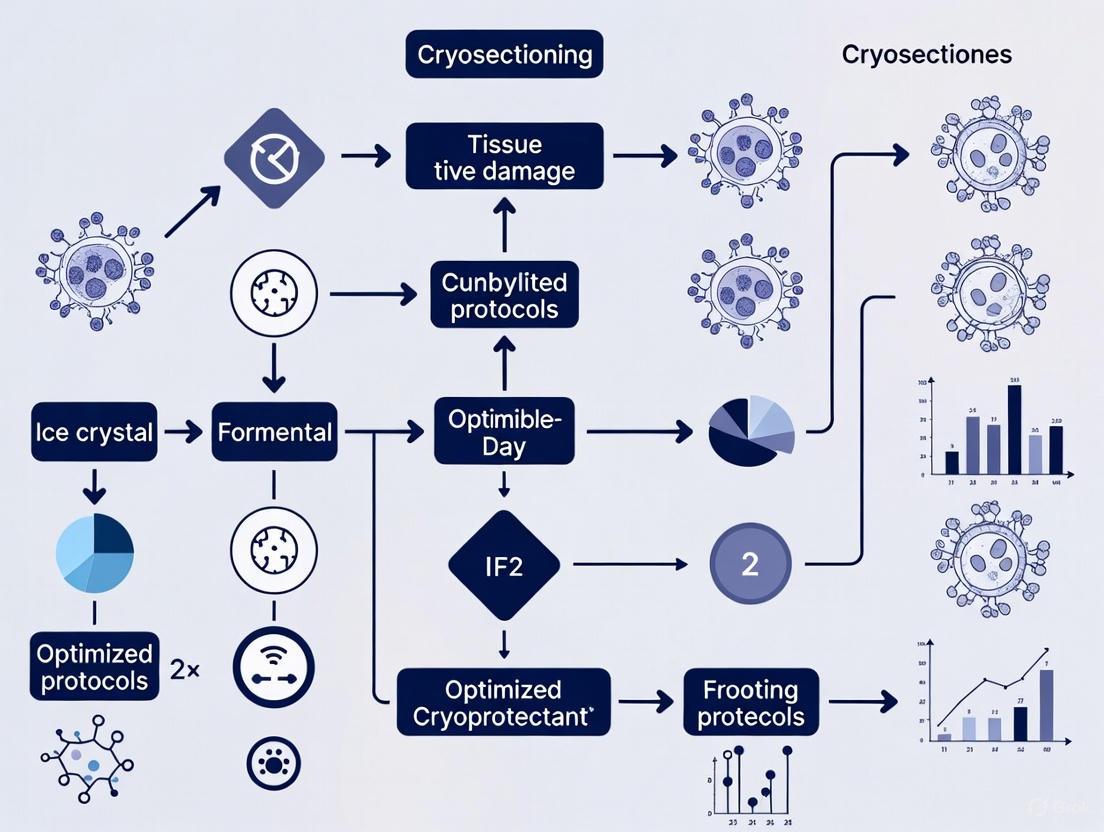
This article provides a comprehensive resource for researchers and drug development professionals facing the unique challenges of cryosectioning embryonic and other delicate tissues.
Overcoming Cryosectioning Challenges in Embryonic and Delicate Tissues: A Guide to Optimized Protocols and Advanced Solutions
Abstract
This article provides a comprehensive resource for researchers and drug development professionals facing the unique challenges of cryosectioning embryonic and other delicate tissues. It explores the fundamental principles of ice crystal formation and cryoprotectant action, details optimized protocols for tissue fixation and embedding, and offers practical troubleshooting strategies for common issues like poor structural integrity and antigen degradation. Furthermore, it examines advanced validation techniques and compares cryosectioning with alternative histological methods, synthesizing current research to provide actionable solutions for obtaining high-quality sections that preserve both morphology and biomolecular information for downstream analysis.
Understanding the Unique Challenges of Embryonic Tissue Cryosectioning
Ice crystal formation during the freezing of biological tissues is a major obstacle in cryosectioning, particularly for high-water-content and embryonic tissues. When water within cells freezes slowly, it leads to the formation of large, destructive ice crystals that compromise cellular integrity, obscure morphological details, and can destroy antigenicity for subsequent immunohistochemical analyses. This technical guide addresses the fundamental principles behind ice crystal formation and provides evidence-based solutions for researchers working to preserve tissue architecture in their experiments.
The relationship between tissue water content and ice crystal size is well-established. Research has demonstrated that average ice crystal size has a significant correlation with water content, with linear regression analysis confirming that ice crystal size increases proportionally with higher water content in biological specimens [1]. This presents a particular challenge for embryonic and neural tissues, which often have delicate structures and high water content, making them exceptionally vulnerable to freezing artifacts [2] [3].
Frequently Asked Questions (FAQs)
Q1: Why does my high-water-content tissue shatter during cryosectioning?
Shattering occurs when tissues with high water content become too cold and brittle during sectioning. This phenomenon is particularly common in brain, liver, and embryonic tissues where water content is naturally elevated. The problem arises because water, when frozen solid, behaves similarly to ice cubes - it shatters when cut with a blade [4]. Kidney tumors with higher water content, for example, demonstrate more shattering compared to benign kidney tissue with lower water content when frozen at the same temperature [4]. Solutions include slightly warming the block face before sectioning and implementing cryoprotection strategies.
Q2: How does freezing rate affect ice crystal formation?
The freezing rate, not just the final temperature, is critical for preserving tissue integrity. Slow freezing promotes ice crystal formation and expansion as water molecules have time to migrate and accumulate in intercellular spaces [5]. This expansion stretches and penetrates cell membranes, causing irreversible damage. In contrast, snap-freezing converts water molecules into ice before they can leave the cell, maintaining cytoplasmic structures in place [6]. Fast freezing requires an extremely cold source (below -80°C) arranged to contact all tissue surfaces [5].
Q3: What are the optimal temperatures for cryosectioning different tissue types?
Optimal temperatures vary significantly by tissue composition:
- Typical tissues and tumors: -19°C to -15°C [6]
- Delicate tissues (brain, liver, thyroid): -15°C to -13°C [6]
- Tissues with fat content: -35°C to -25°C or lower [6]
These temperatures represent the specimen holder temperature, which differs from the cryochamber temperature [6]. A block that is too cold will curl or shatter, while one that is too warm will stick to the knife and bunch up [4] [7].
Q4: How can I reduce ice crystal damage in embryonic tissues?
Embryonic tissues are exceptionally vulnerable due to their high water content and delicate structures. Successful approaches include:
- Cryoprotection with sucrose: Equilibrating tissues in sucrose solutions (15-30%) before freezing [8] [9]. Sucrose acts as an osmotic buffer, reducing freezable water and making tissues less buoyant and easier to cut [5].
- Optimal fixation: Using appropriate fixatives like 4% paraformaldehyde, sometimes with specialized formulations like Dent's fixative (80% methanol/20% DMSO) for Xenopus embryos [8].
- Rapid freezing methods: Using isopentane cooled by dry ice or liquid nitrogen for snap-freezing [7] [5].
Q5: Why do my tissue sections have holes or appear spongy after staining?
This artifact results from ice crystal formation during freezing. When freezing is too slow, water moves to intercellular regions and forms crystals that cause surrounding tissue to expand [6]. When the section is placed in fixative, these crystals melt, leaving holes where the ice had formed and creating a spongy appearance in the tissue morphology [6]. This problem can be minimized by ensuring rapid freezing and proper cryoprotection.
Quantitative Data: Ice Crystal Formation Relationships
Table 1: Correlation Analysis Between Tissue Properties and Ice Crystal Size
| Tissue Property | Correlation with Ice Crystal Size | Statistical Method | Research Findings |
|---|---|---|---|
| Water Content | Significant positive correlation | Linear regression analysis | Ice crystal size increases with higher water content [1] |
| Proton T1 Relaxation Time | Significant positive correlation | Linear regression analysis | Ice crystal size increases with longer T1 relaxation time [1] |
| Proton T2 Relaxation Time | Less direct correlation | Path analysis | T2 relaxation time showed weaker relationship to ice crystal size [1] |
Table 2: Tissue-Specific Cryosectioning Temperature Guidelines
| Tissue Type | Specimen Holder Temperature | Sectioning Challenges | Recommended Approaches |
|---|---|---|---|
| Brain Tissue | -15°C to -13°C | High susceptibility to shattering, brittle | Soak in sucrose-saturated solution; extended warming time [6] |
| Liver, Thyroid | -15°C to -13°C | Delicate, prone to tearing | Minimal OCT compound; swift sectioning [6] |
| Fatty Tissues | -35°C to -25°C | Smearing, difficult to cut | Remove excess fat; orient tissue properly; thick sections [6] [4] |
| Typical Tumors | -19°C to -15°C | Variable water content | Standard protocols with temperature adjustment [6] |
| Cartilage, Skin | -19°C to -15°C | Rolling, falling off slides | Cut thinner sections; use adhesive slides [6] |
The Scientist's Toolkit: Essential Research Reagents
Table 3: Key Reagents for Cryopreservation and Sectioning
| Reagent | Function | Application Notes |
|---|---|---|
| OCT Compound | Embedding medium for tissue support during sectioning | Use minimal amount for faster freezing rates; excess OCT can affect freezing performance [6] |
| Sucrose Solutions (15-30%) | Cryoprotectant that reduces freezable water content | Protects tissue; increases molecular weight making sectioning easier; used for equilibrium times from 15min to 24hr [8] [5] [9] |
| Isopentane with Dry Ice | Snap-freezing medium for rapid cooling | Cools to extremely low temperatures without direct tissue contact with liquid nitrogen [7] |
| Cold Water Fish Gelatin (CWFG) | Embedding matrix alternative to OCT | Better preservation of tissue morphology for delicate embryos; easier orientation [8] |
| Formaldehyde/PFA | Tissue fixative for structural preservation | Preserves tissue architecture; various concentrations (4% common) with different buffer formulations [7] [9] |
| Dimethylsulfoxide (DMSO) | Cryoprotectant and fixative component | Penetrates tissues rapidly; used in specialized fixatives like Dent's fixative [8] |
| Polyethylene glycol (PEG) | Cryoprotectant for reducing ice crystal formation | Alternative to sucrose for osmoregulation in freezing conditions [10] |
Experimental Protocols for Ice Crystal Mitigation
Protocol 1: Cryoprotection and Snap-Freezing for Delicate Tissues
This protocol is adapted from methods used for embryonic mesencephalic tissue, inner ear specimens, and craniofacial tissues [2] [3] [9].
Materials:
- Sucrose solutions (15-30% in PBS or buffer)
- OCT compound or cold water fish gelatin
- Isopentane
- Dry ice
- Cryomolds
- Forceps and dissection tools
Method:
- Dissection and Fixation: Dissect tissue promptly and fix in appropriate fixative (e.g., 4% PFA for 4 hours at 4°C for embryonic heads) [9].
- Cryoprotection: Transfer tissue to 30% sucrose in PBS and agitate gently at 4°C until the tissue sinks (indicating complete saturation) [9].
- Embedding:
- Snap-Freezing:
- Prepare isopentane bath cooled by dry ice in a vented container.
- Using forceps, carefully submerge the cryomold in the isopentane for 10-20 seconds until fully frozen.
- Avoid direct contact with dry ice or liquid nitrogen to prevent cracking.
- Storage: Store frozen blocks at -80°C until sectioning. Section within a reasonable timeframe to prevent ice crystal restructuring.
Protocol 2: Immunostaining of Cryosectioned Tissues
This protocol provides a general framework for immunofluorescence staining of frozen sections, incorporating elements from multiple sources [8] [7] [9].
Materials:
- PBS buffer, pH 7.4
- Blocking buffer (e.g., 5% donkey serum in 0.1% PBST)
- Primary antibodies diluted in blocking buffer
- Fluorescent secondary antibodies
- DAPI solution for nuclear counterstain
- Antifade mounting medium
Method:
- Section Equilibration: Remove slides from -80°C and air dry at room temperature for 1 hour [9].
- Rehydration and Permeabilization: Rinse slides in 0.1% PBST three times for 5 minutes each to wash out OCT and permeabilize sections [9].
- Antigen Retrieval (Optional): If required for your antigen, perform heat-induced antigen retrieval using citrate buffer (95-100°C for 10 minutes) followed by 20-minute cool down [9].
- Blocking: Incubate each slide with 200-400 μL of blocking solution at room temperature for 30-60 minutes [8] [9].
- Primary Antibody Incubation: Apply primary antibody diluted in blocking solution and incubate overnight at 4°C or for 3-4 hours at room temperature [8] [7].
- Washing: Rinse slides with PBS three times for 10-20 minutes each [8] [9].
- Secondary Antibody Incubation: Apply fluorescent secondary antibody diluted in blocking solution and incubate for 1 hour at room temperature protected from light [9].
- Nuclear Staining and Mounting: Incubate with DAPI for 2-5 minutes, rinse with PBS, and mount with antifade mounting medium [7].
Visual Guide: Key Relationships and Workflows
Impact of Freezing Rate on Tissue Integrity
Optimal Tissue Processing Workflow
Frequently Asked Questions
FAQ 1: What makes embryonic tissues more susceptible to damage during cryosectioning compared to adult tissues? Embryonic tissues are structurally delicate and contain a high percentage of water [5]. Their cells are often less densely packed and are actively undergoing rapid division and morphogenesis, making them prone to tearing and deformation. The high water content promotes the formation of large, destructive ice crystals during the freezing process if not done rapidly and correctly, leading to compromised cellular architecture [5].
FAQ 2: Which embedding method is better for preserving embryonic tissue morphology: OCT compound or gelatin? The choice depends on the application and tissue type. OCT compound is widely used and ideal for preserving antigenicity for immunostaining [5]. However, for some delicate embryonic tissues like Xenopus embryos, cold water fish gelatin (CWFG) can offer superior morphology preservation and easier orientation prior to sectioning [8]. Gelatin embedding is also noted for being compatible with a wide range of antigens for immunofluorescence [8].
FAQ 3: My embryonic tissue sections are shattering or cracking. What is the most likely cause and how can I fix it? Shattering usually indicates that the tissue or the cryostat chamber is too cold [11]. The solution is to allow the tissue block to warm up slightly to the optimal cutting temperature for that specific tissue type, typically between -15°C and -25°C [7] [11]. Always ensure the tissue is properly cryoprotected (e.g., with sucrose) before freezing to replace water and reduce ice crystal formation [5].
FAQ 4: How can I prevent my embryonic tissue sections from curling or wrinkling during sectioning? Section curling is a common challenge. To address it:
- Ensure the cryostat blade is sharp and clean [11].
- Use the anti-roll plate correctly on your cryostat [11].
- Verify that the cryostat temperature is not too warm, which can cause the section to stick to the blade [7].
- Properly orient the specimen in the embedding medium to present a uniform cutting surface [8].
FAQ 5: Why is the cellular architecture in my embryonic tissue sections poorly preserved after staining? Poor morphology often stems from poor initial freezing techniques. Slow freezing leads to large ice crystals that rupture cell membranes [5]. For best results, use a rapid freezing method, such as immersing the sample in a cryogen like isopentane cooled by liquid nitrogen or dry ice [11] [5]. Additionally, consider brief fixation before freezing to stabilize the tissue structure [5].
Troubleshooting Guide
The table below outlines common issues encountered when working with embryonic tissues, their probable causes, and recommended solutions.
| Problem | Probable Cause | Solution |
|---|---|---|
| Shattered or Cracked Sections | Tissue block or cryostat is too cold [11]. | Allow the block to equilibrate to a warmer temperature within the cryostat (e.g., -19°C to -25°C) [8] [11]. |
| Poor Cellular Morphology (Ice Crystals) | Slow freezing rate, leading to large, destructive ice crystals [5]. | Snap-freeze tissue rapidly using a cryogen like isopentane cooled by liquid nitrogen or dry ice [11] [5]. |
| Sections Tearing or Falling Apart | Tissue is too soft or under-fixed; blade is dull. | For delicate tissues, use a brief fixation step (e.g., 4% PFA) and/or cryoprotection with sucrose [12] [5]. Ensure a sharp blade is used for sectioning [11]. |
| High Background Noise in Immunostaining | Inadequate blocking or non-specific antibody binding. | Use an appropriate blocking buffer (e.g., with serum, BSA) for 30-60 minutes and optimize antibody concentrations [7] [8]. |
| Sections Detaching from Slides | Slides are not adequately coated for adhesion. | Use charged or adhesive-coated slides (e.g., Superfrost Plus) and allow sections to air-dry thoroughly before staining [8] [11]. |
The Scientist's Toolkit: Essential Reagents for Embryonic Tissue Cryosectioning
| Item | Function |
|---|---|
| OCT Compound | A water-soluble embedding medium that supports the tissue during freezing and cutting, providing structure for thin sectioning [8] [11]. |
| Paraformaldehyde (PFA) | A cross-linking fixative (often 4%) used to preserve and stabilize tissue architecture by hardening it and preventing decay [12] [13]. |
| Sucrose Solution | A cryoprotectant that permeates the tissue, displacing water and reducing the formation of damaging ice crystals during freezing [13] [5]. |
| Cold Water Fish Gelatin (CWFG) | An alternative embedding medium, particularly beneficial for some embryonic tissues (e.g., Xenopus) for superior morphology preservation [8]. |
| Isopentane | A cryogen used for rapid snap-freezing of tissue samples when cooled by liquid nitrogen, which is critical for preserving ultrastructure [11]. |
Experimental Workflow for Embryonic Tissue Processing
The following diagram outlines the critical steps for successfully preparing and analyzing embryonic tissue sections, highlighting key decision points.
Frequently Asked Questions (FAQs) and Troubleshooting
Q1: What is the fundamental difference between penetrating and non-penetrating cryoprotectants?
Penetrating cryoprotectants (e.g., DMSO, glycerol) are small, neutral molecules capable of crossing cell membranes to protect both the interior and exterior of the cell. In contrast, non-penetrating cryoprotectants (e.g., sucrose, trehalose) are larger molecules that remain outside the cell, protecting only the extracellular space [14] [15].
Q2: I am observing high cell death after thawing my embryonic tissue samples. Could cryoprotectant toxicity be the cause?
Yes, this is a common issue. Penetrating cryoprotectants like DMSO are known to be cytotoxic, particularly at high concentrations, elevated temperatures, or with prolonged exposure times [16] [17]. To mitigate this:
- Optimize Concentration and Exposure Time: Use the lowest effective concentration and reduce the time samples are exposed to the cryoprotectant at room temperature [16] [14].
- Combine Agents: Consider using a mixture of penetrating and non-penetrating agents. The non-penetrating agents can help reduce the required concentration of the more toxic penetrating agent, thereby lowering overall toxicity [18] [14] [17].
- Control Temperature: Perform addition and removal steps at lower temperatures (e.g., 4°C) where possible to reduce toxic effects [16].
Q3: Why are both types of cryoprotectants often used together in a vitrification solution?
They work through complementary mechanisms to enhance protection and reduce toxicity [18] [14].
- Penetrating Agents (e.g., DMSO) enter the cell, depressing the intracellular freezing point and preventing lethal intracellular ice formation.
- Non-Penetrating Agents (e.g., sucrose, polymers) increase the viscosity of the extracellular solution, promote vitrification (a glassy state without ice crystals), and help to stabilize cell membranes from the outside [14] [15] [17]. This synergy allows for effective vitrification at lower, less toxic concentrations of the penetrating agent.
Q4: My tissue sections are suffering from ice crystal damage during cryosectioning. How can non-penetrating cryoprotectants help?
Non-penetrating cryoprotectants like sucrose are crucial for protecting tissues during the freezing process prior to cryosectioning. They work primarily by colligative action—dissolving in the extracellular water to lower its freezing point, which reduces the amount and size of ice crystals that form. This helps preserve tissue integrity, cellular morphology, and antigenicity, which is vital for subsequent analyses like immunostaining [19] [15].
Core Mechanisms and Data Comparison
How Cryoprotectants Work
Cryoprotectants protect biological samples through several key mechanisms:
- Colligative Protection: Both penetrating and non-penetrating agents lower the freezing point of water and reduce the fraction of water that turns into ice at any given sub-zero temperature. This directly counters "solution effect" injury, where concentrated solutes become damaging as water freezes [15] [17].
- Vitrification: At high enough concentrations, cryoprotectants can solidify the solution into a non-crystalline, glassy state during cooling, completely avoiding the formation of damaging ice crystals [18] [14].
- Water Replacement: Some cryoprotectants, particularly sugars like trehalose and sucrose, can form hydrogen bonds with biological molecules like phospholipids and proteins. This replaces water molecules that are lost during dehydration, helping to maintain native structures and prevent denaturation [14] [15].
- Membrane Stabilization: Cryoprotectants can interact with and help stabilize phospholipid bilayers in cell membranes, preventing damage and leakage during the dramatic physical changes of freezing and thawing [20].
Comparative Analysis of Common Cryoprotectants
The table below summarizes key characteristics of commonly used cryoprotectants to aid in selection.
Table 1: Comparison of Common Penetrating and Non-Penetrating Cryoprotectants
| Agent | Type | Primary Mechanisms | Common Applications | Key Considerations |
|---|---|---|---|---|
| DMSO [14] [17] | Penetrating | Colligative action, water replacement, vitrification | Cell-based therapies, general cell culture | Highly effective but can be cytotoxic; requires washing after thawing. |
| Glycerol [14] [15] | Penetrating | Colligative action, membrane stabilization | Preservation of blood products, enzymes | Less toxic than DMSO; penetration can be slower. |
| Ethylene Glycol [15] [17] | Penetrating | Colligative action, vitrification | Embryo and oocyte vitrification | Rapid penetration; can be metabolized to toxic compounds in vivo. |
| Propylene Glycol [16] [15] | Penetrating | Colligative action | Embryo and oocyte vitrification | Often considered less toxic than ethylene glycol. |
| Trehalose [14] [15] | Non-penetrating (Sugar) | Water replacement, vitrification, preferential exclusion | Protein-based therapeutics, vaccines, lyophilized formulations | Excellent stabilizer; does not require removal post-thaw. |
| Sucrose [14] [15] | Non-penetrating (Sugar) | Preferential exclusion, colligative action | Lyophilized products, tissue preservation (e.g., cryosectioning) | Commonly used in cryoprotectant cocktails to adjust osmotic pressure. |
| HES (Hydroxyethyl Starch) [15] | Non-penetrating (Polymer) | Increases solution viscosity, inhibits ice growth | Cryopreservation of blood cells, additive in vitrification solutions | High molecular weight; very low toxicity. |
Experimental Protocols
Protocol 1: Cryoprotectant Equilibration for Sensitive Tissues
This protocol is adapted from methods used for preserving complex tissues like heart or embryonic tissue for cryosectioning and subsequent analysis [19] [21].
Objective: To introduce cryoprotectants into tissue samples in a controlled manner that minimizes osmotic shock and chemical toxicity.
Materials:
- Tissue sample (e.g., embryonic mouse inner ear, heart tissue)
- Base carrier solution (e.g., physiological buffer like PBS)
- Cryoprotectant stock solutions (e.g., DMSO, Ethylene Glycol, Sucrose)
- Cryovials and platform rocker
Method:
- Dissection and Fixation: Dissect the target tissue carefully and fixate if required for downstream applications (e.g., with 4% Paraformaldehyde) [19].
- Gradual Equilibration: Immerse the tissue in a series of solutions with incrementally increasing cryoprotectant concentration. A typical sequence for a vitrification solution might be:
- Step 1: 12.5% of final cryoprotectant concentration in base solution for 20 minutes.
- Step 2: 25% of final concentration for 20 minutes.
- Step 3: 50% of final concentration for 20 minutes.
- Step 4: 100% final vitrification solution for a final equilibration period [17].
- Temperature Control: Perform all steps at 4°C to suppress toxic effects of the cryoprotectants.
- Freezing: After equilibration, transfer the tissue to a cryomold with Optimal Cutting Temperature (OCT) compound and freeze as required for cryosectioning [19].
Protocol 2: Single-Nuclei RNA Sequencing from Cryopreserved Tissue
This protocol demonstrates how effectively preserved tissue can be used for advanced genomic applications [21].
Objective: To isolate high-quality nuclei from cryopreserved tissue for single-nuclei RNA-sequencing (snRNA-seq).
Materials:
- Cryostored tissue sample (minced into ~1 mm³ pieces and stored in cryoprotective medium like CryoStor CS10)
- Dounce Homogenizer
- Lysis Buffer (e.g., containing Triton X-100)
- Cell strainer (e.g., 10 µm)
- Centrifuge
Method:
- Thawing: Rapidly thaw the cryopreserved tissue sample at 37°C for ~75 seconds and immediately place on ice [21].
- Nuclei Isolation: Transfer the tissue to a Dounce homogenizer containing a chilled lysis buffer. Gently homogenize to release nuclei while keeping the nuclear membrane intact.
- Filtration and Washing: Filter the homogenate through a 10 µm strainer to remove tissue debris. Pellet the nuclei by centrifugation at 500g for 5 minutes at 4°C.
- Quality Control: Resuspend the nuclei and assess their quality and concentration using a hemocytometer and trypan blue staining. High-quality preparations should yield RNA with an Integrity Number (RIN) greater than 8.5 [21].
- Proceed to Sequencing: The isolated nuclei are now ready for library preparation and snRNA-seq on platforms like 10x Genomics.
Visualizing Cryoprotectant Mechanisms and Workflows
Cryoprotectant Decision Workflow
This diagram outlines a logical workflow for selecting and using cryoprotectants in an experiment.
Mechanisms of Cryoprotection
This diagram illustrates the different protective mechanisms of penetrating and non-penetrating agents at the cellular level.
The Scientist's Toolkit: Essential Research Reagents
Table 2: Key Reagents for Cryoprotection Experiments
| Reagent | Function | Example Application |
|---|---|---|
| DMSO (Dimethyl Sulfoxide) [14] [17] | A highly effective penetrating cryoprotectant. Prevents intracellular ice formation. | Standard cryopreservation of cell lines, stem cells, and tissues. |
| CryoStor CS10 [21] | A commercially available, serum-free cryopreservation solution containing DMSO. Optimized for cell and tissue viability post-thaw. | Cryopreservation of human heart tissue for single-nuclei RNA sequencing. |
| Sucrose [19] [15] | A non-penetrating sugar cryoprotectant. Provides colligative protection and helps buffer osmotic pressure. | Used in gradients for gradual cryoprotectant equilibration of mouse inner ear tissue. |
| Optimal Cutting Temperature (OCT) Compound [19] | A water-soluble embedding medium that freezes to a consistent solid. Supports tissue during cryosectioning. | Embedding cryoprotected tissues (e.g., inner ear, embryo) prior to sectioning on a cryostat. |
| Polyvinyl Alcohol (PVA) [15] | A non-penetrating polymer cryoprotectant. Acts as an ice blocker and inhibits ice recrystallization. | Additive in vitrification solutions for oocytes and embryos. |
| Trehalose [14] [15] | A non-reducing disaccharide sugar. Stabilizes proteins and membranes via water replacement mechanism. | Preservation of labile protein therapeutics and vaccines in lyophilized form. |
In embryonic tissue research, the choice of fixative is a critical determinant of success for downstream applications like immunohistochemistry (IHC) and in situ hybridization. Fixatives preserve cellular structure and biomolecules by halting degradation, but their chemical actions—whether cross-linking or precipitation—directly impact tissue morphology, antigenicity, and nucleic acid integrity. This guide addresses the specific challenges of working with delicate embryonic tissues, providing targeted solutions for researchers and drug development professionals navigating cryosectioning workflows. The core challenge lies in balancing excellent morphological preservation with the retention of epitope recognition for antibodies and probe accessibility for nucleic acid detection.
Comparative Analysis: Aldehydes vs. Alcohol-Based Fixatives
Understanding the fundamental mechanisms of different fixative classes is the first step in selecting the right one for your experiment. The table below summarizes the core properties of common fixative types.
Table 1: Fundamental Mechanisms and Properties of Fixatives
| Fixative Type | Mechanism of Action | Primary Effect on Proteins | Impact on Tissue Morphology | Impact on Antigenicity |
|---|---|---|---|---|
| Aldehydes (e.g., PFA, Formalin) [22] | Creates covalent cross-links between protein molecules. | Stabilizes protein structure within the native cellular environment. | Excellent preservation of tissue architecture and subcellular structures [23]. | Can mask epitopes, often requiring antigen retrieval steps [23]. |
| Alcohol-Based (e.g., Methanol, Ethanol) [23] | Precipitates proteins by removing water and disrupting hydrogen bonds. | Denatures proteins, causing them to unfold and aggregate. | Good overall preservation, but can cause tissue shrinkage and brittleness [23]. | Better preservation of many epitopes as cross-linking is avoided [23]. |
| Acids (e.g., TCA) [22] | Precipitates proteins through acid-induced coagulation and dehydration. | Rapidly denatures and aggregates proteins. | Can alter subcellular structures; may not be suitable for all morphological studies [22]. | Can reveal epitopes inaccessible to PFA; ineffective for mRNA visualization [22]. |
The choice between these fixatives involves trade-offs. A comparative study on chicken embryos revealed that Trichloroacetic Acid (TCA) fixation resulted in larger, more circular nuclei and neural tubes compared to Paraformaldehyde (PFA). Furthermore, TCA fixation altered the fluorescence signal intensity for various proteins, including transcription factors, cytoskeletal proteins, and cadherins, and revealed protein signals in tissues that were inaccessible with PFA fixation [22]. However, TCA was found to be ineffective for mRNA visualization, a task for which PFA remains optimal [22].
Table 2: Comparative Performance in Embryonic Tissues (Based on Chicken Embryo Study)
| Application / Target | Aldehydes (e.g., PFA) | Alcohol-Based / Acids (e.g., TCA) |
|---|---|---|
| Overall Tissue Morphology | Excellent preservation of architecture [22]. | Altered morphology; larger, more circular nuclei/neural tubes [22]. |
| Nuclear Proteins (Transcription Factors) | Optimal signal strength [22]. | Suboptimal signal; altered signal intensity [22]. |
| Cytoskeletal Proteins (e.g., Tubulin) | Adequate signal strength [22]. | Optimal for visualization; may reveal hidden epitopes [22]. |
| Membrane Proteins (e.g., Cadherins) | Adequate signal strength [22]. | Optimal for visualization; may reveal hidden epitopes [22]. |
| mRNA Visualization (HCR) | Optimal for signal strength and clarity [22]. | Ineffective; not recommended [22]. |
This data underscores the importance of a tailored approach. For instance, a 2025 study on liver and lymph node biopsies confirmed that while formalin fixation provided superior nuclear detail and architectural integrity, alcohol-based fixatives yielded significantly stronger IHC staining intensity for markers like cytokeratin and CD3 with less background staining [23].
Detailed Experimental Protocols for Embryonic Tissues
Protocol: PFA Fixation for mRNA and Nuclear Protein Detection
This protocol is optimized for preserving mRNA for Hybridization Chain Reaction (HCR) and nuclear antigens in chicken embryos [22].
Reagent Solutions:
- Fixative: 4% Paraformaldehyde (PFA) in 0.2M phosphate buffer [22].
- Wash Buffer: 1X Tris-Buffered Saline (TBS) or 1X Phosphate Buffered Saline (PBS), both containing 0.1–0.5% Triton X-100 (TBST/PBST) [22].
Methodology:
- Dissection: Dissect embryos into room temperature Ringer's Solution [22].
- Fixation: Fix embryos at room temperature with 4% PFA for 20 minutes [22].
- Washing: Wash embryos thoroughly in TBST or PBST to remove residual PFA [22].
- Post-fixation (for HCR): Following HCR or IHC, post-fix samples for 1 hour in 4% PFA at room temperature to maintain signal integrity [22].
- Cryopreservation: Embed tissues in OCT compound and snap-freeze for cryosectioning [7].
Protocol: TCA Fixation for Cytoskeletal and Membrane Proteins
This protocol is designed to access epitopes that may be masked by aldehyde cross-linking [22].
Reagent Solutions:
Methodology:
- Dissection: Dissect embryos as described for PFA fixation [22].
- Fixation: Fix embryos at room temperature with 2% TCA in PBS for 1 hour or 3 hours [22].
- Washing: Wash embryos thoroughly in TBST + Ca²⁺ or PBST to neutralize the acid [22].
- Post-fixation: TCA-fixed samples for IHC are typically not post-fixed. For HCR, however, post-fix with 4% PFA for 1 hour [22].
- Cryopreservation: Proceed with embedding and freezing.
Workflow Diagram: Fixation Path Selection for Embryonic Tissues
The following diagram outlines the decision-making process for selecting the appropriate fixation method based on the experimental goal.
Troubleshooting Guide & FAQs for Cryosectioning Fixed Embryonic Tissues
Even with optimal fixation, cryosectioning delicate embryonic tissues presents challenges. Here are solutions to common problems.
Table 3: Troubleshooting Cryosectioning of Fixed Embryonic Tissues
| Problem | Possible Reason | Solution |
|---|---|---|
| Sections crack or shatter [24] | Tissue is too cold; electrostatic interactions; overly hard fixation. | Adjust cryostat temperature slightly warmer (e.g., from -25°C to -23°C). Increase section thickness. Ensure tissue is properly hydrated and not over-fixed [24]. |
| Sections fold or curl [25] | Dull or warped blade; anti-roll plate incorrectly positioned; tissue too warm. | Use a fresh, sharp blade. Adjust the anti-roll plate so it is parallel to the blade edge. Ensure the cryostat chamber and tools are at the correct temperature [25]. |
| Sections stick to blade or smudge [24] | Tissue, blade, or anti-roll plate is too warm. | Lower the cryostat chamber temperature. Allow the specimen and tools to re-equilibrate to the colder temperature before resuming sectioning [24]. |
| Sections have streaks or tears [25] | Debris on blade or anti-roll plate; nicks in the blade. | Carefully clean the blade and anti-roll plate with a dry brush or Kimwipe. Move the block to a unused section of the blade or replace the blade entirely [25]. |
| Sections detach from slide during staining | Poor slide adhesion; insufficient drying. | Use positively charged or gelatin-coated slides [7]. Dry slides at room temperature for 1 hour after removal from the freezer, then rehydrate in PBS before staining [8]. |
| High background in IHC | Insufficient blocking; non-specific antibody binding. | Block with a buffer containing 1-6% serum from the species of the secondary antibody and 1% BSA [8] [7]. Include detergent (e.g., 0.1-0.3% Triton X-100) in blocking and wash buffers to reduce background [8]. |
Frequently Asked Questions (FAQs)
Q1: Can I change the fixative if my initial IHC results are weak? Yes, this is a key optimization step. If you used PFA and got a weak signal for a cytoplasmic protein, re-running the experiment with a precipitating fixative like TCA or an alcohol-based fixative can often dramatically improve signal by revealing the masked epitope [22] [23].
Q2: How critical is fixation time for embryonic tissues? Very critical. Under-fixation leads to poor preservation, while over-fixation (especially with PFA) can excessively cross-link tissues, making antigen retrieval difficult and increasing background. For embryonic tissues, shorter fixation times (e.g., 20 minutes to 1 hour) are often sufficient compared to dense adult tissues [22].
Q3: My tissue is brittle and difficult to section after alcohol fixation. What can I do? This is a common issue. Ensure the tissue is adequately impregnated with OCT compound. You can also try increasing the sucrose concentration (e.g., to 15%) in the cryoprotection step before embedding to reduce ice crystal formation and improve sectioning quality [8].
The Scientist's Toolkit: Essential Research Reagent Solutions
A well-prepared lab is crucial for efficient experimentation. Below is a table of essential reagents and materials for fixation and cryosectioning workflows in embryonic research.
Table 4: Essential Reagents for Fixation and Cryosectioning
| Item | Function / Application | Example / Specification |
|---|---|---|
| Paraformaldehyde (PFA) | Aldehyde fixative for cross-linking; gold standard for morphology and mRNA. | 4% solution in buffer (e.g., 0.2M phosphate buffer), prepared fresh [22]. |
| Trichloroacetic Acid (TCA) | Precipitating fixative for accessing hidden protein epitopes. | 2% solution in 1X PBS [22]. |
| O.C.T. Compound | Optimal Cutting Temperature compound; embedding medium for freezing and supporting tissue during sectioning. | Tissue-Plus O.C.T. compound [8]. |
| Cold Water Fish Gelatin (CWFG) | Embedding matrix superior to OCT for preserving tissue morphology in some embryonic samples. | 15% solution with 15% sucrose for embedding [8]. |
| Cryostat | Instrument for cutting thin frozen sections. | Chamber temp: -20°C to -25°C; Specimen head temp: -15°C to -20°C [8] [24]. |
| Superfrost Plus Slides | Microscope slides with a charged coating to enhance tissue adhesion. | Prevents tissue detachment during staining steps [8]. |
| Blocking Serum | Reduces non-specific binding of antibodies during IHC. | Normal serum from the host species of the secondary antibody (e.g., goat, donkey) [8] [7]. |
| Triton X-100 | Non-ionic detergent used to permeabilize cell membranes and reduce background in wash buffers. | Typical concentration: 0.1-0.5% in buffer (TBST/PBST) [22] [8]. |
Optimized Protocols for Embryonic Tissue Processing and Sectioning
Within the broader context of thesis research on cryosectioning challenges and embryonic tissue solutions, mastering the histology of the mouse embryonic inner ear is a fundamental yet demanding task. The cochlea's small size, delicate spiral structure, and the ongoing ossification in postnatal specimens necessitate a meticulously optimized protocol to preserve its intricate cellular architecture. This guide provides a standardized, step-by-step method for processing inner ear samples from embryonic to adult stages, designed to ensure reproducibility and yield high-quality sections for robust immunohistochemical analysis [19] [26]. The following workflow, troubleshooting guide, and FAQ section are crafted to directly address the specific hurdles researchers face, thereby facilitating advanced research in auditory development and disease.
Experimental Workflow
The entire process, from dissection to imaging, can be visualized as the following integrated workflow:
Detailed Protocols & Methodologies
Dissection and Fixation
Purpose: To carefully remove the inner ear tissue while minimizing damage and to preserve tissue architecture through chemical fixation [19] [27].
Steps for Embryonic and Juvenile Mice (up to P6):
- Euthanize and decapitate the mouse according to an approved animal protocol.
- Make a midline incision along the scalp using fine dissection scissors.
- Open the cranium by making three precise cuts with scissors: first, cut the top half of the cranium from the foramen magnum to the nose; then, cut the bottom half along the same path.
- Detach soft tissue: Using fine forceps and scissors, carefully remove the brain, muscles, and connective tissue surrounding the temporal bone.
- Place the half-heads into a 24-well plate containing PBS.
- Fixation: Replace the PBS with 4% Paraformaldehyde (PFA) and incubate for 45 minutes at room temperature.
- Rinse the tissue three times for 5-10 minutes with PBS.
- Isolate the inner ear capsule from the half-head using fine forceps under a microscope [27] [26].
Special Considerations for Adult Mice (P6 and older):
- Decalcification is required. After fixation, place the isolated cochlea in 1.25 mM EDTA and rock for 2-3 days at 4°C to soften the bone [27] [28].
- Perfuse the cochlea: For better fixation, after removing the stapes, make a small hole in the cochlear apex and gently flush the cochlea with 4% PFA using a pipette [27] [28].
Cryoprotection, Embedding, and Sectioning
Purpose: To prevent ice crystal formation, provide structural support for cutting, and achieve thin, consistent sections that capture the entire cochlear coil [19] [29].
Steps:
- Cryoprotection: Incubate the dissected inner ear in a graded sucrose series.
- Embedding:
- Replace half of the 30% sucrose solution with OCT compound and rock for 30 minutes to 2 hours for infiltration.
- Transfer the sample to a cryomold filled with fresh OCT.
- Crucially, orient the cochlea so its concave side faces the narrow sides of the cryomold. This ensures standard cross-sections through all turns [27] [28].
- Freezing: Rapidly freeze the block on a bed of bubbling dry ice chilled with dimethylbutane [27].
- Cryosectioning:
- Equilibrate the block in a cryostat at -20°C for 30-60 minutes.
- Mark the block with a pen to indicate tissue position.
- Trim the block at a 40 µm setting until the tissue is apparent.
- Collect sections at 12 µm thickness.
- Periodically check sections under a microscope to monitor the progression through the cochlear turns [27] [28].
Immunostaining
Purpose: To visualize specific proteins and cell types within the context of the entire cochlear cross-section [19].
General Protocol:
- Follow standard immunostaining procedures for cryosections, including blocking, incubation with primary and secondary antibodies, and counterstaining (e.g., DAPI).
- The optimized tissue preparation described above results in excellent preservation of antigenicity for various proteins, allowing for high-quality imaging [19] [29].
Troubleshooting Guide
This table addresses common problems encountered during the protocol and their solutions.
| Problem | Possible Cause | Solution |
|---|---|---|
| Poor tissue morphology (e.g., holes, tears) | Incomplete fixation or dehydration; damage during dissection. | Ensure fresh, cold 4% PFA is used; limit fixation time; practice careful dissection to avoid crushing the capsule [29]. |
| Sections shatter or crumble | Incomplete decalcification (in older tissues); insufficient cryoprotection. | Extend EDTA treatment for adult tissue (2-3 days, confirm softness); ensure complete sucrose infiltration [27] [26]. |
| Sections detach from slide | Slides are dirty or charged improperly. | Use positively charged or adhesive slides designed for cryosectioning. |
| High background noise in immunostaining | Non-specific antibody binding; inadequate blocking. | Optimize antibody concentrations; include a blocking step with serum from the secondary antibody host; include detergent (e.g., Triton X-100) in buffers. |
| Uneven sectioning/loss of cochlear turns | Incorrect orientation during embedding. | Pay meticulous attention to orientation: the cochlea's concave side must face the cryomold's narrow sides [27] [28]. |
Research Reagent Solutions
The following table details key reagents used in this protocol and their critical functions.
| Reagent | Function | Specification |
|---|---|---|
| Paraformaldehyde (PFA) | Fixative: Cross-links proteins to preserve tissue structure and antigenicity. | Use a 4% solution in PBS. Preparation time and temperature (45 min, RT) are critical [19] [27]. |
| EDTA (Ethylenediaminetetraacetic acid) | Decalcifying Agent: Chelates calcium ions to soften the bony otic capsule for sectioning. | Essential for mice P6 and older. Use 1.25 mM solution with agitation for 2-3 days [27] [28]. |
| Sucrose | Cryoprotectant: Penetrates tissue and reduces ice crystal formation during freezing, which preserves cellular ultrastructure. | Use a graded series (10%, 20%, 30%) for progressive infiltration to prevent tissue shrinkage [27] [28]. |
| OCT Compound | Embedding Medium: Provides structural support for tissue during cryosectioning. | Infiltrate after sucrose treatment. Rapid freezing in OCT on dry ice/dimethylbutane is ideal [27]. |
Frequently Asked Questions (FAQs)
Q1: Why is cross-section immunostaining preferred over whole-mount for the inner ear? Cross-sectioning creates thin, nearly 2D sections that allow for more accurate and consistent measurements of cellular structures. It also preserves all cochlear cell types and key structures—such as the spiral ligament, stria vascularis, and Reissner's membrane—that can be disrupted or obscured in whole-mount preparations [19] [28].
Q2: At what developmental stage is decalcification necessary, and why? Decalcification becomes necessary for mice aged postnatal day 6 (P6) and older. This is because the inner ear capsule undergoes progressive ossification from this point onward, and the hardening bone prevents clean sectioning without prior softening with a chelating agent like EDTA [27] [26].
Q3: My immunostaining results are weak. What steps can I take to improve the signal? First, verify that your primary antibody is validated for immunohistochemistry on mouse frozen sections. You can try increasing the primary antibody concentration or the incubation time. Additionally, using an antigen retrieval method specific to your target antigen may be beneficial. Ensure that all incubation and wash buffers are freshly prepared and at the correct pH.
Q4: How can I ensure I get consistent sections through all cochlear turns? The single most important factor is proper orientation during embedding. The cochlea must be positioned so that its concave side is facing the narrow sides of the cryomold. Marking the block before sectioning to indicate the tissue location also helps maintain the correct orientation in the cryostat [27] [28].
Q5: What are the key advantages of this standardized protocol? This protocol provides a straightforward and reproducible method for researchers new to the field. It offers special considerations for the cochlea's unique shape, covers all developmental stages, and enhances the quality and reliability of immunostaining results, thereby promoting consistent research outcomes [19] [26].
Within the context of a broader thesis on cryosectioning challenges and embryonic tissue solutions, selecting the appropriate embedding medium is a critical decision that directly impacts research outcomes. The choice between conventional Optimal Cutting Temperature (O.C.T.) compound and specialist cryogels like Polyvinyl Alcohol (PVA) influences everything from tissue morphology and antigen preservation to the feasibility of novel applications such as bioelectronics integration. This technical support center guide provides researchers, scientists, and drug development professionals with a detailed, evidence-based comparison and troubleshooting resource to inform their experimental design, particularly when working with sensitive samples like embryonic tissues.
Understanding the Core Media: A Comparative Analysis
What is O.C.T. Compound?
Optimal Cutting Temperature (O.C.T.) compound is a water-soluble embedding medium used to support tissue during freezing and cryosectioning. Its primary function is to infiltrate tissue and form a supportive matrix that enables the cutting of thin, consistent sections. It is the standard medium for a wide range of applications, from routine histology to immunohistochemistry [7] [11].
What are PVA Cryogels?
Polyvinyl Alcohol (PVA) cryogels are physically crosslinked hydrogels formed through repetitive freeze-thaw cycling of a PVA solution [30]. This process creates a macroporous, sponge-like structure with tunable mechanical properties. Unlike O.C.T., PVA cryogelation avoids the need for potentially cytotoxic chemical crosslinkers, enhancing biocompatibility for sensitive applications like cell encapsulation and the creation of implantable bioelectronic devices [31] [30].
Table 1: Core Characteristics and Applications of O.C.T. and PVA Cryogels
| Characteristic | O.C.T. Compound | PVA Cryogels |
|---|---|---|
| Primary Composition | Water-soluble glycols and resins | Polyvinyl alcohol polymer in aqueous or DMSO/H2O solvent [31] |
| Crosslinking Method | Freezing | Physical crosslinking via freeze-thaw cycling [30] |
| Key Advantage | Speed, convenience, wide protocol availability | Tunable mechanical properties and high biocompatibility [31] [32] |
| Ideal for Embryonic Tissues? | Good, with optimization | Excellent, due to superior tissue morphology preservation and support for delicate structures [8] |
| Best Applications | Routine histology, immunofluorescence, rapid diagnostics | Tissue engineering, cell encapsulation, implantable bioelectronics, superior morphology for challenging samples [8] [32] [30] |
Table 2: Quantitative Performance Comparison for Key Research Parameters
| Research Parameter | O.C.T. Compound | PVA Cryogels |
|---|---|---|
| Mechanical Strength | Low (support matrix only) | High; can be increased by 59% with 0.5% CNT addition [31] |
| Cell Attachment/Encapsulation | Not suitable alone | Excellent; supports cell attachment, proliferation, and encapsulation [32] |
| Electrical Conductivity | Not applicable | Can be rendered conductive (e.g., ~350 S/cm with PEDOT:PSS) [30] |
| Stretchability | Not applicable | High (up to 330% strain) [30] |
Decision Workflow: Choosing Your Embedding Medium
Detailed Experimental Protocols
Protocol 1: Embedding with O.C.T. Compound for Immunofluorescence
This protocol is optimized for preserving antigenicity for immunofluorescence staining [7].
Reagents Required:
- O.C.T. Embedding Compound
- Isopentane
- Dry Ice
- Glass slides (gelatin-coated or charged)
Methodology:
- Freezing: Embed freshly dissected or fixed tissue completely in O.C.T. within a mold. Rapidly freeze the sample by either:
- Placing the mold on a pre-cooled cryostat specimen holder.
- Snapping freezing in a bath of isopentane cooled by liquid nitrogen. This minimizes ice crystal formation [11].
- Sectioning: Transfer the frozen block to the cryostat. Set the chamber temperature between -15°C and -23°C [7]. Cut sections at 5-15 µm thickness.
- Mounting: Thaw-mount the sections onto gelatin-coated or charged glass slides to enhance adhesion.
- Drying & Storage: Dry the slides for 30 minutes on a slide warmer at 37°C. Slides can be stored at -20°C to -70°C for up to 12 months [7].
Protocol 2: Embedding Embryonic Tissues in Cold Water Fish Gelatin (CWFG)
This protocol, suitable for Xenopus embryos, preserves tissue morphology superior to O.C.T. for delicate embryonic samples [8].
Reagents Required:
- Cold Water Fish Gelatin (CWFG)
- Sucrose
- Dent’s fixative (80% methanol/20% DMSO) or an alternative like 3.7% formaldehyde
- Phosphate Buffered Saline (PBS)
Methodology:
- Fixation: Fix embryos in Dent’s fixative overnight at -20°C. Fixed embryos can be stored at -20°C.
- Rinsing & Equilibration: Rinse embryos twice in 1x PBS for 5-10 minutes at room temperature.
- Infiltration: Submerge embryos in an embedding solution of 15% CWFG with 15% sucrose. Equilibrate for 15-20 minutes at room temperature, then incubate for 24 hours at 4°C.
- Orientation & Freezing: Transfer 5-7 embryos to an embedding chamber filled with fresh 15% CWFG/15% sucrose solution. Precisely orient the embryos under a stereoscope. Freeze the block on dry ice for 10-20 minutes.
- Sectioning: Mount the block on a cryostat specimen holder with a small amount of liquid O.C.T. to secure it. Set the cryostat object temperature (OT) to -19°C and chamber temperature (CT) to -25°C. Cut 10-12 µm sections [8].
Protocol 3: Preparing a PVA-CNT Nanocomposite Cryogel
This advanced protocol creates a mechanically robust, biocompatible cryogel with enhanced properties for specialized applications [31].
Reagents Required:
- Polyvinyl Alcohol (PVA, MW 146,000-186,000 Da, 99% hydrolysis)
- Carbon Nanotubes (CNTs)
- Dimethyl Sulfoxide (DMSO)
- Deionized (DI) Water
Methodology:
- Dispersion: Disperse CNTs (e.g., 0.5% of polymer mass) in a DMSO/H2O mixture using an ultrasonic homogenizer for 15 minutes to create a stable, homogeneous dispersion [31].
- Dissolution: Add dry PVA powder to the CNT dispersion. Heat the mixture at 95°C with stirring for 2-3 hours until a clear, homogeneous solution is obtained.
- Cryostructuring: Pour the solution into a mold and subject it to a freeze-thaw cycle. A typical cycle involves cooling to -40°C, gel structuring at -2°C to -5°C, and thawing at +8°C.
- Washing: Wash the resulting cryogels in DI water for 48 hours under continuous stirring to remove unlinked polymer residues and residual DMSO.
Frequently Asked Questions (FAQs) & Troubleshooting
Q1: My tissue sections are constantly cracking or breaking during sectioning. What should I do?
- Check Temperature: Cracking is often due to the tissue being over-frozen. Ensure your cryostat temperature is appropriately set (commonly around -20°C). Try gently warming the block with a gloved finger before attempting to cut again [33] [25].
- Assess Media: If using PVA, ensure the cryogel has been formed with the correct number of freeze-thaw cycles. Incomplete crosslinking can lead to poor structural integrity.
Q2: How can I prevent my sections from curling or wrinkling as they are cut?
- Blade Sharpness: The most common cause is a dull or warped blade. Replace the blade with a fresh, sharp one at the start of each session [25].
- Anti-Roll Plate: Ensure the anti-roll plate or glass bar is correctly adjusted and clean.
- Temperature Adjustment: A section that curls may indicate the specimen is too cold, while a section that sticks to the blade may be too warm. Fine-tune the cryostat temperature accordingly [7].
Q3: Why is my tissue falling off the slide during the staining process?
- Slide Choice: Use charged or adhesive-coated slides (e.g., Superfrost Plus) to dramatically improve tissue adhesion [8] [11].
- Proper Drying: Allow the mounted sections to air-dry completely at room temperature before staining. For frozen sections, air-dry for 30 minutes before fixation [7].
- Fixation: For difficult tissues like cartilage, or when sections continue to detach, try fixing the slide at an angle to reduce the mechanical stress of fluids running across the tissue [33].
Q4: I am getting uneven staining or high background in my immunofluorescence.
- Blocking: Ensure adequate blocking with a protein serum (e.g., 1% horse serum in PBS) for at least 30 minutes at room temperature [7].
- Washing: Increase the stringency of washes after antibody incubation. Wash slides 3-4 times for 15-20 minutes each in PBS [8] [7].
- Antigen Preservation: O.C.T. can sometimes mask antigens. If problems persist, consider alternative fixatives or a gentle antigen retrieval protocol optimized for frozen sections [7].
The Scientist's Toolkit: Essential Research Reagents
Table 3: Key Reagents for Cryosectioning and Their Functions
| Reagent / Material | Function | Example Use Case |
|---|---|---|
| O.C.T. Compound | Water-soluble embedding matrix for tissue support during freezing and sectioning. | Routine frozen sectioning for histology and IHC [7] [11]. |
| Polyvinyl Alcohol (PVA) | Polymer for forming biocompatible, mechanically tunable cryogels. | Creating scaffolds for tissue engineering or implantable device substrates [32] [30]. |
| Cold Water Fish Gelatin (CWFG) | Embedding medium that provides excellent morphological preservation. | Cryosectioning of delicate embryonic tissues [8]. |
| Dimethyl Sulfoxide (DMSO) | Solvent that facilitates stable dispersions of nanomaterials and modifies freezing behavior. | Preparing PVA-CNT nanocomposite cryogels [31]. |
| Carbon Nanotubes (CNTs) | Nanomaterial additive to enhance mechanical strength and electrical conductivity. | Reinforcing PVA cryogels for load-bearing applications [31]. |
| PEDOT:PSS | Conducting polymer used to create electronic functionality within hydrogels. | Fabricating soft, stretchable electrodes and transistors inside cryogels [30]. |
| Isopentane | Coolant for rapid, uniform tissue freezing to minimize ice crystal damage. | Snap-freezing tissue samples prior to embedding in O.C.T. [7] [11]. |
Workflow Diagram: Cryosectioning from Sample to Slide
Infiltration Strategies: Enhancing Cryoprotectant Penetration with Sucrose Gradients and Vacuum Assistance
Effective cryoprotectant (CP) penetration presents a significant challenge in the cryopreservation of embryonic tissues. The complex geometry and heterogeneous cellular composition of these tissues can lead to insufficient dehydration and non-uniform cryoprotectant distribution, ultimately compromising cell viability upon thawing. This technical support center addresses these challenges by providing detailed protocols and troubleshooting guidance for two advanced infiltration strategies: sucrose gradient loading and vacuum infiltration vitrification (VIV). These methods are particularly crucial for sensitive embryonic tissues used in developmental biology, toxicology screening, and drug development research.
Experimental Protocols
Method 1: Vacuum Infiltration Vitrification (VIV) for Embryonic Tissues
Vacuum Infiltration Vitrification (VIV) employs controlled vacuum pressure to dramatically enhance the speed and uniformity of cryoprotectant permeation into embryonic tissues. This protocol has been validated on zygotic embryos/embryonic axes with varying physiology and lipid compositions [34].
Materials
- Plant Vitrification Solution 2 (PVS2): Contains 30-40% (w/v) permeating CPs like DMSO, ethylene glycol, or glycerol in basal culture medium [34] [17]
- Vacuum chamber and pump capable of maintaining 50 kPa (381 mm Hg, 15 in Hg) [34]
- Sterile forceps and cryogenic vials
- Liquid nitrogen storage dewar
Procedure
- Excise and sterilize embryonic tissues using aseptic technique [34].
- Prepare cryoprotectant solution: Use full-strength PVS2 at two pretreatment temperatures (0°C and 25°C) for comparison [34].
- Apply vacuum infiltration: Immerse tissues in PVS2 and place in vacuum chamber. Apply vacuum of 381 mm Hg (50 kPa) for precisely 5 minutes [34].
- Rapid cooling: Immediately transfer tissues to cryogenic vials and plunge into liquid nitrogen.
- Storage: Maintain at -135°C to -196°C in liquid nitrogen tank for long-term preservation [35].
- Thawing: Rapidly thaw in 37°C water bath with gentle agitation [35].
Note: Optimal internal PVS2 concentration should be approximately 60% of full strength as determined by differential scanning calorimetry [34].
Method 2: Sucrose Gradient Loading Protocol
Sucrose gradient loading employs progressively increasing concentrations of sucrose to osmotically prepare cells for cryoprotectant penetration, reducing osmotic shock and improving viability.
Materials
- Sucrose solutions: Prepare in culture medium at 0.25 M, 0.5 M, 0.75 M, and 1.0 M concentrations
- Cryoprotectant solution (e.g., 15% DMSO or ethylene glycol in culture medium)
- Centrifuge tubes or gradient maker
Procedure
- Prepare embryonic tissues: Harvest during maximum growth phase with >80% confluency [35].
- Establish sucrose gradient: Create discontinuous gradient with 0.25 M, 0.5 M, 0.75 M, and 1.0 M sucrose layers.
- Equilibrate tissues: Place tissues on gradient and incubate for 20 minutes at each concentration step.
- Transfer to cryoprotectant: After final sucrose step, move tissues directly to cryoprotectant solution.
- Incubate: Allow 15-30 minutes for cryoprotectant penetration at 4°C.
- Freeze: Use controlled-rate freezing at -1°C/minute or plunge into liquid nitrogen [35].
Troubleshooting Guides
FAQ: Vacuum Infiltration Issues
Q: Embryonic tissues show reduced viability after VIV. What could be causing this? A: The most likely causes are excessive vacuum pressure or prolonged exposure time. Optimize by:
- Reducing vacuum pressure below 50 kPa and monitoring tissue response
- Decreasing infiltration time from 5 minutes to 2-3 minutes
- Ensuring PVS2 concentration does not exceed 60% of full strength internally [34]
Q: Cryoprotectant distribution appears uneven in tissues after VIV. How can this be improved? A: Non-uniform distribution suggests inadequate vacuum or tissue geometry issues:
- Ensure vacuum chamber maintains consistent pressure
- Consider smaller tissue specimens (<5.6 mm in length) to reduce diffusion pathway length [34]
- Pre-treat with lower concentration sucrose solutions to improve subsequent CP penetration
Q: What is the optimal pre-treatment temperature for VIV? A: VIV has shown effectiveness at both 0°C and 25°C pre-treatment temperatures. For tropical species or temperature-sensitive embryonic tissues, 25°C may yield better results, while 0°C may be preferable for more cold-tolerant specimens [34].
FAQ: Sucrose Gradient Challenges
Q: Tissues undergo excessive shrinkage during sucrose gradient loading. How can this be minimized? A: Tissue shrinkage indicates too rapid osmotic water loss:
- Implement more gradual sucrose increments (e.g., 0.1 M steps instead of 0.25 M)
- Increase equilibration time at each concentration step
- Add non-penetrating cryoprotectants like polyethylene glycol (PEG) to extracellular solution [17]
Q: What sucrose concentration range is most effective for embryonic tissues? A: Optimal concentration is tissue-specific, but generally:
- Start with 0.1-0.3 M for sensitive embryonic tissues
- Gradually increase to 0.8-1.0 M for full dehydration
- Monitor tissue response at each step and adjust accordingly
Q: How can I determine the optimal exposure time for each sucrose concentration? A: Exposure time depends on tissue size and permeability:
- For embryonic tissues <2 mm, 15-20 minutes per step is typically sufficient
- For larger tissues (>3 mm), extend to 30-45 minutes per step
- Validate by measuring tissue weight changes during equilibration
Performance Data and Comparison
Table 1: Comparison of Cryoprotectant Infiltration Methods for Embryonic Tissues
| Parameter | Vacuum Infiltration Vitrification (VIV) | Conventional Vitrification | Sucrose Gradient Loading |
|---|---|---|---|
| Infiltration Time | 5 minutes [34] | 20-60 minutes [34] | 60-120 minutes (multiple steps) |
| Optimal Internal CP Concentration | ~60% of full strength PVS2 [34] | Variable, often suboptimal | Difficult to quantify |
| Tissue Viability Post-Thaw | Higher embryo viability and regrowth [34] | Moderate, species-dependent | Good for sensitive tissues |
| Uniformity of Penetration | High, due to forced permeation [34] | Variable, dependent on tissue geometry | Good, with proper equilibration |
| Suitable Tissue Size | Up to 5.6 mm length, 1.6 mg dry mass [34] | <3 mm recommended | All sizes, with time adjustment |
| Risk of Cryoinjury | Lower with optimal protocol [34] | Moderate to high | Lower for osmotic shock |
Table 2: Quantitative Performance of VIV vs Conventional Method
| Metric | VIV Method | Conventional Method | Improvement Factor |
|---|---|---|---|
| PVS2 Exposure Time | 5 minutes [34] | 50+ minutes [34] | ~10-fold reduction [34] |
| Embryo Regrowth | Higher viability and regrowth [34] | Standard recovery | Significant improvement [34] |
| Effectiveness at 0°C vs 25°C | Effective at both temperatures [34] | Temperature dependent | Greater flexibility [34] |
| Application Spectrum | Species with varying physiology and lipid profiles [34] | Limited by tissue permeability | Broader applicability [34] |
Research Reagent Solutions
Table 3: Essential Reagents for Cryoprotectant Infiltration Protocols
| Reagent | Function | Application Notes |
|---|---|---|
| PVS2 (Plant Vitrification Solution 2) | Primary cryoprotectant combining permeating and non-permeating agents [34] [17] | Contains DMSO, glycerol, ethylene glycol in basal medium; most common CP for cells, tissues, and embryos [34] |
| Dimethyl Sulfoxide (DMSO) | Penetrating cryoprotectant that reduces ice crystal formation [17] | 5-15% concentration typical; can be cytotoxic at warm temperatures [17] |
| Glycerol | Penetrating cryoprotectant with lower toxicity [17] | Slower permeability; often used in combination with other CPs |
| Sucrose | Non-penetrating osmotic buffer and cryoprotectant [17] | Used in gradient loading (0.1-1.0 M); helps dehydrate cells before adding penetrating CPs |
| Ethylene Glycol | Rapidly penetrating cryoprotectant [17] | Lower molecular weight enables faster tissue penetration |
| Polyvinyl Alcohol (PVA) | Non-penetrating cryoprotectant and ice blocker [17] | Helps inhibit ice growth; component of some embedding compounds |
| Cryo-Gel | Embedding medium for tissue stabilization during freezing [36] | Water-soluble alternative to OCT; doesn't interfere with mass spectrometry analysis [36] |
| OCT Compound | Traditional embedding medium for cryosectioning [36] | Contains polymers that can interfere with proteomic analysis [36] |
Workflow Visualization
Cryoprotectant Infiltration Workflow
Key Technical Considerations
Optimizing Cryoprotectant Formulations
Successful cryopreservation requires careful balancing of cryoprotectant composition to maximize protection while minimizing toxicity:
Toxicity Management: Cryoprotectant toxicity increases with temperature and exposure time. DMSO, while effective, can be particularly cytotoxic at warm temperatures [17]. When possible, perform infiltration steps at reduced temperatures (0-4°C) to mitigate toxic effects.
Carrier Solutions: Base carrier solutions should provide physiological support with nutritional salts, buffers, and osmogens maintained at isotonic concentration (~300 milliosmoles) [17]. These solutions serve as the foundation for cryoprotectant mixtures.
Ice Blockers: For challenging specimens, consider adding specialized ice blockers such as polyvinyl alcohol or X-1000 to vitrification solutions. These compounds directly inhibit ice crystal growth without penetrating cells [17].
Tissue-Specific Optimization Strategies
Embryonic tissues present unique challenges due to their developmental stage and cellular composition:
Developmental Stage Impact: The optimal cryoprotectant strategy may vary significantly depending on the embryonic developmental stage. Earlier stage embryos typically have higher water content and may require more gradual dehydration approaches.
Lipid Content Considerations: Tissues with high lipid content, such as embryonic neural tissues, require special attention as lipid composition affects membrane fluidity and cryoprotectant permeability [34]. Differential scanning calorimetry can help characterize lipid thermal profiles for protocol optimization [34].
Geometric Factors: The surface-area-to-volume ratio dramatically impacts cryoprotectant penetration. For larger embryonic tissue specimens (>3mm), consider bisecting or creating access points to improve internal cryoprotectant distribution while maintaining tissue integrity.
Both vacuum infiltration vitrification and sucrose gradient loading offer significant advantages over conventional vitrification methods for embryonic tissue cryopreservation. VIV provides unprecedented speed and uniformity of cryoprotectant penetration, while sucrose gradient loading offers gentler, more controlled dehydration for sensitive specimens. The optimal approach depends on specific tissue characteristics, experimental constraints, and downstream applications. By implementing these advanced infiltration strategies and adhering to the troubleshooting guidance provided, researchers can dramatically improve post-thaw viability and functionality of cryopreserved embryonic tissues, enabling more reliable research outcomes in developmental biology and drug discovery.
Cryosectioning remains the gold standard for antibody-based and transcriptomic tissue analysis, providing critical insights into morphological and molecular characteristics [37]. However, in the context of embryonic tissue and organoid research, traditional methods present significant bottlenecks. The processing of individual tissue samples is notoriously time-consuming and costly, which severely limits its routine application in extensive experimental screens and diagnostic workflows [37]. A primary challenge in this field has been the absence of commercially available systems for multiplexing the cryosectioning process, making large-scale comparative studies of delicate embryonic tissues impractical [37].
Multiplexed Tissue Molds (MTMs) represent a transformative solution to these challenges. This innovative technology enables the high-throughput cryoprocessing of tissues by allowing multiple specimens to be embedded into a single cryoblock [37]. By drastically reducing both the workload and associated analysis costs—by up to 96%—while maintaining tissue integrity, MTMs provide researchers with a powerful tool to overcome traditional limitations [37] [38]. This guide will address common technical issues and provide detailed protocols to help you integrate MTMs successfully into your research on embryonic tissues and organoids.
Troubleshooting Guides
Common MTM Procedural Challenges and Solutions
Table: Troubleshooting Common MTM Issues
| Problem | Possible Cause | Solution |
|---|---|---|
| Tissue brittleness and cracking | Temperature of specimen holder is too low [6]. | Warm the specimen holder for 3-4 seconds outside the chamber or adjust the temperature setting higher (e.g., to -13°C to -15°C for delicate tissues) [6] [39]. |
| Tissue rolling or detachment from slides | Incorrect specimen temperature for tissue type; insufficient slide adhesion [6]. | Use adhesive or positively-charged histological slides. For delicate tissues, cut thinner sections and ensure the cryochamber temperature is optimized [6]. |
| Formation of ice crystals in tissue | Slow freezing rate; too much embedding medium [6]. | Employ snap-freezing techniques. Use a minimal amount of OCT compound to ensure a fast freezing rate and reduce ice crystal formation [6]. |
| Poor antibody staining intensity | Inefficient antigen retrieval; over-fixation [39]. | Perform heat-induced antigen retrieval before embedding (e.g., using sodium-citrate buffer at 92-95°C for 10 min). Avoid prolonged fixation beyond 2 hours with paraformaldehyde [39]. |
| Difficulty achieving flat, even sections | Block surface is not flat; knife is dull [6] [40]. | Ensure the MTM lid is pressed on firmly during the final freezing step to create a flat surface. Use a fresh, sharp disposable histological knife [6] [40]. |
Temperature Optimization Guide for Different Tissues
Table: Recommended Temperature Settings for Cryosectioning
| Tissue Type | Specimen Holder Temperature | Cryochamber Temperature (Double Cooling Design) |
|---|---|---|
| Typical Tissues & Tumors | -19°C to -15°C [6] | Approx. -15°C to -18°C [6] |
| Delicate Tissues (e.g., Brain, Liver, Embryonic tissue) | -15°C to -13°C [6] | Approx. -14°C to -13°C [6] |
| Tissues with High Fat Content | -35°C to -25°C or lower [6] | Set to match lower specimen temperature [6] |
| Spheroids and Organoids | -13°C [39] | -24°C [39] |
Frequently Asked Questions (FAQs)
Q1: What are the primary advantages of using MTMs over traditional cryosectioning methods? MTMs enable the parallel processing of multiple tissues in a single block, leading to dramatic efficiency gains. This approach can reduce analysis costs and processing times by up to 96%, ensures consistent staining conditions across all samples to minimize variability, and allows for the direct comparison of dozens of specimens on a single slide [37] [38].
Q2: My embryonic tissues are very fragile. How can MTMs be adapted to handle them? For fragile embryonic tissues, focus on optimizing the freezing process and temperatures. Use a minimal amount of OCT embedding compound to accelerate freezing and reduce ice crystal formation [6]. Adjust the specimen holder temperature to a warmer setting (e.g., -15°C to -13°C) to prevent brittleness, and consider using specialized protocols like sucrose cryoprotection to better preserve structure [6] [39].
Q3: Can MTMs process tissues of different sizes and types simultaneously? Yes, this is a key strength of the MTM technology. Researchers have successfully processed up to 19 different adult mouse tissues—including soft brain, decalcified bone, and fatty tissues—in parallel within a single MTM block. The system is also capable of handling heterogeneously sized samples, such as a time-course of cerebral organoids of different ages and sizes [37].
Q4: What is the recommended antigen retrieval method for spheroids and organoids processed with MTMs? A heat-induced antigen retrieval protocol is recommended. This involves incubating intact, fixed spheroids in a sodium-citrate buffer (pH 6.0) at 92-95°C for 10 minutes prior to embedding. This method has been shown to significantly increase immunostaining intensity without compromising the integrity of these delicate 3D structures [39].
Q5: What materials are MTMs made from, and are they reusable? The molds are typically fabricated from polytetrafluoroethylene (PTFE). This material is chosen for its ideal anti-adherence characteristics, adequate thermal conductivity, and high robustness. With proper care, PTFE molds can be reused for over four years without significant impairment [37].
Essential Experimental Protocols
Core Protocol: MTM-Assisted Cryoprocessing
The following workflow details the method for embedding tissues using Multiplexed Tissue Molds.
Materials Required:
- Multiplexed Tissue Molds (MTMs): Reusable PTFE molds with compartments [37].
- OCT Compound: Optimal Cutting Temperature medium, a water-soluble embedding matrix [6] [40].
- Fixative: e.g., 4% Paraformaldehyde (PFA) in PBS [39].
- Cryoprotectant: 30% sucrose solution [37].
- Cryostat: Equipped with a specimen holder and temperature control [6].
Step-by-Step Method [37]:
- Fixation and Cryoprotection: Fix tissue samples (e.g., embryonic tissues or organoids) in 4% PFA. Subsequently, immerse them in a 30% sucrose solution for cryoprotection until they sink.
- OCT Infiltration: Transfer the tissues to a dish containing OCT compound, ensuring they are fully covered.
- MTM Loading: Place each individual tissue into a separate compartment of the MTM.
- Partial Freezing: Partially pre-freeze the MTM to lightly set the OCT.
- Final Embedding: Fill the MTM compartments completely with fresh OCT.
- Complete Freezing: Freeze the entire block solidly on a pre-cooled surface or using a freezing stage.
- Block Inversion and Sealing: Remove the OCT block, invert it upside down, and place it back into the MTM. Slightly warm the surface (without melting it), add a final layer of OCT, and press the lid on firmly to create a perfectly flat surface for sectioning.
- Trimming: Trim any overhanging OCT. The block is now ready for cryosectioning.
Optimized Protocol for Spheroids and Embryonic Tissues
This modified protocol is specifically designed for small, fragile samples like spheroids and embryonic tissues [39].
- Enhanced Fixation: Fix spheroids in freshly prepared 4% PFA in PBS for 2 hours at room temperature.
- Heat-Induced Antigen Retrieval: Immerse fixed spheroids in cold sodium-citrate buffer (pH 6.0), then replace with the same buffer pre-heated to 92-95°C. Incubate for 10 minutes.
- Cryoprotection: Transfer to a cold 30% sucrose solution and incubate at 4°C for two hours.
- Precision Embedding:
- Place a thin band of aluminum foil diagonally in a standard Cryomold to create two triangular compartments.
- Add a 1-2 mm layer of freezing medium to the bottom.
- Carefully place spheroids onto the medium, ensuring they do not touch each other or the mold walls.
- Cover with more freezing medium, apply gentle pressure with another mold to remove air bubbles, and freeze on dry ice.
The Scientist's Toolkit: Essential Research Reagents and Materials
Table: Key Reagents and Materials for MTM-based Research
| Item | Function | Application Notes |
|---|---|---|
| Multiplexed Tissue Molds (MTMs) | Reusable mold for parallel tissue embedding | PTFE material prevents sticking and allows long-term reuse [37]. |
| OCT Compound | Water-soluble embedding medium | Provides structural support for sectioning. Use minimal amounts for faster freezing [6] [40]. |
| Paraformaldehyde (PFA) | Tissue fixative | Cross-links proteins to preserve structure. Use 4% in PBS for optimal results [39]. |
| Sucrose | Cryoprotectant | Prevents ice crystal formation; use 30% solution for infiltration prior to OCT [37] [39]. |
| Sodium-Citrate Buffer | Antigen retrieval solution | Reverses cross-linking from fixation to improve antibody binding (pH 6.0) [39]. |
| Polytetrafluoroethylene (PTFE) | Mold material | Ideal for MTMs due to anti-adherence, thermal conductivity, and robustness [37]. |
| Adhesive Microscope Slides | Section adhesion | Positively-charged or poly-L-lysine-coated slides prevent tissue detachment during staining [6] [40]. |
Core Principle of tkPAINT
What is the fundamental principle behind tkPAINT?
Answer: tkPAINT (tomographic and kinetically enhanced DNA-PAINT) is a refined super-resolution microscopy method that integrates physical cryosectioning, specifically the Tokuyasu method, with Total Internal Reflection Fluorescence (TIRF) microscopy and DNA-PAINT imaging [41] [42]. Its core innovation lies in using ultrathin cryosectioning (approximately 150 nm) to align the sample volume perfectly with the narrow excitation zone of TIRF illumination. This alignment provides two major advantages:
- Enhanced Resolution: It achieves a localization precision down to 3 nm by virtually eliminating out-of-focus fluorescence, a significant improvement over HILO-based DNA-PAINT which typically achieves ~8 nm precision [42].
- Improved Binding Kinetics: The reduced imaging volume increases the effective binding frequency of DNA-PAINT imager strands to their targets, leading to superior signal-to-noise ratios and more robust molecular counting [42].
The workflow can be visualized as follows:
Frequently Asked Questions (FAQs) & Troubleshooting
Q1: Our DNA-PAINT images have low signal-to-noise ratio and poor resolution when imaging whole cells. How can tkPAINT help? Answer: This common issue is often caused by out-of-focus fluorescence and crowded labeling. tkPAINT directly addresses this by physically sectioning the sample. The thin sections ensure that all targets reside within the optimal TIRF illumination field, drastically reducing background and improving the signal-to-noise ratio by up to 10-fold compared to HILO imaging, which is a key factor in achieving 3 nm localization precision [42].
Q2: We struggle with inconsistent antibody accessibility, especially in dense tissue samples or nuclear targets. What is the solution? Answer: The Tokuyasu cryosectioning protocol used in tkPAINT is renowned for its excellent preservation of antigenicity [42] [43]. Because physical sectioning exposes the interior of cells, it often eliminates the need for harsh permeabilization steps that can damage ultrastructure or mask epitopes. This ensures consistent antibody access to targets throughout the sample, including inside the nucleus [42].
Q3: Our tissue sections curl, tear, or fold during cryosectioning. How can we prevent this? Answer: Sectioning artifacts are often related to blade condition, temperature, and technique. Here is a troubleshooting guide:
Table: Troubleshooting Common Cryosectioning Problems
| Problem | Possible Cause | Solution |
|---|---|---|
| Folding/Curling [25] | Dull or warped blade; incorrect temperature | Use a fresh, sharp blade for each session; verify cryostat chamber temperature is between -20°C to -25°C [25] [40]. |
| Smudging/Smashing [25] | Tissue block is too cold | Briefly warm the tissue block edge with a gloved finger (with safety lock engaged) or adjust the cryostat temperature slightly warmer. |
| Streaking/Tearing [25] | Debris on blade or anti-roll glass | Carefully clean the blade and anti-roll glass with a Kimwipe; move the block to a unused section of the blade. |
| Difficulty Sectioning [40] | Inconsistent tissue texture (e.g., watery, fatty) | Ensure rapid freezing to minimize ice crystal formation. For complex tissues, optimizing the support medium (e.g., OCT, gelatin) is critical [25] [8]. |
Q4: Can tkPAINT be used for multiplexing to image multiple targets? Answer: Yes, a significant advantage of tkPAINT is its compatibility with multiplexing. The DNA-PAINT technique inherently supports sequential multiplexing (e.g., using Exchange-PAINT). The sample preparation for tkPAINT preserves the cellular ultrastructure and antigenicity, making it an excellent platform for imaging multiple proteins or even combining protein and nucleic acid detection in the same sample [41] [42].
Detailed Experimental Protocols
Core tkPAINT Workflow for Cultured Cells
This protocol is adapted for targeting nuclear proteins like RNA Polymerase II in HeLa cells [42].
Fixation and Immunolabeling:
- Fix cells with a suitable fixative (e.g., 3.7% formaldehyde or Dent's fixative [80% methanol/20% DMSO]) [8] [42].
- Permeabilize cells (optional for sections, but can enhance nuclear antigen accessibility [42]).
- Incubate with primary antibody (e.g., anti-Rpb1 S5p).
- Label with oligo-conjugated secondary antibodies compatible with DNA-PAINT.
Tokuyasu Cryosectioning:
- Embed labeled cells in a slurry of 2.3 M sucrose or a similar support medium for ultrastructural preservation [42].
- Mount the sample on a pin and freeze in liquid nitrogen.
- Using a cryostat, cut ~150 nm thick ultrathin sections at a chamber temperature of -19°C to -25°C [42].
- Transfer sections to a glass coverslip suitable for high-resolution microscopy.
DNA-PAINT Imaging with TIRF:
- Place the sample in a custom imaging buffer containing the complementary DNA imager strand.
- Image using a TIRF microscope, setting the TIRF angle to ensure homogeneous illumination across the entire section thickness [42].
- Acquire thousands of frames to capture the stochastic binding events for single-molecule localization.
- Reconstruct the super-resolution image using dedicated SMLM software.
Cryosectioning and Immunostaining for Embryonic Tissues
This protocol outlines general methods for handling delicate embryonic tissues, such as mouse inner ear or Xenopus embryos [3] [8].
Dissection and Fixation:
Cryoprotection and Embedding:
- Infiltrate tissue with a cryoprotectant like 15% sucrose/15% cold-water fish gelatin (CWFG) for Xenopus [8] or OCT compound for mouse tissue [3].
- Orient embryos in the embedding mold. For cochleae, careful orientation is crucial to preserve anatomical turns [3].
- Freeze the block rapidly on dry ice or in a slurry of dry ice and isopentane to prevent ice crystal formation [25].
Sectioning and Staining:
- Equilibrate the frozen block in the cryostat (e.g., -19°C to -25°C) for at least 30 minutes.
- Cut sections 5-15 μm thick for standard immunohistochemistry [40] or thinner for super-resolution.
- Thaw-mount sections onto coated glass slides (e.g., Superfrost Plus).
- Perform immunostaining using standard protocols with blocking serum, primary, and fluorescent secondary antibodies.
The logical flow for troubleshooting sectioning quality is summarized below:
The Scientist's Toolkit: Essential Research Reagents
Table: Key Reagents and Materials for tkPAINT and Cryosectioning
| Item | Function / Description | Example Use |
|---|---|---|
| OCT Compound [3] [40] | Optimal Cutting Temperature compound; a water-soluble support medium that freezes to a solid for sectioning. | Embedding tissue samples (e.g., mouse inner ear) prior to freezing [3]. |
| Cold-Water Fish Gelatin (CWFG) [8] | An alternative embedding medium that can provide better morphology for certain delicate embryonic tissues. | Embedding Xenopus embryos for cryosectioning [8]. |
| Cryostat [40] | A refrigerated microtome used to cut thin sections of frozen tissue. | Sectioning frozen tissue blocks at temperatures between -15°C and -30°C. |
| DNA-PAINT Imagers [42] | Dye-labeled oligonucleotides that transiently bind to docking strands on antibodies for super-resolution imaging. | Using speed-optimized imagers (e.g., R4) for faster, lower-background tkPAINT imaging [42]. |
| Sucrose (2.3 M) [42] | Used as a cryoprotectant in the Tokuyasu method to prevent ice crystal formation and preserve ultrastructure. | Infiltrating fixed cells before ultrathin cryosectioning for tkPAINT [42]. |
| Primary Antibodies | Recognize the specific target protein of interest. | Anti-RNA Polymerase II (S5p) for labeling transcription sites in the nucleus [42]. |
| Oligo-Conjugated Secondary Antibodies | Link the primary antibody to the DNA-PAINT docking strand. | Conjugated with a specific DNA sequence for binding the complementary imager strand [42]. |
Solving Common Problems: Cracking, Brittleness, and Poor Antigenicity
Within the broader research on cryosectioning challenges in embryonic tissue, a primary obstacle is maintaining perfect section integrity. For researchers studying developmental biology in models like Xenopus or mouse, artifacts such as cracks, folds, and detachment from slides compromise the morphological data and the validity of subsequent analyses like immunostaining or spatial transcriptomics [44] [27]. This guide provides targeted troubleshooting methodologies to overcome these specific technical hurdles, ensuring the reliable production of high-quality tissue sections.
FAQs and Troubleshooting Guides
Why do my tissue sections crack or shatter during sectioning?
Cracking or shattering typically indicates that the tissue or the embedding medium is too cold and brittle [25].
- Primary Cause: The tissue block is at an excessively low temperature.
- Solution:
- Allow the tissue block to equilibrate in the cryostat chamber for 30-60 minutes before sectioning [25] [27].
- Slightly warm the tissue block by pressing a gloved finger against its side for about 10 seconds (ensure the cryostat's safety lock is engaged first) [25].
- Adjust the cryostat chamber temperature a degree or two warmer, for example, from -20°C to -19°C or -18°C [25].
How can I prevent sections from folding, curling, or wrinkling?
Folding and curling are among the most common frustrations during cryosectioning [25].
- Primary Causes: A dull or nicked microtome blade, or an incorrectly adjusted anti-roll plate.
- Solutions:
- Use a Sharp Blade: A dull or warped blade is a leading cause of frustration. Replace the blade with a new, sharp one at the start of each sectioning session [25].
- Adjust the Anti-roll Glass: Ensure the anti-roll glass is perfectly parallel to the blade edge to prevent the section from rolling up.
- Use a Fine Paintbrush: A cold, fine-tip paintbrush can be used to gently coax a curled tissue section flat as it is cut [25].
What causes tissue sections to tear or form streaks?
Streaks and consistent tear lines point to a physical obstruction on the cutting path [25].
- Primary Cause: Frozen tissue or Optimal Cutting Temperature (O.C.T.) compound is stuck to the blade or anti-roll glass.
- Solution:
- Carefully clean the blade edge and the anti-roll glass with a Kimwipe or dry paper towel to remove any debris [25].
- If the problem persists, move the tissue block horizontally to a unused section of the blade, as the blade may be warped or nicked in one spot [25].
- As a last resort, replace the blade entirely.
Why do my sections detach from the slides during staining?
Detachment, or poor adhesion, often occurs when the section is not properly affixed to the slide or is exposed to aggressive physical handling during protocols.
- Primary Causes: The slide surface is not conducive to adhesion, or the section was not sufficiently warmed to the slide.
- Solutions:
- Use positively charged or coated glass slides (e.g., "plus" slides) to ensure good tissue adhesion [25].
- After placing the section on the slide, press your finger onto the back of the slide directly behind the tissue. The warmth from your finger helps the tissue unfold and adhere firmly to the glass surface [25].
- Avoid pressing the slide all the way down to the metal stage with excessive force, as this can cause the tissue to freeze and stick to the stage instead of the slide [25].
The following table consolidates key parameters from successful protocols to guide the optimization of your cryosectioning process.
Table 1: Key Experimental Parameters for Cryosectioning Embryonic Tissues
| Parameter | Recommended Setting | Protocol Context & Rationale |
|---|---|---|
| Section Thickness | 12 µm [27] | Used for immunostaining mouse inner ear tissue to preserve complex morphology. |
| 10-20 µm [44] | Standard range for immunofluorescence of Xenopus embryonic tissues. | |
| Cryostat Chamber Temperature | -20°C [27] | Standard temperature for sectioning sucrose-infiltrated inner ear samples. |
| Tissue Equilibration Time | 30-60 minutes [25] [27] | Allows the tissue block to acclimatize to the cryostat temperature, preventing brittleness. |
| Sucrose Cryoprotection Gradient | 10% → 20% → 30% (2h/2h/overnight) [27] | Gradually replaces water in the tissue to prevent ice crystal formation, which can cause cracking and poor morphology. |
Experimental Protocol for Reliable Cryosectioning
This detailed protocol integrates steps to specifically prevent cracks, folds, and detachment.
Tissue Preparation and Embedding
- Fixation: Fix tissue in 4% paraformaldehyde (PFA) to preserve morphology. For embryonic mouse inner ear, fixation is for 45 minutes at room temperature [27].
- Cryoprotection (Critical for preventing cracks): Immerse fixed tissue in a sucrose gradient (10%, 20%, then 30%) until the tissue sinks. This step dehydrates the tissue and reduces destructive ice crystal formation during freezing [27].
- Embedding:
- Embed tissue in Optimal Cutting Temperature (O.C.T.) compound in a cryomold.
- Orientation: Note the tissue's orientation. For cochleae, ensure the concave side faces the narrow sides of the cryomold for standard cross-sections [27].
- Freezing: Freeze the block rapidly on dry ice mixed with a small amount of dimethylbutane to ensure even freezing and prevent freezing artifacts [27].
Cryosectioning
- Preparation: Mount the O.C.T. block on a cryostat chuck and allow it to equilibrate in the -20°C cryostat for 30-60 minutes [25] [27].
- Sectioning:
- Use a fresh, sharp microtome blade.
- Trim the block at a thicker setting (e.g., 40 µm) until the tissue is fully exposed [27].
- Set the micrometer to your desired thickness (e.g., 12 µm) and begin sectioning.
- Use a fine paintbrush to gently guide the section. To mount, flip the section over and carefully lower a charged glass slide onto it. Press your finger gently behind the tissue on the slide to use body heat for adhesion [25].
Slide Storage
Store slides at -80°C if not staining immediately to preserve antigen integrity for immunostaining.
Workflow Visualization
The following diagram outlines the key steps and decision points for troubleshooting section integrity.
Troubleshooting Section Integrity Workflow
Research Reagent Solutions
Table 2: Essential Materials for Cryosectioning Embryonic Tissues
| Item | Function | Example & Notes |
|---|---|---|
| Optimal Cutting Temperature (O.C.T.) Compound | Embedding medium that supports the tissue during freezing and sectioning. | Water-soluble glycols and resins; allows for thin sectioning at low temperatures. |
| Sucrose Solution | Cryoprotectant that displaces water to minimize ice crystal formation. | Used in ascending concentrations (10%, 20%, 30%); tissue is fully infiltrated when it sinks to the bottom [27]. |
| Positively Charged Slides | Glass slides with a coating that electrostatically binds tissue sections. | "Plus" slides or equivalent; crucial for preventing detachment during staining steps [25]. |
| Dimethylbutane (Isobutane) | A coolant for rapid, uniform freezing of O.C.T.-embedded samples. | Used with dry ice to create a slurry for snap-freezing, which preserves fine cellular structure [27]. |
| Fine-Tip Paintbrushes | Tools for gently handling and maneuvering fragile frozen sections. | Used to flatten curls and guide sections onto slides without tearing [25]. |
Optimizing Cutting Temperature and Knife Angle for Specific Tissue Types
Troubleshooting Guides
Cryosectioning Troubleshooting FAQ
1. My tissue sections are tearing or cracking. What should I do? Tissue tearing often results from incorrect temperature or a dull blade. First, ensure your cryostat temperature is optimized for your specific tissue type; embryonic tissues typically require temperatures between -18°C to -21°C [45]. Check the blade for nicks and move to a different section of the blade or replace it entirely [46]. Also, verify that your tissue is properly embedded and frozen to avoid density inconsistencies that cause tearing [46].
2. How can I prevent sections from curling or folding? Persistent curling is frequently caused by a warped or dull blade. The most effective solution is to use a fresh, sharp blade [25]. Ensure the anti-roll guide is properly positioned close to the block face but not touching it [25]. Using a fine paintbrush to gently coax the tissue flat as it sections can also help manage curling [25].
3. My sections appear smudged instead of cleanly sliced. What is the cause? Smudging indicates the tissue is too cold, making it brittle. Verify that your cryostat chamber temperature is around -20°C [25]. A quick diagnostic test is to briefly warm the tissue block by placing your gloved finger against it for about 10 seconds (with the safety lock engaged), then attempt another section. If smudging resolves, increase the chamber temperature by a degree or two [25].
4. What is the best way to adhere cold sections to cold slides for downstream applications? When working with slides at -20°C, moisture from breath and air circulation is a primary adversary for adhesion. Ensure slides are completely dry before use and try different slide adhesives or charged slides [46]. Minimize breath exposure to the chamber by working with the window closed when possible [46].
5. Is there a preference between high-profile and low-profile blades? The choice can be personal, but high-profile blades offer more support and are often preferred for harder, more fibrous tissues or undecalcified bone. For most embryonic and soft tissues, low-profile blades are sufficient and commonly used [46].
Optimizing Key Parameters for Embryonic Tissues
Table 1: Temperature and Technical Settings for Various Tissues
| Tissue Type | Optimal Cryostat Temperature | Suggested Section Thickness | Key Technical Considerations |
|---|---|---|---|
| Embryoid Bodies (EBs) | -18°C to -21°C [45] | 10μm [45] | Proper orientation in OCT is critical to minimize material loss [45]. |
| General Embryonic Tissues | -20°C [47] | 10-12μm [47] | Rapid freezing is essential to prevent ice crystal formation [11]. |
| Zebrafish Embryos | -20°C [47] | 10-12μm [47] | Arrange embryos under a stereo microscope for correct orientation [47]. |
Table 2: Troubleshooting Matrix for Common Sectioning Problems
| Problem | Primary Cause | Solution | Preventive Measure |
|---|---|---|---|
| Tearing | Dull blade, nick in blade, inconsistent freezing [46] | Move blade to unused section, replace blade, check freezing consistency [46] | Use a fresh blade for each session, ensure rapid, uniform freezing [25] [11]. |
| Curling/Folding | Dull or warped blade, anti-roll plate misalignment [25] | Replace blade, adjust anti-roll plate, use fine brush to manipulate section [25] | Ensure anti-roll glass is clean and correctly positioned close to the block [25]. |
| Smudging | Tissue block is too cold [25] | Warm the tissue block slightly with a gloved finger, increase chamber temperature 1-2°C [25] | Maintain chamber at recommended -20°C; adjust for specific tissue needs [25] [45]. |
| Poor Adhesion to Slide | Moisture on cold slides, incorrect slide type [46] | Use dry, charged, or adhesive-coated slides; ensure slides are at room temperature if protocol allows [11] [46] | Use coated slides (e.g., poly L-lysine) and allow sections to air-dry thoroughly [11] [45]. |
| Streaking | Debris on blade or anti-roll glass [25] | Carefully clean the anti-roll glass with a Kim wipe; move the tissue to a new spot on the blade [25] | Clean cryostat components regularly with dry Kim wipes to remove tissue and OCT debris [25]. |
Experimental Protocols
Detailed Protocol: Cryosectioning of Embryoid Bodies (EBs)
This protocol is optimized for the preservation of 3D structure in delicate embryonic tissues [45].
1. Fixation and Cryoprotection
- Collect EBs and let them settle in a conical tube [45].
- Fix with 4% Paraformaldehyde (PFA) in PBS for 30 minutes at room temperature [45].
- Remove PFA and wash with PBS for 5 minutes [45].
- Transfer EBs through a series of PBS-buffered sucrose solutions (10%, 20%, 30%), spending 30 minutes in each. Store in 30% sucrose at 4°C until embedding [45].
2. Embedding and Freezing
- Collect EBs from the tube, minimizing carryover of sucrose solution. Tip: Wet the pipette tip with sucrose first to prevent EBs from sticking. [45]
- Place EBs in a mold and remove residual sucrose with filter paper. Avoid overfilling the mold to prevent tissue overlapping [45].
- Slowly fill the mold with OCT compound, avoiding bubble formation and resuspension of EBs. Use a pipette to remove any bubbles [45].
- Gently agitate the mold for 15 minutes [45].
- Freeze the block by surrounding the mold with crushed dry ice. Once frozen, blocks can be stored at -70°C for up to a year [45].
3. Cryosectioning
- Place the frozen block in a cryostat pre-cooled to -18°C to -21°C [45].
- Mount the OCT block onto the cryostat support using additional OCT [45].
- Align the block parallel to the blade edge. This is especially critical for small EBs to minimize material loss [45].
- Trim the block superficially until a good surface plane is achieved [45].
- Cut thin sections (10μm) and mount them onto poly L-lysine-coated glass slides [45].
- Air-dry sections for 1 hour at room temperature before use or storage at -70°C [45].
Workflow Diagram
Cryosectioning Parameter Optimization
The Scientist's Toolkit: Research Reagent Solutions
Table 3: Essential Materials for Embryonic Tissue Cryosectioning
| Reagent/Material | Function | Application Notes |
|---|---|---|
| OCT Compound | Water-soluble embedding medium that supports tissue during freezing and cutting [25] [11]. | Ensures tissue integrity during sectioning. Apply generously to cover tissue in the mold [11]. |
| Sucrose Solution (10-30%) | Cryoprotectant that displaces water to minimize destructive ice crystal formation [45]. | Use a graded series (10%, 20%, 30%) for embryonic tissues; 30 minutes per step [45]. |
| Poly L-Lysine Coated Slides | Provides a charged surface to enhance section adhesion, preventing detachment during staining [45]. | Essential for delicate embryonic sections; apply 10μL of 200 mg/mL solution per slide [45]. |
| PFA (4%) | Fixative that cross-links proteins to preserve tissue morphology and antigenicity [45] [47]. | Fix for 30 minutes at room temperature for EBs [45]. |
| Block Buffer | Protein-rich solution (e.g., BSA or serum) that blocks non-specific antibody binding sites [47]. | Incubate for 2 hours at room temperature before immunofluorescence [47]. |
Cryopreservation is a vital process in biological research where biological materials like embryonic tissues are preserved at ultra-low temperatures, typically between -80°C and -196°C, to halt all metabolic activity and preserve them for extended periods [48]. For researchers and drug development professionals working with embryonic tissues, successful cryopreservation is crucial for maintaining tissue architecture, cellular viability, and molecular integrity for subsequent analyses like cryosectioning and immunohistochemistry.
The foundation of successful cryopreservation lies in the use of cryoprotectants—chemical compounds that protect cells and tissues from damage caused by freezing [17]. During the freezing process, tissues are vulnerable to several types of damage, including solution effects (solute concentration in the remaining liquid water), extracellular ice formation, cellular dehydration, and lethal intracellular ice formation [48]. Cryoprotectants work by lowering the freezing point of the solution, reducing ice crystal formation, and minimizing osmotic shock [17].
For embryonic tissues, which are particularly sensitive to cryoinjury, formulating effective cryoprotectant mixtures is a critical step. This technical support guide focuses on customizing mixtures using Dimethyl Sulfoxide (DMSO), sorbitol, and sucrose—three common cryoprotectants with complementary properties that can be tailored to specific embryonic tissue requirements.
Understanding Key Cryoprotectants
Properties and Mechanisms of Action
Table 1: Key Cryoprotectants and Their Properties for Embryonic Tissues
| Cryoprotectant | Type | Molecular Weight | Key Mechanism | Effective Concentration Range | Toxicity Considerations |
|---|---|---|---|---|---|
| DMSO | Penetrating | 78.13 g/mol | Penetrates cell membrane, reduces intracellular ice formation [17] | 1.0M - 2.0M (~5-15%) [49] [17] | Can be toxic at room temperature; use step-wise addition [17] |
| Sucrose | Non-penetrating | 342.3 g/mol | Creates hypertonic environment, dehydrates cells osmotically [8] [50] | 0.1M - 0.5M [49] [50] | Low toxicity; primarily extracellular action [51] |
| Sorbitol | Non-penetrating | 182.17 g/mol | Osmotic dehydration, stabilizes membrane structures | 0.1M - 0.3M (literature-derived) | Low to moderate toxicity; affects osmolality |
Cryoprotectant Selection and Combination Rationale
The combination of penetrating and non-penetrating cryoprotectants creates a synergistic protective effect. DMSO, as a penetrating cryoprotectant, enters the cells and binds intracellular water, reducing the formation of damaging ice crystals within the cell [17]. Sucrose and sorbitol, as non-penetrating cryoprotectants, remain primarily in the extracellular space, creating an osmotic gradient that promotes controlled dehydration of cells before freezing, thereby reducing the amount of freezable water inside the cells [50] [51].
Research on human embryo freezing has demonstrated the effectiveness of combining DMSO (1.5M) with sucrose (0.1M), resulting in an 80% survival rate after thawing, with higher survival rates observed for more developed embryonic stages [49]. This combination leverages the intracellular protection of DMSO with the extracellular stabilization and controlled dehydration provided by sucrose.
Experimental Protocols for Cryoprotectant Formulation
Standard Cryoprotectant Solution Preparation
Protocol 1: Basic DMSO-Sucrose Cryoprotectant Medium for Embryonic Tissues
Materials Required:
- Dimethyl Sulfoxide (DMSO), cell culture grade
- Sucrose, ultrapure
- Base medium (e.g., Phosphate Buffered Saline or culture medium)
- Serum or protein source (e.g., Fetal Bovine Serum, Bovine Serum Albumin) if required
- Sterile filtration unit (0.2μm)
Procedure:
- Prepare the base solution (e.g., PBS) and chill to 4°C.
- Add the calculated amount of sucrose to achieve the desired concentration (e.g., 0.1M-0.25M). Mix thoroughly until completely dissolved.
- Slowly add DMSO to the chilled solution with continuous gentle stirring to achieve the desired concentration (e.g., 1.0M-1.5M). Note: The dissolution of DMSO is exothermic; chilling the base solution minimizes thermal shock to tissues.
- If using, add serum or BSA to final concentrations of 5-20%.
- Sterile-filter the solution if sterility is required.
- Aliquot and store at 4°C for immediate use or at -20°C for longer storage.
Typical Formulation for Embryonic Tissue:
- DMSO: 1.5M (≈10.4% v/v)
- Sucrose: 0.1M (≈3.42% w/v)
- Base: PBS or tissue culture medium
- Optional: 6% heat-inactivated serum [8]
Tissue Processing and Cryoprotection Workflow
Diagram 1: Complete workflow for embryonic tissue cryopreservation, highlighting the critical multi-step cryoprotectant equilibration process.
Protocol 2: Gradual Cryoprotectant Equilibration for Sensitive Embryonic Tissues
For sensitive embryonic tissues, a gradual, multi-step equilibration with cryoprotectant solutions is crucial to minimize osmotic shock and toxicity [17].
Materials:
- Prepared cryoprotectant solutions at full strength
- Base medium (without cryoprotectants)
- Embryonic tissues
- Glass vials or multi-well plates
Procedure:
- Prepare serial dilutions of the cryoprotectant solution in base medium: 1/4x, 1/2x, and full strength. Keep all solutions at 4°C.
- Transfer tissues to the 1/4x cryoprotectant solution. Incubate for 20 minutes at 4°C with gentle agitation if possible.
- Carefully transfer tissues to the 1/2x cryoprotectant solution. Incubate for 20 minutes at 4°C.
- Transfer tissues to the full-strength cryoprotectant solution. Incubate overnight (12-16 hours) at 4°C.
- Proceed to embedding and freezing steps.
This gradual approach allows for controlled dehydration and cryoprotectant penetration, significantly reducing the "shrink-swell response" that can damage cellular structures [17].
Troubleshooting Common Issues
Frequently Asked Questions (FAQs)
Q1: Why is my embryonic tissue forming extensive ice crystals despite using cryoprotectants? A: This typically indicates insufficient cryoprotectant concentration, inadequate equilibration time, or too slow freezing. Ensure:
- Cryoprotectant concentration is optimized for your specific tissue type and volume.
- Equilibration time in the final cryoprotectant solution is sufficient (overnight for larger tissues).
- Freezing is performed rapidly using pre-cooled isopentane in liquid nitrogen or a dry-ice/ethanol slurry rather than simply placing in a -80°C freezer.
Q2: My tissues show high toxicity after thawing. How can I reduce cryoprotectant toxicity? A: DMSO toxicity, especially at warmer temperatures, is a common challenge [17]. To mitigate:
- Perform all cryoprotectant steps at 4°C to reduce metabolic activity and toxic effects.
- Use a gradual, step-wise equilibration as described in Protocol 2.
- Consider slightly reducing the DMSO concentration and increasing the sucrose/sorbitol component if tissue integrity allows.
- Ensure thorough removal of cryoprotectants during the thawing process using a reverse step-wise dilution.
Q3: After cryosectioning, my tissue sections are brittle and shatter. What improvements can I make? A: Brittle sections suggest excessive dehydration or issues with the embedding protocol.
- Verify that the sucrose concentration is not too high. While sucrose provides cryoprotection, very high concentrations (>0.3M) can make tissues brittle [51].
- Ensure proper embedding. For gelatinous or watery embryonic tissues, embedding in a supportive matrix like 15% cold-water fish gelatin with 15% sucrose can better preserve morphology during sectioning [8].
- Adjust the cryostat temperature. Slightly warmer sectioning temperatures (e.g., -19°C to -21°C instead of -25°C) can reduce brittleness.
Q4: The cellular architecture of my embryonic tissue is poorly preserved after freezing. How can I improve this? A: Poor structural preservation often relates to ice crystal damage or improper fixation.
- Ensure rapid and uniform freezing to minimize the growth of large, damaging ice crystals.
- Confirm that your fixative is compatible with your downstream applications. For some immunostaining targets, Dent's fixative (80% methanol/20% DMSO) or trichloroacetic acid may be preferable over standard paraformaldehyde [8].
- Consider adding macromolecular cryoprotectants like polyvinyl alcohol (PVA) or bovine serum albumin (BSA) to your solution. These help preserve tissue architecture and have been shown to improve cryosectioning of challenging samples like hydrogels [51].
Troubleshooting Guide Table
Table 2: Troubleshooting Common Cryoprotectant Formulation and Application Issues
| Problem | Potential Causes | Solutions | Preventive Measures |
|---|---|---|---|
| Low cell viability post-thaw | 1. Cryoprotectant toxicity2. Intracellular ice formation3. Osmotic shock during addition/removal | 1. Reduce DMSO concentration; use step-wise addition [17]2. Optimize freezing rate3. Use slower, graded cryoprotectant exposure | • Test viability with different CPA cocktails on small samples• Always use controlled-rate freezing when possible |
| Ice crystal artifacts in sections | 1. Inadequate CPA penetration2. Too slow freezing3. Sucrose concentration too low | 1. Increase equilibration time; use smaller tissue pieces2. Use slush nitrogen or pre-cooled isopentane3. Increase sucrose concentration (0.2-0.3M) | • Ensure proper tissue size (≤5mm thickness)• Verify freezing method creates rapid heat transfer |
| Tissue fractures during sectioning | 1. Excessive dehydration2. Temperature too cold3. Sucrose concentration too high | 1. Reduce equilibration time in CPA2. Increase cryostat temperature (-19°C to -21°C) [8]3. Reduce sucrose concentration | • Optimize sucrose concentration for your tissue type• Use cryoprotectant with gelatin [8] |
| High background staining | 1. Residual cryoprotectants2. Incomplete penetration of antibodies/washes | 1. Extend washing steps after thawing2. Add detergents (Triton X-100) to washing buffers [8] | • Incorporate thorough washing steps in protocol• Include DMSO (1-5%) in antibody solutions to improve penetration [8] |
Diagram 2: Diagnostic troubleshooting flowchart for addressing common cryopreservation problems with embryonic tissues.
The Scientist's Toolkit: Essential Reagents and Materials
Table 3: Research Reagent Solutions for Embryonic Tissue Cryopreservation
| Reagent/Material | Function/Purpose | Example Application/Note |
|---|---|---|
| DMSO (Cell Culture Grade) | Penetrating cryoprotectant; reduces intracellular ice formation [17] | Use at 1.0-1.5M (∼7-10% v/v); always add to chilled solutions |
| Sucrose (Ultrapure) | Non-penetrating cryoprotectant; osmotic dehydration [49] [50] | Use at 0.1-0.3M; helps prevent extracellular ice crystallization |
| Sorbitol | Non-penetrating cryoprotectant; osmotic stabilizer | Alternative or complement to sucrose; useful for membrane stabilization |
| OCT Compound | Optimal Cutting Temperature medium; embedding matrix for cryosectioning [52] [51] | Water-soluble; allows orientation and support during sectioning |
| Cold-Water Fish Gelatin | Embedding matrix for delicate tissues [8] | Superior for preserving morphology in embryonic tissues (15% solution with 15% sucrose) |
| Bovine Serum Albumin (BSA) | Macromolecular cryoprotectant; reduces ice crystal growth [51] | Added at 10-30%; improves sectionability of soft hydrogels and tissues |
| Polyvinyl Alcohol (PVA) | Synthetic polymer; ice blocker and cryoprotectant [51] | Non-protein-based alternative (1% solution); reduces background staining |
| Dent's Fixative | Methanol/DMSO fixative [8] | Alternative fixation for better preservation of some antigens (80% methanol/20% DMSO) |
Advanced Formulation Strategies
Customizing for Specific Embryonic Tissue Types
Different embryonic tissues may require tailored cryoprotectant formulations based on their water content, lipid composition, and cellular density:
- High-water content tissues (e.g., early embryos, neural tube): Benefit from higher concentrations of non-penetrating cryoprotectants (sucrose/sorbitol up to 0.3-0.4M) to extract more water and reduce ice formation [51].
- Tissues with high membrane lipid content (e.g., neural tissues): May require balanced formulations with adequate DMSO (1.0-1.5M) to protect membrane integrity during freezing [17].
- Dense cellular tissues (e.g., somites): Often need extended equilibration times in cryoprotectant solutions (24-48 hours) to ensure complete penetration.
Incorporating Alternative Cryoprotectants
While DMSO and sucrose/sorbitol combinations are highly effective, researchers may consider incorporating additional cryoprotectants for challenging applications:
- Glycerol: A less toxic penetrating cryoprotectant that can be used to partially replace DMSO in sensitive systems [17].
- Ethylene Glycol: A penetrating cryoprotectant with lower molecular weight that may penetrate tissues more rapidly than DMSO [53].
- Ficoll: A non-penetrating polymer that can help stabilize membranes and reduce ice crystal growth without significantly increasing osmolarity [51].
The optimal cryoprotectant formulation for embryonic tissues requires careful consideration of tissue-specific properties and empirical testing. By systematically applying the protocols and troubleshooting guidance provided in this technical support document, researchers can significantly improve the preservation of embryonic tissue architecture and cellular viability, enabling more reliable cryosectioning and downstream analyses for developmental biology and drug discovery research.
Technical Support Center
Troubleshooting Guides
FAQ: Weak or No Staining
Q: My immunostaining results show weak or no signal. What could be causing this and how can I fix it?
Weak or absent staining is one of the most common challenges in immunostaining experiments, particularly with sensitive embryonic tissues. The table below summarizes the primary causes and evidence-based solutions.
Table 1: Troubleshooting Weak or No Staining
| Possible Cause | Recommended Solution | Technical Notes |
|---|---|---|
| Inadequate Fixation | Use fresh 4% formaldehyde to inhibit endogenous phosphatases; ensure fixative volume is 50x tissue size [54] [7]. | Over-fixation can mask epitopes; for embryonic tissue, 30-60 minutes is often sufficient [27]. |
| Epitope Masking | Perform antigen retrieval via Heat-Induced (HIER) or Protease-Induced (PIER) methods [55] [56]. | For frozen sections, HIER is often gentler. Test citrate buffer (pH 6) and Tris-EDTA (pH 9) [55]. |
| Insufficient Antibody Penetration | Add permeabilizing agent (e.g., 0.1-0.5% Triton X-100, Tween-20, or saponin) to blocking and antibody buffers [55] [56]. | Harsh detergents (Triton X-100) disrupt membranes; mild detergents (saponin) are suitable for membrane-bound antigens [55]. |
| Low Antibody Concentration or Activity | Titrate antibody to find optimal concentration; incubate overnight at 4°C for improved binding [54] [7]. | Avoid repeated freeze-thaw cycles; store antibodies in aliquots [57]. |
| Antigen Loss or Degradation | Use freshly prepared slides; store at 4°C or -80°C for longer-term preservation [54] [56]. | Tissue should be snap-frozen and processed rapidly to preserve labile epitopes [21] [58]. |
FAQ: High Background Staining
Q: The background staining in my samples is obscuring the specific signal. How can I improve the signal-to-noise ratio?
High background fluorescence complicates analysis and is often a consequence of non-specific antibody binding or sample preparation issues.
Table 2: Troubleshooting High Background Staining
| Possible Cause | Recommended Solution | Technical Notes |
|---|---|---|
| Insufficient Blocking | Increase blocking incubation period; use 10% normal serum from the secondary antibody species or 1-5% BSA [7] [56]. | Normal serum should match the host species of the secondary antibody [7]. |
| Antibody Concentration Too High | Titrate both primary and secondary antibodies to find the optimal dilution that minimizes non-specific binding [54] [56]. | High background in a secondary-only control indicates secondary antibody issues [56]. |
| Sample Autofluorescence | Check unstained control samples; use longer wavelength channels for low-abundance targets; treat with sudan black or sodium borohydride if aldehyde fixatives are used [54] [57]. | Glutaraldehyde fixative increases autofluorescence; replace old formaldehyde stocks [54]. |
| Insufficient Washing | Increase wash time and volume; perform three 15-minute washes in PBS or PBST after antibody incubations [7] [57]. | The addition of 0.05% Tween-20 to PBS (PBST) can help reduce non-specific binding [58]. |
| Endogenous Enzyme Activity | Quench endogenous peroxidases with 3% H₂O₂ or phosphatases with 2mM Levamisole prior to primary antibody incubation [56] [58]. | This step is critical when using enzyme-conjugated (e.g., HRP) detection systems [56]. |
Experimental Protocols for Embryonic Tissues
Detailed Methodology: Cryosectioning and Immunostaining of Mouse Embryonic Inner Ear
This protocol, adapted from JoVE, is optimized for delicate embryonic mouse tissue and exemplifies the principles of balancing fixation and permeabilization [27].
Workflow Overview
The diagram below outlines the key stages of the protocol for processing embryonic tissue, from dissection to imaging.
1. Tissue Dissection and Fixation
- Euthanize the embryonic mouse and place on a surgical platform.
- Using fine dissection scissors, carefully make a midline incision along the scalp.
- Dissect the head and carefully remove the brain and surrounding soft tissue to expose the temporal bone containing the inner ear capsule.
- Using fine forceps, carefully free the inner ear capsule from the surrounding bone and tissue.
- Place the dissected inner ear into a 24-well plate containing 4% paraformaldehyde (PFA). Fix for 45 minutes at room temperature. Note: This relatively short fixation time helps preserve antigenicity in delicate embryonic tissues [27].
- After fixation, rinse the tissue three times for 5-10 minutes with PBS.
2. Decalcification (for later developmental stages or adult tissue with bone)
- Place the cochlea in 1.25 mM EDTA and allow it to rock for 2-3 days at 4°C to decalcify [27].
- After treatment, rinse the tissue three times for 5 minutes with PBS.
3. Cryoprotection and Embedding
- Incubate the dissected inner ear capsule in a graded sucrose series (10%, 20%, then 30%) for 2 hours each, followed by an overnight incubation in 30% sucrose at 4°C [27].
- The next day, infiltrate the tissue with Optimal Cutting Temperature (OCT) compound by replacing half the sucrose solution with OCT and rocking for 30 minutes to 2 hours.
- Transfer the sample to a cryomold filled with fresh OCT, orienting the cochlea for desired cross-sectioning.
- Snap-freeze the block by placing it on bubbling dry ice pre-cooled with dimethylbutane. Store at -80°C [27].
4. Cryosectioning
- Transfer the cryoblock to a cryostat pre-chilled to -20°C and allow it to equilibrate for 30-60 minutes.
- Trim the block at a 40 µm setting until the tissue is apparent.
- Harvest sections at a thickness of 12 µm and thaw-mount onto gelatin-coated slides [27] [7].
- Dry slides for 30 minutes on a slide warmer at 37°C. Slides can be stored at -20°C to -70°C.
5. Immunostaining Protocol for Frozen Sections [7] [58]
- Thaw stored slides at room temperature for 10-20 minutes and rehydrate in wash buffer (PBS) for 10 minutes.
- Optional for intracellular targets: Permeabilize by incubating with 0.1-0.2% Triton X-100 in PBS for 10 minutes [55].
- Draw a hydrophobic barrier around the tissue section.
- Block non-specific staining by incubating with a protein blocking buffer (e.g., 1% horse serum or 1-5% BSA in PBS) for 30-60 minutes at room temperature [7] [56].
- Apply the primary antibody, diluted in an incubation buffer (e.g., PBS with 1% BSA and 0.3% Triton X-100), and incubate overnight at 4°C. Note: Overnight incubation at 4°C optimizes specific binding and reduces background [54] [7].
- Wash slides 3 times for 15 minutes each in wash buffer (PBS or PBST).
- Incubate with the appropriate fluorophore-conjugated secondary antibody, diluted in incubation buffer, for 30-60 minutes at room temperature in the dark.
- Wash slides 3 times for 15 minutes each in wash buffer, protected from light.
- Counterstain nuclei with DAPI (2-5 minutes) and rinse with PBS [7].
- Mount with an anti-fade mounting medium and visualize using a fluorescence microscope.
The Scientist's Toolkit: Essential Reagents for Cryosectioning and Immunostaining
Table 3: Key Research Reagent Solutions
| Reagent | Function | Application Notes |
|---|---|---|
| Paraformaldehyde (PFA) | Cross-linking fixative that preserves tissue architecture by forming protein bridges. | A 4% solution is standard. Over-fixation can mask epitopes; duration must be optimized for embryonic tissue [27] [58]. |
| Optimal Cutting Temperature (OCT) Compound | Water-soluble embedding medium that supports tissue during cryosectioning. | Ensures tissue integrity during freezing and provides support for thin sectioning [27] [58]. |
| Sucrose Solution | Cryoprotectant that reduces ice crystal formation during freezing, preserving cellular ultrastructure. | Used as a graded series (e.g., 10%-30%) to slowly infiltrate and protect tissue [27] [7]. |
| Triton X-100 | Non-ionic detergent used for permeabilization, allowing antibodies to access intracellular targets. | Use at 0.1-0.2% in PBS for 10 minutes. Harsher than Tween-20 or saponin [7] [55]. |
| Normal Serum | Used in blocking buffers to reduce non-specific binding of secondary antibodies to the tissue. | Should be from the same species as the host of the secondary antibody (e.g., normal goat serum for anti-rabbit goat secondary) [7] [56]. |
| Antifade Mounting Medium | Preserves fluorescence by reducing photobleaching during microscopy and storage. | Essential for fluorescence imaging; samples should be stored in the dark [54] [7]. |
Optimizing the Fixation-Permeabilization Balance: A Logical Guide
Achieving high-quality immunostaining requires careful optimization of the fixation and permeabilization steps based on your target antigen and tissue type. The following logic flow can guide this process.
FAQs and Troubleshooting Guides
Frequently Asked Questions
Q1: Why are my ionic hydrogel scaffolds dissolving during the cryosectioning process? A1: Dissolution during cryosectioning typically occurs due to insufficient crosslinking density or the use of an inappropriate embedding medium. Incomplete ionic crosslinking can leave polymer chains free to solubilize upon contact with aqueous environments. Furthermore, standard OCT compound may not provide adequate protection for certain hydrogel types. Switching to a gelatin-sucrose embedding medium (e.g., 15% cold water fish gelatin with 15% sucrose) can significantly improve structural preservation by providing better mechanical support and reducing ice crystal formation that disrupts the hydrogel matrix [8].
Q2: How can I control the gelation rate of my ionic alginate hydrogels to create more uniform scaffolds? A2: Controlled gelation is achievable through specific crosslinking systems. Using a CaCO₃-GDL (D-glucono-δ-lactone) system instead of traditional CaCl₂ bathing allows for slower, more homogeneous gelation by gradually releasing calcium ions. The gelation rate increases with higher total calcium content, increased temperature, and lower alginate concentration. Slower gelation systems produce more uniform and mechanically stronger gels with better structural integrity for cryosectioning [59].
Q3: What post-processing methods can strengthen ionic hydrogel scaffolds to prevent dissolution? A3: Implementing a secondary crosslinking step significantly enhances scaffold stability. For alginate-based hydrogels, post-processing with Fe³⁺ ion baths after initial fabrication creates additional ionic crosslinks. Soaking scaffolds in Fe³⁺ solutions of varying concentrations (e.g., 0.005M to 1M) for 24 hours enables broad modulation of mechanical properties (15.8–345 kPa) while maintaining structural integrity during subsequent processing steps. This two-step approach combines initial shape fabrication with subsequent mechanical reinforcement [60].
Q4: How does alginate composition affect scaffold stability during processing? A4: The guluronic acid (G) content in alginate significantly influences crosslinking density and mechanical stability. Alginates with higher G content form more robust hydrogels with enhanced compressive modulus and strength. Additionally, higher polymer concentrations and increased total calcium content contribute to improved mechanical properties that resist dissolution during tissue processing protocols. Optimal calcium concentration of approximately 0.0030 M is crucial for maintaining gel structure during cell culture and processing [59].
Troubleshooting Common Issues
Problem: Complete dissolution of scaffolds during immunostaining washes Solution: Implement an acetone treatment step after sectioning and before immunostaining. Dip slides in acetone for 5-7 minutes after transferring from -80°C storage, then air dry in a fume hood for 10 minutes. This step helps preserve hydrogel structure during subsequent aqueous processing steps. Additionally, consider adding 0.1% Triton X-100 or 1-5% DMSO to both blocking and washing solutions to reduce background while maintaining scaffold integrity [8].
Problem: Scaffold fragmentation or tearing during cryosectioning Solution: Optimize embedding and sectioning parameters. Ensure proper orientation of embryos in the gelatin block, with sectioning starting from the bottom smooth surface. Maintain cryostat object temperature at -19°C and chamber temperature at -25°C. Use 10-12 μm section thickness and transfer sections immediately to room temperature slides to prevent melting and rolling. Proper block trimming at 20-30 μm thickness before reaching the embedded tissue also improves section quality [8] [44].
Problem: Inconsistent mechanical properties across scaffold batches Solution: Standardize crosslinking protocols and characterize swelling behavior. Precisely control ionic concentration, temperature, and crosslinking duration. Characterize swelling behavior using rectangular specimens (e.g., 16 mm × 10 mm × 2 mm) by recording lengthwise deformation for 7 days after crosslinking. This quality control step ensures consistent performance before proceeding with cell seeding or tissue integration experiments [60] [59].
Mechanical Properties of Ionic Hydrogel Scaffolds
Table 1: Mechanical Properties of Alginate Hydrogels with Varying Composition and Crosslinking
| Alginate Concentration | Crosslinking Ion | Crosslinking Concentration | Compressive Modulus | Key Applications |
|---|---|---|---|---|
| Variable (1-6% Alg/AAm) | Fe³⁺ | 0.005-1 M | 15.8-345 kPa | Cardiac tissue (10-30 kPa), Vascular scaffolds (≈103 kPa) [60] |
| High G-content alginate | Ca²⁺ | 0.0030 M | Significantly increased | Osteoblastic cell encapsulation [59] |
| 2-4% | Ca²⁺ (CaCO₃/GDL) | Varies with GDL content | Enhanced with slower gelation | Uniform cell distribution platforms [59] |
Table 2: Cryosectioning Parameters for Hydrogel-Embedded Embryonic Tissues
| Parameter | Optimal Condition | Alternative | Purpose |
|---|---|---|---|
| Embedding Medium | 15% CWFG + 15% sucrose | 30% sucrose-OCT compound | Structural preservation during sectioning [8] |
| Section Thickness | 10-12 μm | 20-30 μm (for block trimming) | Balance structural detail and integrity [8] |
| Cryostat Temperature | OT: -19°C, CT: -25°C | Adjustable ±3°C | Prevent ice crystal formation [8] |
| Post-sectioning Storage | -80°C (≤2 months) | Immediate processing | Preserve antigen integrity [8] |
| Fixation Method | Dent's fixative (80% methanol/20% DMSO) | 3.7% formaldehyde or 2% TCA | Antigen preservation [8] |
Experimental Protocols
Dual-Crosslinking Protocol for Enhanced Scaffold Stability
Purpose: To create ionic hydrogel scaffolds with controlled mechanical properties that resist dissolution during cryosectioning and immunostaining procedures.
Materials:
- Acrylamide (AAm) monomer
- Poly(ethylene glycol) diacrylate (PEGDA, Mw = 1000) crosslinker
- Sodium alginate (Alg)
- Lithium phenyl-2,4,6-trimethyl-benzoylphosphinate (LAP) photoinitiator
- Tartrazine UV absorber
- FeCl₃·6H₂O for ionic crosslinking
- Digital light processing (DLP) 3D printer (10 μm resolution)
- 405 nm light source (43.1 mW/cm²)
Methodology:
- Hydrogel Solution Preparation: Prepare UV-curable hydrogel solution with composition AAm:PEGDA:LAP:Tartrazine:DI water = 1:0.03:0.03:0.015:4. Add sodium alginate at 1-6% Alg/AAm ratios. Dissolve alginate powder in DI water under magnetic stirring for 12 h at 35°C. Add LAP and Tartrazine, stir for 2 h at 25°C. Finally, add AAm and PEGDA, stir for 5 h in dark conditions. Store solution refrigerated [60].
DLP Printing: Slice 3D digital model with 10-40 μm layer thickness using appropriate software. Set exposure time to 4-6 seconds per layer under 43.1 mW/cm² light intensity. Print complex 3D patterns with high precision [60].
Post-processing: Immerse printed samples in 40 wt% ethanol solution for 15 minutes to dissolve residual hydrogel solution. Dry surfaces with high-pressure air gun. Post-cure under UV light (1000 mW, 15 minutes) for complete crosslinking [60].
Ionic Crosslinking: Soak samples in Fe³⁺ solution (0.005-1 M concentration) for 24 hours to ensure complete ion exchange and secondary crosslinking with alginate. Use sufficient solution volume to maintain stable ion concentration during soaking. This step enables modulus adjustment from 15.8 to 345 kPa, covering mechanical requirements for various tissues [60].
Quality Control: Characterize mechanical properties using universal testing machine @2 mm/min with 50 N load cell. Evaluate swelling behavior using rectangular specimens (16 mm × 10 mm × 2 mm) by recording dimensional changes for 7 days after crosslinking [60].
Cryosectioning Protocol for Hydrogel-Embedded Embryonic Tissues
Purpose: To obtain high-quality thin sections of hydrogel-embedded embryonic tissues for immunostaining while maintaining scaffold integrity.
Materials:
- Cold water fish gelatin (CWFG)
- Sucrose
- Dent's fixative (80% methanol/20% DMSO)
- Phosphate buffered saline (PBS), pH 7.4
- Trichloroacetic acid (TCA), 2% in water (alternative fixative)
- Cryostat with sectioning blades
- Cryostat embedding molds (10×10×5 mm)
- Superfrost Plus Slides
- Tissue-Plus O.C.T. compound
- Xenopus laevis embryos at desired developmental stage
Methodology:
- Fixation: Remove vitelline membrane from embryos using forceps. Place embryos in glass vials with ice-chilled Dent's fixative. Wash with Dent's twice to remove water completely. Fix overnight at -20°C. Note: Alternative fixatives include 3.7% formaldehyde or 2% TCA, depending on antigen requirements [8].
Embedding Solution Equilibration: Rinse fixed embryos twice in 1x PBS for 5-10 minutes at room temperature. Add embedding solution (15% CWFG with 15% sucrose), ensuring complete submersion. Equilibrate vials for 15-20 minutes at RT, then incubate for 24 hours at 4°C. Embedded samples can be stored for up to 2 weeks at 4°C [8].
Orientation and Freezing: Place fresh 15% CWFG with 15% sucrose into embedding chamber. Transfer 5-7 embryos to mold center. Fill mold completely with CWFG. Orient embryos under stereoscope with gel-loading pipet tip. Freeze gelatin block containing embryos on dry ice for 10-20 minutes. Section frozen blocks on the same day [8].
Cryosectioning: Release frozen block from mold using razor blade. Attach block to cryostat sample holder using liquid OCT. Let solidify completely for 5-10 minutes in cryostat. Equilibrate sample for at least 30 minutes in cryostat. Cut 10-12 μm sections at -19°C object temperature, -25°C chamber temperature. Trim block at 20-30 μm thickness until embryos become visible, then reduce to 10-12 μm. Transfer sections immediately to room temperature slides with wooden toothpick [8].
Section Storage and Processing: Store slides at -80°C after sectioning. For immunostaining, dry slides at RT for 1 hour in fume hood after transferring from -80°C. Remove gelatin by dipping in acetone for 5-7 minutes. Dry slides in fume hood for 10 minutes before immunostaining [8].
Workflow Visualization
Research Reagent Solutions
Table 3: Essential Reagents for Ionic Hydrogel Scaffold Processing
| Reagent | Function | Application Notes |
|---|---|---|
| Sodium Alginate | Primary ionic-crosslinking polymer | Higher guluronic acid content improves crosslinking density and mechanical strength [59] |
| FeCl₃·6H₂O | Secondary crosslinking ion | Enables modulus adjustment (15.8-345 kPa) via concentration control (0.005-1M) [60] |
| CaCO₃-GDL System | Controlled gelation crosslinker | Slower gelation produces more uniform, mechanically stronger alginate gels [59] |
| Cold Water Fish Gelatin | Embedding medium for cryosectioning | 15% concentration with 15% sucrose preserves hydrogel structure during sectioning [8] |
| Acrylamide (AAm) | Primary monomer for covalent network | Forms base polymer network when combined with PEGDA crosslinker [60] |
| PEGDA (Mw=1000) | Covalent crosslinker | Creates stable primary network during DLP printing [60] |
| LAP Photoinitiator | UV polymerization initiator | Enables DLP printing with 405 nm light source [60] |
| Dent's Fixative | Tissue preservation | 80% methanol/20% DMSO combination preserves antigen integrity [8] |
Ensuring Quality: Validation Techniques and Comparative Method Analysis
Troubleshooting Guides and FAQs
Frequently Asked Questions
Q1: What are the most critical factors for preserving morphology in embryonic tissues during cryosectioning? Rapid and controlled freezing is paramount to prevent the formation of large ice crystals, which can rupture cellular membranes and destroy tissue architecture [61]. Proper cryoprotection, typically using sucrose solutions, is also essential to dehydrate the tissue and further suppress ice crystal formation [27] [62].
Q2: My immunostaining results have high background. What could be the cause and how can I fix it? High background is often due to non-specific antibody binding [8]. Ensure you are using an adequate blocking buffer, such as 1x PBS with 1.2% BSA and 6% heat-inactivated serum [8]. You can also try adding 0.1% Triton X-100 or 1-5% DMSO to both your blocking and washing solutions to reduce background [8].
Q3: How does the choice of embedding medium affect my results? The choice between gelatin and OCT compound involves a trade-off. Gelatin embedding is often superior for preserving tissue morphology, especially for delicate embryonic tissues, and allows for easier orientation of the sample [8] [62]. Conversely, OCT compound is often recommended for techniques like in situ hybridization [8].
Q4: My sections are cracking or shattering during sectioning. What should I do? This is frequently a temperature-related issue [11]. Ensure that the tissue block is properly equilibrated to the cryostat's cutting temperature, which is typically between -19°C to -25°C for many tissues [8] [27]. If problems persist, check that the tissue has been fully infiltrated with cryoprotectant and embedding medium [62].
Troubleshooting Common Problems
The following table outlines common issues, their potential causes, and recommended solutions.
Table: Troubleshooting Guide for Cryosectioning and Immunostaining
| Problem | Possible Causes | Recommended Solutions |
|---|---|---|
| Poor Morphology (Ice Crystals) [61] [11] | Slow freezing; Inadequate cryoprotection | Snap-freeze using a dry-ice/ethanol slurry or chilled isopentane [11] [62]; Ensure sufficient incubation in sucrose solution (e.g., 30%) until tissue sinks [27] [62]. |
| Sections Cracking [11] | Block too cold; Tissue not properly equilibrated | Allow block to warm slightly in cryostat (e.g., 30 mins); Ensure complete cryoprotectant infiltration [27] [62]. |
| Sections Curling or Wrinkling [8] [11] | Dull blade; Anti-roll plate misaligned | Use a new, sharp blade; Adjust anti-roll plate; Use a cool brush to gently flatten sections [62]. |
| High Background Staining [8] | Inadequate blocking; Insufficient washing | Optimize blocking buffer with serum; Increase wash times and number of washes; Add detergent (e.g., 0.1% Triton X-100) to washes [8]. |
| Weak or No Signal [8] | Over-fixation; Antigen masking; Antibody dilution | Try alternative fixatives (e.g., Dent's fixative, TCA) [8]; Perform antigen retrieval; Titrate primary antibody for optimal concentration. |
| Poor Adhesion to Slides [8] [11] | Slides not charged or coated; Sections not dried properly | Use charged or adhesive-coated slides (e.g., Superfrost Plus) [8]; Air-dry sections completely at room temperature before staining [8] [11]. |
Experimental Protocols for Quality Assessment
Protocol 1: Gelatin Embedding and Cryosectioning for Embryonic Tissue (Adapted from Xenopus protocol [8])
This protocol is favored for its excellent preservation of tissue morphology in embryonic samples.
- Fixation: Fix embryos in Dent's fixative (80% methanol/20% DMSO) overnight at -20°C. Alternative fixatives like 4% Paraformaldehyde (PFA) or 2% Trichloroacetic Acid (TCA) can be used depending on the target antigen [8].
- Rinsing: Rinse embryos twice in 1x PBS for 5-10 minutes at room temperature (RT) [8].
- Cryoprotection and Embedding:
- Submerge fixed tissue in an embedding solution of 15% cold water fish gelatin (CWFG) with 15% sucrose [8].
- Equilibrate for 15-20 minutes at RT, then incubate for 24 hours at 4°C [8].
- Transfer tissues to an embedding mold filled with fresh 15% CWFG/sucrose solution and orient them under a stereoscope [8].
- Snap-Freezing: Freeze the gelatin block on dry ice for 10-20 minutes. For improved preservation, freezing in an isopentane bath chilled with liquid nitrogen is recommended to minimize ice crystals [11] [62].
- Cryosectioning:
- Attach the frozen block to a cryostat sample holder using a small amount of OCT compound [8].
- Equilibrate the block in the cryostat (e.g., -19°C to -25°C) for at least 30 minutes [8].
- Trim the block and cut sections at 10-12 μm thickness [8].
- Transfer sections to adhesive glass slides and store at -80°C [8].
Protocol 2: Sucrose Cryoprotection and OCT Embedding for Inner Ear Tissue (Adapted from Mouse protocol [27])
This protocol highlights a graded sucrose infiltration approach for sensitive tissues.
- Fixation: Dissect tissue and fix in 4% PFA for 30-60 minutes at RT [27].
- Decalcification (if needed): For calcified tissues like adult inner ear, place in 1.25 mM EDTA for 2-3 days at 4°C [27].
- Cryoprotection:
- Embedding and Freezing:
- Cryosectioning: Section the frozen block at a thickness of 10-20 μm and mount on slides [27].
The Scientist's Toolkit: Research Reagent Solutions
Table: Essential Reagents for Cryosectioning and Immunostaining
| Reagent | Function | Example Use Case |
|---|---|---|
| Optimal Cutting Temperature (OCT) Compound [11] [27] | A water-soluble embedding medium that provides structural support for frozen tissue during sectioning. | Standard embedding for many tissues, including mouse inner ear; provides a good balance of support and compatibility with various stains [27]. |
| Cold Water Fish Gelatin (CWFG) [8] | An alternative embedding medium that can offer superior tissue morphology preservation compared to OCT. | Preferred for embedding Xenopus embryos and neural organoids, as it provides better rigidity and smoother sections [8] [62]. |
| Sucrose [27] [62] | A cryoprotectant that penetrates tissue, displacing water and reducing ice crystal formation during freezing. | Used in graded concentrations (10-30%) to slowly dehydrate and protect delicate tissues like brain and inner ear [27] [62]. |
| Dent's Fixative [8] | A methanolic fixative (80% methanol/20% DMSO) excellent for preserving fluorescence and certain antigens. | Used for fixing Xenopus embryos prior to immunostaining; allows storage at -20°C [8]. |
| Paraformaldehyde (PFA) [27] [62] | An aldehyde-based crosslinking fixative that preserves protein structure and tissue architecture. | Standard fixation for many tissues, including mouse inner ear and neural organoids; requires careful optimization of time and concentration to avoid antigen masking [27] [62]. |
| Blocking Buffer (BSA & Serum) [8] | A solution used to block non-specific binding sites on the tissue section before antibody application. | Typically consists of 1x PBS with 1.2% BSA and 6% heat-inactivated serum from the host species of the secondary antibody [8]. |
Workflow and Decision-Making Diagrams
The following diagram illustrates the key steps in assessing cryosection quality and the primary decision points for troubleshooting.
Cryosection Quality Assessment Workflow
The diagram above maps the logical pathway for diagnosing and resolving the most common issues encountered in cryosectioning, linking directly to the solutions provided in the troubleshooting table.
For researchers studying embryonic development, high-resolution histological analysis is crucial for observing delicate tissue and cellular morphogenesis. While cryosectioning offers rapid sectioning for applications like immunofluorescence, its freezing process often compromises cellular morphology. This technical support guide compares two advanced embedding methods—Formalin-Fixed Paraffin-Embedding (FFPE) and JB-4 plastic resin embedding—to help researchers select the optimal approach for overcoming cryosectioning limitations and achieving superior resolution in embryonic tissue studies.
Technical Comparison: FFPE vs. JB-4 Resin Embedding
The table below summarizes the key technical characteristics of FFPE and JB-4 plastic resin embedding methods to guide your selection process.
| Parameter | FFPE Embedding | JB-4 Plastic Resin Embedding |
|---|---|---|
| Primary Application Context | Routine histopathology, oncology, immunohistochemistry (IHC) [63] [64] | High-resolution cellular morphology studies in zebrafish and other embryonic models [65] [66] |
| Typical Section Thickness | 2-5 μm [67] | 0.5-3 μm (semi-thin to ultra-thin sections) [65] |
| Key Resolution Advantage | Reliable for standard pathological examination; compatible with super-resolution microscopy techniques [67] | Superior preservation of cellular details and tissue architecture due to thinner sections [65] [66] |
| Morphology Preservation | Good for tissue architecture, but artifacts from processing can limit cellular resolution [65] | Excellent for cellular and sub-cellular structures [65] |
| Compatibility with Molecular Techniques | Immunohistochemistry (IHC), FISH (with optimization) [68] [67]; DNA/RNA analysis (though nucleic acids may be fragmented) [69] [64] | Whole-mount RNA in situ hybridization (prior to embedding), immunofluorescence, and GFP signal preservation [65] [66] |
| Processing Time | Multiple days due to extended fixation, dehydration, and clearing steps [65] [63] | Approximately 3 days from embryo preparation to visualization [65] [66] |
| Tissue Processing | Requires dehydration through graded alcohols and clearing agents like xylene [63] | Can be performed with or without dehydration; avoids toxic clearing agents [65] |
| Major Technical Challenge | DNA cross-linking and fragmentation can affect genetic studies [69]; tissue collapse for delicate 3D structures like organoids [70] | Sample orientation can be challenging; immunostaining must be performed prior to embedding [65] |
Troubleshooting Guides & FAQs
Frequently Asked Questions
Q1: For my study of kidney development in zebrafish embryos, which embedding method will provide the best cellular detail of glomerular structures?
A1: For high-resolution analysis of delicate structures like glomeruli in zebrafish embryos, JB-4 plastic resin is unequivocally recommended. The protocol is specifically optimized for zebrafish embryos and produces semi-thin sections (0.5-3 μm) that provide exceptional cytological detail, which is critical for observing cellular morphology in developing organs [65] [66]. FFPE processing, while suitable for general histology, produces thicker sections and can introduce artifacts that limit the resolution needed for such fine cellular details [65].
Q2: I need to correlate high-resolution histology with prior whole-mount in situ hybridization data from the same embryo. Which method should I use?
A2: JB-4 resin embedding is the preferred method for this application. The protocol is explicitly designed to couple with whole-mount RNA in situ hybridization, which must be performed prior to embedding and sectioning. The plastic embedding process preserves the hybridization signal, allowing you to visualize the spatial distribution of gene expression at a cellular level [65]. FFPE processing is not recommended for this purpose, as the multiple processing steps can alter or destroy the signal from pre-hybridized embryos.
Q3: My research involves analyzing archival human tumor samples for genetic abnormalities using FISH. What are the key challenges with FFPE tissue, and how can I mitigate them?
A3: Using FFPE tissues for FISH presents specific challenges, including inadequate fixation, suboptimal pretreatment, and signal quality issues due to nucleic acid fragmentation. To ensure reliable results [68] [69]:
- Optimize Fixation: Ensure consistent and controlled fixation using 10% Neutral Buffered Formalin for 6-72 hours, depending on sample size, to prevent over- or under-fixation [63].
- Implement Controls: Include positive and negative controls to account for technical variability and potential contaminants [68] [69].
- Adjust Protocol: Follow optimized pretreatment protocols to balance tissue morphology and DNA accessibility for probe hybridization [68].
Q4: How can I prevent the collapse of delicate 3D organoid cultures during FFPE processing?
A4: Conventional FFPE processing often causes collapse of the basement membrane extract (BME) that supports organoids, leading to distorted morphology. A proven solution is to use a stabilizing agarose mold. By embedding the BME dome containing organoids in 2% agarose before fixation and processing, you can effectively preserve the native 3D architecture of cystic, dense, and grape-like organoids for reliable sectioning and analysis [70].
Troubleshooting Common Embedding Issues
Problem: Poor cellular morphology in JB-4 sections.
- Solution: Ensure proper fixation of embryos in 4% PFA. Also, note that JB-4 Plus resin produces harder blocks that can shatter more easily; the standard JB-4 kit is recommended for embryonic tissues [65].
Problem: High background or loss of immunofluorescence in JB-4 embedded samples.
- Solution: Perform immunostaining in wholemount before the embedding procedure. Analyze sections immediately after embedding to prevent signal reduction [65].
Problem: Low DNA yield or quality from FFPE samples for bacterial marker analysis.
- Solution: Use non-normalized template for qPCR to improve bacterial DNA amplification. Be aware that human DNA is co-extracted in much higher concentrations, and normalization can hamper the detection of bacterial signals in these low-biomass samples [69].
Research Reagent Solutions
The table below lists key reagents and their functions for the embedding protocols discussed.
| Reagent/Kit | Primary Function | Protocol Context |
|---|---|---|
| JB-4 Embedding Kit (Solution A, Benzoyl Peroxide, Solution B) | Glycol methacrylate-based plastic resin for embedding, enabling high-resolution sectioning [65] | JB-4 Resin Embedding |
| 10% Neutral Buffered Formalin (NBF) | Cross-linking fixative that preserves tissue architecture and halts biochemical activity [63] | FFPE Embedding |
| Toluidine Blue O | A metachromatic dye used for staining thin plastic sections, highlighting cellular components [65] | JB-4 Resin Staining |
| Hematoxylin and Eosin (H&E) | A standard histological stain: hematoxylin colors nuclei blue, and eosin colors cytoplasm pink [65] | JB-4 & FFPE Staining |
| Agarose | Forms a stabilizing mold to prevent collapse of delicate structures (e.g., organoids) during processing [70] | FFPE for 3D Cultures |
| Araldite 502/Eponate 12 Kits | Epoxy resins for electron microscopy and histology studies requiring ultra-thin sectioning and beam stability [71] | Specialized EM-grade Embedding |
Experimental Workflow and Pathway Diagrams
Workflow for Choosing an Embedding Method
The following diagram illustrates the decision-making pathway for selecting between cryosectioning, FFPE, and JB-4 resin embedding based on experimental priorities.
Troubleshooting Guides
Immunohistochemistry (IHC) Troubleshooting
Q: What causes high background staining in IHC and how can it be resolved?
High background staining, where non-specific signals obscure the target, is a common issue with several potential causes and solutions [72].
| Cause | Solution |
|---|---|
| Inadequate washing steps | Optimize washing protocols; use extended washing with appropriate buffers to remove unbound reagents [72]. |
| Low-quality or expired reagents | Use high-quality, fresh antibodies and ensure all reagents are stored and handled correctly [72]. |
| Suboptimal fixation | Optimize fixation protocols, including the choice of fixative and fixation duration, to improve specificity [72]. |
| Over-incubation with antibodies | Carefully follow established protocols for incubation times to prevent non-specific binding [72]. |
Q: Why is my IHC signal weak or absent, and how can I enhance it?
A weak signal can prevent the detection of your target antigen [72].
| Cause | Solution |
|---|---|
| Low antibody concentration | Increase the concentration of the primary antibody [72]. |
| Insufficient incubation time | Extend the incubation period with the primary antibody to allow for more binding [72]. |
| Inefficient antigen retrieval | Optimize antigen retrieval conditions (e.g., time, temperature, pH) to unmask the target epitope [72]. |
| Low antibody specificity | Use a validated primary antibody known to work for your specific application and target [72]. |
In Situ Hybridization (ISH) Troubleshooting
Q: What are the primary reasons for low or no signal in ISH experiments?
Low signal can result from problems with the specimen, probe, or hybridization conditions [73].
| Problem | Solution |
|---|---|
| Over-fixation of tissue | Reduce the fixation time or change the fixation method. If over-fixed, longer protease digestion may be required [73]. |
| Inadequate tissue digestion | Increase the temperature, time, or concentration of the protease during the digestion step [73]. |
| Incomplete denaturation of target and probe | Check the temperature of the heating apparatus and adjust it upwards or increase the denaturation time [73]. |
| Insufficient probe | Repeat the test using a slightly higher probe volume or concentration [73]. |
| Excessively stringent hybridization or wash conditions | Decrease the hybridization temperature or the formamide concentration in the hybridization cocktail. Similarly, decrease the temperature or time of the post-hybridization wash [73]. |
Q: How do I address high background or nonspecific signal in my ISH samples?
High background can make specific signals difficult to interpret [73].
| Problem | Solution |
|---|---|
| Insufficiently stringent post-hybridization washes | Increase the temperature or decrease the salt concentration of the wash solution [73]. |
| Too much probe used | Quantitate the probe and use the recommended amount. If background persists, reduce the probe concentration [73]. |
| Sample drying during processing | Keep the sample hydrated throughout the detection steps; do not allow it to dry out [73]. |
| Presence of endogenous biotin | Include a no-probe control. If endogenous biotin is the issue, block the specimen with free streptavidin followed by biotin [73]. |
| Probe not purified or hybridizes to nonhomologous sequences | Purify the probe before use. Test the probe in a Southern Blot to confirm its specificity [73]. |
Cryosectioning of Embryonic Tissues Troubleshooting
Q: During cryosectioning of embryonic tissue, my sections are curling or shattering. What should I do?
This is often related to ice crystal formation or incorrect cryosectioning temperatures [74] [8].
| Problem | Solution |
|---|---|
| Formation of ice crystals during freezing | Use controlled freezing techniques, such as snap-freezing in chilled isopentane, to minimize ice crystal damage [74]. |
| Incorrect cryostat temperature | Ensure the cryostat chamber and object temperatures are properly set (e.g., -19°C to -25°C). Allow the block to equilibrate in the cryostat for at least 30 minutes before sectioning [8]. |
| Tissue not adequately cryoprotected | Infiltrate the tissue with a cryoprotectant like sucrose (e.g., 15-30%) before embedding to reduce freezing artifacts [8]. |
| Block is too cold or too warm | If the block is too cold, it may shatter; if too warm, it may gum up. Adjust the temperature accordingly [74]. |
Q: My embryonic tissue sections are not adhering well to the slides. How can I improve adhesion?
Poor adhesion can lead to the loss of valuable sections during staining [8].
| Problem | Solution |
|---|---|
| Wrong type of microscope slide | Use charged or adhesive slides, such as Superfrost Plus or Millennia 2.0 Adhesion Slides [8]. |
| Sections are too thick | Ensure the section thickness is appropriate (e.g., 10-12 μm) [8]. |
| Gelatin not fully removed before staining | For gelatin-embedded samples, dip slides in acetone for 5-7 minutes after drying to remove gelatin, then dry again before rehydration [8]. |
Frequently Asked Questions (FAQs)
Q: For embryonic tissue, what are the key considerations when choosing between paraffin embedding and frozen sections? The choice depends on your downstream application. Paraffin-embedded sections are superior for preserving fine tissue morphology and can be stored for years at room temperature. However, the embedding process can mask epitopes, often requiring antigen retrieval. Frozen sections are ideal for preserving enzyme activity and labile antigens but are susceptible to ice crystal damage, which can disrupt tissue structure, and they have limited storage life (around one year at -20°C) [74].
Q: What is the purpose of a "cycle consistency loss" in stain normalization using CycleGANs? In CycleGANs, the cycle consistency loss ensures that the generative mapping functions are inverses of each other. It enforces that if an image from domain A is mapped to domain B and then back to domain A, the resulting image should be nearly identical to the original input. This prevents the generators from making arbitrary changes and preserves the essential structural content of the original histological image while altering its color profile [75].
Q: Why is the pepsin digestion step critical in ISH, and what happens if it is not optimized? The pepsin digestion step is a form of protease treatment that digests proteins and makes the target nucleic acids more accessible to the probe. Over-digestion can weaken or eliminate the ISH signal and damage tissue morphology, while under-digestion can also decrease or eliminate the signal due to poor probe access. The digestion time and concentration must be optimized for each tissue type [76].
Q: What are the advantages of using cold water fish gelatin (CWFG) over OCT compound for embedding embryonic tissues like Xenopus for cryosectioning? One major advantage of CWFG is that it often preserves tissue morphology better than OCT compound. Additionally, embryos can be easily oriented in the liquid gelatin at room temperature before freezing, which is crucial for obtaining sections in the correct plane. However, it is noted that in situ hybridization might work better with OCT-based sections [8].
Experimental Protocols
Detailed Protocol: Cryosectioning and Immunostaining of Mouse Inner Ear Tissue
This protocol is designed for challenging embryonic and adult tissues, emphasizing orientation and morphology preservation [27].
1. Dissection and Fixation
- For juvenile mice, make a midline incision along the scalp and carefully cut the cranium to expose the brain. Remove the brain and surrounding soft tissue to isolate the temporal bone containing the inner ear.
- Place the half heads in 4% Paraformaldehyde (PFA) for 45 minutes at room temperature for fixation.
- After fixation, rinse the tissue three times for 5-10 minutes in PBS.
- Under a dissecting microscope, carefully detach the soft tissue surrounding the inner ear capsule to free it completely. Store samples in PBS at 4°C [27].
2. Decalcification (for Adult Tissue)
- For adult cochlea, which is highly calcified, decalcification is essential. After dissection and fixation, place the cochlea in 1.25 mM EDTA and allow it to rock for 2-3 days at 4°C [27].
3. Cryoprotection and Embedding
- Infiltrate the dissected inner ear with a graded sucrose series (10%, 20%, 30%) for two hours each, incubating overnight in 30% sucrose at 4°C.
- The next day, replace half of the sucrose solution with Optimal Cutting Temperature (OCT) compound and let the sample rock for 30 minutes to 2 hours.
- Transfer the samples to cryomolds filled with fresh OCT compound. Orient the cochlea so its concave side faces the narrow sides of the mold for standard cross-sections.
- Freeze the blocks rapidly by placing them on dry ice mixed with a small amount of dimethylbutane [27].
4. Cryosectioning
- Transfer the frozen blocks to a cryostat pre-chilled to -20°C and allow them to equilibrate for 30-60 minutes.
- Trim the block at a thicker setting (e.g., 40 μm) until the tissue becomes apparent.
- Harvest sections at 12 μm thickness and transfer them to adhesion slides.
- Store slides at -80°C if not staining immediately [27].
Detailed Protocol: Gelatin Embedding and Cryosectioning of Xenopus Embryos
This protocol is optimized for delicate early vertebrate embryos to maximize morphology and antigen preservation [8].
1. Fixation
- Remove the vitelline membrane from Xenopus embryos at the desired stage using fine forceps.
- Place embryos in chilled Dent's fixative (80% methanol / 20% DMSO), wash twice to remove water, and fix overnight at -20°C.
- Rinse fixed embryos twice in 1x PBS for 5-10 minutes at room temperature [8].
2. Gelatin Embedding
- Submerge the embryos in an embedding solution of 15% Cold Water Fish Gelatin (CWFG) with 15% sucrose. Equilibrate for 15-20 minutes at room temperature, then incubate for 24 hours at 4°C.
- Place fresh embedding solution in a mold and transfer 5-7 embryos to the center.
- Carefully orient the embryos under a stereoscope using a gel-loading pipette tip.
- Freeze the mold on dry ice for 10-20 minutes. The block should be sectioned on the same day [8].
3. Sectioning and Immunofluorescence
- Release the frozen block from the mold and attach it to a cryostat sample holder using a small amount of OCT.
- Cut 10-12 μm sections at a cryostat chamber temperature of -25°C.
- Transfer sections to room-temperature adhesion slides using a wooden toothpick.
- For staining, first dry slides for 1 hour. Then, remove gelatin by dipping slides in acetone for 5-7 minutes, followed by drying for 10 minutes.
- Rehydrate in PBS, then block for 60 minutes at room temperature with a blocking buffer (e.g., PBS with 1.2% BSA and 6% heat-inactivated serum).
- Incubate with primary antibody diluted in blocking solution overnight at 4°C.
- Wash 3-4 times with PBS (20 minutes each) and incubate with fluorescently-labeled secondary antibodies for 2-4 hours at room temperature.
- After washing, mount with an antifade mounting medium [8].
Workflow Diagrams
Cryosectioning and Staining Workflow
ISH Troubleshooting Logic
The Scientist's Toolkit: Research Reagent Solutions
| Item | Function |
|---|---|
| Optimal Cutting Temperature (OCT) Compound | A water-soluble embedding medium that supports tissue during freezing and sectioning in the cryostat [27] [8]. |
| Cold Water Fish Gelatin (CWFG) | An alternative embedding medium that offers excellent orientation control and tissue morphology preservation for delicate embryos [8]. |
| Sucrose (15-30%) | A cryoprotectant solution used to infiltrate tissues before freezing; it reduces the formation of damaging ice crystals [27] [8]. |
| Paraformaldehyde (PFA) | A common cross-linking fixative that preserves cellular structure by forming covalent bonds between proteins [27]. |
| Dent's Fixative | A penetrative fixative composed of 80% methanol and 20% DMSO, particularly useful for larger or yolk-rich embryos [8]. |
| Ethylenediaminetetraacetic Acid (EDTA) | A chelating agent used for decalcifying hard tissues like adult bone and cochlea by binding calcium ions [27]. |
| Protease (e.g., Pepsin) | An enzyme used in ISH to digest proteins and make target nucleic acids more accessible to hybridization probes [73] [76]. |
| Formamide | A denaturing agent used in ISH hybridization cocktails to lower the effective melting temperature of DNA, allowing hybridization to occur at milder, morphology-preserving temperatures [73]. |
FAQs and Troubleshooting Guide
1. What is the primary value of DSC in optimizing cryopreservation protocols for embryonic tissues?
DSC provides critical quantitative data on the thermal behavior of water and cryoprotective agent (CPA) solutions within a biological sample. During cryopreservation, the formation and growth of ice crystals are major causes of cell death, leading to mechanical damage and oxidative stress [77]. DSC helps predict cryopreservation efficacy by measuring key thermodynamic parameters that indicate how well a CPA solution can avoid these damaging ice processes.
By using DSC, you can directly measure:
- The glass transition temperature (Tg): The temperature at which the solution forms a stable, non-crystalline "glass," preventing ice crystal formation entirely [78] [77].
- The melting temperature (Tm) and enthalpy of melting: Indicators of the amount and behavior of ice present.
- The effect of CPA concentration: DSC can show how different CPA types and concentrations depress the freezing point and modify thermal transitions [78].
2. A large, unexpected endothermic "hook" appears at the start of my DSC scan. What causes this and how can I fix it?
This is often due to a mass imbalance between your sample pan and the reference pan. The DSC cell is highly sensitive to differences in heat capacity, which is directly related to mass [79].
- Cause: A reference pan that is too light compared to the sample pan.
- Solution: Use a series of reference pans of various weights. Aim for a reference pan that is 0-10% heavier than your sample pan. You can add weight by using aluminum foil or additional pan lids. This corrects the baseline shift and makes weak transitions like the Tg easier to detect [79].
3. I see weak, variable transitions near 0°C in my baseline, obscuring my sample's thermal events. What is happening?
This is a classic sign of moisture contamination [79].
- Cause: Water condensation on the sample and reference pans, or water present in the sample itself or the purge gas.
- Solution:
- For hygroscopic samples, store them in a desiccator and load pans in a dry box.
- Use a drying tube in the purge gas line.
- Weigh your sample pan before and after the run to check for weight loss indicating water volatilization [79].
4. My DSC scan of a cryoprotective sugar solution shows an exothermic peak followed by an endothermic peak. Is this decomposition?
Not necessarily. For CPA solutions like those containing trehalose or polymers, this often indicates crystallization upon cooling (exotherm) followed by melting upon heating (endotherm) [79]. This is valuable data, as it tells you the temperature at which your formulation crystallizes, which you want to avoid in vitrification.
- Action: To confirm, compare your results with a thermogravimetric analysis (TGA) run. If no weight loss coincides with the exotherm, it is crystallization, not decomposition [79].
5. How can I use DSC to test new synthetic polymers for cryopreservation?
DSC is ideal for screening novel polymers designed to inhibit ice recrystallization [77]. You can compare the melting enthalpy and recrystallization behavior of a buffer solution with and without the polymer.
- Protocol:
- Run a DSC temperature scan on your pure buffer solution to establish a baseline thermal profile.
- Run an identical scan on the buffer containing your synthetic polymer.
- Compare the data: A effective ice-binding polymer will show a reduced melting enthalpy and can suppress or shift the recrystallization exotherm, indicating less ice formation and growth [77].
Experimental Protocol: Using DSC to Optimize CPA Formulations
This protocol outlines how to use DSC to test and optimize the thermal stability of cryoprotective agents (CPAs) for embryonic tissue cryopreservation, based on methodologies from published research [78].
Objective: To determine the glass transition temperature (Tg) and other thermal properties of CPA solutions to identify formulations capable of achieving a stable vitrified state.
Materials:
- Differential Scanning Calorimeter (e.g., GE MicroCal VP-Capillary DSC or equivalent)
- DSC sample pans and lids
- Precision balance
- Cryoprotective agents (e.g., DMSO, glycerol, trehalose, synthetic polymers)
- Buffer solution (e.g., PBS or your specific embryo culture medium)
- Pipettes and microsyringes
Methodology:
Sample Preparation:
- Prepare your CPA solutions in buffer. For example, test solutions with 2.5%, 5%, and 10% (w/v) trehalose, each combined with a standard CPA like PVS2 [78].
- Ensure the buffer for your reference pan is perfectly matched to your sample solution.
- Load ~400 µL of your sample and reference solutions into the designated wells of a DSC 96-well plate. For the GE VP-Capillary DSC, protein samples should be at 0.5 mg/mL, requiring ~200 µg of protein per condition [80].
Instrument Setup:
Data Collection:
- Run the temperature program. The instrument will measure the heat flow required to maintain the sample and reference at the same temperature.
- Include control scans of buffer vs. buffer and "apo" samples (e.g., tissue sample in buffer alone) in your experimental layout for baseline correction and comparison [80].
Data Analysis:
- Identify the glass transition temperature (Tg), seen as a stepwise change in the heat flow curve.
- Identify any melting endotherms or crystallization exotherms.
- Calculate the enthalpy (ΔH) of melting transitions, which is proportional to the amount of ice formed.
The diagram below illustrates the core experimental workflow and the critical thermal parameters measured at each stage.
Interpretation of DSC Data for Cryopreservation:
The following table summarizes how to interpret DSC data in the context of developing a cryopreservation strategy.
| Thermal Parameter | What It Indicates | Ideal Outcome for Vitrification |
|---|---|---|
| Glass Transition Temp (Tg) | The temperature where the solution forms an amorphous glass instead of ice. | A higher Tg (e.g., -40°C to -50°C) is favorable, indicating a stable glass that is easier to achieve and maintain [78]. |
| Melting Enthalpy (ΔH) | The energy required to melt ice, proportional to the amount of ice in the sample. | A lower ΔH indicates less ice formation, meaning better vitrification. Effective CPAs can reduce ΔH significantly [78]. |
| Crystallization Exotherm | An exothermic peak indicating ice formation during cooling. | The absence of a large crystallization peak indicates successful suppression of ice formation. |
The Scientist's Toolkit: Essential Research Reagents & Materials
This table details key materials used in DSC-based cryopreservation research, as cited in the literature.
| Reagent/Material | Function in Experiment | Example from Literature |
|---|---|---|
| Trehalose | A sugar CPA that moderates thermal characteristics; depresses freezing point and increases Tg. | Used at 2.5-10% (w/v) to raise Tg from -40°C to -50°C in shoot-tips [78]. |
| Dimethyl Sulfoxide (DMSO) | A common penetrating CPA; forms hydrogen bonds with water to inhibit ice crystal formation. | A widely used but sometimes toxic CPA; DSC helps find lower, effective concentrations [77]. |
| Polyvinylpyrrolidone (PVP) | A high molecular weight polymer; can control ice recrystallization and reduce CPA toxicity. | Synthetic polymer used as an ice-modifying material to improve post-thaw recovery [77]. |
| Optimal Cutting Temperature (OCT) Compound | A water-soluble embedding medium for cryosectioning tissues post-DSC analysis. | Used for spatial orientation and cryosectioning of embryoid bodies and tissues [45]. |
| Ice Binding Polymers (Synthetic) | Designed materials that interact with ice faces to inhibit growth and recrystallization. | Emerging class of materials screened by DSC for their ability to modify ice crystal structure [77]. |
Connecting DSC to Embryonic Tissue Solutions
Integrating DSC data is crucial for addressing the specific challenges of embryonic tissue cryopreservation. The thermal profiles obtained allow researchers to rationally design protocols that mitigate the primary causes of cryoinjury.
The following diagram outlines the logical pathway from using DSC to solve specific embryonic tissue challenges.
By applying this DSC-guided framework, researchers can move away from empirical optimization and make data-driven decisions to enhance the survival and functionality of cryopreserved embryonic tissues.
Frequently Asked Questions: Cryosectioning Challenges & Solutions
FAQ 1: My frozen sections of embryonic tissue are shattering or developing cracks. What is the cause and how can I prevent this? This is often due to the tissue being too cold and brittle [52]. To prevent this, ensure the tissue has properly equilibrated in the cryostat chamber for 30-60 minutes before you begin sectioning [27] [52]. If the tissue remains brittle, you can slightly raise the chamber temperature, typically between -18°C to -20°C [81]. Proper cryoprotection by sinking the tissue in a 30% sucrose solution before freezing is also critical to prevent freezing-induced damage [52].
FAQ 2: How can I increase the throughput for analyzing multiple small microtissues, like organoids, in a single experiment? Traditional embedding methods process only a few samples per block. To significantly increase throughput, consider using a HistoBrick approach [82]. This method uses a PEGDA-gelatine hydrogel block with an array of mini-wells, allowing you to spatially organize and simultaneously embed up to 16 microtissues (e.g., organoids) in a single block for coordinated cryosectioning and analysis [82].
FAQ 3: The structure of my fragile embryonic tissue is getting distorted during cryosectioning. What embedding matrix should I use? Standard OCT compound can sometimes provide insufficient support. For fragile tissues with delicate substructures (e.g., retinal organoids, neuronal tissues), a mixture of 8% PEGDA and 2.5% gelatine has been shown to be optimal [82]. This combination provides essential structural support, maintains sample integrity during sectioning, and ensures good cohesion between the embedding matrix and the tissue [82]. Gelatine-based embedding is also a recognized method for preserving the morphology of soft tissues and embryos [83].
FAQ 4: I am experiencing high background noise during immunostaining of my cryosections. How can I improve the signal-to-noise ratio? Effective blocking is essential. Use a blocking solution containing 1-6% serum (e.g., goat or donkey serum) and 1.2% BSA in PBS for at least 60 minutes at room temperature [83]. If background persists, you can add 0.1% Triton X-100 or 1-5% DMSO to both the blocking and washing solutions to reduce non-specific binding [83]. Furthermore, for some antigens, a brief (5-minute) pretreatment of the sections with a 1% SDS solution can help with antigen retrieval [84].
FAQ 5: What is the ideal section thickness for different applications? The optimal thickness depends on your end goal:
- Clinical applications & standard research: Typically 5-8 μm for lymph nodes and 8-15 μm for general research applications [81].
- Immunofluorescence of embryonic tissues: A common and effective thickness is 10-12 μm [83] [27].
Troubleshooting Guide: Common Cryosectioning Issues
| Problem | Possible Cause | Recommended Solution |
|---|---|---|
| Sections shatter or crack | Tissue too cold/brittle; Incomplete cryoprotection | Equilibrate block in cryostat 30-60 min [27] [52]; Ensure tissue sinks in 30% sucrose pre-freezing [52] |
| Sections wrinkle or fold | Blade is dull; Anti-roll plate misaligned | Replace blade; Adjust anti-roll plate position to guide sections smoothly onto blade [52] |
| Tears or holes in sections | Air bubbles in embedding matrix (OCT) | Remove bubbles during embedding; Push large bubbles away from tissue with forceps [52] |
| Poor adhesion to slide | Slide not charged/adhesive; Section too thin | Use adhesive-coated slides (e.g., Superfrost Plus); Ensure slide is at room temperature when collecting section [83] |
| High background in immunostaining | Inadequate blocking; Non-specific antibody binding | Optimize blocking serum concentration [83]; Add detergent (Triton X-100) to wash buffers [83] |
| Loss of antigen recognition | Over-fixation; Need for antigen retrieval | Try alternative fixatives (e.g., Dent's fixative, TCA) [83]; Perform antigen retrieval (e.g., 1% SDS for 5 min) [84] |
| Low throughput for microtissues | Manual, one-by-one embedding | Implement a high-throughput system like the PEGDA-gelatine HistoBrick to embed many samples in a single, spatially-organized block [82] |
Comparative Data: Cryosectioning Method Trade-offs
The table below summarizes key trade-offs between different cryosectioning preparation methods, helping you select the most appropriate one for your experimental goals in embryonic tissue research.
| Method / Characteristic | Throughput (Samples/Block) | Structural Preservation (Fragile Tissues) | Antigen Compatibility & Preservation | Ease of Use & Workflow |
|---|---|---|---|---|
| Traditional OCT Embedding | Low (Typically <10) [82] | Moderate (OCT can melt, disrupting structures) [82] | High (Good for most antigens, superior to paraffin) [82] | Standard, well-established protocol |
| Gelatine Embedding | Low (Typically <10) [83] | High (Provides stable sample-matrix interface) [82] [83] | High (Good for many antigens; suitable for immunofluorescence) [83] | Challenging (Viscous, sticks to molds, requires 37°C) [82] |
| PEGDA-Gelatine HistoBrick | High (Up to 16) [82] | Very High (Optimal for fragile substructures e.g., photoreceptors) [82] | High (Preserves antigens and enables immunohistochemistry) [82] | Moderate (Fast UV crosslinking; easy unmolding) [82] |
| Sucrose-OCT Infusion | Low (Typically <10) [27] | Moderate to High (Sucrose cryoprotection reduces ice crystals) [52] | High (Standard for immunofluorescence; may require optimization for some antigens) [27] | Lengthy (Requires overnight sucrose incubation) [27] |
Detailed Experimental Protocols
Protocol 1: High-Throughput Embedding of Microtissues Using PEGDA-Gelatine HistoBricks
This protocol is adapted for creating cryosectioning-compatible blocks containing multiple microtissues [82].
- Prepare PEGDA-Gelatine Hydrogel: Mix a solution of 8% (v/v) PEGDA and 2.5% (w/v) gelatine. Add sucrose for improved cryoprotection.
- Fabricate Gel Well Plate: Pour the liquid PEGDA-gelatine solution into a silicone mold featuring an array of mini-wells. Crosslink the hydrogel using UV light for a few minutes to form a solid gel well plate.
- Load Microtissues: Incubate microtissues (e.g., organoids) in the liquid PEGDA-gelatine embedding solution for 15 minutes. Then, transfer them into the individual mini-wells of the gel well plate.
- Sedimentation and Alignment: Allow the microtissues to sediment to the bottom of the wells. This ensures they are aligned in a narrow horizontal plane for efficient sectioning.
- Embed and Freeze: Fill the wells with the liquid PEGDA-gelatine solution to embed the tissues. Snap-freeze the entire assembled HistoBrick to create a cryoblock.
- Cryosectioning: Section the frozen block on a cryostat at a thickness of 10-30 µm.
Protocol 2: Gelatine Embedding and Cryosectioning for Xenopus Embryos
This is a step-by-step protocol for the gelatine embedding and cryosectioning of Xenopus embryonic tissues, suitable for immunofluorescence [83].
- Fixation:
- Embedding:
- Rinse embryos twice in 1x PBS for 5-10 minutes at room temperature (RT).
- Submerge embryos in an embedding solution of 15% cold-water fish skin gelatin (CWFG) with 15% sucrose. Equilibrate for 15-20 min at RT, then incubate for 24 hours at 4°C.
- Transfer 5-7 embryos into an embedding chamber filled with fresh 15% CWFG/15% sucrose solution.
- Orient the embryos under a stereomicroscope. Freeze the mold on dry ice for 10-20 minutes.
- Cryosectioning:
- Release the frozen block from the mold and attach it to a cryostat sample holder using a small amount of OCT compound.
- Equilibrate the block in the cryostat (chamber temperature ~-25°C, object temperature ~-19°C) for at least 30 minutes.
- Trim the block at 20-30 µm thickness until the embryos are visible.
- Cut sections at 10-12 µm thickness. As sections are cut, immediately transfer them to room-temperature adhesive-coated slides (e.g., Superfrost Plus).
- Store slides at -80°C or proceed to immunostaining.
Protocol 3: Immunostaining of Cryosections
This is a general protocol for immunofluorescence labeling of cryosections [83].
- Section Preparation and Gelatin Removal:
- Dry slides at RT for 1 hour after removing them from the -80°C freezer.
- Dip slides in acetone for 5-7 minutes to remove the gelatin embedding matrix. Dry slides in a fume hood for 10 minutes.
- Rehydration and Blocking:
- Rehydrate sections in PBS for 5 minutes at RT.
- Draw a hydrophobic barrier around the sections using a PAP pen.
- Apply 300-400 µL of blocking solution (e.g., 1x PBS + 1.2% BSA + 6% heat-inactivated serum) and incubate for 60 minutes at RT in a humidity chamber.
- Antibody Incubation:
- Replace the blocking solution with 300-350 µL of primary antibody diluted in fresh blocking solution. Incubate overnight at 4°C in a humidity chamber.
- The next day, wash the slides 3-4 times with PBS (20 minutes per wash, 1 hour total) at RT.
- Apply 350 µL of appropriately diluted fluorescently-labeled secondary antibody. Incubate for 2-4 hours at RT in the dark.
- Wash 3-4 times with PBS (20 minutes per wash, 1 hour total) in the dark.
- Mounting and Imaging:
- Mount coverslips using an antifade mounting medium (e.g., Vectashield).
- Seal the coverslips with nail polish and image using a fluorescence or confocal microscope.
The Scientist's Toolkit: Essential Research Reagents & Materials
| Item | Function / Application |
|---|---|
| OCT (Optimal Cutting Temperature) Compound | Standard water-soluble embedding matrix that provides support for tissue during cryosectioning [27] [52]. |
| Cold-Water Fish Gelatin (CWFG) with Sucrose | Embedding matrix superior for preserving morphology of soft tissues and embryos; sucrose acts as a cryoprotectant [83]. |
| PEGDA-Gelatine Hydrogel | A modern hydrogel mixture (8% PEGDA, 2.5% gelatine) that offers high structural support for fragile tissues and enables high-throughput HistoBrick fabrication [82]. |
| Sucrose Solutions (10%, 20%, 30%) | Used for cryoprotection; tissues are incubated in escalating concentrations until they sink, indicating full infusion, which reduces ice crystal formation during freezing [27] [52]. |
| Dent's Fixative | A common fixative for embryos (80% Methanol, 20% DMSO) used to preserve structure and antigenicity for certain targets [83]. |
| Superfrost Plus Slides | Microscope slides with a charged, adhesive coating to prevent tissue sections from detaching during staining procedures [83] [52]. |
| Blocking Serum (Goat, Donkey) | Serum from the host species of the secondary antibody, used to block non-specific binding sites on the tissue section, reducing background [83]. |
| SDS (Sodium Dodecyl Sulfate) | A detergent used for antigen retrieval on frozen sections to unmask epitopes and improve antibody binding [84]. |
Cryosectioning Method Selection Workflow
The following diagram illustrates the decision-making process for selecting an appropriate cryosectioning method based on key experimental requirements.
HistoBrick Embedding Workflow
This diagram details the specific steps involved in the high-throughput HistoBrick embedding method.
Conclusion
Successful cryosectioning of embryonic and delicate tissues hinges on a meticulous, tailored approach that addresses their unique vulnerabilities. By integrating foundational knowledge of cryoprotection with optimized protocols for infiltration, embedding, and sectioning, researchers can overcome common challenges of structural damage and poor antigen preservation. The ongoing development of high-throughput methods like MTMs and advanced applications in super-resolution microscopy and spatial omics highlight the evolving potential of this technique. Future progress will depend on the creation of even more refined cryoprotectant cocktails, standardized protocols for specific tissue types, and the integration of physical sectioning with cutting-edge analytical technologies, ultimately driving discoveries in developmental biology, disease modeling, and therapeutic development.
References
- 1. Relationships between ice size, crystal and proton... water content [https://pubmed.ncbi.nlm.nih.gov/3836419/]
- 2. Characterisation of cell and death in damage ... embryonic [https://pubmed.ncbi.nlm.nih.gov/12453489/]
- 3. and Immunostaining Mouse Inner Ear Cryosectioning : From... Tissue [https://www.jove.com/t/67647/cryosectioning-immunostaining-mouse-inner-ear-tissue-from-embryonic]
- 4. Frozen Section Technique III — Pathology Innovations [https://www.pathologyinnovations.com/frozen-section-technique-3]
- 5. Histology Hacks for Cryosectioning | Leica Biosystems [https://www.leicabiosystems.com/us/educational-resources/webinars/histology-hacks-for-cryosectioning/]
- 6. IHC Cryosectioning Protocol| Tips On Cryosection| RWD Science [https://www.rwdstco.com/immunochemistry-cryosectioning-protocol-and-precautions-for-cryosection/]
- 7. Frozen Tissue Preparation & IHC Cryosection Staining Protocol: R&D Systems [https://www.rndsystems.com/resources/protocols/protocol-preparation-and-fluorescent-ihc-staining-frozen-tissue-sections]
- 8. Cryosectioning and Immunostaining of Xenopus embryonic tissues - PMC [https://pmc.ncbi.nlm.nih.gov/articles/PMC8527664/]
- 9. Tissue Preparation and Immunostaining of Mouse Craniofacial Tissues and Undecalcified Bone - PMC [https://pmc.ncbi.nlm.nih.gov/articles/PMC6996940/]
- 10. Hybrid-Cut: An Improved Sectioning Method for Recalcitrant Plant... [https://app.jove.com/t/54754/hybrid-cut-an-improved-sectioning-method-for-recalcitrant-plant]
- 11. : Techniques, Applications, and Tips for Success Cryosectioning [https://cancerbiologyresearch.com/cryosectioning-techniques-applications-and-tips-for-success/]
- 12. and Immunostaining Mouse Inner Ear Cryosectioning : From... Tissue [https://www.jove.com/pl/t/67647/cryosectioning-immunostaining-mouse-inner-ear-tissue-from-embryonic]
- 13. Sequential Immunofluorescence and Immunohistochemistry on... [https://www.jove.com/t/59344/sequential-immunofluorescence-immunohistochemistry-on-cryosectioned]
- 14. Cryoprotectant Optimization for Biopharma Stability... | allanchem.com [https://allanchem.com/cryoprotectant-optimization-for-biopharma-stability/]
- 15. Cryoprotectant - an overview | ScienceDirect Topics [https://www.sciencedirect.com/topics/medicine-and-dentistry/cryoprotectant]
- 16. Cryoprotectant Toxicity: Facts, Issues, and Questions - PMC [https://pmc.ncbi.nlm.nih.gov/articles/PMC4620521/]
- 17. Cryoprotectants and Their Usage in Cryopreservation Process | IntechOpen [https://www.intechopen.com/chapters/64165]
- 18. Cryoprotectant - Wikipedia [https://en.wikipedia.org/wiki/Cryoprotectant]
- 19. and Immunostaining Mouse Inner Ear Cryosectioning : From... Tissue [https://pubmed.ncbi.nlm.nih.gov/40293962/]
- 20. The need for novel cryoprotectants and cryopreservation protocols: Insights into the importance of biophysical investigation and cell permeability - ScienceDirect [https://www.sciencedirect.com/science/article/abs/pii/S0304416520302609]
- 21. A method for cryopreservation and single nucleus RNA-sequencing of... [https://bmcmedgenomics.biomedcentral.com/articles/10.1186/s12920-021-01011-z]
- 22. analysis of Comparative techniques for signal detection in... fixation [https://pmc.ncbi.nlm.nih.gov/articles/PMC11631674/]
- 23. Evaluation of Formalin and Comparative -Based Alcohol on... Fixatives [https://icr-heart.com/article/comparative-evaluation-of-formalin-and-alcohol-based-fixatives-on-tissue-morphology-and-immunostaining-in-routine-histopathology-2432/]
- 24. Precautions of Using A Cryostat Machine - RWD Life Science [https://www.rwdstco.com/guidelines-on-using-a-cryostat-machine/]
- 25. Can You Stand the Cold? An Easy Cryosectioning Guide for Beginners [https://bitesizebio.com/28466/can-stand-cold-cryosectioning-beginners/]
- 26. Cryosectioning and Immunostaining Mouse Inner Ear Tissue: From Embryonic to Adult Stages [https://www.jove.com/t/67647/cryosectioning-immunostaining-mouse-inner-ear-tissue-from-embryonic?language=French]
- 27. Video: Cryosectioning and Immunostaining Mouse Tissue... Inner Ear [https://www.jove.com/v/67647/cryosectioning-immunostaining-mouse-inner-ear-tissue-from-embryonic]
- 28. Video: Cryosectioning and Immunostaining Mouse Inner Ear Tissue: From Embryonic to Adult Stages [https://app.jove.com/v/67647/cryosectioning-and-immunostaining-mouse-inner-ear-tissue-from-embryonic-to-adult-stages]
- 29. (PDF) Improved cryosections and specific immunohistochemical... [https://www.academia.edu/17990149/Improved_cryosections_and_specific_immunohistochemical_methods_for_detecting_hypoxia_in_mouse_and_rat_cochleae]
- 30. Self-healable stretchable printed electronic cryogels for in-vivo plant... [https://www.nature.com/articles/s41528-023-00280-1?error=cookies_not_supported&code=10b39fed-3c9d-4a08-8ae4-c7bf7614de40]
- 31. Frontiers | Biocompatible nanocomposite cryogels with improved... [https://www.frontiersin.org/journals/bioengineering-and-biotechnology/articles/10.3389/fbioe.2025.1635837/full]
- 32. Use of poly vinyl alcohol ( PVA ) cryogelation for tissue ... - DORAS [https://doras.dcu.ie/14896/]
- 33. Frozen Section Troubleshooting & Tips | Pathology Resident Wiki | Fandom [https://pathinfo.fandom.com/wiki/Frozen_Section_Troubleshooting_%26_Tips]
- 34. Biophysical Characteristics of Successful Oilseed Embryo ... | PLOS One [https://journals.plos.org/plosone/article?id=10.1371/journal.pone.0096169]
- 35. Cryopreservation Basics: Protocols and Best Practices for Freezing... [https://www.stemcell.com/cryopreservation-basics-protocols-and-best-practices-for-freezing-cells]
- 36. Cryo-Gel embedding compound for renal biopsy biobanking | Scientific Reports [https://www.nature.com/articles/s41598-019-51962-8]
- 37. A cost- and time-efficient method for high-throughput cryoprocessing and tissue analysis using multiplexed tissue molds - PMC [https://pmc.ncbi.nlm.nih.gov/articles/PMC12256940/]
- 38. A cost- and time-efficient method for high-throughput cryoprocessing... [https://pubmed.ncbi.nlm.nih.gov/40262526/]
- 39. Advancements in 3D spheroid imaging: Optimised cryosectioning and... [https://pmc.ncbi.nlm.nih.gov/articles/PMC10582779/]
- 40. Cryosectioning Tissues [https://cshprotocols.cshlp.org/content/2008/8/pdb.prot4991.full]
- 41. -enhanced Cryosectioning - super for... resolution microscopy [https://pubmed.ncbi.nlm.nih.gov/40773232/]
- 42. Cryosectioning-enhanced super-resolution microscopy for single-protein imaging across cells and tissues - PMC [https://pmc.ncbi.nlm.nih.gov/articles/PMC10871237/]
- 43. Chip-based multimodal super - resolution for histological... microscopy [https://www.nature.com/articles/s41377-022-00731-w?error=cookies_not_supported&code=1b0eaaa1-5444-4fbe-924a-4604024b299a]
- 44. and Immunostaining of Xenopus Cryosectioning Embryonic Tissues [https://pubmed.ncbi.nlm.nih.gov/34244349/]
- 45. Analysis of Pluripotent Stem Cells by using Cryosections of Embryoid Bodies - PMC [https://www.ncbi.nlm.nih.gov/pmc/articles/PMC3159676/]
- 46. leicabiosystems.com/es-es/educational-resources/articles... [https://www.leicabiosystems.com/es-es/educational-resources/articles/cryosectioning-101-for-research-qa/]
- 47. Video: Sequential Immunofluorescence and Immunohistochemistry on... [https://www.jove.com/v/59344/sequential-immunofluorescence-immunohistochemistry-on-cryosectioned]
- 48. Cryopreservation - Wikipedia [https://en.wikipedia.org/wiki/Cryopreservation]
- 49. [Human embryo freezing with dimethylsulfoxide ( DMSO ) and sucrose ...] [https://pubmed.ncbi.nlm.nih.gov/8371014/]
- 50. Step by Step Golgi-Cox Staining for Cryosection - PMC [https://pmc.ncbi.nlm.nih.gov/articles/PMC6593295/]
- 51. An Improved Cryosection Method for Polyethylene Glycol Hydrogels Used in Tissue Engineering - PMC [https://pmc.ncbi.nlm.nih.gov/articles/PMC3751207/]
- 52. Video: Flash Freezing and Cryosectioning E12.5 Mouse Brain [https://www.jove.com/v/198/flash-freezing-and-cryosectioning-e125-mouse-brain]
- 53. Cryoprotection in Crystallography: A Beginner's Guide [https://www.numberanalytics.com/blog/cryoprotection-in-crystallography-a-beginners-guide]
- 54. Immunofluorescence (IF) Troubleshooting Guide | Cell Signaling Technology [https://www.cellsignal.com/learn-and-support/troubleshooting/if-troubleshooting-guide]
- 55. Antigen retrieval and permeabilization for IHC | Abcam [https://www.abcam.com/en-us/technical-resources/guides/ihc-guide/antigen-retrieval-and-permeabilization]
- 56. IHC Troubleshooting Guide | Common Issues & Fixes | Boster Bio [https://www.bosterbio.com/protocol-and-troubleshooting/ihc-troubleshooting]
- 57. Immunofluorescence Troubleshooting | Tips & Tricks [https://www.stressmarq.com/support/technical-support/troubleshooting/immunofluorescence-troubleshooting/]
- 58. IHC-Frozen protocols | Abcam [https://www.abcam.com/en-us/technical-resources/protocols/ihc-with-frozen-samples]
- 59. (PDF) Ionically crosslinked alginate hydrogels as scaffolds for tissue... [https://www.academia.edu/54610977/Ionically_crosslinked_alginate_hydrogels_as_scaffolds_for_tissue_engineering_Part_1_Structure_gelation_rate_and_mechanical_properties]
- 60. Digital light processing printed hydrogel with adjustable... scaffolds [https://www.nature.com/articles/s41598-024-66507-x?error=cookies_not_supported]
- 61. Cryopreservation of brain cell structure: a review - PMC [https://pmc.ncbi.nlm.nih.gov/articles/PMC11753176/]
- 62. Cryogenic Tissue Processing of Neural Organoids | StainsFile [https://www.stainsfile.com/protocols/cryogenic-tissue-processing-of-neural-organoids/]
- 63. Optimal FFPE Tissue Fixation, Processing, and Embedding: A Comprehensive Guide | CellCarta [https://cellcarta.com/science-hub/optimal-ffpe-tissue-fixation-processing-and-embedding-a-comprehensive-guide/]
- 64. FFPE vs. Fresh Frozen Tissue: Which is Better? [https://superiorbiodx.com/blog/ffpe-vs-frozen-tissue/]
- 65. , Serial Sectioning and Staining of Zebrafish Embryos... Embedding [https://pmc.ncbi.nlm.nih.gov/articles/PMC3122109/]
- 66. , serial sectioning and staining of... | Nature Protocols Embedding [https://www.nature.com/articles/nprot.2010.165?error=cookies_not_supported&code=45808ddb-6a2c-4d51-a204-3f72b5b6e707]
- 67. Optical super-resolution histology of formalin-fixed paraffin-embedded tissue samples: challenges and opportunities | Nature Communications [https://www.nature.com/articles/s41467-025-64626-1]
- 68. and solutions in FISH for Challenges - formalin ... fixed [https://pubmed.ncbi.nlm.nih.gov/39315587/]
- 69. Technical challenges regarding the use of formalin - fixed ... paraffin [https://bmcmicrobiol.biomedcentral.com/articles/10.1186/s12866-021-02359-z]
- 70. Generation of Agarose-Based FFPE Cancer Organoids for Morphology... [https://bio-protocol.org/en/bpdetail?id=5467&type=0]
- 71. Kits for Electron and Light Microscopy, Embedding Embedding Resin [https://www.tedpella.com/chemical_html/chem2.aspx]
- 72. Mastering IHC Troubleshooting : A Comprehensive Guide [https://analysisforge.com/articles/ihc-troubleshooting-guide/]
- 73. ISH Troubleshooting - Creative Bioarray [https://www.histobiolab.com/ish-troubleshooting.html]
- 74. IHC Embedding Optimization: Paraffin vs. Frozen Tissue | Boster Bio [https://www.bosterbio.com/protocol-and-troubleshooting/ihc-optimization/embedding]
- 75. Normalization of HE-stained histological images using cycle consistent generative adversarial networks | Diagnostic Pathology | Full Text [https://diagnosticpathology.biomedcentral.com/articles/10.1186/s13000-021-01126-y]
- 76. Support— In Situ Hybridization Troubleshooting [https://www.thermofisher.com/us/en/home/technical-resources/technical-reference-library/gene-expression-analysis-genotyping-support-center/in-situ-hybridization-support/ish-support-troubleshooting.html]
- 77. Overcoming ice: cutting-edge materials and advanced strategies for... [https://jnanobiotechnology.biomedcentral.com/articles/10.1186/s12951-025-03265-6]
- 78. Applications of differential in developing... scanning calorimetry [https://pubmed.ncbi.nlm.nih.gov/18516340/]
- 79. How to Interpret the Unexpected Transitions in DSC Results [https://www.azom.com/article.aspx?ArticleID=12101]
- 80. Differential scanning calorimetry [https://www.cureffi.org/2016/04/27/differential-scanning-calorimetry/]
- 81. The Beginner Guide Of A Cryostat Machine - RWD Science [https://www.rwdstco.com/the-beginner-guide-of-a-cryostat-machine/]
- 82. PEGDA-based HistoBrick for increasing throughput of... [https://www.nature.com/articles/s41598-024-83164-2?error=cookies_not_supported&code=a79318f3-bc9a-4743-87c9-c2eba8e92d91]
- 83. Cryosectioning and Immunostaining of Xenopus embryonic tissues. - PMC [https://www.ncbi.nlm.nih.gov/pmc/articles/PMC8527664/]
- 84. Antigen Retrieval for Frozen Sections | Protocol for Cryosection SDS & En Bloc | Bio-Techne [https://www.bio-techne.com/resources/protocols-troubleshooting/antigen-retrieval-protocol-frozen-sections]