Preventing Tissue Detachment in RNAscope: A Complete Guide for Reliable In Situ Hybridization
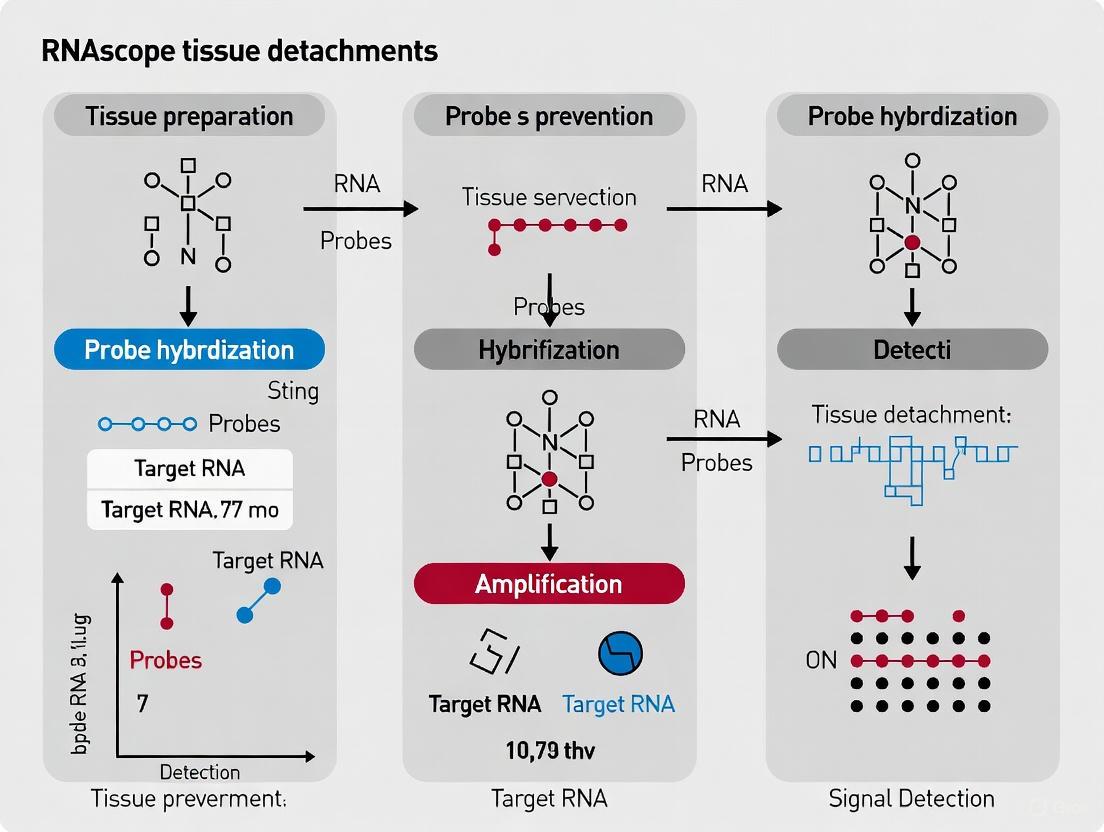
This comprehensive guide addresses the critical challenge of tissue detachment during RNAscope in situ hybridization procedures, a common frustration for researchers and drug development professionals.
Preventing Tissue Detachment in RNAscope: A Complete Guide for Reliable In Situ Hybridization
Abstract
This comprehensive guide addresses the critical challenge of tissue detachment during RNAscope in situ hybridization procedures, a common frustration for researchers and drug development professionals. Covering foundational principles to advanced troubleshooting, we detail evidence-based strategies for slide selection, sample preparation, and protocol optimization to maintain tissue integrity. The article provides actionable methodologies for both manual and automated workflows, systematic troubleshooting approaches for problematic tissues, and validation frameworks to ensure data reliability. By synthesizing technical guidelines with practical insights, this resource empowers scientists to achieve robust, reproducible RNA detection while preserving valuable samples.
Understanding Tissue Adhesion: The Science Behind RNAscope Slide Integrity
Why are Superfrost Plus slides specifically mandated for RNAscope assays?
Superfrost Plus slides are not a mere recommendation but a mandatory requirement for the RNAscope assay because they are engineered with a permanent positive charge that electrostatically attracts tissue sections, creating a powerful adhesive force [1] [2]. This is crucial for preventing tissue detachment during the rigorous procedure, which involves multiple steps such as boiling during antigen retrieval and protease digestion, that can easily cause tissue loss on standard slides [3] [4]. Using other slide types is a common pitfall that directly leads to tissue detachment, compromising experimental results [3] [4].
How do Superfrost Plus slides function to prevent tissue loss?
The mechanism of action is twofold, combining electrostatic and covalent binding:
- Electrostatic Attraction: The slides possess a permanent positive charge that electrostatically binds frozen tissue sections and cytology preparations to the slide surface [1] [2].
- Covalent Bonding: For formalin-fixed tissues, the slide coating acts as a bridge, facilitating the development of covalent bonds between the fixed tissue and the glass surface [1] [2].
This dual mechanism ensures robust adhesion without needing protein coatings or special adhesives, which can interfere with assay results [1] [2]. The following diagram illustrates this protective mechanism against the stresses of the RNAscope workflow:
Troubleshooting Guide: Resolving Tissue Detachment Issues
If you are experiencing tissue detachment, use the following checklist to diagnose and correct the problem.
| Problem Area | Specific Issue | Recommended Solution |
|---|---|---|
| Slide Type | Use of non-Superfrost Plus slides | Use only Superfrost Plus Slides (e.g., Fisher Scientific Cat #12-550-15) [5] [3]. |
| Slide Baking | Suboptimal baking time or oven type | Bake slides for up to overnight in an active air-circulating oven (not a HybEZ oven) [5]. |
| Antigen Retrieval | Excessive boiling during target retrieval | Reduce boiling time and maintain a mild boil at ~100°C [5]. |
| General Workflow | Slides drying out between steps | Ensure the hydrophobic barrier (using an ImmEdge pen) remains intact to prevent drying [3] [6]. |
Experimental Protocol: Validating Slide Performance and Assay Conditions
To systematically validate your slide and tissue preparation conditions, follow this detailed protocol.
Objective: To confirm that tissue sections on Superfrost Plus slides withstand RNAscope pretreatment and hybridization steps without detachment, while yielding specific signal with minimal background.
Materials:
- Superfrost Plus Microscope Slides [1] [2]
- ImmEdge Hydrophobic Barrier Pen (Vector Laboratories, Cat. No. 310018) [3] [4]
- RNAscope Positive Control Probe (e.g., PPIB or UBC, species-specific) [3] [6]
- RNAscope Negative Control Probe (dapB) [3] [6]
- RNAscope Reagent Kit
- HybEZ Oven (for hybridization steps) [3] [4]
Method:
- Sectioning and Mounting: Cut FFPE tissue sections at 5 ± 1 μm and mount them on Superfrost Plus slides [4].
- Baking: Bake the slides for 1 hour at 60°C or for longer periods (up to overnight) if detachment is an issue [5].
- Hydrophobic Barrier: Circle the sections with the ImmEdge pen and allow it to dry completely [3].
- Assay Execution: Perform the RNAscope assay exactly per the manual protocol, using positive (PPIB) and negative (dapB) control probes on consecutive sections of the same sample [3] [6].
- Boiling (Target Retrieval): Adhere strictly to the recommended boiling time. If detachment occurs, reduce the boiling time incrementally [5].
- Protease Treatment: Ensure the protease digestion step is performed at a consistent 40°C [3] [4].
Validation and Scoring: After the assay, evaluate the results based on the established RNAscope scoring guidelines. A successful validation meets the following criteria [3] [6]:
- Positive Control (PPIB): Score of ≥2.
- Positive Control (UBC): Score of ≥3.
- Negative Control (dapB): Score of <1.
- Tissue Integrity: No observable tissue detachment or lifting.
The Scientist's Toolkit: Essential Research Reagent Solutions
The following table lists critical materials required for a successful RNAscope assay, as per official guidelines.
| Item | Function | Mandatory Specification |
|---|---|---|
| Superfrost Plus Slides | Provides electrostatic adhesion for tissue sections during rigorous assay steps. | Must be used; other types cause detachment [5] [3]. |
| ImmEdge Hydrophobic Barrier Pen | Creates a barrier to contain liquid reagents and prevent tissue drying. | Vector Laboratories Cat. No. 310018 is the only recommended pen [3]. |
| HybEZ Oven | Maintains optimum humidity and temperature (40°C) during hybridization. | Required for manual assay hybridization steps [3] [4]. |
| Control Probes (PPIB/UBC & dapB) | Validates sample RNA quality and assay specificity; critical for troubleshooting. | Must be run with every experiment to interpret target results confidently [3] [6]. |
| Assay-Specific Mounting Media | Preserves staining for microscopy. | Varies by assay (e.g., xylene-based for Brown; EcoMount for Red); using the wrong media affects results [3] [6]. |
Key FAQs on Slide Selection and Tissue Adhesion
Q1: Can I use other charged slides if I don't have Superfrost Plus? It is strongly advised not to substitute. The RNAscope protocol has been specifically validated and optimized for Superfrost Plus slides. Other slide types, even if charged, may have different surface properties and are a documented cause of tissue detachment [3] [4].
Q2: My tissue is detaching even on Superfrost Plus slides. What should I do? First, confirm you are using the genuine Superfrost Plus brand. Then, implement these changes sequentially: a) Increase slide baking time (up to overnight), b) Reduce boiling time during antigen retrieval, and c) Ensure you are using an active air-circulating oven for baking, not the HybEZ hybridization oven [5].
Q3: Besides slide choice, what is the most critical step to prevent detachment? Avoiding tissue drying at any point is paramount. Ensure the hydrophobic barrier created by the ImmEdge pen remains intact throughout the entire procedure. If the barrier fails and the tissue dries out, detachment becomes highly likely [3] [6].
Within RNAscope tissue detachment prevention research, proper fixation is the foundational step that ensures successful in situ hybridization (ISH) analysis. Fixation chemically preserves tissue architecture and cellular morphology, safeguarding the sample throughout the rigorous staining process. Inadequate fixation directly compromises tissue adhesion, leading to sample loss and unreliable experimental data. The most common and recommended fixative for RNAscope assays is 10% Neutral Buffered Formalin (NBF), which operates by creating methylene bridge crosslinks between amino acid residues in proteins, thereby stabilizing the tissue structure [7]. Adhering to optimized fixation protocols is not merely a suggestion but a prerequisite for obtaining high-quality, reproducible results and preventing the frustrating and costly problem of tissue detachment.
Experimental Data: Quantitative Effects of Fixation
Impact of Formalin Fixation Duration on RNAscope Signal
Recent research has systematically quantified how fixation time in 10% NBF affects RNAscope signal integrity, a key indicator of preserved tissue and molecular quality. The following table summarizes the findings from a study that measured the signal of a reference gene (16S rRNA) across multiple tissues over an extended period [8] [9].
Table 1: Effect of Prolonged Formalin Fixation on RNAscope Signal
| Fixation Time in 10% NBF | Signal Intensity & Percent Area | Detectability Conclusion |
|---|---|---|
| 1 to 28 days | Maintained stable signal levels | Tissues are suitable for RNAscope analysis. |
| Up to 180 days | Signal intensity and percent area showed a decrease. | Signal was still detectable. |
| 270 days | Signal intensity and percent area decreased significantly. | Signal was not detectable. |
RNA Detection in Long-Term Archived FFPE Tissues
The durability of RNA in archived tissues is crucial for retrospective studies. Another experiment qualitatively compared the detection of canine distemper virus (CDV) RNA via RNAscope ISH in replicate sections from paraffin blocks stored at room temperature for different intervals [8].
Table 2: RNAscope Signal in FFPE Blocks with Prolonged Storage
| FFPE Block Storage Time at Room Temperature | RNA Detection via RNAscope |
|---|---|
| 6 months, 1, 3, 6, 8, and 11 years | RNA was successfully detected. |
| 13 and 15 years | RNA was successfully detected. |
This demonstrates that with proper initial fixation and embedding, RNA targets can be detected in FFPE tissues stored for up to 15 years, highlighting the remarkable stability of well-preserved archival samples [8].
Troubleshooting Guide: Fixation and Adhesion Issues
Common Problems and Direct Solutions
Tissue detachment and poor staining often stem from fixation and preparation errors. The table below outlines common issues, their root causes, and evidence-based solutions.
Table 3: Troubleshooting Guide for Fixation and Tissue Adhesion
| Problem | Primary Cause | Recommended Solution |
|---|---|---|
| Tissue detachment from slide | Use of incorrect slide type. | Use Superfrost Plus slides exclusively; other types result in detachment [3] [6]. |
| Poor signal and tissue loss | Under-fixation (<16 hours in 10% NBF). This leads to protease over-digestion during the assay, degrading RNA and morphology [10]. | Fix tissues in fresh 10% NBF for 16–32 hours at room temperature. Do not fix at 4°C [10]. |
| Low signal despite good morphology | Over-fixation (>32 hours in 10% NBF). This causes excessive cross-linking, reducing probe accessibility [10]. | Optimize antigen retrieval by incrementally increasing protease and/or target retrieval times [3] [6]. |
| High background noise or non-specific signal | Use of incorrect mounting media or residual hydrophobic barrier. | For the RNAscope 2.5 HD Red assay, use only EcoMount or PERTEX mounting media [3]. Use only the ImmEdge Hydrophobic Barrier Pen [3]. |
| Loss of cellular morphology | Protease over-digestion, often a consequence of under-fixation. | Empirically determine the correct dilution and incubation time for Protease III for your specific cell or tissue type [11]. |
Optimizing Pretreatment for Non-Ideal Samples
For archival tissues with unknown or suboptimal fixation history, ACD recommends a specific workflow to qualify samples and optimize conditions before running target probes [3] [6]. The following diagram illustrates this logical pathway to prevent tissue loss and ensure a valid result.
Frequently Asked Questions (FAQs)
Q1: What is the exact recommended fixation protocol for RNAscope? ACD, the developer of RNAscope, highly recommends tissue fixation in fresh 10% Neutral Buffered Formalin (NBF) for 16–32 hours at room temperature [10]. Avoid under-fixation (<16 hrs) or over-fixation (>32 hrs), as both negatively impact signal and tissue integrity.
Q2: Can I use 4% Paraformaldehyde (PFA) instead of 10% NBF? Yes, 4% PFA can be used and is considered to have a similar mechanism and effectiveness to 10% NBF [11] [7]. The key is that the fixation time must still be optimized to fall within the appropriate range to prevent under- or over-fixation.
Q3: My tissue is already fixed and embedded, but I don't know the fixation details. Can I still use it? Yes, but it requires careful qualification. Follow the optimization workflow above: run the sample with positive and negative control probes to assess RNA quality and determine if pretreatment conditions need adjustment [10] [6].
Q4: Why is my tissue detaching from the slides, and how can I prevent it? The most common reasons are not using the recommended slides or letting tissues dry out. Always use Superfrost Plus slides and ensure the hydrophobic barrier created by the ImmEdge pen remains intact so the tissue never dries during the assay [3] [6].
Q5: How does over-fixation lead to problems? Prolonged formalin fixation (beyond 32 hours) creates excessive protein cross-links, which can trap the target RNA and make it inaccessible to the probes. This results in a weak or false-negative signal, even though the tissue morphology might appear excellent [8] [10].
The Scientist's Toolkit: Essential Research Reagent Solutions
Table 4: Key Materials for RNAscope Assay Success
| Item | Function | Recommendation & Note |
|---|---|---|
| Primary Fixative | Preserves tissue morphology and RNA targets. | 10% NBF or 4% PFA. Fix for 16-32 hours [10] [7]. |
| Microscope Slides | Provides a charged surface for tissue adhesion. | Superfrost Plus slides are mandatory to prevent detachment [3] [6]. |
| Hydrophobic Barrier Pen | Creates a well around the tissue to hold reagents. | ImmEdge Pen is required; other pens may fail during the assay [3]. |
| Control Probes | Qualifies sample RNA and assay performance. | Always run PPIB/UBC (positive) and dapB (negative) controls [6]. |
| Protease Reagent | Permeabilizes tissue to allow probe access. | RNAscope Protease III/IV. Digestion time must be optimized for fixation quality [10] [11]. |
| Mounting Media | Preserves staining for microscopy. | Must be assay-specific. For Red assays, use EcoMount or PERTEX only [3]. |
Frequently Asked Questions (FAQs)
Q1: What is the most critical step to prevent tissue detachment during RNAscope assays? The use of Superfrost Plus slides is critical. These slides are specifically required for the RNAscope assay, as other slide types may result in tissue detachment during the rigorous protocol steps [12].
Q2: My sections are detaching during staining or antigen retrieval. What should I do? When sections lift during staining, particularly during heat-induced steps like antigen retrieval for IHC, the use of "sticky" (charged) slides or section adhesives is recommended [13].
Q3: How does section thickness influence tissue adhesion? Thicker sections can be more prone to detachment. However, protocols have been successfully optimized for thicker sections. One study using 14-μm thick spinal cord sections implemented a specific baking step after heat treatment and protease steps to preserve tissue integrity and prevent them from falling off the slide [14].
Q4: What are the best practices for drying slides to ensure adhesion? After collecting sections on slides, they should be drained briefly before being placed in a slide dryer or onto a hotplate. Improper draining can cause sections to move on the slide and not dry flat. Furthermore, the temperature of the slide dryer must be carefully monitored, as excessive heat can create hot spots and cause uneven staining [13].
Q5: How does the flotation bath temperature affect my sections? The flotation bath temperature should be carefully controlled to 4–5°C below the melting point of the wax. If the bath is too hot and the wax begins to melt, it can cause over-expansion and damage to the tissue, compromising its integrity [13].
Troubleshooting Guide: Tissue Adhesion Issues
The following table outlines common problems related to tissue adhesion and provides evidence-based solutions.
| Problem | Possible Cause | Recommended Solution |
|---|---|---|
| Tissue detaches from slide | Incorrect slide type used [12] | Use Superfrost Plus slides exclusively. |
| Insufficient slide drying [13] | Ensure sections are drained properly and dried for an appropriate, consistent time. | |
| Overly aggressive manipulation of floating sections [13] | Use extreme care when removing wrinkles with a brush or forceps to avoid macroscopic and microscopic damage. | |
| Sections lift during staining | Heat and fluid dynamics during antigen retrieval or other steps [13] | Employ charged slides or section adhesives to enhance bond strength. |
| "Moth-eaten" appearance & ragged holes | Poor block face quality during microtomy [13] | Carefully trim blocks and cut the last few sections at the final thickness to polish the block face before collecting sections. |
| Sections over-expand or are damaged on bath | Flotation bath temperature is too high [13] | Check and adjust the bath temperature to 4–5°C below the wax melting point. |
| Sections left on bath for extended periods [13] | Promptly pick up sections immediately after they flatten. | |
| Wrinkles in sections | Flotation bath temperature is too cold [13] | Increase the bath temperature to the optimal range so sections flatten readily. |
| Air bubbles trapped under sections | Bubbles present in flotation bath [13] | Dislodge any visible air bubbles in the bath before laying sections on the water. |
Experimental Protocols for Optimizing Adhesion
Protocol 1: Adherence for Thick CNS Tissue Sections This protocol is adapted from a method developed for 14-μm thick fixed spinal cord sections, which are particularly vulnerable to detachment [14].
- Tissue Preparation: Perfuse with 4% paraformaldehyde and post-fix by immersion in 4% paraformaldehyde for 4 hours at 4°C [14].
- Sectioning: Cut tissue at 14-μm thickness in a cryostat [14].
- Slide Adhesion: To preserve integrity and prevent detachment, a key modification is to bake the sections onto the slide after the heat treatment and protease steps in the RNAscope procedure, rather than before [14].
Protocol 2: Standard Microtomy and Drying for Optimal Adhesion This protocol synthesizes general best practices for paraffin section handling [13].
- Flotation:
- Use a clean flotation bath with water replaced regularly to prevent contamination.
- Maintain the bath at 4–5°C below the melting point of the paraffin wax.
- Float sections only long enough for them to flatten; avoid extended periods that cause over-expansion.
- Skim the water surface between specimens to prevent cross-contamination.
- Drying:
- Drain slides briefly after picking up sections to prevent movement.
- Dry slides in a slide dryer or on a hotplate at a monitored, consistent temperature. Avoid excessive heat.
Research Reagent Solutions
The following table details essential materials and their functions for preventing tissue detachment.
| Item | Function | Source / Example |
|---|---|---|
| Superfrost Plus Slides | Provides a charged surface that significantly improves tissue adhesion during multi-step assays. | Fisher Scientific [12] [15] |
| Hydrophobic Barrier Pen | Creates a boundary around the tissue section to keep reagents contained and prevent sections from drying out, which can cause cracking and detachment. | ImmEdge Pen (Vector Laboratories) [12] |
| Section Adhesives | Enhances the bond between the tissue section and the glass slide, crucial for challenging tissues or rigorous protocols like antigen retrieval. | AAS (3-Aminopropyltriethoxysilane) [13] |
| High-Quality Microtome Blades | Ensures clean, smooth sections without ragged edges or compression, which provides a more uniform and stable section for adhesion. | Various manufacturers [13] |
Visualizing the Relationship Between Sectioning Parameters and Adhesion
The diagram below maps the cause-and-effect relationships between key parameters and tissue adhesion outcomes, helping to diagnose and prevent common issues.
Identifying Common Failure Points in Sample Preparation Workflow
FAQ: Addressing Common RNAscope Experimental Challenges
Q: Why is my tissue detaching from the slide during the RNAscope assay?
A: Tissue detachment commonly occurs due to suboptimal slide selection or improper slide treatment. To prevent this:
- Always use Superfrost Plus slides - other slide types do not provide sufficient adhesion for the rigorous assay conditions [3] [5].
- Extend slide baking time - bake slides for up to overnight in an active air-circulating oven (not the HybEZ oven) [5].
- Reduce boiling time during target retrieval to minimize stress on tissue adhesion [5].
- Use the correct hydrophobic barrier pen - only the ImmEdge Hydrophobic Barrier Pen (Vector Laboratories) will maintain a barrier throughout the entire procedure [3].
Q: What should I do if I get no signal in my experimental sample?
A: Follow this systematic troubleshooting approach:
- First, verify your controls: Confirm that your positive control probes (PPIB, POLR2A, or UBC) show appropriate signal (score ≥2 for PPIB/POLR2A, ≥3 for UBC) and your negative control (dapB) shows minimal background (score <1) [3] [6].
- Check probe handling: Warm probes and wash buffer to 40°C before use, as precipitation during storage can affect assay results [3].
- Verify amplification steps: Ensure you perform all amplification steps in the correct order, as omitting any step will result in no signal [3] [6].
- Use fresh reagents: Always use fresh ethanol and xylene, as older reagents may compromise results [3].
Q: How can I optimize pretreatment conditions for different tissue types?
A: Pretreatment optimization depends on your specific tissue and fixation conditions:
Table: Automated Platform Pretreatment Guidelines
| Platform | Standard Pretreatment | Milder Conditions | Extended Conditions |
|---|---|---|---|
| Leica BOND RX | 15 min ER2 at 95°C + 15 min Protease at 40°C [3] [6] | 15 min ER2 at 88°C + 15 min Protease at 40°C [3] [6] | Increase ER2 by 5-min increments & Protease by 10-min increments [3] [6] |
| Ventana Systems | Follow user manual for specific tissue types [3] | Adjust Pretreat 2 (boiling) and/or protease times [3] | For over-fixed tissues, increase pretreatment times [3] |
Q: What are the critical differences between RNAscope and IHC workflows that might cause failures?
A: Several key differences often trip up experienced IHC users:
- No cooling step after antigen retrieval - directly place slides in room temperature water to stop the reaction [3].
- Temperature-sensitive protease digestion - must be maintained at exactly 40°C [3].
- Specialized mounting media requirements - for Brown assays, use xylene-based media (CytoSeal XYL); for Red and 2-plex assays, use only EcoMount or PERTEX [3].
- Humidity control - the HybEZ Hybridization System is required to maintain optimum humidity and temperature during hybridization [3].
Research Reagent Solutions: Essential Materials for Success
Table: Critical Reagents for RNAscope Sample Preparation
| Reagent/Category | Specific Product Recommendation | Function & Importance |
|---|---|---|
| Microscopy Slides | Superfrost Plus (Fisher Scientific #12-550-15) [3] [5] | Provides sufficient adhesion for tissue sections during rigorous assay conditions |
| Hydrophobic Barrier | ImmEdge Pen (Vector Laboratories #310018) [3] | Maintains liquid barrier throughout procedure; prevents tissue drying |
| Control Probes | PPIB/POLR2A (positive), dapB (negative) [3] [6] | Validates sample RNA quality, assay performance, and specific staining |
| Fixative | Fresh 10% NBF (Neutral Buffered Formalin) [3] [16] | Preserves RNA integrity; critical for signal quality |
| Mounting Media | Varies by assay type: CytoSeal XYL (Brown), EcoMount/PERTEX (Red/2-plex) [3] [6] | Preserves staining for visualization; assay-specific requirements |
| Equipment | HybEZ Hybridization System [3] | Maintains optimal humidity and temperature during hybridization steps |
Experimental Workflow for Tissue Integrity Preservation
The following diagram illustrates the critical sample preparation workflow with key decision points for preventing tissue detachment and ensuring optimal RNA preservation:
Quantitative Scoring Guidelines for Quality Assessment
Table: RNAscope Scoring Criteria for Control Probes
| Score | Criteria | Interpretation & Required Action |
|---|---|---|
| 0 | No staining or <1 dot/10 cells [3] [6] | Unacceptable: Check RNA integrity and assay conditions |
| 1 | 1-3 dots/cell [3] [6] | Suboptimal for positive controls: Optimize pretreatment |
| 2 | 4-9 dots/cell, few clusters [3] [6] | Acceptable for PPIB/POLR2A positive controls |
| 3 | 10-15 dots/cell, <10% clusters [3] [6] | Good for PPIB/POLR2A; minimal for UBC |
| 4 | >15 dots/cell, >10% clusters [3] [6] | Ideal for UBC positive control |
Critical Protocol Deviations That Compromise Results
The most common failure points in RNAscope sample preparation stem from protocol deviations:
- Tissue fixation issues: Under-fixation causes significant RNA loss, while over-fixation requires pretreatment optimization [16].
- Sample drying: Never let slides dry out between steps, and ensure the hydrophobic barrier remains intact [3].
- Incorrect reagent substitutions: Use only recommended mounting media and detection kits specified for your specific RNAscope assay format [3] [6].
- Instrument maintenance: For automated platforms, regular decontamination (every 3 months) and bulk solution replacement are essential to prevent microbial growth that can degrade RNA [3].
By systematically addressing these common failure points and implementing the recommended solutions, researchers can significantly improve RNAscope assay reliability and data quality within the context of tissue detachment prevention research.
The Connection Between Tissue Type and Adhesion Challenges
A guide to preserving your samples from slide to detection.
Tissue detachment is one of the most frequent and frustrating challenges in RNAscope assays. The success of your experiment hinges on keeping tissue sections securely adhered to slides throughout the rigorous in situ hybridization process. This guide provides targeted troubleshooting and FAQs to help you overcome adhesion issues related to your specific tissue type.
Frequently Asked Questions: Tissue Adhesion
Q1: What is the single most critical factor in preventing tissue detachment?
The consistent use of Superfrost Plus slides is paramount. These slides are specifically engineered with an improved charged surface to enhance tissue adhesion and are repeatedly cited as a requirement in RNAscope protocols, as other slide types frequently result in detachment [5] [12].
Q2: My formalin-fixed, paraffin-embedded (FFPE) sections are detaching. What should I check first?
For FFPE samples, your initial focus should be on slide baking and boiling steps [5]:
- Baking: Ensure slides are baked for a sufficient duration. If detachment occurs, extending the baking time up to overnight in an active air-circulating oven (not a HybEZ oven) can improve adhesion.
- Boiling: Suboptimal tissue preparation and excessive boiling during target retrieval can lead to detachment. Reduce boiling time and maintain a mild boil at approximately 100°C [5].
Q3: How does tissue fixation influence adhesion?
While improper fixation doesn't directly cause detachment, it is a core component of optimal sample preparation. Fresh 10% Neutral Buffered Formalin (NBF) with a fixation time of 16-32 hours is recommended [12]. Over- or under-fixed tissues may require protocol adjustments elsewhere (e.g., protease time), which can indirectly stress tissue adhesion.
Q4: Are there specific tips for handling non-FFPE samples, like cultured cells?
Yes. For adherent cells cultured on coverslips, proper fixation and dehydration are critical:
- Fix cells with fresh 4% PFA or 10% NBF for 30 minutes at room temperature [11].
- After fixation, dehydrate cells through a graded ethanol series (50%, 70%, 100%) before storage or proceeding with the assay. Coverslips can be stored in 100% ethanol at -20°C for up to six months [11].
Experimental Protocols & Workflows
Standardized Pretreatment Protocol for Adhesion
This protocol is adapted from ACD's recommended guidelines to minimize detachment risk [12] [11].
Part 1: Materials Required
- Slides: Superfrost Plus slides (Fisher Scientific, Cat #12-550-15) [5] [12]
- Pen: ImmEdge Hydrophobic Barrier Pen (Vector Laboratories, Cat. No. 310018) [12]
- Fixative: Fresh 10% NBF or 4% PFA
- Ethanol: Fresh 100%, 70%, and 50% ethanol
- Retrieval Reagents: RNAscope Target Retrieval Reagents
- Protease: RNAscope Protease III or IV, as appropriate for your sample type
Part 2: Step-by-Step Procedure
- Bake Slides: For FFPE sections, bake slides for 1 hour at 60°C or up to overnight if adhesion is problematic. Use a standard drying oven with active air circulation [5].
- Deparaffinize and Dehydrate: Process slides through xylene and a graded ethanol series (100%, 70%, 50%) according to the standard RNAscope protocol.
- Create Hydrophobic Barrier: Draw a barrier around the section using the ImmEdge pen and allow it to dry completely. This pen is verified to maintain its barrier throughout the entire procedure [12].
- Target Retrieval: Perform target retrieval by boiling slides in retrieval solution. Critical Step: Avoid vigorous boiling; maintain a mild boil at ~100°C. Do not exceed the recommended time [5].
- Protease Treatment: Apply the appropriate, empirically determined dilution of Protease and incubate at 40°C. The dilution factor must be optimized for each new cell or tissue type to balance permeabilization with tissue integrity [11].
- Proceed with Hybridization: Continue with the remaining RNAscope assay steps, ensuring slides do not dry out at any point.
Research Reagent Solutions
Table: Essential Materials for Preventing Tissue Detachment
| Item | Function | Recommendation |
|---|---|---|
| Superfrost Plus Slides | Microscope slides with a charged surface to maximize tissue adhesion. | Mandatory for all RNAscope assays; other types cause detachment [5] [12]. |
| ImmEdge Hydrophobic Barrier Pen | Creates a water-repellent barrier to contain reagents and prevent sections from drying. | The only barrier pen recommended to function reliably through the entire protocol [12]. |
| RNAscope Protease III & IV | Enzymatically digests tissue to allow probe access. Strength must match tissue type. | Protease dilution must be empirically determined for each new cell or tissue type [11]. |
| Fresh 10% NBF | Standardized tissue fixative for preserving RNA and morphology. | Recommended fixation for 16-32 hours for optimal results [12]. |
| Active Air-Circulating Oven | Used for baking slides to adhere tissue sections. | Preferred over HybEZ ovens for the baking step to improve adhesion [5]. |
Troubleshooting by Tissue Type
Different sample types present unique adhesion challenges. The following diagram illustrates the decision-making process for diagnosing and resolving detachment based on your specific tissue.
Troubleshooting Tissue Adhesion
Key Takeaways for Robust Results
Successful RNAscope assays require an integrated approach to tissue adhesion. This involves using validated materials like Superfrost Plus slides and the ImmEdge pen, following optimized protocols for baking and retrieval specific to your tissue type, and empirically determining critical steps like protease dilution. By systematically addressing these factors, you can effectively minimize tissue detachment and ensure the integrity of your experimental data.
Proven Protocols: Step-by-Step Methods to Prevent Tissue Loss
The Scientist's Toolkit: Research Reagent Solutions
For a successful RNAscope assay, using the correct materials is not just a recommendation—it is a critical requirement to prevent issues such as tissue detachment and to ensure valid results. The following table details the essential materials, their functions, and the consequences of using substitutes.
Table 1: Essential Materials for RNAscope Assays to Prevent Tissue Detachment
| Item | Function & Importance | Specific Product Requirements |
|---|---|---|
| Microscope Slides | Provides adhesion for tissue sections during high-temperature and fluid incubation steps. [5] [3] | Superfrost Plus Slides are mandatory. Other slide types greatly increase the risk of tissue detachment. [5] [3] |
| Hydrophobic Barrier Pen | Creates a liquid barrier around the tissue, ensuring reagents cover the section without drying out. [3] | The ImmEdge Hydrophobic Barrier Pen is the only pen certified to maintain its barrier throughout the entire RNAscope procedure. [3] |
| Mounting Media | Preserves the stained tissue for microscopy and analysis. [3] [6] | Chromogenic (Brown): Xylene-based (e.g., CytoSeal).Red/Fluorescent: EcoMount or PERTEX. Using incorrect media can degrade signals. [3] [6] |
| Fixative | Preserves tissue architecture and RNA integrity at the time of sample collection. [3] [16] | Fresh 10% Neutral Buffered Formalin (NBF) for 16-32 hours is the gold standard. Under-fixation causes RNA loss; over-fixation reduces probe accessibility. [16] |
| Control Probes | Validates assay performance, RNA quality, and tissue pretreatment conditions. [3] [6] | Always run a positive control (e.g., PPIB, UBC) and a negative control (bacterial dapB) on your sample type. [3] |
| HybEZ Oven | Maintains optimum humidity and temperature during key hybridization and amplification steps. [3] | Required for manual assay hybridization steps. However, for baking slides, an active air-circulating oven should be used instead to prevent detachment. [5] [3] |
Troubleshooting Guide & FAQs: Preventing Tissue Detachment
FAQ: The Root Causes and Prevention Strategies
Q1: My tissue keeps detaching from the slide, especially during washing or heating steps. What is the most likely cause?
The single most common cause is not using the recommended microscope slides. Superfrost Plus Slides are explicitly required because their specially coated surface provides superior tissue adhesion under the demanding conditions of the RNAscope protocol. [5] [3] Other types of slides cannot withstand the heating and multiple wash steps, leading to detachment. Furthermore, baking slides in a HybEZ oven, which is not designed for this purpose, can also cause tissue loss. Slides should be baked in an active air-circulating oven. [5]
Q2: I am using Superfrost Plus slides, but I still have some detachment. What else should I check?
If you are using the correct slides, the next factors to investigate are your sample preparation and pretreatment protocols. Suboptimal tissue preparation is a frequent root cause of problems. [16] For FFPE samples, ensure slides are baked long enough (up to overnight) and that the boiling time during target retrieval is not excessive, as intense boiling can contribute to tissue loss. [5] For fresh-frozen tissues, under-fixation can make the tissue vulnerable to protease over-digestion, which weakens its structure and leads to detachment during subsequent steps. [17]
Q3: How can I validate that my entire workflow, from materials to protocol, is correct before running my target probe?
The most robust validation is to run control probes on your specific tissue sample. Always include a positive control probe (e.g., for a housekeeping gene like PPIB or UBC) and a negative control probe (dapB). [3] [6] A successful result—with a strong, specific signal in the positive control and no signal in the negative control—confirms that your materials are sound and the protocol has been executed correctly. If the controls fail, your target results cannot be trusted, and you must troubleshoot your process. [6]
Experimental Protocol: Sample Qualification Workflow
Before evaluating your target gene, it is crucial to qualify your samples, especially if their preparation history is unknown or does not match recommended guidelines. The following workflow, endorsed by the assay developer, provides a systematic method to prevent experimental failure. [3] [6]
Diagram 1: Sample qualification workflow to validate RNAscope assay conditions.
The decision point in this protocol relies on a semi-quantitative scoring system. The criteria for success are as follows: [3] [6]
Table 2: RNAscope Scoring Guidelines for Positive Control Probe PPIB
| Score | Criteria (Dots per Cell) | Interpretation |
|---|---|---|
| 0 | No staining or <1 dot/10 cells | Unacceptable - Assay failed |
| 1 | 1-3 dots/cell | Suboptimal |
| 2 | 4-9 dots/cell; few clusters | Minimum Acceptable Score |
| 3 | 10-15 dots/cell; <10% clusters | Good |
| 4 | >15 dots/cell; >10% clusters | Excellent |
For the negative control probe (dapB), a score of <1 is required, indicating little to no background staining. [3] [6] If your controls do not meet these scores, you must optimize your pretreatment conditions (e.g., adjust protease treatment or target retrieval times) before using valuable target probes.
FAQs: Addressing Tissue Detachment in RNAscope Assays
Q1: Why did my tissue sections detach from the slides during the RNAscope assay?
Tissue detachment most commonly results from suboptimal tissue preparation or the use of incorrect slide types [5]. Specific causes include:
- Inadequate Slide Baking: Insufficient baking time before the assay can prevent proper tissue adhesion [5].
- Overly Vigorous Antigen Retrieval: Excessive boiling during the target retrieval step can cause tissues to lift off [5].
- Use of Non-Recommended Slides: Using slide types other than Superfrost Plus Slides is a frequent culprit, as they are specifically engineered to prevent detachment during the assay procedure [3] [15].
Q2: What are the critical steps to prevent tissue detachment in FFPE samples?
For Formalin-Fixed Paraffin-Embedded (FFPE) samples, adhere to these critical steps [5] [16]:
- Use Superfrost Plus Slides exclusively [5] [3].
- Bake slides in an active air-circulating oven for up to overnight to ensure adhesion [5].
- Reduce boiling time during antigen retrieval to a mild boil at approximately 100°C [5].
- Follow recommended fixation protocols: Fix tissues in fresh 10% Neutral-Buffered Formalin (NBF) for 16-32 hours [3] [16].
Q3: My tissue is detaching. Are there specific reagents or tools that can help?
Yes, using the correct materials is non-negotiable for assay success and tissue integrity. The table below details essential solutions.
Table: Research Reagent Solutions for Tissue Adhesion and Assay Integrity
| Item Name | Function | Importance for Preventing Detachment |
|---|---|---|
| Superfrost Plus Slides (Fisher Scientific, Cat #12-550-15) [5] [15] | Microscope slides with an improved electrostatic coating. | Critical. Specifically required for the RNAscope assay to secure tissue sections throughout the rigorous protocol [3]. |
| ImmEdge Hydrophobic Barrier Pen (Vector Laboratories) [3] | Creates a water-repellent barrier around the tissue section. | Prevents reagents from flowing off the tissue, ensuring consistent volume and preventing the tissue from drying out, which can compromise adhesion [3]. |
| Active Air Circulating Oven [5] | Used for baking slides after sectioning. | Promotes even and secure adhesion of tissue sections to the slide surface before the assay begins. A HybEZ oven should not be used for this step [5]. |
| Fresh 10% NBF (Neutral-Buffered Formalin) [3] [16] | Standard fixative for tissue preservation. | Ensures proper tissue fixation from the start. Under-fixation can lead to RNA degradation and tissue structure weakness, increasing detachment risk [16]. |
Q4: How does the use of an ImmEdge Pen prevent tissue detachment?
The ImmEdge Hydrophobic Barrier Pen is the only barrier pen recommended for the RNAscope assay [3]. It maintains a consistent hydrophobic barrier throughout the entire procedure, which serves two key functions:
- It contains small volumes of reagents over the tissue section, ensuring proper coverage.
- It prevents the tissue from drying out between reagent steps [3]. Repeated drying and rehydration of the tissue section is a significant mechanical stress that can lead to lifting and detachment.
Troubleshooting Guide: Tissue Detachment
Problem: Widespread tissue detachment during the assay procedure.
Recommended Actions:
- Verify Slide Type: Confirm you are using Superfrost Plus Slides (Fisher Scientific, Cat. #12-550-15). Discontinue use of any other slide type [5] [3].
- Extend Slide Baking: Bake your prepared slides for a longer duration, potentially overnight, in a standard active air-circulating oven to enhance tissue adhesion [5].
- Adjust Antigen Retrieval: Ensure the target retrieval step involves a mild boil (~100°C) and consider reducing the boiling time to minimize physical stress on the tissue [5].
Problem: Tissue detachment occurs during protease digestion or subsequent wash steps.
Recommended Actions:
- Check Protease Temperature: Ensure the protease digestion step is maintained at a precise 40°C [3]. Temperature fluctuations can affect enzyme activity and tissue stability.
- Inspect Hydrophobic Barrier: Use an ImmEdge Pen to create a robust barrier. If the barrier fails, reagents can leak and cause localized drying and detachment [3].
- Avoid Slide Drying: When flicking slides to remove residual reagent, take care not to let the tissue sections dry out completely at any point in the protocol [3].
Optimized Manual Assay Workflow for Minimal Detachment Risk
The following workflow diagram summarizes the key procedures for minimizing tissue detachment risk.
Detailed Protocols for Key Experiments
Protocol 1: Slide Preparation and Baking for Optimal Adhesion
- Objective: To ensure tissue sections are irreversibly adhered to the slide before the assay begins.
- Materials: Superfrost Plus Slides (Fisher Scientific, Cat #12-550-15), active air-circulating oven [5].
- Methodology:
- Cut FFPE tissue sections at a thickness of 5 μm [15] [16].
- Mount sections on Superfrost Plus Slides [5] [15].
- Air-dry slides overnight at room temperature [16].
- Bake the slides in an active air-circulating oven at 60°C. The duration can be extended from the typical 1 hour up to overnight for tissues prone to detachment [5].
Protocol 2: Controlled Antigen Retrieval to Minimize Physical Stress
- Objective: To expose target RNA while preserving tissue integrity.
- Materials: Target retrieval solution, heating plate, thermometer [3].
- Methodology:
- Follow the standard deparaffinization and rehydration steps.
- Perform antigen retrieval by boiling the slides in the appropriate retrieval solution.
- Critical Step: Maintain a mild, controlled boil at approximately 100°C. Avoid vigorous boiling [5].
- Reduce the boiling time if detachment has been a consistent issue, as per the troubleshooting guide [5].
- After retrieval, immediately transfer slides to room temperature water to stop the reaction, as per the standard RNAscope protocol [3].
Proper sample qualification using control probes is essential for troubleshooting. The following table outlines the scoring system used to interpret RNAscope results, which helps determine if low signal is due to technical issues (like detachment or suboptimal pretreatment) or biological factors.
Table: RNAscope Scoring Guidelines for Control Probes [3] [15]
| Score | Quantitative Criteria (Dots per Cell) | Interpretation for Sample & Assay Qualification |
|---|---|---|
| 0 | No staining or <1 dot/10 cells | Indicates poor RNA quality, major technical failure, or gene not expressed. |
| 1 | 1-3 dots/cell | Low-level detection. For a housekeeping control, suggests suboptimal conditions. |
| 2 | 4-9 dots/cell; very few dot clusters | Moderate detection. A score of ≥2 for PPIB is a benchmark for successful assay performance [3]. |
| 3 | 10-15 dots/cell; <10% dots in clusters | Strong, clear detection. Ideal for a positive control. |
| 4 | >15 dots/cell; >10% dots in clusters | Very strong detection, with clusters indicating high transcript density. |
For a successful assay using a housekeeping gene control (e.g., PPIB), a score of ≥2 is expected, while the negative control (dapB) should typically yield a score of <1 [3]. If the positive control scores low, it indicates a need for optimization.
FAQs & Troubleshooting Guides
General RNAscope Platform Questions
What are the key advantages of automated RNAscope platforms? Automated platforms like the Ventana DISCOVERY and Leica BOND RX systems provide superior consistency and reproducibility compared to manual processes by eliminating user technique variability, precisely controlling incubation times and temperatures, and automating reagent application. This is particularly crucial for lengthy sequential multiplexing assays and ensures reliable data quality in research and drug development settings [18] [19].
My RNAscope assay failed on the Ventana platform. What are the first steps in troubleshooting? First, verify that your instrument maintenance is up to date. Contact your Ventana/Roche Diagnostics representative to perform the recommended decontamination protocol every three months to prevent microbial growth in the fluidic lines. Ensure all bulk solution containers have been thoroughly rinsed and the internal reservoir purged several times with the appropriate buffers specified for the RNAscope assay [3].
How do I prevent tissue detachment during the RNAscope assay on the BOND RX? Tissue detachment, especially with fragile samples like fixed-frozen human brain, is often due to harsh pre-treatment. A proven solution is to modify the protocol to include two additional fixation steps and optimize the pre-treatment conditions. Always use Superfrost Plus slides, as other types may result in tissue loss [3] [19].
Ventana DISCOVERY XT/ULTRA Specific Issues
I am getting high background on my Ventana instrument. What software settings should I check? Ensure that the "Slide Cleaning" option is unchecked in the software settings. For software version 2.0, note that the fully automated setting is applicable primarily for brain and spinal cord samples. Do not adjust the recommended hybridization temperatures unless specifically instructed by ACD's technical support [3].
What buffers are recommended for the RNAscope assay on Ventana systems? Use only the DISCOVERY 1X SSC Buffer, diluted 1:10 prior to adding it to the optional bulk buffer container. The Benchmark 10X SSC Buffer should not be used. Similarly, the RiboWash Buffer must be diluted 1:10 in its dedicated bulk container [3].
Leica BOND RX Specific Issues
How do I configure the BOND RX software (v7.0 and later) for a multiplex run?
The BOND RX v7.0 software includes SignalStar dropdown menus as templates. Note that the *CST SignalStar Image RD1 and *CST SignalStar Image RD2 protocols are templates that must be copied, renamed, and assigned a research detection kit before they can be used for a successful run [20].
What is the standard tissue pre-treatment for RNAscope on the BOND RX? The recommended standard pre-treatment is 15 minutes of Epitope Retrieval 2 (ER2) at 95°C, followed by 15 minutes of Enzyme (Protease) at 40°C. For more delicate tissues, a milder pre-treatment of 15 minutes ER2 at 88°C and 15 minutes Protease at 40°C is recommended [3].
I received an "Empty" or "Insufficient reagent" error on the BOND RX. How can I resolve this? The BOND RX may flag containers as "Empty" if they are overfilled. Ensure open containers are filled with the correct volume of reagent as indicated in the protocol. If an error persists, try scanning the container again or using a new container. You can click "Mark not empty" and then "Refill" to resolve the issue [20].
Signal and Background Issues
I have a weak or absent fluorescent signal in my multiplex IHC. What could be wrong? For weak signal, confirm that all viscous SignalStar solutions, particularly Amplification Solution 1 and 2, were thoroughly mixed using low-retention pipette tips and rotated end-over-end for 20 minutes at room temperature. Ensure no residual Amplification Solution 1 remains before applying Solution 2. If signal is absent in one channel, verify that all complementary oligos and amplification oligos (A and B) for that channel were added [20].
How can I reduce high background and autofluorescence? High background can often be mitigated by titrating the antibody concentration. Decreasing the amount of antibody 0.5-fold may help reduce background while maintaining specific signal. For highly autofluorescent tissues (e.g., brain in the 488 nm channel), consider using reagents like TrueBlack Lipofuscin to quench autofluorescence and plan your panel design to place strongly expressed markers in challenging channels [20].
Summarized Data Tables
BOND RX Pre-Treatment Optimization Guidelines
The following table outlines recommended pre-treatment conditions for the RNAscope assay on the Leica BOND RX system, tailored for different tissue qualities [3].
Table 1: RNAscope Pre-Treatment Optimization for BOND RX
| Tissue Condition | Epitope Retrieval 2 (ER2) | Protease Treatment | Recommended Application |
|---|---|---|---|
| Standard | 15 min at 95°C | 15 min at 40°C | Well-fixed, robust tissues |
| Milder | 15 min at 88°C | 15 min at 40°C | Delicate or sensitive tissues |
| Extended / Over-fixed | Increase in 5 min increments (e.g., 20-25 min at 95°C) | Increase in 10 min increments (e.g., 25-35 min at 40°C) | Over-fixed or difficult-to-penetrate tissues |
RNAscope Scoring Guidelines
The RNAscope assay uses a semi-quantitative scoring system based on the number of punctate dots per cell, which correlates with RNA copy numbers. The following criteria are used for evaluation [3].
Table 2: RNAscope Assay Scoring Criteria
| Score | Criteria | Interpretation |
|---|---|---|
| 0 | No staining or <1 dot per 10 cells | Negative / No expression |
| 1 | 1-3 dots/cell | Very low expression |
| 2 | 4-9 dots/cell; none or very few dot clusters | Low to moderate expression |
| 3 | 10-15 dots/cell; <10% dots are in clusters | High expression |
| 4 | >15 dots/cell; >10% dots are in clusters | Very high expression |
Chromogen Application Order for Multiplex IHC
For chromogenic multiplex IHC on the BOND RX, the order in which chromogens are applied is critical to prevent cross-reaction and ensure signal fidelity [18].
Table 3: Chromogen Application Sequence
| Application Order | Chromogen | Enzyme Base |
|---|---|---|
| 1st | Red | Alkaline Phosphatase (AP) |
| 2nd | DAB (Brown) | Horseradish Peroxidase (HRP) |
| 3rd | Blue | Horseradish Peroxidase (HRP) |
| 4th | Green | Horseradish Peroxidase (HRP) |
Experimental Workflow Diagrams
RNAscope Automated Workflow & Troubleshooting
BOND RX v7.0 Software Setup
The Scientist's Toolkit: Research Reagent Solutions
Table 4: Essential Reagents for RNAscope and Multiplex IHC
| Item | Function | Application Note |
|---|---|---|
| HybEZ Hybridization System | Maintains optimum humidity and temperature during hybridization. | Required for all RNAscope manual assays; critical for assay consistency [21] [3]. |
| ImmEdge Hydrophobic Barrier Pen | Creates a barrier to contain reagents on the slide. | The only barrier pen validated for use throughout the entire RNAscope procedure [21] [3]. |
| Superfrost Plus Microscope Slides | Provides superior tissue adhesion. | Required for RNAscope to prevent tissue detachment, especially during stringent pre-treatments [3] [19]. |
| Positive & Negative Control Probes | Verifies sample RNA quality and assay performance. | Always run controls (e.g., PPIB, POLR2A, UBC for positive; dapB for negative) to qualify your sample [3]. |
| RNAscope 2.5 HD Reagent Kits | Provides all necessary reagents for detection. | Kits are specific for chromogenic (Brown, Red) or fluorescent detection. Use only specified mounting media [21] [3]. |
| EcoMount or PERTEX Mounting Media | Preserves and protects stained tissue for imaging. | Required for RNAscope 2.5 HD Red and 2-plex assays. Other media may quench signal [21] [3]. |
| TrueBlack Lipofuscin | Reduces tissue autofluorescence. | Useful for quenching background in highly autofluorescent tissues like brain [20]. |
This technical support center provides targeted troubleshooting guides and FAQs for researchers utilizing RNAscope technology for thick sections, whole mounts, and archived samples, directly supporting ongoing thesis research on RNAscope tissue detachment prevention.
Frequently Asked Questions
Q: What is the most critical step to prevent tissue detachment in FFPE sections? A: Using the correct microscope slides is paramount. Always use Superfrost Plus slides; other slide types are a common cause of tissue loss [3] [5]. Furthermore, ensure slides are baked in an active air-circulating oven (not a HybEZ oven) and avoid excessive boiling during target retrieval by maintaining a mild boil at approximately 100°C [5].
Q: My archived sample is old, and the fixation details are unknown. How can I still get usable data? A: Qualifying these samples is essential. Always run positive and negative control probes on your archived sample to assess RNA quality and optimal permeabilization [3] [16]. For over-fixed tissues or those with unknown history, adjust the pretreatment conditions on the automated platform by incrementally increasing the Epitope Retrieval 2 (ER2) time in 5-minute increments and the Protease time in 10-minute increments while keeping temperatures constant [3] [6].
Q: Can RNAscope be used for whole-mount samples, such as embryos? A: Yes, the RNAscope technology has been successfully adapted for whole-mount samples. Innovative protocols have been published for whole-mount zebrafish embryos, adult Drosophila brains, and whole mouse inner ears, often in combination with immunohistochemistry (IHC) [22] [23]. These methods overcome challenges like probe penetration and high background in complex 3D structures.
Q: What should I do if my whole-mount or thick section sample has no signal? A: First, confirm that your control probes are performing as expected. Your positive control (e.g., PPIB) should score ≥2 and your negative control (dapB) should score <1 before making conclusions about your experimental sample [3] [24]. For low-expression targets, confirm you are using the appropriate low-copy positive control probe like POLR2A [25].
Q: How do I manage heterogeneous staining patterns in complex tissues? A: For morphologically distinct regions, it is helpful to use image analysis software features to isolate tissues of interest for analysis. Annotations can also be drawn manually to define specific regions for quantitative analysis [25].
The Scientist's Toolkit: Essential Research Reagents & Materials
The following reagents and tools are critical for success with challenging sample types, helping to ensure sample integrity and high-quality results.
| Item | Function & Importance |
|---|---|
| Superfrost Plus Slides | Required to prevent tissue detachment; specially charged surface ensures tissue adhesion throughout the stringent assay procedure [3] [5]. |
| ImmEdge Hydrophobic Barrier Pen | The only barrier pen recommended to maintain a hydrophobic barrier throughout the entire RNAscope procedure, preventing slides from drying out [3]. |
| Positive & Negative Control Probes (PPIB/POLR2A & dapB) | Essential for qualifying sample RNA quality and assay performance, especially for archived samples of unknown quality [3] [24]. |
| HybEZ Hybridization System | Maintains optimum humidity and temperature during critical hybridization steps, which is vital for consistent results [3]. |
| Assay-Specific Mounting Media | Using the correct media is mandatory. For Red assays, use EcoMount or PERTEX; for Brown assays, use xylene-based media like CytoSeal [3] [6]. |
RNAscope Scoring Guidelines for Sample Qualification
When interpreting RNAscope staining, score the number of dots per cell rather than signal intensity. The table below outlines the semi-quantitative scoring system used to evaluate control probes and assess sample quality [3] [6].
| Score | Staining Criteria | Interpretation for Sample Qualification |
|---|---|---|
| 0 | No staining or <1 dot/10 cells | Ideal result for the negative control (dapB) probe. |
| 1 | 1-3 dots/cell | Indicates very low-level expression. |
| 2 | 4-9 dots/cell; very few clusters | The minimum acceptable score for the PPIB positive control [24]. |
| 3 | 10-15 dots/cell; <10% dots in clusters | Indicates good RNA quality and assay performance. |
| 4 | >15 dots/cell; >10% dots in clusters | Expected for high-copy positive controls like UBC [24]. |
Workflow for Qualifying Archived & Challenging Samples
For archived samples or any tissue where preparation details are unknown or suboptimal, follow this systematic workflow to qualify your sample and optimize pretreatment conditions [3] [16].
Optimization Strategies for Automated Platforms
For samples requiring pretreatment optimization on automated systems, use these targeted adjustments [3] [6].
For the Leica BOND RX System:
- Standard Pretreatment: 15 min ER2 at 95°C + 15 min Protease at 40°C.
- Milder Pretreatment: 15 min ER2 at 88°C + 15 min Protease at 40°C (for delicate tissues).
- Extended Pretreatment: Increase ER2 time in 5-min and Protease time in 10-min increments (e.g., 20 min ER2 + 25 min Protease) for over-fixed or tough-to-penetrate tissues.
For the Ventana DISCOVERY System:
- Ensure instrument maintenance is current, including regular decontamination to prevent microbial growth in fluidic lines.
- Use only DISCOVERY 1X SSC Buffer diluted 1:10; do not use the Benchmark 10X SSC Buffer.
A common and frustrating challenge in RNAscope in situ hybridization (ISH) assays is tissue detachment during the experimental workflow. This problem not only ruins precious samples but also compromises research integrity. At the heart of preventing this issue lies precise control of two critical parameters: temperature and humidity. The HybEZ Hybridization System is specifically engineered to maintain optimum humidity and temperature throughout the RNAscope assay procedure, representing a fundamental advantage over generic hybridization setups [3]. This technical guide explores how the HybEZ System addresses the specific environmental control needs of RNAscope assays to prevent tissue detachment and ensure experimental success.
Frequently Asked Questions (FAQs)
Q1: Why is the HybEZ System specifically recommended for RNAscope assays?
The HybEZ System is not merely an incubator; it is an integrated environment control system specifically designed for the sensitive hybridization steps in RNAscope. Its primary function is to maintain optimum humidity and temperature during critical assay steps, which is mandatory for successful RNAscope hybridization [3]. Without this controlled environment, tissues are prone to drying, which can lead to detachment and unreliable results.
Q2: How does inadequate humidity control lead to tissue detachment?
When the hydrophobic barrier on slides fails or environmental humidity drops, tissue samples begin to dry out. This drying creates uneven tension across the tissue section and between the tissue and slide surface, compromising adhesion. Furthermore, repeated drying and rehydration cycles during protocol steps can progressively weaken tissue attachment. The HybEZ System prevents this by maintaining consistently high humidity throughout the hybridization process [3] [6].
Q3: What are the consequences of temperature fluctuations on my RNAscope results?
Temperature deviations from the recommended 40°C during critical steps like protease digestion and probe hybridization can severely impact results [3]. Over-heating accelerates evaporation and drying even in humid environments, while under-heating reduces protease efficiency and probe hybridization kinetics. Both scenarios can increase background noise, reduce specific signal, and potentially contribute to tissue loss.
Q4: Besides using the HybEZ System, what other steps can prevent tissue detachment?
The HybEZ System works in conjunction with other best practices for complete tissue protection:
- Use only Superfrost Plus slides as they are specifically designed to retain tissue sections through multiple fluid exchanges [3] [5]
- Apply ImmEdge Hydrophobic Barrier Pen to maintain a proper liquid barrier throughout the procedure [3]
- Ensure slides are properly baked onto slides (up to overnight) for FFPE samples to enhance adhesion [5]
- Avoid excessive tapping or flicking of slides when removing reagents, as mechanical stress can dislodge partially detached tissue [3] [6]
Troubleshooting Guide: Tissue Detachment Issues
Problem: Tissue Detachment During Assay Procedure
| Observation | Potential Cause | Solution |
|---|---|---|
| Tissue detaching during washing steps | Incorrect slide type | Use only Superfrost Plus slides [3] [5] |
| Tissue lifting during heating steps | Inadequate baking | Bake FFPE slides for longer time (up to overnight) in active air circulating oven [5] |
| Tissue loss from specific areas | Hydrophobic barrier failure | Use only ImmEdge Hydrophobic Barrier Pen; verify barrier integrity [3] |
| Widespread tissue detachment | Excessive boiling during retrieval | Reduce target retrieval boiling time; maintain mild boiling at ~100°C [5] |
| Tissue curling at edges | Sample drying between steps | Maintain adequate humidity in HybEZ System; keep humidifying paper wet [3] [6] |
Problem: Suboptimal Staining Results Due to Environmental Factors
| Observation | Potential Cause | Solution |
|---|---|---|
| High background noise | Temperature fluctuations during hybridization | Verify HybEZ System temperature is maintained at 40°C [3] |
| Weak or absent signal | Probe precipitation due to improper warming | Warm probes and wash buffer at 40°C before use [3] [6] |
| Inconsistent staining across slide | Inadequate humidity during amplification steps | Ensure Humidity Control Tray contains sufficient water; do not let dry out [3] |
| Partial or uneven staining | Tissue drying during prolonged incubations | Check that HybEZ oven door seals properly; avoid frequent opening [3] |
Essential Research Reagent Solutions
The following reagents and equipment are essential for maintaining proper temperature and humidity control in RNAscope assays:
| Item | Function | Importance for Temperature/Humidity Control |
|---|---|---|
| HybEZ Hybridization System | Maintains optimum humidity and temperature during hybridization | Critical: Provides the controlled environment needed throughout sensitive RNAscope steps [3] |
| ImmEdge Hydrophobic Barrier Pen | Creates water-repellent barrier around tissue sections | Prevents liquid evaporation from edges and localized tissue drying [3] |
| Superfrost Plus Slides | Provides superior tissue adhesion | Withstands temperature cycling and humidity changes better than standard slides [3] [5] |
| Humidity Control Tray | Maintains humidity within the HybEZ system | Prevents atmospheric drying during extended incubations [3] |
| RNAscope Wash Buffer | Used between reagent applications | Properly warmed buffer (40°C) prevents temperature shocks that could loosen tissue [3] [6] |
Experimental Protocols for Validation
Protocol: Validating HybEZ System Performance
Objective: To verify that the HybEZ System maintains proper temperature and humidity conditions throughout the RNAscope procedure.
Materials:
- HybEZ Hybridization System [3]
- External calibrated thermometer
- Humidity indicator strips
- Control slides (Human Hela Cell Pellet, Cat. No. 310045 or Mouse 3T3 Cell Pellet, Cat. No. 310023) [3] [6]
- Positive control probes (PPIB, UBC, or POLR2A) [3] [15]
- Negative control probe (dapB) [3] [15]
Method:
- Place calibrated thermometer and humidity indicator inside HybEZ System.
- Program system for standard RNAscope protocol: 40°C for protease digestion and hybridization steps [3].
- Run control slides with positive and negative control probes following RNAscope workflow.
- Monitor and record temperature and humidity every 30 minutes throughout the procedure.
- Evaluate staining results using RNAscope scoring guidelines [3] [6].
Expected Results: Proper system performance is confirmed when temperature maintains 40°C ± 2°C, humidity remains >85%, positive controls show appropriate staining (PPIB score ≥2, UBC score ≥3), and negative control (dapB) shows score <1 [3] [6].
Protocol: Comparative Analysis of Hybridization Systems
Objective: To compare the performance of the HybEZ System against generic hybridization systems in preventing tissue detachment.
Materials:
- HybEZ Hybridization System [3]
- Generic hybridization oven or water bath
- Matected tissue pairs (serial sections from same FFPE block)
- Superfrost Plus slides [3] [5]
- ImmEdge Hydrophobic Barrier Pen [3]
- Positive control probes [3] [15]
Method:
- Prepare serial sections from same FFPE block onto Superfrost Plus slides.
- Apply ImmEdge barrier to all slides following manufacturer's instructions.
- Divide slides into two groups: HybEZ System and generic system.
- Run identical RNAscope protocol on both systems simultaneously.
- Quantify tissue detachment by calculating percentage of tissue area lost.
- Score staining quality using standardized RNAscope scoring guidelines [3] [6].
Evaluation Metrics:
- Percentage of tissue area retained after complete protocol
- RNAscope signal quality score (0-4 scale)
- Background staining intensity
- Consistency of staining across tissue section
System Workflow and Logical Relationships
The HybEZ Hybridization System provides an indispensable environmental control solution for RNAscope assays where temperature stability and humidity maintenance are non-negotiable requirements for success. By preventing tissue detachment through optimized atmospheric conditions, the system protects sample integrity while ensuring reproducible, reliable results. When combined with proper slide selection, barrier pen application, and adherence to protocol specifications, the HybEZ System addresses the fundamental challenge of tissue preservation throughout the demanding RNAscope workflow. For researchers investigating delicate tissues or precious samples, this integrated approach to environmental control represents not merely a technical advantage but a essential component of robust experimental design.
Troubleshooting Tissue Detachment: Systematic Solutions for Challenging Samples
FAQ: What are the primary causes of tissue detachment in RNAscope assays?
Tissue detachment during an RNAscope assay is primarily attributed to two key issues: suboptimal tissue fixation (under-fixation) and excessive protease digestion (over-digestion). Proper sample preparation is the most critical factor in preventing this problem [16].
Under-fixation results in inadequate cross-linking of cellular components, making the tissue structurally weak and prone to disintegration during subsequent assay steps. Tissues fixed for less than the recommended 16-32 hours in fresh 10% Neutral Buffered Formalin (NBF) are particularly susceptible [3] [16] [24].
Over-digestion occurs when protease treatment is too aggressive, either due to prolonged incubation time or excessive enzyme concentration. This overly permeabilizes the tissue, degrading the structural proteins that anchor the sample to the slide [3].
FAQ: How can I distinguish between detachment caused by under-fixation versus over-digestion?
Diagnosing the root cause requires examining when detachment occurs and observing accompanying signals in the tissue that remains attached.
Table: Diagnostic Features of Under-fixation vs. Over-digestion
| Feature | Under-fixation | Over-digestion |
|---|---|---|
| Primary Effect | Inadequate tissue preservation | Excessive protein degradation |
| Typical Detachment Timing | Can occur early, during initial wash or pretreatment steps | Often occurs during or after protease treatment |
| Signal in Attached Tissue | Generally poor or absent specific signal; significant RNA loss | Specific signal may be present but with poor cellular morphology |
| Control Probe Results | Poor positive control (PPIB/UBC) signal; may also have high background | Positive control may signal but with compromised tissue architecture |
If tissue detaches early in the protocol and remaining tissue shows poor signal from positive control probes (PPIB score <2 or UBC score <3), under-fixation is the likely cause [3] [24]. If detachment occurs during or after protease treatment and the tissue appears "moth-eaten" or morphologically degraded despite potentially having some specific signal, over-digestion is the probable culprit [3] [6].
FAQ: What are the specific protocols for troubleshooting under-fixation?
For tissues suspected of being under-fixed, the following corrective actions are recommended:
- Increase Slide Adhesion: Bake slides for a longer duration, potentially up to overnight, in an active air-circulating oven (not the HybEZ oven) to improve tissue adherence [5].
- Reduce Retrieval Stringency: Decrease the boiling time during the target retrieval step to minimize tissue stress [5].
- Validate with Controls: Always run positive control probes (PPIB, POLR2A, or UBC) and negative control probes (dapB) to confirm that poor signal and detachment are related to fixation issues rather than other assay problems [3] [24].
Unfortunately, the effects of severe under-fixation are often irreversible, as significant RNA degradation may have already occurred prior to the assay [16]. Prevention through proper initial fixation for 16-32 hours in fresh 10% NBF is crucial [16] [24].
FAQ: What are the specific protocols for troubleshooting over-digestion?
For tissues experiencing over-digestion, systematically adjust protease treatment parameters while maintaining proper assay conditions:
- Reduce Protease Incubation Time: For manual assays, decrease the protease treatment time in increments of 2-5 minutes while maintaining the temperature at 40°C [3].
- Automated System Adjustments: On Leica BOND RX systems, decrease protease time in increments of 10 minutes while keeping temperature constant at 40°C [3] [6]. For milder pretreatment, use 15 minutes ER2 at 88°C followed by 15 minutes protease at 40°C [6].
- Optimize Antigen Retrieval: On Ventana systems, adjust both the RNAscope VS Universal Target Retrieval v2 ('Cell Conditioning' in protocol) and VS Protease treatment times based on tissue type and fixation quality [6].
Table: Recommended Protease Conditions for Leica BOND RX System
| Tissue Condition | Epitope Retrieval 2 (ER2) | Protease Treatment |
|---|---|---|
| Standard | 15 min at 95°C | 15 min at 40°C |
| Milder Pretreatment | 15 min at 88°C | 15 min at 40°C |
| Extended Pretreatment | Increase in 5 min increments at 95°C | Increase in 10 min increments at 40°C |
Experimental Workflow for Systematic Diagnosis
The following diagnostic workflow provides a systematic approach to identifying and resolving tissue detachment issues:
Essential Research Reagent Solutions
The following reagents and materials are critical for preventing tissue detachment and ensuring successful RNAscope assays:
Table: Essential Materials for Preventing Tissue Detachment
| Reagent/Material | Function | Specific Recommendation |
|---|---|---|
| Microscope Slides | Tissue adhesion | Superfrost Plus Slides (Fisher Scientific Cat #12-550-15) required [3] [5] |
| Fixative | Tissue preservation | Fresh 10% Neutral Buffered Formalin (NBF), 16-32 hours at room temperature [3] [16] |
| Hydrophobic Barrier Pen | Containing reagents | ImmEdge Hydrophobic Barrier Pen (Vector Laboratories); other pens may not withstand assay conditions [3] |
| Protease Reagent | Tissue permeabilization | RNAscope Protease; concentration and time require optimization for tissue type [3] [6] |
| Mounting Media | Slide preservation | Varies by assay: • Brown: Cytoseal/xylene-based • Red/Duplex: VectaMount PT Permanent Mounting Medium [6] |
| Control Probes | Assay validation | PPIB/POLR2A (positive) and dapB (negative) essential for troubleshooting [3] [24] |
Adherence to these specific reagents is critical, as substitutions may contribute to tissue detachment problems. For example, only Superfrost Plus slides provide sufficient adhesion for the rigorous assay conditions, and only the ImmEdge pen maintains an effective hydrophobic barrier throughout the entire procedure [3] [5].
Frequently Asked Questions (FAQs)
1. Why is my tissue detaching during the RNAscope procedure, and how can I prevent it? Tissue detachment often occurs due to over-digestion from prolonged proteinase K incubation or the use of overly aggressive mucolytic agents like N-acetyl cysteine (NAC), which can degrade the delicate epidermis and regeneration blastema [26]. To prevent this:
- Optimize protease exposure time: Titrate proteinase K incubation to the minimal time required for adequate probe penetration.
- Consider protease-free alternatives: The NAFA (Nitric Acid/Formic Acid) protocol is a demonstrated protease-free method that enhances tissue integrity while permitting probe and antibody penetration [26].
- Ensure proper fixation: Inadequate fixation can make tissues more susceptible to detachment.
2. How can I improve antibody penetration for co-detection assays without damaging my tissue? Standard detergent-based permeabilization (e.g., with Triton X-100) can solubilize lipids and degrade ultrastructure [27]. Alternative strategies include:
- Omitting detergents in ECS-preserved tissue: Research shows that in acutely immersion-fixed tissue where the extracellular space (ECS) is preserved, antibodies can penetrate hundreds of microns thick sections without any permeabilization, thus maintaining perfect membrane integrity [27].
- Utilizing acid-based treatments: The NAFA protocol, which avoids proteinase K, has been shown to be highly compatible with subsequent immunostaining, likely due to better preservation of antigen epitopes [26].
3. My RNAscope signal is weak; could my permeabilization be insufficient? Yes, weak signal can result from inadequate permeabilization, preventing probes from reaching their target. However, simply increasing protease time is detrimental. Instead:
- Systematically optimize: Use a titration approach, testing a range of proteinase K concentrations and incubation times on serial sections to find the ideal balance for your specific tissue type.
- Explore chemical permeabilization: Acid-based protocols using nitric and formic acid (NAFA) have been successfully used for chromogenic and fluorescent in situ hybridization (FISH) in fragile tissues like planarians and killifish fins [26].
4. Are there permeabilization methods suitable for both tough, complex tissues and delicate tissues? The optimal method is highly tissue-dependent. The key is to match the permeabilization strategy to your tissue's properties:
- For delicate tissues: Gentle, protease-free methods like NAFA or permeabilization-free IHC for ECS-preserved samples are recommended [26] [27].
- For complex or dense tissues: A brief, optimized proteinase K step may still be necessary, but it must be carefully calibrated to avoid artifacts.
Troubleshooting Guides
Problem: Tissue Fragmentation or Detachment
| Observation | Potential Cause | Solution |
|---|---|---|
| Tissue appears shredded, especially at edges. | Over-digestion by Proteinase K [26]. | Reduce incubation time or concentration of Proteinase K. Perform a time-course experiment to find the minimum required exposure. |
| Epidermis or blastema is degraded. | Use of harsh mucolytic agents like N-acetyl cysteine (NAC) [26]. | Switch to a gentler chemical treatment. The NAFA protocol was specifically developed to replace NAC and preserve delicate tissues [26]. |
| General structural integrity loss. | Insufficient fixation prior to permeabilization. | Ensure proper and consistent fixation protocols are followed. Adjust fixative concentration and duration. |
Problem: Poor or Uneven Signal
| Observation | Potential Cause | Solution |
|---|---|---|
| Weak specific signal across the entire tissue section. | Insufficient permeabilization, preventing probe access [26]. | Optimize permeabilization intensity. For chemical methods, ensure correct acid concentration and incubation time. |
| Signal gradient, strong at edges and weak in the center. | Inadequate antibody penetration (for co-detection assays) [27]. | For IHC, use a permeabilization-free protocol on ECS-preserved tissue sections [27]. Alternatively, ensure detergents are thoroughly washed out if used. |
| High background noise. | Non-specific probe binding, potentially from over-permeabilization. | Titrate down permeabilization strength. Increase post-hybridization wash stringency. |
Experimental Protocols
Protocol 1: NAFA Fixation for Delicate Tissues
This protocol is adapted from a study on planarian regeneration and is designed to preserve tissue integrity while allowing probe penetration for ISH and immunostaining [26].
1. Principle The Nitric Acid/Formic Acid (NAFA) protocol uses a combination of acids to permeabilize tissues without the need for proteinase K digestion, thereby preserving fragile structures like the epidermis and regeneration blastema and maintaining antigen epitopes for immunological assays [26].
2. Reagents
- Nitric Acid (e.g., 3% v/v)
- Formic Acid (e.g., 3% v/v) Note: Acetic acid or lactic acid can be substituted, but formic acid is preferred for its simple structure [26].
- EGTA (Calcium chelator, to inhibit nucleases) [26]
- Standard buffers (e.g., PBS, PBST)
3. Step-by-Step Procedure
- Step 1: Fixation. Fix tissue samples with a standard aldehyde-based fixative (e.g., 4% PFA).
- Step 2: Permeabilization. Incubate fixed tissues in the NAFA solution (e.g., 3% Nitric Acid, 3% Formic Acid) for a predetermined duration. Note: The exact concentration and time must be empirically determined for your tissue.
- Step 3: Chelation. Include a step with EGTA to protect RNA integrity during sample preparation [26].
- Step 4: Washes. Thoroughly wash the tissue with buffer to remove the acids.
- Step 5: Assay. Proceed with standard RNAscope or BaseScope assays, or immunostaining.
Protocol 2: Permeabilization-Free Immunohistochemistry
This protocol is ideal for correlative microscopy when ultrastructural preservation is critical and can be adapted for pre-embedding IHC in thick sections [27].
1. Principle By using acute immersion fixation with a specific aldehyde mixture, the extracellular space (ECS) volume fraction is preserved. This allows antibodies to diffuse through the ECS and access their epitopes in thick tissue sections without the need for detergent-based permeabilization, which solubilizes lipids and destroys ultrastructure [27].
2. Reagents
- Paraformaldehyde (PFA)
- Glutaraldehyde (GA)
- Isotonic Antibody Incubation Buffer
- Primary and Secondary Antibodies
- SeeDB or other ultrastructure-compatible clearing agent [27]
3. Step-by-Step Procedure
- Step 1: Fixation. Prepare acute immersion fixative with a balance of PFA and GA (e.g., 4% PFA + 0.005% GA). This cross-links proteins while preserving some ECS [27].
- Step 2: Sectioning. Cut thick tissue sections (up to 300 µm or even 1 mm).
- Step 3: Blocking. Incubate sections in a blocking solution. Note: The source study found that blocking serums could be omitted without major impact [27].
- Step 4: Primary Antibody. Incubate sections with primary antibody (e.g., 33-66 nM IgG) for several days (e.g., 72 hours for 300 µm sections) at room temperature without any detergent [27].
- Step 5: Washing. Wash thoroughly with an isotonic buffer.
- Step 6: Secondary Antibody. Incubate with conjugated secondary antibody, again without detergent.
- Step 7: Clearing (Optional). Use a lipid-preserving clearing method like SeeDB for deep-tissue imaging [27].
- Step 8: Imaging and Processing. Proceed to light microscopy and subsequent processing for EM.
Experimental Workflow and Decision Pathway
The following diagram illustrates the key decision points for selecting a permeabilization strategy based on your experimental goals and tissue type.
The Scientist's Toolkit: Key Research Reagent Solutions
| Reagent / Material | Function / Application | Key Consideration |
|---|---|---|
| Proteinase K | Enzyme that digests proteins; standard for permeabilizing tissues for ISH. | Requires careful titration of time and concentration to balance signal with tissue integrity. Over-digestion is a primary cause of detachment [26]. |
| NAFA Solution | A chemical alternative (Nitric Acid/Formic Acid) for permeabilization. | Avoids proteinase K, preserving tissue structure and antigenicity for subsequent IHC. Effective for fragile, regenerating tissues [26]. |
| EGTA | A calcium chelator. | Used in the NAFA protocol to inhibit calcium-dependent nucleases, thereby preserving RNA integrity during sample preparation [26]. |
| Ionic Liquids (e.g., [C2mim][OAc]) | Hydrophilic ionic liquid for cell lysis and nucleic acid extraction. | Provides a rapid, room-temperature lysis method for bacteria, simplifying nucleic acid preparation for downstream molecular diagnostics [28]. |
| Hybrid Detergents | Fused ionic and nonionic detergent headgroups for protein solubilization. | In bottom-up proteomics, screening with hybrid detergents increases the number of unique protein identities observed, maximizing proteome coverage [29]. |
| BaseScope / RNAscope Assays | Highly sensitive in situ hybridization for detecting RNA with single-molecule resolution. | BaseScope is optimized for short RNA targets (50–300 nt) and point mutations, while RNAscope is versatile for mRNA and small RNAs, providing spatial context [30] [31] [32]. |
Antigen Retrieval Modifications for Sensitive Tissues
FAQs and Troubleshooting Guides
Q1: My fragile tissue sections are detaching during the antigen retrieval step. What are the primary factors I should check?
A: Tissue detachment in sensitive tissues (e.g., brain, decalcified bone) is often linked to slide type, drying, and overheating. Adhere to these critical points [3] [16]:
- Slides: You must use Superfrost Plus or equivalent positively charged slides. Other slide types do not provide sufficient adhesion [3] [6].
- Drying: Ensure slides are completely air-dried overnight at room temperature before processing. Do not bake slides unless they will be used within one week [16].
- Heat: Avoid violent boiling. Use a calibrated water bath or steamer for consistent, controlled heating. Microwave treatment can be too harsh for delicate tissues [33].
Q2: For RNAscope on sensitive tissues, what are the recommended starting points for optimizing antigen retrieval and protease digestion?
A: The standard pretreatment can be too harsh for sub-optimally fixed or delicate tissues. The following adjustments are recommended for automated platforms like the Leica BOND RX [3] [6]:
| Tissue Condition | Epitope Retrieval 2 (ER2) | Protease Treatment |
|---|---|---|
| Standard Pretreatment | 15 min at 95°C | 15 min at 40°C |
| Milder Pretreatment | 15 min at 88°C | 15 min at 40°C |
| Extended Pretreatment | Increase in 5-min increments (e.g., 20 min at 95°C) | Increase in 10-min increments (e.g., 25 min at 40°C) |
Q3: How can I verify if my antigen retrieval optimization was successful?
A: Always include control probes in every run [3] [6]:
- Positive Control (e.g., PPIB, UBC): Validates that the RNA is accessible and the assay worked. A successful stain should yield a score of ≥2 for PPIB and ≥3 for UBC.
- Negative Control (bacterial dapB): Assesses background. A score of <1 indicates low non-specific signal.
Compare your experimental results to these controls. If the positive control fails, the pretreatment conditions are likely suboptimal. If the negative control shows high background, over-digestion may have occurred.
Optimized Protocols for Delicate Tissues
Research on multiplex immunohistochemistry (mIHC) has demonstrated that the method of heat application during antibody stripping—a process analogous to antigen retrieval—critically impacts tissue integrity. The table below summarizes key findings from a systematic evaluation of different heating methods on mouse brain sections, a tissue prone to delamination [33].
Table 1: Comparison of Antibody Removal Methods on Tissue Integrity and Efficacy
| Method | Protocol Summary | Stripping Efficacy | Tissue Integrity (on brain sections) |
|---|---|---|---|
| Microwave Oven-Assisted (MO-AR) | 15 min at 95°C in antigen retrieval buffer using an 800W microwave | Effective | Poor (compromised) |
| Hybridization Oven at 98°C (HO-AR-98) | 30 min at 98°C in antigen retrieval buffer on a heating plate, with buffer replenished every 5 min to prevent drying | Effective | Good (best preservation) |
| Chemical Reagent-Based (CR-AR) | 30 min at Room Temperature with commercial stripping reagents | Less Effective | Variable |
| Hybridization Oven at 50°C (HO-AR-50) | 30 min at 50°C in antigen retrieval buffer | Less Effective | Good |
Detailed Protocol: Hybridization Oven-Based Retrieval (HO-AR-98)
This thermochemical method was established as superior for preserving fragile tissue architecture while effectively performing the required retrieval [33].
Methodology:
- Deparaffinization and Rehydration: Process slides through xylene and a graded series of ethanol to water.
- Retrieval Buffer: Use a standard citrate (pH 6.0) or Tris-EDTA (pH 9.0) buffer, as required for your target.
- Heating: Place slides in a pre-heated hybridization oven or on a calibrated hotplate at 98°C. Incubate with the retrieval buffer for 30 minutes.
- Prevent Drying: Crucially, to prevent tissue delamination, replenish the heated retrieval buffer every 5 minutes to maintain volume and prevent the slides from drying out.
- Cooling: After retrieval, immediately transfer slides to room temperature water to stop the reaction. Do not allow slides to cool slowly in the buffer.
The Scientist's Toolkit: Essential Research Reagents
Table 2: Key Materials for Reliable Antigen Retrieval on Sensitive Tissues
| Item | Function | Consideration for Sensitive Tissues |
|---|---|---|
| Superfrost Plus Slides | Provides electrostatic adhesion for tissue sections. | Mandatory. Standard slides are insufficient [3]. |
| HybEZ Oven or Calibrated Hotplate | Provides uniform, controlled heat. | Superior to microwave for integrity preservation [33] [3]. |
| ImmEdge Hydrophobic Barrier Pen | Creates a well around the tissue, keeping it submerged. | Prevents tissue drying; only this specific pen is validated for the entire procedure [3]. |
| Positive & Negative Control Probes | Validates assay performance and RNA quality. | Essential for troubleshooting and optimizing new protocols [6]. |
| Fresh 10% NBF | Ideal fixative for RNA preservation. | Fixation for 16-32 hours is critical; under-fixation causes RNA degradation [16]. |
Experimental Workflow for Method Selection
The following diagram outlines the decision-making pathway for selecting an appropriate antigen retrieval method based on your tissue type and experimental goals, incorporating findings from recent studies.
Antigen Retrieval Method Selection Workflow: This workflow guides the selection of an antigen retrieval method based on tissue sensitivity, promoting the use of controlled thermochemical methods for fragile tissues to preserve integrity.
Troubleshooting Guide: Tissue Detachment
Tissue detachment is a frequent hurdle in RNAscope assays, particularly with delicate or suboptimally prepared tissues. Adhering to strict protocols for sample mounting and slide handling is the most effective strategy for prevention [5].
Q: My tissue sections, especially delicate ones, are detaching from the slides during the assay. How can I prevent this?
A: Tissue detachment often stems from suboptimal slide selection or tissue pretreatment. The following solutions are critical:
- Use Recommended Slides: Always use Superfrost Plus Slides (Fisher Scientific, Cat #12-550-15). Other slide types do not provide sufficient adhesion for the rigorous assay conditions [5] [3].
- Optimize Slide Baking: For FFPE samples, bake slides in an active air-circulating oven (not a HybEZ oven) for up to overnight to enhance adhesion [5].
- Control Antigen Retrieval: Maintain a mild boil during target retrieval at approximately 100°C and consider reducing the boiling time to minimize tissue stress [5].
- Use a Compatible Barrier Pen: Use only the ImmEdge Hydrophobic Barrier Pen (Vector Laboratories). Other pens may not maintain a barrier throughout the procedure, leading to drying and detachment [3].
- Avoid Drying Out: Do not let slides dry out at any time during the assay. Flick or tap slides to remove residual reagent instead of drying [3].
FAQs for Specific Tissue Types
Central Nervous System (CNS) Tissues
Q: What are the key considerations for running a successful RNAscope assay on dense, lipid-rich CNS tissues?
A: CNS tissues require careful attention to permeabilization to allow probe access without damaging tissue morphology or RNA integrity.
- Optimize Protease Digestion: Protease digestion is critical for permeabilizing lipid-rich CNS tissue. Ensure the temperature is maintained consistently at 40°C during this step [3]. The duration may require optimization based on fixation.
- Follow Automated Guidelines: For automated assays on Ventana systems, the "fully automated" setting is applicable specifically for brain and spinal cord samples when using software version 2.0 [3].
- Validate with Robust Controls: Always run positive control probes (e.g., PPIB, UBC, or POLR2A) to confirm RNA integrity and successful permeabilization. A score of ≥2 for PPIB/POLR2A or ≥3 for UBC indicates success [3] [24].
Lymphoid Tissues
Q: Lymphoid tissues are often fragile. How should I adjust the protocol to prevent tissue loss and ensure good signal?
A: The key for fragile lymphoid tissues is to balance sample pretreatment to avoid over-digestion while ensuring sufficient target accessibility.
- Adhere to Fixation Guidelines: Fix tissue in fresh 10% Neutral-Buffered Formalin (NBF) for 16–32 hours at room temperature. Over- or under-fixation requires subsequent optimization of retrieval and protease times [3] [24].
- Fine-tune Antigen Retrieval: If tissue detachment is an issue, consider reducing the target retrieval (boiling) time [5]. For automated systems like the Leica BOND RX, a milder pretreatment of 15 minutes Epitope Retrieval 2 (ER2) at 88°C can be a good starting point [3].
- Systematic Optimization: If problems persist, increase pretreatment times incrementally (e.g., ER2 in 5-minute increments and Protease in 10-minute increments) while keeping temperatures constant to find the optimal balance for your specific tissue [3].
Aged/Archived FFPE Tissues
Q: I have valuable FFPE samples that are decades old. Can I still use RNAscope on them, and what special precautions are needed?
A: Yes, RNAscope has been successfully applied to FFPE samples over 25 years old. Success depends heavily on original fixation quality and storage conditions [34].
- Quality Control is Paramount: The age of the sample is less important than how it was fixed and stored. Begin by qualifying your sample using control probes [34].
- Follow Standard Protocols: Researchers have successfully used 25-27-year-old samples by following the standard ACD protocol without major modifications [34].
- Manage Expectations: ACD guarantees results for samples processed per their recommendations and used within 3 years of sectioning. For older archives, successful staining is possible but not guaranteed, and results may be variable [24] [34].
Essential Research Reagent Solutions
The following reagents are consistently highlighted as critical for successful RNAscope assays, especially when working with challenging tissues.
Table 1: Key Research Reagent Solutions for RNAscope Assays
| Item | Function | Recommendation & Rationale |
|---|---|---|
| Microscope Slides | Tissue adhesion platform | Superfrost Plus Slides are mandatory; other types cause detachment [5] [3]. |
| Hydrophobic Barrier Pen | Creates a well for reagents | Only the ImmEdge Pen is certified to maintain a barrier throughout the assay [3]. |
| Control Probes & Slides | Assay and RNA quality validation | Essential for troubleshooting. Use positive (e.g., PPIB) and negative (dapB) controls on dedicated control slides or your sample [3] [24]. |
| Fixative | Tissue preservation | Fresh 10% Neutral-Buffered Formalin (NBF) is the standard for optimal RNA preservation [3] [24]. |
| Mounting Media | Coverslipping and preservation | Media is assay-specific. Use CytoSeal XYL for Brown assays and EcoMount or PERTEX for Red and 2-plex assays [3]. |
Experimental Protocol: Workflow for Optimizing Problematic Tissues
This workflow provides a systematic, evidence-based approach for qualifying and optimizing conditions for challenging tissue samples, particularly those with unknown or suboptimal preparation histories [3] [24].
Workflow Interpretation
The diagram above outlines the core logic for troubleshooting an RNAscope assay. The process begins by establishing a performance baseline using control probes. Based on the results, you follow one of three paths:
- Path 1 (Optimal Performance): If positive control signals (PPIB) are strong (score ≥2) and negative control (dapB) background is low (score <1), the assay conditions are validated, and you can proceed with your target probe [3].
- Path 2 (Low Signal): Low signal from the positive control indicates insufficient permeabilization or RNA degradation. The solution is to increase the protease time or the target retrieval (boiling) time in incremental steps [3].
- Path 3 (High Background): High signal in the negative control indicates over-permeabilization or non-specific binding. The solution is to reduce the protease time or the target retrieval time [3].
Proper scoring of the RNAscope assay is semi-quantitative and based on counting dots per cell, which correspond to RNA copy numbers.
Table 2: RNAscope Scoring Guidelines for Control Probes [3]
| Score | Criteria (Dots per Cell) | Interpretation for Control Probes |
|---|---|---|
| 0 | No staining or <1 dot/10 cells | Failed assay or degraded RNA. |
| 1 | 1-3 dots/cell | Suboptimal for positive control. |
| 2 | 4-9 dots/cell; very few clusters | Minimum recommended score for PPIB/POLR2A [3]. |
| 3 | 10-15 dots/cell; <10% clusters in clusters | Good signal. Minimum recommended score for UBC [3]. |
| 4 | >15 dots/cell; >10% clusters | Excellent, high-copy signal. |
For a successful assay, the positive control (e.g., PPIB) should yield a score of ≥2, and the negative control (dapB) should yield a score of <1, indicating specific staining with low background [3] [24].
Barrier Pen Selection and Application Techniques
Within RNAscope in situ hybridization (ISH) research, preventing tissue detachment is paramount for successful experimental outcomes. Tissue loss during the rigorous procedural steps can compromise data integrity and lead to failed experiments. A critical, yet often overlooked, factor in preventing tissue detachment is the correct selection and application of a hydrophobic barrier pen. This guide provides detailed troubleshooting and FAQs to address this specific challenge, ensuring the preservation of tissue integrity throughout the RNAscope assay.
FAQs and Troubleshooting Guides
Why is a specific hydrophobic barrier pen mandatory for the RNAscope assay?
The RNAscope assay involves multiple incubation and washing steps with various aqueous solutions. A standard wax pen may not withstand these conditions, leading to barrier failure. A compromised barrier allows reagents to cross-contaminate adjacent sections or, more critically, causes tissue sections to dry out. Tissue drying is a primary cause of detachment and irreversible RNA degradation, which will result in a failed experiment with little to no signal [12].
- Official Recommendation: ACD, the developer of RNAscope, explicitly recommends the ImmEdge Hydrophobic Barrier Pen (Vector Laboratories, Cat. No. 310018) [4] [12]. This pen is tested and verified to maintain a consistent hydrophobic barrier throughout the entire RNAscope protocol, including the high-temperature hybridization and stringent washing steps.
My tissue is detaching. Could the barrier pen be the cause?
Yes, this is a common issue. Tissue detachment can be traced back to the barrier pen in several ways:
- Use of an Incorrect Pen Type: If a pen other than the ImmEdge pen is used, the barrier may dissolve or break down during the assay, leading to the issues described above [12].
- Improper Application: If the barrier is drawn too close to the tissue section, the surface tension of applied reagents can pull at the tissue's edge, initiating detachment.
- Insufficient Drying Time: The barrier must be completely air-dried and polymerized before any reagents are applied. A wet or tacky barrier will not function correctly.
What other factors contribute to tissue detachment in RNAscope?
While the barrier pen is crucial, a holistic approach to sample preparation is necessary. The table below summarizes the primary factors and their roles in tissue adhesion.
Table: Key Factors in Preventing RNAscope Tissue Detachment
| Factor | Role in Tissue Adhesion | Recommended Specification |
|---|---|---|
| Hydrophobic Barrier Pen | Prevents tissue drying and reagent cross-contamination | ImmEdge Hydrophobic Barrier Pen (Cat. No. 310018) [4] [12] |
| Microscope Slide Type | Provides an electrostatically charged surface for tissue attachment | SuperFrost Plus slides [4] [12] |
| Tissue Fixation | Preserves RNA and maintains tissue architecture | Fresh 10% NBF for 16–32 hours at room temperature [4] |
| Section Thickness | Balances tissue integrity with optical clarity for imaging | 5 ± 1 μm for FFPE samples [4] |
Other critical factors include:
- Slide Type: SuperFrost Plus slides are required because their positively charged surface creates an electrostatic bond with the tissue section, greatly enhancing adhesion compared to standard glass slides [4] [12].
- Fixation: Inadequate fixation (too short or too long) can degrade RNA and compromise tissue structure, making sections more prone to detachment during pretreatment [4].
- Protocol Modifications: For sensitive tissues, such as fixed-frozen human brain, researchers have successfully reduced detachment by introducing additional fixation steps and optimizing the pretreatment conditions [19].
Experimental Protocols
Workflow for Ensuring Tissue Adhesion in RNAscope
The following diagram illustrates the critical decision points and actions in a protocol designed to prevent tissue detachment.
Detailed Methodology: Barrier Pen Application
This protocol is integrated into the initial steps of the RNAscope sample preparation (Part 1).
Sectioning and Mounting:
- Cut FFPE tissue sections at a thickness of 5 ± 1 μm [4].
- Mount sections directly onto SuperFrost Plus glass slides.
- Dry slides overnight at room temperature or for 60 minutes on a 60°C hotplate.
Applying the Hydrophobic Barrier:
- Ensure the slide is at room temperature.
- Shake the ImmEdge Hydrophobic Barrier Pen vigorously with the cap on.
- Draw a continuous, smooth barrier 2–3 mm away from the perimeter of the tissue section. Avoid drawing the line too close to the tissue edge.
- Allow the barrier to air dry completely until it is transparent and no longer tacky to the touch. This typically takes 5-10 minutes.
Proceeding with Pretreatment:
The Scientist's Toolkit
Table: Essential Research Reagents for RNAscope Tissue Integrity
| Item | Function | Specification / Catalog Number |
|---|---|---|
| Hydrophobic Barrier Pen | Creates a durable, water-repellent ring to contain reagents and prevent tissue drying. | ImmEdge Pen (Vector Labs, Cat. No. 310018) [4] [12] |
| Microscope Slides | Positively charged surface for superior tissue section adhesion. | SuperFrost Plus slides [4] [12] |
| Fixative | Preserves tissue morphology and RNA integrity. | Fresh 10% Neutral Buffered Formalin (NBF) [4] |
| Control Probes | Validates assay performance and sample RNA quality. | Positive Control (e.g., PPIB) & Negative Control (dapB) [4] [12] |
| HybEZ Oven | Provides precise temperature and humidity control during hybridization to prevent drying. | ACD HybEZ Hybridization System [4] |
Preventing tissue detachment in RNAscope assays requires a systematic approach where the selection and correct use of the ImmEdge Hydrophobic Barrier Pen is a non-negotiable first line of defense. When combined with the use of SuperFrost Plus slides and proper fixation, researchers can effectively safeguard their valuable samples against detachment. Adhering to these specified protocols and materials ensures robust tissue adhesion, preserves RNA quality, and guarantees the generation of reliable, high-quality data for your research.
Validating Tissue Integrity: Quality Control and Method Comparison
Frequently Asked Questions
Q1: What are the specific roles of the PPIB and dapB control probes? The PPIB and dapB probes serve distinct and critical functions in qualifying your RNAscope assay [12] [15]. The PPIB probe targets a human housekeeping gene (Cyclophilin B) and acts as a positive control to verify that your sample contains RNA of sufficient quality and integrity for detection [12] [6]. The dapB probe targets a gene from the soil bacterium Bacillus subtilis and serves as a negative control to confirm the specificity of the assay and the absence of background staining [12] [15]. A successful assay shows strong staining with PPIB and no staining with dapB.
Q2: How should I interpret the results from my control probes? The control probe results must be evaluated together to determine if your sample and assay run are qualified for target gene evaluation [12] [6].
- Assay is QUALIFIED : The PPIB staining score is ≥2 and the dapB staining score is <1 [12] [6]. This indicates good RNA quality and minimal background.
- Assay is NOT QUALIFIED : A low PPIB score indicates poor RNA quality or suboptimal pretreatment. A high dapB score indicates high background, often due to over-digestion from under-fixation or excessive protease treatment [10].
Q3: My positive control (PPIB) signal is weak or absent. What should I do? A weak or absent PPIB signal suggests poor RNA accessibility. This is commonly due to over-fixation (fixation for longer than 32 hours) or insufficient tissue permeabilization during pretreatment [10]. To resolve this, you should increase the protease treatment time in increments of 10 minutes [12] [6]. Additionally, for automated assays on the Leica BOND RX system, you can try increasing the epitope retrieval (ER2) time at 95°C in 5-minute increments [12] [6].
Q4: My negative control (dapB) shows high background signal. What is the cause and solution? Background signal in the dapB channel typically points to under-fixation (fixation for less than 16 hours) or excessive protease digestion, which damages the tissue and creates non-specific probe binding [10]. To fix this, you should shorten the protease treatment time [12] [6]. Ensuring tissues are fixed in fresh 10% Neutral Buffered Formalin (NBF) for the recommended 16–32 hours is crucial to prevent this issue [10].
Q5: Can I use these control probes in any species? The dapB negative control is universal and can be used for samples from any species [15]. The PPIB positive control probe is species-specific. You must use the probe designed for your sample's species (e.g., human, mouse, rat) to ensure accurate hybridization [15]. For other species, consult ACD's catalog for an appropriate housekeeping gene probe.
RNAscope Scoring Guidelines for Control Probes
When interpreting RNAscope results, score the number of punctate dots per cell rather than signal intensity. The table below provides the standard scoring criteria for the PPIB positive control [12] [6]. Use this as a guide to evaluate your sample's RNA quality.
| Score | Staining Criteria | Interpretation |
|---|---|---|
| 0 | No staining or <1 dot per 10 cells | Inadequate RNA quality or detection |
| 1 | 1-3 dots/cell | Low-level expression |
| 2 | 4-9 dots/cell; very few dot clusters | Moderate-level expression; Minimum acceptable score for PPIB [12] [6] |
| 3 | 10-15 dots/cell; <10% dots in clusters | High-level expression |
| 4 | >15 dots/cell; >10% dots in clusters | Very high-level expression |
Note: For the high-copy positive control UBC, a score of ≥3 is expected in a qualified sample [6].
Experimental Workflow for Sample Qualification
The following diagram outlines the logical workflow for using PPIB and dapB to qualify your samples before proceeding with your target gene experiment. This process is critical for preventing tissue detachment and ensuring reliable results.
Research Reagent Solutions
The table below lists essential materials and reagents required for a successful RNAscope assay, with a focus on sample qualification and preventing tissue detachment.
| Item | Function | Importance for Sample Integrity |
|---|---|---|
| Superfrost Plus Slides [12] | Provides electrostatic charge for superior tissue adhesion. | Critical. Other slide types significantly increase the risk of tissue detachment during the assay [12]. |
| ImmEdge Hydrophobic Barrier Pen [12] | Creates a well around the tissue to retain reagents and prevent drying. | Essential. The only pen certified to maintain a barrier throughout the RNAscope procedure. Prevents tissue drying and loss [12]. |
| Fresh 10% NBF [12] [10] | Standard fixative for tissue preservation. | Mandatory. Under- or over-fixation directly impacts RNA accessibility, control probe results, and tissue morphology [10]. |
| Positive & Negative Control Probes [12] [15] | Qualifies sample RNA and assay performance (e.g., PPIB, UBC, dapB). | Required for every run. Ensures results are reliable and interpretable [12] [6]. |
| HybEZ Oven [12] | Maintains optimum humidity and temperature during hybridization. | Required. Prevents tissue drying during critical incubation steps, which can ruin the assay [12]. |
| Assay-Specific Mounting Media [12] [6] | Preserves staining for microscopy. | Critical for preservation. Using incorrect media (e.g., aqueous-based for Brown assays) can dissolve signal or damage tissue [12]. |
Scoring Guidelines for Assessing Tissue and RNA Quality
FAQ: Why is it crucial to assess tissue and RNA quality before running my RNAscope assay?
Answer: Pre-assessment of tissue and RNA quality is a critical first step because the success of the RNAscope assay is highly dependent on the integrity of the starting material. Formalin fixation and paraffin-embedding (FFPE) processes cause RNA fragmentation and cross-linking, and this RNA degradation increases with archival duration [35]. Using a sample with poor RNA quality will lead to weak or false-negative results, wasting precious samples and valuable reagents.
By running control probes on your tissue first, you qualify the sample itself. This confirms that:
- The RNA is sufficiently preserved for detection.
- The tissue pretreatment steps (antigen retrieval and protease digestion) were optimally performed to expose the target RNA without damaging the tissue or the RNA.
- The assay conditions are working correctly.
This practice is strongly recommended to ensure accurate interpretation of your experimental results [3] [24] [35].
FAQ: What control probes and slides should I use to assess quality?
Answer: ACD specifically recommends using a combination of control slides and control probes to distinguish between assay failure and poor sample quality [3] [24].
Control Probes for Sample RNA Quality: Always run these on your experimental tissue sections:
- Positive Control Probes: These target constitutively expressed "housekeeping" genes. Successful staining with these indicates well-preserved RNA.
- PPIB (Cyclophilin B): A common positive control, with an expected low-to-moderate expression level (10–30 copies/cell). A score of ≥2 is considered successful [3] [24].
- POLR2A: A low-to-moderate expressor [35].
- UBC (Ubiquitin C): A high-copy gene (≥15 copies/cell). A score of ≥3 is considered successful [3] [24].
- Negative Control Probe:
Control Slides for Assay Conditions: These are prepared cell pellets (e.g., Human HeLa or Mouse 3T3) provided by ACD. They test if the entire assay procedure was performed correctly, independent of your tissue's quality [3] [24].
FAQ: How do I interpret the results from my control probes?
Answer: Interpretation is based on a semi-quantitative scoring system that counts the number of discrete dots per cell, not signal intensity. Each dot represents a single RNA transcript [3] [36]. Use the following scoring guidelines to evaluate your positive and negative controls.
Table 1: RNAscope Semi-Quantitative Scoring Guidelines
| Score | Criteria | Interpretation |
|---|---|---|
| 0 | No staining or <1 dot/10 cells | Negative/Negligible Expression |
| 1 | 1-3 dots/cell | Low Expression |
| 2 | 4-9 dots/cell; None or very few dot clusters | Moderate Expression |
| 3 | 10-15 dots/cell; <10% dots are in clusters | High Expression |
| 4 | >15 dots/cell; >10% dots are in clusters | Very High Expression |
Source: Adapted from the RNAscope Troubleshooting Guide [3].
Acceptance Criteria for a Valid Assay: For your experimental tissue to be qualified, the control probes should show:
- PPIB or POLR2A score ≥2 [3] [24].
- UBC score ≥3 [3] [24].
- dapB score <1 (indicating low background) [3] [24].
If your positive control (PPIB) scores low (<2) but your negative control (dapB) is clean, it indicates poor RNA quality in your sample or suboptimal pretreatment. If both controls show high signal, it indicates high background, often due to inadequate protease digestion or other protocol issues [3].
FAQ: My tissue quality is poor. How can I optimize the assay?
Answer: If your control probes indicate poor RNA quality (low positive control signal) or the tissue was not fixed according to ACD's guidelines, you can optimize the pretreatment conditions. The key parameters to adjust are antigen retrieval and protease digestion times [3].
Table 2: Optimization of Pretreatment Conditions for FFPE Tissue
| Tissue Condition | Antigen Retrieval (Pretreat 2) | Protease Digestion | Objective |
|---|---|---|---|
| Standard / Well-fixed | Follow standard protocol (e.g., 15 min at 95-100°C) | Follow standard protocol (e.g., 15-30 min at 40°C) | Baseline conditions [3] |
| Over-fixed or Dense Tissue | Increase time in 5-minute increments (e.g., 20, 25 min) [3] | Increase time in 10-minute increments (e.g., 25, 35 min) [3] | Expose more target RNA |
| Under-fixed or Delicate Tissue | Decrease time or temperature (e.g., 15 min at 88°C) [3] | Decrease time [3] | Prevent over-digestion and tissue loss |
| High Background | Keep standard conditions | Decrease time [3] | Reduce non-specific signal |
General Workflow: Always start with the standard protocol. If results are suboptimal, use the recommended workflow below to systematically adjust conditions. Note that RNA in FFPE tissue degrades over archival time, and this degradation is more pronounced for high-expression genes like PPIB and UBC [35]. Optimization can improve detection but cannot fully reverse the effects of severe degradation.
The following diagram illustrates the recommended workflow for testing and optimizing your samples.
The Scientist's Toolkit: Key Research Reagent Solutions
Table 3: Essential Materials for RNAscope Quality Assessment
| Item | Function | Critical Notes |
|---|---|---|
| Positive Control Probes (PPIB, POLR2A, UBC) | Verify sample RNA integrity and assay performance. | Use to qualify your specific tissue sample. PPIB is most common [3] [24]. |
| Negative Control Probe (dapB) | Assesses non-specific background staining. | A score <1 is required for a valid assay [3] [24]. |
| Control Slides (HeLa/3T3) | Verify the entire assay procedure is performed correctly. | Use to troubleshoot protocol execution, separate from sample issues [3] [24]. |
| Superfrost Plus Slides | Provides superior tissue adhesion. | Required to prevent tissue detachment during the rigorous protocol [3] [24]. |
| ImmEdge Hydrophobic Barrier Pen | Creates a well to contain reagents and prevent drying. | The only pen recommended to maintain a barrier throughout the assay [3]. |
| HybEZ Oven | Maintains optimum humidity and temperature during hybridization. | Required for the critical hybridization steps to ensure consistent results [3] [24]. |
| Recommended Mounting Media | Preserves staining for microscopy. | Chromogenic (Brown): CytoSeal XYL [3]. Red/Fluorescent: EcoMount or PERTEX [3]. |
RNAscope is a novel in situ hybridization (ISH) technology for detecting target RNA within intact cells, representing a major advance over traditional RNA ISH with its proprietary signal amplification and background suppression system [3]. This platform provides single-molecule sensitivity and high specificity while preserving tissue morphology, making it invaluable for both research and clinical applications [37]. A critical challenge across both manual and automated implementations is maintaining tissue adhesion throughout the rigorous assay process, as tissue detachment can compromise experimental results and data integrity.
The RNAscope workflow involves multiple steps that can stress tissue adhesion, including deparaffinization, epitope retrieval at high temperatures (~100°C), protease digestion, and multiple wash cycles [15]. This technical overview establishes the foundation for understanding how platform choice—manual versus automated—interacts with tissue preservation requirements, particularly focusing on strategies to prevent tissue loss while maintaining optimal RNA detection capability.
Platform Comparison: Technical Specifications
Table 1: Direct comparison of manual and automated RNAscope platforms
| Parameter | Manual RNAscope Assay | Leica BOND RX System | Roche DISCOVERY XT/ULTRA Systems |
|---|---|---|---|
| Total Hands-on Time | 7-8 hours (can be split over 2 days) [3] | Minimal hands-on time after loading | Minimal hands-on time after loading |
| Pretreatment Sequence | Deparaffinization → H2O2 block → Epitope retrieval → Protease [15] | Deparaffinization → Epitope retrieval → Protease → H2O2 block [15] | Deparaffinization → Epitope retrieval → Protease → HO block [15] |
| Epitope Retrieval | Boiling at ~100°C [5] | 15 min ER2 at 95°C (standard) or 88°C (milder) [3] | Software-controlled; varies by tissue type [3] |
| Protease Treatment | 30 minutes at 40°C [3] | 15 minutes at 40°C (standard) [3] | Varies based on optimization [3] |
| Hybridization System | HybEZ Oven required [3] | Integrated system | Integrated system |
| Tissue Detachment Risk Factors | Variable manual handling, flicking/tapping slides to remove reagent [3] | Automated liquid handling reduces physical stress | Automated liquid handling reduces physical stress |
| Best Suited For | Lower throughput projects, method development | High-throughput studies, clinical trials | High-throughput studies, clinical trials |
Tissue Detachment Prevention Strategies
Universal Prevention Measures
- Slide Selection: Always use Superfrost Plus Slides (Fisher Scientific, Cat #12-550-15) as specifically recommended by ACD. Other slide types dramatically increase detachment risk [5] [3].
- Baking Protocol: For FFPE samples, bake slides in an active air circulating oven (NOT HybEZ oven). If detachment occurs, extend baking time up to overnight [5].
- Barrier Pens: Use only ImmEdge Hydrophobic Barrier Pen (Vector Laboratories Cat. No. 310018), as other barrier pens may fail during the rigorous RNAscope procedure [3].
- Target Retrieval: Maintain mild boiling of target retrieval at approximately 100°C. Reduce boiling time if detachment issues persist [5].
Platform-Specific Solutions
Manual Platform Considerations
The manual assay requires careful attention to physical handling techniques. When flicking or tapping slides to remove residual reagent, perform this gently and avoid letting slides dry out at any time, as both excessive force and drying can promote detachment [3]. Ensure the hydrophobic barrier remains intact throughout the entire procedure to maintain consistent humidity and prevent localized drying at tissue edges [3].
Automated Platform Advantages
Automated systems like the Leica BOND RX and Roche DISCOVERY platforms provide consistent liquid handling that minimizes physical stress on tissues. For the Leica BOND RX, the recommended standard pretreatment is 15 minutes Epitope Retrieval 2 (ER2) at 95°C and 15 minutes Enzyme (Protease) at 40°C [3]. For sensitive tissues, implement a milder pretreatment: 15 min ER2 at 88°C and 15 min Protease at 40°C [3]. The consistent, programmed fluidics of automated systems eliminate variability in manual handling that often contributes to tissue loss.
Experimental Protocols for Tissue Integrity
Sample Preparation Protocol
- Fixation: Fix samples in fresh 10% NBF (neutral-buffered formalin) for 16-32 hours following ACD recommended guidelines [3].
- Sectioning: Cut FFPE tissues at 3-5 μm thickness and mount on SuperFrost Plus slides [15] [37].
- Baking: Bake slides for 1 hour at 60°C as a standard protocol, extending to overnight if previous detachment issues occurred [5].
- Deparaffinization: Perform using fresh xylene and ethanol series, either manually or through automated system programming [37].
Platform-Specific Workflows
Troubleshooting Tissue Detachment
Table 2: Troubleshooting guide for tissue detachment issues
| Problem | Possible Causes | Solution | Platform Specificity |
|---|---|---|---|
| Complete tissue detachment | Suboptimal tissue preparation, insufficient baking | Prepare tissues according to recommended procedures; increase baking time to overnight [5] | Both |
| Partial tissue lifting | Excessive boiling during retrieval, improper slide type | Reduce boiling time; use only Superfrost Plus Slides [5] | Both |
| Tissue loss at edges | Hydrophobic barrier failure, drying | Use only ImmEdge Hydrophobic Barrier Pen; ensure humidity control [3] | Manual |
| Inconsistent adhesion | Variable manual handling, old reagents | Use fresh reagents (ethanol, xylene); standardize handling technique [3] | Manual |
| Localized detachment | Inconsistent protease digestion | Optimize protease concentration and duration; use positive/negative controls [3] | Both |
Quality Control and Validation Methods
Control Probes for System Validation
Implementing proper controls is essential for validating both assay performance and tissue integrity:
- Positive Control Probes: Use housekeeping genes with varying expression levels: POLR2A (low copy), PPIB (medium copy, 10-30 copies/cell), or UBC (high copy) [3] [15]. Successful PPIB staining should generate a score ≥2 with relatively uniform signal throughout the sample [3].
- Negative Control Probes: Use the bacterial dapB gene, which should not generate signal in properly fixed tissue. Samples should display a dapB score of <1, indicating low to no background [3] [37].
Scoring and Quantification
The RNAscope assay uses a semi-quantitative scoring system based on dots per cell rather than signal intensity [3]:
- Score 0: No staining or <1 dot/10 cells
- Score 1: 1-3 dots/cell
- Score 2: 4-9 dots/cell (very few dot clusters)
- Score 3: 10-15 dots/cell (<10% dots in clusters)
- Score 4: >15 dots/cell (>10% dots in clusters)
For image analysis, capture RNAscope images at 40x magnification for optimal resolution [25]. Various image analysis tools have been validated for RNAscope quantification, including Colour Deconvolution, SpotStudio, WEKA, and the LEICA RNA-ISH algorithm, with WEKA showing particularly high agreement with manual quantification [38].
Essential Research Reagent Solutions
Table 3: Key reagents and materials for RNAscope assays
| Reagent/Material | Function | Platform Compatibility | Specifications |
|---|---|---|---|
| Superfrost Plus Slides | Tissue adhesion | Both | Fisher Scientific Cat #12-550-15 [5] |
| ImmEdge Hydrophobic Barrier Pen | Creates liquid barrier | Both | Vector Laboratories Cat. No. 310018 [3] |
| RNAscope Pretreatment Kit | Permeabilizes samples | Both | Blocks endogenous peroxidase activity [15] |
| HybEZ Hybridization System | Maintains optimum humidity/temperature | Manual | Required for manual hybridization steps [3] |
| Positive Control Probes (PPIB, POLR2A, UBC) | Assess sample RNA quality | Both | Qualifies sample and checks assay performance [3] |
| Negative Control Probe (dapB) | Assesses background staining | Both | Ensures no background staining related to assay [3] |
| RNAscope 2.5 LS Reagent Kit | Automated assay reagents | Automated | Catalog #322100 for Leica systems [15] |
Frequently Asked Questions
Q: What is the first thing to check when experiencing tissue detachment in the RNAscope assay? A: First verify you are using Superfrost Plus Slides and check your baking protocol. For problematic tissues, extend baking time up to overnight and use an active air circulating oven (not HybEZ oven) [5].
Q: How does automation reduce tissue detachment risk? A: Automated systems provide consistent fluid handling that eliminates variable manual techniques like flicking slides. They maintain precise control over incubation times and temperatures, reducing physical stress on tissues [3] [15].
Q: Can the same pretreatment conditions be used for all tissue types? A: No, different tissues may require optimization. The Leica BOND RX standard pretreatment is 15min ER2 at 95°C + 15min Protease at 40°C, while sensitive tissues may need milder conditions (15min ER2 at 88°C + 15min Protease at 40°C) [3].
Q: What magnification is recommended for image analysis of RNAscope results? A: Image acquisition for RNAscope is recommended at 40x magnification for optimal resolution and accurate dot quantification [25].
Q: How should one troubleshoot uneven staining with good tissue adhesion? A: Run positive and negative controls (PPIB and dapB) to qualify your sample. Ensure proper protease concentration and temperature (maintained at 40°C), and verify the HybEZ oven humidity levels are adequate [3].
Successful RNAscope implementation requires careful consideration of platform selection relative to tissue integrity requirements. While automated systems provide superior consistency and reduced detachment risk through standardized fluid handling, manual methods offer flexibility for protocol development and lower throughput applications. Both platforms can achieve excellent results when following validated protocols, using specified materials, and implementing appropriate controls. By understanding the specific requirements and potential pitfalls of each platform, researchers can effectively prevent tissue detachment while obtaining reliable, publication-quality data that advances molecular pathology and therapeutic development.
Digital Image Analysis Integration for Objective Assessment
RNAscope FAQ: Tissue Integrity & Analysis
Q: Why did my tissue detach during the RNAscope assay and how can I prevent this?
A: Tissue detachment often stems from suboptimal tissue preparation or using incorrect materials [5]. To prevent this:
- Use Recommended Slides: Always use Superfrost Plus Slides (Fisher Scientific, Cat #12-550-15); other slide types greatly increase detachment risk [5] [3].
- Optimize Baking: For FFPE samples, bake slides for up to overnight in an active air-circulating oven (not a HybEZ oven) [5].
- Control Retrieval: Maintain mild boiling during target retrieval at ~100°C and consider reducing boiling time [5].
- Validate Fixation: Fix tissues in fresh 10% Neutral Buffered Formalin (NBF) for 16-32 hours [3] [16].
Q: What is the recommended magnification for acquiring images for RNAscope digital image analysis?
A: Image acquisition for RNAscope is recommended at 40x magnification [25].
Q: How can I manage tissue artifacts or folds in my image analysis?
A: Manual annotation tools can eliminate one-off artifacts. Use an exclusion tool (e.g., scissors) to draw an exclusion layer. For systematic issues like tissue edge artifacts, use parameters like "Tissue Edge Thickness" in advanced analysis menus. Tissue classifiers or AI-based neural networks can also detect and exclude artifacts like tissue folds or red blood cells [25].
Q: What should I do if my experimental sample has no signal?
A: First, confirm your controls stained as expected before drawing conclusions about your experimental sample. Ensure you are running the appropriate positive and negative control probes. Use the POLR2A positive control probe for assays targeting low-expression genes [25].
Troubleshooting Guide: Tissue Detachment & Analysis Challenges
Tissue Detachment
This problem is characterized by the complete or partial loss of tissue from the slide during the assay procedure.
| Problem Category | Specific Issue | Recommended Solution | Key Experimental Parameters |
|---|---|---|---|
| Slide & Baking | Suboptimal slide type | Use only Superfrost Plus Slides (Fisher Scientific, Cat #12-550-15) [5] [3]. | Slide type: Superfrost Plus Slides [5]. |
| Insufficient slide baking | Bake FFPE slides for a longer duration, up to overnight [5]. | Bake time: Up to overnight; Oven type: Active air-circulating oven [5]. | |
| Target Retrieval | Overly vigorous boiling | Reduce boiling time and ensure mild boiling is maintained at ~100°C [5]. | Boiling intensity: Mild; Temperature: ~100°C [5]. |
| Tissue Preparation | Under-fixation | Fix tissue in fresh 10% NBF for 16-32 hours at room temperature [16]. | Fixative: 10% NBF; Fixation time: 16-32 hours [3] [16]. |
Suboptimal Staining for Image Analysis
This problem encompasses issues that compromise the quality and quantifiability of the RNA signal.
| Problem Category | Specific Issue | Recommended Solution | Key Experimental Parameters |
|---|---|---|---|
| No Signal | Failed assay or poor RNA quality | Run positive control probes (e.g., PPIB, POLR2A) and negative control probe (dapB) to qualify sample and assay performance [3] [25]. | Control probes: PPIB/POLR2A (positive), dapB (negative) [3]. |
| High Background | Non-specific staining | Optimize protease digestion time; Ensure the hydrophobic barrier remains intact to prevent tissue drying [3]. | Protease step: 40°C; Use ImmEdge Hydrophobic Barrier Pen [3]. |
| Saturated Signal | Chromogenic staining too dark | Optimize development time; saturation causes challenges for color deconvolution in image analysis [25]. | Follow protocol detection times exactly; avoid alterations [3]. |
| Heterogeneous Staining | Variable expression or suboptimal permeabilization | Use image analysis software to define regions of interest (ROI); optimize pretreatment conditions based on control results [3] [25]. | For over-/under-fixed tissue: Adjust Pretreat 2 (boiling) and/or protease times [3]. |
Experimental Protocols for Reliable Analysis
Protocol: Sample Qualification Workflow
Before evaluating target gene expression, follow this workflow to qualify your samples, especially if preparation conditions are unknown or suboptimal [3].
Protocol: RNAscope Scoring for Image Analysis Quantification
The RNAscope assay uses a semi-quantitative scoring system where dots represent individual RNA molecules. Score the number of dots per cell, not signal intensity [3] [36].
The Scientist's Toolkit: Research Reagent Solutions
| Essential Material | Function & Importance in Preventing Detachment/Analysis Issues |
|---|---|
| Superfrost Plus Slides (Fisher Scientific, Cat #12-550-15) | Critical for tissue adhesion. Other slide types frequently result in tissue detachment during the assay [5] [3]. |
| ImmEdge Hydrophobic Barrier Pen (Vector Laboratories) | Prevents tissue drying. Maintains a hydrophobic barrier throughout the procedure; other pens are not suitable [3]. |
| Fresh 10% NBF (Neutral Buffered Formalin) | Preserves RNA integrity. Under-fixation causes significant RNA loss, leading to weak or no signal [3] [16]. |
| Positive & Negative Control Probes (PPIB/POLR2A & dapB) | Essential for assay qualification. Validate sample RNA quality, permeabilization, and overall assay performance before using precious experimental samples [3] [25]. |
| Xylene-based Mounting Media (e.g., CytoSeal XYL) or EcoMount/PERTEX | Required for specific assays. Using incorrect mounting media can affect signal preservation and visualization. Xylene-based for Brown assay; EcoMount/PERTEX for Red and 2-plex assays [3]. |
RNAscope Troubleshooting Guide & FAQ
This technical support center addresses common challenges researchers face during RNAscope in situ hybridization (ISH) experiments, with a specific focus on tissue detachment prevention within the broader context of RNAscope optimization research.
Frequently Asked Questions
Q: Why did my tissue sections detach during the RNAscope assay? A: Tissue detachment typically results from suboptimal slide selection or improper tissue preparation. ACD specifically recommends using Superfrost Plus Slides (Fisher Scientific, Cat #12-550-15) for all tissue types, as other slides may not provide sufficient adhesion [5] [3]. Additional causes include insufficient baking time before assay initiation and excessive boiling during target retrieval steps [5].
Q: What is the recommended protocol to prevent tissue detachment? A: For FFPE samples, implement these specific procedures:
- Bake slides for up to overnight in an active air-circulating oven (not a HybEZ oven) [5]
- Reduce boiling time during target retrieval, maintaining a mild boil at approximately 100°C [5]
- Air-dry slides overnight at room temperature before baking if sections are newly cut [16]
- Always use an ImmEdge Hydrophobic Barrier Pen (Vector Laboratories) to maintain proper humidity and prevent drying [3]
Q: How should I handle calcified tissues like teeth or bone to prevent detachment and preserve RNA? A: Decalcification requires specific solutions to preserve RNA integrity. A recent 2025 study identified ACD decalcification buffer and Morse's solution as optimal for maintaining RNA quality in mouse dental pulp during RNAscope ISH [39]. Traditional decalcifiers like EDTA or formic acid often compromise RNA integrity, leading to both tissue loss and poor signal detection [39].
Q: What controls should I run to validate my assay? A: Always run positive and negative control probes simultaneously with your experimental samples:
- Positive Controls: Housekeeping genes PPIB (medium copy), POLR2A (low copy), or UBC (high copy) [3] [24]
- Negative Control: Bacterial dapB gene, which should not generate signal in properly fixed tissue [3] [24] Successful staining should yield a PPIB/POLR2A score ≥2 or UBC score ≥3, with dapB score <1 [24] [6].
Troubleshooting Tissue Detachment
Problem: Tissue Detachment During Assay Procedure
Causes and Solutions [5]:
- Cause: Suboptimal tissue preparation or section baking
- Solution: Extend slide baking time to overnight and ensure proper fixation in fresh 10% NBF for 16-32 hours
- Cause: Excessive boiling during target retrieval
- Solution: Reduce boiling time and maintain temperature at ~100°C
- Cause: Using non-recommended slide types
- Solution: Use only Superfrost Plus Slides as specified
Problem: No Signal or Weak Staining
Causes and Solutions [3] [25] [6]:
- Cause: Incomplete protease digestion or incorrect temperature
- Solution: Maintain protease step precisely at 40°C and verify incubation time
- Cause: Using expired reagents or improper storage
- Solution: Always use fresh ethanol and xylene; warm probes and wash buffer to 40°C before use
- Cause: Omission of amplification steps
- Solution: Apply all amplification steps in exact order; missing any step will result in no signal
Research Reagent Solutions
Table: Essential Materials for RNAscope Assays
| Item | Function | Specific Recommendation |
|---|---|---|
| Microscope Slides | Tissue adhesion during stringent assay conditions | Superfrost Plus Slides (Fisher Scientific, Cat #12-550-15) [5] [3] |
| Hydrophobic Barrier Pen | Creates containment for reagents and prevents drying | ImmEdge Pen (Vector Laboratories, Cat. No. 310018) [3] |
| Control Probes | Verifies RNA integrity and assay performance | PPIB/POLR2A (positive), dapB (negative) [3] [24] |
| Decalcification Solution | Preserves RNA in calcified tissues | ACD Decalcification Buffer or Morse's Solution [39] |
| Mounting Media | Preserves signal for different assays | CytoSeal XYL (Brown assay); EcoMount or PERTEX (Red/2-plex assays) [3] |
| Fixative | Preserves RNA in fresh tissues | Fresh 10% Neutral Buffered Formalin (16-32 hours) [3] [24] |
Case Study: Successful RNAscope in Challenging Calcified Tissues
A November 2025 study systematically evaluated decalcification methods for RNAscope ISH in rodent incisor teeth, providing an excellent case study in protocol optimization [39].
Experimental Protocol
- Sample Preparation: Mouse maxillary and mandibular incisors were fixed in 4% PFA for three days followed by five different decalcification methods [39]
- Decalcification Methods Tested: EDTA, Plank-Rychlo solution, 5% formic acid, ACD decalcification buffer, and Morse solution [39]
- Assessment Methods: micro-CT for decalcification efficacy, hematoxylin-eosin staining for microstructure, and RNAscope ISH for mRNA integrity of housekeeping genes with low, medium, and high expression levels [39]
Results and Application
- Tissue Structure: All five methods preserved tissue structure adequately based on HE staining [39]
- RNA Integrity: Only ACD decalcification buffer and Morse's solution maintained sufficient RNA integrity for successful RNAscope detection in dental pulp [39]
- Research Implications: This protocol enables spatial gene expression analysis in dental pulp, revealing localized cellular interactions crucial for tooth formation, sensation, and immunity [39]
RNAscope Scoring Guidelines
Table: Semi-Quantitative Scoring of RNAscope Results [3] [6]
| Score | Criteria | Interpretation |
|---|---|---|
| 0 | No staining or <1 dot/10 cells | Negative |
| 1 | 1-3 dots/cell | Low expression |
| 2 | 4-9 dots/cell; very few clusters | Moderate expression |
| 3 | 10-15 dots/cell; <10% clusters | High expression |
| 4 | >15 dots/cell; >10% clusters | Very high expression |
Experimental Workflow Diagram
Key Prevention Strategies
Based on current research and technical guidelines, the most effective strategies to prevent tissue detachment include:
- Adherence to Recommended Protocols: Follow RNAscope protocols exactly without modification, particularly for fixation (16-32 hours in fresh 10% NBF) and baking procedures [3] [16] [24]
- Appropriate Material Selection: Use only specified materials including Superfrost Plus Slides and ImmEdge Hydrophobic Barrier Pens [5] [3]
- Systematic Validation: Always implement control probes (PPIB/POLR2A and dapB) to distinguish between technical issues and biological results [3] [24] [6]
- Specialized Decalcification: For calcified tissues, employ RNA-preserving decalcification methods like ACD buffer or Morse's solution rather than traditional approaches [39]
These evidence-based practices support reliable RNAscope assay performance across diverse clinical and research applications while maintaining tissue integrity throughout the rigorous experimental workflow.
Conclusion
Preventing tissue detachment in RNAscope requires a comprehensive approach spanning proper sample preparation, optimized protocols, and systematic validation. The critical importance of using Superfrost Plus slides, controlled fixation parameters, and appropriate barrier systems forms the foundation for successful experiments. When implemented together, these strategies enable researchers to preserve valuable samples while achieving the sensitive, specific RNA detection that makes RNAscope invaluable for both basic research and clinical diagnostics. As the technology continues evolving toward more automated and multiplexed applications, maintaining tissue integrity will remain paramount for generating reliable, publication-quality data that advances our understanding of gene expression in situ.
References
- 1. Electron Microscopy Sciences SuperFrost PLUS Adhesion ... [https://www.fishersci.com/shop/products/adhesion-slide-green-1gs-1/50949532]
- 2. SUPERFROST® PLUS - Adhesion Slide [https://www.emsdiasum.com/superfrost-plus-adhesion-slide?srsltid=AfmBOoq4fupffCGG3BiY3uFL8IqtW1pHxz3l1IXnPvmEIPJV33jHdP_Y]
- 3. RNAscope Troubleshooting Guide and FAQ [https://acdbio.com/technical-support/solutions]
- 4. RNAscope in situ hybridization (ISH) FAQs [https://www.bio-techne.com/reagents/rnascope-ish-technology/getting-started/faqs]
- 5. In Situ Hybridization Tissue Detachment | ACD [https://acdbio.com/ebook/troubleshooting/tissue-detachment]
- 6. RNAscope ISH Troubleshooting [https://www.bio-techne.com/resources/protocols-troubleshooting/rnascope-ish-troubleshooting]
- 7. A Brief Guide to Tissue Fixation for Histology [https://www.ndbbio.com/post/tissue_fixation]
- 8. Effect of formalin-fixation and paraffin-embedded tissue ... [https://pmc.ncbi.nlm.nih.gov/articles/PMC11185121/]
- 9. Effect of formalin-fixation and paraffin-embedded tissue ... [https://pubmed.ncbi.nlm.nih.gov/38650110/]
- 10. Sample Preparation | In Situ Hybridization, RNA-ISH [https://acdbio.com/support-solution-category/sample-preparation]
- 11. RNAscope™ Assay for Adherent Cells Cultured on ... [https://www.bio-techne.com/resources/protocols-troubleshooting/rnascope-assay-adherent-cells-cultured-on-coverslips]
- 12. RNAscope Troubleshooting Guide and FAQ [https://acdbio.com/technical-support/solutions/faq]
- 13. Microtomy and Paraffin Section Preparation [https://www.leicabiosystems.com/us/knowledge-pathway/steps-to-better-microtomy-flotation-section-drying/]
- 14. Combining RNAscope and immunohistochemistry to visualize ... [https://pmc.ncbi.nlm.nih.gov/articles/PMC10470653/]
- 15. RNAscope ISH Reference Guide [https://www.bio-techne.com/reagents/rnascope-ish-technology/rnascope/rnascope-ish-reference-guide]
- 16. Troubleshooting | In Situ Hybridization, RNA-ISH [https://acdbio.com/ebook/troubleshooting]
- 17. Fresh Frozen RNAScope Protocol [https://www.protocols.io/view/fresh-frozen-rnascope-protocol-hfnab3maf.html]
- 18. BOND RX & Chromogenic Multiplexing in Research ... [https://www.leicabiosystems.com/us/life-sciences-and-research-solutions/webinars/tips-tricks-and-optimization-a-users-guide-to-bond-rx-and/]
- 19. Analysis of target mRNAs in the fixed-frozen human brain ... [https://www.sciencedirect.com/science/article/pii/S2666166722007766]
- 20. SignalStar® Multiplex IHC Troubleshooting Guide [https://www.cellsignal.com/applications/signalstar-troubleshooting-guide?srsltid=AfmBOoo4bE36Ck8zVHbwU0VDmU4i8ndjJgCa0NqvuJ_OEAe6glZ-Z-iI]
- 21. Innovative Uses of RNAscope [https://acdbio.com/innovations-rnascope]
- 22. Protocol for multiplexed RNAscope-based imaging of ... [https://www.sciencedirect.com/science/article/pii/S2666166725000218]
- 23. Whole-Mount | In Situ Hybridization, RNA-ISH [https://acdbio.com/science/applications/research-areas/whole-mount]
- 24. RNAscope Assay Technical Support and FAQ [https://acdbio.com/technical-support/getting-started]
- 25. RNAscope common questions, troubleshooting, and tips ... [https://indicalab.com/news/rnascope-common-questions-troubleshooting-and-tips-and-tricks-2/]
- 26. A powerful and versatile new fixation protocol for ... [https://pmc.ncbi.nlm.nih.gov/articles/PMC11533299/]
- 27. Permeabilization-free en bloc immunohistochemistry for ... [https://elifesciences.org/articles/63392]
- 28. A novel ionic liquid-based approach for DNA and RNA ... [https://link.springer.com/article/10.1007/s00216-024-05615-z]
- 29. Detergent Screening With Hybrid Detergents Increases ... [https://pubmed.ncbi.nlm.nih.gov/40539229/]
- 30. RNAscope to visualize and quantify ASO miRNA and siRNA [https://acdbio.com/science/applications/research-areas/sirnaaso]
- 31. The optimisation and application of a novel BaseScope ... [https://www.sciencedirect.com/science/article/pii/S0166093425001302]
- 32. RNAScope in situ Hybridization as a Novel Technique for ... [https://www.frontiersin.org/journals/veterinary-science/articles/10.3389/fvets.2021.591961/full]
- 33. Optimization of a thermochemical antibody stripping ... [https://pmc.ncbi.nlm.nih.gov/articles/PMC12117710/]
- 34. FFPE | In Situ Hybridization, RNA-ISH [https://acdbio.com/innovation/ffpe]
- 35. RNAscope Multiplex FISH Signal Assessment in FFPE and ... [https://pmc.ncbi.nlm.nih.gov/articles/PMC11755420/]
- 36. A Guide for RNAscope™ Data Analysis [https://www.bio-techne.com/reagents/rnascope-ish-technology/rnascope/guide-rnascope-data-analysis]
- 37. RNAscope: A Novel in Situ RNA Analysis Platform for ... [https://pmc.ncbi.nlm.nih.gov/articles/PMC3338343/]
- 38. RNAscope compatibility with image analysis platforms for ... [https://www.sciencedirect.com/science/article/pii/S0065128121000878]
- 39. Identification of Optimal Decalcification Method and Tissue ... [https://www.mdpi.com/2304-6767/13/11/538]