RNAscope Technology: Unlocking Single-Molecule Sensitivity for Spatial Biology and Precision Diagnostics
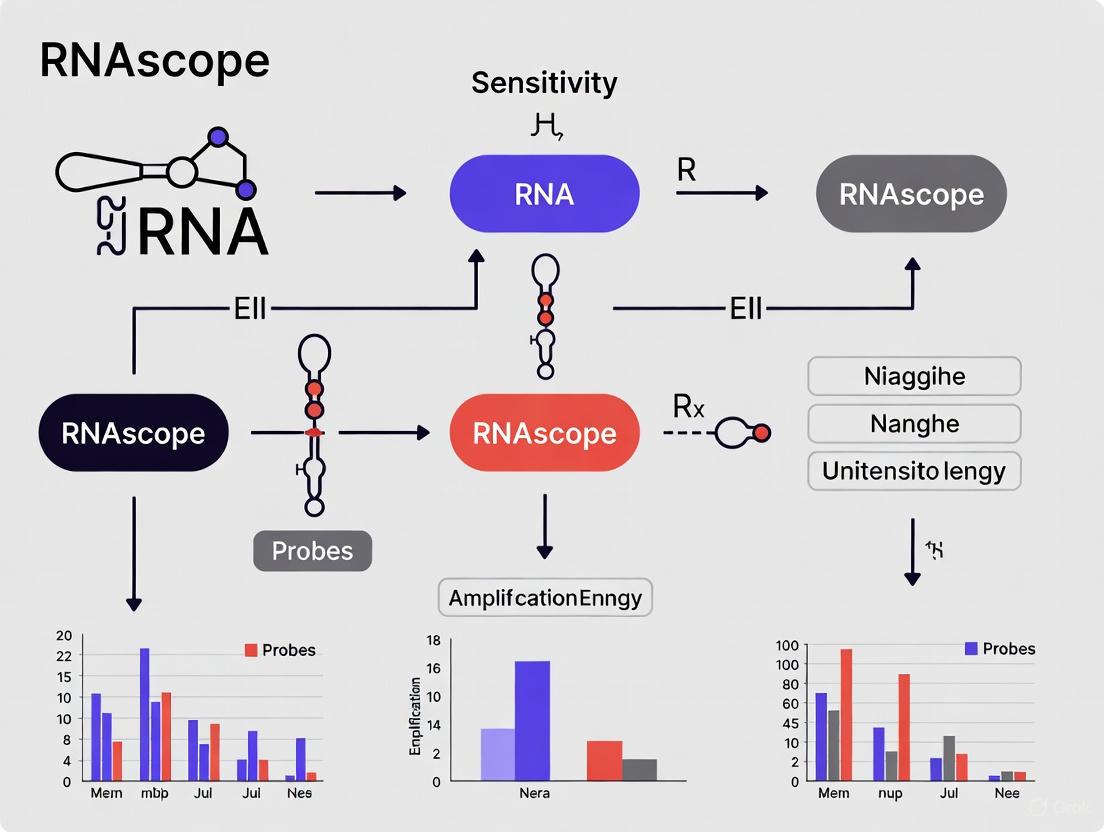
This article provides a comprehensive overview of the RNAscope in situ hybridization (ISH) technology, a powerful spatial genomics platform renowned for its single-molecule sensitivity and high specificity.
RNAscope Technology: Unlocking Single-Molecule Sensitivity for Spatial Biology and Precision Diagnostics
Abstract
This article provides a comprehensive overview of the RNAscope in situ hybridization (ISH) technology, a powerful spatial genomics platform renowned for its single-molecule sensitivity and high specificity. Tailored for researchers, scientists, and drug development professionals, we explore the foundational 'double Z' probe design that enables visualization of individual RNA transcripts within an intact morphological context. The scope extends from core methodology and diverse applications in oncology, neuroscience, and infectious disease to practical troubleshooting and rigorous validation against gold-standard techniques. Finally, we examine its comparative performance against emerging spatial transcriptomics platforms and its growing role in advancing biomarker validation and therapeutic development.
The Science of Single-Molecule Detection: Deconstructing RNAscope's Core Technology
The RNAscope in situ hybridization (ISH) platform represents a transformative advance in spatial genomics, enabling the precise visualization and quantification of individual RNA molecules within the morphological context of intact cells and tissues. Central to this capability is the proprietary "Double Z" probe design, an engineered system that uniquely couples simultaneous signal amplification with rigorous background suppression. This technical guide delves into the core mechanics of the Double Z architecture, illustrating how its requirement for coincident hybridization events serves as a fundamental engine for achieving exceptional signal-to-noise ratios. Framed within the broader thesis of single-molecule detection research, this document details how the technology facilitates sensitive RNA biomarker analysis in routine clinical specimens, such as formalin-fixed, paraffin-embedded (FFPE) tissues, thereby bridging a critical gap between genomic discovery and molecular pathology [1] [2].
The analysis of RNA biomarkers within their histopathological context is highly desirable for molecular diagnostics, as it allows researchers to map gene expression directly to specific cell types and tissue microenvironments. While techniques like immunohistochemistry (IHC) and DNA in situ hybridization (ISH) are clinical staples for protein and DNA biomarkers, the clinical adoption of RNA ISH has been limited. This disparity persists despite an abundance of RNA biomarkers discovered via whole-genome expression profiling, primarily due to the technical complexity, insufficient sensitivity, and inadequate specificity of conventional RNA ISH methods [2].
Traditional "grind-and-bind" methods like RT-PCR, while sensitive, destroy tissue architecture and are prone to interference from unintended cell types or tissue elements. In contrast, ISH preserves spatial information. However, a significant drawback of conventional ISH is that when signal amplification is used to detect low-abundance targets, background noise from non-specific probe binding is amplified alongside the specific signal, severely compromising assay reliability [2] [3]. The RNAscope platform was engineered to overcome this fundamental limitation. Its Double Z probe design introduces a binary recognition system that ensures signal amplification occurs only in the presence of a true, specific target, thereby enabling the transition from ensemble averaging to single-molecule detection and quantification in situ [1] [2].
The Core Mechanics of the Double Z Probe Design
Architectural Principles
The Double Z probe design is a novel strategy that dramatically improves the signal-to-noise ratio of RNA ISH. The core innovation lies in a probe architecture that mandates the simultaneous binding of two independent probes for signal amplification to initiate [1].
Probe Structure: Each target probe is conceptually shaped like a "Z" and consists of three distinct elements:
- Target-Binding Sequence: The lower region of the Z is an 18-25 base sequence complementary to the target RNA, selected for specific hybridization and uniform properties [1].
- Spacer Sequence: A linker that connects the target-binding component to the tail sequence [1].
- Tail Sequence: The upper region of the Z is a 14-base tail that does not bind to the target RNA. Instead, the tail sequences from two adjacent probes form the foundation for signal amplification [1].
The Double Z Principle: For signal amplification to begin, two individual Z probes (a "double Z probe pair") must hybridize to the target RNA in tandem. This requirement is the cornerstone of the technology's specificity. It is statistically improbable that two independent probes will bind non-specifically to a non-target molecule in the correct, adjacent orientation. Therefore, any single probe binding to an off-target site will not trigger the amplification cascade, effectively suppressing background noise [1] [2].
Signal Amplification Cascade
Once a double Z probe pair is correctly bound to the target RNA, a multi-step, hybridization-based amplification process is initiated. This cascade is visualized in the diagram below and detailed in the subsequent steps [1].
The signal amplification pathway follows a precise sequence of hybridization events:
- Target Hybridization: Approximately 20 double Z probe pairs are designed to hybridize to a ~1 kb region of the target RNA molecule. This multiplicity provides robustness against variable target accessibility or partial RNA degradation [1] [4].
- Preamplifier Binding: The two 14-base tail sequences from a correctly bound double Z probe pair form a single 28-base binding site for a preamplifier molecule [1] [2].
- Amplifier Binding: Each preamplifier contains multiple binding sites (typically 20) for amplifier molecules [1] [2].
- Label Probe Binding: Each amplifier, in turn, contains numerous binding sites (again, typically 20) for label probes. These probes are conjugated to either fluorescent molecules for microscopy or enzymes (e.g., horseradish peroxidase) for chromogenic detection [1] [2].
This multi-layered branching amplification system can theoretically generate up to 8000 labels for each target RNA molecule, providing the high sensitivity necessary for single-molecule visualization [2].
Quantitative Performance and Experimental Validation
Key Performance Metrics
The Double Z probe design translates into several critical performance advantages, quantified in the table below.
Table 1: Key Performance Metrics of the RNAscope Double Z Probe Design
| Metric | Performance Specification | Technical Basis |
|---|---|---|
| Sensitivity | Single RNA molecule detection | The 20x20x20 amplification design enables visualization of individual transcripts as punctate dots [1] [4]. |
| Signal Robustness | Requires only 3 of 20 probe pairs for detection | The use of ~20 probe pairs ensures reliable detection even with partially accessible or degraded targets [1] [4]. |
| Target Length | Optimal for targets >300 nucleotides | The standard RNAscope assay is designed with ~20 probe pairs targeting a 1 kb region [4]. |
| Compatibility | Effective on partially degraded RNA (e.g., FFPE) | The short target-hybridization region (40-50 bases for a double Z pair) allows binding to fragmented RNA [1] [4]. |
Experimental Protocol for RNAscope Assay
The RNAscope assay workflow is methodical and shares similarities with IHC, facilitating its adoption in pathology labs. The following protocol is standardized for FFPE tissues, a common clinical specimen type [1] [2].
Sample Preparation and Pretreatment:
- Fixation and Sectioning: Tissue is fixed in 10% neutral buffered formalin (6-72 hours) and embedded in paraffin. Sections are cut at 5 μm thickness and mounted on glass slides [2].
- Deparaffinization and Dehydration: Slides are deparaffinized in xylene and dehydrated through a graded ethanol series [2].
- Pretreatment: Slides are subjected to a boiling treatment in citrate buffer (pH 6) for 15 minutes to unmask target RNA, followed by protease digestion (e.g., 10 μg/mL for 30 minutes at 40°C) to permeabilize cells [1] [2].
Hybridization and Signal Detection:
- Target Probe Hybridization: Target-specific RNAscope probes are applied in a hybridization buffer and incubated at 40°C for 2 hours [2].
- Signal Amplification: A series of sequential hybridizations are performed at 40°C without washes in between:
- Preamplifier in hybridization buffer for 30 minutes.
- Amplifier in hybridization buffer for 15 minutes.
- Label probes in hybridization buffer for 15 minutes [2].
- Visualization:
- For chromogenic detection, the label probe-conjugated enzyme (e.g., HRP) is developed with a substrate like 3,3'-Diaminobenzidine (DAB) to produce a brown precipitate, followed by counterstaining with hematoxylin [2].
- For fluorescent detection, the fluorescently labeled probes are directly visualized using an epifluorescence microscope [2].
Critical Quality Controls: The use of control probes is essential for validating results [5].
- Positive Control: A probe for a housekeeping gene (e.g., PPIB, UBC) confirms tissue RNA integrity and assay technique.
- Negative Control: A probe for a bacterial gene (e.g., dapB) assesses non-specific background staining. A valid experiment shows strong positive control signal and minimal-to-no negative control signal [5].
The Research Reagent Toolkit
Successful implementation of the RNAscope technology relies on a suite of specialized reagents and tools. The following table catalogues the essential components for a typical experiment.
Table 2: Essential Research Reagents for RNAscope Experiments
| Reagent / Tool | Function | Examples & Specifications |
|---|---|---|
| Target-Specific Probes | Engineered to bind the RNA of interest; the core of the Double Z system. | Custom or catalogued probes designed against a ~1kb region of the target mRNA [1] [4]. |
| Positive Control Probes | Verify RNA integrity and assay performance. | PPIB (medium expression, recommended for most tissues), POLR2A (low expression, for rigorous control) [5]. |
| Negative Control Probes | Assess non-specific background signal. | DapB (bacterial gene), scrambled sequences, or sense probes [5]. |
| Pretreatment Kit | Unmasks target RNA and permeabilizes cells for probe access. | Includes solutions for deparaffinization, target retrieval, and protease digestion [1]. |
| Detection Kit | Contains the reagents for the signal amplification cascade. | Includes preamplifiers, amplifiers, and label probes (chromogenic or fluorescent) [1]. |
| Analysis Software | Enables quantitative, cell-by-cell analysis of signal. | HALO Software or similar platforms for automated quantification of punctate dots [1]. |
Discussion: Impact on Single-Molecule Detection Research
The Double Z probe design positions RNAscope as a pivotal technology in the field of single-molecule detection (SMD). While other SMD technologies, such as nanopore sensors [6] and advanced surface plasmon resonance platforms [7], achieve exquisite sensitivity in solution, RNAscope brings this capability to the complex, morphologically intact tissue environment. This spatial context is invaluable, as it allows researchers to discern not just whether a gene is expressed, but precisely where it is expressed—for instance, in malignant versus stromal cells within a tumor [2].
The technology's compatibility with FFPE tissues, the gold standard for clinical pathology archives, further enhances its translational potential. It enables the retrospective validation of RNA biomarkers discovered in fresh-frozen samples using vast collections of existing clinical specimens with associated patient outcome data [2]. Furthermore, the platform's flexibility for multiplexing—using multiple spectrally distinct fluorescent labels—allows for the analysis of gene expression networks and cellular interactions in situ [2].
In conclusion, the Double Z probe design is more than a simple improvement to ISH; it is a proprietary engine that redefines the limits of RNA detection in situ. By enforcing a binary check on specificity before initiating a powerful amplification cascade, it provides researchers and drug developers with a robust tool to visualize the intricate tapestry of gene expression with single-molecule resolution, directly within the tissue morphology that defines health and disease.
In the field of molecular biology, the transition from single-cell analyses to single-molecule visualization represents a frontier of scientific capability. This progression is fundamentally governed by the signal-to-noise ratio (SNR), a parameter that determines the minimum detectable signal against the background noise of a measurement system. For techniques aiming to detect individual biomolecules, such as RNA transcripts or proteins, achieving sufficient SNR is not merely beneficial—it is the determining factor between success and failure [8] [9].
Technologies like RNAscope in situ hybridization (ISH) leverage proprietary "double Z" probe designs combined with advanced signal amplification to achieve highly specific and sensitive detection of target RNA, with each visualized dot representing a single RNA transcript. This robust signal-to-noise technology enables gene transcript detection at the single-molecule level with single-cell resolution, providing clear answers within the morphological tissue context [8] [10] [11]. Similarly, cutting-edge microscopy methods such as DNA-PAINT (DNA Point Accumulation for Imaging in Nanoscale Topography) push the boundaries of spatial resolution to the nanometer scale, where SNR optimization becomes paramount for distinguishing true molecular signals from stochastic background fluctuations [9].
This technical guide explores the fundamental principles, measurement methodologies, and practical applications of SNR enhancement within the context of RNAscope sensitivity and single-molecule detection research. By providing a comprehensive framework for understanding and optimizing SNR, we aim to empower researchers to extract maximum information from their experimental systems, ultimately advancing drug development and basic biological discovery.
SNR Fundamentals and Quantitative Benchmarks
Defining Signal-to-Noise Ratio
Signal-to-noise ratio (SNR) is mathematically defined as the ratio of the power of a desired signal to the power of background noise. In quantitative fluorescence microscopy and molecular detection, it is typically expressed as:
SNR = Signal / Noise
Where the signal represents the electronic output generated by the target molecules (photoelectrons), and noise encompasses all sources of variance that obscure this signal [12]. The total background noise (σ_total) arises from multiple independent sources, with the variance being the sum of the variances from contributing noise sources:
σ²total = σ²photon + σ²dark + σ²CIC + σ²_read [12]
The major components contributing to noise in imaging systems include:
- Photon shot noise (σ_photon): Statistical fluctuations in the number of incoming photons from the signal source, governed by Poisson statistics.
- Dark current (σ_dark): Electrons generated by heat rather than incident photons.
- Clock-induced charge (σ_CIC): Extra electrons generated during the electron shuffling process in EMCCD cameras.
- Readout noise (σ_read): Noise from the conversion of electrons into voltage by the Analogue-to-Digital Converter (ADC) [12].
SNR Standards and Detection Limits
Across analytical sciences, SNR values determine fundamental method capabilities and limitations. The International Council for Harmonisation (ICH) Q2(R1) guideline defines the relationship between SNR and detection limits:
Table 1: SNR Standards for Analytical Detection and Quantification
| Parameter | SNR Requirement | Typical Precision (%RSD) | Application Context |
|---|---|---|---|
| Limit of Detection (LOD) | 2:1 to 3:1 | 15-20% | Minimum concentration for reliable detection |
| Limit of Quantification (LOQ) | 10:1 | ≈5% | Minimum concentration for reliable quantification |
| Pharmaceutical Analysis | 25:1 | 1-2% | Potency assays for APIs |
| Bioanalytical Methods | 2.5:1 | 15-20% | Drug measurement in biological samples |
In practice, many laboratories implement more stringent internal standards, with SNR values of 3:1 to 10:1 for LOD and 10:1 to 20:1 for LOQ to ensure robustness with real-life samples and analytical conditions [13].
For single-molecule detection techniques like RNAscope, the proprietary "double Z" probe design combined with advanced signal amplification enables such high SNR that individual RNA transcripts can be visualized as distinct punctate dots, effectively achieving near-perfect discrimination between signal and noise [8] [11].
SNR in Single-Molecule Detection: RNAscope and Super-Resolution Imaging
RNAscope Technology for Single-Molecule RNA Detection
The RNAscope platform represents a breakthrough in single-molecule detection through its fundamental approach to SNR optimization. The technology employs a novel "double Z" probe design that utilizes a double-Z oligonucleotide structure, which creates a thermodynamically suppressed background. This design, combined with a specialized signal amplification system, enables highly specific and sensitive detection of target RNA within intact cells and tissues [8] [10] [11].
The mechanism achieves exceptional SNR through several key features:
- Background suppression: The proprietary probe design prevents nonspecific signal amplification, effectively reducing noise at its source.
- Signal amplification: An advanced amplification system enhances true signals while maintaining single-molecule resolution.
- Visualization fidelity: Each detected RNA molecule is visualized as an individual punctate dot under a microscope, allowing for direct quantification and spatial mapping [14] [11].
This robust signal-to-noise technology has been successfully applied across various species, tissues, and research areas, with applications cited in over 10,000 publications—a testament to its reliability and reproducibility [11].
Super-Resolution Microscopy via DNA-PAINT
Single-Molecule Localization Microscopy (SMLM) techniques face inherent challenges in optimizing SNR, penetration depth, field-of-view, and spatial resolution simultaneously. Recent advances in DNA-PAINT imaging on a Spinning Disk Confocal with Optical Photon Reassignment (SDC-OPR) system have demonstrated remarkable capabilities in overcoming these trade-offs [9].
This implementation achieves unprecedented resolution across multiple cellular layers and large fields of view:
- Spatial resolution of 6 nm in the basal plane with DNA origami samples
- Sub-10 nm localization precision at depths of 9 µm within a 53 × 53 µm² field of view
- Sub-13 nm average localization precision when imaging developing Drosophila eye epithelium at depths up to 9 µm [9]
The enhanced performance is made possible by adding a set of microlenses to the disk of the original SDC configuration. These microlenses contract the focus two-fold while maintaining the orientation of the focus, redirecting emitted photons to their most probable points of origin and thereby improving overall photon collection [9].
Table 2: Performance Comparison of SMLM Techniques
| Microscopy Technique | Best Localization Precision | Penetration Depth | Field of View | Key Applications |
|---|---|---|---|---|
| TIRF-based DNA-PAINT | <5 nm | <250 nm | ~40 × 40 µm² | Basal cellular structures |
| SDC-OPR DNA-PAINT | 1.4 nm (CRLB) | Up to 9 µm | Up to 211 × 211 µm² | Thick samples, tissue contexts |
| Light Sheet SMLM | ~20 nm | High (whole cells) | Large | Live cell imaging, developmental biology |
| Point-Scanning Confocal SMLM | ~20 nm | Up to 100 µm | ~20 × 20 µm² | Tissue samples |
The practical implications of these advancements are substantial. For example, DNA-PAINT on an SDC-OPR system has been used to resolve Nup96 protein pairs in nuclear pore complexes with a lateral spacing of just 12 nm in U2OS cells [9]. Similarly, quantitative analysis of Collagen IV deposition in developing Drosophila retinal epithelium indicated an average of 46 ± 27 molecules per secretory vesicle—measurements that would be impossible without exceptional SNR characteristics [9].
Experimental Protocols for SNR Optimization
Framework for Microscope Characterization and Optimization
A systematic approach to SNR optimization begins with comprehensive characterization of the imaging system. Kaur et al. (2025) developed a framework to verify camera parameters and optimize microscope settings to maximize SNR for quantitative single-cell fluorescence microscopy (QSFM) [12] [15].
Camera Parameter Verification Protocol:
- Measure readout noise (σ_read): Acquire images with zero exposure time in the dark to eliminate other noise sources.
- Quantify dark current (σ_dark): Capture images with the sensor cooled to operating temperature in complete darkness with varying exposure times.
- Determine clock-induced charge (σ_CIC): For EMCCD cameras, measure the noise in bias frames with the EM gain register active but no light exposure.
- Validate additive noise model: Confirm that the total observed noise matches the root sum of squares of individual components [12].
This systematic characterization revealed that the dark current and clock-induced charge in their system were both higher than reported in literature, compromising camera sensitivity and highlighting the importance of empirical verification [12].
Practical SNR Enhancement Techniques
Implementation of practical SNR enhancement strategies can yield significant improvements in detection capability:
Filter Enhancement: Adding secondary emission and excitation filters reduced excess background noise, improving SNR by 3-fold in the framework developed by Kaur et al. [12] [15].
Temporal Optimization: Introducing a wait time in the dark before fluorescence acquisition allowed for stabilization of the imaging system and reduction of transient noise sources [12].
Temperature Control: Maintaining stable column and detector temperatures minimizes noise introduced by thermal fluctuations, particularly important for chromatographic applications but also relevant to certain imaging modalities [16].
Signal Averaging: Adjusting detector time constants and data system sampling rates can optimize smoothing, though excessive averaging may reduce signals of interest [16] [13].
Sample Cleanup: Reducing extraneous material introduced onto the column or sample through purification steps generally results in lower baseline noise [16].
For RNAscope applications specifically, protocol optimization for whole-mount zebrafish embryos and larvae included careful management of proteinase K concentration and digestion time, hybridization conditions, and stringent washing steps to maximize target-specific signal while minimizing background in complex tissues [14].
Visualizing SNR Relationships and Experimental Workflows
SNR Optimization Pathways in Single-Molecule Detection
The following diagram illustrates the key decision points and methodological approaches for optimizing SNR in single-molecule detection systems:
Diagram 1: Pathways to optimize SNR for single-molecule detection, showing key noise reduction, signal enhancement, and specificity strategies.
RNAscope Mechanism for High-SNR Detection
The exceptional SNR performance of RNAscope technology stems from its unique probe design and detection mechanism, visualized below:
Diagram 2: RNAscope hybridization mechanism showing simultaneous signal amplification and background suppression for high SNR detection.
The Scientist's Toolkit: Essential Reagents and Materials
Successful implementation of high-SNR single-molecule detection requires specific research reagents and specialized materials. The following table details key components used in RNAscope and super-resolution imaging workflows:
Table 3: Essential Research Reagents for Single-Molecule Detection
| Reagent/Material | Function | Application Context |
|---|---|---|
| RNAscope Multiplex Fluorescent Reagent Kit v2 | Provides enzymes, amplifiers, and detection reagents for sequential RNA target visualization | RNAscope ISH for spatial transcriptomics [14] |
| RNAscope Target Probes | Target-specific oligonucleotides with "double Z" design for specific RNA binding | Hybridization to mRNA targets of interest [8] [14] |
| OPAL Dyes (480, 570, 690) | Fluorophore-conjugated tyramide reagents for signal amplification | Multiplex fluorescence detection in RNAscope [14] |
| DNA-PAINT Imaging Buffer | Optimized chemical environment for transient DNA oligonucleotide binding | Super-resolution imaging via DNA-PAINT [9] |
| DNA Origami Structures | Nanoscale reference standards with precisely positioned docking strands | Calibration and validation of super-resolution microscopes [9] |
| Proteinase K | Enzyme for tissue permeabilization and antigen retrieval | Sample preparation for whole-mount ISH [14] |
| Anti-GFP Nanobodies (DNA-conjugated) | Immunorecognition elements for specific protein targeting | Correlative protein and nucleic acid detection [9] |
These specialized reagents enable researchers to achieve the exceptional SNR required for single-molecule detection. The RNAscope system, for instance, has been successfully applied to challenging research contexts such as visualizing hematopoietic stem cell precursors in zebrafish embryos, where it provided high detection sensitivity of mRNAs expressed in deeply embedded niches with significantly improved signal-to-noise ratio compared to conventional long mRNA probes [14].
The journey from single-cell resolution to single-molecule visualization is fundamentally guided by principles of signal-to-noise optimization. Through technologies like RNAscope with its proprietary "double Z" probe design and advanced microscopy methods such as DNA-PAINT on SDC-OPR systems, researchers can now achieve unprecedented sensitivity and specificity in molecular detection [8] [9].
The experimental frameworks and technical approaches detailed in this guide provide a pathway for researchers to systematically characterize, optimize, and validate the SNR performance of their detection systems. By applying these principles—whether through camera parameter verification, strategic noise reduction, signal amplification, or specificity enhancement—scientists can push the boundaries of what is detectable, ultimately advancing our understanding of biological systems at their most fundamental level.
As single-molecule detection technologies continue to evolve, the fundamental relationship between SNR and detection capability will remain central to scientific progress in spatial biology, drug development, and molecular pathology.
The advent of highly sensitive in situ hybridization (ISH) technologies, particularly those capable of single-molecule detection, has revolutionized our ability to visualize RNA expression within its native tissue context. For researchers and drug development professionals investigating complex biological systems, understanding the compatibility and optimization of these methods with standard clinical samples is paramount. Clinical and archival tissues are predominantly preserved through two main methods: formalin-fixed, paraffin-embedded (FFPE) and fresh frozen preservation. Each method presents unique advantages and challenges for RNA detection workflows. This technical guide examines the compatibility of advanced ISH approaches, with a focus on RNAscope technology, across these sample types, providing a framework for selecting optimal workflows based on research objectives and sample availability. The exceptional sensitivity of single-molecule detection methods allows researchers to leverage vast biobanks of archived FFPE tissues while maintaining the flexibility to work with freshly preserved samples, thereby unlocking unprecedented potential for translational research and biomarker discovery.
RNAscope technology achieves its high sensitivity and specificity through a patented probe design and signal amplification system that enables single-molecule visualization. The core mechanism involves ZZ probe pairs that bind adjacent to each other on the target RNA sequence. Each probe contains a tail region that serves as a binding site for preamplifiers, initiating a branched DNA amplification tree. This design requires dual probe hybridization for signal generation, virtually eliminating non-specific background and enabling precise transcript quantification [17].
Recent advancements have expanded multiplexing capabilities through iterative detection methods. The RNAscope HiPlex v2 assay now allows for detection of up to 12 targets in FFPE samples and up to 48 targets in fresh frozen tissues through successive rounds of hybridization, imaging, and signal cleavage [18]. This extraordinary multiplexing capacity enables comprehensive cellular phenotyping and spatial analysis of complex biological systems within their native tissue architecture.
Table 1: Key Single-Molecule RNA Detection Platforms
| Platform | Maximum Targets (FFPE) | Maximum Targets (Fresh Frozen) | Detection Method | Best Applications |
|---|---|---|---|---|
| RNAscope HiPlex v2 | 12 | 48 | Multiplex fluorescent ISH | Validation of gene signatures with spatial context |
| BaseScope | 1 | 1 | Ultrasensitive ISH | Discrimination of splice variants, SNPs |
| Xenium | 345+ (custom panels) | 345+ (custom panels) | Imaging spatial transcriptomics | Unbiased tissue mapping, discovery workflows |
| MERSCOPE | 138+ (custom panels) | 138+ (custom panels) | Multiplexed error-robust FISH | Large-scale spatial analysis |
| CosMx | 1000+ (standard panel) | 1000+ (standard panel) | Imaging spatial transcriptomics | Targeted high-plex profiling |
FFPE Tissue Workflows
Advantages and Challenges of FFPE Samples
FFPE tissues represent the standard preservation method in clinical pathology worldwide, accounting for over 90% of all archived clinical specimens [19]. The principal advantage of FFPE samples lies in their exceptional morphological preservation and long-term stability at room temperature, enabling retrospective studies spanning decades. Researchers have successfully applied RNAscope ISH to FFPE samples more than 25 years old, demonstrating remarkable RNA stability under proper storage conditions [20].
However, FFPE tissues present significant challenges for RNA analysis. The formalin fixation process induces RNA-protein cross-linking and RNA fragmentation, while paraffin embedding can create barriers to probe accessibility. The quality of RNA in FFPE specimens is highly dependent on pre-analytical factors, including fixation time, tissue processing, and storage conditions. Studies indicate that fixation duration is critical, with very long formalin fixation (exceeding several days) potentially compromising RNA quality compared to standard 16-32 hour fixation protocols [21] [22].
Optimized FFPE Sample Preparation Protocol
Proper sample preparation is fundamental to successful RNA detection in FFPE tissues. The following protocol outlines evidence-based best practices:
Fixation: Fix tissue specimens in fresh 10% neutral buffered formalin (NBF) for 16-32 hours at room temperature. Under-fixation can result in significant RNA degradation during storage, while over-fixation may reduce probe accessibility [22].
Processing: Process tissues through a graded series of ethanol and xylene, followed by infiltration with paraffin wax held at no more than 60°C to prevent additional RNA damage.
Sectioning: Cut embedded tissue into 5±1 μm sections using a microtome and mount on positively charged slides (e.g., Superfrost Plus). Air-dry sections overnight at room temperature; avoid baking unless sections will be used within one week [22].
Pathologist-Assisted Macrodissection: For heterogeneous tissues (e.g., tumors), implement pathologist-guided macrodissection to enrich for regions of interest, ensuring accurate transcriptional profiling of specific cell populations [23].
For archival samples with unknown processing history, preliminary optimization using control probes is strongly recommended to determine optimal pretreatment conditions.
Performance Benchmarks in FFPE Tissues
Recent benchmarking studies of imaging-based spatial transcriptomics (iST) platforms in FFPE tissues reveal important performance characteristics. A comprehensive 2025 study comparing Xenium, MERSCOPE, and CosMx on FFPE tissue microarrays found that Xenium consistently generated higher transcript counts per gene without sacrificing specificity [19]. The study analyzed over 5 million cells from 33 different tumor and normal tissue types, providing robust comparative data.
Table 2: Performance Metrics of iST Platforms in FFPE Tissues (2025 Benchmark)
| Platform | Average Transcripts per Cell | Average Genes per Cell | False Discovery Rate | Cell Segmentation Accuracy |
|---|---|---|---|---|
| Xenium | 71 ± 13 | 25 ± 1 | 0.47% ± 0.1 | High with membrane stain |
| MERSCOPE | 62 ± 14 | 23 ± 4 | 5.23% ± 0.9 | Variable |
| CosMx | Not reported | Not reported | Comparable to Xenium | High |
The study further demonstrated that both Xenium and CosMx measurements showed strong concordance with orthogonal single-cell transcriptomics data, validating their quantitative accuracy in FFPE samples [19].
Figure 1: FFPE Tissue Workflow. The standardized protocol for processing FFPE samples for RNA detection, highlighting critical steps that impact RNA accessibility and detection sensitivity.
Fresh Frozen Tissue Workflows
Advantages and Challenges of Fresh Frozen Samples
Fresh frozen tissues offer superior RNA integrity compared to FFPE samples, as they avoid the RNA fragmentation and cross-linking associated with formalin fixation. This preservation method rapidly stabilizes RNA by immediately freezing tissues at ultra-low temperatures, typically in liquid nitrogen or specialized freezing media. The superior RNA quality enables detection of full-length transcripts and is particularly advantageous for analyzing long RNA molecules or when conducting simultaneous analysis of multiple molecular modalities (e.g., combined transcriptome and epigenome analysis) [24].
The principal limitations of fresh frozen tissues include: compromised morphological detail due to ice crystal formation, requirement for consistent cold-chain maintenance, and limited availability for retrospective studies. Additionally, fresh frozen sampling requires prospective collection with careful planning and coordination with clinical partners, which can constrain study design [21].
Optimized Fresh Frozen Sample Preparation Protocol
The following protocol outlines best practices for preparing fresh frozen tissues for high-sensitivity RNA detection:
Tissue Freezing: Immediately after collection, embed tissue in optimal cutting temperature (OCT) compound and snap-freeze in liquid nitrogen-cooled isopentane to minimize ice crystal formation that can disrupt cellular architecture.
Sectioning: Cut tissues into 10-20 μm sections in a cryostat maintained at -20°C and collect on positively charged slides [17].
Fixation: Fix sections in 4% paraformaldehyde (PFA) for 15-60 minutes at 4°C. Avoid over-fixation as it can reduce probe accessibility.
Permeabilization: Treat with protease (Protease III or IV) for 15-30 minutes to permit probe access to RNA targets. Optimal protease concentration and incubation time should be determined empirically for each tissue type [25] [17].
Hybridization: Follow manufacturer-recommended protocols for probe hybridization and amplification. Fresh frozen tissues typically require shorter hybridization times and lower probe concentrations compared to FFPE samples.
For multiplexed experiments, careful consideration of fluorophore assignment is crucial. Channel 1 (typically Atto550) offers highest sensitivity, followed by Channel 3 (Atto647), while Channel 2 (Alexa488) demonstrates lower sensitivity. Assign low-abundance targets to Channel 1 and highly expressed genes to Channel 2 [17].
Performance in Spatial Transcriptomics Studies
In comparative evaluations of spatial transcriptomics technologies using fresh frozen tissues, imaging-based approaches have demonstrated exceptional performance for delineating complex tissue microanatomy. A 2025 study analyzing medulloblastoma with extensive nodularity (MBEN) found that automated imaging-based spatial transcriptomics methods (Molecular Cartography, Merscope, and Xenium) effectively captured the distinct microanatomy of this tumor type, revealing cell-type-specific transcriptome profiles with single-cell resolution [24].
The study further revealed that RNAscope HiPlex showed strong correlation with these higher-plex methods for shared targets (Xenium: r=0.82; Molecular Cartography: r=0.74; Merscope: r=0.65), validating its utility as a targeted validation approach [24].
Comparative Analysis and Method Selection
Direct Comparison of FFPE vs. Fresh Frozen Performance
Understanding the performance characteristics across sample types is essential for appropriate experimental design. A systematic comparison reveals trade-offs between RNA quality and architectural preservation:
Table 3: FFPE vs. Fresh Frozen Tissue Comparison for RNA Detection
| Parameter | FFPE | Fresh Frozen |
|---|---|---|
| RNA Integrity | Moderate to low (fragmented) | High (full-length) |
| Morphology Preservation | Excellent | Moderate |
| Sample Stability | Decades at room temperature | Years at -80°C |
| Multiplexing Capacity | Up to 12-plex (RNAscope) | Up to 48-plex (RNAscope) |
| Compatibility with iST | High (all major platforms) | High (all major platforms) |
| Retrospective Study Potential | High (archival samples) | Limited |
| Turnaround Time | Longer (deparaffinization required) | Shorter |
| Tissue Availability | Abundant | Limited |
Guidance for Method Selection
The choice between FFPE and fresh frozen workflows depends on multiple factors, including research objectives, sample availability, and analytical requirements:
Choose FFPE workflows when: Conducting retrospective studies using archival samples; morphological detail is paramount; integrating with clinical pathology data; working with small biopsies where FFPE processing is standard; or when studying archival samples over 25 years old (as demonstrated in successful applications) [20] [21].
Choose fresh frozen workflows when: RNA integrity is the highest priority; detecting long transcripts or splice variants; performing whole transcriptome analysis; or when high-level multiplexing (>12 targets) is required [17] [24].
Consider hybrid approaches when: Resources permit validation of findings across both sample types to control for preservation artifacts; or when building comprehensive spatial atlases that benefit from both superior morphology and RNA quality.
For single-cell RNA sequencing applications, recent advancements have demonstrated that FFPE tissues can yield comparable results to fresh tissues for cell type identification, with the notable advantage that epithelial cells and fibroblasts may be better represented in FFPE samples due to reduced stress during processing [21].
The Scientist's Toolkit: Essential Research Reagents
Successful implementation of single-molecule RNA detection workflows requires specific reagents and equipment. The following toolkit outlines essential components:
Table 4: Essential Research Reagents for RNA Detection Workflows
| Reagent/Equipment | Function | Example Products |
|---|---|---|
| RNAscope HiPlex Assays | Multiplex fluorescent detection | HiPlex12 Reagents Kit (488, 550, 650, 750) v2 |
| Probe Diluent | Dilution of target-specific probes | RNAscope HiPlex Probe Diluent |
| Positive Control Probes | Assay performance verification | Species-specific positive control probes |
| Negative Control Probes | Background assessment | RNAscope HiPlex Negative Control Probe |
| Protease Reagents | Tissue permeabilization | Protease III, Protease IV |
| Hydrophobic Barrier Pen | Creating hybridization zones | ImmEdge Hydrophobic Barrier Pen |
| Hybridization System | Controlled temperature incubation | HybEZ Hybridization System |
| Image Registration Software | Multiplex image alignment | RNAscope HiPlex Image Registration Software |
| Fluorescent Microscope | Signal detection | Microscope with DAPI, AF488, Atto550, Atto647N, AF750 capabilities |
Figure 2: Method Selection Decision Tree. A strategic framework for selecting appropriate sample processing methods based on research objectives and sample characteristics.
The compatibility of advanced RNA detection technologies with both FFPE and fresh frozen tissue workflows has fundamentally transformed our approach to spatial transcriptomics in clinical and research settings. While each sample type presents distinct advantages—with FFPE offering superior morphology and archival stability, and fresh frozen providing higher RNA integrity—recent technical advancements have optimized protocols for both preservation methods. The emerging consensus from benchmarking studies indicates that modern imaging-based spatial transcriptomics platforms now deliver reliable, reproducible results across sample types, enabling researchers to select preservation methods based on scientific questions rather than technical limitations. As single-molecule detection sensitivities continue to improve and multiplexing capacities expand, integration of these approaches with complementary spatial technologies will further enhance our ability to decipher complex biological systems in health and disease, ultimately accelerating drug development and biomarker discovery.
The integration of ribonucleic acid (RNA) detection with protein analysis represents a paradigm shift in molecular biology, enabling a more comprehensive understanding of cellular functions and disease mechanisms. Multiomics—the combined analysis of diverse biomolecular classes—provides unprecedented insights into biological systems by correlating transcriptional activity with translational output and functional protein expression. This guide details the experimental methodologies, technologies, and analytical frameworks essential for successfully bridging RNA detection with protein analysis, with particular emphasis on spatial context preservation and single-molecule sensitivity. The revolutionary RNAscope technology serves as a cornerstone in this integration, providing a powerful in situ hybridization (ISH) method that enables highly specific and sensitive detection of target RNA within the intact morphological tissue context through its proprietary "double Z" probe design. This advanced signal amplification system allows for single-molecule RNA detection visualized as individual punctate dots under a microscope, bringing together spatial context and molecular precision [10] [8] [11].
Core Multiomics Technologies and Platforms
Spatial Profiling with RNAscope Technology
RNAscope represents a groundbreaking approach for spatial transcriptomics that maintains tissue architecture while enabling precise RNA quantification. The technology's proprietary "double Z" probe design, combined with advanced signal amplification, enables highly specific and sensitive detection of target RNA with each dot visualizing a single RNA transcript. This robust signal-to-noise ratio technology allows for detecting gene transcripts at the single molecule level with single-cell resolution, providing clear answers while seamlessly fitting into existing anatomic pathology workflows [10]. The platform has been extensively validated across various species, tissues, and research areas, with applications in neuroscience, oncology, cell and gene therapy, and infectious disease research, as evidenced by its citation in over 10,000 publications [8] [11].
Integrated Multiomics Platforms
Several advanced platforms now enable truly simultaneous detection of RNA and protein from the same biological samples:
CosMx Same-Cell Multiomics: This high-fidelity spatial multiomics platform enables simultaneous detection of over 19,000 RNA targets and 72 proteins within the same formalin-fixed paraffin-embedded (FFPE) tissue section at subcellular resolution. The platform allows researchers to move beyond inferring biology from cell types to directly making biological insights using a pathway-centered approach through integrated analysis methods [26].
CITE-seq (Cellular Indexing of Transcriptomes and Epitopes by Sequencing): This combined measurement of RNA and protein expression resolves limitations inherent to transcript-only assessments. A targeted version of this approach can analyze over 400 genes simultaneously with measurement of over 40 proteins on 2×10^4 cells in a single experiment, requiring only about one-tenth of the read depth compared to whole-transcriptome approaches while retaining high sensitivity for low-abundance transcripts [27].
One-Pot Multiomics Preparation: Recent methodological advances enable preparation of high-quality, sequencing-ready DNA and RNA, along with mass-spectrometry-ready peptides for whole proteome analysis from a single sample. This approach utilizes a reversible protein tagging scheme (ProMTag) to covalently link all proteins in a lysate to a bead-based matrix, with nucleic acid precipitation and selective solubilization to yield separate pools of protein and nucleic acids, thereby eliminating sampling artifacts caused by tissue heterogeneity [28].
Comparative Analysis of Multiomics Platforms
Table 1: Technical Comparison of Major Multiomics Platforms
| Platform | RNA Targets | Protein Targets | Spatial Resolution | Key Applications |
|---|---|---|---|---|
| RNAscope ISH | Diverse mRNA markers and short targets | Not integrated | Single-molecule, single-cell | Spatial profiling in obesity research, neuroscience, oncology |
| CosMx SMI Same-Cell Multiomics | 1K, 6K, or 19K panels | 72 proteins + 8 customizable | Subcellular | Cell phenotyping, gene/protein correlation, tissue context |
| Targeted CITE-seq | 492 immune-related genes | 41 surface proteins | Single-cell (dissociated) | Immunophenotyping, T cell heterogeneity, activation studies |
| ProMTag Workflow | Whole transcriptome | Whole proteome | Bulk tissue | Triple-negative breast cancer analysis, tissue analysis |
Detailed Experimental Protocols
RNAscope In Situ Hybridization Workflow
The RNAscope protocol represents a sophisticated methodology for spatial RNA detection with single-molecule sensitivity:
Sample Preparation and Hybridization:
- Use fresh frozen or FFPE tissue sections mounted on slides
- Perform sample pretreatment with appropriate epitope retrieval methods
- Hybridize with target-specific "double Z" probes that employ a proprietary design where two independent "Z" probe segments must bind adjacent target sequences for signal amplification
- Execute a multi-step amplification process that builds a polymerization site only when both probe segments correctly hybridize
- Develop signals using chromogenic or fluorescent detection methods
Detection and Analysis:
- Visualize RNA molecules as distinct punctate dots under standard microscopy
- Quantify expression levels by counting individual dots, each representing a single RNA molecule
- Perform multiplexing through sequential hybridization or multiple fluorophore conjugation
- Integrate with protein detection through sequential immunohistochemistry or immunofluorescence protocols [10] [11]
One-Pot Multiomics Sample Preparation
The ProMTag multiomics workflow enables simultaneous extraction of DNA, RNA, and proteins from a single sample:
Protein Tagging and Capture:
- Add ProMTag to lysate and incubate at 4°C for 30 minutes to label primary amines on proteins
- Incubate ProMTag-lysate with ProMTag Capture Resin (TCO-agarose beads) for 30 minutes at 4°C, reversibly binding proteins to resin
- Precipitate nucleic acids by addition of acetonitrile during this step
- Perform wash steps in resin capture (RC) tubes with minimal void volume to remove contaminants without resolubilizing nucleic acids
Nucleic Acid Elution:
- Elute RNA and DNA in sequential 5-minute elution steps with specially formulated buffers
- Treat first eluate with DNase to yield pure RNA
- Treat second eluate with RNase to yield pure DNA
- Both fractions are sufficiently pure for sequencing analysis without further cleanup
Protein Processing:
- Release proteins from TCO resin using elution buffer with 15-minute incubation at room temperature
- Add MT-Trypsin (methyltetrazine-modified trypsin) to digest proteins during 1-hour incubation at 37°C
- Capture MT-Trypsin on TCO resin during digestion, removing it from solution
- Collect resulting tryptic peptides by centrifugation for MS analysis [28]
CosMx Same-Cell Multiomics Workflow
The CosMx spatial molecular imager protocol enables truly simultaneous detection of RNA and protein:
Sample Preparation:
- Use FFPE tissue sections mounted on special slides
- Apply validated and ready-to-use RNA assays (1K, 6K, or 19K panels)
- Combine with CosMx Human IO Protein Assay with options for customization with up to 8 additional protein targets
- Implement removable flow cell coverslip for simplified workflow management
Hybridization and Imaging:
- Perform sequential hybridization and imaging cycles for high-plex RNA detection
- Conduct simultaneous protein detection through conjugated antibody binding
- Achieve subcellular resolution through high-resolution imaging
- Generate data suitable for integrated analysis of RNA and protein co-expression [26]
Data Integration and Visualization Strategies
Multiomics Data Integration Approaches
The complexity of multiomics data necessitates sophisticated integration strategies:
Network-Based Integration: Tools like MiBiOmics implement Weighted Gene Correlation Network Analysis (WGCNA) to infer omics-based multilayer networks that mine complex biological systems and identify robust biomarkers linked to specific contextual parameters or biological states. The platform reduces the dimensionality of each omics dataset to increase statistical power for detecting associations across omics layers [29].
Metabolic Pathway Visualization: The Pathway Tools (PTools) software system enables simultaneous visualization of up to four types of omics data on organism-scale metabolic network diagrams. Different omics datasets can be displayed on separate "visual channels" within metabolic charts—for example, transcriptomics data as reaction arrow colors, proteomics data as arrow thicknesses, and metabolomics data as metabolite node colors [30].
Dimensionality Reduction Techniques: Methods such as One-SENSE (one-dimensional soli expression by nonlinear stochastic embedding) facilitate intuitive visualization of protein-transcript relationships on a single-cell level, effectively visualizing and identifying cellular phenotypes that differ by either transcripts or proteins [27].
Visualization Tools for Multiomics Data
Table 2: Multiomics Data Visualization and Analysis Tools
| Tool Name | Integration Method | Supported Data Types | Key Features | Best Suited Applications |
|---|---|---|---|---|
| MiBiOmics | Network inference, ordination techniques | Up to 3 omics datasets + metadata | Interactive interface, no programming skills required | Biomarker discovery, microbial ecology, community analysis |
| Pathway Tools (PTools) | Metabolic pathway painting | Transcriptomics, proteomics, metabolomics, reaction flux | Semantic zooming, animated displays, organism-specific diagrams | Metabolic engineering, pathway analysis |
| One-SENSE | Dimensionality reduction | Transcriptomics, proteomics (single-cell) | Intuitive visualization of protein-transcript relationships | Single-cell multiomics, immunology research |
| MergeOmics | Knowledge-based integration | Genomics, transcriptomics, proteomics | Disease-related mechanism focus, pathway analysis | Disease mechanism studies, biomarker identification |
Applications in Translational Research
Disease Subtyping and Biomarker Discovery
Multiomics approaches have demonstrated exceptional utility in precise disease characterization:
Cancer Research: Analysis of four triple-negative breast cancer (TNBC) cell lines with different degrees of malignancy (MCF10A, MCFNeoT, MCFT1, MCFCA1) using the ProMTag workflow generated sufficient quantity and quality of DNA, RNA, and peptides to perform whole-genome sequencing, RNA-Seq, and proteomic MS from a single sample. This integrated analysis revealed both RNA and associated proteins, and protein-only dependent pathways that distinguish these cell lines [28].
Immunological Studies: Targeted multiomics analysis of peripheral blood mononuclear cells (PBMCs) enabled simultaneous interrogation of 492 immune-related genes and 41 surface proteins, clearly separating different memory T cell subsets as well as regulatory T cells (Tregs) solely based on transcript information—a challenge due to the low amount of mRNA typically recovered from T lymphocytes [27].
Drug Development Applications
The pharmaceutical industry benefits from multiomics approaches in several key areas:
- Target Identification: Spatial multiomics enables identification of novel drug targets by correlating RNA and protein expression within pathological tissues while maintaining morphological context
- Biomarker Validation: Simultaneous detection of RNA and protein allows orthogonal validation of candidate biomarkers directly in tissue by aligning protein detection with RNA expression at subcellular resolution [26]
- Mechanism of Action Studies: Multiomics profiling can elucidate complex drug mechanisms by capturing simultaneous changes at transcriptional and translational levels
- Patient Stratification: Integrated molecular signatures facilitate identification of patient subgroups most likely to respond to specific therapies
The Scientist's Toolkit: Essential Research Reagents and Materials
Table 3: Key Research Reagent Solutions for Multiomics Experiments
| Reagent/Material | Function | Example Applications | Key Features |
|---|---|---|---|
| RNAscope "Double Z" Probes | Specific RNA target detection | Spatial transcriptomics, single-molecule RNA detection | Proprietary design for signal amplification with background suppression |
| ProMTag Protein Tag | Covalent protein linkage to solid matrix | One-pot multiomics sample preparation | Reversible, covalent link to protein primary amines |
| Oligonucleotide-Barcoded Antibodies (AbSeq) | Simultaneous protein detection in sequencing workflows | CITE-seq, REAP-seq | Antibodies conjugated to DNA barcodes for sequencing-based protein quantification |
| CosMx RNA and Protein Assays | Targeted detection in spatial context | Same-cell multiomics on FFPE tissue | Pre-validated panels for 1K, 6K, or 19K RNA targets + 72 proteins |
| Cell Hashing Antibodies | Sample multiplexing in single-cell workflows | Single-cell multiomics experiments | Enables processing multiple samples simultaneously while maintaining sample identity |
| MT-Trypsin | Protein digestion in multiomics workflow | MS-ready peptide preparation | Methyltetrazine-modified trypsin for irreversible covalent link to TCO matrix |
The integration of RNA detection with protein analysis through multiomics approaches has fundamentally transformed our ability to interrogate biological systems. Technologies that enable simultaneous measurement of multiple molecular classes—particularly those preserving spatial context like RNAscope and CosMx SMI—provide unprecedented insights into cellular function and disease mechanisms. The continuing development of more sensitive detection methods, improved computational integration tools, and streamlined workflows will further accelerate adoption of these approaches across basic research and translational applications. As multiomics methodologies become increasingly accessible and comprehensive, they promise to bridge critical gaps in our understanding of how transcriptional regulation translates to functional protein activity in health and disease, ultimately enabling more precise diagnostic and therapeutic strategies.
From Theory to Practice: Methodological Workflows and Translational Applications
The RNAscope Technology platform, comprising RNAscope, BaseScope, and miRNAscope assays, represents a revolutionary advance in in situ hybridization (ISH) for RNA visualization within intact cells and tissues. These proprietary assays enable researchers to achieve single-molecule detection sensitivity while preserving crucial spatial and morphological context [31]. The technology's core innovation lies in its unique probe design system utilizing double "Z" probes, which allows for specific hybridization and signal amplification without the background noise that plagues traditional ISH methods. This technical capability has positioned RNAscope as a gold standard in spatial biology, with over 8,000 peer-reviewed publications attesting to its utility across multiple disciplines [31]. The platform's ability to provide single-cell resolution while detecting diverse RNA targets—from long mRNAs to short oligonucleotide therapeutics—makes it particularly valuable for both basic research and drug development applications.
For research focused on single-molecule detection, the RNAscope platform offers graduated sensitivity levels optimized for different target types. The technology achieves this through a signal amplification system that builds on the foundational ZZ probe architecture, creating discrete signal dots that each represent an individual RNA molecule [31]. This quantitative capability, combined with spatial context, has transformed how researchers validate findings from bulk molecular techniques like RNA sequencing and digital PCR, enabling precise cellular localization of gene expression patterns [32].
The RNAscope technology portfolio consists of three distinct but related assay systems, each optimized for different categories of RNA targets. Understanding their complementary capabilities enables researchers to select the optimal approach for their specific experimental needs.
Core Technology and Signal Amplification Mechanism
The foundational innovation across all three platforms is the proprietary ZZ probe design [31]. These double "Z" probes are specifically engineered to minimize nonspecific binding and enable dramatic signal amplification through a hybridization cascade. Each target RNA molecule is recognized by multiple ZZ probe pairs (from 1-3 for BaseScope up to 20+ for RNAscope), creating a scaffold for subsequent signal amplification steps [31]. This design allows for single-molecule sensitivity while maintaining exceptional specificity, as the system requires multiple independent hybridization events to generate a detectable signal.
The visualization above outlines the core signal amplification workflow shared across the RNAscope technology platform. The process begins with target-specific ZZ probe hybridization, followed by sequential building of the amplification complex that ultimately enables visualization of individual RNA molecules [31].
Comparative Analysis of the Three Platforms
The following table summarizes the key technical specifications and applications of the three complementary assay systems:
| Parameter | RNAscope Assay | BaseScope Assay | miRNAscope Assay |
|---|---|---|---|
| ZZ Pairs per Target | 20 pairs standard (minimum 7) [31] | 1-3 pairs [31] | N/A [31] |
| Target RNA Length | >300 bases (mRNA, lncRNA) [31] | 50-300 bases [31] | 17-50 bases [31] |
| Key Applications | mRNA & lncRNA detection [31] | Splice variants, point mutations, gene fusions, short sequences [31] | miRNAs, ASOs, siRNAs, other small RNAs [31] |
| Multiplex Capability | Single to 12-plex [31] | Single to duplex [31] | Single-plex [31] |
| Detection Methods | Chromogenic or fluorescent [31] | Chromogenic [31] | Chromogenic [31] |
| Sample Compatibility | FFPE, fresh frozen, fixed frozen, cultured cells [31] | FFPE, fresh frozen, fixed frozen, cultured cells [31] | FFPE, fresh frozen, fixed frozen, cultured cells [31] |
RNAscope Assay: Comprehensive mRNA and lncRNA Analysis
The RNAscope Assay serves as the foundation of the technology platform, specifically designed for detecting medium to large RNA targets exceeding 300 nucleotides [31]. This assay represents a groundbreaking advancement in in situ hybridization since its introduction in 2011, offering researchers the ability to visualize mRNA expression patterns with single-molecule sensitivity while maintaining tissue architecture and cellular morphology.
Technical Specifications and Applications
The standard RNAscope probe design incorporates an average of 20 ZZ pairs per target, providing robust signal amplification while maintaining specificity through the requirement for multiple independent binding events [31]. This configuration enables the assay to achieve what the manufacturer describes as single-molecule detection sensitivity, with each discrete signal dot representing an individual RNA molecule within the cellular context. The technology supports multiple detection modalities, including both chromogenic and fluorescent output, making it adaptable to various imaging and analysis platforms [31].
A significant strength of the RNAscope Assay is its multiplexing capability, which allows simultaneous detection of up to 12 different RNA targets in a single sample [31]. This multiplexing capacity enables researchers to study complex gene expression patterns, cellular heterogeneity, and co-localization of multiple transcripts within individual cells. The assay has been extensively validated across multiple sample types, including formalin-fixed paraffin-embedded (FFPE) tissues, fresh frozen tissues, and cultured cells, making it suitable for both clinical and research applications [31] [32].
Research and Clinical Applications
In research settings, RNAscope has become an indispensable tool for validating discoveries from high-throughput transcriptomic analyses. Studies utilizing RNA sequencing, microarrays, and NanoString nCounter frequently employ RNAscope as an orthogonal validation method to confirm expression patterns at the single-cell level while adding crucial spatial context [32]. For example, the assay has been used to validate lncRNA biomarkers in triple-negative breast cancer and to confirm the expression of viral pathogens in gliomas identified through digital transcriptome subtraction [32].
In clinical and translational research, RNAscope enables biomarker development and therapeutic efficacy assessment. Leading pathology laboratories have adopted the technology to detect clinically relevant biomarkers, including secreted proteins where mRNA detection provides superior results to protein-based methods, and as an alternative to DNA FISH for detecting chromosomal translocations [33]. The assay's sensitivity and specificity make it particularly valuable for situations where antibody reagents are unavailable or unreliable, such as for the LKB1 biomarker in lung cancer where RNAscope detection of the LINC00473 lncRNA serves as a surrogate marker for LKB1 inactivation [32].
BaseScope Assay: Precision Detection of Short RNA Sequences
The BaseScope Assay represents a refined version of the core RNAscope technology, specifically engineered to address the challenge of detecting short RNA targets between 50-300 nucleotides [31]. Launched in 2016, this platform extends the capabilities of the RNAscope system with even greater specificity, enabling researchers to discriminate between highly similar sequences with single-base resolution.
Technical Advancements and Unique Capabilities
The key innovation in BaseScope technology is its ability to generate detectable signals from just 1-3 ZZ probe pairs, compared to the 20+ pairs typically used in standard RNAscope assays [31]. This refined probe configuration enables the specific detection of challenging targets that require exquisite specificity, including point mutations, exon junctions, and highly homologous sequences [31]. The assay maintains the single-molecule sensitivity of the broader platform while achieving unprecedented specificity for short targets.
BaseScope's technical capabilities make it particularly valuable for applications requiring fine sequence discrimination. The assay can reliably distinguish between splice variants by targeting unique exon-exon junctions, detect specific point mutations and short indels against a background of wild-type sequences, and identify gene fusions with single-cell resolution [31] [34]. Additionally, the platform supports duplex detection, allowing researchers to visualize two different short targets simultaneously within the same tissue section [31].
Research Applications in Molecular Pathology and Therapy Development
BaseScope has emerged as a powerful tool in cancer research and * molecular pathology*, where it enables detection of clinically relevant genetic alterations directly in tissue context. Recent presentations at pathology conferences have highlighted its use in detecting point mutations in gynecological tumors and identifying specific gene fusions in salivary gland tumors as alternatives to traditional FISH assays [33]. This direct visualization of genetic alterations within morphological context provides pathologists with valuable information for tumor classification and prognosis.
In therapeutic development, BaseScope plays a critical role in validating gene editing approaches and cell therapies. The assay can specifically detect CRISPR-mediated edits, validate CAR-T cell integration and expression, and monitor viral vector biodistribution in gene therapy applications [31] [35]. A particularly powerful application involves using BaseScope to differentiate between human transgenes and endogenous genes in preclinical animal models, enabling precise tracking of therapeutic gene expression in non-human primates [35].
miRNAscope Assay: Small RNA and Oligonucleotide Therapeutic Detection
The miRNAscope Assay addresses the significant technical challenge of detecting small RNA species in the 17-50 nucleotide range, including microRNAs, siRNAs, and antisense oligonucleotides [31]. This specialized platform extends the RNAscope technology to the smallest RNA targets, enabling researchers to study the spatial distribution and cellular uptake of oligonucleotide therapeutics alongside endogenous small regulatory RNAs.
Technical Innovations for Small RNA Detection
Detecting small RNAs presents unique challenges due to their short length and often low abundance within cells. The miRNAscope Assay overcomes these limitations through an advanced probe design and optimized hybridization conditions that maximize sensitivity while maintaining strict specificity [31] [36]. The assay preserves the core principles of the RNAscope platform while incorporating modifications specifically tailored to the characteristics of small RNA targets.
The miRNAscope platform provides researchers with a powerful method to visualize the biodistribution and cellular uptake of oligonucleotide therapeutics, including ASOs and siRNAs, within intact tissues [36]. This capability is particularly valuable for drug development, as it enables pharmaceutical researchers to assess delivery efficiency, verify target engagement, and identify potential off-target effects in preclinical models [37] [38]. Testimonials from biopharmaceutical companies highlight the assay's utility in compound screening efforts, where it provides clear, interpretable results for decision-making [36].
Applications in Therapeutic Development
The miRNAscope Assay has become an important tool in the rapidly advancing field of RNA therapeutics. With over 20 oligonucleotide drugs already approved by the FDA and EMA and many more in clinical trials, technologies that can precisely monitor these therapeutics in tissues are increasingly valuable [38]. The assay enables researchers to localize oligonucleotide payloads to evaluate different routes of administration, characterize spatial distribution and safety profiles across preclinical and clinical samples, and simultaneously detect the therapeutic alongside target mRNAs and protein markers [37].
Recent advancements have integrated miRNAscope with protein detection methods, creating a multiomics workflow that provides comprehensive insights into therapeutic mechanisms [38]. This approach allows researchers to visualize small RNA therapeutics, their target mRNAs, and relevant protein biomarkers simultaneously in the same tissue section, enabling sophisticated assessment of both pharmacokinetics and pharmacodynamics [37] [38]. The workflow has been automated on platforms like the Roche DISCOVERY ULTRA system, improving reproducibility and throughput for therapeutic screening applications [38].
Research Reagent Solutions and Experimental Design
Successful implementation of RNAscope technology requires appropriate selection of reagents and careful experimental planning. The platform offers researchers extensive flexibility through a comprehensive system of compatible probes, detection kits, and automation options.
Probe Systems and Nomenclature
Understanding the probe nomenclature is essential for selecting appropriate reagents for experimental needs. The following table details the key research reagent solutions available across the RNAscope platform:
| Reagent Category | Key Options | Specifications & Applications |
|---|---|---|
| Probe Types | RNAscope, BaseScope, miRNAscope [34] | Target-specific probes for different RNA classes; not interchangeable between platforms [31] |
| Automation Formats | Manual, LS (Leica), VS (Roche) [34] | Platform-specific probes optimized for automated staining systems |
| Spectral Channels | C1, C2, C3, C4, T1-T12 [34] | Channel compatibility determines multiplexing capabilities with specific detection kits |
| Detection Kits | Chromogenic, fluorescent, duplex, multiplex [34] | Various detection formats for different output needs and multiplexing levels |
| Species Coverage | >40 species, 70,000+ probes [39] | Extensive catalog coverage with made-to-order options for novel targets |
Experimental Workflow and Protocol Integration
The following diagram illustrates the core experimental workflow shared across the RNAscope technology platform, highlighting key steps where researchers must make critical protocol decisions:
Recent advancements have introduced protease-free pretreatment options that expand the platform's compatibility with protein epitopes sensitive to enzymatic digestion [40]. This innovation enables more robust RNA-protein co-detection workflows, allowing researchers to simultaneously visualize RNA targets and protease-sensitive protein markers in the same tissue section [40] [38]. The protease-free workflow has been validated on automated platforms like the Roche DISCOVERY ULTRA, improving reproducibility for complex multiomic applications [40].
Advanced Applications and Future Directions
The RNAscope technology platform continues to evolve, with recent advancements focusing on increased multiplexing, enhanced quantification, and expanded applications in both research and clinical settings.
Multiplexing and Multiomics Integration
The current RNAscope platform supports highly multiplexed detection through several approaches. The standard fluorescent multiplexing capability enables simultaneous detection of up to 4 RNA targets using C1-C4 probes, while the HiPlex system expands this to 12 targets using T1-T12 probes [34]. This extensive multiplexing capacity enables researchers to study complex cellular ecosystems, such as the tumor microenvironment, where multiple cell types and states interact within the tissue architecture.
Integration with protein detection methods represents another significant advancement, creating powerful multiomics workflows that provide comprehensive profiling of cellular states [40] [38]. The recently introduced protease-free pretreatment enables more reliable co-detection of RNA and protease-sensitive protein epitopes, expanding the range of biomarkers that can be simultaneously visualized [40]. These integrated approaches are particularly valuable for therapeutic development, where they can provide insights into mechanism of action, biodistribution, and pharmacodynamic effects [37] [35].
Quantitative Analysis and Spatial Biology
The discrete, dot-level quantification inherent to RNAscope technology makes it particularly suitable for quantitative spatial biology applications. Each signal dot corresponds to an individual RNA molecule, enabling researchers to perform single-cell quantification of gene expression within morphological context [31]. This capability bridges the gap between bulk molecular analyses like RNA-seq and traditional histology, allowing validation of transcriptomic findings with spatial resolution.
Advanced applications include single-cell RNA-seq validation, where RNAscope provides spatial confirmation of cell populations identified through clustering analysis [32]. The technology has been used to validate novel cell types and states identified through single-cell sequencing, localizing these populations within their native tissue architecture. Similarly, RNAscope serves as a critical validation tool for spatial transcriptomics technologies, providing higher sensitivity and single-cell resolution for confirming spatial expression patterns identified through these discovery approaches.
The RNAscope technology platform—comprising RNAscope, BaseScope, and miRNAscope assays—provides researchers with a comprehensive toolkit for RNA visualization with single-molecule sensitivity and single-cell spatial resolution. Each platform addresses distinct but complementary needs: RNAscope for long RNA targets, BaseScope for short and specific sequences, and miRNAscope for small RNAs and therapeutics. With ongoing advancements in multiplexing, automation, and multiomic integration, these technologies continue to expand the frontiers of spatial biology, enabling increasingly sophisticated investigations into gene expression patterns in health and disease. As spatial context becomes increasingly recognized as essential for understanding biological complexity and therapeutic effects, the RNAscope platform stands positioned to remain at the forefront of RNA visualization and quantification technologies.
The tumor microenvironment (TME) is a dynamic ecosystem composed of malignant cells and a complex network of stromal components, including immune cells, fibroblasts, vascular endothelial cells, the extracellular matrix, cytokines, and exosomes [41]. This microenvironment plays a crucial role in cancer progression, immune evasion, metastasis, and treatment resistance by creating a supportive niche for tumor growth and dissemination [41]. Historically, cancer research focused predominantly on the tumor cell-autonomous mechanisms, but emerging evidence underscores that a comprehensive understanding of cancer requires studying the tumor as a complex, evolving ecosystem rather than just a collection of autonomous cells [41] [42].
The challenge of traditional analytical methods lies in their inability to preserve the spatial context of cellular interactions. Bulk genomic assays and even single-cell RNA sequencing dissolve tissue architecture, masking the spatial heterogeneity that is fundamental to understanding the functional state of the TME [43]. This limitation has driven the development and adoption of spatial profiling technologies that enable the mapping of gene expression within the intact morphological context of tissue sections [43] [10]. These advanced spatial biology platforms provide unprecedented insights into the cellular neighborhoods and tissue architecture that drive cancer progression [43] [44].
Framed within the context of RNAscope sensitivity and single-molecule detection research, this technical guide explores how highly sensitive and specific in situ hybridization methods are revolutionizing our ability to visualize and quantify the molecular landscape of the TME. The proprietary "double Z" probe design used in RNAscope technology, for instance, enables highly specific and sensitive detection of target RNA with each dot representing a single RNA transcript, providing clear answers while seamlessly fitting into existing anatomic pathology workflows [10] [45]. This robust signal-to-noise technology allows for the detection of gene transcripts at the single-molecule level, providing unparalleled spatial resolution for biomarker validation and therapeutic development [10].
Technical Foundations of TME Mapping Technologies
Core Principles of Spatial Transcriptomics
Spatial transcriptomics technologies can be broadly classified into two main categories based on their underlying methodologies. Imaging-based in situ hybridization or sequencing approaches measure transcripts of selected genes at single-molecule resolution, while spatial barcoding and sequencing techniques capture transcripts from tissue positions using barcoded arrays for high-throughput sequencing [43]. Each platform represents a different balance between resolution, throughput, gene coverage, and practical sample requirements, with inherent trade-offs that researchers must consider in experimental design [43].
The fundamental challenge in spatial transcriptomics lies in achieving both high spatial resolution and comprehensive transcriptome coverage. High-resolution methods often target selected genes, whereas array-based sequencing methods profile transcriptomes unbiasedly but at coarser resolution [43]. Recent technological advancements have progressively narrowed this gap, with newer platforms achieving subcellular resolution while expanding gene detection capabilities [46]. For instance, the RNAscope ISH spatial technology provides a powerful method to detect gene expression within the morphological tissue context, with its proprietary "double Z" probe design in combination with advanced signal amplification enabling highly specific and sensitive detection of target RNA [10].
RNAscope Technology: Single-Molecule Sensitivity
The RNAscope in situ hybridization (ISH) platform represents a significant advancement in RNA detection technology, addressing many of the limitations of traditional ISH and immunohistochemistry (IHC) methods [45]. Unlike IHC, which relies on the availability of specific antibodies that can be expensive and time-consuming to develop, RNAscope probes can be developed for almost any target in any species within two weeks, providing a universal solution for characterizing tissue distribution of drug targets and biomarkers [45].
The key innovation of RNAscope is its patented double Z probe design, which enables single-molecule RNA detection with high specificity and low background noise [10] [45]. This design employs a pair of "Z" probes that must bind adjacent to each other on the target RNA for signal amplification to occur, effectively minimizing non-specific binding and false positives. The subsequent signal amplification steps allow each individual RNA molecule to be visualized as a distinct dot under a standard microscope, enabling both qualitative assessment of expression patterns and quantitative analysis of transcript abundance at single-cell resolution [10].
The technology's sensitivity and specificity make it particularly valuable for detecting diverse RNA markers, including challenging targets such as small RNAs and oligonucleotide therapeutics [10] [37]. The recent development of the miRNAscope and RNAscope Plus assays further extends this capability to specifically allow for detection of small oligonucleotide sequences alone or in combination with other RNA or DNA probes [37]. This has opened new avenues for evaluating the spatial distribution, expression, and functional efficacy of RNA drug candidates within intact tissues [37].
Comparative Analysis of Spatial Profiling Platforms
Platform Specifications and Performance Metrics
The rapidly evolving landscape of spatial technologies now includes multiple high-throughput platforms with subcellular resolution and expanded gene detection capabilities. A systematic benchmarking study conducted in 2025 evaluated four commercially available platforms—Stereo-seq v1.3, Visium HD FFPE, CosMx 6K, and Xenium 5K—selected for their high-throughput gene capture capacity (>5000 genes), subcellular resolution (≤2 μm), and widespread commercial adoption [46]. Each platform employs distinct technological strategies with complementary strengths and limitations.
Table 1: Performance Comparison of High-Throughput Spatial Transcriptomics Platforms
| Platform | Approach | Spatial Resolution | Gene Coverage | Sample Compatibility | Key Strengths | Key Limitations |
|---|---|---|---|---|---|---|
| 10x Visium (2019) [43] | Barcoded spot array (whole transcriptome) | ~55 μm spot (captures ~5-50 cells) | Whole transcriptome | Fresh-frozen (full assay); FFPE (targeted panel version) | High throughput, unbiased gene coverage; widely adopted | Moderate resolution (multiple cells per spot) |
| Nanostring GeoMx DSP (2019) [43] | ROI-based digital profiling (targeted panels) | ROI user-defined (~10-50 μm) | Targeted panels (100s of genes) | FFPE or fresh-frozen | Works on standard FFPE; RNA & protein profiling | Not single-cell; limited to targeted panels |
| Slide-seq V2 (2021) [43] | Barcoded bead array (whole transcriptome) | ~10 μm bead (near single-cell) | Whole transcriptome | Fresh-frozen | Very high spatial resolution; genome-wide | Lower sensitivity; complex custom bead prep |
| MERFISH/MERSCOPE (2021) [43] | Multiplexed in situ FISH imaging (targeted genes) | Single-cell to subcellular (0.1-1 μm) | Targeted genes (500-1000) | Fresh-frozen or fixed tissue | True single-cell resolution; highly multiplexed | Preselected gene panels (not whole transcriptome) |
| CosMx 6K (2022) [46] | Single-molecule in situ hybridization (multiplexed) | Single-cell & subcellular (<10 μm) | 6,175 genes | FFPE or fresh-frozen | Detects 1,000s of RNAs at true single-cell level; FFPE compatible | Targeted gene set; requires specialized imaging |
| Xenium 5K (2025) [46] | Imaging-based in situ hybridization | Subcellular (≤2 μm) | 5,001 genes | FFPE or fresh-frozen | High sensitivity; subcellular resolution; commercial support | Targeted gene panel; not whole transcriptome |
| RNAscope [10] [45] | Single-molecule FISH | Single-molecule sensitivity | Customizable targets | FFPE, fresh-frozen, zebrafish embryos | Single-molecule sensitivity; high specificity; flexible target selection | Lower multiplexing capability compared to other platforms |
Benchmarking Performance Across Platforms
The 2025 benchmarking study provided critical insights into the performance characteristics of modern spatial transcriptomics platforms. When evaluating molecular capture efficiency for marker genes, Xenium 5K demonstrated superior sensitivity for multiple marker genes, consistently outperforming other platforms in shared tissue regions [46]. The epithelial cell marker EPCAM showed well-defined spatial patterns across all platforms, consistent with H&E staining and supported by Pan-Cytokeratin (PanCK) immunostaining on adjacent sections [46].
In assessments of molecular capture efficiency across entire gene panels, Stereo-seq v1.3, Visium HD FFPE, and Xenium 5K showed high correlations with matched scRNA-seq data, indicating their consistent ability to capture gene expression variation [46]. Although CosMx 6K detected a higher total number of transcripts than Xenium 5K, its gene-wise transcript counts showed substantial deviation from matched scRNA-seq reference, suggesting potential platform-specific biases in transcript detection or amplification [46].
Table 2: Quantitative Performance Metrics from Spatial Platform Benchmarking [46]
| Performance Metric | Stereo-seq v1.3 | Visium HD FFPE | CosMx 6K | Xenium 5K |
|---|---|---|---|---|
| Spatial Resolution | 0.5 μm spots | 2 μm | Single-cell & subcellular (<10 μm) | ≤2 μm |
| Gene Panel Size | Whole transcriptome (poly(A) capture) | 18,085 genes | 6,175 genes | 5,001 genes |
| Correlation with scRNA-seq | High | High | Substantial deviation | High |
| Transcript Detection Sensitivity | Moderate | High in selected ROIs | High total counts but biased | Superior for marker genes |
| FFPE Compatibility | No (requires fresh-frozen) | Yes | Yes | Yes |
Experimental Protocols for TME Mapping
RNAscope Workflow for Single-Molecule Detection
The RNAscope assay provides a robust protocol for detecting RNA molecules within their native tissue context. The following detailed methodology outlines the key steps for implementing this technology in TME mapping studies:
Sample Preparation: Tissue sections (4-5 μm thickness) are prepared from formalin-fixed paraffin-embedded (FFPE) or fresh-frozen (OCT-embedded) specimens. For FFPE tissues, sections are mounted on positively charged slides and dried overnight at 60°C or for 1 hour at 70°C to ensure optimal adhesion [45].
Deparaffinization and Rehydration: For FFPE sections, slides are deparaffinized in xylene (2 × 5 minutes) followed by dehydration in 100% ethanol (2 × 1 minute). Gradual rehydration is then performed through an ethanol series (100%, 95%, 70% - 1 minute each) before a final rinse in distilled water [45].
Pretreatment and Permeabilization: Slides undergo heat-induced epitope retrieval in a specific retrieval solution (e.g., RNAscope Target Retrieval Reagents) for 15 minutes at 98-102°C. Protease treatment is then applied for 15-30 minutes at 40°C to permeabilize tissues and expose target RNA sequences. The optimal protease treatment duration varies by tissue type and should be determined empirically [45].
Probe Hybridization: Target-specific RNAscope probes (ZZ probe pairs) are applied to the tissue sections and hybridized for 2 hours at 40°C in a hybridization oven. The proprietary double Z-probe design ensures high specificity, as signal amplification requires binding of two adjacent probes [10] [45].
Signal Amplification: A series of sequential amplifier solutions are applied to build the signal amplification complex. This multi-step process (typically 4-6 amplification steps) occurs at 40°C with washes between each step, dramatically amplifying the signal from specifically bound probes while minimizing background noise [10].
Detection and Visualization: For fluorescence detection, fluorophore-conjugated labels are applied and slides are counterstained with DAPI for nuclear visualization. For chromogenic detection, enzyme-conjugated labels are applied followed by chromogen substrate development. Slides are then coverslipped using appropriate mounting media [10] [45].
Imaging and Analysis: Slides are imaged using standard or confocal microscopy. For quantitative analysis, RNA molecules appear as distinct dots that can be counted manually or using automated image analysis software to determine transcript abundance per cell [47].
The entire RNAscope procedure can be performed manually or automated using the RNAscope 2.5 LS Assay on automated staining platforms, enhancing reproducibility and throughput for large-scale studies [45].
Protocol for Multiplexed Spatial Protein-RNA Co-Detection
Advanced multiomic applications require simultaneous detection of RNA and protein markers within the same tissue section. The following protocol outlines the workflow for integrated spatial profiling:
Simultaneous Fixation and Preservation: Tissue samples are fixed in 10% neutral buffered formalin for 24-48 hours at room temperature, followed by standard processing and paraffin embedding. This preserves both RNA integrity and protein epitopes [40].
Sequential Immunofluorescence and RNAscope: Tissue sections are first processed for protein detection using standard immunofluorescence (IF) or immunohistochemistry (IHC) protocols. For protease-sensitive epitopes, the new RNAscope protease-free workflow on the Roche DISCOVERY ULTRA platform enables detection without compromising protein targets [40].
RNA In Situ Hybridization: Following protein detection, the RNAscope ISH protocol is performed as described above, with adjustments to the protease treatment step to preserve the previously detected protein signals [40] [10].
Signal Separation and Imaging: Using fluorophores with non-overlapping emission spectra, both protein and RNA signals can be visualized simultaneously or sequentially using multispectral imaging systems. This allows for precise co-localization analysis of RNA and protein biomarkers within the same cellular and subcellular compartments [40] [44].
This integrated approach enables researchers to address complex biological questions about the relationship between gene expression and protein translation in the context of tissue architecture, particularly valuable for understanding cellular functional states within the TME [40].
Signaling Pathways and Cellular Interactions in the TME
The tumor microenvironment functions as a complex network of interconnected signaling pathways that mediate cellular crosstalk and drive cancer progression. Key pathways include epithelial-mesenchymal transition (EMT), stromal remodeling, metabolic rewiring, immune checkpoint signaling, and angiogenesis regulation [41]. These pathways form a communication network between malignant cells and TME components, creating feedback loops that promote tumor growth and therapeutic resistance.
Cellular Crosstalk in the TME
Spatial transcriptomics technologies have been instrumental in mapping these pathway activities to specific cellular neighborhoods within tumors. For instance, studies using the CosMx Human Whole Transcriptome (WTX) assay have revealed distinct tumor subtypes, immune evasion signatures, and microenvironmental cues across various cancer types [44]. AI-powered tools like InSituType and InSituCor have further uncovered spatially organized gene modules and pathway activity patterns that traditional approaches cannot resolve [44].
The tumor macroenvironment (TMaE) extends this complexity beyond the local tissue context to include systemic influences such as metabolic status, neuroendocrine signaling, chronic inflammation, and the host microbiome [42]. These systemic factors interact with the local TME through circulating exosomes, cytokines, hormones, and immune cells, creating a dynamic feedback system that shapes tumor behavior and therapeutic response [42]. Understanding this multi-scale interaction network is essential for developing effective therapeutic strategies that target both local and systemic aspects of cancer ecology.
The Scientist's Toolkit: Essential Research Reagents and Platforms
Successful TME mapping requires a comprehensive suite of specialized reagents, platforms, and analytical tools. The following table details key solutions that form the foundation of spatial biology research in oncology.
Table 3: Essential Research Reagents and Platforms for TME Mapping
| Research Tool | Category | Key Function | Applications in TME Mapping |
|---|---|---|---|
| RNAscope ISH [10] [45] | In Situ Hybridization | Single-molecule RNA detection with high specificity | Target validation, biomarker quantification, cellular localization |
| miRNAscope [37] | Small RNA Detection | Detection of small oligonucleotide sequences | miRNA profiling, oligonucleotide therapeutic tracking |
| RNAscope Plus [37] | Multiplex ISH | Simultaneous detection of multiple RNA targets | Cellular interaction analysis, pathway activity mapping |
| CosMx Human WTX [44] | Spatial Whole Transcriptome | Single-cell resolution transcriptomics and proteomics | Comprehensive TME profiling, cellular neighborhood identification |
| GeoMx DPA [44] | Spatial Proteomics | 1,100+ plex protein assay paired with RNA profiling | Multiomic TME characterization, immune cell phenotyping |
| CellScape Precise [44] | Spatial Proteomics | High-plex, single-cell resolution proteomics | Deep phenotyping of tumor and immune cell neighborhoods |
| Xenium 5K [46] | In Situ Gene Expression | Subcellular spatial analysis of 5,001 genes | High-resolution TME mapping, cell-state identification |
| nCounter ADC Panel [44] | Targeted Gene Expression | High-throughput molecular characterization of ADCs | Therapy development, resistance mechanism studies |
| PaintScape [44] | 3D Genome Architecture | In situ visualization of 3D genome structure | Chromatin organization studies in cancer nuclei |
These tools enable researchers to address specific questions about TME composition and function. For example, the RNAscope technology has been optimized for various tissue types and species, providing a reference guide for optimizing pretreatment conditions and selecting appropriate control probes for sample qualification [45]. Similarly, the CosMx Whole Transcriptome Assay has been demonstrated to reveal distinct tumor subtypes, immune evasion signatures, and microenvironmental cues across cancer types including skin, lung, kidney, and breast tumors [44].
The integration of these platforms with advanced analytical methods creates a powerful framework for TME deconstruction. For instance, in a study of oligonucleotide therapeutics, RNAscope ISH Services were used to visualize and quantify the biodistribution and efficacy of oligonucleotide therapy in tissue samples with single-cell and single-molecule precision, enabling evaluation of therapeutic efficacy, optimization of drug development strategies, and advancement of promising RNA therapies [37].
Analytical Approaches and Data Integration Strategies
Artificial Intelligence in Spatial Transcriptomics Analysis
The immense complexity and high-dimensional nature of spatial transcriptomics data require advanced computational approaches for meaningful interpretation. Artificial intelligence (AI) and machine learning (ML) have emerged as essential tools for extracting biologically relevant patterns from these complex datasets [43]. Specialized statistical and machine learning methods have been developed specifically to capture spatial structure and cell interactions within tissues that standard single-cell RNA-seq analysis tools cannot adequately address [43].
Deep learning (DL) approaches have shown particular promise in handling the scale and complexity of spatial data, automatically learning features from raw inputs like tissue images and expression matrices [43]. These AI-driven analytics can identify subtle gene expression gradients or multicellular interaction networks predictive of outcomes that are beyond human intuitive capabilities [43]. Specific applications include:
Spatial Domain Identification: AI algorithms can automatically identify recurrent cellular neighborhoods or communities within tumors that have distinct functional states and clinical implications [43].
Cell-Cell Communication Inference: Graph neural networks can model spatial proximity and expression patterns to infer ligand-receptor interactions and signaling networks between different cell types in the TME [43].
Spatial Trajectory Reconstruction: Machine learning methods can reconstruct the spatial patterns of cellular differentiation or activation states across tissue regions, revealing how cell states transition in relation to anatomical landmarks [43].
Integration with Histopathology: Deep learning models can combine H&E image features with transcriptomic profiles to predict clinical outcomes or therapy responses, bridging traditional pathology with molecular profiling [43].
Multi-Omic Integration and Cross-Platform Validation
A critical challenge in spatial biology is the integration of data across multiple analytical platforms and molecular modalities. The 2025 benchmarking study established a framework for this integration by using CODEX multiplexed protein imaging on tissue sections adjacent to those used for spatial transcriptomics, providing a protein-level ground truth for validation [46]. Similarly, scRNA-seq performed on the same samples provided a complementary single-cell reference without spatial information [46].
This integrated approach enables researchers to address key questions about platform performance and biological validity. For instance, the study found that Stereo-seq v1.3, Visium HD FFPE, and Xenium 5K showed high correlations with matched scRNA-seq data, while CosMx 6K detected a higher total number of transcripts but showed substantial deviation from scRNA-seq references [46]. These findings highlight the importance of multi-platform validation for robust biological conclusions.
The development of user-friendly web servers like SPATCH further supports the accessibility and integration of complex multi-omics datasets. Such platforms allow researchers to visualize, explore, and download uniformly generated, processed, and annotated multi-omics data, facilitating collaboration and accelerating discovery [46].
Translational Applications in Oncology and Biomarker Development
Clinical Applications in Cancer Subtyping and Prognosis
Spatial transcriptomics technologies are transforming cancer classification by moving beyond traditional histopathological grading to incorporate molecular features with spatial context. In oral squamous cell carcinoma (OSCC), for example, AI-driven spatial transcriptomics has identified spatially distinct gene signatures that aid in the stratification of tumor subtypes and uncover novel prognostic markers [43]. These spatial signatures provide insights into the organization of the TME that are independent of standard classification systems and offer improved predictive accuracy for disease progression and treatment response.
The application of these approaches across multiple cancer types has revealed conserved spatial patterns of TME organization with clinical significance. Studies using the CosMx Human Whole Transcriptome assay on tissue microarrays (TMAs) have projected more than 2,000 measured pathways directly onto tumor and normal tissues, enabling visualization of epithelial-mesenchymal transition, immune barriers, and tissue-specific pathway activation in a single FFPE section [44]. This high-content spatial profiling can identify clinically relevant TME subtypes that may benefit from specific therapeutic strategies.
Biomarker Validation and Therapeutic Development
The single-molecule sensitivity of technologies like RNAscope makes them particularly valuable for biomarker validation in both preclinical and clinical contexts. The ability to precisely localize and quantify RNA biomarkers within the tissue architecture provides critical information about target expression patterns, cellular sources, and heterogeneity that bulk sequencing approaches cannot capture [10] [45]. This spatial context is essential for understanding the potential applicability and limitations of molecular biomarkers in clinical practice.
In therapeutic development, spatial profiling technologies are being applied across the entire drug development pipeline. Key applications include:
Target Validation: Confirming that proposed drug targets are expressed in the appropriate cell types and disease contexts, with sufficient abundance to support therapeutic intervention [10] [45].
Pharmacodynamic Biomarker Development: Assessing target engagement and downstream molecular effects of therapeutic interventions in situ [37] [44].
Therapeutic Biodistribution: Tracking the spatial distribution of oligonucleotide therapeutics and other novel modalities within tissues to understand delivery efficiency and potential off-target effects [37].
Resistance Mechanism Elucidation: Characterizing spatial patterns of resistance emergence by comparing pre- and post-treatment samples to identify compensatory pathways and cellular adaptations [41] [44].
For instance, in a collaboration with St. Jude, researchers deployed a multiomic assay on the CellScape platform to track CAR-T cells in mouse xenografts, enabling spatial mapping of CAR expression, T cell subtype, and effector function to identify CAR-T engagement and persistence in solid tumors [44]. Similarly, the nCounter ADC Development Panel has been used to support high-throughput molecular characterization of antibody-drug conjugates (ADCs) using 3D tumor spheroid models, demonstrating that 3D spheroids better recapitulate tumor-like gene expression profiles compared to 2D cultures [44].
The integration of spatial biology into clinical trial design is increasingly common, with these technologies providing insights into mechanisms of response and resistance that inform patient stratification strategies and combination therapy approaches. As the field advances toward more quantitative and standardized spatial assays, their role in clinical decision-making is expected to expand significantly.
The development of oligonucleotide-based drugs, including antisense oligonucleotides (ASOs) and siRNA, represents a revolutionary advance in targeted therapeutic interventions. These compounds are designed to modulate gene expression with high specificity, offering promise for treating a range of diseases, particularly genetic disorders and cancers. However, a significant challenge in their clinical translation lies in understanding their precise biodistribution and confirming target engagement within complex biological systems. The ability to visualize these therapeutic payloads at the molecular, cellular, and tissue levels is therefore not merely supportive but fundamental to drug development. It provides indispensable data on pharmacokinetics, pharmacodynamics, and potential off-target effects, ultimately guiding the optimization of drug candidates for efficacy and safety [48] [49].
This technical guide frames the discussion of oligonucleotide visualization within the broader context of advanced in situ analysis research, with a specific emphasis on platforms like RNAscope that achieve single-molecule detection sensitivity. The exquisite sensitivity and spatial resolution of these methods are transforming how researchers validate that an oligonucleotide drug reaches its intended target organ, cell type, and subcellular location, and exerts its intended molecular effect [50]. The following sections provide a detailed examination of the leading imaging modalities, structured experimental protocols, and key reagent solutions that constitute the modern scientist's toolkit for tracking therapeutic oligonucleotides.
Key Imaging Modalities for Oligonucleotide Tracking
Researchers can select from several powerful imaging technologies, each with unique strengths and limitations, to visualize oligonucleotide distribution and efficacy. The choice of technique depends on the specific research question, requiring consideration of factors such as required resolution, sensitivity, need for multiplexing, and desired throughput.
Table 1: Comparison of Oligonucleotide Imaging Modalities
| Technique | Core Principle | Spatial Resolution | Key Advantage | Primary Limitation | Best Application Context |
|---|---|---|---|---|---|
| RNAscope ISH | In situ hybridization with proprietary ZZ probe design and signal amplification [45] [50] | Single-molecule sensitivity [50] | High specificity and sensitivity for RNA targets in tissue context [17] | Typically requires well-preserved tissue sections | Validating target gene expression knockdown or splice-switching in specific cell types |
| MALDI-MSI | Mass spectrometry analysis of tissue sections to map molecular distributions [49] | ~10-50 µm [49] | Label-free, multiplexed detection of the oligonucleotide itself and downstream metabolomic/lipidomic changes [49] | Lower spatial resolution than optical methods; complex sample preparation | Mapping the unlabeled ASO distribution and performing multi-omics analysis on the same section |
| Fluorescence Imaging | Detection of light emitted from fluorophores attached to the oligonucleotide or reporter [48] | Subcellular (e.g., for NIR-II) [48] | Real-time monitoring capabilities and high spatial resolution [48] | Potential for photobleaching; limited tissue penetration for visible light | Real-time cellular uptake and trafficking studies (especially with NIR-II probes) |
| Magnetic Resonance Imaging (MRI) | Detection of magnetic resonance signals, often using contrast agents [48] | 10-100 µm [48] | Excellent soft tissue contrast and deep tissue penetration [48] | Low sensitivity for the drug itself, often requires conjugation to contrast agents | Tracking nanocarriers or conjugated oligonucleotides to major organs |
A burgeoning area of research involves multimodal imaging, which combines two or more techniques to overcome the limitations of any single method. For example, a single NP (nanoparticle) can be engineered to contain contrast agents for both MRI and fluorescence imaging, allowing researchers to first track the NP's broad distribution in vivo using MRI and then examine its cellular localization ex vivo with high-resolution fluorescence microscopy [48]. Furthermore, mass spectrometry imaging (MALDI-MSI) is notable for its ability to detect the oligonucleotide therapeutic based on its mass, without the need for labels, while simultaneously revealing the drug's functional impact on the lipidome, metabolome, and proteome within a tissue section [49].
Experimental Protocols for Biodistribution and Efficacy Analysis
This section provides detailed methodologies for key experiments that form the cornerstone of oligonucleotide drug visualization, from detecting its spatial distribution to confirming its biological activity.
Protocol 1: Mapping Oligonucleotide Distribution via MALDI-MSI
This protocol is adapted from a study that successfully visualized a phosphorothioate (PS)-modified ASO in rat brain and kidney tissue [49].
- Sample Preparation:
- Tissue Collection: Administer the ASO to the animal model (e.g., via intrathecal injection for CNS targets). At the desired time point, perfuse the animal with saline, and collect target organs (e.g., brain, kidney).
- Sectioning: Snap-freeze tissues in optimal cutting temperature (OCT) compound. Cryosection tissues at 10-20 µm thickness and thaw-mount onto conductive indium tin oxide (ITO) glass slides.
- Sample Pretreatment (Critical for Sensitivity):
- Wash: Immerse slides in dichloromethane (DCM) for 60 seconds to remove lipids and reduce ion suppression [49].
- Matrix Application: Apply a UV-absorbing matrix (e.g., α-cyano-4-hydroxycinnamic acid (CHCA)) homogeneously to the tissue section using a robotic sprayer.
- Data Acquisition:
- Instrument Setup: Use a MALDI-time-of-flight (TOF) instrument. To increase sensitivity for the ASO backbone fragment, adjust instrumental parameters (e.g., lower the TimsTOF pressure to 1.8 mbar) [49].
- Imaging: Acquire mass spectra at a raster size of 20-50 µm across the entire tissue section. Target the specific mass-to-charge (m/z) ratio of the PS-modified backbone fragment (e.g., m/z 94.94) [49].
- Data Analysis:
- Use specialized MSI software to reconstruct the spatial distribution image of the target m/z signal.
- Co-register the MSI image with a subsequent histological stain (e.g., H&E) of the same section for anatomical context.
The following workflow diagram summarizes the key steps for this MALDI-MSI protocol:
Protocol 2: Verifying Target Engagement with RNAscope
This protocol details the use of RNAscope for multiplex fluorescent RNA in situ hybridization (ISH) on fresh-frozen sections to confirm changes in target RNA expression, a key indicator of oligonucleotide drug efficacy [17].
- Tissue Pretreatment (RNase-free conditions):
- Fixation: Fix fresh-frozen sections (10-20 µm) in 4% paraformaldehyde (PFA) for 15-60 minutes at 4°C.
- Dehydration: Dehydrate slides through a graded ethanol series (50%, 70%, 100%).
- Protease Digestion: Treat tissues with Protease IV for 30 minutes to expose target RNA sequences.
- Probe Hybridization and Signal Amplification:
- Probe Design: Use target-specific "ZZ" probe pairs (20 pairs per target) designed against the RNA of interest. For multiplexing, assign probes to different channels based on transcript abundance and channel sensitivity (Channel 1 is most sensitive, followed by Channel 3) [17].
- Hybridization: Apply the probe mix to the tissue section and incubate at 40°C for 2 hours in a HybEZ oven.
- Amplification: Perform a series of sequential amplifications using the RNAscope fluorescent multiplex kit reagents (Amp1-4) as per the manufacturer's instructions to achieve signal amplification.
- Detection and Analysis:
- Counterstaining and Mounting: Counterstain with DAPI and mount slides with an aqueous mounting medium.
- Imaging: Acquire high-resolution fluorescent images (20x-63x magnification).
- Quantification: Analyze images to count the fluorescent dots (each representing a single RNA molecule) within cells of interest. A significant reduction in dot count in treated samples versus controls indicates successful ASO-mediated knockdown.
The logical flow of the RNAscope assay, from probe binding to final signal, is illustrated below:
The Scientist's Toolkit: Essential Research Reagents and Materials
Successful visualization requires a suite of specialized reagents and instruments. The following table catalogs key solutions for the experimental workflows described in this guide.
Table 2: Key Research Reagent Solutions for Oligonucleotide Visualization
| Item | Function/Application | Example & Specification |
|---|---|---|
| RNAscope Probe Sets | Target-specific probes for detecting mRNA transcripts via ISH with single-molecule sensitivity. | ACD Bio Catalog Probes (e.g., Mm-Polr2a-C1 for mouse Polr2a in Channel 1) [17]. |
| RNAscope Fluorescent Multiplex Kit | Core reagent kit containing amplifiers and label probes for signal development in multiplex RNAscope. | ACD Bio Cat. No. 320851 [17]. |
| MALDI Matrix (CHCA) | Matrix compound for co-crystallization with analytes in MALDI-MSI, enabling desorption/ionization. | α-cyano-4-hydroxycinnamic acid, ≥99% purity [49]. |
| Organic Solvents for Washing | Removes interfering lipids and salts from tissue sections prior to MALDI-MSI, enhancing sensitivity. | Dichloromethane (DCM), Ethanol, Carnoy's solution [49]. |
| HybEZ Oven | Provides precise temperature control for consistent and optimized hybridization of RNAscope probes. | ACD Bio HybEZ II Oven (Cat. No. 321720) [17]. |
| Hydrophobic Barrier Pen | Creates a liquid barrier around the tissue section on the slide to minimize reagent usage during assays. | ImmEdge pen from Vector Laboratories (Cat. No. H-4000) [17]. |
The precise visualization of oligonucleotide drug biodistribution and pharmacological activity is a critical pillar in the advancement of this promising drug class. As detailed in this guide, techniques like RNAscope and BaseScope provide unparalleled sensitivity for confirming target engagement at the RNA level within its native tissue context, while label-free methods like MALDI-MSI offer a powerful complementary approach by directly mapping the drug's distribution and its multi-omic functional consequences. The ongoing development of these technologies, including increased multiplexing capabilities, improved resolution, and deeper integration with artificial intelligence for image analysis, will further empower researchers. By strategically applying and combining these tools, scientists and drug developers can accelerate the translation of oligonucleotide therapeutics from the laboratory to the clinic, ensuring they are both effective and safe for patients.
Spatial transcriptomics has emerged as a cornerstone technique for capturing and positionally barcoding RNAs directly in tissues, providing critical insights into the spatial organization of cells and molecules that underpin both tissue function in homeostasis and disease pathology [51]. Among these technologies, RNAscope has established itself as a particularly robust and sensitive method for detecting RNA molecules at single-molecule resolution, with demonstrated sensitivity and specificity that can reach 100% [52]. However, the traditional manual implementation of RNAscope and similar spatial techniques presents significant bottlenecks for translational research requiring large-scale validation. The integration of these methodologies with automated platforms represents a paradigm shift, enabling the high-throughput capacity essential for comprehensive biomarker discovery, drug development, and clinical diagnostics. This technical guide examines current automated workflows, their experimental parameters, and implementation frameworks that leverage the unique single-molecule detection capabilities of RNAscope within accelerated research pipelines.
Technology Landscape: Automated Platforms for Spatial Multi-Omics
Established Automated Platforms and Their Capabilities
The transition from manual to automated spatial biology workflows has been catalyzed by platforms designed to address specific throughput and complexity challenges. The SM-Omics platform exemplifies this evolution, functioning as a fully automated, high-throughput all-sequencing based system for combined and spatially resolved transcriptomics and antibody-based protein measurements [51]. This end-to-end framework utilizes liquid handling robotics to process up to 64 in situ spatial reactions or up to 96 sequencing-ready libraries with high complexity in approximately two days, dramatically reducing manual intervention while enhancing reproducibility [51].
Concurrently, RNAscope itself has evolved to accommodate automated workflows through compatible staining platforms and integrated computational analysis tools [52] [53]. The fundamental architecture of RNAscope—utilizing paired "Z" probes that hybridize to target RNA sequences, followed by a cascade of pre-amplifier and amplifier binding—generates substantial signal amplification (up to 8,000-fold) while maintaining exceptional specificity through its requirement for dimer probe formation [52]. This inherent robustness in the underlying chemistry makes it particularly amenable to automation, as it reduces variability that can plague more sensitive techniques in manual implementation.
Complementary Technologies in an Integrated Framework
Automated spatial analysis increasingly operates within a multimodal framework that leverages complementary technologies. Research by the University of Queensland and Cambridge teams has established integrated experimental frameworks combining single-cell RNA sequencing (scRNA-seq), spatial transcriptomics (ST-seq), RNAscope, and multiplex protein staining (Opal Polaris) to study cell-cell communication in cancer [54]. In this paradigm, automated RNAscope serves as the high-resolution validation tool following genome-wide discovery with other modalities, creating a streamlined pipeline from discovery to validation [54].
DART-FISH represents another advanced automated approach, implementing padlock probe-based technology with isothermal, enzyme-free decoding to profile hundreds to thousands of genes in centimeter-sized human tissue sections [55]. While utilizing a different detection methodology than RNAscope, it shares the objective of highly multiplexed spatial analysis and addresses similar challenges in automation, particularly through its compatibility with large tissue sections and reduced processing times (<10 hours for 121 genes) [55].
Table 1: Comparison of Automated Spatial Analysis Platforms
| Platform | Core Technology | Throughput Capacity | Multiplexing Capacity | Key Advantages |
|---|---|---|---|---|
| SM-Omics | Spatial transcriptomics with DNA-barcoded antibodies | 64 in situ reactions or 96 libraries in ~2 days | Combined RNA and protein measurements | Full automation; minimal user input; high library complexity |
| Automated RNAscope | RNA in situ hybridization with signal amplification | Variable based on system; full automation of staining and imaging | 12-plex with standard assays; higher-plex with specialized workflows | Single-molecule sensitivity; preservation of tissue morphology; quantitative results |
| DART-FISH | Padlock probes with rolling circle amplification | 121 genes in <10 hours for large sections | Up to 945 genes with 7-round decoding | Enzyme-free decoding; compatible with large human tissue sections; cost-effective probe production |
Quantitative Performance Assessment of Automated RNAscope
Sensitivity and Specificity Metrics
The integration of RNAscope with automated platforms does not compromise its fundamental performance characteristics. Systematic reviews comparing RNAscope with gold standard techniques including IHC, qPCR, qRT-PCR, and DNA in situ hybridization have confirmed that RNAscope maintains a high concordance rate with PCR-based methods (81.8-100%) when implemented in automated workflows [52]. The slightly lower concordance with IHC (58.7-95.3%) is expected and reflects the different biological entities measured (RNA versus protein) rather than technical limitations [52]. This performance profile makes automated RNAscope particularly valuable in translational research pipelines where confirmation of transcriptional activity is required alongside protein-level data.
Comparative Analysis with Other Spatial Technologies
When positioned within the broader ecosystem of spatial technologies, automated RNAscope occupies a distinctive niche balancing sensitivity, resolution, and multiplexing capacity. Spatial transcriptomics techniques like SM-Omics detect 2.5-fold more unique genes (3,748 ± 562) and 3.5-fold more unique transcripts (11,261 ± 2,273 UMIs) per spatial measurement compared to standard ST [51]. However, RNAscope maintains advantages in single-cell and subcellular resolution, with each detected dot representing an individual RNA molecule [52]. This precise quantification at the cellular level is particularly valuable for analyzing heterogeneous tissues like tumors, where bulk measurements can obscure important cellular subpopulations [53] [54].
Table 2: Performance Metrics of Spatial Technologies in Automated Workflows
| Performance Metric | Automated RNAscope | SM-Omics | DART-FISH |
|---|---|---|---|
| Resolution | Single-cell to subcellular | Multi-cellular (spot-based) | Single-cell |
| Sensitivity | Single-molecule detection | 3.2-fold higher than standard ST | 1.5-fold increase with cDNA embedding |
| Genes Detected per Experiment | 4-12 with standard assays | Genome-wide | 121-300+ with combinatorial encoding |
| Sample Types | FFPE, fresh frozen, fixed cells | Fresh-frozen tissue sections | Fresh-frozen human tissue sections |
| Agreement with qPCR | 81.8-100% | N/A | Validated against RNAscope |
Experimental Protocols for Automated Implementation
Automated RNAscope Workflow Protocol
The implementation of RNAscope within automated platforms follows a structured workflow with specific adaptations for high-throughput applications:
Slide Preparation: For FFPE tissues, sections of 5μm thickness are mounted on positively charged slides and baked at 60°C for 1 hour. For fresh frozen tissues, sections of 10-20μm are fixed in 4% PFA for 15 minutes at 4°C [52].
Automated Pretreatment: Slides undergo deparaffinization (for FFPE) using xylene substitutes, followed by antigen retrieval using target retrieval solution at 98-102°C for 15 minutes. Protease digestion is performed using RNAscope protease III for 30 minutes at 40°C in an automated staining system [52] [53].
Automated Hybridization and Amplification: The probe hybridization (2 hours at 40°C), amplification (pre-amplifier: 30 minutes at 40°C; amplifier: 30 minutes at 40°C), and label probe binding (15 minutes at 40°C) are performed sequentially by the automated system with minimal manual intervention [52].
Signal Detection and Automated Imaging: Chromogenic detection uses HRP-based reactions with DAB, while fluorescent detection uses fluorophore-conjugated probes. Automated whole-slide scanning is performed at 20x-40x magnification with z-stacking for three-dimensional tissue analysis [53].
Quality Control Implementation: Positive control probes (PPIB for moderate expression, Polr2A for low expression, UBC for high expression) and negative control probes (bacterial dapB) are included in each run to validate assay performance [52].
Automated Image Analysis and Quantification Protocol
Following automated staining and imaging, data analysis proceeds through standardized computational workflows:
Image Processing: Whole slide images are processed through open-source (QuPath, ImageJ) or commercial (Halo, Aperio) platforms capable of handling large datasets generated by high-throughput workflows [53].
Cell Segmentation: Nuclear staining (DAPI or H&E) identifies individual cells, with cytoplasmic boundaries defined using specialized stains or algorithms. The STRISH (Spatial TRanscriptomic In Situ Hybridization) computational method automatically scans across whole tissue sections for local expression patterns [54].
Transcript Quantification: Individual RNA molecules are counted as distinct dots within cellular boundaries. For highly expressed genes where dots form clusters, advanced algorithms separate and quantify individual signals [52] [53].
Statistical Analysis and Validation: Co-expression analysis identifies spatially restricted patterns of ligand-receptor interactions. The STRISH pipeline determines the probability that local gene co-expression reflects true cell-cell interaction by analyzing neighborhood expression patterns [54].
Visualization and Data Analysis Frameworks
Automated RNAscope Integrated Workflow
Multi-Technology Integration Framework
Essential Research Reagent Solutions
The successful implementation of automated RNAscope and related spatial technologies requires specific reagent systems optimized for high-throughput applications:
Table 3: Essential Research Reagents for Automated Spatial Workflows
| Reagent Category | Specific Examples | Function in Automated Workflow | Implementation Notes |
|---|---|---|---|
| Probe Systems | RNAscope target probes, SM-Omics DNA-barcoded antibodies, DART-FISH padlock probes | Target recognition and signal initiation | RNAscope uses paired Z-probes for specificity; DART-FISH employs padlock probes for circularization and amplification |
| Amplification Systems | Pre-amplifiers, amplifiers, rolling circle amplification reagents | Signal enhancement for detection | RNAscope: 3-step amplification (8,000x); DART-FISH: RCA for signal boost |
| Detection Systems | Chromogenic (DAB), fluorescent labels (Opal dyes) | Visualizing spatial distribution | Fluorescent enables multiplexing; chromogenic compatible with standard pathology |
| Control Systems | PPIB, Polr2A, UBC positive controls; dapB negative controls | Quality assurance for automated runs | Essential for validating each automated batch; PPIB for moderate expression (10-30 copies/cell) |
| Tissue Processing | FFPE, fresh frozen fixation, permeabilization reagents | Tissue preservation and accessibility | Optimization required for different tissue types and thicknesses |
| Image Analysis | HALO, QuPath, Aperio, STRISH pipeline | Automated quantification and spatial analysis | STRISH specifically designed for ligand-receptor co-expression analysis |
The integration of RNAscope with automated platforms represents a transformative advancement in spatial biology, enabling the high-throughput validation of transcriptional patterns essential for drug development and clinical diagnostics. By leveraging its single-molecule detection sensitivity within automated workflows, researchers can now address the formidable challenge of validating genome-wide discoveries with the spatial context and cellular resolution required for understanding complex biological systems and disease mechanisms. The multimodal frameworks emerging—which combine RNAscope with scRNA-seq, spatial transcriptomics, and protein detection—create a powerful ecosystem for accelerating translational research from target identification to therapeutic validation. As these automated platforms continue to evolve, they will undoubtedly expand our capability to decipher the spatial architecture of tissues and diseases at scale, ultimately enhancing the development of novel diagnostic and therapeutic strategies.
Ensuring Optimal Performance: A Guide to Quality Control and Assay Optimization
Abstract The RNAscope in situ hybridization (ISH) technology represents a paradigm shift in spatial biology, enabling single-molecule detection of RNA within the intact morphological context of tissues and cells. Its proprietary "double Z" probe design provides unparalleled sensitivity and specificity, with each punctate dot representing an individual RNA transcript [10] [8] [11]. However, the robust signal-to-noise ratio this technology is known for is contingent upon rigorous and systematic quality control (QC). This whitepaper details the foundational best practices for implementing positive and negative control probes within the RNAscope workflow, a critical procedure for ensuring data integrity and validating findings in single-molecule detection research for drug development and biomarker discovery.
The Critical Role of Controls in Single-Molecule Detection
In the context of RNAscope's extreme sensitivity, controls are not merely recommended but are essential for interpreting experimental outcomes. They serve two primary functions: verifying technical assay performance and assessing sample quality.
- Technical Assay Control: This confirms that the entire RNAscope protocol, from reagent preparation to hybridization and amplification, has been performed correctly. It is effectively a check of the researcher's technique and reagent integrity [5].
- Sample/RNA Quality Control: This assesses the suitability of the tissue sample itself, considering variables like fixation quality, RNA integrity, and the effectiveness of pre-treatment steps for RNA exposure [5] [56].
Failure to incorporate these controls can lead to both false-positive and false-negative results, compromising data validity and potentially derailing research conclusions. The use of controls is therefore a non-negotiable component of the RNAscope workflow [57] [56].
A Strategic Guide to Control Probe Selection
ACD, the developer of RNAscope, provides a suite of control probes designed for specific validation purposes. Selecting the appropriate positive control is crucial and should be matched to the expected expression level of your target gene.
Table 1: RNAscope Positive Control Probes
| Positive Control Gene | Expression Level (Copies/Cell) | Recommendations and Applications |
|---|---|---|
| UBC (Ubiquitin C) | High (>20) | Use with high-expression targets. Not recommended for low-expression targets as it may mask sample quality issues due to its high abundance [5]. |
| PPIB (Cyclophilin B) | Medium (10-30) | The most flexible and commonly used option. Provides a rigorous control for sample quality and technical performance for most targets and tissues [5] [56]. |
| POLR2A | Low (3-15) | The recommended positive control for low-expression targets, proliferating tissues (e.g., tumors), and certain non-tumor tissues like retinal and lymphoid tissues [5] [58]. |
For the negative control, the universal standard is a probe targeting the bacterial dapB gene. This probe should not hybridize to any sequence in human or mouse tissues, and its successful use demonstrates the absence of non-specific background staining and adequate sample preparation [5] [56]. Alternative negative controls, such as sense-strand or scrambled probes, are available but less common [5].
Experimental Protocol for Control Implementation
Integrating controls into the experimental workflow is a systematic process. The following methodology, summarized in the diagram below, is recommended by ACD to qualify samples prior to target probe evaluation.
Diagram 1: Control Implementation Workflow
Detailed Methodology:
- Simultaneous Run of Controls and Sample: On your test sample, run both the positive control probe (e.g., PPIB) and the negative control probe (dapB) in parallel. It is also advisable to run control slides (e.g., Human HeLa or Mouse 3T3 cell pellets) provided by ACD to verify the entire assay system is functioning correctly [57] [56].
- Interpretation and Scoring: Evaluate the staining results using a semi-quantitative scoring system. Score by counting the number of distinct dots per cell, as each dot corresponds to a single RNA molecule. Do not score based on signal intensity [56] [59].
- Decision Point: If the control results meet the above criteria, the sample is qualified, and the experimental conditions are validated for proceeding with your target-specific probe. If not, optimization of pre-treatment conditions is required before continuing [56].
Scoring and Interpretation of Control Results
The RNAscope assay relies on a standardized, semi-quantitative scoring system to evaluate staining. This system is based on the number of punctate dots visible within the cytoplasm and/or nucleus of cells.
Table 2: RNAscope Semi-Quantitative Scoring Guidelines [56]
| Score | Staining Criteria | Interpretation |
|---|---|---|
| 0 | No staining or <1 dot per 10 cells | Negative |
| 1 | 1-3 dots per cell (visible at 20x-40x magnification) | Low expression |
| 2 | 4-9 dots per cell, with none or very few dot clusters | Moderate expression |
| 3 | 10-15 dots per cell, with <10% dots in clusters | High expression |
| 4 | >15 dots per cell, with >10% dots in clusters | Very high expression |
The following diagram illustrates the logical relationship between control results and the subsequent conclusions an investigator can draw, serving as a guide for troubleshooting.
Diagram 2: Control Result Interpretation Logic
Advanced Analysis and Troubleshooting
For higher throughput or more objective quantification, digital image analysis tools like HALO from Indica Labs can be employed. These tools provide quantitative, cell-by-cell gene expression data, identify regions of interest, and can generate spatial heat maps [60] [59]. This is particularly valuable for validating single-cell RNA sequencing data or for complex spatial biology analysis.
Common issues and their solutions include:
- No Signal in Experimental Sample: First, confirm that your positive control (PPIB or POLR2A for low-expression targets) and negative control (dapB) scored as expected. If controls are valid, the result may be a true negative [58].
- High Background (dapB score ≥1): This indicates non-specific staining. Optimize pre-treatment conditions, particularly by reducing protease digestion time, and ensure all wash buffers and reagents are fresh [56] [22].
- Weak Positive Control Signal: This suggests suboptimal sample preparation (e.g., over-fixation) or inadequate pre-treatment. Optimize antigen retrieval and protease treatment times. Under-fixation can also lead to significant RNA loss [56] [22].
The Scientist's Toolkit: Essential Research Reagents
Success with the RNAscope assay depends on using the correct materials as specified in the technical protocols. The following table lists essential items for implementing rigorous controls.
Table 3: Essential Research Reagent Solutions for RNAscope Controls
| Item | Function & Importance | Example / Catalog Number |
|---|---|---|
| Positive Control Probes | Validate assay sensitivity and sample RNA quality. PPIB is the most commonly used. | Hs-PPIB, Mm-Ppib [5] |
| Negative Control Probe | Assess non-specific background staining and assay specificity. | dapB [5] |
| Control Slides | Verify entire assay system performance independently of the user's sample. | 310045 (Human HeLa), 310023 (Mouse 3T3) [57] [56] |
| SuperFrost Plus Slides | Required to prevent tissue detachment during the rigorous protocol. Other slide types are not recommended [57] [56]. | Fisher Scientific Cat. No. 12-550-15 |
| HybEZ Hybridization System | Maintains optimum humidity and temperature during hybridization steps, which is critical for consistent results [56]. | ACD HybEZ Oven |
| Hydrophobic Barrier Pen | Creates a barrier to prevent reagent evaporation and tissue drying. The ImmEdge pen is specified as the only compatible product [56]. | Vector Laboratories H-4000 |
The power of the RNAscope platform to deliver single-molecule, spatial resolution data places a commensurate responsibility on the researcher to ensure the validity of their results. The implementation of a rigorous, standardized protocol using positive and negative control probes is the cornerstone of this process. By strategically selecting controls based on target expression, meticulously following the qualification workflow, and correctly interpreting results using standardized scoring, scientists can generate highly reliable and reproducible data. This disciplined approach is fundamental for advancing discovery in drug development, biomarker validation, and spatial transcriptomics.
In the context of single-molecule detection research using RNAscope technology, the precise assessment of sample and RNA quality represents a foundational step that directly determines experimental success and reliability. RNAscope's renowned sensitivity for visualizing individual RNA molecules as punctate dots hinges on optimal tissue preparation and pretreatment [17] [61]. This technical guide examines the critical role of pretreatment optimization within the broader framework of RNAscope sensitivity research, providing drug development professionals and researchers with detailed methodologies for ensuring sample quality before embarking on costly and time-consuming multiplex assays. The unique double Z probe design of RNAscope, which enables single-molecule sensitivity through specialized signal amplification, requires well-preserved RNA and appropriately permeabilized tissue to function optimally [45] [62]. Without proper pretreatment optimization, even the most sophisticated detection systems fail to achieve their promised sensitivity, compromising the validity of single-molecule detection studies.
Core Principles: Quality Control in RNAscope Assays
The Importance of Control Probes in Sample Qualification
Successful implementation of any RNAscope assay begins with rigorous quality control practices, particularly when aiming for single-molecule detection. Two levels of quality control are recommended: a technical workflow check and a sample/RNA quality check [62]. The technical quality control ensures the assay itself is functioning correctly, while the sample/RNA quality check verifies that the tissue specimen meets the necessary standards for RNA detection. For both levels, the use of appropriate control probes is essential [61] [62].
Negative controls, typically targeting the bacterial dapB gene, determine whether the tissue specimen is appropriately prepared and help identify any background staining related to the assay conditions [17] [62]. Positive controls, usually housekeeping genes with varying expression levels (e.g., POLR2A, PPIB, and UBC), assess whether the RNA quality in the tissue specimen is sufficient for detecting the target RNA [17] [62]. ACD recommends running a minimum of three slides per sample: the target marker panel, a positive control, and a negative control probe [61].
Tissue Preparation Methods and Their Implications
The choice of tissue preparation method significantly impacts RNA preservation and accessibility, which is crucial for single-molecule detection. Fresh-frozen sections (10-20μm thick) are generally preferred for optimal RNA preservation [17]. These sections typically undergo fixation with 4% paraformaldehyde (PFA) followed by ethanol dehydration series [17] [63]. For formalin-fixed paraffin-embedded (FFPE) tissues, standard protocols involve fixation in 10% neutral-buffered formalin for 24-48 hours, followed by dehydration through graded ethanol and xylene series, and finally infiltration with melted paraffin [62]. Each preparation method requires specific pretreatment adaptations to balance RNA accessibility with preservation.
Experimental Protocols for Quality Assessment
Comprehensive Quality Control Procedure
This protocol outlines a standardized approach for assessing sample and RNA quality prior to running target probes, ensuring reliable single-molecule detection in RNAscope assays.
Materials and Reagents
- RNAscope Pretreatment Kit (Cat No. 322380) [17]
- RNAscope Fluorescent Multiplex Kit (Cat No. 320851) [17]
- Positive control probes (e.g., PPIB, POLR2A, UBC) [17] [62]
- Negative control probe (dapB) [17] [62]
- 50x Wash Buffer (Cat No. 310091) [17]
- RNase-free water [17]
- Ethanol series (50%, 70%, 100%) [17]
- Phosphate-buffered saline (PBS), RNase-free [17]
Procedure
Section Preparation: Cut 5-20μm thick sections onto Superfrost Plus slides [17] [62]. For FFPE tissues, bake slides and deparaffinize with xylene followed by ethanol series [62].
Fixation: Fix fresh-frozen sections in 4% PFA for 15 minutes at 4°C, followed by dehydration in ethanol series (50%, 70%, 100%) [17]. FFPE sections require epitope retrieval [62].
Pretreatment Optimization:
Control Probe Hybridization:
Quality Assessment:
- Successful assay: Positive control shows strong staining; negative control shows no staining [62]
- Suboptimal RNA quality: Low positive control signal - may require adjusted pretreatment conditions [62]
- Background issues: Staining in negative control - indicates need for pretreatment optimization [62]
Tissue-Specific Pretreatment Optimization
The table below summarizes optimal pretreatment conditions for various tissue types based on comprehensive studies in preclinical animal models, providing a reference for researchers working with diverse sample types.
Table 1: Optimal Pretreatment Conditions for Different Tissue Types in RNAscope Assays
| Tissue System | Specific Tissues | Recommended Pretreatment | Key Considerations |
|---|---|---|---|
| Cardiovascular | Heart | Standard protease | Consistent RNA preservation needed |
| Endocrine/Exocrine | Liver, Pancreas, Adrenal gland | Enhanced protease (15-30 min) | High endogenous RNase activity |
| GI Tract | Esophagus, Stomach, Duodenum, Jejunum, Colon | Varied protease (15-30 min) | Mucosal layers may require extended retrieval |
| Hematopoietic | Thymus, Lymph node, Spleen, Tonsil | Mild protease (15 min) | Delicate cellular architecture |
| Nervous System | Spinal cord, Retina, Brain | Standard protease (15 min) | Lipid-rich tissue; gentle permeabilization |
| Reproductive | Epididymis, Prostate, Testis, Ovary | Tissue-dependent optimization | Hormone-responsive RNA expression patterns |
| Respiratory | Lung, Bronchus | Extended epitope retrieval | Airspace preservation important |
| Urinary Tract | Kidney, Urinary bladder | Standard to enhanced protease | Complex cellular composition |
Note: Data adapted from comprehensive studies of 24 tissue types across rat, dog, and cynomolgus monkey models [62]. "Standard protease" refers to 15 minutes of protease treatment at 40°C; "Enhanced protease" may require 30 minutes or increased concentration.
Quantitative Assessment and Analysis Methods
RNA Quality Scoring System
After appropriate pretreatment optimization, RNA quality can be quantitatively assessed using a standardized scoring system based on control probe performance.
Table 2: RNAscope Signal Scoring Guidelines for Quality Assessment
| Score | Dot Count per Cell | Visualization | Interpretation for Sample Quality |
|---|---|---|---|
| 0 | No staining or <1 dot per 10 cells | Not visible at 40X | Insufficient RNA quality; extensive optimization needed |
| 1+ | 1-3 dots/cell | Visible at 20-40X | Suboptimal RNA quality; consider pretreatment adjustment |
| 2+ | 4-10 dots/cell, very few dot clusters | Visible at 20-40X | Adequate RNA quality for most applications |
| 3+ | >10 dots/cell, <10% positive cells have dot clusters | Visible at 20X | Good RNA quality; suitable for single-molecule detection |
| 4+ | >10 dots/cell, >10% positive cells have dot clusters | Visible at 20X | Excellent RNA quality; ideal for sensitive detection |
Note: Scoring based on manual counting under bright-field or fluorescent microscopy [62]. Each punctate dot represents a single RNA molecule [61]. Dot clusters may indicate overlapping signals from multiple mRNA molecules in close proximity [61].
Automated Analysis Approaches
For objective quantification, automated image analysis tools can be employed. Open-source software such as QuPath and ImageJ can quantify gene expression from RNAscope images, while commercial platforms like HALO from Indica Labs offer specialized modules for RNAscope analysis [61] [63]. These tools enable high-throughput assessment of sample quality across multiple specimens, providing standardized metrics for pretreatment optimization.
The Scientist's Toolkit: Essential Reagents for Quality Assessment
Table 3: Essential Research Reagents for RNAscope Quality Control
| Reagent/Category | Specific Examples | Function in Quality Assessment |
|---|---|---|
| Control Probes | PPIB, POLR2A, UBC (positive); dapB (negative) [17] [62] | Determine RNA integrity and assay specificity |
| Pretreatment Kits | RNAscope Pretreatment Kit (Cat. No. 322380) [17] | Standardized reagents for tissue preparation |
| Protease Reagents | RNAscope Protease III, RNAscope RTU Protease IV [17] [63] | Tissue permeabilization for probe access |
| Detection Kits | RNAscope Fluorescent Multiplex Kit (Cat. No. 320851) [17] | Signal amplification and detection |
| Hybridization System | HybEZ Oven [17] [63] | Controlled temperature and humidity for hybridization |
| Image Analysis Software | QuPath, HALO, ImageJ [61] [63] | Quantitative assessment of RNA signal |
Workflow Diagram: Quality Assessment Pathway
Proper assessment of sample and RNA quality through systematic pretreatment optimization is not merely a preliminary step but a fundamental requirement for achieving reliable single-molecule detection in RNAscope assays. The protocols and guidelines presented here provide researchers with a standardized framework for qualifying tissue specimens before committing valuable resources to extensive target probing. By implementing these quality control measures and understanding the tissue-specific nuances of pretreatment optimization, scientists can ensure the maximum sensitivity and specificity that RNAscope technology offers, thereby advancing drug development and research in the field of single-molecule RNA detection.
RNAscope technology represents a groundbreaking advancement in single-molecule RNA detection research, enabling highly specific visualization of individual RNA transcripts within intact tissue contexts. Despite its proprietary signal amplification and background suppression systems, researchers often encounter two interrelated challenges that compromise data quality: low signal intensity and excessive background staining. These issues are particularly problematic in single-molecule detection experiments where the quantitative relationship between signal dots and actual transcript numbers is paramount. This guide provides a systematic approach to diagnosing and resolving these challenges while maintaining the technology's exceptional sensitivity for research applications in drug development and molecular pathology.
Diagnosing the Problem: A Systematic Approach
Before implementing corrective measures, accurately diagnose whether the primary issue is genuine low signal, excessive background, or a combination of both. The table below outlines key observational criteria to distinguish between these scenarios.
Table 1: Diagnostic Features of Low Signal vs. High Background Staining
| Observation | Genuine Low Signal | Excessive Background |
|---|---|---|
| Signal Dots | Faint, sparse, or absent punctate dots despite proper target expression | Diffuse, non-punctate staining throughout tissue or cells |
| Negative Control | Appropriate low signal in negative control probes | Elevated, non-specific signal in negative control probes |
| Positive Control | Suboptimal signal in housekeeping gene controls | Potentially acceptable signal in positive controls but obscured by background |
| Tissue Morphology | Well-preserved with minimal non-specific staining | Often compromised with staining in areas known to lack target |
| Cell-Type Specificity | Expected expression patterns but at reduced intensity | Unexpected staining patterns in non-target cell types |
Root Cause Analysis and Targeted Solutions
Sample Preparation and Pretreatment Issues
Problem: Suboptimal tissue fixation and processing represents the most common source of both signal loss and background staining.
Optimal Protocols:
- Fixation: For fresh frozen tissues, use 4% formaldehyde for 15-30 minutes at 2-8°C [63]. Avoid over-fixation which can mask epitopes and reduce signal.
- Protease Digestion: Titrate protease treatment duration carefully. Under-digestion results in poor probe accessibility and low signal, while over-digestion causes tissue damage and increased background [63] [14].
- Pretreatment Optimization: Follow manufacturer recommendations for the specific RNAscope kit format (Multiplex Fluorescent v2 vs. standard assays) as pretreatment conditions vary [64] [63].
Probe Hybridization and Signal Amplification
Problem: Inefficient hybridization or suboptimal amplification directly impacts signal strength and specificity.
Solutions:
- Probe Validation: Always include species-specific positive control probes and negative control probes (e.g., DapB from Bacillus subtilis) to confirm assay performance [63] [14].
- Hybridization Conditions: Maintain consistent temperature (40°C) using the HybEZ II system throughout hybridization and amplification steps [63].
- TSA Fluorophore Selection: Assign brightest fluorophores (e.g., Opal 570, Opal 620) to low-expressing targets, and less bright fluorophores (e.g., Opal 520) to high-expressing targets to optimize dynamic range [64].
- TSA Concentration Titration: Test TSA dyes at different dilutions within the recommended range (1:750 - 1:3000) to find the optimal signal-to-background ratio for each target [64] [65].
Imaging and Detection Parameters
Problem: Improper imaging settings can either mask true signal or amplify background.
Optimization Strategies:
- Exposure Time: Establish exposure times that avoid pixel saturation while capturing true signal. Use the same TSA concentration and exposure time across comparable samples [65].
- Background Subtraction: Quantitatively measure background intensity in regions with no positive staining or on slides stained with negative control probes, then subtract this value during image analysis [65].
- Threshold Determination: Use negative control samples to establish signal thresholds for automated quantification pipelines, ensuring only true positive signals are counted [63].
Experimental Protocol for Signal Optimization
The following workflow provides a systematic approach to troubleshooting signal and background issues:
Figure 1: Systematic workflow for troubleshooting RNAscope signal and background issues.
Step-by-Step Implementation:
Control Assessment: Begin by evaluating positive and negative control slides. If controls don't perform as expected, the issue lies in core assay conditions rather than target-specific parameters [66].
Fixation Review: Ensure consistent fixation across all samples. For FFPE tissues, check fixation duration and pH. For fresh frozen tissues, verify snap-freezing protocol and storage conditions (-80°C for ≤12 months recommended) [63].
Protease Optimization: Test a range of protease digestion times (e.g., 15, 30, 45 minutes) using a control target with known expression levels to identify optimal conditions that maximize signal without compromising morphology [63].
Probe Quality Control: Verify proper storage and handling of probes. For multiplex assays, ensure each target probe is assigned to the correct channel (C1-C4) and that concentrated probes are properly diluted in probe diluent [64] [63].
TSA Titration: Prepare a dilution series of TSA fluorophores (1:750, 1:1500, 1:3000) and apply to consecutive sections stained with the same probe set. Select the dilution that provides optimal signal-to-noise ratio without excessive background [64] [65].
Imaging Parameters: Establish non-saturating exposure times for each channel. Use identical settings for all comparable samples. For quantitative comparisons, capture images within the linear range of detection [65].
Validation: Apply the optimized protocol to a validation set including positive controls, negative controls, and experimental samples to confirm improved performance.
Quantitative Assessment and Analysis
Implement rigorous quantification methods to objectively assess troubleshooting outcomes:
Table 2: Key Parameters for Quantitative Assessment of Signal Quality
| Parameter | Measurement Method | Acceptance Criteria |
|---|---|---|
| Signal-to-Background Ratio | (Mean signal intensity in positive regions) / (Mean intensity in negative regions) | ≥3:1 for confident detection [65] |
| Average Dots per Cell | Total dots in ROI ÷ Number of DAPI+ nuclei | Varies by target; should be consistent with expected biology |
| Positive Cell Percentage | (Cells with ≥1 dot ÷ Total cells) × 100 | Should align with known expression patterns |
| Negative Control Signal | Dot count in DapB or other negative control probes | <1 dot per 10 cells (≈0.1 dots/cell) [63] |
| Coefficient of Variation | (Standard deviation of dots/cell ÷ Mean dots/cell) × 100 | <30% between technical replicates |
For automated quantification using platforms like QuPath, establish thresholds based on negative control samples to distinguish true signal from background [63]. The analysis should consider both the average number of dots per cell and the percentage of positive cells to fully characterize expression patterns.
The Scientist's Toolkit: Essential Research Reagents
Table 3: Key Research Reagents for RNAscope Troubleshooting
| Reagent/Category | Specific Examples | Function in Troubleshooting |
|---|---|---|
| Control Probes | PPIB/Ppib (positive), DapB (negative), Polr2a [63] [14] | Assay validation and threshold setting |
| Protease Reagents | RNAscope RTU Protease IV (fresh frozen), Protease Plus (FFPE) [63] | Tissue permeabilization optimization |
| Signal Amplification | AMP 1, AMP 2, AMP 3, HRP blockers [64] [14] | Core signal generation system |
| TSA Fluorophores | TSA Vivid Dyes (520, 570, 650), Opal dyes (520, 570, 620, 690) [64] | Signal visualization with different brightness properties |
| Detection Kits | RNAscope Multiplex Fluorescent Reagent Kit v2 (Cat. No. 323100) [64] | Complete reagent system for multiplex detection |
| Image Analysis Software | QuPath, HALO, Imaris [63] [67] | Objective quantification and threshold application |
Advanced Applications and Future Directions
As RNAscope technology evolves toward increasingly multiplexed applications (hiPLEX) and combination with immunohistochemistry, the principles of signal optimization remain fundamental. Successful single-molecule detection research requires meticulous attention to the balance between signal amplification and background suppression. The troubleshooting approaches outlined here provide a foundation for reliable gene expression analysis across diverse research applications, from neuroscience [63] to developmental biology [14] and cancer research [66].
By implementing these systematic troubleshooting strategies, researchers can overcome the challenges of low signal and background staining, thereby maximizing the technology's potential for sensitive and specific RNA detection within the morphological context of tissues.
In the field of molecular biology, the ability to accurately quantify transcript expression within their native spatial context has revolutionized our understanding of cellular function and organization. This technical guide focuses on advanced methodologies for accurate transcript quantification, framed within the broader context of research into RNAscope sensitivity for single-molecule detection. The emergence of sophisticated imaging spatial transcriptomics (iST) platforms has enabled researchers to recover cell-to-cell interactions, identify spatially covarying genes, and discover gene signatures associated with pathological features with unprecedented precision. These technologies are particularly valuable for applications in formalin-fixed paraffin-embedded (FFPE) tissues, which represent over 90% of clinical pathology specimens. As these methods continue to evolve, understanding the strategies for optimal quantitative image analysis becomes paramount for researchers, scientists, and drug development professionals seeking to maximize data quality from precious samples.
RNAscope Technology: Foundation for Single-Molecule Sensitivity
RNAscope represents a groundbreaking approach in molecular detection technology that forms the basis for highly accurate transcript quantification. This single-molecule fluorescence in situ hybridization (smFISH) method employs a proprietary "double Z" probe design in combination with advanced signal amplification to enable highly specific and sensitive detection of target RNA, with each fluorescent dot representing a single RNA transcript. This robust signal-to-noise ratio technology allows for the detection of gene transcripts at the single molecule level, providing clear answers while seamlessly fitting into existing anatomic pathology workflows.
The key advantage of RNAscope technology lies in its ability to provide high detection sensitivity of mRNAs in combination with high spatial resolution using fluorescence confocal microscopy. The small size of the probes allows better penetration inside tissues, which represents a significant improvement compared to long mRNA probes. This characteristic is particularly valuable for reaching deeply embedded niches such as those found in the pronephros region of zebrafish larvae, while simultaneously providing increased signal-to-noise ratio.
Experimental Protocol: RNAscope in Zebrafish Models
The following detailed methodology outlines the application of RNAscope for transcript quantification in zebrafish embryos and larvae, a valuable model organism owing to its transparency and small size, which allows high-resolution imaging and investigations of the entire animal.
Biological Materials and Reagents:
- Transgenic zebrafish lines (e.g., Tg(kdrl:eGFP) and Tg(runx1+23:eGFP))
- Methylene blue and N-Phenylthiourea (PTU) to prevent pigmentation
- Tricaine methanesulfonate (MS-222) for anesthesia
- Formaldehyde fixation solution
- Proteinase K for tissue permeabilization
- Multiplex Fluorescent Reagent kit v2 (ACD BioTechne)
- RNAscope target-specific probes (e.g., Dr-myb for hematopoietic stem cell precursors)
- OPAL fluorescent dyes (480, 570, 690)
- Low melting agarose for sample mounting
Protocol Workflow:
- Sample Preparation: Collect embryos in Volvic water containing methylene blue and PTU. Manually dechorionate embryos between 35-48 hours post-fertilization (hpf).
- Fixation: Fix samples in formaldehyde solution to preserve tissue architecture and RNA integrity.
- Permeabilization: Treat with Proteinase K solution to allow probe penetration.
- Hybridization: Apply RNAscope probes specifically designed for target transcripts.
- Signal Amplification: Perform sequential amplification steps using the provided AMP1, AMP2, and AMP3 buffers.
- Fluorescent Detection: Apply OPAL fluorophores for multiplex detection capabilities.
- Imaging: Acquire high-resolution images using confocal microscopy.
- Image Analysis: Process and quantify transcripts using specialized software such as Imaris.
This optimized protocol enables in toto visualization and quantification of hematopoietic populations in their niches in zebrafish larvae, including niches deeply embedded into internal organs. The methodology can be upgraded for multiplexing of mRNA detection, allowing simultaneous quantification of multiple transcripts.
Comparative Platform Analysis for Transcript Quantification
Recent systematic benchmarking of imaging spatial transcriptomics platforms provides crucial insights into their relative performance for transcript identification and quantification. A comprehensive 2024 study compared three commercial iST platforms—10X Xenium, Vizgen MERSCOPE, and Nanostring CosMx—on serial sections from tissue microarrays containing 17 tumor and 16 normal tissue types.
Table 1: Performance Metrics of Imaging Spatial Transcriptomics Platforms
| Platform | Signal Amplification Method | Probe Design Strategy | Relative Sensitivity | Key Strengths |
|---|---|---|---|---|
| 10X Xenium | Padlock probes with rolling circle amplification | Small number of probes | Highest transcript counts per gene | High sensitivity without sacrificing specificity |
| Nanostring CosMx | Branch chain hybridization | Low number of probes | High concordance with scRNA-seq | Excellent transcript quantification accuracy |
| Vizgen MERSCOPE | Direct probe hybridization | Tiling transcript with many probes | Moderate sensitivity | Balanced performance across metrics |
The study analyzed over 5 million cells and 394 million transcripts, revealing that Xenium consistently generated higher transcript counts per gene without sacrificing specificity. Both Xenium and CosMx measured RNA transcripts in concordance with orthogonal single-cell transcriptomics data, demonstrating their reliability for accurate transcript quantification.
Table 2: Quantitative Performance Comparison Across Platforms
| Performance Metric | 10X Xenium | Nanostring CosMx | Vizgen MERSCOPE |
|---|---|---|---|
| Transcript Counts | Highest | High | Moderate |
| Specificity | High | High | High |
| Concordance with scRNA-seq | High | High | Not reported |
| Cell Type Clustering | Slightly more clusters | Slightly more clusters | Fewer clusters |
| Segmentation Accuracy | Improved with membrane staining | Standard | Standard |
A critical finding from this benchmarking effort was that libraries with longer, more accurate sequences produce more accurate transcripts than those with increased read depth, whereas greater read depth improved quantification accuracy. In well-annotated genomes, tools based on reference sequences demonstrated the best performance.
Visualization of Experimental Workflows
RNAscope Experimental Workflow
Platform Comparison Diagram
Essential Research Reagent Solutions
Table 3: Key Research Reagents for RNAscope and Spatial Transcriptomics
| Reagent/Category | Specific Examples | Function and Importance |
|---|---|---|
| Probe Systems | RNAscope "double Z" probes | Enable specific target binding with signal amplification; small size allows better tissue penetration |
| Amplification Reagents | AMP1, AMP2, AMP3 buffers | Sequential signal amplification for single-molecule detection |
| Detection Fluorophores | OPAL dyes (480, 570, 690) | Multiplex fluorescence detection for simultaneous transcript quantification |
| Tissue Processing | Proteinase K, formaldehyde | Tissue permeabilization and fixation while preserving RNA integrity |
| Sample Mounting | Low melting agarose | Secure sample positioning for high-resolution imaging |
| Negative Controls | DapB (Bacillus subtilis) probes | Validate specificity and establish background signal thresholds |
Advanced Quantification Strategies
Optimization for Challenging Samples
When working with challenging samples such as FFPE tissues, several strategies enhance quantification accuracy. First, sample pre-screening based on H&E staining or RNA quality metrics (DV200 > 60%) is recommended for most platforms. Second, incorporating orthogonal validation through single-cell RNA sequencing or qPCR strengthens the reliability of spatial transcript quantification. Third, implementing robust normalization strategies that account for technical variations between samples and batches is essential for comparative analyses.
For accurate transcript quantification, the study revealed that incorporating additional orthogonal data and replicate samples is particularly important when aiming to detect rare and novel transcripts or using reference-free approaches. This is especially relevant for drug development applications where detecting subtle changes in gene expression patterns can inform mechanism of action and therapeutic efficacy.
Data Analysis Considerations
Effective quantitative image analysis requires specialized computational approaches. The benchmarking study demonstrated that all three iST platforms can perform spatially resolved cell typing with varying degrees of sub-clustering capabilities, with Xenium and CosMx finding slightly more clusters than MERSCOPE, albeit with different false discovery rates and cell segmentation error frequencies. These factors must be considered when designing quantification pipelines.
For RNAscope data specifically, advanced image analysis software such as Imaris provides tools for accurate spot detection and counting, enabling precise transcript quantification. The high signal-to-noise ratio of RNAscope technology facilitates automated analysis while minimizing false positives.
Quantitative image analysis for accurate transcript quantification has reached unprecedented levels of sensitivity and spatial resolution through technologies like RNAscope and advanced iST platforms. The strategies outlined in this technical guide provide researchers with a framework for optimizing experimental design, platform selection, and analysis methodologies. As these technologies continue to evolve, maintaining rigorous standards for validation and quantification will ensure the reliability of spatial transcriptomic data, particularly in critical applications such as drug development and clinical diagnostics. The integration of RNAscope's single-molecule detection sensitivity with robust quantification pipelines represents a powerful approach for advancing our understanding of gene expression in its native spatial context.
Benchmarking Performance: Clinical Validation and Comparative Analysis with Spatial Technologies
The accurate assessment of biomarker status is a critical pillar of modern precision medicine, directly influencing diagnosis, prognosis, and therapeutic decisions. For years, immunohistochemistry (IHC) and DNA in situ hybridization (ISH) have served as the established gold standards in clinical pathology for detecting protein expression and gene amplification, respectively [68] [69]. Similarly, quantitative PCR (qPCR) is a widely trusted molecular technique for quantifying gene expression and copy number variations in extracted samples [68] [70]. However, the diagnostic landscape is being reshaped by the emergence of novel RNA in situ hybridization (ISH) technologies, notably RNAscope, which boasts single-molecule sensitivity and single-cell resolution within the morphological context of tissue [52] [50].
This technical guide provides a systematic review of the concordance between RNAscope and the traditional gold standard methods of IHC, qPCR, and DNA ISH. Framed within broader research on RNAscope's sensitive detection capabilities, this review synthesizes quantitative concordance data, delineates detailed experimental protocols, and discusses the implications of these findings for researchers, scientists, and drug development professionals navigating the evolving field of biomarker analysis.
RNAscope Technology: A Primer
RNAscope is a novel in situ hybridization (ISH) technology that represents a significant advancement over traditional RNA detection methods. Its core innovation lies in a proprietary double-Z (ZZ) probe design, which enables simultaneous signal amplification and background suppression to achieve single-molecule visualization while preserving tissue morphology [52] [50].
The assay workflow involves three key steps following slide preparation: permeabilization, hybridization, and signal amplification. This process can be automated on platforms like the Leica BOND III, enhancing reproducibility and integration into clinical workflows [71]. A critical feature of the RNAscope system is its built-in quality control, which includes:
- Positive control probes (e.g., PPIB, POLR2A, UBC) to verify RNA integrity and assay performance.
- Negative control probes (e.g., bacterial dapB) to confirm the absence of background noise [52] [72].
Analysis of RNAscope results involves quantifying the number of labeled dots within the tissue, where each dot corresponds to a single RNA molecule [52]. This quantification can be performed manually or using digital image analysis software such as Halo or QuPath, which improves precision, reduces pathologist bias, and increases scoring efficiency [52] [72].
Figure 1: RNAscope Technology Workflow and Principle. The diagram illustrates the sequential signal amplification process, from ZZ probe hybridization to final detection, highlighting key technological features that enable single-molecule sensitivity.
Concordance with Gold Standard Methods
Systematic Comparison of Methodologies
The table below outlines the fundamental differences between RNAscope and established gold standard techniques across key technical parameters.
Table 1: Technical Comparison of RNAscope with Gold Standard Methods
| Parameter | RNAscope | IHC | qPCR/qRT-PCR | DNA ISH (FISH/CISH) |
|---|---|---|---|---|
| Target Molecule | RNA | Protein | RNA | DNA |
| Tissue Context | Preserved | Preserved | Lost (extracted) | Preserved |
| Spatial Resolution | Single-cell | Single-cell | Bulk tissue | Single-cell |
| Quantification | Semi-quantitative (dots/cell) | Semi-quantitative | Fully quantitative | Semi-quantitative (gene copies) |
| Primary Application | RNA expression localization | Protein expression localization | Gene expression & copy number | Gene amplification & translocation |
| Key Strength | Single-molecule sensitivity in situ | Protein-level information | High sensitivity & throughput | Direct visualization of gene alterations |
Quantitative Concordance Data
A systematic review analyzing 27 studies reported that RNAscope demonstrates high concordance rates with qPCR, qRT-PCR, and DNA ISH, ranging from 81.8% to 100% [52]. This high concordance with molecular techniques underscores its reliability for RNA biomarker detection. The concordance with IHC, while still good, was generally lower (58.7%-95.3%), which is expected given that these techniques measure different biological molecules (RNA versus protein) that may not always correlate perfectly due to post-transcriptional regulation [52].
Specific studies in breast cancer biomarker analysis reinforce these findings:
- A 2023 study found a 89.4% concordance between RT-qPCR and IHC/FISH for HER2 status, with similar high concordance for ER (94.4%) and PR (88.0%) [70].
- A 2017 technical report on a closed-system RT-qPCR assay for HER2 mRNA showed 91.25% concordance with IHC/FISH and 94% concordance with quantitative immunofluorescence (QIF) [73].
Table 2: Summary of Reported Concordance Rates Between RNAscope and Other Techniques
| Comparison Method | Reported Concordance Rate | Context / Biomarker | Key Findings |
|---|---|---|---|
| qPCR/qRT-PCR | 81.8% - 100% [52] | Systematic Review | High correlation with molecular techniques measuring the same analyte (RNA). |
| DNA ISH | 81.8% - 100% [52] | Systematic Review | High agreement for gene detection, with added spatial context. |
| IHC | 58.7% - 95.3% [52] | Systematic Review | Good but variable correlation; differences attributed to RNA vs. protein targets. |
| IHC & FISH | 91.25% [73] | HER2 in Breast Cancer | RT-qPCR demonstrated high concordance with standard clinical algorithms. |
| RNA-Seq | Spearman's rho = 0.86 [72] | DKK1 in Cell Lines | RNAscope H-scores significantly correlated with RNA-Seq data from CCLE. |
Experimental Protocols for Validation
RNAscope Assay Protocol
The following protocol is standardized for formalin-fixed, paraffin-embedded (FFPE) tissues, which are most common in clinical practice [52]:
- Slide Preparation: Cut 5 μm sections from FFPE blocks and mount on slides. Bake slides at 60°C for 1 hour to ensure tissue adhesion.
- Deparaffinization and Rehydration: Immerse slides in xylene (2 x 10 minutes) followed by sequential ethanol washes (100%, 100%, 70% - 2 minutes each). Rinse in distilled water.
- Pretreatment and Permeabilization:
- Perform antigen retrieval by incubating slides with RNAscope Target Retrieval Reagents at 98-102°C for 15 minutes.
- Treat slides with RNAscope Protease Plus at 40°C for 30 minutes to permeabilize the tissue without damaging RNA.
- Probe Hybridization:
- Apply target-specific RNAscope probes (e.g., for HER2, DKK1) to the tissue sections.
- Incubate slides in a HybEZ oven at 40°C for 2 hours.
- Signal Amplification:
- Perform a series of amplifier hybridizations (Amp 1-6) according to the manufacturer's protocol. This step-by-step amplification is crucial for generating a detectable signal from single RNA molecules.
- Detection and Counterstaining:
- For chromogenic detection, incubate with DAB solution (or equivalent) followed by counterstaining with hematoxylin.
- For fluorescent detection, apply fluorescently labeled probes and counterstain with DAPI.
- Mounting and Analysis:
Protocol for Concordance Validation Studies
To rigorously validate RNAscope against a gold standard method, the following experimental design is recommended:
- Cohort Selection: Retrospectively select a well-characterized cohort of patient samples with existing IHC, qPCR, and/or FISH data. The cohort should encompass the full spectrum of biomarker expression (negative, low, positive) [70] [69].
- Parallel Testing: Perform RNAscope analysis on consecutive sections from the same FFPE blocks used for initial standard testing. This controls for pre-analytical variables and tumor heterogeneity [72].
- Blinded Interpretation:
- Have pathologists score RNAscope results blinded to the IHC/FISH results.
- Similarly, molecular biologists performing qPCR should be blinded to the RNAscope and IHC results.
- Statistical Analysis:
- Calculate overall percent agreement (OPA), positive percent agreement (sensitivity), and negative percent agreement (specificity).
- Use receiver operating characteristic (ROC) curve analysis to determine optimal cut-off values for RNAscope quantification that maximize agreement with the standard method [70].
- For continuous data (e.g., from qPCR), apply correlation statistics such as Spearman's rank correlation [72].
Figure 2: Experimental Workflow for Validating RNAscope against Gold Standards. The diagram outlines the key steps for a rigorous concordance study, from sample processing to statistical analysis.
Essential Research Reagent Solutions
The implementation and validation of RNAscope require specific reagents and tools to ensure reliability and reproducibility.
Table 3: Key Research Reagent Solutions for RNAscope Implementation
| Reagent / Tool | Function | Application Example |
|---|---|---|
| RNAscope Target Probes | Target-specific ZZ probes designed to hybridize to RNA of interest. | HER2, ESR1, PGR, MKi67 probes for breast cancer subtyping [70] [73]. |
| Control Probes (PPIB, dapB) | Assay validation: PPIB confirms RNA integrity; dapB confirms lack of background noise. | Mandatory controls for every assay run to ensure results are reliable [52] [72]. |
| RNAscope Detection Kits | Chromogenic or fluorescent kits containing reagents for the amplification cascade. | BOND RNAscope Detection Reagents for automated staining on the Leica platform [71]. |
| Automated Staining Platform | Standardizes the staining process, improving reproducibility and throughput. | Leica BOND III system for fully automated RNAscope assays [71]. |
| Digital Image Analysis Software | Quantifies RNA signals (dots/cell) objectively, reducing pathologist variability. | Halo, QuPath, or Aperio for generating H-scores from RNAscope images [52] [72]. |
Discussion and Future Directions
The high concordance between RNAscope and gold standard methods, particularly qPCR and DNA ISH, positions it as a powerful tool for biomarker research and diagnostic development. Its unique ability to provide spatial context for RNA expression within the tissue architecture addresses a critical limitation of bulk extraction methods like qPCR [52] [32]. This is particularly valuable for resolving tumor heterogeneity and for validating discoveries from high-throughput transcriptomic analyses such as RNA-Seq and NanoString [32].
The slightly lower concordance with IHC is not necessarily a failure of the technique but rather a reflection of biological complexity, highlighting differences between mRNA abundance and protein translation or post-translational modification. This discordance can sometimes reveal biologically and clinically relevant information. For instance, one study noted that RNAscope detected DKK1 RNA in HeLa cells where IHC failed to detect the protein, suggesting higher sensitivity for the RNAscope assay in that context [72].
Future directions for the field include:
- Prospective Clinical Trials: More prospective studies are needed to fully establish RNAscope's diagnostic accuracy and clinical utility in accordance with regulatory standards [52].
- Standardization and Automation: Wider adoption of automated staining and digital image analysis will be crucial to minimize inter-observer variability and ensure consistent scoring [72] [71].
- Companion Diagnostic Development: The robust performance of RNAscope makes it a prime candidate for developing companion diagnostics for targeted therapies, as seen with the DKK1 assay for gastric cancer [72].
In conclusion, while traditional gold standards remain foundational in pathology, RNAscope technology offers a complementary and often more precise approach for RNA biomarker detection. Its high sensitivity, specificity, and ability to preserve spatial information make it an invaluable asset for researchers and drug developers aiming to bridge the gap between molecular discovery and clinical application.
In the field of clinical diagnostics and biomedical research, the accuracy of any testing method is paramount. Diagnostic accuracy refers to the ability of a test to correctly identify the presence or absence of a condition, and is most fundamentally characterized by two statistical measures: sensitivity and specificity. These metrics provide a standardized framework for validating diagnostic tools, from clinical laboratory tests to advanced molecular detection technologies [74] [75].
Within modern research, particularly in spatial biology and molecular pathology, these concepts have taken on renewed importance. The development of high-resolution techniques like RNAscope in situ hybridization, which promises "single molecule detection" of RNA transcripts within their morphological context, necessitates rigorous accuracy assessment [10] [8] [11]. For scientists and drug development professionals, a deep understanding of sensitivity and specificity is not merely academic; it directly influences experimental design, data interpretation, and the translation of research findings into clinically applicable diagnostics. This guide provides an in-depth technical examination of these core principles, framed within the context of cutting-edge RNA detection methodologies.
Core Definitions and Statistical Foundations
Sensitivity and specificity are intrinsic properties of a diagnostic test, independent of disease prevalence in the population being studied. They are derived from a 2x2 contingency table that cross-tabulates the test results with the true disease status, as defined by a reference or "gold standard" test [74] [75].
- Sensitivity, or the true positive rate, measures a test's ability to correctly identify individuals who have the disease. A highly sensitive test minimizes false negatives, making it clinically valuable for "ruling out" a disease when the test result is negative. This is particularly crucial when the condition is serious and treatable, or when failing to detect it carries significant risk [75].
- Specificity, or the true negative rate, measures a test's ability to correctly identify individuals who do not have the disease. A highly specific test minimizes false positives, making it reliable for "ruling in" a disease when the test result is positive. This is especially important when subsequent testing is invasive, expensive, or when a false positive could lead to unnecessary anxiety or treatment [75].
The mathematical definitions for these key metrics are as follows [74] [75]:
- Sensitivity = True Positives / (True Positives + False Negatives)
- Specificity = True Negatives / (True Negatives + False Positives)
Predictive Values and Likelihood Ratios
While sensitivity and specificity describe the test itself, predictive values help clinicians and researchers interpret individual test results. The Positive Predictive Value (PPV) is the probability that a subject with a positive test result truly has the disease, while the Negative Predictive Value (NPV) is the probability that a subject with a negative test result is truly disease-free [74]. Unlike sensitivity and specificity, PPV and NPV are highly dependent on disease prevalence in the population of interest [74] [76].
Likelihood Ratios (LRs) offer another powerful tool for interpreting diagnostic tests. The Positive Likelihood Ratio (LR+) indicates how much the odds of disease increase when a test is positive, while the Negative Likelihood Ratio (LR-) indicates how much the odds of disease decrease when a test is negative [74]. A major advantage of LRs is that they are not affected by disease prevalence [74].
Table 1: Key Diagnostic Accuracy Metrics and Their Clinical Interpretation
| Metric | Definition | Formula | Clinical Interpretation |
|---|---|---|---|
| Sensitivity | Ability to detect true positives | TP / (TP + FN) | High value is good for "ruling out" disease |
| Specificity | Ability to detect true negatives | TN / (TN + FP) | High value is good for "ruling in" disease |
| Positive Predictive Value (PPV) | Probability disease is present when test is positive | TP / (TP + FP) | Varies with disease prevalence |
| Negative Predictive Value (NPV) | Probability disease is absent when test is negative | TN / (TN + FN) | Varies with disease prevalence |
| Positive Likelihood Ratio (LR+) | How much odds of disease increase with positive test | Sensitivity / (1 - Specificity) | Higher values indicate better test performance |
| Negative Likelihood Ratio (LR-) | How much odds of disease decrease with negative test | (1 - Sensitivity) / Specificity | Lower values (closer to 0) indicate better test performance |
The Inverse Relationship and Application Context
A fundamental principle in diagnostic testing is the inverse relationship between sensitivity and specificity [74] [75]. Adjusting the cutoff point for a positive test typically involves a trade-off: increasing sensitivity often decreases specificity, and vice versa. The optimal balance depends on the clinical or research context.
The following diagram illustrates this trade-off, showing how moving the test cutoff point affects the classification of true positives, true negatives, false positives, and false negatives:
Workflow for Calculating Diagnostic Accuracy
The process of determining the accuracy of a diagnostic test follows a systematic approach from data collection through statistical analysis. The workflow below outlines the key stages, from establishing the 2x2 contingency table to calculating and applying the final metrics:
Applied Calculation Example
Consider a research study where a new blood test is evaluated for detecting a specific disease marker [74]:
- Total participants: 1,000
- Positive test results: 427
- Negative test results: 573
- True positives (disease present and positive test): 369
- True negatives (disease absent and negative test): 558
Table 2: Diagnostic Accuracy Calculation Example Based on Provided Data
| Calculation Step | Values | Result | Interpretation |
|---|---|---|---|
| Construct 2x2 Table | TP=369, FN=15, FP=58, TN=558 | Table complete | Basis for all calculations |
| Sensitivity | 369 / (369 + 15) | 96.1% | Excellent at detecting disease |
| Specificity | 558 / (558 + 58) | 90.6% | Good at identifying healthy |
| Positive Predictive Value | 369 / (369 + 58) | 86.4% | Good rule-in capability |
| Negative Predictive Value | 558 / (558 + 15) | 97.4% | Excellent rule-out capability |
| Positive Likelihood Ratio | 0.961 / (1 - 0.906) | 10.22 | Positive test increases disease odds substantially |
| Negative Likelihood Ratio | (1 - 0.961) / 0.906 | 0.043 | Negative test decreases disease odds significantly |
This example demonstrates a test with excellent sensitivity (96.1%) and very good specificity (90.6%), resulting in strong overall diagnostic performance. The high NPV (97.4%) confirms its utility for ruling out disease when the test is negative [74].
Advanced Application: Single-Molecule RNA Detection with RNAscope
The principles of diagnostic accuracy find their ultimate expression in advanced molecular techniques like the RNAscope in situ hybridization (ISH) technology, which represents a paradigm shift in spatial transcriptomics. This platform enables high-resolution mapping of gene expression within the intact morphological context of tissues at single-cell resolution [10] [8].
Technical Foundations of RNAscope
The exceptional performance of RNAscope stems from its proprietary "double Z" probe design combined with advanced signal amplification. This engineered system enables highly specific and sensitive detection of target RNA, with each discrete dot representing a single RNA transcript visualized under a microscope [10] [8] [11]. This robust signal-to-noise ratio is fundamental to achieving true single-molecule detection, as it effectively suppresses background noise while amplifying the true signal [11].
The experimental workflow for implementing RNAscope involves a meticulously optimized series of steps designed to preserve RNA integrity while maximizing detection efficiency. The following diagram outlines the key stages in a typical RNAscope protocol for single-molecule RNA detection:
Achieving High Sensitivity and Specificity in RNA Detection
The RNAscope technology achieves its exceptional performance through multiple engineered components:
"Double Z" Probe Design: This proprietary design features two independent probe binding sites that must both hybridize to the target RNA for signal amplification to occur. This requirement dramatically increases specificity by minimizing non-specific binding and background noise [10] [8] [11].
Signal Amplification System: The sequential amplification steps build a strong signal only when both "Z" probes correctly bind to their target, enabling visualization of individual RNA molecules as distinct dots. This provides both qualitative spatial information and quantitative expression data [10] [11].
Background Suppression: The technology incorporates specialized reagents that suppress non-specific hybridization, resulting in a high signal-to-noise ratio essential for accurate detection of low-abundance transcripts [11].
Research Reagent Solutions for RNAscope Applications
Implementing this technology requires specific reagent systems optimized for sensitive and specific RNA detection. The following table details essential components:
Table 3: Essential Research Reagents for RNAscope Single-Molecule Detection
| Reagent / Component | Function | Application Notes |
|---|---|---|
| RNAscope Multiplex Fluorescent Reagent Kit v2 | Provides core reagents for assay including amplification steps and signal development | Includes AMP1, AMP2, AMP3 buffers, HRP-based signal reagents, and HRP blockers [14] |
| Target-Specific ZZ Probes | Engineered probes for specific RNA targets; available for multiple species | "Double Z" design enables high specificity; different channel probes (C1, C2, C3) allow multiplexing [14] |
| Positive Control Probes | Verify assay performance using housekeeping genes | Essential for validating experimental conditions and tissue RNA quality |
| Negative Control Probes | Assess background noise using bacterial genes not present in samples | Critical for establishing assay specificity and identifying non-specific signal [14] |
| Protease Reagents | Tissue permeabilization for probe access | Must be carefully titrated to preserve RNA integrity while allowing probe penetration [14] |
| OPAL Fluorophores | Tyramide-based signal amplification dyes | Enable fluorescent multiplexing (e.g., OPAL-480, OPAL-570, OPAL-690) [14] |
Experimental Protocol for High-Fidelity RNA Detection
A detailed methodology for implementing RNAscope technology, based on optimized protocols for sensitive detection in research specimens [14]:
Sample Preparation and Fixation
- Fix tissues promptly in neutral buffered formalin (e.g., 10% formaldehyde) for 15-24 hours at 2-8°C.
- Process and embed in paraffin, section at 4-5 μm thickness.
- Mount on charged slides and dry overnight at room temperature or 60°C for 1 hour.
Pretreatment and Permeabilization
- Deparaffinize sections in xylene and ethanol series.
- Perform antigen retrieval by heating in appropriate buffer (e.g., Target Retrieval Reagents).
- Treat with protease to permeabilize tissue (e.g., Proteinase K at 20 mg/mL dilution), optimizing time and concentration for specific tissue types.
Probe Hybridization
- Apply target-specific RNAscope probes (e.g., Dr-myb for zebrafish hematopoietic cells) diluted in probe diluent.
- Incubate at 40°C for 2 hours in a humidified hybridization oven.
- Include positive and negative control probes (e.g., DapB bacterial gene) in each run.
Signal Amplification
- Perform sequential amplification using AMP1, AMP2, and AMP3 reagents (30 minutes each at 40°C).
- Between each amplification step, wash slides with wash buffer to remove unbound reagents.
- For multiplex detection, apply channel-specific (C1, C2, C3) probes and amplifiers sequentially.
Signal Detection and Visualization
- For fluorescent detection, apply fluorophore-conjugated tyramide (e.g., OPAL dyes) at appropriate dilution.
- Develop signal according to manufacturer's recommendations, typically 30 minutes at 40°C.
- Counterstain with DAPI or other nuclear stains, and apply anti-fade mounting medium.
Imaging and Analysis
- Image using a fluorescence or brightfield microscope with appropriate filters.
- For quantitative analysis, count individual punctate dots representing single RNA molecules.
- Use image analysis software (e.g., Imaris) for 3D reconstruction and automated dot counting in complex tissues.
This protocol, when meticulously followed, enables researchers to achieve the high sensitivity and specificity required for single-molecule RNA detection in diverse research applications from neuroscience to oncology [8].
The rigorous framework of diagnostic accuracy—centered on sensitivity and specificity—provides an essential foundation for developing and validating advanced molecular detection technologies. RNAscope in situ hybridization exemplifies how engineered systems can achieve exceptional performance in both metrics simultaneously, enabling precise spatial mapping of gene expression at single-molecule resolution. For researchers and drug development professionals, mastering these concepts is crucial for designing robust experiments, accurately interpreting complex data, and translating basic research findings into clinically meaningful applications. As spatial biology continues to evolve, the principles of diagnostic accuracy will remain fundamental to validating new technologies that push the boundaries of what is detectable in clinical and research specimens.
Spatial transcriptomics technologies are revolutionizing our understanding of intra-tumor heterogeneity and the tumor microenvironment by revealing single-cell molecular profiles within their spatial tissue context. The rapid development of these methods, each with unique characteristics, makes it challenging to select the most suitable technology for specific research objectives. This technical guide provides an in-depth comparison of four imaging-based approaches—RNAscope HiPlex, Molecular Cartography, Merscope, and Xenium—with a specific focus on how their capabilities relate to the established single-molecule sensitivity of RNAscope technology [24] [45].
For researchers engaged in RNAscope sensitivity single molecule detection research, understanding the performance metrics, advantages, and limitations of emerging platforms is crucial for technology selection and experimental design. This evaluation is particularly relevant for drug development professionals requiring precise spatial biodistribution data for therapeutic candidates, including oligonucleotide drugs such as ASOs, siRNAs, miRNAs, and aptamers [37].
Core Technology Foundations and Single-Molecule Sensitivity
RNAscope HiPlex: The Sensitivity Benchmark
RNAscope HiPlex technology employs a proprietary double Z probe design that enables highly specific and sensitive detection of target RNA with each dot visualizing a single RNA transcript. This robust signal-to-noise technology allows for the detection of gene transcripts at the single molecule level, providing clear answers while seamlessly fitting into existing anatomic pathology workflows [45] [10]. The advanced signal amplification system combined with the unique probe design provides the foundation for RNAscope's recognized sensitivity profile, making it a reference standard against which newer platforms are often compared [24].
Imaging-Based Spatial Transcriptomics Platforms
The newer automated imaging-based platforms utilize different technological approaches to achieve multiplexed spatial gene expression analysis:
Xenium (10x Genomics) employs padlock probe technology targeting RNA directly, followed by rolling circle amplification to detect transcripts with subcellular resolution [24] [77]. The platform now offers multiomic capabilities with simultaneous RNA and protein detection [78].
Merscope (Vizgen) implements Multiplexed Error-robust Fluorescence In Situ Hybridization (MERFISH), using combinatorial barcoding and error-correction encoding to detect hundreds to thousands of genes simultaneously [24] [79].
Molecular Cartography (Resolve Biosciences) utilizes ultra-sensitive RNA probes to label up to 100 or more transcripts, even those expressed at low levels in tissues and cells, with novel optics enhancing detection capabilities [24] [80].
Quantitative Performance Comparison
Table 1: Performance Metrics Across Spatial Transcriptomics Platforms
| Parameter | RNAscope HiPlex | Molecular Cartography | Merscope | Xenium |
|---|---|---|---|---|
| Maximum plexity | 12-plex [81] | 100+ genes [80] | 138 genes (in study) [24] | 345 genes (in study) [24] |
| Detection sensitivity | Single-molecule [45] [10] | 21 ± 2 features per cell [24] | 23 ± 4 features per cell [24] | 25 ± 1 features per cell [24] |
| Transcripts per cell | Not quantified in study | 74 ± 11 [24] | 62 ± 14 [24] | 71 ± 13 [24] |
| Correlation with RNAscope | Reference standard | r = 0.74 [24] | r = 0.65 [24] | r = 0.82 [24] |
| Average FDR (%) | Not quantified | 0.35 ± 0.2 [24] | 5.23 ± 0.9 [24] | 0.47 ± 0.1 [24] |
| Run time (days) | Protocol-dependent | 4 [24] | 1-2 [24] | 2 [24] |
Table 2: Technical Specifications and Operational Considerations
| Characteristic | RNAscope HiPlex | Molecular Cartography | Merscope | Xenium |
|---|---|---|---|---|
| Resolution | Single-molecule [45] | Single-cell [80] | Single-cell [24] | Subcellular [78] |
| Sample compatibility | FFPE, fresh frozen [45] | Fresh frozen (in study) [24] | Fresh frozen, FFPE [24] | FFPE, fresh frozen [77] |
| Hands-on time | Protocol-dependent | 1.5 days [24] | 5-7 days [24] | 1.5 days [24] |
| Reimaging capability | Yes [24] | Yes [24] | No [24] | Yes [24] |
| Cell segmentation support | Manual/Microscopy | Automated computational [24] | Automated computational [24] | Multimodal panel enhanced [77] |
Experimental Design and Methodological Approaches
Study Design for Technology Comparison
A recent comparative study employed identical MBEN (medulloblastoma with extensive nodularity) fresh frozen cryosections to evaluate platform performance under standardized conditions [24]. This tumor type was specifically selected for its distinct microanatomical features, allowing clear assessment of spatial resolution and compartment delineation capability.
All imaging-based spatial transcriptomics panels encompassed the 10 genes analyzed by RNAscope, with MC, Merscope, and Xenium panels sharing 96 additional genes for cross-platform comparison. This design enabled direct assessment of sensitivity, specificity, and spatial information preservation across technologies [24].
Sample Preparation Protocols
For fresh frozen tissue analysis across all platforms:
- Tissue sections are prepared at standard thickness (typically 5-10μm)
- Optimal RNA integrity is preserved through rapid freezing and proper storage
- Standard fixation protocols are applied to maintain tissue architecture while permitting probe accessibility
Data Processing and Analysis Framework
The analytical workflow for platform comparison includes:
- Image Acquisition: Varies by platform (built-in automated imaging for commercial systems vs. separate microscopy for RNAscope)
- Transcript Decoding: Algorithm-based for multiplexed platforms vs. direct detection for RNAscope
- Cell Segmentation: Utilizing nuclear staining (DAPI) and membrane markers with computational tools (Cellpose, Baysor, Mesmer)
- Transcript Assignment: Mapping decoded transcripts to segmented cells
- Quality Metrics Calculation: Sensitivity, specificity, and correlation analyses
Analytical Performance in Tumor Microenvironment Characterization
Delineation of Tumor Microarchitecture
In the MBEN model, all imaging-based spatial transcriptomics methods successfully delineated the intricate tumor microanatomy characterized by distinct nodular and internodular compartments [24]. The transcription of compartment-specific marker genes (NRXN3 for nodular and LAMA2 for internodular regions) was effectively captured by RNAscope, Molecular Cartography, Merscope, and Xenium, demonstrating their utility for analyzing complex tumor structures with single-cell resolution.
Sensitivity and Specificity Assessment
The comparison revealed important distinctions in sensitivity and specificity profiles:
- RNAscope maintains its position as a high-sensitivity benchmark with single-molecule detection capability [45]
- Xenium showed the highest correlation with RNAscope data (r=0.82) among the automated platforms [24]
- Molecular Cartography demonstrated the lowest average false discovery rate (0.35% ± 0.2) [24]
- Merscope showed a higher FDR (5.23% ± 0.9) but good feature detection per cell [24]
Cell Segmentation and Transcript Assignment
A critical differentiator among platforms is the approach to cell segmentation and transcript assignment:
- RNAscope analysis typically relies on standard microscopy imaging with manual or computational cell identification
- Automated platforms incorporate sophisticated computational segmentation methods (Cellpose, Baysor, Mesmer) whose performance depends on input image quality [24]
- The ability to reimage slides after spatial transcriptomics analysis significantly improves cell segmentation accuracy for RNAscope, Molecular Cartography, and Xenium [24]
Application in Drug Development and Therapeutic Validation
Oligonucleotide Therapy Development
RNAscope technology has particular utility in oligonucleotide therapeutic development, enabling specific detection of both endogenous and synthetic small RNAs [37]. This capability allows researchers to:
- Visualize and quantify oligonucleotide payload spatial biodistribution
- Evaluate routes of administration and delivery method efficiency
- Characterize spatial distribution and safety profiles across pre-clinical and clinical samples
- Simultaneously detect oligotherapeutics alongside target mRNA and protein markers
Cell-Cell Interaction Studies
Spatial transcriptomics technologies enable the study of cell-cell communication within intact tissue contexts, overcoming limitations of single-cell RNA sequencing which can yield false positive predictions due to lack of spatial context [81]. While RNAscope provides high-sensitivity validation of specific interactions, higher-plex platforms enable broader discovery of potential ligand-receptor pairs involved in tumor-immune interactions.
Strategic Implementation Guide
Technology Selection Framework
Research Reagent Solutions and Experimental Materials
Table 3: Essential Research Reagents and Materials for Spatial Transcriptomics
| Reagent/Material | Function | Platform Application |
|---|---|---|
| Double Z Probes | Enable specific RNA detection with single-molecule sensitivity | RNAscope HiPlex [45] [10] |
| Padlock Probes | Circularizable probes for targeted RNA capture and amplification | Xenium [24] [77] |
| Combinatorial Barcodes | Encoding system for multiplexed transcript detection | Merscope (MERFISH) [24] |
| Signal Amplification System | Enhances detection sensitivity for low-abundance transcripts | All platforms |
| Nuclear Stains (DAPI) | Cell segmentation and morphological reference | All platforms |
| Membrane Markers | Improved cell boundary identification | All platforms (enhanced segmentation) |
| Custom Gene Panels | Targeted gene sets for specific research questions | Xenium, Merscope, Molecular Cartography |
| Multiplex IHC Reagents | Protein co-detection for multiomic analysis | Xenium Protein, RNAscope with protein detection |
The comparison of RNAscope HiPlex with newer spatial transcriptomics platforms reveals a sophisticated technology landscape where selection depends heavily on research priorities. RNAscope maintains advantages in absolute sensitivity, single-molecule resolution, and established workflows for validation studies [45] [10]. Automated platforms offer higher plexity and throughput for discovery-phase research [24].
For drug development professionals requiring precise therapeutic biodistribution data or validation of key targets, RNAscope's sensitivity and quantitative capabilities remain particularly valuable [37]. For broader discovery applications mapping complex tumor microenvironments, higher-plex automated platforms provide more comprehensive profiling. The emerging practice of combining technologies—using higher-plex platforms for discovery followed by RNAscope for validation—represents a powerful approach to leverage the complementary strengths of each method.
As spatial biology continues to evolve, integration across platforms and with other modalities (proteomics, genomics) will further enhance our ability to study biological systems in their native spatial context, ultimately advancing both basic research and therapeutic development.
Spatial biology has emerged as a transformative discipline in biomedical research, requiring technologies that can precisely localize molecular signatures within their native tissue context. RNAscope in situ hybridization (ISH) technology represents a pioneering platform that enables single-molecule RNA visualization with exceptional sensitivity and specificity. This technical guide explores the rapidly expanding RNAscope probe ecosystem, detailing how researchers can leverage an extensive portfolio now encompassing over 70,000 unique probes across more than 450 species to accelerate biomarker discovery and validation. We provide comprehensive experimental frameworks and analytical methodologies that empower scientists to harness this evolving toolkit for advancing therapeutic development and precision medicine applications, all within the context of single-molecule detection research.
Traditional molecular profiling techniques such as RT-PCR and microarray analysis, while powerful for discovery, fundamentally disconnect biomarker expression from crucial histological context. This limitation obscures critical spatial relationships and cellular heterogeneity that underlie disease mechanisms and therapeutic responses [2]. The emergence of spatial biology addresses this fundamental gap by enabling precise molecular mapping within intact tissue architectures.
RNAscope technology represents a paradigm shift in in situ RNA analysis, overcoming longstanding limitations of conventional ISH methods through a proprietary double-Z probe design strategy that achieves single-molecule sensitivity while preserving tissue morphology [2] [45]. This platform has established itself as the most referenced spatial biology technology in the industry, with over 12,000 citations in clinical and translational research affirming its utility [39]. The continuous expansion of the probe menu now offers researchers unprecedented access to transcriptomic targets, facilitating comprehensive biomarker validation across diverse research applications from basic science to clinical assay development.
Technical Foundations: Single-Molecule Detection Through Double-Z Probe Design
The exceptional sensitivity and specificity of RNAscope technology stems from its innovative probe architecture and signal amplification system. This design enables researchers to visualize individual RNA molecules as distinct punctate dots within intact cells and tissues.
Probe Design Architecture
The RNAscope platform utilizes a novel double-Z probe design that fundamentally enhances signal-to-noise ratio [2]. This system employs paired "Z" probes that must bind contiguously (spanning ~50 bases) to the target RNA to create a unique 28-base hybridization site for subsequent amplification molecules [2]. This requirement for dual-probe binding ensures exceptional specificity, as it is statistically improbable for nonspecific hybridization events to position two distinct probes appropriately along off-target sequences.
Hybridization Cascade and Signal Amplification
Following target hybridization, a multistep amplification cascade enables sensitive detection:
- Preamplifier Binding: The complementary 28-base site formed by paired Z probes recruits a preamplifier molecule.
- Amplifier Assembly: Each preamplifier contains 20 binding sites for amplifier molecules.
- Label Probe Attachment: Each amplifier provides 20 sites for label probe binding [2].
This hierarchical structure theoretically generates up to 8,000 labels for each target RNA molecule when targeting a 1-kb region with 20 probe pairs [2]. The label probes can be conjugated to either fluorescent dyes for multiplex analysis or enzymes (HRP or AP) for chromogenic detection compatible with standard bright-field microscopy [2].
Figure 1: RNAscope Double-Z Probe Design and Signal Amplification Pathway. This cascade enables single-molecule RNA detection through contiguous binding of paired Z probes, followed by hierarchical signal amplification. Each successfully amplified target RNA molecule appears as a distinct punctate dot under microscopy [2].
The Expanding Probe Ecosystem: Quantitative Analysis of Portfolio Growth
The RNAscope probe portfolio has undergone substantial expansion, dramatically increasing the accessible transcriptomic space for researchers. Recent developments have positioned this platform as the most comprehensive in situ hybridization solution available.
Table 1: RNAscope Probe Portfolio Expansion Metrics
| Portfolio Dimension | Scale and Coverage | Research Implications |
|---|---|---|
| Total Probe Count | >70,000 unique probes [39] [82] | Enables comprehensive transcriptome analysis across diverse gene families |
| Species Coverage | >450 species [39] [83] | Supports translational research from preclinical models to human tissues |
| Human Transcriptome | Expanded coverage of protein-coding genes [39] | Accelerates human biomarker discovery and validation |
| Mouse Transcriptome | Enhanced coverage for mechanistic studies [39] | Facilitates disease modeling in genetically engineered models |
| Probe Guarantee | Performance-assured designs [39] [45] | Ensures experimental reliability and reproducibility |
This expanded menu specifically addresses the growing need for spatial validation of targets identified through single-cell genomics and spatial discovery programs [39]. The availability of probes for over 450 species eliminates a critical barrier in comparative pathology and translational research, enabling direct molecular comparisons across model systems and human disease.
Experimental Framework: Integrated Workflows for Biomarker Validation
Implementing RNAscope technology requires careful attention to experimental design and validation controls. The following framework provides a systematic approach for leveraging the expanded probe menu in biomarker research.
Sample Preparation and Pretreatment Optimization
Proper sample preparation is fundamental to successful RNAscope analysis. The technology is compatible with routine formalin-fixed, paraffin-embedded (FFPE) tissue specimens, but requires specific fixation conditions for optimal results [2] [56].
Critical Steps:
- Fixation: Tissues should be fixed in fresh 10% neutral buffered formalin (NBF) for 16-32 hours [56] [62].
- Sectioning: Sections of 5μm thickness mounted on Superfrost Plus slides are recommended to prevent tissue detachment [56].
- Pretreatment: Includes deparaffinization, antigen retrieval (citrate buffer, 100-103°C for 15 minutes), and protease digestion (10μg/mL at 40°C for 30 minutes) to permeabilize tissues while preserving RNA integrity [2].
Different tissue types may require optimization of pretreatment conditions. A comprehensive study across 24 tissue types from rat, dog, and cynomolgus monkey established standardized protocols for diverse anatomical systems [62].
Quality Control: Implementing Appropriate Controls
Rigorous quality control is essential for interpreting RNAscope results accurately. ACD recommends implementing two levels of quality control practice [5].
Table 2: RNAscope Control Probes for Experimental Validation
| Control Type | Target Gene | Expression Level | Interpretation Guidelines |
|---|---|---|---|
| Positive Control (High) | Ubiquitin C (UBC) | >20 copies/cell [5] | Use with high-expression targets; sensitive to degradation |
| Positive Control (Medium) | Cyclophilin B (PPIB) | 10-30 copies/cell [5] | Recommended for most applications; rigorous quality assessment |
| Positive Control (Low) | Polr2A (RNA polymerase) | 3-15 copies/cell [5] | Suitable for low-expression targets or proliferating tissues |
| Negative Control | Bacterial dapB | Not present in eukaryotic tissues [5] | Confirms specificity; should show no staining (<1 dot/10 cells) |
Technical Workflow Control: Verify assay performance using control slides (e.g., Hela or 3T3 cell pellets) with positive and negative control probes [5] [56].
Sample/RNA Quality Control: Assess RNA integrity in test samples using housekeeping gene probes. Adjust pretreatment conditions if signal is suboptimal (PPIB score <2) [56].
Hybridization and Detection Protocols
The RNAscope procedure can be implemented through manual or automated workflows, with consistent results across platforms [62].
Figure 2: RNAscope Experimental Workflow. The standardized procedure preserves RNA integrity while enabling robust detection through sequential hybridization and amplification steps. The process can be completed within a single day using manual or automated platforms [56] [62].
Analytical Framework: Scoring and Quantification
RNAscope results are interpreted using a semi-quantitative scoring system that correlates dot count with transcript abundance [56].
Table 3: RNAscope Scoring Guidelines for Biomarker Quantification
| Score | Dot Count per Cell | Interpretation | Visualization |
|---|---|---|---|
| 0 | <1 dot/10 cells | No detectable expression | No specific staining |
| 1 | 1-3 dots/cell | Low expression | Visible at 20-40X magnification |
| 2 | 4-9 dots/cell | Moderate expression | Few dot clusters at 20-40X |
| 3 | 10-15 dots/cell | High expression | <10% dots in clusters at 20X |
| 4 | >15 dots/cell | Very high expression | >10% dots in clusters at 20X |
This scoring system enables researchers to categorize expression levels consistently across experiments and tissue types. For precise quantification, digital pathology platforms with automated dot counting algorithms (e.g., HALO software or Aperio RNA ISH Algorithm) can be employed [62].
Advanced Applications: Integrating Expanded Probe Menu with Multimodal Analysis
The growing probe portfolio enables sophisticated experimental designs that extend beyond single-marker detection to multidimensional tissue analysis.
Multiomic Integration: RNA-Protein Co-Detection
Recent advancements facilitate simultaneous detection of RNA and protein biomarkers on the same tissue section, providing comprehensive insights into cellular phenotypes and functional states [40]. The new RNAscope protease-free assays enable researchers to visualize proteins with protease-sensitive epitopes while maintaining RNA integrity, overcoming a significant technical limitation in multimodal spatial analysis [40].
Therapeutic Development Applications
The expanded probe menu directly supports drug development pipelines, particularly for emerging modality classes:
- Oligonucleotide Therapeutics: RNAscope enables visualization and quantification of oligonucleotide drugs (ASOs, siRNAs, miRNAs) within tissue compartments, providing critical biodistribution and efficacy data [37].
- Biomarker Validation: Combined use of RNAscope probes with R&D Systems antibodies accelerates validation of novel biomarkers identified through genomic screening [39] [82].
- Translational Applications: Automated platforms including the Roche DISCOVERY ULTRA and Lunaphore COMET systems enable seamless transition from discovery to clinical assay development using identical probe designs [39] [40].
Essential Research Reagent Solutions
Successful implementation of RNAscope technology requires specific reagents and equipment tailored to preserve RNA integrity and optimize hybridization conditions.
Table 4: Essential Research Reagents for RNAscope Implementation
| Reagent Category | Specific Product Recommendations | Critical Function |
|---|---|---|
| Slide Type | Superfrost Plus slides (Fisher #12-550-15) [56] | Prevents tissue detachment during stringent hybridization |
| Barrier Pen | ImmEdge Hydrophobic Barrier Pen (Vector Labs #310018) [56] | Maintains reagent containment throughout assay procedure |
| Fixative | Fresh 10% Neutral Buffered Formalin (16-32 hours) [56] | Preserves tissue morphology and RNA integrity |
| Mounting Media | EcoMount or PERTEX (Red assays)/CytoSeal XYL (Brown assays) [56] | Optimized for signal preservation with specific detection chemistries |
| Automation Systems | Roche DISCOVERY ULTRA, Leica BOND RX, Lunaphore COMET [39] [56] | Enable standardized, high-throughput implementation |
| Control Probes | PPIB (positive), dapB (negative) [5] [56] | Verify assay performance and sample quality |
| Image Analysis | HALO Software, Aperio RNA ISH Algorithm [62] | Enable quantitative single-cell dot enumeration |
The rapidly expanding RNAscope probe menu, now encompassing over 70,000 probes across 450 species, represents a transformative resource for spatial biomarker discovery. This technical guide has detailed comprehensive methodologies for leveraging this portfolio to advance research from initial biomarker identification through clinical translation. The integrated workflows, quality control frameworks, and multimodal applications provide researchers with a robust foundation for implementing this technology across diverse experimental contexts.
As spatial biology continues to evolve, the growing probe ecosystem will undoubtedly enable increasingly sophisticated investigations into cellular heterogeneity, disease mechanisms, and therapeutic responses. By providing single-molecule sensitivity within native tissue architecture, RNAscope technology bridges a critical gap between genomic discovery and functional pathology, ultimately accelerating the development of next-generation diagnostics and therapeutics.
Conclusion
RNAscope technology has firmly established itself as a robust and reliable platform for single-molecule RNA detection, effectively bridging the gap between discovery-based genomics and morphological context. Its high sensitivity and specificity, validated against traditional molecular techniques, make it an indispensable tool for biomarker validation and understanding complex disease biology. The technology's expansion into multiomics and its compatibility with automated workflows position it at the forefront of spatial biology. Future directions will likely see its increased integration into clinical diagnostic pathways, guided by more prospective studies, and its critical role in accelerating the development of next-generation therapeutics, particularly in cell and gene therapy and oligonucleotide-based drugs. As the field advances, RNAscope's ability to provide precise, spatial context for gene expression will continue to illuminate new biological insights and drive precision medicine forward.
References
- 1. RNAscope Enables Spatial Genomic ISH, Spatial Tissue Staining | ACDbio [https://acdbio.com/science/how-it-works]
- 2. RNAscope: A Novel in Situ RNA Analysis Platform for Formalin-Fixed, Paraffin-Embedded Tissues - PMC [https://pmc.ncbi.nlm.nih.gov/articles/PMC3338343/]
- 3. New-ISH on the Block: Introduction to RNAscope® [https://bitesizebio.com/40621/new-ish-on-the-block-introduction-to-rnascope/]
- 4. RNAscope Probes | Bio-Techne [https://www.bio-techne.com/reagents/rnascope-ish-technology/probes]
- 5. Control Slides and Control Probes for RNAscope [https://acdbio.com/control-slides-and-control-probes-rnascope]
- 6. Detecting disease with only a single molecule | UCR News [https://news.ucr.edu/articles/2025/01/02/detecting-disease-only-single-molecule]
- 7. Single-Molecule Detection Technologies: Advances in ... [https://pmc.ncbi.nlm.nih.gov/articles/PMC12564833/]
- 8. Best of 2024: Overview of insightful publications in diverse ... [https://acdbio.com/2025-feb-11-best-2024-overview-insightful-publications-diverse-research-areas-using-rnascope]
- 9. Super-resolution imaging in whole cells and tissues via ... [https://www.nature.com/articles/s41467-025-60263-w]
- 10. 2025 Jan 14 - Unlock the role of spatial profiling in ... [https://acdbio.com/2025-jan-14-unlock-role-spatial-profiling-detecting-diverse-mrna-markers-and-short-targets]
- 11. Mastering Spatial RNA Detection: High Specificity & ... [https://news.ki.se/calendar/histocore-mastering-spatial-rna-detection-high-specificity-sensitivity-with-rnascope-ish-on-leica-bond-rx-by-acdbio]
- 12. A framework to enhance the signal-to-noise ratio for ... [https://journals.plos.org/plosone/article?id=10.1371/journal.pone.0330718]
- 13. Why Signal-to-Noise Ratio Determines Limit of Detection [https://www.thermofisher.com/blog/analyteguru/hplc-troubleshooting-tips-why-signal-to-noise-ratio-determines/]
- 14. Single Molecule Fluorescence In Situ Hybridization Using ... [https://pmc.ncbi.nlm.nih.gov/articles/PMC11986847/]
- 15. A framework to enhance the signal-to-noise ratio ... [https://pubmed.ncbi.nlm.nih.gov/40906681/]
- 16. The Role of the Signal-to-Noise Ratio in Precision and ... [https://www.chromatographyonline.com/view/role-signal-noise-ratio-precision-and-accuracy]
- 17. Detection and Quantification of Multiple RNA Sequences ... [https://pmc.ncbi.nlm.nih.gov/articles/PMC7476812/]
- 18. RNAscope™ HiPlex v2 Assays | In Situ Hybridization, RNA ... [https://acdbio.com/rnascope-hiplex-assays]
- 19. Systematic benchmarking of imaging spatial ... [https://www.nature.com/articles/s41467-025-64990-y]
- 20. FFPE | In Situ Hybridization, RNA-ISH [https://acdbio.com/innovation/ffpe]
- 21. Advantages of using FFPE tissues for single cell analysis [https://www.10xgenomics.com/blog/a-pathologists-perspective-advantages-of-using-ffpe-tissues-for-single-cell-analysis]
- 22. In Situ Hybridization Troubleshooting | ACD [https://acdbio.com/ebook/troubleshooting/sample-preparation-and-optimization]
- 23. Comparative analysis of library preparation approaches for ... [https://www.nature.com/articles/s41598-025-12992-7]
- 24. Comparison of spatial transcriptomics technologies using ... [https://pmc.ncbi.nlm.nih.gov/articles/PMC12180266/]
- 25. Fresh frozen tissue | In Situ Hybridization, RNA-ISH [https://acdbio.com/sample-compatibility/fresh-frozen-tissue]
- 26. CosMx® Same-Cell Multiomics [https://nanostring.com/products/cosmx-spatial-molecular-imager/cosmx-same-cell-multiomics/]
- 27. A Targeted Multi-omic Analysis Approach Measures Protein ... [https://pmc.ncbi.nlm.nih.gov/articles/PMC7224638/]
- 28. One-pot method for preparing DNA, RNA, and protein ... [https://www.nature.com/articles/s42003-024-05993-1]
- 29. MiBiOmics: an interactive web application for multi-omics data ... [https://bmcbioinformatics.biomedcentral.com/articles/10.1186/s12859-020-03921-8]
- 30. Visual analysis of multi-omics data [https://www.frontiersin.org/journals/bioinformatics/articles/10.3389/fbinf.2024.1395981/full]
- 31. RNAscope, BaseScope and miRNAscope Assays [https://acdbio.com/rnascope-basescope-and-mirnascope-assays]
- 32. NGS Validation with RNAscope ISH [https://acdbio.com/science/applications/research-solutions/ngsht-transcriptomic-validation-rna-seq]
- 33. Bio-Techne to Highlight Advances in the Detection of ... [https://www.abc27.com/business/press-releases/cision/20250324CG46139/bio-techne-to-highlight-advances-in-the-detection-of-clinically-relevant-biomarkers-using-rnascope-technologies-at-the-2025-uscap-annual-meeting]
- 34. Catalog and Made-to-Order Probes from ACD [https://acdbio.com/all-about-probes]
- 35. 2023 Nov 9 - Visualize Biodistribution of RNA Therapeutics ... [https://acdbio.com/2023-nov-9-visualize-biodistribution-rna-therapeutics-using-rnascope%E2%84%A2-situ-hybridization-technology]
- 36. Push Boundaries with miRNAscope ISH Assay | ACD [https://acdbio.com/mirnascope-assay-red]
- 37. 2025 Mar 25 - Visualize and Quantify Oligonucleotide ... [https://acdbio.com/2025-mar-25-visualize-and-quantify-oligonucleotide-therapy-delivery-spatial-biodistribution-and]
- 38. Detecting small RNAs and ASOs with RNAscope [https://www.bio-techne.com/resources/literature/automated-co-detection-of-rna-and-proteins-with-new-rnascope-assay]
- 39. Press Releases [https://investors.bio-techne.com/press-releases/detail/473/bio-techne-launches-expanded-menu-of-rnascope-probes-for]
- 40. 2025 Mar 18 - Accelerate RNA and Protein Biomarker ... [https://acdbio.com/2025-mar-18-accelerate-rna-and-protein-biomarker-development-new-rnascope%E2%84%A2-ish-protease-free-assays]
- 41. Tumor Microenvironment and Its Role in Cancer Progression [https://pubmed.ncbi.nlm.nih.gov/41116947]
- 42. Tumor Microenvironment and Macroenvironment: A New ... [https://www.sciencedirect.com/science/article/abs/pii/S0304383525006482]
- 43. Artificial Intelligence–driven spatial transcriptomics in OSCC [https://pmc.ncbi.nlm.nih.gov/articles/PMC12639440/]
- 44. Spatial Biology Takes Center Stage at AACR 2025 [https://brukerspatialbiology.com/spatial-biology-takes-center-stage-at-aacr-2025/]
- 45. RNAscope, In Situ Hybridization Technique | ACD [https://acdbio.com/referenceguide]
- 46. Systematic benchmarking of high-throughput subcellular ... [https://www.nature.com/articles/s41467-025-64292-3]
- 47. Single Molecule Fluorescence In Situ Hybridization Using ... [https://pubmed.ncbi.nlm.nih.gov/40224667/]
- 48. Advances in multimodal imaging techniques in nanomedicine [https://pmc.ncbi.nlm.nih.gov/articles/PMC12308829/]
- 49. Mass Spectrometry Imaging Reveals the Distribution of a ... [https://pmc.ncbi.nlm.nih.gov/articles/PMC12532189/]
- 50. RNAscope: A Novel in Situ RNA Analysis Platform for ... [https://www.sciencedirect.com/science/article/pii/S1525157811002571]
- 51. SM-Omics is an automated platform for high-throughput ... [https://www.nature.com/articles/s41467-022-28445-y]
- 52. Evaluation of the Suitability of RNAscope as a Technique ... [https://pmc.ncbi.nlm.nih.gov/articles/PMC8710359/]
- 53. RNAscope compatibility with image analysis platforms for ... [https://www.sciencedirect.com/science/article/pii/S0065128121000878]
- 54. A robust experimental and computational analysis ... [https://www.frontiersin.org/journals/immunology/articles/10.3389/fimmu.2022.911873/full]
- 55. Mapping human tissues with highly multiplexed RNA in situ ... [https://www.nature.com/articles/s41467-024-46437-y]
- 56. RNAscope Troubleshooting Guide and FAQ [https://acdbio.com/technical-support/solutions/faq]
- 57. RNAscope Assay Technical Support and FAQ [https://acdbio.com/technical-support/getting-started]
- 58. RNAscope common questions, troubleshooting, and tips ... [https://indicalab.com/news/rnascope-common-questions-troubleshooting-and-tips-and-tricks-2/]
- 59. Professional Assay Services, Types of Analysis [https://acdbio.com/services/quantitative-analysis]
- 60. An Overview of Quantitative Image Analysis of RNAscope ... [https://acdbio.com/2023-oct-10-overview-quantitative-image-analysis-rnascope-ish-data-professional-assay-services]
- 61. RNAscope Assay Visualization and Interpretation [https://acdbio.com/support-solution-category/rnascope-assay-visualization-and-interpretation]
- 62. RNAscope ISH Reference Guide [https://www.bio-techne.com/reagents/rnascope-ish-technology/rnascope/rnascope-ish-reference-guide]
- 63. Quantitative Analysis of Gene Expression in RNAscope ... [https://pmc.ncbi.nlm.nih.gov/articles/PMC9901451/]
- 64. RNAscope Multiplex Fluorescent V2 Assay | ACD [https://acdbio.com/rnascope-multiplex-fluorescent-v2-assay]
- 65. Guideline on how to quantify RNAscope™ Fluorescent ... [https://www.bio-techne.com/resources/protocols-troubleshooting/guidelines-quantify-rnascope-fluorescent-assay-results]
- 66. A Guide for RNAscope™ Data Analysis [https://www.bio-techne.com/reagents/rnascope-ish-technology/rnascope/guide-rnascope-data-analysis]
- 67. How to correctly interpret your RNAscope images [https://acdbio.com/2019-mar-26-how-correctly-interpret-your-rnascope-images]
- 68. Molecular Biological Determination of HER2 Status Using ... [https://pmc.ncbi.nlm.nih.gov/articles/PMC11899855/]
- 69. Exploring the heterogeneity of HER2 gene status and ... [https://diagnosticpathology.biomedcentral.com/articles/10.1186/s13000-024-01594-y]
- 70. Concordance of RT-qPCR with immunohistochemistry and its ... [https://pmc.ncbi.nlm.nih.gov/articles/PMC10519502/]
- 71. RNAscope in situ hybridization (ISH) for Clinical Diagnostics [https://acdbio.com/diagnostics]
- 72. Validation of a DKK1 RNAscope chromogenic in situ ... [https://www.nature.com/articles/s41598-021-89060-3]
- 73. High concordance of a closed-system, RT-qPCR breast ... [https://www.nature.com/articles/labinvest201793]
- 74. Diagnostic Testing Accuracy: Sensitivity, Specificity, Predictive ... [https://www.ncbi.nlm.nih.gov/books/NBK557491/]
- 75. Sensitivity and specificity [https://en.wikipedia.org/wiki/Sensitivity_and_specificity]
- 76. Sensitivity, Specificity, and Predictive Value - Clinical Methods [https://www.ncbi.nlm.nih.gov/books/NBK383/]
- 77. 10x Genomics Xenium Analyzer - OSTR [https://ostr.ccr.cancer.gov/emerging-technologies/spatial-biology/xenium/]
- 78. Xenium In Situ Platform [https://www.10xgenomics.com/platforms/xenium]
- 79. Comparison of spatial transcriptomics technologies using ... [https://vizgen.com/resources/comparison-of-spatial-transcriptomics-technologies-using-tumor-cryosections/]
- 80. An emerging method affords a new view into the ... [https://www.nature.com/articles/d42473-021-00337-7]
- 81. A robust experimental and computational analysis ... [https://pmc.ncbi.nlm.nih.gov/articles/PMC9373800/]
- 82. Bio-Techne Expands RNAscope Probes For Human And ... [https://www.nasdaq.com/articles/bio-techne-expands-rnascope-probes-human-and-mouse-transcriptome-spatial-biology]
- 83. Bio-Techne Stock Set to Benefit From Expansion of ... [https://finance.yahoo.com/news/bio-techne-stock-set-benefit-123200097.html]