Silencing the Noise: Advanced Strategies to Eliminate Background Signaling in Optogenetic Constructs
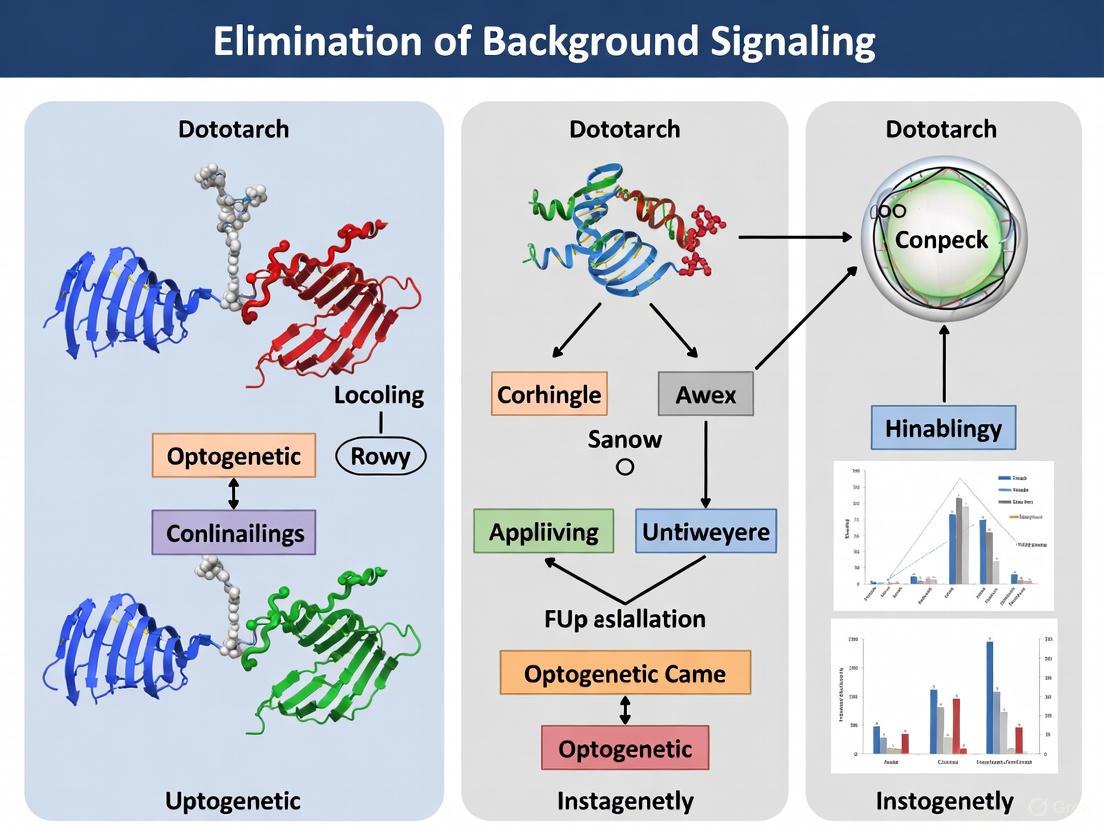
Minimizing background signaling is a critical challenge in optogenetics that directly impacts the precision and reliability of experimental and therapeutic outcomes.
Silencing the Noise: Advanced Strategies to Eliminate Background Signaling in Optogenetic Constructs
Abstract
Minimizing background signaling is a critical challenge in optogenetics that directly impacts the precision and reliability of experimental and therapeutic outcomes. This article provides a comprehensive resource for researchers and drug development professionals, covering the foundational causes of off-target activity, strategic engineering of low-background constructs, optimization of experimental conditions, and rigorous validation methodologies. By synthesizing recent advances in opsin engineering and tool design, we outline a systematic approach to achieving high signal-to-noise ratios, which is essential for dissecting complex biological pathways and developing future clinical applications.
Understanding the Source: What Causes Background Signaling in Optogenetic Systems?
Background signaling in optogenetics refers to unintended biological activity that can confound experimental results. This "noise" arises from various sources, including leaky expression of optogenetic constructs, direct effects of light on biological systems, and unintended activation of cellular pathways. For researchers and drug development professionals, identifying and eliminating these artifacts is crucial for data integrity, especially within the broader context of developing clean, clinically relevant optogenetic applications. This guide provides troubleshooting protocols to identify, mitigate, and control for these off-target effects.
FAQs: Identifying and Troubleshooting Background Signaling
Q1: What are the common sources of off-target effects in optogenetic experiments? Off-target effects originate from two primary categories: the optogenetic tools themselves and the light used to control them.
- Tool-Based Effects: Leaky expression of the opsin can lead to unintended signaling even in the absence of light [1]. Furthermore, overexpression of opsins, such as Channelrhodopsin-2 (ChR2), can alter a cell's native physiology, including its membrane capacitance and electrophysiological properties, and may even induce toxicity or apoptosis [1].
- Light-Based Effects: The stimulating light can activate endogenous biological systems. For instance, in vivo experiments show that light delivered inside the brain can travel and activate the retina, triggering widespread neuronal activity that is independent of the expressed opsin [2]. At a cellular level, blue light has been shown to alter gene expression in non-target cells like microglia, dampening the expression of inflammatory genes [3].
Q2: How can I confirm that my observed effect is due to my optogenetic construct and not an off-target artifact? Robust control experiments are essential. The most critical control is to perform your exact experimental protocol in subjects (e.g., animals, cell cultures) that do not express the opsin but may express a fluorescent marker like YFP [2] [1]. If the same effect is observed when the light is turned on in these control subjects, it indicates a significant off-target effect, likely caused by the light itself. For controlling for opsin overexpression effects, using a virus carrying only a fluorescent protein is recommended [1].
Q3: My optogenetic construct has high "dark activity." How can I reduce this leaky expression? Leaky expression or high basal activity of an optogenetic construct is often a property of the specific tool. Mitigation strategies include:
- Tool Selection: Choose optimized constructs engineered for low dark activity. For example, the blue light-activated adenylyl cyclase bPAC is noted for its low dark activity compared to other variants [4].
- Expression Titration: High levels of expression can exacerbate leakiness. Systematically titrating the amount of virus used for transduction can help find an expression level that minimizes dark activity while maintaining robust light-induced responses [1].
Q4: Does the wavelength of light used for stimulation influence off-target effects? Yes. While red light penetrates tissue more deeply, it can also lead to stronger off-target retinal activation in vivo because it scatters less and accumulates more efficiently at the retina [2]. One study found that red light caused the strongest off-target effects, and recommended using blue or orange light where possible [2]. Furthermore, blue light itself has documented biological effects on certain cell types, like microglia [3]. The choice of wavelength therefore requires balancing penetration depth against potential spectral side-effects.
Q5: How can I minimize the impact of light on endogenous signaling pathways?
- Light Adaptation: For in vivo experiments where retinal activation is a concern, exposing the retina to ambient light can desensitize it, thereby reducing the exaggerated neuronal responses caused by the laser stimulation [2].
- Titration: Use the lowest light intensity that reliably activates your target opsin. Intensities as low as 1mW have been shown to cause off-target effects in darkness [2].
- Control Experiments: Always include the control experiments described in Q2 to define the threshold for light-induced artifacts in your specific system.
Experimental Protocols for Quantifying Background
Protocol 1: Validating Specificity of Optogenetic Activation In Vivo
This protocol is designed to isolate optogenetically-induced neural activity from light-induced artifacts.
- Subject Preparation: Generate two groups of subjects (e.g., mice):
- Experimental Group: Express the optogenetic opsin in the target brain region.
- Control Group: Express only a fluorescent protein (e.g., YFP) under the same promoter, using the same viral vector and injection coordinates.
- Implantation: Implant an optical cannula targeted to the region of opsin/fluorophore expression in both groups.
- Stimulation and Recording: Under your experimental conditions (e.g., darkness or controlled ambient light), deliver light pulses at various wavelengths (e.g., 470 nm blue, 590 nm red) and intensities (e.g., 1-15 mW) through the implanted cannula. Simultaneously, record neuronal activity (e.g., via electrophysiology or calcium imaging) from the region.
- Data Analysis:
- Compare the evoked activity in the experimental group versus the control group.
- Activity that appears in both groups is a light-induced artifact.
- Activity that is specific to the experimental group is a true optogenetic effect.
- Titrate light intensity and ambient light to find a window where the optogenetic effect is robust and the artifact is minimal [2].
Protocol 2: Assessing Cell-Type-Specific Off-Target Gene Expression
This protocol uses RNA sequencing to identify unintended gene expression changes in non-target cells.
- Cell Culture: Culture the target cell type (e.g., neurons) and a non-target cell type (e.g., microglia).
- Transduction: Transduce only the target cell type with your optogenetic construct. Use a fluorescent marker to confirm transduction efficiency and purity.
- Stimulation: Apply your standard optogenetic stimulation protocol (e.g., blue light pulses) to the co-culture.
- RNA Sequencing: After stimulation, separate the cell types using fluorescence-activated cell sorting (FACS). Perform RNA sequencing on both the target (opsin-expressing) and non-target (non-expressing) cell populations.
- Analysis: Identify differentially expressed genes in the non-target cell population. Pathway analysis on these genes will reveal which endogenous signaling pathways (e.g., inflammatory pathways) are being inadvertently modulated by the light stimulus itself [3].
Data Presentation: Light Parameters and Observed Effects
The following table summarizes quantitative data on light-induced off-target effects to inform experimental design.
Table 1: Documented Off-Target Effects of Light Stimulation
| Light Parameter | Experimental Context | Observed Off-Target Effect | Recommended Mitigation |
|---|---|---|---|
| All wavelengths (1-15 mW) [2] | In vivo brain stimulation in darkness | Widespread neuronal activation via retina | Use ambient light to desensitize retina [2] |
| Red Light [2] | In vivo brain stimulation | Strongest off-target retinal activation | Prefer blue or orange light where possible [2] |
| Blue Light [3] | Cultured microglia | Altered inflammatory gene expression (e.g., lower TNF-alpha) | Include non-opsin controls; be cautious interpreting immune responses [3] |
Table 2: Strategies to Minimize Artifacts from Optogenetic Tools
| Strategy | Method | Primary Artifact Addressed |
|---|---|---|
| Viral Titer Titration [1] | Systemically vary the amount of virus used for transduction | Opsin overexpression toxicity & altered physiology |
| Use of Step-Function Opsins (SSFOs) [1] | Employ opsins that induce a subthreshold depolarization | Non-physiological, direct firing of action potentials |
| Optimal gRNA Selection [5] | (For CRISPRa/i) Select gRNAs with low off-target sequence similarity | Unintended gene activation/repression |
The Scientist's Toolkit: Key Reagents for Controlling Background
Table 3: Essential Reagents and Tools for Troubleshooting Background Signaling
| Reagent/Tool | Function in Troubleshooting | Example Use Case |
|---|---|---|
| Fluorescent Protein (e.g., YFP) | Serves as a control for viral delivery and expression without opsin function. | Critical for control groups to isolate light-induced from opsin-induced effects [2] [1]. |
| Cannula & Fiber-Optic System | Enables precise light delivery in vivo for freely behaving experiments. | Used in protocols to validate in vivo specificity and map light spread [6]. |
| Titratable Viral Vectors (AAV, LV) | Allows for precise control over opsin expression levels. | Reducing expression to a level that minimizes leakiness and toxicity while maintaining efficacy [1]. |
| Cell-Type Specific Promoters | Restricts opsin expression to genetically defined cell populations. | Limits potential off-target effects within heterogeneous tissue and improves experimental specificity [1]. |
| Validated Control gRNA | (For CRISPRa/i) Serves as a baseline for non-specific changes. | Helps identify off-target transcriptional changes, though a perfect control is challenging [5]. |
Workflow Visualization
The following diagram illustrates the logical process for diagnosing and addressing the primary sources of background signaling in an optogenetic experiment.
Diagnosis and Mitigation Workflow
The signaling pathway below outlines a specific molecular mechanism where optogenetic clustering can lead to intended, but also potentially unintended, pathway activation.
Optogenetic Clustering Induces Signaling
Key Engineering Principles for Creating Low-Background Constructs
Troubleshooting Guides
FAQ: Addressing Common Experimental Issues
Q1: My optogenetic construct shows high background activity even in the absence of light. What are the primary causes and solutions?
High background activity, or "leakiness," is often traced to the intrinsic properties of the optogenetic tool or its expression system. The table below summarizes common causes and engineered solutions.
| Cause of Background | Description | Engineering Solutions |
|---|---|---|
| High Dark Activity | Signaling molecule is active in the "off" state [4]. | Use tools with lower constitutive activity (e.g., bPAC vs. mPAC) [4]. Implement optimized degrons or N-terminal caps for inactivation [7]. |
| Slow Deactivation Kinetics | Signaling persists long after light is off, blurring temporal control [4]. | Select tools with fast off-kinetics (e.g., bPAC decays within ~20s) [4]. Engineer point mutations to accelerate photocycle closure [8]. |
| Non-Specific Dimerization | CRY2/CIB1 or PhyB/PIF domains interact without light stimulus [4]. | Use truncated versions of interaction domains (e.g., CRY2PHR) [4]. Optimize linker lengths between domains to reduce steric strain. |
| Transient vs. Stable Expression | High copy numbers from transient plasmids cause variable, often high, background expression [7]. | Stably integrate the construct into the host genome for consistent, lower-level expression and reduced cell-to-cell variability [7]. |
Experimental Protocol: Testing for Dark Activity
- Control Group: Keep one sample of your transfected cells in complete darkness.
- Measurement: Measure the output of your signaling pathway (e.g., cAMP levels for bPAC, target gene expression for LITers) in these dark conditions.
- Comparison: Compare this to the output from a light-stimulated sample. A high signal in the dark control indicates significant background activity [4] [7].
Q2: My light-induced signal is weak. How can I enhance the signal-to-noise ratio?
A weak signal can be improved by both amplifying the desired response and further suppressing background noise.
| Strategy | Method | Example |
|---|---|---|
| Signal Amplification | Use optogenetic actuators with higher light-induced activity [4]. | bPAC shows a >100-fold increase in cyclase activity upon blue light stimulation [4]. |
| Noise Suppression | Implement a negative feedback (NF) circuit architecture. | The LITer system uses NF to minimize gene expression noise and maintain a low basal state, enhancing the dynamic range upon induction [7]. |
| Equipment Standardization | Use standardized optogenetic hardware (e.g., Light Plate Apparatus - LPA) to ensure consistent, reproducible light delivery across experiments [7]. |
Experimental Protocol: Characterizing Your System's Response
- Light Calibration: Use a calibrated LPA or similar device to deliver a range of light intensities (e.g., 0 to 100 μW/mm²) and durations [7].
- Output Measurement: Quantify the resulting signal (e.g., fluorescence, ion current, gene expression) for each condition.
- Transfer Function: Plot the input (light dose) against the output to establish your system's transfer function. This reveals the optimal operating range for maximum response and lowest noise [7].
Q3: My optogenetic tool shows progressive inactivation or desensitization with repeated light pulses. How can I overcome this?
This is a common issue with some opsins and can be addressed by selecting more robust tools or replenishing essential cofactors.
| Cause | Solution | Application Note |
|---|---|---|
| Cofactor Depletion | Use bistable opsins (e.g., OPN3) that can be repeatedly activated and deactivated with different wavelengths without progressive inactivation [4]. | Ideal for experiments requiring prolonged or repeated activation. |
| Retinal Isomerization | Co-express a photoisomerase (e.g., RGR) to convert all-trans-retinal back to the light-sensitive 11-cis-retinal cofactor [4]. | Helps maintain a sustainable pool of the active cofactor for microbial opsins. |
The Scientist's Toolkit: Research Reagent Solutions
The table below lists key reagents and their functions for engineering and implementing low-background optogenetic constructs.
| Item | Function | Explanation |
|---|---|---|
| bPAC (Beggiatoa Photoactivated Adenylate Cyclase) | A blue-light activated enzyme that produces cAMP [4]. | Preferred over mPAC for its lower dark activity and larger light-induced fold-change, reducing background [4]. |
| Stable Cell Lines | Host cells with the optogenetic construct integrated into the genome [7]. | Provides consistent, low-copy number expression, minimizing variability and background noise compared to transient transfection [7]. |
| Light Plate Apparatus (LPA) | Standardized hardware for delivering light stimuli to cell cultures [7]. | Ensures reproducible light induction regimes, which is critical for reliable characterization of background and signal [7]. |
| PCB/Biliverdin | Chromophores for phytochrome-based systems (e.g., PhyB/PIF) [4]. | Must be added exogenously or the host cells engineered to produce them endogenously for the system to function [4]. |
| CRY2PHR & CIB1 | A blue-light inducible dimerization pair from plants [4]. | The truncated CRY2PHR (Photolyase Homology Region) can improve performance and reduce non-specific interactions in some contexts [4]. |
Conceptual Framework and Workflows
Diagram: High vs. Low Background Construct Design
Diagram: Stable Integration Workflow for Noise Reduction
Analyzing Natural Photoreceptor Mechanisms and Their Lessons for Design
Technical Support Center
Frequently Asked Questions (FAQs)
Q1: What are the primary sources of background signaling in optogenetic constructs, and how can they be minimized? Background signaling, or "dark activity," occurs when an optogenetic tool shows activity even in the absence of light. This is often due to the inherent instability of the protein's inactive conformation. To minimize this:
- Rational Protein Engineering: Key mutations can stabilize the inactive state. For instance, in the engineering of Opto-PKCε, a T566A mutation in the catalytic domain helped stabilize the activation loop in an inactive conformation, significantly reducing dark activity [9]. Molecular dynamics simulations can guide the selection of these stabilizing mutations [9].
- Optimized Domain Selection: Replacing or truncating native regulatory domains (e.g., the AGC terminal in PKCε) with optogenetic dimerization domains can enhance light-dependent control and reduce background signaling from endogenous activators [9].
Q2: My optogenetic stimulation generates significant electrical artifacts that corrupt my electrophysiological recordings. How can I resolve this? Light-induced artifacts are a common challenge when combining optogenetics with electrophysiology. Solutions include:
- Using Artifact-Free Hardware: Transparent graphene microelectrode arrays have been shown to virtually eliminate light-induced artifacts that are prominent with traditional metal electrodes (e.g., gold or platinum), enabling crosstalk-free integration [10].
- Advanced Computational Methods: Implement post-processing algorithms such as:
- Strategic Probe Design: Next-generation probes like Neuropixels Opto are designed with on-chip photonic waveguides and light-blocking layers to minimize the interference of scattered light with CMOS recording circuitry [12].
Q3: How can I achieve more natural, biomimetic neural control instead of simple tonic stimulation? Traditional tonic stimulation (fixed, regular intervals) may not recapitulate natural firing patterns. For more physiologically relevant control:
- Biomimetic Pattern Replay: Record the natural firing patterns of specific neurons in response to a stimulus (e.g., a drug). Then, use these precise temporal sequences of action potentials, including their irregular interspike intervals, to drive optogenetic stimulation. This approach has been shown to elicit behaviors that tonic stimulation fails to produce [13].
- Utilize Ultrafast Opsins: Employ high-speed opsins like ChETAA that can accurately follow high-frequency and irregular spike trains without frequency constraints [13].
Q4: My optogenetic construct shows strong desensitization during sustained light stimulation. What can I do? Desensitization, where the photocurrent rapidly decays from its peak value, limits sustained control. This can be addressed by:
- Selecting Improved Opsin Variants: Engineer new variants with reduced desensitization. For example, the ChRmine variant ChReef (T218L/S220A) exhibits a much higher stationary-to-peak photocurrent ratio (0.62) compared to wild-type ChRmine (0.22), enabling reliable sustained stimulation [14].
- Characterizing Stationary Currents: When selecting an opsin, always evaluate its stationary current density, not just its peak current, to ensure it meets the requirements for long-duration experiments [14].
Troubleshooting Guides
Table 1: Troubleshooting Common Optogenetic Experiment Issues
| Problem | Potential Cause | Solution |
|---|---|---|
| High background activity in the dark state | Unstable inactive conformation of the optogenetic tool [9]. | Introduce stabilizing mutations (e.g., T566A in Opto-PKCε); use molecular dynamics to guide design [9]. |
| Low signal-to-noise during simultaneous imaging and stimulation | Spectral overlap (congestion) between actuator and sensor excitation/emission spectra [11]. | Use red-shifted actuators (e.g., Chrimson, ChRmine) with blue-light-activated sensors (e.g., GCaMP); leverage isosbestic points [11]. |
| Incomplete labeling of neuronal morphology | Slow diffusion of fluorescent protein from soma to neurites [15]. | Use tools like Pisces, which couples a photoconvertible protein (mMaple) with active nuclear export signals (NES) for rapid, complete cytosolic filling [15]. |
| Poor spatial precision in light delivery | Scattering from external light sources or broad-field illumination [12] [11]. | Use integrated probes with micro-LEDs (e.g., Neuropixels Opto) for localized delivery; leverage on-chip waveguides [12]. |
| Inability to control subcellular signaling | Global activation lacking spatial specificity. | Recruit optogenetic constructs to specific organelles (e.g., plasma membrane, mitochondria) using localized dimerization systems [9]. |
Table 2: Quantitative Comparison of Key Depolarizing Opsins
| Opsin | Peak Activation Wavelength (nm) | Stationary-to-Peak Current Ratio | Unitary Conductance (fS) | Closing Kinetics (τoff, ms) | Key Characteristic |
|---|---|---|---|---|---|
| ChR2 | ~450 [12] | Low | 34.8 [14] | Fast | Benchmark opsin; well-characterized [14]. |
| CatCh | ~450 | Information Missing | 34.8 [14] | Information Missing | An improved ChR2 variant [14]. |
| ChRmine | ~520 [14] | 0.22 [14] | 88.8 [14] | ~63.5 [14] | High single-channel conductance; strong desensitization [14]. |
| ChReef (ChRmine T218L/S220A) | ~520 [14] | 0.62 [14] | ~80 (estimated) [14] | ~58.3 [14] | Greatly reduced desensitization; high stationary current [14]. |
| CoChR-3M | ~450 [14] | Information Missing | Information Missing | ~279 [14] | Large stationary current, but very slow kinetics [14]. |
Experimental Protocols
Protocol 1: Validating Reduced Background Signaling for a Novel Optogenetic Construct
This protocol is essential for thesis research focused on eliminating background signaling.
1. Molecular Dynamics (MD) Simulations (In Silico Validation)
- Objective: To computationally assess the stability of the dark (inactive) state of your construct.
- Steps: a. Use an AlphaFold-predicted or homologous structure of your protein as a starting point [9]. b. Perform conventional MD simulations comparing the wild-type and your engineered construct. c. Analyze hydrogen bond occupancy and root mean square fluctuation (RMSF) of key regions (e.g., the activation loop). A stabilized inactive state in the mutant will show lower RMSF and fewer stabilizing interactions that promote activity [9]. d. For enhanced sampling, use accelerated MD (aMD) to observe conformational shifts towards inactive states in the engineered construct [9].
2. In Vitro Characterization of Dark vs. Light Activity
- Objective: To quantitatively measure the background activity of your tool in cells.
- Steps: a. Transfert an appropriate cell line (e.g., HEK293, NG cells) with your optogenetic construct. b. Using patch-clamp electrophysiology, measure the baseline electrical activity (e.g., ion flux, membrane potential) in the dark. c. Apply a calibrated light stimulus and record the induced activity. d. Key Metric: Calculate the fold-change between light and dark states. A well-designed tool should have minimal dark activity and a high activation fold-change [9]. For kinase tools like Opto-PKCε, a phosphoproteomic analysis after light vs. dark exposure can confirm specificity for intended substrates [9].
Protocol 2: Biomimetic Stimulation for Behavioral Studies
Objective: To use natural neuronal firing patterns for optogenetic stimulation in vivo.
- Steps: a. Record Natural Patterns: Implant a hyperdrive or electrode array in your target brain region and record the firing patterns (interspike intervals) of single neurons in response to your stimulus of interest (e.g., a drug like morphine) [13]. b. Pattern Conversion: Convert the recorded spike train into a binary stimulation file where each action potential timestamp triggers a short laser pulse (e.g., 3 ms) [13]. Software like MATLAB can be used for this conversion. c. In Vivo Stimulation: Express an ultrafast opsin (e.g., ChETAA) in the recorded neuron type. In behaving animals, use the generated stimulation file to drive the optogenetic actuator [13]. d. Controls: Compare the behavioral outcome against tonic stimulation and shuffled versions of the natural pattern to confirm the importance of temporal encoding [13].
The Scientist's Toolkit
Table 3: Key Research Reagent Solutions
| Item | Function | Example Application |
|---|---|---|
| Pisces (Photo-inducible single-cell labeling system) | Labels the entire morphology of arbitrarily selected single neurons in intact animals by combining a photoconvertible protein (mMaple) with nuclear import/export signals [15]. | Bridging single-neuronal multimodal information (morphology, function, transcriptomics) [15]. |
| Neuropixels Opto Probe | A single-shank probe that integrates 960 electrical recording sites with 14+14 addressable blue and red light emitters via on-chip photonic waveguides [12]. | High-resolution electrophysiology combined with spatially precise optogenetic manipulation and optotagging in deep brain structures [12]. |
| Opto-PKCε | An optogenetic tool for controlling Protein Kinase C-epsilon activity with light, engineered for minimal dark activity [9]. | Dissecting compartmentalized PKCε signaling at specific subcellular locations (e.g., plasma membrane, mitochondria) [9]. |
| ChReef Opsin | A red-shifted channelrhodopsin (ChRmine variant) with minimal desensitization, enabling sustained and efficient optogenetic control at low light levels [14]. | Vision restoration in blind mice with low-light sources; efficient pacing of cardiomyocytes; auditory pathway stimulation [14]. |
| Transparent Graphene Microelectrode Arrays | EEG-like surface arrays that offer high optical transparency and eliminate light-induced electrical artifacts [10]. | Artifact-free simultaneous 2-photon imaging, optogenetic stimulation, and cortical surface potential recording [10]. |
| OptoDrive | A lightweight, motorized microdrive system for chronic extracellular recording and optogenetic stimulation in freely moving mice [16]. | Long-term (e.g., 1-month) recording and manipulation of neural activity in freely behaving animals [16]. |
Experimental Workflow and Signaling Pathways
Diagram: Workflow for Developing Low-Background Optogenetic Tools
Diagram: Eliminating Background Signaling in Opto-PKCε
For researchers developing reliable optogenetic therapies, the stability of an opsin's photocurrent is as critical as its initial strength. Channelrhodopsins with significant desensitization—a rapid decline in current after the initial peak during sustained light exposure—compromise experimental consistency and therapeutic outcomes. This case study examines the inherent desensitization of the powerful optogenetic tool ChRmine and how the engineered variant ChReef addresses this challenge, providing a blueprint for improving construct reliability and eliminating spurious background signaling in optogenetic research.
FAQs on ChRmine Desensitization and Reliability
What is photocurrent desensitization, and why is it a problem for research and therapy?
Photocurrent desensitization is the phenomenon where an opsin's sustained photocurrent is significantly smaller than its initial peak current during prolonged light stimulation [14]. This is a major problem because:
- Unreliable Stimulation: It leads to inconsistent and decaying cellular responses, making experimental results difficult to interpret and replicate.
- Background Signaling Noise: The unpredictable current decay introduces a form of background "noise" in the signaling pathway, as the output (cellular depolarization) is not consistently tied to the input (light stimulus).
- Therapeutic Inefficacy: For clinical applications like vision or hearing restoration, desensitization can cause the perceived signal to fade, severely limiting the utility of the treatment [14] [17].
How does ChRmine's desensitization impair experimental reliability?
ChRmine, while known for its large photocurrents and red-shifted spectrum, exhibits pronounced desensitization. Electrophysiological characterization shows that its stationary photocurrent is only about 20% of its peak current (stationary–peak ratio = 0.22 ± 0.12) [14]. This means that after the initial robust response, the signal quickly drops to a low, sustained level. For researchers, this translates to:
- An inability to maintain sustained cellular activation.
- Corrupted data in experiments requiring prolonged or high-frequency stimulation.
- A high risk of proteostatic stress and phototoxicity due to the need for high expression levels and light doses to compensate for the fading signal [14].
What was the molecular mechanism identified behind ChRmine's desensitation?
The desensitization in ChRmine was identified as a substrate (photon) inhibition process [14]. Noise analysis and power spectra of ChRmine's photocurrents revealed a second, short-lived open state, likely induced by the absorption of a second photon. This parallel, low-conducting photocycle underlies the observed drop in stationary current, a mechanism not previously described for channelrhodopsins [14].
How does the engineered variant ChReef solve the desensitization problem?
ChReef (ChRmine T218L/S220A) is a double-point mutant designed to overcome desensitization. The mutations on helix 6 specifically disrupt the photon inhibition process found in the wild-type ChRmine [14].
- Greatly Reduced Desensitization: ChReef exhibits a dramatically improved stationary–peak ratio of 0.62 ± 0.15, nearly three times that of wild-type ChRmine [14].
- Maintained High Conductance: It retains a high unitary conductance and large stationary photocurrent density, enabling reliable optogenetic control at low light levels [14].
- Regular Light Dependence: Unlike wild-type ChRmine, its photocurrent shows a regular, hyperbolic light dependence, eliminating the aberrant inactivation behavior [14].
What key performance metrics should I compare when selecting a construct for reliable, sustained stimulation?
The following table summarizes a quantitative comparison between ChRmine, ChReef, and a commonly used ChR variant, CatCh, based on data from patch-clamp recordings [14]:
| Optogenetic Construct | Stationary–Peak Current Ratio | Unitary Conductance (fS) | Closing Kinetics, τoff (-60 mV) | Action Spectrum Peak |
|---|---|---|---|---|
| ChRmine | 0.22 ± 0.12 | 88.8 ± 39.6 | ~63.5 ms | ~520 nm (Green) |
| ChReef | 0.62 ± 0.15 | 80 fS (reported) | ~58.3 ms | Red-shifted |
| CatCh | Not specified | 34.8 ± 25.1 | Not specified | Blue |
In which experimental applications is ChReef particularly advantageous?
ChReef's properties make it superior for applications demanding sustained and reliable stimulation [14]:
- Vision Restoration: ChReef expression in retinal ganglion cells of blind mice restored visual function with light sources as weak as an iPad screen, a scenario requiring stable signaling without fade [14] [18].
- Auditory Pathway Stimulation: It enables efficient, frequency-specific stimulation of the auditory pathway in rodents and non-human primates with low energy thresholds, critical for the power budget of future optical cochlear implants [14].
- Cardiac Pacing & Depolarization Block: ChReef allows for efficient and reliable red-light pacing of cardiomyocyte clusters, where consistent depolarization is essential [14].
Diagram: Contrasting Signaling Pathways of ChRmine and ChReef. The ChRmine pathway (red) is characterized by photon inhibition leading to a weak output signal, while the ChReef pathway (green) maintains a stable open state for reliable signaling.
Troubleshooting Guides
Guide 1: Addressing Unreliable or Fading Cellular Responses in Sustained Stimulation
| Observed Problem | Potential Cause | Solution | Underlying Principle |
|---|---|---|---|
| Response fades quickly during prolonged light stimulation. | High desensitization of the optogenetic construct (e.g., wild-type ChRmine). | Switch to a low-desensitization variant like ChReef or ChRmine-T119A [14] [18]. | Engineered mutations (T218L/S220A) disrupt the parallel photocycle responsible for photon inhibition. |
| Inconsistent spiking in neurons or cardiomyocytes during extended pacing. | The stationary photocurrent is too weak to reliably reach action potential threshold. | Use automated patch-clamp systems to quantify the stationary–peak current ratio of your construct before in vivo use [14]. | Direct measurement of desensitization confirms construct reliability for sustained applications. |
| High light levels required to maintain a response, leading to phototoxicity. | Compensating for low stationary current with increased irradiance. | Utilize ChReef's high stationary current density for efficient control at low light levels [14]. | A higher stationary–peak ratio provides more usable current per photon, reducing energy demand. |
Guide 2: Validating Construct Performance and Expression
| Observed Problem | Potential Cause | Solution | Underlying Principle |
|---|---|---|---|
| Low photocurrents regardless of construct. | Poor membrane trafficking of the opsin. | Fuse the opsin to plasma membrane targeting sequences (e.g., Kir2.1 trafficking signal) [14] [8]. | Enhances functional expression by directing more channels to the cell membrane. |
| Uncertainty about opsin function in your specific cell type. | Opsin properties characterized in non-native systems (e.g., HEK cells). | Perform ex vivo single-cell electrophysiology on your target tissue (e.g., transfected RGCs) to measure kinetics and current-voltage relations [18]. | Validates key functional parameters like onset latency and photocurrent magnitude in a relevant biological context. |
| No light response detected in vivo. | Issues with viral expression, targeting, or light delivery, not the construct itself. | Verify expression via histology, check cannula targeting, and ensure a good fiber connection without air gaps [19]. | Confirms that the biological system is properly prepared for optogenetic stimulation. |
Experimental Protocols
Protocol 1: Quantifying Desensitization Using Patch-Clamp Electrophysiology
This protocol is used to determine the stationary–peak current ratio, a key metric of construct reliability [14].
Key Reagents & Materials:
- Cell Line: NG-108 or HEK293 cells.
- Expression Vector: Plasmid containing the opsin (e.g., ChRmine, ChReef) fused to a fluorescent protein (e.g., eYFP) and a membrane trafficking signal [14].
- Equipment: Automated or manual patch-clamp rig synchronized with an LED-based illumination system.
Methodology:
- Cell Transfection: Transfect cells with the opsin plasmid.
- Whole-Cell Recording: Establish whole-cell patch-clamp configuration. Hold the cell at a potential of -60 mV to -100 mV.
- Light Stimulation: Apply a prolonged (e.g., several seconds) pulse of light at the opsin's peak action wavelength (e.g., green light for ChRmine/ChReef) with saturating intensity.
- Data Collection: Record the resulting photocurrent. The peak current (Ipeak) is the maximum current immediately after light onset. The stationary current (Istat) is the current measured at the end of the light pulse, just before termination.
- Calculation: Calculate the stationary–peak ratio as Istat / Ipeak. A higher ratio indicates lower desensitization and greater reliability.
Diagram: Workflow for Quantifying Opsin Desensitization. This electrophysiology protocol is essential for determining the stationary–peak current ratio, a key reliability metric.
Protocol 2: In Vivo Functional Validation in a Vision Restoration Model
This protocol assesses the efficacy of a low-desensitization opsin in restoring light sensitivity in a blind animal model [14] [18].
Key Reagents & Materials:
- Animal Model: rd1 mice (a model of severe retinal degeneration).
- Viral Vector: Recombinant AAV2 (e.g., AAV2/2(4YF)) containing the opsin (e.g., ChReef) under a neuron-specific promoter (e.g., hSyn) and a fluorescent reporter (e.g., eGFP) [18].
- Equipment: Immunohistochemistry setup, ex vivo electrophysiology rig for retinal tissue, behavioral apparatus (e.g., shuttle box).
Methodology:
- Viral Delivery: Perform intravitreal injection of the AAV vector into the eyes of rd1 mice.
- Incubation: Allow 6-8 weeks for robust opsin expression.
- Expression Verification: Confirm opsin expression and localization in target retinal ganglion cells via immunohistochemistry.
- Ex Vivo Electrophysiology: Record light-evoked action potentials from transduced RGCs to confirm functional light sensitivity and response kinetics.
- Behavioral Assay: Test for restoration of innate light-avoidance behavior in a shuttle box using low-intensity light sources.
The Scientist's Toolkit: Research Reagent Solutions
| Item | Function | Example Use Case |
|---|---|---|
| Low-Desensitization Opsins (e.g., ChReef) | Provides sustained, reliable photocurrent for prolonged stimulation experiments. | Vision restoration studies requiring stable light sensitivity under ambient light [14] [18]. |
| Adeno-Associated Virus (AAV) Serotype 2 | Efficient gene delivery vector for in vivo transduction of neurons, including retinal cells. | Delivering optogenetic constructs to specific cell types in the brain or retina [14] [18]. |
| Membrane Trafficking Signals (e.g., Kir2.1) | Improves plasma membrane localization of opsins, enhancing photocurrent amplitude. | Boosting functional expression of microbial opsins in mammalian cells [14] [8]. |
| Automated Patch-Clamp System | High-throughput electrophysiology for robust, quantitative characterization of opsin variants. | Rapidly screening and quantifying kinetic properties and desensitization of engineered opsins [14]. |
Engineering Solutions: Building Optogenetic Constructs with Minimal Dark Activity
Strategic Mutagenesis to Reduce Constitutive Activity
In optogenetics, the ideal actuator remains silent until activated by a precise wavelength of light. However, many optogenetic constructs, especially engineered variants, can exhibit low levels of constitutive activity—also known as background activity or dark current—where the ion channel or pump is active even in the absence of light. This background signaling can obscure experimental results, lead to misinterpretation of physiological data, and cause cellular toxicity due to chronic ion flux. This guide addresses the common challenges associated with constitutive activity in optogenetic research and provides targeted troubleshooting strategies, with a focus on strategic mutagenesis, to help researchers eliminate unwanted background signaling.
Troubleshooting FAQs
Q1: How can I confirm that my optogenetic construct has problematic constitutive activity?
Before undertaking mutagenesis, it is crucial to verify that constitutive activity is present and originates from the opsin itself.
- Perform a rigorous negative control: In your expression system (e.g., cultured neurons or HEK cells), perform a whole-cell patch-clamp recording in the absence of light. A steady holding current that is significantly more positive or negative (depending on the opsin's function) than in non-transfected control cells indicates constitutive ion conductance [20].
- Validate cellular health and expression: Ensure that the observed cellular phenotype (e.g., failure to express, cell death) is not due to general cellular stress or transfection toxicity. Use a fluorescent protein (e.g., GFP) co-expressed from the same or a separate plasmid to confirm successful expression and normal cellular morphology in non-lit conditions [8].
- Check your genetic elements: Constitutive activity can sometimes be misinterpreted for low-level, persistent expression driven by a "leaky" promoter. Review your plasmid design to ensure you are using a well-characterized, tightly regulated promoter suitable for your cell type.
Q2: What are the primary molecular strategies to reduce constitutive activity?
The core strategy involves genetically engineering the opsin to stabilize its closed, dark state. The following table summarizes the key mutagenesis approaches.
Table 1: Mutagenesis Strategies to Reduce Constitutive Activity
| Strategy | Description | Key Residues or Regions | Example Opsin |
|---|---|---|---|
| Strengthen Channel Closure | Introduce mutations that stabilize the hydrophobic gate, preventing ion passage in the dark. | C128, D156 in Channelrhodopsin-2 (ChR2) [20] | ChR2(C128A), ChR2(C128S) [20] |
| Optimize Retinal Binding | Adjust the retinal-binding pocket to reduce spontaneous isomerization or improve chromophore compatibility, lowering the energy for accidental activation. | Lysine on helix G/TM7 (K296 in bovine rhodopsin) [21] | Various engineered ChR variants [8] |
| Modify Ion Conductance Pathway | Introduce subtle steric or electrostatic hindrances within the channel pore to make unscheduled opening less favorable. | Central pore domain (TM1-TM7) [21] [22] | High-fidelity ChR mutants [22] |
| Use Validated Low-Background Variants | Select existing engineered opsins known for minimal dark current, often achieved through the strategies above. | N/A | ChR2(H134R) [8], Stabilized Step Function Opsins (SSFO) [8] |
Q3: Which specific residues should I target for mutagenesis in channelrhodopsins?
Extensive research on Channelrhodopsin-2 (ChR2) has identified key residues that control the equilibrium between the open and closed states. Targeting these residues is a primary strategy for reducing dark current.
Table 2: Key Mutagenesis Targets in Channelrhodopsin-2
| Residue | Wild-Type Function | Mutagenesis Approach | Effect on Constitutive Activity |
|---|---|---|---|
| C128 | Forms part of the central hydrophobic gate; crucial for channel closure after light activation [20]. | Substitute with Ala (C128A) or Ser (C128S). | Significantly increases constitutive activity by stabilizing the open state; these mutants are not recommended for reducing background. However, they are instructive for understanding the gate mechanism [20]. |
| D156 | Involved in the Schiff base protonation state and photocycle kinetics. | Substitute with Ala (D156A), Asn (D156N), or Cys (D156C) [8] [20]. | Can create slow-cycling or step-function variants. While not always reducing dark current, it alters the photocycle to make the channel less prone to rapid, unscheduled cycling [8]. |
| E123 | Influences channel closure kinetics and voltage sensitivity. | Substitute with Thr (E123T) or Ala (E123A) to create ChETA variants. | Accelerates channel closure, which can minimize the duration of any residual open state in the dark, thereby reducing net constitutive current [20]. |
The following diagram illustrates the logical workflow for diagnosing constitutive activity and selecting an appropriate mitigation strategy, culminating in the strategic targeting of these key residues.
Q4: Beyond channelrhodopsins, how can I reduce background in other optogenetic actuators?
The principle of stabilizing the "off" state applies across diverse optogenetic tools.
- For Halorhodopsins (NpHR) and Archaerhodopsins (Arch): While these light-driven pumps generally have lower reported constitutive activity, issues can arise from mispersonalization. Adding trafficking signals from the Kir2.1 potassium channel has been shown to improve membrane localization significantly, which can reduce intracellular stress and improve signal-to-noise by ensuring functional pools of the protein are at the membrane [8]. For example, eNpHR3.0 and eArch3.0 contain these trafficking motifs [8].
- For Chemo-optogenetic Tools: If using dimerizers or allosteric systems based on plant photoresceptors (e.g., PhyB-PIF, CRY2-CIB1), ensure thorough washing to remove the chemical chromophore (e.g., phycocyanobilin) during "off" phases. Leaky promoter activity driving the expression of the effector domain can also mimic constitutive activity and should be controlled for [23].
Q5: What experimental protocols are essential for characterizing new low-activity mutants?
After generating a new mutant, rigorous characterization is required to confirm reduced constitutive activity while preserving light sensitivity.
Protocol 1: Whole-Cell Patch-Clamp Electrophysiology
- Purpose: Quantitatively measure dark current and light-evoked photocurrents.
- Method:
- Express the wild-type and mutant opsin in a suitable cell line (e.g., HEK293T, neurons).
- Establish whole-cell patch-clamp configuration. Hold the cell at a relevant potential (e.g., -70 mV).
- In total darkness, record the holding current for 60 seconds. The average current during this period is the "dark current."
- Illuminate the cell with a saturating pulse of light at the optimal wavelength (e.g., 470 nm for ChR2) for 2-5 seconds and record the peak photocurrent.
- Key Metric: Calculate the ratio of peak photocurrent to absolute dark current. A successful mutant will have a significantly higher ratio than the wild-type, indicating stronger light-induced activation relative to background noise [20].
Protocol 2: Action Potential Fidelity Assay in Neurons
- Purpose: Functionally validate the mutant in a physiological context.
- Method:
- Express the opsin in cultured neurons or brain slices.
- In current-clamp mode, record the resting membrane potential in the dark. A depolarized resting potential in the mutant compared to non-transfected cells indicates residual constitutive activity.
- In voltage-clamp mode, deliver a series of light pulses of varying frequency and duration.
- Key Metric: A high-fidelity, low-background mutant will reliably follow high-frequency light pulses without inducing spontaneous action potentials in the dark and without showing signs of depolarization block [20].
The Scientist's Toolkit: Research Reagent Solutions
Table 3: Essential Reagents for Developing and Testing Low-Constitutive-Activity Opsins
| Reagent | Function in Experiment | Example Sources / Identifiers |
|---|---|---|
| Low-Background Opsin Plasmid | Positive control; baseline for comparing new mutants. | Addgene: ChR2(H134R) [8], ChETA [20] |
| All-trans Retinal | Essential chromophore for many microbial opsins; must be supplemented in some cell lines. | Sigma-Aldrich R2500; prepare fresh stock solutions. |
| Cell Line for Electrophysiology | A consistent model system for quantitative characterization. | HEK293T cells (easy to transfect, large for patching). |
| Primary Neuron Culture | For physiological validation in excitable cells. | Rat or mouse hippocampal/cortical cultures. |
| Specific Promoter | Drives cell-type-specific expression, reducing off-target effects. | Synapsin (neurons), CAG (broad, strong), CAGGS (broad, strong) [8]. |
| Trafficking Signal Sequences | Improves membrane localization, enhancing photocurrent and reducing intracellular aggregation. | Kir2.1 trafficking signal used in eNpHR3.0, eArch3.0 [8]. |
Eliminating constitutive activity is critical for the precision of optogenetic experiments. A systematic approach begins with confirming the phenomenon via patch-clamp electrophysiology, followed by the strategic selection or engineering of opsins. Key strategies include leveraging existing low-background variants or performing targeted mutagenesis at well-characterized residues like C128, D156, and E123 in channelrhodopsins. Success must be rigorously validated using both biophysical measurements of dark current and functional assays of neuronal excitability. By applying these troubleshooting guidelines and mutagenesis principles, researchers can engineer cleaner, more reliable optogenetic tools, thereby reducing background signaling and enhancing the fidelity of their research outcomes.
Domain-Swapping and Fusion Protein Designs for Improved Specificity
Troubleshooting Guides and FAQs
Why does my domain-swapped chimeric protein fail to fold or show reduced stability?
This is a common issue when swapping domains between proteins with different structural compatibilities.
- Problem Explanation: The stability of a domain-swapped chimera depends on the structural integrity of the newly formed interfaces. If the swapped domains have incompatible folding pathways or create unstable hydrophobic cores, the protein may misfold or aggregate [24].
- Solution: Carefully analyze the parent protein structures before swapping. Focus on regions like the hinge loop, which undergoes significant conformational changes during domain swapping and is critical for successful oligomer formation [24]. In studies of SH3 domains, researchers found that simply interchanging the hinge loop from a domain that does not swap (Abl SH3) into one that does (c-Src SH3) was not sufficient to drive domain swapping, indicating that the hinge loop composition is not the sole driving force and that other interface residues are crucial [24].
How can I reduce high background activity in my optogenetic fusion protein?
Excessive activity in the "dark state" (off state) is a frequent challenge in optogenetic tool development.
- Problem Explanation: Background activity often occurs when the catalytic domain of a kinase is not properly inhibited in the absence of light. This can happen if the fused optogenetic domain does not effectively block the active site or stabilize an inactive conformation [9].
- Solution: Employ rational engineering to destabilize the active conformation in the dark. For an optogenetic Protein Kinase C-epsilon (Opto-PKCε) probe, researchers combined several strategies [9]:
- Removal of the regulatory domain and replacement with a light-inducible dimerization domain (CRY2).
- Introduction of point mutations (e.g., T566A) at key phosphorylation sites required for activation.
- Truncation of the AGC terminal to further reduce basal activity. Molecular dynamics simulations confirmed that the T566A mutation destabilized the active conformation of the activation loop, leading to significantly reduced kinase activity in the dark [9].
What should I do if my modular transcriptional regulator has lost its DNA-binding or signal-sensing function after domain swapping?
A significant portion of chimeric regulators may be poorly functional [25].
- Problem Explanation: Domain swapping can disrupt the allosteric communication between the DNA-binding domain (DBD) and the signal-sensing domain (SDD), or it can alter the precise geometry needed for DNA recognition [25].
- Solution:
- Verify Domain Boundaries: Use available crystal structures to ensure you are swapping discrete, functional domains at conserved boundaries. The DBD (often a helix-turn-helix motif) and SDD should be identified based on structural data [25].
- Rescue with Mutations: Performance of hybrid regulators can sometimes be predicted by sequence analysis, and poorly performing chimeras can be rescued through additional site-directed mutagenesis to fine-tune interactions at the new domain interface [25].
My fusion protein is forming non-specific oligomers or aggregates. How can I prevent this?
Unwanted oligomerization can hinder function and lead to experimental artifacts.
- Problem Explanation: Fusion proteins, especially those incorporating dimerization domains, can sometimes oligomerize in an uncontrolled manner. This can be due to exposed hydrophobic surfaces or overly strong inter-domain interactions [9].
- Solution: Optimize the linker sequence between domains and consider using different, more controlled dimerization systems. For example, in the Photo-inducible single-cell labeling system (Pisces), the initial version (Pisces0.1) showed some cytosolic leakage and aggregation tendency. This was resolved by replacing the fluorescent protein mCherry with the monomeric photoconvertible protein mMaple, which has superior folding efficiency and reduced aggregation, leading to a cleaner background and more effective labeling [15].
Experimental Protocols for Key Techniques
Protocol 1: Designing and Testing a Domain-Swapped Transcriptional Regulator
This protocol outlines the creation of modular chimeric regulators for synthetic biology applications [25].
- Identify Parent Proteins: Select transcriptional regulators from the same protein family (e.g., LacI, TetR, LuxR) that have known structural information.
- Define Domain Boundaries: Analyze X-ray crystal structures to identify the discrete DNA-binding domain (DBD) and signal-sensing domain (SDD). The DBD often contains a helix-turn-helix motif.
- Design Chimeric Genes: Synthesize genes where the SDD of one regulator is swapped with the SDD from another regulator, while keeping the DBD constant (or vice-versa). This creates a new hybrid protein.
- Clone and Express: Subclone the chimeric genes into an appropriate expression vector and transform into a suitable host (e.g., E. coli).
- Functional Characterization:
- Assay Activity: Measure the activity of the hybrid regulator by placing a reporter gene (e.g., GFP) under the control of its cognate promoter.
- Test Specificity: Expose the system to different molecular signals to confirm that the new regulator responds to the intended ligand from its donor SDD.
- Iterate and Optimize: If the hybrid is poorly functional, use sequence analysis and structural modeling to identify potential disruptive residues at the domain interface and introduce rescue mutations [25].
Protocol 2: Engineering a Low-Background Optogenetic Kinase
This methodology details the rational design of an optically controlled PKCε, focusing on minimizing dark-state activity [9].
- Deconstruct the Native Kinase: Remove the native regulatory domain of the kinase. For PKCε, this means eliminating the C2, C1A, and C1B domains.
- Fuse to an Optogenetic Module: Fuse the remaining catalytic domain to a blue-light inducible dimerization domain, such as cryptochrome 2 (CRY2), via a flexible linker.
- Introduce Inactivating Mutations: Mutate key phosphorylation sites within the activation loop (e.g., Thr566, Thr710, Ser729 in PKCε) to alanine to destabilize the active conformation in the dark. Truncate non-essential terminal regions (e.g., the AGC terminal) if they contribute to basal activity.
- Validate with Simulations: Perform molecular dynamics (MD) simulations comparing the phosphorylated (active) and mutant (inactive) kinase structures. Confirm that the mutations lead to conformational changes in the activation loop and αC-helix that are characteristic of an inactive state [9].
- Test In Vitro and In Vivo:
- Bulk Activation: Expose cells expressing the optogenetic kinase to blue light and measure kinase activity (e.g., via phosphorylation of a substrate) compared to dark controls.
- Spatial Control: Demonstrate recruitment of the kinase to specific subcellular locations (e.g., plasma membrane, mitochondria) upon localized light activation.
- Specificity Validation: Use phosphoproteomic analysis to confirm that only known downstream substrates of the native kinase are phosphorylated upon light activation [9].
Research Reagent Solutions
The table below lists key reagents and their functions for experiments involving domain-swapping and optogenetic constructs.
| Reagent / Material | Function / Application | Key Considerations |
|---|---|---|
| Expression Vectors (e.g., pGEX-2T, pHTP1) | Cloning and recombinant protein expression in systems like E. coli [24] [26]. | Choose a vector with appropriate promoters (e.g., inducible), affinity tags (His-tag, GST), and compatibility with the host. |
| Site-Directed Mutagenesis Kits | Introducing point mutations to rescue function or reduce background activity [25] [9]. | Critical for fine-tuning the properties of chimeric proteins and optogenetic tools. |
| Size-Exclusion Chromatography (SEC) | Purifying proteins and analyzing oligomeric state (e.g., separating monomers from domain-swapped dimers) [24] [26]. | A final purification step to obtain homogenous protein samples and check for aggregation. |
| Crystallography & NMR System Software | Determining the 3D structure of domain-swapped proteins and oligomers [26]. | Essential for understanding the structural basis of domain swapping and validating designs. |
| Molecular Dynamics (MD) Simulation Software | Simulating protein conformational changes and rationalizing dark/light activity in optogenetic probes [9]. | Used to understand how mutations affect protein dynamics and stability before experimental testing. |
| Optogenetic Dimerization Domains (e.g., CRY2) | Component of fusion proteins that allows light-controlled protein-protein interaction and activation [9]. | Enables precise spatiotemporal control over protein activity in living cells. |
| Photoconvertible Fluorescent Proteins (e.g., mMaple) | Tagging for high-resolution morphology tracing in optimized optogenetic systems [15]. | Monomeric versions are preferred to prevent aggregation and enable high-fidelity labeling. |
Signaling Pathway and Experimental Workflow Diagrams
Optogenetic Kinase Activation Pathway
This diagram illustrates the signaling pathway and key conformational changes during the optogenetic activation of a engineered kinase like PKCε.
Domain-Swapped Chimera Design Workflow
This flowchart outlines the key steps and decision points in the design-build-test cycle for creating functional domain-swapped chimeric proteins.
In the field of optogenetics, controlling specific cell types with high temporal precision while minimizing background signaling remains a significant challenge. The development of ChReef ("Channelrhodopsin that excites efficiently") represents a major advancement in overcoming these limitations through targeted photocycle engineering. This improved variant of the channelrhodopsin ChRmine addresses the critical problem of photocurrent desensitization that has hampered previous optogenetic tools, enabling more reliable control of excitable cells at low light levels with excellent temporal fidelity [14]. For researchers aiming to eliminate background signaling in their optogenetic constructs, ChReef's minimal desensitization and sustained stimulation capabilities offer a powerful solution for cardiovascular, sensory, and neuroscience applications.
Technical FAQ: Addressing Researcher Questions on ChReef Implementation
Q: What specific photocurrent limitations does ChReef address compared to its predecessor, ChRmine?
A: ChReef specifically solves the problem of strong photocurrent desensitization observed in wild-type ChRmine, where the stationary photocurrent was only about 20% of the peak current (stationary-peak ratio = 0.22) [14]. This desensitization dramatically limited ChRmine's utility in experiments requiring sustained or high-rate optogenetic stimulation. Through targeted mutations at positions T218L and S220A in helix 6, ChReef achieves a significantly improved stationary-peak ratio of 0.62, enabling reliable, sustained stimulation without the rapid decline in photocurrent that characterized the original protein [14].
Q: What practical advantages does ChReef offer for in vivo experimental applications?
A: ChReef enables effective optogenetic control at remarkably low light levels, which has profound implications for both basic research and clinical applications:
- Visual restoration: ChReef expression in retinal ganglion cells can restore visual function in blind mice using light sources as weak as an iPad screen [14]
- Auditory pathway stimulation: Efficient, frequency-specific stimulation of the auditory pathway in rodents and non-human primates with nanojoule thresholds [14]
- Cardiac control: Reliable red-light pacing and depolarization block of cardiomyocyte clusters [14]
- Reduced phototoxicity: The capacity to work at lower light intensities minimizes potential phototoxic effects on tissue [14]
Q: How do ChReef's biophysical properties compare to other commonly used channelrhodopsins?
A: The following table summarizes key biophysical properties that make ChReef superior for applications requiring minimal background signaling:
Table 1: Comparative Biophysical Properties of Depolarizing Optogenetic Tools
| Optogenetic Tool | Unitary Conductance | Closing Kinetics (τoff) | Stationary-Peak Ratio | Peak Spectral Sensitivity |
|---|---|---|---|---|
| ChReef | 80 fS [14] | 30-35 ms [14] | 0.62 [14] | ~520 nm (red-shifted) [14] |
| ChRmine | 88.8 fS [14] | 63.5 ms [14] | 0.22 [14] | ~520 nm (red-shifted) [14] |
| CatCh | 34.8 fS [14] | Not specified | Not specified | ~460 nm (blue) [14] |
| CoChR-3M | Not specified | 279 ms [14] | Not specified | ~460 nm (blue) [14] |
Troubleshooting Guide: Common Experimental Challenges and Solutions
Problem: Incomplete elimination of background signaling during sustained stimulation
Solution: Verify expression system and illumination parameters:
- Ensure use of proper trafficking signals (Kir2.1 trafficking and export sequences) for optimal plasma membrane localization [14]
- Confirm adequate expression levels via fluorescence line profile analysis [14]
- Implement pulsed rather than continuous illumination protocols to minimize potential residual desensitization
- Validate system with positive controls expressing wild-type ChRmine to confirm improved performance of ChReef variant
Problem: Inconsistent cellular responses in heterogeneous tissue environments
Solution: Optimize delivery and expression parameters:
- Utilize adeno-associated virus (AAV) vectors with tissue-specific promoters for targeted expression [14]
- Determine optimal titer for your specific application through dose-response testing
- Account for tissue-dependent light scattering by validating responses at different depths
- Maintain consistent retinal supplementation for proper chromophore function [27]
Problem: Suboptimal temporal fidelity in high-frequency stimulation paradigms
Solution: Leverage ChReef's improved kinetic properties:
- Utilize the fast closing kinetics (30-35 ms at physiological temperature) for precise temporal control [14]
- Design stimulation protocols that respect the channel's recovery cycle
- Validate stimulation fidelity with electrophysiological readouts where possible
Research Reagent Solutions: Essential Materials for ChReef Experiments
Table 2: Key Research Reagents for ChReef Implementation
| Reagent / Material | Function / Application | Implementation Notes |
|---|---|---|
| ChReef plasmid constructs | Encoding T218L/S220A double mutant | Include Kir2.1 trafficking signals for improved membrane localization [14] |
| Adeno-associated virus (AAV) vectors | In vivo delivery of ChReef construct | Select serotype based on target tissue tropism [14] |
| Enhanced yellow fluorescent protein (eYFP) | Fusion tag for visualization and localization | Monitor expression and plasma membrane targeting [14] |
| All-trans retinal | Essential chromophore for opsins | Ensure adequate availability in mammalian systems [27] |
| Automated patch-clamp systems | High-throughput electrophysiological characterization | Enable ensemble photocurrent recordings from multiple cells simultaneously [14] |
| LED-based illumination systems | Precise light delivery for activation | Optimize wavelength (~520 nm) and intensity parameters [14] |
Experimental Protocols: Key Methodologies for ChReef Characterization
Protocol 1: Assessing Photocurrent Properties via Automated Patch Clamp
Objective: Quantify stationary-peak current ratio and desensitization properties [14]
- Expression System: Express ChReef in HEK293 or NG cells using plasmid constructs with appropriate trafficking signals
- Electrophysiology Setup: Utilize automated patch-clamp system (e.g., Syncropatch 384) synchronized with LED illumination
- Quality Control: Apply strict criteria - background noise (IRMS, dark < 5.5 pA) and stationary photocurrent size (>200 pA)
- Light Stimulation: Apply sustained light pulses at varying intensities while recording photocurrents at -60 mV holding potential
- Data Analysis: Calculate stationary-peak ratio by dividing current at end of 5-second pulse by peak current amplitude
Protocol 2: In Vivo Functional Validation for Sensory Restoration
Objective: Evaluate ChReef performance in disease models [14]
- Animal Models: Utilize blind mice (for vision) or hearing-impaired models (for auditory restoration)
- Delivery Method: Administer AAV-ChReef via tissue-specific routes (intravitreal for retina, cochlear infusion for auditory system)
- Expression Period: Allow 2-4 weeks for adequate opsin expression and localization
- Stimulation Paradigm:
- For vision: Present light patterns using conventional displays (iPad screens)
- For hearing: Implement LED-based optical cochlear implants with frequency-specific stimulation
- Functional Assessment:
- Visual: Measure light-avoidance behavior or cortical potentials
- Auditory: Record brainstem responses or behavioral thresholds
Signaling Pathway and Experimental Workflow Visualizations
The development of ChReef exemplifies how targeted photocycle engineering can overcome fundamental limitations in optogenetic tools, particularly the challenge of background signaling during sustained stimulation. By addressing the specific molecular mechanisms underlying photocurrent desensitization in ChRmine, researchers have created a variant that maintains high conductance while enabling reliable, sustained operation at low light levels. This success story provides both a powerful new tool for biomedical research and a template for future optogenetic engineering efforts aimed at achieving precise control over cellular activity without unwanted background signaling. As the field continues to advance, the principles demonstrated in ChReef's development—understanding molecular mechanisms of desensitization, strategic mutation of key residues, and comprehensive biophysical validation—will guide the creation of next-generation optogenetic tools with ever-greater precision and utility for both basic research and clinical applications.
Frequently Asked Questions (FAQs)
Q1: What is the key advantage of the opto-REACT system over traditional optogenetic methods? The opto-REACT (optogenetic Receptor Activation) system enables control of endogenous receptors on non-genetically modified primary cells. Unlike traditional optogenetics that requires genetic expression of light-sensitive proteins in target cells, opto-REACT uses recombinant proteins that bind to native receptors, allowing reversible control without viral transduction or genetic engineering [28].
Q2: How quickly can signaling be terminated with the opto-REACT system? The system offers rapid reversibility. The interaction between PIF6 and PhyB can be attenuated within 2 minutes using far-red light (780 nm) illumination, allowing precise control over signaling duration [28].
Q3: What type of light is used for activation and deactivation?
- Activation: Red light at 630 nm initiates the PhyB-PIF6 interaction
- Deactivation: Far-red light at 780 nm dissociates the complex [28]
Q4: Which primary cells have been successfully activated using this approach? The system has been demonstrated to effectively activate primary human T cells, inducing upregulation of activation markers CD69 and CD25, IL-2 secretion, and proliferation comparable to conventional antibody stimulation [28].
Q5: What are the main components required to implement the opto-REACT system? The core components include:
- opto-CD28-REACT: Recombinant protein with anti-CD28 scFv, GFP, and PIF6
- opto-CD3ϵ-REACT: Complementary tool targeting the TCR complex
- PhyB-coated beads: Tetrameric PhyB coupled to streptavidin-coated beads [28]
Troubleshooting Guide: Eliminating Background Signaling
Common Issues and Solutions
Problem: Non-specific activation in dark conditions Background signaling occurs without illumination
| Potential Cause | Verification Method | Solution |
|---|---|---|
| Insufficient washing after protein loading | Measure basal activation markers (CD69/CD25) via flow cytometry | Increase wash steps to 3x with cold buffer |
| High constitutive receptor activity | Compare loaded vs. unloaded cells in dark | Titrate opto-REACT concentration (start at 10 nM) |
| Ambient light exposure during experiments | Use infrared-safe lights in workspace | Implement complete dark conditions with far-red light cycles |
Problem: Incomplete signal termination with far-red light Signaling persists after 780 nm illumination
| Potential Cause | Verification Method | Solution |
|---|---|---|
| Insufficient far-red light intensity | Measure power output at fiber tip | Increase intensity to ≥5 mW/mm² |
| Prolonged initial red light exposure | Time activation periods | Limit red light stimulation to <5 min cycles |
| High opto-REACT concentration causing clustering | Dose-response analysis | Reduce concentration to minimum effective dose |
Problem: Low dynamic range of activation Insufficient difference between activated and non-activated states
| Potential Cause | Verification Method | Solution |
|---|---|---|
| Suboptimal PhyB-bead density | Test different bead:cell ratios | Optimize ratio between 2:1 to 10:1 |
| Chromophore (PCB) availability | Visualize GFP fluorescence | Ensure fresh PCB supplementation |
| Receptor saturation | Binding assays with flow cytometry | Reduce opto-REACT incubation time |
Quantitative Optimization Parameters
Table: Experimentally validated parameters for optimal signal-to-noise ratio
| Parameter | Optimal Range | Effect on Background | Effect on Signal |
|---|---|---|---|
| opto-REACT concentration | 10-50 nM | Increases above 100 nM | Saturates above 200 nM |
| Incubation time | 15-30 min | Minimal effect <60 min | Plateaus at 30 min |
| Red light intensity | 1-5 mW/mm² | No effect | Increases to saturation |
| Far-red light duration | 2-5 min | No effect | Complete reversal after 2 min |
| Cell density | 0.5-1×10⁶/mL | Increases above 2×10⁶/mL | Maintains to 2×10⁶/mL |
Experimental Protocols
Protocol 1: opo-CD28-REACT Protein Purification and Validation
Purpose: To express and purify functional opto-CD28-REACT protein with minimal degradation products
Materials:
- Expression system: Escherichia coli with optimized codon usage
- Purification: Ni²⁺ affinity chromatography (via His6-tag)
- Buffer: 25 mM HEPES, 150 mM NaCl, pH 7.4
- Validation: SDS-PAGE, Western blot (anti-His/anti-GFP), size-exclusion chromatography
Procedure:
- Express recombinant protein in E. coli at 18°C for 20 hours
- Purify using Ni²⁺ affinity chromatography with imidazole gradient elution
- Isolate monomeric form via size-exclusion chromatography
- Confirm purity and molecular weight (67 kDa) by SDS-PAGE and Western blot
- Validate binding specificity via flow cytometry with CD28-positive Jurkat cells and competition with anti-CD28 antibody [28]
Troubleshooting Notes:
- Lower molecular weight bands may indicate degradation - use fresh protease inhibitors
- Poor binding may require refolding optimization or fresh chromophore (phycocyanobilin)
Protocol 2: Combined TCR and CD28 Activation in Primary Human T Cells
Purpose: To achieve full optical control of both TCR and CD28 signaling pathways in non-engineered primary T cells
Materials:
- Primary cells: Isolated human T cells
- Optogenetic tools: opto-CD28-REACT and opto-CD3ϵ-REACT
- Activation platform: PhyB tetramer-coated streptavidin beads
- Light source: 630 nm (activation) and 780 nm (deactivation) LEDs
- Assessment: Flow cytometry for CD25/CD69, phospho-ERK Western blot, IL-2 ELISA
Procedure:
- Incubate T cells with both opto-CD28-REACT and opto-CD3ϵ-REACT (50 nM each) for 30 minutes at 4°C
- Wash 3x with cold buffer to remove unbound protein
- Mix cells with PhyB-coated beads at 5:1 bead:cell ratio
- Illuminate with 630 nm light (1-5 mW/mm²) for designated activation period
- For reversibility studies, apply 780 nm light (≥5 mW/mm²) for 2-5 minutes
- Assess activation markers at 24 hours, cytokine secretion at 48 hours, proliferation at 72-96 hours [28]
Critical Steps for Background Reduction:
- Maintain cells at 4°C during loading and washing
- Use precise light control with mechanical shutters
- Include dark controls (no illumination) for each experiment
- Validate specificity with CD28-negative cell lines (e.g., Nalm6 B cells)
Key Signaling Pathways and Experimental Workflow
Opto-REACT Mechanism and Signaling Pathway
Experimental Workflow for Background Minimization
The Scientist's Toolkit: Research Reagent Solutions
Table: Essential materials for implementing extracellular optogenetics with opto-REACT
| Reagent | Function | Specification/Alternative |
|---|---|---|
| opto-CD28-REACT | Binds CD28 and provides PIF6 for light control | Recombinant protein: anti-CD28 scFv-GFP-PIF6-His6 [28] |
| opto-CD3ϵ-REACT | Targets TCR complex for synergistic activation | Complementary to opto-CD28-REACT [28] |
| PhyB-coated beads | Platform for light-induced clustering | Tetrameric PhyB coupled to streptavidin beads [28] |
| Phycocyanobilin (PCB) | Essential chromophore for PhyB function | Bilin chromophore, must be supplemented fresh |
| Anti-CD28 antibody | Validation and competition assays | Clone CD28.3 for binding specificity tests [28] |
| Light delivery system | Precise wavelength control | 630 nm and 780 nm LEDs with mechanical shutters |
| CD28-negative cells | Specificity controls | Nalm6 B cell line or murine 2B4 T cells [28] |
Subcellular Targeting Strategies to Confine Signaling
Troubleshooting Guide: Common Experimental Issues & Solutions
Table 1: Troubleshooting Common Problems in Subcellular Optogenetics
| Problem Phenomenon | Potential Cause | Recommended Solution | Preventive Measures |
|---|---|---|---|
| Low signal-to-noise ratio or persistent background signaling | Non-specific activation of the optogenetic construct; insufficient spatial confinement of light; opsin mislocalization. | Use a laser scanning confocal system for precise light targeting instead of widefield illumination; verify construct localization using fluorescence microscopy [29]. | Employ subcellular targeting motifs (e.g., NLS, MTS) to direct opsins to specific organelles; utilize optimized viral serotypes for specific cell types [30]. |
| Cellular toxicity or impaired cell vitality | Overexpression of optogenetic proteins; intracellular protein aggregation; phototoxicity from high-intensity illumination. | Titrate viral titer or DNA amount to use the lowest effective dose; use light intensities below 10–20 mW/mm² and reduce illumination time [31]. | Use cell-type-specific promoters to limit expression; utilize opsins with higher light-sensitivity (e.g., ReaChR, ChrimsonR) to require less light power [31]. |
| Inefficient transduction or expression in target cells | Poor tropism of viral vector for the target cell type; weak promoter activity. | Switch viral serotype (e.g., from rAAV2 to rAAV6/8/9 for neurons); use a stronger or different cell-type-specific promoter (e.g., CaMKIIα for excitatory neurons) [31]. | Pre-validate vector and promoter efficiency in vitro or in a reporter model before main experiments. |
| Failure to achieve physiological responses | Incorrect stimulation parameters (frequency, pattern); inadequate opsin expression at the target subcellular site. | Perform a frequency-response curve (e.g., test 5–40 Hz); confirm subcellular targeting via immunostaining and functional mapping [32] [30]. | Characterize opsin kinetics (on/off rates) in vitro; use SSFOs for sustained depolarization without frequency parameters [32]. |
Frequently Asked Questions (FAQs)
Q1: Why is subcellular targeting important in optogenetics beyond just cell-type specificity? Spatially heterogeneous signaling activity across a cell plays a crucial role in processes like cell migration and organelle-specific functions [29]. By confining optogenetic tools to specific subcellular compartments (e.g., mitochondria, nucleus, or specific dendritic domains), researchers can mimic natural signaling patterns, dissect the function of localized signaling events, and eliminate confounding background signaling that occurs when tools are expressed throughout the cell [29] [30]. This precision is fundamental for accurately reconstructing features like center-surround receptive fields in neurons [30].
Q2: What are the main strategies for achieving subcellular targeting of optogenetic tools? The two primary strategies are:
- Genetic Fusion of Targeting Motifs: Adding specific peptide sequences to the optogenetic protein. Examples include:
- rAAV-Mediated Delivery: Using engineered adeno-associated virus (rAAV) vectors, which can be selected for specific cell tropisms and combined with genetic targeting motifs to achieve efficient and localized expression in vivo [30].
Q3: My optogenetic stimulation is not eliciting the expected behavioral or physiological effect, despite confirmed expression. What should I check? First, verify your stimulation parameters. The effectiveness of optogenetic stimulation is highly frequency-specific. For instance, stimulating the same neuronal pathway at 20 Hz versus 50 Hz can produce opposite behavioral outcomes [32]. Ensure you are using the correct temporal pattern (continuous pulses, theta burst, etc.) and that your light delivery system (fiber optic, LED power) provides sufficient irradiance at the target tissue to activate the opsins [32].
Q4: How can I minimize the immunogenicity and cellular toxicity of optogenetic components in long-term experiments? To reduce toxicity, avoid strong universal promoters and opt for cell-type-specific promoters. Use high-sensitivity opsins to lower the required light intensity, thus reducing phototoxicity and heating. Furthermore, ensure proper membrane trafficking of opsins to prevent intracellular aggregation, which can trigger cell death. Using self-complementary AAV vectors or higher serotypes (e.g., rAAV8) can also improve expression efficiency and reduce the needed viral load [31].
Experimental Protocols & Workflows
Protocol: rAAV-Mediated Subcellular Targeting in Retinal Ganglion Cells (RGCs) In Vivo
This protocol is adapted from methods used to achieve center-surround receptive fields in RGCs and demonstrates a successful in vivo application [30].
I. Objective: To achieve targeted expression of optogenetic tools (e.g., ChR2, NpHR) in specific subcellular compartments of Retinal Ganglion Cells (RGCs) using recombinant adeno-associated virus (rAAV).
II. Key Reagent Solutions Table 2: Essential Research Reagents for rAAV Subcellular Targeting
| Reagent / Material | Function / Explanation |
|---|---|
| rAAV Vector (e.g., rAAV2) | Gene delivery vehicle; serotype 2 shows good tropism for retinal cells [30]. |
| Optogenetic Transgene (e.g., ChR2-GFP, NpHR-YFP) | The light-sensitive protein to be expressed; fused to a fluorescent reporter for visualization. |
| Targeting Motif Sequence | Peptide sequence (e.g., PSD-95, Ankyrin-G) genetically fused to the transgene to direct it to specific subcellular domains [30]. |
| Cell-Type-Specific Promoter (e.g., CAG, EF1α) | Drives expression of the transgene; can be a general strong promoter or a cre-dependent system for specific cell types. |
| Pcp2-cre Transgenic Mice | Animal model enabling Cre-recombinase-dependent expression in specific cell populations [30]. |
III. Methodology:
- Viral Construct Preparation:
- Clone your optogenetic transgene (e.g., ChR2) fused to a fluorescent protein (e.g., GFP) into an rAAV plasmid under a suitable promoter (e.g., CAG).
- Insert the selected targeting motif sequence at the C-terminus of the fluorescent protein.
- Package the plasmid into rAAV vectors. Purify and concentrate the virus (typical titer: 1–4 × 10¹² genome particles/mL).
In Vivo Intravitreal Injection:
- Anesthetize the animal (e.g., adult mouse using ketamine/xylazine).
- Using a dissection microscope and a Hamilton syringe with a 32-gauge blunt-ended needle, inject approximately 1.0 µL of the viral suspension into the intravitreal space of the eye.
- Allow at least 4 weeks for robust gene expression before experimentation.
Validation and Functional Testing:
- Morphological Analysis: Fix retinas and image using confocal microscopy. Create Z-stacks to visualize the soma, dendrites, and axon. Quantify fluorescence intensity profiles across different cellular compartments to verify polarized expression [30].
- Physiological Recording: Use a Multi-Electrode Array (MEA) on isolated retinas. Present light stimuli and record from multiple RGCs simultaneously to map receptive fields and confirm the functional outcome of subcellular targeting (e.g., center vs. surround light responses) [30].
Workflow Diagram: Subcellular Optogenetics Experimental Pipeline
Visualization of Signaling & Experimental Logic
Diagram: Strategies for Confining Optogenetic Signaling
Optimizing Signal-to-Noise: A Practical Guide for Experimental Refinement
Selecting Promoters and Expression Systems to Minimize Leakage
Core Concepts: What is Leaky Expression and Why Does It Matter?
Q1: What constitutes "leaky expression" in optogenetics? Leaky expression, or background signaling, occurs when an optogenetic system exhibits unintended activity in the absence of its activating light stimulus. This compromises experimental precision by introducing uncontrolled variables, which can lead to misinterpretation of neural circuits or cellular signaling pathways [35] [36].
Q2: What are the primary sources of leakage? Leakage primarily originates from three areas:
- Promoter Activity: The basal, low-level transcription from a promoter even when it is supposed to be "off" [36].
- Protein Leakage: Premature activation or incorrect localization of the photosensitive protein itself before light stimulation [15].
- Vector Instability: Inefficient vectors can cause inconsistent expression, increasing cell-to-cell variability and background noise [37].
Troubleshooting Guides
Guide 1: Diagnosing the Source of Leakage
Follow this workflow to systematically identify the cause of background signaling in your experiments.
Guide 2: Mitigating Promoter and Protein Leakage
Once a potential source is identified, apply these targeted protocols.
Problem: High Basal Transcription from Promoter
- Solution A: Use Tightly Regulated Inducible Systems. Opt for systems with lower dark-state activity. Red-light systems like MagRed and iLight2 have demonstrated reduced leakiness in mammalian cells [35].
- Solution B: Employ Synthetic Promoters. Minimal synthetic promoters (e.g., minCMV) coupled with optogenetic actuators like CRY2/CIBN can offer better control than robust viral promoters [35].
- Solution C: Optimize Plasmid Component Ratios. An imbalance in the ratios of optogenetic plasmid components can increase background. Adhere to optimized ratios, such as the 3:7 ratio identified for the two-plasmid LACE (2pLACE) system, to maximize dynamic range [35].
Problem: Premature Protein Activity or Mislocalization
- Solution A: Implement Nuclear Sequestration. A key strategy is to sequester the photosensitive protein away from its site of action in the dark. The Pisces system effectively uses a nuclear localization signal (NLS) to keep the tool inactive in the nucleus until light activation triggers its export to the cytosol [15].
- Solution B: Utilize Replication Origins for Stable Expression. For microbial systems like Bacillus subtilis, using stable plasmid origins (e.g., pBV03) or integration vectors can prevent loss of expression and heterogeneity that contributes to background noise [37].
Experimental Protocols
Protocol 1: Quantifying Leakage and Dynamic Range
This protocol is adapted from optimization procedures for the LACE system [35].
Objective: To measure the background (leakage) and light-induced activation of an optogenetic construct, and calculate its dynamic range.
Materials:
- Cells transfected with your optogenetic construct and a reporter (e.g., eGFP).
- Appropriate light source (e.g., LED array like optoPlate).
- Flow cytometer or fluorescence microplate reader.
Method:
- Split Cells: Divide transfected cells into two groups: a "Dark" group and a "Light" group.
- Light Stimulation: Expose the "Light" group to the optimal activating light intensity (e.g., 2-10 mW/cm² for blue-light systems) for 24 hours using a pulsed protocol (e.g., 1 sec ON/ 3 sec OFF). Keep the "Dark" group in complete darkness.
- Measure Reporter Signal: After 24 hours, harvest cells and measure the mean fluorescence intensity (MFI) for each group using flow cytometry.
- Calculate Metrics:
- Leakage: MFI (Dark)
- Activation: MFI (Light)
- Dynamic Range: MFI (Light) / MFI (Dark)
Expected Outcome: A high dynamic range indicates a well-controlled system with minimal leakage. The 2pLACE system, for example, showed a significant dynamic range when plasmid ratios were optimized [35].
Protocol 2: Validating Subcellular Localization
This protocol is based on the characterization of the Pisces tool [15].
Objective: To confirm that an optogenetic construct is correctly localized in the dark state and relocates upon activation.
Materials:
- Cells expressing the nuclear-sequestered optogenetic tool (e.g., Pisces).
- Confocal microscope with a 405 nm laser for activation.
- Live-cell imaging setup.
Method:
- Image Dark State: Capture a baseline confocal image of the cell. The fluorescence should be predominantly localized to the nucleus.
- Focal Activation: Use a 405 nm laser to illuminate a single nucleus or a region of interest (ROI) for 5-60 seconds.
- Monitor Translocation: Continuously image the cell for 30-60 minutes post-activation. Observe the signal as it exits the nucleus and fills the entire neuronal cytosol and processes.
- Quantify (Optional): Measure fluorescence intensity in the nucleus and cytoplasm over time. The nuclear-to-cytoplasmic ratio should decrease sharply after activation.
Expected Outcome: Successful tools like Pisces show complete nuclear localization in the dark and robust, rapid filling of the entire cell morphology after light activation, with no pre-activation leakage into the cytosol [15].
Data Presentation
Table 1: Comparison of Optogenetic Systems and Their Leakage Characteristics
| System / Strategy | Mechanism | Wavelength | Key Feature for Reducing Leakage | Reported Dynamic Range / Efficacy |
|---|---|---|---|---|
| Pisces [15] | Nuclear Sequestration & Export | Violet (405 nm) | NLS/NES system keeps protein nuclear until activated | Rapid, complete labeling of neuron morphology with no cytosolic background |
| 2pLACE [35] | CRISPR-based Transcription | Blue Light | Reduced plasmid number (from 4 to 2) and optimized 3:7 ratio | High dynamic range, less variability compared to 4-plasmid system |
| MagRed / REDLIP [35] | CRISPR-based Transcription | Red Light | Engineered for reduced leakiness without need for exogenous chromophore | Lower background expression in dark state |
| iLight2 [35] | Conformational Change | Red Light | Requires exogenous Biliverdin (BV) to reduce leakage | Reduced leakiness with BV addition |
Table 2: Research Reagent Solutions for Leakage Minimization
| Reagent / Tool | Function in Minimizing Leakage | Example Use Case |
|---|---|---|
| Nuclear Localization Signal (NLS) | Retains optogenetic protein in the nucleus in the dark state [15]. | Sequesters photo-cleavable proteins like PhoCl away from cytosolic targets. |
| Nuclear Export Signal (NES) | Actively exports activated protein from nucleus to cytosol [15]. | Completes the NLS/NES switch for rapid, full-cell labeling upon activation. |
| Optimized Plasmid Backbone | Improves vector stability and copy number, reducing heterogeneous expression [37]. | Using stable origins (pBV03) in B. subtilis or low-copy number vectors in mammalian cells. |
| Tight / Synthetic Promoters | Minimizes basal transcription in the "off" state [35]. | Using minimal CMV (minCMV) with LACE system instead of strong constitutive promoters. |
| Adeno-Associated Virus (AAV) Vectors | Enables efficient, cell-type-specific delivery with lower immunogenicity [38]. | Transducing retinal cells (e.g., with AAV2.7m8) for optogenetic vision restoration. |
Signaling Pathways and Workflows
The following diagram illustrates the core mechanism of nuclear sequestration, a potent strategy for preventing protein-level leakage.
Balancing Light Sensitivity and Spontaneous Activity in Opsin Variants
Welcome to the Technical Support Center for Optogenetics Research. This resource is dedicated to helping researchers address the critical challenge of unwanted spontaneous activity and background signaling in optogenetic experiments. Spontaneous activation of opsin variants not only compromises experimental accuracy but can also lead to the misinterpretation of neural circuit function. The following guides and protocols provide targeted strategies to identify, troubleshoot, and eliminate these confounding signals, enabling cleaner and more reliable data within the context of your thesis research on improving optogenetic construct design.
Core Concepts and Problem Definition
What is Spontaneous Activity in Optogenetics?
In optogenetics, spontaneous activity refers to the unintended activation or inhibition of opsin-expressing neurons in the absence of deliberate photostimulation. This background "signaling noise" can manifest as elevated baseline firing rates or aberrant action potentials, fundamentally confounding the interpretation of neural circuit causality [39]. This problem is a central focus in the pursuit of eliminating background signaling in optogenetic constructs.
Key Mechanisms Leading to Spontaneous Signaling
Several factors can contribute to this problematic background activity:
- Ambient Light Leakage: Uncontrolled ambient light in the experimental environment can activate opsins, particularly if they are highly sensitive [19].
- Opsin Kinetics and Properties: Certain opsin variants possess inherent biophysical properties, such as slow deactivation kinetics (long off-times) or elevated light-independent current, which predispose them to sustained or unpredictable activity after a light pulse has ended [40] [41].
- High Expression Levels: Overexpression of opsins can lead to cellular stress, impaired membrane trafficking, and protein aggregation, which may disrupt normal neuronal physiology and induce artifactual firing patterns [31].
- Crosstalk in All-Optical Experiments: During combined imaging and stimulation, the wavelength used for observing a fluorescent indicator (e.g., a calcium sensor) can inadvertently activate the opsin, leading to a self-reinforcing circuit of non-physiological activity [42].
Opsin Variant Comparison and Selection Guide
Selecting the appropriate opsin variant is the first and most critical step in minimizing spontaneous activity. The kinetic properties of an opsin directly influence how it interacts with neural circuits and its potential for background signaling [41].
Table 1: Key Opsin Variants and Their Kinetic Profiles Relevant to Spontaneous Activity
| Opsin Variant | Activation Kinetics | Deactivation Kinetics | Spectral Sensitivity | Relative Photocurrent | Susceptibility to Spontaneous Activity | Primary Use Case |
|---|---|---|---|---|---|---|
| ChR2 [40] [41] | Fast | Slow | Blue (~470 nm) | Medium | High (due to slow off-kinetics) | General neuronal stimulation |
| ChETA [40] [31] | Very Fast | Fast | Blue (~470 nm) | Lower than ChR2 | Low | High-frequency spike trains |
| Chronos [41] | Fast | Fast | Blue (~470 nm) | High | Low | Efficient, fast neural control |
| Chrimson [41] | Slow | Slow | Red (~590 nm) | High | Medium (kinetics can engage circuits differently) | Deep tissue, combinatorial studies |
| stCoChR [42] | Fast | Fast | Blue (~470 nm) | Very High | Low | High-efficiency, all-optical interrogation |
| SFOs (C128A) [40] | N/A (Bistable) | Very Slow (min) | Blue (Activate) Orange/Red (Deactivate) | N/A | High (due to sustained state) | Long-term modulation of excitability |
Table 2: Quantitative Comparison of Opsin Performance from In Vivo Studies
| Opsin Variant | Evoked Spike Fidelity at 30 Hz | Impact on Cortical γ Power (30-80 Hz LFP) | Temporal Patterning of Evoked Activity | Recommended for Theses Focused on Reducing Background Signaling? |
|---|---|---|---|---|
| ChR2 [41] | Moderate | Increases γ power | Regular, sustained activity | No - High confounding network engagement |
| Chronos [41] | High | Minimal change | Precise, transient activity | Yes - Clean, precise control |
| Chrimson [41] | High | Alters γ rhythm | Distinct, slow patterning | Caution - Can induce non-physiological rhythms |
Detailed Experimental Protocols
Protocol 1: Validating Opsin Kinetics and Background Activity In Vitro
Objective: To characterize the off-kinetics and measure any light-independent current of a novel opsin construct in a controlled cell culture system before proceeding to in vivo experiments.
Materials:
- Culture of transfected neurons (e.g., HEK293 cells or primary neurons)
- Whole-cell patch-clamp rig
- Light source (LED or laser) with precise trigger control
- Standard extracellular and intracellular solutions
Methodology:
- Establish whole-cell voltage-clamp configuration on a fluorescently identified, opsin-expressing cell. Hold the cell at a potential close to its resting membrane potential (e.g., -70 mV).
- Deliver a short, bright light pulse (e.g., 1-5 ms) to fully activate the opsin. Observe the resulting photocurrent.
- Measure Deactivation Kinetics: Upon cessation of the light pulse, fit the decay phase of the photocurrent to a single or double exponential function. The time constant (tau-off) is a key metric; a longer tau-off indicates a higher risk of sustained activity after stimulation [40] [41].
- Measure Light-Independent Current: In a separate set of trials, maintain the cell in total darkness for several minutes while continuously recording the holding current. Statistically significant deviations from baseline can indicate constitutive activity of the opsin pore.
- Repeat these measurements across a population of cells (n > 20) to obtain robust kinetic data for your construct.
Protocol 2: In Vivo Assessment of Network-Driven Spontaneous Activity
Objective: To determine if opsin expression and/or subtle, uncontrolled activation is inducing aberrant spontaneous network activity, such as changes in local field potential (LFP) rhythms or multi-unit activity (MUA) baselines.
Materials:
- Animal model (e.g., mouse) with stereotaxic viral injection of opsin and implanted optical fiber/electrode.
- Extracellular electrophysiology system (e.g., tetrodes or silicon probes).
- Fiber-photometry or laser system.
- Light-tight behavioral enclosure.
Methodology:
- Baseline Recording: With the stimulation light completely off, record at least 30 minutes of continuous LFP and MUA from the opsin-expressing region. This is your "true" baseline.
- Control for Ambient Light: Systematically introduce and then eliminate all potential ambient light sources (e.g., computer monitors, room lights) while monitoring the LFP and MUA for any changes [19].
- Analyze Network States: Compute the power spectral density of the LFP during your baseline recording. Compare the power in key frequency bands (e.g., theta, gamma) between opsin-expressing animals and control animals (e.g., GFP-only). A significant increase in gamma power in opsin-expressing animals, for example, can indicate network-level hyperexcitability due to the opsin [41].
- Correlate with Behavior: If performing behavioral experiments, note any unusual or stereotyped behaviors that occur during the "off" periods of your light stimulation protocol, as these may be driven by spontaneous neural activity.
Troubleshooting FAQs
FAQ 1: I observe elevated baseline firing in my opsin-expressing neurons even in the dark. What is the source and how can I fix it?
- Potential Cause 1: Constitutive Opsin Activity. Some engineered opsin mutants can have a non-zero probability of channel opening even in the absence of light.
- Solution: Characterize the opsin's light-independent current in vitro using Protocol 1. If constitutive activity is high, consider switching to an opsin variant with a more stable closed state, such as Chronos or stCoChR [42].
- Potential Cause 2: Cellular Toxicity from Overexpression. Very high levels of opsin expression can stress neurons, leading to unhealthy cells and aberrant firing.
- Solution: Titrate your viral titer to use the lowest possible dose that still yields functional photocurrents. Use a weaker promoter (e.g., hSyn instead of CaMKIIα) to moderate expression levels [31].
- Potential Cause 3: Ambient Light Leakage. Improperly sealed experimental setups can allow dim light to activate highly sensitive opsins.
- Solution: Perform experiments in a dedicated light-tight enclosure/box. Use blackout curtains on all ports and verify darkness with a power meter. Check that all equipment status LEDs are covered [19].
FAQ 2: My all-optical experiments show activation even during the "imaging-only" phases. How do I eliminate this crosstalk?
- Potential Cause: Spectral Overlap. The wavelength used for exciting your calcium indicator (e.g., ~470 nm for GCaMP) is also efficient at activating your blue-light-sensitive opsin.
- Solution: Adopt a "red-shifted" all-optical strategy. Use a blue-light-sensitive opsin like stCoChR for stimulation, and a red-shifted calcium indicator like jRCaMP1a for imaging. The stimulation light for stCoChR (blue) will not activate jRCaMP1a, and the imaging light for jRCaMP1a (yellow) will not activate the blue-light opsin, effectively breaking the crosstalk cycle [42].
FAQ 3: After a light pulse ends, my neurons continue to fire action potentials for tens of milliseconds. How can I achieve cleaner temporal control?
- Potential Cause: Slow Opsin Deactivation Kinetics. The opsin you are using (e.g., standard ChR2) has a long tau-off, meaning channels remain open for an extended period after the light is off, causing a depolarizing "tail current" that can drive post-stimulus spikes.
- Solution: Utilize ultrafast opsins like ChETA or Chronos [40] [41]. These variants have mutations that dramatically accelerate their closure kinetics, allowing for precise termination of photocurrents and eliminating post-stimulus firing, which is crucial for studying temporally precise neural codes.
The Scientist's Toolkit: Essential Research Reagents
Table 3: Key Reagents for Investigating and Minimizing Spontaneous Activity
| Reagent / Tool | Function | Utility in Reducing Background Signaling |
|---|---|---|
| Chronos [41] | Channelrhodopsin actuator | Fast off-kinetics minimize post-stimulus spiking and provide precise temporal control. |
| stCoChR [42] | Soma-targeted channelrhodopsin | High efficiency allows use of lower light power; soma-restriction reduces axonal crosstalk. |
| jRCaMP1a [42] | Red-shifted calcium indicator | Enables crosstalk-free all-optical experiments when paired with blue-light-sensitive opsins. |
| AAV vectors with cell-specific promoters [31] | Gene delivery and targeting | Restricts opsin expression to specific cell types, preventing off-target activation and clarifying circuit interpretation. |
| Kv2.1 Targeting Motif [42] | Protein trafficking sequence | Used to create soma-targeted opsins (e.g., stCoChR), concentrating expression and minimizing background in neurites. |
| Weak Promoters (e.g., hSyn) [31] | Gene expression regulation | Prevents opsin overexpression, reducing cellular toxicity and associated aberrant spontaneous activity. |
Signaling Pathways and Experimental Workflows
Troubleshooting Spontaneous Activity
Diagnostic Workflow for Spontaneous Activity
Titrating Expression Levels and Chromophore Availability
Frequently Asked Questions
What are the primary causes of background signaling in optogenetic experiments? Background signaling, or leakage, often results from unintended opsin expression in non-target cells due to non-specific viral tropism or promoter activity [43]. It can also be caused by insufficient chromophore availability, leading to partially functional opsins that respond erratically to light [43] [31].
How can I reduce non-specific opsin expression? Utilizing cell-type-specific promoters is the most effective strategy [43] [31]. For even greater specificity, combine viral delivery with Cre-lox recombination systems in transgenic animal models to restrict expression to genetically defined neuronal populations [31] [6].
My optogenetic construct isn't producing a strong response, even with high light intensity. What could be wrong? This is a common issue related to low opsin expression levels or insufficient chromophore (11-cis retinal) availability [43] [31]. Ensure you are using a strong, cell-compatible promoter and consider the chromophore recycling pathway in your model system. In models of retinal degeneration, the retinal pigment epithelium (RPE) may downregulate 11-cis retinal production [43].
Can opsin overexpression be detrimental to my experiments? Yes. Overexpression of opsins can lead to cellular toxicity, impair cell vitality, and cause abnormal neuronal behavior, including axonal swelling and artificial firing patterns [31]. It is crucial to titrate expression levels to achieve functional efficacy without cytotoxicity.
What are the key considerations for ensuring reliable chromophore availability? For type 2 opsins (e.g., rhodopsin), confirm that the RPE or Müller glia in your experimental model can supply the 11-cis retinal chromophore [43]. Type 1 opsins (e.g., Channelrhodopsin-2) use a covalently bound all-trans retinal, which does not bleach and has less dependency on recycling pathways, making them more stable in some contexts [43].
Troubleshooting Guides
Problem 1: Managing Opsin Expression Levels
Issue: Inefficient neural control due to weak or excessive opsin expression.
Diagnosis and Solutions:
| Approach | Description | Key Considerations |
|---|---|---|
| Viral Vector Titer Optimization | Using a dilution series of the viral vector to find the optimal titer that balances expression and cell health [31] [6]. | Prevents overexpression toxicity and maintains normal cellular physiology [31]. |
| Promoter Selection | Choosing a promoter with strength and specificity suited to the target cells [31]. | Cell-type-specific promoters (e.g., CaMKIIα for excitatory neurons) enhance precision and reduce background [31] [6]. |
| Transgenic Models | Employing genetically modified organisms for stable, defined opsin expression [6]. | Provides reproducible expression across animal lines but is less flexible than viral approaches [6]. |
Experimental Protocol: Viral Titer Titration
- Prepare Dilutions: Create a logarithmic dilution series (e.g., 1:10, 1:100, 1:1000) of your high-titer AAV-opsin stock.
- In Vivo Injection: Stereotactically inject each dilution into the target brain region of experimental animals [31] [6].
- Incubate: Allow 3-6 weeks for sufficient opsin expression.
- Validate Expression: Confirm expression levels via immunohistochemistry or fluorescence microscopy.
- Functional Test: Perform ex vivo electrophysiology on brain slices to measure photocurrents. The optimal titer produces robust, reproducible spikes without cellular toxicity or background activity [31] [44].
Problem 2: Ensuring Chromophore Availability
Issue: Weak or inconsistent photoresponses due to limited chromophore (11-cis retinal) availability, a particular challenge in disease models like retinal degeneration [43].
Diagnosis and Solutions:
| Approach | Description | Key Considerations |
|---|---|---|
| Systemic Supplementation | Administering chromophore precursors (e.g., 9-cis-retinal) orally or via injection [43]. | Can temporarily boost chromophore levels systemically. |
| Local Delivery | Applying chromophore directly to the target tissue (e.g., intravitreal injection in the eye) [43]. | Offers more targeted delivery with potentially fewer systemic effects. |
| Opsin Selection | Opting for Type 1 microbial opsins (e.g., Channelrhodopsins) that use a covalently bound retinal [43]. | These opsins are resistant to photobleaching and have less reliance on local chromophore recycling systems [43]. |
Experimental Protocol: Chromophore Rescue Assay
- Establish Baseline: In your model (e.g., a retinal degeneration model), confirm weak optogenetic responses using electrophysiology or calcium imaging.
- Supplement Chromophore: Introduce 9-cis-retinal (a stable chromophore analog) via the most appropriate route (e.g., intravitreal injection).
- Incubate: Allow 24-48 hours for the chromophore to integrate with the opsins.
- Functional Assessment: Re-test photoresponses. A significant increase in response strength and reliability indicates that chromophore availability was the limiting factor [43].
Research Reagent Solutions
The following table details essential materials for troubleshooting expression and chromophore issues.
| Item | Function | Example Use Case |
|---|---|---|
| AAV Vectors (e.g., AAV2, AAV5, AAV9) | Gene delivery vehicle for opsin transduction. Different serotypes have tropism for specific cell types (e.g., AAV2 for inner retinal cells) [43] [31]. | Targeting retinal ganglion cells for vision restoration studies [43]. |
| Cell-Type-Specific Promoters | Genetically drives opsin expression in a defined neuronal population to reduce background signaling [31]. | Using a CaMKIIα promoter to restrict expression to excitatory neurons [31]. |
| Cre-Dependent Opsin Constructs | Provides precise genetic control; opsin is only expressed in cells that express Cre recombinase [31] [6]. | Mapping neural circuits from a specific brain region in a Cre-driver mouse line. |
| Channelrhodopsin-2 (ChR2) | A light-gated cation channel activated by blue light (~470 nm) to depolarize neurons [31] [6]. | Standard activation of neurons with millisecond precision for circuit mapping [6] [44]. |
| Halorhodopsin (NpHR) | A yellow-light-activated chloride pump that hyperpolarizes neurons to inhibit activity [31]. | Silencing specific neuronal populations to study their causal role in behavior. |
| All-trans Retinal (for Type 1 Opsins) | The chromophore for microbial opsins; may require supplementation in cell culture systems [43]. | Ensuring robust function of Channelrhodopsin in in vitro experiments. |
| 9-cis-Retinal | A stable chromophore analog that can bind to and rescue the function of type 2 opsins [43]. | Restoring light sensitivity in optogenetic vision restoration experiments using mammalian opsins [43]. |
Experimental Workflows and Signaling Pathways
The following diagrams illustrate the core concepts and experimental workflows for troubleshooting optogenetic constructs.
Chromophore-Dependent Opsin Signaling
Opsin Expression Titration Workflow
This guide addresses two frequent challenges in optogenetics experiments: phototoxicity and off-target effects. Phototoxicity refers to light-induced damage to cells, which can compromise cell health and confound experimental results. Off-target effects involve unintended physiological changes, such as the artificial activation of genes not related to the optogenetic actuator. Understanding and mitigating these issues is critical for obtaining clean, interpretable data and for the advancement of reliable optogenetic applications.
Frequently Asked Questions (FAQs)
1. What is phototoxicity in optogenetics and what are its common causes? Phototoxicity is the damage inflicted on cells by light exposure during an experiment. A primary cause, especially in vitro, is the interaction between light and certain components in the cell culture media. When culture media containing compounds like riboflavin is exposed to blue light (∼470 nm), it can generate reactive oxygen species (ROS). These ROS cause oxidative stress, leading to altered gene expression and a loss of cell viability [45]. The light itself can also be directly damaging at high intensities or with prolonged exposure.
2. My negative control shows upregulation of immediate early genes (IEGs) like Fos under blue light. What is happening? The induction of IEGs in the absence of the intended optogenetic stimulus is a classic sign of an off-target effect. This is often not directly caused by the optogenetic protein but by a phototoxic interaction. Studies have shown that blue light exposure alone can significantly upregulate IEGs such as Fos and Fosb in primary neuronal cultures. This effect is linked to the culture media, as it can be prevented by using a specialized, photostable media formulation [45].
3. Are some optogenetic proteins less likely to cause phototoxicity? Yes, the choice of opsin can influence phototoxicity risk. Blue-light sensitive opsins like Channelrhodopsin-2 (ChR2) have a higher associated risk because the required illumination wavelength can generate more ROS and scatter more in tissue. Red-shifted opsins, such as ReaChR, VChR1, and ChrimsonR, which are activated by longer wavelengths, are often preferred. Red light penetrates tissue more efficiently and scatters less, allowing for lower light intensities and reducing the risk of phototoxicity and thermal damage [46].
4. Is phototoxicity a concern in vivo as well as in vitro? Phototoxicity is a significant concern in both settings, though the mechanisms may differ. The finding that media composition is a key driver of phototoxicity is primarily from in vitro studies [45]. However, in vivo applications face challenges like light scattering and absorption, which may require higher light intensities that can cause tissue heating or direct cellular damage. Importantly, one study found that retinal ganglion cells transduced with the optogenetic gene mVChR1 did not show phototoxic effects (e.g., reduced cell count or signal amplitude) after continuous light exposure, suggesting that the expression of the optogenetic tool itself does not necessarily make cells more vulnerable to light damage [47].
Troubleshooting Guides
Problem 1: Suspected Media-Induced Phototoxicity
Observed Symptoms: Reduced cell viability, activation of stress response pathways (e.g., IEG upregulation) in control groups, and general poor cell health during light exposure protocols.
Recommended Solution: Switch to a photoinert culture media for the duration of light exposure.
Experimental Protocol:
- Culture Preparation: Prepare primary rat cortical cultures as standard. Maintain them in complete Neurobasal media until the experiment day [45].
- Media Replacement: On the day of light exposure (e.g., DIV10), perform a full media change. Replace the standard media with a photostable, specialized media such as complete NEUMO media, supplemented with SOS and Glutamax [45].
- Light Exposure: Expose the cultures to your blue light stimulation protocol (e.g., 470 nm, 4 hours at a 5% duty cycle) [45].
- Validation: Compare IEG expression (e.g., via RT-qPCR for Fos) and cell viability markers between cultures maintained in standard media versus photoinert media during light exposure. The photoinert media should show a significant reduction in IEG induction and improved cell health [45].
Problem 2: Off-Target Gene Activation
Observed Symptoms: Unintended transcriptional changes, particularly in Immediate Early Genes (IEGs), in cells exposed to the activating light wavelength, even when they lack the optogenetic actuator or in negative controls.
Recommended Solutions:
- Primary Solution: Implement photoinert media as described in Problem 1 [45].
- Alternative/Mitigating Solution: If changing media is not feasible, rigorously minimize light exposure. Optimize your protocol by using the lowest effective light intensity, the shortest possible pulse widths, and the minimal number of light pulses required to elicit the desired response [45].
Diagnostic Experimental Protocol:
- Cell Grouping: Set up at least three experimental groups:
- Group A (Test): Cells transduced with your optogenetic construct.
- Group B (Media Control): Non-transduced cells.
- Group C (Dark Control): Non-transduced cells, kept in the dark.
- Media Condition: For Groups A and B, use both standard media and photoinert media conditions.
- Stimulation: Expose Groups A and B to the identical blue light stimulation protocol. Keep Group C in the dark.
- Analysis: Quantify IEG expression (e.g., Fos, Fosb) via RT-qPCR in all groups. A successful mitigation will show IEG levels in the light-exposed "Media Control" group (B) with photoinert media similar to the "Dark Control" (C), while the same group with standard media will show significant upregulation [45].
Problem 3: General Phototoxicity from Light Delivery
Observed Symptoms: Cell death, blebbing, or degraded physiological responses over the course of repeated or prolonged illumination, regardless of the expression of the optogenetic tool.
Recommended Solutions:
- Use Red-Shifted Opsins: Where experimentally possible, use opsins like ChrimsonR or ReaChR that are activated by longer wavelengths of light, which are less energetic and less damaging to cells [46].
- Optimize Light Parameters: Systematically reduce light intensity and duration to find the minimal effective dose. Use pulsed light instead of continuous illumination where feasible.
- Include Proper Controls: Always include non-transduced cells subjected to the same light exposure to control for light-induced effects independent of the opsin.
Table 1: Quantitative Effects of Blue Light Exposure in Different Media
This table summarizes key findings from a study investigating gene expression and viability in primary neuronal cultures under blue light [45].
| Experimental Condition | IEG Expression (e.g., Fos) | Cell Viability | Key Conclusion |
|---|---|---|---|
| Standard Media + Blue Light | Significantly Upregulated [45] | Decreased [45] | Media-light interaction causes phototoxicity and off-target gene effects. |
| Photoinert Media + Blue Light | Not Significantly Altered [45] | Maintained [45] | Photoinert media prevents light-induced side effects. |
| Standard Media + Darkness | Baseline Levels | High | Control baseline. |
Table 2: Comparison of Optogenetic Actuators and Phototoxicity Risk
This table compares different opsins based on their properties and associated phototoxicity risks [21] [46].
| Opsin | Peak Activation Wavelength | Relative Phototoxicity Risk | Key Advantages & Mitigations |
|---|---|---|---|
| ChR2 | ~470 nm (Blue) [21] | Higher | Pioneering tool, well-characterized. Risk mitigated by low light doses and photoinert media [45]. |
| CatCh | ~450 nm (Blue) [46] | Higher | Higher light sensitivity than ChR2, allowing for lower light intensities [46]. |
| ChrimsonR | ~590 nm (Red) [46] | Lower | Red-shifted; deeper tissue penetration, reduced scattering, and lower phototoxicity [46]. |
| ReaChR | ~590 nm (Red) [46] | Lower | Red-shifted; improved membrane trafficking and stability [46]. |
The Scientist's Toolkit: Key Research Reagents
| Item | Function / Explanation |
|---|---|
| NEUMO Media + SOS Supplement | A photostable, "photoinert" media and supplement system. It prevents the generation of reactive oxygen species during blue light exposure, thereby eliminating one major source of phototoxicity and off-target IEG activation [45]. |
| Adeno-associated virus (AAV) | A common viral vector for delivering optogenetic genes (e.g., opsins) to target cells in vitro and in vivo. It is favored for its low immunogenicity and sustained gene expression [46]. |
| Red-Shifted Opsins (e.g., ChrimsonR) | Optogenetic proteins activated by longer wavelength light (yellow-red). They are a key engineering solution to reduce phototoxicity, as red light is less energetic, penetrates tissue better, and allows for lower-intensity illumination [46]. |
| All-trans Retinal | A chromophore that is covalently bound by microbial opsins to form a functional light-sensitive protein. While often present endogenously in mammalian cells, it may need to be supplemented exogenously for some opsin variants to ensure robust expression and function [21]. |
| AraC (Cytosine β-D-arabinofuranoside) | An anti-mitotic agent used in neuronal cultures to inhibit glial cell proliferation. This helps create a neuron-enriched culture, allowing researchers to confirm that observed effects (e.g., IEG induction) are occurring in postmitotic neurons [45]. |
Proof of Purity: Validating and Comparing Low-Background Optogenetic Tools
Electrophysiological and Biochemical Assays for Dark-State Activity
In optogenetic research, "dark-states" refer to the non-fluorescent, inactive, or low-activity states of photoreceptors and fluorophores that can significantly contribute to experimental background and signaling noise. Effectively monitoring and controlling these states is paramount for experiments requiring high sensitivity and precision. Dark-states arise from various quantum mechanical processes and conformational changes. In fluorophores, they occur when excited electrons enter long-lived triplet states through quantum mechanical processes related to electron "spin" states, preventing fluorescence and reducing measurement sensitivity [48]. In optogenetic tools like opsins, progressive inactivation or transition to stable dark-states can occur with repeated light pulses, reducing responsiveness [4].
This technical support center provides targeted troubleshooting guides and experimental protocols to help researchers identify, quantify, and minimize dark-state interference, thereby enhancing signal clarity in both electrophysiological and biochemical assays.
Troubleshooting FAQs
Electrophysiology Assays
Problem 1: Inability to maintain positive pressure in patch-clamp pipette. This prevents clearing debris and forming a seal on the cell membrane.
- Solution: Systematically check the pressure system [49].
- Tighten all joints and connection points in the pressure line.
- Inspect the tiny rubber seals inside the pipette casing; replace if damaged or missing.
- Ensure valves are oriented correctly.
Problem 2: Rapid loss of opsin responsiveness during repeated electrophysiological stimulation. This may be caused by progressive inactivation of the opsin and depletion of the 11-cis-retinal cofactor [4].
- Solution: Utilize bistable opsins like OPN3, which can be activated and deactivated with different light wavelengths without progressive inactivation [4].
- Solution: Co-express the light-activated photoisomerase RGR to replenish 11-cis-retinal levels in situ for prolonged experiments [4].
Problem 3: Excessive background noise in single-molecule electrophysiology recordings.
- Solution: Ensure thorough dark adaptation of samples before measurement, as this establishes a crucial reference state and allows systems to relax after illumination [50].
Biochemical and Optical Assays
Problem 4: Low signal-to-noise ratio and inaccurate distance measurements in smFRET experiments. This is frequently caused by fluorophores entering long-lived, non-fluorescent triplet dark states [48].
- Solution: Incorporate "self-healing" fluorophores engineered with attached triplet state quenchers like cyclooctatetraene [48]. This reduces triplet-state occupation by up to 1000-fold, enhancing brightness and photostability.
- Solution: Optimize laser illumination intensity to minimize the differential accumulation of triplet states between donor and acceptor fluorophores [48].
Problem 5: High background signaling in optogenetic constructs in the absence of light stimulation (dark activity).
- Solution: For optogenetic adenylyl cyclases like bPAC, select constructs with lower reported constitutive (dark) activity [4].
- Solution: When engineering custom optogenetic tools, leverage light-sensitive domains such as LOV2 that exhibit minimal baseline activity in the dark state [51].
Problem 6: Non-specific background in protein-metabolite interaction studies.
- Solution: Employ the PROMIS (PROtein-Metabolite Interactions using Size separation) method, which uses co-fractionation and mass spectrometry to identify native interactions from complex mixtures, reducing false positives [52].
Table 1: Characteristics of Light-Activated Adenylyl Cyclases
| Cyclase | Source Organism | Light Sensitivity | Fold-Increase in Activity | Kinetics (Decay upon light removal) |
|---|---|---|---|---|
| bPAC | Beggiatoa sp. (bacterium) | Blue Light | >100-fold | ~20 seconds [4] |
| euPAC | Euglena gracilis (flagellate) | Blue Light | Data Not Specified | Data Not Specified [4] |
| mPAC | Microcoleus chthonoplastes (cyanobacterium) | Blue Light | Data Not Specified | Data Not Specified [4] |
Table 2: Performance of Self-Healing Fluorophores in smFRET
| Parameter | Standard Fluorophores | Self-Healing Fluorophores | Improvement Factor |
|---|---|---|---|
| Triplet State Occupation | High | Strongly reduced | Up to 1000-fold reduction [48] |
| Photostability | Moderate | Dramatically enhanced | Allows extended imaging [48] |
| Spatiotemporal Resolution | Limited by blinking and bleaching | Improved | Enables quantification of sub-millisecond, nanometer-scale dynamics [48] |
Detailed Experimental Protocols
Protocol 1: smFRET with Self-Healing Fluorophores
Purpose: To achieve high-fidelity, single-molecule FRET measurements by minimizing noise from fluorophore dark-states [48].
Key Materials:
- Self-healing fluorophores (e.g., ATTO 550/650 with conjugated cyclooctatetraene)
- Oxygen-scavenging system to maintain physiological O₂ concentrations
- Total Internal Reflection Fluorescence (TIRF) microscope with high-sensitivity cameras
- Appropriate laser lines for donor and acceptor excitation
Methodology:
- Sample Preparation: Label the biomolecule of interest with self-healing donor and acceptor fluorophores at specific sites.
- Imaging Setup: Immobilize labeled molecules on a passivated microscope slide. Use a TIRF configuration to restrict excitation to a thin evanescent field, reducing background.
- Data Acquisition: Illuminate with a laser intensity series (e.g., 0.5 to 2.0 kW/cm²). Acquire movies of donor and acceptor emission streams at high frame rates (≥100 fps).
- Data Analysis: Identify fluorescent bursts, calculate FRET efficiencies, and construct FRET efficiency histograms. The use of self-healing fluorophores will result in higher photon counts per molecule and reduced blinking artifacts, leading to sharper histograms and more reliable distance measurements.
Protocol 2: Ligand-Independent Optogenetic Notch (OptoNotch) Activation
Purpose: To spatiotemporally control NOTCH1 signaling in breast cancer cells, independent of mechanical force from ligand binding [51].
Key Materials:
- Engineered MTS-LOV2-V416L-P2A-Zdk1-N1ICD plasmid [51]
- Breast cancer cell lines (e.g., MCF7, MDA-MB-468)
- Notch activity reporter plasmid (12xCSL-Luc)
- Blue light source (e.g., 470 nm LED array, ~1-5 mW/cm² intensity)
Methodology:
- Cell Transfection: Co-transfect cells with the optoNotch construct and the 12xCSL-Luc reporter plasmid.
- Dark Adaptation: Culture transfected cells in the dark for 24-48 hours to establish a baseline and prevent unintended activation.
- Light Stimulation: Expose cells to blue light. The light causes a conformational change in the LOV2 domain, exposing the Zdk1 binding site. Zdk1 then binds, inducing clustering and releasing the N1ICD fragment.
- Output Measurement:
- Transcriptional Activity: Quantify luciferase reporter activity.
- Phenotypic Assays: Assess downstream effects like cell proliferation in 2D or 3D spheroid cultures, or chemoresistance.
The Scientist's Toolkit: Key Research Reagents
Table 3: Essential Reagents for Dark-State and Optogenetic Assays
| Reagent / Tool | Function / Principle | Application Example |
|---|---|---|
| Bistable Opsins (e.g., OPN3) | Can be repeatedly activated/deactivated with different light wavelengths without inactivation or need for exogenous retinal [4]. | Electrophysiological studies requiring sustained, repeated opsin activation. |
| Self-Healing Fluorophores | Fluorophores with attached triplet-state quenchers (e.g., cyclooctatetraene) to minimize dark-state accumulation [48]. | smFRET and live-cell imaging to improve signal-to-noise ratio and duration. |
| OptoNotch (optoN) | A light-sensitive, ligand-independent NOTCH1 receptor using LOV2/Zdk1 dimerization [51]. | Studying spatiotemporal roles of NOTCH signaling in development and disease. |
| Photoactivated Adenylate Cyclases (e.g., bPAC) | Produces cAMP in response to blue light; offers low dark activity and rapid kinetics [4]. | Precise, subcellular control of cAMP signaling pathways. |
| Triplet State Quenchers | Chemicals like cyclooctatetraene that reduce fluorophore triplet-state lifetime [48]. | Can be added to imaging buffers or conjugated to fluorophores to reduce blinking. |
| CRY2/CIB1 & phyB/PIF Dimerization Systems | Blue or red-light induced protein heterodimerization tools [4]. | Recruiting proteins to specific organelles or controlling signaling complex assembly. |
Molecular Dynamics Simulations to Predict and Validate Construct Behavior
Troubleshooting Guide: Molecular Dynamics Simulations
My simulation crashed or produced unrealistic results. What should I check?
Answer: Simulation instability can arise from multiple sources. Systematically check these common points of failure, with a focus on how they relate to optogenetic protein systems.
Table 1: Common MD Simulation Errors and Solutions
| Problem Symptom | Potential Cause | Diagnostic Method | Corrective Action |
|---|---|---|---|
| Simulation crash immediately | Incorrect system topology; atoms too close at start [53] | Visualize initial geometry; check for steric clashes [53] | Re-run energy minimization; adjust initial atom placement |
| Unphysical protein unfolding | Incorrect force field parameters for non-standard residues (e.g., retinal in rhodopsins) [54] [55] | Plot potential energy; should be negative and stable [53] | Validate parameters against quantum chemistry calculations; use specialized force fields |
| Energy/pressure unstable | Poor choice of simulation timestep or thermostat/barostat settings [55] | Plot system density, pressure, and temperature over time [53] | Reduce timestep (e.g., to 1-2 fs); increase coupling constants for thermostats/barostats |
| Non-physical ion gradients | Inaccurate modeling of electrostatic interactions for charged residues [54] | Generate Radial Distribution Functions (RDFs) to check ion placement [53] | Use Particle Mesh Ewald for long-range electrostatics; ensure proper system neutralization |
How can I validate that my simulation of an optogenetic construct is running properly?
Answer: A multi-faceted validation approach is required to ensure your trajectory is physically meaningful and relevant to the biological function of the optogenetic protein [53].
- Monitor Thermodynamic Properties: Plot the potential energy, temperature, and pressure of the system throughout the trajectory. The potential energy should be negative (under normal conditions) and stable, while the temperature and pressure should fluctuate around their set points [53].
- Analyze Structural Properties: For protein constructs, generate a Ramachandran plot to ensure the backbone dihedral angles remain in sterically allowed regions. Dramatic, unintended changes can indicate instability or force field problems [53].
- Visualize the Trajectory: This is a critical and often overlooked step. Visually inspecting the simulation can reveal issues like unrealistic protein denaturation, ligand dissociation (e.g., retinal), or unexpected lipid interactions that might not be obvious from numerical data alone [53].
- Check Equilibration: Before starting production simulations, ensure the system is fully equilibrated. Monitor properties like system density and root-mean-square deviation (RMSD) until they plateau.
The diagram below outlines a general workflow for setting up and validating an MD simulation, incorporating key validation checkpoints.
How do force field choices impact simulations of optogenetic constructs?
Answer: The force field determines the accuracy of the potential energy calculation [54]. Selecting and applying it correctly is crucial for modeling the conformational changes in optogenetic proteins.
Table 2: Common Force Fields and Their Application to Optogenetic Constructs
| Force Field | Common Use Cases | Combining Rules | Relevance to Optogenetics |
|---|---|---|---|
| AMBER | Proteins, Nucleic Acids [54] [56] | Lorentz-Berthelot [54] | Well-suited for soluble protein domains; parameters for retinal and other cofactors may be available. |
| CHARMM | Proteins, Lipids, Membranes [54] [56] | Lorentz-Berthelot [54] | Excellent for membrane-embedded opsins; includes detailed lipid parameters. |
| OPLS | General organic molecules, proteins [54] [56] | Geometric Mean (OPLS-style) [54] | Good for general system properties; parameters for non-standard chromophores may be needed. |
| GROMOS | Biomolecular systems in aqueous solution [54] [56] | Geometric Mean (GROMOS-style) [54] | Parameterized for speed; less common for complex chromophores. |
Key Considerations:
- Combining Rules: The force field dictates the rules for calculating interaction parameters between different atom types (e.g., between a protein atom and a lipid atom). Using the correct rule is vital to avoid unrealistic interactions [54].
- Non-Standard Residues: Optogenetic proteins often contain light-sensitive cofactors like retinal (in opsins) [27] [57], FAD (in cryptochromes) [4] [57], or FMN (in LOV domains) [57]. You must obtain or develop accurate force field parameters for these molecules, often derived from quantum mechanical calculations [55].
- Polarizability: Standard Class I force fields are non-polarizable. For systems where electronic polarization is critical, more advanced (and computationally expensive) Class II or polarizable force fields (e.g., AMOEBA, DRUDE) may be necessary [54].
Troubleshooting Guide: Eliminating Background Signaling in Optogenetics
What molecular strategies can be used to reduce background signaling in optogenetic constructs?
Answer: Background signaling, or activity in the dark state, is a common challenge. MD simulations can help design and validate constructs with lower dark activity by modeling the "off" state stability. Key strategies include:
- Improving Photoswitch Efficiency: Select or engineer proteins with a high energy barrier between the dark and light states. MD simulations can compute these energy landscapes, helping identify mutations that stabilize the dark state conformation [4].
- Optimizing Interdomain Interactions: For multi-domain proteins (e.g., LOV domains with Jα-helices), simulations can identify mutations that strengthen intra-molecular interactions in the dark, reducing baseline activity. Weakening these interactions in the light state can also improve dynamic range [57].
- Validating Construct Designs In Silico: Before moving to experiments, run MD simulations to test if a newly designed construct maintains a stable, inactive conformation in the dark. Unstable simulations can predict high background signaling, saving experimental time and resources.
How can I use MD to validate that my engineered optogenetic tool has minimal dark activity?
Answer: You can use specific MD protocols to probe the stability of the dark state, which is directly linked to background signaling.
- Protocol 1: Equilibrium Simulations of the Dark State
- Method: Run multiple, independent simulations of your optogenetic construct in its dark (ground) state conformation.
- Validation: Analyze the root-mean-square deviation (RMSD) and root-mean-square fluctuation (RMSF). A low, stable RMSD and low fluctuations in key functional regions (e.g., the effector domain) indicate a stable dark state, which correlates with low background activity.
- Protocol 2: Targeted Molecular Dynamics
- Method: Apply a gentle bias to "pull" the system from its dark state conformation towards its active state. This can be done using Steered Molecular Dynamics (SMD).
- Validation: Measure the work or force required to induce this transition. A higher energy barrier to activation suggests that accidental switching in the dark is less likely, predicting lower background signaling.
- Protocol 3: Free Energy Calculations
- Method: Use advanced sampling methods (e.g., Umbrella Sampling, Metadynamics) to calculate the free energy difference between the dark and light states.
- Validation: A large free energy difference favors the dark state at rest, which is a hallmark of a high-quality, low-noise optogenetic tool [4].
The following diagram illustrates how MD simulations are integrated into the design and validation cycle for a low-background optogenetic construct.
The Scientist's Toolkit: Research Reagent Solutions
Table 3: Key Research Reagents and Computational Tools for Optogenetics and MD
| Reagent / Tool | Function / Description | Example Use in Research |
|---|---|---|
| Channelrhodopsin-2 (ChR2) | A blue light-gated cation channel; depolarizes neurons or other excitable cells upon illumination [27] [57]. | Used to precisely activate specific neurons with light to study neural circuitry or control cardiac cell excitability [27]. |
| Cryptochrome 2 (CRY2) | A blue-light sensitive protein that undergoes homo-oligomerization or hetero-dimerization with CIB1 [4] [58] [57]. | Used in light-induced dimerization systems to recruit proteins to specific organelles or to cluster synaptic vesicles (optosynC) to inhibit neurotransmission [58]. |
| Halorhodopsin (NpHR) | A yellow light-gated chloride pump; hyperpolarizes the cell membrane upon illumination [27]. | Provides a silencing mechanism to inhibit neuronal firing or cardiomyocyte contraction with light [27]. |
| LOV (Light-Oxygen-Voltage) Domains | Blue-light sensitive domains that undergo a conformational change, often releasing a Jα-helix, to control protein activity [4] [57]. | Used to engineer light-sensitive control of various signaling enzymes (kinases, GTPases) by fusing the LOV domain to an effector domain [4]. |
| GROMACS | A versatile software package for performing MD simulations [54]. | Used to simulate the atomic-level dynamics of an optogenetic protein (e.g., LOV domain) to understand the structural basis of its light activation. |
| AMBER/CHARMM | Biomolecular force fields defining parameters for MD simulations [54] [55] [56]. | Provides the empirical potential energy functions needed to calculate forces and energies in a simulation of an opsin embedded in a lipid membrane. |
| PLUMED | A plugin for performing free energy calculations in MD simulations [59]. | Used to compute the energy barrier between the dark and light states of a channelrhodopsin variant, predicting its dark-state stability. |
Opsin Performance Metrics
The following table summarizes the key biophysical and performance characteristics of ChReef, ChRmine, and CoChR-3M, which are critical for selecting the appropriate opsin for your experimental goals.
| Feature | ChReef | ChRmine | CoChR-3M |
|---|---|---|---|
| Parent Opsin / Type | ChRmine variant [14] | Cryptophyte Channelrhodopsin [14] | CoChR variant (H94E/L112C/K264T) [14] |
| Peak Activation Spectrum | Red-shifted [14] | ~520 nm (Green) [14] | Blue-light-activated [14] |
| Unitary Conductance | ~80 fS [14] | ~88.8 fS [14] | Information Missing |
| Stationary Photocurrent Density | 97.6 ± 65.0 pA pF⁻¹ [14] | 21.6 ± 15.8 pA pF⁻¹ [14] | Large (exceeds most ChRs) [14] |
| Stationary-to-Peak Current Ratio | 0.62 ± 0.15 [14] | 0.22 ± 0.12 [14] | Information Missing |
| Closing Kinetics (τoff at -60 mV) | ~30 ms (at 36°C) [14] | ~63.5 ms [14] | ~279 ms [14] |
| Key Strength | High sustained current, fast kinetics, minimal desensitization [14] | High single-channel conductance, deep tissue penetration [14] | Very large stationary photocurrent [14] |
| Primary Limitation | Information Missing | Strong desensitization, substrate inhibition [14] | Very slow closing kinetics, blue light activation [14] |
Experimental Protocols for Characterization
Below are detailed methodologies for key experiments used to characterize and differentiate these optogenetic constructs, with a focus on assessing desensitization and channel kinetics.
Protocol 1: Assessing Photocurrent Desensitization via Patch-Clamp Electrophysiology
This protocol is essential for quantifying the steady-state performance of an opsin, which is a major differentiator between ChRmine and ChReef [14].
- Objective: To measure the peak and stationary (steady-state) photocurrents in order to calculate the stationary-to-peak ratio, a direct indicator of desensitization.
- Materials:
- Cell line (e.g., NG108-15 neuroblastoma-glioma cells or HEK293 cells) transfected with the opsin of interest [14].
- Standard patch-clamp rig setup for whole-cell recording.
- Light source (LED or laser) with appropriate wavelength and fast TTL control.
- Extracellular and intracellular pipette solutions.
- Procedure:
- Establish a whole-cell patch-clamp configuration on a transfected cell. Hold the membrane potential at -60 mV.
- Deliver a prolonged light pulse (e.g., 5-10 seconds) of saturating intensity to fully activate the opsin population.
- Record the resulting photocurrent. The peak current is the maximum current amplitude immediately after light onset. The stationary current is the steady-state amplitude measured at the end of the light pulse.
- Calculate the stationary-to-peak ratio (Stationary Current / Peak Current) for each cell. A low ratio (like ChRmine's 0.22) indicates strong desensitization, while a high ratio (like ChReef's 0.62) indicates sustained performance [14].
- Troubleshooting: If photocurrents are small, verify opsin expression and membrane localization using fluorescence tags. Ensure the light intensity is truly saturating.
Protocol 2: Noise Analysis for Estimating Unitary Conductance
This advanced protocol allows for the estimation of single-channel conductance, which is too small to measure with direct single-channel recording [14].
- Objective: To determine the unitary conductance of an opsin using stationary or non-stationary noise analysis.
- Materials:
- Automated patch-clamp system (e.g., SyncroPatch 384) for high-throughput data collection [14] or a manual rig.
- Hundreds to thousands of cells for statistically robust analysis.
- Synchronized, precise light stimulation.
- Procedure - Stationary Noise Analysis [14]:
- Record an ensemble of photocurrents from many cells (or many sweeps from the same cell) in response to identical light stimuli that elicit a stationary current.
- Calculate the mean current and the variance of the current for each time point across the ensemble.
- Plot the variance against the mean current. The initial slope of this relationship provides an estimate of the unitary current, which can be converted to unitary conductance.
- Procedure - Non-stationary Noise Analysis [14]:
- Apply a series of brief, identical light pulses (e.g., 5 ms) at a low frequency (e.g., 0.2 Hz) to avoid desensitization.
- Align and average the resulting currents to create a "mean waveform."
- Calculate the variance at each time point by subtracting the mean waveform from each individual sweep.
- Plot the variance against the mean current, similar to the stationary method. Fitting this plot gives the unitary conductance.
- Note: This method confirmed ChRmine's high unitary conductance (~90 fS) compared to ChR2 (~35 fS) [14].
The following workflow diagrams the logical process for selecting and characterizing an opsin, from initial assessment to advanced analysis.
The Scientist's Toolkit: Essential Research Reagents & Materials
This table lists key reagents and materials used in the development and characterization of these opsins, as featured in the research [14].
| Item | Function / Application | Specific Examples from Research |
|---|---|---|
| Adeno-Associated Virus (AAV) | In vivo gene delivery for opsin expression in target tissues (e.g., retina, cochlea) [14]. | AAV-based gene transfer to express ChReef in retinal ganglion cells of blind mice [14]. |
| Cell Lines for In Vitro Testing | Heterologous expression systems for initial opsin characterization and electrophysiology. | NG108-15 (neuroblastoma-glioma) cells [14]; HEK293 cells [14]. |
| Plasma Membrane Trafficking Signals | Peptide sequences fused to the opsin to enhance its localization to the cell membrane, crucial for robust photocurrents. | Trafficking signal and export signal from the inward rectifying potassium channel Kir2.1 [14]. |
| Automated Patch-Clamp Systems | High-throughput electrophysiology platform for collecting large datasets required for noise analysis. | SyncroPatch 384 system used for unitary conductance measurements [14]. |
| Fluorescent Reporters | Genetically encoded tags (e.g., eYFP) for visualizing opsin expression and confirming cellular localization. | ChRmine and ChReef fused to eYFP for fluorescence line profile analysis [14]. |
Frequently Asked Questions (FAQs)
Q1: Why does my ChRmine-expressing neuronal culture show unreliable spiking after the first few light pulses? This is a classic symptom of photocurrent desensitization, a major identified limitation of wild-type ChRmine [14]. During sustained stimulation, the stationary photocurrent of ChRmine drops to about 20% of its initial peak value, failing to provide sufficient depolarization to reliably drive action potentials. To resolve this, consider using the ChReef (T218L/S220A) variant, which was specifically engineered to minimize desensitization and maintains about 62% of its peak current in the steady state [14].
Q2: For vision restoration research, which opsin is best suited for activation by ambient light like a tablet screen? Between these three opsins, ChReef is the most promising candidate. Its high light sensitivity and sustained response (due to minimal desensitization) enabled restoration of visual function in blind mice using light sources as weak as an iPad screen [14]. While ChRmine is also very sensitive, its desensitization would likely lead to rapid fading of the visual signal under continuous ambient light.
Q3: I need high-frequency neural stimulation (>50 Hz). Which opsin should I choose and why? For high-frequency stimulation, ChReef is the superior choice. Its closing kinetics (~30 ms at physiological temperature) are significantly faster than those of both ChRmine (~64 ms) and CoChR-3M (~279 ms) [14]. Faster closing kinetics allow the channel to recover more quickly between light pulses, which is essential for faithfully following high-frequency stimulation trains without spike failure.
Q4: How can I experimentally confirm that my opsin construct is trafficking properly to the plasma membrane? The referenced research uses two primary methods:
- Fluorescent Fusion Proteins: Fuse your opsin to a fluorescent protein like eYFP and perform fluorescence microscopy. Use line profile analysis across the cell to confirm that the fluorescence is concentrated at the plasma membrane rather than diffuse in the cytoplasm [14].
- Trafficking Sequences: Genetically fuse well-characterized plasma membrane trafficking signals to your opsin construct. The Kir2.1 trafficking and export signals were used to improve the membrane localization of ChRmine and ChReef [14]. Proper trafficking is a prerequisite for observing large photocurrents.
Troubleshooting Guide & FAQs
Frequently Asked Questions
Q1: What are the primary advantages of using in vivo models over in vitro systems for validating optogenetic construct specificity? In vivo models provide a physiological environment within a living organism, allowing for the observation of complex interactions between different organ systems, physiological responses, and overall organismal behavior. This offers a more accurate representation of how optogenetic tools will function in an intact biological system, which is crucial for assessing functional specificity and identifying off-target effects that may not be apparent in simplified in vitro setups [60].
Q2: My optogenetic construct shows high specificity in vitro but significant background signaling in vivo. What could be the cause? This is a common challenge. The primary causes often relate to the increased complexity of the in vivo environment [60]:
- Unexpected Cellular Context: Your target cells in vivo may express endogenous proteins that interact with your construct in ways not seen in cell culture.
- Systemic Factors: Circulating hormones, metabolites, or inflammatory mediators present in vivo can non-specifically activate or modulate your signaling pathway.
- Insufficient Targeting: Promoters or delivery methods that seemed specific in vitro may drive expression in non-target cell types in the whole organism. A thorough analysis of expression patterns within the whole organism is essential.
Q3: How can I improve the dynamic range and reduce background activity of my optogenetic tool in a living animal? Selecting and engineering tools with favorable kinetic and signaling properties is key [4]:
- Choose Tools with Low Dark Activity: Opt for tools like bPAC, a photoactivated adenylyl cyclase noted for its low dark activity, which minimizes signaling in the absence of light [4].
- Leverage BistableOpsins:Opsins like OPN3 are bistable, meaning they can be activated and deactivated with distinct wavelengths of light without progressive inactivation. This allows for repeated use over extended periods without background buildup [4].
- Optimize Expression Levels: High, non-physiological expression of any protein, including optogenetic actuators, can lead to background signaling. Titrate expression to the minimum required for a robust response.
Q4: What in vivo strategies can I use to confirm that my observed physiological effect is directly due to the optogenetic stimulation of my target pathway?
- Rescue Experiments: Express the optogenetic construct in a model organism where the endogenous target gene has been knocked down or out. Restoration of normal function upon light stimulation strongly supports specificity [61].
- Spatial Restriction: Use light to activate the optogenetic tool only in specific sub-regions of a tissue or organ. If the physiological response is locally restricted, it confirms the effect is directly from the stimulation and not a systemic artifact [4].
- Pharmacological Blockade: Administer a specific inhibitor of the signaling pathway you are activating. If the optogenetic effect is blocked, it confirms the pathway specificity.
Q5: How can I control for the effects of the light delivery itself in an in vivo experiment? Always include critical control animals in your experimental design:
- Light-Only Controls: Animals that receive light stimulation but do not express the optogenetic construct. This controls for any behavioral or physiological effects of the light (e.g., heat).
- Construct-Only Controls: Animals that express the optogenetic construct but receive no light stimulation. This controls for any potential pleiotropic or toxic effects of the construct's expression.
- Mutant Construct Controls: Express a mutated, functionally dead version of your optogenetic construct. This controls for the effects of the protein scaffold itself.
Experimental Protocols for Key In Vivo Validation Experiments
Protocol 1: High-Throughput Functional Screening of Candidate Genes in Drosophila This protocol, adapted from a study on congenital heart disease genes, demonstrates a high-throughput approach for initial in vivo validation [61].
- Transgenic Animal Generation: Cross flies carrying a tissue-specific Gal4 driver (e.g., the strong cardiac-specific 4XHand-Gal4) with lines carrying UAS-RNAi constructs targeting homologs of your candidate genes.
- Phenotypic Scoring: Quantitatively analyze multiple cardiac phenotypes in the progeny, including:
- Developmental Lethality (Mortality Index): Percentage of flies that die before adult emergence.
- Heart Structure: Assess morphology via microscopy.
- Heart Function: Measure cardiac output or rhythm.
- Data Analysis: Categorize genes based on the severity of phenotypic impact (e.g., Normal, Low, Medium, High). This prioritizes genes for further study.
Protocol 2: Subcellular Optogenetic Targeting to Probe Pathway Specificity This protocol uses light-induced recruitment to test whether activating a pathway at different locations produces distinct outputs [4].
- Construct Design: Create fusion proteins where your optogenetic actuator (e.g., CRY2) is tethered to localization sequences that target it to specific subcellular compartments (e.g., plasma membrane, endosomes, nucleus).
- In Vivo Delivery: Introduce the constructs into your model organism (e.g., via viral vectors or transgenesis).
- Focal Stimulation and Readout: Use light to activate the pathway at the designated subcellular location and measure downstream physiological or behavioral responses. Differences in response based on activation site provide strong evidence for functional specificity.
Protocol 3: In Vivo Validation of Patient-Derived Mutations This protocol validates the pathological impact of specific human mutations [61].
- Gene Replacement: In a model organism where the endogenous homolog has been silenced, express either the wild-type human gene or the patient-derived mutant allele.
- Phenotypic Comparison: Conduct a side-by-side quantitative comparison of relevant phenotypes between the two groups.
- Optogenetic Intervention: If the mutant causes a defect, use an optogenetic tool to artificially stimulate the pathway downstream of the mutation to see if the phenotype can be rescued, confirming the pathway-specific nature of the defect.
Data Presentation
Table 1: Quantitative Phenotypic Outcomes from High-Throughput In Vivo Screening
Data derived from a Drosophila heart-specific RNAi screen of 134 candidate CHD genes [61].
| Phenotypic Severity Category | Mortality Index (MI) Range | Number of Genes Identified | Key Implications for Specificity |
|---|---|---|---|
| High | 61% - 100% | Not Specified | Strong evidence for essential, non-redundant function in the target system. |
| Medium | 31% - 60% | Not Specified | Confirms significant functional role. |
| Low | 7% - 30% | Not Specified | Suggests a modulatory or context-dependent role. |
| Normal | ≤ 6% | Not Specified | Indicates the gene is not essential for the tested function under these conditions. |
Table 2: Properties of Selected Optogenetic Actuators for In Vivo Use
Comparison of tools for controlling different signaling pathways [4].
| Optogenetic Tool | Signaling Output | Activation Wavelength | Key Kinetic/Spectral Properties | Considerations for In Vivo Specificity |
|---|---|---|---|---|
| bPAC | Increases cAMP | Blue Light | Low dark activity; rapid decay (~20s) | Minimal background signaling; fast temporal control. |
| Channelrhodopsin | Membrane Depolarization | Blue Light | Very fast on/off kinetics | Can affect multiple native signaling pathways non-specifically. |
| OPN3 (Gs-coupled) | Increases cAMP | Blue Light | Bistable; reusable without chromophore decay | Allows sustained, repeated activation without progressive loss of signal. |
| CRY2/CIB1 | Protein Dimerization | Blue Light | Requires FAD (endogenous cofactor) | Versatile for recruiting specific proteins; no exogenous cofactor needed. |
Experimental Workflow & Signaling Visualizations
In Vivo Validation Workflow
Signaling Pathway & Noise
The Scientist's Toolkit: Research Reagent Solutions
| Reagent / Tool | Function in In Vivo Validation |
|---|---|
| Tissue-Specific Gal4 Drivers (e.g., 4XHand-Gal4) | Enables strong, tissue-restricted expression of UAS-linked optogenetic constructs or RNAi lines, critical for assessing cell-type-specific function [61]. |
| UAS-RNAi Lines | Allows for targeted gene knockdown in specific tissues when combined with Gal4 drivers, used to model gene loss-of-function and create sensitized backgrounds for rescue [61]. |
| CRY2/CIB1 Dimerization System | A blue-light-induced heterodimerization pair used to control protein-protein interactions and subcellular localization with high spatial and temporal precision [4]. |
| bPAC (Blue-light Activated Adenylyl Cyclase) | A small, efficient optogenetic actuator that produces cAMP in response to blue light, noted for its low dark activity, minimizing background signaling [4]. |
| Bistable Opsins (e.g., OPN3) | G-protein coupled opsins that can be repeatedly activated and deactivated with different wavelengths of light without inactivation, ideal for chronic in vivo studies [4]. |
| Patient-Derived Allele Constructs | Transgenes carrying specific human mutations used in model organisms to test the pathological causality of the variant and probe the underlying mechanism [61]. |
Phosphoproteomic Analysis for Confirming Signaling Specificity
Frequently Asked Questions
1. How can I be sure that my observed phosphoproteomic changes are due to my optogenetic construct and not background signaling? To ensure specificity, your experimental design must include critical controls. First, always run a parallel experiment using parental (non-transduced) cells subjected to the same light stimulation regimen; this controls for any potential effects of light itself on the cellular phosphoproteome [62]. Second, verify that light activation does not induce phosphorylation of broader pathway markers, such as ERK, confirming that the stimulus is specific to your intended pathway [62]. Furthermore, using an optogenetic system that requires endogenous co-factors (like PI3K, in the case of Opto-Akt1) allows you to perform a pharmacological inhibition control. If an inhibitor diminishes light-induced phosphorylation, it confirms the signal is dependent on the intended endogenous mechanism and not an artifact [62].
2. What is the minimum amount of starting material required for a robust global phosphoproteomic analysis? While the exact requirement can depend on the specific protocol, a common benchmark for global phosphoproteomics is a minimum of 1 mg of total protein per sample [63] [64]. Starting with significantly less material (e.g., below 1 mg) drastically reduces coverage and can lead to the loss of over 70% of phosphorylation sites [63]. For specialized workflows on limited samples, such as small neuronal tissues, optimized protocols using high-concentration SDS lysis and dual phosphopeptide enrichment have been developed, but sufficient protein input remains critical for comprehensive data [65].
3. My phosphoproteomic data shows high variability. How can I improve quantitative reproducibility? High variability often stems from batch effects or inconsistent sample preparation. To mitigate this:
- Use an Internal Reference Standard: Create a pooled sample from equal aliquots of all your samples and run it in every batch for cross-batch normalization [63].
- Implement Bridging Samples: Include a carryover of a few samples (e.g., 10%) from one batch to the next to establish technical comparability [63].
- Ensure Adequate Biological Replication: Underpowered studies are a major source of false positives. The table below outlines the minimum biological replicates required for different effect sizes to maintain statistical power [63]:
| Target Fold Change | Minimum Biological Replicates (n) |
|---|---|
| ≥ 2.0 | 5 |
| 1.8 | 7 |
| 1.5 | 12 |
| 1.3 | 20 |
Note: Increase replication by 30% if your sample's coefficient of variation (CV) exceeds 25% [63].
4. How do I confirm that a phosphorylation site identified in my screen is a direct substrate of my optogenetically activated kinase? A phosphoproteomic screen generates a list of potential substrates. To build confidence for direct substrates, employ a multi-tiered validation framework [63]:
- Level 1 (Computational Score): Use software like Andromeda or DIA-NN to calculate a localization score (e.g., >0.75 for Andromeda) or a PTM-RS probability (e.g., >0.90), which indicates high confidence in the assigned phosphorylation site.
- Level 2 (Characteristic Fragmentation): Look for diagnostic neutral loss patterns (-98, -49, or -32.7 Da) in the MS/MS spectra, which are signatures of phosphopeptides.
- Level 3 (Orthogonal Validation): Crucially, validate key hits using an orthogonal method, such as Western blotting with phospho-specific antibodies [62].
Troubleshooting Guide
| Experimental Phase | Common Pitfall | Manifestation & Risks | Recommended Solution |
|---|---|---|---|
| Cell Lysis | Incomplete phosphatase inhibition [63] | Rapid dephosphorylation of proteins, especially on tyrosine residues (>50% loss possible); loss of signaling specificity and weak phospho-signals in downstream assays. | • Use a hot (90°C) lysis buffer containing 8M urea, 2M thiourea, and a cocktail of phosphatase inhibitors (e.g., PhosSTOP, sodium orthovanadate, sodium fluoride) [63].• Flash-freeze cells in liquid nitrogen immediately after treatment and before lysis [63]. |
| Phosphopeptide Enrichment | Selective loss of certain phosphopeptide types (e.g., multi-phosphorylated or tyrosine-phosphorylated) and non-specific binding [63]. | Low recovery of polyphosphorylated peptides (<50%); undersampling of tyrosine phosphorylation; contamination with non-phosphopeptides (>5% is suboptimal). | • Employ a sequential enrichment strategy: first with IMAC (e.g., Fe-NTA magnetic beads) for broad capture, followed by TiO₂ for improved specificity [63] [65].• Add 2% DHB to the loading buffer to compete for non-specific binding sites on the enrichment resin [63]. |
| LC-MS/MS Analysis | Phosphopeptide adsorption to LC columns and suboptimal MS acquisition parameters [63]. | Severe peak broadening (>0.8 min width) and >60% signal loss for low-abundance phosphopeptides; failure to trigger fragmentation on neutral loss events. | • LC Maintenance: Use mobile phases with 0.1% formic acid/0.5% acetic acid. Flush columns weekly with 0.1% phosphoric acid/50% isopropanol [63].• MS Parameters: For DIA, use variable isolation windows (e.g., 25 Da for m/z 400-600). Use lower HCD energies (28-32%) to prevent phosphate group cleavage and preserve site-determining ions [63]. |
| Data Analysis & Validation | Low confidence in phosphosite localization and failure to resolve phosphoisomer interference [63]. | >40% ambiguity in Ser/Thr-rich regions; spectral overlap from co-localized sites (e.g., EGFR Y1068/Y1069) leading to erroneous biological conclusions [63]. | • Apply a tiered validation framework with strict score thresholds (e.g., PTM-RS probability >0.90) [63].• For isomers, use ETD/EThcD fragmentation which better retains the phosphate group. Validate with synthetic heavy-labeled phosphopeptides for absolute confirmation [63]. |
Experimental Workflow for Specificity Confirmation
The following diagram outlines a core experimental workflow designed to use phosphoproteomics for validating the signaling specificity of an optogenetic construct.
Logic of Signaling Specificity Validation
The core logic of using phosphoproteomics to confirm that an optogenetic tool selectively activates its intended pathway, and not background signals, relies on a multi-step comparative analysis, as illustrated below.
The Scientist's Toolkit: Key Research Reagent Solutions
| Item & Function | Example in Context |
|---|---|
| Optogenetic System (e.g., CRY2/CIBN) [62] [4]: Provides light-inducible recruitment of a kinase of interest to the membrane, enabling precise temporal control without native receptor activation. | Used to recruit CRY2-fused Akt1 to the plasma membrane via CIBN-CAAX, leading to PI3K-dependent phosphorylation and activation of Akt1 upon blue light exposure [62]. |
| Lysis/Quenching Buffer [63] [65]: Instantly denatures proteases and phosphatases to preserve the in-vivo phosphorylation state during cell lysis. Prevents rapid dephosphorylation. | A buffer containing 5% SDS [65], or a combination of 8M Urea + 2M Thiourea supplemented with phosphatase inhibitors (e.g., PhosSTOP, sodium orthovanadate) is used. Cells are lysed directly in buffer pre-heated to 90°C [63]. |
| Phosphopeptide Enrichment Resins [63] [65]: Selectively binds and isolates phosphopeptides from a complex peptide mixture, dramatically increasing coverage and sensitivity. | A sequential enrichment strategy is highly effective: first with Fe-NTA (IMAC) magnetic beads for broad capture, followed by TiO₂ enrichment to improve specificity and recovery of a wider range of phosphopeptides [63] [65]. |
| Mass Spectrometry-Grade Trypsin [65]: A high-purity protease that specifically cleaves peptide bonds at the C-terminal side of lysine and arginine residues, digesting proteins into peptides for MS analysis. | Trypsin Gold, Mass Spectrometry Grade is used in optimized protocols for efficient and complete protein digestion prior to LC-MS/MS analysis [65]. |
| Tandem Mass Tag (TMT) Reagents [64]: Isobaric chemical labels that allow for multiplexing of up to 18 samples in a single MS run, reducing instrument time and improving quantitative accuracy. | Used in SysQuant and TMT-MS3 workflows to enable multiplexed analysis of multiple experimental conditions (e.g., different light patterns, time points) simultaneously, facilitating direct quantitative comparisons [64]. |
Conclusion
The systematic elimination of background signaling is paramount for advancing optogenetics from a powerful research tool to a reliable therapeutic modality. The convergence of strategic protein engineering, informed by deep mechanistic understanding, with rigorous validation frameworks paves the way for unprecedented precision in controlling biological processes. Future directions will likely involve the development of next-generation, clinical-grade optogenetic constructs with near-zero background activity, enabling their safe and effective application in treating neurological disorders, restoring sensory functions, and engineering immune cells, thereby solidifying optogenetics' role in the future of biomedicine.
References
- 1. Optogenetics 2.0: challenges and solutions towards a quan... [https://www.degruyterbrill.com/document/doi/10.1515/hsz-2023-0194/html?lang=en&srsltid=AfmBOopdz10zC2TTaSF7epNPk9XSjBZqb8BcFgNNpQqCh2506qxWDSBu]
- 2. Off-target effects of optogenetics [https://www.sainsburywellcome.org/web/blog/target-effects-optogenetics]
- 3. Blue light used for optogenetics may have off-target effects [https://www.thetransmitter.org/spectrum/blue-light-used-for-optogenetics-may-have-off-target-effects/]
- 4. Optimizing optogenetic constructs for control over signaling ... [https://pmc.ncbi.nlm.nih.gov/articles/PMC4551600/]
- 5. CRISPR 101: Off-Target Effects [https://blog.addgene.org/crispr-101-off-target-effects]
- 6. Optogenetic Stimulation: The Ultimate Guide - Mightex [https://www.mightexbio.com/optogenetic-stimulation/]
- 7. Reliably Engineering and Controlling Stable Optogenetic ... [https://pmc.ncbi.nlm.nih.gov/articles/PMC8590858/]
- 8. Optogenetics Guide [https://www.addgene.org/guides/optogenetics/]
- 9. Optogenetic control of Protein Kinase C-epsilon activity ... [https://pmc.ncbi.nlm.nih.gov/articles/PMC11741287/]
- 10. Deep 2-photon imaging and artifact-free optogenetics ... [https://www.nature.com/articles/s41467-018-04457-5]
- 11. Latest Innovations in Optogenetics and Electrophysiology ... [https://www.labx.com/resources/latest-innovations-in-optogenetics-and-electrophysiology-integration/5626]
- 12. Neuropixels Opto: Combining high-resolution ... [https://pmc.ncbi.nlm.nih.gov/articles/PMC11838571/]
- 13. Drug-free activation of acute opiate reward - PubMed Central [https://pmc.ncbi.nlm.nih.gov/articles/PMC12478058/]
- 14. Efficient and sustained optogenetic control of sensory and ... [https://www.nature.com/articles/s41551-025-01461-1]
- 15. Designed optogenetic tool for bridging single-neuronal ... [https://www.nature.com/articles/s41467-025-62938-w]
- 16. Automatic OptoDrive for Extracellular Recordings and ... [https://www.eneuro.org/content/12/6/ENEURO.0015-25.2025]
- 17. Optogenetic tools and their applications for therapeutic ... [https://www.sciencedirect.com/science/article/pii/S0098299725000524]
- 18. Optogenetic restoration of high-sensitivity vision using ChRmine- and ChroME-based channelrhodopsins | Scientific Reports [https://www.nature.com/articles/s41598-025-04286-9]
- 19. Troubleshooting - Fiber Photometry User Guide [https://www.tdt.com/docs/fiber-photometry-user-guide/troubleshooting/]
- 20. Molecular Tools and Approaches for Optogenetics - PMC [https://pmc.ncbi.nlm.nih.gov/articles/PMC3529099/]
- 21. Optogenetics: Background, Methodological Advances and ... [https://pmc.ncbi.nlm.nih.gov/articles/PMC7000355/]
- 22. Optogenetics for light control of biological systems - PMC [https://pmc.ncbi.nlm.nih.gov/articles/PMC10627578/]
- 23. Optogenetics in bacteria – applications and opportunities - PMC [https://pmc.ncbi.nlm.nih.gov/articles/PMC8892541/]
- 24. Understanding domain swapping in the c-Src SH3 domain ... [https://pmc.ncbi.nlm.nih.gov/articles/PMC12400191/]
- 25. A domain swapping strategy to create modular ... [https://www.sciencedirect.com/science/article/abs/pii/S0734975024000399]
- 26. Domain Swapping within PDZ2 Is Responsible for ... [https://pmc.ncbi.nlm.nih.gov/articles/PMC2661428/]
- 27. Optogenetics: Background, Methodological Advances and ... [https://www.frontiersin.org/journals/bioengineering-and-biotechnology/articles/10.3389/fbioe.2019.00466/full]
- 28. Opto-CD28-REACT: optogenetic co-stimulatory receptor ... [https://pmc.ncbi.nlm.nih.gov/articles/PMC12491302/]
- 29. Subcellular optogenetics – controlling signaling and single ... [https://pmc.ncbi.nlm.nih.gov/articles/PMC4282045/]
- 30. rAAV-Mediated Subcellular Targeting of Optogenetic Tools in ... [https://journals.plos.org/plosone/article?id=10.1371/journal.pone.0066332]
- 31. Optogenetics - an overview | ScienceDirect Topics [https://www.sciencedirect.com/topics/neuroscience/optogenetics]
- 32. Theoretical considerations for optimizing the use of ... [https://pmc.ncbi.nlm.nih.gov/articles/PMC10406170/]
- 33. Controlling subcellular delivery to optimize therapeutic effect [https://pmc.ncbi.nlm.nih.gov/articles/PMC2989634/]
- 34. Subcellular targeting strategies for protein and peptide ... [https://www.sciencedirect.com/science/article/abs/pii/S0169409X24002096]
- 35. A simplified two-plasmid system for orthogonal control of ... [https://bmcbiotechnol.biomedcentral.com/articles/10.1186/s12896-025-00994-2]
- 36. Protein design accelerates the development and application ... [https://pmc.ncbi.nlm.nih.gov/articles/PMC11908464/]
- 37. Optimization Strategy of Expression Vectors and ... [https://www.mdpi.com/1422-0067/26/22/10812]
- 38. Optogenetics: A Novel Therapeutic Avenue for Age-Related ... [https://pmc.ncbi.nlm.nih.gov/articles/PMC12467667/]
- 39. Challenges for Therapeutic Applications of Opsin-Based ... [https://www.frontiersin.org/journals/neural-circuits/articles/10.3389/fncir.2020.00041/full]
- 40. Making Sense of Optogenetics - PMC [https://pmc.ncbi.nlm.nih.gov/articles/PMC4756725/]
- 41. Activation of Distinct Channelrhodopsin Variants Engages ... [https://www.eneuro.org/content/7/1/ENEURO.0222-18.2019]
- 42. Optogenetic strategies for high-efficiency all-optical ... [https://elifesciences.org/articles/63359]
- 43. A Systematic Review of Optogenetic Vision Restoration [https://pmc.ncbi.nlm.nih.gov/articles/PMC10234433/]
- 44. Revealing single-neuron and network-activity interaction ... [https://www.nature.com/articles/s41467-024-53505-w]
- 45. Blue Light-Induced Gene Expression Alterations in ... [https://pmc.ncbi.nlm.nih.gov/articles/PMC6946540/]
- 46. Evolution of Light-Sensitive Proteins in Optogenetic ... [https://pmc.ncbi.nlm.nih.gov/articles/PMC11853388/]
- 47. Phototoxicities Caused by Continuous Light Exposure ... [https://pubmed.ncbi.nlm.nih.gov/34201658/]
- 48. Novel insights into fluorescent 'dark states' illuminate ways ... [https://www.stjude.org/media-resources/news-releases/2024-medicine-science-news/novel-insights-into-fluorescent-dark-states-illuminate-ways-forward-for-improved-imaging.html]
- 49. 10 common patching problems and how to fix them - Scientifica [https://www.scientifica.uk.com/neurowire/patching-going-terribly-10-common-problems-and-how-to-fix-them-a-guide-for-the-beginner]
- 50. Frequently asked questions about in vivo chlorophyll ... [https://pmc.ncbi.nlm.nih.gov/articles/PMC4210649/]
- 51. Optogenetic control of NOTCH1 signaling [https://biosignaling.biomedcentral.com/articles/10.1186/s12964-022-00885-5]
- 52. Fishing for biochemistry's 'dark matter' [https://bmb.natsci.msu.edu/news/2024/2024-10-fishing-for-dark-matter.aspx]
- 53. What are some ways to check if a molecular simulation is ... [https://mattermodeling.stackexchange.com/questions/11026/what-are-some-ways-to-check-if-a-molecular-simulation-is-running-properly]
- 54. Practical considerations for Molecular Dynamics - GitHub Pages [https://computecanada.github.io/molmodsim-md-theory-lesson-novice/aio/index.html]
- 55. Best Practices for Foundations in Molecular Simulations ... [https://pmc.ncbi.nlm.nih.gov/articles/PMC6884151/]
- 56. An Introduction to Molecular Dynamics Simulations [https://portal.valencelabs.com/blogs/post/an-introduction-to-molecular-dynamics-simulations-C9nXeGJ8hbNYghL]
- 57. Signaling, Deconstructed: Using Optogenetics to Dissect and ... [https://pmc.ncbi.nlm.nih.gov/articles/PMC10436267/]
- 58. Rapid and reversible optogenetic silencing of synaptic ... [https://www.nature.com/articles/s41467-022-35324-z]
- 59. Molecular dynamics — AMS 2025.1 documentation - SCM [https://www.scm.com/doc/AMS/Tasks/Molecular_Dynamics.html]
- 60. vs. In Vitro: Choosing the Right Experimental Model... - Cusabio In Vivo [https://www.cusabio.com/c-21169.html]
- 61. High throughput in of candidate congenital... vivo functional validation [https://elifesciences.org/articles/22617]
- 62. An optogenetic-phosphoproteomic study reveals dynamic ... [https://www.nature.com/articles/s41467-023-39514-1]
- 63. Common Pitfalls in Phosphoproteomics Experiments—And ... [https://www.creative-proteomics.com/resource/phosphoproteomics-troubleshooting.htm]
- 64. Frequently Asked Questions [https://www.proteomics.com/resources/faqs]
- 65. Optimized Workflow for Proteomics and Phosphoproteomics ... [https://pmc.ncbi.nlm.nih.gov/articles/PMC11179667/]