Strain-Specific Maternal Care in Laboratory Mice: Impacts on Pup Survival and Practical Breeding Strategies
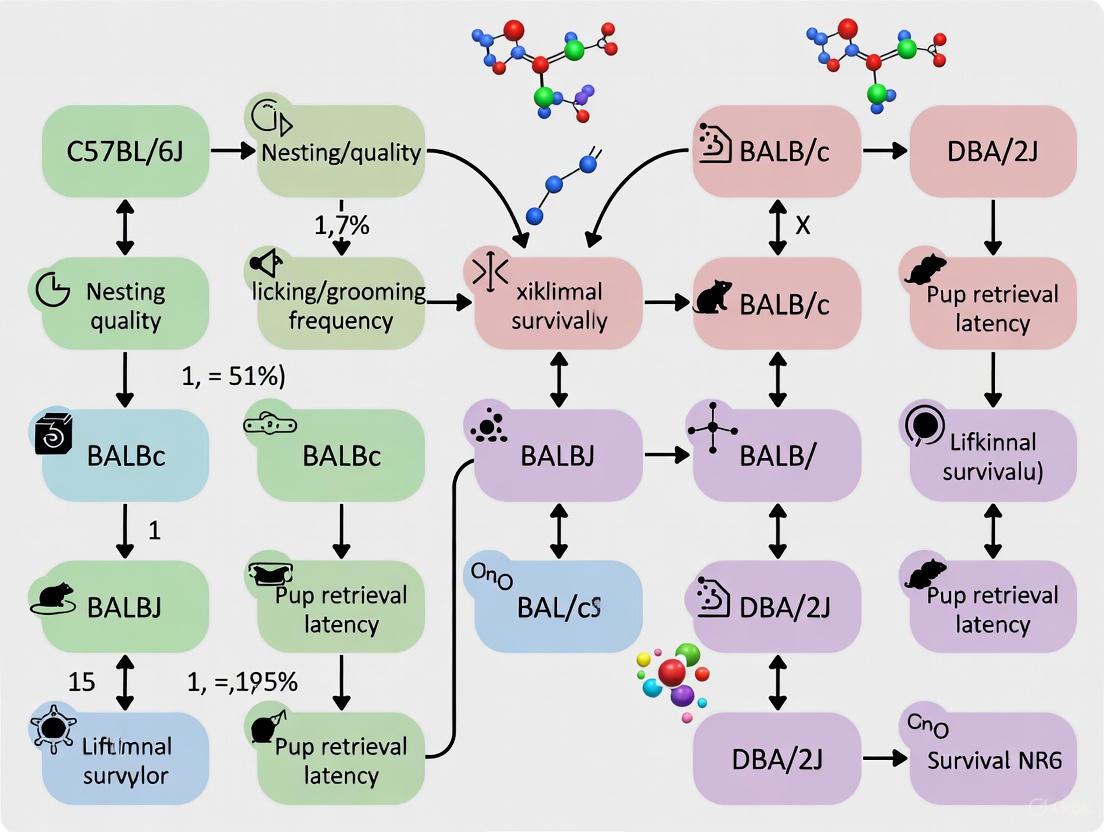
This article synthesizes current research on how maternal care differs across common laboratory mouse strains and its profound impact on pup survival and development.
Strain-Specific Maternal Care in Laboratory Mice: Impacts on Pup Survival and Practical Breeding Strategies
Abstract
This article synthesizes current research on how maternal care differs across common laboratory mouse strains and its profound impact on pup survival and development. We explore the behavioral ethogram of mouse maternal care, from nursing and pup-licking to nest-building, and document significant strain-specific variations in these behaviors. For researchers and drug development professionals, we provide methodological guidance for accurate behavioral assessment, including home-cage monitoring techniques and standardized protocols. The content addresses major causes of pre-weaning mortality—such as litter overlap, dam age, and environmental stressors—and offers evidence-based optimization strategies for colony management. Finally, we validate these findings by examining the long-term intergenerational effects of maternal care on offspring physiology and stress reactivity, providing a comprehensive resource for improving breeding efficiency, animal welfare, and research reproducibility.
The Mouse Maternal Care Ethogram: Understanding Natural Variations Across Strains
In laboratory mice (Mus musculus), maternal behavior represents a complex suite of stereotyped, pup-directed actions that are absolutely critical for offspring survival during the early postnatal period. As altricial mammals, mouse pups are born deaf, blind, and immobile, making them fully dependent on the dam for nutrition, thermoregulation, and protection [1]. This care is structured around three core behavioral components: nursing, pup-licking (grooming), and nest-building [2] [1] [3]. These behaviors are not merely instinctual but are modulated by a intricate interplay of genetic background, hormonal state, environmental conditions, and sensory cues from the pups [1] [3]. Studying these components provides a powerful translational model for understanding the neurobiological, genetic, and environmental bases of mother-infant relationships, with implications for human conditions such as postpartum depression and early-life adversity [2]. This guide objectively compares how these core maternal behaviors are expressed across common inbred mouse strains, providing researchers with the quantitative data and methodological frameworks necessary for designing rigorous experiments in pup survival research.
Core Behavioral Components and Methodologies for Assessment
The core components of mouse maternal behavior are well-defined and can be quantitatively assessed through direct observation and specialized testing protocols. Nursing involves the dam crouching over the pups to provide milk and warmth, with postures categorized as "arched-back" (an active, upright posture), "blanket" (a more passive, prone posture), or "supine" (lying on her back) [4] [5]. Pup-licking, particularly of the anogenital region, stimulates pup elimination and is a key measure of attentive care [4] [6]. Nest-building is the construction of a sheltered nest from available materials, which serves critical functions in thermoregulation and protection [1].
Standardized experimental protocols are used to quantify these behaviors. The most common method involves direct home-cage observation, where a researcher records the frequency, duration, and type of behaviors exhibited by the dam over specified periods, typically during both light and dark phases due to the nocturnal nature of mice [4] [6]. For a more detailed, pattern-based analysis, the Hidden Markov Model (HMM) has been employed to identify behavioral "states" (e.g., arched-back nursing, licking/grooming, eating) and model the transitions between them, offering a more global description of maternal behavior beyond simple frequency counts [5]. A fundamental test is the pup retrieval assay, where pups are temporarily scattered outside the nest, and the dam's latency and success in retrieving them back to the nest is measured [6] [7]. Furthermore, the quality of the nest itself can be scored on a standardized scale, providing a metric for nest-building behavior [1].
Table 1: Standard Experimental Protocols for Assessing Core Maternal Behaviors
| Protocol Name | Behaviors Measured | Key Metrics | Procedure Summary |
|---|---|---|---|
| Direct Home-Cage Observation [4] [6] | Nursing, Pup-licking, Nest-building | Frequency, Duration, Latency | Researcher records dam's behavior in the home cage using scan sampling or continuous recording over set periods (e.g., 30-60 min sessions). |
| Pup Retrieval Assay [6] [7] | Pup retrieval as part of nursing/ care | Latency to retrieve each pup, Success rate | Pups are separated from the dam and placed in corners of the cage opposite the nest. The dam is returned, and her retrieval behavior is timed. |
| Hidden Markov Model (HMM) Analysis [5] | Nursing, Pup-licking, Self-grooming, Eating | Transition probabilities between behavioral states, State duration | Software analyzes a sequence of observed behaviors to identify clustered states and the likelihood of moving from one state to another. |
| Nest Quality Scoring [1] | Nest-building | Quality score (e.g., 1-5 scale) | The physical structure of the nest is visually inspected and rated based on height, closure, and material compaction. |
Comparative Analysis of Inbred Strain Performance
Genetic background is a major determinant of maternal care quality, with distinct inbred strains exhibiting stable and heritable differences in their expression of core maternal behaviors [4] [5]. These strain-specific behavioral phenotypes are crucial for researchers to consider when selecting a model. Comprehensive studies, such as the detailed descriptive analysis by Shoji et al. (2006), have systematically quantified these differences across strains including C57BL/6, BALB/c, CBA/Ca, C3H/He, and DBA/2 [4].
Generally, C57BL/6, CBA/Ca, and C3H/He strains are characterized by more active and attentive maternal care, while BALB/c dams often exhibit less vigorous engagement [4]. The patterns of difference are not uniform across all behavioral subcomponents. For instance, while C57BL/6 and CBA dams show high levels of anogenital licking, C3H and DBA dams engage in more body licking [4]. Similarly, strain-specific preferences exist for nursing postures, with CBA dams displaying more arched-back and supine nursing and DBA dams showing more blanket nursing [4]. Furthermore, the trajectory of these behaviors as pups develop also varies by strain, with most strains showing a decrease in arched-back nursing and licking over time, but to different degrees [4].
Table 2: Comparative Profile of Core Maternal Behaviors Across Common Inbred Strains
| Mouse Strain | Nursing Profile | Pup-Licking Profile | Nest-Building Profile | Overall Behavioral Phenotype |
|---|---|---|---|---|
| C57BL/6 | High arched-back nursing [4] [5] | High anogenital licking [4] [6] | Builds well-defined nests [7] | Attentive, high-care phenotype; considered a high-licking strain [6] [5]. |
| BALB/c | Low overall nursing engagement [4] [5] | Low pup licking and grooming [4] [6] | Poorly constructed nests [7] | Less vigorous, inattentive phenotype; considered a low-licking strain [6] [8]. |
| CBA/Ca | High arched-back and supine nursing [4] | High anogenital licking [4] | Actively engages in nest-building [4] | Active, high-care phenotype, similar to C57BL/6 [4]. |
| DBA/2 | High blanket nursing [4] | High body licking (vs. anogenital) [4] | Engages in nest-building [4] | Displays maternal behavior but with qualitative differences in style [4]. |
The following diagram illustrates the experimental workflow for a standardized maternal behavior study, from animal housing to data analysis, integrating the protocols and strain comparisons discussed.
Figure 1: Experimental workflow for comparative analysis of maternal behavior in mouse strains.
Neurobiological and Neuroendocrine Signaling Pathways
The expression of maternal behavior is governed by a conserved Maternal Behavior Neurocircuit (MBN) that integrates hormonal, sensory, and motivational signals [3]. This circuit can be broadly divided into two subsystems: a care processing subsystem that promotes nurturing behaviors and a defense processing subsystem that drives maternal aggression for offspring protection [3].
The medial preoptic area (MPOA) of the hypothalamus is the established central integrative hub for maternal behavior, receiving sensory and hormonal inputs to coordinate behavioral output [3]. Lesions to the MPOA severely impair or abolish maternal behavior [3]. The MPOA projects to and activates the mesolimbic dopamine system, including the ventral tegmental area (VTA) and nucleus accumbens (NAc), which provides the motivational "reward" component of caring for young [3]. Disruption of dopamine signaling in this pathway impairs proactive behaviors like pup retrieval [3] [8]. Key maternal hormones include oxytocin, which acts in the MPOA and VTA to stimulate care and reduce anxiety, and prolactin, which is essential for the onset and intensity of maternal behavior [3]. The periaqueductal gray (PAG) is involved in more consummatory aspects, such as the nursing posture [3].
The following diagram maps these primary neural structures and their functional roles in the maternal behavior network.
Figure 2: Key neural structures and pathways regulating mouse maternal behavior.
The Scientist's Toolkit: Essential Research Reagents and Models
To investigate the core components of maternal behavior, researchers rely on a standardized toolkit of inbred strains, genetically engineered models, and observational tools. The selection of an appropriate mouse model is the first critical step, as inbred strains provide a baseline of natural variation, while transgenic models allow for targeted mechanistic inquiry.
Table 3: Essential Research Models and Reagents for Maternal Behavior Studies
| Category / Name | Function / Key Feature | Relevance to Core Behaviors |
|---|---|---|
| Inbred Strain: C57BL/6 [4] [6] [5] | High-performing maternal care reference strain. | Baseline for attentive nursing, pup-licking, and nest-building; often used as control. |
| Inbred Strain: BALB/c [4] [6] [5] | Low-performing maternal care reference strain. | Baseline for less vigorous nursing, reduced licking, and poor nest-building; model for neglect. |
| AC3 Knockout (AC3-/-) [7] | Lacks Type 3 Adenylyl Cyclase, essential for olfactory signal transduction. | Model for studying chemosensory dependence; these dams fail pup retrieval and nest-building. |
| Heterozygous GR Mice [6] | Carries a deletion of the glucocorticoid receptor, modeling stress vulnerability. | Used to study interaction between genetic risk for depression and maternal care (e.g., licking/grooming). |
| Cotton Nestlets [5] [7] | Standardized, pliable nesting material provided in the home cage. | Essential for quantifying nest-building behavior and nest quality scoring. |
| Oxytocin [9] | Neuropeptide hormone administered via injection or infusion. | Used to experimentally induce maternal responsiveness (e.g., pup retrieval) in nulliparous females. |
The core components of mouse maternal behavior—nursing, pup-licking, and nest-building—are quantifiable, stereotypic, and highly dependent on genetic background. The comparative data presented here clearly show that strains like C57BL/6 and CBA/Ca are characterized by an active, high-care phenotype, while strains like BALB/c display a less vigorous maternal style [4]. These inherent differences are subserved by specialized neurobiological circuits and neurochemical signaling pathways, particularly those involving the MPOA, mesolimbic dopamine system, and oxytocin [3].
For researchers in pup survival and drug development, the choice of mouse strain is a fundamental experimental design parameter that can profoundly influence outcomes. Using a single strain may limit the generalizability of findings, while comparative studies across strains can reveal robust, biologically conserved mechanisms. Furthermore, models like the AC3 knockout mouse underscore the critical role of specific molecular pathways, such as olfactory signaling, in the expression of normal maternal behavior [7]. A deep understanding of these core components and their modulation by genetics and neurobiology provides a solid foundation for developing translational models of maternal care deficits and for screening potential therapeutic interventions.
Mouse models are fundamental to biomedical research, with inbred strains such as C57BL/6J, 129Sv, and outbred Swiss Webster (NIH Swiss) among the most frequently utilized. The valid interpretation of experimental outcomes, particularly in studies of maternal care and offspring development, hinges on a precise understanding of these strains' inherent behavioral and physiological phenotypes. Strain selection is critical, as genetic background can significantly influence maternal behavior, stress reactivity, and offspring outcomes. This guide provides a objective comparison of these three strains, synthesizing empirical data on their distinct behavioral profiles, maternal care strategies, and metabolic characteristics to inform experimental design and data analysis.
Behavioral & Physiological Profiles at a Glance
Table 1: Comparative summary of core behavioral and physiological characteristics of C57BL/6J, 129Sv, and Swiss Webster mice.
| Behavioral Domain | C57BL/6J | 129S2/SvHsd & 129/SvEv | Swiss Webster (Outbred) |
|---|---|---|---|
| Anxiety-like Behavior | Lower anxiety-like behavior in exploration-based tests (EPM, LDE) [10]. | Higher anxiety-like behavior, particularly 129S2/SvHsd in the LDE test [10]. | Intermediate phenotype; higher anxiety than C57BL/6J but lower than 129S2/SvHsd in some tests [10]. |
| General Locomotor Activity | Active and exploratory; hypolocomotor relative to outbred Swiss, but hyperactive compared to 129Sv [10] [11]. | Consistently hypolocomotor (inactive) in novel environments [10] [11]. | Highly active and exploratory; significantly more active than all three inbred strains [10]. |
| Stress Reactivity & Autonomic Response | Large autonomic (heart rate, temperature) response to high-intensity stressors [12]. | Intermediate autonomic response to stressors; most sensitive to the anxiolytic effects of diazepam [12]. | Lowest autonomic response to stressors [12]. |
| Pain Sensitivity | Markedly enhanced sensitivity to acute thermal stimuli (e.g., tail withdrawal, hot plate) [13]. | Not fully detailed in results, but generally considered to have differences from C57BL/6. | Information not specified in search results. |
| Motor Coordination & Learning | Enhanced motor coordination on rotarod [13]. Spatial learning in water maze is proficient, but escape latency is influenced by swimming speed [14]. | Poor motor coordination. Equally proficient as C57BL/6 in spatial learning in water maze when using path length (not latency) as a measure [14]. | Information not specified in search results. |
| Fear & Memory | Reduced conditional (contextual or cued) fear compared to 129 substrains [13]. "Normal" fear extinction [15]. | Deficits in fear extinction and, for 129S1 substrain, enhanced fear generalization [15]. 129S6 substrain shows extinction deficits but normal context discrimination [15]. | Information not specified in search results. |
| Metabolic Profile | Distinct metabolite profile under stress; dominated by biogenic amines and specific lysophosphatidylcholines [11]. | Distinct metabolite profile under stress; shift towards short-chain acylcarnitines (e.g., C5) and different phospholipid ratios [11]. Pronounced weight loss after repeated testing [11]. | Information not specified in search results. |
Maternal Care Profiles
Table 2: Comparison of documented differences in postpartum maternal behavior and early life environment.
| Maternal Characteristic | C57BL/6J | 129Sv | Swiss Webster |
|---|---|---|---|
| Pup Retrieval | Longer latency to retrieve and crouch over pups compared to Swiss [16]. | Longer latency to retrieve and crouch over pups compared to Swiss [16]. | Shorter latency to retrieve and crouch over pups compared to inbred strains [16]. |
| Licking/Grooming (LG) | Engages in moderate to high levels of pup licking/grooming [16]. | Very low levels of pup licking/grooming [16]. | Engages in high levels of pup licking/grooming, similar to C57BL/6J [16]. |
| Nursing & Contact | Periods of nursing/contact with pups [16]. | Long periods of nursing/contact with pups [16]. | Periods of nursing/contact with pups [16]. |
| Nest Building | Not specifically documented, but generally considered proficient. | Shorter latency to nestbuild, but observed to nestbuild less frequently in the home cage [16]. | Not specifically documented. |
| Response to Social Rearing | Maternal behavior and offspring anxiety are modifiable by cross-fostering and post-weaning social environment, with sex-specific effects [17]. | Maternal behavior is altered by fostering conditions. Offspring anxiety is modifiable by cross-fostering and post-weaning cross-housing [17]. | Rearing in communal nests (multiple dams/litter) increases maternal care and reduces anxiety-like behavior in offspring, effects that can be transgenerational [18]. |
Detailed Experimental Protocols
To ensure reproducibility and proper interpretation of strain comparisons, below are outlines of key methodologies cited in this guide.
Elevated Plus-Maze (EPM) and Light/Dark Exploration (LDE) Tests
- Purpose: To assess anxiety-related behaviour in rodents based on the conflict between exploring a novel environment and avoiding brightly lit, open areas [10].
- EPM Setup: The apparatus is a plus-shaped maze elevated from the floor with two open arms (without walls) and two enclosed arms (with high walls). The junction area is open [10].
- LDE Setup: The apparatus consists of a small, dark, enclosed chamber connected to a larger, brightly lit chamber via a small opening [10].
- Procedure: Naive mice are placed in the EPM or the light chamber (LDE) and allowed to explore freely for a single, brief trial (typically 5-10 minutes). Behavior is recorded and scored ethologically, measuring time spent in open vs. closed areas, number of transitions, and risk-assessment behaviors (e.g., stretched attend postures) [10].
Postpartum Maternal Behavior Analysis
- Purpose: To quantify natural variations in maternal care provided by lactating dams [16].
- Procedure: Lactating dams are observed in their home cages during the early postpartum period (e.g., Postnatal Days 1-6). Observations occur during active maternal periods.
- Measured Behaviors:
- Licking/Grooming (LG): The total time the dam spends licking and grooming her pups.
- Nursing: The total time spent in an arched-back or blanket nursing posture over the pups.
- Nest Building: The quality of the nest is scored, and latency to build a nest may be assessed.
- Pup Retrieval: The latency for the dam to retrieve scattered pups back to the nest is measured in a separate test [16].
Pavlovian Fear Conditioning and Extinction
- Purpose: To assess the learning, consolidation, and extinction of fear memories [15].
- Conditioning: Mice are placed in a novel context (Context A) and after a brief exploration period, presented with a neutral conditioned stimulus (CS, e.g., a tone) that coterminates with a mild aversive unconditioned stimulus (US, e.g., a footshock). This pairing is repeated.
- Memory Testing: To test for contextual fear, mice are re-exposed to Context A without the US, and freezing behavior is measured. To test for cued fear, mice are placed in a novel context (Context C), and the tone CS is presented without the US.
- Extinction Training: Following memory consolidation, mice are repeatedly exposed to the CS (in the cued test) or the context (Context A) in the absence of the US across multiple sessions. The reduction in freezing across sessions indicates extinction learning [15].
The Scientist's Toolkit
Table 3: Essential research reagents and materials for behavioral and metabolic phenotyping.
| Reagent / Material | Function & Application |
|---|---|
| EthoVision XT / AnyMaze | Video tracking software for the automated analysis of locomotor activity, path length, time in zones, and other behaviors in tests like open field, EPM, and water maze [14]. |
| FreezeFrame / FreezeView | Specialized software for quantifying freezing behavior, the primary index of fear in Pavlovian conditioning, using a motion-detection algorithm [15]. |
| AbsoluteIDQ p180 Kit | A targeted metabolomics kit used with mass spectrometry to quantify 188 metabolites from serum/plasma, including acylcarnitines, amino acids, biogenic amines, and lipids [11]. |
| Telemetry System (e.g., HD-X02) | Implantable devices for the continuous, undisturbed monitoring of autonomic parameters like heart rate (HR) and body temperature (BT) in response to stress or drugs [12]. |
| Rotarod Apparatus | A motorized rotating rod used to assess motor coordination, balance, and motor learning. Mice are placed on the rod, which accelerates, and the latency to fall is recorded [13] [19]. |
| Fear Conditioning Chambers | Specialized operant chambers with grid floors for delivering footshock US, speakers for delivering tone CS, and compatible with video or movement-based freezing analysis [15]. |
Logical Flow for Strain Selection & Phenotyping
The following diagram outlines a decision-making workflow for selecting and characterizing mouse strains based on research goals, integrating key behavioral and physiological phenotyping tests.
The C57BL/6J, 129Sv, and Swiss Webster mouse strains exhibit profound and persistent differences across behavioral, physiological, and maternal domains. C57BL/6J mice generally present an active, low-anxiety phenotype with robust motor skills, while 129Sv strains are characterized by passive coping strategies, high anxiety, and specific deficits in fear extinction. The outbred Swiss Webster strain often displays a highly active phenotype and distinct maternal behaviors. These strain-specific profiles are not fixed; they can be modulated by early-life experiences such as maternal care quality and post-weaning social environment, with effects that can even transcend generations. A thorough understanding of these documented differences is paramount for selecting the appropriate model, designing rigorous experiments, and interpreting results related to neurobehavioral function, maternal influence, and offspring development.
In rodent models, maternal licking and grooming (LG) represent a suite of caregiver behaviors with profound implications for offspring development. These behaviors, once considered simple maintenance activities, are now recognized as complex phenotypic traits that vary significantly across genetically distinct mouse strains and induce enduring physiological and behavioral changes in offspring through epigenetic mechanisms. Research demonstrates that natural variations in the frequency of maternal LG behaviors serve as a primary differentiator in offspring outcomes, influencing neural development, stress responsivity, and even vulnerability to substance use in adulthood. This review synthesizes comparative experimental data on strain-specific LG frequencies and their well-documented long-term consequences, providing researchers with essential methodological frameworks and comparative benchmarks for this critical behavioral domain.
Strain-Specific Variation in Maternal Licking and Grooming
Quantitative Differences in Licking/Grooming Behaviors
The heritable component of maternal LG behaviors manifests as substantial, quantifiable differences across genetically diverse mouse strains. Studies systematically observing dam-pup interactions have established that LG frequency is a robust phenotypic trait with moderate to high heritability (h² = 0.22–0.73), indicating significant genetic influences on its expression [20].
Table 1: Comparative Licking/Grooming Frequencies and Behavioral Strategies Across Mouse Strains
| Strain/Experimental Group | Maternal LG Characteristics | Offspring Outcomes | Key Behavioral Patterns |
|---|---|---|---|
| C57BL/6J | Slower lick rate (longer mean interlick intervals) [20] [21] | Used as common genetic background in transgenic studies | Fewer, longer bursts during consumption [21] |
| 129S1/SvImJ | Impaired grooming microstructure with frequent interruptions [22] | Behavioral deficits relevant to neuropsychiatric disorders | Incorrect transitions in syntactic grooming chains [22] |
| BALB/c | Normal cephalocaudal grooming patterns [22] | Standard developmental trajectory | Unimpaired, efficient self-grooming sequences [22] |
| Long Evans (Maternal Separation Groups) | NH: Lowest LG scores; MS15: Highest LG scores [23] | NH: Highest drug intake; MS15: Lowest drug intake [23] | LG scores negatively correlate with offspring cocaine/alcohol self-administration [23] |
| Wild-derived Strains (CAST/EiJ, PWK/PhJ, WSB/EiJ) | Significant strain variation in ingestive phenotypes [20] | Provide enhanced genetic diversity for studies | Different overall ingestive strategies (burst-pause structure) [20] |
Long-Term Developmental Consequences for Offspring
The frequency of maternal LG behaviors has a predictive relationship with offspring phenotype development, particularly in stress regulation and reward processing systems. These early-life experiences program the hypothalamic-pituitary-adrenal (HPA) axis, creating divergent developmental trajectories based on maternal care quality.
- Neuroendocrine Programming: Offspring of high-LG dams exhibit more modest HPA axis responses to stress, characterized by enhanced glucocorticoid negative feedback and increased hippocampal glucocorticoid receptor expression [23].
- Addiction Vulnerability: The frequency of maternal LG shows a significant negative correlation with drug self-administration in adult offspring. Pups receiving less licking and grooming (NH group) subsequently show the highest intake of both cocaine and alcohol, while those receiving high levels of LG (MS15 group) show the lowest drug intake [23].
- Neural System Development: Variations in maternal care correlate with development of neural systems mediating fearfulness and stress responses, including alterations in 5HT systems (5HT1A receptors and SERT levels) that may underlie comorbidity with psychiatric disorders [23].
Experimental Methodologies for Quantification and Analysis
Standardized Maternal Behavior Observation Protocols
Research into maternal LG behaviors requires systematic observation protocols to ensure reliable, quantifiable data collection across experimental groups. The following methodology has been empirically validated for capturing natural variations in maternal care:
- Observation Schedule: Observations are typically conducted during the first postnatal week (PND 2-14), as this represents a critical period for programming effects. Daily observation sessions of 60-90 minutes are recommended, with focused scoring during peak maternal activity periods [23].
- Behavioral Scoring: LG behaviors are scored based on clearly defined operational criteria. A "licking/grooming" event is recorded when the dam vigorously licks or grooms the pup's body, typically beginning with the anogenital region to stimulate elimination, then moving to other body areas [23] [24].
- Standardized Conditions: Observations should occur under controlled environmental conditions with minimal disturbance. Dams should be habituated to observation conditions to reduce novelty stress. Maintaining consistent light-dark cycles (typically 12:12) is essential as maternal behaviors exhibit diurnal rhythmicity [23] [25].
Table 2: Essential Research Reagents and Equipment for Maternal Behavior Studies
| Research Tool | Specific Application | Function in Experimental Protocol |
|---|---|---|
| Lickometer Systems | Quantifying lick rate microstructure [20] [21] | Precisely measures interlick intervals (ILIs) and burst-pause structure during fluid consumption |
| Video Recording Equipment | Behavioral scoring and analysis [22] | Enables detailed microstructural analysis of grooming sequences and maternal behaviors |
| Sound-Attentuating Chambers | Controlled behavioral testing [21] | Isolates experimental subjects from external disturbances during behavioral observations |
| Inbred Mouse Strains | Genetic variation studies [20] [21] | Provides defined genetic backgrounds for assessing heritable components of LG behavior |
| c-Fos Immunohistochemistry | Neural pathway activation mapping [26] | Identifies neuronal populations activated during maternal defense and care behaviors |
Licking Microstructure Analysis
Advanced analysis of licking microstructure provides quantitative biomarkers of ingestive behavior that can differentiate both genetic strains and physiological states. This methodology extends beyond simple consumption measurements to reveal fundamental patterns of motor output and motivation:
- Apparatus Setup: Lickometers with precise timing capabilities (1ms resolution) are essential for capturing interlick interval (ILI) data. Test chambers should shield animals from external distractions while maintaining consistent environmental conditions [20] [21].
- Burst-Pause Analysis: The microstructure of licking is analyzed using temporal criteria to define behavioral units:
- Strain-Specific Parameters: Different mouse strains exhibit characteristic "licking styles" with variations in mean interlick interval (94.3 to 127.0 ms across 18 isogenic strains), burst size, and number of bursts, reflecting fundamental genetic influences on ingestive behavior organization [20].
The experimental workflow below illustrates the standardized protocol for assessing licking microstructure and maternal behaviors in rodent models:
Neurobiological Mechanisms Linking LG to Offspring Outcomes
Neural Circuits Regulating Maternal Behaviors
The expression of maternal LG behaviors involves hierarchically organized neural circuits that integrate sensory, motivational, and motor components. Recent research has identified specific pathways that regulate the selection of maternal defense over self-preservation behaviors:
- Medial Prefrontal Cortex (mPFC) Pathways: Layer 6 dopamine receptor D1-expressing (D1) neurons in the mPFC show increased activation when dams approach pups under threat. These neurons project to the medial preoptic area (MPOA) and are critical for initiating maternal defense behaviors [26].
- Striatal Pattern Generators: The anterior dorsolateral striatum is essential for executing the complete sequential patterns of self-grooming syntactic chains. Lesions in this region impair the ability to complete grooming sequences without affecting initiation, suggesting its role in organizing behavioral sequences rather than individual movements [27].
- Brainstem Central Pattern Generators: The essential neural circuitry for generating syntactic grooming chains is located in the brainstem. Decerebration studies show that rats with intact midbrains can still produce normal sequential patterns of self-grooming chains, though with difficulty completing full patterns [27].
The diagram below illustrates the neural circuitry involved in the selection of maternal care behaviors over self-defense responses:
Epigenetic Modification of Offspring Gene Expression
The long-term consequences of variable LG frequencies are mediated through epigenetic mechanisms that permanently alter gene expression in offspring. These molecular adaptations occur primarily in systems regulating stress responsiveness and emotional regulation:
- Glucocorticoid Receptor Programming: Offspring of high-LG dams show increased hippocampal glucocorticoid receptor (GR) expression due to DNA demethylation of the GR promoter region. This epigenetic modification emerges during the first week of life and remains stable into adulthood, resulting in more efficient HPA axis negative feedback [23].
- Synaptic Plasticity Modifications: Maternal LG influences the development of neural systems through changes in neurotrophic factor expression (particularly BDNF) and alterations in synaptic density in brain regions critical for cognitive and emotional functioning, including the prefrontal cortex and hippocampus.
The comprehensive analysis of licking and grooming frequencies across mouse strains provides compelling evidence for their role as a key differentiator in offspring development with profound long-term consequences. The quantifiable nature of these maternal behaviors, coupled with their well-characterized neurobiological mechanisms, establishes them as crucial variables in developmental programming research. The experimental methodologies detailed herein provide robust frameworks for continued investigation into how early-life experiences shape adult phenotype through epigenetic mechanisms. For researchers in neurodevelopmental disorders and addiction vulnerability, accounting for strain-specific LG behaviors and their enduring effects remains essential for rigorous experimental design and accurate interpretation of outcomes in rodent models.
Abstract: The quality of maternal care is a critical determinant of offspring survival and development in rodent models. While mouse strain is a well-established factor, the specific roles of dam age (primiparous vs. multiparous) and parity (number of prior pregnancies) are less characterized but equally vital for experimental design and data interpretation. This guide synthesizes current research to objectively compare the influence of these factors on maternal behavior and pup survival outcomes. We present structured quantitative data, detailed experimental protocols for assessing maternal care, and essential research tools. Furthermore, we provide clear diagrams outlining the experimental workflow and the complex relationship between dam factors and care quality, offering researchers a comprehensive framework for optimizing studies in this field. :::
In preclinical research utilizing mouse models, the biological variables of the dam—specifically her age and parity—are not merely demographic details but are fundamental factors that can significantly confound or drive experimental outcomes related to maternal care and pup survival. A comprehensive understanding of these factors is essential for ensuring the validity, reproducibility, and translational relevance of studies in neurodevelopment, toxicology, and psychology. The existing literature often focuses on genetic strain differences in maternal behavior [28]. However, a precise comparison of how a dam's reproductive history interacts with her age to shape care quality remains a critical, yet less explored, area. Framing this investigation within the broader context of "Different mouse strain maternal care comparison for pup survival research" provides a necessary layer of complexity, acknowledging that strain-specific predispositions may be modulated by these intrinsic dam characteristics. This guide provides a objective comparison of how dam age and parity influence maternal care quality, supported by experimental data, detailed methodologies, and visual frameworks to assist researchers in making informed decisions in their experimental designs.
Comparative Analysis: Dam Age and Parity
The following table synthesizes key findings regarding the impact of dam age and parity on maternal care quality and associated experimental outcomes, drawing from controlled studies.
Table 1: Impact of Dam Age and Parity on Maternal Care and Experimental Outcomes
| Factor & Category | Key Influence on Maternal Care Quality | Impact on Pup Survival & Development | Key Supporting Findings / Strain-Specific Notes |
|---|---|---|---|
| Parity: Primiparous | - Often exhibits higher initial anxiety and less refined care strategies [29].- Maternal behavior may be less consistent and more easily disrupted by external stressors. | - Generally lower pup weaning rates compared to multiparous dams, indicating a direct impact on survival [28].- Offspring may show altered behavioral phenotypes, such as increased anxiety-like behavior [29]. | - C57BL/6J (GF): Shows the lowest weaning success (45%) when used as germ-free foster mothers, highlighting a strain-specific vulnerability in first-time mothers [28]. |
| Parity: Multiparous | - Displays more experienced, confident, and efficient maternal care [28].- Typically provides more stable and reliable nursing. | - Higher pup survival and weaning rates across multiple strains [28].- Offspring often exhibit more robust development. | - BALB/c & NSG (GF): Exhibit superior nursing and weaning success (85% and 88%, respectively) as foster mothers, a trait likely honed through experience [28]. |
| Dam Age: Young Adult | - Peak reproductive fitness, but maternal style may still be developing in primiparous dams. | - Optimal for studies requiring high litter viability and minimizing age-related health confounds. | - Standard age for many controlled mating protocols (e.g., 8-16 weeks) [29] [28]. |
| Dam Age: Advanced Age | - Increased risk for pregnancy complications and underlying health issues that may indirectly impair care quality. | - Can be associated with increased rates of preterm delivery and low birth weight in offspring [29]. | - Models of advanced maternal age; effects may be compounded with parity and interact strongly with strain-specific genetic backgrounds [29]. |
Experimental Protocols for Assessing Maternal Care
To generate comparable data on maternal care quality, standardized behavioral protocols are essential. Below are detailed methodologies for key tests.
Maternal Behavior Scoring
This protocol involves direct, non-invasive observation of dam behavior in the home cage.
- Primary Objective: To quantify the frequency and duration of species-typical maternal behaviors such as nursing, pup retrieval, licking/grooming, and nest building.
- Materials Required: Mouse home cage, video recording system, timer, standardized behavioral scoring sheet.
- Procedure:
- Habituation: Handle the dam for several days pre-parturition to minimize stress from experimenter presence.
- Testing: On postnatal days 3-5, conduct observations in the dam's home cage. Each observation session should last for 60-90 minutes, performed at least twice daily (e.g., once during the light/inactive phase and once during the dark/active phase).
- Pup Retrieval Test: Gently scatter pups around the perimeter of the nest and record the latency for the dam to retrieve all pups back to the nest.
- Data Collection: From video recordings or live scoring, record the duration of arched-back nursing, passive nursing, and licking/grooming of pups. Simultaneously, assess nest quality using a standardized score (e.g., 1-5 scale).
Social Isolation Rearing (SIR) Paradigm
This model, used to induce a depression-like state, can be applied to evaluate its impact on subsequent maternal care.
- Primary Objective: To investigate the effects of pre-gestational and gestational stress on maternal behavior and offspring outcomes [29].
- Materials Required: Nulliparous female mice, individual housing cages, group housing cages.
- Procedure:
- Isolation: At postnatal day 21, house nulliparous female mice individually for 10 weeks. A control group should be group-housed for the same duration.
- Behavioral Validation: After 5-10 weeks of isolation, validate the induction of a depression-like state using tests like the forced swim test or sucrose preference test [29].
- Mating: After the isolation period, house females with a male breeder for timed mating.
- Assessment: Continue the housing condition (isolated or group) throughout pregnancy and assess maternal behavior postpartum using the Maternal Behavior Scoring protocol described above.
Visualizing Experimental Workflows and Relationships
To aid in the conceptualization and execution of studies, the following diagrams outline core experimental processes and relationships.
Dam Factor Investigation Workflow
Diagram 1: Workflow for investigating dam age and parity effects.
Relationship Between Dam Factors and Care Quality
Diagram 2: Relationship map of dam factors influencing offspring outcomes.
The Scientist's Toolkit: Research Reagent Solutions
Table 2: Essential Research Reagents and Materials for Maternal Care Studies
| Item | Function/Application in Research | Example Use Case & Notes |
|---|---|---|
| Fluoxetine (FLX) | Selective serotonin reuptake inhibitor (SSRI) used to model antidepressant treatment during pregnancy. | Chronic administration in drinking water (e.g., 10 mg/kg) to assess impact on maternal depression-like state and subsequent care quality [29]. |
| Lipopolysaccharide (LPS) | Toll-like receptor agonist used to induce a bacterial infection-like state and model Maternal Immune Activation (MIA). | Administered to pregnant dams to study impact of inflammatory state on maternal care and offspring neurodevelopment [30]. |
| Poly(I:C) | Viral mimetic that triggers an anti-viral immune response, also used in MIA models. | Allows for precise control over the timing and intensity of immune activation to study its specific effects on maternal behavior [30]. |
| Edinburgh Postnatal Depressive Scale (EPDS) / Patient Health Questionnaire (PHQ-2) | Behavioral assessment tools for quantifying depressive-like symptoms in rodents. | Used to screen for prenatal depressive symptoms; an EPDS score >10 or a positive PHQ-2 score indicates significant symptoms [31]. |
| Germ-Free (GF) Isolators | Self-contained sterile environments for housing mice in the absence of all microorganisms. | Critical for producing GF mice via sterile C-section and for studying the role of the microbiome in maternal care and offspring development [28]. |
| Clidox-S | Chlorine dioxide-based disinfectant used for sterilizing surfaces and materials entering sterile environments. | Used to disinfect the uterine sac during sterile C-section procedures to generate GF pups [28]. |
Genetic vs. Experiential Influences on the Development of Maternal Styles
The development of an individual's maternal style—the characteristic way in which they care for their offspring—is a complex behavioral phenotype influenced by a dynamic interplay between genetic inheritance and life experiences. Understanding the precise contributions of nature and nurture is critical not only for fundamental behavioral science but also for identifying potential intervention points for maladaptive parenting. Research using inbred mouse strains, where genetic background is controlled and experimental conditions can be manipulated, provides a powerful model to disentangle these influences. Studies consistently show that maternal behaviors such as licking/grooming (LG), nursing postures, and nest building are not random but follow strain-specific patterns, suggesting a strong genetic component [32] [33]. However, the same body of research reveals that these genetically ingrained patterns can be significantly modified by experiential factors such as the care the mother herself received, her prior parenting experience, and environmental stressors [34] [8] [35]. This article synthesizes experimental data from mouse models to objectively compare the development of maternal styles across different genetic backgrounds, providing a resource for researchers and drug development professionals focused on neurobehavioral pathways.
Quantitative Comparison of Maternal Styles Across Inbred Strains
Systematic observation of primiparous (first-time) mothers from common inbred strains reveals significant, quantifiable differences in key maternal behaviors. These strain-specific "styles" provide compelling evidence for a genetic basis underlying the expression of maternal care.
Table 1: Comparative Maternal Behavior Profiles of Common Inbred Mouse Strains
| Mouse Strain | Nursing Posture (Frequency/Pattern) | Pup Licking/Grooming (LG) | Nest Building | Pup Retrieval Latency |
|---|---|---|---|---|
| C57BL/6 (C57) | High levels of arched-back nursing [33] | High anogenital licking [33] | Engages in more nest building than DBA/2 [33] | Fast retrieval, high maternal responsivity [32] |
| BALB/c | Does not engage vigorously [33] | Low levels of pup licking [33] | Less vigorous building [33] | Slow retrieval, low maternal responsivity [33] |
| DBA/2 | High levels of blanket nursing [33] | High body licking (compared to anogenital) [33] | Builds large, enclosed nests during pregnancy [33] | Slow retrieval latency [32] |
| 129Sv | Long periods of nursing/contact [32] | Very low levels of LG (∼3.5% of observation time) [32] | Shorter latency to build, but less frequent in homecage [32] | Not specifically reported |
| CBA/Ca | More arched-back and supine nursing [33] | High anogenital licking [33] | Not specifically reported | Fast retrieval, high maternal responsivity [32] |
| C3H/He | Not specifically reported | High body licking (compared to anogenital) [33] | Not specifically reported | Not specifically reported |
These behavioral differences are not merely academic; they have concrete consequences for offspring survival and development. For instance, the naturally occurring neglect observed in some strains, characterized by failure to crouch over pups or actively scattering them from the nest, is linked to lower weaning rates [8] [35]. Furthermore, these maternal styles are stable across the postpartum period but display diurnal rhythms, with nursing and LG typically occurring more frequently in the light (inactive) phase and nest building increasing in the dark (active) phase [33].
Experimental Protocols for Disentangling Influences
To move beyond correlation and establish causation, researchers employ sophisticated experimental designs that isolate genetic from experiential effects. The following methodologies are foundational to this field.
Cross-Fostering Paradigm
This classic protocol is used to determine whether a behavior is transmitted through biological (genetic/prenatal) means or through postnatal upbringing.
- Procedure: Pups are separated from their biological mother shortly after birth and fostered to a mother of a different strain or behavioral phenotype (e.g., a pup from a low-LG BALB/c mother is raised by a high-LG C57BL/6 dam). The maternal behavior of the fostered female offspring is then observed when they themselves give birth [34] [8].
- Key Findings: Studies consistently show that the fostering mother's phenotype has a stronger influence on the pup's future maternal behavior than the biological mother's phenotype. For example, the low-LG offspring of a neglectful mother will exhibit high-LG behavior if raised by a high-LG dam, and vice versa [34] [8]. This provides powerful evidence for the experiential transmission of maternal style.
Observation of Maternal Behavior
Detailed behavioral coding is essential for quantifying strain differences and experimental outcomes.
- Procedure: Lactating dams are observed in their home cages during both light and dark phases over multiple days postpartum (e.g., days 1-7). Observations use scan-sampling or continuous recording methods [6] [32] [33].
- Measured Behaviors:
- Caring Behaviors: Licking/grooming (divided into anogenital and body), active nursing (arched-back posture), passive nursing (blanket posture), and nest building.
- Self-Maintenance: Self-grooming, eating/drinking.
- Neglecting Behaviors: Pups left out of the nest, prolonged absence from the nest [6].
- Pup Retrieval Test: Pups are temporarily separated from the dam and scattered in the home cage. The latency to retrieve all pups to the nest is recorded as a measure of maternal responsivity [35] [32].
Generational and Experience Studies
These protocols assess the stability of maternal style and the impact of reproductive experience.
- Procedure: The maternal behavior of females is observed across multiple litters (primiparous vs. multiparous).
- Key Findings: Deficits in maternal care, such as those seen in CAST KO mice, which have a mutation in a presynaptic protein, can be ameliorated by experience. Primiparous CAST KO dams showed significantly reduced crouching and lower weaning rates, but these metrics improved in multiparous females, indicating that learning can compensate for some genetic or neurobiological impairments [35].
Signaling Pathways and Neurobiological Mechanisms
The behavioral outputs of maternal style are governed by specific neurobiological systems. Research in mice has identified several key pathways where genetic predispositions and experiential inputs converge.
Diagram 1: Neurobiology of maternal style. The core maternal circuit integrates sensory input to drive behavior via key neurochemical pathways. Disruptions in dopamine or presynaptic release machinery can lead to neglect, while oxytocin facilitates care. Early-life experience can epigenetically tune this system.
The diagram above illustrates the core network. The medial preoptic area (MPOA) of the hypothalamus is a central regulator of maternal behavior [34]. Two key neurochemical systems modulate this circuit:
- The Oxytocin System: Oxytocin (OXT) is strongly linked to the promotion of maternal motivation and bonding. Disruption of the OXT receptor or related pathways can impair maternal behavior [35].
- The Dopamine System: Dopamine (DA) is critical for reward and motivation. Evidence suggests that maternal neglect may stem from a disruption in the brain's reward-seeking behavior, where the dam is physically capable but lacks the motivation to care for pups. Neglectful mothers show signs of abnormal dopamine signaling in brain regions associated with reward [8].
Furthermore, the fidelity of neurotransmitter release depends on presynaptic proteins like CAST (CAZ-associated structural protein), which is part of the active zone release machinery. Dams with a deletion mutation of the CAST gene exhibit impaired maternal care, including reduced crouching time and increased activity, highlighting the role of precise neural communication [35].
The Scientist's Toolkit: Essential Research Reagents and Models
For researchers aiming to investigate the biological bases of maternal behavior, several well-characterized models and tools are available.
Table 2: Key Research Reagents and Models for Maternal Behavior Studies
| Reagent / Model | Function/Description | Key Research Application |
|---|---|---|
| C57BL/6J Mice | An inbred strain that typically displays high levels of pup licking/grooming and arched-back nursing [32] [33]. | Serves as a common control strain and background for genetic modifications; represents a high-care maternal phenotype. |
| BALB/cJ Mice | An inbred strain that typically displays low levels of pup licking and less vigorous maternal engagement [32] [33]. | Used as a model for low-care maternal phenotype and for studying the mechanisms underlying neglectful behaviors. |
| CAST KO Mice | Constitutive knockout mice lacking the presynaptic active zone protein CAST [35]. | Used to study how deficits in synaptic neurotransmitter release impact the facilitation of complex maternal behaviors. |
| CB6F1/J Hybrid Mice | F1 hybrid offspring from a BALB/c female and a C57BL/6 male; genetically identical but heterozygous [36]. | Model for studying hybrid vigor (heterosis); often more resilient with reduced phenotypic variation than inbred parents. |
| Cross-Fostering Protocol | An experimental procedure where pups are switched at birth between mothers of different strains or phenotypes [34] [8]. | The gold-standard method for disentangling prenatal genetic from postnatal experiential influences on behavior. |
| Oxytocin Receptor Agonists/Antagonists | Pharmacological agents that target the oxytocin receptor system. | Used to experimentally manipulate the OXT pathway to test its causal role in the initiation and maintenance of maternal behavior. |
Integrated Discussion: Toward a Genetically Informed Process Model
The evidence from mouse models compellingly demonstrates that maternal style is not a simple, deterministic product of either genes or experience. Instead, it arises from a transactional process [37]. A pup inherits a set of genetic predispositions from its birth parents, which influence its own temperament and the cues it emits (e.g., ultrasonic calls, mobility). The rearing parent, in turn, detects and responds to these cues based on their own genetic makeup and life history. This response shapes the pup's development, including the neural circuits that will govern its future maternal behavior, thereby creating a cycle of influence.
This dynamic is formally described as a genetically informed process model [37]. In this model, parents detect heritable liabilities (e.g., high impulsivity) or assets (e.g., a sunny disposition) in their children and respond in ways that can either reinforce or mitigate these traits. For example, a genetically influenced "sunny disposition" in offspring can elicit greater parental warmth, which in turn supports positive development [37]. This model emphasizes that genetic factors do not simply determine outcomes but shape the social environment, which then modifies developmental trajectories.
The implications for prevention and intervention are significant. Rather than viewing genetic risk as a fixed destiny, this perspective suggests that interventions can help parents respond more effectively to their child's unique heritable profile, thereby optimizing development [37]. The finding that multiparous experience can compensate for genetic or neurobiological deficits in mice [35] offers a powerful message: with the right support and experience, the negative impact of certain genetic predispositions can be overcome.
Assessing Maternal Behavior: Best Practices for Reliable Data Collection
Traditional behavioral neuroscience has relied heavily on transferring laboratory mice from their home cages to novel testing apparatuses, such as the open field or elevated plus maze, for brief periods of observation. However, data obtained in these unfamiliar environments can be influenced by numerous confounding factors, including novelty-induced stress, experimenter handling, and the timing of tests relative to the animals' nocturnal activity cycles [38] [39]. These issues are particularly problematic in sensitive studies like maternal care comparisons for pup survival, where external stressors can significantly alter natural maternal behaviors and pup outcomes [40] [41].
Home-cage monitoring (HCM) systems overcome these limitations by enabling continuous, longitudinal, and non-invasive observation of mice in their familiar environment [38]. This approach minimizes human interference and allows for the collection of rich behavioral data across the full light-dark cycle, providing a more ethologically relevant and comprehensive understanding of behavior [39]. For research focused on maternal care and pup survival, HCM is invaluable, as it allows for the undisturbed observation of subtle, spontaneous maternal behaviors and pup development over critical periods such as the early post-partum stages [40] [41]. The adoption of HCM represents a significant advancement in improving both animal welfare and the quality and reproducibility of scientific data [38] [39].
Comparing Automated Home-Cage Monitoring Systems
Various automated HCM systems have been developed, each with distinct technological foundations, strengths, and limitations. The choice of system depends heavily on the specific research questions, particularly when the focus is on social behaviors like maternal care or on individual physiological metrics.
Table 1: Comparison of Automated Home-Cage Monitoring Systems
| System Name | Core Technology | Key Measurable Parameters | Housing Type | Primary Advantages | Primary Limitations |
|---|---|---|---|---|---|
| PhenoTyper (Noldus) | Video-tracking (EthoVision XT software) | Locomotor activity, time in specific zones, circadian rhythms, learning behavior [42] [39] | Individually housed [42] | High-resolution tracking; integratable with stimuli for behavioral tests [39] | Does not support individual tracking of group-housed animals without additional markers [39] |
| PhenoMaster (TSE Systems) | Infrared beam breaks + weight sensors for food/water | Locomotor activity, feeding behavior, drinking behavior, circadian rhythms [42] | Individually housed [42] | Direct, automated measurement of food and water intake [42] | Precludes use of shelters or enrichment to avoid obstructing beams [42] |
| IntelliCage (TSE Systems) | RFID chip reading at entry to "activity corners" | Corner visits (general activity), spatial learning, operant conditioning [42] | Group-housed [42] | Enables complex cognitive testing in a social setting; suitable for high-throughput studies [42] | Cannot measure individual food intake; requires physical ability to climb into corners [42] |
The systematic review of HCM development reveals a clear trend toward automation, with a progressive decrease in manual monitoring techniques since the 2000s [38]. Furthermore, technological progress and the application of artificial intelligence (AI) are enabling the investigation of more refined and detailed behavioral parameters directly in the home cage [38]. A comparative study of these systems confirmed that all can detect pharmacologically induced changes in behavior, but they differ in sensitivity and specific utility for tasks like spatial learning [42].
Quantitative Data on Maternal Care and Pup Survival
Home-cage monitoring applications have generated crucial quantitative data linking maternal environment and care to pup survival outcomes. These findings highlight the critical risk factors and protective elements in early mouse development.
Table 2: Key Factors Influencing Pup Survival Identified via Home-Cage Monitoring
| Factor | Impact on Pup Survival | Supporting Data |
|---|---|---|
| Litter Overlap | Significantly increases mortality risk [40] | Pup probability of death was 26.5 percentage points higher in overlapped litters; entire litter loss was 12.1 percentage points more common [40]. |
| Dam Age | Increases mortality risk [40] | Probability of pup death increases linearly with dam age; for dams >343 days, only 7.4% of pups survived vs. 59.7% for younger dams [40]. |
| Number of Older Pups | Increases mortality risk for new litters [40] | In overlapped litters, the probability of death for new pups increased with the number of older pups present in the cage [40]. |
| Litter Size | Increases mortality risk at extremes [40] | Small (<6 pups) and large (>11 pups) litters had a higher probability of pup death [40]. |
| Maternal Behavior | Can be altered by genetics and stress, affecting offspring [43] [41] | C57BL/6J dams with low pup-licking (PL) frequencies reared female offspring with higher anxiety and reduced sensorimotor gating [43]. SHANK3 mutant dams showed increased pup-directed care [41]. |
| Cage Micro-environment | Can compensate for social risks [40] | Higher nest scores (>3.75) and temperatures (>23.6°C) were shown to alleviate some mortality risks associated with social factors [40]. |
Experimental Protocols for Key Research Areas
Protocol for Assessing Strain Differences in Maternal Behavior
This protocol is designed to compare maternal care and its impact on pup development between different mouse strains using continuous home-cage monitoring.
- Animal Assignment and Housing: House pregnant dams from the strains of interest (e.g., C57BL/6J and others) individually in specialized home-cage monitoring systems like the PhenoTyper. The cages should be furnished with familiar bedding, nesting material, and ad libitum access to food and water [39] [40].
- Data Acquisition: Begin continuous video recording at least 2-3 days before the expected birth to habituate the dam. Continue recording uninterrupted through parturition and for the first 10-12 days post-partum [43] [39]. Use software like EthoVision XT to track the dam's position and behavior.
- Behavioral Coding and Analysis: Manually or automatically analyze video recordings to quantify specific maternal behaviors during selected observation periods (e.g., five 1-hour periods per day). Key behaviors include [43]:
- Pup-Licking (PL): The frequency and duration of the dam licking/grooming the pups.
- Nursing Posture: Time spent in a still, crouched nursing position or hovering over the pups.
- Nest Attendance: Total time the dam spends inside the nest.
- Pup Survival and Development Tracking: Record the number of pups born and perform daily checks to monitor pup survival. Weigh pups regularly to track growth and development [40].
- Offspring Behavioral Testing: After weaning, subject the offspring to a standardized behavioral test battery (e.g., elevated plus maze, open field, acoustic startle with prepulse inhibition) to assess long-term effects of maternal care differences on anxiety, stress reactivity, and cognition [43].
Protocol for Evaluating Impact of Maternal Stress on Offspring
This protocol examines how chronic stress during pregnancy affects maternal behavior and the brain development of offspring, using a model with genetic susceptibility.
- Chronic Stress Paradigm: Expose pregnant wild-type, heterozygous, and homozygous female mice (e.g., Shank3 mutant mice) to Chronic Unpredictable Mild Stress (CUMS). The CUMS protocol lasts for several weeks, from before conception and throughout gestation, and includes varying mild stressors like cage tilt, damp bedding, or periodic light changes [41].
- Home-Cage Monitoring of Maternal Behavior: Following birth, house the dams with their litters in home-cage monitoring systems. Record maternal behavior for set periods daily (e.g., three 1-hour sessions) during the early post-partum period (e.g., days 1-8) [41].
- Behavioral Metrics: Code the recordings for critical maternal behaviors, focusing on pup-directed care (licking/grooming, nursing) and self-directed behaviors (self-grooming), as well as overall activity levels and nest attendance [41].
- Offspring Brain Analysis: In adulthood, offspring are sacrificed, and their brains are analyzed. This can include advanced neuroimaging techniques like Diffusion Tensor Imaging (DTI) to assess white matter microstructure (e.g., fractional anisotropy) in regions such as the hippocampus, which is linked to stress and memory [41].
Diagram Title: Experimental Protocol for Maternal Stress and Offspring Impact
The Scientist's Toolkit: Essential Research Reagents and Materials
Successfully implementing home-cage monitoring research for maternal care requires a specific set of tools and reagents.
Table 3: Essential Materials for Home-Cage Maternal Care Research
| Item | Function/Application | Specific Examples / Notes |
|---|---|---|
| Automated HCM System | Core platform for continuous, undisturbed behavioral data acquisition. | PhenoTyper, PhenoMaster, IntelliCage; selection depends on need for video tracking, metabolic data, or group-housed cognitive testing [42] [39]. |
| Video Tracking Software | Automated analysis of animal movement, position, and time in zones. | EthoVision XT is commonly used with video-based systems like the PhenoTyper to quantify locomotor activity and location-based behaviors [44] [39]. |
| RFID System | Unique identification of individual animals in a social group. | Essential for systems like the IntelliCage to track individual activity and learning in group-housed mice, avoiding social isolation [38] [39]. |
| Data Loggers | Monitoring cage micro-environmental conditions. | Used to track temperature, light intensity, and vibration, which are critical covariates in pup survival studies [40]. |
| Nesting Material | Environmental enrichment and assessment of nest quality. | Sufficient material (e.g., cotton squares) allows species-typical behavior; nest quality can be scored (e.g., 1-5) as a measure of welfare and a factor in pup survival [40]. |
| Inbred Mouse Strains | Genetically defined subjects for studying strain-specific effects. | C57BL/6J is a common background; studies compare maternal behavior and offspring outcomes between different strains [43] [40]. |
| Genetic Mouse Models | Modeling human disorders with a genetic component to study gene-environment interactions. | Shank3 mutant mice (e.g., Shank3ex4-9) are used to study how maternal genotype interacts with stress to affect care and offspring brain development [41]. |
Diagram Title: Factors Influencing Pup Survival in Mouse Breeding
The integration of home-cage monitoring systems into studies of maternal care and pup survival represents a paradigm shift toward more ethologically relevant and high-fidelity behavioral neuroscience. These systems provide unparalleled, continuous insight into the complex interactions between dam and pup, revealing how factors like genetics, maternal stress, cage social structure, and micro-environment converge to determine developmental outcomes. The quantitative data generated enables researchers to move beyond simplistic behavioral snapshots to a nuanced understanding of the dynamic processes governing early life survival and brain development. As HCM technology continues to evolve with greater automation, improved individual tracking in social groups, and advanced AI-driven behavioral classification, its role in enhancing the validity and reproducibility of maternal care research will only become more central.
Standardized Scoring Protocols for Pup-Directed Behaviors (e.g., Licking, Nursing Postures)
The objective comparison of maternal care across different mouse strains is a cornerstone of developmental and translational research. Robust, standardized scoring protocols for pup-directed behaviors are critical for generating reliable data on how genetic background influences care quality and, consequently, pup survival and development. Traditional manual scoring methods, while informative, are often prone to subjective bias, temporal inaccuracies, and low throughput, which can obscure true strain differences [45]. This guide compares the performance of traditional manual observation against emerging automated machine learning (ML) techniques for scoring key behaviors such as nursing postures, licking, and pup retrieval. By presenting standardized operational definitions, quantitative performance data, and detailed methodologies, this resource aims to equip researchers with the information needed to select the most appropriate and powerful methods for their specific investigations into mouse strain maternal care.
Performance Comparison of Scoring Methodologies
The choice of scoring methodology significantly impacts the efficiency, volume, and objectivity of the data generated. The table below provides a direct comparison of the core characteristics of traditional manual scoring versus modern automated scoring.
Table 1: Quantitative Comparison of Scoring Methodologies for Maternal Behavior
| Feature | Traditional Manual Scoring | Automated Machine Learning Scoring |
|---|---|---|
| Overall Retrieval Success Accuracy | Not explicitly quantified; prone to subjective bias [45] | 86.7% estimation accuracy [45] |
| Approach Behavior Accuracy | Dependent on scorer training and consistency | 99.3% classification accuracy [45] |
| Carry Behavior Accuracy | Dependent on scorer training and consistency | 98.6% classification accuracy [45] |
| Temporal & Spatial Resolution | Limited by human perception and reaction time [45] | Millisecond and pixel-level precision [45] |
| Throughput & Labor | Labor-intensive, slow, and low-throughput [45] | High-throughput; minimal labor after setup [45] |
| Standardization | Rules are researcher- and context-specific, affecting cross-lab reproducibility [45] | High reproducibility; protocol can be easily shared and distributed [45] |
Detailed Experimental Protocols
To ensure the replicability of findings, this section outlines the step-by-step protocols for both the established traditional method and the novel automated technique.
Protocol 1: Traditional Manual Observation and Scoring
This protocol is adapted from established rodent maternal behavior studies and is foundational for generating training data for ML models [46].
- Animal and Housing Preparation: House pregnant dams individually. After birth, designate the day as Postpartum Day (PPD) 0. On PPD 2, standardize litter size (e.g., cull to 8-9 pups) to control for this variable [46] [47].
- Observation Schedule: Observe dams in their home cage during specific phases of the light/dark cycle (e.g., light phase and dark phase under red light) from PPD 2 to PPD 9 [46].
- Scoring Method: Use scan sampling every 3 minutes over periods of 60-75 minutes. During each scan, record the behavior the dam is exhibiting at that instant [46].
- Operational Definitions for Scoring: Score behaviors based on the following standardized definitions [46]:
- High Crouch (HG): Dam nurses pups in a distinct, high arched-back posture.
- Low Crouch (LW): Dam nurses pups in a "blanket" or low arched-back posture.
- Supine (SUP): A passive posture where the dam lies on her back or side while pups nurse.
- Licking/Grooming (L): Dam licks the surface of the pups' bodies or their anogenital regions.
- Dam in Nest (DN): Dam is in the nest area, near the pups, but not engaged in active nursing.
- Mother Off Nest (OFF): The lactating female is out of the nest area.
- Data Analysis: Calculate the frequency (number of scans observed) and duration (frequency × interval time) for each behavior. Analyze transitions between behaviors to assess care fragmentation [46].
Protocol 2: Automated Scoring with DeepLabCut and SimBA
This open-source protocol uses machine learning to automate tracking and classification, enhancing objectivity and throughput [45].
- Video Pre-processing: Record Pup Retrieval Tests (PRT) or home cage observations from an overhead camera perspective. Split video files into single-trial videos. Crop and grey-scale videos to decrease file size and increase computational efficiency [45].
- DeepLabCut for Pose Estimation:
- Dataset Creation: Randomly extract frames from videos and manually annotate key body parts of the dam (e.g., nose, ears, spine) and pup(s) [45].
- Model Training: Train a deep neural network (e.g., ResNet-50) using a 95:5 train/test split to predict body part locations in new, unseen videos. Training is stopped once optimization plateaus to prevent overfitting [45].
- Data Standardization in SimBA:
- Unit Conversion: Standardize pixel distances to millimeter distances using a known reference distance in the video (e.g., the known length of the home cage) [45].
- Define Regions of Interest: Create polygonal regions in the software to define areas like the "nest" and "core nest" for spatial analysis [45].
- Behavioral Classification with Random Forest:
- Annotation: Manually label a subset of video frames for the presence or absence of specific behaviors (e.g., 'maternal approach', 'carrying') [45].
- Model Training: Train random forest classifiers (e.g., 2000 decision trees) using the pose estimation data (X) and manual labels (Y). Address class imbalance via under-sampling of the majority class [45].
- Validation: Validate classifier performance against a held-out test set. The model achieves accuracy by using a discrimination threshold (e.g., 0.47 for 'approach') and a minimum bout length (e.g., 500 ms) to filter predictions [45].
Automated Scoring Workflow
Strain-Specific Maternal Care Performance Data
Genetic background is a critical factor in maternal behavior, influencing care quality and pup outcomes. The following table synthesizes experimental data on strain performance.
Table 2: Comparative Maternal Care and Pup Survival Across Mouse Strains
| Mouse Strain | Key Maternal Behavioral Phenotype | Pup Survival / Weaning Success | Experimental Context & Notes |
|---|---|---|---|
| C57BL/6J | Active maternal behaviors in SPF conditions [28]. Used in automated PRT validation [45]. | Lowest weaning rate as Germ-Free (GF) foster mothers [28]. | Contrast between active care and poor GF fostering success highlights context-dependency. |
| BALB/c | Milk contributes significantly to pup weight gain [28]. | Superior weaning success as GF foster mothers [28]. | A strong candidate for foster mothering in rederivation protocols. |
| NSG (NOD/SCID Il2rg–/–) | Not explicitly detailed. | Superior weaning success as GF foster mothers [28]. | Valued for immunodeficient research; good maternal care in GF context. |
| Sprague-Dawley Rats (Reference) | Altered patterns under LBN: Increased High Crouch and behavioral transitions [46]. | Impacted by fragmented maternal care [46]. | Included as a common rodent model showing measurable behavioral changes under stress. |
The Scientist's Toolkit: Essential Research Reagents and Materials
Successful execution of standardized scoring protocols requires specific tools and reagents. The following table details key solutions for this field of research.
Table 3: Key Research Reagent Solutions for Maternal Behavior Studies
| Item / Reagent | Function / Application | Example Use in Protocol |
|---|---|---|
| DeepLabCut (DLC) | Open-source software for markerless pose estimation based on deep learning [45]. | Tracks the coordinates of specific body parts (e.g., dam's nose, pup's center) from video footage [45]. |
| Simple Behavioral Analysis (SimBA) | Open-source software for creating behavioral classifiers using pose estimation data [45]. | Classifies complex behaviors like "maternal approach" and "carrying" using random forest models [45]. |
| Foscam C2 IP-camera | Overhead video recording of animal behavior in the home cage or testing apparatus [45]. | Provides the raw video data required for both manual and automated scoring methods [45]. |
| SMNΔ7 Mice (Stock #005025) | A leading transgenic mouse model of Spinal Muscular Atrophy (SMA) [48]. | Used to study the impact of genetic disease on maternal care and pup development [48]. |
| Germ-Free (GF) Isolators | Sterile housing units for maintaining GF mice, crucial for microbiome research [28]. | Used to house GF foster mothers and pups during studies on the impact of fostering strain on pup survival [28]. |
| Clidox-S | A chlorine dioxide disinfectant used for sterility in germ-free mouse production [28]. | Used to disinfect tissues and equipment before transfer into a GF isolator [28]. |
The Limited Bedding and Nesting (LBN) paradigm is a preclinical rodent model designed to study the effects of chronic early life stress (ELS) on neurobehavioral development. This model produces a compromised caregiving environment by providing insufficient nesting and bedding material to the dam, which alters maternal behavior and induces stress in the offspring [49]. Unlike maternal separation models that involve direct experimenter intervention, the LBN paradigm operates by creating an ecologically relevant adverse environment, leading to altered maternal behavior ranging from fragmented care to maltreatment of infants [49]. The translational potential of this model is significant, as it mimics aspects of human childhood adversity where the caregiver is present but the caregiving environment is suboptimal, such as in conditions of poverty, neglect, or maternal depression [49].
The LBN paradigm can be implemented in both chronic and intermittent variants, with profound consequences on offspring with minimal direct investigator intervention [49]. Research using this model has demonstrated that even relatively brief periods of stress during the first 10 days of life in rodents can impact later behavioral regulation and vulnerability to adult pathologies, including impaired cognitive functions, modified social and emotional responses, and altered neurogenesis [49].
Experimental Protocol: Standardized Implementation of LBN
Core Methodology
The standard LBN protocol involves specific modifications to the housing environment to create a resource-limited setting for the dam and pups:
- Timing: Typically implemented during the first postnatal week, often from postnatal days (PND) 2-9, a period corresponding to a sensitive developmental stage for stress response system programming [49].
- Bedding Manipulation: The standard housing environment is modified to include only a small piece of nesting material (approximately one-third of normal amount) placed on a mesh platform or with significantly reduced bedding depth (approximately 0.5 cm compared to 3-5 cm in control conditions) [49].
- Control Conditions: Control litters are housed in standard conditions with ample bedding and nesting material (typically 3-5 cm depth), allowing the dam to construct a proper nest [49].
- Duration: The limited resource condition is typically maintained for 7-8 days, after which all litters are returned to standard housing conditions until weaning [49].
Key Outcome Measures of Altered Maternal Care
The LBN paradigm reliably induces specific changes in maternal behavior, which can be quantified through systematic observation:
Table 1: Maternal Behavior Changes in LBN Conditions
| Behavioral Parameter | Control Conditions | LBN Conditions | Measurement Approach |
|---|---|---|---|
| Nest Quality | Well-constructed, enclosed nests | Poorly constructed, fragmented nests | Visual scoring scales (1-5) |
| Nursing Posture | More time in kyphotic (arched-back) nursing | Reduced kyphotic nursing | Direct observation/time sampling |
| LG Behavior | Stable licking and grooming patterns | Fragmented, erratic LG bouts | Focal animal sampling |
| Active Care | Predictable care cycles | Increased erratic movements away from pups | Video recording/analysis |
These alterations in maternal behavior serve as the primary mechanism through which the LBN environment induces stress in the offspring, disrupting the typical patterning and intensity of maternal stimulation that guides neurobehavioral development [49].
Comparative Analysis: LBN Versus Alternative ELS Models
The LBN paradigm differs significantly from other established models of early life stress in both methodology and outcomes.
Table 2: Comparison of Major Early Life Stress Models in Rodents
| Model | Key Manipulation | Advantages | Limitations | Primary Research Applications |
|---|---|---|---|---|
| Limited Bedding & Nesting (LBN) | Resource limitation altering maternal behavior | High ecological validity; minimal direct experimenter intervention; naturalistic stressor | Strain-specific responses; requires careful behavioral scoring | Chronic stress mechanisms; neurodevelopment; transgenerational effects |
| Maternal Separation | Repeated prolonged separation of dam and pups | Standardized protocol duration; robust HPA axis effects | Lower ecological validity; compensatory maternal behavior | Stress response systems; attachment studies; HPA axis programming |
| Fostering Techniques | Transfer of pups to non-biological dam | Pathogen eradication; rescue of neglected litters | Potential behavioral alterations in fostered pups | Disease control; genetic rescue studies [50] |
| Communal Nesting | Multiple dams sharing care of pooled litters | Naturalistic rearing condition; studies of alloparenting | Complex social dynamics; difficult to control variables | Social behavior development; natural variation in care [24] |
A significant advantage of the LBN model is that it does not require direct separation of pups from the dam, instead creating a situation where the mother is present but provides fragmented and unpredictable care. This parallels human conditions of early neglect more closely than complete absence models [49].
Key Physiological and Behavioral Outcomes of LBN Exposure
Neuroendocrine and Physiological Effects
The LBN paradigm produces consistent alterations across multiple physiological systems:
- HPA Axis Function: LBN exposure typically results in altered corticosterone rhythms, enhanced stress reactivity, and changes in glucocorticoid receptor expression in stress-regulatory brain regions [49].
- Gut-Brain Axis: Emerging evidence indicates LBN can alter gut microbiota composition and gut permeability, contributing to systemic physiological effects [49].
- Metabolic Programming: Long-term metabolic consequences including altered weight gain, feeding behavior, and glucose regulation have been observed following LBN exposure [49].
- Sex-Specific Effects: Recent data indicate prominent sex differences in response to LBN, with females generally showing more resilience than males across multiple outcome measures [49].
Cognitive and Behavioral Outcomes
LBN exposure produces diverse behavioral manifestations that often depend on the specific implementation parameters and timing:
Table 3: Behavioral and Cognitive Outcomes of LBN Exposure
| Domain | LBN Effects | Underlying Neural Correlates | Developmental Timing |
|---|---|---|---|
| Cognitive Function | Impaired memory and executive function; reduced cognitive flexibility | Altered hippocampal neurogenesis; prefrontal cortex development | Primarily with PND 2-9 exposure |
| Emotional Regulation | Increased anxiety-like behaviors; modified fear responses | Amygdala hyperactivity; altered prefrontal-amygdala connectivity | Sensitive period for amygdala development [49] |
| Social Behavior | Modified social interactions; altered social preference | Oxytocin and vasopressin system modifications; reward circuit changes | Early postnatal period critical |
| Reward Processing | Altered reward sensitivity; increased vulnerability to substance use | Modified mesolimbic dopamine signaling | Adolescent emergence of phenotypes |
Methodological Considerations and Technical Implementation
Strain Selection and Fostering Protocols
The successful implementation of LBN requires careful consideration of mouse strain characteristics and potential fostering needs:
- Strain Variability: Different mouse strains exhibit inherent differences in maternal behavior, with some strains demonstrating more robust stress responses to LBN conditions [24]. Outbred stocks are often considered advantageous as foster dams due to their generally strong maternal instincts [50].
- Fostering Procedures: When cross-fostering is necessary for experimental design, studies have shown that female mice of most strains will accept litters that are not their own, with successful fostering possible even with pups up to 12 days postpartum [50]. Standard protocols involve gentle handling, mixing pups with soiled bedding from the foster dam's cage to transfer scent, and careful monitoring for signs of rejection [50].
- Age Considerations: While traditional recommendations suggest fostering within 48 hours of birth with age-matched litters, research indicates that limiting fostering to pups within 48 hours of age and age-matching litters may be unnecessary for many applications [50].
Research Reagent Solutions
Table 4: Essential Materials for LBN Research
| Item | Specification | Research Function |
|---|---|---|
| Bedding Material | Standard corncob or cellulose-based | Control environment substrate |
| Nesting Material | Cotton squares, paper strips | Resource for nest construction |
| Mesh Platforms | 0.5 cm grid, elevated design | Enables bedding restriction while allowing waste fall-through |
| Infrared Cameras | Night vision capability | Continuous behavioral monitoring without disturbance |
| Behavioral Coding Software | Observer XT, Ethovision, BORIS | Quantitative analysis of maternal behaviors |
| ELISA Kits | Corticosterone, oxytocin, BDNF | Hormone and protein level quantification |
| Tissue Preservation | RNA stabilization reagents, fixatives | Molecular and histological analyses |
Conceptual Framework and Signaling Pathways
The LBN paradigm operates through multiple interconnected biological pathways that mediate the effects of early stress on long-term outcomes.
LBN Stress Signaling Pathway
Experimental Workflow and Research Design
A standardized approach to implementing LBN studies ensures reproducibility and valid interpretation of results.
LBN Experimental Workflow
The Limited Bedding and Nesting paradigm represents a valuable tool for studying the mechanisms by which early life adversity becomes biologically embedded. Its high ecological validity and ability to induce naturalistic stress responses make it particularly suitable for translational research aimed at understanding the developmental origins of health and disease. Future applications of this model will continue to elucidate the complex interplay between early environment, maternal care, and developmental programming across generations, with important implications for preventive interventions and therapeutic strategies in humans exposed to early life stress [49].
The assessment of nest quality is a fundamental, non-invasive quantitative method for evaluating maternal investment in rodent models. Within the context of comparing maternal care across different mouse strains, nest building serves as a critical initial and ongoing indicator of a dam's preparatory care and protective environment provision for her offspring. The quality of the nest construction has profound implications for pup survival, thermoregulation, and overall development. In highly controlled laboratory settings, systematic nest quality scoring provides researchers with a reliable, easily quantifiable metric to objectively compare innate and experience-mediated maternal behaviors across genetically distinct inbred strains, such as C57BL/6J and DBA/2J, which are known to exhibit divergent maternal care patterns [51].
This guide objectively compares how nest quality and associated maternal behaviors correlate with pup survival outcomes across different mouse strains, providing supporting experimental data and detailed methodologies for researchers aiming to incorporate these assessments into their studies of maternal investment.
Comparative Analysis of Maternal Investment and Pup Survival
Quantitative studies consistently reveal significant strain-specific differences in maternal behaviors and their outcomes. The following table summarizes key comparative data from experimental observations.
Table 1: Strain Comparison of Maternal Behavior and Pup Survival
| Mouse Strain | Nest Quality Characteristics | Pup Survival Rate (First Litter) | Key Maternal Behavioral Traits | References |
|---|---|---|---|---|
| C57BL/6J | Qualitatively better nests; more enclosed and structured. [24] | 64% (105/163 pups weaned) [51] | Faster pup retrieval; higher pup mortality in first litters, suggesting delayed behavioral initiation. [51] | |
| DBA/2J | Not explicitly quantified, but associated with higher overall maternal engagement. [51] | 87% (105/121 pups weaned) [51] | More time resting with, crouching over, and nursing pups; higher pup survival and weight gain. [51] | |
| Balb/c | Nests typically less elaborate compared to C57BL/6J. [6] | Not explicitly quantified in results | Less licking/grooming behavior compared to C57BL/6 dams. [6] |
These behavioral differences are not merely observational; they translate into significant fitness consequences for the offspring. The higher pup mortality observed in C57BL/6J strains, particularly in first litters, underscores the critical impact of maternal care quality on survival. Furthermore, the finding that DBA/2J mothers spend more time in key nurturing behaviors like nursing and resting with pups highlights the multifaceted nature of maternal investment, where nest building is one component of a broader behavioral repertoire [51].
Experimental Protocols for Quantification
Protocol 1: Nest Quality Scoring and Behavioral Observation
This protocol provides a standardized method for assessing nest quality and correlating it with other maternal behaviors and pup survival outcomes, suitable for cross-strain comparisons.
- Materials: Clean, standardized nesting material (e.g., cotton squares, paper strips), mouse cage without enrichment that could interfere with nesting, scoring sheet, video recording equipment (optional).
- Procedure:
- Preparation: House dams singly in standard laboratory cages. Provide a pre-weighed amount of nesting material (e.g., 8-10 g of cotton) at a fixed time prior to parturition (e.g., on gestational day 16).
- Nest Assessment: Score the nest at a consistent time daily (e.g., 9:00 AM) for the first 7-10 days postpartum. Use a standardized 5-point scoring system:
- 1: No nesting. Material is largely untouched and scattered.
- 2: Flat, immature nest. Material is partially gathered but no recognizable walls.
- 3: A shallow, cupped nest with low walls.
- 4: A moderate nest with walls high enough to partially contain the dam and pups.
- 5: A complex, "hooded" nest with high, distinct walls that fully enclose the dam and pups, often with a distinct opening.
- Behavioral Monitoring: Conduct observations during the dam's inactive phase (lights on) to minimize disturbance. [6] Use scan sampling every 3-5 minutes over 45-minute sessions, recording behaviors from a predefined ethogram. [6]
- Data Collection: Record daily nest scores, pup count, and pup weights. Correlate high nest scores with pup survival and weight gain metrics.
Protocol 2: Litter Size and Sex Ratio Manipulation
This more advanced protocol, adapted from bank vole research, allows for the direct testing of maternal investment by manipulating offspring demand [52].
- Materials: Foster dams, precision scale, cross-fostering tools (soft brushes), anesthetic (e.g., isoflurane), timer.
- Procedure:
- Litter Manipulation: Within 24 hours of birth, gently weigh and identify pups. Manipulate the original litter size by adding or removing 2 pups (e.g., -2 or +2) to create enlarged or reduced litters. [52]
- Sex Ratio Manipulation: Create single-sex litters (all-male or all-female) through cross-fostering to test for sex-biased investment. [52]
- Cross-Fostering: To control for genetic effects, randomly assign pups from biological mothers to foster mothers in the newly configured litters.
- Outcome Measures:
- Milk Production: Indirectly measured by pup growth rate from birth to weaning. [52]
- Maternal Defense: Test the dam's defensive behavior in response to a novel intruder or odor. [52]
- Nest Quality: Monitor if and how nest construction changes in response to the manipulated litter size and composition.
Visualizing the Research Workflow
The following diagram illustrates the logical sequence and key decision points in a comprehensive study design aimed at quantifying nest quality and its impact within a maternal care comparison study.
Figure 1: Experimental workflow for comparing maternal investment across mouse strains, integrating nest quality assessment with behavioral and pup survival metrics.
The Scientist's Toolkit: Essential Research Reagents and Materials
Successful execution of these experiments requires careful selection of standardized materials and reagents. The following table details key items and their functions.
Table 2: Essential Research Reagents and Materials
| Item Name | Function/Description | Application in Protocol |
|---|---|---|
| Standardized Nesting Material | Pre-weighed, uniform material (e.g., cotton squares, paper strips) to ensure consistency in nest building opportunities. | Protocol 1: Nest Quality Scoring |
| Inbred Mouse Strains | Genetically homogeneous populations (e.g., C57BL/6J, DBA/2J, Balb/c) for controlled comparison of innate maternal behavior. | All Protocols |
| Cross-Fostering Tools | Soft brushes, precision scales, and anesthetic equipment for the safe transfer of pups between dams. | Protocol 2: Litter Manipulation |
| Behavioral Recording Software | Video equipment and software (e.g., EthoVision, ANY-maze) for automated or manual scoring of predefined behaviors. | Protocol 1: Behavioral Observation |
| Scan Sampling Ethogram | A predefined list of behaviors (e.g., nursing, licking/grooming, nest building, self-grooming) for systematic observation. [6] | Protocol 1: Behavioral Observation |
Quantitative nest quality assessment, when integrated with other behavioral and survival metrics, provides a powerful, simple, and non-invasive tool for comparing maternal investment across mouse strains. The consistent findings of strain-specific behavioral patterns, such as the higher pup survival associated with the more nurturing DBA/2J strain compared to C57BL/6J, highlight the profound influence of genetics on maternal care quality. The experimental protocols and tools outlined in this guide offer a standardized framework for researchers in pharmacology and drug development to objectively assess the impact of genetic manipulations or therapeutic compounds on complex maternal behaviors and offspring outcomes. By employing these robust quantitative methods, scientists can generate highly reliable, comparable data crucial for advancing our understanding of the neurobiological and genetic foundations of maternal care.
Integrating Behavioral Observations with Physiological Measures (Corticosterone)
In the field of developmental neurobiology, research into maternal care and pup survival outcomes requires the integration of robust behavioral observations with quantifiable physiological markers. The hypothalamic-pituitary-adrenal (HPA) axis, with its end-product hormone corticosterone (CORT) in rodents, serves as a primary physiological indicator of stress response in both dams and offspring. Measuring CORT alongside behavioral parameters provides a comprehensive understanding of how different mouse strains respond to maternal challenges, offering critical insights for researchers modeling early life stress and developmental programming. This guide compares experimental approaches and presents key methodological considerations for integrating these measures in maternal care research.
Comparative Experimental Data: Strain Responses and Paradigms
The following tables synthesize quantitative findings from key studies, comparing behavioral and physiological outcomes across different experimental conditions.
Table 1: Comparison of Mouse Strain Responses to Maternal Manipulations
| Strain / Model | Maternal Behavior | Pup CORT Response | Offspring Behavioral Outcome | Key Findings |
|---|---|---|---|---|
| C57BL/6J (Control) [53] [54] | Normal, sensitive to separation | Baseline or appropriate stress response | Resilient to maternal separation anxiety [54] | Considered a resilient strain; subtle behavioral changes, unchanged CORT response to separation [54]. |
| C57BL/6J (LBN) [53] [55] | Erratic, fragmented | Elevated on P7; Reduced at P10 [53] [55] | Avoidant-like attachment, higher anxiety [53] | LBN induces erratic care and avoidant-like attachment deficits correlated with early CORT elevation [53]. |
| Gabrd -/- [56] | Abnormal, fragmented | Hyperresponsive HPA axis | Increased anxiety/depression-like behavior [56] | Genetic model of PPD; offspring deficits mediated by maternal HPA hyperresponsiveness [56]. |
| Wistar-Kyoto (Kyoto) [57] | Altered (increased pup-contact post-MS) | Blunted CORT response to stress [57] | Cognitive impairment in offspring [57] | Innately depressive-like phenotype; unique response to maternal separation stress [57]. |
Table 2: Physiological & Behavioral Outcomes of Common Stress Paradigms
| Experimental Paradigm | Impact on Dam CORT | Impact on Pup CORT | Key Behavioral Impact |
|---|---|---|---|
| Limited Bedding/Nesting (LBN) [53] [55] | Elevated from PND 6-10 [55] | Elevated at P7; Significantly reduced at P10 [53] [55] | Erratic maternal care; pup avoidant attachment and anxiety [53]. |
| Maternal Separation (MS) [54] [57] | Variable by strain | Not always changed in C57BL/6 [54] | Strain-dependent: Resilient in C57BL/6 [54], worsened offspring cognition in Kyoto [57]. |
| Gestational Stress [58] [56] | Significantly elevated | N/A (Measured in adulthood) | Impaired spatial memory in dams postpartum [58]. |
| Social Isolation (Pregnancy) [59] | Significantly elevated in blood and hippocampus | N/A | Profoundly disrupted maternal endurance, integration, and emotionality [59]. |
Detailed Experimental Protocols
To ensure reproducibility and provide a clear framework for researchers, this section outlines standardized protocols for key methodologies cited in the comparative data.
Limited Bedding and Nesting (LBN) Paradigm
The LBN paradigm is a widely adopted model for inducing early life stress by simulating a low-resource environment.
- Objective: To disrupt maternal care patterns and study the effects of erratic care on pup neurodevelopment.
- Materials: Custom LBN cage with a perforated platform (e.g., 3D-printed), subcage heater with thermostat, minimal bedding (0.5 cm layer under platform), half a cotton nestlet [55].
- Procedure:
- Apparatus Setup: Place a thin layer of absorbent bedding on the cage floor. Install the perforated platform above it, preventing dams from accessing most bedding material [55].
- Temperature Control: Maintain cage temperature at 21°C from postnatal day (PND) 2 to 4 using a heating pad with a digital thermostat to mitigate pup hypothermia [55].
- Experimental Timeline: On PND 2, move the dam and litter to the LBN cage. Provide only half a single cotton nestlet for nesting material. Maintain this condition until PND 9 or 10 [53] [55].
- Data Collection: Use an overhead camera for continuous behavioral recording. Collect plasma from dams and pups for CORT analysis via ELISA at specified time points (e.g., PND 3-5 and 6-10 for dams; PND 7 and 10 for pups) [53] [55].
Maternal Separation (MS) Protocol
This protocol involves repeated, prolonged separation of pups from the dam to study early life stress.
- Objective: To investigate the effects of early maternal absence on dam behavior, offspring development, and HPA axis function.
- Materials: Standard home cage, heating pad, stopwatch.
- Procedure:
- Separation Protocol: From PND 2 to 14, separate the entire litter from the dam for 180 minutes daily. Place the litter in a clean cage on a heating pad set to 30–33°C to maintain pup body temperature [54] [57].
- Control Groups: Include appropriate controls such as animal facility reared (AFR) or brief separation (15-min) groups to distinguish handling effects from separation effects [54].
- Behavioral Scoring: Observe and score maternal behavior (e.g., licking/grooming, nursing, pup retrieval) immediately upon reunion after separation [54] [57].
- Physiological Sampling: Collect trunk blood from pups via decapitation or use other appropriate methods to measure plasma CORT and ACTH levels. Brain tissue can be collected for mRNA analysis of relevant genes like CRH, GR, and MR [60].
Signaling Pathways and Neurobiological Mechanisms
The integration of behavioral and physiological data is grounded in well-defined neurobiological pathways. The following diagram illustrates the primary pathway linking maternal stress to offspring outcomes.
HPA Axis Mediation of Maternal Stress Effects: This pathway demonstrates how maternal stress triggers dam HPA axis hyperactivity, leading to elevated corticosterone (CORT). This directly contributes to erratic maternal care and exposes pups to high CORT levels, either in utero or during a critical postnatal period. The elevated CORT disrupts the development of key neural circuits, resulting in the observed avoidant-like attachment and anxiety phenotypes in offspring [53] [56].
Experimental Workflow for Integrated Assessment
A typical research program in this field follows a logical sequence from model establishment to multi-modal outcome assessment. The workflow below outlines this process.
Integrated Assessment Workflow: This workflow begins with the crucial step of selecting the appropriate mouse strain and stress model. Data collection involves continuous home-cage monitoring to quantify naturalistic maternal behavior (e.g., fragmentation) alongside planned CORT sampling at key developmental time points. These data streams feed into standardized behavioral assays for both dams and pups. The final, critical step is the integrated analysis, where behavioral observations and physiological CORT measures are statistically correlated to form a cohesive understanding of the final phenotypic outcome [53] [54].
The Scientist's Toolkit: Essential Research Reagents & Materials
Table 3: Key Reagents and Materials for Integrated Maternal Care Research
| Item | Function/Application | Example Use Case |
|---|---|---|
| Noldus PhenoTyper / EthoVision XT | Automated home-cage monitoring and behavioral tracking software. | Quantifies dam movement, nest time, and frequency of nest exits to objectively define "erratic care" [53]. |
| Corticosterone ELISA Kit | Enzyme-linked immunosorbent assay for quantifying CORT levels in plasma, serum, or brain tissue. | Measures stress hormone output in dams and pups at baseline and after manipulation [53] [58] [59]. |
| Custom LBN Cage & Platform | Apparatus to create a low-resource environment for the limited bedding paradigm. | Standardized induction of maternal stress; open-source, 3D-printed designs enhance reproducibility [55]. |
| CRH Antagonist (e.g., Antalarmin) | Pharmacological blocker of corticotropin-releasing hormone signaling. | Used to test causal role of HPA axis hyperactivity; reverses offspring deficits in genetic models [56]. |
| Open Field, Elevated Plus Maze | Standardized behavioral assays for measuring anxiety-like behavior. | Assesses emotional outcomes in dams post-weaning and in adolescent offspring [54] [57]. |
| Pup Ultrasonic Microphone | Records isolation-induced ultrasonic vocalizations (USVs) from pups. | Serves as a communicative and affective measure of pup attachment and distress [53] [61]. |
Mitigating Pre-Weaning Mortality: Risk Factors and Colony Management Solutions
High pre-weaning mortality represents a significant welfare, economic, and scientific challenge in laboratory mouse breeding. Compensating for these losses necessitates the production of approximately one million additional mice annually in the EU alone, contravening the core 3R principle of reduction [62] [63]. This guide objectively compares the impact of three major risk factors—litter overlap, advanced dam age, and suboptimal litter size—on pup survival. Data synthesized from large-scale retrospective analyses and controlled experimental studies provide evidence-based insights for researchers and drug development professionals aiming to optimize breeding colony management and improve pup survival rates across different mouse strains.
Pre-weaning mortality in laboratory mice is a persistent issue with reported rates varying dramatically from less than 10% to over 50% in C57BL/6 strains, one of the most commonly used in biomedical research [62] [63]. This variability underscores the complex interplay of husbandry, genetic, and social factors affecting breeding efficiency. Conservative estimates assuming a 15-20% mortality rate across strains suggest that over a million pups die annually in the EU before weaning, requiring substantial overproduction to meet scientific demand and incurring extra breeding costs of €5–8 million yearly [62] [63] [40]. Understanding the major risk factors is therefore crucial not only for animal welfare but also for research sustainability and economic efficiency. This guide systematically compares the roles of litter overlap, dam age, and litter size, providing experimental data and protocols to inform colony management decisions.
Comparative Analysis of Major Risk Factors
The following sections and tables provide a detailed comparison of the three primary risk factors based on current experimental evidence.
Litter Overlap (Reproductive Asynchrony)
Litter overlap, or reproductive asynchrony, occurs when a new litter is born in the presence of an older, non-weaned litter in the same cage. This is a recurrent social configuration in trio-housing systems (one male with two females) but can also occur in pair-housing [62] [64].
- Impact on Mortality: The presence of older siblings is a major driver of newborn mortality. Studies show the probability of pup death is 2 to 7 percentage points higher in cages with litter overlap compared to those without [62] [63]. The risk of entire litter loss increases even more dramatically; one study reported an increase of 19% and 103% in two different breeding facilities, while another found a 2.3-fold increase in the odds of complete litter loss [62] [64].
- Mechanisms: The primary causes are believed to be competition for milk access, insufficient parental care directed toward the newborn litter, and crushing of newborns by the older, more mobile pups [64]. Furthermore, in trio cages, the presence of another litter leads to a reduction in parental care behaviors from all adults in the cage [64].
- Compounding Factors: The mortality risk increases with both the number and the age of the older pups [62] [40]. A larger age gap between litters is particularly detrimental.
Advanced Dam Age
The age of the dam at the time of parturition is a critical factor for litter survival.
- Impact on Mortality: The probability of pup death increases linearly with the age of the dam [62] [40]. Decision-tree analysis identifies dam age as the most important attribute, with a critical threshold around 343 days [40]. Pups born to dams older than this threshold had a drastically reduced survival rate of only 7.4%, compared to 59.7% for pups born to younger dams [40].
- Mechanisms: The exact physiological and behavioral changes in older dams that lead to higher pup mortality are still being elucidated but may include declining health, reduced milk production, and alterations in maternal care behaviors.
Suboptimal Litter Size
Both unusually small and unusually large litter sizes are associated with increased risk.
- Impact on Mortality: Litters born with fewer than four pups (small litters) and those with more than eleven pups (large litters) show an increased probability of pup death [62] [63]. More recent data suggests the highest survival rates are for litters of between 6 and 11 pups [40].
- Mechanisms:
- Small Litters: The reasons are not fully understood but may be linked to underlying viability issues with the pups or suboptimal maternal investment.
- Large Litters: Increased mortality is likely due to intensified competition for milk and thermal resources, and potentially a dilution of maternal care per individual pup [65].
Table 1: Quantitative Comparison of Major Risk Factors for Pre-Weaning Mortality
| Risk Factor | Effect on Pup Probability of Death | Effect on Entire Litter Loss | Key Parameters |
|---|---|---|---|
| Litter Overlap | ↑ 2-7 percentage points [62] [63] | ↑ 19% to 103% [62] [63] | Number and age of older pups [40] |
| Advanced Dam Age | Linear increase with age [62] [40] | Significant increase, especially for dams >343 days [40] | Threshold: ~343 days [40] |
| Suboptimal Litter Size | ↑ for small (<4-6 pups) and large (>11 pups) litters [62] [40] | Increased frequency of loss [62] | Optimal range: 6-11 pups [40] |
Table 2: Interactive and Compensating Factors in Mouse Breeding
| Factor | Impact on Mortality Risk | Experimental Evidence |
|---|---|---|
| Number of Older Pups | Positive correlation; more older pups = higher risk [40] | In overlapped litters, the number of older pups significantly affected the probability of death (P < 0.001) [40]. |
| Age of Older Pups | Positive correlation; older pups = higher risk [40] | The age of older pups in a quadratic fashion significantly affected the probability of death (P < 0.001) [40]. |
| Cage Micro-environment | Can compensate for social risks [40] | Higher nest scores (>3.75) and higher cage temperatures (>23.6°C) were shown to alleviate some mortality risks [40]. |
Detailed Experimental Protocols and Methodologies
Understanding the experimental designs behind the key findings is crucial for evaluating the evidence and implementing similar assessments in your own facility.
Large-Scale Retrospective Analysis (Morello et al., 2020)
This methodology leveraged existing breeding records to analyze a massive dataset with high statistical power.
- Data Source and Collection: Historical breeding data was retrieved from the management software (MCMS) of two UK breeding facilities (Babraham Institute and Wellcome Sanger Institute). The combined dataset encompassed 34,949 C57BL/6 litters, representing 219,975 pups [66] [63].
- Animals and Housing: All mice were housed in trios (two females, one male) in individually ventilated cages (IVC). Standard husbandry was provided, including aspen or soft-wood-flake bedding and paper-based nesting material [63].
- Variables Analyzed: For each litter, data included parent identities and ages, dates of birth and death, number of pups born, and number weaned. Litter overlap was defined by the presence of older siblings in the cage at the time of birth [62] [63].
- Statistical Analysis: The probability of an individual pup dying was modeled as a function of litter overlap, dam age, litter size, and the number and age of older siblings. Generalized linear models were used to quantify the effect of each risk factor [62] [63].
Prospective Monitoring with Micro-Environment Assessment (2024 Study)
This study combined detailed behavioral observation with continuous micro-environmental monitoring.
- Animal Selection and Monitoring: A total of 509 C57BL/6J litters were randomly selected for daily observation from birth to four days post-partum, and again at weaning (~21 days). A subset of 172 litters had their cage micro-environment monitored [40].
- Micro-Environment Data Logging: Data loggers were used to record cage temperature, light intensity, and vibration/motion events near the cage. Nest quality was also scored daily on a standardized scale [40].
- Social Factor Recording: For each focal litter, data was collected on dam age, litter overlap status, and the number and age of any older pups present in the cage [40].
- Statistical Analysis: The pup probability of death was modeled against social and micro-environmental factors. A decision-tree analysis was also used to identify the most important risk factors and their critical thresholds [40].
Visualizing Experimental Workflows and Risk Factor Interactions
The following diagrams illustrate the experimental setup for key studies and the interconnected nature of the risk factors.
The Scientist's Toolkit: Essential Research Reagents and Materials
Successful research and management in this field rely on specific tools and materials to monitor animals and their environment effectively.
Table 3: Essential Research Reagents and Materials
| Item | Function/Application | Example from Research |
|---|---|---|
| Individually Ventilated Cage (IVC) Systems | Standard housing providing controlled ventilation; can affect intra-cage temperature and humidity. | Tecniplast GM500 and Sealsafe 1284L cages were used in large-scale studies [63]. |
| Paper-Based Nesting Material | Allows dams to build complex, insulating nests, which is critical for pup thermoregulation and survival. | Studies provided paper rolls (Enrich-n'Nest) or pulped cotton fiber Nestlets [63] [40]. |
| High-Quality Absorbent Bedding | Provides comfort, absorption, and burrowing opportunities. | Aspen wood chips or soft-wood-flake bedding are commonly used [63]. |
| Breeding Colony Management Software (BCMS) | Essential for tracking parentage, birth dates, weaning rates, and litter history for retrospective analysis. | The Mouse Colony Management System (MCMS) was used to retrieve data on over 200,000 pups [66] [63]. |
| Micro-Environment Data Loggers | Monitors real-time conditions inside the cage, such as temperature, light, and vibration. | Used to correlate temperature (>23.6°C) and nest scores (>3.75) with improved survival [40]. |
| Standardized Nest Scoring System | A quantitative method to assess nest complexity and quality, a key indicator of maternal care and micro-environment. | A standardized scale was used to link high nest scores to reduced mortality risk [40]. |
The evidence consistently identifies litter overlap, advanced dam age, and suboptimal litter size as major, independent, and interacting risk factors for pre-weaning mortality in laboratory mice. Strategic management of breeding colonies should prioritize:
- Minimizing Litter Overlap: This may involve adjusting weaning schedules or trio-housing protocols to reduce the age gap between cohabitating litters.
- Managing Dam Age: Implementing a disciplined dam retirement policy, with strong consideration for retiring breeders before they reach approximately one year of age.
- Monitoring the Micro-environment: Ensuring the provision of ample nesting material and monitoring cage temperatures to promote optimal nest building, which can thermoregulate pups and mitigate other social risks.
Implementing these evidence-based strategies will directly contribute to the reduction of animal numbers in line with the 3Rs, enhance animal welfare, and improve the economic and operational efficiency of laboratory mouse breeding for research and drug development.
In mouse-based research, the genetic background of the strains under investigation is often a primary focus. However, the micro-environment—specifically ambient temperature and nesting material—represents a critical, yet frequently overlooked, variable that can directly modulate maternal behavior and pup survival outcomes. These factors are not merely husbandry details but are active determinants of neuroendocrine function, behavioral expression, and ultimately, experimental validity. A proper micro-environment can significantly alleviate mortality risks in laboratory mouse breeding, underscoring its importance for both animal welfare and data reproducibility [40]. This guide provides a comparative analysis of how these micro-environmental factors impact maternal care across different mouse strains, equipping researchers with the data and methodologies needed to standardize and improve their experimental designs.
Comparative Data: Temperature and Nesting Material Effects on Pup Survival and Maternal Behavior
The following tables synthesize quantitative findings from recent studies on how micro-environmental factors affect maternal behavior and pup survival, with a focus on strain-specific responses.
Table 1: Impact of Ambient Temperature on Maternal Behaviors and Pup Survival
| Ambient Temperature | Observed Effect on Dams | Observed Effect on Virgin Surrogates | Impact on Pup Mortality | Key Brain Regions/Pathways Implicated |
|---|---|---|---|---|
| Cold (CT, 15–17°C) | Significantly more time spent in nest with pups; Increased co-nesting [67] | Significantly more time in nest; Faster pup retrieval latency; Chooses thermoneutral "relief nest" [67] | Compensates for socially-associated risks when combined with high-quality nest [40] | Hypothalamic AVP+ neuron activity; TRPM8 thermosensor [67] |
| Room Temp (RT, 20–22°C) | Baseline maternal behavior [67] | Baseline maternal behavior [67] | - | Baseline neural activity [67] |
| Thermoneutral (TN, 29–31°C) | - | - | Lower mortality risk compared to standard RT [40] | - |
| Warm (WT, 36–38°C) | Significantly less time in nest with pups; Decreased co-nesting [67] | Decreased shepherding behavior; Reduced pup retrieval success [67] | - | Suppressed AVP+ neuron activity [67] |
Table 2: Effects of Nesting Material on Nest Quality and Mouse Preference
| Nesting Material | Proportion Chosen by Mice (Hay vs. Paper vs. Cotton) | Effect on Nest Quality Score | Association with Pup Survival | Notes / Strain Considerations |
|---|---|---|---|---|
| Hay (Long Blades) | 76% (Highest proportion) [68] | Positive correlation; Increased hay proportion → better quality nest [68] | Higher nest scores (>3.75) compensate for mortality risks (e.g., litter overlap) [40] | Preferred by both Mus musculus and Mus spicilegus; Meets ecological needs [68] |
| Paper Strips | 21% [68] | - | - | Common standard in laboratory housing [68] |
| Non-Fibrous Cotton | 3% (Lowest proportion) [68] | - | - | - |
| General Nest Score | - | - | Nests scoring >3.75 reduce mortality risk [40] | Quality assessed on a complexity scale (e.g., 1-5) [68] [40] |
Experimental Protocols for Key Micro-Environment Studies
To ensure reproducibility and facilitate the implementation of rigorous environmental control, this section outlines the core methodologies from the cited investigations.
Protocol: Assessing Nest Material Preference and Quality
This protocol is adapted from the study that evaluated preferences in wild mouse species [68].
- Objective: To determine the innate preference for different nesting materials and to quantify the subsequent effect on nest quality.
- Animals: The test can be performed with any strain, but note that wild-derived species (e.g., Mus spicilegus) may show stronger innate preferences. House mice individually for the test duration.
- Housing: Standard laboratory mouse cage (e.g., T4 box: 600 × 200 × 380 mm).
- Experimental Design:
- Three-Choice Test: Provide three types of nest material simultaneously in equal volumes (~150 g each) via hay pockets or similar containers to prevent mixing. Materials should include:
- Long blades of hay
- Paper strips (e.g., Enviro-Dri rodent bedding)
- Non-fibrous cotton (e.g., MultiFit small rodent cotton bedding)
- Environmental Manipulation: Run the test concurrently at two temperatures: standard laboratory (21°C) and a lower temperature (10°C) to assess the interaction of thermoregulatory need and material choice.
- Duration: 7 days.
- Three-Choice Test: Provide three types of nest material simultaneously in equal volumes (~150 g each) via hay pockets or similar containers to prevent mixing. Materials should include:
- Data Collection and Analysis:
- Nest Composition: On day 7, homogenize the completed nest. Take 20 blind samples using forceps and categorize the material to determine the percentage of each type used.
- Nest Quality Scoring: Evaluate the final nest using a standardized complexity score (e.g., 1-5 scale) [68] [40]:
- Score 1: Nest material untouched.
- Score 2: A flat pad of material.
- Score 3: A shallow, incomplete cup.
- Score 4: A complex cup with walls.
- Score 5: A complete, enclosed sphere.
- Key Outcome Measures: Proportion of each material used; Nest quality score; Interaction effect of temperature.
Protocol: Quantifying Temperature-Dependent Maternal Adaptations
This protocol is based on research investigating how maternal care adapts to a thermal gradient [67].
- Objective: To characterize how acute exposure to different ambient temperatures modulates specific maternal and co-parenting behaviors.
- Animals: Primiparous dams and nulliparous (virgin) female mice. Virgin females require co-housing priming with pups to become maternal.
- Behavioral Sequence: Subjects are tested in a sequence of behavioral assays at one of four non-noxious temperatures: Cold (CT, 15–17°C), Room (RT, 20–22°C), Thermoneutral (TN, 29–31°C), or Warm (WT, 36–38°C).
- Co-housing Task (4 hours): Dam and virgin are co-housed with pups (P1-P5) with access to nest, food, and water. Video recording is used to analyze:
- Time in Nest: Duration each adult spends in the nest with pups.
- Co-nesting: Duration both adults spend together in the nest.
- Shepherding: Frequency of one animal pursuing the other toward the nest.
- Pup Retrieval Test: An individual adult is tested with two pups (P5-P7) placed away from the nest. Measure:
- Retrieval Success: Binary (Yes/No).
- Retrieval Latency: Time to retrieve the first pup.
- Relief Nest Variant: At CT and WT, provide a second "relief nest" of opposite temperature to determine retrieval priority (pup thermoregulation vs. self-thermoregulation).
- Nest Building Assay: An individual adult builds a nest in the presence of three pups (P7-P14). The final nest area is quantified.
- Co-housing Task (4 hours): Dam and virgin are co-housed with pups (P1-P5) with access to nest, food, and water. Video recording is used to analyze:
- Key Outcome Measures: Time in nest, shepherding ratio, pup retrieval latency and success, nest area.
Neural and Physiological Mechanisms Linking Micro-Environment to Behavior
The micro-environment exerts its effects on maternal behavior through defined neurobiological pathways. The following diagram illustrates the primary neural circuit activated by cold ambient temperature to drive thermoregulatory maternal care.
Neural Pathway for Cold-Induced Maternal Care
This mechanistic understanding allows researchers to move beyond correlation to causation. The activity of AVP+ neurons in the PVN, modulated by ambient temperature via the TRPM8 sensor, is a key node for driving behaviors that enhance pup survival in cold conditions [67]. Furthermore, the broader neural circuitry of maternal behavior involves the medial Preoptic Area (MPOA) as a key hub, receiving inputs from the medial Prefrontal Cortex (mPFC) to coordinate complex decisions, such as those involving maternal defense [69].
The Scientist's Toolkit: Essential Research Reagents and Materials
Table 3: Research Reagent Solutions for Micro-Environment Studies
| Item / Reagent | Function in Experimental Context | Example Use Case |
|---|---|---|
| TRPM8 Antagonist | Pharmacologically inhibits cold sensation to establish mechanistic causality. | Verifying the role of the TRPM8 pathway in cold-induced maternal nesting [67]. |
| Data Loggers (Temp/Humidity) | Precisely monitors cage-level micro-environmental conditions. | Correlating cage temperature and light intensity fluctuations with pup mortality rates [40]. |
| Nest Complexity Score Sheet | Standardized ethogram for quantifying nest quality (typically 1-5 scale). | Assessing the efficacy of different nesting materials in promoting welfare and survival [68] [40]. |
| Long Blade Hay | Provides preferred, ecologically relevant nesting material. | Serves as a high-quality enrichment standard in preference and survival studies [68]. |
| Optogenetics Setup | Allows cell-type-specific activation/inhibition of defined neural circuits. | Establishing sufficiency/necessity of PVN AVP+ neurons in thermoregulatory parenting [67]. |
Communal nesting (CN), an ethological paradigm where multiple rodent dams share a single nest and pool their litters, recreates a socially complex rearing environment. This housing strategy provides a powerful tool for researchers investigating how early-life social experiences shape neurodevelopmental trajectories. Within the context of maternal care comparison studies, CN introduces a variable that starkly contrasts with standard laboratory housing (SH), where a single dam rears her litter in isolation. The CN environment is markedly richer, characterized by significantly increased levels of both maternal care and pup-to-pup interactions [70]. For scientists and drug development professionals, understanding the nuanced outcomes of this housing strategy is paramount, as it can significantly modulate core behavioral endophenotypes, stress resilience, and even the progression of disease models, thereby directly impacting experimental outcomes and the validity of translational research.
This guide objectively compares the effects of communal nesting against standard housing, providing a detailed analysis of experimental data, methodological protocols, and practical considerations for its implementation in research settings.
Comparative Analysis: CN vs. Standard Housing Outcomes
Extensive research has quantified the differential impacts of CN and SH on offspring. The data, summarized in the table below, reveal a complex interplay between early social environment, sex, and behavioral outcomes.
Table 1: Comparative Behavioral and Physiological Outcomes of Communal Nesting (CN) vs. Standard Housing (SH)
| Outcome Measure | Subject Details | Communal Nesting (CN) Effect | Standard Housing (SH) Effect | Research Context |
|---|---|---|---|---|
| Depression-like Behavior | Female CD-1 Mice | ↓ Reduced anhedonia (higher sucrose preference); Faster recovery from isolation stress [70] | ↑ Higher baseline anhedonia; Poorer stress recovery [70] | Resilience to depression [70] |
| Anxiety-like Behavior | Male CD-1 Mice | ↑ Increased anxiety (less time in open arms of plus-maze) [70] | ↓ Lower baseline anxiety [70] | Emotional response [70] |
| Sensorimotor Gating (PPI) | Adolescent Rats (M&F) | ↑ Restored PPI in ESI males; Partial restoration in females [71] | ↓ Reduced PPI after early social isolation (ESI) [71] | Resilience to early social stress [71] |
| Compulsive-like Behavior | Adolescent Male Rats | ↓ Attenuated marble-burying behavior, even after ESI [71] | ↑ Higher marble-burying after ESI [71] | Resilience to early social stress [71] |
| Social Nesting Quality | 6-mo 3xTg-AD Mice (M&F) | ↓ Impaired social collaboration on nest building [72] | ↓ Less impaired than CN in this specific model [72] | Alzheimer's disease model [72] |
| Maternal Care | CD-1 Dams | ↑ Higher levels of pup licking and grooming [73] | ↓ Baseline maternal care [73] | Maternal behavior observation [73] |
Experimental Protocols for CN and Cross-Fostering
Establishing a Communal Nest
The CN paradigm is designed to create a socially enriched rearing environment. The standard methodology is as follows [70]:
- Dam Grouping: Three pregnant female mice (e.g., outbred CD-1 strain) are housed together several days before parturition.
- Shared Environment: The dams are provided with a single, shared nest and given ample nesting material.
- Post-Birth Procedure: Following birth, all pups from the three dams are pooled into one large, communal litter within the single nest. The dams collectively provide care-giving behaviors, including nursing, licking, and grooming, to all pups indiscriminately.
- Litter Culling: To standardize conditions, litters are often culled to a specific number (e.g., eight pups per dam) on postnatal day 1 [73].
- Weaning: Pups are typically weaned at 21 days of age.
Cross-Fostering for Genetic and Experimental Control
Cross-fostering is a related technique used to isolate genetic effects from postnatal maternal influences. A detailed protocol is outlined below [74]:
- Preparation: Birth (donor) and recipient (foster) dams are separated into clean cages. Recipient dams should have given birth synchronously, ideally within a 48-hour window.
- Scent Transfer: The litter to be fostered is gently picked up and mixed with soiled bedding and nesting material from the recipient dam's cage. If it is a partial replacement, this is done alongside the recipient dam's own pups.
- Litter Placement: The mixed pup group is placed back into the nest of the recipient dam's cage.
- Dam Introduction: The recipient dam is returned to her cage.
- Critical Monitoring: The cage must be monitored closely for the first 60 minutes for signs of rejection (e.g., agitation, pup carrying, cannibalism). If rejection occurs, pups should be removed immediately.
- Post-Procedure: Cages should not be disturbed for the first 72 hours to minimize stress-induced cannibalism.
The diagram below illustrates the workflow for establishing a communal nest and a cross-fostering experiment.
Weighing the Benefits Against the Risks
Documented Benefits of a Communal Environment
- Enhanced Resilience to Depression: Female mice reared in CN show a reduced vulnerability to depression-like phenotypes, displaying lower anhedonia (increased sucrose preference) and a greater capacity to recover from social isolation stress [70].
- Protection Against Early-Life Stress: CN can buffer the negative neurodevelopmental impact of pre-weaning social isolation (ESI). In rats, CN housing restored sensorimotor gating (PPI) in ESI-exposed males and reduced compulsive-like behaviors in adolescent males [71].
- Social and Neurotrophic Enrichment: CN-reared mice exhibit increased social interaction and higher levels of brain-derived neurotrophic factor (BDNF), indicating a direct neurobiological impact of the enriched environment [70].
- Species-Typical Welfare: From an animal welfare perspective, CN provides a more complex and naturalistic social setting, which may enhance the well-being of laboratory mice [72].
Inherent Risks and Negative Outcomes
- Sex and Strain-Specific Negative Effects: The benefits of CN are not universal. CN-reared male mice have been shown to develop increased anxiety-like behavior compared to their SH-reared counterparts [70].
- Potential for Increased Mortality (Litter Overlap): A significant risk factor in breeding colonies is "litter overlap," where a new litter is born in a cage containing an older litter. This scenario, a form of uncontrolled CN, drastically increases pre-weaning mortality. One study found the probability of pup death was 26.5 percentage points higher in overlapped litters, with risk escalating with the number and age of the older pups [40].
- Impact on Specific Disease Models: In the 3xTg-AD mouse model of Alzheimer's disease, social nesting abilities were impaired, with males showing particular deficits. This suggests CN may not be beneficial for all experimental models and may even exacerbate certain behavioral impairments [72].
- Confounding Maternal Effects: Cross-fostering studies show that the strain of the foster mother alone can alter the emotional phenotype (anxiety, depressive-like behavior) of the offspring, highlighting that the postnatal social environment is a powerful confounding variable that must be controlled [74].
The following diagram summarizes the key factors influencing pup survival and development, highlighting the complex interplay between social housing, environment, and genetics.
Essential Research Reagents and Materials
Successful implementation and monitoring of social housing strategies require specific materials. The following toolkit is essential for researchers in this field.
Table 2: Research Reagent Solutions for Social Housing Studies
| Reagent/Material | Function in Research | Specific Application Example |
|---|---|---|
| Outbred Mouse Strains (e.g., CD-1, ICR) | Proven breeders with robust maternal instincts; often used as foster dams or in CN studies [50] [73]. | Used as reliable recipient dams in cross-fostering protocols and to establish communal nests [74]. |
| Inbred Mouse Strains (e.g., C57BL/6, Balb/c) | Models for genetic studies; exhibit distinct maternal care patterns (C57BL/6 high licking/grooming, Balb/c lower) [75]. | Comparing the impact of different maternal styles on offspring outcomes in cross-fostering designs [74] [75]. |
| Nesting Material (Cotton, Paper) | Essential for species-typical nest-building; its provision is a welfare mandate and a key experimental variable [72]. | Used in social nesting tests to assess collaborative building and as an indicator of welfare [72]. |
| Data Loggers (Temperature, Light, Vibration) | Monitor cage micro-environment, a critical factor influencing pup survival and development [40]. | Identifying optimal environmental conditions (e.g., temperature >23.6°C) that compensate for social risk factors like litter overlap [40]. |
| Genetically Engineered Models (e.g., 3xTg-AD, GR Het) | Subjects for studying gene-environment interactions and disease progression in a social context [72] [75]. | Investigating how CN or SH modulates the expression of autism-like or Alzheimer's disease-like behaviors [72]. |
The choice between communal nesting and standard housing is not a simple binary but a strategic decision that must be tailored to the specific research question. Communal nesting serves as a potent tool for investigating social enrichment, resilience to stress, and the developmental programming of social behavior. Conversely, standard housing provides a controlled baseline essential for isolating the effects of specific genetic or pharmacological manipulations without the confound of a variable social environment.
For researchers comparing maternal care across strains, the evidence indicates that the social housing environment itself is a profound mediator of offspring phenotype. Key considerations include the sex-dependent outcomes of CN, the significant risk posed by uncontrolled litter overlap in breeding trios, and the demonstrated ability of an optimal micro-environment (e.g., higher cage temperature, superior nest quality) to mitigate some social risk factors [40]. Therefore, the most rigorous experimental designs will not only select the appropriate housing strategy but will also incorporate detailed monitoring and reporting of these critical environmental variables to ensure reproducibility and scientific validity.
The post-partum period represents a critical window for both maternal well-being and offspring development. In preclinical research using mouse models, minimizing disturbances during this sensitive time is paramount for ensuring valid and reproducible results. Maternal care behaviors vary significantly across different mouse strains, directly impacting key research outcomes such as pup survival rates and the long-term behavioral and physiological characteristics of the offspring [76] [51]. Factors such as early life stress, routine husbandry practices, and the genetic predisposition of the dam can act as significant stressors, potentially altering natural maternal behaviors and introducing confounding variables into experimental data [77] [78]. A refined understanding of strain-specific maternal profiles and the implementation of optimized protocols are therefore essential components of rigorous experimental design. This guide provides a comparative analysis of maternal care across common laboratory mouse strains and outlines evidence-based strategies to minimize disturbances, thereby supporting both animal welfare and scientific integrity.
Comparative Analysis of Mouse Strain Maternal Care
Extensive research has documented that genetic background is a major determinant of maternal behavior in mice. These inherent differences manifest in various caregiving activities, from nursing and grooming to pup retrieval, ultimately influencing pup survival and development. The table below summarizes key behavioral metrics and survival outcomes for several commonly used inbred strains.
Table 1: Comparison of Maternal Care and Pup Survival Across Inbred Mouse Strains
| Mouse Strain | Pup Survival Rate (First Litter) | Key Maternal Behavioral Characteristics | Activity Level/Anxiety Notes |
|---|---|---|---|
| C57BL/6 (C57) | 64% [51] | Lower time resting with/nursing pups; faster pup retrieval speed; more active maternal care in SPF conditions [51] [28] | Common genetic background; considered a general-purpose strain [6] |
| C57BL/6 (Germ-Free) | Lowest weaning rate among strains tested [28] | Inferior nursing capabilities in germ-free conditions [28] | |
| BALB/c | 87% at 5 days post-partum [51] | Less time licking/grooming pups than C57BL/6; milk contributes significantly to pup weight gain [6] [28] | More reactive and fearful; higher anxiety-like behavior [6] |
| BALB/c (Germ-Free) | Superior weaning success [28] | Exhibits superior nursing capabilities as a germ-free foster mother [28] | |
| DBA/2J (D2) | Higher pup survival than C57BL/6J [51] | Spends more time engaged in maternal behavior (resting with, crouching over, and nursing pups) [51] | |
| NSG (NOD/SCID Il2rg–/–) | Superior weaning success [28] | Exhibits superior nursing capabilities as a germ-free foster mother [28] | Immunodeficient strain |
These strain-specific phenotypes underscore the importance of selecting a dam strain that aligns with research objectives. For instance, while the C57BL/6 strain is widely used, its lower pup survival rate in first litters and poorer performance as a germ-free foster mother may necessitate the use of foster dams like BALB/c or NSG for specific experimental paradigms, such as the generation of germ-free colonies [28]. Furthermore, the observed differences in maternal care, such as the high licking/grooming behavior in C57BL/6 dams under standard conditions, can create substantially different early-life environments for pups, which is a critical consideration for developmental studies [6].
Experimental Protocols for Assessing Maternal Behavior and Stress
To objectively evaluate the impact of husbandry refinements and experimental manipulations on post-partum wellbeing, researchers employ a suite of validated behavioral tests. The methodologies below are commonly used for assessing depression-like, anxiety-like, and maternal care behaviors in rodent models.
Table 2: Key Behavioral Tests for Assessing Post-Partum Phenotypes in Mice
| Test Name | Primary Measure | Brief Protocol Summary | Relevance to Post-Partum State |
|---|---|---|---|
| Sucrose Preference Test (SPT) | Anhedonia (loss of pleasure) [79] [78] | Mice are given free access to two bottles—one with water and one with 1% sucrose solution. Consumption is measured over 12-24 hours. A decreased preference for sucrose indicates anhedonia [79] [78]. | Measures a core symptom of depression, useful for modeling post-partum depression (PPD) [79]. |
| Open Field Test (OFT) | Anxiety-like behavior & locomotor activity [79] [78] | A mouse is placed in a novel, open arena for 10 minutes. Time spent in the center zone versus the periphery is tracked; less center time indicates higher anxiety [79] [78]. | Assesses anxiety, which is frequently comorbid with PPD [76]. |
| Forced Swim Test (FST) | Depression-like behavior (behavioral despair) [79] [78] | A mouse is placed in a cylinder of water for 6 minutes. The duration of immobility (floating) during the final 5 minutes is scored. Longer immobility suggests depression-like behavior [79]. | A classic test for screening antidepressant efficacy and depression phenotypes. |
| Tail Suspension Test (TST) | Depression-like behavior (behavioral despair) [79] | A mouse is suspended by its tail for 5 minutes. The total time spent immobile is recorded. Increased immobility is interpreted as depression-like behavior [79]. | Complements the FST as a measure of behavioral despair. |
| Maternal Behavior Observation | Quality of maternal care [6] [51] | The dam is observed in her home cage for specific behaviors (e.g., licking/grooming, nursing, nest building) using scan sampling over multiple days post-partum [6]. | Directly quantifies the dam's caregiving, which can be disrupted by stress or PPD models [77] [6]. |
| Splash Test | Self-care & motivation [77] | A 10% sucrose solution is sprayed on the mouse's fur. The latency to begin grooming and the total time spent grooming are recorded. Reduced grooming indicates apathy [77]. | Reflective of a decline in self-care motivation, relevant to depressive states. |
Workflow for a Comprehensive Post-Partum Behavioral Assessment
The following diagram illustrates a logical sequence for applying these tests in a study investigating the effects of an intervention or stressor on post-partum outcomes.
The Impact of Stress on Maternal Care: Pathways and Mechanisms
Adverse experiences, such as chronic stress during development or the post-partum period, can induce long-lasting deficits in maternal behavior. Research shows that chronic psychological stress during adolescence leads to altered post-partum behaviors in mice, including reduced maternal care and decreased motivation in food foraging tests [77]. Furthermore, such early-life stress (ELS) can induce neurobiological changes, such as increased lipid peroxidation (a marker of oxidative stress) in the prefrontal cortex, which is correlated with the emergence of depression-like behaviors [78]. The following diagram outlines the conceptual pathway from stress exposure to impaired maternal care, integrating the key neurobiological and behavioral findings from recent studies.
The Scientist's Toolkit: Essential Reagents and Materials
Successful research in this field relies on a suite of specialized reagents and materials. The following table details key items used in the experiments and models cited herein, providing researchers with a practical resource for protocol development.
Table 3: Key Research Reagent Solutions for Post-Partum Studies
| Item Name | Function/Application | Example Usage in Context |
|---|---|---|
| Hormone Cocktail (E2 + P4) | Modeling post-partum hormone withdrawal. | Used in the hormone withdrawal (HW) PPD model: daily injections of β-estradiol (E2) and progesterone (P4) followed by withdrawal [79]. |
| Sucrose Solution (1-2%) | Assessing anhedonia via the Sucrose Preference Test. | Prepared in water to measure the mouse's preference for a pleasurable stimulus versus plain water [79] [78]. |
| Clidox-S Disinfectant | Maintaining sterility during germ-free derivations. | Used as a chlorine dioxide disinfectant to sterilize the uterine sac and pups during cesarean section in germ-free mouse production [28]. |
| Columbia Blood Agar Plate | Microbiological testing to confirm germ-free status. | Used for aerobic and anaerobic culturing of fecal samples to verify the absence of microbial contamination [28]. |
| Edaravon (Free Radical Scavenger) | Investigating oxidative stress mechanisms. | Used in mechanistic studies to ameliorate depression-like phenotypes by reducing oxidative stress and neuronal loss [78]. |
| RE104 (Novel Psychedelic Therapy) | Investigating rapid-acting pharmacotherapy for PPD. | A Phase 2 clinical trial drug administered as a single subcutaneous dose, showing rapid and sustained antidepressant effects in PPD [80]. |
Refining husbandry practices to minimize disturbances during the post-partum period is a critical endeavor that enhances both animal welfare and the quality of scientific data. The evidence clearly demonstrates that a one-size-fits-all approach is inadequate; strain selection must be a deliberate decision based on known maternal phenotypes and research goals. Furthermore, standardized behavioral protocols and a growing understanding of the neurobiological mechanisms underlying stress and maternal behavior provide a solid foundation for future research. Promising avenues include the exploration of non-pharmacological interventions, such as music therapy, which has been shown in a preclinical model to prevent PPD-like behaviors by modulating oxidative stress, inflammation, and synaptic plasticity [79], as well as the development of novel rapid-acting therapeutics [80]. By integrating these insights and tools, researchers can continue to improve models of the post-partum period, leading to more translatable findings and ultimately better outcomes for maternal mental health.
In laboratory mouse breeding, high pre-weaning mortality presents a significant welfare concern and a major challenge to research efficiency. A conservative estimate of 20% mortality implies that approximately 1.1 million more pups die annually in the EU before weaning, necessitating the breeding of additional animals to compensate for these losses [40]. Traditionally, when pups disappear and are found eaten, infanticide is often assumed to be the cause. However, a growing body of scientific evidence suggests that this assumption is frequently incorrect and that the true causes are more complex, often involving environmental factors such as hypothermia due to inadequate maternal care or nesting resources. This review synthesizes current evidence to distinguish true infanticide from mortality caused by other factors, with a specific focus on differences in maternal care across mouse strains.
Strain-Specific Maternal Care Profiles
Extensive research has revealed that maternal behavior and pup survival rates vary significantly across common laboratory mouse strains. The table below summarizes key behavioral differences and outcomes.
Table 1: Comparison of Maternal Behavior and Pup Survival in Common Mouse Strains
| Strain | Maternal Care Profile | Pup Survival Characteristics | Key Behavioral Notes |
|---|---|---|---|
| C57BL/6 | High levels of active licking and grooming; more active maternal behaviors in some studies [6] [32] | Higher reported mortality rates in first litters; some studies report up to 49% mortality [51] [66] | Faster pup retrieval in tests [51]; nest quality may be a critical factor |
| BALB/c | Less licking/grooming than C57BL/6; different maternal style [6] | Varies across studies; may be influenced by different stressors | Often used as a comparison for less active maternal behavior |
| DBA/2J | Spends more time resting with, crouching over, and nursing pups than C57BL/6 in first litters [51] | Higher pup survival than C57BL/6; lower mortality rates [51] | Slower to retrieve pups in tests despite higher survival [51] |
| 129Sv | Extremely low levels of pup licking/grooming (around 3.5%); long periods of nursing contact [32] | Not explicitly reported, but low licking suggests potential risk | Presents a unique maternal strategy distinct from other strains [32] |
| Outbred Swiss | Short latencies to retrieve and crouch over pups [32] | Larger litter sizes and weights [32] | Serves as an outbred comparison for inbred strain behaviors |
Major Risk Factors for Pup Mortality
Beyond genetic predisposition, several management and environmental factors significantly influence pup survival.
Table 2: Risk Factors and Protective Measures for Pup Mortality
| Factor | Effect on Mortality | Proposed Mechanism | Supporting Evidence |
|---|---|---|---|
| Litter Overlap | Increases probability of pup death by 26.5 percentage points; increases entire litter loss [40] [66] | Competition for milk, insufficient parental care, crushing by older pups [64] | Highest mortality rates in cages with another litter present (up to 50% litter loss) [64] |
| Dam Age | Linear increase in pup probability of death with advanced dam age [40] [66] | Possibly decreased maternal investment or physiological factors | Dams >343 days old had only 7.4% pup survival vs. 59.7% for younger dams [40] |
| Litter Size | Increased risk for both very small (<6) and very large (>11) litters [40] [66] | Small litters: insufficient warmth/huddle; Large litters: resource competition | U-shaped relationship with mortality risk [40] |
| Nest Quality | Higher nest scores (>3.75) can compensate for social risk factors [40] | Better thermoregulation and protection | Quality nesting material can improve survival up to 27% [64] |
| Social Housing | Trio housing without litter overlap did not affect survival, but trio with overlap drastically increased risk [64] | Altered maternal investment and division of parental care | Dams in groups spent less time performing parental care [64] |
Is It Infanticide? Examining the Evidence
A critical study directly investigated the assumption of infanticide by video-recording C57BL/6 females that lost their entire litters. The researchers observed females from parturition until pup death and found that:
- Some pups were never seen moving, indicating likely stillbirth [81]
- Females were observed eating dead offspring but never observed a pup stop moving when manipulated by the female [81]
- No wounds were observed on pups that would indicate violent killing [81]
These findings suggest that cannibalism of already-dead pups is frequently mistaken for infanticide. The primary sequence of events appears to be: pup death from other causes → dam consumes the carcass. True infanticide, where the dam actively kills healthy pups, appears to be relatively rare in laboratory settings [81].
Experimental Protocols for Studying Pup Mortality
Home Cage Behavioral Observation
Purpose: To quantify natural variations in maternal care and identify neglect behaviors [6] [32].
Methodology:
- Observations conducted in the home cage between postnatal days 1-7 with minimal disturbance
- Scan sampling method with 30 scans per session, typically twice daily
- Behaviors categorized as:
- Caring behavior: Licking/grooming, active nursing, passive nursing, nest building
- Self-maintenance: Self-grooming, eating/drinking
- Neglecting behavior: Pups out of nest, climbing/digging [6]
- Additional pup retrieval test performed on postnatal days 7 or 8 [6]
Pup Mortality Causality Assessment
Purpose: To distinguish true infanticide from other causes of death [81].
Methodology:
- Continuous video recording from parturition until litter loss
- Infrared lighting enables observation during dark cycles
- Detailed scoring of female-pup interactions using software such as Observer XT
- Critical observations focus on:
- Time when pup was last seen moving
- Female manipulation of pup (paw or mouth) before and after death
- Confirmation of death when pup lies still and never moves again [81]
Environmental and Social Manipulation
Purpose: To test specific hypotheses about risk factors [64] [40].
Methodology:
- Systematic manipulation of social housing (single, trio without litter overlap, trio with litter overlap)
- Monitoring of cage micro-environment (temperature, humidity, nest quality)
- Daily counting of pups from birth to weaning for accurate mortality detection
- Standardized assessment of nest quality (0-5 scale) [40]
Visualizing the Decision Pathway for Mortality Investigation
The following diagram illustrates the logical process for distinguishing between infanticide and other causes of pup mortality based on observational evidence.
The Researcher's Toolkit: Essential Reagents and Materials
Table 3: Key Research Materials for Maternal Behavior and Pup Survival Studies
| Item | Function/Application | Example Use |
|---|---|---|
| High-Quality Nesting Material | Allows dams to build proper insulated nests; critical for pup thermoregulation | Studies show improved nest scores (>3.75) compensate for social risk factors [40] |
| Infrared Video Recording System | Enables continuous behavioral monitoring during dark cycles without disruption | Essential for determining exact time of death and distinguishing causes [81] |
| Behavioral Coding Software | Systematic analysis of complex behavioral sequences | Software such as Observer XT used for detailed scoring of mother-pup interactions [81] |
| Temperature/Humidity Data Loggers | Monitoring cage micro-environment | Higher temperatures (>23.6°C) shown to mitigate some mortality risks [40] |
| Gentle Handling Protocols | Minimizing stress to dams during necessary procedures | Reduced handling and tunnel methods decrease stress, improving pup survival [82] |
The evidence clearly indicates that most pup mortality in laboratory mice is not due to active infanticide but rather to environmental and management factors, with hypothermia from inadequate nesting and maternal care being a primary concern. Strain differences in maternal behavior significantly impact survival outcomes, with risk dramatically amplified by litter overlap, advanced dam age, and suboptimal litter sizes. Researchers can significantly reduce pre-weaning mortality by implementing evidence-based strategies: providing high-quality nesting material, minimizing litter overlap, carefully timing breeding schedules, and selecting appropriate mouse strains for specific research objectives. Moving beyond the assumption of infanticide to systematically address the true environmental and social causes of pup death represents both a refinement of mouse husbandry practices and a significant contribution to the 3R principles.
Beyond Survival: Validating the Long-Term and Intergenerational Impact of Maternal Care
Strain Comparison of Maternal Care and Offspring Outcomes
The quality of early maternal care is a critical developmental cue that programs lifelong physiological and behavioral phenotypes in offspring. Research using inbred mouse strains has been instrumental in disentangling the effects of genetic predisposition from the postnatal care environment. The table below summarizes key differences in maternal behavior and the corresponding adult offspring outcomes in commonly studied strains.
Table 1: Mouse Strain Comparison of Maternal Care and Adult Offspring Phenotypes
| Mouse Strain | Maternal Care Profile | Adult Offspring Stress Reactivity | Adult Offspring Cognitive Phenotype |
|---|---|---|---|
| C57BL/6 | High levels of licking/grooming and arched-back nursing [6] [33] [83]. Actively engages in maternal behavior [33]. | Lower stress-induced corticosterone [83]. Reduced emotionality and anxiety-like behavior [83]. | Serves as a common background for cognitive studies; phenotype can be modulated by care quality [44]. |
| BALB/c | Less vigorous maternal behavior; lower levels of licking/grooming and arched-back nursing [6] [33] [83]. | Elevated stress-induced corticosterone [83]. Increased emotionality and anxiety-like behavior [83]. | Associated with increased anxiety-like behavior, which can impact cognitive testing performance [83]. |
| DBA/2 | Displays high levels of "blanket" nursing posture [33]. Shows more frequent nursing postures than C57BL/6 in some studies [33]. | Specific stress reactivity profiles are less defined than C57BL/6 or BALB/c. | Learning and memory are influenced by this early care environment, though specific profiles are complex. |
| CBA/Ca | High levels of arched-back and supine nursing [33]. High levels of anogenital licking [33]. | - | - |
| C3H/He | Shows more body licking of pups compared to anogenital licking [33]. | - | - |
Key Experimental Models and Methodologies
Natural Variation in Maternal Licking/Grooming
This model quantifies naturally occurring differences in maternal care, such as how much a dam licks and grooms her pups.
- Protocol: Maternal behavior is observed in the home cage for designated periods (e.g., five 1-hour sessions) during the first postnatal week. Dams are classified as High or Low Licking/Grooming (LG) based on the frequency of this behavior [84].
- Offspring Phenotype: Compared to High-LG offspring, adult offspring of Low-LG dams show increased fearfulness, reduced exploration in novel environments, and impaired learning and memory [84]. They also exhibit increased stress reactivity, characterized by elevated plasma ACTH and corticosterone following stress, linked to decreased hippocampal glucocorticoid receptor (GR) expression [84].
Maternal Separation
This experimental model involves disrupting the mother-pup bond for specific periods to study the effects of early-life adversity.
- Protocol (Long Separation): Pups are separated from the dam for a prolonged period, such as 24 hours on postnatal day 9. During separation, pups are kept in a separate room on a heated pad (31°C), and the dam is housed in a new cage [44].
- Offspring Phenotype: This manipulation can lead to a permanent loss of neurons in the dentate gyrus of the hippocampus [44] and cause learning deficits and altered behavioral flexibility in adulthood [44] [85]. It also results in hyperactive HPA axis stress response, with significantly higher plasma corticosterone levels post-restraint stress [85].
Cross-Fostering
This powerful design helps dissociate the effects of genetic inheritance from the postnatal care environment.
- Protocol: Within 1-2 days of birth, entire litters are swapped between dams of different strains (e.g., BALB/c pups fostered to C57BL/6 mothers, and vice versa). A control group is in-fostered within the same strain [83].
- Offspring Phenotype: Cross-fostering BALB/c pups to high-care C57BL/6 mothers can reduce the innate anxiety-like behavior and alter basal corticosterone levels in the adult BALB/c offspring, demonstrating the profound and lasting impact of the postnatal care environment [83].
Molecular and Neurobiological Mechanisms
The long-term effects of maternal care are mediated by stable changes in the offspring's brain, including alterations in gene expression and neuroendocrine function. The following diagram illustrates the key mechanistic pathway linking maternal care to adult offspring phenotypes.
Figure 1: Mechanistic pathway linking maternal care to adult phenotype via epigenetic programming of the HPA axis.
- Neuroendocrine Systems: Maternal care primarily impacts three key neuroendocrine systems: the hypothalamic-pituitary-adrenal (HPA) axis, the hypothalamic-pituitary-gonadal (HPG) axis, and the mesolimbic dopamine system [84]. The HPA axis, a primary stress response system, is particularly sensitive.
- Epigenetic Mechanisms: Variations in maternal care induce lasting epigenetic alterations in the brain [84]. For example, offspring of low-LG dams have increased DNA methylation and decreased histone acetylation at the promoter of the glucocorticoid receptor gene (Nr3c1) in the hippocampus. This epigenetic "locking" leads to reduced GR expression [84].
- Neural Consequences: Reduced GR levels in the hippocampus impair the negative feedback mechanism of the HPA axis. This results in prolonged secretion of stress hormones like corticosterone following a stressor [84]. These changes in neuroendocrine function and neural circuit development underpin the observed behavioral phenotypes of increased anxiety and cognitive impairments.
The Scientist's Toolkit: Essential Research Reagents and Materials
Table 2: Key Reagents and Materials for Maternal Care Research
| Item | Function/Application in Research |
|---|---|
| Inbred Mouse Strains (C57BL/6, BALB/c, DBA/2) | Provide a genetically homogeneous background for studying the heritable and environmental components of maternal behavior and its effects [33] [83]. |
| Behavioral Observation Software (e.g., EthoVision) | Automated tracking and analysis of animal behavior in tests like the Open Field and Elevated Plus Maze, providing objective, high-throughput data [44]. |
| Enzyme-Linked Immunosorbent Assay (ELISA) | Quantification of protein levels, such as plasma corticosterone and ACTH, to assess HPA axis function and stress reactivity [86]. |
| Real-Time Quantitative PCR (qPCR) | Measures mRNA expression levels of target genes (e.g., glucocorticoid receptors in the hippocampus or paraventricular nucleus) to link behavior with molecular changes [83]. |
| Methylation-Specific PCR | A technique to analyze DNA methylation status at specific gene promoters, crucial for investigating the epigenetic mechanisms of maternal care [84]. |
Sex-Dependent Effects of Maternal Nurturing on Adult Behavior and Physiology
Strain Comparison of Maternal Behavior and Offspring Outcomes
The expression of maternal behavior and its long-term consequences on offspring exhibit significant variation across different mouse strains, with outcomes further modulated by the sex of the offspring. The tables below synthesize key comparative findings from recent studies.
Table 1: Strain and Sex Differences in Maternal Behavior
| Strain | Characteristic Maternal Behavior | Comparison / Key Finding |
|---|---|---|
| C57BL/6J (C57) | High levels of licking, grooming, and nurturing care [87] [24]. | Considered a "calm," low-stress strain; provides a high-care maternal environment [87]. |
| "Nervous" Strains* | Less licking and grooming; more anxious and prone to stress [87]. | Provides a low-care maternal environment; dams build larger, more enclosed nests [87] [24]. |
| Kunming (KM) | Not explicitly detailed, but distinct from C57. | Exhibits different social preference, suggesting underlying behavioral differences [88]. |
| Diversity Outbred (DO) | Not explicitly detailed, but genetically heterogeneous. | Captures broad genetic variation, mimicking human population diversity [89]. |
*Note: "Nervous" strains refer to those bred for anxiety-like traits, such as some balb/c strains.
Table 2: Sex-Dependent Offspring Outcomes in Adulthood
| Early Life Experience / Model | Key Sex-Specific Adult Outcomes in Offspring |
|---|---|
| Low Maternal Care (from "Nervous" dams) | Both sexes reared by low-care mothers are more anxious, fearful, and perform worse on cognitive tests as adults, regardless of genetic predisposition [87]. |
| Maternal Separation with Early Weaning (MSEW) in C57BL/6J | Not Sex-Specified: Social motivation deficits are observed [89]. |
| Maternal Separation with Early Weaning (MSEW) in Diversity Outbred (DO) | Females: Display reduced social motivation and elevated anxiety-like behavior [89]. |
| Males: Show attenuated fear expression and diminished reward-seeking behavior [89]. | |
| Cross-Fostering to a Different Strain | Social preference (e.g., strain preference) can be plastically altered, impacting social interaction in adulthood [88]. |
Detailed Experimental Protocols
To investigate the sex-dependent effects of maternal nurturing, researchers employ several standardized protocols. Below are the methodologies for two key experiments cited in this guide.
Cross-Fostering Paradigm
Objective: To disentangle the effects of genetic predisposition from the post-natal care environment on adult behavior and physiology [87].
Procedure:
- Embryo Implantation: Embryos from a "calm," high-care dam (e.g., C57BL/6J) are surgically implanted into both "calm" and "nervous" surrogate mothers.
- Post-Natal Cross-Fostering: Within 24-48 hours after birth, pups are cross-fostered. This creates four experimental groups:
- Born to and raised by a calm mother.
- Born to a calm mother but raised by a nervous mother.
- Born to a nervous mother but raised by a calm mother.
- Born to and raised by a nervous mother.
- Weaning and Assessment: Pups are weaned at a standard age (e.g., postnatal day 21-23) and housed with same-sex littermates. In adulthood, their behavior (anxiety, exploration, stress response) and neurobiology (brain structure, hormone levels) are assessed [87].
Maternal Separation with Early Weaning (MSEW)
Objective: To model early life adversity/neglect and study its long-term, sex-specific consequences [89].
Procedure:
- Litter Assignment: On postnatal day (PD) 2, pups are marked and randomly assigned to MSEW or Non-Stressed (NS) control groups within the same litter.
- Separation Period:
- PD 2-5: MSEW pups are separated from the dam for 4 hours per day.
- PD 6-16: The separation period is extended to 8 hours per day.
- During separation, MSEW pups are housed together as a litter on a heated surface.
- NS control pups remain undisturbed with the dam.
- Early Weaning: MSEW pups are weaned on PD 17. NS control pups are weaned at the standard age of PD 23 [89].
- Behavioral Testing: In adulthood (e.g., 10-12 weeks of age), mice undergo a battery of tests, such as the 2-period social interaction test and the 3-D radial arm maze, to evaluate social motivation, anxiety-like behavior, and fear learning [89].
Neural Mechanisms of Maternal Influence
The long-term effects of maternal care are mediated by specific neural circuits and systems. Research reveals that the maternal environment can directly regulate gene expression and shape brain development, with the medial prefrontal cortex (mPFC) and defensive systems playing a critical role.
- Prefrontal Regulation of Maternal Defense: In mother (dam) mice, the medial Prefrontal Cortex (mPFC) is crucial for prioritizing pup safety over self-preservation under threat. Specific dopamine receptor D1-expressing neurons in layer 6 (L6) of the mPFC become active when a dam approaches her pups during a threat. These neurons project to and activate the Medial Preoptic Area (MPOA), a key hub for parental behavior. This activation inhibits defensive neural circuits (e.g., in the periaqueductal gray), thereby suppressing self-focused flight behavior and enabling pup retrieval [69].
- Enduring Neural and Psychological Effects: The quality of early maternal care has lifelong consequences. In humans, retrospective studies have shown that perceived excessive maternal control during childhood is associated with smaller volumes of the right caudate and left putamen in older adulthood (age 70). These dorsal striatal structures are critical for reward-related learning and habit formation. Concurrently, this early-life experience is linked to lower well-being decades later, suggesting a powerful and enduring effect of the maternal environment on brain structure and psychological health [90].
The Scientist's Toolkit: Essential Research Reagents & Models
Table 3: Key Reagents and Models for Maternal Behavior Research
| Item | Function / Relevance in Research |
|---|---|
| C57BL/6J Mouse Strain | Inbred strain; common genetic background for consistency; virgin females show "spontaneous" maternal behavior, while males are often infanticidal [91] [89]. |
| Diversity Outbred (DO) Mouse Population | Genetically heterogeneous population derived from eight founder strains; provides greater translational relevance for human populations due to genetic diversity [89]. |
| Kunming (KM) Mouse Strain | Outbred strain; used in comparative studies with C57BL/6J to investigate strain-specific social preferences and behaviors [88]. |
| Microendoscopic Calcium Imaging | Technique for recording neuronal activity in freely behaving animals (e.g., during maternal defense behavior) using genetically encoded calcium indicators like GCaMP [69]. |
| c-Fos Immunohistochemistry | Method to map neuronal activation in specific brain regions (e.g., mPFC, PVN) following a behavioral assay or stressor, by detecting the protein product of the immediate-early gene c-fos [69] [89]. |
| Muscimol (GABA_A Agonist) | Pharmacological agent used for transient, reversible inactivation of specific brain regions (e.g., the Periaqueductal Gray) to establish their necessity in a behavior [88]. |
| Parental Bonding Instrument (PBI) | A retrospective questionnaire used in human cohort studies to assess perceived maternal care and control during childhood, linking these to later-life brain structure and well-being [90]. |
The quality of maternal care is a critical determinant of offspring survival and development. In mouse models, a dam's maternal behavior is not solely a function of her immediate environment but is profoundly shaped by her own early life experiences, with these effects often persisting across generations. This phenomenon, known as the intergenerational transmission of maternal behavior, creates a nongenetic inheritance of behavioral traits that can influence pup survival and developmental outcomes. Research using controlled animal models has begun to unravel the complex interplay between early life adversity, neuroendocrine pathways, and maternal care, providing crucial insights with implications for fundamental research and drug development. This guide objectively compares key experimental findings on how early experiences shape maternal behavior across different mouse strains and experimental paradigms.
Experimental Models of Early Life Experience
Researchers employ several standardized protocols to investigate how a dam's early life experience impacts her future maternal behavior. The table below summarizes the primary models used in this field.
Table 1: Key Experimental Models for Studying Early Life Experience
| Model Name | Experimental Manipulation | Key Outcome on Future Dams |
|---|---|---|
| Early Weaning (EW) [92] | Separation of pups from the dam on Postnatal Day (PND) 16 instead of the standard PND 28. | Reduced licking/grooming (LG) of their own offspring. |
| Limited Bedding & Nesting (LB) [53] | From PND 2-25, dams are provided with insufficient nesting material, which fragments and erraticizes maternal care. | Elevated pup corticosterone levels; induces avoidant-like attachment deficits in pups. |
| Postnatal Social Stress (CSS) [93] | Exposure of the lactating dam to chronic social stress. | Impairs maternal care in the stressed F0 dam, her F1 daughter, and F2 granddaughter. |
| Social Enrichment [94] | Housing dams in large, social groups (e.g., 12 per unit) instead of standard small groups (2-3 per cage). | Promotes neuroplasticity, reduces anxiety, and improves exploratory behavior; transmitted to female offspring. |
Comparative Data on Intergenerational Effects
Quantitative data from these models reveal significant, reproducible effects on maternal behavior and physiology across generations. The following table consolidates key findings from pivotal studies.
Table 2: Quantitative Intergenerational Effects on Maternal Behavior and Physiology
| Study Model | Generation | Key Behavioral Findings | Key Physiological/Biomarker Findings |
|---|---|---|---|
| Early Weaning (EW) [92] | F1 (Directly Experienced) | ↓ Licking/Grooming (LG) of pups compared to Normally Weaned (NW) dams. | Altered gut microbiota composition. |
| F2 (Intergenerational) | ↓ LG in F2 offspring of EW-F1 dams, even when F2 pups were normally weaned. | Fecal microbiota transplantation from EW mice to Germ-Free (GF) mice recapitulated low LG phenotype. | |
| Chronic Social Stress (CSS) [93] | F1 | Impaired maternal care. | Increased basal corticosterone levels. |
| F2 | Depressed maternal care and increased restlessness throughout lactation. | Reduced basal cortisol (contrary to F1) and reduced serum ICAM-1 (a marker of inflammation). | |
| Limited Bedding (LB) [53] | F1 (Dam's Behavior) | Robust increase in fragmented and erratic maternal care. | Elevated corticosterone levels in pups on P7. |
| F1 (Pup Outcome) | Pups vocalized less upon separation, did not readily approach dam, and showed higher anxiety-like behavior. | Stunted growth trajectory that persisted later in life. | |
| Social Enrichment [94] | F0 (Directly Experienced) | Improved novelty-seeking exploratory behavior and reduced anxiety-related behavior. | Reduced HPA axis activity (lower CORT); higher cortical neuronal density and thickness. |
| F1 (Intergenerational) | Female F1 offspring (daughters) showed same behavioral improvements as F0 social mothers, despite standard housing. | Female F1 offspring showed reduced HPA axis activity and molecular changes in the cortex. |
Detailed Experimental Protocols
To ensure reproducibility and facilitate comparison, below are the detailed methodologies for two key experiments cited in this guide.
This protocol tests the importance of the postnatal nurturing environment versus biological inheritance.
- Subject Animals: C57BL/6J mice.
- Generation of F1 Dams:
- Normal Weaning (NW): Pups are weaned at the standard postnatal day (PD) 28.
- Early Weaning (EW): Pups are separated from the dam on PD16 and fed powdered pellets until PD28.
- Cross-Fostering of F2 Generation:
- Upon birth of the F2 generation (from F1 EW or NW dams), pups are cross-fostered within 48 hours.
- Pups from a high-LG biological mother are raised by a low-LG nurturing mother, and vice-versa.
- Behavioral Observation:
- When the cross-fostered F2 females become mothers themselves, their maternal behavior (e.g., LG frequency) is observed for 9 days postpartum.
- Microbiota Transplantation:
- Fecal microbiota from NW or EW donor mice is transplanted into germ-free (GF) mice raising pups.
- The maternal behavior of the colonized GF mice's offspring is observed in adulthood.
This protocol induces erratic maternal care to model early life adversity.
- Subject Animals: C57BL/6J mice.
- Setup: Pregnant dams are placed in Noldus PhenoTyper cages with a nestlet and 500 cc of softcob bedding.
- Assignment: On PND2, litters are culled and randomly assigned to Control (CTL) or LB conditions.
- LB Manipulation:
- CTL Dams: Receive 500 cc of softcob bedding, a nestlet, and a small amount of soiled bedding.
- LB Dams: Receive a pre-wired mesh platform placed ~2.5 cm above the cage floor, with only a small amount of paper towel strips for nesting material (~ one-fifth of a nestlet). The mesh platform allows droppings to fall below, keeping the surface clean.
- Home-Cage Monitoring: Maternal behavior (total movement, time in nest, frequency of nest exits) is recorded continuously from PND0 to PND9 using EthoVision XT software.
- Pup Attachment Testing: A series of tests are performed on pups, including:
- Maternal Separation (PND8): Recording ultrasonic vocalizations when separated from the dam.
- Maternal Approach (PND13): Assessing the pup's willingness to approach the dam.
- Anxiety-like Behavior (PND18): Using standardized tests like the open field.
Signaling Pathways and Experimental Workflows
The following diagrams illustrate the logical relationship of the early weaning experiment and the mechanistic pathway by which early experience is transmitted.
Early Weaning Experimental Workflow
Mechanism of Intergenerational Transmission
The Scientist's Toolkit: Essential Research Reagents & Materials
This table details key materials and reagents essential for conducting research in this field, based on the cited methodologies.
Table 3: Essential Research Reagents and Materials
| Item Name | Function/Application in Research | Example from Search Results |
|---|---|---|
| C57BL/6J Mice | A widely used inbred strain allowing for genetic consistency; commonly used in maternal behavior and microbiome studies. | Used in multiple experiments [53] [92] [51]. |
| Outbred CD-1 Mice | An outbred strain with high genetic variability; often used in studies of spontaneous maternal sensitization in virgin females. | Used in maternal sensitization studies [73]. |
| Noldus PhenoTyper Cage & EthoVision XT | Home-cage monitoring system with automated tracking software for continuous, unbiased quantification of maternal movement and nest attendance. | Used to measure fragmentation of maternal care in the LB model [53]. |
| Germ-Free (GF) Mice | Mice raised without any microorganisms; used to dissect the role of the gut microbiota in behavior via fecal microbiota transplantation (FMT). | Used to demonstrate the role of microbiota in transmitting low LG behavior [92]. |
| Fecal Microbiota Transplantation (FMT) Protocol | Procedure to transfer the gut microbial community from a donor (e.g., EW or NW mouse) to a GF recipient to test causality. | Used to colonize GF mice with EW or NW microbiota [92]. |
| Corticosterone (CORT) Assay Kit | A radioimmunoassay or ELISA kit to measure plasma corticosterone levels, a key indicator of HPA axis activity and stress response. | Used to measure CORT levels in F0 and F1 generations [94]. |
| Limited Bedding (LB) Setup | A specialized cage setup with a mesh platform and minimal nesting material to induce erratic maternal care and model early life adversity. | Detailed setup used to fragment maternal care [53]. |
The evidence from multiple mouse models consistently demonstrates that a dam's maternal behavior is a product of her own early life history. Experiences ranging from premature weaning and resource scarcity to social stress or enrichment can program lasting neuroendocrine, epigenetic, and microbial changes. These alterations not only affect the dam's own caregiving but can also be transmitted to her female offspring, creating an intergenerational cycle of maternal behavior patterns. The choice of mouse strain, whether inbred like C57BL/6J or outbred like CD-1, adds another layer of variability, influencing baseline maternal performance and pup survival rates [51]. For researchers in drug development, these findings underscore the critical importance of considering the developmental history of animal models, as it can significantly influence experimental outcomes, particularly in studies of neurobehavioral disorders, pharmacology, and the gut-brain axis.
The quality of early-life maternal care is a critical determinant of offspring development, with profound implications for brain function, stress responses, and behavior across the lifespan. Research conducted in laboratory mice has been instrumental in unraveling the complex neurobiological mechanisms through which nurturing leaves its lasting legacy. This comparison guide examines how natural variations in maternal care, particularly between different mouse strains, influence pup survival and long-term neurodevelopmental outcomes through epigenetic programming and neural circuit changes. By synthesizing empirical data across multiple studies, we provide researchers with a comprehensive analysis of strain-specific maternal behaviors, their physiological consequences, and the experimental approaches used to investigate them.
Comparative Analysis of Mouse Strain Maternal Behavior and Pup Outcomes
Understanding the inherent differences in maternal behavior between commonly used mouse strains is fundamental to designing rigorous, reproducible experiments. The data reveal significant strain-level variations that directly impact pup survival and development.
Table 1: Comparison of Maternal Behavior and Pup Survival in Common Mouse Strains
| Mouse Strain | Maternal Licking/Grooming (LG) | Pup Survival Rate | Key Behavioral Characteristics | Noted Epigenetic & Neurobiological Outcomes in Offspring |
|---|---|---|---|---|
| C57BL/6 | High Frequency [6] | Variable; highly dependent on environmental conditions [40] [28] | More active maternal care; higher pup licking/grooming [6] [28] | Increased hippocampal glucocorticoid receptor (GR) expression; more moderated HPA stress response [95] |
| BALB/c | Low Frequency [6] | Superior as Germ-Free foster mothers (93.3% weaning rate) [28] | Less active maternal care; lower pup licking/grooming [6] | Prolonged stress response; reduced synaptophysin in hippocampus [95] |
| ICR (Outbred) | Not Specifically Quantified | Successful for fostering, including older pups [50] | Readily accepts fostered litters of varying ages [50] | Often used as robust foster dams due to strong maternal instincts [50] |
| WSR/WSP Selectively Bred | Not Specifically Quantified | High weaning success post-fostering [50] | Used in studies on fostering techniques for breeding [50] | Selected for differential seizure response after ethanol administration [50] |
Beyond the strain itself, several extrinsic and intrinsic factors significantly modulate pup survival. A 2024 study monitoring 509 C57BL/6J litters identified key risk and protective factors [40]:
- Risk Factors for Pre-weaning Mortality:
- Litter Overlap: Presence of older pups in the cage increased newborn mortality by 26.5 percentage points.
- Dam Age: Pups from dams older than 343 days had a starkly reduced survival rate (7.4%).
- Litter Size: Both very small (<6 pups) and very large (>11 pups) litters had elevated mortality.
- Protective Factors:
- Proper Micro-environment: Higher cage temperatures (>23.6°C) and better-built nests (nest score >3.75) compensated for some social risk factors [40].
Key Experimental Protocols in Maternal Care Research
To ensure experimental reproducibility, below are detailed methodologies for two foundational approaches in this field: the systematic observation of maternal behavior and the cross-fostering technique.
Protocol 1: Systematic Observation of Maternal Care
This protocol is used to quantify natural variations in maternal behavior, allowing for the classification of dams as High, Mid, or Low Licking/Grooming (LG) mothers [95] [6].
- Animals: Lactating dams (e.g., Long-Evans rats or C57BL/6 vs. BALB/c mice).
- Housing: Animals are singly housed in standard laboratory caging with ad libitum access to food and water, maintaining a 12:12 light-dark cycle.
- Observation Period: Observations are conducted during the first 6-8 days postpartum, as LG frequency is highly stable during this window.
- Procedure:
- Habituation: Observers enter the room at least five minutes before sessions to allow for animal acclimation [6].
- Scan Sampling: Using instantaneous sampling every 3 minutes over 45-60 minute sessions, typically 2 sessions per day [6]. The behavior displayed at the instant of each scan is recorded.
- Behavioral Ethogram: Scored behaviors include:
- Licking/Grooming: Dam touches the pup's body with her tongue or handles it with forepaws [6].
- Active Nursing: Upright, arched-back posture over pups attached to nipples [6].
- Passive Nursing: Dam lies immobile on top of the pups [6].
- Nest Building: Manipulation of nesting material with mouth or forepaws [24].
- Self-Grooming: Licking or scratching own fur (categorized as self-maintenance) [6].
- Pups Out of Nest: Pups are scattered outside the nest with no contact to the dam (categorized as neglecting behavior) [6].
- Data Analysis: The frequency of LG across days 1-6 postpartum is calculated. Dams are classified as High LG (mean frequency >1 SD above the cohort mean), Low LG (mean frequency >1 SD below the mean), or Mid LG (within 1 SD of the mean) [95].
Protocol 2: Cross-Fostering for Gene-Environment Interaction Studies
Cross-fostering is used to disentangle the contributions of genetic inheritance from the postnatal maternal environment [95].
- Animals: Neonatal pups (within 24-48 hours of birth is traditional, but older pups can be successfully fostered) from donor dams and proven lactating recipient (foster) dams [50].
- Procedure:
- Preparation: Remove both the donor and recipient dams from their home cages and place them in temporary holding cages.
- Pup Transfer: Gently remove the entire litter from the recipient dam's cage. Gently pick up the donor litter to be fostered.
- Scent Transfer: Mix the donor pups with the soiled bedding, nesting material, and—if indicated by the experimental design—some of the foster dam's biological pups to transfer the colony's scent [50].
- Reunion: Place the mixed litter back into the foster dam's nest. Return the foster dam to the cage.
- Post-Procedure Monitoring:
- Key Consideration: Using strains with different coat colors (e.g., C57BL/6 and BALB/c) allows for easy identification of fostered pups at weaning [50] [6].
Neurobiological and Epigenetic Mechanisms
The long-term effects of maternal care are mediated by stable changes in gene expression within the brain, orchestrated by epigenetic mechanisms.
Signaling Pathways and Epigenetic Modulation
The following diagram illustrates the primary neurobiological pathway through which maternal care influences offspring stress response and behavior.
This pathway demonstrates that maternal care patterns directly shape the offspring's epigenome. The diagram shows two potential trajectories: high maternal care (green pathway) leads to an epigenomic state promoting stress resilience and competent maternal behavior in adulthood, while low maternal care (red pathway) establishes an epigenomic state associated with heightened stress reactivity and impaired maternal behavior [95] [96] [97].
The key elements of this pathway are:
- Estrogen Receptor Alpha (ERα): A critical gene regulated by maternal care. High LG is associated with low methylation of the ERα promoter in the medial preoptic area (MPOA) of the hypothalamus, a brain region essential for maternal behavior. This low methylation state permits high expression of the receptor [95].
- Oxytocin System: ERα expression facilitates oxytocin receptor signaling, which is critical for the expression of maternal behavior [95].
- Cross-Generational Transmission: The adult female offspring's own maternal behavior (High or Low LG) completes a positive feedback loop, transmitting the behavioral phenotype to the next generation [95].
Broader Epigenetic and Neural Consequences
Beyond the ERα pathway, variable maternal care induces a cascade of other neurobiological changes:
- Stress Circuitry Programming: Offspring of Low LG dams show prolonged ACTH and corticosterone responses to stress, reduced hippocampal glucocorticoid receptor (GR) mRNA expression, and elevated hypothalamic corticotropin-releasing hormone (CRH) mRNA [95]. This indicates a less effective negative feedback system for the hypothalamic-pituitary-adrenal (HPA) axis.
- Synaptic and Cognitive Impact: Offspring of Low LG dams exhibit impaired spatial learning and memory, altered levels of hippocampal brain-derived neurotrophic factor (BDNF), and changes in proteins critical for synaptic function like choline acetyltransferase and synaptophysin [95].
- Dynamic Nature of the Epigenome: The epigenome is not fixed. It undergoes postnatal maturation and remains capable of life-long plasticity in response to environmental signals, positioning it at the interface between genes and experience [97]. Enzymes that modify DNA and histones are essential for learning and memory, and their dysfunction can impair long-term memory formation [96].
The Scientist's Toolkit: Essential Research Reagents and Materials
Table 2: Key Reagents and Materials for Maternal Care and Epigenetics Research
| Item Name/Type | Function/Application | Specific Examples & Notes |
|---|---|---|
| Inbred Mouse Strains | Modeling genetic background effects on maternal behavior. | C57BL/6 (High LG), BALB/c (Low LG) [6]; Strain choice fundamentally shapes experimental outcomes. |
| Outbred Mouse Stocks | Serving as robust foster dams due to strong maternal instincts. | ICR mice [50]; Useful for cross-fostering studies and Caesarian rederivation. |
| Environmental Enrichment | Modulating the cage micro-environment to improve pup survival. | Nesting material (e.g., cotton cloth), wooden shelters, cloth mat flooring [98] [40]. Improves survival and reduces stress. |
| DNA Methylation Inhibitors | Experimentally manipulating the epigenome to establish causality. | Inhibitors of DNMTs or HDACs [96]. Can reverse cognitive deficits in animal models. |
| Behavioral Coding Ethogram | Standardized scoring of maternal behaviors. | Definitions for LG, Active/Passive Nursing, Nest Building, etc. [6] [24]. Essential for consistent observation. |
| Germ-Free Isolators | Housing for producing and maintaining germ-free mice for microbiome studies. | Polyvinyl Chloride (PVC) isolators [28]; Requires specialized equipment and protocols. |
| Fostering Materials | Performing cross-fostering and Caesarian rederivation. | Clean cages, soiled bedding for scent transfer, heating pad to prevent pup hypothermia [50] [28]. |
The evidence demonstrates that maternal care is a powerful sculptor of offspring neurobiology, with effects that persist across the lifespan and into subsequent generations. The interplay between genetic predisposition (as seen in strain differences) and the postnatal maternal environment creates a complex but decipherable landscape of risk and resilience. The enduring neurobiological legacy of variable nurturing is encoded largely through stable epigenetic modifications in key brain regions, which in turn regulate neural circuit formation and function. For researchers and drug development professionals, this underscores the critical importance of standardizing and reporting maternal housing conditions and strain backgrounds. Furthermore, the dynamic and potentially reversible nature of epigenetic marks offers a promising therapeutic avenue for mitigating the long-term negative consequences of early-life adversity.
Conclusion
The evidence unequivocally demonstrates that maternal care is a critical variable in laboratory mouse research, with strain-specific patterns directly influencing pup survival, welfare, and the validity of experimental data. Key takeaways indicate that C57BL/6J dams generally provide higher levels of pup-licking compared to 129Sv strains, and that risk factors like litter overlap and advanced dam age can dramatically increase pre-weaning mortality. Proactive management—including optimal housing, provision of nesting material, and careful monitoring of social structures—can mitigate these risks. The long-term physiological and behavioral consequences for offspring underscore that maternal care is not merely a husbandry concern but a fundamental biological factor. Future research should focus on elucidating the precise molecular mechanisms behind these effects and developing standardized, strain-specific breeding protocols. For biomedical research, this means that accounting for maternal environment is essential for improving reproducibility, optimizing model validity, and ensuring the highest standards of animal welfare in drug development and basic science.
References
- 1. Review Maternal behaviour in Mus musculus sp. [https://www.sciencedirect.com/science/article/abs/pii/S0168159108001676]
- 2. Maternal behavior in basic science: translational research ... [https://pmc.ncbi.nlm.nih.gov/articles/PMC4872904/]
- 3. Maternal Behavior - an overview | ScienceDirect Topics [https://www.sciencedirect.com/topics/neuroscience/maternal-behavior]
- 4. Maternal behavior of primiparous females in inbred strains ... [https://pubmed.ncbi.nlm.nih.gov/16842828/]
- 5. Hidden Markov Model Analysis of Maternal Behavior Patterns ... [https://journals.plos.org/plosone/article?id=10.1371/journal.pone.0014753]
- 6. Differences in Mouse Maternal Care Behavior - PubMed Central [https://pmc.ncbi.nlm.nih.gov/articles/PMC3084270/]
- 7. Maternal Behavior is Impaired in Female Mice Lacking ... [https://www.nature.com/articles/npp2010211]
- 8. Negligent, attentive mouse mothers show biological differences [https://news.wisc.edu/negligent-attentive-mouse-mothers-show-biological-differences/]
- 9. Is Maternal Instinct Only for Moms? Here's the Science. [https://www.nationalgeographic.com/science/article/mothers-day-2018-maternal-instinct-oxytocin-babies-science]
- 10. Contrasting phenotypes of C / 57 JOlaHsd, 129S2/SvHsd and... BL 6 [https://pubmed.ncbi.nlm.nih.gov/12419406/]
- 11. Metabolic profile associated with distinct behavioral coping strategies... [https://www.nature.com/articles/s41598-018-21752-9?error=cookies_not_supported&code=352ce7b8-65e9-4f44-91bb-ee65d1d8b8ef]
- 12. Mouse strain differences in autonomic responses to stress [https://pubmed.ncbi.nlm.nih.gov/16507005/]
- 13. Behavioral Differences among C57BL/6 Substrains [https://pmc.ncbi.nlm.nih.gov/articles/PMC3697827/]
- 14. (PDF) Faster is not surer—a comparison of C / 57 and 129S2/Sv... BL 6 J [https://www.academia.edu/34694392/Faster_is_not_surer_a_comparison_of_C57BL_6J_and_129S2_Sv_mouse_strains_in_the_watermaze]
- 15. Comparison of inbred mouse substrains reveals segregation ... [https://pmc.ncbi.nlm.nih.gov/articles/PMC4139001/]
- 16. Natural variations in postpartum maternal care in inbred ... [https://pubmed.ncbi.nlm.nih.gov/17477940/]
- 17. Developmental Shifts in the Behavioral Phenotypes of Inbred ... [https://pmc.ncbi.nlm.nih.gov/articles/PMC2862468/]
- 18. Social Enrichment during Postnatal Development Induces ... [https://pmc.ncbi.nlm.nih.gov/articles/PMC2759344/]
- 19. Age-related changes in behavior in C / 57 mice from young... BL 6 J [https://molecularbrain.biomedcentral.com/articles/10.1186/s13041-016-0191-9]
- 20. A survey of licking and ingestive behaviors in highly diverse ... [https://pmc.ncbi.nlm.nih.gov/articles/PMC5540359/]
- 21. An analysis of licking microstructure in three strains of mice [https://pmc.ncbi.nlm.nih.gov/articles/PMC3219432/]
- 22. Mouse Ethogram: Cephalocaudal Grooming - Maze Engineers [https://maze.conductscience.com/mouse-ethogram-cephalocaudal-grooming/]
- 23. Frequency of maternal licking and grooming correlates ... [https://www.sciencedirect.com/science/article/abs/pii/S0091305708001433]
- 24. Maternal Behaviors | Mouse Behavior Ethogram [https://med.stanford.edu/mousebehavior/ethogram/active-behaviors/general-activity/maternal-behaviors.html]
- 25. Rhythmometry on licking rate of the mouse [https://www.sciencedirect.com/science/article/abs/pii/0031938477903079]
- 26. Experience-dependent maternal defense behavior mediated ... [https://pmc.ncbi.nlm.nih.gov/articles/PMC12361557/]
- 27. Neurobiology of rodent self-grooming and its value for ... [https://pmc.ncbi.nlm.nih.gov/articles/PMC4840777/]
- 28. Optimized cesarean techniques, IVF use, and foster strain ... [https://www.nature.com/articles/s41598-025-05411-4]
- 29. A novel murine model to study the impact of maternal ... [https://www.nature.com/articles/s41380-021-01145-7]
- 30. A comprehensive approach to modeling maternal immune ... [https://pmc.ncbi.nlm.nih.gov/articles/PMC9800799/]
- 31. Reducing Disparities in Postpartum Care Utilization [https://pmc.ncbi.nlm.nih.gov/articles/PMC10089952/]
- 32. Natural variations in postpartum maternal care in inbred ... [https://www.sciencedirect.com/science/article/abs/pii/S0031938407000959]
- 33. Maternal behavior of primiparous females in inbred strains ... [https://www.sciencedirect.com/science/article/abs/pii/S0031938406002691]
- 34. Intergenerational transmission of maternal behavioral traits in ... [https://pmc.ncbi.nlm.nih.gov/articles/PMC10800389/]
- 35. Impaired experience-dependent maternal care in ... [https://www.nature.com/articles/s41598-020-62072-1]
- 36. Behavioral comparison of the C57BL/6 inbred mouse strain ... [https://pmc.ncbi.nlm.nih.gov/articles/PMC10184519/]
- 37. Parenting in the Context of the Child: Genetic and Social ... [https://pmc.ncbi.nlm.nih.gov/articles/PMC10329459/]
- 38. A systematic review of the development and application of ... [https://bmcbiol.biomedcentral.com/articles/10.1186/s12915-023-01751-7]
- 39. Measuring Behavior in the Home Cage: Study Design ... [https://pmc.ncbi.nlm.nih.gov/articles/PMC8498589/]
- 40. Proper micro-environment alleviates mortality in laboratory ... [https://www.nature.com/articles/s42003-024-06654-z]
- 41. Maternal stress in Shank3 ex4-9 mice increases pup-directed ... [https://journals.plos.org/plosone/article?id=10.1371/journal.pone.0224876]
- 42. Comparison of automated home-cage monitoring systems [https://www.sciencedirect.com/science/article/abs/pii/S0165027014002258]
- 43. Variations in Maternal in Behavior / C Mice: 57 ... BL 6 J Behavioral [https://pubmed.ncbi.nlm.nih.gov/21808624/]
- 44. The impact of maternal separation on adult mouse behaviour ... [https://pmc.ncbi.nlm.nih.gov/articles/PMC2226080/]
- 45. Automated procedure to assess pup retrieval in laboratory ... [https://pmc.ncbi.nlm.nih.gov/articles/PMC8803842/]
- 46. Altered Patterns of Maternal Behavior Transitions in Rats ... [https://pmc.ncbi.nlm.nih.gov/articles/PMC11499211/]
- 47. Impact of litter size on survival, growth and lung ... [https://www.sciencedirect.com/science/article/abs/pii/S0940960220301230]
- 48. Ergothioneine supplementation improves pup phenotype and ... [https://pmc.ncbi.nlm.nih.gov/articles/PMC12599606/]
- 49. Chronic early life stress induced by limited bedding and ... [https://pmc.ncbi.nlm.nih.gov/articles/PMC5705407/]
- 50. Effects of Age of Pups and Removal of Existing Litter on ... [https://pmc.ncbi.nlm.nih.gov/articles/PMC3189666/]
- 51. Maternal Behavior in Female C57BL/6J and DBA/2J Inbred ... [https://www.sciencedirect.com/science/article/abs/pii/S0031938499001092]
- 52. Maternal investment in relation to sex ratio and offspring number in a small mammal – a case for Trivers and Willard theory? - PMC [https://pmc.ncbi.nlm.nih.gov/articles/PMC2779470/]
- 53. Erratic Maternal Care Induces Avoidant-Like Attachment ... [https://www.eneuro.org/content/12/11/ENEURO.0249-25.2025]
- 54. Maternal behavior and offspring resiliency to ... [https://www.sciencedirect.com/science/article/abs/pii/S0018506X12002826]
- 55. An Open-Source and Highly Adaptable Rodent Limited ... [https://pmc.ncbi.nlm.nih.gov/articles/PMC12203765/]
- 56. Behavioral Deficits in Juveniles Mediated by Maternal ... [https://pmc.ncbi.nlm.nih.gov/articles/PMC4706939/]
- 57. Maternal stress and vulnerability to depression [https://www.nature.com/articles/s41398-022-02220-5]
- 58. Corticosterone response to gestational stress and postpartum ... [https://journals.plos.org/plosone/article?id=10.1371/journal.pone.0180306]
- 59. Social isolation during pregnancy disrupts maternal behavior ... [https://pmc.ncbi.nlm.nih.gov/articles/PMC11795554/]
- 60. Maternal Deprivation Effect on the Infant's Neural Stress ... [https://pmc.ncbi.nlm.nih.gov/articles/PMC6793306/]
- 61. Effect of parental environment on pup isolation calls in a ... [https://www.sciencedirect.com/science/article/abs/pii/S0166432825005297]
- 62. High laboratory mouse pre-weaning mortality associated ... [https://pubmed.ncbi.nlm.nih.gov/32785214/]
- 63. High laboratory mouse pre-weaning mortality associated ... [https://pmc.ncbi.nlm.nih.gov/articles/PMC7423063/]
- 64. Social environment as a cause of litter loss in laboratory ... [https://www.sciencedirect.com/science/article/abs/pii/S0168159119300164]
- 65. Litter size reduction accentuates maternal care and alters ... [https://pmc.ncbi.nlm.nih.gov/articles/PMC10717135/]
- 66. High laboratory mouse pre-weaning mortality associated with ... [https://journals.plos.org/plosone/article?id=10.1371/journal.pone.0236290]
- 67. Hypothalamic Vasopressin Neurons Enable Maternal ... [https://pmc.ncbi.nlm.nih.gov/articles/PMC11974691/]
- 68. Nest Material Preference of Wild Mouse Species in ... [https://www.mdpi.com/2076-3417/12/11/5750]
- 69. Experience-dependent maternal defense behavior ... [https://www.nature.com/articles/s41467-025-63062-5]
- 70. Early social enrichment provided by communal nest ... [https://www.sciencedirect.com/science/article/abs/pii/S0166432810004742]
- 71. Communal nesting differentially attenuates the impact of ... [https://www.frontiersin.org/journals/behavioral-neuroscience/articles/10.3389/fnbeh.2023.1257417/full]
- 72. Social Nesting, Animal Welfare, and Disease Monitoring [https://pmc.ncbi.nlm.nih.gov/articles/PMC8070261/]
- 73. Wired for motherhood: induction of maternal care but not ... [https://pmc.ncbi.nlm.nih.gov/articles/PMC4512027/]
- 74. What makes a good mother? Implication of inter-, and ... [https://www.sciencedirect.com/science/article/abs/pii/S0166432814005336]
- 75. Is There a Genetic Impact of the Glucocorticoid Receptor? [https://journals.plos.org/plosone/article?id=10.1371/journal.pone.0019218]
- 76. Postpartum Depression and Maternal Care: Exploring the ... [https://pmc.ncbi.nlm.nih.gov/articles/PMC10400812/]
- 77. Chronic psychological stress during adolescence induces ... [https://www.sciencedirect.com/science/article/pii/S016643282500467X]
- 78. Analysis of the Correlation Between Depression-like ... [https://pmc.ncbi.nlm.nih.gov/articles/PMC12562800/]
- 79. Music therapy as a preventive intervention for postpartum ... [https://www.nature.com/articles/s41398-025-03370-y]
- 80. Reunion's Novel Therapy Shows Promise for Postpartum ... [https://www.psychiatrist.com/news/reunions-novel-therapy-shows-promise-for-postpartum-depression/]
- 81. Pup mortality in laboratory mice – infanticide or not? - PMC [https://pmc.ncbi.nlm.nih.gov/articles/PMC4176978/]
- 82. Methods for Decreasing Preweaning Mortality in a Fragile ... [https://pmc.ncbi.nlm.nih.gov/articles/PMC11078276/]
- 83. Maternal influences on adult stress and anxiety-like ... [https://pubmed.ncbi.nlm.nih.gov/16284964/]
- 84. Influence of Maternal Care on the Developing Brain [https://pmc.ncbi.nlm.nih.gov/articles/PMC4783284/]
- 85. Evaluating the behavioural consequences of early ... [https://www.sciencedirect.com/science/article/abs/pii/S0166432809006093]
- 86. Effects of maternal social isolation on adult rodent offspring ... [https://www.nature.com/articles/s41598-023-34834-0]
- 87. Mother Nurture - Greater Good Science Center [https://greatergood.berkeley.edu/article/item/mother_nurture]
- 88. Neural mechanisms underlying strain preference behaviour ... [https://pmc.ncbi.nlm.nih.gov/articles/PMC11850833/]
- 89. Genetically diverse mice exhibit divergent domain-specific ... [https://pmc.ncbi.nlm.nih.gov/articles/PMC12412987/]
- 90. Associations between perceived excessive maternal ... [https://www.nature.com/articles/s41598-025-20526-4]
- 91. Neural circuits that suppress parental behavior in adult ... [https://www.sciencedirect.com/science/article/abs/pii/S0018506X25001825]
- 92. Intergenerational transmission of maternal behavioral traits ... [https://www.frontiersin.org/journals/neuroscience/articles/10.3389/fnins.2023.1302841/full]
- 93. Intergenerational accumulation of impairments in maternal ... [https://www.sciencedirect.com/science/article/pii/S0306453017302135]
- 94. Intergenerational Sex-Specific Transmission of Maternal ... [https://www.nature.com/articles/s41598-018-28729-8]
- 95. Epigenetic Mechanisms and the Transgenerational Effects of ... [https://pmc.ncbi.nlm.nih.gov/articles/PMC2682215/]
- 96. Epigenetics and the Human Brain: Where Nurture Meets Nature [https://pmc.ncbi.nlm.nih.gov/articles/PMC3574773/]
- 97. Epigenetic regulation of brain development, plasticity, and ... [https://www.nature.com/articles/s41386-025-02179-z]
- 98. Comparison of survival rates in four inbred mouse strains ... [https://pmc.ncbi.nlm.nih.gov/articles/PMC9130035/]