Validating Antibody Specificity for Embryonic Markers: A 2025 Guide for Reliable Stem Cell Research
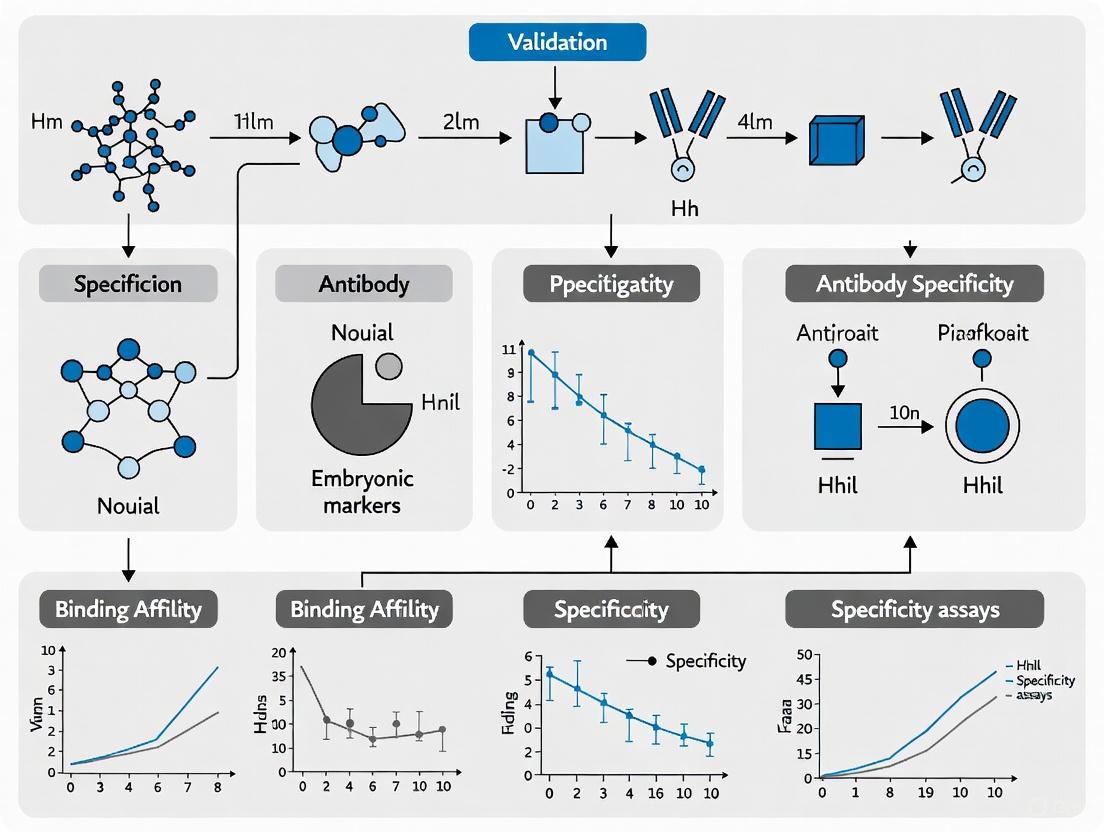
This article provides a comprehensive guide for researchers, scientists, and drug development professionals on ensuring antibody specificity for embryonic stem cell markers.
Validating Antibody Specificity for Embryonic Markers: A 2025 Guide for Reliable Stem Cell Research
Abstract
This article provides a comprehensive guide for researchers, scientists, and drug development professionals on ensuring antibody specificity for embryonic stem cell markers. Covering foundational principles, advanced methodological applications, common troubleshooting scenarios, and rigorous validation strategies, it addresses the critical need for reproducibility and accuracy in stem cell research. The content synthesizes current best practices, innovative technologies like high-throughput screening and CRISPR validation, and multi-faceted validation hallmarks to empower scientists in characterizing pluripotency, assessing differentiation, and enhancing the safety and efficacy of regenerative medicine approaches.
The Critical Landscape of Embryonic Markers and Antibody Specificity
The definitive identification of undifferentiated human embryonic stem cells (hESCs) is a cornerstone of regenerative medicine and developmental biology research. This identification relies critically on a panel of key molecular markers, primarily the transcription factors Oct3/4, Nanog, and SOX2, and the surface carbohydrates SSEA-3 and SSEA-4. These markers are not merely present in hESCs; they form the core of a transcriptional regulatory network that sustains pluripotency and self-renewal. Framed within the broader thesis of validating antibody specificity for embryonic marker research, this guide provides an objective comparison of these essential biomarkers, summarizes key experimental data, and details the methodologies required for their accurate detection and characterization. The reliability of any stem cell research outcome is fundamentally dependent on the rigorous validation of these reagents.
Core Marker Functions and Expression Profiles
The essential hESC marker panel consists of intracellular transcription factors and cell surface glycolipids that collectively define the pluripotent state.
Table 1: Core Pluripotency Markers in Human Embryonic Stem Cells
| Marker | Full Name | Type | Key Function in Pluripotency | Expression Change upon Differentiation |
|---|---|---|---|---|
| Oct3/4 (POU5F1) | POU class 5 homeobox 1 | Transcription Factor | Master regulator; essential for maintaining pluripotency and self-renewal [1] [2] | Downregulated [1] |
| SOX2 | SRY-box transcription factor 2 | Transcription Factor | Partners with Oct3/4; essential for maintaining pluripotent potential [3] [2] | May persist in specific lineages (e.g., neural) [1] |
| Nanog | Nanog homeobox | Transcription Factor | Sustains pluripotent state; prevents differentiation [1] [2] | Downregulated [1] |
| SSEA-3 | Stage-Specific Embryonic Antigen-3 | Cell Surface Glycolipid | Carbohydrate antigen; function in cell surface interactions during development [3] [4] | Decreases [3] |
| SSEA-4 | Stage-Specific Embryonic Antigen-4 | Cell Surface Glycolipid | Carbohydrate antigen; function in cell surface interactions during development [3] [4] | Decreases [3] |
It is crucial to distinguish these human ESC markers from those used in mouse models. For instance, SSEA-1 is a marker for undifferentiated mouse ESCs but is absent in undifferentiated human ESCs; its expression in human cells actually increases upon differentiation [3] [4]. This inverse relationship underscores the importance of species-specific antibody panel design.
The Core Pluripotency Regulatory Network
The transcription factors Oct3/4, SOX2, and Nanog do not operate in isolation. They form an interconnected core transcriptional regulatory circuitry that maintains the pluripotent state by regulating their own expression and that of a vast network of target genes [2].
Diagram 1: Core transcriptional circuitry in hESCs. Genome-scale location analysis has revealed that Oct4, SOX2, and Nanog co-occupy the promoters of a substantial set of target genes, often encoding other transcription factors [2]. They collaborate through autoregulatory (activating their own promoters) and feed-forward loops (co-regulating common targets) to stabilize the pluripotent state.
Experimental Validation & Supporting Data
Antibodies against these markers must be rigorously validated for specificity and application performance. The following table summarizes key experimental data and validation points.
Table 2: Antibody Validation and Experimental Data Summary
| Marker | Key Validation Methods (from search results) | Cross-reactivity Notes | Critical Application & Notes |
|---|---|---|---|
| Oct3/4 | ChIP (Chromatin Immunoprecipitation) [2], ICC/IF [1] [5], WB [1] | Antibodies cross-reactive with human Oct3/4 are available [1]. | Nuclear staining in undifferentiated cells; loss upon differentiation [1] [5]. |
| SOX2 | ChIP [2], ICC/IF [1] [5] | Anti-SOX2 antibodies can show cross-reactivity with mouse ES cells [1]. | Nuclear staining; may persist in neural progenitor cells during differentiation [1]. |
| Nanog | ChIP [2], ICC/IF [1] [5] | Some anti-Nanog antibodies are human-specific [1]. | Nuclear staining; expression is tightly linked to the undifferentiated state [1]. |
| SSEA-3/4 | ICC/IF (Live/Unpermeabilized Cells) [1] [5], FACS [1] | Primate-specific; not expressed in mouse ESCs [3] [4]. | Cell surface membrane staining; decreases upon differentiation [3] [5]. |
| TRA-1-60/-81 | ICC/IF (Live/Unpermeabilized Cells) [5] | Human-specific [4]. | Common supplementary surface markers for hESC identification [5] [4]. |
Supporting the data in Table 2, one study developed and validated monoclonal and polyclonal antibodies by first confirming binding to recombinant protein via ELISA and Western Blot, and then testing them on relevant cell lines like NTERA-2 (for Oct3/4 and SOX2) before use on hESCs [1]. This stepwise validation is critical for establishing antibody specificity.
Detailed Experimental Protocols
Accurate characterization of hESCs requires standardized protocols. Below are detailed methodologies for key applications cited in the literature.
Protocol 1: Immunocytochemistry (ICC) / Immunofluorescence (IF) for Pluripotency Markers
This protocol is essential for visualizing the spatial distribution of markers within fixed cells [1] [5].
- Cell Culture and Fixation: Culture hESCs on appropriate substrate. Fix cells with 4% paraformaldehyde for 15-20 minutes at room temperature.
- Permeabilization and Blocking: Permeabilize cells with 0.1% Triton X-100 for intracellular targets (Oct3/4, SOX2, Nanog). For surface markers (SSEA-3/4, TRA-1-60), omit permeabilization. Incubate cells in a blocking solution (e.g., 1-5% serum, 0.1% BSA in PBS) for 30-60 minutes to reduce non-specific binding.
- Primary Antibody Incubation: Incubate cells with the primary antibody (e.g., anti-Oct4, anti-SSEA4) diluted in blocking buffer overnight at +4°C.
- Secondary Antibody Incubation: Wash off unbound primary antibody and incubate with a fluorophore-conjugated secondary antibody (e.g., Alexa Fluor 488 or 594) for 1 hour at room temperature, protected from light.
- Counterstaining and Imaging: Counterstain nuclei with DAPI or Hoechst. Mount the samples and image using a fluorescence or confocal microscope.
Protocol 2: Flow Cytometry for Surface Marker Analysis and Cell Sorting
Flow cytometry allows for the quantitative analysis and sorting of live cells based on surface marker expression [1] [6].
- Cell Preparation: Harvest hESCs into a single-cell suspension using a gentle dissociation enzyme.
- Antibody Staining: Resuspend cells in a cold FACS buffer (PBS with 1-2% FBS). Incubate with the primary antibody against the surface marker (e.g., anti-SSEA-4, anti-TRA-1-60) for 30-60 minutes on ice. For direct staining, use a fluorophore-conjugated primary antibody. For indirect staining, follow with a fluorophore-conjugated secondary antibody.
- Analysis and Sorting: Wash cells to remove unbound antibody and resuspend in FACS buffer. Analyze the cells using a flow cytometer. For sorting, the labeled cell population can be physically separated from unlabeled cells.
Protocol 3: Chromatin Immunoprecipitation (ChIP) for Transcriptional Network Studies
ChIP is used to map the binding sites of transcription factors like Oct4, SOX2, and Nanog to genomic DNA, revealing the pluripotency network [2].
- Cross-linking and Lysis: Cross-link proteins to DNA in hESCs using formaldehyde. Quench the reaction and lyse the cells.
- Chromatin Shearing: Sonicate the chromatin to shear DNA into fragments of 200-1000 bp.
- Immunoprecipitation: Incubate the sheared chromatin with a validated, specific antibody against the target protein (e.g., anti-Oct4). Use Protein A/G beads to pull down the antibody-protein-DNA complexes.
- Washing, Elution, and Reversal: Wash the beads stringently to remove non-specifically bound chromatin. Elute the complexes and reverse the cross-links to free the DNA.
- DNA Analysis: Purify the co-precipitated DNA and analyze by quantitative PCR (ChIP-qPCR) or sequencing (ChIP-seq) to identify the bound genomic regions.
The Scientist's Toolkit: Essential Research Reagent Solutions
The following table details key reagents and their functions, as derived from the featured experiments and commercial antibody panels.
Table 3: Essential Reagents for hESC Marker Analysis
| Reagent | Specific Function / Target | Key Application(s) | Brief Explanation of Function |
|---|---|---|---|
| Anti-Oct3/4 Antibody | Transcription Factor (POU5F1) | ICC/IF, ChIP, WB [1] [2] [5] | Identifies the core pluripotency regulator; nuclear staining confirms undifferentiated state. |
| Anti-SOX2 Antibody | Transcription Factor (SRY-box 2) | ICC/IF, ChIP, WB [1] [2] [5] | Identifies key partner of Oct3/4 in the core regulatory network. |
| Anti-Nanog Antibody | Transcription Factor (Homeobox) | ICC/IF, ChIP, WB [1] [2] [5] | Detects a critical factor for sustaining the pluripotent state. |
| Anti-SSEA-4 Antibody | Cell Surface Glycolipid | FACS, ICC/IF (non-permeabilized) [1] [5] | Labels live cell surface for identification, quantification, and sorting of viable hESCs. |
| Anti-TRA-1-60 Antibody | Cell Surface Carbohydrate | FACS, ICC/IF (non-permeabilized) [5] [4] | Serves as a supplementary surface marker to robustly identify undifferentiated hESCs. |
| Validated Antibody Panel | Multiple (e.g., Oct4, SOX2, Nanog, SSEA4, TRA-1-60) | Multiplexed ICC/IF, FACS [5] | Provides a cost-effective, matched set of antibodies validated for simultaneous use, ensuring consistent results. |
The definitive identification of human embryonic stem cells hinges on the specific and validated detection of the core marker panel: Oct3/4, SOX2, Nanog, SSEA-3, and SSEA-4. These markers form an interconnected network that sustains pluripotency, and their accurate detection requires carefully selected and rigorously validated antibody reagents. As research progresses, the principles of antibody validation detailed here remain paramount. The consistent application of standardized experimental protocols and a critical understanding of the data generated by these essential tools are the foundation for reliable and reproducible advances in stem cell biology and its clinical applications.
In stem cell research and therapeutic development, the ability to accurately identify and characterize cells is foundational. Antibodies specific to embryonic markers are the primary tools for this task, used to assign cell lineage through simultaneous analysis of surface molecules and intracellular markers [1]. The specificity of these reagents is not merely a technical detail but a fundamental prerequisite for data integrity and patient safety. A lack of specific antibodies can lead to misidentification of cell types, incorrect conclusions about differentiation status, and ultimately, the failure of therapeutic applications. As the field moves closer to clinical applications, the non-negotiable requirement for antibody specificity becomes increasingly critical, serving as the bedrock upon which reproducible science and safe therapeutics are built.
The High Stakes: From Laboratory Data to Patient Safety
The Reproducibility Crisis and Antibody Quality
Concerns have been widely highlighted that antibodies are often not specific enough for their intended use and can show cross-reactivity with off-target proteins [7]. This lack of specificity contributes significantly to what has been termed the "reproducibility crisis" in biomedical research [8]. When antibodies recognize unintended targets, researchers can arrive at fundamentally incorrect biological conclusions, wasting resources and impeding scientific progress. The problem is particularly acute in stem cell biology, where the distinction between pluripotent stem cells and differentiated progeny relies heavily on antibody-based detection of key markers such as Oct3/4, Nanog, and SOX2 [1] [9]. The absence of a single definitive marker for stem cell identification means researchers must rely on a constellation of positive and negative markers used in concert [1], making the specificity of each antibody in the panel critically important.
Direct Implications for Therapeutic Development
The transition from basic research to clinical applications creates even higher stakes for antibody specificity. In drug screening and cell therapy development, antibodies are used to characterize stem cell populations and their differentiated derivatives before therapeutic use. For example, antibodies against neuronal markers like MAP2, β-III tubulin, and GFAP are used to verify the successful differentiation of stem cells into specific neural lineages [9]. If these antibodies lack specificity, researchers might incorrectly validate an impure or improperly differentiated cell population for therapeutic administration, potentially leading to ineffective treatments or unforeseen adverse effects. The specificity of antibodies used in quality control during the manufacturing of cell-based therapies therefore becomes a direct patient safety issue.
Comparative Analysis of Antibody Validation Strategies
Rigorous validation is essential to ensure antibody specificity. In 2016, an International Working Group for Antibody Validation outlined five key techniques, or pillars, to successfully validate research and therapeutic antibodies [7]. The table below compares these strategies, their applications, and limitations for embryonic stem cell research.
Table 1: Antibody Validation Strategies Comparison
| Validation Method | Underlying Principle | Key Applications in Stem Cell Research | Advantages | Limitations |
|---|---|---|---|---|
| Genetic Strategies (KO/Knockdown) [8] [7] | Compare binding in wild-type vs. gene-edited cells (CRISPR/RNAi) | Confirming specificity for embryonic markers (Oct3/4, Nanog) | Considered gold-standard; direct evidence of specificity | Laborious process; RNAi may not completely knock out critical genes |
| Orthogonal Strategies [8] [7] | Compare protein data with antibody-independent methods (transcriptomics) | Verifying protein expression patterns during differentiation | High-throughput capability | Non-linear relationship between mRNA and protein abundance |
| Independent Antibody [8] [7] | Compare two antibodies to non-overlapping epitopes on same target | Verifying expression of key markers like SOX2, SOX9 | Straightforward verification; epitope confirmation | Requires a second, well-validated antibody |
| Expression of Tagged Proteins [8] [7] | Express target protein with fusion tag; compare signals | Testing antibodies for overexpression systems | Clear correlation between antibody and tag signal | Tag may alter protein characteristics or localization |
| Immunoprecipitation-Mass Spectrometry (IP-MS) [8] [7] | Isolate and identify antibody-bound proteins using MS | Identifying all proteins bound by an antibody in complex mixtures | Comprehensive identification of all binding partners | Technically challenging; difficult to distinguish true targets from complex proteins |
Application-Specific Validation in Stem Cell Research
For embryonic stem cell research, the validation approach must align with the specific biomarkers and experimental applications. The table below illustrates validation data for key embryonic and differentiation markers, demonstrating how different strategies confirm antibody specificity in relevant biological contexts.
Table 2: Validation of Key Stem Cell Markers - Experimental Evidence
| Target Marker | Biological Role | Validation Method | Experimental Evidence | Cross-reactivity |
|---|---|---|---|---|
| Oct3/4 [1] | Pluripotency transcription factor | Immunocytochemistry, Western Blot | High expression in undifferentiated hESCs; minimal in EBs | Cross-reacts with mouse ES cells |
| Nanog [1] | Pluripotency transcription factor | Immunocytochemistry | High expression in undifferentiated hESCs; minimal in EBs | Human-specific |
| SOX2 [1] [9] | Neural progenitor marker | Immunocytochemistry, Flow Cytometry | Persistent in neural progenitors within EBs | Cross-reacts with mouse |
| SOX9 [9] | Developmental transcription factor | Immunofluorescence | Absent in iPSCs; present in EBs (three germ layer progenitors) | Not specified |
| RUNX2 [9] | Osteogenic differentiation regulator | Immunofluorescence | Absent in MSCs; peaks at day 7 of osteogenesis; absent by day 14 | Not specified |
Experimental Protocols for Determining Antibody Specificity
Genetic Validation Using Knockout Cell Lines
Genetic validation represents the most rigorous approach for confirming antibody specificity. The following protocol outlines the process using CRISPR/Cas9-generated knockout cell lines:
- Cell Line Selection: Select appropriate embryonic stem cell lines or other relevant cell types expressing the target antigen (e.g., NTERA-2 cells for Oct3/4 validation) [1].
- CRISPR/Cas9 Engineering: Design guide RNAs targeting exons of the gene of interest. Transfert cells with CRISPR/Cas9 components.
- Clone Isolation and Validation: Isolve single-cell clones and validate knockout efficiency via sequencing and functional assays.
- Western Blot Analysis: Prepare protein lysates from wild-type and knockout cells. Separate proteins via SDS-PAGE, transfer to membrane, and probe with antibody targeting the protein of interest. The specific antibody should show a band in wild-type cells that is absent or dramatically reduced in knockout cells [8] [7].
- Immunocytochemistry Validation: Culture wild-type and knockout cells on coverslips, fix, permeabilize, and stain with target antibody. The specific antibody should show staining in wild-type cells that is absent in knockout cells [8].
This approach was successfully demonstrated in REDD1 antibody validation, where a REDD1-/- mouse embryonic fibroblast knockout cell line showed no antibody binding, confirming specificity [10].
Stem Cell Differentiation Models as Validation Tools
Stem cell differentiation systems provide biologically relevant contexts for antibody validation, as marker expression changes predictably during differentiation:
- Maintenance of Pluripotent Stem Cells: Culture human embryonic stem cells (e.g., HSF-6 line) in DMEM supplemented with 20% KnockOut Serum Replacement and 5 ng/mL bFGF on mouse fibroblast feeders [1].
- Induction of Differentiation: Form embryoid bodies (EBs) via suspension culture with FGF withdrawal for 8 days to induce differentiation into all three germ layer precursors [1].
- Differentiation to Specific Lineages:
- Antibody Validation: Analyze cells at different differentiation stages (undifferentiated, progenitor, fully differentiated) using immunocytochemistry, flow cytometry, or Western blot to confirm expected expression patterns of target antigens [9].
This method was used to validate SOX9 antibodies, showing absence in iPSCs but presence in EBs, and RUNX2 antibodies, showing precise temporal expression during osteogenic differentiation [9].
Orthogonal Validation Using Transcriptomic Correlation
Orthogonal strategies provide complementary validation by comparing antibody-based protein detection with antibody-independent methods:
- Sample Selection: Select multiple cell lines or tissues with known high and low expression of the target gene based on existing literature or RNA-seq databases [8].
- RNA Sequencing: Extract total RNA from samples and perform RNA sequencing to quantify transcript abundance of the target gene.
- Protein Detection: Analyze the same samples using the antibody being validated (Western blot for quantitative analysis or IHC for spatial distribution).
- Data Correlation: Compare protein detection levels with mRNA expression data across the sample set. A valid antibody should show strong correlation between protein signal intensity and mRNA expression levels [8].
This approach was demonstrated using U-251MG (VIM high expression) and MCF-7 (VIM low expression) cell lines, where antibody-based VIM detection correlated with RNA-seq data [8].
The Scientist's Toolkit: Essential Research Reagent Solutions
Table 3: Essential Research Reagents for Antibody Validation
| Reagent / Resource | Function in Validation | Specific Examples |
|---|---|---|
| Validated Cell Lines [1] [9] | Provide biological context with known expression patterns | NTERA-2 (for Oct3/4), Caco-2 (for GATA6), H9 hESCs (for neural differentiation) |
| Differentiation Kits [9] | Generate defined cell types for specificity testing | Gibco StemPro Osteogenesis Differentiation Kit, PSC Neural Induction Medium |
| Knockout/Knockdown Tools [7] [10] | Create negative controls for specificity confirmation | CRISPR/Cas9 for knockout, RNAi/shRNA for knockdown |
| Secondary Detection Reagents [9] | Enable visualization and quantification of primary antibody binding | Invitrogen Alexa Fluor secondary antibodies, HRP-conjugated antibodies |
| Positive Control Lysates [1] | Verify antibody performance in immunoassays | Recombinant protein, cell lysates from overexpressing lines |
| Reference Antibodies [8] [7] | Independent antibodies for comparative validation | Antibodies targeting non-overlapping epitopes on same antigen |
The journey from basic stem cell research to clinical therapeutics demands an uncompromising commitment to antibody specificity. As demonstrated through comparative validation data and rigorous experimental protocols, only antibodies that pass stringent, application-specific testing should be trusted for critical research and development work. The consequences of ignoring this imperative extend beyond wasted resources and irreproducible data to potentially serious implications for patient safety in emerging cell-based therapies. By adopting the comprehensive validation framework outlined here—employing genetic, orthogonal, independent antibody, and biological context strategies—researchers can ensure their antibody reagents meet the non-negotiable standard of specificity required for impactful, reproducible science and the development of safe, effective therapeutics.
In embryonic markers research, the reliability of experimental data hinges on the specificity of the antibodies used. Poorly validated antibodies can bind to multiple epitopes, leading to reduced accuracy, false positives, excessive background noise, and ultimately, wasted time and resources [11]. Relying on a single control is a high-risk strategy; a more robust approach involves implementing a constellation of positive and negative controls. This guide objectively compares key antibody validation methods, providing the experimental data and protocols necessary for researchers to critically assess antibody performance for their specific applications, particularly in the sensitive field of embryonic research.
Standard vs. Enhanced Antibody Validation Methods: A Comparative Guide
Antibody validation ensures that an antibody is selective, reproducible, and specific for its intended application. The suitability of an antibody in one technique, like western blot, does not guarantee its performance in another, such as ELISA or immunohistochemistry [11]. The table below compares the core principles, key applications, and relative rigor of common validation methods.
Table 1: Comparison of Antibody Validation Methods
| Validation Method | Core Principle | Key Application(s) | Key Advantage | Level of Specificity Confirmation |
|---|---|---|---|---|
| Genetic Validation [11] | Comparison of staining before and after CRISPR or siRNA-mediated knockdown/knockout of the target protein. | ICC/IF, IHC, WB | Directly confirms target specificity by showing signal loss. | Very High |
| Orthogonal Validation [11] | Comparison of protein detection via antibody staining with an antibody-independent method. | IHC, All | Provides confirmation through a completely independent technical principle. | High |
| Independent Antibody Validation [11] | Use of a second, previously validated antibody targeting a different epitope on the same antigen. | ICC, IHC | Controls for assay performance and confirms target identity. | High |
| Recombinant Expression Validation [11] | Overexpression or endogenous expression of a tagged target protein, followed by antibody staining. | ICC | Confirms binding to the intended overexpressed target. | High |
| Capture MS Validation [11] | Immunoprecipitation with the antibody followed by mass spectrometry to identify all bound proteins. | WB, IP | Unambiguously identifies all proteins the antibody binds to. | Highest |
| Western Blot Validation [11] [12] | Detection of a single band at the expected molecular weight in positive controls and no band in negative controls. | WB | Confirms specificity for the target protein's size and can show isoform detection. | Medium |
Detailed Experimental Protocols for Key Validation Methods
Genetic Validation (CRISPR-Cas9 Knockout)
Genetic validation is considered one of the most powerful methods for confirming antibody specificity, as it directly links the antibody signal to the presence of the target gene [11] [13].
Workflow:
- Cell Line Selection: Choose a cell line endogenously expressing the embryonic marker of interest.
- Knockout Generation: Use CRISPR-Cas9 to create a stable knockout cell line for the target gene.
- Sample Preparation: Culture both wild-type (positive control) and knockout (negative control) cells.
- Parallel Analysis: Process both cell lines in parallel using the intended application (e.g., immunofluorescence, western blot).
- Result Interpretation: A specific antibody will show a strong signal in the wild-type cells and a clear, significant loss of signal in the knockout cells [11].
Western Blot for Specificity Confirmation
Western blotting remains a fundamental technique for verifying that an antibody binds to a single protein at the expected molecular weight [12].
Workflow:
- Sample Preparation: Use a lysate from cells or tissues known to express the target protein as a positive control. The critical negative control is a lysate from a sample where the protein is absent, such as a genetically silenced cell line (e.g., CRISPR knockout) or a relevant tissue known not to express the marker [12].
- Gel Electrophoresis: Load equal amounts of protein (e.g., 20-50 µg per lane) from positive and negative controls onto an SDS-PAGE gel. Separate proteins by molecular weight.
- Membrane Transfer: Transfer the separated proteins from the gel to a PVDF or nitrocellulose membrane.
- Blocking: Incubate the membrane with a blocking buffer (BSA or non-fat milk) to reduce nonspecific antibody binding.
- Antibody Incubation:
- Primary Antibody: Incubate the membrane with the antibody being validated at the manufacturer's recommended dilution.
- Secondary Antibody: After washing, apply an enzyme-conjugated secondary antibody (e.g., HRP-conjugated) specific for the host species of the primary antibody.
- Detection and Analysis: Use chemiluminescence or a similar method for visualization. A specific antibody will produce a single, clean band at the expected molecular weight in the positive control lane and no band in the negative control lane [12]. Always use a loading control (e.g., GAPDH, Actin) to confirm equal protein loading across all lanes.
The following diagram illustrates the logical decision-making process for analyzing western blot results to confirm antibody specificity.
The Scientist's Toolkit: Essential Research Reagent Solutions
A successful validation experiment requires carefully selected reagents. The table below details essential materials and their functions.
Table 2: Key Research Reagents for Antibody Validation Experiments
| Reagent / Solution | Function & Importance in Validation |
|---|---|
| Validated Primary Antibody | The core reagent under investigation. Select antibodies with published validation data for your application [13]. |
| CRISPR-Cas9 Knockout Cell Line | Serves as the ideal genetically-defined negative control for genetic validation, providing a definitive baseline for specificity [11] [13]. |
| Positive Control Cell Lysate/Tissue | A sample with confirmed expression of the target embryonic marker. Essential for confirming the antibody can detect the antigen [12]. |
| Isotype Control Antibody | An antibody of the same class (e.g., IgG) but without specificity for the target. Critical for distinguishing specific signal from background noise in techniques like flow cytometry and IHC. |
| Loading Control Antibodies | Antibodies against ubiquitous proteins (e.g., β-Actin, GAPDH). Verify equal protein loading across all samples in western blot, ensuring accurate data interpretation [12]. |
| Blocking Buffer (BSA) | Reduces nonspecific binding of antibodies to the membrane or tissue, minimizing background signal and improving the signal-to-noise ratio [12]. |
Visualizing the Constellation: An Integrated Validation Workflow
No single validation method is sufficient on its own. A robust "constellation" approach integrates multiple strategies to provide cross-confirmation of antibody specificity from different angles. The following diagram maps this multi-faceted workflow.
Adopting this multi-pronged validation strategy is no longer a best practice but a necessity for rigorous research. By moving beyond a single marker and implementing a constellation of controls, researchers in embryonic development and drug discovery can generate more reliable, reproducible, and impactful data.
Pluripotency, the capacity of a cell to differentiate into any cell type, serves as a foundational concept in stem cell biology, disease research, and regenerative medicine [3]. The accurate characterization of pluripotent stem cells and their early differentiation progeny relies heavily on specific molecular markers, primarily transcription factors and surface antigens. However, researchers face significant challenges due to non-standardized methods, ambiguous marker specificity, and considerable species-specific differences in expression patterns [14] [15]. This guide provides a comprehensive comparison of key pluripotency and early differentiation markers, supported by experimental data and detailed methodologies, to enhance antibody validation strategies and experimental design in developmental biology research.
Core Pluripotency Markers: A Comparative Analysis
The maintenance of pluripotency is governed by a core network of transcription factors. The table below summarizes the key characteristics and dynamic expression patterns of established pluripotency markers.
Table 1: Core Pluripotency Markers and Expression Dynamics
| Marker | Full Name | Expression in Pluripotency | Expression Change During Differentiation | Key Functions | Notes on Specificity |
|---|---|---|---|---|---|
| OCT4 (POU5F1) | POU domain class 5 transcription factor 1 | High in undifferentiated pluripotent stem cells and germ cells [1] [3] | Significantly downregulated [1] [16] | Sustains stem-cell pluripotency in a critical amount; necessary with SOX2 and NANOG [1] [3] | Low OCT4 levels in in vitro blastocysts indicate reduced developmental competence [14] |
| SOX2 | SRY-box transcription factor 2 | High in undifferentiated cells [1] | Downregulated in most lineages but persistent in neural progenitor cells [1] | Works with OCT4 and NANOG to maintain pluripotent potential [3] | Considerable expression overlap between undifferentiated iPSCs and ectoderm [15] |
| NANOG | Homeodomain transcription factor | High level expression in undifferentiated pluripotent embryonic stem cells [1] [3] | Downregulated as cells differentiate in vitro and in vivo [1] [16] | Essential for maintenance of pluripotency and self-renewal [3] | Species-specific role; not a key regulator of lineage segregation in cat embryos [14] |
| SSEA-4 | Stage-Specific Embryonic Antigen-4 | Present on surface of human stem cells [3] | Decreases following differentiation of human embryonic carcinoma cells [3] | Glycolipid carbohydrate used for identification and isolation | Human-specific; expression increases upon differentiation in mouse cells [3] |
Lineage-Specific Differentiation Markers
As pluripotent cells commit to specific lineages, they activate a new set of transcriptional programs. The following markers are critical for identifying early differentiation events.
Table 2: Key Early Differentiation Markers
| Germ Layer | Marker | Expression Profile | Function in Development |
|---|---|---|---|
| Endoderm | GATA6 | Expressed in primitive endoderm; subpopulations appear in differentiated embryoid bodies (EBs) [1] | Transcription factor critical for endodermal differentiation [15] |
| SOX17 | Not detected in undifferentiated human ES cells; subpopulations positive in differentiated EBs [1] | Endodermal marker [15] | |
| Mesoderm | Brachyury (T) | Not detected in undifferentiated human ES cells; subpopulations positive in differentiated EBs [1] | Mesoderm marker; high levels (94.4%) detected in directed differentiation [15] |
| HAND1 | Validated as unique marker for mesoderm [15] | Mesodermal transcription factor | |
| Ectoderm | PAX6 | Validated as unique marker for ectoderm [15] | Transcription factor essential for ectodermal/neural differentiation |
| NES (Nestin) | Expressed in neuronal stem cells (NSCs) [9] | Neuronal progenitor marker |
Experimental Protocols for Marker Validation
Gene Expression Profiling Using RT-qPCR
Application: Quantifying transcript levels of pluripotency and differentiation markers during early development [14] [16].
Detailed Methodology:
- RNA Extraction and Quality Control: Extract total RNA ensuring high purity (A260/A230 >1.8 and A260/A280 >2.0). Exclude samples failing these thresholds [16].
- Reverse Transcription: Convert RNA to cDNA using reverse transcriptase.
- qPCR Amplification: Perform quantitative PCR with validated primers. Include appropriate controls and replicates.
- Data Normalization: Select stable reference genes for normalization. Studies during osteogenic differentiation of human iPS cells identified TBP and RPLP0 as the most stable reference genes, while common choices like GAPDH and ACTB were found unsuitable [16].
- Expression Analysis: Calculate relative expression using the 2−ΔΔCt method [16].
Immunofluorescence and Immunocytochemistry
Application: Protein-level localization and confirmation of stem cell characteristics [1] [9].
Detailed Methodology:
- Cell Preparation: Culture cells on appropriate substrates. For pluripotent stem cell characterization, use mouse fibroblast feeders with basic fibroblast growth factor (bFGF) [1].
- Fixation and Permeabilization: Fix cells with 4% paraformaldehyde for 10 minutes at room temperature. Permeabilize with 0.5% Triton X-100 in PBS with 1% BSA for 2 minutes [17].
- Blocking: Incubate with blocking buffer (e.g., 4% goat serum in PBS) for 1 hour at room temperature or overnight at 4°C [17].
- Antibody Incubation: Apply primary antibody diluted in PBS overnight at 4°C. Wash and incubate with corresponding fluorescently-labeled secondary antibody for 1 hour at room temperature [17].
- Detection: Mount samples and image with fluorescence microscopy. Include nuclear staining (DAPI) and F-actin labeling (e.g., rhodamine phalloidin) for cellular context [9].
Flow Cytometry for Cell Sorting and Analysis
Application: Quantitative assessment of surface and intracellular markers; isolation of specific cell populations [1].
Detailed Methodology:
- Cell Preparation: Create single-cell suspension using enzymatic dissociation (e.g., Accutase solution) [17].
- Staining: For surface markers, incubate live cells with primary antibodies recognizing extracellular epitopes (e.g., CD9, E-Cadherin, PODXL) [1]. For intracellular markers, fix and permeabilize cells first.
- Analysis and Sorting: Use flow cytometer to detect antibody-bound cells. Sort populations based on specific marker constellations.
- Validation: Confirm specificity using appropriate positive and negative control cell lines [1].
Visualization of Marker Validation Workflow
Advanced Research Tools and Technologies
qPCR-Based Pluripotency Assessment
Recent advances in marker validation have led to the development of standardized qPCR-based assessment tools. The hPSC ScoreCard Assay represents a significant innovation, using gene expression signatures to quantify differentiation efficiency and functional pluripotency [18]. This approach enables faster, more quantitative assessment compared to traditional methods like teratoma assays.
Furthermore, long-read nanopore transcriptome sequencing has emerged as a powerful technology for reassessing marker genes, identifying 172 genes associated with differentiation states not addressed in current guidelines [15]. This technology has revealed that markers recommended for embryoid body formation-based analysis are not directly applicable for evaluating trilineage-differentiated iPSCs, highlighting the need for context-specific validation [15].
Machine Learning Applications
The integration of machine learning with marker data has led to the development of sophisticated classification systems. The "hiPSCore" scoring system, trained on 15 different iPSC lines and validated with 10 additional lines, accurately classifies undifferentiated and differentiated iPSCs, predicting their potential to become specialized 2D cells and 3D organoids [15]. This approach reduces time, subjectivity, and resource use while enhancing iPSC quality for scientific and medical applications.
The Scientist's Toolkit: Essential Research Reagents
Table 3: Key Research Reagent Solutions for Marker Studies
| Reagent Type | Specific Examples | Research Application | Function |
|---|---|---|---|
| Pluripotency Antibodies | Anti-Oct3/4, Anti-NANOG, Anti-SOX2 [1] [3] | Immunofluorescence, Flow Cytometry, Western Blot | Identify and quantify undifferentiated pluripotent stem cells |
| Differentiation Antibodies | Anti-SOX17, Anti-GATA6, Anti-Brachyury, Anti-PAX6 [1] [15] | Immunostaining, Cell Sorting | Detect early lineage commitment and germ layer specification |
| Cell Culture Media | Neural Induction Medium, Osteogenesis Differentiation Kit [9] | Directed Differentiation Studies | Promote specific lineage commitment under defined conditions |
| qPCR Assays | hPSC ScoreCard Assay, Validated Primer Sets [18] | Gene Expression Quantification | Standardized assessment of pluripotency and differentiation |
| Reprogramming Factors | OCT4, SOX2, KLF4, c-MYC (OKSM combination) [3] | iPSC Generation | Induce pluripotency in somatic cells |
| Recombinant Antibodies | ABfinity recombinant antibodies [9] | Multiple applications | Provide highly specific, lot-to-lot consistent performance |
The dynamic expression patterns of pluripotency and differentiation markers provide critical insights into stem cell identity and lineage commitment. However, researchers must account for significant challenges including species-specific variations [14], context-dependent marker expression [15], and the limitations of different validation methodologies. The experimental protocols and comparative data presented here offer a framework for rigorous antibody validation and marker characterization. As the field advances, technologies such as long-read sequencing and machine learning classification systems like hiPSCore [15] promise to enhance the standardization and accuracy of pluripotency assessment, ultimately strengthening research in developmental biology and regenerative medicine.
Advanced Techniques and Protocols for Specific Marker Detection
Antibodies are among the most frequently used tools in basic science research and clinical assays, yet the lack of a comprehensive scientific framework for antibody validation within the research community has led to significant challenges with data reproducibility and reliability [19]. The performance of primary antibodies is strongly influenced by assay context, meaning recommendations for validation and usage are unique to each type of immunoassay [20]. An antibody that performs well in one application, such as western blotting, might not be suitable for another assay [20]. This guide provides a comprehensive comparison of validation methodologies across three key techniques—immunohistochemistry (IHC), flow cytometry, and western blot—with special consideration for their application in embryonic markers research.
Comparative Analysis of Validation Approaches Across Techniques
The table below summarizes the core validation strategies, critical controls, and common challenges specific to each application:
| Validation Aspect | Immunohistochemistry (IHC) | Flow Cytometry | Western Blot |
|---|---|---|---|
| Key Validation Strategies | Orthogonal validation (e.g., vs. RNA-Seq), independent antibody verification, multiple tissue testing [21] [22] | Specificity verification via complementary assays (WB, IHC), use of known positive/negative cells, isotype controls [23] [24] | Genetic strategies (CRISPR-KO, siRNA), independent antibodies, tagged protein expression [20] [25] |
| Essential Controls | No-primary-antibody control, isotype control, positive/known expression tissue, blocking peptides [19] [26] | Unstained cells, isotype controls, Fc receptor blocking, compensation controls [19] [24] | Positive/negative cell/tissue lysates, knockout controls, loading controls [19] [20] |
| Technical Challenges | Antigen retrieval variability, autofluorescence, tissue fixation effects [26] | Spectral spillover, Fc receptor binding, cell viability effects [24] | Protein denaturation effects, gel transfer efficiency, nonspecific binding [20] |
| Specificity Confirmation | Phosphatase treatment (phospho-antibodies), peptide blocking, multiple tissue concordance [27] [22] | Correlation with western blot (target size) and IHC/ICC (localization), genetic knockdown [24] | Knockout/knockdown validation, expected molecular weight detection, orthogonal MS correlation [20] [25] |
| Quantitative Potential | Semi-quantitative (with careful standardization) [21] | Highly quantitative (with proper controls and compensation) [24] | Quantitative with linear range validation and normalization [25] |
Experimental Design and Workflow for Comprehensive Validation
The following diagram outlines a systematic workflow for validating antibodies across multiple applications, incorporating key decision points and strategy selection based on experimental goals:
Detailed Methodologies for Application-Specific Validation
Immunohistochemistry (IHC) Validation Protocols
Comprehensive Tissue Testing and Orthogonal Validation For IHC validation, antibodies should be tested on formalin-fixed, paraffin-embedded (FFPE) tissues in a tissue microarray (TMA) format, incorporating both normal tissues from multiple individuals and cancer tissues representing various malignancies [21]. Atlas Antibodies validates their antibodies across 576 tissue cores, including 44 normal tissue types and 20 common cancers, with skilled manual analysis of staining intensity, localization, and proportion of stained cells [21]. Enhanced validation in IHC includes orthogonal validation comparing antibody signal to RNA sequencing data from the same samples, selecting tissues with high and low RNA expression (differing by at least five-fold) to confirm correlation between protein detection and gene expression [21].
Specificity Verification Methods Cell Signaling Technology employs multiple approaches for IHC validation, including using paraffin-embedded cell pellets to compare cell lines with different expression levels, siRNA or shRNA experiments to verify target specificity, and small-molecule activators or inhibitors to modulate target expression [22]. Additional specificity verification includes phosphatase treatment for phospho-specific antibodies to remove phosphate groups and confirm phospho-specificity, and incubation with blocking peptides to compete for antibody binding [27] [22]. Proper controls must include secondary antibody-only controls, isotype controls, and endogenous only controls to account for autofluorescence [26].
Flow Cytometry Validation Protocols
Multimodal Specificity Assessment Flow cytometry validation requires a multimodal approach to confirm antibody specificity. Bethyl Laboratories employs six complementary validation pillars based on the unique biology of each target protein [24]. Essential validation includes testing on multiple cell types with known expression levels, comparing antibody performance across multiple applications, and running side-by-side comparisons with existing antibody clones [24]. BioLegend emphasizes the importance of correlating flow cytometry data with complementary assays—western blot data confirms the size of the target, while IHC/ICC data demonstrates appropriate cellular localization [24].
Comprehensive Controls and Panel Design Proper flow cytometry validation must include unstained controls to assess cell autofluorescence and set appropriate voltages and negative gates, and isotype controls to determine background from nonspecific antibody binding [19]. For functional antibodies, such as superagonistic anti-human CD28 antibodies, validation should include functional assessments of biological effects, such as T cell activation and expansion characteristics, confirmed through multiple assay modalities [24]. Miltenyi Biotec recommends providing extended validation data including protocol details like recommended cell numbers, staining buffers, antibody dilutions, and fixation compatibility to help researchers verify antibodies in their unique experimental settings [24].
Western Blot Validation Protocols
Genetic Strategies as Gold Standard Knockout (KO) validation using CRISPR-Cas9 or RNA interference (RNAi) is increasingly considered the accepted "gold standard" for western blot validation [20] [25]. This approach involves measuring signal in control cells or tissues where the target epitope has been genetically knocked out or knocked down—any residual signal indicates cross-reactivity or non-specific binding [25]. The International Working Group for Antibody Validation recommends using at least two different validation strategies, with genetic approaches being particularly valuable for confirming specificity [25].
Independent Antibody and Orthogonal Methods The independent antibody approach employs two or more different antibodies against the same target that recognize different epitopes; correlation between their detection patterns supports specificity [20] [25]. Orthogonal strategies involve using antibody-independent methods (such as targeted proteomics) to quantify target expression in several samples, then comparing these measurements with antibody-based detection [25]. Additional approaches include expression of tagged proteins (e.g., FLAG or GFP) to match antibody detection with tag-based detection, though this requires careful implementation to ensure endogenous expression levels avoid masking off-target binding [25].
Essential Research Reagents and Materials
The table below details key reagents and their functions in antibody validation workflows:
| Reagent/Material | Primary Function | Application Specific Considerations |
|---|---|---|
| CRISPR-Cas9 KO Cells | Genetic confirmation of antibody specificity; ideal negative control [25] [24] | Essential for western blot validation; useful for flow cytometry with dissociated cells [25] |
| siRNA/shRNA | Target protein knockdown for specificity verification [22] | Suitable for validation in cell pellets for IHC and flow cytometry applications [22] |
| Isotype Controls | Determine background from nonspecific antibody binding [19] [26] | Critical for flow cytometry and IHC; must match primary antibody species, isotype, and concentration [19] |
| Phosphatase Treatment | Confirm phospho-specificity by removing phosphate groups [22] | Particularly valuable for IHC and western blot validation of phospho-specific antibodies [22] |
| Blocking Peptides | Compete with target epitope for antibody binding to confirm specificity [27] | Should include both modified and non-modified versions for PTM-specific antibodies [27] |
| Cell/Tissue Lysates | Provide known positive and negative expression controls [19] [20] | Selection should be based on established expression databases (e.g., Human Protein Atlas) [20] |
| Recombinant Antibodies | Provide consistent performance with minimal lot-to-lot variability [24] | Particularly valuable for long-term projects requiring reproducible results across experiments [24] |
Implications for Embryonic Marker Research
Validating antibodies for embryonic marker research presents unique challenges due to the dynamic expression patterns, limited tissue availability, and critical developmental implications of misinterpreted results. Application-specific validation becomes particularly crucial in this field, as spatial context (preserved in IHC), quantitative expression analysis (enabled by flow cytometry), and molecular weight confirmation (provided by western blot) each contribute different but complementary information about marker expression and function. The comprehensive validation approaches outlined in this guide provide a framework for establishing confidence in embryonic marker detection across these diverse technical platforms.
The reproducibility crisis in life sciences research, partly attributable to poorly validated antibodies [24], underscores the critical importance of application-specific antibody validation. As emphasized by the International Working Group for Antibody Validation, no single validation strategy is sufficient, and a combination of approaches tailored to each application provides the most reliable confirmation of antibody specificity and performance [25]. By implementing the comprehensive, technique-specific validation protocols detailed in this guide, researchers can generate more reliable, interpretable, and reproducible data—particularly crucial in sensitive fields like embryonic marker research where conclusions often have significant scientific and translational implications.
The quest to identify and characterize embryonic markers represents a frontier in developmental biology and regenerative medicine. Within this field, the generation of highly specific antibodies is paramount, as these reagents are crucial for isolating distinct progenitor cell populations, mapping differentiation pathways, and ensuring the purity of cell-based therapies. Two high-throughput technologies have emerged as powerful engines for antibody discovery: phage display and single B-cell cloning. While phage display leverages vast in vitro libraries for selection, single B-cell technologies directly capture the native antibody repertoire from immunized hosts [28] [29] [30]. This guide provides an objective comparison of these two paradigms, framing their performance and applications within the specific experimental needs of embryonic stem cell research.
Phage Display Technology
Phage display is an in vitro technique where antibody fragments (e.g., scFvs, Fabs) are expressed on the surface of filamentous bacteriophages. The core principle is the physical linkage between the antibody phenotype (displayed on the phage coat) and its genotype (packaged within the phage particle) [28] [31]. This allows for the selection of binders from highly diverse libraries—often exceeding 10^10 variants—through iterative rounds of panning against a target antigen [32]. The process is particularly valuable for targeting poorly immunogenic self-antigens and non-proteinaceous molecules, as it bypasses the natural tolerance mechanisms of the immune system [28].
Single B-Cell Technology
Single B-cell technology is an in vivo approach that involves the direct isolation and analysis of individual antibody-producing B cells from immunized hosts. These cells are naturally selected for their ability to produce high-affinity, antigen-specific antibodies [29] [30]. The technology retains the native, naturally paired heavy and light chain variable regions (VH/VL pairing), which is critical for maintaining the authenticity and specificity of the antibody response [29]. Advanced methods like fluorescence-activated cell sorting (FACS) and microfluidics are used to isolate single B cells, which are then subjected to reverse transcription-polymerase chain reaction (RT-PCR) to amplify and sequence the antibody genes [29] [30].
Figure 1: Comparative Workflows of Phage Display and Single B-Cell Technologies. The phage display pathway (red) is an entirely in vitro process involving library panning, while the single B-cell pathway (blue) begins with in vivo immunization to capture a natural immune response.
Direct Technology Comparison: Performance and Applications
Table 1: Comparative Analysis of Phage Display vs. Single B-Cell Technologies
| Feature | Phage Display | Single B-Cell Technology |
|---|---|---|
| Principle | In vitro selection from a display library [28] | Direct cloning from in vivo immunized B cells [29] |
| Library Source | Synthetic, naive, or immune repertoires; diversity >10^10 [32] | Immune repertoire from immunized donors; captures natural diversity [30] |
| Key Advantage | Targets self-antigens, toxins, and non-immunogenic targets [28] | Preserves native VH/VL pairing and natural affinity maturation [29] |
| Throughput | Very high; enables panning of billions of clones in parallel [32] | High; FACS and microfluidics allow processing of thousands of cells [29] [30] |
| Development Timeline | ~4-6 weeks for initial candidate isolation [33] | Can be faster than hybridoma; rapid screening post-isolation [29] |
| Affinity | Typically nanomolar; can be improved via affinity maturation [28] [32] | Can achieve sub-nanomolar affinity due to in vivo maturation [33] |
| Antibody Format | Primarily antibody fragments (scFv, Fab); full IgG possible | Naturally paired, full-length IgG [29] |
| Ideal for Embryonic Marker Research | Targeting conserved self-antigens (e.g., cell surface markers like SSEA-3/4) [28] [34] | Generating antibodies against immunogenic epitopes from differentiated progenitors [34] |
Table 2: Application in Embryonic Marker Research – Experimental Data
| Experimental Goal | Technology Used | Reported Outcome | Supporting Data |
|---|---|---|---|
| Identifying Progenitor Cell Targeting Peptides | Phage Display [34] [35] | Identified peptides binding human embryonic progenitor cell line (W10); selective for differentiated over pluripotent cells. | Peptide-conjugated quantum dots showed specific binding to endodermal derivatives in fluorescence assays [34]. |
| Generating Antibodies Against Self-Antigens | Phage Display (Synthetic Libraries) [28] | Successful isolation of fully human antibodies against tumor self-antigens (e.g., approved therapeutics). | Antibodies like adalimumab (anti-TNF-α) were derived from synthetic phage display libraries (HuCAL) [28]. |
| Rapid Antibody Discovery Against Pathogens | Single B-Cell Screening [30] | Isolation of potent neutralizing antibodies from convalescent patients for COVID-19 and HIV. | Studies highlight the isolation of antibodies with "potent and broad neutralizing activities" directly from human donors [30]. |
| Isolation of Antibodies with Native Conformation | Single B-Cell Cloning [29] | Yields antibodies with high specificity and reduced off-target effects due to native pairing. | Method "retains the native pairing of heavy and light chains, preserving the natural conformation" [29]. |
Experimental Protocols for Embryonic Marker Research
Phage Display Protocol for Progenitor Cell Targeting
This protocol is adapted from a study that successfully identified peptides targeting a human embryonic stem cell-derived progenitor cell line (W10) [34] [35].
- Step 1: Library Pre-Clearing. Incubate the phage display library (e.g., a 12-mer peptide library) with negative control cells (e.g., human dermal fibroblasts) for 60 minutes at 4°C with gentle agitation. This removes phages that bind non-specifically to common cell surface components [34].
- Step 2: Positive Selection on Target Cells. Incubate the pre-cleared phage supernatant with the target embryonic progenitor cell line (e.g., W10 cells) for 90 minutes at 4°C. Wash the cells multiple times with a cold buffer (e.g., PBS containing 1% BSA) to remove weakly bound or unbound phage particles [34].
- Step 3: Phage Elution and Amplification. Elute the specifically bound phages by incubating the cells with a low-pH elution buffer (e.g., 0.2 M Glycine-HCl, pH 2.2) for 10 minutes, followed by neutralization. Infect log-phase E. coli with the eluted phages to amplify them for the next selection round [34] [31].
- Step 4: Iterative Panning and Analysis. Typically, 3-4 rounds of panning are performed to enrich for specific binders. After the final round, isolate individual phage clones and sequence their DNA to identify the displayed peptide sequences [34]. Validate binding specificity using techniques like flow cytometry or fluorescence microscopy with peptide-conjugated quantum dots [34] [35].
Single B-Cell Protocol for Antibody Discovery
This protocol outlines the core workflow for isolating antigen-specific monoclonal antibodies from immunized hosts, applicable for generating antibodies against immunogenic embryonic markers [29] [30].
- Step 1: B Cell Isolation and Sorting. Isolate peripheral blood mononuclear cells (PBMCs) or splenocytes from an immunized host. Label the cells with a fluorescently conjugated target antigen and antibodies against B-cell surface markers (e.g., CD19, CD20, CD27). Use Fluorescence-Activated Cell Sorting (FACS) to isolate single antigen-binding B cells into individual wells of a 96- or 384-well plate containing lysis buffer [29] [30].
- Step 2: Reverse Transcription and PCR. Perform reverse transcription (RT) on the single-cell lysates to generate cDNA. Subsequently, use polymerase chain reaction (PCR) with primers specific to the immunoglobulin variable regions to amplify the genes encoding the heavy (VH) and light (VL) chains of the antibody [29].
- Step 3: Cloning and Expression. Clone the amplified VH and VL genes into antibody expression vectors containing the constant regions for IgG. Co-transfect the heavy and light chain vectors into a mammalian expression system, such as HEK293 or CHO cells, to produce full-length, recombinant monoclonal antibodies [29].
- Step 4: Screening and Characterization. Screen the culture supernatants for antigen binding using ELISA or flow cytometry. For embryonic markers, this can be extended to binding assays on relevant progenitor cell lines. Positive hits are then subjected to functional characterization, including affinity measurement (e.g., Surface Plasmon Resonance) and specificity profiling [29] [30].
The Scientist's Toolkit: Essential Research Reagents
Table 3: Key Reagent Solutions for High-Throughput Antibody Screening
| Reagent / Solution | Function in Protocol | Example Application |
|---|---|---|
| Phage Display Peptide Library | Provides genetic diversity for in vitro selection of binders. | 12-mer library used for panning on embryonic progenitor cell line W10 [34]. |
| Fluorescently Labeled Antigen | Tags antigen-specific B cells for isolation via FACS. | Critical for sorting single B cells from immunized hosts [29] [30]. |
| Single-Cell Lysis Buffer | Lyses single B cells while preserving RNA integrity for RT-PCR. | Used in the initial step of antibody gene amplification from single cells [29]. |
| IgG VH/VL Primer Sets | Primers designed to amplify diverse antibody variable region genes. | Enables amplification of heavy and light chain genes from single B-cell cDNA [29]. |
| Mammalian Expression Vectors | Plasmids for the expression of full-length IgG antibodies. | Used for the recombinant production of antibodies cloned from single B cells [29]. |
| Peptide-Conjugated Quantum Dots | Fluorescent nanoparticles for visualizing and validating peptide binding to live cells. | Used to confirm binding of selected phage peptides to target progenitor cells [34] [35]. |
The choice between phage display and single B-cell technologies is not a matter of declaring one superior, but of strategically aligning the technology with the research objective. For research focused on conserved self-antigens and non-immunogenic markers prevalent in embryonic stem cell biology, phage display offers an unparalleled in vitro path to fully human binders. Conversely, for projects aiming to capture a potent, naturally matured immune response against immunogenic epitopes present on differentiated progenitor cells, single B-cell cloning is the definitive choice.
The future of antibody discovery in this field lies in integration. Emerging technologies like LIBRA-seq, which links B-cell receptor sequences to antigen specificity through sequencing, are blending high-throughput sequencing with functional screening [30]. Furthermore, the application of machine learning to the vast datasets generated by both phage and B-cell methods is poised to predict antibody affinity and function, thereby accelerating the rational design of critical reagents for developmental biology [36]. This synergistic approach will undoubtedly empower researchers to deconstruct the complex signaling landscapes of embryonic development with unprecedented precision.
The accurate detection of cellular markers, particularly in complex fields like embryonic stem cell (ESC) research, is foundational to advancing both basic biological understanding and therapeutic development. ESCs express a unique set of cell surface markers, such as SSEA-3, SSEA-4, TRA-1-60, and TRA-1-81, which are crucial for their identification and isolation [37]. However, a comprehensive analysis often requires the detection of intracellular proteins, including transcription factors and cytokines, presenting a significant technical challenge. The choice between surface and intracellular staining methodologies is dictated by the experimental goal: live cell sorting for functional studies or fixed cell analysis for detailed phenotypic evaluation. This guide objectively compares these approaches, providing best practices and validated protocols to ensure the high-quality, reproducible data required for rigorous scientific inquiry and drug development.
Fundamental Principles: Surface vs. Intracellular Antigens
The cellular location of a target antigen dictates the required staining protocol. Surface and intracellular staining are not interchangeable but are often complementary techniques.
Cell Surface Staining is used to detect proteins expressed on the outer membrane of the cell, such as CD antigens (e.g., CD9, CD24, CD133 in ESCs) and SSEA markers [37]. This process involves incubating live, intact cells with antibody conjugates. Since the cell membrane remains intact, cell viability is maintained, making this method the cornerstone of fluorescence-activated cell sorting (FACS) for isolating live cell populations [38].
Intracellular Staining is required for targets residing within the cell, including:
- Cytoplasmic proteins: Cytokines and many signaling molecules [39] [40].
- Nuclear proteins: Transcription factors and cell cycle regulators [40]. This process requires a fixation step to crosslink and stabilize cellular structures, followed by permeabilization to create pores in the membrane, allowing antibodies access to the interior [40]. These steps compromise cell viability and are therefore incompatible with live cell sorting [38].
Table 1: Core Differences Between Surface and Intracellular Staining
| Feature | Surface Staining | Intracellular Staining |
|---|---|---|
| Target Antigens | Cell surface markers (e.g., CD proteins, SSEAs) | Intracellular proteins (e.g., cytokines, transcription factors) |
| Cell Integrity | Membrane remains intact | Membrane is permeabilized |
| Cell Viability | Maintained, cells can be sorted and cultured | Not maintained, endpoint analysis only |
| Key Steps | Staining of live cells in buffer | Fixation → Permeabilization → Staining |
| Primary Application | Live cell sorting (FACS), immunophenotyping | Analysis of fixed cells, cytokine detection, signaling studies |
Experimental Protocols for Staining and Analysis
The following standardized protocols ensure reliable and reproducible results for both staining approaches.
Protocol for Cell Surface Staining and Live Cell Sorting
This protocol is optimized for the subsequent sorting of viable cells using FACS [38].
- Prepare a single-cell suspension in a suitable buffer containing serum and without sodium azide, which is toxic to cells.
- (Optional) Stain with a fixable viability dye to exclude dead cells from the analysis and sort.
- Stain cell surface markers: Incubate the cell suspension with directly conjugated antibodies for 20-60 minutes on ice or at 4°C. Protect from light.
- Wash cells to remove unbound antibody by centrifuging and resuspending in fresh buffer.
- Resuspend in a suitable buffer for analysis or sorting. For FACS, the instrument generates charged droplets containing single cells, which are deflected into collection tubes based on their fluorescence [38].
- Sort cells directly into culture medium supplemented with serum to maintain viability.
Protocol for Combined Surface and Intracellular Staining
This protocol allows for the simultaneous detection of surface and intracellular markers in fixed cells and is compatible with flow cytometric analysis [41] [40].
- Stain cell surface markers first on live, unfixed cells (as in Steps 1-4 above).
- Fix cells by resuspending the pellet in a formaldehyde-based fixative (e.g., IC Fixation Buffer) and incubating for 20-60 minutes at room temperature.
- Permeabilize cells by washing twice with a detergent-based 1X Permeabilization Buffer.
- Stain intracellular antigens by resuspending the fixed and permeabilized cells in Permeabilization Buffer and adding the directly conjugated antibodies against intracellular targets. Incubate for 20-60 minutes at room temperature.
- Wash cells twice with 1X Permeabilization Buffer to remove unbound antibody.
- Resuspend cells in flow cytometry staining buffer for analysis.
Simultaneous vs. Serial Staining: A recent study systematically compared the traditional serial staining method (surface stain → fix → permeabilize → intracellular stain) with a simultaneous method (fix → permeabilize → stain for both surface and intracellular markers). The simultaneous method demonstrated comparable staining performance to the serial method while reducing cell loss and improving the mean fluorescence intensity (MFI) for some surface markers like EpCAM, making it a more practical option [41].
Workflow Visualization
The following diagram illustrates the key decision points and steps involved in choosing and executing the correct staining workflow.
Comparative Experimental Data and Technical Considerations
Impact of Fixation on Marker Detection
The fixation and permeabilization process is essential for intracellular staining but can raise concerns about its effect on surface epitopes. Systematic evaluation demonstrates that fixation enables robust intracellular staining without compromising the detection of key surface markers [41].
Table 2: Staining Performance in Fixed vs. Unfixed Cells
| Cell Type | Marker Type | Marker | Staining in Unfixed Cells | Staining in Fixed/Permeabilized Cells |
|---|---|---|---|---|
| HepG2 Cells | Intracellular | Pan-Cytokeratin (PanCK) | Not Detected | Robust Detection |
| HepG2 Cells | Surface | EpCAM | Preserved | Preserved |
| HepG2 Cells | Surface | CD45 | Preserved | Preserved |
| PBMCs | Surface | CD45 | Preserved | Preserved |
Cell Recovery Across Sample Preparation Methods
Sample preparation strategy affects cell recovery, a critical factor when working with rare cell populations like circulating tumor cells (CTCs) or precious ESC samples.
Table 3: Comparison of Cell Recovery and Staining Performance by Preparation Method
| Sample Preparation Method | Cell Recovery | PanCK Positivity Rate | EpCAM Positivity Rate | Notes |
|---|---|---|---|---|
| Fresh Sample | Baseline Reference | Comparable to baseline | 99.83% | Gold standard for viability and staining. |
| Fixed Unfrozen Sample | ~7-10% Reduction | No significant difference | No significant difference | Excellent balance of preservation and practicality [41]. |
| Cryopreserved Sample | Variable (lower) | No significant difference | No significant difference | Can yield lower detection rates for target populations [41]. |
| Fixed Frozen Sample | Variable (lower) | No significant difference | Slightly higher | Higher false-positive CD45 staining possible [41]. |
The Scientist's Toolkit: Essential Reagents and Materials
Successful staining and analysis require a suite of specialized reagents.
Table 4: Key Research Reagent Solutions
| Reagent / Kit | Primary Function | Key Features / Applications |
|---|---|---|
| Intracellular Fixation & Permeabilization Buffer Set [40] | Fixation and permeabilization for cytoplasmic proteins. | Ideal for cytokines and secreted proteins. |
| Foxp3/Transcription Factor Staining Buffer Set [40] | Combined fixation/permeabilization for nuclear proteins. | Optimized for transcription factors; useful for many cytokines. |
| Fixable Viability Dyes (FVD) [40] | Dead cell exclusion. | Covalently labels dead cells prior to fixation; essential for clean analysis. |
| Cell Stimulation Cocktail / Protein Transport Inhibitors [40] | Induce and retain cytokine production. | Required for intracellular cytokine staining (e.g., Monensin, Brefeldin A). |
| CytoLiner Fixed Cell Membrane Stains [42] | Membrane staining in fixed cells. | Superior to traditional lipophilic dyes in formaldehyde-fixed cells for imaging. |
| CellBrite Steady Membrane Stains [43] [42] | Long-term live-cell membrane labeling. | For tracking cell morphology and boundaries over ≥24 hours in live cells. |
| CF Dye Lectin Conjugates [42] | Cell surface glycoprotein staining. | Labels glycoproteins on live or fixed cells; tissue-specific staining patterns. |
Best Practices for Validated Results
- Antibody Validation and Titration: Always titrate antibodies to determine the optimal concentration for maximal signal-to-noise ratio [39]. For embryonic stem cell research, be aware that many ESC markers (e.g., SSEA-3/4, TRA-1-60) are also expressed on embryonal carcinoma (EC) cells, and some (e.g., CD133) overlap with tumor stem cell markers, necessitating careful panel design [37].
- Multicolor Panel Design: Adhere to established fluorochrome brightness rules when designing panels. Assign the brightest fluorochromes (e.g., PE, Alexa Fluor 647) to dimly expressed markers and dimmer fluorochromes (e.g., FITC, Pacific Blue) to brightly expressed markers like CD45, CD3, CD4, and CD8 [39].
- Specific Workflow Considerations:
- For live cell sorting, maintain sterility, use serum-containing buffers, and avoid sodium azide to ensure post-sort viability [38].
- For intracellular cytokine staining, include a protein transport inhibitor during the stimulation step and use the appropriate fixation/permeabilization system for the target cytokines [39].
- For nuclear transcription factors, a one-step fixation/permeabilization protocol is often most effective [40].
Validating antibody specificity is a critical challenge in life science research, particularly in the study of embryonic markers where accurate protein detection is essential for reliable results. The integration of orthogonal methods, specifically the correlation of protein data with transcriptomic analysis, provides a powerful framework for this validation. This approach leverages the foundational principle of the Central Dogma—that DNA makes RNA makes proteins—to confirm that antibody-based protein detection aligns with independent measurements of RNA expression [44]. This guide objectively compares the performance of various experimental strategies for achieving this integration, providing the experimental data and protocols necessary to implement them effectively.
Core Principles of RNA-Protein Correlation
The relationship between transcript and protein abundance forms the theoretical basis for integrated validation. While a positive correlation is expected, numerous studies have demonstrated that this relationship is more complex than once assumed.
- Variable Correlation Coefficients: Genome-wide studies across human cell lines reveal that correlations between RNA and protein levels for specific genes vary widely. One analysis of 23 human cell lines found Spearman correlation coefficients ranging from 0 to 0.75 for different gene products, with mean correlations between 0.20 and 0.25 when comparing microarray data to immunohistochemical protein expression profiles [44].
- Gene-Specific Factors: Research has shown that the correlation between transcript and protein levels can be significantly improved by applying gene-specific RNA-to-protein (RTP) conversion factors. These factors account for post-transcriptional regulation and protein degradation rates, and they can vary dramatically—from a few hundred to several hundred thousand protein copies per mRNA molecule for different genes [45].
- Systematic Low Correlations: Recent spatially-resolved multi-omics studies performed at single-cell resolution have confirmed systematically low correlations between transcript and protein levels, consistent with prior findings but now resolved at cellular resolution [46].
Table 1: Key Studies on RNA-Protein Correlation
| Study Focus | Correlation Range | Key Finding | Reference |
|---|---|---|---|
| 23 human cell lines | Mean r=0.20-0.25 (Spearman) | Significant correlations found in only one-third of gene products | [44] |
| Human tissues and cell lines | Variable, improves with RTP factors | RTP factors enable better protein prediction from RNA | [45] |
| Spatial multi-omics in lung cancer | Systematically low | Low correlations resolved at single-cell level | [46] |
| Tuberculosis biomarker discovery | Strong diagnostic correlation | Protein biomarkers outperformed transcript signals | [47] |
Experimental Approaches for Integration
Spatial Multi-Omics on Same Tissue Sections
The most technologically advanced approach involves performing spatial transcriptomics (ST) and spatial proteomics (SP) on the exact same tissue section, ensuring perfect morphological alignment.
- Workflow Integration: A 2025 study demonstrated a wet-lab and computational framework for performing ST (using 10x Genomics Xenium), SP (using COMET hyperplex immunohistochemistry), and H&E staining sequentially on the same human lung cancer tissue section. This was followed by computational registration using specialized software (Weave) for accurate alignment and annotation transfer across modalities [46].
- Single-Cell Resolution: This integrated approach enables single-cell level comparisons of RNA and protein expression, revealing segmentation accuracy and facilitating transcript-protein correlation analyses within individual cells [46].
- Technical Considerations: The sequential processing requires careful optimization to ensure that neither Xenium nor COMET protocols compromise data quality when performed on the same section. Control experiments using serial sections help validate that data quality remains uncompromised [46].
Targeted Proteomics with RNA-Seq
For focused studies on specific protein targets, targeted proteomics approaches combined with transcriptome analysis provide a highly quantitative correlation method.
- Absolute Quantification: Using targeted proteomics with internal standards (parallel reaction monitoring) allows determination of absolute protein copy numbers across human tissues and cell lines. When combined with RNA-Seq data (measured as transcripts per million, TPM), this enables direct comparison of absolute molecule counts rather than relative abundances [45].
- Histone-Based Normalization: A key innovation in this approach is the use of quantitative assays for core histone subunits (H2A, H2B, H3, and H4) to normalize cell numbers in tissue samples, providing more accurate per-cell protein and RNA quantifications [45].
- Application to Embryonic Markers: This method is particularly valuable for embryonic markers where protein expression levels may be critical for functional outcomes, as it establishes expected protein yields from transcript levels.
Directional Multi-Omics Data Integration
Computational methods for directional integration of multi-omics datasets have been developed to formally incorporate biological relationships between transcript and protein measurements.
- Directional P-value Merging (DPM): This statistical framework, implemented in the ActivePathways R package, integrates P-values and directional changes (e.g., fold-changes) from multiple omics datasets while applying user-defined directional constraints. For antibody validation, the expected positive correlation between transcript and protein levels can be encoded as a constraint to prioritize genes showing consistent up or down-regulation in both modalities [48].
- Constraint Vectors: The method uses a constraints vector (CV) to specify directional associations between datasets. For transcript-protein correlation, a CV of [+1, +1] would prioritize genes upregulated in both transcripts and proteins, while a CV of [-1, -1] would prioritize genes downregulated in both [48].
- Enhanced Specificity: By incorporating directional expectations, this approach reduces false-positive findings in multi-omics integration and provides more specific hypotheses for antibody validation [48].
Experimental Protocols
Spatial Multi-Omics on Same Tissue Section
Protocol from Chong et al. (2025) [46]
- Sample Preparation: Use 5μm formalin-fixed paraffin-embedded (FFPE) tissue sections placed within defined reaction regions (12mm × 24mm for Xenium, 9mm × 9mm for COMET). Ensure proper tissue adhesion and morphology preservation.
- Spatial Transcriptomics: Perform Xenium In Situ Gene Expression following manufacturer's instructions (10x Genomics, Document CG000582 Rev E). This includes deparaffinization, decrosslinking, hybridization of DNA probes to target RNA sequences, ligation, amplification, and cyclic imaging.
- Spatial Proteomics: Following Xenium, subject slides to hyperplex immunohistochemistry (hIHC) using the COMET system (Lunaphore Technologies). Perform heat-induced epitope retrieval (HIER) before mounting with microfluidic chips. Conduct sequential immunofluorescence staining using off-the-shelf primary antibodies (40 markers), fluorophore-conjugated secondary antibodies, and DAPI counterstain.
- H&E Staining and Imaging: Perform manual H&E staining on post-Xenium post-COMET sections. Image slides using a high-resolution scanner (e.g., Zeiss Axioscan 7). Conduct manual pathology annotation on digitized H&E images in software such as QuPath.
- Data Integration: Use computational registration software (Weave) for automatic non-rigid alignment of DAPI images from Xenium and COMET acquisitions to the H&E image. Apply cell segmentation masks to associate transcript spots with individual cells and calculate mean protein intensity per cell.
Diagram 1: Spatial multi-omics workflow (Total characters: 78)
Antibody Validation Using Stem Cell Differentiation Models
Protocol for Embryonic Marker Validation [9]
- Stem Cell Culture: Maintain human embryonic stem cells (ESCs) or induced pluripotent stem cells (iPSCs) in appropriate conditions. For example, culture undifferentiated human ES cells in DMEM supplemented with 20% KnockOut Serum Replacement and 5 ng/mL of basic fibroblast growth factor (bFGF).
- Directed Differentiation: Differentiate stem cells along specific lineages using established protocols. For neural differentiation, use Neural Stem Cell Serum-Free Medium. For osteogenic differentiation, use commercially available Osteogenesis Differentiation Kits with human bone marrow-derived mesenchymal stem cells (MSCs).
- Antibody Testing: Apply candidate antibodies to undifferentiated stem cells and differentiated cells at appropriate time points. For transcription factors like SOX9 and RUNX2, expect specific temporal expression patterns—RUNX2 should peak at day 7 of osteogenic differentiation and become undetectable by day 14 [9].
- Specificity Assessment: Confirm antibody specificity by demonstrating expected expression patterns—absence in undifferentiated cells, presence in appropriate differentiated populations, and correct subcellular localization (nuclear for transcription factors).
Orthogonal Antibody Validation with Genetic Controls
Protocol for REDD1 Antibody Validation [10]
- Genetic Knockdown: Design shRNA constructs targeting the gene of interest. Transfert cells (e.g., HEK-293) using lipid-based transfection reagents. Include appropriate control shRNA.
- Knockout Cell Lines: Utilize knockout cell lines (e.g., REDD1-/- mouse embryonic fibroblasts) when available.
- Induction Conditions: Apply relevant inducing conditions (e.g., thapsigargin for REDD1 induction) to both wild-type and genetically modified cells.
- Western Blot Analysis: Perform Western blotting with the candidate antibody. Specificity is demonstrated by reduced signal in knockdown conditions and absence in knockout cells, while maintaining proper induction response in wild-type cells.
Comparative Performance Analysis
Method Performance Characteristics
Table 2: Method Comparison for Antibody Validation
| Method | Spatial Resolution | Throughput | Quantitative Capability | Technical Complexity | Cost |
|---|---|---|---|---|---|
| Spatial Multi-Omics (Same Section) | Single-cell | Low (targeted panels) | Semi-quantitative | High | Very High |
| Targeted Proteomics + RNA-Seq | Bulk tissue | Medium (dozens of proteins) | Absolute quantification | High | High |
| Stem Cell Differentiation Models | Cellular | Medium | Relative quantification | Medium | Medium |
| Genetic Knockdown/Knockout | Bulk tissue | Low (individual proteins) | Relative quantification | Medium | Low-Medium |
Correlation Performance by Gene Category
Different categories of genes show varying degrees of RNA-protein correlation, which should be considered when selecting validation approaches.
- High-Correlation Genes: Gene products involved in cellular maintenance and structural properties tend to show higher correlations (mean r=0.71 in some studies) [44]. Antibodies targeting these proteins may require less rigorous orthogonal validation.
- Low-Correlation Genes: Regulatory proteins, transcription factors, and rapidly degraded proteins often show poor RNA-protein correlations (mean r=0.28) [44]. These require more stringent multi-omics validation approaches.
- Embryonic Markers: Specific embryonic markers show characteristic expression patterns that facilitate validation. For example, OCT3/4 and NANOG are highly expressed in undifferentiated human ES cells but significantly downregulated in differentiated embryoid bodies, providing a clear validation framework [1].
Signaling Pathways and Biological Context
Understanding the biological context of target proteins enhances validation design. Key signaling pathways relevant to embryonic markers include mTOR signaling, which is regulated by REDD1, and pluripotency networks centered on OCT3/4, SOX2, and NANOG [1] [10].
Diagram 2: REDD1 signaling pathway (Total characters: 77)
Research Reagent Solutions
Table 3: Essential Research Reagents for Integrated Validation
| Reagent Category | Specific Examples | Function in Validation | Key Features |
|---|---|---|---|
| Spatial Transcriptomics | 10x Genomics Xenium | In situ gene expression profiling | Targeted gene panels, single-cell resolution, spatial context |
| Spatial Proteomics | COMET (Lunaphore) | Hyperplex immunofluorescence | 40+ protein markers, cyclic staining and elution |
| Data Integration Software | Weave (Aspect Analytics) | Multi-omics registration and visualization | Non-rigid alignment, interactive exploration |
| Stem Cell Differentiation Kits | Gibco StemPro Osteogenesis Kit | Directed differentiation of stem cells | Lineage-specific differentiation, standardized protocols |
| Recombinant Antibodies | ABfinity (Thermo Fisher) | Specific protein detection | Recombinant production for lot-to-lot consistency |
| Validation Cell Lines | REDD1-/- MEFs [10] | Genetic negative controls | Knockout background for specificity testing |
Integrating orthogonal methods for correlating protein data with transcriptomic analysis provides a robust framework for antibody validation in embryonic marker research. The choice of specific approach depends on the required spatial resolution, quantitative needs, and available resources. Spatial multi-omics on the same tissue section represents the most advanced but technically demanding method, while stem cell differentiation models offer a biologically relevant system particularly suited for embryonic markers. Genetic controls provide essential specificity validation but lack the multi-omics correlation component. As the field advances, directional integration algorithms and improved normalization methods will further enhance our ability to confidently validate antibody specificity through orthogonal transcriptomic correlation.
Solving Common Pitfalls and Optimizing Assay Performance
In research focused on embryonic markers, the specificity of an antibody is not merely a technical detail but the very foundation of data integrity. Antibody cross-reactivity—the phenomenon where an antibody binds to off-target proteins in addition to its intended antigen—poses a significant threat to experimental reproducibility, particularly when characterizing pluripotent stem cells or differentiating lineages [49]. The implications are stark; one analysis found that only about 48% of over 3,000 antibodies recommended for western blotting specifically recognized their intended target, wasting hundreds of millions of dollars annually on non-specific reagents [49]. For scientists tracking the expression of critical markers like Oct3/4, Nanog, or SOX2, a cross-reactive antibody can lead to false positives and erroneous conclusions about stem cell status or differentiation efficiency [1]. This guide objectively compares the performance of human-specific and cross-species reactive antibodies, providing structured experimental data and protocols to empower researchers in the selection and validation of fit-for-purpose reagents.
Defining Cross-Reactivity and Its Impact on Research
Cross-reactivity occurs when the Fab region of an antibody, raised against a specific antigen, demonstrates a competing high affinity for a different antigen that shares similar structural regions [50]. While sometimes advantageous for working across species, unintended cross-reactivity is a primary contributor to the reproducibility crisis in basic research [49].
The nature of the antibody itself influences its cross-reactivity potential:
- Polyclonal Antibodies, being a mixture of antibodies recognizing multiple epitopes, have a higher inherent chance of cross-reactivity.
- Monoclonal Antibodies offer greater specificity as they are a homologous population recognizing a single epitope, thus reducing off-target binding risks [50].
- Recombinant Antibodies, derived from synthetic genes, are demonstrating superior performance in third-party tests, showing higher specificity and lot-to-lot consistency [49] [9].
A key strategy for predicting cross-reactivity is sequence homology analysis. If the immunogen sequence used to generate the antibody shares significant homology with other proteins, cross-reactivity is likely. Based on extensive developmental experience, 75% homology with the immunogen sequence almost guarantees cross-reactivity, while anything over 60% has a strong likelihood and requires empirical verification [50].
Comparative Analysis: Human-Specific vs. Cross-Species Antibodies
The choice between human-specific and cross-species antibodies hinges on the experimental model. The table below summarizes key characteristics and performance data.
Table 1: Performance Comparison of Human-Specific and Cross-Species Reactive Antibodies
| Characteristic | Human-Specific Antibodies | Cross-Species Antibodies |
|---|---|---|
| Primary Application | Research exclusively on human cells or tissues (e.g., human ESC characterization) | Pre-clinical testing in animal models (e.g., mouse cancer models) [51] |
| Key Advantage | Eliminates risk of false positives from non-human orthologs in human samples | Enables study of biological pathways across different species with a single reagent [51] |
| Validation Priority | Specificity against human protein isoforms and related protein families | Affinity and potency for each target species ortholog [51] |
| Reported Performance | Essential for markers like Nanog and PODXL, which show human-specific reactivity [1] | Successfully engineered for targets like MT-SP1; T98R mutation improved mouse affinity 14-fold [51] |
| Common Challenges | May not work in animal models of human disease, limiting translational research | Varying potency against antigen orthologs can affect efficacy in animal models [51] |
Data from third-party testing underscores a broader issue with antibody quality. In a study of 614 commercial antibodies for neuroscience targets, recombinant antibodies performed best, with only about a third of polyclonal and monoclonal antibodies recognizing their target in their recommended applications [49]. This highlights that the antibody format (polyclonal, monoclonal, recombinant) can be as critical a consideration as its species reactivity.
Experimental Strategies for Validating Antibody Specificity
Computational and Genomic Pre-Validation
Before any wet-lab experiment, in silico analysis provides a quick and cost-effective first step.
- Sequence Homology Check: Use NCBI-BLAST to perform pair-wise alignment of the antibody's immunogen sequence against the proteome of the experimental species. This predicts the likelihood of cross-reactivity [50].
- Transcriptomic/Proteomic Database Mining: Utilize public repositories like CellMiner, ProteomicsDB, and PRIDE to confirm that your cell model expresses the mRNA and protein of your target. This informs the selection of appropriate positive control cell lines [52].
Wet-Lab Validation Protocols
The following experimental protocols are critical for confirming antibody specificity.
A. Genetic Knockout/Knockdown Controls This is considered a gold-standard method.
- Protocol: Use cell lines where the target gene has been knocked out (e.g., via CRISPR-Cas9) as a negative control. The antibody signal should be absent in the knockout cells when compared to the wild-type control, confirming specificity [49].
- Application: This method is robust across techniques including western blotting, immunofluorescence, and flow cytometry.
B. Immunoprecipitation Mass Spectrometry (IP-MS) IP-MS uniquely identifies all proteins captured by an antibody, providing an unparalleled assessment of specificity.
- Workflow:
- Data Analysis: The target protein should be the most abundant protein in the immunoprecipitate. The presence of other high-abundance proteins may indicate off-target binding or co-precipitating interactors. Scoring systems based on normalized spectral abundance factors can quantitatively rank antibody quality [53].
C. Stem Cell Differentiation Models Using stem cells differentiated into relevant lineages provides a biologically meaningful validation system.
- Protocol:
- Culture undifferentiated human embryonic stem cells (ESCs) or induced pluripotent stem cells (iPSCs).
- Differentiate them into embryoid bodies (EBs) or specific lineages (e.g., neural, osteogenic).
- Probe with the antibody alongside antibodies for known markers of pluripotency (e.g., Oct3/4, Nanog) and differentiation (e.g., SOX17, Brachyury) [1] [9].
- Expected Results: An antibody against a pluripotency marker should show strong nuclear signal in undifferentiated ESCs and a significant reduction in EBs. Conversely, an antibody for a differentiation marker should be negative in ESCs and positive in specific subpopulations within EBs [1] [9]. This model was used effectively to validate the specificity of an anti-SOX9 antibody, which was absent in iPSCs but present in EBs, and an anti-RUNX2 antibody, which showed a transient expression peak during osteoblast differentiation [9].
The following diagram illustrates the core decision-making workflow for selecting and validating antibodies based on research goals.
Research Reagent Solutions for Specificity Testing
A successful antibody validation strategy relies on key reagents and materials. The following table details essential components for the experiments described in this guide.
Table 2: Key Reagents and Materials for Antibody Validation Experiments
| Reagent / Material | Function / Description | Example Application in Validation |
|---|---|---|
| CRISPR-Cas9 System | Gene editing tool to generate knockout cell lines, providing definitive negative controls. | Creating isogenic cell lines lacking the target protein to test antibody specificity [49]. |
| Recombinant Antigen | Purified protein used as the immunogen; sequence is critical for BLAST analysis. | Serves as a positive control in ELISA or western blot; used for competitive inhibition assays [1] [50]. |
| Validated Cell Lines (NCI60) | Panels of characterized cell lines with known transcriptomic and proteomic profiles. | Selecting positive control cell lines confirmed to express the target protein for IP-MS or other assays [52]. |
| IP-MS Kit/Reagents | Includes immobilized antibodies, cell lysis buffers, and mass spectrometry-grade trypsin. | Enriching target proteins and associated complexes for subsequent mass spectrometric analysis [52] [53]. |
| StemPro Differentiation Kits | Defined media for directed differentiation of stem cells into specific lineages. | Providing biologically relevant models to test antibody specificity during lineage specification [9]. |
| Cross-Adsorbed Secondaries | Secondary antibodies purified to remove antibodies that bind off-target species' immunoglobulins. | Reducing background and false positives in multiplex immunofluorescence or flow cytometry [50]. |
Navigating the challenges of antibody cross-reactivity demands a rigorous, evidence-based approach. The strategic choice between human-specific and cross-species antibodies must be guided by the research model and followed by thorough validation using contemporary methods such as genetic controls, IP-MS, and biologically relevant stem cell differentiation assays. As the field moves forward, the adoption of third-party validation and a preference for well-characterized recombinant antibodies will be crucial in enhancing the reproducibility and reliability of research on embryonic markers, ultimately accelerating progress in developmental biology and regenerative medicine.
Optimizing Protocols for Denatured vs. Native Epitopes in Western Blot and IHC
In embryonic stem cell (ESC) research, the accurate identification and characterization of pluripotent cells is paramount. This relies heavily on antibodies that specifically recognize key transcriptional factors and surface markers, such as Oct3/4, Nanog, SSEA-3, and SSEA-4, which contribute to the "stemness" phenotype [54] [1]. The validation of antibody specificity is a critical foundation for reliable research outcomes. A core challenge lies in the fundamental difference in epitope presentation between two common techniques: Western Blot (WB) and Immunohistochemistry (IHC) [55] [56].
Western Blot typically involves analyzing proteins that have been denatured and linearized, meaning antibodies must recognize linear amino acid sequences. In contrast, IHC often detects proteins in their native state within tissue structures, where antibodies bind to conformational epitopes dependent on the protein's three-dimensional folding [55] [57]. This guide provides a detailed comparison of protocol optimization for these two techniques, framed within the essential context of validating antibody specificity for embryonic markers.
Fundamental Techniques at a Glance
The table below summarizes the core purposes and sample considerations for WB and IHC.
Table 1: Core Technique Comparison: Western Blot vs. Immunohistochemistry
| Feature | Western Blot (WB) | Immunohistochemistry (IHC) |
|---|---|---|
| Primary Goal | Detect presence, relative mass, and abundance of specific proteins [58] [59]. | Characterize protein expression within the context of preserved tissue structure and organization [60] [57]. |
| Epitope State | Denatured, linear epitopes [55]. | Native, conformational epitopes [55] [57]. |
| Sample Type | Cell or tissue lysates [59]. | Tissue sections (frozen or FFPE) [60] [57]. |
| Key Readout | Protein band size and intensity on a membrane [59]. | Cellular and sub-cellular localization of staining within tissue [60]. |
| Data Output | Semi-quantitative [56]. | Qualitative and spatial [56]. |
Western Blot: Optimizing for Denatured Epitopes
Workflow and Protocol Essentials
The Western Blot protocol is designed to fully denature proteins, making linear sequences accessible for antibody binding [59]. The key steps are summarized in the diagram below.
Critical Steps for Denatured Epitopes:
- Sample Preparation: Lysates are mixed with SDS sample buffer containing a reducing agent (like DTT or β-mercaptoethanol) and heated to 95–100°C for 5 minutes. This process breaks disulfide bonds and fully denatures the proteins, coating them in a negative charge [59].
- Separation: SDS-PAGE (Sodium Dodecyl Sulfate–Polyacrylamide Gel Electrophoresis) separates the linearized, charged proteins strictly by molecular weight [59].
- Antibody Selection: For WB, it is crucial to select antibodies raised against linear epitopes, such as synthetic peptides. Antibodies generated using a purified native protein may not recognize the linearized epitopes of the denatured protein [55].
Key Optimization Parameters
Table 2: Western Blot Optimization Guide
| Parameter | Optimization Consideration | Application Note |
|---|---|---|
| Antibody Type | Preferred: Polyclonal (multiple epitopes, higher sensitivity). Alternative: Monoclonal (single epitope, high specificity) [55]. | Polyclonals are often more sensitive for detecting denatured proteins. Monoclonals offer superior batch-to-batch consistency [55]. |
| Antibody Dilution | Titration is essential. Perform two-fold dilutions around the manufacturer's recommendation to find the optimal concentration [55]. | Overly high concentration causes high background; too dilute leads to weak or no signal [55]. |
| Blocking Agent | 5% non-fat dry milk in TBST. For phospho-specific antibodies, use 1-5% BSA [59] [55]. | Milk may contain phosphoproteins that interfere with phospho-epitope detection. BSA is a "cleaner" alternative [59]. |
| Incubation Time | Primary Ab: 1 hour at room temperature or overnight at 4°C. Secondary Ab: 1 hour at room temperature [59] [55]. | Longer primary incubations can increase signal but also require optimized blocking to prevent background. |
IHC: Optimizing for Native Epitopes
Workflow and Protocol Essentials
IHC preserves the native architecture of the tissue and the three-dimensional structure of proteins. The process requires careful handling to maintain this integrity while making the target epitopes accessible.
Critical Steps for Native Epitopes:
- Fixation: Chemical fixatives like formalin create cross-links that preserve tissue structure but can mask epitopes by altering the protein's native conformation. This makes the subsequent Antigen Retrieval step critical [60] [57].
- Antigen Retrieval (AR): This is the most crucial optimization point for IHC. Heat-Induced Epitope Retrieval (HIER) is the most common method, using heat and a specific pH buffer (e.g., citrate pH 6.0 or Tris-EDTA pH 9.0) to break cross-links and "unmask" the conformational epitopes without destroying them [60] [61].
- Antibody Selection: For IHC, antibodies raised against the native, folded protein are often necessary as they are selected for binding the epitope as it exists in its natural conformation [55].
Key Optimization Parameters
Table 3: IHC Antigen Retrieval Optimization Matrix
| Parameter | Options | Optimization Goal |
|---|---|---|
| Retrieval Method | HIER (Heat-Induced), PIER (Protease-Induced) [61]. | HIER is preferred for most targets. PIER may be used for specific, difficult antigens [61]. |
| Buffer pH | Acidic (e.g., Citrate, pH 6.0), Neutral (PBS, pH 7.2-7.6), Basic (Tris-EDTA, pH 9.0) [60] [61]. | The optimal pH is antigen-specific. A basic buffer is often more effective for many nuclear targets like transcription factors [60]. |
| Heating Time | 15-20 minutes in preheated buffer is common [61]. | Insufficient time may not unmask the epitope; excessive time can damage tissue morphology [61]. |
| Heating Device | Microwave, Pressure Cooker, Water Bath [60]. | A microwave oven is often recommended for consistent and robust signal generation across many antibodies [60]. |
Experimental Data and Validation in Stem Cell Research
Case Study: Validating Pluripotency Markers
Research on human ESCs requires antibodies that reliably distinguish pluripotent states from differentiated states. A study developing antibodies for ESC antigens successfully validated markers like Oct3/4, Nanog, and SSEA-4 in undifferentiated human ES cells using IHC [1]. The study confirmed that expressions of Oct3/4 and Nanog were high in undifferentiated cells but were downregulated or absent in differentiated embryoid bodies (EBs) [1]. This differential expression pattern is a powerful method for validating antibody specificity.
Furthermore, companies like Amsbio have developed highly specific monoclonal antibodies against SSEA-3 (Gb5) and SSEA-4 (SialylGb5), which are glycan antigens on human pluripotent stem cells. These antibodies were validated for low cross-reactivity with non-target glycans via ELISA, ensuring accurate marker detection and minimizing false positives—a crucial factor for assessing culture purity in regenerative medicine [54].
Relative Expression as a Validation Tool
A robust method for confirming antibody specificity is "Relative Expression" testing. This involves probing the antibody against a panel of cell lines or tissues with known expression profiles of the target protein.
For example, an OCT4 antibody demonstrated specific detection in embryonic-origin cell lines (NTERA-2, NCCIT, F9) but not in somatic tumor lines (HEK-293, HeLa, A431) via Western Blot [62]. This pattern aligns with the known biology of OCT4 as a pluripotency marker and validates the antibody's specificity [62]. Similarly, for IHC, comparing staining in tissues known to express high and low levels of the target provides a strong validation of the antibody's performance in its intended application [62].
The Scientist's Toolkit: Essential Research Reagent Solutions
Table 4: Key Reagents for Protocol Optimization
| Item | Function | Technique |
|---|---|---|
| Anti-Oct3/4 Antibody | Monoclonal or polyclonal antibody to detect a core pluripotency transcription factor [1] [62]. | WB, IHC, FC |
| Anti-SSEA-4 Antibody | Monoclonal antibody against a specific glycan antigen on human pluripotent stem cells [54]. | IHC, FC, ICC |
| PVDF Membrane (0.22 µm) | Membrane for protein immobilization after transfer; preferred for its high protein-binding capacity and durability [59]. | WB |
| HIER Buffer (Citrate, pH 6.0) | A common, versatile buffer for heat-induced antigen retrieval to unmask a wide range of epitopes in FFPE tissue [60] [61]. | IHC |
| Cross-Adsorbed Secondary Antibodies | Secondary antibodies that have been adsorbed against serum proteins of multiple species to minimize cross-reactivity and reduce background [62] [57]. | WB, IHC, FC |
| Protease & Phosphatase Inhibitors | Added to lysis buffers during protein extraction to prevent degradation of proteins and preserve post-translational modifications like phosphorylation [58]. | WB |
| Stem Cell Quality Control Kits | Specialized kits for mycoplasma detection and pluripotency verification to maintain the quality and integrity of stem cell lines [54]. | Cell Culture |
Choosing and optimizing protocols for Western Blot and IHC requires a fundamental understanding of the epitope state being targeted. For denatured, linear epitopes in WB, optimization focuses on complete protein denaturation and selecting linear-epitope antibodies. For native, conformational epitopes in IHC, the focus shifts to careful tissue preservation and rigorous antigen retrieval optimization. For embryonic stem cell researchers, validating antibody specificity using controlled experiments—such as comparing differentiated and undifferentiated cells—is non-negotiable for generating reliable, reproducible data that accurately reflects the state of the cells under investigation.
For researchers studying essential proteins—those indispensable for cellular survival and reproduction—traditional genetic knockout techniques are often not feasible. The deletion of such essential genes results in lethality or infertility, preventing the use of knockout organisms for functional studies or antibody validation [63]. This creates a significant challenge in fields like embryonic stem cell research, where accurately identifying the presence and localization of essential pluripotency markers is critical for understanding cellular differentiation and developing regenerative therapies [1]. Without the ability to create knockout controls, scientists must rely on robust alternative methods to demonstrate antibody specificity and validate protein detection. This guide compares the performance of these alternative validation strategies, providing experimental data and protocols to help researchers confidently verify their essential protein findings.
Critical Validation Metrics for Antibody Specificity
When knockout controls are unavailable, researchers must employ a multifaceted approach to validation, using multiple orthogonal methods to build a compelling case for antibody specificity. Key performance metrics for these methods are summarized in the table below.
Table 1: Key Validation Metrics for Alternative Protein Detection Methods
| Validation Metric | Description | Ideal Outcome for Specificity |
|---|---|---|
| Relative Expression | Detection of differential expression across cell/tissue types with known high and low target levels [62]. | Signal intensity correlates with expected biological expression patterns. |
| Cell Line Profiling | Testing across multiple cell lines with documented presence or absence of the target protein [62]. | Signal present in positive lines and absent in negative lines. |
| Genetic Perturbation | Using siRNA, CRISPRi, or overexpression to modulate (not eliminate) protein levels [62]. | Signal intensity corresponds to the degree of genetic modulation. |
| Independent Antibody Verification | Using a second, well-characterized antibody against a different epitope on the same protein. | Comparable staining patterns and localization between antibodies. |
| Mass Spectrometry Correlation | Comparing immunodetection results with proteomic data from the same samples. | Protein detection aligns with mass spectrometry identification. |
Comparative Analysis of Alternative Validation Methods
The following table objectively compares the performance, data robustness, and practical considerations of the primary validation strategies used when knockouts are not an option.
Table 2: Performance Comparison of Alternative Validation Strategies
| Method | Key Advantage | Primary Limitation | Typical Experimental Workflow | Supporting Experimental Data |
|---|---|---|---|---|
| Relative Expression Across Cell Models | Leverages natural biological variation; highly convincing for reviewers [62]. | Requires well-characterized cell lines with known expression differences. | Western blot, IF, or flow cytometry on 3+ positive and negative cell lines. | OCT4 detected in embryonic (NTERA-2) but not somatic (HeLa) lines [62]. |
| Cell Differentiation/Stimulation | Dynamic assessment; tracks biologically relevant protein regulation. | Time-consuming; differentiation efficiency must be monitored. | ICC or WB on cells before and after differentiation stimulus. | MAP2 signal increases in retinoic acid-differentiated SH-SY5Y neurons [62]. |
| Orthogonal Validation with MS | Provides direct, label-free confirmation of protein identity. | Expensive; not quantitative without specialized protocols. | Immunoprecipitation followed by mass spectrometry (IP-MS). | Identifies co-precipitating proteins and confirms target. |
| Spatial Localization Verification | Confirms expected subcellular distribution (e.g., nuclear, membrane). | Does not confirm the specific protein identity. | Immunofluorescence with organelle-specific counterstains. | Confirms nuclear localization of transcription factors like Oct3/4 [1]. |
Detailed Experimental Protocols for Key Validation Strategies
Relative Expression Validation via Western Blot
This protocol is adapted from the validation data for OCT4 and other pluripotency markers [1] [62].
- Sample Preparation:
- Culture a panel of cell lines, including at least two known to express the target protein (e.g., NTERA-2, F9 for embryonic markers) and two known to be negative (e.g., HeLa, A431) [62].
- Harvest cells and lyse using RIPA buffer supplemented with protease inhibitors.
- Quantify total protein concentration using a compatible assay (e.g., BCA assay).
- Electrophoresis and Blotting:
- Load 20-30 µg of whole cell extract from each sample onto an SDS-PAGE gel [62].
- Electrophorese and transfer proteins to a nitrocellulose or PVDF membrane.
- Immunodetection:
- Block the membrane with 5% non-fat milk in TBST for 1 hour.
- Incubate with the primary antibody against the essential protein (e.g., OCT4 at 1-2 µg/mL) in blocking buffer overnight at 4°C [62].
- Wash the membrane and incubate with an HRP-conjugated secondary antibody (e.g., at a 1:2,500 dilution) for 1 hour at room temperature [62].
- Detect using a chemiluminescent substrate and image.
- Data Interpretation: A specific antibody will produce a band of the expected molecular weight in the positive control lanes, with little to no signal in the negative control lanes. The blot should be re-probed with a loading control antibody (e.g., GAPDH, β-Actin) to confirm equal loading.
Immunofluorescence Validation During Differentiation
This method is ideal for demonstrating specificity for proteins whose expression changes during cell differentiation, such as pluripotency or lineage-specific markers [62].
- Cell Culture and Differentiation:
- Culture cells (e.g., SH-SY5Y neuroblastoma cells) on sterile glass coverslips.
- Differentiate a portion of the cells using the appropriate agent (e.g., retinoic acid for SH-SY5Y), while maintaining another portion in an undifferentiated state.
- Fixation, Permeabilization, and Staining:
- Rinse cells with PBS and fix with 4% paraformaldehyde for 10 minutes at room temperature.
- Permeabilize cells with 0.1% Triton X-100 in PBS for 10 minutes [62].
- Block with 1% BSA in PBS for 1 hour.
- Incubate with the primary antibody (e.g., MAP2 antibody at a 1:100 dilution) diluted in blocking buffer overnight at 4°C [62].
- Wash and incubate with a fluorescently-labeled cross-adsorbed secondary antibody (e.g., Alexa Fluor Plus 488 at 1:2,000) for 45 minutes at room temperature, protected from light [62].
- Imaging and Analysis:
- Mount coverslips and image using a fluorescence microscope.
- The signal should be markedly stronger in differentiated cells compared to undifferentiated cells, and should localize to the correct subcellular compartments (e.g., dendrites for MAP2).
Visualizing Validation Workflows
Diagram: Relative Expression Validation Workflow
Diagram: Computational & Orthogonal Validation
Research Reagent Solutions for Essential Protein Validation
The following table details key reagents and their applications in validating antibodies for essential proteins, particularly in embryonic stem cell research.
Table 3: Essential Research Reagents for Validation Experiments
| Reagent / Resource | Function in Validation | Example Application |
|---|---|---|
| Validated Positive Control Cell Lines | Provide a known source of the target protein for assay optimization. | NTERA-2 cells for pluripotency markers like OCT4 and Nanog [1] [62]. |
| Validated Negative Control Cell Lines | Test for non-specific binding and false positives. | HeLa or A431 cells for embryonic markers like OCT4 [62]. |
| Pluripotency Marker Antibodies | Identify and confirm the state of embryonic stem cells. | Antibodies against OCT4, SOX2, Nanog, SSEA-3, SSEA-4 [64] [1]. |
| Cross-Adsorbed Secondary Antibodies | Minimize non-specific background staining in multiplex assays. | Donkey anti-Rabbit IgG Highly Cross-Adsorbed secondary antibodies [62]. |
| Differentiation Agents | Induce cellular changes to dynamically test antibody specificity. | Retinoic acid for differentiating SH-SY5Y cells [62]. |
Validating antibodies for essential proteins in the absence of knockouts requires a strategic combination of methods. Relative expression across well-characterized cell models and monitoring dynamic changes during differentiation are two of the most powerful and widely applicable techniques [62]. By systematically implementing these alternative strategies and leveraging the recommended reagent solutions, researchers can generate robust, publication-quality data that convincingly demonstrates antibody specificity, thereby advancing reliable research in embryonic stem cell biology and beyond.
Ensuring Batch-to-Batch Consistency and Reproducibility in Long-Term Studies
In embryonic stem cell (ESC) research, the identification and characterization of cells rely heavily on specific molecular markers. The validation of antibody specificity for these markers is a critical foundation for credible research outcomes. A significant, yet often overlooked, challenge in long-term studies is batch-to-batch consistency of the affinity reagents, such as antibodies, used to detect these markers. Variability between reagent batches can introduce profound experimental noise, leading to irreproducible data and stalled research progress. This guide objectively compares the performance of different affinity reagent technologies, providing experimental data to help researchers select the optimal tools for reliable, long-term ESC marker studies.
Table 1: Comparison of Affinity Reagent Technologies for Research Consistency
| Feature | Traditional Monoclonal Antibodies (from Hybridomas) | Recombinant Monoclonal Antibodies | Aptamers |
|---|---|---|---|
| Production Method | Biological production via hybridoma cells [32] | In vitro cloning of antibody genes into expression systems [65] | Chemical synthesis based on a defined nucleotide sequence [66] |
| Inherent Batch-to-Batch Consistency | Low to Moderate. Prone to genetic drift and variability over time [66] [32]. | High. Controlled process using a defined genetic template ensures reliability [65]. | Very High. Defined chemical synthesis ensures near-identical batches [66]. |
| Key Advantages | Widely available; well-established protocols. | Confirmed specificity, scalability, and long-term supply [65]. | Animal-free production; high stability; can be selected against difficult targets. |
| Reported Performance Data | N/A (Used as baseline for comparison) | KD values for an anti-PD-L1 antibody varied less than two-fold across five batches (e.g., 2.04e-11 M to 4.74e-11 M) [65]. | Multiple batches of a COVID-19 S1 aptamer showed minimal variation in binding profiles via biolayer interferometry [66]. |
Experimental Protocols for Validating Reagent Consistency
Robust validation is essential to confirm the specificity and consistency of affinity reagents. The International Working Group for Antibody Validation (IWGAV) has proposed five conceptual pillars for antibody validation. The following protocols are adapted from these principles for practical application [67].
Orthogonal Validation Using Transcriptomics or Proteomics
This method correlates protein levels detected by the antibody-dependent method (e.g., Western blot) with levels measured by an antibody-independent method across a panel of samples [67].
- Protocol:
- Sample Panel Preparation: Select a panel of 3-5 cell lines with highly variable RNA/protein expression levels for your target ESC marker (e.g., based on RNA-seq data) [67].
- Antibody-Dependent Assay: Perform Western blot analysis on lysates from the cell line panel. Quantify the band intensity for the target protein.
- Orthogonal Method Assay:
- Transcriptomics: Use RNA sequencing (RNA-Seq) or quantitative PCR (qPCR) to determine the mRNA expression levels of the target gene across the same cell line panel [67].
- Proteomics: Use mass spectrometry (MS)-based methods, such as tandem mass tag (TMT) shotgun proteomics or targeted Parallel Reaction Monitoring (PRM), to quantify the target protein levels [67].
- Data Analysis: Calculate the correlation (e.g., Pearson correlation coefficient) between the Western blot band intensities and the RNA/protein levels from the orthogonal method. A high correlation validates the antibody's specificity and consistent performance [67].
Genetic Validation (Knockdown/Knockout)
This strategy provides strong evidence of specificity by reducing or eliminating the target protein and assessing the corresponding signal.
- Protocol:
- Gene Suppression: Use siRNA or CRISPR/Cas9 to knock down or knock out the gene encoding the target ESC marker in a suitable cell line (e.g., a human ESC line) [67] [65].
- Control: Use a non-targeting siRNA or wild-type cells as a negative control.
- Analysis: Analyze both knockout and control cell lysates via Western blot or fixed cells via immunofluorescence using the antibody under validation.
- Validation Criterion: A significant reduction or loss of signal in the knockout sample compared to the control confirms antibody specificity. This is a powerful method for confirming that an antibody recognizes the correct target and not off-target proteins [65].
Application in Embryonic Stem Cell Marker Research
The critical need for consistent reagents is exemplified in ESC research, where markers are used to identify and isolate pluripotent cells.
- Key Embryonic Stem Cell Markers: Common markers for human ESCs include SSEA-3, SSEA-4, TRA-1-60, and TRA-1-81 [37]. These are carbohydrate-associated molecules on the cell surface. The marker SSEA-1, in contrast, is expressed on murine ESCs but is absent in human ESCs and appears upon their differentiation [37].
- Overlap with Tumor Stem Cells: A significant challenge is that many ESC markers, including CD133 and PODXL, are also expressed on tumor stem cells (TSCs) [37] [68]. This overlap means that inconsistent antibody performance could lead to misidentification of cell populations, confounding research outcomes.
- The Oncofetal Antigen Connection: The conservation of antigens between ESCs and cancer cells (oncofetal antigens) is a known phenomenon. Monoclonal antibodies generated against human ESCs have been shown to bind to cancer cell lines, with targets identified as Erbb-2, Podocalyxin-like Protein 1 (PODXL), and EpCAM [68]. This underscores the necessity for antibodies with exquisitely defined and consistent specificity to distinguish between subtle epitope differences.
The Scientist's Toolkit: Key Research Reagent Solutions
The following table details essential materials and their functions for ensuring reproducibility in ESC marker studies.
Table 2: Essential Research Reagents and Tools
| Item | Function in Research |
|---|---|
| Recombinant Antibodies | Defined by a stable genetic sequence; provide high batch-to-batch consistency for long-term studies on targets like SSEA and TRA antigens [65]. |
| Aptamers | Single-stranded DNA or RNA molecules that bind specific targets; offer superior batch consistency due to chemical synthesis, ideal for assay development [66]. |
| Knockout Validated Antibodies | Antibodies whose specificity has been confirmed using genetic knockout cell lines, crucial for verifying binding to the intended ESC marker and not off-targets [65]. |
| Cell Lines with Varied Expression | A panel of cell lines with known high and low expression of the target protein, used for orthogonal validation of antibody performance [67]. |
Workflow for Ensuring Reproducible Research
The following diagram illustrates a logical workflow for selecting and validating affinity reagents to ensure reproducible results in long-term studies, particularly in the context of embryonic stem cell research.
Research Reagent Validation Workflow
The journey to reliable and reproducible long-term studies in embryonic stem cell research begins with the critical selection of affinity reagents. While traditional monoclonal antibodies from hybridomas present a risk of batch-to-batch variability, modern solutions like recombinant antibodies and aptamers offer a path to superior consistency through their defined production processes. By adopting a rigorous validation strategy that incorporates orthogonal methods and genetic approaches, researchers can confidently verify reagent specificity. Integrating these high-consistency tools and robust validation protocols into your research practice is the most effective strategy to mitigate the reproducibility crisis and ensure that your findings on embryonic markers stand the test of time.
Rigorous Validation Frameworks and Comparative Antibody Assessment
Validating antibody specificity is a critical prerequisite for reliable research, particularly in studies of embryonic markers where accuracy directly impacts the interpretation of developmental mechanisms. The International Working Group on Antibody Validation (IWGAV) has established foundational strategies to standardize this process. This guide objectively compares three core validation hallmarks—Binary, Ranged, and Orthogonal strategies—by examining their experimental applications, data outputs, and performance in confirming antibody specificity. Implementing this multi-strategy framework provides researchers with a robust system for verifying antibody performance before applying these reagents to precious embryonic research samples.
Comparative Analysis of Validation Hallmarks
The table below summarizes the key characteristics, experimental approaches, and strengths of the three primary validation strategies.
Table 1: Comparison of Antibody Validation Hallmarks
| Validation Hallmark | Core Principle | Experimental Models | Key Performance Metrics | Primary Strengths |
|---|---|---|---|---|
| Binary Strategy [69] [70] | Comparison of systems with known positive (+) and negative (-) target expression [69] | Genetic knockouts (CRISPR, RNAi), knockout cell lines, induced/inhibited expression models [69] [70] | Complete signal ablation in negative controls; clear signal in positive controls [69] | Highly interpretable results; provides strong evidence of specificity [69] |
| Ranged Strategy [71] [72] | Testing across systems with high, moderate, and low levels of target expression or modification [71] [72] | Multiple cell lines or tissues, agonist/antagonist treatments, partial inhibition (e.g., siRNA) [71] [72] | Correlation between signal intensity and expected expression levels; antibody sensitivity [71] [72] | Reflects biological nuance; determines optimal working conditions [71] |
| Orthogonal Strategy [69] [73] [67] | Corroboration of antibody-based data with antibody-independent methods [69] [73] | Transcriptomics (RNA-seq, qPCR), proteomics (mass spectrometry), in situ hybridization [69] [67] | Correlation coefficient (e.g., Pearson) between antibody signal and orthogonal data across samples [67] | Controls for antibody-specific bias; utilizes public data to guide testing [69] |
Experimental Protocols and Data Interpretation
Binary Validation Protocol
Binary validation employs genetically defined systems to test antibody specificity under clear positive and negative expression conditions.
Experimental Methodology:
- Model Selection: Use isogenic cell lines differing only in the expression of your target protein. This includes:
- Sample Preparation: Prepare lysates from paired positive and negative models under identical conditions.
- Immunodetection: Perform Western blot (WB) or immunohistochemistry (IHC) using standard protocols for your application.
- Control Loading: Use loading controls (e.g., β-Actin, GAPDH) to confirm equal protein loading and transfer [69] [73].
Data Interpretation: A specific antibody shows a clear band or staining in the positive control and no detectable signal in the negative (e.g., knockout) model. Any signal in the knockout model indicates potential off-target binding [69] [70].
Ranged Validation Protocol
Ranged validation assesses antibody performance across a spectrum of biological contexts, providing crucial sensitivity data.
Experimental Methodology:
- Model Selection: Choose a panel of 3-5 cell lines or tissues with naturally varying expression levels of the target protein. Public databases like the Human Protein Atlas or CCLE can guide selection [69] [71].
- Treatment Conditions: For some targets, use chemical or biological treatments to modulate expression or post-translational modification levels (e.g., aphidicolin treatment to induce RRM2 expression) [71] [72].
- Analysis: Perform WB, IHC, or flow cytometry. Precisely quantify signals (e.g., band intensity for WB) and normalize to loading controls.
Data Interpretation: The antibody signal should correlate with the expected expression gradient. For example, in the RRM2 validation, a stepwise increase in signal was observed from untreated to aphidicolin-treated HT-29 cells by WB, IHC, and ICC [71] [72]. This confirms the antibody can detect biological variations in target abundance.
Orthogonal Validation Protocol
Orthogonal strategies verify antibody-based findings using methods that do not rely on antibody-antigen binding.
Experimental Methodology:
- Orthogonal Data Source Selection:
- Transcriptomics: Use RNA-seq or qPCR data from the same models used for immunodetection [67].
- Proteomics: Utilize mass spectrometry-based quantification (e.g., TMT, PRM) from the same cell lines or tissues [69] [67].
- Public Resources: Mine data from the Human Protein Atlas, CCLE, BioGPS, or DepMap Portal [69] [73].
- Correlation Analysis: Quantify protein expression from WB or IHC and plot against RNA expression or MS protein abundance levels across multiple samples.
- Statistical Analysis: Calculate Pearson correlation coefficients to objectively assess the relationship [67].
- Orthogonal Data Source Selection:
Data Interpretation: A strong positive correlation between antibody-derived signal and orthogonal protein/RNA abundance across a panel of samples supports antibody specificity. For instance, the Nectin-2/CD112 antibody showed WB signals in RT4 and MCF7 cells that mirrored the high RNA expression levels reported by the Human Protein Atlas [69] [73].
Logical Workflow for a Multi-Strategy Framework
The following diagram illustrates how Binary, Ranged, and Orthogonal validation strategies can be integrated into a logical, sequential framework to comprehensively confirm antibody specificity.
Research Reagent Solutions for Validation
Essential reagents and resources for implementing this validation framework are listed below.
Table 2: Key Research Reagents and Resources for Antibody Validation
| Resource Category | Specific Examples | Primary Function in Validation |
|---|---|---|
| Validated Antibodies | Cell Signaling Technology (CST) antibodies [69] [71], NeoBiotechnologies Recombinant Monoclonals [70] | Provide well-characterized reagents for IHC, WB, Flow Cytometry, and IF to serve as positive controls or for independent antibody validation. |
| Knockout Models | CRISPR/Cas9 kits, RNAi reagents, commercial KO cell lines [70] | Create isogenic negative controls for binary validation strategies. |
| Cell Line Panels | Cancer Cell Line Encyclopedia (CCLE) models [69] [73] | Provide biologically diverse samples with varying expression levels for ranged and orthogonal validation. |
| Public Data Portals | Human Protein Atlas [69] [67], DepMap Portal [69] [73], BioGPS [69], COSMIC [69] | Supply pre-existing transcriptomic and proteomic data for orthogonal comparison and to guide experimental model selection. |
| Mass Spectrometry | LC-MS/MS, TMT labeling, PRM targeted proteomics [69] [67] | Generate antibody-independent protein quantification data for high-confidence orthogonal validation. |
A multi-strategy framework integrating Binary, Ranged, and Orthogonal validation hallmarks provides the most robust approach to confirm antibody specificity for embryonic marker research. Binary strategies offer clear, interpretable results with knockout controls. Ranged strategies reveal critical sensitivity parameters across biological gradients. Orthogonal methods provide independent verification, mitigating antibody-specific biases. Used in concert, these strategies ensure that research findings are built upon a foundation of reliable reagents, thereby enhancing the reproducibility and credibility of scientific discoveries in developmental biology.
The specificity of an antibody, particularly in critical research areas like embryonic development, is paramount. Knockout validation stands as the definitive method to confirm this specificity, providing a controlled genetic background where the target gene is entirely absent. If the antibody signal disappears in a genetically confirmed knockout (KO) model, it is strong evidence that the antibody is specifically recognizing its intended target. The advent of programmable genome-editing technologies has revolutionized our ability to perform this validation with precision and efficiency. These tools enable researchers to create targeted double-strand breaks (DSBs) in the DNA, which the cell's repair machinery then fixes through error-prone non-homologous end joining (NHEJ), often resulting in frameshift mutations and a complete loss of gene function.
Among the suite of tools available, Clustered Regularly Interspaced Short Palindromic Repeats (CRISPR-Cas9) has emerged as the most widely adopted system due to its simplicity and high efficiency. However, alternative technologies like Transcription Activator-Like Effector Nucleases (TALENs) and Zinc Finger Nucleases (ZFNs) remain valuable for specific applications and were instrumental in paving the way for modern gene editing. This guide provides a objective comparison of these platforms, focusing on their application in generating knockout models for the crucial task of antibody validation. The choice of editing tool can significantly impact the outcome and efficiency of your validation experiments, influencing factors from design complexity to off-target effects [74] [75].
Comparison of Major Gene Editing Technologies
The following table provides a detailed, side-by-side comparison of the three primary genome-editing technologies.
Table 1: Comparative Analysis of Major Genome-Editing Platforms
| Feature | CRISPR-Cas9 | TALENs | ZFNs |
|---|---|---|---|
| Editing Machinery | Cas9 nuclease complexed with a guide RNA (gRNA) [74] | FokI nuclease dimer fused to custom TALE proteins [76] [77] | FokI nuclease dimer fused to custom zinc-finger proteins [75] |
| Target Recognition | RNA-DNA base pairing (~20 nt gRNA sequence) [74] | Protein-DNA binding (1 TALE repeat ~ 1 bp) [76] | Protein-DNA binding (1 zinc finger ~ 3 bp) [75] |
| Targeting Specificity | High, but can tolerate some mismatches, leading to potential off-target effects [74] | Very high, due to longer binding sites and stringent protein-DNA recognition [77] | High, but early versions had toxicity and off-target concerns; improved with obligate heterodimer designs [75] |
| Ease of Design & Cloning | Simple and rapid; designing a new gRNA requires only synthesizing a short RNA sequence [74] | Moderate; requires protein engineering and cloning of repetitive TALE arrays [75] | Complex; requires specialized protein engineering expertise due to context-dependent binding [75] |
| Typical Editing Efficiency | Very high | High [77] | Moderate to High [75] |
| Multiplexing Capacity | High; multiple gRNAs can be expressed simultaneously to target several genes at once [74] | Low; challenging to deliver multiple large TALEN pairs | Low; challenging to deliver multiple large ZFN pairs |
| Key Advantage | Simplicity, low cost, high efficiency, and exceptional multiplexing capability | High specificity and precision | First programmable nuclease; proven in clinical trials [75] |
| Primary Limitation | Potential for off-target effects due to gRNA tolerance to mismatches [74] [78] | Technically challenging and time-consuming to clone repetitive vectors [75] | Difficult and expensive to design; potential for cytotoxicity [75] |
Technology Selection Insights
- CRISPR-Cas9 is the preferred choice for most new knockout validation projects, especially for high-throughput applications or when multiple genes need to be targeted simultaneously. Its design simplicity allows for the rapid testing of multiple guide RNAs to ensure efficient knockout [79] [74].
- TALENs remain a powerful tool for applications demanding extremely high specificity or when targeting regions of the genome that are difficult to access with CRISPR-Cas9. Their longer binding site can make them more specific than standard Cas9 [77].
- ZFNs are historically significant as the first programmable nucleases. While their commercial use has been largely superseded, they are valuable for understanding the evolution of gene editing and are still used in some specialized therapeutic contexts, such as in vivo gene therapy [75].
Experimental Protocols for Knockout Validation
A rigorous knockout validation experiment extends beyond the initial transfection of editing components. The following workflow details the critical steps from design to confirmation, which are essential for trusting the subsequent antibody-based results.
The diagram below illustrates the comprehensive experimental workflow for knockout validation, from guide RNA design to final confirmation of protein loss.
Detailed Methodologies
1. Design of Editing Components and Transfection
- For CRISPR-Cas9: Design guide RNAs (gRNAs) to target an exon early in the coding sequence to maximize the likelihood of a frameshift and nonsense-mediated decay. It is critical to use a negative control gRNA that does not target any known sequence in the genome and a positive control gRNA (e.g., targeting a housekeeping gene) to monitor editing efficiency [79].
- For TALENs: TALEN pairs are designed to bind opposite DNA strands with a spacer region in between. Designs should aim to disrupt the start codon or introduce a frameshift in the early coding region. As with CRISPR, designing and testing at least three TALEN pairs is recommended to identify the most effective one [76] [77].
- Delivery: For human induced pluripotent stem cells (iPSCs), a common model for embryonic development, nucleofection is an effective method. For example, ~2×10⁶ iPSCs can be transfected with 1.0 μg of each TALEN plasmid or equivalent CRISPR RNP complexes using a 4D Nucleofector system [77].
2. Validation of Gene Editing Efficiency After allowing time for editing and repair, genomic DNA is harvested from the target region and analyzed.
- T7 Endonuclease I (T7E1) Assay: This is a common first-pass validation method due to its simplicity and speed.
- PCR Amplification: Amplify a ~500 bp region surrounding the target site using a high-fidelity DNA polymerase to prevent PCR-introduced errors [79].
- Denaturation and Annealing: Heat and cool the PCR product to form heteroduplexes. If mutations are present, wild-type and mutant strands will anneal, creating mismatches [79].
- Digestion: Incubate the DNA with T7E1 enzyme, which cleaves at mismatched sites.
- Analysis: Run the products on an agarose gel. The presence of cleavage bands indicates successful gene editing. The ratio of cleaved to uncleaved products can provide a rough estimate of efficiency [79].
- Sequencing-Based Methods:
- Sanger Sequencing with TIDE Analysis: This method is more specific than T7E1. Sanger sequencing of the PCR product from a mixed cell population is analyzed by software like Tracking of Indels by Decomposition (TIDE), which quantifies the spectrum and frequency of insertion/deletion mutations [79].
- Next-Generation Sequencing (NGS): This is the most sensitive method, capable of identifying low-frequency mutations and potential off-target effects across the genome. However, it is more costly and complex than other methods [79].
3. Confirming Loss of Protein Expression A critical step for antibody validation is to confirm the loss of the target protein.
- Western Blot: This is the gold standard to confirm the absence of the full-length protein or the appearance of truncated versions. The validated antibody in question should show a stark reduction or complete absence of signal in the knockout samples compared to wild-type controls.
- Immunocytochemistry/Immunofluorescence: In conjunction with Western blot, this technique visualizes the loss of protein expression in the cellular context of the knockout model, providing spatial confirmation of the antibody's specificity [79].
The Scientist's Toolkit: Essential Reagents for Knockout Experiments
Table 2: Key Research Reagent Solutions for Knockout Validation
| Reagent / Solution | Function in Experiment |
|---|---|
| Programmable Nuclease | The core engine of the edit (e.g., Cas9 protein, TALEN pair, or ZFN pair). It creates the specific double-strand break in the DNA. |
| Guide RNA (for CRISPR) | A synthetic RNA molecule that directs the Cas nuclease to the specific target genomic locus. |
| High-Fidelity DNA Polymerase | Used for accurate PCR amplification of the target locus prior to validation assays, preventing false positives from PCR errors. |
| T7 Endonuclease I (T7E1) | An enzyme used in mismatch cleavage assays to detect the presence of induced mutations in a pool of edited cells. |
| NGS Library Prep Kit | For preparing sequencing libraries to enable deep, high-sensitivity analysis of editing efficiency and off-target profiling. |
| Validated Antibodies | The critical reagents being tested; used in Western blot or immunofluorescence to confirm the loss of the target protein in the knockout model. |
| Nucleofection System | An effective electroporation-based method for delivering editing components into hard-to-transfect cells, such as iPSCs. |
Knockout validation remains an indispensable component of the rigorous confirmation of antibody specificity. The strategic selection of a gene-editing tool is paramount to the success of this endeavor. While CRISPR-Cas9 offers an unparalleled combination of efficiency, ease of use, and multiplexing capacity, TALENs provide a strong alternative for applications where the highest possible specificity is required. The landscape of these technologies continues to evolve rapidly, with research focused on developing high-precision Cas9 variants, improved delivery systems, and better predictive algorithms for off-target effects [74]. By integrating these powerful genome-editing tools into a robust validation workflow that includes functional confirmation of protein loss, researchers can generate definitive data on antibody performance, thereby ensuring the reliability of their findings in the complex field of embryonic marker research.
Antibody validation remains a critical challenge in biomedical research, with studies indicating that up to 50% of research antibodies do not perform as expected in stated applications [80]. This reproducibility crisis necessitates rigorous comparative studies, particularly for specialized research areas such as immunology and stem cell biology. The validation of antibody specificity within specific model organisms and genetic backgrounds forms an essential foundation for reliable scientific discovery, especially in drug development contexts where experimental outcomes directly influence therapeutic development pipelines.
This guide provides a systematic framework for comparing antibody clones, using the specific case of MHC class I and II antibodies validated for the H2-q haplotype in Swiss mice. Swiss mice, an outbred albino strain also known as Swiss Webster and CD-1 mice, are commonly used in pharmacological research yet present unique challenges for immunological studies due to their distinct H2-q MHC haplotype [81]. We present objective experimental data and standardized methodologies to enable researchers to make informed decisions about antibody selection for this model system, with broader applications for antibody validation across other model organisms and research contexts.
Comparative Analysis of Antibody Clones for H2-q Haplotype
Validated Antibody Clones for Swiss Mouse MHC Molecules
Comprehensive validation studies have identified specific antibody clones suitable for analyzing MHC class I and class II molecules in Swiss mice with the H2-q haplotype. The table below summarizes the performance characteristics of these validated clones based on flow cytometry and immunopeptidomics studies:
Table 1: Validated Antibody Clones for H2-q Haplotype in Swiss Mice
| Antibody Clone | Target | Species/Isotype | Applications | Reactivity with H2-q | Key Experimental Validation |
|---|---|---|---|---|---|
| 28-14-8 | MHC Class I | Mouse IgG2a | Flow Cytometry, Immunopeptidomics | Confirmed | Surface staining of splenocytes; isolation of MHC ligands [81] |
| 34-1-2 | MHC Class I | Mouse IgG2a | Flow Cytometry, Immunopeptidomics | Confirmed | Surface staining of splenocytes; isolation of MHC ligands [81] |
| MK-D6 | MHC Class II | Mouse IgG2a | Flow Cytometry, Immunopeptidomics | Confirmed | Surface staining of splenocytes; isolation of MHC ligands [81] |
| N22 | MHC Class II | Hamster IgG | Flow Cytometry, Immunopeptidomics | Confirmed | Surface staining of splenocytes; isolation of MHC ligands [81] |
| Y-3 | H-2K | Mouse IgG2b | Flow Cytometry, Immunoprecipitation | Broad reactivity (b, k, q, r, s) | Recognizes multiple H-2K haplotypes except d [82] |
The validation of these clones addresses a significant gap in immunological research tools for Swiss mice. As these mice carry the H2-q haplotype (MHC class I H-2Kq and H-2Dq molecules and class II I-Aq molecules), researchers previously faced limitations in studying antigen presentation in this strain [81]. The clones listed in Table 1 have been demonstrated to effectively recognize the specific allotypes expressed by Swiss mice, enabling more accurate analysis of immune responses in this model system.
Cross-Reactivity Profiles of MHC Antibodies
Understanding cross-reactivity patterns is essential for appropriate antibody selection. The Y-3 clone demonstrates a particularly broad reactivity profile, recognizing multiple H-2K haplotypes (b, k, q, r, s) but notably not the d haplotype [82]. This information is crucial for researchers working with multiple mouse strains or designing experiments that require discrimination between specific haplotypes.
Table 2: Antibody Cross-Reactivity Profiles Across Mouse Haplotypes
| Antibody Clone | H2-q (Swiss) | H2-b (C57BL/6) | H2-d (BALB/c) | Other Reactive Haplotypes |
|---|---|---|---|---|
| 28-14-8 | Confirmed | Not specified | Not specified | Not specified |
| 34-1-2 | Confirmed | Not specified | Not specified | Not specified |
| MK-D6 | Confirmed | Not specified | Not specified | Not specified |
| N22 | Confirmed | Not specified | Not specified | Not specified |
| Y-3 | Confirmed | Confirmed | Not reactive | k, r, s [82] |
The specificity of these antibodies enables detailed investigation of the Swiss mouse immunopeptidome, which research has shown bears strong resemblance with ligands isolated from the H2-d MHC haplotype of Balb/C mice despite their distinct genetic backgrounds [81]. This cross-strain similarity provides valuable insights into conserved antigen presentation pathways while highlighting strain-specific differences that may impact experimental outcomes.
Experimental Protocols for Antibody Validation
Flow Cytometry Protocol for MHC Surface Staining
The following protocol has been specifically optimized for analyzing MHC surface expression on Swiss mouse splenocytes and validates antibody performance in flow cytometric applications [81]:
Preparation of Single-Cell Suspension: Process Swiss mouse spleens into single-cell suspensions using mechanical dissociation. Cryopreserve cells in 90% heat-inactivated fetal calf serum with 10% DMSO and store in liquid nitrogen until use.
Cell Staining Procedure:
- Thaw cryopreserved splenocytes rapidly at 37°C and wash twice in phosphate-buffered saline (PBS).
- Resuspend 3 × 10^5 cells in FACS buffer (2% fetal calf serum and 2.5 mM EDTA in PBS) in 96-well plates.
- Incubate cells with anti-CD16/CD32 Fc block in cold FACS buffer for 15 minutes to reduce non-specific binding.
- Add primary antibodies (e.g., clones 28-14-8, 34-1-2, MK-D6, N22) at 2 μg concentration and incubate for 30 minutes on ice.
- Wash cells by centrifuging at 445× g between staining steps.
- Incubate with appropriate secondary antibodies (APC or FITC conjugates) for 30 minutes on ice.
- For splenocytes, perform additional staining with CD4 PeCy7 antibody for 15 minutes.
- Resuspend cells in FACS buffer containing 0.1 μg/mL DAPI for viability staining.
- Acquire data using a flow cytometer (e.g., LSR Fortessa X-20) and analyze with FlowJo software version 10.9.0.
This protocol emphasizes critical steps for successful antibody validation, including proper Fc receptor blocking, maintenance of cells on ice throughout staining, and appropriate viability staining to ensure accurate interpretation of results.
Immunopeptidomics Workflow for MHC Ligand Isolation
Immunoaffinity purification followed by mass spectrometry analysis enables comprehensive characterization of the MHC immunopeptidome. The following protocol has been successfully applied to Swiss mouse tissues [81]:
Tissue Lysis Preparation:
- Prepare lysis buffer containing 0.5% IGEPAL, 50 mM Tris (pH 8.0), 150 mM NaCl, and protease inhibitors.
- Use 400 μL lysis buffer per sample, ensuring complete tissue disruption.
Immunoaffinity Purification:
- Couple validated antibody clones (28-14-8, 34-1-2, MKD6, and N22) to appropriate resin.
- Incubate tissue lysates with antibody-coupled resin for 2-4 hours at 4°C with gentle rotation.
- Wash resin extensively to remove non-specifically bound proteins.
- Elute bound MHC-peptide complexes using mild acid conditions (typically 0.1-0.2% trifluoroacetic acid).
Peptide Separation and Mass Spectrometry:
- Separate peptides from MHC molecules using reverse-phase chromatography.
- Analyze peptides by liquid chromatography coupled to tandem mass spectrometry (LC-MS/MS).
- Process data using immunopeptidomics software pipelines for peptide identification and motif analysis.
This experimental approach has enabled the first comprehensive account of the H2-q-derived thymus and spleen immunopeptidome in Swiss mice, revealing organ-specific antigen presentation patterns that align with the thymus's role in tolerance induction and the spleen's function in immune responses [81].
Figure 1: This workflow diagram illustrates the comprehensive process for validating antibody clones specific to the H2-q haplotype in Swiss mice, from sample preparation through downstream applications.
The Scientist's Toolkit: Essential Research Reagents
Successful antibody validation and application in Swiss mouse models requires access to specific reagents and tools. The following table details essential research solutions for working with the H2-q haplotype:
Table 3: Essential Research Reagents for H2-q Haplotype Studies
| Reagent/Tool | Specific Example | Function/Application | Validation Data |
|---|---|---|---|
| Validated Antibody Clones | 28-14-8, 34-1-2, MK-D6, N22 | Detection and isolation of H2-q MHC molecules | Confirmed reactivity with Swiss mouse tissues [81] |
| Flow Cytometry Antibodies | CD4 PeCy7, anti-CD16/CD32 Fc block | Cell surface staining and subset identification | Used in Swiss mouse splenocyte staining protocol [81] |
| Cell Lines | CT26 (Balb/c), DC2.4 (C57BL/6) | Positive and negative controls for antibody specificity | Provide reference staining patterns [81] |
| Immunopeptidomics Tools | NetMHC, MHC Motif Atlas | Prediction and analysis of MHC binding motifs | Limited support for H2-q allotypes noted [81] |
| Cloning Techniques | Restriction, PCR, Gateway, Gibson Assembly | Antibody discovery and engineering | Enable production of recombinant antibodies [83] |
The expanding toolbox for antibody research includes advanced cloning techniques such as Gateway cloning, Gibson Assembly, Golden Gate cloning, and In-fusion cloning, which offer increased speed, efficiency, and adaptability for antibody engineering projects [83]. These methods support the generation of diverse antibody formats, from full-length antibodies to antibody fragments and antibody-drug conjugates, expanding the experimental possibilities for researchers studying the H2-q haplotype.
Discussion and Research Implications
Significance for Embryonic Stem Cell Research
The rigorous validation of antibody clones for specific mouse haplotypes establishes an important framework for embryonic stem cell research. While the antibodies detailed in this guide target MHC molecules rather than traditional stem cell markers, the validation principles directly apply to the characterization of stem cells and their differentiated derivatives. Research in human embryonic stem cells has demonstrated the critical importance of validated antibodies for markers such as Oct3/4, Nanog, TRA-1-60, SOX2, and SSEA4 [5] [84]. These markers provide essential tools for identifying stem cell populations, monitoring differentiation status, and isolating specific cell types for downstream applications.
The cross-reactivity profiles of antibodies represent a particular concern for stem cell researchers. As demonstrated in Table 2, antibodies may show varying reactivity across species and strains. This challenge is evident in embryonic stem cell research, where some antibodies (e.g., goat anti-Oct3/4, goat anti-PDX-1, goat anti-SOX17, and mouse anti-SOX2) demonstrate cross-reactivity between human and mouse systems, while others (e.g., goat anti-Nanog and mouse anti-PODXL) appear to be human-specific [1]. These specificity considerations highlight the necessity of thorough antibody validation within specific experimental systems.
Broader Impact on Antibody Validation Standards
The experimental approaches detailed in this guide contribute to ongoing efforts to address reproducibility challenges in life science research. With an estimated $1 billion spent annually on research antibodies, and up to 50% not performing as expected, the scientific community has increasingly prioritized rigorous validation standards [80]. International meetings dedicated to antibody validation, such as the 2025 International Antibody Validation Meeting, provide forums for discussing best practices and addressing persistent challenges in the field [80].
The polyclonal antibodies market, projected to reach US$ 2.8 billion by 2034, reflects continued demand for these research tools despite validation challenges [85]. Polyclonal antibodies offer advantages including strong signal intensity, high sensitivity, and the ability to bind multiple epitopes, making them suitable for applications such as Western blotting, immunohistochemistry, and rapid diagnostics [85]. However, their inherent batch-to-batch variability underscores the importance of thorough validation for each new lot.
This comparative analysis provides a framework for evaluating antibody clones specific to the H2-q haplotype in Swiss mice, with broader implications for antibody validation across research domains. The validated clones 28-14-8, 34-1-2, MK-D6, and N22 enable robust detection and isolation of MHC molecules in this model system, addressing a previous gap in immunological research tools. The experimental protocols presented for flow cytometry and immunopeptidomics offer standardized methodologies that researchers can adapt for their antibody validation workflows.
The principles demonstrated in this case study extend beyond MHC antibodies to encompass the broader challenge of ensuring antibody specificity in biomedical research. As the field continues to address reproducibility concerns, rigorous validation approaches similar to those detailed here will become increasingly essential, particularly in therapeutic development contexts where reliable reagents form the foundation for critical decision-making.
Leveraging Recombinant Proteins and Peptide Blocking for Epitope Specificity Confirmation
For researchers studying embryonic markers, the reliability of antibody-based data is paramount. Non-specific binding or off-target effects can lead to misinterpretation of spatial and temporal protein expression, fundamentally compromising research on developmental mechanisms. The confirmation of epitope specificity—ensuring an antibody binds only to its intended target—is therefore a foundational requirement in embryonic marker research. Among the various validation strategies, two powerful, orthogonal approaches have emerged: using recombinant proteins and peptide blocking. This guide provides an objective comparison of these methods, detailing their experimental workflows, data interpretation, and application for validating antibodies used in embryonic research.
Technical Comparison of Validation Methods
Recombinant protein and peptide blocking assays operate on distinct biochemical principles and provide different levels of evidence for antibody specificity. The following table offers a direct comparison of their core characteristics.
Table 1: Core Characteristics of Epitope Specificity Confirmation Methods
| Feature | Recombinant Protein-Based Validation | Peptide Blocking |
|---|---|---|
| Core Principle | Confirm binding to the full-length, often properly folded, target protein [86]. | Confirm that binding is dependent on a specific linear epitope sequence [87]. |
| Type of Antigen | Full-length or large fragment of the protein; can be native or denatured depending on application. | Short peptide (typically 10-20 amino acids) matching the immunogen sequence [88]. |
| Key Experimental Readout | Specific signal in techniques like WB, ELISA, or ICC against the recombinant protein. | Loss of signal in the sample when antibody is pre-incubated with the peptide [87]. |
| Information Gained | Demonstrates antibody binds the intended protein, but not necessarily to a unique epitope. | Confirms the antibody's binding is specific to the defined linear epitope. |
| Best Use Cases | Initial confirmation of antibody reactivity; validating antibodies for WB, ELISA, and ICC. | Verifying that a signal is driven by a specific epitope; troubleshooting non-specific bands in WB. |
Experimental Protocols and Workflows
Peptide Blocking Assay
The peptide blocking assay is a straightforward method to confirm that an observed antibody signal is specific to its intended linear epitope.
Detailed Protocol:
- Preparation of Blocked Antibody Solution: The primary antibody is diluted to its standard working concentration in an appropriate buffer. A molar excess (typically 5-10x) of the synthetic blocking peptide, which corresponds to the epitope sequence, is added to the antibody solution [87].
- Pre-incubation: The antibody-peptide mixture is incubated for 1-2 hours at room temperature or overnight at 4°C. This allows the peptide to saturate all available antigen-binding sites on the antibody.
- Parallel Sample Staining: Two identical biological samples (e.g., tissue sections, cell lysates) are prepared.
- Control Sample: Incubated with the standard, unblocked primary antibody.
- Test Sample: Incubated with the peptide-blocked antibody solution.
- Detection and Analysis: The detection protocol (e.g., with a labeled secondary antibody) is carried out as normal for the application (IHC, ICC, WB). The results are then compared. A specific antibody will show a significantly reduced or absent signal in the test sample compared to the control, confirming that the signal was dependent on that specific epitope [87].
Peptide blocking assay workflow. RT: Room Temperature; O/N: Overnight.
Recombinant Protein-Based Validation
Using recombinant proteins provides a robust positive control to confirm antibody reactivity against the full target protein.
Detailed Protocol:
- Source and Design: The recombinant protein should correspond to the full-length native protein or the specific isoform relevant to the research. For embryonic markers, this is critical as splice variants may be present. The protein is typically produced in exogenous host systems like E. coli (cost-effective, but lacks mammalian PTMs) or mammalian cells like HEK293 (provides proper folding and human-like PTMs such as glycosylation) [86].
- Experimental Setup: The recombinant protein is run alongside the biological sample of interest and appropriate controls (e.g., vector-only control lysate) in the intended application.
- Western Blot (WB): The recombinant protein and cell lysates are separated by SDS-PAGE, transferred, and probed with the antibody. A specific band at the expected molecular weight of the recombinant protein confirms reactivity. A band in the positive control lysate (e.g., from a cell line known to express the protein) provides further validation.
- Immunocytochemistry (ICC): Cells expressing the recombinant protein (via transfection) are fixed and stained with the antibody. A strong signal compared to untransfected cells confirms the antibody can recognize the target in a cellular context.
- Knock-Out Validation: A gold-standard extension of this method involves using recombinant systems to create true negative controls. This involves using CRISPR/Cas9 to generate cell lines or lysates where the gene encoding the target protein is knocked out (KO). A specific antibody will produce a signal in the wild-type (WT) cell line but no signal in the isogenic KO line, providing incontrovertible evidence of specificity [89].
Recombinant protein validation workflow. PTMs: Post-Translational Modifications; KO: Knock-Out; WT: Wild-Type.
Data Interpretation and Analysis
Proper interpretation of experimental data is crucial for drawing accurate conclusions about antibody specificity.
Table 2: Data Interpretation Guide for Specificity Assays
| Experimental Result | Interpretation | Recommended Action |
|---|---|---|
| Peptide Blocking: Significant signal loss in test sample. | The antibody's binding is highly specific to the intended linear epitope. The original signal is valid. | Proceed with confidence for applications targeting that epitope (e.g., WB, IHC). |
| Peptide Blocking: No change or minimal signal reduction. | The primary signal is likely due to non-specific binding or the antibody recognizes a different epitope. | The antibody is not validated for this application. Seek an alternative or perform further validation. |
| Recombinant Protein WB: Single, clean band at expected size. | Antibody specifically recognizes the denatured target protein. Excellent for WB validation. | Antibody is validated for WB. Proceed to test in other applications if needed. |
| Recombinant Protein WB: Multiple bands or smearing. | Suggests cross-reactivity with other proteins, non-specific binding, or protein degradation. | Optimize conditions (e.g., blocking, antibody concentration). If persists, antibody may not be specific. |
| KO Validation: Signal in WT, no signal in KO. | Gold-standard confirmation of antibody specificity for the target. | Highest level of confidence. Antibody is validated for use. |
| KO Validation: Signal persists in KO sample. | Antibody is non-specific and binds to off-target proteins. | Do not use this antibody. The data generated will be unreliable. |
The Scientist's Toolkit: Essential Research Reagents
Successful antibody validation relies on a set of key reagents, each with a specific function.
Table 3: Essential Reagents for Antibody Specificity Confirmation
| Research Reagent | Function & Importance in Validation |
|---|---|
| Synthetic Blocking Peptide | A short peptide sequence identical to the immunogen. It is the core reagent for competitive binding assays to confirm epitope specificity [87]. |
| Recombinant Protein | A purified protein produced in a heterologous system (e.g., HEK293 cells). Serves as a definitive positive control for antibody binding [86]. |
| Knock-Out (KO) Cell Lysate | A lysate from cells where the target gene has been deleted via CRISPR/Cas9. Provides a definitive negative control to rule out off-target binding [89]. |
| Isotype-Control Antibody | An antibody with an irrelevant specificity but the same isotype as the primary antibody. Helps distinguish specific binding from background noise in assays like ICC and IHC. |
| Validated Secondary Antibody | An antibody conjugated to a fluorophore or enzyme that targets the host species of the primary antibody. Must be highly cross-adsorbed to minimize non-specific signal. |
For researchers in embryonic development, where the precise localization of markers dictates mechanistic understanding, rigorous antibody validation is non-negotiable. The combined use of recombinant proteins and peptide blocking provides a powerful, multi-faceted strategy to confirm epitope specificity. Recombinant proteins, especially when used in KO validation workflows, offer the most definitive proof of target specificity. Peptide blocking provides a more accessible yet highly informative method to confirm that a signal is driven by a specific linear epitope. Employing these orthogonal methods builds an irrefutable case for antibody reliability, ensuring that research findings on embryonic markers are built upon a foundation of trustworthy data.
Conclusion
The rigorous validation of antibody specificity for embryonic markers is a cornerstone of credible stem cell research and its clinical translation. By integrating foundational knowledge of marker biology with advanced, application-specific methodological checks, a multi-faceted troubleshooting approach, and a comprehensive validation framework, researchers can significantly enhance data reliability. The future of regenerative medicine depends on this rigor, ensuring that stem cell-based therapies are developed on a foundation of accurate characterization and quality control. Adopting these practices, supported by emerging technologies like high-throughput screening and AI-driven characterization, will be vital for bridging the gap between promising preclinical research and safe, effective clinical applications, ultimately fulfilling the therapeutic potential of stem cells.
References
- 1. Development of antibodies to human embryonic stem cell antigens [https://bmcdevbiol.biomedcentral.com/articles/10.1186/1471-213X-5-26]
- 2. Core Transcriptional Regulatory Circuitry in Human Embryonic Stem... [https://pmc.ncbi.nlm.nih.gov/articles/PMC3006442/]
- 3. Common Pluripotency Markers | Cell Signaling Technology [https://www.cellsignal.com/developmental-biology/common-pluripotency-markers]
- 4. Embryonic Stem Cell Markers - PMC [https://www.ncbi.nlm.nih.gov/pmc/articles/PMC6268870/]
- 5. Embryonic Stem Cell Antibody Panel - Human... | Abcam Marker [https://www.abcam.com/en-us/products/antibody-panels/embryonic-stem-cell-marker-panel-human-oct4-nanog-tra-1-60-r-sox2-ssea4-ab109884]
- 6. Immunophenotyping, cell | www. markers -online.com antibodies [https://www.antibodies-online.com/areas/immunophenotyping/]
- 7. Five pillars to determine antibody specificity [https://www.abcam.com/en-us/stories/articles/five-pillars-to-determine-antibody-specificity]
- 8. Enhanced-Validation Strategies Antibody [https://www.sigmaaldrich.com/CA/en/technical-documents/technical-article/protein-biology/immunohistochemistry/antibody-enhanced-validation]
- 9. for Stem Cell Antibodies | Thermo Fisher Scientific - RU Research [https://www.thermofisher.com/ru/ru/home/references/newsletters-and-journals/bioprobes-journal-of-cell-biology-applications/bioprobes-77/stem-cell-differentiation-models-verification-antibody-specficity.html]
- 10. of a commercially available anti-REDD1... | F1000 Validation Research [https://f1000research.com/articles/5-250]
- 11. How are Antibodies ? Validated [https://www.news-medical.net/life-sciences/How-are-Antibodies-Validated.aspx]
- 12. How to Use Western Blot for Validating Antibody Specificity [https://www.linkedin.com/pulse/how-use-western-blot-validating-antibody-specificity-huang-md-phd-dovfc]
- 13. Verification | Thermo Fisher Scientific - IN Antibody [https://www.thermofisher.com/in/en/home/life-science/antibodies/invitrogen-antibody-validation.html]
- 14. Gene expression profiling of pluripotency and differentiation -related... [https://pubmed.ncbi.nlm.nih.gov/22697119/]
- 15. Reassessment of marker genes in human induced pluripotent stem cells for enhanced quality control | Nature Communications [https://www.nature.com/articles/s41467-024-52922-1]
- 16. RT-qPCR analyses on the osteogenic differentiation from human iPS cells: an investigation of reference genes | Scientific Reports [https://www.nature.com/articles/s41598-020-68752-2]
- 17. Covariation of Pluripotency and Biomechanical Properties in... Markers [https://pmc.ncbi.nlm.nih.gov/articles/PMC9149596/]
- 18. A qPCR ScoreCard quantifies the differentiation potential of human pluripotent stem cells | Nature Biotechnology [https://www.nature.com/articles/nbt.3387]
- 19. Bosterbio's Antibodies Validation Information [https://www.bosterbio.com/antibodies-validation-information]
- 20. Antibody validation for Western blot: By the user, for the user - PMC [https://pmc.ncbi.nlm.nih.gov/articles/PMC6983856/]
- 21. Immunohistochemistry - Atlas Antibodies [https://www.atlasantibodies.com/antibody-applications/immunohistochemistry/]
- 22. Can You Trust Your Immunohistochemistry... | Cell Signaling Technology [https://www.cellsignal.com/learn-and-support/videos-and-webinars/webinar-can-you-trust-your-ihc-results]
- 23. for Antibody | Cell Signaling Technology Validation Flow Cytometry [https://www.cellsignal.com/about-us/our-approach-process/antibody-validation-flow-cytometry]
- 24. of Antibodies for Validation - FluoroFinder Flow Cytometry [https://fluorofinder.com/antibody-validation/]
- 25. Quantitative Western Blotting: How and why you should validate your antibodies - Azure Biosystems [https://azurebiosystems.com/blog/quantitative-western-blotting-how-and-why-you-should-validate-your-antibodies/]
- 26. Selecting Antibodies For IHC | Proteintech Group [https://www.ptglab.com/support/immunohistochemistry-protocol/selecting-antibodies-for-ihc/]
- 27. Hallmarks of Antibody Validation: Complementary Strategies | Cell Signaling Technology [https://www.cellsignal.com/about-us/approach-validation-principles/complementary-assay]
- 28. The role of phage in therapeutic antibody discovery - PMC display [https://pmc.ncbi.nlm.nih.gov/articles/PMC7185696/]
- 29. Antibody B for Advanced Antibody... - ProteoGenix Cell Technologies [https://us.proteogenix.science/scientific-corner/antibody-production/single-b-cell-antibody-technologies/]
- 30. Monoclonal Antibody Generation Using Single B Cell Screening for Treating Infectious Diseases - PMC [https://pmc.ncbi.nlm.nih.gov/articles/PMC11645890/]
- 31. - Wikipedia Phage display [https://en.wikipedia.org/wiki/Phage_display]
- 32. High-throughput strategies for monoclonal antibody screening: advances and challenges | Journal of Biological Engineering | Full Text [https://jbioleng.biomedcentral.com/articles/10.1186/s13036-025-00513-z]
- 33. Antibody Discovery Paradigm Shift: Single - B Cloning Challenges... Cell [https://www.atagenix.com/category/31_2149.html]
- 34. Identification of Human Embryonic Progenitor Cell Targeting Peptides... [https://pmc.ncbi.nlm.nih.gov/articles/PMC3587414/]
- 35. (PDF) Identification of Human Embryonic Progenitor Cell Targeting... [https://www.academia.edu/129404265/Identification_of_Human_Embryonic_Progenitor_Cell_Targeting_Peptides_Using_Phage_Display]
- 36. Accelerating antibody discovery and optimization with high-throughput experimentation and machine learning - PubMed [https://pubmed.ncbi.nlm.nih.gov/40346589/]
- 37. Embryonic Stem Cell Markers - PMC [https://pmc.ncbi.nlm.nih.gov/articles/PMC6268870/]
- 38. Fluorescence-activated cell (FACS) of sorting | Abcam live cells [https://www.abcam.com/en-us/technical-resources/guides/flow-cytometry-guide/fluorescence-activated-cell-sorting-live-cells]
- 39. Multiparameter Intracellular Cytokine Staining - PMC [https://pmc.ncbi.nlm.nih.gov/articles/PMC4219546/]
- 40. BestProtocols: Staining ... | Thermo Fisher Scientific - US Intracellular [https://www.thermofisher.com/us/en/home/references/protocols/cell-and-tissue-analysis/protocols/staining-intracellular-antigens-flow-cytometry.html]
- 41. A fixation-compatible protocol for intracellular and surface ... [https://www.nature.com/articles/s41598-025-23698-1?error=cookies_not_supported&code=c3179da2-5996-4a02-bd13-a576cbbbea2c]
- 42. Tech Tip: Guide for Selecting the Right Cell Surface - Biotium Stain [https://biotium.com/tech-tips-protocols/tech-tip-guide-for-selecting-the-right-cell-surface-stain/]
- 43. Selection Guide - Biotium Cell Stains [https://biotium.com/technology/cellular-stains/cellular-stains-comparison-guides/]
- 44. Correlations between RNA and protein expression profiles in 23 human cell lines | BMC Genomics | Full Text [https://bmcgenomics.biomedcentral.com/articles/10.1186/1471-2164-10-365]
- 45. Gene‐specific correlation of RNA and protein levels in human cells and tissues - PMC [https://pmc.ncbi.nlm.nih.gov/articles/PMC5081484/]
- 46. Frontiers | An integrated approach for analyzing spatially resolved... [https://www.frontiersin.org/journals/molecular-biosciences/articles/10.3389/fmolb.2025.1614288/full]
- 47. Peripheral blood neutrophil proteomic profiling with transcriptomic ... [https://pubmed.ncbi.nlm.nih.gov/41016070/]
- 48. Directional integration and pathway enrichment analysis for... [https://www.nature.com/articles/s41467-024-49986-4?error=cookies_not_supported&code=0328b580-8e3d-49db-98a4-5e049695009c]
- 49. Antibody Specificity: A strong case for third-party testing | eLife [https://elifesciences.org/articles/93329]
- 50. How do I know if the antibody will cross -react? | Proteintech Group [https://www.ptglab.com/news/blog/how-do-i-know-if-the-antibody-will-cross-react/]
- 51. Improving the species - cross of an reactivity using... antibody [https://pmc.ncbi.nlm.nih.gov/articles/PMC2724971/]
- 52. Characterization of Antibody Specificity Using Immunoprecipitation and Mass Spectrometry | Thermo Fisher Scientific - US [https://www.thermofisher.com/us/en/home/life-science/antibodies/antibodies-learning-center/antibodies-resource-library/antibody-application-notes/characterization-antibody-specificity-using-ip-ms.html]
- 53. Assessment of a method to characterize antibody selectivity and specificity for use in immunoprecipitation | Nature Methods [https://www.nature.com/articles/nmeth.3472]
- 54. for stem cell quality Antibodies - Engineering Update validation [https://engineering-update.co.uk/2025/05/28/antibodies-for-stem-cell-quality-validation/]
- 55. guide: Part 5, Primary Antibodies Western blotting [https://www.jacksonimmuno.com/secondary-antibody-resource/immuno-techniques/western-blotting-guide-part-5/]
- 56. A Comparison of Immunohistochemistry and Western Blot [https://www.news-medical.net/life-sciences/A-Comparison-of-Immunohistochemistry-and-Western-Blot.aspx]
- 57. Tips and Techniques for Troubleshooting Immunohistochemistry (IHC) [https://www.sigmaaldrich.com/US/en/technical-documents/protocol/protein-biology/immunohistochemistry/antibody-immunohistochemistry-expert-tips-and-techniques]
- 58. Optimizing Western blotting immunodetection: Streamlining antibody cocktails for reduced protocol time and enhanced multiplexing applications - PMC [https://pmc.ncbi.nlm.nih.gov/articles/PMC11513134/]
- 59. Western Blot Protocol | Proteintech Group [https://www.ptglab.com/support/western-blot-protocol/western-blot-protocol/]
- 60. Immunohistochemistry (IHC) | Cell Signaling Technology [https://www.cellsignal.com/learn-and-support/overview-of-ihc]
- 61. Optimizing HIER Antigen Retrieval for IHC | Step-by-Step Guide | Boster Bio [https://www.bosterbio.com/blog/post/protocol-for-optimizing-hier-antigen-retrieval-conditions]
- 62. Relative Expression Antibody | Thermo Fisher Scientific - DE Validation [https://www.thermofisher.com/de/en/home/life-science/antibodies/invitrogen-antibody-validation/relative-expression-antibody-validation.html]
- 63. Frontiers | Predicting Essential Genes and Proteins Based on Machine Learning and Network Topological Features: A Comprehensive Review [https://www.frontiersin.org/journals/physiology/articles/10.3389/fphys.2016.00075/full]
- 64. for stem cell quality Antibodies validation [https://www.selectscience.net/article/antibodies-for-stem-cell-quality-validation]
- 65. Choose precision antibodies that work first time, every time. | Abcam [https://www.abcam.cn/technical-resources/product-overview/recombinant-antibodies]
- 66. Aptamers Offer The Highest Batch For Reliable... Consistency [https://aptamergroup.com/aptamers-offer-the-highest-batch-consistency-for-reliable-reproducibility/]
- 67. Enhanced validation of antibodies for research applications | Nature Communications [https://www.nature.com/articles/s41467-018-06642-y]
- 68. Conservation of oncofetal antigens on human embryonic stem cells enables discovery of monoclonal antibodies against cancer | Scientific Reports [https://www.nature.com/articles/s41598-018-30070-z]
- 69. Antibody Orthogonal | Antibody Essentials Validation [https://blog.cellsignal.com/hallmarks-of-validation-orthogonal-strategy]
- 70. A Comprehensive Guide to Antibody Specificity Validation - NeoBiotechnologies [https://www.neobiotechnologies.com/resources/validation-of-antibody-specificity/]
- 71. of Antibody Hallmarks : Validation | CST Blog Ranged Strategy [https://blog.cellsignal.com/hallmarks-of-validation-ranged-strategy]
- 72. Hallmarks of Antibody Validation: Ranged Strategy | Cell Signaling Technology [https://www.cellsignal.com/about-us/approach-validation-principles/ranged-expression]
- 73. of Hallmarks : Antibody Strategy Validation Orthogonal [https://www.cellsignal.com/about-us/approach-validation-principles/orthogonal-data]
- 74. Frontiers | Mapping the therapeutic landscape of CRISPR - Cas for... 9 [https://www.frontiersin.org/journals/genome-editing/articles/10.3389/fgeed.2025.1558432/full]
- 75. Recent advances in the use of ZFN-mediated gene editing for human gene therapy - PMC [https://pmc.ncbi.nlm.nih.gov/articles/PMC5736148/]
- 76. Design to TALEN Services | Thermo Fisher Scientific - CN Validation [https://www.thermofisher.com/cn/en/home/life-science/genome-editing/genome-engineering-services/talen-design-validation-services.html]
- 77. A Comprehensive TALEN-Based Knockout Library for Generating Human Induced Pluripotent Stem Cell-Based Models for Cardiovascular Diseases - PMC [https://pmc.ncbi.nlm.nih.gov/articles/PMC5429194/]
- 78. - CRISPR : A Preclinical and Clinical Perspective for the Treatment... Cas 9 [https://pubmed.ncbi.nlm.nih.gov/33238136/]
- 79. / Validating -mediated Gene Editing CRISPR Cas 9 [https://www.sigmaaldrich.com/US/en/technical-documents/technical-article/genomics/advanced-gene-editing/validating-crispr-cas9-mediated-gene-editing]
- 80. 2025 International Antibody Validation Meeting: First Look at Programme - CiteAb BlogCiteAb Blog [https://blog.citeab.com/2025-international-antibody-validation-programme/]
- 81. The Validation of Antibodies Suitable for Flow Cytometric Analysis and... [https://pmc.ncbi.nlm.nih.gov/articles/PMC12101307/]
- 82. Anti- H - 2 K Antibody , clone Y-3 clone Y-3, from mouse | Sigma-Aldrich [https://www.sigmaaldrich.com/US/en/product/mm/mabf946]
- 83. Techniques in Cloning Discovery and Engineering Antibody [https://pipebio.com/blog/cloning]
- 84. Staining embryonic stem cells using monoclonal antibodies to... [https://pubmed.ncbi.nlm.nih.gov/16761728/]
- 85. Polyclonal Antibodies Market Share, Trend Analysis|CAGR of 5.1% [https://media.market.us/global-polyclonal-antibodies-market-news/]
- 86. in Recombinant | RayBiotech | RayBiotech Proteins Research [https://www.raybiotech.com/recombinant-proteins-in-research]
- 87. | Novus Biologicals Peptide Blocking [https://www.novusbio.com/support/blocking-with-immunizing-peptide]
- 88. Epitope-directed monoclonal antibody production using a mixed antigen cocktail facilitates antibody characterization and validation | Communications Biology [https://www.nature.com/articles/s42003-021-01965-x]
- 89. How to choose and use antibodies | Abcam [https://www.abcam.com/en-us/technical-resources/guides/antibody-basics/how-to-choose-and-use-antibodies]