Research Articles
Enhancing Organoid Stemness with Small Molecules: A Strategic Guide for Robust Disease Modeling and Drug Discovery
This article provides a comprehensive overview of the strategic use of small molecule combinations to enhance stemness in organoid cultures.
A Highly Reproducible and Efficient Method for Retinal Organoid Differentiation: Protocols, Optimization, and Applications in Disease Modeling
Recent breakthroughs in retinal organoid technology have established highly reproducible and efficient differentiation methods from human pluripotent stem cells, overcoming previous limitations in variability and extended culture times.
Optimizing Human Small Intestinal Organoid Differentiation: A Complete Protocol for Enhanced Cellular Diversity and Predictive Toxicology
This article provides a comprehensive guide for researchers and drug development professionals on optimizing human small intestinal organoid (hSIO) differentiation.
Self-Organization in Cerebral Organoids: Principles, Protocols, and Translational Applications
This article provides a comprehensive examination of the self-organizing principles that govern cerebral organoid development, a revolutionary three-dimensional model system derived from human pluripotent stem cells.
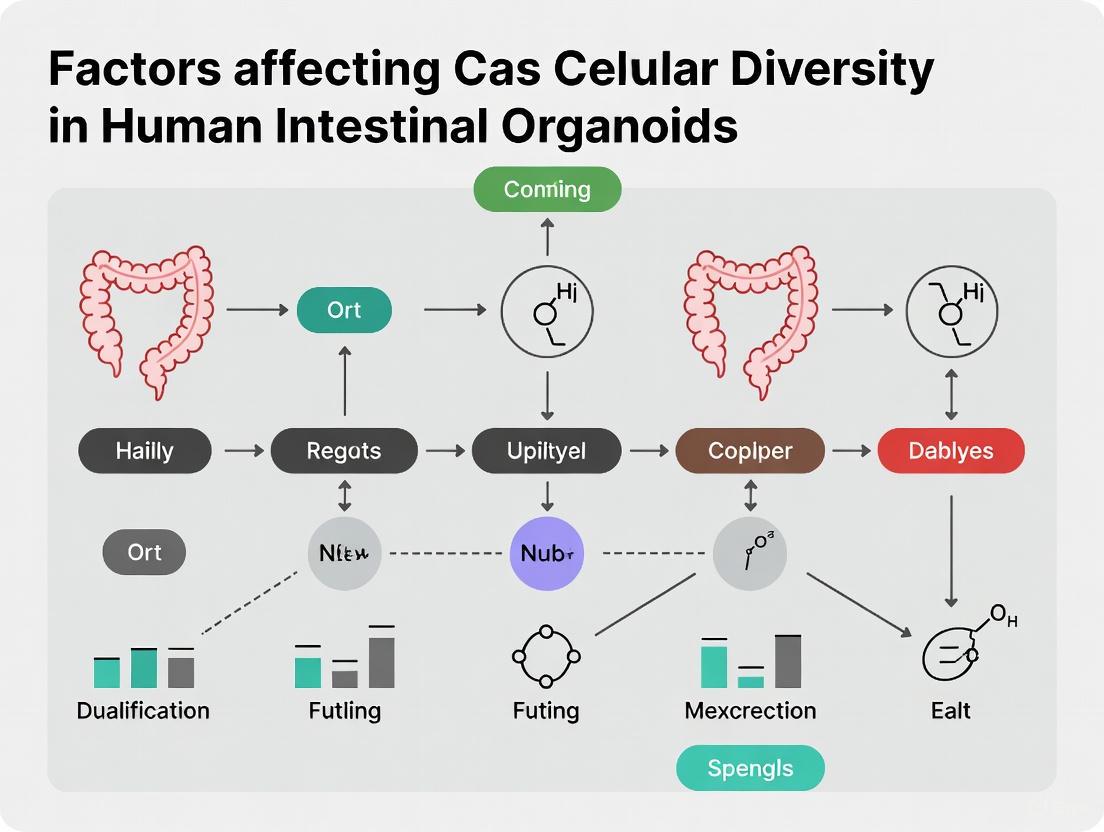
Mastering Cellular Diversity in Human Intestinal Organoids: From Niche Signals to High-Throughput Applications
Human intestinal organoids have revolutionized the study of gut biology, but achieving physiological cellular diversity remains a central challenge.
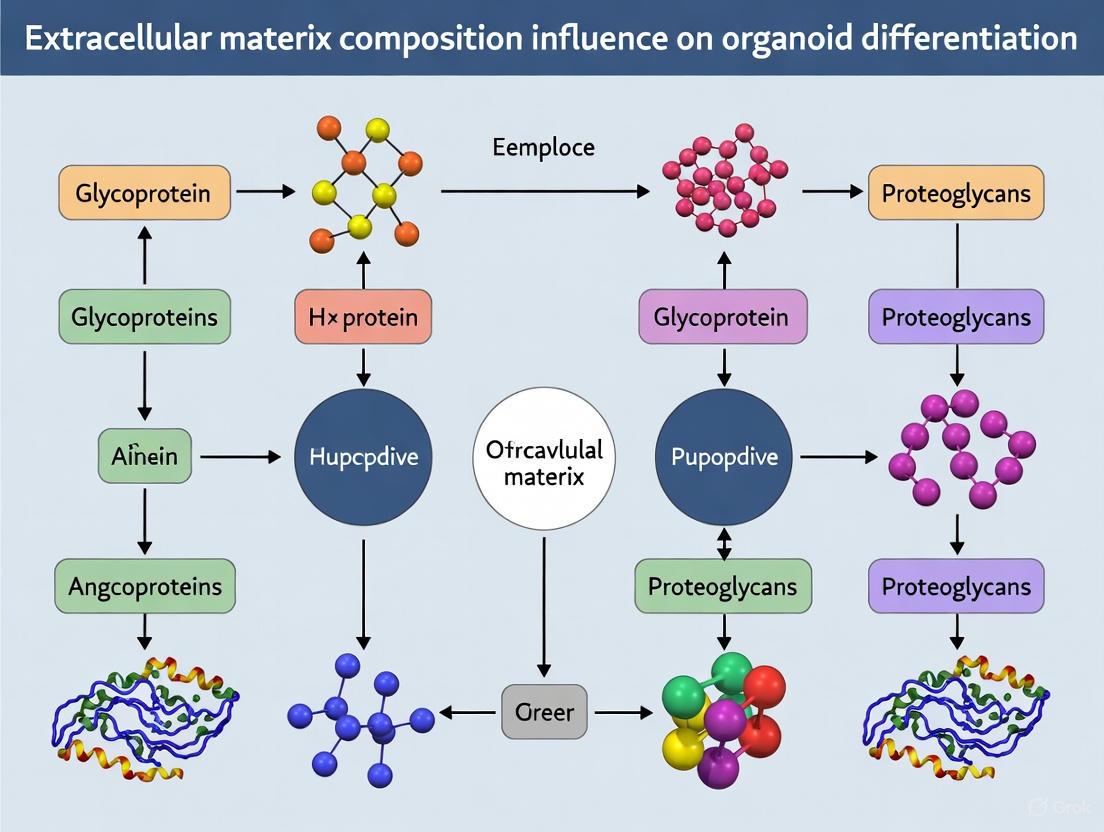
The ECM Blueprint: How Matrix Composition Directs Organoid Differentiation and Shapes Biomedical Innovation
This article explores the pivotal role of extracellular matrix (ECM) composition in guiding organoid differentiation, a critical factor for researchers and drug development professionals advancing 3D in vitro models.
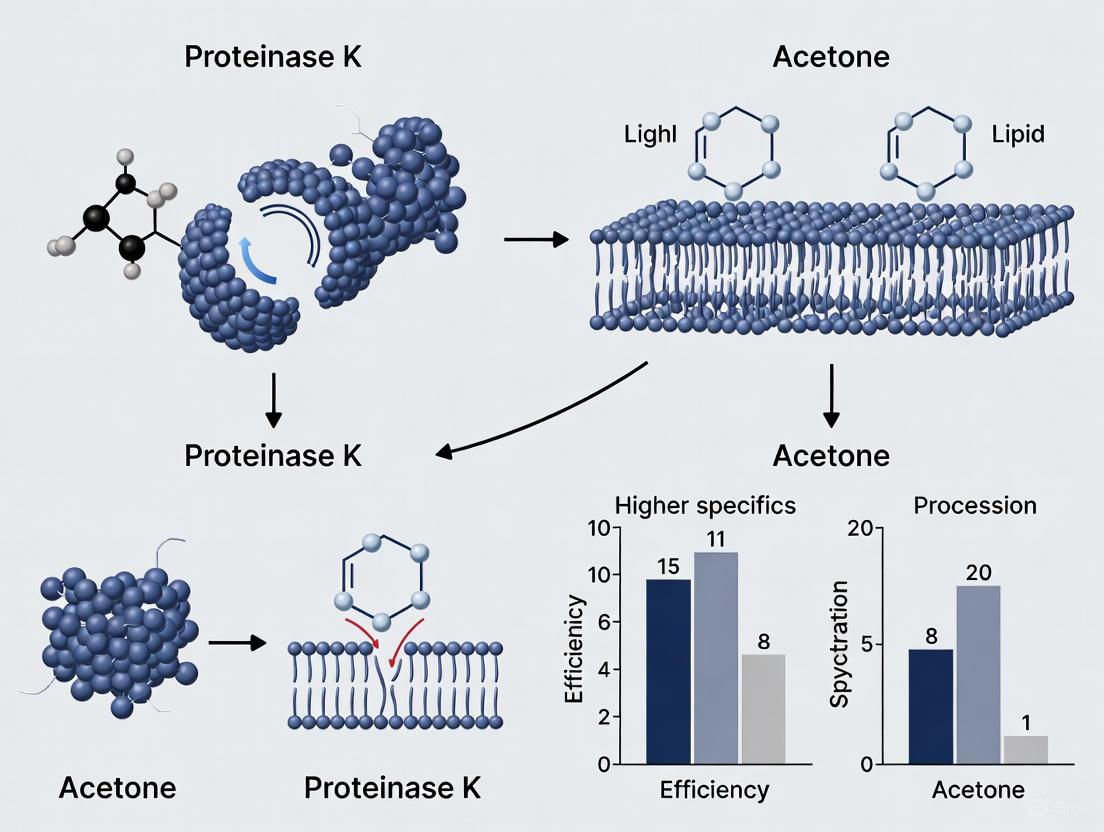
Proteinase K vs. Acetone Permeabilization: A Comprehensive Guide for Method Selection in Biomedical Research
This article provides a systematic comparison of proteinase K (enzymatic) and acetone (solvent) permeabilization methods, two fundamental techniques for enabling antibody access to intracellular targets.
PTU-Based Treatments vs. Chemical Bleaching: Mechanisms, Efficacy, and Future Directions in Pigment Removal
This article provides a comprehensive analysis of two distinct approaches for pigment removal: Poly(thiourea) (PTU)-based treatments and traditional chemical bleaching.
Colorimetric vs Fluorescent WISH: A Comprehensive Guide to Methods, Applications, and Optimization
This article provides a detailed comparative analysis of colorimetric and fluorescent Whole-Mount In Situ Hybridization (WISH) techniques for researchers and drug development professionals.
Dextran Sulfate vs. PVA: Mechanisms and Synergies in Cell Culture and Drug Delivery
This article provides a comprehensive analysis of dextran sulfate (DS) and polyvinyl alcohol (PVA), two critical polymers in biomedical research.